
How to C ast Your Vote
“Vote!” has been a call to action on everyone’s lips leading up to the election. But actually casting a ballot can be more complicated. Whether this is your first or fifth presidential election, here’s what you need to know about voting on Nov. 3.
WHERE, WHEN CAN I VOTE?
In-Person Voting In Ithaca
Voters registered in the Ithaca area should have received an assigned polling location address on a reminder postcard mailed from the Tompkins County Board of Elections — but you can also check polling sites online or call the Board of Elections. Voters can only cast their ballot at the correct assigned location: If you attempt to vote at an alternate location, you will be turned away.
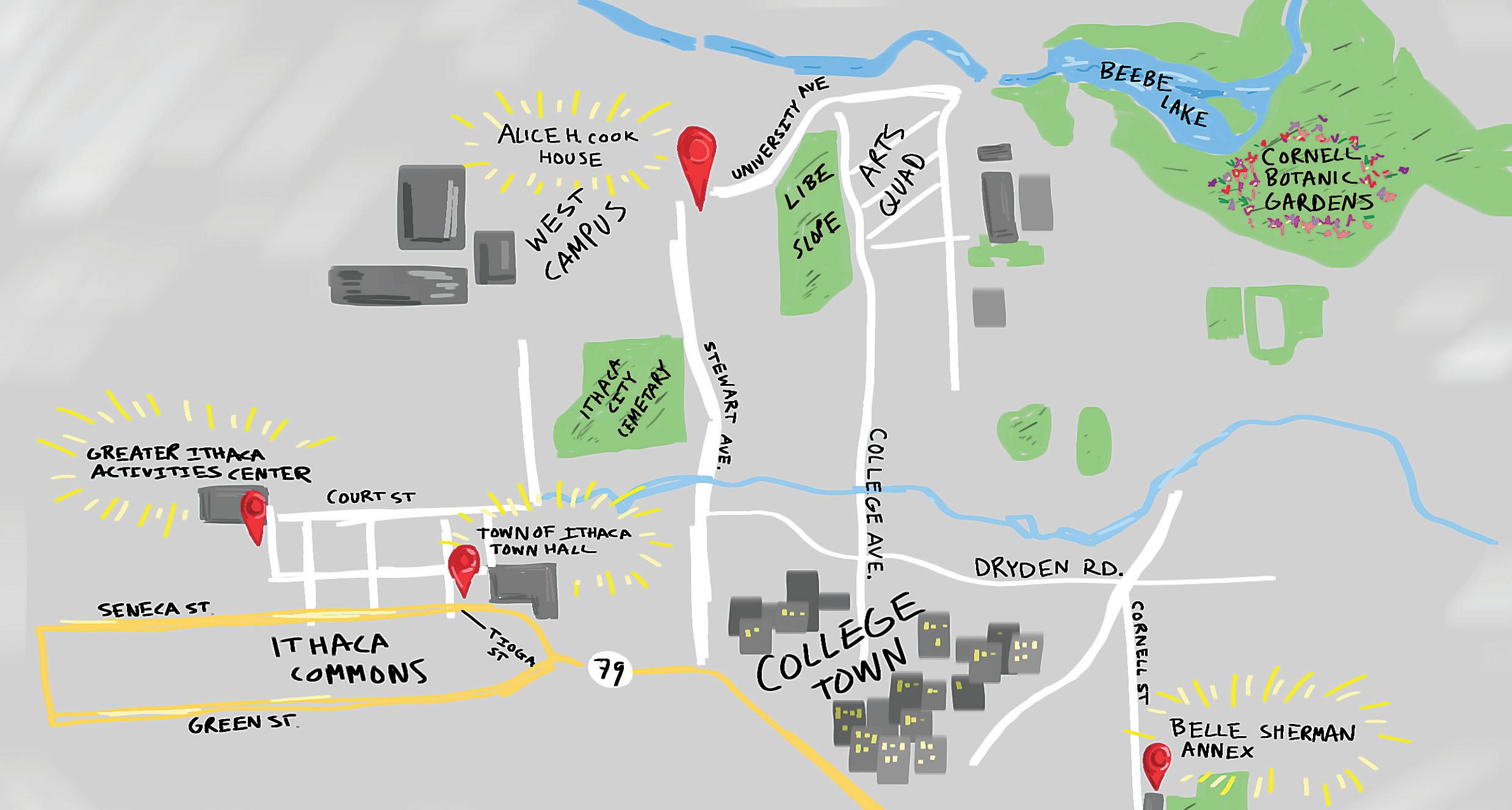
Polling location assignments depend on a voter’s residential address. For those who live close to campus, possible polling locations include Alice Cook House on West Campus, Belle Sherman Annex at 70 Cornell St., Greater Ithaca Activities Center, located at 301 West Court St. and Town of Ithaca Town Hall at 215 North Tioga St.
In previous election years, many Collegetown residents voted at the Saint Luke Lutheran Church next to the former location of Collegetown Bagels. This year, however, ongoing construction in that area has forced this polling location to close. Voters will be redirected to Ithaca Town Hall, located near the Commons in downtown Ithaca.
Polling places in Ithaca are open from
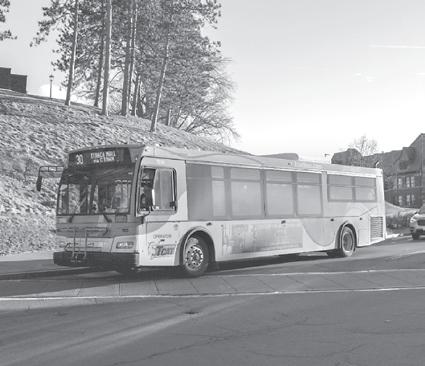
6 a.m. to 9 p.m. The “early voting” period has ended — the last opportunity to vote in person is on Election Day. TCAT is also offering free bus rides on Nov. 3 to help eligible voters get to the polls.
Absentee Voting
Cornellians living in Ithaca but voting elsewhere should complete and mail their absentee ballots to their county Board of Elections as soon as possible. Due dates for ballots vary by state. In response to the pandemic and an increase in early voting, some states have also implemented contactless dropboxes, allowing voters to deliver their absentee ballots to their local Board of Elections directly.
While some states require a ballot be received on Election Day by specific times, others just require that a ballot be postmarked by Election Day and be received within a specified number of days after Nov. 3. New York requires absentee ballots be postmarked by Election Day and be received within seven days after Election Day.
In neighboring Pennsylvania, absentee ballots are legitimate as long as they are postmarked by Election Day, following a ruling from the state’s Supreme Court. Pennsylvania Republicans appealed the ruling to the U.S. Supreme Court, but the court deadlocked 4-4, letting the lower court’s ruling stay in effect. Regardless, officials in the state are urging voters to hand deliver absentee ballots to respective county Boards of Elections, instead of mailing them.
HOW DO I VOTE?
Since Trump claimed the presidency in 2016, 15 million people turned 18 and became eligible voters. For the majority of Cornell’s undergraduate
population, this will be the first opportunity to vote in a presidential election.
In-Person Voting In Ithaca
First-time voters in Tompkins County may expect long lines at their polling places this year, due to higher early voter turnout than in previous election years and state-mandated social distancing rules.
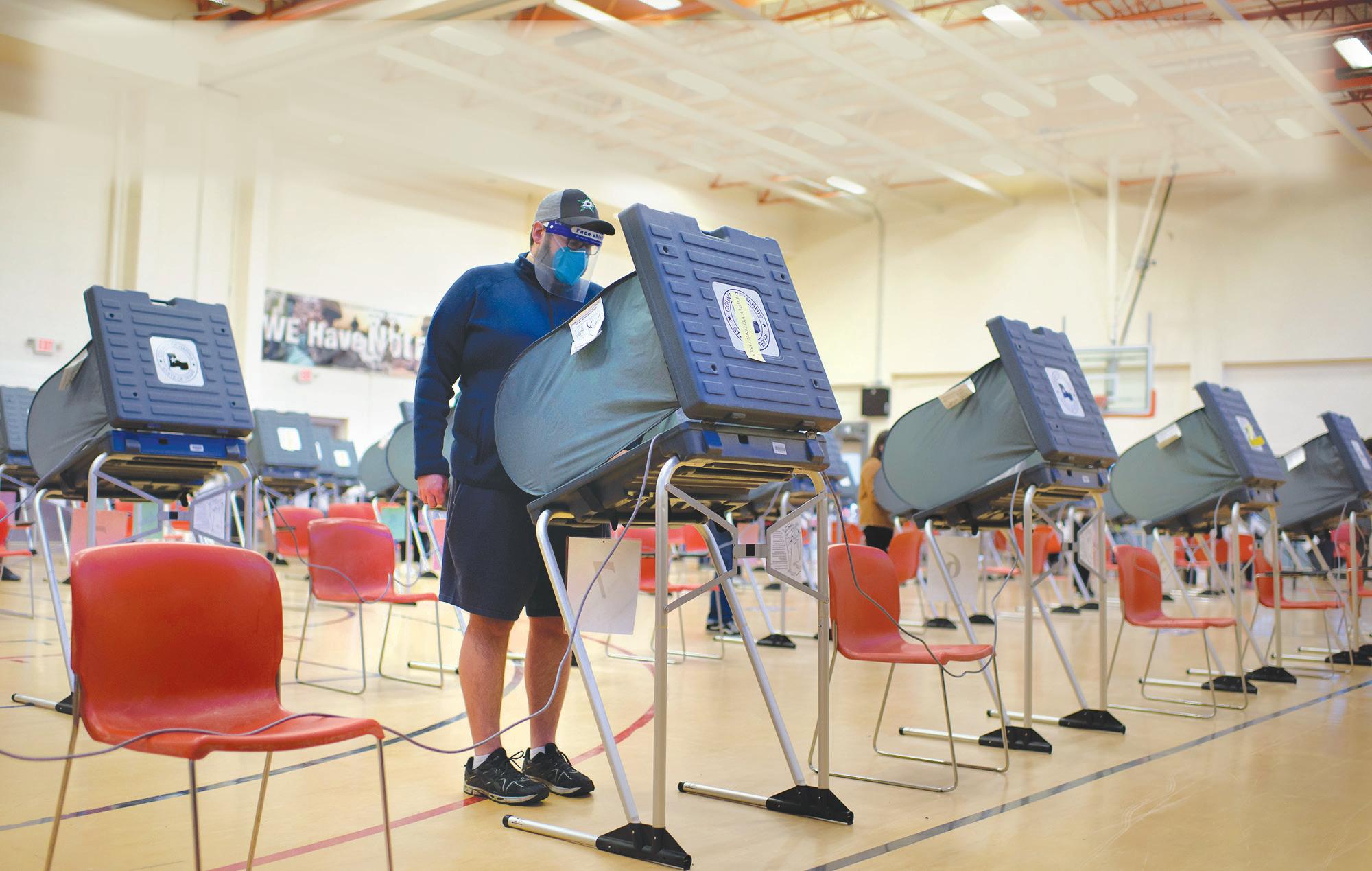
If you are voting in person, volunteers will guide you through your designated location to confirm your registration, receive a blank ballot, fill out the ballot behind a privacy shield and submit your ballot to a machine, which will tabulate your candidate choices.
If you accidentally bubble outside the lines or unintentionally select a different candidate, you can ask for a fresh ballot and start over. The other one will be thrown out and not counted.
If the machines are malfunctioning at your polling location, you can ask for a paper ballot. Similarly, if a poll worker
cannot find you listed as a registered voter, you can ask for a provisional ballot.
If your absentee ballot is still sitting on your kitchen table, fill it out and mail it in as soon as possible. Every state’s ballot format looks slightly different, so make sure you are bubbling in the ovals for your intended choices.
Organizations like Cornell Votes and Cornell-founded Voteology can provide information for locations of stamp vendors and nearby mailboxes.
WHO’S ON THE BALLOT?
To get to know each candidate before you head to the polls, check out The Sun’s 2020 Ballot Guide on page 2 of this supplement.
BARRIERS TO VOTING
Voter suppression can take many forms, implicit and explicit. If you feel like your vote is being unfairly obstructed, you have options to take action.
The American Civil Liberties Union, an organization that provides legal aid combatting civil rights violations, suggests bringing multiple forms of identification — such as a driver’s license, passport, birth certificate, school ID or even a piece of mail — in the event that you need to confirm your identity or residence to poll workers.
If you are still waiting in line to enter and vote after the polling location closes, stay put. Polling locations are required to count every person who is in line at the time of close, and if the location attempts to close their doors on voters who arrived in line be fore locations close, you can make a report to a hotline.
Amanda H. Cronin can be reached at acronin@cornellsun.com. Simran Surtani can be reached sms633@cornell.edu. Meghana Srivastava can be reached at msrivastava@cornellsun.com.
By AMANDA H. CRONIN, SIMRAN SURTANI and MEGHANA SRIVASTAVA Sun Senior Editor, Sun Contributor and Sun Assistant News Editor Election map | Here are four nearby polling places within the City of Ithaca.
MARK FELIX / THE NEW YORK TIMES
Ithaca Ballot Guide
• TO VOTE, COMPLETELY FILL IN THE OVAL NEXT TO THE CHOICE
• Use only the marking device provided or a number 2 pencil.
• If you make a mistake, don’t hesitate to ask for a new ballot. If you erase or make other marks, your vote may not count.
HOUSE OF REPRESENTATIVES
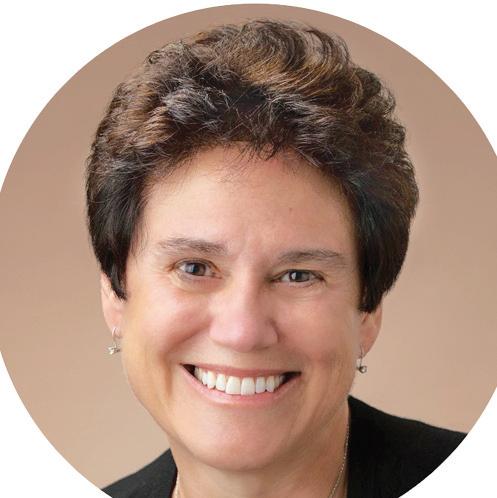
Tracy Mitrano
Tracy Mitrano J.D. ’95 drives a Jeep Wrangler, owns a gun and has accused her opponent of racism — she’s running for Congress against Rep. Tom Reed (R-N.Y.) in a district tinted red.
If her name sounds familiar, it’s because she’s done this before.
This is Mitrano’s second bid for New York’s 23rd Congressional District, after she lost by nine points in 2018. This time, she’s feeling better about her chances.
Her opponent, four-term congressman Reed frequently calls her a “radical liberal.” (He had previously dubbed her an “Extreme Ithaca Liberal,” but pledged to drop that tag for this campaign cycle.)
Mitrano disputes this label. She distinguishes herself from the more progressive members of her party by pointing to her policy positions on healthcare and gun control.
In the 2020 Democratic Primary, Mitrano said her favorite candidate was Sen. Amy Klobuchar (D-Minn.). Mitrano admired her ability to “get things done” and “appeal to people in both parties,” something she hopes to do in the House if elected.
Contrary to the party’s banner-carrying progressives, Mitrano stops short of fully supporting Medicare for All and strict federal gun control legislation.
“I support the ideas behind Medicare for All, but not the plan itself,” she said. She values that Americans have access to affordable and reliable healthcare, but isn’t convinced that Medicare for All is the means by which Congress could achieve that goal.
To continue reading each article on this page, please visit cornellsun.com.
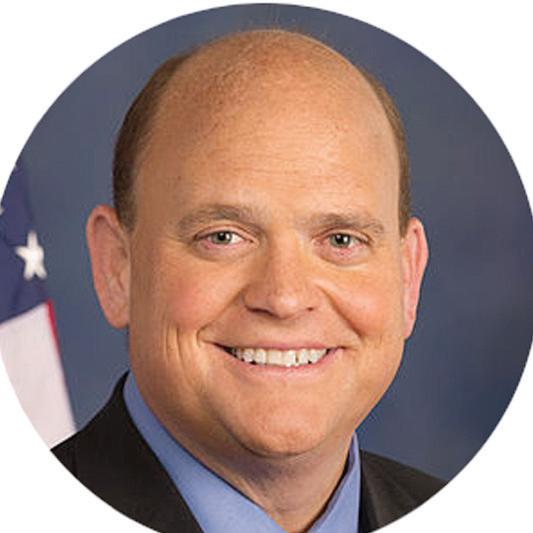
HOUSE OF REPRESENTATIVES Tom Reed
at the time.
Rep. Tom Reed (R-N.Y.) is campaigning by doing: As the pandemic rages on, he’s prioritizing his day job. As co-chair of a House bipartisan group, the crisis is top of mind, especially as stimulus package negotiations have stalled.
In a late August interview with The Sun, Reed shared his vision for New York’s 23rd District, which includes Tompkins County, and his plans to move the legislative machine in Congress. Central to this is his involvement with the House Problem Solvers Caucus, which he co-founded in 2017.
The caucus, a bipartisan group of 50 representatives, aims to forge common ground in legislation and forgo the otherwise “out of control” partisanship that has enveloped Washington, Reed and the group’s other co-founder, Rep. Josh Gottheimer (D-N.J.) wrote
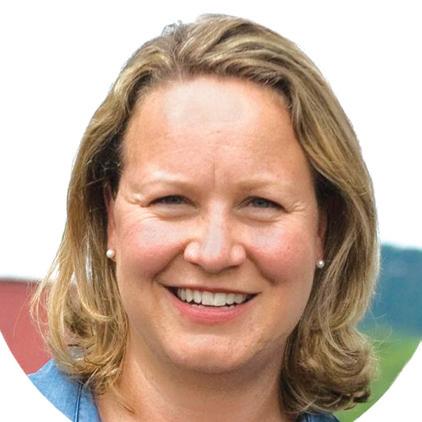
Leslie Danks Burke
the Finger Lakes region.
In the race for New York’s 58th State Senate District, old opponents face off once again — this time during an apocalyptic election cycle.
Leslie Danks Burke, the Democratic nominee for one of New York State’s largest geographic legislative districts, is running against Republican incumbent Tom O’Mara (R-N.Y.) for the second time, after challenging him for the seat in 2016.
Danks Burke, a lawyer who champions herself on education reform, won 45 percent of the vote for the seat in 2016, in a district where only 33 percent of registered voters identify as Democrats. After performing well in a year where Democrats underwhelmed nationwide, Danks Burke said she is running again to reverse the “40 years of neglect from Albany” toward
The “movement” Danks Burke created in 2016, where she said “armies of people went doorto-door” for her, was forced to pivot in the face of the pandemic. Danks Burke, who has never held elected office, credits her team for rolling out a digital campaign early in February, holding regular phone banks, enhancing her social media presence and hosting socially-distanced outdoor events.
The campaign was even forced to get creative: One event they hosted was a drive-in movie night featuring a parody Broadway show called “Albany Bound: The Musical.”
In a typical campaign season, a candidate would “wear out three pairs of sneakers walking up and down the sidewalks,” she said.
Milo Gringlas can be reached at mg862@cornell.edu.
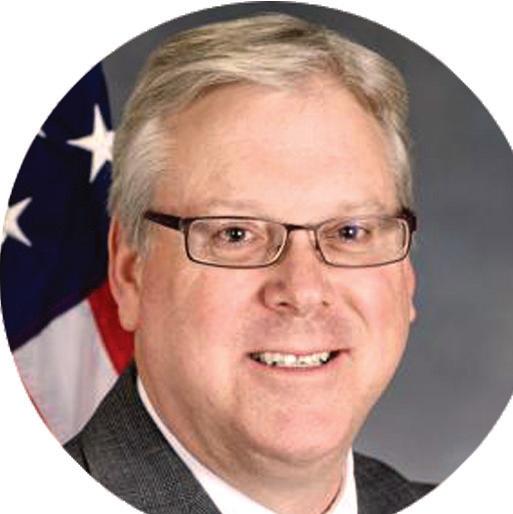
To incumbent State Sen. Tom O’Mara (R-N.Y.), Leslie Danks Burke’s threat to his seat is nothing less than a threat to the values of the 58th Senate District.
O’Mara described his political ideology, on a spectrum from moderate to conservative, as “onethird to halfway to conservative.”
Although, when it comes to taxpayers’ dollars, he clarified he is “very conservative,” that government involvement should be limited to “things in society that likely wouldn’t otherwise get done.”
The Sun checked in with O’Mara as he heads into his sixth election for State Senate, and his second against Danks Burke, who lost to him in 2016 by an over nine-point margin. The 58th district, which is among New York’s geographically largest and most rural, covers parts of Tompkins
In Congress, 2020’s historic reckoning on racial injustice in America came with The George Floyd Justice in Policing Act. Reed noted that the Problem Solvers caucus is “neck deep” in current negotiations for the legislation — which passed the House, but was met with opposition in the Republican-controlled Senate.
Reed voted against the bill. His two objections were the removal of qualified immunity and a proposed amendment to Title 18, Section 242 of the federal code that would lower the threshold required to convict law enforcement officers of misconduct.
Reed, however, said that he supports the other provisions in the bill.
County, including all of Ithaca.
For O’Mara, the difference between him and Danks Burke is not simply one of a generalized political philosophy. Rather, it’s an approach to government that he best sees fit for the Southern Tier.
“She’s running to join with the extreme downstate faction of the Democratic party,” O’Mara said of his opponent.
There is no denying that O’Mara knows his district. He speaks of the Southern Tier with a tone of certitude and immediacy, as though he enters debates and fields phone calls while standing on Main Street in Elmira. It’s the tone of someone who knows the region from so many perspectives: that of an elementary school student, a county attorney, a father and a state senator.
Ari Dubow can be reached at a dubow@cornellsun.com.
Amanda Cronin can be reached at acronin@cornellsun.com. Alec Giufurta can be reached at agiufurta@cornellsun.
By AMANDA H. CRONIN and ALEC GIUFURTA Sun Senior Editors
AMANDA H. CRONIN and ALEC GIUFURTA Sun Senior Editors
By MILO GRINGLAS Sun Contributor
NYS SENATE
By ARI DUBOW Sun City Editor
NYS SENATE Tom O’Mara
Amanda Cronin can be reached at acronin@cornellsun.com. Alec Giufurta can be reached at agiufurta@cornellsun.
The Corne¬ Daily Sun


After Arrests, Organizers Demand Deputy Police Chief Step Down
Protest arrests spur online petition, calls for change
By CHARLIE MOLLIN Sun Staff Writer
Recent arrests during increasingly contentious protests have led to calls for the Ithaca Police Department deputy chief to resign.
Nearly 1,500 people have signed an online petition demanding that Deputy Chief Vincent Monticello resign, as of Sunday evening. The petition follows Monticello’s arrests of several counterprotesters during and after a graffiti cleaning event held by Rep. Tom Reed (R-N.Y).
In video footage of the arrest, Monticello arrests Massia White-Saunders, a Black protester, on the grounds of “obstruction.” But protesters dispute this, saying that a white Trump supporter had threatened White-Saunders with a knife first.
The footage shows White-Saunders explaining to Monticello that he had a knife pulled on him, while the Trump supporter says to White-Saunders, “Would you just die already, could you fucking die, just die, kill yourself, get out of here.”
Monticello then tells White-Saunders and another counterprotester, “You’re the ones agitating this stuff,” before arresting White-Saunders.
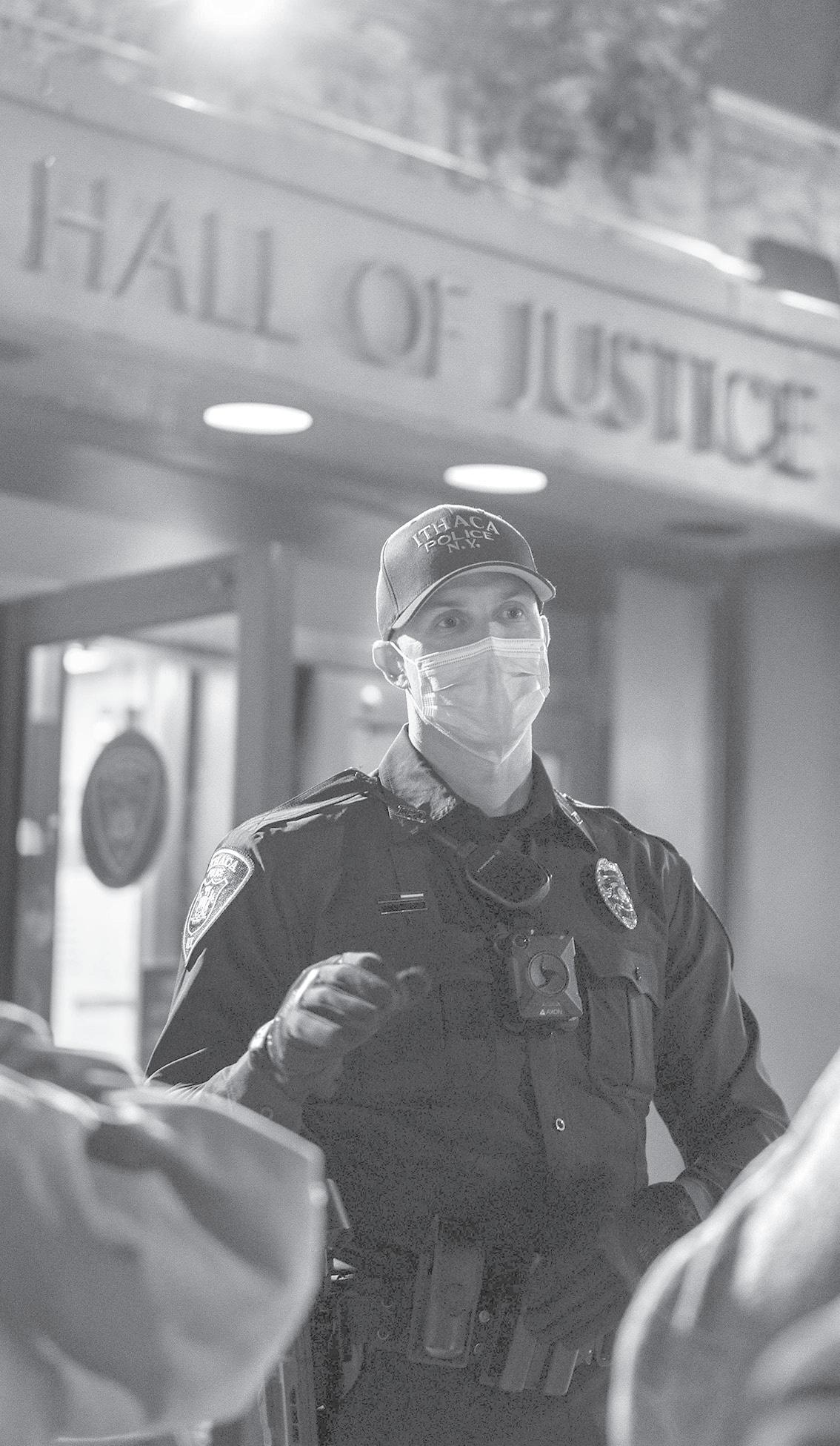
After White-Saunders’s arrest, protesters gathered on Oct. 22 outside the Ithaca Police Station to demand his release. There, IPD officers arrested counterprotesters, including Ithaca resident and local advocate Genevieve Rand.
Monticello arrested Rand for obstruction of governmental administration, after she stood in front of a police car with its siren on, responding to a shots fired
Africana Department Refuses to Support Caribbean Studies Minor
After students launch demands, Africana pushes back
By KATHRYN STAMM Sun News Editor
The Africana Studies and Research Center, the home of most Caribbean studies classes, is not supporting the creation of a Caribbean studies minor, a demand made by Caribbean students on campus.
Earlier this semester, the Caribbean Students Association
“Not getting support from Africana was definitely something crazy.” Aurora McKenzie ’21
launched a petition to demand increased support from the University, from academic inclusion to more meaningful representation. Their petition led them to conversations with different departments across the University to garner support — which does not include Africana.
“It has shocked a lot of the students,” said Aurora McKenzie ’21, president and co-founder of CSA. “Even though we knew that not every department on campus would respond, or even support, not getting support from Africana was definitely something crazy.”
McKenzie also explained that, beyond a letter sent from Africana explaining its decision,
there was no further conversation between her e-board and the department.
The Latina/o and Latin American studies programs have both stated their support of the minor and more broadly of the demands, making Africana’s refusal stand out.
“We do not exaggerate when we say that not only has that model worked for the last fifty years, it has continued to inspire others both within the country and in other parts of the world, especially now in Europe where nascent Africana programs are searching for models,” Prof. Olúfemi Táíwò, Africana studies, wrote in a let-
call. During the arrest, Monticello repeatedly misgendered Rand, according to the video footage.
After Rand’s arrest, more protesters arrived at the police headquarters, and subsequently six other arrests were made. Officers used pepper spray to disperse the crowds after deeming the protest an “unlawful assembly.”
“This is not someone who deserves to have a job in our police station.”
Colton Bready
Mayor Svante Myrick ’09 addressed the calls to investigate Monticello on his Facebook page, stating that the New York State Division of Human Rights and the state attorney general are investigating the incidents. The independent Community Police Board is also reviewing evidence and interviewing witnesses from Oct. 22 to make a recommendation to Myrick.
Myrick said he will withhold his judgement until the investigation is complete.
Petition organizer Colton Bready, who did not attend the protest, said he watched the arrests over video — prompting the petition against Monticello.
“This is not someone who deserves to have a job in our police station,” Bready said. “He has preferential treatment from those who support him no matter how he does his work.”
See POLICE page 3
Ithaca’s Independent Bookstores Survive on Paper-Tin Margins
By MADELINE ROSENBERG Sun Assistant News Editor
Inside the 200-year-old stone walls of Odyssey Bookstore, “social distancing required” signs dangle above the non-fiction reading room entrance, hang from the fire mantle and are pasted next to stacks of romance novels.
The reminders to spread out and browse bring more words to a wordfilled oasis, a bookstore filled with colorful titles, hand-scrawled staff picks notes poking between their pages and a chalked “please sanitize your hands” reminder that greets customers at the door.

Hall of Justice | A masked Ithaca police officer speaks to counterprotesters standing outside police headquarters on Oct. 22.
Books on books | A reader browses between rows of the Odyssey Bookstore’s selections.
A LISTING OF FREE CAMPUS EVENTS
Entrepreneurs in Residence: Allison Page, Co-Founder And Chief Product Officer, SevenRooms
11 a.m. - Noon, Virtual Event
“Crafting Nation-ness: Venezuelan Diaspora, Contemporary Art, and the Politics of the DIY,”
By Irina R. Troconis, LASP Seminar Series 12:40 - 1:50 p.m., Virtual Event
“Where Coffee Really Comes From” With Juana Munoz Ucros 12:40 p.m., Virtual Event
“Multilegs, Superfluids and Semiclassics”
4 - 5 p.m., Virtual Event
Real Talk with Dyson BIPOC Alumni: Election 2020 4:30 - 5:30 p.m., Virtual Event
Día de los Muertos: Altar Evolutions, From Cultural Practice to Aesthetic Performance
5 - 6 p.m., Virtual Event
Want to Work in Canada? Canadian Work Authorization Via the Express Entry Program
5 - 6 p.m., Virtual Event
PIHE’s Entrepreneurs in Residence: Patrick Bosworth, Pillsbury Institute for Hospitality Entrepreneurship
6 - 6:30 p.m., Virtual Event

Election insight | Dyson BIPOC alumni will tackle how the election, its possible outcomes and current political discourse affect communities and social identity groups in complex ways, and how to talk about difficult topics in difficult times.
Tomorrow
Elect & Reflect: Meditation and Reflection With Cornell Health, CURW and Cornell Votes
9 a.m. - 5:15 p.m., Virtual Event
Sovereign Movements: Native Dance and Decolonization 9:55 - 11:55 a.m., Virtual Event
“Twice the Fun: Fungal Dynamics, Functional Traits, & Disease Management” With Sharifa Crandall, PPPMB Seminar 11:30 a.m. - 12:20 p.m., Virtual Event

C.U. Wind Symphony: Haitian Music Lecture Series Noon, Virtual Event
“30 Orders of Magnitude: Lessons Learned Transitioning From Virology to Potato Breeding” With Walter De Jong 12:40 p.m., Virtual Event
First Gen and Low Income Student Support Office Hours 2 - 3 p.m., Virtual Event
PIHE’s Entrepreneurs in Residence: Ellen Yui 3 - 4 p.m., Virtual Event

Petition Urges Deputy Chief to Resign Area Independent Bookstores Trive With Community
Continued from page 1
Bready also accused Monticello of being racist and transphobic — pointing to his decision to arrest WhiteSaunders, but not the Trump supporter, as well as his misgendering of Rand.
“I had heard about racist police officers in the town, and [Monticello] is the one allowing the racist policing in town that I know about,” Bready said. “He knew [Rand] was a woman and he refused to address her based on her correct pronouns, so clearly we have someone high up in the police department who’s being openly transphobic on camera.”
Change.org removed public comments from the petition as they were becoming “too personal and raw,” according to Bready. Many of the comments were emotional testimonies from Ithacans describing what they see as past racist IPD incidents.
Ithaca residents, in a letter demanding to defund the police, said the killings of Shawn Greenwood and Keith Shumway by IPD officers in 2010 and 2011 were a few of the many racial injustices they say IPD has committed.
Ithaca resident Melanie Marsh, among many others, expressed grievances toward Monticello during the Oct. 31 Common Council meeting.
“IPD will also be saving a lot of money if they get rid of deputy chief Monticello who is a racist transphobic scum of a human being,” Marsh said.
Bready, as of Oct. 29, said he planned to deliver the official petition letter to city officials — none of whom have publicly commented.
“I’m waiting for people to join me to hand it in to show community,” Bready said. “At this point it’s too much, one person, who has many reported incidents, is getting too much support from the office.”
Charlie Mollin can be reached at cmollin@cornellsun.com.
CSA ‘Shocked’ by Africana’s Opposition
Continued from page 1
ter to CSA explaining Africana’s decision.
McKenzie pushed back on this explanation, though, pointing to the vast changes of the past 50 years. She also highlighted Africana’s legacy as a pioneer and leader in its field as a specific reason to make the shift.
Africana was also primarily a response to student activists, which Táíwò drew on in his letter. But those original demands that jump started Africana, Táíwò said, focused on their model as “Africa and its Diaspora, with the African American component at its core, as an interconnected whole.”
For CSA, this is the exact reason Africana should support them: they, too, are students demanding better for their community.
“A close look at our curriculum will show that we already have ample provisions for those of your members who might want to concentrate on the Caribbean region in our
extant Minor,” Táíwò wrote. “Equally important is the fact that we regularly offer classes that focus on the region, especially the ‘Introduction to Caribbean Studies’ class which, I might point out, is almost unique in the Department.”
But CSA doesn’t view these classes as sufficient, as McKenzie has been forced to forge her own Caribbean studies minor. Further, the lack of a minor limits the field’s reach, which already constitutes a small subset of faculty on campus; a minor, they said, will help students better explore the Caribbean.
“We believe that the demands, and especially because of the minor, transcends department lines,” said CSA Director of External Affairs Matthew Arthur ’21. “Having this structure established makes it easier for students like myself to find those classes that interest me, but it is also easier for students that aren’t looking at this.”
Táíwò declined to comment beyond the letter.
Beyond the minor, CSA expressed
frustration at the way Africana ignored the rest of their demands, which also include recognizing June as National Caribbean-American Heritage Month, accepting standardized tests administered across the region and using “Caribbean” as an ethnicity option in Cornell applications.
“They don’t understand what the other demands would do or how they would allow representation,” said CSA Treasurer Leone Farquharson ’22. “They just haven’t listened yet.”
In the meantime, CSA is still meeting with departments and working on advocating for themselves and their community. They hope to meet soon with administrators for added pressure: So far, only President Martha E. Pollack has responded, pointing to existing academic programs as reasonable avenues to hear their concerns.
“How long are we supposed to wait?” McKenzie said. “We’re passionate about this and this little no isn’t stopping any one of us.”
Kathryn Stamm can be reached at kstamm@cornellsun.com.
MONEY & BUSINESS
BOOKS Continued from page 1
It’s not exactly what Laura Larson ’85 imagined when she set out to open a bookstore in March. But Larson only knows bookselling with these reminders pasted around her store — she only knows bookselling during a pandemic.
“We’ve never been open in anything other than COVID. I didn’t know what to expect. I had never been open,” Larson said. “We ended up incorporating open for COVID with being open at all.”
The Ithaca native set out to open Odyssey in March after a year-long renovation process, but the virus swiftly shut their doors until June. After selling books for months without a store to welcome in customers, Larson said those who trickled in over the summer were grateful they could gather in a neutral, public space.
“I think we all craved that ‘I’m stopping by the coffee store and seeing the usual barista,’” Larson said. “That came to a halting grind, and we were one of the first places where people could do that. People just loved that they could come in and just browse and look and be in a space together.”
And she’s seen a full range of community members gather in her store. Odyssey has become a hangout spot for a group of teenagers and a go-to shop for professors searching for copies of The Decameron. She hasn’t seen as many parents with young children, even though Odyssey has a children’s section stuffed with picture books and stuffed bears.
But Larson has watched a teenager spend all $100 of her birthday money on books. She’s helped customers who have vowed to keep coming back, at a time when the pandemic has pushed independent bookstores across the country to the brink across the country.
“She must’ve been here for an hour and a half, weighing every decision. It was amazing. This is absolutely my happy place,” Larson said. “What I saw were people going, ‘I really want you to survive. I really want you to be here so I need to buy from you. I won’t buy from Amazon. I’m going to order from you.’”
To continue reading this story, please visit cornellsun.com.
Madeline Rosenberg can be reached at mrosenberg@cornellsun.com
Ridership Remains Meager as TCAT Finances Recover
By BRENDAN KLEIN Sun Contributor
Despite cuts in service and a steep drop in ridership, the Tompkins Consolidated Area Transit system has worked to overcome pandemic challenges and continue to serve the Ithaca area.
Although it offered free service for six months, TCAT’s ridership has nevertheless remained at about 10 percent of its typical levels since the beginning of the pandemic. According to General Manager Scot Vanderpool, the meager results reflect semi-permanent changes in work patterns and fear of catching the virus.
“The biggest fear is … getting COVID19 … but the biggest reason people aren’t riding is the fact that people are telecommuting, and employers are allowing folks to work from home,” Vanderpool said.
TCAT created a number of safety procedures in its fleet of 50 buses, using a portion of the $7.9 million it received in CARES Act funding to purchase electrostatic disinfectant spray and plexiglass shields. The service has implemented a slew of other policies since the pandemic’s beginning in March to keep TCAT afloat amid plummeting ridership and escalating expenses.
According to Vanderpool, service was
cut by 50 percent over the summer, while routes were cancelled, schedules reduced and bus occupancy limited to 20 passengers. Employees were laid off, hiring was frozen for administrative and operational positions and overtime was eliminated.
Scaling back operations in anticipation of low ridership was the key to remaining financially solvent during the early months of coronavirus, Vanderpool said. And six months later, the number of miles driven by the bus service has returned to 90 percent of normal levels, even if use continues to remain low.
“Our goal is to keep going with our service levels as much as possible,” Vanderpool said. “I don’t want to take anything away from anybody.”
In an effort to allay COVID-19 concerns and win back riders, TCAT put out ads on TV, radio and the sides of its buses to underline its commitment to safety. It also worked with Cornell, Ithaca College and Tompkins County Community College to encourage their students to return to TCAT.
Vanderpool said that marketing is a “strategic” and “critical” piece of TCAT’s plan to increase ridership to pre-pandemic levels. “We wanted to make sure that people were aware of what we’ve done … it
was important to try to get people back,” he said.
Although major reductions in ridership and cancelled fares have had a negative impact on TCAT’s revenues, its finances nevertheless remain in fairly good shape.
This is mainly because passenger fares and Cornell’s student-fare reimbursement program accounted for less than a third of TCAT’s total $14.5 million dollar revenue in 2017. Instead the greatest share of funding — ranging between 32 and 45 percent, depending on the year — comes from New York’s Statewide Transit Operation Assistance Program, which subsidizes local transportation systems based on the number of passengers served and miles traveled.
Because the program contains a “hold harmless” provision that enables the Department of Transportation to defer a reduction in earnings based on this formula for up to one year, TCAT has been able to receive funding based on last year’s much higher level of ridership and service.
Even so, financial difficulties posed by the pandemic have forced TCAT to put some long-term, capital investment projects on hold. The service, for example, sidelined plans to move TCAT’s current operations facility located near the
Newman Municipal Golf Course to a new, bigger facility.
However, other projects are continuing as planned. On Aug. 30, TCAT rolled out a pilot of its TConnect program, which will offer on-demand shuttle service between specified pickup spots in rural areas and drop-offs along busier main lines. The plan could make public transportation more accessible to rural and low-income residents, while decreasing TCAT’s operational costs and carbon footprint.
In addition, Vanderpool said that TCAT is “still on target” to meet its goal of replacing its buses with a fully electric fleet by 2035. According to Vanderpool, TCAT plans to receive seven Proterra Electric buses in March, but if ridership remains low, may opt to purchase smaller buses.
Vanderpool said that a supportive community and a commitment to improving service are going to be two of TCAT’s most important assets going forward.
“This is all about change for us right now,” Vanderpool said. “I’m going to stay optimistic. Our community is diverse, … engaged and understands the importance of transportation.”
Brendan Klein can be reached at bck49@cornell.edu.
CARIBBEAN
ARTS & ENTERTAINMENT
Do You Tink Freely?
As I’m sure most Gen-Zers experienced, I grew up being constantly told how lucky I am to live in the age of the internet. My father, typically unprompted, would wax poetic about his first time using a computer lab — a sentiment that I couldn’t quite relate to as a third grader enrolled in a mandatory computing class, wherein I spent 90 percent of my time staring out the window and 10 percent of my time refusing to learn how to type with anything other than my pointer finger.
Moving away from my gripes with Colorado’s elementary school curriculum, I will say that growing up with the internet is a rather dualistic experience. Just as the internet is a vehicle for individual freedom and exploration, it also seems to exemplify modern alienation as people sink into the world wide web and leave reality behind. The one constant in both scenarios is that, at least at a surface level, most people seem to trust the internet. Whether I’m doing independent research or bingeing a god awful TV show, I still maintain a sense of agency — regardless of what I’m doing, I’m choosing to do it. But, I have to question whether that’s the case.
When J.C.R Licklider imagined a world of computer-based communication in his 1968 paper “The Computer as a Communication Device,” he envisioned a radically different society, with a patchwork of decentralized networks providing the means for the free and open exchange of ideas. Yet, since the conception of the internet, we’ve seen rising challenges to Licklider’s optimistic view of the future.
The first, most obvious challenge, comes from the ever-growing monopolization of the internet. Soon after Cloudfare, a distribution network, chose to cut off service to the neo-nazi publication The Daily Stormer, CEO Matthew Prince created a blogpost — not to

justify the decision, but to ask readers to consider what internet regulation means and respect Due Process. Especially as giant networks — Prince specifically names Cloudflare, Google, Microsoft, Facebook, Amazon and Alibaba — continue to monopolize content, we could be setting ourselves up for a future where corporations have the final say in what is and isn’t online. To an extent, this is already the case — not because corporations have been

given full control over the internet, but because we’ve allowed corporate algorithms to govern our lives.
Everything on the internet, from smartphone apps to email inboxes to the people who pop up on Tinder, is governed by algorithms. Which is, of course, what you expect from a computer program — an algorithm is simply a tool, and an elegant, efficient tool at that. More often than not, they’re created with good intentions. But the question is one of impact, not intent.
In a 2014 article for the Columbia Journalism Review, Nick Diakopoulos, a research fellow at the Tow Center for Digital Journalism, is quoted as saying: “Algorithms make it much easier not just for you to find the content that you’re interested in, but for the content to find you that the algorithm thinks you’re interested in.” What’s showing up on your homepage is based on an algorithm’s conception of you as a subject — rather than a multidimensional human — and part of a built-in agenda to diminish one’s worldview in search of profitability. At this point, algorithms are still being designed by people, and the same biases that are governing corporations behind closed doors are governing your online experience.
Of course, questions of media bias aren’t new. Beyond the 2018 Mark Zuckerberg testimony, major new outlets are constantly criticized for media bias — just last week, Glen Greenwald quit his job at The Intercept over claims of censorship, which is particularly depressing given
that the outlet was founded on explicit editorial independence. Clearly, you can make the argument that the same hyper-personalized, one-sided view of the world has been present long before the digital age. But, I would make the argument that, with most news outlets, readers know whose biases they’re accepting. This isn’t to say that every casual New York Post reader is picking up a newspaper knowing that they’re buying into the interests of the Murdoch family, but at the very least we seem to have a sense of how various news outlets fall along the United States’ bipartisan divide.
Online, we treat ourselves as free actors despite corporate interests, which create hyper-personalized content that is in no way randomly disseminated. Unlike picking up a print publication, the ways we choose to conduct ourselves online are rarely accompanied by greater reflection. Instead, we seem to blindly accept what comes our way, assuming that the vastness of the internet will somehow translate to unbiased, all-encompassing content.
Recently, I was scrolling through Facebook and came across a post where one of my friends wrote something along the lines of “If you’re voting for Trump, then unfollow me.” This wasn’t a new phenomenon — they’d been reposting infographics and articles for months asking their followers to take a closer look. The interesting thing was that, in the comments section of every post, no one dissented. Which made sense — almost all of their followers are their friends, from a similarly liberal upbringing and age group. There’s a couple of crazy relatives thrown into the mix, but the vast majority of people that they were managing to reach through their social network were people exactly like them.
They approached their post in the same way that one would approach screaming something from the middle of the street — there was an expectation that everybody would see their work, that they were speaking to the public as a whole rather than a select group of like-minded people. In my mind, there’s an underlying assumption there, the idea that we’re all united under the same internet. But, the reality is that — though the internet has the potential to unite people from all walks of life — more often than not, our networks expand because of the workings of algorithms, which in pursuit of the ideal online experience are only narrowing our worldviews, alienating us from one another while we remain none the wiser.
To continue reading this column, please visit cornellsun.com.
College of Agriculture and Life Sciences. She can be reached at mdriskell@cornellsun.com.
a Gen Z on Fire runs alternate Mondays this semester.
Ithaca Commons to Host Diverse Art Show on Friday
and magnetism that fill the space between the colorful koi.
Gallery Night, hosted by the Downtown Ithaca Alliance, is opening next Friday, Nov. 6, from 5:00 to 8:00 p.m. in the Ithaca Commons. During the event, there will be several separate exhibits open for viewers to experience. The showings offer an opportunity to see a collection of different artworks across mediums by creators from many different walks of life. The artists’ works not only convey visual beauty, but also communicate the numerous identities which define the artists.
At the Hilton Garden Inn, you will find The Koi Series, by Robin Tilling, who was recently inspired to explore block printing on fabric and paper. Tilling describes herself as a mother, friend and textile artist “who finds labels daunting.” While koi fish traditionally symbolize strength and perseverance, I also find in her prints a sense of unconditional love
Just up the street, at Your CBD Store, Amber Robson’s photography is put on display. An avid traveler and a mother of three, Robson has worked to capture nature’s wonders across the country. Her photography inspires the very love of nature that fuels her dedication to the lens.
From there, you can walk a few paces south to see the window display at Ithaca’s Community School of Music and Arts. The CSMA, in conjunction with the Latino Civic Association of Tompkins County, presents the collage and found objects art of Daniela Rivero and Sebastian Chavez.
The two Ithaca College students use their art to bring out their “roots, memories and identities” that stem from their latin heritage, as well as explore the “Latinx experience as young people” in America. The exhibit also displays works by Paloma Barhaugh-Bordas, the Assistant
Professor of Art at Ithaca College, a living example of “the contribution of Latinx people to higher education” in our country.
But these are just three of the several exhibits that will be open to visitors Friday night. The coming event includes several fully in-person shows, one window display and one exclusively virtual exhibit. Although one exhibit can only be seen online, the Hilton Garden Inn gallery is available both in person and in a virtual capacity for those who might miss the event.
At the onset of COVID-19, Ithaca galleries were forced to shut down. However, by June, the Downtown Ithaca Alliance was able to transition to virtual 3-D galleries with the help of an art space software called Kunstmatrix. When I asked Olivia Pastella, the Assistant Special Events Director at DIA, about the transition to online, she said: “We found Kunstmatrix to be a fantastic tool to build virtual exhibits and digitally pres-
ent art that could not be hung or shown physically.”
Since then, the majority of galleries have returned and are open for visitors. Each gallery operates independently of each other and of the DIA, so waiting lines and procedures might be slightly different from one to the next during the event. Pastella has also seen the exhibits in person and assured me that each gallery is responsible for following New York State COVID-19 guidelines and “has done a great job at showing a safe space.”
For those wishing to attend in person, the DIA provides a walking guide on their website, numbering the exhibits. While the order of exhibits is not crucial, the guide establishes an efficient route from one exhibit to the next through the Commons.
Matthew Kassorla is a freshman in the College of Arts and Sciences. He can be reached at mk928@cornell.edu.
COURTESY OF NETFLIX
Portrait of a Gen Z on Fire
Mira Kudva Driskell
Mira Kudva Driskell is a sophomore in the
Portrait of
MATTHEW KASSORLA SUN ARTS STAFF
The Corne¬ Daily Sun
Independent Since 1880
138th Editorial Board
MARYAM ZAFAR ’21
Editor in Chief
JOYBEER DATTA GUPTA ’21
Business Manager
PETER BUONANNO ’21
Associate Editor
MEGHNA MAHARISHI ’22
Assistant Managing Editor
CHRISTINA BULKELEY ’21
Sports Editor
BORIS TSANG ’21
Photography Editor
CAROLINE JOHNSON ’22
News Editor
ALEX HALE ’21
News Editor
ARI DUBOW ’21
City Editor
EMMA ROSENBAUM ’22
Science Editor
BENJAMIN VELANI ’22
Dining Editor
JOHN MONKOVIC ’22
Multimedia Editor
MIKE FANG ’21
App Editor
OLIVIA WEINBERG ’22
Assistant News Editor
MADELINE ROSENBERG ’23
Assistant News Editor
LUKE PICHINI ’22
Assistant Sports Editor
HANNAH ROSENBERG ’23
Assistant Photography Editor
BRIAN LU ’23
Assistant Arts & Entertainment Editor
ANNABEL LI ’21
Assistant Money & Business Editor
LEI ANNE RABEJE ’22
Layout Editor
JOHN COLIE ’23
Blogs Editor
JOHN MONKOVIC ’22
Multimedia Editor
WINNY SUN ’20 Newsletter Editor
AMANDA H. CRONIN ’21
Senior Editor
RAPHY GENDLER ’21
Senior Editor
ALEC GIUFURTA ’21
Senior Editor
JOHNATHAN STIMPSON ’21
Managing Editor
KRYSTAL YANG ’21
Advertising Manager
JASON HUANG ’21
Web Editor
NIKO NGUYEN ’22
Design Editor
PALLAVI KENKARE ’21
Opinion Editor
SEAN O’CONNELL ’21 News Editor
KATHRYN STAMM ’22 News Editor
ANIL OZA ’22 Science Editor
EMMA PLOWE ’23
Arts & Entertainment Editor
MAIA LEE ’21
Money & Business Editor
ANYI CHENG ’21
Compet Manager
CATALINA PEÑEÑORY ’22 Assistant News Editor
MEGHANA SRIVASTAVA ’23
DAWSON ’21
’22 Assistant Photography Editor
MORAN ’21 Assistant
FANG ’21
’22
WANG ’21
’22
KRISCH ’21
SARAH SKINNER ’21
GHAZI ’21
NICOLE ZHU ’21
’21

Brendan Kempff Slope Side
Brendan Kempf is a sophomore in the School of Hotel Administration. He can be reached at bpk43@cornell.edu. Slope Side runs every other Monday this semester.
Pledge to Vote In S.A. Elections
Roughly 16.85 percent. No, that’s not the grade I got on my Music 1312 (history of rock music) prelim … although it’s not far off. 16.85 percent was the student participation in our most recent Student Assembly election.
A favorite pastime of Cornellians is to make fun of the S.A. Reading about its problems resembles a tabloid, patiently awaiting the next chapter of drama. The root of its issues, however, may stem from the fact that most students don’t participate in the election.
Voting for the S.A. is a virtual process, and campaigning this year was mostly relegated to social media. The lack of any in person campaigning put the nail in the coffin for elections that have already been seeing abysmal participation.
Why, you might ask?
Working on Today’s Sun
Ad Layout Mei Ou ’22
Production Desker Sarah Skinner ’21 Dana Chan ’21
News Deskers Kathryn Stamm ’22 Madeline Rosenberg ’23
Design Desker Niko Nguyen ’22
Opinion Desker Peter Buonanno ’21
Arts Desker Emma Plowe ’23
Photo Desker Boris Tsang ’21
Sports Desker Christina Bulkeley ’21
attention to its resolutions and meetings. And achieving a larger voter turnout might not even be that difficult.
There has been significant attention on the federal election cycle this year. The campus saw an email from President Pollack encouraging voter registration, and organizations like Cornell Votes continue to push for the same thing. A representative from the sorority Kappa Alpha Theta, which is located just below West Campus, estimated that nearly 700 members of the Greek community registered to vote through their Rock the Polls initiative.
The next time we make fun of the S.A., let’s think about how it got to where it is. 16.85 percent is not going to pass for the S.A.
Zach Zidi ’22 summed up his reason for not casting a ballot: “I don’t want to vote for people I don’t know. I view student politics as not impactful at all.”
The schedule of a student is packed, filled with studying and social pressures. Just surviving day to day with the usual stress load is daunting, and well over a third of students recently reported mental health related episodes that affected their academics. With all this in mind, from parties and prelims to rushing that business frat you won’t get into, who can blame someone for forgetting about the people you vaguely remember for a free Wall Street Journal subscription?
That view, clearly echoed by much of campus, has some backing. The S.A. has an important job, from managing millions of dollars in funds to making the rules for the dean of students. However, I can personally attest to the campus’ feeling of detachment from the governing body. Even before researching for this article, I didn’t fully comprehend what they did.
Moriah Adeghe ’21, co-director of elections for the S.A., expressed her frustration with the student body’s poor voter turnout: “People view the S.A. as a group of students doing whatever, nobody cares what they’re up to, and it doesn’t really affect me. But it does affect them.”
Adeghe, who led the S.A. through an unfortunate vote-counting fiasco, also explained that “when people see the scandal, the drama, it might prompt them to ignore the S.A. and not care what’s going on.”
That drama, however, might be partly solved by participation. Getting students to vote could revamp the S.A. and help draw
The national vote matters, but so does your local vote. America has undergone a local election crisis in recent years, seeing a major lack of participation in the races that matter the most. Street signs and school board presidents are not as glamorous as the politicians in Washington, but they sure have an impact in your daily life. The same is true about the S.A.
Among the mundane things managed by the S.A., the body also manages the funds for virtually every student organization on campus (and the ability to levy a multi-hundred dollar annual fee). Doesn’t seem so insignificant anymore, does it?
Meanwhile, the problems on the S.A. may partly stem from who we elect. According to Dillon Anadkat ’21, a former candidate for S.A. president and an undesignated at-large S.A. representative, “the student assembly itself is an extremely disconnected organization that doesn’t really represent the Cornell student body. Right now the S.A. is a mechanism for career politicians to promote their interests. If the S.A. wants to be taken seriously, and the S.A. is actually able to represent the student body to the administration, you’ll see student [electoral] participation ... shoot up.”
If students participate in voting, our confidence in the S.A. will grow. Like all other elections, more voters will only strengthen the system.
In recent weeks it has been impossible to open instagram or get a coffee or do anything without a “get out to vote” barrage. And that’s a good thing — many of our nation’s problems are tied to our failure to get out the vote. But we need to make more of an effort in S.A. elections.
So the next time we make fun of the S.A., let’s think about how it got to where it is. 16.85 percent didn’t pass for my prelim, and it’s not going to pass for the S.A. Let’s all pledge to answer that quick survey next spring — it matters.
A Wednesday Fall Break

A.J. Stella Stellin’ It Like It Is
A.J. Stella is a senior in the College of Arts and Sciences. He can be reached at astella@cornellsun.com. Stellin’ It Like It Is runs every other Friday this semester.
The freshman year on lockdown, the shortened senior fall, the choppy internet connection on Zoom — they’re all side-efects of an uncontrollable variable about which we can do nothing but hope to end. Tank goodness for the one saving grace of this semester. Te golden goose from that one fairytale, the walk-of homer in little league playofs, the utter sense of relief when you fnally make it to a bathroom after holding in a large Coke for the entirety of Parasite. Wednesday, October 14: our Fall Break. I don’t know what we would have done without it.
Cornell’s gift of 24 hours was one we may not have deserved, but were granted anyways. Who doesn’t love when Fourth of July falls in the middle of the week during a summer internship? We have work the day before, and get to spend all day excited for work tomorrow. Being surrounded by prelims and papers kept us on our toes. Break came at a time where many students began to feel overwhelmed by work, bored

Christian Baran Honestly
Christian Baran is a junior in the College of Agriculture and Life Sciences. He can be reached at cbaran@cornellsun.com. Honestly runs every other Friday this semester.
One of the benefts that is supposed to come from attending an Ivy League university is a vast network of resources. Cornell students are ostensibly privileged with all the guidance and mentorship they can ask for, all at the tip of their fngertips. For the most part, this is true. If we truly need help with a particular problem, we can almost always seek it out. And at the core of this support network is the advising system.
Most of the colleges within Cornell assign students a faculty advisor. Although each college is diferent, each advising department generally purports to do their best to help students achieve their intellectual, professional and personal goals. Tis may be true. But based on conversations with my peers, advisors aren’t as helpful or communicative as Cornell makes them out to be. Te advising system needs an upgrade; specifcally, advisors need to build closer relationships with students.
Almost across the board, my peers have expressed frustration with the Cornell advising system. Many of them have never met their advisors; some simply don’t know who their advisor is.
Each college has a diferent advising structure, and they’re not all equal. In the comparatively small College of Architecture, Art and Planning, faculty and students become very close. “Because our department is so small, you get to know your professors really well,” says Gianni Valenti ’22. “It’s super comfortable.” Since advisors are
at the same Friday night on repeat and lonely from not seeing their freshman year friends. Our administration came forth and conquered, providing a day of tranquility amongst a semester of mental degradation. And on the third day, Cornellians rested. It’s amazing the sheer quantity of ventures you can explore in one Wednesday. Look at all this foor space, we can do aerobics in here, so many activities!
After spending the frst half of the day recovering from Tuesday night, the world was our oyster. I was so thankful for the chance to fy home to California, spend an hour with my darling parents, and get back in time for bed. We were able to schedule the logistics of Tanksgiving while also playing a bit of fetch with the dog. Instead of a road trip to Montreal, a road trip with my roommates around the Tri-State area, never leaving the car for fear of COVID exposure, was even more thrilling than cultural immersion in Canada’s French quarter.
Apart from the “travel,” Ithaca ofered us many opportunities to spend our Wednesday away in style. Tose that had prelims had no need for worry, as professors eased up on difculty — name and date counted for half the grade. With the room to ignore our studying, we flled our time with Brews and Brats, a pop-up drive in and outdoor Tai Chi at the Arboretum. Hell, I even picked up blacksmithing.
Some of the adventurous may have spent the entire break outdoors (a long time to be out in the wild, I know). How many dams are there in Ithaca? Break gave us a chance to visit them all. October 14 also allowed us to taste a wine from every vineyard in Tompkins County, (spitting the fermented grape juice into the brass buckets, of course).
For the home bodies amongst us, it was the perfect time to watch the entirety of Game of Trones. I knew I wouldn’t like Daenerys. It was the perfect amount of time to fnally get around to writing that novel; enough time for Penguin to publish it too. To go through the Syracuse Chick Fil-a drive-in for lunch … and dinner.
Who’s My Advisor?
drawn from that same pool of professors with whom AAP students interact so much, the advising relationships within the school are bound to be a bit better than those in other colleges. Students in the College of Human Ecology , another relatively small school within Cornell, also had good things to say about their advisors.
On the other hand, students within the College of Arts & Sciences, the largest school at Cornell, tend to have an inferior advising experience. Tose who know who their advisor is tell of relationships fraught with communication issues and one-and-done meetings. CAS student Michael Cadogan ’22 has seen his advisor once. “It kind of sucks because I’ve basically had no advising through college,” says Cadogan.
Nina Oleynikov ’22, another CAS student, says she didn’t fnd out that her advisor had left Cornell and was replaced with a new one until she decided to declare her psychology major during her sophomore year. When Oleynikov scheduled a meeting, she found that her advisor primarily dealt with the Performance and Media Art major and couldn’t help her with her course load; “Since then I haven’t really reached out to Cornell advising and I defnitely lean on my friends, my parents and mostly my brother.”
Of course, not everyone has bad experiences with their advisors outside of small colleges like HumEc and AAP. Te College of Agriculture and Life Sciences is a relatively large college, yet most of the CALS students to whom I’ve spoken have had very positive things to say about their advisors. Jotaro Kurachi ’21 interacts with his advisor frequently to talk about his academic goals and to ask for help with job recruitment. “I consider him almost like a friend,” says Kurachi. I suspect that the strong advising relationships in CALS stem from the fact that students generally matriculate into their major immediately, rather than waiting until sophomore year as CAS students are required to.
Te size of a student’s chosen college and the time of matriculation into their major are certainly factors in predicting the strength of their advising. However, neither of those variables matters much in the face of one glaring faw of the advising system: Advisors don’t reach out to students as much as they should.
By this I don’t mean that advisors never reach out to their advisees. Almost all of them do at frst. But then they inexplicably stop making an efort. Tis is a signifcant issue, as students continually revise their career and personal goals throughout their four years at Cornell.
Peers brought up this concern over and over again in
In previous years, Cornellians would simply drive to the City, or across the Canadian border or visit friends at other schools. Tis was our chance to be original. Who needs to see their long distance partner when you can spend yet another night on your couch
Who needs to see their long distance partner when you can spend yet another night on your couch with your messy roommates arguing about what to watch on Netflix? If you experience fear of the sun and a lack of desire to see your loved ones: Break on a Wednesday can help.
with your messy roommates arguing about what to watch on Netfix? Ever want to avoid your favorite spot in Central Park for more than a couple months? Ever want to have shorter conversations when calling home since you have no updates to give to Annette and Walter?
If you experience a fear of the sun, lack of desire to see your loved ones, a revoked license and newfound inability to drive: Break on a Wednesday can help. Side efects may include: holding your breath until you feel alive again, crying into the pillow that you haven’t washed since the start of the semester, hallucinating new friends, liver failure due to day drinking and writing a satirical piece about a one day break. Call Cornell today!
interviews. “It’s entirely on the student to reach out,” said Alex Tinkham ’23. “If you wanted to you could probably graduate without talking to an advisor.” Of course, this issue doesn’t mean that students can’t get help when they need it. “Whenever I need a second opinion or ask for help they are able to answer very strategically and think long-term, but in all my interactions with [Cornell advising], it requires me to reach out,” explained Parsa Salsali ’22.
Tis failing of the advising system is exacerbated when a student is assigned to a particularly busy professor or one that isn’t attentive in their communications. Abby Frankel ‘22 expressed frustration with her advisors’ response times; It “discourages me from reaching out as much.” If students don’t feel that they can even get a response from their advisors, they are forced to either fgure things out on their own or fnd other sources of guidance, as was the case with Oleynikov.
Tis criticism may seem a bit pampered. After all, most of us are entirely capable of reaching out to advisors on our own or establishing other relationships with people that can provide guidance. However, that’s not the point of the advising system. Te assumption behind students having access to strong, communicative advisors is that we’re myopic, confused, slightly overconfdent college students still trying to determine our paths in life.
It’s not that we’re incapable of fending for ourselves, but establishing a good relationship with an unfamiliar faculty member isn’t something most of us would necessarily think to prioritize. We may not always want to get help or even think we need it. But, at this point in our lives, we do need it. Our advisors have been in our shoes and they understand what we’re going through. It should be up to them to form a guiding relationship and check in with us periodically. We don’t have to understand the advantage of such a connection right now, but we should certainly have access to it.
I envision an advising system wherein caring professors regularly reach out to their advisees and talk through their accomplishments and goals. I think it would be helpful if a professor is a member of the student’s department, but I don’t think that’s a requisite for a good mentor. I envision a more open, friendly system. I would like to hear reviews more similar to Kurchai’s and less of those like Salsali’s. Maybe this is a pipe dream, but I don’t think so. I understand that Cornell is a big school and faculty members have exceedingly busy schedules. It would be much more work for advisors. But after all, isn’t advising in the job description?

Fill in the empty cells, one number in each, so that each column, row, and region contains the numbers 1-9 exactly once. Each number in the solution therefore occurs only once in each of the three “directions,” hence the “single numbers” implied by the puzzle’s name. (Rules from wikipedia.org/wiki/ Sudoku)


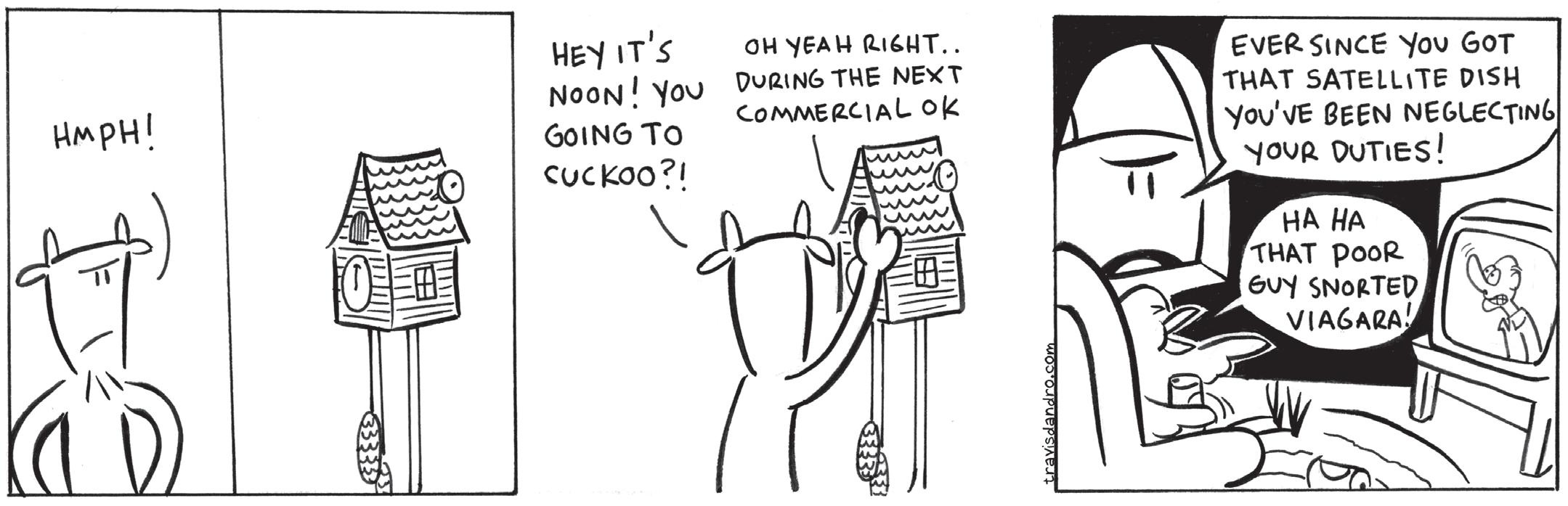



Mr. Gnu
Travis Dandro
Mr. Gnu



Editor’s Corner
World Series or Super-Spreader Event?
Dodgers COVID-19 scandal is emblematic of American selfshness in pandemic
By CHRISTINA BULKELEY Sun Sports Editor
On Tuesday night, the newly-minted World Series Champion Los Angeles Dodgers found themselves at the center of the sports world’s latest faux pas. Third baseman Justin Turner, who had tested positive for COVID-19 just innings before the game ended, ran back onto the field to celebrate and ripped off his mask among dozens of Dodgers families, personnel and players.
Wednesday morning, when the baseball world should have been lamenting the Rays’ poor coaching decisions, Turner was instead the subject of its ire.
In a 2020 marred by pandemic and social tensions for months on end, how are we still getting things so wrong?
What Turner did was painful to watch. He not only ignored security guards who asked him to remain in isolation but he also could not be bothered to enact the bare minimum courtesy of keeping his mask on while he joined the on-field celebration. He was around more than just his teammates — their families, Dodgers executives and many others were also a part of this celebration that Turner turned into a symbol of America’s failure to contain the virus.
In the wake of Turner’s intentional non-compliance
Exposing MLB’s shortcomings does not shift the blame away from Turner: It shows that COVID-19-related failings are abundant and that all parties involved need to take responsibility.
with health guidelines, some teammates tried to turn the blame on Major League Baseball, saying that the bubble they instituted to protect players from COVID-19 was ineffective and not well-monitored. Dodgers reliever Joe
Kelly alleged team personnel and media were able to leave the hotel to golf, thereby bursting the purported bubble concept. We also already knew that fans were allowed at these games — and that the roof was closed for three of the contests — making it not much of a bubble at all when compared to the NHL or NBA’s isolation techniques used earlier this year.
The poorly-executed bubble might explain how Turner could have contracted COVID19 without breaking protocol, but it does not change the fact that even when he knew he had it, he exposed everyone involved in the Dodgers’ celebration.
competition, Turner tore down the facade of safety in one fell swoop. He should not have had the chance to catch COVID-19, and in this regard, it appears that the league failed him (it is not yet known exactly how Turner caught the virus). But that failure was amplified by Turner’s split-second act of disregard for others’ safety, effectively spoiling the Dodgers’ first championship since 1988.
If MLB only created a “secure zone” so as to make for good optics after an entire season of non-bubble competition, Turner tore down the facade of safety in one fell swoop.
Exposing MLB’s shortcomings does not shift the blame away from Turner: It shows that COVID-19-related failures are abundant and that all parties involved need to take responsibility. The entire situation has represented the attitude that so much of America holds toward the virus; the ‘it’s not that serious if you’re young and healthy’ rhetoric (even though some otherwise-healthy MLB players who have caught COVID-19 have developed chronic heart conditions as a result). Turner’s tweeting out “I feel great, no symptoms at all,” didn’t beg the forgiveness of fans, either.
Joe Kelly’s description of the “secure zone,” as he says the league called the bubble, should make fans wonder just how seriously MLB took the prospect of players catching the virus. And Justin Turner’s reaction to being diagnosed with COVID-19 echoed that sentiment as he emphatically exposed others to the virus — even those who are not necessarily young and healthy, like his manager Dave Roberts, who is a cancer survivor and with whom Turner took photos without a mask on during the World Series celebration.
If MLB only created a “secure zone” so as to make for good optics after an entire season of non-bubble
Turner is a key member of a Dodgers core that had been eliminated from World Series contention by the eventual victor in each of the last three years. Having the chance to celebrate his team’s victory taken away from him was a cruel cosmic trick. But that doesn’t make what he did forgivable.
And, though some will argue that the people that Turner potentially exposed to COVID-19 would have been in his contact-tracing web anyway, they are missing the point. This isn’t about contact tracing and the annoyance of quarantining for 14 days. It is about the fact that Justin Turner knew conclusively that he had COVID-19, a virus that has killed 230,000 Americans this year, and he still went out and subjected a field full of people to the possibility of contracting it.
The public might not find out for certain whether Turner infected anyone during that celebration. Last week, The Commissioner’s Office put out a statement saying that a full investigation into the situation was underway. But if MLB does not enact severe consequences for what transpired Tuesday night, the league will have, beyond a doubt, made a statement that community safety is not a priority at all.
Cornellians Seek Congressional Seats Nationally
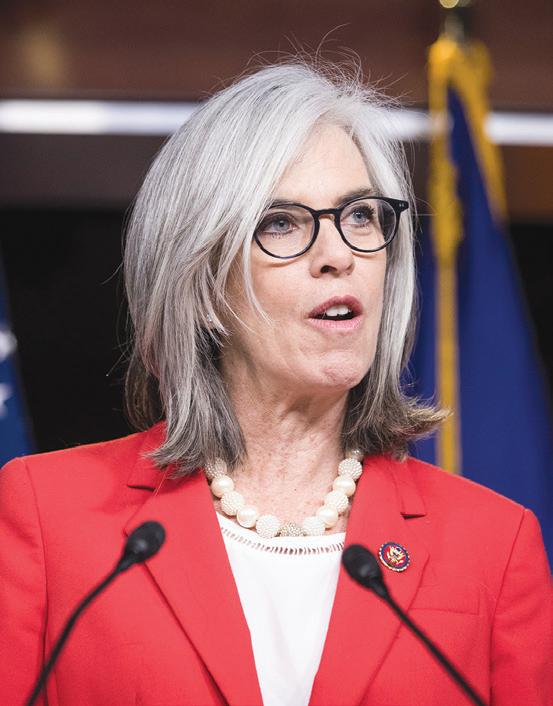
Katherine Clark J.D. ’89
Massachusetts’s Fifth District
The district’s incumbent since 2013, Rep. Katherine Clark (D-Mass.) is running against Republican challenger Caroline Colarusso, a current town board member of Stoneham, Massachusetts.
Current projections have her winning re-election to the Boston suburbs seat by a wide margin. She is also running in an intra-party competition to serve as the Democrat’s Assistant House Speaker. She is currently the Vice Chair of the Democratic Caucus for the House, the sixth highest-ranking Democrat in the current Congress.
After graduating from Cornell Law School, had an extensive career in Colorado and Massachusetts’ State Attorney General offices.
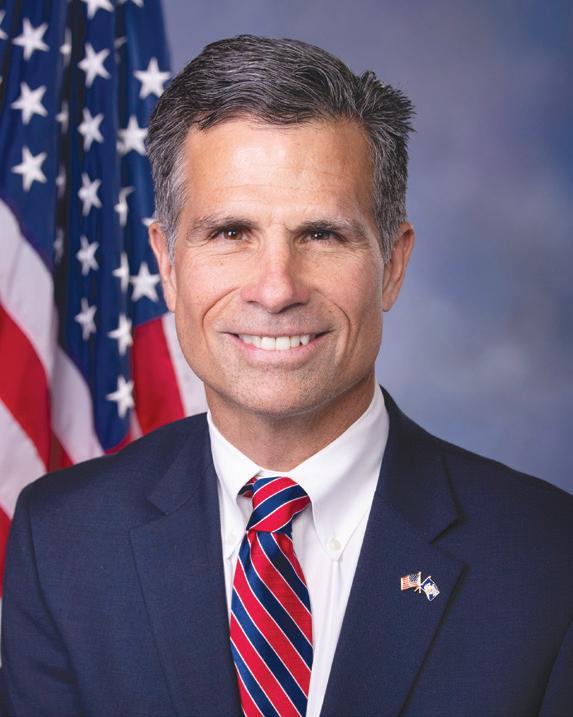
Dan Meuser ’88, Pennsylvania’s Ninth District Rep. Dan Meuser (R-Pa.) is looking to win re-election after completing his first term in Congress. This cycle, he is being challenged by Gary Wegman, a moderate Democrat.
Centered on northeastern Pennsylvania’s “Coal Region,” the largely white, working class district is among the state’s most Republican. Having won his last election by a nearly 20-point margin, election handicappers widely predict Meuser will once again cruise to a comfortable victory.
Elected in 2018, the freshman representative served on the House Budget, Veterans Affairs, Education and Labor Committees in the 116th Congress. A staunch Trump supporter, Meuser has supported most of the president’s agenda, including the construction of a southern border wall and limits on abortion.
Meuser graduated from Cornell in 1988 with a degree in economics and government, after transferring from SUNY Maritime College on a Navy ROTC scholarship.
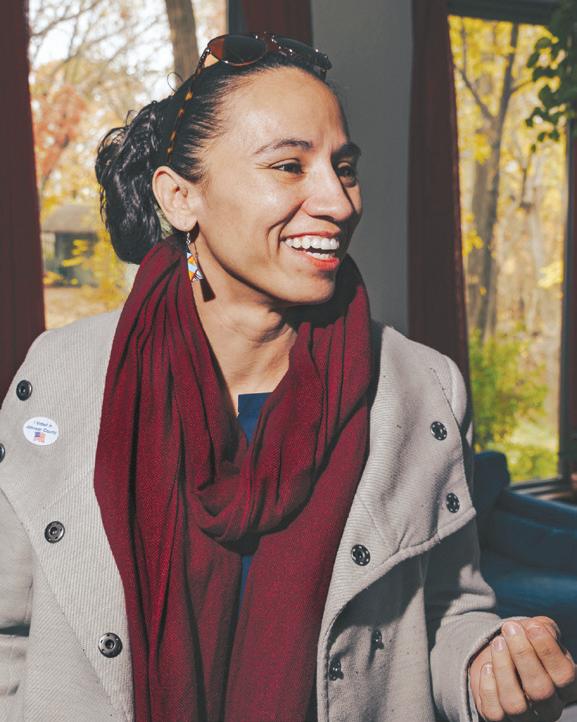
Sharice Davids J.D. ’10, Kansas’s Third District Rep. Sharice Davids (D-Kan.) is vying to secure a second Congressional term, facing Republican candidate Amanda Adkins, the former state party chairwoman.
Davids was elected to office in the 2018 midterms, ousting former Rep. Kevin Yoder to become the first Democrat in eight years to represent the greater Kansas City-based district. While the district had long favored Republican candidates, Davids has been boosted by a wave of college-educated, suburban voters. As a result, polling suggests that Davids is heavily favored to hold on to her seat.
After receiving her law degree from Cornell in 2010, Davids began a career as an attorney, and was later chosen to be a White House Fellow in the Department of Transportation for the Obama administration.
She is currently only one of two Indigenous Congresswomen, both of whom won their seats in 2016 — making the 116th U.S. Congress the first to have a Native American member.
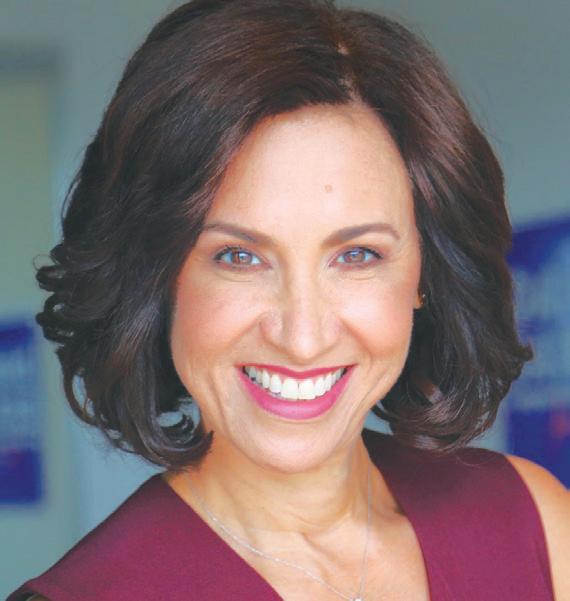
Dana Barrett J.D. ’88, Georgia’s 11th District
Barrett is the Democratic candidate for the district and is running against incumbent Rep. Barry Loudermilk (R-Ga.) during his third Congressional term. Barrett is looking to flip the only remaining Republican congressional seatin the greater Atlanta metro area.
While Democrats have made inroads in some suburban districts in recent election cycles, the 11th District is still highly Republican, having handed President Donald Trump a 25-point victory in 2016. Barrett is the only Cornell alumna challenging an incumbent member of Congress this election cycle. She received her degree from the hotel school, and was also part of the University’s cheerleading squad and a member of Alpha Chi Omega sorority.
According to her campaign website, after Cornell, Barrett moved from the hotel industry to the technology sector, where she worked as an executive for an Atlantabased tech corporation.
To continue reading this article, please visit cornellsun.com.
Roman LaHaye can be reached at ral344@cornell.edu. Eleanor Zweber can be reached at enz4@cornell.edu.
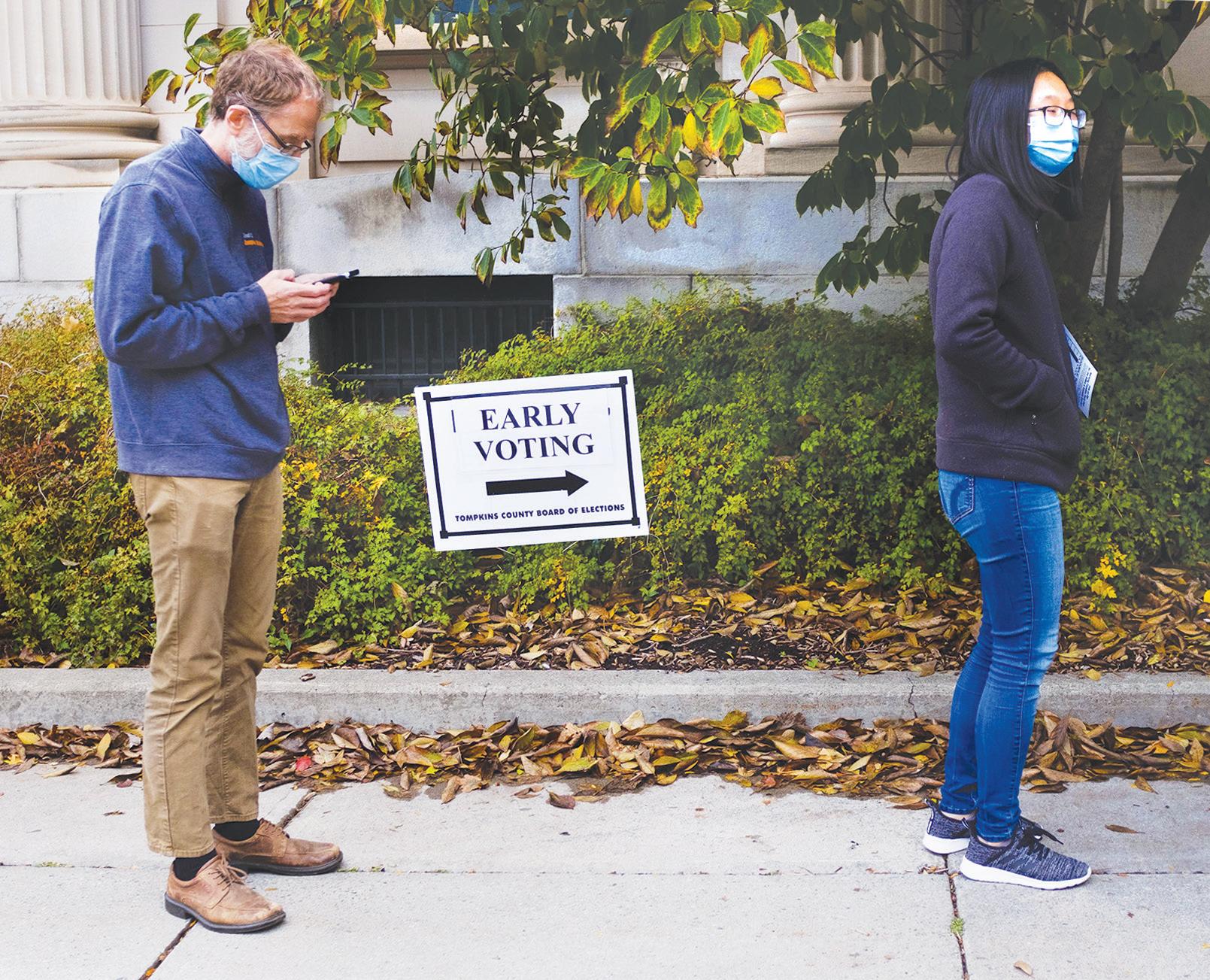
‘Steady,’ Cold Lines Mark Tompkins Co. Early Voting
lowed social distancing and mask wearing guidelines.
With early voting for the presidential election having ended on Sunday, Tompkins County said it’s prepared to process the next wave of ballots.
As of Oct. 30, the Board of Elections received 11,055 ballots, according to Democratic Commissioner Stephen Dewitt. Voters cast about 2,200 of those ballots last weekend, when in-person, early voting started.
According to Dewitt, lines have been “steady” but not “super long.”
Aimé Freedenberg ’21 voted Monday morning, skipping a Zoom lecture to vote at a quieter time and at a location with more parking. Freedenberg said the line was longer than she expected, lasting just under an hour.
“It was pretty cold, and we seemed to be the only students there,” Freedenberg said.
Inside the polling place, Freedenberg was asked to show identification before she received a ballot, although New York State law doesn’t require every voter to show ID. She said other voters fol -
Dewitt said he anticipates about 80 percent turnout for the race between President Donald Trump and former Vice President Joe Biden. In 2016, 75 percent of registered voters cast their ballots in the City of Ithaca. Turnout for the whole county, which also includes Lansing, Dryden, the Town of Ithaca and other areas, was slightly higher at 78 percent. Those figures are significantly higher than the nation as a whole, which, in 2016, had a turnout rate of only just above 60 percent.
Out of 58,626 registered voters in Tompkins County, 32,190 are registered Democrat and 11,087 are
Republican. In 2016, 26,093 people in the county voted for Democratic candidate Hillary Clinton, while 9,370 voted for Trump.
Prof. Dave Roberts, hotel administration, voted in Ithaca for the first time on Thursday after moving from Maryland. It took him about an hour to vote due to a technical issue with the polling site’s printer. Although he and other voters waited outside in a cold drizzle, he
said almost everyone stayed and was in “remarkably good spirits.”
“I was really impressed with people’s positive attitude, standing in the rain for an hour. No one complained,” Roberts said. “It was pretty cool. I don’t think I’ve ever left a voting booth thinking, ‘Wow, I feel happy.’”
The Board of Elections has also receive d 9,574 absentee ballots as of Friday, about 64 percent of the 14,893 ballots initially delivered to voters.
Dewitt said the county still expects to receive about 3,000 to 4,000 additional ballots, but knows some voters who requested ballots already voted in person. In New York, voters can cast their
ballot in person even after submitting an absentee ballot –– the in-person vote will nullify and replace the absentee ballot.
Ballots must be postmarked by Nov. 3, meaning some may arrive after Election Day and could delay an election result for the county.
Freedenberg registered to vote in Tompkins County in 2018 for the midterm election. She thought her vote would count more here than at home in Connecticut, where the congressional races are less competitive. She said she’s hopeful about this election, but doesn’t anticipate hearing definitive results immediately.
“I’m a little bit anxious leading up to Tuesday and afterwards,” Freedenberg said. “I’m feeling like Halloween will be extended in its scariness.” Roberts also said he’s nervous about the outcome if it’s anything other than “clear cut.”
Ithaca polling places will be open from 6 a.m. to 9 p.m on Election Day.
Katherine Esterl can be reached at kae78@cornell.edu.
Six Cornell alumni are listed on ballots across the country, vying for seats in the 117th United States Congress.
Early bird | Ithacans wait in line to vote on the first day of early voting.
MICHAEL SUGUITAN / SUN STAFF PHOTOGRAPHER
By KATHERINE ESTERL Sun Staff Writer
By ROMAN LAHAYE and ELEANOR ZWEBER Sun Contributors
SARAH SILBIGER / THE NEW YORK TIMES
COURTESY OF DAN MEUSER
BARRETT EMKE / THE NEW YORK TIMES
COURTESY OF DANA BARRETT
Faces, Signs and Votes of Upstate New York
By AMANDA H. CRONIN Sun Senior Editor
The typical, color-coded Electoral College map may display New York as a dark navy blue, a reliable set of Democratic votes. But the state’s political balance is more nuanced than the shading illustrates.
While the majority of voters in New York state are registered Democrats — about 5.9 million to 2.6 million registered Republicans — the partisan mosaic of the state is a microcosm of the American geopolitical landscape.
Upstate New York is largely rural, but the census population distribution means the state’s 23rd district’s liberal academics of Ithaca are represented by the same Congressman who represents more conservative laborers.
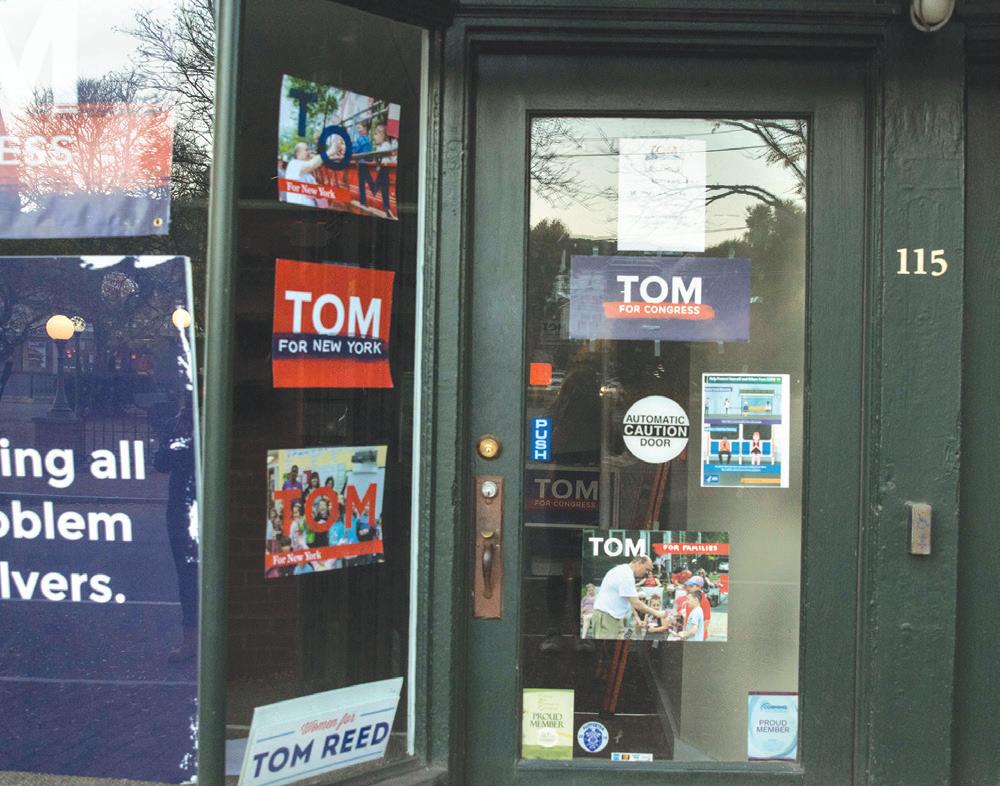
Rep. Tom Reed (R-N.Y.) has been re-elected comfortably in every cycle for the past seven years in the district that includes both Ithaca’s Collegetown and the thousands of onstruction and manufacturing workers who live across the Southern Tier.
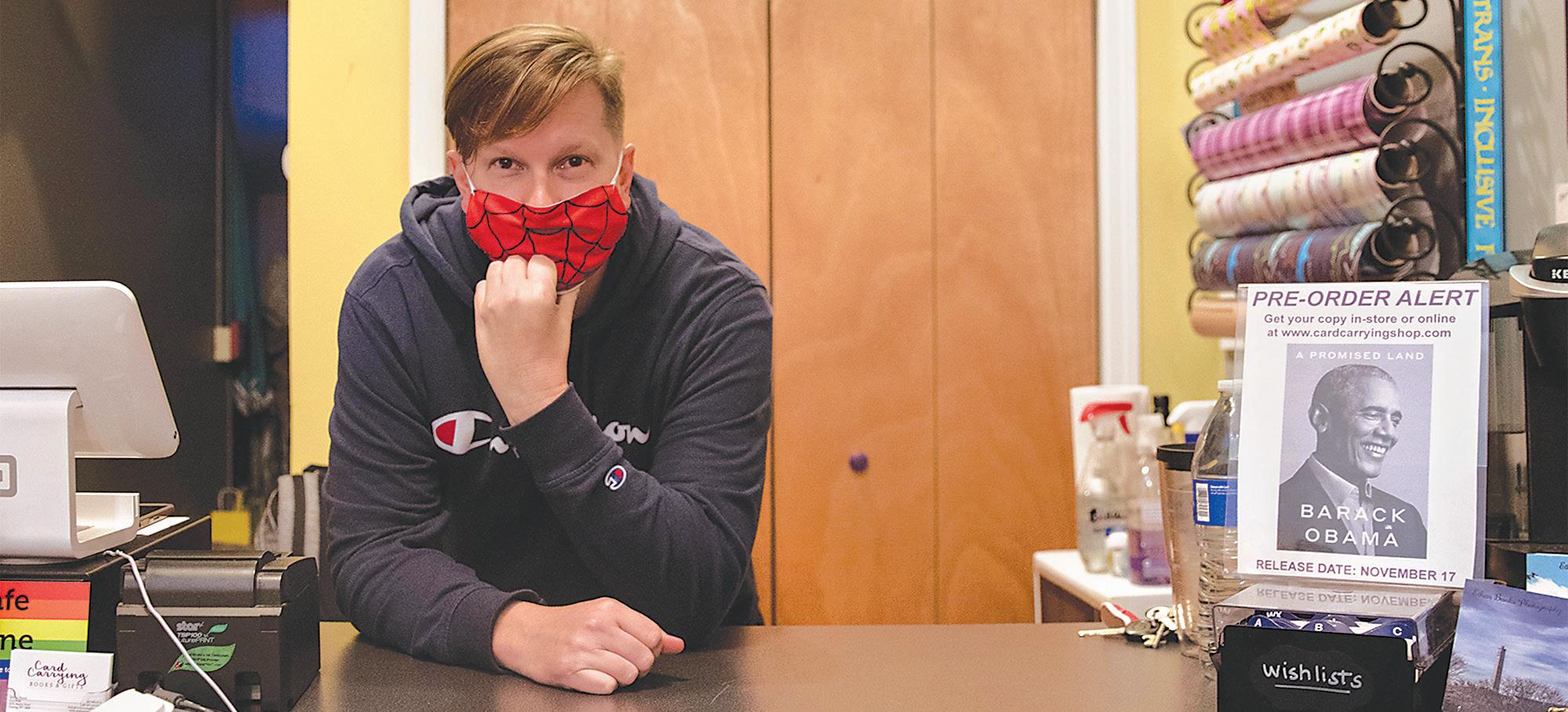
Dusty Hewit co-owns Card Carrying Books & Gifts, a bookstore in the middle of Corning where registered Republicans outnumber Democrats two-fold. The poll worker and Democratic voter knew people in town who recently changed their party registration from Republican to Independent or Democrat — he’s hopeful of a broader shift.
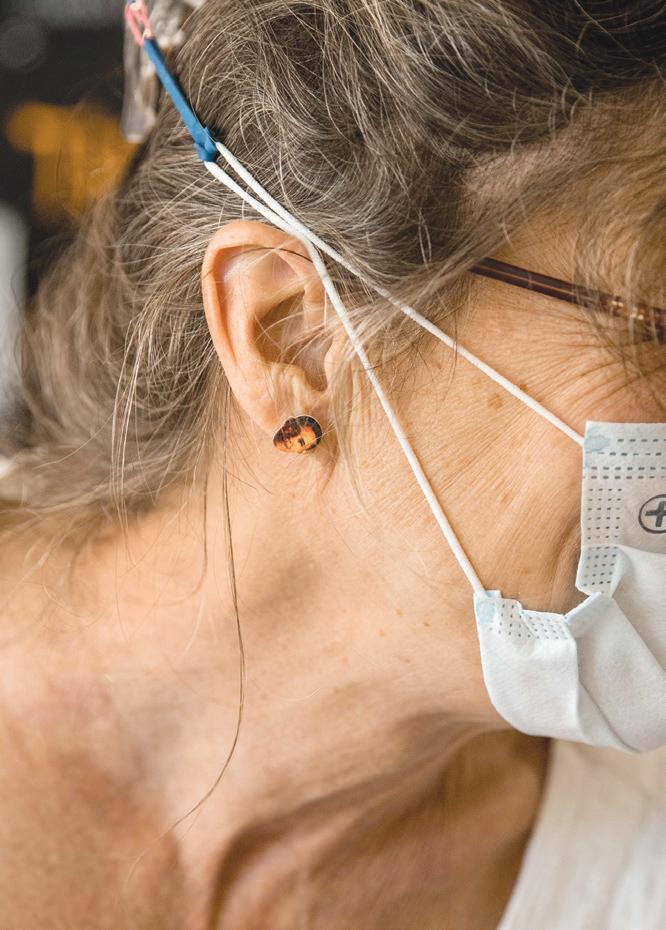
The barista at a Watkins Glen coffee shop shows off her Obama earrings as she ground espresso beans.
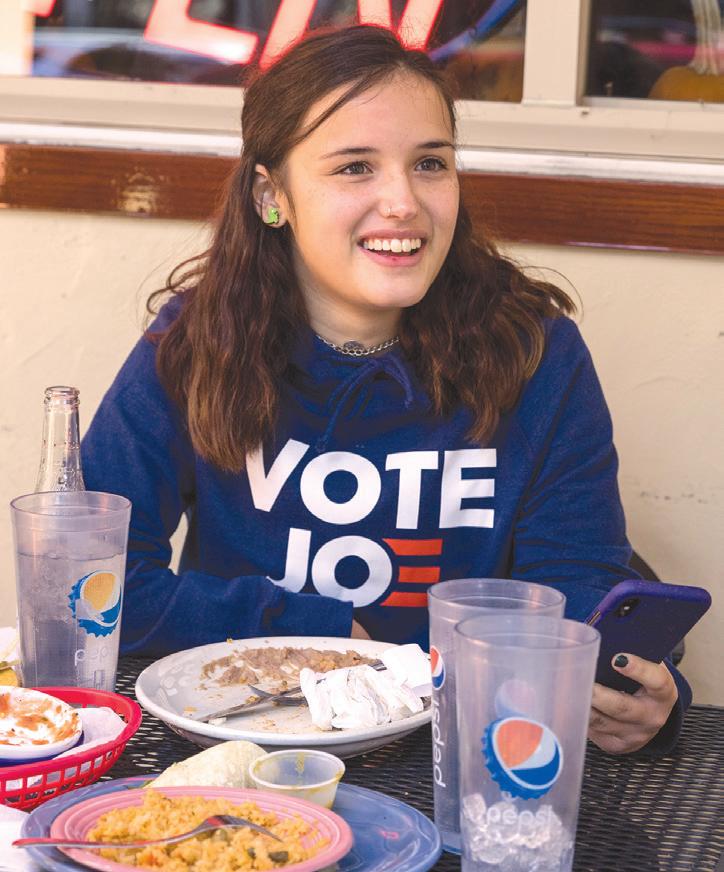
University of Buffalo student Sofia Ruffo said on her drive to Watkins Glen — she was alarmed to see the yard sign scenery change so quickly: “We kept passing Trump signs,” Ruffo said. “I guess we do live in a blue haven.”

touts tolerance. The two sophomores said they often feel tokenized on the campus, as two of the few Hispanic students. “We’re on every brochure and in every picture,” Arroyo said.
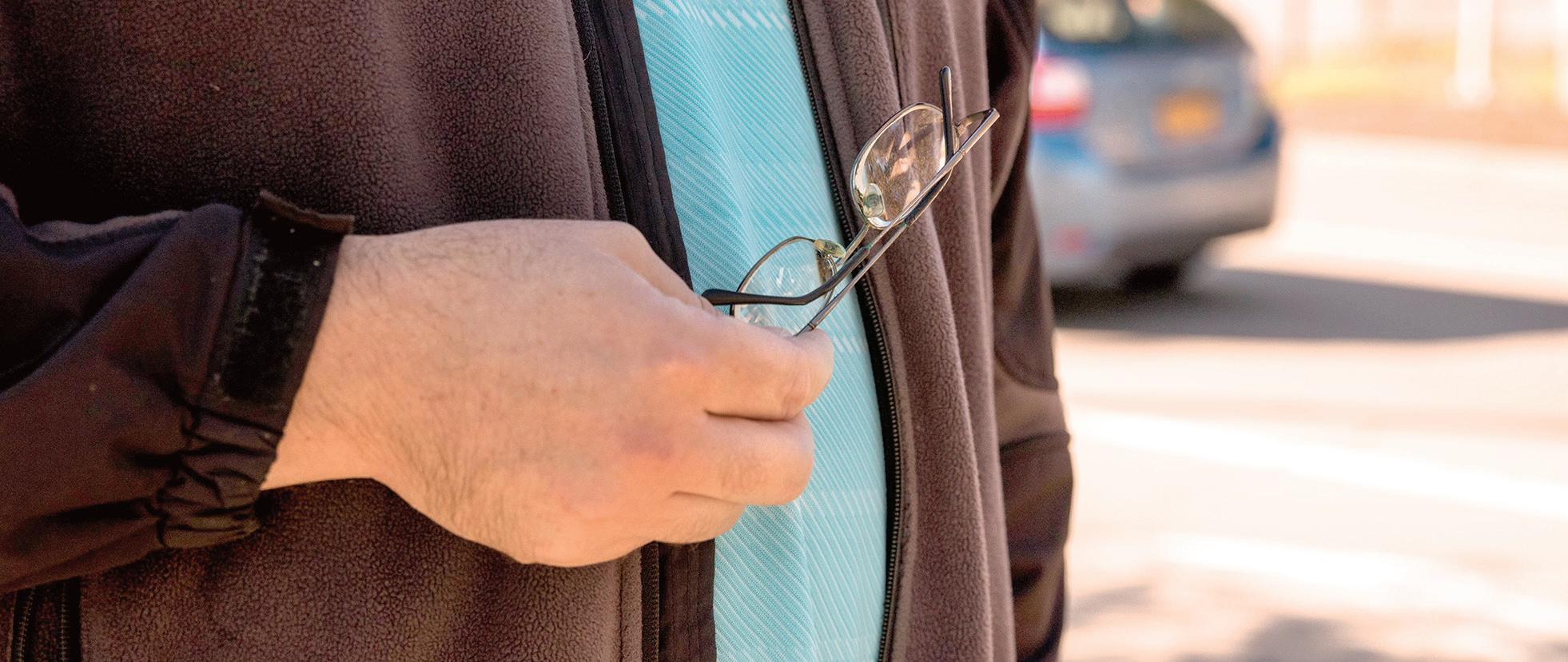
for him,” Brooks said. But he’s not too confident in either Trump or former Vice President Joe Biden, and may abstain from voting for a presidential candidate altogether.

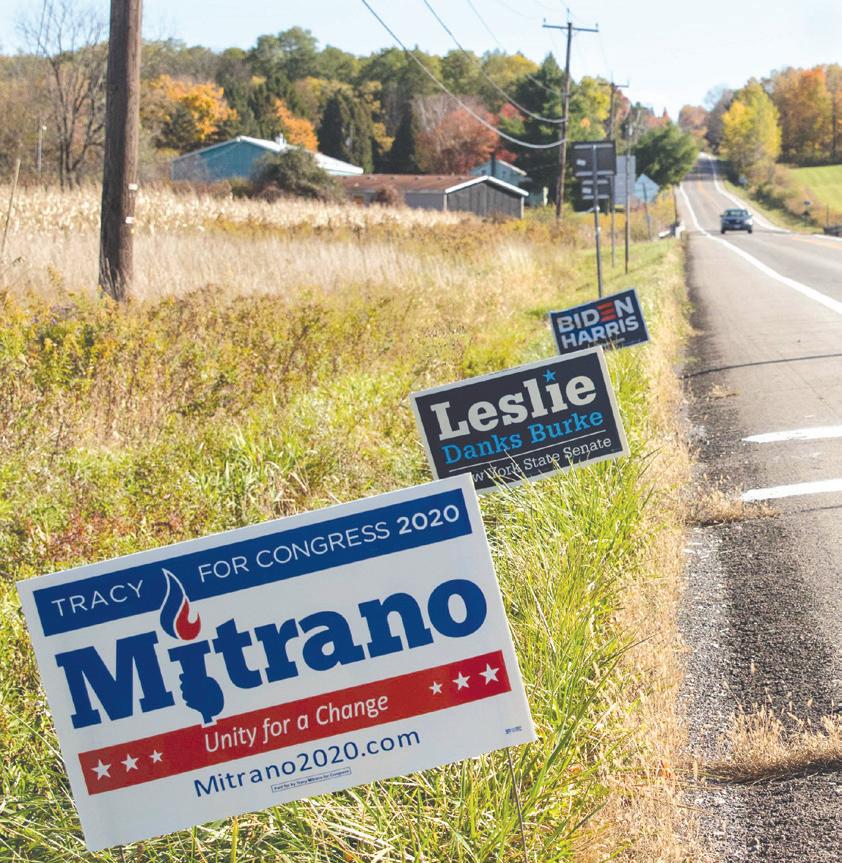
Across Upstate some signs of enthusiasm for a Democratic ticket popped up along the roads.
Hiliana Arroyo was chatting with her friend Jannette Santana in front of the campus student center of Reed’s alma mater Alfred University — that
“Our favorite days of year are the day after the election and the day after Christmas,” said postal worker Ted Brooks, referring to the day’s onslaught of mail and his lighter mail satchel. “I’ve been registered as a Republican since age 18, so I may just vote
Republican allegiance is strong across rural towns in Upstate New York, with multiple houses on the main street through the town of Almond featuring brass letters spelling “TRUMP” nailed into the doorways.
Photos by HANNAH ROSENBERG Sun Assistant Photography Editor