The Corne¬ Daily Sun


By AMINA KILPATRICK Sun News Editor
Marc Lacey ’87, national editor for The New York Times, will be the first journalist to visit Cornell as part of a new Distinguished Visiting Journalist program hosted within the College of Arts and Sciences beginning in the Spring semester.
Lacey was chosen as the inaugural fellow due to his extensive background in journalism and his position at one of the most “influential newsrooms,” Dean of the College of Arts and Sciences Ray Jayawardhana said.
“As the national editor of [T]he Times and a moderator of a recent presidential primary debate, Marc is very much in the ‘thick of it’ at a time when good journalism matters tremendously and the media landscape itself is transforming dramatically,” Jayawardhana told The Sun in an email.
The program was created due to interest from students, alumni and faculty to engage more with the media, Jayawardhana said. Joel Malina, vice president of university relations, said that this program can bring back some of the journalists that have come from Cornell and The Cornell Daily Sun to “inspire another generation of leaders.”
opportunities for the journalists to engage with the Cornell community through class presentations, meetings with faculty and students and workshops.
Lacey will be coming to campus for one week in the spring semester and will return for another week in the fall although his specific schedule is still being determined at this time.
During his time on campus, Lacey said he will be talking about the “big issues” in the country right now such as impeachment and immigration. He also wants to talk about the state of news media during a time where such organizations face intense criticism.
“I am interested in sharing what I have learned over 30 years as a journalist with students who are interested and I’m also really excited about learning from the students,” Lacey told The Sun.
Lacey has spent the past 20 years at The Times, previously reporting from Nairobi, Kenya, Phoenix, Arizona, and Mexico City, Mexico and holding other editor positions. He has also worked for the Los Angeles Times and interned for The Washington Post. He has a master’s degree in international policy and practice from George Washington University and has studied at
Ofers 10K
By MARYAM ZAFAR Sun City Editor
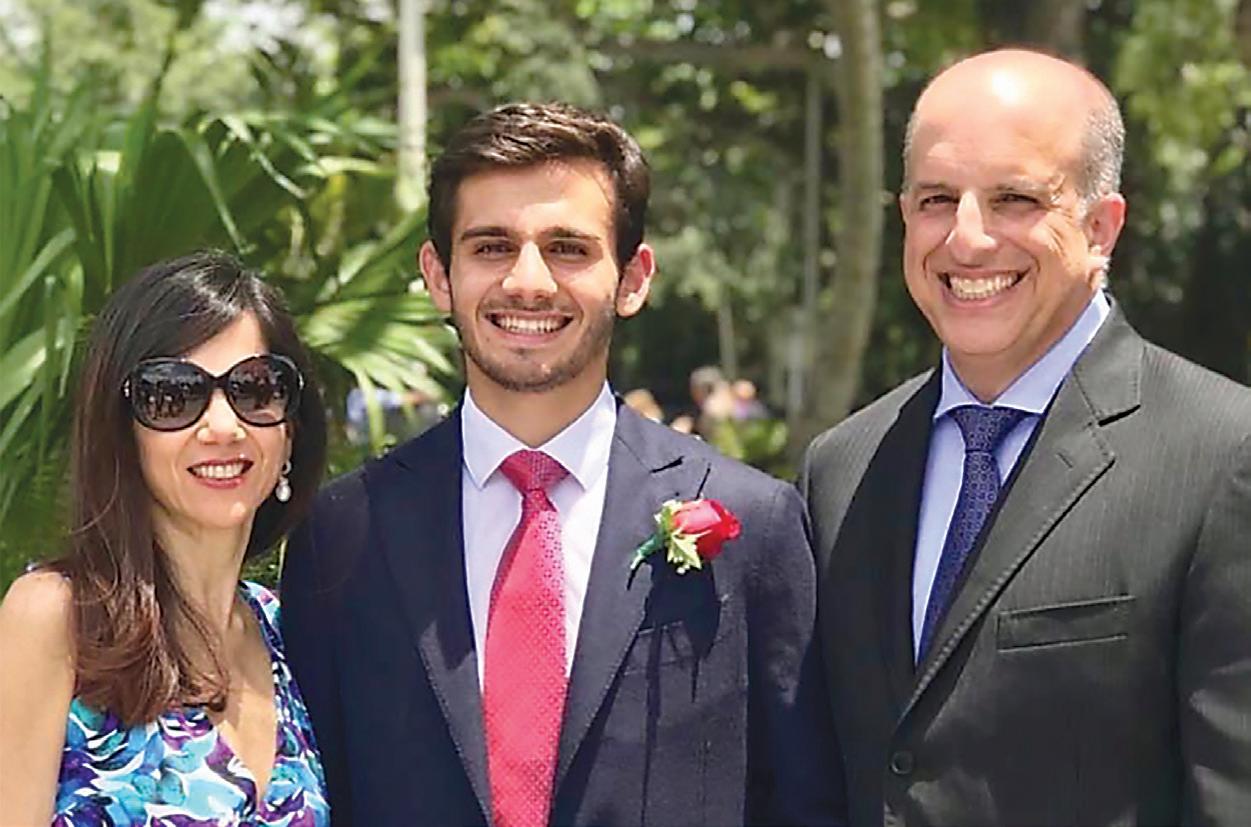
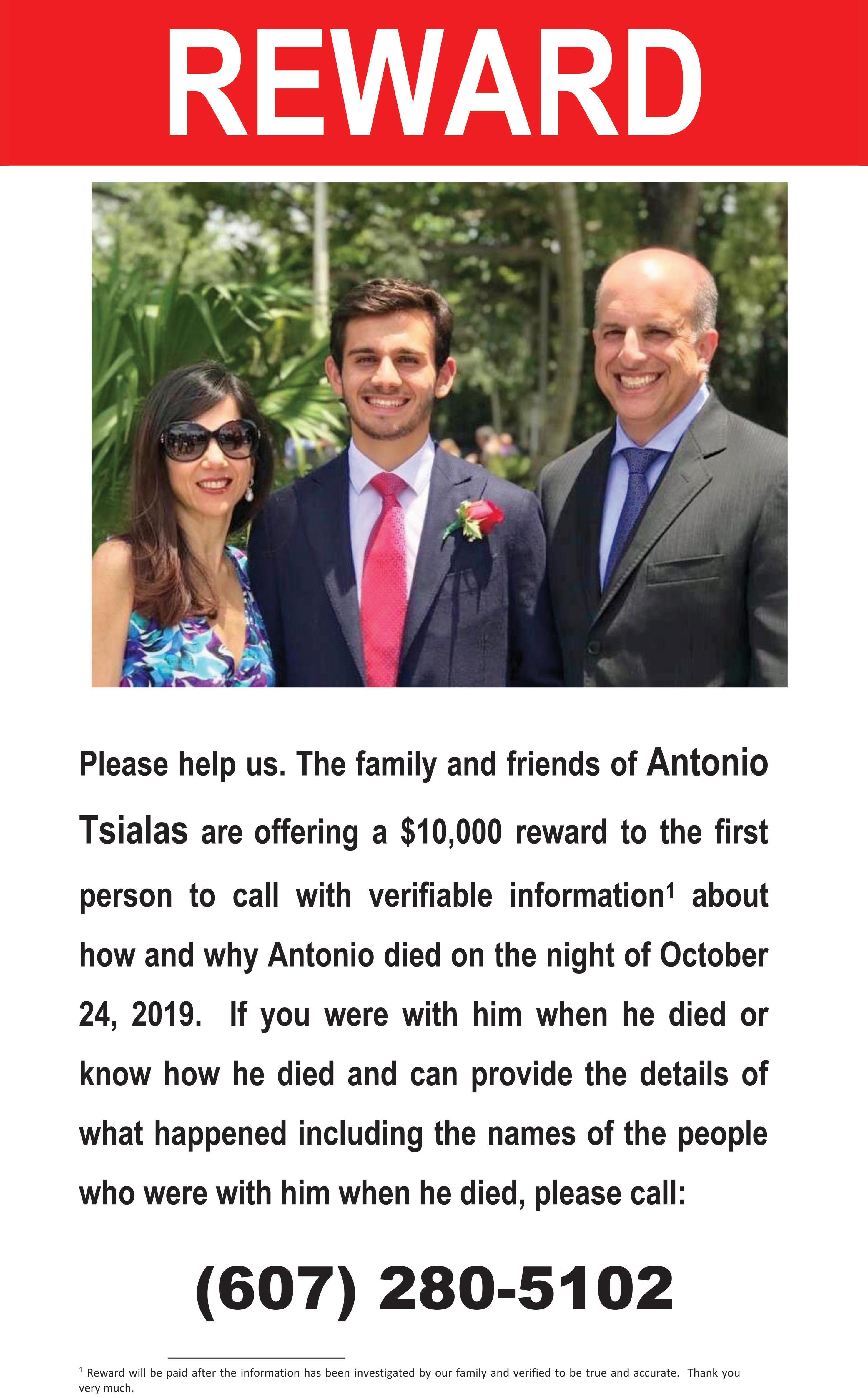
In the last two weeks, the family of Antonio Tsialas ’23 has amped up their push for answers after the first-year’s death last month. The family has taken out three days of full-page advertisements in The Sun publicizing an award for $10,000 and has hired an Ithaca-based private investigator in their search for information for the Cornell first-year who was found dead in an Ithaca gorge. The award was posted to incentivize further information, but David Bianchi, a Miami-based lawyer representing the Tsialas family, said that in

Freshman
the dozens of calls received since the emotional advertisement was posted, not a single person has inquired after the reward.
“They want to be helpful,” Bianchi said, “and they pass on information.”
The family has also hired a private investigator in Ithaca in the last two weeks to help the investigation and pass on pertinent information to the Cornell University Police Department, Bianchi said. Tsialas was found dead on Oct. 26 after he was last reportedly seen at a Phi Kappa Psi fraternity party
See TSIALAS page 4
C.U. Alum Kaplan-Reiss ’81 falls 75 feet while hiking, sustaining serious injuries, but survives
On Aug. 10, shortly before beginning the fall semester, Ithaca College freshman Henry Grant was hiking with his mother on Monument Mountain in Great Barrington, Massachusetts when suddenly, he heard “tumbling, a thump, and another
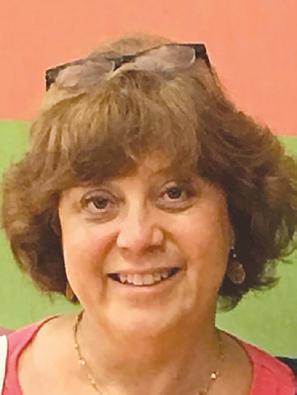
Paula KaplanReiss ’81, another hiker on the trail, had fallen 75 feet down the Grant had been out
on a walk the trails, something that he does often, when he happened upon this emergency. In an interview with The Sun, Grant recalled hearing KaplanReiss’s husband, Rick Reiss, scream Paula’s name over and over. After assessing the situation, Grant decided to try to help save her.
a feeling. I know the mountain.”
“‘You know what? I’m going to go do it. I just want to see if I can find her. If I can’t, I can’t, but I’m going to try,” Grant, a frequent hiker, said. “I had
Grant and his mother began their descent down the mountain until they came to a spot where he thought would be a good place to enter the woods to look for Kaplan-Reiss.
Fifteen minutes later, after climbing up a set of slippery rocks, Grant saw that Kaplan-Reiss was lying on a small ledge, just six inches
See RESCUE page 4

Diabetes-Friendly Cooking Demo Noon, 701 Clark Hall
Department of Natural Resources Fall Seminar 3:30 p.m., G24 Fernow Hall
Planet Nine From Outer Space Lecture 4 p.m., 105 Space Sciences Building
CARE and Lab Animal Club Social 5 p.m., CARE Offices, Vet Research Tower
Hospitality Pitch Deck Competition Finals And Awards Reception 5 p.m.,198 Statler Hall
Tomorrow
International Student Group Counseling 3 p.m., 276 Caldwell Hall
International Coffee Hour x Networking and Interviewing Tips 3:30 p.m., G25 Stimson Hall
Sustainabili-Tea 4:30 p.m., eHub, Kennedy Hall
Zumba Fitness Workshop by Cornell Minds Matter 5 p.m., 519 Willard Straight Hall
Veterinarians Eating Tasty Snacks Fall Harvest Dinner 6 p.m., Green Room, College of Veterinary Medicine

By WINNY SUN Sun Staff Writer
In Gracias, a small town in Honduras, people now have reliable access to safe drinking water for the first time in their lives — thanks to electricity-free, gravity-powered water treatment technology invented by a Cornell engineering project team.
The AguaClara project team, headed by Prof. Monroe Weber-Shirk, civil and environmental engineering, develops water treatment technology powered solely by gravity. AguaClara plants help address the lack of sustainable water treatment infrastructure in impoverished countries, The Sun previously reported.
AguaClara has already built water treatment plants in other towns in Honduras and India. The Gracias plant is AguaClara’s 20th plant in Honduras. Producing 120 liters, or approximately 32 gallons, of water per second, it is the team’s largest plant to date in terms of treatment capacity.
According to Kevin Sarmiento ’19 grad, a student researcher with AguaClara, there used to be no water treatment systems in Gracias. People relied on “raw” unfiltered water, which presented manifold public health problems. AguaClara offers an economical and reliable solution.
“Our plant is serving 20,000 people in the city, but has the capacity to serve up to 40,000 people, 250 liters per person per day, to meet higher demand in the future,” Michele Chen ’21, public relations subteam
lead, told The Sun.
The opening of the Gracias water plant was such a big event that it attracted the likes of local public politicians: the president of Honduras, Juan Orlando Hernández, the mayor of Gracias and the Honduran ambassador to Spain all attended the inauguration ceremony.
The AguaClara technology is opensource, which means that any community that needs it can afford the technology without having to pay for the patent, explained Sarmiento.
AguaClara did not build the plant in Gracias, but rather, they provided the design and technology. The project team partnered with local non-governmental organization Agua Para El Pueblo to realize the construction of the plant.
“We are very against ‘voluntourism:’ when people from outside the country work and build for that country,” Chen said. AguaClara instead prioritizes collaborating with the local community on projects as part of their mission.
“If someone builds something and leaves, there is going to be low accountability,” she continued.
Each year, approximately 20 AguaClara members travel to Honduras, where they study previously built AguaClara plants and other local water treatment facilities. The project team uses these real-life plants as case studies and brainstorm fixes for any issues.
“In the lab, you have a sense of what you do. But when you go to the actual site and

speak to people the plant impacts, it was breathtaking,” Sarmiento said. “It was a joy to be able to participate in something that is much bigger than yourself or the team.”
While attending a conference in Colombia this summer where he shared findings on the AguaClara mechanism, Sarmiento met many representatives in the water sanitation sector. In the future, he hopes to bring the technology to Colombia, his parents’ home country.
“Being on a team that works to provide
safe drinking water to communities like those where my family is from really inspires me,” he said.
AguaClara is in constant contact with its NGO partner in Honduras to make sure its plants are functioning properly. According to Sarmiento, the last time he checked in, “everything has been running really great.”
Winny
wsun@cornellsun.com.
Te NPR producers who designed booth are holding four live audio performances next week
about the Cornell project is that it’s the study of an institution,” said Prof. Jeremy Braddock, English. “That includes student life, the relationship of the university to the community and the unique research collections that exist at Cornell.”
This project — titled “Cornell According to Sound” — was the third installment of the College of Arts and Sciences Arts Unplugged Series, a program that hosts events and exhibits in the humanities, arts and social sciences to foster discussion among the Cornell community.
Harnett worked with professors in sound studies and held a recording workshop with students in the Milstein Program in Technology and Humanity. The students got the opportunity to record parts of
Prof. Jeremy Braddock Te AguaClara project team collaborated with a local NGO to implement their
Performing Arts, according to a University press release. The show is free, but space is limited. Tickets have already sold out.
“Anyone who attends this performance will have an experience utterly unlike anything they’ve experienced before.”
an evening chimes concert at different locations, on and off-campus.
Previous “Arts Unplugged” events included a community reading of Homer’s Odyssey last spring and a masterclass in Sundance documentary filmmaking in October.
Hoff and Harnett are also the creators of the podcast “The World According to Sound,” which airs on NPR’s All Things Considered. Their 90-second episodes explore specific sounds and their backstories.
The sounds gathered by Hoff and Harnett will also be presented at four live audio shows from Nov. 20-21 at the Flex Theater in the Schwartz Center for the
The show will be presented in a room of 100 seats and a ring of eight, high-powered speakers. Audience members will be given eye masks, and the room will be dark — allowing the audience to closely engage with the sounds.
“Anyone who attends the performance will have an experience utterly unlike anything they’ve experienced before,” Braddock said.
Meghna Maharishi can be reached at mmaharishi@cornellsun.com.
By MEGHNA MAHARISHI Sun Staff Writer
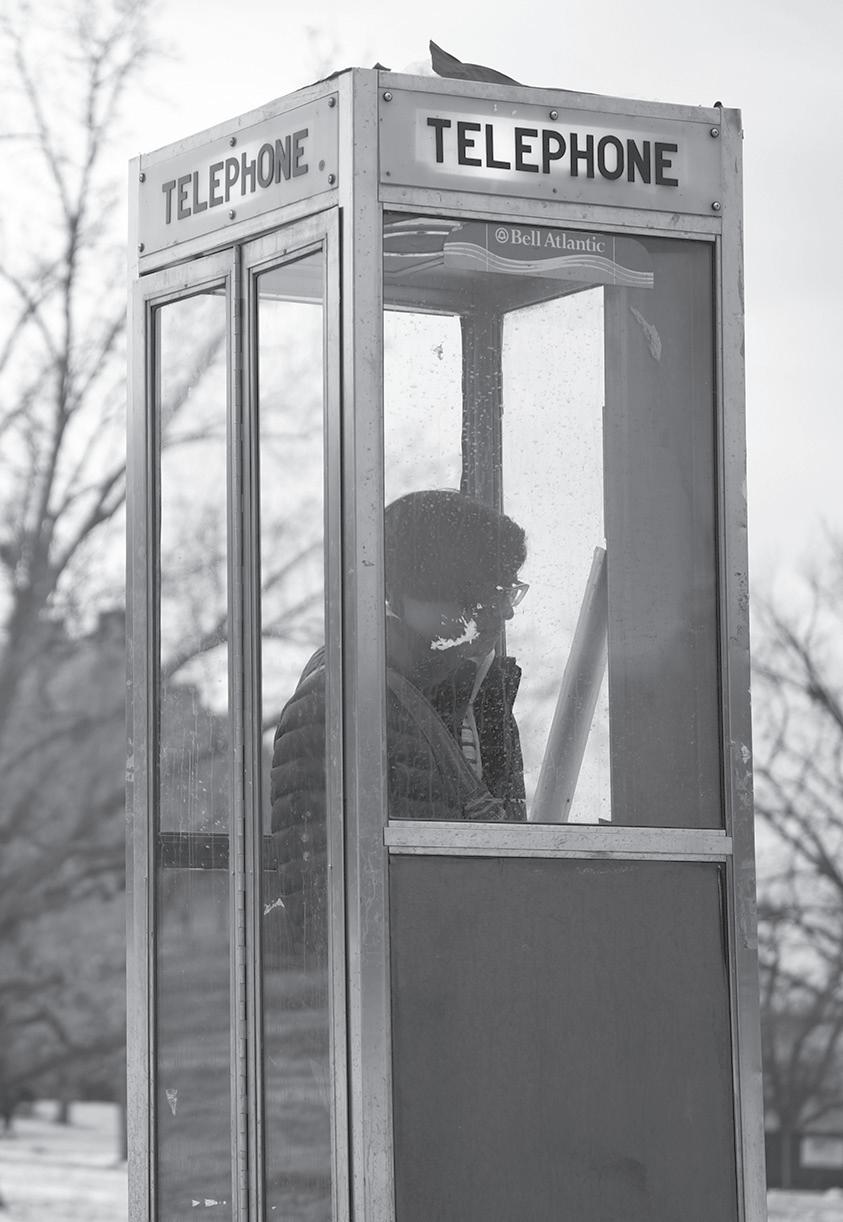
Last week, an unassuming telephone booth appeared on the Arts Quad. When curious students entered the booth, they could hear a myriad of sounds that define Cornell — chimes, conversations around campus and ice skates, among others. The creators of this exhibition, Chris Hoff ’02 and Sam Harnett, spent the past semester at Cornell gathering sounds as artists-in-residence in Cornell’s Media Studies Initiative — which supports interdisciplinary research in sound studies.
Braddock, who chairs the Media Studies Initiative, told The Sun that the duo first performed at Cornell a couple of years ago. During their time at Cornell, Hoff and Harnett made connections with professors and researchers. Impressed by their work, Braddock sought to find partners in the University who could help make Hoff and Harnett artists-in-residence for a semester.
“There was a lot of synergy between their approach to recording and preserving sound and the kinds of work that was being done at the University,” Braddock said.
“What’s especially interesting
This past semester, Hoff and
the national spotlight as a moderator for the demoratic debates on Oct 15.
An alumnus of Cornell, Lacey was very involved with The Cornell Daily Sun, serving as its editor-inchief while he was a student here. Although Lacey entered Cornell as an engineering student and graduated as a biology and society major, The Sun played an integral role in his life, giving him the foundation for his career in journalism.
Since graduating from Cornell, Lacey has remained actively engaged with the university and The Sun. Every time he has visited Cornell, he has visited The Sun and remains engaged with current editors through workshops and hosting students at The New York Times.
A topic Lacey wants to address with current Sun editors is the shift from operating as a print newspaper to navigating the world as a digital and print publication.
“I think that news organizations like The New
York Times, like The Cornell Daily Sun –– news organizations everywhere –– have to continue to adapt for readers,” Lacey said. “That's something that is really important for me in my job in New York, and something that Sun editors are also going through.”
This fellowship is funded through “philanthropic support,” according to a press release. One of the notable donors is the Dr. Guinevere Griest Fund for Public Engagement, named for an alumna who served as editor-in-chief of The Sun and worked for The National Endowment for the Humanities.
Fellows for this program are chosen on a rolling basis by a panel of Cornell faculty and staff. The advisory committee includes Jayawardhana, Malina, Prof. Noliwe Rooks, Africana studies and American studies, Prof. Jessica Chen Weiss, government and Prof. Steve Srogratz, applied mathematics.
Jayawardhana said the advisory committee members were chosen because of their diverse backgrounds and previous experience working with the media and journalists in their fields.
Family has ofered $10,000 reward
TSIALAS
Continued from page 1
on Oct. 24. The Cornell firstyear attended the party — which President Martha Pollack called an apparent unregistered, “dirty rush” party — after eating dinner with his mother, who was in town for First Year Family Weekend. When Tsialas failed to meet his mother the next day, the family reported him missing; he was found the next afternoon in Fall Creek gorge. A cause of death has not yet been shared.
“Had [the fraternity] not been having an unauthorized dirty rush,” the family’s attorney said,
York State Police for analysis. In the course of the investigation into Tsialas’ death, Cornell Police have sought subpoenas and warrants to seize evidence, CUPD Chief David Honan previously told The Sun.
Tsialas’ death was one of five widely-publicized deaths across the country associated with fraternities this semester. Incidents like the deaths at Pennsylvania State University, San Diego University, Arizona State University and Washington State University have thrust fraternity culture into the limelight.
“Had [the fraternity] not been having an unauthorized dirty rush, Antonio would be here today.”
Tsialas Family Attorney
“Antonio would be here today.”
In the investigation into Tsialas’ death, evidence of “significant misbehavior” by the Phi Kappa Psi fraternity ultimately led to the fraternity’s suspension on Nov. 8, the same day that Cornell’s Interfraternity Council also instituted a ban on most social events for the rest of the semester. The Cornell chapter of Phi Kappa Psi did not respond to requests for comment.
“Since the investigation is ongoing, we don’t yet know the facts surrounding Antonio’s disappearance and death,” executive director Ronald K. Ransom of the national Phi Kappa Psi organization previously wrote in an email to The Sun. “Our members continue to work with police as they investigate.”
In their investigation, CUPD has conducted more than 60 interviews and followed more than 150 leads. Police and University officials have maintained that they do not believe the death was the result of foul play, and that CUPD will turn over evidence to the New
The National Interfraternity Council issued a blanket statement on “recent tragedies” last week, writing that the incidents were separate and that it was “inappropriate to attribute a singular cause.”
Cornell’s Interfraternity Council reacted differently, banning registered social events for the weekend following Tsialas’ death, ultimately barring most social events for the rest of the semester and developing proposed reforms. In the past, most fraternity houses did dirty rush, IFC president Cristian Gonzalez ’20 previously said.
“When you combine the unauthorized dirty rush party with the distribution of alcohol to these young freshmen,” Bianchi said, “you have the recipe for disaster.”
The hotline created by Tsialas’ parents can be used by calling or texting 607-280-5102. University officials also encouraged anyone with information to contact Cornell Police at 607255-1111, cup-inv@cornell.edu or by using the Silent Witness Program, an online form that allows respondents to report information anonymously.
Maryam Zafar can be reached at mzafar@cornellsun.com.
In absence of a journalism major, which The Sun previously reported was completely phased out of Cornell by 1996, many budding journalists including Lacey have used The Sun as a training ground for journalism. The College of Arts and Sciences also views this program as way to engage with The Sun in addition to bringing journalists on campus.
“The Sun is excited for the increasing on-campus opportunities for students interested in journalism and is looking to explore a future relationship,” said Anu Subramaniam ’20, current editor in chief of The Cornell Daily Sun.
Jayawardhana said areas of collaboration between Arts and Sciences and The Sun include hosting events and panel discussions for students interested in journalism.
“I am eager to learn a whole lot about what the atmosphere is like for Sun editors,” Lacey said. “How the campus has changed since I was there is something that I'm really interested in exploring.”
RESCUE
Continued from page 1
away from falling another 20 feet. He could tell she was in extreme pain.
"When I first saw her, it as like 'oh my god, she's alive,’ because, on the way down, I honestly expected she wouldn’t be,” Grant said.
After calling out to KaplanReiss and receiving only a weak response, Grant dialed 911 and notified other hikers in the area to their location. To get closer, Grant climbed further up the steep side, digging out handholds in the dirt.
Another hiker named Simon arrived to help as well. In the approximately 30 minutes it took for rescue workers to navigate to the isolated trail spot, the two of them did their best to keep KaplanReiss calm.
“I ended up grabbing her hand, trying to ask her a lot of questions… to keep her mind off the pain,” Grant said.
Doctors at Albany Medical Center, where Kaplan-Reiss was transported to after the injury, later confirmed that Kaplan-Reiss had broken 10 ribs, her collarbone, tibia and fibula. On top of those injuries, she also sustained a concussion.
After Kaplan-Reiss was rescued, Grant and Simon climbed back up with the help of the harnesses and the pulleys. The whole ordeal took over five hours.
“It was a crazy day, and I’m glad I was there to be able to help,” Grant said.
Kaplan-Reiss spent 10 days in the hospital and has no recollection of any events before her fourth day.
“It was pretty bizarre to hear all this stuff that happened to me and have zero awareness, other than I couldn’t walk and was in pain,” she said.
Kaplan-Reiss studied human development and family studies in the College of Human Ecology and now works as a psychologist. Her mother had passed away a week before, she said, and she and her husband were visiting their vacation home in the area to relax.
Kaplan-Reiss is still in physical therapy but is now able to walk on her own. She is expected to make a full recovery and hopes to get back to her active lifestyle.
“I feel incredibly lucky,” she said. “I came close to death and I remember none of it.”
It was only until later that Grant and Kaplan-Reiss realized their coincidental Ithaca connec-
tion. They spoke over the phone while Kaplan-Reiss was still in the hospital. “I heard he was going to Ithaca College, and I was like, ‘there’s great hiking there,’” she joked.
“There wasn’t anything in it for him. He wasn’t a volunteer, he wasn’t a part of the rescue team, he wasn’t a part of anything. He was just a good kid,” Kaplan-Reiss said. Grant, who studies business, was surprised by the amount of attention his actions have received. He credited the firemen and other rescuers as the real heroes.
“There were a whole bunch of guys who were all volunteers from that town who came to help. I was just the first one to find her,” Grant said.
“I’ve come to appreciate more how big of an impact good deeds have on people,” he continued. “I didn’t realize how such a small deed, at least in my eyes, can be seen as such a big one in someone else’s.”
Kaplan-Reiss hasn’t forgotten Grant’s selfless act. “He is one of a kind. He saved my life,” she said.
Emily Yang can be reached at eyang@cornellsun.com.

I’m too young to be thinking this much about getting old.
Last Friday, I zoomed across the state to catch the emo icons Jimmy Eat World play a show in the Hudson Valley. I’ve never cared a whole lot for their music, but I thought I may as well go see them at least once.
Jimmy Eat World is known for their angsty but fiery enthusiasm which centered them in the turn-of-the-millennium glory days of their genre. Their straightforward and radio-friendly hits have remained a favorite to establish the time period in TV shows and movies, and the chorus of “The Middle” can still bring comfort to tweens desperate to figure out their place in the world.
Jimmy Eat World is verifiably middle-aged now, as all of the members are in their mid-40s. Their fans, too, have aged as they held onto the teenage angst they had when Bleed American was released in 2001. The age of the crowd averaged somewhere in the mid-30s on Friday, and they had noticeably lost something along the way.

Sometime between when their parents yelled at them to turn down the stereo in their high school bedrooms and their married lives without mortgages because of their extravagant avocado toast habits, their raucousness faded. I should have expected it, but I was unimpressed. One of the great joys had drained from the show, but more surprisingly, I was scared by it.
I have no idea what was going on in their heads, but many of the fans could barely bother a head bump at a band which they have presumably appreciated for decades. I have already seen the pure, awe-inspiring, life-altering, heart-stopping, bliss-inducing joy which teenage me felt at concerts fade to some extent, but is their still observance of the show the continuance of it? Have they lost much their joy, or are they just less performative of it?
I’m so scared that all of the beauty I see in the world and the concrete joy it brings me will slowly fade out until all I can do is nod to my favorite
song by my favorite band being performed five feet in front of me.
Is it because they work a nine to five? Is it because they pay rent? Is it because they have decreased existential angst? Is it because they have increased existential angst? Is it because they have become acculturated to a socioeconomic system that commodifies and exploits their labor, depreciates their personal agency and constrains their ability to seek out and experience what will bring them fulfillment?
The place where art and entertainment come together — where an aesthetic appreciation and enjoyable experiences multiply their impact into something far better — is my favorite place to exist in. I think it’s just about the most exciting and valuable part of being a human. And it’s already barricaded in so many ways: exclusionary cost or location, competition for time that’s commodified and demanded by other aspects of life, biases in culture and politics. It’s surely a privilege to be able to worry about it instead of, you know, surviving and meeting basic needs. But I hope that, with appropriate care and thought, I won’t let it fade away as I find my way in the unsheltered adult world.
And maybe there’s hope on the other side. I’ve seen so many old people go hard. Have you ever watched an older person reliving their glory days at a classic rock show? They are experiencing the purest exhilaration there is. They dance. They sing. They embarrass their children and everyone else’s. It seems like there’s an age threshold above which older people decide that their inhibitions are no longer necessary, and just go wild. But do I have to suffer through a middle-age of boringness and self-moderation to get there? That doesn’t seem very punk rock.
Katie Sims is a senior in the College of Agriculture and Life Sciences. She can be reached at ksims@cornellsun.com. Resident Bad Media Critic runs alternate Tuesdays this semester.

DANIEL MORAN SUN ASSISTANT ARTS EDITOR
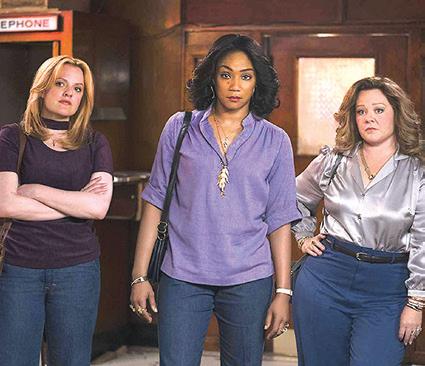
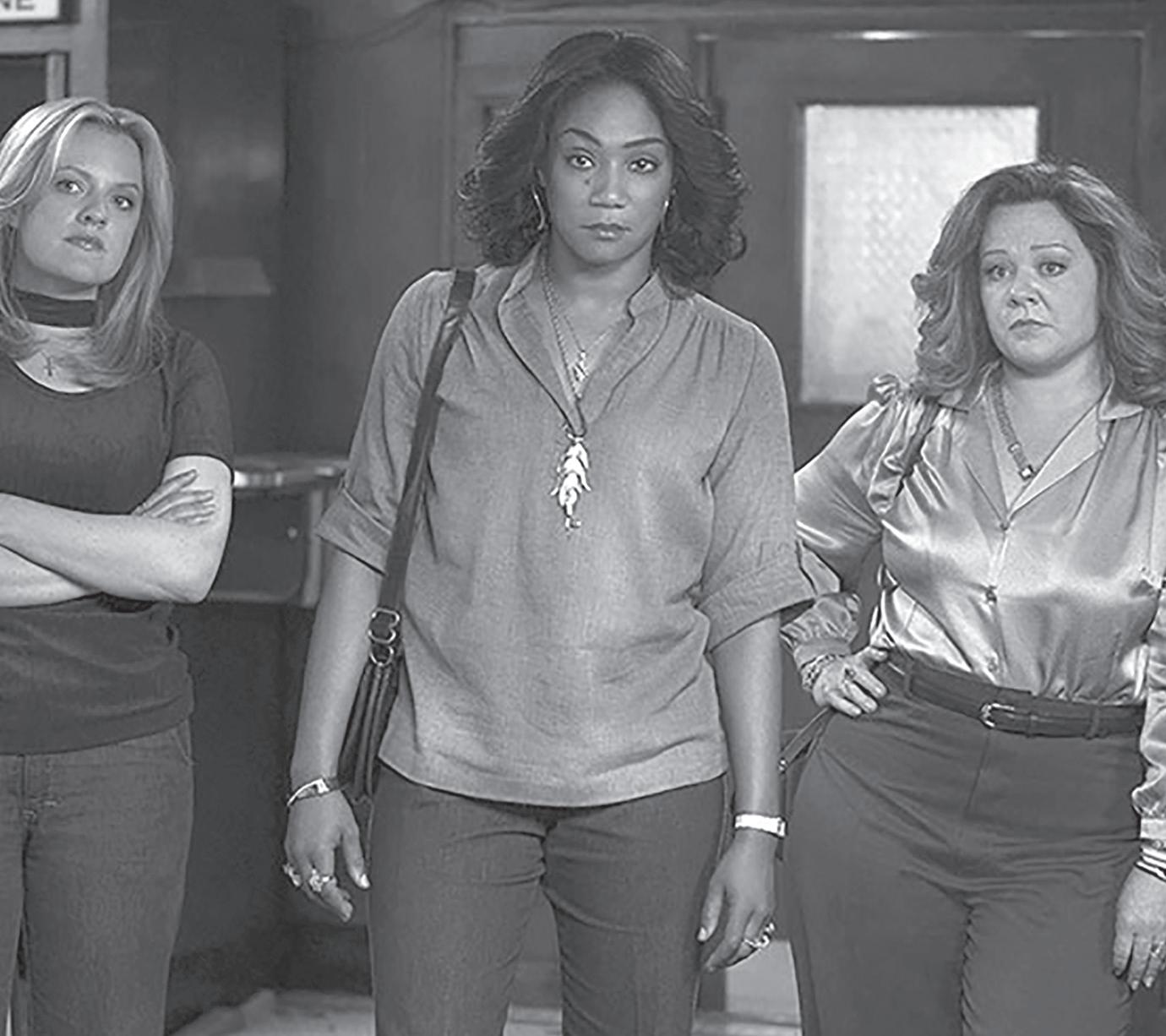
Andrea Berloff ’95 made her directorial debut in The Kitchen with a showing at Cornell Cinema on Nov. 15. The film depicts how three women take over a Hell’s Kitchen mafia after their husbands are arrested in an FBI sting. The concept is beautiful, but the film often leaves much to be desired.
One of the criticisms levied at the overuse of violence, but honestly I find this to be incredibly lazy. It’s a mob movie — what exactly were you expecting? Would you make this criticism if it was directed by Francis Ford Coppola? Did you find Goodfellas to be too violent? Or were you just not used to the fact that it was women committing the violence? This is a point that Berloff dwelled on in her post-screening question section. “If I was going to make a mob movie and not portray them violently, what would the criticism have been then? That it was a puff piece … or that I wasn’t making an authentic movie?” The majority of the violence, at the very least, advances the plot in some way. Additionally, Berloff also highlighted how much of the violence is off camera, and how her use of single gun shots rather than continuous gun fire is a break from what is typical in the industry.
By far the most compelling of the three main characters is Claire, played by Elizabeth Moss. Throughout the course of the movie, she experiences just about every human emotion but ultimately succumbs to her new lifestyle as she becomes a killer with absolutely no remorse for her victims. Her death, though, is one of the film’s most shocking moments. Her killer was originally deemed to be not dangerous enough to actually hurt any of the three women because of his age, which looks to be a solid criticism of the infantilization of young men in American society. Regardless, Moss appears to have woken up just in time to have killed her would-be assassin, only for him to survive the wound and shoot her from the ground as she laughs about the killing. The lone gun shot stands out from the rest of the audio in stark contrast to the sound of Claire’s boyfriend unloading his clip on the killer’s body out of distress.
The relationship between Ruby and Kathy is one of the main drivers of the plot. Berloff describes their relationship by saying she doesn’t believe in a protagonist/antagonist relationship: “I don’t necessarily believe in protagonists or antagonists. I don’t believe the world is that black and white, and to pretend that somebody has to be bad and somebody has to be good is reductive to me.” This develops well throughout the course of The Kitchen because it’s never quite clear who the bad guy is or who you’re supposed to root for while you watch. Taking away a major component of character development should have made the movie more difficult to follow, but honestly, it made the film significantly more dynamic.
To continue reading this story, please visit www.cornellsun.com.
Daniel Moran is a junior in the College of Human Ecology. He can be reached at dmoran@cornellsun.com.
By CATHERINE CAI Senior Staff Writer
Most researchers’ experiments never leave their sight: From conception to application, materials and data are collected on the ground. But for the research candidates involved in NASA’s CubeSat Launch Initiative nanosatellite project, the goal is to have their work act thousands of miles away in space.
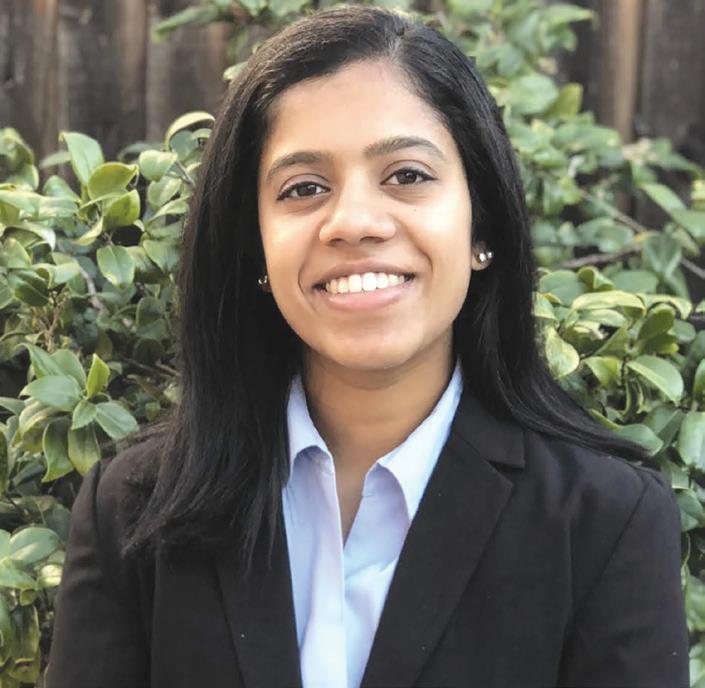
In this ambitious and novel project, NASA is awarding launch opportunities to a small fraction of competing schools and organizations. Along with other researchers, undergraduate mechanical engineer Sruti Vutukury ’21 is working on one of the sponsored projects at Cornell.
At the Cornell Space Systems Design Studio, headed by Prof. Mason Peck, aerospace engineering and systems engineering, a former Chief Technologist at
NASA, Vutukury has been working on a flight experiment called the Pathfinder for Autonomous Navigation project.
PAN was one of two candidate projects from Cornell in the running to fly as auxiliary payloads aboard NASA’s new space missions; both were selected to fly hopefully by 2019.
PAN focuses on the launch of two 3U+ CubeSats — tiny, 10 cubic centimeter satellites developed by NASA and space flight commercial companies as new tools for space research — that will autonomously dock in Low Earth Orbit. Docking is an important maneuver for joining separate space vehicles, such as a satellite or modules of a space station.
“We can explore space in a more scalable, economical, and sustainable manner. If 95% [of these satellites] fail but 5% work, we get so much more information than sending one large satellite out,” Vutukury said.
PAN would be the first CubeSat mission to attempt docking and would lead the way for additional on-orbit capabilities like the assembly of space stations. Vutukury said the design and manufacturing have been completed, and the team is now moving onto environmental testing so that the satellite could experience conditions close to launch and orbit.
Of course, figuring out autonomous docking requires a lot of work from Cornell’s researchers. Vutukury’s daily work, amounting to 30 hours per week, involves integrating parts of the satellite by performing small fixes and tests or to work on simulations that model the satellite’s orientation and orbit in space.
Despite the long hours and workload as a member of the lab, Vutukury expressed excitement at working so close to the forefront of space research, especially given the ambition of the PAN project.
“Autonomous docking is absolutely ridiculous in the best way. [The satellite is] a tiny thing floating 500 km in the air. We don’t know where it is, but we need it to do what we want, and that’s the challenge,” Vutukury said.
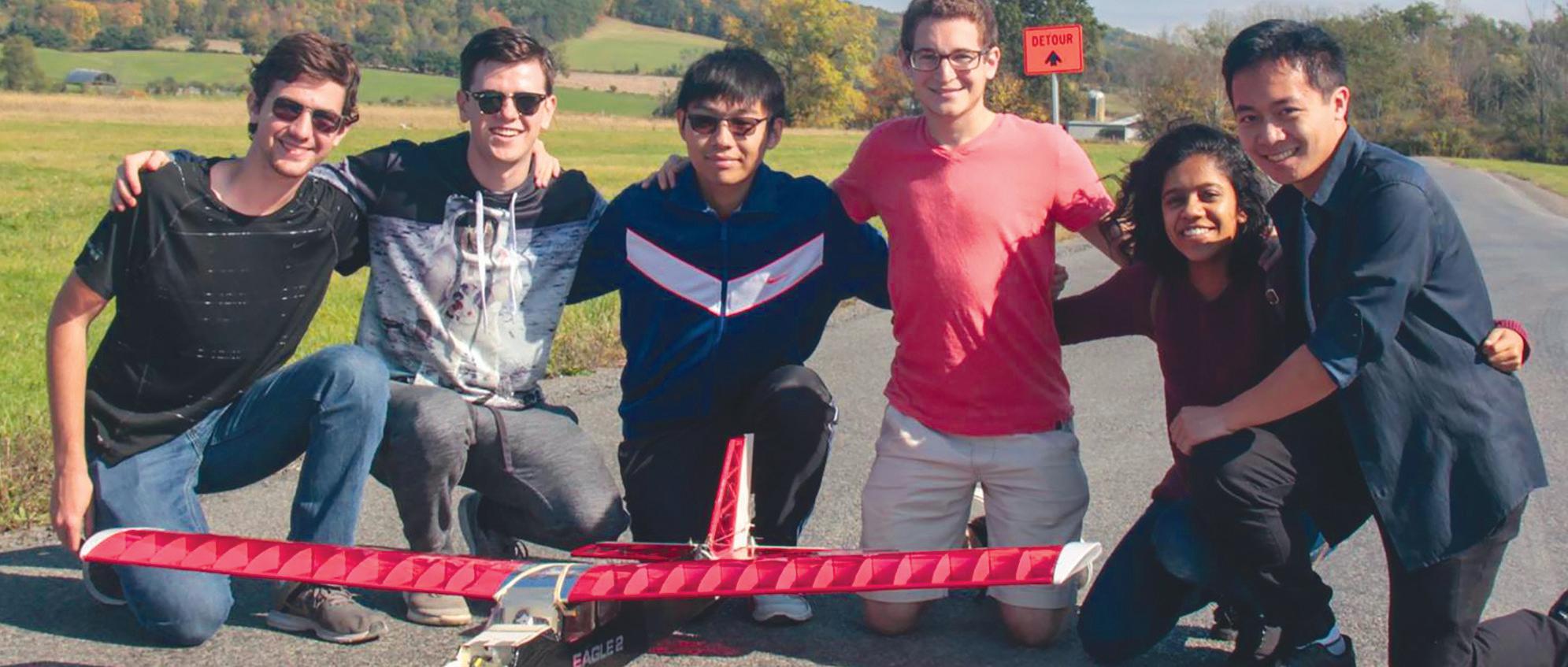
Vutukury did not start working in the Cornell Space Systems Design Studio until this year. Her interest in flight started freshman year with her project team, Design Build Fly. She joined as a member of the structures subteam, working on the building mechanisms of their planes.
Vutukury was especially interested in the flight tests and the scoring/sizing analysis that went into deciding the best features for the plane. As she explained, the team uses several MATLAB scripts to characterize,
size, and optimize the vehicle and all its subsystems.
“You can decide what you want to fix or iterate over or optimize. [It’s] all the challenges [fit] into one cohesive script,” Vutukury said.
Using the competition restraints and aerodynamic equations for flight performance, they can use this MATLAB model to generate all the possible design configurations of the plane that fulfills the mission objective.
“[Aerospace research] is definitely the direction I want to go in; aerospace is such a broad field, and I am glad I am getting to explore the space side so early on. I don’t know when else during your college career you would get an opportunity to learn the skills that you do on this project,” Vutukury said.
By
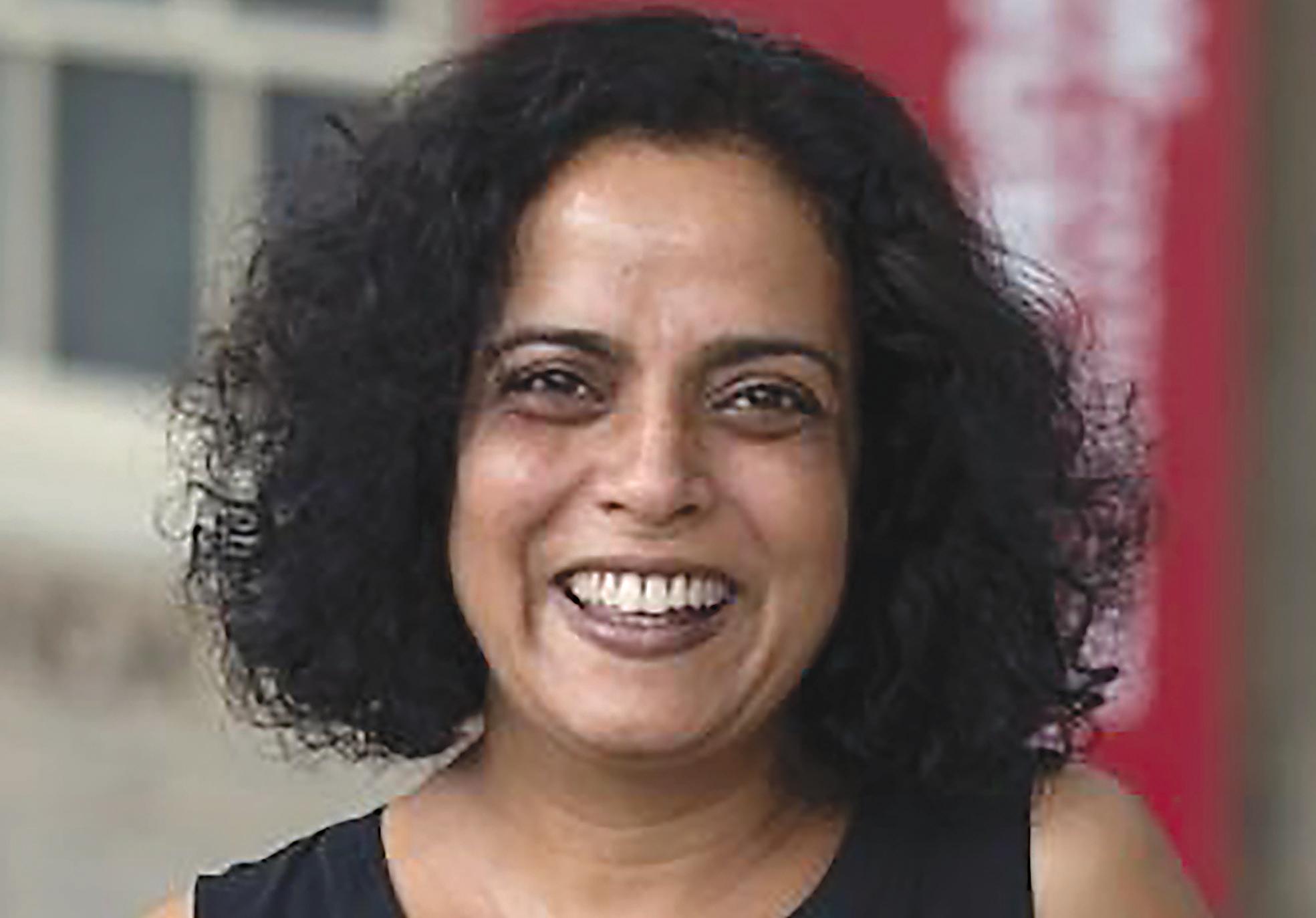
From science fiction novels, Prof. Aninidta Banerjee, comparative literature, learned to dissect climate change through the lens of humanities, one that bridges together the scientific facts and storytelling.
Chairing the environmental humanities concentration in the Environment and Sustainability major, and as an executive board member of the Atkinson Center, Banerjee has gained much insight into the intersection of literature and environmental issues that ultimately led
her to conclude that using scientific methods to mitigate climate change is not enough.
Banerjee then devised her own environmental courses, which aim to give students a broader, more interdisciplinary look at environmental engagement and action, in order to introduce and
encourage different paradigms of thinking when addressing environmental issues, such as through literature.
“If you just read scientific papers, you will not learn how to think across space and time, connecting the dots between material facts and abstract values and ideas. Being able to do both is vital for dealing with the wicked problems of climate change,” Banerjee told The Sun in an interview.
The assigned readings in her environmental seminars, such as Rachel Carson’s SilentSpring and William Shakespeare’s Othello, expose deeper themes in the discourse on climate change, including colonialism, environmental feminism and environmental inequality.
According to Banerjee, stories let us think about time in a continuous framework, rather than in periods that are partitioned.
“Stories serve as time
and place machines and provide a complex view of things we think are only happening now,” she said.
These texts, Banerjee argues, allow us to view environmental degradation, climate change and natural disasters as things that have occurred in the past and could happen in the future.
“Very few of us are professionally trained in data literacy. Among the broader public, even fewer are equipped to translate data into the realities of their everyday lives and project its implications into our common future,” Banerjee said. “Stories give a certain shape to scientific evidence, lending it depth of field and breadth of perspective, allowing people to position and imagine themselves vis-à-vis material changes in the world around them.”
“We are looking at significant forces on the planet right now that we have so successfully man-
aged to partition off into a terrifying yet distant future. Stories bring them into the ongoing present, forcing us to collectively engage in future thinking,” Banerjee said.
Banerjee believes that singular narratives function as pieces of a bigger puzzle. They shed light on environmental history, because we have to understand the past to fix the future.
“We need a different kind of fiction, one that is not narcissistically obsessed with human thinking and human feeling,” Banerjee said.
“Science fiction offers an ideal bridge to environmental storytelling because its heroes are the things we dismiss as the background of realist fiction: landscapes, machines, infrastructures, ruins.”
Independent Since 1880
137th Editorial Board
ANU SUBRAMANIAM ’20 Editor in Chief
JOYBEER DATTA GUPTA ’21
Business Manager
PARIS GHAZI ’21
Associate Editor
MEREDITH LIU ’20
Assistant Managing Editor
RAPHY GENDLER ’21
Sports Editor
BORIS TSANG ’21
Photography Editor
AMBER KRISCH ’21
Blogs Editor
SOPHIE REYNOLDS ’20
Science Editor
AMANDA H. CRONIN ’21
News Editor
JOHNATHAN STIMPSON ’21
News Editor
PETER BUONANNO ’21
Arts & Entertainment Editor
ANYI CHENG ’21
Assistant News Editor
HUNTER SEITZ ’20
Assistant News Editor
SARAH SKINNER ’21 Managing Editor
KRYSTAL YANG ’21 Advertising Manager
NATALIE FUNG ’20 Web Editor
SABRINA XIE ’21
Design Editor
NOAH HARRELSON ’21 Blogs Editor
SHRIYA PERATI ’21 Science Editor
KATIE ZHANG ’21
AMINA KILPATRICK ’21 News Editor
MARYAM ZAFAR ’21
ETHAN WU ’21
SHIVANI SANGHANI ’20
NICOLE ZHU ’21
Working on Today’s Sun
Ad Layout Dana Chan ’21
Production Deskers Sabrina Xie ’21
Dana Chan ’21
News Deskers Amanda Cronin ’21
Anyi Cheng ’21
Design Deskers Lei Anne Rabeje ’22
Niko Nguyen ’22
Lei Lei Wu ’21
Photography Desker Boris Tsang ’21
Sports Desker Christina Bulkeley ’22
Arts Desker Peter Buonanno ’21
Letter to the Editor
Student judgment for staying in instead of partying isn’t
To the Editor:
“Christians are different. We often stick to ourselves, believe in a supernatural and omniscient God and typically go against the grain of college student life.” In a recent op-ed, Darren Chang ’21 brands Cornell Christians as inherently different from other students because they stand on a higher moral pedestal by avoiding temptations that “contradict mainstream Christian lifestyles.”
The standard of religious delineation employed by Chang actually characterizes the bind that links most major religions: a belief in a higher omnipresent being. While making it pointedly obvious that he did in fact attend his “fair share of parties” during his time at Cornell, Chang describes Christians as being specifically prosecuted for choosing “praying instead of partying” on weekends. Specifying these characteristics and situations (i.e. choosing not to party) as being unique to only Christians, when they very obviously are not, implies that being Christian equates to being at a higher moral standing.
Hot-take: Nobody really cares why you aren’t partying. People may call you lame for choosing to stay in, but that isn’t really a form of some Christian specific religious discrimination.
If you are going to openly discuss your personal beliefs with others, you should also be open for the discussion that may follow, regardless of the topic. While Chang calls for more open questioning and discussion of religion on campus, he is initially angered by the questioning of Christians. Does this mean we should we only question people that are not Christian?
Everyone has a personal set of moral standards they hold themselves to, and at some point, everyone’s standards are challenged or questioned by someone who has differing beliefs, regardless of religion. Just because the standards you set for yourself are different from the standards someone else sets for themselves, this doesn’t make you better — it just makes you different.
Cornell’s administration may not encourage religion, but it shouldn’t. As an educational institution, Cornell’s responsibility is to provide a free forum for open discourse and beliefs. Though I believe Cornell does need better systems for seeking religious accommodations (as well as other personal accommodations), the standards and practices in place weren’t created to specifically target Christians.
Of all religions on campus, Christianity is actually probably the most well-accommodated. Cornell’s academic scheduling is actually most beneficial to Christian students as breaks tend to be in line with Christian holidays. The two major religion-associated spaces on campus, Anabel Taylor Hall and Sage Chapel, were built primarily for Christian worship. On the contrary, Hindu students were finally upgraded to prayer room just last month after having been previously limited to a prayer storage closet.
When you’re used to privilege, equality can feel like oppression.
Arathi Bezwada ’20
The Cornell community has come to learn about the questionable ethics of the Cornell Alliance for Science through a former Alliance fellow Julia Feliz in recent weeks. I am writing to applaud the Student Assembly for passing a statement in support of Feliz and to share the experience with the Alliance my community has had on the small island of Kaua’i. This is not the first time the Cornell Alliance for Science’s practices have impacted individuals from communities of color and undermined social justice. I’ve seen it here in Hawai’i where community members and I have been organizing for years to pass common sense pesticide regulations — and where Cornell Alliance for Science funded fellows have aggressively fought us.
Science fellows — under the guise of scientific expertise — launched vicious attacks. They used social media and wrote dozens of blog posts condemning impacted community members and other leaders who had the courage to speak up. I, the staff and board members of the organization where I work were subjected to Alliance for Science bloggers’ character assassinations, misrepresentations and attacks on personal and professional credibility.
This is not the first time the Cornell Alliance for Science’s practices have impacted individuals from communities of color and undermined social justice.
In the 1980’s, the sugar plantations started moving overseas in search of cheaper labor and less regulation and, in the last decade, completely ended operations on our islands. As plantations left, biotechnology corporations moved in. By 2015, biotech seed crops represented the second largest acreage grown in Hawai’i. Today, Hawai’i is home to the largest experimental biotech field trials in the world. The majority of this agricultural land in Kaua’i, where I live, is located on the West Side, home to our island’s largest concentration of Native Hawaiians.
These fields are sprayed with some of the highest rates of “restricted use” pesticides per acre, among the most toxic to people and ecosystems, yet they are located directly adjacent to schools, hospitals and residential neighborhoods. In two separate incidents, in 2006 and 2008, students and teachers at a school bordering a Syngenta test field experienced acute health issues, with some evacuated to a nearby hospital. Syngenta and other chemical companies operating on our island summarily dismissed the community’s concerns that the illnesses were associated with pesticide spraying. But with no testing for pesticide exposure, no mandatory disclosure of what was sprayed or when, the cause of the illnesses could never definitively be attributed to pesticide exposure.
In the wake of these incidents, our small island community began to organize to pass
Despite these attacks, community outcry for “right to know” legislation and protections grew. We successfully passed county-wide pesticide regulations in 2013. The industry took us to court and overturned our legislation based on statewide implied preemption. So, we organized again, this time for statewide pesticide regulations in Hawai’i. In December 2016, the Alliance for Science opened an official Hawai’i chapter to continue to attack our campaign. Thanks to our diverse coalition of community members, doctors and nurses, teachers and public health professionals, we achieved a huge win for social justice. In June 2018, the Governor of Hawai’i signed Act 45 into law, which requires mandatory disclosure of restricted use pesticides usage, small RUP buffer zones around schools, a drift monitoring study and most notably the nation’s first ban on the brain-damaging insecticide, chlorpyrifos.
All of this was fought vociferously by the Cornell Alliance for Science affiliated fellows. So yes, we won, but years have passed that the industry has been able to keep spraying pesticides without oversight. There is a huge community price for that. There is another price: The Alliance for Sciencefunded attacks have had a huge impact on our small, close-knit rural community.
The Alliance for Science-funded attacks have had a huge impact on our small, close-knit rural community.
“right to know” legislation and basic protections. The policies we were advocating for included requirements that the agrochemical industry disclose what they were spraying, conduct an environmental impact study and create pesticide-free buffer zones around schools and other sensitive areas.
In 2013, as the effort to pass these county-level regulations picked up steam, Cornell Alliance for Science associates came to our island to undermine community concerns about pesticides. It was the beginning of a massive public relations disinformation campaign designed to silence community concerns.
As organizing efforts expanded and more community members spoke up in support of these policies, paid Cornell Alliance for
It is challenging to have the courage to speak up when the biotech industry is a major employer in our community. On our island, it is likely that either a family member or a friend is employed by one of those companies. In our case, the industry and Alliance bloggers have aggressively exploited these tensions, branding those raising concerns about pesticide exposure as “anti-agriculture, “anti-fact” or “ignorant, anti-science demagogues.” They’ve used vicious divide-andconquer tactics to silence those critical of the pesticides used on biotech crops. I have personally witnessed families and lifelong friendships torn apart.
Thank you Mx. Feliz for refusing to be silenced even when it was uncomfortable. Thank you, Cornell Student Assembly, for standing in solidarity with Mx. Feliz. I sincerely hope the students, faculty and alumni of Cornell will continue to dig deeper into the activities of the Alliance for Science and demand better from their academy.
Fern Avenue Holland is a community organizer for Hawaii Alliance for Progressive Action. Comments may be sent to opinion@cornellsun.com.
Michael Johns, Jr. | Athwart History
In the rotunda of Anabel Taylor Hall, in solemn light, stands Cornell University’s most famous war memorial. It honors over 500 Cornellians who died in World War II and scores more who died in Korea, Vietnam, the Persian Gulf and other conflicts — “so costly a sacrifice upon the altar of Freedom,” as its gilded Abraham Lincoln quote reads. Two names were
sible declaration, as one Yale Daily News guest columnist wrote, “that veterans have blood on their hands.” While an isolated incident, the prejudicial attitudes that motivated it remain on campus, and contribute substantially to the cultural alienation that both Dr. Kotlikoff and this Yale Daily News guest columnist heard from veterans entering our institutions of higher learning. It remains a serious and worthy concern.
We are fortunate to be surrounded by reminders of the University’s historical dedication to serving this country. It is a core part of this institution’s history.
added to the memorial recently: Maj. Richard Gannon ’95 and Capt. George Wood ’93, who died in the war in Iraq.
What do we owe these Cornellians, who have seen the battlefields of the past and present?
We can begin by taking a cue from Provost Michael Kotlikoff, who rightly wrote this April that Cornell University and its peer institutions have a responsibility to “value service” in both Cornell’s admissions and its culture, and integrate veteran students more fully into the student body. Dr. Kotlikoff presciently noted that this can be a method of pushing back on the emerging thesis that college campuses are purely “elitist bastions of ‘group think.’”
I have previously noted the importance of putting Cornell’s values into practice to dispel this specific criticism. Dr. Kotlikoff is right on this count: A university that does not value service falls woefully short of its real purpose. We have a responsibility to ensure that those who served this country are given a welcoming reception when they do arrive in Ithaca.
It is a more pressing concern than many Ivy League students understand. During Yale’s Veterans Day ceremony on Nov. 11, red paint was smeared on a public American flag display — clearly a blaring and irrespon-
We also owe these men and women an honest and substantial on-campus discourse on the meaning and value of service to this country. Although campus radicals like those this week at Yale continue to indefensibly portray these men and women as forces of evil, responsible for every action of the U.S. military with which they disagree, the reality is the exact opposite: We owe them all a debt of gratitude for our continued safety and prosperity. Cornell once led the charge among its peer institutions in teaching about the value and greatness of national service — if nothing else, we can and should continue to honor that history.
In the hustle-bustle of Ithaca, separated from the outside world and submerged in its own politics, we often fail to stop and appreciate that our way of life, and the very conditions of our learning, are made possible by these men and women, some older and some younger, some black and some white — but all braver — who have chosen to commit some part of their lives to an immense charge so that ours might remain peacefully the same.
the fight — more than any other nonmilitary institution in the United States. We have a long history of believing in military service. Even the mandatory Cornell swim test was originally created because “a soldier who cannot swim is so much dead timber in the command.” Cornell was committed to preparing its students to serve, if ever necessary. That legacy continues today, as Cornell University remains the only Ivy League institution offering ROTC programs for the U.S. Army, Navy and Air Force.
The Anabel Taylor Hall war memorial is beautiful, and Cornellians should visit this week to pay their respects to the newly honored alumni on its walls. They should also take note of the too-often-overlooked memorial sites all across campus, including the World War I memorial connecting Lyon and McFaddin Halls on West Campus (those buildings having been “orig cated to the Army and Navy”), the Remembrance Garden next to
What do we owe these Cornellians, who have seen the battlefields of the past and present?
We are fortunate to be surrounded by reminders of the University’s historical dedication to serving this country. It is a core part of this institution’s history: During last year’s World War I centennial celebration, multiple faculty and student speakers recalled the over 9,000 Cornellians who fought in that war, including the 4,598 commissioned officers this University sent into
Sidney Malia Waite | Waite, What?

YBarton Hall, the Sage Chapel stained-glass windows honoring Cornellian WWII casualties and a dozen other plaques and memorials scattered throughout campus. So costly a sacrifice upon the altar of freedom. Let us never forget that price, nor the veterans who paid it for us.
Michael Johns, Jr. is a senior in the College of Arts and Sciences. He can be reached at mjohns@cornellsun.com. Athwart History runs every other Wednesday this semester.
es, challenges are essential. The purpose of our time at Cornell is to prepare us for our futures — to prepare us for the goals we’ve set for ourselves. So I get why this University is challenging. It is supposed to be. It is meant to drive us and allow us to achieve more and more. And that is all very cool — until it’s not. Until there is a stretch of time when I find myself not getting out of bed. Until my friends start telling me that they spent last weekend in bed, or the majority of last week. And it is not because of the flu.
There comes a point when this “challenge” becomes less of a motivator and instead becomes detrimental to health and success, leaving me to question the upper limit of pushing ourselves. How are any of us supposed to keep up with our assignments if we can’t keep up with our minds? Comparing who got less sleep, whose sleep schedule is more unhealthy and
During my first semester on campus, I used to nap. A lot. I would tell myself that I was just tired. But subconsciously, I knew that I was just
Like my peers, I am not just a student. I am a daughter, a sister, a friend and most importantly, a person. The pressure that we put on ourselves on this campus ignores these roles.
that I was not doing well. Like my peers, I am not just a student. I am a daughter, a sister, a friend and most importantly, a person — an imperfect and fallible human being. The pressure that we put on ourselves on this campus ignores these roles. And though Cornell should not begin to cradle us through these four years, it should recognize that what the campus culture tells us is necessary to succeed is unhealthy. But we all already know that.
why is the onus of stress management placed entirely on the students?
There comes a point when this ‘challenge’ becomes less of a motivator and instead becomes detrimental to health and success.
who is truly more overwhelmed are part of our celebrated campus culture. This is just a form of Cornellian bonding, if you will.
trying to escape, avoid and delay all of my anxieties and stresses and doubts. I used to get stuck. I would feel frozen with fear because I did not feel capable enough to complete whatever it was that had to be done. I sank under my covers. I would promise myself that sleeping would give me more energy and make me more productive. There was even a time when I finally forced myself to get to the library, only to spend 45 minutes staring at a screen before convincing myself that although I just arose from a nap, I was tired once again. So I retreated to my bed. I do not have a diagnosed mental health issue. So, it seems hard to define, articulate or even understand what it was that I was struggling with. I just knew
The students know, as is evidenced by our woeful humor. We chuckle about our outrageously high stress levels with glassy eyes. Tears brim in our eyes just as the meetings and assignment due dates flood our congested Google Calendars. The administration knows, which is why they keep telling us to prioritize sleep and “self-care” — though simultaneously providing us with freshly renovated 24-hour study locations like the Cocktail Lounge. Though the renovations are fire, the concept of an institution that seeks to prioritize mental health while ensuring we have our much needed 24-hour study spaces is ironic. It is also hypocritical. Cornell Health’s suggestions to help students manage stress and “thrive” includes tips such as “let go of perfectionism” and “refuse to play the stress game.” But
The University and its mental health resources put far too much emphasis on students to control their stress rather than ensuring that the campus environment, the professors and the faculty are making sure that we remain at “healthy” stress levels that maximize our “peak performance.” Ultimately, it is not even up to the students to maintain a stress-free environment, if that is what we are being fed. Professors assign us weekly problem sets, 20-page research papers and seemingly endless prelims. As a false solution, students are told to “keep stress in check.” Yet, professors are not taking any responsibility. Their only remedy is to provide
As a false solution, students are told to “keep stress in check.” Yet, professors are not taking any responsibility. Their only remedy is to provide extensions.
extensions, merely prolonging and — often through the deduction of points — penalizing our stress. They instill in us the guilt that we are deficient if we do not reach the academic elitism that they expect.
Sidney Malia Waite is a sophomore in the School of Industrial and Labor Relations. She can be reached at swaite@cornellsun.com. Waite, What? runs every other Monday this semester.




We have availability for the 2020-2021 school year beginning June 1st at Hudson heights apartments. The studios include electric, heat, water, garbage and parking. There is coin-operated laundry facilities on site. Prices start at $750 / month for a 12 month lease. If you have any questions or would like to schedule a tour contact us by phone 607-280-7660 or email: renting@ithacaLS.com
COLLEGETOWN TERRACE APARTMENTS
Now Renting 2-10 Bedroom Houses/ Apartments for 20-21. All Locations. Call today or visit our website: Certified Properties of TC Inc certifiedpropertiesinc.com 607-273-1669
109
504 1/2 Thurston AveSTUDIO 607-277-1234
277-1234
AVAILABLE 2020-2021
1, 2, 4 Bedroom Apts. and 7 person House
10 & 12 month leases Cook/Blair Street
Call or Text Christopher George RE 607-279-5520
Collegetown Crossing
College Ave's Newest Location 307 College Ave. Now Leasing for 2020-2021
Completely New Modern Studios, 2 & 4 Bedroom Apartments.
Fully furnished, heat & hot water included. Reception area at 307 College Ave. www.urbanithaca.com 607-330-2442 info@urbanithaca.com
120 Oak Avenue
Just steps to Cornell Campus 10 bedroom house 1 bedroom apartment 607-277-1234 office@ithacastudentapartments.com Ithacastudentapartments.com
office@ithacastudentapartments.com Ithacastudentapartments.com
ENT 20-21 College Ave. 5 BR House Furnished. Laundry. Parking. Call 607-273-8576 Spring 2020 Upper Eddy St. 7 BR house Furnished. Laundry. Call 607-273-8576
8-9 BEDROOM HOUSE FOR 2020-2021
133 Blair St Corner of Cook and Blair just off of College Ave. Huge rooms, great porch, free laundry, furniture, 4 bathrooms, 3 kitchens. Great storage closets, parking for 3-4 cars. Contact Nick at 607-256-3778 or nick@lambrourealestate.com
2020-2021
400 Block Dryden Rd. 9, 10 & 13 Bedrooms 607-257-3578 Call or Text info@oconnorapartments.com
By ZORA HAHN Sun Staff Writer
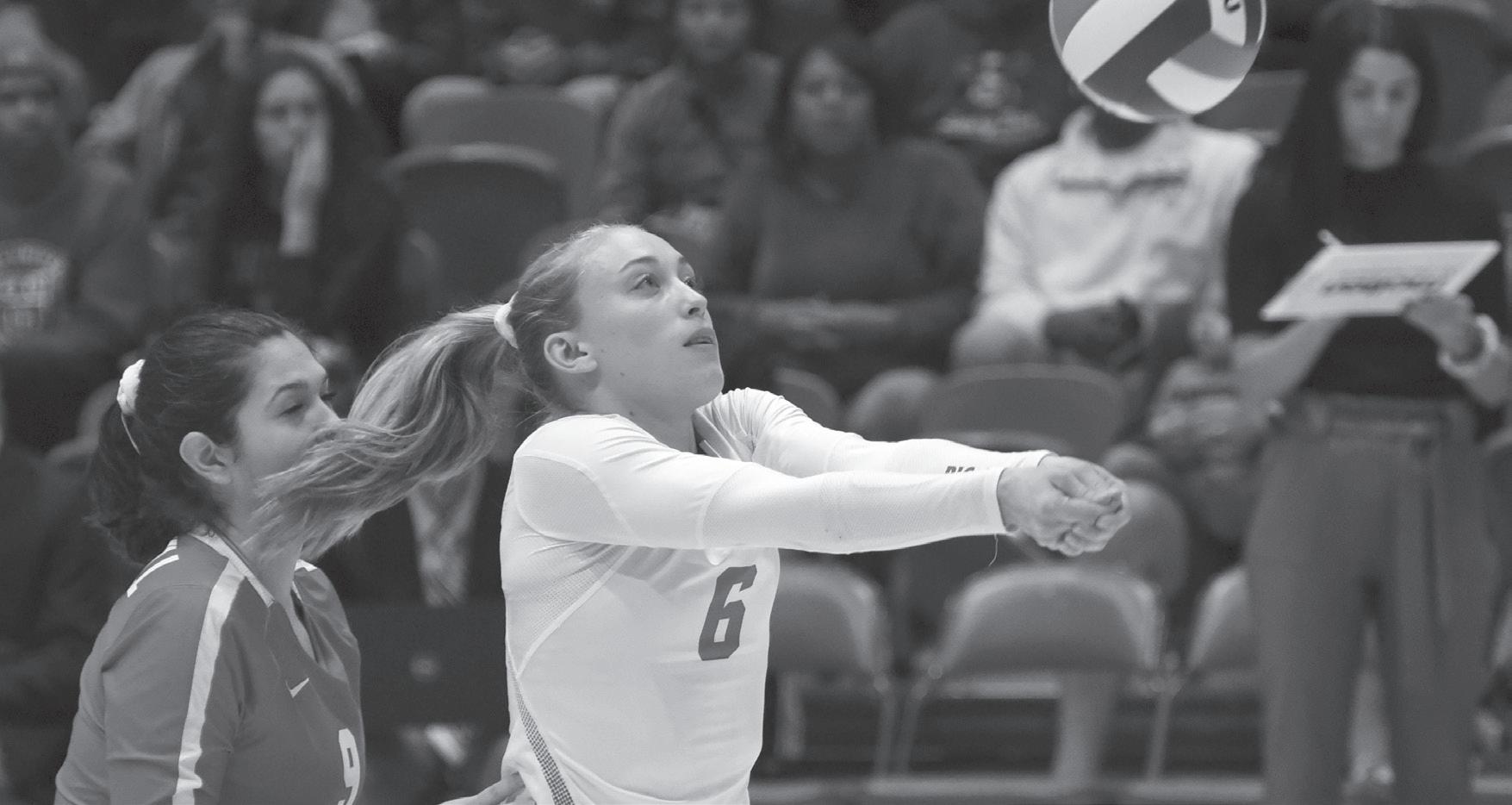
Cornell volleyball closed out its season with away matches at Harvard and Dartmouth over the weekend.
On Friday, Cornell swiftly beat Harvard in Cambridge, claiming a 3-0 victory with scores of 25-23, 25-19 and 25-15.
The game was dominated by Cornell junior right side Paige Becker, who made 10 kills and one block.
In Cornell’s last contest against the Crimson, the Red won three sets to one in mid-October. At the time, Cornell was riding a nine-game winning streak.
On Saturday, the Red couldn’t pull off one last win, falling 3-1 at Dartmouth. Although sophomore outside Madison Baptiste and senior middle blocker Jada Stackhouse each added 14 kills, with sophomore outside Avery Hanan tacking on another 10, it wasn’t enough for the Red, who lost to Dartmouth in the first, third and fourth sets.
Cornell swept Dartmouth three sets to zero in their matchup earlier in the season, but the Red couldn’t replicate those results in Hanover.
“[Dartmouth] had a more solid block against
us and they definitely stayed more level-headed,” Becker said. “They worked really hard to slow the game down against us. We play very fast-paced and it changes when the other side knows to slow down the game.”
Cornell ended the season with an 8-4 record in Ivy League play — good for third place in the conference, while Princeton and Yale tied for first in the league with 10-2 records.
The Red fell to Yale in both of the games, but managed to beat Princeton in one of the two times they faced off.
Cornell started its season strong, at one point boasting an 11-game winning streak before its first loss to Yale.
Despite the coming graduation of several key members of the squad, younger players show potential to keep the program toward the top of the league. 2019 marked the second consecutive year that the Red finished third in the Ancient Eight.
“We’re always working on outsmarting the other side,” Becker said.
By ALYSON WONG Sun Staff Writer
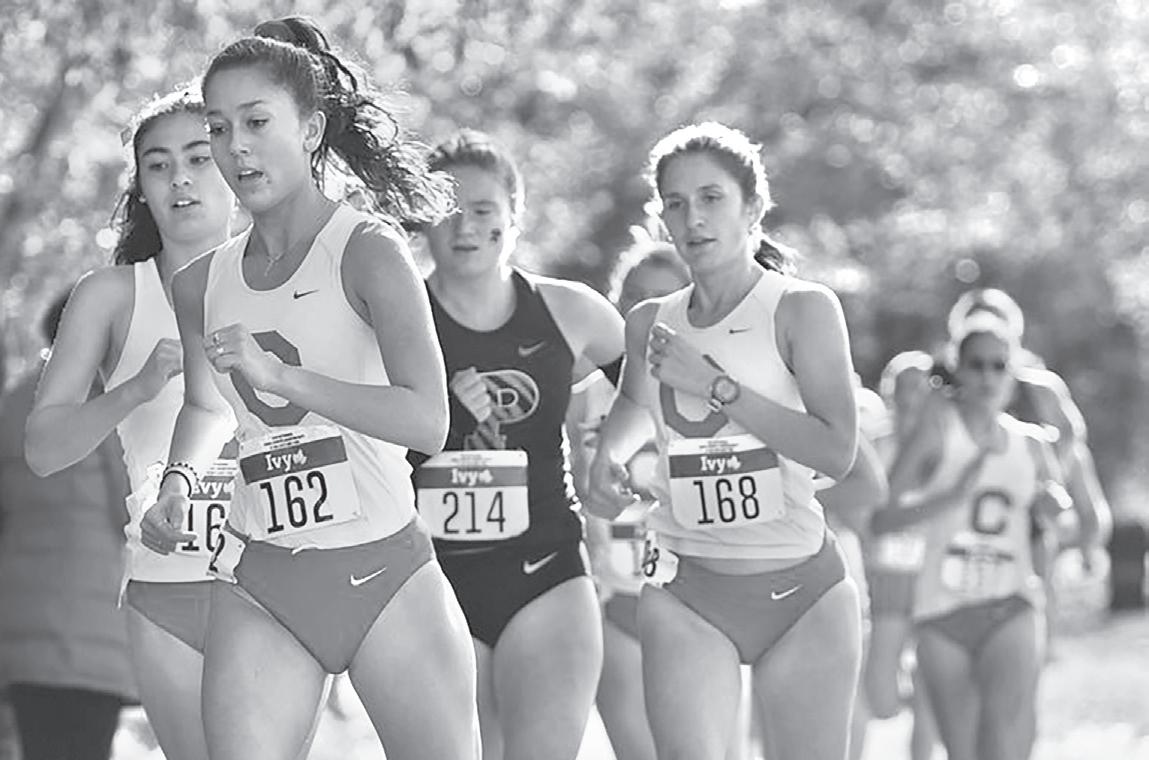
This past Friday in Buffalo, in hopes of advancing to the NCAA championships, Cornell’s two cross country teams fought to continue their seasons at the NCAA Northeast Regional Championships. Seven runners total from the men’s and women’s teams competed, with the men running a 10k and the women running a 6k.
The top two teams at each regional championship automatically qualify for the national championship, resulting in 18 immediate team qualifiers. Four of the top individual finishers who are not on a qualifying team also automatically qualify for championships. Thirteen additional teams are then selected to receive at-large bids by the NCAA DI Cross Country Subcommittee.
The men’s team saw its season end as it did not qualify for championships, finishing ninth overall out of 37 teams with 298 points. Sophomore Matthew Fusco finished first among Cornell runners and 28th overall in 29:38.6. He was followed by freshman Perry MacKinnon (62nd, 30:06.6), Sophomore Marek Nowak (67th, 30:08.4), freshman Rishabh Prakash (70th, 30:10.5) and junior Paul Casavant (71st, 30:10.5).
The women’s team turned in an outstanding performance, finishing 2nd out of 37 teams with 126 points and qualifying for the national championships. Junior Elle Orie led all Cornell runners with a 14th place finish in 19:52.2. Senior Taylor Knibb (16th, 19:58.6), senior Kyleigh Spearing (27th,
20:18.5), junior Melissa Zammitti (28th, 20:20.8) and senior Audrey Huelskamp (41st, 20:39.4) all crossed the finish line shortly after.
Coming into the race, the women’s team was ranked 11th in the northeast region, but did not let that ranking hold them back — a gritty performance perfectly encapsulated the team’s season-long determination.
“Honestly, I have no words. It’s kind of like a dream,” Orie said. “To beat Columbia, who is ranked number one in the region, and to beat Boston College and beat Yale … it just shows a lot can happen in two weeks if you just keep fighting through.”
Many of the runners also finished close together with similar times, revealing not only their individual strengths but also their ability to push each other and feed off one another’s energy.
“[It] shows how much we can lift each other up by just being
around each other … our energy is contagious,” said Orie. “I think that’s what really leads to good performances when you can rely on teammates to get you through [it].”
As the women’s team advances to the national championships for the first time since 2013 — and their first time auto-qualifying since 1998 — they look to continue showcasing their individual talent along with their strength in team unity.
“I’d like to think of us as the underdogs that are gonna show what [the] Red is all about … There’s definitely no expectations because we haven’t been here in a long time,” said Orie. “Just don’t count us out.”
The team will compete at the NCAA Championships on Saturday, Nov. 23 at 12:30 p.m. in Terre Haute, Indiana.
By MIKE SEITZ Sun Staff Writer
Cornell men’s soccer went into its final game of 2019 against a foe that it hadn’t downed in Ithaca since 2013.
On its senior day, the Red dominated Columbia, 4-0, to earn it third place in the Ivy League for the 2019 season.
Cornell wasted no time in putting numbers on the scoreboard. Less than 10 minutes into the game, a dangerous cross by junior midfielder Tyler Bagley found the foot of freshman forward Griffin Garrard, whose shot deflected off a Columbia defender for the game’s opening goal. Although it in real-time looked to be Garrard’s goal, it was later ruled as a Columbia own-goal.
since transferring from junior college in 2018.
“I never expected to get the opportunity to play at an Ivy League school,” Scearce said.
Senior captains continued to get in on the action, as in the 53rd minute, forward Brady Dickens scored his fifth career goal after clinically tapping the ball into an open net. Cornell’s offense dominated the game, and the senior day crowd erupted into cheers after every goal with player chants and signs galore.
On the other end of the field, goalkeeping masterclass by junior Ryan Shellow preserved a clean sheet for the team, officially sending the seniors off into the Berman sunset with a 4-0 win.
“I couldn’t have written the script any better … they deserved it,” said head coach John Smith.

In the 33rd minute, senior forward George Pedlow extended Cornell’s lead in his last game with the team. With the ball bouncing outside of the Columbia box, Pedlow took control and fired a blistering shot past the Lions goalkeeper. An emotional moment for the London native, the goal represented a culmination of 4 years of hard work and sacrifice.
“It meant the world to me,” said Pedlow.
The Red showed no intention of slowing down when, six minutes later, senior defender Ryan Bayne connected with midfielder and fellow senior captain John Scearce off a free kick set piece. A flighted long ball was the delivery that Scearce needed to deliver a power header into the Columbia net.
Another emotional moment on the pitch, the goal marked the 10th of his Cornell career

The program will graduate seniors midfielder Kyle Walsh, defender Riley Adams, Bayne, Dickens, Pedlow and Scearce.
Despite the departure of these key players, the team’s future continues to look bright, with multiple integral members of the squad — like midfielder Brandon Morales, who led the team with four assists — only freshmen in the 2019 season.
“I want the underclassman to push forward … and make [Cornell] into a top program in the country,” said Scearce.
Cornell’s promising young core will look to uphold the hard work and leadership principles set by its seniors in the years to come.
“This team is going to do really incredible things in the future,” Pedlow said.

By EMILY DAWSON Sun Staff Writer
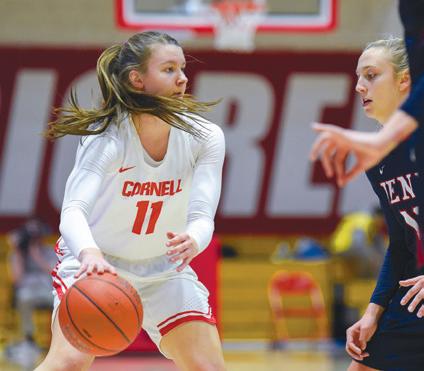
Hungry to bring its record back to .500, Cornell women’s basketball took on the New Jersey Institute of Technology at Newman Arena. The final tally was
68-44 in the Red’s favor.
Entering the contest, the Red’s record was 1-2, and it was coming off two losses on the road to TCU and Colgate. NJIT had been faring even worse, with a 0-5 mark. Right out of the gate in
the first quarter, the Red played aggressively. Senior guard/forward and team captain Samantha Widmann was a key contributor alongside fellow senior forward Stephanie Umeh.
Junior guard Kate Sramac, freshman guard
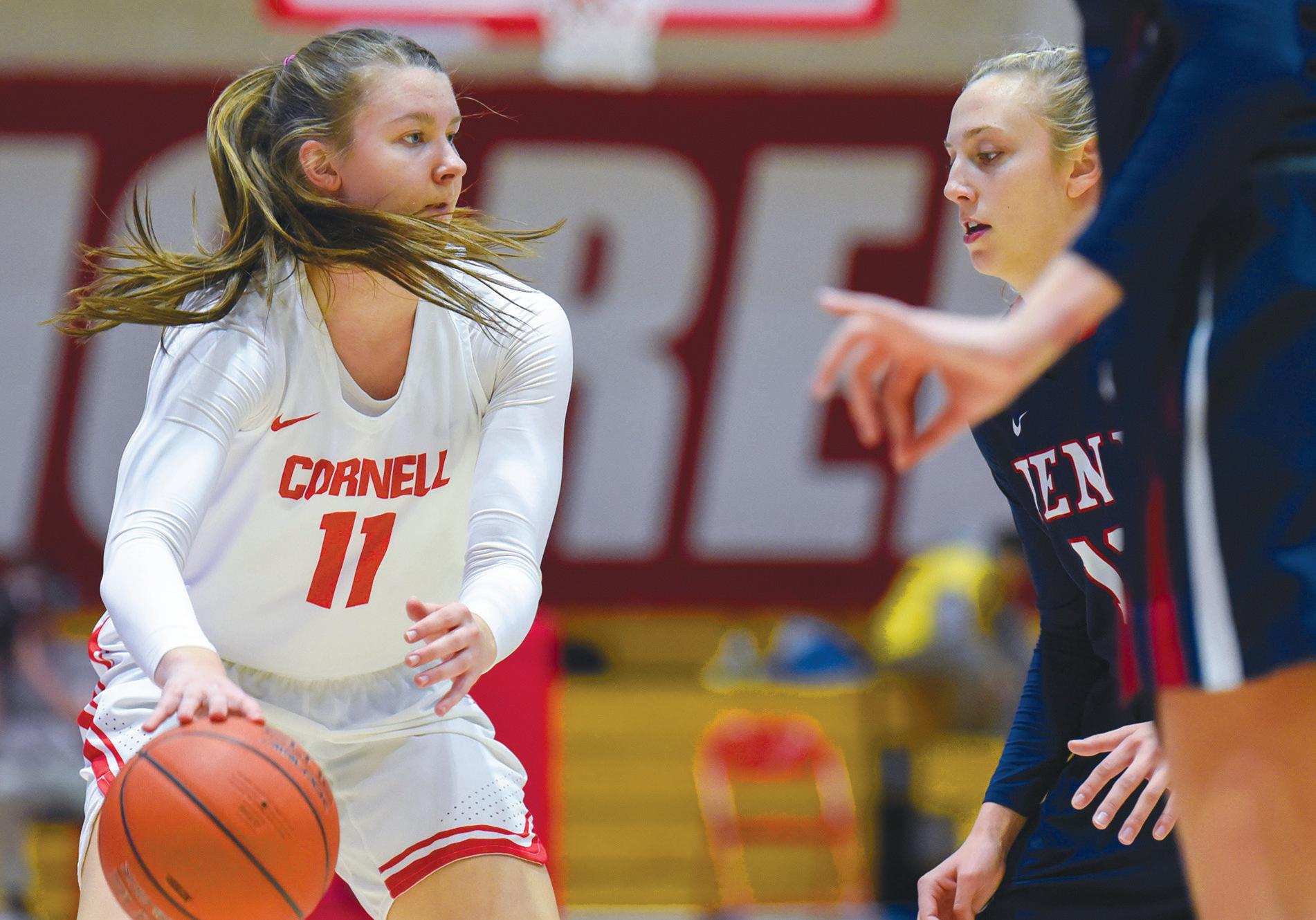
Shannon Mulroy and senior forward Laura BagwellKatalinich also contributed to the Red taking an early lead, finishing the first quarter at 17-10.
In the second quarter, Cornell did not back down — in fact, the Red fought harder, eventually widening the gap in the score to 43-23, an impressive 20-point lead going into the second half.
A key player for the Red was sophomore forward Theresa Grace Mbanefo. She played a great defensive game with three rebounds and blocked NJIT from several shots. Mbanefo also managed a turnover for Cornell as well as two good layups. She assisted Widmann in another layup and separately tallied two free throw points for the Red.
“It was super exciting — the whole team was really focused on getting this win after our loss to Colgate,” Mbanefo said. “Our bench had so much energy, it helped me a lot.”
That Colgate defeat
was Cornell’s narrowest of the season — the Raiders claimed the win by a fourpoint margin.
Head coach Dayna Smith also was very pleased with the team’s performance.
victory over NJIT. The key players from the first half continued to serve the team well in the second part of the game to carry the Red to its second win of the season.

“The defense led us in this game, they were our go-to, creating steals and turnovers. We made a huge improvement here from the game against Colgate,” Smith said.
Throughout the tilt, the team maintained a high intensity and kept its 20-plus point lead up to the end.
“I was very happy with how the bench came in and had 38 points. They actually exceeded the starting group,” Smith said. “We had second and third options in the second half.”
This strong performance from both groups of players in the second half led the Red to the sweeping 68-44
Sophomore guard Samantha Will also came in and made great contributions to the win, including an exciting jump shot basket early in the fourth.
Up next for the Red is its third home game in a row facing Niagara University. Ivy games will not commence for Cornell until after winter break.
“We are challenging ourselves with games outside of our conference,” Smith said. The Red will go for two wins in a row Thursday at 7 p.m. to bring the team to a 3-2 record.