The Corne¬ Daily Sun

By JYOTHSNA BOLLEDDULA Sun Staff Writer
Pharmaceutical company Moderna — cofounded by a Cornell-educated medical pioneer — announced promising results in its development of a coronavirus vaccine on Nov. 16.
With a vaccine efficacy rate of 94.1 percent, Moderna has emerged as one of the front rXunners in the global race to curb COVID-19 as its version of the vaccine enters its Phase 3 trial.
The company, co-founded by Robert S. Langer ’70 in 2010, is a drug development biotechnology company most noted for its work on novel mRNA technology. Langer currently sits on the company’s board of directors.
Langer graduated from Cornell with a bachelor’s degree in chemical engineering. Today, Langer is one of 14 David H. Koch Institute Professors at the Massachusetts Institute of Technology, the highest honor awarded to an MIT faculty member.
worldwide. His research has led to major innovations across the field of medicine, including more accessible diabetes treatment and the regeneration of damaged tissues. He has been involved in the founding of 40 companies, totaling a market value of more than $23 billion. If the COVID19 vaccine moves forward as planned, Moderna will be one of his biggest success stories.
When Moderna first released data from its Phase 1 trial in May 2020, Langer’s 3.2 percent stake in the company hit a valuation of $934.3 million. With new Phase 3 results in, that number is expected to rise, securing Langer’s position as the third Moderna investor with holdings topping $1 billion.

Hailed as “The Edison of Medicine” by the Harvard Business Review, Langer has more than 1,100 current and pending patents that have been licensed to 300 companies
Moderna’s platform is focused on the use of mRNA — which allows for programming a person’s cells to churn out many copies of a fragment of the virus quickly — as the basis of their drug development approach. Since its founding, Moderna has aimed to use this technology on a range of other diseases, ranging from melanoma to Zika. These products open the door to an entirely new way of cre-
By JOHNATHAN STIMPSON Sun Managing Editor
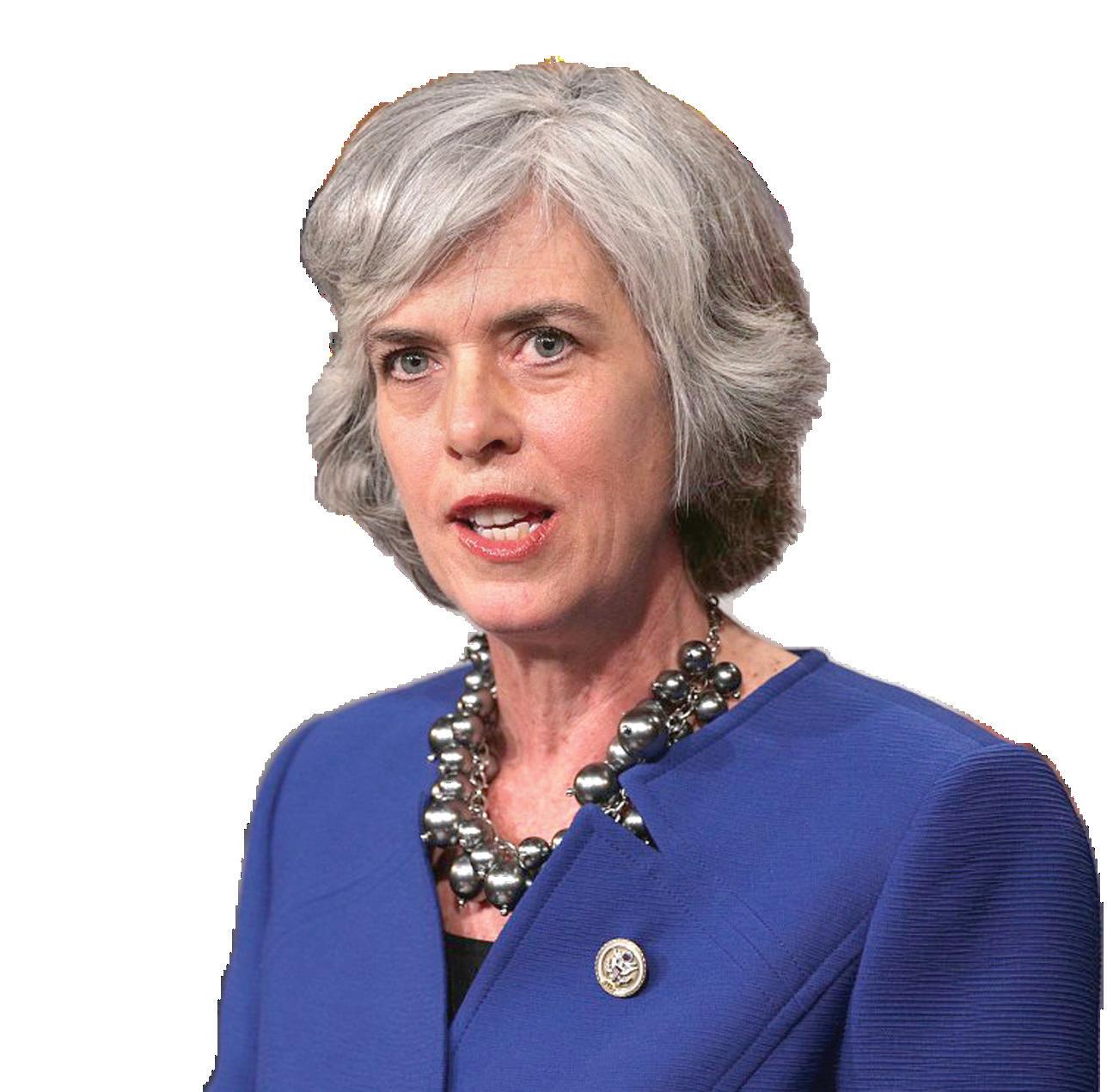
Rep. Katherine Clark J.D. ’89 (D-Mass.), the current vice chair of the Democratic caucus, has climbed further up the party’s leadership, winning an election Wednesday morning to serve as Assistant House Speaker.
House Democrats voted — virtually, for the first time — to elect their slate of leaders for the 117th administration.
Most of the other marquee positions were uncontested: Majority Leader Steny Hoyer (D-Md.) and Majority Whip James Clyburn (D-S.C.) are set to
“We are going to see and help the American people with the pain and suffering ... from this pandemic.”
return to their current posts, while Pelosi will also run unopposed in her bid to retain the speakership
ership team held a Capitol Hill press conference
See SPEAKER page 3
Steady ascent | Rep. Katherine Clark J.D. ’89 (D-Mass.) worked her way up the political ladder before running for national office in 2013.
By MEGHNA MAHARISHI Sun Assistant Managing Editor
Cornell University Police Department arrested a male student Tuesday morning for two counts of harassment, unlawful imprisonment and third degree sex abuse.
The arrest comes after multiple victims reported instances of harassment and unwanted touching on multiple locations on campus to CUPD.
Cornell Police arrested a male student Tuesday morning for two counts of harassment, unlawful imprisonment and third degree sex abuse. CUPD began investigating
the student after multiple victims reported harassment and unwanted touching on multiple locations on campus.
Upon his arrest, the Cornell student was released and issued an appearance ticket; he is slated to appear in Ithaca City Court on Friday at 9 a.m. Citing an ongoing investigation, CUPD declined to name the student in a Tuesday evening press release. The Ithaca Police Department assisted CUPD in conducting the arrest.
Two female students described experiences of stalking and harassment by this male student in a West Campus residential hall and in discussion sections. The two
students requested to stay anonymous, citing the ongoing CUPD investigation and upcoming hearing on Friday. One, a junior, said she called the police on Monday, when a CUPD officer told her that they planned to arrest the student Tuesday morning.
The other female student, a sophomore, filed a complaint with the Title IX office last week. The Title IX office did not respond to a request for comment by the time of publication.
Tamara Kamis ’21 contributed reporting.




By ANGELA DEMARAL Sun Staff Writer
In an era of Zoom meetings, hundreds of student organizations at Cornell have had to adjust their event planning to meet regulations — but with fewer financial resources to go around.
According to the Student Activities Funding Commission, the funding commission responsible for allocating budgets to more than 500 undergraduate student organizations, fewer budgets were submitted in fall 2020 than in the previous year. For those that did, SAFC allocated, on average, about $300 less per organization.
The decrease in budget allocations can largely be attributed to COVID-19 regulations, as several student organizations cited canceled social events and tightened travel restrictions as reasons for their reduction in funding needs.
“At the end of a normal semester, we’d have a formal to celebrate the new pledge class and send off the seniors. We would have funding for different service projects, fellowships and speed meetings that brothers could request funding for,” said Denise Castle ’22, treasurer of the community service fraternity Alpha Phi Omega. “Because APO has moved entirely online, we no longer have a need for those [funds].”
Richard Green ’21, president of the Black Ivy Pre-Law Society, described a similar situation.
“We’ve been very careful to not have any in-person events this semester,” Green said. “A lot of what we typically do that requires funding, such as networking opportunities and meeting with law schools, is done in-person, so we’re in less of a need this semester.”
While COVID-19 regulations could also cause an increase in club expenses — for example, some performance groups purchased plexiglass dividers to let them hold in-person rehearsal — many groups, such as the co-ed a cappella group The Chordials, have opted instead to remain cautious and avoid in-person rehearsals altogether. As a result, the group has needed much less funding this semester, according to Heather Martin ’22, the Chordials’ business manager.
In addition to the reduced need for funding, several on-campus organizations and funding commissions took voluntary budget cuts from the Student Assembly to reduce the student activity fee, which funds SAFC.
APO, among other organizations, have also cut or reduced dues that would typically be charged to members of the club, taking into consideration the fact that the pandemic has put many families in greater financial need.
Along with remaining aware of the difficulties that students and their families may face this semester, student leaders of on-campus organizations also have to accommodate any abrupt changes brought by the pandemic. But more broadly, club leaders lamented the difficulty of remaining connected as an organization when meetings are entirely online.
“Black Ivy is historically very close-knit, but it’s hard to be social when everyone has Zoom fatigue,” Green said. To finish reading this story, please visit cornellsun.com.
Angela Demaral can be reached at ademaral@cornellsun.com.
Continued from page 1
-ating vaccines — and creating them fast.
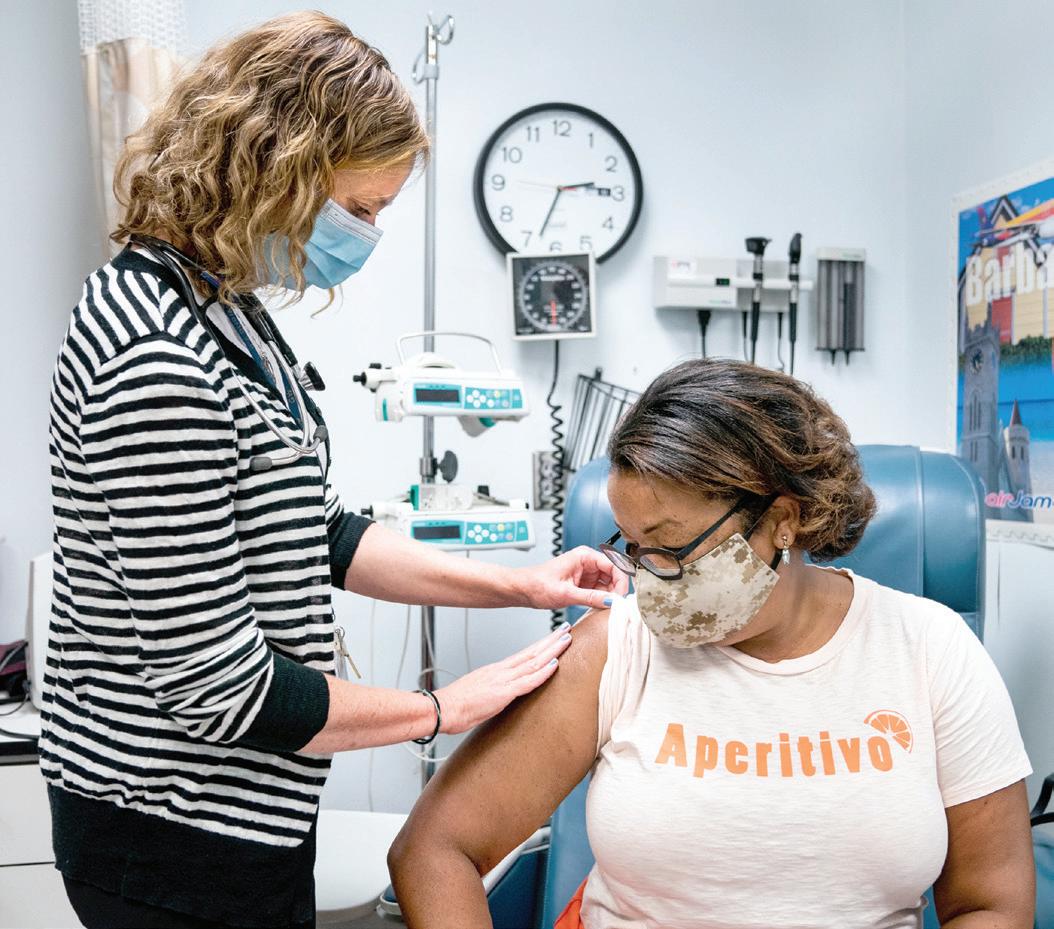
When vaccine distribution does begin, many physicians anticipate greater usage of the Moderna vaccine as opposed to Pfizer’s. The Pfizer vaccine can only last 5 days in a standard refrigerator, and must be stored at minus 75 degrees Celsius. Most clinics in the United States
don’t have the facilities to store vaccines at such a low temperature.
On the other hand, Moderna’s vaccine can be stored at minus 20 degrees Celsius — the temperature at which most common vaccines can be kept at — making distribution far more accessible.
Despite these promising developments, it may take months for the vaccine to be widely available to the public. As the number of national cases tops 155,000 cases
per day, at-risk individuals including health-care workers, the elderly and those with underlying conditions will be prioritized.
With some estimates placing the first rounds of distributing the vaccine as early as December, the decision relies on the Food and Drug Administration to grant emergency approval of the vaccine.
Jyothsna Bolleddula can be reached at jbolleddula@cornellsun.com.
SPEAKER
Continued from page 1
Wednesday afternoon to lay out their vision for the party’s future.
“I am humbled ... to join the leadership team in this new role,” Clark told reporters. “I can tell you this about our caucus: We are the guardians of peoples’ hopes and aspirations. We are going to be the unified engine for change. We are going to see and help the American people with the pain and suffering ... from this pandemic. This caucus is ready to serve, ready to lead.”
Clark, who holds a safe Democratic district centered on Boston’s suburbs, has played an active role in party politics since winning election to Congress in 2013. Sometimes called the “silent assassin” by House colleagues, Clark has garnered a reputation as a shrewd, TV-averse insider.
During the 2018 midterms, Clark served in the leadership of the Democratic Congressional Campaign Committee, the partisan arm charged with electing Democrats to the House. With her help, the DCCC
oversaw what many observers called a “blue wave,” picking up 41 seats on the way to ending eight years of GOP control.
This cycle, Clark has raised a hefty $4.5 million, much of which was used to shore up the finances of incumbent Democrats in tight races. She also spent time campaigning for House Democrats, particularly women and minorities.
Such work is typically a key step in building enough support from colleagues to advance to higher leadership positions; notably, in a previous interview, Clark did not deny that she one day may like to run for Speaker of the House.
The road ahead for Clark, and other party leaders, however, may be a bumpy one: She assumes the high-ranking leadership position at a bitterly contentious time for House Democrats.
Although the party won back the White House, down-ballot underperformance among Democratic congressional candidates has led to sharp infighting between swing-district moderates and their more outspoken, progressive colleagues.
By SPENCER NACHMAN Sun Staff Writer
When Temple of Zeus reopened Oct. 8 after five months without dishing up its signature soups and coffee, it was a joyous day for Zeus staff and regulars — but also the beginning of a slow semester at the cafe.
The Klarman Hall gathering spot has been quieter than usual this fall, as students trickle in to grab their paper-bagged mobile orders filled with soups and scones. Others study inside the rotunda that once brimmed with snaking sandwich lines, coffee chats and clanking ceramic mugs.
Temple of Zeus assistant manager Fred Cederstrom explained that his team has been trying to keep the menu simple this semester, sticking to the classics — mostly bagels, soups, scones, tea and coffee — to limit waste and accommodate the decreased demand. On a normal day, the cafe sees a fraction of last year’s business.
With Goldwin Smith Hall classrooms occupied with handfuls of studying students and vacant faculty offices, business this semester started off slowly at first, according to Cederstrom. But starting three weeks ago, the cafe saw an uptick in business.
As the semester picked up, Temple of Zeus expanded their options. “We have been somewhat limited due to the lack of business,” Cederstrom said. “So we are trying to be creative and think about how we can get people interested.”
She’s grateful the soup stop is back open — especially as many Central Campus eateries remain closed.
“I am really glad that there are now some options to get food from Temple of Zeus because there are otherwise really limited options available on campus,” Alexander said. “I think their soups are some of the best. They are always satisfying and healthy.”
Some Zeus soup — or as some like to call it, “zoup” — is also steeped in tradition. The cafe has been serving up tomato garlic soup for more than 40 years, and this semester was no different.
“Temple of Zeus has served tomato garlic soup every Monday since the mid 1970s, and people have come to expect that,” Cederstrom said. “And what goes well with tomato garlic soup? Grilled cheese sandwiches. It takes a little longer and a little more effort to make, but it is delicious and comforting.”
While Zeus has run on mobile orders this semester, Cedestorm said he misses the community that formed through the cafe over the years. Students are not able to work at the cafe this year, though they still visit four to five days a week.
“One thing that is really nice about coming to work is seeing all the student workers come back. We miss them,” Cederstrom said.
“There have been faculty that have come here for lunch for the last 20 years ... it is part of their routine and part of their lives.”
Fred Cederstrom
Before Zeus reopened, many members of the Cornell community missed the food that had become an important part of their routine.
“There have been faculty that have come here for lunch for the last 20 years, and it is part of their routine and part of their lives,” Cederstrom said.
Despite widespread expectations to pick up 10 to 15 seats, Democrats instead lost a net of at least eight, shedding ground in districts from South Florida to suburban Los Angeles — reducing the party’s House majority to one of the narrowest in recent memory.
In a heated conference call after election results trickled in, Rep. Abigail Spanberger (D-Va.), who only narrowly avoided being ousted herself, said the party “need[s] to not ever use the term ‘socialist’ or ‘socialism’ ever again,” while decrying the “defund the police” slogan. Liberal firebrand Alexandria Ocasio-Cortez (D-N.Y.), by contrast, rejected those criticisms as premature and “irresponsible.”
In her new role, Clark faces the challenging task of helping to unite a newly fractured caucus. Holding just a slim majority, House Democrats say they cannot afford major divisions between both wings of the party if they are to advance a legislative agenda.
Johnathan Stimpson can be reached at jstimpson@cornellsun.com.
Desiree Alexander, an audiovisual collections coordinator in Olin Library, has made Temple of Zeus a regular stop during her day.
“The people who work here love working here. It’s a very nice social atmosphere.”
Choklay Lhamo, a member of the Temple of Zeus kitchen staff for 21 years — and the cafe’s lentil soup namesake — said it’s the people who keep her coming back each year.
“I really love the people I work with,” Lhamo said. “And for the people we serve, especially for vegetarians, it is hard to find good and healthy food, so we try to give them the best food possible. It makes me happy when people are eating healthy food.”
Spencer Nachman can be reached at snachman@cornellsun.com.
By AMELIA CLUTE Sun Staff Writer
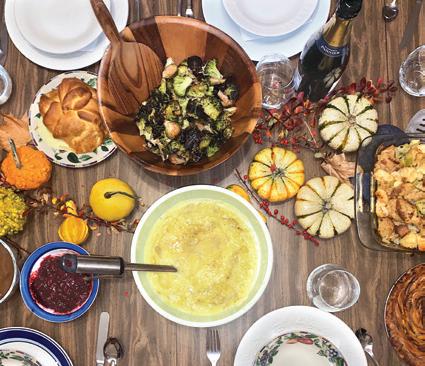
For the first time in almost four years, many Americans feel tentatively proud of their country. Tireless encouragement to vote has helped prove that community support can unite a country divided and reestablish American values of truth, integrity and respect. As such, it seemed appropriate to take a look at the new meanings Thanksgiving may hold this year; Samai Navas, a recent Salvadoran-American immigrant and close family friend, shares what her All (Salvadoran) American Thanksgiving has come to represent over the years. It’s worth noting that the typical modern Thanksgiving symbolizes and commemorates an ideal that only existed for a very short time. While there is some truth behind the story of a peaceful feast between European settlers and the Wampanoag people in 1621, this calm did not last. Between the years of 1630 and 1642, plague tore through Native communities, resulting in the death of more than half of all Native Americans living at the time. There is an argument to be made about celebrating a holiday so related to great human suffering and the romanticization of colonialism. For the sake of this article, however, we
will temporarily attempt to deracinate Thanksgiving to focus on its modern iterations within immigrant communities. I was especially interested in understanding how Samai’s perception of Thanksgiving might differ from someone born into the culture and who had celebrated it from birth. New and old Americans might celebrate the holiday differently at times, but both groups’ Thanksgiving dinners are equally viable ways of giving thanks for loved ones, good food and the previous year. I’m not sure how many people are going to be grateful for 2020 as a whole, but we’ll ignore that for now.
naming what we have been thankful for that year, and I often find myself naming something physical like “the food” or “school.”
emotions [as an American-born citizen] because Thanksgiving is not a tradition that I have grown up with. Nevertheless, it’s a time rich with positivity and feeling.”
By JACK WAXMAN
Sun Staff Writer
I spoke to my good friend Oge Ezekwenna ’22 about Thanksgiving with his family.
Before coming to the United States about two years ago, Samai had been exposed to Thanksgiving through TV and tales from relatives already living in the U.S; despite some secondhand knowledge of the
holiday, however, Samai was eager to experience her own Thanksgiving for the first time. When asked to remember her first-ever Thanksgiving last year, Samai said “it was a pleasant experience where I was able to partake in tradition and feel the excitement and an explosion of emotions; nostalgia and love for our family are some of the principal elements that create a magnificent Thanksgiving.” I particularly enjoyed her emphasis on the importance of family; at my family’s typical Thanksgiving dinner, we go around the table
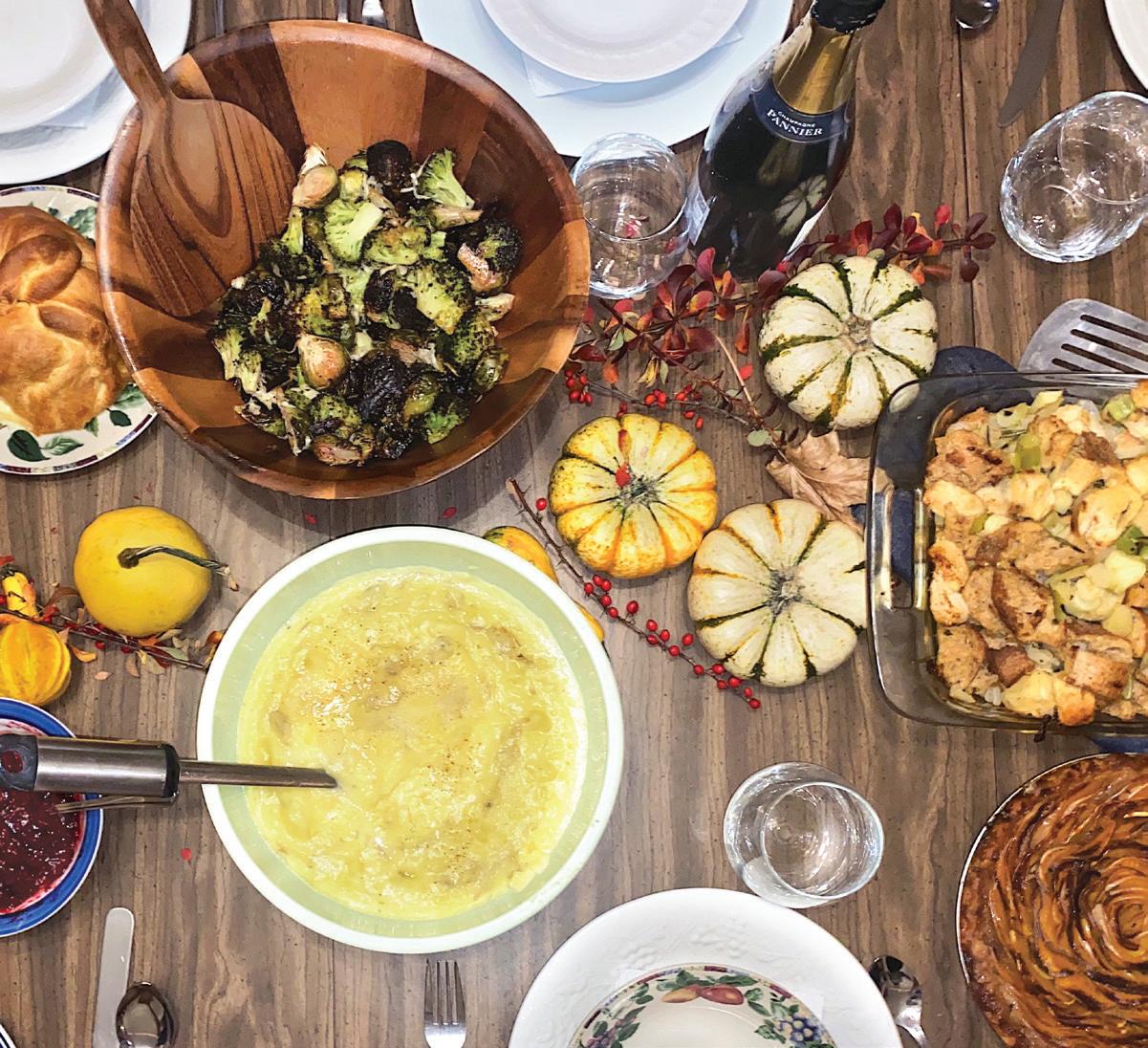
Hearing Samai repeatedly mention her family made me realize that I had probably begun to lose touch with the more sentimental side of Thanksgiving. Naturally , I had to ask about the food. Samai tells me that “of course, like good Salvadorans we always have pupusas, horchata and the obligatory turkey.” For those poor souls that have yet to try a pupusa, they are luxurious, warm pockets of corn tortilla stuffed with fillings like beans, cheese and meat, then cooked on a griddle or comal. The pupusa is almost more Salvadoran than the flag itself. Samai feels comfortable straying from other traditional dishes like cranberry sauce because “obviously, I am not overcome with the same
Ezekwenna’s parents, Beatrice and Bonaventure, are both Igbo Nigerians. The Igbo people are a meta-ethnicity native to the present-day south-central and southeastern Nigeria and Equatorial

Guinea. Beatrice and Bonaventure were born in the southeastern part of Nigeria. They moved to the United States in the late 1980s and 90s as teenagers, settling in New York City. Ezekwenna lives in the Bronx, New York with his parents and his two siblings Lulu, 19, and Chichi, 17.
Ezekwenna said that Thanksgiving in his house is a three-day affair, consisting of defrosting the turkey, finalizing the foods to be served and “dropping subtle hints about gifts for my parents to buy during the Christmas shopping season.”
In the Ezekwenna household, Thanksgiving lunch is usually a small affair consisting only of immediate family, where a wide range of, in Oge’s words, “mouth-watering food,” is served: collared greens, turkey, macaroni and cheese, candied yams, ham, stuffing, rice and beans. Dessert follows, with pies, ice cream and whipped cream to top it off.
Later in the afternoon, Igbo, the native language of Ezekwenna’s parents, could be heard as relatives call-in, wishing Ezekwenna and his family a happy Thanksgiving and sending well-wishes.
“As I don’t speak Igbo, I barely make out the conversations, but the animated tone used in dis-
cussion helps me gauge if the call is simply a short one or an hours long one,” Ezekwenna quips. When I asked Ezekwenna what Thanksgiving means to him, he told me, “Thanksgiving is a special time to spend with family and loved ones. It offers a respite from the hurried nature of life and provides an opportu-

nity to slow down and be present with loved ones. Especially this year, given the tumultuous and challenging times we have had, I look forward to being with family and enjoying their company. I also love Thanksgiving because it marks the start of the holiday season, which is, as the classic Andy Williams song aptly puts it, ‘the most wonderful time of the year.’”
Oge then told me that in the Igbo region of Nigeria there is a celebration called the New Yam Festival.
Though Samai claims that Thanksgiving doesn’t hold the same significance for her as it does for other Americans, it seems to me that she has hit the nail on the head. There is no singular right way to have a Thanksgiving dinner, as there is huge variation across the U.S. Who is to say that brussels sprouts or mashed potatoes are any more representative of Thanksgiving than horchata? Of course, “traditional” foods can connect us to relatives when we make Grandma’s pie, or read a recipe for Great Uncle’s gravy; we remember and honor our relatives through the food they used to make. However, for new Americans without a distinct Thanksgiving culinary tradition, putting their own twists on the meal can help create one. In a few generations, a MexicanAmerican immigrant’s grandchild might prepare Abuela’s Thanksgiving tamales. As a holiday that, at its core, is about appreciating those around you and uniting communities, eating tamales at Thanksgiving may become even more meaningful than turkey.
Held in late August, the New Yam Festival is similar to Thanksgiving because it symbolizes the harvest of yams and is used to celebrate the end of a harvest cycle. Yams, a staple for the Igbo, are a focal point of the holiday.
Similar to Thanksgiving, the holiday ties communities together in a celebration of the yam, “the king of crops,” as the Igbo call it.
I really appreciated the conversation I had with Oge about Thanksgiving and the New Yam Festival. Before our talk, I was unaware of the yam’s significance to the Igbo, and I never heard of the New Yam Festival. After Oge shared his story with me, I told him about my family’s Thanksgiving — the dishes we serve, the stories we retell, the history we cherish. Being at Cornell allows us to meet people who have entirely different experiences and backgrounds. This Thanksgiving, in addition to being thankful for the harvest and the food on my plate, I am thankful for the people in my life from this university who have expanded my view of the world.
As of the last few months, both TikTok and I have had a resurging fascination with the “main character trend.” Instructional and satirical TikToks keep populating my For You page, instructing me how to be the protagonist of my own life by creating playlists to become the soundtrack of my morning routine or by wearing specific combinations of patterns, prints and textures that straddle the border of mainstream disapproval and being just mismatched enough to still look cohesive — and cute.
The main character trend stems from the coming of age genre, mostly in movies and TV shows, where the young protagonist is figuring out both life and who they are. But this genre seems as old as the bildungsroman, its book-form cousin, so why the sudden upsurge in its desirability?
On a place like TikTok where every subgenre seems to have a home — and a dedicated family — I’m not surprised that a generally enjoyable genre of entertainment would gain such traction. (After all, if Ratatouille fans are writing a whole musical, complete with choreography and marketing materials, then this feels more plausible than normal.)
Marking my personal dive into coming of age movies, however, would have to include the context of the pandemic. Since coming home in March, I’ve spent over eight months at home — over eight months of time spent in rooms decorated by my sixth grade self (filled with my elementary school graduation mementos and a Hunger Games poster) and bookshelves of chapter books. Perhaps my version of “reverting back to my high school self” wasn’t so much about interests, habits or personality, but the nostalgia of it.
Part of the charm of coming of age movies and shows are their specificity in time and place. Ladybird and The Half of It are both characterized by their small-town settings, contrasting Ladybird and Ellie’s aspirations against the smallness of their immediate surroundings. Both films are led by the arc of high school senior year and the question mark of hope, uncertainty, and new potential that come with college applications and the imminent change of the future. In contrast, Frances Ha is set in New York City and revolves around post-grad life and juggling one’s passions and dreams with the reality of adulting.
But even though these movies follow characters in different life stages, there is something important about referential time in watching and re-watching coming of age movies. When I first saw Ladybird , I was also a senior in high school and I found the act of watching to also be of identification and projection — I could relate to her experiences of craving change and wanting to leave my hometown. However, my year was filled with a fraction of the turbulence and excitement that hers was, so it also became a way for me to vicariously experience things. Rewatching it this year, nearly three years since leaving high school, felt like I was looking back and ruminating through my own memories. It wasn’t necessarily reliving or revising my past, but through the same act of association, I had mentally or emotionally tied Ladybird to a specific point in my personal timeline as well.
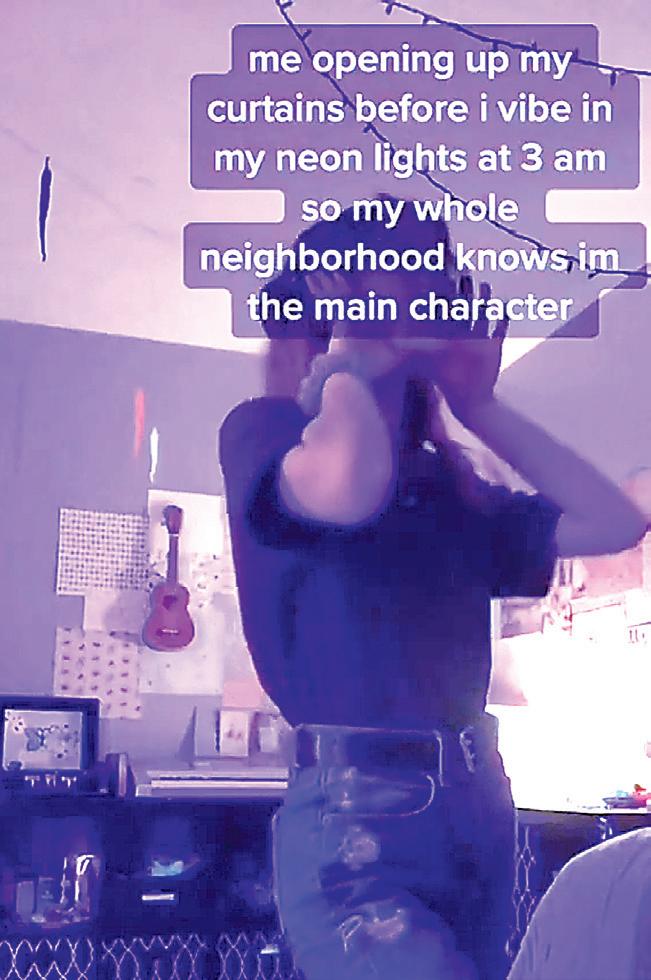
The likability of coming of age movies is easy to understand, but how has it spawned into a Gen-Z obsession with being the main character? Is it an act of narcissism and self aggrandizing or one of reclamation and futurism — especially for people who don’t see themselves represented as on-screen main characters?
Part of the main character trend pitfalls into an obsession with being different, and using one’s individualism — whether it’s in fashion and self expression, habits, or even taste — as cultural currency. A quick Google search might also lead to “Main Character Syndrome,” the living out of a fictitious reality in which the world revolves around the “main character.”
To continue reading this column, please visit cornellsun.com.
Cecilia Lu is a junior in the College of Architecture, Art and Planning. She can be reached at zcl5@cornell.edu. Breathing Room runs alternate Thursdays this semester.
Independent Since 1880 138th Editorial Board
MARYAM ZAFAR ’21 Editor in Chief
JOYBEER DATTA GUPTA ’21
Business Manager
KRYSTAL YANG ’21
Advertising Manager
CHRISTINA BULKELEY ’21
Sports Editor
PALLAVI KENKARE ’21
EMMA ROSENBAUM ’22
SEAN O’CONNELL ’21 News Editor
AMBER KRISCH ’21 Blogs Editor
MEGHANA SRIVASTAVA ’23
Assistant News Editor
EMILY DAWSON ’21
Assistant Sports Editor
HANNAH ROSENBERG ’23
Assistant Photography Editor
ALICIA WANG ’21
Graphics and Sketch Editor
JOHN MONKOVIC ’22
Multimedia Editor
MAIA LEE ’21
Money & Business Editor
AMANDA CRONIN ’21 Senior Editor
SARAH SKINNER ’21 Senior Editor
Samantha Stern ’21
Gabrielle Gonzalez ’21
Catherine Chmiel ’22
Tamara Kamis ’22
Hannah Kim ’22
Faith Fisher ’22
AJ Stella ’21
Paris Ghazi ’21
Darren Chang ’21
Robyn Bardmesser ’21
Kristi Lim ’21
John Wootton ’21
Ryan Richardson ’21
Cory Koehler ’21
James Robertson ’21
Ramya Yandava ’21
Sriya Perati ’21
Mike Seitz ’21
Raphy Gendler ’21
Fei Fei Hu ’21
Natalie Monticello ’21
Esat Braveboy ’22 Milo Gringlas ’22 Min Shin ’22 Onalee Duane ’22 Tal Dotan’22 Ainav Rabinowitz ’23
Elijah Fox ’21
Lucero Contreras ’21
Michaela Bettez ’21
Canaan Delgado ’21 Aminah Taariq ’21
JOHNATHAN STIMPSON ’21
Managing Editor
JASON HUANG ’21
Web Editor
NIKO NGUYEN ’22
Design Editor
EMMA PLOWE ’23
Arts & Entertainment Editor
BENJAMIN VELANI ’22
Dining Editor
CAROLINE JOHNSON ’22
News Editor
JOHN COLIE ’23
Blogs Editor
CATALINA PEÑÉÑORY ’20
Assistant News Editor
LUKE PICHINI ’22
Assistant Sports Editor
BRIAN LU ’23
Assistant Arts & Entertainment Editor
LEI ANNE RABEJE ’22
Layout Editor
ARI DUBOW ’21
City Editor
ANNABEL LI ’22
Assistant Money & Business Editor
RAPHY GENDLER ’21
Senior Editor
JEREMY MARKUS ’21
Senior Editor
NICOLE ZHU ’21
Senior Editor
News Board
Amaya Aranda ’23 Anthony Chen ’23
Asha Patt ’23
John Yoon ’23
Louis Chuang ’23 Olivia Cipperman ’24
Opinion Board
Lei Lei Wu ’21
Matthew Samilow ‘22
Andrew Lorenzen ’22 Christian Baran ’22 Nicholas Nguyen ’22
Arts Board
Jeshsica Lussier ’21
Anna Canny ’21 Tyler Brown ’22
Nkemdirim Obodo ’22
Stephanie Tan ’22
John Wooton ’22
Ken Choi ’22 Faith Fisher ’22
Sydney Oraskovich ’21
Tamara Kamis ’22
Yisu Zheng ’21
Livia Caligor ’21
Katriana Galloway ’23
Brianna Johnson ’21
Katie Zhang ’21
Ruth Park ’21
Amelia Clute ’22
Peter Kaplinsky ’22
Camilla
Ella Schwartz ’23
Isabelle Pappas ’24
Rae Specht ’22
Isha Vaish ’22
Jack Waxman ’22
Meridien Mach ’22
Melanie Metz ’22
Stephen Yang ’22
Cecilia Lu ’22
Aditi Hukerikar ’22
Kayla Bouazouni ’23
John Colie ’23
Brian Lu ’23
Sports Board
Justin Suzzan ’22
PETER BUONANNO ’21 Associate Editor
MEGHNA MAHARISHI ’22
Assistant Managing Editor
BORIS TSANG ’21
Editor ANIL OZA ’22
Editor ALEX HALE ’21
KATHRYN STAMM ’22
MADELINE ROSENBERG ’23 Assistant News Editor
OLIVIA WEINBERG ’22
Assistant News Editor
BEN PARKER ’22
Assistant Photography Editor
DANIEL MORAN ’21 Assistant
OU ’22
SUN ’21
CHENG ’21
ALEC GIUFURTA ’21
GHAZI ’21
Sarika Kannan ’23
Sofa Loayza ’23
Sydney Browne ’23
Angela Bunay ’24
Charlie Mollin ’24 Eli Pallrand ’24
Odeya Rosenband ’22
Emma Smith ’22
Alecia Wilk ’22
Roei Dery ’23
Katherine Yao ’23
Megan Pontin ’23
Emma Leynse ’23
Charlee Mandy ’23
Ashley Ramynke ’23
Mira Driskell ’23
Christina Ochoa ’24
Mitch Hoy ’22 Max Ringer ’22 Monica Kim ’23
Omsalama Ayoub ’22 Milena Bimpong ’22
Julia Nagel ’24
Jyothsna Bolleddula ’24
Katherine Esterl ’24
Kayla Riggs ’24
Spencer Nachman ’24
Brendan Kempf ’23
Daniel Bernstein ’23
Jonna Chen ’23
Joshua Dov Epstein’23 Wendy Wang ’24
Connie Huang ’24
Isabelle Pappas ’24 Matthe Kassorla ’24
Board
Current Cornell Sun & Sun Alumni Association Employees & Contractors
Sun Business Office Amy Wilson, Ofce Manager Sun Production S. K. List Sun Delivery Robert Armstrong ’75 Sun Alumni Asso John Schroeder ’74, Alumni Advisor; Linda Holzbaur, Contractor
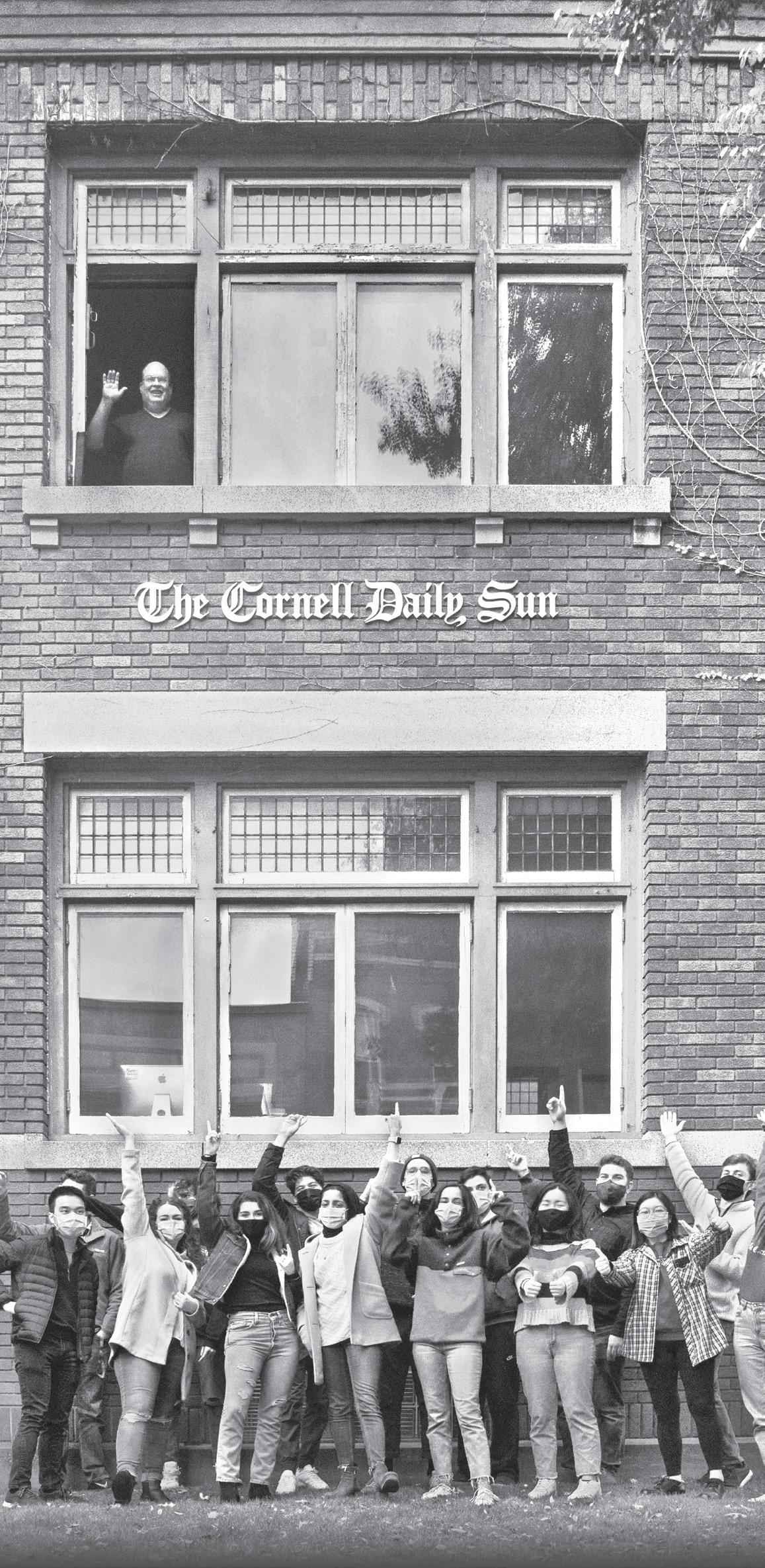
TODAY IS THE FINAL DAY of print publication in 2020 for The Cornell Daily Sun. In a departure from our normal schedule, we will publish regularly after Thanksgiving break online only. For the rest of the semester, the sturdy doors at 139 W. State St. won’t see the normal influx of editors rushing in and out to make a paper, as our staff returns to their homes and bunkers down until the spring.
We adore the comfort and cadence of our print paper, and — not unlike the sunshine in Ithaca — the print edition of The Cornell Daily Sun will return in February.
In the meantime, we’ll continue our steady reporting at cornellsun. com; if you have comments, compliments, concerns or qualms, do reach out to editor@cornellsun.com — we’d love to hear from you.
— M.Z.
Snyder ’23 Alyson Wong ’23
’22
Blogs Board
Dylan McIntyre ’24 Harry Ducrepin ’24 Lauren Auburt ’24
Dining Board
Sofa Siciliani ’22
Brooke Jafe ’23
Gabe Schifer ’23
Sarah Austin ’23
Sanjana Kaicker ’23
Andrea Serrano ’24
Clare Della Valle ’24
Nick Hoge ’24
Grace Kim ’24
Sadie Groberg ’24
Suzanna Moustafa ’24 Yvie Cai ’24

Roei Dery is a sophomore in the College of Arts and Sciences. He can be reached at rdery@cornellsun.com. Te Dery Bar runs every other Tursday this semester.
Iused to envision a daily routine where I wake up early enough for a relaxed breakfast, and make the most of my spare time in between walking from class to class. When I frst started college last fall, these goals regressed into oblivion in a matter of a few weeks and my standards fell to limiting myself from pressing snooze more than twice. Now, in a semester where going to class requires the minimum of a few presses of the mouse, my optimism heading into the semester — including a hope for a routine as close to “normal” as possible — has fared even worse.
For many of us, online classes have only enabled the tendency to only do just enough to get to class on time —
and it has greatly lowered that threshold. What used to be a morning routine and walk to class is now a roll out of bed. Tis heightened convenience has let even those of us on the strictest regimens slip up. A suitemate who last year would wake up early enough to go to the Helen Newman gym and eat breakfast before his morning classes now wakes up at 3 p.m. and falls asleep at 6 a.m., a schedule that his entirely asynchronous course load permits. In a semester where our schedules and the University encourage minimal excursions from our rooms, time will tell how quickly we will drop these bad habits as our campus looks to gradually reopen to a state of normalcy.
Tose of us who have experienced a “normal” semester like to say we’ll be more inclined to pick up our old routines. Perhaps the greater looming question is whether current frst-years will be able to break the only norm they’ve ever known, which, as a frst-year transfer tells me, has consisted of taking classes solely from their own room. Following an unpleasant experience attempting to reserve and locate a study space, they don’t see libraries at Cornell as an optimal study space or a viable outing. It’s mentalities like these, ingrained into the newest population of Cornellians, that are a microcosm of a gloomy bigger picture set for when Cornell returns to normalcy.
When I was a frst-year, the routines I developed within the frst few months were the same ones I picked back up when returning for the following spring. Te stacks of Olin in which I would study late at night, the empty classrooms I frequented when the stacks were full and even the dining halls I went to back when each had its own rotation all ensured that I would trek cross-campus on a nearly daily basis.
Tough we can only speculate about whether non-freshmen will truly back their intentions to gradually resume their pre-COVID routines with action in the
coming semesters, frst-years who lack this point of reference pose a greater concern to whether our campus will become more reserved and withdrawn in the aftermath of COVID.
It is both our and the University’s burden to ensure that opening more facilities over the coming semesters is not simply a matter of unlocking a few doors, but actively giving first-years the opportunity to explore.
It is both our (as upperclassmen) and the University’s burden to ensure that opening more facilities over the coming semesters is not simply a matter of unlocking a few doors, but rather actively introducing frst years who lacked access and the opportunity to explore these facilities during their transition to Cornell. Insisting we’ll be back at Uris Library and Libe Cafe in no time from the comfort of our rooms, to which we’ve delegated all of our activities, is easy. Returning to more active routines that don’t slip through our fgures like the gym and breakfast-flled mornings that are still a fgment of many of our imaginations is a harder task — one that will largely determine the liveliness of our campus, and the example set to incoming students to continue the traditions that we’ve put on hold.
Darren Chang is a senior in the College of Arts and Sciences. He can be reached at dchang@cornellsun.com. Swamp Snorkeling runs every other Tursday this semester.
“Tis semester is just so weird.”
“I don’t know what it is, but this semester is harder than all the other ones I’ve had … and I’m a senior.”
“I’m studying remotely, but this is still hell.”
Tis is just a small sampling of where so many Cornellians are at this semester, as classes end (for the frst time) and we begin a schedule of semifnal exams and project deadlines before returning to two more weeks of being beat up all over again. Weary, seasonally depressed, hurting and alone in so many ways, what are the lessons we can take from this semester in preparation for the next?
When I frst registered for classes this semester, I thought that coursework might be a bit easier. Te end of last semester demonstrated that professors realized that online exams were nearly impossible, and it was much better to use open-note formats, which I perceived to be less challenging. Tis pattern was repeated this year: Fewer classes have exams, and instead, course staf are relying on projects, assignments, problem sets and quizzes to assess students.
I don’t know about you, but I’m fnding the academic load this year to be much tougher than normal,
even with few synchronous classes and a minimal number of credits. Many of us lack the motivation to attend online lectures, which are typically less interesting and certainly less engaging. Tis isn’t the fault of professors, and begs the question of what attendance would have been like for in-person classes for which attendance is not required. Moreover, the work is a drag. Spending days slaving away at homework is not really better than the two hours that are needed to take the exam.
If the pandemic continues and classes next semester are held in a similar hybrid format, we need to rethink our classes and academic course loads. Maybe academic departments won’t change their graduation requirements — although a reassessment of this on a department by department basis would be benefcial to students — but reasonable credit caps, no matter how controversial, might be the move to limit students from overworking themselves, as Cornell students are wont to do. Or, better yet, Cornell could provide better advising resources, ones that are honest and open to students about feasible schedules.
During our pre-enroll, I propose that we individually consider each credit to be 1.5 credits as a more accurate representation of the work involved in this online format. Furthermore, mapping out a path to graduation with several academic calendar scenarios could help us better plan our academic lives. We have no way of knowing if we’ll become better adjusted to this new way of life or if we’ll continue struggling, but erring on the side of caution could serve us later in the semester when our walls are suddenly crumbling.
What I found even harder was the separation of work, school and life. Attending class, doing homework and participating in clubs no longer takes place in distinct physical locations. I can complete the entirety of my daily schedule from the comfort of my desk or my living room table … or, on the more degenerate days, from the comfort of my bed. In our current environment, we no longer associate rest or sleep with our living spaces. Instead, we confate them all, making it even harder to take a break.
I don’t have a good solution to this yet. But, as one of my colleagues suggested during my internship this summer, I’m hoping to be better about routines next semester. Maybe I’ll wake up earlier (doubtful, to be honest), and simulate a commute to campus by taking a quick 10 minute walk. I can change my meeting loca-
tions within the apartment so that I don’t become sick of staring at my blank white walls. Other options must exist; I’m not sure if I can survive another semester of self-inficted hermitude.
Finally, the efort needed to maintain any semblance of a social life has meant I hang out with myself more than ever before. I’m not all that interesting or
With one semester down, we’ve learned a lot about ourselves and the environment, but we still have a long way to go before we finish the year. Do we learn from our mistakes, or do we allow the “new normal” of the virus to overwhelm us?
introverted of a person, so this has meant a lot of bad video compilations and scrolling through social media. I’ve been trying to fnd ways to entertain myself ofscreen, whether with a book or by learning to cook real meals instead of fridge-cleaning expeditions.
Do we develop our own self-socializing skills, or do we fnd ways to socialize with others online or in continued compliance with social distancing guidelines? I truly have no answers to this one. I’m grateful I came back to Ithaca this semester, but being in the same physical location as my friends hasn’t guaranteed a solution to COVID-induced isolation, given that Cornell has (reasonably, in my opinion) removed our primary ways of hanging out in large groups with our clubs and friend groups. I can only imagine the social situation for remote learning students.
With one semester (nearly) down, we’ve learned a lot about ourselves and the environment, but we still have a long way to go before we fnish the year. Do we learn from our mistakes and create a better next semester, or do we allow the “new normal” of the virus overwhelm us?
By LUKE PICHINI
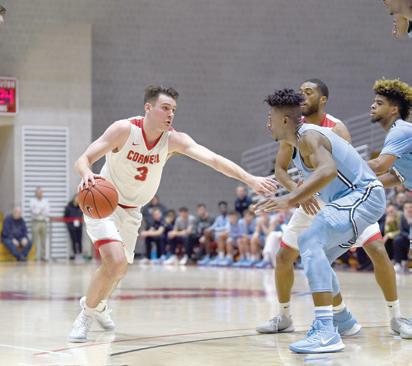
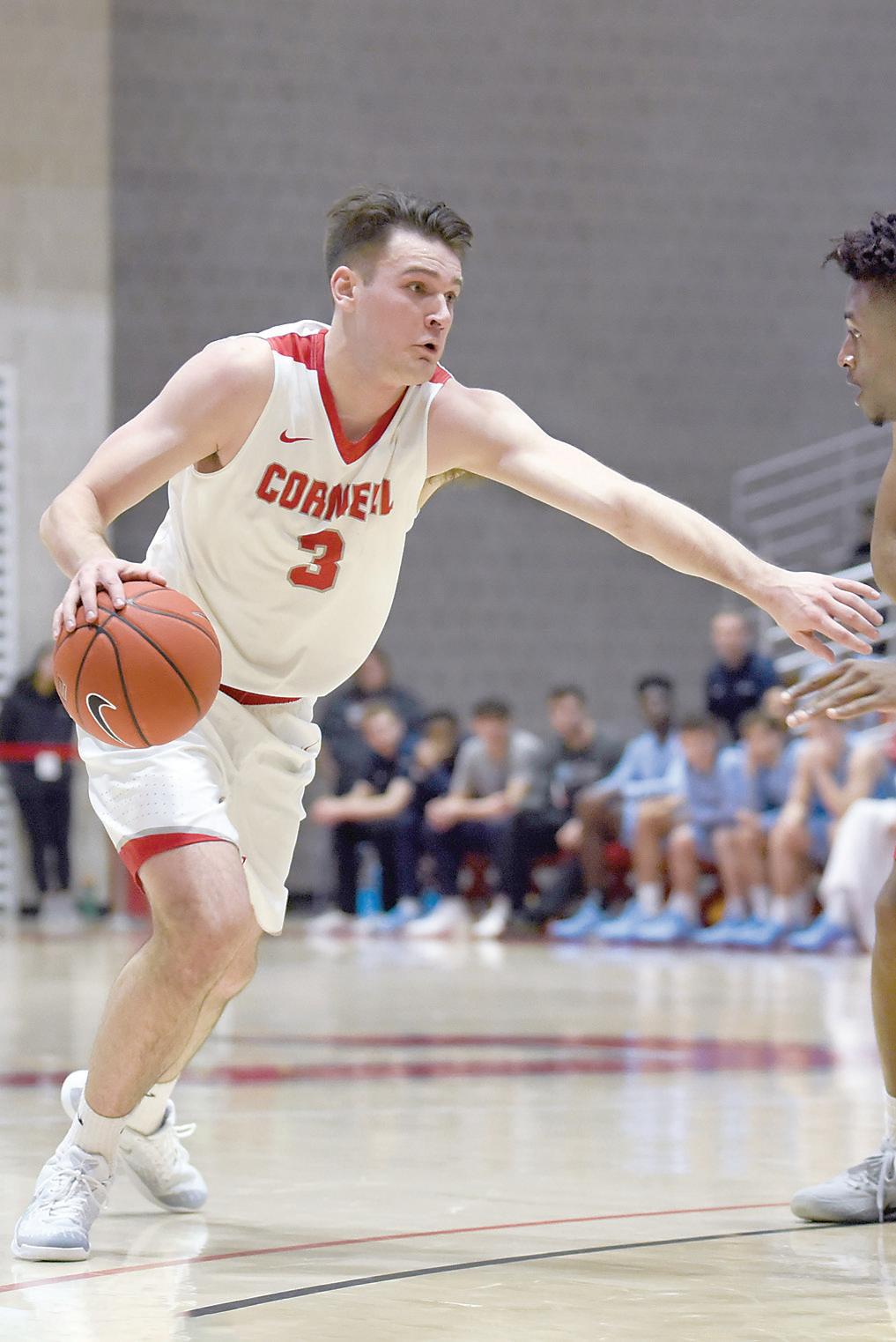
Four Cornell men’s basketball seniors have entered the transfer portal, including senior forward Jimmy Boeheim, who led the team in scoring and rebounding last year.
In addition to Boeheim, senior guards Terrance McBride and Bryan Knapp and senior forward Riley Voss also put their names into the portal. The news was first reported by Jeff Goodman of Stadium.com.
McBride, Knapp and Voss — along with Boeheim — were consistent starters on a Cornell team that finished 7-20 and failed to qualify for the Ivy League Tournament, which was canceled due to the COVID-19 pandemic.
The seniors’ decision comes after the Ivy League announced the cancellation of winter sports. Unlike other NCAA conferences, the Ivy League does not allow student-athletes to play after graduating, even if they do have remaining eligibility. As a result, Boeheim, McBride, Knapp and Voss could potentially transfer to other schools and take the floor as graduate transfers in order to exercise their remaining eligibility.
Jimmy’s brother, Buddy, who is currently rostered as a junior point guard at Syracuse, told ESPN that Boeheim was upset by the Ivy League’s decision.
“I couldn’t imagine finding out right now that our season was canceled,’’ Buddy said. “All the hard work he’s put in this summer. We worked out every day together. I was really looking forward to see what he was going to do this year. He was going to have a big year.”
In the aftermath of the news, Boeheim’s path remains unclear. “He’s not sure what he’s going to do yet,’’ Buddy said. “He’s just kind of taking it day by day.’’
Following the graduation of Matt Morgan ’19, the Ivy League’s second all-time leading scorer, Boeheim became the Red’s star player. He averaged 16.7 points, 5.6 rebounds and
1.9 assists per game. Though Boeheim missed six games due to injury, he finished fifth and tenth in the Ivy League in scoring and rebounding, respectively.
Meanwhile, McBride and Knapp also stepped up in the absence of Morgan. McBridge turned in a breakout year, averaging over 12 points per contest and earning an honorable mention All-Ivy League. Knapp contributed 7.1 points per game and also shot 46 percent from 3-point land during conference play. In 15 starts, Voss tallied 3.4 points, 2.3 rebounds and 1.5 assists per contest.
“I was really looking forward to see what he was going to do this year. He was going to have a big year.”
Buddy Boeheim
Unfortunately, the four players’ production did not translate in the win column. After notching 15 wins in 2018-19, the Red regressed, only notching seven victories on the year and posting a 4-10 mark in conference play.
With forward Josh Warren ’20 having graduated, the Red is now missing four of its five leading scorers from the 2019-20 season. Aside from sophomore forward Jordan Jones and junior guard Dean Noll, no other Cornellian averaged more than six points per game.
The Red has welcomed six new freshmen and will hope to bring in a solid recruiting class next year as the team continues its rebuild. But as it stands, Cornell’s roster is filled with unproven talent. Head coach Brian Earl will attempt to navigate the Red to its first Ivy Tournament appearance since 2018 and its NCAA Tournament berth since 2010 if the team is able to take the court next season.
Luke Pichini can be reached at lpichini@cornellsun.com.