The Corne¬ Daily Sun


University has alums, but has not matriculated an undergraduate since 2009 from Hamilton County
attended Cornell in the last five years.
Even among upstate New York’s sparsely populated counties, Hamilton stands out. It is the third-biggest county and has the smallest population — just 4,778 people as of 2012. It is the least densely populated county on the Eastern half of the United States. Its entire citizenry could fit inside Cornell’s 8 largest lecture halls. The county is nearly the size of Delaware, but has no traffic lights.
experienced it first-hand.”
November in the village of Speculator, population 302, is the quiet stasis of a tourist town in the off-season. In a few
“The scale is so tiny it almost boggles the mind for anyone who hasn't lived in a very, very rural area.”
Bill Waller ’77
Every U.S. state and 116 countries are represented among Cornell’s undergraduate population. Nearly a third come from New York State alone. But in the heart of the Adirondack Mountains —
a green teardrop of virtually unbroken forest in northern New York — lies Hamilton County, the only county with no Cornellians.
Cornell currently enrolls students from Senegal, Madagascar and Lithuania, but no one from Hamilton County — just three hours away from campus — has
“The scale is so tiny it almost boggles the mind for anyone who hasn’t lived in a very, very rural area,” said Bill Waller ’77, who vacationed to Hamilton for more than 30 years before moving there in 2011. “The difference is, instead of having farms we have mountains and lakes and national beauty. There’s tourism, but the dynamics of small populations are still quite striking, and hard to imagine anyone who hasn’t
Technology giant Amazon announced Tuesday morning that it has chosen New York City and Arlington, Virginia to house its second headquarters. The New York site, located in Long Island City in Queens, is just a five-minute ferry ride away from the Cornell Tech campus on Roosevelt Island.
Cornell Tech, which embodies then-mayor Michael Bloomberg’s vision, aims to become the innovation incubator to New York City’s tech industry as Stanford is to the Bay Area.
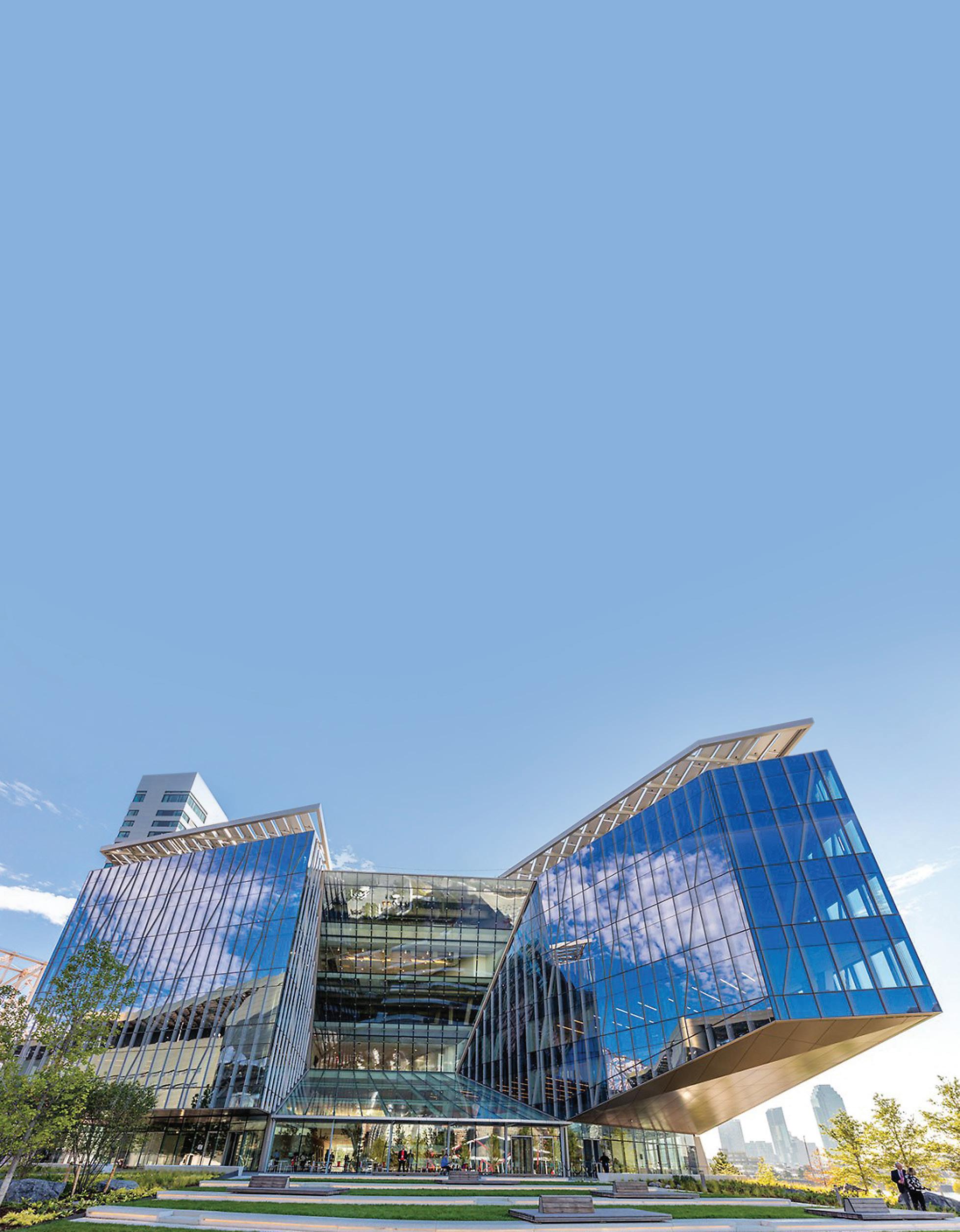
In a statement to The Sun, Josh Hartmann, chief practice officer at Cornell Tech, said the school is “proud to welcome Amazon … as its new neighbor” and that Amazon’s arrival will bring prosperity to the tech sector of the metropolis.
“Cornell Tech is spinning out hundreds of graduates each year as well as groundbreaking, impactful research,” Hartmann said. “New York City has emerged as a destination for tech and innovation, and Amazon’s
arrival will accelerate growth and success for the city and for Cornell Tech.”
The founding dean and vice provost of Cornell Tech, Daniel P. Huttenlocher, also sits on the Amazon’s board of directors. Huttenlocher recused himself from Amazon’s search process, according to President Martha E. Pollack.
The day before Amazon’s announcement, Pollack said in an interview with The Sun that she believes Cornell Tech is part
months, vacationers from the likes of Nassau, Westchester and New York City will reclaim their cabin-style vacation homes and jet around Lake Pleasant in powerboats. Shannon Clancy, 37, serves up homefries and bacon to the regulars of the Sunrise Diner, most of whom she greets by name. As in many counties in upstate
By ROCHELLE LI Sun Staff Writer
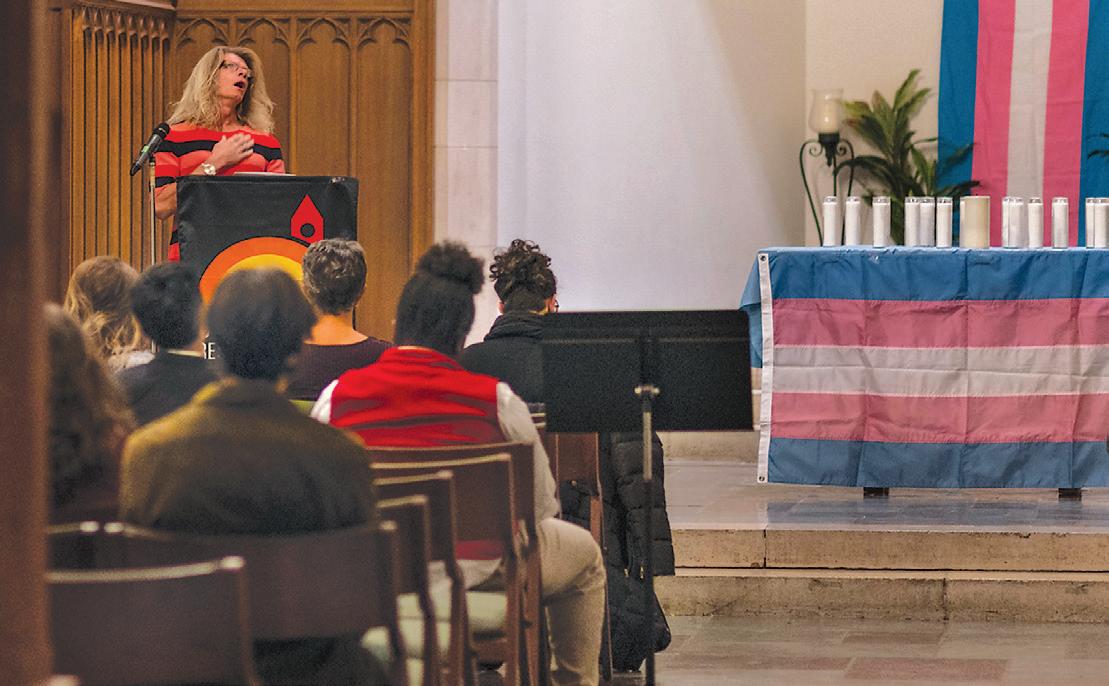
A vigil was held to memorialize the 309 people who have died from violence against transgender individuals this year for the International Transgender Day of Remembrance. The International Transgender Day of Remembrance began in 1999 after the 1998 murder of transgender woman Rita Hester. It is held annually on Nov. 20 has expanded to nearly 200 cities across the United States and around the globe. Cornell typically holds its vigil the week before Thanksgiving to accomodate for students’
traveling.
The vigil, held in the Anabel Taylor Chapel, was designed as a space for transgender and gender non-conforming individuals and their allies to grieve for those lost, but also to bring resilience to the community. The vigil was hosted by the Cornell LGBT Resource Center, which has held the event every year for a decade.
Following the vigil’s tradition in past years, Reverend Taryn Mattice opened the vigil by reflecting on transgender issues.
“I believe we’re all created for good. Our bodies are for
Its Mysterious Life: An Appreciation of Beetles
8 a.m., Top Shelf Gallery Mann Library
Shadow, Light and Life: Color Design 8 a.m., Terrace Level Display Cases
Human Ecology Building
Chemical Engineering Seminar: Heather Mayes, University of Michigan
9 - 10 a.m., 255 Olin Hall
Labor Economics Workshop: Ravi Kanbur & Paul Hufe 11:40 a.m. - 1:10 p.m., 115 Ives Hall
SAP Seminal Series, Violence and the Jurisdiction of “Disturbed Areas”: Notes from Colonial India 12:15 - 1:30 p.m., G08 Uris Hall
Cover Crops for Enhancing Soil Health in Vegetable Production - Thomas Björkman
12:20 p.m., 404 Plant Science Building
Crochet with Graduate Women in Science 4 - 6 p.m., 100 Mann Library
Jackson Polys: Manifest X 5:15 p.m., Abby and Howard Milstein Auditorium
History of Life - 2018 Lecture Series 5:30 - 6:30 p.m., 1259 Trumansburg Road
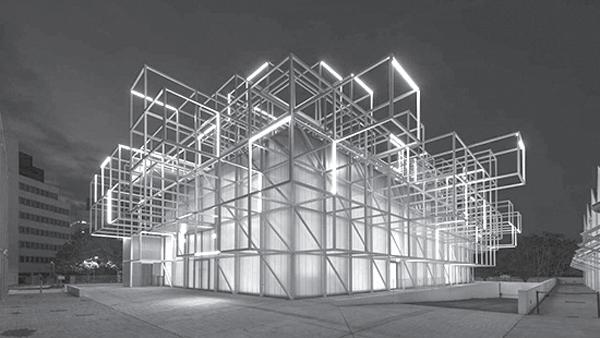
Mario Cucinella: Energy Linked to Spaces: Architecture, Nature, Energy, Sustainability 6 p.m., Palazzo Santacroce
All The President’s Men 7 - 9 p.m., Willard Straight Theatre
Cayuga Basin Bioblitz: A 24-Hour Race to Find What’s Living in Our Backyard
8 a.m. - 5 p.m., Mann Library, Mann Galley
Cornell Health: “Let’s Talk” Walk-In Consultations 2:30 p.m., 146 E. Sibley Hall
The Other Red Wave: Democratic Socialism in Electoral Politics 4 - 5 p.m., Cornell Law School, Saperstein Student Lounge
ORIE Colloquium: Po-Ling Loh - Statistical Inference for Infectious Disease Modeling
4:15 p.m., 253 Rhodes Hall
Press Bay Holiday Market
4:30 - 7 p.m., 116 -118 W Green Street, Press Bay Alley
Association of Veterans Happy Hour 5 - 6 p.m., Big Red Barn
Weekly Study Skills Tutoring 7 - 9 p.m., 3339 Tatkon Center
By JEFFREY LI Sun Contributor
Starting on Nov. 26, students will be required to sign into Student Center and Student Essentials through a twostep login process, which the administration believes will significantly improve the security of personal information.
“This step [Two-Step-Login] may cause inconvenience, but we believe it is worth the effort to protect students’ account[s] and data,” said David Lifka, vice president for information technologies and chief information officer for the University.
Two-Step Login means that students have to confirm their identity on a separate device before logging in. They
can take a call on a registered phone, tap “Approve” from an app called Duo Mobile, enter a code from either the app or a keychain or tap the button from a USB device, which are available for purchase online.
Lifka noted that the number of compromised accounts has been much lower after they created the Two-Step Login. Security has vastly improved because adversaries will need to have not only a person’s password but also access to their secondary authentication device.
Bypassing the Two-Step Login is “not impossible but highly improbable,” Lifka told The Sun.
Students will be required to use this method to access sensitive information, but Two-Step Login is not new.
“Faculties have been required to use Workday Two-

By ROCHELLE LI Sun Staff Writer
Consisting of 13 Cornell professional fraternities that encompass a wide range of fields, from business to engineering to law, the newly-formed Professional Fraternity Council hopes to help the groups coordinate their diversity and accessibility efforts.
“I think [PFC] is going to change how professional fraternities are seen on campus and I think it’s going to change it for the better,” Jordan Fuller ’19, president of engineering fraternity Theta Tau, told The Sun.
The Professional Fraternity Council first began meeting in May this year according to Dustin Liu ’19, one of its founders. Liu is also a columnist for The Sun and an undergraduate student-elected trustee.
The group’s main focus is to establish formal communication among the fraternities and to create a set of standards and best practices for all participating fraternities to follow, Liu said. Currently, fraternities are largely represented by the fraternity presidents, but, starting in December, PFC will be filled by separate representatives from each fraternity.
Among these “best practices” are efforts to make recruitment more accessible, both physically and financially, to a wider Cornell community. Proposed initiatives include hosting meetings in accessible spaces and creating ways for students to borrow business professional clothing. Prior to PFC, the professional fraternities didn’t have a formal way to communicate with each other.
“Our organizations have been working in silos and within our community, which may blind our ability to see ways we can change tradition to better our community,” Liu told The Sun.
Despite its planned initiatives, the only accountability PFC has
is the fraternities’ commitment. There still isn’t a way to ensure that the participating fraternities follow the rules and standards put in place by PFC. The council hopes to develop this process when the official representatives are appointed and before recruitment begins in February according to Liu.
In addition, Fuller mentioned that sometimes students rushed chapters that weren’t best suited to their interests, so future plans include a gathering of all the fraternities for students interested in joining a pre-professional organization. With a more structured system, PFC hopes that students will better understand the variety of professional fraternities at Cornell.
Fuller also wants the professional fraternities to incorporate diversity training, saying that individual fraternities lack the resources and information to hold trainings, but that as a group, PFC can organize larger trainings.
For example, when Theta Tau wanted to hold a diversity training, it had to rely on brothers that were diversity and inclusion chairs in their Greek houses to supply the information.
“As an African-American woman rushing Theta Tau and looking at the professional fraternities on campus, I really didn’t see myself represented there,” Fuller told The Sun.
Earlier in the semester, Delta Sigma Pi, a professional business fraternity, held a freshman resume workshop and Theta Tau held open office hours during pre-enrollment. PFC hopes to open up more events to students outside of fraternity brothers, in addition to improving diversity and accessibility within the organizations.
Step Login since June 2017,” Lifka said.
Furthermore, students can also opt to expand use of two-step login to all Cornell services that require a login.
Asked why Cornell chose Duo, Lifka pointed to its flexibility. Besides using the app on smartphones, students can purchase a Duo Hardware token at The Cornell Store or have the Duo call a landline phone, he explained. Tokens at currently retail for $25.
Duo is also able to monitor fraudulent activities through responses on the app. If someone is trying to access your account, users are able to report this activity firsthand, before damage is done.
If a student loses their phone, Lifka explained that they can always call the IT Service Desk for assistance if this is the only secondary authentication method. He also recommended that students enroll more than one device to avoid this scenario.
Meanwhile, to alleviate the inconvenience from repeated authentication, Lifka pointed out students can opt to select the checkbox to “remember the device for 24 hours”.
“We are constantly evaluating new methods to improve the security of all systems and the people who use them,” Lifka said about next steps.
“As new methods become available and viable for the Cornell community, we will be sure to give users ample lead time to understand them, their impact, and best practices for their use,” Lifka said.
By YANA KALMYKA Sun Contributor
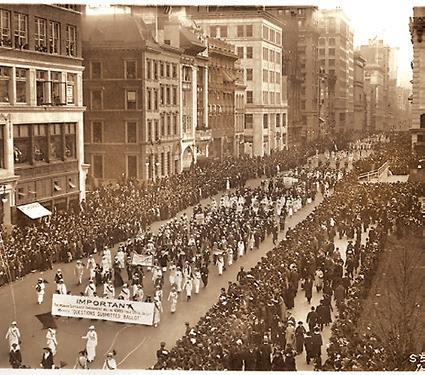
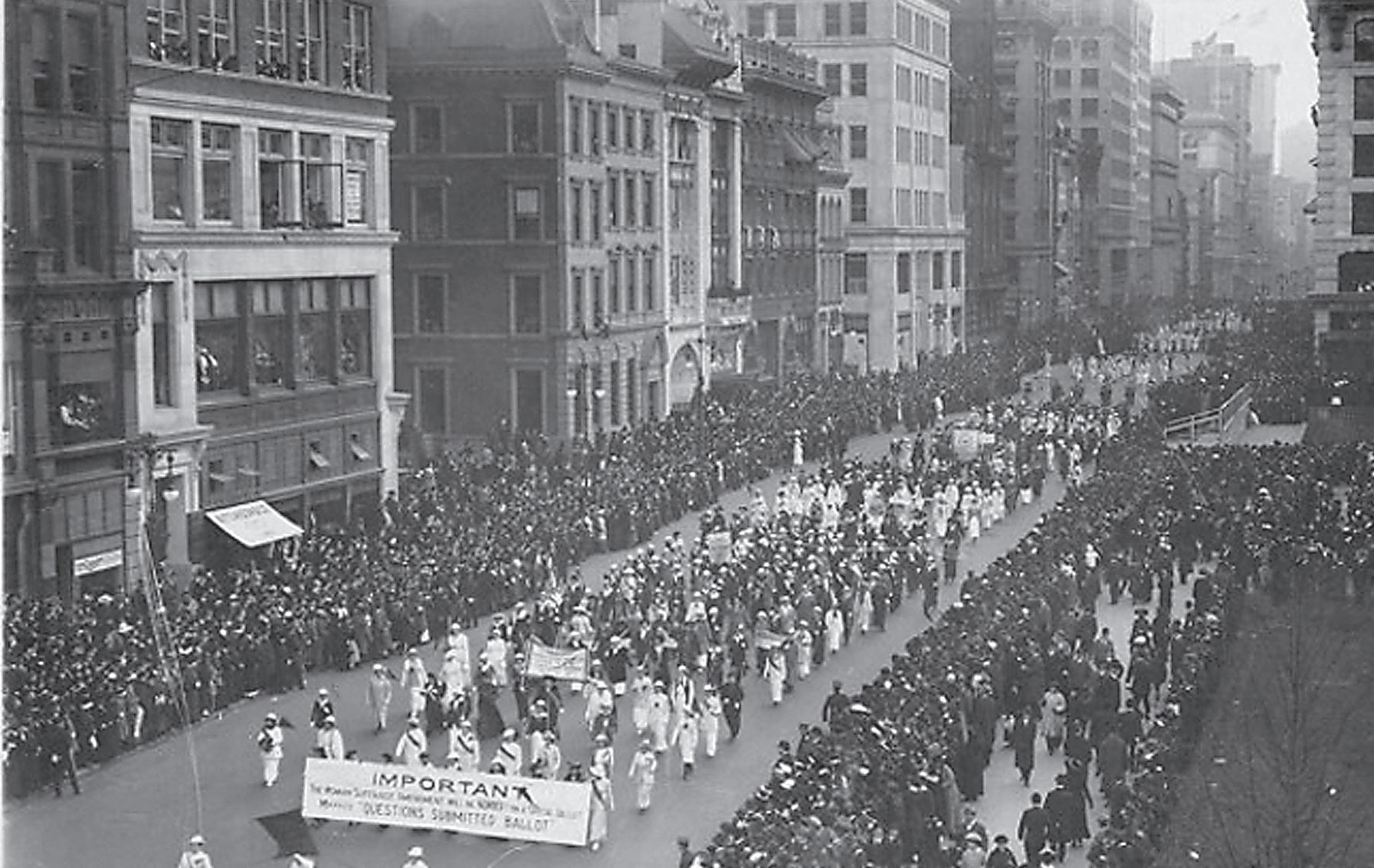
In the looming shadows of a midterm season preceded by protest and partisanship, Cornell’s Rare and Manuscript Library is shining a light on the history of female voter access and participation in an online exhibit entitled “Woman Suffrage at Cornell.”
With top voter issues in mind, including many surrounding women’s rights, The Sun sat down with Elaine Engst M.A. ’72, former Cornell University Archivist and co-curator of the exhibit, to discuss the concept and implications of releasing the virtual exhibit on Election Day.
“It is important to remember that the 1915 election had a women’s suffrage amendment on the ballot that was voted down. [Their eventual victory] shows how not to be so discouraged by that defeat and to go on and two years later actually be able to succeed.”
“We can’t be so discouraged by 2016 that we don’t continue to really struggle and fight,” Engst continued about the present implications of the exhibit.
“Woman Suffrage at Cornell” seeks to outline the lineag-
es of present-day women voters by exploring the discourse around suffrage at Cornell and in Tompkins County in the late 19th and early 20th centuries.
Referring to the female Cornell students at the time, Engst stated that “you look back and you see the first poll on this. Of the nine women polled, only six of them were actually in favor.”
Engst, who was the University archivist for 20 years and worked in the library for nearly 40 years prior to retiring last year, said that the idea for a physical exhibit came about during last year’s centennial of the passage of the New York State Constitution amendment that gave women the right to vote.
The online exhibit, which was put together recently to supplement the physical exhibit, currently contains much more material than the original physical display, which consisted of about six cases. Despite the extensiveness of the existing content, Engst said finding sources documenting such a historic time period was not as easy as one might assume.
“The suffrage exhibit was so interesting to me because I’m used to having too many sources
— there are boxes and boxes and boxes of many thousands of them. Sources for this are tough,” Engst said. “You would think
“We can’t be so discouraged by 2016 that we don’t continue to really struggle and fight.”
Elaine Engst M.A. ’72
this was something documented, but it’s not. We don’t have a single record of a student suffrage group.”
Much of the online exhibit’s “Student Voices” section is pieced together from personal letters women sent home rather than from formal records of campus discourse.
Engst went on to discuss the difficulty young women at Cornell faced when grappling with the suffrage movement. Despite what Engst acknowledged as Cornell’s “great history of coeducation,” she points out that there was still a lot of “anti-coedism” in the 19th century.
HAMILTON Continued from page 1
New York, the clientele tends to be older and mostly white. Clancy and a cook run the diner as a duo, swapping stories from the gun range as they wait on customers.
Come summer, the population of Hamilton County will nearly quadruple with the influx of temporary residents. The Sunrise Diner will bring on two additional cooks and a dishwasher for the season, and Speculator’s tourism industry will roar back to life.
The source for Hamilton’s enduring popularity as a vacation destination, however, is also its greatest economic challenge. Since the end of the 19th century, large swaths of land in the Adirondacks, including about half of Hamilton’s considerable land area, have been closed to development. The protections ensure the survival of the area’s natural beauty and wildlife, but severely limit industry and opportunity.
Clancy, who grew up near Speculator, expects her daughter Alexis to leave Hamilton County after graduating from high school. Even if Alexis wanted to stay close to home, the closest college is SUNY Adirondack Community College, 40 minutes away in Warren County.
“She’s definitely going to go away to school,” Clancy said from behind the counter. “There’s not a whole lot around here. She’s adamant about that.”
David Snide said he’s not surprised that there are no Hamiltonians at Cornell. Snide took over as superintendent of Indian Lake Central School last year, one of three high schools in the county.
“I believe the key factor in no students attending Cornell from Hamilton County is simply a function of our numbers,” Snide wrote in an email. “Between Indian Lake, Long Lake and Wells, we probably have between 20 to 25 seniors. Between the workforce, trade school, military, and other schools, it is understandable that Cornell might just not be an option.”
Merrill Pine ’14 was 12 years old when she brought her sick horse, Nahani, to Cornell’s equine hospital. Six years later, in 2010, she was accepted to and enrolled at Cornell, something no Hamilton County resident has done since.
“It was actually a huge transition for me that was really difficult,” Pine recalled in a phone interview. “I was very used to being the smartest kid in my class and not having to work that hard. I basically had to re-learn how to study.”
Pine graduated with 16 other students at Indian Lake Central School, but she estimates that only four went on to college.
“I think there’s definitely other kids that are in schools
in Hamilton County that don’t have the support system I had,” Pine said. “There’s a lot of other kids that are very talented and intelligent that could be great at Cornell but aren’t aware” its an option.
A year before Pine came to Cornell, Cory Schoonmaker ’12 was the sole Hamilton County native on campus. Moving from a place that is over 95 percent white, Schoonmaker described being struck by the University’s diversity.
“My area is predominantly, and by predominantly I mean almost exclusively, white,” he said. “When I came to Cornell and there were all these different communities, all these different people mixing together in one community. It was really a vastly different experience.”
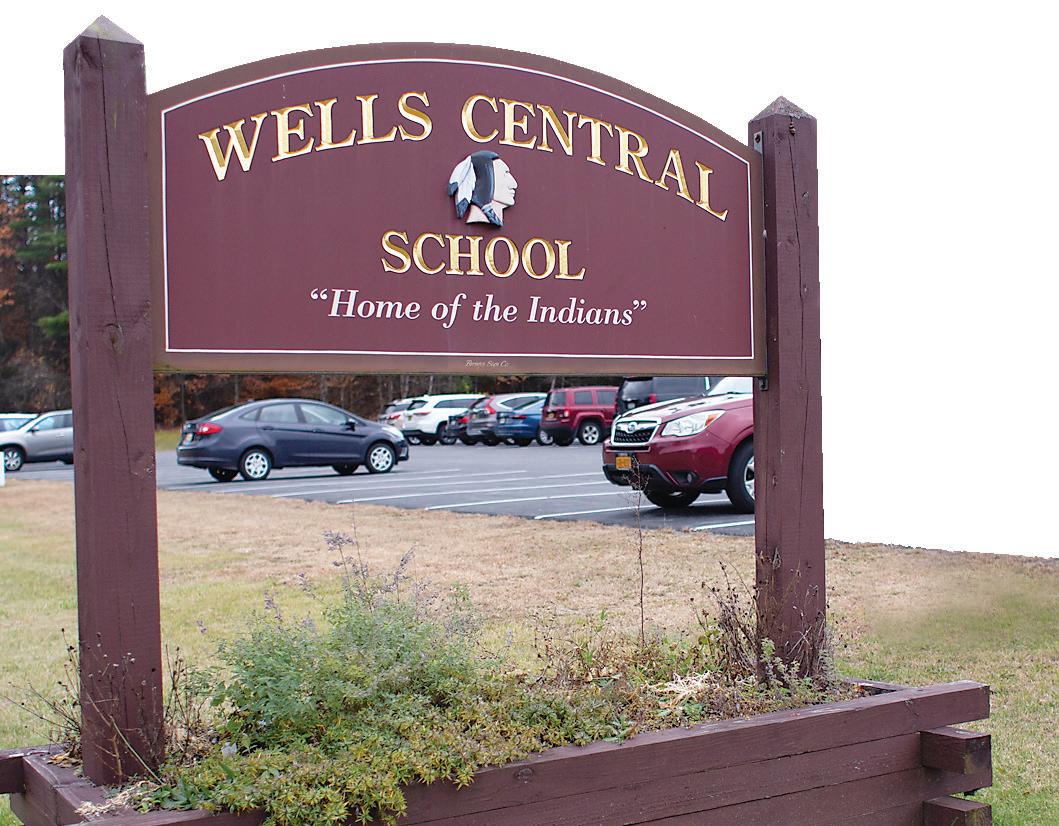
Before Schoonmaker, the last time Hamilton County’s Wells Central School sent a student to Cornell was in the waning days of the Reagan administration. Amy Maher
“There’s
a lot of other kids that are very talented and intelligent that could be great at Cornell but aren’t aware.”
Merrill Pine ’14
’92 hardly considered herself an athlete, but at a school that struggles to even field a full team in every sport, spots on the roster were there for the taking. Maher took advantage of the school’s comparatively small size, playing soccer, volleyball, basketball and softball.
“It was a fantastic, idyllic high school experience,” Maher said. “Because there were 35 kids in my class, we had every opportunity.”
“Some people might say there’s nothing to do there. I took it as an opportunity to do anything and everything,” she said.
Since Maher’s time at Wells Central School, class sizes have gotten even smaller, tracking with the overall trend of the county. From 2010 to 2017, Hamilton lost 7.4 percent of its population, according to U.S. census data.
Anne Weaver, the historian for the town of Lake Pleasant, lives a few miles from Speculator with her dog Noelle. Like many Hamilton residents interviewed, Weaver lamented the emigration of youth out of the county. With more retirees moving in and more students moving out, 30 percent of the population in Hamilton is over 65, double the percentage of New York State as a whole.
But Weaver, who has lived near Speculator since 1978, also outlined the benefits of a small community, even if
the nearest hospital or grocery store is over an hour away.
“Wells right now is a big example of what small communities do,” she said of the Hamilton County town that has a population of about 700. “A family’s house got burned in Wells, and they’ve been giving away lots of stuff. They’re giving a benefit this Saturday, and you know everyone’s gonna be there and everything. That’s basically what each of the towns in Hamilton county are like.”
In early November, The Sun interviewed several students of Wells Central School’s Class of 2019. With college application deadlines fast approaching, the presumptive valedictorian — a quiet boy with frizzy blonde hair named Coby Stuart — was putting the finishing touches on his application to Syracuse University.
Stuart said he also plans on applying to Harvard. But not Cornell.
“I feel like it’s a good school, and it’s worth a shot, you know?” Stuart said of Harvard.
Jocelyn Scribner, a junior, is still a year away from her college search, but is interested in applying to SUNY Plattsburgh and pursuing obstetrics with a double major in Spanish.
“Most of the colleges I look at are the ones I get letters from, and I just haven’t gotten anything from them” Scribner said of Cornell. She said receiving letters from the University would “definitely” make her more interested in applying.
Sharon Parslow, Wells Central School’s counselor, said about 40 percent of students end up at FultonMontgomery Community College, which is about 50 miles from Speculator, and many others go to SUNY schools or join the workforce.
“Unfortunately, I don’t always have that kid that’ll meet [Cornell’s admissions standards,” Parslow said. “Leaving this safety haven, your college is like a little city. You have red lights. And that’s a true thing, we don’t have a red light.”
All three admissions offices for Cornell’s state contract colleges — the School of Industrial and Labor Relations, College of Agriculture and Life Sciences and the College of Human Ecology — declined to comment for this story. Parslow said that with more contact from Cornell, perhaps more students would be willing to apply to Cornell in the future.
“Marketing is very expensive, but … you know, emails aren’t that expensive,” Parslow said. “Cornell might want to step up a little bit more info for us little people.”
Matthew McGowen can be reached at mmcgowen@cornellsun.com.
Continued from page 1
of what made the Queens option compelling to Amazon executives, who were shown around the campus during their tour of New York City, according to The New York Times.
“Although I have no insights into the Amazon board, it seems like it’s very likely that Cornell Tech is one of the reasons that [New York City] is such an attractive site,” Pollack said.
Unlike Pollack, who has utmost confidence Cornell Tech’s influence, when asked about whether the school added weight to Long Island City’s bid, Sarah Le Cam ’16 M.Eng ’18 — a recent graduate from Cornell Tech — said “maybe.”
In an interview with The Sun, Le Cam said she didn’t know the school was part of the Amazon executives’ tour, but Cornell Tech did bring in many tech talents, which the city and its tech sector have been longing for.
Although Amazon can accelerate the development of New York City’s tech and startup communities, which will be beneficial for the students, Le Cam said she’s worried that the tech giant’s overwhelming resources might pose a challenge for student entrepreneurs.
“One thing we often talked about is, ‘oh we can’t do this because Amazon will just do it, they have so much more money,’” Le Cam, who co-launched the startup Kipit during her time as a Cornell Tech student, told The Sun. “It would be great if [Cornell Tech and Amazon] could form a positive
relationship where Amazon supports or even endorses student projects at Cornell Tech ... so that [its presence] doesn’t hurt entrepreneurship.”
Amazon has been one of the partner companies in Cornell Tech’s Product Studio, a class during which students are paired with a company and need to respond to the challenges the company posed with new products or strategies, according to Le Cam. With Amazon settling down right across the East River, Le Cam said she believes the partnership will be even more beneficial for students hoping to launch their startup.
“The relationship [between Amazon and Cornell Tech] is going to be even better now, now that students can interact in person with Amazon employees,” Le Cam said. “Amazon bringing 25,000 jobs to New York City will help establish [the city] as a mecca for tech development in the future, and the more people are attracted to the area, the more entrepreneurial it will be.”
Besides partnering in curriculum, Cornell Tech has already established a “direct point of contact” with Amazon, which gives students access to use its Machine Learning and Artificial Intelligence technologies in their projects. Starting this academic year, representatives of the company also visit Cornell weekly to talk to and coach student entrepreneurs, according to Fernando Gómez-Baquero, director of Runway and Spinouts at Cornell Tech.
Gómez-Baquero said having Amazon as a neighbor will allow Cornell Tech to explore particular topics that are of mutual
interest, such as health technology, a field in which Amazon’s logistics and processing capabilities will be useful in figuring out how to “reach out to hospitals, doctors, to patients in NYC and figure out how to do better technologies on the health side.”
Despite the welcoming attitude from Cornell Tech — and from Gov. Andrew Cuomo (D-N.Y.) and Mayor Bill de Blasio — Amazon’s decision has also been received with concerns from politicians, who worry that Amazon’s presence will drive up housing rates and put extra burden on New York City’s transportation system. They also said that the $2 billion subsidy promised to Amazon will impair the City’s ability to care for other sectors.
“We are very concerned about the impact on the surrounding neighborhoods we represent — Greenpoint, Williamsburg, Astoria and Roosevelt Island — and on the already overburdened housing markets in these areas,” wrote Ben Kallos, member of the New York City Council representing Roosevelt Island, in a joint statement issued via Twitter with three other council members. “Our offices are constantly working with constituents who are losing their homes due to rapidly escalating rents.”
“At a time when corporate taxes are an at all-time low, when we are in desperate need of infrastructure improvement such as with the MTA, and at a time when homelessness is at or near an all-time high, we should be investing in our communities first,” the statement continued.
Sen. Kirsten Gillibrand (D-N.Y.) also wrote that New York City should not be providing financial assistance to Amazon,
“one of the wealthiest companies in history,” when “too many New York families struggle to make ends meet.”
These potential problems, on the other hand, are not unusual to cities “that get new fusion of so many people that fast,” according to Gómez-Baquero, who said the opportunities and room for development that Amazon’s presence are worth taking these risks.
“We’ve seen this before with Seattle and Austin when the semiconductor industry came in ... there will be challenges, for sure, and it’s not gonna be all perfectly smooth, but at the end of the day, I think the positives definitely outweigh those challenges,” Gómez-Baquero told The Sun.
Nevertheless, relevant parties still need to be “very proactive” in planning ahead for all the foreseeable situations before Amazon officially moves in, Gómez-Baquero said, adding that coming up with solutions and contingencies also gives Cornell Tech students a chance to put their skills and education to use.
“In general, we are all pretty excited … not just Amazon coming to New York, [but also] the whole ecosystem surrounding New York and how Cornell is now really in the perfect spot,” Gómez-Baquero said. “The vision that we can build a tech campus in the middle of Manhattan, Long Island City and Roosevelt Island is there, it’s happening.”
JACOB
S. KARASIK RUBASHKIN ’19 Editor in Chief
JOHN McKIM MILLER ’20
KATIE SIMS ’20 Associate
VARUN IYENGAR ’21
WWilliam Wang | Willpower
GIRISHA ARORA ’20
HEIDI MYUNG ’19
ALISHA GUPTA ’20
Darren Chang | Swamp Snorkeling
2018 was a uniquely momentous year in Asian-American politics. For the first time in a long time, it felt like Asian-Americans were being elected outside of California. In New Jersey’s third congressional district, for example, Democrat and former Obama staffer Andy Kim won over long-time incumbent Tom MacArthur, who engineered the repeal of the Affordable Care Act and is closely aligned with President Trump. Republican Young Kim was poised to be the first Korean-American women in Congress, although the race was just called on Saturday for Democrat Gil Cisneros.
ang Dan is still alive, somehow. The Tiananmen Protest activist is perhaps the most famous almost casualty of the restlessness that swept through the Chinese youth during the late ’80s and early ’90s. Jailed, attacked and almost assassinated, the man who organized one of the most significant protests in modern history when he was still a freshman in college arrived last week at Cornell to a packed auditorium. On first glance, he’s a less than imposing man. But then Listen a little, and the ferocious takes on the state of modern Chinese society roll out rapid-fire style. In a 45 minute span, he deliberated on the democratization of China, the brutality of the current regime and his hope for the future of China. Powerful stuff.
We can use some fire nowadays: Everywhere we go at Cornell, there’s a hot button issue that holds some importance. Even something as innocuous as the November Cornell Reflect dinner, which was designed to increase open conversations between students. We all sat in a circle and were asked to talk about our assigned topic: “race.” For the
It’s no good to just being morally right anymore.
from real news, to make a stand against it. It’s a civic right, I’m told. To simply take news at face value is dangerous nowadays. There’s an example cited: Facebook, with its role of as a vehicle of spreading misinformation during the 2016 election, seemed almost dismissive when the issues started coming to light. In the months after the election, Mark Zuckerberg would scoff that fake news on Facebook had a tangible hand in the outcome of the election. It seemed destined to fight to the grave for its impartiality. But In the end, it gave up and confessed:126 million people were exposed to the stories. By looking to stay on the sidelines, it ended up doing more damage than it could have imagined.
most part, it was a relatively toothless debate as we talked endlessly; it seemed everyone was afraid to offend the other.
But then we landed on the hot topic issue of affirmative action. Suddenly, the race was on.
Each had their own take on it; there were subtle signs not everyone agreed. While others talked about the value of affirmative action, my friend shook her head throughout. She doesn’t agree one bit with affirmative action, thinking race is a bad way to judge candidates. She reasons because it only takes away the accomplishments of minorities, because there will always be a nagging question that they didn’t get on merit alone. It’s a disservice, really, in her mind. I didn’t necessarily agree with it, but it’s an interesting opinion that deserves merit in a sea of counter opinions. There’s value to be had in dissidence, even if you disagree with it; to be passively agreeable is a mistake.
It goes beyond dinners and receptions too. At a fake news workshop hosted in Uris Library for Sociology 1101, we were taught how to discern fake news
It’s why we fight for the things we do, because you might never know when it might simply disappear. This past weekend, I attended the International Transgender Day of Remembrance Vigil at Anabel Taylor Hall. Between some pretty terrific musical performances, the ceremony took on a somber mood as the evening progressed. Established to memorialize those killed by anti-transgender hatred or prejudice (It’s held in November to honor Rita Hester, who was murdered on November 28th in 1998), it aimed to remember those lost. Candles were lit to honor those killed as their names were read out; poems were read to humanize their experience. But the night wasn’t just spent on those were already lost; it braced itself for what’s to come. In an age where the current administration has started stripping back basic rights of the transgender community, it felt pertinent to act with urgency. The event was pervaded with a sense of grief; now our job was to ensure it never happened again.
It’s why as much I admire Wang Dan and held onto each word he spoke, his parting words for us Cornellians were a bit jarring. He seemed confident, in the face of a daunting challenge to democratize China and steer it away from its flirtations with authoritarianism, that his side would prevail. And what was his explanation? Because he was on “the right side of history”; because the good guys always win. I thought it was a neat little phrase; then I hesitated. The optimism is welcomed, but it rings a bit hollow. It’s no good to just being morally right anymore. It’s much better to take action and deliver — to fight, and to win.
William Wang is a junior in the College of Agriculture and Life Sciences. Willpower runs every other Monday this semester. He can be reached at wwang@cornellsun.com.
ically circulated around suburban parents who had essentially “made it” in America. Often, these parents (and thus their children) embody the American Dream: they worked hard in their home country to find a way out and then worked hard in the United States to gain better social and economic situations for their children.
My parents often argue with me in this way — that their work justifies others having to do the same work. And no matter
We have to force progress within ourselves and our communities.
Certainly, neither of these examples speak to a paradigmatic shift in the representation or enthusiasm of Asian Americans and Pacific Islanders in politics. Outside of California and Hawaii, few AAPI are drawn to active political engagement, whether through protesting, calling representatives and senators or even voting.
When I worked on a political campaign this summer, I didn’t see any Asian rep-
Outside of California and Hawaii, few AAPI are drawn to active political engagement, whether through protesting, calling representatives and senators.
resentation. This isn’t too surprising in a country bumpkin state like Indiana, but it was still difficult to grapple with a long history of political and social exclusion that Asian-Americans have experienced in the United States. These scars still influence many of us as we attempt to become more politically active. Our parents often discourage our engagement with the system because it goes against Confucian principles of respecting authority. Furthermore, their experiences with the anxiety of immigration and U.S. border protection have increased their fear of the government’s pervasive control.
Yet, as the demographic of Asian people in the United States shifts from the first-generation immigrants to AAPI who were born in the United States and identify as American, our political orientations as a group might be changing. Negotiating the terms of this political relationship in terms of partisanship and allying with broad identity groups are crucial and introspective questions that we’ll most likely need to resolve and re-negotiate in the near term.
what sort of justification Democrats make about the necessity of social security, they don’t care. Their own personal experiences contradict this. These sort of political beliefs, based primarily on the American Dream and the hard work required to succeed are likely to continue, but I don’t believe that we should castigate people who believe in the value of overcoming obstacles.
If we disagree, we should continue conversations instead of framing other Asian-Americans as irresponsible or voting against their interests. Only in this way can we form a larger coalition that can become more politically powerful as well as ease inherent tensions that exist between different AAPI groups as a result of different ethnic background.
I’m inclined to think that AAPI have long been ignored by
the dual-party system.
In terms of the second point, I’m inclined to think that AAPI have long been ignored by the dual-party system. Although Democrats should care more about minority groups, the number of AAPI who are enthusiastic in voting generally hasn’t been enough to sway elections, especially at the national level. This makes AsianAmericans an unworthy investment. We must change that, and I think we can do so by speaking out and involving ourselves in more political activities, whether it’s commenting often on political Facebook posts, writing letters to our leaders in Congress or picketing for causes we find important. When party leaders begin to hear our collective disgruntledness and political orientations, they will begin to respond.
I think we should strive for two different realizations. First, our identities shouldn’t be tied to a party. Second, we should increase our political knowledge to express our views in elections, lobbying and forwarding representation in our country’s government.
I’ve heard a lot of anecdotal evidence about how AAPI parents (especially Chinese Americans) are voting for Trump. Apparently, much of this proTrump discourse occurred through social media platforms like WeChat and specif-
Nothing hurts more than the wounded attachment of American politics. The narrative has always been that people of any kind are able to participate, but it’s empirically been proven false by racism in campaigns and on the congressional floor. For example, in the Michigan state senate election, Bettie Cook Scott called her Asian opponent a “ching-chong.” We have to force progress within ourselves and our communities, but we need to do it in respectful ways that increase dialogue and overall understanding for AAPI in the political process.
Darren Chang is a sophomore in the College of Arts and Sciences. Swamp Snorkeling runs every other Monday this semester. He can be reached at dchang@cornellsun.com.
Baran | Honestly
It’s the first day of class. You walk into Bailey Hall and enter into your oversized Intro to Oceanography course. The rakish professor, Bruce Monger, casts his penetrating gaze on you. He peers into your soul and instantly divines your stance on climate change and your innermost secrets. Unnerved
unequivocally true. Let’s run through the possibilities here, shall we?
The True Scholar
Whether you care or not, where you sit will determine your image in the eyes of your classmates.
but not surprised (you’ve heard the tales about Bruce), you glance about for what will be your unofficially assigned seat for the rest of the semester. You know it’s an important moment. Whether you care or not, where you sit will determine your image in the eyes of your classmates for the rest of the semester. So, what will it be?
Well, you have a couple of choices. You can sit toward the front, in the center or toward the back. You can sit with the boys, alone, in the middle of the row or in a seat bordering the aisle. An agonizingly fraught decision. As conventional wisdom goes, your choice strongly correlates with your personality. That wisdom is, as is usually the case with anecdotal advice,
Sometimes it can be difficult to find True Scholars at Cornell. You know, the people who always know the answer to everything and ace every test. They’re the ones smiling at the teacher’s hilarious wisecracks, the ones endearing themselves to their classmates with every probing question. They’re the intellectual “big men on campus,” if you will. You can look far and wide for these people, but the best place to find them is in the front row of a lecture hall. If you see a guy in a sweater and khakis chilling in the front, watch out, because you know he’s got a dangerous mind.
The Joe Schmoes
If you want your run-of-the-mill, intelligent Cornellian, you’ll find him chilling in the middle of the lecture hall. He does his work on time, diligently enough, but he’ll never go above and beyond. Those in the middle of the hall will be taking notes. At the same time, though, they will definitely find time to make wisecracks with the boys (or the girls). They’ll be goofing off, but in a very scholarly manner. To cultivate the best image in the eyes of your classmates and professor, you want to be in this crowd.
Today’s cover of the New Yorker shows Barry Blitt’s “Welcome to Congress”, a moving visual tribute to the historic number of women who have been elected to serve in the Congress. The cartoon features figures that appear to be Sharice Davids J.D. ’10, one of the first female Native Americans elected to Congress and the first openly LGBTQ representative elected from Kansas, Ilhan Omar, one of the first Muslim women elected to Congress, and Alexandria Ocasio-Cortez, who at 29 is the youngest woman to ever be elected to Congress. By now most of us have heard these names and registered these accomplishments, but the New Yorker cover really communicates how this election cycle was a monumental deviation from the status quo.
However, an obvious consequence of change is pushback, and not all media has been as welcoming to this group of trailblazers.
Last week, the internet erupted into controversy over, of all things, Ocasio-Cortez’s wardrobe — which is a really disappointing sentence to be typing in 2018. Right after the election, a panel of Fox News pundits speculated about the cost of her outfits while discussing financial barriers that the congresswoman-elect said she faced during her move to Washington.
The James Deans
Hold on to your notepads, because it’s always a wild ride with the boys in the back. Enter the back row, and prepare to be greeted with a row of dudes scrolling through their Instagram feeds or catching some Z’s. These are indisputably the coolest guys on campus. They just exude the right combination of “I don’t care about this class” and “I’m too smart to pay attention.”
For those who can get good grades without actually listening to the professor or being able to see the slides, the back is the place to be. It’s simply top-notch use of your parents’ money.
Free-Floater
This is the wild card of Cornell students. Watch out for the boys who switch seats every lecture; they’re the most dangerous people you’ll meet here. They scoff at law and order. They embrace chaos and depravity. You’ll have sat in the same seat for two months, walk into lecture, and find your beloved home taken by one of these fellows. Be on your guard, and avoid them at all costs.
Wherever you choose to sit, just know that it is imperative to your academic performance to pick the right place. Where you sit in your lecture hall will make or break your classroom image. The people you sit next to will affect your performance. Choose wisely.
Christian Baran is a freshman in the College of Arts and Sciences. Honestly runs every other Friday this semester. He can be reached at cbaran@cornellsun. com.
Jacqueline Groskaufmanis | Te Dissent
The discussion indicated skepticism about her authenticity by questioning how Ocasio-Cortez had money for clothes, but not to move to a Washington apartment without a salary — as if the two were coupled in an either-or decision. Another journalist for the Washington Examiner posted, and has since removed, a photo that had been sniped from behind of Ocasio-Cortez wearing a plain black coat, commenting that she didn’t “look like a girl who struggles,” implying that her outfit looked suspiciously expensive.
The sexism here is obvious and unfortunately isn’t unique. Hillary Clinton’s pantsuits, for instance, have been a point of discussion in the news since before she even held elected office. But of course, we don’t hear about what Paul Ryan or Chuck Schumer are wearing. The fact that women and men are profiled differently by the media may sound obvious to a lot
intersects with class biases, and skepticism regarding her financial status has translated into a questioning of her honesty.
The sexism here is obvious and unfortunately isn’t unique.

These examples may sound trivial, but they’re emblematic of harmful double-standards we impose on women who hold elected office. Ocasio-Cortez herself has called this out, tweeting “If I walked into Congress wearing a sack, they would laugh and take a picture of my backside. If I walk in with my best sale-rack clothes, they laugh and take a picture of my backside.”
With more women elected to Congress than ever before, it’s crucial that we pause and think about how they are portrayed in the media.
of us, but often times it is so pervasive and subtle that biases are difficult to detect just how. And in Ocasio-Cortez’s case, sexism
One thing that has stuck with me about today’s New Yorker cover is the fact that, as the newly-elected women are depicted standing colorfully in the doorway, entering a room of their male colleagues, not a single man is looking at them. The men appear to be arguing,
squinting, pointing and talking, but none show any acknowledgment of the women who are entering the room or their arena. Meanwhile, in the real world, all other eyes seem to be on them. Right now, we’re in a critical period in which people in the U.S. are being introduced to these new representatives through the media, and because the media is an important intermediary for a majority of Americans, it’s important to call out these kinds of biases when we see them. Television is the primary way Americans get their news, and of the cable news networks, Fox News consistently dominates in terms of ratings. So a group of Fox News panelists laughing while they discuss Ocasio-Cortez’s financial situation and her wardrobe isn’t without consequence.
With more women elected to Congress than ever before, it’s crucial that we pause and think about how they are portrayed in the media, not just for them, but for a general public that deserves coverage that focuses less — or not at all — on how they dress.
Jacqueline Groskaufmanis is a senior in the College of Arts and Sciences. The Dissent runs every other Monday this semester. She can be reached at jgroskaufmanis@cornellsun.com.
BIDDANDA
Sun Senior Staff Writer
Three groupings of transparent hangings are suspended from the ceiling. From either door of the gallery the forms seem indistinguishable. However, as one passes from the door toward the front of the space the forms appear as fragments of faces. From the front of the gallery, the fragments tessellate to form a face for each of the three groupings — a chimerical juxtaposition of different faces and, by extension, of different stories.
EXCHANGE is the culmination of a semester-long project headed by Katherine Williams ’20, a recipient of a grant from the Cornell Council for the Arts. Williams also collaborated with Caley Drooff ’20, Cornelius Tulloch ’21 and Zelia Gonzales ’20. EXCHANGE will be open in the Jill Stewart Gallery in the Human Ecology Building until November 20. The exhibit aims to address the nuances and
inherencies of the social climate here at Cornell and incorporates a combination of visual and audio media to negotiate a space where this dialogue can occur.
The transparencies occupy the majority of the spatial dimensions of the exhibit and this particular installation affords many layers of metaphorical signification. Williams remarks, “We wanted to transform and manipulate the space of the gallery. Centralizing and hanging the pieces in the middle of the gallery created a dramatic effect and allowed for people to move around and through the pieces, rather than having them up against the walls. This layout engaged viewers with the space and also enabled them to explore and experience EXCHANGE.”
For one, the way in which the overhead and ambient light interacts with the hangings is a relation not only of illumination — in the spaces where the uninterrupted passage of light is permitted — but also of obstruction and refraction where the facial fragments are positioned. These fragments are also aligned through the layering of their positioning,






What has Oscar-nominated artist Sufjan Stevens been up to since he released his Greatest Gift mixtape and performed at the Oscars? He has been posting music to his Tumblr (of course the only social media he would be active on is Tumblr), but this is all other artists’ music that he collaborated on. Now, however, following the vinyl release of his five-volume Christmas collection Songs for Christmas, he just released the elusive track “Lonely Man of Winter.”
Back in 2007 when Sufjan Stevens released Songs for Christmas, his record label, Asthmatic Kitty, held the Great Sufjan Song Xmas Xchange in which participants were required to write and record an original Christmas song and send it to
Asthmatic Kitty. The winner would then get to exchange songs with Sufjan Stevens. They would receive the legal rights to his song, and Sufjan Stevens would receive the winner’s song. The winner was Alec Duffy, artistic director for the collaborative theater company Hoi Polloi and the performance venue JACK. Duffy wrote and recorded the simple, but heartwarming song, “Every Day is Christmas,” which he exchanged for Sufjan Stevens’s “Lonely Man of Winter.” However, this all happened in 2007.
Betteen then and now, the musical director at Hoi Polloi, Dave Malloy, teamed up with Duffy to share this song while retaining its rarity, something that they both valued. “We’d like to make the hearing of this song something truly special. We’d like to invite you to email us (sufjansong@yahoo.com) and arrange a special hearing. We’re in Brooklyn. We’ve been doing Wednesdays and Sundays, with about four people per listening. Bring your best headphones. We’ll have cookies and tea,” reads Malloy’s 2007 blog post. So somewhere out there, there are people who listened to this song in Brooklyn as they had tea and cookies. Now we can all do the same.
The original “Lonely Man of Winter” echoes the sadder and more piano-heavy tracks found on Illinois such as “Concerning the UFO Sighting near Highland, Illinois,” “Casimir Pulaski Day” and “The Seer’s Tower.” However, it captures the often overlooked but very common feelings of melancholy during the holidays. The song is simple, sad and just like anything Sufjan Stevens would write between 2005 and 2007 for Illinois or The Avalanche
The piano and guitar paint a cold, melancholic winter scene, while Sufjan Stevens’s gentle, sad vocals add flurries of snow to the picture. “Is it the lonely man
permitting the viewer to see the forms as superimpositions upon each other — and by extension we are given to understand the ways in which the stories behind the faces are inscribed, both in their own respect and in relation to each other.
On one of the walls, there is a collection of photos of the individuals who participated in the study. The collection of photos is punctuated by the various quotes of the respondents printed on the same wall. Many speak of the excitement of the innumerable possibilities that Cornell offers as an institution. One said that to be a Cornelian was, “to be someone who is passionate about what they are doing and where they want to go in life… who battles through tough times because they know at the end of the road it will be worth it.”
Others talked about the often ceaseless obstacles they face, with one respondent saying, “no one else in that class looked like me.”
Between the soundtrack of the chimes and commencement speeches playing overhead, there are interspersed segments where the participants discuss what Cornell means to them. Their testimonies reveal a combination of doubts, wonder, loneliness and everything else one might expect from such a microscopic but significant time in our lives. And because of this, EXCHANGE represents a project of breathtaking honesty that will undoubtedly resonate, in some aspect or another, with anyone who engages with the work. Through the collectivisation of the space, the exhibit interrogates the notion of isolation as a mode of being and in doing so embraces a devotion to the collective narrative that we inhabit.
Varun Biddanda is a senior staf writer in the College of Arts and Sciences. He can be reached at vdb22@cornell.edu.
RACHAEL STERNLICHT / SUN GRAPHIC DESIGNER
to this original version of “Lonely Man of Winter,” Sufjan Stevens released a new version, in which he collaborated with Doveman (The same Doveman that remixed “Futile Devices” for the Call Me By Your Name soundtrack) and Melissa Mary Ahern. This version of the song is less acoustic and more spacious. It creates a different space from the original with the electronic aspects that Doveman adds. There is a magical, whimsical element that comes into play and the way that Ahern’s vocals echo and contrast with Sufjan Stevens’s over the soft beat transport the listener to an ethereal, sad winter forest.
Lastly, Alec Duffy’s “Every Day is Christmas” is anything but sad. It’s cheesy, it feels old, it feels like everything you want Christmas to be. Duffy wrote a simple melody he accompanied with just piano, toying with the nostalgia of having a family member play the piano and
one not wrapped up in a bow / She lifts my spirits high when I’m feeling low / Others long for the holidays, yes indeed they do / But every day is Christmas when I’m with you” is disgustingly sweet but melts your heart.
While the wait continues for a new Sufjan Stevens album, he seems to be working on smaller things with other artists that nonetheless yield pleasant, meaningful results (i.e. Gallant’s “TOOGOODTOBETRUE” and Mosey Sumner’s “Make Out in My Car”). I think that he deserved that Oscar and I will cry when he releases a new album because the quality and emotion that Sufjan Stevens consistently delivers is unmatched by any other artist.
Viri Garcia is a junior in the College of Agriculture and Life Sciences. She can be reached at vgarcia@cornellsun.com.
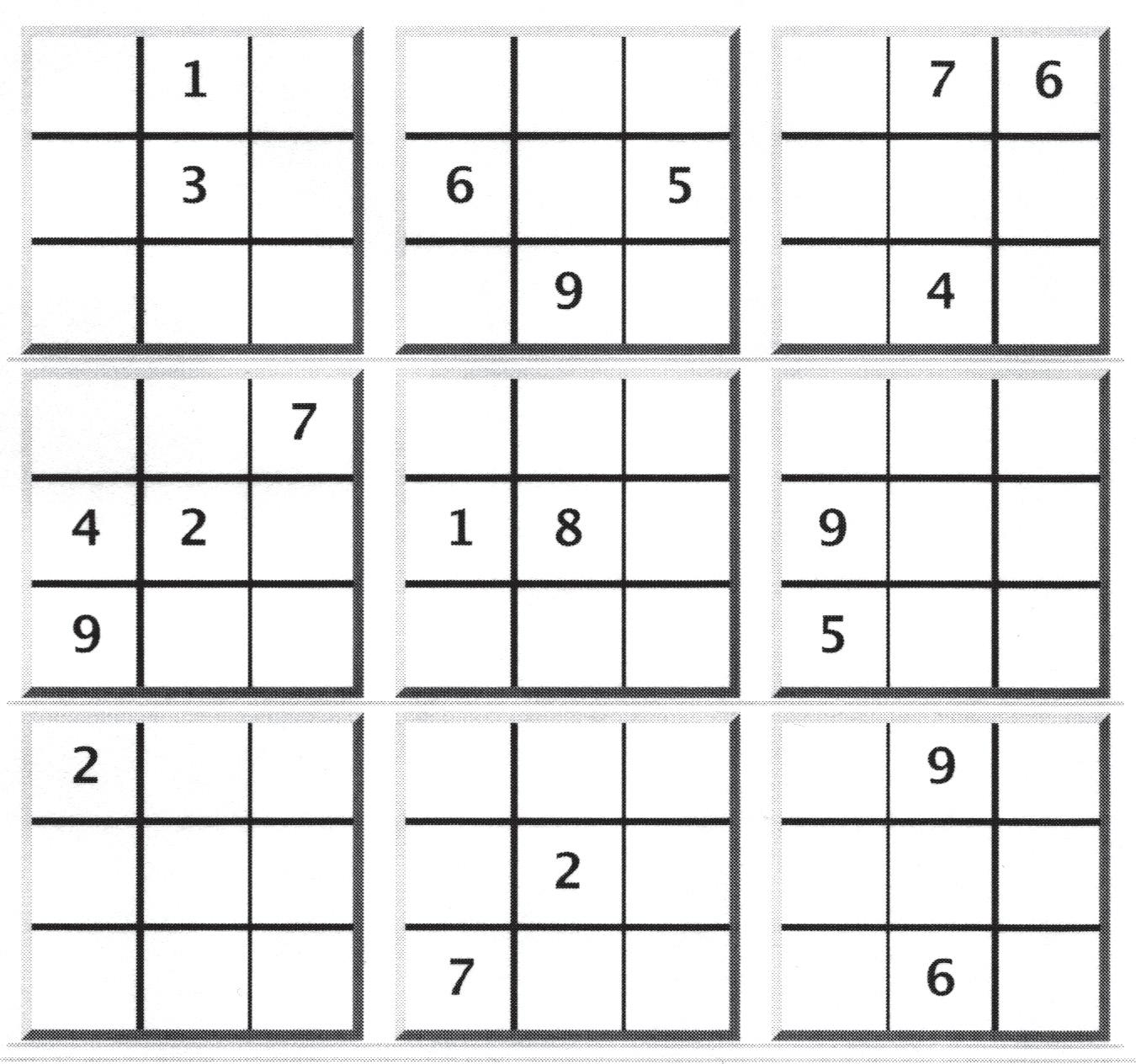
Fill in the empty cells, one number in each, so that each column, row, and region contains the numbers 1-9 exactly once. Each number in the solution therefore occurs only once in each of the three “directions,” hence the “single numbers” implied by the puzzle’s name. (Rules from wikipedia.org/wiki/ Sudoku)

“Sure, I’ve put on a few sides. But I can get back into shape anytime I want.”
—Anthony Notaroberta Jr. ’19
To submit your caption for this week’s contest, visit sunspots.cornellsun.com.


2 & 3 BEDROOMS
109 SAGE PLACE
Available NOW, Spring 2019 & 2019/2020 Shuttle Bus Access to Campus Access to Free Fitness Center Novarr- Mackesey Property Management office@ithacastudentapartments.com ithacastudentapartments.com 607-277-1234
26 A PA R TMENT FOR R ENT
COLLEGE AVE. 1 Bedroom available In a 2 BR apartment For Male, Undergrad student. Available NOW & Spring 2019
4 Bedroom Apartment Available NOW & Spring 2019 Novarr-Mackesey Property Management office@ithacastudentapartments.com ithacastudentapartments.com 607-277-1234
*****************************
RENT NOW, GET THE BEST www.MatoulasHouses.com
Apartments & Houses In Collegetown LINDEN AVE & E. SENECA ST 3 BEDROOM APARTMENTS ALL FURNISHED EMAIL: MatoulasHouses@Gmail.com PHONE: (607) 339-9644 FIRST-COME, FIRST-SERVED *****************************
312 College Ave
Collegetown’s Best Address Now leasing for 2018-19. Superior Studio, 1, 2, 3 Bedroom Apartments. Fitness facility, theater, and meeting space. Free high-speed internet. Exclusive resident parking. Overnight concierge. Package delivery. 312collegeave.com 607-273-9777
Collegetown Terrace Apartments INSPIRED LIVING TAILORED TO YOUR SUCCESS 24-Hour Fitness Center Shuttle Bus Service to Campus Study Rooms w/ Expansive Views
Apartments Available NOW, Spring 2019 & 2019/2020 Novarr- Mackesey Property Management collegetownterraceithaca.com office@ithacastudentapartments.com 607-277-1234
Campus Hill Apts. We are not near the campus, We are ON WEST CAMPUS. 1-4 bedroom apartments available!
Features include: 1. Brick fireplaces and balconies
2. Brand New On-Site Laundry 5. Free high-speed Internet
7. On-site parking 8. Furnished with TVs 9. Very competitive pricing Call us (607)257-0313 for details or to schedule a tour!
ITHACA-APARTMENTS.COM
Lock in 2018 Rate Today Rent at any of out 7 communities Call 607-257-3311
26 A PA R TMENT FOR R ENT
Brooklane Apartments Walk to campus New Modern Floors Off Street Parking Newly furnished unit Call 607-257-5444 www.brooklanecornell.com
27 H OUSE FOR R ENT
COLLEGETOWN 6 BEDROOMS Newly Remodeled PRICES SLASHED TO RENT 607-272-3389 avramisrentals@aol.com
201 WYCKOFF AVE 6 Bedroom House Novarr-Mackesey Property Management office@ithacastudentapartments.com ithacastudentapartments.com 607-277-1234
Houses, Apts, Parking 1 to 9 Bedroom
Collegetown - College Ave, Linden Ave, Dryden Rd, Bryant Ave, Cook St. 607-330-2442 info@urbanithaca.com www.urbanithaca.com
Nicest Apts. in Collegetown Located on Eddy St.
4 Bedrooms
Fully furnished. Spacious living areas with large bedrooms & closets. Hardwood flors, spectacular views, eat-in kitchens with additional sun rooms. Laundry & parking. 607-339-1137 bgm900@gmail.com
>>AFFORDABLE, QUALITY LIVING<< Special Deals for you! Furnished 1-6 Bedrooms Collegetown Apartments PARKING, LAUNDRY, UTILITIES! (607) 273-7368 www.IthacaApartmentRental.com
We have availability for the 2019-2020 school year beginning June 1st at Hudson heights apartments. The studio apartments come with: heat, water, and electricity included. There are garbages houses and coin-operated laundry facilities on site. Prices start at $750/month for a 12 month lease. If you have any questions or would like to schedule a tour contact us by phone 607-208-7660 or email: renting@ithacaLS.com

Don’t let the wind blow your paper away


HOCKEY Continued from page 12
despite being without four key players. The absence of two defensemen — sophomore Alex Green and senior Brendan Smith — meant additional ice time for senior Alec McCrea, junior Yanni Kaldis, senior Matt Nuttle and sophomore Cody Haiskanen. And missing sophomore Brenden Locke and junior Jeff Malott at forward led to jumbled lines and new roles for freshmen.
“All the guys that don’t play a whole lot, I thought they stepped up and did a real good job,” Schafer said.
Freshman Max Andreev’s empty-net goal late made it 5-1. Sophomore goaltender Matt Galajda made 19 saves in the win.
“I thought Matt made some huge saves for us when we needed him tonight,” Schafer said. “I said to our guys that’s the kind of hockey we’re used to playing.”
Next on the docket for Cornell is a date with archrival Harvard in the “Frozen Apple” at Madison Square Garden on Nov. 24.
Raphy Gendler can be reached at rgendler@cornellsun.com.

VIGIL
Continued from page 1
loving and it felt important to say that,” Mattice told The Sun.
Members of the community read poems about transgender experiences and struggles to a group of nearly 40 people, and Jazz Voices, a student music group, performed songs in between the poems.
Christopher Lujan, director of the LGBT Resource Center, said that he wanted to balance the solemn tone of the event with music.
tion from countries like China, which has a history of unreported LGBTQ+ discrimination.
“[The vigil] is just a way to make sure that we’re bringing light to just the devastating violence that happens against trans individuals,” Lujan told The Sun.
“We’re bringing light to just the devastating violence that happens against trans individuals.”
Christopher Lujan
The candle ceremony was a centerpiece of the vigil. For every 15 names read aloud, a candle was lit in the center of the chapel stage.
However, the 309 deaths accounted for are an underestimate for the actual number of people killed from of transphobic violence, according to Lujan. The names don’t include informa-
At the end of the event, a reception was held so attendees could enjoy refreshments and talk to other members of the transgender community and their allies. Lujan wanted to end the evening with the community gathering in support and hope.
“We need events like this to remind ourselves that we need to stay vigilant … to remind the rest of the world that a human life is lost,” Vanessa Taylor, from the Ithaca Transgender Group, told The Sun.
Rochelle Li can be reached at rli@cornellsun.com. Jonathan Zheng can be reached at jz777@cornell.edu.
SUFFRAGE
personal letters from 100 years ago
Continued from page 3
“[The women of Cornell were] a little reluctant to be politically active. They were kind of protecting themselves,” she said. “There [were] very few of them, and they [didn’t] always feel that they’re being accepted.”
As more active suffrage groups cropped up in Ithaca and Tompkins County in the 20th century, people began to feel more strongly about the movement. Ultimately, once women were granted voting rights, the women of Tompkins County felt that “voting was a right, a privilege, and a responsibility,” Engst said.
“The first election when [women] were voting in state and national offices was in November of 1918 — 100 years
ago. Women could register for political parties. Locally, a woman ran for office,” she continued.
Fast forward to recent elections, and voter turnout has been historically low. However, in the days leading up to last week’s midterms, the Cornell
“I think our suffrage foremothers would be thrilled,” Engst said. “They felt that women needed to be politically active, and I think we’re seeing that.”
campus became newly alive with flyers, conversations, and social media posts encouraging others to vote.
“[The women of Cornell were] a little reluctant to be politically active. They were kind of protecting themselves.”
Elaine Engst M.A. ’72
“Women, young people, and minorities need to vote,” Engst continued. “Not voting is voting. People can’t be cynical about the political process, because being cynical is just leaving [voting] to the people who are not of good will.”
Yana Kalmyka can be reached at yk698@cornell.edu.
The Ithaca Journal reported extremely high voter turnout in Tompkins County for the midterms. Nationally, it was the largest group of female legislators ever as 125 women were elected to serve in the House and Senate.
MEN’S HOCKEY
By ZACHARY SILVER Sun Senior Editor
Quinnipiac defenseman Chase Priskie received the puck off a faceoff win with under 10 minutes to play in the third period. Now tied at two, the Bobcats had already surmounted a pair of one-goal deficits up to the midway point of the third period. On a dump-in attempt just inside center ice, Priskie was merely looking to get the puck deep and let his forwards secure a lead.
But Priskie didn’t need his forwards. The blueliner’s forceful send-in took a weird carom off the glass behind Cornell sophomore goalie Matt Galajda. Then it hit Galajda. Then it went in.
“I told Galajda after the game … I don’t ever remember a goal hitting the back of the glass and hitting our goalie and going in the back of the net,” said head coach Mike Schafer ’86. “What are you going to do? Shot off the back of the glass hits our goalie and goes in for the game winner. It’s an unfortunate break but it’s something that we got to forget quickly.”
Priske was met on the Cornell logo at center ice by his teammates, jumping up and down in jubilation to celebrate what was the game-clinching goal in an unfortunate 4-2 defeat for Cornell men’s hockey.
An emotional loss for Cornell came in the most agonizing of ways, unaided by four of its key players out with injury and another ejected from the game after video review. The rivalry between Cornell and Quinnipiac is one recently-birthed but well documented. The Red embarrassed the Bobcats with a two-game sweep in the ECAC quarterfinals last season, with one game coming in the form of a 9-1 blowout.
A playoff series between Cornell and Quinnipiac has essentially become an annual tradition. The Bobcats added fuel to the fire by spending their summer with a copy of The Sun’s “How Sweep It Is” headline posted in their training room, according to the Quinnipiac Chronicle.
On each Bobcat goal, Quinnipiac’s skaters made sure to let their excitement known by slamming their sticks on the ice and yelling into the glass — a slap in the boisterous 3,678 faces in the Lynah stands.
“Our guys are upset. You saw the anger after the game, we got their players yelling and screaming at our guys, we got their coaches talking to our players,” Schafer said. “They’re pissed off. We’ll remember that. But we want to use that frustration and anger to be ready to get after it tomorrow.”
Priskie’s goal drew eerie memories from the Cornell bench, which was on the other side of luck in the first of four meetings between the two teams last season. In a 2-1 Cornell win, the game-winner came on a harmless shot late in the third period that bounced off the backside of then-freshman forward Morgan Barron and over the shoulder of Quinnipiac’s Andrew Shortridge.
“That’s a little bit ironic, I think,” chuckled Barron, who scored the opening goal against the Bobcats Friday night, a power-play snipe from the right circle.
An unfortunate way to drop a rivalry game, yes, but one way to make sure an unfortunate bounce isn’t the final nail in the coffin is to make it irrelevant on the scoreboard.
“There’s definitely some points in the game where we could have taken advantage,” Barron said. “But we didn’t, and it came back to bite us in the end.”
Could Barron have tallied another goal to build a Cornell lead?
“If we get another power play this year,” Schafer said about the difficulties with the comeback. “It was 1-for-7 and 1-for-2, it would’ve been nice to have another one tonight. We didn’t.”
The officiating crew called nine total penalties in the first two periods but none in the third until garbage time.
Having not trailed until Priskie’s late goal, Cornell had to try and surmount its first comeback without the help of

senior defenseman Brendan Smith, sophomore defenseman Alex Green, sophomore forward Brenden Locke and junior forward Jeff Malott, who were all out with injuries. What’s more, senior forward Beau Starrett was ejected 5:31 into the second period for a five-minute major interference on Desi Burgart, leaving Cornell with just two true centers for over half the night.
“Their kid didn’t see him, our kid didn’t see him,” Schafer said of the hit. “He was backing up, our kid was kind of turning this way. … It is what it is, there wasn’t much of an explanation. I watched it on tape: it wasn’t malicious, there’s no intent. They ran into each other.”
Cornell got on the board first and quickly, however, when Barron continued his stellar start to the 2018-19 season with a power play one-timer just 2:08 into the contest.
For the remaining 18 minutes of the opening period, Cornell had to play on the less favorable side of special teams. The Red was tagged for three penalties in the opening period but was able to head into the first break unscathed even without the team’s leading shot blocker in Smith.
The Quinnipiac power play finally broke through after Starrett’s ejection. Quinnipiac’s Brogan Rafferty, who was also awarded a game misconduct for post-whistle antics but was not ejected, ripped a point shot high glove side on Galajda to tie the game up at the 6:05 mark in the second period.
“It was a big momentum swing in the game,” Schafer said of the ejection.
The Red was aided in killing Starrett’s major when Karlis Cukste was called for high sticking junior defenseman Yanni Kaldis. With no shortage of room on the ice on the ensuing four-on-four, Kaldis and his keen skating ability excelled. The junior cut inside and split the Quinnipiac quartet before ripping a high glove-side shot past Shortridge to give the Red a 2-1 lead.
After Galajda made a spectacular sprawling save in the second half of the second period to keep the game at 2-1, the Bobcats came back to tie it in the third period thanks to a goal not quite as bizarre as Priskie’s, but still unusual. Cornell got caught in a bad line change, leaving Joe O’Connor all alone to send a shot past Galajda. Priskie’s lucky-bounce goal in the third gave Quinnipiac the lead for good, and an empty-netter by Alex Whelan with 27 seconds left more than sealed the deal.
No matter the manner of defeat, Friday is Cornell’s first conference loss of the 2018-19 season. A defeat is a defeat. But this one stings more.
“Guys are frustrated, but we are going to take it and really use it the right way tomorrow and come out with some hop,” Barron said.
Zachary Silver can be reached at zsilver@cornellsun.com.
COLUMBIA
Continued from page 12
interception on a ball he tipped to himself at the line set up the Red to march into the red zone before Mays missed his second kick of the half.
Trailing by 10, Cornell finally got on the board on its penultimate drive of the first half to enter the break down by just three. The Red’s first score of the day was the first of two touchdowns for junior running back Harold Coles. Banks had two 20-plus-yard completions on the drive — one to Coles and one to sophomore receiver Eric Gallman. Coles capped off the drive with a 7-yard score. Neither offense could get anything done in the third quarter — the backand-forth 15 minutes that looked a bit
By ALEX HALE Sun Staff Writer
No. 7 women’s hockey improved from its two-tie effort last weekend with only one tie in this weekend’s pair of games. The Red were able to outscore Quinnipiac in the other game, and took sole possession of second place in the ECAC.
The Red returned three players and head coach Doug Derraugh from their stint representing the Canadian national team in the Four Nations’ Cup. They came back at a good time, too, as the Red faced off with two tough conference foes.
On Friday, Cornell (5-1-2, 4-1 ECAC) squeaked out a one-goal victory against ECAC rival Quinnipiac (3-6-3, 3-2 ECAC). The two teams were tied for second place in the ECAC going into the night. Cornell got on the board first with senior Diana Buckley’s goal late in the second period. In the third, the Red’s leading goal scorer junior Kristen O’Neill added to the lead.
The Bobcats responded a minute and a half later with a goal scored by Brooke Bonsteel. Scoring ceased after that, with Cornell holding on with a 2-1 win. Senior goalie Marlène Boissonnault made 22 saves in the victory.
It was a quick turnaround for the Red (5-13, 4-1-1 ECAC) as they followed their victory over Quinnipiac with a trip to New Jersey for a showdown with first-place Princeton (5-2-3, 4-0-2 ECAC). Three periods proved not enough to claim a winner, as the game ended in a 2-2 draw.
Princeton jumped out to an early lead, scoring two power play goals within the first 10 minutes of the game. The Red’s discipline was off focus on Saturday, as they were called for eight penalties in the game. Those two goals were the end of Princeton’s scoring, however, as Boissonnault stopped the last 21 shots of the game.
The Red’s comeback started with a second period goal by Buckley. Cornell had more opportunities to tie the game, but the Red onslaught was handled by Princeton goalie Rachel McQuiggie. The sophomore stopped 31 shots in the game.
Cornell was able to get the equalizer the third period off the stick of senior Lenka Serdar. The rest of the third was scoreless, bringing the game to overtime. Despite a Cornell power play opportunity and five shots on goal during the extra frame, the game ended in a 2-2 draw.
Because of the win against Quinnipiac, Cornell currently sits alone in second place in the conference. They sit one point behind Princeton and one point ahead of St. Lawrence.
The Red are back in action on Friday and Saturday. They travel to Moon Township, Pennsylvania to play a two-game, out-of-conference series against Robert Morris.
Alex Hale can be reached at ahale@cornellsun.com.
like the 2015 contest, a 3-0 Cornell victory.
Late in the third, looking to make something work offensively, the teams traded failed fourth down attempts near midfield. Cornell was stopped short on 4th and 4; then the Red stopped the Lions on 4th and 1 before punting it away on 4th and long on the ensuing drive.
Junior linebacker Mo Bradford’s first career interception, also a ball he tipped to himself, near midfield early in the fourth quarter, gave Cornell the ball back with a chance to tie or take a lead. In need of a big play to break the back-and-forth, Coles delivered. The tailback’s 31-yard touchdown sprint, his team-leading 10th of the season, gave Cornell a 14-10 lead.
Coles ended his up-and-down junior season strong, tallying 209 yards on the day — 123 on the ground, 86 in the air — alongside his pair of touchdowns.
On the following drive, a big gain through the air for Columbia on 3rd and 13 from quarterback Ty Lenhart to receiver Ronald Smith set the Lions up in the red zone. Two plays later, wildcat quarterback Kyle Castner put Columbia back on top, 17-14, with a one-yard touchdown run.
Senior wide receiver Lars Pedersen has seemed to make one highlight reel catch per game recently, and Saturday was no exception. With less than six minutes left, Pedersen hauled in a deep throw from Banks to move the chains on 3rd and 10, moving Cornell, trailing by three, into Lion territory. The drive
then stalled — on 4th and 9 from the Columbia 35, Banks was stopped short on a QB run and the hosts took over with 4:16 to play.
After the Red’s defensive stop, the offense took over and engineered a go-ahead drive. Then, an epic special teams collapse sent Cornell to a seventh-place Ivy League finish.
“There’s not much to say,” Archer said of his postgame message to the team. “To lean on each other, how heartbreaking that is … It wasn’t a time to talk about anything other than that. But I’m so proud of those kids.”
Raphy Gendler and Zachary Silver can be reached at rgendler@cornellsun.com and zsilver@cornellsun.com.
By RAPHY GENDLER Sun Assistant Sports Editor
A night after a crazy bounce handed Cornell men’s hockey a tough loss on its home ice, the Red finished the weekend strong on Saturday, shutting down some of the ECAC’s best offensive players and scoring five goals against Princeton.
“I was kind of concerned coming back tonight [...] we’d feel sorry for ourselves, but we didn’t. We came out right away.”
Head coach Mike Schafer ’86
“The game was similar to last night, but I thought we finished it tonight,” said head coach Mike Schafer ’86. “I was kind of concerned coming back tonight that we’d feel sorry for ourselves, but we didn’t. We came out right away.”
After surrendering a lead twice in a tough loss to Quinnipiac on Friday, No. 17 Cornell men’s hockey never trailed on Saturday in a 5-1 victory over No. 15/13 Princeton. The Red (5-3, 3-1 ECAC) scored twice in the first period and added three goals in the second half of the third to run away from the Tigers (3-3-1, 3-2-1 ECAC). Five goals is the most the Red has recorded in a game this season.
Like in Friday’s 3-2 loss to the No. 14 Bobcats, the Red wasted no time getting on the scoreboard against the Tigers. At just 1:47 in, sophomore forward Cam Donaldson laid a big hit on a Princeton skater in the Red’s offensive zone, getting the puck to senior defenseman Matt Nuttle. Senior forward and captain Mitch Vanderlaan buried a rebound of Nuttle’s shot for his first goal of the season, giving his team a 1-0 lead.
Near the midway point of the opening frame, senior forward Beau Starrett doubled the Cornell lead, skillfully redirect-
ing a long shot by sophomore defenseman Cody Haiskanen past Princeton goaltender Ryan Ferland.
“It was definitely a big bounce back from last night with [Quinnipiac] coming into our rink and stealing a win from us, but I thought we responded well in the third period,” Starrett said. “We haven’t been too hot in the third period this year as far as goals for/goals against go, but it was definitely good to pot five as a team and for me personally to find the back of the net.”
The two-goal Cornell lead didn’t last long in the second period. Less than a minute into the frame, sophomore forward Kyle Betts was called for hooking, bringing out the Tigers’ best power play in the nation for the second time. An interference penalty on Princeton just 10 seconds later negated the man-advantage, but the open ice created by 4-on-4 play was enough for Princeton defenseman Josh Teves to cut the Red’s lead in half.
Defensively, Cornell kept the Tigers’ high-flying top line at bay and held Princeton’s dangerous power play to 0-for-3. Cornell’s power play was 0-for-5.
After coming up empty on another power play opportunity, including a stint of 4-on-3 play, early in the period, Cornell was in need of some breathing room, leading by just a goal. Sophomore forward Tristan Mullin doubled his team’s lead with eight minutes left in the contest, sniping home his first goal of the season from the left circle past Ferland.
“[The third goal] was huge,” Schafer said. “Finally get some breathing room on the bench. … It’s a total difference, being able to relax a little bit.”
Schafer said Vanderlaan and Mullin both tallying their first goals of the season can help with their confidence going forward.
“When they finally get that one it feels like there’s some relief, and they can then just kind of settle down,” Schafer said. “When you score that goal, it gives you a sense of relief, and they can kind of relax a little more.”
Donaldson took just over two minutes to increase his team’s

Bounce back | After falling to Quinnipiac the night before, the Red rebounded with a dominant victory over Princeton.
cushion to three, scoring his fourth goal of the season 2:04 after Mullin’s tally.
“We’ve had a lot of chances this season when we’re up [and we’ve talked about] not changing the way we play,” Mullin said of his team’s three-goal third-period.
Cornell earned a home split with top-20 ECAC rivals
By RAPHY GENDLER and ZACHARY SILVER Sun Assistant Sports Editor and Sun Senior Editor
Cornell football suffered a special teams collapse in a heartbreaking road loss to Columbia in its season finale on Saturday.
Two missed field goals, a punt returned for a touchdown and
— worst of all — a squib kick returned for a game-winning touchdown in the final minute of play gave the Lions a 24-21 win to end the Red’s forgettable season at 3-7 and just 2-5 in Ivy League play.
“It’s a heartbreaking, shocking way to finish,” said head coach David Archer ’05. “Our kids are just so strong and so resilient to
battle back and win that game and then the unimaginable happened; the unthinkable happened. I’m still kind of in shock and heartbroken from it. That’s really the only way I can describe it.”
Cornell appeared to have clinched a come-from-behind victory with less than a minute left. Senior quarterback Dalton Banks capped off a strong Cornell drive
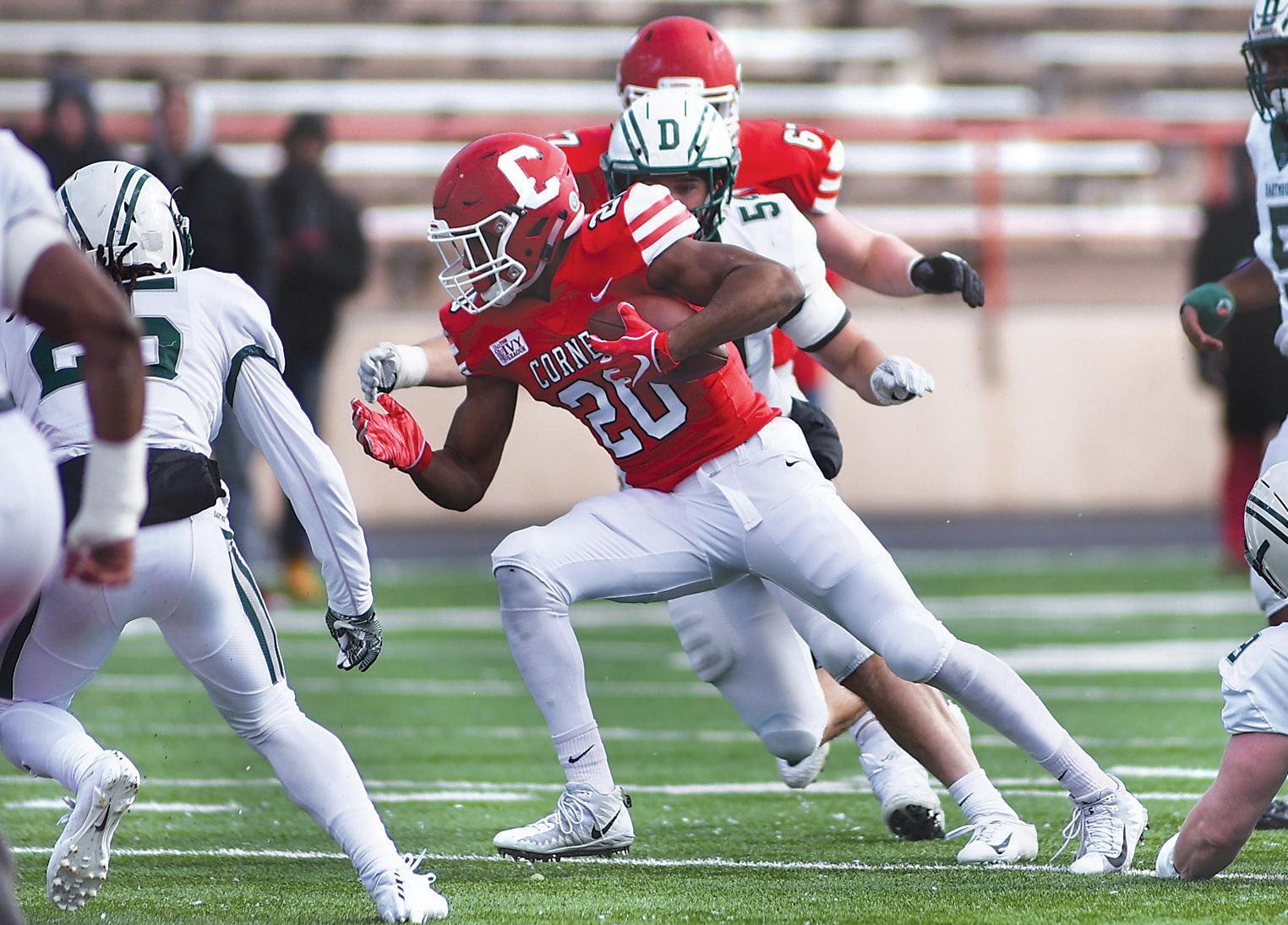
with a two-yard quarterback sneak for the score and a 21-17 lead.
The Red elected to try a squib kick on the ensuing kickoff as to avoid Columbia kick returner Mike Roussos, who had already returned a punt 91 yards for a touchdown. Instead, Roussos scooped up the loose ball, followed his blocks and took it 87 yards to the end zone. Cornell’s lead had vanished, and the offense couldn’t find a miracle of its own with 47 seconds left.
“To prevent [a return], especially when your opponent needs a touchdown to win, a great strategy is to squib kick it to try to throw off their blocking schemes and their return, not give their return man good vision,” Archer said of the strategy, citing an analytics group that said 2 percent of kickoff returns on squibs in 2017 went for touchdowns. “So that’s what we did, squibbed it … the way they were aligned [Roussos] had a crease, he had a seam. There were a couple of blocks that were questionable, but they didn’t get called at the end of the day. The chances of that happening were incredibly small and somehow it happened.”
Cornell’s season ends at 3-7 overall and 2-5 in league play to finish the year in seventh place in the Ancient Eight.
“I’m so proud of our kids, especially our seniors. They don’t deserve to go out like that. In pretty much every aspect of the
game [we] outplayed Columbia,” Archer said of his team, which out-gained the Lions, 460-235. A turnover and ugly special teams play put Cornell in a quick
“I’m so proud of our kids, especially our seniors. They don’t deserve to go out like that.”
Head coach David Archer ’05
10-0 hole in its season finale. On the Red’s first drive of the game, Banks’ 11th interception of the season gave Columbia good field position, and the defense held to force Columbia to settle for a field goal and 3-0 lead.
On Cornell’s next drive, the Red’s punt coverage went awry and Roussos returned freshman Koby Kiefer’s punt 91 yards for a touchdown.
Two missed field goals early on by senior kicker Zach Mays kept the Red off the board despite some decent offensive movement — a 48-yarder was blocked and a 22-yard chip shot went wide left. Cornell’s first four offensive series went interception, punt returned for touchdown, missed field goal, missed field goal.
Junior defensive lineman Jordan Landsman’s first career