The Corne¬ Daily Sun

By KATHERINE ESTERL Sun Staff Writer
“This again?” Elliot Walsh ’24 said.
“We
For the second time in about 48 hours, Walsh and thousands of other Cornellians received an emergency Cornell alert on Tuesday. This time, he had received notice that local police were pursuing a man with a gun in Cayuga Heights near North Campus.
seriously?” Cameron White ’24 said, reflecting on last week’s events.
After students were hit with emergency alerts two days last week, many students are still processing days marked by shock and confusion.
Mannayah Louis ’24
On Sunday, the alert system told students to evacuate Central Campus as local, state and national authorities investigated a bomb threat,

“Are you kidding me, like
By SURITA BASU Sun Assistant News Editor
Last Tuesday, students studying in libraries and those on their way to office hours were disrupted by a CornellALERT, notifying them of a police search for a “man with [a] gun” in Cayuga Heights. The search
spurred a shelter-in-place order that included North Campus and lasted more than five hours — prompting Cornell to postpone all prelims scheduled that night.
Twelve classes had prelims scheduled for Tuesday evening, according to the University registrar website. Additionally,
several other classes postponed prelims and other assignments scheduled later in the week to accommodate the disruption caused by the shelter in place and by a bomb threat, later deemed “not credible,” which occurred the previous Sunday.
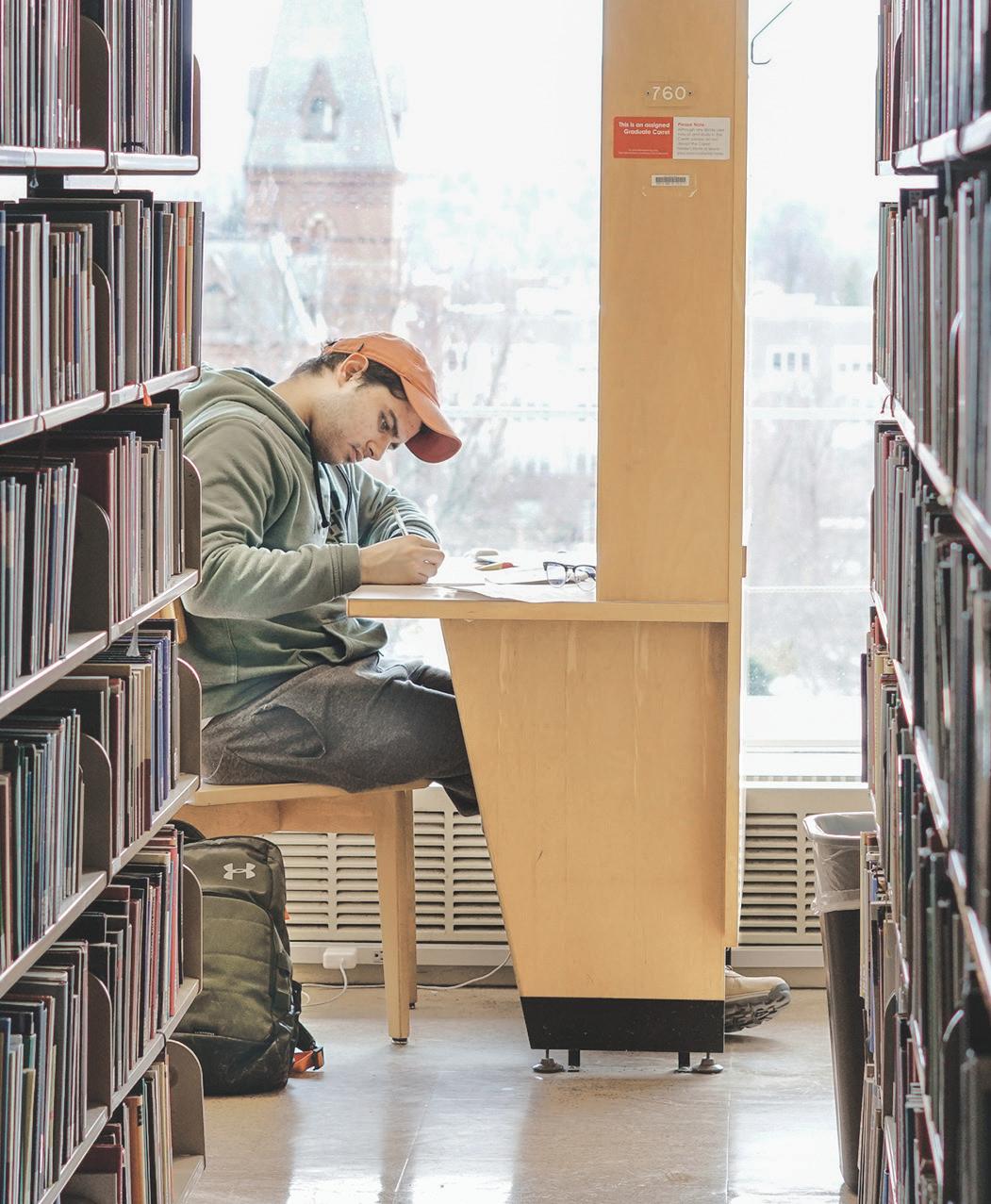
As the series of emergency alerts hit students’ phones on a prelim-packed week at the height of the semester, these threats interrupted preparation time last Sunday and Tuesday. As most prelims were only postponed by a few days, these exams are now once again upon students.
“We have no time to take for ourselves … We have prelims to study for,” said Pedro Da Silveira ’25, who is also in the Student Assembly. He sheltered on North Campus on Tuesday and had his exam postponed to this week.
“Now I’m paying the price,” he said, since he’ll take three exams this week.
Darshana Subramaniam ’24 had two exams rescheduled as a result of Tuesday’s events — an Industrial and Labor Relations 2600: Human Resource Management exam on Wednesday and an exam for Industrial and Labor Relations 2350: Work, Labor and Capital in the Global Economy on Thursday during class.
By KATHERINE ESTERL Sun Staff Writer
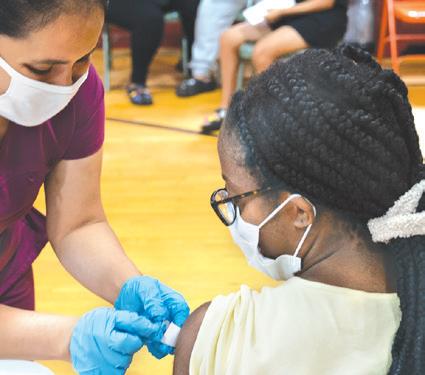
About 2,200 Tompkins County kids have the first dose of a COVID vaccine in their arms, according to Frank Kruppa, Tompkins County public health director.
Since the Food and Drug Administration authorized emergency use of the PfizerBioNTech vaccine for 5 to 11 year-olds late October, the local health department has run two weekend clinics at the Shops at Ithaca Mall, with another this Friday. Some parents felt relief, while others wondered how vaccines may change COVID policies in Ithaca City District schools.
Anne Johnson is the mother of a 5-year-old kindergarten student. She had her child vaccinated through the health department as soon as appointments became available. Johnson said she’s both happy that her child is vaccinated and impressed with how the vaccine clinic for children was run.
“They were playing Disney
music, the Frozen soundtrack, and they had reading books and coloring pages and crayons and lollipops,” Johnson said. “I thought they did a really nice job for the kids.”
Not everyone was able to secure an appointment right away. Aubryn Sidle grad has two elementary-aged children and plans to get them vaccinated. But she said she missed the initial notices from the school district that told parents to check their emails for a link to make vaccine appointments.
By the time she was done teaching her class at Cornell, all the spots were filled. Sidle said she was able to make an appointment in Trumansburg, but noted not everyone has access to private transportation.
“You had to be a person who had regular access to the inter-
Language
Architecture Graduate Open House for Prospective Students
10 a.m., Virtual Event
Behavioral Economics Workshop: Moses Shayo 11:15 a.m. - 12:45 p.m., 106 Sage Hall
Business Manager Anushya Alandur ’23
THE
www.cornellsun.com E-MAIL sunmailbox@cornellsun.com

Spanish Conversation Hour 3 - 4 p.m., G25 Stimson Hall
Cornell-Citi Financial Data Science Webinar With Laura Leal
5 - 6 p.m., Virtual Event
Post-Prelim Insomnia Cookies 9:15 p.m., 101-105 RPCC
Rodent Management and Rodenticides on the Farm 9 - 10:30 a.m., Virtual Event
Tenure Track Alternative Career Paths: Policy Consulting Noon - 1:30 p.m., Virtual Event
CHE Community-Engaged Learning Forum Noon - 1:30 p.m., Virtual Event
Lunch and Learn With Ikimi Dubose, Co-Founder of The Roots Fund Noon - 1 p.m., 102 Mann Library
Wellness Community Chat: Nutrition and Fitness to Support Blood Sugar Balance Noon -1 p.m., Virtual Event
Midday Music for Organ: C.U. Music 12:30 - 1 p.m., Anabel Taylor Hall
Saving African Forest Elephants Using Sound 1 - 2 p.m., Virtual Event
Zweig 2021 Faculty Research Presentations 3 - 4:30 p.m., Lecture Hall 5 Schurman Hall
Big Money and Free Speech 5 - 6 p.m., 186 Myron Taylor Hall
Wellness Wednesday 8 - 9 p.m., 205 RPCC
ALERT
Continued from page 1
which was later found not credible. And on Tuesday, students received notice of local police pursuing a man with a gun in Cayuga Heights — when the Cornell alert system told people on North Campus to shelter in place, lock their doors and avoid the area.
“On Sunday, when I first got the alarm, my heart literally dropped into my stomach.”
Mannayah Louis ’24
“On Sunday, when I first got the alarm, my heart literally just dropped into my stomach because there was no detail,” Mannayah Louis ’24 said. She was in the Cornell House of Prayer at the time and stayed there to pray with friends after receiving the alert. She and other students said they wished they received more information from the University about the severity of the threat. After Tuesday’s news, she said her reaction was more so of disbelief.
Kevin Cui ’25 was sitting outside Toni Morrison Hall on North Campus when he received the Tuesday news. By the time Cornell lifted the shelter-in-place order at 7:13 p.m. Tuesday, the University had already postponed
all exams scheduled for that night, which included the one in Cui’s economics class. Cui said he thought the University had students’ interests in mind, but others disagreed.
Louis is a member of the Student Assembly and, along with all other S.A. members, signed a Nov. 10 letter with demands for the University, including a commitment to postponing exams after “serious and credible threats of violence,” “more robust emergency procedures” and better communication from Cornell.
which included information on two community support meetings scheduled for Tuesday and Wednesday.
Annabel Baniak ’24 said a lack of clarity helped feed rumors during both threats.
“Everyone started freaking out about things that weren’t actually happening,” Baniak said.
“Everybody started freaking out about things that weren’t actually happening.”
On Sunday, the administration’s first statement to the Cornell community came from Joel Malina, Vice President for University relations, who clarified that the bomb threat was a “hoax” and that the University would resume “normal operations.”
Annabel Baniak ’24
“Something from an instantly recognizable name would have been nice right off the bat,” said Kiera Foley ’23, who wasn’t familiar with who Malina was and thought the University wasn’t clear in its communication.
President Martha Pollack made her first statement on Tuesday — in a message to the Cornell community entitled “Reflecting on our stressful last few days,”
PRELIMS
Continued from page 1
Subramaniam explained that since the police search and shelter-in-place order prevented her from returning home to North Campus Tuesday afternoon, she stayed in Ives Hall for several hours. The chaos of the afternoon also made it hard to focus and prepare for her exams.
“I couldn’t physically study,” Subramaniam said. “I was getting calls from a lot of people, like my parents, my sister and my friends from
Wednesday Nov. 10 to that Friday. She already had a Biology 1440: Introductory Biology: Comparative Physiology prelim moved from Wednesday Nov. 10 to the following Monday due to the bomb threat.
According to Ali, the shift in her exam schedule helped her feel more prepared. While she went about her daily routine under the gunman alert, Sunday’s bomb threat prevented her from studying.
“I couldn’t physically study. I was getting calls from a lot of people, like my parents, my sister and my friends.”
Darshana Subramaniam ’24
other schools.”
Subramaniam said she received notifications from her professors from both classes on Tuesday night after the shelter-in-place order was lifted. Her human resource management professor gave students the option to take the exam as scheduled on Wednesday or to take an alternative prelim with different questions the following Monday during class.
Her work, labor, and capital in the global economy professor rescheduled the exam entirely and moved it to a take-home format, citing the stress and anxiety many students were experiencing. For Subramaniam, this eased some of the exam stress and allowed her to change her study methods.
“Essay questions in a take-home format are a lot less intense,” Subramaniam explained.
Fajr Ali ’24 had her quiz for Physics 2207: Fundamentals of Physics I moved from
Steven Urdaneta ’23 was supposed to take a prelim for Operations Research and Information Engineering 3300: Optimization I on Tuesday evening. The next morning, his professor announced that the exam would be moved to Saturday. Not expecting a weekend exam, Urdaneta was supposed to be at the Cornell-Dartmouth football game with the marching band. Luckily, Urdaneta said his professor was accommodating, giving him an extension to the following Tuesday.
Urdaneta said that while he had already started studying, the delay gave him extra time to brush up topics he needed more time to study.
“Especially since I’m sure that the exam wasn’t remade last minute, it’s not like it was going to be any harder than it was [last] Tuesday,” Urdaneta said.
He also explained that despite the exam getting pushed back a week, he only need to study material covered before the exam’s original date.
“Going into Tuesday I was somewhat prepared but I still had things that I wanted to fix up,” Urdaneta said. “Despite being a very unfortunate event... it ended up being beneficial and now I have more time to study.”
Katherine Esterl ’24 contributed reporting.
Surita Basu can be reached at sbasu@cornellsun.com.
On social media, some students worried that the gunman referenced by police was an active shooter. According to The Ithaca Voice, as of Tuesday night, police said the shooting was between two specific groups of people, and they did not believe the suspect was a threat to the public.
Some students wished the University had canceled classes last week or designated more time for mental health in the wake of both events. Louis said the University’s response was “unacceptable” and thought her fellow students and understanding faculty and staff did more ease the stress of living through two anxiety-inducing events.
“We’re people, not machines,” Louis said. “We’re people, and we have to acknowledge that we live in a world that is unpredictable and need time to respond to it.”
Katherine Esterl can be reached at kesterl@cornellsun.com.
ICSD
Continued from page 1
internet. You had to be a person with a job that allowed you to spend hours on end, refreshing an internet screen,” Sidle said, reflecting on the inequities of vaccine distribution. “You had to be savvy enough to know how to navigate those kinds of systems on the internet.”
Now that children are getting vaccinated, Johnson said she hopes higher vaccination rates among children will cut down on how many young students will need to be quarantined due to close contact with positive cases. This fall, Johnson’s child had two exposures on the school bus.
“It’s so disruptive for the children and the teachers and everybody,” Johnson said. “I’m hoping that if the children start to get vaccinated, if there’s an exposure or a positive case, the students can just stay in school. Because I think it’s really hard on parents when suddenly their child has to stay home for a week.”
Kruppa said fully vaccinated individuals do not have to quarantine if they are considered close contacts. But beyond the health department’s contact tracing, the district says it cannot ask students about their vaccination status, cit-
ing privacy concerns.
“All of us working parents want to know, if our kid has a runny nose but is vaccinated, what are the new rules now for returning a kid to school, during illness or after illness?” Sidle said. “When will we be required to have a COVID test, and when will we not?”
Sofi Gluck teaches at Ithaca High School, where more students have been eligible for the vaccine since the spring. Since she has no data about vaccination rates among her students, she is still worried about COVID spread in the school building.
She also has a 6-year-old and 9-year-old at home, who both received their first doses of the shot this month. While she is thrilled that her children are vaccinated, she said she’s wary about the loosening of restrictions, particularly on mask-wearing, unless there was a vaccine mandate for students.
Uncertainties aside, many parents said they hope children’s vaccinations point toward a bit more normalcy and protect others at risk.
“I just think getting a vaccine for your child is a pretty reasonable, straightforward thing to do in the middle of a pandemic,” Johnson said.
Katherine Esterl can be reached at kesterl@cornellsun.com.

OLUOMA IROAJANMA ARTS CONTRIBUTOR
The collective cringe that overtook the Internet when TikTok “star” Addison Rae appeared on The Tonight Show Starring Jimmy Fallon earlier this year to poorly execute dances that she did not create and could not properly emulate cannot be quantified. At the end of the day, reception was so negative that The Tonight Show even apologized for not bringing on the original dancers, or at the very least, even crediting them.
The popularity of ‘TikTokers’ like Addison Rae and the D’Amelio sisters has grown larger than anyone probably would have predicted, as TikTok has quickly grown to become one of the most popular social media apps with over one billion users. These stars, benefiting from the recognition gained when they performed dances created by others, have gone on to receive million dollar endorsement and production deals. Addison Rae recently starred in the universally panned He’s All That. Regardless of the reviews, because of high viewership due to people watching solely to analyze how badly she did, she went on to sign a lucrative deal with Netflix.
More so, the popularity of the aforementioned stars has received criticism for multiple reasons. For one, they are not without controversy and problematic posts and behaviors that they halfheartedly apologized for. But if you look past that, the
dance, respectively) have not been giving the mass attention to create makeup lines or sign movie deals. And these richer, more privileged stars like Addison certainly never go out of their way to advocate for them, though they certainly realize why they get
true problem lies in how rich they get off of “performing” these dances while the original creators — primarily creators of color — are paid absolute dust. Creators like Jalaiah Harmon and Keara Wilson (creators of the “Lottery (Renegade)” dance that made Charli D’Amelio famous, and the “Savage”
more attention. Creators of color were so frustrated with this that they even went on strike (refusing to post dances on TikTok) this summer.
The question, then, is this: What, if anything, has changed since that strike? What laws, if any, are in place so that creators
can monetize and make a living off of their creativity if they don’t have the followers and subsequent sponsorships to do so?
It turns out that it’s more complicated than it should be. While Congress has guidelines to determine which choreographed moves can be protected under copyright, it isn’t as easy to say that you know with certainty a dance you created belongs to you the same way someone could argue that a song is theirs.
But in a world where social media has provided careers and breakthroughs for many “influencers,” and not just to pave the way for larger careers within the entertainment industry; many influencers use the sponsorships and partnerships they gain from having more followers to pay off school fees or loans while they study; after all, the cost of living — education, housing, you name it — is only getting more and more expensive as we speak! Thus it seems a bit unfair that the creators of dances that temporarily shifted or defined culture could not lay claim to the fruits of their own labor. And it shouldn’t be that way.
Oluoma Iroajanma is a sophomore in the College of Arts and Sciences. She can be reached at oci3@cornell.edu.
ELIZA
SALAMON ARTS CONTRIBUTOR
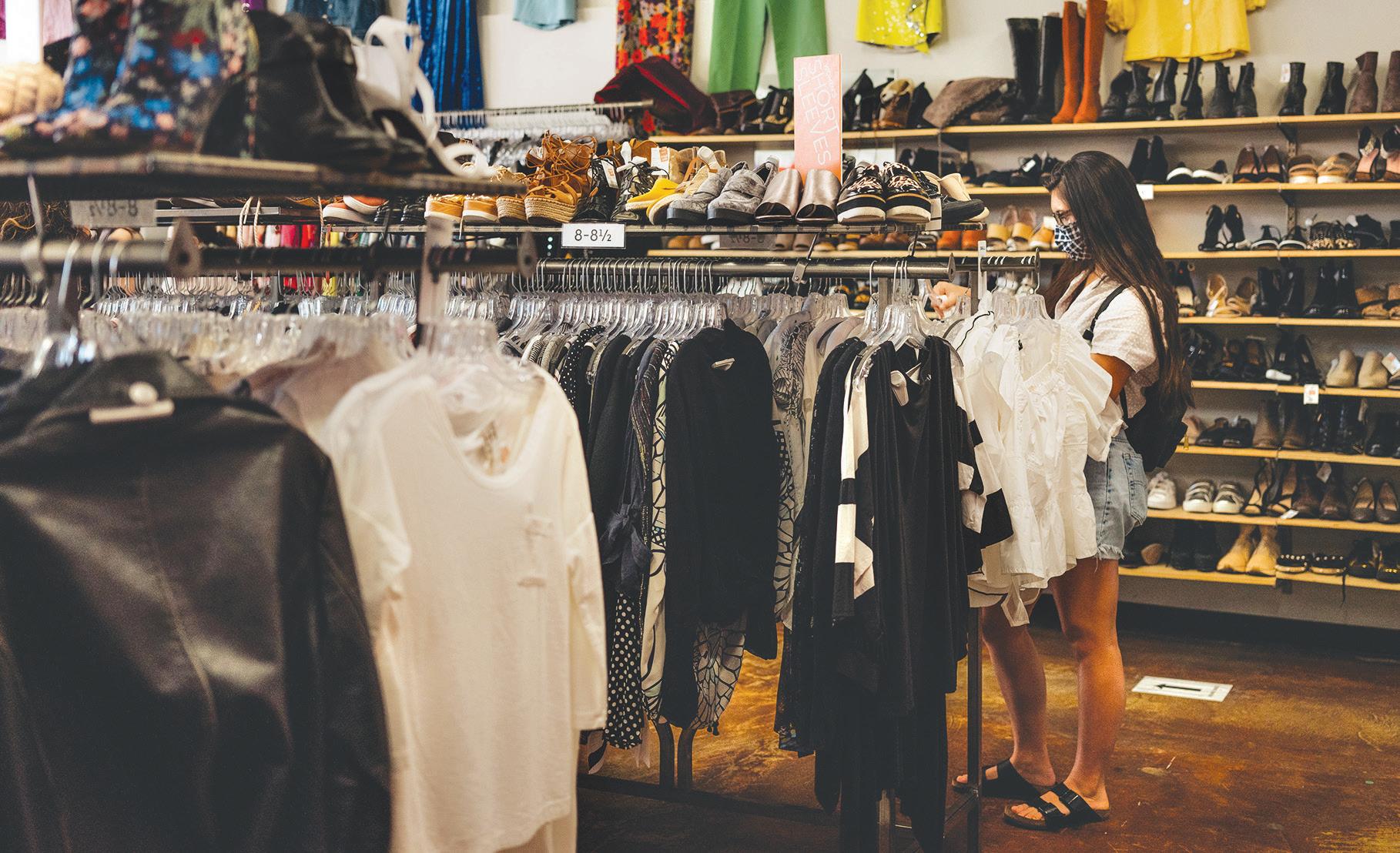
Due to a mix of boredom and a need to de-stress (and what better cure than online shopping?), I downloaded Depop last fall. I soon became somewhat addicted, pausing from essays and problem sets to scroll endlessly through timer-camera modeled clothing and endless #y2k tags. In a time that felt pretty bleak — first semester of college during a pandemic — I found a sense of power in buying used clothes. If I couldn’t control my biweekly COVID tests or lackluster social life, at least I might have more vintage shirts to choose from. I justified my Depop purchases to myself with its sustainability compared to buying fast fashion.
Though my Depop phase had mostly phased out by the past summer, I began thrifting with friends more near my hometown. While fishing through the racks of clothes, it was impossible not to imagine their listings on Depop. A $5 tank top at the thrift store would be listed for $30 on the app, and I could picture the predictable caption: “Super cute, lacy, baby blue y2k vintage tank top! So versatile, looks great for brunch or a girls night out!”
How can we shop at thrift stores or numerous online platforms without overconsuming and being sucked in by the cheap prices and/or flashy hashtags? There’s been a lot of controversy
in recent months about resellers on Depop: users who buy clothing from thrift stores to then sell on the app for large profit margins. From TikTok to Reddit, people have criticized resellers for gentrifying thrifting and taking clothes from people who depend on thrift stores. The majority
of shelter and food for those in need.
Luana Lovenguth, the Chief Social Enterprise Officer for the Rescue Mission, notes that while resellers are good for business and promotion of their stores, their consumption also comes with consequences. “Resellers tend to
their sole source of income. Those people may spend hours photographing items, writing captions, and engaging with customers.
Lovenguth understands that some resellers depend on their stores to make a living, but feels “it would be [a] full circle moment for a reseller to donate part of
of these resellers are college-age women in their teens or twenties.
There are over 25,000 thrift stores in the US, 3,300 of those being Goodwills. Thrifty Shopper, a network of thrift stores in upstate New York, is run by the Rescue Mission Alliance. Their thrift stores provide affordable clothing and fund their provision
select the majority of the ‘better’ items, buy more items than they need, and take advantage of our pricing structure we have in place to ensure those with limited means have resources,” she says. Resellers come in all forms—some see the practice as an easy way to turn a profit, while others depend on it as
their earnings back to the Rescue Mission.”
The movement of thrifting to the mainstream comes at the intersection of two trends: a push against fast fashion towards sustainability and the reemergence of the styles of decades past. Lily Megale ’24, knows this staying power well, saying that “it’s very
part of the culture” in her home, New York City. She began thrifting as a popular and cheap option for clothing, but now increasingly views it as a way to lessen her environmental footprint. She too sees pros and cons to reselling thrifted items: “For bigger products...pants or jackets...I feel like buying that just to resell it is kind of selfish because those are things that people need.”
So, how do we navigate the world of thrift stores and Depop?
Thrifting can be a wonderful way to find unique items of clothing for affordable prices, and shopping at stores like Thrifty Shopper also helps people in our communities. Yet, Megale admits that she finds Depop resellers a bit intimidating and I, for one, am trying to take a bit of a Depop break.
It’s easy to preach “no ethical consumption under capitalism,” but the reality of our world makes that improbable. Reselling falls into a grey area in our world of consumption; I still don’t have a full answer to the ethics of it. I do know, however, that any thrift store or Depop buy will always be better than a Shein or Forever21 purchase. There’s a lot to consider while thrifting, but ultimately the right choice is that which feels most beneficial for ourselves, our communities and our world.
Eliza Salamon is a sophomore in the College of Arts and Sciences. She can be reached at ecs287@cornell.edu.
KATHRYN STAMM ’22 Editor in Chief
ANUSHYA ALANDUR ’23
Business Manager
CATHERINE ST. HILAIRE ’22
Associate Editor
PRANAV KENGERI ’24
Advertising Manager
ODEYA ROSENBAND ’22
Opinion Editor
JYOTHSNA BOLLEDULA ’24
News Editor
TAMARA KAMIS ’22
News Editor
CAMERON HAMIDI ’22
App Editor
KRISTEN D’SOUZA ’24
Design Editor
HANNAH ROSENBERG ’23
Photography Editor
OMSALAMA AYOUB ’22 Science Editor
PUJA OAK ’24
Layout Editor
ANNIE WU ’22 Production Editor
MIHIKA BADJATE ’23
Assistant News Editor
SERENA HUANG ’24
Assistant Business Editor
ANGELA BUNAY ’24
Assistant News Editor
JOHN COLIE ’23
Assistant Arts & Culture Editor
AMELIA CLUTE ’22
Assistant Dining Editor
WILLIAM BODENMAN ’23
Assistant Sports Editor
AARON SNYDER ’23
Assistant Sports Editor
MEGHANA SRIVASTAVA ’23
Compet Manager
MADELINE ROSENBERG ’23
Editor NAOMI KOH ’23
Editor ANIL OZA ’22
HEO ’24
VEE CIPPERMAN ’23
UMAR ’23
E.D. PLOWE ’23
YOON ’23
VELANI ’22
PICHINI ’22
SRISHTI TYAGI ’22
Editor
MENDOZA ’24
ARANDA ’23
BASU ’23
KAYLA RIGGS ’24
EMMA LEYNSE ’23
NAGEL ’24
MONOHAN ’24
ABAYEVA ’24
ALPERS ’22
Working on today’s sun
ad layout Vanessa Chan ’24
opinion desker Catherine St. Hilaire ’22
managing desker Madeline Rosenberg ’23
news deskers Tamara Kamis ’22
Surita Basu’23
production desker Katrien de Waard ’24
layout deskers Kristen D’Souza ’24 Puja Oak ’24
photo desker Hannah Rosenberg ’23
Arts desker John Colie ’23
science desker Srishti Tyagi ’22
Below are Do Better Cornell’s demands in response to the events of Nov. 7 and Nov. 9. To preserve their original intentions Te Sun has decided to publish their demands as they were given to us. As a result they have not been edited to conform with Sun Style. Guest Room runs periodically throughout the semester.
We, a collective of students from various parts and communities on campus, issue these demands to hold Cornell University accountable for its atrocious lack of action and leadership in the aftermath of events on Nov 7, 2021 and Nov 9, 2021. These events, including a bomb threat and an active shooter threat, lasted for hours and left students in panic with vague, inconsistent communication from the University. While students feared for their safety, trying to figure out what to do and where to go, many continued to receive emails from professors about assignments, exams, and classes scheduled for the next day. Empathy was nowhere to be found—especially as the Nov 7 situation failed to even receive the usual empty messages of understanding from top-ranking University officials, including President Pollack and Vice President for Student and Campus Life Lombardi.
During both crises, the same dependence on broken mental health systems and resources were deployed as students were expected to sit in silence and rely on programs, such as CAPS, that have already continuously failed them. At the end of both crises, administrators deployed retroactive, empty responses that ultimately had students returning to “business as usual” as if they were not fearing for their lives just mere hours before.
The University’s failures in events of this manner are not new. These are the same failures that have overlooked student well-being in light of 7 student deaths since the start of the Fall 2020 semester, amid the countless traumatic events of the past years. Lack of transparency and communication contributed to high stress that left us to process these campus-wide losses largely on our own with only the same defunded mental health services to turn to. In other situations regarding students passing, the University has provided inadequate support and flexibility for its grieving student body.
While we recognize that many of the situations in question were not in the University’s control, the extremely poor and toxic responses in their aftermath were. Cornell is an institution that leaves its students traumatized by the end of their four years. It paints incidents as isolated and sweeps them under the rug while continuing to portray itself as an institution for “any person, any study.” Thus, we present this institution with several demands for both today and the future. The University must prioritize students’ health, especially as we make the existence (and profits) of this University possible. Today, the University must take the first step in a proactive, not reactive, approach to student health. We will continue to act until we receive a response from the University addressing our demands.
Our Demands: Addressing Concerns Directly Related to November 7th and 9th, 2021
We demand that Cornell create clear, transparent, uniform, and publicly available regulations for professors and other University faculty on what being “flexible” with students means.
This policy should at minimum address the following: postponing/canceling prelims, refusing to have hard deadlines enforced for the upcoming week(s), offering the option to attend class with virtual options or no
enforcement of attendance policies, building in emergency accommodations/flexibility for students as circumstances arise and inclusion of an S/U option for emergencies. Relevant examples of circumstances should include, but are not limited to, campus-wide emergencies and student/community deaths.
After Cornell issued its announcement on the evening of November 9, 2021, postponing exams for the evening, it left much room for professors to exercise discretion in how they would proceed with their courses. As a result, there was a very mixed response across campus. Some professors cancelled classes, some offered Zoom options, and others proceeded as normal, expecting students to attend class in person. In many instances, professors rescheduled exams without the input of their students while others gave very little communication as to next steps for exams. As a result, students were forced to worry about completing homework assignments while sitting in the very dorms and houses they feared the previous day. This assortment of responses could have been mitigated by the University taking a firm stance that would give professors a minimum standard to adhere to for students on campus who experienced these traumatic events.
We demand that Cornell implement a system of accountability for professors and faculty who refuse to follow these regulations. This should include a platform for students to report incidents of unaccommodating professors (with the option for anonymity), and concrete repercussions in place to address such issues. The University should outline who will be overseeing such efforts, and commit to implementing this as soon as possible.
A simple suggestion of leniency and flexibility is not enough when professors have shown time and time again that, if left to their discretion, they will prioritize course material over the mental health and wellbeing of students. It is unacceptable that how much empathy a student receives in the wake of traumatic events is left up to chance, leading to disparate impacts across faculty and departments. If Cornell is truly committed to alleviating students’ concerns, they must codify mechanisms of holding inflexible professors and faculty accountable. This must, at minimum, include a streamlined method for reporting professors who fail to comply with these regulations, so that action may be taken swiftly and negative effects minimized.
We demand that Cornell be clear on what a “heightened police presence” entails and make all attempts to put an expedient end to said presence.
In response to the events of both November 7 and November 9, Cornell has informed the student body that there will be an increased presence of police ofcers on the campus. What this actually means has been unclear. Cornell has failed to describe what police departments will be on campus, for how long, in what capacity, and where this presence will occur. A heightened presence is especially troubling given the fears many undocumented, international, and students of color have expressed due to the historically strained nature of their relationship with the police. Tus, we demand more information regarding the presence of law enforcement on campus, in addition to an end to this increase in law enforcement ofcials.
We demand a consequence-free mental health week, wherein students will be exempt from classes, assignments, and deadlines in order to recover from the stress of preceding incidents without the overarching worry of academic consequences. Students should not be held accountable for the assignments and academic responsibilities of this week, and available accommodations through Student Disability Services (SDS) must be made clearer, and more accessible.
Despite unprecedented situations that included potential threats to safety, students have been expected to resume business as usual as if no disruptions occurred. After the loss of entire days to lockdowns and feelings of fear, expecting students to keep up with assignments and studying is both inconsiderate and unrealistic. Students need genuine time to process their feelings and decompress amidst traumatic situations. Tis prospect is defeated if students are expected to play “catch up” and make up all assignments they would have been responsible for during the break. While certain accommodations are available through Students Disability Services, these services are highly inaccessible and are severely lacking in visibility on campus. Departments and faculty must acknowledge their syllabus and curriculum will be disrupted by the very same situations that have disrupted students’ wellbeing.
We demand that Cornell provides more comprehensive mental health services for all students, particularly in the wake of campus-wide tragedies and threats of violence. Specifcally, Cornell should commit to hiring a minimum number of mental health professionals (on a per capita basis), with the goal of resuming individual therapy sessions for all who need it and ensuring that wait times are no longer than one week between scheduling and the appointment.
At a school where emotionally taxing crises occur every couple of weeks, Cornell must deepen their commitment to the health and well-being of students, which they have acknowledged as “foundational for academic and life success”. Te hiring of BIPOC and LGBTQ+ therapists must be prioritized, as they are best suited to provide appropriate care to marginalized students. To this point, Cornell Health should create an anonymous method for the reporting of uncomfortable, ofensive, or otherwise unacceptable experiences with mental health professionals, with a commitment to frequently monitor and appropriately address complaints. Tough we understand that this is not a quick or easy task, we also far too deeply understand that we are in the midst of an ongoing mental health crisis which has already cost the lives of multiple students. At the very least there should be a minimum number of therapists specializing in crisis management, who are readily available after traumatic incidents. Students should also be encouraged to check in with counselors in the aftermath of such events, to ensure we are taking proactive steps to protect students.
Demands Addressing the conditions that exacerbated the toll of the events of 11/7 and 11/9
We demand that in future emergency events, University leadership communicate consistently and efectively.
Messages need to be clear and detailed to prevent speculation and said messages should also contain clear instructions to prevent confusion on how to proceed.
On Sunday, November 7th at 1:57 PM, the frst CornellAlert went out instructing students to avoid certain parts of campus or to shelter in place. It would not be until 3:23 PM that the specifc terrorist act would be named, leaving students to speculate what they were living through for approximately an hour and a half. Te messages sent were unclear and hectic, one even containing no information at all. Tis confusion and lack of communication led to students being unsure on how to proceed in buildings unidentifed in messages. Additionally, the University, on both November 7th and November 9th, sent less than 8 emergency alerts out to the campus - despite both events lasting several hours. On November 7th in particular, students went
several hours without an update. Tis lack of communication also resulted in rumors circulating campus; Specifcally, that an active shooter was on campus, which resulted in students experiencing unnecessary trauma and reacting in possibly dangerous ways. Tis speculation led students to wonder, where, if anywhere was safe on campus as they heard little news from the Cornell administration or law enforcement.
Te administration has also failed to consider the impact such lack of transparency would have on its student body. In particular, the threat of an active gunman on November 9th instilled deep fear into North Campus residents. It would be remiss not to acknowledge the vulnerable population and composition of students on North Campus, which is home to Cornell’s frst year population and a number of houses for students of marginalized identities (such as Wanawake Wa Wari Cooperative, the Latino Living Center and Ujamaa Residential College). Many of these students feared returning to North Campus because the vague description released by the police made them fear being targeted in the course of the search.
We compare the lack of transparency in CornellAlert’s to our Ivy League peers who experienced similar traumas this past week. Brown’s frst message clarifed what the threat was and what buildings were being investigated. Columbia also ensured they provided clear, transparent information. Yale’s alert on Friday, November 5th also provided this information to the student body.
It is clear that the Cornell administration failed the student body when they irresponsibly left students in the dark, letting us sit in our confusion, fear, and anxiety.
We demand that there be a standardized protocol that outlines how staf and faculty should respond in support of students during crises.
Firstly, professors should have a coordinated approach in how they relieve the workload of students during a crisis. Te decision to acknowl- edge valid mental health concerns should not be left to the discretion of each professor, rather standardized at the University level. Sympathy and understanding for how the same crisis impacts diferent students should not be discriminately applied. Specifcally, regarding crises that require a “shelter in place” order, there should be protocols as follows:
1. All classes canceled immediately after order is placed
2. No assignment due dates within a week after the order has been lifted
3. Acknowledgement of events and the toll these events have had on students
4. Establish an open line of communication between students and key administrators including, but not limited to, the President of Cornell and VP of Student and Campus Life
5. Transparency around actions taken for students to feel safe returning to campus
Secondly, Residence Hall Directors should be responsible for checking in on their student residents so that the onus does not fall exclusively on student workers. Although Resident Advisors can be asked to provide some support in times of crisis, they should not be the sole line of communication for students, and the only ones responsible for checking in on individual student well-being. For an RA on call, this number can be close to a hundred students, which is simply not feasible, not to mention that the RAs are students who need support themselves.
Tirdly, there should be clear guidelines in place on how places of student employment should respond in a crisis. Tis would apply to places such as libraries, ftness facilities, resource centers, eateries, and all other locations on campus. It should be clear if operations should be shut down entirely, or just restricted to the Cornell community or those with ID card access. Additionally, student workers should be given fexibility, support and leniency in times of crisis, and in general. Specifcally, they should be allowed the ability to miss a shift without penalty, and be able to use paid sick time of to recuperate and recover their mental health.
We demand mandatory, periodic sensitivity training and check-ins for all students, faculty, and staf
Taking into account Cornell University’s extensive history involving student tragedies relating to poor mental health, we are calling on the University to implement mandatory sensitivity training and check-ins for all students, faculty, and staf members. Tere have been countless instances when members of the Cornell community have harmed themselves and/or others without any intervention or identifcation from our community. Numerous students have recounted demonstrating clear identifers of need, some to the extent of verbally calling upon University programs and faculty for help, but found themselves neglected by the institution. A death occurred every single month during the spring semester of 2021, but the University still has not released a public statement of acknowledgement of the University’s poor mental health climate or an updated plan of how the institution plans to combat this issue. To see a positive change, the University must make infrastructural modifcations to allow our community as a whole to better understand and facilitate good mental health.
Check-ins: We demand the University periodically survey all Cornell community members regarding their mental state. Tis allows Cornell to identify and provide resources to individuals who may not feel comfortable reaching out regarding their state as well as individuals who may be completely unaware of their current mental state. We ask that after each campus wide check-in, Cornell releases a summary of the student body’s results along with a list of accessible mental health resources in an efort to be transparent and communi- cative.
Sensitivity Training: To better identify and assist community members struggling with mental health related issues, the Cornell community must frst learn and be cognizant of the signs. Te second step is educating the community on the correct protocol when an individual is struggling mentally, especially if they may be at high risk of suicide or harming themselves. Protocols and responses are not discussed within our community and as a result students often fnd themselves distressed and unsure how to respond in these scenarios. We would particularly like to put an emphasis on restructuring the administrative and faculty protocol when a student verbalizes their mental state to a professor.
We demand the institution of University wide policy to give students grace when experiencing a personal crisis.
We demand Cornell grant every community member a 72 hour grace period, free of repercussions from missed obligations, no questions asked, upon the individual’s declaration of crisis. All deadlines, exams, and other obligations can be rectifed when this grace period ends and individuals can declare that they are in crisis once a semester. Tis declaration should be made in a transparent, streamlined manner that protects the student’s information and privacy. One such way to do this is by having the student submit a form through Student Center or Student Essentials. Not everyone is comfortable disclosing their mental state or unfortunate circumstances. Other schools, such as Yale College, Duke, and Lafayette College have similar programs. Implementing a policy of this manner communicates to all that Cornell prioritizes their community members’ mental health.
Tis policy will give individuals more comfort and security knowing that if circumstances ever feel insurmountable, school work does not need to be an immediate issue. Infrastructure for such a policy already exists in the University through both the ofce of Student Disability Services and Care & Crisis Services. For example, in the SDS ofce, a student can request short term accommodations for classes without requiring documentation from a doctor. In cultivating this policy, the University should consider expanding these additional programs by providing additional funding and making greater eforts to publicize the services available.
We demand that Cornell improve the racial sensitivity & cultural competence of its Cornell Health medical professionals. Black Students, and other members of marginalized groups at Cornell, have experienced misdiagnosis at the hands of Cornell
Health many times. While Cornell Health claims it “strives to deliver high-quality, culturally sensitive care that helps all students thrive both academically and personally,” Black students routinely report a diferent experience than white counterparts. To prevent this, the University should conduct an inquiry into the current experiences of Black students and other students of color at Cornell health. Tis inquiry should not place the onus on Black student leaders to defne the experiences of their entire communityespecially when such conversations seldom lead to substantive changes. Such a review should be conducted by an external third party to the University. Te results of the inquiry should result in tweaks to existing staf training and the creation of an accountability system for staf failing to provide adequate care to marginalized students.
We demand the University create a universal way to make students aware of all resources available.
Cornell is a very decentralized and bureaucratic University. Tere are several websites, diferent units, and it can be difcult to discern where to get information and support. We call upon Cornell to create a central hub for students to access relevant resources. Such a hub could take the place of a website and/or a module of freshman orientation. In creating this central hub, Cornell must also endeavor to bridge the gap between these services and students. Cornell could also do this by requiring professors in introductory level classes to spend course time discussing resources. Yale has already established a similar course. Additionally, Cornell should develop and implement a course on Wellbeing to be implemented as a requirement for students. Providing this information in introductory courses will ensure that all students are introduced to this very necessary information from their very frst days as a Cornellian.
It must be noted that publication without necessary comfort levels being established and outreach conducted does little for students. Tus, as the University rolls out its central hub, it must make every efort to conduct external outreach and meet students where they are so students can truly trust and turn to these resources.
We demand greater transparency surrounding the timeline and actions towards implementing the Mental Health Review recommendations.
Tere have been no updates shared on the dedicated mental health review website for Fall 2021 since Aug 19th, 2021. Te milestones released for Spring 2021 mention the creation of several working groups and sub-committees, but membership of these groups is not made publicly available, creating a lack of transparency surrounding how much time and (labor) “manpower” the University is devoting to the implementation of recommendations. Tere should be regular updates each time any referenced committees meet, as well as publicly accessible meeting minutes and notes to keep students informed on the processes.
Furthermore, the Spring 2021 provided a dedicated space for submission of positive comments about faculty through the “Bright Spots,” but did not provide the same, easily accessible space for any student grievances. A clear process for reporting faculty who specifcally act against recommendations on reducing academic workload (as outlined in the Faculty Senate Resolution 85) must be made available and disciplinary actions must refect tangible methods of accountability. Actions must move beyond “reminders and/ or suggestions to consider mental health and wellbeing in the classroom” when communicating with faculty.
Any vague deadlines on the Updates page should be clarifed and regularly communicated. For example, a report from the “advising working group [addressing] recommendations related to academic advising” was originally expressed as “due in late fall.” As we approach the end of the semester, a specifc date for the release of this report should be provided, or publicly communicated if delayed. Te same should be applied to other vague communications, followed with updates on the progress of specifc initiatives.

Fill in the empty cells, one number in each, so that each column, row, and region contains the numbers 1-9 exactly once. Each number in the solution therefore occurs only once in each of the three “directions,” hence the “single numbers” implied by the puzzle’s name. (Rules from wikipedia.org/wiki/ Sudoku)

Creek Apartments North Campus 3 Bedroom Apartments Available 8/16/2022 office@ithacastudentapartments.com 607-277-1234 Ithacastudentapartments.com
Terrace
607-277-1234
Collegetownterraceithaca.com
504 1/2 Thurston Avenue STUDIO Available 8/16/2022 office@ithacastudentapartments.com 607-277-1234 Ithacastudentapartments.com

By ANIRUDH SHARMA Sun Staff Writer
A Cornell team led by Adrita Dass grad, who studies mechanical and aerospace engineering, is developing technology that could revolutionize the manufacturing industry.
The five-person team was awarded a grant of up to $80,000 through NASA’s University Student Research Challenge earlier this year for their proposed 3D printing sensor. The technology aims to make the 3D printing process more cost effective and robust.
Dass explained that additive manufacturing — a term often used interchangeably with 3D printing — is a method of production where parts are built in successive layers, from the bottom up. This method contrasts the more conventional approach of subtractive manufacturing, where material is shaved and cut from a starting block to create the final product.
The team’s mentor, Prof. Atieh Moridi, mechanical and aerospace engineering, said additive manufacturing has a number of advantages over traditional subtractive methods, including the ability to create complex shapes, reduce material waste and simplify the supply chain.
Despite these advantages, many industries have been slow to adopt additive manufacturing. One major reason for this is that the process is prone to defects, according to Moridi.
Moridi explained that 3D printing relies on the melting and resolidification of a raw material, processes that involve many random and unpredictable interactions. These interactions can lead to defects in the final product that harm its mechanical performance, according to Moridi.
Chenxi Tian grad, who studies mechanical and aerospace engineering, explained that the team’s goal is to find a way to detect these
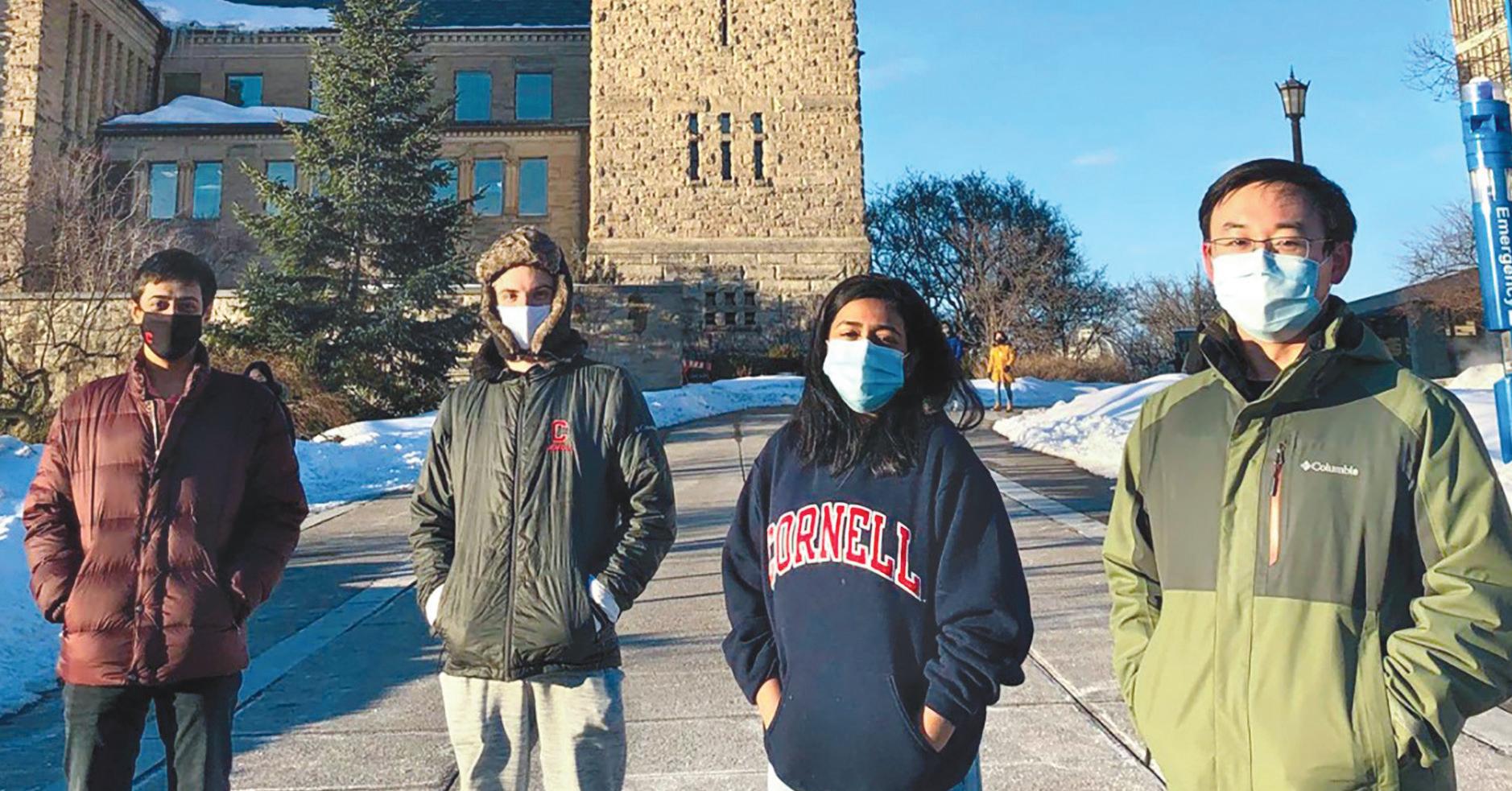
manufacturing defects as they form.
“What we are proposing is basically a realtime forecasting system for additive manufacturing to detect defects happening during the 3D printing of metallic components,” Tian said. “Currently, a lot of defects in the 3D printing process are only captured after the part is produced.”
Post-production correction of defects is difficult and cost intensive, whereas the team’s real-time sensor has the potential to allow manufacturers to correct defects as soon as they occur, streamlining the production process.
The team’s idea hinges on an acoustic sensor that detects signals emitted from the material during production.
“When defects or cracks form inside the material, they make a sound,” Moridi said. “It’s not something we can hear with our ears, but there are special sensors that can detect them.”
Dass explained that acoustic sensing, in contrast to many imaging methods current-
ly used in additive manufacturing, detects defects that form inside the material, rather than merely on the surface. This offers a much more powerful level of insight into where and how defects form, according to Dass.
“What’s interesting is these acoustic emission sensors have been used a lot in the past,” Moridi said. “But now we’re trying to use them to listen to the additive manufacturing process, and it’s a rich data intensive signal — just uncoding what that [data] means is an entertaining exercise.”
The team hopes to analyze this acoustic emission data to better understand the physical processes underlying defect-formation during 3D printing. To accomplish this, they will be using the Cornell High Energy Synchrotron Source — a high-intensity X-ray source — to acquire X-ray diffraction data of materials undergoing the 3D printing process. X-ray diffraction involves directing a beam of X-rays at a sample and measuring the outgoing signal.
Dass explained that by analyzing how data from synchrotron X-ray diffraction and their acoustic sensor develop over time, the team can gain insight into the fundamental physics behind the acoustic signals they measure.
Using the X-ray diffraction data, the team will create a model correlating defects with different acoustic signals, so that manufacturers — such as those in the aerospace and medical industries — can use the cheaper and more accessible technology of acoustic sensing to detect and characterize defects, according to Dass.
In the long term, the team hopes to see their sensor integrated with technologies that correct defects during production, preventing the need for costly post-processing of the product after printing.
Winning the NASA challenge grant was a critical step in the team’s ongoing effort. In addition to the funding, the team has weekly meetings with NASA, which has allowed them to learn more about the additive manufacturing industry.
“Having a connection to NASA, which is one of the pioneer users of such technology, will help us overcome a lot of obstacles that you typically run into in development,” Tian said.
Dass added that the team’s connection to NASA will add credibility to potential future efforts toward commercialization.
As required by NASA, the team has also launched a crowdfunding campaign to cover a portion of their costs and raise awareness among the general public about their work. This requirement aims to encourage entrepreneurial action and public outreach, according to NASA.
Anirudh Sharma can be reached at asharma@cornellsun.com.

By WILLIAM COX and JOHN YOON Sun Staff Writer and Sun City Editor
Since last year, spotted lanternfly adults, which have the potential to wipe out Finger Lake vineyards and rattle New York wine production, have been spotted in Ithaca.
With the potential threat continuing into the winter, the city is coordinating with the New York State Department of Agriculture and Markets in an ongoing effort to keep the population of lanterflies at bay. Without monitoring the spotted lanternfly, the presence of the invasive species could result in many acres of loss for grape growers and billions in profit loss for the state.
According to Jeanne Grace ’09, city forester, city-driven efforts in
the spring helped to keep the population more manageable. The parks and forestry department spent the summer looking for adults and egg masses, and discovered some adult lanternflies near the end of the summer months.
Since the spotted lanternflies aren’t good fliers, the city is aiming to keep the adults confined to the area where they originally found egg masses in the spring.
While the goal is always to eliminate the insects, Ithaca is facing waves of lanternflies as opposed to a single invasion. Spotted lanternflies will continue to be brought to the county by accident — through vehicles and on outdoor materials transported across state lines.
“It’s not terribly likely that we’ll be able to eradicate this insect …
but we’re hoping that we can keep the population low enough that it doesn’t cause problems to the wine and orchard industries that are in the Finger Lakes,” Grace said.
The Finger Lakes Region is one of the main producers of New York State wine, a significant part of the Tompkins County economy.
Wine producers are also weary of the threat posed by the lanternfly. Cameron Hosmer, founder of Hosmer Winery located in Ovid, New York, said “it’s no critter to ignore.”
Though he has not seen any lanternflies on his farm, he is well aware of the situation in Pennsylvania, where his associates “have just about been put out of business because of this bug.”
The bug feeds on the plant sap, plunging its long mouthpart directing into the vines of grape plants. Large feedings reduce vine strength and suck the plant of nutrients essential to growth, which can greatly harm harvest. In addition, the lanternflies excrete a substance called honeydew, which attracts mold whose build up blocks the plant’s leaves from photosynthesizing.
Brian Eshenaur, a plant pathologist in Cornell’s Integrated Pest Management Program who coordinates New York State’s outreach effort for the spotted lanternfly, explained that the state is also con-
cerned about the insect’s possible effects on the vinyards.
According to Eshenaur, by drawing out the sap from the vines themselves, spotted lanternflies weaken the vines. Because feeding is so extensive, it can kill whole vineyards, destroying harvest and greatly reducing wine production for the state, which has an estimated $6.6 billion direct impact on New York’s economy, according to Eshenaur.
Eshenaur added that, due to their lifecycle, spotted lanternflies will likely be seen well into the winter.
“[Spotted lanternflies] don’t die until we have a hard freeze,’’ Eshenaur said. “Frost will just slow them down. They can survive that … [even the spotted lanternfly eggs] have been tested in lab settings at subzero temperatures, and have survived just fine.”
Currently, Ithaca is considering the possibility of treating the Tree of Heaven, the insect’s preferred host plant, with insecticide to prevent the insects from feeding off them. This is a viable option, according to Grace, since the application of the insecticide won’t damage local ecosystems.
“This is directly applied into the vascular system of that tree so it’s a very targeted application,” Grace said. This technique reduces plants and animal interactions with the
insecticide and leaves the ecosystem largely unharmed.
In the fall, the city also added eco-stewards to the team working to address the spotted lanternfly — volunteers that look throughout Ithaca periodically to check to see if there are any adults or egg masses.
Apart from the city’s methods, the state is also trying to set up sticky traps and check for lanternflies to identify populations of the insect as fast as possible.
“[New York State] has inspectors that are out, checking for spotted lanternflies throughout the state,” Eshenaur said. “They have traps set out and we’re really working to identify any cases that are out there right now.”
Despite these measures, Eshenaur said it is still important that people report sightings of the spotted lanternfly to maximize population control efforts. In addition, egg clusters should be removed from belongings before travel and reported if seen on trees. Sightings can be reported here.
“We’re looking at every different avenue to control this insect and we don’t want to let it go unchecked because we could lose vineyard[s],’’ Eshenaur said. “If they see this insect anywhere, we want to know.”
William Cox can be reached at wcox@cornellsun.com. John Yoon can be reached at johnyoon@cornellsun.com.