The Corne¬ Daily Sun



By TAMARA KAMIS and KAYLA RIGGS Sun News Editor and Sun Assistant News Editor
Wen Duan grad was driving to campus to teach her Tuesday class –– Communicaation 1101: Introduction to Communication –– when an emergency alert rang loudly on her phone. “Person with gun in Cayuga Heights. North Campus shelter in place. Lock doors/windows,” it read. Grabbing her phone, she immediately cancelled class and extended deadlines for her students before driving home and watching more alerts roll in.
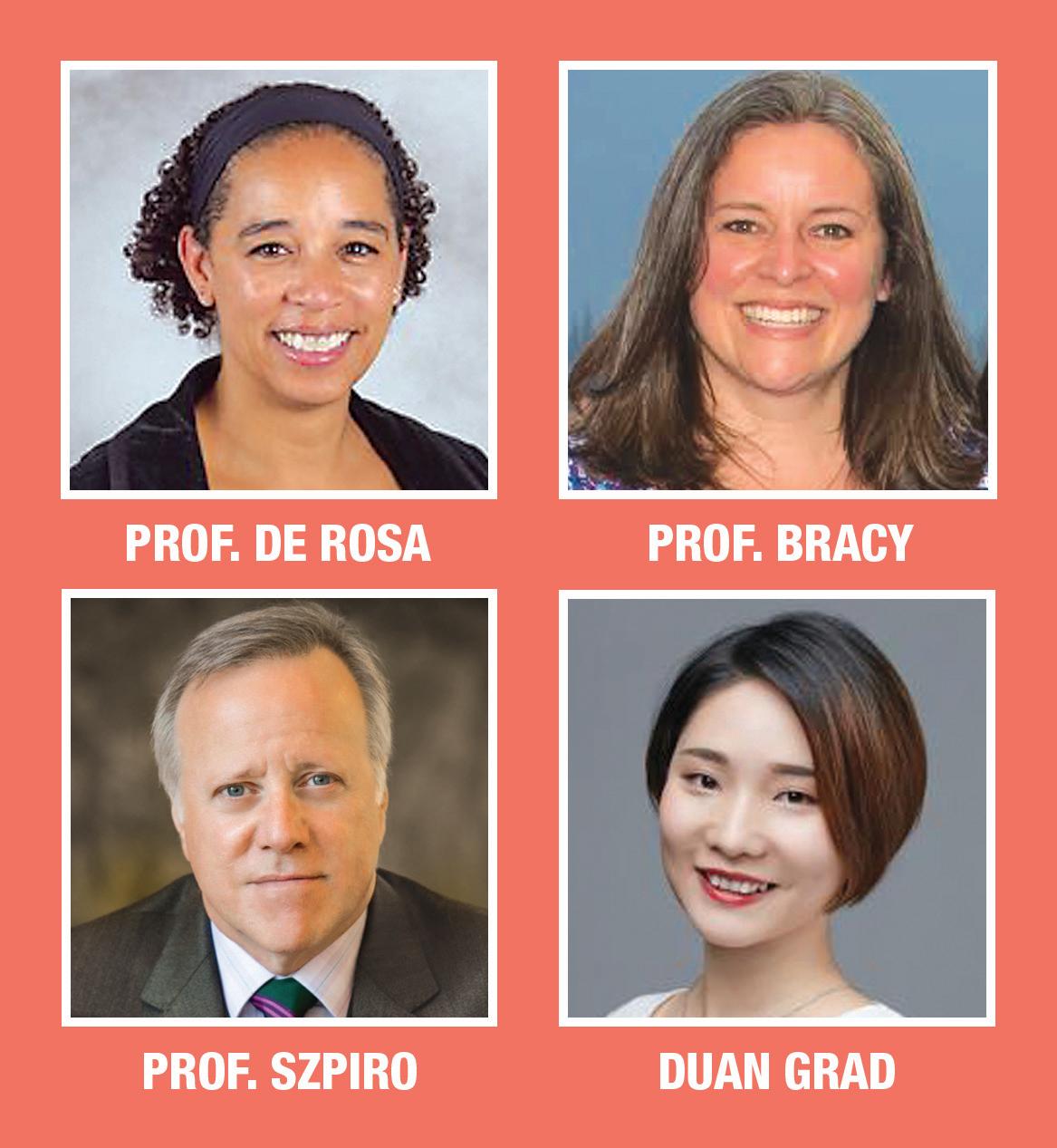
Duan was one of many instructors across campus that scrambled Tuesday afternoon to modify coursework and exams following campus shelter-in-place orders prompted by sightings of a person with a gun in the local community — which came just two days after threats of a bomb on Central Campus shook many students. In the following week, many juggled the needs of students with tight course plans.

According to some faculty, including Prof. Shorna Allred, natural resources, house professor-dean of Alice Cook House, rumors on social media increased panic among students and made responding to threats more difficult.
"In these fast developing situations, you can't always share information as quickly as you would like,” Allred said. “But I think once people know what was happening, it helps them to be able to process and deal with the situation at hand."
Though noting that it can be difficult for Cornell to provide direct instruction immediately, Duan raised concern about the University’s communication –– or lack thereof ––with professors and students following the alerts.
“To be honest, I found the emails from the University to be not super informative,” Duan said. “ I don't think that anything they have sent out was helpful at all.”
In the midst of the shelter-in-place order on Tuesday, there was uncertainty as to which parts of campus were included. Prof. Daniel Szpiro, accounting, was teaching when the Cornell alert was released with just 15 minutes remaining in class. Szpiro decided to let students leave, but
advised them to stay away from North Campus.
“The instructions were talking about North Campus and we were in Phillips Hall,” Szpiro said. “Looking around, there were lots of people still walking around and trying to to move to different places, [so] it seemed appropriate to let people out of the Phillips Hall classroom.”
Reacting to the alerts was further complicated as some faculty were concerned for the well-being of children enrolled in local schools that were also placed on lockdown.
"Faculty lives were impacted, and then we as faculty were also concerned for our students' lives," said Dean of Faculty Prof. Eve De Rosa, psychology. "They were locking down the high school, the middle school, the elementary school and so all of our children were impacted."
Professors with exams slated for Tuesday, including Prof. Anne Bracy, computer science, were forced to reschedule and re-evaluate the structure of their course. Bracy was concerned about the physical and emotional safety of her students and course staff, and told her students that she would reschedule their Tuesday evening exam.
By JIWOOK JUNG Sun Staff Writer
On Nov. 2, Robert Cantelmo grad won the Fifth Ward Common Council seat in the general election. He will be taking office in January.
In office Cantelmo hopes to utilize federal funds to spur economic recovery from the pandemic, address housing needs of community members, double down on Ithaca’s commitment to sustainability and reform community policing.
“I think my training in politics and my research skills are really useful tools for being a public servant,” Cantelmo said. “During my time as a volunteer for the city, I wanted to continue the good work by the community members of Ithaca to steer the city in the right direction.”
“It’s important to me to get feedback on how things are going.”
Cantelmo said housing insecurity is one of the most important issues on his platform. He said high rents, resident displacement and extremely low vacancy rates are issues he plans to address during his term.
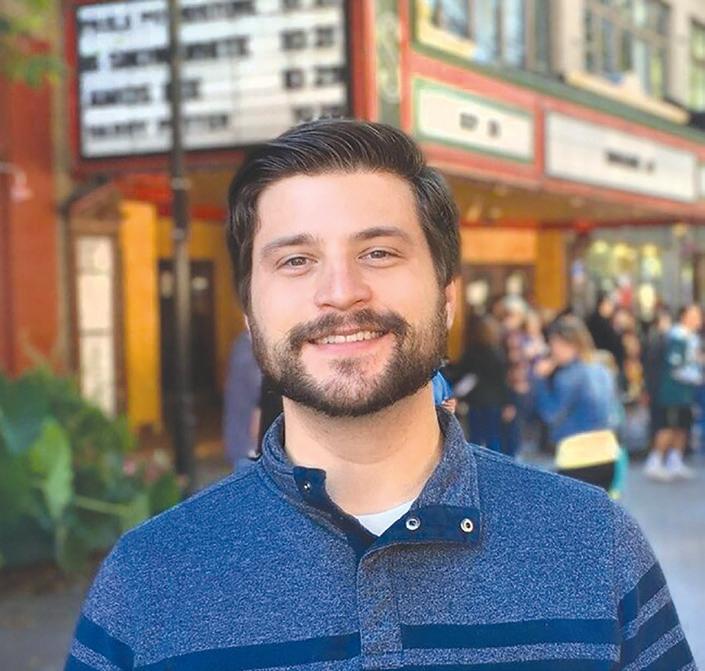
Robert Cantelmo grad
Cantelmo, a Ph.D. student in the government department, will step into his position after serving as a volunteer then the chairman of the Ithaca Public Safety and Information Commission, where he incorporated public feedback and concerns into city legislation.
Cantelmo hopes that his experience studying evidence-based policy will greatly help him serve the communities in the Fifth Ward, which includes parts of North Campus and Stewart Park.
“I’m in favor of promoting increased stocks of housing because it helps to promote improvements to livability and opportunity for our city residents,” Cantelmo said. “I’m also in favor of utilizing rent stabilization legislation to intervene in the on-going housing crisis and high rents.”
Cantelmo also stressed the importance of allocating resources to improve the city’s public safety, focusing on de-escalation and mental health training. He also hopes to talk to his constituents to get feedback on
proposed policies.
“It's important to me to get feedback on how things are going and to remind the public that this is a two way dialogue,” said Cantelmo. “The community should be able to give iterative feedback to their elected representatives to ensure that the changes and the policy outcomes are being met.”
Two of Cantelmo’s endorsements came from the city’s former Chief of Staff Dan Cogan and Alderperson Deb Mohlenhoff (D-5th ward), who Cantelmo will be replacing in the coming year.
Cogan first met Cantelmo when Cantelmo served the city as a volunteer for the Ithaca Public Safety and Information Commission. Cogan was impressed with Cantelmo’s background in research and evidence-based policy making.
“He is able to listen, to synthesize ideas, and to make things happen. Having good people skills is essential, and Robert has them,” Cogan wrote in an email to the Sun. “He will be able to hit the ground running like no one else. I can think of no one more well suited to represent our the district.”
In addition to being a public servant and student, Cantelmo is a husband and a father
of two. Cantelmo’s special attachment for the community comes from Ithaca being a formative city for his family
“Ithaca is where my wife Catherine and I started our family,” Cantelmo said. “We both had our children here in Ithaca and we have been able to watch them slowly grow up. Ithaca, to my family, has been a rewarding and welcoming community.”
Jiwook Jung can be reached at jjung@cornellsun.com.
Monday, November 15, 2021
Labor Economics Workshop: Rasmus Lentz
11:15 a.m. - 12:45 p.m., Ives Hall, 116
Natural Monopoly: Colonial Science, Orders of Access and The East India Company in London, 1757-1833 12:15 p.m., Uris Hall, G08
Tree Story: What We Can Learn About Climate and Forest History from the Rings in Trees
12:20 - 1:20 p.m., Corson/Mudd Hall, Morrison Room
“I’m Invisible Still”: Rethinking Infrastructures With Disability Studies 3:30 - 5 p.m., Physical Sciences Building, 401
Maelstrom: Scandinavian Art and Culture From Viking Age 4:30 p.m., Virtual Event
Contemporary China Initiative: Is China Part of Taiwan? 4:45 - 6:15 p.m., Virtual Event
Forgotten War: The U.S. in Afghanistan Before 2001 4:45 p.m., Virtual Event
Jeffrey Sachs | The American State in a Multipolar World: A New Foreign Policy: Beyond American Exceptionalism 5 - 6 p.m., Virtual Event
Digital Trans Kinship 6 - 7 p.m., Virtual Event
Cafe Society: Price, Bonds and the Music of Tin Pan Alley 7 p.m., Moakley House
Cut out this cool FR EE MOUST ACHE and stick it to your face. You will be the envy of all your friends. Read The Corne¬ Daily Sun every day for more prizes!

Behavioral Economics Workshop: Moses Shayo 11:15 a.m. - 12:45 p.m., Sage Hall, 141
Equilibrium Trade in Automobiles 11:15 a.m. - 12:45 p.m., Virtual Event
Get Your Career On: Strategies for a Thoughtful Career Noon - 1 p.m., OADI, Ste. 200
The Ecology of Collective Behavior 12:20 p.m., Clark Hall, 700
Cultivating Environmental Identity and Care: Insights And Interventions From the Field of Psychology 4 - 5 p.m., Virtual Event
Whistleblowing, Fake News, Polarization and the Battle For Truth: Organizing Social Learning and Institution Enforcement when Information Sources are Limited 4:15 - 5:15 p.m., Virtual Event
Indigenous Movement: Dispossession, Return and Imposed Borders 4:45 - 6:15 p.m., Uris Hall, G08
Equine Seminar Series: What’s It Like to Be a Horse? 6 - 7 p.m., Virtual Event
Cornell Men’s Basketball vs Colgate University 7 p.m., Bartles Hall
Post-Prelim Insomnia Cookies 9:15 p.m., RPCC, 101-105


Men’s basketball | Men’s basketball will play the third game of its season Tuesday, after a 612-day break during the pandemic. Follwing wins over Binghamton and Lafayette, it looks to extend its winning streak against 1-1 Colgate. W W W . C O R N E L L S U N . C O M

By EUNICE NGAI Sun Contributor
On Nov. 4, students celebrated Diwali, the festival of lights. Cornell’s Hindu Student Council organized celebrations, holding in-person gatherings in Anabel Taylor Hall for the first time in over a year.
Throughout the month of November, organizations including Cornell’s Hindu Student Council are holding religious and cultural gatherings for the celebration of the triumph of light over darkness..
Diwali is one of the major festivals celebrated in Hinduism, Jainism, Sikhism and Newar Buddhism. The name is derived from the Sanskrit term dipavali, meaning “row of lights.” It lasts for five days, typically falling in late October or November.
HSC organized two prayer gatherings, known as “poojas,” in the Edwards Room of Anabel Taylor Hall that had a turnout of around 40 to 50 among both undergraduate and graduate students.
“It was nice to see a whole community in one room even if it was just for almost an hour,” said Shivani Singh ’24, a member of HSC’s executive board. For Singh, who studied remotely last year, it was her first time celebrating Diwali away from home.
Gayatri Sriram ’22, another member of HSC’s executive board, enjoyed having the chance to meditate in a shared community setting.
“I think prayer is something that you don’t get the same effect for if you’re just doing it in your room over Zoom. [Doing so in community] can be very rewarding for someone’s mental health,” Sriram said.
Last year, HSC held Diwali gatherings virtually on Zoom. Because people’s voices were not synchronized, the prayer songs and chants were done by one person and others watched from their rooms.
For Singh, this year was the first time she was celebrating the occasion away from home. Both her and Sriram said that celebrating what is normally a family-oriented holiday with the Cornell community made this year unique for them.
Students also held informal gatherings with friends and fam-
ily. On Thursday, Sriram and her friends dressed up in traditional South-Asian attire and had dinner for Diwali together. Singh’s family called her that evening when they were celebrating at home to bring the festivities to her.
Some dining halls on West and North campus also served Indian food on Thursday evening to celebrate the festival, including Indian specialities like samosas, palak paneer and roti.
In addition to attending the pooja hosted by HSC, Kiran Ganga ’24 watched a virtual pooja that her parents hosted, while enjoying Indian sweets and snacks from her dorm room. While she missed celebrating with family and friends at home, lighting fireworks and having homemade food, she appreciated the opportunities Cornell’s South Asian student organizations provided.
“I think celebrating festivals like Deepavali is one way I’ve connected with my South Indian identity despite living in America. I wanted to continue to have that same spirit on campus,” Ganga said.
On Nov. 20, Cornell’s Hindu Student Council will host a larger event aimed for around 200 people, Diwali Dhamaka. It will be held in Duffield Atrium from 6:30
p.m. to 9:30 p.m., and catered food from New Delhi Diamonds in Ithaca Commons will be available. Students who purchase tickets for $5 to attend can also receive henna tattoos, create rangoli art and paint diyas, small clay lamps.
HSC has started preparing for the event since the beginning of the semester. “Our biggest goal is to get the word out there about it, especially because it’s been two years since our last Diwali Dhamaka,” Sriram said. As a senior who has experienced the event in-person before the pandemic, she hopes that the logistics and aesthetics next week will deliver.
HSC members plan to spend the entirety of Saturday decorating Duffield, placing cloths and candles on the tables, setting up stations and music, managing the catering, and putting lights all around the atrium.
“The purpose is to bring together the community and show people what Diwali is, to spread the vibrant culture and ideas of light over darkness,” Singh said.
Jyothsna Bolleddula ’24 contributed reporting.
Eunice Ngai can be reached at cn336@cornell.edu

would reschedule their Tuesday evening exam.
Many faculty, including Prof. Nikole Lewis, astronomy, saw a range of reactions to the week’s events from students, from those who felt relatively unaffected to others who seemed quite distressed.
“In lecture, I did a ‘how are you feeling’ exercise where you put the little dots on and people were still all over the map.” Lewis said. “I think people have experienced it very differently, and that’s something that we have to respect.”
Instructors, too, grappled with their own emotions while restructuring curriculums and communicating with students.
“I thought a small town like Ithaca is the safest place in the U.S.,” Duan said. “Yet, at this frequency of these things happening this past week, I’m not holding on to that belief.”
Many faculty worked to change their course schedules to allow students time to process the week’s events. These accommodations varied from course to course, as faculty balanced content they had planned to teach with student needs.
For some faculty, including Szpiro and Lewis, accommodations included delaying deadlines for assignments to avoid creating a pile-up of work. Faculty who teach courses which are prerequisites for other courses, including Bracy and Prof. Stephen Lee, chemistry, who teaches Chemistry 2070: General Chemistry I, the logistics of adjusting a course schedule were particularly challenging.
“The chemistry that you learn in CHEM 2070 is a very continuous story.” Lee said. “It really is very difficult to try to be as understanding as you can be, and at the same time work in a very, very tight schedule.”
Both Lee and Bracy made course adjustments based on content they did not consider immediately necessary or as important
for preparation for future courses. After consulting with his undergraduate teaching assistants, Lee decided to make post-lecture assignments for the following week optional because that material won’t be tested on until after Thanksgiving Break.
While Bracy kept project deadlines constant, to avoid giving students work over Thanksgiving break, she cancelled her lecture and lab section last week while making the online quiz optional.
During Wednesday’s lecture, she set up karaoke instead of holding a lecture. Despite the logistical challenges, Bracy and other professors who spoke to the Sun thought it was necessary to be accommodating.
“I knew I had to cancel something, it was too much. Students were very stressed, they were exhausted,” Bracy said. “I can’t hold them to the same level of academic work that I give to students under semesters in which crazy things like this don’t happen.”
“I can’t hold them to the same level of academic work.”
Prof. Anne Bracy
Faculty received both general guidance from the University to be aware of the effect of the week’s event on students as well as advice from their specific colleges with suggestions of different strategies for helping students. Some found this helpful because it confirmed that being accommodating would not be seen as being less rigorous.
“One of the things that I found helpful was it was a reminder that the University does feel like making these accommodations is not somehow losing rigor in our coursework or somehow a detriment,” Lewis said.
Tamara Kamis can be reached at tkamis@cornellsun.com.
Kayla Riggs can be reached at kriggs@cornellsun.com.
The Cherry Arts, Inc. is an Ithaca-based organization that strives to provide space for and access to the arts for the Ithaca community. Until now, that space has come in the form of the Cherry Artspace, a venue for “multidisciplinary arts and performance.” In the four years since the Cherry Artspace has been open, performance art has been at the forefront of the organization’s focus, as The Cherry has hosted a variety of productions from around the world, often ones that audiences couldn’t see anywhere else in the country.
While the current facility will remain open and hosting performances, the local organization is working on opening the Ithaca Arthaus, which will feature two new spaces for community arts: the Cherry Gallery, which can serve as a display space for pieces of visual art created by Ithacans, which can be used as a rehearsal space.
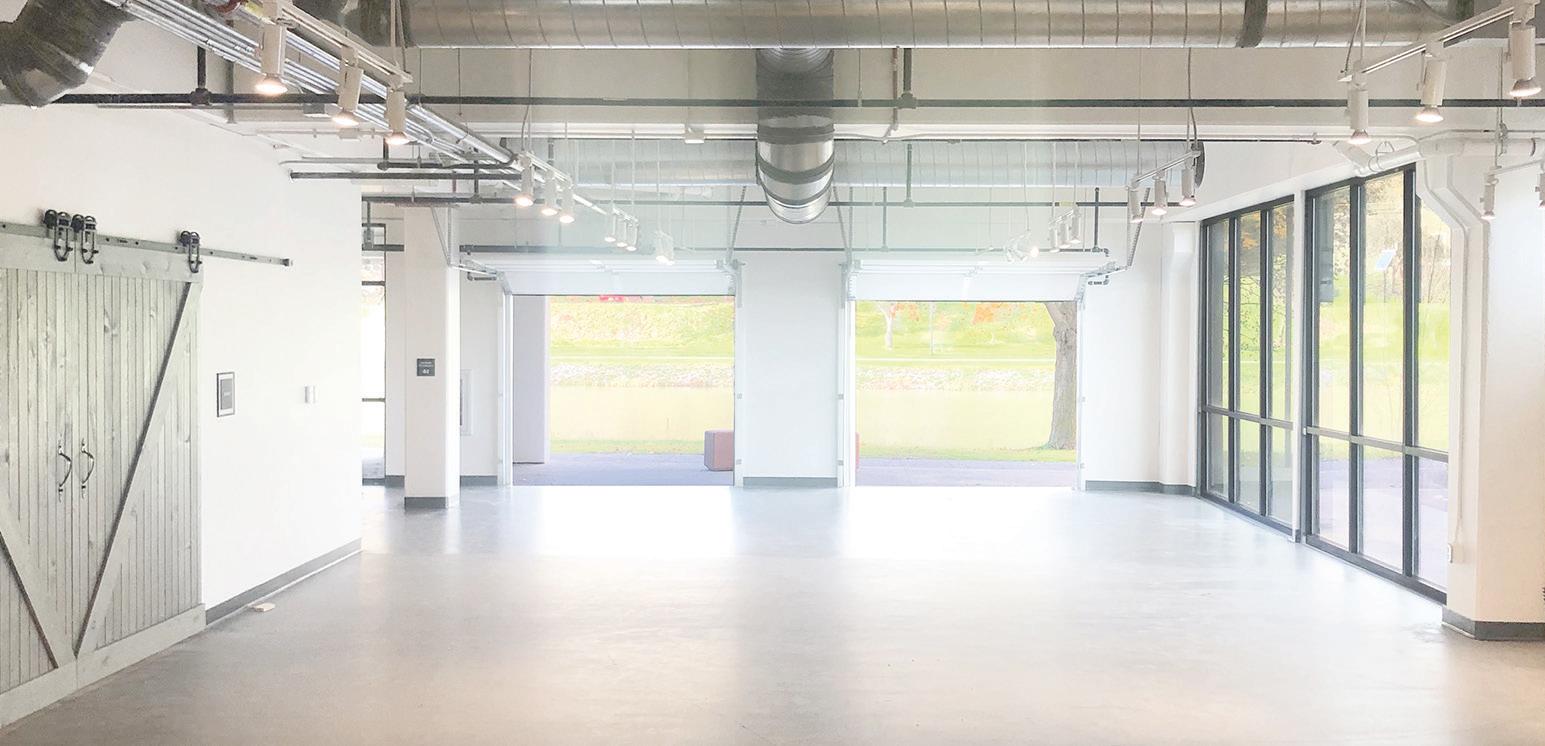
I had the opportunity to visit the new community spaces at the Arthaus and speak with Sam, the Artistic Director, about the upcoming facility. The gallery was certainly spacious, with unique lighting that is well-suited to complement different works of art as
well as ample natural light coming in from the large windows. Camilla Studio also seemed to be a fitting rehearsal space, and both areas had a very open and welcoming vibe about them. Serving the community is certainly the main goal of The Cherry Arts, especially
ed by the arts community.
In addition to the gallery and studio, the Arthaus also includes affordable housing in the form of 124 housing units, 40 of which are dedicated to people ages 18-25 who are coming out of being unhoused. “That’s an
through this new facility. Not only are the Arthaus’s structure and function specified to the community’s needs, but increasing accessibility to the arts is a focus as well. Vecino, the company that developed the Arthaus, hosted charrettes in the Cherry Artspace, allowing Ithacans interested in the arts to provide their input on what types of spaces were most need-
extraordinary connection that this developer, Vecino, has forged between artistic spaces and creation and lower income families,” Sam says, “Like basically as arts makers and presenters we always struggle with perception of elitism, we always struggle to make connections to a wider diversity of audiences. So this to me is a really amazing opportunity to connect the
work directly to a bunch of people who have historically had less access, felt less welcomed, felt less part of an artmaking scene in their communities, so that’s really exciting to us.”
Cornell students looking to engage more with the Ithaca community can certainly do so by attending events hosted by the Cherry Arts. Currently, the Cherry Artspace continues to serve as a venue for theatre productions, and in the future, the Arthaus will offer events that will allow students to explore the community art scene in Ithaca.
“I do think that the average Cornellian would find the performance work of the Cherry Arts to be really stimulating and exciting, and I expect and hope that when we start launching visual arts shows at the gallery, they will be similarly exciting,” Sam mentioned.
From what I’ve seen, the new space looks lovely, and clearly has lots of potential. I’m sure the Ithaca Arthaus will be a welcome addition to the Ithaca arts community, and to the city in general.
Students interested in learning more about events hosted by The Cherry Arts can visit thecherry.org.
Aditi Hukerikar is a junior in the College of Arts and Sciences. She can be reached at ahukerikar@cornellsun.com.
HALEY QIN ARTS STAFF
The scene fades into a black screen. The credits slowly creep their way up. You catch a glimpse of your frozen facial expression between the gaps of the credits. That is it. It is over. How would you ever move on from this point if the show you grew up with is over?
The strong emotions that transport from our screens to our hearts play a pivotal role in our development.
The reason why we get so emotionally attached to a piece of film is because of a combination of techniques used by creators and the psychological processes that inevitably occur in the viewers’ brains.
At the fundamental level, human brains are not equipped to distinguish between real and fictitious relationships. Historically, the idea of “falling in love” with fictional and media characters began when Western ideals combined with Japanese media during the Meiji period (1868-1912). In the early 20th century, both Japan and the U.S. continued to expand their romantic culture alongside the emergence of strong celebrity worship and fan cultures. Media psychologists, Horton and Wohl (1956) had established that the concept of “parasocial relationships” (a psychological relationship between a viewer and the performer) can develop with little to no sense of obligation, effort, or responsibility on the part of
the watcher. Our brains constantly seek understanding and connections in our lives; they cannot help but hold onto the strong emotions felt by the performer, resulting in a psycho-relationship.
When watching a show, viewers seek qualities or characteristics in the show’s characters that are missing from their lives.
Taking these factors and psychological aspects into consider-
jokes as well as my mother did. My delayed laughter followed my mother’s as we both sat mesmerized at the simple, yet captivating show that played in front of us. Viewers who followed the show

Another reason why viewers experience severe attachment to performances is because of the proximity effect. This effect states that a positive correlation occurs between people who spend a lot of time together.
As we sink into binge episodes, we begin an unintentional relationship with the character in front of us. Mainly, the fuel behind this relationship is due to personal unresolved conflicts and thoughts.
ation, here is an iconic show that I believe will make a monumental comeback within the next year. With its first episode premiering in Sept. of 2009, Modern Family began its monumental effect on viewers across the world. It continued on for eleven more successful years. I remember pausing the enjoyment of my cereal as Modern Family first popped up on our TV screen. As a nine-yearold, I did not quite get the clever
since its birth watched the cast grow up along with it. As the show’s family tree grew more complex, the audience’s fascination accelerated as well. Modern Family offers watchers an understanding of a normal, yet unconventional family dynamic. Modern Family has everything watchers want without compromising its quality: humor, heart, likable characters, genuine acting and writing. Since there is such a variety of
characters for viewers to follow, Modern Family inevitably creates a connection in any viewer who finds comfort and happiness in the show. Whether you are a rebellious teenager who is still finding your passion in the world or you are reaching the end of your life and seek to only enjoy the wonders of your years, Modern Family touches the hearts of its devoted viewers.
With the pandemic halting normal activities, people are constantly seeking the comfort of life prior to Covid-19. A 2020 survey from Statista shows that the comedy genre placed second for most in-demand TV genres in the U.S. Viewers seek the comfort of viewing life without the restrictions of a pandemic, leaning towards comedic relief.
In addition to providing comedic relief and a sense of normalcy, Modern Family addresses relevant issues beyond its time. From the episode that highlighted the distracting effects of technology on a family to the representation of the LGBTQ+ community, Modern Family strategically touches on controversial topics through a comedic lens.
As new shows swarm streaming services, Modern Family’s legacy will find its way into the hearts of old and new generations of viewers.
Haley Qin is a freshman in the College of Agriculture and Life Sciences. She can be reached at hq35@cornell.edu.
KACEY LEE SUN CONTRIBUTOR
You look at life differently after you’ve sat in your dorm room alone on a Friday night, calling the suicide prevention hotline because you couldn’t finish a cup of mandarin oranges.
When I was in grade school, mandarin oranges were a luxury meant to be savored: the juice liquid gold and each piece of fruit a jewel. To unzip my pink lunch box and be greeted by D-O-L-E in bright red lettering was to be greeted by the sun. Yet, now eighteen and a college student, I could barely unseal the container — something I could easily and happily do at five years old.
I had a lot going on at the time. (I still do.) Like a dozen crying little babies, each problem I had demanded my full attention at all times, itching to be solved, but I didn’t know where or how to begin. I was exhausted of not knowing, of needing to tend to something I didn’t want in the first place. I was so
Soon after I was assigned to a referral manager, they went on leave.
drained that small tasks felt nearly impossible. That night, I told myself if there was anything I should be able to do, it was eat the tangerines. Seeing them floating like little boats in the shallow plastic cup, uneaten, felt like the ultimate testament to my incapability; if I couldn’t do this, a task a literal child could do, I couldn’t expect myself to be capable enough to get through the problems I faced.
I called the suicide prevention hotline mutliple times throughout the days following. Those calls were the only accompiant to naps that replaced lectures, study sessions, meals, plans with friends. I called the hotline because I wasn’t sure what else I could do. One person told me to be compassionate with myself. Another told me that I can’t control everything around me and that was okay. One of the last times I called, the person told me that life is meant to be hard because people need catalysts for growth. Though what they said sounds painfully cliche, made for cheesy Instagram infographics, they were right. I couldn’t control what was happening, but I could control how I responded.
I started therapy, I go to EARS when I need it, I listen to a lot of Doja Cat, I joined two support groups, I spend a chunk of my measly bi-weekly paycheck on overpriced cappuccinos, I started drawing and playing guitar again, I make plans with my friends whenever I can, I intentionally make time to watch every Blazers game live, I sometimes don’t do my homework, I paint my nails. I know I have a LONG way to go, but I’m proud of the progress I’ve made and how hard I pushed to be here.
While I know that the decision to get help is a personal choice and responsibility, as a student, I would contend that a university should make it easier for their students to access mental health help, not harder.
My second week of being here, many weeks prior to the tangerine night, I went to Cornell Health seeking mental health services. Due to cultural and financial restraints, therapy was not an option for me at home. College was the first time help felt viable. I walked into the process wrongfully thinking that going to a “good,” prestigious university equated to accessing good mental health services. My Sexual Assault Victim Advocate helped me set up a consultation meeting with CAPS. The purpose of this call was to see if I was a good fit for the program. The wait time to have the consultation was two weeks. Based on what I needed therapy for, the CAPS program wasn’t suitable for me, and I was
assigned to a CAPS referral manager who would help me find a therapist unaffiliated with the school. Soon after I was assigned to a referral manager, they went on leave. I was not notified nor reassigned to someone else, leaving me waiting for therapist references that would never come. It took another few weeks for me to be back in communication with CAPS and a few more to find a therapist who was taking clients.
Though I eventually did get help, it was far from easy. On paper, statements like “I started therapy” sound simple and easy, but every decision I made to support my mental health came at a cost. Whenever I go to therapy or my support groups, I feel selfish.
It feels wrong to prioritize yourself in a society that condemns selfishness and praises absolute selflessness. It feels wrong to prioritize yourself in an academic setting that values success–marked by burnout and high prelim scores — above all else. Every hour I spend at therapy is an hour I spend not studying.
Choosing between good grades and good mental health, for most students, doesn’t feel like a choice; the only option is to get good grades. Sometimes it feels like I’m forced to separate myself into two beings, student and person, because caring about yourself is not conducive to the demands of being a student. To compartmentalize yourself, though, is impossible; your mental wellbeing impacts you academically. It feels wrong to prioritize yourself when your university doesn’t prioritize you either. If they don’t, why would you?
This is not a condemnation of the individuals who work at Cornell Health; everyone who I spoke with was incredibly kind. While I understand that every institution has its limits, no student should have to wait weeks for help, no student should be denied help, no student should have to sacrifice or neglect their mental health for good grades. Some of my friends have to wait months to meet with a CAPS counselor, while others are still struggling to get a consultation call.
Further, Cornell University’s response to the bomb threat and gunman last week was callously negligent of students’ lived reality in regards to mental health. Saying that they have resources available at the bottom of an email ignores the fact that there is a tradeoff between pursuing mental health resources and upholding academic standards that are expected of students. To say that mental health is important while denying students time to pursue
College was the first time help felt viable.
help and proper, efficient resources is hypocritical at best.
There is no perfect solution, no one thing Cornell can do. I, and many other students, understand that there are administrative hurdles to jump over in order to implement substantial action. However, that is no excuse to continue as though improvements are not necessary.
To care about oneself is to take action on behalf of oneself, to care about the student body is to take action on behalf of the student body. Cornell’s current disregard for the mental wellbeing of its students is harmful to the point where it can be life threatening. Students are either waiting for help, denied help or unable to access help because of the way our institution and school culture currently function. Regardless of what we are experiencing individually or collectively, there are actions Cornell University can take. The burden should not be on the students to improve a system and culture that was supposedly made to support them.
Kacey Lee is a freshman in the College of Agriculture and Life Sciences. She can be reached at ksl54@cornell.edu
In Optimist, Finneas spans a whole range of emotions. He is reflective, sentimental, scared, sexual and, most of all, authentic.
“A Concert 6 Months From Now” is a highlight of Finneas’s Optimist. The song starts out slow, lamenting a past circular love story. The song starts out with the background noises of a concert Finneas attended in 2011, where he met the song’s mystery lover. Finneas sings, “falling in and out of love and falling in again / we were never any good at being friends.” At the bridge the beats rapidly accelerate, summoning up all the emotion from the poignant love affair. The clashes in the bridge evoke all the complications of the fraught relationship. The song ends on a somber note, with Finneas promising to wait for his ex to “come home.” The song ends as it begins, with Finneas asking the mystery lover, “Can I take you out / To a concert six months from now?”
“The Kids Are All Dying” bemoans the world we are living in. Finneas sings about fake news and being misunderstood. He sings about lying politicians and white privilege. Altogether, Finneas wonders how he is meant to love when myriad problems and hypocrisies exist in the world. At the same time, Finneas points out that he, as a white, upper-classman, benefits from the system he complains
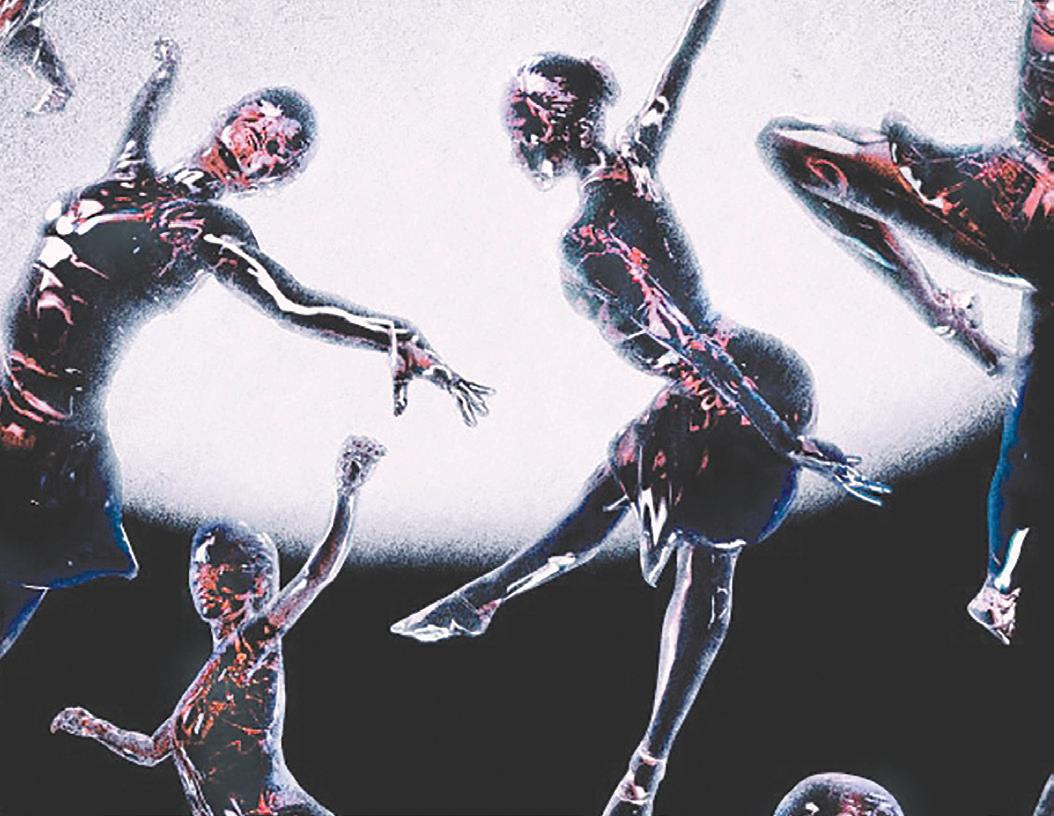
about. The tone of this song is somber, but its authenticity makes it shine. This song is a hard one to listen to as it prompts listeners to acknowledge their own privileges and reflect on the hypocrisies in the world we live in.
“Only a Life Time” is a call to action for listeners. Through “Only a Life Time,” Finneas encourages listeners to seize the day, and stop simply drudging through life. Finneas sings, “don’t waste the time you have / waiting for time to pass.” Further, “Only a Life Time” highlights some of Finneas’s most prescient fears. Finneas sings, “I’m unprepared for my loved ones to be gone,” a sentiment that many of us can relate to. Listeners are asked to reflect on their own fears, decisions and the finite nature of their lifelines. While listening to “Only a Life Time,” I felt an urge to put petty problems aside, and fixate on the more important things in life, like family and happiness.
“Hurt Locker” is less somber and more reflective of a toxic past relationship. Finneas sings about how pain is an inevitable part of life, asking, “what’s a knife without the sharpened edges.” Further, Finneas paints himself as someone addicted to toxicity and pain, comparing his past relationship to war. In the chorus, Finneas sings, “Scotland burned in ‘44 / like I never learned to leave a war / I just keep coming back for more.” Finneas infuses way more energy into “Hurt Locker” than the aforementioned songs. Listening to “Hurt Locker,” listeners feel a sense of reassurance that pain is a ubiquitous experience and a requisite part of life.
“Around My Neck” is daring and cheeky. This is one of the only upbeat songs in the album and the first time that Finneas delves into his sexuality. The accompanying electronic beats keep the song energetic and fire up listeners. Finneas describes a partner being rough with him when he sings, “nothing beats being under you / marks on my back I wonder who.” By keeping his partner anonymous, Finneas keeps the song cheeky and mysterious. “Around My Neck” is the first song in the album that listeners feel like they can really dance to. Finneas’ emotional range engages, assures and enthuses his listeners.
Lena Thakor is a freshman in the College of Arts and Sciences. She can be reached at lt476@cornell.edu.
ANUSHYA ALANDUR ’23
CATHERINE ST. HILAIRE ’22
PRANAV KENGERI ’24
Advertising Manager
ODEYA ROSENBAND ’22 Opinion Editor
JYOTHSNA BOLLEDULA ’24
Editor
TAMARA KAMIS ’22
Editor
CAMERON HAMIDI ’22 App Editor
KRISTEN D’SOUZA ’24
HANNAH ROSENBERG ’23
OMSALAMA AYOUB ’22
PUJA OAK ’24
ANNIE WU ’22
MIHIKA BADJATE ’23
SERENA HUANG ’24
Assistant Business Editor
ANGELA BUNAY ’24
Assistant News Editor
JOHN COLIE ’23
Assistant Arts & Culture Editor
AMELIA CLUTE ’22
Assistant Dining Editor
WILLIAM BODENMAN ’23
Assistant Sports Editor
AARON SNYDER ’23
Assistant Sports Editor
MEGHANA SRIVASTAVA ’23
Compet Manager
KATHRYN STAMM ’22
Working on today’s sun ad layout Annie Wu ’22
opinion desker Catherine St. Hilaire ’22
managing desker Anil Oza ’22
news deskers Jyothsna Bolleddula ’24
Angela Bunay ’24
production desker Dennis Quizhpi ’24
Anya English ’24
layout deskers Kristen D’Souza ’24 Puja Oak ’24
photo desker Julia Nagel ’24
Arts desker E.D. Plowe ’23
sports desker Aaron Snyder ’23
ROSENBERG ’23
KOH ’23
OZA ’22
HEO ’24
CIPPERMAN ’23
UMAR ’23
PLOWE ’23
VELANI ’22
’24
ARANDA ’23
RIGGS ’24
’24
Brenner Beard ‘24 is a sophomore in the College of Arts and Sciences. He can be reached hbb57@cornell.edu. Agree to Disagree runs every other Friday this semester.
Ithink we can all agree that it’s been a wild week. Let’s just say, I’m knocking on every piece of wood I see.
To recap, for all of the readers not currently in Ithaca, this past week at Cornell has played like a B-list Netflix action movie.
On Sunday Nov. 7, Cornellians still sleeping off their Saturday night hangovers were awoken by CUPD robo-calls warning all students to stay away from the Arts Quad. It would be hours before the school confirmed that there was a bomb threat and even more hours before the “All-Clear” was given. Then, with less than a day of peaceof-mind, the CUPD alerts were back to work, warning us of an armed suspect on the run near north campus. What followed played out very similarly to the events of Sunday; an hours-long shelterin-place order, limited information and eventually the “allclear” message, much later.
find out that someone claimed that they had placed a bomb in the same building you were in. These people’s experiences were definitely a good deal more worrisome than mine.
And that was just Sunday. In the case of the manhunt 48 hours later, all of the North Campus residents were holed up in their dorms for hours on end. Most of the first years haven’t even been here for three months and already they’ve had two credible threats to their lives. Welcome to college, I guess?
The
point here is
that, as our community evaluates the startling chain of events of the past week, we must be accommodating to all perspectives.
In short, in the past week it’s started to seem like Cornell and Ithaca have been doing a speed-run of apocalypse bingo or something to that effect. In fact, one of my roommates made the quip, “What’s next, an earthquake on Thursday?” and we all had a good laugh. Jokes aside though, there’s been a lot of abnormality and it’s brought out many different reactions among the members of our community.
If the events of the past week read like a bad action film, I was not the protagonist or even a side character. On Sunday, I was safely at my house off Campus and on Tuesday I was on Central Campus away from Cayuga Heights. From my perspective, the incessant warnings and precautions were more of an inconvenience than they were indicators of a credible threat to the safety of me or my roommates. If anything, it was a convenient excuse not to be productive, something I regret immensely as I flounder in work currently. As we talk about people’s responses, it’s not a “one size fits all” deal. I was lucky that, for me, the threats were mostly out of sight and out of mind. What if that wasn’t the case, though? Imagine being the poor student working in Libe Café when there was an active threat on the Arts Quad trying to figure out whether or not you keep working. Being forced to weigh your job against your safety? Or the overwhelmed engineering students cramming for their prelims in Upson only to
...
The point here is that, as our community evaluates the startling chain of events of the week, we must be accommodating to all perspectives. I’ve heard people say, “To hell with it, nothing happened. The University should still be operating fullspeed ahead”. Then contrastingly, some have lashed out at the school; attacking them for their lack of empathy and calling for major accommodations.
but in the meanwhile,
I’ll
be crossing my fingers and hoping for better.
I fall somewhere between those two camps. Listen, I’m a sane college student. I would appreciate less work, but loudly advocating for canceled prelims and postponed classes would be selfish gamesmanship. At the same time though, my relative comfortability was not a situation shared by every Cornellian and these people’s experiences cannot be invalidated. For their part, The University followed its prerogative to keep us safe to the letter. They handled all the threats with composure and sincerity. On the flip side though, the school’s after-action responses, especially in the aftermath of Sunday’s bomb threat, were subpar. While the administration was quick to cancel prelims and events Tuesday evening, no such statement was made for Monday after the hours of lockdown across campus. President Pollack didn’t even address the student body until after the manhunt. I’m not saying that all classes should have’ve all been canceled, but, at the bare minimum, the University owed it to those most affected by the threats to deliver a proportional and accommodating response, from the top of administration down to the professors and T.A.’s. Hopefully, the University won’t be put to the test like this again anytime soon, but in the meanwhile, I’ll be crossing my fingers and hoping for better.

Fill in the empty cells, one number in each, so that each column, row, and region contains the numbers 1-9 exactly once. Each number in the solution therefore occurs only once in each of the three “directions,” hence the “single numbers” implied by the puzzle’s name. (Rules from wikipedia.org/wiki/ Sudoku)



By WILL BODENMAN Sun Assistant Sports Editor
Having just beaten Union College (3-7-2, 2-3-1 ECAC) 4-1 in its first home conference game on Friday night, No. 13 Cornell sought to continue its undefeated stretch at home against conference and in-state rival Rensselaer Polytechnic Institute.
The Red didn’t disappoint, putting on a dominant showing against a decent Engineers squad to keep its undefeated stretch at Lynah intact. The Red’s offensive onslaught featured five Cornell goals in the first period and a four-goal effort by senior forward Max Andreev en route to an 11-3 victory.
slash at the puck and missed it before then trying to grab the puck, mistakenly knocking it back into his own goal. The score was credited to freshman forward Ondrej Psenicka, who poked the puck into the net as it was about to break the plane.
“I think we finally figured out our offense and how to use our defense effectively in the offensive zone… how to get those rebounds, how to get those dirty goals,” Andreev said. Now down 4-1, the Engineers started to play more physical hockey against the Red, earning themselves multiple penalties in the last four minutes of the frame. RPI forward Shane Sellar earned himself a slashing penalty with 3:06 remaining, giving the Red their first power play opportunity of the night.
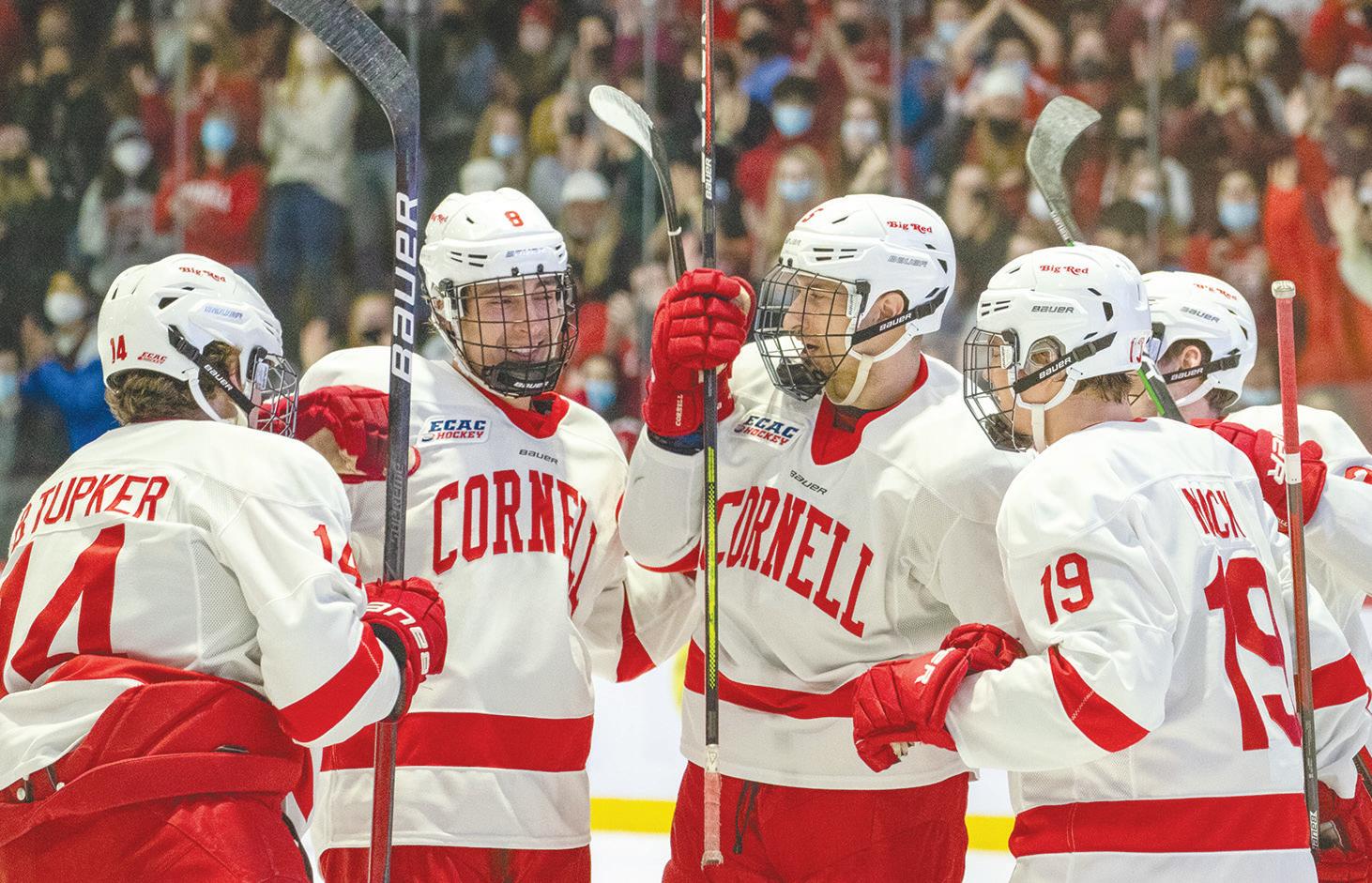
Cornell’s eleven goals marked the Red’s highest offensive output in over forty years and the highest of head coach Mike Schafer ‘86’s 25-year tenure.
“We had all four lines going, we had a contribution from all the guys… we followed the game plan and they just had that energy on the bench,” said head coach Mike Schafer ‘86. “I think that you can get sloppy coming out of your own zone and coming out of the neutral zone or try to be cute and I didn’t think we did that. We kept advancing pucks, we played with poise.
Junior forward Ben Berard, the Red’s (5-1, 3-1) leading goal-scorer headed into the contest, opened the scoring just 4:22 into the first period, taking a pass from freshman forward Justin Ertel and sneaking it past Engineer (5-5-1, 3-3) goaltender Linden Marshall, who was left defenseless on the two-man breakaway the led to the score.
The Engineers responded a minute and a half later when center Rory Herrman pushed the puck past freshman goaltender Joe Howe on an assist by forward Jack Brackett and defenseman Simon Kjellberg.
After a mad scramble behind the Engineers’ goal, junior forward Zach Tupker and junior defenseman Sebastian Dirven shoved the puck out of the huddle in front of the goal, where junior forward Ben Tupker was waiting to knock it in and give the Red back the lead with 10:54 remaining in the first period.
Cornell refused to take its foot off of the gas pedal, delivering another goal and expanding its lead to 3-1 just 49 seconds later. Andreev fired the puck past Marshall from the right circle, with freshman defenseman Hank Kempf and junior forward Matt Stienburg receiving credit for the assist.
The score marked the first goal of the season for Andreev, who scored the fifth-most points for the Red during the shortened 2019-20 season, notching five goals and fifteen assists for a total of 20 points.
“I was really happy for Max, he was really down early in the week. He thought he’d played really well in the first four games but just hadn’t gotten rewarded,” Schafer said. “Matt Stienburg showed great poise to get it to Hank [Kempf] and then Hank found [Andreev] out through the seam… it’s good to see him get rewarded with it.”
The Red continued to push the pace offensively, knocking several hard slap shots at Marshall.
With 4:50 remaining in the period, Andreev had a oneon-one with an RPI defender and fell trying to get past him, sending the puck drifting toward Marshall — who tried to
The Red quickly capitalized 40 seconds into the power play. Captain and senior forward Brenden sent a pass to Stienburg at the goal-line, who sent the puck across to ice where Andreev was waiting at the top of the right circle. Andreev lasered a one-timer slapshot into the top left hand corner of the net, putting the Red up 5-1.
With just under two minutes remaining in the period, RPI defenseman Anthony Baxter was given a penalty for cross-checking. The Red was unable to deliver on the power play, holding its lead at 5-1 going into the second period.
Remarkably, the second period of action was just as exciting as the first. Cornell continued to flash its offensive firepower, building on its already four-score lead over the period.
3:04 into the period, Zach Tupker launched a successful shot from center ice and gave the Red a 6-1 lead. Tupker’s brother Ben, along with freshman forward Sullivan Mack, were credited for the assist.
This goal marked the second of the game in which the Tupker twins connected for the score.
Even though the twins had their forward linemate switched from the Union College game, they managed to find success once again.
“They are twins, they have an innate look for each other on the ice surface,” Schafer said. “I thought their line played really well both nights and it doesn’t seem to matter who we put on the other side with them… they just have that innate chemistry between them and they’re hard to play against.”
Down by five, the Engineers responded with 12:43 remaining in the period. Center captain Ture Linden knocked in his team’s second goal of the game, cutting Cornell’s lead back to four.

second period.
“We just kept our feet on the gas pedal,” Schafer said. “Zach Tupker came out and scored early in the second and as soon as they scored we came right back out and scored again… that’s a sign that we kept our attention into the game and also discipline.”
The onslaught on offense continued eighteen seconds later when Rego scored an unassisted goal from center ice, putting the Red up 8-2.
“I kind of just squared out to the slot and I was just trying to keep it in,” Rego said. “The goalie was busy with Ben Tupker in his face and I found a way in the back of the net.”
Although there was no more scoring for the remainder of the period, Cornell refused to take off the pressure. With under a minute remaining, Stienburg had a breakaway opportunity but couldn’t drive the puck past the goalie. Right before the end of the period, Stienburg had another fantastic opportunity, this time barely missing the goal on a pass after a 3-on-1 chance.
The third period featured more of a back-and-forth scoring affair. A mere 57 seconds into the period, Stienburg scored his first goal of the game on an assist by Andreev and junior defenseman Sam Malinski.
The Engineers countered Stienburg’s score with one of their own. Forward TJ Walsh slotted the puck past Howe for RPI’s third goal of the game. Baxter and forward Justin Addamo were credited for the assist on the score. The Red’s lead stood at 9-3 with 16:59 remaining in the final period.
A little over six minutes later, Engineer defenseman Louie Helsen was flagged for holding, giving the Red its third power play chance of the night. RPI successfully killed the penalty, keeping Cornell’s lead at six.
With 5:26 remaining in the contest, Andreev netted his fourth goal, bringing a pass from Stienburg back well behind the right circle, quickly turning around and sending a floater that arced down into the net right past Marshall. With Andreev’s score, the Red now had double-digit goals, leading RPI 10-3.
Cornell’s clean game came to an end soon after, and the team earned its first penalty of the game on a delay of game faceoff violation with 5:08 remaining. The Red successfully killed the penalty.
The Red once again added another goal with 1:21 remaining in the game. Locke passed the puck to Rego, who knocked in his second score of the game and Cornell’s
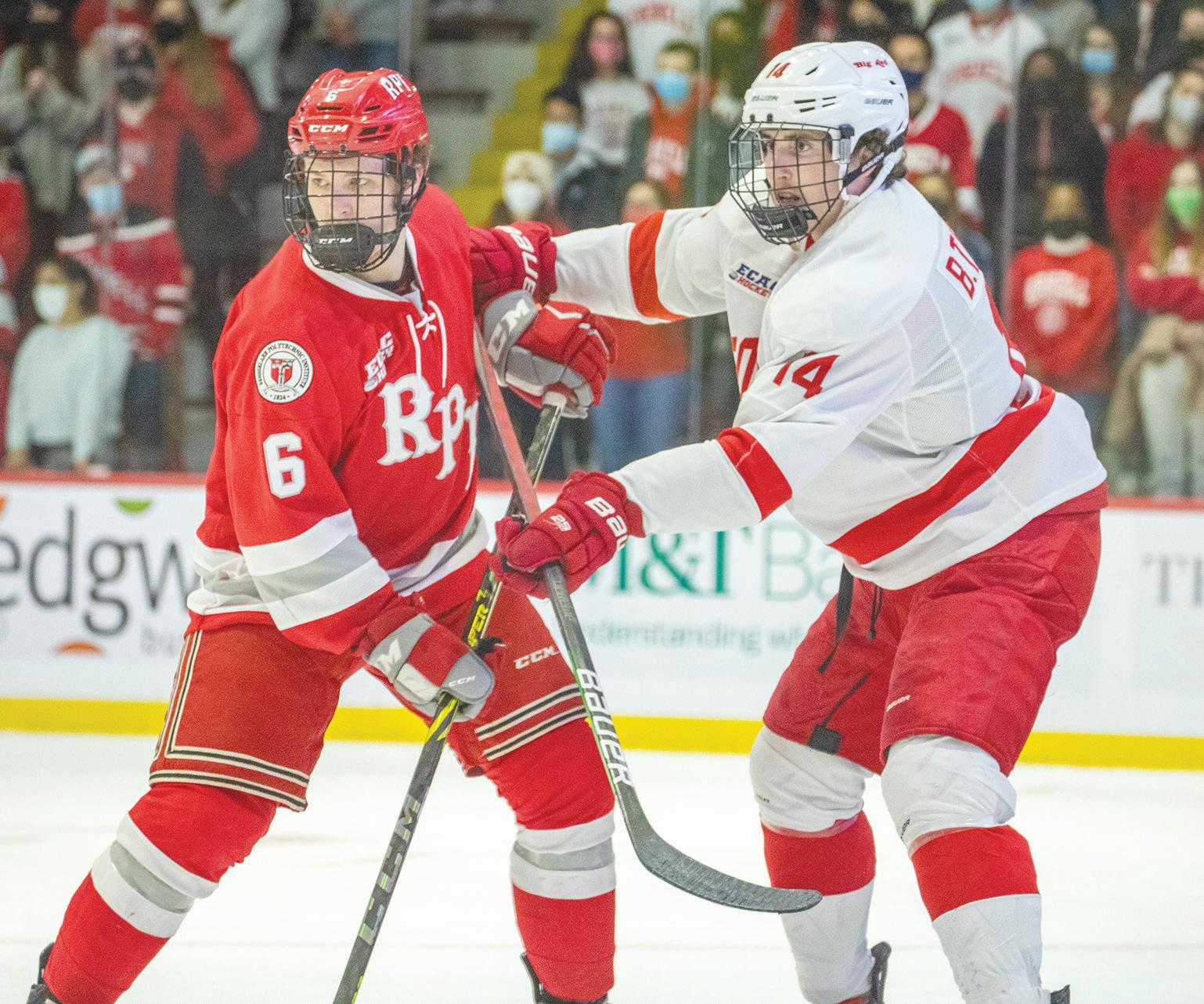
After comebacks from Harvard and Dartmouth last weekend, the Red wasn’t too keen on keeping the game in reach for RPI. One minute after Linden’s goal, Andreev, assisted by junior defenseman Travis Mitchell and sophomore defenseman Tim Rego, sent a shot from center ice past Marshall. This goal gave first-line center Andreev a hat trick on the game.
“[The hattrick] obviously felt amazing in front of the Lynah faithful,” Andreev said. “I couldn’t get much offense going in the first two weekends of the season so it’s definitely an amazing feeling and kind of dropped the weight off my shoulders.”
Andreev’s goal highlighted the resilience of the Red, who refused to let RPI shift the momentum of the game in the

eleventh in total.
Howe continued his flashy play in goal, finishing the contest with 23 total saves for the Red. On the other side, Marshall had 19 total saves for the Engineers on 30 shots on goal from Cornell, equating to a .633 save percentage.
Cornell will look to carry its momentum further into the conference slate as it hosts Brown and Yale next weekend at Lynah Rink.
Will Bodenman can be reached at wbodenman@cornellsun.com.