The Corne¬ Daily Sun


V.P., provost talk mental health, promise ‘transparency’
By SUN STAFF News Department
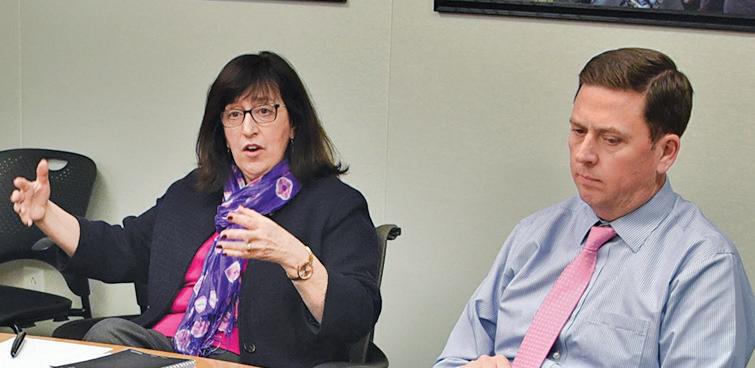
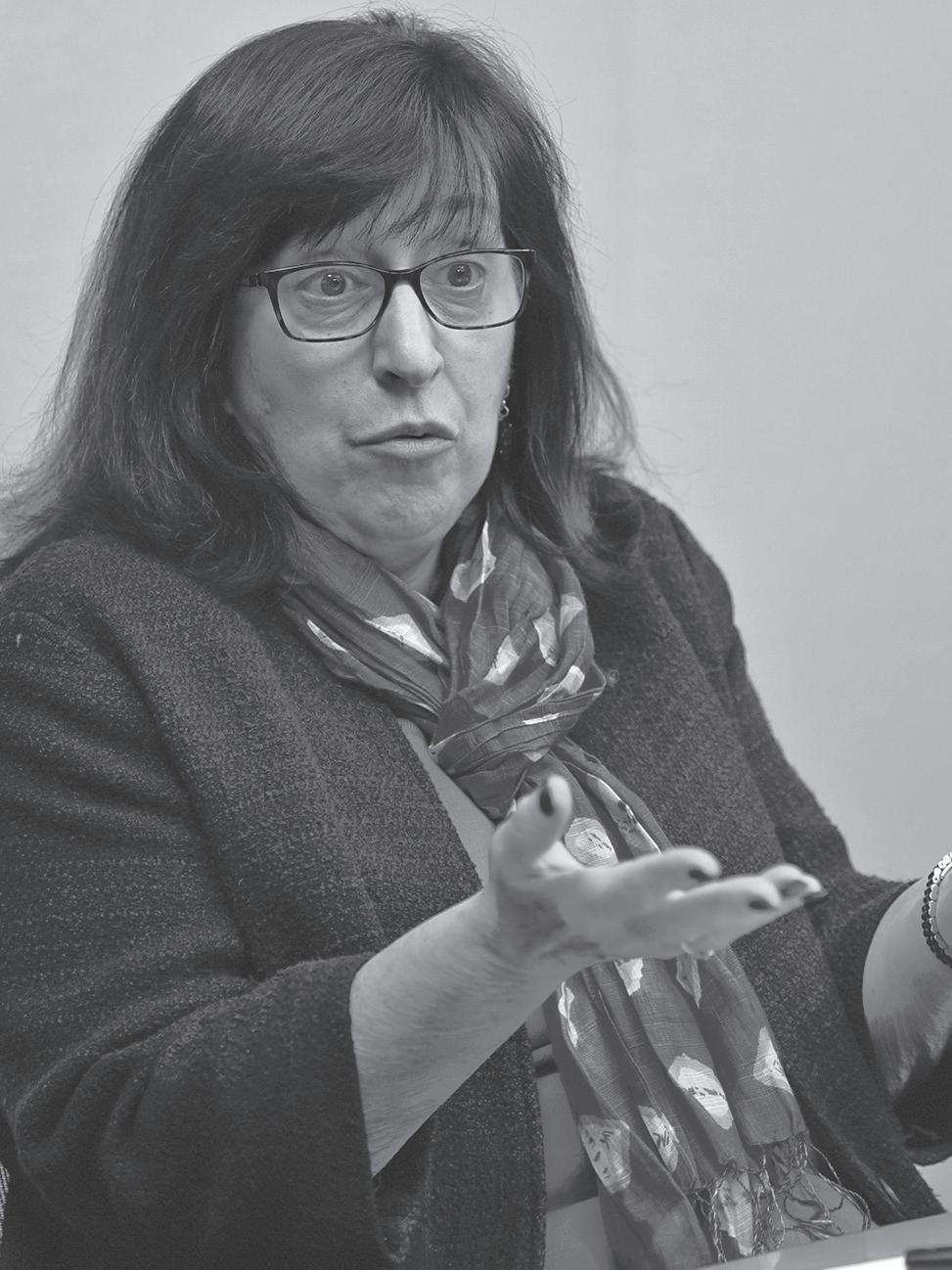
In a semesterly meeting with The Sun, President Martha E. Pollack shared her hopes for on-campus reform, reaffirmed her dedication to “transparency” in the investigation of Antonio Tsialas’s death and promised plans for increasing student socioeconomic diversity as she prepares to wrap up her fifth semester in Cornell’s highest office.
The roundtable interview also involved several other senior members of the administration, including Vice President for Student and Campus Life Ryan Lombardi, Provost Michael Kotlikoff and Vice President of Campus Facilities Rick Burgess.
Over the past year and a half, Pollack’s office has implemented a series of sweeping mental health reforms in response to student and advocate concern. A major one, which went into effect this fall, promises same-day, 25-minute appointments to cut down on long wait times. This has already been a success, Lombardi said.
By AMINA KILPATRICK News Editor
While undergraduate education at Cornell may not be debt-free any time soon, President Pollack is putting increasing socioeconomic diversity at the forefront of her agenda.
This past year, the Cornell community has seen a range of initiatives addressing socioeconomic diversity from administrative driven programs to student-led projects. These include addressing food insecurity, cost of textbooks and general support for students of first generation and low-income backgrounds.
There is a disproportionate representation among income groups at Cornell. A study conducted by the The Equality of Opportunity Project released in 2017 revealed that 10% of the Cornell student body came from the top 1% income quintile, while only 3.8% of the student body came from the bottom 20%, for students born between 1980 and 1991.
“We’re not socioeconomically diverse,” Provost Michael Kotlikoff said in February of the under-
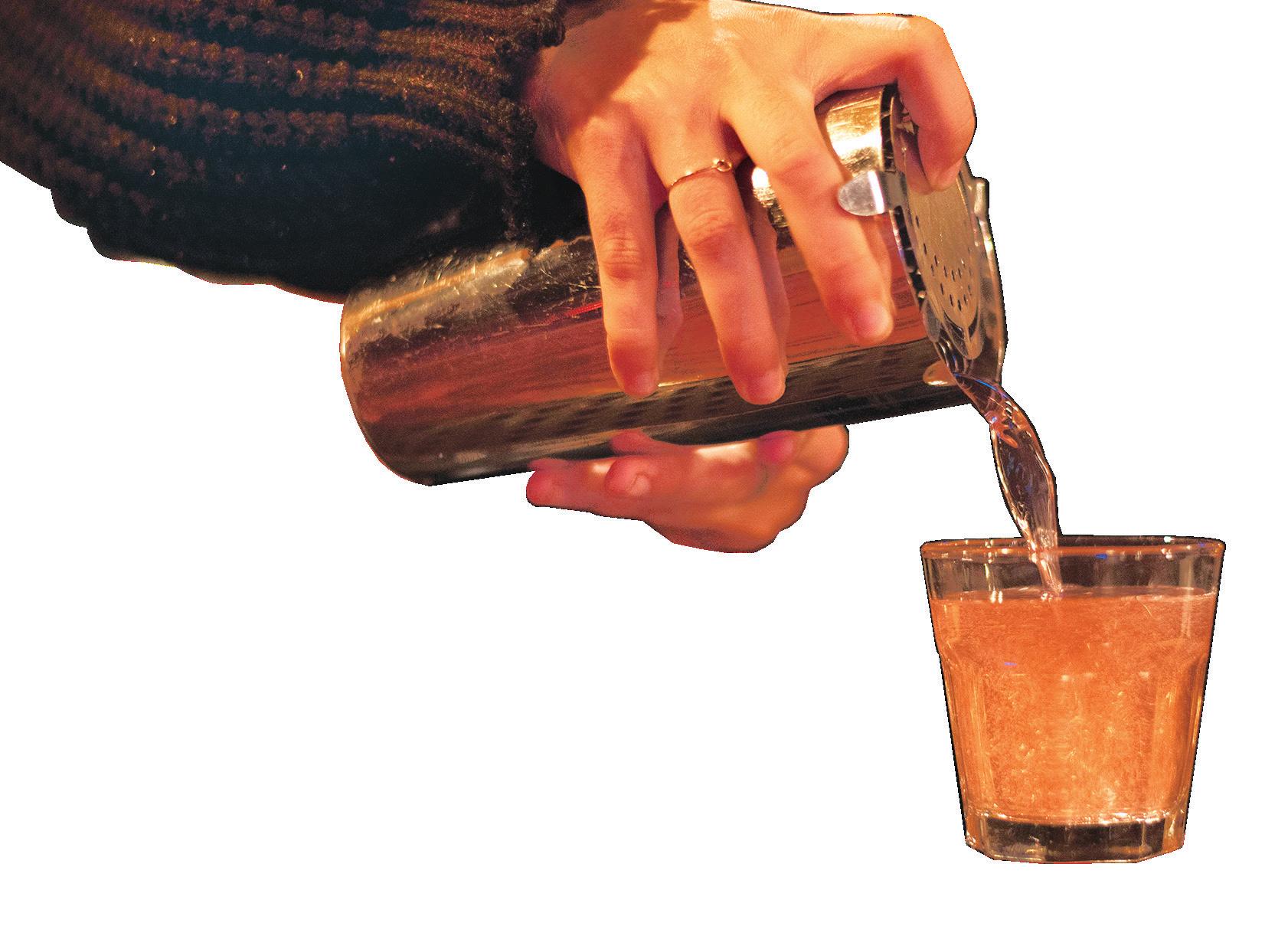
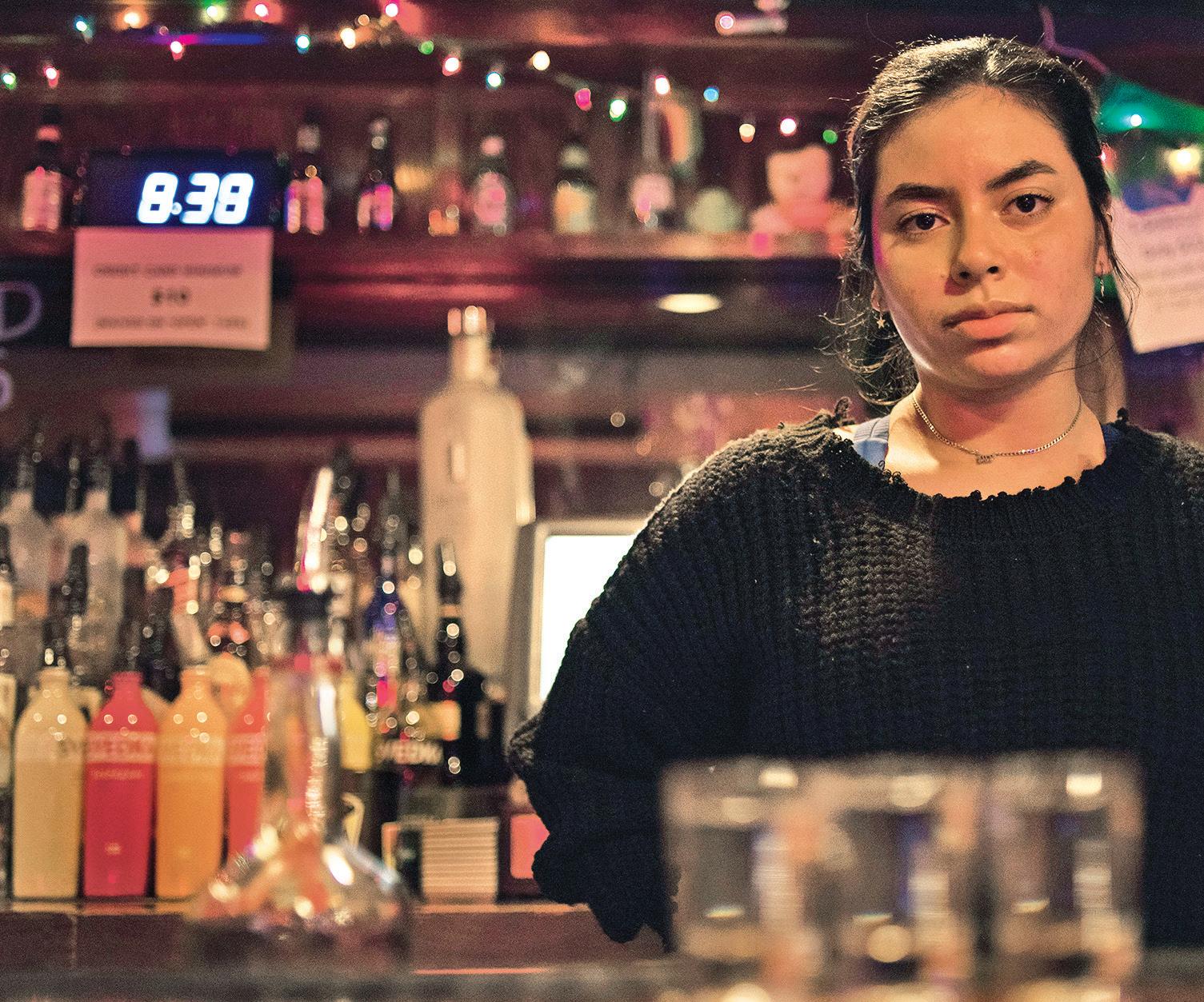
in college is a viable opportunity for many students. Students initially seek out bartending for a variety

cites ‘signifcant misbehavior’
By MARYAM ZAFAR Sun City Writer
Cornell has suspended the Phi Kappa Psi fraternity, which hosted the party that Antonio Tsialas ’23 attended before he was found dead in an Ithaca gorge last month.
President Martha Pollack told The Sun that the fraternity had apparently hosted an unregistered, “dirty rush” party on Oct. 24, meaning the event was held to recruit first-year students outside of the policies within which fraternities are allowed to do so.
Pollack said there was no indication of what led to Tsialas’ death, but that independent of his death, there was “significant misbehavior” at the party, including alcohol served with firstyears present. Cornell suspended the fraternity on Friday, and it will remain suspended until a formal ruling is made on whether it violated Greek life policies, spokesman John Carberry said. The president of Cornell’s Phi Kappa Psi fraternity did not respond to requests for comment.
ing first-semester students in the fall.
Tsialas, who was 18, had eaten dinner with his mother before attending the party, which was held at the fraternity house at 120 Mary Ann Wood Drive. The next day, his mother, who was in town for First-Year Family Weekend, reported him missing when he did not meet her as planned. His body was found in Fall Creek Gorge the next day, Oct. 26.
According to Cornell’s Greek life policies, alcohol and drugs are forbidden from informal recruitment events between Fall and Winter breaks. The policies also prohibit fraternities from recruit-
Since then, Cornell Police have conducted more than 60 interviews and followed more than 100 leads, Pollack said, emphasizing that the investigation is still continuing and that it is not yet clear what caused Tsialas’ death. Police and University officials have said they do not believe the death was the result of foul play. In the three weeks since Tsialas was last seen alive, calls for improved safety at fraternity parties have erupted, and two of the campus boards governing Greek life — the Panhellenic Council and the Interfraternity Council — have responded by suspending some events and calling for further measures to enhance student safety.
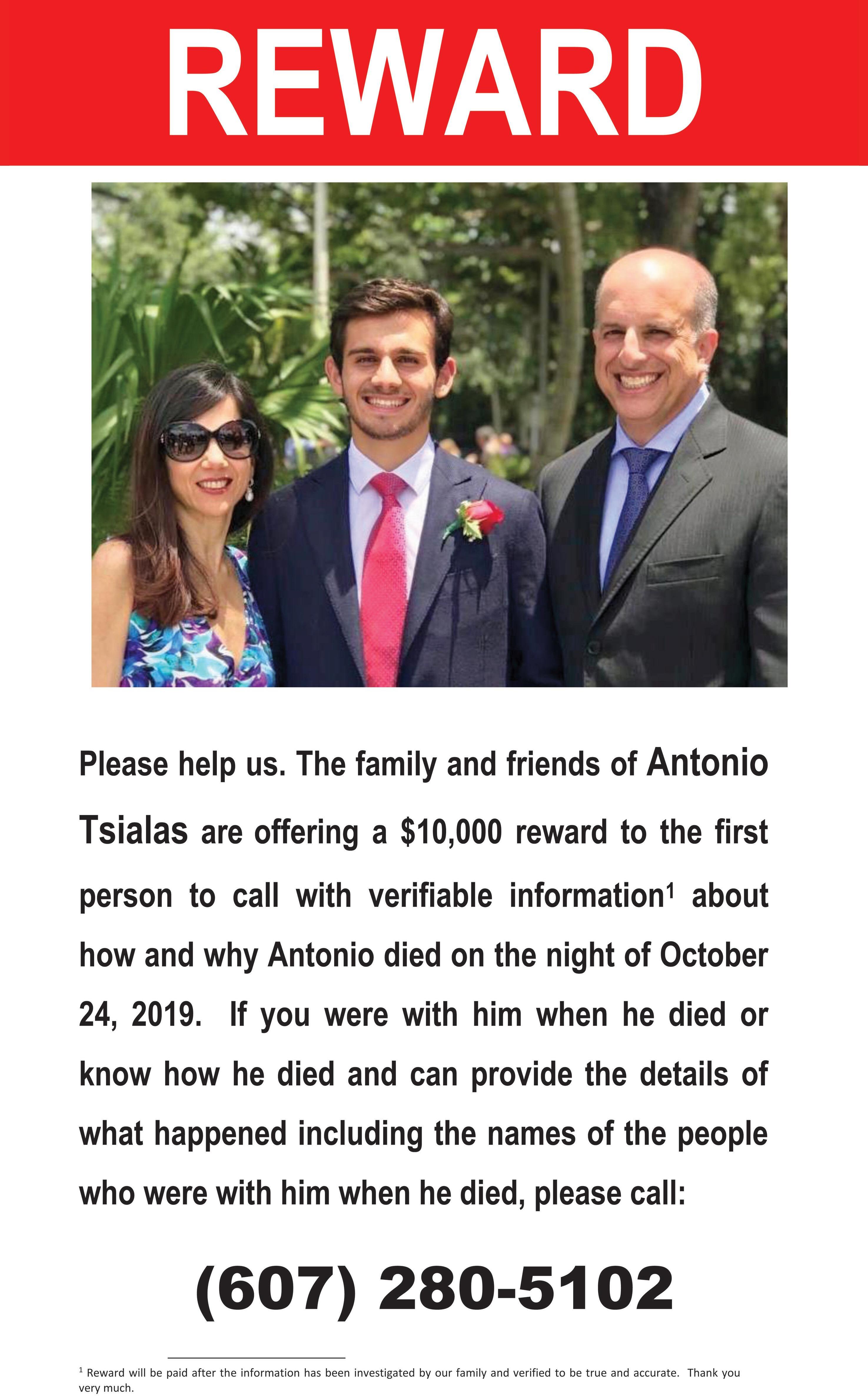
On Wednesday, Tsialas’ parents, Flavia Tomasello and John Tsialas, said they were offering a
of reasons. For Stephanie Neitlich ’21, a bartender at Hideaway, bartending began with a goal to push herself in a more extroverted
“Bartending has definitely helped me break out of my shell,” Neitlich said. “I’m much more confident now in starting conversations with strangers, no matter where I am, which is something I definitely wouldn’t have felt comfortable doing before.” The social abilities and friendliness that bartending requires allows many student bartenders to not only get out of their comfort zones, but to develop other important people skills.
“A big part of bartending is listening to people,” explained Leia Chung ’20, a bartender at Level B.
See BARTENDERS page 5

Classical notions | Prof. Marcus Folch, classics, of Columbia University will be discussing the classic Athenian prison population and why so many of its inmates, such as Socrates and Demosthenes, were drawn from Athen’s elite. The painting seen above is Jacques Louis David’s 1787 painting, “The Death of Socrates.”
Do Birds of a Feather Flock Together? Marxism, Islamism, Ethno-Nationalism and Rebel Alliances 12:15 - 1:30 p.m., G08 Uris Hall
How to Be Sort of Happy in Law School 4 - 5:30 p.m., Saperstein Student Lounge, Myron Taylor Hall
A Maussian Bargain: Accumulation by Gift in Digital Capitalism (Marion Fourcade, U.C. Berkeley): CCSS Algorithms & Inequality Series 4:30 p.m., 120 Phsyical Sciences Building
Struggling to Save America’s Cities in the Suburban Age: Urban Renewal Reconsidered 4:30 - 6 p.m., Rhodes-Rawlings Aud., Klarman Hall
Black Women’s 2020: A Conversation With Barbara Smith 4:30 p.m., Multipurpose Room, Africana Studies and Research Center
The Philip Freund Prize for Creative Writing Alumni Reading by Dorothy Chan, Nicholas Friedman, Ruth Joffre, & Daniel Peña 4:30 - 6:30 p.m., 132 Goldwin Smith Hall

Explore the Work of Latinx students at Cornell! Noon, 429 Rockefeller Hall
Feel Good Friday Noon - 1 p.m., 414 Willard Straight Hall
Eating Tomorrow: The Battle for the Future of Food, Tim Wise, Global Development and Environment Inst. 3 - 4:30 p.m., B73 Warren Hall
CCCC: Classical Chinese Colloquium “Humans as Drugs” 3:30 - 5:30 p.m., 374 Rockefeller Hall
CSES Colloquium Series “Do Socially Responsible Firms Pay Taxes? CSR and Effective Tax Rates” 3:30 - 5 p.m., G08 Uris Hall
Professional Directions With Filmmaker Andrea Berloff ’95 4-5 p.m., Film Forum, Schwartz Performing Arts Center
A Reflection on the 1993 Day Hall Takeover! 4:15 - 6:30 p.m., Day Hall
Marcus Folch Lecture: The Prison in Classical Athens 4:30 p.m., G22 Goldwin Smith Hall
Valeria Luiselli, “Migrant Stories in the American Border Crisis” 4:30 p.m., Rhodes-Rawlings Auditorium, Klarman Hall

By CAIT WYMAN Sun Staff Writer
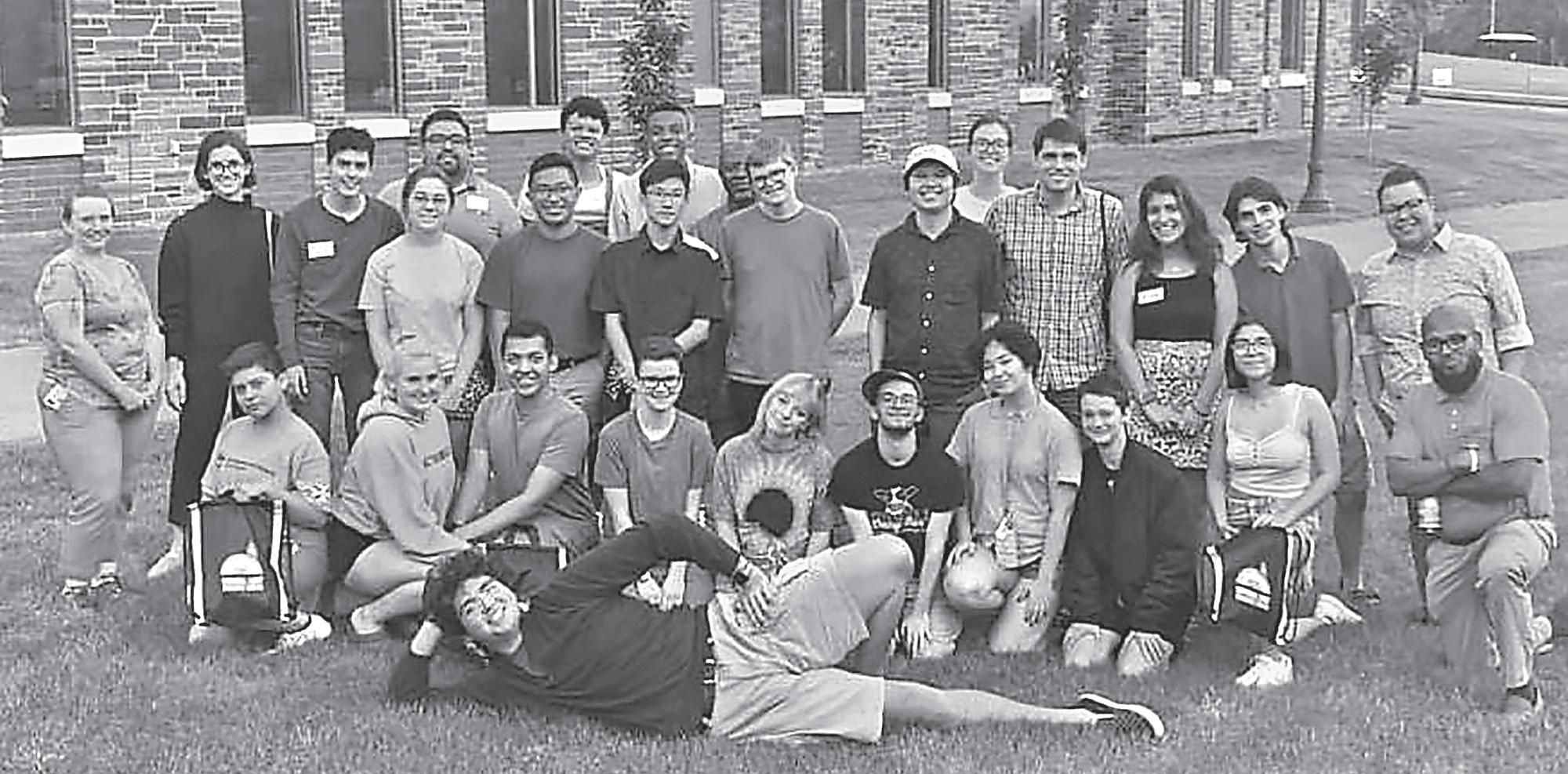
Cornell’s LGBTQ+ program house, the Loving House, arrived on campus this semester — but with an extra $5,000 for resources, literature, decorations, kitchen
“I hope that Loving House can become a space that is more unique from other dorms.”
Laura Nawrocki ’23
appliances and furniture, members of the Loving House and residence staff hope they can make it seem like more of a home.
In order to achieve that goal, Loving House is actively crowdfunding in order to buy new furnishings, like bean bags and couches; appliances like a printer; and books about LGBTQ+ topics. The money would also go towards special programming such as LGBTQ+ History Trivia with Planned Parenthood, field trips to Niagara Falls and a “Dine and Dialogue” series.
The Loving House does source
money from a program house fee, but it is one of the lowest on campus. With only 30 residents and a $30 fee, this raises less money than other program houses on campus, whose fees are as high as $100 per resident with many more residents.
In addition, Mews Residence Hall Director Taylor Bouraad said that long standing program houses often receive perks and donations from alumni and the University, which the Loving House, in its first year, does not.
“I hope that Loving House can become a space that is more unique from other dorms. Right now, the walls and furniture are very similar to the rest of Mews Hall, and I hope that we can use the money to turn it into something that shows … our strong sense of community,” said current resident Laura Nawrocki ’23.
Located in Mews Hall on North Campus, the Loving House was first launched this year after years of advocacy from vocal LGBTQ leaders on campus.
As of publication, the Loving House fundraiser has raised a little over $2,000, almost halfway to its goal. So far, its top supporter has been the Cornell University Gay and Lesbian Alumni Association, according to Bouraad.
“Having a budget to furnish the space and to do programming will help in its mission. As a senior, the build-up to Loving House’s opening has been a large part of my college experience,” said Ian Wallace ’20.
Now, the Loving House “is a space of inclusivity that aims to provide students with a comfortable living environment to connect and bond over shared experiences through community-building activities and events,” according to the crowdfunding page.
“Part of the organizing process was bounce ideas off of each other on what things Loving House needs as a space, how we want to make the request to people and how we want to show our appreciation,” said Wallace.
Bouraad explained that student residents have been hard at work on creating a wishlist and reaching out to potential donors. Students also helped organize the filming and creation of promotional video for the campaign.
Those who would like to donate can visit the crowdfunding website until December 4, 2019.
Cait Wyman can be reached at cwyman@cornellsun.com.
By MADELINE ROSENBERG Sun Staff Writer
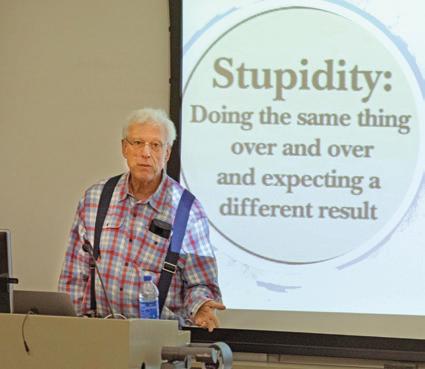
What do climate change and college admissions have in common? Intelligence, according to Prof. Robert Sternberg. At a Tuesday evening lecture, the human development professor argued that flawed Western notions of intelligence are responsible for ingrained social structures and world destruction.
Sternberg critiqued the emphasis that “the West” places on seemingly objective measures of intelligence, such as I.Q.
He said that although I.Q .can predict a person’s success, its emphasis in the West, along with other standardized measures of intelligence, is “taking down humanity.”
“It takes intelligence — as we define it in the West — to create nuclear bombs, manufacture poisonous chemicals, create then misuse antibiotics, build polluting factories and do
all the things that are harming adults and children,” Sternberg told the Warren Hall audience, using cartoons and images as springboards for his ideas.
“People couldn’t have done that if they weren’t really smart,” he continued. “The irony is that their I.Q.s are being used for stupid ends, and worse, humanity keeps doing the same things over and over again.”
“Humanity keeps doing the same things over and over again.”
Robert Sternberg
According to Sternberg, “destructive” technology — including the industrial world’s carbon emissions responsible for the climate crisis — exists

By SAMANTHA STERN Sun Staff Writer
On Tuesday, Cornellians in Martha Van Rensselaer Hall literally walked all over New York State — shedding their shoes to explore the 15-by-20 foot fabric map that covered the floor of the atrium. The giant map was only the beginning of Cornell Mapping Society’s celebration of the 20th International Geographic Information Systems Day.
From using Google Maps to find a restaurant to studying the effects of poverty in the boroughs of New York City, mapping allows regular people and scientists to understand and influence the world around us— and many Cornell researchers are taking advantage of it.
To mark the 20th International Geographic Information Systems Day, Cornell’s Mapping Society hosted a slew of events to celebrate.
“GIS Day is a chance for people to share with the public but also a chance to share with your professional colleagues that you wouldn’t otherwise have the chance to,” Prof. Diana Sinton, soil and crop sciences, MSC’s faculty advisor, said.
The day kicked off with people tip-toeing across New York’s 62 counties and hundreds of cities and towns on a map created by National Geographic. Explorers had the chance to participate in a scavenger hunt — designed by Susan Hoskins, senior extension associate in soil and crop sciences — using stamps and other markers to identify different landmarks.
The goal of the display was to have people leave with a better appreciation for the importance of map accuracy, detail and clarity.
“It’s a great way for people to explore some of the tools of geography and have some fun,” Hoskins said.

The day concluded with a festive “Mappy Hour” at the Big Red Barn.
Next in the lineup of events, researchers had the opportunity to give quick “lightning” presentations on the integration of mapping technology in their work. Ranging from conversations on land use options for coastal adaptation to mycotoxins in farming systems, the diverse group of scholars all connected through their work using GIS.
According to its website, MSC describes its mission as “to grant students opportunities to engage in mapping and related geospatial activities that address challenges at local, national and global scales.”
For MSC President James Zhang ’21, mapping is a way to provide data to address social, economic and political issues around the world.
“Spatial research in particular has a lot of potential for social good and finding novel things that hopefully might lead to more informed decision-making,” Zhang said. “You have to be able to take action and work with whatever community, political power, that can implement a vision for good.”
Zhang learned the power of mapping after a summer internship for the Metropolitan Transportation Authority, where he used spatial data to analyze
Declares commitment to ‘transparency’ at all levels
INTERVIEW
Continued from page 1
“The big thing we heard from students was access, access, access,” Lombardi said — students wanted to be able to “get in, and get in quickly.” This was in response to a system in which students reported routinely waiting weeks or months for their first appointment.
Now, the average wait time is 22 hours, according to Lombardi. After a 25-minute “problem-solving visit,” about a third of students don’t feel the need to schedule another appointment, he said. Another third continue the 25-minute visits, while the last third switch to the traditional 50-minute length.
and supporting more socioeconomically diverse classes as a top priority. Initiatives to that effect include flipped classrooms to bridge experience gaps and food insecurity programs, including the freshly-opened food bank on campus.
In the wake of Weill Cornell’s new debt-free education initiative, Pollack said her “first focus” was reducing the financial burden on undergraduates.
Pollack also emphasized “transparency,” both in governance and in sharing information regarding a recent death that rocked the campus community.
DIVERSITY
Continued from page 1
graduate study body, 55 percent of whom do not receive Cornell grant aid. “We don’t look like the rest of the country and that’s why we’re trying to do whatever we can to try and improve that socioeconomic balance.”
Most recently, 45% of the class of 2023 has qualified for financial aid through demonstrated financial need.
President Martha Pollack confirmed the University’s ongoing commitment to increasing diversity within the undergraduate population, and said that the administration is seeking to address it on two fronts: actively recruiting those students and managing the cost that it will take to support them. There currently have been three “multi-million dollar” gifts given to this cause recently.
“When I'm on the road, it is always one of the first things I talk about, how important it is that we live up to our “any person” ethos, and how we need money for that,” Pollack said.
In addition to the institutional goal of addressing socioeconomic diversity, Cornell recently hired Jonathan Burdick to serve as the vice provost for enrollment, a new position he assumed in August. Using his background in admissions, he is overseeing the plan to increase socioeconomic diversity. Cornell hopes to announce new initiatives by the end of the academic year, Pollack said.
In addition to addressing the affordability of Cornell, another priority area is supporting a socioeconomically diverse student background. This includes looking at food insecurity, academic support and mentoring programs, which are run by Shakima Clency, Associate Dean and Director of First-Generation & LowIncome Student Support.
“So we are looking both for support in student life and support in the classroom. We want — I want — every single student to thrive,” Pollack said.
Ryan Lombardi, vice president for student and campus life, said that the meal swipe donation program that Cornell began last semester, Swipe Out Hunger, currently has 3,000 swipes for those in need to use. The university sponsored food pantry that opened in collaboration
with the Food Bank of the Southern Tier has been “well-received,” according to Lombardi.
Support in the classroom is another facet of ensuring diverse classes are given the resources they need. Flipped classrooms, a technique that involves active learning as opposed to solely delivering lectures, can be a solution. The preliminary data, published by discipline-based educational researchers, has shown that flipped classrooms help educational gains and build confidence in the classroom, according to Pollack.
“What we’ve seen is that in the classes where we've flipped the classroom, not only does everyone do better, but we close the performance gap between students of color, students from less resourceful high schools, you know, we used to see a performance gap,” Pollack said.
Recently, Cornell announced that Weill Cornell Medical College will be debt-free beginning with the class of 2023, a move that involved multiple contributions of tens of millions of dollars from donors, Provost Michael I. Kotlikoff said.
The small size of the medical school also contributed to the feasibility of the measure. The Class of 2023 for Weill had 106 students, while 3,218 undergraduate students enrolled for the Class of 2023.
When asked about reducing the loan burden of students in other areas of Cornell, Pollack said there is a trade-off to consider in increasing socioeconomic diversity and decreasing loans.
“You know, for every marginal dollar, we have to decide which of those two goals [to] put it to,” Pollack said. “And that's what we're trying to figure out right now.”
The decision to move towards a debtfree medical college experience was considered because of the high cost of medical degrees and the range of salaries in different medical fields. Reducing debt burden post-college would allow people to take the path they wanted, according to Pollack.
Although reducing financial burden of the undergraduate Cornell education is Pollack’s “first focus,” she also wants to address the rising costs of the College of Veterinary Medicine, a field where post-graduate salaries are flagging.
Amina Kilpatrick can be reached at akilpatrick@cornellsun.com.
$10,000 reward ofered, CUPD continues search
“We need to provide a safe environment and we’re not doing that.”
Martha Pollack
Referrals to off-campus mental healthcare providers have also decreased from 17 percent to 3 percent, Lombardi said.
After the nation was rocked by a college admissions scandal during Pollack’s second year in office, Cornell quickly completed a “careful scan” of its admitted students, Pollack said — no inconsistencies were found among the admissions of all “incoming and second year” athletes.
The University has since updated its sports admission practices: coaches will now have to provide “quantitative” data showing the athlete’s sports prowess, rather than just a “qualitative” letter of assessment.
In addition to those “tightened up” screening measures, Pollack and Lombardi said they see admitting
VP Lombardi and Pollack reaffirmed their support of the Interfraternity and Panhellenic Council’s internal moves to temper Greek life events; Pollack said that she was committed to “transparency” on all levels of the University’s involvement. On Wednesday, Cornell spokesperson John Carberry confirmed that Cornell suspended Phi Kappa Psi — the fraternity whose house was the last place Tsialas was seen alive — on Nov. 8.
“We need to provide a safe environment and we’re not doing that,” Pollack said.
Administrators also touched on ongoing sustainability initiatives through various offices across campus, including continued striving to get every building on campus LEED certified. This, Burgess said, would assist Ithaca in meeting their Green New Deal goals.
Provost Kotlikoff said that “we really haven't been sitting still” on sustainability issues, and reaffirmed the intent to be carbon-neutral by 2035. Pollack said that the board of trustees was not planning to reconsider divestment from fossil fuels at this time.
Te news department can be reached at news-editor@cornellsun.com.
Continued from page 1
new, verifiable tip and set up a phone line that takes calls and texts.
“What started as a beautiful weekend with our son Antonio Tsialas turned into our worst nightmare,” Tomasello said. “We are very troubled by the lack of information about what took place at the Phi Kappa Psi fraternity party he attended the night he died.”
Cornell’s fraternities on Friday overwhelmingly voted in favor of canceling nearly all of their regulated social events until January, save for three events that will be more heavily regulated. All but two of the 31 voting fraternities — Alpha Delta Phi and Phi Kappa Psi — voted for the ban. The president of Alpha Delta Phi said fraternities and Cornell should focus on stopping unregistered events instead. The fraternities had also voted to suspend all events on the weekend after Tsialas was found.
Both Pollack and Ryan Lombardi, the vice president for student and campus life, praised the Greek Life groups for their actions and said there would be “severe” University consequences if fraternities or
sororities violated their commitments.
But some members of Greek Life have signaled opposition to the measures. Maya Cutforth ’20, the president of the Panhellenic Council, last month proposed a suspension of all mixers — social events between fraternities and sororities — but it lacked unanimous support from the 13 active, on-campus sororities and failed to pass. The group did pass a measure creating a committee that would seek to improve the safety of Greek Life events.
Pollack and Lombardi said they were looking into further reforms, including changes to the spring rush process.
“Everything is on the table,” Pollack said.
The hotline created by Tsialas’ parents can be used by calling or texting 607-2805102. University officials also encouraged anyone with information to contact Cornell Police at 607-255-1111, cupinv@cornell.edu or by using the Silent Witness Program, an online form that allows respondents to report information anonymously.
Maryam Zafar can be reached at mzafar@cornellsun.com.
BARTENDERS
Continued from page 1
“A lot of people come in, especially older locals who sometimes come alone on a slow weeknight, and they’ll just tell me a lot of their stories. Sometimes they’ll get really personal. I think that it’s because it’s easier to open up to strangers who have no idea who you are.”
While students enjoy the skills that bartending allows them to develop, all of them had one common need coming into it: to make some extra cash.
“Most on-campus jobs pay minimum wage, which is a stark contrast to the extremely high costs of housing and food — as well as all of the other inevitable expenses that come with being a Cornell student," said Weintraub. “The fact that most on campus jobs pay $11.10/hour when a single meal swipe is $16.45 (for dinner) is a very sad and unfortunate reality. Choosing a tipped job is, of course, a gamble but, for the most part, ends up being worth my time.”
As a part of their job, bartenders do a whole host of tasks starting at around 9 p.m., and sometimes don’t leave until the wee hours of the morning at 3 or 4 a.m.
“The bar is usually slow until about 11,” said Manya Weintraub ’21, a bartender at Loco Cantina. “Some people come in for happy hour or if there is an important sports game happening, but generally it won’t get busy until later. The bartenders get other things done, like restock [drinks], cut up fruit, and tidy up [the bar] to prepare for the busy time.”
Once the bar begins to get busy, bartenders decide on how to tackle the crowd.
“[The other bartenders and I] kind of divide up the bar,” said Chung. “For example, I’ll take the left side of the bar, and someone else will
take the right and the middle. Whoever comes into our section will be rung up by us and served by us. We try not to go into other people’s sessions so that it runs…smoothly.”
The hectic environment and usually inebriated patrons mean that bartenders have to constantly be on their toes.
“I think that there’s a stigma that bartending is an easy job when it’s actually pretty hard,” said Neitlich. “It’s much more than pouring liquid into a cup. Sometimes I'll be taking five different drink orders at a time while also running a tab and ringing someone’s card up.”
Of course, working in a bar means that student bartenders are always surrounded by people at various levels of inebriated. This can sometimes lead to unruly behavior.
“One night, this girl thought that her friend was getting a little too drunk so she ordered him a glass of water,” said Neitlich. “He got really mad that it wasn’t alcohol and threw the entire glass of ice water all over me. I was literally drenched in ice water, and my boss kicked the guy out, of course. But working in a bar is so fast-paced that I didn’t really have time to react or even clean myself off. It’s always just on to the next thing … so I just worked that night while my clothes were completely wet.”
Other student bartenders noted that working a service job oftentimes means that customers are more persistent in their propositioning.
“People are drunk, so they’ll definitely flirt and leave phone numbers,” said Chung. “Usually they’ll just write it on the receipt, but I’ve had instances where people will ask for my number and I just have to say no.”
Some customers could also take their flirting too far.
“There was this guy once who was really
flirty and annoyingly rude the whole night and it was getting on my nerves,” recalled Weintraub. “And then, instead of leaving a tip, he wrote his phone number where you are supposed to write the tip. It took all of my willpower not to just charge his card with a 10 digit tip.”
Despite the commonly known fact that bartending is a tip-driven job, the bartenders told The Sun about multiple occasions when people have skimped on their gratuity.
“Leave a tip for your bartenders because we do more than you think we do,” said Neitlich. “For you to not leave anything is really rude; it’s the same thing as not tipping your waitress.”
Since many students said they get into bartending because they need the extra money, those tips go a long way.
“I am certain that everyone is aware that their tips make up our paychecks,” said Weintraub. “I know it can be unsettling to be handed a bill and be expected to pay even more, but really, if you can afford to drink in a bar, you can afford to tip your bartenders. There are many cheaper ways to have a drink, so the extra few dollars in tip shouldn’t be where the sacrifice is made.”
On the upside, student bartenders reported that the money they make while bartending averages out to be more than what they would get with a stable hourly wage. Because of this, many students choose to bartend and deal with occasional unsuccessful nights rather than look into other job opportunities.
Additionally, in the wake of IFC’s banning of social events for the fall semester, the employees report that bars may become more busy as students find different outlets for their social schedules.
EDUCATION
Continued from page 3
because the Western understanding of intelligence emphasizes short-term individual gains over society’s long-term losses, undervaluing the common good and creativity that are embedded in many indigenous and Eastern definitions of intelligence.
What’s more, he said the “alphabet of [standardized] tests,” which Cornell and most of the Western educational system embrace as measures of individual success, nurtures a limited skill set and contributes to harmful group outcomes.
Absent from standardized exams is a broader, more adaptive view of intelligence, which values creativity, common sense and wisdom, Sternberg said. He told the audience that the West must adopt these three components of practical intelligence, which remain critical to adapting to situations that “nobody teaches you.”
These findings originate from Sternberg’s cross-cultural studies of conceptions of intelligence from regions varying from rural Kenya to Jamaica and parts of Europe.
“People from different backgrounds just have different skills.”
Prof. Robert Sternberg
“The risk is that by putting so much emphasis in our educational system and in our society on the I.Q., SAT, ACT, GRE, MCAT, GMAT,” Sternberg said, “we create hyper-analytical people who are good at critiquing and criticising, but who do not meaningfully create, because they never really learned how.”
These tests, originally designed with meritocratic intentions, can also have adverse consequences across cultural and socio-economic groups, he said.
Sternberg said that “people from different backgrounds just have different skills,” meaning some groups are socialized to perform well on these exams, while others acquire different abilities from their environments. Standardized testing also correlates with socio-economic status, portrayed as meritocratic while instead perpetuating the existing class structure.
Recognizing the limitations of standardized testing, the College of Arts Sciences stopped requiring first-year applicants to submit SAT subject tests because of their financial burden, The Sun reported in September. Cornell’s biomedical engineering department also dropped its GRE requirement for graduate admissions this fall to promote diversity.
“The West has gone off on this garden path with IQ, forgetting about things that are more important,” Sternberg said.
The talk was sponsored by Raising Education Attainment Challenge, a service-based organization that sends Cornell tutors to local schools.
REACH president Abhirami Ramakrishnan ’20 said she appreciated Sternberg’s emphasis on creativity and practical knowledge.
“It was refreshing to be reminded that we too often take established systems such as the standards for education at face value, and that developing and encouraging the skill of critical thinking is in our hands,” Ramakrishnan told The Sun in an email.
Ramakrishnan added that his comments on intelligence relate to REACH’s goals to encourage tutors and their students to practice various teaching and learning styles — something Sternberg finds pressing.
“I think we’re running out of time,” Sternberg said, flipping through slides of wildfires and projections for coastal flooding. “If we don’t do something, we are going to end up with a world that is non-viable.”
Madeline Rosenberg can be reached at mrosenberg@cornellsun.com.
“Halloweekend was a crazy night for us,” Neitlich said, citing the ban as the reason. “We’re doing a lot better business than before, so I guess the frat ban is good for bars.”
The IFC ban does still allow for date night activities.
Larger crowds mean that bartenders have to be on top of their game.
“I’ve learned a lot about communicating effectively, especially when it’s really busy,” said Chung. “It’s loud, people are dancing, and figuring out how to deal with them all means that we have to … constantly think on our feet.”
Since Ithaca law requires that alcohol cannot be served past 1 a.m., every bar closes at 1 a.m. However, once the lights turn on and the last straggler exits, the bartenders’ nights are far from over.
“We put everything away, wash the bar, clean dishes, mop the floors. Hopefully, that means we’ll be home before 2 a.m.,” said Weintraub.
The long nights can be grueling, especially for Cornell students with other responsibilities and classes in the morning. However, these student bartenders noted that the benefits of their job outweighs the inconvenience of late hours.
“I really think that if you're considering bartending, then go for it,” said Neitlich. “Before I started, I had this idea in my head of the type of person a bartender should be, like really extroverted, attractive, someone who knows their alcohol well. But it wasn’t like that at all. Anyone should apply if they’re interested. It’s definitely made me a better person.”
Grace Meilin Lu can be reached at glu@cornellsun.com.
MAPPING
Continued from page 3
trends in fare evasion in New York’s subway system. According to Zhang, GIS allowed him and his team to piece together the factors that decided where people jumped turnstiles most.
“Anytime you are trying to understand geographical patterns, you can’t do it without GIS,” Zhang said.
Zhang also highlighted the importance of mapping on how individuals perceive the world, citing examples of rectangular map projections that make Africa look small in comparison with other countries, such as Russia.
“They way things are projected
to us on maps influences the way we think, not only physically but also geopolitically,” Zhang said.
Sinton hoped the day was “a chance to have fun on a snowy cold day and to be thinking about maps, and to know there is a club called the Mapping Society at Cornell.” While relatively small right now, Sinton hopes MSC will continue to grow as the field of GIS continues to grow.
The giant map was co-hosted by the Institute for Resource Information Sciences (IRIS).
Samantha Stern can be reached at sstern@cornellsun.com.

The Corne¬ Daily Sun Independent Since 1880
137th Editorial Board
ANU SUBRAMANIAM ’20 Editor in Chief
JOYBEER DATTA GUPTA ’21
Business Manager
PARIS GHAZI ’21
Associate Editor
MEREDITH LIU ’20
Assistant Managing Editor
SARAH SKINNER ’21 Managing Editor
KRYSTAL YANG ’21 Advertising Manager
NATALIE FUNG ’20 Web Editor
Working on Today’s Sun
Ad Layout Dana Chan ’21
Production Deskers Krystal Yang ’21
Jamie Lai ’20
News Deskers Nicole Zhu ’21
Amanda Cronin ’21
Design Desker Simon Chen ’20 Anh Vu 21’
Krystal Yang ’21
Photography Desker Jing Jiang ’21
Sports Desker Luke Pichini ’22
Arts Desker Jeremy Markus ’22
Niko Nguyen | Unfltered
Iwiped graham cracker crumbs from my lips and gulped down one last gooey mouthful of marshmallow and chocolate as I traipsed down the Slope. It didn’t taste very good.
I continued to distance myself from the Arts Quad on my descent to West Campus — and yet, I still couldn’t shake the saccharine aftertaste that the s’more left behind. Supposedly, I had consumed the s’more in the name of service. Realistically, my only takeaways were sticky fingers glued together by melted marshmallows and a $6 charge on my Venmo account. I didn’t know what the cause was, who I was supporting, why I should donate or how my donation was helping anyone.
But this wasn’t a rarity; I’ve noticed that this is a common theme at Cornell. Many on-campus organizations, claiming to support “philanthropic” causes, don’t actually seem to care about the service they claim to be supporting.
My friend and I were walking out of Zeus last month when we were hit by a fullblown wave of autumn. The cozy season of scarves and beanies was in full bloom: Rusttinted leaves pranced above us while the cloudy sky cast a soothing clarity on campus. And the smell! There was something in the Arts Quad that made my every inhale feel extremely like fall. I breathed it all in, discerning the aroma as a woodsy campfire and tracking the perfumed body of smoke to its source: a herd of Greek life huddled around a fire pit.
“Would you like some s’mores? Only $6 to support [insert random philanthropy that I can’t recall anymore, possibly because there wasn’t an emphasis on the service aspect of the fundraiser, here],” advertised a scripted sorority sister.
Like the rest of her sisters, she was clad in a light blue crewneck that bore the name of the event and a cute clip art image of s’mores. My friend and I, at first reluctant to respond, ended up forking over the six bucks. We began roasting our marshmallows as the girl moved on to her next victim. The environment of the fundraiser was slightly hectic: Frat brothers tossed a football to one another, skirting around the chatty, collective mass of sorority sisters. No one really bothered interacting with us — it seemed like a forced chore for everyone there.
Questions ran through my head as I dipped my marshmallow into the flames. Custom crewneck sweaters cost at least $25 each — how much more money could have been raised if the 30 or so sisters directly donated this money to their philanthropy?
If these Greek life members spent their time actually engaging in active service, as opposed to lounging around a fire pit for a few hours, couldn’t they accomplish more for the cause? Did anyone here actually care about the philanthropy they were “supporting”?
Cornell’s campus runs rampant with
“philanthropy-driven” organizations. Though many of them act out of pure intentions, a large number of these organizations tragically overlook their roots in service. Several fraternities and sororities participate in events to support their philanthropy; however, oftentimes, they fail to realize the true meaning of why they’re doing what they’re doing. If the clique of brothers and sisters around the fire pit genuinely cared about their cause, they would have engaged in proactive service, or more hands-on action, or community outreach. Or they would have at least focused more on selling s’mores instead of crewnecks, football and socializing.
But it’s not just traditional Greek life at fault. As a member of Cornell’s largest on-campus service organization, Alpha Phi Omega, I’ve witnessed and I’ve been complicit in the “fake philanthropy” that the organization has engaged in. Granted, most APO events truly aim to fundraise money, raise awareness or support charitable causes. However, APO is also host to a culture of attending service events to merely fulfill the membership requirements. One of the most popular service events in APO is a finger-knitting event, where members sit in a room for an hour and finger knit long strands of yarn. Eventually (we’re told) the strands are woven together into scarves for Ithaca’s homeless population — but I’ve never seen any advertising for the scarf distribution or seen pictures of those we’ve helped. With the complete attention of a roomful of individuals for an hour, there are undoubtedly stronger ways that we can serve Ithaca’s homeless population than simply offering knitted strands of yarn. It’s a matter of understanding the issues we’re attempting to redress, reevaluating these events and moving toward sustainable, efficient solutions.
It’s hard to not sound like an asshole when you criticize the way that people try to help others. To be fair, I appreciate the efforts of anyone on this campus who attempts to use their privilege to serve the greater community: It takes dedication and passion to set aside time, resources and energy to engage in philanthropic causes. But at the same time, Cornell organizations have become so adjusted to tradition and routine that we’ve lost sight of what we’re trying to accomplish. Rather than simply following the mold that’s been constructed in the past, it’s important to ask focused questions to maximize the way we serve. Why are you holding an event? How will it help people? Is this the best use of your time and resources?
To continue reading this column, please visit www.cornellsun.com.
Niko Nguyen is a sophomore in the College of Agriculture and Life Sciences. He can be reached at nnguyen@cornellsun.com. Unfiltered runs every other Thursday this semester.
Irecently took my best friend to my date night, tucked her into bed and then woke up in the middle of the night to find her gone. I didn’t have to check Find My Friends to know she was one block down the street at a fraternity annex in the bed of a guy who only texts her as the hour approaches midnight every Saturday — like clockwork. It’s officially November, so this next-level trifling behavior is becoming increasingly common among my female friends. Days grow shorter, seasonal depression sets in as the first waves of snow trample the ombre leaves and I find myself yelling at friends over text more and more to get their self-worth in check. These are the signifiers of cuffing season. Most weekends, Cornell’s lack of thrilling cosmopolitan activity leaves students to frequent bars and frat mixers that close at 1 a.m. Panicked reactions to the recent freeze on mixers have illuminated some of my girlfriends’ true intentions around going out. For many, a weekend without male attention can feel like a wasted opportunity. You pregame at 9 p.m., go out around 10:30 p.m., scramble to find dick for an hour and a half and by midnight, it’s every woman for herself. Even on the nights we do stay in, we get up from our movie night and put on thot-fits only to do a 12:45 a.m. closing lap at Hideaway because maybe ‘Josh’ is there. Some nights he is and I walk home alone. On nights he isn’t I trudge my friend back home, her hand in mine. The most frustrating part of this is seeing stellar women put their self-confidence in being chosen –– by Josh.
On the flip side, I’ve got a male friend who exclusively wears polo shirts, khaki sweats and loafers. He’s the Cornell fraternity poster child: the son of a Wall Street financier, unmotivated (because he can be) and in desperate need of a proper exfoliant. However, his poor fashion sense, laziness and flaky skin don’t seem to deter the ladies. This guy pulls. By this time last year, he’d slept with a quarter of my female acquaintances and often double-booked himself for sorority date nights. I couldn’t seem to find what his draw was. He’s got a warm personality and has books on his shelf that weren’t required for his FWS? He doesn’t treat women like shit but uses his dog to garner their affections? He once admitted that under the purview of the college hookup scene and our hypermasculine culture, what his frat brothers think of him and his body count matter much more than taking the time to get to know anyone. He was, after all, willing to undergo torture at their hands in order to be part of their boys’ club. While I’ve listened to several women cry over him, he describes them as “busted” or “ratchet,” dismissing them in pursuit of the next. He’s spoken at length about his desire for a relationship, but his actions and the way he speaks about women don’t seem to indicate that he actually wants one.
someone meet a higher bar, I lower it. He may not be treating me with respect now, but maybe he will in the future.” Sis, he won’t. And among women of color? The lack of communication is almost guaranteed, the freezing out colder, the disrespect more pronounced. “You can almost guarantee that if a black girl chooses to participate in this, she’s preemptively accepted that the white girls have already been picked over and that she’ll encounter all manner of misogynoir. The night’s not just cold; it’s dark,” my Nigerian American friend admitted. “I don’t think your editor will let you publish the question he asked me,” said a Chinese American friend after revealing a particularly horrific comment from an encounter.
Sometimes I see these XY-chromosomed individuals on campus and want to confront them. “How dare you shave her confidence down to thin ice and then return her to me in a bruised and fragile condition?” I want to demand. But I wonder, are men the only ones to blame when so many women go along with their subtle, scattered and infrequent attention? It hurts to see my female friends continuously insulted and degraded — both by men and themselves. I want my friends to be happy and have fun, but not with people who mistreat them.
I used to devote my full attention to pagelong texts and late-night drives to get ice cream and soothe tears. These days, to save time and energy I’ve found myself distilling these impassioned rants into one-word, deadpan responses: He didn’t want to look for his keys to drive you
I want my friends to be happy and have fun, but not with people who mistreat them.

home the morning after? “Unacceptable,” I declare categorically while putting the finishing touches on an essay over lunch. You’ve been hooking up exclusively for a year but he won’t call you his girlfriend? “Canceled,” I garble through a mouthful of my dinner over the phone. I just don’t have the patience for this anymore.
Enabled by boredom and the cold, I’ve seen girls leave their friends for a guy they barely know out of fear that he’ll move on if she doesn’t act when he beckons her. I can’t say I’ve ever seen a guy friend do the same. He’ll hit her up from the comfort of his bedroom and kick her out when the deed is done. When she walks home afterward and he doesn’t text her, she waits around thinking, “Damn, I just shared my body with this man and I’m waiting for a text to feel acknowledged.” I want to yell, “He’s living his life! He will never think about you as much as you hope he does!”
“It’s not that we don’t have standards, it’s that we often know that the man in question will not rise to meet them,” reflected a friend when I asked her why she continues to engage with these patterns. “With the knowledge I’ll end up alone given the standards that I have, instead of demanding that
I think college relationships were always on the periphery for me, and that the learning curve for just how shitty men can be has been much steeper because of my race and first-generation identity. I grew up knowing that the men I’d go to college with at a place like Cornell weren’t trying to bring me home to their moms, and my own mother, who is a surgeon, showed me the magic a woman can make with her hands, sheer determination and faith. Over the years of being disappointed by disrespect, the ubiquity of sexual violence and mediocrity, my narrative has shifted from “Why would he/how could he?” to “How dare he?” to today’s state of “Try me.” My mom didn’t come to this country and work her ass off for me to cry over a finance bro who will inevitably cheat on me. I came to college to for my Bachelor of Science, not an MRS. I fell in love with my best friends and with documentary filmmaking, not some scrawny pre-med.
And for the bro in the back who only pipes up to play devils’ advocate, don’t worry, I got you: I also do not agree with the societal conditioning that leaves men intellectually and emotionally underdeveloped and women picking up the slack.
To continue reading this column, please visit www.cornellsun.com.
Edem Dzodzomenyo is a senior in the College Agriculture and Life Sciences. She can be reached at edemjayne@cornellsun.com. Ed’s Declassified appears every other Thursday this semester.
Elijah Fox | What Does the Fox Say?
Last week, Democrats swept into complete control of the Virginia state government. This momentous success comes a year after governor Ralph Northam (D-Va.) faced calls for resignation for a now-infamous racist image in his medical school yearbook. The next-in-line for the governorship had Northam resigned was Democratic Lieutenant Governor Justin Fairfax, who faced two sexual assault allegations. Should both men have stepped down without replacement, Attorney General Mark Herring, also a Democrat, would have assumed the office of the executive, but he too admitted to wearing blackface decades ago. The Democratic Party, which has been on a continual rise in Virginia for years, confronted the possibility that the mass resignation of their leadership would elevate Republican Kirk Cox, Speaker of the Virginia House, to the office of the governor. Terrified of this possibility, Democrats quietly backed down, forced no resignations and held onto all three offices.
Neither political party in the U.S. wants to fall from power and grace for any reason, especially for an embarrassing scandal. The thought of losing an executive office, in particular, is enough to make a party tremble. While Democrats are fully willing to condemn those with
Democrats maintain the same reluctance Republicans do toward sacrificing a seat of power.
to make; the party’s control of the executive branch would remain firm. When Fairfax was accused of sexual assault, the party again united against their own political figure in calls to step down, although this time with less force as some insisted on investigation and due process. When Herring admitted to his own use of blackface, the party fell suddenly silent.
Republicans experience no similar moral conflict. To be clear, Donald Trump has built his fortune through fraud, boastfully admitted to groping women and refused to rent apartments to black residents, leading President Nixon’s justice department to sue his organization for violating the Fair Housing Act. The man has ravaged ostensibly “conservative” values, demonstrated a decades-long inexcusable history of racism and proven himself to be temperamentally unfit for office. If the GOP were to act on conscience, as the Democrats of Virginia did at first with their governor, and force out the president, their political power would be unaffected, and the status of the office would be restored. For the duration of his presidential campaign — once he was declared the standard-bearer of the GOP — the Republicans of all levels frequently qualified their support for the candidate with faith that he would select conservative judges, advance deregulation, cut taxes and, most importantly, keep a Democrat out of the White House. Senate Majority Leader Mitch McConnell endorsed Trump for the purpose of preventing “a third term of Barack Obama.”

in their own ranks, hold party members accountable and call for their removal, they maintain the same reluctance Republicans do toward sacrificing a seat of power.
When the yearbook image first came to light, the party, which has taken a zero-tolerance policy to such transgressions, immediately unified in calls for Northam’s resignation. This was not a particularly difficult political calculus
Paul Ryan’s endorsement included the qualifier that “he and I have our differences,” but justified support for the nominee “on the issues that make up our agenda.” Polling data shows that Republican voters in 2016 identified as being motivated by Supreme Court nominations. However, if these claims of agenda-driven allegiance were truthful, the party would have turned on the president after his election. Or any of his offensive statements or dangerous actions since taking office. Staunch conservative Mike Pence, untouched by scandal, would rise to lead the country
JT Baker | Trustee Viewpoint
Ilook around Mac’s Cafe in Statler Hall and see a group of highly energetic, white Hotelies gather around a table to discuss their real estate finance project. A table away, three athletes in their team sweatshirts — I can tell from their facial expressions that they have just finished a long, cold practice in the snow — now search for the energy to study together. Another group of Asian students sit together in the left corner of the room talking about their courses. Two black, male students write on a white board in a conference room. Nearby, three engineers sit next to each other each immersed in their work with their headphones in. Sorority girls with matching logo backpacks are huddled around a table laughing and eating. I pack up my stuff and head to the Statler Library to work on my business law homework with my friend, a black male, when a question that guided my student trustee campaign hits me: How can we be “one” Cornell if our default state is separate? Every day in these spaces in the Hotel School and throughout Cornell, I observe
able fractioned. No one is to blame that we feel most at home around certain faces and spaces, but it is an overarching pattern embedded in the DNA of our society, and more specifically, in our University.
By the time we get to Cornell, we have spent so many years in a pocket of society within our comfort zone so that when we graduate, we carry this behavior into the real world.
A question that guided my student trustee campaign hits me: How can we be “one” Cornell if our default state is separate?
everyone isolated in their own silos among people they have the most in common with. As students categorized in separate colleges, majors, races, ethnicities and extracurriculars and labeled by our laptop stickers and attire, we are most comfort-
Our self-segregation begins in elementary school and carries to middle school and high school. By the time we get to Cornell, we have spent so many years in a pocket of society within our comfort zone so that when we graduate, we carry this behavior into the real world. If we pride ourselves on being one of the best higher education institutions in the world and view our peers as the next world leaders, we must break the cycle of separation now in hopes of creating unity beyond the Hill. On the first day of school, you pick a seat. Most likely, the seat you pick is where you will sit for the entire semester. What is keeping you from sitting next to someone across the room that you have never spoken to before? This a small action that will shrink the gaps between us and give us the opportunity to prove what
and appoint a conservative vice president to be confirmed by the Republican-controlled Senate.
If Trump’s resignation or impeachment would lead to a Democrat taking his job, the Republican refusal to oppose him might be understood as a political necessity. But the fact that the president’s replacement would be the equally conservative and less scandal-prone Pence demonstrates the truth behind Republican support for the president: They like him and everything that comes with the package.
Democrats balk at driving their tainted leaders from office only when it might entail a shift in power, yet the GOP stands by their president — despite his successor being a Republican — as his moral depravity becomes ever more apparent. Trump’s cruel and violent personality, long history of racism and assault on American institutions, therefore, must themselves be part of his appeal. Democrats turn on their tainted members; Republicans evidently do not consider Trump to be tainted.
Democrats must stop waiting for when Republicans “come to their senses,” or for them to declare “enough is enough.” The two sides are assessing the president while their moral compasses point toward different poles.
The Virginia Democrats’ political calculus paid off last week. The executive branch they clung to is now empowered by a blue legislature. Republicans, on the other hand, have experienced a steady attrition in state and congressional seats over the course of the three midterm elections following 2016. The Trump brand is driving voters away from his party.
As Mike Pence has a significantly higher net approval rating than President Trump, it could even be politically advantageous to elevate him to the presidency and run him in 2020. The GOP’s inclination to back an unpopular president and risk electoral defeat over switching to a respectable figurehead with far greater national support exposes the daunting truth of this era: Donald Trump defines the Republican Party, not just politically, but morally, too.
Elijah Fox is a junior in the School of Industrial and Labor Relations. He can be reached at efox@cornellsun.com. What Does the Fox Say? runs every other Thursday this semester.
we do in fact share. Shake up your routine and be open to the changes that come as a result. Grab lunch with someone and find out what you have in common. What is stopping you from exploring campus and trying a different dining location? Why do we spend most of our academic experience in the geographic sector of our major? It should not be out of the question for the architecture or biology departments to host one or two classes in the Africana Center on North Campus or Gates Hall to expose their students to an entirely different space — both geographically and in academic discipline. Partnerships across colleges would only further intercollege contact. For example, the Business School and College of Engineering could start a formal partnership in which students excelling in industry-leading technological fields can be partnered with entrepreneurs and business majors to receive course credit for taking their new product ideas to the market. We cannot continue to operate as majors and colleges. It is on us now as students, administrators, faculty and alumni to make a change. We must be innovative in order to move forward. We must have tangible plans that connect people and places on our Ithaca campus and beyond to move toward accomplishing the goal of one Cornell.
ferent spaces and perspectives. But my push alone is not sufficient. All students must be intentional and do small things to remind themselves that if this campus ever begins to feel small, they can take action to see just how expansive and welcoming to them all of Cornell can be. Change your seat in class. Speak to someone who would never cross your daily path. Speak to someone that seems like they have little in common with you and learn more about them beyond their name and major. Engage in a club or activity that you have no experience with. Next time you’re making lunch plans, consider going to Franny’s behind Sibley Hall if you’ve exclusively been eating at Terrace. This will create a profound network of relationships and appreciation for this campus. In return, your small actions produce advo-
Advocates are born when someone understands the perspective of another and is able to empathize. Be an advocate, and soon, we’ll be closer to being one Cornell.
cates of campus exchange. Advocates are born when someone truly understands the perspective of another and is therefore able to relate to and empathize with their experience. Be an advocate, and soon, we’ll be closer to being one Cornell.
As a student-elected trustee, I remain committed to pushing administrators to perhaps change the location of certain classes to get students to experience dif-
JT Baker is an undergraduate student-elected member of the Board of Trustees and a junior in the School of Hotel Administration. Comments may be sent to opinion@cornellsun.com. Trustee Viewpoint runs every other week this semester.

By GRACE YANG Sun Contributor
The scene always becomes interesting when restaurants that sell almost identical sets of menus are placed around the same block. As the two most prominent Korean restaurants holding their ground in Collegetown, Koko and Four Seasons are definitely worthy of a comparison.
The Sun has compared the two restaurants before, but this time, I wanted to try out a couple different dishes and revisit the topic. Since both restaurants each feature different sets of popular dishes and present a different restaurant atmosphere, I had to make my comparison as fair as possible by visiting the restaurants both on weekends around dinner time and ordering the same dishes. In order to compare, I ordered jeyuk-bokkum, pork dish marinated in spicy flavor, dduk-mandu guk, a beef broth with steamed dumplings and rice cakes and pa-jun, a lightly panfried wheat batter with scallions.
to have more stir-fried kimchi, a national Korean dish of spicy pickled cabbage mixed with pork, but Koko’s plate had no kimchi and instead included more sauced soup underneath the pork. Although not as spicy as Koko’s, Four Season’s jeyuk-bokkum definitely had more tender pork and a more viscous
pa-jun, was supposed to be an appetizer but it arrived later than the jeyuk-bokkum. Anyhow, the pa-juns were very similar to each other in terms of texture and taste. Personally, I liked Koko’s better because of its remarkable balance of having the batter be crispy on the outside and moist on the inside.

Four Seasons’ pa-jun appeared healthier because it had more variety of vegetables added into the batter beside the scallions.
The last dish was served at just the right time to calm down the spiciness and help us settle down more cozily.
over another because the price range is fairly similar and each restaurant is well known for its own special menu. Koko is known to a group of Korean students at Cornell for having the best buddae-jjigae, a mildly spicy kimchi soup with hams, ramen and pork. Four Seasons, on the other hand, is best renowned for its samgyupsal, Korean-styled grilled pork, and Ohjingoh Dolsot Bi Bim Bap, stir fried spicy squid with vegetables over steamed rice in a sizzling stone pot. You should definitely check
out both these places if you crave Korean plates once in a while.
Vibe: Casual, cozy, traditional
Serves: Traditional Korean
cuisine
Price: $$
Koko:
A single step into each of these restaurants gives contrasting vibes. Koko itself has a smaller restaurant space but presents a more warm, traditional ambiance. Its walls are covered in Korean (Hanguel) wallpapers and adorned with traditional decorations, and K-pop songs play throughout the space. Four Seasons, while providing a casual atmosphere, resembles more of a spacious barbecue place. Both services were fairly quick and friendly, although the food took about 20 minutes to be served at Koko while it took less than 10 minutes at Four Seasons.
Although not as spicy as Koko’s, Four Season’s jeyuk-bokkum definitely had more tender pork and a more viscous sauce, making the plate complement well with the other dishes.
Ddukmandu guks were pretty similar to each other too, with the exception of the taste of the broth. All ingredients that were included — rice cakes, scallions, dumplings and eggs — were almost identical. The dumplings were filled with a juicy mixture of beef and tofu, and they resembled each other a lot in terms of the shape, size, taste and amount of filling. The broth, however, was slightly different in that the one Koko served had a deeper taste of the beef while Four Seasons’ version had a saltier flavor.
Both restaurants cost a little more than average — around $40 dollars — when we ordered three plates each time. Four Seasons cost only about $2 more than Koko’s so they were around a similar price range.
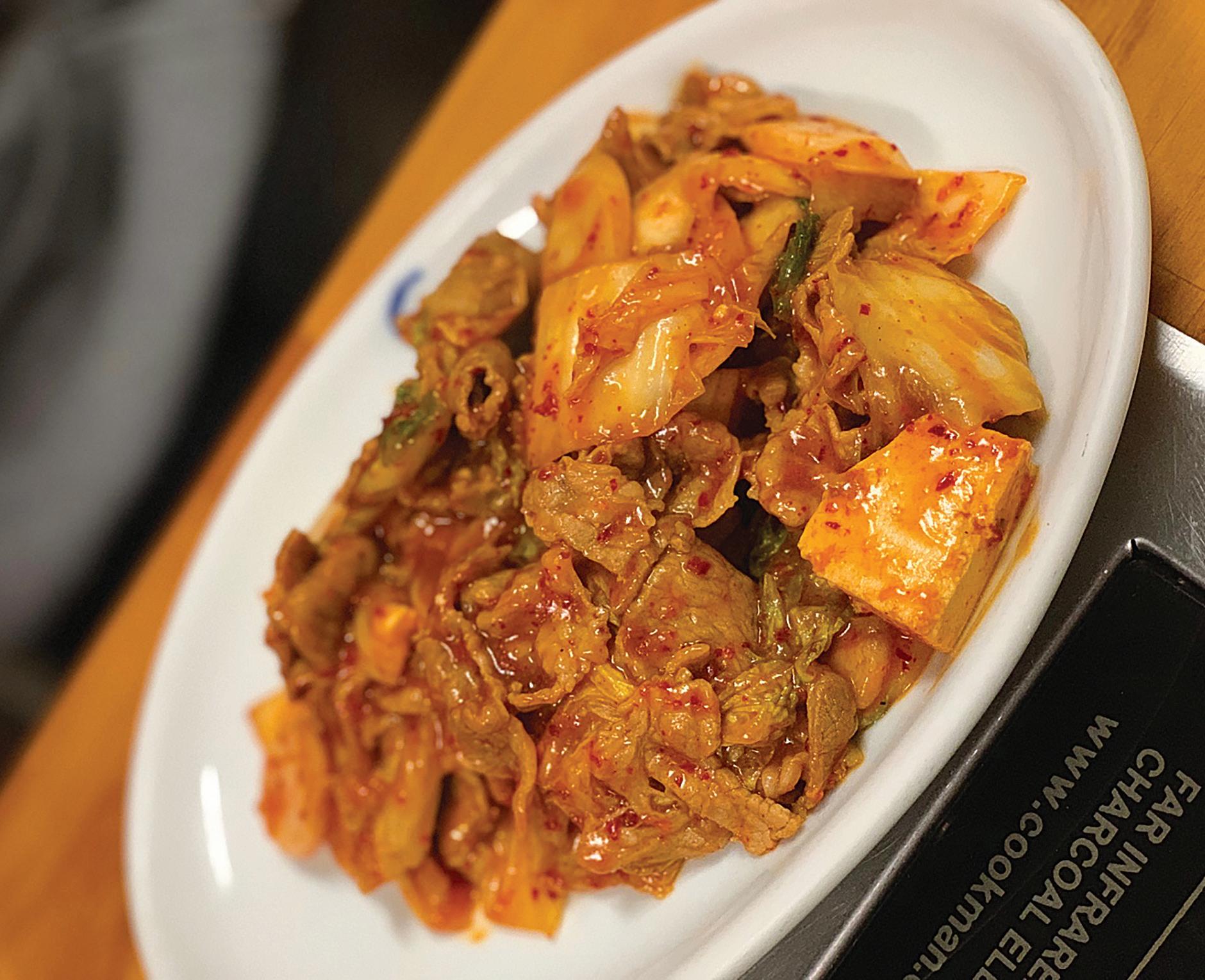
To start off, the jeyuk-bokkum dish was pretty different from one another. Four Seasons seemed
sauce, making the plate complement well with the other dishes. They had completely different tastes to it, but both were very savory. The second set of dishes, the
Considering their locations, services and food quality broadly, I think either would be a great location for a heartful dinner on weekends but they’re certainly not easy to go to, cheap restaurants that you would seek out everyday.
Overall, both of these places are already on top of my go-to list in Collegetown. Both have their own unique, casual atmosphere with delicious traditional Korean foods. I wouldn’t recommend one

Four Seasons:

Grace Yang is a sophomore in the College of Agriculture and Life Sciences. She can be reached at gy72@cornell.edu.


By

have been to Moosewood an inordinate amount of times in the short year and a third that I have been at Cornell. During movein, move out and when my parents visit for the first, second and third time each year, we always head to Moosewood for dinner. I would say that my family’s Moosewood fix is justified for three reasons. The
from going every weekend. This October, I tried their lunch for the first time. For the sake of journalism, I forced myself to review their vegan options to help you all decide whether to go to Moosewood for a special lunch, brunch or both. Moosewood is located right off of the Commons in the Dewitt Mall and down the road from the Seneca Street TCAT stop. When the weather is nice, they have great patio seating with the caveat of the
as apparel, stickers and numerous cookbooks, always catches my eye. Their cookbooks, 14 in total, are very popular and contribute to their well-known name across the world. The staff are always very kind, conversational and accommodating. Due to my semi-frequent visits, I think they may know me now.
Moosewood creates new specials every few weeks and changes the soup options daily. The menu is partially seasonal; most of the
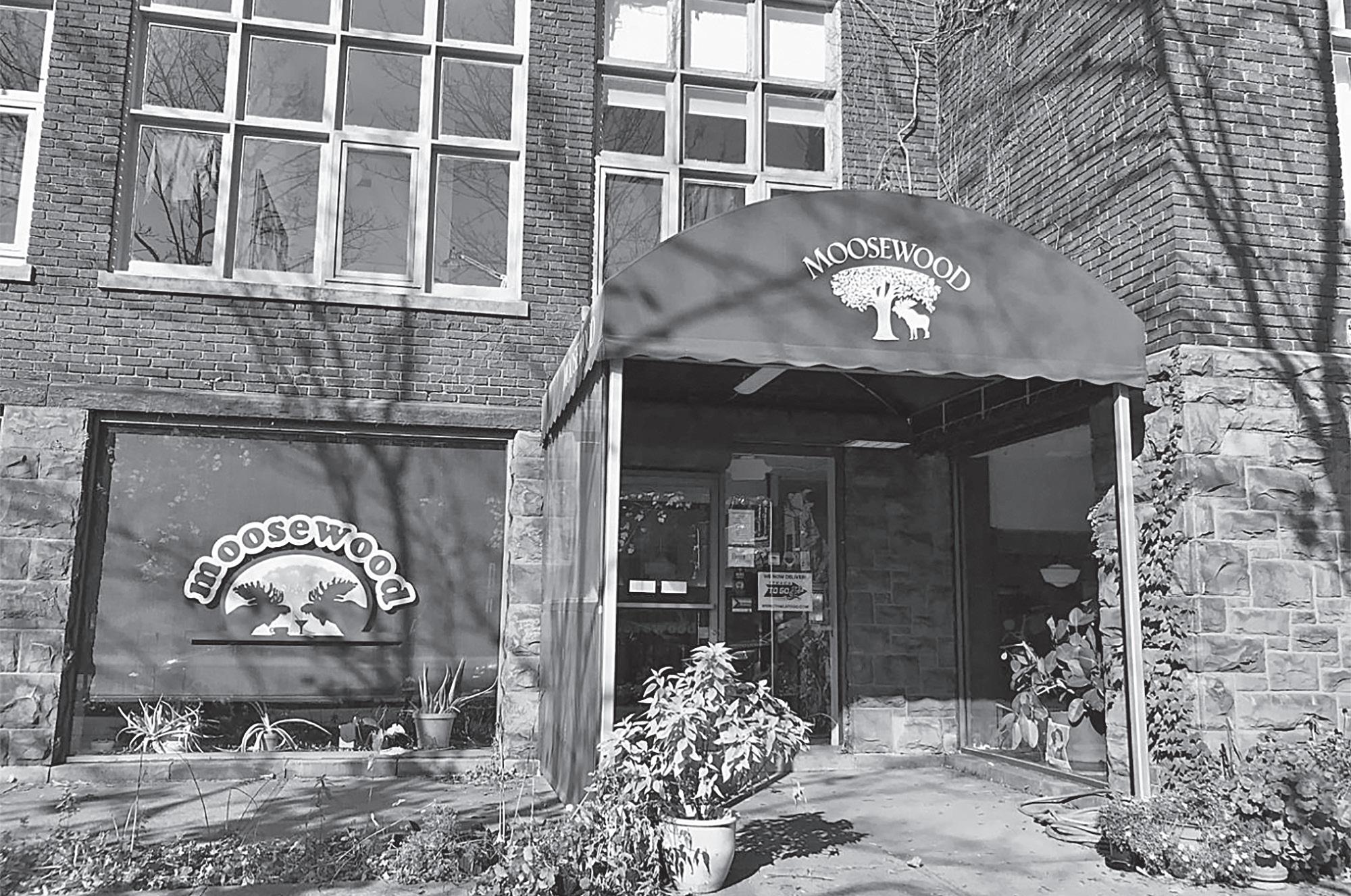
first is that Moosewood is a famous spot, widely known both in Ithaca and throughout the United States.
The restaurant was established in 1973 and since then, has been a destination for visitors to Ithaca.
Secondly, it is one of the few vegetarian restaurants in Ithaca (which offers many vegan options as well). While most restaurants only offer one or two vegan options, Moosewood gives my family lots more choices for meals. And lastly, the food is delicious. I always know that my meal will be satisfying, and that I will get the vegan chocolate cake for dessert. But it was not until the spring of last year that I discovered Moosewood offered Sunday brunch. Once I tried the brunch, it was a game changer; I have to hold myself back

and
decorations and a green and yellow color scheme. Their merchandise, such
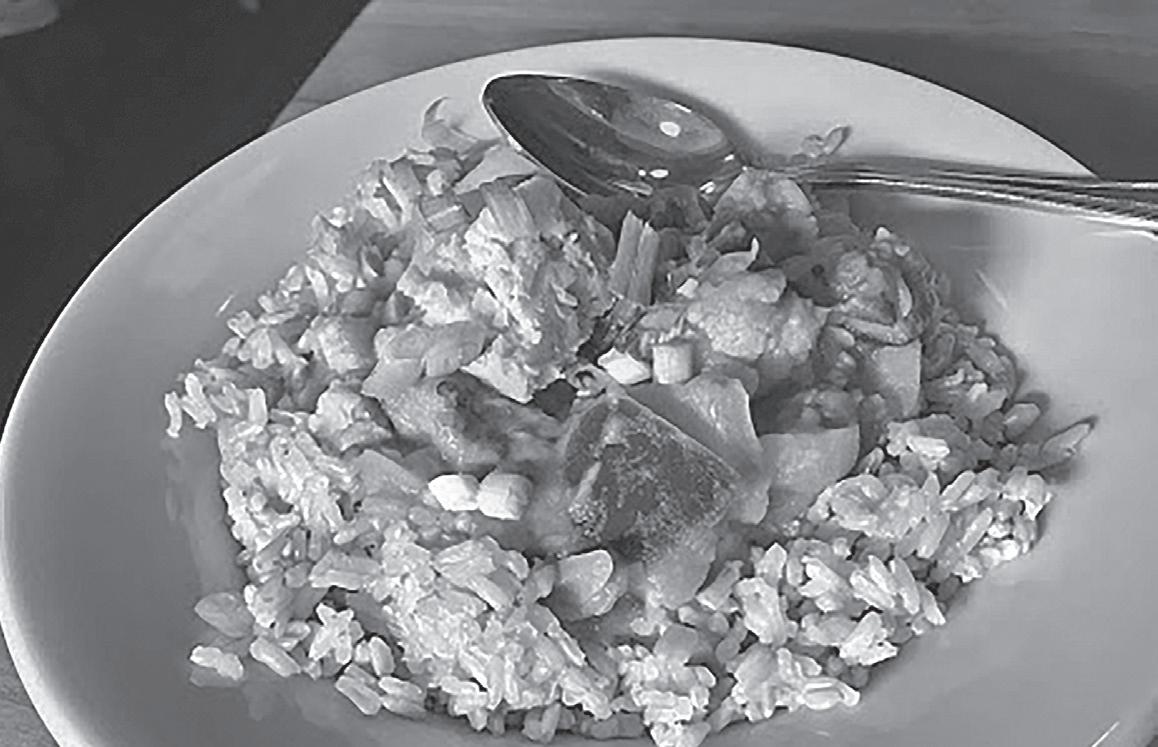
salads and sides stay the same, but some of the main dishes change with the weather. On the other hand, their lunch and brunch options are completely separate menus which switch entrees more frequently. The brunch menu contains classics such as french toast that contrasts with their veggie stews. Lunch offers creative burgers, sandwiches and salads. I went for lunch with my mom on a perfectly crisp fall Saturday, so we were looking for warmth and autumnal flavors. We decided to split two dishes, the first being the two potato-tomato curry with split pea dal ($13.50). The curry perfectly represented fall. The texture was a perfect blend of the creamy sweet potato and squash, which were slightly mashed,
with the crunchier cauliflower and peppers. The meal was well spiced, and all the flavors melted together. The split pea dal on top was the perfect touch to a unique dish.
The second dish was southern beans & greens ($13.50), which was quite literally a bowl of brown rice and beans with very few veggies (tomatoes, kale, onions). Although simple, it was warm, tasty and flavorful. The beans were tender and chewy, and the plate was very filling. The lunch made my tastebuds excited to be back to colder weather where it is all about warmth and spice.
Later, on a cold Sunday morning and craving the comfort of Moosewood, my friends and I took the TCAT downtown for brunch. Among the four of us that went for brunch, we only got two different dishes (the burrito and the pancakes), due to my strong recommendations.
The tofu was mashed and spiced so well that it was far better than any tofu scramble I have had elsewhere.
The breakfast burrito ($10) consisted of a thick tortilla wrapped around a scramble of tofu, peppers, onions, mushrooms and spices all topped with chives and a cashew cheese sauce. The burrito overall was warm, flavorful and satisfying. The tofu was mashed and spiced so well that it was far better than any tofu scramble I have had elsewhere. One of
berry sauce added a complementary flavor. The pancakes were squishy, moist and the perfect consistency — and there was no need for syrup (although you can never go wrong with maple syrup). I think I could eat these pancakes every week and not get tired of them. There was only one disappointment of the meal: the gingerbread latte. Moosewood has an extensive drink menu with classic coffees and fun seasonal specials. The gingerbread latte had multiple strong flavors which didn’t pair well together. It smelled like a strong chai but tasted off — and the coffee flavor didn’t really come through. Once we concluded the drink was a bust, I remembered my mom’s similar reaction to a latte a few months ago. So maybe I just don’t like their espresso brew? I would love to know others’ thoughts. Whether you are looking for a break from dining halls or just need an excuse to go to the Commons, Moosewood is the place to go on the weekend. The lunch menu has tons of options and is a hearty, filling meal. The Sunday brunch menu is small but covers all the savory and sweet needs. Moosewood has rustic charm, great service, a convenient location and a great reputation. There’s no way to go wrong if you
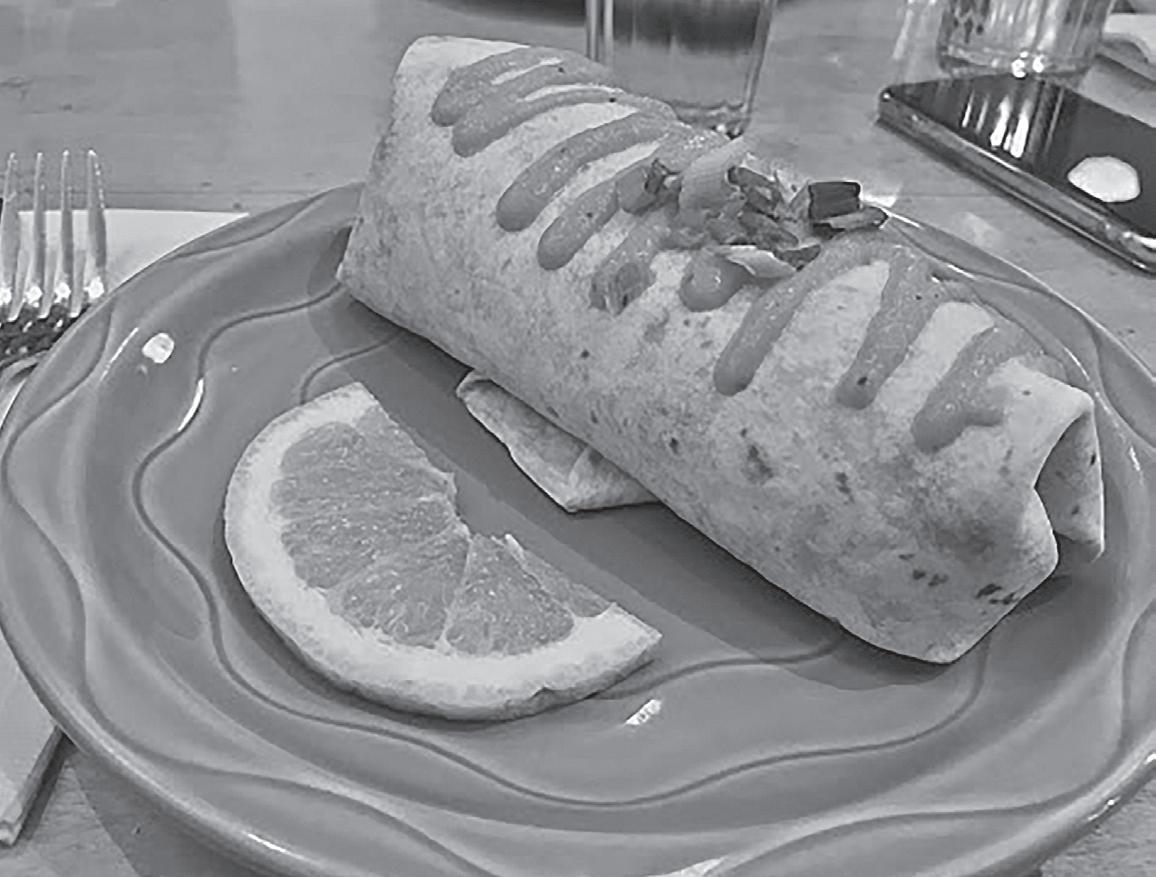
my friends commented that she “wasn’t able to tell it wasn’t egg,” which was a pretty rave review.
The chocolate pancakes ($10) were really a showstopper. They were made with almond milk, had a moderate amount of chocolate chips and were topped with a raspberry sauce. The pancakes had just the right amount of sweetness without being over-the-top. The chocolate chips were a fun texture-change surprise and the rasp-
choose Moosewood! I know I’ll be back multiple times this semester.
Serves: Vegetarian/vegan American and local dinner, lunch and Sunday brunch
Vibe: Casual, cozy, friendly Price: $$ Overall:


Melanie Metz is a sophomore in the College of Human Ecology. She can be reached at mnm55@cornell.edu.
In the past few years, I’ve encountered my fair share of artists and art educators as a student. While they all have vastly different teaching and working styles, I’ve secretly put them in two boxes in my mind — the type that makes me feel bad, and the type that don’t.
I entered college as a biology major and thought I wanted to go to medical school, which is pathetically naive of me, to say the very least. But this one film class I randomly picked out of the roster ended up changing everything. I still remember the shock of seeing the first-ever motion picture being projected, and the professor’s voice gently echoed, “It all started there, with one man wondering whether all four hooves of a horse were off the ground at the same time while trotting.”
Her voice guided me through early global cinema, ‘70s Hollywood, French New Wave and life in general. I used to sit on the couch in her office every Thursday afternoon and just bounce some random ideas off of her. We would talk for hours about books and films and sometimes politics. Because of her I became a film minor, then a film and biology double major, then just film and now film and comparative literature. She made me understand who I am, what I like and what I am capable of, without ever explicitly telling me what to do.
I don’t like that.”

ghosting me for a whole night he replied, “I think it’s about being self-driven.”

And then on the other end of the spectrum, another film professor who has this disturbingly scientific way of working; everything has to fall into a formula, be it the hero’s journey or the rule of three. Don’t get me wrong, he is undeniably successful at what he does, with major motion pictures under his belt and a couple other ongoing projects that are not uninteresting. But in my second semester of taking a (mandatory) class with him, I’ve gotten used to coming to class and preparing myself to hear “no you can’t do this” or “no
I couldn’t contain my bottled up frustration anymore, however, when I got the feedback for an assignment, a character study of some sort. It could take any form as long as it conveys the person’s passion or something they have been through. I made a film about my friend, a poet and a wonderfully sensitive soul. He wanders around, writes and laughs in front of my camera; but really, I was just letting him be. “The intention of the assignment was to capture someone with a genuine passion, not just an interest or a hobby with no level of achievement or labor. So, ultimately, I feel there’s a bit of a missed opportunity in terms of subject matter. I know you’re capable of more,” the professor wrote. I was infuriated at the notion that “passion” is something measured by achievement and felt the need to argue, but in his office hours I was asked point blank if I had an issue with the grade. That’s not why I came in, I retorted, on the brink of explosion. I just wondered — what should an art education look like? How does one learn about art, the history and the craft of it? Can art be taught in the first place, and how? He hesitated and told me he didn’t know the answers either.
I turned to a friend in art to complain, and asked him the same questions. After
I think he’s completely right that there’s an extent to which we could depend on other people to teach us things. Before that first film professor left for sabbatical, we were sitting on the grass in this beautiful fall afternoon and I told her I was a bit terrified of what’s to come; senior year, thesis, grad school, creating out of my comfort zone and so on. She told me, in that soothing voice that has given me so much encouragement, “You can figure out things on your own. You always have.”
I realized then that she never actually gave me any answer; she just kept me going, one way or the other. And she’s not the only person. The first time I met my thesis advisor, he told the class the only reason he’s there is to lift us up, whatever we want to do. When I brought up my completely unrealistic proposal he didn’t dismiss me
like multiple others have, but instead helped me take it to a place where it’s producible. I kept questioning if I should keep going and he would tell me, again and again, “It’s up to you, but I will help you if you want to do this.”
I have been fortunate enough to be surrounded by many supportive mentors and collaborators along the way, and for that I am forever grateful. But ultimately, people can only help me if I want to do what I do, and I have to want it really, really bad. In Scorsese’s words, when it comes to the burning need to create, “you have to do it. You have no choice. You have to live it and it comes with a price. But what a time paying it.”
Ruby Que is a senior in the College of Arts & Sciences. She can be reached at rque@cornellsun.com. Escape runs alternate Tursdays this semester.
respect tremendously write this movie off as nothing more than that kind of farce. I disagree.
a situation the audience knows to be morally abhorrent so that we can watch him grow out of it.
Jojo Rabbit is a tough one for me. Though directed by Taika Waititi, who most recently lent his talents to Thor: Ragnarok, it could not be further from a Marvel movie (which are kind of my bread and butter). To quickly summarize: Jojo Betzler, a 10-year-old boy who still talks to his imaginary friend, falls in love with a girl several years his senior. Oh, and Jojo Betzler is a Nazi.
The reaction to this film online has been mixed and on first pass it’s easy to see why. Nazis are not funny. The notion of “Nazi slapstick,” as some have put it, is as upsetting as it is seemingly paradoxical and I have seen quite a couple people I
There are certainly funny scenes, but those scenes find humor in utter hierarchical ineptitude and Waititi’s Hitler (yes, he cast himself as Hitler) being pathetically insecure. Its script is unquestionably witty, but Jojo Rabbit’s brief forays into absurdist slapstick and satirical revisionism are hardly its focus. Its upbeat mood is merely a product of its chosen perspective. This movie doesn’t take on the somber tone of a Schindler’s List because we watch it unfold from the viewpoint of a child. Jojo’s initial jocular disposition towards the Hitler Youth is no endorsement from the film’s creators of that organization’s actions but rather a historical reality. The film places its titular character in
The film opens on a young boy practicing his “Heil Hitler’s” then shows him struggling to rationalize his enthusiasm for the only community he has ever known with the fact that the Jewish girl his mom has been hiding in the attic does not have horns growing out of the top of her head. Jojo Rabbit is a character study that proves unexpectedly beautiful. Watching this movie felt like getting to know someone. To watch Jojo become capable of moral reasoning more coherent than that of his comically bastardized superiors solely because he fell in love is downright captivating. By the closing act of the film, I was so thoroughly invested in his simply making it
through to the end that I couldn’t get my heart out of my throat until long after the theater lights came up.
In thinking about why this film affected me so deeply I kept coming back to the same question: Who, in all of history, would be the least likely to discover love? It might well be Jojo Betzler, a 10-year-old in mid-1940’s Nazi Germany whose imaginary friend is quite literally Adolf Hitler.
It doesn’t matter that his love is for someone prohibitively older than himself. It doesn’t matter that his love is for someone with whom his entire society is diametrically opposed, and it doesn’t matter that his world is caving in on itself. Jojo felt those butterflies in his stomach and that was that – you can’t run from love.
The film repeatedly cites the work of Rainer Maria Rilke, a Bohemian-Austrian poet who wrote the following: “Let everything happen to you: beauty and terror. Just keep going.”
Just keep going. That’s the message here, not that Nazis are funny or that children are incapable of emotional complexity but that in the darkest of nights all we can do is to do what we can. Come what may but love conquers all.
If nothing else, Jojo Rabbit was a surprising bit of escapism for me. Waititi and an excellent cast have turned a hopelessly bleak world into one of the sweeter films I’ve seen this year. This one is worth the watch.
Nick Smith is a senior in the College of Arts and Sciences. He can be reached at nks53@cornell.edu.

Fill in the empty cells, one number in each, so that each column, row, and region contains the numbers 1-9 exactly once. Each number in the solution therefore occurs only once in each of the three “directions,” hence the “single numbers” implied by the puzzle’s name. (Rules from wikipedia.org/wiki/ Sudoku)

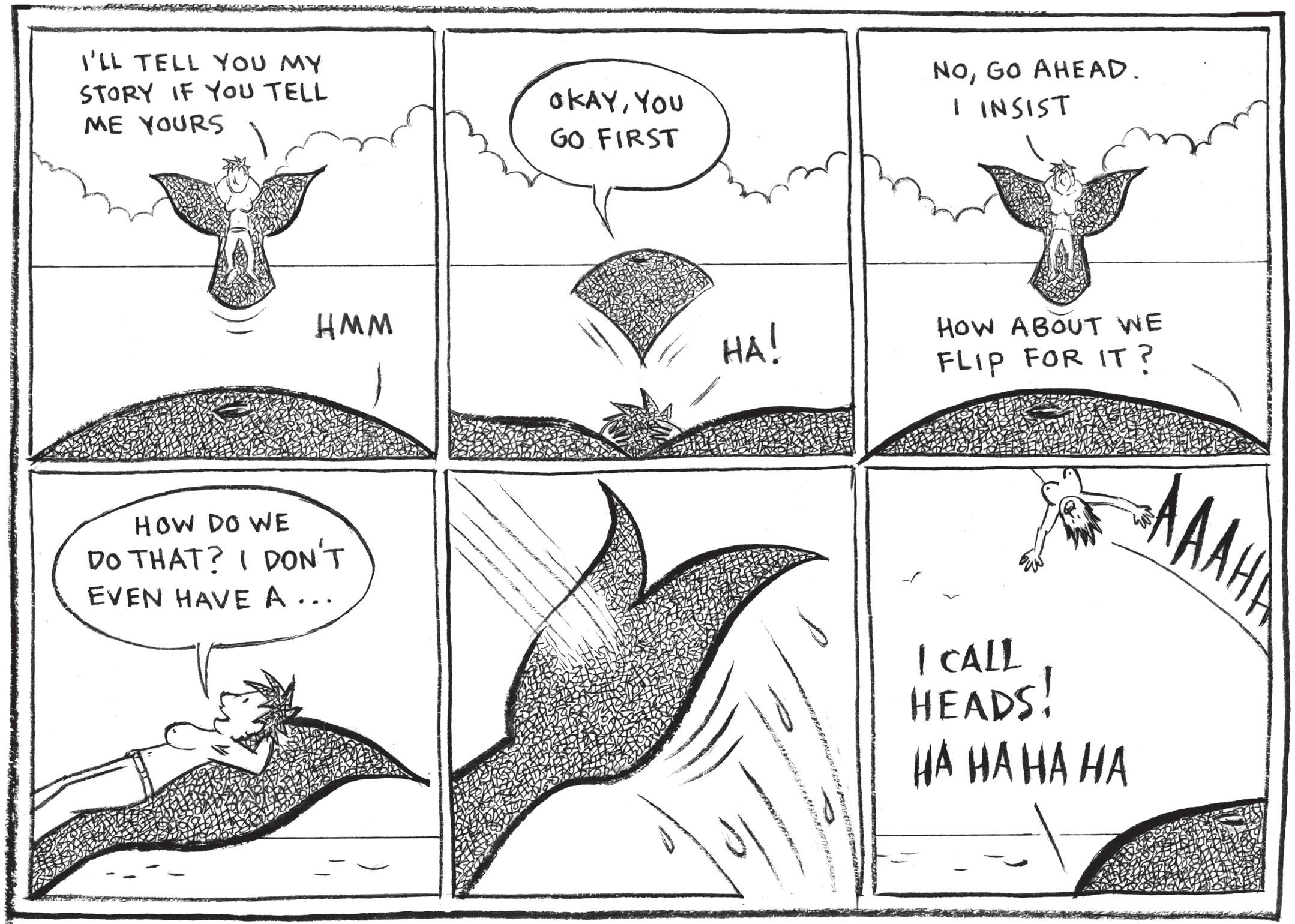

4

26 A PA R TMENT FOR R ENT
3 Bedroom 1 Block from Starbucks in Collegetown Heat & hot water included. Lease starts June 2020. Parking & laundry available. www.porealty88.com 607-277-1888
Boldly Refined Living
312 College Avenue
COLLEGETOWN TERRACE APARTMENTS
Leasing for 2020/2021 Spring 2020 Semester leases available Heat, hot water and Wi Fi State of Art Fitness Center Shuttle Bus Service to campus Washer & Dryer in Apartments collegetownterraceithaca.com office@ithacastudentapartments.com (607) 277-1234
607-273-1669
AVAILABLE 2020-2021
1, 2, 4 Bedroom Apts. and 7 person House
10 & 12 month leases Cook/Blair Street Call or Text Christopher George RE 607-279-5520
Collegetown Crossing
College Ave's Newest Location
307 College Ave. Now Leasing for 2020-2021
Completely New Modern Studios, 2 & 4 Bedroom Apartments. Fully furnished, heat & hot water included. Reception area at 307 College Ave. www.urbanithaca.com 607-330-2442 info@urbanithaca.com
120 Oak Avenue
Just steps to Cornell Campus 10 bedroom house & 1 and 2 bedroom apartment 607-277-1234 office@ithacastudentapartments.com Ithacastudentapartments.com
Sophisticated studio, 1, 2, 3-bedroom apartments. Superior fitness facility, theater, and coworking space. Free high-speed internet. Exclusive resident parking. Package delivery/return. Overnight concierge. 607-273-9777 or 312collegeave.com
20-21
College Ave. 5 BR House Furnished. Laundry. Parking. Call 607-273-8576
Spring 2020 Upper Eddy St. 7 BR house Furnished. Laundry. Call 607-273-8576
DISCOUNTED!!! COLLEGETOWN 8, 10 or 11 BEDROOMS 607-272-3389 cbeach24@aol.com
8-9 BEDROOM HOUSE FOR 2020-2021 133 Blair St Corner of Cook and Blair just off of College Ave. Huge rooms, great porch, free laundry, furniture, 4 bathrooms, 3 kitchens. Great storage closets, parking for 3-4 cars. Contact Nick at 607-256-3778 or nick@lambrourealestate.com
2020-2021
400 Block Dryden Rd. 9, 10 & 13 Bedrooms 607-257-3578 Call or Text info@oconnorapartments.com




All DISPLAY ADVERTISING for the Monday, Nov. 25 & Tuesday, Nov. 26 issues and CLASSIFIED ADVERTISING for the Monday, Nov. 25 issue of The Corne¬ Daily Sun is due MONDAY, NOVEMBER 18 by 2:30 p.m.
The Sun Business Office will close Monday, Nov. 18 at 3 p.m. and will reopen Monday, Dec. 2 at 9 a.m.

The Corne¬ Daily Sun 139 W. State Street Ithaca, NY 14850
607-273-3606

fun, and live the dream.”
Coles summed up the team’s mentality heading
given up 10 sacks on the season — a mark that leads the Ivy League. The line has also opened up numerous holes in the running game, allowing the Green to lead the Ancient Eight in rushing with over 182 yards per game.
Not only will Cornell be playing one of the best teams in the country, but this contest will also be the penultimate game for the seniors on the team.
Senior defensive lineman Michael Gillooley reflected on only having two weeks left in the season.
“You start thinking about peewee football, Pop Warner, going up through high school, seeing what schools fit best for you,” Gillooley said. “Just seeing the culmination of everything you have worked for, the countless hours you put in.”
“We got two games left, we’re going to leave it all out there on the field,” Gillooley said. “Whatever happens, happens. We just got to go out there, have
“At this point, they’re the best team in the league, so we’re really playing with house money.’’
into the game.
“We’re trying to bounce back,” Coles said. “At this point, they’re the best team in the league, so we’re really playing with house money. There is literally nothing to lose.”
The Red will attempt to pull off a huge upset as it faces the Green on Saturday in Hanover, New Hampshire.
Luke Pichini can be reached at lpichini@cornellsun.com.










CORNELL AT DARTMOUTH
YALE AT PRINCETON
PENN AT HARVARD
BROWN AT COLUMBIA NAVY AT
TEXANS
Cornell fell in the Whitelaw Cup last season as the Golden Knights clinched a victory in overtime
MEN’S HOCKEY
Continued from page 16
know their families well, know their kids well,” Schafer said. “It’s one of those things where when you’ve been in the business long enough, you start to get guys that worked for you to come back and coach … They recruit the right way, they coach the right way.”
But familiarity among the coaches does not figure to breed friendly competition on the ice.
“You start to get guys that worked for you to come back and coach.”
Mike Schafer ’86
“You play a team in the finals, it’s always gonna be pretty heated next time you face off,” said freshman forward Zach Tupker.
Cornell will go for its first weekend sweep over Clarkson and St. Lawrence in the North Country since 2005 at 7 p.m. Friday and Saturday.
“We definitely owe Clarkson after last year’s ECAC Finals,” Green said.
Christina Bulkeley can be reached at cbulkeley@cornellsun.com.

By CHRISTINA BULKELEY
Sun Assistant Sports Editor
An ECAC championship game rematch with No. 7 Clarkson is coming Friday for Cornell men’s hockey in its first conference road trip of the season. When the teams last faced off, the Golden Knights took home the Whitelaw Cup in overtime at historic Herb Brooks Arena in Lake Placid.
This weekend, the stakes won’t be quite as high as in that March tilt. But the chance for the No. 3 Red to down the first ranked opponent that it will see all year will present an early-season challenge.
“It’s gonna be a big game — we definitely need to get some revenge against Clarkson,” said junior defenseman Alex Green. “Guys are getting ready mentally this week in practice, and it should make for a fun game.”
In the title game, two Red skaters suffered season-ending injuries when now-senior forward Jeff Malott tore his ACL and now-junior goaltender Matt Galajda injured his knee. But both players are back, and

|
the Cornell team looks on-track to enter this weekend at almost full health, barring only junior defenseman Cody Haiskanen, whose status remains uncertain. Junior defenseman Matt Cairns missed Saturday’s game with an illness but should be ready for Friday.
With the surplus of quality healthy players, head coach Mike Schafer ’86 has to decide who plays and who gets scratched each night from the lineup.


“It’s a matter of taking a look at a guy and what they did in practice and what they did over the weekend, making some decisions [particularly] back there on the blue line because there’s a lot of competition,” Schafer said. Saturday’s contest will be against St. Lawrence. The Saints, at 3-6-1, came back Saturday against Union for an overtime win. St. Lawrence’s goaltending situation is the team’s biggest question mark, with its regular starter injured and the two backups each getting a start last weekend.Clarkson and St. Lawrence — not being in the Ivy League — have already played 10 games as opposed to Cornell’s four. In the Red’s opening
“All weekend, our special teams were much better, you know, power play and penalty kill, and that’s always key.”
Mike Schafer ’86
weekend against Michigan State, it had no problems matching up with a team that had already been on the ice, though — and after last weekend’s decisive victories over Brown and Yale, Cornell seems to have shed its offseason rust completely.
“All weekend, our special teams were much better, you know, power play and penalty kill, and that’s always key,” Schafer said. “I thought we were pretty disciplined throughout the course of the weekend … [Now, we’ll] put that in the rearview mirror and get ready to take on Clarkson and St. Lawrence.”
Clarkson, with a four-game winning streak of its

own, boasts a 95.5% penalty kill (third in the nation), while Cornell’s power play success rate currently sits at 40% (second in the nation). If Cornell goes on the man-advantage Friday night, the clash between those special teams will be a point of interest.


Other than geographic location, Clarkson and St. Lawrence have something in common — both of their coaches worked for the Cornell team under Schafer. Clarkson’s Casey Jones ’90 served as associate head coach from 2008-11 and St. Lawrence’s Brent Brekke was an assistant coach from 19982008. What’s more, Brekke’s last job was as an assistant coach at Clarkson last season with Jones.
“Both guys, at both Clarkson and St. Lawrence, I
See MEN’S HOCKEY page 15
By LUKE PICHINI Sun Assistant Sports Editor
Following a heartbreaking one-point loss to Penn on Saturday, Cornell football has nothing to lose.
Meanwhile, its upcoming opponent — Dartmouth — has everything to lose with an 8-0 record. The Green is coming off a dominant victory over Princeton, last year’s Ivy League champion. A week prior to that, Dartmouth edged out Harvard thanks to a Hail Mary.
Cornell and Brown are the only two teams that stand in the Green’s path toward a conference title. With the Red currently situated at seventh in the standings after a number of close decisions, head coach David Archer ’05 views his team as the most dangerous in the Ivy League.
“We don’t have the record we want — we don’t have the record we expect,” Archer said. “And without anything to lose, that makes us really dangerous.”
“So I view [Dartmouth]as having
everything to lose — their entire season could go down the tubes with a loss to Cornell,” Archer continued. “And we have everything to gain.”
Despite its 2-6 record, the Red is arguably coming off one of its better performances of the season. Cornell outplayed the Quakers in nearly every statistical category. But a few big plays — including an 80-yard touchdown off a trick play — propelled Penn to victory.
“When you look at it, statistically, we beat them, but when it comes down to the one thing that matters — [the final score] — we didn’t beat them,” said senior running back Harold Coles. “It was obviously frustrating, but it shows that we’re starting to put things together.”
While Cornell’s defense held Karekin Brooks to just 45 yards on the ground, the Red’s rushing attack shined. Coles gained 93 yards on over five yards per tote, and fellow running back — junior SK Howard — also shone, churning 86 yards.
“[Howard] is a great guy — super humble and awesome,” Coles said. “We
have a really deep talented running back room, so we knew the whole time that he was talented … He had a back injury at the beginning of the year, and now that he’s feeling really good, we can spread the ball around.”
Coles and co. will look to replicate that success against an imposing Dartmouth defense. With its opponents averaging just 10.1 points per game, the Green boasts the best defensive unit in the country.
a frightening prospect for a Cornell team that has averaged under 19 points per game.
So if the Red wants to come out victorious, it will have to match Dartmouth’s physicality.
“They’ve blitzed 14 times all year. It’s very much, ‘I’m stronger than you, let’s see what happens.’”
“Dartmouth almost lines up identically each time,” Archer said. “They’ve blitzed 14 times all year. It’s very much, ‘I’m stronger than you, let’s see what happens.’”
That mentality has clearly worked for Dartmouth. The most points given up by the Green this year came in a matchup against Columbia. The Lions managed 24 points, but Dartmouth ran away with a 59-24 victory.
In fact, the Green has held six of its first eight opponents to 10 points or less,
David Archer ’05
“They’re going to be really physical,” Archer said. “Their offensive line is outstanding, the quarterback [Jared Gerbino] is a really physical runner, their defensive line is really physical — similar to Harvard’s — so we need to match that physicality at the line of scrimmage.”
Dartmouth’s offensive line has only
FOOTBALL page 14