The Corne¬ Daily Sun




Private residence gatherings capped at 10; restaurants, bars, gyms also close at 10 p.m.
By ALEC GIUFURTA Sun Senior Editor
In March, New York swiftly shuttered activity at bars, restaurants and all other non-essential businesses as COVID-19 case counts skyrocketed across the state. On Wednesday, as the state faces an eerily similar herald, Gov. Andrew Cuomo (D-N.Y.) announced that many of these same restrictions now must return.
As of Friday at 10 p.m., all gatherings at private residences larger than 10 will be banned, a measure that takes particular aim at house parties and other social gatherings, Cuomo said. Bars, restaurants, gyms and any establishment with a license from the New York State liquor authority also must close at 10 p.m. –– sans takeout service.
person Abby Butler confirmed in a statement to The Sun, which anyway end on Friday before the regulations take effect.
Similar to the trends in rising cases statewide, social gatherings at Cornell were responsible for the early spike the University saw in September. Since then, the University has largely contained the virus with its massive surveillance testing pro gram. On Wednesday, Cornell reported a total of only four positive cases among students, dating one week back from Nov. 9.
“Period. End of sentence. I need the local governments to enforce this.”
Gov. Andrew Cuomo
On a call with reporters, the governor said the surge in cases had roots in four spaces: House parties, bars, restaurants and gyms. Local governments will be responsible for enforcing the new restrictions.
In Collegetown, that means places like Loco Cantina and Luna Street Food will be forced to stop service early. Cornell had already capped student gatherings at 10 people, but now state regulations will add an extra layer of enforcement.
“There are only two fundamental truths in this situation: it’s individual discipline and it’s government enforcement,” Cuomo said in a press release. “Period. End of sentence. I need the local governments to enforce this.”
The restrictions on gatherings do not apply to Cornell’s in person classes, University spokes-
On Nov. 3, New York ended its COVID-19 travel advisory list that mandated travelers from a list of states to quarantine. Now, all who have visited any other state must provide a neg ative test result first within three days of arrival in New York, and another negative result after a three day quarantine. Those who refuse to must quarantine for 14 days.
The Southern Tier is currently tallying the high est number of cases it has seen during the pandemic –– it largely avoided the spring and summer out breaks –– and statewide new case numbers reflect those last seen in late April and early May.
Locally, Tompkins Cortland Community College shifted to remote learning for one week on Monday after it reported an 11 person cluster among students. Cornell and TC3 have been the only colleges in Ithaca to adopt a hybrid model of instruction this semester.
Alec Giufurta can be reached at agiufurta@cornellsun.com.
By SEAN O’CONNELL Sun News Editor
When a student is J.A.’d — the colloquial term for a disciplinary action carried out by the Office of Judicial Administration — they are usually represented by a law student akin to a lawyer, who guides them through investigations, interviews and, eventually, speaks on their behalf at a hearing. Under the new student code of conduct revisions, this repre-
which governs Cornell’s judicial proceedings — to off-campus living areas, and gives the Office of the Judicial Administrator influence in the hiring process of Judicial Codes Counselors.
“If you’re accused of misconduct under the code, you have a lot at stake.”
Marisa O’Gara
sentation is gone. The law students, known as Judicial Codes Counselors, will no longer be able to cross-examine witnesses, or even participate in hearings beyond a silent, advisory role. Students will have to represent themselves.
The new revisions also expand the jurisdiction of the code —
Marisa O’Gara, a third-year law student, head Judicial Codes Counselor, was especially concerned that the changing role of codes counselors would put students unfamiliar with the judicial system in a


Today
Dirty Coffee: Scandal, Scrutiny and Food Safety in Vietnam 12:40 - 2:10 p.m., Virtual Event
Disrupting White Supremacy: A Series in Feminist Pedagogy 4:30 - 6:30 p.m., Virtual Event
Antiracism and Literature Event 5 p.m., Virtual Event
Public Forum on Proposed Revisions to Cornell Campus Code of Conduct 6:30 - 8:30 p.m., Virtual Event
Tomorrow
AIIS Speaker Series With Kaighn Smith Jr. “Labor and Employment Law in Indian Country” 11:30 a.m. - 12:30 p.m., Virtual Event
Veterans Tell Their Stories Panel and Discussion 6 p.m., Virtual Event


By SPENCER NACHMAN Sun Contributor
The end of in-person classes has come abruptly, with a week-long semifinals period just around the corner and Thanksgiving break following shortly after.
Many professors made sacrifices — cutting down class sizes, distancing classroom seats and braving the pandemic — to teach in person this fall semester, and the prospect of moving online has proved bittersweet for those who valued the in-person interaction.
Professors’ experiences largely depended on how their interactions with students, as well as how well the curriculum fit the hybrid format.
Prof. Cecilia Lawless, Spanish, said she felt students were happy to be in class despite the looming threat of COVID-19. In-person class discussions gave students the opportunity to develop their language skills, a privilege they may have overlooked in previous years.
“I’ve had really good attendance this year,” Lawless said. “It’s usually that way in my classes, but I think it’s added because I do feel that students are tangibly grateful to be in the classroom and to be with other students.”
Prof. Frank Rossi, horticulture, believed that the in-person aspect of his “Just Food” class was one of the most important parts of the class. He co-teaches the class with Prof. Rachel Kerr, global development, and said their debates and disagreements enhance students’ understanding of the material.
“The idea of having a natural scientist like myself and a social scientist like [Kerr] both talking about the food system is inherently a lively conversation,” Rossi
said. “We debate each other in class, and I think it is good for the students to see a little disagreement and honest tension that is still amicable.”
Prof. David Yearsley, music, teaches two in-person courses, “Music Journalism” and “Bach and Handel,” that have students already participating only through Zoom.
Yearsley expressed optimism that the class would fare well in online discussions after Thanksgiving
“After two weeks of not speaking Spanish, especially in my [Spanish] 2095 class, it will be like starting over.”
Prof. Cecilia Lawless
break, as his students had become comfortable talking about each other’s work since the beginning of the semester.
“I think the group has coalesced in a certain way so the Zoom classes will probably be quite fun,” Yearsley said.
But professors had some concerns about resuming classes after a two-week break.
“After two weeks of not speaking Spanish, especially in my [Spanish] 2095 class, it will be like starting over,” Lawless said. “It means that the value of the class for the two weeks we have together is going to be minimal.”
Lawless, quickly adapting to the situation, made a change to her class schedule by holding in-person
and employment law. “That’s very different from reading a report by an investigator. It’s even different from reading a transcript.”
precarious position.
“If you’re accused of misconduct under the code, you have a lot at stake,” O’Gara said. “We’ve had a lot of students tell us that they feel like they were wrongly accused under the code, but the process is intimidating to them.”
In 2019, 820 students — almost 4 percent of the student body — were referred to the Office of the Judicial Administrator for code violations, which include anything from underage possession of alcohol to assault.
The J.A. defended the revisions and called for a further restructuring of the Judicial Codes Counselors under the University Student and Campus Life office.
“Advisors should be involved primarily to guide students through that process,” wrote Barbara Krause, the judicial administrator.
“The OJA does not believe that positioning advisors as adversarial representatives for students supports that overarching goal.”
Code revisions have been worked on the past two years by the Codes and Judicial Committee, although numerous delays and disagreements with the University ultimately gave the final say to University lawyers.
The initial reasoning behind the revisions was to make the code less “legalistic,” according to the 2018 Presidential Task Force on Campus Climate, but detractors were quick to point out that conflict within the judicial system was inevitable.
“It’s still a punitive process at the end of the day,” O’Gara said, “all of the changes that they’re proposing, with very few exceptions, take away the rights of students.”
Many concerns revolved around the changes to the hearing process, which currently allows Judicial Codes Counselors to speak and cross-examine witnesses in front of a hearing board made up of students, faculty and staff.
“If you are a decision maker on a hearing board, you need to be able to hear from witnesses and you need to be able to hear their answers,” said Prof. Risa Lieberwitz, labor
On Monday, a resolution criticizing several code of conduct changes — including the inability of Judicial Codes Counselors to represent student clients in hearings and the expansion of code jurisdiction to off-campus students — was brought to the floor of the Graduate and Professional Students Assembly.
Cat Huang ’21, Student Assembly president, addressed the GPSA before the vote, urging members to wait for undergraduate input before voicing their concerns.
Huang did not directly oppose the resolution, but noted that undergraduates make up a vast majority of judicial cases — 791 out of 820 — while only 19 graduate students were referred to the J.A. in 2019. The resolution, ultimately, failed after two rounds of voting.
Contention over the code revisions had first come up in April over the standard of evidence needed to find a student respondent “responsible” for the code violations.
On Oct. 21, University lawyer Madelyn Wessel — in charge of writing the revision draft — announced that the standard of evidence would be left to the Cornell community to decide.
A forum seeking public feedback is scheduled for Thursday, but emails announcing the event were only sent out on Tuesday morning. O’Gara said she was concerned that two days was not enough time for students and faculty to be aware of the imminent revisions.
“The overwhelming majority of students who are going to be deeply impacted by these changes are probably completely unaware that these changes are being pushed through,” O’Gara said.
The public comment period for the revisions is set to end Nov. 17. The proposals will then be reviewed by the University Counsel, who has the final say on what revisions are implemented before sending them to the Board of Trustees in December.
Sean O’Connell can be reached at soconnell@cornellsun.com.
classes until the week before Thanksgiving break and will end earlier than planned in December. Lawless said the change would help students keep a rhythm with their use of the language and maximize the amount of classroom time they have together.
Rossi also changed his course to accommodate the online learning after the break. He has tasked his students with brainstorming a project about a topic that relates to the food system.
When the class meets on Zoom, twice after Thanksgiving break, each student will be responsible for giving a presentation to the class about their projects, according to Rossi.
Even though the transition to online learning is inevitable, professors were able to find positives in the switch to online classes.
“There is that paradox that on Zoom you see people’s faces, and you can get a lot of information from faces, whereas in the classroom with the masks it is hard to get a sense of how you are relating to people in the room,” Yearsley said.
Lawless said she is grateful for the nine weeks of in-person classes to establish a relationship with her students, which will help her carry the class environment to the computer screen. She said the last thing she wants is for the quality of her classes to diminish.
“In my mind, some of the classes that I taught last semester were mediocre, and one thing I don’t want to be, ever since I was [a student], is mediocre,” Lawless said. “That is worse than being bad.”
Spencer Nachman can be reached at sjn48@cornell.edu
By ANDREAS PSAHOS Sun Contributor
Last December, the Student Assembly passed a resolution to raise the student activity fee — a charge that pays for student-run organizations — by $97.
But in February, President Martha Pollack adjusted the student activity fee hike to $75 instead. Under Pollack’s changes, increases would have been from $234 to $274 for the 2020 to 2021 academic year, then to $309 the following year.
Since COVID-19 has put organizational funding and undergraduates’ wallets in jeopardy, the S.A. has been working to reduce the burden on students while keeping more than 1,000 student organizations afloat.
An August S.A. resolution aimed at COVID-19 relief then further reduced the student activity fee. The student activity fee for the current academic year now sits at $206 per undergraduate student — less than last year’s sum of $234.
“When the pandemic happened, a lot of things changed,” said Uche Chukwukere ‘21, S.A. vice president of finance. “A lot of students were asking for refunds or rebates or reductions in the prices of everything across campus: tuition, meal plans, housing, things of that nature.”
The decision to reduce the student activity fee in August received little fanfare, despite massive budget cuts for the S.A. and its 29 other byline organizations, which are funded directly through the student activity fee.
“We completely defunded ourselves,” Chukwukere said. “We made a decision that we’re going to reduce the student activity fee and give a refund, but the way we did that is that we asked all the byline funded organizations ‘Who is
willing to volunteer to take a cut from their budget from what they were originally gonna be appropriated?’”
A majority of the byline funded organizations were willing to take the hit, according to an Aug. 8 resolution calling for the COVID-related student activity fee reduction. The S.A. defunded itself by 100 percent; 20 of the 29 bylined organizations followed the assembly’s lead, voluntarily reducing their student activity fee appropriations anywhere from 13.3 percent to as high as 87 percent.
“When the pandemic happened, a lot of things changed.”
Uche Chukwukere ’21
While financial aid on the Cornell Student Center will continue to show a student activity fee of $274, Chukwukere said students would only see a charge of $103 per semester on their Bursar accounts.
The S.A. appropriations committee, which is in charge of the student activity fee, could begin addressing the possibility of a further reduction in the activity fee as early as next week, according to Chukwukere.
“[The planned student activity fee increases] are put on hold,” Chukwukere said. “We’re reading the room right now and the general consensus is we don’t want to burden students more. So we’re taking a look at how the general population feels about things and whether or not the money that will be allocated to organizations will be able to be used at full capacity.”
Andreas Psahos can be reached at atp78@cornell.edu.

By SARAH AUSTIN Sun Staff Writer
For the first installment of a Moosewood Mess, I started out with dessert because it seemed like a relatively easy first step — something very much within my comfort zone. I invited my friends for the inaugural Moosewood Meal, which only ramped up the pressure. I felt like I couldn’t disappoint them, but I also didn’t want to make something overly complicated and ruin everything before it even started. That brought me to Chocolate Cranberry Crunch bars and chocolate sugar cookies. When I first looked at the recipes, they seemed to be idiot-proof. However, it appears I’m an idiot. I don’t know what I did wrong; I was so dedicated to this project that I followed the instructions for the cookies to a tee. When I was mixing the dough, it seemed a little too crumbly, but I didn’t want to add any extra butter lest I stray from the recipe. I’m not a particularly careful cook; however, I was laser-focused on these cookies. I chilled the dough, went to a Zoom meeting and scoured my apartment for a makeshift rolling pin. After wrapping a bottle of PAM in saran wrap, I set to work rolling out the dough. It kept breaking and ended up becoming a much larger mess than I intended (but a much better arm work-
out). I cut out the cookies and put them in the oven. After the required time of 15 to 20 minutes (I did 18), I took them out only to discover that I had somehow made crackers. They were hard and crunchy, so I diverted from the recipe (I lasted a lot longer than I thought) and only put the second batch in for ten minutes. Even with the time change, the cookies were still rock-hard, but with a slightly softer middle. Both batches ended up less like cookie stars and more like throwing stars. I could knock a guy out with a wellaimed cookie — I bet Julia Child could never say that. Other than fumbling with the crumbly dough, these cookies were relatively easy to make. They didn’t require any special tools considering I just repurposed things most people already have in their houses.The recipe made enough to feed a crowd, but I did have to roll them out, which was a bit of a pain. So, in terms of being a college student on a time crunch with limited baking equipment at my disposal, I would give these
an 8/10 for doability. However, considering the flavor and texture, I would only give them a 4/10 for taste. They were bland and cracker-ish without a uniform texture overall not enjoyable to eat. If I did try again, I would roll them out a

bit thicker and add a teaspoon of instant coffee powder to enhance the chocolate flavor.
Moving on to my triumph from later that same day: Chocolate Cranberry Crunch bars — an oat mixture base, with cranberries and chocolate laid over top. This is where my superiority complex
kicks in. Even though these were a resounding success, I felt the need to tweak the recipe. I chopped up the cranberries, stained my shirt because I’m a mess and mixed in the rest of the topping ingredients. The recipe itself was pretty straightforward, and other than the cranberries, I already had flour, oats, sugar and chocolate chips on hand.
Again, I followed the recipe exactly ... with one exception. I let my laziness win out and didn’t use the food processor to chop the cranberries. It’s such a pain to wash, so I figured chopping them by hand wouldn’t make much of a difference. The only casualty from the knife was a stained shirt, so it’s definitely a doable recipe for a bare-bones collegetown kitchen; just wear an apron. I would also recommend that if you make these bars, pay attention to the pan size. I didn’t have a 7 ½ x 11, so I just used an 8 x 8.
Because I didn’t have the right pan, the oat layer was a bit too thick, so the ratio of cranberry-chocolate to oat was a bit off.
After tasting them, I had the urge to replace some of the oats with walnuts. In terms of taste and texture, I would definitely give them a 9/10; the cranberries were sour and blended really nicely with the chocolate, and the oat layer was pretty moist. In terms of being able to make these quickly in my tiny kitchen, I would give them an 8/10. That said, I don’t know how common it is to have cranberries just casually chilling in your freezer, so this recipe lost two points for extra time spent at Wegmans. Overall, I’m happy with my first crack at Moosewood Restaurant Book of Desserts. This isn’t just teaching me how to refine my cooking skills or opening me up to a whole new world of recipes; it’s teaching me patience. I’m learning how to follow instructions, which honestly is a pretty solid life skill — one everyone can benefit from. Everyone seemed happy with the Chocolate Cranberry Crunch bars, and my roommate and I even ended up eating the chocolate throwing stars at a worrying pace because they became addictive after 11 p.m. Today, I was able to check off not one, but two recipes from my very long list. I’m feeling pretty confident.
Sarah Austin is a sophomore in the Cornell School of Hotel Administration. She can be reached at sarahaustin@cornellsun.com.
By GABE SCHIFFER Sun Contributor
Cornell can be a cold and hard place. The brutal Ithaca weather combined with equally tough class-
es can often push some Cornellians to clear their minds through less school sanctioned methods. Imagine this. After finishing an especially tough prelim or paper in the middle of your week, the

only thing you want to do is forget about it. As you scroll through Netflix for the most mind-numbing show available, your friend bursts through the door and hands you a drink. As the ice cold beer hits your lips, your mind sets a goal for this week night’s debauchery: Forget about that damn test. You achieve your mission but wake up the next morning for a class on campus with a screaming hangover, making you regret not picking the asynchronous option during pre-enroll. As you suffer through class with a throbbing headache, two needs dominate your mind’s real-estate: water and food. Once you finish class, you can finally sprint to the shining gem of campus hangover meals that is the Terrace at Statler.
There are three dishes that really stand as the best offerings to a hypothetically hungover student wading into Terrace: their criminally underrated gyro, their pho and their famous orange chicken burrito. On any given day of the week, the burrito line runs long through the foyer and often dwarfs the line for the other offerings combined. In my opinion, it’s truly shameful that the gyro station sits so empty, when its offerings are so fulfilling, especially for a haggard student suffering from the consequences of a long night of drinking. The station
offers both a falafel or a lamb and beef option, but my preference is to place meat with a strong accompaniment of onions, lettuce, cucumbers, pickled jalapeños and a beautiful doner sauce that really slices through the heavy and slightly greasy meat with a perfect dance of tanginess, acidity and spice. The combination of the bright, flush vegetables with the generous serving of crispy-thin strips of meat would make a hungover student feel sated and full, but not bloated and feeling like they need to nap from eating a plate of greasy meat wrapped in bread. All in all, the gyro provides a filling, invigorating meal to a student hurting from both their prelims and their wild nights in.
The Terrace gyro is criminally underrated by many at Cornell, but the mammoth line that stretches from the burrito station is not undeserved, especially its grail of all hangover cures: the orange chicken burrito. This dish is an unabashedly classic rendition of the hangover meal with culinary fusion thrown in for good measure. It’s like a great friend, ensuring that on the rougher Fridays you haven’t fully melted away in a hungover malaise. The sweet, crunchy chicken sits atop a bed of rice and is covered with roasted vegetables, guacamole, sour cream and tortilla strips to add textural
variety. A bite of this delicious orange chicken burrito makes you feel like it’s a sunny day in the middle of March after weeks of icy rain. Despite the absolute calorie dump that this meal represents, the rejuvenative benefits are truly unrivalled. Your headache disappears and is replaced with a strong desire for a nap. You go on with your day, incredibly full but surely satisfied.
If these two options are too greasy, too heavy or simply not what you’re looking for, there is one final suggestion that I have to cure you ailments. Terrace pho; the noodles, broth, meat and spice are a light, hydrating and fulfilling option that certainly leaves you feeling better than when you first stumbled up to campus. It isn’t the best pho in the world, or even in Ithaca, but it is a solid and enjoyable dish that can take you from a dead-person-walking to the semi-functional adult Cornell asks you to be. Finding good hangover food can be hard, but whether you want the balance of the gyro, the gluttonous excess of the orange chicken burrito or the restorative lightness of pho, Terrace has a dish for your most hungover self.
Gabe Schifer is a sophomore in the College of Industrial and Labor Relations. He can be reached at jgs269@cornell.edu.
After the chaos and uncertainty of the election last week, watching The Queen’s Gambit has served as the perfect post-election escapism. “It’s an entire world of just 64 squares. I feel safe in it. I can control it. I can dominate it,” chess prodigy Beth says, in Scott Frank’s adaptation of Walter Tevis’ 1983 comingof-age novel. The seven-part series stars Isla Johnston then Anya Taylor-Joy as chess prodigy Beth Harmon and grapples with issues of identity, addiction and loss. Beth is a “female genius” who against the odds manages to beat out her competition in a heavily male-dominated game; yet her ongoing battle with addiction complicates her linear trajectory.
World Chess Champion Vasily Borgov with a lost look in her eyes.
The scene changes to a more somber one in which a younger Beth stands still at the side of the road with the same lost look in her eyes. The camera pans to show the audience a glimpse of the wreckage, the police cars, her mother’s body mangled on the road.

The opening scene is intentionally displacing. The audience gets a portrait of Beth waking up alarmed in a Paris hotel room, throwing on presentable clothing, kicking back tranquilizer pills and sloshing back liquor. In a harrowing moment of disarray, she grabs her heels and begins to run. When Beth enters the chess tournament room, a posse of cameras flashes in her direction. She sits down, then looks up at
Shriya Perati Thought Experiments
This dramatic framing of the opening mirrors the movement of the queen’s gambit itself. In chess, the queen’s gambit is a move in which a sacrifice of
thequeen’s bishop’s pawn is offered, in an attempt to gain control of the center of the board. Frank, in this scene, seems to be aiming for something similar, giving away something to the audience at the beginning in an attempt to gain their attention.
As the series continues, Beth, nine years of age and orphaned, arrives at the Methuen Home for Girls. Filmed with a palette of dull blues and browns, the orphanage feels cold and sterile. Isla Johnson portrays Beth as an awkward and quiet girl who is told to take green tranquilizer pills and finish her meals. Later she befriends Jolene (Moses
Ingram) who becomes her close companion.
Beth stumbles into the world of chess at first by accident, but as she continues to observe the custodian, Mr. Shaibel (Bill Camp) playing chess, he eventually caves into teaching her the rules of the game. Mr. Shaibel becomes a mentor to Beth who has an uncanny aptitude for playing chess. Beth quickly develops what seems to be almost an addiction to the game in parallel to her growing addiction to tranquilizers pills. After a traumatic childhood experience of watching her mother take her own life with her child in the car, the pieces on the chess board offer Beth a newfound agency that is comforting.
Eventually, when Beth (now played by Anya Taylor-Joy) is adopted and leaves behind Mr. Shaibel and Jolene at the orphanage, Beth begins to gain the attention of the public eye at regional, national and then international chess championships. In each chess match, the board is personified and vivified into a vicious battleground in which Beth continues to strike her opponents with graceful prowess.
The series takes place during the Cold War, which raises the stakes for the final match of the series against Soviet chess master Vasily Borgov (Marcin Dorociski). However, unlike other Cold War narratives, The Queen’s Gambit shys away from an
anti-Communism narrative that presents the Soviet’s collectivist approach as unfair by comparison to a more American individualism. The Christian orphanage itself serves as a nod to the institutional oppression that can take place even in America.
Ultimately, the series is less about an American trying to win a world-renowned title but rather a more human narrative about Beth Harmon, orphan, recovering addict, and female genius trying to be the best chess player in the world. The series reveals to the audience just enough about Beth to know that despite being a chess master, she is not invincible, and that her weaknesses could, in fact, lead to her demise, not only raising the stakes for a narrative about the game itself but creating a dynamic in which the audience is rooting for Beth’s path to recovery until the end.
For those seeking to watch a short series that combines elements of a traditional bildungsroman with the thrilling adrenaline rush of a sports movie and the emotional resonances of A Star is Born , The Queen’s Gambit is the perfect escapist series to indulge in after weeks of doom-scrolling and paralyzing uncertainty.
Shriya Perati is a senior in the College of Arts and Sciences. She can be reached at sperati@cornellsun. com. Thought Experiments runs alternate Tuesdays this semester.
The Corne¬ Daily Sun Independent Since 1880
138th Editorial Board
MARYAM ZAFAR ’21
in Chief
JOYBEER DATTA GUPTA ’21
Business Manager
PETER BUONANNO ’21
Associate Editor
MEGHNA MAHARISHI ’22
Assistant Managing Editor
CHRISTINA BULKELEY ’21
Sports Editor
BORIS TSANG ’21
Photography Editor
CAROLINE JOHNSON ’22
News Editor
ALEX HALE ’21
News Editor
ARI DUBOW ’21
City Editor
EMMA ROSENBAUM ’22
Science Editor
BENJAMIN VELANI ’22
Dining Editor
JOHN MONKOVIC ’22
Multimedia Editor
MIKE FANG ’21
App Editor
OLIVIA WEINBERG ’22
Assistant News Editor
MADELINE ROSENBERG ’23
Assistant News Editor
LUKE PICHINI ’22
Assistant Sports Editor
HANNAH ROSENBERG ’23
Assistant Photography Editor
BRIAN LU ’23
Assistant Arts & Entertainment Editor
ANNABEL LI ’21
Assistant Money & Business Editor
LEI ANNE RABEJE ’22
Layout Editor
JOHN COLIE ’23 Blogs Editor
JOHNATHAN STIMPSON ’21
KRYSTAL YANG ’21
Manager JASON HUANG ’21
Editor
NGUYEN ’22
Editor
KENKARE ’21
SEAN O’CONNELL ’21
KATHRYN STAMM ’22
ANIL OZA ’22
EMMA PLOWE ’23 Arts & Entertainment Editor
LEE ’21 Money & Business Editor
CHENG ’21
Manager
PEÑEÑORY ’22
MEGHANA SRIVASTAVA ’23 Assistant News Editor EMILY DAWSON ’21
BEN PARKER ’22 Assistant Photography Editor
MORAN ’21 Assistant
’22
WANG ’21
’22
’21
WINNY
Working on Today’s Sun
Ad Layout Jenny Huang ’24
Production Deskers Sarah Skinner ’21 Camilla Bacolod ’21
News Deskers Sean O’Connell ’21
Opinion Desker Pallavi Kenkare ’21
Design Desker Lei Anne Rabeje ’22
Photo Desker Benjamin Parker ’22
Arts Desker Pallavi Kenkare ’21
Sports Desker Luke Pichini ’22
Dining Desker Benjamin Velani ’22
Reuben Bolling


Anuli Ononye Womansplaining
Raise your hand if you’ve lost a friend or two (or 30!) during this election season. I definitely have. As we finally reach the end of a 2+ year run for the presidency, I can finally reflect on what this election cycle has meant to me. I can list thirty million things, but one of the most significant is that I have lost a few friends.
Up until the 2020 election run, I really believed that I could be friends with anyone regardless of their political ideology. I had done it my entire life. Growing up in one of the few liberal families in my community (church, school, neighborhood), reconciling political differences has been my life. I have always been a good compartmentalizer and, for the most part, I could always separate the person from their political beliefs. My standing rule: Never let anyone know your politics, and say a prayer that they won’t share theirs. This worked for 20 years.
But the 2020 election has been different for too many reasons. For one, moving to the other side of the country has taught me that I am not always the political minority (and sometimes can be a part of the political majority). For someone who was labeled as a radical in my high school, I am somewhat a centrist at Cornell. Additionally many of the social issues presented in this election personally impact my livelihood: particularly gender rights and black/minority rights. The conversations happening on debate stages, Twitter threads and family dining room tables reflected what people (and friends) feel about me and people like me.
mental health we have not spoken since then.
When your identity is a political talking point, you start to question who your real friends are, as they vote in ways that harm you.
So how did I lose friends this election cycle? Here’s a short list: I have become very friendly with the Instagram and Twitter “block” buttons in the past few months. Some of those “blocks” were permanent and I know that those friendships will be hard to reconcile.
A good friend of mine and I have been “on the rocks” since her mother expressed her views on the Black Lives Matter movement to me and she agreed.
On Wednesday, one of my best friends told me that he chose not to vote in this election in protest. We are still friends (don’t worry!), but for the sake of my
A good friend and I (on the same side of the political spectrum) have had such polarizing views on this election that I no longer “talk politics” with her. The truth is politics brings out the best and the worst in people. And while the 2020 election brought out some of the best in us (significant voter turnout, a black woman on a vice presidential ticket, rapid social and political change) it also brought out the worst (violent hate crimes and derogatory speech, anti LGBTQ+ rhetoric and an overall distrust of those around us). One thing the 2020 election has made apparent is that, unlike previous elections, people are prouder and louder about their political opinions. I have definitely become more comfortable expressing my views, although I’m still very hesitant about posting political on social media. I’m not bold enough to post an “unfollow me if you voted for X candidate” or “block me if you don’t stand for X right” as many of my friends (both at Cornell and elsewhere) have in the past few weeks. From the outside, those posts seem overly aggressive, non inclusive and intolerant. But I don’t blame them at all. They’re tired. I’m tired. It’s easy to “hate politics” and be apolitical when politics aren’t your life. It’s easy to randomly check a box and be excited “for it to all be over” when you don’t have stakes in the game. It’s a very different story when aspects of your livelihood and identity are talking points on candidates’ speeches and entire political platforms. When your identity is a political talking point, you start to question who your real friends are, as they vote in ways that they know could harm you and your family.
So, if you’ve lost a friend or two (or 30!) during this election cycle, you are not the only one. I’m with you and I know it’s hard. The idealist in me hopes it will be “back to normal” (or whatever that means) soon so that those friendships can be reconciled. But another part of me demands that I am more intentional in the next friends that I chose, with hopes that they will value every part of me.

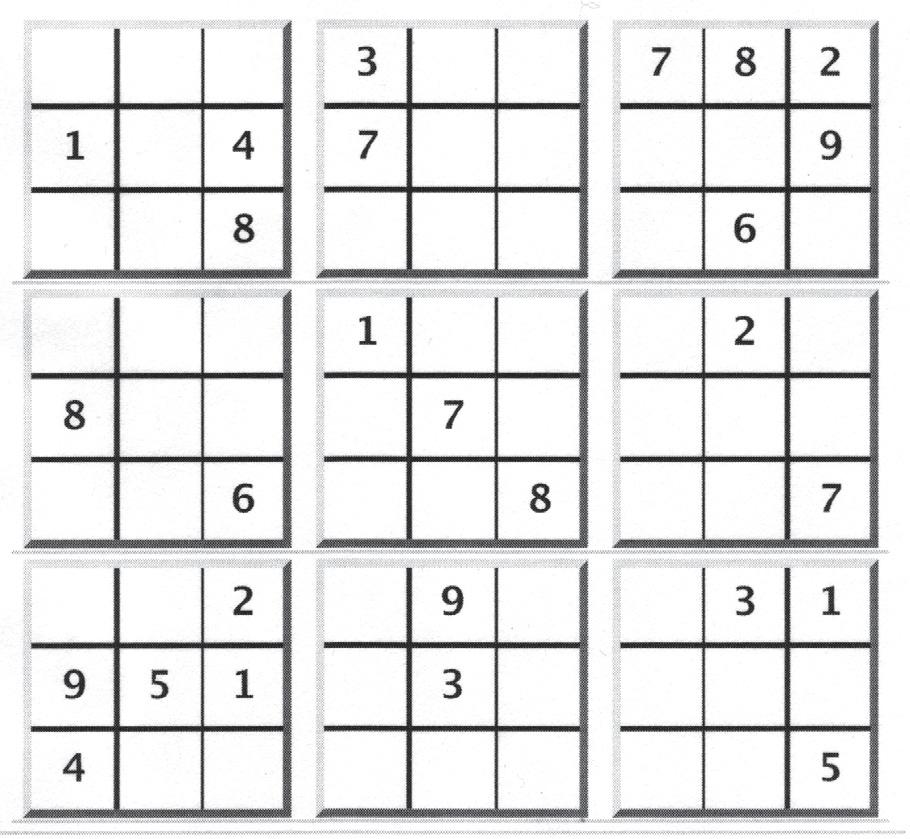
Fill in the empty cells, one number in each, so that each column, row, and region contains the numbers 1-9 exactly once. Each number in the solution therefore occurs only once in each of the three “directions,” hence the “single numbers” implied by the puzzle’s name. (Rules from wikipedia.org/wiki/ Sudoku)






In the absence of a fall season, the Cornell football players and coaches haven’t shied away from the spotlight, dedicating much of their time and effort to voter registration and the national movement to fight racial injustice. In an interview with The Sun, head coach David Archer ’05 discussed the team’s activism this year.
over 450 signatures and, ultimately, he did not end up attending the University.
Archer reiterated the team’s commitment to anti-racism, preaching a “locker room, campus, broader community” message to his players.
“I’m trying to use my position in any relationship, leverage and power that I have to help the cause.”
Following the death of George Floyd, a nationwide conversation erupted regarding racial injustice and police brutality. Archer held conversations with players about the experiences of Black athletes and how the Cornell football team should fight systemic racism.
David Archer ’05
“We all benefit if the Black players on my team and the Black students on our campus feel heard, seen, respected, safe,” Archer said. “[If] they feel all those things, my team’s better, our department’s better, our campus is better [and] our world is better.”
by senior defensive lineman Cole Bearden and assistant coach Satyen Bhakta. Archer emphasized the importance of exercising the right to vote, referencing Cornell Votes as a useful non-partisan resource for anyone in need of help with registering to vote.
Archer himself even said that he took his right to vote for granted, despite his father having been a government teacher and a mayor.
“There were still years I didn’t vote,” Archer said. “Anytime it’s a presidential election year, voter turnout is higher. But the truth is, you got to be informed on your state ballot, on your county ballot [and] on your town ballot.”
“[I’m] just trying to listen, learn [and] use the resources Cornell’s provided to educate myself,” Archer said. “Making a commitment to ongoing education for myself and learning and listening and hearing about the experiences of the black student-athletes on my team ... And then I’m trying to use my position in any relationship, leverage and power that I have to help the cause.”
After a discussion with senior cornerback Kenan Clarke about hosting a march, Archer contacted deputy chief Anthony Bellamy of Cornell University Police Department and Mary Beth Grant from the Dean of Students’ office to help facilitate the event.
Clarke, along with women’s soccer junior and sophomore Jadyn Mathews and Emily St. John, organized the Oct. 18 “Our March. Our Campus” event, which aimed at pressing Cornell to recruit more players and coaches of color onto athletic teams.
Acknowledging his own blindspots, Archer noted what he is doing to eliminate biases in his processes as a head coach to promote a more inclusive environment.
“I’m having talks with some outside consultants where I explain my recruiting process … my hiring process [and ask,] ‘Where are my blindspots?’” Archer said. “These are some of the things we’re working on.”
When a video surfaced of former Cornell football recruit Nate Panza using a racial slur on social media, Archer quickly rescinded Panza’s offer to join the team. A petition — titled “De-Densify Cornell’s Ithaca Campus By Expelling Nate Panza ’24” — garnered
Archer cited many more examples of team leadership on the issue, including junior quarterback Dez’mond Brinson, who created a team video, and the efforts of the team’s wide receivers, including sophomore Javonni Cunningham, senior Turner DePalma and junior Devan Cross, in conversations with police.
Additionally, many players and coaches participated in the Cornell Votes registration drive, which was led
The head coach emphasized the non-partisan nature of equal rights.
“I ultimately see it as a human rights issue,” Archer said. “I don’t see it as a political issue. And it’s important to me because it’s important to the kids on my team … I just see it as a human rights issue — we all have an important role to play.”
Will Bodenman can be reached at web89@cornell.edu. Luke Pichini can be reached at lpichini@cornellsun.com.