National Hockey Team
Sophomore Min Shin


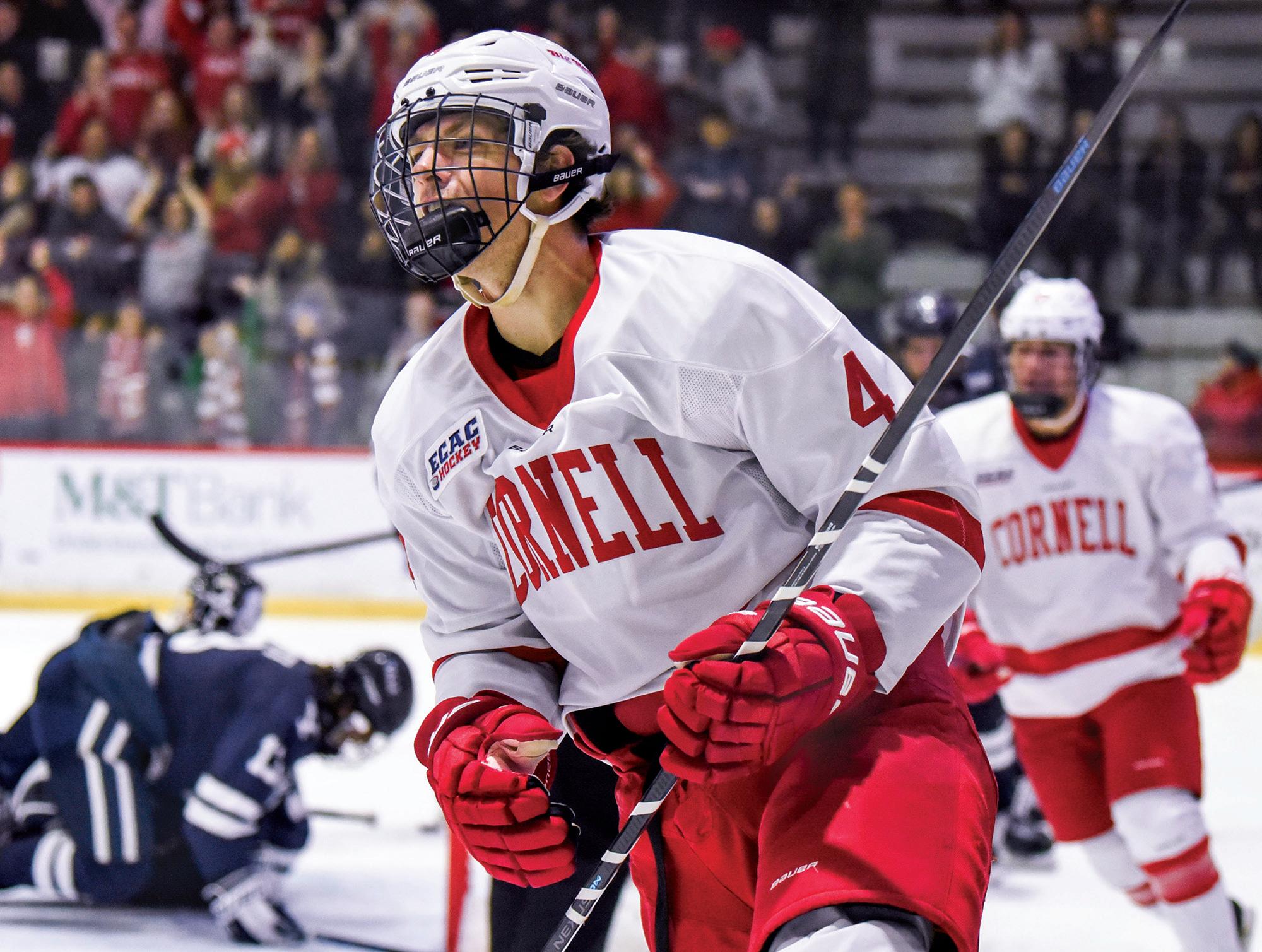
Hat Trick Morgan Barron’s three-goal propelled the Red to a 6-2 win over Yale.


National Hockey Team
Sophomore Min Shin
Hat Trick Morgan Barron’s three-goal propelled the Red to a 6-2 win over Yale.
By JOHNATHAN STIMPSON Sun News Editor
When the internet goes down, a common piece of advice is to keep restarting one’s router until it finally works.
That frustratingly familiar scenario played out on a massive scale Thursday, when a problem in the Cornell servers sparked a cascade of disturbances in an internet infrastructure that thousands of students, faculty and staff have come to closely rely upon to perform basic tasks. This forced Cornell’s I.T. department to conduct “a series of router restarts” in the hopes of bringing the network back online.
ing everything from library loans to prelims.
In an email to The Sun, one first-year veterinary student described a scene of drama as downed servers caused a major examination to be delayed amidst the confusion.
“An hour and 15 minutes into our sixhour final the servers went down,” Natalie Katz wrote. “They’re still not back up and we were allowed to go home for two hours and had to come back at 4. We’re all just sitting here, exhausted and frustrated, still not able to take our final.”
“There were several students around the printers who were very frustrated because they were not even getting the net print login pop-up.”
Alec Farber ’20
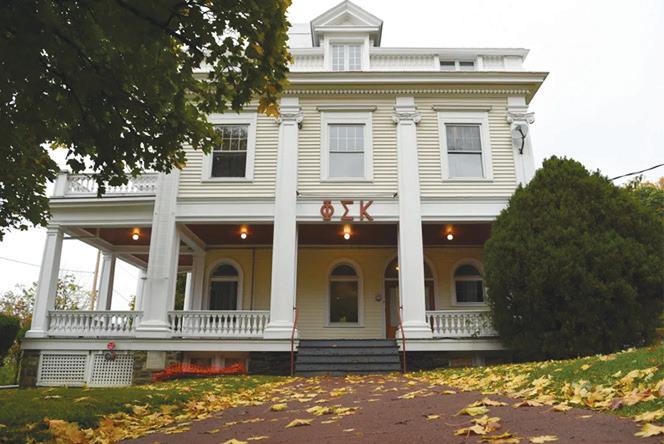
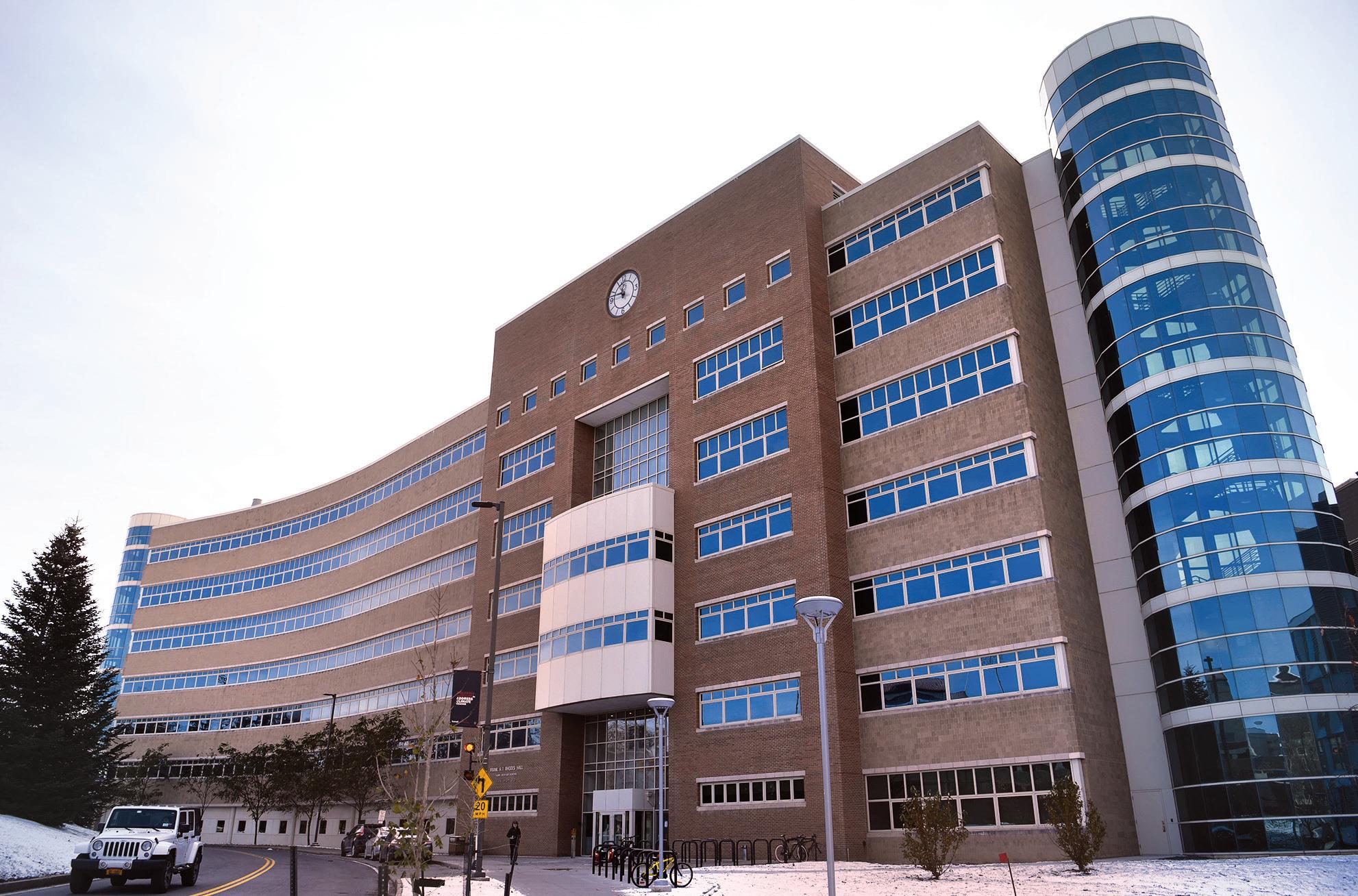
The outage — which arose from a yet to be determined “issue” in Cornell’s two major server farms, located in Rhodes Hall and the Computing and Communications Center — was first reported at 10:30 a.m., prompting Cornell’s I.T. department to quickly scramble for a solution.
The campus Wi-Fi, eduroam, Cornell Dining, Net-Print, Tableau and Student Essentials came to a screeching halt, disrupt-
According to performance reports, CIT spent three and a half hours investigating the mishap, which was deemed a “severity one issue,” before calling the vendor that supplied the routers at 2:30 p.m. in order to “identify the root cause of the problem.”
In response, CIT temporarily shut down server farm routers from 3:15 to 3:30 p.m, which restored some affected services, but still left others inoperable.
A series of additional restarts were performed into the evening, until by 7:30 p.m. the same day, CIT reported that all services had finally been restored and were investigat-
ing the initial source of the outage.
The outage, which lasted for most of the day, caused a slew of key Cornell services to seize up in disarray. Alec Faber ’20, who works in Olin library, said he came in to work at the printer support desk only to be met with scores of frustrated students griping about their inability to leverage on-campus printing resources.
“There were several students around the printers who were very frustrated because
Cornell’s Interfraternity Council canceled nearly all regulated fraternity events for the rest of the fall semester Friday night, citing safety concerns.
The ban — which will run until Jan. 1, 2020 — said recent events were a catalyst which had made “inherent safety hazards” apparent within the existing Greek life social system.
The ban excludes a maximum of three “date nights” or formal events with a memberto-guest ratio of 1:1 hosted at a “licensed, third party venue or the Chapter house while utilizing licensed 3rd party resources,” which included approved bartenders and security personnel.
“We have an obligation to protect the safety of both our members, our guests, and the larger Cornell community and we believe that taking this
action allows us to draw back and reassess our shortcomings and enact substantial change,” reads the ban, cosigned by all 29 IFC fraternity presidents except those representing Alpha Delta Phi and Phi Kappa Psi. The Phi Kappa Psi president did not reply to The Sun’s requests for comment.
“Everyone was given notice and opportunity to come, voice opinions, vote, and sign,” said IFC President Cristian Gonzalez ’20.
However, Alpha Delta Phi fraternity president Dillon Anadkat ’21, in a written statement to The Sun, described the ban as more “symbolic” than capable of affecting real change.
“Alpha Delta Phi supports taking action in partnership with the rest of the Greek community. But this measure bans registered events, which are some of the safest on campus and only encourages
they were not even getting the net print login pop-up,” Faber told The Sun. According to Faber, the Cornell’s I.T. Services informed him that the campus-wide service outage had affected “virtually all of Cornell’s online services,” precluding them from even “accessing their own I.T. help database.”
After learning of this recent development,
By AMINA KILPATRICK
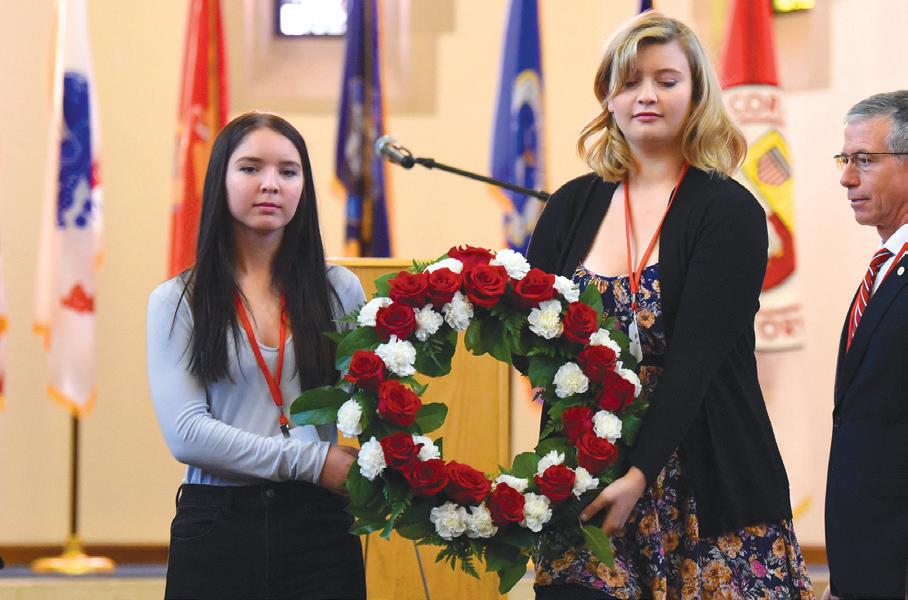
On Saturday, President Martha E. Pollack rededicated the War Memorial in Anabel Taylor Hall to include Maj. Richard Gannon ’95 and Capt. George Wood ’93, two alumni who died in the Iraq
Gannon attended Cornell on a Navy Scholarship and studied government and history in the College of Arts and Sciences. He later joined the armed forces as a Marine Officer in 1995. He died on April 17, 2004, in Anbar province,

Broadcast metereology | WABC-TV New York’s chief meterologist Lee Goldberg will give a talk on Monday about his experiences in broadcast metereology.
Cornell Initiative for Digital Agriculture Seminar Series: “Anticipating Change: How Apple Growers are Preparing for New Robotic Technologies” 11:30 a.m. - 1 p.m., 114 Gates Hall
Howard Mumford Jones Professor of American Studies, Harvard University
Migrations Initiative Brown Bag Seminar Series Noon - 1:30 p.m., 281 Ives Hall
“Buying Power: Electoral Strategy Before the Secret Vote,” LASP Seminar Series 12:15 - 1:10 p.m., G01 Stimson Hall
Department of Physics Colloquium 4 - 5 p.m., Schwartz Auditorium, Rockefeller Hall
An Evening With Lee Goldberg 5 p.m., 132 Goldwin Smith Hall
Ecology & Evolutionary Biology Seminar Series “Causes and Consequences of Parasite Interactions: Insight From a Natural System” 12:20 - 1:30 p.m., A106 Corson Mudd Hall
Dismantling India’s Anti-Sodomy Law: A People’s Journey in India 12:30 - 1:30 p.m., 277 Myron Taylor Hall
Michelle Jackson Manifesto for a Dream: Inequality, Constraint, and an Agenda for Radical Reform 2:55 - 4:10 p.m., G70 Klarman Hall
Global Climate Change And Its Consequences: Science Assessments to Inform Decision-making 4:30 - 5:30 p.m., 401 Warren Hall
OF
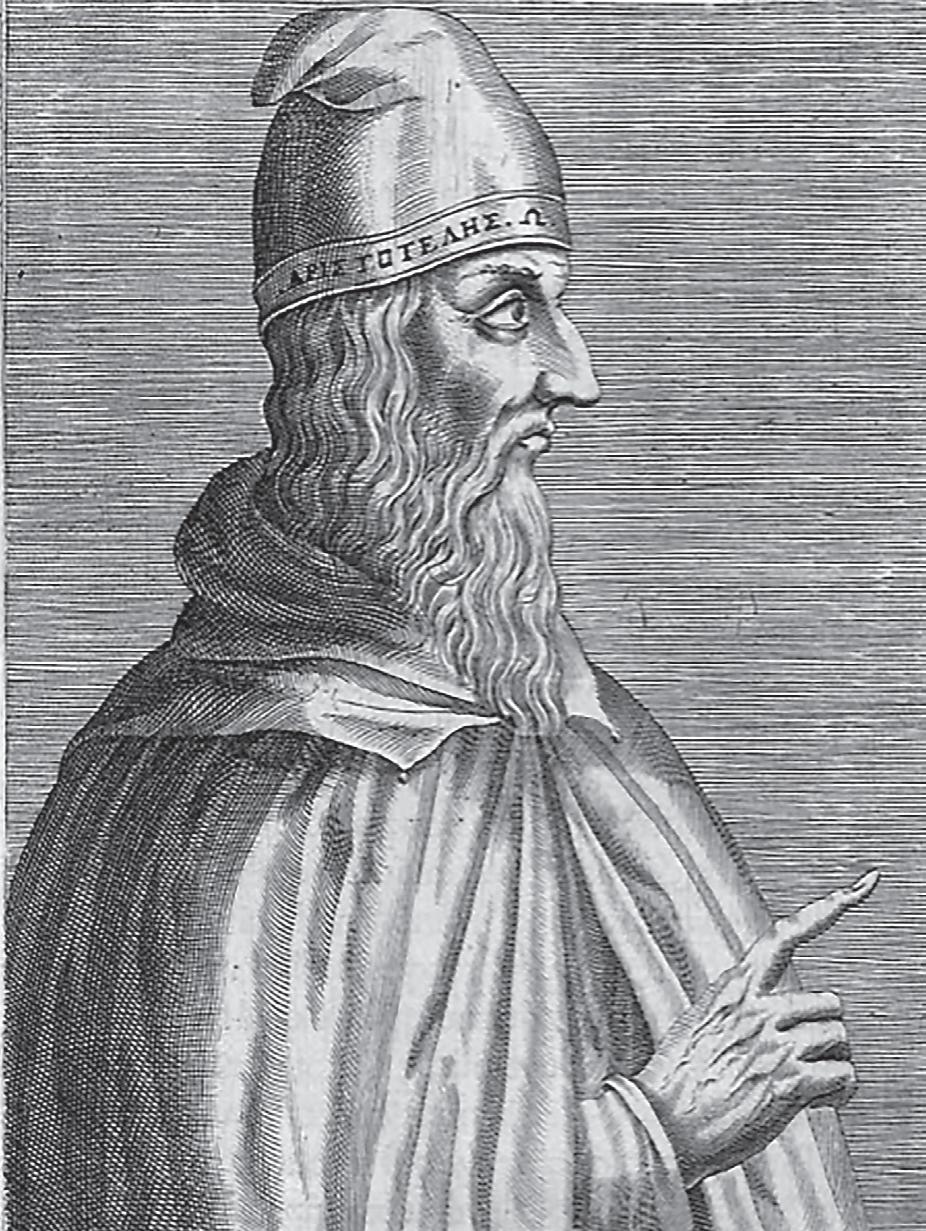
Politics of proof | On Tuesday, Prof. Harvey Yunis, classical studies, Rice University, will deliver a lecture that examines the rhetoric Aristotle deployed in his
The Business of Broadway: How Musicals Are Made 4:30 - 5:30 p.m., 124 Schwartz Center for the Performing Arts
The Politics of Proof in Aristotle’s Rhetoric 5 p.m., 122 Goldwin Smith Hall
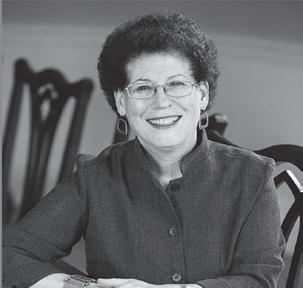
Struggling to Save America’s Cities in the Suburban Age: Urban Renewal Reconsidered
Thursday, November 14, 2019 4:30pm Rhodes-Rawlings Auditorium, KG70 Klarman Hall


By RENEE HOH Sun Contributor
At just 12 years old, Min Shin ’22 appeared on Korean national television declaring her dream to one day play for the Korean National Women’s Ice Hockey team. Now, seven years later, the Cornell sophomore can finally don the Korean jersey.
Shin’s determination to play college hockey and for Team Korea has jetted her across various states and countries. Most recently, Shin travelled to Ottawa, Ontario for a two-week training camp with her new teammates in preparation for the 2020 IIHF Championships in Poland. Balancing hockey and school work, Shin brought all of her studying materials and returned to Cornell from the camp a few days early –– just in time for her Introductory Oceanography prelim.
“Playing college hockey at Hamilton [College] before I came here really taught me to stay on top of my work, because

Crossing borders | Shin travelled to Ottawa for a twoweek training camp alongside her teammates and returned to Cornell just in time for her Oceanography prelim.
as a college athlete, you’re always really busy,” said Shin, who transferred into Cornell this semester.
Shin was born in South Korea, but spent her childhood in Ithaca. Growing up, Shin’s parents used to drive her to ice rinks in Lansing, thinking that she would pick up figure skating. Shin, however, had other ideas.
“My brother was playing hockey, so obviously I wanted to also play hockey, not figure skate,” Shin said with a laugh.
Getting serious about ice hockey, Shin moved back to Korea, where she played alongside boys for club teams and was invited by the Korean national team to participate in training camps by fifth grade. However, the opportunity to play high school hockey prompted the goalie to return to the U.S. and attend the Groton School in Boston, where she captained the varsity ice hockey team during her senior year.
Still, every summer, Shin would lug her hockey gear back to Korea with her, dedicating her time to showcases, camps and tournaments. Shin tried out for Team Korea during her high school junior year, but narrowly missed out on playing in the 2018 PyeongChang Winter Olympics and was the “last goalie cut in the final roster.”
“I was pretty bummed out about it,” Shin said. “I was planning on quitting hockey after that.
“And to end on a good note because, my senior year, I was voted captain and we beat our rival school in more than six years,” Shin continued. It was such a great final game and I was good with ending my [hockey] career here.”
Shin had the option to attend University of California, Los Angeles, but still could not give up the prospects of playing college hockey. Instead, she walked onto the DIII hockey team for Hamilton College in the NESCAC league before transferring to Cornell, where she intends to major in anthropology and minor in law & society.
“No! I want to keep going,” Shin said, when asked if attending law school would end her hockey career. “Playing hockey, playing for Team Korea, that has been my dream for as long as I can remember.”
By HANNAH KIM
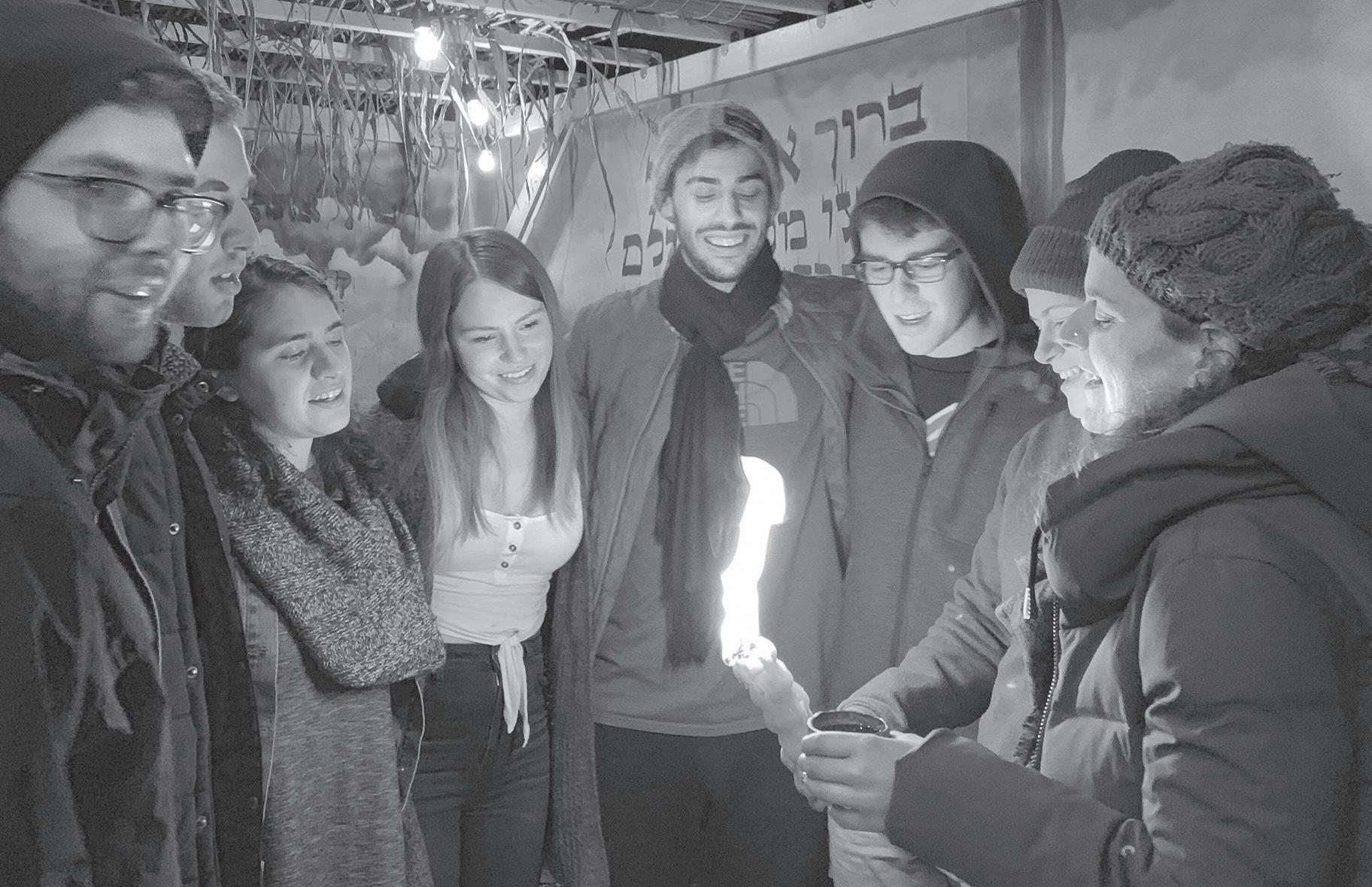
You can find Rabbi Hayley Goldstein at her home on Friday nights, having Shabbat dinner and discussing the week’s Torah portion with a small group of students. As the first queer female Rabbi at Cornell Hillel, Goldstein’s philosophy of inclusion goes beyond acceptance.
“For me, it’s a given that we [LGBTQ people] belong in every space, and especially Jewish spaces. What I’m striving for is a world in which our goal is celebrating ourselves and each other,” said Goldstein.
Goldstein runs Base Ithaca, a project of Cornell Hillel and an extension of the country wide Base community, out of her house in Collegetown. She describes Base as a movement to promote “home-based, pluralistic, inclusive Judaism.”
Offering Shabbat dinners every Friday and Tacos and Torah nights on Wednesdays, Goldstein and her part-
ner Lizzie Sivitz aim to offer “a small enough space where they [students] can meet other people and really talk to them.”
“It [Base Ithaca] reminds you of being at home, celebrating the holidays with your family, eating food with your cousins, learning something new from your parents ... [it] feels a bit like a home away from home,” said Jillian Shapiro ’20, president of Cornell Hillel.
Goldstein also strives for accessibility and inclusion in her home, “meeting people where they are figuratively and literally” in the sense that she welcomes people of all levels of spirituality and in the sense that her house is located in Collegetown, which is accessible to many students.
“As someone that didn’t have a lot of Jewish experiences growing up ... Base just really feels like a place to learn and grow as a person and to embrace Judaism in its social aspects and learning aspects,” said Nicole Cunningham

Next semester, Shin will have a few more stops to hit. She’ll be traveling to Korea for the Legacy Cup, the Czech Republic for a training camp, and Poland for the World Championships. If Team Korea plays well, Shin may have the opportunity to compete in the 2022 Beijing Winter Olympics, flying out to another country and fulfilling yet another dream of hers.
While Shin does not currently play for the Cornell women’s team, she skated with the team to prepare for her training camp. Despite her already busy schedule, Shin said she would love to play for the team she grew up watching.
“When I was younger, I’d go watch the college hockey games at Lynah [Rink],” Shin said. “So, coming back here it’s been like ‘oh my gosh, if I could play for this team that would be so cool.’ Cornell’s ice hockey is amazing.”
Renee Hoh can be reached at rch294@cornell.edu.
By LOUIS CHUANG Sun Staff Writer
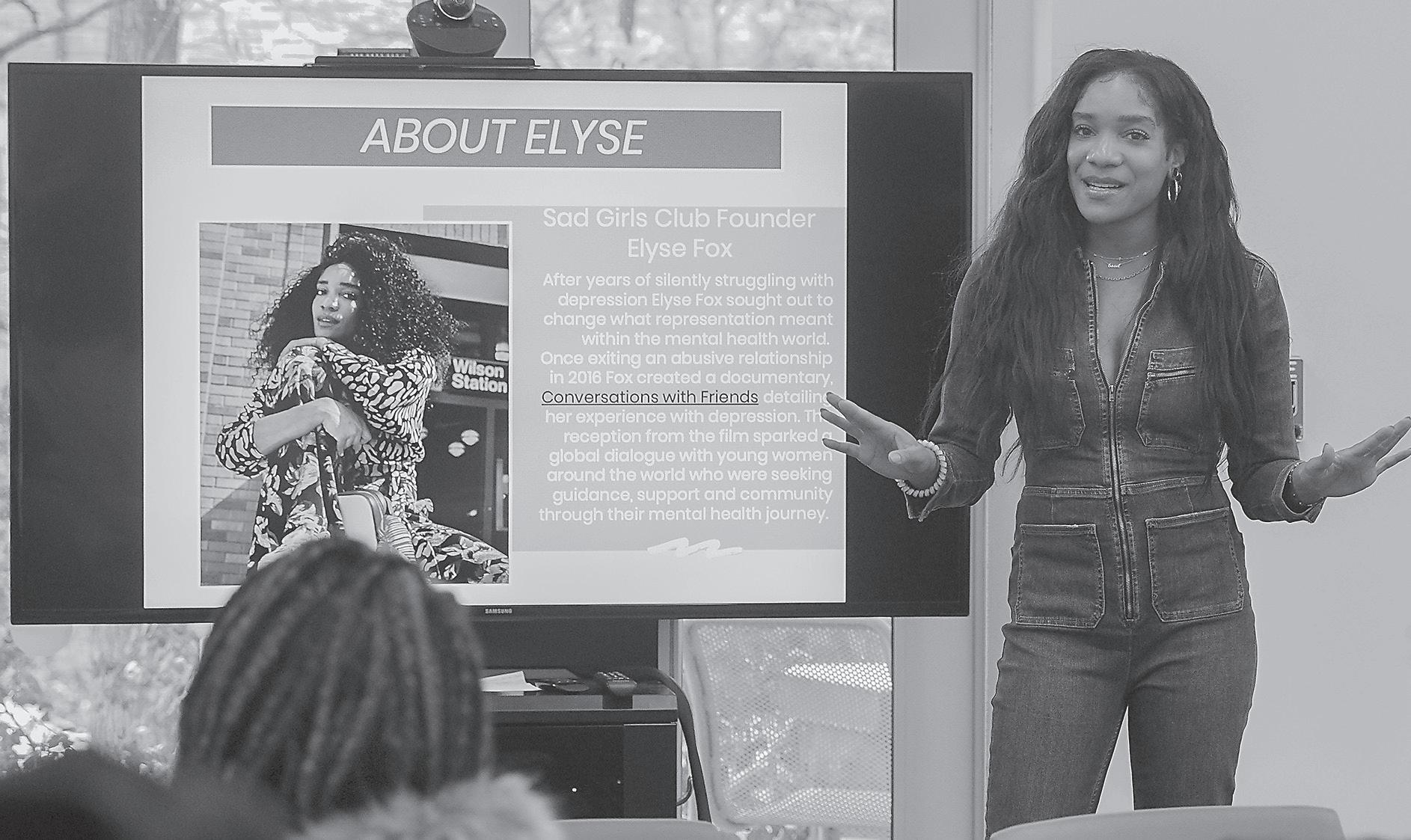
Amidst calls for greater mental health protections, Building Ourselves through Sisterhood and Service hosted a summit this weekend, inviting guest speaker Elyse Fox founder of Sad Girls Club to tackle mental health issues in the event’s keynote address on Saturday.
Fox — a Brooklynite filmmaker — launched Sad Girls Club as community that creates safe spaces for women of color to open up about their mental health, which now boasts over 246,000 followers on Instagram.
Now, one of the largest organizations that tackles the mental health issues plaguing Gen Z and Millenials, Sad Girls club aims to destigmatize how depression and mental health are treated throughout different circles, Fox said.
For Fox, mental illness is not a foreign concept. Prompted by her own experiences with mental health issues, namely depression, Fox decided to create a video, revealing the “more authentic” struggles faced in her life, beyond the superficial image people see online.
“I wanted to do something else more authentic so I made the film about my depres-
sion, and it was … for my friends and family to say like, ‘yeah, I’m doing all these amazing things yeah my life looks perfect online — yeah, it looks really bright and sunny, but I am suffering and it’s really hard for me to ask for help,’” said Fox.
Having posted a snippet of the film on Instagram, Fox immediately logged off of Instagram for a day, in fear of being judged for speaking out about mental health issues.
“I was just so nervous about everyone judging me and how I was going to be seen and people thinking I’m crazy,” Fox said. “I was so afraid of judgment.”
But, the responses that emerged were the exact opposite of Fox’s expectations: She received a flood of messages from her friends requesting more from her, wanting to learn more about her story. “That made me even more nervous to [put] the whole thing out,” Fox said.
However, in retrospect, Fox fears were unwarranted — rather than being judged, Fox served as an inspiration to people struggling with mental health issues but were reluctant to
By LOUIS CHUANG Sun Staff Writer
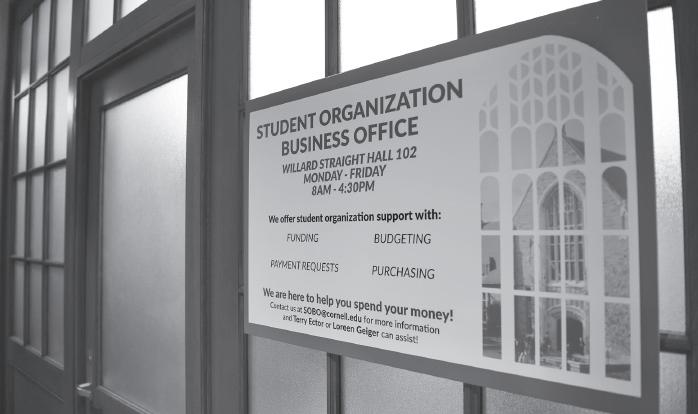
“We are here to help you spend your money!” boasts the new Student Organization Business Office, whose grand opening kicked off on Friday.
Housed on the first floor of Willard Straight Hall, the office will serve as an all-encompassing place where students can get their questions answered, such as club funding, budgeting, payment requests and purchasing.
Terry Ector and Loreen Geiger will be managing the office as student organization transaction specialists. Previously, Ector worked on the fourth floor of Willard Straight Hall as the Student Activities Funding Commission Coordinator, and Geiger worked out of the business office in Balch Hall as a financial transactions representative.
Geiger was moved to Willard Straight Hall, both as a result of the North Campus renovations and recent efforts to allow students to come to one place to voice all concerns and to finalize how to process everything.
As residents of the new office, their
responsibilities include helping student organizations, especially nascent ones, adjust to the new funding system, Campus Groups. Over the summer, Cornell transitioned from using OrgSync to CampusGroups after their contract expired.
Adjusting to the new system has had a learning curve which Geiger and Ector can help address.
The office is there to assist people with the new reimbursement system, which is now electronic in CampusGroups.
In an attempt to help students avoid having to pay out of pocket, Ector described the goal as saving students time by expediting the process — to give them “one-stop-shop to come to” regardless of whether “they got SAFC funding, graduate funding, CU Tonight, gift money,” she said.
Geiger said that another purpose of the transition to Campus Groups was to accelerate the process of approving budgets and receiving of reimbursements from six weeks to seven to 10 days.
“When it was paper, it was very time consuming to check signatures to make sure the right officers were signing,” Geiger said.
“Now, there are people over the Business Service Center that can help electronically process things.”
Another problem the transaction specialists can deal with is helping students find funding outside of SAFC. In the event that a club fails to secure a budget the specialists can point them towards other funding boards and the Alumni Affairs Office.
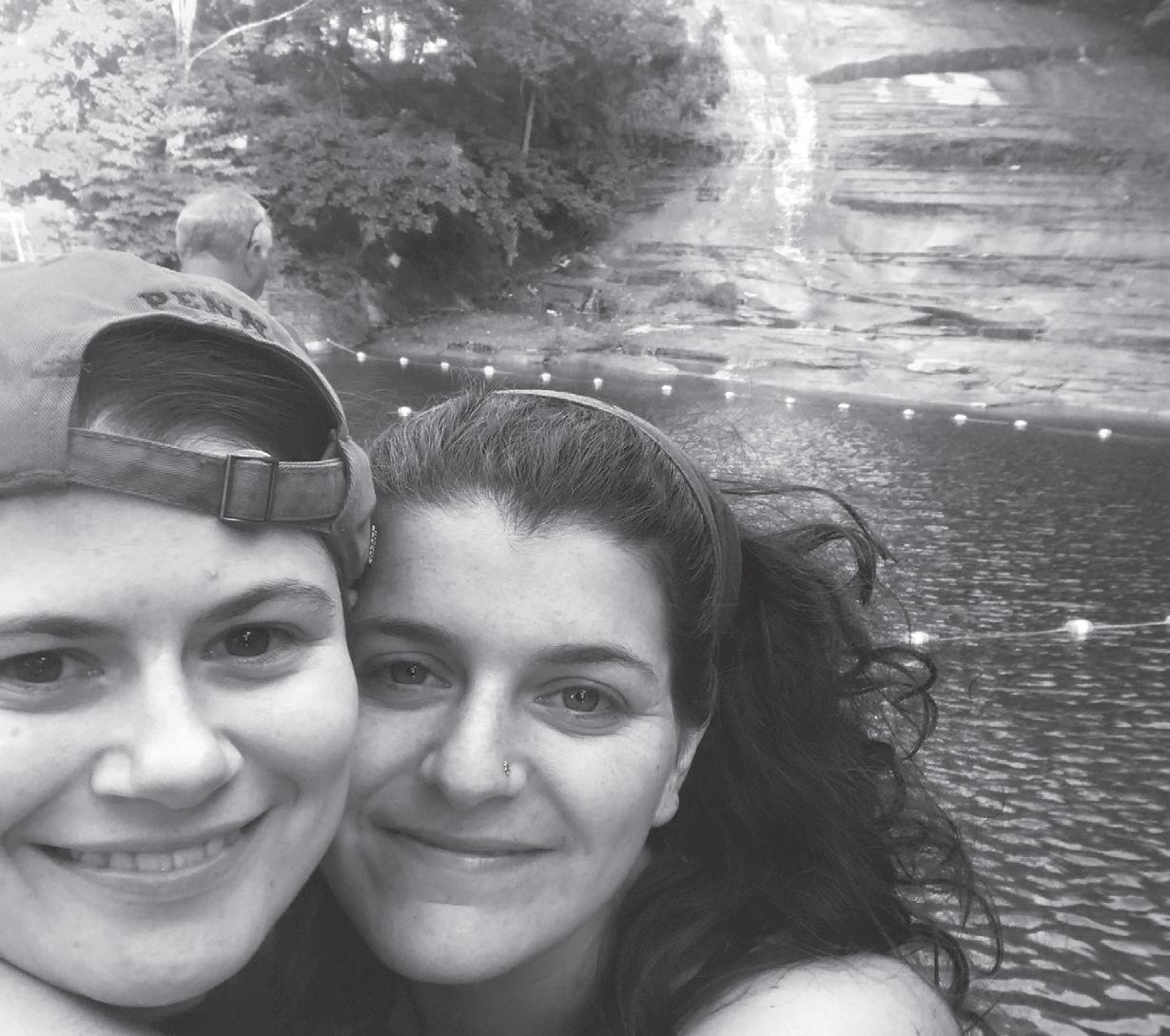
Striving for accessability, Goldstein invites students of all levels of spirituality to her home in Collegetown
’20. She added that she was also “grateful to have a place right down the road.”
“For me, it's a given that we ... belong in every space, and especially Jewish spaces.”
Hayley Goldstein
Goldstein has also run services for Cornell Hillel, including Yom Kippur and Rosh Hashanah. She said she often incorporates music into her services because “even if you don’t know the Hebrew or if it’s intimidating in any way, you can [still] connect to the music.”
Shapiro, who has been to a variety of Goldstein’s services, said that they deeply diverge from “what is normally done, but that made it all the more special, meaningful and impactful.”
Speaking on her time at Cornell so far, Goldstein said she has felt welcomed by her colleagues at Cornell Hillel who are straight, male and Orthodox.
“Cornell Hillel, really gives a model of what pluralism could look like even just in that ... we work together and we share Shabbat meals together,” Goldstein said. “So that’s been really special, to be completely embraced by the community.”
The office is open from 8 a.m. to 4:30 p.m. in Willard Straight Hall 102 and can be reached at SOBO@cornell.edu.
Louis Chuang can be reached at lchuang@cornellsun.com.
SUMMIT
Continued from page 3
vocalize their feelings.
“I remember the first message I opened was from a 13-year-old girl who lived in Paris … she said, ‘I live in and I’m from a Nigerian family, and I cannot speak about these experiences with my family or they will judge me,” Fox continued.
The key to creating this kind of safe space was to invite people so that they could engage in dialogue with each other, according to Fox. As such, Fox began her quest to fight mental illness by proposing to meet in person with all of her early followers despite being “broke as hell.”
Fox dubbed the experience “beautiful” —
from the beginning “the problems were immediately overlapping: I had girls immediately judge each other when they’re in the room. It was split like my girls [her best friends] are here, black over here and Asian girls over here and by the end, girls are exchanging numbers and Instagram with each other.”
Fox closed with calls to action: “We can’t look towards our political figures to help us out — we can’t wait around for the systems to be created for us; we have to create for ourselves and build community amongst each other.”
Louis Chuang can be reached at lchuang@cornellsun.com.
VETERANS
Continued from page 1
Iraq. He was survived by his wife, Sally and their four children.
As a student in the College of Agriculture and Life Sciences, Wood played football for Cornell and had dreams of becoming a teacher and coach at The U.S. Military Academy at Westpoint. After Cornell, Wood earned his master’s degrees at the University at Albany and Cortland State. He died on Nov. 20, 2003, in Baqubah, Iraq, and was survived by his wife Lisa and their daughter, Maria.
At the ceremony, members of the Cornell Reserve Officer Training Corps presented the colors. Other personnel from the United States armed forces were also in attendance at the event.
Provost Michael Kotlikoff opened the event with a welcome, and Maj. Gen. Michael S. Hall ’68, who is now the director of the Ithaca Tompkins Regional Airport, also spoke at the dedication, sharing stories about his time at Cornell during the Vietnam War era.
Pollack’s speech highlighted Cornell’s commitment to those in the armed services both currently and historically. Since the Spanish-American War, Cornellians have served in every U.S. conflict; during World War I, Cornell sent the largest share of commissioned officers than any other institution; Among the Ivy League, Cornell is also the only school to retain army, navy and air force
ROTC programs.
“We are proud of them for their service,” Pollack said.
At the ceremony, family members of Wood and Gannon were present and shared their remarks. Wood’s daughter and wife read his biography aloud and remembered Wood as a committed husband and father and a generous person.
Gannon’s daughter, Maria, expressed her sadness in not being able to get to know her father. However, she recalled how when she graduated from high school, she received a flood of letters from friends and family of Gannon’s, giving her a glimpse into the character of her father and the impact he had on others.
The ceremony ended with the revealing of the engraved names on the memorial after a dedication from Pollack.
The rotunda in Anabel Taylor Hall also houses the World War II memorial which was dedicated in 1953. A tablet was added for Cornellians who served Vietnam and Korea in 1993. The memorial was rededicated in 2003 to include Cornellians who died in the Persian Gulf war and other conflicts.
The tablet reads “We honor all Cornellians lost in service since WWII.”
Amina Kilpatrick can be reached at akilpatrick@cornellsun.com.
unregistered and off-campus events to take place,” Anadkat wrote. “It is time for fraternities to sit down with the university administration to find more comprehensive, feasible and tenable solutions to prevent such tragedies from occurring again. Banning registered events seems more symbolic than substantive.”
Cornell President Martha E. Pollack said that the death of Antonio Tsialas ’23 after an “unregistered fraternity-sponsored event” was part of a pattern of problems in Greek life in a campus-wide email Friday evening. Police have not yet shared a cause of death.
“These events, still under investigation, regrettably follow a pattern of misconduct in the Greek-letter system, a pattern that is emblematic of enduring problems that we, as a community, must recommit ourselves to solving,” Pollack wrote. “Indeed, despite substantially enhanced Greek Life outreach, training and policy development over the last two years, numerous fraternities have been found to have engaged in misconduct over that time sufficient to merit suspension of their recognition by the university.”
Since the death of Tsialas, who was last seen at the Phi Kappa Psi fraternity house on Oct. 24 and found dead on Oct. 26, the Panhellenic Council and IFC have offered an array of responses, including event management regulations and event suspensions.
In a phone call with The Sun on Friday morning, Tsialas’s mother Flavia Tomasello said that she hoped students with knowledge about Tsialas’s death would contact
the Cornell University Police Department via the Silent Witness Program, and also noted that she had set up a phone line at (607) 280-5102 for students to text or call.
The ban is the latest in a series of responses by the IFC and Panhel.
The week after Tsialas’s death, Cornell’s fraternities “overwhelmingly” decided to suspend all registered social events scheduled for the Halloween weekend. The Oct. 30 decision — which was made by the executive board of the Interfraternity Council and the presidents of active
“The events, still under investigation, regrettably follow a pattern of misconduct in the Greek-letter system.”
President Martha E. Pollack
fraternity chapters on Cornell’s campus — was prompted by the weekend tragedy, the IFC president said.
“We believe that it would be disrespectful and wrong to be celebrating this weekend given the passing of Antonio,” Gonzalez said in a message to The Sun at the time.
Panhel President Maya Cutforth ’20 proposed a suspension of mixers to representatives of the 13 active on-campus sororities on Oct. 31, coming on the heels of the IFC’s decision. Sororities were encouraged to weigh the merits and critiques of the proposal in their own chapter meetings prior to Wednesday’s vote.
The proposal to freeze social mixers failed to collect unanimous support on Wednesday, despite a majority of Panhel sorority delegates voting in favor of the contentious plan to stop mixing with Interfraternity Council fraternities until the IFC undertook safety reforms.
The proposal collected a majority of votes with seven in favor, two against and four abstentions, but failed to muster the unanimous vote that Cutforth had said was necessary. The vote for a second proposal — an event management task committee for event reform, with representation from all Panhel sororities and IFC fraternities — passed with 12 yeses, one vote short of unanimous.
The initial proposal faced pushback, some of which was vocalized by Francisco Gonzalez ’20, a hometown friend of Tsialas. “I agree that some of the proposals may be sensible,” Francisco said. “But they are unrelated to Antonio’s death, and the demands correlate to regulated events — and not the unregulated event that he attended.”
Vice President for Student and Campus Life Ryan Lombardi commended the efforts of the Panhel and IFC presidents in a Friday evening email to The Sun, calling Cutforth’s proposal a “catalyst for other students ultimately stepping forward to commit to a better future.”
“I also want to express my gratitude to Cristian Gonzalez and the IFC and chapter leadership for taking ownership of their role in ensuring a healthy and safe campus social climate,” Lombardi continued.
“I’m happy that we are making strides to make Cornell safer for everyone,” Cutforth said Friday night.
Maryam Zafar can be reached at mzafar@cornellsun.com.
SERVER Continued from page 1
Faber said he “spent most of [his] shift telling people that ‘yes, all printing services are down,’ [and] ‘no, I did not know
when it would be fixed, and no, there is nowhere else on campus you’ll be able to print.’”
“Naturally several students were quite upset about this as they had homework and papers due, and I wish there was
something I could’ve done for them because I know what it’s like to be in that situation,” Faber added. “But I was at the mercy of whoever was fixing the problem.”
A University spokesperson said that Cornell had no further information to

share on the incident.
Shivani Sanghani ’20 contributed reporting to this article.
Johnathan Stimpson can be reached at jstimpson@cornellsun.com.
You have probably heard this before, but please be mindful in other people’s cultural space.
No, this is not the end of the story. I am not giving you a vague guideline just for you to follow arbitrarily based on your own interpretation and your past experience. In that sense, everything will most likely remain the way it has been, and the powerful notion of being critical will thus be rendered meaningless. It is analogous to shouting out that people should read about critical theory without elaborating on what it entails. (But yeah, critical theory deals with power imbalance, and I suggest that you all look into it.)
I have to admit that it can be challenging to fully implement the nuances of being mindful. The notion of mindfulness can be fluid across different cultural contexts. It is so amorphous that it is nearly impossible to be wholly delineated. Before delving into the mesh of possibilities of critical theory, a critical question may help trim down pages of reasoning: Why do people feel that others — especially the culturally dominant groups — are not being mindful in their cultural space?
ongoing phenomenon happening across different cultures. This has boosted the appreciation of one’s own cultural roots. Yet when the culturally dominant is also present in the audience, the dynamics are fundamentally different. Under such circumstances, both by default and subconsciously, for those who do not belong to cultures that have historically been revered, they feel that they are performing for others’ pleasure but not for their self-appreciation.

Because the West’s default view on culture used to be hierarchical –– that some cultures or, more specifically, one culture are better than the others –– and this is assumed unless it is expressed otherwise. Even when cultural pluralism has been proven to work just perfectly fine, this assumption with historical precedents is not going anywhere. The history of oppression will not, and should not, be forgotten. And it is this hierarchical view on culture that makes those who used to be belittled by the top tier still feel oppressed and uncomfortable. Yes, stronger in-group orientation is an
Stephen Yang
Rewiring Technoculture
Acknowledging these differences is the first step toward being mindful, but it’s far from enough. What we as a school currently lacks is an egalitarian view on culture. Despite the mushrooming of co-cultures coexisting on campus, Cornell’s image still comes off as monotonous –– straight, white and fratty. No, Cornell is not a cultural desert, but it tends to appear as a cultural monopoly. We as a school do not lack the complexity of culture merely because we are in a secluded setting. At a school that echoes the motto “any person, any study,” any person from any walk of life with any background share this campus together. What I mean by sharing is that theoretically, our co-cultures should coexist without an order of importance or relevance. Vice versa, you should also expect to see any person on campus. People from different cultures don’t just study here –– they go to parties and shows to enjoy their time here at Cornell just like you. They do not host events just for you to feel accepting, and going to these events does not make you particularly “woke.”
Unless you show genuine appreciation for their culture.
Here at Cornell, you will most likely see a diverse crowd at cultural events, and this most likely involves a mix of privileged kids in the audience. When you come to the
venue as a privileged audience member, it may seem tricky when it comes to showing appreciation for marginalized cultures. But please bear in mind — you are far from not being welcomed. Yes, this still holds true ––people who show interest in other people’s cultures are always welcome. In fact, we need you to be there to actively mitigate the cultural divide. This process is not one-directional –– it is symbiotic for our society as a whole.
But how exactly could appreciation be manifested? When you enter other people’s cultural space, think of it as stepping into their home field. Being mindful essentially entails actively not being intrusive. When you wholeheartedly endeavor to alleviate the hierarchical boundaries, it shows. And when you don’t put in the effort, it shows.
So, what should we do? What shouldn’t we do? What could we have done better? First, drop the cultural cues that are not commonly shared by other cultures. These may be perceived as cues of superiority and dominance. Next, observe what other people do at the space and adapt to their mode of social interactions. At the same time, take your own differences into consideration before you start appropriating their culture out of context. The final step is simple: Show your appreciation. A simple and gen-
uine smile says it all. Appreciation can be uncomplicated and beautiful, and understanding can be humble and compassionate. These are powerful ways to attenuate the power imbalance within our cultural hierarchy that is still alive on our campus. With the proliferation of the Internet and new media, the portrayal of marginalized culture has been more accessible than ever. As such, we all think we have seen and appreciate diversity, but have we put this portrayal of diversity in the context of historical and ongoing systematic oppression? Have we considered how the media industry as an omnipotent institution founded and controlled by the culturally dominant feeds into this mode of oppression? Content collapse is a real issue when people do not consciously attempt to be active media consumers. Whatever you perceive in mainstream media is most likely reflected through the lens of the privileged. Please go to cultural events to directly learn from those who are marginalized, and please be mindful in their cultural space.
Stephen Yang is a sophomore in the College of Agriculture and Life Sciences. He can be reached at syang@cornellsun.com. Rewiring Technoculture runs alternate Mondays this semester.
This past Saturday evening, Cornell’s all-female a capella group the Touchtones hosted a dazzling performance in Call Auditorium. Titled “Midas Touch,” the 14-person group put on a spectacular display of vocals and showmanship, attracting almost a full hall of students and fans. They performed a total of nine songs, with all of them impressively arranged by current and past members of the group.
Founded in 1983, the Touchtones are proudly the “first
officially recognized a capella group” of Cornell University. At 36 years of age, the group is still active and performing at charities, student functions and even marriage proposals, as displayed on their website.
As a person who is not usually interested in a capella, I was pleasantly surprised to find myself thoroughly enjoying the night’s show. Although the group featured a large lineup of singers, they were quite successful in keeping their choreography clean, which is crucial for large groups. There were also many solos in their array of songs, which allowed multiple members to showcase their
abilities and bathe briefly in the spotlight. Like all performances, there were some songs that stood out more than others; their play-
The slower rendition of the songs really allowed for soloist Nicole Lehman ’20 to shine. Brain Lu ’23
ful Abba medley, for example, was one that the crowd responded to enthusiastically.
I was particularly impressed with the Touchtones’ arrangement of LSD’s “Genius,” fea -
turing Sia, Diplo and Labrinth.
Maxine Malvar ’21 and Lydia Buckley ’21 had marvelous solos, with Maxine’s voice almost drowned out by the cheers of the audience as the song hit its climax. Their seamless choreography appeared effortless, and under the bright lights their golden outfits made them seem like they were actually touched by King Midas.
The Touchtones’ final song, a mashup of Bruno Mars’ “Runaway” and Florence + the Machine’s “Dog Days Are Over,” was my personal favorite; the slower rendition of the songs really allowed for soloist Nicole Lehman ’20 to shine. The tran-
sitions between the two songs were incredibly smooth, and the other singers’ voices complemented the solo beautifully. An alumna of the group also made a reappearance, performing alongside her juniors in a touching and fun reunion.
All in all, the Touchtones’ performance was truly golden, with amazing singing and choreography. I highly recommend checking out future performances as well as their most recent E.P. No Vacancy on Spotify.
Brian Lu is a freshman in the College of Arts and Sciences. He can be reached at brl62@cornell.edu.
For most film nerds, seeing the A24 logo pop up on the big screen before a movie is a pretty good indication that you are in for a treat. The distribution and production company has an amazing track record and has built up quite a reputation in the film industry over the past few years, with Academy Award favorites like Moonlight, Lady Bird and 20th Century Women.
The films that they distribute span a wide range of genres — from haunting horror/thriller movies like Heredity to more light-hearted dramatic comedies like Lady Bird. Yet even across genres, their films are almost always critically renowned not just for being high-quality films, but also for a uniqueness and vibrancy — an X-factor, if you will — that is consistent across all of their content.
This raises an important question: How is A24 able to continuously release a slate of successful small to mid-budget films that repeatedly push boundaries and attract rave reviews within an industry that is saturated by crowd-pleasing blockbusters? In other words, how is a company like A24 able to thrive alongside distribution giants that have dominated the movie industry for almost a century?
One reason is that they aren’t owned or controlled by any of the major six distribution companies (20th Century Fox, Warner Bros., Paramount, Columbia, Universal and Walt Disney Studios). This gives A24 the freedom to distribute and produce more inventive, niche films that wouldn’t necessarily fit the blockbuster mentality of these media giants. In this way, A24 is able to distribute a portfolio of small to mid-sized movies that are of a higher quality, even if they may be considered niche.
In a profile of the company that was released by Slate in 2015, film critic David Ehrlich summarized the success of A24 at a time before they had even released many of the movies that have made them a household name: “At a time when young people are increasingly going to the movies only for blockbuster spectacle, A24 has established itself as the film industry’s most forward-thinking company by releasing the kind of midsized, stylish, quality films that seemed on the verge of going extinct, transforming them into a collective theatrical experience and aiming them squarely at a demographic that would rather watch movies on their phones.”
By creating a cohesive brand — both through the content they choose to release and the persona they present online — A24 has built a strong following among younger audiences that normally wouldn’t bother traveling to a movie theater unless promised 3-D glasses.
For example, among the items that are available
for purchase on A24’s website are a 2019 calendar of evil grandmas inspired by Hereditary and a plush dog keychain modeled after Ellen, the scene-stealing dog from A24 distributed film The Farewell. While on the website, you can also read niche articles for movie lovers like “Iconic Danny Glover Performances and Why We Love Them,” or listen to their podcast, which features prominent actors and directors from their movies and from the industry in general.
Scrolling through A24’s Instagram page, you will find the expected movie trailers and promotional content, but you will also find hilarious, yet oddly specific memes.
It is easy to get a feel for who A24 is as a brand just from quickly perusing through their social media accounts. They have a keen understanding of who they are and who their audience is: young movie lovers. Using this knowledge, they have built a brand through crafting content on social media that is remarkably consistent, while also presenting an awareness of the different nuances that exist on each platform.
Innovative brand building isn’t the only way that A24 has managed to shake-up the movie industry. They have also recently become affiliated with other major media companies in order to reach a wider audience of viewers through streaming. Last year, Apple enlisted A24 to produce a few films for them, effectively expanding its reach from arthouse cinemas to Apple streaming services. They have also begun producing TV shows within the past year, such as HBO’s hit show Euphoria. These moves have allowed them to grow as a company while remaining true to the content that they produce and the brand that they have built.
Besides this, A24 is also able to remain successful at the box office through clever release patterns. While competing indie distribution companies like Annapurna Pictures have fallen flat at the box office with releases like Booksmart, A24’s formulaic release pattern has allowed them to find continuous success. Typically, A24 first releases a film in a few theaters and slowly increases the number of theaters as it gains traction through word of mouth and praise on the internet.
A24 is disrupting the otherwise stagnant movie industry in a number of ways while developing award-winning material along the way. Their innovative tactics have allowed them to maintain their niche indie brand while continuing to grow as a company. They frequently think outside of the box and make exciting moves as a company, and I, for one, can’t wait to see what move they make next.


JONATHAN KLOBUS SUN STAFF WRITER
HBO has officially entered into the race of superheroes gracing the small screen.
HBO’s new series Watchmen, an adaptation of the D.C. comic and continuation of the 2009 film of the same name, takes a look at a dystopian society filled with masked policemen, raining squid and the darkest take yet on the American hero. In the premiere episode titled “It’s Summer and We’re Running Out of Ice,” we end with more questions asked than answers received. Taking place in Tulsa, Oklahoma, with a time jump from 1921 to 2019, we’re taken through a city of turmoil. The 1921 Tulsa race riot is where the story begins, giving viewers a glimpse of the horrors that occurred and demonstrating how that terrible moment in history will play an even larger role in the episodes to come.
Flash forward to 2019 and we can see that there are racial tensions, along with anti-police sentiment, still at play. As seen by the reemergence of the 7th Kavalry, a white supremacist organization known for their Rorschach mask appearance and for their role in an event known as the “White Night,” where police officers were targeted and killed in their homes, forcing the Tulsa police force to hide their identities and subsequently wear masks as well.
The lead character Detective Angela (Regina King) finds herself thrown into the mix as a retired police officer following the events of the “White Night.” She now owns a bakery in the town of Tulsa but only as a front for her vigilante lifestyle of working as an off the book’s hero/vigilante/detective. That label has yet to be determined, but the hooded black leather and face paint costume choice could provide some choice assumptions. Regardless, Detective Abar looks to be walking into a dark storm on the horizon with the sudden return of the 7th Kavalry.
Elsewhere, the character of Adrian Veidt (Jeremy Irons) looks to be in as mysterious a storyline as ever. Living in a castle far away from any of the action occurring in Tulsa, Adrian seems to live a life of solitary asides from his few groundskeepers, maids and butlers who seem to be more on the inhuman side. Judging from his sinister tone and speech on the world being ready for a change, it looks as though Adrian will play a much larger role in the episodes to come.
With only nine officially announced episodes in the season, it looks as though well be in for a rough ride of turmoil in Tulsa, Oklahoma, and possibly on an even larger scale down the line. With mentions of President Robert Redford and the infamous godlike Dr. Manhattan it’s exciting to see where HBO will take their version of Watchmen.
JOYBEER DATTA GUPTA ’21
Business Manager
PARIS GHAZI ’21
Associate Editor
MEREDITH LIU ’20
Assistant Managing Editor
RAPHY GENDLER ’21
Sports Editor
BORIS TSANG ’21
Photography Editor
AMBER KRISCH ’21
Blogs Editor
SOPHIE REYNOLDS ’20
Science Editor
AMANDA H. CRONIN ’21
News Editor
JOHNATHAN STIMPSON ’21
News Editor
PETER BUONANNO ’21
Arts & Entertainment Editor
ANU SUBRAMANIAM ’20 Editor in
SARAH SKINNER ’21 Managing Editor
KRYSTAL YANG ’21
Advertising Manager
NATALIE FUNG ’20
Web Editor
SABRINA XIE ’21
Design Editor
NOAH HARRELSON ’21
Blogs Editor
SHRIYA PERATI ’21
Science Editor
KATIE ZHANG ’21
Dining Editor
AMINA KILPATRICK ’21
News Editor
MARYAM ZAFAR ’21
City Editor
ETHAN WU ’21
Opinion Editor
Working on Today’s Sun
Ad Layout Mei Ou ’22
Production Deskers Dana Chan ’21
Jenny Huang ’22
News Deskers Shivani Sanghani ’20
Amina Kilpatrick ’21
Design Desker Jamie Lai ’20 Xiangyi Zhao ’22
Photography Desker Boris Tsang ’21
Sports Desker Raphy Gendler ’21
Arts Desker Daniel Moran ’21 Peter Buonanno ’21
Letter to the Editor
Being at Cornell is a privilege, but there’s no shame in just getting by
To the Editor:
“College shouldn’t be a breeze,” writes Christian Baran ’22 in a recent opinion piece. Luckily for author, it isn’t, no matter how you choose to spend your time on campus.
It seems that Cornell students can’t win lately. One week, we have people telling us to not glorify being busy and to reevaluate where our definition of success comes from. Another week, we have articles implying that you should feel guilty if you’re taking “easy” classes or a semester with fewer credits.
Let me start by stating the obvious: Cornell’s toxic culture of overworking needs to be directly confronted if we ever want to dismantle it. There is nothing inherently wrong with choosing to take the easier path, and for the sake of your mental health, it is sometimes the only viable option.
The author does state that he does not wish to shame students for “taking oceanography or [if] your credit load is under 15,” which is a relief — but the fact that there would even be a question of judging someone for those choices is deeply concerning. BIOEE 1540: Introductory Oceanography is an interesting class taught by a professor who is genuinely passionate about the subject matter — why be ashamed of taking it? As for the number of credits you’re taking, in my time at Cornell, I’ve found comparing credit amounts to be irrelevant. Your workload will vary wildly with the type of classes you’re taking (regardless of credits). Additionally, many people on campus balance their academic schedules with on-campus jobs, research, extracurricular activities, graduate school applications, job hunting and social obligations.
I feel as though the piece in question betrayed a lack of empathy and awareness of other people’s experiences, that I myself certainly exhibit at times, and is one that is unfortunately common across this campus and this country. It’s easy to comment on other people’s lifestyles and compare your own to theirs. Often, I can’t help but fall into the trap of looking at people with both more and less work than me (at least from what I see) and wonder how they manage. But I’ve learned to stop myself, because I don’t know their full story.
Some people need to take lighter course loads for any number of reasons: They may be coming back to campus after a leave of absence or a semester abroad and they need to readjust; they may have a particularly hard course in their schedule that semester and need to take fewer credits on top of that to compensate; they may just want to have more free time and take care of their physical and mental health. I have never met anyone who worked hard enough to get into Cornell, decided to shoulder the financial burden of attending and then proceeded to take the easiest classes they could in order to boost their GPA.
College is hard. Life is hard. Family members pass away; friendships and relationships fall apart. We’re in the middle of a national political crisis and a global climate crisis. And on top of all of this, we’re told to complete all of our work, dedicate time to a club (or three), and take advantage of everything Cornell has to offer. Taking it “easy” shouldn’t be shameful. At a place like Cornell, it can be self-preservation. Graduating in four years with a degree is a challenge in and of itself, and the more guilt and pressure we put on ourselves and others to “wring this school of all the opportunity it offers” and fill our schedules up to the brim, the harder it will be to change the culture of this campus into a truly caring community.
I have no doubt the author intended the original article to be motivating and perhaps even inspiring, and certainly not derogatory. Indeed, I agree with the intended message: We are privileged to be here. It is important to expand your horizons and attempt to find your passion at Cornell, and we have a responsibility to work hard and make our time here meaningful. However, for some, it’s hard enough just to get by at Cornell, and there’s no shame in just doing that — getting by.
Katie Sadoff ’20
My first-time composting did not end well. I was 19 and not great at handling adult responsibilities, but I wanted to be more ecologically ethical, so I gave it a try. Discouraged by the amount of counter space the compost pail took up, I pushed it under the sink where I promptly forgot about it. That is, until one day I remembered it was there and as I pulled it out and maggots spilled everywhere. Disgusted, I threw the whole thing away and did not even think about composting again until now.
stopped eating this beef, deforestation in the Amazon would be significantly cut. Now, I frequent Greenstar instead and buy one pound of organic, local, grassfed ground beef. I enjoy this fresher and tastier beef for two days — nothing goes to waste, and I actually save $2.
As my food scraps piled up in there daily, I realized how much food I was throwing out — which led me to undertake the next steps to minimize my carbon footprint.
As a development sociology undergraduate at Cornell, this is my last semester, and I decided to branch out from my normal concentration on inequality studies and take a couple courses that relate to climate change. Oddly enough, our first month at school, September, was the hottest on record. The Bahamas was devastated by Hurricane Dorian; unprecedented Amazon rainforest fires spread and the Global Climate Strikes took place. These occurrences provided me with further impetus to apply what I was learning from my classes to real life. Upon learning that approximately 8% of global emissions are caused by food waste, I decided my first step to changing my lifestyle would be to start up a compost again.
This was easy enough: While I live in an apartment, I am on the outskirts of Ithaca and am fortunate to have a backyard and a landlord who does not come around much. I started off using a small plastic container and left it next to the sink. As my food scraps piled up in there daily, I realized how much food I was throwing out — which led me to undertake the next steps to minimize my carbon footprint.
Like any savvy college-student, I tried to save a buck and buy in bulk. For instance, I’d buy three pounds of ground beef rolled up in a plastic tube from Walmart that would cost approximately $8. I thought I was saving money, but after a month of composting, I realized that every time I cooked ground beef, I ended up throwing over half of it away. As if the realization of the amount of food and money I was wasting was not enough, I also learned this semester that fresh and packaged beef products from Walmart are derived from cattle in the Amazon. Since 91% of the deforestation of the Amazon is caused by clearing land for livestock and feed, the fires there are largely caused by providing the world with beef. Therefore, simply put, if everyone in the world
Committed to composting, I visited the Tompkins County Recycling and Materials Management to pick up a proper compost kitchen caddy, compostable liner bags and a transportation container — all of which they offer to Tompkins County residents for free. The process was quick and easy. I went to their office near Walmart, filled out my name and email on a paper and they handed me the bags and containers. It took a total of two minutes. If you don’t have an outdoor space to compost, you can bring up to 10 gallons of compost daily to one of their 14 dropoff locations, and it’s free. That will save you a lot of money if you’re paying for trash tags in Ithaca — just saying. Overall, greater measures must be taken by the government to decrease emissions. The compost program by Tompkins County, though not well-known, is excellent. Furthermore, in 2020 the food waste bill will prohibit large-scale food producers in N.Y. state from throwing food waste into landfills. Yet, we need to also do our part by changing our habits. Eat less meat and dairy, compost, purchase less, opt for quality over quantity, donate unopened food goods, feed your leftovers to your dog. Composting was the first step for me. Viewing my food waste on the ground, as
Viewing my food waste on the ground, as opposed to throwing it into the trash, influenced my actions.
opposed to throwing it into the trash, influenced my actions. I am now more mindful of how I shop for food, which not only benefits the environment, but is also healthier for my body.
Tahlia Hanna-Martinez is a senior in the College of Agriculture and Life Sciences. Guest Room runs periodically this semester. Comments may be sent to opinion@cornellsun.com.
My small hometown’s emergency medical services was so understaffed at one point that they started training some high school kids to be certified EMTs. Throughout junior year, my classmates and I took night classes so that the next year we could carry pagers around school and respond to ambulance calls during the day. We learned how to do CPR, identify a stroke, treat burn injuries — pretty much the worst cases of every scenario. But once we were on real calls, I started to realize how bloodthirsty we had become. Secretly and out loud to each other, we hoped for emergencies — and not just minor injuries that would get us out of class. We wanted the gruesome and deadly stuff: heart attacks, risky childbirth, anaphylaxis, and most of all, dramatic car wrecks. The more intensely we wished pain upon unnamed others for our own entertainment, the more I started to wonder why we had wanted this so badly.
On our program applications, we wrote about our desire to help people. But I wasn’t so sure how selfless our intentions were and how much we actually cared about the well-being of the people we were meant to help. As you might expect, most of the other EMT’s went on to pursue careers in the medical field as physician’s assistants, nurses, and most often, pre-medical students. I truly
The more intensely we wished pain upon unnamed others for our own entertainment, the more I started to wonder why we had wanted this so badly.
believe that these peers are all bright, and through their training, perhaps more experienced and knowledgeable about what their future careers will entail than most. Still, I wondered, was this really a matter of if they could do it, or if they should?
The idea of a career in medicine is seductive. To be a doctor is many of the things we’re told to look for in a career: altruistic, prestigious, respected and well-paying. If you grew up as a so-called “gifted kid,” it’s likely that at some point in your childhood, someone suggested to you that you should pursue a career as a doctor.
Despite the allure of the profession, 70% of American physicians claim that they wouldn’t recommend their profession to others. They’re plagued by high rates of burnout and an increased suicide rate and strained under the crushing burden of debt for their combined undergraduate and medical degrees. By the time most doctors are able to pay off their loans, their education has cost them roughly $220,000 with interest factored in. That might even be a conservative estimate, some sources I saw attested that it was over $400,000. Frustrated by the complexities of the American insurance system and the loss of a more personal doctor-patient relationship with the current trend toward the digitization of medicine, they’re retiring early and leaving their profession at record rates.
doctor will in a lifetime. Pharmacy and engineering will pay pretty nicely too, and they don’t come with the crippling debt that you can’t start paying off until your 30s or 40s.
I asked my older sister, who’s a medical student, what she would say to someone currently pursuing a career in the medical field. She worked as an EMT throughout high school and college, and unlike me, her involvement with EMS pushed her to pursue a career as a doctor. Despite the
Being a doctor isn’t about the money or prestige, but instead being able to express compassion and touch a stranger’s life.
Yet, there seems to be no shortage of young adults eager to follow in their footsteps. Maybe a career as a doctor is something we’re often exposed to throughout our childhood, making it a career we’re more likely to pursue. Many kids visit a doctor for a yearly checkup and often see them portrayed on television, from depictions in children’s shows to medical dramas like Grey’s Anatomy.
But I can’t accept that this is the whole story.
Some people’s fervent desire to become a doctor stems simultaneously from a desire to play the hero and get rich. Everyone says they want to be a doctor to save lives, but doctors themselves are not unique in the number of lives they can save compared to some other career paths. The inventor of penicillin saved hundreds of millions of lives, and the engineers who invented the modern seat belt and airbags probably save more lives each day than a single

debt her pursuit of medicine has put her in and the stress it’s caused her, she’s found from doctors she knows who still enjoy their work that it’s worth it for the privilege of sharing the vulnerability of people at the best and worst moments of their lives. Even just as a medical student, patients have confided in her with deeply personal and emotional memories, like the day a spouse died. Being a doctor isn’t about the money or prestige, but instead being able to express compassion and touch a stranger’s life. And if you’re not a pre-med for that, I think it’s time to reconsider your choice of career. If the money truly doesn’t matter and you want to make an individual and personal difference in people’s lives, then perhaps consider social work, a career in another sector of health care, and remember that bettering the world is not limited to medicine.
Michaela Bettez is a junior in the College of Engineering. She can be reached at mlb434@cornell.edu. Bet on It runs every other Monday this semester.
This past week has been a banner week for me.
When pre-enroll opened on Monday, I had resolved on taking HADM 4300: Introduction to Wines, VIEN 1104: Introduction to Wines and Vines, PLPPM 2010: Magical Mushrooms, Mischievous Molds and not much else. Feeling disillusioned from academia, I planned to spend my last semester at Cornell like a petulant child, sipping wine Tuesday through Thursday (with no class on Monday or Friday) and generally making myself as troublesome and acid to the institution as I could manage.
But then I had a meeting with my advisor to submit my application to graduate. Somehow, we ended up talking about the purpose of the modern university. That night, lost in thought, I went for a walk at midnight in my sandals and pajamas until I couldn’t feel my toes — an antiquated
Another midnight walk and more unhappy toes followed.
It culminated on Friday in a meeting to submit another application to graduate, when I got into a heated discussion with my other advisor about whether we preferred Jane Austen or George Eliot (and this was with a biology professor, no less).
I left this meeting with my advisor’s words in the back of my mind: “I think you’re like me. We’re both nerds.” Perhaps she was only insinuating that drinking wine, sleeping in until noon and skating by would get boring. But I think she also meant that no matter where I work after Cornell — wherever I land out in the real world — I’ll always be a student. And that, like me, professors are really just lifelong students themselves. We won’t stop learning simply because we’re no longer in classes.
But I think she also meant that no matter where I work after Cornell — wherever I land out in the real world — I’ll always be a student.
practice from my early University years.
The next day — on a whim — I went to an event at the Johnson museum discussing the Underground Railroad’s history in Ithaca. One of the professors talked about a class they teach where students get to work with a community church to help preserve the Railroad’s local history.
Over the past three years, I’ve felt that I’ve had my desire to learn sucked out of me with memorization, regurgitation and prayers of scoring at least the mean. But over the course of this past week, I’ve felt myself grow younger again as I’ve spoken to my professors. Even if just for a little while, I haven’t had to worry about memorizing facts or being tested or dealing with gossip or remembering who I’m eating lunch with. I’ve gotten to talk to people about their ideas. And I realized that that’s the reason why I came to Cornell in the first place.
I wanted to apply to Cornell, yes, because it was an Ivy, but also because I saw it as a place where I’d get to be around a lot of nerds like me. Cornell was where I
could not only get my prestigious degree, but to actually become a better person while doing so.
It’s taken me until my senior year to remember what it’s like to be a student and not just trying to get out of here, to recall the start of my first year, when I would talk with my Romance Studies professor about their favorite Willa Cather novel, with my English professor about Icelandic sagas and both of them about what books they were currently reading and which ones they’d rec ommend. But now that the memory’s been restored, I’ve learned to learn again. To value my time as a stu dent not merely as a means to an end but as a reward by itself.
have a book or two to recommend. If you’ve read my last column, you might be calling me a hypocrite right about now. How can I write about the raptures of intellectual curiosity two weeks after calling it a myth? But I would argue that there is enough space for me to be jaded and critical as well as hopeful and inquisitive. After all, we’re human beings. We’re not lifted from the pages of a Charles Dickens novel, condemned to a life of archetype. As scary as it is, we can be both right and

But I would argue that there is enough space for me to be jaded and critical as well as hopeful and inquisitive.
It’s tragic that the world makes us feel as though we have to hide what we really love in order to fit in. Yes, trying to find a job is stressful. Balancing work with school with clubs with friends isn’t fun. But we didn’t come to Cornell to be bitter, burnt-out and stressed. We came here to learn and because we were interested in improving the world. Four years is too long to spend checking off a box.
So talk to your professors. They’re cool people — even when they’re no longer in control of your grade. And at the end of the day, at least most of them care about you as a person, regardless of how you’re doing in their class. They haven’t forgotten what it’s like to be a student, even if you have. At the very least, they’ll probably
wrong — and that what’s right at one time can be wrong at another. I can only say that right now, being a bright-eyed student feels right to me. Maybe after my two essays and two tests this week I’ll be back to wishing I was in wines again and cursing the University. But for now, just know that there will be a spot opening up in VIEN 1104 next semester if anyone wants it.
And to my professors: Prepare your book recommendations, because I’m coming.
Colton Poore is a senior in the College of Arts & Sciences. He can be reached at cpoore@cornellsun. com. Help Me, I’m Poore runs every other Monday this semester.
Fill in the empty cells, one number in each, so that each column, row, and region contains the numbers 1-9 exactly once. Each number in the solution therefore occurs only once in each of the three “directions,” hence the “single numbers” implied by the puzzle’s name. (Rules from wikipedia.org/wiki/ Sudoku)




We have availability for the 2020-2021 school year beginning June 1st at Hudson heights apartments. The studios include electric, heat, water, garbage and parking. There is coin-operated laundry facilities on site. Prices start at $750 / month for a 12 month lease. If you have any questions or would like to schedule a tour contact us by phone 607-280-7660 or email: renting@ithacaLS.com
COLLEGETOWN TERRACE APARTMENTS
Leasing for 2020/2021 Spring 2020 Semester leases available Heat, hot water and Wi Fi State of Art Fitness Center Shuttle Bus Service to campus Washer & Dryer in Apartments collegetownterraceithaca.com office@ithacastudentapartments.com (607) 277-1234
Now Renting 2-10 Bedroom Houses/ Apartments for 20-21. All Locations. Call today or visit our website: Certified Properties of TC Inc certifiedpropertiesinc.com 607-273-1669
AVAILABLE 2020-2021
1, 2, 4 Bedroom Apts. and 7 person House
10 & 12 month leases Cook/Blair Street
Call or Text Christopher George RE 607-279-5520
Collegetown Crossing
College Ave's Newest Location 307 College Ave. Now Leasing for 2020-2021 Completely New Modern Studios, 2 & 4 Bedroom Apartments. Fully furnished, heat & hot water included. Reception area at 307 College Ave. www.urbanithaca.com 607-330-2442 info@urbanithaca.com
120 Oak Avenue
Just steps to Cornell Campus 10 bedroom house & 1 and 2 bedroom apartment 607-277-1234 office@ithacastudentapartments.com Ithacastudentapartments.com
26 A PA R TMENT FOR R ENT
2020-2021
Studio 1, 3, 8 & 11 BR Apts. Great Locations in Collegetown. 607-227-2535
3 Bedroom
1 Block from Starbucks in Collegetown Heat & hot water included. Lease starts June 2020. Parking & laundry available. www.porealty88.com 607-277-1888
Boldly Refined Living 312 College Avenue
Sophisticated studio, 1, 2, 3-bedroom apartments. Superior fitness facility, theater, and coworking space. Free high-speed internet. Exclusive resident parking. Package delivery/return. Overnight concierge. 607-273-9777 or 312collegeave.com
M. HOCKEY
Continued from page 12
1:22 later, it was Barron again, who received a pass from sophomore forward Max Andreev and compelled members of the Lynah Rink crowd to toss their caps on the ice by rifling a shot past Yale goaltender Corbin Kaczperski.
“He’s a great, great leader, along with our other captains,” Schafer said. “But he also does it on the ice, and that’s what you want your leaders to do, is they gotta perform — they can’t just speak the words, but they got to come out and they got to execute.”
It was the first hat trick by a Cornell player since Anthony Angello ’19 accomplished the feat at Harvard in January of 2018.
Yale headed to the power play shortly after as Stienburg went to the penalty box on a slashing call. The Red’s penalty kill had been a weak spot through the beginning of the season, with all four of Michigan State’s goals last weekend coming on the power play.
This time, the unit survived the two minutes, but barely: Immediately after the power play expired, Yale found a hole and scored its first goal of the contest to cut the deficit to 4-1.
was nice to see guys sticking up for each other when we went down there.”
When all was said and done, Hall was handed a major penalty and ejected from the game, handing the Red a five-minute power-play, but for the first time all weekend, Cornell failed to capitalize on the man advantage.
When the buzzer finally sounded for what felt like a never-ending second period, the scoreboard read 5-1 in Cornell’s favor.
The third period saw significantly less drama. With 16:40 left in the game, freshman forward Zach Tupker scored his first goal of his Cornell career on a breakaway off a pass from junior defenseman Alex Green.
“Zach Tupker, he made no mistake on the breakaway,” Schafer said.
The rest of the period passed with little excitement until the third major fight of the night broke out behind the Yale goal, resulting in four-on-four play as freshman defenseman Sebastian Dirven and a Yale skater were sent to the penalty box for their altercation.
“They played pretty well for two periods and then the third period, I thought they got a little selfish, looking to create some offense and not playing the right way,” Schafer said. “They spent a lot of time turning pucks over instead of just playing the right way.”
ENT
20-21 College Ave. 5 BR House Furnished. Laundry. Parking. Call 607-273-8576
Spring 2020 Upper Eddy St. 7 BR house Furnished. Laundry. Call 607-273-8576
DISCOUNTED!!! COLLEGETOWN
8, 10 or 11 BEDROOMS 607-272-3389 cbeach24@aol.com
8-9 BEDROOM HOUSE FOR 2020-2021
133 Blair St Corner of Cook and Blair just off of College Ave. Huge rooms, great porch, free laundry, furniture, 4 bathrooms, 3 kitchens. Great storage closets, parking for 3-4 cars. Contact Nick at 607-256-3778 or nick@lambrourealestate.com

All Display Advertising for the Monday, Nov. 25 and Tuesday, Nov. 26 issues plus all Classified Advertising for the Monday, Nov. 25 issue of The Corne¬ Daily Sun The Sun Business Offce will close at 3 p.m. Monday, Nov. 18 and will reopen Monday, Dec. 2 at 9 a.m. is due MONDAY, NOV. 18 BY 2:30 p.m.
But the three-goal deficit, too, was short-lived, as Andreev tipped in a long shot from Malinski six seconds into Cornell’s second power play of the night. The Red didn’t even give time for the penalty to be announced before the power play was over thanks to Andreev’s goal, his second of the season.
With 6:40 left in the period, the physicality of the contest culminated in the sequence that ended Hall’s night. Hall hit Mullin from behind to send the Cornell junior hard into the boards by the Cornell bench and, as his teammates came to join what transformed into a pile-up, Mullin escaped the chaos and slowly skated away and retreated into the locker room. He re-entered the game soon thereafter.
“We don’t want to get drawn into that; that’s kind of [Yale] playing their game more than us playing ours,” Leahy said. “We want to stay out of all that stuff, but it
Overshadowed by the night’s flashy offense was a strong performance by junior goaltender Matt Galajda, who came up with 24 saves over the course of the night for a .923 save percentage. 13 of Galajda’s 24 saves came in the third period. In the final minute of the contest, Galajda conceded Yale’s second and final goal and the score reached its final form of 6-2.
Still undefeated this season, Cornell will ride its winning streak into its game at No. 8 Clarkson at 7 p.m. Friday. The clash with the Golden Knights will be a rematch of last season’s ECAC championship game. It’ll also be the Red’s first matchup this season against a ranked opponent.
Christina Bulkeley can be reached at cbulkeley@cornellsun.com.
Morgan Barron’s hat trick leads Cornell to 6-2 rout of Yale, 2-0 league record
By CHRISTINA BULKELEY Sun Assistant Sports Editor
On Friday night, head coach Mike Schafer ’86 lamented after his team’s win over Brown that the Red got off to a slow start. A Morgan Barron hat trick the following evening, completed fewer than 23 minutes into the contest, showed that the team heard its coach loud and clear.
The drama-filled 6-1 win brought No. 4 Cornell men’s hockey’s record to 4-0 on the season and featured various scrums, a 2-for-5 performance for the Cornell power play and the ejection of Yale’s Curtis Hall for a dirty hit on junior forward Tristan Mullin.
“We wanted our guys to get off to a hot start tonight,” Schafer said. “We wanted a better first five minutes; we really haven’t had that push in any of the games so far this year.”
The game promised excitement as early as 40 seconds in, when the first scuffle of the evening erupted in front of Yale’s net. Freshman forward Matt Stienburg was knocked to the ice amidst the commotion but the scrum ended inconsequentially — unlike the one that would come in the second period that caused Mullin to exit the game briefly with an apparent injury.
Exactly two and a half minutes after that first-period altercation, the first goal of the game came from Barron, who would finish the night with four points. The junior forward


and captain leads the team with 10 points through four games.
“He was flat-out a beast tonight,” Schafer said. “Winning puck battles — and the way he can shoot the puck.”
The one-goal lead didn’t last long, as sophomore defenseman Joe Leahy, making his season debut, put one in two
MEN’S HOCKEY
minutes later off of a pass from freshman defenseman Sam Malinski.
“A heck of a pass from [Malinksi],” Leahy said. “I was just kind of finishing my route and he found me there. It was a pretty sweet pass. I didn’t have to do much on that.”
On Tuesday, Schafer had expressed doubt that Leahy would be ready to play for the weekend due to an injury — but with a goal and an assist on the night, Leahy returned to action easily in the absence of junior defenseman Matt Cairns.
Barron’s second goal of the night came with just under seven minutes left in the first period when he managed to push the puck in from close range through a pileup of skaters around the Yale goal when it got loose. The commotion led
the officials to conduct a video review, which determined that the call on the ice was correct.
Under 20 minutes into the game, he was already twothirds of the way to the milestone.
“It’s always in the back of your head when you get two early,” Barron said. “But now I mean, the main thing, obviously it’s a cliche but we’re just worried about getting the win.”
Just over a minute into the second period, Cornell went on its first power play of the night. Entering the tilt, the team was converting at an impressive 40% rate on the man advantage — a statistic it maintained by the end of the evening.
By JUSTIN SUZZAN Sun Staff Writer
No. 3 Cornell women’s hockey headed out on Nov. 9 and 10 for its first road trip of the season against St. Lawrence and No. 6 Clarkson. Riding high and coming into the contests with a fourgame win streak to start the year, the Red left Ithaca feeling confident.
Without its captains Kristin O’Neill and Micah Zandee-Hart, who were competing with Team Canada for the weekend, Cornell (5-0-1, 3-0-1 ECAC) left the North Country with a win and a tie — a 4-1 triumph over St. Lawrence and a 1-1 draw with the Golden Knights.
Saturday: Cornell 1, Clarkson 1
In a rematch of last season’s ECAC championship game, Clarkson (8-1-3, 3-0-1 ECAC) once again proved to be a worthy opponent for the Red on Saturday night. The first two periods saw strong defensive performances from both sides, especially Cornell junior goaltender Lindsay Browning. She recorded a season-high 28 saves.
Entering the third period, both squads were desperate for a goal to break the scoreless tie. With under four minutes to play, junior Maddie Mills took the puck
from behind the net to find freshman Izzy Daniel in front of the crease. Daniel got the puck and quickly fired it into the back of the net for her first goal as a Cornellian.
“Scoring my first goal was an unbelievable feeling and something that I definitely won’t forget anytime soon,” Daniel said. “I just tried to get open in the slot and luckily it went in.”
rience and gave them a taste of what it’s like to play in much hostile settings.
“The team has been amazing and I’ve loved every second I’ve gotten to spend with them,” Daniel said. “We have great leadership from the captains and upperclassmen and I feel very lucky to be a part of such a special group.”
Friday: Cornell 4, St. Lawrence 1
led the break for the Red. Her shot was saved by Saints’ goalie Lucy Morgan, but Curlew again found a way for Cornell, snatching the rebound and sending the puck into the top corner giving the Red a 2-1 advantage.

Just two minutes later, junior defender Devon Facchinato was called for a tripping penalty, giving Clarkson a power play. The Golden Knights took advantage on Elizabeth Giguere’s goal. It was the first power-play goal ceded by Cornell this season, and forced the game into overtime.
Although the Red controlled the puck for the majority of the extra frame, neither team was able to find the game-winner, leading to a 1-1 tie. Nevertheless, it was a successful road trip for the team.
“I thought our team played well this weekend,” Daniel said. “Playing on the road is always a challenge and we did a lot of good things that we can build on.”
Especially for the Red’s younger players like Daniel, the trip was a great expe-

The Red squared off against against St. Lawrence (4-42, 1-1) at Appleton Arena on Friday in its first away game of the season. Halfway through the first period, senior forward Amy Curlew opened the scoring for Cornell with a power-play goal. Daniel crashed the net and scoped up a rebound and quickly passed to senior forward Paige Lewis. Lewis then delivered to her fellow senior Curlew to give the Red a 1-0 lead.
A few minutes later, still in the first period, the Saints answered with one of their own from the stick of Rachel Teslak. The Red and Curlew wouldn’t let the game for too long, however. Facchinato stole the puck in the neutral zone from a St. Lawrence forward and
After a scoreless second period, Cornell was tasked with holding onto the lead — and it was up to the challenge. The Red was flying around the ice, blocking shots and stopping the St. Lawrence forwards at every turn. With five minutes left in the game, the Red found themselves short-handed after a penalty on Daniel. Junior defender Kendra Nealey grabbed the loose puck and found senior forward Grace Graham for the short-handed goal, giving the Red the dagger and securing the road win.
In the end, Graham added an empty-netter to bring the final tally to 4-1 for the Red.
Up Next
The Red will next take on a pair of Ivy League foes when it hosts Yale and Brown on Nov. 15 and 16 at Lynah Rink. Cornell is a perfect 4-0 at home this season.