
North Campus Shelters in Place as Police Search for Gunman in Cayuga Heights
Search for armed suspect leaves part of campus under five-hour shelter-in-place
By MADELINE ROSENBERG and ANIL OZA Sun Managing Editor and Sun Assistant Managing Editor
Following more than five hours of shelter-in-place orders on Tuesday for North Campus, Cayuga Heights and other areas within Tompkins County, Cornell lifted the notice for the Ithaca campus.
“Local law enforcement’s search for a man involved in an incident that occurred
campus.”
The CornellALERT — the fourth on Tuesday — came after Cornell police first sent an alert to shelter in place for everyone on North Campus, due to local police pursuit of a man with a gun in Cayuga Heights, north of Cornell’s campus.
The end to shelter-in-place orders Tuesday evening came just over 48 hours after Cornell declared a bomb threat on campus “not credible” — when the University sent seven CornellALERTs Sunday that told Cornellians to evacuate and shelter in place on Central Campus.
in downtown Ithaca earlier today has been concluded,” the alert read, sent to the Cornell community at approximately 7:13 p.m. Tuesday. “The suspect is still at large and is not believed to be on or near
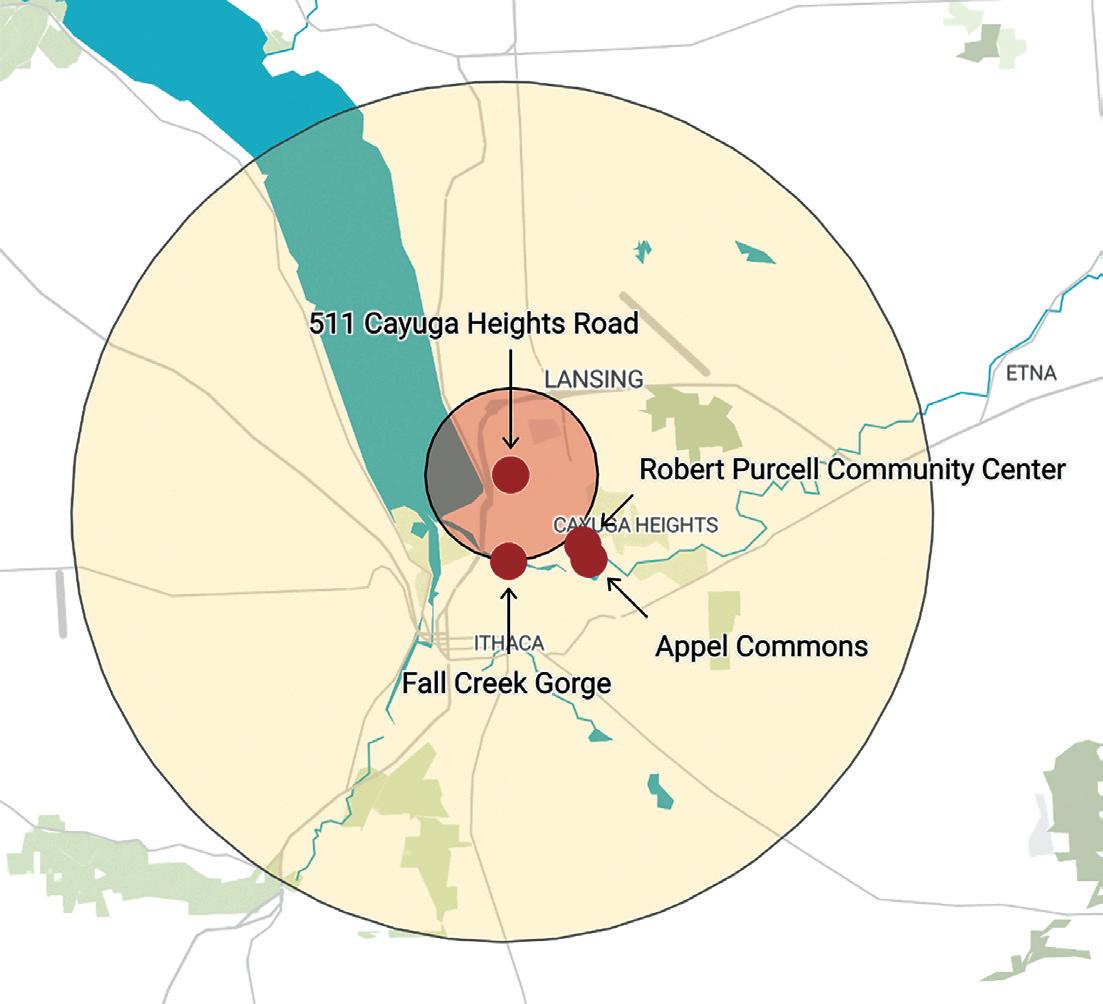
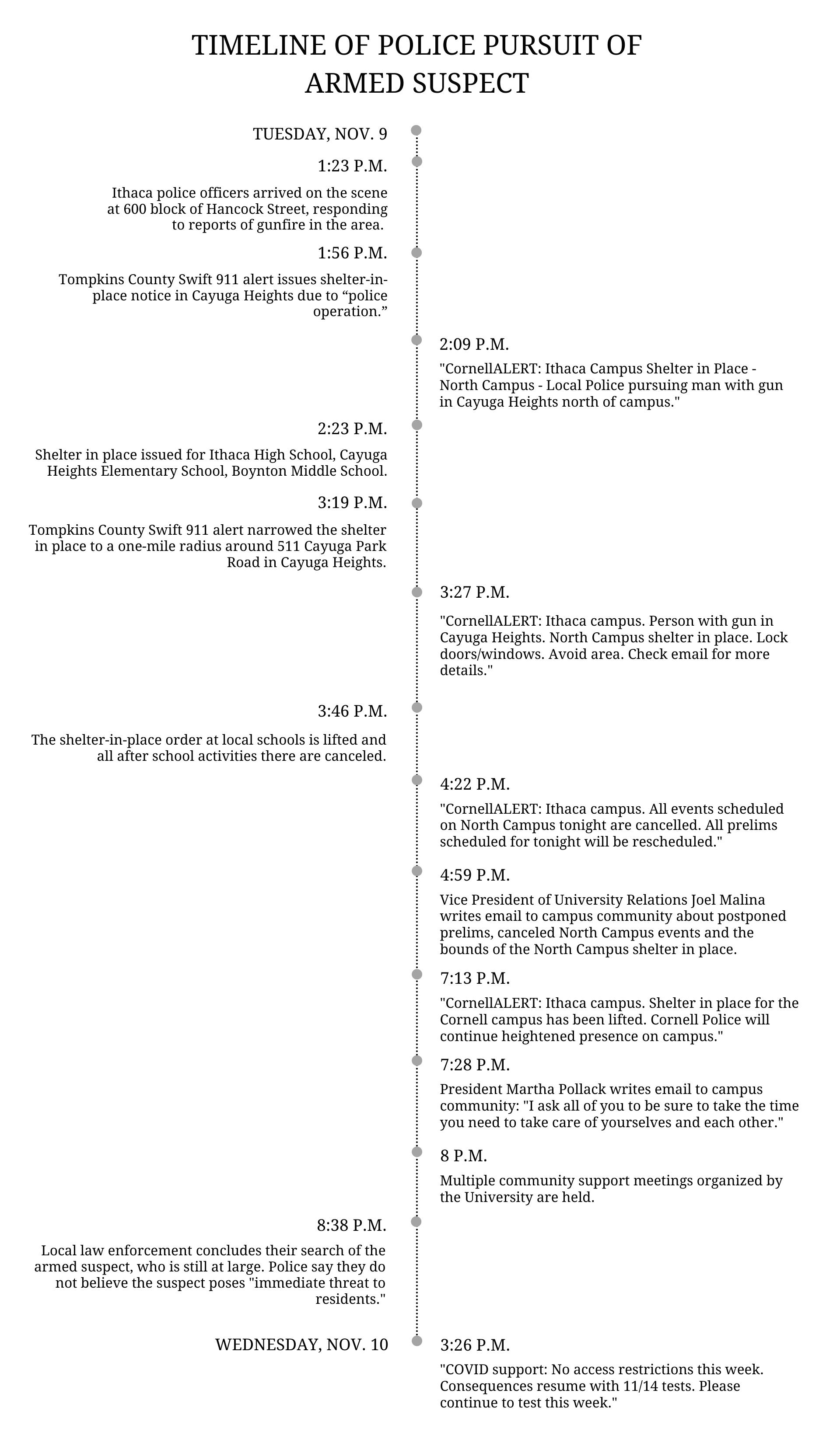
The first alert came at 2:09 p.m., advising those on North Campus to shelter in place. Cayuga Heights Elementary School, Boynton Middle School and Ithaca High School were also placed on shelter-in-place notice shortly after 2 p.m. Later, residents within a one-mile radius of Cayuga Heights were told to shelter in place, with this
University postpones all Tuesday night prelims due to shelter-in-place mandate
By MADELINE ROSENBERG Sun Managing Editor
Due to a North Campus shelter-in-place notice that lasted more than five hours on Tuesday, Cornell canceled all activities on North Campus and postponed all prelims scheduled for Tuesday night, according to a 4:23 p.m. CornellALERT.
At 2:10 Tuesday afternoon, Cornell police sent an alert to shelter in place for everyone on North Campus, due to local police pursuit of a man with a gun in Cayuga Heights, north of Cornell’s campus.
Coming right before many classes let out at 2:15 p.m., the alert left students in the dark about the rest of the day — with
some classes continuing as usual and others canceled for the day, up to the discretion of individual instructors.
The alert continues that events outside of North Campus can continue as scheduled.
“We recognize the significant stress and strain that today’s events (and Sunday’s) are having on our community,” Joel Malina, vice president for University relations, wrote in a Tuesday evening message to the Cornell community. “Please continue to utilize the many resources (listed below) available to students, faculty, and staff.”
Madeline Rosenberg can be reached at mrosenberg@cornellsun.com.
Cornell suspends Canvas, Wi-Fi restrictions for missed COVID-19 tests until Saturday
By JYOTHSNA BOLLEDDULA Sun News Editor
Following days of CornellALERTS, students received yet another text Wednesday from the University — this time from the COVID Support Center.
The message read that students who miss their testing day from now until Saturday, Nov. 13 won’t lose access to campus buildings or Canvas — policies normally in place for a missed surveillance test. This announcement comes after Cornell closed COVID testing sites Tuesday evening after a shelter-in-place order due to the ongoing pursuit of an armed suspect by local law enforcement.
Even as Cornell temporarily lifts restrictions for missed tests, students are still “strongly encouraged” to complete their surveillance tests as scheduled, the Daily Check website reads. Restrictions will resume for students with surveillance tests scheduled on Sunday, Nov. 14. Fully vaccinated undergraduates are required to get weekly COVID tests this semester.
The announcement comes after a tumultuous week for the Cornell community, with a bomb threat on Central Campus on Sunday — later found “not credible” — and a shelter-in-place order on North Campus and other locations on Tuesday after reports of an armed gunman in Cayuga Heights. The events also halted many on-cam-
pus activities on Tuesday, as Cornell postponed prelims and canceled events on North Campus.
Students who were scheduled for a surveillance test on Tuesday received an email that evening from the Daily Check Team, stating that they could make up their tests until 6 p.m. Thursday without penalty. The new announcement appears to extend the initial message.
Before the announcement, students who did not complete their surveillance test within 24 hours after their testing day would lose access to campus buildings, Canvas and on-campus Wi-Fi until their test was completed. The temporary change eliminates this until policy Saturday, after which Cornell will resume restrictions.
As of Nov. 9, there are nine new positive cases on campus, with eight active student cases, according to Cornell COVID-19 Tracking. Ninety-seven percent of campus is vaccinated against the virus. Despite the low number of cases on campus, Cornell has maintained this policy since it was first enacted following a spike in cases in March 2021.
The University did not respond to a request for comment by the time of publication.
Jyothsna Bolleddula can be reached at jbolleddula@cornellsun.com.

Lockdown | Cornell canceled all North Campus events and activities Tuesday night.
MICHAEL WENYE LI / SUN FILE PHOTO
Thursday, November 11, 2021
A LISTING OF FREE CAMPUS EVENTS
Today
Celebration of Veterans Day 11 a.m., 230 Anabel Taylor Hall
How to Prevent Coups d’État
11:25 a.m. - 12:40 p.m., Virtual Event
Gods of the Soil: The Continuous Creolizations Of Cham Religions in Mainland Southeast Asia 12:15 p.m., Kahin Center, 640 Stewart Ave.
Institute for African Development Seminar: Africa Rising: Myths and Realities 2:40 - 4:35 p.m., G-08 Uris Hall
Business at a New Threshold: Harnessing Finance and Data for Sustainable Prosperity 3:30 - 6 p.m., Virtual Event
Restorative Talking Circles for Employees 4 - 5 p.m., Virtual Event

Transferable Skills: Social Justice Edition 4:45 p.m., Virtual Event
Freund Prize for Creative Writing Alumni Reading by Julie Phillips Brown, Lena Nguyen, Michael Prior, and Renia White 5 p.m., K70 Klarman Hall
Photographing History in the Aftermath: A Talk by Lori Grinker 5 - 6:30 p.m., 122 Rockefeller Hall
Tomorrow
ILR Labor Roundtable 11 a.m. - 5 p.m., Virtual Event
The Production of Knowledge and the Politics Of Memory in Post-socialist Armenia Noon - 1:15 p.m., Virtual Event
President’s Address to Staff Noon - 1 p.m., G10 Biotechnology Building

Yiddish Conversation Hour Noon - 1 p.m., Virtual Event
Akira Drake Rodriguez: Diverging Space for Deviants: The Politics of Atlanta’s Public Housing 12:25 p.m., Abby and Howard Milstein Auditorium
American Studies Fall 2021 Colloquium: African American Literary Studies 2:30 - 5:30 p.m., Virtual Event
Nuclear Power Is the Only Viable Solution For Climate Change Mitigation 2:30 - 3:30 p.m., B11 Kimball Hall
Cornell Classical Chinese Colloquium: He Bian, Princeton University 3:30 - 5:30 p.m., Virtual Event
Seven Homeless Mammoths Wander New England 7:30 p.m., Flex Theatre Schwartz Center for Performing Arts


Cornell Issues Tuesday Shelter-in-Place Order
Reports of armed gunman in Cayuga Heights sends parts of campus
CORNELLALERT
Continued from page 1
area then expanded to include much of Cornell’s campus, Ithaca and parts of Lansing at 5:30 p.m.
According to a Tuesday afternoon press release — marked “URGENT!” — from multiple local law enforcement agencies, police were actively searching the Village of Cayuga Heights, just north of Cornell’s campus.
The press release read that, at approximately 1:23 p.m., Ithaca police officers arrived on the scene at 600 block of Hancock Street, responding to reports of gunfire in the area. Authorities did not locate or identify gunshot victims, according to Tompkins County Sheriff Derek Osborne, Cayuga Heights Police Chief Jerry Wright and Ithaca Police Department Chief John Joly.
Pursuit for the third armed suspect continued, prompting the shelterin-place notice for North Campus and Cayuga Heights.
The release continued that suspects fled via vehicle traveling north on NY-13, before the vehicle left the road after being followed by a Tompkins County Sheriff’s Office member in a marked vehicle. The three suspects left the vehicle, with one` being immediately apprehended and the other two fleeing on foot, according to the release.
Then, local law enforcement secured a perimeter, and “other members of the Tompkins County Sheriff’s Office apprehended one of the fleeing suspects without incident,” the release read.
Pursuit for the third armed suspect continued, prompting the shelter-in-place notice for North Campus and Cayuga Heights. Cornell issued its first alert at 2:09 p.m., and Tompkins County sent a Swift911 alert at 1:56 p.m.
The third suspect is still at large, as of Wednesday evening, but police say they believe the suspect has left the area of Cayuga Heights and does not pose an immediate threat to residents.
“For all of us here on campus, it’s been a difficult, frightening few days.”
President Martha Pollack
The final CornellALERT also said that there will be “heightened Cornell Police presence” on campus in response to the ongoing situation.
After the shelter in place was lifted, President Martha Pollack wrote to the Cornell community Tuesday night, sharing campus resources and asking Cornellians to take care of themselves and each other.
“For all of us here on campus, it’s been a difficult, frightening few days,” Pollack wrote. “Sunday’s bomb scare, followed, just two days later, by today’s shelter-in-place while a gunman was being pursued near North Campus, would have been stressful enough in ordinary times. As it is, they add still further to the disruption and strain of the last 20 months that we are all feeling already.”
“I hope, with all of you, that the weeks remaining before our much-needed Thanksgiving break will be peaceful ones,” Pollack wrote in the email.
Madeline Rosenberg can be reached at mrosenberg@cornellsun.com. Anil Oza can be reached at aoza@cornellsun.com.
Tuesday
Gloomy
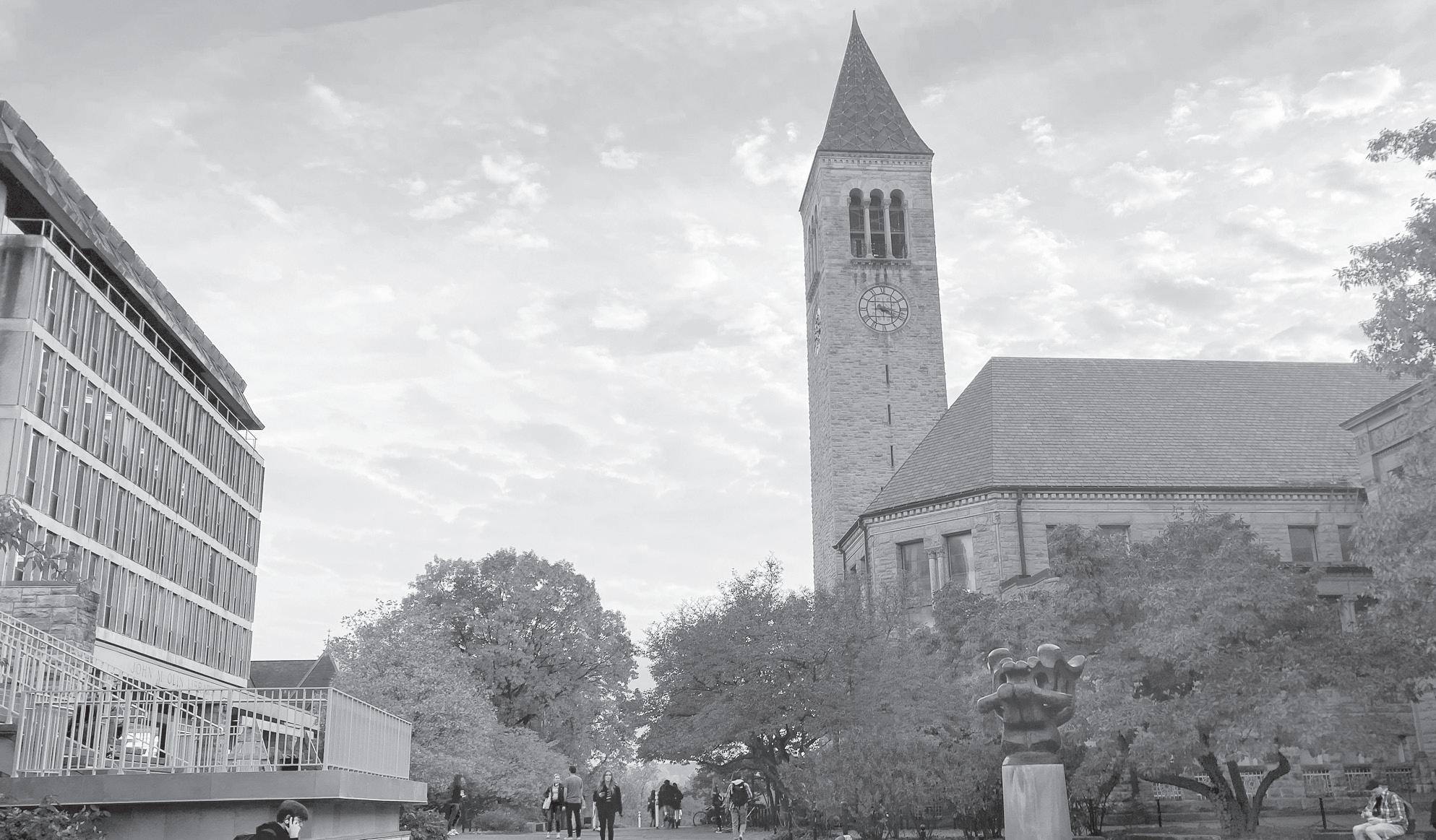
Students walk through Central Campus on Tuesday under cloudy skies.
JULIA NAGEL / SUN ASSISTANT PHOTOGRAPHY EDITOR
Cornell Kicks Of New Admissions Cycle, Reviews Applicants Without Test Scores
By ALLY FERTIG Sun Staff Writer
Cornell’s admissions office has kicked off a new cycle, with the early decision deadline having passed on Nov. 1. As the admission selection committees have started reviewing applications for fall 2022 and spring transfers for January 2022, this cycle is not considering standardized tests like the ACT and SAT.
The University suspended its standardized testing requirement last year as a result of the pandemic, and has continued this extension to include the high school graduating classes of 2022, 2023 and 2024.
The College of Agriculture and Life Sciences, the College of Architecture, Art and Planning and the SC Johnson College of Business do not consider test scores when reviewing applications. The College of Arts and Sciences, College of Engineering, College of Human Ecology and the School of Industrial and Labor Relations will consider ACT or SAT scores if students choose to submit them.
“Our admission committees will be reviewing applications much the same as we did last year,” said Shawn Felton, the executive director of undergraduate admissions, “knowing that the myriad impacts of the pandemic, still ongoing, will continue to have direct and indirect impacts on many of our applicants this year.”
The pandemic suspended standardized testing requirements in part due to ongoing COVID-19 risks in test centers. However, the Cornell Admissions website adds that “the university is entering a two-year period of deliberate experimental review in order to guide admission testing policy requirements beyond these two years.”
The University no longer releases admission acceptance rates during the active admission cycle and will instead delay the release of this information until after the admissions year has ended.
The early decision acceptance rate was 23.8 percent for the Class of 2024 with a total of 6,615 applicants. There is no current data on the number of applications received this year.
The waived testing requirements has eased the process for many applicants who experienced delayed or canceled standardized testing. Olivia Mirabito applied early decision to the School of Hotel Administration for this application cycle. As a result of the pandemic, the three SAT tests that she was scheduled to take were canceled.
“I am thankful that Cornell’s School of Hotel Administration decided to remain test-blind for an additional year, given my experience with trying to take the SAT three times to no avail,” Mirabito wrote in an email to The Sun.
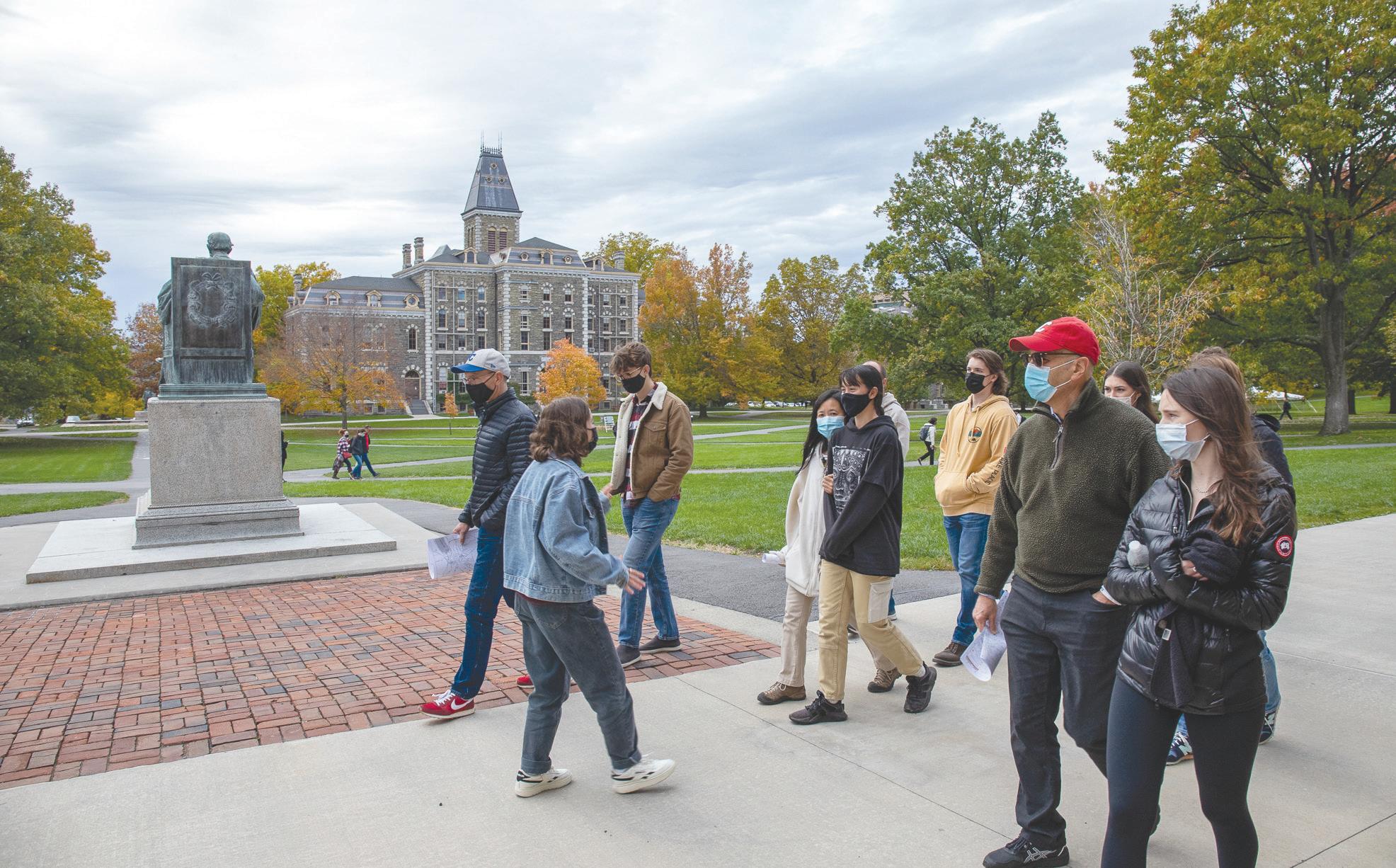
While the pandemic made standardized testing impossible for many, an increasing number of students were unable to tour college campuses, further complicating the application process. In-person tours resumed this fall on Oct. 15.
Clara Mollerus, a high school senior who applied early decision to the College of Agriculture and Life Sciences with an intended major in animal science, was able to visit the Ithaca campus without an official tour this fall. Despite buildings being closed to visitors, she said it was a successful visit.
“[I] was able to experience student life, which I had not yet been able to do during my summer visits. I was able to connect with friends from Cornell Summer College online classes, as well as meet with faculty that I have met through summer classes and programs,” she said.
Helen Sidon, who applied early decision to the hotel school, described a more remote experience.
“The virtual tour was a good opportunity to see campus and hear a couple different perspectives from students, which helped me to better understand the environment at Cornell,” Sidon said.
Ally Fertig can be reached at afertig@cornellsun.com.
Sun Staf Football Picks — Week Nine




LIAM MONAHAN AARON SNYDER
KATHRYN STAMM MADELINE ROSENBERG ARTS EDITORS CATHERINE ST. HILAIRE
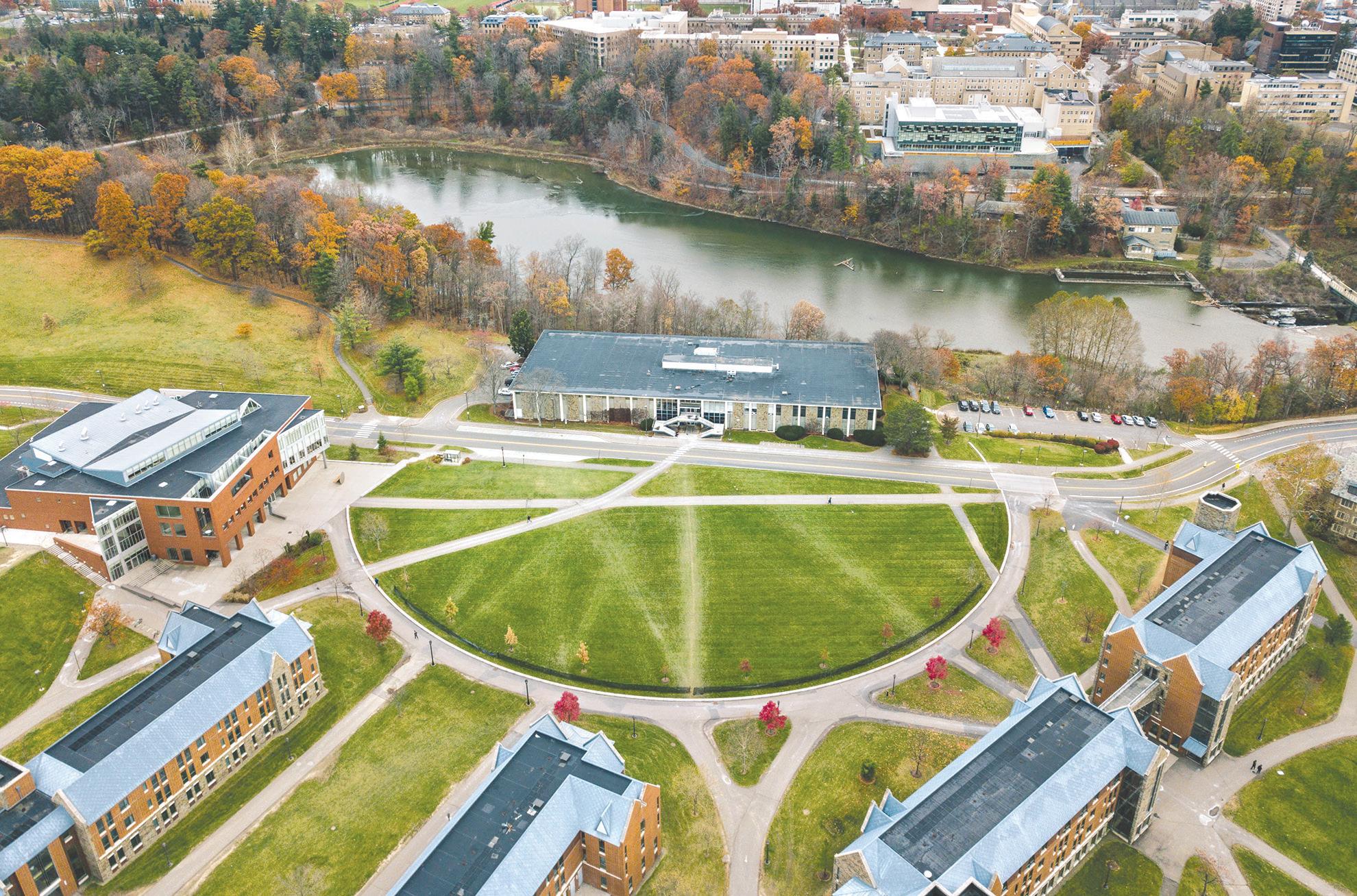
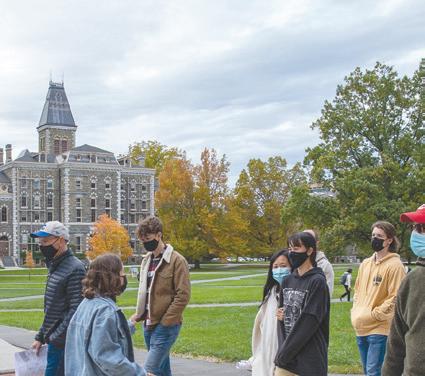
Walking backwards | Admissions tours, pictured above, resumed at Cornell in mid-October.
Dining Guide
Your source for good food

From Pizza to the Pandemic How Delivery Apps Have Changed Food
By SADIE GROBERG Sun Staff Writer
Picture this. You’re a teenager in Santa Cruz in the 90s, hanging out with your friends after a long day of school. You’re all pretty hungry, so you turn on your computer and order a pizza. Pretty normal, right? Wrong. In 1994, PizzaHut launched what is widely recognized as the first online delivery service in history — PizzaNet. In fact, PizzaNet’s first sale is sometimes credited as the first online purchase ever. The website was pretty simple, but it was groundbreaking for its time. In the past, customers would have to call a restaurant to order delivery, but now you could place a pizza order right to your door in minutes from your phone. No worry of getting put on hold or being rushed to remember your family’s complicated order. Something about the self-guided act of being able to manually craft your food order was desirable to customers, and the food delivery industry has only grown since then.
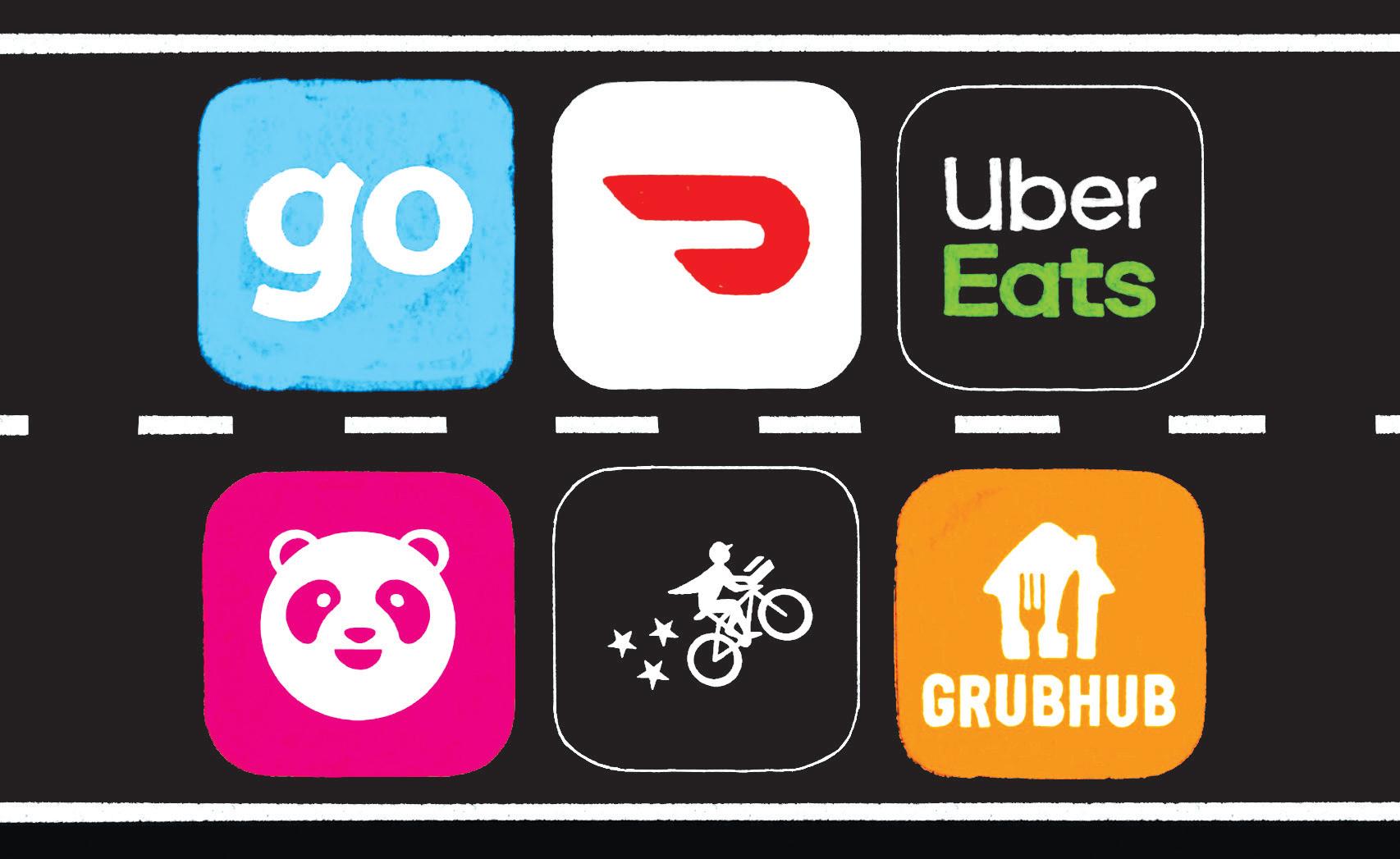
Today, food delivery is a $150 billion industry, a value that has tripled in the past four years. The prominence of delivery technology is undeniable, as having the Postmates app on your phone now seems as common as having a Netflix account. As the market and technology both expand, it has become the norm to place an order through a phone app, rather than through a phone call. Some restaurants have stuck to their own individual systems of ordering, but third-party applications are where the industry’s growth can truly be witnessed. The “big four” apps of food delivery (Doordash, Postmates, Grubhub and UberEats) have cornered the market, each of them dominating different regions of the nation. Many restaurants are available on multiple apps, sparking debates about differences in service fees and taxes. Regardless of which app you prefer, it’s remarkable to look back at that first PizzaNet website and recognize the plethora of online ordering options that are now at our fingertips.
Fifteen years after the initial rise of online food delivery, the COVID-19 pandemic reached the United States. Social distancing guidelines and quarantine orders devastated the restaurant industry, as nearly every establishment in the country was forced to temporarily close their doors. As supermarket stocks of canned goods dwindled and everyone grew more fearful of
surface-contamination, people turned to food delivery apps with a new frequency. At a time when we were craving human interaction more than ever, we were forced to reduce ourselves to digital food ordering. If a restaurant hadn’t set up an online delivery service yet, the pandemic forced them to. According to the Wall Street Journal, American customers placed 28 percent more food orders in December of 2021 than they did the year before. Not only that, but their orders were 18 percent larger — suggesting that ordering in was becoming less of a last-minute appetite-quencher and more of a normalized meal plan. It turns out that for food delivery corporations, the coronavirus pandemic might have been just what they needed. A recent report by researchers Elliot S. Oblander and Daniel McCarthy states that 69 percent of the industry’s recent growth in sales was due purely to COVID-19’s impact on eating practices. Previous to 2019, food delivery sales were actually on a downturn, and companies were already looking for ways
It turns out that for delivery corporations, the coronavirus pandemic might have been just what they needed.
to up their profits. As restaurants rapidly closed their doors, Americans transitioned to ordering in. But is this growth sustainable? Oblander and McCarthy say it’s not, and that the return of in-person dining might eradicate the industry’s boom as quickly as it appeared. This may explain why corporations are working so hard to stay on top. Take Uber Technologies, which leaned heavily on UberEats sales as their ride services became essentially nonexistent in the first months of the pandemic. In February, Uber announced their billion-dollar purchase of the alcohol delivery company Drizly. This came just six months after the tech conglomerate acquired Postmates, formerly one of their largest competitors. Acquisitions like
these in the gig economy are particularly significant right now, as the pandemic’s unemployment rate sent workers running to independent careers like food and grocery delivery. Regardless of what happens when in-person dining is at full capacity again, the ease of quick delivery and the flexibility of gig work suggest that delivery apps are here to stay.
Although increased demand in this industry provides more economic opportunities for gig workers, there are certainly critiques to be made about our reliance on delivery apps. An Uber Newsroom blog post from July of 2020 boasts, “82 percent of restaurant operators say UberEats has been crucial to business during COVID-19 … 75 percent of operators said that they would have had to close their business if not for UberEats … 81 percent would have had to lay off staff members if not for third-party delivery.” While food delivery apps have certainly helped restaurants remain afloat throughout the pandemic, they don’t come without a cost. The most prominent apps charge commission rates between 20 to 40 percent, which can come as a huge blow to business owners who are already struggling to keep their doors open. As the pandemic has turned delivery sales into the primary source of revenue for the majority of eateries, this net difference has become more devastating. Some cities passed relief bills to cap the commission rates that companies can charge, but the apps have fought back, saying these limits will indirectly cause a smaller order volume by customers. This legal battle shows how the coronavirus has exposed our market’s weaknesses — the most dominant players tend to rise to the top regardless of turmoil, while
local, independent entrepreneurs have to fight harder than ever to stay in the game.
Beyond the impact that corporate delivery services have on small business owners, there is something to be pondered about this shift towards digital ordering. As Americans, we embrace ingenuity and efficiency, celebrating when technology and commerce find new ways to collide. However, as our purchases become faster and our requests become more frequent, we often forget to look around and notice what we’ve lost. The coronavirus pandemic took away our ability to linger in a restaurant after our plates are clean, to exchange banter with a friendly waiter or to witness the famil-
iar smile of our neighborhood barista. Our dinners are more often dropped outside the front door than served to our tables, eradicating those small moments of interaction with a stranger that are so mindlessly essential. The food delivery industry has come so far since PizzaNet that it’s almost miraculous to think of having to use dial-up internet just to order a pepperoni pie. As the world opens back up and our days become busy again, it makes sense to continue to rely on delivery apps, as long as we at least open the front door and say “Thank you.”
Sadie Groberg is a frst-year in the College of Agriculture and Life Sciences. She can be reached at sgroberg@cornellsun.com.

JOANNA MOON / SUN GRAPHIC DESIGNER
KATHRYN STAMM ’22
ANUSHYA ALANDUR ’23
CATHERINE ST. HILAIRE ’22
Associate Editor
PRANAV KENGERI ’24
Advertising Manager
ODEYA ROSENBAND ’22
Opinion Editor
JYOTHSNA BOLLEDULA ’24 News Editor
TAMARA KAMIS ’22 News Editor
CAMERON HAMIDI ’22 App Editor
KRISTEN D’SOUZA ’24 Design Editor
HANNAH ROSENBERG ’23
OMSALAMA AYOUB ’22
PUJA OAK ’24
ANNIE WU ’22
MIHIKA BADJATE ’23 Assistant News Editor
SERENA HUANG ’24
Assistant Business Editor
ANGELA BUNAY ’24
Assistant News Editor
JOHN COLIE ’23
Assistant Arts & Culture Editor
AMELIA CLUTE ’22
Assistant Dining Editor
WILLIAM BODENMAN ’23
Assistant Sports Editor
AARON SNYDER ’23
Assistant Sports Editor
MEGHANA SRIVASTAVA ’23
Compet Manager
Working on today’s sun
ad layout Christine Wu ’23
opinion desker Odeya Rosenband ’22
managing desker Madeline Rosenberg ’23
news deskers Jyothsna Bolleddula ’24
Surita Basu ’22
production desker Dennis Quizhpi ’24
layout deskers Kristen D’Souza ’24
photo desker Julia Nagel ’24
dining desker Benjamin Velani ’22
sports desker Luke Pichini ’22
Have an issue with our news coverage?
Want to give your take on a campus issue?
The Sun thrives on your feedback. Continue the conversation by sending a letter to the editor to opinion@cornellsun.com.
Letters should be no longer than 250 words in length.
Please include graduating year if applicable. All opinions welcome.
ROSENBERG ’23
KOH ’23
OZA ’22
HEO ’24
CIPPERMAN ’23
UMAR ’23
E.D. PLOWE ’23
YOON ’23
VELANI ’22
PICHINI ’22
TYAGI ’22
MENDOZA ’24
ARANDA ’23
BASU ’23
KAYLA RIGGS ’24
LEYNSE ’23
NAGEL ’24
MONOHAN ’24
ABAYEVA ’24
’22
Te Myth of Taking Time for Oneself
IN THE PAST FOUR DAYS, Cornell has been put in shelter-in-place orders twice — for a bomb threat on four Central Campus buildings and for the local police pursuit of an armed suspect. While no further tragedy came of either alert, fortunately, students spent the time panicked and uninformed. Given the weight of the events, it’s unacceptable that students haven’t received substantial support since.
After the two incidents, President Martha Pollack encouraged students “to take the time you need to take care of yourselves and each other,” in a Tuesday evening email. But we question how possible this is — between ongoing assignments and exams, daily classes, extracurricular responsibilities, campus jobs and the little remaining time for eating and sleeping.
Without significant structural support for students to actually take a break and process the trauma of this week, these reminders feel shallow.
After Sunday’s five hours of waiting before the bomb threat was deemed “not credible,” faculty received little guidance about how to proceed for the week beyond calls for “generosity.” This relative silence from the University left individual instructors to make their own decisions — often less than generous ones — meaning students’ experiences of classes Monday varied widely.
Without significant structural support for students to actually take a break and process the trauma of this week, these reminders feel shallow.
Some had professors who failed to address the events at all; others had classes canceled and blanket extensions granted. And this continued Tuesday, when there was an armed suspect at large near North Campus, during which some instructors continued lecturing through the North Campus shelter in place and others canceled altogether.
It is clear that the University is struggling to hold professors accountable. Tuesday and Wednesday, Cornell hosted community support meetings, where students named the stark difference in grace extended by professors in the humanities and those in STEM, for example. Due to the University’s decentralized structure, the administration is unable to hold the entirety of its faculty accountable to the equal standards of empathy. And, with the degrees of separation that exist between our administrators and Cornell students it’s unclear whether admin would even know how to create such a standard.
The University postponing prelims Tuesday night was absolutely the right call, but we still need more from campus leaders and our faculty. The lingering uncertainty about the rest of the week — and frankly, the semester — is only adding to our stress and inability to take a break.
In light of the trauma that we, as a community, have faced in these past few days it is unfair that we are the ones who must advocate for ourselves by pleading for extensions and grace from our professors. Instructors have to be more empathetic toward our experiences and extend more generosity.
This is already “an exceptionally stressful time” of the year, as Pollack wrote — even without the events of the past week, and without the “disruption and strain of the last 20 months” of the pandemic, she continued.
It should not be surprising that the notion of taking time for oneself is incompatible with the toxic culture which has been bred to thrive here. Instead, we are expected to make do with the mental health resources at Cornell that are included in countless emails. While they are useful, these systems of support are also overwhelmed and not necessarily responsive to student needs.
Tuesday and Wednesday, Cornell hosted community support meetings, where the sentiments of students were clear. Students are angry at the University for the lack of transparency in updates regarding both crisis situations on Nov. 7 and Nov. 9. Students are angry that we are in a position where we have to consider putting our academics before our own lives and we are angry that the University is trying to minimize our trauma. Students are angry at Cornell’s tactics to change the conversation from one about their inadequate responses to one of student resilience.
Now, students are taking a stand and demanding more through instagram campaigns and open letters to administrators. Not only are Cornell students facing the brunt of the trauma of these past few days, but students are also the ones rising up to demand that our collective trauma is acknowledged and respected.
We, similarly, demand that Cornell does better by its students, faculty and staff who have spent the past three days in fear, unaware of how to protect themselves or others. Without more, it’s near impossible for us to take the time Pollack says we need — and that we so deserve.
At Tuesday’s community support meeting, Danielle Haynes, associate dean of students for conflict coaching and case management, said, “We cannot fix all of these things right now.” We know.
We’ll keep pushing for large-scale institutional changes beyond these past 80 hours. But for now, our baseline requests for empathy and space to recover should, at the least, be answered.
Sundoku Puzzle 2024
Fill in the empty cells, one number in each, so that each column, row, and region contains the numbers 1-9 exactly once. Each number in the solution therefore occurs only once in each of the three “directions,” hence the “single numbers” implied by the puzzle’s name. (Rules from wikipedia.org/wiki/ Sudoku)

I Am Going To Be Small
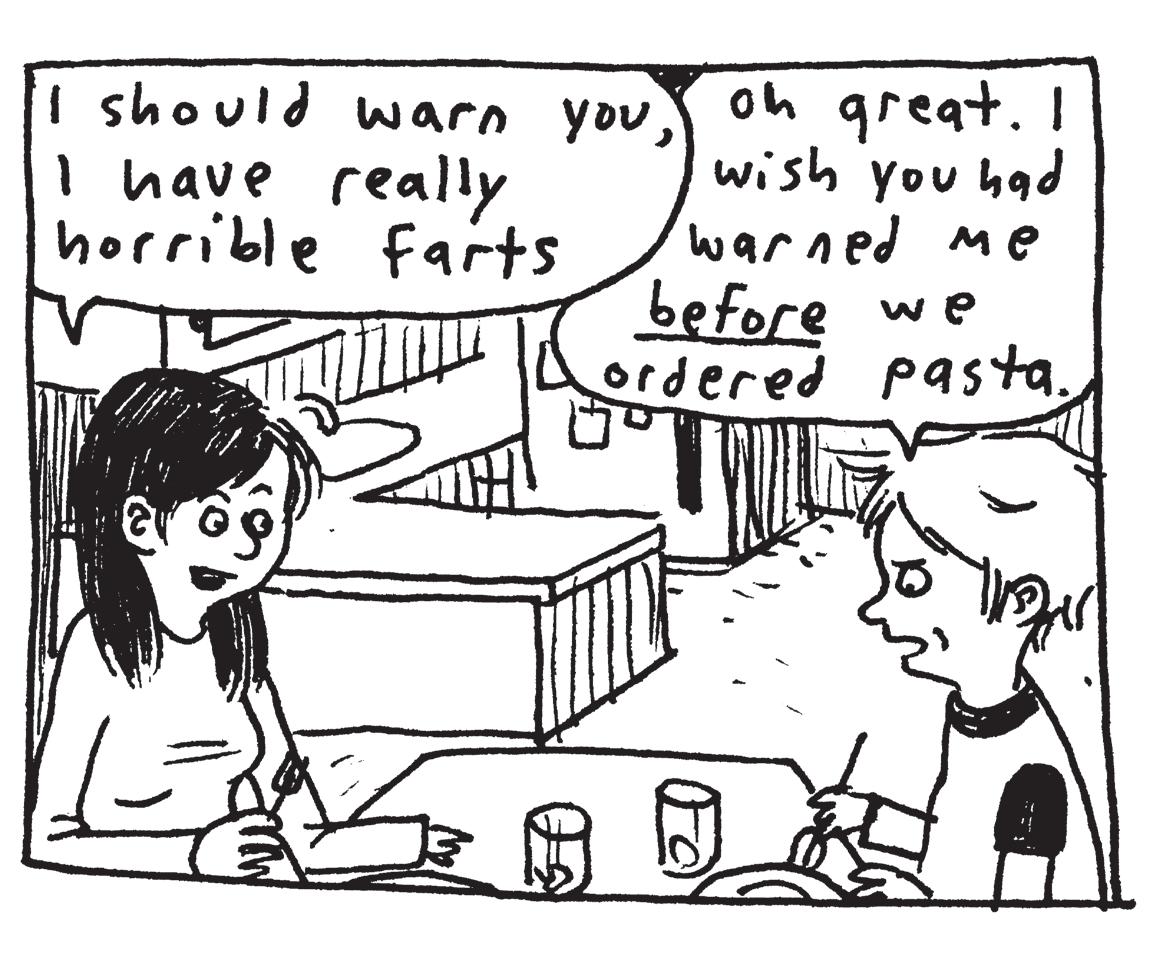




Mr. Gnu by Travis Dandro
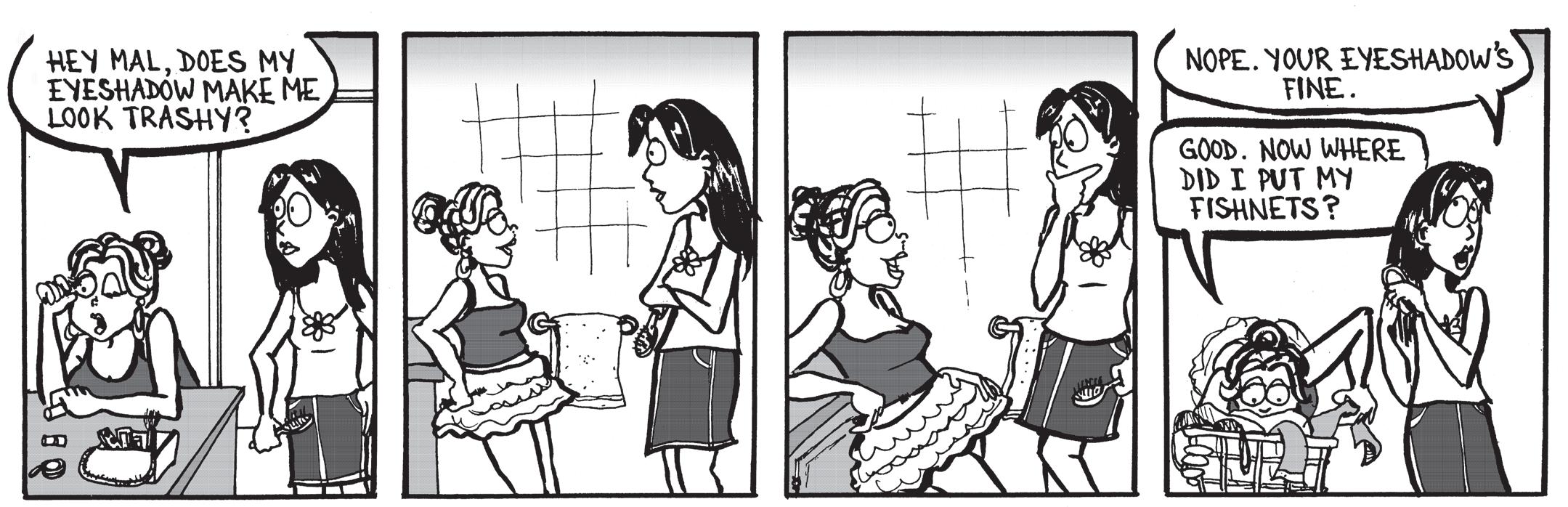
Mr. Gnu by Travis Dandro
FOOTBALL
Freshman QB Shines for Cornell
Jameson Wang describes background, challenges as an Asian American in football
By LIAM MONAHAN Sun Assistant Sports Editor
After weeks of tweaking the offense early in the schedule, freshman quarterback Jameson Wang has come onto the scene midway through the season, adding a spark to the Cornell football offense.
Following his first week of extended play against Colgate, Wang has managed to become the Red’s leading scorer, rusher and post the highest quarterback rating of any other player on the roster.
But Wang has also had to prove himself to both his coaches and fellow teammates as the lone Asian American on the team, an experience he describes as a challenge he has carried with him throughout his football career.
During the 2019-2020 football season, only about 0.3 percent of all NCAA Division I football players in the country identified as Asian. Being one of the few Asian Americans to play for the Red in recent memory, Wang has been placed center stage while he tackles one of the most integral positions in the game. Even while splitting time between fifth-year quarterback
Richie Kenney, senior Ben Mays and sophomore Luke Duby, Wang has faced mounting pressure to solidify his role as a part of Cornell’s future and act as a face for Asian American athletes across the country.
The quarterback’s journey into American football extends beyond his lifetime. Wang’s father immigrated from China to Taiwan and finally to Rochester, New York, first picking up football through his friends at school.
“I remember he would tell me stories about how he would have to find rides to get to practice because his parents were working,” Wang said, remembering his father’s football experiences. “His friends really helped him a lot and embraced him into the culture of getting to play football. His parents had no idea what American football was like in China, so him coming over and breaking that barrier to be part of the American culture was a big accomplishment for him.”
Wang said his father instilled this football culture and the game’s values into him, coaching Wang to play quarterback as soon as he could step onto the field.
“He’s been my coach since I was four and up until eighth grade and entering high school,” Wang said. “He’s really pushed me and made me the player I am. If it wasn’t for him, I probably wouldn’t be playing, to be honest.”
and 16 more scores. However, for all that he was proving in the stats sheets, Wang said he still faced adversity and racism being one of the only Asians on the field at any given matchup.
During one game, Wang recalls he was running out of bounds on the opposing team’s sideline when a bystander made a racist comment about Wang’s ability to see on the field.
“As I [was] running back, I just laughed it off and ran back to the huddle,” Wang said.
It was not until high school that Wang said he felt the weight of the challenges of being Asian in American football, when he said his father gave him advice to tune out the negativity.
the field, he’s gonna do his thing. He’s gonna make plays, scramble and throw the ball well … I think it’s good [to have him on the field], and I’m excited.”
As years went by and Wang began getting noticed by various colleges, he quickly took on a new role in the Asian American community as a role model.
“As I got deeper in high school and realized that I was good enough to play at the collegiate level, I was trying to use my platform to promote Asian Americans and American football because there just hasn’t been that many people to do it,” Wang said.
Wang credits his father for instilling the values of leadership, work ethic and passion into his life through football, and these lessons proved crucial when he entered high school at HarvardWestlake in Los Angeles, California.
“I’m not going to be the first one [to play football], and I’m not going to be the last one to do it.”
Wang started off his playing career at the varsity level early on, stepping in as a freshman and quickly learning how to play at the next level.
“I was thrown into the fire as a freshman quarterback. I was 15 years old playing against 18 or 19-year-old men with tattoos along their arms and legs,” Wang explained. “But that experience alone has developed me into a better player. Now when I play, I’m calm. I’m not nervous or sporadic. I understand what’s going on … That experience alone really helped me go into sophomore year and have a good breakout season.”
Wang had arguably his best statistical high school season in his sophomore year, throwing for 2,355 yards and 29 touchdowns while rushing for 894 yards
“[He told me] some people are going to talk to you in a manner that you are not going to want to hear, and you just have to rub it off,” Wang said. “He said it’s always the second person to retaliate that’s going to get blamed.”
“I haven’t worked hard to get offended by a little racial slur,” Wang continued. “I feel like it is part of the game, people are going to try and get under your skin, but when you show that you’re not going to react, they’re going to stop.”
Rather than worry about his opponents, Wang instead learned to focus his energy on winning over his coaches and teammates.
“My first coach was always good … so I knew from the jump I would get a fair shot,” Wang explained. “I think the biggest part was winning my teammates’ trust, because your teammates are the guys who have never seen an Asian quarterback. Really just winning over the trust from my teammates and showing them that … I could play at this level … was the biggest part of being able to prove myself.”
Senior wide receiver Thomas Glover has had a career year as the Red’s leading receiver and remembers playing with Wang at Harvard-Westlake during that breakout sophomore year. As a result, Glover has shown nothing but praise after being reunited with his former quarterback.
“Me knowing Jameson for so long, I know that he’s a playmaker,” Glover said. “I know that when he’s on
Being from Los Angeles, Wang’s play was often noticed and publicized through platforms like Instagram. During his sophomore and junior seasons, Wang received direct messages from other Asian Americans aspiring to play football.
“So that’s when I was using my platform to help encourage other Asian Americans that they can do it too,” Wang said. “I’m not the first one, and I’m not going to be the last one to do it.”
After first spending a year at the Air Force Academy, Wang has found himself playing for the Red as a freshman ready to take on the next chapter in his life both athletically and academically. After his first few months in Ithaca, Wang has expressed nothing but gratitude toward the school and his teammates.
“Cornell is very inclusive,” Wang said. “The team so far has had my back. I’ve had their backs, and I don’t have any chemistry issues with any of the guys.”
Still, without many role models to look up to or figures to be compared to, Wang said he and others like him have had to work harder than most to prove their worth on the football field.
“I feel like [being Asian American] gives me a different outlook on how I approach the game because … I have to earn everything,” Wang said. “I have to work the hardest because for Asian Americans, since it’s not the stereotype, people turn their back more on you. If you don’t show up every day, putting in the work, they’re not going to believe in you.”
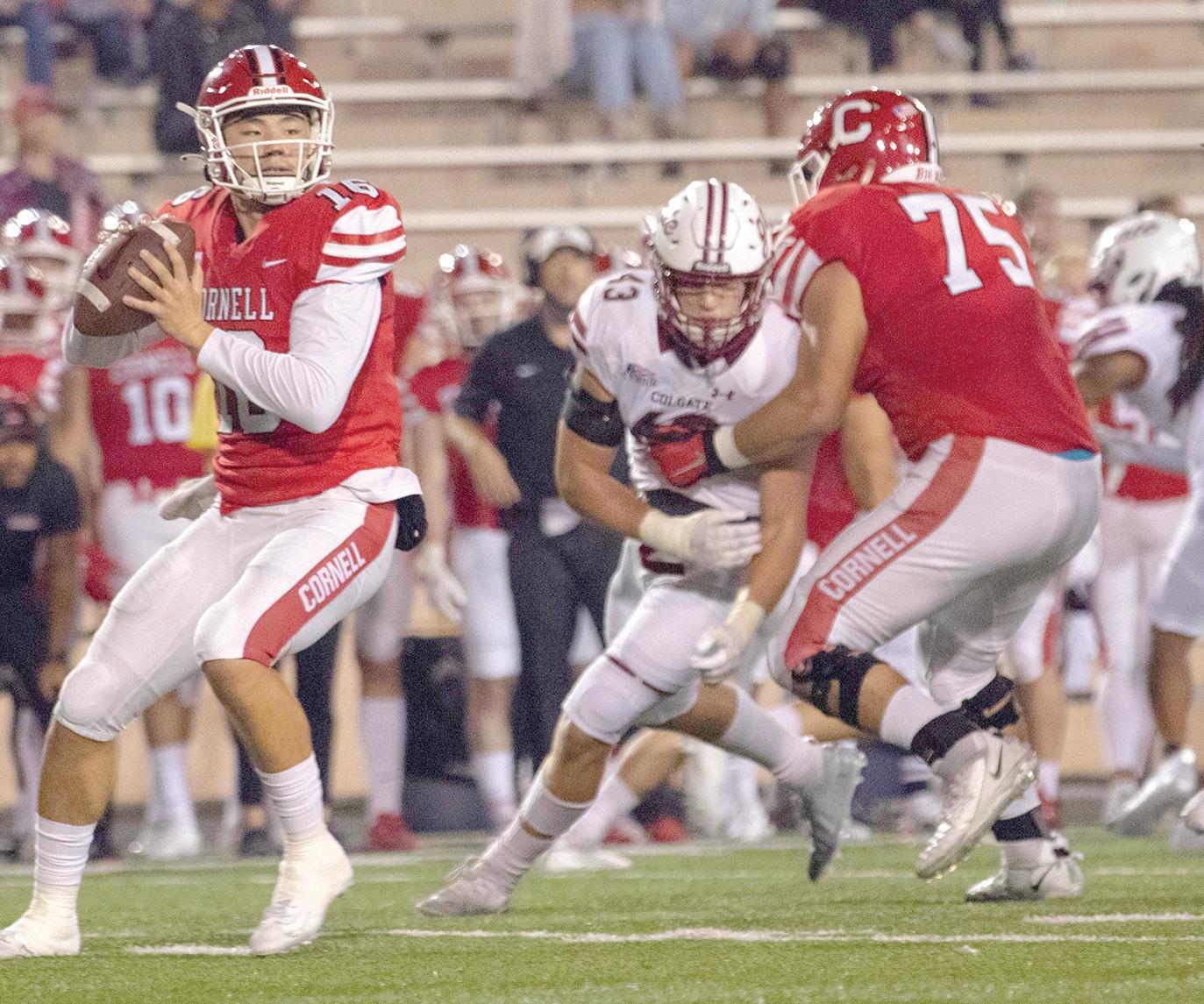
Bursting onto the scene | As a freshman, quarterback Jameson Wang has become the team’s leading scorer and rusher.
Jameson Wang
HANNAH ROSENBERG / SUN PHOTOGRAPHY EDITOR