The Corne¬ Daily Sun

By MADELINE ROSENBERG Sun Assistant News Editor
Over halfway through Cornell’s in-person semester, filled with daily checks and biweekly nose swabs, the University has finally reported how many students are attending classes from the Hill.
Many students grumbled at paying full price for a semester taking place from their bedrooms.
About 75 percent of all enrolled students are studying in Ithaca, based on course registration information, according to Jonathan Burdick, vice provost for enrollment.
Still, around a third of the approximately 17,700 students in Ithaca are enrolled only in online courses — most Cornell classes are online this semester. Nearly half of undergraduates are taking at least one in-person or hybrid class.
A higher percentage of the graduate students living in Ithaca are enrolled in some in-person courses or research, but the percentage of students living away from campus is higher for some professional programs in the Johnson College of Business.
In a predominantly virtual semester, many students grumbled at paying full price for a semester taking place from their bedrooms. Now, more than 600 undergraduates have taken a leave of absence this semester — avoiding a term defined by Zoom classes and club meetings, filled with health and cost concerns. This number usually falls closer to 500 in a normal year, Burdick said, marking about a 20 percent increase in leaves of absence.
For first-year students, a college experience marred by 10-person masked gatherings and virtual classes likely pushed some to postpone their four years on campus. Across the country, enrollments slid as colleges went remote and ended the possibility of a campus college experience.
By ALEX HALE Sun News Editor
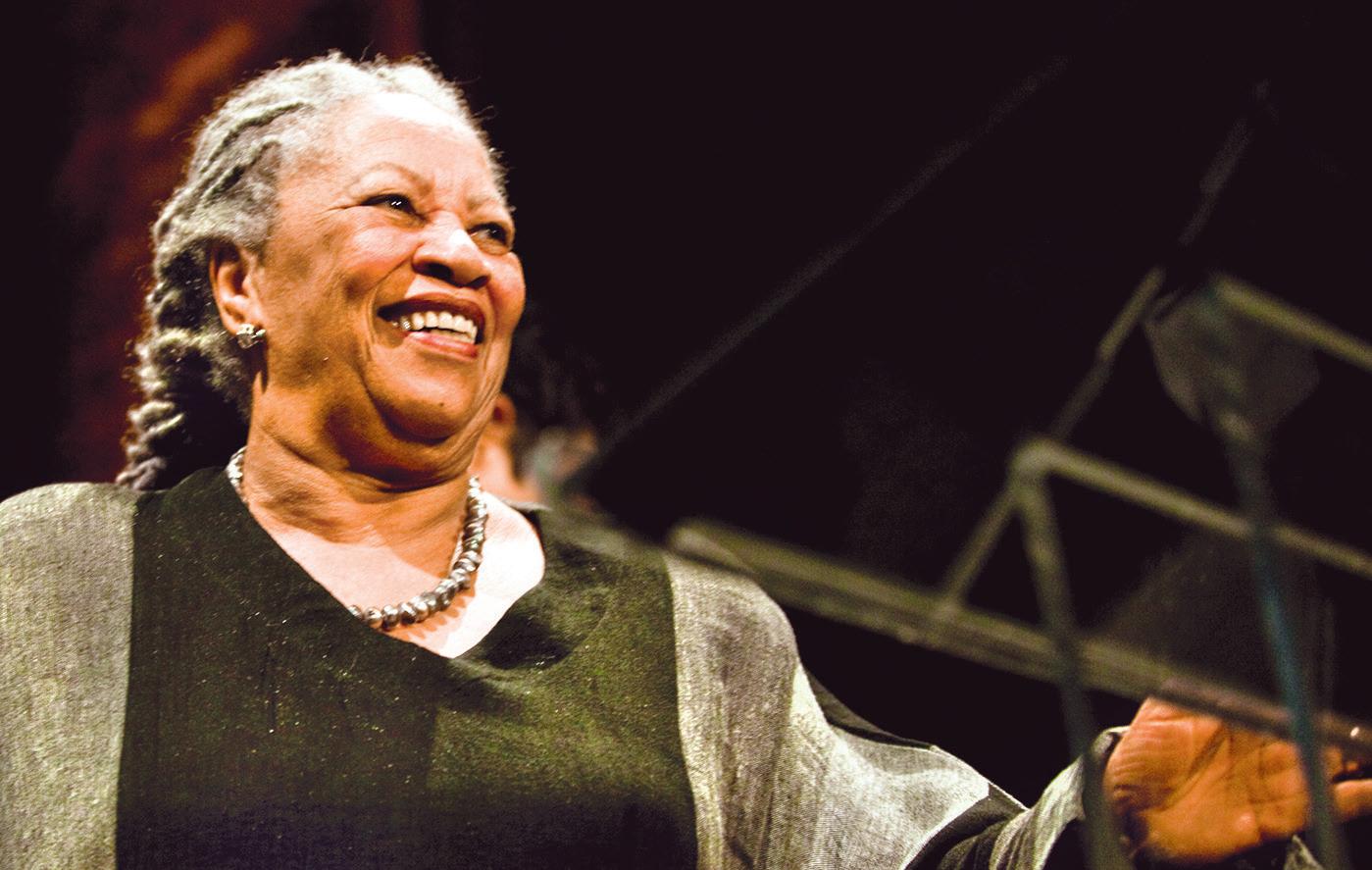
Cornell grad school alumnus and prolific writer Toni Morrison M.A. ’55 has been nominated to the 2020 class of the National Women’s Hall of Fame.
The posthumous nomination will make Morrison the ninth Cornellian inducted into the hall, which is located in Seneca Falls, New York, the site of the first woman’s rights convention. She will enter alongside five others in the 2020 class, recognizing her life as a groundbreaking and inspirational novelist.
came to Cornell, where she received a Master of Arts in American Literature.
After a teaching career at Texas Southern University and Howard, Morrison went on to become an editor at L.W. Singer, a publication under Random House. She was the first Black woman to become an editor at the vaunted book publisher.
“She has been unapologetic about her focus on Black people’s experiences.”
National
Women’s Hall of Fame
“Morrison indelibly put into the public imagination the image that great literature is neither bound to be written by men nor exclusively by people of European descent,” said a press release announcing her nomination.
Morrison was born in 1931 in Loraine, Ohio. After earning a B.A. in English from Howard University, she
By MEGHNA MAHARISHI Sun Assistant Managing Editor
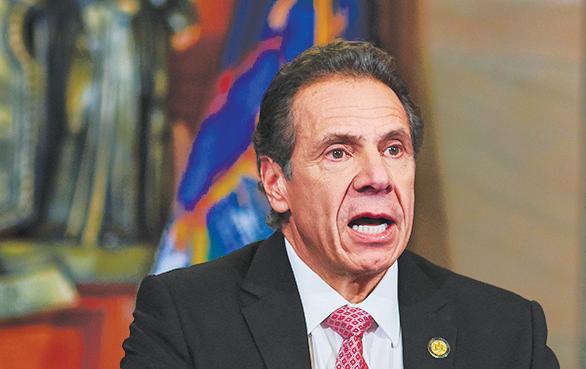
As COVID-19 cases swell in New York, Tompkins Cortland Community College announced Sunday that its operations will be remote for one week, after the school reported an 11-person cluster.
“The move to remote will allow the health departments time to complete on-going contact tracing and contact any parties involved,” TC3 said on its website. “The
From there, she began writing her own books, such as The Bluest Eye, Sula and Song of Solomon. In 1988, Morrison won the Pulitzer Prize in Fiction for her work Beloved, and in 1993, Morrison became the first Black woman to win a Nobel Prize in Literature.
For her revolutionary breakthroughs, Morrison was also awarded the Presidential Medal of Freedom by President Barack Obama in 2009.
“She has been unapologetic about her focus on Black people’s experiences, and the power with which she has
college’s goal is to continue in-class instruction on Nov. 16, but only when it can be certain that our campus community is safe and healthy.”
The cluster consists of nine commuter students and two students who live on campus; no TC3 faculty or staff have COVID-19, according to the college. In Ithaca, Cornell and TC3 are the only higher education institutions in the area that opted to hold some in-person operations for
the fall semester. As a result of the shutdown, TC3 said it will temporarily close fitness centers and halt recreational activities as well as athletic practices.
Due to potential exposure, TC3 said it ordered 11 faculty members and 70 students to quarantine — 17 of the 70 quarantined students live on campus. The college attributed the quarantined students to the influx of COVID-19 cases in the Southern Tier region.
“It is important to note that while they were on our campus, the students followed all of our COVID-19 safety protocols, but given the rise in cases and the connection to a local cluster both Health Departments have mandated these quarantines,” TC3 said. According to its website, neither New York State, SUNY nor Tompkins County ordered TC3 to shift to

Employment Law and Investigations: Harassment Prevention in The Workplace 9 a.m. - 12:30 p.m., Virtual Event
Diversity and Inclusion: Effective Diversity and Inclusion Councils 10 a.m. - 1 p.m., Virtual Event
Sowing Seeds of Peace: Inside Colombia’s Peace-Building Initiatives With Lillian Hall and Andres Ruiz 11:30 a.m. - 1 p.m., Virtual Event
Data Sharing and Publication Workshop 12:30 - 1:30 p.m., Virtual Event
American Sign Language Conversation Hour 4:30 - 5:30 p.m., Virtual Event
Tomorrow
Into the Desert:
Questions of Coloniality and Toxicity 10 - 11 a.m., Virtual Event
Paradoxes of Social Capital: Constructing Meaning; Recasting Culture Noon - 1:30 p.m., Virtual Event
Cornell Orchestra Presents: Conductor Heather Buchman 1:25 - 2:40 p.m., Virtual Event
Course Ideas for Spring 2021: Discover Classes That Connect You With Real Real World Issues 5 p.m., Virtual Event
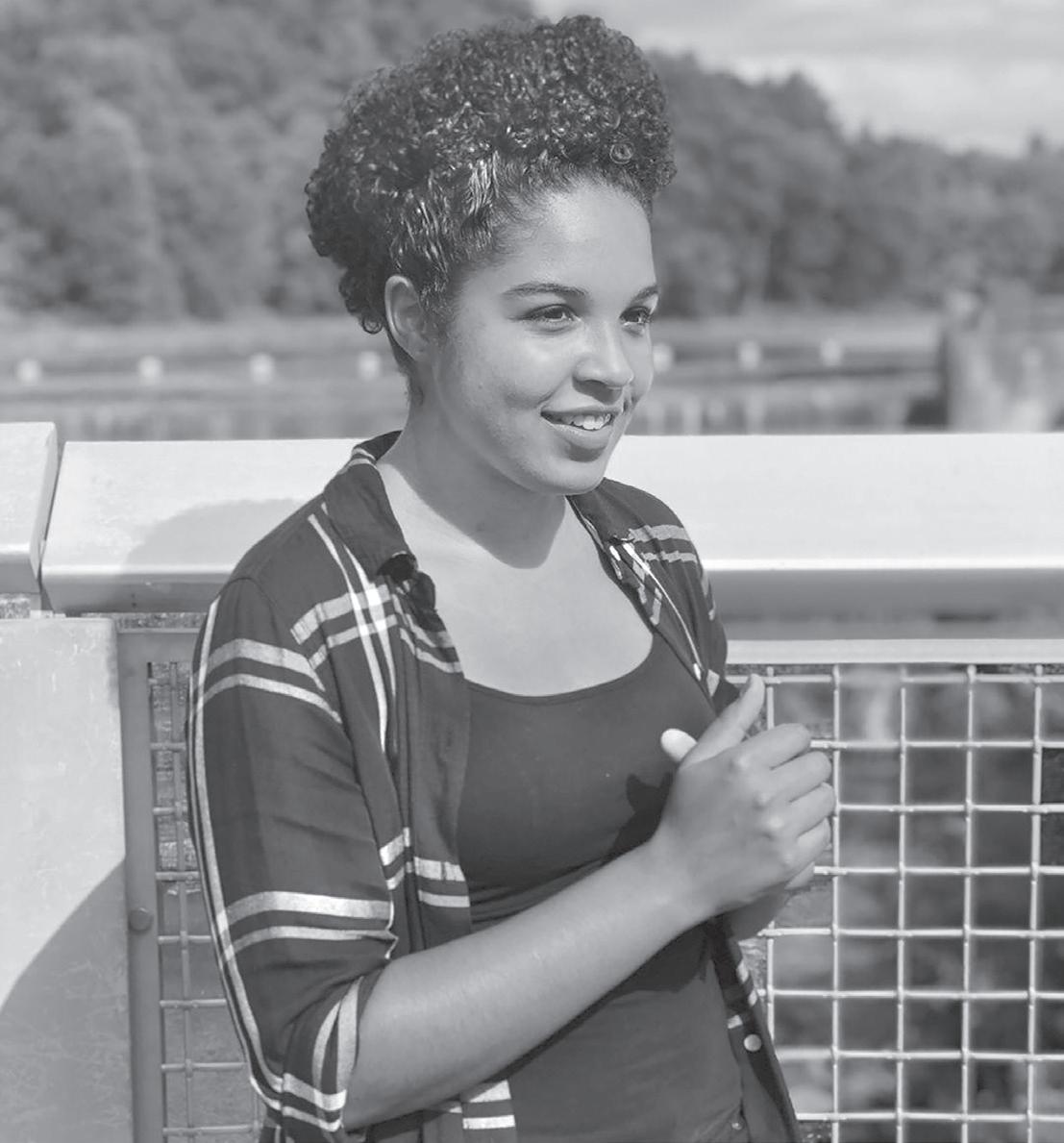
Election talk | Kayla Butler ’24 had trouble finding a conversation last week that wasn’t about the election.
By MADELINE ROSENBERG Sun Assistant News Editor
The Sun spoke with students throughout election week, who shared their experiences living on campus during the historic election. The following excerpt is from one of those conversations and has been condensed and lightly edited for clarity.
Kayla Butler ’24: Butler studies Policy Analysis and Management in the College of Human Ecology and is a Student Assembly freshman representative. She’s from Boston, Massachusetts.
Thursday, Nov. 5:
I’ve been staying up very late keeping track of the election and what the results are. This morning, the results in Georgia and Nevada closed considerably. It’s a lot of on-edge, constantly checking the polls. I’ve been able to work on my schoolwork a lot more because I have a group of friends that keeps me focused and we’re able to separate ourselves from the election as a whole, like “Hey this is homework time, and then we can check the election.” First let’s focus on what we can control.
The election is always in the back of my mind. You can always hear someone talking about it. I was sitting at Terrace yesterday doing my homework and there was a group of people behind me talking about it. Wherever you go, there’s someone mentioning something about the election. It’s always the next news story on my notification panel. It’s always there, but it’s a secondary concern for me.
I’m having these conversations almost everywhere. I’m in Eco House and there’s some going on in my dorm. In my government class, we’re talking a lot about how the election is playing out this year, versus how it has played out in previous years. And then random people that I’ll talk to want to have a discussion about: What are your views? What do you think is going to happen? Everyone is talking about the election in different ways and from different viewpoints. It’s a great opportunity to expand our understand-
brought this focus has earned her the moniker, ‘The Conscience of America,’” the press release stated.
Morrison died on Aug. 6, 2019 at the age of 88. Her passing was mourned by many across the country, and on campus. A little over a year later, Cornell students held a live reading of her first work, The Bluest Eye, to commemorate the life of one of the University’s most influential alumni.
Last month, the University announced that it will name one of the new dorms on North Campus after Morrison, as well as one for late, former Justice Ruth Bader Ginsburg ’55.
This year’s class of Hall of Fame inductees is specifically intended for “showcasing under-represented women of achievement, posthumously.” December’s class “will showcase six Black women who shaped our nation.”
Along with Morrison, the class includes civil rights activist Mary Church Terrell, medical researcher Henrietta Lacks, editor-in-chief of the Peninsula Magazine Barbara Hillary, civil rights leader Barbara Rose Johns Powell and singer and civil rights activist Aretha Franklin.
The virtual induction ceremony will take place Dec. 10.
Massachusetts and Vermont.
remote operations. Instead, the college said it did so “out of an abundance of caution.”
ing of how elections work, how elections affect people, how we interact with the world around us.
I was in McGraw Hall on election night with my friends, doing homework and watching the results come in. We had it up on the projector, and I was following the numbers there, seeing where they’re called.
Sunday, Nov. 8:
Yesterday was a great day — it was just warm, but seeing people out and having fun and just getting good vibes from campus was really nice. And then I got to go to dinner with one of my friends because it was his birthday. It was a really great day.
I woke up around 12:30 p.m. and I looked at my notifications and I saw it. I had The New York Times, CNN, The Washington Post, all telling me, and my mother, but she’s not a news source. I was like, “Oh, cool!” and then I walked outside to get breakfast and there were people driving around and honking, and I was like, “This is kind of dope.”
It has just been a lot more relaxing. Usually I’m always looking at the news — has there been a new policy, a new unilateral action that Trump took that I need to know about that might affect my life? And now I’m kind of like, “Oh, Trump’s name came up. Great. I can ignore that.”
It’s nice knowing that I don’t constantly have to be worried about the news. I do still have to pay attention and I do still have to be somewhat worried, but I’m less on edge. Joe Biden getting elected is great, but it’s really not the end of anything. You still have to be active, and you still have to be watchful.
It’s a change in presidency, but it’s just the beginning. If you want something, you still have to advocate for it, not sit there and expect it to happen. The biggest thing on my mind right now is environmental regulation.
To continue reading this article, please visit cornellsun.com.
Madeline Rosenberg can be reached at mrosenberg@cornellsun.com.
TC3’s announcement comes as New York has seen a drastic rise in COVID-19 cases. On Sunday, the state reported 3,340 new COVID19 cases and 27 deaths. For months, the state had a travel advisory list that mandated travelers from states with high COVID case rates to quarantine.
But since New York would qualify for its own travel restrictions, the state ended its travel advisory list. Now, anyone traveling to New York must provide a negative COVID19 test within three days of arrival. Then, travelers must take another COVID-19 test after a three-day quarantine. Travelers who refuse to comply with the rule must quarantine for 14 days.
Gov. Andrew Cuomo (D-N.Y.) said the measure would remove the need to closely track cases in other states. The only states exempt from the order are New Jersey, Connecticut, Pennsylvania,
Tompkins County Health Director Frank Kruppa implored residents to adhere to public health guidelines following Cuomo’s order and the uptick in cases the state has experienced.
“We all need to continue taking the same precautions: wear masks, wash hands, and maintain at least 6 feet of distance from others,” Kruppa said. “With the holidays coming up, I also remind everyone to avoid non-essential travel. The best gift to your family this holiday season is to avoid spreading COVID-19, so please consider staying home.”
Provost Michael Kotlikoff said in a Nov. 3 email to the Cornell community that it was unclear how New York’s new travel restrictions would affect the University’s travel and visitor policy. Currently, Cornell policy states that essential travel for faculty requires University permission and strongly discourages any personal travel. Visitors are also prohibited from entering all campus facilities, including residence halls.
At Cornell, cases have remained relatively low, bucking the national
and state trends. In the past week, the University reported 14 cases among students, faculty and staff.
On Nov. 8, there was only one new confirmed case among students.
Unlike Cornell, Tompkins County saw a significant uptick in cases in October, but the case count has since plateaued. TCHD confirmed Monday evening that there were two new cases and 57 active cases in Tompkins County.
As Cornell prepares to transition to completely remote classes after Thanksgiving break, Ryan Lombardi, vice president for student and campus life, encouraged students to continue following public health guidelines into the homestretch of the semester.
“As exams approach and you adapt to changing day-to-day routines, this time may be challenging,” Lombardi said in a Nov. 6 email to the Cornell community. “But I know that you will continue to act as a caring community toward one another, as well as take care of yourselves.”
Meghna Maharishi can be reached at mmaharishi@cornellsun.com.
More than 120 first-year students took a gap year, which is double the typical number of enrollment deferrals Cornell normally approves, according to Burdick. The University also allowed students to defer a semester instead of an entire year, who will arrive in February along with about 50 firstyear spring admits.
Burdick said he doesn’t expect these deferred enrollments to impact the acceptance rate for the Class of 2025 — who is already underway with the college application process.
The total undergraduate enrollment, about 14,743 students, is a decrease, at just 97 percent of the University’s target enrollment. Burdick said Cornell is also at about 97 percent of the intended target enrollment for new and continuing graduate students. But Burdick said the University is at more than 99 percent of its target enrollment for new first-year students.
Most international students are studying from one of Cornell’s 11 Study Away sites, where students take classes at a partner university in cities like Beijing or Rome. The international student population dropped from a total enrollment of 5,741 in fall 2019 to 5,146 this year — a 10.4 percent decrease.
But on South Hill, Ithaca College’s enrollment has dropped
from 5,852 students in fall 2019 to 4,957 in fall 2020 during its all-remote semester. Low enrollment has forced the college to cut $30 million from its budget and slash 131 faculty positions, even as it plans to bring students back to campus this spring.
Alongside the growing financial crisis and this year’s declining enrollment, the pandemic has cost colleges nationwide at least $120 billion, according to The New York Times. For Cornell, COVID-19
has resulted in $45 million in losses and an anticipated loss of $210 million more during the coming fiscal year.
This year’s dip in enrollment has only exacerbated these losses, as the University looks to a spring semester with no announced plans.
Meghana Srivastava ’23 contributed reporting.
By SYDNEY ORASKOVICH Sun Senior Staff Writer
In the 2020 presidential election, how scientific knowledge shapes policies and policymakers’ decisions served as a political focal point, particularly as it relates to the COVID-19 pandemic and a slew of natural disasters. As historic wildfires and hurricanes swamp the nation, such policies will play a critical role in the U.S.’ climate response.
President-elect Joe Biden supports the scientific consensus that humans are the driving force behind climate change. In July, Biden released a $2 trillion plan to combat climate change, aiming to make the U.S. a carbon neutral country by 2050.
In order to become carbon neutral, Biden said his administration would monitor carbon use and incentivize the implementation of clean energy for the economy, specifically focusing on low-income communities particularly devastated by climate change.
Biden’s plans also include halting the construction of the Keystone XL pipeline, banning new offshore drilling, instituting strict fuel-efficiency standards for cars and trucks, and gradually limiting the use of single-use plastics.
“Clearly at the highest level of the federal government today, the consensus is that climate change is not real, nothing is happening, and that we don’t need to do anything,” said Prof. Clifford Kraft, natural resources, who teaches a course on environmental policy for the Cornell in Washington program.
President Donald Trump’s policies over the past four years are nearly the polar opposite of Biden’s proposed legislation. Trump’s administration, for instance, enacted policies that enabled the fast tracking of approval for new pipelines, expanded offshore drilling in the Atlantic Ocean and reversed previous legislation on fuel efficiency standards.
Still, Biden has emphasized that he will not roll back the use of fossil fuels as long as carbon capture technology continues to
improve and the use of clean energy increases. Instead, he intends to eliminate oil subsidies, which currently cost the U.S. between $20 to $649 billion each year, according to the International Monetary Fund.
Scientists broadly agree that, despite the sometimes high upfront cost of certain policies, delaying climate change action is ultimately the far more expensive choice. One study estimated that the true, longterm cost of one ton of carbon is $100,000. Another study calculated that annual GDP loss resulting from unchecked warming could be anywhere from 6.7 to 14.3 percent.
Biden’s plan also calls for carbon neutral electricity production by 2035, which is an ambitious timeline when other countries, including the European Union, are aiming for carbon neutrality by 2050. However, a 2018 report by the Intergovernmental Panel on Climate change warned that the planet only has until 2030 to prevent the worst long-term effects of climate change.
Despite Biden’s relatively progressive set of policies, Kraft argued that the fundamental issue should not be whether the president has a plan to combat climate change, but, rather, whether the federal government values scientific opinions.
“I’m concerned about the fundamental functioning of our country. We aren’t going to make any progress in environmental policy unless we just figure out if we really are the country we once thought we were,” Kraft said. “Four years ago, I thought that there was a general consensus about environmental policy and that there really was no going back. I was wrong.”
The Trump administration has rolled back many of the federal government’s environmental protections, leaving it to state and local governments to institute climate policies. Former regulations that have been rescinded under the Trump administration include rules to halt methane leaks, limits on coal production, endangered species protections and water protection regulations.
The administration’s actions toward
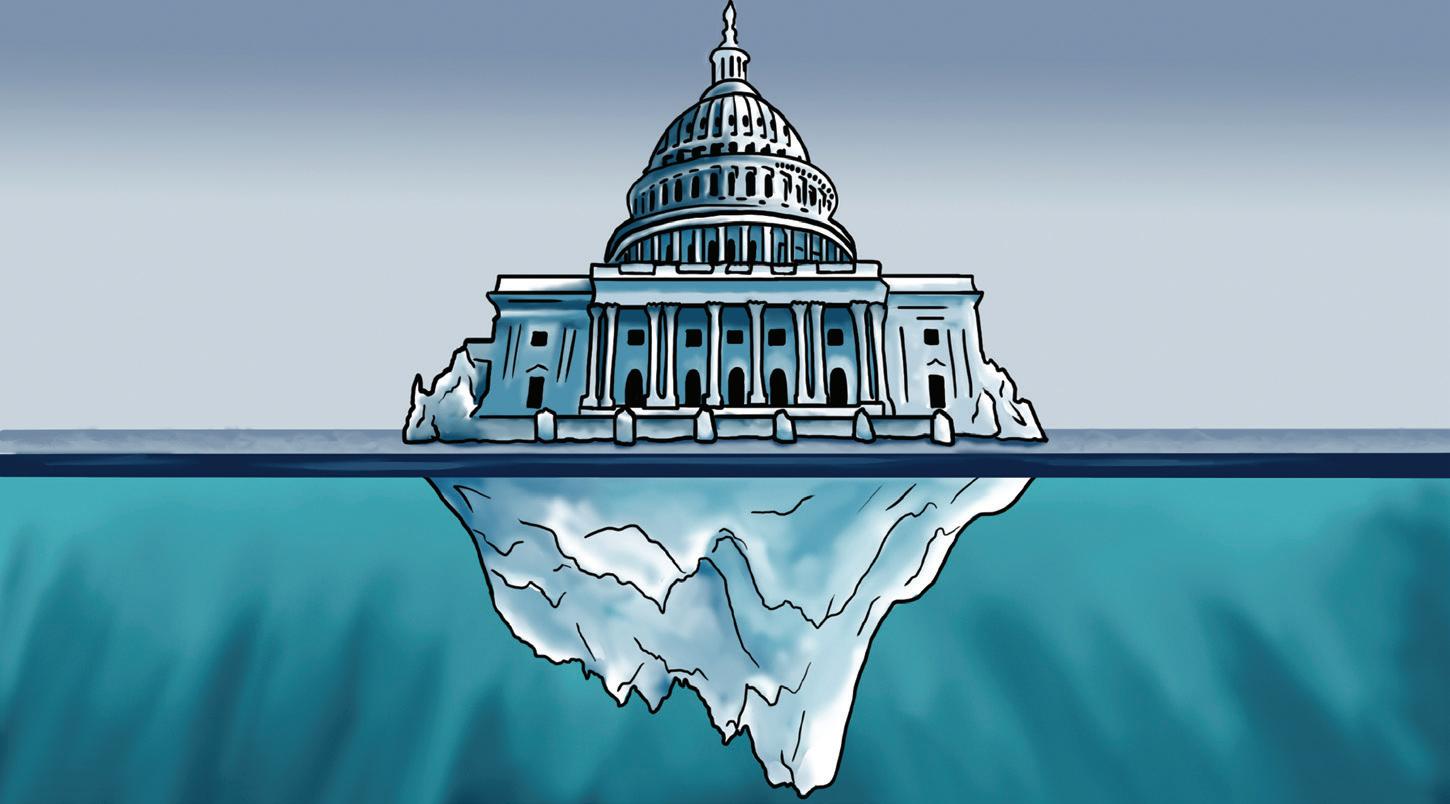
environmental protections largely mirrors its response to the COVID-19 pandemic, where state and local governments were put in charge of deciding whether to implement public health measures, like mask mandates.
Prof. Chris Schaffer, biomedical engineering, also emphasized the need to listen to experts in the battle against climate change. Schaffer spent a sabbatical on Capitol Hill working for Sen. Edward Markey (D-Mass.) in Congress as a science policy adviser, and said he felt the pressure of being one of few scientists charged with developing policy advice.
“So much of U.S. policy that’s either meant to be guided by scientific information or policy that’s meant to guide the use of scientific research … so much of those policies are so wrong right now,” Schaffer said.
Kraft also said he believed that the U.S.’ approach to science-based policy has gone backwards in the past four years.
“We should just grab our chairs, grab our sense of reality, and say: ‘OK, the sky is up. The sun rises every day,’” Kraft said. “Renewable energy — solar and wind — the technologies have gotten cost effective and productive. Let’s move forward into that future.”
Kraft believes the president, when it
comes to climate policy, should be willing to listen to experts in environmental science and ground their arguments in a factual reality. Kraft did not see Trump as this candidate.
“I’m used to dealing with controversial issues and arguments where people disagree,” Kraft said. “This isn’t a matter of just agreement. There’s no place to go [in a conversation] with someone that jokes you can drink bleach to cure a disease.”
In addition to voting, Schaffer encouraged people to take action, particularly by asking candidates running for the House or Senate whether they can commit to hiring a Ph.D.-level scientist to serve as a personal science adviser.
“[Voters] should make the argument that the way that our representatives treat scientific information and how seriously they take it in making policy decisions should be an electability issue,” Schaffer said.
To Kraft, the issue of climate policy isn’t one of saving the Earth, but saving the people that live on it.
“I don’t think we will destroy the Earth,” Kraft said. “Really the issue is just: Do we care about people and how people live?”

By ABEGALE MCDERMOTT Sun Contributor
Prof. Casey Cazer, population medicine, knew she wanted to be a veterinarian from a young age, but only discovered the career of a veterinarian scientist during her undergraduate career at Harvard University.
While earning an undergraduate degree in organismic and evolutionary biology, most of Cazer’s most important exposure to veterinary medicine happened outside of the classroom. Summer opportunities took her from dairy farms to racetracks, giving her a larger perspective on
what was possible in the intersection between research and medicine. As a student, Cazer decided that she wanted to devote her career to finding ways to push the veterinary profession forward in improving animal health.
Cazer completed her Doctor of Veterinary Medecine and Ph.D. at Cornell from 2012 to 2020.
“Of course you have the large bucket of knowledge which some people describe as drinking from a firehose, trying to learn all that you can about veterinary medicine,” she said.
Through Cornell’s Veterinary Leadership Program, Cazer completed an externship with the pharmaceutical company Sanofi in Frankfurt, Germany.
“There are different mindsets when you do research in academia versus in industry,” she said. “I wanted to start my career in academia because I wanted to be able to drive my own agenda and set my own research goals.”
Just six months into her newest role as a faculty member in the Department of Population Medicine and Diagnostic Sciences at Cornell, she is already feeling at home.
“I felt like I could really hit the ground running, even though I’m starting my job from my home office,” she said.
She said that she has found the virtual environment conducive to her research and data analysis, as it is easier to reach out to and collaborate with other researchers.
Cazer’s research focuses on the impact of zoonotic diseases — illnesses that can transfer between animals and humans — on health, in an approach the CDC says “recognizes that the health of people is closely connected to the health of animals and our shared environment.”
The most recent example of a widespread zoonotic disease is COVID-19, which first originated in animals and then later spread to humans.
“When we talk about one health, we’re really talking about the intersections between human and animal health … this can be anything from diseases that cross those boundaries to how we all depend on the same planetary resources to survive,” Cazer said.
Cazer’s lab focuses on antimicrobial resistance in animal and human populations, how it
transfers between the two and how techniques can be used to mitigate resistant bacteria. One of its current projects is a scoping review, a broad look at what has been previously reported on pets transferring bacteria to people. The researchers use data analysis methodologies and modeling, collaborating with wet labs when needed.
“Mathematical models have become a little bit of a buzz word lately, because everyone is very familiar with how they have been used to predict the COVID-19 pandemic,” she said.
Cazer’s modeling has focused on how the usage of antimicrobials on farms can be improved to reduce the likelihood of resistant bacteria being transferred through the food chain to people. The mathematical method used is similar to the COVID-19 SIR or SEIR models that predict the spread of the coronavirus.
Cazer is currently working on some COVID-19-related projects, including a continuation of student reflections started in the spring. When the University shut down this past March, Cazer was teaching a course on public health for veterinary students.
She created a discussion board for predictions on how veterinary medicine would be impacted by the pandemic.
“I’m currently working with a graduate student to analyse those discussion posts and to try and make some sort of (maybe) guidebook ... of how the students saw the profession changing in the future because of the pandemic”
They have found that the profession has already been impacted in unusual ways, including a huge increase in the number of pet check-ups. Cazer is also creating some surveillance metrics for the University to “keep a good finger on the pulse of what’s happening” with the spread of COVID-19 cases on campus.
The enthusiasm Cazer found in her summer experiences has continued to her professional career and inspired her adjunct appointment at Cornell’s small animal hospital, a position that reminds her of the best parts of being a vet.
Abegale McDermott can be reached at alm382@cornell.edu.
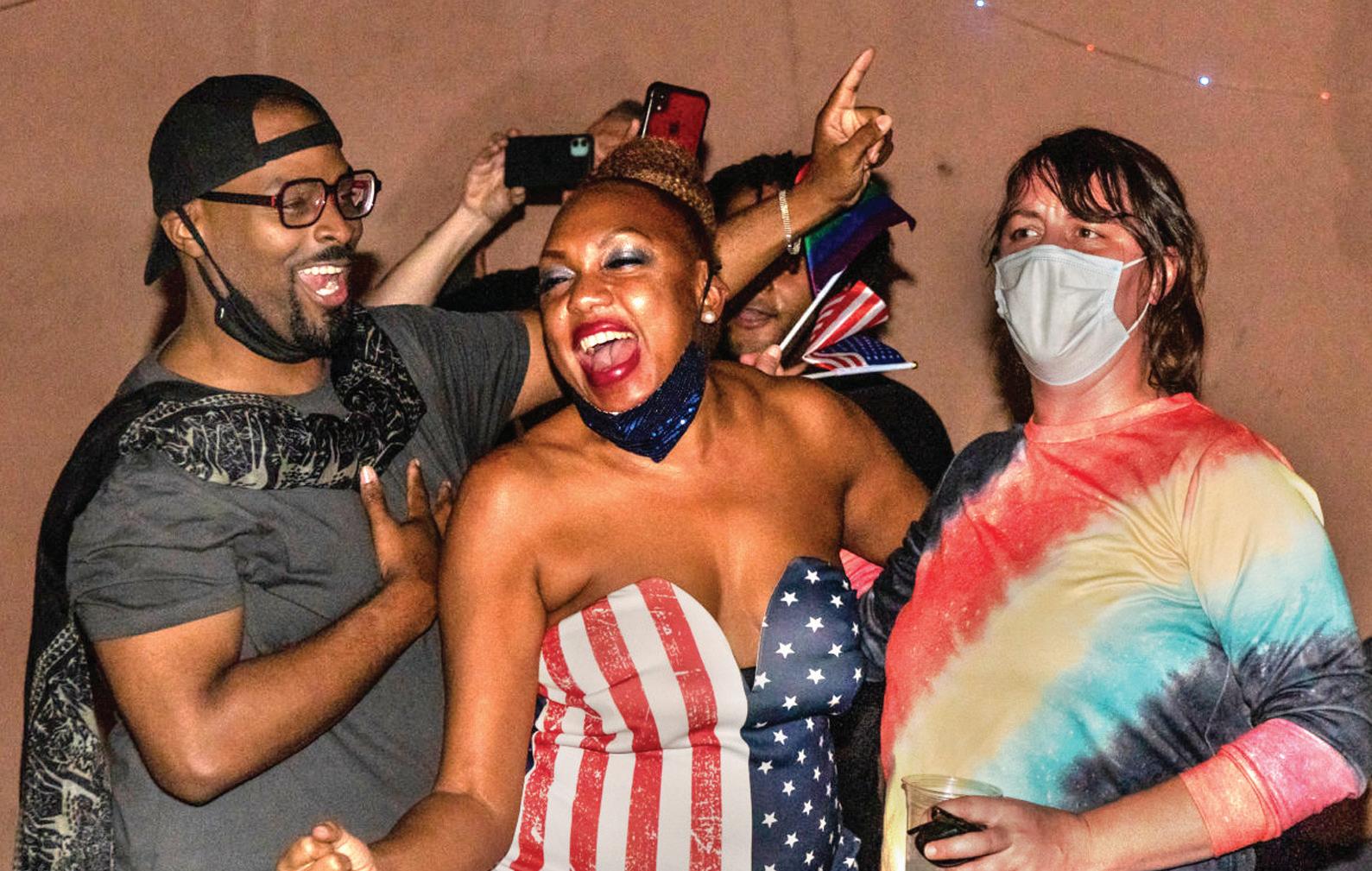
The past week saw people across the country joyfully honking, yelling and blasting music on the street. In a decentralized and spontaneous fashion, people cruised around their cities and congregated in urban centers, enthusiastically celebrating the end of an era in the atypically nice weather. Many of us in Ithaca witnessed (and did) this, too. The intersection of College Ave and Dryden Road was reappropriated as the new agora. As people drove by, they would slow down, turn up the volume of their music, say a few words and wave at the crowd, as if they were giving a speech at the center of the plaza.
These drivers permeat -

ed the street with a particular aura. Amplified by speakers, their music designated a particular feeling for everyone in close proximity. They participated in public discourse through the reverberation of the sound. While it was refreshing to immerse myself in the sheer exuberance in Collegetown, I must admit that my excitement waned pretty quickly when I realized that people didn’t know what else to queue for besides Miley Cyrus’s “Party in the USA” and Mac Miller’s “Donald Trump.”
This anecdote illustrates how blasting music can be perceived as the manifestation of discourse power in a given space. The blasting of music can be understood as the broadcasting and the queueing of recorded songs.
Traditionally, such an act is done at semi-public spaces like music venues, nightclubs, house parties and by stakeholders like DJs. In such spaces, recorded music broadcasted through the PA system facilitates the enclosing of a zone. The volume of the sound designates the borders of the zone, and the vibration of the sound transcends physical proximity in the zone into a shared sentiment among the crowd. With everyone listening to the same music and attempting to talk over the same booming sound, the specific choice of music fundamentally shapes what people talk and think about.
Given how intense this shared feeling can be, the blasting of music is often leveraged as a means to claim ownership of a given space. Think of the times when you walked into a frat party and really despised the brothers’ music taste. More likely than
not, you probably decided not to comment on their music in their house. That’s how powerful music can be in claiming dominance over space with the help of loud enough speakers.
Nonetheless, such a power dynamic has a historically gendered bent rooted in the patriarchal hegemony. DJing was initially regarded as a marginalized and feminized act because it was fundamentally queer.
Club culture’s queer roots are reflected in the rise of disco-wave in the 70s. Back then, playing and dancing along recorded music was perceived as neither masculine nor authentic. Note that masculinity and authenticity have long been associated with one another in our taste culture. By contrast, band performances were regarded as the epitome of live music aesthetics.
our sense of cultural stewardship is now pre cariously contingent upon pro prietary platforms. These tech
It wasn’t until DJing was reappropriated as authentic with a newly defined live music aesthetics that the art of selecting and queuing recorded songs became relevant in the public sphere.
Such a fundamental shift coincided with the popularization of house music in the 80s, yet since then, club music has been reframed as a white boy’s culture. As white boys took over the clubs, and more crucially — the speakers, they began acting as the gatekeepers of our sound culture.
With control over the speakers, these white male DJs essentially seized control over the discourse power by catering the dancefloors to their own kind. In her ethnographic study of the club culture in the UK in the 1990s, Sarah Thornton described the experience of young women in the scene, saying that they are “either a girl or culturally one of the boys.”
But besides semi-public spaces like the dancefloors, one can blast music in a public space, too. This was the case this past weekend in Ithaca and across numerous cities in the U.S. With the increased accessibility of urban public space for non-white and non-male folks, the hegemony of the blasting of music is being shaken up.
The rise of automobile culture afforded people the newfound autonomy to navigate the institutionalized space of urban centers. With the penetration of personal vehicles came the widespread ownership of speakers. Increasingly, more people could reclaim themselves as the center of the plaza with their blasting of music and participate in the
public discourse. This act of manifestation is further democratized with the affordability of portable speakers. Unlike a PA system that costs thousands of dollars, the price of a portable speaker can be as low as a hundred dollars. Yet still, these portable speakers are loud enough for the enclosing of a zone and the fostering a
shared sentiment in the physical surrounding.
This technological advancement helped the marginalized reclaim the public space and rewrite the narrative in the public sphere.
There’s only one caveat, however. Please be mindful when you blast music. This past Sunday, I received a noise complaint from
Stephen Yang is a junior in the College of Agriculture and Life Sciences. He can be reached at sy364@cornell.edu. Rewiring Technoculture runs alternate Tuesdays this semester.
138th Editorial Board The Corne¬ Daily Sun
MARYAM ZAFAR ’21 Editor in Chief
JOYBEER DATTA GUPTA ’21 Business Manager
PETER BUONANNO ’21
Associate Editor
MEGHNA MAHARISHI ’22
Assistant Managing Editor
CHRISTINA BULKELEY ’21
Sports Editor
BORIS TSANG ’21
Photography Editor
CAROLINE JOHNSON ’22
News Editor
ALEX HALE ’21
News Editor
ARI DUBOW ’21
City Editor
EMMA ROSENBAUM ’22
BENJAMIN VELANI ’22 Dining Editor JOHN MONKOVIC ’22 Multimedia Editor
MIKE FANG ’21
OLIVIA WEINBERG ’22
Assistant News Editor
MADELINE ROSENBERG ’23
Assistant News Editor
LUKE PICHINI ’22
Assistant Sports Editor
HANNAH ROSENBERG ’23
Assistant Photography Editor
BRIAN LU ’23
ANNABEL LI ’21
LEI ANNE RABEJE ’22
JOHN COLIE ’23
JOHNATHAN STIMPSON ’21 Managing Editor
KRYSTAL YANG ’21
Advertising Manager
JASON HUANG ’21
Web Editor
NIKO NGUYEN ’22 Design Editor
PALLAVI KENKARE ’21 Opinion Editor
SEAN O’CONNELL ’21
News Editor
KATHRYN STAMM ’22
OZA ’22
PLOWE ’23 Arts & Entertainment Editor
LEE ’21
CHENG ’21
PEÑEÑORY ’22
MEGHANA SRIVASTAVA ’23
DAWSON ’21
’22
MORAN ’21
LAW ’22
’21
Matthew Samilow is a junior in the School of Industrial and Labor Relations. He can be reached at mas748@cornell.edu. On Malott’s Front Steps runs every other Friday this semester.
Former Vice President Joe Biden will assume office as the nation’s 46th president in January. But he will do so in a political environment that few predicted in advance of last Tuesday’s election. Buoyed by inaccurate polls and misreading of the electorate’s mood, Democrats giddily predicted that they would retake the Senate and bolster their majority in the House. Senate Minority Leader Chuck Schumer repeatedly said that in a Democratic Senate “nothing is off the table. Keeping all options open, of course, being a euphemism for eliminating the legislative filibuster in order to pack the Supreme Court, add new states for political gain and pass the most leftwing agenda in American history.
dramatically improved in South Texas. In Starr County, which is 95 percent Hispanic, President Trump improved from a 79-19 percent loss in 2016, to a 5 point loss this year. Republicans also unexpectedly held Texas’s 23rd Congressional district which was largely written off for them after Rep. Will Hurd (R-Texas) announced his retirement. Democrats had also made flipping the Texas House of Representatives a major priority, investing millions of dollars. In the end, Democrats failed to net any seats.
Peñeñory ’22
’21
’22
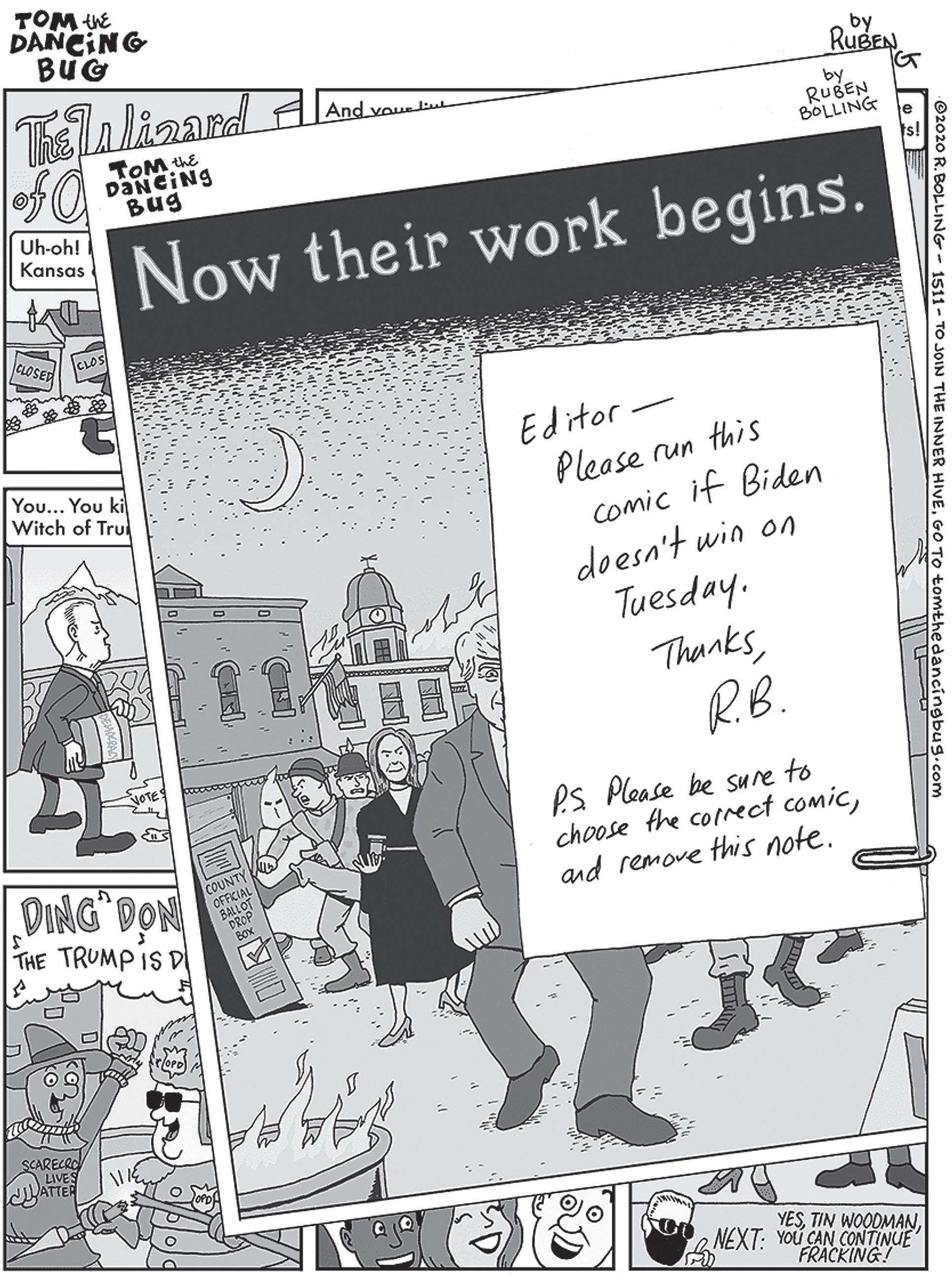
These progressive dreams will, fortunately, remain dreams. Mitch McConnell will likely remain Senate majority leader in the next Congress, pending the outcome of the two runoff elections in Georgia. After the Democrats’ obstructionist tactics in the minority over the duration of the Trump presidency, it’s hard to imagine McConnell will be in a particularly cooperative mood. (Even if the Democrats were to win both Georgia seats, they’d likely find it difficult to get much done in a 50-50 Senate.) Republicans also are looking at a surprising gain of 8-10 seats in the House, setting them up to retake the chamber in 2022.
Losing a presidential election is never good, but staring down the barrel of united Democratic control in Washington, Republicans will feel pretty relieved to have avoided the worst case scenario. They enter the opposition with momentum and the ability to thwart the Democratic agenda.
Crucially, Republicans retained their majorities in all of legislatures they currently control, often expanding their majorities. This will set them up well for the post-2020 redistricting.
And though the president lost his bid for reelection, the inroads he and other Republicans made with nonwhite voters provide a roadmap for expanding the Republican coalition. In Miami-Dade County in Florida, President Trump improved from a 30 point loss in 2016 to a 7 point loss and Republicans flipped two heavily Hispanic House seats they had lost in 2018. The president also improved his margins in Osceola County, which is just south of Orlando and home to a large and growing Puerto Rican population. Republicans repeatedly sold a message that the Democrats had embraced socialism and the far left, and it’s clear that message resonated in Florida.
Democrats’ struggles with Hispanic voters weren’t just limited to Florida, though. In the weeks leading up to the election, the Biden campaign dispatched Kamala Harris to Rio Grande Valley to gin up turnout in the heavily Democratic, but historically low-turnout, region. But, in a twist, it was President Trump who
A similar story played out across the nation as vulnerable Republicans showed surprising strength. Most Republicans, from senators to state legislators, outran the president and it is difficult to see this strength as anything other than a repudiation of the progressive agenda. Many voters wished to get rid of the president, but they did not support the Democratic agenda. They were not on board with packing the Court, defunding law enforcement, or eliminating private health insurance. This was a loss for Trump, the personality, not a win for the progressive agenda.
Fairly soon, the five and half year long Trump show will end, and the Republican Party will have to define itself beyond support for the president. In my mind, the way forward is clear. If President Trump did one thing successfully, it was to reveal how antiquated and out of touch the previous Republican agenda was. Instead of preaching tax cuts for the wealthy and trickle down economics, Republicans must stand for ordinary workers and their interests. This means opposing corporate handouts and trade deals that negatively affect the American worker. Abroad, The GOP must be skeptical of endless foreign entanglements and ensure that American foreign policy is calibrated to actually advance American interests. At home, conservatism should be a bulwark against the cultural leftism that has consumed the Democratic Party. Republicans must stand for tradition, our constitutional liberties, and a positive narrative of the American project. This country yearns for decent, patriotic leadership, and if the GOP stands for that, it will no doubt have a bright future.
In the end, it’s important to remember that this was a brutal and divisive election and tens of millions of Americans are disappointed by the results. We nonetheless owe President-elect Biden that which was denied to President Trump: An honest chance to lead. President Trump must ensure a smooth transition and the Senate GOP must stand for more than mere obstructionism. Ultimately, as President Obama said in the aftermath of the 2016 race, elections are “intramural” sports. “We’re all of the same team” and, most importantly, “we are Americans first.” As a new administration takes office, both sides would do well to remember that.

in the empty cells, one number in each, so that each column, row, and region contains the numbers 1-9 exactly once. Each number in the solution therefore occurs only once in each of the three “directions,” hence the “single numbers” implied by the puzzle’s name. (Rules from wikipedia.org/wiki/ Sudoku)


By CHRISTINA BULKELEY Sun Sports Editor
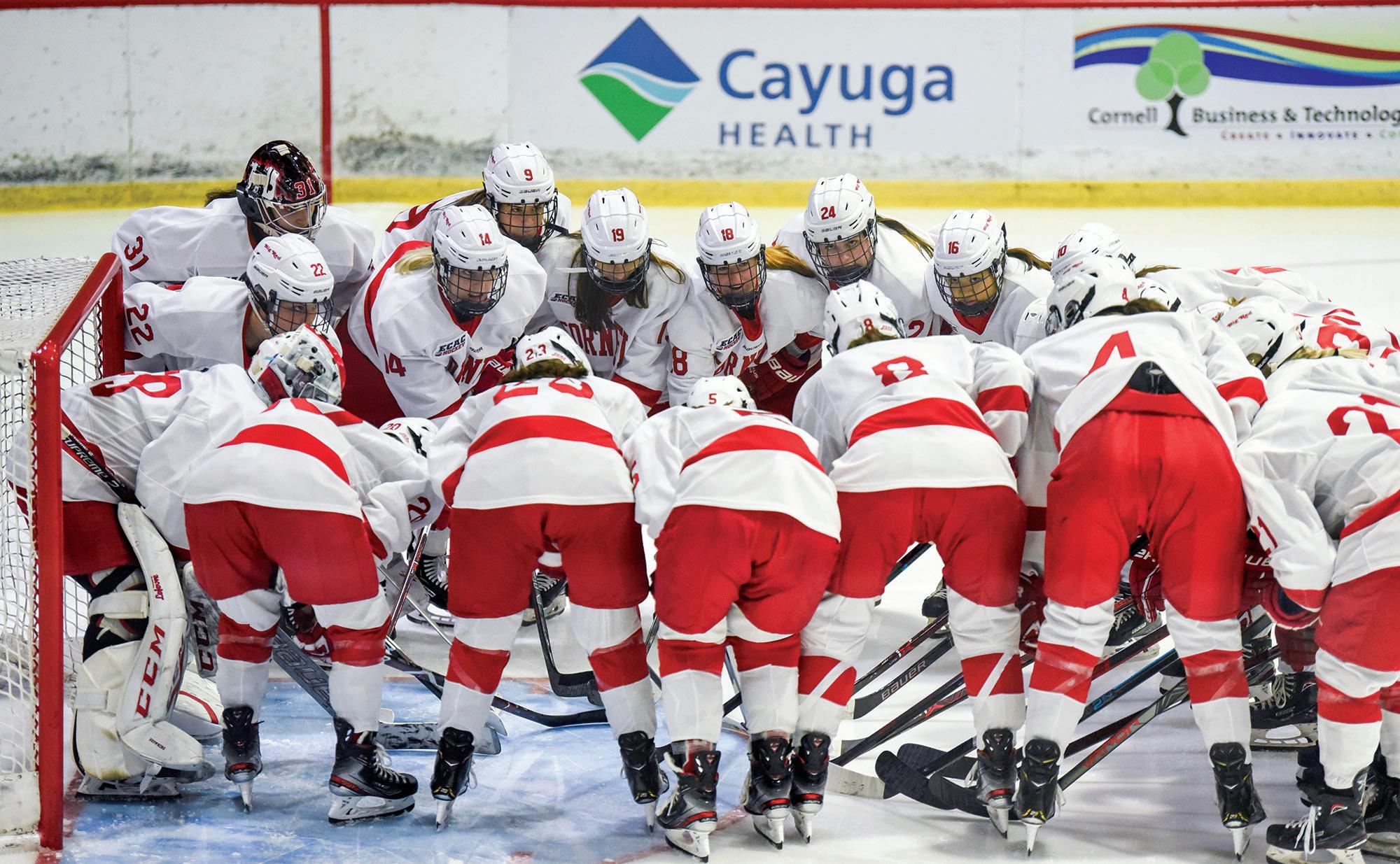
The first round of votes are in for women’s Division I ice hockey, and USA Hockey puts the Red icers at No. 2 in the nation. Cornell, with seven firstplace votes, trails only the University of Wisconsin in the rankings, which earned nine first-place votes.
The end of the 2019-20 campaign had the new top two teams’ positions flipped, with Wisconsin coming in second to Cornell. Both teams recorded 28 wins in a COVID-19-shortened season.
After Cornell in the preseason poll came Northeastern University, The University of Minnesota and The Ohio State University to round out the top five.
Fellow ECAC teams joining Cornell in the USA Today Top 10 are Clarkson at No. 6 and Princeton — which downed the Red in last year’s ECAC title game — at No. 7.
Cornell lost six integral skaters to graduation, which might factor into Wisconsin’s narrow edge in the poll.
Seven freshmen brought in this year will attempt to fill those big shoes if, and when, competition kicks off this season.
But the Red retains key players that will form a new core without last year’s seniors — a few returning icers are last year’s ECAC Hockey Goaltender of the Year senior Lindsay Browning, who started all 33 contests last season, senior
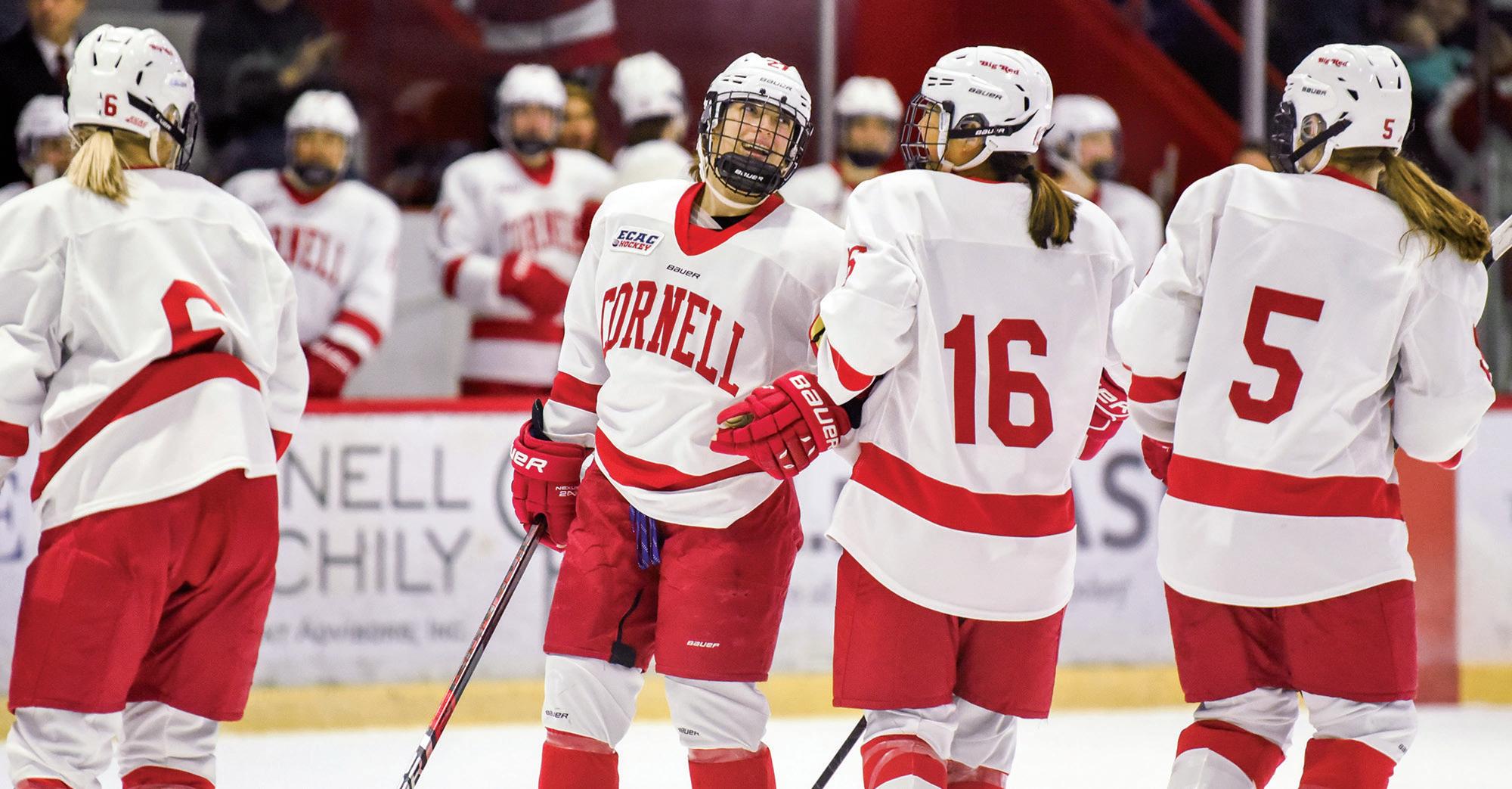
forward Maddie Mills, who tied for leading the team with 41 points last year and junior forward Gillis Frechette, who was just behind Mills with 17 goals.
Though the Ivy League prohibited varsity athletic competition for the duration of the fall semester, the possibility remains that Cornell hockey could resume play after Dec. 21 — the college’s last day of final exams. Polling includes teams, like Cornell, that do not yet have plans to return to the ice, just as football AP polling included Big Ten and Pac-12 teams before their return to competition.
Fellow ECAC teams joining Cornell in the USA Today Top 10 are Clarkson
at No. 6 and Princeton — which downed the Red in last year’s ECAC title game — at No. 7. Division foes also receiving votes, but not landing in the top 10, were Quinnipiac, Colgate and Harvard. These six squads represent half of all teams in the conference.
While the ECAC has not yet made public any official plans for hockey this season on a conference-wide level, Clarkson and Quinnipiac recently announced a series of four games beginning later this month that will technically not count towards in-conference records.
The first two games will take place in Potsdam, New York on Nov. 28 and 29 without fans in attendance.
Clarkson, however, has alluded to allowing fans into games during the 2021 portion of the season.
No. 1 Wisconsin, which plays in the WCHA, is slated to start games the same weekend as that Clarkson-Quinnipiac matchup. The Badgers will open their campaign at Ohio State.
With half of the ECAC’s teams coming from the Ivy League, which independently of the ECAC canceled athletics in the fall semester, it is unknown how the rest of the conference might proceed with the season.
Christina Bulkeley can be reached at cbulkeley@cornellsun.com.