The Corne¬ Daily Sun

By FAITH FISHER Sun Staff Writer
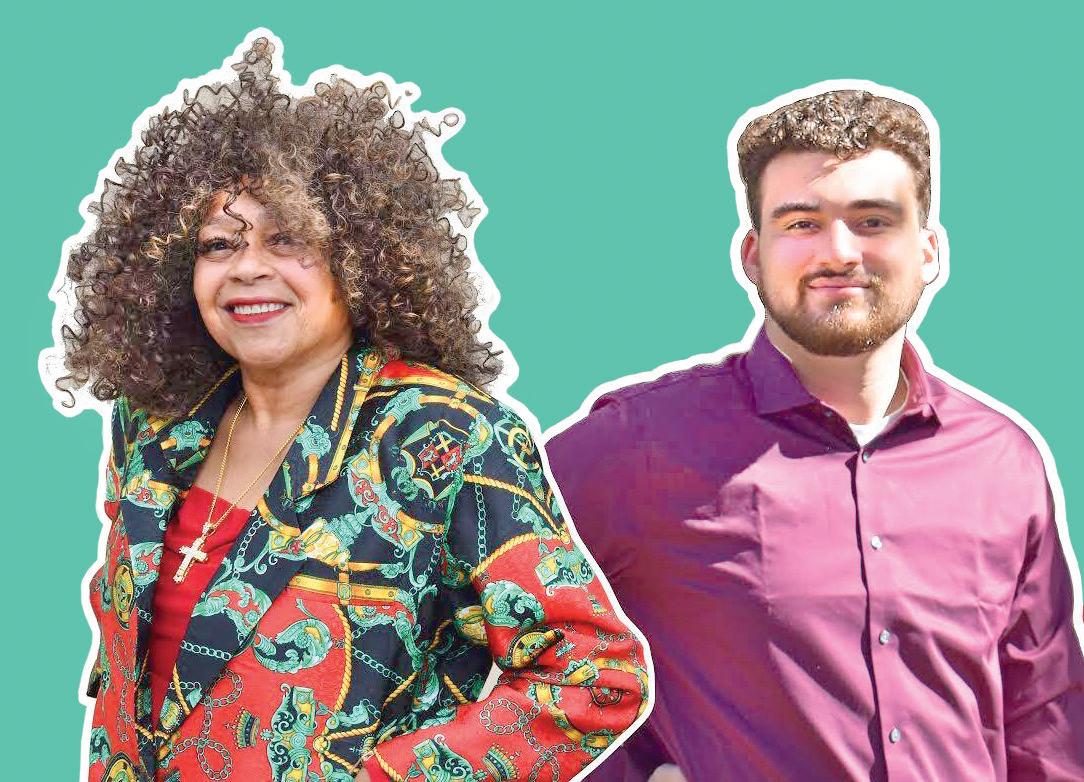
Two of the three Solidarity Slate candidates, Phoebe Brown and George “Jorge” Defendini ’22, were elected last Tuesday, paving the way for their progressive political vision in Ithaca.
The Solidarity Slate was a joint campaign that included candidates Brown, Defendini and Maddie Halpert. While Halpert lost the First Ward seat to Democratic incumbent Cynthia Brock, Brown gained the Second Ward seat and Defendini won the Fourth Ward seat.
Bolstered by support from community organizations such as the Ithaca
Tenants Union and Ithaca Democratic Socialists of America, the Solidarity Slate’s campaign focused on issues including housing reform, racial justice and environmental sustainability.
Brown, Halpert and Defendini consider the solidarity slate a “new way” to do politics in Ithaca. By serving as a voting bloc connected by shared values, the slate strays away from individualistic politics and brings people together to find solutions to pressing problems, according to Brown.
“The beautiful thing about the slate is that it’s not about the individual candidates like myself, Phoebe or Maddie,”

By SOFIA RUBINSON Sun Staff Writer
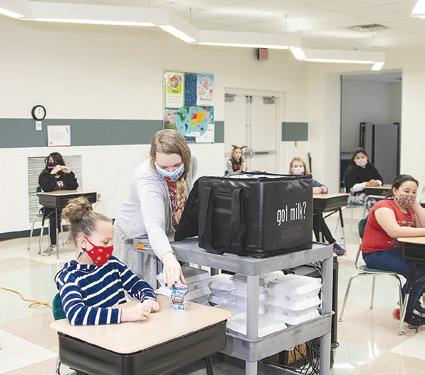
Starting next fall, students will have to wait until their junior year to experience the highs and lows of off campus life, from cooking for themselves to walking to campus from Collegetown. While living on campus as a sophomore is an exciting prospect for some, others say they’re worried about the policy shift.
Beginning fall 2022, Cornell will require all first-year and sophomore students to live in on campus or Universityaffiliated housing. The policy begins to take effect for all first-years and transfer students that started at Cornell this
semester.
“This is just one phase of Cornell’s efforts to build a strong living and learning environment so that all students can thrive as part of a cohesive community on campus,” wrote Tim Blair, executive director of housing and residential life, in a statement to The Sun.
ing — in part so that Cornell could admit more undergraduates and sophomores could be required to live on campus or in campus-affiliated housing.
“Living on campus for two years is a good way to build bonds with the other students.”
Justin Tien-Smith ’25
This policy change was made possible in part by Cornell’s Cornell’s North Campus Residential Expansion, a multiyear project meant to add enough hous-
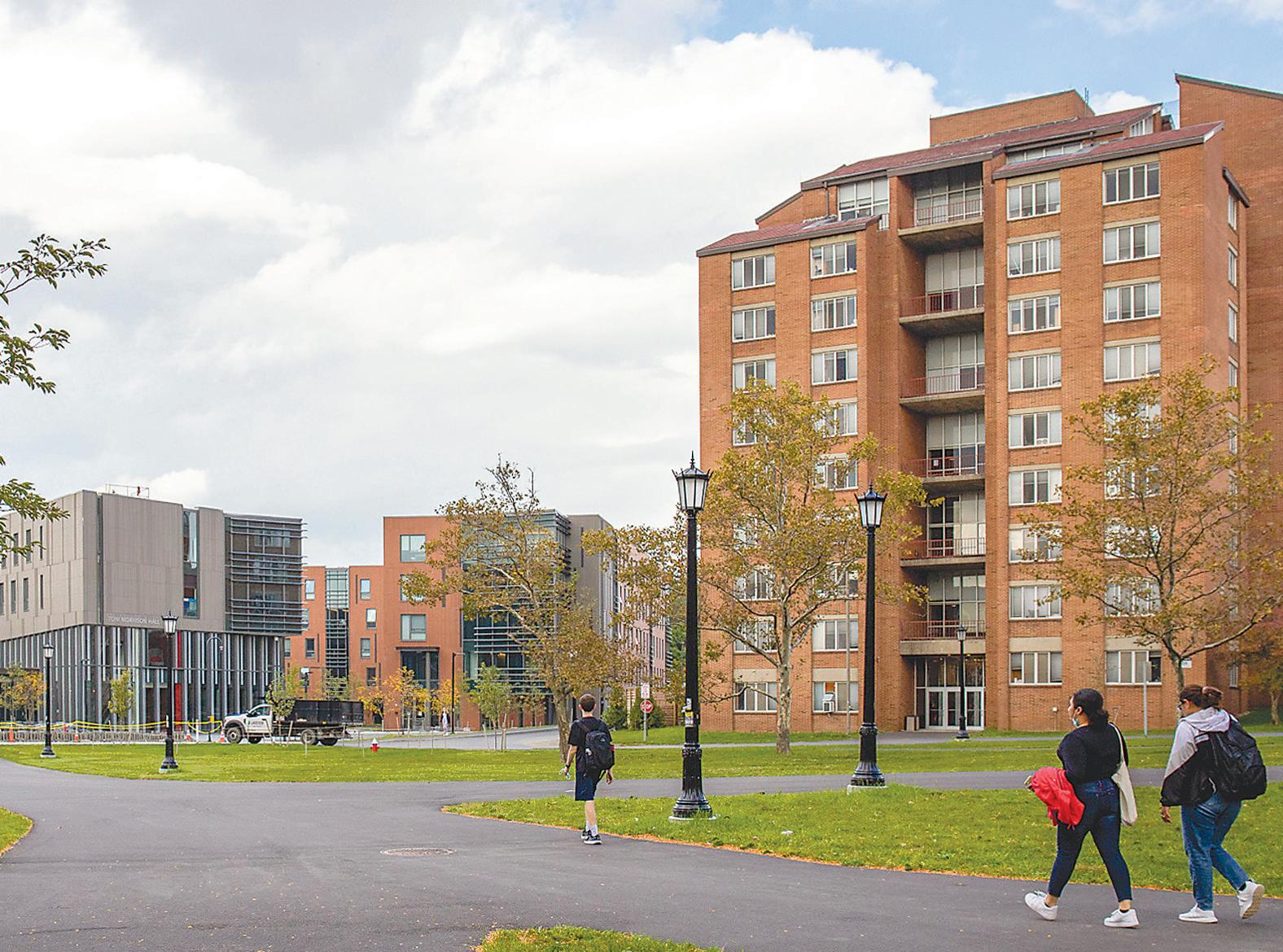
Toni Morrison Hall and Ganedego Hall, which currently house first-year students, will be used for sophomore housing next year, and the University will finish building three additional residence halls for first-year students for fall 2022.
Space in the five new dorms built through the years-long project will include approximately 800 beds for sophomore students and 1,200 for firstyears. According to Blair, these additional 2,000 spots will provide more space for students to stay on campus beyond their first year.
Currently, over 60 percent of undergraduates live on campus, with sophomores occupying West Campus, South Campus, North Campus townhouses and Greek and co-op housing.
For some students, including first-year Justin Tien-Smith ’25, this policy change will not change their housing plans for next year.
“I was planning on living on campus anyway,” Tien-Smith said. “I think that living on campus for two years is a good way to build bonds with the other students in our year.”
Others, including Chad Rubin ’25 and David Lilienfeld ’25, disagree with this policy change, saying that it limits their housing options — adding that students must wait until their junior year to maintain their own spaces and gain the independence that comes from living
off campus.
“Some people don’t want to live in the classic dorm,” Rubin said. “I think that [the new policy] limits our independence, stifles our options and kind of forces us to be less adult-like.”
This change in policy is making students who want to get out of the traditional dorm arrangement think of alternatives. Sommaya Haque ’25 said she preferred to live off campus.
“Now I’m actually thinking of applying to be an R.A., because then I’ll be able to kind of have the independent living style I was leaning toward,” Haque said.
Although on-campus housing was guaranteed for all sophomores for the 2021-2022 school year, some sophomores still chose to reside off-campus, citing reasons including cheaper rent and forgoing a meal plan.
“[The policy] stifles our independence, and kind of forces us to be less adult-like.”
Chad Rubin ’25
“Unless you were to live in a triple, my rent right now is cheaper than living on campus,” Ashley Jian ’24 said.
Jian said she decided to live off campus this year as a sophomore because she did not want to pay for the required unlimited House Meal Plan for West Campus — which costs students $6,434 per year. She prefers to cook for herself in her Collegetown apartment.
Kathryn Stamm ’22
Business Manager Anushya Alandur ’23 139 W. State Street, Ithaca, N.Y.
SEND A FAX (607) 273-0746 THE
ONLINE www.cornellsun.com E-MAIL sunmailbox@cornellsun.com

PIHE’s Entrepreneur in Residence: Meli James ’00 11 a.m. - Noon, 192 Statler Hall
BEDR Workshop: Alia Crum 11:15 a.m. - 12:45 p.m., 141 Sage Hall
Econometrics Workshop: Desire Kedagni 11:15 - 12:45 p.m., 217 Ives Hall
LASSP and AEP Seminar - Joel Moore University of Berkeley 12:20 p.m., 700 Clark Hall
Spanish Conversation Hour 3 - 4 p.m., G25 Stimson Hall
Stress Less Sessions 3:30 - 4:30 p.m., Virtual Event
Diversity in Business National Career Fair 4 - 8 p.m., Virtual Event
Microeconomic Theory Workshop: Jaden Chen 4:15 - 5:15 p.m., 498 Uris Hall
After #StopAsianHate: Deportation, Policy Advocacy and Community Organizing 4:30 p.m., Virtual Event
Decolonizing Anti-Racism 4:30 p.m., G-08 Uris Hall
Sweeping Change Report Launch 6 p.m., Virtual Event
Get Ready for Pre-Registration: Discover Courses That Connect You With Real World Issues 6:15 p.m., 105 RPCC
Voting Rights: A Conversation on Redistricting And Fair Elections
7 - 8 p.m., Virtual Event
Tomorrow Tuesday, November 9, 2021
Industrial Organization Workshop: Haimeng Zhang 11:15 a.m. - 12:45 p.m., 423 ILR Conference Center
CIPA at U.S. Diplomatic Fellowship Fair 11:30 a.m. - 4 p.m., Virtual Event
GET SET Workshop: Course Design Institute Peer Review Session Noon - 1:15 p.m., Virtual Event
Interviewing and Negotiating For Academic Positions Noon - 1:30 p.m., 102 Mann Library
Whose America? Our America! Ayukawa Nobuo And the (Lost) Origin of Postwar Japanese Poetry Noon - 1:30 p.m., Virtual Event
Antimicrobial Resistance Fall Seminar Series: Romney Humphries 4 - 5 p.m., Virtual Event
Academic Freedom in Crisis: Punishment, Discrimination and Self-Censorship 4 - 5:30 p.m., Virtual Event
Film MFA. Info Session 4:30 - 5:20 p.m., 124 Schwartz Center for Performing Arts
Info Session: Einaudi Center International Research Travel Grants 4:45 - 5:45 p.m., Virtual Event
“Imposter Syndrome” What Is It and How do I Fight It? 5 - 6 p.m., Virtual Event
Wellness Wednesday: Summer Camp Crafts Nostalgia Night 8 p.m., 105 RPCC
By XINYU HU and KATHERINE ESTERL Sun Contributor and Sun Staff Writer
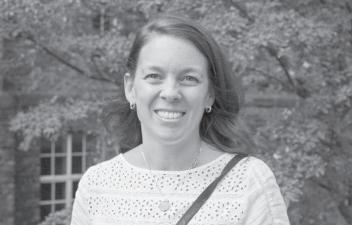
Feminist organizing and street demonstrations are central to the fight for reproductive rights in Latin America, said Prof. Cora Fernández Anderson, politics, Mount Holyoke College, during a guest lecture Monday.
“[The movement] has invaded the whole society,” Anderson said.
Anderson visited over Zoom as part of the Latin American and Caribbean studies’ weekly seminar series to share the contents of her book, Fighting for Abortion Rights in Latin America: Social Movements, State Allies and Institutions.
According to Anderson, her work is especially relevant in following the legalization of abortion in Argentina in 2020.
A professor of comparative politics, Anderson chose three case studies in the book — Chile, Uruguay and Argentina — and analyzed the roles of popular campaigns, political parties, the Catholic Church and other factors in the path to abortion legalization.
The “green tide,” an abortion rights movement characterized by supporters carrying green bandanas, started in Argentina and subsequently spread through Latin America. By 2018, discussions of abortion became unavoidable, according to Anderson.
“Abortion has become an unavoidable topic of conversation in every single household, in every single TV show,” Anderson said. “You see teenagers carrying their green bandanas in their backpacks to school.”
In 2019, Argentina elected President Alberto Fernández, who openly supported abortion. But Anderson says he shouldn’t get all the credit for the 2020 legalization, because the green tide came first.
“[His support is] not because of his particular individual preferences,” Anderson said. “It’s because he read the political and societal context quite well, seeing that abortion ... can actually gain you the constituents of this growing feminist movement that has taken millions to the streets.”
Abortion supporters fear similar laws could overturn the 1973 case Roe v. Wade, which protects abortion under the right to privacy. The Texas law sparked protests across the country on Oct. 2, including a rally for reproductive rights by Cornell students and supporters of the local Planned Parenthood hosted on Ho Plaza.
“Abortion has become an unavoidable topic of conversation in every single household, in every single TV show.”
Prof. Cora Fernández Anderson
Anderson said she believes her research shows the importance of activism in pushing for reproductive rights.
“This research speaks to the centrality of social movements in advancing abortion rights in the region,” Anderson said. “If there’s no movement that really pushes for this issue, it’s very unlikely that any party or anybody else will pick up on this and introduce a bill and try to advance reproductive rights.”
Some countries in Latin America completely ban abortion, while others — including Uruguay, Cuba, parts of Mexico and now Argentina — offer free abortions within the first trimester of pregnancy.
The United States is facing its own battle against abortion restrictions. Effective since Sept. 1, Texas’s Senate Bill 8 bans abortion after about six weeks of pregnancy and deputizes private citizens to sue abortion providers. In Mississippi, a law attempts to ban pregnancy after 15 weeks.
Defendini said. “We are just sort of delegates or vessels for the progressive policies that have been put forward by the community.”
Ithaca has a mayor-council government. The mayor, currently Svante Myrick ’09, is elected at large, and 10 members compose the Common Council, with two representatives from each of the city’s five wards.
Brown has lived in Ithaca for more than 25 years, where she has been a community organizer and worked with many local organizations. She is a founder of Mutual Aid Tompkins, a community-based network created during the pandemic that allows neighbors to share information, such as mental health resources and ways to support small businesses.
“We wanted to join the Council ... to be the voice that usually doesn’t get a chance to sit at the table.”
Phoebe Brown
Brown is also the central regional coordinator for Alliance of Families for Justice, where she supports the families of incarcerated individuals and people with criminal records to use their voting power to make change. Brown’s personal struggles and experience working in the Ithaca community inspired her to run for office.
“I have a lot of experience with people on the ground, and I’ve had some challenges in my life I had to overcome,” Brown
said. “I know what it’s like to feel like your voice is being squashed, and a big part of me gets joy out of being there for others. The reason why we wanted to join the Common Council is to be the voice that usually doesn’t get a chance to sit at the table.”
Brown said she is the third Black woman to be elected to the Ithaca Common Council. She said she hopes her representation will inspire and empower other women of color to seek a seat on the council in the future.
“It blew my mind that I am the third Black woman ever to be on the Common Council,” Brown said. “We found our voice and we are who this community has been waiting for. It also shows that there’s a lot of work we need to do in this community.”
In the Fourth Ward, Defendini brings experience working in progressive politics — including campaigning for Rep. Alexandria Ocasio-Cortez (D-N.Y.) and Sen. Bernie Sanders (I-Vt.), and working as an organizer for Cornell Progressives.
Defendini said he’s excited to bring his perspective as a college student to Common Council. While he works toward a double major in government and American studies with a minor in Latina/o studies, the senior does not foresee problems balancing school and work.
As he steps into the Common Council, Defendini said he expects some challenges ahead of him — among them that other members of the council might view the Solidarity Slate’s solutions as too “idealistic,” according to Defendini.
Continued from page 1 Faith Fisher can be reached at fsher@cornellsun.com.
“We’re just going to have to go in there and prove that we’ve crunched the numbers, we’ve
done the research and we’ve listened to the people,” Defendini said. “I feel confident that we’re going to arrive at a situation where we can pass policies that will help the most people because I have faith in our legislators.”
Shaniya Foster was the original Solidarity Slate candidate for the First Ward, but she left the race early in June due to personal circumstances. With just a few days left before petition files were due, Halpert, the former volunteer coordinator for the slate, stepped up to fill the vacancy.
Halpert, who grew up in Ithaca and has worked with local mutual aid, climate justice and food sovereignty movements, garnered enough signatures to appear on the ballot. The support of Defendini and Brown helped them make the time-constrained decision to join the ballot and supported them through the intense campaign process in the First Ward against incumbent Brock.
But Halpert’s work on the slate will continue, even as they won’t represent the slate on the Common Council. Halpert said they look forward to continuing some of the other work the slate was engaged in during the campaign process, such as organizing and supporting local assemblies and groups, while supporting Brown and Defendini in their new positions.
“I’m looking forward to continuing to work together and be in each other’s lives as we move forward, and I’m excited for our networks around the Solidarity Slate to continue to grow,” Halpert said.
On Nov. 15, the Latin American and Caribbean studies’ weekly seminar series will host “Two Missionaries’ Orthographies in Conflict in Curaçao: Papiamentu’s 19th Century Case” with guest Prof. Gabriel Antunes de Araujo, linguistics, the University of Macau.
Xinyu Hu can be reached at xh285@cornell.edu. Katherine Esterl can be reached at kesterl@cornellsun.com.
Continued from page 1
Jonah Gershon ’24, who also lives off campus as a sophomore, said the compulsory meal plan was a dealbreaker.
“I was using less than seven meal swipes a week freshman year,” Gershon said. “Having an unlimited meal plan would have been a waste.”
Greek housing, it’s not anticipated that there will be much of a change [in Greek housing],” said Max Trauring ’22, vice president of recruitment for Cornell’s Interfraternity Council.
“Now I’m thinking of applying to be an R.A., because then I’ll be able to have the independent living style ... ”
Sommaya Haque ’25
Students who don’t want to live in campus dorms have some flexibility in their housing. Under the new policy, sophomores in Greek life are allowed to reside in their Greek-affiliated houses, and co-op housing is also an option for students.
“Because sophomores in Greek life typically reside in
Students can also submit exceptions to the on-campus housing requirement. Those who are married, veterans, have dependents, meet certain age requirements, transferred after two years of an on-campus residential experience at another institution or are commuters can apply for an exemption.
Sofa Rubinson can be reached at srubinson@cornellsun.com.
While each instance in the United States’ long history of warfare is discomforting for its own unique assortment of reasons, there’s something about the first World War that I still can’t quite wrap my head around. So much academic and colloquial discourse has zeroed in on the second iteration of global total war as a more complex, more consequential sibling, yet there is
something singularly distressing about the original case that makes it feel more and more unsettling each time I cross paths with it in a textbook or popular culture.
So much of World War I in academic critique is condensed down into a triad of consequential events: the assasination of the Austrian Archduke Franz Ferdinand, the outbreak of the Russian Revolution in 1917 and
Woodrow Wilson’s supposedly admirable Fourteen Points and the pie-in-the-sky plans for the postwar global order they projected.
In something of a similar sense, trench warfare is a commonly discussed yet insufficiently explored fact of the conflict. Again, it is often mentioned only in the context of the far more innovative and intricate war technologies that would come to bear in subsequent altercations: nuclear bombs, radar and jet engines. Even when the trenches are given adequate attention, they are degraded as a strikingly inefficient and slow-moving means of making progress. The psychological anguish that festered within them, as well as the art spawned by these emotional swells, is rarely upheld as a worthy topic on its own.
Life in the trenches was the polar opposite of the oftentimes romantic images plastered on enlistment propaganda. It was not
uncommon for soldiers to remain cooped up in their narrow, snakelike ravines for weeks, drowned in the ubiquitous threat of enemy attack. Close quarters and little to no infrastructure for sanitation bred rampant disease, giving dreaded afflictions like “trench foot” and “trench mouth” their names. The only relief from the confinement of the trenches came from trespassing into no man’s land, which meant almost certain death and certain terror. Take the Battle of the Somme, for example, during which the British lost close to 60,000 men in a single day. Needless to say, the mental health of these soldiers — much like the landscapes they inhabited and poured their labor into — was in shambles. “Shell shock,” now referred to as post-traumatic stress disorder, became a widespread descriptor for many of the service members returning home from the front lines. The condition, however, was not formally added to the American Psychological Association’s vanguard Diagnostic and Statistical Manual of Mental Disorders until roughly 60 years later in 1980. Of course, World War I veterans were
not the first group in history to experience PTSD, yet the lack of public understanding about their persisting excruciation made the transition back to civilian life especially painful. It was out of this torment that an eruption of poignant artistic expression took root, traversing mediums and homelands. Perhaps the most popular piece to come out of the experiences of the First World War was Erich Maria Remarque’s 1929 novel All Quiet on the Western Front. The incredibly popular tale recounted the horrors of the conflict from a German antiwar perspective, and its conversion to the big screen in 1930 was similarly beloved. The novel itself would garner a Nobel Peace Prize nomination, and the blockbuster would even secure the Academy Award for Best Production. Both versions of the story were renowned for their candidness about the way that war had unfolded and the way it had played out, for its subversion of the cliche narrative of the happy soldier returning home. It was this portrayal that made it such a salient target for the rising Nazi party, with roughly 25,000 copies burned on a single occasion in 1933. The title itself is indicative of the underlying social dynamics that were simultaneously borne and perpetuated by the war inself. All was “quiet,” perhaps not for a lack of these men’s cries for help, but rather the fact that those at home weren’t fully listening. As politicians and strategists on both sides grappled with mobilizing troops and keeping the manufacturing industry afloat during the fury of wartime, the acutely vexing nature of quotidian life in the armed forces seemed to fade into a haze.
Poetry also rose to prominence as a medium for articulating the incoherent or otherwise challenging emotions men brought home with them from the front. Poetry was an ideal artistic endeavor for this function, allowing writers to freely chronicle their experiences without imposing any sort of structure or formal architecture on this stream of consciousness.
Poets like Wilfred Owen and Siegfried Sassoon, both of whom saw combat under the British banner, harnessed the written word to paint pictures of the atrocities they witnessed and endured in battle.
Take this stanza from Owen’s 1917 “Dulce et Decorum Est,” one of the most well-known poems to come from the era:
If in some smothering dreams, you too could pace Behind the wagon that we flung him in, And watch the white eyes writhing in his face, His hanging face, like a devil’s sick of sin; If you could hear, at every jolt, the blood
Come gargling from the froth-corrupted lungs,
Obscene as cancer, bitter as the cud
Of vile, incurable sores on innocent tongues,—
My friend, you would not tell with such high zest
To children ardent for some desperate glory,
The old Lie: Dulce et decorum est
Pro patria mori.
The last line, attributed to a poet of ancient Rome, can be translated to mean “How sweet and fitting it is to die for one’s country.” In this way, the work is haunting not only for its gruesome illustration of warfare, but also for its broader critique of rising nationalism and militarism. Sassoon’s “Repression of War Experience” is a similarly unsettling read, with a final stanza that speaks to the internal toils of those forced to see war with their own eyes:
You’re quiet and peaceful, summering safe at home;
You’d never think there was a bloody war on! ...
O yes, you would ... why, you can hear the guns.
Hark! Thud, thud, thud,—quite soft ... they never cease—
Those whispering guns—O Christ, I want to go out
And screech at them to stop—I’m going crazy;
I’m going stark, staring mad because of the guns.
These stories are ones we continue to grapple with even today, over a century following the Treaty of Versailles that ultimately closed the war. Movies like Sam Mendes’ 1917 and a more contemporary remake (albeit from 1979) of All Quiet on the Western Front, this time spearheaded by an American director, captivate us even amidst the far more abundant retellings of World War II. Glazing over World War I as little more than a precursor to a “more transformative” world war is a grave mistake. Doing so not only discounts the contributions and sacrifices of those at the front and powering the war machine at home, it also effectively neglects the unique profundity of the art that was cultivated by this conflict. It is impossible to wrestle with the full spectrum of repercussions of the “Great War” without delving into these art forms and the frustrations that lie behind them. It is clear, then, that much of the work precipitated by life in the trenches is both a powerful mechanism for artists’ introspection and a poignant tool for our own retrospection, even almost one hundred years after the final advances into no man’s land.
Megan Pontin is a junior in the School of Industrial Labor Relations. She can be reached at mpontin@cornellsun.com. Rewind runs
Since 1880
Board
139th
KATHRYN STAMM ’22
Editor in Chief
ANUSHYA ALANDUR ’23
Business Manager
CATHERINE ST. HILAIRE ’22
Associate Editor
PRANAV KENGERI ’24
Advertising Manager
ODEYA ROSENBAND ’22
Opinion Editor
MADELINE ROSENBERG ’23
Managing Editor
NAOMI KOH ’23
Web Editor
ANIL OZA ’22
Assistant Managing Editor
YUBIN HEO ’24
Assistant Web Editor
Working on today’s sun
ad layout Annie Wu ’22
opinion desker Catherine St. Hilaire ’22
managing desker Madeline Rosenberg ’23
news deskers Tamara Kamis ’22
Angela Bunay ’24
production deskers Katrien de Waard ‘24
layout deskers Kristen D’Souza ’24
Puja Oak ’24
photo desker Julia Nagel ’24
Arts desker John Colie ’23
science desker Srishti Tyagi ’22
Preston Hanley grad is the President of the Graduate Professional Student Assembly. Anuli Ononye ‘22 is the President of the Undergraduate Student Assembly. Guest Room runs periodically throughout the semester.
This letter has been published as it was written and signed. As a result it has not been edited by The Sun to conform with Sunstyle. It was sent to President Martha Pollack, in response to the events of Nov. 7.
Dear President Pollack,
We are reaching out to you as the respective presidents of the Graduate Professional Student Assembly (GPSA) and Student Assembly (SA) to express student concerns over the events that took place on the Ithaca campus the afternoon of November 7th.
It is unreasonable to expect that students were able to perform tasks at the same productivity levels this afternoon and evening as they do on “normal” Sundays. Many students were unable to access campus resources to finish assignments or complete laboratory requirements. The “evacuation” instructions also encouraged many on-campus residents to find safety in friends’ apartments and off-campus spaces, resulting in the displacement of many students for several hours as the situation progressed with very limited information and updates.
With limited updates about the circumstances of the bomb threats, many students resorted to social media and group chats where anxieties and fears were only perpetuated further. False information spread around campus, including rumors of active shooters on campus, threatening student injuries, and organized attacks across other Ivy League universities.
As students faced the difficult challenges of this weekend, several professors have remained unaccommodating to their requests and needs in these difficult circumstances. Several students are expected to take high-pressure exams and turn in grade-determining assignments without the adequate time and accommodations to do so.
We would also like to bring your attention to two online petitions (Care2Petitions and Qualtrics) that have been circulating among the campus community. Since late Sunday evening, the signatures of numerous Cornelians have been recorded asking the university to consider making campus-wide accommodations, and providing a “Mental Health Monday” for students to catch up on assignments and process the traumatic events of this afternoon.
That being said, we ask the university administration to show empathy to the valid concerns of its university students. To answer the immediate campus concerns, we urge you and senior administrators to respect the request for a “Mental Health Monday” observance tomorrow, to allow students the time needed to seek out mental health resources and complete ongoing assignments.
Beyond our requests, we would like to thank our on-campus response teams and the local and state agencies that helped support our campus during this crisis. Our gratitude further extends to the student leaders who helped secure shelter for friends, continue to disperse mental health resources to peers, and who met the challenges of this evening despite academic and extracurricular pressures.
Thank you,

Noah Do is a sophomore in the College of Human Ecology. He can be reached at ndo@cornellsun.com. Noah’s Arc runs every other Monday this semester.
Picture this: you’re up at some ungodly hour of the night, staring at your untouched lecture recordings or scanning your non-existent essay for typos. Somehow your backup stock of panic-induced drive has yet to kick in. You fully recognize your own incompetence, yet lack the willpower to remedy it. You wonder how in the world you let yourself get to this point, knowing full well that this isn’t the first time, and it surely won’t be the last.
If the situation I just described resonated deeply with your soul, I want to take a minute for a proverbial group hug. Us procrastinators have it tough, wallowing in our own indulgences, just inches away from the shining treasures of productivity, yet unable to force ourselves to put in the slightest bit of effort to get there. The momentary pleasures, the self-loathing, the sleepless nights; it’s a tough life that is almost entirely self-inflicted.
If you are a disciplined and motivated person who couldn’t relate to my hypothetical, though, just know I am absolutely praying for your downfall. I hope the dreadful onus of laziness comes down on you in your darkest hour and saps you of your potent self-restraint. And when you lie feeble on the ground, conquered by your own fleshly impulses, I will probably be right next to you, in the exact same situation.
of those future benefits when productivity becomes a metric by which we judge the usefulness of peoples’ existences. It’s no longer about securing a stable career, but rather “complaining” (read: flexing) about how absurdly difficult your major is, despite the fact that you seemed pretty in love with it during your interview for that one internship.
We’ve become so used to academic competition that we can’t help but make judgments about others based on how hard they appear to be working. If someone always manages to turn in flawless lab reports on time, it must mean they have their entire life together, right? That one friend who seems to live in the library — they must be destined for greatness above all us mere mortals. So many facets of our life are set on assessing our productivity that we become convinced that a productive life equals a successful one.
Your productivity should not define how valuable you perceive yourself or others to be.
In a previous column, “The Myth of Passion”, I argued against the conception that one needs to be in love with their career choice to have a fulfilled life. This week, though, I want to take it a step further and challenge the very idea that productivity is an intrinsically good thing.
Now, I know this seems like little more than justification for a lifetime of procrastination, which it absolutely is (unless you’re a member of a medical school admissions board reading, in which case this whole column is just a creative writing experiment). But nevertheless, I think I have some legitimate points to make against productivity.
A big problem with productivity, especially for students, is that it has become a status symbol. Kids love showing off their study sessions on social media, flaunting their sprawl of problem sets and color-coded diagrams. Popular “Studygram” accounts showcase elaborately designed notes adorned with calligraphed titles and pastel color pallets. More explicitly, “Day In My Life” videos glorify the college student lifestyle, convincing viewers that they too should adopt the “rise and grind” mentality.
In cases like these, productivity becomes its own reward. Usually when we study, we do so because some future benefit will outweigh the temporary, though excruciating, pain of working. While this is a smart approach, it is very easy to lose sight
In reality, though, no one is as one-dimensional as that. Productivity just so happens to be an easy metric, a way to quantify how valuable we are to the world. We can directly compare incomes, GPAs, scores, etc. to easily place ourselves on the hierarchy of productive human beings. Our well-being, relationships, sense of humor, leisure, personal interests, in-depth knowledge of biographical information about the members of BTS: These are all dimensions of who we are as people that deserve as much attention as productivity. They are overlooked simply because our tiny brains can’t turn them into prideful competitions like they can with school or work.
On that point, it’s a bit annoying how much shame we’ve placed on spending time doing things just for the fun of it. If I have homework to do but choose to listen to music that I like instead, who’s to say I’m not being productive? Is making myself happier through songs that I like not an extremely productive thing to do? Success is such an all-encompassing goal that anything that doesn’t directly bring us closer to it must be a complete waste of time.
Just because you find yourself in the pitfalls of procrastination, does not mean that your entire life is in shambles. Your productivity should not define how valuable you perceive yourself or others to be. If you’re able to strike a balance that you like between procrastination and work, then by all means, treat yourself to that trip down into your YouTube recommendations. Hop onto Wikipedia to discover all the disturbing details of your favorite celebrities’ lives. Learn the intimate dealings of the latest Twitter beef just to feel something. As long as you’re happy, then the work can wait. After all, it’ll always be there tomorrow.
Niko Nguyen Fault Line
Niko Nguyen is a senior in the College of Agriculture and Life Sciences. He can be reached at nnguyen@cornellsun.com. Fault Line runs every other Friday this semester.
Here at Cornell, facts and fgures futter around my brain like butterfies. Tey whiz in through my ears, fit around in my head for a bit, then ficker away without a trace. I can never seem to retain lessons taught from lecture slides and textbooks. Tere’s a point in every class when my professors’ voices drone into lines of static and my fngers start to itch for Twitter. Sitting on the foor of my brain is a mountain of academic-sounding slop and forgotten course concepts.
Between the walls of Cornell, I’ve picked up bytes of Spanish and French. I’ve taken notes on the anatomy of the human brain and I’ve pretended to understand Foucalt. I’ve pored over reams of assigned readings, typed out hundreds of Google Doc pages and spent hours on end trying to stay afoat in my classes.
But still, more than three years deep into Cornellhood and I can’t help but wonder: Has Cornell changed me? What have we really learned here?
I know for a fact that I’m not the same freshman who plopped onto North Campus an eternity ago. When I was seventeen and newly ripe to college, I stood miles away from what I thought was adulthood. I remember endless common-sense Google searches. How to dress for the snow. How often to wash your sheets. How much water to put in instant oatmeal. I leaned on Google whenever I felt confused or daunted by my newfangled college
Lorelei Meidenbauer Hot-takes And Handshakes
Lorelei Meidenbauer ’22 is a senior in the College of Agriculture and Life Sciences. She can be reached at lem257@cornell.edu. Hot-takes and Handshakes runs every other Tuesday this semester.
Cornell does a lot to provide students with the skills needed to succeed in the real world. Hard work, perseverance and passion are traits attributed to nearly every student on campus. However, there are a variety of subtle ways that students learn to fnd themselves. Clothing is one of them.
One of our frst decisions before leaving our house is how we are going to present ourselves to the world. In a way, clothing both shields our persona, and projects our personality. Each day, the decisions we make on how we dress varies depending on our tasks for the day, the
independence.
But three years whizzed by and I’m now twenty-one. And with my toes pressed up against life after Cornell, I no longer feel like a little kid trying on the oversized shoes of adulthood. I’ve arrived at my twenties with a frmer grip on my independence, with a knowing confdence that I’ll be able to trek through adult life just fne.
It’s worth mentioning, though, that most of the life lessons I’ve picked up from college weren’t gleaned from a Cornell classroom. Despite the time and efort I’ve devoted to my classes, I can’t help but feel underwhelmed by the college learning experience. Most of us have spent our entire lives within the tracks of American schooling. Either consciously or not, we learn that academic success has little to do with intellectual enrichment. Rote memorization and textbook regurgitation are enough to buoy us through college. Grades and GPAs take precedent. Learning takes a backseat.
Not to mention, once we’re hurtled into the whirlwind of college, it’s hard to even realize whether or not we’ve changed over the years. College itself feels like a long breath held in, like a pause between adolescence and adulthood. And as our youth hangs still, suspended for four hazy years, we get swept up by the motions of day-to-day college life. Our Google Calendars quickly grow populated with classes and commitments. We get lost in academic tunnel vision.
Tankfully though, even for those who pull countless all-nighters in Dufeld or pack their schedules with mountains of work, college weighs on all of us with the respon-
I know for a fact that I’m not the same freshman who plopped onto North Campus an eternity ago. When I was seventeen and newly ripe to college, I stood miles away from what I thought was adulthood.
weather and our moods among other factors. Yet, there are trends within the Cornell student body that portray the aesthetics of campus.
Walk across Ho Plaza on any given day and you’ll see a diverse array of fashion choices, from the business attire donned by students in the Hotel School every Friday, to the just-got-out-of-bed pajama chic, to the bright red athleisure worn by student athletes, particularly on game day. Most of us fall somewhere in between, falling into a rhythm of comfort, day after day and week after week.
People express themselves through their clothing. Whether consciously or unconsciously, how we dress changes how other people view us. Perhaps this is why, as with any group of people, similarities occur as trends rise and fall. As the times evolve, so does fashion. But what does this say about the student body? It’s like Cornell has an unspoken dress code that a signifcant chunk of students subscribe to.
Tis is evidenced by the fact that as the cold weather returns to our beloved campus, so does the annual resurgence of Canada Goose jackets. For the most part I forget that Cornell’s student body is full of many well-of students. However, the winter season makes that wealth particularly apparent, as brand labels on the side of jackets serve as visible status markers.
Tis extends into other commodities as well, which are very prevalent within the student body. Take AirPods for example. You can’t walk down East Ave. midday without seeing at least a dozen people using them. Within the past several years, motorized skateboards, scooters and bikes
sibility of independence. Te winds that have shaped me weren’t spun from lecture slides in a classroom — but from the quiet of domestic living. On the walk home from campus, when I pick up last-minute 7/11 groceries
It took me until senior year to realize that life happens during the blank spaces of our Google Calendars, between the cracks of our busy schedules.
for dinner. In my apartment’s living room, at the produce section of Wegman’s, at the kitchen sink where dishes never stop piling.
It took me until senior year to realize that life happens during the blank spaces of our Google Calendars, between the cracks of our busy schedules. It happens when we’re staring into the fridge and kicking ourselves for overestimating the shelf life of spinach again, or when we’re wiping down the house and stacking away cups after a messy pregame from the night before. No, they’re not always the most fun or the most glamorous teachable moments. But they’re lessons nonetheless, and there’s value to be found in the mundanities and domesticities that build our non-academic lives.
After a year of tuning into virtual Zoom classes, I never thought that I’d fnd myself grateful for my living space to also be my classroom again. I still have trouble with leaving my homework on the kitchen table, and I don’t clean my bathroom as often as I should. But when I pull my head up from typing out essays and memorizing lecture slides, I’m comforted by what lessons I know won’t sprint away from my brain once the semester ends. How to sign a lease, how to make pesto, how to keep an apartment from going up in fames.
Four years of independence gifts us with puzzle pieces to adulthood. And when you fnally take a step back and look at what you’ve cobbled together — for me, a picture of my roommates and I cooking falafels and laughing as we watch High School Musical at our kitchen table — you might just realize: this is growing up.
have become widely used on campus, a way to avoid the Itha-calves most of us develop simply by walking up and down the hills to get to class.
With that being said, our relationship
Walk across Ho Plaza on any given day and you’ll see a diverse array of fashion choices, from the business attire donned by students in the Hotel School every Friday, to the just-got-out-of-bed pajama chic, to the bright red athleisure worn by student athletes ...
to ourselves is clear through clothing, and is something that virtually all college students can relate to in some capacity.
Personally, I’ve been doing an experiment with myself, where I’ve been digging to the back of my closet, picking an item of clothing I haven’t worn yet this semester, and challenging myself to wear it the following day. Now, this is defnitely not extreme at all, but in a society that wants us to be similar to peers and not stick out, this is my own conscious version of breaking out of my comfort zone. By intentionally challenging myself at the beginning of the day, I’ve found that this is a small but efective way to be more confdent in my day-to-day life.
I’ve found that by starting my day with pushing myself my productivity boosts dramatically. I’m forcing my brain to focus, and I’ve learned that whenever I have a particularly taxing assignment, presentation or an exam that I’m nervous about, I like to dress more formally than I otherwise would. By utilizing the Placebo efect, I like to give myself the additional advantage of extra confdence, utilizing the ‘fake it ’til you make it’ mentality to ward of imposter syndrome. We all know the sinking, anxious feeling of walking into a big lecture hall to take an exam; strategically giving yourself a mental edge to latch on to can make a huge diference.
So, Cornell, as the cold weather and fnals season are quickly approaching, take a second to think about your relationship to yourself and clothing, and if you’re willing, challenge yourself. It’s that point in the semester when we all are desperate for any and every bit of help to get to the end, why not make the most of it?
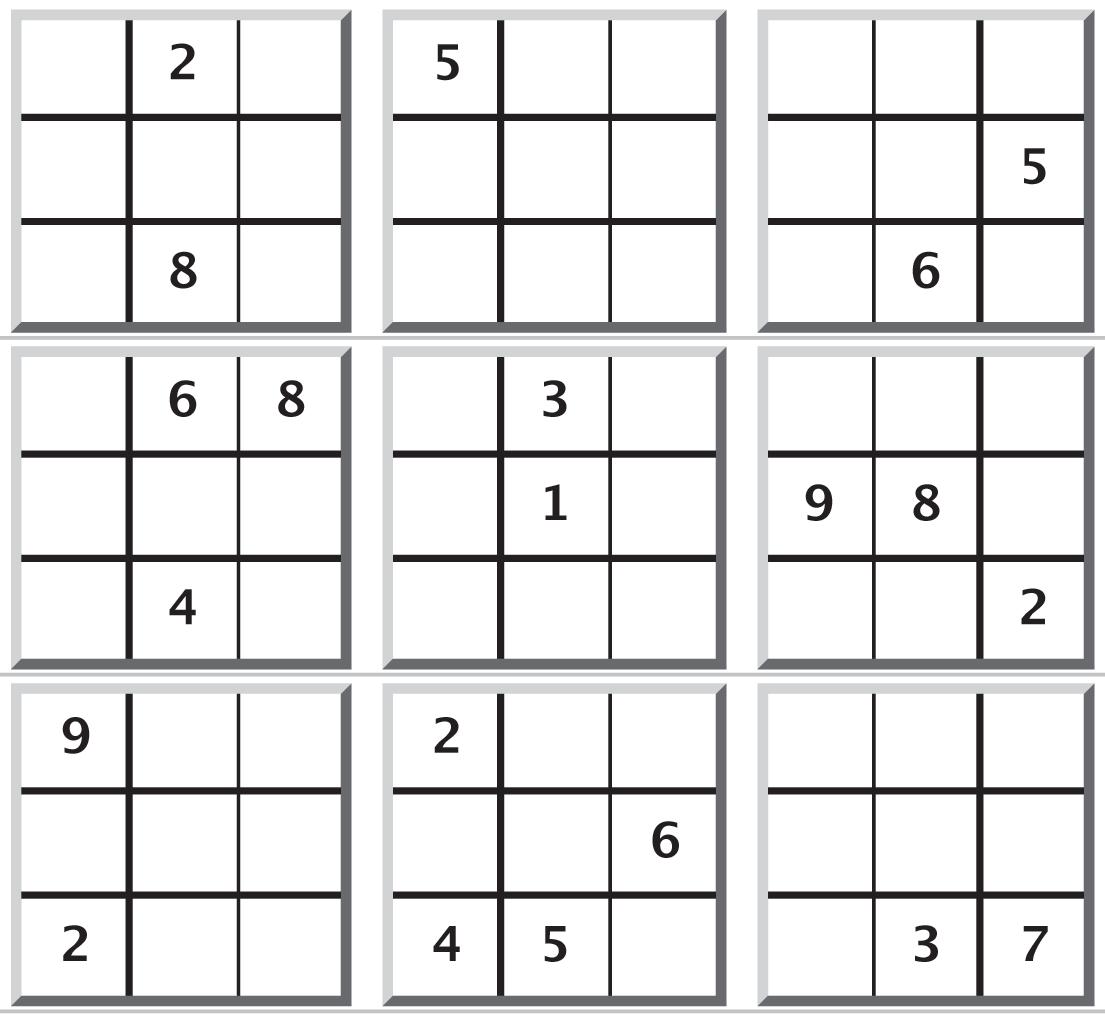
Fill in the empty cells, one number in each, so that each column, row, and region contains the numbers 1-9 exactly once. Each number in the solution therefore occurs only once in each of the three “directions,” hence the “single numbers” implied by the puzzle’s name. (Rules from wikipedia.org/wiki/ Sudoku)


607-277-1234 Ithacastudentapartments.com
Collegetown Terrace Apartments
&

By KOBI RASSNICK Sun Staff Writer
National STEM Day on Nov. 8 is recognized by U.S. government departments, mainstream news outlets and Cornell students as an occasion that honors the importance of early STEM education in inspiring future scientists.
For Kaleigh Remick ’22 and Emma Hammes ’22, officers of Encouraging Young Engineers and Scientists at Cornell, celebrating National STEM Day reinvigorates a mission to support STEM education for students at an early age.
“STEM is such an amazing, diverse field, but if children aren’t taught at a young age to embrace STEM, it can be really challenging to encourage it later in life,” Remick said.
EYES is a student-led outreach organization that runs out of the Center for Community Engagement and offers Cornell students the opportunity to lead STEM demonstrations, activities and games for K-12 students in the Ithaca area. The organization works to encourage young students to explore engineering and science as possible career paths.
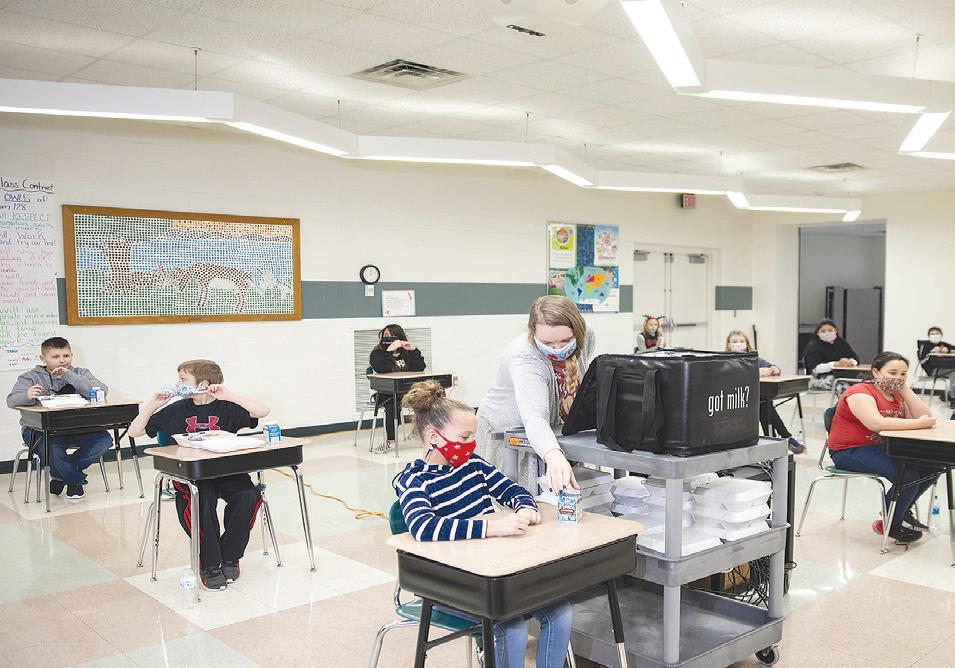
According to Remick, the president of EYES, unfamiliar topics in STEM can seem daunting to young students as they move up through grade schools. However, as problems like climate change, resource distribution and health care demand urgent solutions, early STEM education remains important for encouraging the next generation of passionate scientists.
Remick and Hammes say that STEM education, no matter the difficulty, should begin in elementary school. Hammes, who is the head of lesson development at EYES, said children in elementary school are highly impressionable and likely to gain appreciation for basic science topics that may grow into interests as learning progresses.
“Elementary school children are capable of much more than we think,” Hammes said. “If you present them with a carefully explained lesson, they will learn and retain the information.”
While EYES also works with middle and high schoolers, early lessons in STEM for elementary schoolers can have ripple effects for students’ learning years down the line, according to Hammes.
Remick and Hammes traced their own passions for science careers back to their early introduction to STEM education. For a young Remick, a single conversation with her father about an unbalanced distribution of clean water around the world turned her into an aspiring scientist hoping to work toward a world with clean drinking water for all.
“While I had very little direction other than a vague [definition of] ‘science,’ I have since fine-tuned my career aspirations and am now pursuing a Ph.D. in microbiology,” Remick said.
Listening to her father’s research presentations kicked off Hammes’s career as a scientist, cultivating science exploration and curiosity. This early curiosity, Hammes believes, can be critical for promoting interest in science later in life.
“At this age, [children are] still really easily excited and can receive new material with a curiosity that’s often dwindling by the time they reach later grades,” Hammes said.
To foster curiosity for children in the Ithaca community, Hammes and Remick prepare lessons that involve
engaging experiments and incentives. EYES members have now returned to their pre-pandemic operations, in which they traveled to schools like Beverly J. Martin Elementary and Cayuga Heights Elementary once a week, engaging with classes or afterschool programs.
“I really love doing our lava lamp lesson, where each of the kids get to make their own pseudo-lava lamp,” Hammes said. “It has a really cool result but also covers a lot of complex concepts [like] density and solubility in a decent amount of detail.”
In semesters before the pandemic, the organization has also taught lessons on ice cream making, chemical reactions and rocks and minerals.
EYES, however, faced setbacks at the start of the COVID-19 pandemic that prompted curriculum adjustments. According to Remick, EYES members found it challenging to keep students cooperating and engaged with their adapted lesson plans.
And it is not only EYES that has encountered difficulty with virtual learning. Children all around the world have dealt with lack of structure and elevated stress levels as a result of online classes.
For this reason, EYES adapted its lesson programming over the past year to maximize engagement over Zoom, weighing factors including children’s attention spans and resources at home.
On this National STEM Day, Remick and Hammes said they were grateful to be restarting in-person school visits this semester, teaching students hands-on demonstrations. The two organization leaders said that this semester, their club has seen high engagement from both their new members and students, driving their excitement for the in-person future of the organization and STEM education in Ithaca schools.
“This semester has actually been quite successful,” Hammes said. “We also have a good amount of new members who have been doing a great job with the kids and seem really excited to be a part of EYES. Hopefully our numbers will only continue to grow and we can expand to even more schools.”
Kobi Rassnick can be reached at krassnick@cornellsun.com.
By MEGAN KELLER
Sun Contributor
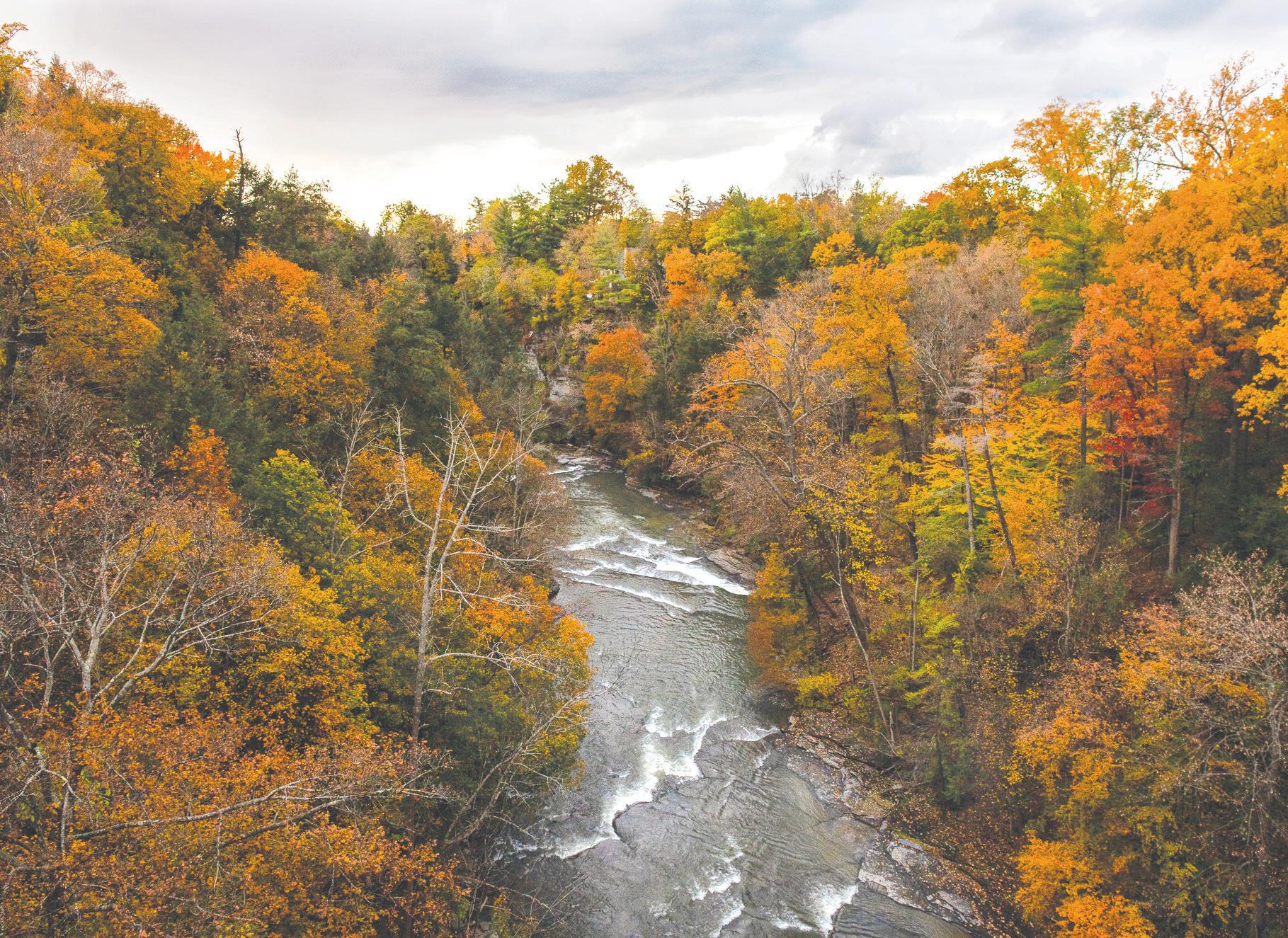
Cornellians trudging up Libe Slope or walking along Tower Road can now hear the crunch of fallen leaves beneath their feet and look up at fiery treetops, marking the peak of autumn in Upstate New York.
But this season has seen peak fall foliage well past October, which is two weeks later than the peak season of last year. Prof. Taryn Bauerle, plant biology, explained that while warmer temperatures and increased rainfall contributed to the delay in the leaves changing color, minor variations in weather can be expected year-to-year.
According to Bauerle, the chlorophyll within the cells of plants photosynthesize to provide nutrients for the plants. This molecule appears as the green color while another class of compounds, carotenoids, make the yellow and orange colors that start to become more visible in the fall. While carotenoids are always present in the leaves, they are typically masked by the abundant green of the chlorophyll, and this process occurs every year, Bauerle explained.
“Keeping leaves green is an expensive process for trees,” Bauerle said. “Because our days become shorter in winter, where there is much less light, it becomes less economically feasible to hold onto those leaves.”
Once the days get shorter, the trees stop producing chlorophyll, and over
time, the carotenoids within the leaves start to shine through, bringing bursts of fall colors to the forefront, Bauerle said.
But this year, the spectacular fall colors remained longer than usual — caused by an unseasonably warm early fall in Ithaca, according to Bauerle. She added that higher levels of precipitation this past summer and fall could also have caused this delay.
“When you have warmer temps and plenty of rainfall, which [are] optimal growing conditions for plants, the plants might as well continue to make sugars and food,” Bauerle said. “That is probably why we are seeing this delay this year.”
Prof. Timothy Fahey, natural resources and the environment, agreed that unseasonably warm fall temperatures were responsible for the leaves changing color so late, peaking in the Finger Lakes Region last week. Fahey added that leaf abscission, or the falling of leaves, is caused by two main environmental factors — the amount of sunlight during the day, and the dip in temperature at night.
However, early predictions for when fall foliage will reach peak colorization may not always hold true. According to Bauerle, large amounts of rainfall, significant freezing events or drastically lower sunlight could trigger leaves falling sooner than expected.
Even if leaves changed later than normal this season, yearly variation is to be expected as with any weath-
er-related event. Optimal fall weather of moderately warm, sunny days, paired with cool, crisp nights, make for the brightest and boldest fall foliage, according to Bauerle.
Color intensity is also specific to the species of trees themselves. Bauerle says maple trees are known for having vibrant fall foliage with a variety of colors, including spectacular reds and purples, while oak trees never make great fall foliage, transitioning from yellow to brown.
While weather conditions caused minor delays in the onset of colorful foliage this year, Bauerle said major
changes to this hallmark of fall are unlikely. However, drastic changes to the timing of fall foliage could be downstream effects from other climate change-driven environmental stresses to forests, such as if droughts or strong storms cause leaves to fall quicker.
“The upward trend of rainfall and warmer temperatures can be expected, but the primary driver of leaves turning color are the shortening of our days in the winter, and that’s not going to change,” Bauerle said.
Megan Keller can be reached at mrk269@cornell.edu.