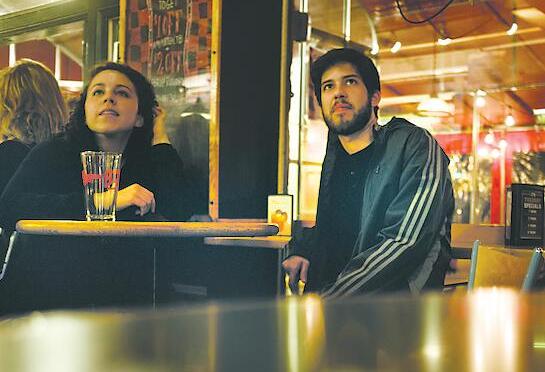
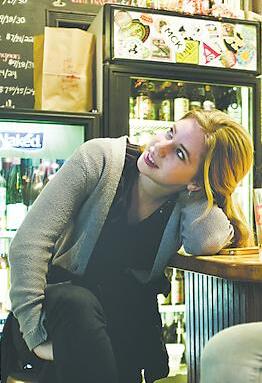
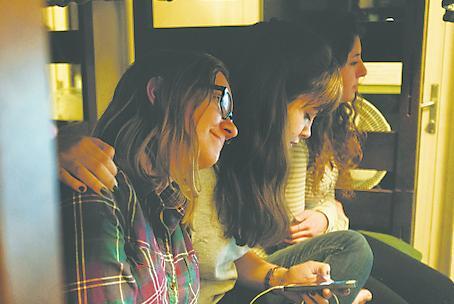
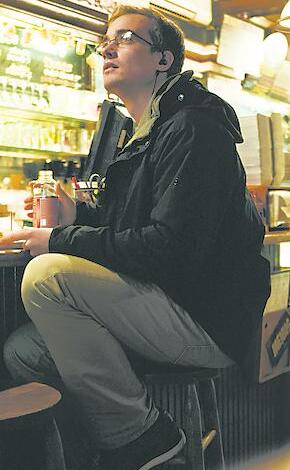
As midnight approached and a series of swing states turned red, disproving countless polls and shocking the nation, Cornellians expressed horror that Donald Trump could actually become president
“How the fuck is he winning? What the fuck?” said a student early on in the night, at an electionwatching gathering in Flora Rose House, as Trump took the state of Ohio
Other students such as Maria Chak ’18, who said Trump has inspired her to run for president “because if Trump can win, anyone can ” turned to morbid humor to interpret the results
“We should’ve died in 2012 while we still had the chance,” added Mitch Laski ’17, echoing several students who said they fear a Trump presidency will be the end of equal rights for minorities and free speech in the United States
Shayra Kamal ’17 said she is genuinely concerned about her future in the United States “I’m looking into flights
By DREW MUSTO Sun Staff Writer
Rep Tom Reed (R-N Y ) has retained his seat in the U S House of Representatives after defeating Navy Captain John Plumb, a Democrat from Randolph, New York
Reed prevailed, despite overwhelming dissent from Tompkins County voters, who cast 70 8 percent of their ballots in favor of Plumb The following term will be Reed’s fourth in the House
In a departure from their occasionally vitriolic campaign rhetoric, both candidates accepted their respective outcomes with grace
“As I spoke to [Plumb] tonight, I offered my sincere congratulations on running a
great campaign, and his service to our country is something I so appreciate and thank him for,” Reed said “He was a good candidate, but at the end of the day it’s up to the people, and that’s the wisdom I will always respect ”
Plumb said that he was proud of the race he ran, but respects the will of the voters
“I’m proud to say that we ran the race I wanted to run, ” Plumb wrote on his Facebook page shortly after the contest ’ s results were announced “We ran our race with integrity and honor, and with a focus on the communities we seek to serve Those are the values I ran our campaign with, the values that run deep in the Southern Tier, Western New York and the Finger Lakes ”
“Unfortunately, the votes have been
counted and today did not favor,” he added
Anticipating a Donald Tr presidential victory, Reed s that a key focus of the fort coming congressional ter will be to repeal and repla the Affordable Care Act
“What we need to replac it with is new healthcare in America that drives the costs down and we empower individuals and our doctors not insurance carriers or government bureaucrats,” Reed
back to Bangladesh right now, so
I can deport myself before Trump repatriates me, ” she said “Liberty and freedom are dead ”
Other students said they were ashamed of voters in the United States and shocked that they would validate the policies Trump has promoted, many of which negatively target minority groups
Roman Pidyk ’19 voiced concern about the future of a country that would, even narrowly, choose a candidate who has run on a platform of racism and misogyny
“I’m concerned for the state of the country overall,” he said “I don’t think there will ever be such a shitshow like this in our lifetime ”
Many students also said they felt genuine emotional distress “knowing that something like this [Trump’s presidency] could happen,” said Dejah Powell ’18
Matan Presberg ’18 agreed, adding that “ tears were shed on my walk home” after he watched the news
“I've always believed in forward progress and that even if change happens too slowly, it happens in the right direction,” he said “But this is a huge step back ”
Daybook
In the Name of Memory: Film Writing 1:25 - 2:30 p m , Film Forum, Schwartz Center for Performing Arts
Campus-Wide Breaking Bread: Post-Election America 6 - 8 p m , Biotech Atrium
11:15 a m - 12:05 p m , Bailey Hall
A3C and AASP Wednesday Lunch Series With Allen Carlson Noon - 1:15 p m , 429 Rockefeller Hall
Innocent Souls: Vietnam 1968
3 - 5 p m , Art Gallery, Willard Straight Hall
Emotion, Aging and Health 4 p m , Stern Seminar Room 160, Mann Library
Environmental Rule in Vietnam: Governmentality, Networks and Nature in the 20th Century Noon - 1:30 p m , Conference Room 102, Mann Library
Current Events Roundtable on U S Foreign Policy: Now What? 12:15 - 1:30 p m , G08 Uris Hall
Black Women Writers Book to Screen Presents Haitian Filmmaker Easmanie Michel
3 p m , Hoyt Fuller Room, Africana Studies and Research Center
Starbursts, Outflows, And the Emergence of Disk Galaxies 4 - 5 p m , 105 Space Sciences Building
Careers in Labor Student Panel 5:30 p m , 105 Ives Hall
Technologies of Memory: Hirsch and Spitzer 5:30 - 7:30 p m , KG70 Klarman Hall
After Orlando Staged Reading 7:30 p m , Film Forum, Schwartz Center for Performing Arts
Human: Part Three
8 - 9:30 p m , 141 William T Keeton House
Oreos and Milk Study Break 9:30 - 10 p m , Lobby, William T Keeton House Tomorrow
The Original Sun Staff
S.A. Fund Aims to Improve Infrastructure
Hopes to expand past ‘small, insignifcant’ proposed projects
By HANY ZERBIB Sun Staff Writer
After many years of contributing to “small, insignificant ” projects, the Student Assembly Infrastructure Fund Committee is planning to become involed in larger infrastructure changes that will have significant impact on campus, according to committee chair Miranda Kasher ’19
Created three years ago, the SAIFC helps fund infrastructure changes on campus by financing student-initiated building proposals, according to Kasher In the past, the committee has provided predominantly monetary contributions, which she said some felt demotivated members
“By only funding the proposed ideas, we lost passion for what we were doing and funded a lot of really small, insignificant projects,” she said “This year the committee hopes to act as a think tank, using the proposals presented as public suggestions in order to brainstorm large projects that will improve the Cornell campus ”
SAIFC
Despite the SAIFC’s history as a reservoir for extra funding, its endowment each year is limited, Kasher said
“It is always difficult to get things done on this campus, because money is always tight,” she said
The committee receives an annual payout from its endowment fund which is invested and grows every year and expects around $80,000 this year, according to Kasher She added that the committee tries to keep at least $20,000 in the fund every year
“It is always difficult to get things done on this campus because money is always tight ”
Projects the SAIFC has contributed to include renovations to the exterior of the Schwartz Center Plaza and the addition of electrical outlets to the Green Dragon Cafe, according to Kasher
The committee was created as an outlet for money placed in the University’s student endowment fund, which originally aimed to compensate students for the $241 activity fee in every tuition payment, according to Kasher
Kasher explained that by investing a small amount of money from the activity fee, the returns could eventually cover the fee However, this tactic proved unsuccessful, and what remained was a large sum of money that became the
The SAIFC plans to contribute to larger projects this year, resulting in fewer project contributions overall, according to Kasher She cited the Schwartz Center Plaza project which the committee helped start by donating $20,000 to the $500,000 budget provided by Cornell as an example of the type of initiative the SAIFC will favor because it will “really make a difference around campus ”
“We are looking for quality over quantity,” she said “We want to create something that will serve purpose and the student body will remember ”
The SAIFC will hold its annual proposal meeting during which students will be able to present ideas next Tuesday, according to Kasher She added that the committee is an ideal place for students to claim a voice in the University’s infrastructure decisions
“Administration has always been supportive of the infrastructure fund,” she said “They always want student input on new infrastructure projects, and this gives them exactly that ”
Hany Zerbib can be reached at hez6@cornell edu
Records Show Stabber Has Criminal History
Although police have declined to comment on the criminal record of Nagee Green the man charged Monday with the murder of Ithaca College student Anthony Nazaire records show that in the past three years Green has been arrested twice, on counts of drug and weapon possession
Cornell’s Prof Lance Salisbur y, law and Green’s defense attorney told the court Monday that Green has no previous convictions, according to The Ithaca Voice However, records show that Green, 23, was detained twice in recent years for possessing drugs and stolen firearms
In December of 2013, Cornell Police found a 16 gauge shotgun and a 22 caliber rifle both stolen from the City of Ithaca in a vehicle with Green and two other Ithaca residents, according to a University release Green was charged with fourth degree criminal possession of stolen property, a class E felony
Green and John A Benton, another Ithaca resident, were also charged with unlawful possession of marijuana and criminal possession of a controlled substance in April of this year, after police found marijuana and crack cocaine in their vehicle at a traffic stop, according to a press release from the Tompkins County Sheriff ' s Office
Salisbury did not respond to requests for comment
Green was detained Monday afternoon and charged with murder and assault in the second degree He has pled not guilty to both charges Green will appear before a grand jury in Ithaca at 1:15 p m Thursday and no evidence will be presented until that time
Compiled by Stephanie Yan
Students Create Doku Website to Facilitate Sale of Used Books
By CHANCE MASLOFF
Sun Staff Writer
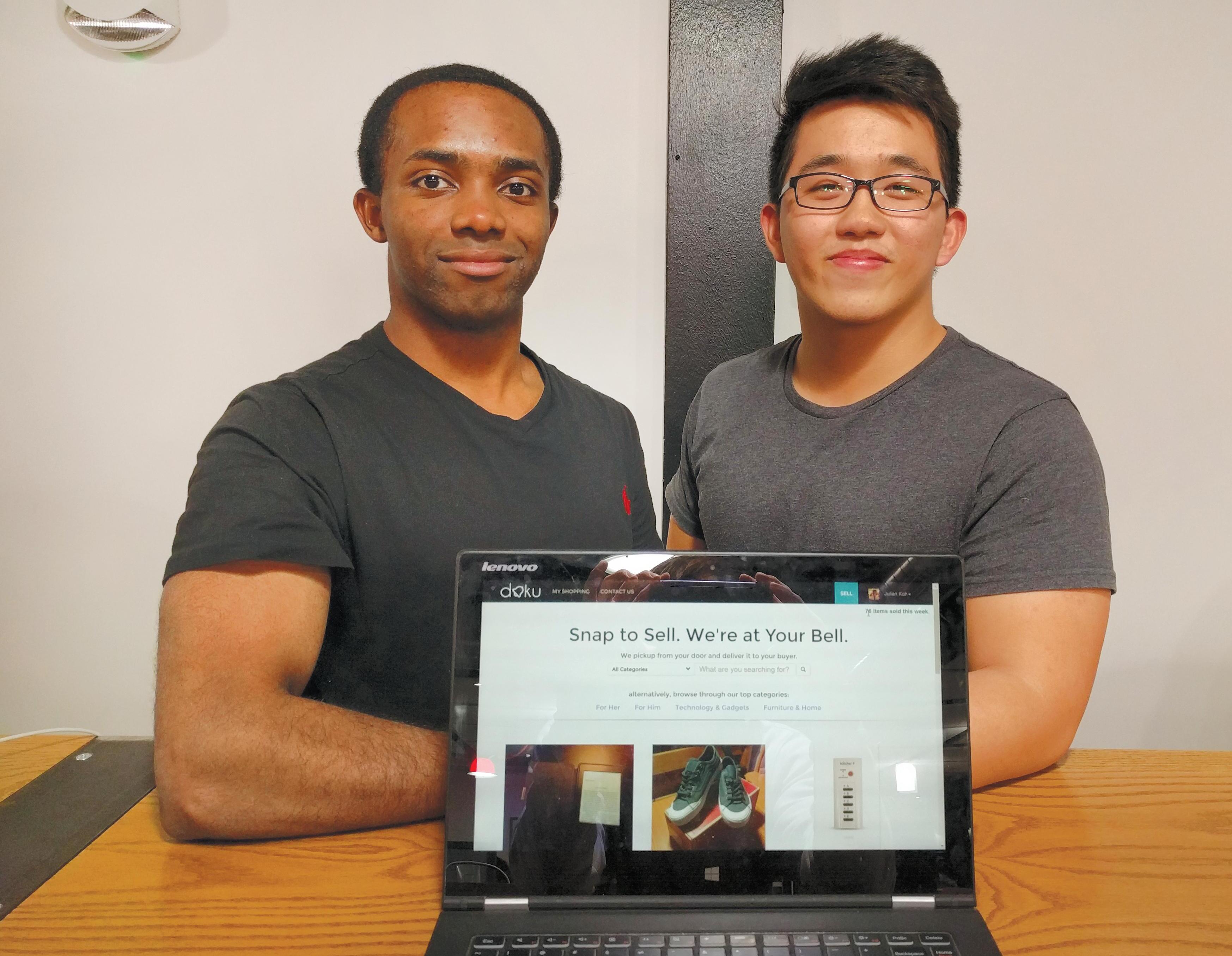
After experiencing difficulties buying and selling textbooks at Cornell, Julian Koh ’20 and Jörg Doku ’17 developed a website called Doku Market, which they say allows students to buy and sell items at the click of a button
Koh and Doku who met in “Entrepreneur and Private Equity,” an entrepreneurship class that they are both taking this semester said they found current options for exchanging textbooks between students unsatisfactory
“[Doku] mentioned how sometimes it would take him weeks to schedule a mutual time to meet up with a seller/buyer,” Koh said, referring to his experiences using Facebook to find interested buyers
Doku Market aims to streamline the buying and selling process by making the physical exchange of textbooks simpler, according to Koh
“[Selling] is a simple two-step process where you upload an image and write a description of the item If a buyer is interest-
ed in the item, he will click ‘Buy’ and pay us through Venmo,” Koh said “We will then pick-up the item from the seller and deliver it to the buyer ”
There is currently no delivery fee associated with the program, in order to encourage students to use the service, according to Koh
The founders said the website has been successful so far, receiving “thousands of views to the page ” with “transactions every week ” Koh added that, since its inception during fall break, Doku Market has facilitated over 75 transactions
Along with selling textbooks, the website also sells clothes, shoes, electronics and other miscellaneous items, according to Koh
While the website currently operates solely at Cornell, Koh and Doku said they hope to grow the market to “surrounding schools and eventually to big cities” in the future However, for the time being, they said they are focusing on expanding their services on campus
Chance Masloff can be reached at ccm227@cornell edu
Senior Council Calls for Ethical Company Leadership
By JAI MALHOTRA Sun Staff Writer
LLP, stressed that “ethics and right behavior are at the core of leadership” in global companies, saying company leaders must set an example for their workers at a lecture Tuesday
Denniston said ethics have a quantitative effect on companies, emphasizing that a company ’ s value is highly correlated with its ethical reputation
He explained that companies u n d e r i n v e s t i g a t i o n f
briber y and financial fraud tend
to experience significant decreases in market value
According to Denniston, corporate commitment to law and order has greatly contributed to the success of the U S economy, noting the number of corporate briber y cases prosecuted by v a r i o u s c o u n t r i e s from 1999 to today
tion does not lie solely in the hands of the government He proposed that companies themselves must create corporate cult u re s t h a t p ro m o t e re g u l a t i o n compliance and honesty
company During his time at General Electric, Denniston said
c o m p a n y l e a d e r s w e re h e l d responsible for any alleged fraudulent conduct
“We as a society must take our stand to demand that our leaders of companies ... meet the high test of character.”
The United States, with 128 cases, was t h e w o r l d l e a d e r studied in a report b y t h e Se a r l e C i v i l Ju s t i c e Institute, by a wide margin However, Denniston said the responsibility for fighting corrup-
Denniston said company leaders must be held accountable for unethical conduct, in order to set an example for the rest of the
“You’re responsible if you participated in the [unethical] c o n d u c t , ” h e s a i d “ Bu t you ’ re also responsible if you didn’t create a culture of compliance in the affected area So if you were the leader and this happened, you were disciplined ” Denniston claimed that p re v e n t i o n , d e t e c t i o n a n d response are key to corporate due diligence in any fraud allegation
“It’s not just good enough to talk,” he said “You also have to enforce You also have to have systems, you have to perform, you have to execute ” Denniston concluded by sayi n g t h a t c o m p a n y c u l t u re i s established from the top down, with the ramifications of companies’ ethical conduct influencing society as a whole
“ We as a society must take our stand to demand that our leaders of companies in this nation meet the high test of character of honesty, civility, courage, candor and behavior,” Denniston said
STUDENTS: ‘LIBERTY AND FREEDOM ARE DEAD’ Anticipate deportations, persecution
An ‘Uprising’ Among Middle-Class White America
Olivia Corn ’19, the chair of Cornell Republicans, said she believes the election results reveal that “people don’t want the corr upt politician” to r ule our countr y “I always expected he would do better than the polls suggested because many don’t want to admit they suppor t Tr ump, ” she said “I also think that the countr y is incredibly dissatisfied with [Clinton] and it shows ”
Austin
McLaughlin ’18, executive
her former opponent Bernie Sanders
ground game money could buy ”
Voters’ choices could be considered a protest against elite decision-making in electoral politics, according to Sanders
“One could see this election as a massive democratic uprising against the elite project of globalization, open borders and the commodification of goods and people the vision Clinton communicated in her handsomely compensated speeches to large banks in the U S and Canada,” she said
“This election has been really illuminating in how backwards a lot of our country is.”
K e l l y R i o p e l l e ’ 2 0
director of Cornell Republicans, called the surge of suppor t for Tr ump, “ a rejection of Washington, Wall Street, and the media ”
“ Tr u m p ’ s u
makes it clear that the polls failed to account for large swaths of the populace coming out for Donald Tr ump, par ticularly r ural older whites,” he said “It may be revealing that Hillar y Clinton did not have the level of the suppor t of Hispanics and blacks that she thought she did coming into Election Day ”
Pr o f E l i z a b e t h S
ment, called the results of the election “stunning ” “How could this happen?” she asked “Clinton outspent him two to one, had a united par ty and abundant help from the president, first lady, vice president,
would be more people voting for Hillar y, ” she said “Especially right now with all of the allegations [of sexual assault] that have been coming out about Donald Tr ump, I thought that would really impact his chances ”
“Coming out of a prelim and hearing Tr ump is leading the polls is the worst feeling,” Priyanka Konan ’20 said of the night
Trump Supporters Came ‘Out of the Woodwork’
could have ever imagined, and kind of horrifying to think that this larger percentage of the countr y can vote for s
“ I think that regardless of the results, this election has been really illuminating in how backwards a lot of our countr y is ”
Kate Ryan ’20 said she was surprised that the Latino population in Florida failed to deliver a Clinton win “I’m definitely disappointed that the Latino surge didn’t happen in Florida,” s
shocked by how inaccurate polling has been throughout the entire election
A s t h e n i g h t w o u n d d o w n , i n Facebook posts and other social media, Cornellians began to share their condo-
The News Department can be reached at news-editor@cornellsun com TRUMP Continued from page 1
Other students called the results “ eye opening,” saying they revealed an entire demographic of American voters who “ came out of the woodwork ” Kelly Riopelle ’20 said the closeness of the election was evidence of the bigotr y prevalent in the United States “It’s definitely a lot closer than I
lences for female and minority friends, saying that Tr ump ’ s election to the presi d e n c y g i ve s i m p l i c i t p e r m i s s i o n f o r others to adopt “horrible” stances he has endorsed
“I feel as if many of my peers are in shock at a time that is so critical to our identity development, this invalidates who we are, ” said Dustin Liu ’19 “Many feel this as a pers o n a l a t t a
a
y think of how we can suppor t one another in the days moving for ward ” R a c h
An
Delwiche ’19, So Hyung Kim ’19, Josephine Chu ’18 and Stephanie Yan ’18 contributed repor ting to this ar ticle
Reed Wins 23rd District Without Support of Liberal Tompkins County
REED Continued from page 1
Reed said that while he is happy with today’s victor y, he is looking for ward
“ The job is not done Now it’s time to continue tomorrow, ” Reed said To
C
suffered another loss in New Yo
De
Danks Burke failed to defeat incumbent Tom O’Mara (R58) The defeat will be felt across New York, as a Danks Burke victor y would have been key in gaining a Democratic
Senate
However, Tompkins County voters prevailed in reelecting
State Assembly They also elected Democrat Matt Van Houten to the county ’ s district attorney post
Drew Musto can be reached at dmusto@cornellsun com
ARTS & ENTERTAINMENT
L i s t e n I n , b u t H o l d Yo u r Ju d g m e n t
BY ANDREI KOZYREV Sun Contributor
Racial dialogue is a sensitive topic in the United States It seems as if a special blend of courage is required to participate in it Such thinking is wrong, but it is inadvertently perpetuated when people eschew “ race talk” than rather than participate in it
A recent study by Pew Research identified “profound differences between black and white adults in their views on racial discrimination,” with 88 percent of African-Americans saying there is more work to be done to achieve racial equality, while only 53 percent of white respondents shared those views The intensely polarized views and no less intense feelings that come with them create a “ someone else can talk about it” mindset among people that are new to the idea and practice of interracial dialogue
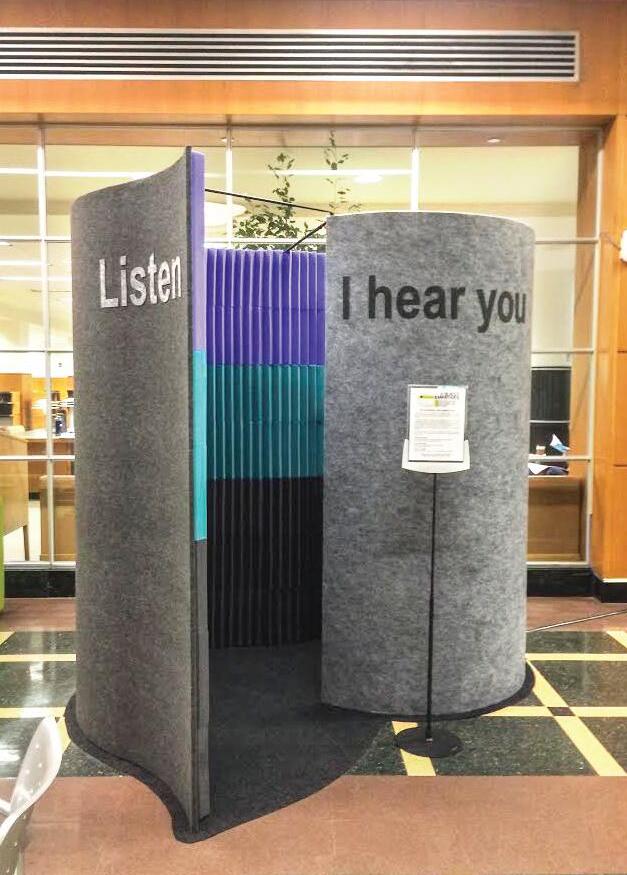
It is no surprise, then, that Art and Empathy first isolates you, in order to connect you Part of the CCA Biennial, the piece stands in Mann Library lobby, a bustling space hardly conducive to small talk, let alone deep introspection It is in that deafening space that a group of three Cornell professors want you to hear To listen To internalize and maybe to respond The professors are Corinna Loeckenhoff and Anthony Burrow from the School of Human Ecology, and Francois Guimbretiere at the Information Science department, who teaches a popular course called Rapid Prototyping The project was done in collaboration with Mann Library, Cornell Intergroup Dialogue Project and students Kevin Ma grad and Dongwook Yoon grad
The installation is a telephone booth shaped like a human ear, made out of carbon casting tubes and soundproof foam As you walk inside the ear and make your way around a curved corner, there is a telephone connected to a tablet, which is lit up with a selection of pictures (one, notably, of a police cruiser) The soundproof material creates a sense of comforting privacy once you are inside Pick up the phone, tap on one of the images and you are presented with an anonymous recording of a monologue or conversation about racial prejudice, microaggressions and other race related problems
Casual in nature, the dialogues achieve their purpose of making you feel as if you are in the conversation You can also record a response or your own story Yet, the system artificially constrains those options, not letting you record anything until the audio is done There is no way to interrupt; you can either listen until the end or walk away “It was an intentional design decision to, kind of, override what you would usually do in interface design, and in this case force them to listen,” said Loeckenhoff
The intention is that the listener actually performs her role until the end, instead of immediately thinking of a response; but the
BY ZACHARY LEE Sun Contributor
William Martin stated: “Do not ask your children to strive for extraordinary lives Help them instead to find the wonder and the marvel of an ordinary life ” Yet it can be difficult to discover new meaning and inspiration within the mundane aspects of everyday life If I were to profusely read poems by Billy Collins and Robert Frost, perhaps for a cycle I may be inspired by their pastoral descriptions of our natural world to appreciate the multiplicity of hues which color Ithaca’s trees or the torrential gorges as I walk over the suspension bridge But eventually, I lose the wonder of these sights and remain trapped in the routine of prelims, homework and sleepless nights But after hearing poet Chris Abani read and perform several of his own compositions this past Thursday, I found the new awe, joy and magnificence within my daily life, including my 2:30 a m walks back from Olin library
As I entered Klarman Hall G70, I didn’t know what to expect from a poetry reading My prior experience with poetry readings had been back in Chicago at Louder than a Bomb (LTAB), which was Chicago’s largest annual slam poetry event for high school students Up and coming DJ’s would play their newest mixes in between poetry performances The audience was much more interactive, and they would unleash a cacophony of thunderous snaps as poets read original compositions packed with double entendres, smooth cadence and an energetic flow that matched the depths and heights of life on the South Side At many times it felt a bit more like a hip-hop concert than a poetry reading, but I still loved every minute of it Doing a brief bit of research on Chris Abani’s body of work, I arrived at Klarman knowing that this reading would be a little more subdued than LTAB, but was surprised nonetheless to experience how powerful it still was
value of these training wheels is unclear In my mind it brought up the question of how far should we go into “designing” a space for racial dialogue, when outside of such spaces there won ’ t be a safety net to fall back on? And how do you ensure that people walk out of the exhibition internalizing what they heard?
“These are important questions that I am not sure are easily answerable part of it is to create a space and see what people do with it,” said Burrow After a moment of contemplation, he continued:
“There is something about this space that reifies and reinforces the idea that the experience is still there,” which will remain so even after the exhibition closes, because the recordings will be preserved on a website Burrow concluded saying, “I don’t know if we ever designed this thinking you need to empathize, part of it is, ‘What do you want to say?’ And I hear you ” – the latter three words are written on the outer wall of the booth
The inspiration for the project came from creators ’ deeply personal experiences Burrow recounted to me an incident from his time at UNC Chapel Hill, where he attended college, when he and his friends drove to a friend’s apartment off-campus On the way back, “ as we were driving out of the apartment complex, 9 police cars surrounded us 10 to 13 officers got out with their guns pointed ” Burrow and his friends, all black men, were arrested on charges of stealing the car they were in, and they were meant to be driven to a magistrate The police, however, turned around after a report came in that the car wasn ’ t stolen Someone called the police on Burrow and his friends after allegedly seeing them steal the car “I have the police recording she [the accuser] said, ‘I didn’t actually see them, I just suspected that was what they were doing ’”
In creating this installation, the professorial trio relied upon the garage Ms Loeckenhoff and Mr Guimbretiere’s (they are married) “We were using all kinds of materials that are not meant for their purpose [in the project],” said Loeckenhoff with
a pause She then added that “the interior structure is gigantic carbon tubes that are designed for concrete casting the people who delivered it were very surprised because they never delivered this to any residential property ” The completed piece had to be transported in two parts using a rented truck The most surprising element of this story is that buying an actual phone booth, like the classic British red telephone box, would be more expensive than this process Aside from financial concerns, the self-made nature of the piece also manifested an emotional value: “At the end of the day, we couldn’t just go find these readymade spaces; there was something about building this space that met the real need of what we were trying to get at it kept us going,” said Burrow The design blueprints and the tablet interface were created by Professor Guimbretiere, who also decided to rely on a physical phone as opposed to a microphone to add an additional level of intimacy for the listener, who is left on his own with a mysterious interlocutor on the other end of the line
The recordings for the installation were made in collaboration with the Intergroup Dialogue Project, an on-campus organization that leads workshops, meetings and several courses on intergroup dialogue for undergraduate students, graduate students and even faculty levels Jazlin Gomez MPA ’17, Garrett Heller ’17 (both IDP facilitators) and Adi Grabiner Keinan, IDP’s director, conducted conversations with other members of the group about “different types of oppression that occur, from the interpersonal and individual to also the institutional and structural level,” said Heller
After this year ’ s unprecedented presidential campaign and the waves of racially charged violence (which of course spans over decades), wouldn’t it be cathartic to just listen, empathize and then respond? But actually, maybe you should hold the response for now
The Race & Empathy exhibition is on display in Mann Library Lobby until November 11th An online version of the project is available at https://richreview net/rrr/
Andrei Kozyrev is a freshman in the College of Arts and Sciences He can be reached at aak85@cornell edu
After a touching introductory address from Lyrae Van CliefStefanon, Chris jokingly stated that he wasn ’ t a poet who did the whole “explaining thing ” He made the short disclaimer: “I’ll just give the poems to you I want you to feel them ” Right away, he established himself as a down-to-earth individual who wanted to bypass the formalities of the event Lyrae had read off a litany of Chris’ accomplishments and awards, but he downplayed his accomplishments in favor of connecting with the audience He then told a humorous anecdote involving a group of South Africans trying to evacuate from a burning plane (he confessed that this was the only clean joke that he knew) Even in the almost packed auditorium of Klarman Hall, Chris was still able to inject a sense of intimacy and comfort
He then went on to read several of his compositions from Sanctificum and other works As he read, his works created a poetic biography and testimony which covered a multiplicity of topics, from his Nigerian upbringing and religious background, to his journey to, and time in, the United States He spoke at a rapid pace and with a sense of urgency as though he earnestly wanted the audience to take a first-person perspective of his narrative world and join him in his poetic journey Through his works, he detailed how he cut tomatoes, wrote to his father from his mother’s perspective and would roll up pages of his father’s King James Bible and smoke oregano through them with his brother, and all of these painted a beautiful collage of his life experiences and outlook
It was clear that his culture and religion bled through his work As he sliced the tomato, he described it as a culinary prayer, admiring the precision of the knife Yet inversely, he shared a poem about how killing an animal with the same weapon was haunting, because it reminded him of the possibility and power that he had to kill a man as well This was a powerful juxtaposi-
tion, and displayed his versatility in being able to describe the hostility and the comfortability of a knife When describing elephants looking at their dead kin he said, “The elephants howl to the absent flesh on bones ” Yet in the soon after, he stated that “ every human body is scripture”; the dichotomy of his works showed his maturity of perspective; that themes such as death, life and religion could be explored through a multiplicity of emotion He spoke about seeing a street performer in Chicago and how the rhythmic popping and clicking of cicadas offered a measure of comfort to the performer In my opinion, one of his greatest pieces was the poem “The Calculus of Faith ” Here, one can clearly see how he inherently values the seemingly simple things in life In the poem, he stated that when he tasted the sweetness of the mango, it was his first miracle, and that ripping out pages from the King James Bible, rolling up the thin paper and smoking oregano was the second great miracle The third was his mother’s turquoise ink fountain pen, which he realized had the power to create literary worlds He was able share so many pieces, and yet he never rushed Chris gave enough time to let the audience soak up the imagery within each line
Chris Abani’s poetry was visceral He invited his readers to an emotional journey, and I’m grateful to have visited his past and present world His poetry drew out emotions that reminded me of my own culture and faith His work reinvigorated a wonder of my own ordinary upbringing and current college life He wanted to make every day extraordinary and sacred So I am elated to have been a tourist of the literary world that he created, even if it was for only 45 minutes But most importantly, I’m excited that I have my own ordinary world to discover anew and explore
Zachar y Lee is a freshman in the College of Arts and Sciences He can be reached at zjl4@cornell edu
COURTESY OF THE COLLEGE OF HUMAN ECOLOGY
Independent Since 1880
134TH EDITORIAL BOARD
SOFIA
HU ’17 Editor in Chief
PHOEBE KELLER ’18
Managing Editor
JORDAN EPSTEIN 18
Advertising Manager
LOUIS LIU ’18 Business
Manager
PAULINA GLASS ’18 Associate
Editor
RYAN TORRIE ’17 Web
Editor
WORKING ON TODAY’S SUN
DESIGN DESKERS Brian LaPlaca 18
Melody Li ’17
PHOTO NIGHT EDITOR Cameron Pollack ’18
NEWS DESKERS Josh Girsky 19 Stephanie Yan 18
NIGHT DESKER Alexa Eskenazi 19
SPORTS DESKER Zach Silver 19
ARTS DESKER Troy Sherman 18
Letter to the Editor
The GPSA is not enough
To th e Edi to r:
I am writing as a graduate student who has been involved with the Graduate and Professional Student Assembly since spring 2013 and with Cornell Graduate Students United since spring 2014 in order to respond to some of the discourse around shared governance that has emerged in debates over graduate student unionization this semester I am a proud member of both organizations and believe deeply in the necessity of each, and based both on my own experience and the extensive evidence from other universities at which both graduate student unions and assemblies productively coexist, I believe unequivocally in the potential for both organizations to continue to work effectively after a unionization vote The GPSA is not at all threatened by the formal recognition of CGSU as an exclusive collective bargaining unit
More importantly, I want to respond to the idea encapsulated in Interim President Rawlings’s statement that graduate students already have a significant voice in administration, and that “We have not been able to solve every issue raised by students, but I believe we are better able to work through differences of opinion in a collegial atmosphere than in a potentially adversarial collective bargaining setting ” There are two issues to look at in evaluating this claim: first, the Board of Trustees’ decision to not raise the minimum stipend of Research Assistants to be equal to Teaching Assistants in spring 2014, and second, workers’ compensation
When the Trustees made their decision on graduate student stipends, they did so with the consultation of a handful of graduate student leaders who were forbidden from discussing the issue with other graduate students In the trustees ’ and administration’s eyes, this qualified as consultation with graduate students I simply ask, do you really believe that a decision about graduate student pay made with only a handful of the thousands of graduate students at Cornell even privy to the conversation was democratic and fair given that these privileged few were then not allowed to talk to the rest of us about it?
The GPSA does valuable, important work, but so long as the Board of Trustees and the administration can make decisions that ultimately disregard the expressed opinions of graduate students or, in this case, without even consulting graduate students for their opinions in the first place the GPSA is not positioned to substantively advocate for graduate students in certain crucial ways In a GPSA meeting earlier this semester, Dean Barbara Knuth explained that this difference in minimum stipend amount was eliminated after the Graduate School realized that a large majority of faculty were electing to pay research assistants at a level higher than the minimum, as if it had increased the same amount as the teaching assistantship stipend That’s good, but this was only the case because individual faculty made the decision out of the goodness of their hearts to pay their research assistants fairly It very easily could have been different, since this fact is contingent on these individual decisions A formally recognized union would be able to make legally binding agreements on issues like this so that policies on graduate student pay are crafted with actual consultation of graduate students and implemented without being contingent on individual supervisors’ whims
On the issue of workers’ compensation, the line repeated by Graduate School and Cornell administrators is that following discussion with the GPSA Student Advocacy Committee in 2013-2014, Cornell “clarified” its workers’ compensation policy This line was just repeated by Dean Knuth in her last appearance before the GPSA, and it relates to President Rawlings’ asserted preference for “collegial atmosphere” over “ potentially adversarial collective bargaining ” It is certainly true that the GPSA did tremendous work that required hours of extra meetings, and it is true that in this instance discussion between administration and a committee of the GPSA resulted in concrete benefits for graduate students As a member of the Advocacy Committee that year I was proud to be a small part of this work
But it must be said that to call these discussions “collegiate” or amicable would be a mischaracterization at best, at least to my ear as a member of the Advocacy committee during 2013-2014 and co-chair in spring 2015 While the tone and substance of these conversations was sometimes collegial, they also at times became explicitly adversarial as administrators objected to any hint that graduate students might be thought of as workers or employees Workers’ compensation was not an issue solved by the university merely clarifying its policies in response to questions and inquiries from graduate students; the policy articulations in 2015 were the result of conversations that ranged from collegiate to adversarial To pretend that the current structure is always “collegiate” and that a union would introduce a new level of “adversarial” discourse that did not before exist is not simply to make a hypothetical or theoretical point, but to misrepresent the nature of actual conversations between GPSA committees and administration, at least in this one recent and salient example
In the end, it is true that the GPSA does valuable work, but it is also true that there are limits to its effectiveness The GPSA exists in relation to administration and the Board of Trustees through a stark power differential Cornell does not ultimately have to do anything at all that the GPSA recommends (as we saw when the Trustees rejected Fossil Fuel Divestment after four shared governance bodies including the GPSA passed resolutions to the contrary), and this power differential can potentially manifest in adversarial posturing in even those conversations, like the ones on workers’ compensation, that have positive results for graduate students A union, however, would be different A union would democratically seek the input of all members of its bargaining unit through openly-structure meetings and streams of communication, and the policies crafted in conversation between the union and the university would be legally binding I look forward to seeing this more even playing field become a reality
Je s s e A Go l db e rg gr ad
Priya
Kankanhalli | Matters of Fact
A
t h i n k I s p e a k f o r e v e r y o n e w h e n I
s a y I l o v e f a i l i n g p r e l i m s A f e e l i n g
q u i t e l i k e e u p h o r i a s w e e p s o v e r m e w h e n I l o g o n t o C M S ( o r B l a c k b o a r d ,
o r a d e p a r t m e n t ’ s s u r p r i s i n g l y u n a e s -
t h e t i c s t u d e n t p o r t a l ) a n d s e e t h a t 6 3
p e r c e n t , a f t e r t h e c u r v e H a v e I , a t l o n g
l a s t , d o n e s o m e t h i n g r i g h t ? I p r o c e e d
t o p e e k a t t h e a c c o m p a n y i n g h i s t o g r a m
o f s c o r e s : t h e m e a n i s a n 8 4 p e r c e n t , a n d , o h , t h e m e d i a n i s a n 8 9 p e r c e n t
Ni c e I l i k e w h a t I s e e It ’ s n o t
c r o w d e d o v e r h e r e i n t h e 6 0 s I h a v e
p l e n t y o f r o o m t o s t r e t c h m y l e g s , t h e
s e r v i c e i s g r e a t a n d p e o p l e d o n ’ t f l o c k
t o m e f o r a n y s o r t o f g u i d a n c e T h e r e ’ s
j u s t s o m e t h i n g s o t h e r a p e u t i c a b o u t
m o m s a i d I c o u l d n ’ t g o , s o r r y ! I s p o o r p e r f o r m a n c e r e a l l y e v e n m y f a u l t ? S h o u l d I r e a l l y b l a m e m y s e l f f o r n o t s t u d y i n g e n o u g h , w a i t i n g t i l l TM i n u s 2 4 H o u r s b e f o r e Pr e l i m D a y t o c r a c k o p e n t h e t e x t b o o k ? I t h i n k n o t T h e r e ’ s s o m e t r u t h t o t h e p r o v e r b t h a t t h i n g s w o r t h h a v i n g ( r e a d
a s t i n
t h r
h t h i s f l e
n g l i f e , h o p p i n g f r o m o n e d r o p p e d c l a s s t o a n o t h e r, b e
n
a n
G
Sn
I imagine it’s pleasant to have your major figured out before you’re a second-semester senior, to visibly contribute to your collegiate community, etc., etc., but in an effort to make myself at home here, in a place above Rock Bottom but well below Sky High, I want to believe that intellectual mobility exists.
w i t h d r a w i n g f r o m t h i s w a n n a b e a r m s
r a c e , r e n o u n c i n g t h e c r u s a d e o f t h e
H o l y G PA I , f o r o n e , a m g l a d t h a t I ’ v e f o u n d t h e s t r e n g t h w i t h i n m y s e l f t o a l i g n w i t h t h i s n o b l e c a u s e
O f c o u r s e , I ’ m n o t t h e p e r f e c t w a rr i o r a g a i n s t g r a d e i n e q u a l i t y I d o h a v e
m y m o m e n t s o f w e a k n e s s ; I , t o o , p l a y t h e n u m b e r s g a m e I f I g e t a n 9 7 p e r -
c e n t o n t h e f i n a l , I ’ l l s t i l l g e t a B i n t h e
c l a s s I f I d o t h e e x t r a c r e d i t a n d a l s o a t t e n d e v e r y l e c t u r e a n d d o g g e d l y c l i c k i n o n e v e r y i C l i c k e r q u e s t i o n , a n A - i s a n a t t a i n a b l e g o a l It ’ s n o t i m p o s s i b l e f o r f a n t a s y a n d r e a l i t y t o o v e r l a p , I t e l l
m y s e l f , n o m a t t e r h o w s l i m t h e
c h a n c e b u t w a i t ! D o I e v e n w a n t t h e m t o ? I k n o w i t s o u n d s c o u n t e r i n t ui t i v e I ’ m i n c o l l e g e , I ’ m p a y i n g a l o t f o r t h i s q u a l i t y e d u c a t i o n , I o u g h t t o t r y h a r d a n d d o w e l l a n d t a k e s i c k d a y s o n l y w h e n I ’ m a c t u a l l y s i c k , b u t , y o u s e e , t h a t ’ s j u s t t h e m o r e p u b l i c i z e d r o u t e t o s u c c e s s T h e r e ’ s m u c h l e s s t r a ff i c o n t h e b a c k r o a d s f e w e r a c a d em i c s d i s r u p t i n g y o u r w i n d s h i e l d v i e w, l e s s S a v i n g - o f - t h e - Wo r l d t o f r e t a b o u t , s p e e d : u n r e g u l a t e d L i s t e n t h e p u r s u i t o f k n o w l e d g e i s a b e a u t i f u l t h i n g , a n d w e a r e a l l p r i vi l e g e d t o b e a b l e t o p a r t a k e I s u p p o r t i t u n c o n d i t i o n a l l y, e x c e p t w h e n i t i s o n a t i m e r a n d t e e m s w i t h c o m p e t i t i o n a n d i s p a i n f u l l y q u a n t i f i a b l e a n d r e g ul a r l y o f f e r s t a n g i b l e r e a s o n t o g r i e v e It ’ s w e i r d t h a t s o m e t h i n g a s s i m p l e a s t h e g a t h e r i n g o f i n f o r m a t i o n f o r s e l ff u l f i l l i n g p u r p o s e s w o u l d b e s u c h a h i g h - c o n t a c t s p o r t Ye s , n o t h i n g o n E a r t h i s t r u l y a u t o n o m o u s ; I c a n p u t t h e s e c o m p l a i n t s a s i d e , a n d m a y b e i f y o u c a n ’ t b e a t t h e m ( w h i c h I c e r t a i n l y c a n n o t ) , j o i n t h e m ? I w o u l d , b u t m y
c k s ( m u t u a l l y e x c l u s i v e w i t h T h e S m a r t Fr i e n d ) , a n d w i t h e v e r y n e w d a w n , c h o o s i n g a n e w p a ss i o n It ’ s n o t t h a t I w o u l d a c t u a l l y r e f u s e a p l a t t e r o f s c h o l a s t i c v i c t o r i e s i f i t w e r e p r e s e n t e d t o m e I ’d p r o b a b l y t a k e i t I i m a g i n e i t ’ s p l e a s a n t t o h a v e y o u r m a j o r f i g u r e d o u t b e f o r e y o u ’ r e a s e co n d - s e m e s t e r s e n i o r, t o v i s i b l y c o nt r i b u t e t o y o u r c o l l e g i a t e c o m m u n i t y, e t c , e t c , b u t i n a n e f f o r t t o m a k e m y s e l f a t h o m e h e r e , i n a p l a c e a b o v e R o c k B o t t o m b u t w e l l b e l o w S k y H i g h , I w a n t t o b e l i e v e t h a t i n t e l l e c t u a l m o b i l i t y e x i s t s G u a r d e d l y, I w i l l c o nc e d e t h a t e f f o r t h a s t h e p o t e n t i a l t o b e f r u i t f u l , a n d t h e r e ’ s a w e a l t h o f u n t a u g h t k n o w l e d g e t h a t i s w o r t h w h i l e t o o ( I w i l l r e p o r t b a c k o n t h e v e r a c i t y o f t h e s e b e l i e f s s h o r t l y ) H a v i n g s o o p e n l y a d m i t t e d m y s h o r t c o m i n g s , I p a u s e h e r e b e l a t e d l y t o c o n s i d e r m y a u d i e n c e I d o u b t t h i s i s r e l a t a b l e c o n t e n t t o t h e m a j o r i t y o f Iv y L e a g u e r s , w h o , a t l e a s t f r o m m y v a nt a g e p o i n t , s e e m l i k e m o d e l c i t i z e n s w i t h g o o d g r a d e s a n d b e t t e r i n t e r ns h i p s a n d o n l y t h e b e s t j o b s I h o p e , t h e n , t h a t t h i s p i e c e f i n d s t h e f e w w h o c o p e w i t h t h e p r e s s u r e s o f t h e l i t e r a r y j o u r n e y t h r o u g h f a t a l i s t i c h u m o r a n d a r e c o n t e n t c h e e r i n
Priya Kankanhalli is a sophomore in the College of Arts & Sciences She can be reached at pkankanhalli@cornellsun com Matters of Fact appears alternating Tuesdays this semester
CORRECTIONS
A previous version of the Nov 8 News story, “Students, Faculty Evaluate Arts Requirements at Forum” incorrectly stated that Laura Brown is the senior vice provost for undergraduate education She no longer holds the title and is currently the John Wendell Anderson Professor of English
Dara Brown | Trustee Viewpoint
The Impact of Female Leadership
Representation matters As a recent Time article pointed out, representation changes the scope of our imagination
Representation stimulates aspirations in underrepresented minorities throughout our country expanding their perceptions and furthermore, broadening their opportunities As members of society begin to see more women and underrepresented minorities in positions of power, the corporate hierarchy changes as employers inherit an increased confidence in diverse leaders Nevertheless, leading up election day, the excitement towards electing the first female president of the United States dwindled
Many studies have analyzed the unease that individuals have with female leadership, attributing it to an overarching unfamiliarity with women in power positions For example, a Harvard School of Education study found that students of all races and genders have the most confidence in white males as student leaders In addition, Cornell studies have revealed that a higher level of respect is given to male professors thaen female professors in the way that students communicate with them in class of over email Even our students have been quick to second guess female faculty members over their assertions while not questioning male professors making the same remarks A Time article attributes this difference in treatment to a subconscious bias that we hold from living in a society dominated by white male leadership, a world where female names are associated with less power and impact than male names, and where retrograde attitudes toward women ’ s standing in the world enables others to condone this treatment of them
An even more startling effect of this debasing attitude toward women is that it may promote intolerance towards other minorities in society According to the Southern Poverty Law Center, “[o]ver two-thirds of educators reported that young people in their
As a community we should each play a role in educating others about the effects of subconscious biases. This involves putting ourselves in each other’s shoes to see the importance in the issues and initiatives that others strive for ... As students and educators we can play a role in analyzing and discussing the impact of this year’s election, and as community members we can take on alternate perspectives in effort to fully understand issues before deciding on their merits
schools most often immigrants, children of immigrants, Muslims, African Americans and other students of color expressed concern about what might happen to them or their families after the election ” In Tennessee, for example, a kindergarten teacher reported that a Latino child told by classmates that he will be deported and trapped behind a wall asked every day, “Is the wall here yet? ”In addition, some native-born AfricanAmerican children asked about being sent back to Africa, returning back to slavery, or being rounded up and put into camps As minority children felt increasingly disparaged, a portion of teachers expressed a hesitancy to even teach about the election, potentially leading to increased tolerance and confusion about this disparaging treatment of minorities
Whether Secretary Clinton wins the election or not, pundits will find a way to attribute her victory to anything but her personal efforts They will find a way to undermine her historic win by pointing out mistakes she may have made in the past, an imperfectly pronounced word in her acceptance speech, or a blemish in her pantsuit ensemble As a community we should each play a role in educating others about the effects of subconscious biases This involves putting ourselves in each other’s shoes to see the importance in the issues and initiatives that others strive for I would argue that funding for the BLUE light transportation system would increase if it weren ’ t seen as a measure for women ’ s safety but for a safer campus, or that the debate over free tampon distributions wouldn’t be contentious if men were in need of this provision As students and educators we can play a role in analyzing and discussing the impact of this year ’ s election, and as community members we can take on alternate perspectives in effort to fully understand issues before deciding on their merits
Comm ent of the day
Lindalou Re: “Ithaca Approved to Accept 50 Refugees” News November 7, 2016
It’s Been a Time
o i t ’ s b e e n o v e r a y e a r s i n c e
C l i n t o n a n d Tr u m p a n n o u n c e d t h e i r c a mp a i g n s f o r p r e s i d e n c y, a n d e v e r y s e c o n d o f i t h a s b e e n h o r r i b l e It h a s b e e n a l o n g , t i r i n g j o u rn e y t o E l e c t i o n D a y 2 0 1 6 a n d i t ’ s h a r d t o b e l i e v e I ’ m h e r e T h r o u g h o u t t h i s e n t i r e p r o c e s s , I h a v e n e v e r w r i t t e n a c o l u m n a b o u t a n y o f t h e c a n d i d a t e s o r a n y t h i n g t h a t h a s h a p p e n e d i n r e l a t i o n t o t h e e l e c t i o n s I n e v e r w a n t e d t o f e e d i n t o t h e a m o u n t o f a t t e n t i o n t h e s e p e o p l e w e r e a l r e a d y g o i n g t o r e c e i v e , m a i n l y b e c a u s e I n e v e r w a n t e d t o e v e n d w e l l u p o n i t m y s e l f a n d n o t h i n g t h a t w a s b e i n g d o n e w a s p a rt i c u l a r l y s h o c k i n g t o m e No w, I ’ m i r o n i c a l l y e n o u g h w r i t i n g a b o u t i t w i t h t h e s a m e l e v e l o f d e f e a t I f e l t f i l li n g o u t m y a b s e n t e e b a l l o t I n s t e a d o f c o n d e m n i n g p e o p l e f o r v o t i n g o r n o t v o ti n g , I r e a l l y w a n t t o d i s c u s s t h e f a c t t h a t w h a t e v e r t h e d e c i s i o n o f t h e e l e c t i o n i s , i t d o e s n o t c h a n g e t h e f a c t t h a t w e a r e a l r e a d y l i v i n g i n a d y s t o p i a n s o c i e t y Tr u m p i s d i s g u s t i n g , n o d o u b t a b o u t t h a t , b u t j u s t b e c a u s e w e d o n ’ t e l e c t h i m t o b e p r e s i d e n t , d o e s n ’ t m e a n t h a t a s a s o c i e t y w e h a v e “ b e a t e n h i m ” o r t h o s e w i t h a s i m i l a r m e n t a l it y We d o n ’ t d e s e r v e a p a t o n t h e b a c k f o r e n s u r i n g h e d o e s n ’ t g e t e l e c t e d a n d v o t i n g f o r a n o t h e r i m p e r i a l i s t T h e i d e a o f h o w a n y o f t h e s e c a n d i d a t e s a r e g o i n g t o “ r u n t h e c o u n t r y ” s t r e s s e s m e o u t , b u t t h e r e s p o n s e s t o Tr u m p h a v e h o ne s t l y s t r e s s e d m e o u t t h e m o s t w h e t h e r t h e y h a v e b e e n a g a i n s t o r i n s u p p o r t o f h i m I t i s n ’ t j u s t t h e f a c t t h a t Tr u m p i s a r e a l p e r s o n , I g u e s s , t h a t i s a c t u a l l y r u n n i n g f o r p r e s i d e n c y o f t h e Un i t e d St a t e s , i t ’ s t h a t h e i s n ’ t t h e o n l y Tr u m p
T h e r e a r e p e o p l e w h o a g r e e w i t h h i m a n d i d e n t i f y w i t h h i m , o t h e r w i s e h e w o u l d n ’ t h a v e g o t t e n o n t h e b a l l o t ( n o t t h a t t h a t ’ s t h e o n l y w a y t o g e t c a n d i d a c y, b u t i n a “ t r a d i t i o na l ” s e n s e ) T h e o n l y d i f f e r e n c e b e t w e e n Tr u m p a n d e v e r y o t h e r r a c i s t i s t h a t h e ’ s b e e n g i v e n a b i g s t a g e t o m a t c h h i s b i g u n n e c e s s a r y m o u t h S o m e p e op l e a c t u a l l y i d e n t i f y w i t h t h a t , w h i c h i s t e r r i f y i n g t o d w e l l o n
The only difference between Trump every other racist is that he’s been given a big stage to match his big unnecessary mouth Some people actually identify with that, which is terrifying to dwell on
B i g o t s h a v e a l w a y s e x i s t e d , Tr u m p i s j u s t a v e r y l a r g e a n d a n n o y i n g s y m b o l o f t h a t Pe o p l e e v e r y w h e r e w a l k t h r o u g h l i f e v e r y s u r e t h a t t h e i r o p i n i o n i s t h e c o r r e c t o n e e v e n t h o u g h i t m a y b e d i s r e s p e c t f u l a n d d i s r e g a r d a p e r s o n ’ s e x i st e n c e , w h e t h e r t h e y s u p p o r t H i l l a r y o r Tr u m p H o w I f e e l n o w, d u r i n g t h i s e l e c t i o n , i s a m o r e i n t e n s e v e rs i o n o f h o w I f e e l e v e r y d a y ; w a i t i n g f o r t h e n e x t m o m e n t s o m e o n e i s g o i n g t o d i s r e s p e c t a c u l t u r e , m a k e a m i s o g y n i s t i c j o k e , u s e a r a c i a l s l u r, e t c Fe e l i n g t h i s w a y h a s b e c o m e a n u n w a n t e d a s p e c t o f m y s e l f a n d e l e c t i o n d a y i s o n l y a h e i g h te n e d v e r s i o n o f t h i s e m o t i o n Ju s t t o d a y, I a c c i d e n t a l l y i n t e ra c t e d w i t h s o m e o n e I d i d n ’ t n o t i c e w a s w e a r i n g a Tr u m p h a t A s I s a w t h o s e w o r d s s t i t c h e d t o t h a t b r i g h t r e d c a p , m e a n t t o g r a b y o u r a t t e n t i o n , I f e l t s i c k a n d i n s t a n t l y s t o p p e d t a l k i n g m i d - s e n t e n c e b e c a u s e e n g a g i n g w i t h t h a t p e r s o n w a s t h e l a s t t h i n g I w a n t e d t o d o O v e r a l l , t h e r e ’ s a w h o l e l o t o f n o i s e g o i n g o n i n r e g a r d s t o t h e e l e c t i o n a n d m y w a y t o c o p e w i t h i t i s h o n e s t l y j u s t i g n o r i n g w h a t e v e r y o t h e r p e rs o n i s s a y i n g e i t h e r d i r e c t l y t o m e o r a l l o v e r s o c i a l m e d i a I ’ m o v e r h e r e j u s t t r y i n g t o m a k e i t t h r o u g h , s o I d o n ’ t n e e d a c o ns t a n t r e m i n d e r t h a t e v e n t h o u g h p e o p l e p a n d e r t o l i b e r a l i d e a s o f c h a n g e , n o t h i n g w i l l h a p p e n A l l i n s t i t u t i o n s a r e f i l l e d w i t h e m p t y a m b i t i o n s a n d i n i t i a t i v e s O p p r e s s i o n w i l l c o n t i n u e n o m a t t e r w h o i s e l e c t e d T h e r e w i l l s t i l l b e r a c i s m , m i s o g y n y, d e a d b o d i e s i n o u r s t r e e t s a n d o v e r s e a s I ’ v e p r o v i d e d a n o n s l a u g h t o f c y n i c i s m a n d n i h i l i s m , b u t t h a t b e c o m e s y o
Sarah Zumba | Zumba Works It Out
Freshman Forward Adjusts to America
Pedlow recounts his journey to college soccer
By ANNIE TAYLOR Sun Staff Writer
The transition to collegiate athletics is a universally challenging one for any competitive freshman athlete Different team dynamics, more intense training programs and faster-paced competition test these novices in new ways On top of these changes, the courseload of the average Cornell student and the abrupt change from home life to college life is inevitably overwhelming
For George Pedlow, a first-year striker on the Cornell men ’ s soccer team, the transition to university life included a transcontinental journey
Ithaca Calling
“Obviously London is so different [from] Ithaca,” Pedlow said “Recently it’s been dawning on me that I am kind of in the middle of nowhere ”
Pedlow is originally from South London, where he attended St Paul’s School, studying economics and captaining both his school and club soccer teams At first, Pedlow said he was too busy to step back and notice the lifestyle change
“The first month at college there’s so much going on, ” he said “Especially when we ’ re playing soccer every day So I had my group of freshmen it’s like nine guys who I’m always talking to and getting to know, going to eat with and going to training And I’m always working ”
But lately, Pedlow said he’s been noticing the distance
which he said he is incredibly grateful for
“[But] sometimes I do feel a bit isolated,” he admitted
Pedlow’s family also includes three older sisters, all of whom also came to the United States for higher education His two oldest sisters, Mikaela and Sophia, graduated from Penn and Dartmouth, respectively, while his other sister Sophia is currently a senior at Wesleyan University
With his older siblings setting such a high bar, Pedlow said that his academics have always been a priority
“I wanted to play Division I, if I could,”
Pedlow said “[But] I never would have sacrificed not going to a top-tier school just to play soccer I always want to strive for all of my academic passions ”
A Budding Entrepreneur
Pedlow is currently enrolled in the College of Arts and Sciences, on track to major in economics, but is undecided about his final major selection
“Being an economics major in Arts seems really appealing and also AEM seems really cool,” Pedlow said “I’m kind of feeling it out right now ”
As a student at Cornell, Pedlow says it is
in the United States has given him the best opportunity to make this dream a reality
“If I could come up with an idea for a business,” Pedlow said “That would be my dream start[ing] it up from the bottom ”
His passion for entrepreneurship is closely tied to an interest in product design, as well as mobile applications Pedlow said he is hoping to get the chance to take some computer science courses, in addition to economics and business classes during his time in Ithaca
Let’s Get Physical
But in addition to his academic future, Pedlow is committed to making an impact while playing varsity soccer at Cornell Just like the cultural transition, the abrupt change in intensity of training was suprising to the freshman striker
“I try to go into every game with the same mindset that I’m confident but also need to be composed ”
“Being out here kind of gives you time to think and time to focus on your studies,” he said “And it’s nice being around greenery and not just pavement all the time I guess it can be a little bit sad when your family is so far away, but I’ll get to go back at Christmas and see them ”
Pedlow’s parents are originally from Westchester, N Y , but are still currently living in London They have traveled to the states to see several of his games this fall,
easier to handle his indecision here than if he had gone to school in England When British students apply to universities, they apply with scores from major-specific exams called “A-levels,” which by themselves can determine almost entirely which schools a student is admitted to and also sets them on track to study one subject
“I didn’t want to give my life away to one area of study so early,” he explained
After Cornell, Pedlow said he hopes to start his own company He believes studying
“I really had no idea what to expect, ” Pedlow admitted “You can ’ t really tell the pace and aggression and the athleticism [from watching games online] When I first came I was really impressed by how fit and how physical everyone was here The first time you play in a college game [is] kind of nerve-wracking ”
The increased physicality is more than just an element of collegiate athletics Pedlow said that many of his opponents and teammates in London had comparable technical skills to some of his teammates at Cornell, but few of them were as physically fit He siad the change in athleticism took some getting used to
“I’ve never been used to running so much and having to shut down [another player] so quickly,” Pedlow said “I was like,
‘Whoa, these guys are really fit and they take it really seriously,’ which I kind of relish It’s what I like about it ” In spite of the challenging physicality of collegiate games, Pedlow has had an enormously successful first season He has managed to take almost twice as many shots over the course of the season as any other member of the team Individually, he is responsible for almost a quarter of all shots taken by the Red this season
Eight games in, Pedlow led Cornell’s offense against Syracuse, who, at the time, was ranked second in the NCAA Thirty minutes into the match, he broke through the Orange defense to score Cornell’s only goal of the game and allowed the Red to lead for the rest of the first half
“I try to go into every game with the same mindset that I’m confident but also need to be composed,” Pedlow said “[Head coach John Smith] has a really good motto He says, ‘Fire in the belly and ice in the veins,’ which is something which I always try and think about when I’m going into the games ”
‘Fire in the Belly and Ice in the Veins’
As Pedlow finishes out his first season with the Red, he and his teammates have a plan for how to improve the outcomes of their games next season
“Having gone through the season now, I know what I need to work on, ” Pedlow said “There’s a few key pillars that I need to work on as a striker which Coach Smith has drilled into the strikers pretty well ”
He and his teammates have already discussed getting out in the offseason to generally develop fitness and work on the goals their coach has laid out
“I’ll be getting out there every day, definitely, with the ball and doing work,” Pedlow said “It needs to be a constant thing [sophomore defender] Ryan Bayne has already messaged us saying that we need to put in blood and sweat in the spring, so I’m really pumped about that ”
For Pedlow, the long-term goal is development of the team Next season, he said he and his teammates are looking to develop more of a winning mentality to bring about an Ivy League Championship
Despite the Red’s limited success this fall, Pedlow said he is convinced that an Ivy win is on the horizon for the team He said he fully expects to win at least one conference championship during his time at Cornell, and this confidence stems from a complete faith in his coach
“Smith just knows,” Pedlow said “He knows how to do it He did it at Stanford They went from a mid-tier team to winning the national championship Already I’ve seen him pull the best out of all of the players and I just have confidence in him ”
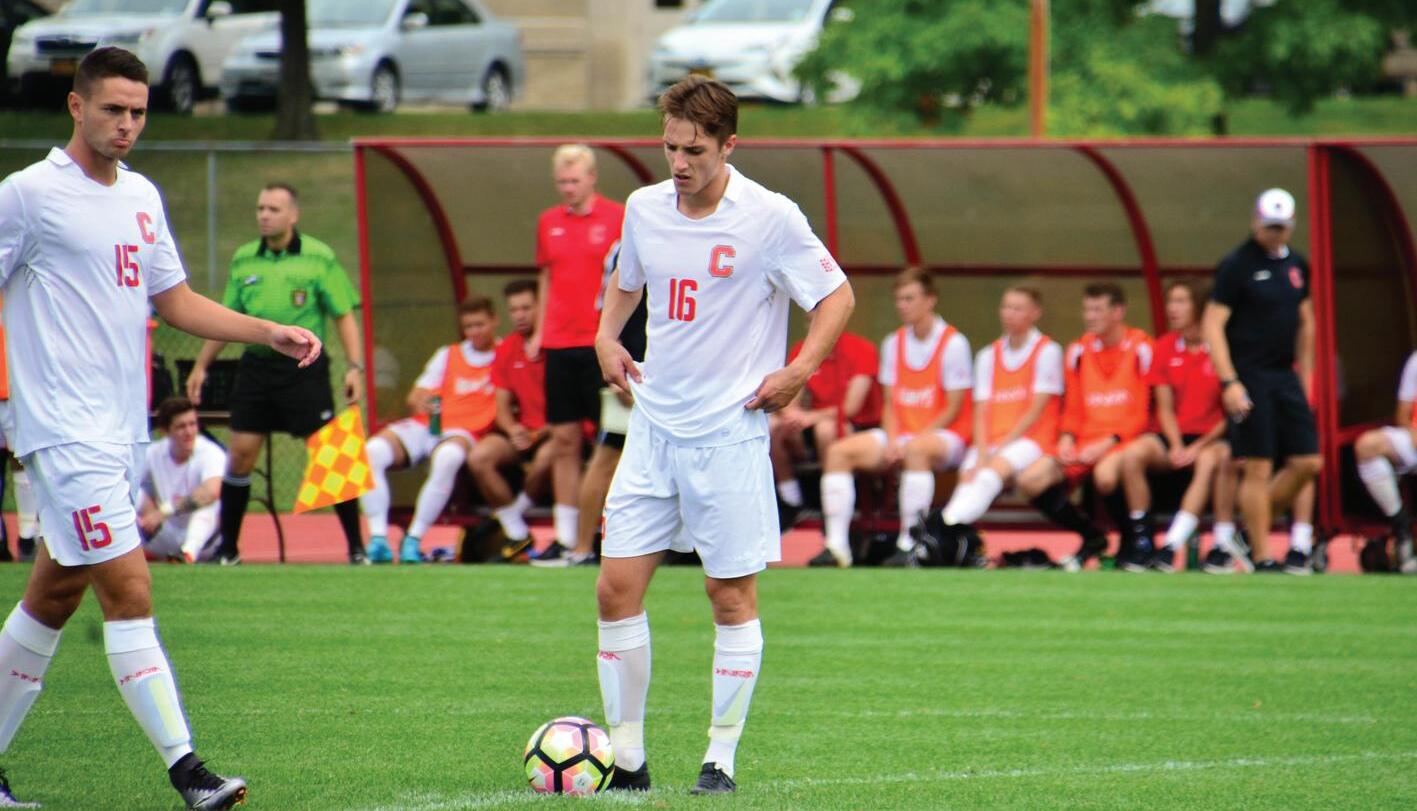
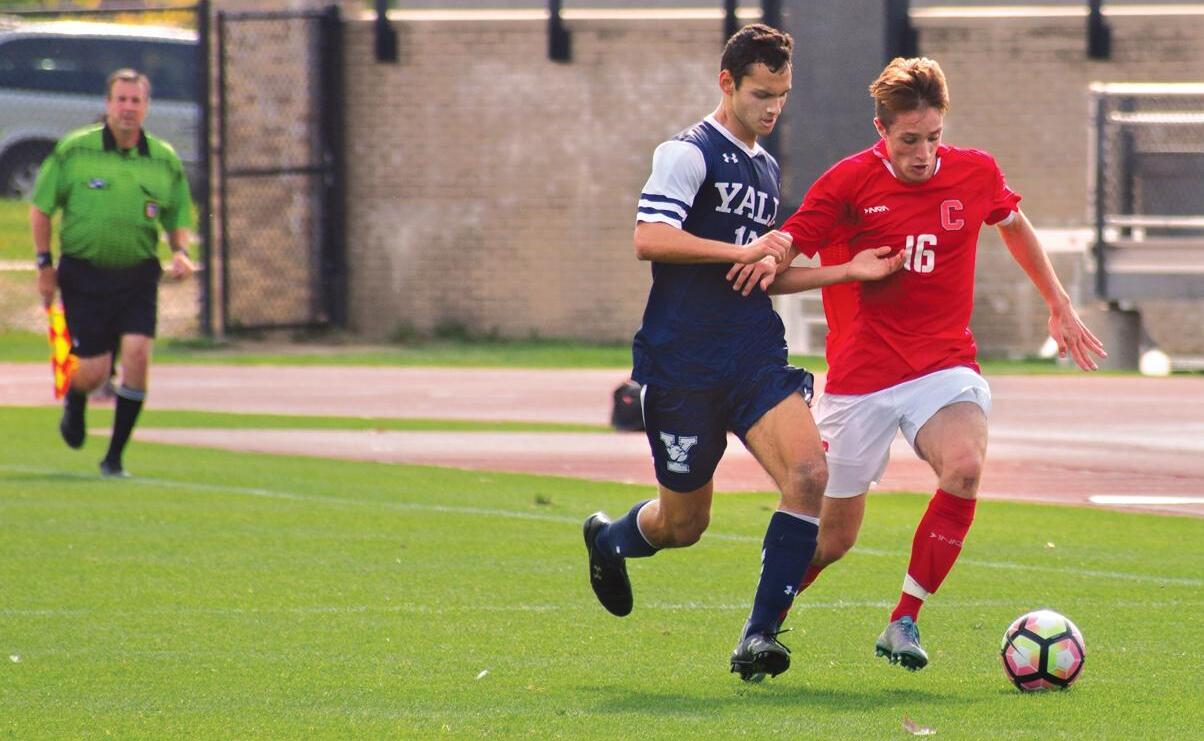
Always workin’ | In just his freshman year, Pedlow is determined to propel Cornell men’s soccer to the next level
ADRIAN BOTEANU / SUN STAFF PHOTOGRAPHER
Annie Taylor can be reached at ataylor@cornellsun com
Trigger happy | Pedlow is tied for the team lead in goals, with two, and has accounted for about a quarter of the teams shots this season,