
Bomb Threats Hit Central Campus
Cornellians face uncertain Sunday before threats
By MADELINE ROSENBERG and ANIL OZA Sun Managing Editor and Sun Assistant Managing Editor
Cornellians were bombarded with a combined 22 alerts — over text, email and phone — throughout Sunday afternoon, urging students to evacuate Central Campus following a bomb threat that authorities found “not credible.”
An hour and a half following the first alert — when Cornellians, shocked and panicked, scrambled home — the University confirmed that the earlier calls to evacuate and shelter in place on Central Campus were due to bomb threats.
‘Avoid the Arts Quad’: Five Hours, Seven CornellALERTs
The first alert notified the campus community to avoid the Arts Quad and Goldwin Smith Hall, adding that those in the area should shelter in place, offering no explanation.
Before sending the official CornellALERT at 1:57 p.m., the University sent two blank crime alerts, with the subject line “Crime Alert - [INSERT subject here].”
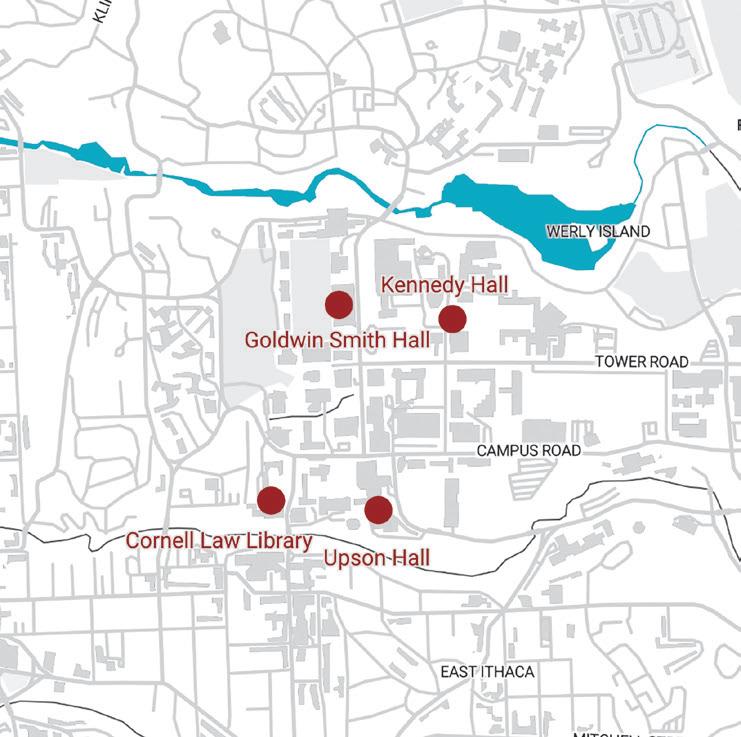
A frantic second alert arrived just 15 minutes later in all caps, urging Cornellians to evacuate and avoid the Law School, Goldwin Smith Hall, Upson Hall and Kennedy Hall: “PLEASE DO NOT CALL THE CORNELL POLICE UNLESS YOU HAVE AN EMERGENCY,” the text alert read.
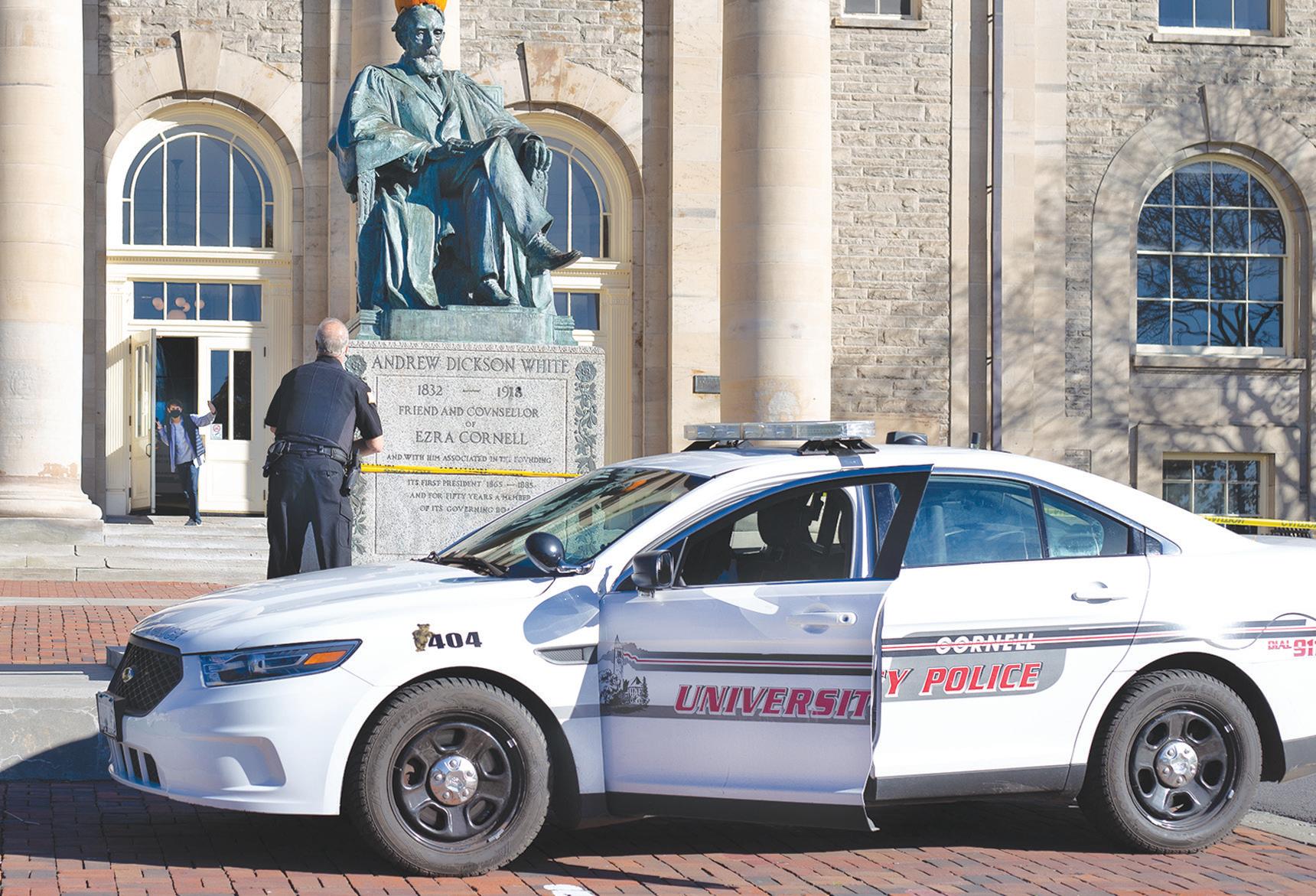
By 3 p.m., the University told students, faculty and staff once again to avoid Central Campus and to evacuate areas in or nearby the four buildings. Police blocked off Feeney Way and multiple other sidewalks with caution tape, and stationed cars from multiple statewide agencies across Central Campus.
In Sunday evening campus-wide email, Joel Malina, vice president for University relations, clarified that Tompkins County 911 received an anonymous call from someone threatening with automatic weapons and explosives just before 2 p.m.
Authorities from Cornell University Police Department immediately responded, later joined by the Ithaca Police Department, the Tompkins County Sheriff’s Office, Cortland Police Department, SUNY Cortland Police, the Federal Bureau of Investigation and New York State Police, according to Malina.
About an hour and a half after the first alert Cornell officially said the evacuations were due to bomb threats at 3:23 p.m. By approximately 4:06 p.m., the latest
found
‘not credible’
CornellALERT notified the Ithaca campus that Cornell police, along with other law enforcement agencies, were investigating the bomb threat — and by 5:30 p.m., law enforcement agencies were sweeping buildings, as Cornellians awaited updates on when they could leave shelter.
Five and a half hours later, the seventh and final CornellALERT announced that law enforcement found no credible threats after concluding a search of the Ithaca campus — saying that “it is safe to resume all normal activities.”
University Messages Sow Shock, Confusion Across Campus
For the hour and a half after the first alert, rumors swirled online and among Cornellians huddled together — without further information that the evacuations were due to a bomb threat. People remained in their dorms and apartments, unsure if they were under active threat or safe away from key buildings.
Some sheltered in The Statler Hotel and Olin Library, unable to leave given the uncertainty of the alerts. Bingying Liu grad found herself sheltered in The Statler after working a shift at the hotel — without clear guidance on what to do.
“At 2:30, students started calling their parents panicked, and there were a lot of rumors on the internet,” she said. “We were hoping that we can get clearer messages from the police or from the alerts, so that we don’t have to listen to those rumors.”
S.A. Discusses Policing on Campus, Ethics Committee
In Tursday meeting, Student Assembly debates NDAs signed by appropriations committee members
By ELI PALLRAND Sun Staff Writer
During Thursday’s Student Assembly meeting, representatives heard from Public Safety Advisory Committee member Conor Hodges ’21 on requests for S.A. support and from two representatives on their nomination for the forthcoming S.A. Office of Ethics, before discussing appropriations committee non-disclosure agreements and the ongoing byline funding cycle.
The Public Safety Advisory Committee, mandated by New York State law, is a University committee where students, faculty and staff advise the Cornell University Police Department and University administration on issues of public safety.

Following a June 2020 request by President Martha Pollack that the committee look into changing campus
use CUPD less and in ways that students find more reassuring.
In his presentation, Hodges, one of two undergraduate representatives on the committee, said the problem facing the PSAC right now is one of figuring out how to move away from CUPD responding to 75 percent of 911 calls despite one in three Cornellians feeling less safe when CUPD responds, according to the survey.
safety measures to better engage with the University’s community, and a February 2021 survey indicating broad discomfort with CUPD, the committee has been working to design new campus safety protocols that

“The current infrastructure puts students and community members at large in the position where the decision is to either summon an institution which creates fear and unease, or to summon no help at all, which is the very definition of structural racism,” Hodges said.
The committee has been working to design new campus safety protocols that use CUPD less and in ways that students find more reassuring. See STUDENT ASSEMBLY page 3
Central campus | Goldwin Smith Hall, Kennedy Hall, the Law School and Upson Hall were the four buildings police identified as under bomb threats on Sunday.
Caution tape | Cornell University Police respond to ongoing bomb threats to buildings across campus on Sunday, securing the perimeter while investigating the threats.
KATRIEN DE WAARD / SUN STAFF PHOTOGRAPHER
Campus Relieved After Bomb Treat Lifts 5 Hours Later
health day off from classes” after the events Sunday to recover and recuperate.
Others hurried away from popular study spots on Central Campus, like Olin and Uris libraries. After the first wave of alerts went out, a flurry of students walked down Libe Slope to West Campus.
Pratiwi Ridwa grad was one of the students leaving Central Campus. While studying on the fifth floor of Olin Library, she saw the CornellALERTs on her phone but said she did not see anything “suspicious” as she peered out the window.
“I saw a couple of Cornell police cars trying to corner that area, and I think they cleared out the area, and then they put up the police line or something,” she said.
Audrey Liu ’25 also received the series of alerts while in Olin, studying for her Psychology 2230: Intro to Behavioral Neuroscience prelim.
“I wasn’t too freaked out about it and then I saw people in the group chats saying what it was, and I got freaked out,” Liu told The Sun as she walked toward West Campus.
As University messages urged Cornellians to avoid Central Campus, student organizations took to social media to offer shelter and support as the alerts sowed confusion and anxiety. Cornell Abolitionist Revolutionary Society posted on its Instagram story that the organization could connect those in need of shelter and housing with a safe space.
Other organizations posted online that they canceled their Sunday events following the alerts, while students postponed their study groups and moved Monday meetings online.
Facing Morning Classes, Students and Instructors Navigate Lack of Information
After Cornellians received a final notice that the bomb threats were not credible, students, faculty and staff breathed a sigh of relief. But many students found themselves shaken and unable to focus on work. Shortly after the final notice that the bomb threats were not credible, students began circulating a survey demanding a “mental
“What followed could be described as fear, panic, and general uncertainty as Cornell kept students in the dark of what was occurring on our own campus,” the survey introduction reads. “Students were asked to drop everything and evacuate to a safe location with no help on where to go or how to get there.”
“Then, students began to receive emails from professors who told them that class will continue as normal and homework will still be due,” the survey continued. “This is absolutely unacceptable with both the mental strain that students have been in all day along with many students not being able to complete work as they moved off campus.”
For Youssef Aziz ’22, one of the students calling for better mental health support following Sunday’s events, Cornell’s lack of significant support for students highlights the hypocrisy of the University “claiming to increasingly prioritize mental health.”
“We’re never given time or space to heal from the trauma we’ve experienced as a community,” Aziz wrote to The Sun. “And today was just a reiteration of that with professors sending emails about assignments/prelims with no regard to our literal lives, let alone our mental health. What is it going to take for us to pause?”
Without further guidance from the University — beyond Malina’s urging to “utilize campus resources if you would like to talk about today’s events” — instructors have had to adapt on their own, providing a range of responses before class begins Monday morning.
Some in-person study sessions on Sunday were moved online, while other professors gave Zoom options for courses. For upcoming assignments, some professors gave blanket extensions to the class, while others sent reminders about the looming deadlines.
For Becca Harrison ’14 grad, who teaches a First-Year Writing Seminar on science and society topics called “Food-Flix and Chill,” the lack of University communication about the status of Monday classes left her turning to her students to think of ways to proceed.
“Today was really hard,” Harrison wrote in an email to her students. “In my entire time at Cornell I’ve never expe-
rienced such urgency in campus emergency alerts or uncertainty about safety … I’m feeling quite a bit of grief for losing the level of comfort I might have taken for granted.” Harrison’s class is on Mondays at 8:05 a.m., so she solicited feedback and suggestions from her students about the best use of their class time — offering to have individual meetings, hold class but talk about non-writing topics or to cut class short.
“Moving ahead tomorrow like everything is ‘normal’ is not an option,” she wrote. “I want to do what works best for you all, but I’m not sure what that looks like.”
Ivy League Colleges Face Similar Threats
Cornell isn’t the only college campus shaken from evacuations and bomb threats. A similar alert went out to members of Yale University this past Friday, Nov. 5. Yale police received calls of bombs being placed in multiple Yale University buildings, prompting evacuations around campus.
And on Sunday, three buildings at Columbia University were evacuated after bomb threats — the alert coming just 30 minutes after Cornell’s. Columbia notified its students that police had concluded their investigation at 4:44 p.m. after more than two hours of search. At Brown University, the first alert notifying the campus community of a bomb threat came at 3:50 p.m., before being cleared at 5:45 p.m.
“As Cornell investigated this threat, we learned that several other universities around the country experienced similar hoaxes,” Malina wrote. “Cornell will work closely with local, state, and federal investigators pursuing links among these threats of campus violence.”
After a day that shook the campus community, there are few answers as of Sunday night, beyond the “not credible” designation about the bomb threats, and many are uncertain about what is to come.
“We are relieved to report that this threat appears to have been a hoax,” Malina said in the final Cornell communication at approximately 7:48 p.m. “A cruel hoax; but, thankfully, just a hoax.”


Madeline Rosenberg can be reached at mrosenberg@cornellsun.com. Anil Oza can be reached at aoza@cornellsun.com. W W W . C O R N E L L S U N . C O M
CORNELL ALERT
Eric Nam, Ruby Ibarra To Perform at Cornell
Soldout concert featuring the popular singer, rapper prompts online search for more tickets
By JYOTHSNA BOLLEDDULA Sun News Editor
On Nov 21., Cornell will welcome popular singer Eric Nam and rapper Ruby Ibarra for its second in-person concert of the 2021-2022 school year.
The concert is a collaboration between the Cornell Asian Pacific Student Union and Cornell Concert Commission.
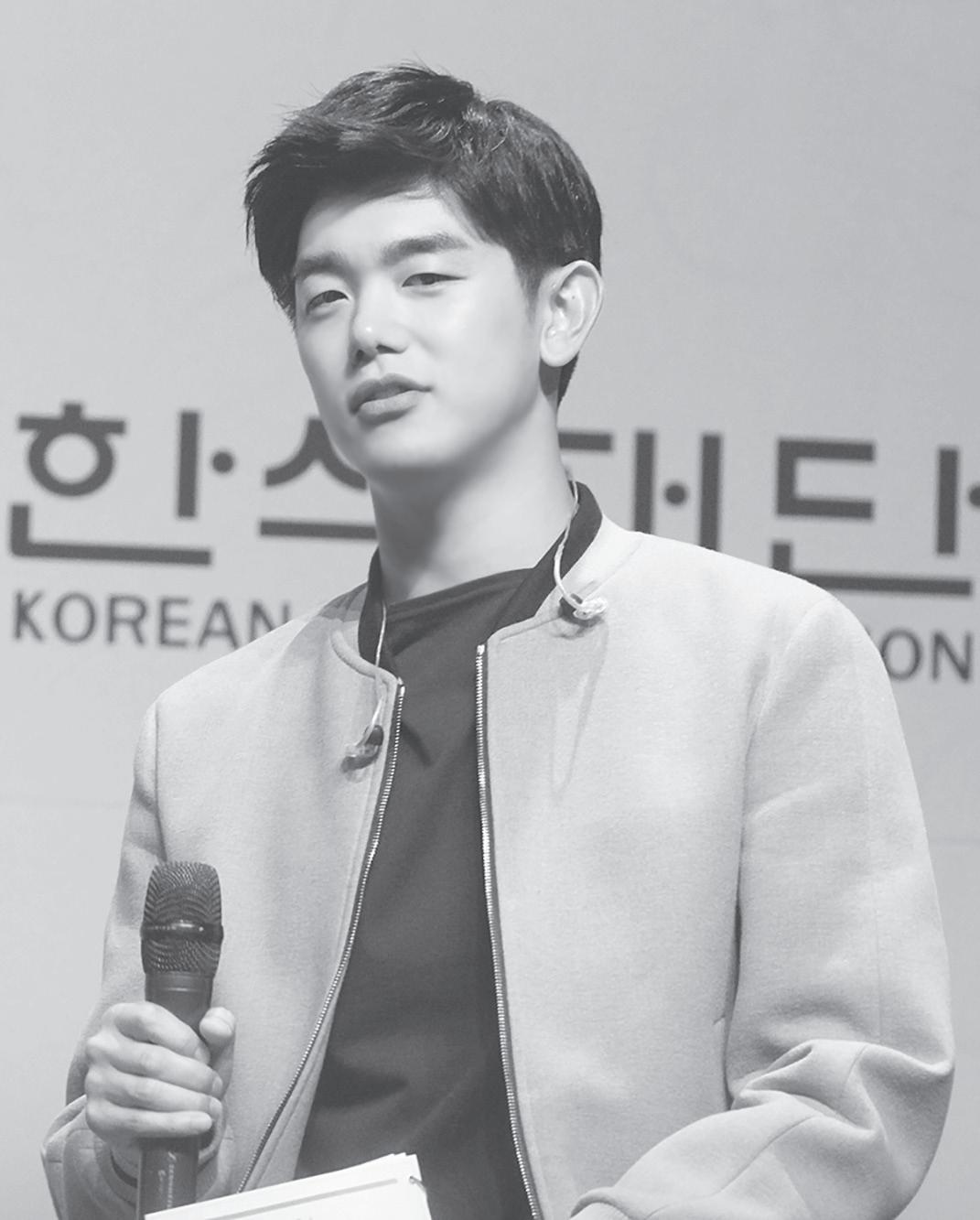
Nam, the concert’s headliner, is a Korean-American singer, songwriter, podcast host and entrepreneur. His latest single, “I Don't Know You Anymore," garnered over one million views on Youtube. He has also been named GQ Korea’s 2016 “Man of the Year'' as well as Forbes Korea’s 30 under 30 in 2017.
Nam has since released five albums, 10 singles and 10 collaborations, singing in both Korean and English.
Born and raised in Atlanta, Georgia, Nam kickstarted his entertainment career in 2011, when he was invited to compete in a singing reality show in Seoul, South Korea, after one of his music covers went viral. Officially making his debut in 2013, Nam has since released five albums, 10 singles and 10 collaborations, singing in both Korean and English.
In addition to his music career, Nam is also the host of the popular music podcast, the Deabak Show by Dive Studios, a production company he co-founded with his brother, Brian Nam. His show has invited some of the biggest names in k-pop music, including artists like Jessi, Tomorrow x Together and ASTRO.
Nam virtually participated in a facilitated Q&A for the Cornell community earlier this year, hosted by the Asian and Asian American Center as part of their InspirAsian Speaker Series. He also gave a virtual performance and Q&A to Cornell students in April, hosted by CAPSU.
Ruby Ibarra, the show’s opening act, is a Filipino American rapper, music producer and spoken-word artist from California. She cites her musical influences as hip-hop artists from the 90s, including Tupac, Eminem and Wu Tang Clan. Ibarra raps in English, Tagalog and Waray.
Tickets went on sale Saturday Nov. 7 to the Cornell community and were sold-out in less than 24 hours. Soon after, posts surfaced online with pleas for extra tickets. The concert will be held in Statler Auditorium at 7 p.m., with doors opening at 6 p.m.
Bolleddula can be reached at jbolleddula@cornellsun.com.
S.A. Creates New Ofce of Ethics, Debates Public Safety
CUPD Advisory Committee calls for support in transition away from police-heavy crisis responses
STUDENT ASSEMBLY
Continued from page 1
Hodges noted that, while the recently created community response teams are a step in the right direction, more work is needed to remove CUPD from duties like handling lost property, suspicious persons and welfare checks.
“The solution as PSAC recommends it, and as University administrators and the president have agreed, is to build, staff and fund an alternative quick response system that will respond to the majority of calls for services in lieu of CUPD,” Hodges said.
The assembly also heard from representatives Duncan Cady ’23 and Lucas Smith ’22, who introduced the first nominee to the forthcoming Office of Ethics, Naveen Sharma ’24.
After dissolving the research and accountability committee — an S.A. committee tasked with researching resolutions for representatives and dealing with member and committee conduct issues — in September, the S.A. passed a resolution creating the Office of Ethics: an independent, external body whose members are appointed by the assembly, that would fulfill the investigative and disciplinary functions of
The nomination of Sharma to an Office of Ethics role represents the first step towards officially establishing the Office of Ethics.
the research and accountability committee.
The nomination of Sharma to an Office of Ethics role represents the first step toward officially establishing the Office of Ethics. If approved at his confirmation vote next Thursday, Sharma would become the first of seven members of the Office.
Sharma told the assembly that he sees the Office of Ethics as potentially less about punishment and more
about education.
“This is still practice, in some sense, for when we go out for real into the outside world. … And with that we need a system that’s more about understanding and learning, rather than direct punishment,” Sharma said.
Lastly, the S.A. debated the role of non-disclosure agreements in the appropriations committee process.
The debate came amid byline funding reports — presentations regarding the S.A. appropriations committee’s decisions on the allocation of funds to clubs that applied for support for the next year — by interim vice president of finance, Valeria Valencia ’23.
“Observing this rule would allow S.A. members to review the complete byline packets for all organizations without restriction,” Smith said. “Since S.A. members have a fiduciary responsibility in a fee setting year it makes sense that all members should be able to review the information provided by organizations if questions arise.”
“We need a system that’s ... about understanding and learning, rather than direct punishment.”
Naveen Sharma ’24
For all organizations reviewed on Thursday, the appropriations committee and the requesting organizations agreed on the amount of funding they should receive, but some members of the general S.A. body felt that discussing the funding these organizations received was hindered by the non-disclosure agreements that appropriations committee members sign. These documents prevent them from disclosing the details of applications ––including what the organization’s funding would be used for –– to the rest of the assembly.
“If we’re dealing with public money that all the students are paying for, why do we even need to sign NDAs? [Why sign NDAs] if we’re responsible for managing everybody else’s money and they want to know where it’s going?” first-year representative Pedro Da Silveira ’25 said.
Smith said that one way to deal with member concerns about being inadequately informed on appropriations committee business might be to enforce a rule that went unenforced this byline cycle and the last: a portion of Appendix A in the S.A. charter which states that members of the S.A. must all sign confidentiality agreements before being seated in a fee-setting year.
According to Smith, nothing would change under these conditions except that S.A. members would know more about the context for appropriations committee recommendations, and simply could not discuss anything marked as confidential in an open meeting.
S.A. president Anuli Ononye ’22 said she’s in favor of keeping NDAs in place because she believes that removing them could mean revealing information about budgets for speakers and performers for Slope Day and Convocation.
“For the most part, the University goes into conversations and has contracts with those speakers. … If we make that information public, we could be threatening Slope Day and Convocation in the future,” Ononye said.
Eli Pallrand can be reached at epellrand@cornellsun.com.
The Corne¬ Daily Sun
Jyothsna
CAPSU concert | The Korean-American singer, songwriter, podcast host and entrepreneur Eric Nam will headline a concert on Nov. 21.
Reach for the Sky Is a Vulnerable Portrait of Self-Acceptance
Life is messy. Everyday we navigate infinite choices: Should I wear this? Should I go to that party? Should I start a conversation with her? But sometimes, in what seems a mundane accumulation, we discover we have been under social pressure in our choices. A crucial aspect of our identity has been left behind. Somehow — reaching outwards and inwards — we must encounter ourselves anew.
This is the lively undercurrent of Reach for the Sky, an immersive theatrical experience with music that I was fortunate to see on Oct. 29 at the Schwartz Center for Performing Arts. The show follows a non-binary protagonist, Sky (Lila Rallatos ’24), as they journey into their own mind and reach a complex acceptance of their gender iden-
tity, the people who shaped them and the mistakes they learn to let go of. In the subterranean Black Box Theater, arrayed with hanging shirts, shot glasses, and portals to the past, there was a sense of suspension in the deep places of someone’s mind.
After a dizzying opening sequence, Sky becomes aware of the audience, upset at the prospect of untangling their own story. They don’t do it alone, however, with the rest of the cast playing Tracy (Sarah Lu MPA ’23), Lucy (Hannah Irvine ’25), Maeve (Fannie Massarsky ’24), Miller (Matthew Saylor ’25) and Jay (Jack McManus ’25). Each character embodies the plurality of Sky — friends, antagonists and strangers alike, corresponding to points of crisis and realization in their life. In turn, they guide, tease, admonish and comfort. They capture a dazzling range of emotion that keeps Sky and the viewers from settling
into a sense of well-ordered concern. They occasionally burst into song, working with a reluctant Sky to understand vignettes of their life that they despise, fear and treasure.
Writer and director Cole Romero ’22 devised this original immersive story out of a desire to create something fresh and relatable, as well as to see whether they could manifest a vision of themself on stage. In an interview, they explained how it made sense that, as a nonbinary creator, their play should be about a nonbinary protagonist. “This isn’t a story that usually is told,” they said, or when it is, it is told in a hasty, performative way. They also spoke about how they went through early drafts of Reach for the Sky with much more spectacle and grandiosity, but with thought and advice, realized that changes were needed. “It could have worked,” Romero said with a smile, “but
it sounded too clean, too commercial. I was like, am I trying to explore something commercial, or am I trying to explore something raw and real?”
This sense of authenticity and vulnerability pervades the story, which sees Sky confront the toxic masculinity they were raised into and their complicated relationships, caught in a desperation for connection with sometimes harmful consequences. It unflinchingly faces up to the fact that figuring out who you are is hard, especially when the world has rigid expectations of people perceived as male.
In an email correspondence, McManus described playing a fragment of Sky named Jay, who exudes masculinity in all its abrasive arrogance. “In reality, after peeling back the layers,” he wrote, “Jay is really an insecure character about how they feel, and is guilty about the memories of Sky that they represent.” Jay’s growing empathy for Sky represents Sky’s gradual liberation from some of that insecurity.
The second song in the show — “What’s Wrong with Being a Man?,” a cheeky take on the tenets of masculinity — Romero described as being deliberately catchy, the handiwork of the music director Luke Ellis ‘24 whose work was critical to the production’s heart. Although Romero asserted that Reach for the Sky was not a musical, at least not in the typical sense, they said that the music brought a different life to the show entirely.
Lu, who played Tracy, one of the ‘first’ figures to arise in Sky’s mind as a kindly intermediary, also agreed. She expressed over email that music elevated the scene in which she also played Star, a role model for Sky when they are figuring out their identity. “I’m a musician myself and I believe music is able to convey things that we cannot express in words,” Lu wrote to The Sun.
As Romero explained, the performing and media arts department is undertaking a shift in the type of shows put on, aiming to increase accessibility to audiences and versatility by showing the work of students with diverse life experiences. Romero hopes that these changes will open doors. “I’m trying to show our department that undergrads are capable of doing very professional work,” they said. “It’s within our limits and within our reach.”
It is that earnestness that made Reach for the Sky enjoyable, in its desire to connect people, and open eyes to a simple fact: humans don’t fit into boxes. It
was impossible to watch the show without being struck by the fact that it speaks to many people’s lived experiences, heightened by the looping arrangement of the seats that allowed us to see other audience member’s faces, and the performance itself — hearing an actor’s voice break in a moment of self-realization, drawn into a tight embrace. Romero expressed deep gratitude both for the audience in being a part of the experience, and for the actors in brilliantly bringing the story to life.
McManus, in what he said was the first full-scale theatrical production he had been a part of, learned a lot about himself as an actor, overcoming nervousness and enjoying how much latitude his self-assured character gave him in his lines. “It was very freeing to be on stage, and step outside myself for a few hours to take on a different life” he remarked.
Lu also conveyed what a pleasure it was to be a part of the show. “My experience in this show really has inspired me to take that leap to continue encouraging others to have similar conversations about other complex topics,” said Lu, “because bringing positive change in the community starts with talking, which then turns to empathy and finally action.”
Gathering up a fractured state of mind and letting go of mistakes in a way that will respect those affected, involves meeting yourself in all your iterations and recognizing the role of many individuals in your journey. The most moving part of the show, for me, was when Sky recognizes and accepts Lucy, whose bold compassion challenges Sky’s unhealthy relationships with women and womanhood, and opens their eyes to possibilities for meaningful growth.
“I’m hoping that the audience can understand that it’s okay to feel like that,” Romero said about the confusion of self-acceptance and healing. “To make sense of it yourself, even within your head and even with your own fellow voices that you know, people like your supports — even that is hard to do sometimes. But simply starting, feeling comfortable enough to open up, you never know where you might go and where you might lead yourself in terms of finding the truth within yourself.”
Charlee Mandy is a junior in the College of Arts and Sciences. She can be reached at cmandy@cornellsun.com.
CHARLEE MANDY SUN STAFF WRITER

Trown Back Into Normalcy, As If Tis Were a Normal Year
Vanessa Olguín Long Story Short
Vanessa Olguín is a senior in the College of Arts and Sciences. She can be reached at volguin@cornellsun.com. Long Story Short runs every other Friday this semester.
Nov. 1. When the day comes around, it’s a futter of emotions — excitement for an upcoming holiday season and the feeling of “What–the–hell! How is it November already?!” Tis year, my emotions are in limbo, trapped between thrill for the fast approaching holiday breaks and the existential dread of a senior whose thesis project should be much farther along than it is right now.
Te beginning of November reminds me that we are in the full colorful throes of fall — and of the academic semester. Tere are no take backs on the classes I am now in. Tey’re ramping up, flled with prelims and essays, due dates and deadlines. It’s the week when we are the furthest away from both our last break and our next break. It’s this week when sometimes we lack time to center our well-being and take care of ourselves.
Tis year seems to feel no diferent than any other academic year we had. Except for the fact that it’s characterized by a very diferent reality from 2019 — a pandemic, a worsening climate crisis and global economic crises. I was swallowed as a sophomore and spit back out as a senior, and I’m still trying to process the past year. I fnd myself a little more emotional than usual — both missing home, friends and family in sunny California. And yet clumsily trying to
absorb as much of the treasured time I have with my friends in an arrangement that seems unlike the ones I will encounter after May.
Yet, trying to bask in this time with friends or even process these emotions is burdensome. Te semester has gone full speed ahead, having seemingly overlooked everything that’s occurred in the past year, everything that is still going on in the world. I am left with no time for my thoughts after a year when time was less of a commodity and I had thoughts to spare — just running in circles around my brain.
Last year, there was just more time. Partly due to an online year but also from another trend — an ethos that ran through courses of greater understanding and compassion in an online covid year. Professors acknowledged the environmental, societal and global forces that physically impacted our lives and mentally jolted our realities. We spoke about Zoom fatigue and being burnt out. Now, it feels like we are walking around as if those global forces are gone. When we know they are not. Te ethos of understanding was shortlived. We are back on campus without the resources,eforts or time to even begin to process all that we lost in the last year.
What does it mean to process this? To process our well-being in a post (but not really post even though we all keep saying it)-pandemic world? In the 2019-2021 Tompkins County Health Improvement Plan, well-being is defned as “a relative and dynamic state where one maximizes [their] physical, mental, and social functioning in the context of supportive environments to live a full, satisfying, and productive life.” Productive. A productive life. Similarly, the World Health Organization in the context of mental health, defnes a state of well-being as one in which “an individual realizes his or her own abilities, can cope with the normal stresses of life, can work productively and is able to make a contribution to his or her community.” And again we see productively.
While I don’t mean to solely fxate on this word in a defnition that otherwise gets at the sense, I do want to question the use of the term “productivity” to describe the state of being well, as opposed to feelings of happiness, fulfllment and comfort. Anyone can be productive after drinking a cup of cofee, fve cups or using any other “study drug” in the plethora of stimulants available. Many of us can be productive of of two hours of sleep for a week straight or no sleep at all. But are we well? Would you call that being
in a state of well-being?
Maybe I’m looking too hard into this. But I can’t say that reading this for my health equity class didn’t intrigue me. Te fact that our local and international institutions’ defnitions of well-being includes the need to produce refects a truth we’ve all bought into— a culture of working and constant productivity. Well-being has been defned in the context of labor in our understandings of health and well-being. And it shouldn’t be.
It seems like more of the nation is coming to terms with this, especially in a post-pandemic lockdown world. Workers are increasingly resigning and quitting in record-breaking numbers. Citing exhaustion, the desire to spend more time with loved ones and the need to prioritize their well-being. It’s a rebuke towards non stop productivity and the 40-hour work week. It’s a recognition of the debilitating efects of the pandemic.
For students, it’s a diferent battle to pack up and leave school. But it is possible for us to pay attention to question our sense of well-being within this institution. Why have we returned to a pre-pandemic reality of school when we’ve seen the capacity for more accommodations and understanding in an online semester? Why weren’t students in quarantine given online accommodations when we’ve had a year of zoom classes? Why don’t we consider including wellness days in addition to our present breaks? Why are we acting like everything’s normal – when our normal has been altered? And if you have a climate change-obsessed friend, you might know that there’s no normal to go back to – our environment will be altered more and more with worsening efects of climate change.
Our movements in life have gone from walking back and forth from our rooms, to traversing across campus for classes, lunch, clubs and work — too busy to think about the global forces around us. My mind is still barely catching up. Tanksgiving break is coming up. And it will feel like pulling my head out of water, giving me barely enough time to look around and quickly gulp a breath down before I’m put back underwater — a current of more work and fnals. Before the pandemic, that may have been the norm — just what everyone went through. But, like thousands of workers around the nation tired from the pandemic-exacerbated cruelty of the past year, we are burnt out and scattered. We’ve been thrown back into normalcy, as if this were a normal year.
Why the Funding of EARS Reveals Deeper Issues About the Student Activities Fee
David Nachman Guest Room
David Nachman is a frst-year in the School of Industrial and Labor Relations. He serves on the Student Assembly’s Appropriations Committee. Comments can be sent to opinion@cornellsun.com. Guest Room runs periodically throughout the semester.
So this is crazy, but apparently the Cornell Student Assembly actually does things. I did not realize the extent of their power on campus, but it exists. You’ll have to excuse my pointedness but if we’re being honest with ourselves, the assembly is mostly an “out of sight, out of mind” idea for many of us undergraduates. — Brenner Beard ’24
Upon reading this excerpt from “All EARS: It’s Time to Pay Attention to the Student Assembly”, a column written in Te Sun last week by Columnist Brenner Beard ’24, I think many members of the
Student Assembly would be quick to dismiss this well-written piece as a misguided perception of a recent event that took place in the S.A. But, I have to agree with Brenner’s point. Much of the S.A.’s workings and deliberations are exactly an “out of sight, out of mind” idea for most students at Cornell. It’s likely that for many students, the extent of their interaction with Cornell’s student government will simply be receiving follow requests from the candidates’ Instagram pages at the beginning of the year.
It’s understandable that many people were upset by the appropriations committee’s decision to decrease funding for Empathy, Assistance and Referral Service by 30 cents. Before EARS peer-counseling was put on pause, it was an extremely helpful service to the Cornell community, and I’m sure that as they transition towards peer mentorship it will be the same.
So, if we all agree that EARS will provide a valuable service to the Cornell community, why did the appropriations committee decide to reduce EARS allocation?
It certainly was not just “thirty cents per student saved.” Even though reducing the Student Activity Fee is an extremely important goal given how many people struggle to pay it.
When I read EARS’ application for funding, I saw serious issues with how they planned to spend their money. Unfortunately, I cannot disclose many details. Tough it is certainly unethical
that organization budgets being funded by student fees are not public. It speaks volumes about the relationship between the S.A. and the student body when the only details that are public are ones that are on the audio recordings for meetings.
Te serious issues discussed during the meeting included massive overspending for non-pertinent materials for counseling, particularly a quote for the cost of T-shirts and hand sanitizer. But, at the end of the day, T-shirts for the staf is at least a justifable expense. Even if the price being spent per each one is not. But, what about a paid retreat that EARS counselors get to take at the end of the year? Is it justifable that their funding, which comes from student-paid tuition, is spent on exclusive retreats and social events for staf? Of course not.
Beard mentioned virtue signaling, and I do agree, there defnitely is virtue signaling when it comes to mental health. But in this case, it was being done by the S.A.
When the Appropriations Committee asked for a revamped budget to supplement the appeal perhaps showing the plan of increased programming, one was not presented to the S.A. In other words, there was no concrete change that we could see that warranted the increase asked for in the appeal.
By giving back the $4,500 requested by EARS in the name of “mental health” the Student Assembly neglected its duty to spend student money responsibly and did it under the guise of spending more
money on the mental health of students. By increasing the funding for EARS beyond our recommendation and reasonable budgeting, all they did was give them more money to overspend on items, and the ability to host exclusive retreats and social events for EARS counselors. How is that serving mental health?
Te ideas upheld by the actions of the S.A. and (I’m sure inadvertently) Beard’s column are deeply upsetting. Te fact that organizations are allowed to irresponsibly spend money paid by student tuition just because they are “mental health” organizations is very troubling.
But, Beard made an extremely valuable point. We must reduce the distance between the S.A. and the students they represent. I think one of the key ways we can hold these organizations and the S.A. accountable, is by making all budgets for student-funded organizations public. It is not fair that students are paying the student activity fee, but are unable to see how their money is being used. And when it is being unethically spent, students need to be able to hold the organizations doing so accountable.
Tis doesn’t make the item less valuable — it gives it history. And you, by reusing it, give it new life.
We should all strive to reuse more: to reduce waste, to save money, to support the community — and to get cool things! Ithaca ofers great opportunities to make reusing a part of our life. It’s up to us to follow through.
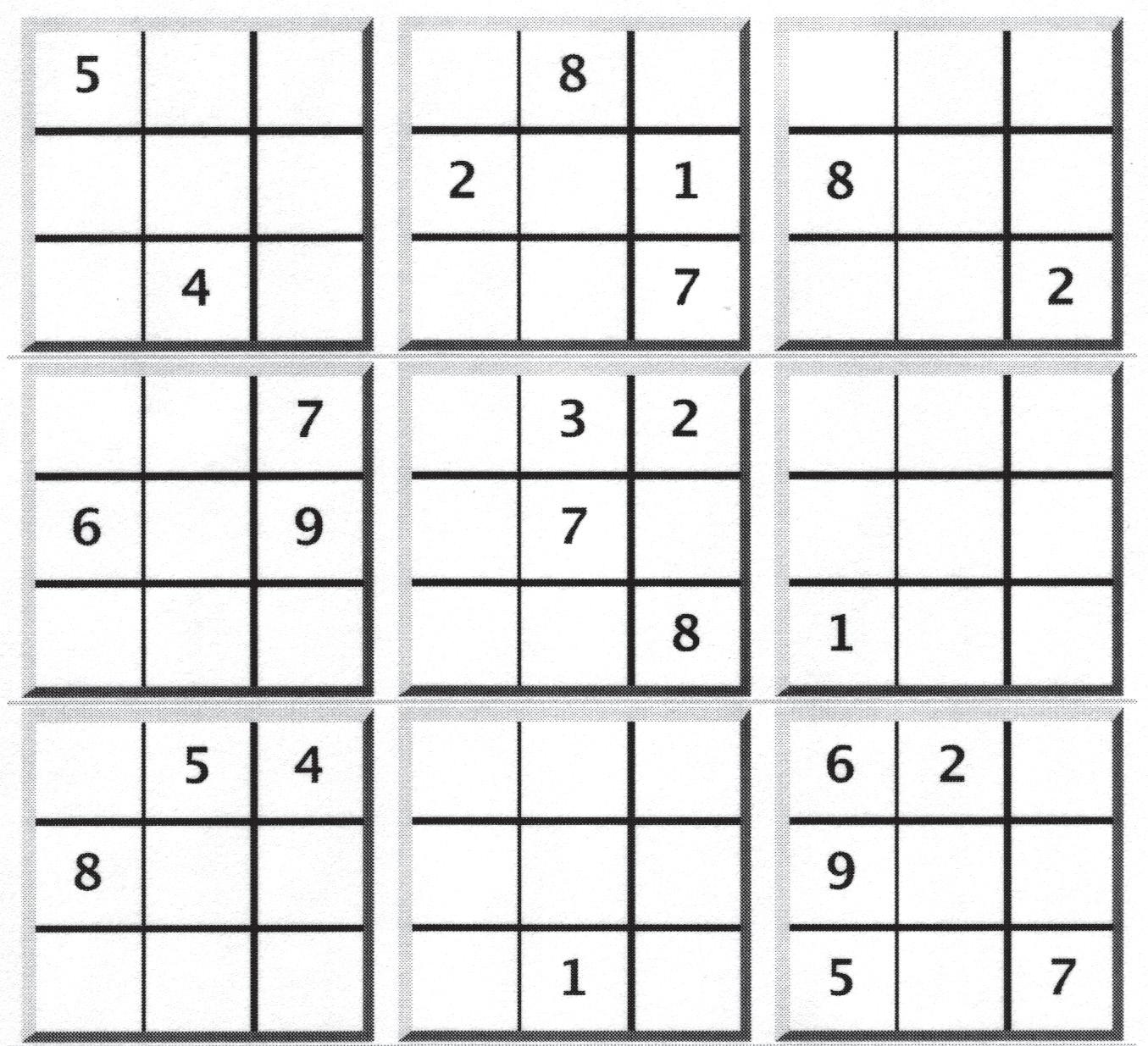
Fill in the empty cells, one number in each, so that each column, row, and region contains the numbers 1-9 exactly once. Each number in the solution therefore occurs only once in each of the three “directions,” hence the “single numbers” implied by the puzzle’s name. (Rules from wikipedia.org/wiki/ Sudoku)
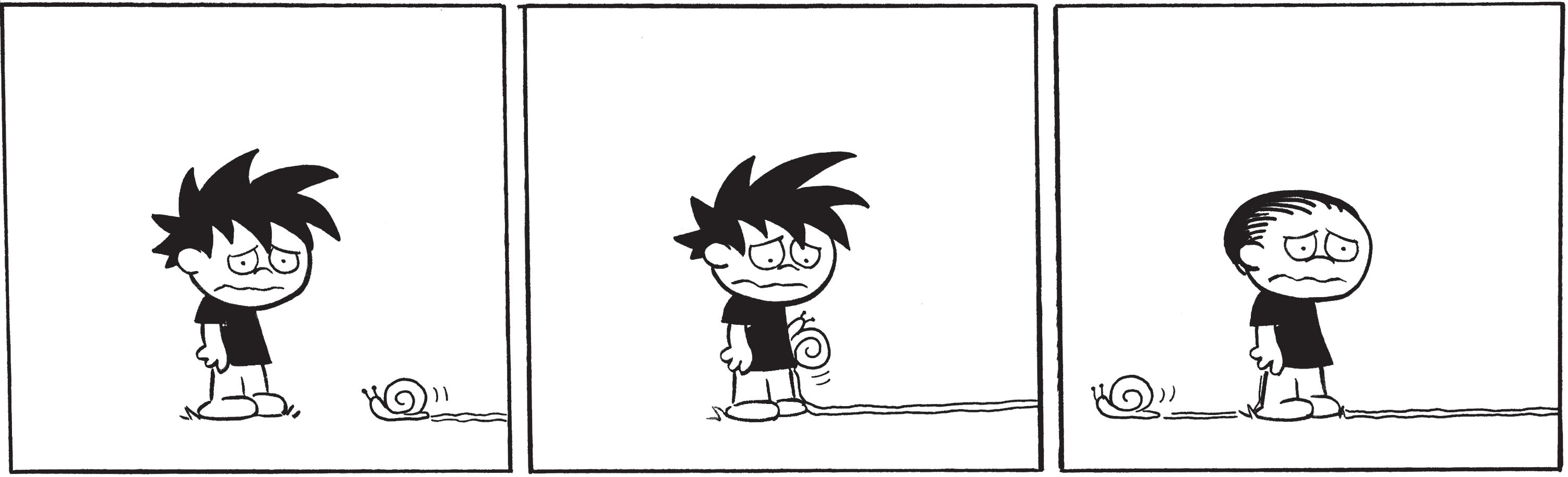
I Am Going To Be Small

Ithacastudentapartments.com
Terrace

Mr. Gnu
Travis Dandro
Mr. Gnu
Travis Dandro
Football Claims First Ivy League Win of Season
By WILLIAM BODENMAN Sun Assistant Sports Editor
After two consecutive home losses to Ivy League opponents, the Red sought to secure its first Ivy League win of the season at the University of Pennsylvania in Philadelphia, Pennsylvania.
The winner of the matchup would lay claim to the prestigious Trustee’s Cup, an award Cornell football has not received since 2013. Coming into the game, Cornell (2-6, 1-4 Ivy League) was prepared for a defensive battle against a stout Penn (3-5, 1-4 Ivy League) defense.
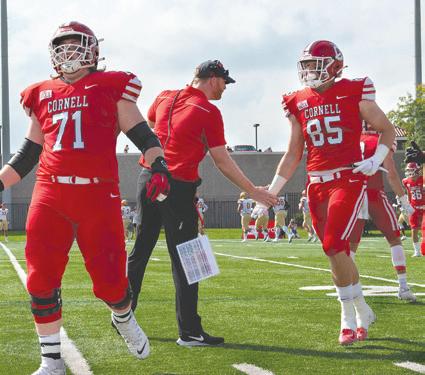
The matchup certainly was a defensive battle, filled with penalties, turnovers and big hits. Although Penn’s defense forced five three-and-outs for the Cornell offense, Cornell’s defense held the Quaker offense to a mere six points and freshman quarterback Jameson Wang added two rushing touchdowns to spur the Red to a 15-12 victory over Penn for its first Ivy League win of the season.
Late into the game, Cornell was able to make some ground on a drive but ultimately turned the ball over. After marching down the field, Wang was picked off by Quaker defensive back Jason Mccleod Jr. deep in Penn territory on a long throw. Down by three, Penn had 6:39 remaining in the game to avoid a loss.
Although the Quakers showed success on the next drive, Flowers was stuffed rushing up the middle on a third-and-two opportunity and Penn elected to punt instead of trying for the fourth-and-one.
The Red was unable to build on its lead, failing to make it into Penn territory. After losing five yards to a penalty and several short runs by Howard, the Red punted it back to Penn. Penn had just 2:39 remaining in the game to respond.
Under pressure, Sayin found Casilli up the middle for a first down gain. On the next set of downs, Sayin was unable to convert a third-and-seven opportunity when he missed his target for an incomplete pass. On the ensuing fourth-and-seven chance, Sayin rushed up the middle, then fumbled the ball and recovered it. The recovery was short of the first-down marker, so Penn turned the ball over on downs with 1:34 remaining in the game.


With fifth-year quarterback Richie Kenney starting the game, the Red got off to a hot start. Kenney immediately found senior wide receiver Thomas Glover for a 10-yard gain. Two consecutive 5-yard rushes for fifth-year running back S.K. Howard again moved the chains for the Red.
On the next play, fifth-year wide receiver Alex Kuzy made a 9-yard catch but had the ball knocked out by Quaker defensive back Logan Nash, which was recovered by defensive back Chris Rankins to secure the turnover.
Coming off of the fumble recovery, the Quakers were unable to muster any momentum. Cornell fifth-year linebacker Lance Blass and senior defensive lineman Jack Muench’s forced quarterback hurries on Penn quarterback Aidan Sayin and a 13-yard run loss by Sayin forced Penn to punt back to the Red.
Although Cornell’s next drive started off with a 34-yard pass from Kenney to senior wide receiver Curtis Raymond III, the Red was unable to score once again. With a rotation of Kenney and freshman quarterback Jameson Wang, the Red continued to move the chains. After Wang converted a third-and-six on a quarterback rush, Kenney hit Raymond for a 37-yard touchdown, but the play was called back due to offensive pass interference on Raymond.
After the penalty, the Red was unable to convert a first-and-25, although Wang connected with Kuzy for an 18-yard gain before Cornell was forced to punt. On the subsequent drive, Penn was unable to light a spark on offense, only moving the chains once on a 15-yard pass from Sayin to wide receiver Owen Goldsberry on third-and-six before punting.
With Cornell’s offense back in control, Kenney and Wang started to push the pace at the helm. After a third-down conversion on a quarterback rush for Wang, Kenney found Raymond for a 14-yard gain and another first down. Now in the second quarter of play, the Red once again had a touchdown called back after a holding call on a 30-yard breakaway score by freshman running back Eddy Tillman.
On the next set of downs, Cornell finally broke the game’s scoreless tie. Facing a fourthand-one, Wang took the snap, escaped the pocket and avoided several tackles en route to a 31-yard touchdown run, giving the Red a 7-0 lead with 13:19 remaining in the first half.
Penn responded by quickly marching down the field and threatening the Red’s lead. Sayin opened the drive with a 19-yard pass to wide receiver Joshua Casilli and Penn continued to move the chains all the way down to the redzone. Seeking to tie the game, Sayin heaved the ball to the left side of the endzone but Cornell senior safety Eric Diggs leaped up in front of the Quaker receiver and snagged an interception right in front of the endzone to hold Cornell’s lead at 7-0.
Cornell’s next drive quickly sputtered and the Red was forced to punt deep in its own territory, giving the ball back to the Quakers at the Cornell 48-yard line. After a 5-yard rush by running back Isaiah Malcome, Sayin completed four consecutive passes to bring Penn another 20 yards forward. Three incomplete passes later, Penn kicker Daniel Karrash successfully booted a 40-yard field goal to cut Cornell’s lead to 7-3 with 3:48 remaining in the half.
Following another short Cornell drive, the Red punted back to the Quakers once again before halftime. With just 2:15 remaining, Sayin drove his team back down to the redzone, connecting with Casilli and tight end Shane Sweitzer for long passing gains. After the Red thwarted a Sayin rush on a third-and-seven try in the redzone, the Quakers attempted another field goal with three seconds remaining in the half.
This time from 20 yards out, Karrash notched his second field goal of the game to cut Cornell’s lead down to 7-6 going into halftime.
Indicative of the tough defensive battle present in this matchup, the third quarter started out slow. Though Sayin faked a pass and ran out of the pocket to convert a third-down, the Penn rushing attack, headlined by Malcome and running back Trey Flowers, was unable to secure another first down and the Quakers elected to punt.
The Red’s responding drive was just as fruitless. After a penalty and several muffed passes, Penn’s defense forced the third three-and-out of the game for the Red.
On the next drive, Cornell’s defense showed stellar play to stop Penn’s offense once again. Although Flowers ran up the middle for a nice 13-yard gain, the Red did not allow Penn to creep very far into Cornell territory. Senior linebacker Christoph Sontich batted down his second pass of the game and fifth-year cornerback Kenan Clarke jumped up to break up a deep pass and force another Penn punt on fourth-down.
After forcing yet another three-and-out for the Red offense, Penn took the lead on the very next play. Cornell senior punter Koby Kiefer’s punt was blocked by the Penn special teams squad. Penn linebacker Mozi Bici for a touchdown. After Sayin’s pass on the two-point conversion attempt was broken up, Penn led 12-7 with 4:21 remaining in the third quarter.
Cornell’s offense finally responded on the next drive. After an 8-yard throw from Kenney to Kuzy to secure a first down, Kenney launched another pass to Glover for a 40-yard gain that flipped the field. With Wang under center, he connected with Kuzy for an 18-yard gain to set up a first-and-goal on the Penn 1-yard line.
Wang kept the ball and dove up the middle for his second rushing touchdown of the game. On the two-point conversion attempt, Wang found Glover and successfully executed the conversion attempt, giving Cornell a 15-12 lead with 1:08 remaining in the third quarter.
Malcome had a 11-yard rushing game to open the next drive, but Penn was unable to muster any more momentum and was forced to punt back to the Red just after the start of the fourth quarter.
Cornell’s next drive was just as poor, as the offense went three-and-out for the fifth time. Penn’s offense was unable to put together much of anything better and was forced to punt after netting only one first down.
Next weekend, the Red faces off against Dartmouth (7-1, 4-1 Ivy League) in Hanover, New Hampshire on Saturday, November 13, at 1:30 p.m..
William Bodenman can be reached at wbodenman@cornellsun.com.
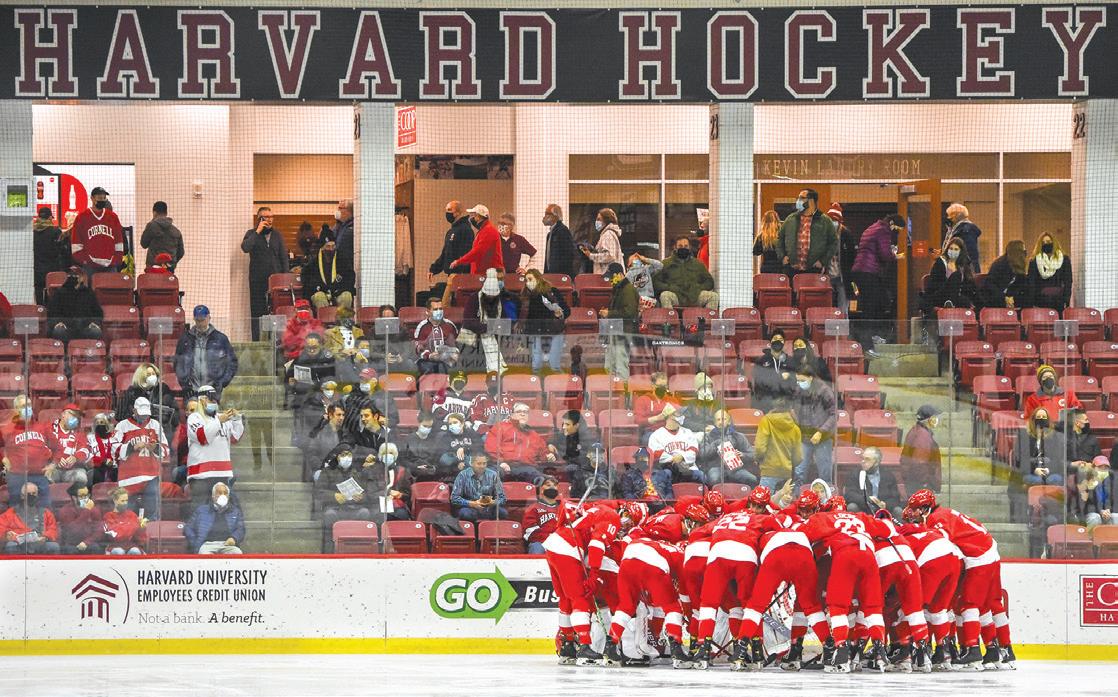
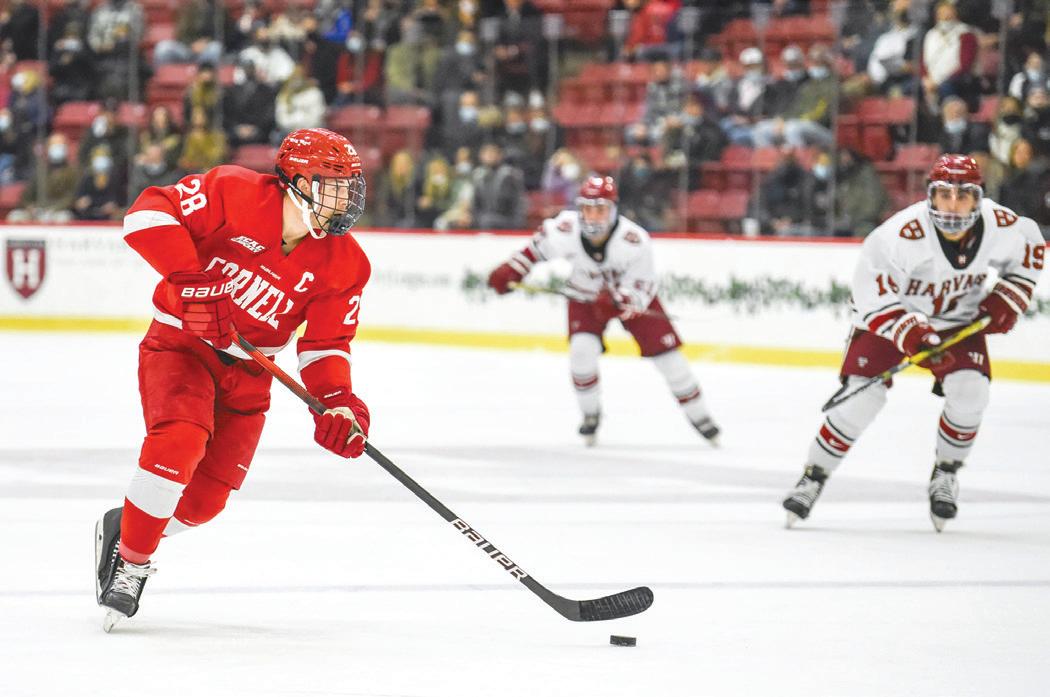
Back on the ice | Taking to the ice for Ivy game against
Harvard, the
failed to hold its early lead and lost 3-2.
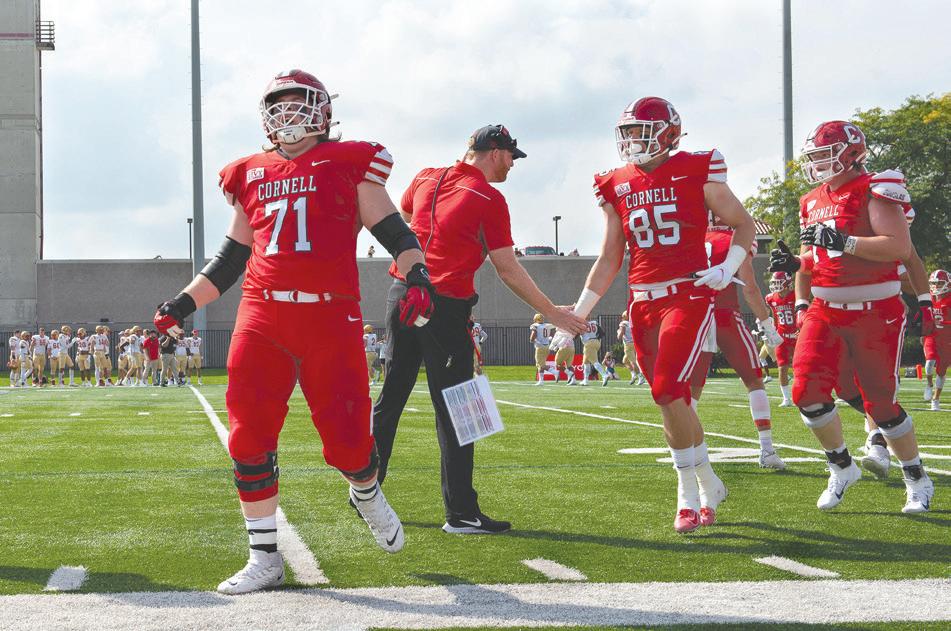
Glorious win | The Red marks its first Ivy League win and only second overall win of the season on Saturday.
LEV KATRECZKO / SUN STAFF PHOTOGRAPHER
rival
Red