The Corne¬ Daily Sun


By MEREDITH LIU AND ANNE SNABLES Sun Assistant News Editors
For four years in a row, Cornell’s undergraduate acceptance rate has sloped downward while the number of applicants annually grows by the thousands.
Most tellingly, in 2012, 16.2 percent of applicants were selected for the Class of 2016. This May, for the Class of 2022, that number was 10.3
percent.
As students scramble for a spot in the Class of 2023, The Sun sat down with two admissions officers in charge of the process — Jason C. Locke, interim vice provost for enrollment, and Pamela Tan ’97, director of admissions of the College of Agriculture and Life Sciences — to delve into how Cornell evaluates and selects its students.
ADMISSIONS page 4

CORNELL ADMISSIONS 2008-2018
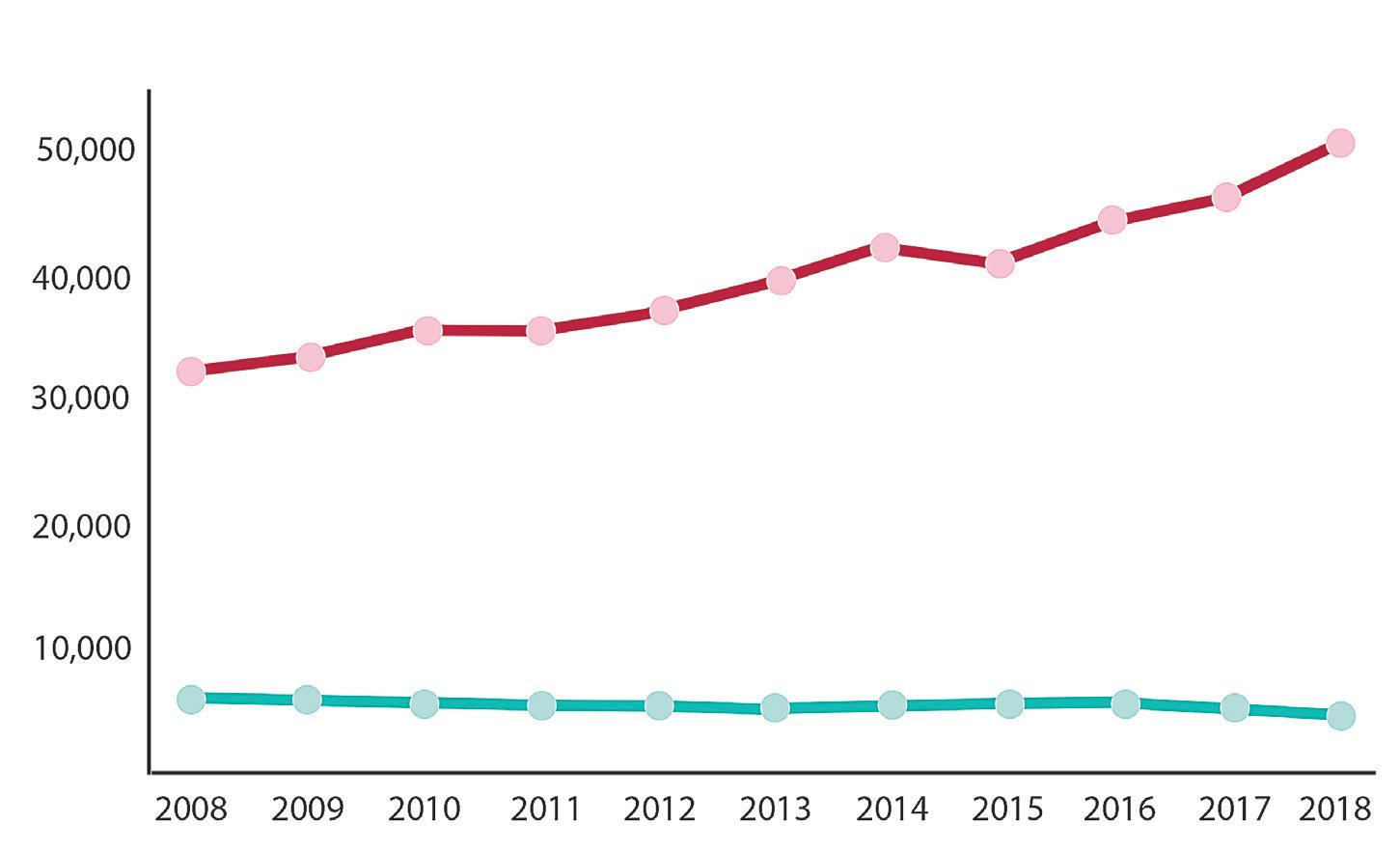
Competitive Cornell | The number of applications to the University, shown in red, has grown in recent years, while the acceptance rate, shown in turquoise, has decreased.
By AMINA KILPATRICK Sun Staff Writer
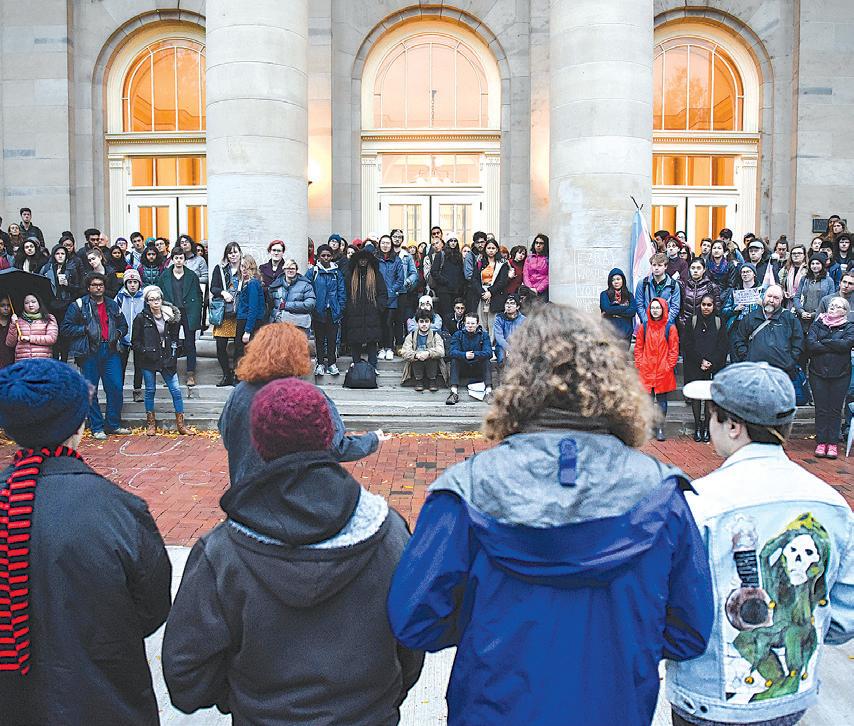
More than 100 Cornell community members united on Monday to hold an impassioned rally where transgender, nonbinary and gender nonconforming people and their allies supported each other as they expressed their fears and hopes about the future of their community.
“I want to take a minute to say that we are loved, that we are supported and that we are not alone.”
Janie Walter ’21
The rally, titled “We Will not be Erased,” was in response to a Trump Administration memo obtained by The New York Times saying that the administration is working to change its definition of gender to being determined “on a biological basis that is clear, grounded in science, objective and administrable.” This would exclude the transgender,
nonbinary and gender nonconforming community. About 1.4 million Americans who do not identify as cisgender would be affected by this, according to The Times.
See RALLY page 11
By ROCHELLE LI Sun Staff Writer
Cornell will continue to protect transgender individuals from discrimination, despite federal changes in the definition of sex proposed by the Trump administration, the University affirmed in a statement published Friday.
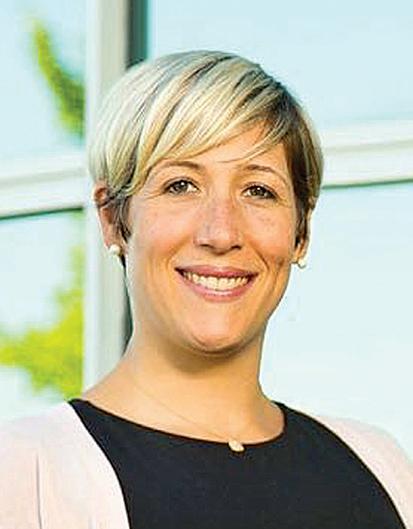
The statement, signed by Ryan Lombardi, vice president for student and campus life and Mary Opperman, chief human
resources officer, came nearly two weeks after The New York Times first reported the Trump administration’s proposal to redefine sex under Title IX as limited to sex assigned at birth.
The proposed redefinition would eliminate federal Title IX protections against discrimination based on gender identity. However, for Cornell students, faculty and staff, New York state law and
See TITLE IX page 3
By MARYAM ZAFAR Sun Staff Writer
Cornell University has followed up its two audits by opening yet another investigation into Brian Wansink, a former Cornell professor and food marketing researcher, Provost Michael Kotlikoff
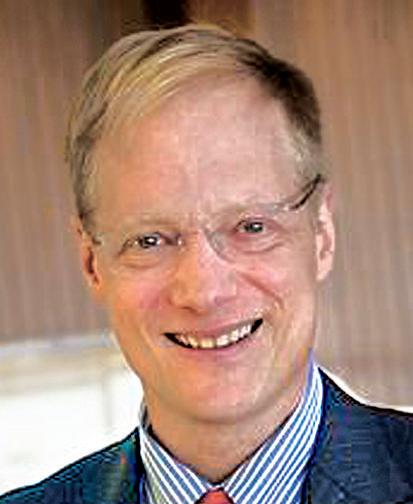
announced in a letter on Monday. This “Phase II” investigation requires Wansink — who resigned in September following the conclusion of an academic misconduct investigation — to submit all past
research data to the University since the start of his tenure in 2005. Kotlikoff wrote in the letter that this inquiry seeks to find whether the research misconducts by the founder of the Cornell Food and Brand Lab affected federally funded research projects. The lab had received funding from the National Institue of Health and the Department of Agriculture.
The provost’s announcement
follows an “open letter” sent to Kotlikoff on Oct. 31 signed by 46 academics worldwide, The Sun previously reported. The letter, co-authored by Nicholas Brown, a researcher at the University of Groningen in the Netherlands, called on the University for transparency after the two Wansink investigations, and implored that Cornell release the full results.
After the announcement
of Wansink’s resignation in September, the disgraced former researcher published a statement saying that the cited mistakes did not change the outcome of his papers, “with only one debatable exception.” It is unclear which paper was the alluded exception.
The signatories, however, accused Wansink of not accepting
4
Tuesday, November 6, 2018
BEDR Workshop: Alison Wood Brooks 11:40 - 1:10 p.m., 141 Sage Hall
Econometrics Workshops: Shu Shen 11:40 a.m. - 1:10 p.m., 498 Uris Hall
LASSP and AEP Seminar - Leslie Greengard 12:20 - 1:45 p.m., 146 Sibley Hall
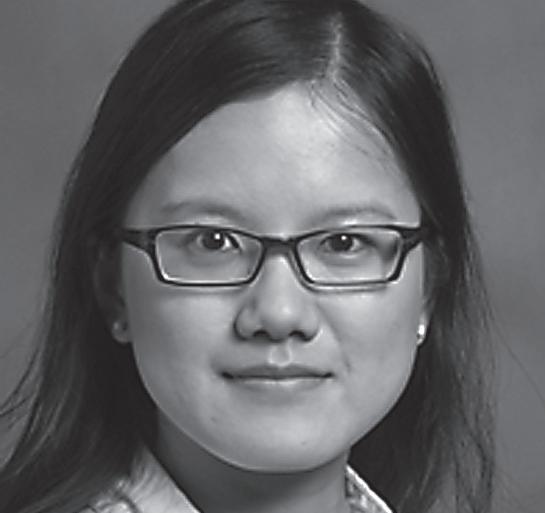
Center for Reproductive Genomics Special SeminarHumphrey Yao Ph.D.
4 - 5 p.m., T1003 College of Veterinary Medicine
Rethinking the Way Cities are Organized 4:30 - 6 p.m., Milstein Hall Auditorium
Visual Culture Colloquium - Kris Paulsen 4:30 p.m., Goldwin Smith Hall, History of Art Gallery
The Criminalization of Women and LGBT People of Color 5 - 6 p.m., G90 Myron Taylor Hall
Bobbito García at Cornell: Rock Rubber 45s Screening 7 - 9:30 p.m., Africana Studies and Research Center
Cornell Tech/Law Colloquium: “Fairness and abstraction in Sociotechnical Systems” 7 p.m., 182 Myron Taylor Hall
Election Day Viewing Party 8 p.m., Kennedy Hall, 300
Finals Prep Workshop! 8 - 9 p.m., William T. Keeton House
Hot Chocolate Study
9 - 10 p.m., William T. Keeton House
Interviewing and Negotiation for Acadmeic Positions Noon - 1:30 p.m., G10 Biotechnology
Food Crop Production by Smallholder Farmers in Southern Africa - Ambayeba Muimba-Kankolongo 12:20 p.m., 135 Emerson Hall

Dreamland, A Lecture by Sam Quinones 4:30 - 6 p.m., G08 Uris Hall
Program House Takover 5 - 7 p.m., Robert Purcell Community Center, 1st Floor
Monarchs and Milkweed: Coevolution, Chemistry and Conversation 4:30 - 6:30 p.m., 258 Goldwin Smith Hall
Momenta Quartet and Cornell Gamelan Ensemble 8 p.m., Barnes Hall Auditorium

By YUICHIRO KAKUTANI Sun News Editor
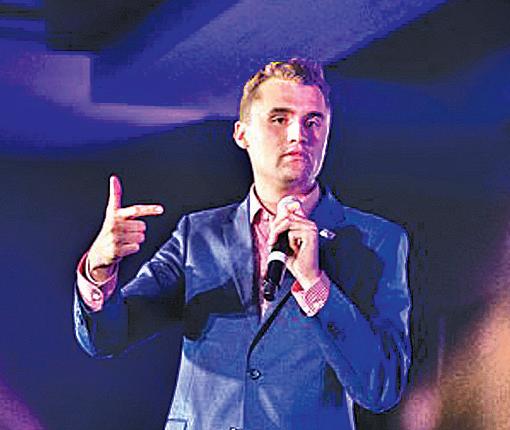
Republican commentators Charlie Kirk and Candace Owen were supposed to bring their trademark fiery conservatism to Cornell’s McGraw Hall on Nov. 13 as the grand finale of their nearly six week tour across college campuses.
The University on Oct. 29 released a statement saying that it is “postponing consideration” of the speaker event planned by Cornell’s chapter of Turning Point U.S.A. — a grass-roots conservative organization headed by Kirk and Owen that primarily works with college students.
“My priority was to get a conservative speaker to campus, not provocateurs,” Marshal Hoffman ’19, TPUSA president, told The Sun in a late afternoon interview on the Willard Straight Hall patio.
But friction between the student organizers and the Cornell bureaucracy seems to have prevented the event from happening on-campus, with both sides blaming the other for the derailing of the event’s planning process.
Despite the setbacks, Hoffman seemed adamant to bring Kirk and Owen to Ithaca if not Cornell when interviewed last Wednesday. The event’s eventbrite webpage — which did not list an event location in mid-October — now lists Hotel Ithaca at 222 South Cayuga Street as the location of the event.
While the University maintained in both public statements and private emails that they were not cancelling the event and invited the student organization to reschedule the event, Hoffman lamented that “postponing” the event is the same as cancelling it — at the time it appeared unlikely that the two speakers would be able to reschedule their visit.
The University pins Cornell’s chapter of TPUSA for the event’s cancelation, blaming it for failing to “take the steps required to complete the event registration process.”
Meanwhile, Hoffman maintained that the fault is on the University for being inflexible during the event planning process, condemning the University for not adequately supporting freedom of speech in a Nov. 1 email to Dean of Students Vijay Pendakur.
“I find it horrifyingly ironic that an event designated to promoting freedom of speech is canceled using the slimmest of evidence possible to cancel it in the first place. It’s pretty upsetting,” Hoffman said in an interview.
The concerned TPUSA president provided The Sun with some of the digital exchanges between him and the University.
TPUSA did not exist as an officially registered Cornell organization until this September, but plans were in motion since early last semester to start a Cornell chapter. According to a social media interaction provided by Hoffman, then national TPUSA organizer — identified as Alana — reached out to him in Feb. 20 asking if he was interested in helping set up a Cornell chapter of the

organization.
Alana could not be reached through email, but there is a LinkedIn account of an Alana Mastrangelo, who identifies herself as Regional Director of TPUSA.
While Hoffman said he started setting up his organization during the spring semester, he did not request to register his organization with the University via OrgSync until Sept. 26. Hoffman said that he did not register his organization until two months ago because TPUSA organizers told him not to and because he needed extra time to recruit e-board members for his fledgling chapter.
Roxanne M. Edsall, campus and community engagement employee, conveyed to Hoffman via email that she approved the organization’s registration that very same day. In the same email, Edsall recognized that the Cornell chapter may bring “high profile speakers” to the University and gave a brief overview of Cornell’s event planning process. She specifically noted that organizations sponsoring any events with more than 49 participants must submit the event registration form at least four weeks in advance. Hoffman said that he submitted the event registration form on Oct. 10 — before the four week deadline. He said he subsequently had the first discussions with members of the Event Management and Planning Team and Cornell Police on Oct. 18 and Oct. 19.
Hoffman said problems then emerged the following week.
Mary Beth Grant, senior associate dean of students, reached out to Hoffman via email on Oct. 22 to set up a meeting for the very next day, Oct. 23. She offered to meet him either before 11:30 a.m. or after 1:30 p.m. to “review all the expectations EMPT provided to you last week.” Hoffman did not respond to the email until 5 p.m. on Oct. 23, at which point he said he hoped to set up a new appointment time at the next EMPT meeting, slated for Oct. 25.
However, that meeting never happened. Hoffman wrote in an email that he could not attend the Oct. 25 meeting on the day of the meeting — a move Grant told Hoffman was a “last minute cancellation.”
Hoffman defended his non-attendance to The Sun, saying that he realized only shortly before the meeting that he had to attend a mandatory class. Email records show an administrator within minutes following up on the email, asking Hoffman if any of the four members of the TPUSA e-board can attend in his stead — Hoffman told The Sun none were available.
Grant replied to Hoffman within the next few hours in two emails where she expressed that she was “very concerned” by the TPUSA president’s non-attendance.
“This event is a very complicated one, Marshall, and it is only 19 days away,” Grant wrote in the first of the two emails. “The EMPT is working to help you, but this event, like other student events, is put on by students, not the EMPT. You and your colleagues must be prepared to put in the effort required to have a top-notch event.”
Then, in the second, follow-up email, Grant demanded that a TPUSA e-board member must meet with her the next day, Oct. 26, offering three different time slots for the meeting. In it, she said that “EMPT will not approve this event” if no one can attend the meeting.
Hoffman replied to Grant early morning on Oct. 26, agreeing to meet with her at one of the time slots Grant offered.
Then, Hoffman failed to attend the meeting at that time slot, sending an email to Grant 50 minutes after the meeting time apologizing for his absence. He told The Sun that he could not attend this meeting because he had to attend a review session for an exam.
In the same email, Hoffman assured Grant that he will meet her at one of the latter time slots she offered. Grant replied in a brief message within minutes: “4:30 is no longer an option.”
Hoffman later wrote to Grant if there was an alternative time that he can meet her. Instead of a response, Hoffman received an email from Pendakur — the dean of students — on Oct. 29, which read:
“Due to the missed EMPT meeting on Thursday, October 25th 2018, and the subsequent missed one-oneone meeting with Mary Beth Grant on Friday, October 26th 2018, we have no choice but to postpone consideration of this event at this time.”
What happened afterwards was a back-and-forth between Hoffman and Pendakur, where the two sides took turns blaming the other side for the event’s cancelation. Hoffman wrote:
“I apologize further, as something may have been lost in communication, but I am unaware of the flexibility you are referencing in regards to the Thursday meeting. I was never given an alternative time for the EMPT meetings, nor told that the time could be changed.”
Then, Pendakur replied: “We have been extremely flexible to date in scheduling planning meetings to avoid conflict with your classes and other academic obligations, offering numerous alternative meeting times and inviting other members of your organization to participate in your stead. We remain committed to doing so.”
Yuichiro Kakutani can be reached at ykakutani@cornellsun.com.
TITLE IX
Continued from page 1
Cornell’s policies protect transgender, gender nonconforming and gender nonbinary people, and these policies will remain even if federal rules change.
“Our support for the rights of students, staff and faculty of all genders, gender identities and gender expressions is unwavering,” the statement said.
Chantelle Cleary, Title IX coordinator, told The Sun that if the federal government sets a “minimum” definition of sex, “we can go beyond that.”
“And in fact our current policies do go beyond what this proposed change suggests and will
continue to go beyond that,” she said.
Cleary was not sure the Cornell administration would release a statement at all, since no official federal changes had been made when she talked with The Sun. Instead, her office started to communicate with students on a oneon-one basis. After hearing concerns from the transgender, gender nonconforming and gender nonbinary community, the University decided a statement was necessary.
“We realized that our individualized approach was not reaching the entire Cornell community,” Cleary said in an email to The Sun on Nov. 5.
The Title IX office and LGBT Resource Center also held a “Trans
& Gender Non-Conforming Support Space” on October 24, where Cleary answered questions from the community about the proposal’s impact on Cornell.
“There’s a lot of fear, a lot of worry, a lot of tension about what this might look like for transgender and gender non-binary students at Cornell,” said Joseph Anderson ’20, president of HAVEN, Cornell’s LGBT student organization. “[The question is], where do we go from here? How do we fight back against this?”
Students participated in a rally to support those affected by the proposal on Monday. Concerned students have also been communicating one on one with the Title
IX office, according to Cleary. The LGBT resource center will offer a support space for transgender and non-binary students regularly starting Nov. 6 from 6:30 to 7:30 p.m., according to Christopher Lujan, director of the resource center.
“As a cisgender man, it is essential that I do not generalize the experiences and emotions of an identity I do not hold …. It appears that students are rightfully angry about this attempt to permanently erase their identity,” Lujan told The Sun in an email.
Even with these initiatives, some members of the community think Cornell could go farther. Anderson believes Cornell should commit more resources to trans-
gender, gender non-binary and intersex inclusion in workforce diversity and student services. He also thinks that the larger campus community needs to understand the oppression these students still face.
“This need to be a wake up call that [says] ‘Look, we’ve disregarded this population for a long period of time, we need to make consistent and intentional inroads with providing necessary resources both financially and emotionally,’” Anderson told The Sun. “It’s a good statement but action is different than statements.”
Rochelle Li can be reached at rli@cornellsun.com.
ADMISSIONS
Continued from page 1
What Cornell Seeks in a Student
Locke admitted during the interview that admissions is a “highly difficult process and very subjective,” acknowledging that it is a multi-step process where multiple individuals evaluate each applicant.
Unlike many other colleges, which review all applications from a central undergraduate admissions office, Cornell has a “somewhat unique system,” according to Locke. Once an application is submitted, it will be given to the one — and only — college or school that the student is applying to, where his or her material will undergo what Locke called a “first review.”
About 80 percent, or over 40,000 of the applicants, will be chosen to proceed to the next step. Only after the applicant has successfully passed the academic review, the admissions staff will consider other components of his or her application — such as recommendation letters and extracurricular activities, Tan said.
In the first review, the admissions staff of each college acts as gatekeepers by looking at the applicants’ academic performances to determine whether the student will do well at Cornell. This assessment relies on all scores and grades submitted by the students, but will place the heaviest weight on their high school records.
Those who make it to the next step are not the ones “that have E’s and F’s on their transcript,” Tan said. “Even if you are an outstanding student who’s a great fit for Cornell and have wonderful extracurricular activities ... there’s not much I can say about you.”
However, grades are not the only thing that the admissions officers value on transcripts. In addition to the level of performance, Locke said Cornell also looks at how demanding those courses are. In colleges like CALS, where students must pick a major or at least specify a general subject in their applications, admission officers will also take into consideration whether the students have taken and performed well in classes relevant to their intended major.
“If you’re applying to biological engineering, then you need to have very robust … coursework in math and science,” Tan said. “Otherwise, you won’t be able to handle the work here.”
When evaluating transcripts, Cornell doesn’t compare students from different schools, as high schools across the country differ in the depth and width of course offerings. The selection criteria is based on whether the applicant is taking “the most challenging courses within their school” and their performance compared to other students from the same school, and not on the number of AP courses they have taken.
Another important and yet often overlooked factor is the college-specific essay, more commonly known as the “why” essay, which is reviewed in both the first and the subsequent steps of admissions. The essay is the opportunity for students to demonstrate both their writing skills and that they have taken the time to research and learn about Cornell — that the individual “really understands what his or her opportunities are here,” according to Tan.
Once a student passes the first review, their material is taken to the next step, in which Cornell’s admissions staff will start looking at whether the student will be a good fit for Cornell and their intended programs — not just whether they are prepared for the rigorous curriculum, but also if they have certain traits and qualities that will allow them to make the most of Cornell.
Five of the seven undergraduate colleges also invite faculty members to be part of the process, who will either work as part of an advisory committee or be the expert voice on evaluating
students’ portfolios, which is required for certain majors and schools. CALS, the College of Engineering and the Charles H. Dyson School of Applied Economics and Management — which is under the SC Johnson College of Business — are the schools that do not involve faculty reviews in their admission processes.
Locke and Tan said they are looking for students who can make the most out of the “any person … any study” environment, who can learn from and collaborate with students from all kinds of backgrounds and majors. Sometimes, this quality — or the “missing piece” in the students’ and parents’ understanding of admissions — even outweighs academic performances in the evaluation process.
“One of the things that drives us crazy is when we hear from students who [have] been admitted to another Ivy say, ‘I just don’t get it, if I’m good enough to go there, why am I not good enough to go to Cornell?” Locke said.
“We have so many students from different majors, coming together in different classes and learning from each other,” Locke continued. “As you sit in classrooms, you are probably getting an education that’s very different [from] a student going to a liberal arts college, because you’re hearing opinions and thinkings of students from architecture, from engineering, from the hotel school. And that really is part of the process — would the student really thrive in a place like Cornell?”
Admission officers also look for other qualities that would contribute to the Cornell community, such as persistence and community ties. While Cornell doesn’t expect “a long list of activities,” admissions staff hope to discover these values from the essay and extracurricular activities.
“It could be ‘you know what, I go to a school where I have to commute by bus or subway for two hours everyday,’ or things like overcoming health issues, different family situation, being in a small community,” Tan said. Regardless of what the students decide to show the admission officers, she said they are always looking for the “shared values” that a student can bring to Cornell.
A passion for contributing to and becoming part of the community is also extremely important, according to Locke.
“Research that’s done nationally shows that students who are engaged outside of the classroom are usually students that are more successful,” he said. “We’ve seen students who think they are just gonna come here and study, and we don’t know if that’s a good thing.”
Beyond the Application: Who You Are Also Matters
Cornell has been working to increase the diversity of each class, Locke and Tan said. In May, Cornell announced that the latest Class of 2022 is the “most diverse … in university history.” Among the 5,288 applicants accepted, 33 percent self-identify as underrepresented minorities; meanwhile, students of color make up 54 percent of the student body.
However, race and gender are not the only identities that hold special value in the admissions process. Some identities, such as being a New York State resident or legacy student, might increase a student’s chance in getting in, while being an international student means the applicant should really think it through before applying for financial aid, as “the offer of admission for international students is directly linked to the ability to meet expenses.”
In the three contract colleges at Cornell — CALS, Human Ecology and the ILR School — which are partially funded by New York State, being an in-state resident can give the applicant an extra edge. Tan said that when the contract colleges look at two applicants who are both “great,” the one from New York “might get another look.”
Tan also said that coming from a farm is “absolutely” an advantage in CALS admissions. She explained that the number of students that admission officers see coming from
Continued from page 1
responsibility for his errors and of characterizing his mistakes as “trivial”.
The letter requested transparency, saying that Wansink’s response was “incompatible” with the University’s investigation’s findings.
“I find it hard to imagine that an Ivy League school would require an endowed-chair professor, whose picture used to be on the front page of the business school’s web site, to resign on that basis,” Brown previously told The Sun.
In response, Kotlikoff said that the policy standards of the inqui-
ry into Wansink’s work “establish confidentiality as a guidepost to ensure protections for complainants, respondents, and witnesses in research misconduct investigations.” According to Kotlikoff, these policy standards would, if fully released, “unfairly” identify individuals who contributed to the investigation.
Kotlikoff also doubled down on the findings of the investigative committee, saying that it discovered “a number of instances of research misconduct that also violated applicable federal regulations.”
“Professor Wansink’s research departed from accepted practices of his research community and that the departure [sic.] resulted
production and agriculture backgrounds is “dwindling,” so they will “take a close look” at those applicants.
For legacy students — who bear a controversial identity in admissions — the admissions process is the same although they are given “some preference … with all other things equal,” Locke said.
Every year, around 2,000 legacy students apply to Cornell, according to Locke. Most of them are rejected, he said, and a large portion of those admitted are selected through Early Decision, which he described as the result of a mutual commitment relationship.
“We can’t take most of [the legacy applicants], so what’s been communicated to the legacy students is that, if you really want us to show some commitment to you as a legacy candidate, we want you to show some commitment to Cornell, which means applying Early Decision,” he said.
The number of applicants to Cornell has increased by 55.2 percent over the past decade while the acceptance rate dropped by half over the same period of time, with the latest acceptance rate closing in on 10 percent.
Even though the acceptance rate has been decreasing annually — with the exception of 2015 — by around one percent for the past 10 years, Cornell has also been expanding its class size through special programs like the First-Year Spring Admissions program. The upcoming North Campus expansion, slated to complete by 2022, will allow the University to take in 900 more freshmen.
About 60 students accepted to the arts and agriculture colleges participate in the First-Year Spring Admissions program each year since the program’s launch in 2015. Students selected for FYSA will start their freshman year in January instead of in August.
If applicants to one of the two participating colleges indicate their interest in being considered for the program, the admission officers will determine whether they are “fit” for mid-year enrollment and whether the curricular design of their intended majors would allow them to begin their study one semester later than most of their peers.
The students admitted for regular fall enrollment, spring admissions or put on the waitlist are “all really in the … same tier,” Tan said.
Locke said he expects to “see more student interest increase in Cornell” in the next five to 10 years but added that there are “a lot of what-if’s” that could reshape the current trend, such as the decreasing number of international students.
Although the top tier universities have not yet seen a significant change in this particular student population, Locke said that the overall number of international students in the United States is dropping and that the University “continues to be concerned” that current U.S. immigration policies can “turn [international] students off” from applying and coming to Cornell.
International students at Cornell hail from 116 countries around the world and make up 10.9 percent of the undergraduate student body as of fall 2018. Their applications are reviewed in the same manner as domestic students, Locke said. However, once international students are considered for admission, they will have a higher chance of receiving acceptance letters if they didn’t apply for financial aid.
“Since the university has a limited financial aid budget, we then must determine who among this admissible group we are able to grant the financial aid,” Locke wrote in a response to The Sun prior to the interview.
Meredith Liu and Anne Snabes can be reached at meredithliu@cornellsun.com and asnabes@cornellsun.com.
from reckless conduct of research,” Kotlikoff wrote.
“The practices identified included data falsification, a failure to assure data accuracy and integrity, inappropriate attribution of authorship of research publications, inappropriate research methods, failure to obtain necessary research approvals, and dual publication or submission of research findings,” he continued.
The provost did not provide a definite timeline of the investigation, but said that a summary would be published at its conclusion.
Maryam Zafar can be reached at mzafar@cornellsun.com.
136th Editorial Board
JACOB S. KARASIK RUBASHKIN ’19 Editor in Chief
JOHN McKIM MILLER ’20
Business Manager
KATIE SIMS ’20
Associate Editor
VARUN IYENGAR ’21
Web Editor
Letter to the Editor
To the Editor:
GIRISHA ARORA ’20 Managing Editor
HEIDI MYUNG ’19
Advertising Manager
ALISHA GUPTA ’20 Assistant Managing Editor
Ad Layout Karen Jiang ’21
Design Deskers Megan Roche ’19
Krystal Yang ‘21
News Deskers Yuichiro Kakutani ’19
Anne Snabes ’19
Night Desker Amina Kilpatrick ’21
Arts Desker Lev Akabas ’19
Production Deskers Krystal Yang ’21 Katie Reis ’20 Working on Today’s Sun
Sports Desker Raphy Gendler ’21
Science Desker Chenab Khakh ’20
Photography Desker Michael Li ’20
October quickly came and went, taking with it the spirit of Halloween and stress-inducing prelims. One prelim after the next, I was constantly sucked into a whirlpool of tasks and deadlines. During this very busy time of the year, a holiday came and went, and reflecting on the past couple of weeks of the speedy month, I realized another event had slipped my mind.
As I was leaving Mann Library one morning, I noticed a giant tri-fold wall in the corner near the entrance, dotted with small, hand-written notes promoting strength and speaking up. In big letters at the top, the board presented “National Domestic Violence Month” to its passing audience. We see these exhibitions, but our eyes are shrouded by events in our lives that directly affect us in the present and near future moments.
October also represents National Breast Cancer Awareness Month, as well as Mental Health Awareness Week. These tremendous global issues fight against stigma and strive to educate and inspire the nation every October of every year. However, awareness of these events on campus this past month hasn’t been particularly prevalent in the first place nor emphasized.
This month of awareness has personal meaning to such an unbelievably large amount of individuals in the global population. On average, nearly 20 people in the United States experience domestic violence by an intimate partner per minute, according to the National Coalition Against Domestic Violence. In the United States, every year “more than 240,000 women get breast cancer and more than 40,000 women die from the disease,” according to Centers for Disease Control and Prevention. And as reported by the National Alliance of Mental Illness, “one in four young adults between the ages 18 and 24 have a diagnosable mental illness.” These statistics are truly horrific and monstrous, really blending in with the Halloween spirit. But on a more serious note, each one of these numbers represents a life just like our own, and they very much reflect the naked truth of the horrid reality we live in.
Spreading awareness has a real impact. According to a blog post on the Break the Cycle website, the overall rate of domestic violence dropped nearly two-thirds as voices were being heard and state laws were being put into place. Action starts with awareness. If we’re aware of the symptoms and warnings, then we can look after ourselves and for one another. While raising awareness may start with strands of colorful ribbons and safety pins, a positive outcome
makes every inch of ribbon that much more worth it.
At Cornell, we have access to resources that allow us to be flexible in our efforts to get involved with our own community. However, we aren’t sufficiently using these resources to effectively convey and project such immensely relevant topics. I appreciate the tabling events and giant poster boards trying to get the message across, attracting hungry students with colorful cupcakes, but if we had utilized our online media platform like the way famous Denice Cassaro informs the entire Cornell population about upcoming events, then maybe more students could have known a little more about domestic violence, breast cancer and mental health than they did before.
The month of October has been a hectic month for many, so understandably, it’s been a rough period of time of constant hustle and bustle and academic rigor. However, it takes only a very small amount of time to learn about a relevant and pressing real-world issue. Through on-campus events or utilizing the mass database of the Internet, it’s easier than ever to facilitate a stronger connection with the larger world that engulfs the tiny bubbles we tend to linger in.
The choices we make will be reflected in the fate of our fundamental society, whether it be through politics, the environment, or social and health detriments. We have the golden opportunity to change the future by changing its dark path right now in the present with our own voices and efforts.
October may have passed and the walking bananas are gone, but that doesn’t mean everything just ends right there. Domestic violence is still a major issue affecting millions all around us, the prevalence of breast cancer is still 200,000 too high, and mental health is becoming a startlingly growing concern, especially on college campuses. These issues are still going to be issues unless we do something.
Spreading information is easier now than ever with social media and smartphones. Social media is now a more than integral part of our daily lives; we look at our smartphones every day and rely on it to supply us with humorous, social, political and educational information. We have the perfect awareness-spreading vector right in the palms of our hands, or rather the pockets of our jackets. One simple post with one simple caption is all it takes. The fate of the world is literally in our hands.
Alexia Kim is a sophomore in the College of Human Ecology. Who, What, Where, Why? runs every other Friday this semester. She can be reached at alexiakim@cornellsun.com.
The Cornell Coalition for Inclusive Democracy condemns in the strongest terms the leaked Department of Health and Human Services memo that seeks to redefine sex in federal law as “a person’s status as male or female based on immutable biological traits identifiable by or before birth.” This definition would deny transgender people protection under federal civil rights law that prohibits discrimination on the basis of sex. The proposal would limit equal access to healthcare, housing, education and fair treatment under the law. It would functionally deny many trans people documentation of their identity, citizenship and immigration status, and the ability to travel freely. For others, it would force them to choose between the life-threatening dangers of the closet and living in a state of constant exposure and vulnerability. The proposal sends a chilling message that the government refuses to recognize the existence and identity of transgender people. It also deepens ongoing attacks on the civil rights of all citizens, legal immigrants and undocumented people.
As our group came together initially in support of undocumented students on campus and their families, we again call for national resistance to violent and bigoted efforts by the Trump administration to discriminate and further marginalize our students, faculty and staff of diverse gender identities. The Department of Health and Human Services proposal represents a challenge to the central principle of the university, as a place that respects the dignity, rights and equality for all faculty, students, and staff, and the communities where we live and work. It is a threat to our principles as a center of research, education and training, that is open to individuals of all genders, ethnicities, races and abilities.
We oppose the DHHS memo on the grounds that it promotes a broader context of transphobia and a climate of fear. As university staff and faculty, and as individuals who stand in solidarity with our community members of diverse genders, we oppose the threats expressed in the leaked memo.
It is the university’s responsibility to exert whatever political pressure it can to oppose these assaults.
We stand in solidarity with all LGBTQ people, and especially transgender and gender non- conforming individuals who may be experiencing harassment, discrimination and other forms of stress at this time.
Prof. Shannon Gleeson, ILR
Prof. Joseph Margulies, government
Prof. Russell Rickford, history
Prof. Ernesto Quiñonez, English
Prof. Beth Lyon, law
Prof. TJ Hinrichs, history
Prof. María Cristina García, history and Latino studies
Eric Cheyfitz, Ernest I. White Professor of American Studies and Humane Letters
Prof. Cathy Caruth, comparative literature
Prof. Ella Diaz, English and Latina/o studies
Prof. Tracy McNulty, French and comparative literature
Prof. Richard F. Bensel , government
Prof. Robert C. Hockett, law
Helena María Viramontes, Goldwin
Smith Professor of English
Prof. Richard William, philosophy
Prof. Miller Neil Saccamano, English
Prof. Sandra Babcock, law
Prof. John Weiss, history
Matthew Evangelista, President White
Professor of History and Political Science, Prof. Simone Pinet, Spanish and medieval studies
Prof. D. Alexander Bateman, government
Prof. Jamila Michener, government
Prof. Rachel Weil, history
Prof. Noliwe M. Rooks, Africana studies
Kenneth M. Roberts, Richard J. Schwartz Professor of Government
Prof. Raymond B. Craib, history
Prof. Neema Kudva, city and regional planning
Ross Brann, Milton R. Konvitz
Professor of Judeo-Islamic Studies
Prof. Mary Pat P. Brady, Latino/a studies
Prof. Wendy W. Wolford, development sociology
Prof. Joanie Mackowski, English and Creative Writing
Prof. Sabrina M Karim, government
Prof. Jonathan Kirshner, government
Prof. Risa L. Lieberwitz, ILR
Prof. Michael Ashkin, art
Prof. Angela B. Cornell, law
Prof. Elizabeth Brundige, law
Prof. Edward Eugene Baptist, history
Prof. Vilma Santiago-Irizarry, anthropology and Latino/a studies
Lara Skinner, Ph.D, Executive Director, ILR Worker Institute
Dania Rajendra, ILR Worker Institute
Sally M. Alvarez, ILR Worker Institute
Maria C. Figueroa, ILR Worker Institute
Jeffrey M. Grabelsky, ILR Worker
Institute
Prof. Anna Haskins, sociology
Prof. Oneka LaBennett, Africana studies
Prof. Shawn McDaniel, Romance studies
Prof. Rachel Bezner Kerr, development sociology
Prof. Aziz Rana, law
Prof. Rebecca Slayton, science and technology studies
Prof. Julia Cang, Romance studies and feminist, gender and sexuality studies
Prof. Barry Maxwell, comparative literature, retired
Prof. Sabine Haenni, performing and media arts
Prof. Sheri Lynn Johnson, law
Prof. Verónica Martínez-Matsuda, ILR
Durba Ghosh, director of feminist, gender and sexuality Studies
Prof. Scott J Peters, development sociology, Kathleen A Bergin, IRB Committee
Adam T. Smith, Goldwin Smith
Professor of Anthropology
Prof. Derek Chang, history and Asian American studies
Prof. Mostafa Minawi, history
Prof. Jill Frank, government
Prof. Maria Lorena Cook, ILR
Prof. Jennifer Minner, city and regional planning
Prof. Eric Tagliacozzo, history
Prof. Deborah Starr, Near Eastern studies
Prof. Rayna Kalas, English
Prof. Alexander Livingston, government
Prof. Masha Raskolnikov, English and feminist, gender and sexuality studies
Prof. Adrienne Clay, American studies
Joyce Muchan, Assistant Director Public Service Center
Robert Scott, Executive Director, Cornell Prison Education Program
Prof. Paul Nadasdy, anthropology and American Indian and Indigenous Studies
Prof. Marina Welker, anthropology
Mary Newhart, Assistant Director, Center for the Study of Inequality
Briana Beltran, Clinical Teaching Fellow, law
Prof. Estelle McKee, law
Prof. Cynthia G Bowman, law
Carrie Freshour, PhD ’18, development sociology
Prof. Julilly Kohler-Hausmann, history
Prof. Shelley Wong, English
Prof. Jenny C. Mann, English
Brendan O’Brien, Dean of Students Office
Prof. Stacey Langwick, anthropology
Tonight, when election results start rolling in, professional pundits and party power-players will descend upon their studio desks and bleak backrooms to opine on and debate the implications of this election for the one that will take place just under two years from now. Attempts to divine the electorate’s views on President Trump will be especially earnest within the Democratic Party, still recovering from a 2016 election in which Hillary Clinton won the popular vote by nearly three million votes but lost the electoral college by fewer than 80,000 aggregate votes in Michigan, Pennsylvania and Wisconsin.
From the moment polls close, the varying successes and failures of unabashed liberals running in traditionally-red states (such as Beto O’Rourke, Stacey Abrams and Andrew Gillum) and the staying power of their moderate counterparts in increasingly-red states (namely Claire McCaskill (D-Mo.) and Joe Donnelly (D-Ind.)) will be compared and contrasted in an attempt to divine which type of candidate would have the best chance to defeat President Trump.
In the face of these inevitable electability prognostications, though, I want to offer my fellow Democrats my view on what what characteristics the party’s nominee in 2020 should have. In an election in which it feels like the fate of the country, not to mention the fate of the millions whose lives have already been negatively affected by a Trump presidency, the Democratic nominee for president of the United States in 2020 should have the courage to be bold and the willingness to acknowledge nuance.
Bold is a fairly ambiguous adjective. According to dictionary.com, its definition is, “not hesitating or fearful in the face of actual or possible danger or rebuff; courageous and daring.” When I use this to describe a potential nominee though, I specifically mean having the courage to acknowledge not only the systemic inequalities which currently plague society, but the fact that they reveal that the United States has not lived up to the values it purportedly champions. It means connecting the lack of economic mobility, the continued
disadvantages of racial minorities, and the continued inaccessibility of our democracy to the facts that the United States has never had equal economic opportunity in anything more than name, that the effects of the nation’s founding document valuing racial minorities as three-fifths or less of a person did not disappear when we elected our first African-American president, and that the chorus of the masses has always and still does sing with a distinctly upperclass accent.
More than this, it is the recognition that the flaws of the United States are not irredeemable, but that recognizing the nation’s wrongs is not the same thing as righting them. It is a sincere belief that shining a light on injustices only discredits the Union if it is not used as an opportunity to make that union more perfect.
The Democratic nominee for president of the United States in 2020 should have the courage to be bold and the willingness to acknowledge nuance.
Nuance can be a similarly ambiguous noun, defined as, “a subtle difference or distinction in expression, meaning, response, etc.” In this context, I mean the willingness to accept that campaign-trail poetry will, and can, never perfectly translate into governing prose. This means acknowledging that progressive policies and ideas will have drawbacks in their conception, much less their passage and implementation, but that this doesn’t render them obsolete or irrelevant. It means recognizing that single-payer healthcare could lead to higher wait times, and that it will need higher revenue. It means taking into account that paid maternity leave being too generous could actually reinforce sexist traditional family arrangements. It means addressing that while guilt may be a productive emotion that prompts self-introspection, the shame often foisted on those accused of being racist, sexist, homophobic, transphobic or any other -ism or -obia may not be the best way to rid our nation of those views.
Together, boldness and nuance mean acknowledging
Jason Jeong | Jeongism
Ga fact of life that politics has tried to ignore for too long: imperfection. They mean recognizing that both candidates and the country they run to represent have imperfect pasts and imperfect presents, and will certainly have an imperfect future, but that futility only lies in attempts to ignore these truths. They mean stating clearly and plainly that every policy will have winners and losers, and that asking for anything else is simply asking to be misled. They mean accepting that there are few clearcut answers in life, and even fewer in politics, and that this is why we should embrace uncertainty, not run from it. They mean trying to split hairs, seek out differing opinions, and have difficult conversations more often, not less often.
There is no guarantee that a Democrat that runs a bold campaign infused with nuance will beat President Trump in 2020. Then again, as we found out two years ago, there is no such thing as a guaranteed outcome in electoral politics, unless only one person is on the ballot. That’s why, the next time Democratic voters go to the polls for a national election, beginning on Feb. 3, 2020, in Iowa, they should demand a new type of candidate.
Not one who will speak of the future as if it’s detached from the past, but one who realizes that our nation’s past flaws are its current flaws and will be its future flaws if we continue to recognize but not right them. For too long, the United States has run from its past; it’s time that we elected a leader who will finally help us face it.
Giancarlo Valdetaro is a sophomore in the College of Arts and Sciences. Setting the Temperature runs every other Tuesday this semester. He can be reached at gvaldetaro@cornellsun.com
rowing up, my local library in tiny Leonia, N.J. carried this collection of biographies called “Childhood of Famous Americans.” Every weekend, I would go to the library with my mom and brother, and carefully select my famous American of choice, be it Walt Disney or Franklin Roosevelt. As an immigrant kid, reading these books gave me a sense of normalcy — knowing that if I worked hard and was kind, that I, too, could be like JFK or Joe DiMaggio. At the time, I was too young to understand the complications that came with being a minority and blissfully oblivious of the fact that I would turn out to be of underwhelming build and unathletic ability. The only thing of substance that grounded me was this idea that, in America, I would have as fair a shot as any other kid at success.
dice and violence, but it has proven to be indomitable in the face of any challenge, be it the 1980 Canadian hockey team or Ivan Drago in Rocky III.
Similarly, the President is neither the
We have the ability to change the image and the undertones of our culture as a whole.
America is an idea. We are taught that this idea was what won us the Revolutionary War and all the other wars for that matter. To the outside world, we regard American democracy and liberalism as our champion export, far greater in global importance and reach than Tom Cruise movies or McDonalds. This idea shepherded the tired, the poor and the huddled masses to Ellis Island in the 20th century, and this idea somehow persevered through Jim Crow, McCarthyism and Japanese internment. The grand narrative of American hope and the promise of equality is rife with hypocrisy, preju-
ultimate arbitrator of policy nor the final adjudicator of constitutional right and wrong. Above all else, he is a symbol. He is the symbol projected into the domestic and international spotlight of what the country stands for and needs in a specific time. The power of the presidency is not in its ability to move markets or to build nice hotels, but rather the emotional weight it bears in times of good and bad. He is the cheerleader we look to in times of victory and the guidance we seek in times of tragedy. That’s why, despite every moral and political objection I have to his presidency, I will always clap to the video of George W. Bush ripping a fastball over home plate at Yankees Stadium after 9/11.
There is nothing materially or symbolically redeeming about Trump’s presidency and the political environment he has nurtured. After the 2015 shooting at the Emanuel African Methodist Episcopal Church in Charleston, President Obama
addressed church congregants and the nation through song. In that moment, Obama’s “Amazing Grace” temporarily soothed America of the deep-rooted pain of racial divide. After his visit last week to Pittsburgh in the wake of the mass shooting at the Tree of Life Congregation, President Trump chose to address his Twitter constituents by celebrating himself: “The Office of the President was shown great respect on a very sad & solemn day. We were treated so warmly. Small protest was not seen by us, staged far away. The Fake News stories were just the opposite-Disgraceful!” Trump’s infantile, incessant need to focus on himself in response to habitual incidents of anti-Semitism, racism and xenophobia is not only morally repugnant, but it also trickles down to the every fiber of the morally hazy America that he has fostered.
ed with posts reminding friends to vote and canvassing trips to Maine and New Hampshire. Now, when the symbolism of American politics is more fragile than ever before, we have the ability to change the image and the undertones of our culture as a whole.
This resurgence in voting is an act of moral redemption — doing good purely for the sake of doing good.
Tuesday, Nov. 6 is Election Day. Though we’ll find out the specifics in a few hours, early polls show a resurrection in the number of young voters, the majority of whom will vote Democrat down the ballot. Anecdotally, Instagram, Twitter and Facebook feeds have been inundat-
David Foster Wallace famously said that postmodernism is dead and with it, so is irony. We have now entered an age colored by irreverence toward the morals once considered sacred and established. Now that irony and cynicism has been woven into the fabric of pop culture, they are no longer meaningful tools to critique a society that is fundamentally built on cynicism. We see this in shows like Family Guy or Rick and Morty, and in the political sphere in The Colbert Report or Saturday Night Live. Sure, they garner laughs, but they ultimately offer no moral resolution to the global chaos they try to critique. For a generation that entertains ourselves through Tide pods and Mannequin Challenges, this resurgence in voting is an act of moral redemption — doing good purely for the sake of doing good. Voting because we unironically care. And that’s pretty metal.
Jason Jeong is a senior in the College of Arts and Sciences. Jeongism runs every other Tuesday this semester. He can be reached at jjeong@cornellsun.com.
In early September, my friend and I went to Syracuse on a Saturday morning to see the IMAX re-screening of Captain America: The Winter Soldier, a film that both of us love and have seen countless times. As we were walking out of the theater, I turned to her and said, “It’s is not even just a good superhero movie. It’s a good movie.”
My friend nodded and said, “Yeah, I know what you mean.”
Of course I meant it as the highest of compliments — I absolutely adore the film, and it’s what got me truly invested in the whole Marvel Cinematic Universe ordeal in the first place. I said the same thing again recently when the topic came up over text with my mother, who’s always been curious about my obsession with superhero movies and wants to start watching them. Unlike my friend, however, my mom didn’t quite understand what I meant, and responded with a question: “What’s the difference?”
I was thrown off by that. What is the difference? Why is there a difference, anyway?
I didn’t really have an answer until this past weekend in New York City. As I walked through the Theatre District, I realized with a start that I hadn’t seen anything on Broadway for over a year, having been bored and somewhat exasperated by the way Broadway has been saturated with transatlantic imports and movie-turned-musicals. As much as I admired designers, I believed that flashy costumes and expensive special effects do not make good theatre. In fact, I was of the opinion that if a show’s storyline was derived from a popular movie and its delivery reliant on special effects, it should not have been adapted for the stage in the first place. In other words, it’s not “real” theatre.

That’s when it dawned on me why I’d described The Winter Soldier the way I did — it’s because the way I’d been looking at superhero movies as a whole had been misguided. It’s a trap that I didn’t think someone who loves Marvel as much as I do could fall into: I didn’t see superhero movies as “real” movies, the same way I didn’t see Frozen, Mean Girls, Pretty Woman, or Harry Potter and the Cursed Child as
“real” theatre.
Back in August, when the news about the creation of the Best Popular Film category for the Oscars broke, the Internet slammed the Academy for what seemed like a desperate attempt at relevancy. Many also pointed out the bitter irony within the fact that the category comes out just in time for Black Panther to win as a “separate but equal” award. Indeed, by relegating the most commercially successful movies to this category, it delegitimizes them as potential candidates for Best Picture. The Academy is essentially saying that superhero films do not have the prestige to belong in Best Picture, because they’re blockbusters adapted from comic books, because people actually, God forbid, love them.

At the heart of the issue is ultimately the age-old contention of “high versus popular:” the belief that there is something inherently contradictory about serious art being well-received, and that being overwhelmingly loved by the public undermines the prestige, value and meaning of the art itself. Beyond film and theatre, it is also responsible for the rift between literary fiction and genre fiction, and for the difference in status between canonical and contemporary literature. There’s a certain degree of snobbery that comes with it. The implication here is almost insulting — if we like something, it’s more likely to be bad, or at least shallow. And whether I like it or not, such underlying assumption has been etched into my subconscious by my education and everyday life, to the point where I judge pretty much everything I read or see by it.
But how true is it, really? Are superhero movies funda-
mentally a “lesser” genre of film, when some of the recent ones we’ve seen best exemplify what Tom Hiddleston, in his 2012 column in The Guardian defending The Avengers, called “a unique canvas upon which our shared hopes, dreams and apocalyptic nightmares can be projected and played out”? Can movie-turned-musicals and special effects really be inherently inferior to the theatrical form, when they’re actually all about engaging and experimenting with the form itself? Is it really fair that writing about teenagers, romances or the apocalypse automatically strips a novel of its literary merit, especially if we consider the fact there was a time when the whole concept of the novel was scorned upon?
The answer is easily: No, no and no.
That is certainly not to say that what’s hyped-up and loved by the public is necessarily good all the time, but rather that we should be cautious about our assumptions and biases when we evaluate what we see. It’s about time to let go of the notion of “high versus popular,” and start embracing all the shapes and forms that impactful art could take on. Let’s reconcile the high and the popular, because they never should’ve been mutually exclusive in the first place. After all, not all art is good, but good art can come from anywhere.
Andrea Yang is a junior in the College of Arts & Sciences. She can be reached at ayang@cornellsun.com. Five Minutes ‘Til Places runs alternate Mondays this semester.
OLIVIA BONO Sun Staff Writer
At 9a.m. on Halloween, the Twitter account for the hit indie game Undertale posted a mysterious link on Twitter. It led to deltarune.com with no explanation other than some cryptic tweets from the day before.
The website, which has since been changed, provided no further context. “WELCOME,” it read. “PLEASE READ THESE FINAL WARNINGS. THEN, TAKE IT IN YOUR HANDS.” There was also a similar message in Japanese. Then, below all that, in English and Japanese: “YOU ACCEPT EVERYTHING THAT WILL HAPPEN FROM NOW ON.” And finally, the download button.
The file triggered Windows Defender, my computer’s built-in anti-malware system, and I was a little hesitant to give this mysterious website any permissions. Not only that, but the website forbade players from discussing the specifics of the program for 24 hours, so I didn’t even know that the program was a free game that would take me over three hours to complete. However, emboldened by the buzz the mystery had created on Twitter, I
downloaded it. The installer warned again, “YOU ACCEPT EVERYTHING THAT WILL HAPPEN TO YOU.” I was not reassured.
If you’d like to experience Deltarune’s first chapter completely blind, go do so! It’s a good game. If you’re undecided and still need some very small details about its mechanics and theme, read on.
I loved Deltarune. The new characters are up to par with those introduced in the first game, with compelling story arcs, designs and abilities. Deltarune is somewhere between a sequel and a spin-off, with plenty of call-backs to the original. The visuals and soundtrack are still stellar. The game plays to the strengths of Undertale: the battle system isn’t a break from the story, but an extension of it. It still uses a quasi-bullet-hell mechanic and offers the player an option to ACT and SPARE just like the original. However, the player can now defend, give orders and use magic due to a key difference: in this game, you travel and fight in a party (almost) like a traditional Japanese role-playing game (JRPG). (Like with Undertale, the influence of games like Earthbound is apparent.) Sometimes this complicates things in unexpected ways as the game tries to subvert its players’ expectations of what a JRPG and
an Undertale game should be.
For example, the game starts with the same voice that “wrote” the warnings on the website and the earlier tweets. In the creepiest way possible, the game asks you to create a character, picking body parts and answering some odd questions. It claims that it will take all of your honest answers into consideration… Not. The game already has a protagonist. You don’t even get to pick their name.
When the original game came out in 2015, it was already highly anticipated in certain online communities. For one, it was created by Toby Fox, the composer of a large portion of the soundtrack for Homestuck, a massively popular webcomic that ran from 2009 to 2016. Undertale also marketed itself on Steam as a game where nobody has to die — a peaceful RPG where you can spare and befriend your enemies. Once the game came out, its popularity skyrocketed as people discovered that this mechanic went even deeper: every choice matters, even those made during the tutorial of the game. Depending on your playstyle, you might end up with the “Genocide” or “Pacifist” endings. If you end up somewhere in the middle, your ending depends even more on your specific choices both in and out of battle.
Deltarune (an anagram of Undertale) knows that its players have come to expect this type of game by now. It knows that you expect your choices to carry weight, for everything you say and do to trigger a unique event. However, like the character creator psych-out from earlier, the game reminds the player again and again how little agency they have. One character confronts the player in the beginning of the game, saying, “If you haven’t gotten it by now… Your choices don’t matter.” Deltarune will only have one ending.
Toby Fox has confirmed on Twitter that Deltarune is only a demo of a full game. The rest of the chapters will be released all at once as a purchasable game, but he has no release date or other details at the moment. Due to the complexity of the new graphics and battle systems, he plans on hiring a team and spending a long time in development. He also had this to say to fans of the original game: “If you played Undertale, I don’t think I can make anything that makes you feel ‘that way’ again. However, it’s possible I can make something else.”
Olivia Bono is junior in the College of Arts and Sciences. She can be reached at ojb26@ cornell.edu.
By SOPHIE REYNOLDS Sun Staff Writer
While cryogenics is often depicted as a scientifically fictitious, Hollywood creation, Kieran Loehr ’20 and peer researchers in the lab of Prof. Robert Thorne, physics, are collaborating to make biopreservation an easy and affordable process.
According to Loehr, freezing humans to be resuscitated in 100 years is not a foreseeable feat, but improving freezing techniques for commercial use, like sperm and egg cryopreservation and biomaterial storage for research purposes, is the lab’s primary goal.
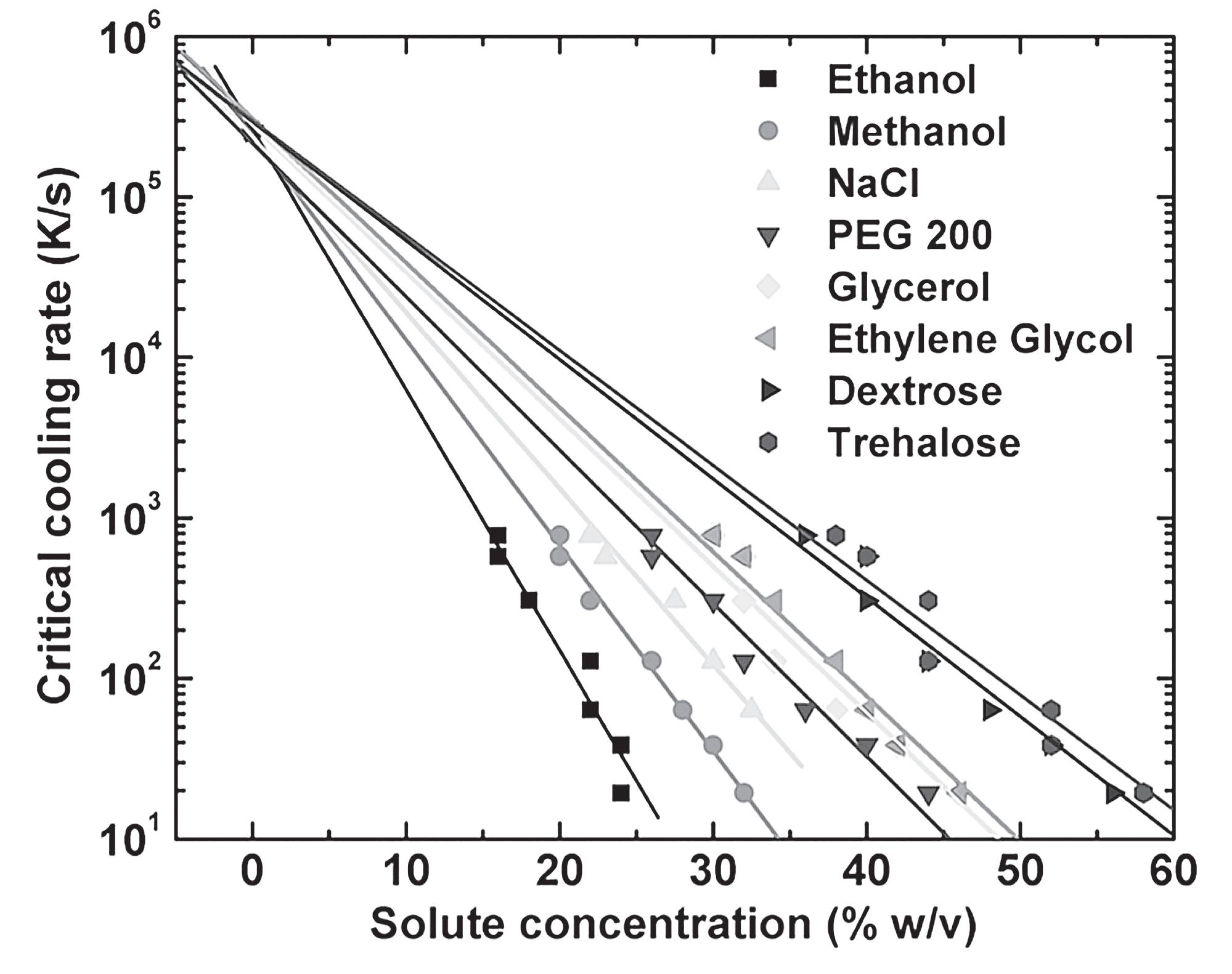
“Tissues, which are composed of membrane bound cells, are particularly delicate and the harsh process of freezing can cause them to rupture and incur damage,” Loehr said. This happens when the molecules of a slowly cooling liquid rearrange into rigid, crystalline structures and disrupt cell membranes. However, according to Loehr, “if the rate at which the freezing process takes place is increased to 600,000 kelvin/ sec, biological damage can be avoided due to glass formation.” Glass is a term used to describe a frozen solid composed of molecules that are arranged as if in liquid state.
Loehr says glass appears completely transparent and can safely preserve biological tissues without causing damage. While the science seems simple, devising a method to freeze something at 600,000 kelvin/ sec, in a normal lab setting, is almost impossible. But thanks to the fundamental laws of physics and chemistry, there are
techniques to solving this dilemma, techniques that Loehr has been dedicating his research efforts to for the past year.
“If you mix in other solutes or chemicals, optimal cooling becomes easier,” he said.
This is because the added solute molecules create interactions with the solvent molecules, preventing them from rearranging into damaging ice crystals.
For example, Loehr said that “adding
methanol to the solution decreases the optimal cooling rate to 100 kelvin/sec a much easier standard to achieve, in a Cornell physics lab, with generic liquid nitrogen.”
Loehr has been looking, specifically, at adding varying protein concentrations to solvents to achieve this same effect.
According to Loehr, a typical set up of experiments consists of creating a solution with varying concentrations of pro-
tein, preparing sample tubes, threading a thermocouple (tiny thermometer) through each tube, plunging the samples into liquid nitrogen, and then qualitatively observing the state of each solid. If the sample looks transparent and homogenous, like a liquid, it has achieved glass state, and if it looks like ice, with visible crystal structures, it failed.
Currently Loehr is working with a protein called lysozyme, a molecule found in egg whites. The lab is also studying the freezing effect of structurally disordered proteins like those found in tardigrades. Tardigrades are microscopic organisms that can be frozen, resuscitated, and according to The Washington Post, survive in very inhospitable conditions including space.
By examining the behavior of tardigrades and experimenting with the specific proteins found within them, Loehr and colleagues hope to perfect bio-freezing techniques to be used commercially.
“My research is an intersection between chemistry, physics, and biology: all topics related to my class work ... I like that my lab work is an application of my education that also provides me general lab techniques and data collecting skills”.
Although his research may not be straight out of a sci-fi movie, Loehr believes that biopreservation is a critical practice that has a large impact in the broader social and scientific community.
Sophie Reynolds can be reached at sreynolds@cornellsun.com
The new Diversity Center of Excellence has goals to increase number of underrepresented minority medical school applications
By ALEX ZARSKA Sun Contributor
Weill Cornell Medicine plans to use $2.7 million in funding to address the shortage of underrepresented minorities in the healthcare professions.
According to the Association of American Medical Colleges, 1,410 African-American men applied to medical schools in 1978. Forty years later, that number has dropped to 1,337.
Earlier this summer, Weill received a grant from the Health Resources and Services Administration in order to establish a Diversity Center of Excellence. The Center of Excellence, will function under the Cornell Center of Health Equity, which is a research initiative that analyzes health disparities and solutions to various stigmatized conditions. The Diversity Center is specifically meant to impact each step in the path to becoming a physician, from underrepresented pre-medical undergraduates to medical students and faculty members in academic medicine.
Mentorship will serve a fundamental role in the Center’s diversity programs. “People’s need for a mentor never goes away. Everyone needs a mentor,” said Dr. Susana Morales, an internist at Weill Cornell Medicine and co-principal investigator of the grant.
Through the new Diversity Center of Excellence, she hopes to establish an interdisciplinary “mentoring cascade” that encompasses underrepresented minorities throughout faculty, residents, and medical students
engaged in mutual learning. Morales is confident that this group mentorship mechanism will provide mentees with valuable information and advice that can be crucial in achieving success within such a demanding career field.
Weill Cornell Medicine will also partner with Cornell, as well as several New York City colleges such as Fordham and Hunter, in order to enhance support and training for minority undergraduates interested in pursuing a career in medicine.
Plans to host a pre-medical conference at the New York City campus that Cornell undergraduates will be invited to are also in the works, Morales said. Additionally, the funding will be used to launch a new health equity minor at Cornell for students interested in analyzing the barriers to health care faced by various racial, ethnic, and socioeconomic groups.
When asked what she hopes will come out of the new Diversity Center of Excellence, Morales presents her vision in terms of two main objectives: increasing the number of underrepresented minority medical school applicants, and improving academic promotions for minority faculty members in academic medicine.
“The ascent up the ladder in terms of academic promotion is slower [for minorities] so there are much fewer women and minorities in the upper levels of academia in leadership positions,” Morales said. As a result, she and the rest of the faculty at Weill are committed to increasing diversity in all areas of the medical track, from undergraduate students to seasoned doctors.
Though programs and initiatives such as the center
of excellence have made significant progress, Morales emphasizes that the long-term goal of the project is to move towards eliminating the social inequities reflected in healthcare. A crucial reason behind Weill being awarded the grant is the project’s focus on increasing “community-based primary care training and cultural competence and health disparities training” in the workplace.
“The ascent up the ladder in terms of academic promotion is slower [for minorities] so there are fewer women and minorities in the upper levels of academia in leadership positions.”
Dr. Susana Morales
However, in order to attack health inequity, we must first undertake progress in our country’s social policies, according to Morales.
“This isn’t something that happens overnight, but it’s our responsibility to think more broadly than just healthcare delivery,” she said. “We must think about social equity and advocating for social change.”
Fill in the empty cells, one number in each, so that each column, row, and region contains the numbers 1-9 exactly once. Each number in the solution therefore occurs only once in each of the three “directions,” hence the “single numbers” implied by the puzzle’s name. (Rules from wikipedia.org/wiki/ Sudoku)
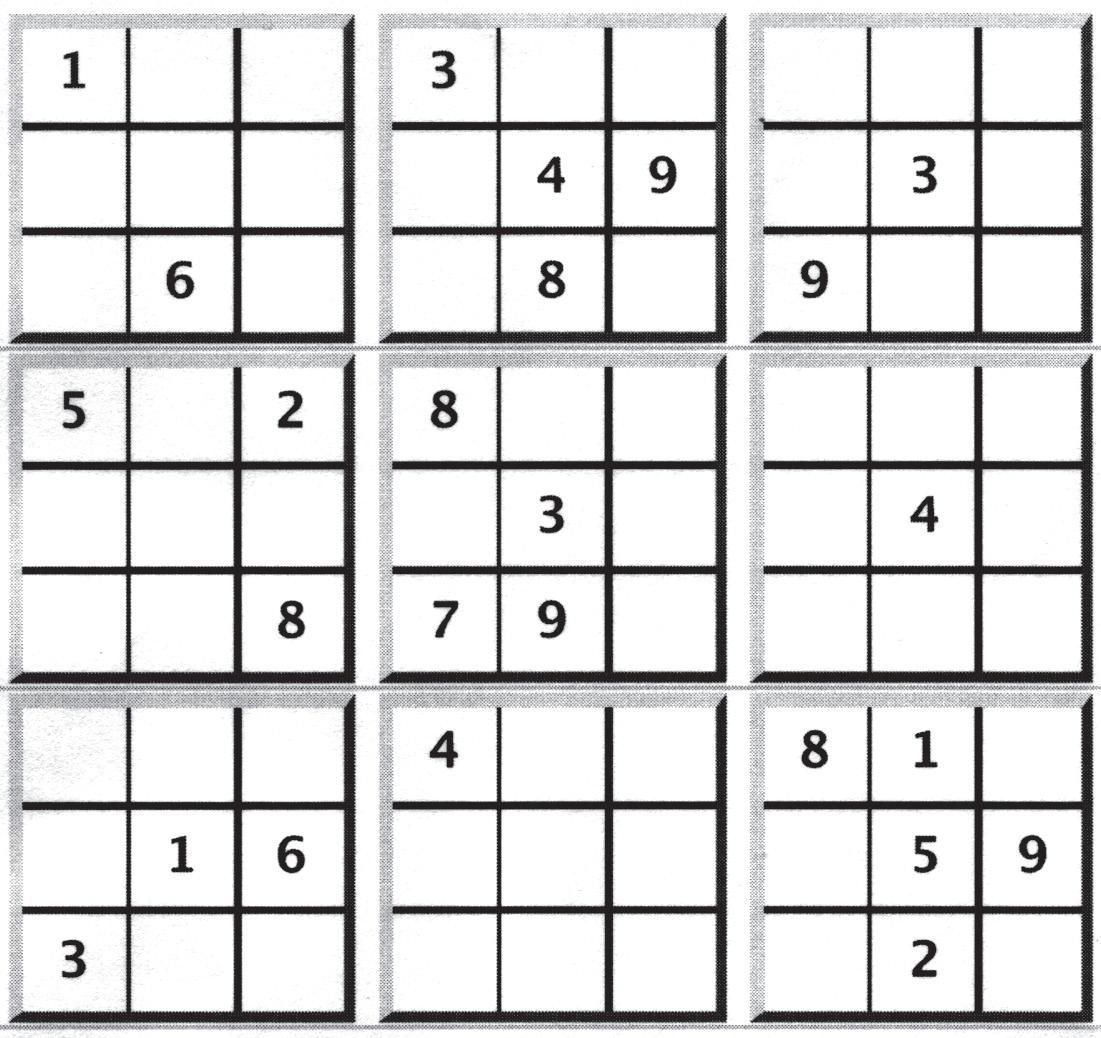
by Jeffrey Sondike



1, 2, 3, 4, 8 BEDROOMS FURNISHED VERY REASONABLY PRICED
607-272-3389 avramisrentals@aol.com
COLLEGE AVE.
1 Bedroom available In a 2 BR apartment For Male, Undergrad student. Available NOW & Spring 2019
4 Bedroom Apartment Available NOW & Spring 2019 Novarr-Mackesey Property Management office@ithacastudentapartments.com 607-277-1234
>>AFFORDABLE, QUALITY LIVING<<
2 & 3 BEDROOMS 109 SAGE PLACE
Available NOW, Spring 2019 & 2019/2020 Shuttle Bus Access to Campus Access to Free Fitness Center Novarr- Mackesey Property Management office@ithacastudentapartments.com
607-277-1234
Special Deals for you! Furnished 1-6 Bedrooms Collegetown Apartments PARKING, LAUNDRY, UTILITIES! (607) 273-7368 www.IthacaApartmentRental.com
RENT NOW, GET THE BEST www.MatoulasHouses.com
Apartments & Houses In Collegetown LINDEN AVE & E. SENECA ST 1 & 3 BEDROOM APARTMENTS ALL FURNISHED EMAIL: MatoulasHouses@Gmail.com
PHONE: (607) 339-9644 FIRST-COME, FIRST-SERVED *****************************
Collegetown Terrace Apartments INSPIRED LIVING TAILORED TO YOUR SUCCESS 24-Hour Fitness Center
Shuttle Bus Service to Campus Study Rooms w/ Expansive Views
Apartments Available NOW, Spring 2019 & 2019/2020 Novarr- Mackesey Property Management collegetownterraceithaca.com office@ithacastudentapartments.com 607-277-1234
NORTH CAMPUS Studio and 3 bedrooms Available 2019/2020 Novarr-Mackesey Property Management office@ithacastudentapartments.com 607-277-1234
RALLY
Continued from page 1
A coalition of trans, nonbinary and gender nonconforming individuals organized the rally. One of the members, Tina Mitchel ’21, opened the event by talking about the lack of response from the Cornell community concerning the proposal.
“We all looked for this rally two weeks ago, looking on Facebook, waiting to hear something and we did not find it,” Mitchel said. “We are here because we are choosing to exist loudly on this campus.”
Leo Almada-Makebish ’22, expressed his initial fear and uncertainty about his future when he first heard the proposal, afraid it might become a reality.
“What will happen to my medical care if gender dysphoria is no longer recognized by my doctor?” Almada-Makebish said. “What will happen to my friends who paid hundreds of dollars for their new documentation? Are people openly allowed to discriminate on us now? What does that mean?”
Almada-Makebish emphasized, however, the importance of escaping misinformation and learning to overcome biases. He talked about his own racist and transphobic opinions he used to hold and how he was able to grow from them.
“People are not born with their full repertoire of empathy and understanding,” Almada-Makebish said. “If one doesn’t make efforts to free themselves from misinformation, they remain vulnerable to the tactical fear and continue to live engulfed in hatred and close mindedness.”
He also spoke about the importance of not being in an “us versus them” mentality and reaching out those who remain misinformed.
“In a country where our president uses the trans and LGBT communities as a scapegoat in fear mongering tactics, we the trans community of Cornell, of the United States and of the World have to continue to hold each other up while being the few that have the courage, power and knowledge to reach out to the other side,” Almada-Makebish said.
Lilah Rosenfield ’20 spoke about the political aspects of transgender rights and those who are not ready to see transgender people gain rights.
“We represent a changing world to those who don’t want to see the world change,” Rosenfield said. “Right now they are afraid that trans people are gaining new rights in a country, in a political system that ultimately is built on patriarchy, on sexism, on homophobia, and is reified by this system.”
A representative from Movimiento Estudiantil Chican @ de Aztlan, an organization that focuses on Latinx and Chicanx culture, spoke about the necessity to center discussion of trans issues around transgender people of color and disabled
transgender people. They asked to go by the name Mar G. ’19, as the person feared retaliation if they were identified. They spoke about how the “largely white-centric LGBT community” lack representation of voices from other perspectives.
“As conversations around the trans community pick up, it’s our duty to bring to the forefront trans people of color as they are disproportionately affected by anti-trans violence,” they said. “Since January 2018, 22 trans people have been victim of homicide, at least 14 were black trans women.”
“Violence against this demographic is nothing new, but trans people of color, especially black trans folk, are consistently written out of the narrative,” they continued.
Another issue Mar G. called out was the “deafening silence” regarding trans issues from communities of color.
“If we are not explicit in verbalizing our support for trans folks and our condensation of all that inhibits them from thriving, we are complicit in the violence against trans people,” they said. “The liberation of black and brown folks cannot be achieved if we are excluding trans folks from discussion of justice.”
Meanwhile, Janie Walter ’21 offered words of support to the transgender, intersex, gender-non conforming and non binary individuals at the rally.
“I want to take a minute to say that we are loved, that we are supported and that we are not alone,” Walter said. “I think it is very easy to feel alone on this campus, especially as a trans person, but there are more of us here than any of us know individually.”
Naiara Bezerra ’21 told The Sun that she believed it was necessary for those who hold “power and privilege” to utilize it.
Alan Polyak ’20 believed the rally was helpful because he previously had not been very aware of the transgender, nonbinary and gender nonconforming community on campus.
“I thought it was important to attend because I identify as nonbinary and genderqueer,” Polyak told The Sun. “I am not very aware of my community on campus because their voices are so suppressed.”
Mitchel closed the rally reminding the queer community that in resources and support are available at Cornell and there is a community of people who also have fun and socialize.
“We exist on this campus and we are doing the most radical thing we could possibly be doing — thriving,” Mitchel said.
Amina Kilpatrick can be reached at akilpatrick@cornellsun.com.
Houses, Apts, Parking 1 to 9 Bedroom
Collegetown - College Ave, Linden Ave, Dryden Rd, Bryant Ave, Cook St. 607-330-2442 info@urbanithaca.com www.urbanithaca.com
We have availability for the 2019-2020 school year beginning June 1st at Hudson heights apartments. The
site. Prices start at $750/month for a 12 month lease. If you have any questions or would like to schedule a tour contact us by phone 607-208-7660 or email: renting@ithacaLS.com
Nicest Apts. in Collegetown Located on Eddy St. 4 Bedrooms Fully furnished. Spacious living areas with large bedrooms & closets. Hardwood flors, spectacular views, eat-in kitchens with additional sun rooms. Laundry & parking. 607-339-1137 bgm900@gmail.com 201 WYCKOFF AVE 6 Bedroom House Novarr-Mackesey Property Management office@ithacastudentapartments.com 607-277-1234 27 H OUSE FOR R ENT
COLLEGETOWN 6 BEDROOMS NEWLY RENOVATED 607-272-3389 avramisrentals@aol.com
By GRACIE TODD Sun Staff Writer
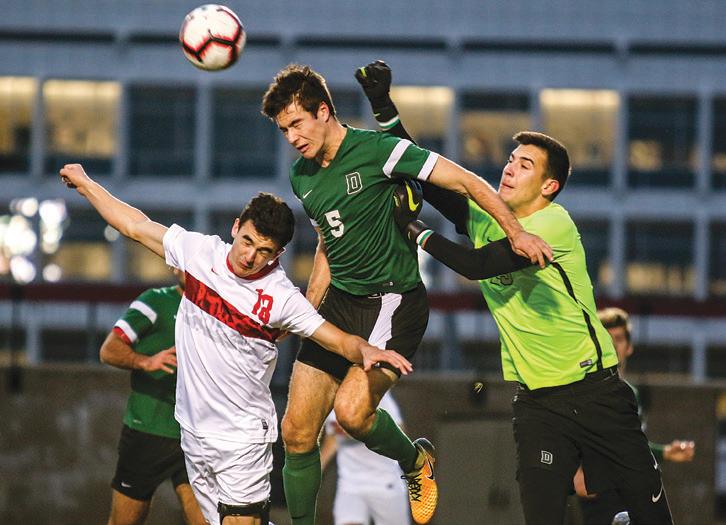
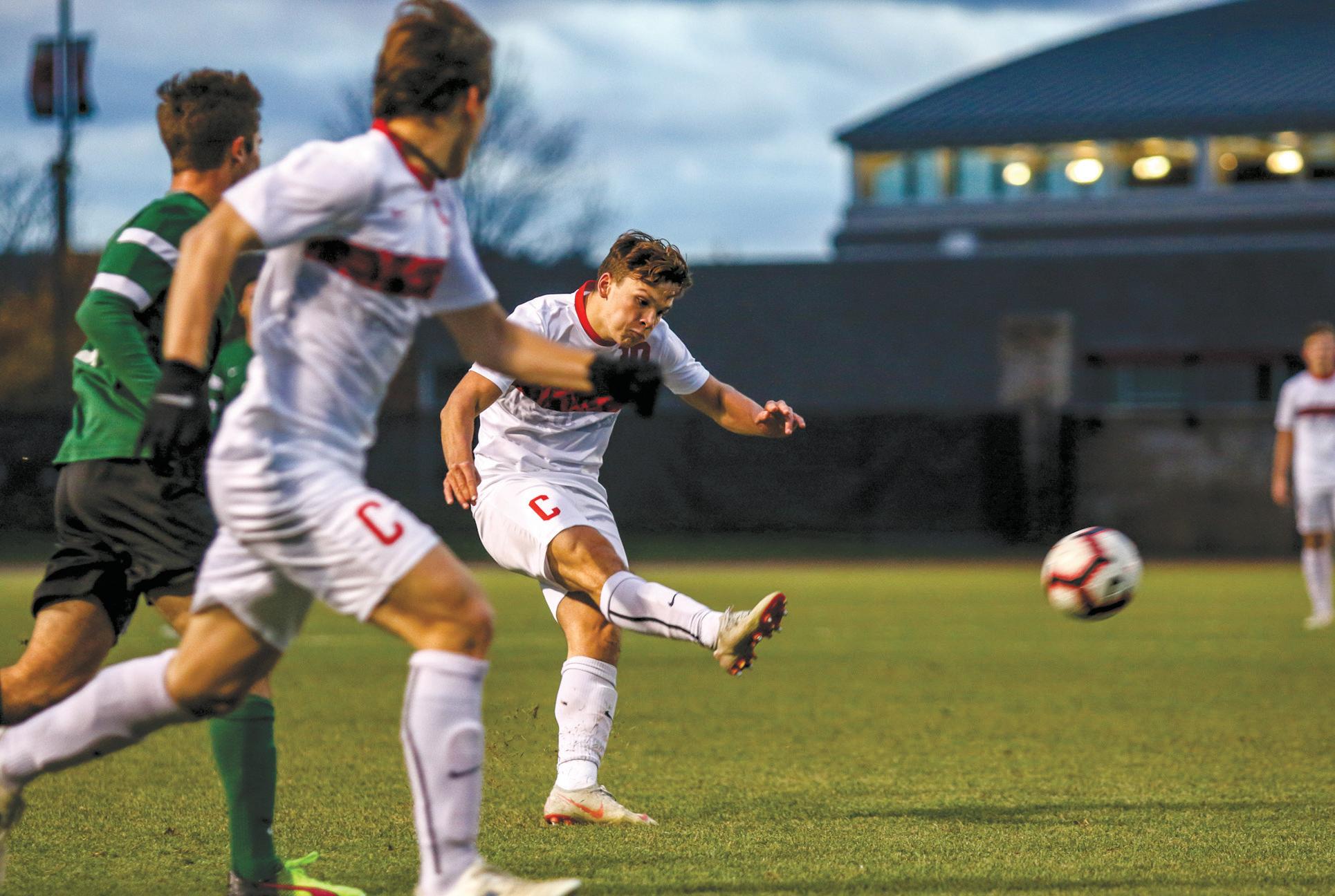
Cornell men’s soccer fought hard to claim victory in its last home game of the year — but failed to break through overtime, falling to Dartmouth in a last-minute 2-1 heartbreaker.
With only one game remaining in the season, the result now brings the Red to 10-6 for the season and 3-3 in conference play — enough for a fourth-place Ivy ranking.
Cornell started off strong, with freshman midfielder Jonah Kagen scoring in the twelfth minute of the first
half — the first goal of his collegiate career. Sophomore midfielder Connor McAuslan earned the assist off of a corner kick.
The Red entered the second half with the lead, but before the second minute of the second half, Dartmouth tied the game up with a rebound goal.
Although both sides of the field saw plenty of action, the remainder of regulation time was nevertheless scoreless, bringing the game to overtime.
“[I was] fully expecting us to continue in the same vein when the whistle went,” said head coach John Smith. “Unfortunately, we had a poor start to the overtime period and we paid the penalty for it.”
By AMAN GUPTA Sun Staff Writer
The Red put on a determined showcase on Senior Day against Dartmouth, but fell short in overtime, 2-1. The loss capped off a season in which Cornell had just one win and went 0-7 in Ivy League play.
Although Cornell scored in the 28th minute and led the game confidently for about 60 minutes, Dartmouth equalized in the dying moments of the second half, forcing the game into overtime.
Ritchie scored her first goal of the sea son, with a clinical finish following a lofted ball from 40 yards out.
“Although we took the lead early on, we weren’t able to compete with the squad depth of Dartmouth and their strong bench helped them secure the victory in overtime,” said head coach Dwight Hornibrook. “The players were exhausted by the end, causing a lapse in concentration that led to the second goal.”
“The players were exhausted by the end, causing a lapse in concentration that led to the second goal.”
Substitute Izzy Glennon, who scored in the second half of overtime, scored the game-winning goal for the Green.
Head Coach Dwight Hornibrook
The final game of the Ivy League conference also marked the final game for three of Cornell’s senior play ers: Kennedy, Ritchie and Carolyn Ruoff.
Dartmouth maintained constant pressure on the Red, with 27 shots in total — 12 on target. This perpetual attacking threat forced senior goalkeeper and captain Meghan Kennedy to make 10 saves. The Red put on a far better attacking performance than usual, racking up four shots during the game.
Senior midfielder and captain Jessica
“All three players had an exceptional season, displaying an impeccable work ethic as well as immense loyalty to the team,” Hornibrook said. “It was fantas tic to see Jessica score in her final game and to watch Carolyn put in a solid per formance, covering the pitch very well.”
Kennedy has been an integral part of the team throughout this otherwise for
A little over five minutes into overtime, Dartmouth put in a header goal off of a corner kick, cinching the win — and depriving Cornell the chance to leave its home turf on a high note.
“We played against a very experienced team today and we were more than worthy opponents,” Smith said. “In the big games, the difference between winning and losing is often very fine, and today’s game was no different.”
Throughout the game, Dartmouth shot 23 times, while Cornell shot only 11 times — but both teams were evenly matched in terms of shots on goal, with six for each squad. And impressively, the Red’s freshman goalkeeper Andrew Hevener made four saves in his
“In the big games, the difference between winning and losing is often very fine, and today’s game was no different.”
Head Coach John Smith
collegiate goalkeeper debut, keeping the game within Cornell’s grasp until the very end.
Although it was the Red’s last home game of the season, there was no senior night at Berman Field. That’s because Cornell won’t graduate anyone from its roster this year, meaning the same group — plus its new recruited class — will take the field next year.
Before that, though, the Red will face one final foe in Columbia. Cornell travels to New York City for a 1 p.m. Saturday kick off, when the Red fights for its first win against the Lions since 2014.
“Almost exactly two years ago, we left the field after the final game of the 2016 season away against Columbia having won only one game,” Smith said. “What this group has done in such a short space of time is nothing short of amazing.”
Gracie Todd can be reached at gtodd@cornellsun.com.
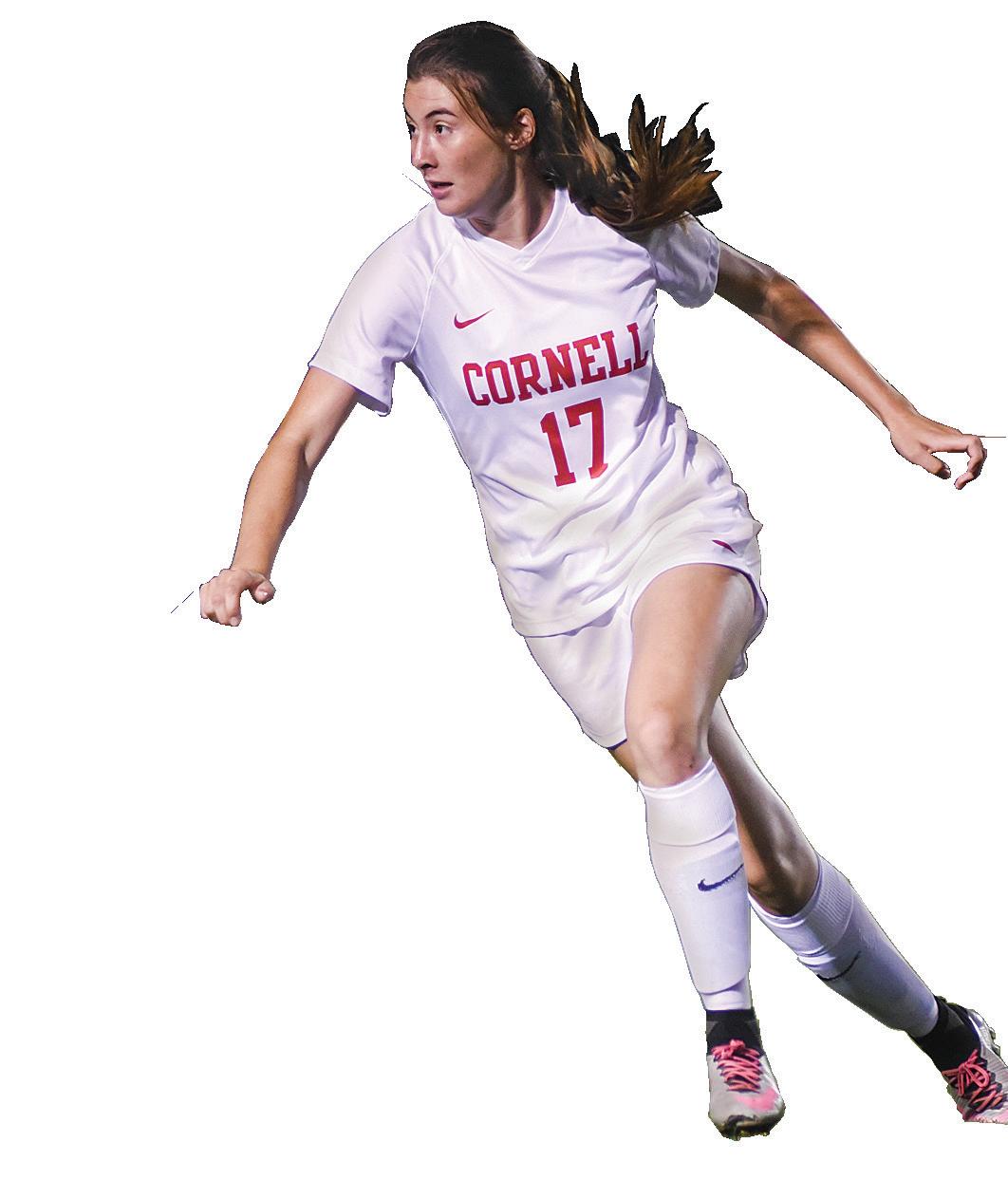
Aman Gupta can be reached at amangupta@cornellsun.com.
WOMEN’S SOCCER
It’s over | The 2018 season was one to forget for the Red — Dartmouth handed Cornell its seventh Ivy loss of the year.