The Corne¬ Daily Sun


By SARAH SKINNER
A Sunday night commute from Ithaca to New York City turned deadly when a charter bus veered off a Pennsylvania highway just after 9 p.m. and crashed into several trees, killing a recent Cornell alumna and injuring 11 other passengers.
Rebecca Blanco M.B.A. ’17, of Vacaville, Calif., was killed in the crash, authorities confirmed. Blanco, 33, had been working as a senior communications manager at Snowe, a household goods company based in New York City, since August.

“Becca was a vibrant and talented young woman we feel proud and fortunate to have had on our team,” Andres Modak, co-founder of Snowe, said in an email to The Sun. “She brought deep thoughtfulness and dedication to all that she did. She shared her contagious enthusiasm, creativity and warmth with all of us.”
The private charter bus was heading south on Interstate 380 when it “left the roadway and proceeded off the interstate into a wooded area” in Covington Township in Lackawanna County, said Trooper Robert M. Urban, a spokesperson for Pennsylvania State Police.
One passenger was airlifted and several others were taken to local hospitals, Urban said. He said later on Monday that only one passenger remained hospitalized and was listed in stable condition.
Blanco died from “multiple traumatic injuries” sustained in the crash and was pronounced dead at the scene, Timothy Rowland, the Lackawanna County coroner, told The Sun. Rowland said he believed that all 11 passengers and the driver received at least minor injuries from the crash.
Amanda Bosworth grad told The Sun that her roommate, also a Cornell graduate student, had been on the bus and suffered a broken neck.
“Since so many of us have relied on these bus companies … it kind of hits home to a lot of people,” Bosworth said. She said she did not want to identify her roommate, and Rowland declined to describe specific injuries or say whether other passengers were believed to be Cornell students.
The cause of the crash is under investigation. The male driver has not been identified, but Urban said the driver had been driven to a hospital to take a blood test, which federal regulations require after fatalities.
By LUCAS REYES and PENELOPE CAMPOS Sun Contributor and Sun Staff Writer
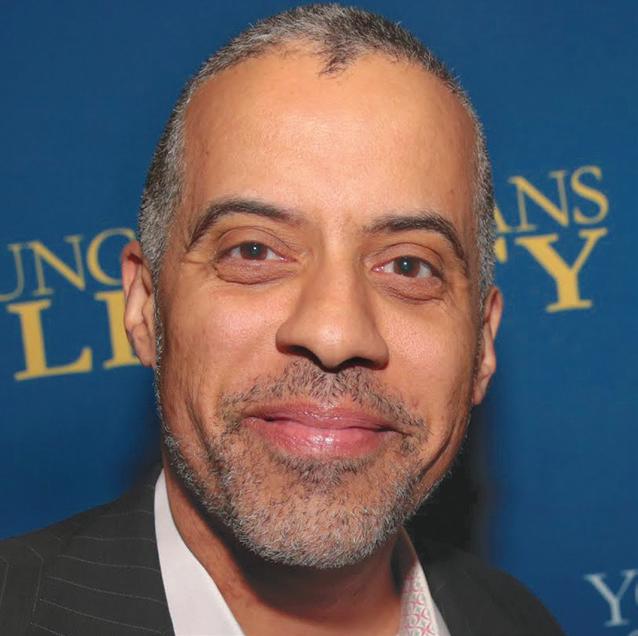
New York State Libertarian gubernatorial candidate Larry Sharpe emphasized individual rights and advocated for the legalization of marijuana during a town hall hosted by the Cornell Libertarians on Sunday evening.
“When the SAFE Act passed, I couldn’t help but feel my rights were violated.”
Andrew Hollister
Sharpe, a 2016 candidate in the running for the Libertarian Party’s vice presidential nomination, spoke to a crowd of about 30 Cornellians and local residents in Goldwin Smith Hall. Andrew Hollister, the Libertarian candidate for lieutenant governor who ran for Rochester City Council in 2017, opened up the town hall with a personal
anecdote about his personal decision to get politically active after starting a small business.
Sharpe addressed the claims that he could not win by describing the current political climate as anti-establishment. Sharpe said that New York was ready for him in the aftermath of upset wins by President Donald J. Trump in the 2016 election and Alexandria Ocasio-Cortez in the 2018 Democratic primaries.
He pointed to Democratic control of the New York State government as a reason for his candidacy, claiming that “if they had done their job, I wouldn’t be here.”
Sharpe denounced Gov. Andrew Cuomo’s (D-N.Y.) failure to respond to the needs of residents, later specifically criticizing Cuomo’s lack of response to rising suicide rates within the farming industry.
He said that small farms should face the same regulations as small businesses on the types of products they offer and stated that consumers “should decide,” not himself.
In line with his emphasis on the importance of decentralization and
transparency, Sharpe declared that “as long as you’re transparent,” consumers and producers should be able to buy and sell as they please.
“What I’m focused on is getting you happy so that you stay,” Sharpe said, emphasizing his goal to incentivize New York residents to remain in the state.
When asked a question about gun control, Sharpe said he is “the only candidate that supports all your rights all the time.” Both Sharpe and Hollister criticized the Secure and Fair Enforcement for Mortgage Licensing Act of 2013 as part of commentary on Cuomo’s policies. The SAFE act was

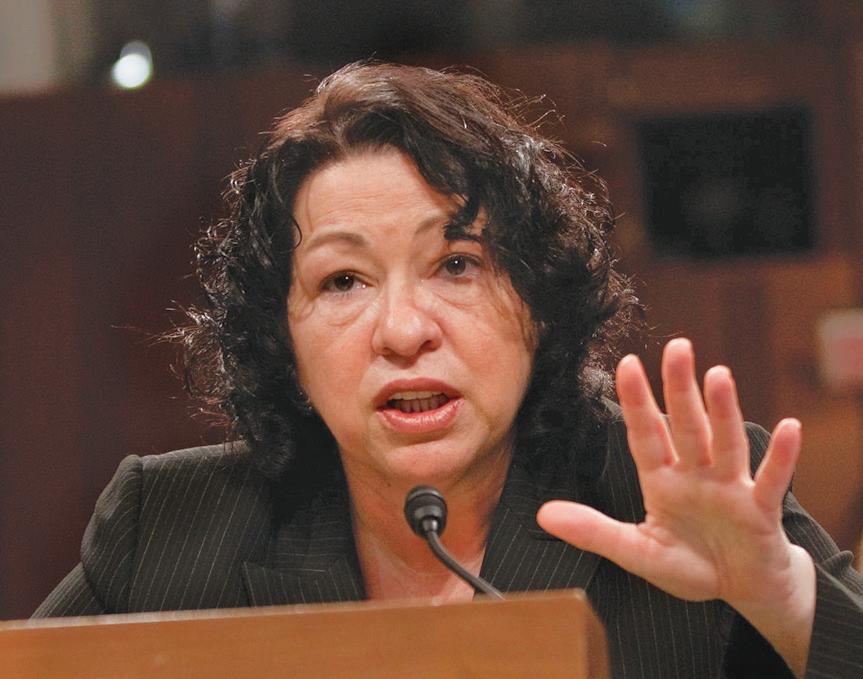
Cornell will record Supreme Court Justice Sonia Sotomayor’s sold-out discussion at Bailey Hall on Thursday and post a video of the event online later in the day, University officials said Monday, reversing a previous statement that the event would not be recorded.
A Bailey Hall official also said Monday that attendees would have their tickets voided and given away if they did not arrive by 11:45 for the noon event. Voided tickets will be given away at the door. People who want to get on the waitlist for voided tickets must sign up at Bailey Hall beginning at 11 on Thursday morning, said Bailey Hall’s audience services manager, George Holets. Between 11:45 and noon, waitlist names will be called in order until the voided tickets are given away.
Holets said there is no guarantee that anyone on the waitlist will be able to get in and that there is no way to predict how many seats will be filled through the waitlist.
Tickets to Sotomayor’s “fireside chat” with Cornell Law School Dean Eduardo Peñalver ’94 ran out minutes after they became available earlier this month, leaving many students empty-handed. Cornell gave 425 tickets to students and other Cornellians who waited in line at Willard Straight Hall earlier this month. Another 600 tickets were given to people affiliated with the law school, and 175 were reserved for alumni and invited guests. When Cornell announced the event, it said Sotomayor’s discussion would not be recorded, and a Cornell spokesperson said that it would not be livestreamed at the request of the Supreme Court. But a spokesperson for the court, Kathleen L. Arberg, said on Monday that Cornell would be permitted to record the event and post the recording to its website. She did not say whether the court has a policy banning live-streaming of justices’ speeches. Bailey Hall has the necessary equipment and
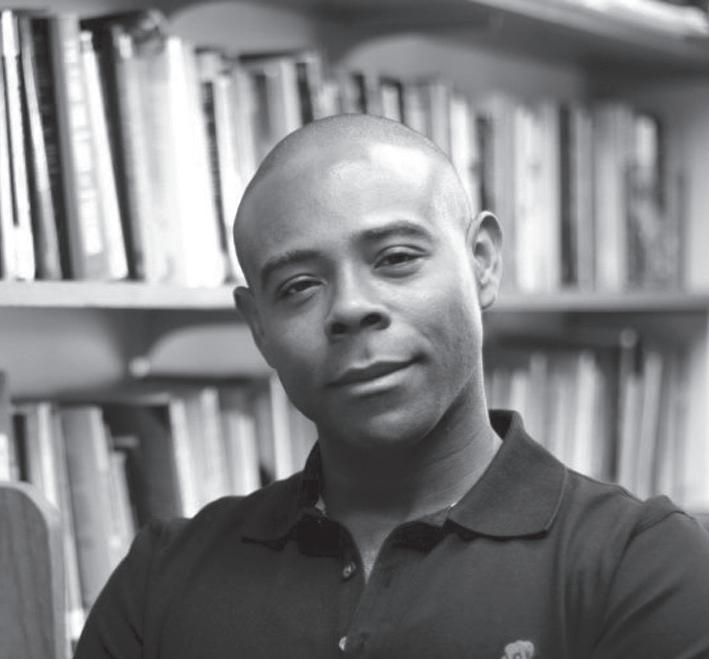
will analyze vulnerability as the lens for black queer life at 4:30 p.m. today.
Taking Students Abroad: A Primer for Trip Leaders 9 a.m. - 4 p.m., G08 Uris Hall
Behavioral Economics Workshop: Saurabh Bhargava 11:40 a.m - 1:10 p.m., 141 Sage Hall
Econometrics Workshop: Kengo Kato 11:40 a.m - 1:10 p.m., 498 Uris Hall
Dr. Vitulli - Lunch Lecture - Practice Ownership Noon - 1 p.m., College of Veterinary Medicine, LH2
Goldwater Scholarship Information Session Noon, 103 Barnes Hall
Teaching and Learning Reading Group Noon - 1 p.m., 309 Clark Hall
The Commodity Form and Human Rights: Lessons from Slavery Abolition Noon, 423 Morrill Hall
Cornell Health: “Let’s Talk” Walk-In Consultations 2:30 p.m., E. Sibley Hall, Room 146
Engineering Co-op Information Session 4:30 p.m., 155 Olin Hall
Lecture by GerShun Avilez 4:30 p.m., 258 Goldwin Smith Hall
Visas After Graduation: Navigating the U.S Immigration System 5 - 7 p.m., 132 Goldwin Smith Hall
Weekly Study Skills Tutoring 7 p.m., Tatkon Center
Wednesday Walk at Noon Noon, Big Red Barn
Electrical Vehicles and Paradigm Shifts 12:15 - 1 p.m., 221 Weill Hall
Christina Bates, Canadian Museum of History 12:20 - 1:10 p.m., Human Ecology Building, T01
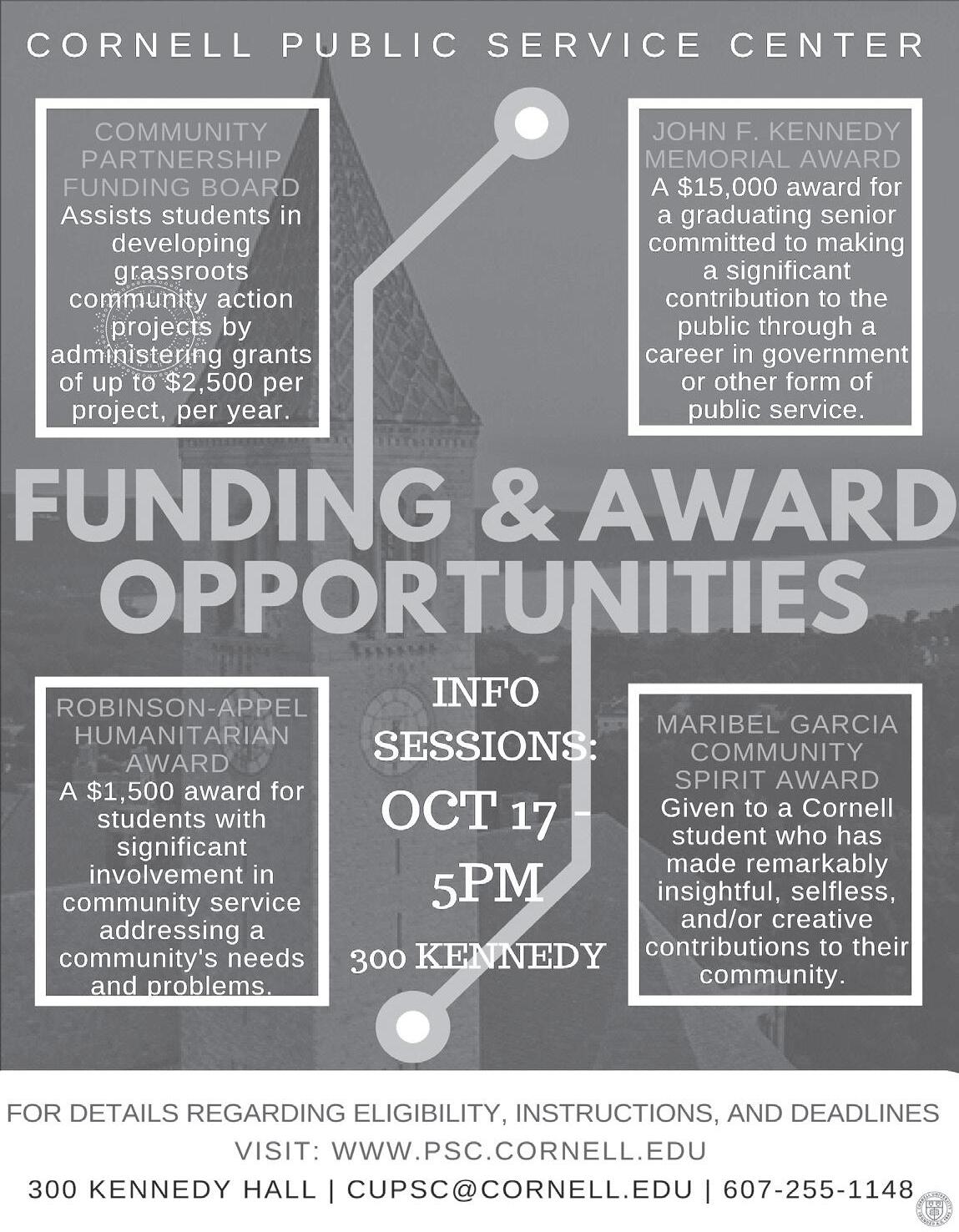
Public Service Center Funding and Awards Info Session 5 - 6:30 p.m., 300 Kennedy Hall
Research 101 5:30 p.m., Tatkon Center
Terzian Lecture: Silvia Torres-Peimbert, 7 - 8 p.m., Physical Sciences Building Room 120
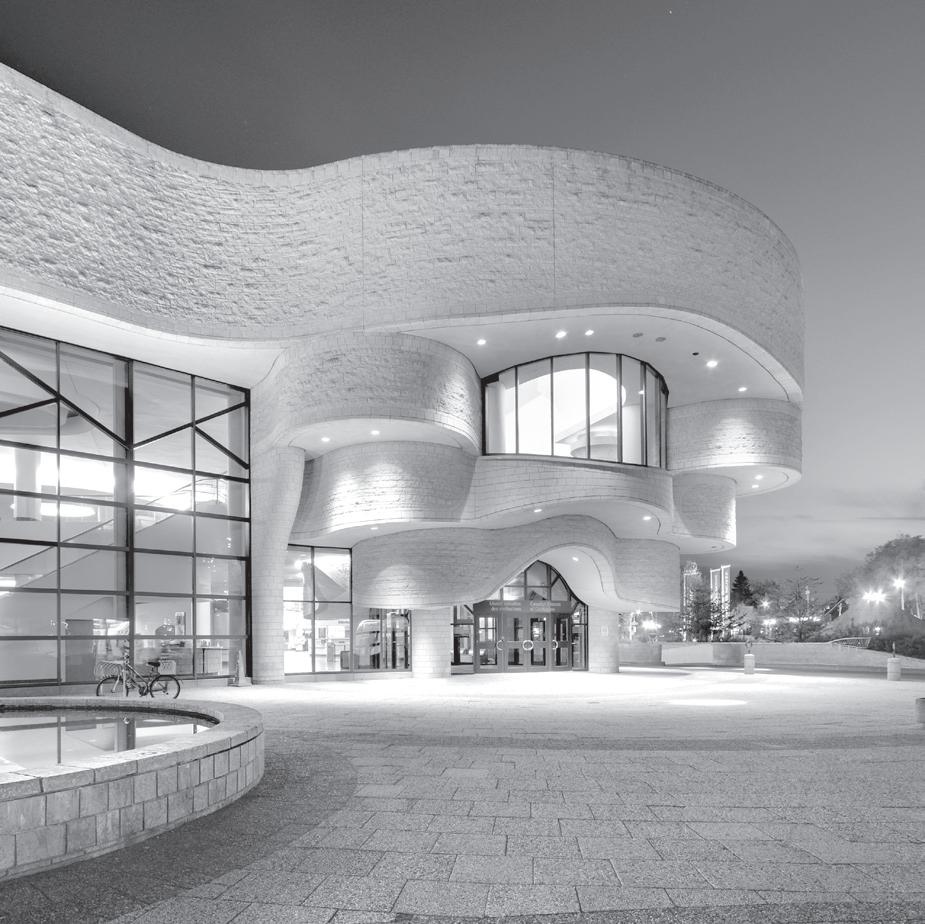
Canadian history | Listen to a talk by
the



By ANYI CHENG Sun Contributor
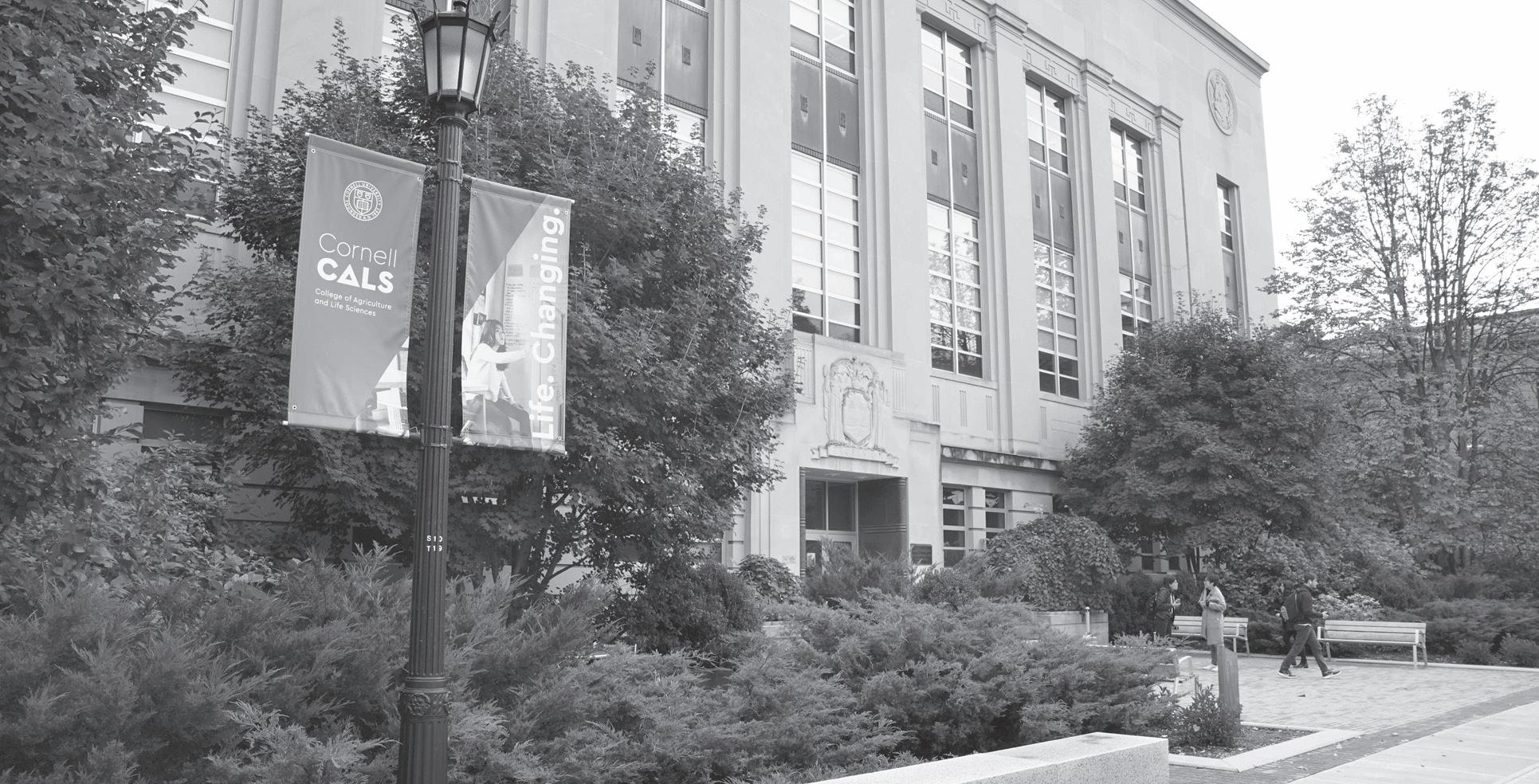
A new trail opened on Oct. 5 that will allow students and other community members to walk by a parking lot that filters stormwater, Mann Library’s green roof and other sustainable sites.
Cornell’s new Sustainable Landscapes Trail features various sustainable landscaping projects around campus as a part of the Climate Action Plan, which is the University’s plan to achieve carbon neutrality by 2035.
The trail has been in the works for nearly three years, according to Prof. Nina Bassuk, horticulture, who came up with the idea for the trail project. The project was planned and implemented by the Land Focus Team, a group of 8 to 9 graduate students and faculty within the President’s Sustainable Campus Committee.
The goal of the trail was to bring attention to sustainability projects around campus, Bassuk said.
“We decided to develop the trail to visualize the environmental benefits that are inherent in some of the landscape practices we use,” Bassuk said in an interview with The Sun.
The trail features 19 stops, marked by posts with QR codes that lead to a descriptive webpage about the individual project and how it contributes to Cornell’s sustainability goals, Bassuk explained.
According to the Sustainable Campus website, such stops include the Botanic Gardens Bioswale, which uses carefully chosen vegetation to filter stormwater while serving as a diverse ecosystem, the Mann Library green roof on which vegetation grows and a deer management site where researchers can study the impact of deer browsing on local plant diversity.
Each trail project is one more step toward the “green infrastructure” category of Cornell’s Climate Action Plan, the website notes.
“You can define sustainability in many different ways, but in terms of landscaping it’s providing healthy ecosystems,” Bassuk said, emphasizing how each stop provides a habitat for a diverse ecosystem of insects and native plants.
The latest addition to the trail is the Peterson Parking Lot near Stocking Hall, which was recently repaved with porous asphalt that absorbs and filters stormwater, preventing the runoff from polluting Beebe Lake. A ceremony marked the opening of the trail, with the committee pouring water onto the new asphalt in lieu of a ribbon cutting and an hourlong partial tour of the trail led by Bassuk.
Many of the stops featured on the trail were designed by students in Bassuk’s class in the landscape architecture and horticulture sciences departments titled “Creating the Urban Eden: Woody Plant Selection, Design, and Landscape Establishment.” Students enrolled in the two-semester class — which Bassuk co-teaches with Prof. Peter Trowbridge, landscape architecture — combine technical horticulture with hands-on landscaping to implement custom projects on campus.
Other stops, such as those in the Botanic Gardens, were created by facilities staff, Bassuk said. She noted that “there were several different players” who contributed to the projects featured on the trail.
According to Bassuk, the committee will continue to add stops to the trail as more projects are implemented.
“It was never expected to be a finite number,” she said.
Anyi Cheng can be reached at ac2822@cornell.edu.
Two-factor authentication required for students starting Nov. 26
By MIGUEL SOTO Sun Staff Writer
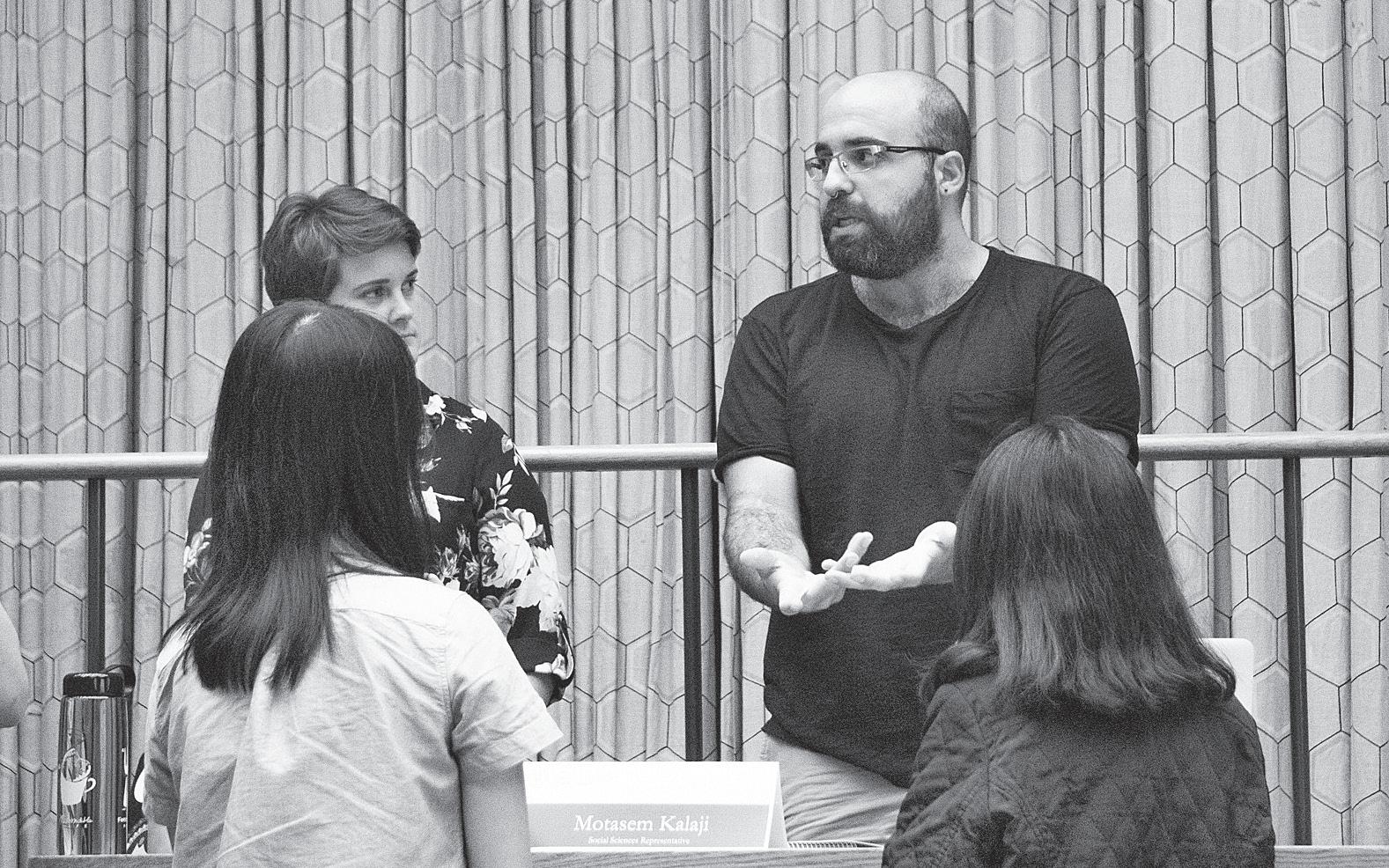
The Graduate and Professional Student Assembly hosted a presentation on the upcoming two-factor login authentication policy and on the Graduate and Professional Community Initiative Monday evening.
Starting Nov. 26, Student Center and Student Essentials will require students to use two-factor login authentication. The University will use Duo, its own brand of two-factor login authentication. Students will need to register another device, such as a smartphone or tablet, and download the Duo application to log into Student Center and Student Essentials. Students approve the login via the registered device.
Tom Horton, interim chief information security officer, said Nov. 26 was chosen because it follows the add-drop period, so “there shouldn’t be mandatory transactions.”
Horton said that, with Duo, the University is “protecting your data from unauthorized access,” emphasizing the sensitive data found on Student Center, such as financial data and social security numbers.
In the last fiscal year, 2,590 student passwords were compromised, accounting for 35 percent of total password compromises, according to a PowerPoint presentation made by IT@Cornell. With Duo, the University hopes to reduce the number of password compromises, and with two-factor login authentication, “it’s much harder for someone to use stolen or harvested credentials,” Horton said.
Horton described that, in exchange
for security, there is the “mildly annoying” aspect of needing to have a device with you at all times in order to log into Student Center or Student Essentials and needing to complete an extra step to access these resources.
Rebecca Harrison ’14 grad, arts and humanities representative, voiced concern over added stress to undergraduate pre-enroll.
“Course enroll is a really stressful process because Student Center is often impossible to log into — how is [two-factor login authentication] going to complicate that?” Harrison asked.
To circumvent having to use two-factor login authentication every time you use Student Center or Student Essentials, Horton suggested using the 24-hour “remember me” feature which allows students to login once and avoid having to use two-factor login authentication for 24 hours.
Additionally, Horton mentioned Duo is “one of the industry’s leaders” and should have no issue handling spikes during heavy usage, such as during pre-enroll.
Horton described USB hardware tokens that individuals can insert into their computers and that act as a physical button, so they do not need to use an external device. Prices for the tokens range from $9 to $25. Horton additionally recommended that individuals register more than one device with Duo in case they lose access to their primary authentication device.
Additionally, Horton recommends students begin to opt in to two-factor
Leading University of Chicago political scientist Michael Dawson discussed the complicated politics, histories and societal significance of reparations and racial justice in America in a lecture Monday evening in Klarman Hall.
Dawson, the John D. MacArthur Professor of Political Science and the College at the University of Chicago, outlined the histories and possible future of reparations struggles in the United States and discussed the ways contemporary calls for reparations can learn from the events of the past.
Dawson argued for the merits of reparative justice, agreeing with a quote from Prof. Tommie Shelby, African American studies and philosophy, Harvard, saying that “principles of rectification should guide attempts to remedy or make amends for the injuries and losses victims have suffered as a result of ongoing or past injustice.”
Michael Dawson researches African American political identity, the politics of urban poverty and the ways public opinion regarding black and white Americans differs politically and socially. Dawson has published multiple award-winning books, including Behind the Mule: Race and Class in African-American Politics, Blacks In and Out of the Left, Not in Our Lifetimes: The Future of Black Politics, and
Black Visions: The Roots of Contemporary African-American Political Ideologies
A Berkeley and Harvard graduate, Dawson is the founder and co-director of the Cambridge University Press journal Du Bois Review: Social Science Research on Race and has served as the chair of the University of Chicago political science department.
“Principles of rectification should guide attempts to remedy ... the injuries and losses victims have suffered ...”
Michael Dawson
The talk was not only on the “movement for black reparations in the United States, but [was] an even more general discussion of the legacy of slavery and Jim Crow, as well as current racial conflicts and cleavages,” Dawson said.
We all must acknowledge that “we are not living in a post-racial America,” Dawson said. Declaring that race has “ended” or is an “antique relic” poses a major problem for the fight for racial justice, he said.
The belief that African American people should feel
lucky to be in the United States “may not be true,” Dawson said sardonically, alluding to the histories of kidnapping, murders, rapes and generational trauma integral to the slave trade responsible for bringing many black people to the United States.
The killings of Michael Brown, Eric Garner and Laquan McDonald, the violent “armed, organized white nationalist” rally in Charlottesville, Va. in August 2017, and the members of the National Football League taking a knee to protest racism, among many other protests, suggest that “the facade of a post-racial society cannot be maintained,” Dawson said.
During his lecture, Dawson discussed the scale of opposition to multiple forms of racial justice. His research found that white Americans are likely to oppose reparations and more likely to oppose Black Lives Matter than African-American, Asian-American or Latinx people. Many Americans oppose even issuing an apology for the devastation wreaked upon the black community by slavery, Jim Crow, lynchings, police brutality and mass incarceration, Dawson said.
To continue reading this article, visit cornellsun.com.
Tursday’s event will still not be livestreamed
SOTOMAYOR
Continued from page 1
infrastructure in place to “accommodate a live stream with little advance notice, and a recording with virtually no advance notice, all at no additional cost,” Bailey Hall technical director David Kingsley told The Sun.
John Carberry, a Cornell spokesperson, confirmed that Cornell will not live-stream the event, but will post a video recording of Sotomayor’s discussion later on Thursday on CornellCast, the University’s video website.
Carberry also said The Cornell Daily Sun will be the only independent media outlet allowed to attend the event. He said the Cornell Chronicle, which is run by the University, will also attend and write about the event.
Retired judge Richard C. Wesley J.D. ’74, who was once colleagues with Sotomayor on the Second Circuit U.S. Court of Appeals, will also join the discussion.
Sotomayor last visited Cornell Law School a decade ago, when she had not yet been nominated by Barack Obama to the
Supreme Court, when she was still a judge on the United States Court of Appeals for the Second Circuit.
The decision to not livestream or record Thursday’s discussion was met with frustration by some students.
“I think if they’re not going to make the event inclusive to all Cornell students, then they should livestream it so that Cornell students have the option to be a part of it,” Samantha Zemser ’19 told The Sun when she was unable to snag a ticket. She said it was especially important to let students see Sotomayor speak “because it’s such an important event and such an important speaker at this time.”
Bailey Hall seats 1,300 people, and the University reported in 2017 that it was comprised of about 33,000 total faculty, staff and students. That means about 4 percent of Cornellians were able to get a ticket to the event.
Cornell’s acceptance rate for its Class of 2022, on the other hand, was 10.3 percent.
Shruti Juneja can be reached at sjuneja@cornellsun.com.
SHARPE Continued from page 1
signed by Governor Cuomo in response to the Sandy Hook elementary school shooting, implementing a universal background check system and broadening the number of guns banned as assault weapons, according to Politico.
“When the SAFE Act passed, I couldn’t help but feel my rights were violated,” Hollister said.
Sharpe commented on low voter turnout rates in New York when further asked about his ability to win. He responded by citing statewide voter turnouts during the 2014 gubernatorial election. In doing so, Sharpe depicted Cuomo as beatable, referring to him as “his majesty.”
Sharpe argued that votes for him would encourage a change in the two-party system, explaining that “if you make that vote, we will have change.”
Citing a huge burnout rate in teachers as a result of a structural flaw in the state’s education system, Sharpe also called for lower taxes and a reformed education system as part of his plan to boost happiness among New Yorkers.
Sharpe outlined plans for a restructured education system, advocating for
CRASH
Continued from page 1
Urban declined to identify the bus company, but video of the scene aired by a Syracuse television station shows the words “Big Red Bullet LLC” on the side of the bus.
Reached by phone on Monday, Charlie Brundza, Big Red Bullet’s general manager, declined to answer questions and said he was directing all media requests to Pennsylvania police.
The video aired by WSYR also shows a motor carrier number on the side of the bus that is registered to Big Red Bullet
LLC, according to online U.S. Department of Transportation records. Those records indicate that the company’s drivers were inspected once in the last two years and that no violations were found to put the company “out of service.”
The online records show that the company has not been involved in any crashes in the last two years that were reported to federal regulators.
Big Red Bullet advertises bus rides from Ithaca to New York City that leave at 7 on Sunday evenings. Lackawanna County is about a two-hour drive from Ithaca.
Big Red Bullet launched
in the fall of 2015 and is a private company not affiliated with the University. Cornell operates a bus from Ithaca to New York City, but a spokesperson confirmed that none of Cornell’s buses were involved in the crash.
Joel Malina, Cornell’s vice president for university relations, extended the University’s “deepest sympathies” to Blanco’s family and friends and said Cornell would be “monitoring the situation closely as our thoughts and prayers remain with all of those involved.”
Sarah Skinner can be reached at sskinner@cornellsun.com.
an elimination of the K-12 public school system in favor of a K-10 program with a greater focus on earlier advancement into adulthood.
Sharpe also discussed the legalization
“People will choose cannabis over opioids ... If weed makes you happy, I want you to be happy.”
Larry Sharpe
of marijuana as part of his happiness platform, suggesting it as a possible solution to the opioid crisis as “people will choose cannabis over opioids.”
“If weed makes you happy, I want you to be happy,” he said to applause from town hall audience members.
Sharpe will be back on the campaign trail this week with events scheduled for the rest of October.
Lucas Reyes can be reached at lar327@cornell.edu. Penelope Campos can be reached at pcampos@cornellsun.com.
GPSA
Continued from page 3
login authentication to familiarize themselves with the process. By opting in, it “gives you an idea of what it will be like to use two-factor authentication,” Horton said. Students can then opt-out until Nov. 26.
For students who do not have access to another device, the University Registrar will investigate situations on a case-by-case basis, Horton said.
Alexa Cohn grad, GPSA vice president of communications, spoke about the 2018 revision

to the Graduate and Professional Student initiative.
The GPCI is “a strategic plan created by GPSA to identify and address issues related to graduate and professional student life,” according to the GPCI web page.
Cohn called on the entire graduate and professional student community to contribute to the revision of the GPCI, with mandatory participation from voting GPSA members. Participation could range from chairing an area of focus to speaking to relevant staff about specific initiatives.
Cohn explained the difference between a resolution and the GPCI. “Resolutions outline deficiencies and current issues” and “investigate,” whereas the GPCI offers “potential aims or objectives” to solve the issues, Cohn said.
The GPCI has previously spearheaded the renovation of the Big Red Barn Graduate and Professional Student Center, childcare grants for graduate and professional students and English support for international students. Ekarina Winarto grad, GPSA president, was a tutor for this initiative.
Unlike the 2013 GPCI, this year’s GPCI will have 10 areas of focus instead of eight, with “Diversity” and “International” students becoming independent and an “Assistantship” area of focus being created. Cohn stressed the need for a new “Career Resources” chair.
The importance of the different career paths between graduate and professional students should be kept in mind, said Matthew Battaglia ’16 grad, chair of the University Assembly.
Cohn said the GPCI was proposed to the Board of Trustees in 2007, but shelved due to the financial crisis. It was “revisited” in 2012, and in 2013, the first GPCI was written.
Miguel Soto can be reached at msoto@cornellsun.com.
JACOB S. KARASIK RUBASHKIN ’19 Editor in Chief
JOHN McKIM MILLER ’20
Business Manager
KATIE SIMS ’20
Associate Editor
VARUN IYENGAR ’21
Web Editor
MEGAN ROCHE ’19
Projects Editor
EMMA WILLIAMS ’19
Design Editor
JEREMIAH KIM ’19
Blogs Editor
AMOL RAJESH ’20
Science Editor
BREANNE FLEER ’20 News Editor
YUICHIRO KAKUTANI ’19 News Editor
NICHOLAS BOGEL-BURROUGHS ’19 City Editor
LEV AKABAS ’19
Arts & Entertainment Editor
SARAH SKINNER ’21
Assistant News Editor
ANNE SNABES ’19
Assistant News Editor
JOHNATHAN STIMPSON ’21
Assistant Sports Editor
EDEM DZODZOMENYO ’20
Assistant Photography Editor
PETER BUONANNO ’21
Assistant Arts & Entertainment Editor
CHENAB KHAKH ’20
Assistant Science Editor
JULIAN ROBISON ’20
Layout Editor
HELEN HU ’21
Graphics Editor
DUSTIN LIU ’19
Human Resources Manager
ANNA DELWICHE ’19
Senior Editor
GIRISHA ARORA ’20
Managing Editor
HEIDI MYUNG ’19
Advertising Manager
ALISHA GUPTA ’20
Assistant Managing Editor
DYLAN McDEVITT ’19
Sports Editor
MICHAEL LI ’20
Photography Editor
GRIFFIN SMITH-NICHOLS ’19
Blogs Editor
JACQUELINE QUACH ’19
Dining Editor
SHRUTI JUNEJA ’20 News Editor
ANU SUBRAMANIAM ’20 News Editor
JUSTIN J. PARK ’19
Multimedia Editor
PARIS GHAZI ’21
Assistant News Editor
MEREDITH LIU ’20
Assistant News Editor
JONATHAN HARRIS ’21
Assistant Sports Editor
RAPHY GENDLER ’21
Assistant Sports Editor
BORIS TSANG ’21
Assistant Photography Editor
VIRI GARCIA ’20
& Entertainment Editor
Assistant
CATHERINE HORNG ’21
Assistant Dining Editor
LIZ CANTLEBARY ’21 Snapchat Editor
ALICIA WANG ’21 Sketch Editor
JOSH GIRSKY ’19 Senior Editor
ZACHARY SILVER ’19 Senior Editor
MATTHEW McGOWEN ’19 Senior Editor
Ad Layout Karen Jiang ’21
Design Deskers Megan Roche ’19
Lei Lei Wu ’20
News Deskers BreAnne Fleer ’20
Anne Snabes ’19
Night Desker Amina Kilpatrick ’20
Sports Desker Johnathan Stimpson ’21
Arts Desker Lev Akabas ’19
Science Desker Chenab Khakh ’20
Photography Desker Edem Dzodzomenyo ’20
Production Deskers Sarah Skinner ’21 Emma Williams ’19
CORNELL HAS DECIDED TO REVERSE COURSE and will now record Supreme Court Justice Sonia Sotomayor’s Thursday talk in Bailey Hall, and we at The Sun could not be more pleased. This way, as the first snow of the winter descends upon Ithaca, Justice Sotomayor’s “fireside chat” will warm not just a few hundred undergraduates in Bailey Hall, but also the thousands of Cornellians who couldn’t secure a seat.
It never quite made sense why the event would be neither livestreamed nor recorded. After all, the Supremes (including Sotomayor) give recorded speeches at universities all the time, and there is no apparent reason why this event should be different. Talk about a misguided attempt to make Cornell “unique.”
Truth be told, we are still puzzled by how we got into this whole situation. After the initial announcement stated that the talk would “not be livestreamed or recorded,” the University indicated that this was not their decision, but that of the Supreme Court itself. And yet, when reporters from The Sun contacted the court for clarification, a spokeswoman clearly stated that the court was under the impression Cornell would be recording and disseminating it, and evidently took no issue with that arrangement.
Whose choice was it? Cornell’s? The court’s? The all-powerful weather deities who decided to curse Ithaca? We would certainly like to know, if only so that the next time Sotomayor or any other justice comes to Cornell (except Kavanaugh, who can stay far, far away from here), we don’t have to engage in a similar fracas.
For now, all that’s left to do is bundle up tight, get in line early and enjoy an afternoon with one of the sharpest legal minds in America. Hurrah!
DongYeon
The other day, I watched the first episode of Reply 1994 , a Korean television series that features students from various provinces who live together in a boarding house to attend college in Seoul. The first episode, titled “Seoul Person,” explores the sentiments anyone can feel about moving away from their hometown to a new city. I could resonate with so many of the scenes, and I’m certain anyone who has experienced moving to a new place or opening up a new chapter of their life would feel the same.
Just as one of the main characters felt lost trying to walk in between all of the people hurriedly strolling inside Seoul Station, I had felt misplaced inside Port Authority Bus Terminal two years ago when I first embarked on my journey to Cornell. Knowing that I wasn’t too good with directions, I went over how to get from JFK Airport to Cornell’s North Campus again and again before even arriving at the United States of America. Yet, all of that seemed useless as I found myself passing the same stores over and over in search of the Shortline stand that would sell a bus ticket to Ithaca.
attached to Ithaca and Cornell.
Maybe it’s due to all of the time I had spent proving myself to get into this university, and then continuously questioning my place here. Through all the doubts and reservations I had about coming to or being at Cornell, I was able to develop a unique sense of self. I think there is no better place or time for me to be able to truly explore who I am and question my identity. And in that process, I discovered a sense of comfort and fondness for this place.
As much as I dread the unwelcoming weather and vicious hills that seem to constitute 70 percent of my Cornell experience and as much as I hate to admit, I think I have discovered the
I learned through experience that if I were to find a place to call home here, I would need to earn it myself.
I recall just standing in the middle of the bus terminal thinking to myself, am I fit to be here? All the New Yorkers around me seemed to be moving twice as fast as me. I appeared to be the only one that was out of place. I thought that some stereotypically friendly and talkative American would approach me as I was struggling to carry a suitcase my size but no, I was all alone. Before I had even begun my college career, I learned through experience that if I were to find a place to call home here, I would need
meaning of “home is where the heart is” here at Cornell. Much of it stems from the bond I have developed with my peers on this campus. Each of us come here with big hopes and dreams, unified under the name of “Cornellian.” We have left our family and past behind to struggle together to find our place in this world. And along the way, we have become attached to Cornell and Ithaca in one way or another. It serves as the stepping stone to our next phase in life or as a place to come back and reminisce
Through all the doubts and reservations I had about coming to or being at Cornell, I was able to develop a unique sense of self.
to earn it myself.
Two years down the road, I think I may have discovered that home. Moving around from country to country, I had not considered a single place to be my “home,” so I never truly understood what “going back home” even meant because I just went to wherever my parents were at that time. But strangely enough, I find myself becoming more

Despite all the issues we face on this campus that remain unresolved, there is one thing I am certain of. Cornell will be the home I can always come back to whenever I feel lost trying to find my place in this world. Because to all those who have come and gone, the memories and experiences at Cornell will forever be in your heart.
DongYeon (Margaret) Lee is a junior in the School of Industrial and Labor Relations. Here, There and Everywhere appears alternate Tuesdays this semester. She can be reached at margaretlee@cornellsun.com.
The modern political landscape needs no introduction. Domestically and internationally, the gaffes and wrongdoings of those in power echo with dramatic ricochet. As civilians, most of us thankfully equipped with moral compasses and appetites for justice, we respond and we participate. We compete for our myriad viewpoints to be heard in a sea of stubborn poli ticians, and understand ably so: our voices are our primary — and sometimes only — vehicles with which to elicit change.

We are entitled to seal our thoughts just as we are entitled to disseminate them.
Yet, this collective context — relying on volume alone to capture the attention officeholders — creates an unhealthy rift. The implicit narrative, among millennials especially, has evolved to claim that one is either active or he is useless and selfish. Moreover, utilizing a platform — say, an Opinion Column — to further non-sociopolitical causes is inconsiderate and insolent. There is no room for passivity in this climate of unrest; there is no sympathy for the silent.
We are encouraged to liken speaking our minds to a duty or an obligation paired with occupying the first world. To some extent, this is valid. The same sort of logic exists behind taxing the rich — if you have more, then you give more. If you are fortunate enough to have a voice, then you share the voice. However, this analogy crumbles as we consider the plethora of factors that discourage assertive expression.
For some, it’s a matter of confidence. The well-educated community — the typical audience for political commentary — places a radically higher emphasis on fact as opposed to feeling. Consequently, despite the passionate reactions that crimes against humanity invoke in most civilians, many avoid voicing them for fear of a disproportionate reliance on empathy and
social capital rather than on hard statistics or definitive solutions. Then, those who refrain from entering discourse are unfairly dubbed oblivious and apathetic. Is silence complacency? Not always. Frequently, those who are silent are criticized for disinvolvement, whereas those who are clamorous with their social activism are rarely challenged about the authenticity of their displays. Equating silence to lack of interest, thought or stimulation ostracizes a majority of the world: those without platforms or voices, and those without the academic backing to boldly lay claim to opinions. In our positions of privilege within a formal system of education, uninhibited access to news and research, and various other physical and institutional protections, we are eager and able to be loud and angry. And, without a doubt, there are scores and scores of atrocities transpiring all over the globe, each one of them fully worthy of our rage, but not all of them best addressed through uproar.
ate on whether the reluctance to vote may be modeled as a function of unawareness or lack of exposure. In fact, urging non-voters to prematurely align themselves with candidates or parties simply for the sake of contribution could backfire terribly. Instead, campaigning to raise awareness and cultivating habits of informed decision-making are much more integrative and sustainable movements toward resolution. Another argument against the legitimacy of silence is rooted in the number of digital stages that afford opinion-sharing in comfortable environments. Facebook and Twitter, for instance, allow for users to craft their audiences, customize their ideas, and package and deliver them in the most convenient, diplomatic ways. Still, guilting people into engaging in political discourse on these seemingly safe platforms if they are truly unready is a violation of individual choice and an invitation for hostility, potentially sparking personal attacks and aggressive debate. We are entitled to seal our thoughts just as we are entitled to disseminate them.
There is no room for passivity in this climate of unrest; there is no sympathy for the silent.
The startlingly low voter turnout in America can be understood through the lens of silence in an increasingly vocal society. A study published by the Pew Research Center reveals that nearly half of U.S. voting-age population neglected to cast ballots in the 2016 presidential election. Rather than hastening to reprimand these non-voters, we must pause to deliber-
Sometimes, silence is patience, resilience and curiosity. For many of us, the modern political landscape may not need introduction. We may know the names and faces of key officials, their family trees, their legislative stances, their civic triumphs and failures. We may even know enough to prescribe what’s best or predict what’s next. But, many among us are still listening and learning. Respecting the silence that accompanies a period of development is both a basic courtesy as well as a reminder to value the diversity in quieter, less represented perspectives.
There is no “type of girl” that I like to be. I don’t like it when I wear a headband and someone calls me a “headband girl.” I don’t like working at Temple of Zeus and being called a “Zeus girl.” I don’t want to be sceney, or facey, or really understood to be anything so narrow. I especially hate being the girl with no sense of humor.
It has happened twice, that I can remember, during my time at Cornell, when I’ve raised my hand, mid-seminar-style banter, and interrupted to say, “I don’t think this is funny.” Both times, the class was talking, in its own way, about violence against women. Both times, afterward, there was that pin-drop silence and a redness creeping up my neck like the tide.
Sometimes it comes up when we talk about characters in stories. Sometimes it’s hypothetical. So far, it’s never funny.
We are always going to say things that, maybe on accident, make one person in the room want to crumple, or run away, or cry out, “How could you?”
And after the silence, and the redness, recedes there is usually some sort of explanation. “We don’t support that” or “we didn’t mean that” or “it wasn’t like that.” And in a way, I usually do believe them. They didn’t mean it like that, but I took it like that. And somehow, when everything is said and done, I end up being the one to say, “I’m sorry.”
I’m sorry for causing a scene, or I’m sorry for misunderstanding you, or I’m sorry for getting so upset because everyone seems to forget that behind this joke, or behind this song, or behind
sorry that I’ve become a “type of girl” that shuts down a casual conversation to advocate for a cause. I’m sorry that now, they have to watch what they say around me.
Maybe this type of apology is socialized, but that doesn’t mean I can just shake it off.
A couple weeks ago, poet Andrea Gibson came to Cornell and held a poetry workshop. Some of the poetry we read during the event was really hard to hear, but they mentioned that they struggle with giving warnings about things like that because on any given
I’ve raised my hand, mid-seminar-style banter, and interrupted to say, “I don’t think this is funny.”
that day, or because of what I’ve experienced in my life, and maybe that specific scene of violence wasn’t so poignant for everyone else, and they would have been more sensitive if they had known.
These things are always going to happen. We are always going to say things that, maybe on accident, make one person in the room want to crumple, or run away, or cry out, “How could you?” And it may feel easy to become defensive, to explain ourselves, to clear it all up. I wish we could start with “I’m sorry” instead. Maybe we didn’t mean it that way, but to someone it felt that way, and we should feel sorry. “We are so sorry.”

“It’s not funny...
“Why are we laughing?”
If we sat every student down, interview-style, and asked them, “Do you think domestic abuse is funny?” I like to think no one would say, “Yes.” But we don’t live in a vacuum; it is more nuanced than that. Sometimes it comes up when we talk about musicians.
They could hear one thing and feel it in the same way I do, but it makes them laugh, and it makes me cry.
what was really meant is someone who was beaten, or raped, or killed. I’m
day, any given person can be shocked or shattered by words that might have seemed banal to everyone else in the room.
This really resonated with me — maybe even if only because it’s hard to believe that everyone receives language in the same way; that they could hear one thing and feel it in the same way I do, but it makes them laugh, and it makes me cry. Maybe I only had to interrupt my classroom conversations because of how I was feeling or doing
And for those of us who take it that way, who speak up, who got hurt by language and want to do something about it, we should try boxing up that urge to say that we are sorry, too. It’s not easy to stop apologizing for how we feel, but that doesn’t mean we shouldn’t try; it doesn’t mean that practice won’t help. We have all probably been on both sides of this, so I think we can all find a way to be more deliberate in what we say.
Contemporary art often seems confusing, ridiculous and just plain silly to many. Take, for example, “Merda d’artista” (1961) by Italian artist Piero Manzoni, consisting of 90 tin cans filled with 30 grams each of the artist’s excrement, a tin of which sold for 124,000 euros at Sotheby’s in 2007. Or Yves Klein’s “Zone de Sensibilité Picturale Immatérielle” (1959), a work in which Klein would sell empty space (the Immaterial Zone) in the form of a check in exchange for gold. The work would then be completed by a ritual where the buyer would burn the check and Klein would throw the gold into the Seine. At the time, conceptual art was just emerging, and the French public could not help being simultaneously scandalized and awed.
Modern audiences are no less immune to such stunts as Banksy’s print of “Girl with Balloon” (2002), which self-destructed by means of a shredder hidden in the bottom of its frame immediately after selling for $1.4 million at auction a couple of weeks ago. The video has since gained over 12 million views on Instagram.
“This was pure genius!!!!” wrote one commenter. “I feel sorry for the woman who buyed it :(” wrote another.

Still others were more concerned with the exact mechanics of the whole operation. How had Banksy managed to build the shredder into the frame? And how had it been timed so perfectly, self-destructing immediately after the hammer went down in what seemed like a perfect made-for-social-media moment? As the auctioneer said, “It’s a brilliant Banksy moment, this. You couldn’t make it up, could you?”
One wonders, however, if Sotheby’s wasn’t entirely out of the loop. Although the auction house’s head of contemporary art in Europe has stated he was “not in on the ruse,” it seems strange that none of the art experts handling or inspecting the artwork noticed anything unusual about the painting’s

St. Vincent MassEducation
Loma Vista Recordings




Stipped down, bare, intimate, and revalatory, are all words that describe St. Vincent’s newest album MassEducation — a piano and vocals-only reimagining of her 2017 release MASSEDUCTION. This new foray imbues her songs with fresh meaning and showcases the singing range of an artist best known for her virtuosic guitar skills.
The ability to re-release an album without many production additives and still have it be impactful and hauntingly beautiful is a testament to the strength of the lyrics, St. Vincent’s artistic dexterity and the performances by St. Vincent (whose real name is Annie Clark) and pianist Doveman (Thomas Bartlett). Doveman, who has
frame or weight. Likewise, the painting was the last work to be sold at the auction, positioning itself as just the right trick for a grand finale.
The painting has now been retitled “Love is in the Bin” and, in its destroyed state, is speculated to be worth up to 50 percent more than its original value. Sotheby’s head of contemporary art in Europe described it as “the first artwork in history to have been created live during an auction.” Banksy, in his caption for the video on Instragram, wrote, “The urge to destroy is also a creative urge,” a quotation oft-misattributed to Pablo Picasso but actually thought to be the words of the Russian anarchist Mikhail Bakunin.
And yet, love is not entirely in the bin; the work was not shredded to completion. Half the painting remains in its frame while the strips of the other half dangle like those tear-off tabs on flyers, the whole thing still poised perfectly for displaying the process of the stunt. It isn’t just the self-destruction of the art that increases its value, it’s the context of the auction house where the performance of self-destruction took place — the whole viral phenomenon of the affair.
Is this genius? The concept of self-destructive art is not a new one; the Auto-Destructive Art movement, coined by Gustav Metzger, began after WWII to bring attention to the destruction of war and to reinvent old beliefs. Metzger, like many artists of the time, criticized the commercialism and mass-production of art and the upper-class art establishment. Banksy, too, has brought attention to this on numerous occasions, most notably with 2015’s Dismaland and his Central Park experiment of selling authentic works for $60 each.
Many applaud the British street artist for his trolling of the upper class and the art establishment. Still others have labeled him a sell-out. If the purpose of the feat was to crit-
worked with Yoko Ono, Sufjan Stevens and Florence and the Machine, helps propel MassEducation to new heights.
On the 2017 MASSEDUCTION song “Savior,” Clark’s vocals slide through scales effortlessly and feature a bluesy guitar progression while the lyrics examine the effects of role play in a relationship. This exploration of what is feels like to create a closer connection with a partner through costumes, ranging from nurse to cop, is done in a hilarious, yet sardonic way, with Clark pointing out that “none of this shit fits.” In the stripped-down ballad version, as the guitar fades to give way to a staccato piano accompaniment, Clark’s realizations still retain some of their humor but also take on a more morose and plaintive tone in the piano version. The song crescendos, with heavy, almost Rachmaninoff-like use of staccatos courtesy of Doveman, as Clark repeats “please.”
One of the most interesting aspects of the 2018 album is that it ends with “Hang on Me” instead of starting with it. “Hang on Me” originally featured a slightly fuzzedover vocal section heavy on back bass that created a feeling of disconnect, mirroring the theme of the song. With only a piano accompanying the elegiac song, the lyrics “Yeah, so hang on me / ’Cause you and me / We’re not meant for this world” sees Clark take on a seemingly resistant tone while portraying the dejected feelings that accompanies the slipping away of a partner. Toward the beginning of the song, Clark sings “Yeah, I admit I been drinkin’/ The void is back and unblinkin’.” The unblinking void is one of the main themes explored on the album, specifically the various ways people attempt to cope with it: pills, moving cities (New York to “Los Ageless”), role playing in denim skirts and leather and dancing a slow disco.
“Young Lover” chronicles an achingly painful but vivid moment, as Clark finds her

icize the commercialization and commodification of art, it seems to do a rather shallow job of it. If its purpose was simply to turn him into a headline again, there’s no doubt it has succeeded.
Whether Banksy’s self-destroying art actually contributes something new to the discussion about the value of art or simply serves as an empty gesture made for the social media era, there’s no doubt that Banksy will be laughing all the way to the bank.
Ramya Yandava is a sophomore in the College of Arts and Sciences. She can be reached at ry86@cornell.edu. Ramy’s Rambles runs alternating Tuesdays this semester.
young lover unresponsive and passed out on a bathroom floor in Paris and she worries that they might have over dosed. The song boasts one of the most sparse piano arrangements until the bridge when it cre scendos in a flurry of notes. As Clark repeatedly exclaims “young lover,” her pitch continues higher and higher with a fury, but ends the song with a despondent lower register, an almost spoken “young lover.” This song builds upon the issue explored in “Savior,” as the chorus of “No, I, young lover, I’m begging you please to wake up / Young lover, I wish that I was your drug” shows how Clark struggles with trying to be everything for someone else.
RACHAEL STERNLICHT/ SUN GRAPHIC DESIGNER

the three versions. With its ’80s era Erasure atmosphere, that version song became a rousing, sweaty East Villageesque dance floor jam that is more infectious and fun than the latest iteration.
Not all songs are aided with the piano format of MassEduction, particularly “Pills,” which examines people’s reliance on pills and their ubiquitous prevalence in the world: “Pills to wake, pills to sleep / Pills, pills, pills every day of the week / Pills to walk, pills to think.” The song was slightly dull and not as mesmerizing as the original, which featured a heavy synth-backed guitar tune, a mocking chorus (courtesy of guest vocalist Cara Delevingne) and a phenomenal sax coda solo from Kamasi Washington, which helped make the song distinctive and thrilling.
Additionally, “Slow Disco” was not enhanced with the slower pace. Over the summer, Clark released an electronic reimagining of “Slow Disco” called “Fast Slow Disco” that is by far the superior of
St. Vincent places artistry and emotional honesty at the forefront of her confessional album. Though it is a bit early, Billboard and other music magazines have predicted some Grammy buzz for Clark’s 2017 MASSEDUCTION in the category of Album of the Year, making MassEducation even more timely. Regarding MassEducation, Clark told Vulture, “Here’s my heart, here’s some beauty, I hope you like it.” The album is comfortable laying it all on the line in a stunning way, and cements Clark as one of music’s most multifaceted and capable artists.
Ashley Davila is a senior in the School of Industrial and Labor Relations. She can be reached amd395@cornell.edu.
Everest
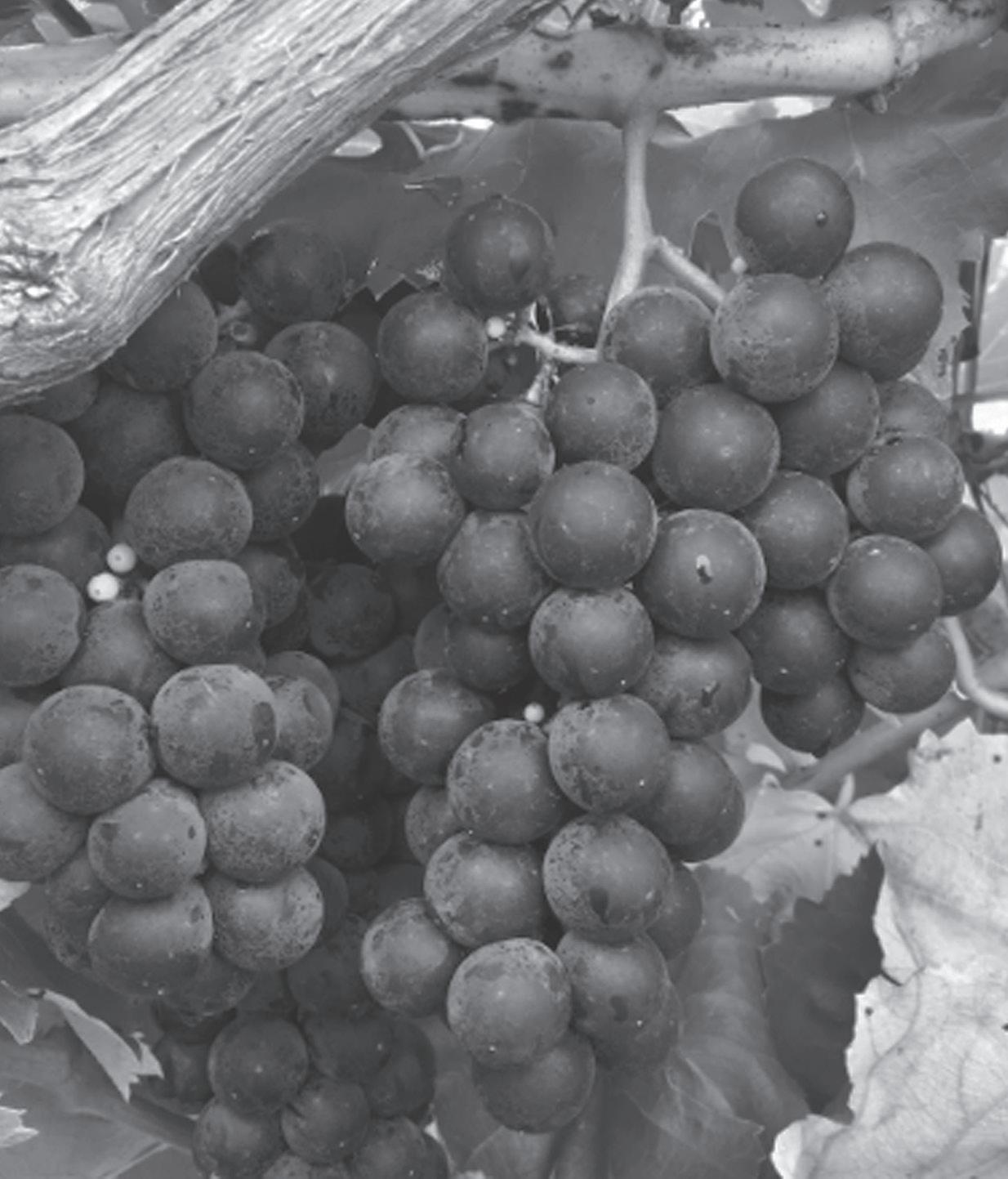
named after the world’s largest mountain, is twice the size of a typical grape
By SUE CHO Sun Contributor
With its enormous size, plump, blue skin and resilience against insects and New York’s ruthless winters, the Everest Seedless has potential to be a new popular table grape variety.
Previously, the Cornell-Geneva Grapevine Breeding and Genetics Program bred several red and white wine grape varieties including Arandell and Aromella, both released in 2013. Released last month, the Everest Seedless is one of the few table grapes released by the group — the last table grape was released 20 years ago, according to Prof. Bruce Reisch, horticulture.
The breeders of Everest Seedless say that its features have fulfilled their intended goals, which, according to Reisch, was to look for “flavorful grapes with large berries and large clusters.”
Just like its name suggests the massive height of the world’s tallest mountain, the Everest grape weighs seven grams, which is about twice the size of a typical Concord grape.
“Unlike other grapes in supermarkets with mild fruity flavors, the Everest Seedless is aromatic and has a burst of flavor that leaves the mouth full of juice,” Reisch said. Its combination of sweet and tart flavors, as well as its characteristic soft skin, is intended for a table grape served fresh rather than for wine, juice or preserves.
Yet achieving such produce was a long climb. Larger berries require double the number of chromosomes of regular berries, so Reisch traveled to Japan in the 1980s to
investigate varieties that contain these specific chromosomes. By collaborating with Japanese professors and large grape variety breeders, he was able to collect seeds and pollen from Kyoho and Pione grapes with 76 chromosomes. He and his team were then able to cross these with the American Concord and Niagara varieties, as well as previously Cornell-breeded grapes like Himrod and Ontario. In 1999, the team was finally able to plant the first cross of the Everest Seedless.
The results were fruitful — Everest Seedless proved to be tolerant of typical New York winters and could withstand downy mildew and powdery mildew that have been plaguing other grapes in the region. Reisch said that the grape seemed unaffected by insects as it grew without the need of insecticides in the research vineyards. All of these characteristics and the grape’s easy-to-grow procedures are predicted to attract home gardeners, pick-your-own operations and roadside stands.
Currently, the Everest Seedless is being licensed to Double A Vineyards in Fredonia, New York for the next 10 years and can be purchased directly from their website for $11 a vine.
“It’s not as large as Mount Everest!” said Reisch, but, with its promising charms, the Everest Seedless could pave the way for developing and transporting successful table grapes to markets across the country.
hsc44@cornell.edu.
By
Research from the labs of Profs. Andrew Clark and Daniel Barbash in the Department of Molecular Biology and Genetics at Cornell paint a dynamic picture of the evolution of tandem repetitive DNA, which is a poorly understood part of our genomes.
“It’s part of a series of many papers accumulating information about the way these repititive regions evolve.”
Prof. Andrew Clark
DNA is the code inside each of our cells that carefully orchestrates its function and behavior. According to Clark, in large genome sequencing projects (where the entire code is parsed), a critical step lies in trying to assemble this code in the correct order.
However, certain big regions of the genome are really challenging to assemble because of the high amount of code repetitiveness. This makes it hard for the algorithms
that assemble them to place them accurately, making our understanding of these regions is limited. But, these regions have important roles in maintaining DNA stability and have clues to understanding a variety of genetic disorders, most notably Huntington’s disease.
“We know that they are important biologically and we also know they are fast evolving from one species to another. From humans to chimpanzees, there is almost a complete rewriting of these regions.” Clark said.
The approach they took to understand these regions did not involve assembly: rather, it involved focusing on the small fragments of the repetitive code. According to Clark, they examined the relative abundance of smaller parts called k-mers, which refer to all the possible subsequences of DNA code of a variable length k, and observed their differences.
Next they wanted to observe if they could actually observe these k-mers change over multiple generations. They analyzed different generations of individual Chlamydomonas reinhardtii, a unicellular alga, whose genomes had already been sequenced, to study the rates and patterns of the mutations of k-mers.
Clark talked about about how labs’ findings contributed towards the field of genome research.
“It’s part of a series of many papers accumulating information about the way these repetitive regions evolve,”
Clark said, recounting the other organisms and systems his group analyzed.
The idea behind efforts in multiple systems was to see if the evolutionary behavior in acquiring changes by these repetitive DNA regions was universal. In other words, the researchers were trying to find out if k-mers were evolving in a similar pattern across different species. “And so the answer is yes! They are behaving more or less the same way, quantitatively,” Clark said.
According to Clark, the entire project has been done by re-analysing genomic data generated for other projects by other groups. In this era of rapidly growing genomics technologies, not only is performing high-throughput sequencing experiments becoming cheaper, but there is public and free access to most of this data.
“It really does level the playing field quite a bit. For people who do analysis, the standard is trying to make the sequence data as available as possible is an important goal and in many cases we are achieving that and putting the data completely in the public domain and anybody can get the data and repeat it,” Clark said.
“This is a goal we are striving to achieve in my lab and many others.”
Fill in the empty cells, one number in each, so that each column, row, and region contains the numbers 1-9 exactly once. Each number in the solution therefore occurs only once in each of the three “directions,” hence the “single numbers” implied by the puzzle’s name. (Rules from wikipedia.org/wiki/ Sudoku)

by





1, 2, 3, 4, 8 BEDROOMS FURNISHED VERY REASONABLY PRICED 607-272-3389
avramisrentals@aol.com
2 & 3 BEDROOMS
109 SAGE PLACE
Available NOW, Spring 2019 & 2019/2020 Shuttle Bus Access to Campus Access to Free Fitness Center Novarr- Mackesey Property Management office@ithacastudentapartments.com 607-277-1234
>>AFFORDABLE, QUALITY LIVING<< Special Deals for you! Furnished 1-6 Bedrooms Collegetown Apartments PARKING, LAUNDRY, UTILITIES! (607) 273-7368 www.IthacaApartmentRental.com

Houses, Apts, Parking 1 to 9 Bedroom
Collegetown - College Ave, Linden Ave, Dryden Rd, Bryant Ave, Cook St. 607-330-2442 info@urbanithaca.com www.urbanithaca.com
We have availability for the 2019-2020 school year beginning June 1st at Hudson heights apartments. The studio apartments come with: heat, water, and electricity included. There are garbages houses and coin-operated laundry facilities on site. Prices start at $750/month for a 12 month lease. If you have any questions or would
607-208-7660 or email: renting@ithacaLS.com
RENT NOW, GET THE BEST www.MatoulasHouses.com
Apartments & Houses In Collegetown LINDEN AVE & E. SENECA ST 1 & 3 BEDROOM APARTMENTS ALL FURNISHED EMAIL: MatoulasHouses@Gmail.com PHONE: (607) 339-9644 FIRST-COME, FIRST-SERVED *****************************
Collegetown Terrace Apartments INSPIRED LIVING TAILORED TO YOUR SUCCESS 24-Hour Fitness Center Shuttle Bus Service to Campus Study Rooms w/ Expansive Views
Apartments Available NOW, Spring 2019 & 2019/2020 Novarr- Mackesey Property Management collegetownterraceithaca.com office@ithacastudentapartments.com 607-277-1234
201 WYCKOFF AVE 6 Bedroom House Novarr-Mackesey Property Management office@ithacastudentapartments.com 607-277-1234 27 H OUSE FOR R ENT
COLLEGETOWN 6 BEDROOMS NEWLY RENOVATED 607-272-3389 avramisrentals@aol.com
Continued from page 12
“I told them, ‘This is what we’ve got. If we have any hope of any sort of success on the field this year, you have to buy into what we have this minute,’” Condo said. “Thankfully, I know all of these kids going back a lot of years, so I think they’re receptive of the idea of someone else being in charge.”
The women’s team features two opposing styles from their top two starters. Junior Shariah Harris’s physical style and classmate Anna Ullmann’s finesse play are very different, but Condo believes that they can complement each other. There
“The expectations are, as they are every year, to compete for a national championship on both sides, men and women.”
Interim coach Tony Condo
is still competition for the third starting spot, between freshman Rachel Booth and sophomore Hannah Roman.
On the men’s side, returning players junior Lorenzo Masias Uranga and senior Morgan Palacios are starters this year. They are joined by sophomore Jed Cogan, a transfer from Southern Methodist. Condo said that Cogan will have adjust his game in order to adapt to his new teammates, but believes he will be a force if he can do so.
Both teams ended last season in the national semifinals, with the men falling to SMU and the women to Virginia. Despite all of the recent chaos, Condo does not want to change these high expectations.
“The expectations are, as they are every year, to compete for a national championship on both sides, men and women.”
The men opened their season with a 14-13 win against Skidmore, while the women’s team fell to Central New York Polo Club, 8-5. Both teams were looking for wins at home against George Washington University last Friday, but the Colonials cancelled at the last minute.
The Red now look forward to their first tournament of the season at the University of Virginia. In the opening round on Thursday, the men will play the University of Kentucky, while the women will play the defending national champions, Texas A&M.
Alex Hale can be reached at anh66@cornellsun.com.
By ROBERT LI Sun Contributor
Cornell women’s tennis delivered a productive weekend as it travelled to New Haven, C.T., to compete in the ITA Northeast Regional Championship — considered the biggest tournament of the fall season.
Freshman Sarah Campbell reached the semifinals of the qualifying draw, but was ousted in three sets by the University of Connecticut’s Jacqueline Lazaro (6-4, 3-6 ,6-4). Meanwhile, sophomore Ana Elhom lost a close 7-5, 6-4 match in the qualifying finals to Martina Bocchi of Massachusetts.
Adiaconitei had an impressive win over Colgate’s Mackenzie Deeter in the first round, winning comfortably in a 6-1, 6-4 decision — before falling in the Round of 64 to Syracuse’s Guzal Yusupeva. Adiaconitei’s loss eliminated the Red from single contention in the tournament.
The two doubles teams of Adiaconitei/ Ho and Elhom/Pryce were both successful in the Round of 64, beating their opponents in an 8-5 decision. But both pairs were defeated in the Round of 32 by the same 8-5 scoreline.
“As a whole, the team did well,” head coach Mike Stevens said. “With five players competing, there was a lot of improvement
from a few weeks ago when we were last at Yale.”
Coach Stevens took time to note just how much the team has grown in such a short time, praising his players’ ability to adapt to a new environment and to adjust their games after each match. The roster is an overwhelmingly young one — with five of six players underclassmen.
“They continue to work hard, and they have a great attitude, which determines their success. We’re a young team, so that growth is important. The transition to college tennis is going well,” Stevens said.
With a brief respite before the team’s next tournament, Stevens stressed the importance of using the time to foster more individual development for each player.
“Serves and returns are the two most important shots for any team, and we will continue to work on them throughout the season, and those two things have gotten much better with all of them,” Stevens said.
Beyond the physical mechanics of the game, the coach further noted the importance of staying mentally focused in matches — especially during close sets.
“We focus on the game in between the actual points — the mental aspect. Each person is obviously different, but we try to focus on the basic rituals of staying positive and strategizing from the first two shots,”


Stevens said.
With many sets and matches having come down to just a few points, the coach especially hopes to see his players better adapt to closer situations.
Cornell is next slated to compete in the
Harvard Invitational in Cambridge, which starts November 2nd, affording the team a well earned break for the next few weeks.
Robert

By CHRISTINA BULKELEY Sun Contributor
Just over a month into its season, Cornell sailing still only has one goal: continue to focus on competing with the best of the best as it looks to improve its performance.
And if recent results are to be believed, the team has not had much difficulty sticking to this objective.
The team’s biggest win of the year, so far, has been a first place finish in a national event at the Naval Academy — which head coach Brian Clancy referred to as “probably the most impressive win we’ve ever had as a program.”
This event was the Jen Harris Women’s Regatta, held in late September, in which the Big Red placed a stunning first of 17 teams. Cornell also placed third in the national championships under Clancy’s coaching in 2013, the year before women’s sailing was elevated to varsity status.
But as Clancy sees it, the dominating finish represented the team’s greatest accomplishment only from a ‘results standpoint.’
Instead, the coach believes the squad’s collective core values constitute the more impressive aspect of the program.
“Our greatest accomplishment this season, so far, is our ability to have mutual respect for people,” Clancy said.
And given the co-ed nature of the team, this acceptance is vital to its success.
“Men and women — or just humans for that matter — just compete,” Clancy said, paying careful attention to use inclusive language to better illustrate the team’s culture.
Though some regattas are co-ed, whereas others allow only women to participate, Clancy views the entire sailing team as a singular unit.
“We know we’re capable of being really successful ... our goals is to continue to work hard.”
Head coach Brian Clancy
When speaking about the team, Clancy does not refer to the differences between the co-ed and all-women’s regattas aside from the aspect of uniqueness that this system brings to the sport.
“I don’t think anyone else does that,” Clancy said proudly of the sport’s co-ed nature.
Clancy did not mention any sailors by name, and instead spoke highly of the entire senior class — boasting that they “show a great deal of leadership” and “even when we’re not in team practices … they’re still holding the values
high for the team.”
The team will look to maintain its competitive edge, even as schoolwork intensifies in this part of the year.
“We’ve got our academics to make sure we’re staying on top of. We’ve got our aspirations, healthy life balances, staying consistent, that’s the challenge,” Clancy said. “But we’re in the midst of it — we’re in the heart of the season.”
Cornell’s record has been somewhat inconsistent on paper; its results span from a 16th of 17 finish at the Faye Bennett Laser Radial competition to its first place finish at the Naval Academy.
Despite the wide range, the Red has still managed to hold its own against a number of tough teams and aims to keep up momentum as it gears up for its final four regattas.
“I could not be more proud of our team,” Clancy said. “We know we’re capable of being really successful … our goal is to continue to work hard and peak at the right times.”
“We’re out on a natural arena. Cayuga Lake … is a big part of Cornell University — it’s a staple,” Clancy added.
Perhaps Cornell sailing will engrain itself in Cornell’s fabric just as Cayuga has.


By JOHNATHAN STIMPSON
Sun Assistant Sports Editor
Cornell sprint football’s atypically long two week break — an unexpectedly cancelled game followed by a bye week — clearly paid dividends, as a well-rested and hyper-energized Red scored the most points in a single game since 2015 — enough to edge out Chestnut Hill 49-41.
According to associate head coach Bob Gneo, Cornell’s success was largely powered by a familiar tandem of senior
quarterback Connor Ostrander and senior Brooks Panhans.
“One of our biggest drivers was Connor Ostrander, who had over 160 yards on the ground and threw for 220 yards, with three touchdowns,” Gneo said. “Panhans also played a very key role, scoring a touchdown.”
Cornell ended the first quarter trailing by a daunting 21-3 margin, and Chestnut Hill looking primed to easily secure its third win of the season.
But the Red was seemingly undeterred by the early, grim deficit. With 3:47 left in the first, junior running back
By ALEX HALE Sun Contributor
Cornell polo was in the news before its season started, but the Red is not letting the chaos affect its expectations.
The Red’s start to the school year caught the program in the middle of controversy. An investigation regarding allegations of misconduct by former coach David Eldredge ’81 caused the legendary coach to retire, The Sun previously reported. He has been replaced on an interim basis by long-time assistant Tony Condo, who admitted it took the team by surprise.
“Obviously, that was a bit unexpected, by and large, from whole polo community in central New York, and particularly so at Cornell,” Condo said. “I think the team has handled it fairly well, considering [that] not only is the winningest coach in Cornell history removed from the ranks, but we had to start our season in the midst of all of that.”
Condo wanted to keep the team focused on the season starting with his speech before their Red and White Scrimmage three weeks ago.

Connor Young scored a one-yard run, to catalyze what became an offensive turnaround for the team. Ostrander put up three touchdown passes in the second quarter, as well as one from sophomore Aneesh Agarwal — translating into 26 unanswered points that pushed Cornell to a 35-23 score by halftime.
Chestnut Hill added 10 points in the third quarter to move back into the lead, but the Red did not stay behind for long — with Panhans throwing to freshman Colton Kotecki for a touchdown 46 seconds into the fourth quarter, and Ostrander later connecting with junior running back Will Griffen to finish the game 49-41.
The victory brings the Red’s total record to 2-1.
“This was a very big and important win for us,” Gneo said.
While Cornell’s offense was unquestionably strong, Gneo did highlight a pressing need to improve its special teams, which has proved to be a relatively weak link in an otherwise robust roster.
“Clearly our biggest weakness is special teams,” Gneo noted. “We need to work on that for us to have a chance to win out against St. Thomas Aquinas.”
The Red travels to St. Thomas Aquinas this Saturday in what will be its first conference of the game of the year. While this is St. Thomas’ first year fielding a sprint football team, it currently sits atop a 2-1 record and has performed unexpectedly strongly.
The outcome of the matchup — which pits two teams against each other with identical records — will play a significant role in how Cornell finishes its season, a fact Gneo was quick to point out.
“This will be a big test to see where exactly we stand,” he said. “This is our first bigger game — really, our biggest game of the year so far.”

By ZORA HAHN
Cornell women’s cross country split up last Friday — one half travelling to Princeton, N.J. and another to University Park, Penn. — to participate in two important preparation meets ahead of the Ivy League Heptagonal Championships.
The Red placed 18th out
of 28 teams at the Penn State National meet, which featured seven other D1 teams, including Penn State, Michigan State and Georgia Tech.
Junior Taylor Knibb finished 35th out of 290 runners, while senior co-captain Gracie Todd trailed in 95th and sophomore Isabella Dobson 97th.
“The Red saw much improved pack running,
but were a bit too far back in the large field to make the impact they hoped for in the highly competitive field,” said head coach Artie Smith ’96.
To continue reading this article, visit cornellsun.com.