The Corne¬ Daily Sun
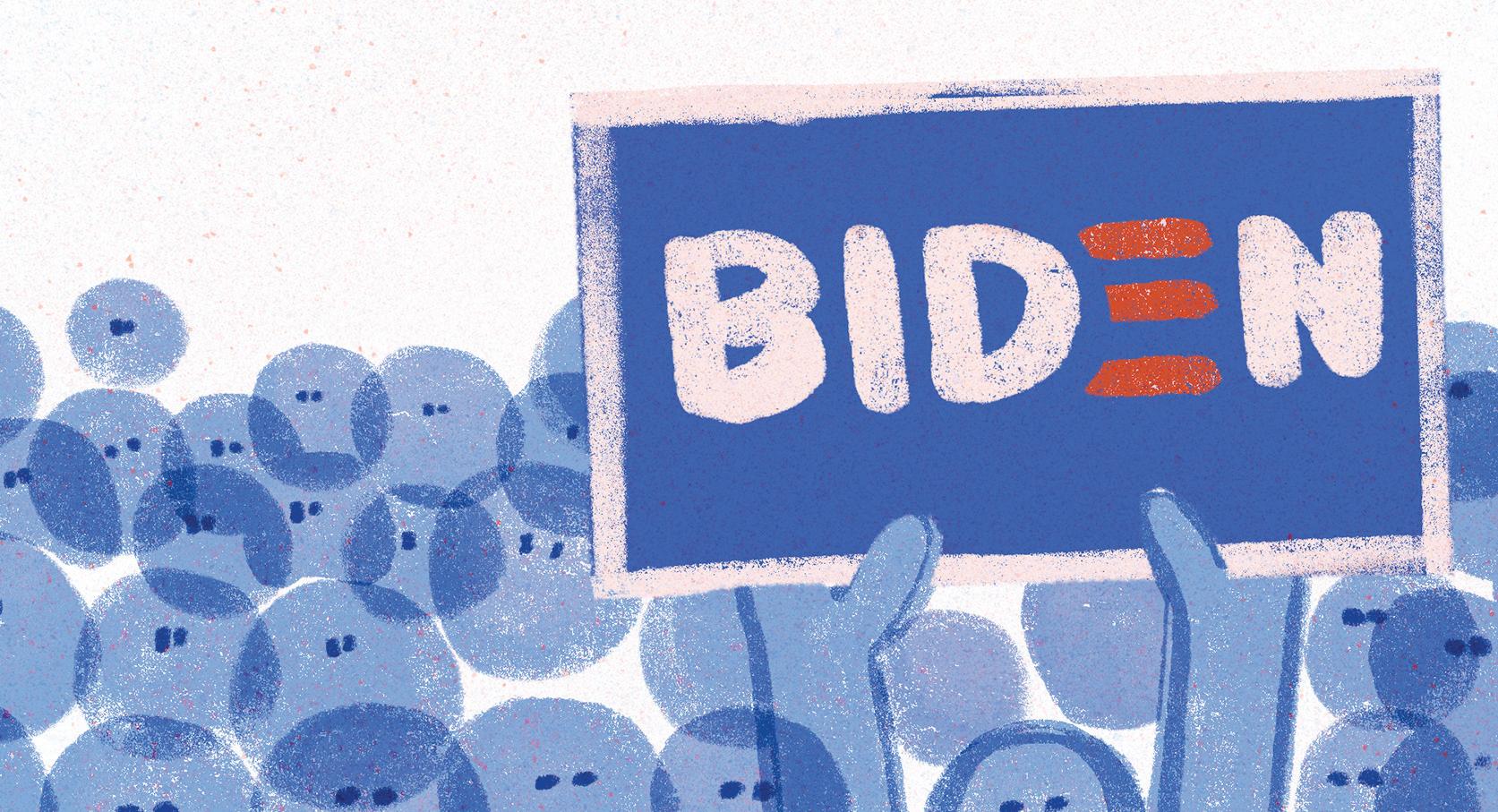

Cornell for Biden founder and lead organizer David Bromberg ’23 occupies a curious position: His “one-man operation” representing the Democratic party’s presidential nominee on a politically-active Ivy League campus has a mailing list of only 30 students and no campaign events or group meetings in sight.
And the lack of enthusiasm for Biden is dominant — the Cornell Progressives, a significantly larger cohort of Democratic students on campus formerly known as Cornell for Bernie, decided not to endorse the Biden-Harris ticket.
During an election year, Cornell’s campus history would suggest more mobilization behind a Democratic nominee for president –– especially on a campus where, in 2016, 60 percent of Cornellians said they planned to vote for former Secretary of State Hillary Clinton and only 4 percent indicated they planned to vote for President Donald Trump.
Despite the difficulty of campaigning during the COVID-19 pandemic, the lack of engagement around Biden has deeper roots in the Democratic party’s divide.
Biden can “recapture [America’s] unity,” and “[in politics] not everyone is there in good faith.”
In an increasingly partisan nation, Bromberg said he hates the “spineless” Republicans and described President Donald Trump as a “malign and hateful freak,” but wants nationwide unity.
Even as 58 percent of self-identified Biden voters reported that they were voting more against Trump than for Biden, Bromberg said he wouldn’t be a “fairweather supporter” — he is all in for Biden.
Bromberg has an unusual role as a youth organizer in a campaign that he characterizes as targeting “soccer moms and former Republicans.” Starting Cornell for Biden as a first-year, Bromberg faced steep odds.
While Cornell Students for Bernie was 40 members strong, canvassing in New Hampshire and actively organizing on campus, Cornell for Biden was, “just me making calls,” Bromberg said. He added that he had three other members –– then one left to support Sen. Amy Klobuchar (D-Minn.).
“I hate phonebanking. I seethingly despise it. I’m a people person. I like door-to-door campaigning and knocking.”
David Bromberg ’23
When asked about some progressives’ decision not to support former Vice President Joe Biden, Bromberg offered some of the following phrases: “Stupid.” “Immature and irresponsible.” “Makes me question [their] political understanding.” “Jesus Christ!” “Have you looked outside?”
However, Bromberg added that most progressives are “good, nice people.”
In a message to The Sun, Cornell Progressives lead organizer George Defendini ’22 wrote that Biden’s platform does not rise to the group’s standard for endorsement.
“While many of us want Biden to succeed and none of us want the continued rise of Fascism under Trump, we decided in writing our Constitution to reserve endorsements for candidates who align with our values of Progressivism and Leftism,” Defendini wrote.
But for Bromberg, a stalwart Biden supporter since 2015 — he even bought a Biden T-shirt –– it’s either his guy or, “the end of the republic,” he said.
“My first political memory is of my grandfather raging against Bush,” Bromberg, the child of a fiercely Democratic Long Island home, said. He has come to believe two seemingly contradictory ideas:
But after Super Tuesday, when it became clear that Biden would most likely be the Democratic nominee, Cornell for Biden was planning a weekend trip to Pennsylvania to canvass swing voters.
Then, the COVID-19 pandemic came to a head. Once the University announced that in-person classes were suspended and campus would close, Cornell for Biden had to cancel the Pennsylvania trip and reevaluate.
“Just when it was going well, everything went to shit,” Bromberg said.
He blamed some of his own weaknesses as an organizer for the lapse in campaign activity. For a traditional campaigner like Bromberg, virtual organizing takes a toll.
“I hate phonebanking. I seethingly despise it,” he said. “I’m a people person. I like door-to-door campaigning and knocking. I like reaching out to people.”
Off campus, Bromberg has seen more success: He said that he spent a year moderating the Joe Biden subreddit, which currently has more than 52,000 subscribers, as well as the subreddit’s Discord server (which has roughly 1,000 members) and another unaffiliated Biden Discord (which has roughly 500 members).
Bromberg was formerly a member of Twitter’s @BidenWarRoom, with 40,000 followers and
By
At around 2 p.m. Thursday, right when voting was supposed to close, the directors of elections suspended Student Assembly presidential elections due to last-minute problems with the online voting system.
From faulty electronic vote counting to problematic memes, 2020 is not the first year that elections for student-run positions have faced obstacles. Here is the recent history with election tribulations at Cornell:
2018: A Close Meme Disqualification
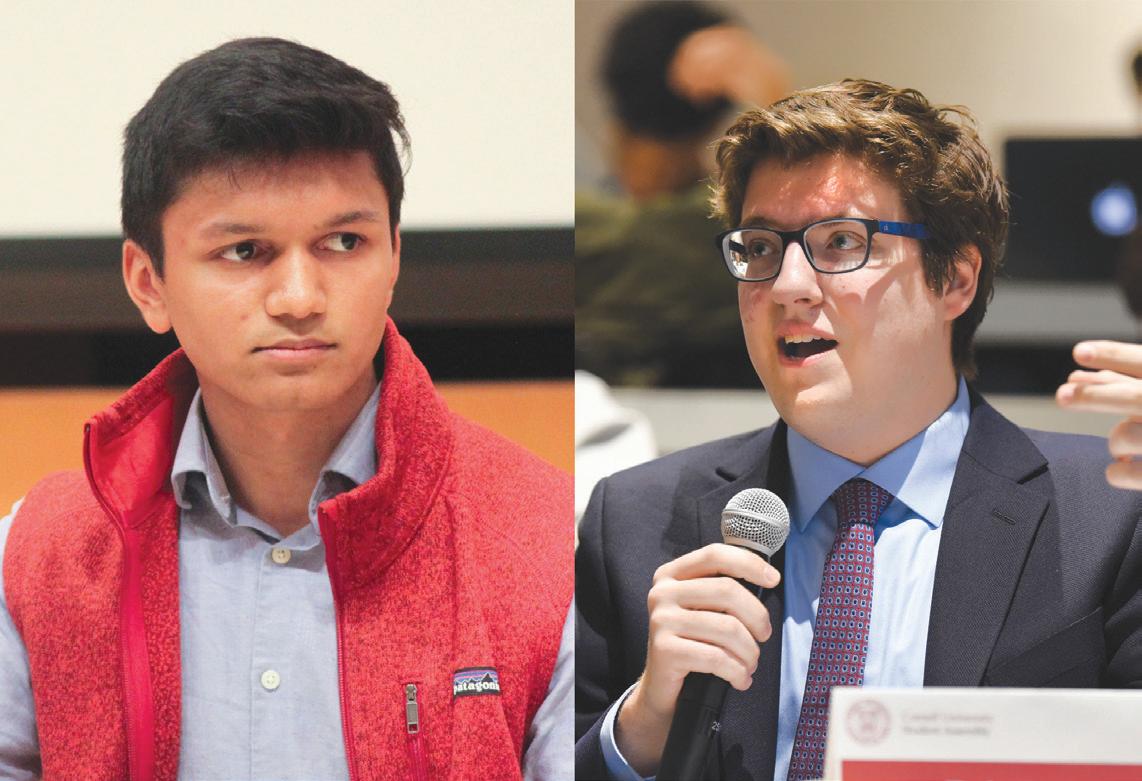
The 2018 S.A. election between Dale Barbaria ’19 and Varun Devatha ’19 came down to the wire, but it almost ended with a disqualification.
Initially, the elections committee announced Barbaria the victor, but it was later announced that his victory was by default. The S.A. elections committee had disqualified Devatha for a meme posted by one of his supporters in the “Cornell: Any Person, Any Meme” Facebook group.
The meme had a number of items, listing their cost, concluding that “Vesting in Varun” was “Priceless.” Problems arose with the meme because it had a Cornell logo on it, which the committee said violated campaign rules regarding promotional materials. In a six-to-one vote with one abstention, the committee voted to disqualify Devatha.
Devatha appealed the decision, which the committee denied. But
a report by judicial codes counselor Kendall Karr J.D. ’18 reversed the decision, citing four separate instances of bias in the decision.
Once Devatha was reinstated, the voting showed that the formerly-disqualified candidate had won by 48 votes, making Devatha S.A. president. Barbaria took the position of undesignated representative at-large.
Although for a different position, a similar story with campaign rules and disqualifications happened the following year, this time in the race for student trustee.
Initially, Jaewon Sim ’21 was declared the winner, but the next day the Trustee Nominating Committee said that it was in part because JT Baker ’21 was disqualified. The controversy was over an email sent by a Cornell Athletics official to student athletes to support Baker, who is on the football team.
The email did not specifically endorse Baker, but the committee still found its wording “altered the fairness of the election.”
JT Baker, a member of the football team, is running for Student Elected Trustee,” the email read. “He would be the first ever student athlete in this critical leadership position.”
“This election for the StudentElected Trustee position is incredibly important and we encourage you all to vote, please spread the word!” the email continued.
Tuesday, October 6, 2020
COURTESY OF
Behavioral Economic and Decision Research Workshop: Sudeep Bhatia 11:30 a.m. - 1 p.m., Virtual Event
Cornell Wellness Virtual Walk to Run Class 11:30 a.m. - 12:30 p.m., Virtual Event
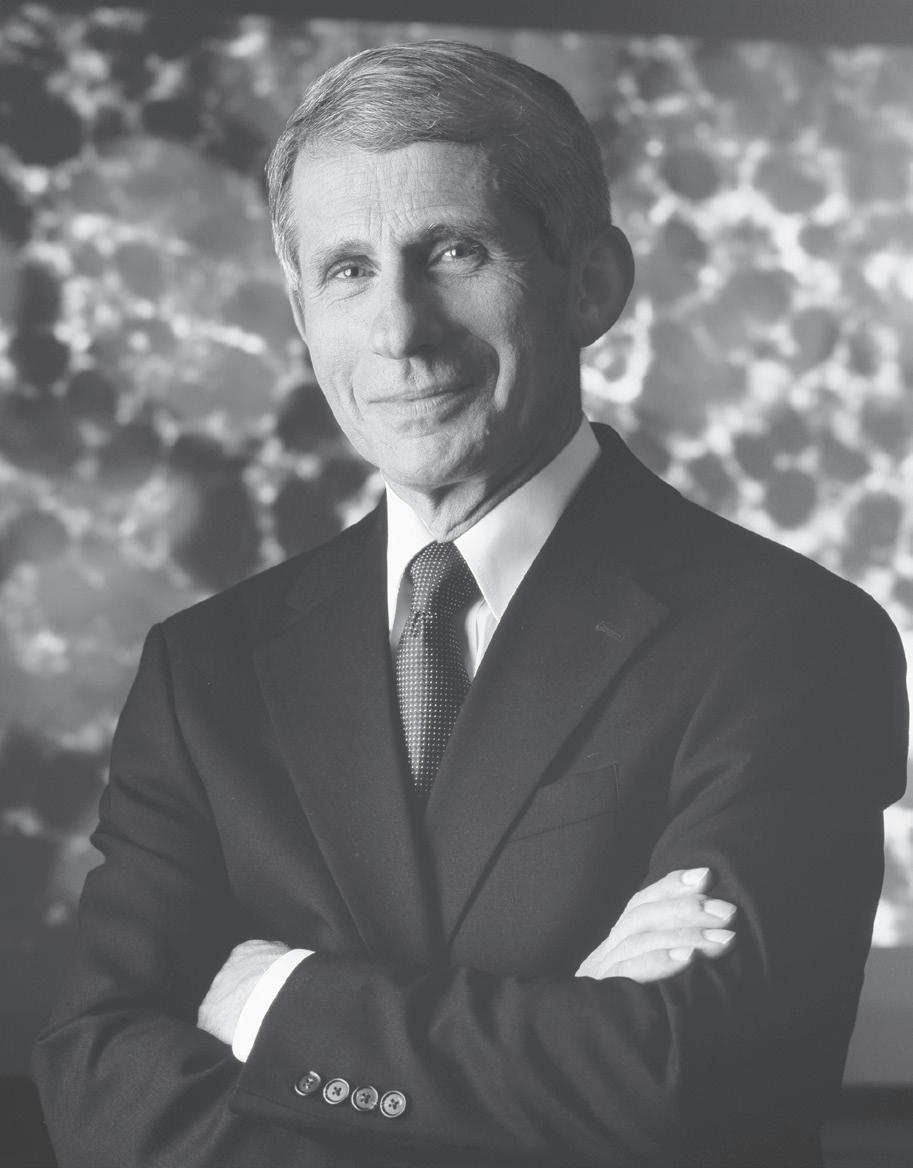
Cornell Promise: A Commitment to Learning From the COVID-19 Pandemic With Anthony Fauci M.D. ’66, NBC News’ Kate Snow ’91 11:45 a.m. - 12:30 p.m., Virtual Event
Harvest Kitchen With Local Food Program Leader Flip Filippi: Hot Sauce
1 - 3 p.m., Virtual Event
First Gen and Low Income
Student Support Office Hours
2 - 3 p.m., Virtual Event
Cornell in Washington Virtual Q&A Session 4:30 - 6 p.m., Virtual Event
LSC Motivation Stations — Study Online with Others!
7 - 10 p.m., Virtual Event
BIDEN
Continued from page 1
Tomorrow
Asian American Studies Program Lunch Series: Jaret Vadera Noon - 1 p.m., Virtual Event
Midday Music for Organ: Anna Steppler From C.U. Music 12:30 p.m., Virtual Event
Tactical Media and Critical Design: Rap, Robots, Games and Poetic Gestures 12:40 - 1:45 p.m., Virtual Event
Conceptualizing Migrant Farmworker Rights in Asia 3 - 4:30 p.m., Virtual Event
Reading Together at the Tatkon Center 4 - 5:15 p.m., Virtual Event
Fauci feature | Dr. Anthony Fauci M.D. ’66 will join NBC News’ Kate Snow ’91 will give a virtual lecture to students about the value of learning, even during COVID-19 Today ww w.c or ne lls un .c om
counting. He was a “big help” in the group’s initial formation, Justin Gillespie, the organization’s chairman, wrote in an email to The Sun.
Being “the one schmuck still voting for Biden” wasn’t easy before the former vice president won his party’s nomination.
GroupMe,” the organization’s president, Vale Lewis ’21, said. “Biden supporters and supporters of other candidates unsurprisingly disagreed, but I think that kind of discourse is healthy and normal during primary season.”
But Bromberg has continued to campaign, even if it’s just via email.
“My first political memory is my grandfather raging against Bush.”
David Bromberg ’23
“I won’t take the conservative student approach and say I was discriminated against but … it was rough,” Bromberg said.
Bromberg recalled heated arguments in the Cornell Democrats meetings and message threads, which he described as “a strange experience and not always friendly.”
“We had several heated discussions, especially in the
After Nov. 3, Bromberg said that Cornell for Biden will cease to exist, whether or not the group’s candidate wins. In the event that the election results are contested or ballot counting faces disruptions, Bromberg said he will “keep [the group] members informed.”
He hopes it doesn’t come to that. Bromberg wants the Republican Party that he sees as “actively undermining our democracy” to leave the nation alone.
“I really like America,” he says. “I’m kind of a big fan of the place.”
Eli Pallrand can be reached at epallrand@cornellsun.com.
An Archaeology of Redress and Restorative Justice 4 - 6 p.m., Virtual Event
Multilieracies Pedagogy and Teacher Professional Development: From Research to Practice 4:30 - 5:30 p.m., Virtual Event
By MILO GRINGLAS Sun Contributor
In the race for New York’s 58th State Senate District, old opponents face off once again — this time during an apocalyptic election cycle.
Leslie Danks Burke, the Democratic nominee for one of New York State’s largest geographic legislative districts, is running against Republican incumbent Tom O’Mara (R-N.Y.) for the second time, after challenging him for the seat in 2016.
Danks Burke, a lawyer who champions herself on education reform, won 45 percent of the vote for the seat in 2016, in a district where only 33 percent of registered voters identify as Democrats. After performing well in a year where Democrats underwhelmed nationwide, Danks Burke said she is running again to reverse the “40 years of neglect from Albany” toward the Finger Lakes region.
The “movement” Danks Burke created in 2016, where she said “armies of people went door- to-door” for her, was forced to pivot in the face of the pandemic. Danks Burke, who has never held elected office, credits her team for rolling out a digital campaign early in February, holding regular phone banks, enhancing her social media presence and hosting socially-distanced outdoor events.
The campaign was even forced to get creative: One event they hosted was a drivein movie night featuring a parody Broadway show called “Albany Bound: The Musical.”
In a typical campaign season, a candidate would “wear out three pairs of sneakers
walking up and down the sidewalks,” she said. This year presented a “whole different level of expenditure … you spend $50,000 on digital advertising.”
Danks Burke said increasing her online presence allows her to reach more voters. In a region with Republican and Democrat strongholds like Steuben and Tompkins counties, respectively, Danks Burke said her message stays the same regardless of voter partisanship.
“We want to know our government is doing its job, we want to know that we have an occupation that makes enough to pay the bills,” she said. “We want our kids to be in schools that are teaching them something and that aren’t falling apart at the seams with broken pipes and broken infrastructure, and at the end of the day, you want to go home and have a beer.”
To prepare for the debate with O’Mara, Danks Burke rewatched the recordings of their debates from four years ago.
“The promises of O’Mara in 2016 are the same [in 2020],” Danks Burke said. “In this global pandemic, we’re still arguing over the same problems.”
Danks Burke sees those problems emanate from the top of the New York State government, slamming Gov. Andrew Cuomo’s (D-N.Y.) leadership while also respecting his management of the state’s COVID-19 response.
“The governor is part of the problem across the entire state of New York,” she said. According to Danks Burke, the problem is a decades-long dereliction of duty in protecting the Southern Tier and Finger
Lakes regions.
The candidate also denounced the governor’s mandate that called for nursing homes to accept the readmission of virus-positive patients from hospitals in March. She suggested that years before the virus hit American shores, health care protocols in nursing homes were evidently lacking. Danks Burke blamed healthcare corporations for funneling large amounts of money into politicians’ coffers to get lax nursing home standards rolled back.
“I
The pandemic, Danks Burke said, has exacerbated a lot of the pre-existing power disparities in the Finger Lakes and Southern Tier. She expressed contempt for high taxes, yet continuously underfunded and failing schools upstate. “K-12 education struggles mightily,” she said.
equality supporters, and I think we can do it again,” she said.
The candidate is eager to advance to the New York State Legislature to institute her broad platforms on social justice, education, infrastructure, environmental protections and job growth.
Danks Burke said the New York State’s repeal of civil rights law Section 50-a, which shielded disciplinary records of police officers from the public, did not nearly go far enough.
have on interest that I’m working for: ... the people of the Southern Tier and Finger Lakes.”
Leslie Danks Burke
“Our educational institutions were suddenly asked to become not just educators, not just food suppliers to children who are food insecure, not just mental health care providers, but also pandemic managers,” she said. “Yet, [they were] not funded that way. We did not prepare.”
Danks Burke, who considers herself a disciple of what she called the “Franklin Roosevelt School of Democrats,” hopes to usher a progressive agenda akin to the FDR’s New Deal reforms.
“The Democrats did it once before by building a coalition of working class voters, labor unions, civil rights activists, women’s
By MIA O’BRIEN and AMANDA H. CRONIN Sun Contributor and Sun Senior Editor
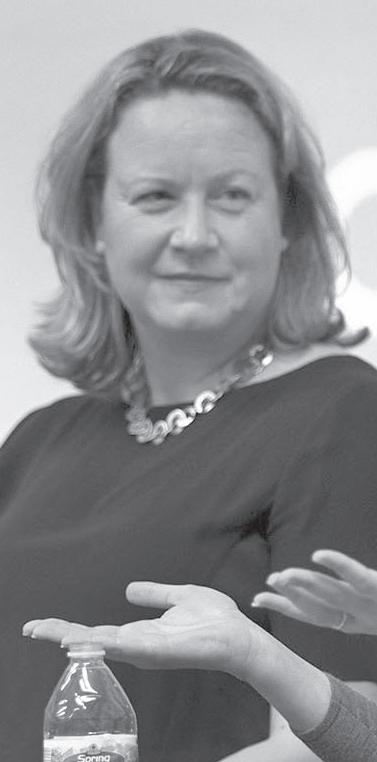
New York State Senator Tom O’Mara (R-N.Y.) and challenger Leslie Danks Burke exchanged heated words Thursday night in a virtual event hosted by Cornell’s Institute of Politics and Global Affairs.
The debate, moderated by Profs. Alexandra Cirone and Sabrina Karim, government, questioned the candidates on fossil fuel divestment, calls to defund police forces and the New York State Health Act.
In contrast to the presidential debate earlier in the week, the senatorial candidates found more common ground: Both opposed the power “overreach” of Gov. Andrew Cuomo (D-N.Y.), criticizing his extension of emergency executive authority.
law enforcement as racist is just completely wrong, uncalled for and causing great disharmony in our country,” O’Mara said.
Danks Burke said that institutional and systemic racism does exist, and that the state needs to “hold elected officials and people accountable and undo the rules that perpetuate this systemic oppression.” She noted that improved training for officers would be a step in the right direction.
O’Mara held a different view.
“I do not buy into the fact that racism is institutional or systemic,” O’Mara said. He continued to say that racism does exist “at all levels of our communities, state, our country.”
“To broad brush our law enforcement as racist is just completely wrong.”
NYS Senator Tom O’Mara
Danks Burke then criticized O’Mara for his vote to “expand Cuomo’s already oversized powers” in exchange for $40 million in COVID-19 relief.
Both candidates expressed their support of local law enforcement, saying that they were not in favor of defunding or reallocating funds for the police. O’Mara remarked that citizens need to support the police “now more than ever,” and that the state must continue funding the department.
“To broad brush paint our
He said that the police needed more oversight, and expressed support for independent disciplinary review boards. Currently, many police agency review boards are internal, and the majority of the members are former cops. Neither candidate supported the fossil fuel divestment campaign directed at New York’s Common Retirement Fund, the state’s pension plan. Supported by climate science experts — including Prof. Rob Howarth, ecology and evolutionary biology — the campaign’s goals are predicated on data that demonstrates a downturn in profitability of fossil fuel investments.
O’Mara attributed his decision to keeping the retirement fund “solid,” saying that the comptroller should focus solely on increasing the fund, not risking its stability.
“The job of the comptroller of the state of New York
is [to be] sole trustee of our retirement funds,” O’Mara said. “New York’s retirement fund is one of the best in the country. Let’s keep it that way.” Danks Burke took a different approach. She commended Cornell on its moratorium on fossil fuel investments, which occurred this May after years of student activism. However, since the legislature does not have the same expertise as Comptroller Tom DiNapoli (D-N.Y.), Danks Burke said that they should not involve themselves in decisions on divestment.
To continue reading this article, please visit cornellsun.com.
Mia O’Brien can be reached at mdo47@cornell.edu. Amanda H. Cronin can be reached at acronin@cornellsun.com.
“Our rules do not follow the principle that all are created equal. Black people are killed by the police 3.5 more times than white people,” she said. “We need to take a look at rules across the board. Two small bills passed by the N.Y. State Legislature are not going to solve a problem 244 years in the making.”
The candidate said the first bill she plans to introduce is to fix the state’s property tax structure to cut Medicaid costs down for the people that are the least able to afford it. Danks Burke lamented that local businesses get crushed by exorbitant taxes and healthcare costs.
“I have one interest that I’m working for: that is the people of the Southern Tier and Finger Lakes,” Danks Burke said.
To continue reading this article, please visit cornellsun.com.
Milo Gringlas can be reached at mg862@cornell.edu.
Continued from page 1
Many students opposed the decision, including many of Baker’s teammates. President Martha E. Pollack and Board of Trustees Chair Robert Harrison ’76 also did not agree with the decision, although they said that they will let the committee stand by the disqualification.
Statistics released about the election stated that Baker would have won if not for the disqualification. Ultimately, Sim remained in the position of student-elected trustee, while Baker was given a spot as a trustee at-large.
The S.A. presidential election for the 2020 to 2021 school year has been delayed twice, once by four days and another by six months.
These S.A. elections were supposed to happen last March, but Cornell shut down just before the voting process was set to begin. Given the chaos surrounding the mounting pandemic at the time, the three presidential candidates — Cat Huang ’21, Uche Chukwukere ’21 and Dillon Anadkat ’21 — led a movement to pause all S.A. campaigning and only resume in the fall semester.
The three candidates came back for another run this semester, re-debating and virtually campaigning until Oct. 1, when the voting period was originally set to end. But only one day before elections were supposed to end, the directors of elections — Moriah Adeghe ’21 and Savanna Lim ’21 — found that only ranked ballots would be counted, potentially leaving out over a thousand votes from students who left their ballots unranked.
The Office of Assemblies, which manages elections, uses a rankedchoice voting system, a tabulation method in which students rank can-
didates in order of preference, for S.A. presidential elections. Typically, the candidate with the most first preference votes wins, but if there’s no clear majority, then the candidate with the least number of votes is successively eliminated until there is a winner. According to Gina Giambattista, the director of the Office Assemblies, this method has been used for at least seven years.
But the issue of unranked ballots wasn’t new: past elections had many invalid ballots cast because of the software the Office of Assemblies uses to tabulate votes. The 2019 S.A. presidential race had 1,435 uncounted ballots, while the executive vice presidential race that same year had 1,761 invalid ballots.
Controversy over the unranked ballot raised questions on the election’s fairness and legitimacy, so Adeghe and Lim, along with Giambattista, made the decision to pause voting for the presidential race and “destroy” all of the votes casted from the original voting period. The elections committee decided to restart voting Oct. 2 at noon and end Oct. 5 at noon.
“We feel that this is the best way to proceed with an honest election since there is no way to include the invalid ballots that have already been cast in the final vote count,” Adeghe and Lim wrote in an email to the Cornell community.
Since voting restarted, emails encouraging Cornellians to revote now have disclaimers in bold and all caps, reminding students to rank their ballots in order for them to be counted. Before this controversy, there were no disclaimers on ranked voting for S.A. elections in voting emails.
Even though voting ended Monday at noon, no results for the S.A. presidential election have been announced yet.
Alex Hale can be reached at ahale@cornellsun.com.
By ANIL OZA Sun Science Editor
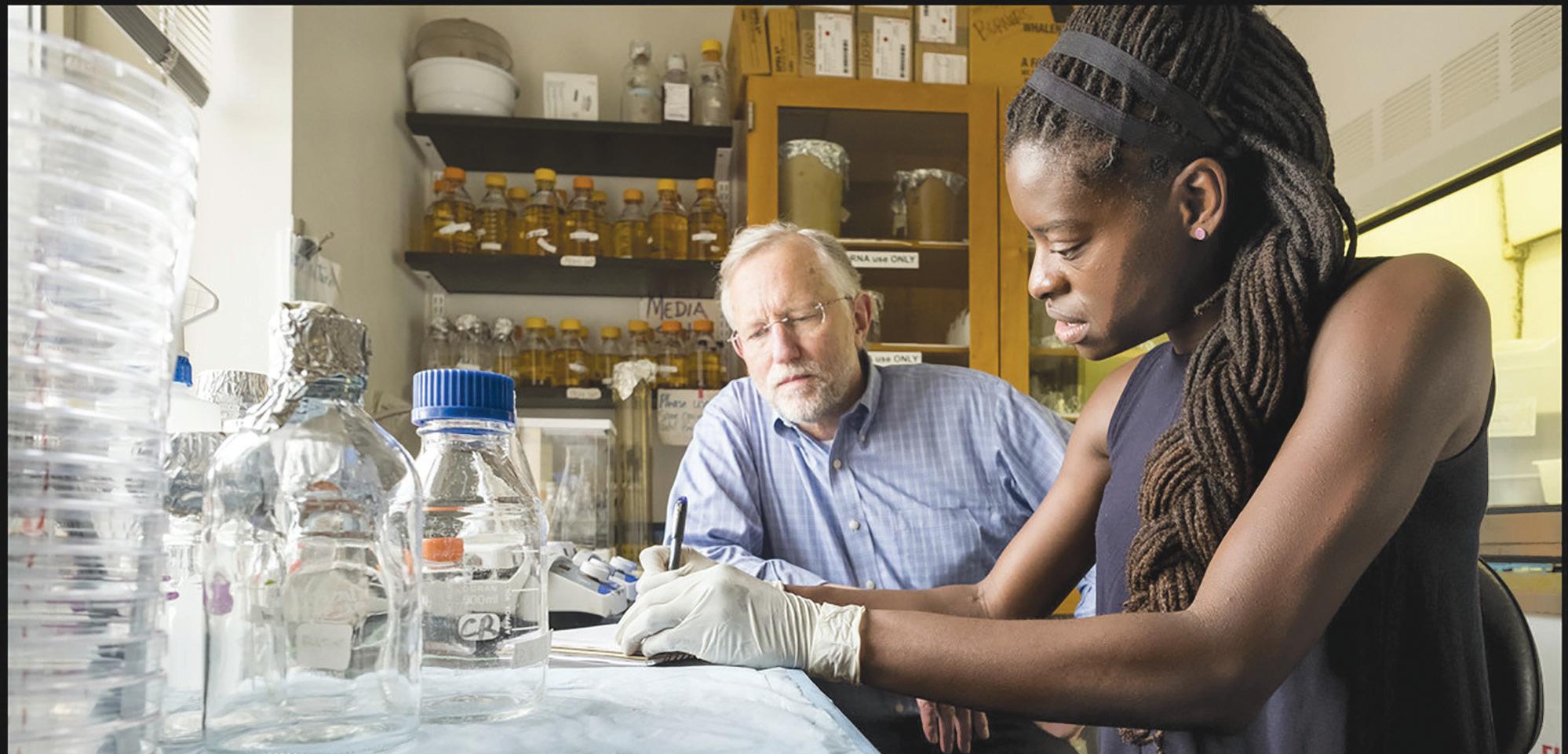
In 1989, Prof. Charles M. Rice, virology, undertook the project of developing a vaccine for hepatitis C based on the vaccine that was successful in combating yellow fever.
Despite similarities in the viruses that cause the two diseases, it would take nearly a quarter of a century until an effective mixture of drugs was put together.
On Monday, Rice — an adjunct professor of virology at Weill Cornell medicine and the executive director of the Center for the Study of Hepatitis C — was recognized along with Harvey J. Alter of the National Institutes of Health and Michael Houghton of the University of Alberta for “seminal discoveries that led to the identification of a novel virus” and received the 2020 Nobel Prize in Physiology or Medicine.
“Prior to their work, the discovery of the Hepatitis A and B viruses had been critical steps forward, but the majority of bloodborne hepatitis cases remained unexplained,” a press release from the Nobel Assembly at the Karolinska Institute stat- ed. “The discovery of Hepatitis C virus
tects the body from infection, processes nutrients and filters the blood. This inflammation can cause the liver to become inefficient in its functions, and in the long term can cause fatigue, loss of appetite, pain in the joints and abdomen as well as nausea.
During the 1960s, hepatitis C gained national attention when a substantially large population had developed chronic hepatitis from blood transfusions from an unknown source.
In 1978, Alter discovered that there was an unknown virus that served as a common thread between many chronic hepatitis cases and Houghton used a new methodology to identify the genome of this virus, later known as the Hepatitis C virus.
“For many years, we knew that there existed some entity in blood that was neither hepatitis A nor hepatitis B. But until that entity was found, we could only refer to it as non-A, non-B hepatitis, Rice said in a 2017 interview with Seek, Rockefeller University’s research magazine. That cumbersome name really foreshadows how hard this virus would be to pin down.”
Rice built off of the work of his co-recipients and concluded that this virus alone could cause chronic hepatitis.

He was lured into the pursuit of a cure in part because of the success vaccine for yellow fever, because the virus that causes yellow fever is in the same family as the virus that causes Hepatitis C.
“When the hepatitis C virus (HCV) was finally identified, in 1989, scientists saw that it was a member of the same family as the virus that causes yellow fever,” Rice said. “The yellow fever vaccine is one of the safest and most effective immunizations available, so it was easy to imagine that creating a vaccine for HCV would not be too arduous.”
Reality proved to be quite different than this initial expectation, as Rice and other scientists struggled to pin down
the exact genome of the virus, causing challenges in creating a model of the virus they could use to develop treatments.
Rice credits his eventual breakthrough not to any technological development, but to the determination displayed by his team.
“I think the story of HCV is really one about persistence. The most crucial elements were blood, sweat, and tears,” Rice said.
“We had to continue believing that success was possible, and continue trying different approaches even when we repeatedly encountered failure.”
While the work on hepatitis C is far from over — there’s still no specific treatment for patients who experience liver scarring or cancer — the world of virology has turned its attention to another virus: SARS-CoV-2.
In a press conference on Monday, Rice expressed hope that some of the molecular targets — specifically the RNA dependent RNA polymerase and the protease — used to create treatments for hepatitis C could be useful in developing COVID-19 therapeutics.
The RNA-dependent RNA polymerase synthesizes RNA, the genetic material, of the virus which allows it to replicate in a person’s body. This structure has been the target of
remdesivir, a drug that is currently in clinical trials and is available to some for emergency use. Remdesivir is one of the drugs that doctors administered to President Donald Trump upon his hospitalization for COVID-19.
“Some of the targets that I think people are most excited about for SARS-CoV-2 and preventing COVID-19 are essentially, conceptually, the sort of same targets that turned out to win the war against hepatitis C, at least in terms of treatment,” Rice said at Monday’s press conference.
While receiving the Nobel Prize was an honor, it is not the utmost reward for Rice.
“Anything that we could contribute to this really just comes from an intrinsic curiosity about viruses and how they persist, and understanding sort of more about how they work,” Rice said. “The chance opportunity of having an important human pathogen land in your family of viruses that you happen to be studying. And then go from basically the beginning where it was discovered to when it can be successfully treated it’s a rare treat for a basic scientist.”
By TAMARA KAMIS
When Cornell mandates students to quarantine after contract COVID-19, they remain isolated from their friends and classmates. But even after they finish quarantining, life does not immediately go back to normal.
Individuals who tested positive must remain in isolation for at least 10 days after illness onset of illness, but this period may be extended depending on the symptoms, according to TCHD spokesperson Samantha Hillson. Close contacts must quarantine for 14 days following their exposure.
As of Monday evening, Cornell’s quarantine and isolation room capacity is 98 percent empty because the University released many students who were COVID-19 positive and had completed their isolation period.
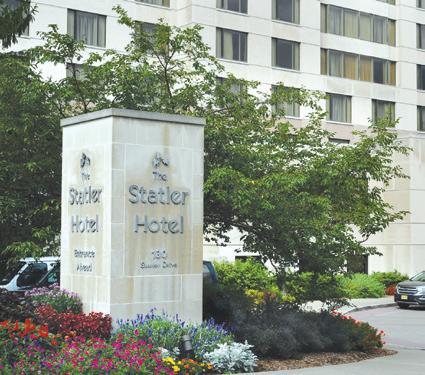
A student, who chose to remain anonymous for medical privacy reasons, spoke to The Sun about their experience when she was released from the Statler after an 11-day quarantine. The student had lost her sense of smell for five days and was nauseous for two of those days, but she soon regained her sense of smell and appetite a few days into her Statler medical isolation.
With the student’s permission, Student Disability Services contacted her instructors to let them know of her accommodations for 14 days. A student’s COVID-19 status is not disclosed, according to SDS director Zebadiah Hall, because such accommodations could also be requested for other illnesses and disabilities.
The student’s temporary accommodations included allowed absences, the ability to make up missed exams and course content, deadline extensions and the ability to participate in coursework, including exams, remotely.
Students are guaranteed 14 days of paid sick leave from campus jobs during their quarantine period if they cannot work remotely in isolation, according to Diane Corbett, director of financial aid.
But being away from friends while stuck in a hotel room can create mental health challenges for some students, including the student who spoke with The Sun.
“I did have a good recovery but it’s still a very unpleasant experience being there in general, not physically, but mentally,” she said. “I like spending time in nature, so not even being able to breathe fresh air, take a walk or leave my room was hard.”
While telehealth mental health resources were available,
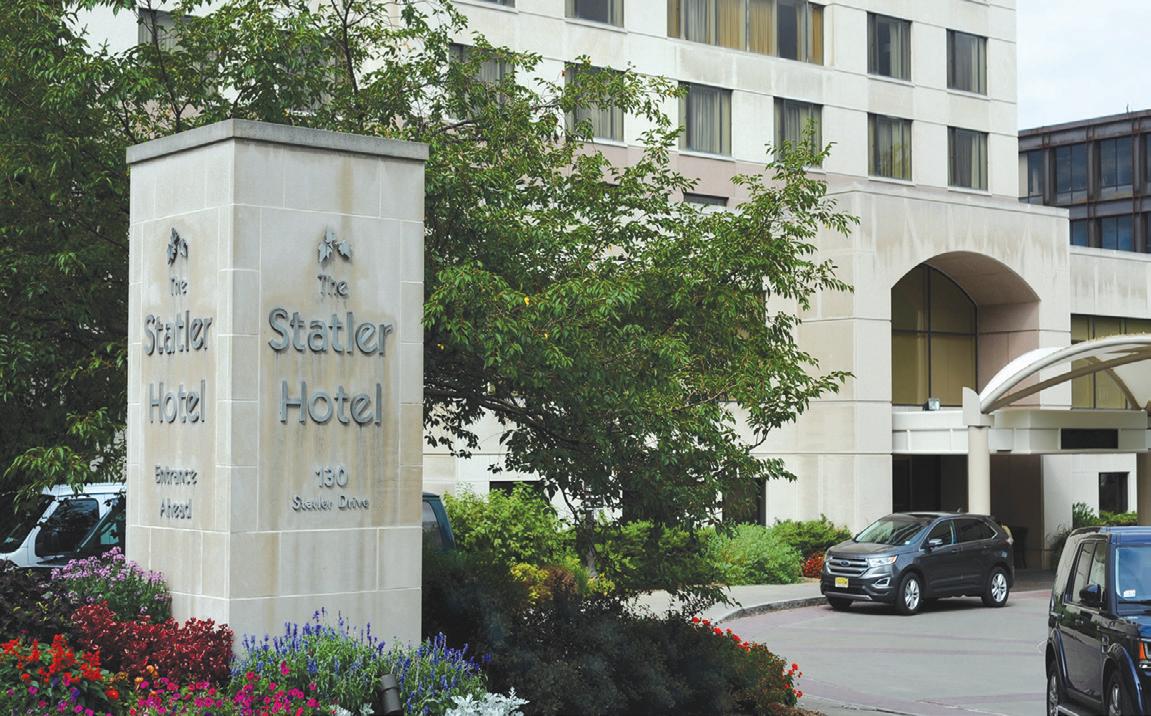
and students in isolation received an email on mental health and social support resources from the Cornell Care and Crisis team, the student opted to wait and see if her anxiety resolved once she was back in her Collegetown apartment. She has been feeling better since leaving the hotel.
Dr. Alecia Sundsmo, director of Counseling and Psychological Services for Cornell Health, recommends group therapy and coping skills workshops for students struggling with COVID-related mental health challenges.
“During isolation, students receive outreach that includes information about resources to support their mental health,”
Sundsmo wrote in an email to The Sun. “We hope that by resourcing students during isolation, they will also use the information as needed when they leave isolation.”
The student received a survey about her time in The Statler, but has received no other follow up communications from Cornell Health or the TCHD since leaving The Statler.
Frank Kruppa, TCHD director, sent the student an email notifying her that she could leave medical isolation, writing, “You are at liberty to resume normal day to day activities. We do not consider you to be contagious to others.”
Kruppa’s email recommended that the student continue to follow standard COVID-19 public health precautions. The student is continuing to social distance, wear a mask and be cautious. She is temporarily exempt from surveillance testing, according to her Daily Check portal.
While the student who spoke with The Sun has no remaining symptoms, accomodations can be made for students with lingering symptoms like fatigue and brain fog. For example, students could get transportation assistance around campus through the CULift program, which provides transportation for any students with illnesses, injuries and disabilities that make moving around campus difficult.
Accommodations can be extended or adapted for students who need them beyond the 14 days because of continuing symptoms. If students don’t think their instructor is following accomodation guidelines, they can reach out to SDS. According to Hall, in the case of discrimination, students can also file a report with the University.
Srishti Tyagi ‘22 contributed reporting.
Tamara Kamis can be reached at tkamis@cornellsun.com.
When skilled cobblers and cordwainers set up shop in communities from New England to the Chesapeake Bay back in the 17th century, their creations were commonplace and conventional. Their designs were practical amalgamations of wood and leather, constructed for little more than pragmatism and professionalism. While the variegated, rubber-soled concoctions today paraded as sneakers also succeed in delivering this value, their chronicle of cultural significance is far more intriguing — it is a story of bridges, a story of boundary-dissolution and a story of blockbuster popularity.
Popular culture has somehow managed to assemble a staunch partition between athletics and the arts. As if engraving them onto opposite faces of some mutually exclusive coin, the prevailing media has painted the former
as the epitome of structure and discipline, the latter as a raw representation of minds run rampant. Sneaker culture, however, is a seamless synthesis of the two dominions. Sneakers are unique in that they are simultaneously appliance and articulation; they are mechanisms for agility and artistry all rolled into one.
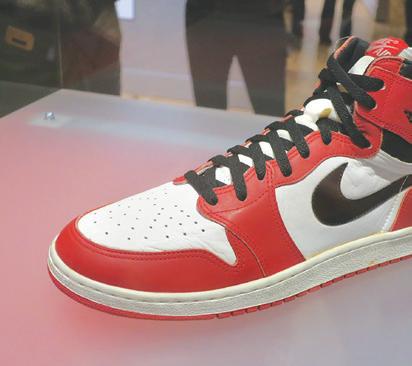
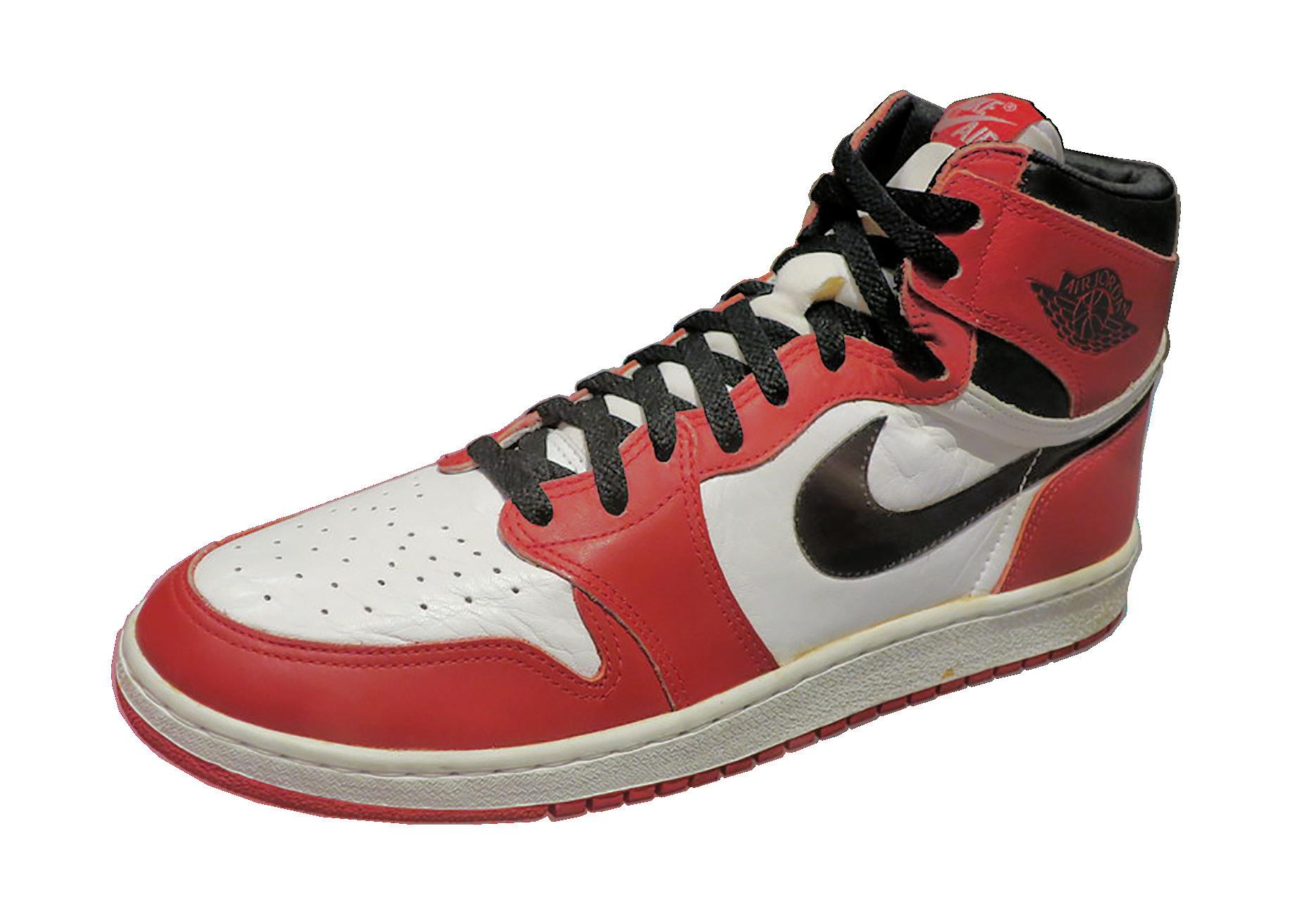
Today’s show stopping footwear arose from a far more modest and unassuming predecessor — the tennis shoe. High marks from the sport’s country club constituency led to an early association with wealth and power, although this conceptualization was quickly turned on its head. As sneakers became accessible en masse throughout the 1920s, they transitioned from the lavish opulence of private clubs to the cracked pavement of public courts, where they would soon grow almost inseparable from the sport of basketball. It was icons of this game that gave us some of the most beloved and enduring models, from Nike’s Air Jordan to Converse’s Chuck Taylor.
Even as the shoes transcended social divisions, worries surrounding class remained. Sneakers born out of special sponsorships or limited edition promotions were still far from
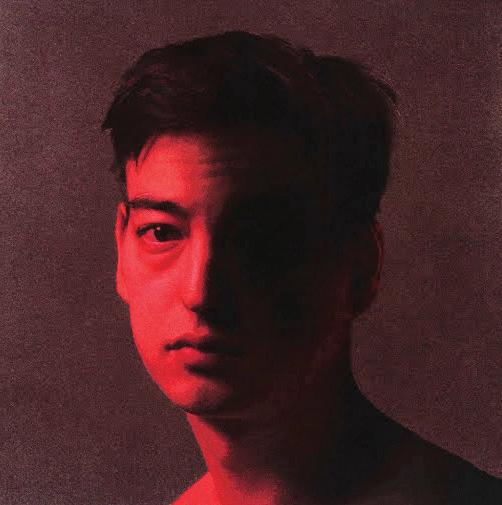




Joji has shown remarkable improvement with every year that he has continued to make music, and the record Nectar is no exception. His vocals have shifted from that of the king of lo-fi music to a capable pop singer’s. Controlled falsetto, thundering bass or relaxed harmonies are expelled unto the track by this miraculous voice. Whether it’s gently rapping like on “MODUS” and “Tick Tock” or singing to his ultimate capabilities like on “Afterthought” or “Mr. Hollywood,” Joji has proven himself to be an emerging icon of popular music. Additionally, the single “Sanctuary,” although released over a year ago now, has nearly garnered 200 million
cheap, meaning that taking a stroll in a particularly well-advertised or widely-envied iteration was practically synonymous with pulling a wad of cash out of your pocket and waving it under the noses of passersby. The final years of the 1980s were characterized by a spike in crime, and historians have not been shy about forging a linkage between the burgeoning sneaker culture and the escalating incidents.
What differentiated sneakers from any other shoe was
dismantle schemes of institutionalized racism.
Music industry A-listers recognized this sprawling fascination with sneakers as a ripe opportunity for coalition-building, and they seized it. Athletes and artists alike rallied around these products as indisputable tools for a new manifestation of self-expression that was at once tacit and deafeningly loud. Some of the biggest names in hip hop have dropped tracks in honor of their favorite pairs — Nelly’s “Air Force Ones,” Meek Mill’s “Reebok Back” and Run-D.M.C’s “My Adidas,” to name
plays on Spotify.
Atmosphere is a key element of Joji’s music, and he absolutely kills it in this department. “MODUS” feels like a refreshing wave of energy upon impact. It’s been blessed by an intensely discernible vigor that comes from Joji’s simultaneous anguish and perseverance. Yet Joji never fails to impress and to flex about his success.
“Tick Tock” is quite possibly the catchiest song Joji has ever made. It’s an emotionally lucrative piece ripe with both nostalgia and hope, perhaps so innately effective because it almost commands listeners to recognize time as it passes. Part of what makes it so powerful is that it’s a song about a triumphant love complete with potential loss and victory regarding that love. And it talks about iced out watches, of course.
“Daylight,” his collab with Diplo, hosts proud trumpets, synths and the occasional beachy guitar chord. The song also seamlessly transitions into the humble “Upgrade,” a sort of throwback song that utilizes a chord progression similar to “worldstar money (interlude).”
It uses an upgraded beat as the title nearly foretells, and the deep vocals are more immersive. In all regards, it showcases how far he has come as an artist explicitly while silky smooth lyrics and melodies ring aloud. I personally find Joji best when he makes his own beats, though.
Granted a music video upon the album’s release, “Gimme Love” is another impeccably smooth yet more pop-sounding song. “Run” is also on the album, released several months prior as a single. Both of these songs sound groovy but take quite a few listens to get attached to. Nevertheless, they’re now difficult to forget about. “Sanctuary,” the very first single of the album, is a true testament to Joji’s power when he really nails any niche vibe. It evokes Star Wars and Star Trek imagery in the music video,
a few. Major partnerships continue to dominate the industry, with top sellers like Rhianna, Kanye West, Travis Scott and Drake all hopping in on the sneaker trade. With the worldwide sneaker industry worth roughly $62.5 billion in 2017, it’s no secret that there’s a clear opportunity to reap a profit. While sneakers’ promise of comfort has lured us all in, their delivery of an excitement that assuages the numbness of normalcy has won us all over. Their shape and surface area lend themselves to a liberty of design where many other modes of footwear are constrained, subsequently spawning a protion of silhouettes and styles. Previous limitations to the world of athletics have been scrapped in favor of a far more inclusive constituency, with options for “lifestyle” and “streetwear” customers on the rise. Even the most prestigious houses of haute couture have ventured into the sneaker market, with Givenchy, Balmain and Chanel leading the way for their fellow luxury ateliers. Although cursory examination reveals this trend as a simple example of suppliers looking to meet the expanding preferences of their consumers, the shift practically begs for speculation — isn’t this just another example of the pervasive gentrification that has come to define our era?
It is crucial to remember that sneakers are, in their purest form, art. They are schema-shattering constructions of wearable innovation. Sneakers are effectively rubber-soled art exhibitions in miniature, serving to challenge our conceptions of where art dissolves into mere functionality. Perhaps the very existence of the sneaker is proof that threads of the former are inextricably woven into the fabric of the latter.
Megan Pontin is a sophomore in the School of Industrial Labor Relations. She can be reached at mpontin@cornellsun.com. Rewind runs alternate Tuesdays this semester.
but relies on an unparalleled level of uplifting tones and themes in the actual song. Warbling and laser-like synths compound to make one of Joji’s most complete, epic experiences he has made to date.
Perhaps one of my album favorites, “NITROUS” is a techno-futur ized, fast paced yet mellowed out rap track. It’s unique in that it captures an unmistakably peaceful air to it despite moving so fast, reminding me of more relaxed indie rappers like Dominic Fike. “Pretty Boy” featuring Lil Yachty is super retro as well and it leans more into melodic rap. Mesmerizing flutes, synths and chants usher forth an inescapable feeling of “livin’ on the West side” where “these hills, they burn so bright.” Both songs are really only rivaled on the album in replayability by “Tick Tock.”
Listeners will still find Joji’s roots wholly throughout this album. However, a pack of the tracks are slowed down much more than the rest. They’re impeccably relaxing and refined, but focus more on Joji’s whimsical side of singing. “Afterthought” ft. BENEE is a blend of electronic pop and jazz in what is the most timeless feeling of all of the songs. “Mr. Hollywood” is dreamy enough to put you to sleep yet it stays enthralling from start to finish, encapsulating a romantic vibrance that seems akin to a Disney story. The latter song in particular has what might be one of the best instrumentals of Nectar “777” does break this trend, lending for a simple, straightforward hype song that still somehow sounds sleepy. The beat picks up here and Joji returns to his newfound passion for coupling bright synthesizer assaults with rapid, relaxed rap. His hooks tremendous-
RACHAEL STERNLICHT/ SUN GRAPHIC DESIGNER
album, consuming the audience in an overwhelming aura of momentary significance. “Like You Do” is a seasonal, compassionate and reflective love ballad with light piano. There is nothing especially inventive happening on this song, but the soft vocals are tearfully beautiful.
Although “Like You Do” is the second to last song on Nectar, it summarizes the album in its greatest moments. Joji focuses on capitalizing the hope that can be found in reflecting on the past and oneself. There are times to sink into both the dark and the bright, feeling the energy of pure sonic suspense from moment to moment. The album closes on “Your Man,” a track that nearly promises Joji’s fans that he will always be there for them through its cadence, lyrics and title.
Regardless of life being at a high point or low, when love is found or love is lost, Joji and his copacetic energy is eternal to his audience.
Cory Koehler is a senior in the College of Arts and Sciences. He can be reached at ck594@ cornell.edu.
Since 1880
138th Editorial Board
MARYAM ZAFAR ’21
in Chief
JOYBEER DATTA GUPTA ’21
Business Manager
PETER BUONANNO ’21
Associate Editor
MEGHNA MAHARISHI ’22
Assistant Managing Editor
CHRISTINA BULKELEY ’21
Sports Editor
BORIS TSANG ’21 Photography Editor
CAROLINE JOHNSON ’22
ALEX HALE ’21
ARI DUBOW ’21
EMMA ROSENBAUM ’22
Editor
BENJAMIN VELANI ’22
Dining Editor
JOHN MONKOVIC ’22
Multimedia Editor
MIKE FANG ’21
App Editor
OLIVIA WEINBERG ’22
Assistant News Editor
MADELINE ROSENBERG ’23
Assistant News Editor
LUKE PICHINI ’22
Assistant Sports Editor
HANNAH ROSENBERG ’23
Assistant Photography Editor
BRIAN LU ’23
Assistant Arts & Entertainment Editor
ANNABEL LI ’21
Assistant Money & Business Editor
LEI ANNE RABEJE ’22
Layout Editor
JOHN COLIE ’23
Blogs Editor
JOHNATHAN STIMPSON ’21
Managing Editor
KRYSTAL YANG ’21
Advertising Manager
JASON HUANG ’21 Web Editor
NIKO NGUYEN ’22
Editor
PALLAVI KENKARE ’21
Editor
SEAN O’CONNELL ’21
KATHRYN STAMM ’22 News Editor
ANIL OZA ’22
PLOWE ’23
LEE ’21
CHENG ’21
PEÑEÑORY ’22
MEGHANA SRIVASTAVA ’23
DAWSON ’21
’22
’21
’22
WANG ’21
’22
KRISCH ’21
SUN ’20 Newsletter Editor
Ad Layout Mei Ou ’22
Production Deskers Ben Mayer ’21 Dana Chan ’21
News Deskers Alex Hale ’21 Meghana Srivastava ’23
Opinion Desker Peter Buonanno ’21
Design Desker Lei Anne Rabeje ’22
Photo Desker Hannah Rosenberg ’23
Arts Desker Emma Plowe ’23
Sports Desker Emily Dawson ’21
Science Desker Emma Rosenbaum ’22

I’m finally in a committed relationship. It’s the real deal, the forever-type of thing. You know how it goes. Sure, we’ve had our problems, but we’re here now and it’s working.
We started talking second semester freshman year and got more serious when we came back to campus as sophomores, but we were never exclusive or anything. When campus shut down due to the pandemic, we really lost touch and things sort of fizzled out. Our past is complicated, but whose isn’t? Now, as juniors, we’ve found each other again and decided to go all-in.
now, we’ve gotten ourselves into a serious predicament where the biology majors can’t even differentiate themselves from many of the pre-med students.
Ultimately, this is less about a major and more about a mindset. You owe it to yourself to explore all Cornell has to offer.
My family and friends are so excited for us and as for me, I’ve never been happier.
My government major and I are finally official.
The tales of our majors are among the most complicated love stories on this campus — on-again, off-again, until there’s no choice but to get married. A lot of students come to Cornell already knowing exactly what they wanted to study — as if they came out of the womb wearing an ivy league sweatshirt and gripping a major application form. Maybe it’s because I’ve never had an answer to the question “What do you want to be when you grow up?” — except for a brief stint in the fifth grade, when I told my teacher I wanted to be an actuary — but I find those students, the ones who came to campus so firmly decided, a bit hard to trust. How will you tell if and when you need a divorce? Will you always wonder what could have been if you settle down too quickly?
I think waiting to declare your major is the smartest thing a Cornellian can do … granted you shouldn’t do what I did and hold out until the beginning of junior year. Just last week my professor asked me, “Odeya, how did you get away with it for this long?” I honestly have no clue. The problem with waiting as long as I did is that your options become more limited later on. If my goal is to be able to take wines at some point before I graduate, any delay to meet my major requirements will inhibit that possibility. I imagine that the balance to declaring your major might lie somewhere in the middle of sophomore year. Not too early and not too late, it’s just right.
I imagine that the balance to declaring your major might lie somewhere in the middle of sophomore year. Not too early and not too late.
Sure, many people have very particular passions which is largely why and how they got to Cornell in the first place — and don’t get me wrong, I wish I too had a guiding star. But maybe it should be less of a “I need to be a psychology major” and more of a “I have always loved emotionally analyzing the people around me,” or whatever it is that people who wind up being psychology majors love to do. When you get here, pre-this and pre-that are essentially just synonyms for pre-wealth. And
Cornell likes to give the impression that this is a school that truly cherishes the undeclared students who they imagine are floating around different departments like a fairy princess, until they find what they love and strike their magic wand. In reality, Cornell is a school where being undecided past freshman fall isn’t “a good look.” Afterall, have you ever tried to ask a student in the college of ILR what their major is? We treat our majors as if they’re descriptors of our personalities, and, mind a few exceptions, it’s relatively difficult to take courses across colleges because the college-specific credit count is so high. I’m not suggesting that this heavy focus on majors is necessarily a fault of Cornell, but I think we ought to realize that if it walks like a duck and talks like a duck, it’s probably a duck.
Ultimately, this is less about a major and more about a mindset. Even if you’ve wanted to be a hedge fund manager since you were six years old, you owe it to yourself to explore all Cornell has to offer before declaring your economics major. Thank goodness for distribution requirements — you never know what passion you might stumble upon next.
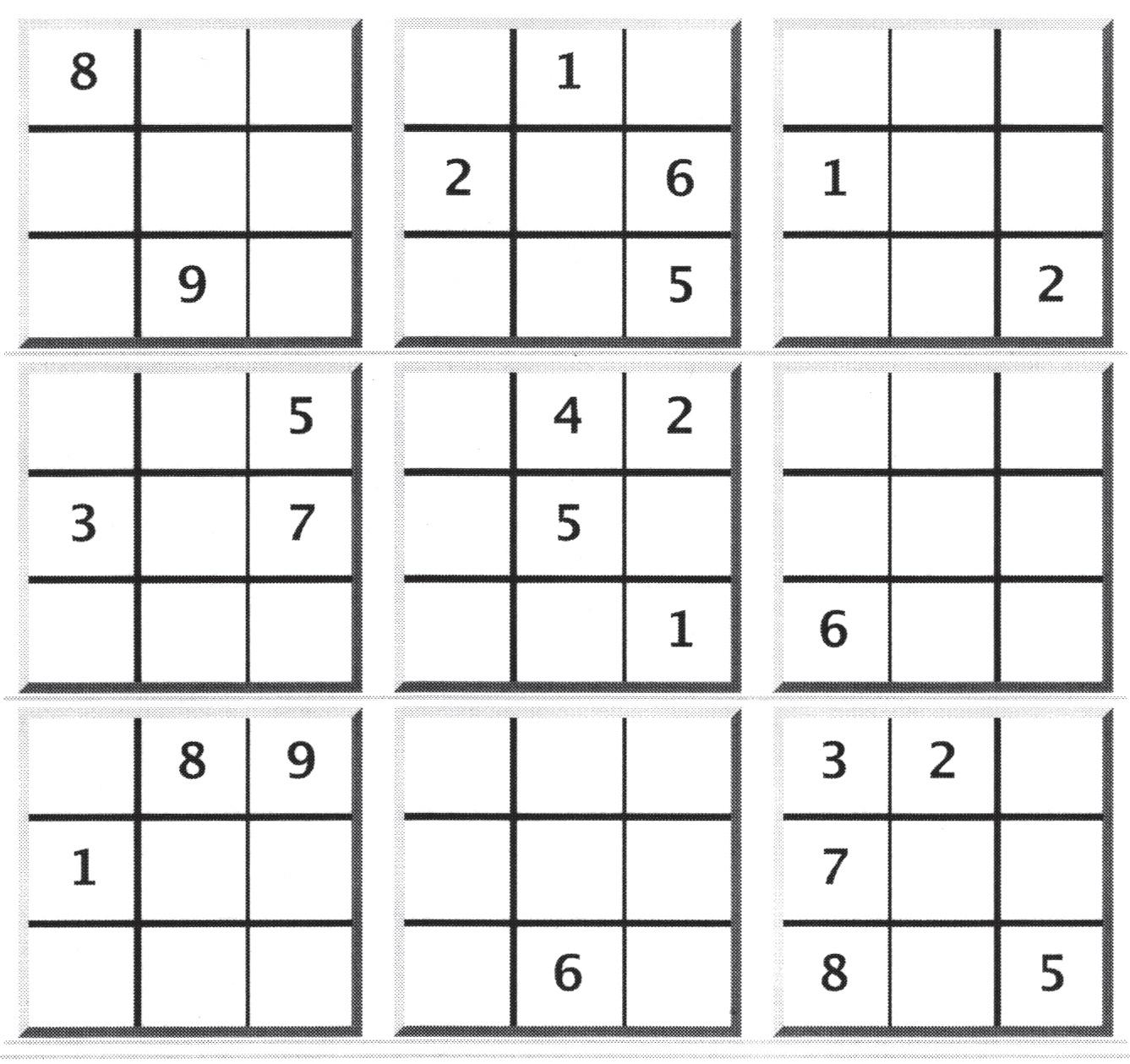
(Rules from wikipedia.org/wiki/ Sudoku)


Emily Dawson is an assistant sports editor on the 138th Editorial Board and previously served as a sports writer. She is a senior in the College of Agriculture and Life Sciences and can be reached at edawson@cornellsun.com.
Just six days ago, Cornell Athletics moved into Phase I of the Fall 2020 Phased Athletics Activity Plan. Even though coaches and athletes are now allowed one hour of conditioning each day, it is still unclear when full season sports will resume. Until sports come back in full swing, we’d like to recommend these five iconic sports books to fill the study breaks normally occupied by attending Cornell games.
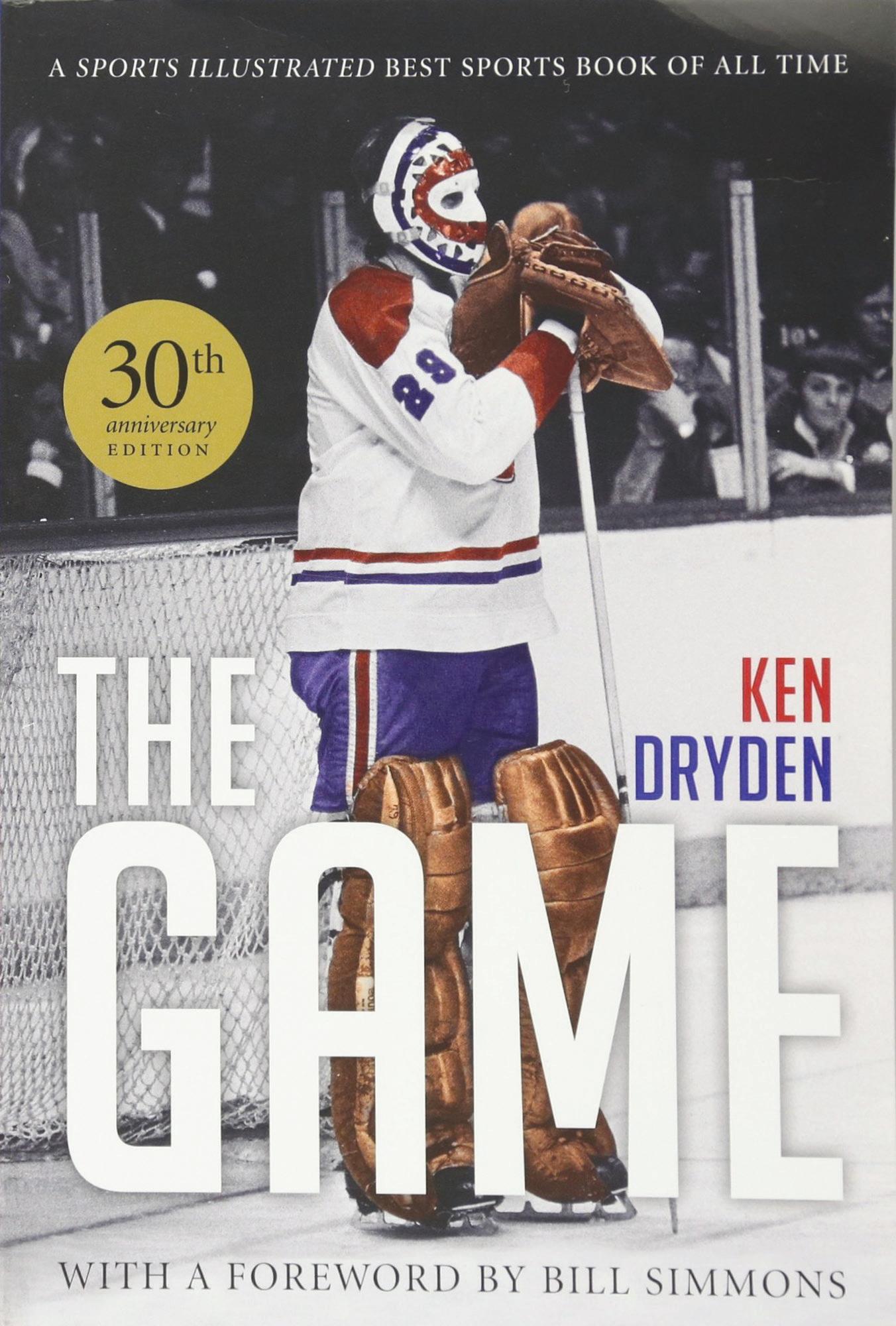
The Game by Ken Dryden
First on the list is an all-time sports classic authored by Cornell’s very own hockey star Ken Dryden. Dryden played for Cornell during his time as an undergraduate from 1967 to 1969 earning many NCAA and ECAC accolades. After his extraordinary career with the Red, he went on to goaltend for the Montreal Canadiens and become the president of the Toronto Maple Leafs. In 1983, the same year he published this memoir, Dryden was inducted into the Hockey Hall of Fame. This story provides an inside look into the life of a full-time hockey player as well as key figures that impacted Dryden.
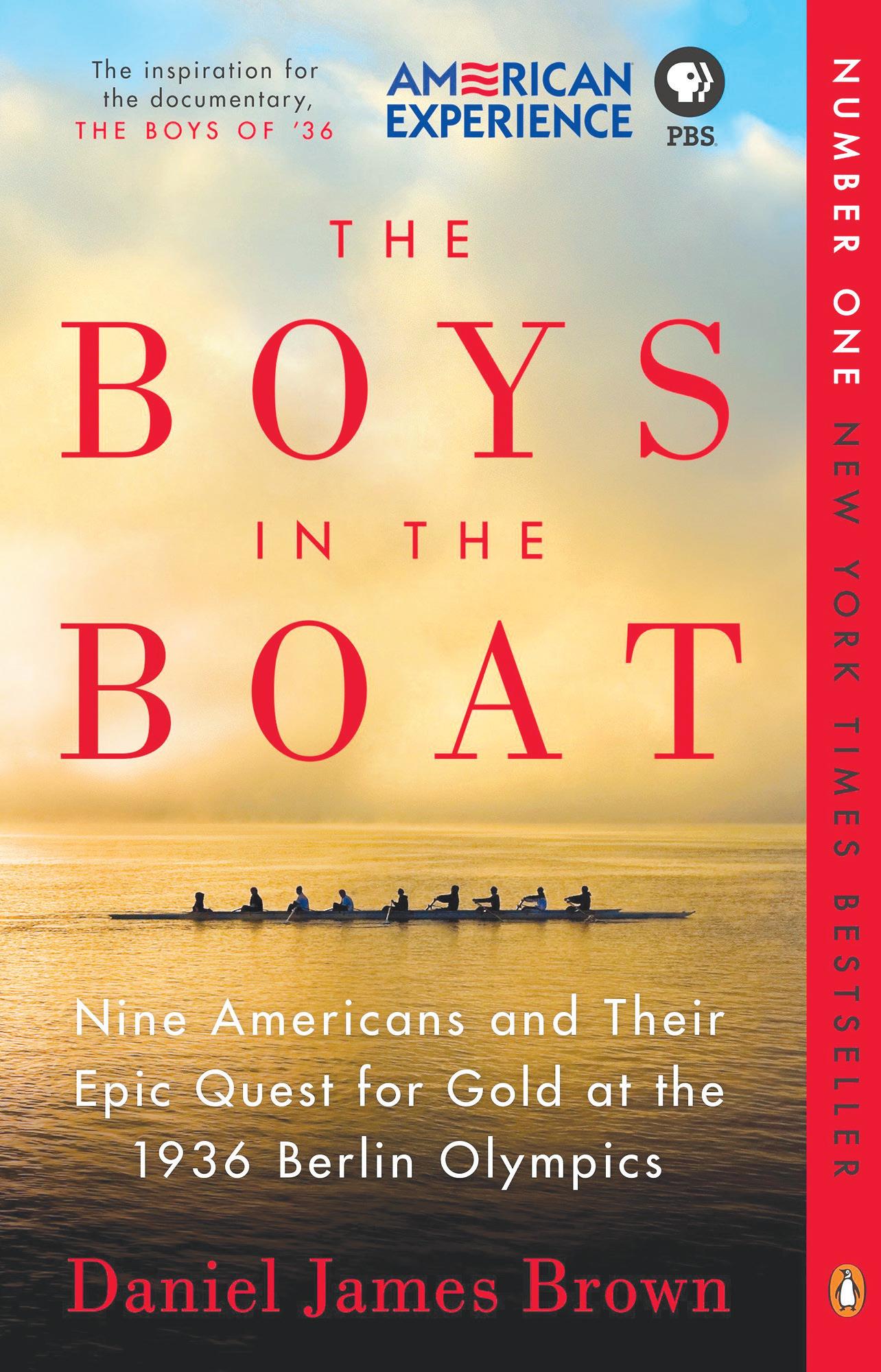
The Boys in the Boat by Daniel James Brown Brown brings to life the incredible story of the American college crew team who beat the odds to win gold in his 2013 non-fiction novel The Boys in the Boat: Nine Americans and Their Epic Quest for Gold at the 1936 Berlin Olympics. This crew team came from the University of Washington and beat the best teams in the U.S. to earn the right to represent their country at the Olympics. In his book, Brown’s main character is Joe Rantz and the reader is treated to first-hand accounts of both the unbelievable hardships overcome by the team members and the spectacle that was Hitler’s Olympics of 1936.
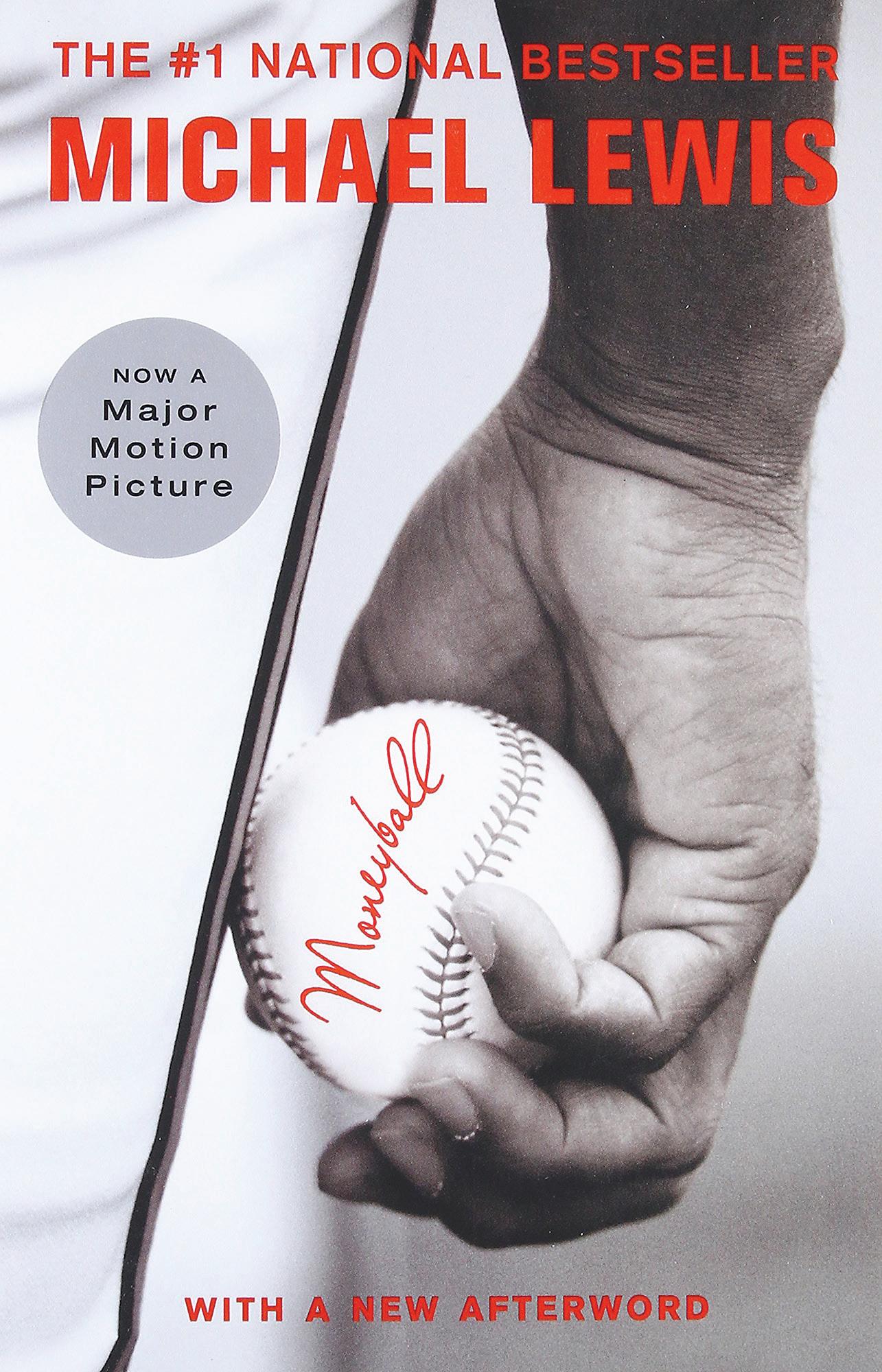
Moneyball: The Art of Winning an Unfair Game by Michael Lewis
If you want to step outside of college athletics for a good read, look no further than Moneyball: The Art of Winning an Unfair Game. A must for any baseball fan, Lewis details how the low-budget Oakland
Athletics baseball team used statistics to be competitive in the major league. The story’s main character is general manager Billy Beane who despite a lackluster career as a player, helped to revolutionize talent scouting by applying sabermetrics to baseball. When you finish the book, check out the 2011 movie starring Brad Pitt and Johan Hill, which was nominated for six Academy awards.
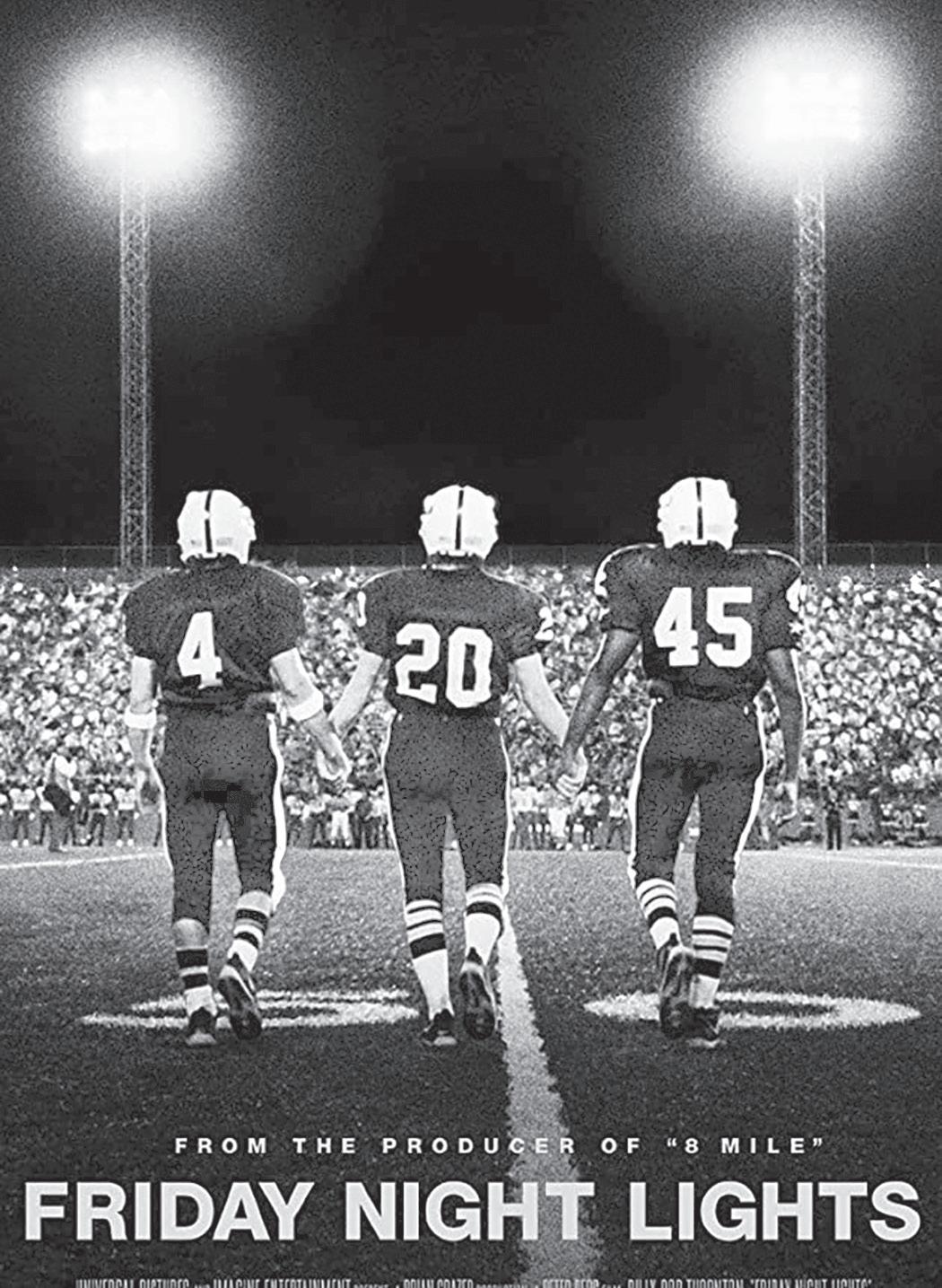
Friday Night Lights by H.G. Bissinger
This story focuses not on college or professional athletes, but rather football in American high schools. Bissinger actually moved his family to Odessa, Texas to fully immerse himself in this football experience. He takes his readers beyond the game itself to contextualize sports within society. Bissinger does not shy away from the details outside of the playing field, touching on topics such as education, socio-economic and racial issues. The rivalry depicted between Odessa and neighboring Dallas Carter provides insight into the lives of high school football stars. The book also concludes by showing just how difficult life can become when you don’t play by the rules.
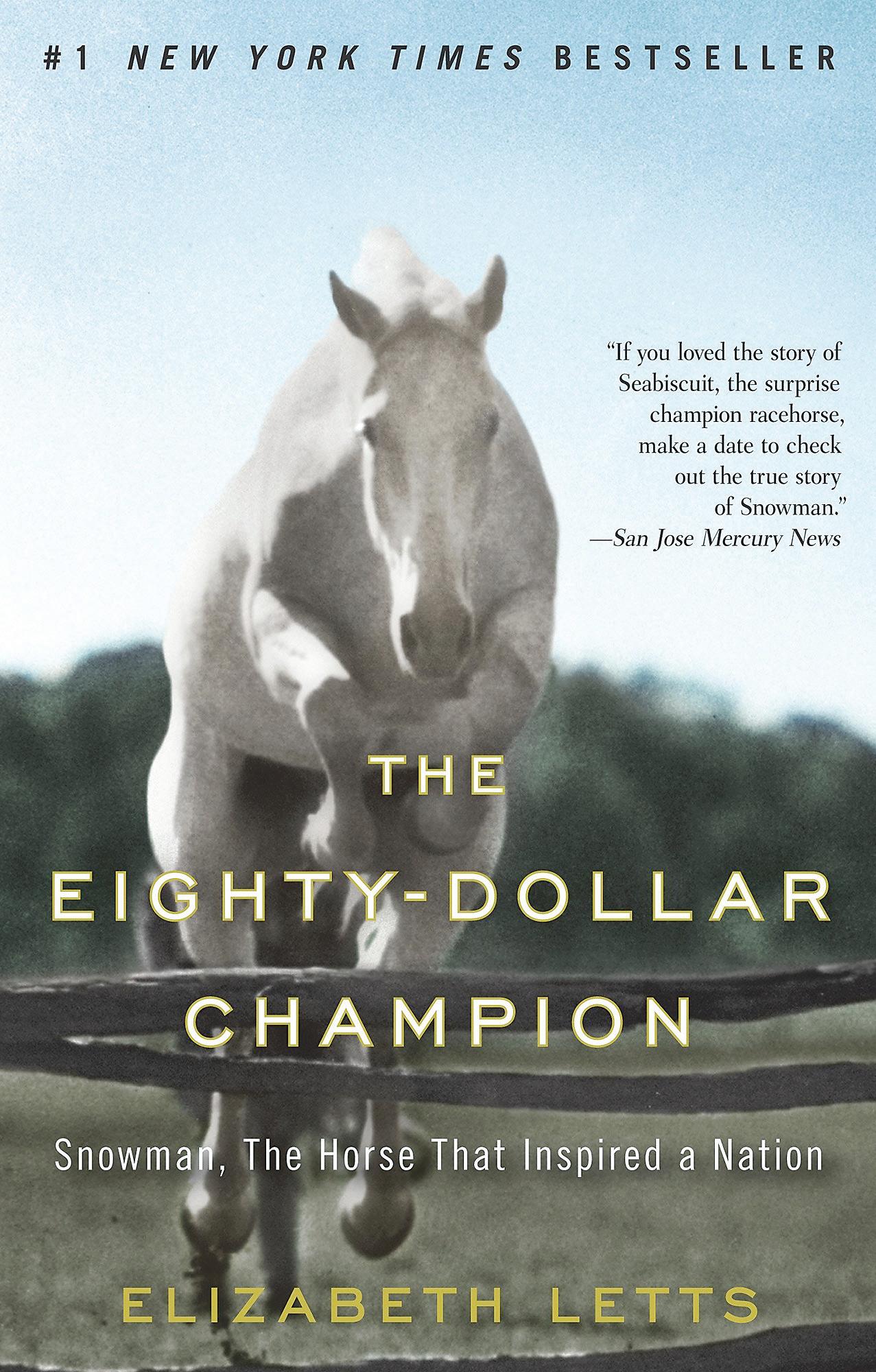
The Eighty-Dollar Champion: Snowman, The Horse That Inspired a Nation
Whether you are a horse-person, an animal lover, or just a sports fan looking for a less traditional sports tale, this story of a slaughterhouse bound horse’s meteoric rise to stardom in the showjumping world will take you on a roller coaster ride of emotions. A true rags-to-riches plot with a feel-good ending, this book details how the unlikely duo of horse Snowman and rider Harry de Leyer come together to beat all odds. Many equestrians spend a lifetime searching for a horse like Snowman and only dreaming of achieving the bond de Leyer and Snowman shared. The EightyDollar Champion draws the reader into the close relationship between horse and rider, making one feel a part of their journey in competing at top equestrian competitions in the U.S.