The Corne¬ Daily Sun


By TAMARA KAMIS Sun Staff Writer
Regular surveillance testing for all students, staff and faculty who spend time on campus has been a critical component of Cornell’s reopening strategy, according to administrators — who have often taken to the press to herald the University’s low case levels.
However, even though most largely praised the ease of the testing process itself, some students have complained that the logistics of scheduling one have
on the day before his scheduled testing days, finding a time of day that works for him has proven to be difficult.
“Usually, I book at night the day before or the morning of,” Schmieder said. “It’s been hard to schedule at times, fitting it into my schedule is hard.”
Students who live off campus in the greater Ithaca area are also getting surveillance tested, including Della Keahna ’22. She is taking all of her classes online, but because she comes to campus to deliver food to friends and classmates, surveillance testing brings her peace of mind.
“I was really frustrated with this idea that they would only tell me if it came back positive.”
Della Keahna ’22
occasionally proved troublesome.
Alejandro Schmieder ’21, who usually gets his surveillance tests in the Fischell Band Center or in Collegetown, said that, once there, getting a test is quick and easy.
“They asked for my net ID, full name, date of birth, and photo ID,” Schmieder said. “After the test, I take the swab, put it in the tube with my name label on it, and hand it back to them.”
But despite the ease of testing itself, Schmieder said he has found the scheduling process less convenient. According to Schmieder, while he has been able to book appointments from 4 p.m. or later
“I am feeding people, and even though I know that we are super safe about it —I try to do completely minimal contact with it — it does calm me down knowing that we at least have that indication that nothing’s wrong,” Keahna said.
Keahna thinks the surveillance testing process itself is easy. However, she, like many students, said she was frustrated by Cornell’s “no news is good news” policy for releasing test results. A student with a negative surveillance test result is not notified of the fact that they most likely do not have COVID-19.
“I was really frustrated with this idea that they would only tell me if it came back positive,” Keahna said. “That wound up bringing me some anxiety because I didn’t know how long I’d have to wait to

By ALEX HALE Sun News Editor
In June, Ithaca’s Common Council passed a resolution that promised to do what no other city in the nation had before: Request authorization to cancel three months’ rent for its citizens.
The measure, which was approved on a 6-4 vote with the support of Ithaca Mayor Svante Myrick ’09, asked the city government to seek approval from the New York State Department of Health to grant the
mayor power to forgive three months of rental payments.
As unemployment skyrocketed amid one of the sharpest economic downturns in American history, the Cornell undergraduate-led Ithaca Tenants’ Union first began its campaign to fight for rent forgiveness over March, April and May. After weeks of sustained advocacy — most notably through “phone zaps” to local politicians — the union was able to count on the support of
See TENANTS page 3
By ONALEE DUANE Sun Contributor
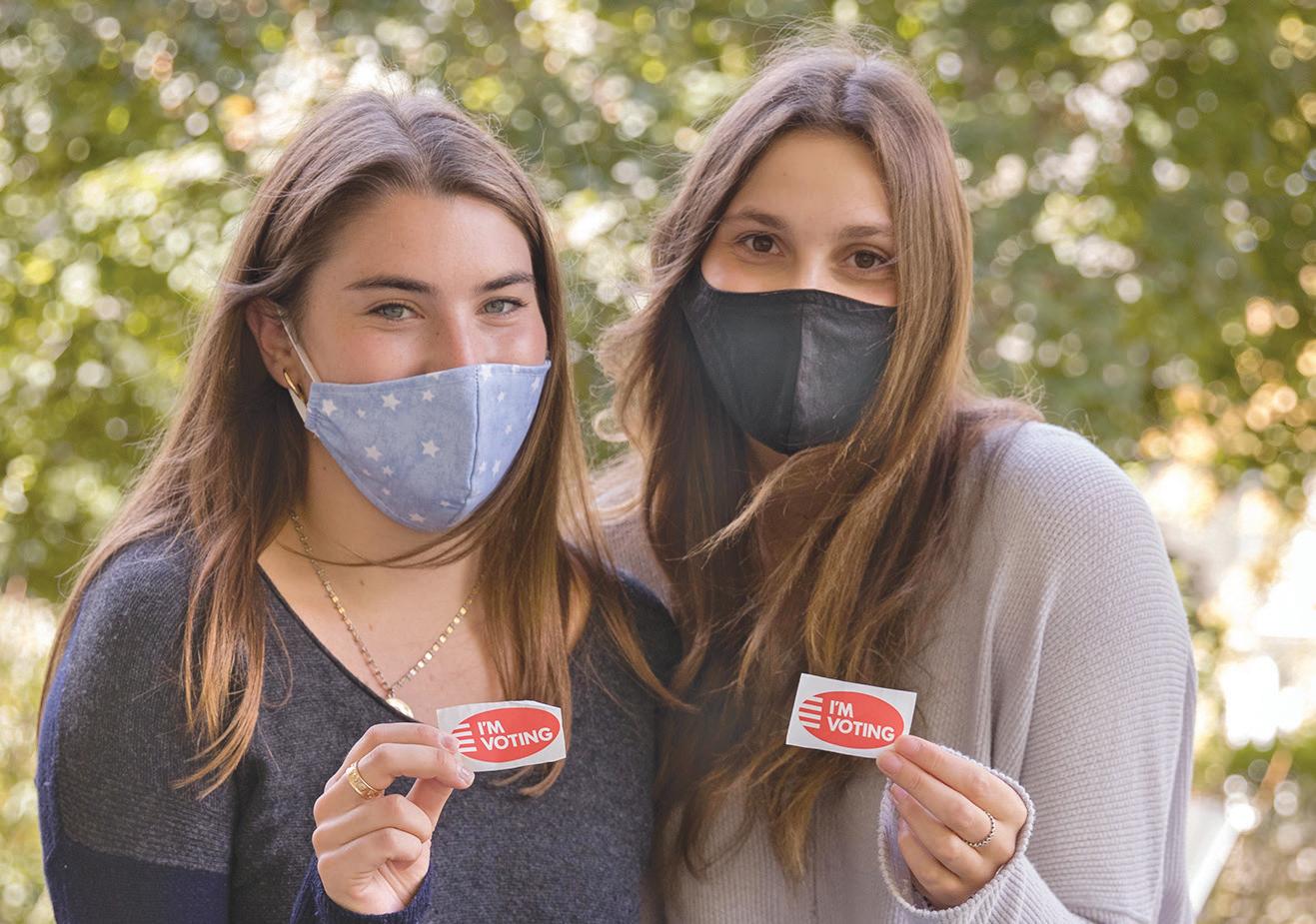
Greek letter organizations have united to take on the challenge of ensuring 100 percent voter registra-
headed the “Rock the Polls” voting initiative, teaming up with Delta Chi, Sigma Pi and Sigma Delta Tau.
“[Students] have too much going on even to print out a ballot and bring it to the post office.”
Samantha Landsman ’22
Landsman and Silvestri came up with the idea in August after overhearing a member of their sorority mention that they were not registered to vote. The two, as result, saw an opportunity “to eliminate some of the barriers for students who want to vote and share their voice” through their sorority platform.
In talking to members of her house, Landsman found
that the most common refrain was issues stemming from voting accessibility. According to Landsman,
students encounter unexpected obstacles when voting, noting that some “have too much going on even to
print out a ballot and bring it to the post office.”
From creating and sending out surveys, using vote.org, sending texts and emails, to directly helping students acquire absentee ballots, envelopes and stamps, Silvestri and Landsman said that every eligible voter in Kappa Alpha Theta is already registered. To make sure they follow through, the house is planning to organize carpool trips to polling places on Election Day.
“We thought that getting all of the data to [get house members registered] to vote was going to be a challenge,” Silvestri said. ”But it only
took us a little under two weeks, which was inspiring.”
Kappa Alpha Theta, Sigma Delta Tau, Delta Chi and Sigma Pi often organize philanthropic events together. The rapport between the four houses made this collaboration easy, with 100 percent voter registration and turnout for Rock the Polls a strong possibility.
Daniel Bernstein ’23, the risk manager for Delta Chi, is working to ensure the members of his fraternity are registered to vote. Before the Rock the Polls collaboration began, it already was Bernstein’s personal goal to
Monday, October 5, 2020
COURTESY OF
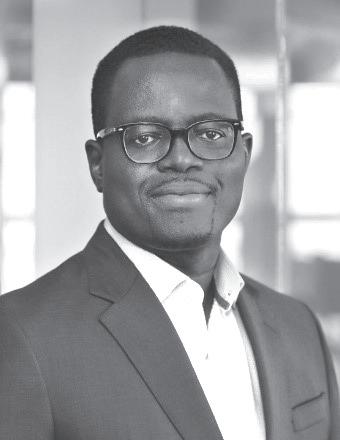
Food for all | Dr. Laté Lawson-Lartego will lecture Monday on creating food systems through inclusivity, women’s economic empowerment and climate justice.
Quantifying the Interfacial Electric Field at the Electrode-Electrolyte Interface
9 - 10 a.m., Virtual Event
Dynamics of Tamil Urban Ethnoterritories in Diaspora 11:15 a.m, Virtual Event
Embracing Healthcare Principles in Hospitality Noon - 1 p.m., Virtual Event
“El Payanés, Proslavery Activism, and Slave Politics In 1840s New Granada,” by Marcela Echeverri-Muñoz, LASP Seminar Series Noon, Virtual Event
Cornell Institute for Food Systems Industry Partnership Program Career Fair 2 - 5 p.m., Virtual Event
Leaders in Sustainable Global Enterprise Dr. Laté Lawson-Lartego, Director Oxfam Food Systems 6 - 7:15 p.m., Virtual Event
Strengths Workshop for First-Years 7 - 9 p.m., Virtual Event
Tomorrow
Behavioral Economic & Decision Research Workshop: Sudeep Bhatia 11:30 a.m. - 1 p.m., Virtual Event
Cornell Wellness Virtual Walk to Run Class 11:30 a.m. - 12:30 p.m., Virtual Event
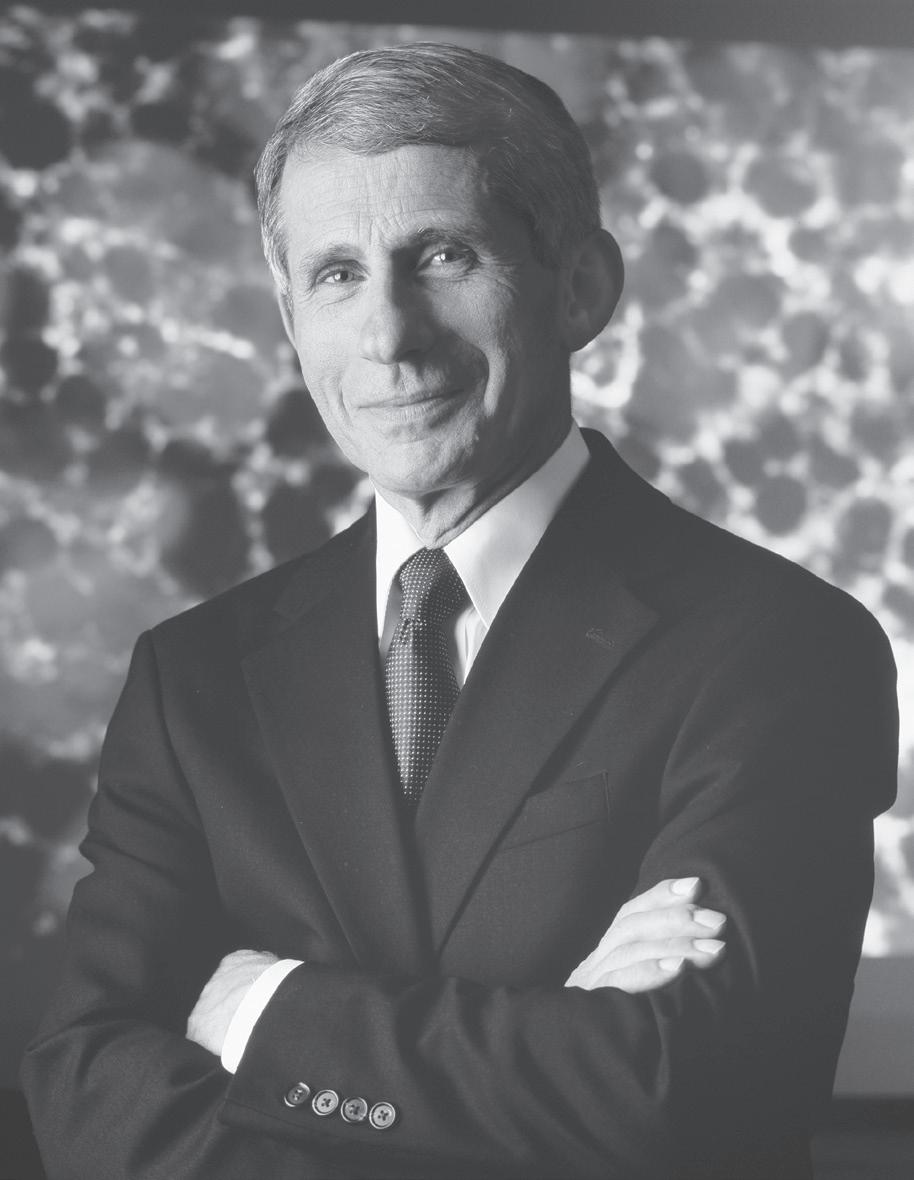
Cornell Promise: A Commitment to Learning From the COVID-19 Pandemic With Anthony Fauci M.D. ’66, NBC News’ Kate Snow ’91 11:45 a.m. - 12:30 p.m., Virtual Event
Harvest Kitchen: Hot Sauce 1 - 3 p.m., Virtual Event
hear back from them.”
In addition, not all students are coming to the time slot or location they signed up for, according to a surveillance testing employee, who decided to remain anonymous out of concern for their employment.
“I have not been instructed to turn people away from the wrong time slot,” the employee said.
The employee said that while they have begun reminding people to come at the correct time, they think people are coming to the wrong place and time for a variety of reasons.
“I think there aren’t appointments and locations for people sometimes [so they come at the wrong time/place]. But some are just willfully going to the wrong one because they know they won’t be turned away,” the employee said.
Those already exposed to COVID19 have a slightly different experience with testing. Jessica Yuan ’22 quarantined in the Statler Hotel for 14 days because contact tracers identified her as exposed to COVID-19. She tested negative for
COVID-19 all three times that she was tested with anterior nares tests while in the Statler Hotel. Yuan said she never received a nasopharyngeal test — considered
“Some are just willfully going to the wrong one because they know they won’t be turned away.”
Anonymous Testing Employee
the gold-standard for coronavirus diagnostics — despite her exposure to a COVID-19 positive person.
“Every time I got tested, they knocked on my door, wearing body suits, N-95 masks and face shields,” Yuan said. “I would open the door, and they would give me the swab. I would take off my mask so that my nose was showing, and they would watch while I was doing the test to make sure it was done right.”
While the testing process was simple enough for her, getting her results took a little more work. Yuan needed negative COVID-19 test results to get released on the final day of her medical isolation, so when Cornell Health had not yet received her results, she called Cayuga Medical Center to ask them to address the situation.
Cayuga Medical Center did not comment by time of publication.
Tamara Kamis can be reached at tkamis@cornellsun.com.
COURTESY OF
The doc is in | Dr. Anthony Fauci M.D. ‘66 will join a virtual panel on what and how to learn from the COVID-19 pandemic on Tuesday as part of StayHomecoming.
First Gen and Low Income Student Support Office Hours 2 - 3 p.m., Virtual Event
Cornell in Washington Virtual Q&A Session 4:30 - 6 p.m., Virtual Event
get all of Delta Chi registered, he said.
“Getting people active, especially at a young age, is so vital for our democracy,” Bernstein said. “Greek Life has a lot of controversies, and I feel that if I’m going to be part of the system, I want to try to better it as much as I can.”
Arthur Decker ’22, president of Sigma Pi, keeps track of which brothers have registered and which haven’t, consistently encouraging any of the eligible 56 brothers who have not yet reg-
“It’s our college experience that we have to quarantine for... this is our election to shake.”
Samantha Landsman ’22
istered to do so as soon as possible.
During this virtual semester, “we have a lot of extra time on our hands,” Decker said.
”Why not use it for good?”
With Election Day only
“Greek Life has a lot of controversies, and I feel that if I’m going to be part of the system, I want to try to better it as much as I can.”
Daniel Bernstein ’23
one month away, Kappa Alpha Theta is looking to expand Rock the Polls to more Greek letter organizations on campus. As of Saturday, October 3rd, both Kappa Alpha Theta and Delta Chi have reached 100 percent voter registration. The Cornell men’s varsity basketball team is another campus organization that has accomplished 100 percent voter registration, encouraging other eligible student-athletes to register to vote.
“This is the election that’s going to determine our future. It’s our future that’s going to be affected by climate change. It’s us entering the workforce either in a recession or not. It’s our college experience that we have to quarantine for,” Landsman said. “This is our election to shake.”
Onalee Duane can be reached at osd4@cornell.edu.
By ANGELA DEMARAL Sun Contributor
In the U.S., women now make up just over half of the financial services industry despite not entering the industry en masse until the 1980s — highlighting the progress that has been made towards gender representation in what was once an extremely male-dominated field.
But despite increases in gender representation in most areas of the financial
projects or more complex scenarios to analyze. Sometimes I’ll even be told that the problem is too complicated,” Akamnonu said.
Akamononu also spoke about her experiences with not being taken as seriously as the men in the room.
“My thoughts would not be praised and appreciated as much as my male counterparts despite the similarities,” stated Akamnonu.
“I’ve experienced times when I’ve had to literally ask for or demand more responsibility, harder projects or more complex scenarios to analyze.”
sector, many women who work in the industry still report obstacles that often do not impact their male counterparts to the same extent.
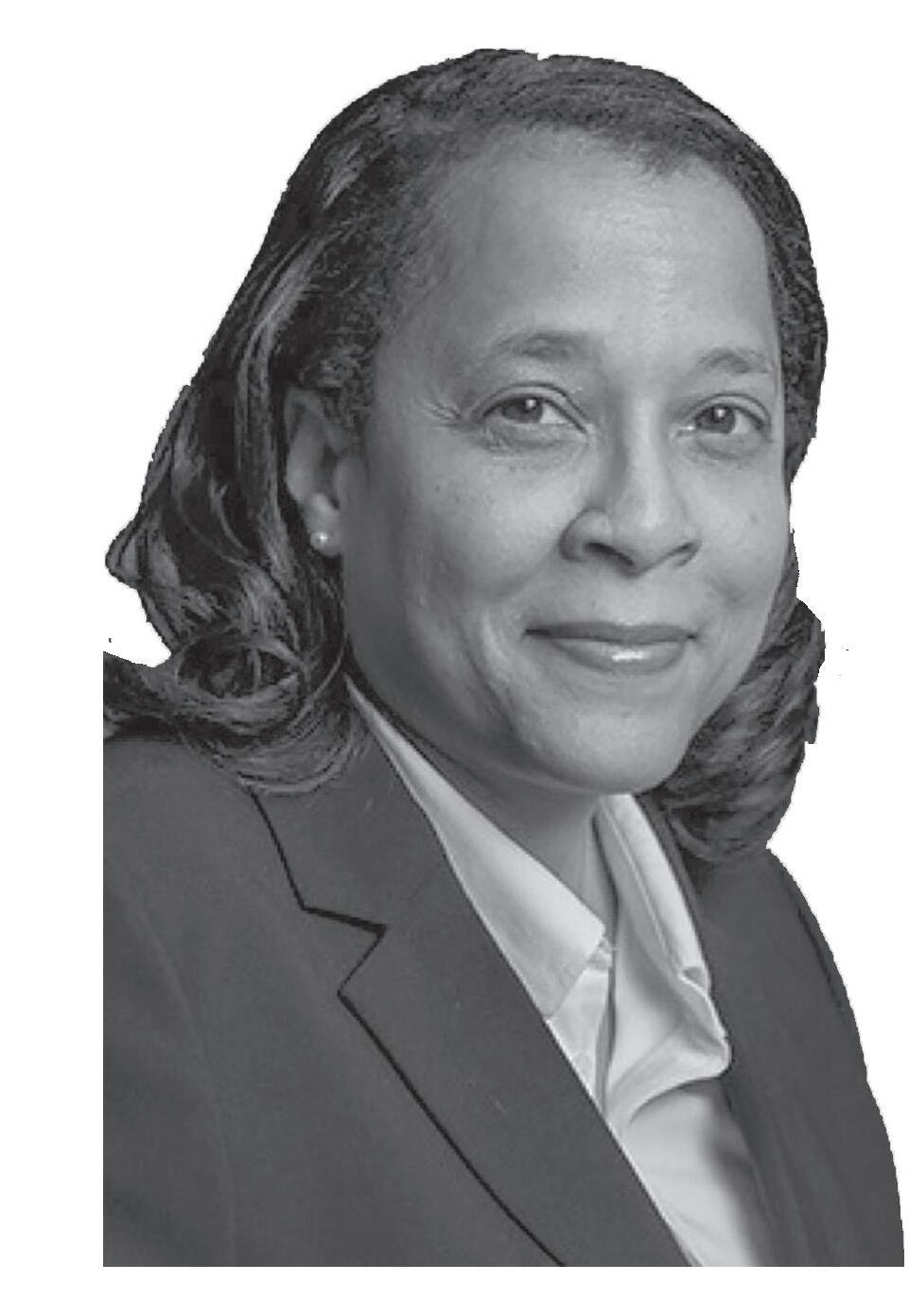
Chioma Akamnonu MBA ’19, a treasury risk management senior leader at Citi, recalled past experiences in which she was given less trust and autonomy than her male coworkers.
“I’ve experienced times when I’ve had to literally ask for or demand
Prof. Vicki Bogan, applied economics and management, was also impacted by gender biases when she worked in the corporate sector. Bogan recalled that many business deals and opportunities were presented during stereotypically masculine leisure activities, like golf tournaments and poker nights. Women who don’t feel comfortable participating in these activities may miss out on promotions and client relationships, exacerbating the problem of investment management being thought of as a “boys club” that women have to fight to be included in.
“Those types of activities have a lot of implicit gender bias, but that’s often where some of the sales and deals would happen. That’s how people were made aware of opportunities, so the culture is tough,” Bogan said.
One way that diversity in the work place has been encouraged is through gender quotas — policies in which companies are forced or incentiv ized to hire and maintain a certain quantity or percentage of women.
While countries with enforced gender quotas saw increases in boardroom diversity and quality, Bogan and Akamnonu both said they would like to see more action taken.
Akamnonu agreed that gen der quotas have been effec tive in enforcing the reevaluation of gender biases. However, she’d like to see many more
Workplace bias
| Chioma Akamnonu MBA ’19 and Prof. Vicki Bogan explained hurdles they’ve overcome throughout their careers.
conversations happening between executives and their management teams — and a lot more progress in communication about diversity and inclusion.
“It’s not enough to fill up a quota,” Akamnonu said.
Without education and reform addressing inclusivity in the workplace, gender quotas are limited when combatting fundamental prejudice, largely because there are often loopholes. For example, managers acting on their innate prejudices may give all of the senior management roles to white men despite having a broader pool of qualified candidates.
Less than 2 percent of chief executive officers and less than 20 percent of board members in financial institutions are women. This leads to fewer role models for professional women, like Akamnonu, who credited much of her success to being able to see other women thriving in leadership positions.
welcoming for everybody,” Bogan said. “One of the best ways to try to change the culture is to try to change who’s at the table.”
When Bogan first began teaching a course in fixed income at Cornell, she recalled only having one woman in her class during her first semester. However, she saw a drastic increase in gender representation in her classroom over the next few years, crediting this upward trend in part to the fact that female finance students felt more comfortable exploring complex topics if the professor was also a woman.
“It’s more than just how many women there are, but it’s also what positions they hold.”
Prof. Vicki Bogan
“I worry because, in terms of hiring, it’s more than just how many women there are, but it’s also what positions they hold,” said Bogan.
Bogan also emphasized the importance of not increasing gender rep

Diversity in workplace leadership has been shown to have advantages outside of inspiring other women and people of color in the company.
“My experience is that people with different perspectives and backgrounds offer different insights that can help to facilitate the problem solving process,” Bogan said. “Irrespective of gender, ethnicity or any other ways in which people are different, I think that diversity brings a richness to the process.”
According to Akamnonu, one way that all employees can help to decrease prejudice and discrimination based on gender in their workplaces is to speak up on behalf of their coworkers.
“A lot of individuals aren’t okay with the status quo and what’s going on within their organization, but have that fear that if they were to speak up and share their thoughts they would be penalized,” Akamnonu said. “I believe it’s important that people muster up the courage to seek change and equality for their colleagues.”
To young women who are interested in working in the financial services industry, Bogan said that they “shouldn’t stop pursuing something that they’re interested in just because it’s perceived as a male-dominated career.”
Akamnonu also advised women to be confident in their abilities and professional pursuits. “Be confident in yourself. If you’re a math person and you love numbers — go for it. Don’t let what anyone says deter you from your goals,” she said. “You can do or be whatever you want. You just have to go hard at it and don’t stop — no matter what.”
Angela Demaral can be reached at amd436@cornell.edu.
TENANTS
Continued from page 1
the mayor and several council members.
But despite its much-publicized rollout, Albany hasn’t approved the resolution, and it is unclear how seriously it was ever considered.
“We’ve been trying to get an update from the mayor, we've been trying to get in contact with the State Department of Health, and we’re just largely being ignored,” Liel Sterling ’21, ITU co-founder, told The Sun.
However, this hasn’t stopped the union from continuing its advocacy for renters’ rights. Over the summer, the union organized several protests in July and August to raise
awareness about evictions occurring as a result of the pandemic.
This semester, it has introduced a number of other initiatives to help Ithacans in need of rent assistance.
One initiative is its eviction tip line. As the state eviction moratorium — passed by executive order in March and extended in August and September — is set to expire on Oct. 20, the tenants union has established a phone line for people to call if they are in fear of being evicted. The union will then provide advice and support for callers.
displacement, regardless of whether you're protected under the Center for Disease Control’s moratorium, regardless of how far into the eviction process you are, and regardless of whether you’re behind on rent,” the ITU wrote in a press release.
“The Ithaca Tenants Union will stand with you as you face housing displacement.”
ITU Press Release
“The Ithaca Tenants Union will stand with you as you face housing
Once the moratorium is lifted, renters — which comprise 73 percent of Ithacan residents — will have to make up their missed rent and remain at risk of eviction.
“We can’t rely on Cuomo or the CDC’s inadequate eviction moratoriums to protect us,” the press release read.
Another hotline that the union has established is a legal housing hotline, which is staffed by volunteers that offer guidance to concerned renters. Over the summer, the hotline mostly involved quick advice taken from those answering the calls; according to Sterling, it took over 100 cases.
rather than just brief advice.”
The union was started in March by three ILR students hoping “to spread awareness about [tenants’
“We’ve been trying to get an update from the mayor, ... and we’re just largely being ignored.”
Liel Sterling ’21
The initiative is starting to expand this fall. The law school has taken up a class, LAW 7854: Tenants Advocacy Practicum, to prepare law students to provide callers “full scope representation
rights], and make sure that they’re upheld across the board,” according to co-founder Elijah Fox ’21.
Alex Hale can be reached at ahale@cornellsun.com.
It’s possible that you’re familiar with the so-called “dirtbag left”. It’s equally possible that you clicked on this article out of sheer confusion.
For those who aren’t familiar with the terminology, a quick Wikipedia search will describe the group as “a term for a mode of left-wing politics that eschews civility in order to convey a socialist or left-wing populist message using subversive vulgarity”. The term is widely associated with a group of podcasts, most notably Chapo Trap House but also Red Scare and Cum Town.
Consider these podcasts as the manifestation of deep Twitter — crass jokes, irony beneath several layers of vocal fry, all interspersed with lifestyle hot-takes that would make your mother have a heart attack.
The group has earned scorn from liberal media. A 2019 article in Jezebel compares Red Scare’s particular brand of performative irony to legitimately hateful neo-Nazi propaganda, arguing that their “it’s the same kind of fig-leaf hipster irony and showy apathy hiding a heaving, scabrous mass of genuine cruelty.” The New York Times published a similarly scathing critique in March, 2020, quoting Amanda Marcotte: “Chapo Trap House,’ the entire Dirtbag Left, have tapped that male privilege of intimidating people into assuming you’re cool.
The same New York Times article describes a live podcast recording in Iowa City from the perspective of what would appear to be a genuinely repulsed reporter —”In blurring occasionally violent humor, jovial community meetups and radical politics, they [the dirtbag left] are the Tea Party reborn for progressives, and for their fans the appeal is in a bawdy offensive balance to cautious mainstream liberal politics.”
This quote leads into another common critique of the dirtbag left: they’re ruining the Democratic Party. On March 9, 2020, Vox published an article on Bernie Bros, which specifically claims that dirtbag left subgroups within the Sanders campaign made it impossible for Bernie to be a unifying candidate, writing:
“there’s no equivalent to Chapo and the other dirtbag left outlets on the other side of the Democratic Party’s internal divide — a closely allied media outlet that has elevated online abuse of its opponents into a politi-
own feralness. Reclaiming vulgarity from the Trumps of the world is imperative because if we do not embrace the profane now and again, we will find ourselves handicapped by our own civility. Vulgarity is the language

cal value. Fairly or not, the prominence of these Sanders supporters and their many social media supporters has shaped the way that media and Democratic Party elites think about the campaign — and maybe even affected some ordinary voters”
There’s a lot to unpack from all of these arguments. First, regarding the vulgarity: in a 2016 article for Current Affairs, Amber A’Lee Frost — the Chapo co-host who coined the term “dirt-bag left” — writes:
“The left will always need its journals and polemic and academic writing, but there are times when it is both right and proper to terrify the bourgeoisie with your
of the people, and so it should be among the grammars of the left, just as it has been historically, to wield righteously against the corrupt and the powerful. We cannot cede vulgarity to the vulgarians; collegial intellectuals will always be niche, but class war need not be.”
Now, I’m not going to leap to the defense of this group of podcasters, nor can I speak to the harm that their words may cause. However, I will say that I think there’s something to A’Lee Frost’s argument. Now more than ever, there’s an intense sense of alienation that has permeated through American society. Speaking from personal experience, it’s impossible to approach any discussion about
politics without some mixture of rage and apathy. I’m tired of masking my political allegiances behind a veil of civility — hell, even trying to contain myself for this article is exhausting.
So, when a group of people give voice to the thoughts that are, at some perverse subconscious level, bouncing around your head, it offers reprieve. Rather than being told that we have to constantly contain ourselves, the dirtbag left offers an outlet for those who have reached their boiling point. Similarly to the French Revolution-era libelles that A’Lee Frost references in her article, the rise of the dirtbag left could be a symbol of the impending revolution — an honest signifier of growing class conflict and political disillusionment.
Second, regarding the supposed threat to the Democratic Party. Once again, I want to make my allegiances clear — I do believe that there are significant structural differences between a Trump and Biden candidacy, and that a vote for Biden is a vote for meaningful environmental, immigration and medical policies. But I question whether a threat to the Democratic Party is an entirely bad thing. In a country that’s political axis has been pushed so far right of center that our idea of “left” is essentially centrist, why is it so bad that radicalized youth are questioning the DNC and seeking alternatives? It’s not as though the Democratic Party is the party of communists — no matter what Trump’s polls would have you believe. I’m not saying that you have to go and listen to some dirtbag left podcasts. However, I do think there’s more to the genre than edgelords trying to get a rise out of market liberals. More than anything, the rise of the dirtbag left is a sign of ever-increasing alienation, and only time will tell where that alienation leads.
Mira Kudva Driskell is a sophomore in the College of Agriculture and Life Sciences. She can be reached at mdriskell@cornellsun.com. Portrait of a Gen Z on Fire runs alternate Mondays this semester.
It has been three years since Fleet Foxes’ last album, Crack-Up, transported us to their world of harmony both jaunty and soulful, but they have done it again in Shore Through the whole of the album is an ebb and flow, a push and pull — we are embraced by familiar, lively refrains that bring to mind weekends, summers and car rides in the fresh air, and we are also met with more subdued pieces that reflect the troubled nature of the world at large, of facing the future and of hoping and doubting.
Shore opens in “Wading in Waist-High Water” with an acoustic quietness and an uncharacteristically
smoothed-out sound, which grows to a crescendo, previewing the energy of the rest of the album. With cohesion that continues throughout, its final notes trail into the more instantly recognizable “Sunblind,” with the luster of lead singer and songwriter Robin Pecknold’s voice again taking center stage. “Sunblind” dwells on the theme of “going out for the weekend” with “dear friends,” namedropping many musical geniuses that have come and gone, such as John Prine and Elliott Smith. It feels like one of the highs of the album, as does the fervent “Can I Believe You?”
“Can I believe you,” Pecknold asks, “when you say I’m good?” — this sort of introspection saturates the album as he muses about
themes of uncertainty and change. In “I’m Not My Season,” the assertion that,
to / And I’m not the season I’m in” rings especially true in a year of pandemic

despite everything, “Well time’s not what I belong
and unrest, when it is easy to feel defined by all that
is happening beyond one’s control.
The influence of quarantine on the album is sometimes apparent, but Shore refuses to be glum about it. Pecknold has said that he wanted the album to be a point of stability, “to celebrate life in a time of death.”
Even when a song begins to sink into a quiet musing, or the lyrics align too closely with the dark, agitated reality of 2020, crowded sections of horns and piano will suddenly revive it with a sense of carrying on stronger — with a laugh, even. Crazed, delighted pieces like “Quiet Air / Gioia” keep our attention. The cheerful motif underlying “Jara” gets stuck in our heads. “Young Man’s Game” makes us smile with its self-aware irony, in “I’ve been solving for the mean-
ing of life / No one tried before and likely I’m right.” Shore manages to be a close-knit selection of music that at times reflects on heavy content, without being at all cold or heavy itself. It feels like a natural installment in Fleet Foxes’ musical repertoire, but goes off on its own as Pecknold explores new tonal landscapes and instruments that have not featured as prominently in previous work. While the tensions in the album, and in the time that it was written, rise and fall, Shore is a landmark, offering a lucid, stable point of reference that the weary voyager can return to again and again.
Charlotte Mandy is a junior in the College of Arts and Sciences. She can be reached at crm299@ cornell.edu.
EMMA LEYNSE SUN STAFF WRITER
This summer, I waited eagerly for the release of season five of Netflix’s Lucifer , and after watching I can say that I was definitely not disappointed. The release of the penultimate season of this Netflix favorite came at the perfect time, giving me plenty of time to binge the show during quarantine after my move to campus. Only eight, roughly 50 minute, episodes were released due to COVID19 delaying the production of part two, now to be released in January. Despite being considerably shorter than previous seasons, these episodes were rich in plot and character, with plenty of high stakes and Lucifer’s devilish charm.
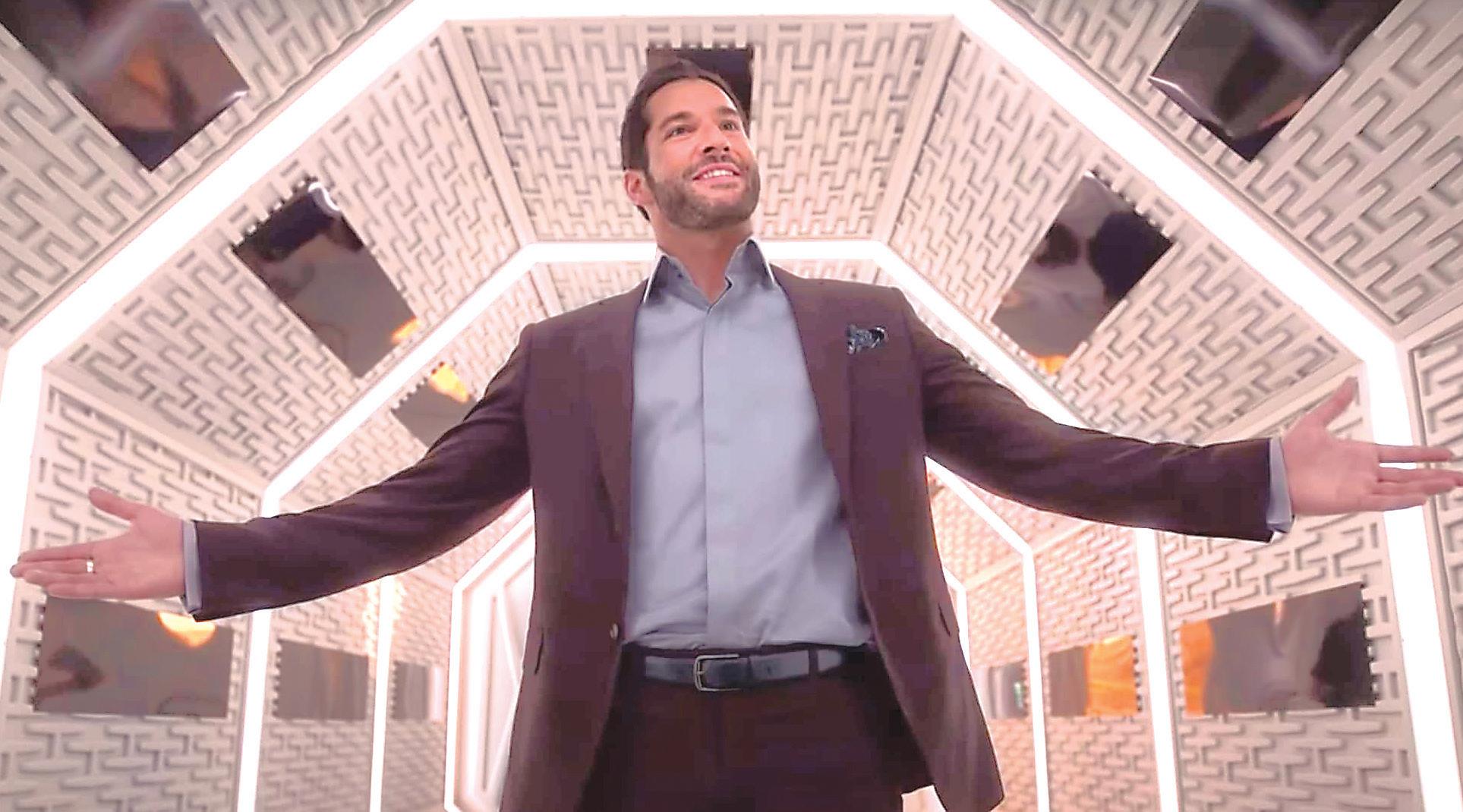
After the dramatic ending of season four left us wondering about the future of Lucifer and Chloe, Lucifer makes a typical dramatic return with a new problem to face: his scheming twin brother Michael, who mysteriously appears to meddle in Lucifer’s life. The introduction of Michael adds a new level of mystery to the show, keeping us wondering at his true intentions throughout. While the Michael situation appears to come a bit out of left field as he has never appeared before, it made for a great plot. One thing that I loved about this season was watching Tom Ellis act as both Michael and Lucifer, doing an American accent for the former that was both jarring and comedic. Having him act in both roles made me realize just how quintessential
TLucifer is as a character, as it was bizarre to hear him speaking without his usual British drawl.
This new season of Lucifer gave focus to other characters while showing the development and struggles of Lucifer and Chloe’s relationship. These new character arcs all converge at the end, spurned on by Michael. Some secondary characters are given more central plotlines, most notably Maze, Ella and Amenadiel.
Specifically, I loved Maze’s character arc. We learn more about her past, see her acting in the role as a friend to Linda and Chloe, and see her confronting her own demon(s) — literally. This really humanizes Maze and makes her a much more compelling and interesting character beyond being just a badass. Thinking back to season one, Maze has really changed a lot: We have seen her become her own person and find her own path, independent of Lucifer, making her so much more of a compelling character. This season also gave Ella a more central plotline. I have always loved the enthusiastic, quirky and intelligent Ella, yet in previous seasons she never held
a large role. Now we see her outside of her job as she attempts to swear off “bad boys” and enter into a new relationship. This new focus on Ella makes me wonder if they are setting it up for her to learn the truth about Lucifer being the devil like Chloe has, which I think would be amazing.
One particularly interesting aspect of this season was the black-and-white episode titled “It Never Ends Well for the Chicken,” which takes place in 1946 and follows the usual cast playing different characters as Lucifer solves a crime. While I was confused at first at how out of place it seemed, I actually really enjoyed this episode. It was hilarious to
watch the characters act in other roles, and after a while I was completely invested, unbothered by this deviation from the primary narrative. I liked its ability to balance comedy with character development, providing important context to Maze and Lucifer’s story.
However, what I love most about this season is it’s amazing cliffhanger ending that, in typical Lucifer fashion, leaves me anxiously waiting for more. Don’t worry, I would never dare spoil it, but I will strongly recommend you all to watch this fun season and find out.
In June 2019, Sulli, a former member of the Korean girl group f(x), began hosting a talk show known as The Night of Malicious Comments, a show that featured Korean celebrities reading hate comments about themselves. Reading her own hate comments, Sulli seemed confident as she laughed them off with ease.
In Oct. 2019, Sulli took her own life.
In K-pop groups, each member is given a role in the band, such as the vocalist or the rapper. During her career as an idol with f(x), Sulli was the visual of the group. The visual is a role in a K-pop group given to the member that best fits Korean beauty standards, typically displaying pale skin, large eyes with double eyelids and a slim chin, among other traits. The role of the visual has been a staple in K-pop bands since the earliest generations of K-pop. But as old values give way to modern ideals, these traditions should be questioned to reveal their deeper implications, especially their impact on the wellbeing of the idols themselves. Upon deeper scrutiny, it’s clear that the role of visual is problematic as it’s caused serious consequences for the mental health of the band member placed into this role.
From a cultural perspective, it makes sense that K-pop companies have held on to the visual category. Physical appearance has always held an utmost importance
in Korean culture. Nowhere is this better represented than in the massive plastic surgery industry in South Korea. The International Society of Aesthetic Plastic Surgery reports that there were over 650,000 operations of plastic surgery conducted in the year 2011 alone. Undeniably, the social pressure to fit beauty standards and be conventionally attractive is high. Thus, for the entertainment business, having a visual role is a great marketing tactic for the band and for the record company. Seeing a pretty face on an advertisement is a much quicker and more effective way of generating publicity than promoting an entire track or album.
But more publicity for a group may not always be good, as the more popular a group becomes, the more hate and pressure they
will typically face. Unfortunately, the visual role further exacerbates this and creates a concrete target for toxicity. Since beauty is fundamentally subjective, many people will often have differing opinions on which member they find the most attractive, or which member they think is the most deserving of the visual title.
It’s no surprise that with an appearance focused culture, the member who fills the visual role is held to high standards. Often, when netizens (the K-pop community’s name for internet users) find subjectively that the visual idol doesn’t meet those arbitrary standards, they become a target for cyberbullying, even more so than other members of the group. Notable examples include Twice’s Tzuyu, EXO’s Sehun and BTS’s Jin, who’ve all been criticized for
being unable to adequately sing or rap, and have been accused of being scouted into the band as a visual solely for their looks. These comments would take a massive toll on anyone’s mental health, especially that of idols, who are already experiencing pressure from multiple other aspects of their lives. Visuals often face a paradox; if all a certain idol has is their beauty, then they’re talentless and dragging down the rest of the group. However, if they’re talented in other ways but don’t fit the beauty standards well, then they don’t deserve to be the visual of the group and they’re dragging down the entire group’s appearance. While comments from netizens may seem harmless on the surface, in reality, they come with heavy consequences. Taking the example of Sulli, her role as the visual

of her band only worsened her torment. After she passed, many fans identified cyberbullying as a major cause of her mental health decline and her ultimate death. As her band, f(x), rose to fame, she soon became the target of online toxicity. The torment about her appearance became worse and grew into sexual harassment after she posted a picture of herself in an outfit without a bra on Instagram. Unfortunately, the title of visual not only exacerbates the mental health issues that many Korean idols already face in their high-pressure career, it worsens the attitudes of misogyny as well, with female idols taking the brunt of visual criticism. It’s almost ironic — Korean entertainment companies use their idols to define societal beauty standards, yet those same idols are criticized for not meeting those standards.
Ultimately, the visual title does nothing for idol groups but to discredit the hard work of the member given that title and threaten the idol’s wellbeing. Idols should be recognized for their talent, not their appearance that may or may not fit a set of arbitrary and often misogynistic standards. Korean entertainment companies need to be held accountable for not only the deaths of idols caused by standards that they’ve pushed, but also the cultural implications that come with each and every aspect of K-pop, including the title of the visual.
138th Editorial Board
MARYAM ZAFAR ’21 Editor in Chief
JOYBEER DATTA GUPTA ’21
Business Manager
PETER BUONANNO ’21
Associate Editor
MEGHNA MAHARISHI ’22
Assistant Managing Editor
CHRISTINA BULKELEY ’21
Sports Editor
BORIS TSANG ’21
Photography Editor
CAROLINE JOHNSON ’22
News Editor
ALEX HALE ’21
ARI DUBOW ’21
EMMA ROSENBAUM ’22
BENJAMIN VELANI ’22
MONKOVIC ’22
MIKE FANG ’21
OLIVIA WEINBERG ’22
MADELINE ROSENBERG ’23 Assistant
LUKE PICHINI ’22
HANNAH ROSENBERG ’23
Assistant
BRIAN LU ’23
ANNABEL LI ’21
LEI ANNE RABEJE ’22
COLIE ’23
JOHNATHAN STIMPSON ’21
KRYSTAL YANG ’21
Manager JASON HUANG ’21
Editor NIKO NGUYEN ’22
Editor
PALLAVI KENKARE ’21
’21
STAMM ’22
’22
PLOWE ’23
LEE ’21
CHENG ’21
’22
MEGHANA SRIVASTAVA ’23
’21
PARKER ’22
MORAN ’21
’22

AWorking on Today’s Sun
Ad Layout Jenny Huang ’22
Production Deskers Sarah Skinner ’21 Dana Chan ’21
News Deskers Sean O’ Connell ’21 Catalina Peñéñory ’22
Opinion Desker Pallavi Kenkare ’21
Design Desker Niko Nguyen ’22
Photo Desker Boris Tsang ’21
Arts Desker Daniel Moran ’21
Sports Desker Christina Bulkeley ’21
s we all know, campus is a bit quiet. No concerts, no sporting events (not that we went to those anyways), no sorority backpacks congregating at Zeus. This is the semester of tumbleweeds through campus and Zoom auditions for your acapella groups. One symptom of the societal hiatus Coronavirus has caused that you probably haven’t considered is the lack of content we columnists are left with. I’ve got option A in writing about the daily frisbee throwers on the Arts Quad, and option B in presenting you with the news that Terrace now has three orange chicken days in the week. Instead, let’s enter the hypothetical. Almost every Cornellian is devoutly proud of the college their major resides in. You can get an ILRie to go on about politics or unions for hours. In the spirit of the apocalypse, I have decided to pit Cornell college versus Cornell college. A Hunger Games style fight to the death between AEM majors and classics studiers. Who would win?
The engineers amongst us would be an early favorite. Their ability to develop, design, build and engineer in every sense of the word would help them to construct makeshift weaponry or survival systems like aqueducts. If the Romans could do it, the Cornellians that live in Duffield can do it. Hell, engineers built the laptop I’m writing this on, I would transfer to be on their team if I didn’t struggle to pass intro to python Freshman year. I was fueled by subpar chicken bacon ranches from Goldie’s until 3 in the morning. That being said, engineering doesn’t make it to the finish line.
It’s clear that an alliance would form between Dyson and Hotel. The curriculum has some overlaps, the career paths tend to be similar, these shared philosophical ideals warrant coalition. Though philosophical might be a stretch. This is a faction of planners. Juniors have had their internships since July, Seniors know exactly where they’ll be in ten years, back at Cornell conducting on campus recruiting for Blackrock now that they’re an asset manager with dental. But in the spirit of planning, conning their way through Cornell with minimal work and high rewards, this mutual cooperation would dissolve quicker than the League of Nations. Dyson advances in the gladiatorial hypothetical by eventually and predictably betraying their cousins in the Hotel school. It doesn’t matter, though, engineering would outlast both.
Human Ecology (yeah, I forgot about that one too) might get further than you’d expect. They study how humans develop. They’d know our next move before we do. They can tell you what you were like as a child after speaking to you for ten minutes. They know you were the one to
steal Trisha’s cheetos in the first grade even though Emmett was blamed and you let him take the fall. They know that you used to eat the oats first in your Lucky Charms because you were saving the marshmallows for last. Our future psychiatrists and children’s teachers will therefore hold my number two slot. There will be those who disagree, but you’re probably not in HumEc. ILR would be the first to go. Most of my friends are in ILR. One of them will be the president of the United States one day. Still, ILR would be the first to go. Too many differing opinions about how to run the most efficient system in the attempt to survive, they’d crumble internally. One group would run a socialist-esque government based off of the Messiah, Bernie. Another would implement an economic system and run Reagan’s trickle down method. Forget the two party system, if given the chance, ILR would run with 12. And nobody would settle to be the Biden to someone else’s Obama.
Art, Architecture and Planning. The one that got away. I have a shirt with a design from one, another is designing my next tattoo. Meet more of these kids. However, despite their innate creativity and obvious knack for body painting to camouflage with their surroundings, AAP is not my victor. That leaves us with Arts and CALS. The two schools that probably have the widest breath of majors. Arts, in particular, sports everything from bio to English. Romanticism doesn’t win you the Hunger Games, and despite their fair share of engineers and premeds, the practicality doesn’t outshine the other colleges. Arts would be too distracted with the large question of life, the stories that have not yet been told, and courting potential mates in foreign languages.
The perhaps controversial winner of it all would be CALS. Just say the acronym out and you’ll see why. They know how to food. From the efficiency of composting their soil, to the process of developing Rosé Svedka. Their sustainability would help them outlast the rest of us as we go at each other’s throats. While Dyson resorts to cannibalism, and Arts starves in the winter, when all of their vegan diets are ruined with the death of flora, the College of Agriculture and Life Sciences will be going strong with their corn crops. No potato famine for IARD and food science majors. Half of you had probably never been to a farm before coming to Ithaca. A third of you probably still haven’t. So chalk one up for cowboy boots and straw hats, too bad they’ve learned to love the smell of cow excrement, though.
Despite what many might think after reading this, I, indeed, am not in the ag school. I’m ILR. Just kidding, law school’s overrated.

Fill in the empty cells, one number in each, so that each column, row, and region contains the numbers 1-9 exactly once. Each number in the solution therefore occurs only once in each of the three “directions,” hence the “single numbers” implied by the puzzle’s name. (Rules from wikipedia.org/wiki/ Sudoku)

Art by Alicia Wang ’21

“Capitalism does it again.” -Jennifer Li, ‘14



October 5, 1940:
By CHRISTINA BULKELEY Sun Sports Editor
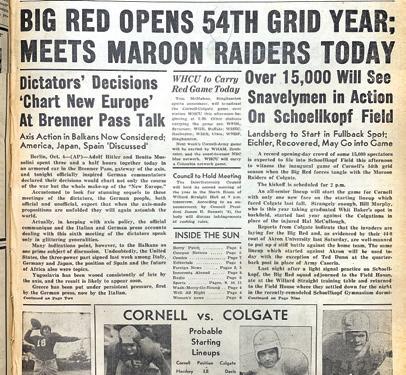
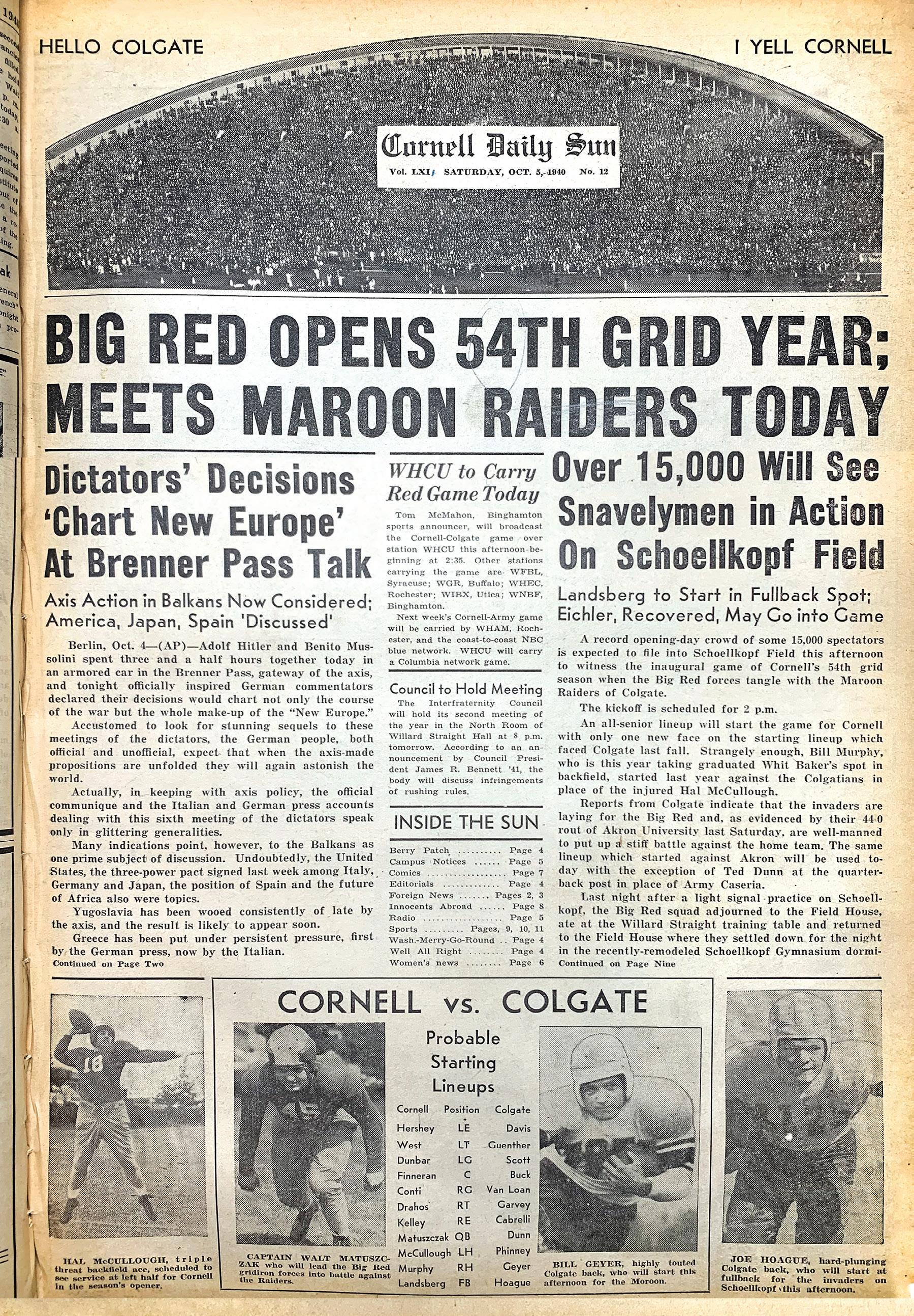
On Oct. 5, 1940, Cornell kicked off the football season at Schoellkopf Field with the first of six straight season wins. The 34-0 victory was followed the next Saturday by a 45-0 shutout over Army West Point, earning Cornell the top spot in the Week One A.P. Poll. 1940 was the last year in which a Cornell football team claimed the No. 1 national rank at any point in the season.
Tough to Be at the Top
The 1940 season, 14 years before the creation of the Ivy League, featured eight games and a 6-2 record for the Red. Cornell would hang on to the top spot in the polls until Week Five, when it slid to No. 2 and Minnesota took over at the top. Cornell would continue to fall until it ended the season at No. 15, while Minnesota clung onto the top rank until the end of the sea son. With no NCAA football national cham pionship game in place in 1940, Minnesota’s No. 1 rank made it that year’s champi on.
The season open er on Oct. 5 was Cornell’s sixth straight win over its Route 13 rival. 80 years later, the series stands at 49-49-3.
“Andy Kerr’s Colgate team came down to Ithaca again this year ‘merely for the ride’ as the aerial blitzkrieg of the Cornell gridders walloped the Red Raiders on Schoellkopf Field Saturday after noon by a score of 34-0,” wrote The Sun’s Bob MacFarland in that Monday’s paper.
his tenure at Colgate.
A year into World War II, warlike language pervades even the articles about the Colgate
krieg.” Headlines about the war — which the U.S. was still over a year away from entering — are side by side with Cornell sports
Colgate’s current football stadium is named Andy Kerr Stadium in honor of that coach who took his team to Ithaca “merely for the ride” back in 1940. Kerr accumulated 95 wins over 18 seasons in Hamilton, but was 3-7 against Cornell during
By halftime, Cornell was already up 21-0, with all three touchdowns coming in the second quarter — and the last one with only two seconds remaining on the clock. The Red came out to score seven and six more in the third and fourth quarters, respectively. By game’s end, the Red completed 11 of 16 passes for “239 yards gained via the aerial route,” as MacFarland put
Cornellians on the 1940 team included College Football Hall of Famer tackle Nick Drahos ’41, who was a consensus All-American in 1939 and 1940. Drahos was voted into the College Football Hall of Fame in 1981. Also taking the field that day was halfback Hal McCullough ’41, who also threw javelin with Cornell track and field and played nine games in the NFL. Head coach Carl Snavely is also in the College Football Hall of Fame. Snavely coached the Red for eight years and over his career earned a 180-96-16 record with four different teams. In 1939, Snavely led the Red to an undefeat-
A Painful Season Finale Cornell’s first loss of the 1940 season would come in the infamous Fifth Down Game that November. Cornell originally won the contest 7-3 but forfeited to Dartmouth after it was discovered that the referees had committed an error by granting Cornell an extra down in the fourth quarter off of which the Red scored its only touchdown. That tilt would be followed by a season-ending loss to Penn in Philadelphia, leaving Cornell to finish the season with a 6-2 record.