The Corne¬ Daily Sun


By SARAH YOUNG Sun Staff Writer
This past Saturday afternoon, a large crowd gathered in front of Willard Straight Hall erupted into applause as the words “nobody’s most personal medical decisions should be controlled by politicians, neighbors, complete strangers or anyone else” rang out.
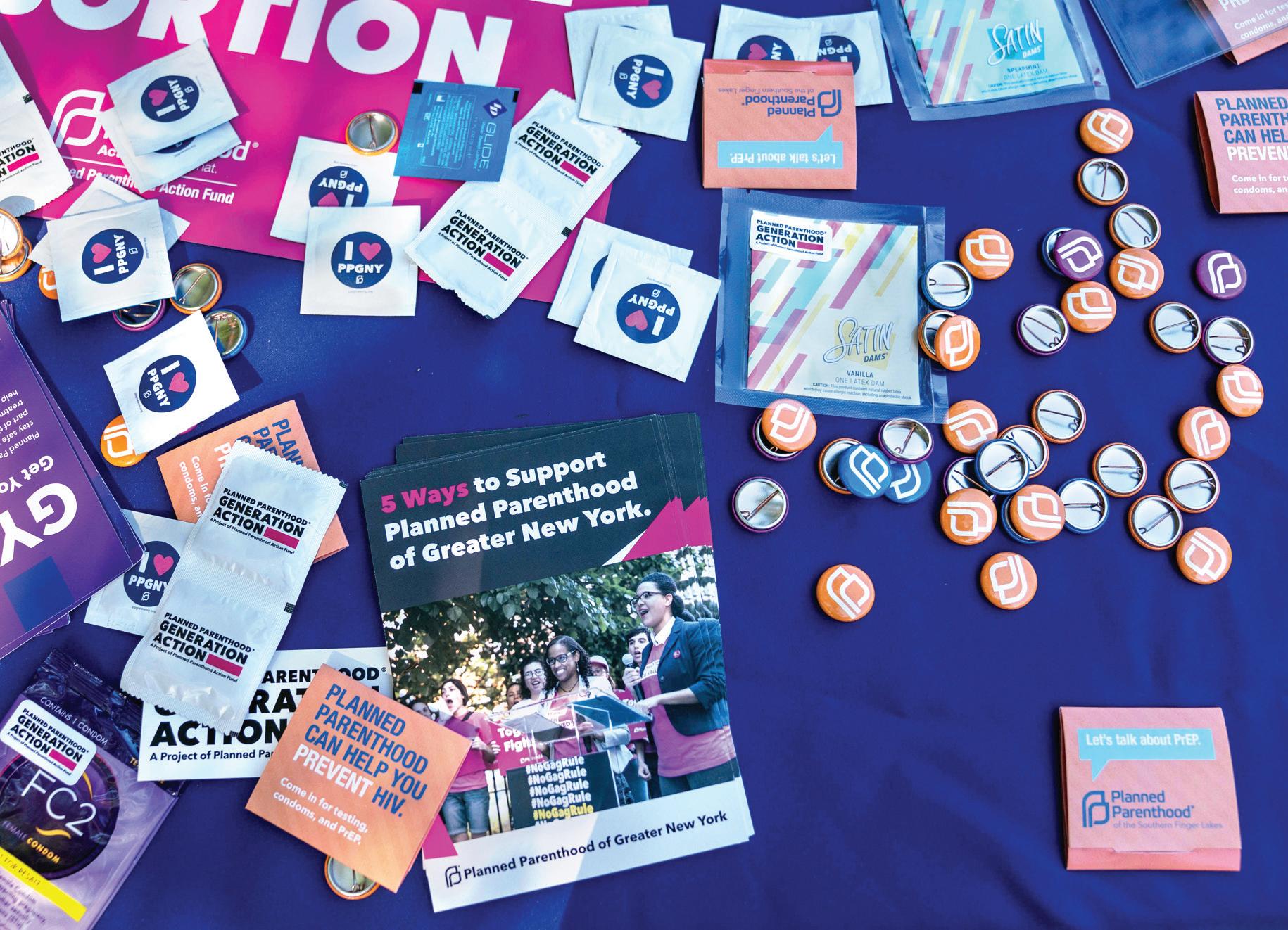
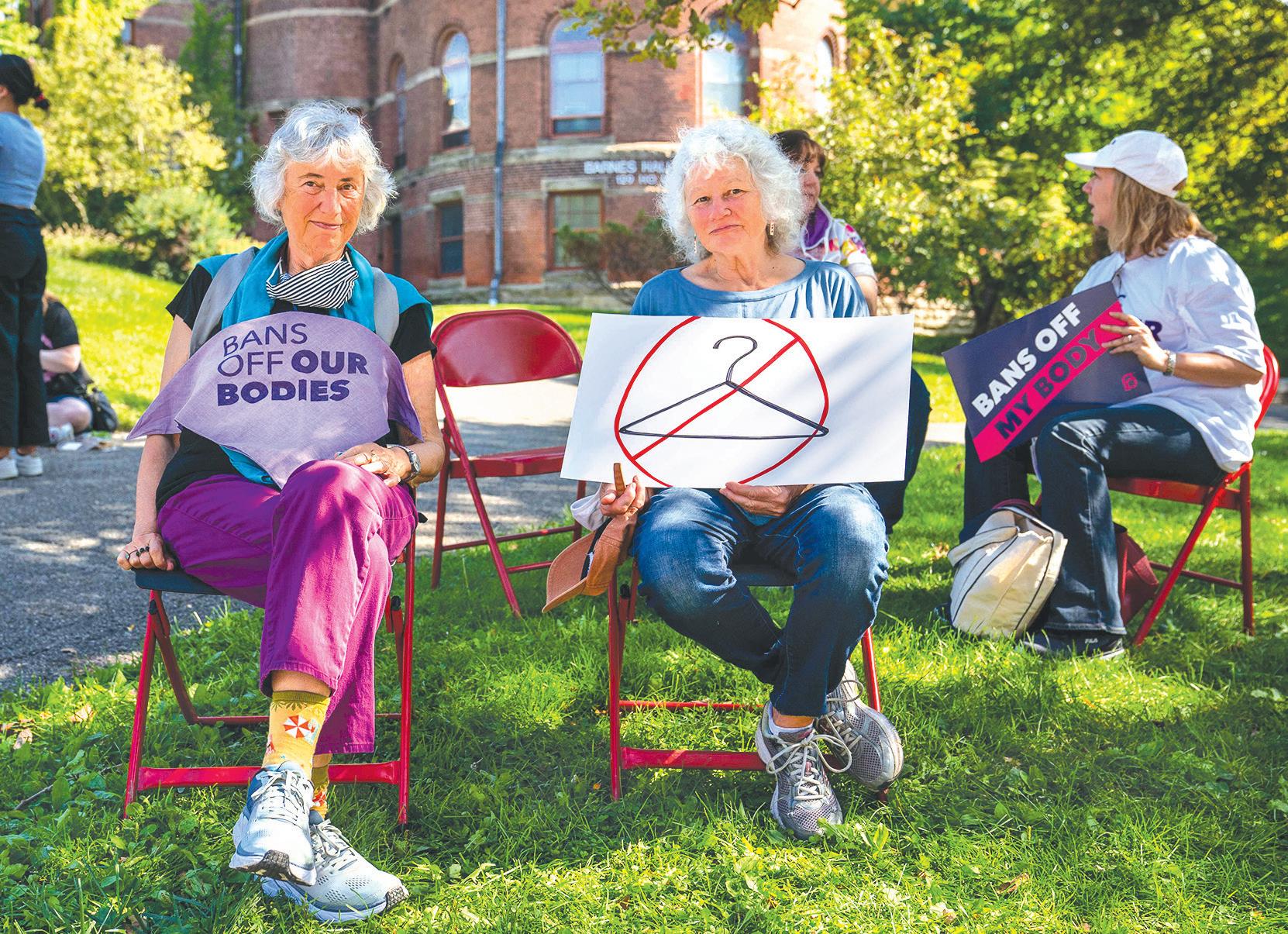
On Oct. 2, Cornell’s Planned Parenthood Generation Action helped organize the Ithaca Rally for Reproductive Rights on Ho Plaza in response to the recent Texas abortion bill which outlaws abortions after six weeks of pregnancy. The rally drew a diverse crowd, composed of Cornell and Ithaca College students and faculty, local residents and others from across New York State.
like “bans off our bodies” to show their support for the movement.
Among these residents was Joan Adler ’71, a Cornell alumna and former Planned Parenthood employee who has lived in Ithaca for most of her life. She was at the protest because of her experiences working for Planned Parenthood and watching her friends navigate getting abortions.
“I’ve been doing this for 50 years, and it’s enough already. It’s just been an outrage.”
“I think we are one of over 500 [marches], so Oct. 2nd is a big day for abortion access protests and rallies,” said Presley Church ’24.
“I came of age in an era before Roe v. Wade made abortion legal and I have friends that had illegal abortions; they were harrowing experiences,” Adler said. “It's just horrifying to think that in Texas right now, women are going to be desperate enough that they may once again seek out and have that kind of black market experience, which is so incredibly traumatic in itself.”
Yvonne Fischer
Adler hoped that support for the rally could help reduce stigma against Planned Parenthood, where she worked up until last year.
The speaker lineup for the rally included a range of students, professionals and representatives including assembly member Anna Kelles (D-125), Prof. Zillah Eisenstein, politics, Ithaca College, and Krista Ochoa, grad, a student from Texas.
“I think it’s really important to show that this is something that people care about,” Helena Brittain ’22 said.
Brittain, like other Cornell students, came to the march in order to express her frustration about the recent Texas abortion ban, which she noted “disproportionately impacts people from low-income backgrounds, people of color and young people.”
In addition to the students that filled Ho Plaza, groups of Ithaca residents attended, brandishing signs with slogans
“Planned Parenthood is a gynecological service. It provides all kinds of logical care for women, including abortions, both surgical and through medication. We also have transgender services and very full STI services. It's a judgment free zone. It's very loving, it's very respectful,” Adler said.
Local psychotherapist Yvonne Fischer noted that the march was predominantly women — which she hopes will change in the future..
“I've been doing this for 50 years, and it's enough already. It's just been an outrage,” Fischer said. “We have fought and won, and now we're still having to fight. This is not just a woman's issue.”
Sarah Young can be reached at syoung@cornellsun.com.
By ELI PALLRAND Sun Staff Writer
At Thursday’s Student Assembly meeting, representatives and students questioned Jonathan Burdick, vice provost for enrollment, regarding extended delays in the distribution of financial aid money.
The assembly also approved a resolution calling on the University to officially recognize National Day of Remembrance for the U.S. Indian Boarding Schools, debated Professional Fraternity Council diversity reporting standards and heard election results from the S.A. freshman and transfer races. For the past two years, some students’ financial
aid has been delayed for months into the semester. According to Burdick, at the time of this S.A. meeting, roughly 630 students — seven percent of students receiving aid — still had not received their aid and another 600 had not had their financial aid award appeals processed.
With more appeals to arrive, the S.A. condemned these shortcomings in its first meeting of the semester.
Financial aid delays have increased stress for affected students, as well as worsened a student employee shortage. Logan Morales ’22, a student manager in two dining units on campus, said he can’t hire students who have employment holds placed on their
accounts because their aid packages are still under review.
“There’s an understaffing crisis in dining units, and I cannot hire people who have holds on their accounts,” Morales said. “One person I was going to hire told me that their hold was resolved, but they’re still waiting for it to be removed from the system… so I can’t put them into the payroll.”
Burdick began his testimony on a somber note.
“We’re not succeeding in financial aid. We haven’t been succeeding in financial aid for a while, in numerous conditions,” Burdick said.
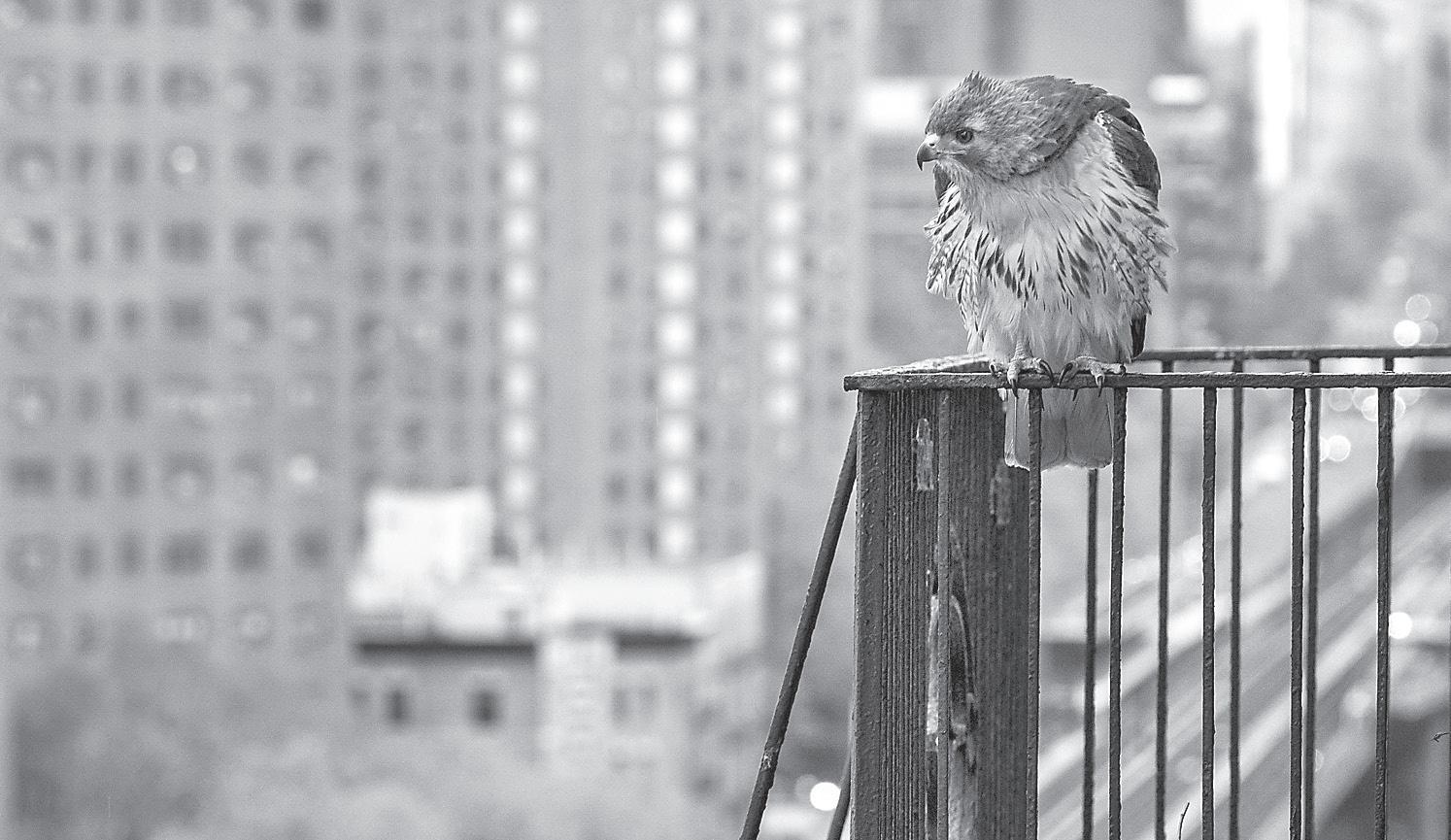
Gargoyle | Artist David Cohen will be displaying his life-sized sculpture of the Red-Tailed Hawk, Big Red, and her
first mate Ezra, two hawks who have been featured on the Cornell Lab of Orinithology’s live streaming bird cams. Above, a female red-tailed hawk watches over her chick in a nest outside a West Harlem apartment on May 3, 2021.
Becoming Organic: Nature and Agriculture in the Indian Himalaya. Shaila Seshia Galvin 11 a.m., Virtual Event
Introduction to Citation Management Sith Mendeley Noon, Virtual Event
What the Hell Is Water? What It will be Like When Community Enagagement Is Part of the Culture on Campus 2 to 2:45 p.m., Virtual Event
Language Resource Center Speaker Series Karen Lichtman
4 p.m. - 5:00 p.m., Mann Hall, 102 Tips for Behavioral Interviews 4:45 - 5:45 p.m., Virtual Event
Dancing “Asia” on the Global Stage 9:40 - 10:55 a.m., Virtual Event
Cornell Hawks Carving Exhibit & Meet-and-Greet With Artist David Cohen 11 a.m. - noon, Virtual Event
B Invested: the Value of B Corp Certification Noon, Virtual Event
Form and Object: A Talk by Tristan Garcia Noon, Virtual Event
Cover Crops Field Day 1:30 - 4 p.m., Willsboro Research Farm
Moral Psychology Brown Bag Series 4 p.m., Virtual Event
ORIE Colloquium: Prof. Jeff Linderoth- Subspace Clustering With Missing Data via Integer Programming 4:45 p.m., Virtual Event
H.R. Within Banking 5 p.m, Virtual Event
Master of Engineering Info Session 5 p.m., Thurston Hall, 205
New York Small Scale Food Processors Association In Partnership With Cornell Cooperative Extension 7 p.m., Virtual Event

www.cornellsun.com W W W . C O R N E L L S U N . C O M
By PAREESAY AFZAL Sun Contributor
Ho Plaza saw large crowds enjoying cuisine, games, dance and other festivities offered by several Asian-affinity groups at the Mid-Autumn Festival hosted by Cornell’s Chinese Students Association Friday night, after a two year hiatus.
The festival, which takes place at the end of fall harvest, is an important tradition in many East Asian and Southeast Asian communities, such as mainland China, Hong Kong, Vietnam and Taiwan. Powered by the full moon, which is believed to be at its roundest and fullest at the 15th day of the 8th month of the lunar calendar, the Festival is a time for gathering, giving thanks and praying, with similar observances in other parts of Asia, like the Japanese moon-viewing festival, o-tsukimi.
The Cornell’s Asian-interest social, professional and cultural organizations that hosted the event set up booths for Lantern-making, Tinikling –– a traditional Philippine folk dance ––and other activities that people could participate in and collect stamps for. The stamps could be used towards free food, drinks and mooncakes, the consumption of which is a tradition at the festival, after which it is also called the Mooncake Festival. At the festival, most goers spent their last stamp choosing between the red bean and the white lotus mooncake.
“The stamp card system is definitely for attendees to get food, but also to meet the organizations,” said Ava Tan ’23, one of the organizers.
Tan said that the festival’s aim was to bring everyone together to celebrate the holiday and provide exposure to the cultural organizations.
“I’m excited about the festival returning, since I was a first-year when [I] last took part,” Tan said.
The space in front of The Cornell Store on Ho Plaza was transformed into a pavilion where groups shared their dances and music. Dance teams like LOKO, one of Cornell’s K-pop and hip-hop dance groups, and Cornell Lion Dance performed. Music groups such as Yamatai Taiko, Cornell’s Japanese taiko drummers, and Cornell Eastern Music Ensemble performed traditional music pieces, some with a contemporary spin.
“Dance unites a lot of people in many cultures,” said Sofia Vaquerano ’22, the president of the Cornell Filipino Association, when asked about what CFA’s booth means to her. “[Tinikling] has been passed down in our culture for many generations.”
Vaquerano said that the CFA’s booth was intended to be interactive by offering festival-goers the chance to experience Tinikling.
“This is a chance for us to show just one aspect of our culture,” Vaquerano said, “[The]

Philippines is many cultures, not just one, as it sometimes is glued together [to be].”
Musical arts were not the only performances present at the festival. Cornell Wushu, a Chinese martial arts organization, also performed a routine.
Other stalls drew in people for a game of cornhole, cups of bubble tea or a short experience in drumming. The Hong Kong Student Association’s station asked visitors to solve a riddle to earn stamps.
For Bryan Ku ’23, the organization is not only a means to bring Hong Kong cultures’ awareness to campus, but also a “safe haven for all Hong Kong students at Cornell.”
“It’s a home away from home for us,” Ku said. “Most of us are from Hong Kong; we grew up there and have our families there. This is a second home.”
Student Assembly members also discuss University acknowledgement of
According to Burdick, half of the outstanding aid packages are being reviewed by individual counselors, and the other half are held up due to paperwork issues — such as discrepancies between tax and FAFSA/CSS data — which Burdick said has been communicated to affected students.
Burdick also said that the majority of students with outstanding aid have received an estimate, which doesn’t give them access to their funds, but acts as a credit on their bursar bills, covering expenses like housing and tuition and prevents the accumulation of late fees.
In response to daily hardships faced by students whose aid has been delayed, like being unable to pay for housing and groceries, Burdick said the financial aid office has already waived registration and late fees, and would prioritize the cases of students facing emergencies like eviction as well as using emergency funds as stopgap measures when necessary.
“Why do we do this?’ and nobody had a good answer...”
Jonathan Burdick
“If anybody is facing a consequence [of delayed aid] where they don’t have the money they need to pay those basic bills on a monthly basis, they absolutely should be coming to the financial aid office,” Burdick said.
In his preliminary remarks to the assembly, Burdick characterized the financial aid office as having been in a state of crisis for many years.
“When I arrived in [the financial aid office] in 2019 at Cornell, Cornell was already in what I would characterize as a financial aid crisis, not in the sense of spending or ability to fund students, but we had had some years of not understanding fully, and certainly not implementing fully, our responsibilities with compliance to the federal government” Burdick said with regard to accurately reporting aid distribution.
Burdick blamed the current crisis primarily on a lack of personnel in the financial aid office. He told the assembly that at one point during the summer, 16 of the financial aid office’s 33 paid positions were vacant. Since then, Burdick reported that 12 vacancies have
been filled, with two more hirings in progress. A new director of financial aid has been hired and the position of deputy director for undergraduate student services has been created and filled.
On financial aid policy, Burdick sometimes agreed with the S.A. outright and condemned University policy. When Joseph Mullen '24, vice president of internal operations, called a University policy preventing students from taking campus jobs while their account is on a financial aid-related hold “ludicrous,” Burdick agreed.
“I just found out about that policy last week, and I asked people who are experts in my area ‘Why do we do this?’ and nobody had a good answer, so it’s sort of lost in the mists of time why that’s the policy,” Burdick said. “My inclination is to think that’s something we need to change.”
But Burdick also defended the financial aid office staff and, in response to a question from Morgan Baker ’22, vice president of finance, about holding the office accountable to deadlines, said he believes the problem isn’t the current employees.
“People have been working very hard. We have people who’ve done thousands of reviews just on their own, just to make sure that we got out as much as we could,” Burdick said. “But the collective resource that the financial aid office needed has been missing for at least a year.”
Ultimately, Burdick said that most outstanding financial aid awards would be released in the first weeks of October, with the beginning of pre-registration for Spring courses in November serving as a hard deadline to release all aid.
In addition to discussions about financial aid, the S.A. also voted on Resolution 30, which calls for Cornell University to declare Orange Shirt Day as an official day of recognition and solidarity with Indigineous children who were victims of United States and Canada’s residential schools.
The resolution passed with a vote of 17-0-
1. The U.S. unofficially recognizes Sept. 30 as a national day of remembrance for the still-unfolding atrocities committed against Native American children at these schools: conversions to Christinanity, mental, physical and sexual violence, including the gravesites of upwards of 6,500 children recovered at these schools.
“I find it necessary to bring awareness to the issues that directly impact universities’ Indigenous students,” said Yanenowi Logan ’22 .“We have an inherent obligation to our communities and ancestors to not allow this to be swept under the rug.”
Through this resolution, all students are encouraged to wear an orange shirt on September 30th to honor the Indigenous children who never survived these institutions.
TILDA WILSON SUN GRAPHICS STAFF
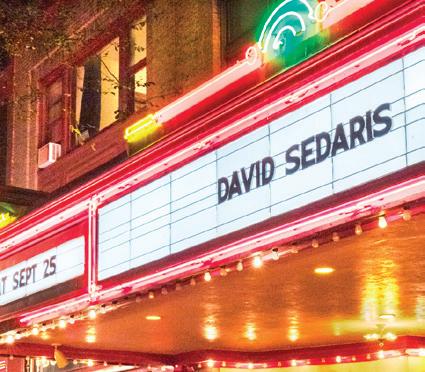
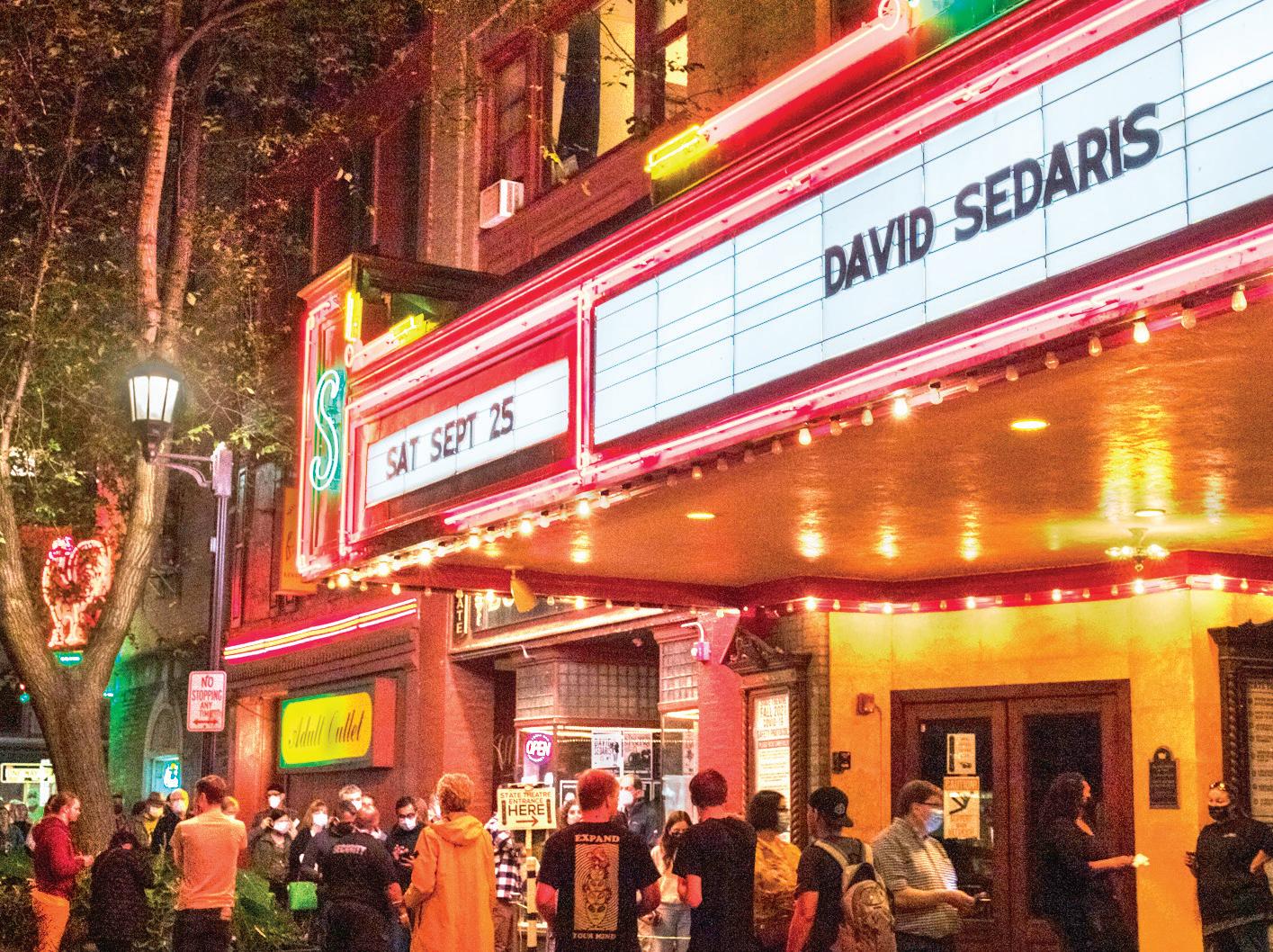
David Sedaris opened his reading at the State Theatre on Sept. 25 by telling us that, unlike his friend Ann Patchett, he was perfectly willing to be the reason people crowd into a theater and risk COVID-19. “I bought all these outfits,” he explained, stepping out from behind his podium and doing a slow twirl. Back at his microphone, he informed us that he’d chosen this pair of his signature culottes because the red patterned fabric looked like it was taken from the drapes at a cheap motel.
I’ll admit the pattern looked like it would fit right in at a Best Western, but I find it hard to believe his pants were cheap. In a 2016 essay entitled “Shopping in Tokyo,” Sedaris described purchasing a pair of “artfully handstitched Clown pants” that cost “as much as a MacBook Air.” Out of context this kind of purchase seems bizarre and frivolous, and perhaps it is, but in Sedaris’ case it can also be seen as a sound investment in his personal brand.
David Sedaris revels in being the kind of person who spends thousands of dollars on ostentatious clothing or taxidermy owls or, in one essay, an “eighteenth-century scientific model of the human throat.” In writing, he presents himself as over-the-top to the point that it’s difficult to believe he’s not making it up or exaggerating. When he shows off his culottes, it’s like he’s proving himself to his audience: “Yes,” he seems to say,
I“I’m really like this in person.
After reading his 2018 collection Calypso , I began to wonder if Sedaris’ writing leaned too far into this wealthy and eccentric persona to be relatable in the way his earlier collections are. Sedaris
the vaccine, it was difficult not to look around at his fully masked audience and think “easy for you to say.”
Still, the reading reminded me of the kinds of themes and tensions that Sedaris navigates so beautifully in his best writ -
writes about his day-to-day life, but now that this day-to-day life consists of purchasing homes rather than the minimum wage employment of the “Santaland Diaries” days, his writing has become less observational and more performative. The essays Sedaris read on Saturday displayed moments of this issue. When he talked about deciding COVID-19 was no longer an issue the moment he got
ing. The two full essays he read told the story of the kind person his father became in his final days of life at an old folks home, and his father’s history of sexually abusive behavior towards his children. There’s something impossible to articulate about caring for and about family members who have done inexcusably horrible things. Instead of trying to explain it all, Sedaris finds the space to
laugh at the absurd, contradictory, and sad in his life. This humor finds room for the audience to laugh too — at Sedaris and at ourselves. Perhaps we don’t all wear culottes, but on some level we all know what it’s like to have a complicated relationship with family, and it’s a relief to be able to laugh about it.
After the reading, Sedaris did a short Q&A. I noticed for the first time that the audience was mostly older adults after he informed us that he no longer allows college students to pick him up from the airport because their trunks are always full. In the back of the signing line, my friend and I exchanged jokes about how angry he’d sounded — scrunching up faces and saying things like “kids these days” and “the youths.” Then, when we finally got to the front of the line, he looked at my other twentyyear-old friend and said “Who are you? Are you fourteen?” On the walk back to our car we laughed and laughed about our encounter, repeating the question “who are you?” back and forth ad nauseum. David Sedaris could entertain us, but he doesn’t know us. By the time we reached the car, the topic shifted, and I found myself trying to articulate what it was like when my grandfather died after years of intentional distance from his family. Buckling my seatbelt, I glanced back at the trunk of our car. OK, so he’s not wrong about that.
Tilda Wilson is a senior in the College of Arts and Sciences. She can be reached at mrw286@cornell.edu.
first began to notice how coolness manifests at Cornell when I became a frequent visitor of the Green Dragon Cafe. When I was a freshman, I would flock there almost every day to avoid spending time in my double on North Campus. For a freshman still in search of his communities on campus, the student-run cafe was the space where I felt the most at home. In the dungeon-like cafe, I spent my formative college years pretending to study, missing my 11:59 p.m. deadlines and meeting some of my best friends at Cornell.
A huge part Green Dragon’s appeal is to not only see people there but to be seen by these people. Such visibility gives me a platform to express myself. After all, self-expression is fundamentally contingent upon the presence of an audience, and Green Dragon precisely offers that. It was a liberating experience to feel that I can be authentic with my self-expression and that it’s absolutely fine not to like the same things as the rest of the campus. With three years of observation under my belt, I can say with confidence that I’m not alone in my experience. Trust me, no one goes there just for the coffee. It’s about the vibe, the music (it can be hit or miss depending on the barista), the aesthetics and most importantly –– the people. These people are essential to shaping the space into an inclusive enclave, a rarity on Cornell’s campus. That’s the primary reason why I became a regular,
but I also can’t deny that the coolness associated with the space plays a role in my constant visits.
People who go to Green Dragon are cool. That’s what many people probably think. But more importantly, it’s also what many who do go to Green Dragon would like to think is true. Yet proving yourself as cool is not as simple as just being in the same space. You might be cool if you go to
We have nothing to lose for being inclusive.
Green Dragon, but you’re actually cool if you can prove that you belong there.
Now back to the question –– how do we prove that we’re cool? We kind of know that, and we are already kind of doing that, yet we are somewhat at a loss when we’re asked to explain why we do what we do.
The public has always struggled to articulate what it means to be cool. The amorphous quality of coolness often becomes its very mystifying aura. This has in turn made the concept under-discussed in our cultural discourses despite its pervasiveness. Yet this layer of perplexity makes
total sense; coolness is inherently elusive as it is rooted in our expression of youth subcultures. These are symbols, tastes and styles that are never meant to be widely circulated. These are cultures that are supposed to be on the margins and away from the mainstream. Proving that you’re cool is essentially proving that you’re “in the know” of these youth subcultures.
Articulating coolness essentially means being youthful, deviant and rebellious. These qualities are manifested through the expression of your tastes. Being cool essentially means being tasteful; the music you listen to has to be underground, and you have to make a statement of resistance with your fashion choice.
You have to dress your part, be in the right space and know the right people. Your taste is manifested not only through your own tastes but also through the tastes of others. If you’re friends with those who are already deemed as cool, then you’re infinitely cooler than the rest of us. And here we are with this vicious cycle of clout chasing.
Cool kids continue to gatekeep to maintain their power and status within the communities, and aspiring cool kids do whatever it takes to prove to the cool kids that they’re worthy of a place in their communities. And that’s how the hierarchy of coolness is perpetuated by the tension between two classes –– people who are already deemed as cool and people who want to be deemed cool.
Sounds a bit like Greek life rather than youth subcultures, no? It saddens me to witness how this is happening even within

safe enclaves on the margins. Sociologist Sarah Thornton coined the term “subcultural capital” to describe the hierarchical logic of differentiation happening within youth subcultures. What we are witnessing now is the exploitation of subcultural capital as means to elevate ourselves.
We’re losing everything if we don’t dismantle the subcultural hierarchy in these spaces. We have nothing to lose for being inclusive, yet we will lose everything if we continue to perpetuate the self-destructive hierarchy rooted in the exploitation of alterity and marginality.
So yeah, before it’s too late, tell the newcomers there’s no need to prove to anyone that you’re cool. Tell them they’re inherently cool if they’re being authentic already.
Stephen Yang is a senior in the College of Arts and Sciences. He can be reached at sy364@cornell.edu.
On Saturday, Sept. 25, I was tired of everything. I wanted to get the laundry done by noon, but due to oversleeping and the sad reality of our dorm’s laundry room, the whole process took me several more hours than I planned. At the end of this I badly wanted to get away. A memory of whalesong was thrumming in my mind.
Evening, earlier that week. After a rain there was a glorious sunset, a profusion of grey-blue clouds scattered like
nal reality’ that whales face.” And for good reason. Although the International Union for Conservation of Nature (IUCN) moved humpback whales from “Vulnerable” to “Least Concern” status in 2008, several populations are still considered endangered by the NOAA.
And so in the darkened room that housed the source of that siren’s song, what loomed over me was not photos or paintings of whales, nor even a sculpture — but a structure like a tent made of nets, stretched all the way from floor to ceiling. Light spilled over it from below, unearthly: now violet, now green, now a
beauty was threaded through with their significance, entwined in the mesh like any strand of fiber. Not only a celebration, the installation felt like a memorial — and a warning of things to come.
At the back of the room there I found a padded bench, wide enough for perhaps two people. It didn’t seem too popular. I sat down and closed my eyes. Time seemed to dilate. Whalesong washed over me, ebbing and flowing. Occasionally other visitors would pass in and out, but in the room with the echoing music, I felt like a pebble in a stream.
craved open air.
Imagine my surprise when, opening the door to the roof, I heard those wails and squeaks again. The siren’s song had followed me. I walked out towards the edge, and took in the view: the sun, the trees, and beyond them Cayuga Lake, with whalesong billowing out into the bright sky.
A row of reclining chairs were laid out nearby. I walked over and laid down. A light-show played above, which on the way out I would learn was “ Cosmos,” a homage to Carl Sagan by Leo Villareal. Eyes closed again, I noticed more

tattered sails over the opal light. As the chimes from McGraw began to sound, they were threaded through with a different kind of music. Shrill chirps and clicks; long, mournful bellows — as if campus had been transported directly into the mesopelagic zone. It sounded like something dying. It was transcendent.
The moment that I’d found out about it, I’d promised to myself that I would go listen to the whales at the Johnson’s new installation, Siren — Listening to Another Species on Earth A collaborative work by sound artist Annie Lewandowski, artist and coder Kyle McDonald and scenic designer Amy Rubin, Siren was part of the Whale Listening Project at Cornell, running from Sept. 23 to 26.
And so I went. Over the bridge and through the woods — that is to say, over Fall Creek via the suspension bridge past Risley and through the woods past University Avenue. The day was warmer than I’d expected. I stepped into the Johnson a sweaty and disheveled visitor, not a student journalist of good comportment.
Still, I’d made it! That was the important thing. Instantly it was audible. Even from one floor down, in the sunlit lobby, I could hear that same singing — ethereal and disconcerting, pained, mesmerizing.
I placed my water bottle in one of the collection bins. I readied myself. I went up the stairs.
According to an article by David Nutt of The Cornell Chronicle, “Lewandowski wanted to represent ‘the beauty of the interior world through the creative mind of the singer’ as well as ‘the harsh exter -
deep and abyssal blue. The sound came from above. At times high-pitched and piercing, at times low and resonant. Always haunting, like the spirits of those
Eventually, I got up and climbed the spiral staircase that led to a small platform overlooking the installation. One could almost — but not quite —

lost at sea. Like a shrine to forgotten gods in an underwater cavern.
But this is our epoch. A human epoch. And in it, not even gods are invulnerable. As Siren ’s description explained: “According to research at the Center for Coastal Studies (CCS) in Provincetown, Massachusetts, 70 to 85 percent of humpbacks and North Atlantic right whales in the Gulf of Maine show signs of entanglement scarring.”
Though the ropes were undoubtedly artificial, the lighting gave them an organic look, like kelp or coral. But this
get a good view of the entangled nets, the spectral light. The sounds, however, were just as audible. I entertained fanciful thoughts of climbing up onto the rim of the staircase to get a better view, but decided against it. No vista was worth a fractured hip.
Instead, I climbed. Up, up, and out — or so I thought — of the installation proper. I had never been to the upper levels of the Johnson, and I thought I should at least get a look while I was here. The other exhibits seemed incidental. After that underwater temple, I
nuances in the sounds. Sometimes, they resembled barks — a big dog and a small dog. Sometimes a rooster, or a door hinge. At one point, something that sounded like a call and response. It made me reflective.
In my desire for escapism, had I smeared the humpbacks with my alltoo-human ideas of otherworldliness? Unlike Homer’s sirens, whales have no wings with which to take flight. They are bound to the ocean as it warms and fills with nets, as much as we are bound to the Earth, for all our airplanes and attempts at rocketry.
Just days ago, the U.S. removed 23 species from its endangered species list — due to extinction. And while the humpback may no longer be teetering on the edge, it seems an awful tragicomedy that we humans, once an insignificant population of bipedal apes, now hold their doom and salvation in the palms of our knobby hands.
Yet they sing on, these “improvisational composers” who change their song with every breeding season, who leave us only to wonder at its meaning. A lullaby, a threnody, or a love song for life with all its terrors, from the blue light of birth to death’s watery cradle? Who is to say? And who is to decide how long they have left to sing?
After a while I picked myself up from the seat and went back down the stairs, still with the music playing at my back, filling the air with the scent of imaginary salt.
Amy Wang is a sophomore in the College of Arts and Sciences. She can be reached at saw289@cornell.edu.
Independent Since 1880
139th Editorial Board
KATHRYN STAMM ’22 Editor in Chief
ANUSHYA ALANDUR ’23
Business Manager
CATHERINE ST. HILAIRE ’22
Associate Editor
PRANAV KENGERI ’24
Advertising Manager
ODEYA ROSENBAND ’22
Opinion Editor
JYOTHSNA BOLLEDULA ’24
News Editor
TAMARA KAMIS ’22
News Editor
CAMERON HAMIDI ’22
App Editor
KRISTEN D’SOUZA ’24
Design Editor
HANNAH ROSENBERG ’23
Photography Editor
OMSALAMA AYOUB ’22
Science Editor
PUJA OAK ’24
Layout Editor
ANNIE WU ’22 Production Editor
MIHIKA BADJATE ’23
Assistant News Editor
SERENA HUANG ’24
Assistant Business Editor
ANGELA BUNAY ’24
Assistant News Editor
JOHN COLIE ’23
Assistant Arts & Culture Editor
AMELIA CLUTE ’22
Assistant Dining Editor
WILLIAM BODENMAN ’23
Assistant Sports Editor
AARON SNYDER ’23
Assistant Sports Editor
MEGHANA SRIVASTAVA ’23
Compet Manager
MADELINE ROSENBERG ’23
Editor
KOH ’23
Editor
OZA ’22
Editor
HEO ’24
Editor VEE CIPPERMAN ’23
NOOREJEHAN UMAR ’23
PLOWE ’23
YOON ’23
VELANI ’22
PICHINI ’22
TYAGI ’22
MENDOZA ’24
ARANDA ’23
BASU ’23
KAYLA RIGGS ’24
LEYNSE ’23
NAGEL ’24
’24
ABAYEVA ’24
’22
Wu ’23
Jyothsna Bolledula ’24 Kayla Riggs ’24 production desker Annie Wu ’22 layout deskers Kristen D’Souza ’24 Puja Oak ’24 photo desker Hannah Rosenberg ’23
desker E.D. Plowe ’23
desker Aaron Snyder ’23
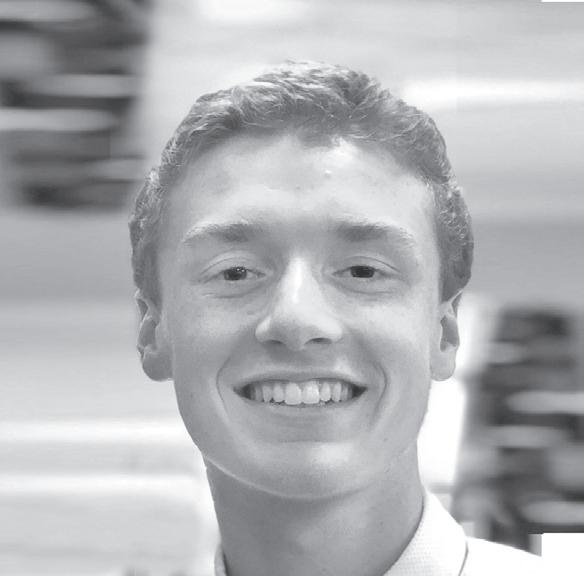
Brenner Beard ‘24 is a sophomore in the College of Arts and Sciences. He can be reached hbb57@cornell.edu. Agree to Disagree runs every other Friday this semester.
How can I be happy at Cornell? Better yet, what does happiness in college even look like?
For me, a quick answer would be a good grade on the Spanish prelim I’ve been dreading. That would certainly take some stress off my shoulders. But, that still doesn’t answer the question. Does a good grade on a test make me happy? Let me pose this scenario differently. Do good marks on a single exam give me more day-to-day life satisfaction than, say, a consistent workout regime, good relationships with my friends or even just healthy habits? For you, the answer may vary, but for myself, I’d say that any three alternatives would make me happier than an “A.”
So, maybe the question of happiness is harder to answer than it seems.
Why am I rambling on about happiness? Well, it’s been on my mind a lot recently. Not because I’m undergoing some kind of spiritual awakening or anything of that nature. Rather, I’ve been mulling it over because I’ve been academically obligated to. Seriously, for the past five days, I’ve been tasked with keeping a daily happiness diary where I report up to fourteen times a day how happy and how anxious I’m feeling at any given moment. To all you engineers and STEM majors feeling a little jealous right now, yes, this is a real class assignment and, yes, it’s for a grade. Eat your heart out.
assignment or finding out I made it into a new club seemed to underperform at the seven-level. They were still happiness-inducing but not to the same extreme. Big picture accomplishments that should’ve been making me jump for joy weren’t eliciting that response. This posed another question: At a school fueled by high (and sometimes over) achievement, what could make me happier than success and accomplishments?? What can I glean from this to be a “happier” person?
We’re told to shoot for the stars, get high-powered internships and earn good grades because those are markers of success, but success and happiness are not one and the same.
I’d say the clearest conclusion I drew is that consistent little wins made me happier than the achievement of a large goal. Going back to the grade example, instead of setting an end-product goal of an “A,” I say “my goal is to study twenty minutes each day.” Accomplishing something like that is not only more attainable but allows me to be happy seeing growth rather than focusing on some far-off result. Focusing on instilling success-inducing habits can be more satisfying than the success itself. Outside of school, it was important for me to find a community of people who I care for and care for me. My happiest episodes came when I was sharing a moment with someone else. Even if it didn’t have the sparkle of a new job, I found that it was these minutes I spent together with people important to me that made a lasting impression on my day.
Good-natured ribs aside, the diary was a project assigned to us as part of my European Politics class’s unit on world happiness trends. Similar to the observational studies that produce country data , our diaries asked us at episodic moments in our day to categorize our general happiness and anxiety levels on a scale from zero to ten. Throughout the week I had moments as low as a four and as high ten but overall, I averaged about a seven-anda-half for happiness.
What was more insightful, though, were the patterns that emerged throughout my week. Exercising, isolated moments with friends, dinner with my roommates and moments of purposeful activity consistently scored the highest, grabbing eights, mostly nines and a few tens.
On the other hand, finishing a good interview, getting a good grade on an
Now, my self-evaluation isn’t designed to be taken as advice. But, maybe my musings can offer you some advice on happiness. I’d say that at the bare minimum, our happiness diaries were an interesting foray into reflection. “Am I happy?,” is a question we don’t get to ask ourselves enough as college students. We’re told to shoot for the stars, get high-powered internships and earn good grades because those are markers of success, but success and happiness are not one and the same.
For me, it was the stuff in between achievements that got me out of bed in the morning. Acing Happiness 101 may mean something else for you but don’t forget it’s a survey course. Don’t plod along without asking the right questions. “Does this make me happy?,” “Am I happy now?” — these are questions whose answers may require a little bit more thought than anticipated.

Fill in the empty cells, one number in each, so that each column, row, and region contains the numbers 1-9 exactly once. Each number in the solution therefore occurs only once in each of the three “directions,” hence the “single numbers” implied by the puzzle’s name. (Rules from wikipedia.org/wiki/ Sudoku)
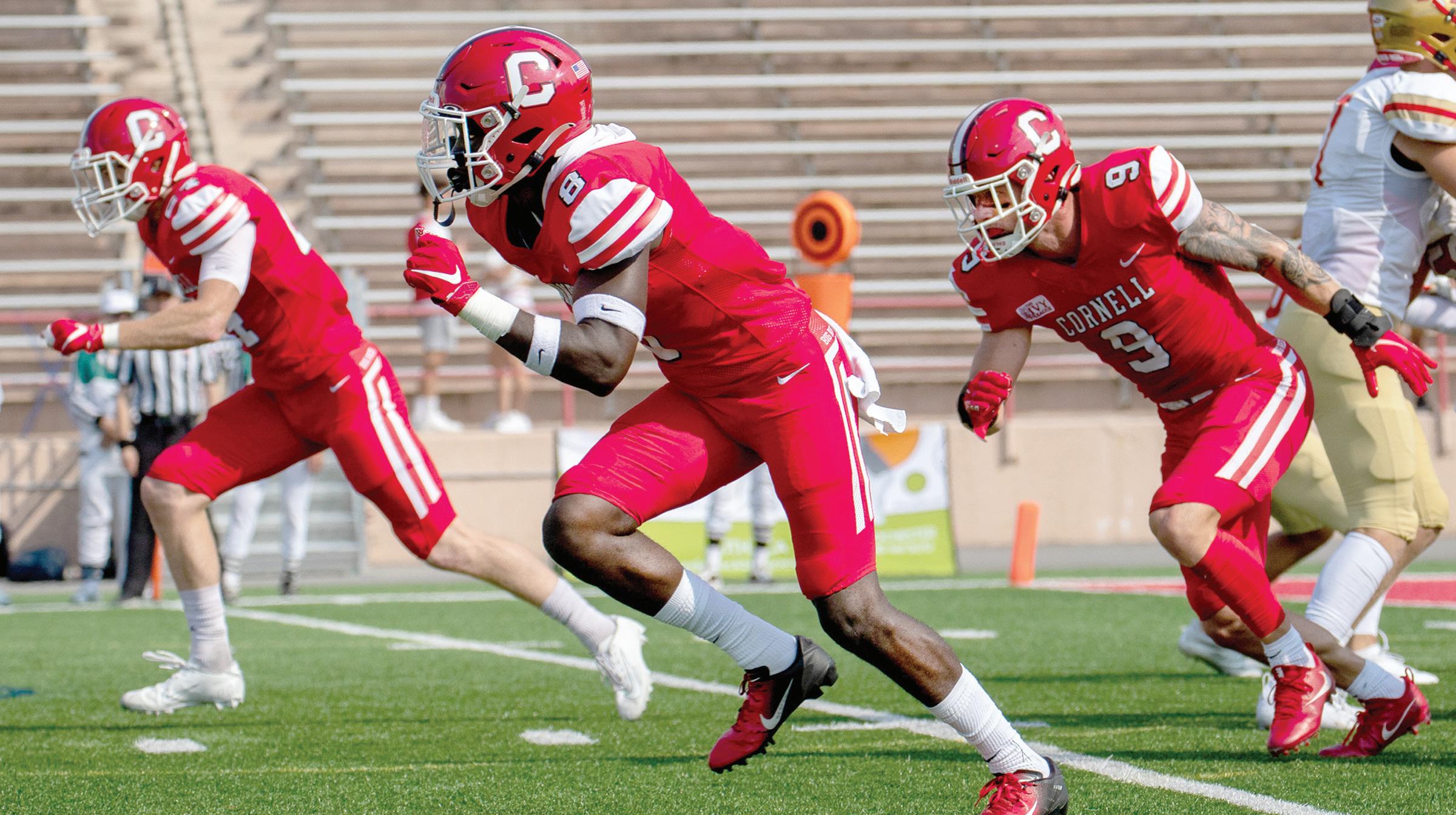
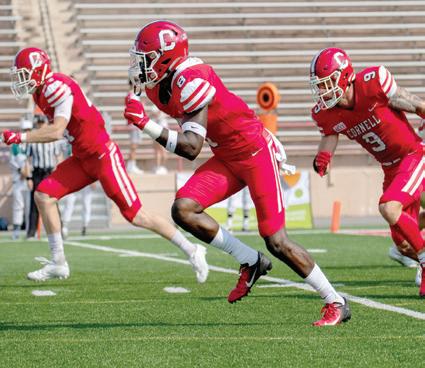
Senior running back Delonte Harrell capped off the drive with a three-yard touchdown run up the middle to give Cornell a 7-0 lead.
In the battle of the ’Nells, Cornell and Bucknell both sought their first victories of the season after getting off to slow starts. To start the season, the Red sustained two competitive losses to VMI and Yale, while Bucknell was outscored by its opponents, 106-9, in its first three games.
Though the Red had a better track record than the Bison in the early stages of the season, that did not show on Saturday afternoon. After holding a narrow lead through the first three quarters, Cornell lost control as Bucknell surged with two fourth-quarter touchdowns to defeat the Red, 21-10.
Both the Red and the Bisons struggled to get things moving early, failing to score in the first quarter before entering halftime with a touchdown each.
Penalties and struggles in the run game plagued the Red’s
After holding a narrow lead through the first three quarters, Cornell lost control as Bucknell surged with two fourth-quarter touchdowns to defeat the Red, 21-10.
first two drives. The highlight of the first two drives was a 47-yard dime thrown by senior quarterback Ben Mays to senior wide receiver Curtis Raymond III, but the drive ultimately stalled at the Bucknell 39-yard line.
Senior punter Koby Kiefer landed a beautiful punt to give the Bison possession at their own 1-yard line. Fifthyear cornerback Kenan Clarke’s defensive pass interference penalty on wide receiver Dominic Lyles allowed the Bison to gain 15 yards, but they were unable to move the sticks before punting back to the Red.
On the next drive, Mays found Raymond again for another deep gain, bringing the Red to first-and-goal.
Bucknell immediately responded with a touchdown drive of its own, opting to alternate the more mobile quarterback Tyler Beverett with passing specialist quarterback Nick Semptimphelter. After driving to the Cornell 1-yard line, Beverett rushed in for a touchdown on a QB fake to tie it up for the Bison.
After a rare sack allowed by the Cornell offensive line against Mays on third-and-long, Kiefer’s punt took a fortunate bounce to the Bucknell 30-yard line with under five minutes left in the half. Sophomore defensive lineman Connor Morgan delivered a huge sack on Beverett to force a third-and-long that the Bison were unable to convert.

With two minutes left in the half, the Red got the ball back deep in its own zone after facing a penalty for running into the kicker. Mays put together a quick and efficient drive, including a pass to senior wide receiver Devan Cross past midfield, before throwing an interception to Bucknell safety Jonathan Searcy on third down, forfeiting the ball in field goal range and bringing the half to a close.
Although Bucknell got the ball to start the half, the Bison were stopped on 3rd-and-8 and punted to the Cornell 24-yard line. Mays drove the Red to score on the next drive after a designed eight-yard QB run up the middle and a deep pass to fifth-year wide receiver Turner DePalma placed Cornell in the red zone. After failing to convert on third down, Red kicker Scott Lees booted a 27-yard field goal to give the Red a 10-7 lead with 7:34 remaining in the quarter.
On the next drive, Bucknell was again forced to punt after senior cornerback Kolby McGowan stopped a Beverett run on 3rd-and-11. On Cornell’s subsequent drive, Cornell was forced to punt after Mays missed his targets on a few deep passes and on a disrupted screen pass. Bucknell’s line-
backer Ben Allen was injured during the drive. From this point forward, the game started to change for the Red. Bucknell quickly capitalized on a few big catches by wide receiver Marques Owens to bring the ball to the Cornell sixteen yard line. To start the fourth quarter, running back Danny Meuser pushed for a fourth-down conversion and then Bucknell took the lead off of a touchdown reception by tight end Christian Spugnardi. The Bison, already possessing the momentum, did not let go for the rest of the contest.

On the Red’s ensuing drive, Mays was picked off by cornerback Sterling Deary, whose dancing return navigated the Bison all the way up to the Cornell 28-yard line. In great field position, Bucknell quickly capitalized, moving the sticks and then topping off the short drive with a twoyard QB fake run by Semptimphelter. Down 21-10, the Red needed a spark. Senior wide receiver Javonni Cunningham appeared to provide that spark with a big kickoff return to the Bucknell 45-yard line. Fifth-year quarterback Richie Kenney then replaced Mays, and the decision appeared to pay off. Kenney completed passes to senior wide receiver Thomas Glover and fifth-year wide receiver Alex Kuzy, moving the Red down to the goal line.
Cornell could not punch it in, and at the most inopportune time, Kenney was stripped of the ball. Bucknell recovered in the end zone for a touchback, effectively ending the Red’s hopes of a comeback with five minutes remaining in the game.
From there, Bucknell went into clock control, and the Bison secured a 21-10 victory over the Red. Cornell, now 0-3, faces a tough date in Cambridge next weekend to face a Harvard team that pulled off a 38-13 victory over No. 24 Holy Cross on Saturday.
Will Bodenman can be reached at wbodenman@cornellsun.com. Luke Pichini can be reached at lpichini@cornellsun.com.