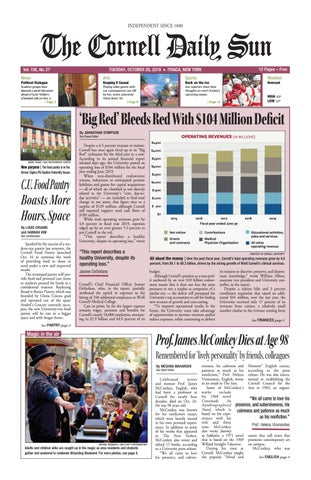
Sparked by the success of a student-run pantry last semester, the Cornell Food Pantry launched Oct. 16 to continue the work of providing food to those in need under a new and improved model.
The revamped pantry will provide food and personal care items to students pressed for funds in a confidential manner. Replacing Bread-n-Butter Pantry, which was founded by Gloria Coicou grad and operated out of the space Anabel’s Grocery currently occupies, the new University-run food pantry will be run in a bigger space and with longer hours.
See PANTRY page 4
‘Big Red’ Bleeds Red With $104 Million Defcit
By JOHNATHAN STIMPSON Sun News Editor
Despite a 6.5 percent increase in tuition, Cornell has once again lived up to its “Big Red” nickname for the third year in a row: According to its annual financial report released days ago, the University posted an operating loss of $104 million for the fiscal year ending June 2019.
When non-distributed endowment returns, reductions to anticipated pension liabilities and grants for capital acquisitions — all of which are classified as not directly related to the University’s “core, day-today activities” — are included to find total change in net assets, that figure rises to a surplus of $129 million, although Cornell still reported negative total cash flows of $109 million.
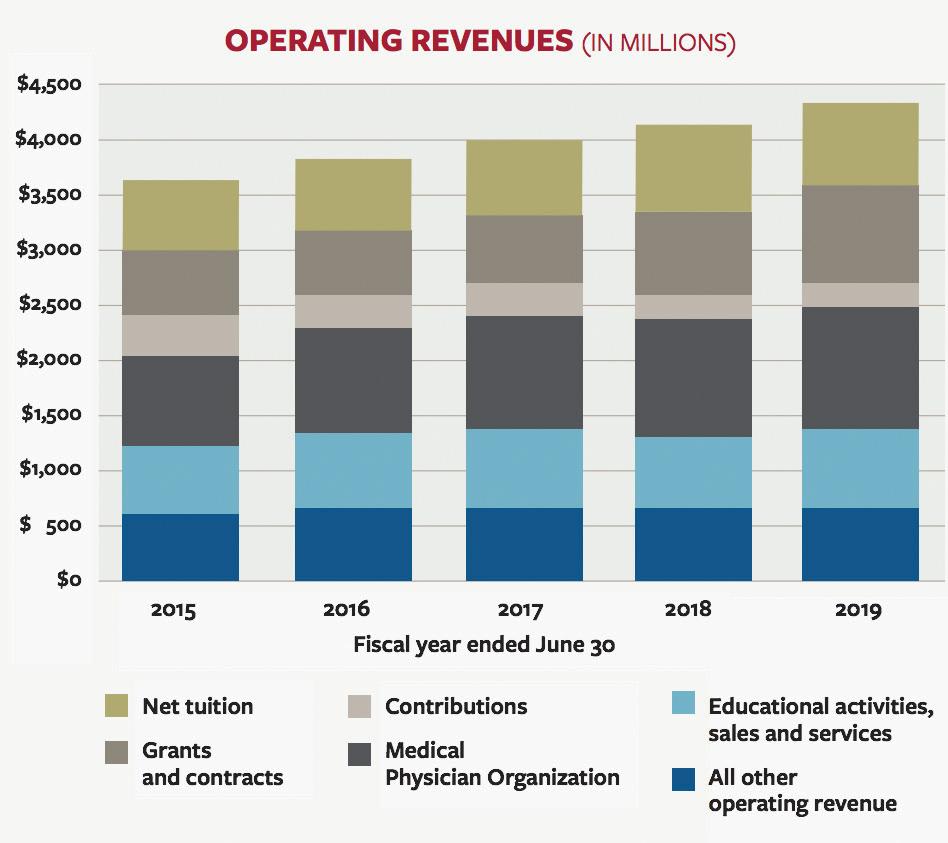
While total operating revenues grew by 4.8 percent in fiscal year 2019, expenses edged up by an even greater 5.3 percent to put Cornell in the red.
“This report describes a healthy University, despite its operating loss,” wrote
“This report describes a healthy University, despite its operating loss.”
Joanne DeStefano
Cornell’s Chief Financial Officer Joanne DeStefano, who, in the report, partially attributed the uptick in expenses to the hiring of 248 additional employees at Weill Cornell Medical College.
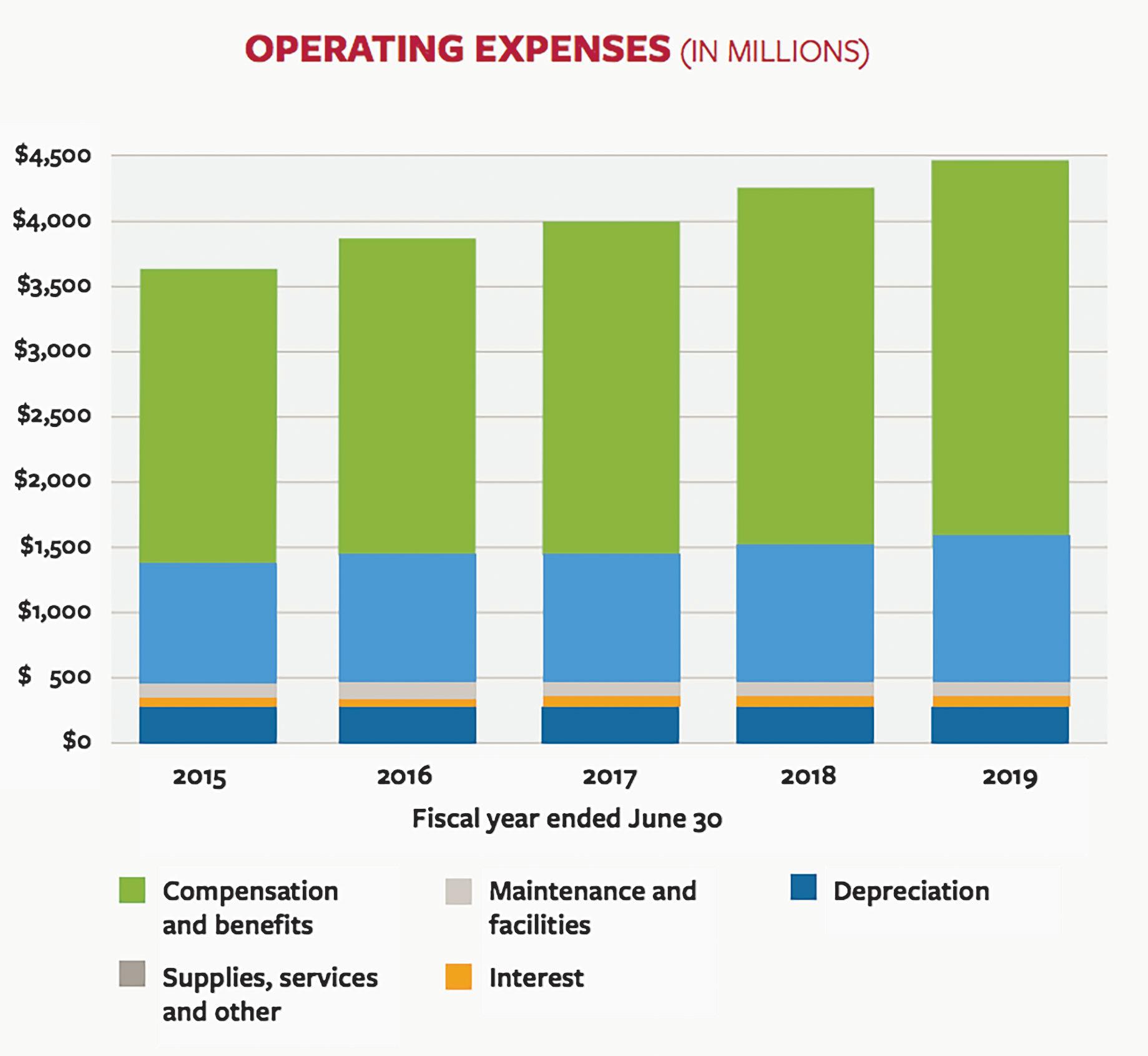
Case in point, by far the largest expense remains wages, pensions and benefits for Cornell’s nearly 18,000 employees, amounting to $2.9 billion and 64.8 percent of its
Adults and children
are
All about the money | Over the past fiscal year, Cornell’s total operating revenues grew by 4.8 percent, from $4.1 to $4.3 billion, driven by the strong growth of Weill Cornell’s clinical services.
budget.
Although Cornell’s position as a non-profit anchored by an over $10 billion endowment means that it does not face the same pressures to run a surplus as companies of a similar size — the deficit still prompted the University’s top accountant to call for finding new avenues of growth and cost-cutting.
“To improve operational results in the future, the University must take advantage of opportunities to increase revenues and/or reduce expenses, while continuing to deliver
its mission to discover, preserve, and disseminate knowledge,” wrote William Silbert, associate vice president and University controller, in the report.
Despite a tuition hike and 3 percent enrollment expansion that raised an additional $44 million, over the last year, the University received only 17 percent of its revenues from tuition, a relatively small number similar to the revenue coming from
Prof. James McConkey Dies at Age 98 Remembered for ‘lively personality’ by friends, colleagues
By MEGHNA MAHARISHI Sun Staff Writer
Celebrated writer and mentor Prof. James McConkey, English, who had been a professor at Cornell for nearly four decades, died on Oct. 24. He was 98 years old.
McConkey was known for his nonfiction essays, which were heavily rooted in his own personal experiences. In addition to some of his works that appeared in The New Yorker, McConkey also wrote and edited 15 books, according to a University press release.
“We all came to love his presence, and subver-
siveness, his calmness and patience as much as his nonfiction,” Prof. Helena Viramontes, English, wrote in an email to The Sun.
Some of McConkey’s works include his 1968 novel Crossroads: An Autobiographical Novel , which is based on his experiences with his wife and three sons. McConkey also wrote Journey to Sakhalin, a 1971 novel that is based on the 1969 Willard Straight Takeover.
Memory” English course, according to the press release. He was also instrumental in establishing the Cornell Council for the Arts in 1965, an organi-
“We all came to love his presence, and subersiveness, his calmness and patience as much as his nonfiction.”
Prof. Helena Viramontes
zation that still exists that promotes contemporary art on campus.
During his time at Cornell, McConkey taught the popular “Mind and
McConkey, who was
See ENGLISH page 4
COURTESY OF CORNELL UNIVERSITY
MICHAEL SUGUITAN / SUN STAFF PHOTOGRAPHER
alike
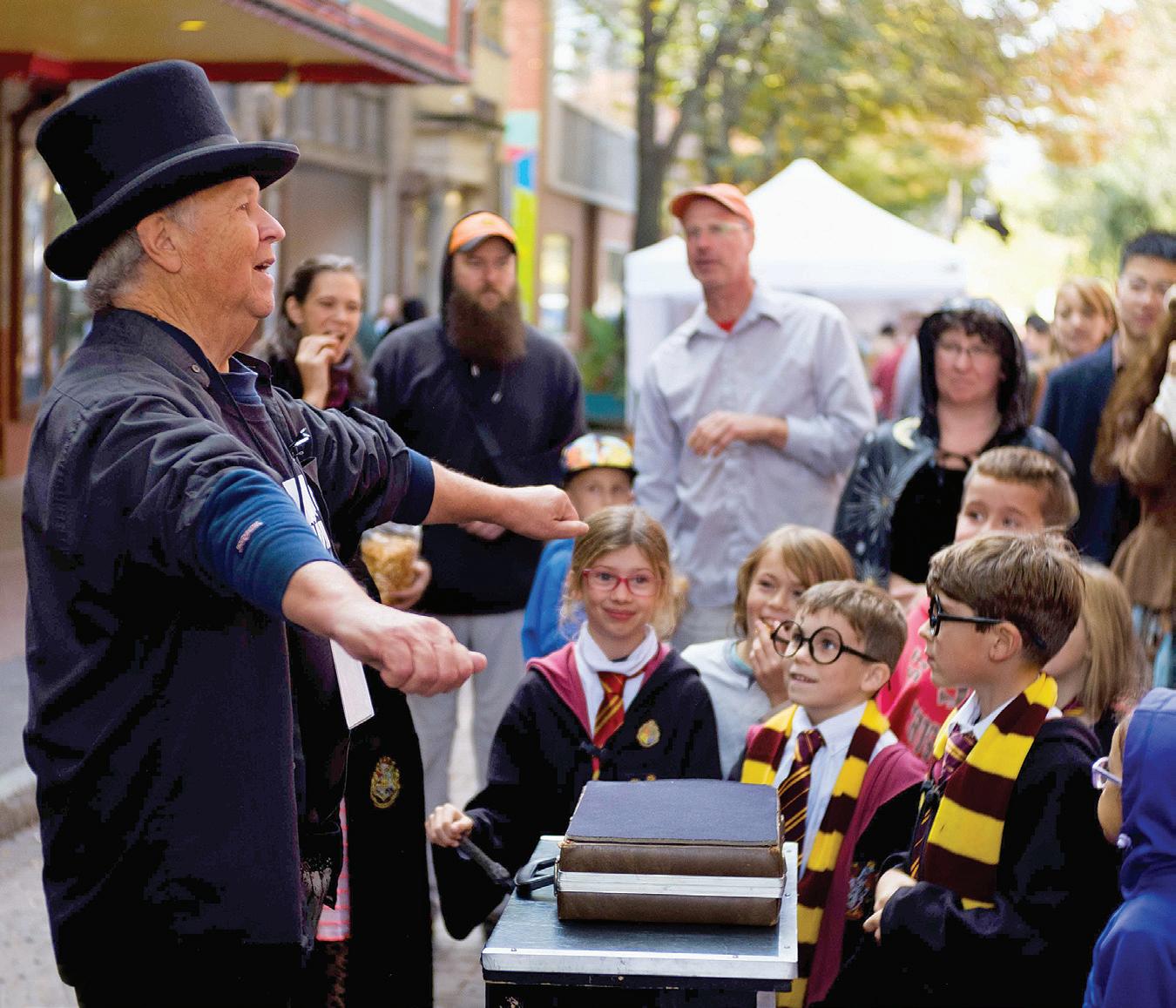
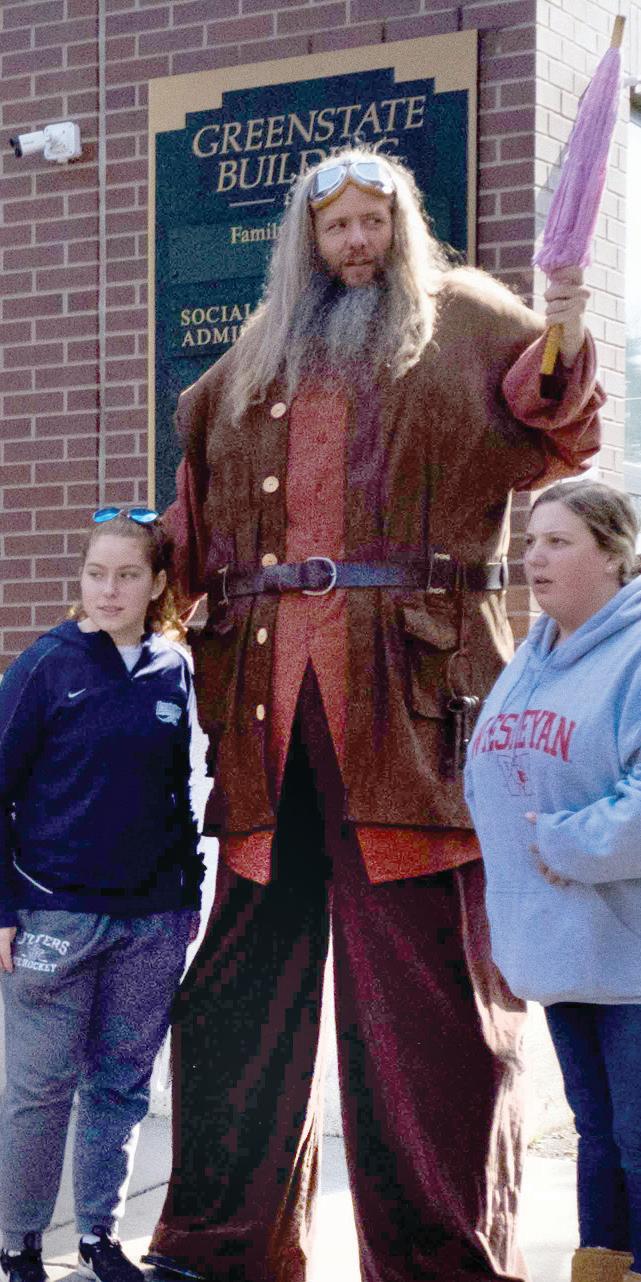
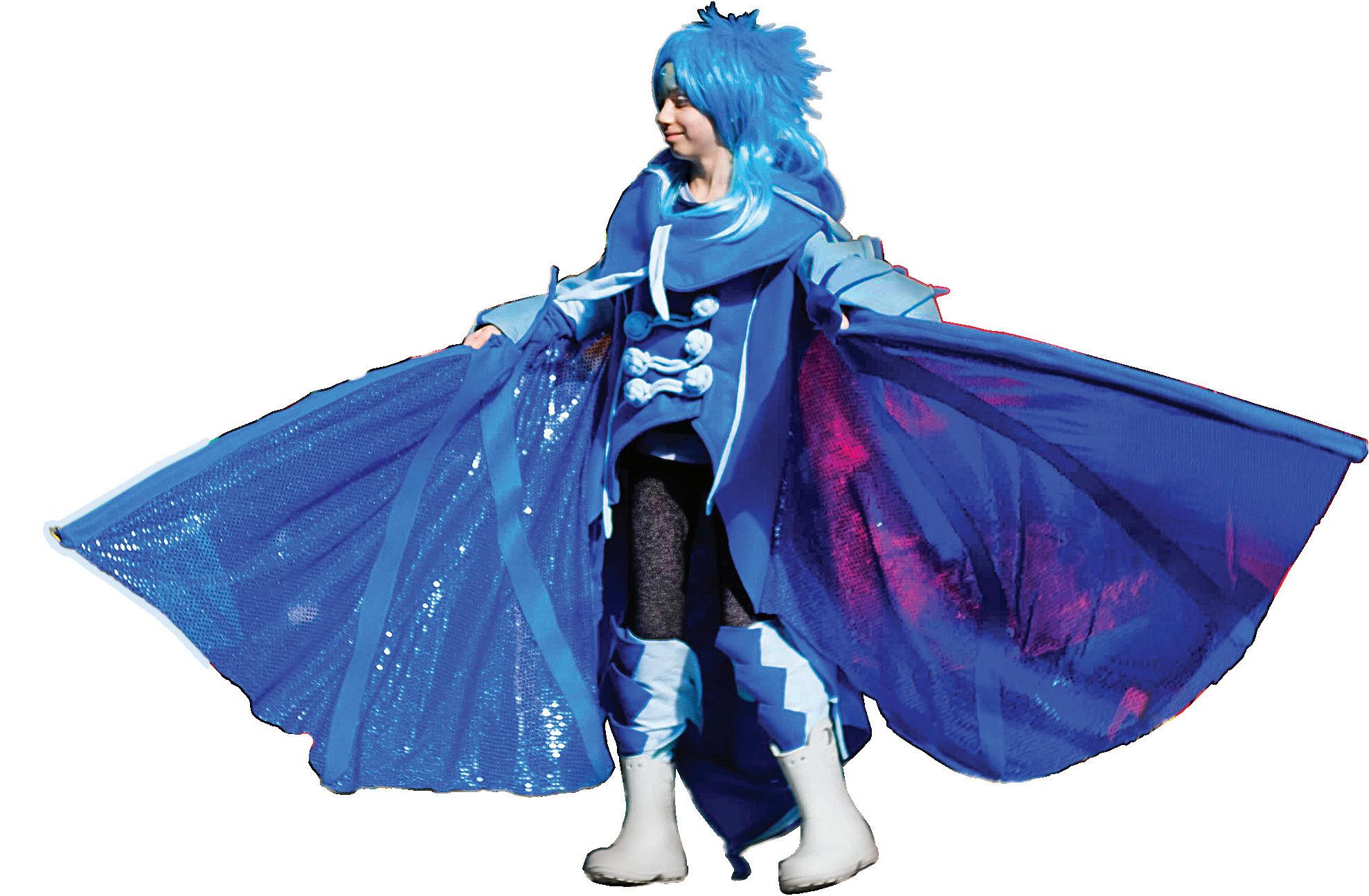
caught up in the magic as area residents and students gather last weekend to celebrate Wizarding Weekend. For more photos, see page 5.
New purpose | The food pantry is in the former Sigma Phi Epsilon fraternity house.
BORIS TSANG / SUN PHOTOGRAPHY EDITOR
Magic in the air
Tuesday,
Slaying the Imposter: Feminist Approaches to Thriving in the Academy 12 - 1 p.m., 190 Rockefeller Hall
Seed to Kitchen: Prioritizing Flavor in Variety Development 12:20 p.m., 135 Emerson Hall
The Revolution Will Not Be Aestheticized (Too Much): Some Lessons Learned From Memorializing the Art and Activism of the Young Lords Party 4:30 - 6 p.m., 366 McGraw Hall
Joint Econometrics and Industrial Organization Workshop 11:40 a.m. - 1:10 p.m., 498 Uris Hall
Berger International Speaker Series: Hon. Carol King 12:15 - 1:15 p.m. , 277 Myron Taylor Hall
Midday Music for Organ: CU Music 12:30 p.m. - 1:15 p.m., Sage Chapel
Internal Transfer Walk-In Hours 3 - 5 p.m., Takton Center
International Student Group Counseling 3 - 4 p.m., 276 Caldwell Hall
Hurried Halloween 4:30 - 6 p.m., 112 Mann Library
A Road Map to Control Huanglongbing: Tissue-specific, Molecular Analyses of the Vector-Pathogen Interface 12:20 p.m., 404 Plant Sciences Building
Students Aim to Host Pro-Union Dialogue Before Walker’s Talk
Te organizers say they support Walker’s right to speak, but want to foster a balanced discussion
By ARI DUBOW Sun Staff Writer
Only a few hours before Gov. Scott Walker‘s (R-Wis.) planned talk at Cornell on Nov. 4, a few student groups plan to host a discussion on the former governor’s contentious union legacy.
The discussion, co-hosted by the Cornell Democrats, Cornell Students for Bernie and The People’s Organizing Collective, and joined by Prof Lee Adler, labor relations, aims to publicly establish the pro-union side of dialogue before people attend Walker’s presentation, which is titled “Courage and Conservative Governance.”
Walker’s talk is jointly sponsored by Young America’s Foundation and the Cornell Republicans.
The student-led discussion will be held from 4 to 5 p.m. so that people will also be able to attend Walker’s presentation, which begins at 5:30 p.m. The discussion will be held in Plant Sciences Building Room 143, right across the Ag Quad from Warren Hall, where Walker’s talk will be taking place.
According to Geneva Saupe ’21, the vice president of Cornell Democrats and a Wisconsin native, the organizing groups support Walker’s right to speak on campus and that the goal of the discussion is to create a balanced dialogue.
“I was there when he took away collective bargaining rights,” Saupe said. “It was the beginning of my political development.”
In a written statement, the Cornell Democrats said that their members should be willing to go to Walker’s talk and ask “tough questions about his policy legacy.”
Walker’s presentation will focus on fiscal responsibility, public sector unions and his tenure in office. He will also answer
questions from the audience. However, the students involved in hosting the discussion are skeptical that the governor will articulate what they see as the full picture.
“We looked at the Walker event and thought, ‘There’s no way Walker is going to talk about public-sector unions,’” said
Daniel Bromberg ’20, a member and the co-founder of The People’s Organizing Collective. POC is Cornell’s chapter of United Students Against Sweatshops, the country’s largest youth-led labor organizing group, according to their website.
As governor of Wisconsin, Walker gained national attention for establishing “Right to Work” laws, which prohibits mandatory union membership, and for curbing collective bargaining rights of state employees.
Serving for two, often controversial terms, Walker is one of only three sitting governors in U.S. history to face a recall election, and the only one of those three to win that election, according to the Rutgers University Center on the American Governor.
But Bromberg said he hopes the discussion moves beyond specific actions taken by Walker, and instead focuses on the broader impact Walker’s tenure has had on the state of unions, whose membership in recent years have been on the decline.
“We were afraid that any presentation done by Governor Scott Walker would offer a platform for a disregard of public-sector unions,” Bromberg said. “It’s important to understand the entire situation. I think people from both sides of the political spectrum can benefit.”
Ari Dubow can be reached at adubow@cornellsun.com.
C.U. Professor Cultivates $100 Million Broccoli Industry
By JUN OH KIM Sun Contributor
This year marks the ninth year since the inception of the Eastern Broccoli Project: an industry-funded initiative to raise a brand-new $100 million broccoli industry in the eastern United States.
“This is a project we started about 10 years ago, with the idea that we could develop a broccoli industry across the east coast that delivered broccoli year-round,” said Prof. Thomas Bjorkman, vegetable crop physiology. “So we put together a large team that was able to identify the obstacles in biology and business that have hindered broccoli industry development in the east.”
With a growing demand for locally-sourced produce — and combined with the chance to spur new economic development in traditionally underserved, rural areas — a window of opportunity
arose to take the ambitious step of launching an entirely new vegetable market, propelled by funding from the Department of Agriculture’s Specialty Crop Research Initiative.
“There is a big interest in locally grown, and particularly, vegetables,” said Bjorkman, who manages the Eastern Broccoli Project. “Customers wanted that, restaurants wanted that, supermarkets were hearing that.”
According to Cornell University’s Department of Agriculture, the eastern broccoli industry is currently valued at around $90 million, and is projected to meet the goal of $100 million in the next year. Bjorkman said that the goal is to have locally-grown broccoli eventually comprise 25 percent of eastern U.S. broccoli consumption.
Bjorkman attributed the quick adoption of broccoli among local farmers to the consistency of its demand, and how it allows oper-
ators an avenue through which to easily and effectively diversify their crop rotations.
Farmers “typically are growing several different vegetables. So you can distribute your labor, you can distribute your risk, and work your different market channels,” Bjorkman said. “That’s the kind of vegetable grower that’s likely to add broccoli as part of their mix. And they’re likely to add [it] because every buyer needs broccoli all the time, there’s always a market for it.”
At present, the largest source of broccoli production is concentrated in the coastal valleys of California, which have cool climate conditions conducive to broccoli growth. Western farmers, experienced operators that are among “the most efficient farmers in the country,” pose tough competition, though eastern farmers enjoy a number of geographic advantages, Bjorkman said.
“They are challenged with water supply, which we [the east] aren’t, and the [broccoli] shipping across the country burns a lot of diesel fuel,” Bjorkman said. “They need a pound of ice for a pound of broccoli, and making that ice is energy-intensive. So we’re also looking for opportunities for improved sustainability.”
Even as the eastern broccoli industry plants deeper roots, the process of propelling a product from nascent upstart to profitable industry is a lengthy one, with new research and economic conditions constantly evolving the agriculture market.
“We’ve got a couple more years to go, and we see a lot of new varieties in the pipeline better than those currently in the market,” Bjorkman said. “So the farmers will have more opportunities in the next few years to plant broccoli that will perform reliably for them.”
For instance, a pair of studies published by the team this year identified and exploited certain chromosomal markers in order to perfect a cross-breeding process that results in broccoli that has a “dark green [color]” which appears more “healthy to most people” — and, as a result, stands to boost sales.
The hybrid broccoli is currently being worked on by project scientists, companies and farmers to provide a steady supply of more uniform eastern variants to the commercial markets — such as those close to campus.
“Western New York has substantial potential as a production center, with the climate, access to markets, and the infrastructure that’s already here,” Bjorkman said. “So we’re expecting a lot of growth.”
Jun Oh Kim can be reached at jk2324@cornell.edu.
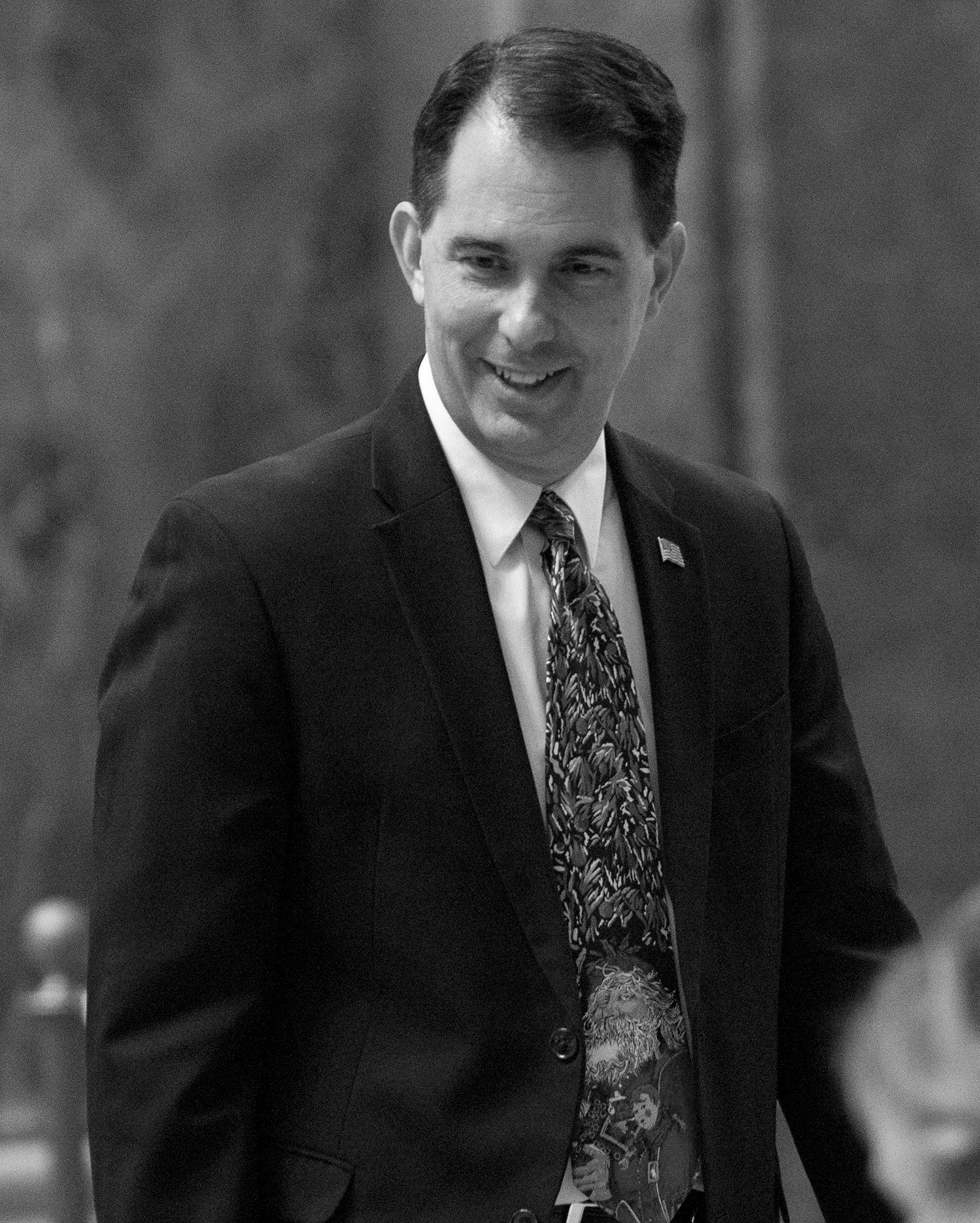
History lesson | Student groups have planned to host a paneled discussion just ahead of former governor Scott Walker’s scheduled talk to discuss his anti-union voting history.
LAUREN JUSTICE / THE NEW YORK TIMES
Good eats | Prof. Thomas Bjorkman helped cultivate a new, marketable strain of broccoli that is grown on the eastern coast of the US to challenge the dominant variety, which comes all the way from California.
DAVID MALOSH / THE NEW YORK TIMES
Revered C.U. English Prof Passes Away
Continued from page 1
known for inviting prominent authors to visit Cornell, also hosted the Chekhov festival in the late 1970s, which the creative writing program described as “one of the most memorable cultural events in Cornell history.” The festival featured distinguished authors like Eudora Welty, John Cheever, Denise
Levertov and Walker Percy. McConkey was the recipient of a Guggenheim Fellowship, a National Endowment for the Arts essay award and American Academy and Institute of Arts and Letters award in literature.
Former students of McConkey remembered him for his prose, intellect and humility.
Diane Ackerman M.A. ’73 MFA ’76 Ph.D. ’78, one of McConkey’s graduate advisees, said that McConkey helped her learn how to go about writing pose.
“In all those different phases and stages of life, I’ve felt privileged to know someone so keenly nourished by literature, gifted with creative insight, full of curiosity about the world, sincerely caring, candid about having a social and environmental conscience, uxorious, wickedly smart but immoderately humble, down-to-earth, and to use a very old-fashioned word and concept, ‘decent,’” Ackerman wrote in The American Scholar, a magazine published by the Phi Beta Kappa Society.
Robert Wilson, the edi -
tor of The American Scholar, remarked that throughout his life, McConkey always had a lively persona.
“I've felt privledged to know someone so keenly nourished by literature.”
Diane Ackerman
“Sometimes when you love a book too much, it is hard not to be disappointed by its all-toohuman author,” Wilson wrote. “But that was dramatically not the case with Jim. He was a boyish 70 or so when I first met him and still puckish at just past 90 when I saw him again.”
The English department plans to host a memorial for McConkey but has not announced a date.
McConkey is survived by his two sons and two grandchildren. His wife Gladys, a chemist at Cornell, passed away in 2013.
Meghna Maharishi can be reached at mmaharishi@cornellsun.com
Cornell Food Pantry
Tackles
PANTRY Continued from page 1
Located at 109 McGraw Place, the pantry offers its services to all undergraduate students, graduate students, staff members and faculty, regardless of financial status.
Members of the Cornell community simply need to enroll in the program to gain access to the pantry’s services.
The launch of the facility comes as food insecurity, exacerbated by academic workloads, student debt and jobs, has emerged as a pressing issue at many college campuses. A rising problem among college students, food insecurity targets one in three students, according to Cornell Dining’s website.
Food Insecurity
can,” Karen Brown, director of marketing for Student and Campus Life, told The Sun.
The pantry works on a system of “points,” which can be used in a manner similar to the Big Red Bucks. With these points, individuals can “shop” for food and personal care items.
Participants of the pantry program “may [also] receive frozen meat or fish selections, as well as refrigerated items such as butter, milk
The pantry works on a system of “points,” which can be used ... similar to Big Red Bucks.
and cheese,” according to Brown.
Students struggling with food insecurity are often pressed for funds when purchasing food, or run out of food before they can obtain more money.
The new pantry at Cornell “is determined to help eliminate that distraction from academic success for as many students as we
“Individuals are allotted 40 points per week, and those living with and supporting others may ask for [additional support] ... for a total of up to 90 points,” Brown said.
Cornell’s efforts to establish its own pantry comes after a number of other programs established to tackle food insecurity, such as the Swipe Out Hunger initiative. Last spring, the University partnered with Swipe Out
Hunger to allow students to help their peers by donating unused bonus meal swipes, The Sun previously reported. Originally a nonprofit launched by a group of friends at University of California, Los Angeles, the program allows Cornell students to donate bonus meals from their current meal plans to a Swipe Out Hunger fund — which, in turn, metes out free meals to eligible students. Although only less than twoweeks old, Cornell’s pantry has seen strong interests from the community members. Within the first four days, an estimated 50 Cornell community members have registered to participate in the program, according to Brown. The pantry is open is open Tuesdays and Thursdays from 4 to 7 p.m., Wednesdays and Fridays 10 a.m. to 1 p.m., and Sundays noon to 3 p.m.
Louis Chuang can be reached at lc742@cornell.edu. Hannah Kim can be reached at hk587@cornell.edu.
COURTESY OF CORNELL UNIVERSITY
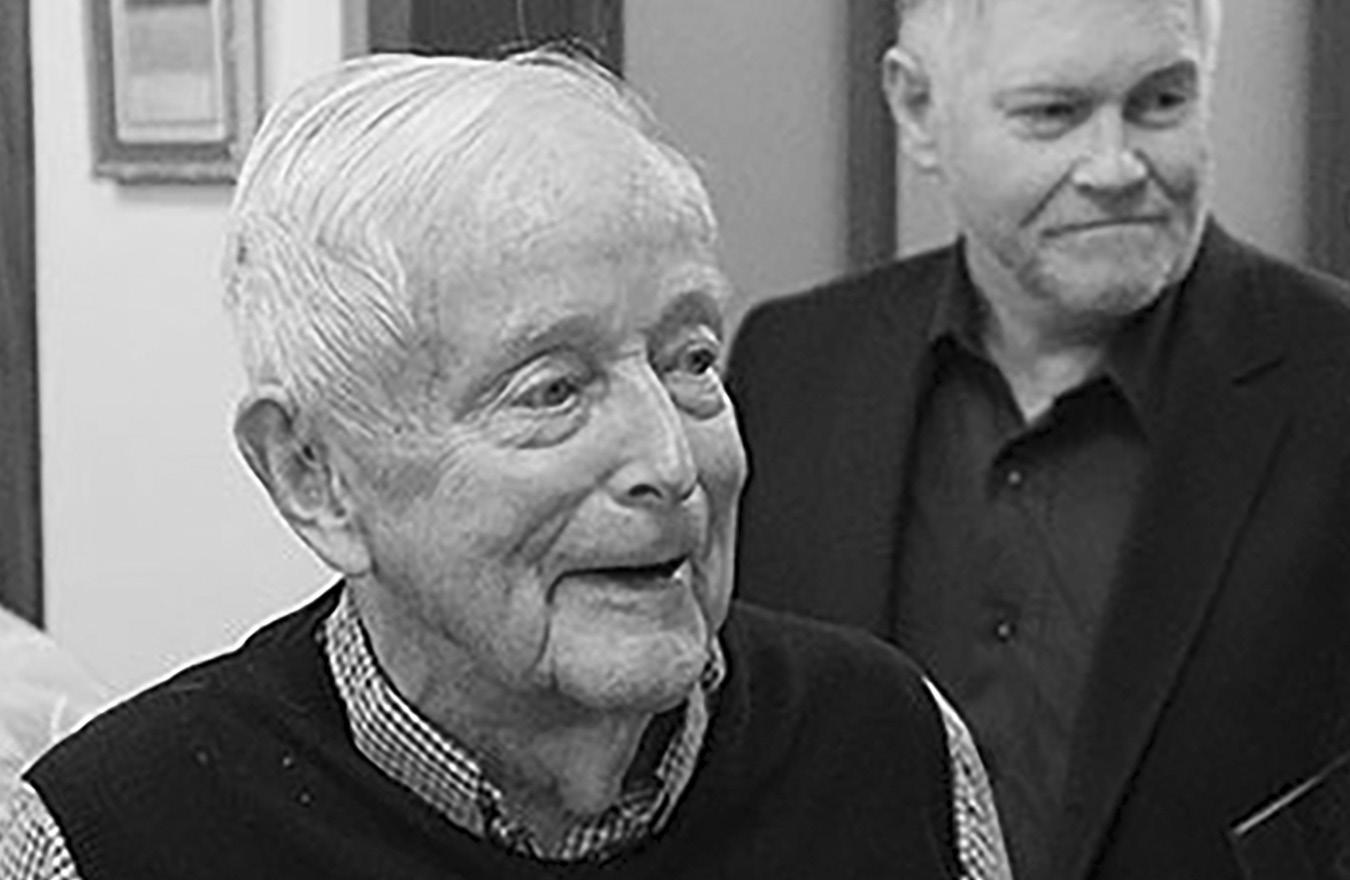
Literary legend | In life, McConkey received numerous awards for his work.
Despite Tuition Hike, C.U. Posts Defcit for 3rd Consecutive Year
FINANCES
Continued from page 1
patients and corporate contracts.
“This report describes a healthy university, despite its operating loss.”
Joanne DeStefano
Amidst rising healthcare demand, Weill Cornell’s Medical Physician Organization, which DeStefano called Cornell’s “largest growth area,” generated over $1.1 billion to comprise 26 percent of University revenues, up from only 23 percent in 2014.
According to the report, the Physician Organization acts as the management structure for Weill Cornell’s clinical services, receiving revenue from patients treated at its facilities. Last year, Weill Cornell — which operates 40 locations in New York under affiliations with NewYork-Presbyterian Hospital, Hospital for Special Surgery and Memorial Sloan-Kettering — employed over 1,320 physicians and saw 1.7 million annual patient visits.
Income from grants and contracts — which the report defines as “revenue generated from external entities, such as governmental agencies, corporations, or non-profit organizations” — lagged behind Weill at
nearly $900 million and makes up 20 percent of Cornell’s revenues.
Among the corporate contracts, Cornell’s affiliation with foreign actors have landed the University in hot water in recent months: Last March, a Sun investigation into a multi-million dollar contract with Chinese telecommunications giant Huawei, which has been the target of several federal investigations, left the University on the defensive.
According to government records, Cornell accepted foreign gifts and contracts totalling almost $200 million in the past fiscal year — the vast majority of which came from Qatar, where Cornell operates a branch of its medical college. None were reported from mainland China over that period.
Of the Ivy League schools that have released audited financial statements for the 2019 fiscal year, Cornell’s total $104 million operating deficit so far leads the pack. The University of Pennsylvania, Harvard and
“In summary, the results of fiscal year are in line with the university’s operating plan.”
Joanne
DeStefano
Columbia, on the other hand, all delivered surpluses of over $100 million.
Even so, the University remained confident about fiscal year 2019’s results — highlighting, in particular, its operations beyond
Bank-breaking | Cornell’s largest expense remained compensation, at $2.9 billion.
Ithaca as an area of strength looking forward.
“In summary, the results of fiscal year 2019 are in line with the university’s operating plan, benefiting primarily from the continued growth in the clinical practice and the
planned growth of Cornell Tech,” DeStefano wrote
Johnathan Stimpson can be reached at jstimpson@cornellsun.com.
Wizarding Weekend Wonders
Tere’s No Crying in Easy Mode
Adesperate woman, I wandered through the empty fields, hopelessly at the edge of civilization, rooting through trash cans but finding nothing. My vision was starting to black out — I could barely lift my arms anymore. I could feel the sun disappear far beyond the sky but I couldn’t do anything about it. I knew I needed to find my home and climb into bed so I could finally end this horrible day. But I couldn’t — I had no idea where I was. It was the early hours of the morning when I finally succumbed to exhaustion and collapsed.
When I first played Stardew Valley , the hit farming RPG that came out in 2016, I had a rough time. I didn’t know where the map button was, for one, so I immediately got lost. My character didn’t have any food, I had spent too much time chopping down trees and my stamina meter was dangerously low. It’s no surprise I passed out somewhere in the woods above town, confused and alone. I didn’t understand why the game was so difficult for me, having heard so many positive reviews lauding it as a great relaxation tool. I didn’t feel relaxed. I was barely 13 minutes into the game and I had already died. I didn’t even know you could die in the game! Had I messed everything up?
That’s the thing, though — I hadn’t messed anything up. I didn’t have to start from the beginning, or have my failure on the first day follow me around forever like a freshman year math grade on a college transcript. When you pass out in Stardew Valley , you lose 50 coins and your energy meters only refill halfway. You wake up in your own bed (having been lovingly transported by an NPC, Dr. Harvey, who is the real MVP) and start the next day like any other. You can easily earn those 50 coins back, and refill your meters by eating. You haven’t died, you’ve just stayed up too late and woken up with a headache. There’s nothing you can’t come back from, after some dedication and Googling “WHERE MAP BUTTON STARDEW VALLEY PC” in a different
window.
On the Level
A lot of games are serious about punishing their players for their failures. A lot of people, including myself, know the struggle of rebooting your device and re-loading your save file just so that a dumb mistake won’t make the game harder. In Phoenix Wright: Ace Attorney , if you present the wrong evidence too many times, the game punishes you by giving your defendant a guilty verdict, forcing you to move backwards in the game unless you’ve saved before guessing wildly. I’ve reloaded save files so many times in The Legend of Zelda: Breath of the Wild after accidentally shattering a weapon I really liked or drinking a potion I’d meant to save for a later mission. These games are some of my favorites, and on the whole I love “choices matter” games like Oxenfree or Undertale But sometimes I like playing something with no consequences, where if I mess up I can just keep going without sneakily messing with save files.
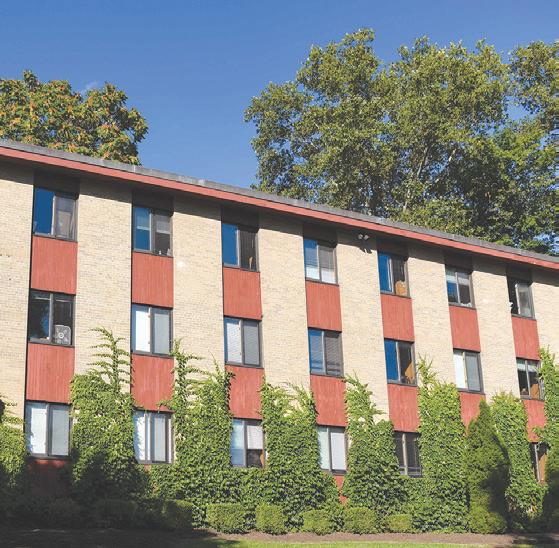
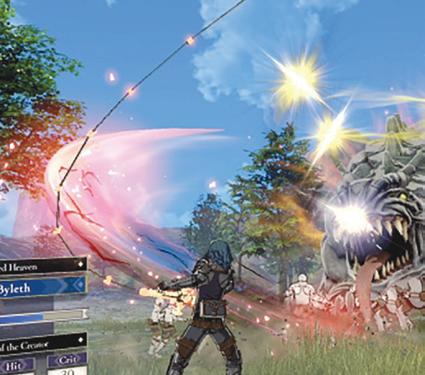
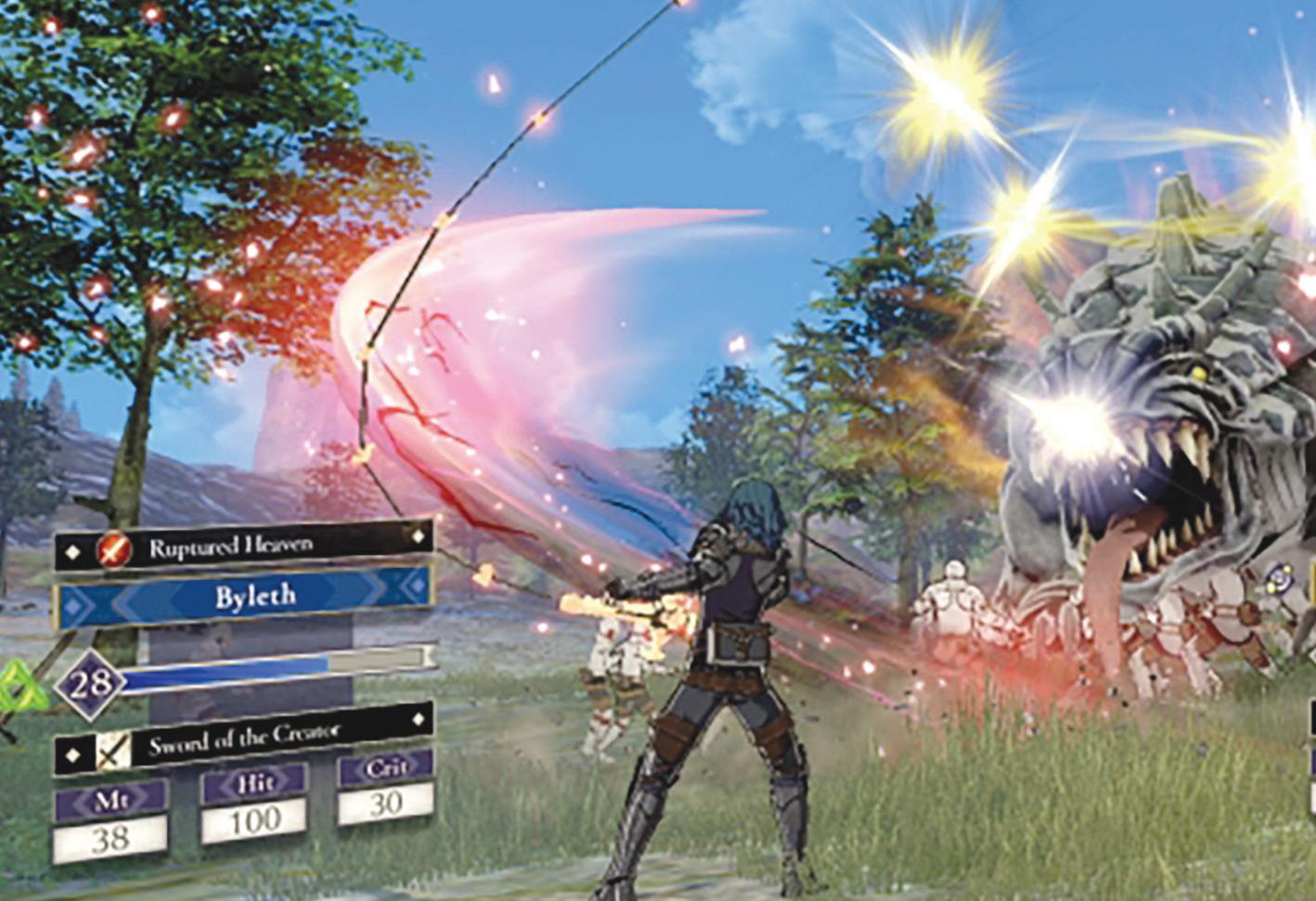
That’s why, although I’ve just written three paragraphs about a game I last played three years ago, this column is really about a more recent game, Fire Emblem: Three Houses. I didn’t know what to expect going into it, and I was pretty worried I’d mess up since the only Fire Emblem game I’d played in the past was the mobile game. As it turns out, Three Houses is pretty good at welcoming new players; in addition
to offering me an “easy” difficulty, where enemies are weaker, it also offers a “Casual” mode. In “Classic” Fire Emblem , I guess, characters that die while the player is commanding them stay dead for the rest of the game, but in “Casual,” they resurrect after each round. This makes things so much less stressful for me. I’m sure a ”real gamer,” whatever that means, would go right for “Classic,” no-holds-barred, Final-Destination-NoItems, but I’m grateful for the game’s forgiveness. I have enough to worry about without accidentally killing my player character’s friends.
I’m sure some characters will still suffer or die — given the look someone gave me last week when I mentioned I’d chosen the Black Eagle route, it’s probably a certainty — but at least it won’t be due to my own failures.
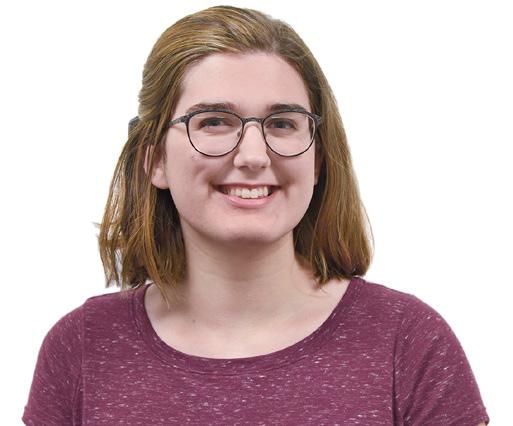
Olivia Bono is a senior in the College of Arts and Sciences. She can be reached at obono@cornellsun.com. On the Level runs alternating Tuesdays this semester.
Olivia Bono
COURTESY OF NINTENDO VIA GEMATSU
SC I ENCE
Science of Sight: Probing the Inner Workings of the Eye
By TUCKER HWANG Sun Staff Writer
How do we see? While this seems like a simple question with a seemingly obvious answer, how exactly a photon of light can trigger neural signals in our brains has been eluding biologists for decades. However, one of Cornell’s research groups, under Prof. Richard Cerione, pharmacology and chemical biology, was able to elucidate the mechanism of seeing in a recent paper published in the Journal of Biological Chemistry.
For several years, the Cerione Lab had been observing and experimenting on a system called phototransduction, the process by which light can activate signals in our brains and allow us to understand what we are seeing.
This process was already known to involve four components: a special kind of receptor in the eye called rhodopsin, a G-protein called
transducin and two nucleotides, guanosine triphosphate (GTP) and guanosine diphosphate (GDP).
According to Sekar Ramachandran, a senior research associate in the Cerione Lab, previous research indicated that rhodopsin is activated by light, causing it to bind to and activate the transducin. However, the mechanism for this activation, as well as many details about the physical form of the rhodopsin-transducin complex form remained in the dark.
Modeling the rhodopsin-transducin complex and its activation mechanism is what the Cerione lab sought to shed light on.
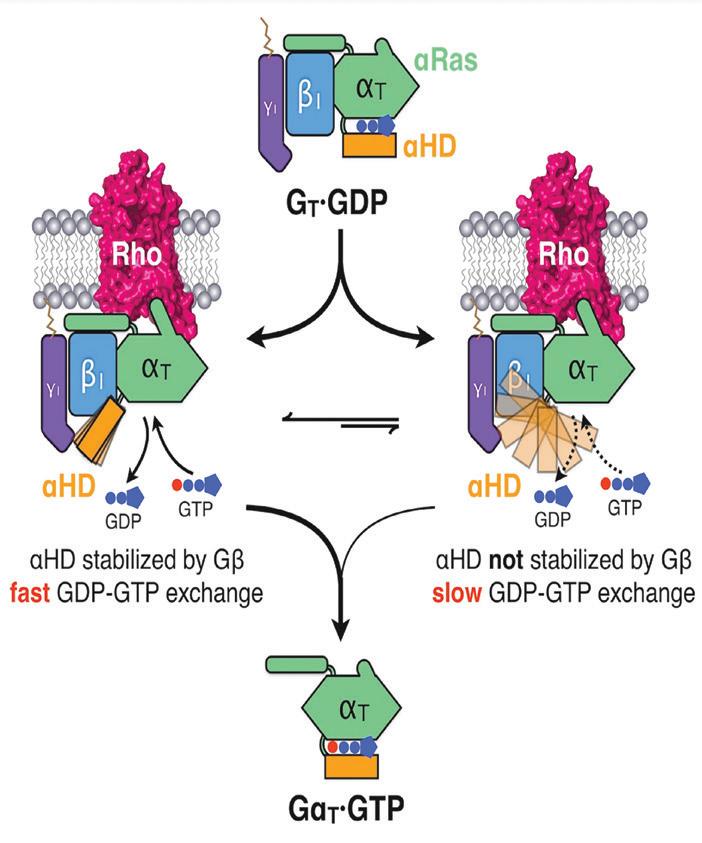
The entire process begins with rhodopsin, a member of a large family of receptors called G-protein-coupled receptors (GPCRs). Rhodopsin has several special properties, most notably, it can be activated by a single photon of light. Once it is activated, a change in its physical form allows it to bind to transducin and form a rhodopsin-transducin complex.
Transducin is a special kind of protein called a G-protein. G-proteins bind certain nucleotides. In this case, unactivated transducin is bound to GDP. However, the formation of the rhodopsin-transducin complex causes the transducin to activate, releasing its GDP and binding instead to GTP.
This binding causes the transducin molecule to break away from the rhodopsin and continue the signal to the brain. Afterwards, the remaining activated rhodopsin can continue to activate previously-unactivated transducin at a rapid pace.
“You amplify the signal by [10,000] times [in this way],” said Yang Gao, a postdoctoral researcher.
While trying to characterize the receptor-G-protein complexes, three main problems arose: first, the group wanted a three-dimensional model of the complex in its active state, with the GTP attached to the transducin. However, since the binding of GTP is inherently unstable, it was difficult to keep the structure from breaking apart.“They have to turn over very quickly,” Gao said, “So it’s difficult
to hold them together long enough for you to do experiments with them.”
The second difficulty is isolating the complex outside of its natural environment, as this introduces additional instability.
“[The transducin] will stay on with high affinity on the membrane [of the cell], but when they’re on the membrane you can’t study it, because the membrane is hard to manipulate,” Gao said. “You have to extract it out of the membrane, so we spent a long time trying to figure out how to get it out of the membrane and keep it stable.”
The lab managed to remedy this issue by utilizing nanobodies, a special kind of protein created naturally in immunized llamas that binds to the complex and prevents it from breaking apart.
However, the use of nanobodies creates a hurdle that few researchers have managed to overcome — including a Nobel Prize winner.
To illustrate the caveat of working with nanobodies, Ramachandran described the work of Robert Lefkowitz and Brian Kolbilka on another GPCR called the beta-2 adrenergic receptor, for which the pair received the 2012 Nobel Prize in Chemistry.
Although the pair of Nobel Laureates, like the Cerione Lab, were ultimately able to form a three-dimensional model of the receptor, slight alterations in the physical form of the complex due to nanobody use prevented the exact replication of the natural complex.
However, the resulting three-dimensional model they obtained has proven helpful in answering several questions concerning the complex.
Gao relates that transducin is formed of three subunits, named alpha, beta and gamma. The alpha subunit is shaped like a clamshell, with its “jaws” being called the helical domain and the Ras domain. When the transducin is inactive, the domains hold the GDP inside. When the GPCR binds to the transducin, the domains separate, releasing the GDP and allowing GTP to attach.
Until now, the mechanism by which the receptor opens the clamshell was a mystery, and scientists assumed that the beta and gamma subunits probably served some role in holding the two domains apart. However, Cerione Lab was able to specifically identify the role that the beta subunit plays in this action.
According to Gao’s model, the beta subunit acts like a doorstop by attaching itself to the helical domain, and introducing certain mutations that would weaken the “glue” between the beta subunit and helical domain causes a significant decrease in signaling speed, indicating that activated transducin with weaker “glue” took longer to replace its GDP with GTP.
GPCRs are vitally important parts of many biological processes. As much as 34 percent of FDA-approved drugs target them. As a result, GPCR research remains an area of intense research.
‘We Deserve to Not Live Around Poison’: Alabama Resident Activists Speak Against Environmental Injustice
By TAMARA KAMIS Sun Senior Staff Writer
“They put dumps in Black and Brown communities, poor communities, that they think can’t fight back,’’ said Esther Calhoun, an independent activist and former president of Black Belt Citizens Fighting for Health and Justice.
In a documentary screening of the film Uniontown at Cinemapolis on Oct. 22, Calhoun, along with activists Alex Jones and Ben Jackson, all from Uniontown, Alabama, advocated against environmental injustice, specifically the harmful allocation of coal ash and other forms of pollution in their community.
Coal ash, although not hazardous waste, according to the Environmental Protection Agency, contains arsenic, mercury and other toxins that can cause cancer and other health problems. While the Trump Administration has suggested weakening the rules about coal ash disposal further, the status quo has already had a terrible cost for the health of Uniontown.
Calhoun described seeing high rates of cancer, respiratory conditions, kidney problems, and neuropathy among friends and neighbors. Calhoun’s own health has also suffered. She has difficulty walking because of nerve damage in her left leg.
“I can’t sleep at night. My leg hurts right now. I’m limited walking, I’m limited standing. My everyday life has changed because I can’t trust this leg,” Calhoun said.
In 2008, the dried waste from a coal ash spill at Tennessee Valley Authority Kingston Fossil Plant was transported to Uniontown, Alabama, from which a civil rights complaint arose and was rejected by the EPA.
“There was a period where the coal ash was uncapped, meaning there was no soil covering it. During that period, it would get carried away by the wind and spread throughout
the community,” Jackson said. “People claimed the coal ash came into their homes through air conditioning systems, and there are pictures of the coal ash eating through the paint on people’s cars. If it can take the paint off a car, what happens if I breathe it in?”
In addition to coal ash, Uniontown residents also struggle with inappropriate wastewater disposal from a Southeastern Cheese Corporation and from the Harvest Select catfish plant.
Jones, whose farm borders the Southeastern Cheese Corporation’s land, described the water as “black and blue,” and said that the runoff has killed many of his cows.
According to Calhoun, the waste lagoon that contains both the town’s sewage and runoff from the Harvest Select catfish plant is within a mile of the Uniontown school, and students smell the wastewater as they walk to the cafeteria.
“It is not our goal to remove the industries that are there. We just want them to stop polluting,” Jackson said. “Right now, Uniontown is like Three Mile Island. Most of the folks are already gone.”
Black Belt Citizens United For Health and Justice, which is currently in the process of becoming a non-profit organization, fights for the citizens who remain in Uniontown.
According to their website, the goals of the organization include no coal ash in Perry county, to which Uniontown belongs, and a modern wastewater treatment plant. The group runs events for the community, educates people about voting and partners with other organizations including the Center for Health, Environment, and Justice.
The organization is also calling for an investigation of what happened to the 4.8 million dollars in USDAl funding meant to address local pollution, in which the contract was granted to Sentell Engineering. According to Jackson, Sentell Engineering had built wastewater management for Uniontown without appropriate feasibility tests in the past.
Uniontown residents’ activism has come at a personal legal risk. Green Group Holdings LLC and Howling Coyote LLC, which own Arrowhead Landfill, sued four Uniontown residents, including Calhoun, for a total of 30 million dollars for making false and malicious statements, according to The Guardian. The lawsuit was withdrawn in February 2017.
“I decided to become an activist because I think all people should have equal rights … We deserve to not live around poison,” Jones said in an interview with The Sun.
“Educate people about the environment to save my community. People are dying,” Calhoun said at the end of the screening.
Tamara Kamis can be reached at
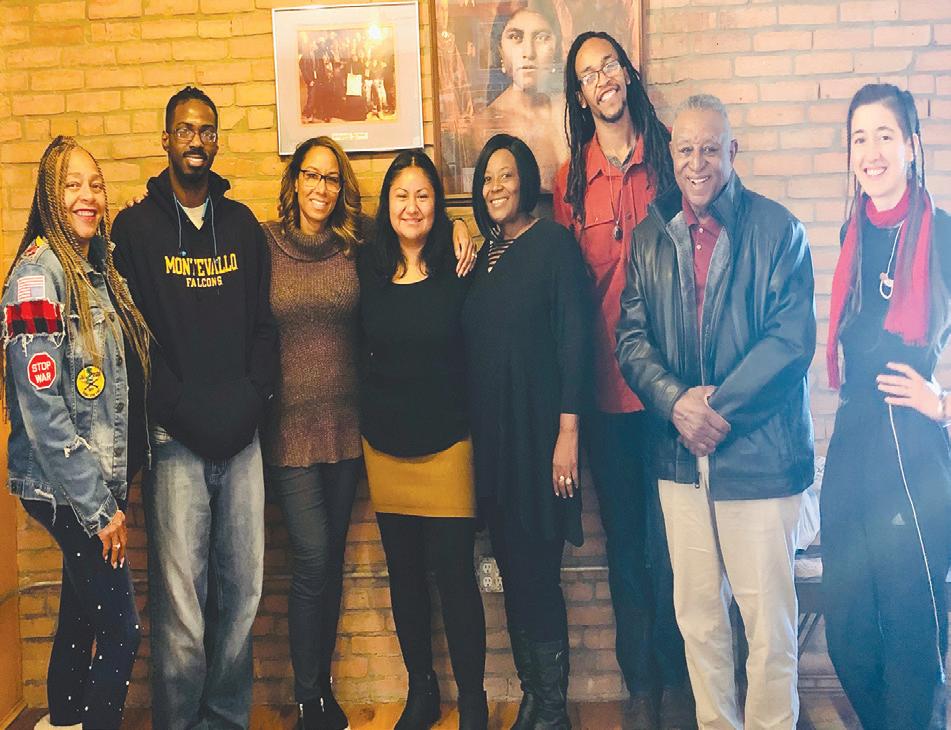
Activist group | Second from left, fifth from left, and second from right are Ben Jackson, Esther Calhoun, and Alex Jones.
COURTESY OF CERIONE LAB
COURTESY OF BLACK BELT CITIZENS UNITED FOR HEALTH AND JUSTICE
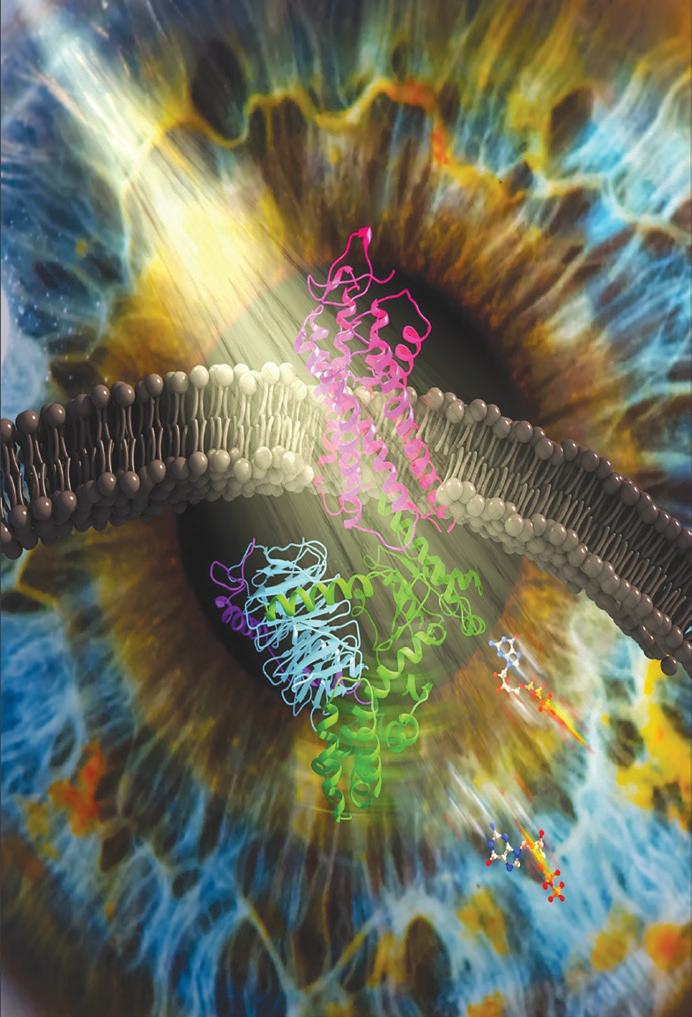
Protein modeling | Visual representation of the rhodopsin-transducin complex.
COURTESY OF CERIONE LAB
137th Editorial Board
ANU SUBRAMANIAM ’20 Editor in
JOYBEER DATTA GUPTA ’21
Business Manager
PARIS GHAZI ’21
Associate Editor
MEREDITH LIU ’20
Assistant Managing Editor
RAPHY GENDLER ’21
Sports Editor
BORIS TSANG ’21
Photography Editor
AMBER KRISCH ’21
Blogs Editor
SOPHIE REYNOLDS ’20
Science Editor
AMANDA H. CRONIN ’21
News Editor
JOHNATHAN STIMPSON ’21
News Editor
PETER BUONANNO ’21
Arts & Entertainment Editor
ANYI CHENG ’21
Assistant News Editor
HUNTER SEITZ ’20
Assistant News Editor
CHRISTINA BULKELEY ’21
Assistant
JING JIANG ’21
Assistant
DANIEL MORAN ’21
Assistant
SARAH SKINNER ’21
Managing Editor
KRYSTAL YANG ’21 Advertising Manager
NATALIE FUNG ’20 Web Editor
SABRINA XIE ’21 Design Editor
NOAH HARRELSON ’21 Blogs Editor
SHRIYA PERATI ’21 Science Editor
KATIE ZHANG ’21 Dining Editor
AMINA KILPATRICK ’21
Editor
MARYAM ZAFAR ’21
Editor
ETHAN WU ’21
SHIVANI SANGHANI ’20
Editor
NICOLE ZHU ’21 Assistant News Editor
BEN PARKER ’22
JEREMY MARKUS ’22 Assistant Arts & Entertainment
ALICIA WANG ’21
WRashmi Rao | Guest Room
Cornell: A Caring Community?
hen I first visited Cornell, I was unreasonably concerned with questions like how similar this school is to Hogwarts. Is Beebe Lake like the Black Lake? Where is the Harry Potter dining hall? Or the Harry Potter library? Looking back, I should have been more concerned with questions like, how well is the student health center rated? How many people are in a lecture hall? If you don’t show up to lecture, would people care?
Really, do people care? Over the past few days, as I lay in bed feeling the feverish breath on my face, encapsulated by layers of blankets, I have come to learn the answer.
another got me Gatorade. My professor granted me a week extension on the essay, and another professor excused me from my four hour lab — twice. My phone blew up with messages from friends checking in to see if I needed anything and sending me notes from classes when
I have thankfully recovered with the help of my family and friends, and I finally feel like I have answered my burning question: do people care? Yes, certainly they do.
Arts Desker Daniel Moran ’21 Working on Today’s Sun
Lei Anne Rabeje ’22
Sports Desker Luke Pichini ’22
Pushing Forward the City’s Green New Deal
To the editor:
There is concern among a number of us who support the goals of the city’s Green New Deal but watch the city advance development that is inconsistent with the necessity to reduce — not increase — local greenhouse gas emissions.
The latter concern is exacerbated by the comments of several alder persons who voted for the GND but now question even the extraordinarily minor budget commitment to make their pronouncement substantive.
Months ago in the wake of the contention over Cornell’s North Campus Residential Expansion, the Planning and Economic Development Board wrote the Common Council asking for training to competently analyze projects for their greenhouse gas and climate change implications — a request which has apparently been ignored. Recently, the director of planning and economic development admitted that she and her current staff could not produce a substantive GND.
Moreover, we all know that it has taken existing staff and local consultants three years and running to create a Green Building Policy with codification and implementation still months off. All credible scientific information says the pace of response to sky-rocketing GHG-induced climate change must dramatically accelerate.
Given that the current personnel admittedly can’t do what needs to be done and that time is of the essence, we believe that the Common Council and Mayor must demonstrate a real commitment to their own rhetoric by budgeting for a multi-year GND plan and adding sufficient new staff to cause this to happen.
More specifically, we respectfully request the following:
1. That the design and implementation of the Mayor’s GND be the primary responsibility of a full-time, senior level, experienced, permanent staff person with the office to be located within the Mayor’s office; that the current Sustainability Staff position be increased to full-time; that at least one support person be assigned to support these two positions.
2. That in addition to creating and implementing the Green New Deal Climate Action Plan, this new, senior staff person be given the charge and authority to coordinate the GND work of staff in all departments to achieve renewable energy for city operations and reduction of fleet emissions.
3. That each City Department should be required as part of the current budget process to state in narrative form, how each Department’s programs, projects and responsibilities can act in support of the GND Goals and Actions starting as soon as possible and no later than the beginning of the upcoming fiscal year.
Joseph M. Wilson
While freshman year felt all bright, sunny and the terror of the future seemed so far away, sophomore year I didn’t feel as lucky. My courses began to gradually eclipse my simplistic view of college life, and I started to feel completely buried under the stress of organic chemistry, physics and anatomy and physiology. I often found myself feeling rather lonely amidst a sea of people in packed lecture halls. Did any of these people really care about me? The question tugged at my tired brain, and naturally I tried to ignore it.
And so I continued forward. During my junior year, I attended a workshop where the presenter began “Who thinks Cornell is a caring community?” I remained sitting with my hands in my pockets, until I saw that most people raised their hands. And as human nature would predict, my hand shot up so I wouldn’t stick out. I was shocked at the number of people who found Cornell a caring community and my mind searched for an explanation. Was I not seeing something? If I didn’t show up to this meeting, would people care? If I didn’t show up to class tomorrow, would anyone care?
This past week, I was afflicted with mono, a sinus infection and strep throat. A part of me was convinced I was probably going to die. But as I lay in bed, with a fever and body aches, I felt terrified to ask for help — to ask a friend to take me to the pharmacy to pick up my antibiotics, to ask a professor for an extension on an essay, to ask for someone to help me get food since I couldn’t get out of bed and hadn’t eaten a meal in days. After a sudden fear that I might in fact never get over my several infections if I didn’t reach out for help, I asked a friend to pick up my medicine from the pharmacy. His response: “Absolutely!” I began fighting my anxieties about asking for help, and suddenly everything began changing. One friend brought me soup,
they noticed I wasn’t there. Unable to coordinate the events I was organizing for Mental Health Awareness Week, I asked to postpone them due to my health. My collaborators and advisor were extremely understanding with this decision. While I had to miss my volunteer shift, cancel my meetings and skip my TA shifts, everyone I worked with was nothing but supportive. At first, I thought that the world would be unforgiving if I let go, even for a moment. However, when I needed it most, my community was there to tell me what I needed to hear: It’s okay to put life on pause and focus on your health.
After all this, I have thankfully recovered with the help of my family and friends, and I finally feel like I have answered my burning question: do people care? Yes, certainly they do. The kindness, love and support I have received over the past week from the Cornell community has been incredible and unbelievable, and I will be eternally grateful. The reason I decided to attend Cornell was just a feeling I had deep down that Cornell would be my Hogwarts, and as Dumbledore said, “Help will always be given at Hogwarts to those who ask for it.” Through this miserable experience of being ill, I have learned the truth in that statement and come out the other side much stronger. I know that I am not moving forward through life alone, but rather with an entire community in my corner. There is strength in numbers, so please remember that the Cornell community is here to help, and if you are in need, all you have to do is ask.
Your friends, your professors and your community are here for you and want to see you succeed. And as Mental Health Awareness Week has come to an end, please keep in mind that mental health is still just as important as ever.
Visit caringcommunity.cornell.edu for resources.
Rashmi Rao is a senior in the College of Arts and Sciences. Comments may be sent to opinion@cornellsun.com.
Terrorism: Propoganda Versus Reality
There is hardly an accusation more damning in American political discourse than to be declared a “sponsor of terrorism.” We are used to certain countries, primarily Iran, being labeled by government officials and media outlets as state sponsors of terrorism. In the case of Iran, this claim is certainly true. But Sun columnist Michael Johns ’20, echoing a statement by former President George W. Bush, takes this accusation to the extreme by claiming that Iran is the world’s largest state sponsor of terrorism. The recent historical record, however, shows that this is far from true: It is the United States that routinely tops the list of rogue states with little regard for international law and diplomatic norms.
To make such an accusation against a country merits an investigation into its veracity. Johns references Iranian support for violent non-governmental actors such as the Lebanese militant-political party Hezbollah and Shi’ite militias in Iraq, as well as its ties to the Houthi rebels in Yemen, as proof that Iran reigns world champion of terrorism. In analyzing Johns’ and Bush’s accusation, it will be helpful to consider some of the most extensive instances of international terrorism since the 1979 Iranian Revolution brought about Iran’s current regime.
First, we turn to the ongoing Yemeni Civil War, the “worst humanitarian crisis in the world,” according to international observers. The suffering is far from limited to traditional wartime deaths, which number at just under 100,000 so far.
There is hardly an accusation more damning in American political discourse than to be declared a ‘sponsor of terrorism.’
Some 85,000 children under the age of five died of starvation as of November 2018, a result of a famine caused by a military blockade of Yemen. It is unlikely that this famine and the indiscriminate targeting of civilians via airstrikes will come to an end soon, as the state-terrorist perpetrator’s principal military ally has blocked all efforts to end its patronage of the regime committing these crimes.
But the perpetrator of these atrocities is not the Iranianbacked Houthi Movement, and Iran is not the unrepentant
enabler: The perpetrator is Saudi Arabia, and its patron is the U.S. Executive Branch. Saudi Arabia regularly commits the same types of outrageous human rights violations against its own citizens for which Johns rightly condemns Iran. We can therefore conclude not only that Iranian support for the Houthi rebels in Yemen is not an example of Iran’s alleged supremacy in the realm of international terrorism, but that a closer look at the reality of the war in Yemen paints a radically different picture of who is sponsoring “terrorism” in the country.
Johns’ next example of Iranian terror is the regime’s support for Hezbollah, a Lebanese political-military faction that emerged as an armed Shi’a-Islamist opposition to the Israeli occupation of southern Lebanon in the 1980s. Hezbollah is best remembered in the U.S. for perpetrating bombings against Israeli-allied and American targets in Lebanon during the country’s civil war. Iran has been a consistent ally of Hezbollah since its founding.
Perhaps the most extensive example of state-sponsored terrorism contemporary to the emergence of Hezbollah is that of the Contra War in Nicaragua. The Contras were a collection of paramilitary organizations and mercenaries receiving funding, intelligence, training, and arms from the CIA for most of the 1980s. They systematically killed civilians and attacked public spaces in order to bring the popular Nicaraguan government to its knees, a tactic that an honest observer might refer to as “terrorism.” Contra fighters routinely committed the types of gruesome executions we tend to associate with ISIS. In 1986, the World Court ruled that the Reagan Administration had violated international law in aiding the Contras, and Nicaragua continues to seek billions in reparations. By 1990, the Contra-led assault on Nicaragua had claimed over 30,000 lives — an example of terror contemporary to the first phase of Hezbollah terror in Lebanon, but on a much larger scale. Atrocities of larger magnitude were carried out at the same time in El Salvador and Guatemala, perpetrated by U.S.-backed military dictatorships rather than rouge rebel armies, all part of a strategy of financing groups
Tviolently opposed to political reform in Central America. With so many examples of U.S.-backed terrorist groups and murderous regimes contemporary to each instance of Iranian sponsorship of terror, you begin to wonder how Johns and so many other American commentators have managed to present the narrative that Iran is the leading sponsor of terrorism in the world. The U.S. government does have a list of state sponsors of terrorism that includes only Iran, Syria, Sudan and North Korea. All are authoritarian regimes that brutalize their own populations. But curiously absent from the list are the chief U.S.-backed human rights abusing states of our time, such as Saudi Arabia and the Arab Gulf States, Egypt, Israel, Colombia and the
‘Terrorism’ is a term which cat egorically excludes any state, paramilitary or rebel army that commits acts of politicallymotivated violence so long as it is allied by the U.S.
Philippines, to name a few.
It is therefore revealed what is meant by “terrorism” in the vernacular of many American government officials and political commentators: “Terrorism” is a term which categorically excludes any state, paramilitary or rebel army that commits acts of politically-motivated violence so long as it is allied (or directed) by the U.S. If we want to “reign in Iran’s brutal regime” with any sense of moral high ground, then perhaps it is time to have an honest discussion about state-sponsored violence in the world and reject the blinding, hyper-nationalist ideology that refuses to recognize terrorism as such unless it is committed by an official enemy.
Jacob Brown is a Ph.D. candidate in applied mathematics at Cornell University. He can be reached at jtb257@cornell.edu. Mapping Utopia runs every other Tuesday this semester.
Ithaca Winter Is the Warmest Time of Year
he sun dipped below the horizon from the Slope when the last bout of laughter from my friends faded into appreciative silence. “Should we go?” my friend asked, settling her gaze on me — the person who consistently offers the most resistance to departing a sunset view-
surroundings and community can have a positive effect not just on our everyday experiences.
The cold winter that descends onto campus over the next several months can show you the true beauty of Cornell’s surroundings and community can have a positive effect not just on our everyday experiences.
ing. The dimming collage of pink, purple and orange not warranting a struggle, I stood and relented. I respected my friend’s desires, but not because the view was any less beautiful: Staying would entail my friend physically shaking through her discomfort. She wanted to leave not because of how the sunset looked, but because of how it was starting to make her feel: cold. Over the next month, rapidly falling temperatures and vanishing daylight will reassert winter weather as the central life-shaping force in Ithaca. In response, everybody will unpack the heavy winter coat they’ve dreaded seeing again, take the TCAT instead of walking to class, briskly pass friends outside instead of stopping to talk and complain about how their boots don’t make walking in the snow any easier. But Cornellians, it doesn’t have to be this way. The cold winter that descends onto campus over the next several months can show you the true beauty of Cornell’s
“Ithaca is Gorges” is more than an unofficial town slogan. On Cornell’s campus, it’s a visually verifiable fact. Central, Collegetown, North and West are divided only by the picturesque natural boundaries of gorges and the Slope. Standing at the top of the most frustrating of these boundaries, you can see hilltops higher than our own, valleys that connect us to the real world and the lake which we owe the existence of Ithaca to. This landscape is beautiful in the five-or-so warm months we have each year. And yet, colder weather can provide an even more awe-inspiring beauty.
Beauty is a reason to like Ithaca barren. The red, orange and yellow leaves of the past few weeks are awe-inspiring any time, and in the golden light of a sunny afternoon, few views on this planet can match them. After these leaves have been chased away by tiny, white flakes, there is still beauty. The middle of any snowfall offers unparalleled peace and quiet to wild animals and college students alike. The blankets of pristine, white powder on the surrounding hills ensure that some peace remains after the clouds part and the sun comes out. Even when the harshest conditions are upon us, the light from houses and cars across the valley and lake take on new meaning. No longer a mere indication that civilization in Ithaca does exist, they become like small, individual fires, marking other groups of people fighting to stay warm the same way that we are during
suddenly-interminable walks from class to class.
Warmth is a reason to like Ithaca cold. In the summer months, warmth has one inevitable result: sweat. Every step outside is accompanied by a drop of sweat. And on a campus this big, that means a lot of sweat. This sweat isn’t just uncomfortable while you’re walking though, because as soon as you go inside, the beads either start to cool and make you squirm as soon as you sit down or you just continue to be, well, sweaty. During these hellish weeks, you may feel like even your clothes fight against you, because as your body tries to regulate its temperature, there are only so many layers you can take off.
Consider that winter actually gives you the opportunity to choose the level of warmth you want to have. Being indoors provides relief in cold weather, as opposed to simply exacerbating your discomfort when it’s warm outside. Whether it’s because you put on a sweater and then wrapped a blanket around yourself, had a plate of hearty, soul-warming food or sipped hot cocoa with marshmallows from your favorite mug, there are few feelings in the world as good as warming up after a bone-chilling walk home from Central.
activity and is only exacerbated by the hills — the same ones that provide beautiful vistas — becoming perilous to go down when rain becomes snow, as many a fallen pedestrian can attest to.
But, these same elements of Ithaca winters provide an opportunity to build community to counteract this isolation. While we usually connect to each other by comparing stress levels from work, cold weather provides a different outlet for venting. Instead of competing with each other as part of the stress olympics, we’re united against a common enemy in our own winter olympics. With lower stakes than discussions about academics, conversations about difficult weather had over warm meals, while drinking hot beverages and in warm clothes can help us build friendships and community that we lean
Winter is coming. Let’s take out our coats, step outside and see winter as the opportunity it really is.
on when the going gets tough academically or personally.
That said, no drink can deny winter’s isolating effects. Seasonal affective disorder, responsible for 10 million Americans’ depression every year, can be especially difficult for students from warmer climates. It manifests itself in our avoidance of social
One week from today, the sun will set before five o’clock. Ready or not, winter is coming. Let’s take out our coats, step outside and see winter as the opportunity it really is.
Giancarlo Valdetaro is a junior in the College of Arts and Sciences. He can be reached at gvaldetaro@ cornellsun.com. Far Above runs every other Monday this semester.
Giancarlo Valdetaro | Far Above
Fill in the empty cells, one number in each, so that each column, row, and region contains the numbers 1-9 exactly once. Each number in the solution therefore occurs only once in each of the three “directions,” hence the “single numbers” implied by the puzzle’s name. (Rules from wikipedia.org/wiki/ Sudoku)
Campus
On
by Elizabeth Klosky ’21
Johnny Woodruff by Travis Dandro Nuclear Apocalypse by Halle Buescher ’21
26 A PA R TMENT FOR R ENT
We have availability for the 2020-2021 school year beginning June 1st at Hudson heights apartments. The studios include electric, heat, water, garbage and parking. There is coin-operated laundry facilities on site. Prices start at $750 / month for a 12 month lease. If you have any questions or would like to schedule a tour contact us by phone 607-280-7660 or email: renting@ithacaLS.com
COLLEGETOWN TERRACE APARTMENTS
Leasing for 2020/2021 Spring 2020 Semester leases available Heat, hot water and Wi Fi State of Art Fitness Center Shuttle Bus Service to campus Washer & Dryer in Apartments collegetownterraceithaca.com office@ithacastudentapartments.com (607) 277-1234
Now Renting
2-10 Bedroom Houses/ Apartments for 20-21. All Locations. Call today or visit our website: Certified Properties of TC Inc certifiedpropertiesinc.com 607-273-1669
26 A PA R TMENT FOR R ENT
120 Oak Avenue
Just steps to Cornell Campus 10 bedroom house & 1 and 2 bedroom apartment 607-277-1234
AVAILABLE 2020-2021 1, 2, 4 Bedroom Apts. and 7 person House 10 & 12 month leases Cook/Blair Street Call or Text Christopher George RE 607-279-5520
Collegetown Crossing College Ave's Newest Location
307 College Ave. Now Leasing for 2020-2021 Completely New Modern Studios, 2 & 4 Bedroom Apartments. Fully furnished, heat & hot water included. Reception area at 307 College Ave. www.urbanithaca.com 607-330-2442 info@urbanithaca.com
Boldly Refined Living 312 College Avenue
Sophisticated studio, 1, 2, 3-bedroom apartments. Superior fitness facility, theater, and coworking space. Free high-speed internet. Exclusive resident parking. Package delivery/return. Overnight concierge. 607-273-9777 or 312collegeave.com
26 A PA R TMENT FOR R ENT
2020-2021
Studio 1, 3, 8 & 11 BR Apts. Great Locations in Collegetown. 607-227-2535
3 Bedroom
1 Block from Starbucks in Collegetown Heat & hot water included. Lease starts June 2020. Parking & laundry available. www.porealty88.com 607-277-1888
27 H OUSE FOR R ENT
20-21 College Ave.
5 BR House Furnished. Laundry. Parking. Call 607-273-8576
20-21 Upper Eddy St.
7 BR house Furnished. Laundry. Call 607-273-8576
4 Bedroom House
$1500/month plus. 8 acre backyard. Washer & dryer. Short distance to Cornell, Wegmans. Pet friendly. thai360@juno.com
Men’s Hockey Predictions From Sun Reporters
Toughts on team’s upcoming season
MEN’S HOCKEY
Continued from page 12
Which freshman will make the biggest impact?
L.P.: Jack Malone
Hailing from Madison, New Jersey, the freshman forward was drafted in the sixth round of the NHL Entry Draft by the Vancouver Canucks after notching 59 points in his second year of USHL play. Malone has also looked promising in exhibition play. Against Nipissing, he tallied a goal and an assist in Cornell’s 6-2 victory. The freshman will likely make a big impact in his first year as both a facilitator and a goal-scorer.
C.B.: Matt Stienburg
Taken at No. 63 in the NHL Draft in June, there is someone in the Colorado Avalanche front office that sees something really valuable in the 18-yearold forward. While he missed Cornell’s two exhibition games due to injury, Schafer said that he will likely be cleared to play come time for the season opener Friday night in Lansing. Stienburg is coming to Cornell straight from St. Andrew’s College in Ontario — if that storyline for a Cornell forward sounds familiar to you, that’s because it should: Barron took the exact same route.
R.G.: Sam Malinski
With the graduations of Matt Nuttle ’19, Alec McCrea ’19 and Brendan Smith ’19, there’s an opportunity for a rookie blueliner to earn top-four minutes alongside Kaldis, Green and junior Cody Haiskanen. While playing time will depend on what’s asked of junior Matt Cairns and sophomore Joe Leahy, Malinski could break out as a go-to defenseman. The State of Hockey native picked up a pretty assist in the team’s first exhibition game, sending Andreev a nice stretch pass, and he and Cairns looked like a legit defensive pairing. Malinski recorded 45 points and had a plus-20 rating with the Bismarck Bobcats last season.
Give us your prediction — record, ECAC finish, NCAA Tournament?
R.G.: 20-6-3, first in ECAC, NCAA quarterfinals Cornell has all the pieces in place to win the ECAC and contend for a spot in the Frozen Four. While the defensive unit will be a question early on, I expect the team to quickly sort things out and be one of the best
teams in the country in February and March. With several core players in their junior seasons and a handful of freshmen likely to turn heads, the Red will fall just short of a Frozen Four.
C.B.: 22-4-3, first in ECAC, NCAA first round
This year’s team has all the capabilities to be dominant throughout the season, but I wouldn’t be surprised to see a bit of deterioration come time for the NCAAs. Last year’s team was plagued with injury, leading a beat-up Red to struggle at times down the stretch. While nobody can predict whether the same misfortune will befall the team this year, I see the Red falling in the first round of the tournament; after all, despite being the better team last March, they fell to Providence, who had home-ice advantage, in the quarterfinals.
L.P.: 22-5-2, second in ECAC, NCAA semifinals
The Red is one of the best teams in both its conference and in the nation. Still, Cornell has not claimed a Whitelaw Cup since 2010, and I predict that it will fall short once more. But Schafer and co. will make the necessary adjustments heading into the NCAA Tournament. Once it reaches that stage, Cornell will make a run that culminates in its first Frozen Four appearance since 2003.
Thoughts on the new scoreboard recently installed at Lynah Rink?
C.B.: Much needed
Though Lynah’s antiquity offers a certain charm, the video boards add some extra flair to the arena. They’ll enhance spirit while also offering fans information throughout the game.
R.G.: Big fan
In a changing sports market, Cornell hockey is smart to find new ways to engage fans. The video board adds a nice modern touch to Lynah Rink’s historic charm.
L.P.: Nice touch
I think it’s a great addition that doesn’t change Lynah Rink in any negative way — rather, it will enhance the experience for Cornell fans.
Subscribe to The Sun’s Hockey Newsletter for weekly updates on the Cornell hockey teams!
Fresh Faces | The Red’s freshman class includes nine new members.
BORIS TSANG / SUN PHOTOGRAPHY EDITOR
2019-20 Men’s Hockey Season Forecast
Key players, storylines, predictions and more from Te Sun’s men’s hockey reporters
By RAPHY
No. 4 Cornell men’s hockey starts its season at Michigan State on Nov. 1. Here’s what our beat writers think is in store for the 2019-20 season:
With expectations high following an NCAA quarterfinal appearance, what does the team need to do for us to consider it a successful season?
Raphy Gendler, Sun Sports Editor: Get back to the NCAA Tournament
As a one-and-done format, the NCAA Tournament is a bit of a crapshoot once there, so it’s hard to call a season when a team gets to the tournament anything less than a success. A fourth straight trip to the tournament will give the Red another crack at a Frozen Four appearance. In a competitive ECAC, Cornell should also be back at Lake Placid for the conference semifinals.
Christina Bulkeley, Sun Assistant Sports Editor: Win the Whitelaw Cup
Not having won the Cup since 2010, Cornell is overdue for the ECAC championship. Just earning the Cleary Cup won’t cut it this season — and sharing it will definitely leave a sour taste in the mouths of both the team and its fans again. The Whitelaw should be a tangible goal that will bring a level of prestige back to East Hill that Cornell hockey has been missing.
Luke Pichini, Sun Assistant Sports Editor: Make it to the NCAA Tournament Quarterfinals
Yes, the NCAA Tournament is inherently unpredictable, but Cornell should be able to match its result from last year given the bevy of returning players it boasts. Even with a number of injuries hampering the team, the Red still made it to the quarterfinals, where it was bested by Providence. Ranked No. 4 in the country in the lead-up to the 2019-2020 season, Cornell certainly has the capacity to reach the NCAA quarterfinals.
Who will be the team MVP?
C.B.: Morgan Barron
With some speculating that this could be Barron’s
Cornell’s success.
R.G.: Yanni Kaldis
While Barron is the Red’s biggest name and most dangerous offensive weapon, its key senior blueliner has been a crucial part of the team in past seasons, and 2019-20 doesn’t figure to be any different. Kaldis will almost certainly lead the team in ice time, be among the leaders in assists and will man the point on the top power-play unit. If Kaldis can anchor a successful defensive unit — one that will likely have multiple freshmen logging big minutes — while using his speed and distribution abilities on offense, he’ll be the team’s go-to guy in the biggest moments.
L.P.: Matt Galajda
Head coach Mike Schafer’s ’86 teams are known for their stout defenses, and this upcoming year will be no different. The heart of the defense is junior goaltender Matt Galajda. During his freshman year, Galajda led the nation with a 1.51 goals against average. He regressed in that department as that number jumped to 1.85, but he was still one of the best netminders in the country. In his third year on East Hill, expect Galajda to come close to replicating his freshman numbers while shutting down opponents in the process.
Who’s a breakout player candidate?
L.P.: Brenden Locke
Locke performed quite well last year, totaling 18 points on seven goals and 11 assists. Last season, Locke only took 34 shots, and he converted 20.6 percent of them. If the junior takes more shots on goal, he could emerge as a premier offensive threat. In exhibition play, he displayed his promise, scoring a second-period goal against the U.S. NTDP Under-18 team.
C.B.: Max Andreev
Even while he missed significant playing time in his freshman campaign due to a broken finger and clavicle, Andreev posted promising numbers with eight points across his first six contests in 2018. He scored in the team’s last exhibition against the U.S. National Team Develop Program team and is looking as fresh as ever to start off this season. Expect the forward to break out this year, assuming he stays healthy.
R.G.: Kyle Betts
The junior center has been one of the team’s best defensive forwards since his freshman year, and went on a mini scoring streak at the tail end of last season. If Betts — like senior Noah Bauld and junior Tristan Mullin, his two linemates late last year — can continue to provide secondary scoring while shutting down opponents’ dangerous forwards, he’ll garner some more attention and take some pressure off the Red’s offensive stars.
The Red will need to maintain its health if it wants to make a deep postseason run.
What will be the team’s X-factor?
R.G.: Special teams
Cornell returns two all-league goaltenders and most of its best forwards, so defense will be the question early in the season. But with some incoming freshmen likely to make immediate impacts and Schafer’s history of having dominant blue lines, it’s hard to worry about any of the three position groups as a whole. Instead, I’ll be watching what Cornell’s special teams can do, especially early in the season while trying to feel out who will play what roles.
L.P.: Health
After limping down the stretch with several injuries last season, the Red will need to maintain its health if it wants to make a deep postseason run. A year ago, Cornell suffered numerous injuries at the end of the year — including one to Galajda. Fast forward to this upcoming season, and six players were absent from the starting lineup against Nipissing, but that number dropped to four in the following exhibition game. Luckily, Schafer said that none of his players are out “long-term right now.” Still, if Cornell is to achieve success, it must have health on its side.
C.B.: Defense
Going into this year, there are some questions on the Red’s blue line, with three of the team’s defensive strongholds gone after last season. Even while Schafer
GENDLER, CHRISTINA BULKELEY and LUKE PICHINI Sun Sports Editor and Sun Assistant Sports Editors