The Corne¬ Daily Sun

By MATTHEW McGOWEN Sun Senior Editor
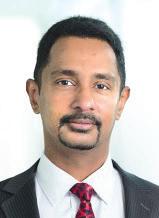
Ray Jayawardhana, Harold Tanner Dean of the College of Arts and Sciences and professor of astronomy at Cornell, has added another accolade to a trophy shelf that includes being the namesake for an asteroid: the Dwight Nicholson Medal for Outreach.
Next to other American Physical Society awards, the Medal for Outreach encompasses a broad realm of achievement. Since its beginning in 1994, the award has sought to “[recognize] the humanitarian aspect of physics,” according to the APS website.
Past winners have included popular science figures, educators and political dissidents. Prof. Emeritus Yuri Orlov, physics won the award in 1995 for human rights advocacy in his home in
the former Soviet Union.
“The main significance to me of receiving the APS Nicholson Medal in 1995 was the message it sent to other physicists ... that it is legitimate for a physicist as a physicist—and more broadly as a scientist—to support persecuted colleagues, and to fight for freedom of expression and other human rights,” Orlov said in an email to The Sun.
“As for our Dean, by honoring his outstanding achievements in the sphere of ‘high popularization’ of astronomy, the APS is sending the message that such activity is a legitimate activity of a scientist as a scientist. This message needs repeating in the ivory tower, from time to time,” Orlov said.
Since his undergraduate days writing for
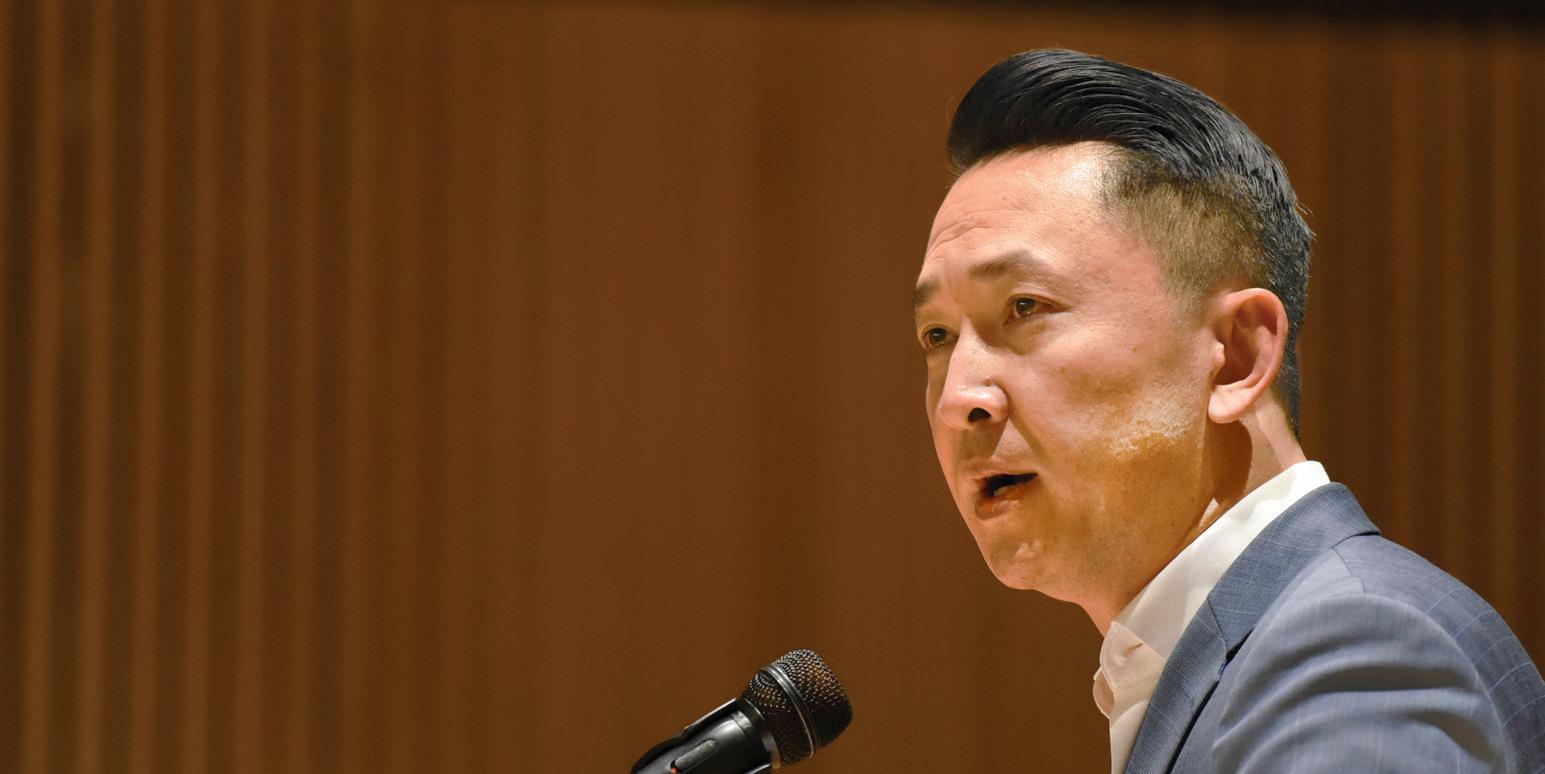
Pulitzer power | Viet Thanh Nguyen, a Vietnamese refugee and Pulitzer Prize winner, calls for more voices from marginalized communities in literature on Thursday.
By LUCAS REYES Sun Contributor
Refugee and Pulitzer Prize winner Viet Thanh Nguyen spoke on the need for more marginalized communities’ narrative voices in literature during a reading in Goldwin Smith Hall on Thursday.
The reading was part of the Zalaznick Reading Series hosted by the Department of English and the Creative Writing Program. Nguyen is a professor of English and American studies and ethnicity at the University of Southern California. Nguyen read passages from his most recent book The Refugees, as well as from his Pulitzer Prize-winning novel
By ROCHELLE LI Sun Staff Writer
Rain didn’t stop the most avid magic fans at Wizarding Weekend this Friday to Sunday, where children and adults alike were decked out in their favorite fantasy costumes while playing games, eating at food trucks and purchasing handcrafted items from vendors.
Wizarding Weekend was first inspired in 2015 by two teenage boys who wanted to celebrate Harry Potter. After the event went viral on social media, the first Wizarding Weekend attracted 8,000 visitors, according to Darlynne Overbaugh, the festival director. This year, Overbaugh expected around 10,000 visitors compared to last year’s 20,000, due to the weather.
See WIZARDING page 4
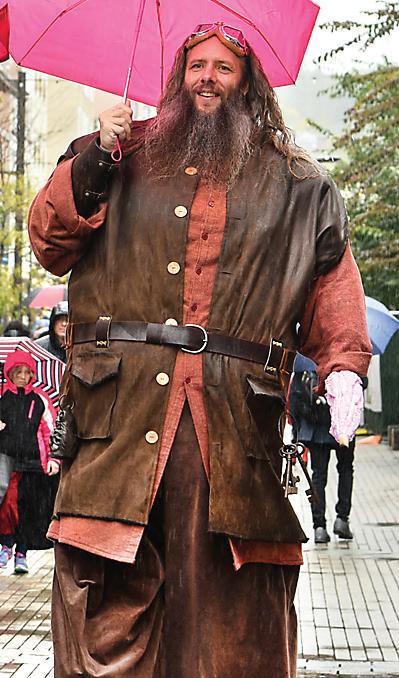
Magical | Left: A green-clad wizard demonstrates his magic before his young apprentice. Below Right: Wooden casks serve wondrous concoctions, including birch beer and butter brew. Right: A man dressed as Hagrid strolls down the Ithaca Commons, perhaps searching for his three-headed dog Fluffy.
The Sympathizer Throughout the reading, Nguyen also spoke intermittently about his personal experiences as a Vietnamese refugee growing up in the United States, and how this inspired his work. Nguyen and his family were evacuated from Vietnam during the fall of Saigon in 1975, and after living in a refugee camp in Pennsylvania, he resided in California.
“Narrative scarcity existed all around me in San Jose,” Nguyen said, discussing the absence of voices from different ethnic groups and sexual identities in literature.


Monday, October 29, 2018
Labor Economics Workshop: Local Distortions In Parental Beliefs Over Child Skill
11:40 a.m. - 1:10 p.m., 115 Ives Hall
The Limits & Human Costs) of Population Policy: Fertility Decline & Sex Selection in China Under Mao Noon, T01 Human Ecology Building
Who Benefits from the System of Rice Intensification? Mixed Household-Level Impacts of an SRI Intervention in Haiti 3:15 - 4:15 p.m., 173 Warren Hall
A&S Paralegal Job Search 3:30 - 4:30 p.m., KG42 Klarman Hall
The Life Sciences Lecture Series: A Forum of Interdisciplinary Excellence 4 p.m., G10 Biotechnology Building
Celebrating 150 Years of Ezra Cornell’s Promise 4 - 5 p.m., Call Auditorium, Kennedy Hall
Cornell Tech Summer Experience Info Session 5 - 5:30 p.m., 122 Rockefeller Hall
Pippo Ciorra: Being Bruno Zevi 5 p.m., Stepped Auditorium
Not Black Enough 6:30 p.m., Willard Straight Theatre
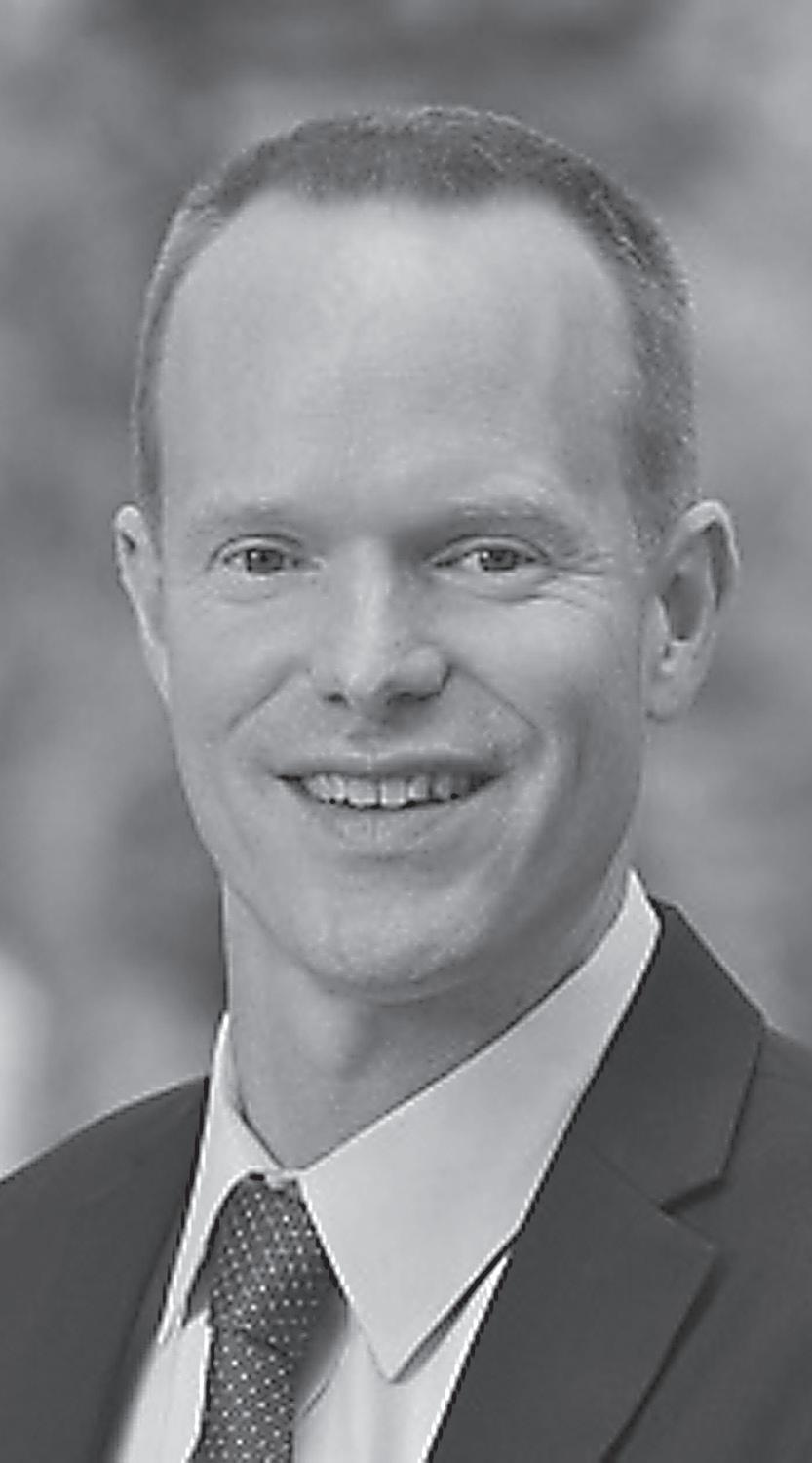

Econometrics Workshop With Brendan Kline, U.T. Austin
11:40 a.m. - 1:10 p.m., 498 Uris Hall
Bribery and Corrupt Decision-Making: The Role of Self-Interest, Reciprocity, and Motivated Beliefs 11:40 a.m. - 1:10 p.m., 106 Sage Hall
Evolution and Developmental Control of Epigenetic Poising in the Animal Germ Line Noon - 1 p.m., Thaw Hall, Baker Institute,
Lunch & Learn: Fake News, Alternative Facts, and Misinformation: Learning to Critically Evaluate Media Sources Noon - 1 p.m., 116 Warren Hall
Emergent Laws Governing Stochastic Single-Cell Dynamics 12:20 - 1:45 p.m., 700 Clark Hall
Hurried Halloween 4:30 - 6:30 p.m., mannUfactory
Denial’s Authority: Anti-Environmentalism and the Aesthetics of Negativity in Contemporary Climate Politics 4:30 - 6:30 p.m., A.D. White House
Pan-African Drum and Dance Ensemble Open House 7:15 -8:45 p.m., 101 Lincoln Hall
By ANYI CHENG Sun Contributor
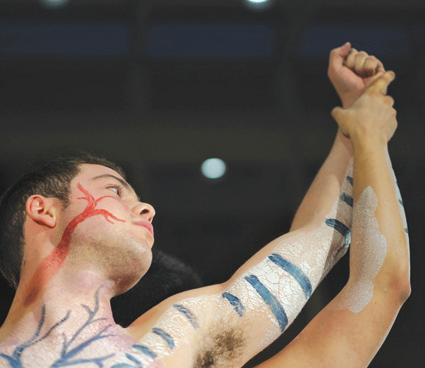
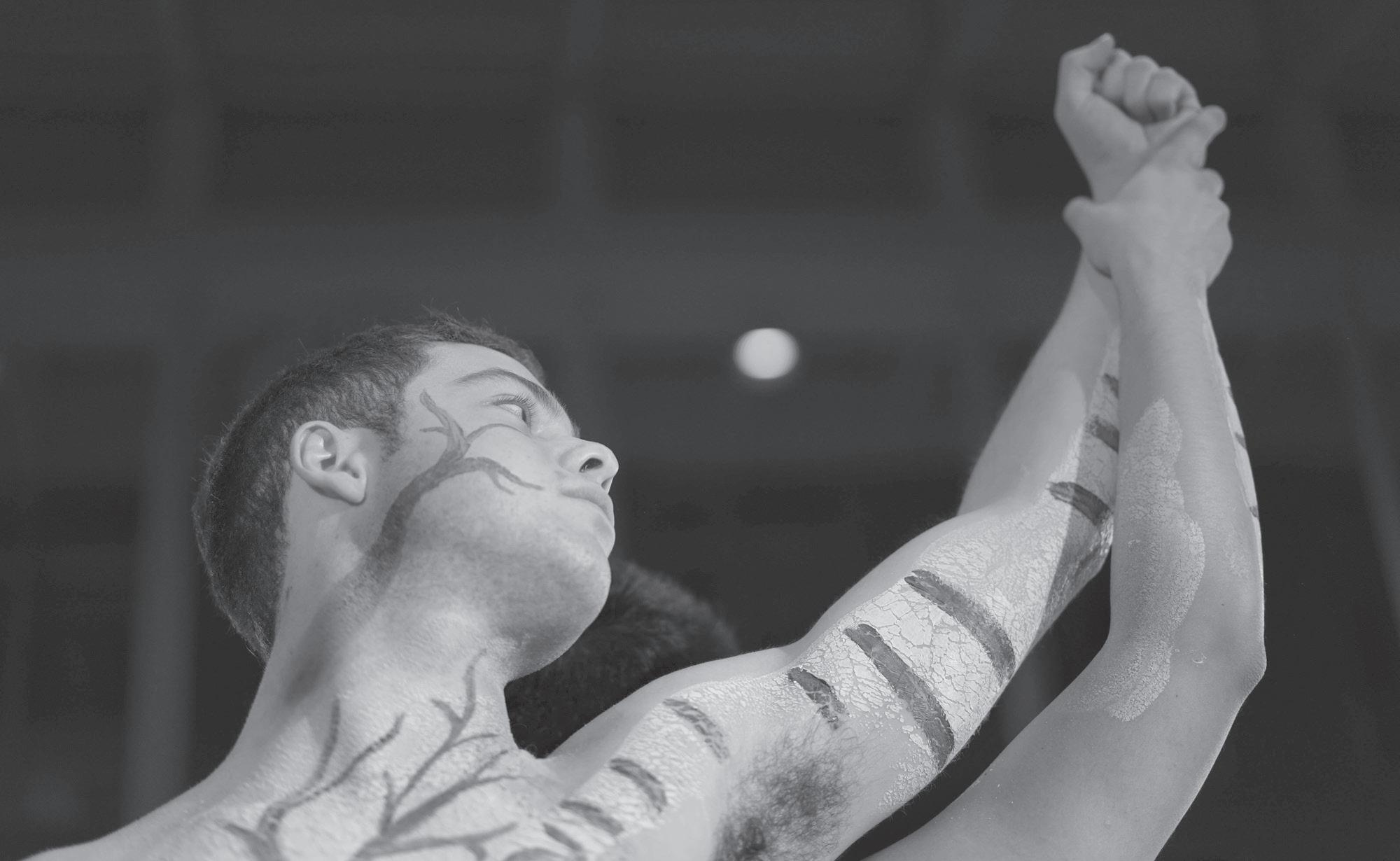
Half her chest was painted with lively red and blue blood vessels. The other half was painted dark, mottled with black spots indicative of lung disease caused by smoking. The model strutted through the audience gathered in Klarman Hall Atrium. At the end of her walk, she looked over her shoulder to shoot one side of the crowd a cheeky look and take a Juul hit. The defiant irony was not lost on the audience, which erupted into applause punctuated with whoops and cheers.
Medical fraternity Phi Delta Epsilon hosted HUMAN, its first annual anatomy fashion show, on Saturday evening. The show, which lasted just under an hour, featured the dynamic work of student artists in the form of body paint and fabrics.
Phi Delta Epsilon president Anum Hussain ’19 organized and co-hosted the event. She sported a dark blue jumpsuit reminiscent of surgical scrubs. According to Hussain, the event was meant to represent the interdisciplinary nature of studying at Cornell.
“This event is meant to be something that people not just interested in science can enjoy,” Hussain told The Sun. “The premise of it is that we have artists from all over campus ranging from fine arts majors to [biomedical engineering majors] to [human biology, health and society majors].”
Bailey Willett ’20 served as planning committee chair and co-hosted the show. During her introduction, she described the fashion show as a “celebration of the human body where art meets science” and “an art form that is
appreciated universally.”
The fashion show featured various systems of the human body, beginning with the brain and nervous system and ending with the digestive system. Each model featured a different aspect of the human body.
The art played with concepts such as butterflies in the stomach — depicting vibrant butterflies on one model’s abdomen — and an artistic interpretation of the circulatory system with blood vessels transforming into vines and flowers on a model’s limbs.
At one point, a model walked out accompanied by ominous music and clad in a head-to-toe outfit comprised of Ikea bags, bright fabrics and other odd materials. He represented the immune system, dragging a weighty garbage bag attached by rope to his shoulder and stepping purposefully on thin black heels.
On the day of the show, artists, models and planning members of the fraternity began preparing the art and set-
By MICHAEL OVERMEER Sun Contributor
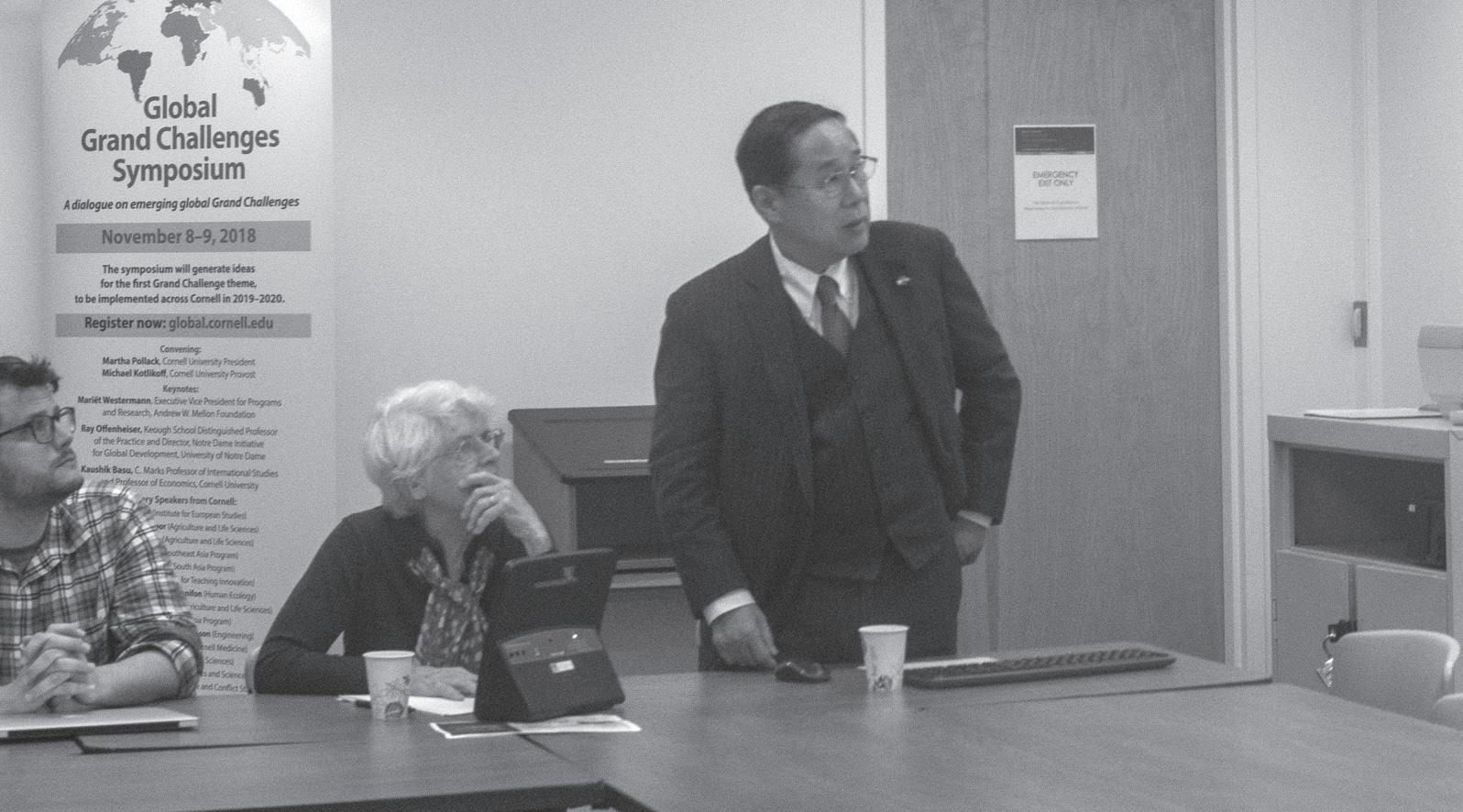
Had the atomic bomb dropped on Nagasaki fallen on its actual target and not two kilometers away, Masao Tomonaga would not have been at Cornell on Thursday to discuss the medical and social consequences of the use of atomic bombs.
“I always think of my fate,” Tomonaga said. His mother had to rescue him from the second floor before their house burned to the ground, but, because the bomb was dropped farther from its initial target, Tomonaga survived the blast.
Tomonaga, nearly 73 years after the U.S. bombing of Hiroshima and Nagasaki, is a professor emeritus at Nagasaki University’s Atomic Bomb Disease Institute and the Honorary Director of the Japanese Red Cross Nagasaki Atomic Bomb Hospital.
On Thursday, he came to the Cornell campus to speak about the lasting consequences of the atomic bomb usage in World War II in his presentation on the long-term consequences of atomic bombings and the evidence of their anti-humanitarian aspect.
“[The] atomic bomb is still killing people today,” Tomonaga said.
According to Tomonaga, Japan is facing a “second wave of leukemia” after the immediate detrimental health effects of the radiation exposure. In addition, survivors continue to suffer to this day from the loss of their families, mutilation from burns as well as post-traumatic stress disorder and depression.
After explaining the medical consequences of the bomb, Tomonaga analyzed a hypothetical case of what would occur if an atomic bomb were dropped on a modern city today.
His conclusion was that there would be “indiscriminate lethality irrespective of civilian or military with high death rates.” The city, and perhaps even the country, would suffer from severe destruction of infrastructure and economic collapse. In addition, the use of an atomic bomb is a war crime according to international law, Tomonaga said.
Despite the amount of the time that has passed since the bombings, Tomonaga explained why the topic is still relevant.
To read the rest of this article please visit www.cornellsun.com.
ting up the runway at noon. Rupal Khaitan ’20, one of the show’s artists, described the preparation as spontaneous but exciting.
“There’s a lot of figuring out just on the spot. I didn’t really know what to do. We were just painting people and brainstorming,” Khaitan told The Sun. “It was so fun!”
Phi Delta Epsilon is an international medical fraternity with chapters around the world, according to Hussain. The Anatomy Fashion Show is an event that many other chapters host, which inspired Hussain to bring the show to Cornell for the first time this year. She first heard of the show concept in 2016 at a Phi Delta Epsilon regional conference and began planning the event when she became president of the fraternity in 2017.
“Two years ago, we were talking about it and I thought it was a really cool idea, especially because I thought it would
By OLIVIA WEINBERG Sun Contributor
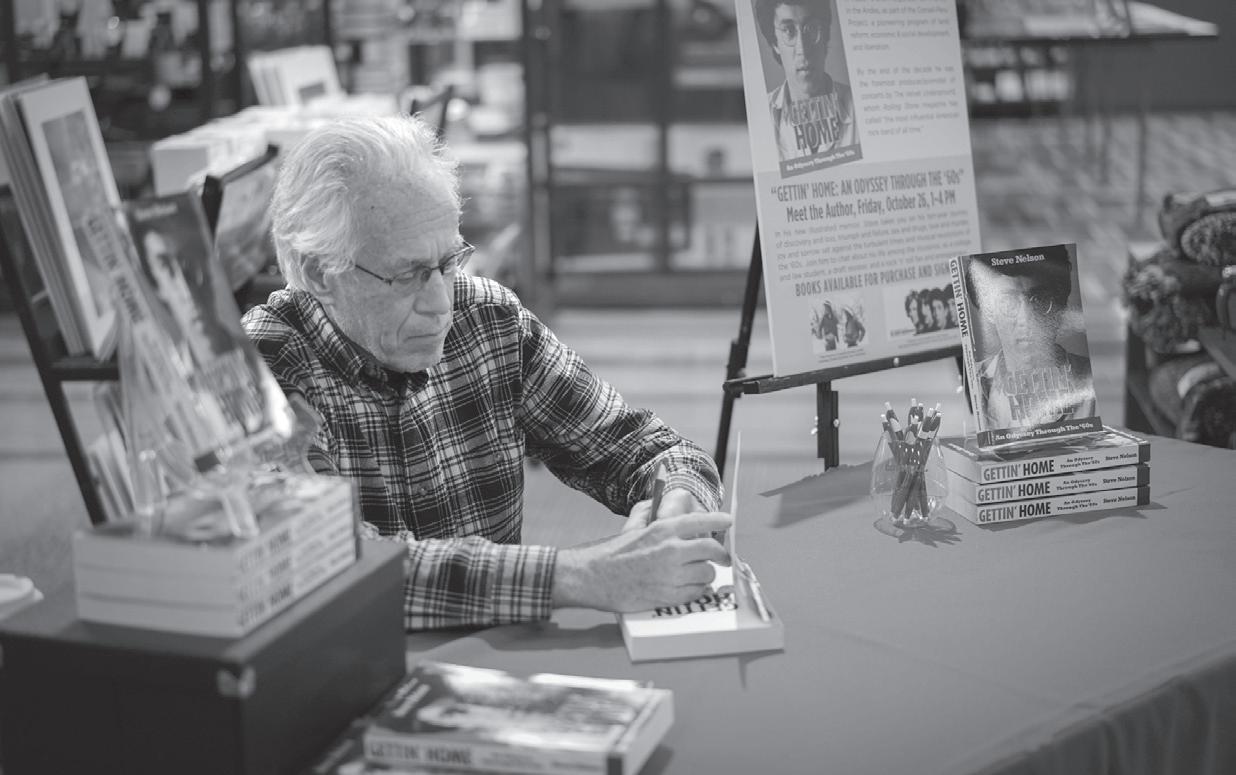
Like the epic hero Odysseus, Cornell alumnus Steve Nelson ’62 returned to Ithaca to share his life of adventure, including conducting civil rights research in the Andes, graduating from Harvard Law School, resisting the Vietnam War draft, and managing a monumental rock and blues club, where he booked The Velvet Underground.
“My odyssey began in Ithaca and it took me 10 years to get home, to figure out what that was,” Nelson said. “I had to grapple with what’s home, what does that mean?”
His book, Gettin’ Home: An Odyssey Through the ‘60s, details the many twists and turns he took on his journey, beginning during his time as an undergraduate math major at Cornell and ending after his time managing the club The Boston Tea Party.
Nelson returned to campus for a book signing in The Cornell Store on Friday and to donate a collection of photos and memorabilia from his time spent researching in Peru to the
University archives.
“Where I started in June 1961,” Nelson told The Sun, “and where I wind up almost 10 years later – a lot of things changed.”
He was able to conduct his 1961 research through a grant given to him as part of the Cornell-Peru Project, he said. The project was centered in Vicos, an indigenous community in the mountainous region of Peru that relied on a serfdom to produce crops and other products.
According to Nelson, the project was “a pioneering program of land reform, economic and social development and, ultimately, the liberation of the Vicosinos from centuries of feudal servitude.”
Nelson wrote his Cornell-Peru research paper on secondary education in the village after watching one of the brothers in his host family become the first in the village to pursue an education past grade school.
To read the rest of this article please visit www.cornellsun.com.
FASHION
Continued from page 3
be a way for our organization to have our own niche on campus. It’s such a unique event,” Hussain said. “It definitely was a large undertaking. We wanted to invest in this event. It’s a lot of moving pieces, a lot of parts going on.”
In organizing the event, Hussain and the Phi Delta Epsilon executive board reached out to several different classes on campus to recruit artists and models. According to the event program, the show included 37 models who displayed the work of 13 artists.
Hussain said that the event attracted about 150 audience members. At the end of the show, she and Willett announced that ticket sales had raised about $800, all of which was to be donated to Upstate Golisano Children’s Hospital in Syracuse. The hospital is part of the Children’s Miracle Network, Cornell Phi Delta Epsilon’s partner philanthropic organization and co-sponsor of the fashion show.
As this was the first time hosting the show at Cornell, Hussain said that publicizing the event to the Cornell community was a challenge but felt the event was largely successful.
“It’s not going to be perfect, we know that,” she said
just before the show. “But it’s going to be as good as it can be. We’re really excited — even my parents are coming.”
In her closing remarks during the show, Hussain described the pieces as extreme, adding that “extreme measures are where science ends and art begins.”
Hussain said she expects the show to continue in the following years and described this year’s event as a learning process and “something that’s only going to be better with time” despite logistic hurdles this year.
“I would so do this again,” Khaitan said. “I hope they keep it going because it’s a really cool event.”
Anyi Cheng can be reached at ac2822@cornell.edu.
Continued from page 1
Overbaugh said that he festival was rebranded after Warner Brothers sent a “cease and desist” letter this year, prohibiting the festival from referencing Harry Potter. Now, Wizarding Weekend is focusing on all magic and fantasy celebration, she said.
“I’m a very big Harry Potter fan so I think the [Wizarding Weekend] concept is fantastic.”
Erica Cerra
This year, celebrities from major fantasy movies and other shows were paid to meet fans and answer questions in a panel. Celebrities included Scarlett Byrne, from Harry Potter and The Vampire Diaries, Holly Marie Combs, from Charmed and Pretty Little Liars, and Erica Cerra, from The 100 and Supernatural.
“I’m a very big Harry Potter fan so I think the [Wizarding Weekend] concept is fantastic,” Cerra told The Sun. “I love magic and mythology so I would support any sort of wizarding and witches and weekends.”
Wizarding Weekend works closely with nonprofits as well. The money earned through the celebrity visits will be donated to nonprofits who were involved in the festival, according to Overbaugh.
Human fans were not the only ones joining in the magic.
Cayuga Nature Center, one of the affiliated non-profits, brought in a red-tailed hawk and barn owl for visitors to learn more about and to cater toward the mystical theme of the festival.
“[Wizarding Weekend] offers us a different educational avenue that we can’t usually explore, in taking parts of real native animals and allowing people to do fun and imaginative activities,” Dayna Jorgenson, Director of Nature Center Programs, told The Sun.
Handcrafted items were central to Wizarding Weekend. Booths were filled with wands, trinkets and accessories. People could buy scarves for their Hogwarts House or brooms for their Quidditch aspirations.
“People have an affinity for
handcrafted items. They always have and I think they always will,” said Elijah Corder, a finisher at Broomhilde, which sells handcrafted wands, brooms and walking sticks.
Fans wore elaborate costumes from favorite fantasy series. Costumes included classic Harry Potter characters like Albus Dumbledore and Luna Lovegood to other fantasy characters such as Legolas from The Lord of the Rings. Some people requested pictures with people dressed as favored characters.
Paul Knorr, who dressed up as Hagrid, stood in front of a shop as people stopped to take pictures with him. His size of over six feet and 400 pounds made Hagrid the best person for him to dress up as, Knorr told The Sun. Knorr, like many festival attendees, came with his family.
“I’ve read all of [the Harry Potter books], I saw all the movies. I got my kids into it and they really liked it,” Knorr told The Sun.
Not everyone was as enthusiastic as Knorr was. Matthew Schiralli was dressed as Dumbledore, complete with gray robes, a gray hat, a footlong beard and a wig. He drove two hours from Rochester, N.Y. to come to Wizarding Weekend, but Schiralli has never read Harry Potter or watched any of the movies.
“I’m dressed up because I’m married. I put on the clothes that were put out for me.”
Matthew Schiralli
“I’m dressed up because I’m married,” Schiralli told The Sun. “I put on the clothes that were put out for me.”
This kid-friendly event also included free balloon animals, made by Peter Muzio. Muzio twisted balloons into bats, wings, swords — whatever attendees requested. He said he was sponsored by the festival organizers to “add magic” to the event.
“Rain or shine it is so fun to be with fans, because fandom is the best part about doing this,” Muzio told The Sun.
Rochelle Li can be reached at rli@cornellsun.com.
Continued from page 1
“I think that we achieve true justice when all voices are heard,” he continued. “So many more voices are needed.”
Nguyen described how at the refugee camp, his family was separated in order to receive sponsorship. Nguyen’s parents, brother and himself were assigned to three different families.
“That’s where my memories begin, being taken away from my parents, howling and screaming,” he said.
Nguyen’s family established a Vietnamese grocery store in San Jose during the 1970s, which was later bought by the city to build a
parking lot as part of a new downtown.
“All that was erased, so for years and years it was too painful for me to go back to that street,” Nguyen said.
Nguyen recalled that the Vietnamese translation of The Refugees was censored to exclude his autobiographical story, “War Years,” about growing up in downtown San Jose. He said that he “felt that store, my parents, that history, had been erased. In Vietnam too, we had been erased.”
The censorship that Nguyen faced over “War Years” was an example of the reason why he became a writer.
“That’s why I tell stories, that’s why we should all tell stories,”he said.
On being a refugee, Nguyen detailed the stig-
ma that current refugees face when they come to the United States.
“It seems that the only way to become acceptable in this country is to be exceptional,” Nguyen said.
To audience laughter, Nguyen joked that he did not want to portray his experiences as a refugee as “a completely negative experience.”
“After all it gave me the necessary requisite experience to become a writer,” he said.
Nguyen said that in writing The Sympathizer, he set out to write both a refugee novel and a war novel, explaining that “being a refugee and surviving a war were completely related.”
When asked by an audience member about the prospect of returning to Vietnam after the
success of his books, Nguyen remarked that he “feel[s] like now I don’t want to go back to Vietnam until my books are published in an uncensored fashion.”
Nguyen claimed that the Vietnamese translation of The Sympathizer has been under review by the Vietnamese government since April.
In response to an audience question about his writing process, Nguyen emphasized the need for writers to look past their audience of critics and peers.
“For many writers, their breakthrough is that their first audience is themselves,” he said.
Lucas Reyes can be reached at lar327@cornell.edu
Continued from page 1
The Yale Daily News, Jayawardhana has produced a large body of literature for the science community and the public. In addition to over 125 papers in scientific journals, his writing is regularly featured in outlets like The New York Times, The Wall Street Journal and The Washington Post, according to his website.
In 2009, the International Year of Astronomy, Jayawardhana was involved in Cool Cosmos, a campaign that ran advertisements for an entire month throughout Toronto’s public transit system to get people engaged with the interconnectedness of the universe.
“There are trillions of neutrinos going through your body every second of every day, the tidal interaction between the moon and the earth affect the length of your day.
Deep connections between our lives on earth and the universe beyond.
The goal was to try to highlight that in a fun way, in kind of a quirky way to get literally a million people to think about it for a few seconds,” Jayawardhana said in an interview with The Sun.
Don Lincoln, a member of the 2018 selection committee, said the wide public reach of Jayawardhana’s work put him over the top for the Nicholson Medal among a field of qualified nominees.
“The vast breadth of his ability to engage the public means that he connected to not tens, not hundreds, but thousands and tens of thousands of people,” Lincoln said in an interview with The Sun.
Lincoln put the importance of scientific outreach in the context of a society in which scientific thought is “under assault,” citing people believing the Earth is flat and denying
the well-accepted science of climate change.
“It’s very important that scientists in general engage in the public conversation and we celebrate the people that excel at it,” Lincoln said.
Jayawardhana was appointed as dean in May, moving from York University in Toronto where he was the dean of the faculty of science since 2014. His long list of accolades includes Guggenheim, Radcliffe and Steacie fellowships, the Rutherford Medal, the Steacie Prize, the McLean Award and the Rockefeller Foundation Bellagio Residency, according to his website.
“It’s always sort of a surprise to be recognized by your colleagues, because it’s a medal for outreach, and outreach is something I’ve been passionate about and engaged in for a long long time, pretty much since I would say middle school,” Jayawardhana said in an interview
with The Sun.
Jayawardhana has been interested in space since early on in his childhood in Sri Lanka. Influential figures like Sri Lankan scientist Cyril Ponnamperuma and former Prof. Carl Sagan, astronomy, drove him toward a brand of publicly engaged science, he told The Sun.
“I first knew of Cornell as the place where Carl Sagan worked. I knew about Carl Sagan as an early teenager and watched his Cosmos series on video and read his books, so that model of a scientist who was publicly engaged was very appealing to me and attractive to me,” Jayawardhana told The Sun.
Sagan’s television series Cosmos: A Personal Voyage first ran in 1980, and a 2014 remake was presented by Neil deGrasse Tyson. Tyson was the recipient of the Medal of Outreach in 2017, one year before Jayawardhana would claim the prize. In addition to his current position the arts college dean, Jayawardhana is still involved in research, using some of the largest telescopes on land and in space to examine distant planets. He has not yet decided how to spend the $2,000 stipend that came with the prize.
Matthew McGowen can be reached at mmcgowen@cornellsun.com.

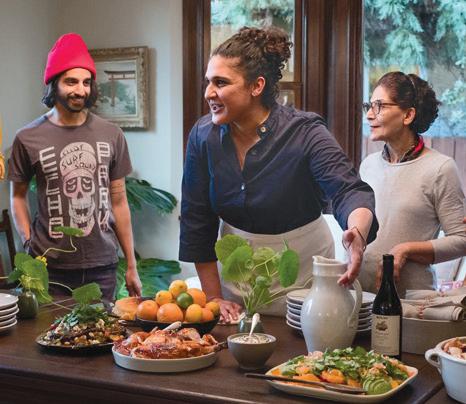
Netflix has advertised their new food documentary, Salt Fat Acid Heat, for several weeks now, billing it as a delightful tour of the globe to teach their viewers about the vital elements of good food. With vibrant cinematography, a cheery soundtrack and compelling direction by Samin Nosrat, it delivers a unique take on the food documentary a la the late Anthony Bourdain. Part observational and part educational, this four-part series is an enjoyable watch with production value rivaling Chef’s Table
Samin begins her tour (albeit out of order) on the intricacies of fat, traveling to northern Italy to discover the secrets of such delicacies as red cow parmesan and traditional focaccia. This episode first captures the process of olive oil production straight from the source, complete with funny-looking harvesters and an industrial-size press. Accompanied by the picturesque landscape and the beautiful seaside views, the story being told is truly mesmerizing. Through spurts of rapid Italian, the interviews with locals convey the importance of fat in the quality of the food every chef — professional or amateur —produces. The food made throughout the episode is also produced in the traditional way, often by hand and never using shortcuts. Although I didn’t necessarily appreciate the graphic butchering of a pig, it is nothing if not educational. While fat contributes a lot to a dish’s flavor, the big takeaway was the importance of fat for textural quality. As Samin remarks at a Lidia household, “Thank you with a handful of oil!”
The journey continues on to the wonders of salt as experienced in Japan. From a small seaweed harvest for the collection of hondawara salt to an industrial sea salt factory, the salt industry is near and dear to the heart of every chef. By enhancing the flavors that are already there, salt is often the most vital way to season a dish. A small break to play
with the monkeys later and Samin dives into the intricacies of soy sauce and miso. While the episode’s highlight is the wonder of salt in cooking, there is also an emphasis on the power of aging foods and waiting patiently for the greatest flavor payoff. When boiling foods for short periods of time, amateur chefs apparently chronically underseason their water, as Samin demonstrates by proceeding to dump her entire container of salt into the green bean water. This episode is much less visually stimulating than the Italy episode and more full of technical detail, but the attic full of rich wooden barrels and the craggy seaside still made for a pretty scene. The episode culminated in a big dinner party showcasing the different salt forms present in all the dishes Samin made. Vital for contrast and balance, we next got a lesson in acid from Mexico. Samin’s Iranian background causes her to identify strongly with this flavor profile in particular. She first makes sour orange-marinated turkey in a local woman’s kitchen, explaining the delicate balance between marinating and over-marinating. Through Samin’s dissemination of salsa over bowls of chili and a subsequent spice-induced conniption, I got a nice overview of Mexican cuisine and the vital role of acid in it. Samin tries her hand at making tortillas from scratch, extracted some surprisingly acidic and extremely clear Melipona honey, and buyst fresh chocolate from a farmer’s market. Whether citrus, zest, chocolate, seeds or peppers, each ingredient was given a unique platform and shown to be necessary for creating truly magical dishes.

tion of quality staples over expensive food. Accompanied by cheery, comforting music, she roasts chicken and explained the importance of letting meat rest. One refreshing aspect of the entire series is Samin’s ability to banter with her cooking counterparts, creating more of a humanity in the way that the cooking tips are conveyed. With the help of her mom, Samin sets out to make the perfectly crispy Tahdig, a Persian crispy rice concoction wholly dependent on Maillard reactions. The show concludes with a familial scene full of fun and good food, depicting the essence of what good cooking is all about.
Samin takes it back home in order to showcase the last element of good cooking: heat. With Chef Amy Dencler, Samin begins the episode by waxing nostalgia about learning to cook. All of the chefs at Chez Panisse cook their food over an open hearth with warm and cool sections to move over as it begins to caramelize. Another valuable lesson is the prioritiza-
Salt Fat Acid Heat is now available on Netflix, a great addition for anyone looking to elevate their cooking skills to an astronomical — and possibly medically unsafe — level.
Maggie Gaus is a freshman in the College of Agriculture and Life Sciences. She can be reached at mbg227@cornell.edu.
tance, details the horrors of human abuse toward the massive, yet gentle, creatures.
Love & Bananas, at times, feels like a souped-up vlog. At other moments, it makes you want to run out of the theater and go hug an elephant. Unfortunately, the nearest zoo is 40 miles away from campus, which makes that a tad difficult.
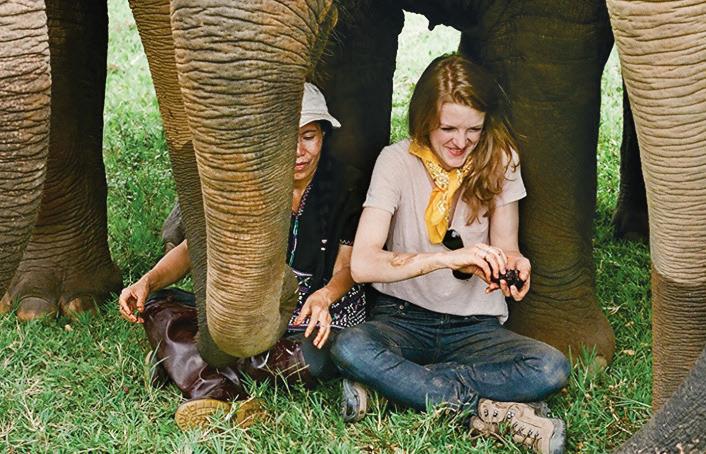
The documentary follows actress Ashley Bell and elephant conservationist Lek Chailert on their mission to rescue a 70-year-old elephant, Noi Na, from a trekking camp. Bell’s narration introduces the audience to the largely unknown plight of Asian elephants. She, with Chailert’s assis-
Graphic videos display the atrocities that are inflicted upon elephants and bubbly animations detail how crucial the animals are to the global ecosystem. Telling us that there are just 45,000 Asian elephants left in the world, however, is less poignant than seeing the ragged, torn ear of an abused elephant and the sadness in their soulful eyes.
Cornell Cinema chose to preface the documentary with an animation produced by alum Lynn Tomlinson, titled The Elephant’s Song. The short relays the true tale of Old Bet, the first circus elephant, from the point of view of a farmer’s dog. It was original as well as unique, and overall entertaining to watch.
Tomlinson’s creative animation style, spreading clay on glass plates and manipulating it like thick paint, leads to beautifully vibrant scenes. According to Tomlinson, it takes three hours to animate one second of a final film.
I was as amazed by her dedication and passion as much as
I was by the animation. The Elephant’s Song did not, however, carry the same emotional influence that the feature documentary did. I mean, how profoundly moving can a clay animation set to song be?
Bell and Chailert rely on the weight of pathos to drive Love & Bananas. Each shot of a mutilated eye or bullhook scar elicited a pang of sympathy from me. Sentimentality and pity for the splendid creatures can only carry a film so far, though. Even at a mere 75 minutes, the documentary still feels a bit too long. If I had to guess, about 15 minutes were spent purely on the transport of Noi Na from captivity to the sanctuary. That’s the crux of the film, but watching a large, grey mammal slowly sway in a truck while the cast worries if she will faint (spoiler, she does) is not the most gripping entertainment.
I’m not often one for documentaries, so I concede that my appreciation of this art form might be ill-informed. Love & Bananas, while touching, comes across as being very amateurish. It opens on a helicopter ride above a depleted Cambodian forest. I assumed the film would center around saving an elephant from a habitat ruined by logging and other destructive human interference. Rather, the ruined woodlands are rarely referenced again. When they are, it is to discuss how elephants are used to better facilitate the moving of massive tree trunks.
Extended shots of people feeding elephants or herds playing in mud pits and rivers do little to further the plot and their repetition is largely superfluous. A sequence of a bunch of mahouts trying to force Noi Na into the truck takes up at least five minutes. The occasional interviews with a cast member are extraneous and add little to the content of the film.
The only prior experiences I have had with elephants are smelling their poop at zoos and that one odd scene in The Jungle Book (2016) where a herd marches through the jungle and the entire animal kingdom bows down to them. I didn’t like The Jungle Book, so my relationship with these creatures was relatively strained. About five years ago, I toured an animal sanctuary and ended up going vegan for three months. Seeing as I don’t actively eat elephant meat or adorn myself with ivory jewelry, I doubt Love & Bananas will have a similar effect on me. It certainly expanded my (albeit limited) knowledge of elephants and their all too common inhumane treatment. I’d have to be a cold-hearted jerk to fashion myself anything other than an elephants’ rights supporter after watching this documentary.
Jeremy Markus is a freshman in the College of Agriculture and Life Sciences. He can be reached at jem476 @cornell.edu.
Independent Since 1880
136th Editorial Board
JACOB S. KARASIK RUBASHKIN ’19 Editor in Chief
JOHN McKIM MILLER ’20
Business Manager
KATIE SIMS ’20
Associate Editor
VARUN IYENGAR ’21
Web Editor
MEGAN ROCHE ’19
Projects Editor
EMMA WILLIAMS ’19
Design Editor
JEREMIAH KIM ’19
Blogs Editor
GIRISHA ARORA ’20 Managing Editor
HEIDI MYUNG ’19
Advertising Manager
ALISHA GUPTA ’20
Assistant Managing Editor
DYLAN McDEVITT ’19
Sports Editor
MICHAEL LI ’20 Photography Editor
GRIFFIN SMITH-NICHOLS ’19 Blogs Editor
Working on Today’s Sun
Ad Layout Emma Williams ’19
Design Deskers Jamie Lai ’20
Greta Reis ’21
News Deskers BreAnne Fleer ’20 Sarah Skinner ’21
Night Desker Katherine Heaney ’20
Sports Desker Jonathan Harris ’21
Arts Desker Viri Garcia ’20
Photography Desker Edem Dzodzomenyo ’20
Production Deskers Megan Roche ’19 Jamie Lai ’20
Paul Russell | Russelling Feathers
My final column in the 2016-2017 school year was a bright and chipper reflection on the beauty and joy and sunshine in my nineteen-year-old life. It had heart to it, and it always makes me smile, so I consider the piece to be one of my best.
Now, as I emerge from the rubble of my college experience, weathered down by the tempestuous winds of reality and adulthood, I still have that joy, but in a new way. It has a new tannin to it — it’s complex and firm, as the result of a process. As we all grow older, somewhere in the TCAT rides and the Bronx-bagelswith-cheese we learn to be happy not because of a naive assumption that bad things won’t happen, but because bad things did happen, and we’re still alive.
GroupMes.
I don’t like throwing parties where 1,000 people click going and 3 show up.
I don’t like sponsored LinkedIn messages.
I don’t like entering in the information from my resume for an application that already asked me to attach my resume.
I don’t like talking to students who already have jobs.
I don’t like waiting for Scantron test results that take .000001 seconds to grade.
I don’t like trying to remember which tab in Blackboard the syllabus is under.
TSarah Park | S*Park
Notes
his past summer, I worked for Jeff Sessions in the Justice Department and exited the comfort of my liberal bubble for the first time in my life. Working with members of the Trump Administration forced me to grapple with my prejudice as I really engaged with the other party. While it didn’t actually change my views, it helped better understand the perspectives of people who cared just as much about the well being of people in this country and people who decided to dedicate their lives in pursuit of that cause. On this campus, we are so quick to write
conservatives stay quiet so as to not harm their grades, in our Student Assembly, where a structure built upon identity politics continues to leave students feeling unrepresented, and on our slope, where the president of the Cornell Republicans got pushed the day after the 2016 election. We recede into our echo-chambers and ignorance. The political aisle has become an abyss separating bodies of ideology and identity preventing either side from ever hearing more than the echoes of their own voices. To never have your worldview questioned, to never have to look your
We’ve become so inclined to disengage from our opponents without so much as a cursory hearing.
off someone based on party and so disinclined to actually listen and engage.
The issue of free speech on college campuses arose in the 1960s when it was the students who pushed administrators for greater rights. Now, nearly half of college students believe colleges should be able to restrict problematic speech. They wish to safeguard vulnerable communities from harm and make campuses inclusive for all. While well-intentioned, they may have forgotten the critical role freedom of speech played in nearly every social movement to protect minorities and bring about change.
Free speech is necessary on our campus.
opponents in the eye, to receive nothing but affirmation from filtered online worlds and friends you interact with is terrifyingly easy on a campus so large.
We’ve become so inclined to disengage from our opponents without so much as a cursory hearing. We love nothing more than to write someone off as bigoted without getting at the underlying logic of their claims. What results is an overwhelming stifling of speech from both ends, with students scared to say anything potentially incriminating in the eyes of peers.
Hate speech clauses have been countereffective in universities, often targeting those they’re meant to protect.
I don’t like hearing “lets get this bread” every time I’m in line at a place that sells bread.
I feel no need to produce for you another happy rant of my favorite things in the world. For me, there’s just as much catharsis to listing off what I don’t like. Today, I plan to do just that, but not to depress you but to remind you of what you overcome each day — to remind you how far you’ve come.
And, with all these less-than-ideal aspects of our lives, we should be proud of ourselves for more or less keeping our heads up. There’s a lot to dislike.
For starters, I don’t like life without eHub.
I don’t like the card scanners at CTB that force me to actively decide not to tip the cashier before their very eyes.
Speaking of CTB, I don’t like fake eggs. And I don’t like pushy a capella concert ticket salesmen.
I don’t like it when people start all their Facebook posts with “I’m so excited to announce.”
I don’t like the red brick streets on Stewart avenue that were probably paved for the last time in 1922.
I don’t like when I accidentally open a Facebook message I’ve been avoiding for a few days because I don’t want the person who sent it to know I’ve read it. I don’t like getting removed from
I don’t like the automated voice that tells you Olin is closed. I don’t like when I try to log into student center but another website comes up after I click login and I have to refresh the page.
I don’t like hearing “lets get this bread” every time I’m in line at a place that sells bread.
I don’t like people who wear $500 shoes but still Venmo request you for gas. I don’t like when Venmo is autocorrected to venom.
And I don’t like staying up until 3 a.m. to write column when I have a prelim the next morning.
But regardless of how I feel about all of these things, they form the reality in which we live. Though staying sane in the midst of it all can sometimes feel like an uphill battle, we can rest assured: it actually is. Everything’s an uphill battle when almost your entire campus is on a 45-degree angle.
But we signed up for this, and if it’s the last thing we do we’re gonna make it out. Until then, I’ll focus on what I do like. I just won’t write it all about again.
Paul Russell is a senior in the School of Industrial and Labor Relations. Russelling Feathers runs every other Friday this semester. He can be reached at prussell@cornellsun.com.
Free speech paved the way for almost every major breakthrough in social progress — civil rights, women’s suffrage, marriage equality — and to restrict it would be antithetical to those need the most. Historically, hate speech clauses have been counter- effective in universities, often targeting those they’re meant to protect. When Michigan adopted a hate speech clause in the late ’80s, more than 20 black students were charged with racist speech, and not a single white student was punished.
Hate speech is protected by the first amendment, which is why when over 300 colleges and universities adopted hate speech codes in the early ’90s, each and every one challenged in the court was ruled unconstitutional. But beyond the legal and historical context, this shift in beliefs reflects a more concerning change in our
And that’s the most frightening part, because to choose to disengage entirely is to resign to ignorance and undermine the purpose of free expression. To discriminate against ideas, to dismiss entire lines of reasoning without even a cursory glance, to allow the university to determine what is and what is not allowed to be said on this campus, is to stifle the very discourse necessary for a truly democratic education.
This is not to say that protecting free speech means condoning violence; however if we are not open to the challenge of confrontation and the possibility of offense for the sake of true education, we will never break free of intellectual ignorance.
As Justice Brandeis stated in his 1927 concurrence in Whitney v. California: “If there be time to expose through discussion the falsehood and fallacies, to avert the evil by the processes of education, the remedy to be applied is more speech, not enforced silence.”
We need to make conscious efforts to leave the comfort of our bubbles, to listen and evaluate other perspectives with open minds.
universities — a decline in discourse.
Universities have long been centers of academic freedom, arenas for the competition of ideas, backdrops for rigorous discourse.But this is a far cry from what we see on our campuses today. Cornell boasts a diverse student body that is divided on race, religion, gender, but above all party. But our bubble of liberal sanctitude is not impervious to the national climate of affective polarization. When over 40 percent of Democrats and Republicans see the other side as a threat to the health of the nation, it’s difficult to have effective discourse.
I see it in our classrooms, where closet
I came to this campus hungry to learn — not just from my professors and TAs, but also from my peers. I came excited to engage in effective discourse with people to have my beliefs questioned, challenged, changed. We need to make conscious efforts to leave the comfort of our bubbles, to listen and evaluate other perspectives with open minds, in order to protect truly open democratic discourse.
Sarah Park is a junior in the School of Industrial and Labor Relations. S*Park Notes runs every other Monday this semester. She can be reached at spark@cornellsun.com.
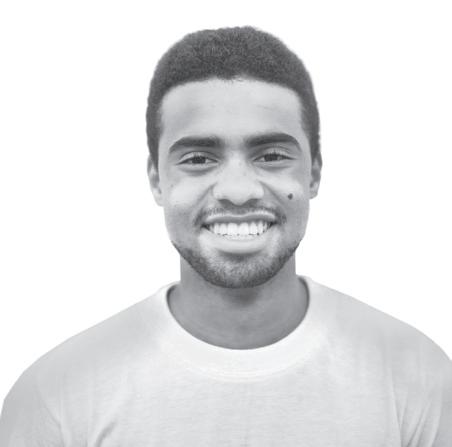
Pegah Moradi
Igrew up going to Quran school at my small, non-denominational mosque in a Virginia business center squished between a Days Inn and a dusty storage facility. It’s been vandalized and threatened on multiple occasions. Most recently, after the shooting in San Bernardino, California that famously triggered then-candidate Trump’s Muslim ban proposal, the masjid received a threat via voicemail.
“You all will be sorry,” the imam claimed the voicemail said. “You all will be killed.”
I flinch writing those words. It is always difficult to write about tragedy, and it is always difficult to articulate pain. It’s especially difficult to talk about pain that hasn’t yet hit your nerves but still throbs. The constancy of impending tragedy is so emotionally taxing that you make it mundane in order to survive. I now only cry reading about those threats when I actively make the mental link between the threat and my memory: Going to a wedding there. My dad driving over to do his midday prayers in the middle of a long workday. Being nine years old and fidgeting while praying in congregation. Running around barefoot over ornate prayer rugs.
anti-semitic flyers were posted around campus last year and my immediate reaction was that the community response was overblown. This is, again, shameful. But I am confessing this for a reason: I have to be aware of the mechanisms inside me that lead to apathy before I can dismantle them. We all do, before we can build strong
coalitions against the very violence that pervades our lives.
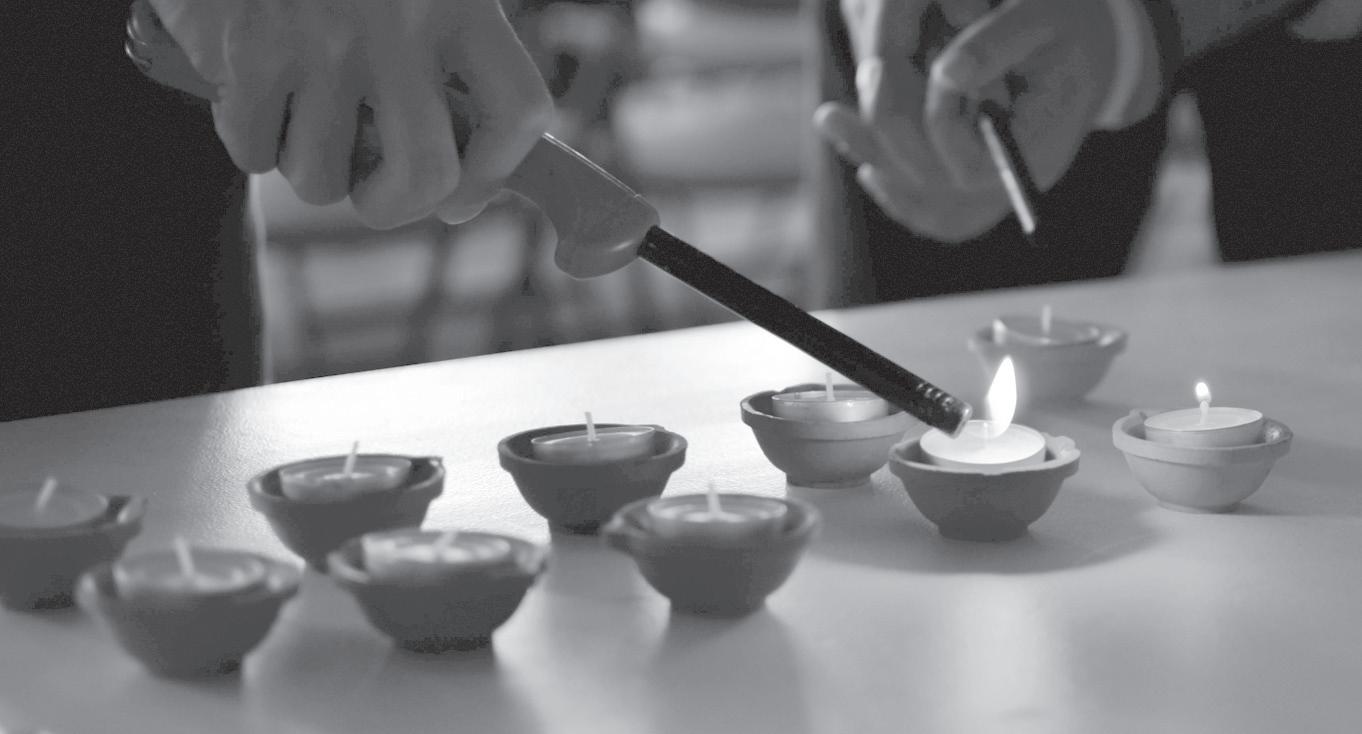
When a man opened fire at the Tree of Life Synagogue in Pittsburgh Saturday morning, he yelled, “All Jews must die.”
its less extreme forms it pulls us apart, luring us into trying to win at oppression instead of empathizing. There is a small kernel inside of me — that I am once again ashamed to admit ever existed — that asks if I got fewer push notifications during the Quebec City shooting in 2017, or why none of my friends ever checked in with me after similar events and threats. It never asks why I didn’t reach out to my Jewish friends after I learned swastikas were painted on a Jewish community center miles from my high school. It’s always far easier to notice when your community is the one in pain, and as such it is easier to elevate your pain above that of others. There is little productive value in comparing pain. There is far more value in listening, empathy and coalition building. I am, of course, not saying anything new or interesing, and I am very aware that I have fallen into a pit of clichés and lazy platitudes about fighting hate with love. I don’t know, I’m at a loss.
When violence and hate are embedded in your life, when they transcend beyond the political moment, there is a kind of apathy (or “desensitization,” as we like to say in this country) toward the plights of others. It’s like the Oppression Olympics, in a way, where you condescendingly want to say “Welcome to the club,” even though that’s a horrible, shameful way to react to hate.
I am ashamed to admit that I’ve done this, like when
I think I am writing circles around what I mean, which is that we should all share in this pain. In The Washington Post, Colbert King wrote of Matthew Shepard’s interment, a possibly racially motivated shooting in Jeffersontown, Kentucky and the tragic shooting in Pittsburgh, remarking that “in today’s America, there is no safety from hate.” Hate is expansive. It is broad, and as such, its effects are collective.
The pernicious nature of this hate, however, is that in
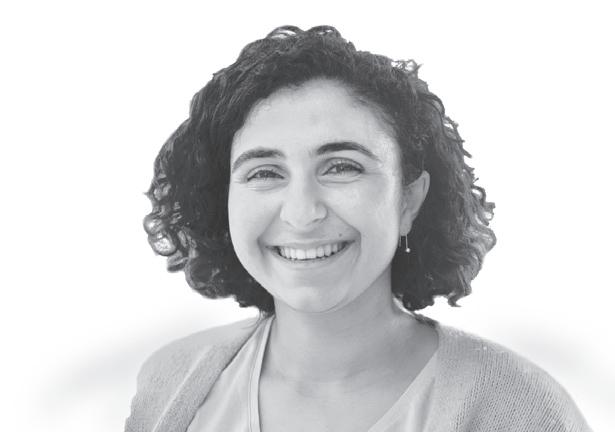
Gabrielle
I guess, truly, what I am trying to say is that I am hurt alongside my Jewish friends and neighbors. I implore the religious communities at Cornell to take this time to show interfaith solidarity, as nobody should ever have to worship in fear. I encourage readers to donate to HIAS. And I urge us all — myself especially — to listen and understand each other’s pain, first and foremost.
Pegah Moradi is a senior in the College of Arts and Sciences. All Jokes Aside runs every other Monday this semester. She can be reached at pmoradi@cornellsun.com.
Since recess time and cafeteria lunches, studying abroad had always been the dream. It was something of the future. It was living in a new city and traveling on weekends. It wasn’t school, it was abroad.
When it was actually time for me to apply, I petitioned the College of Arts & Sciences to allow me to go to Thailand (my three semesters of Italian would be useless in Chiang Mai). By the end of fall semester, I panicked. I wasn’t ready; I couldn’t leave these people or this small town I had grown to love — now, all of a sudden I was deeply appreciative of ice fests. Ice fests. And cold weather. Of course I was excited, but I felt like a baby bird who wasn’t ready to leave its nest. It surprised me: I’ve always been the type of person who feels confined and restless in institutions when I’m in them for too long. But here I was, not being able to leave.
Abroad changes you, that’s what they all say. When I studied in Chiang Mai, Thailand, I remember asking my friend early on whether or not she thought she would have a moment when something clicked; when her ideas on life would be clearer, or she knew they had changed. Living in a Buddhist country for almost five months would bring some type of enlightenment — even on the most personal level. Living in Southeast Asia itself allowed me to understand the differences in culture; how individualized, and even selfish we are
in the United States. While it was different, I appreciated the communal aspect of Thai culture, how everybody seemed to be living with the thought that everything they said and did impacted others. And their sense of humor — it was on a different level.
Abroad changes you, they said. But behind the situational remarks of, “Oh, but it’s nothing like the tagliatelle ai funghi porcini that I ate in Firenze” or “You should’ve seen the sunsets in Barcelona — unreal,” what is it that we really bring back from abroad?
I can believe that the person I was is the person I can still be.
break trips to the islands. It was $1 pad thai, night markets, school uniforms and Chang beer.
It was confusion: it was not being able to communicate with locals, not understanding my place within the country, wondering if I was being treated differently
I still felt as if coming back to the United States after a semester abroad didn’t mean coming back as a new person.
When I came back to work in New York City for the summer, only two weeks had passed since I returned from Southeast Asia. The strange part was, although I had felt so hesitant about coming back to the United States, as soon as I got back, I felt myself fit smoothly into the mold of society. I felt heavier, though, in that I had a weight of experiences that the people in my life didn’t know or couldn’t understand. Like many experiences, but especially stories from abroad that cover so many months, there is only so much that can be answered with, “So how was it?”

It was happiness: it was sunrise hikes to temples, village homestays and spring
because I was a foreigner.
It was sadness: it was knowing where my roots came from and wishing the important people in my life were here to experience the warmth of Thailand with me.
I came back with a tan, blonder hair and an obsession with mango sticky rice. But where was the girl who said “yes” to everything? Who learned to walk slower, listen deeper and engage more? What about the unselfishness I had experienced that made me believe humanity was capable of something greater and made me think vulnerability and openness was viable again? Where did it all go?
I didn’t go into study abroad thinking in any way that I would be “changed.” Maybe it came from my past travel experiences and skepticism with people who thought that buying €1 wine was a transformative experience. Abroad doesn’t change you; it can broaden your perspectives, challenge beliefs and make you more curious or appreciative of the differences in culture. While going
to Southeast Asia might have been a bigger cultural challenge than if I had gone to Europe, I still felt as if coming back to the United States after a semester abroad didn’t mean coming back as a new person. Even incorporating what I learned and experienced abroad proved difficult when I found myself back in the bustling streets of New York City and felt the need to be going somewhere — to always have a destination in mind. I missed aimlessness. The feeling that I didn’t owe anything to anyone; that I could exist on my own and interact with the world on my own terms. I missed friendships from hostels, midnight rides in tuk tuks and the familiar tune every AirAsia plane would play.
These memories don’t die. They were real at a point; you were in the presence of these people, you made every one of these decisions. Remembering that this point in your life wasn’t some surreal, detached dream holds you responsible for the type of person you were. And if I can see my time abroad as one in which I lived day by day, hour to hour, in a country where seeing monks walking on sidewalks and listening to the birds sing in the evening was real and true, I can believe that the person I was is the person I can still be.
Gabrielle Leung is a senior in the College of Arts and Sciences. She can be reached at gleung@cornellsun. com. Serendipitous Musings appears alternate Thursdays this semester.


Fill in the empty cells, one number in each, so that each column, row, and region contains the numbers 1-9 exactly once. Each number in the solution therefore occurs only once in each of the three “directions,” hence the “single numbers” implied by the puzzle’s name. (Rules from wikipedia.org/wiki/ Sudoku)


“I’m not ready to get up yet. Just give me five more minutes.”
—Anthony Notaroberta Jr. ’19
To submit your caption for this week’s contest, visit sunspots.cornellsun.com.

College

1, 2, 3, 4, 8 BEDROOMS FURNISHED VERY REASONABLY PRICED
607-272-3389 avramisrentals@aol.com
2 & 3 BEDROOMS 109 SAGE PLACE
Available NOW, Spring 2019 & 2019/2020 Shuttle Bus Access to Campus Access to Free Fitness Center Novarr- Mackesey Property Management office@ithacastudentapartments.com 607-277-1234
607-277-1234
>>AFFORDABLE, QUALITY LIVING<< Special Deals for you! Furnished 1-6 Bedrooms Collegetown Apartments PARKING, LAUNDRY, UTILITIES! (607) 273-7368 www.IthacaApartmentRental.com ***************************** RENT NOW, GET THE BEST www.MatoulasHouses.com
Apartments & Houses In Collegetown LINDEN AVE & E. SENECA ST 1 & 3 BEDROOM APARTMENTS ALL FURNISHED EMAIL: MatoulasHouses@Gmail.com PHONE: (607) 339-9644 FIRST-COME, FIRST-SERVED *****************************
Collegetown Terrace Apartments INSPIRED LIVING TAILORED TO YOUR SUCCESS 24-Hour Fitness Center Shuttle Bus Service to Campus Study Rooms w/ Expansive Views
Apartments Available NOW, Spring 2019 & 2019/2020 Novarr- Mackesey Property Management collegetownterraceithaca.com office@ithacastudentapartments.com 607-277-1234
NORTH CAMPUS
Studio, 3 and 5 bedroom Available 2019/2020 Novarr-Mackesey Property Management office@ithacastudentapartments.com 607-277-1234
Houses, Apts, Parking 1 to 9 Bedroom
Collegetown - College Ave, Linden Ave, Dryden Rd, Bryant Ave, Cook St. 607-330-2442 info@urbanithaca.com www.urbanithaca.com
We have availability for the 2019-2020 school year beginning June 1st at
Prices start at $750/month for a 12 month lease. If you have any questions or would
607-208-7660 or email: renting@ithacaLS.com
Nicest Apts. in Collegetown Located on Eddy St. 4 Bedrooms
Fully furnished. Spacious living areas with large bedrooms & closets. Hardwood flors, spectacular views, eat-in kitchens with additional sun rooms. Laundry & parking. 607-339-1137 bgm900@gmail.com
27 H OUSE FOR R ENT
201 WYCKOFF AVE 6 Bedroom House Novarr-Mackesey Property Management office@ithacastudentapartments.com 607-277-1234
COLLEGETOWN 6 BEDROOMS NEWLY RENOVATED 607-272-3389 avramisrentals@aol.com

By SMITA NALLURI Sun Staff Writer
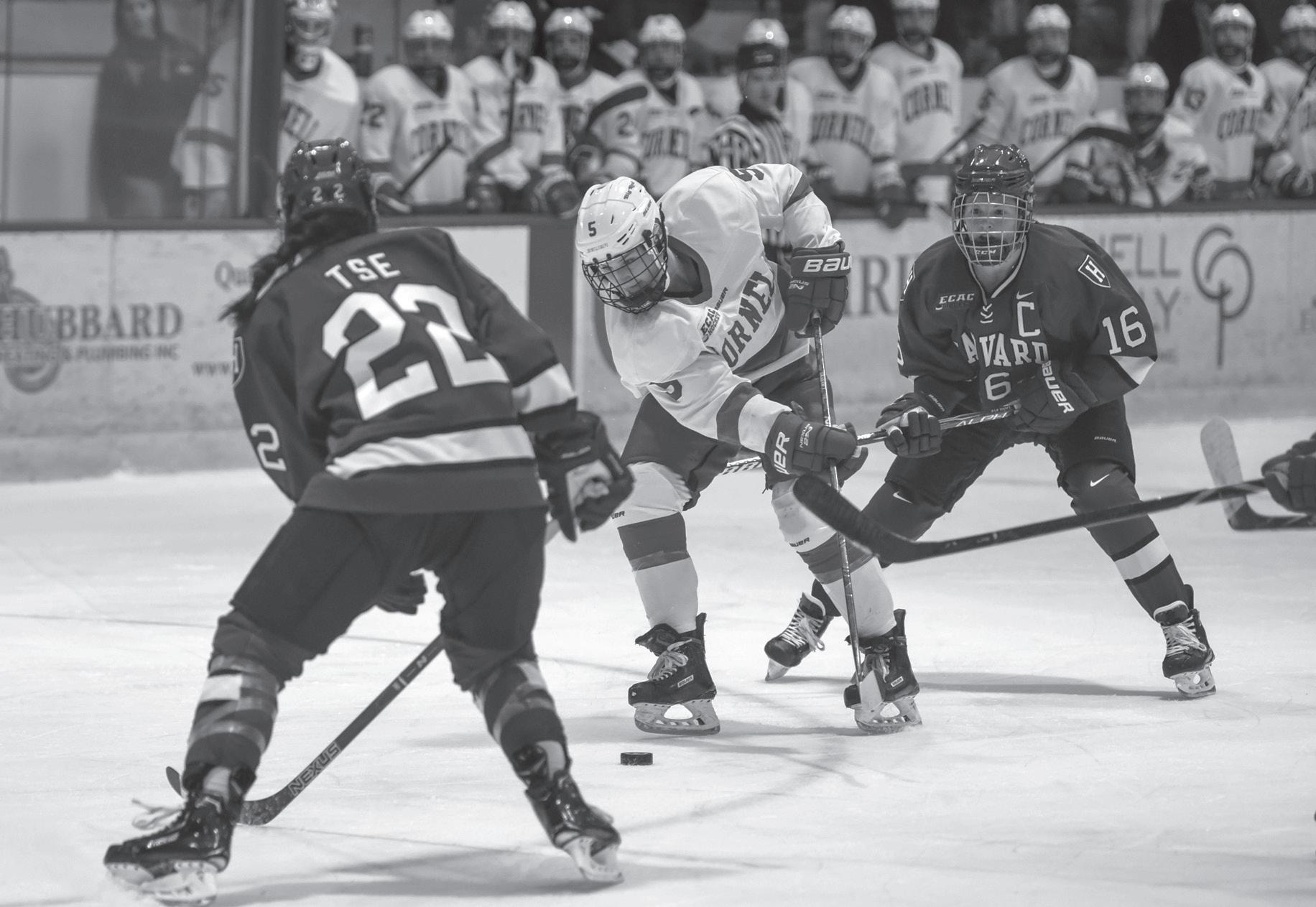
Friday’s contest against the Crimson had the fans in Lynah on the edge of their seats as power play goals proved critical for the Red’s 3-2 victory.
Cornell (3-0, 2-0 ECAC) was able to convert both its power play opportunities giving it an early 2-0 lead against Harvard (1-2, 1-2 ECAC).
Junior forward Grace Graham capitalized on the first opportunity 10:12 into the first period off of assists from senior forwards Lenka Serdar and Diana Buckley.
“It’s a huge privilege to play for Cornell women’s ice hockey and I’m so proud to have represented our team 100 times.”
Senior Lenka Serdar
Facing another man-up situation less than three minutes after its first goal, the Red struck once again to put the pressure on the Crimson. This time it was junior defender Jamie Bourbonnais who scored off of assists from junior defender and captain Micah Zandee-Hart and sophomore forward Maddie Mills.
With a power play opportunity of its own, Harvard was able to get on the board to close out the first period 2-1.
The second period looked like it was going to remain scoreless until junior forward Paige Lewis found the back of the net on a breakaway to give
the Red another two goal lead.
The Crimson was able to score once more with 26 seconds left in the game, but the deficit proved too much for it to overcome and the Red earned its second victory of the season.
“We brought a lot of energy and fire against our rival Harvard,” Serdar said. “We used that energy on the ice to win battles and make good plays with the puck. Our power play was clicking and was a huge factor in winning that game.”
Senior goalkeeper Marlene Boissonnault had 23 saves in the crease for an incredible 0.92 save rate.
The match also marked the momentous century milestone for Serdar and Buckley who are the only players on the current roster who have played more than 100 games for the Red.
“It’s a huge privilege to play for Cornell women’s ice hockey and I’m so proud to have represented our team 100 times,” Serdar said.
Buckley also reflected on the difficulty of accomplishing such an impressive feat.
“It means a lot to play 100 games for the Big Red and it’s even more special to do it with a fellow teammate,” she said. “We have been through a lot our four years and it is not always easy to stay healthy, so a big shoutout goes to my teammates, coaches and trainers for keeping both of us motivated and healthy.”
Looking to keep their winning streak alive, the Red will play next this Friday in New Haven at 6 p.m. against Yale.
Galajda pulled as Red concede 9 goals over the weekend
HOCKEY
Continued from page 12
the contest, after a goal from sophomore forward Cam Donaldson shrunk the Spartan lead to two, Kaldis scored his second goal of the game to bring Cornell within one.
the second period the Red controlled play in the third period.
more in the first two periods we could’ve done.”
Cornell football was certainly not the consensus pick to beat an undefeated, nationally-ranked Princeton team on the road. The Tigers boasted the FCS’s top offense, one of the defenses and quarterback John Lovett and co. had blown out nearly every opponent coming into Saturday’s contest.
But this was embarrassing. The 66-0 drubbing is one for both teams’ record books, as the Red suffered its most lopsided loss since 1890.
After last week’s victory over Brown, Cornell sat just one game behind both Princeton and Dartmouth in the Ivy League race. With two of its final four games against the league leaders, the Red was in striking distance. Head coach David Archer ’05 and his team were confident all week and knew, or at least thought, that they could compete with a dominant Princeton team. After all, they had earned a thrilling upset win over the Tigers just last season.
“Yes,” answered Archer when asked if his group of guys could play with the Tigers. “I think the road games at Delaware and Colgate help us. This will be the third time we go on the road against a top-25 team.”
Yet, just as in the one-sided losses to Delaware (27-10) and Colgate (31-0), the Red showed us that it simply cannot compete with top-tier opponents.
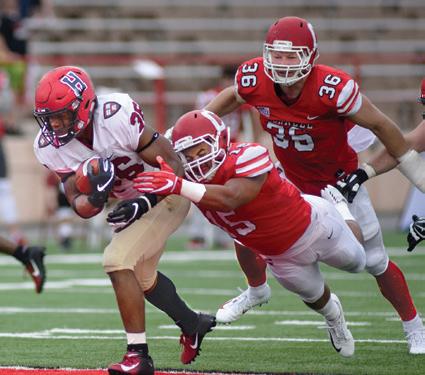
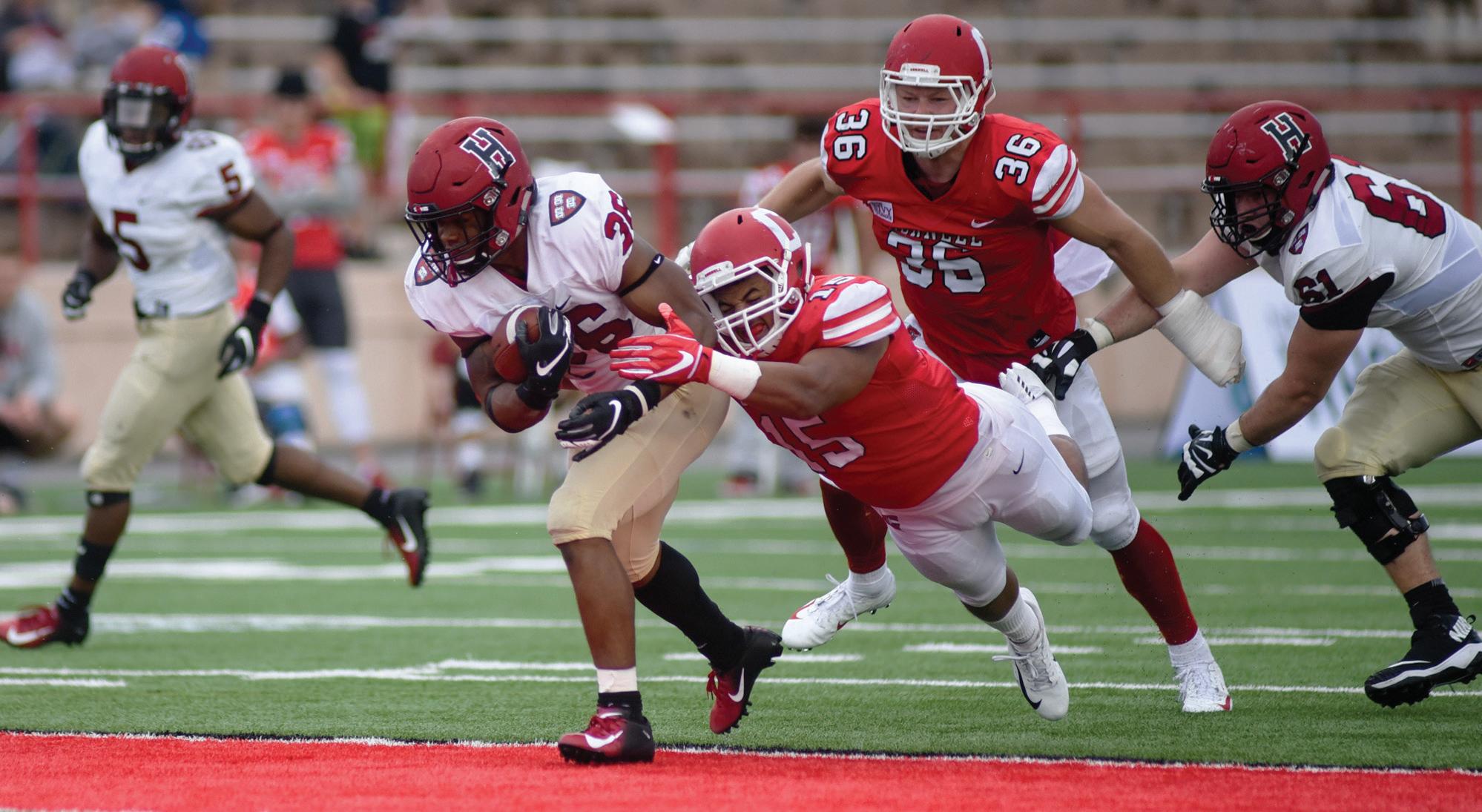
After Cornell’s seemingly promising opening drive ended in a failed fourth down attempt, the game began to spiral out of hand at record-breaking pace. A combination of three interceptions in a span of four drives from senior quarterback Dalton Banks and a miscue on special teams put the game out of reach not long after it started. Less than a minute into the second quarter, the Tigers had already built a 28-0 lead.
“Things snowballed on us there, and it was hard to recover,” Archer said after the game.
The only chance Cornell had was to keep the explosive Princeton offense off the field for large portions of the game. But the oft-dependable ground game failed wholeheartedly to accomplish its goal, as junior running back Harold Coles could not get anything going and finished with 42 yards on 12 carries. Neither could Banks nor anyone else, and the interceptions kept giving Princeton short fields to work with. At the end of the day, the offense had been shut out for the second time in three weeks.
On the defensive side of the ball, it was even worse. The Cornell defense should have known what to expect with Princeton’s impressive running game, but they still had no answers from the beginning. The Tigers finished the game with an unfathomable 358 rushing yards, including seven touchdowns on the ground.
There’s no reason to think effort was an issue given the circumstances surrounding the matchup, but the defense made it far too easy for Lovett, running back Charlie Volker and just about anyone who Princeton head coach Bob Surace decided to put in the game. It was not a matter of long, explosive plays or 75-yard touchdown runs either. Princeton’s offense marched methodically down the field time and again and capped drives with short, essentially unchallenged runs. The Red lost by 66 points, and the Princeton starters hardly played in the second half.
“It’s pretty humbling, so we’ll come back Monday we’ve got to work harder than ever and get back on the right track.”
“[Schafer] just told me to shoot the puck more, so I shot the puck,” Kaldis said of his two power-play tallies. “Sometimes it goes in, sometimes it doesn’t, and today’s one of those days when it went in.”
Despite a poor performance in
Michigan State goaltender John Lethemon made a number of big saves to preserve Spartan leads.
Junior Yanni Kaldis
“[The fourth goal could’ve] been deflating, and I think we responded really well,” Vanderlaan said. “Obviously, it was a little late, and there’s a lot
With the win, the Spartans improved to 3-1 on the season. The Red will begin ECAC play at home against Yale and Brown next weekend.
“It’s pretty humbling, so we’ll come back Monday we’ve got to work harder than ever and get back on the right track,” Kaldis said.
Raphy Gendler can be reached at rgendler@cornellsun.com. Dylan McDevitt can be reached at dmcdevitt@cornellsun.com.
Coming on in relief already down 45-0, sophomore quarterback Richie Kenney had a chance to turn some heads against Princeton’s backups, but he too struggled and completed just five passes for 34 yards. It was one of those days.
“From the top down we didn’t execute and play our game,” Archer said.
He’s right. Everyone is accountable for this one. Archer, Banks, Coles, the defensive front seven, everyone.
Archer deserves credit for making Cornell a respectable team after consecutive 1-9 seasons not too long ago. And for the second year in a row, the Red was in the mix for the Ivy title more than halfway into the season.
There was nothing to respect on Saturday, though.
The last time Cornell football suffered a loss this demoralizing, the forward pass was not yet a legal play. Helmets were not used. The number 18 was used to refer to the first two digits of the year, not the last two. The Cornell football program was just four years old.
The last time Cornell suffered a loss this demoralizing was Nov. 1, 1890 — a 77-0 thrashing at the hands of Harvard.
A year after the Red stormed into Princeton to earn an upset victory — and 128 years after that fateful Cambridge day — there was no luck Saturday, and Cornell became the latest victim of an obliteration at the hands of the Tigers, 66-0.
No. 17 Princeton proved why it was undefeated and nationally ranked in a slaughter of Cornell on Saturday. It was a blowout that was long over long before halftime and, in handing the Red its second conference loss of the season, essentially ends Cornell’s Ivy title hopes. A two-loss team hasn’t won the Ancient Eight since 1982.
“I
did not see this coming. Very uncharacteristic from top down.”
Head Coach David Archer ’05
“I did not see this coming. Very uncharacteristic from top down,” said head coach David Archer ’05. “We didn’t execute and play our game, but that being said, Princeton is a very good team. … It wasn’t our day and it didn’t really look like our football team out there.”
The Tigers scored three first-quarter
touchdowns to go up 21-0 and added three touchdowns and a field goal before halftime to hand Cornell a 45-0 deficit. Another touchdown in the third quarter extended Princeton’s lead to 52 and one-upped the 56-7 thrashing the Tigers handed Cornell just two years ago. Two more touchdowns ended the rout.
Senior quarterback Dalton Banks threw interceptions on three of the Red’s first four drives — and four total first-half picks — giving good field possession to Tigers star quarterback John Lovett and the high-flying Princeton offense. Banks entered the game having thrown three interceptions on the season but doubled that total in just one quarter on Saturday.
The first, Archer said, was Banks trying to make something fit into a tight window. The second and third were ones the receivers could have had — a tip at the line and dropped ball, respectively. The last was “maybe a little careless,” Archer said.
“We wear those as a team,” he added. “Not just a quarterback.”
Lovett threw for 133 yards and rushed for 159 before being lifted for a backup in the third quarter. Princeton running back Charlie Volker had three one-yard touchdown runs in the first half. In total, the Tigers racked up 358 rushing yards.
“[He’s] a player that can create his own shot,” Archer said of Lovett, equating him to a basketball player. “He can create his own touchdown. Whatever the play call — run, pass it doesn’t matter — he can go. And he is very elusive for his size and that player who can create his own points off the dribble. The other guys necessarily don’t need to do much, and he can score. It’s like a machine.”
Sophomore Richie Kenney, along with senior running back J.D. PicKell, lined up under center for Cornell for the majority of the second half as the Red continued to be unaided by the absence of junior quarterback and sparkplug Mike Catanese and his ankle
injury.
Cornell originally came out first looking like it might make it a game, driving into Princeton territory on the opening drive.
On 4th-and-10, Banks threw his first of four interceptions as the Red opted to keep the offense on the field.
The Red’s offense could never get its footing after the first interception. Cornell entered the Princeton red zone just once all game, but an unsportsmanlike conduct call on senior tight end Oscar Boochever brought the ball back 15 yards, and Cornell never got back within striking distance of the Tigers.
The Red’s offense was 0-for-4 on fourth down and 5-for-14 on third down, compared to Princeton’s 2-for-2 and 9-for-13 marks.
“Uncharacteristic in terms of not being able to mount the comeback that I thought we could,” Archer said.
Cornell had four unsportsmanlike conduct penalties in the contest.
“It just wasn’t us, it wasn’t our best,” Archer said before a brief pause. “Clearly.”
After senior cornerback David Jones picked off Lovett on the first drive of the sec-
ond half, the reserves came in. But the Tigers were able to add 21 additional points to tie their largest win total in program history.
With the win, Princeton, 4-0 in league play, will meet undefeated Dartmouth next week in a game likely to determine the conference champion. Cornell, meanwhile, will host rival Penn on Friday night under the lights of Schoellkopf.
While a two-loss team has not won the Ivy League in 36 years, Archer said his team still has to come into next week putting it all on the line.
“[We’re going to] find out a lot about us and how we respond, but I’ve seen us respond before,” Archer said. “If there is one thing the Ivy League is right now, it’s unpredictable. We just need to keep winning every day, winning each game because who knows what this could look like three weeks from now. … History is not on our side but this is as sporadic as a league as it’s been in a while.”
Zach Silver and Raphy Gendler can be reached at zsilver@cornellsun.com and rgendler@cornellsun.com.
By RAPHY GENDLER AND DYLAN McDEVITT Sun Assistant Sports Editor and Sun Sports Editor
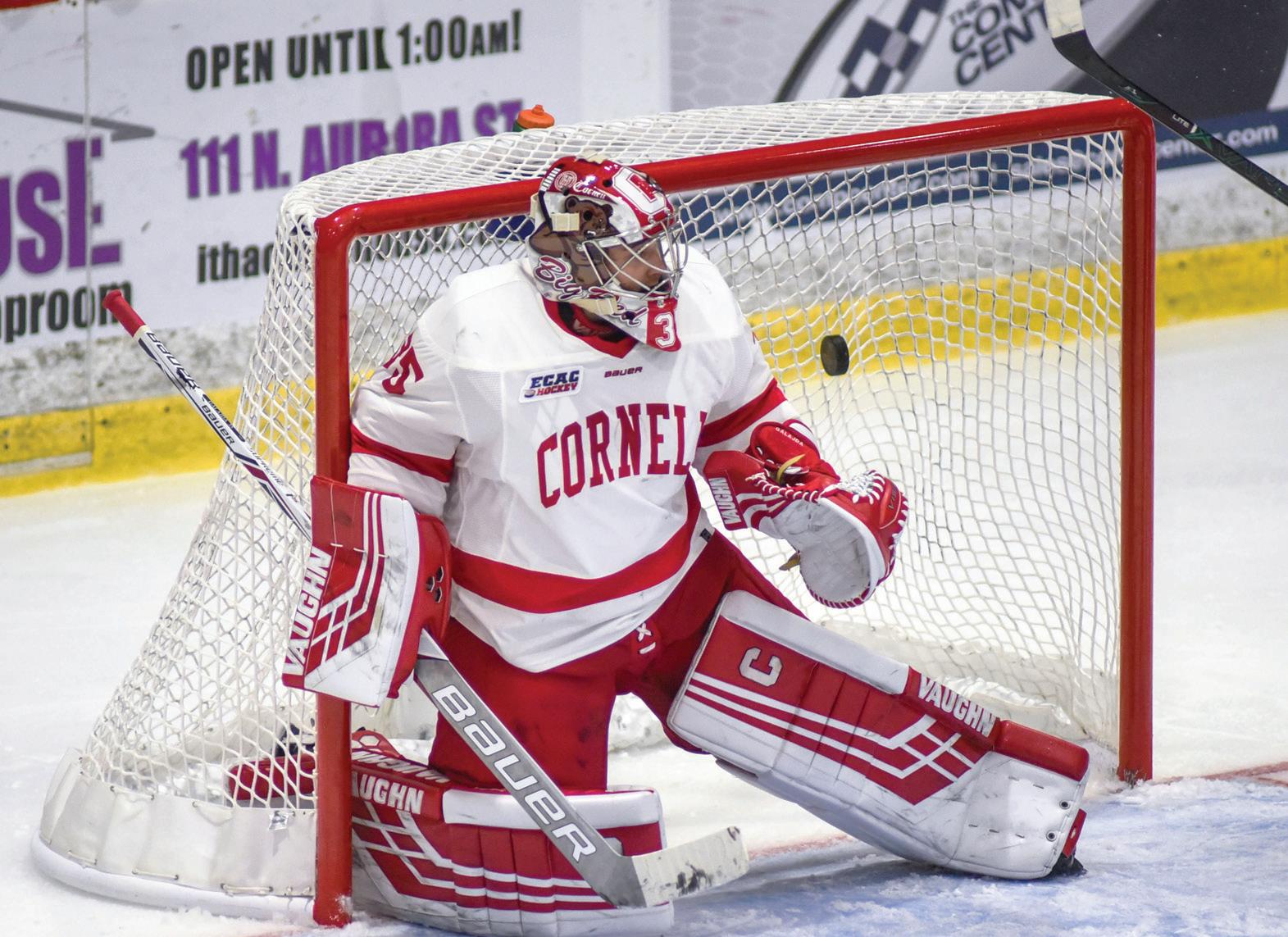
A dreadful start to the season for No. 8 Cornell men’s hockey — and specifically for sophomore goaltender Matt Galajda — didn’t get any better on Saturday, as the 201718 Hobey Baker finalist was
pulled for the second straight game.
After losing badly to Michigan State to open the 2018-19 campaign Friday, the Red came up short instead of rebounding on Saturday, losing to the Spartans, 4-3, and conceding a sweep on its home ice to start the year. Galajda, pulled after the Spartans’ fourth goal Friday,
was lifted for classmate Austin McGrath yet again on Saturday. McGrath relieved Galajda early in the third period, after a breakaway Michigan State goal less than a minute into the period extended the Spartan lead to 4-1.
“On some of the goals we definitely have to help him out, and obviously we have full confidence in Galajda,” said junior defenseman Yanni Kaldis, whose two power play goals helped keep the Red in the game. “He’s obviously a really good goalie so we know he’s going to bounce back. We all got to bounce back, it’s not just him obviously.”
“Galajda will be good. He’ll be fine,” added senior forward and captain Mitch Vanderlaan. “He’s a really good goaltender. He didn’t get the bounces this weekend, but same as the team though, we have a lot of work to do, we’ll go back to basics, I’m sure he’ll be ready next weekend.”
After Kaldis’ first tally 16:52 of the first period, Cornell
entered the first intermission leading 1-0. But a three-goal second period by the Spartans would erase that and then some, sending Cornell to an 0-2 start for the first time in eight years.
“It’s a microcosm of our whole team,” head coach Mike Schafer ’86 said of Galajda’s
“We can’t be giving up nine goals in a weekend and expect to have success.”
Head Coach Mike Schafer ’86
consecutive early exits. “He’s a hell of a goaltender, he’s a great kid and he’s a prideful kid, and I thought he bounced back tonight and I know he’s going to bounce back down the road. … It’s not just Matty … On the defensive side of the puck, we can’t be giving up nine goals in a weekend and expect to have success.”
The Spartans scored three goals in the second half of the second period, two of which came from the skilled top line of Taro Hirose, Patrick Khodorenko and Mitchell Lewandowski.
“I have to do a better job of identifying a line that’s going to shut down the other team’s top line,” Schafer said. “I got to put together the right pair to make sure they’re going against the other team’s top line.”
Midway through the second, the first Spartan goal came soon after the most intense of several skirmishes that broke out between the two teams. The Spartans were penalized 12 times, and Cornell was whistled for seven penalties.
Trailing 4-1 early in the third period, Cornell dominated the final frame — outshooting the Spartans, 18-4 — but it was too little, too late. With less than five minutes left in