

By
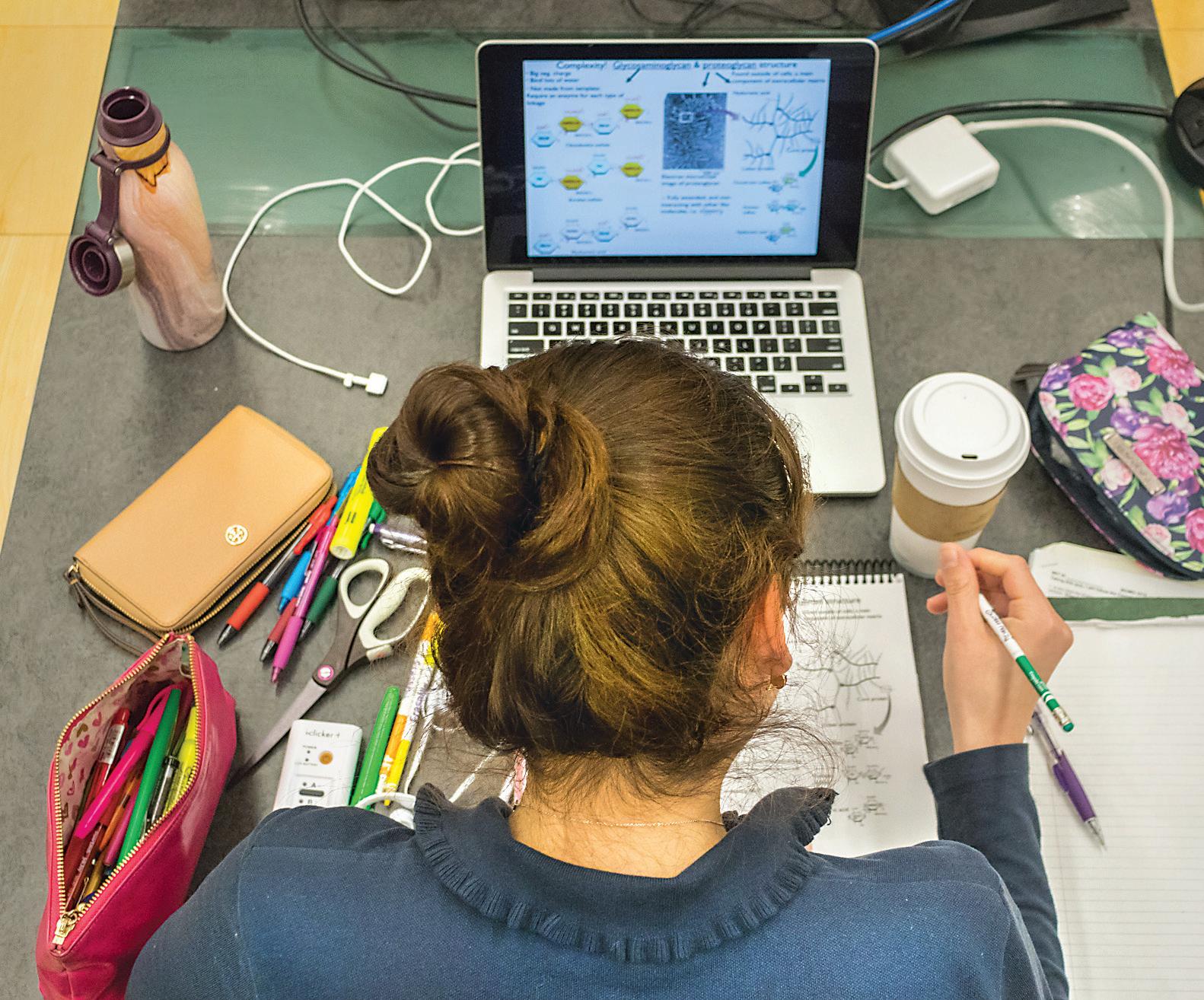
Even during a normal college semester, Cornell students struggle to take care of their mental health, caught between endless projects, exams and papers.
Add in a global pandemic and the issue of mental health gets even worse. The hybrid semester — part online, part in-person — has contributed to rising stress and anxiety levels, leading to an increasing number of students feeling burnt out.
everything is online,” Li said. “Especially [since] there’s so many technical difficulties all the time, so it’s hard to communicate effectively with others.”
Li said the difficulty of communicating over Zoom negatively affected her level of understanding, and as a result, her grades.
“Your grades go down. And then you have to work even harder and it becomes this weird cycle of not understanding what’s going on and having to spend more time [on your work],” Li said.
“Because of online teaching, it’s a lot harder to get information across to students when everything is online.”
Erica Li ’24
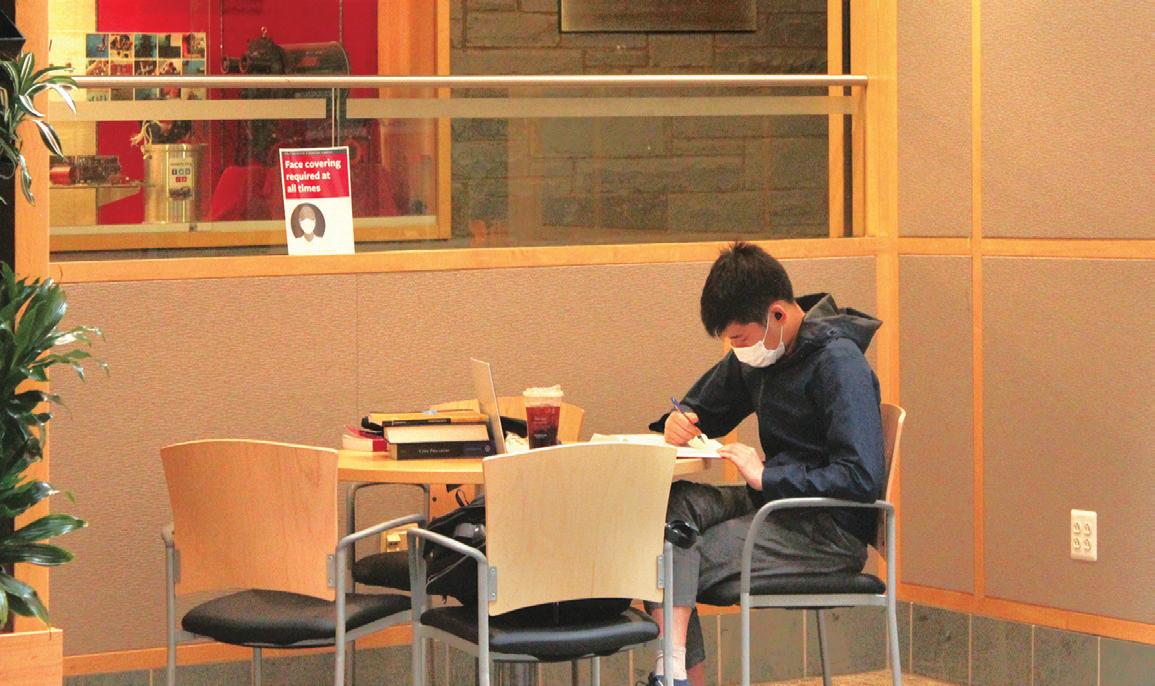
According to Erica Li ’24, a lot of the stress she has felt so far this semester is due to her online classes, which she said is preventing her from having a manageable learning experience.
“Because of online teaching it’s a lot harder to get information across to students when
For Jackson KeelAtkins ’22, his main concern was being overworked.
“It feels like [in] this semester, going to class isn’t what’s taking up most of my time, it’s just the fact that professors are now compensating for the lack of class with even more work,” Keel-Atkins said.
He attributed the increased workload to professors still getting used to teaching online, and as a result haven’t figured out how to properly structure
the lecture material and due dates.
“I have one class with a prelim, a project, and homework all due within three days of each other,” Keel-Atkins said.
But the hybrid schedule did have some proponents. Rachel Bradley ’21 said that, for her, it is much easier to log onto Zoom than trek across campus to an in-person class.
“I fall into the camp where having the option for online learning is actually better for me as I am not a morning person,” Bradley said. “I will almost always make it to class if all I have to do is log in to my laptop.”
However, Bradley conceded that, even if online learning has provided some convenience, the pandemic has had significant, negative impacts on students’ mental health more broadly.
Li said that more flexibility in grading could help to effectively address the mental health challenges that students are experiencing due to the stress of learning in a pandemic.
“I’ve heard of other schools
See BURNOUT page 3
By ELI PALLRAND
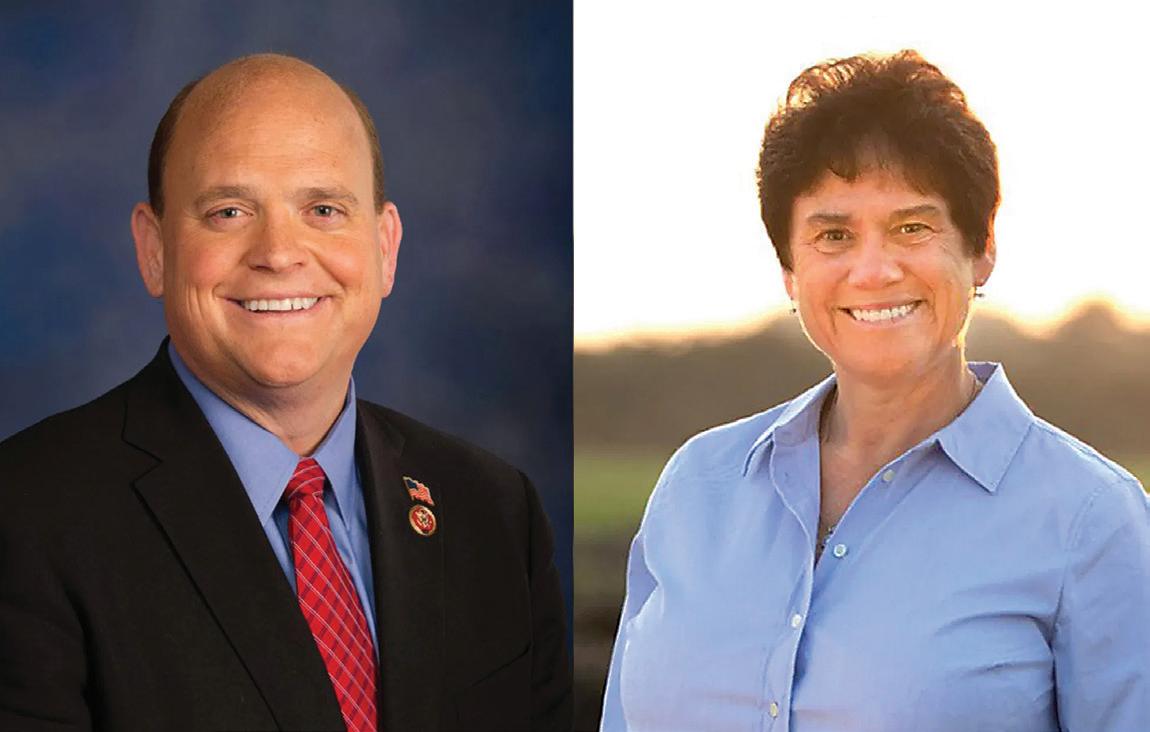
The race for New York’s 23rd Congressional District turned to mudslinging last week as incumbent Rep. Tom Reed (R-NY) accused his opponent, Tracy Mitrano J.D. ’95, of running an “anti-police campaign,” despite Mitrano’s multiple assertions that she is a supporter of law enforcement and against defunding the police. This is the second election where Mitrano and Reed are facing off for the western New York congressional seat. The change in tone comes as protests against
police violence and, this weekend, protests in support of police, sweep Ithaca.
The accusation came after revelations that an organizer with the Mitrano campaign posted the following on Instagram: “Fuck Tom Reed, fuck cops, fuck capitalism, fuck Trump.” Reed campaign communications director Abbey Daugherty called the comments “hateful and offensive” and claimed them as proof that “what truly motivates Mitrano [is]... a hatred of our law enforcement community and our capitalist system.”
By CONNOR GREENE Sun Contributor
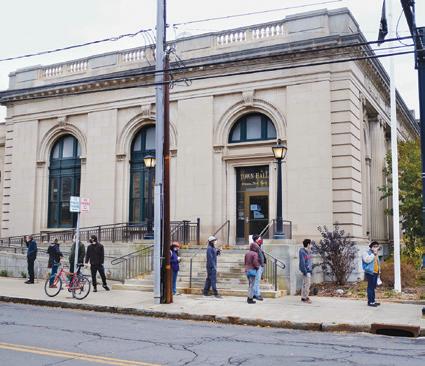
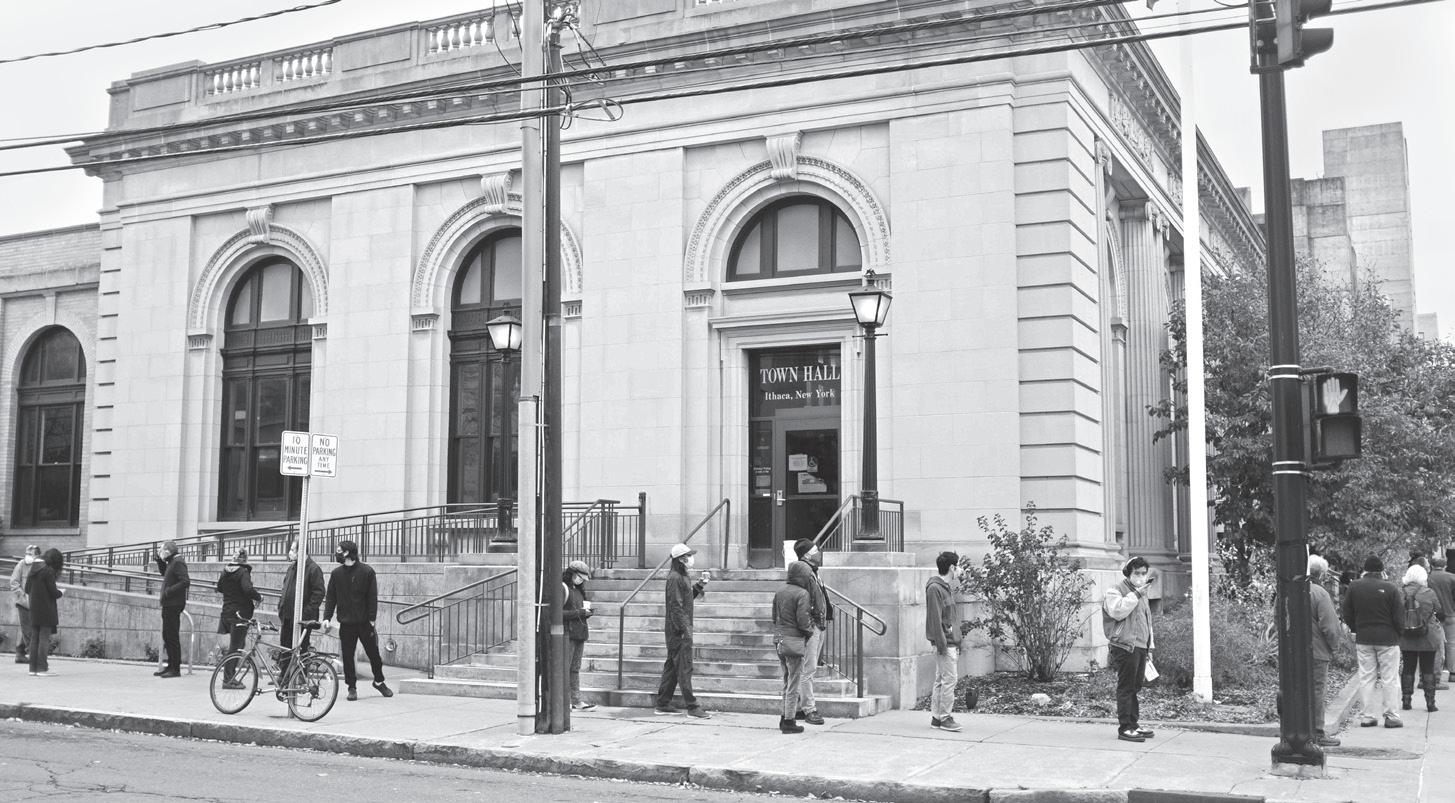
Traditionally, Election Day polls are staffed by brighteyed and smiling sixty, seventy and even eighty-somethings. But this year, as this demographic remains the most susceptible to the COVID-19 pandemic, younger generations are stepping up: College students are helping to fill the poll worker
void. And Tompkins County, is no exception.
Stephen Dewitt, co-commission -
normally work the polls chose not to sign up this year because of concerns related to COVID-19.
“Especially with COVID, young people can play a huge role in the election.”
Odeya Rosenbrand ’22
er of the Tompkins County Board of Elections, told The Sun that around half of the older poll workers who would
In their place, the commissioner said Cornell students have partly filled the gap left by seniors. He estimated 10 to 15 Cornell undergraduates will be working the polls this year –– significantly up from years past, when he
CAMPAIGN
Continued from page 1
Mitrano said that she only met the organizer once and that “the statements made in the post do not in any way represent me or my values,” in an Oct. 19 press release. As soon as her campaign manager alerted her to the post, Mitrano gave the organizer “30 seconds to resign or she’s fired.”
At his Oct. 19 “Law and Order Press Conference,” Reed said that letting the organizer resign rather than firing her was “troublesome” and “unacceptable.”
The increasingly negative tone of what was generally a courteous four years of campaigning is off-putting to Mitrano: “Is that how I want to spend this time?
Absolutely not,” she told The Sun.
“This campaign has always been about what I can do for the people of this district,” Mitrano continued. “I would much rather spend time making the case that the people of this district have been ill-served for 10 years.”
Reed has also taken issue with tweets posted by Callie Rice Wine, a political strategist working with Mandate Media, a company contracted by the Mitrano campaign. Wine tweeted the hashtags “#ACAB,” “#DefundPolice,” “#AbolishThePolice” and wrote in her Twitter bio that she was “radicalizing your mom into ‘joining’ antifa.” Reed characterized this as “extremist behavior.”
Matt Coker, a senior advisor with Reed’s campaign, said
Wine’s comments were evidence of a “consistent pattern of anti-police rhetoric and policy positions by Tracy Mitrano” and unsurprising considering what he claimed is her “close association with radicals.”
The Congressman has referred to Wine as “Tracy Mitrano’s senior political strategist,” but the Mitrano campaign said Wine didn’t even work for them.
“[Wine] handles bulk email for Mandate Media, one of many contractors used by the Mitrano campaign.” Indeed, Wine’s website lists her as working for 12 campaigns across 8 states.
After learning of Wine’s social media posts, Mitrano campaign spokeswoman Claudia Wheatley said the campaign “demanded that she be taken off the campaign’s Mandate Media account, and Mandate Media complied,” in an Oct. 19 press release. As of Oct. 22, Wine’s website reflects this and contains no mention of the Mitrano campaign. Wine did not respond to a request for comment in time for publication.
Reed ascribed a broader anti-police attitude to Mitrano in a recent pair of ads featuring the slogan, “Tracy Mitrano Wants to Defund Our Police.” The ad sparked legal backlash from the Mitrano campaign, which sent a cease and desist letter demanding the ads be pulled.
To continue reading this article, please visit cornellsun.com.
Eli Pallrand can be reached at ewp34@cornell.edu.
a.m. - 12:30 p.m., Virtual Event
Data Organization for Spreadsheets 12:30 - 1:30 p.m., Virtual Event
Museum in the Dark 6 - 7 p.m., Virtual Event
Hawaiian Music and Chill 7:45 - 8:45 p.m., Virtual Event
By MAYA RADER Sun Contributor
“Sorry, Vet Students: The Vet School Just Got Moved 40 Miles Further East.”
“New Human Development Course to Be Taught on How to Steal a Baby.”
Fortunately for vet students and unfortunately for baby thieves, these headlines are not the latest in Cornell current events — they can be found on CU Nooz, Cornell’s fictional satirical online publication.
Taking inspiration from The Onion, CU Nooz’s brand of satire focuses on “observational stuff that everybody sort of knows but nobody really articulates,” according to Hannah Biener ’21, CU Nooz co-editor in chief.
Calling it “the unspoken truth,” Biener explained how CU Nooz develops its headlines.
“[Satire] can be positive, like something we all share and take joy in sharing,” Biener said. “[But it can also be] negative … people have these sort of hidden criticisms of the administration or things that really do need addressing that people might whisper, but don’t exactly talk openly about.”
Biener added one example from a couple of years ago, when Cornell announced that as part of an initiative to address mental health, they were adding three new mental health counselors.
“The article I wrote was ‘mental health win — three counselors added to serve a population of 30,000,” she recalled. “It was such a crazy thing, [Cornell] really touted it as a success.”
Co-editor in chief Trevor Davis ’21, known for running for Student Assembly president in 2019, described how campus climate influences CU Nooz’s editorial decisions.
“There’ll be a big event, like problems with the S.A. election or COVID-19 problems or something, and then if that happens we’ll try to hurry up and write something really quickly about it,” Davis said. “I think that’s sort of the main objective of satire, is to try to say something if you can.”
The club is currently in its third stage of recruitment, which began at the beginning of October. It usually gets between 30 to 65 applications every year, and accepts four to five people.
Davis said one reason for the stiff competition is that the club doesn’t require a major time commitment and is something many students are interested in doing. “I think we’re fortunate in the fact that a lot of people feel like they’re able to contribute and that leads to a lot of really good articles,” he said.
The club usually consists of around six to eight writers, depending on recruitment, with two editorsin-chief, two managing editors and three or four copy editors.
Around 100 to 200 people typically like or comment on the average CU Nooz Facebook post, but the writers conceded that readers often skim the headlines without engaging with the article.
“We’re happy to write the articles even though the headline is probably the big key to the delivery of the joke,” Davis said.
CU Nooz has grown since its beginning in 2012, driven by more diverse writers and editorial staff.
“We’re kind of going off in like some bold new direction now, so that is fun for us,” Davis said. “Our old editor-in-chief used to say it used to be all white men.”
Biener cited the growth of the website Reductress, a female-led satirical publication, as a model for CU Nooz’s work.
“It was filling a niche that something like The Onion, which was really popular for many years, just wasn’t exactly hitting all of the points that a femaleled publication like Reductress was,” Biener said.
During the pandemic, CU Nooz headlines have featured many COVID-19 and Zoom-related topics.
Davis explained that “[CU Nooz was] just reacting to the news. Often that news happens to be COVID-19-related because of just the time period we’re in, but whatever it is, we want to have something to say about it to give people some enjoyment about whatever might be out there.”
“I think it’s just about continuing to highlight the positives, the idiosyncrasies about the pandemic. And just, yeah, bringing a smile to people’s faces,” Biener added.
Maya Rader can be reached at mlr285@cornell.edu.
as a poll worker.
said he normally had just one or two Cornellians, “if we were lucky.”
Unlike many other counties across the nation, Dewitt actually has a surplus of volunteers readily available for Election Day: “Right now, I would say I’ve got about 40 to 45 spare poll workers that have been trained, that I have been unable to assign,” Dewitt said.
Despite the encouraging surplus of poll workers in Tompkins County, the process of becoming a poll worker has proved to be difficult for some college students. Lilly Howes ’21, from Westport, Connecticut, tried applying to be a poll worker in Ithaca, but was turned away because she was not registered to vote in the county.
“It’s hard to be a poll worker, especially because you need to be registered in Tompkins County,” Howes said. “It’s not the easiest thing for us to work the polls.”
New York State elections law mandates that poll workers work in the county they reside in –– except for New York City, where residents can work in all five boroughs.
Natalie Breitkopf ’22, from Scarsdale, New York, was successful in her endeavor to work the polls, but detailed what she said was a tiresome application process.
After going to the elections office five times, which had lost her initial application, taking a Zoom training, dealing with “lots of paperwork,” and re-registering to vote in Tompkins County, Breitkopf still had more work to do to finalize her spot
“I’m going there after this interview to make sure they have all the documents they need so that I can work,” she said.
Like Howes, Odeya Rosenband ’22, a Sun opinion columnist from Long Island, was also unable to register as a local poll worker because she wasn’t able to re-register in Tompkins County in time. Rosenband did, however, outline many ways in which undergraduates can be proactive, even if they are not doing something tangible like working the polls.
“Our biggest responsibility as American citizens is to vote,” Rosenband said. “I think that’s obvious. Especially with COVID, young people can play a huge role in the election.”
In addition to voting, Rosenband also emphasized the importance of taking advantage of resources, such as those provided by universities and social media presences, to inform and educate those around us.
“We all use social media to some extent. We all have platforms,” Rosenband said. “We have individuals walking around this campus with enormous platforms to put information out there in the world. Use your platform. Use your voice. Talk to your friends. This isn’t a little deal.”
The issue of incentivizing individuals to vote is another aspect of the election process Rosenband thinks is important to address, seeing as many voters often participate in elections because of civic pressures.
“This doesn’t have to be a public shaming thing,” she said. Instead she encouraged people to make a dialogue to address
BURNOUT
Continued from page 1
allowing you to do more of a pass/ fail kind of system and I think that would ease the burden a lot more since it is harder to learn during these times,” Li said.
During a normal semester, students have four days to unwind over fall break, usually a long weekend within the first two weeks in October. This year, the break was replaced by a single Wednesday off from classes on Oct. 14.
The change was made in order to dissuade students from leaving Ithaca, according to Vice President for Student and Campus Life Ryan Lombardi.
“Our academic leadership this past summer decided that this option was preferable to a traditional fall break attached to the weekend to discourage travel away from Ithaca, which increases risk to the community,” Lombardi wrote in an email to The Sun.
While some students felt that the lack of a proper break contributed to feelings of burnout, others didn’t believe the change had a substantial impact on their mental health.
Bradley said that she always starts to feel a little overwhelmed at this point in the semester, and as a result, the longer break would have been a welcome respite.
“I definitely think we would have benefited from a fall break or at the very least a no homework week. Students need time to breathe; no one can be on top of their game at all times, especially not in a world as chaotic as the one we are in,” Bradley said.
Li said that she understood why the administration planned the day-off in the middle of the week, but believed that a longer break would have given her more time to take a step back from schoolwork and feel refreshed.
“I definitely feel a lot of pressure is building up.”
Erica Li ’24
“It did feel a little more hectic being in the middle of the week, because, like I said, a lot of teachers do assume that you have more time on your hands as a result. So, I think it’s better this way but it’s still definitely challenging to deal with,” Li said. “I definitely feel a lot of pressure is building up.”
Li spent most of the day catching up on work, but did manage to find a little bit of time to check out a fall celebration on the Arts Quad.
Though Keel-Atkins agreed that he was feeling more stress than during an ordinary semester, he didn’t think a longer break would have helped him deal with his schoolwork.
“Even if we did have an actual fall break, that wouldn’t really change the amount of things to do,” Keel-Atkins said. “I feel like it wouldn’t have actually made a difference in the workload and easing stress.”
Julia Nagel can be reached at jbn53@cornell.edu.
reluctant voters: “Why aren’t you voting? What’s holding you back? It’s a conversation worth having. Having those conversations is incredibly meaningful.”
“If you get one person to vote it’s a huge mitzvah. You can sleep well that night,” she added.
With California Republicans admitting to having placed misleading ballot boxes around the state during this election cycle, as well as other instances of rampant voter suppression, particularly in the South, there are concerns about the equity of voting procedures looming across the country.
“It is not designed to be equitable at all. There are immense flaws in it,” Breitkopf said. “There’s voter disenfranchisement all over the country in different counties.”
Organizations such as Rock the Vote and More than a Vote, developed by LeBron James and other celebrity activists to “increase the number of poll workers in predominantly Black communities in
America,” according to Howes, are examples of other far-reaching online resources that have proliferated the number of registered voters this election cycle.
Former President Barack Obama was clairvoyant in anticipating the national shortage of poll workers. In an Instagram post from Sept. 1, Obama wrote that the elderly will be less willing to work the polls because of their increased risk of complications from COVI9-19, and called upon youths to step in as a civic duty.
“Here’s what we need: more people — especially young, healthy people — to do their part for this country and volunteer to make sure this election runs fairly and safely,” Obama wrote. “It’s one of the most crucial things you can do for our country right now. If you can volunteer, I hope you’ll do it. Sign up at PowerThePolls. org.”
By OMSALAMA AYOUB
Climate change is driving the development of drought patterns in New York, threatening the agricultural sector and drying up local water sources — including Ithaca.
Last month, the water supply in Six Mile Creek was at a third of its average flow rate: an alarming five cubic feet per second as opposed to its standard rate of 15 cubic feet per second. The low flow rate prompted Cornell and the City of Ithaca to issue a Level 1: Limited Water Use Advisory to encourage more water conservation on Sept. 22. The advisory was only lifted on Oct. 21.
This is the second time in less than five years that Ithaca has experienced a drought. According to the Cornell Institute for Climate Smart Solutions, the 2016 drought caused a majority of unirrigated rain-fed crops in New York to experience crop failures.
“Drought is how far we are from our normal amount of rainfall relative to what the ecosystem has evolved to need,” said Prof. M. Todd Walter, biological and environmental engineering.
This shift in water supply can be severely detrimental — it would take only a year of continuous drought conditions in Ithaca for many species in the current ecosystem to either adapt or die off and be replaced with more drought-tolerant species.
“We are very sensitive to short-term drought because our soil is shallow, and
our plants have a small reservoir of water to draw from,” Walter said.
Fall Creek is at half its average water level, further exacerbated by the University’s lack of a water reservoir or other water storage methods.
“Another challenge we face here is this cyclical movement of people,” said Harman Singh Dhodi, grad, who studies urban water systems. “[Students] move in during the semester and [then leave].”
The oscillating demand for water, which mirrors student residential periods, shapes the University’s water management systems. Last semester — when students were suddenly asked to leave campus — there was an excess of water, but the University took no proactive measures to use the water, Dhodi said.
The University could not direct its water toward the city’s needs because of the distinct systems that are employed by Ithaca and Cornell. This caused Ithaca’s water system to deplete while the University’s supply sat idle, according to Dhodi.
On the other hand, Dhodi said that water recycling and reuse are not employed enough, and advocates for tackling the stigma against using chemically and biologically treated wastewater that is otherwise ejected into Cayuga Lake.
“Because of water supply reducing naturally due to global warming and climate change, [time has come] to use our water more judiciously and efficiently,” Dhodi said. “Why is this not a common practice? It’s because everyone thinks we have plenty of water, we have the Great Lakes and Finger Lakes, it’s a psycholog-

ical thing.”
The droughts in Ithaca represent a larger pattern across New York State as it increasingly experiences arid conditions due to climate change.
“The biggest issue is communication and human behavior. People are struggling with the timescale of climate change,” said Prof. Edwin Cowen, civil and environmental engineering, and director of the DeFrees Hydraulics lab. “COVID-19 demonstrates the challenges we face with climate change. How can
people worry about long-term consequences when they can’t get food on the table for their kids?”
Increased climate variance has major consequences on New York’s ecosystems and the likelihood of future droughts in Ithaca.
“I wouldn’t be shocked before I die to hear that the Adirondacks and Catskills [are burning],” Cowen said.
oa86@cornell.edu.
is one such professor. According to Sarvary, simulations help with online learning and have benefits even when classes are in-person.
While many professors have used online simulations instead of physical laboratories to lower the risk of COVID-19 transmission, some think that the simulations they are using now could be helpful in the future.
According to some Cornell professors, simulations have the potential to make laboratory education more accessible to students who do not have access to in-person lab spaces. While many faculty prefer hands-on, in-person instruction, virtual laboratory classes can still help teach the scientific method and other key concepts.
Prof. Mark Sarvary, biology,
Sarvary teaches Biology 1500: Investigative Biology Laboratory, a class focused on the scientific method, laboratory skills and science communication. Sarvary has long used Simbio lab simulations, which provide virtual lab activities for the life sciences in which students can design, run and collect data, as part of his course.
“[Students] can easily make mistakes and correct them, which is much harder in a real laboratory setting after we set up an experiment,” Sarvary said.
“They don’t need to wait a week or two for the algae populations to grow and realize they made a
mistake. Instead, it happens in two clicks on the computer.”
Chibuike Amadi ’24, a student in BIOG 1500, enjoys the efficiency of online labs and the ability to conduct experiments that would otherwise be difficult in person, such as interpreting how elephants receive sound waves. However, Amadi has noticed that the large Zoom calls have prompted a significant decrease in student participation in comparison to in-person labs.
“We were able to run experiments we wouldn’t be equipped to run during in person labs,” Amadi said. But he added that often “the teacher will ask a question, and no one ... will answer while in-person [students] would have more confidence in themselves to answer those questions.”
While some students enjoy simulated labs, others find the experience frustrating, and are looking forward to a return to in-person instruction.
Even with a sophisticated platform and new experiments, a three-hour zoom call can be a challenge. BIOG 1500 student Eva Dani ‘24 misses the handson experience of lab work as well as in-person collaboration. For Dani, online labs can feel more like video games than science, which makes learning more difficult for her.
“I feel like I’m not retaining information, it’s just more detached for me,” Dani said.
Labs that rely on collaboration among peers can become awkward according to Dani, who said that it can be difficult for instructors to encourage class participation in a virtual setting.
Like many of his students, Sarvary is looking forward to when it is safe to return to the labs. But Sarvary nevertheless said he sees simulations as a new, potential strategy for making classwork more accessible to students that have missed class or have fallen behind.
“The simulations can really help students stay in touch with the course, and make sure that they are not missing out on some components just because they are physically unable to be in the laboratories,” Sarvary said.
The benefits of lab simulations can also be practical. According to Prof. Rajesh Bhaskaran, mechanical engineering, simulations in engineering classes can help prepare students for the workforce.
Bhaskaran works with Ansys, an engineering simulation company, to develop simulation modules for a range of Cornell classes — including heat transfer, thermo-fluidics, wind energy and
a biomechanics laboratory.
“When these engineers graduate from college and go out into the real world, simulation tools are the things that they are going to be using to apply the physics concepts they have learned in school,” said Kylie Howland, who works for Ansys.
Bhaskaran found his 20 years of experience in developing e-learning and simulations for courses to be particularly useful as he helped other Cornell instructors adapt their classes for the online transition, including a course on wind power.
“Students were doing the testing [of turbines] in the wind tunnel last year, but this year, they are not going into the wind tunnel, because of COVID,” Bhaskaran said. “They are testing their designs in simulations.”
Even when in-person instruction becomes safe again, Bhaskaran thinks that using simulations can make complex concepts easier for students to understand and engineering education more accessible for the general public.
“My vision is democratization of simulations,” Bhaskaran said.
Tamara Kamis can be reached at tkamis@cornellsun.edu and Isabelle Goodrow can be reached at ieg23@ cornell.edu.
But you don’t own anything though,” said my friend as she pointed at my Spotify playlists on the screen.
She’s very right. I do not own any of the content I used to curate my playlists. But who owns anything anymore, anyway?
Our emotional connection with music can often be linked to our sense of control over cultural artifacts. Shifts to our conceptualization of cultural stewardship often appear to be a sharp turn from the material to the immaterial. Yet I would argue that such changes took place over time in a rather nuanced and progressive fashion. Oftentimes, such nuances are reflected through the framing of the vocabularies we use.
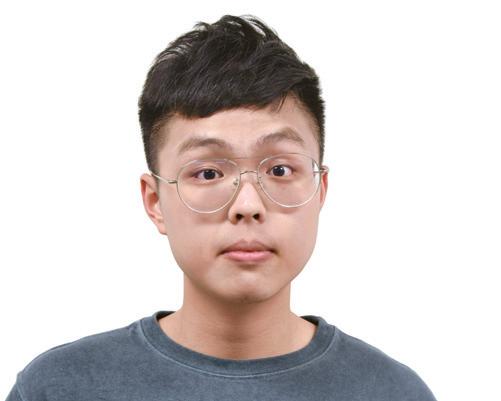
Our fundamental conception of musical ownership has oriented itself as we move from physical collections and albums to libraries and playlists.
The past few decades saw two distinct shifts in our relationship with the ownership of content when it comes to music and film. The first wave of change came with the digitization of content.
People’s perception of ownership changed as they converted their C.D. collections on their shelves into MP3 files on their computers. During this phase, people still had a coherent sense of their ownership of the music, as exchanges of cultural commodities were still relevant and feasible. One’s taste in music could still be articulated in the language of collection and validated through the rhetoric of possession.
During the era of digital music, people would pay to purchase music from iTunes, share files of their favorite songs with their friends, and they might also pirate files from file-sharing platforms like Napster. In all of these scenarios, music was circulated in the form of digital files between people’s personal computers. While no longer physical and more malleable than their predecessors, cultural commodities of music were still circulable and thus connoted a sense of ownership during this era. The second wave of change arrived at the dawn of the streaming age. There emerged a new dynamic of ownership between the audience and the musicians, a relationship that is intrinsically transient, contingent, and non-possessive. The
sense of ownership has shifted from one grounded in possession of artifacts to one that points to the control over the curation of experience. While we may think that we own our playlists on streaming platforms, we can no longer articulate our relationship with the music we listen to in a possessive sense. Such a relationship is further complicated by the presence of platforms as intermediaries. Listening in the streaming age is analogous to borrowing music from privately-owned libraries that lease music from musicians. It is not just that we can no longer recirculate our collection of music, but in the streaming age, our collection of music is rendered rather nebulous in the form of playlists. As a result, our sense of cultural stewardship is now precariously contingent upon proprietary platforms. These tech giants own every single bit of data we proudly refer to as the manifestation of our taste.
In fact, even the physical ownership of music in the pre-digital era was less straightforward than it might appear to be. Even when our C.D.s and vinyl lie nicely on shelves, they are merely copies of music. And in the case of self-curated playlists today, we merely control the specific assemblages of the copies of music. Musicians fundamentally have the agency over the music produced, yet this long standing conception has since been complicated by how copies of music can be easily circulated by the audience, as exemplified by the MP3 crisis, and by how copies of music become larger than the music itself, as illustrated by the penetration of streaming platforms.
Contrasting this trajectory of music ownership with the shifts in film ownership further sheds light on the unique affordance of recorded music as a medium. The development of films in the past few years roughly follows the general trend of the digital turn and the rise of streaming. Yet it differs from that of music in that people’s mental conception of ownership over films seems to be less prevalent than that over music.
The particular temporality of film-watching makes it more of a singular experience than the everyday practice of repetition of music-listening. We may listen to a particular song or album on repeat, but it would be very rare for people to watch a movie repeatedly in a consecutive fashion. The everyday nature of the listening

experience of recorded music makes it rather circulable. This affordance of recorded music renders it a particular social medium, as the circulation of music is fundamentally embedded with social and relational meanings.
While copies of music are endued with our rendition of meanings, the music itself is the manifestation of the musicians’ own thoughts and emotions.
After all, it is a misleading question to ask whether I do own the music on my playlists.
In my opinion, the more salient quest is to confront how I reconceptualize my relationship with musicians in the streaming age. It is musicians who empower me with their music. They make the manifestation of my taste and my negotiation of social relationships possible. Attending to this fundamental
relationship between the listener and the musician is a way to avoid a technological determinist fallacy that overemphasizes the industry’s framing of the commodification of music.
Stephen Yang is a junior in the College of Agriculture and Life Sciences. He can be reached at syang@cornellsun.com. Rewiring Technoculture runs alternate Tuesdays this semester.
The Corne¬ Daily Sun Independent Since 1880
138th Editorial Board
MARYAM ZAFAR ’21
in Chief
JOYBEER DATTA GUPTA ’21
Business Manager
PETER BUONANNO ’21
Associate Editor
MEGHNA MAHARISHI ’22
Assistant Managing Editor
CHRISTINA BULKELEY ’21
Sports Editor
BORIS TSANG ’21
Photography Editor
JOHNATHAN STIMPSON ’21
KRYSTAL YANG ’21
JASON HUANG ’21 Web Editor
NIKO NGUYEN ’22
Design Editor
PALLAVI KENKARE ’21
Opinion Editor
Working on Today’s Sun
Ad Layout Dana Chan ’21
Production Deskers Ben Mayer ’21
Pico Ross ’22
News Deskers Sean O’Connell ’21
Meghana Srivastava ’23
Opinion Desker Peter Buonanno ’21
Design Desker Niko Nguyen ’22
Photo Desker Benjamin Parker ’22
Arts Desker Emma Plowe ’23
Sports Desker Christina Bulkeley ’21
Science Desker Anil Oza ’22
Editorial
OVER THE LAST HUNDRED YEARS, Te Sun has never failed to endorse a candidate during a U.S. presidential election. Although it is important to acknowledge that both former Vice President Joe Biden and President Donald Trump uphold systems of injustice that adversely afect us and our peers, the choice in this election remains abundantly clear. Four more years of the Trump administration has the potential to destroy American discourse and democracy. Biden is, currently, the only chance our nation has at progress.
Tis election year is like no other. A grossly mishandled global pandemic has ravaged the United States, leaving in its wake 225,000 American deaths. While protesters food the streets to rise up against systemic racism in this country, our president send anonymous federal agents to kidnap, gas and shoot them with rubber bullets. Just this weekend, members of the Proud Boys, a notorious far-right group with a history of engaging in political violence and ties to white supremacy, arrived in Ithaca to participate in a Back the Blue rally held on the Commons. Worst of all, we as a country have become so desensitized that we watch the agony of our peers in apathy.
Our vote in this election cycle is our most important vessel for change; for many of us, it is our last chance to save ourselves as our nation spirals out of control. While Biden has his faws — he championed the disastrous Iraq War and pushed through a “Tough on Crime” bill with a racist legacy — only one candidate on the ballot has called white supremacists “fne people,” pulled America out of agreements essential to our national security such as the World Health Organization (in the middle of a global pandemic, no less) and the Paris Climate Accord and kept migrant children in cages.
Tere are so many issues to consider as this election approaches — climate
The Sun endorses Biden as the 46th President of the United States of America.
change, COVID-19, racial injustice, America’s economy and global relations, women’s rights, and immigration policy, to name a few — but at the end of the day, a vote for Trump is a vote for autocracy. Te incumbent President has launched an attack to undermine the legitimacy of the election itself. He has defunded the United States Postal Service, a nonpartisan organization with a 90 percent approval rate among Americans, in an efort to prevent voting by mail in an era where many, due to the pandemic, are left with no other option. He has suggested delaying Election Day (which he legally cannot do) and has pushed a false narrative suggesting, without evidence, that mail-in voting will result in widespread fraud. He has refused to promise a peaceful transfer of power should he lose the election. Tese actions are an attack on the democratic process upon which America was built, on the right to fair and equitable voting that all Americans hold, on our Constitution.
Tus, Te Sun endorses Biden as the 46th President of the United States of America.
Each American election is labeled the most consequential election in history, but this one truly is. If this is Trump’s America, it is urgent and indisputable that we need to change course. We have a choice between autocracy and democracy, and the way forward is clear; a vote for Biden is a vote to end the most horrifc period in our memory.
So, vote for Biden like your life depends on it. But, also, commit to four more years of protest. Do not let the injustices Biden will, inevitably, be responsible for go unchecked. We’ll see you at the polls.
Te above editorial refects the opinions of Te Cornell Daily Sun. Editorials are penned collaboratively between the Editor in Chief, Associate Editor and Opinion Editor, in consultation with additional Sun editors and stafers. Te Sun’s editorials are independent of its news coverage, other columnists and advertisers.
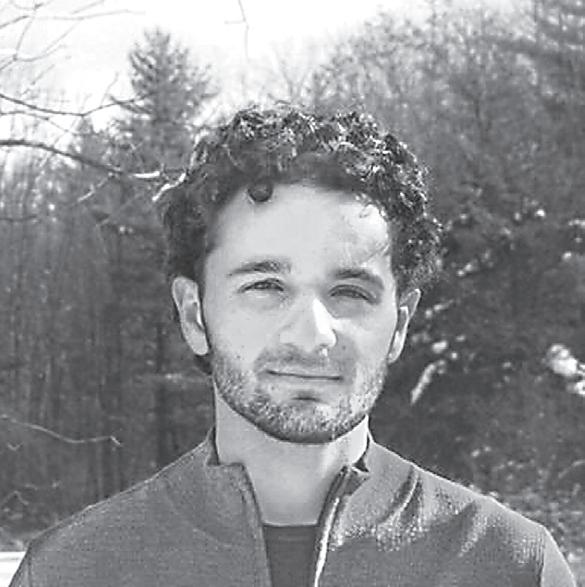
We’re Sixty Four runs every other Tuesday this semester.
Content Warning: This article discusses mental health (i.e. depression, anxiety, stress, etc…) and sexual assault.
“Any Person, Any Study” is not a motto. It is a right. It is a right extended to every single student throughout Cornell’s community which ensures that Cornell will use its unparalleled resources to support each student in the pursuit of their academic interests. Cornell’s track record of fighting to live up to that lofty phrase is strong, but the recent Mental Health Review shows that the entire premise of Cornell’s mission is under threat by ailing student mental health on campus. Research from that report shows that over 40 percent of Cornell students were “unable to function academically for at least a week due to depression, stress, or anxiety” in 2019. Cornell cannot fulfill its academic mission until it improves campus mental health.
The report details both major successes and major issues in Cornell’s current mental health efforts on campus. It’s important to note that Cornell’s mental health resources genuinely have had quite a lot of success and deserve plaudits. The Skorton Center’s “interactive bystander education programs” have made a real impact. The student-run Cornell Minds Matter organization has done wonders for raising awareness and reducing stigma through their events. CAPS has received acclaim for its “Let’s Talk” program, and reforms to its delivery service model in 2019 have drastically improved student wait times and access to care. There is absolutely a great deal working effectively when it comes to mental health on campus, and there have been important breakthroughs in recent years. The alarming problems the review addresses are not the product of a failing system but, rather, the product of one which needs greater resources and greater attention by University administrators.
Chief among these problems is a toxic culture of competition which creates a race-to-the-bottom in student mental health. The report details how “students maintain a culture of competition in the curricular, co-curricular, and social spheres, which normalizes course and extra-curricular overloads that can become detrimental to physical and mental health” — a finding which will come as a surprise to exactly zero students. I genuinely cannot remember a single time I’ve asked a Cornell student how they’ve been doing in the past year, and they’ve replied with anything positive. Sadly, I don’t think I’m alone in that. The answers range from “Well, you know… hanging in there” to “I’m dying,” and none of them are good.
The competitive culture of Cornell permeates every facet of the student experience and encourages a race to push yourself to the brink more than everyone else, to strive further, to toxically break yourself
down more because that somehow proves you are more successful. You worry you are not doing enough if you only take eighteen credits … literally the recommended maximum in Arts & Sciences. Your self-esteem ebbs and flows with the resume building acceptances and rejections of the highly exclusive extracurriculars which the report directly points to as drivers of student stress. Even Collegetown housing feels like a race, you start looking for apartments a year ahead of time, before you even know what in the world Cornell will look like the following year in the context of an ongoing pandemic.
It’s a culture which drives stress, anxiety and a perpetual sense of isolation. It’s a culture which is, quite frankly, not conducive to learning. Competition and pressure are healthy necessities of a college experience, but there are reasonable limits to such things to prevent burnout. Cornell’s stress arms race is so pervasive that this “need to be productive at all times couples with the sense that “everyone is stressed” at Cornell seems to deter students from prioritizing self-care or seeking help before symptoms become acute.” We’ve normalized suffering as the Big Red way. That’s simply not okay. The review lays forth a host of recommendations to improve upon the status quo, divided into three categories: immediate, intermediate and aspirational. Many of these proposals are incredibly valuable and would make a tangible impact. For example, while the review rightfully lauds existing mental health resources on campus, it identifies that Cornell lacks the “cohesive university strategy with central oversight” which exists at universities such as MIT and Duke. The report recommends taking steps like making “a comprehensive and centrally maintained wellness app with information about events, initiatives, information and resources related to wellness and stress reduction offered throughout campus.” There are also a host of specific measures which would likewise be enormously impactful such as increasing “the number of sexual [assault survivor] advocates to a level that reflects best practices for an institution of Cornell’s size.”
Both of those aforementioned recommendations are marked as “aspirational” rather than immediate or intermediate, yet neither should be. The Cornell administration should aspire to rectify the dangerous mental health climate on campus by fully pursuing these “aspirational” measures. A “cohesive university strategy with central oversight” is badly needed — especially as the extreme pressures of the pandemic have worsened campus mental health in a drastic way not even evaluated in this report since it is focused on the previous school year . . .
To continue reading this column, please visit cornellsun.com.
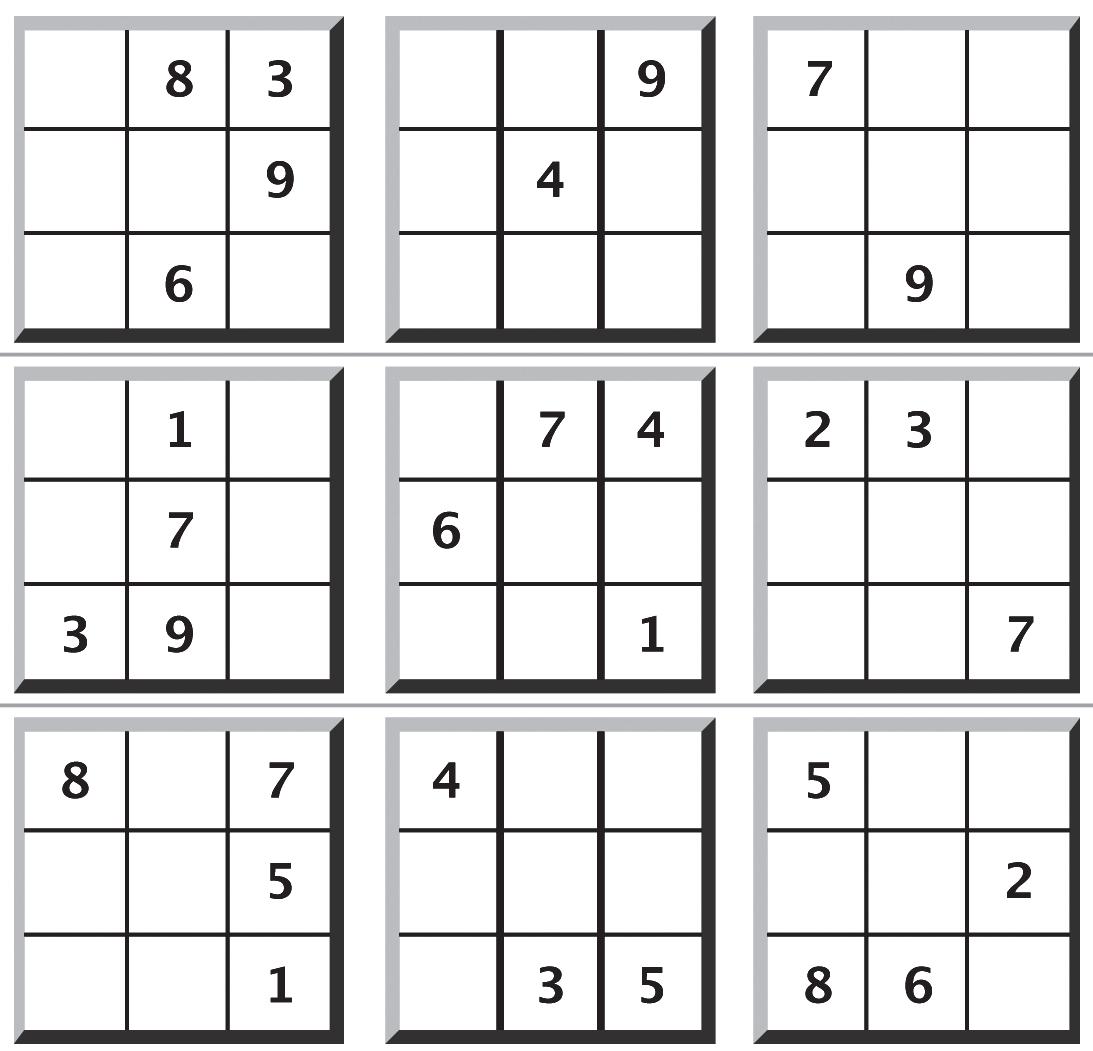
Fill in the empty cells, one number in each, so that each column, row, and region contains the numbers 1-9 exactly once. Each number in the solution therefore occurs only once in each of the three “directions,” hence the “single numbers” implied by the puzzle’s name. (Rules from wikipedia.org/wiki/ Sudoku)



By CHRISTINA BULKELEY Sun Sports Editor
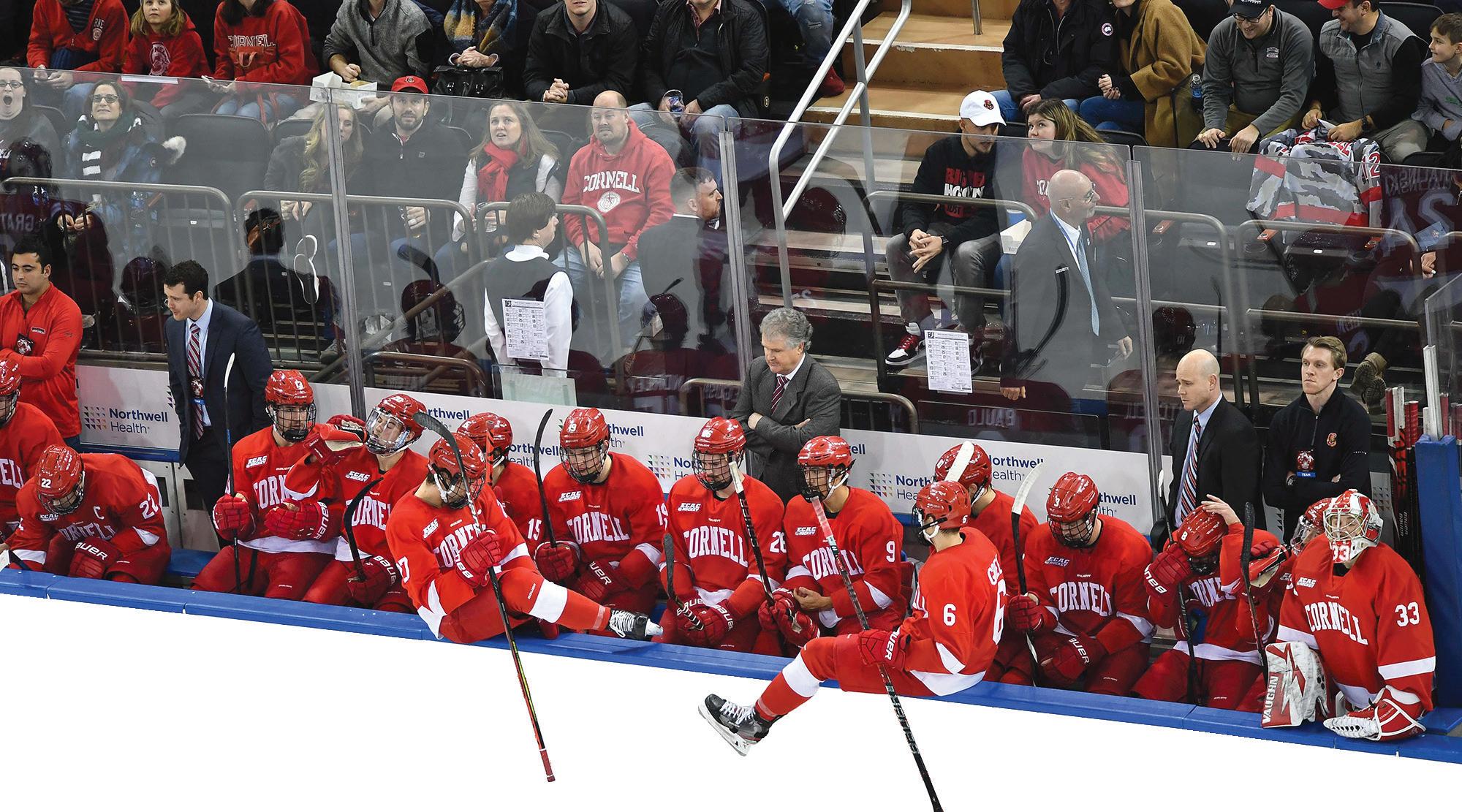
Cornell men’s hockey was labeled the No. 6 team in the country in the USCHO preseason poll on Monday. The Red fell five spots since the last poll, when the icers were declared the top team in the nation in the final round of polling for the 2019-20 season.
Though the Ivy League prohibited varsity athletic competition for the duration of the fall semester, the possibil-
competition.
Cornell, however, is not unique among NCAA men’s hockey teams in its uncertainty for the upcoming season’s schedule: Only one conference, Atlantic Hockey, has released what seems to be a certain schedule for 2020-21. Its first game is scheduled for Nov. 14.
While some schools outside of Atlantic Hockey, like Cornell, offer no sort of schedule for this year on their site, others show a slate in which almost every game is marked as either canceled
anticipated given that the two teams were ranked No. 1 and No. 2 last season.
North Dakota will instead start its campaign in the National Collegiate Hockey Conference’s bubble in December. The eight teams will spend December in Omaha in an effort to play hockey safely amid the pandemic.
The Red not only lost three players to graduation, but also seniors forward Morgan Barron and defenseman Alex Green, who signed NHL contracts this year. Barron was Cornell’s top
defenseman Yanni Kaldis ’20 and forward Jeff Malott ’20 — are gone.
But, even down several key players prior to the potential upcoming season, Cornell is regarded as a top-10 squad.
Depth across the board and the return of a goaltender who’s started for the better part of his last three years on East Hill in senior Matt Galajda means that the Red is still intimidating to the competition.
Cornell, who received four first place votes in the poll, is
Only one conference, Atlantic Hockey, has released what seems to be a certain schedule for 2020-21. Its first game is scheduled for Nov. 14.
least until semester’s end.
ference will resume play before the Ancient Eight takes the ice. With the Ivy League
Even down several key players prior to the potential upcoming season, Cornell is regarded as a top-10 squad.
making COVID-19-related athletic decisions to this point independent of the ECAC’s rulings, er the entire conference will resume play at the same time,
Currently sitting above Cornell in the rankings are No. 1 North Dakota, No. 2 Boston Duluth, No. 4 Minnesota State
Christina Bulkeley can be reached at cbulkeley@cornellsun.com.

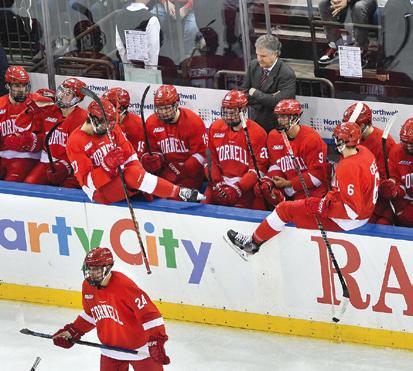
Tussle and hustle | The Red has its work cut out for it if the team plays this season. Clarkson, pictured, was the second-best ECAC team in the poll.