The Corne¬ Daily Sun



By HENRY FERNANDEZ and JONATHAN MONG Sun Contributor and Sun News Editor
For 26 years, Cornellians have wondered who placed a pumpkin on the spire of McGraw Tower, in one of the most infamous pranks in Cornell’s storied history.
But on Friday, Oct. 20, Cornellians looked up at McGraw Tower in awe to see a new pumpkin on the top of the tower. The Sun spoke to two men who claimed to place the pumpkin on top of the tower on the condition of anonymity. However, The Sun could not verify their claims.
“I wanted to see if [the original pumpkin prank] was possible, and if it was, I wanted to take one of my friends to go carve it,” one of
the students said. “I had the pumpkin with me, so I tried [climbing the tower] with the pumpkin and verified it was possible.”
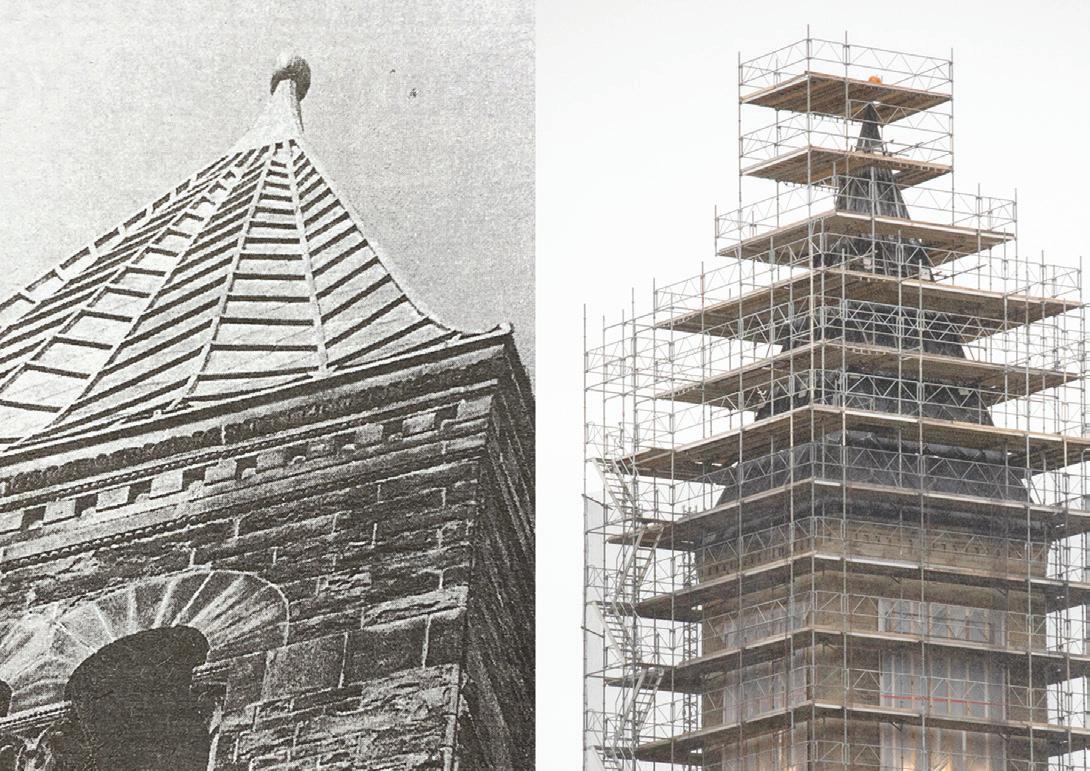
Unlike the infamous 1997 prank, this year’s pranksters possibly gained access to the spire atop the tower by climbing the scaffolding constructed by Safespan, which aids construction workers as they renovate the clocktower.
This potentially made scaling the clocktower considerably easier compared to the initial 1997 incident, in which the pranksters — who are still unknown — freeclimbed the clocktower with no kind of scaffolding in place.
“I think it was a cop-out,” said Amber Prasad ’26, in regards to this year’s pumpkin prank. “There was scaffolding.”
By DALTON MULLINS and JONATHAN BRAND Sun Contributors
Over the last 35 years, street vendor Lou Cassaniti has built his business, Lou’s Street Food — a restaurant serving traditional American street food now located within Center Ithaca on the Commons — into a local iconic food destination. The restaurant has provided Cassaniti an outlet to combine his passions of serving both food and the Ithaca community.
“I have been 35 years on the Commons. What I am most known for is street food, such as pulled pork sandwiches, hot dogs, of course, and chicken tenders,” Cassaniti said. “I have always been successful.”
But Cassaniti told The Sun in
an interview that he plans to retire after 2024, moving on from a career that has impacted the community for decades.
“The most sought out question for me is when am I going to retire,” Cassaniti said. “I am going to go one more year. Next year, I will hopefully work both here [Center Ithaca] and as a street vendor, then I will retire.”
One of the ways Cassaniti aims to assist the community is by keeping his prices competitive.
“I will not raise my prices. Food prices [go] up every week, and I refuse to do it,” Cassaniti said. “I get a multitude of clientele. I get drug dealers and even lawyers that line up… I try to keep my prices as low as possible so I can service everybody… There are people that
The 1997 prank involved a still-unknown culprit sticking a pumpkin on the spire of McGraw Tower on Oct. 8, 1997, where it remained for 158 days. Prof. Don Michael Randel, music, who served as the provost of the University at the time, planned to remove the pumpkin with the aid of a crane bucket. However, before he could be lifted, the empty crane bucket slammed into the tower due to high winds, knocking the pumpkin over on March 13, 1998.
Reflecting on how the original pumpkin impacted campus, Randel wrote in an email to The Sun, “In a period in which college students were most often being publicized for misbehavior, here
By MARISA CEFOLA Sun Assistant News Editor
Brandon Sawyer ’26, an agricultural sciences major and accounting minor, died earlier this month, Dean of the College of Agriculture and Life Sciences Benjamin Houlton and Dean of Students Marla Love wrote in a Wednesday morning email to the CALS community obtained by The Sun.
At the time of his passing, Sawyer, a transfer student from McGill University, was on leave from Cornell, interning with McCain Foods in Oxford, Mississippi. As an agronomy intern, he worked to produce sustainable potato products for consumers all around the world. Sawyer was passionate about envi-
come in here without any money, so I don’t ask them for money. I just give [food] to them.”
Cassaniti said he always knew he wanted to work in the culinary industry, inspired by his mother’s career as a waitress. Despite many doubting his success, he has sustained his business in Ithaca Commons for over three decades.
“My mother worked as a waitress for 50 years in local restaurants, so I got an interest and went to culinary school. There were too many good restaurants, and [critics] told me it was going to be very hard,” Cassaniti said. “[Despite this,] every day when I was out here on the Commons, I’d have 50 to 100 people in line buying hot dogs.”
ronment and sustainability along with helping fight world hunger.
His love for agriculture stemmed from growing up farming and raising animals in rural Ontario, Canada, according to the email. Sawyer was a dual citizen in the United States and Canada.
In the summer months of 2021 and 2022, Sawyer interned in accounting roles at Hucks Marine and Resort in Ontario. Sawyer was also a host of Sweet Talk: All Things Maple, a podcast facilitated through the Cornell Maple Program, according to his LinkedIn profile.
Sawyer was a member of Delta Upsilon, a social fraternity, and involved with the Cornell University Dairy Science Club. His cause of death was not men-
tioned in the email. Cornell will hold a community support meeting on Thursday, Oct. 26, 5 to 6 p.m. in 213 Kennedy Hall for those wishing to come together as a community during this time.
Students in need of professional mental health support can call Counseling and Psychological Services at 607-255-5155 and employees can call the Faculty and Staff Assistance Program at 607-255-2673. Whenever these services are closed, calls are answered by Cornell Health’s on-call mental health provider. The Ithaca-based Crisis Line is also available at 607-272-1616. A wide range of supportive resources is also available at mentalhealth.cornell.edu.

Center for Innovative Proteomics Seminar 9 a.m. - 11 a.m., G01 Biotechnology Building
How Russia’s Invasion of Ukraine is Changing Europe Noon - 1:15 p.m., G08 Uris Hall
Unlocking Employment: Opening Pathways to Economic Opportunity for People with Criminal Records Noon, Virtual Event
Reinscribing P’u-tuan in the Metanarrative of Early Southeast Asia 12:20 p.m., 374 Rockefeller Hall
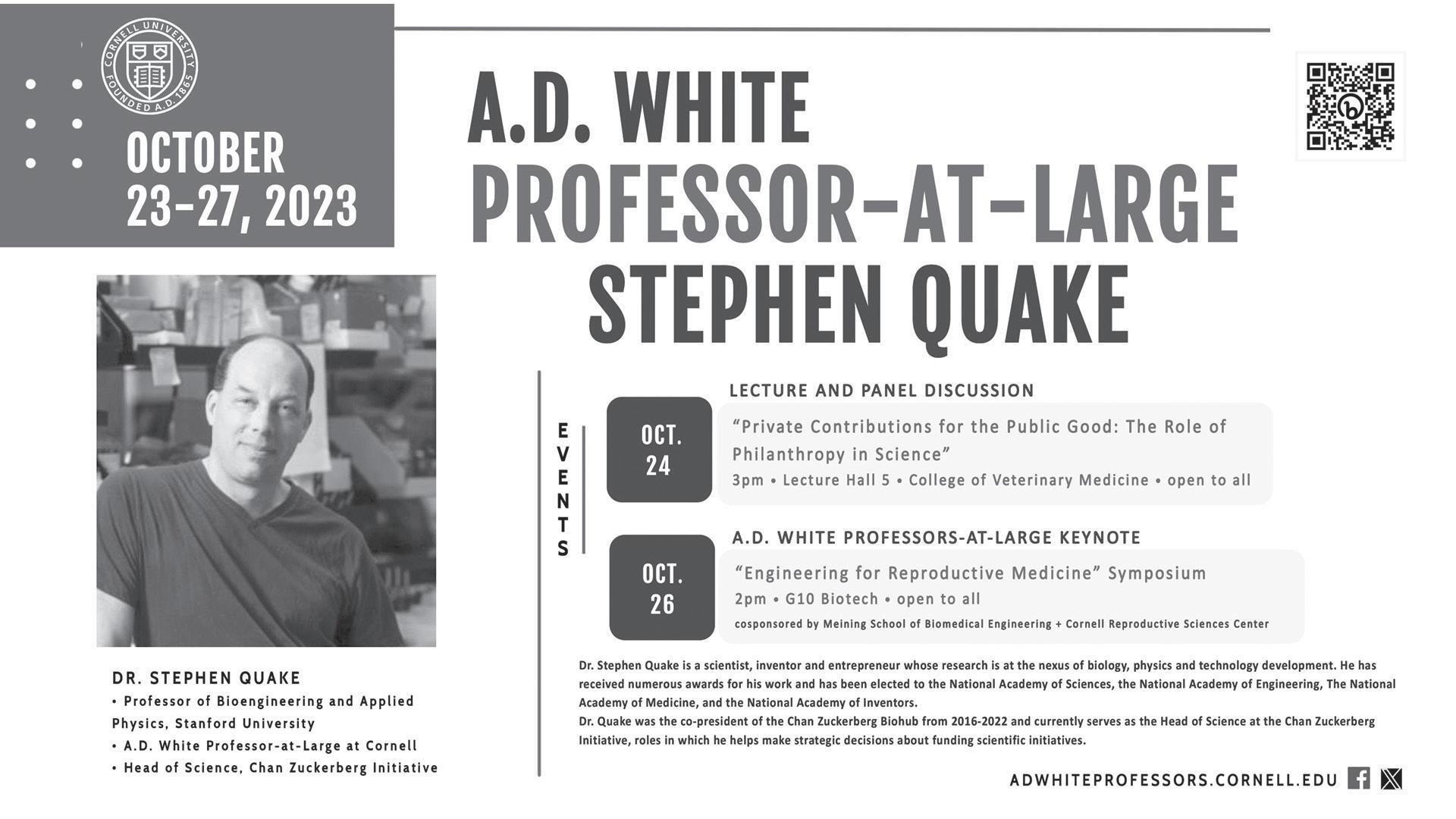
Engineering for Reproductive Medicine Symposium 2 p.m., G10 Biotechnology Building
Manipulating Phase Transitions and Porosity: From Solid Refrigerants to Microporous Water 4 p.m., 119 Baker Lab
George Shulman at the Politcal Theory Workshop - Truth-Telling and Fiction-Making in Richard Hofstadter’s “The Parnoid Style,” Hannah Arendt’s “Narrative,” and Herman Melville’s “Moby Dick” 5:30 p.m. - 6:30 p.m., 181 Goldwin Smith Hall

Studies, University of Michigan. Vice President and President-Elect of the German Studies Association.
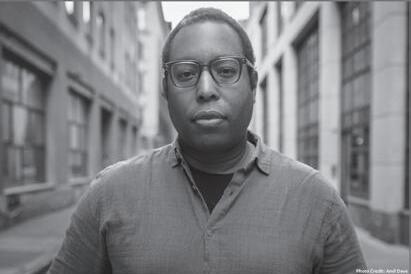
Blackness as a Universal Claim: Holocaust Heritage, Noncitizen Futures, and Black Power in Berlin Thursday, November 2, 2023; 5:00 PM Guerlac Room, A.D. White House
The Public is Invited

With campaign promises of reducing crime and homelessness, Winn hopes
By ANTHONY NAGLE Sun Staff Writer
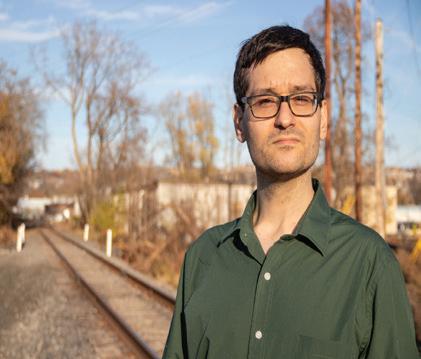
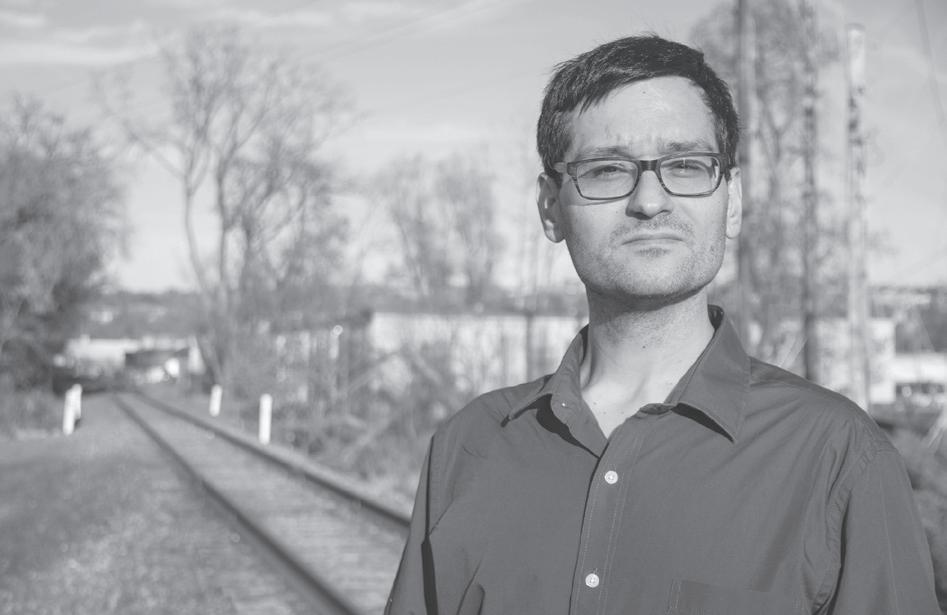
Zach Winn has been an Ithaca resident since birth, living through its history and the various changes in the community since. After launching Ithaca Crime — a website dedicated to Ithaca crime stories — he now seeks a spot for the First Ward’s two-year Common Council seat as a Republican candidate in hopes he can make Ithaca a more prosperous and safe place for its residents.
“This is my home and there’s a lot of good people here,” Winn said. “The Common Council is fundamentally unserious about addressing problems, maybe they’re serious about doing what they want to do. But they’re not serious about stopping the decline and improving the quality of life for the average person.”
Winn embarked on an unsuccessful campaign for mayor last November, losing to Fifth Ward Common Council member Laura Lewis. Winn said one of his top priorities is to correct Ithaca’s ongoing poverty rates and create more job opportunities for residents.
“I would ultimately like to create circumstances where businesses would want to operate here, and we’re wanting to hire people,” Winn said. He also envisions providing meaningful employment opportunities for former felons and others who might have difficulty seeking a job.
Winn, in an effort to combat poverty in Ithaca, aims to fix the problems in a homeless encampment in the First Ward dubbed the “Jungle.”
“There’s human trafficking going on, there’s clearly a lot of bike theft, there’s drug dealing, there’s just a whole criminal economy that’s going on out literally in the dark,” Winn said. “I suggest getting in there, literally cutting down on the streets, clearing all this brush, putting lights, fencing some of these areas to just make them more difficult to access.”
Winn specifically emphasized how the “Jungle” became an area for drug usage and how this usage permeates within Ithaca.
“There’s plenty of drugs and people are flocking there,” Winn said. “We could provide services for people who are on the street and we can have a whole crisis center. They have a detox facility, [but] they don’t have any nurses for it. It just doesn’t make any sense.”
Winn also said Cornell’s agreement to pay the City of Ithaca $4 million annually through voluntary payment in lieu of taxes contributions was not enough for the city and that Cornell is not a positive entity for Ithaca.
“Cornell should be treated as a completely hostile entity, like an occupying force and every opportunity to cause problems for them should have been taken up by the city,” Winn said. “The town’s going to continue to fall apart. There was a major opportunity that was missed, and I wasn’t surprised that Cornell got what it wanted in the end.”
Cornell is exempt from property taxes despite owning 47 percent of the city’s property value. The City of Ithaca has continued to face growing homelessness, drug problems and rising housing prices.
“So I mean, ultimately, things will get bad,” Winn said. “Cornell will be a less attractive place to go to school with
By DUNIA MATTA Sun Staff Writer
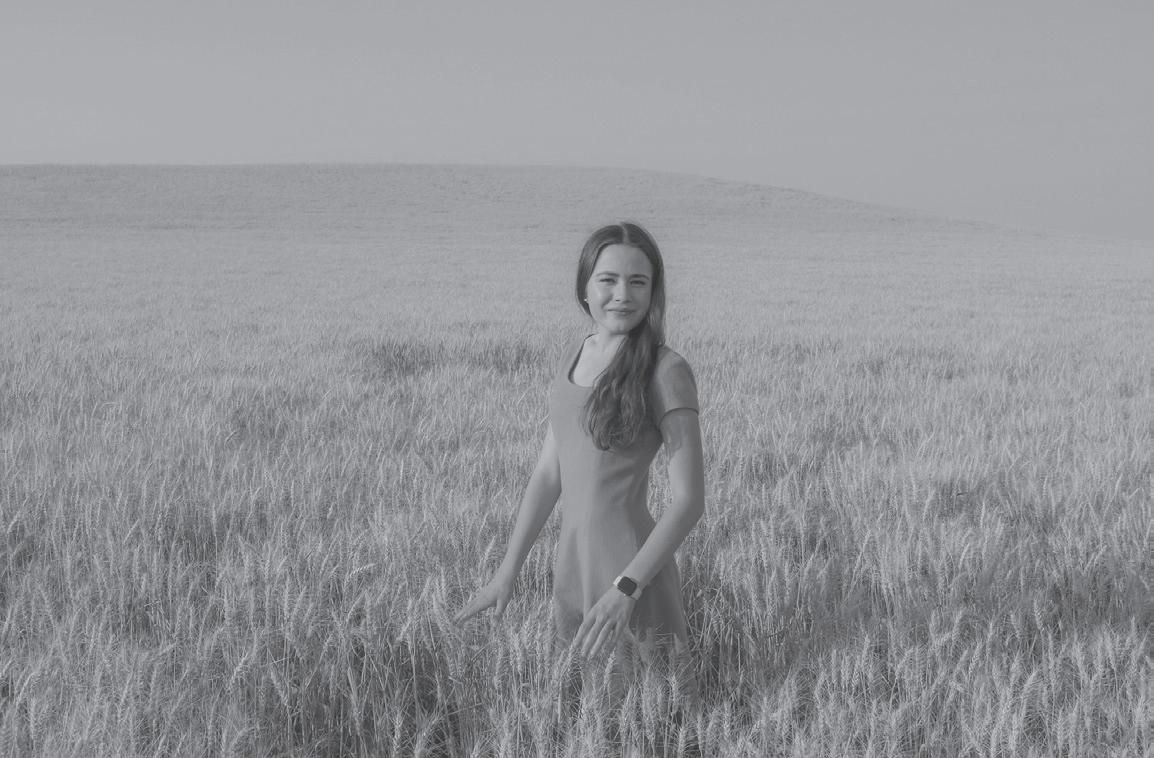
Growing up on her family’s wheat farm in Montana, Kate Stephens ’26 was not always interested in farming. Even though she was surrounded by a family of farmers, it was not until her grandfather asked her to drive the combine harvester for the first time when she was 14 years old that she fell in love with harvesting.
“I realized I had the passion for agriculture and that there was just something about farming on the fields that my great-grandfather once did,” Stephens said. “[It] was quite empowering for me to see the evolution of technology and also that I’m a woman being able to drive a combine [because] that never would have happened in that day and time.”
Stephens is a fourth-generation farmer who has learned the ins and outs of the wheat industry. But consumers often take for granted the incredible journey that their food and fashion products undergo before reaching their tables and closets, Stephens told The Sun.
To bridge this gap, Stephens cre-
ated her YouTube channel, Kate’s Ag - Farm to Fashion to educate the population on wheat harvests and what goes on at her family’s farm, which has accumulated 114,000 subscribers. On the channel, Stephens interviews local farmers and promotes their products free of charge.
Stephens said that she creates content about farming that aims to be enjoyable to watch, while also serving as an educational resource to learn about the families that produce their food and products.
“Not everybody’s going to watch a video about how their food is produced, so maybe there’s some other way that I can take kind of a mainstream thing that everybody loves and connect it back to the farm,”
Stephens said.
The farmers who toil in the fields, the seasons that dictate their yields and the agricultural innovations shaping consumers’ food and clothing supplies are often invisible threads in the fabric of their daily lives, Stephens said.
“Even if you don’t come from a generational farm, agriculture is connected to so many industries,
whether it’s marketing, through AI design, there’s some way you can be involved either locally or internationally,” Stephens said. “I wanted to kind of do more outreach, education [and] support youth a little bit in that way.”
Stephens said that she not only wants to bridge the gap between consumers and farmers, but she intends to promote women in the agricultural industry.
“I hope to continue promoting women, especially young women in agriculture, because it’s definitely a male-dominated industry.”
In her process of making this male-dominated field more inclusive, Stephens has collaborated with the National Farmers Union and Duckworth, the world’s only clothing company that is source-verified with 100 percent Montana-grown Merino Wool. She hopes to continue to promote diversity in agriculture and is set to speak at the National Farmers Union Women’s Conference in Albuquerque, New Mexico later this year.
Stephens’ efforts to bridge farmers and consumers also expands to her involvement in the fashion industry, where she aims to connect customers with the farmers who have a hand in producing their clothing.
At 15 years old, Stephens designed her own fashion brand, Kate’s Ag: Farm to Fashion, with a mission to connect consumers to farmers and educate them on the process of farming, the families who produce the products and how everything starts from the ground. She currently is selling 100 percent cotton tote bags and t-shirts that can be purchased on her brand website.
To continue reading this article, please visit www.cornellsun.com.
Dunia Matta can be reached at dmatta@cornellsun.com.
people since the town is full of drug addicts. It is not the quaint little college town it used to be, it’s incredibly expensive. You know, there’s gunfire all the time — it’s got all the negatives of a major city.”
Winn then emphasized what he believes to be corruption within the Common Council due to its Democrat majority and no open resistance against the actions conducted by the Council.
To continue reading this article, please visit www.cornellsun. com.
Continued from page 1
was an occasion when Cornell students were having fun displaying their imagination and sense of humor.”
The prank received national recognition, with visiting lecturer and expert in Cornell history Corey Ryan Earle ’09 calling it a “viral sensation.”
“The 1997 clocktower pumpkin was a viral sensation before social media existed. It was on the evening news; it had ongoing coverage in the New York Times for months,” Earle wrote in a statement to The Sun. “The fact that it still remains in the popular zeitgeist over 25 years later speaks to how much it captured the Cornell community’s attention and curiosity. The mystery behind it is half the fun, and I think that’s part of the reason that it has had such a lasting legacy.”
Cornell has leaned into the pumpkin’s vitality as well. Cornell has incorporated the pumpkin into Cornell Store merchandise including clothing, mugs, tote bags, statuettes and even The Dairy Bar’s Clocktower Pumpkins ice cream flavor.
According to Earle, the pumpkin is also referenced throughout Cornell academically.
“The University Archives does maintain a collection of clocktower pumpkin miscellany with memorabilia and materials related to the incident, and the remains of the pumpkin itself were added to the Wilder Brain Collection,” Earle wrote.
This is not the first instance of an item being placed onto the spire of McGraw Tower following the 1997 prank, with a disco ball being hung onto the tower in 2005 and a Santa hat being capping the spire in 2019. However, Earle states that the copycat pranks did not imprint themselves onto Cornell’s collective conscience as the original pumpkin
did in 1997.
“[N]either of those [pranks] had the staying power or media attention of the original pumpkin,” Earle wrote. “The ubiquity of technologies like drones over the last decade have made the feat somewhat less impressive.”
One of the supposed culprits of this year’s prank claimed to have climbed the tower two times, once on the afternoon of Oct. 20 after construction workers had left and once again with a group late Saturday night, with the goal of carving something into the pumpkin. They then stayed on the clocktower into the early morning on Sunday, Oct. 22. Photo and video evidence shows the two men did successfully scale the tower Saturday night, but The Sun could not verify that they were responsible for placing the pumpkin onto the spire.
Both students refused to say what was carved into the pumpkin, and they crossed out the message in images sent to The Sun.
When asked how he initially climbed the clocktower, the student claimed it was easy to climb up.
“[It’s] pretty easy to be honest,” the student said. “Basically you just hop the fence and then from there, they have netting along the edge where the stairs are and the doors to the stairs have a padlock, so you can’t get in through that door. You had to go onto — I don’t even know how to describe it, but it’s above Uris Library and then get onto the scaffolding, and then from there you can go up the stairs most of the way towards the top, and then you have to climb up the outside of the scaffolding to get to the very top levels.”
To continue reading this article, please visit www.cornellsun.com.
Henry Fernandez can be reached at hjf47@cornell.edu.
Jonathan Mong can be reached at jmong@cornellsun.com.
LOU’S
Continued from page 1
Before difficulties surrounding the COVID-19 pandemic pushed Cassaniti’s business inside of Center Ithaca, he spent most of his career working outside as a street cart vendor in the Ithaca Commons. For the last 10 of those years, he was often seen feeding sausages to a local celebrity of the Commons, a golden retriever named Riley — who belongs to the owners of Ithaca Outdoor Store — before she died in August.
“I got the hotdog stand over 30 years ago, and that was very profitable, so that’s what I did the longest. Riley was a very popular entity on the Commons,” Cassaniti said. “Her picture was taken 10 to 15 times a day. She’d sit near the hotdog cart… Everybody loved her.”
Not only does Cassaniti keep his focus on operating his business, but he also puts much of his focus towards aiding community organizations such as the Society of the Prevention of Cruelty to Animals of
Tompkins County, a no-kill animal shelter that aims to protect companion animals and support responsible pet stewardship.
“[For customers] who want to give more, I tell them to put a dollar or two down for the SPCA. The SPCA is the most important thing to me because we have to support our animals,” Cassaniti said. “Ithaca is a very big dog city. We’re an animal loving town. I have worked for 30 years and raised a substantial amount of money for them through the Riley Foundation after losing her.”
In addition to donating money from his business to the SPCA year round, Cassaniti also hosts a Hot Dog Day fundraiser each year where all proceeds from the day go directly to the local animal welfare organization.
To continue reading this article, please visit www.cornellsun.com.
Dalton Mullins can be reached at ddm88@cornell.edu. Jonathan Brand can be reached at jcb473@cornell.edu.


BY NOGA TENZIN Dining Contributor & DANIELA ROJAS Dining Editor
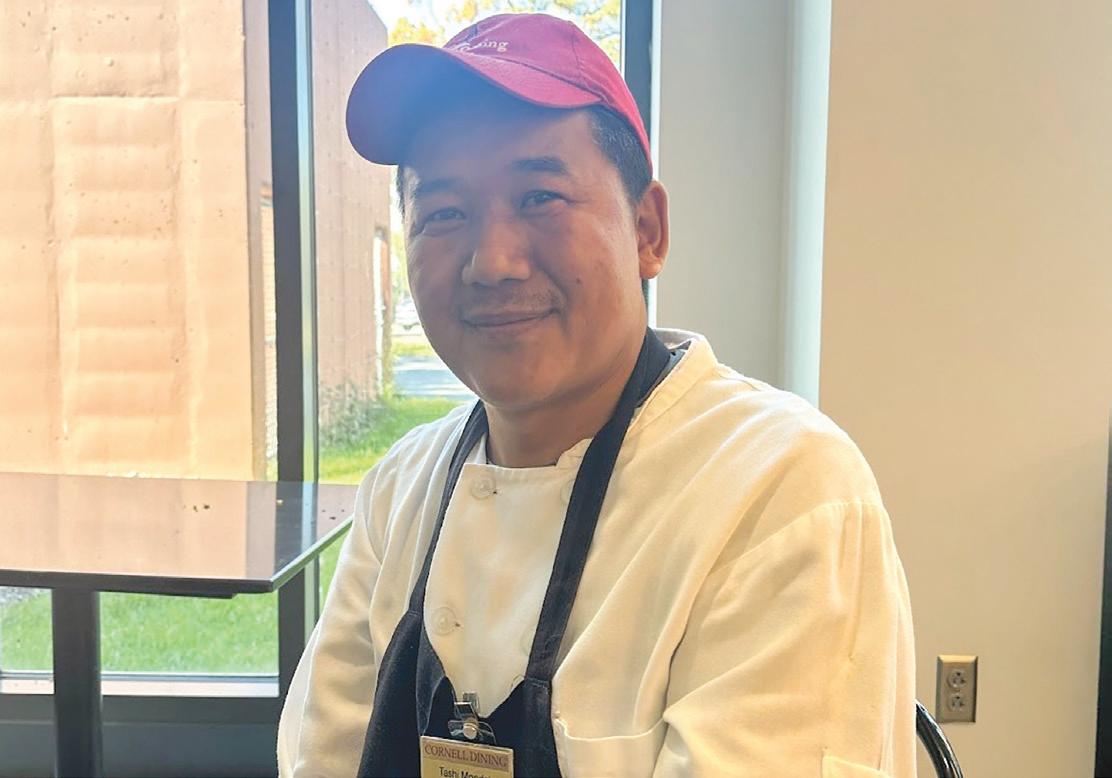
Tashi Mondak, who has worked as a Food Service employee at Cornell for over eight years, offers a perspective to students regarding the ‘behind-the-scenes’ of Cornell Dining: the time, effort and energy it takes to work in dining often goes unnoticed. What is unnoticed should often be appreciated, especially in the world of food service.
Mondak’s role has changed overtime, from Statler hotel as dishwasher, to working in Mac’s Cafe and Cornell Catering, to his current job in Morrison Dining. He notes the differences in atmosphere within a particular eatery is largely dependent on the number of diners that come on a daily basis. Mac’s Cafe typically only has 1,000 people per day, whereas Morrison Dining can have up to 5,000.
With a change in numbers and environment comes a change in attitude. While in Statler, Mondak recognizes the faces of students that come everyday. “They’ll see my name tag and [say] ‘Hi Tashi, how are you?’ Then I’ll say ‘Hi, I'm good!’” Students and workers, like Mondak, greet each other with a smile and offer a quick check-in. Because of the cafe setting, there are opportunities for interaction, making the job more engaging for workers.
checking the temperatures of the food on the clock for safety.
If possible, Mondak recommends students getting a job in dining. Sure, it can help students to make a little money. However, such a job also enables students to gain perspective on what's going on behind the scenes
people are starving. Here, we are enjoying a lot of food [while] throwing a lot of it away.”
Another important factor students should consider is how important dishwasher etiquette is. Mondak mentioned how students should always follow the signs regarding where to put their utensils, plates, and waste after enjoying a meal. There’s specific locations to put leftover food for compost and other waste such as napkins. Mondak explains that when students don’t do this, it creates problems when washing dishes, emphasizing a need for improvement.
With a change in numbers and environment comes a change in attitude. While in Statler, Mondak recognizes the faces of students that come everyday. “They’ll see my name tag and [say] ‘Hi Tashi, how are you?’ Then I’ll say ‘Hi, I'm good!’” Students and workers, like Mondak, greet each other with a smile and offer a quick check-in. Because of the cafe setting, there are opportunities for interaction, making the job more engaging for workers.
Morrison Dining, on the other hand, deals with roughly 5,000 students everyday. Employees can't notice student’s faces most of the time because staff are occupied with cooking food, cleaning tables, and
Are you hungry... for more tasty content?
Have satisfying, perhaps salivating, suggestions?
Let us know!
Contact: food@cornellsun. com.
at the places they frequent for food on a daily basis. Mondak indicated how “when you only see food, it’s just the food. Behind [the serving counters], there are so many people’s hands, energy, and money.” He also emphasizes how “respecti[ng] the food,” such as not wasting substantial amounts of food, is a way for students to acknowledge the time and effort that goes into dining.
The food is farm-to-table; there is an immense amount of effort that goes into the food getting to the Cornell Dining kitchens to begin with. Mondak recommends taking small portions of food, and then coming back for more later if desired, because in “some places,
Most importantly, students should respect the staff. Respect is a two-way street. Workers work hard so students have one less thing to worry about in their busy lives, given how “because of students we can survive, and without us, students can’t get food.” Mondak starts his workday at 6 a.m., opening the breakfast line at the iron grill in Morrison and ends after lunch at 2:30 p.m. with a smile on his face, ensuring all goes well.
Respect comes in many forms, even in non-verbal forms. For instance, whenever getting food, taking the time to try to keep the counter neat to avoid messes is a kind yet overlooked gesture.
“[Dishwasher etiquette] is also appreciation, you know. You don’t need to say something like ’Nice work!’ [Appreciation can be] putting your own plate in the right direction and whatever instructions for the bins for the silverware.”
To continue reading this article, please visit www. cornellsun.com.
Noga Yangzom Tenzin (she/her), dining contributor, is a frst-year student in the College of Arts & Sciences. She can be reached at ynt3@ cornell.edu.
Daniela Rojas (she/her), dining editor, is a third-year student in the College of Arts & Sciences. She can be reached at dwise-rojas@cornellsun.com.
KATIE CHEN ’25
SHEILA YU ’25
NOAH DO ‘24
HUGO AMADOR ’24
Editor EMILY VO ‘25
JONATHAN MONG ’25
JULIA SENZON ’26
JULIA NAGEL ’24
GRAYSON RUHL ’24
TENZIN KUNSANG ’25
HU ’24
YI ’24
PAREESAY AFZAL ’24
ANGELA BUNAY ’24
The Cornell Daily Sun is devoted to publishing a broad and diverse set of content from the Cornell and greater Ithaca community.
We want to hear what you have to say about today's paper or any of our pieces.
Guidelines on how to submit can be found at Cornellsun.com. And here is our email: opinion@cornellsun.com
SOFIA RUBINSON ’24
XIAO ’25
EICHER ’24
HOANG ’25
‘24
REILLY ’25
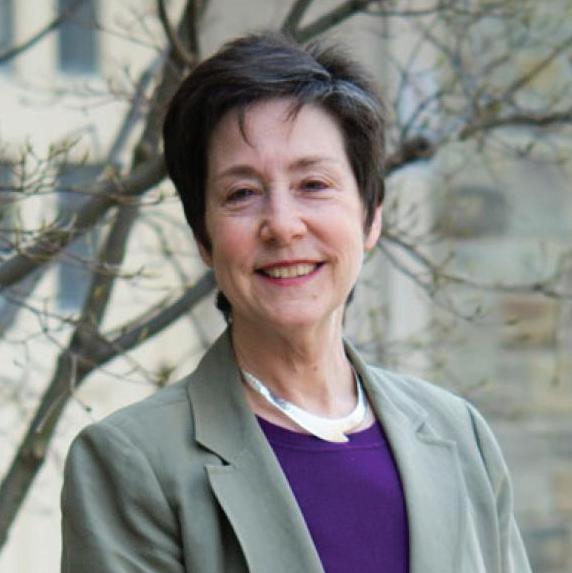
Risa L. Lieberwitz is a Professor of Labor and Employment Law in the School of Industrial and Labor Relations. She researches academic freedom in the university, freedom of speech, due process and the “corporatization” of the university. She can be reached at rll5@cornell.edu.
’25
’24
SUGARMANN ’24
PALLRAND ’24
WU ’24
Cornell faces a test of its resolve to protect faculty academic freedom in the current moment of heightened tension and emotions concerning the Israel-Hamas War. At this point, the Cornell administration has fallen short of its obligations. On Oct. 17, President Pollack and Board of Trustees Chair Kraig Kayser issued a joint statement condemning Professor Russell Rickford’s extramural speech at an Oct. 15 rally for Palestinian rights. The Pollack/Kayser joint statement made implicit threats against Professor Rickford’s employment by stating that the University is currently “reviewing [the incident] consistent with [Cornell] procedures.”
Professor Rickford’s extramural speech at the Oct. 15 rally falls squarely within the protections of academic freedom to comment on political matters. That his speech offended or shocked does not lessen its protection, as academic freedom is most needed for speech that others find offensive. Professor Rickford has issued an apology concerning his choice of language in one part of his speech. With or without this apology, Professor Rickford’s speech is protected by academic freedom.
The Cornell Policy Statement on Academic Freedom and Freedom of Speech and Expression, as adopted by the Cornell Board of Trustees, states: Cornell University respects and is committed to fundamental principles of academic freedom and rights of freedom of speech and expression as set forth in the following Statement and in other Cornell policies. Freedoms to engage in research and scholarship, to teach and to learn, to express oneself and to be heard, and to assemble and to protest peacefully and lawfully, are essential to the function of the University as an educational institution. In this Policy Statement, Cornell recognizes the broad scope of academic freedom. Not only does academic freedom protect faculty in their teaching and research, but the University “recognizes employees’ right to communicate freely outside of the scope of their Cornell employment in their capacity as private citizens.” Protecting academic freedom in its full scope requires that we value ideas and speech that are controversial and even disturbing. As the Cornell Policy states, “We value free and open inquiry and expression—tenets that underlie academic freedom—even of ideas some may consider wrong or offensive.”
In difficult, tense and volatile times — like those we are currently living in — it is essential to remember these fundamental tenets of academic
freedom that Cornell has adopted as University policy. Indeed, Cornell is highlighting these principles through its current academic year theme of “Freedom of Expression,” which includes events focusing on academic freedom. As one member of the UCLA Board of Regents in 1970 described the broad scope of academic freedom in extramural speech, “In this day and age when the decibel level of political debate . . . has reached the heights it has, it is unrealistic and disingenuous to demand as a condition of employment that the professor address political rallies in the muted cadences of scholarly exchanges. Professors are products of their times even as the rest of us.” It is not enough to profess commitment to a policy of academic freedom. What is needed is full and deep adherence to the values, principles and tenets of academic freedom. This means the University’s full protection of all faculty members’ academic freedom in their teaching, research, university governance activities and in their extramural speech. What does it mean for the University to fully protect faculty academic freedom? At a minimum the University may not discriminate or retaliate against a faculty member for exercising academic freedom. And further, the University administration should stand up for faculty who exercise their academic freedom, even in the face of pressure from legislators, trustees, donors, students or alumni to sanction faculty for their speech.
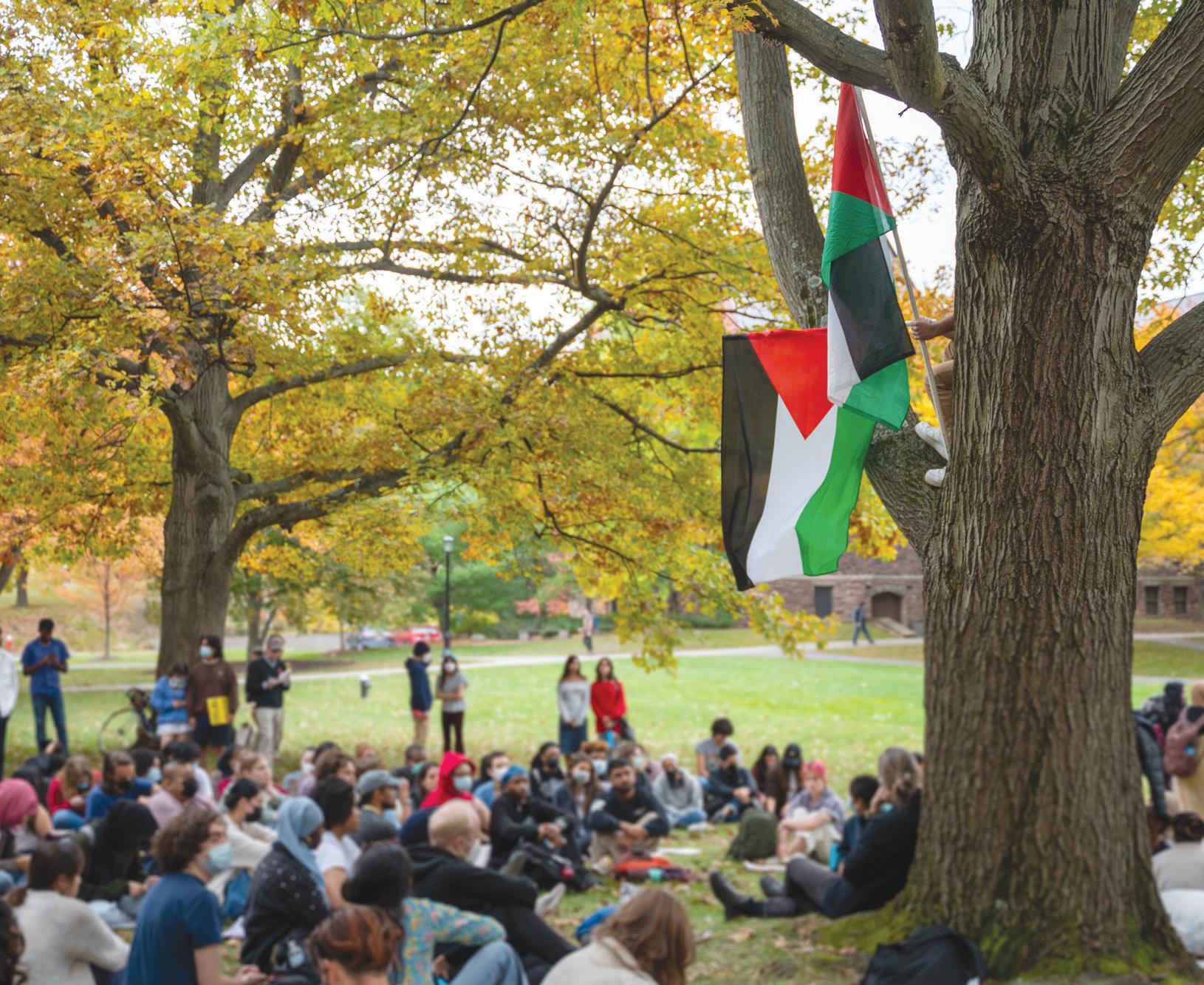
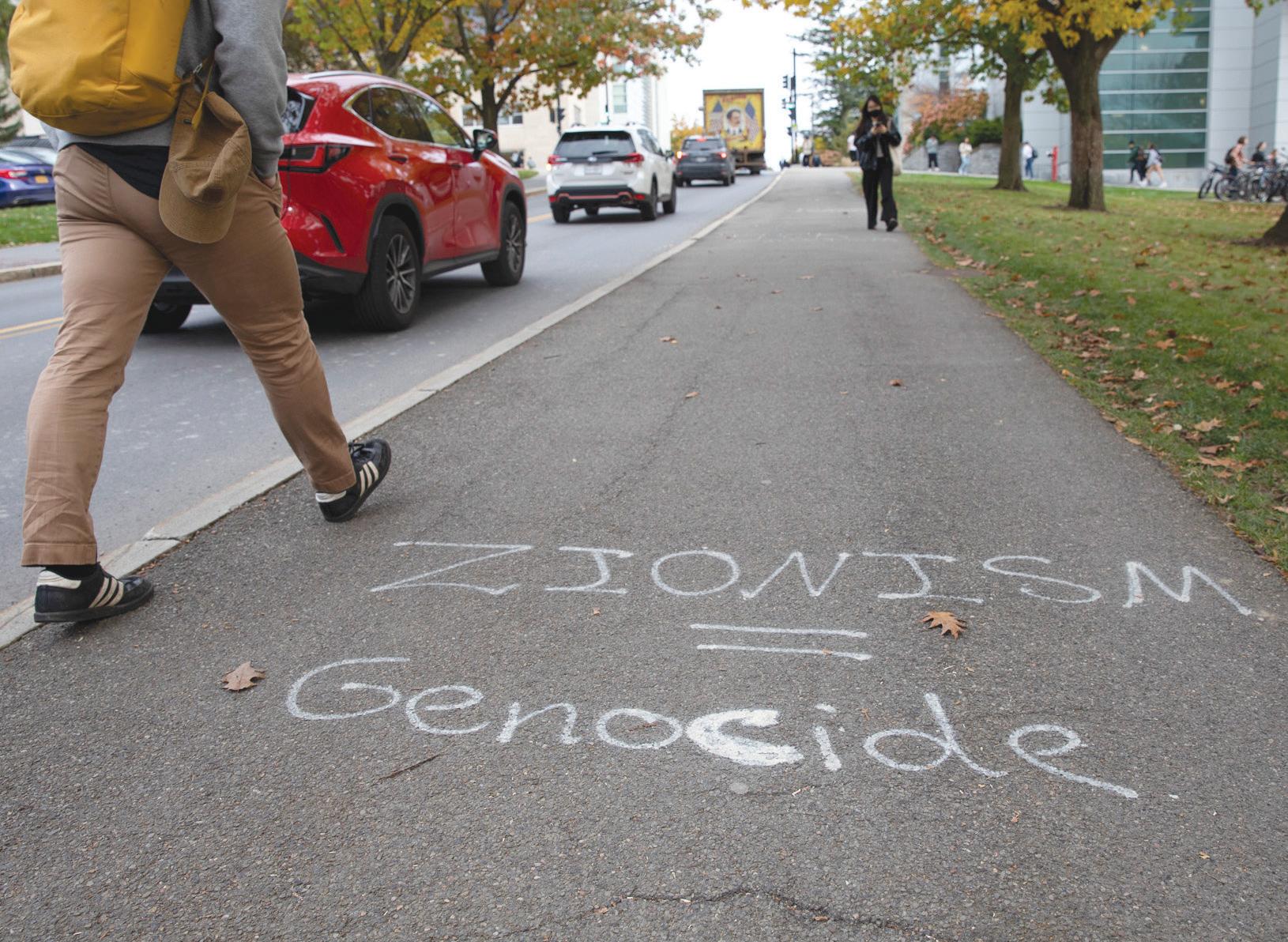
There are many areas of social, economic and political controversies that faculty may address in exercising their academic freedom, but perhaps none so controversial as those dealing with Israel and Palestine. At this moment, ongoing tensions and violence have reached their highest level. On U.S. university campuses, these events have hit hard, personally and politically, including rallies, protests and demonstrations in which faculty, students, staff and community members have been active participants.
These are the types of conditions that test the level of the University’s resolve to protect academic freedom. The University is obligated to protect faculty academic freedom to address controversial issues, whether in their teaching, research, university governance activities or extramural speech. The Cornell Policy Statement explicitly and strongly protects academic freedom for extramural speech addressing social, political or other issues. We expect Cornell to adhere to its stated policies and values.

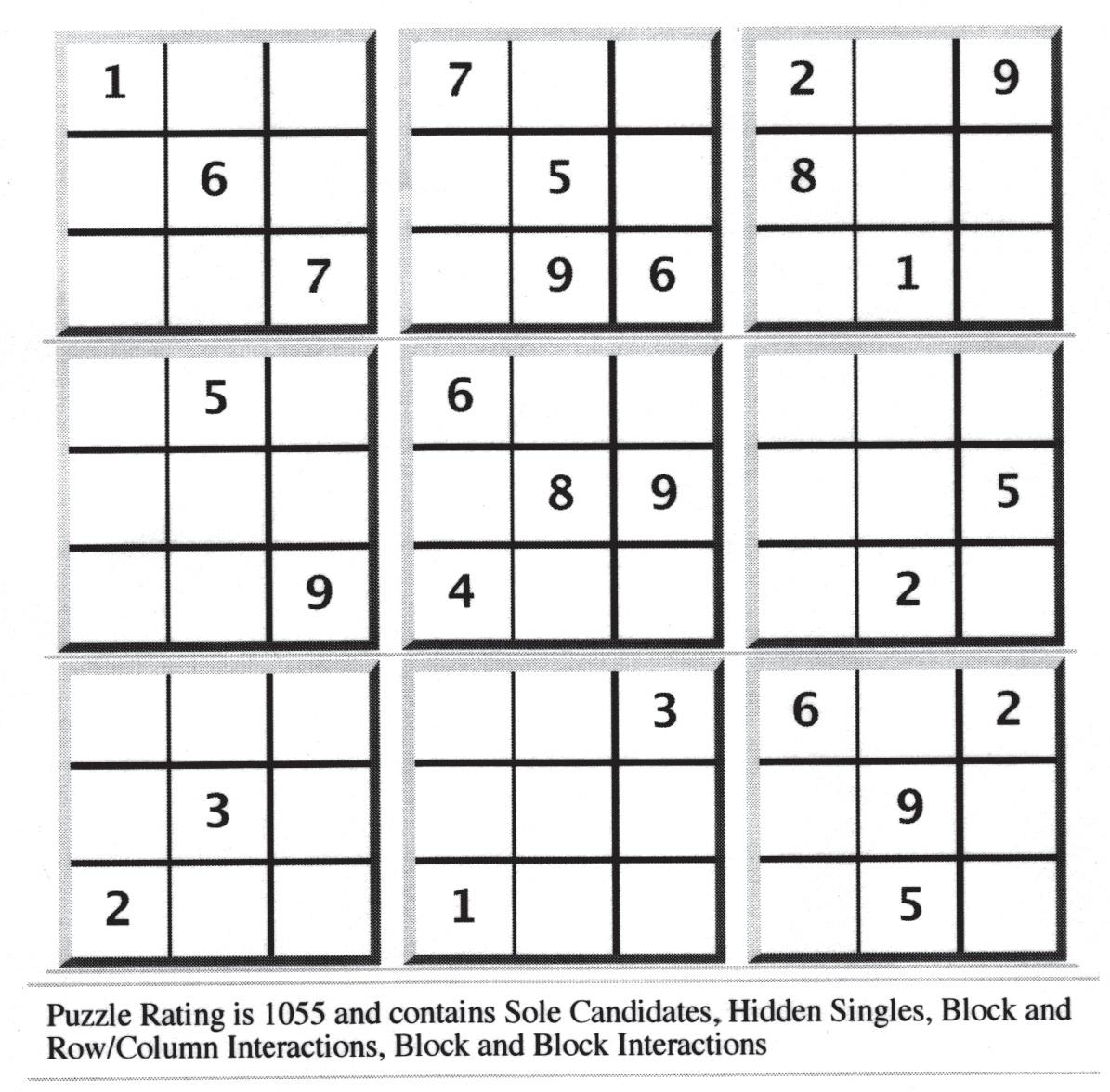
Fill in the empty cells, one number in each, so that each column, row, and region contains the numbers 1-9 exactly once. Each number in the solution therefore occurs only once in each of the three “directions,” hence the “single numbers” implied by the puzzle’s name. (Rules from wikipedia.org/wiki/ Sudoku)


By MADISON KIM Sun Contributor
Researchers predict that by 2050, the number of days over 90 degrees Fahrenheit in New York City will triple. The world is expected to see a climb in heat-related hospitalizations and emergency department visits — especially in urbanized areas.
Prof. Daniel Katz, integrative plant science, has conducted extensive research on how to mitigate extreme heat in urban environments, specifically through increasing tree coverage in cities like New York.
Due to a process called the urban heat island effect, cities are often significantly warmer than more rural areas year-round, on average up to seven degrees Celsius.
This phenomenon poses dangerous health risks to people residing in these urbanized locations all over the country — national heat-related deaths and emergency hospitalizations are both projected to increase by over 50 percent in the next 20 years compared to data from 1971 to 2000, according to non-profit conservation organization American Forests.
And there’s a reason for this. Due to cities being composed of a far higher proportion of buildings and roads compared to natural areas, they have a greater number of dark surfaces.
Unlike lighter surfaces that

P lant panacea | In the face of the urban heat island effect,
reflect light energy from the sun, darker surfaces absorb it.
The absorbed wavelengths of light then get converted into heat, which is why an asphalt road is much hotter to the touch than a wooden deck.
Lighter surfaces — which includes natural structures like trees, plants and certain types of rocks — converts less light to heat.
“[Cities are] often a few degrees Celsius warmer,” Katz said. “That could be the difference
between getting heat stroke or heat exhaustion and not getting it.”
According to Katz, solutions to the urban heat island effect exist at a variety of scales: painting roofs white so that they reflect more sunlight, and more consistently distributing air conditioning units to reduce chances of heat stroke and heat exhaustion are just a few. Katz, however, focused his research on tree coverage.
Trees not only cool ecosystems by reflecting back more light, but
also through a mechanism called transpiration: a process in which a plant ‘sweats’ and releases water vapor through its leaves, stems and flowers. Katz’s project revolves around maximizing these different cooling benefits from trees.
He additionally found that there were notable disparities in tree coverage within individual cities in the United States. Poorer communities and communities of color often had fewer trees and urban forests than the more affluent areas. Katz noted
that these areas also tend to be the ones where people are particularly vulnerable to extreme heat as they may not have the proper resources to cool down their living space.
A likely reason behind this difference traces back to the 1940s and 1950s when redlining — a practice from the homeowners’ loan corporation which denied people living in poorer communities home loans — was especially prevalent.
This led to people in these specific areas — often people of color — being much less likely to have ownership over their home.
The term itself was created because, at the time, the federal government and lenders would mark areas on a map in red that they considered high risk or hazardous.
Colors like yellow, blue and green were used to indicate safer and more low risk areas, respectively. The areas that were marked in red also were the ones with the highest percentage of Black residents.
“We see clear associations that the areas that were redlined and faced this systematic discrimination have fewer trees than the neighborhoods where loans were more likely approved,” Katz said.
To continue reading this article, please visit www.cornellsun.com.
Madison Kim can be reached at mhk223@cornell.edu.
By AVA MALKIN Sun Contributor
For many, Oct. 31 is a time to delight in the classic indulgence in Halloween candy. But while these treats can be immediately rewarding, it is also important to recognize the nutritional and psychological implications of the holiday centered around an overload of sweets.
Unlike some headlines might suggest, the connotations of candy consumption are not entirely negative, according to Prof. Laura Bellows, nutritional sciences. But as the popular publications propose, candy consumption also does not have many beneficial health outcomes.
“Candy is high in sugar and high in fat. All candy is pretty much empty calories,” Bellow said. “What that means is that they contribute to your overall calorie count, but there’s no nutrients in them.”
Sugar intake can also have behavioral implications, which can cause what Bellows called a “spike” in energy or insulin, more colloquially known as the “sugar high.”
This energy increase occurs when the sugary stimulus — the hard candy, gummy worm, chocolate or any other typical Halloween treat — is ingested and one’s blood glucose level, also known as blood sugar, rises.
Many biologists then suggest that the beta cells of the pancreas, or the cells responsible for maintaining homeostasis, are activated by this increase, causing them to secrete insulin and allow the glucose to enter body cells and lower blood sugar.
This excess of glucose within the body, incited by the large amounts of candy
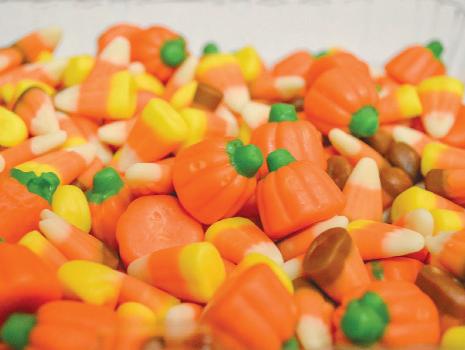
Trick or treat | There a number of ways to improve how individuals tackle this infamous candy-oriented holiday, according to a Cornell nutritional science professor.
intake, may factor into why so many trick-or-treaters appear so lively and full of energy.
This spike and lack of nutritional value does not imply extremely adverse health effects caused by candy consumption. While an excessive amount of empty calories as a pattern in one’s diet tends to correlate with more overweight individuals, Bellows suggested that this is not to indicate that all individuals who eat candy on Halloween experience the effects the same.
“It’s just individual differences of how we metabolize things,” Bellows said. In other words, candy consumers differ in their ability to process sugar and act on a
potential energy increase.
What is more beneficial to focus on, then, is the things individuals can control: the pre-Halloween diet preparation and the post-Halloween routine.
Bellows mentioned that the impact of candy on the human body and mind depends on the pattern of eating beforehand. If an individual ate a good dinner, which involves some sort of grain, protein and fruit/vegetable combination, before the period of trick-or-treating, they will have substance in their stomachs, thereby mitigating the effects of sugar and decreasing the probability of a temporary energy spike.
This is because if an individual does
not eat anything, the main substance in their stomach will be candy, making them more susceptible to energy increases and post-candy lethargy. It is most beneficial to consume a nutritious meal before partaking in Halloween activities in an effort to limit the potential unfavorable effects of sugar.
In addition to this nutritional component of the holiday, another important consideration is the psychological aspect, specifically focusing on the value that trick-or-treaters place on the candy and Halloween in general.
“It’s the fun and the enjoyment [of Halloween],” Bellows said. “I don’t think we can take the social part away. I think it really comes down to: how do you manage that post trick-or-treating candy consumption?”
From a nutritional perspective, Bellow believes that it is most beneficial to set boundaries and distinct patterns of candy intake. After Halloween, candy consumers can limit their intake to a piece of candy every day at the same time, thereby providing them with the boundary and simultaneously giving them a choice on where their candy goes and how they are able to interact with it.
This structured diet approach is beneficial for sweet eaters of all ages, particularly children, as Bellows noted it helps create a behavioral schedule of when it is acceptable to eat foods high in sugar.
To continue reading this article, please visit www.cornellsun.com.
Ava Malkin can be reached at ahm254@cornell.edu.