The Corne¬ Daily Sun

By TAMARA KAMIS Sun News Editor
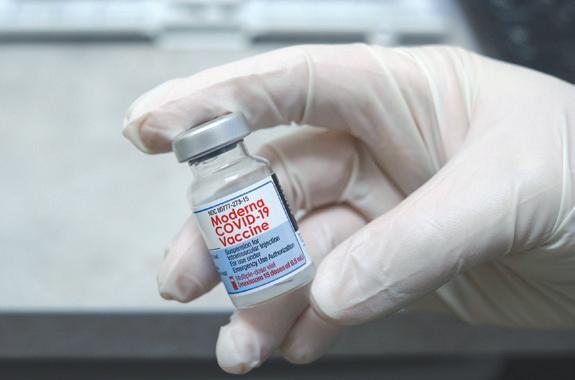
The University is encouraging Cornellians to get a COVID-19 booster shot if they are eligible, Vice Provost for Academic Integration Gary Koretzky and Assistant Vice President for Health and Wellbeing Sharon McMullen wrote in a Monday email to the Cornell community.
“Cornell is not requiring members of our community to receive a booster at this time; however, as
breakthrough cases continue to occur, we encourage you to consider receiving a booster once eligible,” wrote Koretzky and McMullen. “Boosters are readily available for eligible individuals.”
This message comes as individuals who work or live in a residential educational setting, along with those over age 65, are eligible for the booster under current Centers for Disease Control and Prevention guidelines. Koretzky and McMullen recommended looking for information on where to get a booster shot on the Tompkins County Health Department website or by using the vaccines.gov website. According to the CDC, eligible groups also include people 18 and over with approved underlying medical
Gary Koretzky
conditions and those who face increased exposure to COVID-19 because of their work or institutional setting. Booster shot recommendations are different from the third dose of the Moderna or Pfizer vaccine that is recommended to immunocompromised people who may not have full protection from the standard course of vaccination. Possible booster eligible workplaces include health care facilities, long-term care facilities, grocery stores, public transit and schools and day care centers where students are ineligible for COVID vaccination because of their age. In addition to being part of an eligible group, people need to have received their Johnson & Johnson dose at least two
By MADELINE ROSENBERG Sun Managing Editor
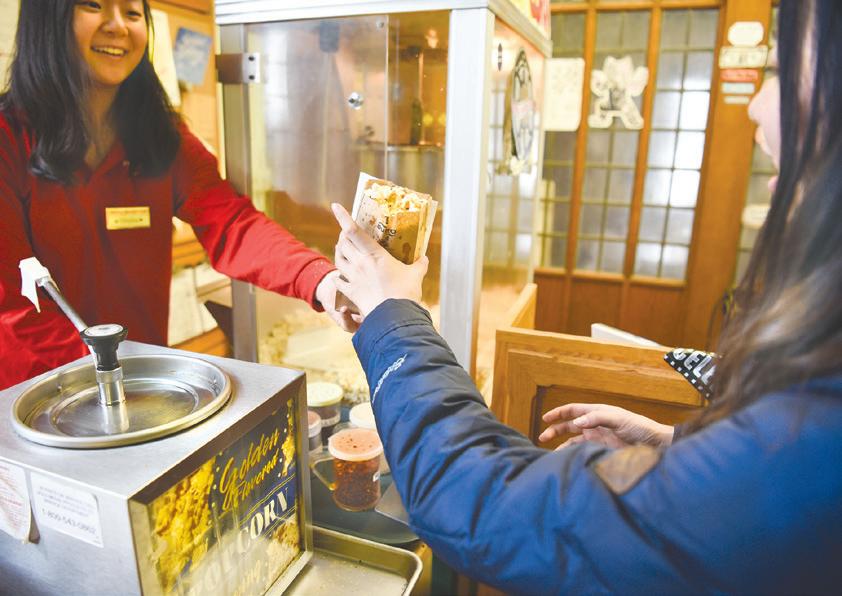
Alia Adler ’22 remembers when Willard Straight Hall smelled like popcorn, the lobby bustling with students exchanging a freshly popped bag and a conversation before heading off to class.
She remembers the crowds of students who used to rush through the student union during her first two years at Cornell — catching up with friends in the lobby, waiting in line for Carli Lloyd tickets or even napping
on browsing library couches after a long day.
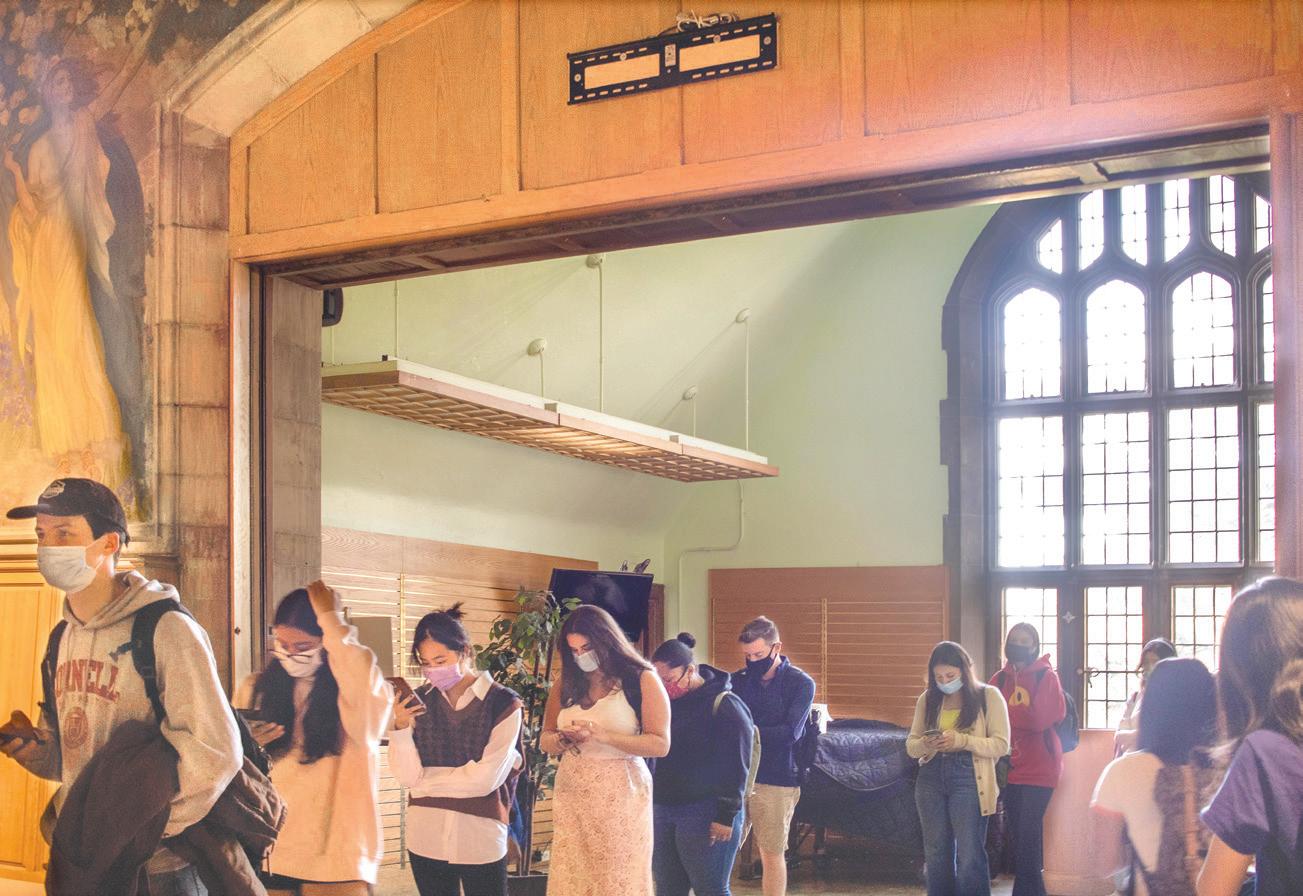
But 19 months after campus first shut down, the Willard Straight Hall lobby smells like hand sanitizer. Students wandering into the build-
ing are greeted by signs that read “Please do not sit here,” rather than club representatives tabling. The longest lines aren’t for free popcorn at the
By PAREESAY AFZUL Sun Contributor
The Caribbean Students’ Association has achieved first steps in claiming an institutional place for
Caribbean studies at Cornell through the Mario Einaudi Center for International Studies, which recently
renamed its Latin American studies program the Latin American and Caribbean studies program.
The change, which was set in place in early September, moves toward Cornell’s Caribbean Students’ Association’s goals: establishing a Caribbean Studies minor, having Cornell accept Caribbean examinations as credit toward coursework and introducing Caribbean as an ethnicity to identify with on Cornell admissions and enrollment applications.
According to CSA’s co-founder and former president Aurora McKenzie ’21, the CSA made a list of demands in August 2020 that she and other Caribbean students on campus felt were necessary to increase Caribbean reach and visibility at Cornell, seeing the importance
of the Caribbean region in the world.
“I had to explain what the Caribbean was to a lot of people, staff and students,” McKenzie said. “It was frustrating as a Caribbean student.”
McKenzie said the process of having their demands heard was at first nerve-wracking, in part because one of the first responses to their petition was a refusal to engage from the Africana Studies department –– where CSA initially hoped to house a Caribbean Studies minor. The department argued that the Caribbean Studies minor was not necessary because of a sufficient existing curriculum, a statement Mckenzie said she strongly disagreed with. According to co-founder of CSA
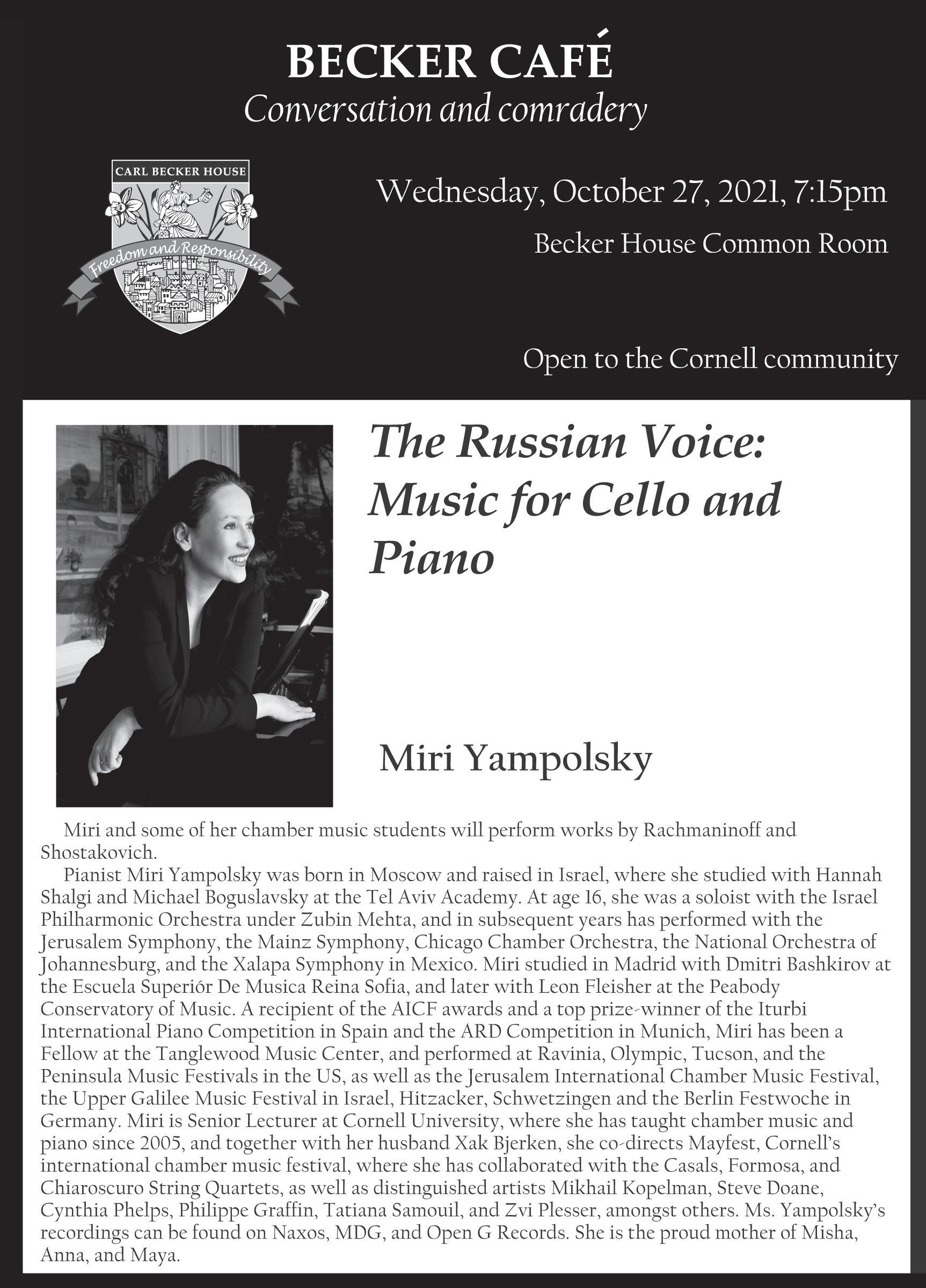
Architecture Graduate Open House for Prospective Students 10 a.m., Virtual Event
Baker Institute Seminar Series Noon - 1 p.m. Virtual Event
CTL Intellectual Property Series #1: Understanding the Technology Transfer Process Noon - 1 p.m. Virtual Event
Releasing the Sense of Control Guided Meditation Noon - 12:45 p.m. Virtual Event
Moving the Needle on STEAM Diversity Through Collaborative Partnerships With Minority Serving Institutions 12:25-1:15 p.m. Emerson Hall, 135
Boba Talk: The APIDA Year in Review 1 - 2 p.m.
Anabel Taylor Hall B21
Losing the Longest War: Afghanistan, 2001-21 3 - 4 p.m. Virtual Event
Writing Beyond the Academy 4:30 p.m.
A.D. White House, Guerlac Room
Career Readiness: Reorganizing Your Skills and Articulating Them on Your Resume 5 - 6 p.m. RPCC, 103
Cornell-Citi Financial Data Science Webinar 5 - 6 p.m. Virtual Event
Tomorrow
Asian American Studies Program and Asian and Asian American Center Becoming Lunch Series With Catherine Carter Noon - 1 p.m. 626 Thurston Ave, 106
Celebrating Conversations: Disability Employment Awareness Noon - 1 p.m. Virtual Event
GET SET Workshop: Developing a Syllabus Noon - 1:15 p.m. Virtual Event
30 Years of Open Access: Challenges and Opportunities for Building Structural Equity Noon - 1 p.m.
Olin Library, 106G 161 Ho Plaza
Pathways to an Anti-Racist and Regenerative Environmentalism in An Age of Intersecting Crisis 12:25 pm - 1:15 p.m.
Emerson Hall 135
Reimagining Social Media Governance: Sarita Schoenebeck, University of Michigan 4 p.m.
Virtual Event
Conversation With Vanessa Frazier – Malta’s Permanent Representative to the United Nations 5 - 6 p.m., Virtual Event
A Conversation With Ambassador Dennis Rose 5:45 - 7:30 p.m. Bill and Melinda Gates Hall G01
By KAYLA RIGGS Sun Assistant News Editor
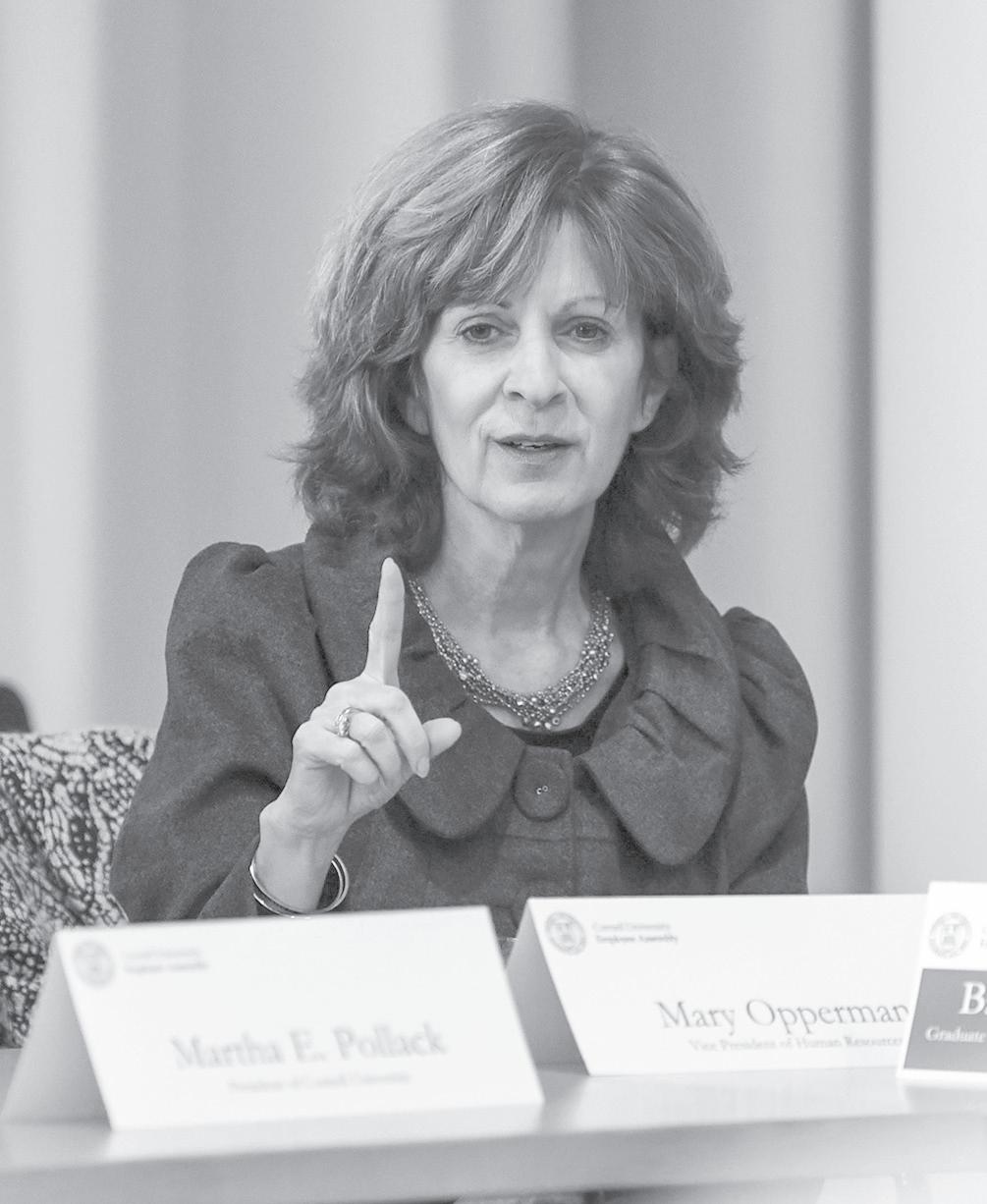
Come June, Vice President and Chief Human Resources Officer Mary Opperman is set to leave Cornell, departing after a 25-year career at the University.
Throughout her time at Cornell, Opperman has overseen a range of topics, including labor relations, economic development and professional women’s rights. Currently, Opperman manages the Division of Human Resources, the Office of Inclusion and Workforce Diversity, the Office of Institutional Equity and Title IX and the Center for Regional Economic Advancement.
“When
Now, Opperman is seeking “one more adventure,” planning to find opportunities outside of the University.
nomic downturn in 2008, she chose to stay. Since then, Opperman has continued to find her place at Cornell through crises like the COVID-19 pandemic.
“Mary’s leadership has been transformational for human resources at Cornell,” said President Martha Pollack in a University press release. “Through her care, compassion for, and attention to the needs of our employees, the experience of working at Cornell has also been transformed, for tens of thousands of people.”
I think about the last 25 years, I always come back to the people here.”
Throughout her extensive career, Opperman has received many accolades, including an award for Excellence from the Tompkins County Foundation Board in 2008. She is a fellow in the National Academy of Human Resources.
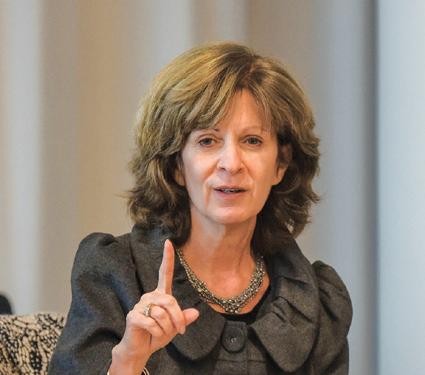
V.P. Mary Opperman
“I decided that if I was going to do something new, I had to set a date and put a time frame on it,” Opperman said in the release. “There is always something new and interesting at Cornell.”
She began her professional career at Harvard University as director of employee services before transferring to Cornell in 1996. Over a decade ago, Opperman considered leaving her position at Cornell for a different career opportunity –– but with the impending eco-
The University will conduct a national search for Opperman’s successor before her departure.
“When I think about the last 25 years, I always come back to the people here — the incredible dedication that people show through good times, and challenging times,” Opperman said. “I am so grateful for all of the opportunities Cornell has afforded me and for the many enduring relationships I have built.”
kriggs@cornellsun.com.
Continued from page 1
Matthew Arthur ’21, while Cornell offers semester-long introductory courses like Africana studies 2122: Caribbean Worlds, there are few upper-level courses in Caribbean studies.
“We felt that the intellectual contributions of Caribbean scholars, as well as the role that the region played in developing modern society was not correctly addressed in the course offerings, nor was any emphasis placed on its importance through other mediums,” Arthur said.
According to Mckenzie and Arthur, CSA’s adviser Prof. Carole Boyce Davies, literatures in English, an expert on the Caribbean, has been a major source of support for the minor. According to Justin Lowe ’23, vice president of CSA, Boyce Davies wrote the Africana department an open letter criticizing their lack of support for the minor. The organization has since sought support from other departments.
Lowe said he thinks the naming of the Latin American and Caribbean Studies program is historic, but still hopes to see a
Caribbean studies minor become a part of Cornell’s curriculum. The Einaudi Center, which CSA regards as its primary support, has offered to house the Caribbean studies minor as well.
Still, the process of developing a new minor can be a long –– and tedious –– one, according to Prof. Ernesto Bassi, history, director of the Latin American and Caribbean Studies program.
“It is a process,” Bassi said. “It’s not going to be there this semester or the one after.”
Bassi is deciding whether the minor should be registered as Latin American and Caribbean studies, or Caribbean studies by itself –– but he said he wants to see more courses developed before launching a minor, as well as possible international collaborations. He has worked with colleagues to apply for a grant from Cornell Migrations to develop the Caribbean curriculum.
According to Bassi, the department is exploring partnership possibilities with the University of West Indies, which has campuses in Jamaica, Barbados, Trinidad and Tobago. These partnerships could include
faculty collaborations, student exchanges –– between undergraduate, graduate and Ph.D. students –– as well as experiential and engaged courses that include opportunities for students to visit the Caribbean.
Bassi emphasized the student need for Cornell to hire more Caribbean faculty and broaden the disciplinary background of faculty. Seeing that the difficulties in trying to build the directory is testament to the need, Bassi said he would welcome the idea of creating a database or search engine that would help find colleagues at a “decentralized” Caribbean community at Cornell.
“There are great Carribeanists out there doing work on themes that are central to the work [those departments], and it would be great to have Caribbean colleagues,” Bassi said.
CSA is also demanding that Cornell recognize Caribbean as an ethnicity to identify with on applications. Other CSA demands include recognizing June as an official Caribbean American heritage month on Cornell’s calendar, as well as accepting Caribbean Examinations Council’s work as credit toward coursework, as is practiced by Cornell’s peer institutions like NYU,
Continued from page 1
Resource Center, but for a slot at one of Cornell’s busiest COVID testing sites.
“That big library where the testing is in? That’s where I used to study all the time,” Adler said. “You could take a nap there, you could go study. And right next door was free popcorn. I was there all the time. Now those spaces are gone, so I barely go anymore.”
Even as campus springs back to life this fall, with students spilling onto quads between classes, Willard Straight Hall is not yet the hub for student and campus life that it was before the pandemic. Lobby run-ins are a pre-COVID memory to just upperclassmen, the main floor of the student union now largely dark and empty. Many students say they rarely linger in the Straight, heading inside just for weekly nose swabs.
Some of the old events, however, have returned: Cornell Cinema is back with movie screenings, a renovated Okenshields has moved entrances and Student Assembly meetings once again convene in the Memorial Room.
But the Willard Straight Hall Resource Center (renamed the Campus Activities Resource Center in fall 2019) has remained closed since March
2020. The lobby nook popped up free popcorn for decades, filled with a steady stream of visitors stopping by for a buttered and nutritional yeast-dusted snack.
“Given the various public health precautions put in place in response to COVID it was determined to pause the distribution of popcorn to limit building traffic and prioritize testing and concentrate food consumption in dining hall and eatery areas within Willard Straight Hall,” campus and community engagement, a unit within student and campus life, wrote to The Sun.
Linda Siptrott, campus activities program coordinator and former Resource Center manager, said one of the primary functions of the center was to support student groups — from organizing campus mail to offering directions and booking club meetings.
Now that many of these resources are available online, the campus and community engagement team no longer needs to staff the center for this purpose. Student employees on the campus activities engagement team can meet with students in 520 Willard Straight Hall to support campus organizations, answering questions about everything from registration to funding.
To continue reading this story, please visit cornellsun.com.
a number of which also offer Caribbean studies programs and minors.
“We have students from the Caribbean who’ve done the exact same coursework as those with I.B. and A.P. credits, who have to retake all the intro courses, take placements, or do a completely different set of classes to receive credit for what they already did,” Lowe said.
McKenzie, who had to pursue a Caribbean studies minor through an independent study, is hopeful that student demands will be effective in growing Caribbean studies at Cornell. Mckenzie said she believes student feedback shows the Cornell administration and faculty that more resources are needed for this field of study.
“It is impossible to have a University like Cornell that says ‘Any person, any study’ — a University that claims to offer that egalitarian spirit — not offer a specific path of academia that focuses on the Caribbean,” Lowe said.
Pareesay Afzal can be reached at pa323@cornell.edu.
Cornell encourages eligible people to get shots
Continued from page 1
months ago or their final Moderna or Pfizer dose at least six months ago to get a booster shot.
“Booster shots are available and recommended to help increase your immune response prior to a decrease in protection from the primary vaccine,” Frank Kruppa, Tompkins County public health director, said in a Monday press release. “All available vaccines continue to be safe and effective at protecting against severe illness, hospitalization, and death.”
While Cornell isn’t requiring the booster shot or for Cornellians to document their booster, Koretzky and McMullen encouraged those who received a COVID-19 booster shot to upload documentation to the Daily Check website.
“Though not required, it allows
the university to adapt to evolving public health guidelines and to understand the level of protection of our campus community,” Koretzky and McMullen wrote. In addition to encouraging COVID-19 booster shots, Koretzky, McMullen and TCHD recommend getting the flu vaccine.
“Public health guidance indicates that there is no risk to receiving a COVID-19 booster and flu vaccine simultaneously or soon after one another,” Koretzky and McMullen wrote.
Cornell is offering on-campus flu vaccination clinics for anyone in the Ithaca campus community until Nov. 11. Walk-ins are allowed, but Cornell recommends signing up in advance.
at tkamis@cornellsun.com.
On the Halloween expeditions of my youth, my allegiance was first to candy collection and second to the festivity of the holiday itself. I was (and still am, unfortunately) quite easily spooked, which tended to render me the least brave of the cohort with which I trick-or-treated. I would huddle sheepishly behind my companions as we ventured across front lawns entangled in caution tape and decorative tombstones, flinching a little as I searched for Babe Ruth candy bars at my neighbors’ doorsteps while decorative plastic spiders tracked me with their many eyes. My sole haunted hayride experience was tragic, to say the least; I was staunchly perplexed as to why chainsaws and children should ever be juxtaposed in the name of “good old fun.”
to reenter the realm of the living. Massive bonfires and animal sacrifices were commonplace at these celebrations, in which the Celts hoped to lock in good favor with their deities for the perilous season ahead.
Upon the infiltration of the Roman Empire into Celtic lands, Nov. 1 became “All Saints’ Day” or “All-Hallows,” a day to commemorate the piety and selflessness of martyrs and saints. Reluctant to cave to the Church’s establishment of “All Souls’ Day” on Nov. 2 as a more subdued version of the original Samhain jubilee, inhabitants of the once-Celtic areas continued to uninhibitedly honor their Oct. 31 tradition, which soon gained the name “AllHallows’ Eve” — or, more expressly, Halloween. What does a seasonal festival have to do with dressing up in ridiculous costumes, then? The Celts feared
What piqued my interest far more about Halloween was the costuming aspect. (I viewed costumes and candy on roughly equivalent planes of importance.) In the interest of transparency, I had some sick Halloween getups as a youngster — a jellyfish, an octopus, a rabbit. My personal favorite is the time I dressed up as a chocolate-frosted donut, in which I hung an inflatable pool tube on a string around my neck, spray-painted it a deep brown, and hot glued colorful plastic straw pieces to look like sprinkles. (I have chosen to repress the year I dressed up as Michael Jackson during a peculiar fourthgrade obsession with his entire discography.)
The point I’m trying to convey here is that these were not your ordinary costumes. They were not witches or black cats or outfits made to look like the protagonist of whichever children’s movie had topped the charts that summer.
I was very lucky to have the resources and the family support to make many of these costumes at home, and knowing that my Halloween garb would be wholly unique from that of my peers always made me feel a twinge of anticipation.
It wasn’t that I was particularly intrigued by fashion or had some sharp artistic skill, either. (Actually, just the opposite — I wore neon tracksuits and tie-dye t-shirts every day for the first ten years of my life.) Yet there was something about this opportunity to slip into a new state of being, to exert pressure on the boundaries of who I could be, that continued to allure me as I crafted my costumes each year.
Halloween festivities date back to an age-old Celtic tradition, called Samhain, meant to close out the harvest season and usher in the most treacherous period of the year, often marred by the loss of human life: winter. This transition from bounty to desolation was not only a material matter, but also a markedly spiritual one. The spirits of the dead would be liberated from their confinement in another world and be able
that stepping foot beyond their homes on Halloween night would mean meeting ghosts. To evade being taken for mere humans and instead blend in with the spirits, they obscured their faces with strange masks and donned costumes.
In the thousands of years since the fall of ancient empires — and even since the close of my trick-or-treating missions — Halloween has been commercialized to an even more extreme extent. Yearly spending on the holiday in the United States alone has climbed to $6 billion, standing second only to Christmas on this metric.
I think it’s safe to say that most of us pouring money into our costumes aren’t doing so because we feel compelled to ward off potentially malevolent spirits. We do it to take blurry disposable pictures with our friends, to make others’ laugh with our off-kilter embodiments of pop culture staples and to introduce an element of unpredictability into our routine of wearing the same black tank top out every weekend. More profoundly, though, Halloween prompts us to tap into something that lies much deeper in our consciousness, something tied to an inherent desire to be flexible in our definitions of who we are. Halloween is, at its core, a celebration of malleability and a testament to the joy of recharacterization, imagination and exploration.
This year, then, as you’re tearing up the dance floor to the punctuated cadence of the “Monster Mash” or eating your fill in Reese’s pumpkins, as I’ll certainly be doing, allow your mind to reminisce in the celebration’s original purpose. No, not an opportunity to let loose before half of your village succumbs to hypothermia, but rather a chance to relish the extent of what you can become — even if only for a fleeting moment.
Megan Pontin is a junior in the School of Industrial Labor Relations. She can be reached at mpontin@cornellsun.com. Rewind runs alternate Tuesdays.
Maid , the new Netflix drama, is a thought-provokingly beautiful ode to domestic abuse survivors everywhere.
The story starts with Alex, the lead protagonist and mother of two year old daughter Maddy, escaping her abusive boyfriend Sean in the middle of the night. Taking nothing with her except some change and a rusty car, we follow the story of a woman fighting a rigged social welfare system and the pressures of doing what’s best for her daughter in hopes of getting her life together.
Based on Stephanie Land’s memoir Maid : Hard Work, Low Pay, and a Mother’s Will to Survive , the show does a phenomenal job in dealing with perhaps one of the most uncomfortable, yet pertinent, issues that plague our society today–domestic violence.
Margaret Qualley, the actress who plays Alex, delivered a remarkable performance and conveyed the wide array of emotions that her character, Alex, faced — pain, uncertainty, anger, dejection and hope. Watching Qualley’s performance had me on the edge of my seat and you just couldn’t help but root for her character from start to finish.
Nick Robinson’s performance as Sean was also excellent — my contempt for his character is proof of that. Other notable supporting cast members like Andie MacDowell and Raymond Ablack brought strong performances to the screen. Maid is a group project where everyone plays an equally important role.
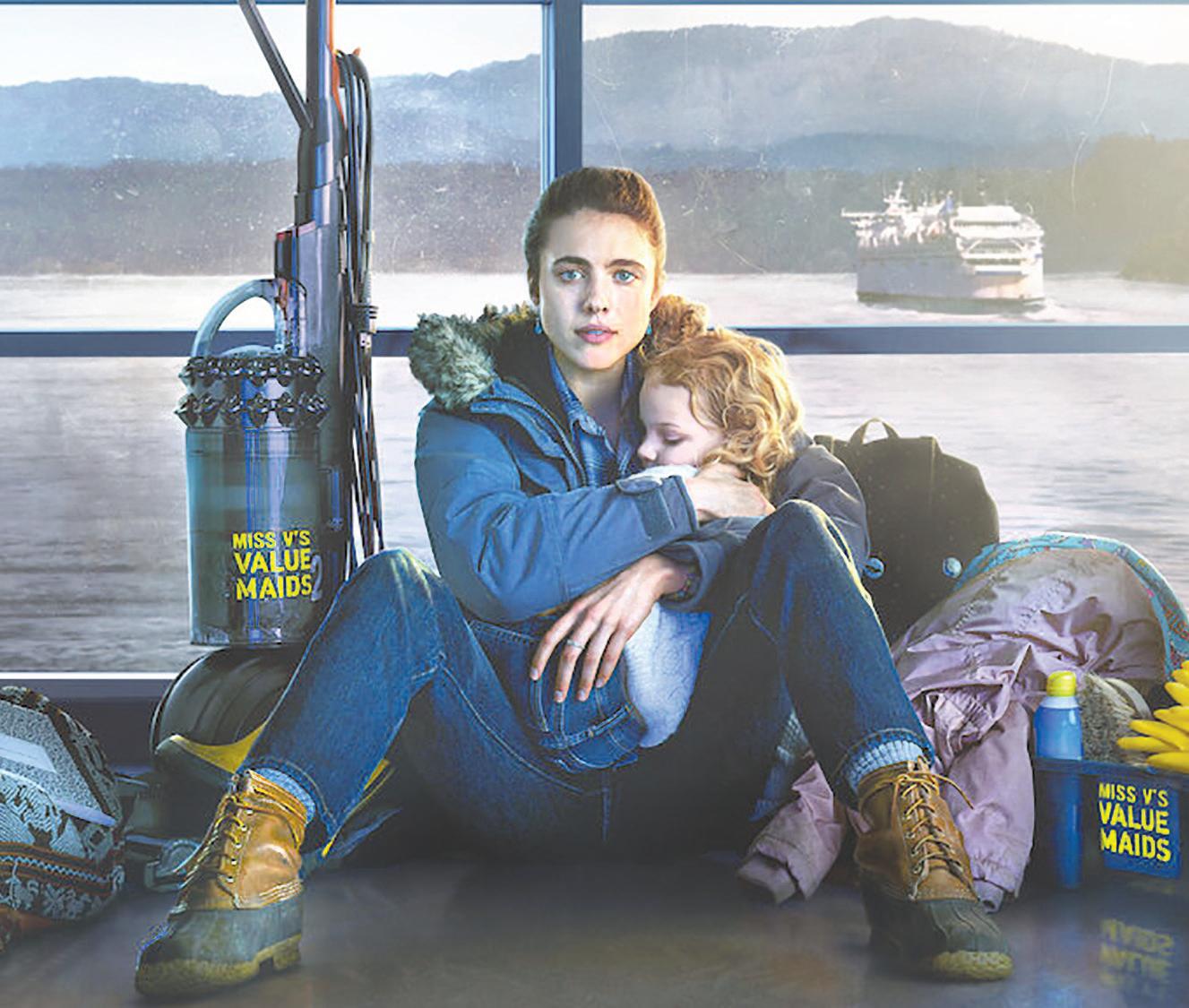
What I loved most about this show, however, is not the outstanding performance of the cast, but the actual story itself. The show delves into the healing process for domestic violence survivors, starting with the very first step of the recovery process: Acceptance that the abuse has occured.
I believe that seeing the various forms in which domestic abuse can take place is a scary yet urgently necessary step everyone needs to take to raise awareness and take steps toward prevention. Maid also highlights the prevalence of generational abuse and brings to light how traumatic experiences, in its variety of forms, can be normalized for people who grew up with it, which consequently, can blind them to the violence they face.
Maid is ultimately a story about the strong connection and love that a mother has with her child. It can be stressful to watch, and in more instances than one, I wanted to close my screen and pretend like what I was seeing wasn’t really happening. But it is. Abuse, violence, rejection and recovery are themes that are not unique to Maid alone, but shared by domestic abuse survivors collectively.
Our discomfort with the topics of the show are exactly why we should not turn away from it, but confront it fully as a reflection of struggles that are hidden discreetly in the confines of homes everywhere. To call Maid ‘entertaining’ would be almost degrading. Calling it ‘necessary’ would be more fitting.
Audrey Ahn is a sophomore in the School of Industrial and Labor Relations. She can be reached at sa752@cornell.edu.
ANUSHYA ALANDUR ’23
Business Manager
CATHERINE ST. HILAIRE ’22
Associate Editor
PRANAV KENGERI ’24
Advertising Manager
ODEYA ROSENBAND ’22
Opinion Editor
JYOTHSNA BOLLEDULA ’24
News Editor
TAMARA KAMIS ’22
News Editor
CAMERON HAMIDI ’22
App Editor
KRISTEN D’SOUZA ’24
Design Editor
HANNAH ROSENBERG ’23
Photography Editor
OMSALAMA AYOUB ’22
PUJA OAK ’24 Layout Editor
ANNIE WU ’22 Production Editor
MIHIKA BADJATE ’23
Assistant News Editor
SERENA HUANG ’24
Assistant Business Editor
ANGELA BUNAY ’24
Assistant News Editor
JOHN COLIE ’23
Assistant Arts & Culture Editor
AMELIA CLUTE ’22
Assistant Dining Editor
WILLIAM BODENMAN ’23
Assistant Sports Editor
AARON SNYDER ’23
Assistant Sports Editor
MEGHANA SRIVASTAVA ’23 Compet Manager
KATHRYN STAMM ’22 Editor in Chief
MADELINE ROSENBERG ’23
Editor NAOMI KOH ’23
Editor ANIL OZA ’22
HEO ’24
VEE CIPPERMAN ’23
UMAR ’23
E.D. PLOWE ’23
YOON ’23
VELANI ’22
PICHINI ’22
SRISHTI TYAGI ’22
MENDOZA ’24
ARANDA ’23
BASU ’23
KAYLA RIGGS ’24
EMMA LEYNSE ’23
NAGEL ’24
MONOHAN ’24
ABAYEVA ’24
’22
Working on today’s
layout Annie Wu ’22 opinion desker Catherine St. Hilaire ’22 managing desker Madeline Rosenberg ’23
news deskers Tamara Kamis ’22
Kayla Riggs ’24
production deskers Katrien de Waard ’24 Katherine Chang ’25
layout deskers Kristen D’Souza ’24
Puja Oak ’24
photo desker Julia Nagel ’24
arts desker Emma Leynse ’23
science desker Anil Oza ’22
Have an issue with our news coverage?
Want to give your take on a campus issue?
The Sun thrives on your feedback. Continue the conversation by sending a letter to the editor to opinion@cornellsun.com.
Letters should be no longer than 250 words in length.
Please include graduating year if applicable.
Joseph Mullen is a sophomore in the College of Arts & Sciences. He serves as the Student Assembly Internal Vice President. Alyssandra Rae Ortanez is a junior in the College of Arts & Sciences. She serves as the Cornell Filipino Association Cultural Chair. Guest Room runs periodically throughout the semester. Please send comments to opinion@cornellsun.com.
Students may be surprised to find that Cornell’s third president, Jacob Gould Schurman, was a proponent of American Imperialism. Schurman was the head of the eponymous Schurman Commission, a recommendatory body created to help with the governing of the Philippines. In 1899, the body concluded that the Philippines, despite having fought the Spanish (and later, the Americans) for their independence, should nevertheless be colonized and controlled by America, writing that “the Filipinos are wholly unprepared for independence ... there being no Philippine nation, but only a collection of different peoples.”
Beyond this, Schurman justified his view on the necessity of colonization using the prevailing “White Man’s Burden” logic. His personal writings on the Philippines contain paternalistic views of Filipinos, arguing that they must be “taught to govern themselves as Americans or Englishmen govern themselves.”
They also include anti-Muslim tirades in which Schurman called Muslim Filipinos “heathen” and argued that America must “eliminate the Mohammedan”.
Beyond Schurman’s words, the physical impact of his decisions has been devastating for the Filipino people. 20,000 Filipinos were directly killed in the subsequent American war of conquest; 200,000 died of famine and disease. After the end of the war in 1902, the Philippines was ruled as a colony, with its resources and people exploited for America’s benefit. Even after nominal independence in 1946, America still had control, with legislation like the 1946 Bell Trade Act giving U.S. citizens and corporations parity with Filipinos regarding access to Philippine materials and resources, pegging the Philippine peso to the U.S. dollar and giving the United States preferential tariffs.
and subject the people of the Philippines, even after the granting of “independence.” Recent scholarship directly asserts that America is responsible for the current conditions and turmoil in the Philippines, leading to the current authoritarian rule of Rodrigo Duterte.
The people of the Philippines have faced the brunt of American imperialism through the lasting effects of Schurman’s and others’ auspices and rule. Schurman’s impact not only affected the Filipinos at the time of imperial rule, but his words and actions are currently harmimg and killing countless lives belonging to Muslim, Indigenous, Filipino, Filipino-American communities.
This history and depth of imperialism is not widely known to Americans, and likewise most students past and present at Cornell know nothing about Schurman’s decisive role in America’s conquest of the Philippines. It is time to change that. As a student representative body, we are nothing if not models for the world outlook of our peers. Thus, we can begin to reveal the untold history of Cornell’s role in imperialism by taking steps to rectify this injustice.
I ask Cornell and its community ... What does it mean to enroll thousands of students belonging to marginalized communities at a university that has ignored its oppressive histories?
As a University that is quick to identify with “Any person, any study,” Cornell prides itself on its diversity and inclusion in not just their student body, but also the curriculum offered. As a Filipino student that has witnessed the ways in which U.S. imperialism has infiltrated my family and community, I ask Cornell and its community the following: What does it mean to enroll thousands of students belonging to marginalized communities at a university that has ignored its oppressive histories? What does it mean to supposedly uphold students of color while also upholding an individual that caused direct terror on Indigenous and Muslim communities in the Philippines? What does inclusion mean to Cornell?
America established and maintained control of two major bases that still operate today, Subic Bay Naval Base and Clark Air Base, as if occupation never ended. In 1998, the Visiting Forces Agreement (VFA) was signed, allowing the U.S. government to retain jurisdiction over U.S. military personnel accused of committing crimes in the Philippines, unrestricted movement of U.S. vessels and aircraft in the Philippines and materials exported and imported by the military to be exempt from duties or taxes. The VFA, like the other imperial legislative acts performed by the U.S., is a direct continuation of Schurman’s tutelage and role of “handling” the Philippines and its people. It is currently being used as a tool for the U.S. government to control
To stop and prevent further perpetuation of Schurman’s crimes to the people of the Philippines, Cornell must first publicly acknowledge and apologize for Schurman’s words and actions, taken while still holding his office as President. Cornell must commit to a program of study in anti-imperialism, examining how our financial and social structure both in the past and today impacts the colonized peoples of the world, especially in the Philippines. We ought to go even further, and divest from companies that hold Filipino debt or exploit Filipino resources. With sufficient education of the students about this history, we believe there will be pressure for Cornell to rectify these crimes against the people of the Philippines.
Rebecca Sparacio is a sophomore in the Dyson School. She can be reached at rsparacio@cornellsun.com. Te Space Between runs every other Wednesday this semester.
Iloved the natural light of the Low Rise 8 common room — the way it streamed through the windows and danced on the walls. I photosynthesized beneath the light on a couch, where I reached for en“light”enment. I sat in a room with people who have “reached for the stars” ever since they frst raised their hands in class, but in the common room everything becomes more ambiguous. I listened to conversations that swirled like stars against a blue night, turbulent and luminous, painting my canvas in the style of
Vincent Van Gogh. Tings aren’t black and white anymore but Ithaca grey, less defnite and more discussion based such that when we do “reach for the stars” we can make our own connections, our own constellations.
Te couches were so stained that they possessed wisdom. Tey jutted out onto the deep blue rug, like continents slowly reaching into the ocean. Tere was a linguistics major who traversed the room by climbing from couch to couch, and fguratively she was some kind of explorer circumnavigating our little world. Te common room was a synthesis of humanity, collecting individuals with diferent majors and experiences who deliver their stories of the day like soliloquies.
Te physics major gave into the gravitational pull of the common room, sitting on the couch to talk about politics. Te chemistry major would set his large textbooks on the table before he settled into a focus stronger than covalent bonding. Te common room was almost cohesive, conversation sticking together like water molecules. Te biology major studied osmosis as the steady difusion of people in and out of the common room shifted conversations. Te philosophy major talked about morality deep into the night. Te engineer analyzed the breakdown of structures into their simplest parts, as the linguistics major broke words into prefxes and sufxes just to put them back together again. “Interdisciplinary” is not a buzz word in the common room.
Tere was a little round wooden table that I sat beside criss-cross applesauce and a little bee infestation, complementing the endless buzz of conversation. Two large refrigerators hummed, absorbing gossip and political theories, opening their doors to a rush of cold air and the chilling sense that I would never know everything there is to know.
I remember the uneasy feeling of questioning that settled in the air around me, flling the space between adolescence and young adulthood. A loss of direction and a reach for answers, a reach for the stars and a need for more time before I can grab them. I am stuck in the endless cycle of shoulder shrugging, unlearning, and uncovering within the marketplace of ideas.
We need to make time for the common room. It’s a place where we can develop our professional and personal selves simultaneously. It’s a place where we can take what we learn in class and throw it out there, just to see what others think. My professor introduced me to the idea of being “entrepreneurs of ourselves.” Tis is the concept that we are constantly fnding and creating ourselves. Te common room exposes us to the chance of discovery, where atoms of consciousness collide and provide us with real world applications to the information we learn. Te transience of the college experience may force us to leave these spontaneous conversations behind and the rise of social media may reinforce and strengthen our previously held conceptions, when we need college to do the opposite (in many ways it already does). We get to decide what we are reaching for.
We need to make time for the common room. It’s a place where we can develop our professional and personal selves simultaneously. It’s a place where we can take we learn in class and throw it out there, just to see what others think. My professor introduced me to the idea of being “entrepreneurs of ourselves.” Tis is the concept that we are constantly fnding and creating ourselves. Te common room exposes us to the chance of discovery, where atoms of consciousness collide and provide us with real world applications to the information we learn. Te transience of the college experience may force us to leave these spontaneous conversations behind and the rise of social media may reinforce and strengthen our previously held conceptions, when we need college to do the opposite (in many ways it already does). We get to decide what we are reaching for.
At night the common room became silent and studious. I used the common room as another part of my Cornell education. In the common room people bumped into each other by chance to share a moment of time. Conversations spread like a cofee spill, rushing across the table before dripping onto the couches which become stained with cafeinated wisdom. When I was a freshman, I liked to sit there deep into the night.
Agree? Disagree? Comments can be sent to opinion@cornell.edu. A Cornell Conversation runs every Wednesday for the next three weeks.
Several weeks ago, two opinion columnists got into an argument about curriculum reform at Cornell. Tey decided to record their disagreement and transcribe it as a discussion column inspired by “Te Conversation,” a weekly column between New York Times opinion columnists, Gail Collins and Bret Stephens. Below, Cornell Daily Sun opinion columnists Andrew V. Lorenzen and Giancarlo Valdetaro discuss changes to Cornell’s academic policies. Tis conversation is divided into four parts to be released each Wednesday for the next three weeks. Tis is the frst installment of A Cornell Conversation. It has been edited for length and clarity.
ANDREW V. LORENZEN: So, the genesis of this column was that Giancarlo and I were having an argument about whether or not Cornell should abolish double majors. It was an idea that Giancarlo had that I felt very strongly against. Giancarlo, do you want to give your thoughts on why you support this?
G I A NC A R L O V AL DET A RO : Yeah, so this idea came from a general feeling that the particular demands of being a student mean that you’re always on the clock in a certain sense, that it feels like you should be spending all of your time maximizing how much you do in an academic setting. Te pursuit of more than one major is one way this is exacerbated, and it leads to people basically having no free time or no time when they can take a mental break (especially when you consider students who are also working). Double majoring and its requirements come at a serious cost — especially in regards to taking classes you wouldn’t otherwise take if
they weren’t required by your major. So, that’s where the idea came from.
A.L: Yeah so, obviously as you know I’m very much not a fan of this idea. I have a few thoughts to lay out why I disagree. First off, I think you’re right that there is a foundational problem at Cornell with students being overcommitted and generally burnt out. But I don’t think this is the right solution to that. The problem at Cornell is a cultural problem. It’s not one that’s driven by double majors specifically. The reason why students are always overcommitted and struggling to keep up with their workload is because Cornell has an academic culture wherein we expect students to do that. That’s toxic, and it needs to be combatted. And there’s also, of course, some societal forces at play with how we try to incentivize students to have these absolutely overloaded resumes. It’s an arms race that’s endemic to most elite colleges, and it doesn’t really help anyone. It becomes a race to the bottom. Getting rid of double majors doesn’t fix that. The workload will just be subsumed to the next thing. Instead, it’ll be one major and four minors or something like that.
...there is a foundational problem at Cornell with students being overcommitted and generally burnt out. But I don’t think this is the right solution to that. The problem at Cornell is a cultural problem.
mentally violates the spirit of Cornell as an academic institution. I mean, “Any Person, Any Study” means that a student should be able to study anything they want. If they want to double major, triple major, even quadruple major, they should have the opportunity to do that. What Cornell, as an institution, should be doing is putting them in a position to succeed under the choices that they’ve made as a student. And that means that they should be more flexible with general college requirements. If you’re somebody studying two humanities majors, and you’re clearly not going into something mathematics or science related, you shouldn’t have to take four math or science classes. That doesn’t make any sense. So, it shouldn’t be a plan to abolish double majors, it should be a plan to better support double majors and create an academic culture that puts students first.
culture through restrictions placed on students. If that was the case, we would have no underage drinking at Cornell because Cornell strictly does not allow underage drinking. Creating rules that prevent students from doing things is not going to actually stop them from being overcommitted. The reality is that most double majors aren’t double majors because of the culture side of things. It’s not because they feel it will necessarily make them that much more marketable. It’s because they’re genuinely interested in two subjects, and they want to pursue both in a rigorous manner. So, when I’m talking about the issue with the Cornell culture and students being overcommitted, what I’m referring to more so is students who are taking 22 credits a semester, and students who are taking a ridiculous amount
The pursuit of more than one major is one way this is exacerbated, and it leads to people basically having no free time ...
On the question of requirements, and students having to take classes that don’t really interest them — that’s not an argument against double majors. That’s an argument against having very strict requirements within majors. And I’m actually very amenable to that. I think there are a lot of majors that are far too prescriptive in telling students what they have to take. My third point is that I think this funda-
G.V.: Okay, I think there are some contradictory forces within that. At one stage, you say that we should be combating the culture of overcommitting oneself, which I personally am a great example of this semester, in that I’ve well overcommitted myself and am currently very stressed. But then on the other hand, you’re saying that when people do make choices that are representative of this culture of overcommitting oneself, that they should be asked no questions. In this case, the culture is only possible because of the choices that people are allowed to make.
AVL: So, the problem with that is, I think, you fundamentally cannot change a
of very difficult classes in one semester and stacking extracurriculars and doing an internship on the side… a bazillion things at once. And the end result is a student that’s burnt out and not achieving at a high level in any of their classes. That is not an issue with double majors. That’s an issue with students pushing themselves way too hard. And the solution to that is either strict credit caps, which I personally don’t agree with but can see the argument for, or it’s a significant intervention in freshman year to set academic expectations in a far more restrained manner.

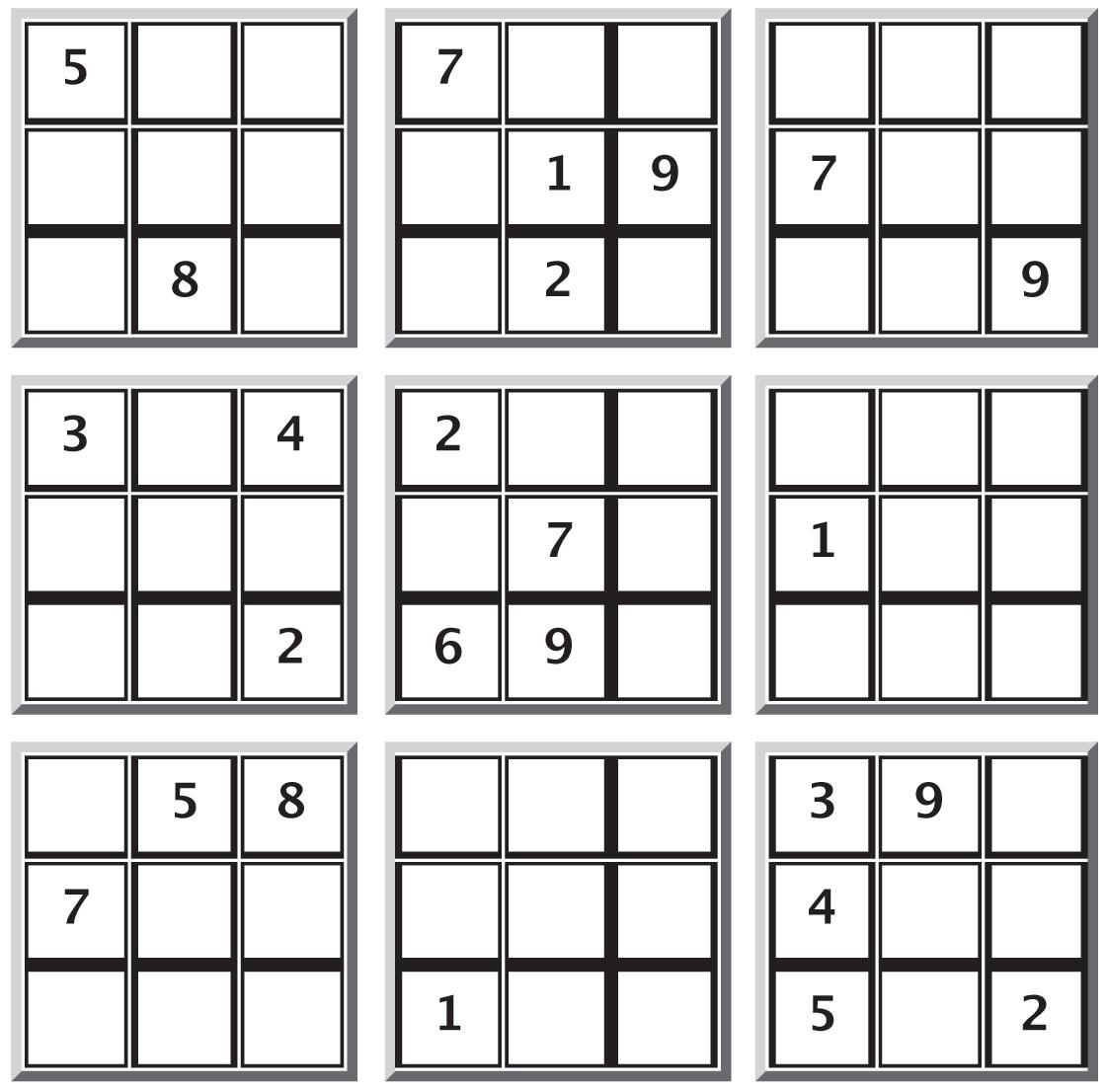
Fill in the empty cells, one number in each, so that each column, row, and region contains the numbers 1-9 exactly once. Each number in the solution therefore occurs only once in each of the three “directions,” hence the “single numbers” implied by the puzzle’s name. (Rules from wikipedia.org/wiki/ Sudoku)


By KAITLYN LEE Sun Contributor
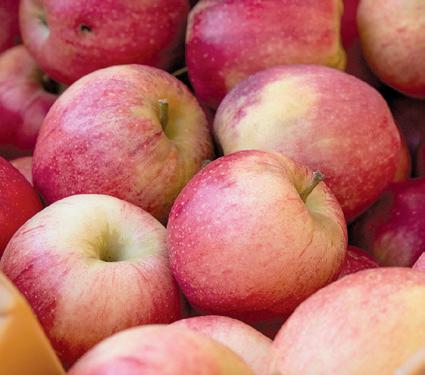
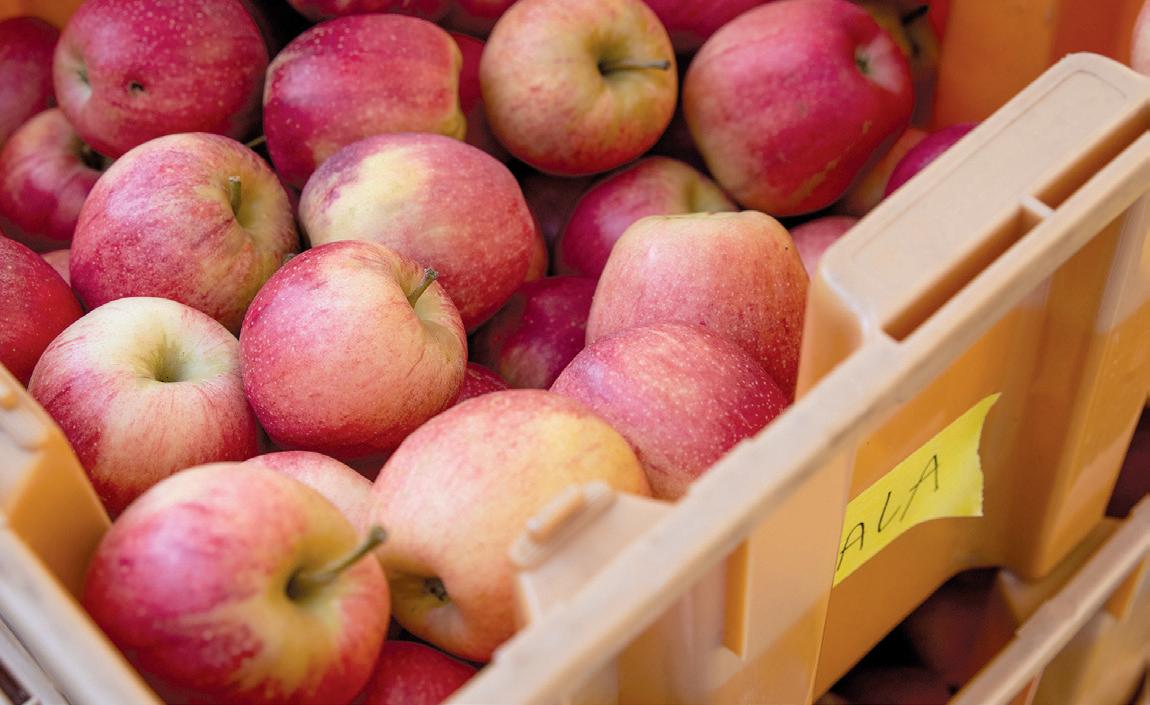
Autumn has returned to Upstate New York, marked by students flocking to Indian Creek Farm to enjoy the peak season of apples and the sweet taste of fresh apple cider.
Apple cider, a drink made from apple juice, and sometimes with an alcohol content up to 7 percent, has long been an Ithaca staple for local producers and autumn enthusiasts.
Chris Gerling, a senior extension associate of Cornell AgriTech Food Science, who has extensive experience in teaching how to make apple cider and analyzing cider samples, explained the process of cider production.
According to Gerling, cider makers must first pick, wash and rinse apples before grinding them up. Then, the apples are pressed to make sweet cider, and if the producer wishes to make hard cider, the cider is fermented to convert sugars into alcohol.
Even before the apples are picked, specific types of apples must be carefully bred
contrast to culinary or dessert apples — the sweet variety people buy from supermarkets to eat and make up 95 percent of apples grown in the U.S. today — cider apples contain tannin. These chemical compounds can also be found in red wine, and are responsible for adding acidity and bitterness.
Because of this, cider apples, while not as delicious to eat, bring more depth to the taste of apple cider.
Cortni Stahl, extension aid of the New York State Agricultural Experiment Station and a cider maker for 10 years, added that tannins further add complexity to cider by creating a drying sensation in the mouth. Gerling and Stahl both explained that the blend of apples, as well as the freshness, contribute to the cider’s flavor.
According to Stahl, cider makers often use a blend of apples, rather than a single variety, to allow for the unique characteristics of each apple variety to shine in the cider. Gerling added that a blend creates a balance of flavor in sugars and acids.
and grown to give the cider a complexity of flavor, Gerling said.
For one, different varieties of apples are specifically used in cidermaking, known as cider apples. Gerling explained that in
“As for freshness, identifying ripe apples can be done by using a starch test to check low amounts of starch, which in turn indicates high amounts of sugar in apples, or relying on the grower’s knowledge,” Stahl said. But according to Gerling and Stahl, the quality of apples is not the only key factor to a good apple cider — microorganisms that perform fermentation, such as yeast, also play a significant role.
Stahl has researched the effect of using different yeast strains, including beer and wine yeasts, for fermentation on the aroma and taste of apple cider. Stahl explained

that yeasts that perform fermentation that produce esters, compounds that influence sweet and fruity aroma and flavor, pair well with apple cider.
Various yeast strains also contribute different amounts of compounds, Gerling said, and the temperature and nutrients provided to yeasts by cider makers also affect the taste of apple cider. A cool temperature of around 7 to 14 degrees Celsius and space for carbon dioxide to be released are also necessary for yeast to properly ferment, Stahl explained.
Besides the yeast involved in fermentation, bacteria and other microbes are also involved by causing apple cider to spoil. Stahl said due to a pH from 3.3 to 3.7 and suitable sugar content, as well low alcohol content, apple cider allows for these microbes to easily thrive. Cider makers must maintain a sanitary, sterile environment, to avoid these microbes causing spoilage during cider production.
This year has been challenging for apple cider production, both Gerling and Stahl noted.
According to Stahl, a late freeze resulted in apple blossoms dying and dropping. The warmer fall may also cause apples to fall from
trees before they become ripe. As a result, the spring has brought a lower yield in apple orchards.
Gerling also said an overall increase in rain throughout the year, compared to past years, has caused difficulty for the apple growing season, as the humidity and moisture fosters growing conditions for diseases, mold, mildew and fungus. Furthermore, climate change has made fermentation more difficult, as higher temperatures require a greater need for cider makers to regulate cooler temperatures and maintain the process.
Stahl and Gerling have various ideas for projects on apple cider in the future. Gerling hopes to build partnerships with other New York cider organizations and continue researching yeast strains and tannin extraction from apples. Stahl aims to develop a machine trained to analyze cider samples based on pH, sugars and alcohol.
“In the future, we hope the machine will help us produce cider at more affordable prices,” Stahl said.
Kaitlyn Lee can be reached at kl629@cornell.edu.
By TENZIN KUNSANG Sun Contributor
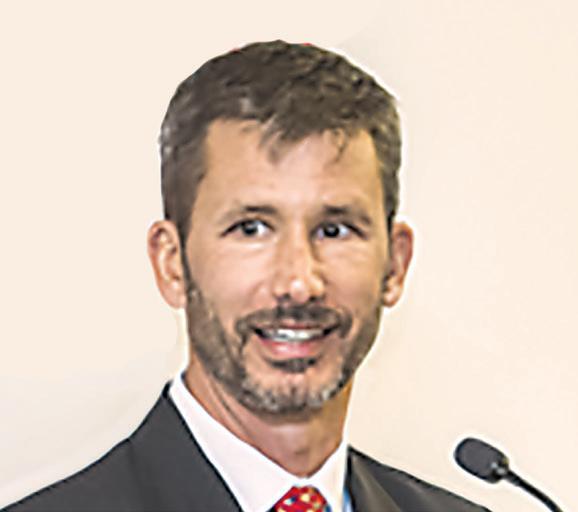
The National Institutes of Health recently awarded Dr. Robert Peck, associate professor of medicine in pediatrics at Weill Cornell, a grant to conduct the first longitudinal study on the relationship between sleep, cardiovascular disease and HIV in Tanzania.
He hopes to gain a better understanding of who gets cardiovascular disease and the outcomes of this diagnosis. Along the way, he also hopes to better understand how to adapt the local, underresourced health systems to fit their communities.
Currently based in Tanzania, Peck serves as a coordinator for the collaboration between Weill Cornell Medicine and Weill Bugando School of Medicine in Mwanza, Tanzania. His efforts in preventative medicine in Africa have landed him this grant to study whether cardiovascular disease is a risk factor for HIV by measuring blood pressure during sleep.
After finishing his pediatrics residency in Boston in 2007, Peck traveled to Tanzania to help estab-
lish a new medical school. When he arrived, he noticed there were just as many non-communicable diseases that cannot be transmitted from one person to another, such as kidney disease and stroke, as there were infectious diseases, such as tuberculosis and HIV.
“As I walked around the wards, one bed would be a person with HIV. The next bed would be a young person with kidney disease,” Peck said. “The next bed would be one with tuberculosis. The next bed would be someone with a stroke.”
Peck hypothesized that hypertension was the underlying factor for non-transmissible diseases that were being reported in the local Tanzanian hospital since he first came. Witnessing people up to two decades younger (late 30s and 40s) than expected reporting cases of high blood pressure prompted him to dig deeper into his studies of hypertension, prevention and management to shed more light on risk factors for cardiovascular disease.
Dr. Justin Kingery, co-investigator in the study and assistant professor at the Center for Global Health at Weill Cornell, got involved in this
research this year for similar reasons.
“There are disparities involved in [cardiovascular disease and hypertension] both in and outside of the U.S.” Kingery said. “I also think there are very vulnerable populations like those living with HIV and other diseases, as well, that have an even higher risk than the general population.”
Peck said that because blood pressure varies greatly throughout the day and night, ambulatory blood pressure cuffs — which can measure blood pressure as one moves around in their daily life — would be more useful compared to measuring blood pressure in a single sitting.
Peck added that nighttime blood pressure is a more stable representation of one’s cardiovascular system compared to daytime blood pressure, allowing physicians to gain a more accurate read of the stiffness of a person’s arteries and the efficiency of heart pumping, which both can be key
indicators in cardiovascular disease.
According to Peck, this study design will help researchers understand some key cardiovascular abnormalities that can only be seen through 24-hour blood pressure monitoring, such as elevated blood pressure only at night, or masked hypertension — when normal blood pressure is reported in the clinic but blood pressure increases outside of this setting. This monitoring can also detect nondipping, in which blood pressure does not lower at night as it should, which increases the load on the heart and stress on the brain, Peck explained.
“Those are the patterns we know from high-income populations, but we understand very little of these things in the African context,” Peck said. Peck’s commitment to reduc-
ing the health disparities between lower and higher income countries is one of the reasons that drew Kingery to his work.
As a researcher working alongside Peck for more than six years, Kingery also praised Peck’s community-driven efforts to study this three-way relationship between sleep, cardiovascular disease and HIV to better support Tanzanian and East African communities, which are underrepresented in such scientific studies.
“I think it’s rare to see someone who truly cares about the science, about the humanity, about the clinical care, and all these things ruled into one at the level he does,” Kingery said.
Peck and his co-investigators hope to turn these findings into preventative practices among Tanzanians by working with policy makers at the country’s Ministry of Health. This ongoing process, as he states, reinforces their standard that “prevention is better than treatment.”
Tenzin Kunsang can be reached at tk489@cornell.edu.