
By
In a virtual event on Thursday, University President Martha Pollack announced the launch of “To Do the Greatest Good,” a new campaign aiming to raise $500 million for undergraduate financial aid.
The event consisted of pre-recorded speeches to alumni from Pollack, members of the Board of Trustees and Cornell professors with an introduction by undergraduate trustee Selam Woldai ’23.
“For us to remain true to our Cornell mission and competitive with our peers, we need to do more to honor that commitment,” she said. “We need to increase the number of lower and middle income students at Cornell to ensure that they have the same opportunities here as their non-aided peers and to reduce the amount of debt that they bear when they graduate.”
“Today’s challenges demand a particular kind of ethos.”
Martha
Pollack laid out the campaign’s goals early on in the program, citing three main factors that prompted the campaign’s launch.
Pollack
According to Pollack, the money raised would help support the University in its three main goals: educating future leaders, addressing major world problems and increasing Cornell’s global public engagement. She also said that Cornell hopes to expand its work in New York City.
During their Oct. 18 meeting, the Graduate and Professional Student Assembly discussed Cornell’s public safety practices and passed a resolution calling for the University to cancel classes on Veterans Day.
The Public Safety Advisory Committee led off the meeting with a presentation on its 2020 report on racial justice initiatives that the Cornell University Police Department
By SIMRAN SURTANI Sun Staff Writer
For the past year and a half, Gary Fine has operated Prisoner Express from his apartment: sending books, letters and programming packets to incarcerated individuals through his nationwide organization and its coalition of remote volunteers.
Now, they prepare a return to in-person work from the Durland Alternatives Library in Anabel Taylor Hall.
Founded in 2004 by Fine, the director of the Durland Alternatives Library, Prisoner Express runs a variety of creative programs across 49 states to bring hope, encourage self-expression and foster a sense of community among incarcerated participants.
Twice a year, the organization compiles selected submissions and sends them in a newsletter to all active program members. Fine and his team have also created distance learning programs, which provide packets of information on a variety of topics ranging from chess to computer science.
Fine formed Prisoner Express after receiving a letter from Danny Harris, an incarcerated man in Texas. In his letter, Harris asked the Durland Alternatives Library to send him books as part of a larger distribution program he thought they were running.
Unfortunately, the Durland Alternatives Library had no such program at the time.
“I wrote him back a letter saying ‘No, sorry, we have no service like that,’” Fine said. “But it was a friendly letter, and [Harris] wrote me back thanking me for writing to him like he was a human being and for treating him with dignity and respect.”
Fine was surprised that his letter made such an impact on Harris and sent him a package of books. After which, he received a gracious letter back from Harris, expressing how much the gesture meant to him.

could enact. It provided four anti-racist recommendations for campus public safety, including the release of a public anti-racism statement, the development of an alternative response model and the recruitment of diverse participants in public safety initiatives.
Their first recommendation was to release a public statement that acknowledges the existence of structural racism in the U.S. and commits to enact-
As word got around about Fine’s actions, he began to receive more book requests and sent books to incarcerated individuals across the country. Soon after, he founded Prisoner Express.
Prior to the pandemic, Prisoner Express operated from the Durland Alternatives Library. Volunteers from across campus and the larger Ithaca area joined together on weekdays to package books, write letters and educate themselves about contemporary social issues.
When the library closed due to the pandemic,

Sedition | Ammar Ali Jan, an academic and activist based in Lahore, Pakistan, will be speaking on patterns of rising authoritarianism in South Asia and the label of “foreign agent” is invoked against political opponents. Jan, who is under trial for sedition in Lahore, will be discussing sedition law is and it’s consequences for political theory.
We the Seditious People, by Ammar Ali Jan 11 a.m., Virtual Event
Joint Labor Economics & School of Public Policy Workshop: Nikolai Boboshko 11:15 a.m. - 12:45 p.m., Ives Hall 116
Bioinformatics Workshop: R and Rstudio 3 - 4 p.m., Stimpson Hall
Contemporary China Initiative: Decolonizing Chinese Historiography 4:45 - 6:15 p.m., Virtual Event
Invisible Bodies: Psychoanalysis, Subjugated Knowledges And Intimate Ethics in Postwar Egypt 4:45 - 6:00 p.m., Virtual Event
Tomorrow
Releasing the Sense of Control Guided Meditation Noon - 12:45 p.m., Virtual Event
Intercampus Symposium on Aging & Neurodegeneration Noon - 7:30 p.m., Biotechnology Building G10
Losing the Longest War: Afghanistan, 2001-2021 Noon, Virtual Event
Moving the Needle on STEAM Diversity Through Collaborative Partnerships With Minority Serving Institutions 12:25 - 1:15 p.m., Emerson Hall 135
Boba Talk: The APIDA Year in Review 1 - 2 p.m., Anabel Taylor Hal B21
Biomedical & Biological Sciences Signature Seminar
4 - 5 p.m, College of Veterinary Medicine Lecture Hall 4
Microeconomic Theory Workshop: Ali Khan 4:15 - 5:15 p.m., Uris Hall 498
Writing Beyond the Academy 4:30 p.m., A.D. White House
Visual Culture Colloquium — Nadya Bair 4:45 p.m., Virtual Event

CAMPAIGN
Continued from page 1
She noted that this campaign fits into a larger goal of the Board of Trustees to raise $5 billion, with $3 billion reserved for Cornell’s Ithaca campus, $1.5 billion for Weill Cornell Medicine and $500 million for Cornell Tech.
This campaign launch follows over two years of undergraduate difficulties receiving financial aid, culminating in student protests and S.A. debates.
After President Pollack’s speech, Robert S. Harrison ’76, chairman of the Board of Trustees, spoke on the engagement goals of connecting with 200,000 alumni, or 80 percent of all living alumni, by the campaign’s conclusion in 2026. Through attending alumni events, volunteering and making donations, 140,000 alumni have already contributed to this engagement goal, with 25,000 alumni connecting during the pandemic.
Harrison stated that the University has already obtained $2.6 billion of the $5 billion goal dollars, $223 million of which will be put entirely towards the undergraduate financial aid goal.
Harrison concluded with a call to action to all those tuning in, asking them to contribute to the campaign.
Ezra Cornell ’70, the great great great grandson of the University’s founder, highlighted the humble beginnings of his namesake and their ideological relevance to current students. He outlined how his ancestor found success through a telegraph company and how his purpose truly was “to do the greatest good.”
“I think he understood that he could ignite something by his example and by encouraging others,” Cornell said.
Between the campaign-specific presidential and donor speeches, the video included presentations from several Cornell professors and spoken word poet Lamin
Johnson ’21 discussing the future of the University across different fields.
Prof. Verity Platt, classics and history of art and visual studies, spoke on the importance of engaged learning at Cornell. She talked about studying the classics for a modern era and developing hands-on methods in her department.
“One might think that the study of classics, which is traditionally about studying what is the best or the highest in value culturally or aesthetically, is at odds with this idea of ‘any person, any study,’” she said. “But the way that we study the ancient world today is very much about thinking about the broader range of ideas and experiences that comprised life [then].”
Prof. Praveen Sethupathy ’03, biomedical sciences, spoke on his work as director of the Center for Vertebrate Genomics and the relevance of scientific progress to Cornell culture.
“Cornell is creating a culture where we’re not just doing our work in our ivory towers and letting someone else worry about how the rest of the world understands and appreciates it,” he said, “But rather, [it is] encouraging us to go out into the community.”
Johnson, who formed the Unchained Poetry Group for Black poets during his time at Cornell, delivered an original spoken word poem about the potential of the Cornell community.
All of the speakers emphasized the importance of Cornell’s adaptation to future needs. Pollack expressed how the fundraising campaign could support it.
“Today’s challenges demand a particular kind of ethos and a particular kind of education — one that, while contemporary, is still designed for any person and any study,” she said.
Vee Cipperman can be reached at ocipperman@cornellsun.com. Vidya Balaji can be reached at vb266@cornell.edu.
RELAUNCH
Continued from page 1
Fine continued operations from his apartment.
“I was able to spend even more time on Prisoner Express,” he said. “We created a digital organization to digitally archive submissions.”
To help remote volunteers continue their work, Fine used Ameelio, an online service which turns messages typed on a phone into letters and mails them to prisons for free.
In addition to helping the organization’s existing volunteers continue their correspondence, this model allowed new student groups to take part.
“Reconnecting
with others helping out our community reminds me of the tangible impact we can achieve.”
Ning Ting Ni ’22
Grace Maines ’24 first began volunteering for Prisoner Express during the pandemic through Alpha Phi Omega National Service Fraternity. Although Maines never had the opportunity to volunteer in-person, the new model allowed her to join the team and even become the coordinator of its journal program.
Since early October, Maines has worked alongside Fine and the rest of the Prisoner Express team to plan for the organization’s return to in-person service.
“My first time doing letter writing in-person
will be later this week,” Maines said. “I am super excited for that because I anticipate there will be a sense of camaraderie among all of the volunteers, and I’m looking forward to being able to share the experience together.”
Fines hopes to host events in the library every weekday between 5:00 and 7:00 p.m.
“I’m looking forward to being able to share the experience together.”
Grace Maines ’24
According to Fine, volunteers and student groups will engage in one or two tasks each day, ranging from packing books and typing essays to reading and responding to journal entries.
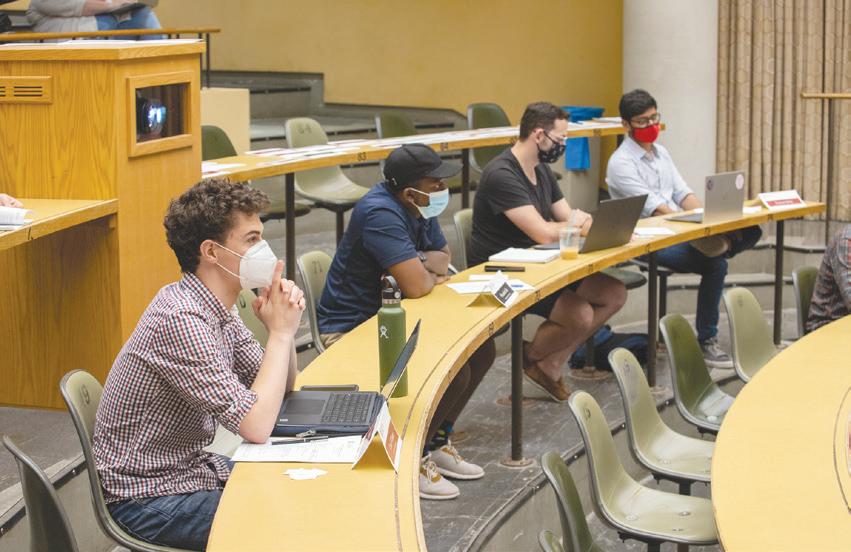
“When I see people on campus going to lecture halls, masked and sitting next to one another,” Fine said, “then I don’t think there’s any reason why they can’t be coming to the library masked and doing the same thing.”
Ning Ting Ni ’22, another APO member, fondly remembers volunteering in-person for Prisoner Express before the pandemic with her peers. She expressed excitement and gratitude when she heard about the return to in-person service.
“Being able to go back to in-person volunteering feels incredibly rewarding,” Ni said. “Reconnecting with others helping out our community reminds me of the tangible impact we can achieve through service.”
Simran Surtani can be reached at ssurtani@cornellsun.com.
GPSA
Continued from page 1
ing anti-racist public safety measures.
The second was to develop and implement an alternative public safety and response model. This recommendation was made based on data suggesting that Cornell’s public safety system is excessively dependent on the Cornell University Police Department, which is partially responsible for experiences of fear, anxiety and mistrust among the campus community.
Other recommendations called for a new educational campaign on public safety resources and protocols and dedicating more resources to diversify the public safety workforce.
“We know that bringing diverse backgrounds into a group brings diverse perspectives and experiences,” said Liz Davis-Frost ’20 grad, the graduate and professional student-elected trustee. “Even though representation isn’t the only answer, it is a crucial first step, especially considering the demographics of our campus.”
PSAC initially drafted this report in the midst of the
summer 2020 Black Lives Matter movement protests, after President Pollack outlined new racial justice initiatives evaluating the University’s protocols. They submitted their initial recommendations in July of this year, with Pollack issuing a response supporting the report.
In Monday’s meeting, the GPSA resolved to let Ryan Lombardi, vice president for student and campus life, join as co-chair of PSAC due to overlap of some public safety responsibilities within the Student and Campus Life organization. PSAC will also hire consultants to assist in refining the recommendations.
After the public safety resolutions, the Office of Institutional Equity and Title IX reviewed Policy 6.3 on consensual relationship guidelines.
Provision 4 of Policy 6.3 states that romantic or sexual relationships between staff members and undergraduate students are prohibited regardless of the work unit or location of either party. This exact prohibition has already been in existence for faculty members but has now been extended to include graduate students with any conflict of interest over undergraduates.
Regina Walton, assistant director of institutional equity and an investigator in the Title IX office, recommended that the GPSA encourage consultation with the Title IX office when questions arise regarding the status of a Cornellian as student or staff.
“What we’re doing is encouraging people to at least come forward in the type of relationship that you’re in, so we can review it for a potential conflict of interest,” Walton said. “That gives us an opportunity to look at whether or not there could be a conflict.”
The GPSA also introduced Resolution 5, which called on the University to recognize and honor Veterans Day with class cancellation for all students and no requirement for University affiliates to work. Several faculty members and organizations, including the Cornell Law Veterans Association and the Cornell Military Network, sponsored this resolution.
The resolution passed with 17 votes in favor, 0 abstaining and 1 opposing the resolution.
Isabella Warren can be reached at imw27@cornell.edu.
rience filled with music, dance, tea and personal expression.
The material world is tiring. Encumbered by the aesthetic constraints of a culture obsessed with productivity and homogeneity, this often insipid nature of being is one that drives many of us to further
Tucked away under The Cornell Daily Sun’s office, this slightly inconspicuous gem of Ithaca’s nightlife is open to all ages from 5 p.m. to 10 p.m. Upon entering, you’re instantly immersed in a candlelit space, where lanterns and herb-filled vials dangle

explore nature, art and even drugs. Psychedelic art, or (more accurately in this case) Visionary Art, seemingly encompasses all these elements. And thankfully for Cornell students, the Sacred Root Kava Lounge and Tea Bar is offering not only the display of Visionary Art, but an immersive art viewing expe-
above a traditional wood paneled bar, frequently hosting a group of talkative kava drinkers. Should you decide to wander into the adjacent space, you’ll find a small stage to your left, a constellation of Moroccan terrace style tables and chairs in the middle, plush couches along the sides and crystals
peppered throughout. Should you venture even deeper into the belly of this tea lounge, you’ll happen upon a little intimate room known as the Meditation Room, which is usually occupied and enveloped in slight mystery.
This space is part fantastical apothecary and part dive bar. Every wall features new, local Ithacan artwork that rotates on a monthly basis. And the owners, a husband and wife duo, use intuition, attention to aesthetic cohesiveness and above all an adherence to their central ethos of connection, communion and creativity to guide their curatorial decisions.
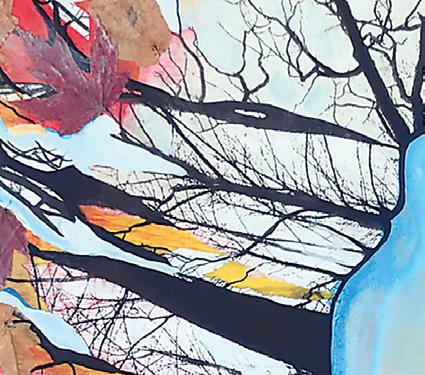
Recently, the bar area hosted the show “Tree Spirits” by Shera DElia. DElia is a personal friend of the owners and was supposed to have her work exhibited in March 2020. Her artist statement highlights the power in the stillness of trees as a backdrop to the chaotic turmoil of modern living. “Observe them in silence”, she writes, “[m]editate and commune with them. Allow their stillness and silence to bring you back into balance.”
When you look at her work, comprised of mixed-media paintings, you’ll see many representations of cylindrical, half tree-half human figures, composed through multicolored bulbous shapes and often using recurring colors like soft salmon pink, yellow and cerulean, a palette perhaps familiar to those of us who’ve watched
the sunset on Libe slope. The figures are painted with thick circular lines, many invoking some
the room, her work highlights the way the elements (air, fire, water and earth) are woven togeth-

symbolic elements of the feminine form; this happens to be a transcendental theme within the space, as you can see sculptures of feminine spiritual figures displayed throughout.
The next room featured an exhibition called “Elements of Magic: Celtic Mandalas” by Gaia Woolf-Nightingall, a British born visual artist, writer and organic horticulturist. Larger in scale and complementing the large walls of
er with ancient Celtic symbols to “express divine purpose and will.” Unlike DElia’s use of symbolic form, Nightingall opts for more representational depictions of the female form, which then become abstracted by large multicolored circles sprinkled across the canvas and perhaps referencing our solar system as well as Cubist surrealism. Her artist’s statement makes the point of mentioning the place
of magic and myth in her work, which can be seen through the use of colors like black and red that deviate from the earthy symbolism of DElia’s paintings while coinciding with the more intimate and arcane nature of the lounge’s backrooms. When asking a customer what the paintings invoke for them, they gravitated towards themes around the exploration of the mind. Through both these artists’ works, there is an emphasis on the subconscious realm through a visual collision between the physical form, the metaphysical form and nature.
Needless to say, there’s only so much words can do to fill in the experiential gap of seeing this art for yourself. If you’re looking for a momentary relief from the stressful sterility of modern life, then indulging in the thoughtful eccentricity of these artists and this space can be that for you.
DElia’s work can be found on her website: www.sheradelia.com or her Instagram @artistshera. Nightingall’s work can be found on her website: earthelementalart.com.
Amira Olingou is a freshman in the College of Arts and Sciences. She can be reached at ao338@cornell.edu.
ASHLEY KOCA SUN CONTRIBUTOR
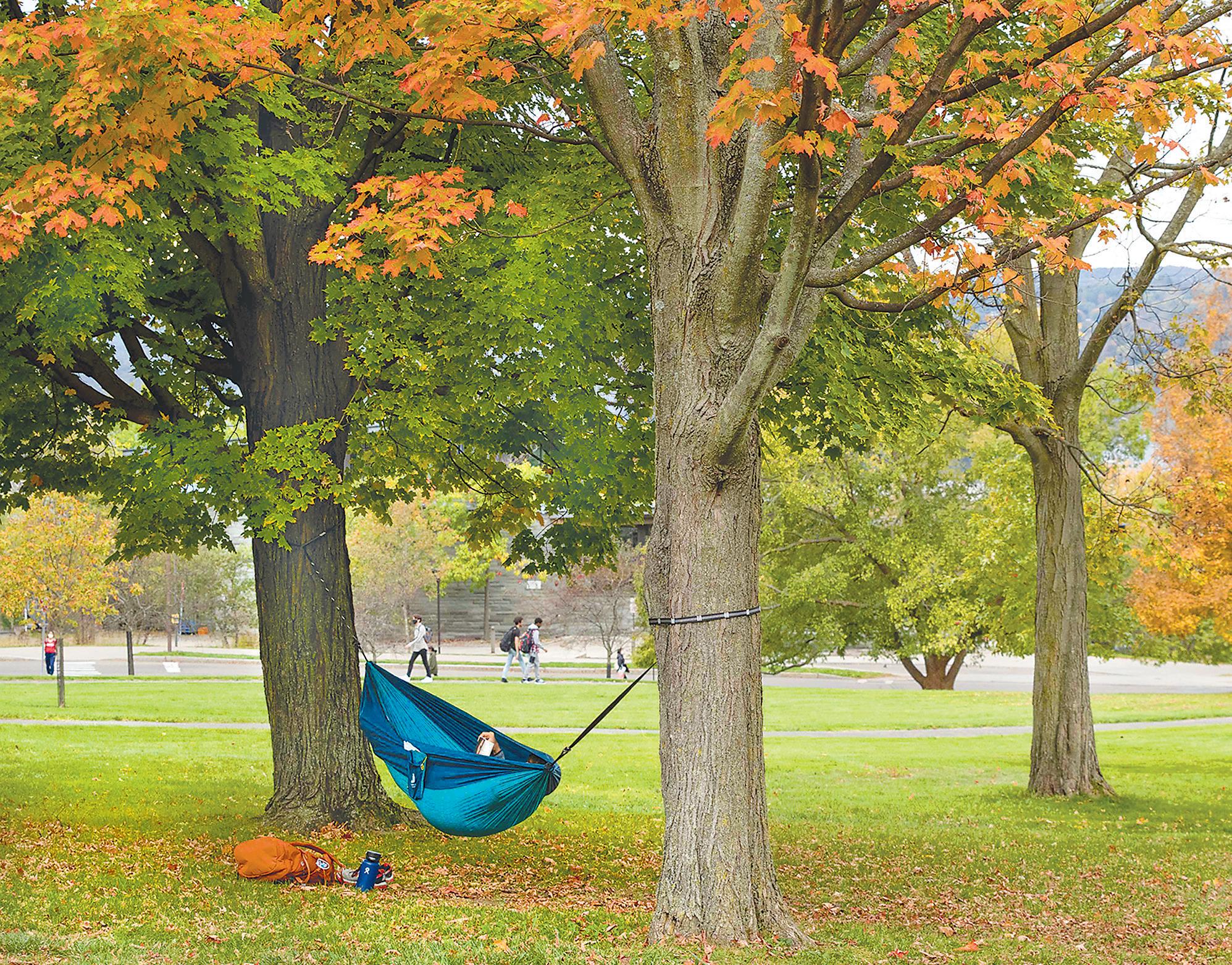
Between prelim season and the changing of seasons, campus has become a lot more serious. For those of us who stayed in Ithaca over fall break, this somber ambience was made all the more obvious by the quiet lull that overtook our emptied dorm buildings.
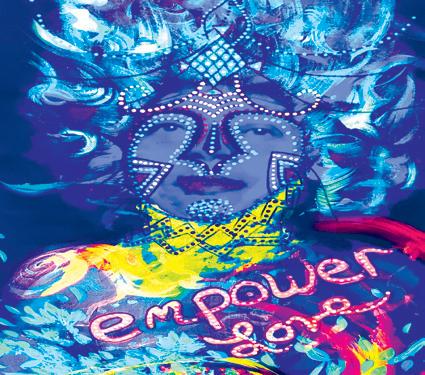
As a way of brightening our moods despite the ever-earlier setting of the October sun, a friend and I took a day trip to Center Ithaca to see its newest art installation: The BEYOND Art Lounge. There, I interviewed local artists Damaris Vasquez and Myztico Campo, whose art can be found all throughout the immersive art exhibit. Aptly named “Ultraviolet Alchemy,” the duo’s work features psychedelic neons emphasized under the black lights above — colors that give the fall trees just outside a run for their money.
From interactive volleyball video games to donut generators, the art itself invites you to engage and release your inner child. “You know, Picasso said that art is the lie that tells the truth,” Vazquez says while talking about this element. Artists have the ability to take reality into their own hands and “subvert that, and what I personally feel when I tap in to do that is the ‘child’ — who is actually much wiser.”
Professing the need to tap into ‘the inner child,’ Vasquez removes the stiff stereotype traditionally associated with galleries and, in its place, welcomes play. “It’s an illusion that children are these empty things that we need to fill with information,” she continues. In actuality, “children are what we are and it’s very close to divine — and play and art and humor and song and music, that’s all god’s language, goddess’ langage. That’s whatever we’re here to do. We’re here to create, you know, like you say it. And so artists, like comedians, are very much the philosophers that get to kind of play.”
Heeding this ‘philosophy,’ in the time that I spent at the Lounge I was able to learn felting, ask a skeleton to read my fortune and even try on a tutu — yes, the tutu was essential.
“It’s amazing how you could change someone’s mood by putting a tutu on!” Vasquez exclaimed as she suggested doing this. And it’s true: The silliness of putting on a tutu in public is an experience sure to make anyone laugh. In
Nfact, the act of putting a piece of the exhibit, the art, onto myself was another level of immersion into the space — not only was I interacting with art, but I sort-of became it, which, according to Vasquez, is next to divine. This totally non-serious act is, in actuality, something truly meaningful without all the heaviness. Light and airy, the tutu tied
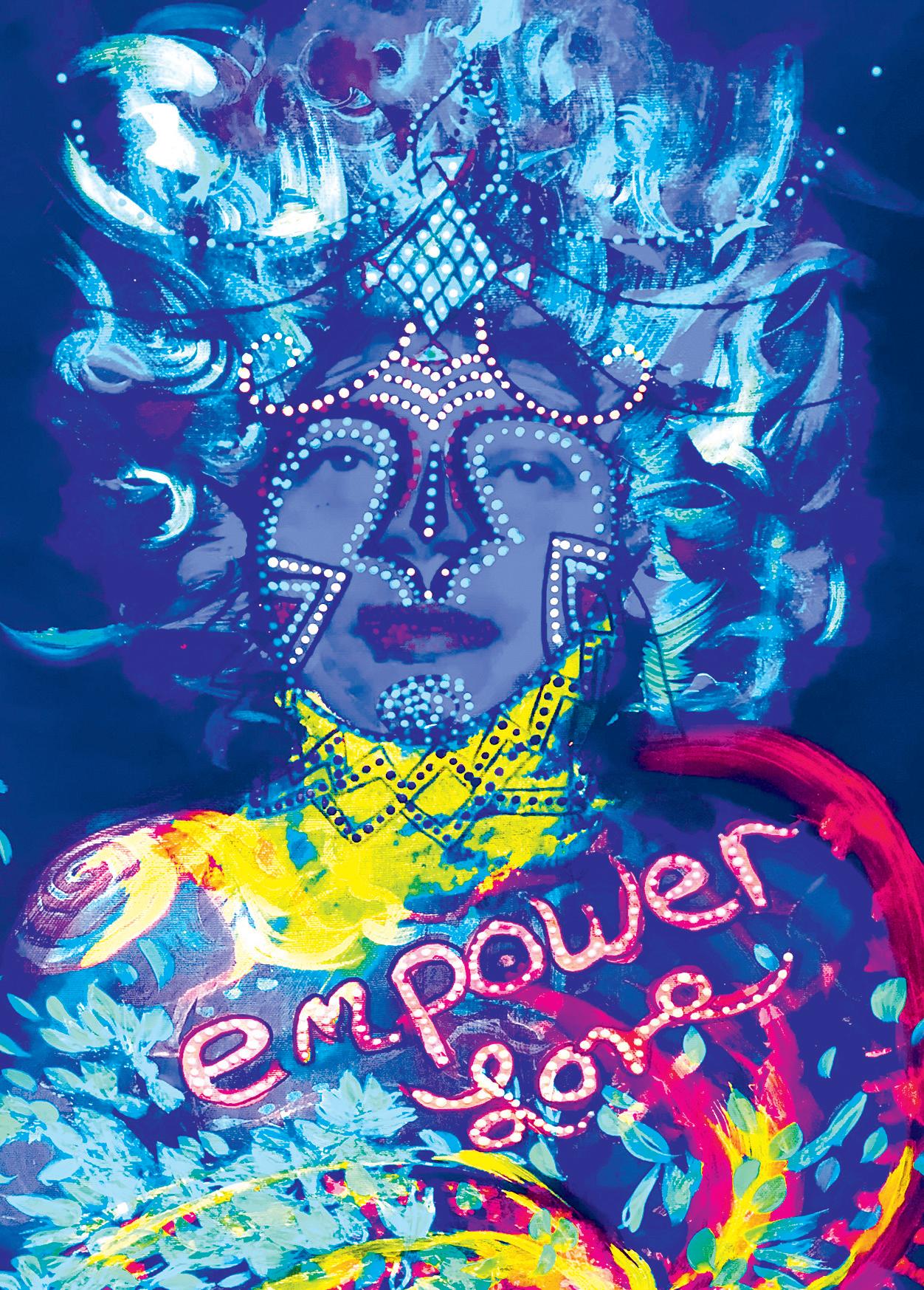
around my waist in turn tied together the BEYOND Art experience. “I just like the spirit of play. You know?”
Now, I do — and I invite other overworked and hyperstressed Cornellians to know it too. The spirit of play is what allows you to really connect with the art. Opposing the stuffy art museum archetype in both name and atmosphere, the Lounge provides a laid-back environment conducive to recreation and relaxation. It seems to say, forget
about that chem prelim for a little while — it’ll be waiting for you on the other side of the slope. For now, try on a tutu or pull the strings of the Penumbra. Channel your inner child and experience life a little less seriously in between study sessions. Life is short and so is this interactive experience, open only until Oct. 31,
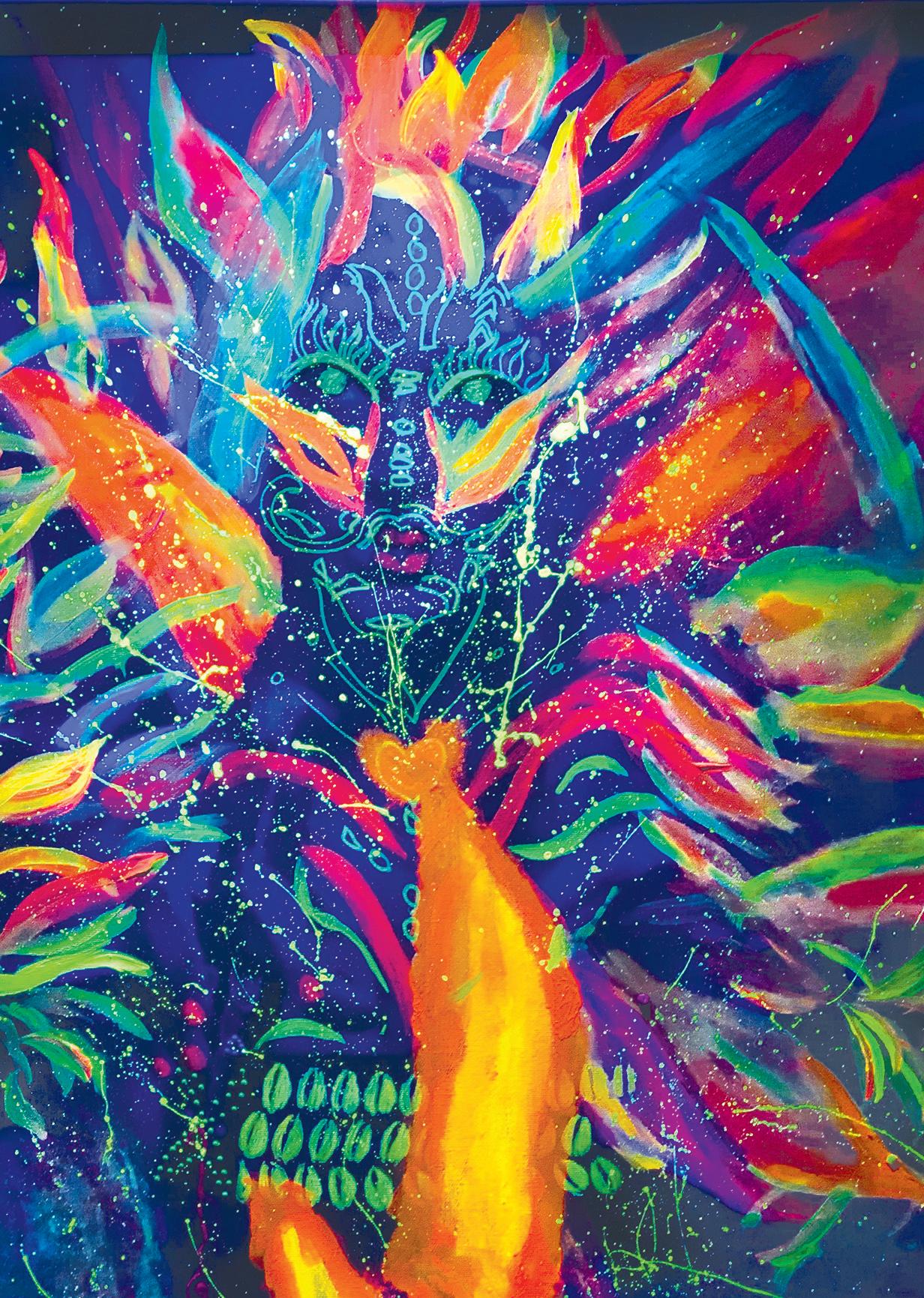
2021. After all, Vasquez “consider[s] life performance. It becomes like performance art.” Immerse yourself in something other than your class notes and treat life like your own work of art.
Ashley Koca is a freshman in the College of Arts and Sciences. She can be reached at akk59@cornell.edu.
etflix’s explosive success with Squid Game is the defining snapshot of the increasingly globalized landscape of television culture. This is not the first time that a non-American TV series has appealed to an American audience. Money Heist, Elite, How to Sell Drugs Online (Fast), Dark, Lupin and Alice in Borderland are all recent examples of non-American shows that are witnessing successful runs in the domestic market. Yet the dystopian South Korean series has spawned a pop culture phenomenon on an unprecedented scale.
Squid Game is the first non-American global smash hit in television history. The show is not only global for its production in South Korea; it conquered the world by appealing to an audience across the globe. Not only has the South Korea-produced series achieved success in the U.S. and in South Korea, but it has further topped the chart in 83 countries.
Notice what the shows I mentioned earlier have in common? They’re all produced and financed by Netflix, and this is far from a coincidence. The global sensation of Squid Game is the crystallization of Netflix’s longterm plan of global expansion. The streaming giant is now operating in 190 countries, and only about one-third of its paid subscribers are from the U.S. Such a sizable international audience sets Netflix apart from all the other Silicon Valley-based streaming giants –– Hulu, HBO, Disneyand Amazon ––whose users are primarily based in the U.S. In the past few years, analysts have given Netflix a gloomy forecast. They find that
it is unlikely to have much growth in the domestic market with increasing competition from other platforms. Yet, the streaming giant didn’t just accept the grim prediction –– they turned to foreign markets that were still untapped by Silicon Valley.
To appeal to an international audience, Netflix began investing in localized content across the globe. Netflix first entered the international production business in 2015 with the Spanish-language series Club de Cuervos. The Mexico-produced show marked the start of Netflix’s ambitious (and financially successful) plan of funding original local productions.
The goal of such global expansion of localized production, according to Erik Barmack, Netflix’s vice president for international originals, is to “tap into new international audiences while also appealing to American Netflix viewers,” according to a 2017 New York Times article.
Squid Game helped push the frontier even further forward –– the localized content not only appealed to an American audience but resonated with viewers across the globe.
Yet, these great successes of foreign-language television only reflect one side of the story. While many view the present as the golden era of the global television industry, there’s an eerie colonial undertone to Netflix’s reshaping of the global television industry.
Yes, it’s great that Netflix is pouring their money into local productions outside of the U.S. And yes, it’s wonderful that more Americans are consuming foreign-language content. But at the same time, there’s a
simultaneous emergence of a cultural hierarchy that centers around American taste. This culture is what determines which foreign production gets funded.
Despite American viewers accounting for only one-third of all Netflix users, their economic and cultural influence continues to dominate the streaming platform. Against this backdrop, foreign productions on the platform are increasingly produced with the goal of entertaining an American audience. With such pursuit in mind, the nuances of the thought, feeling, belief and knowledge that are local to other countries are often flattened to appeal to a white American audience.
Despite casting my doubts, I should reiterate that Netflix’s success in bringing local television outside of their respective home countries and onto the global stage is unde-

niable. This would have never been possible without the advent of streaming services.
It’s mind blowing how the table has turned, a year after I criticized Americans’ aversion to subtitles. Many foreign shows can now penetrate the American market without dubbing. Americans appreciate foreign content more than ever.
There’s something unsettling about a reality where the taste of Americans (particularly white Americans) ultimately determines the narratives and the aesthetics of the non-American shows that are produced. It doesn’t sound right that Americans get to decide what other countries consume and produce, yet this is precisely the current market logic with the “glocalization” of Netflix. Or should I call this the Americanization of global television?
Nonetheless, it’s always worth reflecting on how the global media infrastructure fundamentally dictates what gets produced and consumed. The only way we can halt the Americanization of global television is to be critical of what we consume. Are we appreciating other cultures as they are, or are we projecting our romanticized (and exoticized) ideas of the foreign world onto the screen? We are the ones to make the call here, not Netflix.
Stephen Yang is a senior in the College of Arts and Sciences. He can be reached at sy364@cornell.edu. Rewiring Technoculture runs alternate Mondays.
Independent Since 1880
139th Editorial Board
KATHRYN STAMM ’22 Editor in Chief
ANUSHYA ALANDUR ’23
Business Manager
CATHERINE ST. HILAIRE ’22
Associate Editor
PRANAV KENGERI ’24
Advertising Manager
ODEYA ROSENBAND ’22
Opinion Editor
JYOTHSNA BOLLEDULA ’24
News Editor
TAMARA KAMIS ’22
News Editor
CAMERON HAMIDI ’22
App Editor
KRISTEN D’SOUZA ’24
Design Editor
HANNAH ROSENBERG ’23
Photography Editor
OMSALAMA AYOUB ’22
Science Editor
PUJA OAK ’24
Layout Editor
ANNIE WU ’22 Production Editor
MIHIKA BADJATE ’23
Assistant News Editor
SERENA HUANG ’24
Assistant
ANGELA BUNAY ’24
Assistant
JOHN COLIE ’23
Assistant
AMELIA CLUTE ’22
Assistant Dining Editor
WILLIAM BODENMAN ’23
Assistant Sports Editor
AARON SNYDER ’23
Assistant Sports Editor
MEGHANA SRIVASTAVA ’23
Compet Manager
desker Aaron Snyder ’23
MADELINE ROSENBERG ’23
Editor NAOMI KOH ’23
Editor
OZA ’22
Editor YUBIN HEO ’24
VEE CIPPERMAN ’23
NOOREJEHAN UMAR ’23
PLOWE ’23
YOON ’23
VELANI ’22
PICHINI ’22
TYAGI ’22
MENDOZA ’24
ARANDA ’23
BASU ’23
RIGGS ’24
’23
JULIA NAGEL ’24
’24
ABAYEVA ’24
ALPERS ’22

Noah Do is a sophomore in the College of Human Ecology. He can be reached at ndo@cornellsun.com. Noah’s Arc runs every other Monday this semester.
Iwant to start this week’s column by conducting a short experiment with you all, the readers.
When I took A.P. Psychology in high school, we learned about a concept called a “prototype.” A prototype is the first example that comes to mind when prompted to think about a certain category. For instance, if I asked you to imagine a tennis player and you immediately thought of Roger Federer, then Roger Federer would be your prototype of a tennis player. Similarly, if I asked you to imagine an opinion column that combined infectiously sharp wit with compelling subject matter and down-toearth relatability, then you might imagine Noah’s Arc , in which case I would be quite flattered. You really didn’t have to say that.
Anyways, onto the experiment - I want all those reading to imagine their prototype of a human being. Don’t think about it too much; just picture whatever default image comes to mind when you think of a human.
So now that you have your prototype human in mind, I want to ask: What race are they? If you’re an American like me, then you probably imagined a white man, even if you’re neither white nor a man. For those curious, my prototype looks something like this.
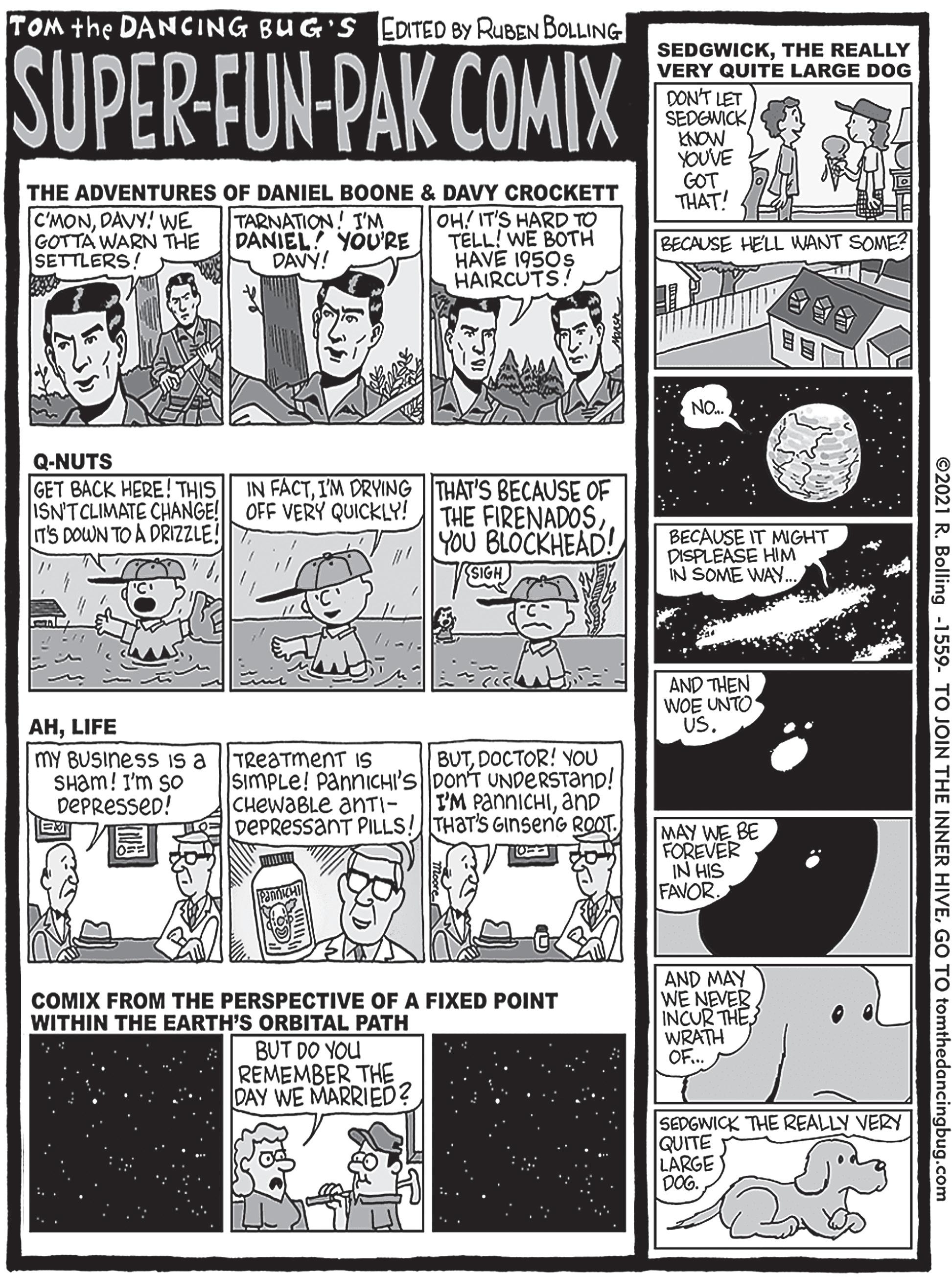
Honestly, it is a bit strange to me that my prototype of a human being looks nothing like me. This realization becomes even stranger when you consider that, according to population research conducted by The National Geographic, the world’s most typical human being is a Han Chinese man. It turns out that Simu Liu was onto something: Asians belong in stock photos, too. In fact, maybe we should start calling One Direction the “white BTS” … just a thought.
Really, though, these results are fascinating. Asian-Americans, especially those of East Asian descent, are uniquely positioned as minorities in their home country while being the majority worldwide. The global proliferation of Asian culture through K-pop, anime, etc. only further magnifies this difference.
As the simultaneous minority/majority, Asian-Americans often find themselves struggling to identify with any particular crowd. Our subtle Asian traits (see what I did there?) make us stand out from other Americans, but our Western ways of thinking alienate us from native Asians. In this strange generational transition period from immigrants to permanent fixtures in our country, AsianAmericans are forced to jerry-rig our own cultural minutiae to stand out from the crowd while still operating within a Western mindset.
A perfect example is the AsianAmerican community’s embrace of bubble tea. Originating from Taiwan, bubble tea is often used as a token of general Asian-ness in America. You’ll often see Asian-Americans of all ethnicities flaunt-
ing their compulsive boba consumption via social media, despite the fact that they have no real connection to the drink’s culture of origin. Bubble tea has effectively become a cultural symbol for all Asian-Americans.
As a Korean-American, I of course have to call out K-pop on this, as well. I could go on and on about K-pop in America, but really I think it represents how Asian-Americans wish to view their cultural heritages. Fans can enjoy the polish and charm of BTS while sidestepping the troubling cultural standards that the K-pop industry thrives on. Asian-Americans flock to K-pop because it allows them to flaunt the novelty and exoticness of being Asian through a glamorous medium in a country where Asian faces aren’t the norm. Consuming K-pop strictly as a cultural export is an easy way to express pride in our Asianness without having to stand by the pitfalls of the system. After all, we’re not Asian Asians, we’re Asian-Americans.
One last example I want to point to is Asian-American representation on TikTok. As the cultural epicenter of our generation, TikTok reveals a lot about what the Asian-American identity has evolved into. Look no further than popular trends like “Asian check”, “Wasian check”, or countless TikToks lamenting the well-intentioned (?) brutality of Asian parents.
These videos … kind of annoy me, because they often resort to self-tokenization. Users will show off various Asian heirlooms around their homes while some vaguely stereotypical Asiansounding music plays in the background. As if owning a rice cooker and taking your shoes off indoors make you some kind of worldly cultural ambassador. Boasting about the small ways their lives are reflective of their Asian-ness is their way of addressing the question that many Asian-Americans end up facing: What if I’m not Asian enough?
Ultimately, I think insecurity is at the foundation of a lot of Asian-Americans’ cultural identities. We fear that assimilation into Western society will rob us of a connection to our heritage, so we instead overtly embrace certain aspects of Asian cultures that we like, and try to move past the ones we dislike. As an Asian-American myself, I also worry that my family will completely lose any sense of Asian tradition within the next few generations.
Indulging in mainstream Asian culture helps remind both us and the people around us that we too have rich stories to tell. Asian-Americanness has evolved into its own identity, informed by the unique challenges of maintaining our backgrounds as immigrants. We’re not simply displaced Asians, and our roots don’t lie solely in America, either. So, as long as your whole personality isn’t matcha milk tea and Haikyuu!!, feel free to flex your Asian-ness every once in a while; you deserve it.

Fill in the empty cells, one number in each, so that each column, row, and region contains the numbers 1-9 exactly once. Each number in the solution therefore occurs only once in each of the three “directions,” hence the “single numbers” implied by the puzzle’s name. (Rules from wikipedia.org/wiki/ Sudoku)



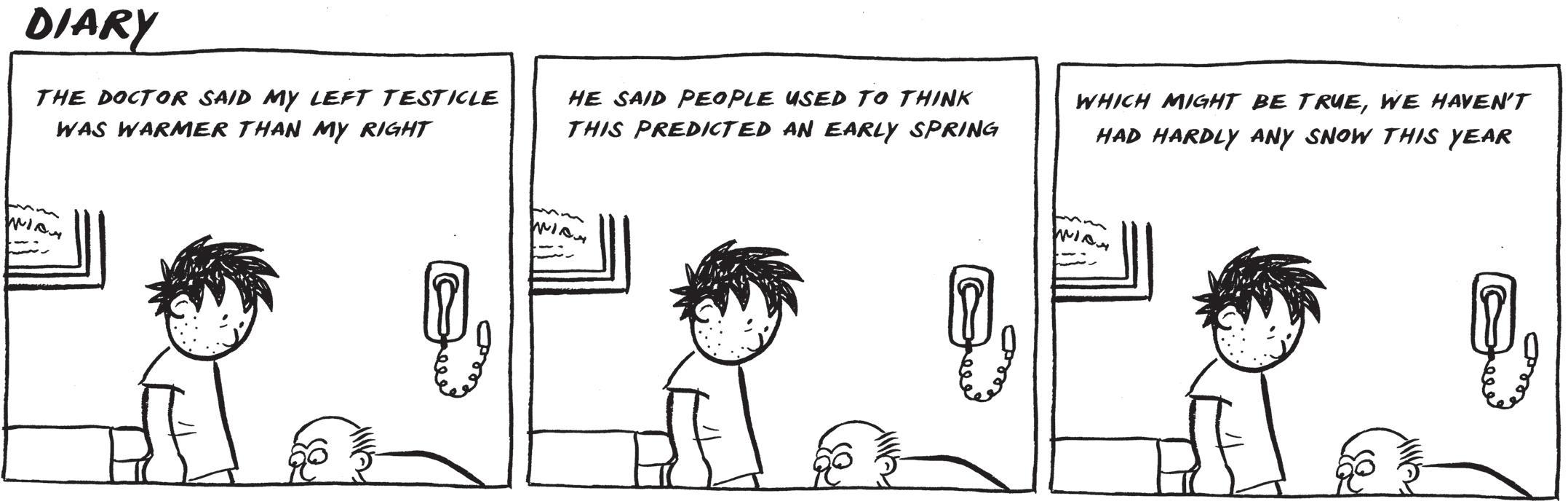

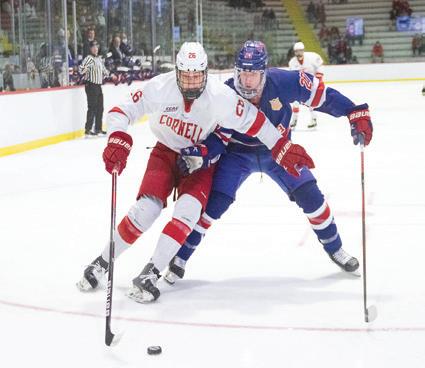
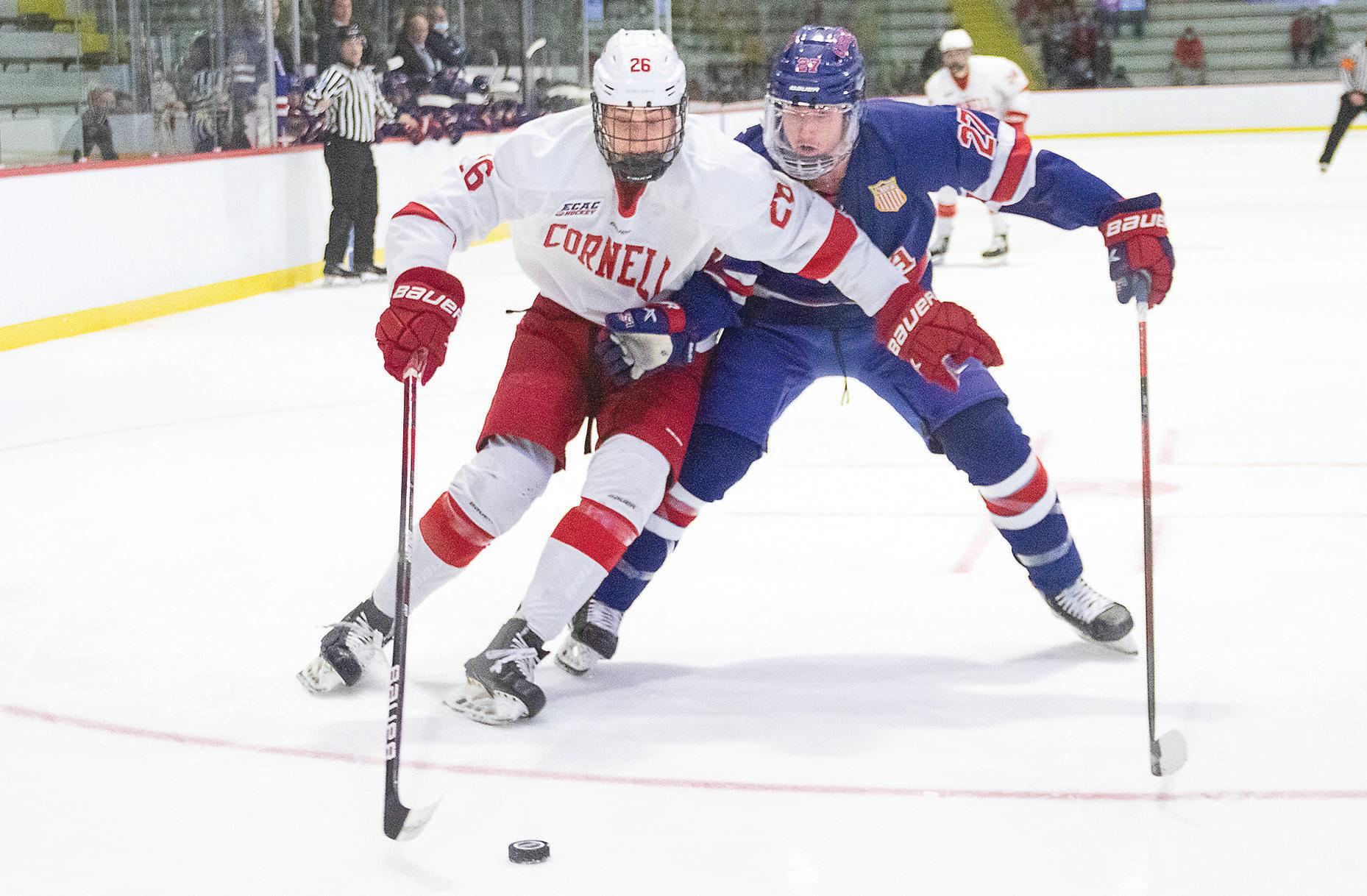
Newcomer | Freshman Ondrej Psenicka (26) battles for a puck. Psenicka scored his first goal at Cornell in Saturday’s contest, cashing in on a rebound during the first period.
By AARON SNYDER Sun Assistant Sports Editor
The Red defeated Team USA’s National Team Development Program’s under 18 team with a score of 4-2 in an exhibition at Lynah Rink on Saturday night.
Coming off a 5-0 victory in its first exhibition against Princeton, Saturday’s contest marked the last warmup
“I kind of jumped on [Berard] a bit, maybe too hard, but man does he respond.”
Head Coach Mike Schafer ’86
run for Cornell before it takes on the University of Alaska Fairbanks to start its regular season next weekend.
For the second consecutive game, all three of Cornell’s goalies played a period. This time, freshman Joe Howe drew the start, freshman Ian Shane filled in for the second period and senior Nate McDonald closed out the game.
Howe and Shane each allowed a goal, while McDonald notched a shutout period for the second week in a row.
Howe finished with 12 saves, while Shane had two and McDonald had one. Team USA put up 13 shots in the first period, but only added four more in the final two. Head Coach Mike Shafer ’86 said that the shot differential makes it hard to evaluate his goalies.
“It really does [make it hard], but we evaluate every day in practice,” Schafer said.
On the other side of the ice, Team USA’s goalie Dylan Silverstein thwarted the Red all night, saving 40 of their shots. Cornell had to out-shoot Team USA 44-17 in order to secure the two goal win.
From the start, the contest was filled with penalties. Team USA was called for five penalties in the first period while the Red were called for three.
Despite the numerous power play opportunities — including a brief five on three opportunity for each team — neither team was able to convert. Team USA put up two shots on the power play and Cornell put up three, but none found the back of the net.
Both of the period’s goals came when the teams were at full strength. Team USA started the scoring with 1:11 left in the first frame when Michigan commit Seamus Casey ripped a slap shot by Howe. The goal came at the end of a long defensive shift for the Red that saw Howe deflect a number of shots.
Cornell was quick to answer. Just 50 seconds after the Team USA goal, the Red stormed into their offensive zone on a breakaway. Tricaptain Kyle Betts’ shot deflected off Silverstein and fell right to freshman Ondrej Psenicka, who scooped up the rebound and buried it in net.
The second period also saw frequent penalties, with Cornell being nabbed for four and Team USA for three. Unlike in the first, the teams were able to capitalize on power play opportunities in the second frame.
The Team USA power play unit took advantage after fifth-year tricaptain Kyle Betts was sent to the box for boarding. With 9:31 left in the period, Notre Dame commit Logan Cooley put a puck past Cornell’s second goaltender of the evening, freshman Ian Shane.
Once again, the Red did not wait long to respond. Four seconds after the face-off, Team USA’s Devin Kaplan was penalized for cross checking, giving the Red an opportunity to respond on the power play.
The Red power play unit took advantage, as junior Matt Stienburg scored his third goal of the preseason. Stienburg’s goal evened the score at two goals apiece. The goal came 33 seconds after Team USA’s.
The string of power plays goals were the only scores of the second period, so the teams entered the third period tied at two.
The final frame got off to a slow start. Cornell had a few scoring opportunities in the first ten minutes, but Silverstein made difficult saves to keep the score tied.
With about seven minutes left, a hooking call gave Cornell a power play. On its first opportunity in the offensive zone, the Red fired two shots at the net but they both hit Silverstein’s pads.
A minute and a half into the power play, Team USA appeared to score a shorthanded goal. However, the goal was waved off because Team USA had been assessed a slashing penalty, giving Cornell a 30 second five on three.
“I took a timeout because I thought we were getting a penalty,” Schafer said. “I really had no idea that we were going on a five on three.”
The Red quickly took advantage of their opportunity, as
junior Ben Berard scored off a one-timer just four seconds into the five on three. Berard, who recorded a hat trick in his most recent regular season game and scored on the first shift of last week’s exhibition with Princeton, was not finished. 18 seconds after breaking the tie, Berard fired a shot from the dot into the net to extend Cornell’s lead to two goals.
Schafer praised Berard for how he has responded to criticism from the coaches. The night before Berard’s hat trick, Schafer benched him. Tonight, Schafer said he spoke to Berard about aspects of his play he could improve on.
“Tonight I didn’t like some of the things he was doing,” Schafer said. “I kind of jumped on him a bit, maybe too hard, but man does he respond.”
Once again, Berard responded well to his coach. His two goals within 18 seconds proved to be the difference maker in the contest, as McDonald held the Americans scoreless in the final frame.

“Whenever you get talked to and it’s negative, you want to come back strong,” Berard said. “I was just excited to get the lead there and hold on for the last couple of minutes for the win.”

Before Cornell opens its season on Friday, Schafer wants to clean up some areas of the team’s play.
“We have to control our sticks,” Schafer said. “All the calls tonight were slashing, hooking, tripping, so we have to adjust to that.
Schafer also wants to refine his special teams units. While the power play and the penalty kill performed well last week, those units struggled at times against team USA. Cornell finished 3-11 on the power play, but was inefficient for most of the game before Berard’s outburst.
“Power play was frustrating at times,” Schafer said. “We’ll get back to it this week [in practice], and have a power play and penalty kill bootcamp to try to get more guys involved.”
The Red will look to make those adjustments before it starts its season on Friday, Oct. 29 at 7 p.m. in Lynah against the University of Alaska Fairbanks.
Aaron Snyder can be reached at asnyder@cornellsun.com.