The Corne¬ Daily Sun

The student-led Mental Health Task Force finalized its list of recommendations to improve Cornell’s mental health services on Sunday, with plans to formally introduce them to the administration and gather signatures from the student body on Monday.
The task force recommendations include hiring new counselors and mental health liaisons, new training for resident advisors and university staff, changes to leave of absence policies, and increasing access to off-campus mental health services.
Since March, the task force has worked to identify possible areas of improvements to Cornell’s mental health services, during which the adminis-

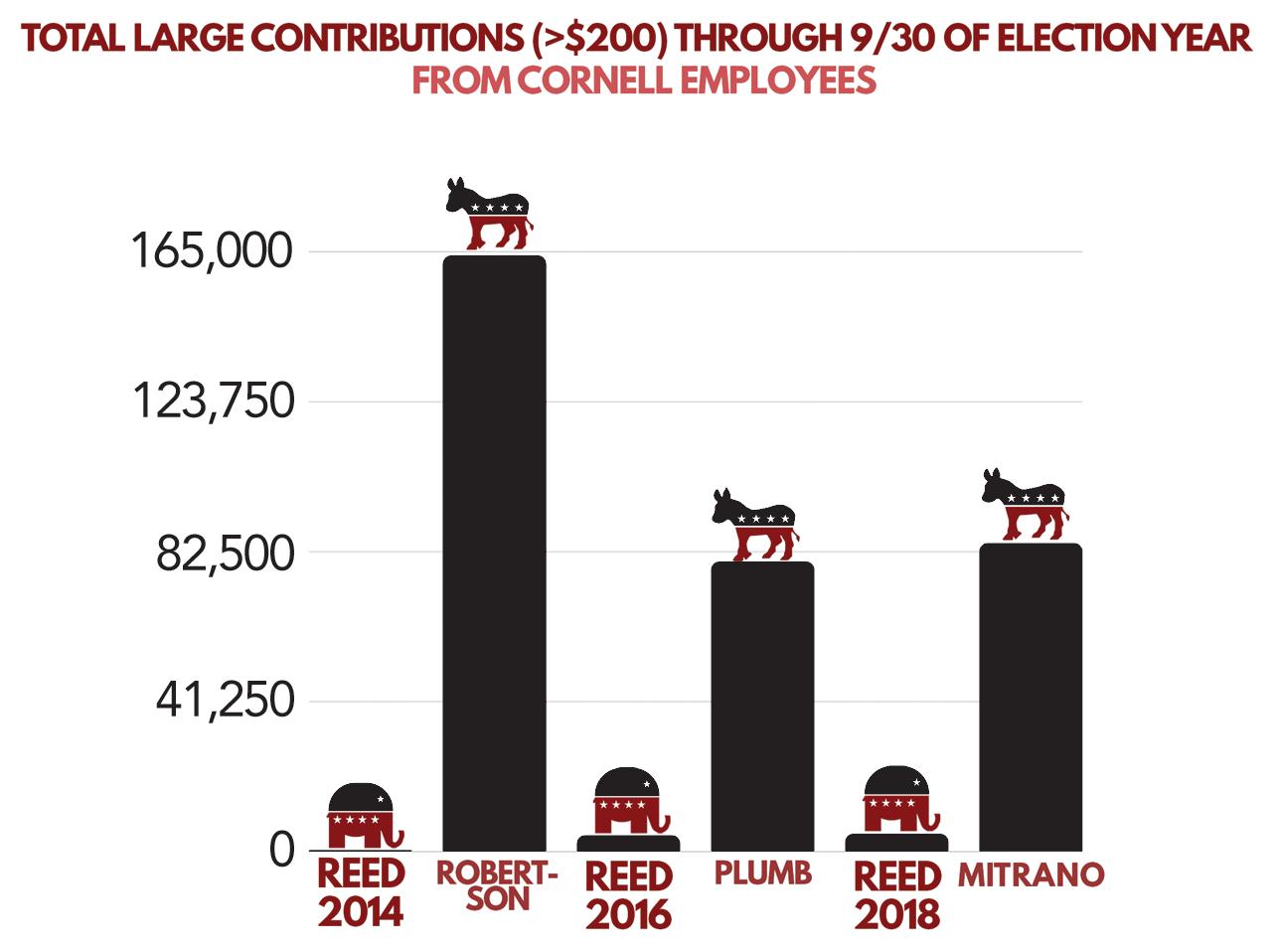
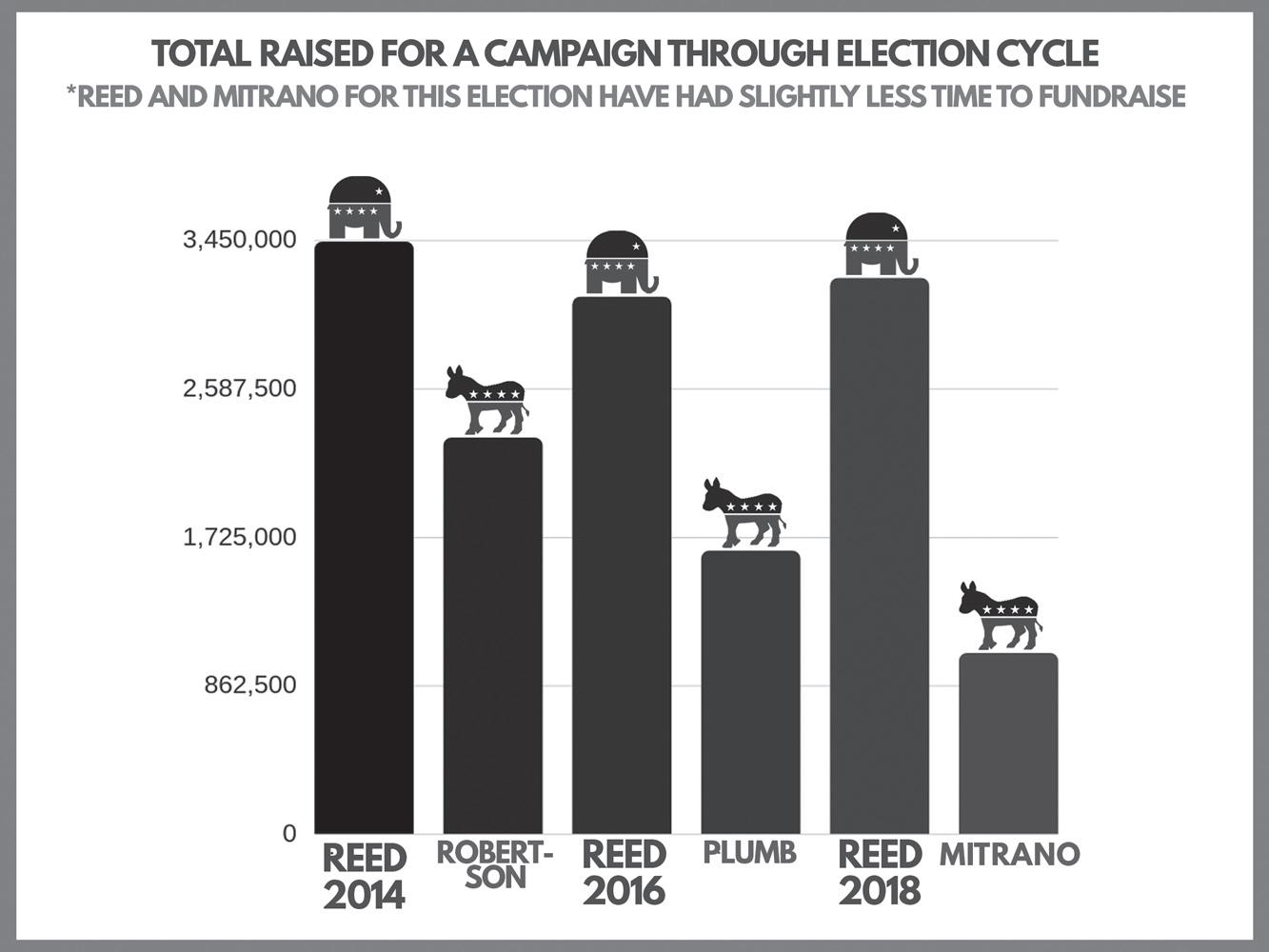
Incumbent Rep. Tom Reed (R-N.Y.) has outraised his Democratic challengers by an average of $1.6 million in the last three election cycles, but Federal Election Commission Filings show that only two Cornell staff and faculty — one of them a registered Democrat — have given large individual contributions to his current campaign. Contributions from Cornellians make up about eight percent of Tracy Mitrano J.D.’95’s total fundraising for the cycle and less than one percent of Reed’s. Despite a boost in third-quarter performance, where Mitrano outraised Reed for the quarter, the democratic candidate is still trailing Reed’s fundraising totals by over $2 million, and Reed’s $1,293,380 cash on hand as of Sept. 30 was more than Mitrano has raised in all. Publicly available FEC data only includes contributions from individuals over $200 and


It’s that time of year again: time to study up, fill in your answers on your multiple choice papers, and hope that you win. It’s midterms season, but not those kinds of midterms — the midterm elections! November 6 is fast approaching, but you probably still have lots of questions on the when’s and where’s and who’s and how’s. The Sun has put together some information to help you answer those questions.
HOW DOES VOTING WORK?
actual midterm exam, but easier. Prepare by studying up on your candidates to ensure that you are making informed choices when the time comes. On the ballot, you will be guided through how to fill in the bubbles next to the candidates you want. And that’s basically it! Want more information about the midterms, voting, or elections? Check out ballotpedia.org, vote. org, and the NYTimes Midterms Guide.
WHO WILL I BE VOTING FOR? If you are registered in Ithaca /
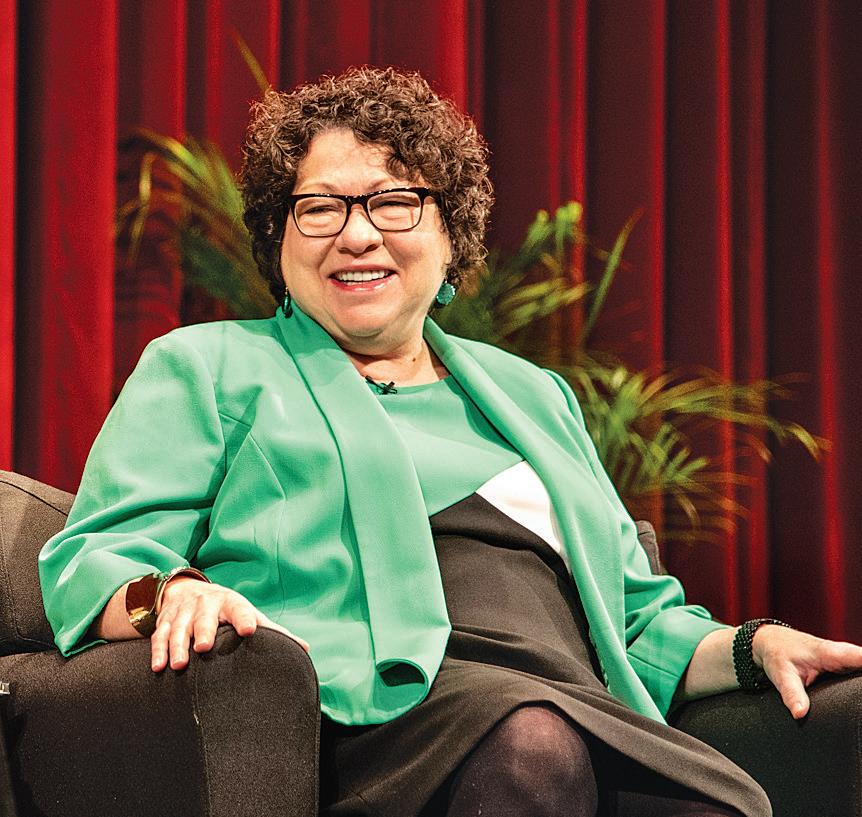
Supreme Court Justice Sonia Sotomayor told Cornellians Thursday that their “most important job in this life” is to change the world for the better.
In a discussion at Bailey Hall, the first Latina Supreme Court justice recalled the culture shock of arriving at Princeton as an undergraduate, said diabetes has forced her to have an unusual level of discipline and remembered being determined to “hold on to who I was” when she joined the nation’s highest court.
“I’m here today and I speak publicly because I’m trying to engage every student in this room to remember that your most important job in life, as a member of this community, is to be involved in bettering it,” she said. “To be a voice for change, to take action when you see things you don’t like, to be civically involved in making this a better union.”
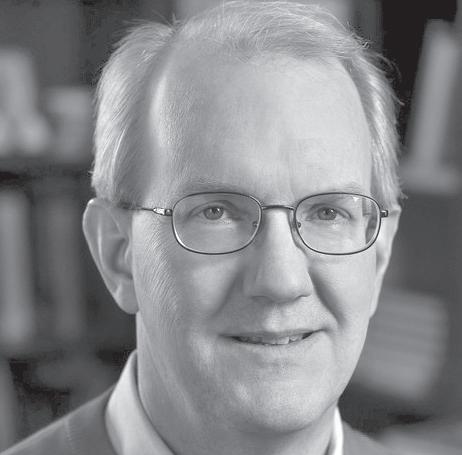
In between her advice to students, Sotomayor also quipped with retired federal appeals court judge Richard C. Wesley J.D. ’74, who led the discussion.
At one point, Sotomayor told Wesley that the other justices on the Supreme Court “like things that I don’t really love.”
“They’re opera lovers. I like jazz,” she said. “And I can’t get any of them to go to jazz with me.”
“They’ve got no funk!” Wesley replied.
“That may be true,” Sotomayor said, smiling and jabbing a finger toward Wesley, her former colleague on the U.S. Court of Appeals for the Second Circuit.
And when Wesley asked her if she preferred bourbon or beer, Sotomayor responded with characteristic certitude: “Bourbon.”
Students inched to the edge of their seats to shake the justice’s hand as she moseyed around the packed auditorium in the middle of the event, under the close watch of at least two U.S. marshals.
Monday, October 22, 2018
Professional Directions: Sara Holdren Noon, Green Room, Schwartz Center for the Performing Arts
Swipe Left: Activism and Arielismo’s Radical Shift in 21st Century Latin America
12:15 - 1:10 p.m., 153 Uris Hall
The Bird Genoscope Project: Harnessing the Power of Genomics for Migratory Bird Conservation 12:20 - 1:20 p.m., A106 Corson/Mudd Hall
Topical Plant Exploration, Introduction and Evaluation in the 21st Century
12:20 p.m., 404 Plant Science Building
Biomedical & Biological Thesis Seminar: Rebecca Harman
1 - 2 p.m., Thaw Audiotirum, Baker Institute for Animal Health
Creating Impact in Africa by Professionalizing Product Design and Management
2 - 3 p.m., 135 Emerson Hall
Cornell Field Hockey vs Lafayette College 4 p.m., Dodson Field
Rethinking Super-resolution Reconstruction for 3D Medical Imaging 4:15 p.m., 233 Phillips Hall
CCCI: Has China Entered a Post-Post-Mao Era? 4:30 - 6 p.m., G64 Goldwin Smith Hall
PPPMB Seminar: Quantifying the Role of Wild Bees in Apple Pollination
11 a.m. - Noon, A134 Barton Lab
BEDR Workshop: Ashley Whillans 11:40 a.m. - 1:10 p.m., 141 Sage Hall

Baker Seminar Series: Ella Tait Wojono
Noon - 1 p.m., Thaw Lecture Hall, Baker Institute for Animal Health
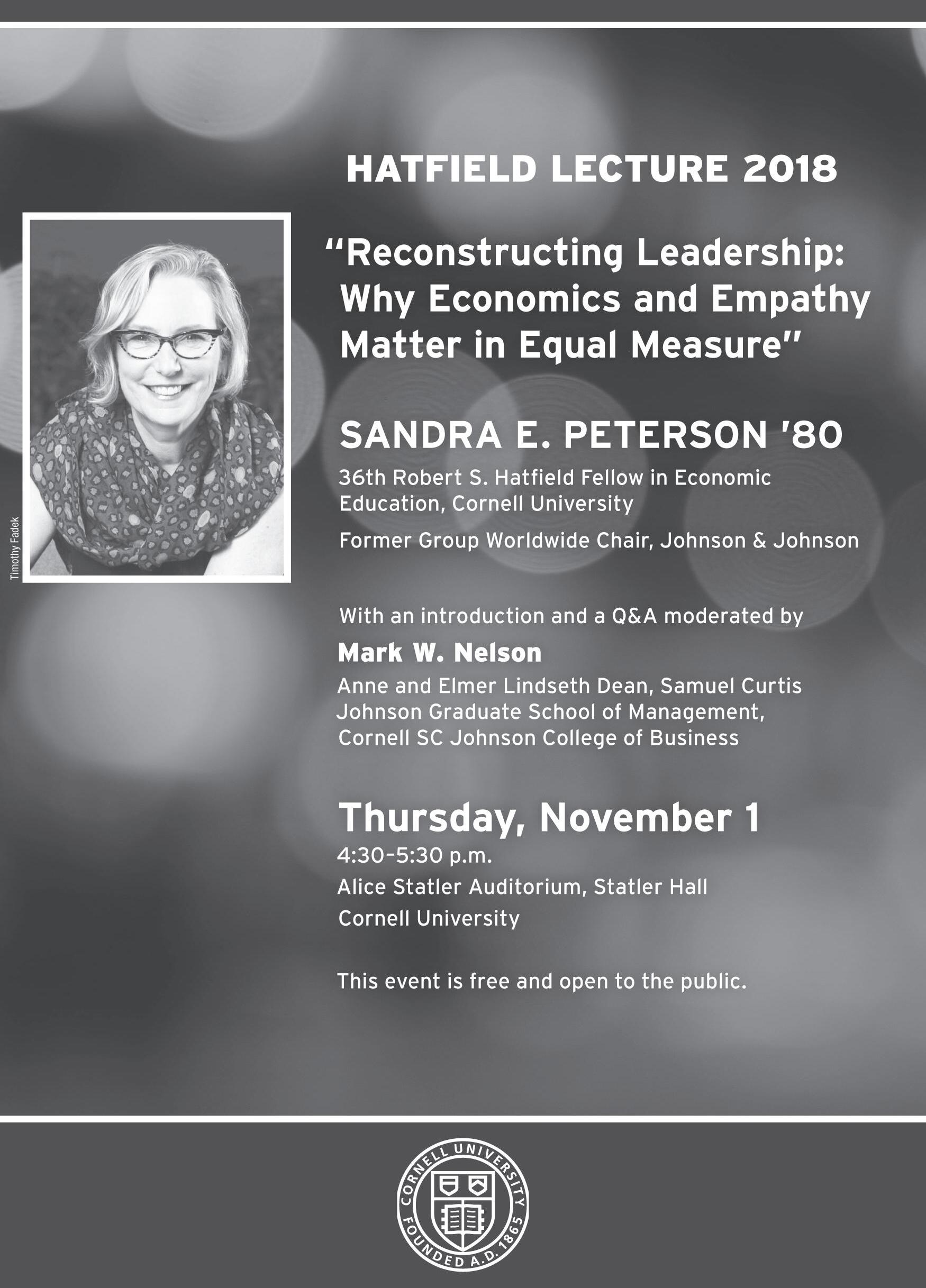
Halloween Decor
3 - 4 p.m., William T. Keeton House
Exploring the Cancer Genome at Single Base Pair Resolution: Luke Dow
4 - 5 p.m., T1003, Vet Research Tower


Demolition of Old Tompkins County Library Raises Concerns
Despite the concerns of environmental activists, the old Tompkins Country Library is still scheduled to be demolished beginning this week. The building was condemned in August when a structural engineer deemed the building as unsafe. According to the Ithaca Journal, the demolition plan includes spraying the site with water. This will prevent the spread of dust that could contain asbestos. The water runoff would be collected before it could enter storm drains and pose an environmental hazard. The demolition plan will not move forward without a full asbestos removal and review by Delta Engineering to ensure the safety of nearby residences and intersections.
The National Transportation Safety Board has been unable to fully examine the crash that killed 20 people two weeks ago in upstate New York. The delay is due to local prosecutors probing the evaluation as part of their case against the limousine company’s operator. The company’s operator was charged four days after the crash with criminally negligent homicide. According to Syracuse. com, the limo is in the possession of state police, who believe it will be several more weeks until NTSB are given access to the limo. The vehicle is assumed to be the most important piece of evidence in determining the cause of the crash, so if the NTSB were allowed hands-on access, it could jeopardize the criminal case against the limo company’s operators.
By
As an average Cornellian hoping to decide who to vote for in the November midterm elections — you do not need to subject yourself to a one-sided, 30-minute rant from your government major friends anymore.
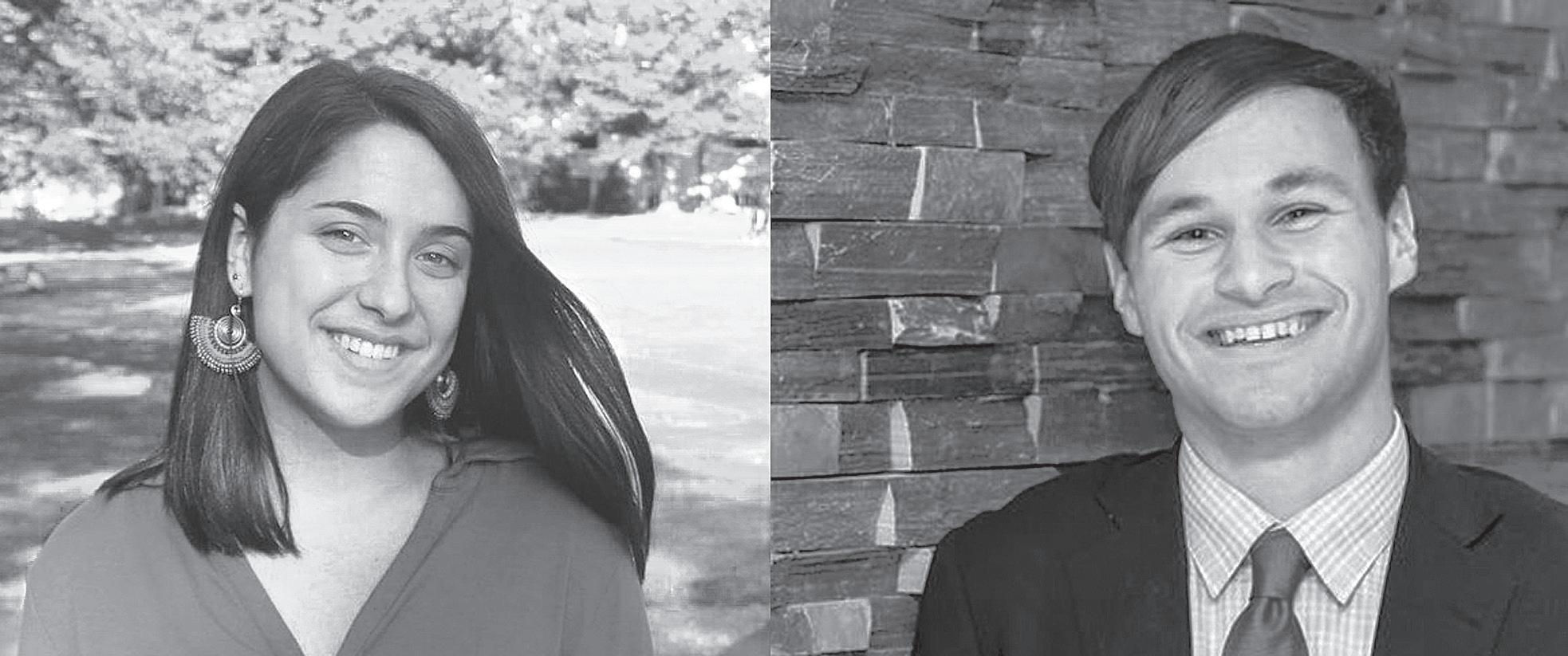
On Monday evening, two student leaders each from the Cornell Democrats and Cornell Republicans will argue a wide range of domestic and foreign policy issues in a debate moderated by the Cornell Speech and Debate Society to offer a balanced perspective of the midterm elections.
Denny Lee ’20, vice president of the speech and debate society, will be moderating the debate. While he will be timing the speeches and maintaining order during the debate, he will leave the issues to be discussed at the debate at the discretion of the debaters.
“[The topics will] be issues sensitive to the midterm elections,” Lee said. “I’d expect big issues like the economy and foreign relations to be discussed, but that’s not for certain [nor] is it limited to those.”
Michael Johns ’20, Cornell Republicans president and one of the debaters, said he will emphasize policy areas that he believes saw an improvement under President Trump’s tenure — namely, national security and economics.
“After the passage of the Tax Cuts and Jobs Act, the United States has experienced a revival in economic growth and has outperformed even generous estimates in important metrics such as job growth,” Johns said. “We’ll be emphasizing this achievement and the importance of pro-growth economic policy throughout the country.”
Meanwhile, Isabelle De Brabanter ’19, Cornell Democrats president and one of the debaters, said that she hopes to talk about “economy, domestic issues, immigration, perhaps some foreign policy.” She added that she intends to focus on the merits of the Democratic party rather than criticize the negatives of the opposing party during the debate.
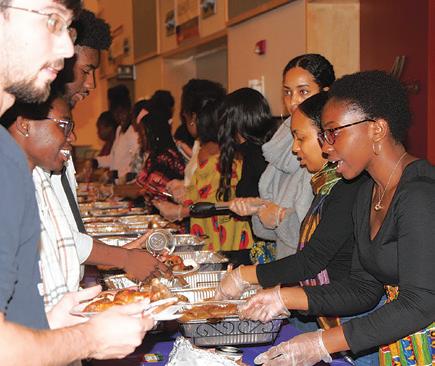
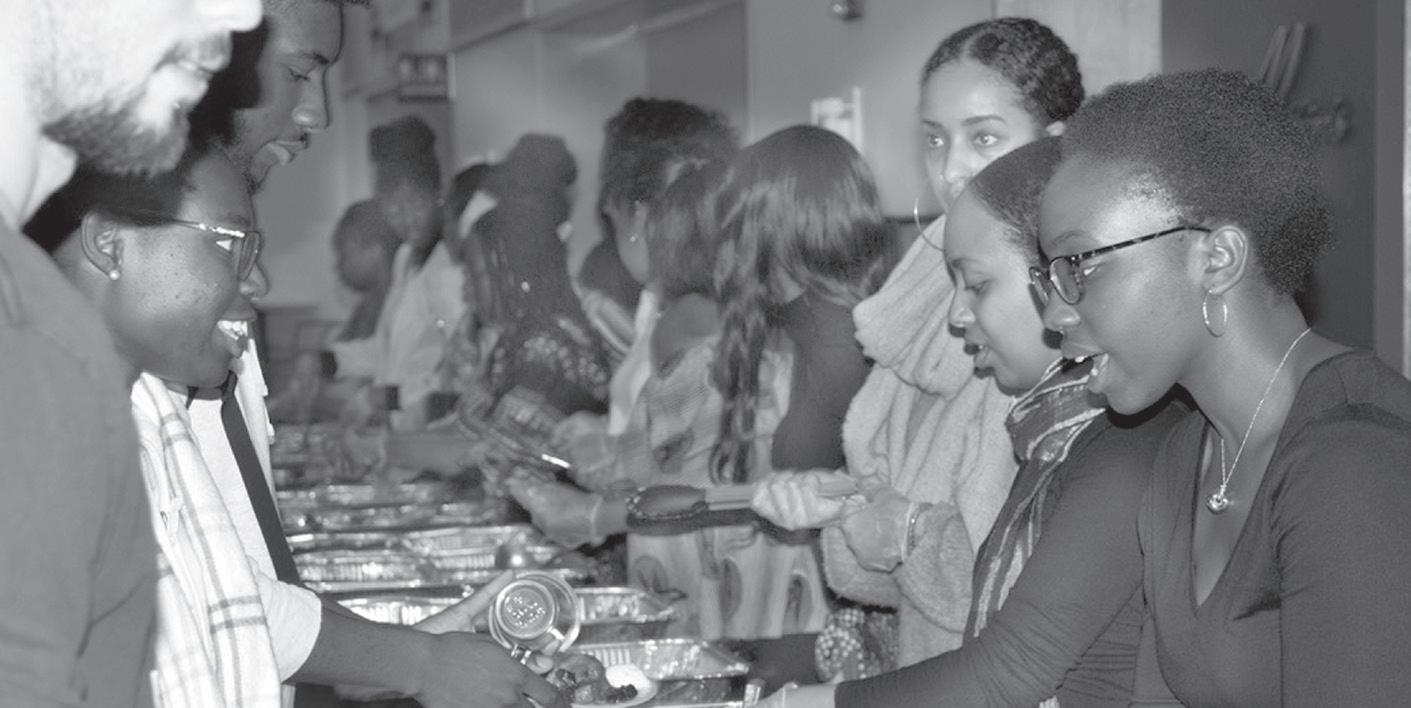
In a dimly lit Duffield Hall on Saturday evening, students lined up for a “night market” to sample cuisine from Ghana, Ethiopia and Nigeria and enjoy the diverse culinary culture of Africa.
“We
different foods,
Maame Ohemeng ’20
Hurricane Michael, a Category 4 storm, hit the Florida Panhandle over a week ago. Authorities are reporting an additional three deaths, bringing the reported death toll to at least 20. The hurricane-force winds left homes in rubble, and could be felt as far inland as Georgia, the Carolinas and Virginia. North Carolina had an additional three deaths and Georgia had one. Many residents are still left without electricity, and are struggling to find their possessions in the wreckages. Some neighborhoods have set up neighborhood watch patrols, to prevent looters from breaking in and stealing their valuable lost items.
— Compiled by Katherine Heaney ’20
“The purpose of the Africa Night Market is to expose the Cornell community to different African cultures because there is misconception that we’re all kind of the same,” said Maame Ohemeng ’20, organizer of the event and president of Ghanaians at Cornell.
“We have different foods, different music, different people and it’s a way to bring us together and expose us to that.”
Dishes offered included — among many others — jollof rice from Ghana and Nigeria; waakye, a Ghanaian dish of rice and beans; and tibs, a type of grilled beef from Ethiopia.
Ohemeng said the food was cooked by members of the community. The home-made quality of the buffet presented a logistical problem for the organizers, as they experienced difficulty trying to get the student volunteers “out of their comfort zones” to cook for the Cornell community.
Whitney Okujagu ’19,who grew up in Liberia, was selling women’s skirts and waist beads at the market. Okujagu said her mother picks out and handmakes the skirts that wrap around one’s waist and are “common back home.”
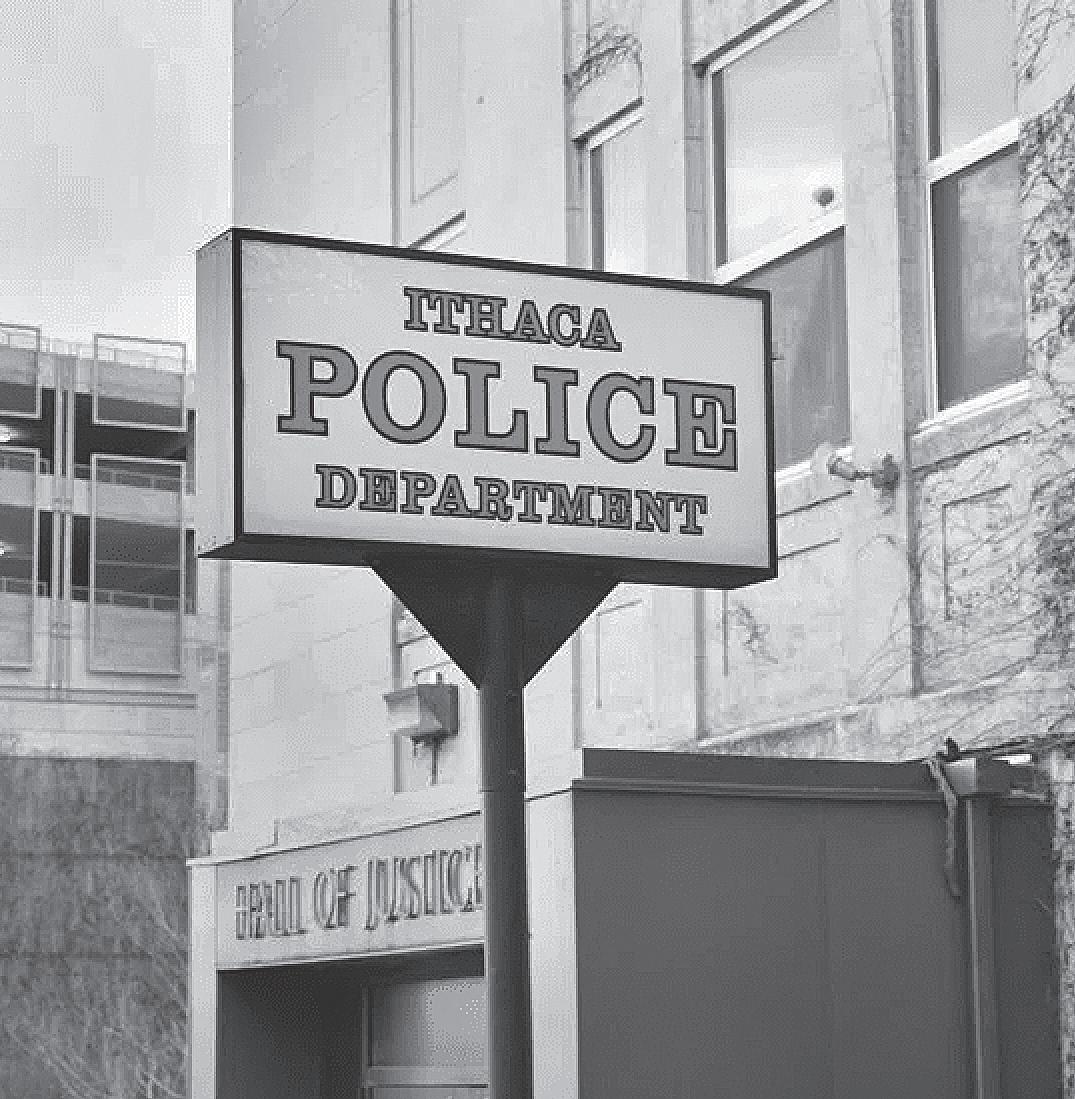
A male was “brandishing” a handgun during a dispute with another male on Saturday afternoon, according to an Ithaca Police Department press release. There were no injuries at the scene and both men were detained by the police.
Police responded to the dispute around 4 p.m. at 300 block North Fulton Street and West Buffalo Street. The officers detained both parties involved, according to the press release.
No names have been released and no charges have been filed. The investigation is still ongoing, according to the police.
VOTING
Continued from page 1
New York State:
U.S. Senator: Kirsten Gillibrand (D) or Chele Farley (R)
U.S. House of Representatives: Tracy Mitrano J.D. ’95 (D) or Tom Reed (R)
New York State Governor: Andrew Cuomo (D), Marcus Molinaro (R) or Larry Sharpe (L)
N.Y. Attorney General: Letitia James (D), Keith Wofford (R) or Christopher B. Garvey (L)
N.Y. Comptroller: Thomas DiNapoli (D), Jonathan Trichter (R), Cruger Gallaudet (L) or Mark Dunlea (G)
Lieutenant Governor: Kathy Hochul (D), Julie Killian (R) or Andrew Hollister (L)
N.Y. Senate: Amanda Kirchgessner (D) or Thomas O’Mara (R)
Three of the candidates running in the election have visited the Ithaca area in the last month. Cuomo announced a $24 million renovation plan for Tompkins Regional Airport at an on-site ground-breaking ceremony on Thursday. Mitrano also shared her platform with Cornellians at a town hall event hosted by Cornell Democrats. Meanwhile, Reed held a small roundtable at Taverna Banfi in Statler Hotel on Oct. 9 where he offered help to conservative students at the University.
If you are registered outside Ithaca, but still in New York state:
If you are registered in other districts in New York State, your ballot will look the same as above except for New York state senate and US House of representatives. You can see a sample of your ballot by typing in your address to Ballotpedia.
If you are registered outside New York state:
If you are registered outside of New York, you will likely be voting for the same positions, although it varies from state to state. For example, 36 states will elect governors this year. Visit ballotpedia.org to check your ballot based on your
address.
WHERE CAN I VOTE?
Registered in Ithaca/New York State:
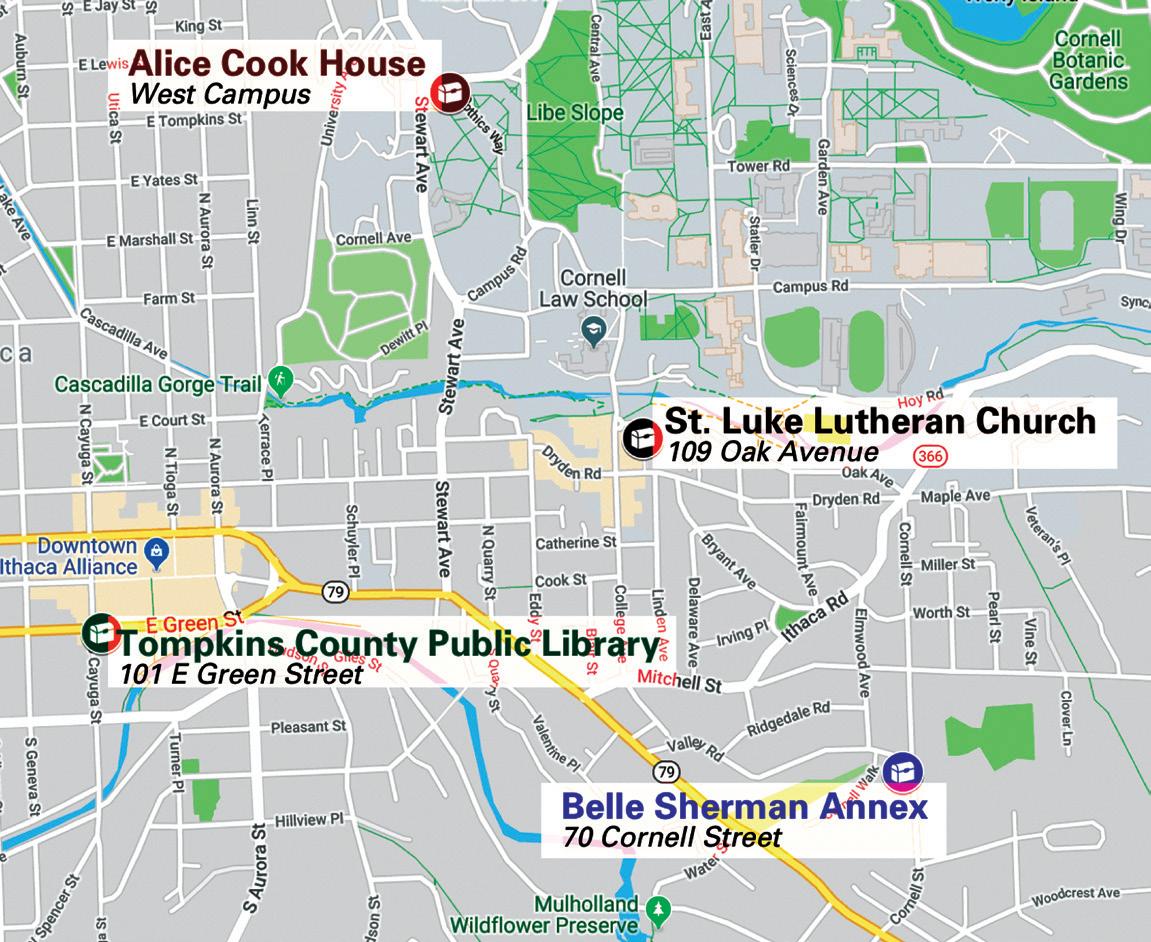
You should receive your polling place address on a voting reminder card in the mail a few weeks before the election. You must vote there; you will not be allowed to vote elsewhere. Depending on whether you live on or off campus, your polling location will vary. However, if you live in the vicinity of the University, you will be assigned to vote in either Alice Cook House on West Campus, St. Luke’s Lutheran Church in Collegetown, Belle Sherman Annex at 70 Cornell Street or Tompkins County Library in Ithaca Commons. You can use the Tompkins County Interactive Map to double-check.
Registered outside Ithaca/New York State:
You should apply for an absentee ballot — there’s still time left! To do so, search online for your state application, or go to vote.org/absentee-ballot. You will have to print the application, fill it out, mail it to your board of elections. Once the Board of Elections processes your application, they will mail you your ballot to be filled out and mailed back to them before election day.
WHEN SHOULD I VOTE?
Registered in Ithaca/New York State:
On Tuesday, Nov. 6, the polls will be open from 6 a.m. till 9 p.m., so if you can’t wake up in time to vote before class, you have several hours after class to do so!
Registered outside Ithaca/New York State
TASK FORCE
Continued from page 1
tration has faced criticism from students and mental health advocacy groups like The Sophie Fund — an advocacy organization founded by the parents of Sophie MacLeod ’14, who committed suicide while on medical leave from Cornell in 2016.
In January, President Pollack rejected calls for an independent review of campus mental health services from Susan Hack and Scott MacLeod, founders of The Sophie Fund. At the time, Pollack said that a two-year external review by the JED Foundation and internal reviews of Cornell Health are sufficient audits for its mental health program.
Hack and McLeod called the review “plainly insufficient” in a letter to Pollack in August, and repeated its call for an independent task force. In September, Ryan Lombardi, vice president for student and campus life announced that the University would hire three new counselors and plan a “comprehensive review” of its mental health policies, The Sun previously reported.
Throughout the back-and-forth, the student-led task force co-chaired by Joanna Hua ’20, Matthew Jirsa ’19, and Chelsea Kiely ’20, has worked steadily to draft their policy proposals. On Friday, the task force held a forum to incorporate student voices and ideas into their final proposal, which will be sent to the administration Monday.
A letter adjoining the policy recommendations called Cornell Health initiatives and CAPS expansions a “fantastic start,” but said that “with high wait times and
“We want to work with the administration ... because they’re doing a lot of stuff that’s right.”
Matt Jirsa ’19
recent incidents of suicide attempts, we are far from where we need to be.”
The letter cited “the unique Ivy League culture of hyper-competition and ‘stress olympics,’” and Cornell’s location in the middle of a “rural health system” poorly equipped to handle the University’s size or student needs as challenges to mental health improvements.
The recommendations target three broad areas: mental health services, mental health education and collaboration, and academics and mental health.
“We want to work with the administration in a way that not only allows us to reflect on what we’re doing wrong or what they’re doing wrong, but also what they’re doing right. Because they’re doing a lot of stuff that’s right,” Jirsa said during the forum on Friday.
Matthew McGowen can be reached at mmcgowen@cornellsun.com.
DEBATE
Continued from page 3
Be mindful of your absentee ballot application deadline! If your Board of Elections does not receive your application by the specified date, you will not be able to vote. These dates vary by state, and many are this week ! Check your state at vote.org/absentee-ballot-deadlines. “I assume we will be focusing on the future rather than the past,” De Brabanter said, referring to measures taken by incumbent presidential
administration. “Of course Trump is going to be part of that [conversation] and he’s important, but we will focus on the positive parts of being part of the Democratic party.”
Amanda Cronin can be reached at acronin@cornellsun.com.

Lee said that he will not declare a winner to the one-hour debate, instead opting to let audience members decide which side made the more convincing argument for themselves.
“We won’t be declaring a winner by audience vote. We think that it’s less important to declare a “winner” of the debate than it is for a productive discussion to happen,” Lee said. “Each person who attends the debate will have their own thoughts on what happened, which is why we’ll have selected audience questions for the participants to engage with at the end.”
In the spirit of empowering the audience members, the debate will also set aside time for a Q&A, where debaters will answer select questions from the audience members submitted via an online form. The form will be available on the event’s Facebook page 15 minutes before the debate starts.
This is not the first time CSDS hosted a Democrats and Republicans debate: leaders of the two party organizations clashed in 2017 over key issues including government intervention and taxation, The Sun previously reported.
Yuichiro Kakutani can be reached at ykakutani@cornellsun.com.
REED
Continued from page 1
includes some former University employees who have not updated employment information.
The disparity has held true for the past two elections for the House seat in New York’s 23rd District as well. Democratic candidate John Plumb raised just over half as much as Reed’s total in 2016, but 18 times more from Cornell employees. In 2014, Democrat Martha Robertson ’75 accumulated $164,000 from University employees, while Reed received $200 from a single donor.
In a statement emailed to The Sun, Mitrano expressed her gratitude for the support of Cornellians.
“As my alma mater and my former employer, the University means a lot to me, and I’m thankful for the friends and colleagues who have supported my candidacy. I’m proud to have the backing of the Cornell community, just as I am proud to have the backing of people across this district,” Mitrano said.
Mitrano served as Cornell’s director of information technology policy from 2001 to 2014, and has made her cybersecurity expertise part of
her campaign message.
Mitrano also criticized Reed for accepting corporate PAC money and campaign dollars from groups outside of the district. According to opensecrets.org, 54.5 percent of Reed’s campaign contributions are from PACs, compared to 1.62 percent for Mitrano. Mr. Reed’s campaign did not respond to a request for comment.
Joanne Florino ’75, a former project director for the Atlantic Philanthropies Archives Project, and current Ithaca resident, is one of only two current or former employees of Cornell to donate to Reed this election cycle, giving $3,500 in total. Florino is a registered Democrat, and also gave $50 to Mitrano.
The fact that only two employees donated to Reed is not an accurate categorization of Cornell faculty, Florino said in an interview with The Sun.
“I know faculty members at Cornell who would probably describe themselves as center right but would not wish to be public about it,” she said.
Florino has worked personally with both candidates. She previously served on the board of The Sun with Mitrano in 2012 and regularly works on tax policy for charitable organiza-
tions with Reed in her role as Vice President of Philanthropic Services at The Philanthropy Roundtable.
Florino said that she “respect[s] Tracy very highly,” but believes Reed’s economic agenda will benefit the district.
“I support Tom because I think that the biggest issue in this district is jobs. We don’t see it in Ithaca because we’re the exception in his district in terms of vitality. A lot of that results from the University, and the people that the university attracts to this community,” Florino said.
Prof. Emeritus Brian Chabot, ecology and evolutionary biology, donated to Mitrano’s campaign. He said he did not know Mitrano during her time at Cornell but believes her cybersecurity expertise would be a benefit in the capital.
“It would be very helpful to have somebody in Congress who understands … how to improve our cyberdefenses, so that part is a factor,” Chabot told The Sun. “Whether she got that from Cornell or any of the other institutions that she’s been at is beside the point to me.”
A 2015 investigation by The Sun found that 97 percent of political givings from professors went to Democrats, echoing similar findings at other universities like Lehigh and Harvard, which reported 82 and 84 percent, respectively.
Prof. Mary Beth Norton, history, was the fifth largest Democratic donor among Cornell professors in 2015, The Sun previously reported. Norton, who called Mitrano “a long-time personal friend,” is among the top 10 Cornellemployed donors to Mitrano’s campaign, according to FEC filings.
In an interview with The Sun, Norton said the disparity between Reed’s and Mitrano’s contributions from Cornellians “would not surprise me at all,” and noted that Mitrano is “wellknown on the Cornell campus,” given her status as an alumna and former faculty.
Chabot also said that while many Cornell staff and professors give to Democrats, they make an effort to “maintain a distinction” between times when they are representing the University and their private life.
“I think all of us who are contributing to the Democrats, and I’m not the only one, try not to let those views get into anything that we’re doing on the campus,” Chabot said. “There is no need for me to bring my political views at all into the classroom. My interest in environmental issues does affect my political views of course.”
Matthew McGowen can be reached at mmcgowen@cornellsun.com.
AFRICA
Continued from page 3
“There’s a huge culture behind them,” Okujagu said of the waist skirts and beads.
Issah Madugu ’19, exhibited his startup clothing line with prints he designs for sale. Madugu recently struck a contract with The Cornell Store to sell his clothing at a popup event starting Nov. 1. All orders to his pop up shop will be sent back to Ghana, where the clothing is handmade.
“When I got to Cornell, there was nothing like African prints in The Cornell Store,” Madugu said. By selling his African culture-infused design at The Cornell Store, Madugu also hopes he can inspire future students who hope to see their culture represented at Cornell.
Bernard Baffoe-Mensah ’20, who served as master of ceremonies of the event, said this is the second time the organization hosted the event. “When you go to African markets, you tend to find vendors, you tend to find food…you can literally find anything that you want in an African market.”
“Two years ago we had a lot of people walk in and walk out,” Baffoe-Mensah said. “We [Ghanaians at Cornell] just want to create that global mindset, that when we leave Cornell, we’re just not Cornellians... we’re [a] global people.”
Miguel Soto can be reached at msoto@cornellsun.com.
SOTOMAYOR
Continued from page 1
Cornell Law School Dean Eduardo Peñalver ’94 introduced Sotomayor by noting that the justice had been criticized after her nomination for speeches in which she had said she hoped that Latina women with certain experiences would, more often than not, reach better conclusions than white men who had not had those experiences.
“The ensuing pseudo-controversy made the phrase ‘wise Latina’ something of a battle cry,” Peñalver said. The dean said the “distinctive voice” Sotomayor uses on the court shows she was right that, “as a Latina, she brings an important perspective to the federal judiciary.”
Sotomayor said serving as a judge for the U.S. District Court for the Southern District of New York continued to influence how she thought about the effects of her decisions after she was nominated to the appeals court in 1997 by Bill Clinton and the Supreme Court in 2009 by Barack Obama.
“I am the only judge — justice — who in every single opinion I write, I talk about the consequences of our ruling,” Sotomayor said. “And I really do think that that’s a product of having been on the trial court, because there you have parties who appear directly before you. You see them as human beings.”
In response to a pre-submitted question from a law student about what advice Sotomayor had for young women entering law, the justice said female attorneys must “keep on trying.”
“You don’t get heard unless you keep asking,” Sotomayor said, a response punctuated by applause because the justice finally found and hugged the thirdyear law student who asked the question. “You can’t take disappointment and despair and let it control you. We have only one option in this world, and that’s to keep on
trying.”
“People have died for our freedoms,” Sotomayor continued. “How many civil rights leaders gave their lives so that we could have the voices we have today?”
Also notable at the Cornell discussion was what the two judges left unmentioned. Wesley did not bring up any Supreme Court decisions or the controversial confirmation this month of Justice Brett Kavanaugh, who was accused of sexual assault after his nomination. And when Wesley said “let’s talk about the court just for a second,” Sotomayor quickly countered, “Be my guest.”
But Sotomayor spoke at length about being the first person in her family to attend college after growing up in the Bronx, living with diabetes since childhood and how her rise to the Supreme Court had challenged her.
She said being confirmed to the court “was like going from one world to the universe.”
“You get on the Supreme Court, the platform is the world,” she said. “And that platform becomes all-consuming. Being a justice just changes your life in such a fundamental way, and I was overwhelmed by those changes the first year.”
Sotomayor said she spent a lot of her time wondering why she was there.
“And, for me, I realized something that I feared, which is, I liked Sonia,” she said. “I loved my life. I loved New York. I loved everything that I had grown up with, and I was afraid in this new world I would lose it.”
“I started to realize that I had to hold on to who I was. And for me, the process to do that was writing that book,” she said, referring to her newly-published children’s book, Turning Pages: My Life Story
Sotomayor said her first few days at Princeton exposed her to people who had much different backgrounds. One woman from the South told Sotomayor that many men in her family had gone to Princeton and that she was proud
to be the first woman in her family to attend.
“And I’m sort of listening to her thinking, I’m the first in my family to go to college, forget about going to a place like Princeton,” Sotomayor said. She later graduated from Yale Law School.
When Sotomayor’s Mexican-American roommate and Puerto Rican friend walked toward her, Sotomayor said the Southern woman next to her “looks at me and says, ‘This is what I love about this place: there are so many different and strange people here.’ And I sat there and I thought, ‘and here I thought you were the strange one!’”
Sotomayor said many people at Princeton did things — like travel to Europe, eat certain foods — that she never dreamed of doing.
“It’s so interesting,” she continued. “I never imagined them, and yet, now, I’ve done them all.”
Sotomayor said monitoring her body’s blood sugar and always thinking about what she eats had taught her “to do something most people forget, which is how to take care of myself.”
“I have a discipline that most people don’t possess,” she said. “And I’m sure, very sure, that had to do with my diabetes. I have to be monitoring my body every moment to see how I feel.”
As Sotomayor smiled at attendees and shook their hands, Wesley joked, “she’s really running for president,” to uproarious laughter and applause.
He backtracked moments later, calling it a “completely unauthorized joke” and saying that “[Chief Justice] John Roberts would have my head.”
That prompted Sotomayor to interject: “Yes — no, I would!”
Drew Musto can be reached at dmusto@cornellsun.com. Nicholas Bogel-Burroughs can be reached at nbogel-burroughs@cornellsun.com.
JACOB S. KARASIK RUBASHKIN ’19 Editor in Chief JOHN McKIM MILLER ’20 Business Manager
I136th Editorial Board
GIRISHA ARORA ’20 Managing Editor
Working on Today’s Sun
MYUNG ’19 Advertising Manager
Last week, a guest column called for project teams to be disbanded. This week, project team members respond:
recently read the Guest Room column on “Why We Need to Ban Project Teams” and would like to share my experience on a project team, as I feel this article uses one perspective to generalize all project teams. As a disclaimer, I do not know the details of how other project teams function, and can only vouch for my own project team, Cornell Hyperloop. However, I am a strong believer that if what Varun Belur ’19 says is true of even most project teams, that we can change this toxic environment for incoming new recruits, we can and should take steps to remedy this rather than overhaul the entire project team program. Both as a woman in a STEM field and as a student who went through severe depression and anxiety problems in the last year, it is my experience that in the right environment, project teams actually very much encourage the growth of students and their skills.
I am currently the suspension subteam lead of Cornell Hyperloop and our project team just recently finished our second round of recruitment. Recruitment is hard and heavy on us team members, especially now with two recruitment rounds in the fall semester. We got over 40 upperclassmen applications and nearly 90 freshman applications. To older, more established teams, this probably isn’t a lot, but we do look over these applications very carefully. One of the reason we don’t get as many applications is because we are not just a resume drop. We ask questions such as “Name a project you have worked on where you experienced failure. How did you handle this?” Questions like these are not for us to judge applicants based on previous experience but rather, to determine whether this person has worked in a team before, whether they know how to handle unexpected problems, and many basic skills that not only tests your ability on a project team, but applies to situations that anyone could experience.
technology.
We have evaluations at the middle and end of semesters not only as feedback to our subteam members, but anonymous surveys where members are allowed to give feedback to leads. I, as well as my fellow subteam leads on Hyperloop, take these very seriously because we want to make our project team setting enjoyable for everyone. One of the biggest challenges we are working on this semester is the social aspect of our team. We are working to create non-alcoholic socials for our team to increase camaraderie among different subteams, and get to know our members outside a work setting.
Again, this is only my experience with Cornell Hyperloop. We too faced many of the same problems stated in Belur’s column in our first year at Cornell, but we have worked to fix these problems and I really believe if these problems exist in other subteams, there are steps that can be taken to make them healthier environments.
As a woman in STEM, I have found that I am definitely in the minority on my team. It even went hand in hand with my mental health as I felt my self-confidence deteriorate over time, when I didn’t know how to approach some of the tasks assigned to me and I started to correlate my lack of experience with being a girl. After a semester away from college, I was able to find myself and recognized that it’s ok if your first through is “I don’t know”. What matters is your ability to follow up with, “How can I learn about this?”
SMatt Barker ’19
omething I’ve learned from over two years of experience on project teams is that critique is absolutely necessary for improvement. In a recent guest column, an engineering student shared his opinion on problems he has seen in his experience on an engineering project team. As a member of Cornell Design & Tech Initiative and Cornell App Development, I felt a need to respond to this column to represent the people I know and give a voice to project teams.
We can and should take steps to remedy this rather than overhaul the entire
project team program.
I recognize I am only a second semester junior, and with my limited knowledge I am definitely not qualified to judge anybody on their technical skills. So I don’t. I share the applications of candidates with my subteam and ask them to give me notes because ultimately, they are the ones working with our new recruits. What my subteam and I look for in an applicant is not their technical experience, or GPA, but their passion and drive for our team goals and the willingness to put in the work needed to help us get there. I am looking for excited individuals, who don’t care about just getting the answer, but want to know they “why” and “how” behind it. We ask every applicant, “Why Hyperloop?”, not just because we want to see passion to the team itself, but to the idea of the Hyperloop, to see them share the curiosity we have about this innovative
I encourage females to get involved in any male-dominated field, because I get it, it’s intimidating, but with the right encouragement and help, you will achieve so much more than you thought you could. Without being on a project team, I would not be able to do the 3D modeling, the machining, the design work and so many other skills that I did not learn in classes, but learned from hands-on experience, dedication, and hard work. I learned how to communicate on a team, how to work with other personalities, how to lead when you don’t know the next step yourself. Project teams are so important for students to gain the real-life experience that industries after college expect you to have.
With all that, I would like to end with a plea not to consider banning project teams for the toxic environment they can foster, but rather to work to change that environment, so that is conducive to the learning and passion we are all ultimately here for.
Keya Gangadharan is a junior in the College of Engineering. Guest Room runs periodically this semester. Comments may be sent to opinion@ cornellsun.com.
Associate Editor
groups, handle their own recruitment and judge their own applicants. Should they be banned too?
Hundreds of Cornell students, myself included, are able to get the experience needed to earn and start careers as top industry leaders.
The bulk of his critiques center around the interview process for project teams. This is something that nearly everyone can agree could use improvement. In fact, the College of Engineering created new guidelines this semester for first-year applicants. All first-year applications were made private to project team members so no team could recruit students before they properly interacted with all the project teams they’re interested in. This coincided with new timelines for interviews and accepting first-year students. While not perfect, it’s a step in the right direction, and something project teams are actively working on with the administration.
I have personally interviewed dozens of applicants for Cornell Design & Tech Initiative. The most important quality I look for in every applicant, especially first-year students, is a passion and commitment for the team’s mission: creating technology for community impact. Having worked on our projects for over 10 hours a week, I fully believe I can determine who is the best fit for the team. We follow a regulated process checked by other team leads and members who currently fill that particular team role. We are building the future of our organization for years to come, and it is inherently in our best interest to select the best possible applicants and future leaders. Teams ultimately should define a positive, inclusive culture, and I agree that this is something that should be improved across the board.
The problems outlined in the article about the potential issues of students interviewing other students are not exclusive to engineering project teams at Cornell, let alone any interview process in any organization. You can cherry pick anecdotes about any organization, but they don’t represent all of their members, let alone any of the other dozens of groups that call themselves project teams. And why should only project teams be subject to this scrutiny? Nearly all student organizations, from business clubs to performing
I can’t speak for every project team’s culture, but Cornell DTI strives for diversity and openness in everything they do. The team of 70 members has a non-engineering majority comprised of 54 percent female members: not quite the “testosterone-fueled project team fueled by Mattin’s and Mountain Dew” by any stretch. The author describes a culture in need of improvement, but to attribute that culture to every project team isn’t correct. I believe project teams are one of the best things about Cornell. They’ve provided an opportunity for me to learn software development and product design skills that simply don’t exist in the classroom. I was able to build and release an app on the App Store, a lifelong dream of mine, through Cornell AppDev’s incredible training courses. This is a perfect example of project teams being inclusive and striving to help teach others. Hundreds of Cornell students, myself included, are able to get the experience needed to earn and start careers as top industry leaders in their discipline because of what they learn through project teams. Not many other universities have a program like this, and my experience with them is always one of the first things I excitedly tell my friends when I talk about my time at Cornell.
Project teams are not perfect, and they may never be, but that doesn’t mean the solution is to get rid of them entirely. In fact, having more opportunities for engineers and others to gain practical experience in their field will help every interested member find a group of students that they can learn and grow with together. It pains me seeing such low acceptance rates on project teams, but sometimes there really isn’t any more capacity to take the ideal number of incredibly talented and motivated applicants we see.
I urge the administration to see how we can further improve this space to allow for more opportunities for students to develop themselves as engineers, students and team members. I am a better engineer, team member and person for my experience on project teams, and I hope every student of every background is able to have the opportunities I’ve been fortunate enough to have.
Matt Barker is a senior in the College of Engineering. Guest Room runs periodically this semester. Comments may be sent to opinion@ cornellsun.com.
In American politics, the debate holds a unique place in the campaign season as the only forum where candidates go toe to toe in a battle of wits, words and policy positions. For the voters and the viewers, debates bring competition to election cycles filled with one-sided personal attacks. In 2018, though, no one cares about the debate anymore. Candidates have got to start showing up, and we’ve got to start paying attention.
In every Presidential race in recent history, we’ve seen memorable and educational debates between fundamentally different candidates.
In the 2016 general election, it was a female technocrat versus a cult of personality. In the 2012 general, it was a Mormon businessman versus the first black incumbent. In the 1960 election, it was a youthful and vibrant John F. Kennedy pitted against a washed-out and tired-looking Richard Nixon.
as scared (The New York Post has consistently called this move “chicken”) especially considering Cuomo’s massive fundraising and polling advantages. He has 43 times as much cash on hand as Molinaro, and leads by double digits in every poll. Yet, he won’t agree to a debate.
Debates provide a chance for moderates and independents to gather in-depth opinions about a candidate in the homestretch of an election cycle.
I could go on, but I think you get the point. Debates contrast candidates. And even more importantly, debates provide a chance for moderates and independents to gather in-depth opinions about a candidate in the homestretch of an election cycle.
What we see at the state and local debates this election is quite different, but no less important. In New York, candidates from both parties in a whole host of races are dodging debates. It’s not a good look. Although television channel NY1 invited all gubernatorial candidates for a televised debate, Democratic candidate Andrew Cuomo has consistently avoided a debate with Republican Marc Molinaro and other third-party candidates. Cuomo cited concerns about Charter Communications, the parent of NY1 — a company Gov. Cuomo and New York City Mayor Bill de Blasio are currently boycotting.
Fair enough. So why not televise the Cuomo-Molinaro debate on another channel? Or bring the debate to a college campus?
The Cuomo campaign is simply obstructing the public’s ability to see two candidates go at it in person. That’s not exactly a surprise, but the decision does paint Gov. Cuomo
There’s a moment in David Bowie’s 1972 Top of the Pop performance of his hit song “Starman” in which it seemed the entire Isle of England froze. Bowie, dressed in a skinsuit mishmashed with beaming colors and buoyed by a shock of red hair, is in the midst of an upswing. For a piece of innovative musical composition that promised deliverance, “Starman” begins ominously on the 11th chord, before moving up an octave to prepare for the chorus: “There’s a Starman Waiting in the Sky; He’d like to come and meet us.”
In this upswing, surrounded by fans, instrumentalists and college students, Bowie’s lead guitarist Mick Ronson shyly approaches to sing with him; instead, in one sweeping gesture, Bowie embraces him for the chorus. They sing together; a country implodes in shock.
Nowadays, this doesn’t seem much. But 20 years before Bowie’s performance, this had been the same country that has prosecuted Alan Turing, the father of artificial intelligence, for homosexual behavior.
Senate candidate Kirsten Gillibrand (D-NY) and Attorney General candidate Letitia James are employing similar tactics, explaining their decision to avoid a televised debate as solidarity with workers striking against Charter Communications. Sen. Gillibrand has appeared on NY1 at least twice while the roughly 18 month labor dispute was ongoing, calling into question her motives for avoiding this specific appearance. Gillibrand holds a 28.5 point polling advantage over Republican candidate Chele Farley. Again, it’s not a good look.
Dodging is a serious problem, and so far it’s already been the favored tactic of many candidates, especially incumbents who believe they’ve already won their election. It’s not a tactic limited to New York.
In Indiana, Democratic secretary of state candidate Jim Harper and Libertarian Mark Rutherford have challenged Republican incumbent Connie Lawson to a wide range of debate opportunities, going so far as to hold a candidate forum in Lawson’s hometown of Danville, Ind. Secretary Lawson didn’t show up, and her refusal has only provided a messaging issue for her opponents.
In other states, this cycle’s debates have so far been exciting but haven’t attracted too much press coverage. Senatorial races in Nevada, Indiana and Texas have all had televised and barb-filled bar fights, although the electorate has barely been paying attention. Each candidate has tried to smear the other as an extremist. The local press in each state has had a field day fact-checking each candidate’s spin. Rep. Jacky Rosen (D-Nev.) and Sen. Dean Heller (R-Nev.) were described as “[going] on the attack” during their debate in Nevada, with Rosen challenging Heller “to look into the eyes of a Nevada family and tell them why he had lied over his support for protections of pre-existing conditions.” Sen. Ted Cruz (R-Texas) called Rep. Beto O’Rourke (D-Texas) an extreme liberal who wants to “tear down the ones [border walls] we have” while O’Rourke fired back by calling Cruz a liar. Sen. Joe Donnelly (D-Ind.) and Mike Braun demonstrated the image of partisanship in their debate, with Donnelly quipping that Braun “[needs] to do more than take [his] tie off to gain the trust of the people of Indiana.”
These are the contentious moments voters need to see. Voter should have the opportunity to enjoy the hullaballoo of accessible and hilarious political standoffs.
Voter should have the opportunity to enjoy the hullaballoo of accessible and hilarious political standoffs.
For incumbents, voter access can only prove deadly. But, voters deserve to hear their candidates speak on a variety of issues. Voters deserve to see how candidates will duke it out in a public speaking exercise.
Denying the tradition of election-season debate can only serve to weaken our democracy at the local level.
William Wang | Willpower
When candidates are invited to Ithaca, show up. We’ve had quite the list of politicos who’ve been invited to speak (remember Dick Cheney and Joe Biden?). We have a host of organizations who hold public forums; next time, bring your popcorn and watch fellow politically-minded students insult each other with barely-contained (and sometimes uncontained) fury and derision — maybe, we’ll slowly get our campaign debating back.
But, as long as candidates keep dodging and voters keep giving the impression that deliberative democracy shouldn’t be headline news, the tradition of campaign debating may be coming to an end.
I’ve been thinking a lot about David Bowie recently, and why he’s such a significant figure in the music world. As a programming intern for Cornell’s LGBT Resource Center, I’m tasked with confronting the seriousness of what it means for someone to be a part of the LGBT community at Cornell. For instance, I’ve come up with an idea of a music event that educates students about the history and works of LGBT musicians.
I proposed my idea to my advisor. Well, my advisor asks, what does that mean? What impact does the event have on students? He wants for every student to leave the event with something they can be proud of — he wants it to matter.
Why do we do the things we do? What makes our work meaningful?
Social impact is now a core ideal, rather than a periphery one.
Ten days after his Top of the Pops showing, Bowie would more or less come out as bisexual in an interview to Melody Maker Magazine. Nothing has remained the same since then.
For Bowie, his work found meaning in inspiring a generation of queer British teens to hang true to themselves, to be accepting of one’s self and find pride in their own identity. His words and outfits, flashy as they were, lacked the heavy substance without this dimension. He radiated queerness, with bright flashes and explosive choruses. His music popularized LGBT culture in mainstream pop culture; today, a host of musicians credit his persona and flair as having blazed the trail for their work. He
stayed true to himself; the rest followed.
In the years since then, as Bowie has become more accepted than polarizing, the fight for social justice has pervaded from the territory of revolutionaries to the domain of corporations and large interest groups.
Social justice is demanded, not asked for. We beg our icons to be iconoclasts, our athletes to kneel, our singers to speak.
With a more progressive and changing demographic, it’s cer tainly become more profit able. Nike, as much as it might not like to admit, made the choice to sign Colin Kaepernick not just because it was the socially righteous decision, but because it was the financially righteous decision.
after company. I keep referencing back to the words of my advisor. What makes our work matter? What are we passionate about? How do we find meaning in our work? Why do we find things meaningful? In my interviews, I talked about my
We beg our icons to be iconoclasts, our athletes to kneel, our singers to speak.
We are, bluntly, the most socially conscious generation of our time, and we know it. Social impact is now a core ideal, rather than a periphery one.
So why stop in the arts or athletics; why not devote out careers to find meaning in our work? It’s not simply enough for us to meet deadlines or network, to file paper and impress bosses. We work all day to make a living, but to keep us going, driving, we need a larger purpose to be passionate about, to find meaning in besides just our career path.
So in the midst of my internship search junior year, flipping through company
interests in working for that company. I asked questions about what drove the company. What did they do? What did they believe in? And specifically, what did they find meaningful in the work they did?
It was a long process, but in the end, I think I’ve found a company that shares the same values as I do. It makes the work I do feel meaningful, even if I’m just a small cog in the machine. We’re not just career grunts, working up the ladder anymore; rather, we’re social leaders, looking to create meaning with our careers.
William Wang is a junior in the College of Agriculture and Life Sciences. Willpower runs every other Monday this semester. He can be reached at wwang@ cornellsun.com.
Christian Baran | Honestly
I’m sure the Cornell housing system has been given much thought. After all, Cornell has had over 150 years to work it out. And with over 20,000 currently enrolled students, it needs to be a well-oiled machine. Or rather, the administration needs to think it’s a well-oiled machine.
For many students, the housing process kind of sucks. Especially for freshmen. It is in turns opaque, clunky and difficult to coordinate with friends. It needs a renovation.
Admittedly, going into freshman year, the housing process is exactly what you’d expect out of any college. It’s relatively organized, with a little bit of confusion thrown in for good measure, but only because no one really knows what to expect out of the dorms.

complicates the process.
Besides the few people who have existing friends also going to Cornell or reached out to someone via Facebook or other social media, every one is in the same boat: liv ing with strangers for a year. In some cases, that works out well and the roommates become good friends. Other times, to which I’m sure many of you reading can attest, random roommate assignments don’t work out very well. Regardless, by the end of freshman year most people will have made friends and have a desire to live with them. I’m just a freshman myself, I know I don’t want to live with a stranger next year. In my experience so far, however, the housing system here makes it difficult to do that.
Even in mid-October, almost all of the desirable properties my group has found have been, to our great dismay, already leased.
The next option is fraternity or sorority housing. If you want to live with friends in this setting, you have a lot to do. Firstly, you have to wait until January to even get the chance to rush. Then even if you make it through rush, you and your friends may end up getting accepted into different organizations, or getting denied altogether. Then you’re stuck living with people you don’t know, or relegated to the general housing lottery. But even if you do make it into a fraternity or sorority, some houses don’t have guaranteed housing, and you’re back at square one. To be fair, many students don’t mind living in the Greek system without their friends because they look forward to establishing relationships with their newfound brothers or sisters. Still, though, it can be intimidating getting accepted into a Greek house at which you don’t really know anyone.The third major option is off-campus housing. Many
been kind of lousy. First of all, no one really spreads the word that most of the good housing for the next year is already leased by early fall of the previous year. Even in mid-October, almost all of the desirable properties my group has found have been, to our great dismay, already leased. Secondly, it’s become starkly obvious that landlords don’t trust sophomores very much. I’ve had several conversations with landlords that have become markedly less promising after I told them that my group consists of sophomores.
Lastly, it’s been hard for us to navigate the world of off-campus housing without guidelines from the Cornell community. While resources from Cornell exist, it seems to me they are rarely accessed or discussed, and the information often isn’t reaching all that many students. The only direction we’ve been given has been from upperclassmen that are currently living off-campus. And frankly, although they certainly tried to be helpful, a lot of their tips have been wrong. For instance, one junior told me that the best housing could be found on Craigslist. After hours of searching on Craigslist, I happened upon several real estate websites that had much better options. I mentally kicked myself.
Freshmen have several options if they don’t want to live with a stranger their sophomore year. Firstly, they can enter the housing lottery for on-campus housing. Because time slots are assigned randomly, there’s no guarantee you’ll get to live in a house of your choice, or that there will be availability for the number of friends you were planning to live with. If you want to live in a program house or a co-op, there’s a separate process, which further
One day it’s sunny, with a moderate temperature of low-70s, welcoming bared arms and flip-flop tans. The next day, it’s storming, forcing me to dig into boxes and suitcases for winter clothes and my favorite socks. And sometimes, these opposing atmospheres collide within the same day, leaving me with unpleasantly squishy shoes, a flimsy, inverted umbrella, and a runny nose.
Suffering from these unpredictable weather fluctuations, I could just feel the flu trying to pry and sneak past my immune system security unnoticed. It’s that time of year again. Last winter was a frightening and tragic time for epidemiologists, parents, students and children. The flu ripped through populations, leaving hoarse coughs, dry throats, high fevers and body chills in its path of destruction. Having been a victim of this virus, I can distinctly remember laying in a hospital bed gasping for air for hours on end, scrunched in distortion and panic. The recovery period was equally unpleasant, filled with nausea, numbing ache and intense disorientation.
I was vaccinated for the flu, and yet the virus was able to breach the system. I relied on this vaccine to prevent exactly what had happened, and evidently, it didn’t work. But, I realized it was foolish of me to solely rely on a vaccine to completely shield me from the nasty influenza. Vaccines aren’t necessarily ‘terminators of disease.’ Rather, I consider them to be hopeful prevention measures that keep diseases from entering the population in the first place.
The flu itself was one of high severity, but a factor that significantly impacted
freshmen don’t choose this type of housing for a number of reasons, which I’ll get into a little later. Personally, this seems to me to be the best option. As opposed to on-campus housing, which appears to me a bit like a crapshoot, off-campus housing provides students with an opportunity to control where they live, who they live with, and their rent. If someone wants to live cheaply, there are apartments in Ithaca listed at significantly lower prices than the sticker price of on-campus living. If someone wants to live in downtown Ithaca, or even farther from Cornell for some reason, they have a chance to do so with off-campus housing. And, of course, you have perfect control of whom you’ll be living with.
Personally, I’m pursuing off-campus housing for the reasons listed in the last paragraph. And the process has
Sophomores and upperclassmen have all been through the housing process at least twice, and probably don’t need much help. But freshmen are new to the game, and we need guidance. If I am any representation of my class, most of us didn’t even think about housing for next year until we were inundated with emails about it in early October. I honestly don’t have many critiques of Cornell so far. Maybe I’ve been too busy to notice the problems. But I have noticed this one.
The good news is, there’s an easy fix.
Cornell should simply have all first-years go through a mandatory housing information session during Orientation Week. That way, we would all at least know what’s going on from the start. Until that type of program is established…freshmen: good luck to you.
Christian Baran is a freshman in the College of Arts and Sciences. Honestly runs every other Friday this semester. He can be reached at cbaran@cornellsun.com.
its advancement was academic stress. The flu coupled with a whole year’s worth of cooped up stress could only result in a panic attack and a sudden elevation in symptoms. Having pushed my nagging concerns and worries to the back of my mind behind the academic priorities I set for myself, I never thought to release and alleviate this accumulating dark mass. I forgot how it felt to care for myself or even acknowledge my own efforts. I started to become the ‘student’ identity
shown tremendous positive effects over the years in preventing illnesses entirely or even subduing the severity of disease symptoms. In fact, approximately 5.6 million illnesses, 2.6 million medical visits and 85,000 hospitalizations have been prevented by vaccines just within the 2016-2017 influenza season, according to the Centers for Disease Control and Prevention. Vaccines work. And while microscopic pathogens can take down the formidable giants known as mankind
This heroic deed dedicated to the preservation of your own beloved health and safety comes in the form of a five-minute flu vaccine.
entirely, giving up my own ‘personal’ identity.
So ultimately, with the fall of my physical barrier of strength also came down the frail internal backbone that had me barely on my feet. But in the end, I was thrown into a fresh start. With my immune system stronger than ever and with heightened awareness to stress and pessimism, I’ve become motivated to center my everyday life on the values that mean everything to me, and that includes an appreciation of good health and getting vaccinated.
Yes, the vaccine didn’t save me that one time, but again, vaccines can’t be 100 percent perfect and guaranteed. They might not always be spot on, especially with the alarming rate of genetic mutations in pathogens, but they have
with such ease, the least we can do is get our annual flu vaccines to effectively battle our invisible enemies together.
As students, and faculty, we’re especially vulnerable to infectious diseases due to a large amount of high-contact interactions in our day to day lives, as well as considerable levels of stress, whether it be school/work-related or personal reasons. Even though we’re a more susceptible victim of disease, we don’t do enough. According to a report published by the National Foundation for Infectious Diseases in 2016, only about 46 percent of undergraduates get vaccinated even though 70 percent of students believe the importance of vaccines. Some students firmly believe that they are healthy and find flu shots unnecessary and others refuse to believe in the effects
of flu vaccines. Basically, we start to lose grasp of why we need to get vaccinated when we start to think it’s not an urgent issue that’s worth our current concern.
I’m no vaccine expert myself, but I do know that supplying your immune system with more data is the best you can do for your own sake, even if you think you’re truly thriving. These next few months before winter break provide us with a chance to strengthen our defenses and ultimately protect our future selves from severe devastation.
In addition to getting vaccinated, protecting your own inner sense of wellbeing is equally as important as boosting our immunity against the physical factors. As simple as a flu shot, this can be accomplished through a 15-minute study break spending time doing something you love, whether it be doodling in the corner of your paper or whipping out your phone and telling your parents you love them. Little things in your daily life can leave such a tremendous impact on your mentality and physical strength.
This heroic deed dedicated to the preservation of your own beloved health and safety comes in the form of a five-minute flu vaccine. You can get a flu vaccine right on campus and for no charge. The lines are long and arduous, which are indeed overwhelming and discouraging when you first walk in. But if you can wait in the ramen line in Trillium, then you can wait to get your flu shot.
Alexia
a
this semester.
the
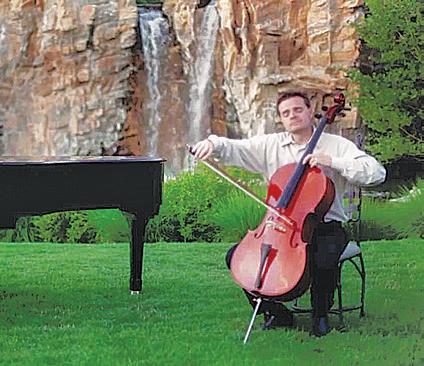
Guess who’s been topping the charts in the iTunes classical section — The Piano Guys. I can’t be the only one that picked up my phone and frantically googled when I found out that The Piano Guys would be playing Trump’s inauguration. I didn’t know who they were, but with millions of YouTube hits and the word “piano” in the name, I was intrigued. I watched the dramatic music video for “Beethoven’s 5 Secrets” — a mashup of OneRepublic’s brief hit and Ludwig’s famed fifth symphony — and understood the appeal. Classical music, packaged for easy listening. For the layman.

This isn’t a new phenomenon in the world of classical music. By any metric, it’s a niche genre. A lot of people see the potential to popularize classical music by incorporating elements of the modern mainstream, humanizing a field that’s at best an acquired taste. Lindsey Stirling’s stint on America’s Got Talent as a dancing violinist comes to mind, and her videos on YouTube amassed a huge following before her descent into relative obscurity. Despite a lack of accuracy and nuance, it’s true that her flashy outfits and high production value attracted a lot of people to the realm of classical music. But did they really stay to discover more artists, or did they leave as soon as the dancing stopped? Did The Piano Guys gain a new following for Beethoven? Probably not.
I could generalize this trend into the whole community. The community orchestra in my hometown went bankrupt
several years ago and then rebooted under private ownership — with way more emphasis on the fun, relatable pops series. Various concerts included guest appearances by Cirque du Soleil acrobats during a performance, holiday tours and performances of the soundtrack from every hit movie ever created. I’m not arguing against having fun and catering to families, but it’s unfortunate that these establishments need to pander so much to even peek their heads into mainstream culture.

I see a sea of gray hair every time I walk into a concert hall. Retired people generally have more time to patronize the orchestra, so it makes sense that the people willing to go support their community institutions would be relatively geriatric. However, it makes me concerned for the future of the genre. It’s not resonating with our demographic. I haven’t met a young kid that’s psyched to tell me about that new Brahms symphony he just gave a listen to. Kids don’t do that.
Clicking through performances by my favorites on YouTube, I stumbled upon TwoSetViolin, a channel with videos titled “21 Types of Orchestral Players” and “INSANE 2X SPEED PAGANINI.” Presumably, they’re tapping the relatively niche demographic of the Gen Z teenage musicians looking for relatable content. I could go without the kitsch, but it gives me some hope that there’s people out there using music from centuries ago to connect with people that are still
enthusiastic about hearing it (albeit at 2x speed). I’d rather see a mashup of Buzzfeed-esque clickbait and classical music than classical music tainted by another genre and presented as something it’s not.
So if The Piano Guys want to make fun, radio edit, easy-listening versions of my favorite songs for the general public, so be it. If these people generate interest in playing instruments, that’s great. If people want to watch videos of Beyoncé-style dancing with a violin, cool. But if all I have to look forward to in the future is my favorite Gershwin tune mixed in with Star Wars and Harry Potter, I’ll lose a lot of the respect I have for this community.
Maggie Gaus is a freshman in the College of Agriculture and Life Sciences. She can be reached at mbg227@cornell.edu. Guest Room appears periodically throughout he semester.
Innovative, energetic violinist Jennifer Koh performed at Bailey Hall yesterday. Ahead of her concert, I was able to speak briefly with her, discussing her musical influences and philosophy, and exploring a few memories that inform the scope of her musical journey.
Koh’s concert featured her latest project, Limitless: On Stage Together, in which she collaborates with close friends and colleagues to compose and perform their personal stories. Koh recalled from her musical upbringing that she mostly played music by composers with whom she had few personal connections. She and the great composers of Western music did not share race, sex or age. While she revered the legacy of classical music, she knew there were more stories that must be told. Limitless is part of that effort to bring forward the compositional voices of those who have not been heard.
In pursuit of this goal, Koh
often draws from her experiences growing up as an Asian-American woman. She described two incidents that deeply affected her: the murders of Vincent Chin in 1982 and Yoshihiro Hattori in 1992. Chin was a Chinese-American automotive engineer who was beaten to death by two recently-fired auto workers. They lost their jobs due to the movement of American auto manufacturing jobs to Japan and the two lashed out at Chin, blaming him for their misfortune as they beat him with baseball bats. Hattori was a Japanese exchange student who was shot to death after mistakenly trespassing on a couple’s property. Dressed as John Travolta’s character from Saturday Night Fever, he was en route to a Halloween party when he knocked on the wrong door. The owner shot and killed Hattori, claiming self-defense. On both occasions, little legal action was taken against the killers. Koh cited these incidents as having unified and galvanized the Asian American community. While she was born of Korean par-

ents, the murder of the Chinese Vincent Chin or Japanese Hattori could easily have happened to a Korean man or woman. It was clear to her that Asian Americans of various heritages were becoming a pan-ethnic group and should unify to address the challenges of being a person of color in the United States.
For Koh’s recent project, The New American Concerto, each composer engaged with a personal social justice concern, interweaving the pieces with emotion and a uniquely American essence. When composers and performers deeply commit to those moments, they discover a “magical alchemy,” as Koh fondly described. Accomplished pianist Vijay Iyer, who played alongside Koh, has assisted her in finding this creative spirit, allowing her to transcend the limits of conventional composing methods.
James Robertson is a sophomore in the College of Arts and Sciences. He can be reached at jar524@cornell. edu.


Fill in the empty cells, one number in each, so that each column, row, and region contains the numbers 1-9 exactly once. Each number in the solution therefore occurs only once in each of the three “directions,” hence the “single numbers” implied by the puzzle’s name. (Rules from wikipedia.org/wiki/ Sudoku)


What’s the sun saying to the moon? Submit a caption by Friday for a chance to see your name in the Sun!
To submit your caption for this week’s contest, visit sunspots.cornellsun.com.




1, 2, 3, 4, 8 BEDROOMS FURNISHED VERY REASONABLY PRICED
607-272-3389 avramisrentals@aol.com
COLLEGE
1 Bedroom available In a 2 BR apartment For Male, Undergrad student. Available NOW & Spring 2019
4 Bedroom Apartment Available NOW & Spring 2019 Novarr-Mackesey Property Management office@ithacastudentapartments.com 607-277-1234
2 & 3 BEDROOMS 109 SAGE PLACE
Available NOW, Spring 2019 & 2019/2020 Shuttle Bus Access to Campus Access to Free Fitness Center Novarr- Mackesey Property Management office@ithacastudentapartments.com
607-277-1234
>>AFFORDABLE, QUALITY LIVING<< Special Deals for you! Furnished 1-6 Bedrooms Collegetown Apartments PARKING, LAUNDRY, UTILITIES! (607) 273-7368 www.IthacaApartmentRental.com *****************************
RENT NOW, GET THE BEST www.MatoulasHouses.com Apartments & Houses In Collegetown LINDEN AVE & E. SENECA ST 1 & 3 BEDROOM APARTMENTS ALL FURNISHED EMAIL: MatoulasHouses@Gmail.com PHONE: (607) 339-9644 FIRST-COME, FIRST-SERVED *****************************
Collegetown Terrace Apartments INSPIRED LIVING TAILORED TO YOUR SUCCESS 24-Hour Fitness Center Shuttle Bus Service to Campus Study Rooms w/ Expansive Views
Apartments Available NOW, Spring 2019 & 2019/2020 Novarr- Mackesey Property Management collegetownterraceithaca.com office@ithacastudentapartments.com 607-277-1234
NORTH CAMPUS Studio, 3 and 5 bedroom Available 2019/2020 Novarr-Mackesey Property Management office@ithacastudentapartments.com
607-277-1234
27 H OUSE FOR R ENT
201 WYCKOFF AVE 6 Bedroom House Novarr-Mackesey Property Management office@ithacastudentapartments.com 607-277-1234
Houses, Apts, Parking 1 to 9 Bedroom
Collegetown - College Ave, Linden Ave, Dryden Rd, Bryant Ave, Cook St. 607-330-2442 info@urbanithaca.com www.urbanithaca.com
We have availability for the 2019-2020 school year beginning June 1st at Hudson heights apartments. The studio apartments come with: heat, water, and electricity included. There are garbages houses and coin-operated laundry facilities on site. Prices start at $750/month for a 12 month lease. If you have any questions or would like to schedule a tour contact us by phone 607-208-7660 or email: renting@ithacaLS.com
COLLEGETOWN 6 BEDROOMS NEWLY RENOVATED 607-272-3389 avramisrentals@aol.com
Pick up your free copy of The Corne¬ Daily Sun at the following locations:
Cornell Campus
• A.D. White House
• Admissions Offce
• Africana Studies and Research Center Library
• Alice Cook Dining
• Anabel Taylor Hall
• Appel Commons
• Baker Hall
• Bard Hall
• Barnes Hall
• Bartels Hall
• Bethe House
• Big Red Barn
• Carl Becker House
• Carpenter Hall Library
• Center for Intercultural Dialogue
• Clark Hall
• Computer Services & Financial Aid, East Hill Plz.
• Cornell Institute for Social & Economic Research
• Cornell Store
• Corson Hall
• Court Hall
• Dairy Bar
• Day Hall Main Lobby
• Dickson Hall
• Donlon Hall
• Duffeld Hall
• East Hill Offce Complex
• Environmental Health & Safety Building
• Flora Rose
• Gannett
• Goldie’s (Physical Sci. Bldg)
• Goldwin Smith
• Hasbrouck Center
• Horticulture Offce
• Humphreys Service Bldg.
• Ives Hall (ILR)
• Ivy Room (WSH)
• Johnson Museum
• Keeton House Dining
• Kosher Dining Hall
• Mac’s Café
• Martha’s (MVR)
• Mann Library
• Myron Taylor Hall
+ Hughes Dining
• Noyes Main Lobby
• Okenshields, Willard Straight Hall
• Olin Hall
• Olin Library B Level
• Plantations Gift Shop
• Rhodes Hall
• Risley Dining
• Robert Purcell Community Center (RPCC)
• Sage Hall Atrium
•Sibley Hall, Green Dragon Café
• Snee Hall
• Statler Lobby
• Statler Terrace Restaurant
• Tatkon Center
• Teagle Hall
• Transportation Dept., Maple Ave.
• Trillium
• Uris Hall
• Vet Center (Shurman Hall)
•Weill Hall, M1 Rm + Synapsis
• Willard Straight Hall Lobby + Dining Off Campus
• Autumn Leaves Used Books (Ithaca Commons)
• Bear Necessities
• Center Ithaca
• Coal House Café
• Collegetown Bagels: CTown + Triphammer
• Commons Grocery (Ithaca Commons)
• CFCU (Triphammer Rd.
+ East Hill Plaza)
• Corner of College & Dryden
• Corner of State & Aurora
•Express Mart, Comm. Crnrs.
• Hillside Inn
• Hilton Garden Inn
• Holiday Inn
• Ithaca Coffee Co.
•Ithaca College, Phillips Hall
• Jason’s Grocery & Deli
• Kendal
• Kraftees
• Lifelong
• Oasis (Greenstar)
• P&C Fresh (East Hill Plaza)
• Salvation Army
• Shortstop Deli
• Tompkins Cty. Public Library
• Tops (Triphammer Rd.)
• Universal Deli
• Warren Real Estate (Downtown
+ Community Corners)
or stop by The Sun’s offce at 139 W. State Street


Project provides fnancial incentives for local households to raise women’s domestic status
By MEREDITH LIU Sun Assistant News Editor
Promoting women’s empowerment in the developing world is no easy task, but a Cornell freshmen has an idea: encourage women to take control over their water systems.
Isabella Culotta ’22, who worked in Saptari District of Nepal in 2017 with the International Centre for Integrated Mountain Development, said it’s hard to achieve women empowerment in some less developed areas through education only. Instead, she and her team chose to do so with financial incentives by offering discounts to
households who buy solar irrigation pumps — used to water the rice paddies, vegetable and lentil fields — under the name of the woman in the family.
“It’s difficult to just teach them about empowerment. Sometimes, it’s more effective when [people] are shown the monetary benefits of female empowerment,” Culotta told The Sun. To receive the discount, families would also have to “transfer [the ownership of] the land under the woman’s name.”
As urbanization takes place around the world, women compose the majority of farmers in the world, Culotta said. However, she said that despite
the amount of work they put in to support their family and food supplies, their life “are much more constrained comparing to those of men’s.”
Although it is hard to quantitatively show the progress that the project has produced, Culotta said that, on average, households in the pilot region that bought the solar pumps turned out to be wealthier than those who didn’t.
Culotta started working with the ICIMOD in 2016 after she was selected for the BorlaugRuan International Internship, during which high school students from around the world gather to discuss food security and policy with agricultural
experts from around the world.
“Learning about the world’s numerous agricultural practices directly from their practi -
“It’s difficult to just teach them about empowerment. Sometimes, it’s more effective when people are shown the monetary benefits of female empowerment.”
tioners is incredibly important to whichever agriculture-related field one is pursuing. Before we can take it to the farmer, we must understand their wants and needs,” Culotta said in an interview with Cornell Chronicle.
On Thursday, Culotta’s work in Nepal earned her the 2018 Elaine Szymoniak Award at the World Food Prize Laureate Award Ceremony. A prospective international agriculture and rural development major, Culotta said she hopes to conduct more scientific and quantitative research in relevant fields in the future.
“I’m not quite decided about what projects I want to take on in the future, but I do hope to conduct more in-field research and explore more fields in addi-
Isabella Culotta ’22
tion to gender empowerment,” Culotta said. “That said, I’m still very invested in our project in Nepal and hopefully it will bring changes to those areas.”
Despite the project’s apparant success — the project has now expanded to more areas in the Himalayas — Culotta conceded that using solar pumps as an incentive for women’s empowerment is not a catchall solution for all agricultural regions in the world.
“Groundwater is depleting around the world. It’s often overdrafted, so irrigation is trickier for other places,” Culotta told The Sun. “The Himalayas and the eastern Terais of Nepal are kind of a unique case. Because of global warming and the mountain snow melting, groundwater is not scarce in those regions.”
Meredith Liu can be reached at meredithliu@cornellsun.com.
VOLLEYBALL Continued from page 15
incredibly skilled and we have the ability to win big games

and reach our goals, but it starts with our mentality. We are working hard on a ‘no ball hits the ground’ mindset and making the choice to go out there and win.”
Heading into its final six games of the season, the Red are just two games out of first place in the Ivy League, behind Yale and Princeton, who are both 7-1 on the year.
“Our plan is to win the rest of our games this season,” Stackhouse said. “We have the talent to beat every single team
“Our plan is to win the rest of our games this season”
Junior Jada Stackhouse
in the conference, so we really just have to focus and use our strengths strategically. We still have a chance to win the Ivy League, so that’s where our focus is right now.”
Cornell will look to continue its Ivy League winning streak on the road next weekend against Dartmouth on Friday at 5 p.m. and Harvard on Saturday at 5 p.m. The Red defeated both opponents earlier in the season in convincing fashion in Ithaca.
Bennett Gross can be reached at bgross@cornellsun.com.
By BENNETT GROSS Sun Staff Writer
Coming off of three consecutive Ivy League losses, the women’s volleyball team was able to get back into the win column with a five-set victory over conference and in-state rival Columbia.
The Red, currently in third place in the Ivy League, marked the first season sweep of Columbia since 2013 with the win this weekend.
“We started from square one and Coach Vande Berg gave everyone a chance to prove they could get the job done”
Junior Lily Barber
The Red got off to a hot start in the match, winning the first two sets, 25-18 and 25-13, but then were unable to continue its dominance, allowing the Lions to claw back into the game.
Ultimately, the Red was able to take the crucial league match by winning the fifth set 15-6. In the final set, the Red played a nearly flawless stretch, committing no errors, along with eight kills and a .348 hitting percentage. The Lions struggled throughout the match, unable to overcome 28 errors and a mere hitting percentage of .157.
The team learned from the three consecutive losses before Columbia’s game by watching recaps and modifying their training.
“After losing those three games that we felt we should have won, we sat down and watched film and saw what
CROSS COUNTRY
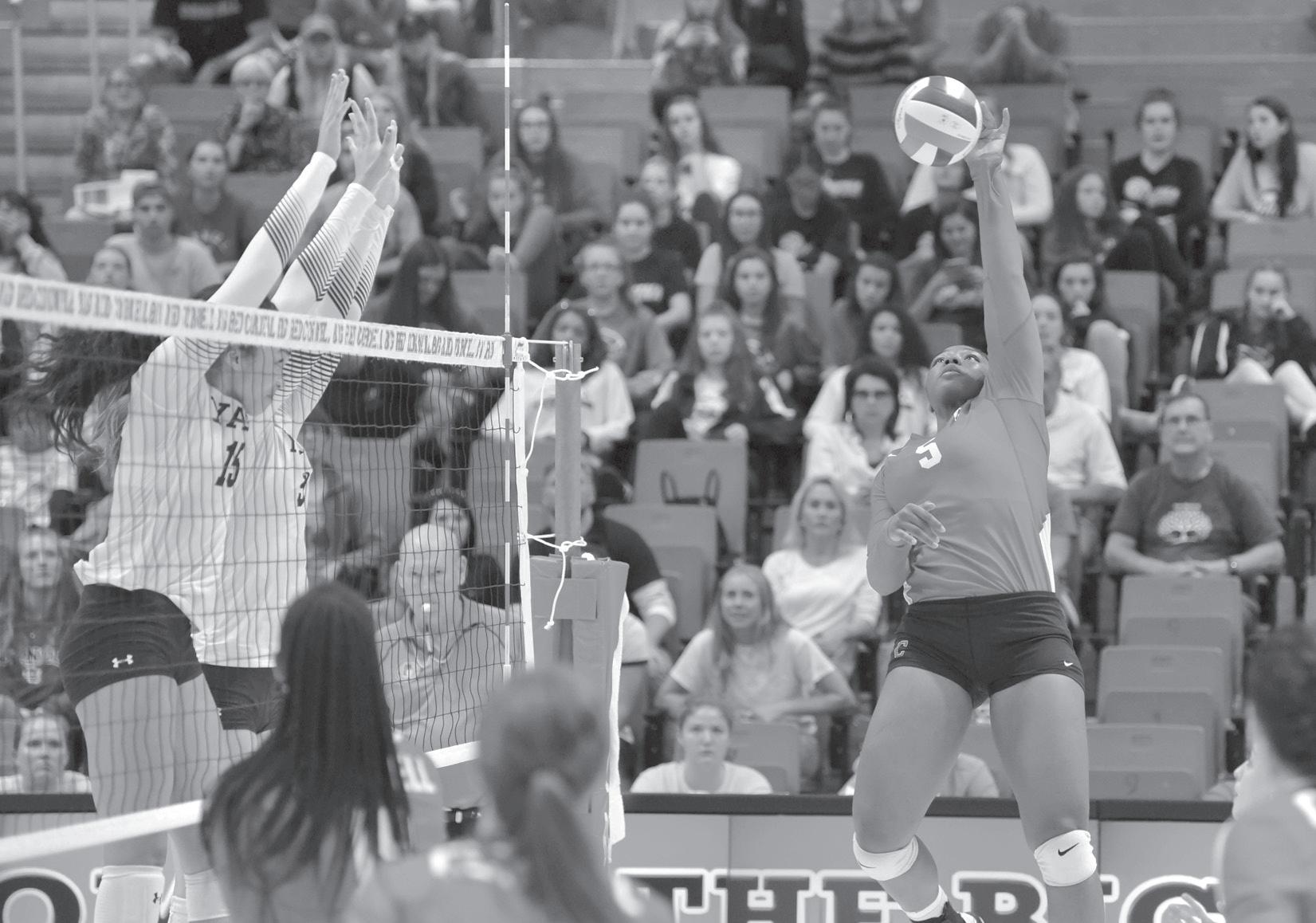
types of errors we were making and what we could be doing better,” junior Lily Barber said. “During practice this week, we started from square one and Coach Vande Berg gave everyone a chance to prove they could get the job done. So, by the end of the week, if you were going to play was based on your numbers and statistics from the week of practice.”
Cornell was led by junior outside hitter Samanta Arenas who had 20 kills and sophomore setter Zoe
Chamness who recorded 50 assists in the contest. Additionally, freshman Avery Hanan and junior Jada Stackhouse accumulated 11 and 10 kills respectively, while Barber led the Red with 16 digs on the afternoon.
“Personally, I went into the game wanting to have a different attitude and spark that I haven’t shown previously,” Chamness said. “Every person on our team is
VOLLEYBALL page 14
By ARCHER BRIGGS Sun Contributor
In their only home meet of the season on Friday, in front of a parent’s weekend crowd, men’s cross-country raced in the 32nd annual John Reif Memorial meet. The 5k race included 47 different runners from Cornell, Syracuse, Niagara, and Cortland.
Although Cornell’s top 12 runners did not race in order to rest for next weekend’s Ivy League Heptagonal Championships, they joined the enthusiastic crowd of parents and the men’s and women’s track teams on the sideline to support their
teammates.
Despite there being no overall team score for the race, the Red finished behind upstate-rival Syracuse, and well ahead of opponents Niagara and Cortland.
In his last race as a Big Red runner, senior Brandon Phillips finished first for Cornell in 16:20 and took ninth place in the race. Finishing just behind Phillips was sophomore Mars Bishop in tenth place with a time of 16:27. Junior Freddie Buckholtz finished just seven
seconds behind Bishop in 16:34 which landed him in 12th place on the meet, behind senior captain Roc Johnson.
“Individually, for the people who ran the race, it was a good resolution to the season”
Senior Roc Johnson
“Individually, for the people who ran the race, it was a good resolution to the season,” Johnson said. “The race is a tradition that we do at the end of the year.”
Cornell’s Moakley Course is on the Robert Trent Jones Golf Course right next to campus. Despite Friday’s slightly cool but sunny weather, the course was muddy which caused some difficulty for
multiple runners.
“Times were slow because the course was muddy,” Johnson contended.
The Red have had a successful year so far placing first out of six and second out of 44 in the UB Stampede Invite and the Lehigh Paul Short Run, respectively.
The Red will run next in the Ivy League Heptagonal Championships next weekend in Princeton, New Jersey. “Heps” will mark the beginning of the post-season, the most important time of the year for Big Red cross-country.
Archer Briggs can be reached at wcb224@cornell.edu
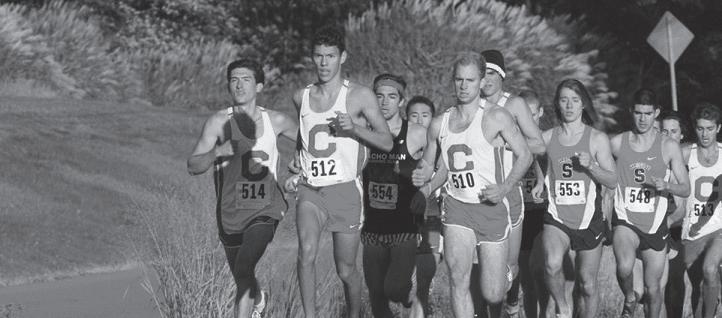


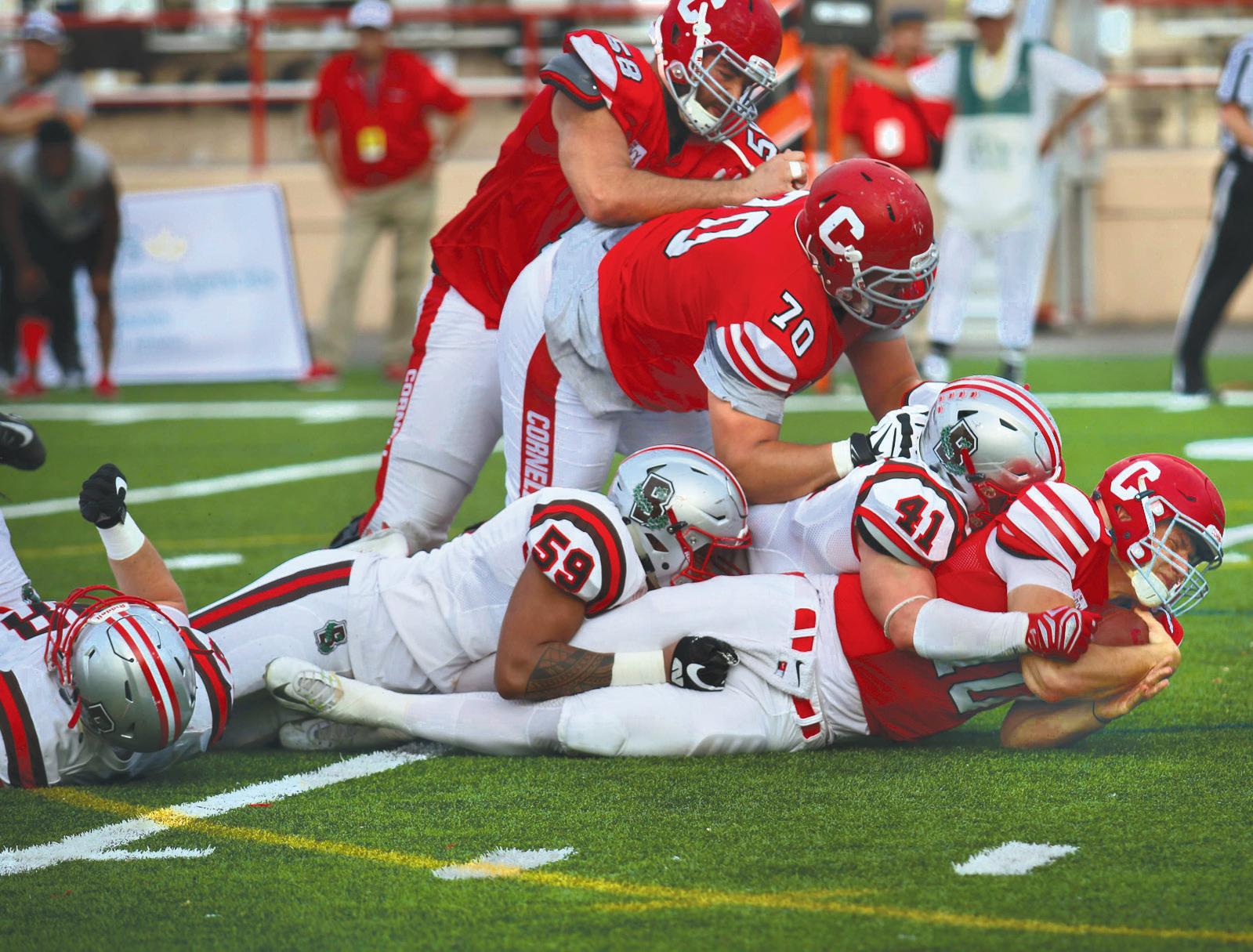
By MILES HENSHAW
The last time Cornell football beat Brown in Providence, head coach David Archer ’05 was a sophomore suiting up for another game on the offensive line. Now on the sideline, he has led the team to a second consecutive win over the Bears.
Cornell’s decisive 34-16 win Saturday, a year removed from a 34-7 Homecoming victory, marks Cornell’s first set of back-to-back victories over Brown since the early ’90s. With the win, built on a balanced offensive attack and smothering defense, Cornell moves to 2-1 in the Ivy League and can battle for a share of the first place at Princeton next week.
“Brown
“I’m proud of the whole team,” Archer said. “To win on the road in this league takes everybody: the guys giving the scout teams looks, special teams, offense, defense. I’m proud of how we all stepped up.”
couple shots,” said sophomore linebacker Lance Blass. “There are definitely some things we’ll need to get cleaned up going into next week.”
The Red’s first score came on fourth down via a 27-yard screen pass to junior running back Harold Coles. Coles had a big day, picking up 141 yards and a touchdown on the ground in addition to his receiving score.
“Brown came out blitzing with looks we hadn’t seen on film, so once we got adjusted to that we got things going,” Archer said.
came out blitzing with looks we hadn’t seen on film, so once we got adjusted to that we got things going.”
Cornell got the ball back after a stop with under two minutes remaining in the half and marched down the field. Senior quarterback Dalton Banks capped off the drive and the half with a short touchdown pass to junior wide receiver Owen Peters.
Head Coach David Archer
Cornell took momentum into the locker room and came back out with it, putting up a quick touchdown on the first drive of the second half to attain its first lead of the game, 14-10, and the Red never looked back.
tained a firm grip on the game. On the first play of the third quarter, a Brown player jumped offside and Banks took advantage of the free play to hit senior wide receiver Lars Pedersen for a long touchdown.
On top of Cornell’s aerial success, Brown struggled all game long to stop Cornell’s running backs. Coles recorded over 100 rushing yards for the fourth time in his career while sophomore running back Jake Derderian notched some crucial first downs on the ground.
“We’re just going to pound the ball and get five yards a pop then take a shot here and there and make some big plays down the field,” Derderian said. “Our strong run game propels everything else. It’s hard for defenses to game plan for a big guy like [Coles] then a speed back like me.”
Cornell’s final touchdown came on a short wildcat run from senior running back J.D. PicKell. PicKell has been taking snaps in the wildcat since junior quarterback Mike Catanese went down with an apparent leg injury against Harvard.
At this point in the season, Princeton and Dartmouth have made themselves the clear favorites for the Ivy League crown. The only question is if one of the two lose before they face off head-to-head in week eight. Both No. 18/23 Princeton and No. 24 Dartmouth defeated their lesser-favored opponents this week to remain a perfect 6-0 on the year. To go along with Cornell’s 34-16 defeat of Brown, Yale topped Penn to give the favored team in each of this week’s matchup a victory.

Yale 23, Penn 10

On national television, the Bulldogs returned to their Ivy form under the Friday night lights of Franklin Field and easily handled the Quakers. Yale scored on its first two drives of the game and never looked back and the defense more than got the job done. Penn was held to fewer than 300 yards in the game, unaided by the fact that the Bulldogs held the ball for over 11 minutes more of gametime.

Princeton 29, Harvard 21
The Tigers’ dynamic quarterback John Lovett made his return to action against Harvard after missing last week’s game to injury. Nonetheless, the Princeton offense was humbled on the road, and for the first time this season, the Tigers put up fewer than 45 points in a game. Princeton was actually outgained in yardage by the Crimson, 375-357. The two teams were locked in a 10-7 score in favor of Princeton after the second quarter until an explosion in the final frame. There were 33 total points scored in the final quarter, and Princeton ultimately outlasted the Crimson for the win.
Dartmouth 28, Columbia 12

Saturday’s win, however, didn’t start out smoothly. Cornell moved the ball well early on but had trouble finishing drives. Penalties and mishaps, like an interception and the Red’s first fumble of the year, bogged down the offense in enemy territory on three promising first quarter drives.
Brown scored the game’s first 10 points without doing much damage against the Cornell defense. Like most of Brown’s offense throughout the game, the first 10 points came off big plays. The field goal was set up by a long play-action pass and the touchdown came on a scorching 65-yard wildcat run by L.J. Harriott.
“We did let up a couple big plays and forced them to third down then let up a
But after the Red took its first lead, Brown showed some life. The Bears started at their own one-yard line after nearly muffing the kickoff return and marched 94 yards down the field, but a goal line stuff by the Cornell defense followed by a blocked field goal attempt let all the air out of Brown’s tires.
“The psychological effect it had on the team was huge,” Archer said of the defensive and special teams play. “They started on the one and drove the field but our defense held them on third down and then got in and got the block. It’s our kids giving max effort. That’s the way they play and that’s the way they practice.”
After the blocked kick, Cornell main-
“There’s a guy who’s a talented kid,” Archer said of PicKell. “We want to find ways to get the ball into his hands because he does stuff with it. You saw it on the last touchdown; he made a couple guys miss and got in there.”
The Cornell defense didn’t give Brown much of a chance down the stretch, giving the Bears’ offense no room to breathe. Blass had 1.5 sacks and three tackles for a loss, part of a relentless pass rush that neutralized Brown’s run-pass-option offense.
“As long as he’s comfortable back there, any good quarterback will be able to pick a defensive secondary apart,” Blass said. “So pressure is key.”
Cornell takes on nationally-ranked Princeton on the road next weekend.
Starting an hour after the Princeton game and seeing the Tigers jump to an early lead, the Green knew it would need a win to keep pace for first. Dartmouth’s performance matched expectations and the final score is not indicative of their dominance over the Lions as Columbia scored a garbage time touchdown in the final minute. It was a game not won in the air but on the ground, as the Green attempted 29 more running plays than passing. Nonetheless, the pass game provided when called upon, going 11-for-12 on the day along with two touchdowns over 15 yards. Five rushers for the Green each achieved 30 yards and shared two ground touchdowns.