The Corne¬ Daily Sun
By TOM SCHREFFLER Sun Staff Writer
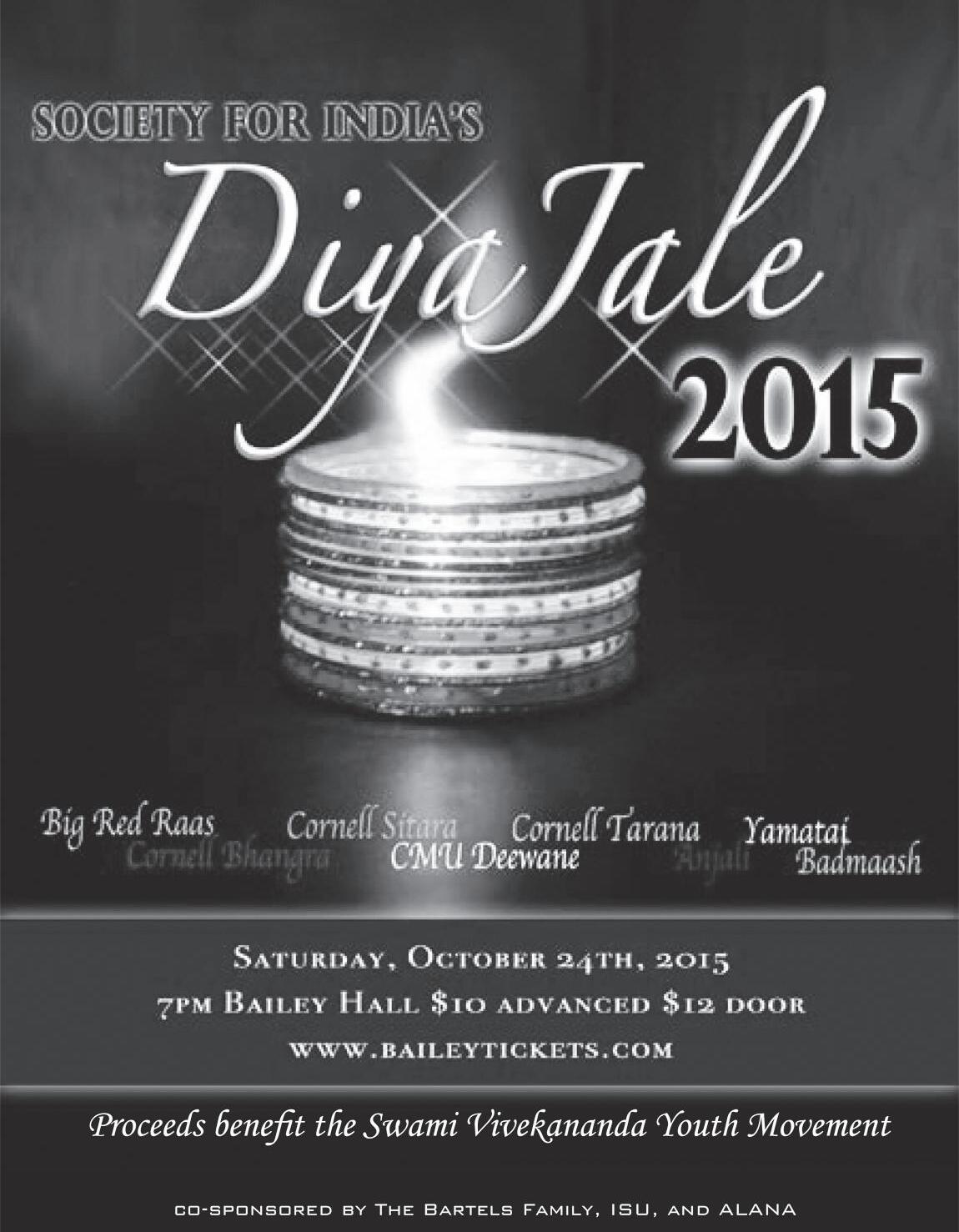
Several University administrators and professors spoke about a major financial dilemma that may threaten to decrease current financial aid allocations at a faculty forum Wednesday
“Need
T h e f o r u m “ C o r n e l l’s Fi n a n c i a l A i d Po l i c i e s : Unimaginable Outcomes?” follows up comments that Dean of Faculty Prof Joseph Burns Ph D ’66, astronomy, made at a Faculty Senate meeting last week, where he questioned the University’s ability to continue increasing financial aid in pace with rising tuition costs while still maintaining c o m p e n
not
faculty members “ We won ’ t be able to support a diverse student body [if we decrease financial aid] We’re Cornell We can ’ t do that that’s unimaginable,” Burns said “ Then by the same token, I stop and I think, ‘Oh maybe we can keep [increasing financial aid], but if we do that, we won ’ t have any money to support excellent faculty ’ That’s unbelievable ”

By TALIA JUBAS Sun Senior Writer
Mayor Svante Myrick ’09 presented his 2016 city budget recommendation to the Common Council on Oct 1, describing it as likely “the most boring of his administration,” The Ithaca Journal reported earlier this month
“It means we ’ re finally reaching stability,” he said, affirming that initiatives to spur the economy since the recession have generated increased revenue for the city, according to The Journal
Although the budget will remain largely the same, the mayor ’ s proposal contains a number of changes to advance his financial goals for 2016, which include reducing the tax burden on city taxpayers and continuing to move operating expenses from borrowed capital
In order to achieve these goals, there will not be an increase in the tax rate, which will remain at a rate of $12 89 per $1,000 assessed value However, Myrick is also proposing a small increase in the tax levy of 1 7 percent, according to The Ithaca Voice In addition, the city
Local activist Phoebe Brown announced earlier this month that she will launch a write-in campaign for mayor in an attempt to foster a better city dialogue, though she acknowledged the unlikelihood of unseating Mayor Svante Myrick ’09 in his bid for reelection
Brown has been vocal in the past on issues of economic and community development and the need to advance diversity in and around Ithaca She is currently a community outreach liaison for Cayuga Medical Center’s Center for Healthy Living
Brown told The Ithaca Voice that she is mostly supportive of the work Myrick has done so far as mayor, but feels that some voices have not been represented in this year ’ s mayoral race She said she hopes that creating a point of contention will help refocus the election around certain key issues
“I doubt very seriously I will win, and I want [Myrick] to win, truthfully,” Brown said to The Voice “But I also want people to not just say, ‘Okay, that’s it ’ That’s not the way our system is supposed to be set up ”
Brown’s platform focuses on the need to increase governmental transparency, foster diversity, create affordable housing and ensure Ithacans receive living wages She has been active in the local Black Lives Matter movement and has worked to improve police-community relations
“Our system was built to help people of every income bracket, and there have been many of us left out for a very long time,” Brown told The Voice “For me, it's scary to do this But I said, ‘Hey, I’m going to go for it ’”
Compiled by Rebecca Blair
By REBECCA BLAIR Sun Assistant News Editor
The trial of Benjamin Cayea for the murder of Shannon Jones ’15 wrapped up with closing statements Wednesday after three days of testimony covering 15 witnesses
The 12 members of the jur y now have to decide whether to convict Cayea of second-degree murder, convict him of second-degree manslaughter or acquit him in Jones’ Thanksgiving 2014 death The jury can turn to the manslaughter charge if they find that Cayea acted “recklessly” to cause Jones’s death, but did not have the malice required for a murder conviction, according to The Ithaca Journal
In his closing argument, defense attorney Matthe w Van Houten told the jury that Cayea loved Jones and that her death was the result of a “passionate” sexual encounter gone awr y Throughout the trial, the defense argued that Jones and
Cayea often invoked the use of choking the method by which Jones was killed in their sex life
“This was something that Shannon pushed him to do beyond his level of comfort,”
Van Houten said “And also that their passionate arguments often transitioned into passionate sex ”
During the trial, Cayea took the stand and retracted the confession he gave imme-
diately following Jones’s death, instead promulgating the sexually-fueled version of events
In his closing statement,

Thursday, October 22, 2015

The Risk and Benefits of Shale Gas
10:30 - 11:30 a m , Boyce Thompson Institute, Auditorium
Grading Without Losing Your Mind
Noon - 1 p m , 421 Computing and Communications Center
Humiliation and Terrorism 12:15 - 1:30 p m , G08 Uris Hall
Paying for the Party: How College Maintains Inequality 1:25 - 2:40 p m , G01 Uris Hall
Why Is Europe Failing at the Issue of Immigration? 4:30 p m , Kaufmann Auditorium, Goldwin Smith Hall
1 p m , Uris Librar y Classroom
Thinking About Hetero-Racist Misogyny in “Agriculture”
12:20 - 1:10 p m , 102 Mann Library
Mapping the Medieval In German Culture and Beyond 2:15 - 7 p m , 401 Physical Sciences Building
Dr Esra Özyürek Anthropology Colloquium 3:30 - 5:30 p m , 215 McGraw Hall
La Mesa, Spanish Conversation Group 4 - 5 p m , 3331 Carol Tatkon Center


By TODD M BARMASH
Knowing how an adolescent female thinks is as hard as predicting the winning New York lotter y number or so we thought
Using the diaries of maturing women, Prof Joan Jacobs Brumberg, human development and family studies, is in the process of researching and writing a book about this ver y subject
But rather than examining the issue from the perspectives of parents, teachers or clergy, Brumberg is focusing on the point of view of the young females themselves
Brumberg, a historian who teaches in the College of Human Ecology, is currently on a one year leave to complete a Guggenheim fellowship to write her book She said she found certain trends and patterns in the more than 100 diaries, which were written by females aged 13 to 20 during the 19th and 20th centuries, that she has already collected


L o c a l
Cornell to Supply City With Water During Treatment Plant
Construction
Mayor Svante Myrick ’09 asked residents to voluntarily
c
over the next three weeks as t
Water Treatment Plant con-
str uction project is under way because the city will be “rely-
water supplied by neighbori n g w
, ” a Facebook post on the City of
Point and Cornell University
water, as well as its own customers S
University of Albany student
Trevor Duffy Duffy, who was 19 and a sophomore at the time of his death, was found unconscious “in the home of a n u n s a n c t i o n e d
n i t y ” and later died at a hospital last November, according to T h e Ne w Yo r k Ti m e s
Authorities say that Jablonski and Sucov, along with others, organized the initiation activities for the fraternity, with i n v o l v e d p l e d g e s d r i n k i n g “large quantities of alcohol ” The two men have each been charged with one count of first-degree hazing in Duffy’s death Following a university investigation, 24 were penalized and some were expelled f r o m t h e i n s t i t u t i o n , T h e Times repor ted
N a t i o n a l
Obama Says U S Will Tackle Prescription Drug Abuse
D u r i n g h i s v i s i t t o
C h a r l e s t o n , So u t h C a ro l i n a Wednesday, President Barack Obama promised to fight the heroin use and prescription dr ug abuse that is “upending communities across the count r y, ” T h e A s s o c i a t e d Pr e s s repor ted “ This crisis is taking lives; i t ' s d e s t roy i n g f a m i l i e s a n d s
across the countr y, ” Obama said “ That’s the thing about s u b s t a n
ever ybody
The president also heard f
healthcare and law enforcement officials about their own experiences with
and abuse in their own communities, according to The AP Compiled by Annie Bui
By JOSH GIRSKY Sun Staff Writer
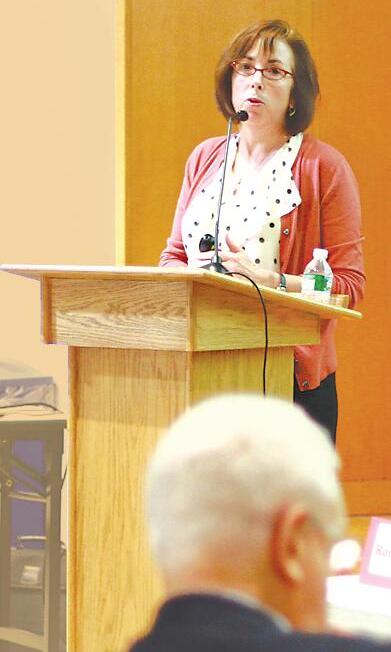
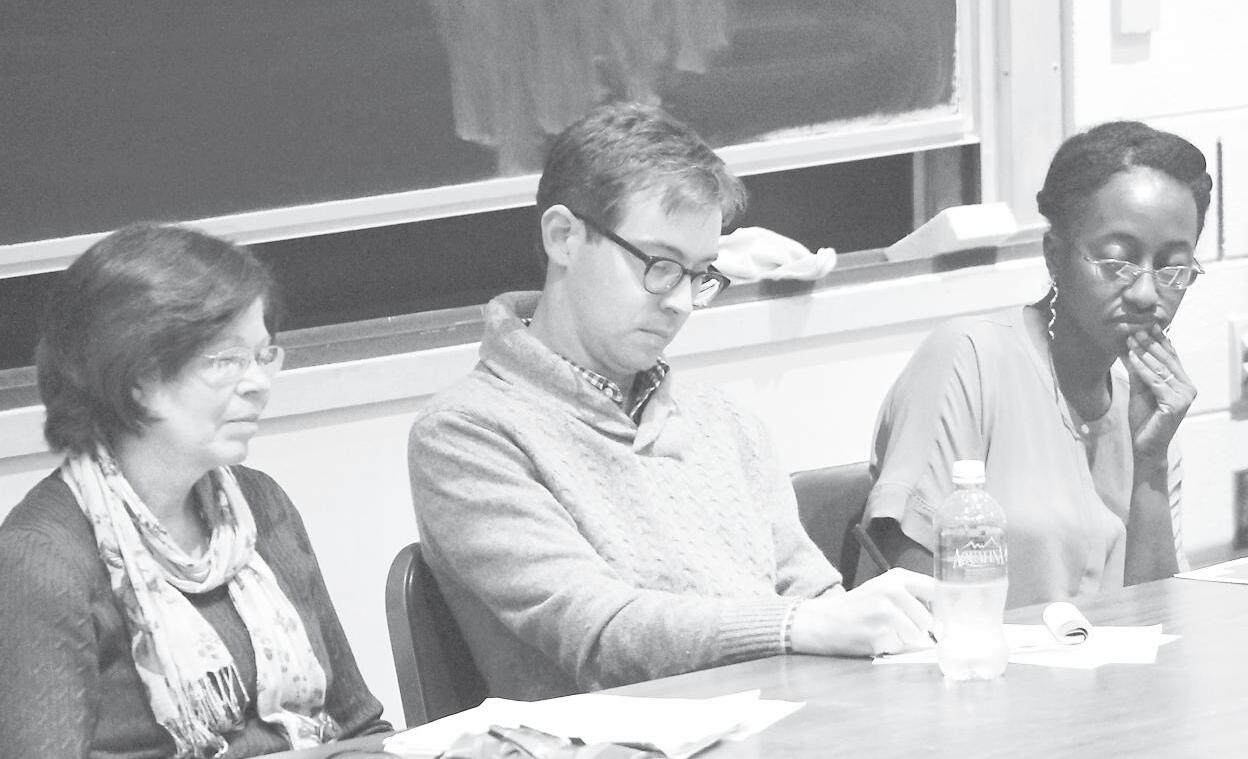
Three Cornell government professors largely denounced big money in politics at a panel Tuesday entitled “Reclaiming Our Democracy ”
The discussion was hosted by the United States Public Interest Research Group, a group that aims to prevent powerful interests from having too large an impact in government
During the discussion, each of the professors pointed out different negative consequences associated with large campaign donations on America’s political landscape
Prof Jamila Michener, government, began the main portion of the discussion by questioning the need to finance campaigns at all
“It’s not clear that this campaign spending is improving our democracy in any way, is informing voters, is equipping them to make better decisions,” she said “If the money isn’t doing anything that’s beneficial to democracy irrespective of whether it comes from large or small donors, we should be questioning it It’s problematic ”
Prof Elizabeth Sanders, government, said she believes that there may be a strong correla-
tion between the number of scandals presidents face and the amount of time they spend raising money
“Between a remarkable amount of fundraising, and ongoing war concerns, Obama doesn’t have much time to pay attention to how the government is run, ” she said “He hasn’t invested enough effort in the duties that the constitution seems to make his primary job: seeing to it that the laws are faithfully executed ”
“It’s
She continued that the time Obama spends raising money had led to “administrative malfunction” relating to Veterans Administration, the Internal Revenue Service, the Affordable Care Act roll out, oil leasing in the Gulf of Mexico, the Secret Service and other agencies
“It would lighten the president’s governance load significantly if he didn’t have to spend so much time raising money, ” Sanders said
The professors at the panel also argued that social and economic inequality often result from the presence of big money in politics They argued that politicians who received
large campaign donations are more likely to cater to those who financed their campaigns, leaving the interests of the less wealthy underrepresented
Prof David Bateman, government, said he hopes politicians would be less responsive to particular interests on Wall Street or in the Silicon Valley, but he views that as unlikely because wealthy citizens have a disproportionately large impact on political outcomes Bateman continued that famous people also have easier access to their representatives on Congress and are in a better position to affect legislation because of their status
“Wealthy members of constituencies tend to have a clout that goes well beyond just the amount of money they’re willing to donate,” Bateman added
Because of the disproportionate representation of wealthy citizens in politics, Michener said people needed to look at ways to prevent the system from becoming rigged against lowincome citizens
“ We should be really concerned about money playing a huge role in politics when inequality is widening,” she said, adding that “ poor people and disproportionately people of color” suffered as a result of an unequal system
“If the system is institutionally rigged such that their voices can ’ t be heard, that’s a problem,” Michener said
Bateman also said the presence of money in politics often prevents the success of strong, qualified candidates in congressional and state elections because they might be deterred by the amount of money needed to unseat an already elected official
“There are districts where a strong challenger could take out an entrenched incumbent,” he said “[However], they are not going to do it because their opponent will enjoy an incumbent advantage and because they don’t want to do all the work raising money for something that is probably going to be a loser ”
By REBECCA BLAIR Sun Ass stant News Editor
Si
l a s t c o n
c
e d t h e Wi n d En s e m b l e a t C a r n e g i e Ha l l i n M a y 1 9 8 9 , a c c o r d i n g t o h i s o b i t u a r y A s a s h ow m u s i
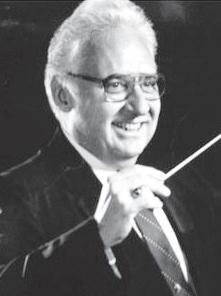
t h e Bi g Re d Ma rc h i n g Ba n d He t a u g h t c o u r s e s i n b r a s s i n s t r u m e n t s , e l e c t ro n i c m u s i c a n d re c o rd i n g t e c h n o l o g y, a c c o r d i n g t o a Un i v e r s i t y p r e s s re l e a s e Fo l l ow i n g h i s d e a t h , t h e b a n d t o o k t o Fa c e b o o k t o h o n o r St i t h’s l e g a c y a s “ a n i m p o r t a n t p a r t o f Bi g Re d Ba n d h i s t o r y ” “ [ T h e Ne w C o r n e l l Fi g h t So n g ] , w h i c h y o u c o m p o s e d , s t i l l l i ve s o n , a s we l l a s a l l t h e m e m o r i e s y o u c r e a t e d , ” t h e g ro u p w ro t e D u r i n g h i s 2 3 y e a r s a t C o r n e l l , St i t h re c o rd e d a ro u n d 2 0 m u s i c d e p a r t m e n t c o n c e r t s a ye a r a n d w o rk e d w i t h t h e Wi n d En s e m b l e a n d Sy m p h o n i c Ba n d t o p ro d u c e m o re t h a n 4 0 l o n gp l a y i n g r e c o rd s , a c c o rd i n g t o t h e re l e a s e In t h e s e re c o rd s , Si t h o f t e
t t , Fr a n k Si n a t r a , J r a n d Na t K i n g C o l e , a m o n g o t h e r s , a c c o rd i n g t o h i s o b i t u a r y T h o u g h St i t h h a s l i v e d i n It h a c a f o r m a n y ye a r s , h e w a s b o r n i n i n Jo h n s t ow n , Oh i o , a n d l a u n c h e d h i s c a r e e r a t S y r a c u s e Un i ve r s i t y ’ s m u s i c d e p a r t m e n t a t t h e a g e o f 2 8 , a c c o rd i n g t o h i s o b i t u a r y Or i g i n a l l y s e r v i n g t h e Sy r a c u s e Sy m p h o n y Orc h e s t r a a s a c h a r t e r m e m b e r o f t h e t r u m p e t s e c t i o n , St i h w o u l d l a t e r b e c o m e t h e f i r s t c o o rd i n at o r o f m u s i c f o r t h e We s t Ge n e s e e C e n t r a l S c h o o l s , b e f o re a r r i v i n g a t C o r n e l l i n 1 9 6 6 I n t h e e a r l y 7 0 s , Pr o f E m e r i t u s M a l c o l m B i l s o n , m u s i c , w o r k e d w i t h St i t h t o r e c o r d t w o c o n t e m p o r a r y s o n a t a s “ He w a s a w a r m a n d g
n


Van Houten also argued that the jur y ’ s interpretation of last November’s events depends almost entirely on Cayea’s state of mind, and thus cannot be proven beyond a reasonable double, as required of the prosecution in a criminal case, The Journal reported
In his closing argument, Deputy District Attorney Andrew Bonavia disagreed, saying that the inconsistencies in Cayea’s story proves that his defense tactic was nothing more than an attempt to trick the jury He rejected Van Houten’s assertion that the jury’s lack of insight into Cayea’s mind forecloses on the possibility of a conviction, pointing out that the jury is empowered to reasonable assess whether malicious intent was present
“That’s a violent attack That shows the defendant’s rage, that he lost it, as he said in his interview with police,” Boniva said “In no way were those injuries consistent with consensual, sexual choking ” Boniva also said that Cayea’s failure to alert authorities when Jones became unresponsive pointed to his guilt, according to The Journal He reminded the jury of testimony that showed that while Jones would have lost consciousness after 20 to 30 seconds of strangulation, Cayea would have had to have continued to apply extreme pressure for another two or three minutes to kill her During this time, Boniva said, Cayea would only have maintained hold with the purpose of taking Jones’s life
“Every second was a conscious decision for him to keep going,” he said
The jury deliberated for four hours Wednesday, but having yet to reach a verdict, will return to the courthouse to continue their discussions Thursday morning
FINANCIAL AID
Continued from page 1
While the cost of attendance for the bottom three quartiles of students receiving aid has been declining, students from wealthy and middleincome families have been paying more as tuition continues to rise, according Barbara Knuth, senior vice provost and dean of the graduate school, who was among the panelists at the forum She added that half of Cornell students do not qualify for financial aid
Pr o f Su z a n n e Me t t l e r, g ov e r n m e n t , s p o k e about student loan debt as a national issue, highlighting the differences in average debt levels among public universities, private nonprofit universities and private for-profit universities The highest levels of debt were to be found among stud e n t s
said, and she added that federal subsidies for higher education have been declining over the past several decades as student debt has simultaneously increased Barton Winokur ’61, who was the Chair of the Brandeis University Board of Trustees and is now a Cornell emeritus trustee, also spoke on the panel and insisted that the trustees have consistently striven to meet students’ financial needs
“I’ve never seen anyone at Brandeis or at Cornell vote against the principle of providing aid for those who need it,” he said
However, the Board of Trustees has also had to balance this with an interest in meeting faculty members’ demands for high salaries, Winokur added
“Professors expect to be paid at the median of their peers, and they consider their peers to be the v e r y t o p s c h o o l s , ” Wi n o k u
h e amount of money universities require students and families to pay, “in effect, like a tax rate ”
While at Brandeis, Winokur said he argued that offering generous financial aid would successfully attract students who might have other wise accepted admissions offers from other prestigious schools
over Brandeis
Winokur also acknowledged that many students still need to confront a significant gap between their estimated need and their actual need, but he argued that those students can still find ways to attend
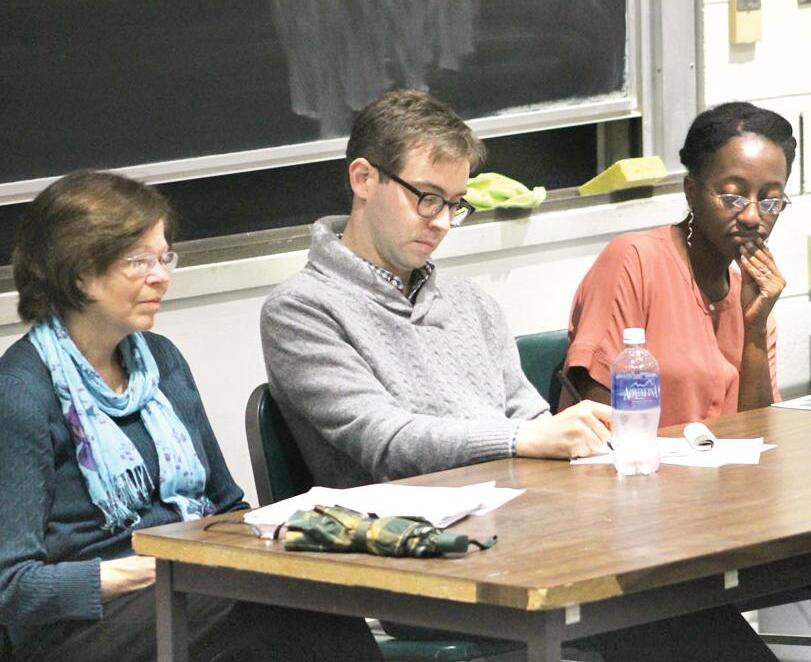
“Need is not an objective issue, it is a subjective issue,” Winokur said “People make decisions based on their alternatives ”
To support this assertion, he pointed to the stor y of a Brandeis mother who told him that when total financial aid for her child decreased by $3,000, she took an additional custodial job scrubbing floors at a local school to be able to pay for her child’s college expenses
Prof Ronald Ehrenberg, industrial and labor
re
changed since his generation attended school and that many students now do not feel obligated to work during their four years in college
Ehrenberg said that his parents, being of a Great Depression-era mindset, never borrowed a cent in their lives and that for him, borrowing money to attend college was out of the question, adding that though he was accepted to Cornell, he chose not to attend because of the cost
Despite the dilemma regarding financial aid that the panelists discussed, Winokur still emphasized the importance of providing copious financial aid to talented underrepresented minority students, adding that it is a powerful tool in ensuring their success in society after graduation
He supported his claim by saying that students’ performance after they leave campus is a far more substantive metric than just looking at the composition of an incoming class
Inner city students taking “hard sciences courses ” have been able to do well, Winokur said These students are not able to come to Cornell without generous aid, but when they can take advantage of it, they succeed
Tom Schreffler can be reached at tschreffler@cornellsun com
BUDGET
Continued from page 1
w i l l a l s o a i m t o “ p u r c h a s e
m o re e f f i c i e n t l y a n d e c o n o m i -
c a l l y, ” w h i c h m a y i n vo l ve t h e re s t r u c t u r i n g o f s o m e d e p a r tm e n t s , a c c o rd i n g t o a n o u t l i ni n g o f t h e c i t y ’ s 2 0 1 6 f i n a n c i a l
g o a l s o n t h e c i t y ’ s we b s i t e Mo s t o f t h e c h a n g e s i n t h e m a yo r ’ s b u dg e t a re re l a te d t o i n ve s tm e n t s i n s p e c i f i c d e p a r t m e n t s W h i l e t h e f i r e d e p a r tm e n t w i l l s e e f u n d i n g d e c r e a s e b y $ 1 5 3 , 4 3 2 , t h e p o l i c e d e p a r t m e n t h a s b e e n a l l o c a t e d j u s t ove r $ 1 2 0 , 0 0 0 m o re t h a n i t w a s l a s t ye a r Pa r t o f t h i s i n c r e a s e w i l l g o t o w a r d s f i n a n c i n g t h e p u r c h a s e o f b o d y c a m e r a s a n d p o t e n t i a l l y t o s u p p o r t a p ro p o s a l f o r p s yc h o l o g i c a l e va l u a t i o n s f o r n e w r e c r u i t s , a c c o r d i n g t o T h e
The mayor’s proposal contains a number of changes to advance his financial goals for 2016, which include reducing the tax burden on city taxpayers.
Talia Jubas can be reached at tjubas@cornellsun com
ADDY PAI ’16
ANUSHKA MEHROTRA 16


“
o u g o t h r i f t s t o r e s h o p p i n g ? T h a t ’ s s o c o o l Yo u h a v e t o t a k e m e ! ”
I w o u l d a l w a y s h e s i t a t e a f t e r t h i s
e x c l a m a t i o n i n h i g h s c h o o l , a n d i t w a s
n o t f r o m b e i n g c a u g h t i n a l i e I a m , i n d e e d , a n a v i d t h r i f t e r T h e h e s i t a t i o n
c a m e f r o m t h i n k i n g w h e t h e r o r n o t t o
r e s p o n d w i t h , “ Ye s , o f c o u r s e ! ” o r, “ Wo u l d y o u s t i l l w a n t t o c o m e w i t h m e
a f t e r k n o w i n g w h a t i t ’ s r e a l l y l i k e ? D o
y o u e n j o y t h e s m e l l o f a l c o h o l t h a t w o r k e r s u s e t o c o v e r t h e s t e n c h o f w r e a k i n g c l o t h e s , t h e t r a f f i c j a m o f w o m e n ov e r 6 5 b l o c k i n g t h e a i s l e s a n d t h e s e v e r e d h e a d s o f d o l l s a n d d i r t y w i g s t h a t h a n g o f f t h e r a c k s ? D o y o u l i k e c l o t h e s t h a t y o u r g r a n d p a w o r e w h e n h e
w a s 1 5 y e a r s o l d t h e n f o r g o t t o w a s h a n d h i d i n t h e b a c k o f h i s c l o s e t a n d f i n a ll y d e c i d e d t o g i v e t o a t h r i f t s t o r e , n o t b ec a u s e h e h a d
o u t g r o w n t h e m b u t b e c a u s e h e
The thrift store is glorified. The more I’ve heard my peers back home talk about it, the more I believe their idea of a thrift store is racks of perfectly distressed denim shorts, oversized plaid shirts and vintage overalls. Young, hip, counter-culture kids frolic through the aisles.
a k e r s , t h e c o n v e r s a t i o n s w i t h r a n d o m s t r a n g e r s ( “ O h , d e a r , y o u w o u l d l o o k s o c u t e i n t h a t l i t t l e t h i n g ! W h e n I w a s y o u r a g e ” ) , a n d , o f c o u r s e , t h e c h e a p p r i c e s I n a c u l t u r e w h e r e c o r p o r at i o n s u n f a i r l y m a r k u p t h e i r p r i c e s , s u p p o r t i n g s t o r e s t h a t g i v e b a c k t o t h e i r c o m m u n i t i e s i s b e c o m i n g i n c r e a s i n g l y i m p o r t a n t T h r i f t i n g h a s b e c o m e a w a y t o r e c yc l e c l o t h i n g W i t h a n ov e r a b u n d a n c e o f m a t e r i a l g o o d s i n t h e w o r l d , a n d a p r e ss u r e t o c o n s u m e a s m u c h a s y o u c a n a s f a s t a s y o u c a n , t h r i f t s t o r e s c r e a t e a c yc l e w h e r e c l o t h i n g c a n b e e x c h a n g e d f r o m o n e p e r s o n t o a n o t h e r, w i t h o u t t h e n e e d f o r m o r e p r o d u c t i o n ( w h e r e s w e a ts h o p s a n d u n d e r p a i d w o r k e r s a r e u s u a ll y i n v o l v e d ) I f i n d i t s t r a n g e l y c o m f o r ti n g t h a t c l o t h e s t h a t w e r e m a d e d e c a d e s a g o a r e s t i l l b e i n g c i r c u l a t e d t o d a y I r e m e m b e r a f e w m o n t h s a g o I b o u g h t a s t r i p e d “ B u g l e B o y ” T- s h i r t a t a t h r i f t s h o p W h e n m y d a d s a w t h e s h i r t h e l a u g h e d a n d s a i d , “ I h a d a p a i r o f B u g l e B o y s h o r t s w h e n I w a s y o u n g ! ” W h e n w e g o t h o m e , h e r u m m a g e d i n h i s c l o s e t u n t i l h e f o u n d t h e m T h e l o g o o n h i s s h o r t s a n d m y T- s h i r t w e r e i d e n t i c a l I w i l l a l w a y s h e s i t a t e w h e n a f r i e n d e x c l a i m s , “ Yo u h a v e t o t a k e m e t h r i f t s h o p p i n g ! ” W h i l e M a c k l e m o r e h a s m a d e t h r i f t
w a s a c c u s e d o f h o a rd i n g n o , y o u d o n ’ t w a n t t o a n y m o r e ? W h y e v e r n o t ? ” O k a y, s o I e x a g g e r a t e I f t h r i f t s h o p p i n g w a s a s h o r r i b l e a n d t r a u m a t i c a n e x p e r i e n c e a s I d e s c r i b e d , I w o u l d n ’ t b e a 5y e a r - a n d - c o u n ti n g t h r i f t s h o pp e r C o m i n g f r o m a h i g h s c h o o l w h e r e a l m o s t e v e r y g i r l w a s d e c k e d o u t i n Fr e e Pe o p l e , Ur b a n O u t f i t t e r s a n d l i k e s t o r e s , i t f e l t l i k e a r a r e o c c u r r e n c e w h e n s o m e o n e w o u l d t h r i f t s h o p C o n f o r m i t y r e i g n e d , a n d w h e n p e o p l e f o u n d o u t I e n j o y e d s o m e t h i n g o t h e r t h a n s p e n d i n g c o u n tl e s s h o u r s a t t h e K i n g o f Pr u s s i a M a l l , t h e y w e r e e i t h e r i m p r e s s e d o r r e p u l s e d t h a t m y e c l e c t i c f a s h i o n s t y l e w a s a n d c o n t i n u e s t o b e s c a v e n g e d f r o m t h e m y s t e r i o u s , u n k n o w n , u n s p e a k a b l e d e p t h s o f a t h r i f t s t o r e T h e t h r i f t s t o r e i s g l o r i f i e d T h e m o r e I ’ v e h e a rd m y p e e r s b a c k h o m e t a l k a b o u t i t , t h e m o r e I b e l i e v e t h e i r i d e a o f a t h r i f t s t o r e i s r a c k s o f p e r f e c t l y d i s t r e s s e d d e n i m s h o r t s , ov e r s i z e d p l a i d s h i r t s a n d v i n t a g e ov e r a l l s Yo u n g , h i p, c o u n t e r - c u l t u r e k i d s f r o l i c t h r o u g h t h e a i s l e s S o m e “ v i n t a g e s h o p s ” f i t t h e s e s t e r e o t y p e s , b u t t h e m a j o r i t y o f g e n u i n e t h r i f t s h o p s d o n o t C o n s e q u e n t l y, w h e n p e o p l e a s k t o t h r i f t w i t h m e , I ’ m i n s t a n t l y w a r y T h r i f t s h o p s a r e a c o m p i l a t i o n o f t h e n e w, o l d , p r e t t y a n d u g l y R a c k s a r e r e p l e t e w i t h c l o t h e s a n d u s u a l l y d i v i d e d b y c o l o r a n d s i z e S o m e a r e h o l e y, s o m e s t i l l h a v e t h e i r t a g s a t t a c h e d T h e r e a r e s e c t i o n s o f b o o k s , m ov i e s , g l a s s w a r e a n d h o m e d e c o r L a r g e p a i n t i n g s a n d f r a m e s l i n e t h e w a l l Yo u n g , o l d , m a l e a n d f e m a l e f i l l t h e s t o r e T h e r e i s n o s p e c i f i c “ t y p e ” o f p e r s o n w h o s h o p s A n d I t h i n k t h a t ’ s w h y I f i n d t h r i f t s h o p p i n g s o i n c r e d i b l e A l t h o u g h i t m a y n o t b e f o r e v e r y o n e , a n y o n e c a n T h e r e a r e n o l i m i t a t i o n s , n o s p e c i f i c a g e g r o u p o r “ s t y l e ” t h e s t o r e c a t e r s t o T h r i f t s h o p s a r e n ’ t a u t o m a t i c a l l y “ h i p, ” a n d t h a t ’ s s o m e t h i n g p e o p l e d o n ’ t s e e m t o u n d e rs t a n d I o n c e b r o u g h t a f r i e n d w i t h m e t o a t h r i f t s t o r e a n d s h e a u t o m a t i c a l l y s t a r t e d l o o k i n g f o r b r a n d n a m e c l o t h i n g ( w h i c h I f o
It is often said that young people do not care about politics From what I’ve seen during my time at Cornell, I cannot agree with this statement To be cer tain, there is a small minority that is genuinely apathetic However, more frequently, I obser ve that most of my fellow students care deeply about the well-being of our society On a myriad of issues women ’ s rights, racial inequities, the environment they hold hear t-felt beliefs about the need for change Yet, they do not act upon these vie wpoints They do not vote, they do not volunteer and they do not engage in their community
We cannot accept this state of affairs Yes, we have all heard the frequent excuses Some say that they are simply too busy to par ticipate in our democracy a curious claim, considering the stakes at hand Others, conceding that they could find the time, asser t that they do not believe they can make a difference It is tr ue that broken institutions are slow to be fixed, and the power ful are quick to peddle influence But the best way to ensure that nothing will change is to do nothing at all
The most basic step involves exercising the sacred right to vote Unfor tunately, voter turnout has fallen to extremely low levels among young people It is par ticularly disappointing to see that this is also tr ue at our campus: After all, Cornell has a long histor y of student activism and political involvement Although voting is the cr ucial point of entr y into the political p r o c e s s , i t i s n o

Volunteering on a campaign even just for a day immerses you into the real debates that are happening among fellow citizens And we are currently at a key moment for this type of par ticipation
On Nov 3, Americans will not vote on candidates for federal office despite the constant hype over the presidential election, it remains more than a year away But

(D) has helped to lead successful effor ts to ensure that local workers receive a living w a g e T h e s e p ro b l e m s m a y n o t b e a s flashy, but they have a ver y real impact on our community and in the lives of our neighbors
This fall, we have a candidate, and a fellow student, who recognizes that fact Elie Kirshner ‘18 is an native resident of Ithaca,
ortunately, voter turnout has fallen to extremely low levels g young people. It is particularly disappointing to see that his is also true at our campus: After all, Cornell has a long history of student activism and political involvement
young people cannot allow Election Day to simply come and go Across the countr y, and here in Ithaca, there are an important slate of local races on the ballot It would be wise for us to pay close attention
As tempting as it might be to focus on national movements, the tr ue potential to make a difference often comes about at the local level Take, for instance, ongoing campaigns to reduce wage inequality At present, it is unlikely that any campaign, no matter how sophisticated, could convince the Republican-held Congress to raise the minimum wage Yet, at the same t i m e , d u r i n g t h e p a s t y e a r, To m p k i n s County Legislator Nate Shinagawa ’05
and he is no stranger to political engagement He has not only interned at City Hall, but has also ser ved as a field director on Mayor Svante Myrick’s ’09 reelection campaign During this time, he obtained an awareness of the issues facing our community Now, motivated by a desire to address these concerns, he has launched his own campaign for Tompkins County Legislature
We should applaud Elie for answering the call to public ser vice He kne w that it would not be easy that he would face concerns about his youth, and his dedication But he is ready to meet the challenge And we should be ready to suppor t him
Although he should be applauded for
Michael Glanzel | Cornell Shrugged
Mhis focus on pressing issues such as affordable housing and improved mental health s e r v
broader potential of his campaign Elie will ser ve as a bridge between Ithaca’s college students and residents, allowing both sides to engage in dialogue about the issues facing our city and county Indeed, youth engagement in politics is more than just a matter of being heard: It is a matter of listening
To conclude, I will return to this fundamental point: Ever y single one of us can make a difference Still, we cannot do so
rants to fellow students Fur ther, many of the most pressing issues we face cannot be solved by individual action: We should not fear the process of democratic governance
As we stand up for the causes we believe in, it is impor tant to remember that politics is, ultimately, about people Knocking on doors, making phone calls, talking to
insignificant things, but they mean more than most young people realize Little-bylittle, each of these interactions can come together into an unstoppable force for change And we can star t that change right here in our own community
I know that we do care It is time for us to demonstrate it
Kevin Kowalewski is a junior in the College of Arts and Sciences He may be reached at krk78@cornell edu Democratic Dialogue appears alternate Thursdays this semester

y freshman year of college, I faced a tuition, room and board bill of $64,000 My freshman year of college, I took out tens of thousands of dollars in student loans My freshman year of college, I lived on my own for the first time My senior year of high school, I needed a pass to go to the bathroom If I couldn’t go to the bathroom on my own, how was I expected to take out loans, pay my tuition and function in the real world?
There is a troubling dichotomy in the American education system Today, the higher education system of the United States stands as the envy of the world, as 16 of the world’s top 20 universities are American Simultaneously, however, our nation’s primar y and secondar y educational intuitions are among the worst in the developed world Quantitatively, the United States has some of the lowest math and reading scores of the world’s wealthy nations; qualitatively, our students lack the capacity to critically think and engage in complex problem solving We have failed our students –– and something has to change
In 2001, President Bush greatly expanded the power and influence of the government by passing the No Child Left Behind Act Overall, the law demands that states establish a system of standardized testing to measure the success of students and their respective schools As a conser vative, I find the law to be an appalling overreach of federal power and jurisdiction As a rational human being, I see the law as a great barrier to human thought and exploration In essence, President Bush’s legislation suggests that the success of a student can be simply reduced to a score on a test
Because of No Child Left Behind, I spent the vast majority of my elementar y and middle school years learning how to take tests I vividly remember my 3rd grade teacher, Mrs Adamo, lecturing for hours on how to take a multiple-choice exam As you could probably imagine, I
never paid attention in Mrs Adamo’s class While I certainly had teachers who thought I was worthy of an education that did not focus on test taking, most of my instructors had a laser focus on our exam scores It did not matter how critically or creatively I thought, but how well I could fill in bubbles on a Scantron
When I got to high school, I was able to take honors courses and courses in the International Baccalaureate program, which allowed me to escape the prison of stan-
Our students are not treated rational human beings facin critical point in their intellectual development

dardized testing Sure, I had to take a New York State Regent’s exam at the end of each year, but my honors instructors did not seem to care about the scores Instead, I was blessed with teachers who focused on my capacity to critically analyze texts and historical perspectives, to explore topics (such as art or philosophy) that I was unfamiliar with and to write a coherent essay Sadly, I cannot say this was the experience of the majority of my fellow classmates
As with elementar y school, most of my peers continued to be subjected to the miser y of standardized testing And even as we all began to grow into young adults, nearly ever yone was treated as a prison inmate We were never allowed to leave the cafeteria during lunch, we had to have a pass to go to the bathroom, we could not go to the librar y without a pre-signed pass and we were not allowed
to wear the hoods on our hoodies (I could go on, but I only have 800 words) So, my classmates were never allowed to see the enlightening part of education, as they were never introduced to the ideas of discover y, experimentation and critical thinking
I cannot help but think that the stor y of my high school is the stor y of too many high schools across the nation Our students are not treated as rational human beings facing a critical point in their intellectual development Instead, American students are seen as simply numbers and bubbles on a multiple-choice sheet
The answer to this problem is not simple –– but it is achievable First, we must reject the convoluted educational demands of the federal government (whether it be No Child Left Behind or the disaster that is Common Core) The Constitution prescribes the power of education to the states, not the national government States and local institutions are able to better understand the regional needs of their students Second, if the federal government is so keen on involving itself in matters of education, it should not pass sweeping pieces of reform Rather, the national government should expand funding for educ a t i o n a l p r o g r a m s s u c h a s Ad v a n c e
m
n t , International Baccalaureate, vocational training and preengineering schooling Finally, our schools must take accountability Each school must find a way to foster a love for learning, discover y and open-mindedness In addition, our students need to be granted a degree of freedom If you need a pass to go to the bathroom, how can you possibly be expected to implement self-imposed boundaries on the freedoms of adulthood?
Michael Glanzel is a sophomore in the College of Arts and Sciences He may be reached at mg786@cornell edu Cornell Shrugged appears alternate Thursdays this semester





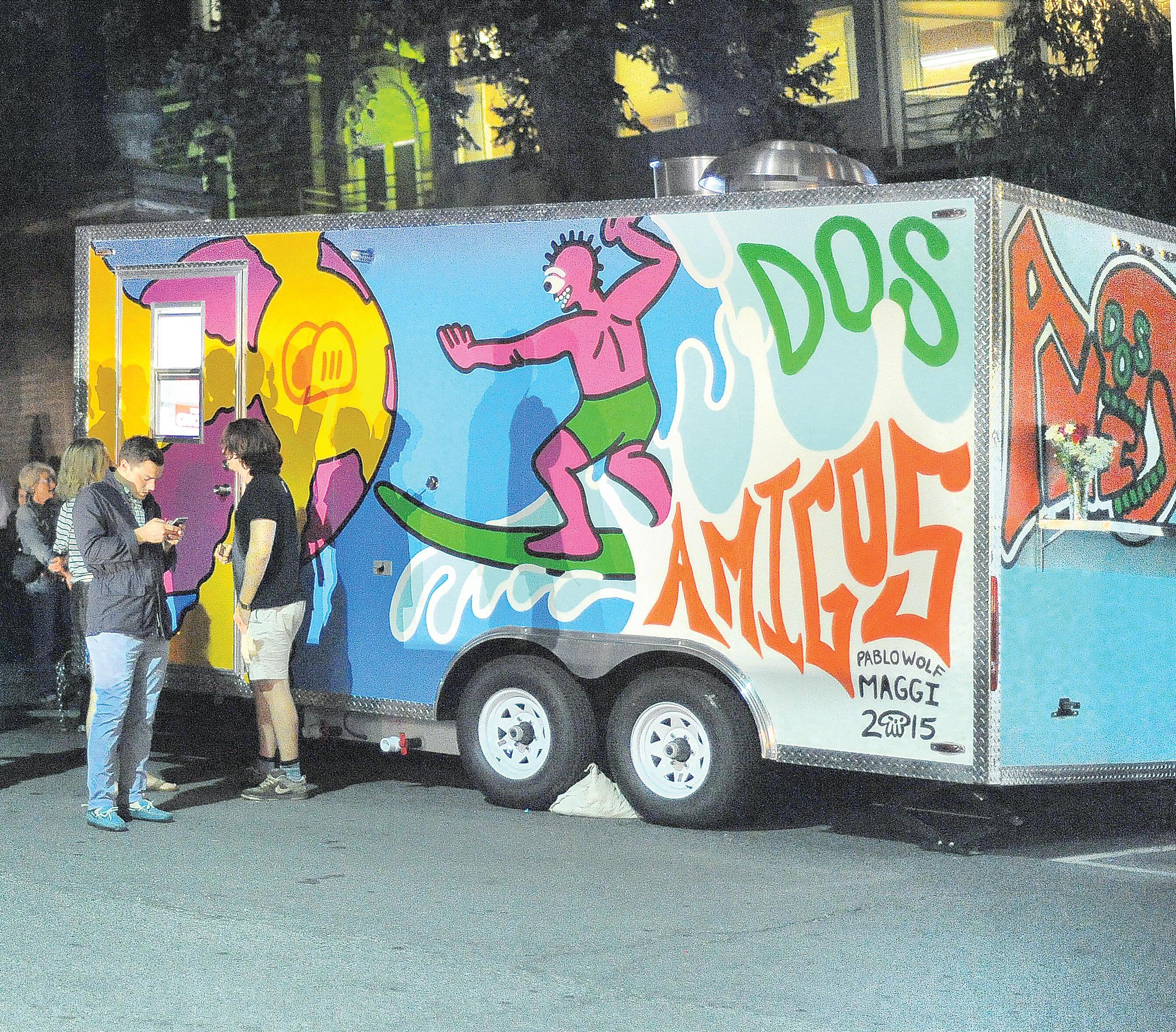
t a c o f r o m Me x i c o I n s p i r e d b y a l ov e o f f o o d t r u c k s a n d a p a s s i o n f o r Me x i c a n t a c o s , t h e d u o o r i g i n a l l y c a m e u p w i t h t h e p l a n i n a Ho t e l s c h o o l c o u r s e T h e y l a t e r w o r k e d
a n d I d e f i n i t e l y h a v e n ’ t b e e n l e t d o w n ” T h e b r a i n c h i l d o f s t u d e n t s D a v i d Fa r a h i ’ 1 6 a n d Jo r g e
B o u r a s ’ 1 5 , D o s A m i g o s a i m s t o s e r v e a u t h e n t i c M e x i c a n f o o d , C a l i - s t y l e n o l e t t u c e ,
n o t o m a t o e s , j u s t s i m p l e
i n g r e d i e n t s t h a t y o u’d f i n d i n a
w i t h S a m Ep p s , c h e f a n d c oo w n e r o f I t a l i a n r e s t a u r a n t G o l a O s t e r i a , t o c r e a t e r e c i p e s a s f a i t h f u l t o t h o s e i n Me x i c o a n d S o u t


C h i c k i M i n a j a n d C h i e f B e e f ) , t h e t a c o s a r e t h e m a i n a t t r a ct i o n h e r e T h e N o t o r i o u s P I G i s a p e r s o n a l f a v o r i t e
T h e s l o w - r o a s t e d p o r k , t o s s e d
h i s p a s t Au g u s t It h a s s i n c e t a k e n o n a p e r s o n a l i t y o f i t s o w n w i t h t h e h e l p o f D o s A m i g o s ’ s C r e a t i v e
D i r e c t o r Ni c o l e H a m i l t o n ’ 1 6 , w h o d e v e l o p e d t h e m e n u ’ s h i p - h o p - i n s p i r e d t h e m e W i t h f o u r o p t i o n s ( t h e N o t o r i o u s P I G , G r i n g o ,


w i t h f r e s h c i l a n t r o a n d
s e i n
n s e C o a t
c r u n c h y p u r p l e o n i o n s , t o p p e d w i t h a c r e a m y j a l a p e ñ o s a u c e ( a p t l y n a m e d T h e
C h r o n i c a f t e r D r D r e ’ s l e ge n d a r y 1 9 9 2 a l b u m ) , a t o p t w o w a r m a n d f r a g r a n t h o u s em a d e c o r n t o r t i l l a s , m a k e s f o r a c o l o r f u l s i g h t L i k e i t s c o u nt e r p a r t s , i t e m b o d i e s b o l d f l av o r s , t e x t u r e s a n d i n g r e d i e n t s T h e Gr i n g o p r ov i d e s a v e g et a r i a n o p t i o n , f i l l e d w i t h p l u m p p o r t a b e l l a m u s h r o o m s , c i l a n t r o a n d o n i o n s , t o p p e d w i t h B i g R e d r o a s t e d s a l s a t h a t t u r n s u p t h e h e a t a n e x t r a n o t c h T h e p o p u l a r C h i c k i M i n a j , w i t h a m i l d e r B u s t a L i m e s t o m a t i l l o s a u c e , i s a t a m e r c h o i c e S e a s o n e d w i t h a d o b o s p i c e s , t h e t a c o c o m e s w i t h t h e s t a n d a rd f i x i n g s a n d i s e n h a n c e d w i t h a n e x t r a s q u e e z e o f l i m e O f t h e q u e s a d i l l a s , Fa r a h i r e c o m m e n d s a c o m b i n a t i o n o f t h e R o a s t f a c e K i l l a h , f i r eg r i l l e d m a r i n a t e d s t e a k a n d c h e d d a r c h e e s e , a n d t h e S c h o o l b o y S h r o o m , s a u t é e d p o r t a b e l l a m u s h r o o m s a n d c h e d d a r c h e e s e T h e c o m b i n at i o n b r i n g s t o g e t h e r t h e e a r t h in e s s o f j u i c y p o r t a b e l l a m u s h -
t p o s s i
d g e n e r o u s l y i n c i n n a m o n a n d s u g a r, t h e b i t es i z e d p i e c e s g o d o w n w i t h a n i n i t i a l c r u n c h , f o l l o w e d b y t h e c h e w i n e s s o f a s o f t , w a r m a n d d o u g h y c e n t e r
r o o m s a n d t h e m e a t i n e s s o f g e n t l y c h a r r e d c u t s o f s t e a k w i t h m e l t e d c h e d d a r c h e e s e p r e s s e d b e t w e e n t w o f l o u r t o rt i l l a s , l i g h t l y b r o w n e d a n d s l i g h t l y c r i s p e d T h e s e q u es a d i l l a s p a i r w e l l w i t h t h e G u a c a Fl a k a Fl a m e , a s i m p l e g u a c a m o l e m a d e w i t h a b l e n d o f a v o c a d o ,
BY MARK DISTEFANO Sun Staff Writer
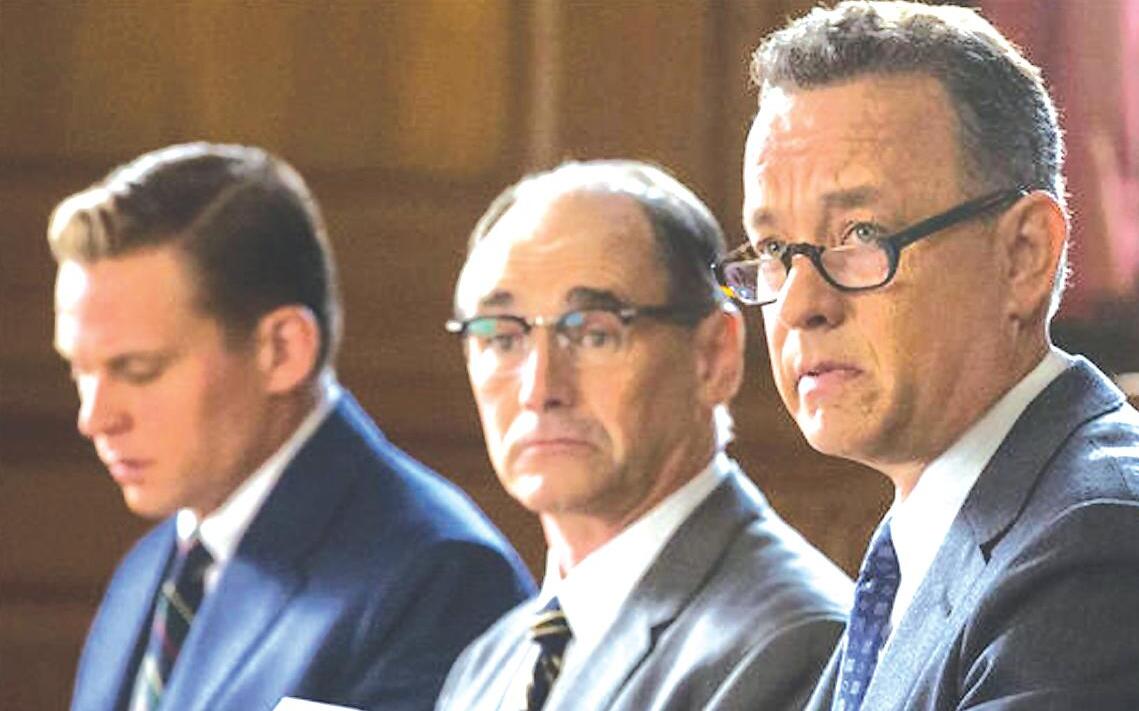
What is interesting about Bridge of Spies is that it’s somewhat of a slight film, which is, needless to say, unusual for Steven Spielberg Most of his films tackle weighty issues (Lincoln, Munich, Saving Private Ryan) while this one tells a microcosmic but nonetheless fascinating story with some meaty undertones and implications It’s truly a courtroom procedural that takes place on different continents instead of in courthouses; about men in suits debating and discussing
If I’m starting to bore you, fear not With a lead actor as good as Tom Hanks, a movie is well worth watching Hanks has always made a credible everyman, whose honest, Jimmy Stewart-like charm consistently makes him one of the best-liked actors of his generation and rightfully so Hanks plays Jim Donovan, an insurance lawyer assigned to defend a convicted USSR spy at the height of American Cold War paranoia His client is Rudolf Abel (Mark Rylance), who remains endlessly stoic and composed as millions of Americans clamor for his blood “Aren’t you worried?” Donovan keeps asking “Would it help?” Abel replies
Bridge of Spies
Directed by Steven Spielberg
Starring Tom Hanks, Tom Rylance, Amy Ryan





Meanwhile, the United States is spearheading top secret reconnaissance missions with high caliber aviation personnel, to scope out locations in the USSR for nuclear arsenals The pilots are issued with strict instructions: Should they be shot down although their aircraft are supposedly flying far above energy radar they bite the bullet before they are captured The most valuable asset for each country is the brains of their spies in enemy territory
One such pilot assigned to the U S mission, Francis Powers (Austin Stowell) is indeed shot down but fails to take his cyanide pill Donovan has foreseen such a situation he’s in the actuarial business after all and moved to keep Rudolf Abel alive as an insurance policy for the United States He is soon sent into East Germany just as the Berlin wall is going up, to negotiate the release of Powers and an additional American student captured in Berlin, in exchange for Abel It’s an intriguing thriller premise and it’s handled well The characters are strong enough to hold attention for the film’s nearly two and a half hour runtime This is mostly due to Hanks, who Spielberg has complete faith in, and the smallest nuances in his performance are as always a masterclass in acting English theater actor Rylance makes Soviet spy Abel memorable and sympathetic The writing is particularly strong as well, probably thanks to a script polish from none other than the Coen brothers, who have always had a knack for defining character through action
nuclear war is palpable Donovan’s children cower in fear as they’re told what to do in the event of a nuclear attack, while his son puzzles why his father is defending one of the men who is helping to drop a bomb on them Family dynamics has always been Spielberg’s forte and the movie lands its most affecting moments when observing Donovan, his concerned wife and his quietly frightened children around the dinner table A scene where the family is attacked in a drive-by shooting is genuinely terrifying
Haunting imagery arises from the scenes where Donovan wanders through East Berlin in the freezing sub-zero temperatures He has his winter coat pinched by thieves who have never seen such an article in a communist city He witnesses helpless victims walled up in their apartments before they can escape into the west and even sees some mowed down by gunfire as they try to make a break for it and scale the wall
Spielberg evokes the McCarthy era effortlessly, assisted by Janusz Kaminski’s excellent cinematography and Adam Stockhausen’s flawless production design The director and his team place us immediately in a sea of gray hats, flannel suits, martinis, crimson fingernails for women and reading glasses for men An icy dust has settled across America the fear of
Then there’s also the tiresome Spielberg schtick, which we could do without Jim’s wife (Amy Ryan) who tells Jim don’t go and do that brave thing and the cloying score that makes sure every emotional moment is heavily underlined but all that is largely forgivable Tom Hanks deserves to earn an Oscar nod for his work here, especially after being snubbed for Captain Phillips two years ago It is doubtful Spielberg will, as this film takes a less heavy-handed approach than his recent critical favorite Lincoln, but it is, in fact, just that subtle, less self-conscious quality that makes Bridge of Spies the better film Mark DiStefano is a senior in the College of Arts and Sciences He can be reached at msd97@cornell edu
BY GRIFFIN SMITH-NICHOLS Sun Contributor
Throughout the paranoid confusion of his life, chess prodigy Bobby Fischer’s mental health was confronted by a perfect storm of nascent megalomania, boisterous pseudo-wartime rhetoric, the pressure of his own chauvinism and the beholding lens of a media machine eager to carve out its own stake in what was quickly recognized as the up-and-coming chess legend of the century
The resulting strain gave his wunderkind personality a skittish, ornery streak as he batted away the press, hurling out accusations of adversarial misconduct with a self-assured petulance that even world leaders were obliged to defer to A high school dropout, he was sometimes seemingly moved by pecuniary desires; sometimes by the prestige of a “ to the victor go the spoils” train of thought but almost always by pure fanaticism for his game of choice Fischer was the Achilles of chess: tremendously sensitive, quick to offend, but nigh unstoppable on the warpath, walking the hairline between detestability and immortality This is the man at the heart of Pawn Sacrifice, as interpreted by director Edward Zwick, starring Tobey Maguire
Maguire is no cavorting Klaus Kinski when it comes to portraying a man decidedly off his rocker His peculiar brand of psychosis is a nonchalant petulance, handling international fame and geopolitical pressures with, literally, a paper bag over his head and a penchant for phone dissection There are nevertheless, subtleties to his performance The Bobby Fischer that confronted

Boris Spassky in 1972, while already spouting his trademark paradoxical anti-Semitism (“We are Jewish,” his baffled sister Joan Fischer is forced to clarify in the film) and suffering from a phobia of KGB bugging, was nevertheless capable of conducting a cool, collected interview on the Dick Cavett show in 1971
That same interview, using Forrest Gump-ish digital splicing techniques, is reproduced in the film: Maguire imitates the strange, rhythmic rising and falling of his Brooklyn accent in a calm assertion that, yes, he is the greatest chess player in the world, and there is nothing anyone can do to prove otherwise This is where Maguire shines Bobby Fischer’s arrogance and overweening antics become positively joyous to watch, as one upstages the other He recounts with thinly-veiled glee how he relishes breaking opponents ’ egos, as though he were some deity of personified wrath Fischer’s barely restrained manic personality bubbles beneath Maguire’s bug-eyed, pallid exterior, threatening to erupt outward at the slightest provocation
Pawn Sacrifice
Directed by Edward Zwick
Starring Toby Maguire, Peter Sarsgaard, Liev Schreiber


And erupt it does Watching the film is a cavalcade of things Bobby Fischer despised, whether it’s the luxury, slickness and vigor of his Russian opponents, headed by a Boris Spassky (played by Russophone Liev Schreiber), or the meretricious glimmer of photographers
We see the world around, cinematically magnified: the flash and whir of cameras, the creaks of a light system and knocks at the door become deafening, irritating, giving the audience an inside view of what sets off Fischer’s mental breakdowns One occurs on a California beach, after a crushing defeat for Fischer at the hands of Spassky: after dust-bathing an entire night on the sand, Fischer, wonderfully disheveled in a full suit and tie, wildly vows vengeance against his handsome Russian adversary out for a morning swim Though the outcome of the penultimate championship chess match in Reykjavik is never in doubt for the pre-informed viewer, the hair-tearing effort that the legal, political, and chess cabal surrounding Fischer expends to make him drink water is nothing short of delightful
The film’s less subtle and ultimately less satisfying sections occur, tellingly, when Fischer is not in the limelight; his
melodrama is expected, and indeed, welcomed, but from other characters it’s grating Michael Stuhlbarg, playing the oily patriot-legal agent Paul Marshall, occasionally channels his pastiched inner Ayn Rand, at the expense of an acting poker face whilst describing his pseudo-Blubo plan for a chessboard battleground between communism and liberal democracy William Lombardy (Peter Sarsgaard) becomes a handwringing presence either to halfheartedly bolster Fischer’s ego or limply pull him into line; his prominent scenes come only when he finds himself in open conflict with Fischer



As for the film’s cinematography, there are certain hallmarks of the biopic genre that the movie does not feel necessary to dispense with, although such a gesture might have been welcome for a man as unconventional as Fischer A helvetica “Based on a True Story” label flashes onscreen at the film’s outset Prolonged TV montages offer superfluous cultural background that distract from the essential story (it is doubtful whether the audience needs montages of Richard Nixon and dude surf culture to know that the 1960’s happened) This technique is nevertheless occasionally successful: a similar montage depicts the growing American chess-mania surrounding Bobby’s meteoric rise to fame This would smack of improbability were the footage not archival
In tracking that ascension, the film stops short of showing Fischer’s post-Reykjavik, well-publicized decline and fall The film ends on an initially lackluster but, in retrospect, curiously satisfying bitter note: the Bobby Fischer that invigorated a nation and put chess on TV, having flown too close to the sun, is abandoned to his fate Carried away in his chariot of glory, one cannot help but feel that he has no real purpose left The notion that genius and madness stroll hand-in-hand is not new to cinema, or art in general, but Pawn Sacrifice creates a portrait of this dichotomy with an intimacy that is unexpected and a pleasant surprise, especially for a personality as undeniably thorny as the late, dubiously great Bobby Fischer
Griffin Smith-Nichols is a freshman in the College of Arts and Sciences He can be reached at gds82@cornell edu
or this week, I’ve decided to take a break from my typical music-centric columning to discuss two topics that are of great importance to me: Gilmore Girls and Netflix One of the hot subjects of this week has been the alleged return of the 2000-2007 dramedy Gilmore Girls via Netflix If you ’ ve watched the show, you’ll know that the final season was lackluster at best Due to the ’07 writer’s strike, the highly acclaimed writer and show creator, Amy ShermanPalladino, did not super vise its production and the season lacked in plot development and wit The season ended on an ambiguous note, with Ror y embarking on a cross-countr y campaign, and Lorelai reconciling with Luke without making any concrete decisions on their future The whole last season left me craving more resolution and spark, and I finished the series under whelmed The six previous seasons of Gilmore Girls are fantastically witty, provocative and captivating, so I expected to be equally stimu-
l
episodes
Wi

revival To me, it signifies a kind of generational issue: We can ’ t let go With scientific efforts focused on extending human life through 3-D printing and astronauts looking for a new place to settle after Earth, us post-modern kids have grown up in a world where we can ’ t ever seem to let things end We want stories to con-
tinue, characters to live on, and Netflix knows this While I love what Netflix has done in terms of creating innovative and edgy television (i e Orange is the New Black and House of Cards), I haven’t agreed with ever y Netflix choice I’m largely alluding to Arrested Development The show finished up on broadcast television in 2006, but Netflix brought it back in 2013 for a final season This seemed off to me in more ways than one, as the actors had all grown up significantly and the dialogue lacked the wit meets slapstick humor that I had grown accustomed to This season just didn ’ t do it for me Apparently, Netflix is said to be planning a subsequent season, but I don’t have high hopes Like Arrested Development, I worr y that the new season of Gilmore Girls will incorporate characters that do not ring true to the stor y The original series is continuous; you watch and grow with Ror y and Lorelai, super vising their development I wonder how the writers will be able to catch us up on the eight years since the final episode without being too expositional I
skeptical it if the writers tried to make it seem like only a year had passed since the final episode Alexis Bledel, while still youthful,
imagine that she could pass for a 19 or 20-year-old There’s a lot of catch-up work to be done and unless it feels smooth and natural, it could really bring the show down
On the contrar y, there is a part of me that longs for answers on those burning questions I was ver y late to the game with Gilmore Girls, having only (binge) watched the series last year These questions have lingered in my mind since I finished the final season in the spring For instance, Ror y breaks up with her college boyfriend, who, while irritating and definitely not right for her, was an important character for at least two seasons of the show, and she somewhat randomly decides to escape from home and work on a political campaign As the show largely centers on Ror y ’ s relationships, I did hope to see more than this unexpected ending I’m all about women in television who do not need relationships to find fulfillment and purpose, but I felt like Ror y had options, specifically with Jess, to be in a healthy, productive and creatively charged relationship Jess shapes up, especially during the final season and helps Ror y find herself again I found it a bit unfortunate that she did not at least reconnect with him again or give some indication of a future there Similarly, Lorelai and Luke reunite, but there are still big questions about the fate and nature of their relationship by the end of the series A fundamental part of me longs for these conclusions, to feel like I can rest easy at night knowing that these characters found their way I worr y for the fate of Gilmore Girls and for the other Netflix revivals to come While painful, I think that it’s a good exercise for all of us, to learn how to let go
Anita Alur is a junior in the College of Arts and Sciences She can be reached at aa567@cornell edu Millenial Musings appears every other Wednesday this semester

Recycle this Newspap er.
Recycling Bins are located throughout the Cornell Campus.




1,
Collegetown


HOCKEY Continued from page 16
total of four senior icers
“Our senior class, we ’ re very open guys Personable guys, ” Hilbrich said “We’ve tried to make them feel as home as we possibly can We need them to be a contributing class this year and the more we can make them feel at home, the better chance they have ” Freshman Anthony Angello, who was drafted in the fifth round by the Pittsburgh Penguins in 2014, said he has felt a warm welcome from his teammates
“The guys took us in and I felt like part of the team instantaneously,” Angello said “They’ve been great ” Building that team chemistry early on will prove to be the foundation of the team as the Red heads into the season How the team deals with wins and losses, ultimately, will shape the fortunes of the team during the new season
“You need to trust your teammates full heartedly and we ’ ve done numerous team building exercises We’ve played paintball,” Tiitinen said “That has nothing to do with hockey, but guys love it Guys are dressing up and having a good time Creating those preseason memories, guys are going to be able to laugh about it It’s a long season and we ’ re going to be up in Dartmouth when it’s freezing cold or something and we’ll have that ”
So, Who’s the Next Captain of the Red?
There is a decent chance that when the Red opens on opening night, there will not be a player on the ice with a red “C” or “A” on their chest, and according to Schafer, that is by design The Cornell hockey program has always been highlighted by the physical and tough defensive style and the next-man-up mentality Schafer said he hopes that the lack of captaincy will foster the growth of leadership within the locker room
“I want to see when issues arise how they handle things within the team, who steps forward, who has a great attitude, who performs well on the ice,” Schafer said “With nine freshman, who integrates with everyone? You have a lot of guys in one class that are a part of the team Is that person someone who reaches out and touches base with all of those guys?”
The response to the lack of captaincy, Schafer said, has been an incredibly positive for the development of the Red As many in the media ask him who the next captain of the Red will be, Schafer has not heard a peep about the
vacancy from any of the players
“The only time we only get this question is from the media,” Schafer said “I find that ironic because, up to this point, we ’ ve had great leadership in the locker room As I said, there’s been tremendous buy-in, great camaraderie, they’ve been working hard and we haven’t named a captain We’ve been getting leadership, which we should, from every class and all groups of different guys Eventually, I should probably do it soon and sit down and ask what they think who should be captain and assistant captain or whatever it is ”
Schafer said he has been impressed by everyone in the senior class, with each of the four players bringing something different both on and off the ice
“In their own way, they’ve done a great job of leading and those guys, Reese Wilcox is kind of quiet and Teemu Tiitinen works extremely hard and John Knisley is detail oriented and Christian Hilbrich is laid back, but very well spoken,” Schafer said “They’ve all reached out and done a great job of touching base and I think that we ’ ve got that through all of the classes It’ll be interesting to see who they go with and who they project as the guy who helps us through problems and helps us through tough times and be humble and through successes, be humble and very level headed ”
Given the small size of the senior class, it is also entirely possible that a member of the junior class will step up as the next to don the red “C” on their Cornell hockey sweater Among the juniors, Schafer pointed to forward Eric Freschi, forward Jeff Kubiak, defenseman Patrick McCarron and forward Jake Weidner as players in the class who “stepped up to the forefront” and shown massive improvement over the course of the summer
“You want to go with the players’ vote because that guy will hold others accountable,” Schafer said “Everybody thinks that I’ll name the captain, but the team ’ s going to name the captain soon I’ll lay down the guideline Who’s going to be the guy that will come to their need in adversity? Who’s going to be the guy that will raise the level of play when things aren ’ t going right? Who’s fully committed on and off the ice to follow the principles and traditions and the standards that we have as a program? Who is that guy?”
Dealing With Lower Expectations
People certainly do not expect Cornell to top the ECAC this season In the preseason coaches’ poll, Cornell finished in seventh of 12th in the
ECAC while the preseason media poll pegged Cornell to finish ninth in the conference The departure of a skilled senior class, however, does not phase Schafer and his expectations for the season
“Everybody looks at those guys that have graduated and says, yeah, they’re good players, but now, everybody needs to step up here,” Schafer said “Everybody needs to play a better team game and we need to step forward You hope that a few guys evolve ”
Schafer points to sophomores Dwyer Tschantz, Alex Rauter and Trevor Yates as the young players who he hopes to see “blossom this season ” But Schafer’s 20 years of experience points to the preseason picks not holding a lot of significance
“How healthy are we going to stay? It’s the factor of getting off to a good start, not getting into a slump,” Schafer said “I’ve had a lot of teams and we were picked to be in the bottom part of the league and we ’ ve won the league There were years we were picked second and everybody looks at the players that graduate, try to project on the kids that come in Nobody knows, even the coaches don’t know, what’s going to grow within the program ”
The lower external expectations certainly do not have members of the Red down During the team ’ s pre-season media session, many expressed excitement and optimism for the team ’ s season
“We had some great skilled guys and everything, but that’s the beauty of hockey,” Tiitinen said “It’s a team sport and we ’ re going to win as a team and, unfortunately, sometimes we’ll lose as a team We’re just going to come out and out work everyone That’s as simple as that so especially in front of our fans and [Schafer] is really emphasizing that the culture is going to change and I think it’s something that the people here, the Ithaca people and the students, are going to be excited to see ”
Cornell has a steep road ahead of them with a strong ECAC conference returning many of its key players Heavy hitters from last year, such as Harvard, St Lawrence, Yale and Quinnipiac, look to return with strength and make a play for the conference title But junior goalie Mitch Gillam has other ideas for the ECAC
“We’ve been put down a little bit this year on the scale for standings and what not, ” Gillam said “I think we ’ re going to turn some heads this year
“We’re going to shock the league this year ”
Joon Lee can be reached at joonlee@cornellsun com
www.cornellsun.com
LEWIS Continued from page 16
has to give us something wor th watching No more 31-6 dr ubbings at the hands of Sacred Hear t Please
I want to see our bleachers packed like Death Valley when Florida State comes to town Like Notre Dame Stadium on a Saturday night I want our fans to be chanting “Rudy” and tear-
Please
Another r ule that needs to be strongly enforced is no more
Sunday is a holy day, preser ved for only the purest of spor ts I
ever
other day of the week Wa
American as apple pie and John Belushi, but I fear it is slowly being degraded by the Premier League and whatever La Liga is L
e No more soccer Please I don’t think these requests are too much to ask for With ever yone ’ s effor t, we can change the football culture of Cornell around Did you guys know that C
n the University of Texas? Sure, our last one was 100 years ago, but we can reach those pinnacles once again I believe it So no more Sacred Hear t and no more Nor wich City Let’s make footb a l
n Please
Shane Lewis is a sophomore columnist He can be contacted at slewis@cornellsun com Sportstradamus appears every week this semester

After disappointing season, Cornell head coach Schafer’86 hits cultural reset button
By JOON LEE Sun Assistant Sports Editor
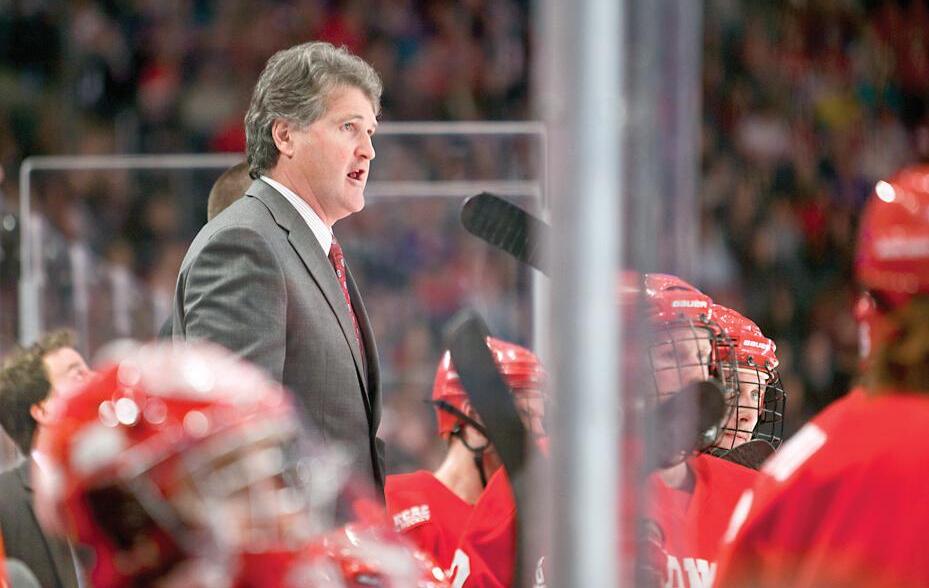
This is the latest Cornell hockey head coach Mike Schafer ‘86 has gone without naming a captain, or any officially delineated student-athlete leadership, for his team Traditionally, college hockey teams name the leaders for the upcoming season at the end-of-season banquet in the spring Schafer and his team decided to forego tradition, something he has done in the past, but this is the closest he has gotten to the start of the season without naming a captain
But then again, the 2014-15 season was unlike any season Schafer had gone through during his 20 years at the head of Cornell’s hockey program The Red put up a 11-14-6 record last season the worst under Schafer and failed to make it out of the first round of the ECAC tournament for the first time under the head coach’s watch
The 2014-15 season presented a lot of firsts for Schafer, few of the positive variety
The decision to not name a captain reflects a shift in the culture that Schafer and his coaching staff hope to institute in wake of one of the most disappointing seasons for Cornell hockey in recent years While injuries certainly played a large role in the team ’ s lack of success last season, a lack of unity in the locker room appeared to have played a role in the team ’ s disappointing record
Commitment and Accountability
This year, Schafer has strongly emphasized the idea of culture and the legacy of what it means to be a member of the Cornell hockey programs The idea of forming stronger bonds with teammates appears to have struck a chord among the players in Schafer’s locker room
“It’s as simple as a senior getting lunch with a freshman or something like that,” said senior forward Teemu Tiitinen “I don’t want to dwell on last year ’ s problems or anyth
the Red’s defense in the opposition’s’ defensive zone Cornell struggled mightily in the forecheck and after the last game of the season, Schafer announced he was going back to his old system This move, Schafer said, will bring accountability back for the players
“My frustration with [the new forecheck system] was that there were a lot of excuses, ” Schafer said ” The way that I’ve always forechecked in the past, everybody has a role Everybody knows where they are supposed to go and it was a very simple system to explain to non-hockey people The system that we used, there could be a lot of excuses There was a lot of thought instead of being where they were supposed to be ”
There are no more excuses, Schafer said Reestablishing the culture of commitment and accountability will go a long ways, Schafer said, to getting the Cornell hockey program back to its glory days
that has to reset the culture with the coaching staff and the players’ response to it has been absolutely phenomenal I think what the players wanted 20 years ago and, with no question, this group of players, they carry that same enthusiasm going into the season ”
A Departed ‘Loud’ Senior Class
“You try to listen to the leadership counsel In the past I listened Now, I’m demanding.”
“Guys hang out off the ice, on the ice. It’s completely different. It’s exciting moving forward.” T e e m u T i i t i n e n
well-distributed team voice, as opposed to previous years ” It speaks loudly to hear seniors such as Hilbrich and Tiitinen talk about camaraderie between teammates, players spending time together off together, playing paintball, as if it is a completely new experience
“You try to listen to the leadership counsel or leadership committee or the captains In the past, I lisyear and I m in the one
From an outside perspective, replacing a senior class of players consisting of Joakim Ryan ‘15, now with the San Jose Sharks organization, John McCarron ‘15, now with the Scranton-Wilkes Barre Penguins of the AHL, Cole Bardreau ‘15, playing for the Philadelphia Flyers organization, Joel Lowry ‘15, playing for the Los Angeles Kings organization, and Jacob MacDonald ‘15, with the Elmira Jackals of the ECHL, looks like a daunting task

The 2015 senior class came into Cornell as one of the most hyped recruiting classes in recent Cornell hockey history and, with three players drafted by NHL teams and another who probably should have been drafted by an organization, among the most talented
From the moment they stepped onto the slope, the class garnered significant media attention, proved to be a loud, vocal presence in the locker room and asserted leadership in the locker room, highlighted by McCarron’s captainship of the Red as a sophomore
But the group, in the end, never lived up to the hype coming in The team never won an ECAC championship, and Schafer admits that the team underachieved while the group was on campus
“You look back at it and you can point your fingers at a few different things Lots of talented players in there, but as a team, we never achieved our potential,” Schafer said “This is a look back at it and we have really good players coming back and some good new freshmen and it’s just a new opportunity for these guys to play as a team and maybe come out from some of those guys ’ shadows and emerge from the shadows ”
Senior Christian Hilbrich further propagated the idea that the last senior class, primarily highlighted by McCarron, Bardreau, Ryan and Lowry, dominated the locker room during their time on campus
“We definitely had some loud guys leave with [Bardreau], [Lowr y], McCarron,” Schafer said “Essentially that entire class was loud personalities Now, it’s not as dominated by one class We have voices from everywhere Everybody’s voice is heard It’s a
“You can just look at the tradition here at Cornell and when you ’ re at Lynah Rink, you better be the hardest working player or hardest working team here,” Tiitinen said “I think that’s something we ’ re going to take pride in and you can talk about prior years and how we ’ ve shifted away from that, but for me, this is the closest group of guys that I’ve been with here in Ithaca Guys hang out off the ice, on the ice It’s completely different It’s exciting moving forward ”
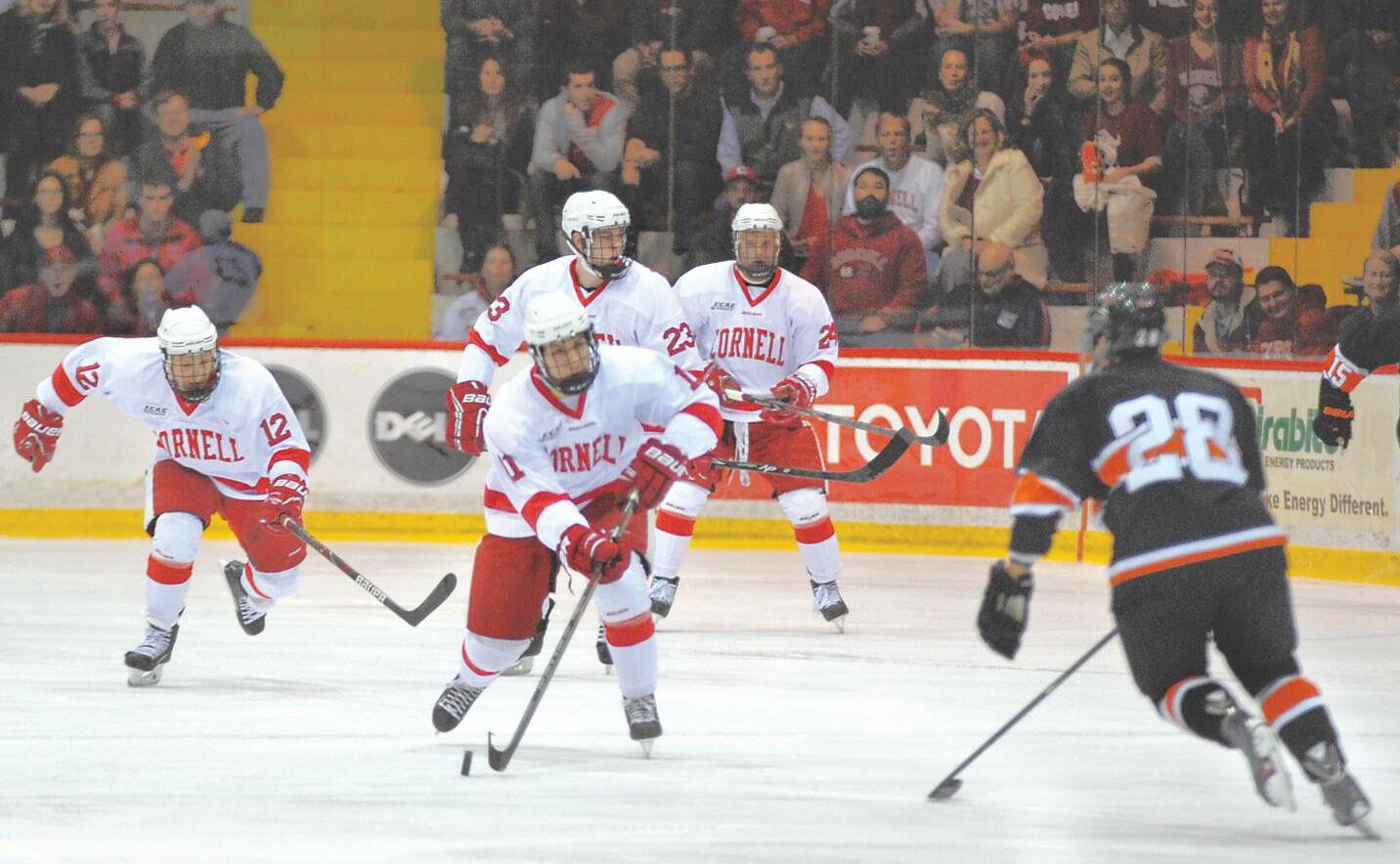
Hockey, more so than other sports, depends on the chemistr y of players between players At many points last season, the Red looked flat on the ice, passes went unreceived and the team looked out of sync around the net Finding that chemistry and dynamic within the team remains incredibly important
“It’s difficult in the sport of hockey for a player to take over the game, ” Schafer said “There’s some special guys, but you get to the very end and there’s the goaltender Guys like [Buffalo Sabres rookie and former Boston University center] Jack Eichel come around very rarely and then guys around them gain confidence and then they have banner years and they make plays and the team takes off Being comfortable and learning how to win and all of those things within the team, having success, handling failure, we ’ ve got to go in and be able to, as a team, we’ll handle success well and handle failure well ”
One area where having a vocal senior class could hamper a team ’ s develop is the integration of freshman, Hilbrich said “Sometimes, it’s a little intimidating when you have a vocal senior class,” Hilbrich said “You don’t want to step on their toes as a freshman You don’t know what to expect ” Despite a talented freshmen class, the highest point total came from defenseman Ryan Bliss, with eight Integrating freshmen will prove integral to the team ’ s success given that the Red welcomes in nine this season, which accounts for 31 percent of the team ’ s roster In contrast, the Red welcomes back a
By JACK KANTOR Sun Staff Writer
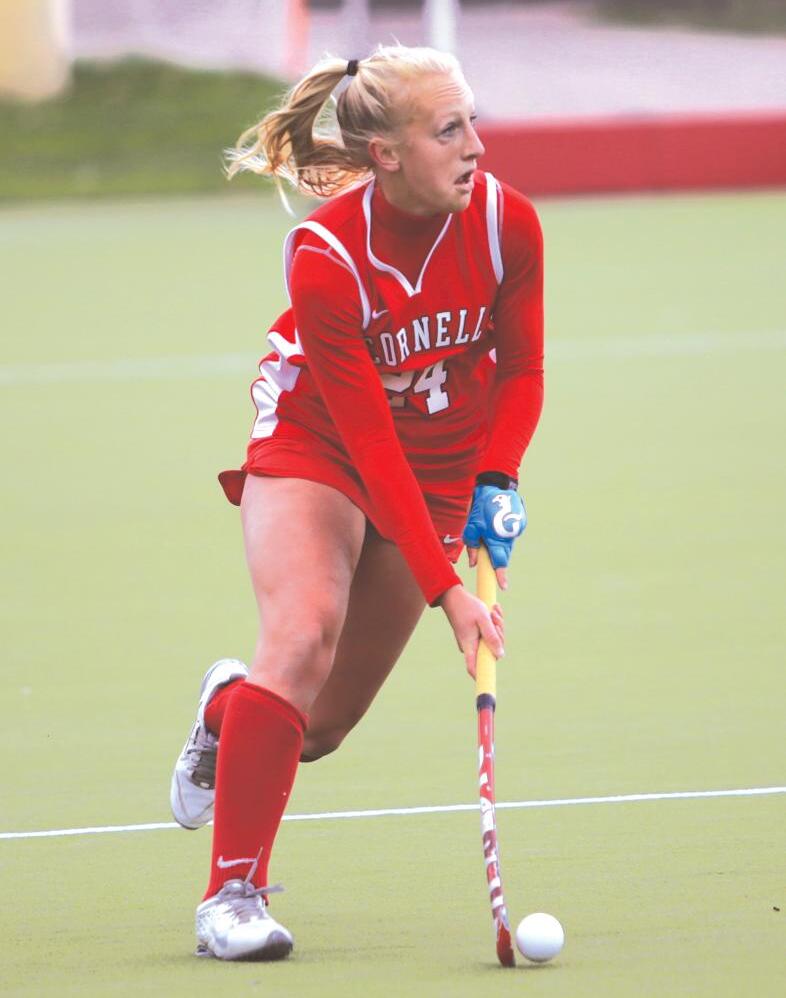
The Cornell field hockey team resiliently fought the No 10 Albany Great Danes to the final whistle on Tuesday evening at Albany, as the Red scored a late goal that proved to not be enough in the 2-1 loss
“It was probably our best game of the season, ” head coach Donna Hornibrook said about the loss “Obviously we are disappointed with the result ”
The nationally-ranked Albany Great Danes only slightly outplayed the Red (13-2, 4-1 America East) Cornell only had one less shot on goal than Albany, who put six shots on the away team ’ s goal
“Albany is a great team, and we stepped up to the challenge We were able to adapt to their style of play to keep the score competitive,” said senior Marisa Siergiej
Albany came out strong early, moving the ball quickly around the field with confidence and skill However, Albany’s prowess did not shake the Red as gradually Cornell began to take control in the first half
“The defense and midfield focused on outletting the ball to space, ” Siergiej said “On the opposite end, forwards provided good pressure on the ball ”
Two saves in the first half were even made behind the keeper by defenders Hornibrook and the rest of the team believed the ball had actually gone in Unfortunately, that was not the case as the score stood at 0-0
With a minute left in the half, Albany struck first with a goal
Hornibrook said that “it was unfair and disappointing to come out of the half down 1-0,” between Cornell’s quality chances and Albany’s counter-attack goal off what the Red considered a questionable call
Yet, Cornell was still playing the top tier Great Danes close and kept a positive attitude coming into the second half of play
Similar to the beginning of the game, Albany came out of halftime moving the ball well around the field, controlling the play “Because we defended a lot, I think we got worn down a bit but hung in there ” Hornibrook said of the second half
When 10 minutes were left on the game clock, Cornell called a timeout down 2-0 Coach Hornibrook did not want to give away their secrets, but said how they talked about being more aggressive and really cranking up that attack
Junior Katy Weeks, assisted by senior Taylor Standiford put in a top shelf goal to put the Red within a goal Cornell pushed hard for the equalizer, but came up empty
“[Albany] was in the Final Four last year; they really tested us, ” Hornibrook said “I thought it was excellent preparation for the last stretch for the rest our season ”
This weekend, Cornell will take take on the Brown Bears (6-7, 1-3 Ivy) and the Lehigh Mountain Hawks (3-11, 0-4 Patriot) as the Red look to get back on track with this solid season thus far
“Our focus has been pretty consistent over the last 3 or 4 weeks,” Hornibrook said “We have been focusing on our play, what we do well We are really looking to move the ball well, to be fluid in our attack to defend with a lot discipline as a team Those are the things we are going to focus on, continue to build going into the weekend ”
While a team might not rack up the wins, there are benefits to not playing a soft schedule outside conference play The match against Albany, although not an ideal outcome, is great preparation and confidence booster heading into the weekend and their final games
“Hopefully the preparation that [the team ’s] looking for in terms of the quality of these games, how fast it is,” Hornibrook said, “will help us going forward ”
Ihave had a revelation Last week, as I was making my football predictions for The Sun, I stopped and pondered as I tried to predict the Brown-Princeton matchup I knew absolutely nothing about Princeton or Brown football I also knew absolutely nothing about Harvard, Yale, Dartmouth, Penn or Columbia football In fact, I knew nothing about Cornell football either And it is no surprise that I have no knowledge of Ivy League football, I would rather watch anything than watch Columbia commit 15 turnovers or Penn kicker miss 20 yard field goals And I’m pretty sure that I’m not the only one Ivy League football just isn’t very good
Also this past Sunday, as I woke up sleepily at 1 p m after a night filled with Keystone Lite and that toilet water we call Barton’s, I walked into the hallowed great hall of Phi Delta Theta to the saddest sight of my life I looked at the television screen and couldn’t believe my eyes No, it wasn ’ t the Steelers-Cardinals that graced the television screen Nor was it the sneakily good game that was Broncos-Browns Hell, it wasn ’ t even Bears-Lions No, my fellow brethren We were watching

Arsenal against Nor wich City The freaking Premier League, man Unless the NFL recently expanded, I don’t think either of those teams exist in the confines of the greatest sports league in the world It’s called Football Sunday, not Futbol Sunday Come on, now
Lastly, it came to my attention that Cornell football lost last weekend to a team called Sacred Heart Can somebody please tell me where Sacred Heart is? Seriously, anybody? Well, after doing my journalistic research, I found out that Sacred Heart is a Catholic University in Fairfield, Connecticut with an undergraduate population of about 4,000 They do not have an athletics section under their Wikipedia page because I’m guessing because they’re Sacred Heart They do however, have a separate Wikipedia page for their marching and pep band So we lost to a school one-fourth of our size, that takes more pride in their marching band, 31-6? You have to gotta be kidding me
So my revelation follows as such my friend: Cornell is not a football school Cornell’s motto is “I would found an institution where any person can find instruction in any study ” Well, this motto is unfortunately false I wish to study in the sacred (he)art (see what I did there?) of football, and the atmosphere here just doesn’t stimulate my learning It really is a shame
But this is a problem that can be fixed, my friends There is still hope for all the football starved fans across the campus First of all, fans need to make an effort to go out and watch the Cornell football team I went to the Homecoming game, and there was literally only like 20 people in the bleachers (Editor s Note: 16,057 attended the Homecoming game, the largest crowd at a Cornell football game since 2000) If we want to establish some kind of school spirit, we need to actually go out and show our support for the team On the flipside, the football team actually