Corne¬ Daily Sun


By EMMA COURT Sun C ty Ed tor
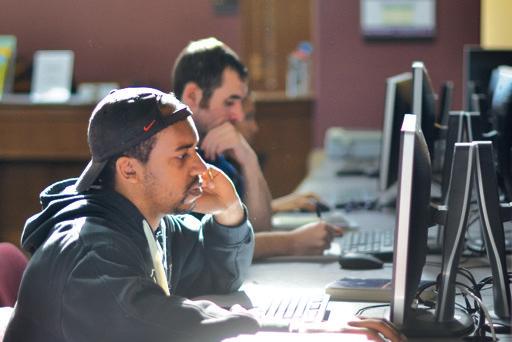
For many students, prelims, papers and projects due the week they returned from Fall Break prevented them from experiencing the stress relief breaks are supposed to bring Stephanie Chen ’17 had two prelims directly before the break, as well as a computer science project with a part due before and a part due after break
“My last prelim [on Friday before Fall Break] was pretty late it ended at 9 p m , and I had to sprint
back and start packing so I could catch my bus the next day,” Chen said “I had to almost pull an allnighter not to study, but just to pack ” Chen ended up coming back a day early from break to work on her computer science project since she needed University computers to access the software she needed For Kelly Rambarran ’14, who had a midterm Wednesday morning after break and a “extensive” lab assignment due the next day, the work she had
See BREAK page 4
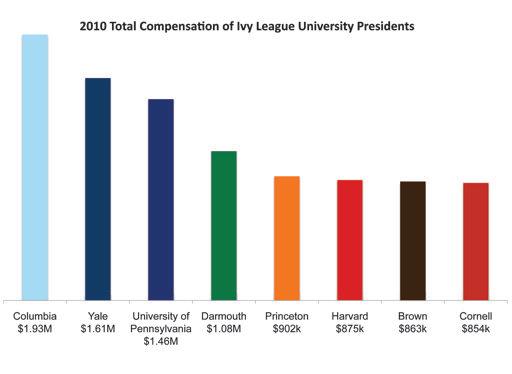
Amid a climate of rising student tuition and calls for more accountability in University financing, the salaries of university presidents have become a topic of particular scrutiny In an analysis of university presidents’ compensation for 2010, however, President David Skorton ranked last among the Ivy League
According to a Dec 2012 article published by The Chronicle of Higher Education, a 2010 analysis revealed that 36 private college presidents earned more than $1 million that year, a figure that represented a 3 1 percent increase over the previous year
The highest-paid president among Ivy League universities was Lee C Bollinger of Columbia University, who was compensated $1,932,931 in 2010 Meanwhile, Cornell President David J Skorton ranked last in presidential salaries out of the eight Ivy League schools, with a total compensation of $854,082 that year
A power outage that might have been caused by an animal affected many parts of campus on Sunday night, disrupting students who were studying on Central Campus, according to John Carberry, director of press relations for the University
Facilities belonging to Cornell’s three contract colleges the College of Human Ecology, the School of Industrial and Labor Relations and the College of Agriculture and Life Sciences were the primary buildings affected by the power outage However, the entire campus experienced a “ momentary disturbance,” and some non-state buildings lost power, Carberry said The outage started at about 5:10 p m and was caused by the failure of a switch that sup-
plies power to many of the campus buildings funded by New York State The switch may have failed because an animal possibly entered the equipment, according to Carberry
The power switch may have failed Sunday night because an animal possibly entered the equipment.
A campus facilities special conditions announcement issued at around 6:30 p m Sunday instructed all staff who had building systems or equipment that could be affected by a loss of power to check their facilities and notify and building users and occupants Before power could be restored to the system, the cause of failure had to be identified, and re-energizing the system could have created additional damage or prolonged the outage, according to Carberry
By 9:50 p m on Sunday, Cornell Utilities crews reported power restoration to most of the affected areas of campus Beebe Hall, Bruckner Lab, Rice Hall and several poultry
Alderperson Graham Kerslick (D4th Ward), an energy frontier researcher, joined the David R Atkinson Center for a Sustainable Future Monday as its new executive director
Kerslick has been the associate director for a number of research centers here at Cornell since 2001, including the Nanotechnology Center, which involved partnerships with five universities around the countr y More recently, he has been the associate director of two research centers at Cornell: the Energy Materials Center and the Center of the Microenvironment and Metastasis
The Atkinson Center was founded five years ago to help build a more sustainable world by developing ne w knowledge and technologies in energy, the environment and economic development, according to the Atkinson Center’s website
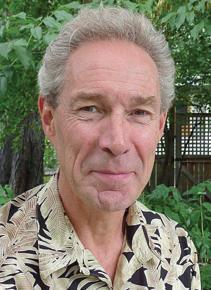
Kerslick said the Atkinson Center is different from other research centers he has worked at because “the funding comes from donations and other sources, and its area of research is much broader ”
“During these five years, the center really focused on bringing together the faculty members at Cornell around these very compelling global problems in sustain-
1


Please Recycle this Paper in one of the recycling bins located on the Cornell Campus.



By GRACE HURLEY Sun Contributor
What if our clothes could be designed to protect us from diseases, regulate our temperature or filter toxic gases? Through the work of the Cornell Institute of Fashion and Fiber Innovation, these have become very real possibilities in the near future
The Institute, launched on Oct 9, has brought together fashion designers, business professionals and textile scientists to merge their areas of expertise into a market that will combine fashion and function in the production of smart clothing
According to Jintu Fan, the director of CIFFI, the work of the institute is motivated by the sustainability and overall life enhancement that functional clothing can bring people
fashion and technology is evident in its core competencies, which include functional fibers, smart, protective clothing, sustainable fashion, fiber and textiles, officials say
Some projects currently underway include moisture management fabrics and garments, functional sportswear with next to skin cooling effect, multilayer cold protective garments, selfdecontaminating fabrics and garments, fire-fighter turnout gear, body massage garments and cooling vests, according to Fan
“Ultimately, it will improve our living ”
In addition to engineering functional clothing, the CIFFI aims to promote mass appeal for the clothing According to Fan, this can be accomplished through the institute’s convergence of industry professionals from multiple fields
“Only by merging function with fashion [can] clothing be accepted by consumers and last for longer Ultimately, it will improve our living,” he said Alan Mathios, dean of the College of Human Ecology, said in a University press release that “by working with industry partners, CIFFI can take cutting-edge research at Cornell in fiber science and fashion design and accelerate its application into clothing and goods that improve people’s lives ”
The institute aims “ to advance knowledge and foster collaborations between academia and industry in the areas of fashion design, marketing and culture, fiber science, technology and materials testing,” according to a CIFI brochure It also aims “ to translate stateof-the-art sciences and technologies into implementable technologies, products and systems for the benefit of the fashion, fiber and textile industries ”
The CIFFI’s strategy of combining
“Through CIFFI, we can promote partnership between retailers, manufacturers, and researchers This will help gain market appeal for the clothing we are developing,” he said
In a University press release, Tom Nastos, chair of the CIFFI advisory board, echoed the significance of the partnership, saying, “ The fashion industry needs an outlet to provide feedback on what technology they are looking for, to test new ideas and materials and to determine what research they are willing to fund ”
“ When you put the researchers together with people in industry, it’s a great combination – not just for the clothing of today, but for looking to the future,” Nastos said
In the future, Fan said he and other members hope to see “ more innovative products into the market, new business opportunities for CIFFI members, and real-world experience for Cornell students ”
Grace Hurley can be reached at gkh29@cornell edu


O’Mara Seeks Fee Waiver For Veteran Drivers’ Licenses
State Sen Tom O’Mara (R-Big Flats) wants to have the fee to have a Veterans ID placed on unexpired driver’s licenses waived by the state ’ s Department of Motor Vehicles, according to The Ithaca Journal
Reed Outpaces Robertson 4-1 In Campaign Spending
The two leading candidates for New York’s 23rd Congressional District Republican Rep Tom Reed (R-23) and Democratic challenger Martha Robertson have raised more than $2 2 million in campaign donations As of Sept 30, Reed has outraised Robertson with $1 79 million compared to Robertson’s $427,528, according to The Ithaca Journal
Park Foundation Annouces Ithaca-Area Grants
The Park Foundation Board of Trustees approved nearly $1 7 million in grants, including $286,500 for programs in and around Tompkins County, the foundation announced Friday, according to The Ithaca Journal
Space named for
By ZOE FERGUSON Sun Contributor
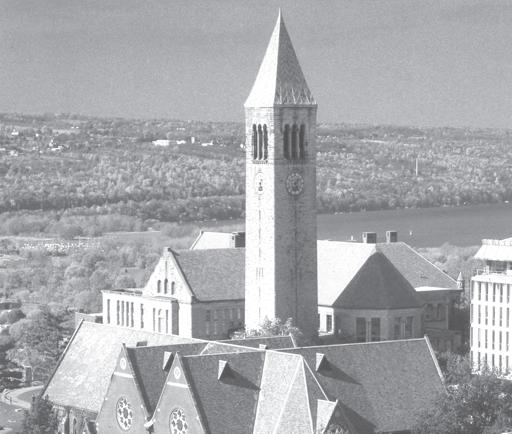
A ne w café named after a major University donor opened in the Cornell Store Monday Café Jennie is named after Jennie McGraw, who made the chimes, which are located across from the café, possible, according t o Di n i n g Ma n a g e r G e o r g e Knowles
Knowles said the café is “ ver y different than what’s currently on campus ”
“ The design of it is a little bit
m o re c
n t e m p o r a r y, ” K n ow l e s said “It’s like a proper coffee shop-slash-bistro ” Café Jennie ser ves food that is “ a little more intricate,” according to Knowles, pointing to the six selections of sandwiches and paninis available The café also offers fresh baked goods, soup, Chobani yogurt and Irish steel cut oatmeal
As opposed to the traditional plastic cutler y and sandwiches in boxes, Café Jennie offers mugs, silver ware and plates so students can “have your food ser ved with a
knife and fork, which is something different,” Knowles said “ We have mugs so you can actually sit in and have a mug in here, which is nice,” he said “You can have your food to go if you want, but you ’ re not sitting there with your food in the cardboard That is a difference ”
“It’s like a proper coffee shop-slash-bistro
” G e o r g e K n o w l e s
Knowles said that, in his experience, Cornell Dining has “done really well with giving the consumers, the Cornell market [and] t h e C o r n e l l c o m m u n i t y w h a t they want ”
The Cornell Store is centrally located, and in that respect, the café is simply another extension of the store
“ When the Cornell Store is open, we’ll open, ” Knowles said “ The Cornell Store went through a revamp They put this out to bid last year to look for an opera-
tor So Cornell Dining and a number of other participants bid on this and we were the successful vendor chosen It’s been a year in the planning ” At the new café, students can use Big Red Bucks and Meal Choice
“A l l y o u r Bi g Re d Bu c k s , s p e n d h e re , ” K n ow l
“ Now h
here ”
Students are of mixed opinions on the idea of another eater y on Central Campus
Meredith O’Malley ’14 said she was doubtful about the need for a new café on campus
“I don’t really know what else they could bring to the table, unless it’s something interesting,” O’Malley said
Jo s e p h D e
1 7 s
e thought it could be a good new addition to campus
“I guess it’ll be a good place to get some food while doing some shopping,” Denby said “ Why not?”
Zoe Ferguson can be reached at znf3@cornell edu
BREAK
Continued from page 1
made it “hard to get completely away because of all of the studying I had to do ”
Rambarran, who visited her sister during Fall Break, said she ended up spending “the majority” of her break at the librar y at her sister’s school
“ The work definitely affected my ability to de-stress because I was working almost the entire break I felt that any time spent doing something fun was time that I could have devoted to studying,” Rambarran said in an email “My work was always in the back of my mind throughout the four days of break Even after I arrived back at Cornell on Tuesday after a five hour bus ride, I ended up going straight to Olin to study ”
McKenzie Caldwell ’16, who had a prelim and a lab due before break and a prelim after break, said she stayed up late before break to make time for relaxation, although she said it made the star t of her vacation “ a little rough ” Caldwell also came back a day early to get star ted on studying
“[During break], I was a little concerned about studying for [economics], but I let it go and decided not to
worr y about it It definitely did affect how I transitioned back to school,” Caldwell said
The Faculty Senate passed a resolution in March 2011 attempting to “strongly discourage” faculty from “framing assignments in such a way that necessitates a c a d e m i c w o r k o v e r Fa l l B r e a k , Thanksgiving Break or Spring Break ”
“Students should be given sufficient time to carr y out assignments and prepare for classes without being required to devote their breaks to such preparation,” the resolution read
Rambarran said she believes that work assigned over break negatively affects the mental health of the student body
“My work was always in the back of my mind throughout the four days of break ”
However, even Prof Br uce Levitt, per forming and media ar ts the chair of the Faculty Senate committee that drafted the resolution admitted it was “ not really enforceable,” and was meant more as a best-practices statement that was up to the interpretation of individual faculty members, The Sun previously repor ted March 10, 2011
According to Levitt, the resolution would likely not apply to work due directly after break that was planned at the beginning of the semester as long as professors informed students in advance
“A break should be a time when you don’t feel like you have to rigorously do school work,” Rambarran said “ There are only four to five days during most of our semester breaks, so I really don’t see any reason why they should be consumed by having to study or work on assignments due immediately after break ”
Not all students agreed Chen said that, despite the many assignments she had due before and after Fall Break, she thinks it would be difficult for professors to not assign work around that time period “ There’s so many classes, and each professor has his or her own schedule to follow,” Chen said “It would be pretty difficult to coordinate ”
Emma Court can be reached at ecourt@cornellsun com and at twitter com/dilemmaincourt
OUTAGE
Continued from page 1
barns remained without power, but electricity was restored to those buildings overnight
Although the power outage did not cause any damage to facilities, it did affect some students who were studying on campus
Marissa Walker ’16 was in Mann Library when the power went out Shortly afterward, the outage forced Walker to return home because the library was experiencing both Internet and sanitary problems
“A ton of people started to leave after a while because the WiFi wasn ’ t working anymore, ” Walker said “Apparently, the automated flushing was also not working for the toilets so it smelled absolutely horrible in there ” Lindsay Kirschner ’16 was working on a group project when the power outage also forced her to leave Mann Library
“My partner and I were no longer able to work on our project because not only could we not use the computer in the Collaborative Center, but the Internet was no longer working After waiting for about
10 minutes or so, we decided it would be a more valuable use of our time to go elsewhere as the electricity was not turning back on, ” Kirschner said
The loss of electricity also caused some classes to readjust their schedules
Juliana Batista ’16 said that her four-day class ILRLR 6080: The Practice of Labor Arbitration ended early despite the instructor continuing the class for several hours without power using an emergency light and some lights from students’ iPhones
“It was a minor inconvenience, but the

professor showed some levity with the situation,” Batista said “We powered through It wasn ’ t the best situation, but I think it was definitely a unique experience ” Riley Kilgariff ’16, a student in Fiber Science and Apparel Design 2650: Patternmaking for Fashion Design, said that her professor offered a deadline extension for an assignment due Monday after their studio in the Human Ecology Building lost power
Dara Levy can be reached at dlevy@cornellsun com

Vice-Chancellor and Recto r of the University of the Free State
“The Role of Higher Education in the Development of South Africa” Einaudi Center’s Foreign Policy Distinguished Lecture/Messenger Lecture
Tuesday, October 22, 2013, 4:30 p m
Room 110 Auditorium, Physical Science Building “Meeting the Spirit and Letter of Diversity on a South African Campus” Wednesday, October 23, 2013, 4:30 p m ASRC Multi-Purpose Room
The Public is Invited

-ability Now the center is really ready to move into stage two: that focuses on the partnering of Atkinson center and external groups so that we can actually make an impact on the world,“ said Dr Helene Schember, the outgoing executive director of the center
In the upcoming years, the Atkinson center will develop a new strategic plan under Kerslick’s super vision, aiming to develop sustainable solutions for global problems and focus on environmental aspects such as sustainable agriculture, energy transitions and sustainable communities, according to Schember
The new strategic plan is based on the idea that “technological breakthroughs and best practices alone cannot deliver a
other organizations community, private sector, government, nonprofit and philanthropic is essential to unleash our collective power for broader, more timely and durable impact,“ according to
the Atkinson Center’s website The center will engage with partners with common aspirations to identify real-world problems and will use their multidisciplinar y expertise to solve them
As the new executive director, Kerslick will be instrumental in uniting staff to coordinate communications and achieve these goals, Schember said
“Kerslick is highly organized, outgoing and broad in his knowledge There are 365 faculty from over 70 departments associated with the center, so that’s a big task,” Prof Francis DiSalvo, chemistr y, and director of the Atkinson Center, said Schember also noted the importance of Kerslick’s position in successfully developing the new strategic plan
“ The position is what you would call a focal point for the center and requires the executive director to be someone who helps all of the leadership team and who brings his abilities to convene around something that needs to be addressed in a sustainability area So there is an aspect that is a convening aspect complemented by a nurturing part, ” Schember said
Kerslick said he will ensure a number of goals such as expanding the successful Academic Venture Fund to $1 million annually and develop two or more enduring strategic collaborations with external partners for interdisciplinar y research and p
before 2017 with him as executive director Kerslick also said he looks for ward to
departments and backgrounds, since the center requires contribution from various fields of studies to solve sustainability issues not only in their scientific aspects but also in the social ones
“[ The Atkinson Center] has already brought together over 360 faculty members at Cornell It’s really important to
Cornell to solve the problems in sustain-
involves a long term commitment to collaboration across campus and beyond, and I’m looking for ward to working to my new colleagues on the challenges ahead ”
director for the Atkinson Center, said Kerslick’s engagement in the community outside of Cornell will be key in the reali
upcoming years “I’m personally excited to work with Graham, because in addition to his highl
brings experience with community building,” Chambliss said Chambliss said Kerslick has ser ved on various Ithaca community boards since the 1980s, adding that this experience will be “valuable” in the Atkinson Center development as it aims to unite scholars, social scientists and engineers to identify solutions and approaches to sustainability challenges “ With our new strategic plan, we want to connect more with external partners Graham has experience there too Graham brings a rich resume to help the center with its next ambitious phase of growth,” Chambliss said
Emma Ianni can be reached at ei54@cornell edu
The highest-paid university president out of 494 private schools nationwide, according to the 2010 data from the same source, was J Robert Kerrey of The New School in New York City, whose salar y totaled $3,047,703
Prof Ronald Ehrenberg, industrial and labor relations and economics, said he believes that Skorton’s salary is modest relative to those of a number of presidents from similar universities, noting that this view was strictly personal and not representative of the administration
“I suspect this is at least partially due to his feelings after the financial meltdown and severe
financial problems that the University had to face starting in 2009,” Ehrenberg said in an email “[These financial problems] led to a salary freeze for faculty and staff for a year, and a layoff of staff that [would make it] unseemly for him to take any large salar y increase ”
In 2008, Skorton said to The Sun that he did not want the Board of Trustees to consider an increase in his salary for that year
Peter Meinig ’62, then-chairman for the Board of Trustees and current chairman emeritus, said in the same article that he found Skorton’s pledge to not take a salar y increase “ ver y, ver y admirable ”
Despite the typical figures that university presidents are compensated from year to year, Ehrenberg

said he believes that being the leader of a university such as Cornell is an “extraordinarily difficult, 24 hours-a-day, 365 days-ayear job ”
“University presidents’ salaries have come under great scrutiny [but] the vision and skills of a president go a long way to determin[e] the future of a university,” Ehrenberg said
Ehrenberg also said that while the reduction of costs at a university is important, the work that Skorton has done for the University is invaluable
“While the University should do everything it can and it has been doing this to reduce administrative costs so it can redirect resources back to [its] core educational and student service
missions and possibly reduce the rate of tuition increase, focusing on the salary of a wonderful president, especially one who is paid modestly relative to his peers, does not make much sense We are lucky to have to have President Skorton,” Ehrenberg said
Annie Bui can be reached at abui@cornellsun com
HANK BAO 14
T h e C o r n e ¬ D a i l y S u n
Independent Since 1880
131ST EDITORIAL BOARD
REBECCA HARRIS ’14
Sam Kuhn | To Be Determined

Th e c y n i c a l a n d s a g a c i o u s Wa s h i n g t o n o p e r a t i v e , Fr a n k Un d e r w o o d , f r o m t h e s h o w “ Ho u s e o f C a rd s ” o n c e l a m e n t e d t h a t a
p r o m i s i n g a i d e h a d c r o s s e d i n t o t h e p r i -
v a t e s e c t o r, s a y i n g “ s u c h a w a s t e o f t a le n t He c h o s e m o n e y ov e r p ow e r i n t h i s t ow n , a m i s t a k e n e a r l y e v e r y o n e m a k e s Mo n e y i s t h e Mc m a n s i o n i n
Sa r a s o t a t h a t s t a r t s f a l l i n g a p a r t a f t e r t e n y e a r s Pow e r i s t h e o l d s t o n e b u i l d i n g t h a t s t a n d s f o r c e n t u r i e s " A s a p p e a l i n g a s t h e m e t a p h o r i s , t h e d i s t i n c t i o n b e t w e e n m o n e y a n d p ow e r i s b e c o m i n g
l e s s a n d l e s s o b v i o u s Mu c h h a s b e e n
m a d e o f o u r n a t i o n ’ s g r o s s l y d i s t o r t e d
w e a l t h d i s t r i b u t i o n Bu t a n e q u a l l y t r o ub l i n g p h e n o m e n o n i s t h a t t h e d i s t r i b ut i o n o f w e a l t h i n A m e r i c a m i r r o r s t h e d i s t r i b u t i o n o f a c c e s s t o “ p ow e r ” i n t h e Un d e r w o o d i a n s e n s e I t ’ s b e c o m i n g i n c re a s i n g l y c l e a r t h a t c h a n g e s t o c a mp a i g n f i n a n c e l a w s ov e r p a s t d e c a d e h a v e m e a n t t h a t m o n e y a n d i n f l u e n c e h a v e b e c o m e e n t a n g l e d i n a w a y t h a t f o r s a k e s w h a t i s s u p p o s e d t o b e a c o r n e r s t o n e o f o u r n a t i o n a l i d e n t i t y e q u a l a c c e s s t o s h a p i n g t h e n a t i o n a l p o l i t i c a l d i s c o u r s e Re c e n t e v e n t s i l l u s t r a t e t h e l u d i c r o u s d i s c re p a n c y b e t w e e n t h e c a p a c i t i e s o f t h e r i c h a n d t h e p o o r t o s h a p e p o l i t i c a l o u t c o m e s H a l l i b u r t o n o i l c o m p a n y h a s b e e n s i n g u l a r l y a m b i t i o u s i n i t s l e g a l i n d i s c re t i o n s It s c r i m e s r u n t h e g a m u t f r o m c o r r u p t i o n i n Ti m o r a n d Ni g e r i a t o ov e r c h a r g i n g t h e Pe n t a g o n f o r f u e l d e l i v e r i e s i n Ir a q t o n e g l i g e n t c o n s t r u ct i o n o f t h e D e e p w a t e r Ho r i z o n We l l t h a t e x p l o d e d , c l a i m i n g 1 1 l i v e s a n d l e a k i n g u p w a rd s o f 2 0 0 m i l l i o n g a l l o n s o f o i l i n t o t h e Gu l f o f Me x i c o Mo s t re c e n t l y, i n Ju l y, t h e c o m p a n y p l e a d e d g u i l t y t o c h a r g e s t h a t i t d e s t r oy e d e v i d e n c e o f c o m p u t e r s i m u l a t i o n s w h i c h i n d i c a t e d t h a t t h e w e l l’s m o d e l m a y h a v e b e e n u n s o u n d L a s t w e e k , t h e c e m e n t i n g
t e c h n o l o g y d i re c t o r i n c h a r g e o f t h e
c e m e n t o n t h e D e e p w a t e r Ho r i z o n w e l l w a s c o n v i c t e d o f d e s t r oy i n g t h a t e v id e n c e , n e a t l y p i n n i n g a n i n s t i t u t i o n a l l yi n c e n t i v i z e d c r i m e t o a t a n g i b l e c r i m in a l A n d y e t , d e s p i t e t h e C i t i z e n s Un i t e d r u l i n g t h a t c o r p o r a t i o n s s h o u l d b e t re a te d a s i n d i v i d u a l s w h e n d o n a t i n g t o p o l i t i c a l c a m p a i g n s , H a l l i b u r t o n ’ s d e c or a t e d r a p s h e e t h a s n ’ t b e e n a n o b s t a c l e t o t h e c o m p a n y ’ s a b i l i t y t o v o t e w i t h i t s m o n e y In 2 0 1 2 a l o n e , t h e c o m p a n y d o n a t e d u p w a rd s o f $ 5 2 3 , 0 0 0 t o p o l i t ic a l c a m p a i g n s t h r o u g h i t s p o l i t i c a l a c t i o n c o m m i t t e e , H a l p a c m o s t l y t o Re p u b l i c a n m e m b e r s o f c r u c i a l l e g i s l a -
m m a r i z
: A $ 2 4 b i l l i o n p e r y e a r c o m p a n y w h i c h h a s a h i s t o r y o f i l l e g a l a n d d a n g e r o u s b u s i n e s s p r a c t i c e s g e t s t o p l a y p o l i t i c a l k i n g m a k e r w i t h l e s s t h a n a f i f t h o f i t s h o u r l y re v e n u e , w h i l e m i ll i o n s o f a v e r a g e A m e r i c a n s a re s y s t e m a ti c a l l y e xc l u d e d f r o m t h e f u n d a m e n t a l c i v i c a c t i v i t y : v o t i n g We n e e d t o re m e m b e r t h a t g o o d c a p i t a l i s m g r ow s o u t o f f a i r d e m o c r a c y, n o t t h e o t h e r w a y a r o u n d T h e p o l i t i c a l c r i s i s o f t h e p a s t c o u p l e w e e k s ( a n d t h e b r o a d e r d y s f u n c t i o n o f A m e r i c a n f e d e r a l p o l i t i c s t h a t t h i s c r i s i s g re w o u t o f ) i s d i re c t l y re l a t e d t o t h e a b i l i t y o f m o n e y e d s p e c i a l i n t e r e s t g r o u p s t o s u p p o r t t h e i d e o l o g i c a l l y e x t re m e f a c t i o n s w h i c h c r i p p l e t h e a b i l it y o f l e g i t i m a t e p o l i t i c a l p a r t i e s t o g ove r n It’s l i k e l y t h a t t h e Re p u b l i c a n i n t r ap a r t y d i v i s i o n s w h i c h h a v e s o i n h i b i t e d r e a s o n a b l e d e b a t e a n d c o m p r o m i s e w o u l d h a v e e x i s t e d w i t h o r w i t h o u t t h e s e i n d e p e n d e n t f u n d r a i s i n g o r g a n i z at i o n s Bu t t h e m o n e y g r o u p s l i k e t h e C l u b f o r Gr ow t h p u m p i n t o t h e Te a Pa r t y s e r v e s t o i n t i m i d a t e m o re m o d e ra t e p o l i t i c i a n s i n t o t a k i n g h a rd e r l i n e s j u s t t o s e c u re c a m p a i g n f u n d i n g f o r p r im a r i e s a n d a m p l i f i e s t h e i n f l u e n c e o f r a d i c a l m i n o r i t i e s w i t h i n C o n g r e s
t i v e c o m m i t t e e s T h e b i t t e r i r o n y i s t h a t e v e n a s t h e r i c h a re g i v e n n e w a v e n u e s t o p ow e r a n d s e e m i n g l y u n l i m i t e d s e c o n d c h a n c e s a t i n f l u e n c i n g p o l i c y, t h e p o o r a re b e i n g e xc l u d e d f r o m t h e p o l i t i c a l p r o c e s s i n e v e r m o r e i n v e n t i v e a n d w i d e s p r e a d w a y s T h e 2 0 1 2 e l e c t i o n s w e re m a r re d b y n u m e r o u s e f f o r t s b y s t a t e g ov e r nm e n t s t o i m p o s e o b s t a c l e s t o v o t i n g , w h i c h a l m o s t e x c l u s i v e l y i n c o n v en i e n c e d t h e p o o r, s u c h a s re q u i r i
Darrick Nighthawk Evensen | Trustee Viewpoint
“Why can ’ t T A s just know how to teach?!?” While walking into the Helen Newman fitness room one evening, I heard an undergraduate express this anger and frustration It is not the first time, and will not be the last time, I have eavesdropped on such comments I do not fault the student for her frustration; likewise, however, I find it difficult to blame her graduate student T A While I normally rot my brain during my workouts by viewing the biased nonsense of MSNBC and FOX “News,” I spent my 30-minutes on the elliptical that evening pondering this undergraduate’s sentiments
The young woman ’ s expression is not merely an anecdotal case of angst or over-dramatic venting Derek Bok, who served as President of Harvard University for more than 20 years, argues in his newest book, Higher Education in America, that the quality of undergraduate education is one of the two most pressing problems in all of higher education today One major suggestion Bok proffers for addressing this problem is mandated training in how to teach for all graduate student instructors He contends that any costs of such training will be repaid several times over by the dividends that accrue from better instruction Bok’s suggestion would not eliminate complaints like the one above, but could do much to reduce their frequency It would also increase confidence, preparedness and peace of mind for the many T A s who genuinely desire to teach well, but who have been assigned to classes with no prior instruction in how to teach Bok reports that the vast majority of Ph D students enter graduate school because they are primarily interested in teaching Many recently-minted Ph D students will go on to teach at liberal arts colleges and com-
I advocate for a university level requirement that any who steps in front of a cla have a minimum level of pedagogical preparation.

prehensive universities that: 1 Have teaching as the primary focus of a faculty member’s job and 2 require very different pedagogical strategies than those used at Ivy League institutions Any university that does not require its graduate student instructors to have a minimum level of competency in teaching does a disservice to its undergraduates, its graduate students and potentially to future undergraduates at other institutions
To put this issue in perspective, consider the following To teach elementary, middle or high school in N Y , one needs a master ’ s degree devoted entirely to learning how to teach well and a state certification on top of that To teach sections of many courses at Cornell, the minimum requirement is a bachelor’s degree and no preparation or certification in teaching whatsoever
We have great resources at Cornell for learning how to teach well; some of these resources are within individual departments or colleges, and substantial expertise resides in Cornell’s Center for Teaching Excellence Workshops and training sessions are even required for graduate student instructors within certain departments and colleges, but not holistically at the University level I laud everything done at Cornell, but the distributed responsibility for ensuring that instructors teach well is not enough Like Bok, I advocate for a universitylevel requirement that anyone who steps in front of a class have a minimum level of pedagogical preparation, for the instructor’s own sanity as well as the benefit of his or her students
Bok contends that many older, senior professors think training in teaching is unnecessary because one can learn how to teach simply from repeated practice Decades of research in education and cognitive learning indicate that such opinions have no scientific basis Let me put it this way, I could (eventually) probably become a pretty decent researcher by trying and failing at several research projects, but most universities want graduate students to take numerous classes in theory and research methods anyway Why should not even a modicum of attention be paid to theory and methods for teaching?
Some faculty members might argue that decisions about graduate student instruction need to occur at the department level Many reasons exist for allowing a student’s own department to decide what content is most appropriate for his or her advancement as a researcher in that field This, however, is much less true of training in teaching Additionally, to the extent that educational problems exist and departments choose not to address them, it is the central administration’s responsibility to respond
For the last half decade, I have tried in various ways to draw attention to this issue This Friday, I will be discussing this topic with the Board of Trustees and Cornell administrators In my fourth and final year as a trustee of Cornell, this opinion column is my final public call for action on what I view as one of the largest looming educational policy issues not only in higher education broadly, but also at Cornell If you are interested in this issue as well, I would love to hear from you
“Evaluating the quality of colleges by the high-school records of the incoming undergraduates is a fool’s game Even if you play it you get tied up in knots For example, you fail to mention that CALS has a lower acceptance rate than Engineering, but I suspect you are not out there rubbing that in the faces of the engineers Also A&S and Engineering have by far the lowest yield (i e least attractive to applicants with multiple offers) That doesn’t seem to match you confident assertion!”


IkeRoberts
Re: “Cornell Named a ‘Best Value’ College” News, published October 21, 2013
Jacob Glick | Glickin’
Thursday evening, former Florida Governor Jeb Bush will headline a presentation at Bailey Hall, discussing the future of education reform in the United States Alongside the Governor will be Nancy Zimpher, the chancellor of the State University of New York school system I’ve read and heard that President Skorton will moderate the discussion, which conjures in my mind images of an epic and ultimately irreconcilable debate, the likes of which many of us experienced when Howard Dean and Rick Santorum clashed in Bailey Hall last year I think it would be a mistake, however, to view this event as a debate between two diametrically opposed forces, whose tangential similarities will be over-emphasized by an even-handed moderator in order to provide some constructive sense of “closure” for all those attending This discussion, unlike the election-year paeans of Dean and Santorum, has the potential to remind Cornell of its pivotal position in the American educational system, and the duty we all have in the reshaping of it
While I think it would be highly premature unrealistic, even to call Governor Bush a frontrunner for the 2016 Republican nomination, this newest scion of the oftmaligned political dynasty represents a vision of the GOP that is refreshingly pragmatic Thus, even if he is not sufficiently intransigent to outmaneuver Rand Paul and Marco Rubio in three years, it is important for us to hear what the governing wing of the Republican Party has to say After two weeks of farright hysteria, let us once again strive towards a future in which neither party has a monopoly on
ideas With that being said, however, we must first examine what those ideas are Jeb Bush’s constructively conservative vision of education reform hinges on a much-discussed linkage between teacher pay and performance, as well as an increased emphasis on standardized testing that he pursued in his “A+ Plan” in Florida This performance-based approach to public education, recently bandied about by political figures across the political spectrum, is certainly an important component of any 21st century overhaul of American education But Governor Bush’s demonization of the public school system as “ a labyrinth of political,
We must realize that th ambitious revamping o American education mu reain true to the public education apparatuses
bureaucratic and union empires that depend on a captive population of students and minimal quality control” a characterization he made to the Associated Press earlier this month fails to grasp the modern dream of American education As it so happens, Cornell University encapsulates the very essence of this dream Chancellor Zimpher, who will presumably be a staunch rhetorical advocate for the continued robustness of our public education system, stands at the helm of arguably the greatest educational endeavor in the history of this nation: the SUNY system The contemporary sexiness of school vouchers and charter schools undermines the monumental nature of
what certain states New York and California, for example have already achieved in terms of higher education Public investment in education is only a fool’s errand if the investment is an insufficient one Anti-tax hysteria, coaxed into prominence by the Bush family, has made it nearly impossible for the Republican Party to allocate adequate financial resources to our public educational system, on both state- and nationwide levels This, in a sort of selffulfillingly prophetic approach to governance, has made the apparent need for private sector remedies to our educational quandaries seem all the more necessary President David
Skorton, and the University he leads, represent a crucial fusion of public commitment to and private investment in higher education Cornell’s ability to open the doors of an Ivy League institution to New Yorkers whose payments are subsidized by the impressive social construct of the SUNY system is unique, impressive and emblematic of the direction in which American education must move One cannot begin to dismantle a centur y-old commitment to public education because there is a perceived ability in the private sector to adequately intervene Only a public system, which is motivated not simply by profit, but also by concern for the citizens’ welfare, can ideally guarantee a valuable edu-
cation for all young people desirous of one No charter school or private college can make that same, universal promise nor should they be required to do so It is not the job of private institutions to provide for the general welfare, even if we, as a society, would like them to act in that way Private desires for educational improvement must only serve as a supplement to the existing and more-than-adequate infrastructure of educational institutions In a perfect world, Jeb Bush’s vision of performance-based, union-free and charter school-heavy education would increase parental choices and educational opportunities In reality, however, we must realize that this ambitious revamping of American education must remain true to public education apparatuses, such as the SUNY system, that have improved the lives of so many students who would have been shut out from private (and expensive) institutions Cornell proves that this hybrid vision in which the bedrock of public education is reinforced, rather than undermined, by private enterprise is a workable model for the nation I hope that in Thursday’s discussion, Governor Bush and Chancellor Zimpher treat their doubtlessly contrasting visions of American education not as fundamentally opposed, but potentially complementary It’s about time our leaders started talking that way
Jacob Glick is a junior in the College of Ar
and Sciences
Glickin It appears alter nate Tuesdays this semester
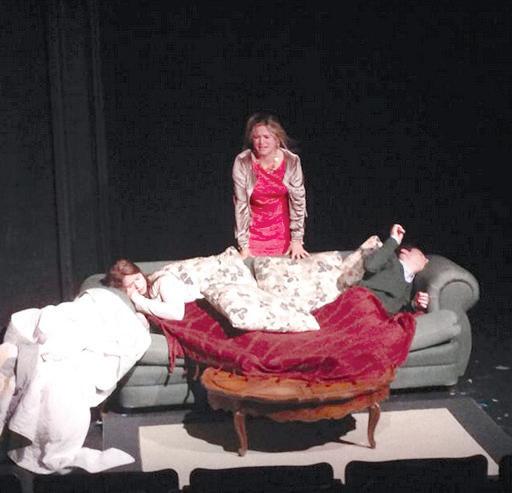
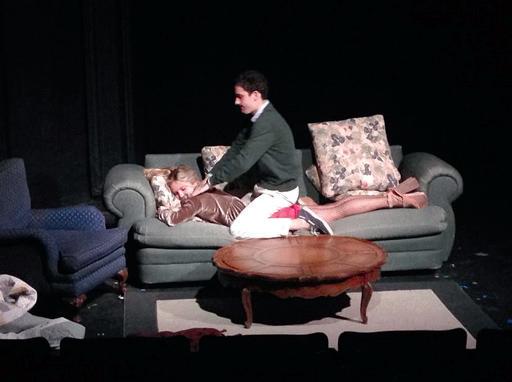
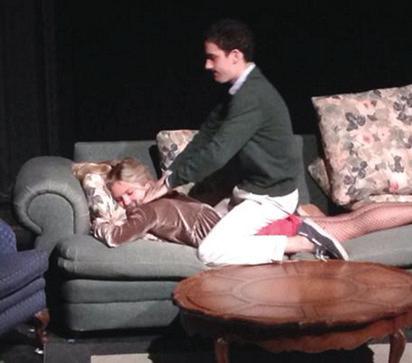
This past weekend, student actors at Risley Theatre performed a raucous night of one-act plays in Durang/Durang The six plays showcased were short enough to be condensed into a two-hour show, but the evening was definitely not short on laughs The stories behind the collection of short acts, written by Tony-winner Christopher Durang, were mostly drawn from the playwright’s past work on stage The show was divided into two sections, best described during the introduction: “Act I is theatre parodies Act II is not ” Often drifting between the brilliant and ridiculous, Durang/Durang ended up being a very enjoyable, if occasionally uneven, evening for all in attendance
Anna Brenner ’16, in her directing debut at Cornell, did a fantastic job bringing a sense of coherence and enthusiasm to the production Brenner, whose playlet, “The Thirty-Minute Waltz,” was a standout and audience favorite at the Schwartz Center’s Ten-Minute Playfest, seems to be quite adept at comedy, both with a pen in hand and in the director’s chair With many of Cornell’s best and brightest directors graduating this year, it’s a relief to see that the future of Risley Theatre can be trusted in such capable hands
The evening opened with a monologue from an eccentric yet endearing theatreaddicted character, Mrs Sorken, played by Jessi Silverman ’17 in her Risley debut Mrs Sorken took the audience on a looping trip through the rants and ravings of an overly enthusiastic theatre fan Silverman hit the target perfectly in her role, acting fervently and earnestly without ever being irritating It’s a difficult task to open a play with such a long-winded monologue, but Silverman set the tone for a witty, comical evening and never let it drag
The second play, “For Whom The Southern Belle Tolls,” a parody of Tennessee Williams’ The Glass Menagerie enagerie (currently playing on Broadway with Zachary Quinto) had some of the strongest and most impressive per formances of the night After a few tweaks and changes to the original plot, the play tells the story of Amanda Wingvalley (Bianca Di Cocco ’14), an overbearing, aging mother who seeks to live out her dreams through her two sons, Lawrence and Tom Lawrence ( Julian Montijo ’15) is a frail, shy hypochondriac who obsesses over his large collection of glass cocktail stirrers Tom (Spencer Whale ’14) is a tempestuous and seemingly closeted young man who wants to break away from his family Lawrence’s safe world is upset when Tom brings home Ginny (Helena de Oliveira ’17), a crass, hard-of-hearing warehouse worker The
entire cast was on point during this act, with each actor displaying exceptional chemistry with the others Every character was portrayed well, but Montijo absolutely stole his scenes, embodying the character of Lawrence with unique mannerisms and inflection
The final parody, “A Stye Of The Eye,” borrows from Sam Shepard plays, including A Lie Of The Mind, playing at the Schwartz Center in November Chock full of symbols, cymbals and a mélange of diverse characters, the play was melodramatic and hard to follow, which was likely Durang’s intent in writing it The story revolved around Jake ( Jake Morrison ’17), a man who shares a body with his other personality, his brother Frankie Both personalities vie for the love of Beth (Montijo), their recently brain-damaged ex-wife This play seemed overly concerned with making as many references and theatre in-jokes as possible, many of which fell on deaf ears in the audience That said, some of the gags were genuinely funny I mean, when are artichokes stuffed in a pair of tighty-whities not funny?
The first of the original pieces, “Nina In The Morning,” was another mostly enjoyable play in which Durang really began to explore the kind of material he is best at The play follows Nina (Adrienne Jackson ’14) an aging, promiscuous socialite who relies on her dedicated ser vant, Foote

(Stephen Markham ’16), to care for her precocious children Jackson played Nina with complexity, combining both comedic elements and subtle emotionality that was a highlight of the act The rest of the cast gave fun, if somewhat over-the-top performances that kept the act moving along When the play ended rather unexpectedly, it left the audience wanting more Generally, this trait would be appreciated, but the play never really felt as fulfilling as many of the others
The fifth play, “Wanda’s Visit,” was one of the longer plays of the evening Reminiscent of Who’s Afraid of Virginia Woolf, the play deals with a couple, Jim (Whale) and Marsha (Gwen Aviles ’17) Their relationship is shaken up when one of Jim’s past flames, Wanda (Caroline Boldt ’17), drops in on them The plot seemed somewhat trite, relying too much on romcom cliches like the old flame testing a marriage or awkward dinner table confrontations While it did drag on a bit toward the end, the play was kept afloat by an enthusiastic performance from Boldt and a heartfelt emotion from Aviles
“Business Lunch At The Russian Tea Room,” the final play of Durang’s set, was the most autobiographical A playwright, also named Chris (Markham), is torn between writing plays for the theatre at the risk of never reaching wild success and selling out writing Hollywood movies and TV shows This story is told alongside the tale of one of Chris’ prospective movie scripts, concerning a love story between a rabbi (Whale) and a priest (Di Cocco) This play came off as more of an artistic statement by Durang, interspersed with comedy to keep it light It was a very satisfying end to an occasionally uneven show, and Markham was particularly enjoyable as the exasperated and sarcastic Chris
Risley’s Durang/Durang was an all around well crafted evening, anchored specifically by some very able direction and enthusiastic performances from each and every cast member I hope many of the new actors and actresses who debuted at Risley over the weekend keep it up This one can be chalked up as a success
Sean Doolitle is a sophomore in the College of Arts and Sciences He can be reached at
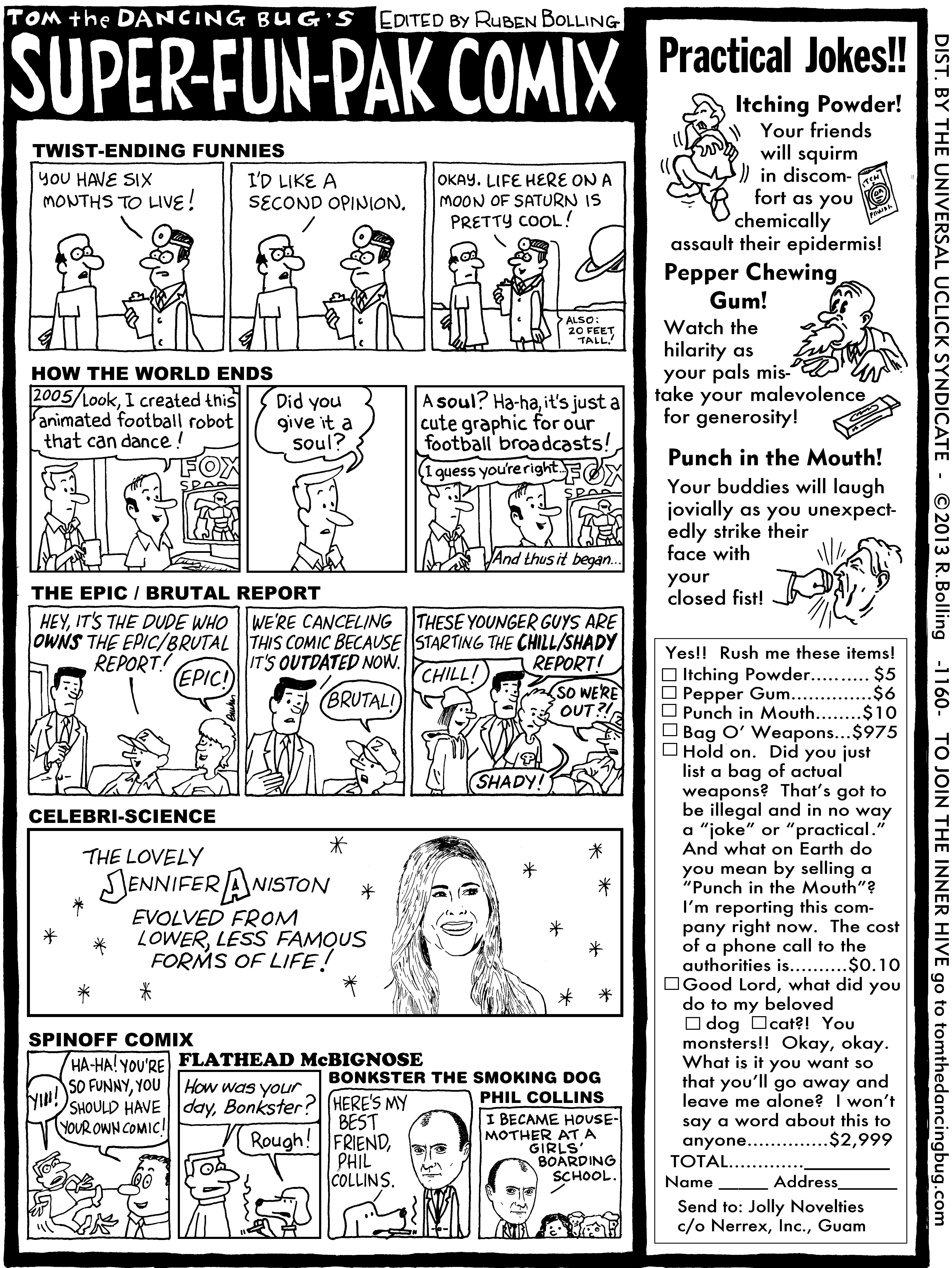
In case the giant picture of Demetri Martin in yesterdays paper wasn ’ t clear, we in the arts section are pretty excited that Demetri Martin is coming to Cornell this weekend
So excited, in fact, that we and our fabulous illustrators decided to try our hand at some Demetri Martin humor in anticipation of the event (hint: not as easy as it looks) Enjoy

Nils Axen is a sophomore in the College of Art, Architecture and Planning He can ve reached at naxen@cornellsun com

BY TYRAN GRILLO Sun Staff Writer
h e a i r o n c e m o r e w i t h a
b r o a d e r m i n i n g o f t h e Me d i t e r r a n e a n b a s i n T h e i r g i f t
i c e s
A n c i e n t Me d i t e r r a n e a n Je w s , C h r i s t i a n s a n d Mu s l i m s , ” a Hi s p a n o - A r a b i c t r e a s u r e s t o r e o f s o n g s , r o m a n c e s , d e v o t i
t h e a u d i e n c e a t c o n c e r t ’ s e n d A l s o f a m i l i a r w a s “ Un a m a t i c a d e r u d a ” ( A s p r i g o f r u e ) , a d e l i g h t -
f u l e v o c a t i o n o f a f a t h e r ’ s g r e a t e s t f e a r : T h e m o m e n t h i s d a u g h t e r f i n d s f i r s t l ov e Jo i n e d b y D a v i d
B u r k o n o u d ( a n a n c e s t o r o f t h e l u t e ) a n d Ti m O ’ K e e f e o n g o b l e t d r u m , i t s u r e l y b r o u g h t s m i l e s t o v e t e r a n l i s t e n e r s I n t e r e s t i n g l y, t h i s s o n g w a s i n c l u d e d i n t h e f i r s t m a i n s t r e a m r e c o r d i n g o f Se p h a rd i c m a t e r i a l i n 1 9 6 2 b y
b o o k e n d e d , f o r i n s t a n c e , b y t r ad i t i o n a l S e p h a r d i c s o n g s f r o m M o r o c c o w r i t t e n i n h o n o r o f
K i n g Ni m r o d , b i b l i c a l K i n g o f
B a b y l o n i a T h e s e c o n d o f t h e s e t u n e s , “ Cu a n d o e l r e y Ni m r o d , ” e v e n w a r r a n t e d a s i n g - a l o n g f r o m
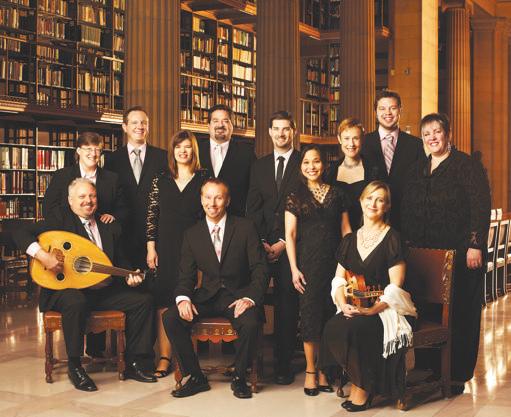
s o p r a n o V i c t o r i a d e l o s A n g e l e s , a n d l a t e r b y t h e w o r l d - r e n o w n e d Jo rd i Sa v a l l i n 1 9 7 6 o n h i s s e m in a l Mu s i c f r o m C h r i s t i a n a n d Je w i s h Sp a i n Sa v a l l’s v e r s i o n w a s a w a t e r s h e d m o m e n t i n t h e E a r l y Mu s i c i n d u s t r y, s p a r k i n g a d e b a t e a b o u t r e c o n s t r u c t i o n v e rs u s l i v i n g t r a d i t i o n s t h e e a r l ie s t f i e l d r e c o rd i n g s o f Se p h a rd i c m u s i c , t a k e n i n Sa r a j e v o , d a t e f r o m 1 9 0 7 , l e a v i n g u s w i t h l i t t l e c l u e a s t o w h a t i t s o u n d e d l i k e c e n t u r i e s b e f o r e T h i s m a d e i t a l l t h e m o r e r e f r e s h i n g t h a t t h e R o s e E n s e m b l e s h o u l d v a r y i t s p r og r a m a c r o s s a l a r g e r n a r r a t i v e s p a n W h e r e e l s e c o u l d t h e 1 2 t hc e n t u r y “ C i v e s c a e l e s t i s p a t r i a e ” ( C i t i z e n s o f t h e f a t h e r ’ s r e a l m ) , c h a n t e d t o Gi n n a Wa t s o n ’ s t a s t ef u l a c c o m p a n i m e n t o n h a r p, t e l es c o p e i n t o t h e a n g e l i c s o p r a n o o f K i m Su e o k a , b r u s h i n g h e r t e n d e r d i a c r i t i c s b e n e a t h t h e t e x t o f “ S i e t e h i j o s t i e n e H a n n a ” ( H a n n a h h a s s e v e n s o n s ) ? I n t h i s r e g a r d , t h e p r o g r a m b e n e f i t e d r e m a r k a b l y f r o m g u e s t s o p r a n o Ne l l Sn a i d a s , w h o s e k n ow l e d g e o f Se p h a rd i c s o n g a s a l i v i n g a r t g a v e t h e E n s e m b l e a d e s c r i p t i v e u p g r a d e , s u c h t h a t e v e n t h e e v e rg r e e n “ Mo r e n a m e l l a m a n ” ( T h e y c a l l m e t h e d a r k o n e ) f e l t n e w i n S n a i d a s ’ t h e a t r i c a l t r e a t m e n t O t h e r s t a n d o u t v o i c e s i n c l u d e d c o n t r a l t o L i s a D r e w a n d t h e E n s e m b l e ’ s f o u n d e r a n d a r t i s t i c
d i r e c t o r, Jo rd a n Sr a m e k , w h o s e t e n o r w a f t e d w i t h r o u n d e d p u rp o s e T h e a r r a n g e m e n t s w e r e a c c o rd i n g l y e q u i t a b l e , s h ow c a si n g t h e s t r e n g t h s a n d d e p t h s o f e v e r y s i n g e r a n d i n s t r u m e n t a l i s t i n k i n d I n s t r u m e n t s b e y o n d t h e h u m a n v o i c e a d d e d s p a r k l e b y m e a n s o f g e s t u r e s p l u c k e d ( p s a l t r y, h a r p , o u d ) , b o w e d ( v i e l l e , r e b e c ) , e v e n c r a n k e d ( h u rd y - g u rd y ) T h e a u d i e n c e w a s t r e a t e d t o a s p r i n k l i n g o f v o i c el e s s i n t e r l u d e s f r o m E n g l i s h , A r a b - A n d a l u s i a n a n d Tu r k i s h s o u r c e s O ’ K e e f e p r ov i d e d d e e pe s t t r a c t i o n , m ov i n g i n a n d o u t o f t h e f o r e g r o u n d w i t h t h e i n v i ti n g b e a t s o f h i s d r u m s Do i n g t h i s h e l e f t b e h i n d a n i n v i g o r a ti n g r o w o f c u r i o s , p l u c k e d f r o m t h e i r c a b i n e t o n e b y o n e a n d p o li s h e d t o a s h i n e E a r l y Mu s i c s p e c i a l i s t B e n j a m i n B a g b y o n c e s a i d , “ [ T ] h e s o u n d








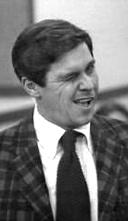
NEW YORK (AP) Blocked from holding a news conference Monday to present a person they described as a “major league baseball whistleblower, ” Alex Rodriguez’s lawyers asked that the rest of the grievance hearing to overturn his 211-game drug suspension be opened to the public
Rodriguez’s legal team called a 5 p m news conference at the midtown Manhattan office of Reed Smith, one of the law firms representing the New York Yankees third baseman More than an hour later, Reed Smith partner James McCarroll read from a piece of paper and said arbitrator Fredric Horowitz issued an order restraining them from “conducting any press conference or briefing regarding the subject matter of the hearing ”
McCarroll was joined by Jordan Siev, another partner at Reed Smith, a firm used by A-Rod pal Jay-Z; Joseph Tacopina, who appears to have become A-Rod’s lead lawyer in the case; and Lanny Davis, special counsel to President Bill Clinton during his White House years Davis was retained to give Rodriguez’s legal and media team advice on due process and fairness issues
The lawyers would not say whether the “whistleblower” worked for Major League Baseball, one of its teams or some other affiliate Rodriguez’s attorneys repeatedly have complained about MLB’s investigation, describing it in a lawsuit as a “witch hunt” and alleging MLB paid for information and intimidated witnesses Both sides have accused each other of leaking confidential information MLB has denied any improprieties
“We had a 100-plus page presentation prepared walking through a great deal of misconduct that did not relate directly to the substance of the arbitration,” McCarroll said
One person familiar with the day’s developments, speaking on condition of anonymity because no additional statements had been authorized, said an MLB employee had written to Rodriguez’s lawyers expressing unhappiness with MLB’s investigation methods
“We think the arbitrator issued an appropriate ruling consistent with the confidentiality provisions
of the Basic Agreement,” MLB spokesman Pat Courtney said “The fact that they canceled the briefing shows that we were right in asking that they stop publicly commenting about this matter while we are in the midst of an arbitration hearing ” Rodriguez was suspended for 211 games in August following baseball’s investigation of the now-closed Biogenesis of America anti-aging clinic The players’ union filed a grievance to overturn the penalty, and the three-time AL MVP was allowed to play until the grievance is decided
Tacopina called for MLB and the players’ association to open the hearings to the public and release transcripts of the eight days of sessions thus far As a private arbitration procedure, MLB and the union have not made their hearings public, although sometimes arbitrator’s decisions have been released
The case technically will be decided by a threeperson panel that includes MLB chief operating officer Rob Manfred, who cast the second vote to block the news conference, and union general counsel Dave Prouty
Hearings are scheduled to resume the week of Nov 18, and Tacopina said it was unclear whether the sides could finish taking testimony that week
“We’d prefer that this hearing be open publicly,” he said “All we want is for the truth to come out, and all we want is for the testimony to come out, particularly Mr Manfred’s ”
MLB suspended 14 players last summer following its Biogenesis drug investigation Rodriguez received the harshest punishment and was the only one in the group to contest his discipline
Tacopina praised Rodriguez, saying “he has dignity and grace stapled across his forehead ” He wouldn’t say whether Rodriguez would testify, which would open the player to cross-examination by MLB and its lawyers from Proskauer Rose
“It’s a difficult decision but it’s one that we obviously have to make,” Tacopina said
Despite all the acrimony, Siev wouldn’t rule out Horowitz pushing for an agreement that would avoid the need for him to decide
HARTFORD, Conn (AP) Former NFL defensive end Hugh Douglas pleaded not guilty Monday to felony assault and strangulation charges in an alleged attack on his girlfriend in Hartford, after having told police that her neck injuries were from rough sex
Douglas, 42, of Br yn Mawr, Pa , was arraigned in Hartford Superior Court, where a judge approved his request to remove an electronic monitoring device from his ankle over the objection of a prosecutor His case was continued to Nov 19 and he remains free on $50,000 bail
“ Whatever happens after this, we just hope that it (the case) goes away quickly,” Douglas said after the hearing in his first public comments about the case He declined to discuss the allegations and why he was in Hartford on the day of the alleged attack
His lawyer, Corey Brinson, denied all the accusations and predicted the charges would be dropped He told the judge that the woman has given conflicting statements, including initially denying that she was assaulted
Douglas played for the New York Jets, Philadelphia Eagles and Jacksonville Jaguars from 1995 to 2004 He also was an analyst for ESPN from 2011 until earlier this year and is looking for work
Brinson said sports and TV personalities can become targets for false charges by people hoping to make money
“ There’s a lot for the complainant to gain by making these allegations,” Brinson said after the hearing
Brinson said in court that the woman was upset with Douglas because he refused to pay for breast enhancements for her
Hartford police said the alleged assault occurred at the Hartford Marriott Downtown hotel in the early morning hours of Sept 22 The woman, who was not identified, first told police that nothing happened, but then claimed Douglas grabbed her by her neck in a hallway and slammed her against the walls several times while carr ying her back to their room during an argument, according to a police report
Douglas told an officer that the woman ’ s neck injur y was from “rough sex, ” the report says
Judge Laura Baldini ordered the GPS monitoring device removed, despite an objection by prosecutor Mirella Giambalvo Brinson argued the device wasn ’ t needed because Douglas has never been convicted of a crime, lives about 300 miles away and the device was hindering Douglas’ efforts to find a job
“ The victim is extremely fearful,” Giambalvo said
Responding to Brinson’s comments about the woman giving conflicting stories, Giambalvo said the arraignment wasn ’ t a time to put the woman ’ s credibility on trial
“ We’re looking at keeping her safe,” Giambalvo said

SPRINT FOOTBALL
Continued from page 16
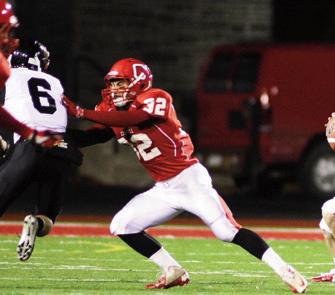
Red’s scoring for the rest of the game was non-existent Navy took over the game after scoring another touchdown during the closing minutes of the half and did not relinquish the lead for the rest of the game, scoring a touchdown during each of the last two quarters of the game
The Cornell defense did all it could to prevent an outburst by Navy, but an ineffective Red offense did not help the comeback effort Despite having twice as many passing yards as the Naval Academy, the Red was out-rushed by a huge margin The 338-yards of rushing offense that the Naval Academy put up against the 34 yards that Cornell produced was a blowout in itself On top of that, the lack of an effective running game did not allow for a good balance of offense for the Red
Leaving Annapolis with another loss and a 1-5 record, the Red looks ahead to the next matchup against Mansfield University Mansfield’s loss against the Franklin Pierce Ravens last Saturday led the Mountaineers to a 1-5 record as well
O n Sa t u rd a y, t h e Re d w i l l t a k e o n t h e
Mountaineers at Mansfield The matchup will determine which team gets to leave the season with more than one win It may not be a game that other teams in the CSFL will be paying much attention to, but the Red is focusing all its effort on ending the season with a bang This is important going into next year, when the team will be focused on rebounding and finding new players to help out the squad
“ We don’t really recruit We need to finds our players on campus and at tr youts, ” head coach Bart Guccia said On top of that, a major focus going into next year will be working on limiting the mistakes that have led to many of the losses this season Saturday will be another good test for the sprint team which will see if it has what it takes to match up against teams

FIELD HOCKEY
Continued from page 16
“It felt really good to beat my sister, but getting the win against Harvard was bigger ”




By BEN HOROWITZ Sun Staff Writer
The Cornell women ’ s volleyball team was ready to resume its home Ivy League schedule after a tough road trip to Har vard and Dartmouth last weekend, but Newman Arena proved no charm for victor y The Red (6-11 overall, 2-5 Ivy League) dropped two consecutive matches against Yale and Brown over the weekend, extending its Ivy League losing streak to five games With the two losses, the Red fell to a three way tie for last place in the Ivy League
The match against the first-place Bulldogs (13-3 Overall, 7-0 Ivy League) was lopsided for most of the way, and the Red lost in straight sets, 12-25, 18-25, 22-25
According to senior middle blocker Rachel D’Epagnier, Cornell was ner vous in the face of the Ivy League leader and unable to relax until it was already in a deep hole
“I think we put alot of unspoken pressure on ourselves because Yale is undefeated in the Ivys,” she said “So we came out tight and it took us a while to calm down and settle into our type of game We play best when we ’ re focused but loose, and it took us until the third game to start to reach that level ”
“We need to return to playing our type of game
”
Cornell put up a better fight against the Bears (8-10 Overall, 4-3 Ivy League) the following day, losing in four close sets by a score of 25-21, 26-24, 26-28, 25-23 The Red improved its play from its previous match against Yale, according to D’Epagnier, but Brown’s early 2-0 set lead was too great a deficit to overcome
“ We were able to run our offense more effectively against Brown, which let us settle into the type of game we like to play more quickly than we did against Yale,” she said
The Ivy League schedule is now halfway over, and the Red has played each Ivy League team once Surprise should therefore be less of a factor in the second half However, the Red begins the second half with a five game road trip, including visits to Yale and Brown According to D’Epagnier, the Red must play more aggressively and with a greater level of confidence in order to in order to return to the win column
“ We need to return to playing our type of game and deciding to put pressure on teams from point one, ” she said “Also, if we ser ve aggressively and pass well, we ’ re talented enough offensively that we can overpower teams We need to just have confidence in our game plan from the start That will be huge for us now that we get to see each Ivy League team again ”
With the Red’s recent struggles and a tough road stretch coming up, Cornell must return to the win column in order to keep its postseason hopes alive
Ben Horowitz can be reached at bhorowitz@cornellsun com


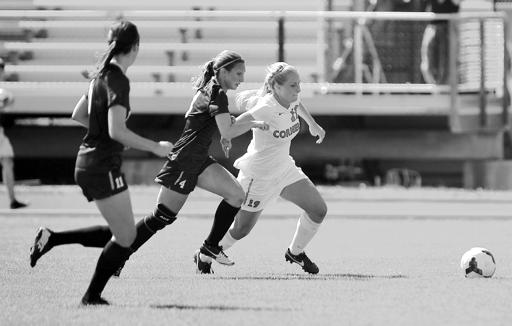
fter the past weekend, four teams in the Ancient Eight sit within one point of each other Yale, Penn and Princeton are currently atop the league with seven points each and 2-0-1 records in Ivy League play Har vard has six points and sits comfortable in fourth
On Saturday, the Quakers took down the Green in 3-0 grudge match, while Princton struggled to take Columbia, 2-1 Har vard finished off the weekend with a 2-1 win over Brown to keep the Crimson just one point away from first place
The showdown between Cornell and Yale ended in a 0-0 tie despite overtime play periods and for ward motion from both teams The tie was the second for the Red as it tied 0-0 against Colgate on Oct 15
In the remaining games this season, the core four right now have yet to face each other except Har vard and Yale which ended in a 2-1 win for the Bulldogs
Compiled by Haley Velasco
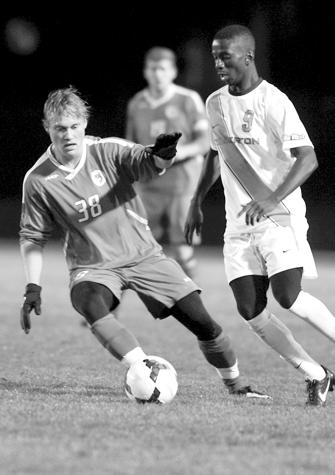
Harvard and Penn sit in similar positions with three Ivy League games left in 2013 regular season play The Crimson and the Quakers winners of the title for the last five out of six years sit in first and second in the standings
On Saturday, Harvard snatched a 3-1 win over Brown and improved to 4-0-0 also serving the Bears its first loss of the season The win extended the Crimson’s winning streak to 10 games, which is the

longest winning streak for Harvard since 2011, when it won 10 straight games and then the Ivy title Penn won a pair of 1-0 games gainst Navy in O T on Monday and Dartmouth on Saturday Dartmouth went on to tie B U on Wednesday, 1-1 Columbia took down Lafayette on Tuesday, 3-2, in double O T before a 3-3 tie against Princeton on Saturday Yale was able to grab two wins with a 4-0 game against Marist on Monday and a 1-0 victory over
Cornell on Saturday Brown will face Dartmouth tonight at 7 p m and Penn will go up against N J I T as well Harvard looks to continue its momentum when it hosts the 2012 Ivy League champion Princeton Saturday at 4 p m Dartmouth will also face Columbia at 4:30 p m and Penn will face Yale Saturday


October 16


October 19
October 19 Looking Back (Women’s) Lehigh Princeton 1 2

October 15
Compiled by Haley Velasco Looking Back (Men’s)

Yale 0 0

By NIKITA DUBNOV
Sun Staff Wr ter
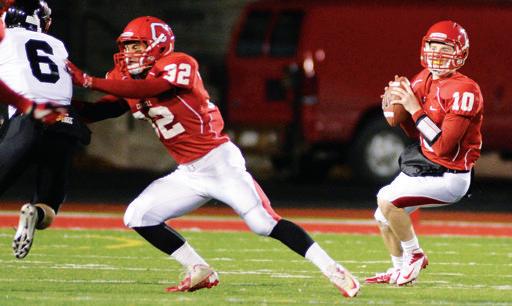
Coming off of its first win of the season against the Princeton Tigers nearly two weeks ago, the Cornell sprint football team has once again hopped aboard the losing train after falling to the Naval Academy in Annapolis on Saturday
The win against the Tigers was a landslide victor y and gave a lot of players on the team hope that the season was going to turn around Unfortunately, the poor performance against Navy shows that beating the Tigers was a just a bashing of the worst team in the conference and not a turnaround to one of the poorest seasons in program histor y
With one game left in this year ’ s campaign, even a victor y would lead to the worst season in over 10
years The 1-5 record thus far does not tell the whole stor y Serious breakdowns on both ends of the ball have led to blowout losses to teams across the conference
Disregarding the victor y against Princeton, the Red’s average losing point differential has been 15 this season The 28-7 loss to the Naval Academy did not help this margin An early fumble on offense by the Red led to first points being put on the scoreboard by Chris Mershon of Navy as he recovered the fumble for a touchdown
In the second quarter, Cornell was able to comeback with a 5-yard touchdown pass by freshman quarterback Robert Pannullo After a good extra point kick by senior kicker John Rodriquez, the
See SPRINT FOOTBALL page 13
I c e r s Sw e e p B o t h
In the opening weekend of the season, Cornell’s women ’ s ice hockey team completed a clean sweep over Nor theastern University, winning, 6-2, on Saturday and following that up with a 3-0 win Sunday
According to senior captain Alyssa Gagliardi, the Red used the first weekend excitement to attack Northeastern from the start
“I think the team played well for our first weekend,” Gagliardi said “We came out with a lot of energy and were ready to compete ”
This showed with Cornell scoring three times in the opening period of Saturday’s game First, junior for ward Monika Leck scored 3:02 in, attacking a rebound off senior defenseman Hayleigh Cudmore shot The Northeastern goalie blocked Leck’s attempt, but was unable to corral the puck Then, a mere 35 seconds later, the Red scored again, this time through junior for ward Emily Fulton, who pounced on sophomore defenseman Cassandra Poudrier’s initial shot The Red continued to attack and was once more rewarded midway through the first period when sophomore for ward Taylor Woods roofed a backhander, making the score 3-0
Toward the end of the first period, Northeastern managed to get onto the scoreboard through a well worked team goal The team continued this momentum into the second period, scoring again and reducing Cornell’s lead to 3-2
then doubled 1:55 into the second, when Woods sent freshman forward Hanna Bunton up the left wing Bunton then found Leck on the far post who directed the puck high into the goal
The game was then closed out at the star t of the third, when Saulnier was able to conver t from short range
Despite the ver y lopsided score line, Northeastern proved to be stiff competition for the Red
“Northeastern was great competition,” Gagliardi said “They worked extremely hard and they stuck to their game plan, so it was on us to make the adjustments that we practiced all week to make sure we came out on top ”
By
The Cornell field hockey team defeated Harvard Saturday, 3-2, to improve its overall record to 75 and 2-2 in the Ivy conference
The Red came out strong with an offensive mindset and scored three goals in the first half to establish the early lead This was an exciting win for the Red as the squad not only beat a long-time Ivy rival for the second time in a row but also extended its impressive three-goal winning streak
Siergiej netting two and freshman forward Katy Weeks adding one The Red outshot the Crimson 137 and held a 9-4 advantage in penalty corners
The Red scored all three goals
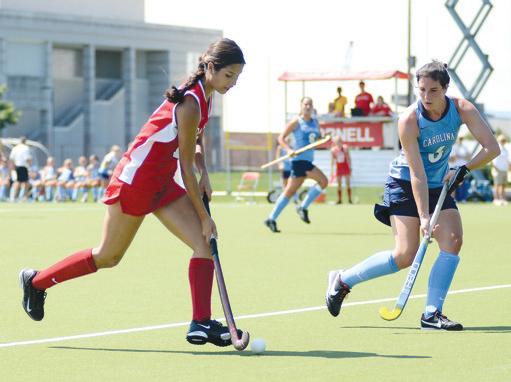
The Crimson had a late surge in the second half and scored a pair of goals with 20 minutes left on the clock Five minutes later, Harvard came close to evening the score with a penalty corner but senior goalie Carolyn Horner held the squad off with a beautiful save The Crimson continued to pressure the Red’s defense, however, and moments later scored a goal to make it a one-goal deficit
The goal came from freshman
minute of play with the assist
Balleza, younger sister of Cornell’s Hannah Balleza The Crimson could not connect a third time, however, and the Red clinched the win
Tensions were high for Balleza sisters, but ultimately the Red
However, Cornell closed out the first match towards the end of the second period with senior defenseman Hayleigh Cudmore scoring from the top of the right circle, followed by both Fulton’s and Cudmore’s second goals, taking the final score to 6-2
The Red continued this dominance in Sunday’s match, first scoring through Fulton with a four-on-four goal at 15:30 into the first period This lead was
“We felt good about our first weekend
Nor theastern recorded 23 shots in Sunday’s match, but a strong performance from senior goalkeeper Lauren Slebodnick ensured Cornell a clean sheet
“Our goalie, Lauren Slebodnick, was great all weekend,” Gagliardi said “That really helped us out when we got into some trouble at times ”
Gagliardi believes this is a good momentum builder coming into the first set of matches in the ECAC Hockey championship
“We felt good about our first weekend,” Gagliardi said “But now our focus is moving forward, and finding ways to improve and come out with some big ECAC points this weekend ”
Cornell will be back in action this coming weekend when the team starts its defense of the ECAC Hockey championship, playing against Clarkson on Friday and St Lawrence on Saturday
jcooper@cornellsun com