The Corne¬ Daily Sun

By MILO GRINGLAS Sun Staff Writer
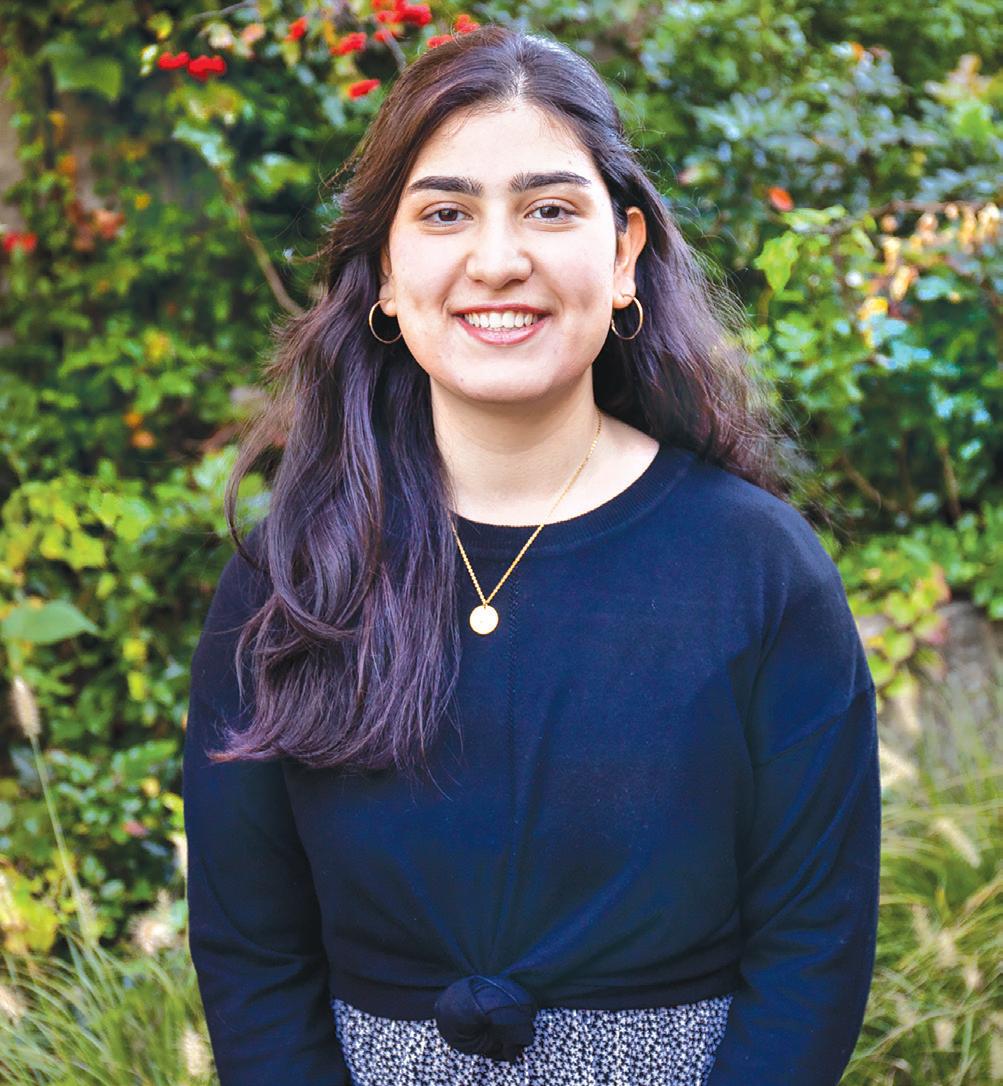
As the United States declared an end to its two-decade war in Afghanistan this past August, and the capital, Kabul, along with the rest of the country, toppled to Taliban rule, Sara Baaser ’23 found herself caught in the impending crisis: Her flight back to Cornell was canceled.
With all commercial departures canceled out of Kabul’s Hamid Karzai International Airport, Baaser and her family scrambled to find a way out. She waited alongside the panicked masses outside the airport walls, negotiated with the Taliban to gain access to an international compound, and, ultimately, secured safe passage on one of the last flights out of Afghanistan.
Baaser, who was born in Kabul and lived in Pakistan, Sudan and Jordan prior to New York, her current residence, returns to Afghanistan almost every other summer to visit family. The 21-year-old arrived in Kabul on July 25 for what was initially a trip like any other.
“Things were pretty normal — everything was pretty calm, I wasn't really paying attention to the news,” Baaser told The Sun.

Although she had heard reports that President Joe Biden planned to adhere to his administration’s Aug. 31 deadline for a complete military withdrawal, she said she was trying to enjoy time with family before returning to Ithaca for her junior year at Cornell. She had last been back to Afghanistan in the summer of 2017.
Even as the Taliban seized control of provincial cities across the country during her visit, Baaser said she did not think their resurgency presaged the total collapse of Afghan security forces — or any conflict with her trip back to college for the fall.
“When I was hearing the news, I was just like, ‘OK, this is pretty far [from Kabul], it's not getting too serious,’” Baaser told The Sun. “Maybe this is just small wins [for the Taliban] happening.”
But the Taliban were gaining ground faster than Baaser — and most Americans, including top U.S. government officials — were led to believe.
By SOFIA RUBINSON Sun Staff Writer
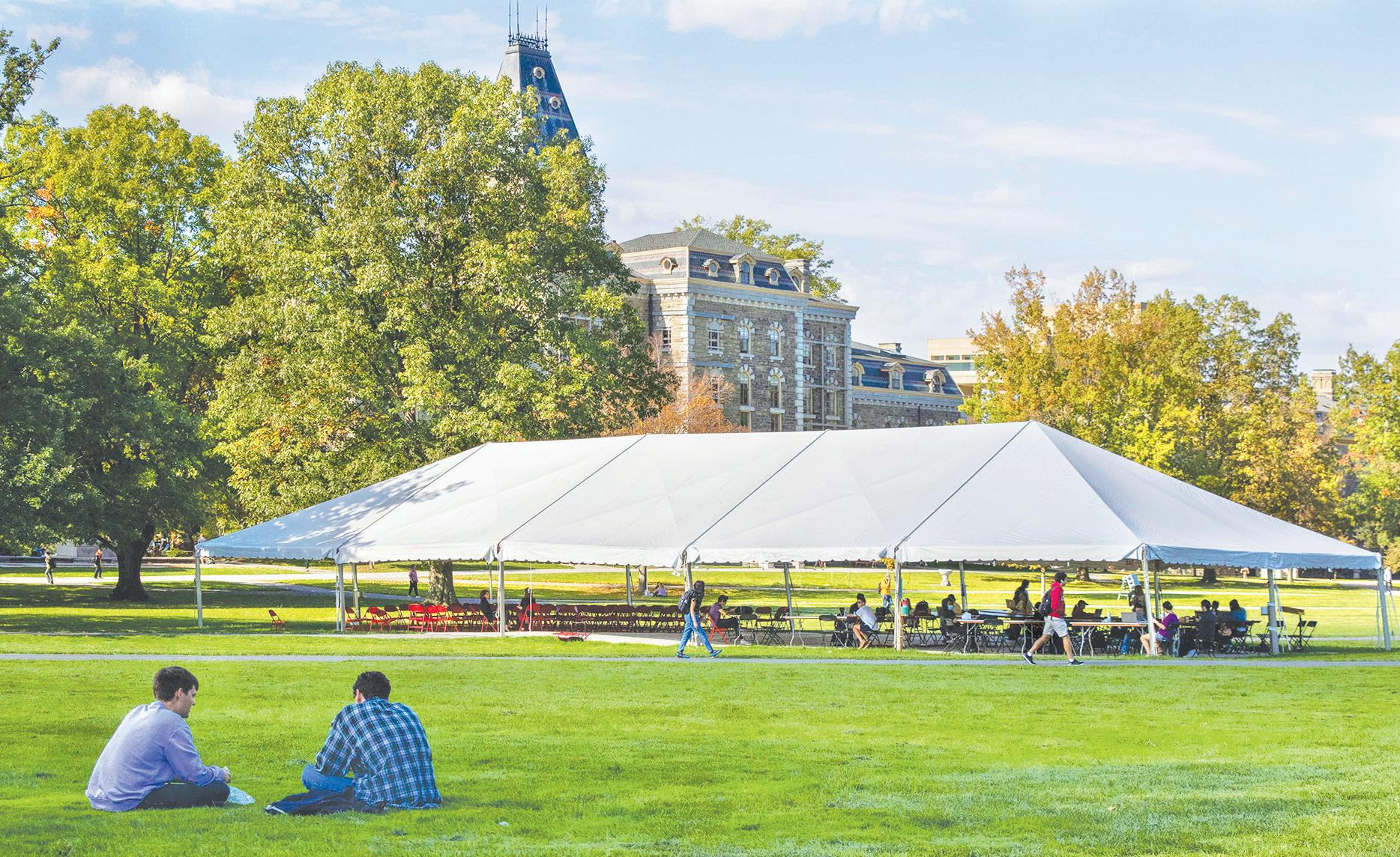
on Cornell’s campus this semester, some complete with flooring, lighting and tables. Students are using these spaces to eat and study while soaking up Ithaca’s fall weather.
Audry Hong ’22 and her friend Angeo Nugroho ’22 sat together at a
table under an Arts Quad tent, catching up and enjoying a meal together. The two have made it a tradition to eat lunch together under a tent every week.
“It’s been really convenient, because you can’t get a seat indoors oftentimes,” Hong said, noting that students have filled up seating in popular study locations like Goldwin Smith Hall and Duffield Hall with the return of fully in-person classes this fall.
According to Senior Director of Campus Life Marketing and Communications Karen Brown, the tents come from the student and campus life office, along with individual colleges and departments. Last year, only the music department maintained tent space for practice and performance purposes on the Arts Quad.
Across campus, these departments and offices have set up tents outside in response to the COVID-19 pan-
By RACHEL KODYSH Sun Contributor
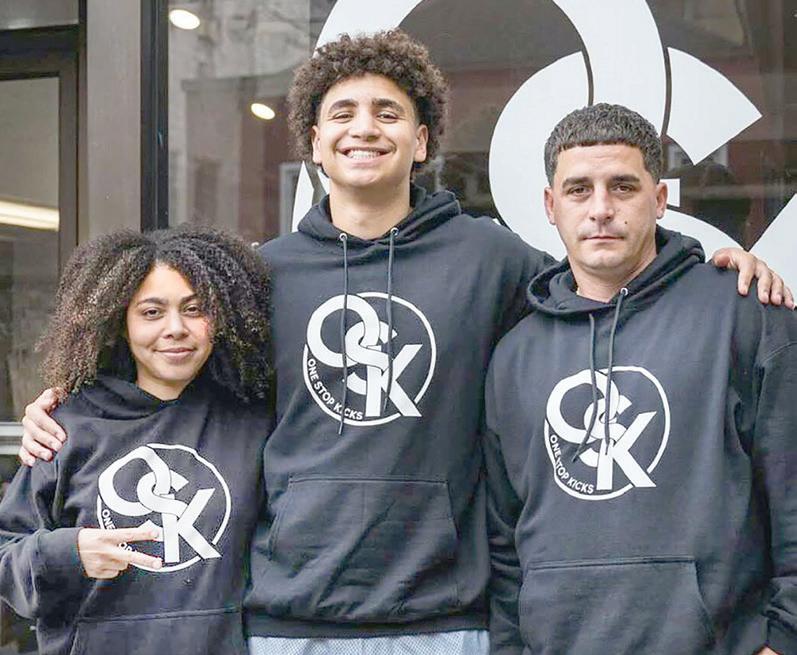
For Ithaca sneakerheads, One Stop Kicks aims to be the perfect spot. The sneaker shop, which opened Oct. 9, provides special edition sneakers and an original fashion line.
20-year-old Christopher Parker, a local entrepreneur who graduated from Ithaca High School in 2018, began selling sneakers on Instagram and Snapchat in high school. He first resold his own shoes and later branched out to new shoes of different sizes and styles.
After a few years, Parker gained enough profit to open a brick-and-mortar store in his hometown at 107 South Cayuga Street. Parker said he plans to personally locate and curate all of his merchandise, seeking out and authenticating each pair as the store’s only operator.
“You gotta work for it,” Parker said of reselling. “It’s not easy.”
Parker’s starting inventory includes dozens of different types of sneakers. Stacks of shoes wrapped in airtight protective covers line the store walls. Behind the register, boxes pile high through an open curtain, and colorful LED lights beam through the shop.
Since opening the store two weeks ago, Parker has observed Ithaca residents of all ages coming in to shop. According to Parker, the Ithaca community has been very welcoming to his business so far.
Many people from around the Commons and from surrounding businesses have also visited One Stop to encourage Parker.
“A lot of people from the stores around me showed love,” he said. “A lot of people came and congratulated me.”
Parker said he enjoys many aspects of sneaker reselling, including finding products and constantly learning more about them.
Thursday, October 21, 2021
October OSP Roundtable
New York State and Federal Relations 9:30 a.m., Virtual Event
Ecology and Evolution of Infectious Diseases Journal Club
10:10 a.m., Comstock Hall, 2123
Should We Talk to the Police? The Relationship Between Dialogue and Activism in Police Reform 11:25 a.m.., Virtual Event
Coping When Life and Work Ramp Up Noon, Virtual Event
Pluriversal Design: Making Multiple Worlds Visible Noon, Martha Van Rensselaer Hall, 1102
Book Presentation: O Kit de Sobrevivência do Descobridor Português no Mundo Anticolonial (2020) By Patrícia Lino, LACS Seminar Series Noon, Virtual Event
Institute for African Development Seminar: Climate Change and Action in Africa: Challenges and Solutions
2:40 p.m., Africana Studies and Research Center, Room 101
French Conversation Hour
3:30 p.m., Stimson Hall, G25
Cornell Department of Astronomy and Space Sciences Fall 2021 Colloquium Series: Gold Lecture 4 p.m., Space Sciences Building, 105

Let’s Meditate With Cornell Wellness 9 a.m., Virtual Gallery
Brandon Barton ’03 11:30 a.m., Virtual Event
Development Workshop: Martin Ravallion 11:30 a.m., Virtual Event
Yiddish Conversation Hour Noon, Virtual Event
Latina/o Studies Fridays With Faculty Seminar Series Noon, Rockefeller Hall, 4th Floor Conference Room
CEAS Book Talk: Eight Dogs or Hakkenden: Part One — An Ill-Considered Jest 1:30 p.m., Virtual Event
Compass to Sentinel: The Automation of Self-Tracking Technology 4 p.m., Bill and Melinda Gates Hall, 114
Cornell Hunger Relief Cooking Demo 4:30 p.m., Ag Quad (in front of Kennedy Hall)
Humanities Scholars Program (Spooky!) Open House 4:30 p.m., A.D. White House


see the Taliban trying to contain the chaos. But the thing is, they're the ones that caused the chaos.”
In 2001, a year after Baaser was born, the Taliban were ousted by a U.S.-led invasion. After 20 years of American military intervention and trillions of dollars of investment, the Taliban’s re-emergence leaves lingering, fundamental questions about the true costs of war.
“In a time when ‘what our government spends for what purposes’ is an issue in the United States, we spent over $2 trillion in Afghanistan and Iraq,” said Prof. Ross Brann, Near Eastern studies, in an interview with The Sun. “Imagine what we could do with that money that some people claim we can't afford.”
U.S. intelligence officials had estimated in early August that Kabul could hold out against the Taliban without U.S. military backing for three months.
But on Aug. 14, just days before Baaser was scheduled to return to the United States, the Taliban took over Mazari-Sharif and Jalalabad, the third and fourth largest cities in Afghanistan. Baaser, glued to the television in her family’s apartment, was in disbelief.
Baaser feared that Kabul, the capital and seat of government, was the next, and final, target in the stunningly rapid takeover. On Aug. 15, then-President Ashraf Ghani left the country. Yet Baaser, once cautiously optimistic that a peace negotiation between the Afghan government and the Taliban would secure Kabul, said she still remained calm — she was pretty used to the turmoil.
“I go to Kabul every year and there's always something happening. I was born there. This is my country. I was kind of used to seeing these kinds of things,” she said. But that moment in August, she recounted, “This is like I'm living history, I'm witnessing it in front of my eyes.”
She had been right that Kabul would be next: Soon after Ghani fled, armed Taliban motorcyclists blitzed the city — they had taken over the capital.
Just a night away from heading back to the U.S., Basser was now embroiled in an international crisis.
With commercial flights canceled, Baaser worried about her next course of action, a concern that grew with the drone of military planes and helicopters outside her window that evening. And she wasn’t the only one: An exodus ranging from top Afghan government officials widely believed to be likely targets of Taliban torture to ordinary Afghan citizens as well as foreigners, all flocked to the airport. Images of an overcrowded tarmac — and of individuals running beside and hanging onto the wings of airplanes taking off — gripped the world, a stunning conclusion to the longest war in American history.
Stuck behind a throng of distressed evacuees choking the entryway, Baaser and her family were shut out from the terminal doors. Eventually, they were directed to go to the compound of an international organization that would transport them to the airport. But while Taliban guards there let her father and brother into the compound, they told Baaser, her mother, and her two sisters that they could not enter. It was the first time she ever interacted face-to-face with the Taliban.
The Taliban did not want women entering the compound, prompting a contentious hour-long negotiation. Finally, an agreement was reached — Baaser and her family were granted access. They waited three more days at the compound.
Then, in the early hours of Aug. 21 — five days after Baaser’s original flight to the U.S. and five days before classes would start at Cornell — the Taliban escorted a convoy of evacuees from the compound to the airport in a bulletproof car, including Baaser and her family.
When they arrived around 6 a.m., Basser said the airport was in complete tatters.
“There's this moment where I finally get to the entrance of the airport, and you just see everything is broken,” she said. “The airport has a picture of the president. His picture is slashed. There's also some very historical, political figures. Their pictures are slashed. You see their flag, the Taliban flag, hanging.”
Because the Taliban and United States both agreed to control different sides of the airport, there was a tense standoff.
“I see the Taliban [on the right] and on the left I see international forces. And for me, it was a moment that I was thinking like two parts of myself,” Baaser said. “I'm an Afghan, like this is my country. I'm not talking about the Taliban, but you see, Afghanistan.”
“It was just so surreal that now I’m in class, studying Newton’s Law, when days ago I was in a military compound ... ” Sara Baaser ’23
And Baaser was trapped in the middle of it. The streets of Kabul, usually bustling with the Hindu Kush mountain range in the backdrop, were eerie and barren. “People were scared,” said Baaser. She didn’t step outside her family’s apartment for days until the U.S. Embassy in Kabul notified her and her family that they should go to the airport.
In agreeing to be identified by The Sun, Baaser requested that some additional identifying details be withheld for the protection of her family.
She and her family left for the airport with just one backpack each. The scene there, as Baaser described, was a “hot mess.”
“You see children, mothers, families, they're all walking towards the airport, with large luggages,” she said. “And you
“And then on the left you see the American forces, which is like, being a Cornell student growing up internationally in all these different countries, and you just see both of me, two of my sides just like pointing at each other,” she said.
That afternoon, Baaser made it safely out of the conflict zone and back to the United States, where she’s had a green card for the past decade. Ultimately, she arrived in Virginia on Aug. 23. Just a day later, she headed to Cornell for the start of the semester — the culmination of a 6,688mile journey.
By Aug. 26, Baaser was sitting in her global and public health sciences classes in the College of Agriculture and Life Sciences, back to the grind of a pre-medical student. That day, an ISIL-affiliated suicide bombing targeted the crowd at Kabul’s airport, killing over 160 Afghan civilians and 13 U.S. servicemembers.
“It was just so surreal that now I'm in class, studying about Newton's law, when really like days ago, I was like, in a military compound in a war-torn country, going through an emergency evacuation,” Baaser said.
Since mid-August, more than 75,000 people have evacuated Afghanistan and relocated to the U.S., according to data from the Department of Homeland Security shared with The Sun. With this influx, a number of colleges and universities across the United States have offered scholarships, positions and several forms of assistance to Afghans in
SNEAKERS
Continued from page 1
At the same time, Parker expressed caution about the fake shoes circulating the sneaker market. He estimated that out of 10 resellers, only three are likely to provide fair and honest deals.
As greater numbers of convincing fake sneakers have entered the market, Parker said he has had a harder time authenticating shoes, adding that he rejects any that he is not absolutely confident are real, losing out on potentially lucrative deals.
“You know you’re getting what you’re getting,” he said.
Customer of One Stop Ethan Bouasin said the store is a strong addition to the Ithaca community. A longtime friend of Parker, he said he views him as a brother. The unique inventory of One Stop Kicks attracts Bouasin to the store.
“[Parker] gets sneakers that you can’t even get,” Bouasin said.
Another customer of One Stop, Yahinese Tice,
20, visited the store for the first time on Sunday. Like Bouasin, Tice knew Parker before coming and appreciated the store’s wide variety.
“It’s with the Jordans in particular,” he said. “It broadens the horizons. It doesn’t make Ithaca a bubble anymore because you’re bringing upscale quality items at a consignment price”
To view similar shoes in-person before the store opened, Tice said that he would have to travel to areas like New York City.
Tice expressed enthusiasm about the style changes that might roll into Ithaca thanks to the store.
“It’s going to change up the energy, change up the culture up here,” Tice said.
Going forward, Parker said he feels excited for the store’s trajectory, planning to eventually expand with more clothing stock and sneakers.
For now, though, he said: “I’m just going with the flow. Whatever happens happens.”

the wake of the Taliban takeover.
At Cornell Law School, chapter members of The National Lawyers Guild and the International Refugee Assistance Project and dozens of other law students have been volunteering to help Afghans at risk, preparing clients, drafting affidavits, and completing applications for urgent humanitarian parole in the United States.
Immigration attorney and Law Prof. Steven Yale-Loehr, law, expressed pride in the work of his law students in a statement to The Sun. “hWe now are doing over 50 humanitarian parole applications for Afghans at risk, and are starting a formal clinic spring semester to continue this work,” said Yale-Loehr. “It is heartwarming to see the enthusiasm and energy of the many law students volunteering their time and talent to help get people out of Afghanistan."
In a interview with The Sun, Prof. Sabrina Karim, government, said that while it's the jurisdiction of the State Department to allocate where people are going to go, she “would love to see Cornell try to offer visiting fellowships or positions to Afghan academics and researchers.”
Currently, Cornell is working to provide support for Afghans whose academic careers are now in jeopardy. This includes Global Cornell, who is coordinating to host a number of Afghan women, currently undergraduate students at the Asian University for Women in Bangladesh, as shortterm research interns as well as supporting three Afghan scholars in exile and situating their arrival in Ithaca.
Baaser said she was looking forward to welcoming other Afghan students to Cornell. And despite the fog that cloaks her home country’s uncertain future, Baaser is hopeful she will return soon.
“Afghanistan will still be there as it has existed for thousands of years and it will be resilient,” Baaser said. “Our people have seen all these types of things … Afghans in general are very strong. So I feel like whatever comes their way, they will always overcome it.”
Milo
By CAMDEN WEHRLE Sun Staff Contributor
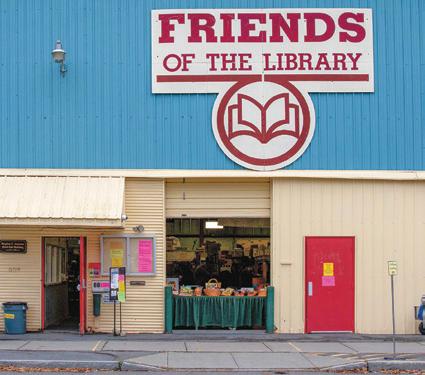
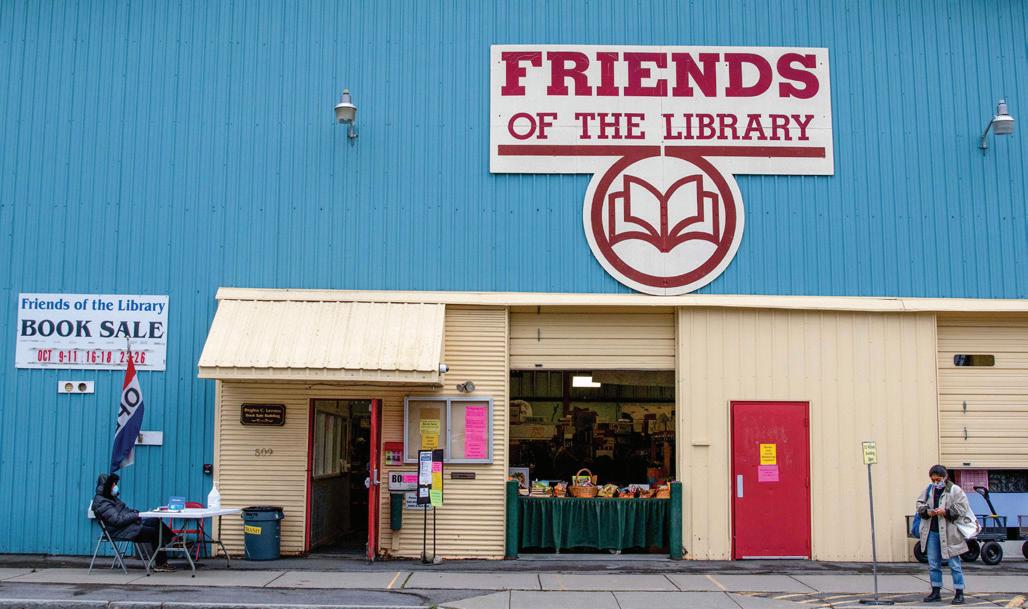
Though a cold chill ran through the air on Sunday morning, a line formed far down Esty Street before the biannual Friends of the Tompkins County Public Library book sale opened its doors at 10 a.m.
Despite pandemic-related challenges, the sale returned with fewer restrictions this year for three consecutive weekends starting Oct. 9, including a special student night on Oct. 20. While the sale was open last fall and this past spring, occupancy was limited, and has slowly started to increase.
The Regina C. Lennox Building has hosted the sale since 1991 — open to visitors with a massive warehouse floor and over 20,000 books spanning more than 80 categories, according to book sale coordinator Kathy Weinberg.
“Books are fun and plentiful,” said Gabrielle Burns, a volunteer with the sale, echoing the reason many choose to visit, especially as the sale steadily returns to normalcy.
The book sale occurs in both spring and fall. It’s the main fundraising event for the Friends of the Tompkins County Public Library, which donates money to libraries in the Finger Lakes region — especially the Tompkins County Public Library — and offers educational grants.
Run by nearly 200 volunteers, the sale offers heavily discounted prices on books donated by members of the public, Weinberg said. On each day of the sale after the first weekend, prices drop even lower than opening prices.
According to Weinberg, the Friends of the Library was forced to reduce volunteer numbers in spring 2020 and postponed their spring sale into summer. Weinberg said the sale has adapted safety regulations as COVID vaccinations become more widespread and as case numbers drop.
Weinberg added that Anne Neirynck, an Ithaca area nurse practitioner who did extensive research on COVID safety measures, helped the sale to resume in summer 2020 and beyond.
The warehouse’s front is left open, helping large fans keep air circulating. The book sale also requires masks and social distancing, and the sale currently allows for 40 percent occupancy — or 100 people — an uptick from the 80 person capacity last spring.
“The main downside of limiting attendance is the long line,” Weinberg said.
A webcam is also live outside the warehouse, allowing potential visitors to gauge the line length. However, the lines haven’t
deterred what Weinberg calls their “very dedicated shoppers,” people willing to wait and tote heavy bags full of books, returning year after year.
Resident Vincent Caruso returned to the sale for his sixth time this year. Caruso has volunteered with the Friends in previous years, and he got in line 30 minutes before the sale opened to find books that he said are much cheaper than those on eBay or Amazon.
“I’m just hoping to look around,” he said. “It’s something to do.”
Caruso said he hoped to find some PlayStation 4 games, which are sold alongside the books as well as puzzles, DVDs and other items.
For other shoppers, the sale provided a new experience this year. Ithaca resident Hayley Kresock, who only attended the sale once during spring 2021, perused the mystery and thriller section.
“[The sale] is a good deal right now,” Kresock said. “It’s a good way to participate in the community.”
In addition to purchasing books for herself, Kresock looked in the robust children’s section to find books for her kids. She hopes to catch the sale next spring as well.
In the children’s section, Gabrielle Burns, the Friends of the Library volunteer, helped some younger customers browse the extensive selections. Burns has volunteered at the sale for two years, sorting book donations as they come in and working on the floor. She expressed her appreciation for the bounty of books and information available at the book sale.
“The best part is getting books into readers’ hands,” Burns
Camden Wehrle can be reached at cw566@cornell.edu.
TENTS
Continued from page 1
“The tents allow campus residents to spread out a bit more while they eat or study, providing some additional physical distancing to help keep everyone as healthy as possible,” Brown said.
Nugroho said she appreciated outdoor eating in the tents, especially during the pandemic as students crowd indoors.
“I feel weird eating in an indoor space, so if you have boba or lunch it’s always good to just go out here,” she said.
Caroline Lui ’22 said she often eats in the tents outside of West Campus dining halls, worried about COVID safety inside.
“The dining halls are really scary inside,” she said. “There’s a lot of people and it’s very crowded. The tents feel safer to me.”
Beyond meals, some courses have taken their classrooms outdoors, bringing lectures and seminars onto campus quads.
Kaitlyn Lee ’25 has recently started attending her freshman writing seminar — Science and Technology Studies 1128: Planetary Health: Plagues, Pandemics, Extinctions — outdoors under the main tent on the Arts Quad. For Lee, having class outdoors has been enjoyable and COVID-safe.
“Even though it is a little distracting with people walking through,” she said, “it is nice to have the fresh air and spend time outside as opposed to inside, where there is very little space in the classroom.”
Clubs have also been hosting events inside the tents.
To continue reading this story, please visit cornellsun.com.







By BELLA CAPUANO Sun Contributor
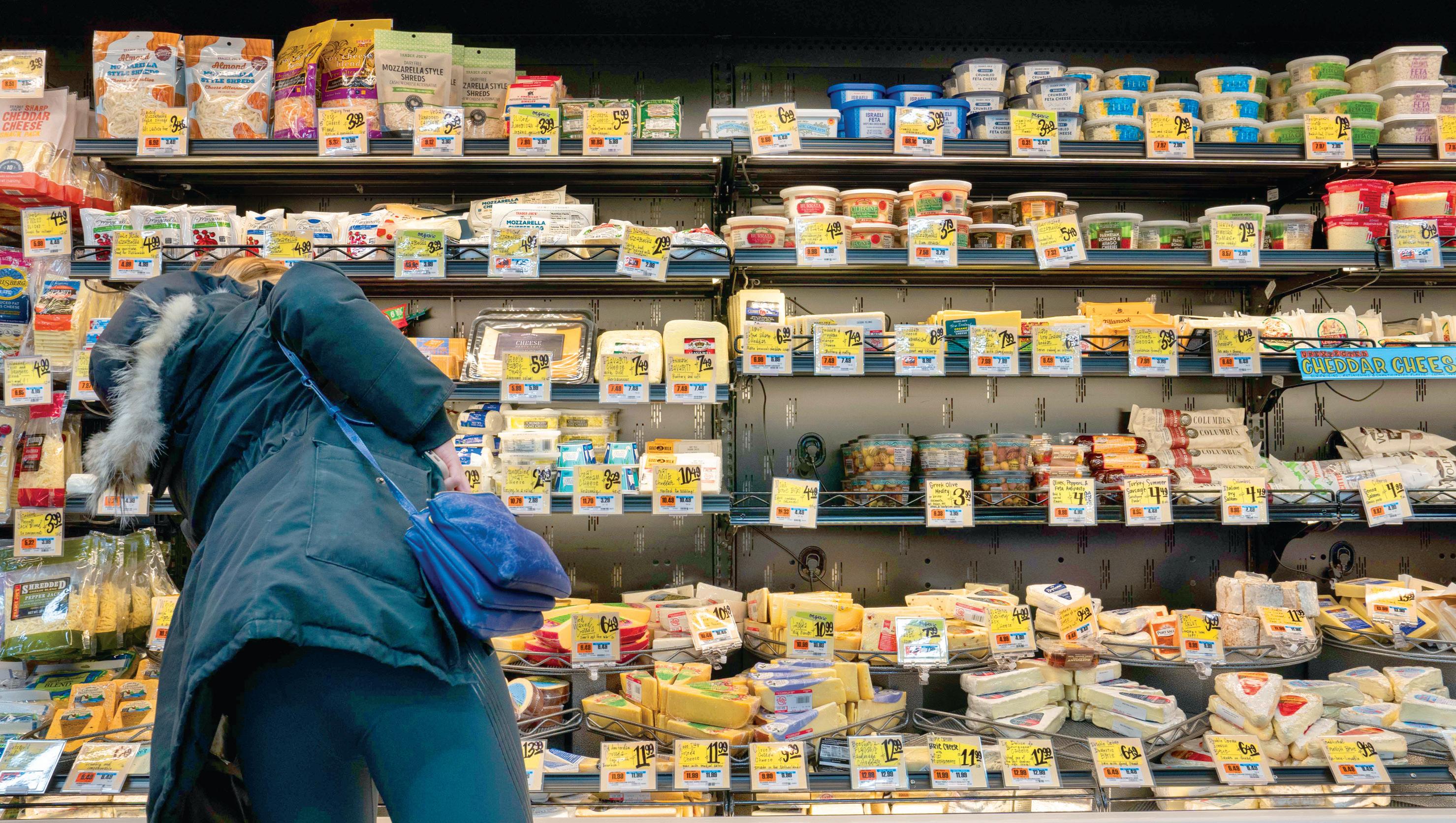
With the fall holidays of Halloween and Thanksgiving right around the corner, there is no better way to celebrate the season than with Trader Joe’s fall food and drink selection.
As someone who has regularly shopped at Trader Joe’s from an early age, I knew I had to purchase my favorite fall treats in addition to some new, exciting items. While many instantly filled me with fall joy, others fell flat.
sweet, and the aroma that filled my room after only two minutes in the microwave brightened my morning every time.
Next up, the non-dairy pumpkin oat beverage is perfect with morning coffee and the pumpkin pecan instant oatmeal. The
The frozen pumpkin waffles were also quite scrumptious, with a crispy, pumpkin spice aroma. Like the bagels, they don’t have the strongest pumpkin flavor either, but adding maple syrup or pumpkin pie spice brings the meal together.
In terms of their fall flavored snacks, I would definitely recommend the pumpkin spice pretzel slims. Like Pocky, they have a fine yogurt coating with pumpkin spices and pumpkin seeds, but the pretzels themselves are a bit small but have a lot of flavor.
The pumpkin biscottis went perfectly with tea at night or a late night snack when kept in the freezer.
To top off a fall themed charcuterie, the pumpkin cranberry crisps are a great option. The combination of cranberry and pumpkin is delicious, and I really like how they’re different from the normal crackers I buy;
they’re perfect if you’re looking for something new and different. All in all, next time you’re going to Walmart or eating out at Chipotle, it’s worthwhile to stop at Trader Joe’s for their festive fall treats.
Bella Capuano is a freshman in the College of Agriculture and Life Sciences. She can be reached at isc24@cornell.edu.
I would definitely purchase the pumpkin bagels. Even though they might not have had the strongest pumpkin flavor, they are delicious and hearty. They go especially well with the pumpkin cream cheese, as it has a stronger pumpkin spice flavor that makes up for the lack of it in the bagels. That said, I would still only use a little of the cream cheese because it can become quite overwhelming quite quickly.
I would definitely purchase the pumpkin bagels. Even though they might not have had the strongest pumpkin flavor, they are delicious and hearty. They go especially well with the pumpkin cream cheese, as it has a stronger pumpkin spice flavor that makes up for the lack of it in the bagels. That said, I would still only use a little of the cream cheese because it can become quite overwhelming quite quickly.
Continuing the theme of breakfast foods, I would recommend you pass on the pumpkin flavored overnight oats. They’re just fine if you’re already a fan of overnight oats, but if it’s your first time, the pumpkin flavor is not worth the sogginess. Even though the overnight oats weren’t the best, definitely try out the pumpkin pecan instant oatmeal. It’s sweet, but not too
aroma of the milk is just delightful, and it’s almost as creamy as regular milk. Unfortunately, the carton is very small, so I would recommend buying a couple.
Even though Cornell Dairy’s clocktower pumpkin ice cream is delicious, the ginger-pumpkin mini cones are tiny but packed with a strong pumpkin and ginger flavoring that keeps me going back to get another one.
I would skip on the pumpkin tortilla chips, as they taste the same as any multigrain chips with just a hint more spice that isn’t enough to really call it pumpkin flavored. I would also pass on the “this pumpkin walks into the bar…” cereal bars. They are very soft and have a nice gooey filling but are too sweet for my liking. Sometimes it felt like I was chomping down on liquid sugar.
The pumpkin Greek yogurt tastes like plain Greek yogurt, so I would rather get the organic pumpkin spice creamy cashew yogurt, which is even creamier and has the perfect amount of pumpkin spice flavoring.

Independent Since 1880
139th Editorial Board
KATHRYN STAMM ’22 Editor in Chief
ANUSHYA ALANDUR ’23
Business Manager
CATHERINE ST. HILAIRE ’22
Associate Editor
PRANAV KENGERI ’24
Advertising Manager
ODEYA ROSENBAND ’22
Opinion Editor
JYOTHSNA BOLLEDULA ’24
News Editor
TAMARA KAMIS ’22
News Editor
CAMERON HAMIDI ’22
App Editor
KRISTEN D’SOUZA ’24
Design Editor
HANNAH ROSENBERG ’23
Photography Editor
OMSALAMA AYOUB ’22
Science Editor
PUJA OAK ’24
Layout Editor
ANNIE WU ’22 Production Editor
MIHIKA BADJATE ’23
Assistant News Editor
SERENA HUANG ’24
Assistant Business Editor
ANGELA BUNAY ’24
Assistant News Editor
JOHN COLIE ’23
Assistant Arts & Culture Editor
AMELIA CLUTE ’22
Assistant Dining Editor
WILLIAM BODENMAN ’23
Assistant Sports Editor
AARON SNYDER ’23
Assistant Sports Editor
MEGHANA SRIVASTAVA ’23
Compet Manager
MADELINE ROSENBERG ’23
Editor
KOH ’23
Editor
OZA ’22
Editor
HEO ’24
Editor VEE CIPPERMAN ’23
NOOREJEHAN UMAR ’23
PLOWE ’23
YOON ’23
VELANI ’22
PICHINI ’22
TYAGI ’22
MENDOZA ’24
ARANDA ’23
BASU ’23
RIGGS ’24
LEYNSE ’23
NAGEL ’24
’24
ABAYEVA ’24
’22
’23
Kayla Riggs ’24 production deskers Pico Ross ’22
’23
’23
Katrien de Waard ’24 layout deskers Kristen D’Souza ’24 Puja Oak ’24 photo desker Julia Nagel ’24 dining desker Amelia Clute ’22
sports desker Will Bodenman ’23
Have an issue with our news coverage?
Want to give your take on a campus issue?
The Sun thrives on your feedback. Continue the conversation by sending a letter to the editor to opinion@cornellsun.com.
Letters should be no longer than 250 words in length.
Please include graduating year if applicable.
All opinions welcome.

Brendan Kempff Slope
The internet lockout. It sends shivers down the spines of students who have faced it.
It works like this: when a student misses their testing days, the University locks all on-campus internet and account access — including Canvas — until the test is completed. This was a key component of the behavioral impact, created at a time when relatively little was known about COVID-19.
However, times have since changed. Looking at campus today, which nears full vaccination status and a minor number of cases, the danger level has changed. And with an extensive testing program combined with safeguards, the threat of another crisis is minimal.
It’s not fair to jeopardize a student’s academic career because they missed ... testing. Besides, they will already be punished by Cornell’s judicial system.
Placed against this backdrop, it’s time to eliminate the lockout. Students who don’t test already face swift punishment from the Judicial Administrator. Some students who miss their testing days are placed on disciplinary probation.
The access lockout is an oversized punishment. Students are prohibited from doing anything with an internet connection, which includes taking an exam. Even if a student manages to get to a testing site on the same day as an important assignment, it’s more likely than not that their connection will only be restored the following morning.
Although I can’t say exactly how the monitoring team operates, I do know it is slow. Previously, this slow response time due to a Cornell system error forced me to miss an assignment deadline that was due in class. It was embarrassing, and a sign that the lockout has outlived its purpose.
punished by Cornell’s judicial system. Like many other students here, I had COVID-19 in late August. Forced to quarantine for 10 days and extremely sick, there weren’t many silver linings. One of the few positives was the message from Cornell Health that I was exempted from testing for 90 days. So, on the afternoon of my release from quarantine back in the beginning of September, I was surprised when I received a message along the lines of: You have not tested for COVID-19 during your assigned period. I was also warned that this put me in danger of an internet lockout. I didn’t think much of the message, chalking it up to a system error. But the next morning, as I went onto Canvas for my class, I realized my account did not work. This class depends on an internet connection, and I proceeded to panic.
I then made some phone calls to Cornell Health, who redirected me to the COVID-19 team. After a long wait, the team there sent me back to Cornell Health, who told me there was nothing they could do. Hours later, I finally got a return phone call. My access to the online system would be restored within 24 hours. Until then, I just needed to wait.
This experience showed me one thing: we need change. We need to eliminate this ... punishment. It’s time to eliminate the internet lockout.
I am the first proponent of testing and vaccines. And there should be repercussions for not testing. But it’s not fair to jeopardize a student’s academic career because they missed a handful of days for testing. Besides, they will already be
You don’t realize how much you truly rely on the internet until it’s taken away. The restrictions blocked all functions with a NetID, including the internet. I couldn’t even login to access my GET app to purchase food. This experience showed me one thing: we need change. We need to eliminate this extreme and murky punishment. It’s time to eliminate the internet lockout, and instead emphasize the other repercussions. The threat of a J.A. should be enough to scare any student into Willard Straight.

Fill in the empty cells, one number in each, so that each column, row, and region contains the numbers 1-9 exactly once. Each number in the solution therefore occurs only once in each of the three “directions,” hence the “single numbers” implied by the puzzle’s name. (Rules from wikipedia.org/wiki/ Sudoku)




By ANNA HOOPER Sun Contributer
This Friday, Cornell’s cross country teams split up to compete at the Penn State Invitational hosted by Penn State University in State College, Pennsylvania, in addition to the University of Albany’s R.K. Munsey XC Invitational in Albany, New York. The Red dominated the competition as the top seven runners from each of the men’s and women’s teams were sent to Penn State and those remaining headed to UAlbany.
At Penn State, the men’s team easily dominated the course, coming in first place in the team competition. Junior Perry Mackinnon led the team to victory, placing third with a time of 25:30.6. Junior Rishabh Prakash (6th, 25:47.7), senior captain Matthew Fusco (7th, 25:48.3), sophomore Thomas Foster (8th, 25:52.7) and freshman Damian Hacket (10th, 25:59.6) followed Mackinnon to finish in the top 10.
Seniors Caleb McCurdy (26:14.0) and Jamie Granata (26:19.1) rounded off the top seven runners for the Red, finishing 19th and 21st, respectively.
Mackinnon expressed enthusiasm about the prospects for the season, saying that the team is in excellent condition and has put in the work they need to succeed.
“This is honestly one of the most successful seasons our team has had as a whole in a long time.”
Rhys Hammond
’24
“I'm extremely proud of the team I found post-pandemic,” Mackinnon said. “I find our team is really looking strong. We're not the favorites, we're the underdogs and I love being the underdogs. I think that's the best position to be in and I'm confident that we can upset and do some really good things.”
The women’s team also ran an impressive race, placing fifth overall. Sophomore Izzy MacFarlane paved the way for the team’s success by securing the eighth-place position with a time of 21:12.6.
Senior Rebecca Hasser (21:54.4) followed to place 29th and was accompanied by senior captains Isa Meyers (33rd, 22:06.9) and Lucy Hurt (38th, 22:15.7). They were followed by senior Erin Hudson (48th, 22:28.4) and juniors Sarah Roffman (58th, 22:37.1) and Katy Storti (68th, 22:44.4).
Meanwhile, the teams found similar successes at the R.K. Munsey XC Invitational. The women’s team left the Albany course victorious, claiming the first-place team title. Senior captain Rachel Green was the first to finish for the Red, placing fifth with a time of 19:07.1.
Junior Olivia Curran clocked in sixth with a time of 19:21.2 and freshman Cella Schnabel finished eighth with a time of 19:23.6. Behind came junior Amanda Stone (14th, 19:42.9), freshman Alexa Barton (15th, 19:43.7), sophomore Elizabeth Rene (19th, 19:47.7) and senior Zoe WilkieTomasik (26th, 20:07.6).

The men’s team blew the competition away, placing first overall with each of the top seven runners finishing in the top 10. In total, their score marked 23, approximately 26 points less than the second-place team, Roberts Wesleyan College. Sophomore Rhys Hammond led the pack to the finish line, coming in first with a time of 25:08.8.
Behind junior Wyatt Sulivan (25:47.2), freshman Derek Amicon (25:48.1), freshman Brady Shute (25:54.4), sophomore Teddy O’Kane (25:55.9) and junior Alex Mocarski (26:06.4) finished fourth, fifth, sixth, seventh and eighth, respectively. Junior Alec Hill finished in 10th place with a time of 26:12.1.
“We had pretty lofty goals as a team to try to win and to get as many guys in the top 10 as possible,” Hammond said. “It's always reassuring to be able to look to your left and your right and see guys with the ‘C’ of Cornell on their jerseys.”
Hammond also credits the team’s success to their motivation they gained during last year’s season, which was canceled due to the COVID-19 pandemic.
“It’s fueling our fire for the season,” Hammond said. “This is honestly one of the most successful seasons our team's had as a whole in a long time, and I would attribute a decent amount of that to last year, putting our heads down, grinding and honestly, getting a little ticked off [about our season being canceled].”
The Red will host the John Reif Memorial, its home invitational, on the Moakley Course on Oct. 22. The race will mainly feature mid-distance and alternate runners, as the Red’s top seven will use the time to prepare for the Ivy League Heptagonal Championship held in Princeton, New Jersey, on Oct. 30.
Anna Hooper can be reached at ajh323@cornell.edu.
Red overcomes 17-point defcit in fourth quarter to secure late 30-27 victory
By GRAYSON RUHL and BRYAN VICENTE Sun Staff Writer and Contributer
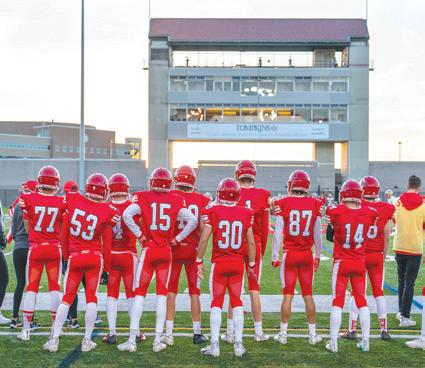
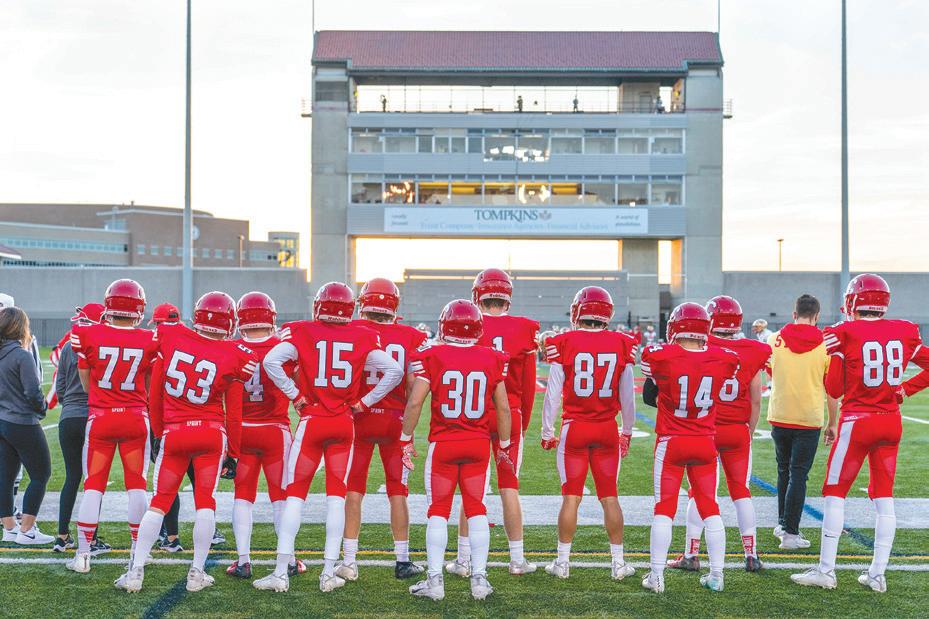
After three straight losses to start the season, Cornell sprint football was determined to leave week four with a win. Facing Saint Thomas Aquinas College (1-3) in a game originally scheduled for Saturday but moved to Sunday due to rain, the Red had another chance to claim victory. Despite a rocky start to the game, the team was able to rally, coming back from a 17-point deficit in the fourth quarter to win 30-27. With this win, the Red improved to 1-3 on the season. This marks the team’s first victory since September 14, 2019, against Alderson Broaddus. Similar to its previous games, the Red started off strong in the first quarter, having success moving the ball up and down the field. They started scoring at the end of the
first quarter, when junior running back Jacob Wynkoop plunged into the endzone from two yards out to put Cornell up 7-0. However, the narrative appeared to be following that of previous games when the St. Thomas’ offense began to heat up in the second quarter. The Red’s defense had no answer for freshman quarterback Dennis Riordan, as he tore down the field for two scores in the second quarter. The two Spartan touchdown drives combined for 146 yards, with the second starting on their own 10 yard line. The Red was able to convert on a field goal as time expired in the half, and went into the locker room down 14-10.
The third quarter was all Spartans, as they continued to build off their momentum from the first half. Riordan threw for two more touchdowns, putting St. Thomas at 27 points on the day. Riordan ended the day throwing 26/37, with 318 yards, four touchdowns and an interception. On the flip side, the Red was unable to get anything going on offense, putting up a goose egg for the quarter. The ground game provided some encouragement, as Wynkoop ended up averaging 9.8 yards per carry on the day, but they were unable to put points on the board. Heading to the fourth quarter, it appeared that the Red were all but finished, down 27-10.
However, everything clicked for the Red in the fourth quarter. The Red started off the closing period with a 14 play drive that culminated in a eight-yard touchdown pass from junior quarterback Xavier Martinez to freshman wide receiver Evan Nicholas. With a resurgence in the offense came staunch play from the defense, which forced punts on the Spartans’ next two offense drives. Overall, Head Coach Bob Gneo was impressed with how his defense was able to perform despite the injuries they have suffered.
“We had a number of injuries on the defensive side, so a lot of the players who started this week played for the first time or played in a position they hadn’t played on a regular basis,” Gneo said. “So I give a lot of credit to the coaches for getting them ready ... we talk about practicing as if you’re a starter and not practicing as if you’re a backup, and they really kept us in the game.”
This was all Martinez and the offense needed, as they put together two more strong drives, each resulting in six points. Junior Nate Roy rushed for a two-yard touchdown and Martinez connected with junior receiver Luke Verzella to put the Red up for good. The Spartans had one final chance to tie or take the lead in the game with four minutes left in the quarter, but a crucial sack on a 4th and 2 play from the Cornell 45-yard line was the nail in the coffin. The Red walked away with its first win of the season, by a score of 30-27. Wynkoop finished the game with 226 yards on the ground, putting him inside the top 10 for all time rushing performance in Cornell sprint football history. Halftime adjustments proved key as well to igniting the Cornell offense. “We started to keep an extra guy in for protection and did more crossing routes than we normally do,” Gneo said. “When Xavier has time, we can get open and we can throw the ball, so the offensive line plus another back did a great job giving him protection in the fourth quarter.”
The Red will hope to use the momentum from its first win of the season this Friday, when the team travels to Annapolis, Maryland, to take on Navy, the defending sprint football champions.
Grayson Ruhl can be reached at gruhl@cornellsun.com. Bryan Vicente can be reached at bdv23@cornell.edu.