The Corne¬ Daily Sun


By ANANTHI JAYASUNDERA Sun Staff Writer
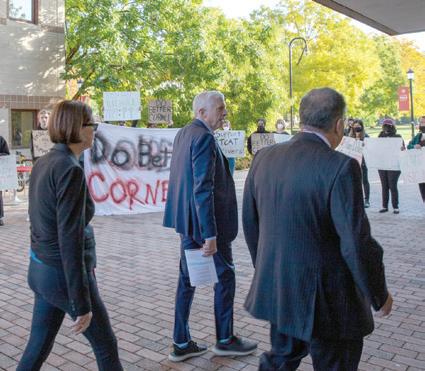
With floods in Pakistan and Nigeria killing thousands and displacing millions, the need for climate change reform appears to be greater than ever — and a senior from Cornell was recently invited to the White House for playing his part as an advocate through Tik Tok videos.
J.C. Dombrowski ’23, a marine biology and entomology double-major, is a social media content-creator with over 2.8 million followers on TikTok, 44,000 followers on Instagram and over 250 million TikTok likes.
Dombrowski’s social media content typically ranges from sharing ocean and marine biology facts to discussing his favorite skincare products.
His platform has also garnered him attention and opportunities from well known celebrities and the press. Among his interactions with public figures, Dombrowski has been interviewed for Bill Gates’ book, worked with Hailey Bieber on her skincare line and has been featured in Time Magazine. Most recently, the White House reached out to Dombrowski to arrange a conversation with the president.
“I was reached out to by the Climate Political Action Committee, CPAC, to go to the White House to meet President Joe Biden and Vice President Kamala Harris to discuss the Inflation Reduction Act (IRA), climate progress and
how to talk to young people,” Dombrowski said.
Initially, Dombrowski did not believe it was actually the White House that was reaching out to him.
“When I first received the email from the White House during my physics lab, I thought it was a phishing scam,” Dombrowski said. “But I would rather get phished than do physics, so I responded.”
About a week after the initial invitation, Dombrowski, along with 20 other writers, activists, lawyers, media spokespeople and creators, arrived at the White House on Sept. 13.
Dombrowski said that their planned schedule shifted because of the death of the Queen.
“This meant that we actually got to spend most of our time in the West Wing, which was an amazing privilege because usually nobody is allowed in the West Wing,” Dombrowski said. “It is very ‘hush hush,’ and we were not even allowed to have our phones on us.”
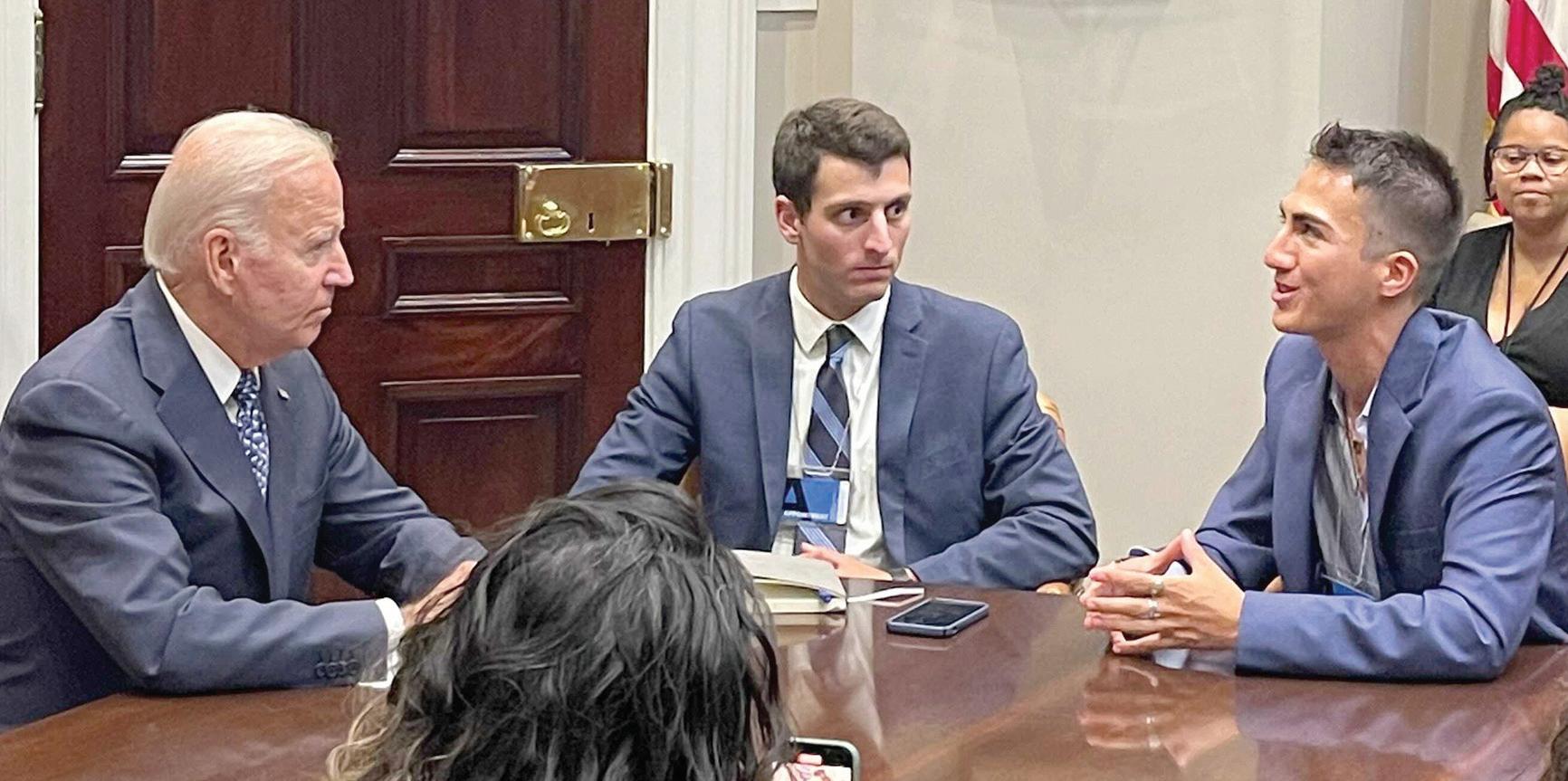
Dombrowski and colleagues later moved to the Roosevelt Room, in which they sat at a long table and spoke to the Chief of Staff, Ron Klain, before Biden came in.
“It was very, very surreal,” Dombrowski said. “I got to shake his hand, and he asked everyone in the room what their names were and where they are from. He also usually had a funny anecdote or memory about each place.”

With a rising number of Ph.D. graduates struggling to find academic positions at universities across the world, tenure-track jobs are the much-discussed object of their search. Cornell continues to offer tenure track positions and mentorship to the next generation of academics, but the competition is steep.
In the world of academia, having a tenured position in a higher education institution is considered the basis for a stable and successful career. However, many people outside of academia are unfamiliar with the process universities use to recruit academics to fill tenure track positions and decide who gets tenure.
At Cornell, the tenure process typically begins when someone is hired as an assistant professor: a professor who, after a period of time, is set to get tenure. Cornell usually recruits junior-level faculty for these positions — meaning those who have recently finished their Ph.D. or a postdoctoral position. Walter S Carpenter Jr. Professor of International Studies Peter Katzenstein, government, said that this process is different at Cornell from some other universities.
“We do not tend to hire people at the junior level if there is not a tenure track line. Other universities do, but we do not,” Katzenstein said.
Professor Adam Smith, archaeology, said he thinks the
By SOFIA CHIERCHIO Sun Staff Writer
Female students at Cornell are no strangers to issues of sexism and gender-based discrimination. Many report facing sexist behavior on campus or experiencing fear about sexism and discrimination.
According to a 2017 Pew Research study, in the United States, 42% of women have experienced gender-based discrimination, specifically in the workplace. Women are 4 times more likely than men to
report that they have been treated as less competent due to their gender.
Women at Cornell often share these experiences and others, such as pressures to dress a certain way to be taken seriously, looking over your shoulder while walking home alone at night, or being told to “smile more.”
Jamie Levy ’23 feels that while Cornell does a great job of promoting gender equality on campus, she often faces safety concerns.
“At night I do not feel comfortable walking around campus alone,”
Levy said. “I have heard of many unfortunate incidents happening to women on campus while they were walking home by themselves at night, so I always make sure to walk home with a friend or call an Uber… I’ve been taught to always have my guard up, especially at social events.”
Another student, Erin Laney ’25, said she doesn’t face sexism at Cornell but still has concerns about being able to physically protect herself while in Ithaca.
“Being a woman, I know I will
always need to be more alert than any man would ever have to,” Laney said. “If I’m alone walking at night, I make sure I’m always on the phone with someone, especially [given] that most of Cornell’s crime alerts happen close to where I live.”
Among undergraduate students in the United States, 26.4% of women experience rape or sexual assault, and 5.8% of all students experience stalking. For students like Emily Abbruzzese ’23, these issues are deeply personal.
“For the most part, I do feel
pretty safe and accepted on campus, but I mostly credit that to the support system that I have built for myself,” Abbruzzese said. “That being said, I have been hazed and sexually assaulted. It took me a while to realize that I endured these experiences while on campus because of how safe I perceive it. Although they do not define me, these experiences are a reminder that harm can still occur towards students.”
Even beyond physical incidents,
Cornell Men’s Ice Hockey vs University of GuelphExhibition Game
7 p.m., Lynah Rink
S.C. Tsiang Macroeconomics Workshop: Simon Mongey 11:15 a.m., Uris Hall 498
Why and How Gandhi Civilized Disobedience 11:25 a.m., Virtual Event
Meet the Systems Faculty: Semida Silveira Noon, Virtual Event
Migrations Writing Group Noon, Einaudi Conference Room 153
Gatty Lecture: Claiming Karen as National Identity 12:30 p.m., Kahin Center
Cornell Atkinson Graduate Symposia
2 p.m., Corson-Mudd Hall A106
Institute for African Development Seminar Series: Digitalization of African Elections
2:40 p.m., Uris Hall G-08 Today

October
5:00pm—A.D.
October
5:00pm—A.D. White House, Guerlac Room
October
5:00pm—Goldwin

By SURITA BASU Sun Assistant Managing Editor
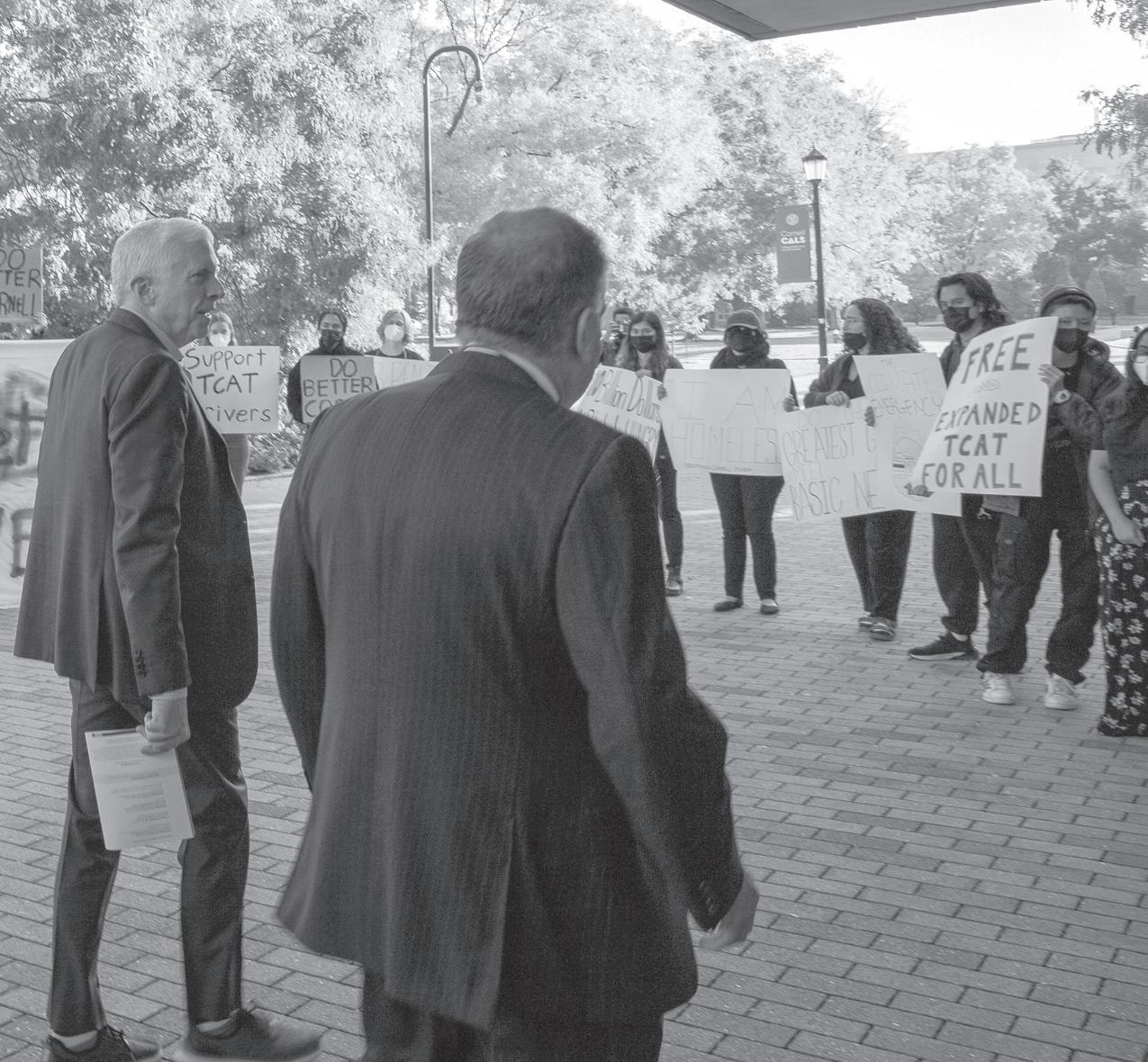
On Oct. 13, President Martha Pollack delivered her second State of the University Address this year at the 72nd Trustee-Council Annual Meeting in Call Auditorium in Kennedy Hall. In the speech, which highlighted expansions across the University’s three campuses, Pollack reiterated the importance of the University’s To Do The Greatest Good fundraising campaign, which aims to raise $5 billion over the next five years.
Following remarks by Kraig H. Kayser, MBA ’84, chair of the Cornell Board of Trustees, and Arturo Carrillo ’96, MEng ’97, chair of the Cornell University Council, Pollack began her speech noting that this was her second State of the University address this year. The previous TCAM was postponed due to the COVID-19 pandemic from October 2021 to March 2022.
In her address, Pollack thanked the assembled trustees and alumni in the audience for their contributions to the University’s “To Do The Greatest Good”
women like Annie Stewart ’25 still deal with sexist behavior in their daily lives at Cornell.
“Being a woman in STEM, I can confidently say that it is a male-dominated field,” Stewart said. “During discussions, I have to speak louder and be more assertive to get my point across in
“We strive to establish a culture uplifting, inspiring and connecting all women in leadership efforts throughout Cornell and beyond.”
Rhea Serron ’24
a class with mostly men. I deal with ‘mansplaining’ on a constant basis, as if I am not smart enough to understand topics myself.”
There are various groups and resources on
Cornell’s campus that aim to provide a supportive environment for women on campus, such as the Cornell Women’s Resource Center and the Women’s Health Initiative. Alexandra Michael ’23, President of the Women’s Leadership Initiative at Cornell, said her group uses speaker series, networking events and alumni mentorship to support women on campus.
“We strive to establish a culture uplifting, inspiring and connecting all women in leadership efforts throughout Cornell and beyond,” marketing chair Rhea Serron ’24 said.
Despite these resources, Stewart said that she believes women’s resources on campus need to be better advertised in order to help more people.
“I think there are plenty of resources available, we just don’t know about them,” Stewart said. “There needs to be more awareness surrounding where women can go if they’re struggling.”
Sofa Chierchio can be reached at schierchio@cornellsun.com.
prioritization of tenured or tenure-track faculty is beneficial for the University.
“I think Cornell understands that permanent tenured faculty are healthier for the institution, and provide a better classroom experience that ultimately results in better student learning outcomes,” Smith said.
The process of recruitment begins inside individual departments when another member of the faculty retires, leaves for another institution, or when the faculty identify a gap in their curriculum. According to Professor Thomas Overton, chair of the Department of Animal Science, the department then convenes a faculty search committee to look for replacements.
Search committees recommend candidates to interview and then the full department faculty decide on whom they will offer the position.
Faculty review does not end the moment they receive the position of assistant professor, Professor Antonio Ditommaso, chair of the School of Integrative Plant Science soil and crop sciences section. After their first three years as assistant professors, new faculty are evaluated. In their fifth year, assistant professors have to put together a list of their accomplishments up to that point, including publications, grants
they’ve received, and teaching and student evaluations, which the department chair supplements with external reviews of the professor from experts around the world.
According to Professor Nerissa Russel, chair of the Department of Anthropology, the entire process of fifth-year review takes almost a full year to complete because it involves not only the department but also reviews at the college, dean, and university levels as well as approval by the Faculty Advisory Committee on Tenure Appointments and the provost.
The process is not easy for all involved due to the amount of work and the stakes of the results.
“[The process] takes some really intense work and there is a lot of anxiety, a lot of things can go in one way or another. There are a lot of moving pieces,” Russell said. “[It is] an intense and nerve-wracking time.”
Departments place significant emphasis on properly preparing assistant professors for the tenure appointment process. Overton said that the role of mentorship in the process is crucial to new faculty success.
To continue reading this article, please visit www.cornellsun.com.
Gabriel Muñoz can be reached at gam256@cornell.edu.
campaign, which was launched last fall, emphasizing the campaign’s mission to harness the “transformative capacity of higher education.”
“Leading institutions like ours need to set our sights even higher, we’re going to find a way to a sustainable future with the innovations and the leadership and the civil society that meet all of the challenges we face,” Pollack said.
The address also noted the rapid changes taking place both on the University’s Ithaca campus and Cornell Tech on Roosevelt Island in New York City. Pollack announced that the University would break ground on the new Ann S. Bowers College of Computing and Information Science building while Cornell Tech is moving to phase two of construction with plans to expand its student body from 500 today to 2,000 in 20 years.
To continue reading this article, please visit www.cornellsun.com.
Surita Basu can be reached at sbasu@cornellsun.com.
TIKTOK
Continued from page 1
Dombrowski was also able to ask Biden his own questions. He specifically asked about what can be done following the Supreme Court’s decision in West Virginia v. Environmental Protection Agency (EPA) in which the Court curbed the EPA’s ability to control carbon emissions.
Biden’s answer was well received by Dombrowski, who said he liked that Biden promised to focus on hiring more people of color and helping low income communities that are among the most seriously affected by climate change.
“Social media has allowed me to advocate for what I’m passionate about.”
J.C. Dombrowski ’23
“I really liked how he pointed out the intersection between climate change, race, and class issues,” Dombrowski said. “It was a very thoughtful and intelligent response.”
After Biden left, Harris came to speak to the group. Dombrowski said she had a warm, enthusiastic manner, and that he was lucky to have been the only member of the group to be able to have conversations with both the President and Vice President.
“Vice President Harris asked me for advice because she was planning to speak at the University of Buffalo. I would have never imagined I’d be giving the Vice President of the United States advice three years ago,” Dombrowski said.
Dombrowski also said he complimented Harris on the passage of the IRA Bill, which will provide the National Ocean and Atmospheric Association with $3.3 billion in additional funding over the next five years. He said the bill has reaffirmed his faith in the sustainability and longevity of the oceans.
“I wanted her to know that I appreciate how the Administration is building a foundation for future generations,” Dombrowski said. “I want to continue to pursue and fight for climate change and ocean conservation, and this bill helps ensure that carbon emissions are reduced, which would help improve ocean temperatures, acidity, melting sea ice, and more — all of which are critical for marine conservation.”
After his experience, Dombrowski remains thankful that the Biden Administration invited him and other social media content-creators to the White House.
“Social media has now allowed me to advocate for what I’m passionate about at the highest level of our government,” said Dombrowski. “I am so thankful that social media has opened doors up for me — doors I didn’t even know existed in the first place.”
Ananthi Jayasundera can be reached at ajayasundera@cornellsun.com.




By MARGARET HAYKIN and CATHERINE ZHANG Sun Contributors
For many Cornellians, Waffle Frolic has been a Sunday brunch staple for years. Founded by two Ithaca college students in 2010, the Ithaca Commons establishment pledged to combine the spirit of Ithaca with urban edge in its unique mission. Waffle Frolic was the only specialized waffle eatery in Ithaca up until its recent closure on Oct. 15. According to the Ithaca Voice, the owners attributed the close to the rising cost of raw materials over the past few years as well as the COVID-19 pandemic, which made it difficult to stay in business. The lack of availability of parking in the downtown area exacerbated the problem.
As two transfer students with little knowledge of the dining scene in Ithaca, we went to Waffle Frolic on it’s last day, Saturday, Oct. 15 with open minds and hearts based on what we’d heard from student customers — that Waffle Frolic closing was a detriment to the Ithaca community.
On Waffle Frolic’s website, they described themselves as offering “a wide variety of sweet and sa-
Thecookiedoughmilkshake she ordered made up for the waffle as it should have for $6.00. It wascreamy.Theperfect levelofsweetandlarge enoughtosatiateher.
vory waffle combinations, a full espresso bar, grilled cheese sandwiches, smoothies, Purity Ice Cream and more.” They seemed to value local flavors with their 100 percent organic maple syrup originating from Schoolyard Sugarbush in Moravia, N.Y., the same maple products sold at the Ithaca Farmers Market.
Their waffles also come in two sizes: single or twin, depending on how eager you are for a warm pillow of flour and sugar.
Upon inspecting the menu, these offerings were true and vast. However, did the food live up to their hype? Was Waffle Frolic’s closing valid aside from the circumstantial problems the business encountered?
Walking in, the first thing we assessed was the general vibe of the restaurant. We expected a more traditional sit-down brunch experience and were instead met with a café-style, order-and-seat-yourself situation. Upon ordering, the staff was friendly and the food came out quickly…but at what cost? Our food was barely warm and unexpectedly overpriced, with a sandwich and milkshake coming out to a whopping $16.20, and a brunch plate and matcha coming out to an obscene $15.66.
We also arrived at about 2 p.m. with closing time being 3 p.m., so options were limited based on the remaining ingredients. The upstairs seating area was closed, so we settled for the cafeteria-style, more colorful seating on the street level.
We made our way to the downstairs seating area and found brick walls and local art, making for a very cozy atmosphere not necessarily describable as having an “urban edge.” We waited a few minutes for an open table and waited for our Shake Shack-esque buzzers to beep.
Catherine soon chowed down on her Eggs Florentine, “two over easy eggs topped with sauteed spinach, roasted red peppers and housemade hollandaise sauce,” and a side of toast. The eggs were a little too runny and the ratio of the vegetable to egg was off, with the spinach and peppers completely overtaking the plate. However, the hollandaise sauce was surprisingly delicious, masking the runniness and other flaws of the dish. Overall, it could be considered worth $5.50. The $2.00 side toast was just two thin pieces of panini-pressed bread resembling a cracker, even though it was noted on the receipt as being french bread. Interesting. And, the $8.00 iced matcha tasted like it was made from concentrate and overly sweetened.
Margaret ordered The Cascadilla, a “pressed waffle sammie” with “two freshly scrambled eggs, sliced tomato, fresh spinach and havarti cheese stuffed in a hemp and buckwheat waffle.” The waffles themselves were fairly bland but had a decent texture. The eggs were
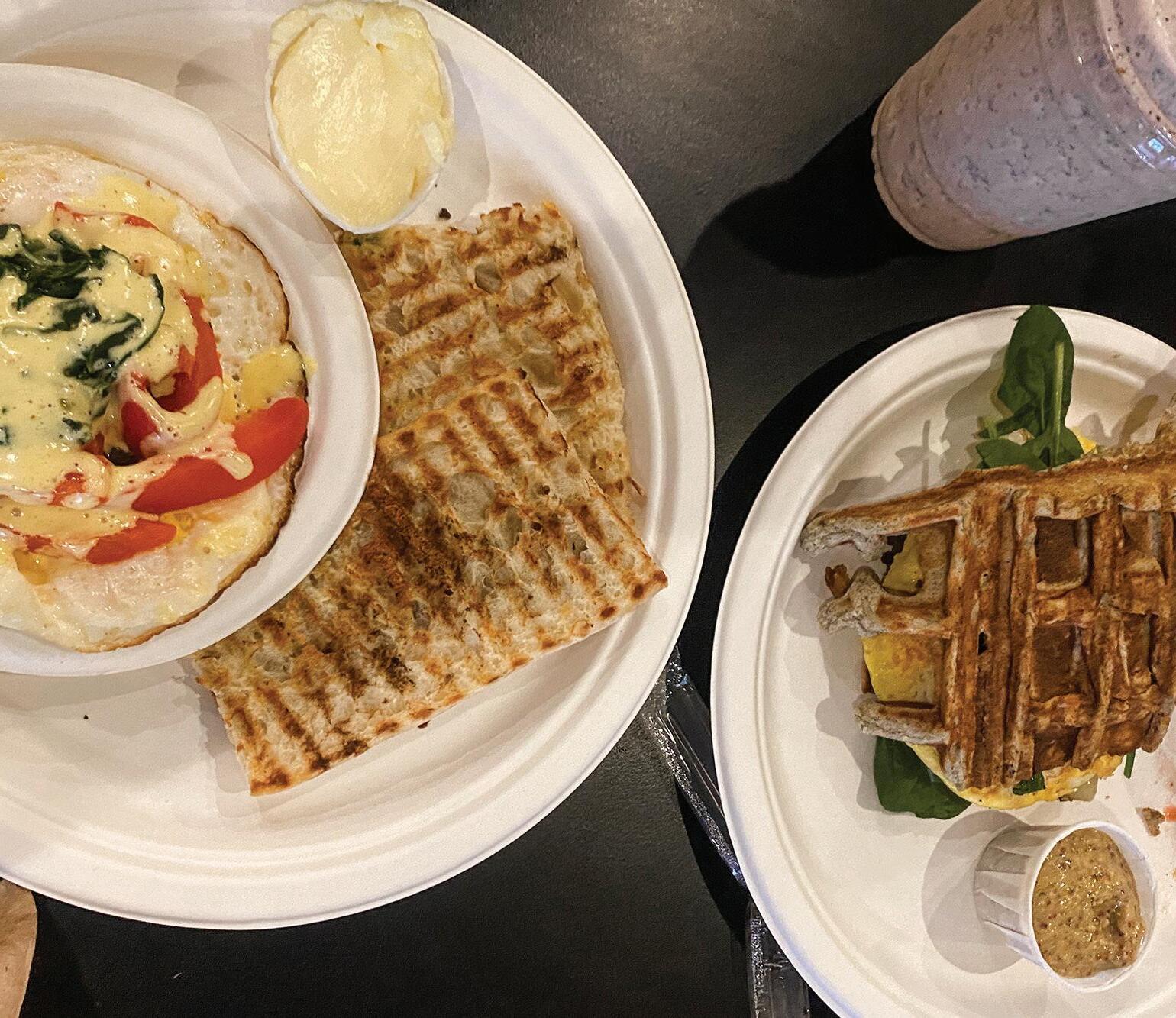
also bland, the tomatoes were falling out of the sandwich, the spinach was not at all wilted, and the cheese was cold. Not just slightly melted, but cold.
The mustard on the side was the only redeeming part of the sandwich, with a pungent kick strong enough to balance the overall insipidity. Quite disappointing for $9.00, especially because that on its own did not fill her up. But, the cookie dough milkshake she ordered made up for the waffle, as it should have for $6.00. It was creamy, the perfect level of sweet and large enough to satiate her.
Although we may not have had the best brunch ever, we duly note that the errors may have been due to permanent closing within the hour. It is also important to note that Ithaca cuisine, which caters heavily to college students, cannot exactly be compared to that of
Butinsum,althoughthis was our first and last time there,we are sure WaffleFrolicwilldearly bemissedbythosewho knew it in its prime.
New York City, where we both hail from. Waffle Frolic may have very well been the perfect spot for an end-ofweekend debrief had it not cost as much as it did. Your average college student definitely would not have been able to afford this every Sunday. But in sum, although this was our first and last time there, we are sure Waffle Frolic will be dearly missed by those who knew it in its prime.
Margaret Haykin is a sophomore in the College of Industrial and Labor Relations. She can be reached at meh369@cornell.edu. Catherine Zhang is a sophomore in the College of Agriculture and Life Sciences. She can be reached at cz456@cornell.edu.

Rebecca Sparacio (she/her) is a junior in the College of Arts and Sciences. She can be reached at rsparacio@cornellsun.com.Te Space Between runs every other Wednesday this semester.
When a student petition successfully led to the fring of a New York University chemistry professor, there were mixed responses amongst students, educators and administrators. An incident like this, where students held enough power to demand such a change, would not have happened 50 years ago. While there are many similarities between being a student today and being a student in the past — the same struggles of ftting in, frst relationships, difcult academics and so on exist — there are also signifcant diferences. Te time that we live in dictates what it means to be a college student.
A New York Times article states, “Te NYU students’ willingness to challenge this kind of pedagogical gatekeeping is a sign of how power dynamics are shifting at colleges and universities.” According to the author, that change is due to a rising sense of entitlement amongst students and parents, but more importantly, it’s due to the increasingly diverse student bodies of college campuses. Weed-out classes and standardized tests distinguish between students from privileged upbringings rather than directly weeding out less ambitious students. Gatekeeping, in the form of weed-out classes, as my fellow columnist Gabriel Levin
Adam Senzon (he/him) is a freshman at the School of Industrial and Labor Relations. He can be reached at ars424@cornell.edu. My Two Sents runs every other Tuesday this semester.
For the longest time, I’d convinced myself that I wanted nothing more than to be an adult. Tough I’m still in my youth, it’s been a hard process saying goodbye to childhood and welcoming adulthood into my life.
Childhood is only a small portion of the long lives we’ll go on to live –– the foundation for the rest of our lives. Tings we experience as children carry over into our adulthood and infuence the way we make decisions and build relationships. I thank my parents for giving me a childhood that’s been hard to say goodbye to; not everyone has the luxury.
Despite still being a student, this time
‘26 points out, has the potential to destroy student’s professional dreams. In the Wall Street Journal’s Future View (a column that collects student opinions), one student states, “Te larger issue here is that [organic chemistry] shouldn’t be a prerequisite for medical school. It is a pure science course, suited for students who want to become professional chemists or researchers, not doctors.” Is gatekeeping more arbitrary than we thought? If chemistry can’t predict whether or not one will be a successful doctor, it should not be used to weed students of the pre-med track. It is important that students are challenged, but at the same time it is ridiculous that one class can stand in the way of someone’s dream profession.
Weed-out classes are not the only source of contention that the fring of this NYU professor illuminates. Te fact that the students were upset with the curve of the class conveys the increasing pressure that students have to get A’s. From 1955 to 1975, in the years of the Vietnam War —when being a student was a decision between life or death —professors began to curve up to prevent students from being drafted. Since then, grade infation has been rising. While I do not believe that students should have the right to dictate how their classes are graded/curved, I do think that grades/curves need to refect student experience, as it did in the Vietnam War and as it did during the worst of the COVID-19 pandemic. Once students returned to in person classes, some published articles in Te Sun documenting the return of rigor to classes after many professors eased requirements and grades during the beginning of the pandemic (when almost all classes were held on Zoom).
Te NYU students demanded that their professor be fred against the backdrop of the COVID-19 pandemic, which is still afecting students academically, socially and developmentally. College freshmen and sophomores were smack in the middle of high school when the pandemic hit, leading to two years of a tumultuous school environment that varied across states and counties. Tese students certainly did not receive the best education possible given the uncertain circumstances of the pandemic, and the situation was even worse for students coming from lower socioeconomic backgrounds.
Given the hardships of the pandemic, 1,600 colleges became test optional, no longer requiring the SAT, SAT II and ACT. Cornell was the frst Ivy league school to
implement this measure. By making the SAT and ACT test optional during the COVID-19 pandemic, colleges removed one of the prime gates that keeps students from attending top schools, causing a reckoning with standardized testing. Te efcacy of these tests as a measure of college readiness has always been contentious, as studies have shown that they are better predictors of socioeconomic status than of one’s future academic success.
Suspending the standardized testing requirement decreases the value placed on test scores and even leads to the loss of legitimacy that these tests hold. Academic gatekeeping in all forms is important to monitor given the NYU student reaction to a traditional weedout class. Te LSAT may predict one’s grades in their frst semester of law school, but it will not determine whether or not one will be a successful lawyer, just as organic chemistry will not determine if one will be a successful doctor.
Measuring intelligence, readiness and potential is just as complex as the world in which we live. Intelligence is complicated. Grading is complicated. Two professors can read the same paper submitted by a student, look at the same rubric and give it a diferent grade. A diferent curve can be applied to the same class, in two separate semesters. We know grades matter, but how much of a bearing they have on our future depends on an individual’s professional goals. What do you do when you know that grades don’t defne you, but that they can defne your future? For students at NYU, that meant signing a petition and fring a professor. In an increasingly competitive world where according to WSJ Future View, the increase in “consumerization has led to a focus on student acquisition and retention.” It appears that the NYU administration may have had an interest in fring this professor to maintain high rankings, and appease students and parents.
Today we see a fip in power relations between students/parents and the university and a delegitimization of standardized tests as true measures of intelligence, which places modes of academic gatekeeping (like weed out classes and standardized exams) into question. As we watch these shifts and continue to champion the increasing diversity of college campuses, let’s make an efort to ensure that above all grades do not hinder academic curiosity or deter students from challenging themselves. Failure is an important part of life and without it, true learning can never take place.
I’m working toward a degree that will provide me with a new foundation to build the future I want for myself. Tere’s no denying that growing up can be invigorating, it’s a time where you’re now being treated with higher amounts of respect; and yet, there are moments where I wish to be a child once again, to be given an additional hand in times of need. Saying goodbye to childhood is bittersweet.
Letting go of adolescence and inviting adulthood into your life. Somehow, I’ve continued to tell myself that this means no longer allowing myself breathing room — I’ve been living under the notion that being an adult means cutting yourself zero slack. Only after taking a break recently and giving myself that much needed resting time have I realized how necessary it is to recharge. When you’re a child, you can take a break without the fear of being scrutinized for your laziness. Does being an adult mean dismissing happiness? Absolutely not.
Just as those moments of nurture were indispensable to your growth within childhood, they are just as necessary in adulthood.
As an adult, you now have the unspoken expectation to pursue something greater than yourself, whether it be higher education, a career path unique to your passions or simply the desire to turn over a new leaf. How lucky are we to have the opportunity to do so? It’s easy to harp on the negative, but remind yourself how you’ve been waiting for this. You fnally have the means to take steps in a new direction, write a new chapter in your story that is your life.
Something I’ll continue to bring with myself as I move forward into adulthood
from my childhood are my core values. Your core values are “a set of fundamental beliefs, ideals or practices that inform how you conduct your life, both personally and professionally.”
Tey are the values that remain consistent throughout your life, and no hardship will change these foundational values that help guide you through times of uncertainty.
No matter the stage of life, we will continue to grow and learn among the many more chapters to come.
Saying goodbye to childhood doesn’t mean abandoning a helping hand, there will always be someone to ofer wisdom — or perhaps, someone to remind you that you’re on the right path.
Take two seconds. Tink back to those untouched memories from your childhood, the ones that will remain just as they were. Find comfort in knowing that you’re building new memories. No matter the stage of life, we will continue to grow and learn among the many more chapters to come.
One of my favorite memories from childhood that I’ll carry with me for the rest of life is
when my third grade substitute teacher grudgingly asked me to sit down — I refused — as she taught class. Tis memory in particular reminds me that I’ve been fercely stubborn since day one, though I’m learning to make more compromises as I’ve grown older. I remember being so oppositional to this teacher’s request, oddly enough, standing helped me focus and kept me attentive as she shared knowledge on advanced multiplication.
As a child, I always looked forward to my family’s notorious weekend trips.Rather, another memory that brings me back to my adolescence were family road trips up the Northeast coast dedicated to watching the trees as they changed color from vibrant greens to fery oranges and reds. I think back to another memory when we took another road trip to Mystic Seaport, CT where my parents lost our camera flled with childhood memories — though it stung, it helped me fnd my passion for photography in later years. As a young adult, you’ll often fnd me taking pictures of virtually anything all with one goal: candids.
While moving into adulthood and wishing your childhood a farewell is bittersweet, acknowledging the good and bad moments allows for new chapters to be written. Previously, I’ve struggled with the thought process that in order to move forward, I should refrain from referencing experiences made in the past, especially throughout childhood. I want to leave this mindset behind. Refecting on the past isn’t an inherently negative prospect as it gives our minds the ability to interpret and derive meaning from these experiences and navigate as we create new ones.
Fill in the empty cells, one number in each, so that each column, row, and region contains the numbers 1-9 exactly once. Each number in the solution therefore occurs only once in each of the three “directions,” hence the “single numbers” implied by the puzzle’s name. (Rules from wikipedia.org/wiki/ Sudoku)








By BRENDA KIM Sun Contributor
In July 2022, Weill Cornell Medicine scientists and the Alzheimer’s Disease Metabolomics Consortium published a paper detailing a new study that observed metabolic changes in Alzheimer’s patients, which confirmed existing and found new AD pathways.
Alzheimer’s is the most common type of dementia that leads to memory loss and other decline in mental functions, eventually leading to death due to the degeneration of brain cells and connections.
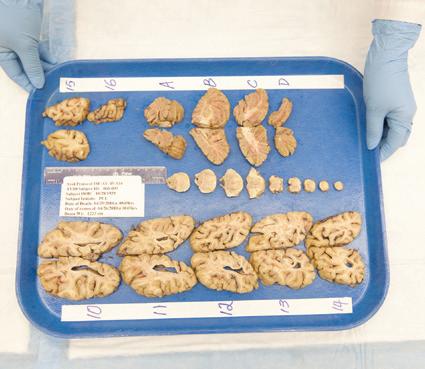
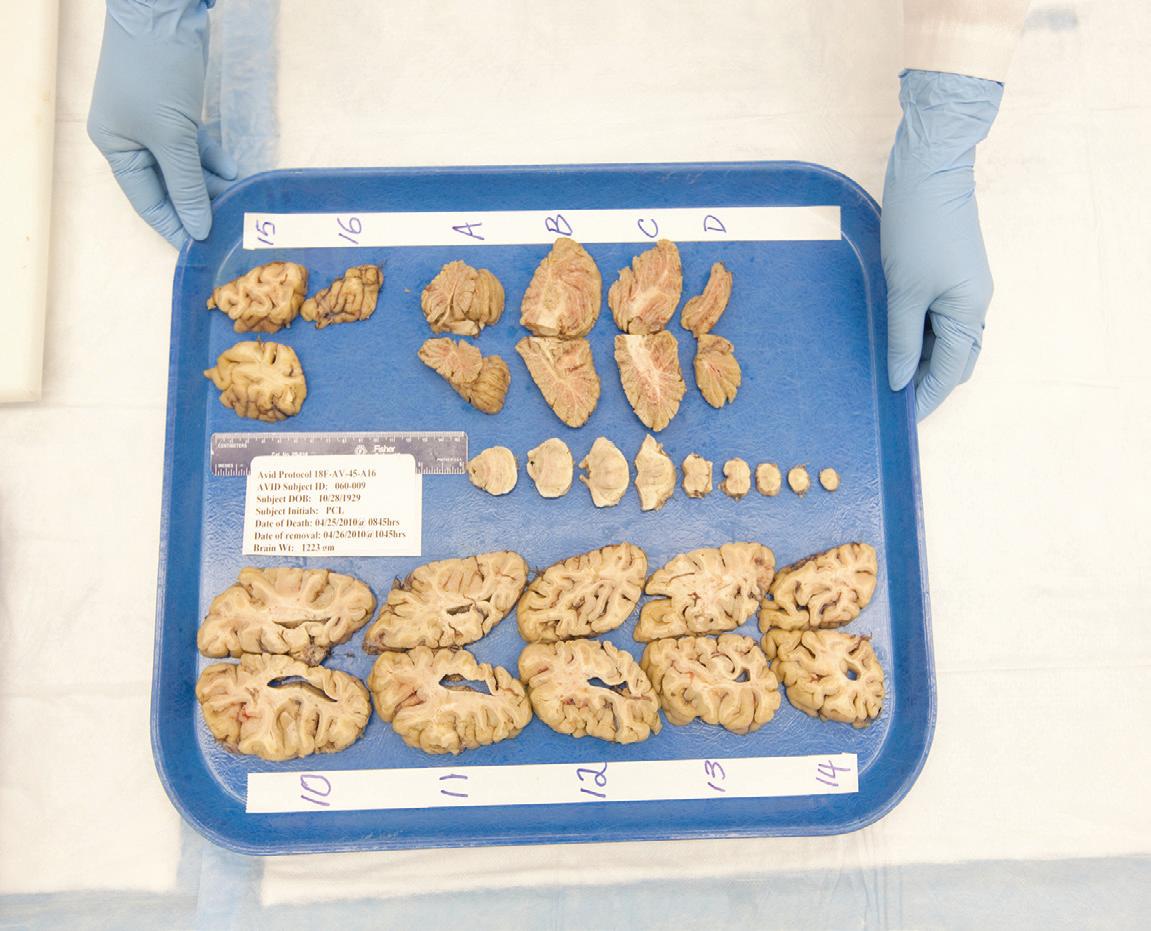
Corresponding author Prof. Jan Krumsiek, physiology and biophysics, worked with his research associate Richa Batra and several Consortium members to analyze metabolites and their levels in post-mortem brain samples from 500 participants from the Rush Memory and Aging Project.
The team focused on 667 metabolites — small molecules that are used and made during metabolism — in order to investigate metabolism, the chemical processes for creating energy, a central process in virtually all living organisms.
The research revealed that AD is a highly metabolic disease, meaning that the brains of AD patients experienced significant changes in brain metabolism.
“The genome and epigenome
are the capabilities of the system and the transcriptome and proteome, in simple terms, is what the cell or biological system is trying to achieve, like making new building blocks and tools, but metabolism is what has already happened,” Krumsiek said.
“If you see the metabolic changes, you know a difference was made.”
Despite being unable to choose specific metabolites for study due to equipment limitations, Krumsiek explained that there was a general trend among the metabolites being measured.
The team highlighted eight specific AD components such as their diagnosis, level and trajectory of decline of cognition and beta amyloid and tau proteins which accumulate in the brains of AD patients, etc.
Analyzing these traits with levels of the metabolites showed that almost half of the metabolites measured correlated with at least one of the eight traits.
“This means that there is a massive dysregulation at a very global scale of metabolism in the brain for people who either have symptoms or some sort of brain pathology of this disease,” Krumsiek said.
“This is significant because there are some diseases that show metabolic changes, but only within a handful of metabolites.”
Interestingly, the study saw
that metabolic dysregulation was less pronounced in amyloid beta than what was observed with the tau protein.
Amyloid beta is a protein that forms deposits of plaques around brain cells and tau is another protein that forms tangles between brain cells. These two proteins are key features of the disease.
Although it cannot be concluded whether beta amyloid is the appropriate target for AD drug treatment, results from the study reveal a potential new field of research that could be used in future treatments.
Researchers also focused on four specific pathways associated with AD: change in cholesterol metabolism, bioenergetic changes, inflammation and osmoregulation.
While changes in cholesterol metabolism, energy homeostasis and inflammation is fairly well known among those in the field, osmoregulation, is relatively new.
Osmosis is the cellular mechanism of the movement of water and is tightly regulated because of the significant impacts of pressure changes. This is particularly concerning because changes in osmosis and water homeostasis may influence protein folding.
Research has shown that misfolded amyloid beta proteins have been linked to AD where the misfolded proteins accumulate to form plaques. This has categorized
AD as a proteopathy — a protein misfolding disease.
Krumsiek will continue research on potential treatments for AD through a NIH grant, using computational drug repositioning which is to use an existing drug in the treatment of a different disease. This is possible because the drug is not treating a disease but rather targeting certain pathways, a molecule or a gene.
“Alzheimer’s and drug research is in a complicated state. There’s been a lot of failures and question marks, but one of the data sources to find these unexpected connections is this paper because
we found how Alzheimer’s talks to metabolism.”
For Krumsiek, the results of the paper show potential in such areas which have not been frequently explored.
“You can now check how metabolism talks to genes, and realize that maybe some of these genes are affected by drugs we have never thought about in that way. It is a more innovative way of using this screening type of experiment for finding new therapeutics, for example.”
By ANNA LABINER Sun Contributor
Since the first U.S. reported case of human immunodeficiency virus in 1981, the scientific community has not wavered in its commitment to both extending the life expectancy and improving the quality of life of those affected by HIV.
HIV is a virus that attacks the host immune system and spreads through contact with bodily fluids of an infected individual. Acquired immunodefi-
ciency syndrome is the final stage of HIV infection.
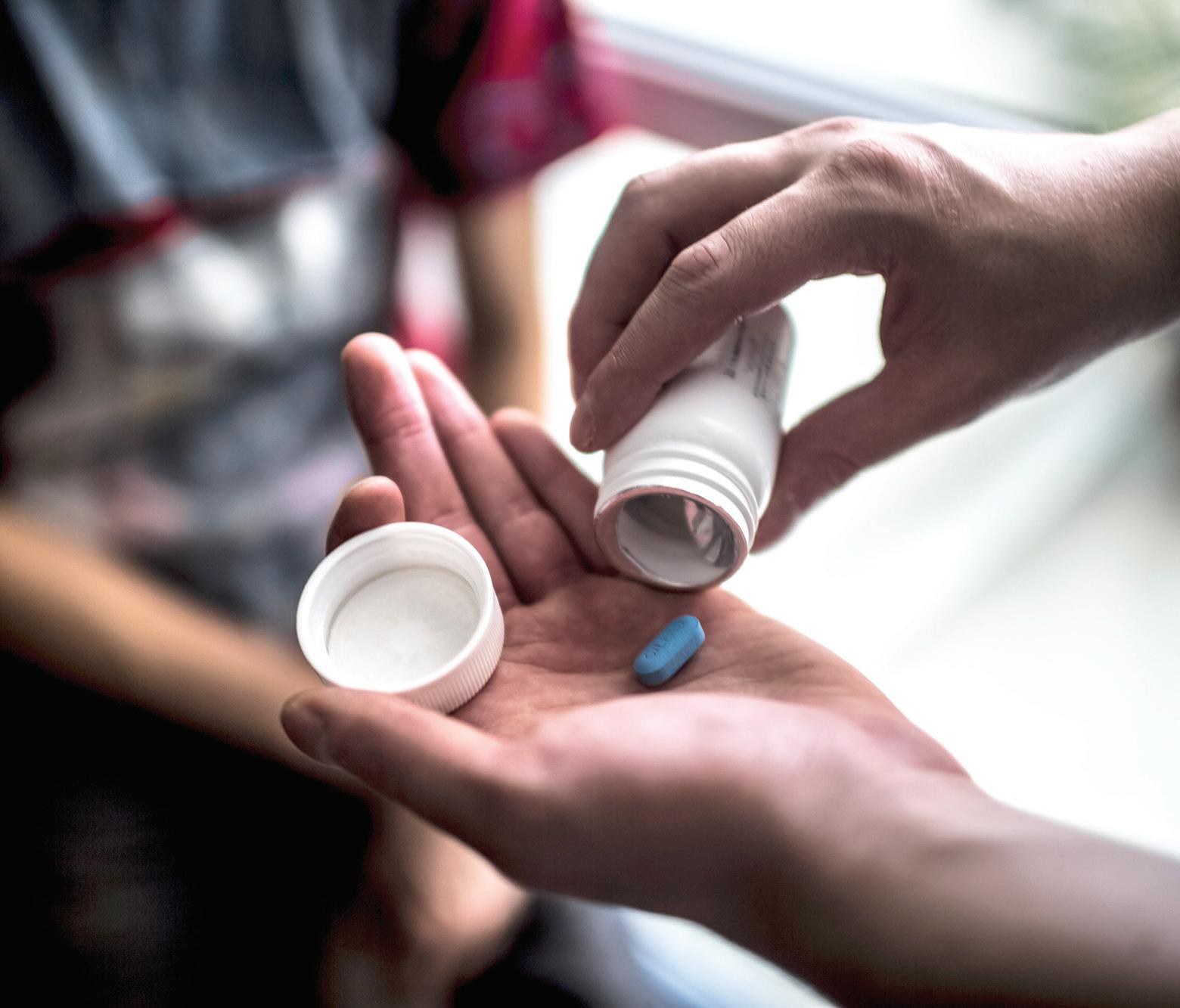
There has been an uptick in major developments in the simplification of HIV prevention with the approval of promising drugs, such as Cabotegravir, which have produced significant results in HIV treatment and prevention.
Early studies of viruses, specifically the Rous Sarcoma Virus, have allowed researchers to gain an understanding of the retrovirus and cell machinery of HIV, an AIDS-causing retrovirus.
Initial research of the RSV began in
1911 when a woman brought one of her hens into a lab after it developed sarcoma, a tumor that arises in the bones and soft tissue. Upon pulverizing the sarcoma to form a filtrate containing no cells, and transplanting this filtrate into other hens, Rous observed that many other hens also developed tumors.
The characteristics of the tumor were comparable to those of communicable diseases, which spread from person to person. The tumor’s infectivity indicated its classification as a virus and revealed that a cancerous tumor could be induced by infection because the tumor was transmitted by a virus, a noncellular agent.
RSV later proved to be an important factor in studying cancer development because of its identification as a retrovirus, which are RNA viruses that insert a copy of their genome into a host cell.
This discovery led researchers to prevent viruses like HIV from compromising the health of the host.
“Having that understanding prior to the discovery of HIV obviously was important in speeding up the process of developing drugs that target and block different proteins of the virus itself,”
Prof. Olivier Elemento, physiology and biophysics at Weill Cornell Medicine, said.
Elemento published an article in March 2021 summarizing how Rous’s work demonstrated the necessity of basic research and understanding biological mechanisms in great detail.
Since then, recent developments in AIDS research have focused on the production of long-acting medications.
This approach, which involves a combination of two drugs that are given by monthly injections into the muscle, simplifies HIV treatment by eliminating the need for daily pills.
“Having that understanding prior to the discovery of HIV obviously was important in speeding up the process of developing drugs that target and block different proteins of the virus itself.”
CABENUVA, a prescription regimen that combines the antiretroviral medication, Cabotegravir and a reverse transcriptase inhibitor, Rilpivirine, is the first injectable, complete regimen for adults with HIV approved by the FDA in Jan. 2021. More recently, in Feb. 2022, the FDA approved expanded access to CABENUVA, to be administered to adults living with HIV. However, the injection of Cabotegravir by itself for preventive purposes was only FDA approved in Dec. 2021.
The drug has been studied in part by Weill Cornell and looks to be more effective than the oral drugs currently being taken for preventive purposes by those who are at high risk of HIV diagnosis, including men who have sex with other men and injection drug users.