The Corne¬ Daily Sun


By MEGHNA MAHARISHI Sun Assistant Managing Editor
For the second time this year, Cornell has decided to sue the Trump administration over visa restrictions.
Joining other universities like Stanford and the California Institute of Technology, Cornell filed a lawsuit Monday seeking to roll back the U.S. Department of Labor’s and Department of Homeland Security’s recent H-1B visa restrictions. The lawsuit was filed with the U.S. District Court for the Northern District of California.
The lawsuit emphasizes how many higher education institutions across the country rely on
the H-1B visa program to fill vital research and teaching positions. For Cornell, the lawsuit cites how the University employs many H-1B workers as research scientists and doctors, describing how these workers are “integral components of teams working tirelessly to advance medical sciences, seeking betterment of the country as a whole.”
The plaintiffs in the lawsuit request that the court vacate the DHS and DOL rules and issue a judgment that the restrictions were unlawful as well as “arbitrary, capricious and otherwise not in accordance with the law,” among other requests.
The lawsuit comes as President Donald Trump’s administration
has repeatedly tried to curb the H-1B visa program during the past few months. Citing the coronavirus pandemic, the Trump administration first halted the issuance of temporary work visas, including the H-1B visa, in June. Earlier this month, a federal judge held that the ban overstepped the administration’s authority. The ban is currently being contested in several cases.
H-1B visas are intended for high-skilled workers, allowing companies to temporarily sponsor employees from abroad. The program is capped at 85,000 visas a year. On Oct. 6, the DOL released a

By CONNOR GREENE Sun Contributor
Echoing anti-police sentiments resounding across the country, Ithacans are calling for decreased responsibility and funding of the Ithaca Police Department.
In a letter addressed to Ithaca-area residents, Mayor Svante Myrick ’09, members of the Ithaca Common Council and representatives of a broad racial justice coalition — including organizations such as the Democratic Socialists of America and Tompkins County Showing up for Racial Justice — have outlined demands to reduce the Ithaca policing budget by 80 percent, enact an immediate Ithaca Police Department hiring freeze
and reallocate funds to support Tompkins County communities.
“In a city with a population of roughly 30,000 people, the IPD has 64 officers and a budget of $12.7 million dollars,” the letter states. “Meanwhile, vital community programs have been slashed, rent and housing throughout the city remain unaffordable, and many residents face a deepening economic crisis exacerbated by COVID-19.”
David Foote, chairman of Ithaca Democratic Socialists of America, wants to take money from the police and enact a more democratic budget-making process that involves more community members.
Foote believes that paying officers to patrol the streets saps the city’s budget without offering
much benefit.
“More than half of police resources are not spent on investigating crimes or preventing crimes, but just on patrolling people, on cruising through neighborhoods looking for people to harass,” Foote said. “That’s a huge amount of money that’s basically spent on nothing.”
This concern reflects one of the biggest demands made in the letter, a budget cut of 80 percent, which would reduce the budget from $12.7 million to $2.5 million.
The letter implores its readers to remember Ithaca’s history of racial bias and mistreatment, characterized by the same sort of inhumane misconduct that resulted in the deaths of George Floyd and Breonna Taylor.
“We cannot forget the killing of Shawn Greenwood and Keith Shumway by IPD officers in 2010 and 2011, nor the four teenagers of color held at gunpoint by an IPD sergeant in 2014, nor the brutality experienced by Rose DeGroat and Cadji Ferguson on the Commons last year, nor the police misconduct in the Nagee Green trial, nor the SWAT raids in West Village, nor the countless other accounts of daily dehumanization and punishment at the hands of police,” the letter reads.
Veronica Pillar, member of Tompkins County Showing Up for Racial Justice, said that “no changes to the police department were made” after Cadji Ferguson was arrested — and later acquitted — on the Ithaca Commons, which Pillar said was “a pretty
glaring incident of racist police brutality right here in Ithaca.”
Tompkins County Showing Up for Racial Justice is an advocacy organization that encourages “white people to act as part of a multiracial majority for justice with passion and accountability to people of color-led organizations locally and nationally,” according to its website.
For Pillar, even if Ithaca approved of an IPD budget cut, the allocation of funds needs to be made by the right people.
“Everything has to be grounded in what leaders of color are saying,” Pillar said. “And of course that’s complex because people are going to have different goals and perspectives.”
See IPD page 2

Meditation Sessions in Spanish 9:30 - 10 a.m., Virtual Event
Into the Desert: Questions of Coloniality and Toxicity 10 - 11 a.m., Virtual Event
Cornell Wellness Virtual Walk to Run Class 11:30 a.m., Virtual Event
Sensing, Automation and Data Analytics for Plant Pathology 11:30 a.m. - 12:20 p.m., Virtual Event
The letter also demands the allocation of IPD funds to “Re-fund, Rebuild and Heal Community.” Demands listed in this section of the letter reflect goals to “reallocate $2.8 Million to the Greater Ithaca Activities Center and $5.06 Million to Ithaca Youth Bureau to ensure the continuation of existing youth programs” while prioritizing spending for Black, working class organizations such as Black Hands Universal and other community advocacy groups.
Black Hands Universal is an organization “formed in response to racial injustice,” according to its website.
“We believe in rehabilitation rather than punishment, as well as creating and maintaining a platform for the disenfranchised,” the organization’s website reads.
According to the letter, these initiatives would help “ensure that those most impacted by racism and gentrification in Ithaca decide democratically how the money is spent.”
Education is another key issue worsened by the pandemic, which the racial justice coalition believes can be remediated through the proper allocation of police funds.
“People who are poor have to roll the dice with their kid and hope when they send them to school they’re OK,” said Harry Smith, lead member of Black Hands Universal. Witnessing the difficulty of distanced learning, Smith created his own zoom tutoring program with volunteers from Cornell and Ithaca College.
For Smith, the lack of reform
made to the police budget and the subsequent lack of community reform in education is not entirely a result of racial bias.
“I don’t think it’s racism so much as it is laziness,” Smith said.
“Nobody wants to take the time to do the research to see what people need in certain areas. They just take the easiest route.”
Smith said he has seen first hand how policymakers’ inability to act has disenfranchised minority groups in the Ithaca area and believes that substantial reform is necessary to socioeconomically uplift marginalized communities.
“When people say they wanna help Black people, they always come up with these ways of giving out food, clothing or shelter, but it’s like … we’re not starving,” Smith said. “We’re probably eating better than you. We don’t need clothes. We probably spend more money on clothes than anyone else. What we need is certification, education, things that allow us to catapult from where we are.”
But in more extreme cases, the absence of a police force entirely is something many leaders in the racial advocacy coalition would like to see in Tompkins County.
“A dream would be to set up a response system for people who would normally call the police but for whom a police presence is unnecessary, situations where you don’t need someone showing up with a gun and an armored cruiser,” Foote said. “We need to set up brand new organizations that can respond to calls for help that wouldn’t involve the police.”
By SARAH YOUNG Sun Contributor
Through the summer and into the fall, Ithaca eateries adapted to accommodate both their guests and New York State social distancing rules. Now, they face a new challenge: cold weather.
In compliance with state regulations for restaurants released by Gov. Andrew Cuomo (D-N.Y.), many Ithaca restaurants have completely altered their operations to maintain social distancing. Adaptations such as increased outdoor dining, fewer indoor seats and retraining staff have all contributed to keeping New York’s eateries open. Now as winter approaches, restaurants will have to adapt once again in order to stay in business with less outdoor options.
Current New York State guidelines allow restaurants to operate at a 50 percent capacity indoors. Other mandates include either placing tables six feet apart or putting up a barrier between tables, allowing a maximum of 10 people per party and requiring face coverings for all employees and unseated customers.
For Alex Gerou, an employee from the Ithaca Commons restaurant Moosewood, these social distancing regulations were not that drastic.
“It wasn’t anything too much to adjust to, I feel. We’re already always concerned with sanitation and keeping the restraint as clean as possible,” Gerou said. “Once we got all of our tables spaced out and everything rearranged it was pretty easy.”
Prior to the release of the new rules, most Ithaca restaurants were closed for in-person dining. Restaurants like Moosewood, Maxie’s Supper Club and Oyster Bar offered takeout, a service that appears to have been crucial to staying open.
Carol Kanfoush, an employee at Maxie’s, said the takeout option kept the restaurant
open for the first few weeks of lockdown. Before outdoor dining and reduced indoor dining, how the restaurant would adjust to the pandemic remained uncertain.
“Pretty much since March when the restrictions went into place we’re pretty much going week by week,” Kanfoush said.
Many Ithaca restaurant workers fear that the cold weather and Cornell’s plan to send students home after Thanksgiving will challenge their restaurants’ ability to stay afloat once again.
When asked about plans for the winter, Yxi Ojeda, a worker at Luna’s Inspired Street Food on Aurora Street, hopes that the eatery’s use of space heaters outside could allow the outdoor dining option to continue into the winter. While the space heaters may help Luna’s business as the cold creeps in, it does not provide a solution for when the snow starts, as Ojeda said Luna’s will have no option but to close their uncovered outdoor dining during inclement weather.
Ojeda remains hopeful that the restaurant can make up for the possible lack of outdoor dining in the winter by putting up new barriers between tables and expanding its indoor capacity.
Many restaurants also hope for increased takeout and delivery orders once the cold season begins. According to Gentry Morris, founder of The Rook, the restaurant plans to expand its online ordering and potentially start delivering orders. ”
“We’re going to lean on having people take food to go more,” Morris said.
Ithaca is aware of the industry’s struggles, and the city has offered some help. One victory came in early June, when the city closed off Aurora Street to make space for more outdoor dining.
“Ithaca has done a great job,” Ojeda said. “They allowed us to keep the street closed so that we could extend the restaurant to the patio.”

Gerou shared similar sentiments, pointing out the part that the Downtown Ithaca Alliance played a part in helping Moosewood reopen.
“They had a lot of guidance for us and also were good about posting when we were closed and when we reopened and helping to promote that we were reopening,” Gerou said.
Gerou added that he appreciated the efforts of the Tompkins County Health Department, which provided the restaurant with free masks for its employees.
However, other restaurant workers did not share the same opinion. Kanfousch said she didn’t necessarily notice Ithaca actively doing anything to help Maxie’s through the pandemic. She said she didn’t think that the city could offer useful guidance.
“I think there’s so many questions sur Kanfousch said. “I feel like we’re still kind of fending for ourselves with no guidance.”
Additionally, the pandemic has forced many restaurants in Ithaca to furlough or lay off employees. Restaurants like Maxie’s
By SARIKA KANNAN Sun Staff Writer
Researchers at the Cornell Alliance for Science have found that articles that mention President Donald Trump in the context of COVID-19 misinformation make up the “largest single component of the infodemic.”
“Infodemic” is a term used to refer to the rapid spread of inaccurate information related to the coronavirus.
The study analyzed 38 million articles published by Englishlanguage traditional media and online news services between Jan. 1 and May 26 to identify the most prominent topics of COVID-19 related misinformation.
The study, published Oct. 1, was in the peer-review process when the authors decided that the information needed to be made public immediately.
The 11 sub-topics of misinformation targeted by the study comprise of widely-publicized unsubstantiated claims, such as unproven cures to COVID-19 and conspiracy theories — claims which the report stated have been “amplified” by widespread coverage of “prominent persons whose views and comments are considered newsworthy.”
The study found that approximately 1.1 million of the news articles analyzed had some relationship with misinformation related to the pandemic. About 16 percent
of those articles were fact-checking misinformation itself.
Conspiracy theories, such as the one that emerged at the beginning of the pandemic purporting that the COVID-19 outbreak could be traced to consumption of bat soup in Wuhan, China, made up almost half of the misinformation found.
However, while most conspiracy theories and other false claims tended to rise in popularity and fall rapidly — the topic of “miracle cures” comprised the bulk of the misinformation coverage.
Miracle cures included claims that UV light, disinfectant and hydroxychloroquine could potentially cure COVID-19.
“One of the surprising findings of the study was that the president’s name was associated with much of that miracle cure misinformation.” said Sarah Evanega, the director of the Cornell Alliance for Science and the lead author of the study.
The study found that the coverage of miracle cures had three separate prominent peaks from March to May of this year.
The first occurred in March, when Trump began to advocate for the use of hydroxychloroquine and chloroquine as COVID-19 treatments, even though there was no peer-reviewed clinical data proving that the drug would be effective.
However, the largest spike in misinformation coverage was on April 24 — at nearly 18,000 articles — when Trump suggested that injecting bleach or other disinfec-
tants into oneself could potentially cure COVID-19 infections.
According to the researchers, this spike dwarfs the reaction caused by all other incidents of misinformation throughout the analyzed time period.
Further, the data collected suggests that the sub-topic of “miracle cures” accounts for more misinformation coverage than the other 10 combined, making it the second-largest contributor to the misinformation conversation after Trump himself.
Trump mentions comprised 37.9 percent of the overall infodemic, while “miracle cures” comprised 26.4 percent.
Going forward, Evanega believes that as a safe and effective COVID-19 vaccine becomes available, journalists and consumers need to be very careful about preventing a second infodemic, especially in light of the active anti-vaccine movement.
“Journalists have to do their part to focus on reputable science sources for information and to amplify the recommendations, the data and the science from bonafide experts, and to not give too much airtime to the information that’s coming from non-experts,” said Evanega, adding that consumers had to be mindful of the information they spread on social media, as well.
furloughed many of its employees at the beginning of the pandemic. Kanfousch said the staff at Maxie’s dropped from around 30 or 40 employees to only five employees during the height of the pandemic.
Similarly, Morris said The Rook lost employees earlier in the year. But other restaurants like Luna’s have seen a different trend.
Ojeda said that Luna’s hired more locals in order to provide employment to those who needed it during the pandemic. Ojeda said that the initiative decreased the hours for many employees, but said she was grateful that her coworkers had the opportunity to work during an economic recession .
Ithaca restaurants have worked diligently to comply with state guidelines while providing great service to their customers. “I’m hopeful and we are ready to make adjustments. Whatever we have to do to stay open,” Kanfoush.
Sarah Young can be reached at smy46@cornell.edu.
new set of restrictions that would require employers to pay higher wages to employees with H-1B visas in an attempt to deter U.S. companies from hiring foreign workers.
Additionally, the DHS tightened the definition of who could hold a H-1B visa, stating that petitioners had to prove that they had a college degree in the specific field they are seeking work in. The mandate states that third-party firms that hire workers only grant them one-year work authorizations, rather than the typical three years.
The DHS mandate claims the measures restricting the H-1B visa program are necessary to “more effectively ensure that the employment of H-1B workers will not have an adverse impact on the wages and working conditions of similarly employed U.S. workers.”
The lawsuit claims that the visa restrictions have the potential to “outright eliminate” the H-1B visa program. Cornell did not respond to a request for comment by the time of publication.
“These rules are extraordinary: If left unchecked, they would sever the employment relationship of hundreds of
thousands of existing employees in the United States, and they would virtually foreclose the hiring of new individuals via the H-1B program,” the lawsuit read.
On Oct. 16, multiple tech firms filed a lawsuit against the new restrictions in a court in New Jersey, stating that the new rules violate the Immigration and Nationality Act.
This is the second lawsuit this year that Cornell has signed onto against the Trump administration. In July, the University sued the government over restrictions on international students, after U.S. Immigration and Customs Enforcement ruled that students who don’t take any in-person classes are not permitted to enter the country. One week after Cornell signed onto the amicus brief, the Trump administration rescinded the restrictions.
President Martha E. Pollack said at the time the restrictions were rescinded that the decision was a “significant victory for all Cornellians and for international students at institutions throughout the country.”
Read the full lawsuit here. Sarika Kannan can be reached at skannan@cornellsun.com. LAWSUIT Continued from page 1
Meghna Maharishi can be reached at mmaharishi@cornellsun.com.
By SRISHTI TYAGI and ARIANA STEPHEN Sun Senior Staff Writer and Sun Contributor
Each October, Americans honor their loved ones battling breast cancer with charity fundraisers, pink clothing items and ribbons. Breast Cancer Awareness Month often comes as a somber reminder of lives lost to the devastating disease and all that researchers have yet to understand. But what exactly is breast cancer, and how can it currently be treated?
Prof. Claudia Fischbach, biomedical engineering, and Dr. Eleni Andreopoulou, breast oncologist at Weill Cornell Medical Center, dove into the biology of breast cancer from their perspectives on the front lines of cancer research and treatment.
According to Fischbach, breast cancer arises from abnormal cells that develop from errors in the genetic code. These mutations can cause the cells to grow uncontrollably in the breast tissue, resulting in a clump of cells called a tumor.
However, what makes breast cancer so dangerous is its malignant heterogeneity — certain cancers are hardwired to invade, migrate and spread, according to Andreopoulou.
“It follows a pattern of dynamic evolution — the disease is not static,” Andreopoulou said. “It’s the nature, and the biology of each tumor. Each cancer diagnosis is unique for each individual.”
Everything from the tumor’s genetic makeup to a patient’s hormone balance and lifestyle choices can affect the clinical course of the disease, as well as how well patients might respond to certain treatments, Andreopoulou said.
The treatment of breast cancer is often guided by the types of receptors on a patient’s tumor cells, according to Andreopoulou. One subtype — hormone-receptor positive breast cancer — means that tumor cells have receptors for hormones required for their growth, like estrogen or progesterone.
According to Andreopoulou, tumors with hormone receptors can be more effectively treated, because drugs that cut off hormone supply to these tumor cells — used in tandem with drugs targeting cell growth and division — can halt the progression of the cancer.
Other breast cancer subtypes that lack both hormone receptors and a specific growth-promoting protein, HER2, respond to fewer drugs, and require a more aggressive treatment approach that’s mainly limited to chemotherapy, which is toxic to cells, Andrepoulou said.
Beyond the biology of cancer cells, tumor growth is influenced by how those cells interact with their surrounding environment. According to Fischbach, there are studies that support this conclusion because they demonstrate how tumor cells implanted into healthy, actively growing embryos can never develop into cancer.
“If you put them into an environment that is permissive, it’s like a seed in soil,” Fischbach said. “If the soil is right, the seed grows, and vice versa. If the soil isn’t right the seed doesn’t grow. It’s the same with cancer.”
According to Fischbach, since cancer cells require specific environments to grow, they aren’t likely to survive the compromising conditions involved in spreading to different parts of the body. But if they do find a new site to grow, this condition — called metastasis — can be incredibly dangerous.
For example, Fischbach said t breast cancer cells prefer to grow in environments with stiff, dense tissue. These cells are prone to migrating to niches in the bone, where they can easily grow and proliferate.
According to Fischbach, the importance of tissue density can be seen even prior to diagnosis, when women often feel a hard, palpable lump of tissue in their breast that is characteristic of cancer. This lump is made stiff by the development of thick scar tissue around the tumor cells, which fosters an environment that can trigger a tumor
to become aggressive.

“Scar tissue is... very densely packed, and one can mimic those properties using biomaterials. You can basically make biomaterials that are softer, or stiffer...and then look at how that affects tumor cell behavior,” Fischbach said. “That gives you additional insights into why cancers develop.”
In her research lab, Fischbach uses such biomaterials to engineer artificial environments that mimic the human body, allowing for a more accurate portrayal of tumor growth that transcends the limitations of traditional cancer research.
“In a Petri dish on a plastic surface, there are no other cell types, no blood vessels … no factors in space and time that might be affecting things,” Fischbach said. “As engineers we have the capability to mimic some tissue structures that better recapitulate how these cells behave in our body.”
COVID-19 also pushed the boundaries of multidisciplinary healthcare delivery at Weill Cornell, with essential care heavily relying on technological innovations in order for providers to safely interact with their patients.
Weill Cornell physicians collaborated with the Englander Institute for Precision Medicine to employ HoloLens — a 3-D mixed reality device that broadcasts holograms over physical space. While her physician’s assistant wore the HoloLens headset during a patient visit, Andreopoulou could
broadcast live clinical records from her computer at home while voicing her insights through videoconference, allowing her “to continue providing care as close as [possible to her] being physically there.”
“For us, piloting this project has been significant progress forward in how we can maintain safe [breast cancer] patient care without interrupting the integrity and the importance of multidisciplinary care,” Andreopoulou said. “That’s what technology is all about.”
Another potential way to battle cancer is sequencing the DNA of the tumor itself. Fischbach explained that by sequencing the genomes of tumors and finding out the variability of cells in the tumor in a large number of patients, medical professionals can compare this information to how those patients responded to different treatments. This could help doctors to figure out specific genetic sequences in tumors that are predictive of treatment response.
To read the rest of this article, please visit cornellsun.com.
Srishti Tyagi can be reached at styagi@cornellsun.com. Ariana Stephen can be reached at ams673@cornell.edu.

In the digital age, the number of screens that are available to any individual has increased exponentially. The amount of information provided through said screens via the internet has also increased, resulting in prolonged screen time.
The pandemic has further exacerbated the problem of excessive screen time, as work, meetings and classrooms have all shifted online. This increase in daily screen time is not without effect — it can irritate the eyes, cause eye pain or even induce headaches.
Such symptoms are a result of Computer Vision Syndrome, which is defined by the American Optometric Association as a group
of vision-related issues that come from long-term use of electronic devices. The average adult spends 11 hours a day looking at a screen, and 50 to 90 percent of computer users report symptoms of Computer Vision Syndrome.
According to Dr. Christopher Starr, an ophthalmology specialist at Weill Cornell Medicine, there are two main factors that contribute to Computer Vision Syndrome: near vision and blink rate.
Near vision occurs because screens often lie within a foot away from the face, forcing muscles in the eyes to maintain focus at a close distance. After a long enough period of time, the muscles start straining to keep objects in focus and grow tired, causing symptoms
such as headaches and eye pain.
The second factor involved in Computer Vision Syndrome is blink rate, or the number of times that one blinks their eyes every minute.
“When you’re on the computer, [your] blink rate is known to decrease — anywhere to about 50 percent less blinking,” Starr said. Usually, blinking allows for the distribution of tears across the eyes’ surface, keeping them well-lubricated. Consequently, a decrease in blink rate hinders such distribution and can cause dry spots on the eyes. Dry eyes can then result in symptoms such as eye redness, burning, stinging or blurriness of vision.
Starr suggested one way to reduce symptoms is to reduce eye strain through the 20-20-20 rule: After 20 minutes of screen time, people should look at something 20 feet away for 20 seconds and repeat as necessary.
But Starr said the 20-20-20 rule does not fully address the dry eyes and reduced blinking factors. Instead, he proposed an amendment to the rule, making it the 20-20-20-20 rule. Starr’s rulet adds a fourth 20, which represents 20 seconds of closing the eyes. Closing the eyes allows glands in the eyelids to produce an “...oil
slick [that] helps to stabilize the tears and prevent evaporation,” Starr said.
In addition to the 20-20-20-20 rule, eye strain can be decreased by sitting with proper posture in front of computer screens. The NVision eye surgery center also recommends maintaining a level of light in the room that is around the same brightness level as the screen.
Aside from Computer Vision Syndrome, excessive screen time can also indirectly affect one’s health through blue light, a type of visible light emitted by the display screens of digital devices. Blue light is stimulating, so looking at a bright screen emitting blue light will excite the brain and can make it more difficult for people to fall asleep.
To combat sleeping difficulties, the American Academy of Ophthalmology recommends switching electronic devices to night mode or dark mode during evening hours. Night mode reduces both screen brightness as well as blue light emission.
However detrimental excessive screen time may be, the symptoms such as tiredness or decreased productivity are only temporary.
“It doesn’t usually lead to permanent eye damage or blindness,”
Starr said. “[But] it can certainly reduce quality of life and work productivity.”
While it is very unlikely that Ithaca will reach the capacity of its local healthcare system, Frazier is monitoring those limits.
“If you remember back to March and April in New York City, where there was a real concern that we were going to start running out of ventilators and ICU beds,” Frazier said. “So, you know, you want to look at capacity in local hospitals, you know, and again, I don’t think we’re going to come anywhere close to hitting that kind of a threshold, but it’s important, so you don’t want to ignore it.”
Frazier noted that his models assumed there would be some noncompliance to social distancing, but everyone needs to do their part to ensure a safe reopening.
“We’re all just holding our breath and just urge people to continue to comply with wearing masks and social distancing,” Frazier said. “We have to realize that things are different now and actions have consequences and just try to do our best. You know, we’re all in this together.”
Feifei Hu can be reached at fh22@cornell.edu
It is impossible to go an entire semester on campus without running into at least one of Cornell’s many dance groups. They form an integral part of the on-campus Cornell experience,performing at events like clubfest and putting on numerous shows throughout the semester.
There are 35 active dance groups at Cornell, according to the Cornell Dancers’ Alliance. To better understand the challenges they face and how they plan to keep their art alive this semester, I spoke with the leaders of Cornell Bhangra, Pandora Dance Troupe and LOKO.
This semester, student dance groups at Cornell are faced with the unique difficulty of having to adjust their craft away from performances and in-person group collaboration to fit social distancing guidelines and remote learning. These groups depend on a collaborative atmosphere for most of their activities — from choreographing dances to deciding what new members to admit into their groups. Now, they must establish new strategies and norms, all in an attempt to discover how they can reinvent what it means to be a dance team in a virtual semester.
Organizing tryouts was the first big roadblock that most of these groups faced in adapting to a virtual semester. For the groups that decided to admit new members, they had to find creative ways to adapt their tryouts to be more accomodating and virtually accessible.
Bhangra and Pandora reformatted their auditions by having applicants submit videos of them dancing to assigned choreography. This gave dancers an extended period of time to learn and practice the tryout material, instead of learning the choreography the day of auditions. Both the leaders of Pandora and Bhangra were surprised by the outcome and found a lot of value in the new format.
Clara Fontaine ’22, the president and captain of Cornell Bhangra, discussed how “the virtual tryout system gives people who may not have been so familiar with the culture and have a lot of poten-
tial and passion more of a chance. It has helped us support a diverse set of prospective dancers.”
The process was not without difficulties, however. The president of Pandora Dance Troupe, Amanda Hernandez ’21, explained how “The dances we taught had to be able to be done in a small space… It’s hard to judge a dancer on their abilities if we can’t see them fully execute a movement.”
For this reason, some groups, such as LOKO, elected to not do tryouts at all.
Betty Bai ’22, co-president of LOKO
members independently learn choreography and submit videos for feedback. This has opened the door for these groups to spend more time on social activities and bonding. Dancers have enjoyed everything from playing games over Zoom to a greater emphasis on the Big/Little system.
For many dance groups, the pandemic has led to even more fundamental changes. Bhangra has found that the shock of going online has helped them realize that some of their longtime practices aren’t the best or most efficient. This has made

explained: “Stage presence and things like that can’t be measured too well in video… If we did only virtual auditions we wouldn’t be able to fully see what the dancers are capable of.”
The actual essence of what it means to be a dancer in these groups has completely changed as well.
Bhangra, for example, has greatly lessened the time commitment required from its dancers. “Usually [we would have rehearsals] seven to eight hours a week. This semester we are only doing an hour and a half a week.”
LOKO has also shifted into a “semi-inactive” state, and rather than having large weekly practices, they are having
Tthem reflect on the reasons and intentions behind many of their choices, and reconsider what may be better for their group moving forward. Fontaine talked about how they are constantly needing to readjust to their dancers’ changing needs, and are having to ask often not just what works, but what the dancers actually want to spend time and effort on. Similarly, Fontaine discussed a renewed focus on diversity, equity and inclusion for Bhangra. “[We are thinking about] what cultural ties Bhangra has, how we explore it with our own identities, and how we do that as a community of people who are all united by our passion for dance.”
A sex tape propelled the Kardashian clan into the spotlight 14 years ago, but Kim Kardashian’s anticlimactic Instagram post seemed to just as swiftly bring it all to an end. Hundreds of episodes later, on Tuesday Sept. 8, the Kardashians announced that they will be airing their final season of Keeping up with the Kardashians this coming year of 2021. Kim wrote in her Instagram post: “It is with heavy hearts that we’ve made the difficult decision as a family to say goodbye to Keeping Up with the Kardashians.” She then goes on to thank her fans, “who’ve watched us for all of these years – through the good times, the bad times, the happiness, the tears, and the many relationships and children.”
The only proper way to end an era of the Kartrashians on TV is to recall one of their finest moments of the trashiest reality TV. I hope that reading this highlight transports you to a better time – perhaps a cozy, family couch in a pre-pandemic period – just as sifting through episodes of KUWTK did for me.
“The Earring:” Kim’s most iconic moment on KUWTK Even non-Kardashian fans know this one. This single episode transcended reality TV and appeared on meme pages and news headlines. Allow me to set the stage. It’s Season
6, Episode 10: The Kardashians are vacationing at Bora Bora. Kris Humphries, Kim’s then-boyfriend now-ex-husband, throws her into the ocean and she lands sideways. Kim emerges from the blue-green water and immediately notices that her $75,000 diamond earring is missing. She has a tantrum in the lagoon, and gathers her sister posse and momager, Kris Kardashian, to find this infinitesimally small diamond in the infinitesimally large ocean. Kourtney puts the whole situation into sensible perspective with her most infamous line: “Kim, there’s people that are people dying.” All’s well that ends well, though, as Kim is finally reunited with her precious carats.
The Kardashians resurrect this episode in an interview with E! News in 2017 when Kourtney recites her line, and Kim explains the reason for her melodramatic reaction. This scene came to full fruition with its many memes, and its legacy is now everlasting. The memes that emerged from this episode, though, are only a small, still snapshot of Kim’s outburst. To appreciate the spectacle in its entirety, one must watch the episode in its entirety.
Since this episode, the Kardashians have gone through husbands, fiancées and life-long entanglements. They’ve produced numerous additional offspring, shocking their fans each time with ridiculous baby names – Kendall, we’re still waiting! – and racing the media in its coverage of their private
This semester has also given many dancers the unique opportunity to learn new skills that they might not have had the chance to learn otherwise. Bai discussed how in LOKO “[Our virtual format] is a valuable chance for newer members to learn how to pick up choreography from a video rather than having someone teach it to you. It lets them experiment a little more with the style and personal flavor they’re putting into their dances.”
One of the biggest changes for dance groups across campus has been reevaluating how to show their talents to a wider audience when traditional performances are no longer an option. One of the main ways they plan to do this is by hiring videographers to record their dancers.
Bhangra believes that by doing this they can also uplift smaller dance groups that may not have the same budget. They hope to work with other teams to put together a collaborative set of small group and individual choreography in order to make a large video project that highlights all of their dancers’ skills.
Likewise, Pandora’s showcases have historically been self-choreographed, with dancers creating their own solos and group dances. They hope that this semester they can continue this focus and create one cohesive video of choreography that brings together everything that the students have created over the course of the semester.
This semester has been full of obstacles, expected and unexpected, for all these groups who depended on being together in order to dance. However, all three of the leaders are enthusiastic about what dance will look like when the pandemic is over. Hernandez best summarized how most groups feel when she said, “The remote semester has allowed us to appreciate the small things in terms of how well we can interact with each other… once we are back to normal everyone will be ready to dance a lot more than we typically would have been.”
Christina Ochoa is a sophomore in the College of Agriculture and Life Sciences. She can be reached at co234@cornell.edu.
lives. We saw Scott Disick struggle with substance abuse, Caitlyn Jenner transition to womanhood and Kanye West suffer from Bipolar Disorder. To us, the Kardashians seemed only to represent wealth, privilege and fantastical displays of drama, but behind this façade, the viewers were also invited into their legitimate heart break.
These past few seasons, however, I’ve noticed a shift in the layout of the show, and, I might add, not for the better. KUWTK seems more fabricated than ever before. Khloé’s face is virtually unrecognizable, and so is the show. This idolization of perfectionism and enhancement has infiltrated their story line at unprecedented levels – with Kylie Jenner’s Cosmetics empire taking up much of the air time. It’s as if the Kardashians were manufacturing the plots of their own show in an attempt to show the viewers what they wished they had seen off the screen. Kourtney became increasingly isolated from her sisters, Khloé’s baby-daddy cheated on her days before she gave birth and Kim’s husband either skipped his meds or relapsed into some delusions of grandeur disorder, running for presidency just months before the 2020 election.
To continue reading this article, please visit cornellsun.com.
Isabelle Pappas is a freshman in the College of Arts and Sciences. She can be reached at icp6@cornell.edu.
138th Editorial Board
MARYAM ZAFAR ’21 Editor in Chief
JOYBEER DATTA GUPTA ’21
Business Manager
PETER BUONANNO ’21
Associate Editor
MEGHNA MAHARISHI ’22
Assistant Managing Editor
CHRISTINA BULKELEY ’21
Sports Editor
BORIS TSANG ’21
Photography Editor
CAROLINE JOHNSON ’22
News Editor
ALEX HALE ’21
News Editor
ARI DUBOW ’21
City Editor
EMMA ROSENBAUM ’22
Science Editor
BENJAMIN VELANI ’22
Dining Editor
JOHN MONKOVIC ’22
Multimedia Editor
MIKE FANG ’21
App Editor
OLIVIA WEINBERG ’22
Assistant News Editor
MADELINE ROSENBERG ’23
Assistant News Editor
LUKE PICHINI ’22
Assistant Sports Editor
HANNAH ROSENBERG ’23
Assistant Photography Editor
BRIAN LU ’23
Assistant Arts & Entertainment Editor
ANNABEL LI ’21
Assistant Money & Business Editor
LEI ANNE RABEJE ’22
Layout Editor
JOHN COLIE ’23
Blogs Editor
JOHNATHAN STIMPSON ’21
Managing Editor
KRYSTAL YANG ’21
Advertising Manager
JASON HUANG ’21
Web Editor
NIKO NGUYEN ’22
Design Editor
PALLAVI KENKARE ’21
Opinion Editor
SEAN O’CONNELL ’21
News Editor
KATHRYN STAMM ’22
OZA ’22
PLOWE ’23
LEE ’21
CHENG ’21
PEÑEÑORY ’22
MEGHANA SRIVASTAVA ’23
DAWSON ’21
’22
MORAN ’21
LAW ’22
’21
’22

TWorking on Today’s Sun
Ad Layout Mei Ou ’22
Production Deskers Sabrina Xie ’21
Ben Mayer ’21
News Deskers Alex Hale ’21 Catalina Peñeñory ’22
Opinion Desker Peter Buonanno ’21
Design Desker Niko Nguyen ’22
Photo Desker Benjamin Parker ’22
Arts Desker Emma Plowe ’23
Sports Desker Emily Dawson ’21
Science Desker Emma Rosenbaum ’22

he Cornell Engineering administration is under no illusion that first semester freshmen are under a large amount of stress and pressure. Thrown from all corners of the world into a notoriously difficult university environment, there are bound to be growing pains as they acclimate to their new lives. The administration provides them with a large number of supplementary Academic Excellence Workshop classes, bar them from joining the competitive and time sinking project teams as fully fledged members and flood them with resources and opportunities to find their home and people on the vast campus. But despite precedent from other leading engineering schools, they’ve failed to eliminate the single greatest stressor to these bright-eyed freshmen: Their grades. By switching the first semester grading scheme to a S/U system, we can create a more equitable environment for students to acclimate to their new lives.
Eliminating grades is bound to be a controversial topic — after all, what is a difficult university experience without the unifying experience of the first failing grade on a prelim? Does the elimination of grades for a single semester open the college up to accusations of “coddling” its students? But those failing grades may actually be eliminating whole cohorts of students with the potential to succeed and diversify the future of engineering. Research has shown that women value high grades more than men, which leads to women dropping out of engineering schools at higher rates than men when their higher expectations aren’t met by their weed-out class grades. From personal experience, I have a good idea as to why — to succeed in the face of condescension from male peers and professors, a lack of female role models and the continuous pressure to prove yourself intelligent against the assumption that you’re not, it becomes a battle to prove to yourself that you belong. Women internalize the sentiment that they are not worthy of participation in STEM unless proven otherwise, while men understand they are assumed worthy unless proven otherwise.
The retention of women in STEM is often compared to a leaky pipeline — Cornell loves to tout its 53 percent enrollment of women in the engineering school, but a more impressive statistic to me would be a high female to male gender ratio of engineering school graduates. By reducing the pressures of grades on freshmen engineering students, students can establish themselves in a far less stressful environment, and female engineering students can focus on grounding themselves before being pressed into the endless loop of proving themselves.
Eliminating grades in a single semester out of eight can also help diminish the early effects of classism in student GPAs, and encourage the success of students from low-income high schools. Classes offered in the first semester of engineering classes are the basis upon which the rest of the degree is built on, but it’s no secret that many students are given a leg up from the start. Students whose high schools offered high level classes enjoy a substantial advantage — freshmen who took AP Calculus BC get to bypass Mathematics 1910, and if you were lucky enough to attend a school that offered Multivariable Calculus, you get an easy A in one of the most notoriously difficult courses in the entire engineering curriculum. By offering first semester S/U instead of graded, these early disparities can be smoothed over, offering an even GPA base in the upper level classes no one has taken before.
Other acclaimed universities have instituted the same policies — MIT grades only P/NR — pass or no record — for first semester students, even more lenient than S/U. Thus, MIT’s freshmen have the options of passing — given for A, B or C — or having no record of ever having taken the class at all. California Institute of Technology grades P/F for freshmen, where even a D is a pass for the entire freshman year.
This way, if you get a good GPA your first semester — that’s great! It means you’ve established a great base for your future semesters, and already have the study habits and skills to succeed and get a great GPA for subsequent semesters. And if you only got a good GPA because you had already taken those classes before and can’t replicate it in subsequent semesters — tough luck. You’ll end up with the GPA you were meant to have. But if you struggle to acclimate first semester, or attended a high school which gave you a shaky base, this gives you time to catch up and work on your base without worrying about the distinction between a B- and a C+. These courses are the foundation to all other classes for the rest of the engineering degree, so if someone slacks off and doesn’t learn the material their first semester, they’ll make up for it in catchup work later.
STEM has long been regarded as the objective equalizer in education: On the surface, our work is easy to objectively grade between right and wrong. As a college and university, we should strive to take measures to allow all students a more equal opportunity to get those right answers. We should wait until the first semester of classes has served to even out the knowledge base of each student before counting their grades towards their GPAs.

Fill in the empty cells, one number in each, so that each column, row, and region contains the numbers 1-9 exactly once. Each number in the solution therefore occurs only once in each of the three “directions,” hence the “single numbers” implied by the puzzle’s name. (Rules from wikipedia.org/wiki/ Sudoku)



Apartments: 2-3-4 607-257-3578 oconnorapartments.com info@oconnorapartments.com

By WILLIAM BODENMAN
Contributor
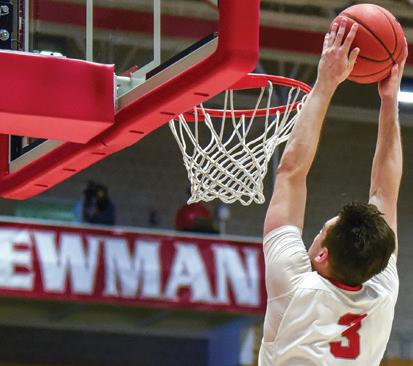
The postponement of the 2020 NCAA Division 1 Men’s Basketball tournament cut short the decennial celebration of Cornell’s remarkable 2009-10 men’s basketball season and March Madness run.
The feats of the 2009-10 team, holding Cornell’s best record and deepest tournament run in school history, signify an elite caliber of achievement that reflects a strong legacy deserving of reminiscence 10 years later.
Prior to the 2009-10 season, the Red came off a strong three-year winning stretch under head coach Steve Donahue. Cornell was the Ivy League champion in both the 2007-08 and 2008-09 seasons before facing early first-round exits in the NCAA tournaments to Stanford and
to Wittman and Foote, the group was experienced and poised to inflict serious damage on the court.
The Red’s 2009-10 seniors were a remarkable group of players whose accolades suggested a season of coming success. Wittman, the son of NBA former player and head coach Randy Wittman, was a unique talent who had shined at Cornell since his freshman year, earning second-team All-Ivy honors in 2006-07 as well as first-team honors in 2007-08 and 2008-09.
Dale also earned first-team All-Ivy honors in 2007-08 and 2008-09 and Ivy League Player of the Year in 2007-08. Foote earned second-team All-Ivy honors in 2007-08 and 2008-09 and was the Ivy League Defensive Player of the Year in 2008-09.
The Red’s 2009-10 seniors were a remarkable group of players whose accolades suggested a season of coming sucess.
then Missouri, respectively.
The 2009-10 campaign marked the culmination of this strong unit’s success, featuring nine seniors led by forward Ryan Wittman and center Jeff Foote. Returning six of the team’s top seven players in terms of minutes played, including guards Louis Dale, Geoff Reeves and Chris Wroblewski in addition

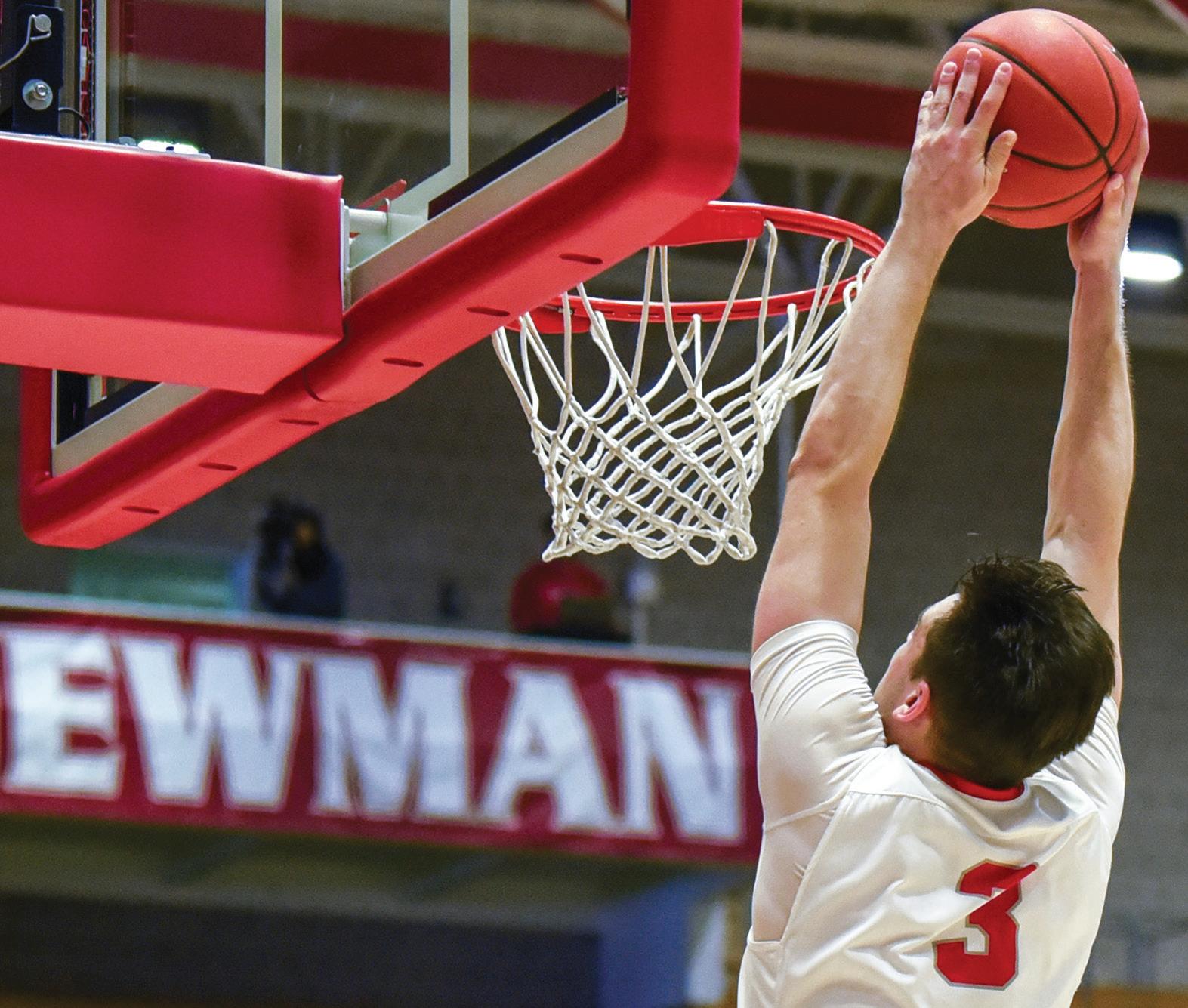
Columbia, Princeton, Brown and Yale. Needless to say, the Red finished the season as champions of the Ivy League with a 13-1 record in conference play.
Even after a 27-4 season featuring two close losses to AP top-five teams, Cornell still hadn’t earned the respect of the collegiate basketball community, entering March Madness as an Associated Pressunranked 12th seed.
to the AP All-American team and a unanimous selection as Ivy League Player of the Year.
Cornell shakily eased into the season, losing two of the first four games to Seton Hall and Syracuse before showing its strength. The Red won the next 10 straight games, most notably a 91-88 victory over Davidson in which Wittman drained a buzzer beater from 35 feet to cap a 29-point performance.
Besides a close 71-66 loss to Kansas and a weak 79-64 performance against Penn, the Red continued the season without blemish.
Aside from the 2007-08 season in which it went 14-0 in conference play, 2009-10 showcased Cornell’s best Ivy League play with convincing double victories over Dartmouth, Harvard,
On March 19, 2010, Cornell silenced the critics with a decisive 78-65 win over fifth seed and AP #12 Temple for the first NCAA tournament win in school history. Dale exploded for 21 points and Wittman added another 20 to cement a victory in which the Red outrebounded and outshot the Owls.
The Red’s miraculous run continued with a shocking 87-69 win over fourth seed and AP #16 Wisconsin.
Two days later on March 21, 2010, the Red’s miraculous run continued with a shocking 87-69 win over fourth seed and AP #16 Wisconsin. Once again, Dale scored 26 points and Wittman added 24 to lead the team against the Badgers.
Unfortunately, the dominant run ended when a stacked first seed and AP #2 Kentucky team led by future NBA all-star John Wall defeated Cornell 62-45 in the tournament’s round of 16 March 25, 2010.
Cornell’s dominant lineup was well-rewarded for their record-breaking success during the season. Wittman’s senior stardom earned him an honorable mention
Foote was again selected as the Ivy League Defensive Player of the Year. Both Wittman and Foote as well as Dale, were all chosen as first-team All-Ivy team members and Wroblewski earned an AllIvy honorable mention. With the graduation of the majority of Cornell’s starting lineup, including Foote, Wittman and Dale, the Red fell out of prominence and hasn’t since returned to a winning culture.
The departure of coach Steve Donahue, winner of the 2009-10 season’s Clair Bee Coach of the Year Award, for Boston College was another significant loss for the gutted team.
Since 2009-10, Cornell hasn’t seen a winning season and has failed to qualify for the NCAA tournament under coach Bill Courtney (2010-2016) and Brian Earl (2016-present). Though success has been rare in recent years and hope seems hard to muster, the heroics of the 2009-10 squad show that Cornell can always have the potential of an elite basketball team with enough Big Red spirit.
William Bodenman can be reached at web89@cornell.edu.