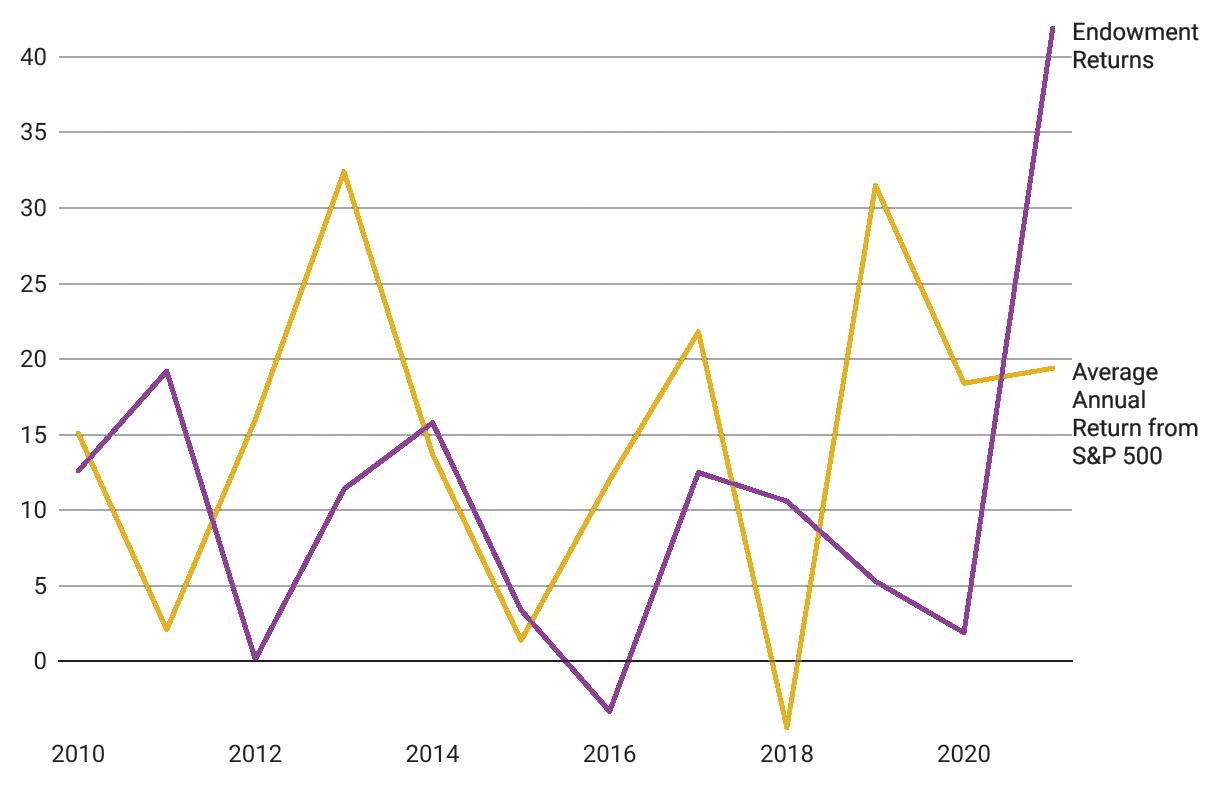
Cornell’s endowment climbed from $7.2 billion to $10 billion during the 2021 fiscal year — delivering the largest gain in more than three decades.
In a University press release, Chief Investment Officer Kenneth Miranda attributed this 41.9 percent investment return to rebounding markets — as well as the University’s five-year endowment restructuring effort, now largely complete.
“It was an extraordinary year, partly because of a unique constellation of events,” Miranda said in the release. “We have a multiyear, almost infinite time horizon, and this money must be stewarded over generations of Cornell students, faculty, staff and research goals, through bull markets and bear markets.”
This 42 percent investment return marks a stark contrast from last year’s 1.9 percent annual return — when Cornell’s total assets fell from $7.3 billion to $7.2 billion because of volatile markets rattled by the pandemic.
Of the Ivy League universities that have so far released their returns, Brown saw the
highest returns, with a 51.5 percent increase, bringing its endowment to $6.9 billion. Cornell also lagged behind Dartmouth, which reported 46.5 percent returns.
While Cornell has historically posted some of the lowest returns among the Ivies, the University edged out the University of Pennsylvania, Harvard and Yale — which
reported 41.1 percent, 33.6 percent and 40.2 percent annual returns, respectively. Columbia and Princeton have yet to release their results.
Cornell’s endowment includes more than 8,000 accounts that remain a source of financial support for faculty, research, student programs, financial aid, athletics
and other programs. The University taps a portion of endowment earnings each year to support its operations — though that spending is capped at 7 percent under New York State law.
Year to year, the University distributes about 5 percent of its endowment earnings on the operating budget — below the state cap. Last year, Cornell spent an extra $15 million from the endowment to help manage its pandemic expenses, according to the release.
With these returns, Cornell’s endowment reached a record $10 billion — which comes as the University has restructured and repositioned the portfolio under Miranda’s tenure, including through enhancing liquidity and diversifying assets. This restructuring has included moving University investments to New York City to “tap into a larger pool of potential staff members and be closer to the world capital markets,” the press release reads. According to Miranda, “the portfolio is in a good place” as the University sees the results of the restructuring.
Campus Reopens Doors for In-Person Student Tours
By AIMEE EICHER Sun Contributor
Since the postponement of in-person admissions events in early 2020, prospective Cornell students could only get a glimpse of campus through virtual tours and Zoom information sessions or unofficial tours done by friends.
But as of Friday, Oct. 15 the tradition of in-person fall campus tours resumed.
Nico Modesti ’21 — who has been a tour guide for three years — is excited to interact with prospective students in person again.
“You never know who you’re going to meet on a tour, where they’re coming from and what stories they have,” Modesti said. “Getting to connect with visitors is
the reason why the job is different every single day, and I love it so much.”
Charlie Mueller ’24 and Tia Taylor ’25, two students who are not tour guides, feel comfortable with tours resuming as long as visitors maintain physical distance from students and wear masks indoors.
A recruited track athlete, Taylor was frustrated at not being able to speak to coaches and athletes in-person when she applied to Cornell last fall. She supports the University’s decision to resume campus tours, as she does not want current prospective students to share that challenge.
Although in-person admissions events will resume, the Office of Visitor Relations will continue to
hold virtual information sessions, video tours and livestream campus tours.
“Livestream virtual tours have been quite successful,” Taiya Luce, the director of visitor relations, wrote in an email to The Sun. “Our office has been able to reach an audience who may not have had the means to travel to Ithaca either due to logistics or economical reasons.”
Modesti mentioned that the Zoom chat feature made it easier for prospective students, who may be nervous to ask questions in-person, to ask questions. He felt that virtual tours empowered students to learn more about the University.
Charlie Frankel, a prospective member of the class of 2027, sees some benefits of virtual tours, but would still like to visit a campus before committing to attend.
“It makes visiting colleges that are really far away a lot easier and a lot cheaper, because you don’t need to pay for travel,” Frankel said.
“[But] I’m definitely going to
want to like the area and know where things are.”
Frankel wants to take an in-person, student-guided campus tour, because “a student can give you very honest and very direct answers to questions.” Frankel plans to ask his student tour guides about their opinions of campus: for example, whether it is walkable in the winter and which buildings are most inconveniently located.
“Questions like that, I feel like you wouldn’t really be able to answer yourself,” Frankel said.
Sadie Transom — another prospective member of the class of 2027 — is excited that the University is resuming in-person tours. To her, virtual tours felt like an insufficient alternative.
“With virtual tours, I’m seeing exactly what they want me to see,” Transom said. “I’m not going to be able to see if I could actually
picture myself there.”
Transom is considering registering for one of the University’s campus tours within the next month. She is looking forward to learning about campus life from a student — on an in-person tour, she said, “you get to see and hear about what student life is really like.”
Tours will continue on select dates through Nov. 13. In-person information sessions will resume as well, the first being held on Saturday, Oct. 23. Visitors are required to register for both tours and information sessions in advance on the University’s visitor relations website. For in-person information sessions, visitors must provide proof of COVID-19
cination or a negative test result within 72 hours of the
Sun Managing Editor
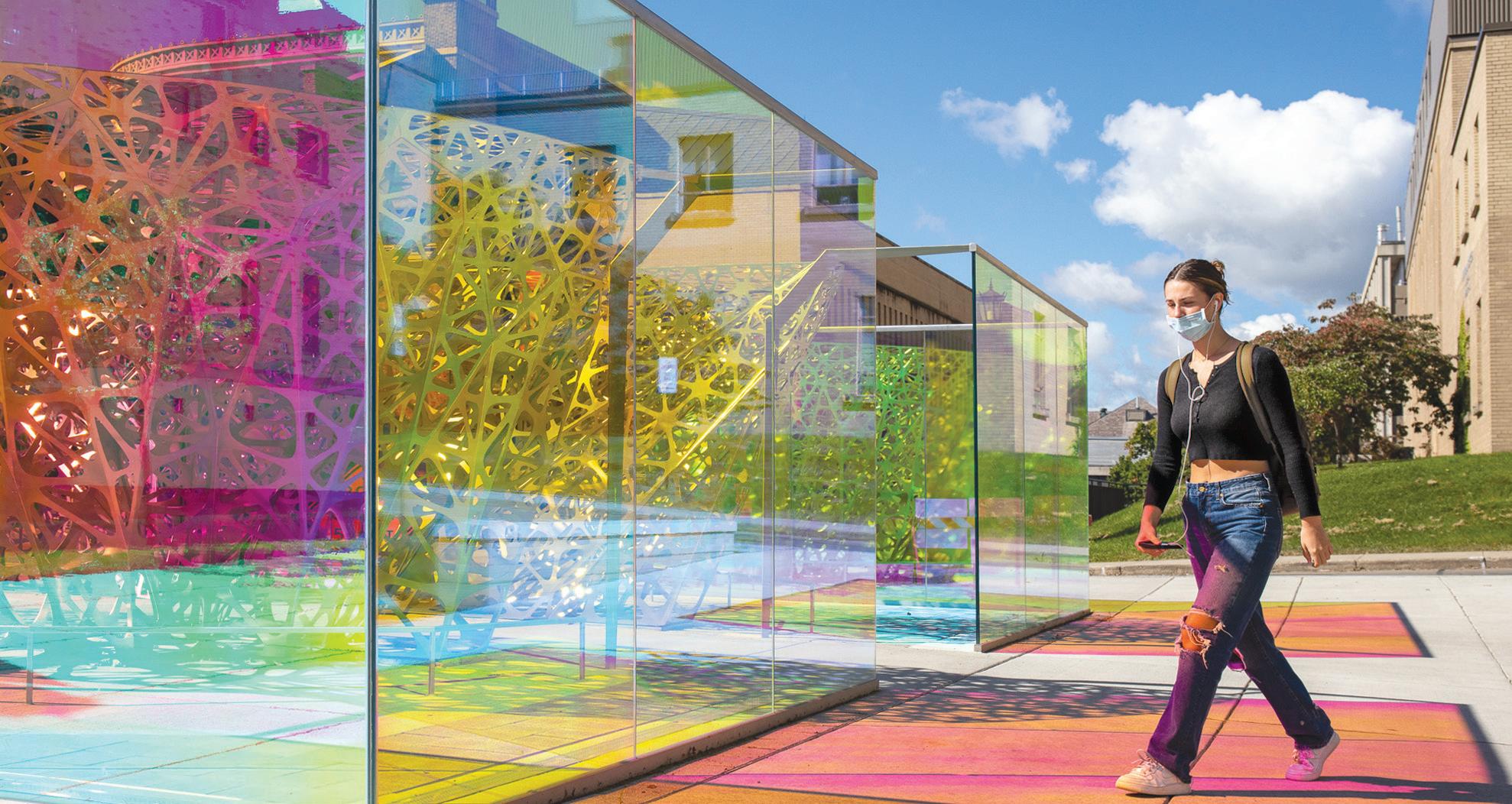
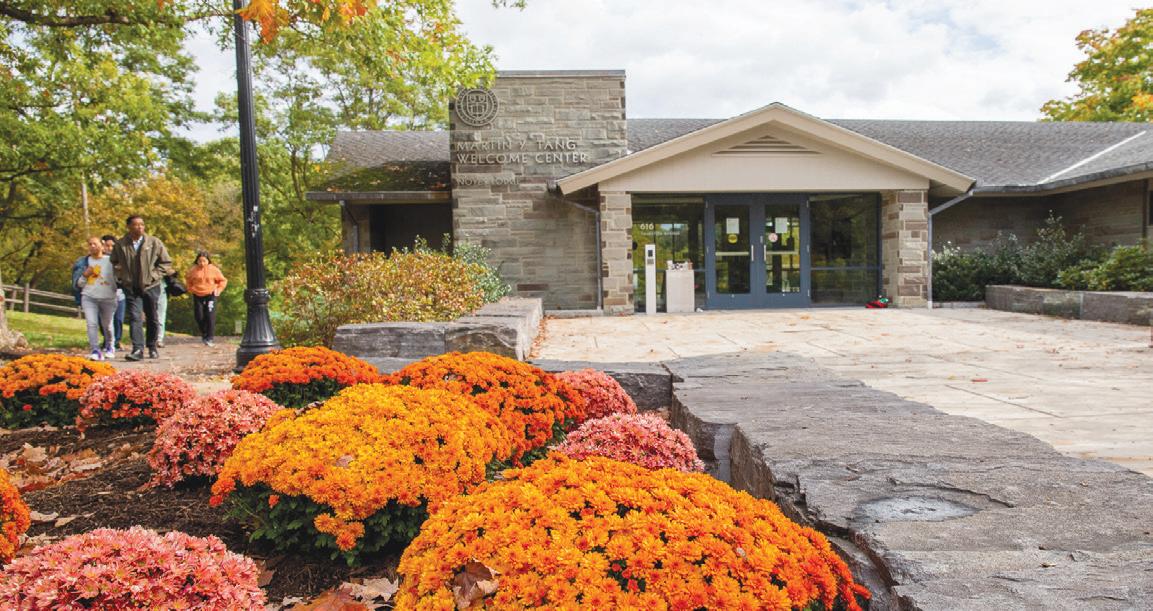
Colorful welcome | The Martin Y. Tang Welcome Center is a hub for prospective students and their families visiting Cornell.
A LISTING OF FREE CAMPUS EVENTS
Equine seminar | Tate Morris DVM ’16 will be offering a seminar where he will discuss the various forms of colic experienced by horses on Tuesday evening and educating students on the multifaceted process of the colic workup, as well as the apropriate course of treatment veterenarians should use for equine colic.
Today
Chemical and Biomolecular Engineering Seminar Series: Phillip Savage, Pennsylvania State University 9 a.m., Virtual Event
Joint Labor Economics and School of Public Policy Workshop: Kevin Ng grad 11:15 a.m. - 12:45 p.m., Ives Hall, 116
Introduction to Citation Management With Endnote Noon - 1 p.m., Virtual Event
Ecology and Evolutionary Biology Seminar Series, Ann Tate 12:20 - 1:20 p.m., Mudd Hall, Morrison Room
Francis Fukuyama ’74, The American State in a Multipolar World: COVID-19, Climate and the Coming Challenges To Global Democracy 4:30 - 6 p.m., Klarman Hall, KG70
Tomorrow
Econometrics Workshop: Ben Deaner, Cowles College 11:15 a.m. - 12:45 p.m., Ives Hall, 217
Joint Behavioral Economics Workshop and Development Workshop: The Long-Run Effects of Psychotherapy On Depression, Beliefs and Preferences – Frank Schilbach, Massachusetts Institute of Technology 11:15 a.m. - 12:45 p.m., Sage Hall, 141
The Development Diplomat: Working Across Borders, Boardrooms and Bureaucracies to End Poverty With Fatema Z. Sumar Noon - 1 p.m., Martha Van Rensselaer Hall, 2114
Fake News, Alternative Facts and Disinformation: Learning to Critically Evaluate Media Sources Noon - 1 p.m., McGraw Tower, Uris Library
Berger International Speaker Series with Sandra Babcock –Documenting the Resistance to Israel’s Occupations Amid An Escalating Campaign to Silence Dissent: The Work of the International Human Rights Clinic 12:15 - 1:15 p.m., Myron Taylor Hall, Landis Auditorium
Laboratory of Atomic and Solid State Physics and Applied And Engineering Physics Seminar, Xiaoming Mao –University of Michigan 12:20 p.m., Clark Hall, 700
Under the lights of Schoellkopf, Red bests Colgate 34-20 with help from new quarterbacks
By LUKE PICHINI Sun Sports Editor
Through its first four games, Cornell was scoring just 14.5 points per game and had posted an offensive efficiency of 95.8, both last in the Ivy League. Sitting with an 0-4 record, the Red needed a turnaround.
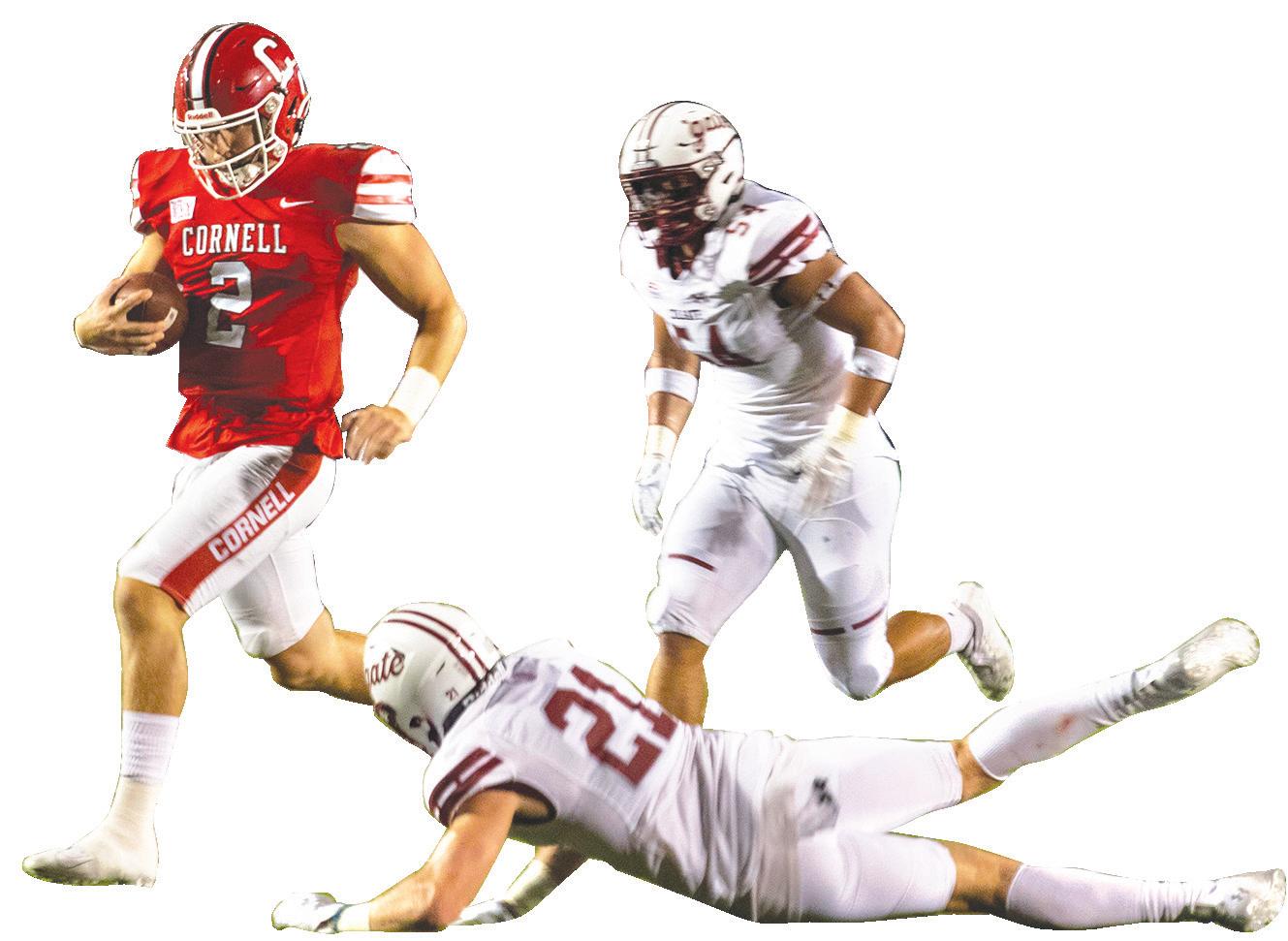
On Friday night against Colgate, the offense finally came to life. With a three-quarterback rotation consisting of fifth-year Richie Kenney, freshman Jameson Wang and sophomore Luke Duby, the Red overpowered Colgate en route to its first victory, 34-20.
Cornell’s (1-4, 0-2 Ivy League) offense started off slow, going three-and-out on its first drive. On third down, Head Coach David Archer ’05 inserted freshman quarterback Jameson Wang, whose pitch to freshman running back Eddy Tillman fell short of the line to gain. Archer previously utilized Wang for a couple plays against Harvard, but the first-year had a much bigger evening as part of the Red’s new QB rotation.
“We learned that we were all going to get playing time and that we were going to go with the hot hand,” Kenney said. “There was one goal this week, and that was to win — whatever it looked like.”
While the transitioning of quarterbacks throughout the game can create tension or uncomfortability for teams, that was not the case for the Red.
“Sometimes it’s awkward when you have
to switch off,” Duby added. “But I think for us, we have a great relationship.”
The Raiders (2-5, 2-0 Patriot League) gained greater ground on their opening drive. Relying on the legs of running back Max Hurleman as well as the quarterback duo of Michael Brescia and Harry Kirk, Colgate converted on several third-down opportunities and worked its way into Cornell territory. The Red buckled down on defense, though, forcing a 4th-and-8 from the Cornell 32-yard line. On the play, junior safety Jalyx Hunt applied great pressure, hurrying Kirk to force an incomplete pass.
In a more desirable field position by forcing a turnover on downs, Cornell quickly went to work. Wang and Kenney rotated in and out throughout the drive, much like Brescia and Kirk did for Colgate. With the rotation, the Red’s offense looked crisp, continually picking up chunk gains on the ground and through the air.
“We needed a spark,” Archer said, speaking about the new QB rotation. “We had not scored in the first quarter, and we weren’t putting up the amount of points we thought we could. It wasn’t a blame-game scenario on any one player but that [QB rotation] is noticeable. The other rotations aren’t as noticeable. A lot of guys rotate in at different positions, but you notice it when it’s three different quarterbacks.”
Cornell navigated the ball down to the goal line, and on second-and-goal, Wang, attempting his first career pass, found soph-
omore tight end Matt Robbert in the end zone, marking the freshman’s first career touchdown. On the grab, Robbert also recorded his first career reception and touchdown.
“I knew I was going to get some opportunities when we got closer to the red zone,” Wang said. “I stayed after practice working on those plays so I could really get them down.”
That touchdown put the Red up, 7-0, but that lead quickly evaporated. On the ensuing kickoff, Colgate defensive back William Gruber took the return all the way to the house down the left sideline, knotting the game at seven apiece.
On Cornell’s next drive, Archer inserted another new face from the QB room: sophomore Luke Duby. The Red looked like it was heading toward another three-and-out, but a pass interference penalty assessed against Colgate on third-and-long kept the drive alive.
The very next play saw Duby find senior wide receiver Thomas Glover, who took it down the sideline for a 47-yard gain before being tripped up at the Colgate 18-yard line. That play brought about the end of the first quarter, and at the beginning of the next frame, Wang sprinted in for another touchdown — this one from 18 yards out. With that score, Cornell went back on top, 14-7.
Art Installation Draws Students’
Attention to Indigenous Tragedy
By FINLEY WILLIAMS Sun Contributor
Just before the beginning of fall break, Cornell students trekking up the northeast side of the slope were greeted with a surprise: three logs had been bolted together and laid across the walkway.
These logs — a part of a Cornell-approved temporary art installation by Bushra Aumir ’22 called “Routes” — remained on the slope from Oct. 6-11. Aumir said the project was inspired by the U.S. government’s 1960 seizure of the Ohi: yo’ Territory, inhabited by the Seneca Nation of Indians, in order to break ground on the Kinzua Dam in Pittsburgh.
She began the project as a part of Art 3499: Sculpture as a Platform for Advocacy in the Public, and decided to take it beyond the scope of the class.
On the first day of the installation there was no signage — the logs were present without any written explanation in order to stoke curiosity among those that encountered the installation.
“I wanted people to be curious and wonder why they were being blocked. How it played out in my story was, people got mad/angry that their path was blocked. It resulted in a strong emotional response,” Aumir said in an email to The Sun. “So when they found out ‘why’ in the next few days they were able to critique it. It made them think about how it feels to be blocked and to have their path taken away.”
On the third day, Aumir said, she attached a QR code leading to the project’s website next to the installation. On the fourth, which coincided with Indigenous Peoples’ Day, she displayed a sign explaining her intentions.
Aumir said she chose not to display explanatory signage until the third and fourth days because she wanted passersby to first experience the feeling of having their path blocked, similar to the way in which the roads of the Seneca Nation were flooded by the Kinzua Dam construction.
Aumir said that this tragedy, though physically and temporally removed from Cornell, is relevant because of Cornell’s status as a land-grant institution built on seized indigenous land. The Kinzua Dam was intended to protect Pittsburgh from flooding and pollution, but the construction led to the flooding and destruc-
The Red’s defense then denied the Raiders a chance to tie it up, forcing a three-and-out. Cornell’s offense, looking reinvigorated, continued to pound the ball down Colgate’s throat. Senior running back Devon Brewer and freshman running back Eddy Tillman both picked up first downs to move into Raiders territory.
tion of Seneca land, forcing its people to relocate. The traditional Seneca Nation lands are located about 160 miles southwest of Cornell.
“I think the sentiment of being forced out of their land is the same, whether it be Cornell being a land-grant university and the land is essentially taken to build a university, or the land is taken to help Pittsburgh not have floods anymore,” Aumir said. “Natives have been giving up a lot of their resources or have been forced to give up a lot of their resources in the name of progress.”
Aumir, who is not Native but collaborated with indigenous faculty members and the Seneca Iroquois National Museum, sees blocking the path as an allegory for the U.S. government’s flooding, destruction and reduction of Seneca land.
“I thought that was the perfect way to get the sentiment across that you've worked so hard and you’ve come up all the way, and then there's a block,” Aumir said. “What I'm saying is that the path is for the Cornell community — you can use the path — but I'm just going to block it.”
Some students were indeed confused by the lack of signage.
“I feel like the art kind of speaks for itself. It’s open for interpretation, but I guess it was a bit more confusing not having any context for what it was,” said Raena Prude ’23.
On the project’s fourth day, Aumir said that the installation was even moved without authorization by an unknown individual so that it no longer blocked the path, and the QR code and signage were stolen. To Aumir, this frustration was a main goal of her project.
“I'm sure there was some sort of feeling they got by being blocked. It's like instantaneously, if you are approaching your path and someone’s blocked it, it brings up a feeling,” Aumir said. “It brought those uncomfortable feelings out like, ‘Why is someone taking my path, why do I have to deal with this?’ You can't compare what we felt to what the Natives felt at all. But even if this tiny block makes you so infuriated that you had to move it, imagine the immense sort of grief that these [Natives] feel.”
Finley Williams can be reached at vlw28@cornell.edu.
zone. On a 34-yard rush, the Lexington, Kentucky, native broke several tackles and the plane, lifting Cornell to a 21-7 lead while also notching his first career touchdown. By scoring three touchdowns, the team matched its previous season-high in points, which came in the first game against Virginia Military Institute, all while doing so in the first half.
“There was one goal this week, and that was to win — whatever it looked like”
Richie Kenney ’21
“If you would have told me my first touchdown would have been a 30-or-whatever-it-was rushing touchdown, I would have said you’re lying,” Duby said. “I’m a passer. Everybody knows that, but it was really exciting.”
Before Colgate’s next drive could pick up any steam, sophomore linebacker Holt Fletcher came in for a big sack on Brescia, moving the Raiders back five yards. Colgate could not convert on third-and-long, giving the ball back to the Red.
Having scored a touchdown on its previous three drives, Cornell added another tally to the scoreboard. This time around, Kenney and Wang alternated, driving the ball down to the goal line. Penalties pushed the Red back, setting up a third-and-goal all the way from the 24-yard line.
“We had to focus on high energy and taking care of the football,” Kenney said. “I think both the offense and defense feeding off each other’s energy was why today was able to be so special.”
After an illegal formation penalty, the Red faced a 1st-and-15 from the Colgate 34-yard line. Duby didn’t just pick up a first down on the next play, rather he rumbled all the way to the end
Undaunted, Kenney heaved a dime into the end zone, connecting with senior wide receiver Curtis Raymond III for the score. At this point, Cornell had rotated in three different quarterbacks — Kenney, Wang and Duby — all of whom scored at least one touchdown. Each of them split time under center, and they combined to lead four consecutive touchdown drives without turnovers, reviving an offense that was mostly dormant in its first four games.
Colgate finally mustered a response before the half. On a drive plagued by penalties — including one that saw fifthyear cornerback Kenan Clarke ejected for targeting — the Raiders found the end zone as Kirk’s 43-yard completion to wide receiver Garrett Oakey was followed by a one-yard plunge from Brescia. With the clock dwindling, Cornell kept its offense on the field and nearly scored on a hail mary completion from Kenney to fifth-year wide receiver Alex Kuzy. Kuzy was short of the goal line, though, so the Red took a 28-14 lead into halftime.
To continue reading this article, please visit cornellsun.com.
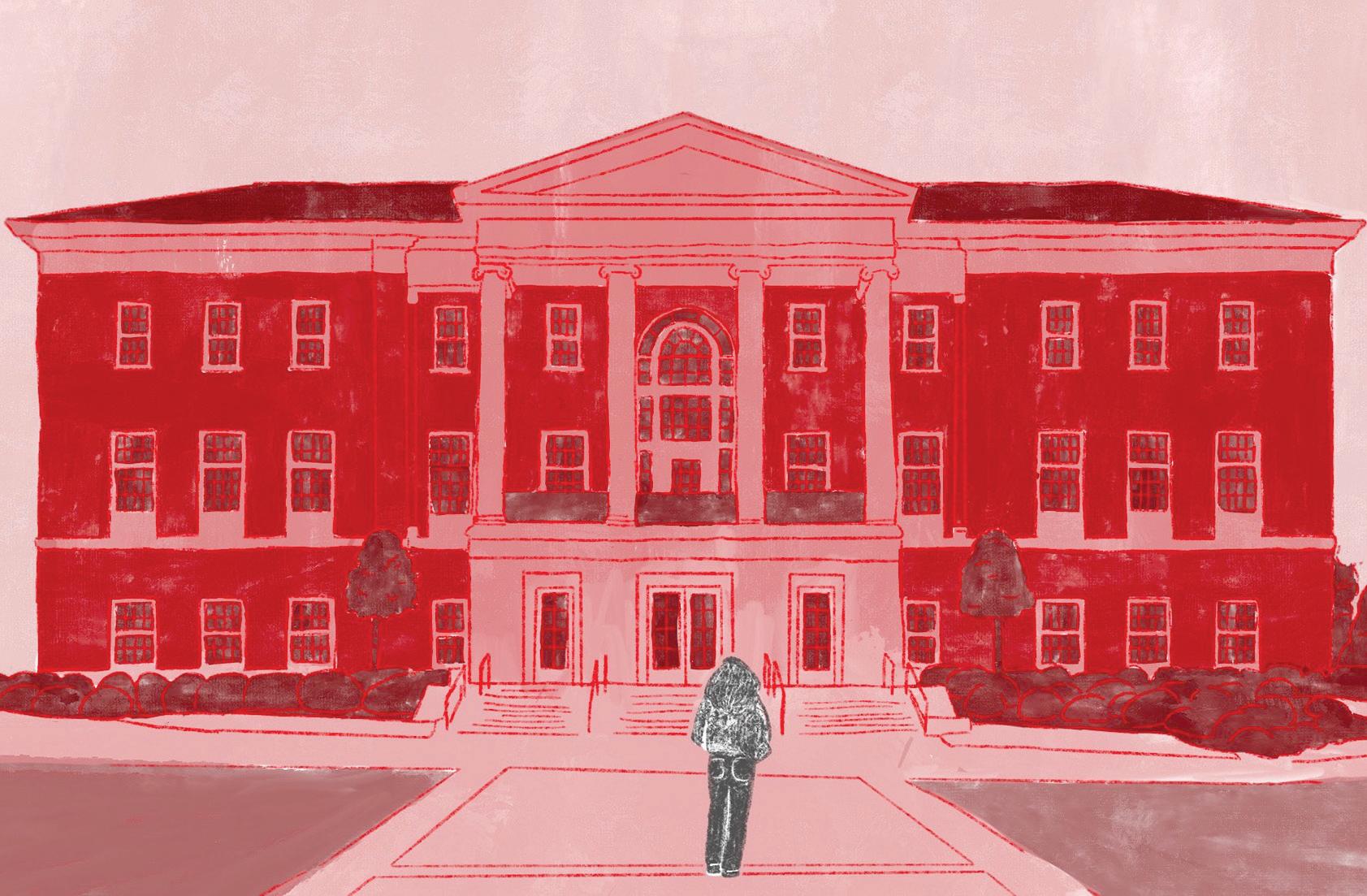
T e Sexual Assault Double Red Zone: Awareness and Safety
KACEY LEE ARTS CONTRIBUTOR
Students, vaccination cards and fake IDs in tow, returned to campus with the anticipation for parties, nights out, and literally any gathering that consisted of more than five people. After a year of being cock-blocked by COVID-19, these events–the supposed epitome of the college experience–were finally (somewhat) plausible again. Yet, amidst the streams of Taylor Swift and the tank-top-and-shorts combo, it’s valuable to consider the real implications of the revived college party scene.
The Red Zone, a term coined by Robin Warshaw in the novel I Never Called It Rape, refers to the weeks from orientation to Thanksgiving break in which 50% of all college campus sexual asssaults occur. Largely impacting first years, Promoting Awareness Victim Empowerment states that the Red Zone is attributed to three main influences: an Uptick in parties that celebrate the return to campus and Greek Life, younger students being exposed to campus culture for the first time, and a lack of sexual violence education or knowledge. The Maryland Coalition of Sexual Violence also writes that, “As older students return to campus intending to make up for the lost time during the pandemic, the number of social events that will take place this fall will likely increase.”
However, with two classes of students — first years and sophomores — arriving on campus for the first time at most universities, researchers project the number of sexual assaults to double, resulting in the Double Red Zone; while it’s too soon to have national data on the last two months, we’re already seeing mass protest over how universities have responded to sexual assaults.
Undoubtedly a scary time for most, knowledge about the Double Red Zone should not be motive to sit in fear; but rather, it should encourage you to do your part to keep yourself and others safe by actively dismantling cultures of sexual violence on our campus. The responsibility to foster a safe community is on the shoulders of everyone who participates in that community.
Everyday conversations about college sexual assault prevention is largely predicated in what at-risk individuals can do to decrease the probably that they will be assaulted: Understanding what constitutes sexual assault, walking in illuminated areas, covering your drink, the buddy system, location sharing and the list goes on. Though proliferating and implementing these strategies is definitely invaluable, it’s equally as imperative to interrogate the ways in which campus culture exacerbates sexual assault; as the cause of assault is never that someone didn’t “do enough to not be assaulted” but the assaulter themself.
Reagardless of what university is in question, campus culture feeds into rape culture, and as stated by Indiana University: “Many of these incidents [of sexual assault] happen at or after parties.”
I’ll admit, I love parties. I love the cute outfits and the dancing and drinking and
the meeting of new people. Yet, parties being fun is not a pass to excuse the ways they can perpetuate sexual violence. I’d contend that not all parties are bad parties. The problem arises when a party promotes a binary gendered, sexual space wherein assaulters, typically men, come with the
ty-five percent of women reported drinking or taking drugs prior to an attack... Intoxication makes it easier for rapists to control their victim.”
Once again, drinking at parties for fun is absolutely fine. Alcohol does not cause rape or assault: The perpetrators do.
the wants of the survivor serves to alleviate some of the harms provided by institutional derelictions.
As a survivor of assault myself, I think it is valuable to once more say that assault is never at the fault of the survivor. The aftermath of assault is conducive to feelings of
expectation for sex while women are commodified and indebted to them.
It starts at the door. If you’re at Collegetown on a Saturday night, looking down the roads of beat up houses, you’ll typically see a group of people (more often than not, men) standing at the door, guarding their rooms overflowing with colored light and music. Whether it be only allowing groups with a high girl-to-guy ratio from entering or permitting women to enter for free while requiring men to pay, these systems promote the expectancy for sex.
Don’t get me wrong, it is totally okay to go to a party wanting to hook up with a hot stranger. Again, it’s the expectation for sex and system of indebtedness that is problematic because it overlooks consent. Sexual assault thrives in ecosystems where power dynamics exist. We all know that cis men hold power in our patriarchal society, and when they’re put in a place where they feel as though they are deserving of sex, consent is disregarded. Sex isn’t something that should be expected, but wanted by both parties. As supported by Molly Hopkins of Ramapo University, “Many college males accept the false notion that women are at parties solely to please them.”
Furthermore, Hopkins continues, “Seventy-five percent of men and fif-
However, the combined forces of alcohol and common systems of loyalty among friend groups and fraternities is another aspect of college culture that exacerbates sexual violence. In a gendered space, as those found within fraternities, men are typically concerned with notions of loyalty and are more likely to value members over victims of assault–discouraging accountability and encouraging sexual assault.
Being critical of yourself, your friends and your environment is crucial. Knowing how your actions or lack of actions allow these cultural phenomena to occur is fundamental in curbing sexual violence. When we have these conversations, become cognizant of our thought processes, and learn to truly support survivors can our campus become a safe place to be.
Furthermore, holding perpetrators accountable when assault does occur is beyond indispensable.
Megan Simard, a survivor and previous student at Queen’s University, shares her story and brings attention to the gross systemic failures of university institutions that denied her the justice she deservingly sought out. She writes, “I had failed to be the “perfect rape victim,” and so I had no chances of securing a conviction. Our systems are an obstacle course that keeps us from reporting.” Students and staff pushing for accountability cognizant to
isolation, shame, blame, and dehumanization. Though I can’t guarantee that healing from assault will be easy, it is unquestionably possible for anyone. If you have experienced sexual assault, do not be afraid to reach out to help from your friends, family, the Victim Advocates program at Cornell, a support group, teachers, or literally anyone that you trust. Have the courage to advocate for yourself in ways that are most comforting to you and seek out joy within your life: your survival is an act of protest deserving of celebration. At the end of the day, it is not a matter of whether or not you are capable of getting through it, that is guaranteed, but how much you will grow because of it.
Members of the Cornell Community may consult with the Victim Advocate by calling 607-255-1212, and with Cornell Health by calling 607-255-5155. Employees may call the Faculty Staff Assistance Program (FSAP) at 607-255-2673. An Ithaca-based Crisisline is available at 607-272-1616. The Tompkins County-based Advocacy Center is available at 607-277-5000. For additional resources, visit health.cornell.edu/services/victim-advocacy.
Kacey Lee is a freshman in the College of Agriculture and Life Sciences. She can be reached at ksl52@cornell.edu.
TILDA WILSON / SUN GRAPHICS
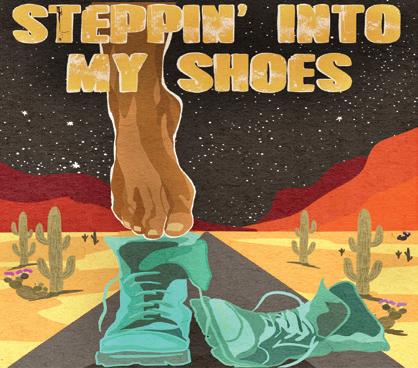
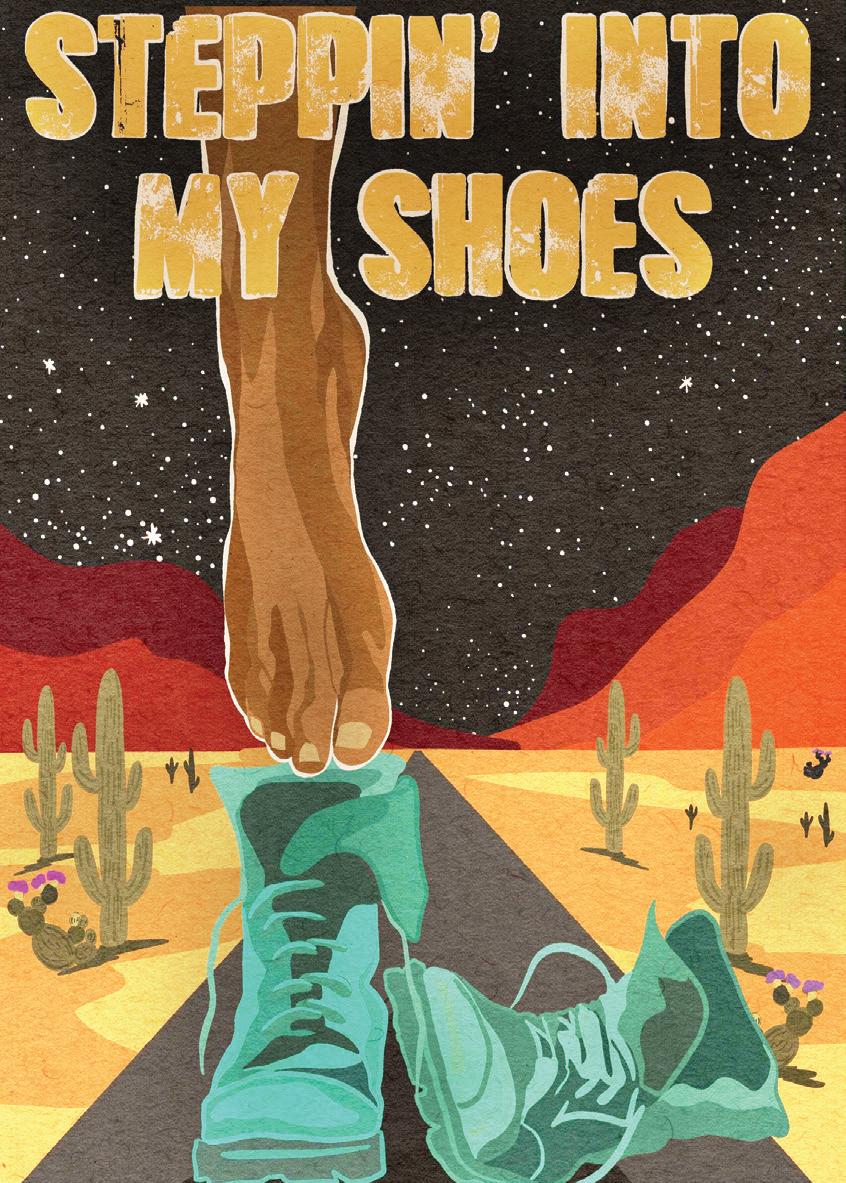
Formerly Incarcerated Ithacans Share Stories In Radio Play Steppin’ Into My Shoes
TILDA WILSON SUN GRAPHICS EDITOR
Last fall, a group of Ithacans who have been formerly incarcerated or experienced court involvement shared their stories in the form of oral history interviews they conducted with one another, which will be archived at the History
our community.”
Taylor hopes that the oral histories and radio play will help to “crack open a mythology of a very narrow understanding of who experiences incarceration and why and how,” and “affect a shift in how we engage our community that makes space for people who’ve experienced these systems.”
Center in Tompkins County. Over the summer, a group of the same people transformed what they shared into a radio play called Steppin’ Into My Shoes , which was released throughout September and can be downloaded now on Spotify, Apple and Google podcasts.
According to Julia Taylor, the director of
Re-Entry Theatre (which sponsored and facilitated the project along with College Initiative Upstate), part of the purpose of this project was to “make available the vast diversity of experiences in our community.”
From the perspective of a Cornell student, it might be easy to imagine that Ithaca is a white, academic, upper-class community, but Taylor wants more people to realize that “while that identity exists here, our community is so much broader than that. The stories told in these oral histories, while painful, show other aspects of
Steppin’ Into My Shoes is not always an easy listen. Hearing the stories of people who have experienced systemic issues in our community, however, prevents us from ignoring them. And through memories of addiction or tragedy or abuse, the radio play showcases the strength and resilience of its storytellers, and the movements for change that are already happening around us.
Steppin’ Into My Shoes has three episodes that center on three themes the writers and actors pulled from the oral history transcripts. The first episode, “Family,” stitches together stories about the many forms family takes for the interviewees. The second episode, “Hot Topics,” turned accounts from the oral histories into a fictionalized interview show meant to inform listeners about the successes and shortcomings of existing addiction treatments. The episode goes into detail about harm reduction, which is a treatment plan that focuses on the safety and well-being of people who use drugs, rather than the penalization and court involvement that many of the oral history participants experienced. The final episode, “Hopes & Dreams,” showcases the moments when interviewees talked about their successes and hopes for what comes next for them.
Steppin’ Into My Shoes and the oral histories it’s based on carve out space for the memory of the systemic issues that lead to racism, poverty and addiction in our town. They also act as a reminder that everybody has a story to tell — and it’s never as simple as you think.
For more information about ReEntry Theatre or to donate to their ongoing work, visit civicensemble.org. For more information about College Initiative Upstate, which provides free access to college and academic support for people who have experienced incarceration or court involvement, visit ciutompkins.org.
To view more resources, visit cornellsun.com.
Tilda Wilson is a senior in the College of Arts and Sciences. She can be reached at mrw286@cornell.edu.
Lil Nas X Gives Birth To Dazzling Montero
Lil Nas X’s debut album Montero was just as exciting and shocking as his pregnancy bump and the dazzling baby shower.
The album starts off on a promiscuous and shocking note with “Montero,” the song that ruled TikTok for months. The dangerously addicting anthem is reflective of Nas’ acceptance of his queer identity and his willingness to embrace his sexuality unabashedly.
Nas declared: “I wanna sell what you’re buying / I wanna feel on yo’ ass in Hawaii” and then slid down a (fireproof?) stripper pole down to the depths of hell in the Montero music video. Shortly thereafter, he gave a black leather studded satan a skillful lap dance. The song and the music video gave us a hint to what the rest of the album was going to be:
Promiscuous. Fun. Unapologetic. Honest.
Lil Nas X’s growth from “Old Town Road” is clear with his debut album Montero as he explores the most vulnerable parts of himself through his songs. “That’s What I Want” showcases an upbeat melody and rhythm so catchy that it almost hides the lyrics that showcase Nas’ desperate longing for love and desire. “Tales of Dominica” serves as a personal anecdote as the singer sings about the anger, sadness and loneliness that he felt in a “broken home” and how he was “living at my lowest.”
Tracks like “Sun Goes Down” kicks it up another personal notch as the singer candidly ponders, “Always thinking, ‘Why my lips so big?’/ Was I too dark? Can they sense my fears?”
Yet, if anything, Lil Nas X is also known to not take himself too seriously. Nas’ famous (arguably infamous) quirky wit and humor is seen through tracks such as the megahit Industry Baby in which he raps about his Grammy Awards and his current momentum in the music industry, along with another rising star, Jack Harlow. The tracklist also features other notable artists in the music world, such as Doja Cat, Elton John and Miley Cyrus.
Montero is an album that is more like Lil Nas X’s personal diary. The artist explores different dimensions of himself that make up who he is and brings it to life through catchy rhythms, provocative lyrics and a fun beat that will make almost everyone want to get up and dance.
Lil Nas X’s growth as an artist and as an individual shines clear through this album and it is truly beautiful to see this through an artistic medium we can all enjoy.
This album is for anyone who wants to feel empowered and confident about their individuality and sexuality. For anyone who wants to love and be loved. For anyone that sometimes just wants to boast about how fabulous they are and give a (metaphorical) middle finger to the haters.
Really, this album is for everyone.
Audrey Ahn is a sophomore in the School of Industrial and Labor Relations. She can be reached at sa752@cornell.edu.
COURTESY OF JULIA TAYLOR
AUDREY AHN SUN CONTRIBUTOR
CIVIC ENSEMBLE / YEN OSPINA
COURTESY OF COLUMBIA RESCORDS
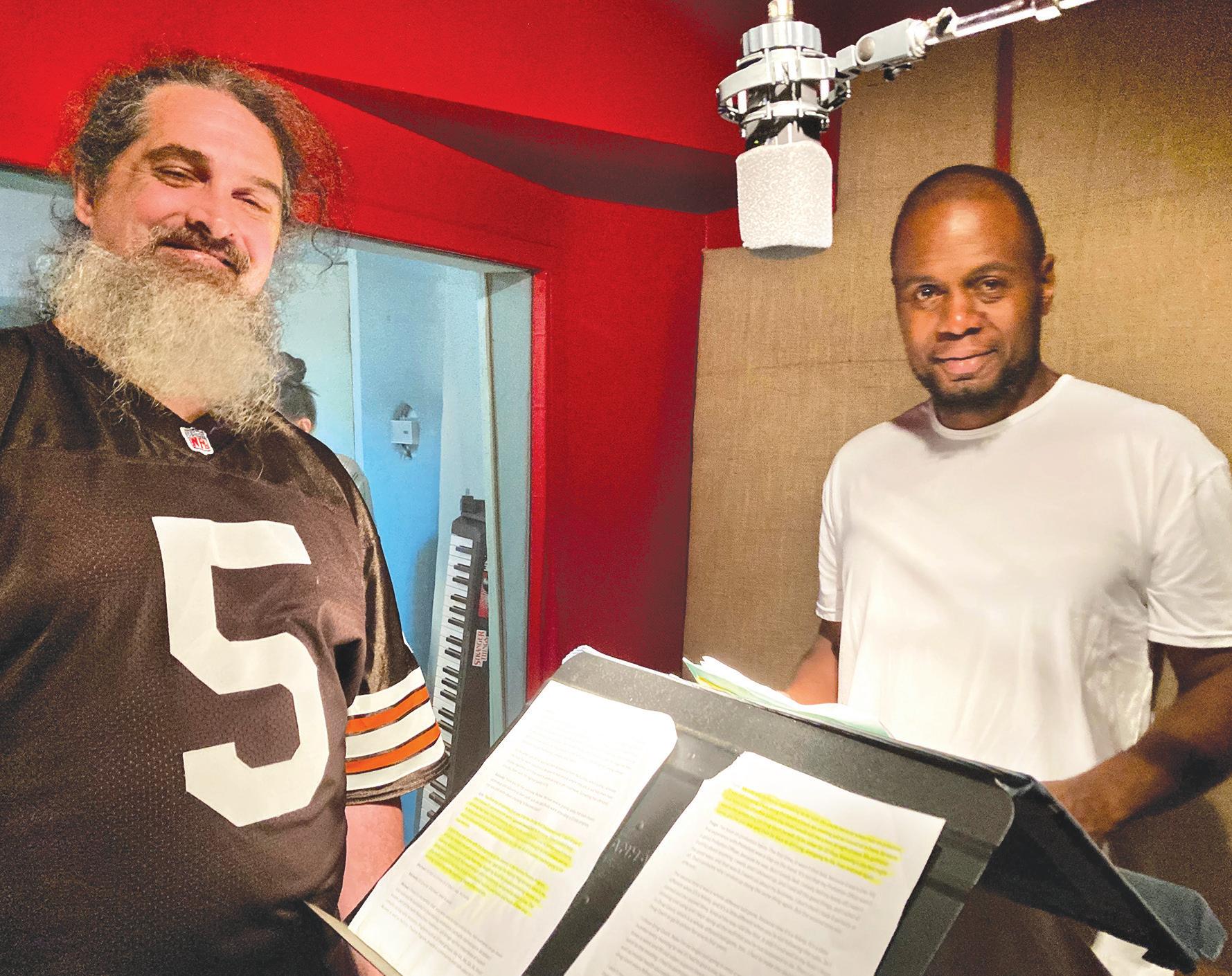
In the studeo | A. C. Slide and Leroy Barrett recording.
KATHRYN STAMM ’22
ANUSHYA ALANDUR ’23
Business Manager
CATHERINE ST. HILAIRE ’22
Associate Editor
PRANAV KENGERI ’24
Advertising Manager
ODEYA ROSENBAND ’22
Opinion Editor
JYOTHSNA BOLLEDULA ’24
News Editor
TAMARA KAMIS ’22
News Editor
CAMERON HAMIDI ’22
App Editor
KRISTEN D’SOUZA ’24
Design Editor
HANNAH ROSENBERG ’23
Photography Editor
OMSALAMA AYOUB ’22
PUJA OAK ’24 Layout Editor
ANNIE WU ’22
MIHIKA BADJATE ’23
Assistant News Editor
SERENA HUANG ’24
Assistant Business Editor
ANGELA BUNAY ’24
Assistant News Editor
JOHN COLIE ’23
Assistant Arts & Culture Editor
AMELIA CLUTE ’22
Assistant Dining Editor
WILLIAM BODENMAN ’23
Assistant Sports Editor
AARON SNYDER ’23
Assistant Sports Editor
MEGHANA SRIVASTAVA ’23 Compet Manager
MADELINE ROSENBERG ’23
Editor
KOH ’23
OZA ’22
Editor
HEO ’24
Editor VEE CIPPERMAN ’23
UMAR ’23
E.D. PLOWE ’23
YOON ’23
VELANI ’22
PICHINI ’22
TYAGI ’22
MENDOZA ’24
ARANDA ’23
BASU ’23
KAYLA RIGGS ’24
LEYNSE ’23
NAGEL ’24
’24
ABAYEVA ’24
’22
Christian Baran
Honestly
Christian Baran is a senior in the College of Agriculture & Life Sciences. He can be reached at cbaran@cornellsun.com. Honestly runs alternate Fridays this semester.
Memories of Growing Up Together
Acouple of nights ago, one of my sisters sent me and another one of my sisters a TikTok. The clip showed a woman in her mid-20s holding a glass of wine, with emotional music in the background and a caption that read, “reminiscing with your siblings on memories of growing up together.” The group chat flooded with sad emojis and wistful sentiments. I responded “lol” because I’m their older brother. They both disliked the message.
Despite my ambivalence in the group chat with my sisters, the video got to me. They sent it late at night, and as I laid in bed, nostalgia swept through me. I reflected on how I would likely never again live with the people who I spent the first 19 years of my life with.
to have family nearby, it’s easy to take our relationships with them for granted. After all, we’ve never had to try very hard to maintain our closeness with them. They know we care for them and we know they care for us. But at a certain point, if we slip in our communication too much, that self-evident truth begins to lack the action that props it up. Emily Muniz has found that it’s “important to reach out to family through a little text or something whenever [she’s] thinking of them or [she] sees something that remind [her] of them, because [she] knows they know [she] loves them, but everyone appreciates a little out-of-the-blue reminder that they’re on someone’s mind.”
Bolleddula ’24 Angela Bunay ’24 production deskers Alexandra Kim ’24 layout deskers Kristen D’Souza ’24 Puja Oak ’24 photo desker Hannah Rosenberg ’23
When we live with people, it’s easy to take their presence for granted. Bonding and communication are effortless. We update each other on our lives while toasting bagels for breakfast and recap the day during evening dish duty. The people we live with know about the good book we’re reading and the tooth that’s been bothering us for the past couple days. They tag along to the movie we’re seeing and show up to our hockey game because we mentioned it last week. Housemates are intimately involved in each other’s lives by association, with minimal effort from either side.
When we live with people, it’s easy to take their presence for granted.
Those little texts to family, along with other communication, come more frequently when we first move away from home. We miss them. But as we become more comfortable on our own and find other support networks in our own communities, the calls dwindle. I noticed this in myself. I don’t call home nearly as much as I did in my first year of college. That realization made me question whether my calls home are more transactional than I had thought. Was I only calling because I felt homesick, and not to maintain my connections with my family members? The line of thinking unsettled me.
When we leave our families for college, the ease with which we previously communicated and interacted evaporates. After the blur of moving in and getting settled into classes, you get on the phone with your parents and discover they no longer know your friends’ names or the classes you’re taking. Particularly if they lead busy lives or have other kids to worry about, it’s hard for us to keep abreast of our families’ lives and for them to keep track of ours.
Staying connected with family is more challenging for some Cornell students than others. Emily Muniz ’22 isn’t able to visit her family in California as frequently as other students who are from the East Coast. “I struggle a little when other people are able to see their parents all the time,” says Muniz. “But that just makes going home all the more special.”
Xavier Martinez ’23, a Texas native, faces the same challenge as Emily, but with the added hurdle of trying to keep in touch without the benefit of social media. “I have found it increasingly hard to keep up with what’s going on with both my immediate and extended family because I am off social media,” explains Martinez. “Communication and consistency are key.”
Even for students who are lucky enough
The essential nature of our relationships with our family members is of changing obligations. Before we moved away, we never needed much effort to be close with them. Now we do. For most of us, our family will be constants in our lives. Communities will change, hobbies will be forgotten and friends will come and go. But blood is thicker than any of those things. Until we find our significant others, if we ever do, they will be the people who know us best. At some point in the blur of prelims and fun here at Cornell, I had forgotten that mantra, the one my mom told my sisters and I time and time again during our childhood.
So, two weekends ago, when my parents called me and asked me to come with them to my little sister’s family weekend at Miami University in Ohio, I hopped in my car and drove to meet them in Pennsylvania. I sat in the car for over twenty hours that weekend. I skipped a required field trip for my biology class, got behind on work and missed some fun plans I had made with friends. But I know I won’t be thinking about that field trip to Oneida Lake in twenty years. I’ll be sitting around a table with my three sisters and a glass of wine, reminiscing on memories of growing up together.
Tom the Dancing Bug by Ruben Bolling
Fill in the empty cells, one number in each, so that each column, row, and region contains the numbers 1-9 exactly once. Each number in the solution therefore occurs only once in each of the three “directions,” hence the “single numbers” implied by the puzzle’s name. (Rules from wikipedia.org/wiki/ Sudoku)
I Am Going To Be Small
After 594 Days, Hockey Returns to Lynah Rink
By AARON SNYDER Sun Assistant Sports Editor
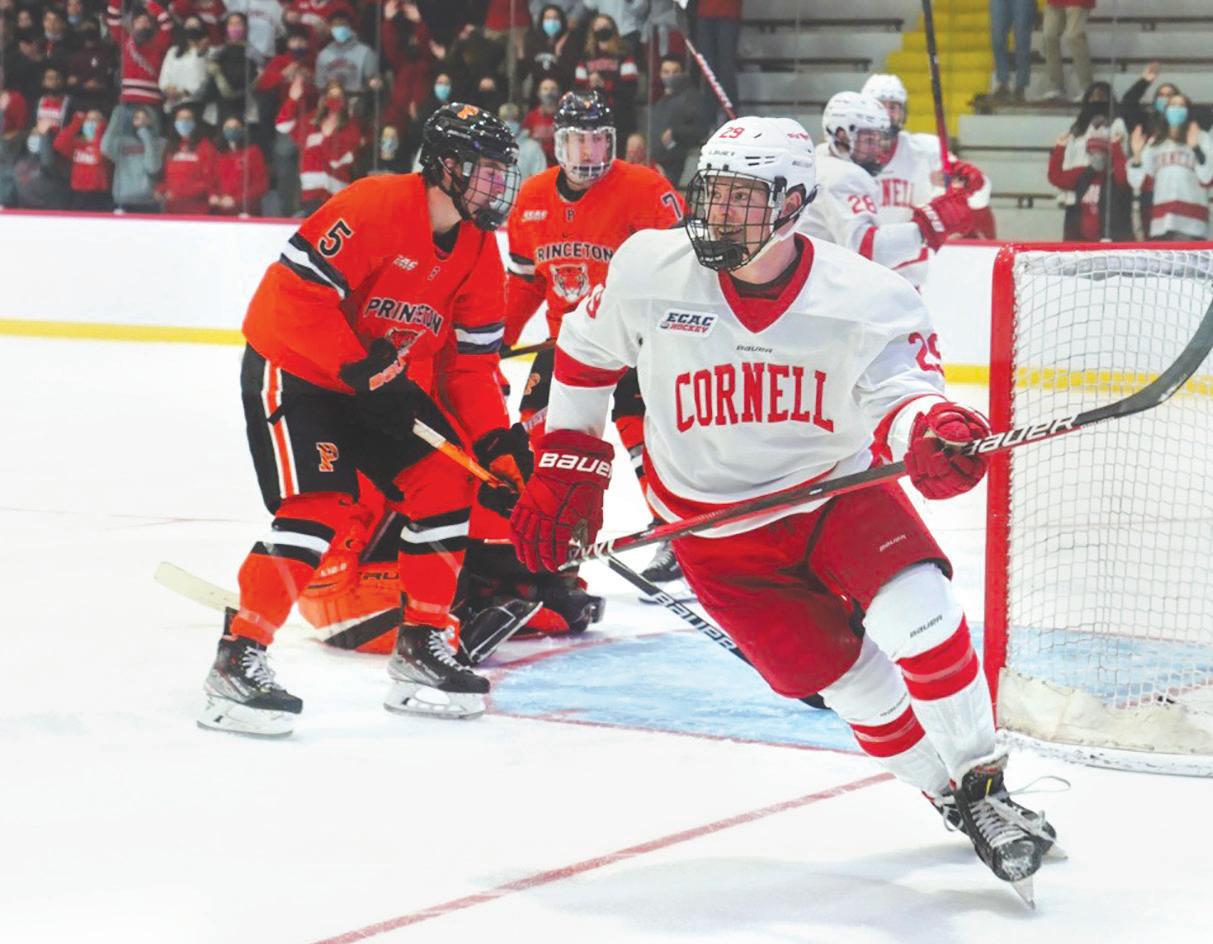
Cornell defeated Princeton 5-0 in an exhibition at Lynah Rink on Saturday night.
While the victory will not count for Cornell’s record, the contest was an especially meaningful one for the players, coaches and the Lynah Faithful. After the COVID-19 pandemic abruptly canceled the Red’s postseason in 2019-2020 and after the loss of last season, Saturday’s game was the first time in 594 days the Red took the ice at Lynah.
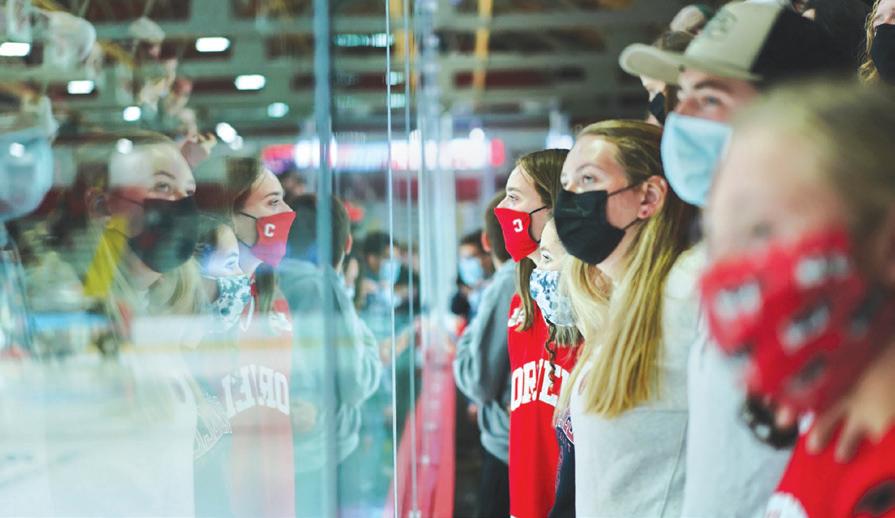
Students and locals had to follow new University policies that required masks and limited attendance as they returned to the rink — but were nonetheless eager to see Cornell back in action.
“Even though we still have our masks on, it feels like we’re back,” Gabe Schiffer ’23 said in the student section. “The atmosphere is still there, so it feels awesome.”
Another new policy has delayed the sale of season tickets to the start of 2022 as the University manages capacity limits. For the remaining games in the fall semester, fans will have to buy their tickets on an individual basis. Tickets will go on sale on the Tuesday before each game at 10 a.m. The policy was the source of some anxiety and frustration for many of the Lynah Faithful.
“It’s certainly inconvenient,” said Bill Mack of nearby Bath, New York.
Mack has been coming to Cornell hockey games since he was 16 years old and has been a season ticket holder for the last 40 years.
“I knew nothing about hockey, but my philosophy was ‘Everyone has such a grand time here, I’ve got to come back and experience this again,’ and that was 55 years ago,” Mack said.
Because seats were sold on a general admission basis, Mack arrived early to secure the same seats he has sat in for the past 40 years.
Other fans were worried about securing tickets for the games this semester. Susanne Solomon ’78 and Jack Thompson ’73 have been season ticket holders since they moved back to Ithaca in 2010 and plan on buying the season ticket plan for the second half of this
many games as they’re able to successfully get tickets for this fall.
“I hit the website for these tickets right at 10 o’clock on Tuesday,” Thompson said. “I was sitting there watching the exact time on my phone.”
Despite the difficulties, those who attended were excited to be in the crowd once again, eager to carry on the traditions of the Lynah Faithful.
Cathy Bartell, the associate director of the Sloan Program in Health Administration in the College of Human Ecology, said she was thrilled to be back in Lynah and was excited to see a new group of students carry on Cornell hockey traditions.
“We had students over for dinner and I told them how much they’re going to love this game, and they’re all sitting over [in the student section],” Bartell said. “It was really fun to introduce hockey to new fans.”
Many of Lynah’s traditions are led by the Big Red Pep Band, whose members are equally excited to be back at hockey games.
“We’re thrilled to be back. Exhibition game or regular season game, it doesn’t matter, we’re here to bring the energy,” said pep band conductor Alex Loane ’21.
Because last season was canceled, half of Cornell’s undergraduate population has not had the opportunity to see a game at Lynah.
Joshua Tensuan ’25 said the traditions were new to him, but he and his friends were starting to catch on.
“I’m still learning everything,”
many of the band members needed a refresher after missing a season.
“We had our ‘Hockey 101,’ where we sit everyone down and tape up a table like a hockey rink and explain what we yell when the puck is over here or what we yell when it’s over there,” Loane said.
The Red gave the Lynah Faithful much to cheer for during its decisive 5-0 victory.
Just 18 seconds into the contest, junior Matt Stienburg found the back of the net for his first of two goals of the evening.
“We got on them pretty early and played the way we wanted to and I think that resulted on the scoreboard,” Stienburg said.
The Red’s special teams units were especially effective. The Red scored twice on the power play and held Princeton to 0-8 on the penalty kill, adding a shorthanded goal.
Tensuan said. “The newspaper thing was pretty cool.”
Tensuan was referring, of course, to the tradition of the student section rattling newspapers as the opposing team is announced and then crumpling them up and throwing them on the ice.
“I was happy with our power play,” said Head Coach Mike Schafer ’86. “Penalty killing did a good job ... and our goaltenders were there to rise to the challenge and make the save on the couple power play chances [Princeton] got.”
Cornell’s goalkeeping was strong all night. Senior Nate McDonald and freshmen Ian Howe and Joe Shane shutout the Tigers and combined for 14 saves. Each goalie played one period. The three goalies will continue to compete for playing time.
“There won’t be a starter on our team for quite some time,” Schafer said. “We’ll be watching them practice and see how they perform.”
The goalies are taking their battle in
“We have a really healthy relationship,” McDonald said. “We know the situation that we’re in, but we all really respect each other. We compete hard in practice, cheer each other on, and all three of us have each other’s backs.”
After encouraging performances on both sides of the puck, Schafer wants to work on discipline ahead of next week’s exhibition with the U.S. National Team Development Program Under-18 team. Cornell was called for multiple roughing penalties after some pushing and shoving with Princeton skaters.
“I don’t want our guys getting involved in after the whistle stuff. Eight penalties is way too many penalties for us,” Schafer said. “We’ve got to become a tough-minded hockey team, so when stuff happens, we don’t retaliate, we don’t respond, we don’t get wound up and we don’t get distracted.”
Schafer attributed some of the chippiness to adrenaline from playing in front of fans, but said he was happy to have fans back in Lynah.
“It was awesome to play in front of a crowd again,” Schafer said. “We’re looking forward to next week ... to get things rocking in here a little more.”
The players were similarly grateful to see the Lynah Faithful.
“Everyone, including the fans, was waiting for this for a long time and to get back out there is a feeling we’ve definitely all been missing,” Stienburg said. “We’re glad we could get a win for [the fans].”
The team’s dominant performance instilled excitement in a fan base that last saw the team when it was ranked first in the country and seemed poised to make a run for a national championship.
“We lost a lot of guys, but the freshmen from [two seasons ago] are really good, so they’ll probably lead the team this year,” said Benjamin Rudoy ’23.
Now a junior, Stienburg last took the ice as a freshman.
“Anytime you’re a returning player you want to try to make a jump into a leadership role,” Stienburg said. “We have a lot of really good guys coming back and a lot of great players and good character guys coming in, so I think that makes it a little bit easier.”
Cornell will have one more exhibition tune-up next weekend before it starts its season at Lynah on Oct. 29 against the University of Alaska Fairbanks.
Lynah Faithful | Fans abide by the University’s spectator policy, which mandates masks.
BEN PARKER / SUN SENIOR EDITOR
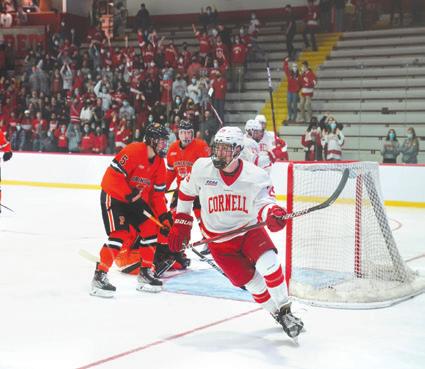
Goal | Junior Ben Berard celebrates after scoring in the first period of Saturday’s exhibition with Princeton.