The driver of the Big Red Bullet bus that crashed in Pennsylvania on Sunday night, killing a Cornell alumna, told investigators that he “fell asleep at the wheel,” police said Wednesday.
Pennsylvania state Trooper Robert M. Urban said there were no signs of vehicle failure. He said the driver was cooperating with police and that they have not filed any charges in connection with the fatal crash, although the investigation is ongoing.
The driver “stated in an interview that he fell asleep and left the roadway,” Urban told The Sun. He said police were trying to determine if there was “a black box” inside the bus that may have recorded data from the bus before it crashed.
The male driver has not been identified. He was taken to a hospital for a blood test after the crash, which is required by federal regulations, Urban said. Results from that test are not yet in.
Also this week, a U.S. Department of Transportation agency said it had opened an investigation into the Ithaca-
asleep’ at wheel before crash
based bus company’s compliance with federal regulations.
The Federal Motor Carrier Safety Administration will review Big Red Bullet’s driving records, licensing and insurance information, drug and alcohol testing protocols and other data, said agency spokesperson Duane DeBruyne.
The FMCSA, which seeks to reduce truck and bus casualties, will share the results of its probe with state police, which is leading the investigation into the crash.
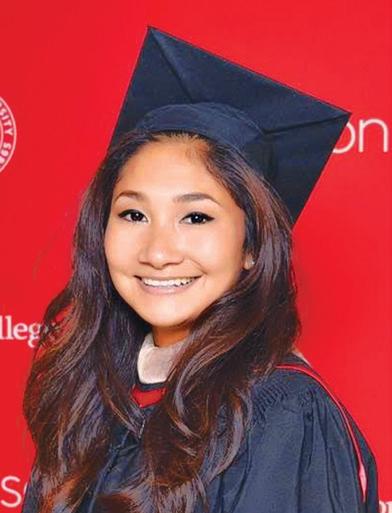
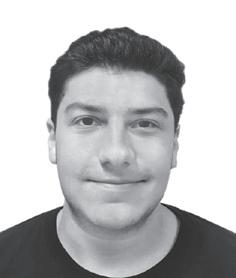
Rebecca Blanco M.B.A. ’17, of Vacaville, Calif., died from multiple traumatic inju ries sustained when the bus, headed from Ithaca to New York City, veered off the side of Interstate 380 in Lackawanna County just after 9 p.m. Sunday. The Prevost-brand bus crashed into several
See INVESTIGATION page 6
Big Red Bullet riders tell of ‘dangerous’ trips
In the wake of an Ithaca charter bus crash that killed a Cornell alumna this week, five people who took trips with the company in recent years said drivers’ behavior — which they said included swerving across roads and using phones while driving — made them feel unsafe.
Two of the people interviewed filed complaints with the bus company, Big Red Bullet, one of which resulted in the company terminating a bus driver, according to an email from Big Red Bullet’s general manager obtained by The Sun. Andre Hook M.B.A. ’18 M.H.A. ’18 and Jessica Hook described two trips with Big Red Bullet that made the married couple decide to never use the service again.
Professors Urge Cornell to Release Results of Wansink Investigation
By MARYAM ZAFAR Sun Staff Writer
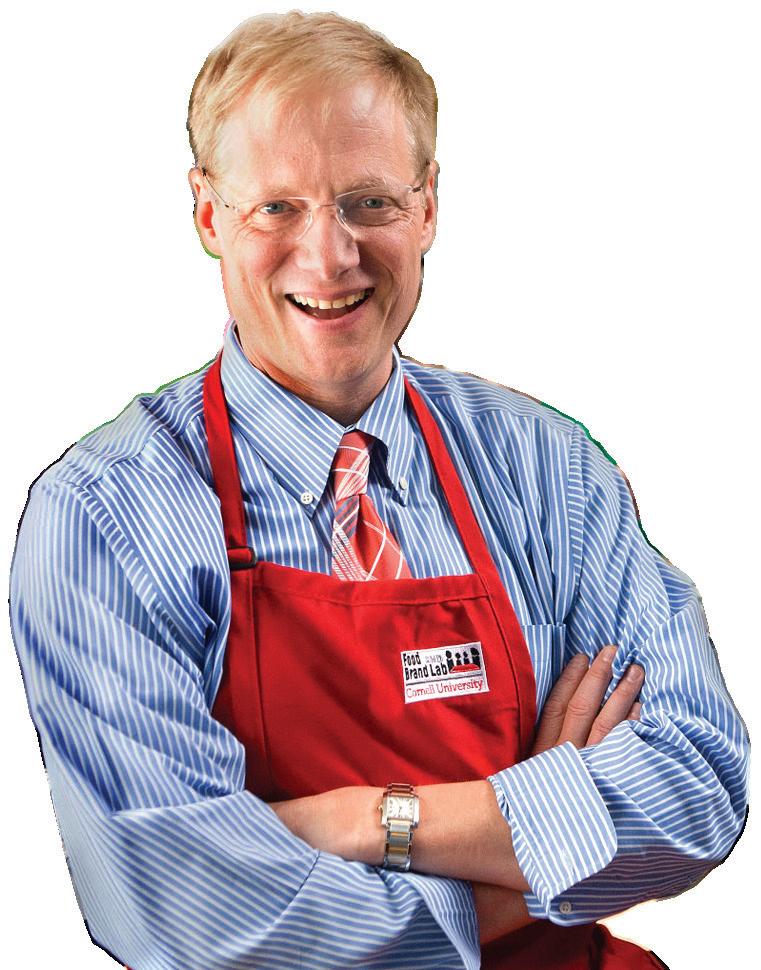
A letter signed by over 30 pro fessors from around the world is calling on Cornell to release its investigation report of food scientist Brian Wansink, who resigned in September after the University’s investigation into his academic misconduct
The investigation, which was conducted for over a year, found
woes
that Cornell’s Food and Brand Lab’s founder “committed academic misconduct in his research and scholarship,” The Sun previously reported. Wansink has also retracted a total of 13 published research papers and issued multiple formal corrections.
The authors started drafting the letter after Provost Michael Kotlikoff announced the conclusion of the investigation, and that Wansink will not be permitted to teach or research
at the University, and will retire at the end of the academic year.
Cornell alum Prof. Todd B. Kashdan ’96, psychology, George Mason University, is among the signatories of the letter but did not respond to The Sun’s request for comment. There are no current Cornell professors who have signed onto the letter, which is being shared via Google Docs.
The University was unaware of the letter as of Wednesday afternoon, according to spokesperson John Carberry.
On the day after the publication of Cornell’s investigation, Wansink said his mistakes didn’t change the outcome of his papers, “with only one debatable exception.” It is unclear which paper the food scientist was referring to.
Wansink’s response to the investigation was surprising, according to co-author of the letter Prof. Nicholas Brown, medical sci-
ences, University of Groningen, who talked to The Sun on the phone from Strasbourg, France.
The signatories accuse Wansink of not accepting responsibility for his errors and of characterizing his mistakes as trivial.
“I find it hard to imagine that an Ivy League school would require an endowedchair professor, whose picture used to be on the front page of the business school’s web site, to resign on that basis,” Brown said.
Given that Wansink has nearly 500 published pieces, the University’s lack of transparency has caused collateral damage to other researchers in the same field, according to Brown.
“I’ve seen online reactions to Dr. Wansink’s case [with] people using it to suggest that researchers working on vaccines
See WANSINK page 6
Aftermath |
A Cornell alumna was killed and several passengers were injured when a Big Red Bullet bus veered off a highway on its way from Ithaca to New York City on Sunday night.
By SARAH SKINNER Sun Assistant News Editor
COURTESY OF THE ITHACAN
Spotlight | Big Red Bullet is under investigation after a fatal crash.
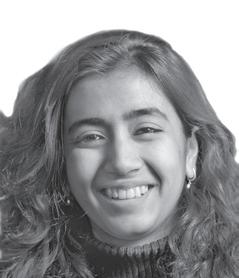
BLANCO M.B.A. ’17
Daybook
Thursday, October 18, 2018
A LISTING OF FREE CAMPUS EVENTS
Misgivings: A Look at Controversial Food Issues
10 - 11 a.m., Boyce Thompson Institute Auditorium
Game Theory and Social Norms: Population Play and Settled Equilibria in the Normal and Extensive Forms 11:40 a.m. - 1:10 p.m., 111 Ives Hall
The Toba Super Catastrophe as the History of a Future Noon, Kahin Center
Technology Drives Exploration 4 p.m.,101 Phillips Hall
Exploring New Phenomena in Energy Materials with Theory and Computation 4 - 5 p.m., B11 Kimball Hall
The Determination of the Primordial Abundance of Helium 4 - 5 p.m., 105 Space Sciences Building
Creating an Interactive Web Map with Carto 4:30 - 5:30 p.m., 701 Olin Library
The Lacework of Zoning, from Her Forthcoming Book For the War Yet to Come: Planning Beirut’s Frontiers 4:30 p.m., 101 Sibley Hall
Cognition and Performance: Problem Solving in Genetics
10 - 11 a.m., 410 Physical Sciences Building
Factors for Technological Appropriateness of Renewable Energy Options in Indian Country 11:15 a.m. - 1:10 p.m., 400 Caldwell Hall
The Cornell Association of Law and Economics Presents Joint Ventures in Real Estate Deals Noon - 1 p.m., 186 Myron Taylor Hall
NEMS Electrostatic RF Wakeup Switch with Pt FIB Contact 12:15 p.m., 233 Phillips Hall
Politics, Sandwiches, and Comments Lecture: Jae-Jae Spoon 12:15 - 1:45 p.m., 106 White Hall
Age-associated, Pneumolysin-mediated Inflammatory Damage During Pneumococcal Lung Infection 12:15 - 1:15 p.m., Lecture Hall 3, College of Veterinary Medicine
The Balancing Act of Withholding Behavior: Turning an Adult into an Adolescent 12:20 p.m., 202 Uris Hall
High Stakes, High Hopes: Creating Collaborative Urban Theory 12:20 p.m., Milstein Auditorium
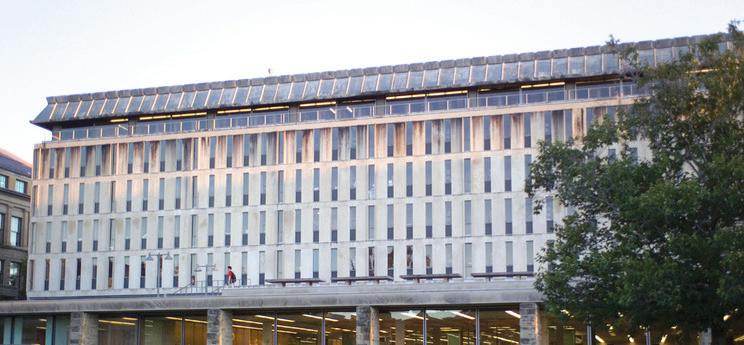
Digital data demo | Today, a Carto workshop will explore data visualization through graphs, charts, maps, and interactive online functions as part of the Working with Data series.
COURTESY OF CORNELL UNIVERSITY
Mitrano J.D. ’95 Advocates for Single-Payer Healthcare
By AMINA KILPATRICK Sun Staff Writer
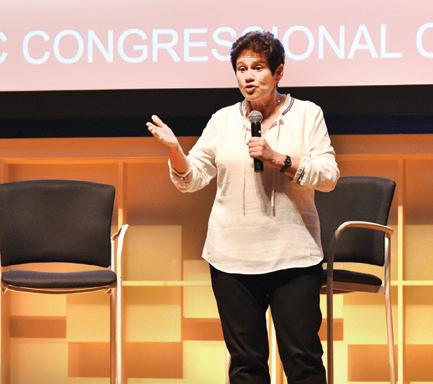
At the Cornell Democrats Town Hall discussion on Wednesday, congressional candidate Tracy Mitrano J.D. ’95 discussed her motivation for running for office and voiced her support for campaign finance reform and a single-payer healthcare system.
Mitrano is currently running as the democratic candidate for New York’s 23rd district congressional seat, the district which covers Tompkins County, against incumbent Rep. Tom Reed (R-N.Y.).
At the event, Mitrano mentioned that she wanted to run for public office after the 2016 presidential election, when she realized that this region needs a new voice. She believes her own unique background in cybersecurity makes her a compelling candidate.
“As I watched this country move into directions that genuinely concerned me,
I became more thoughtful about what I could do to help,” Mitrano said. “After the election I checked to see if anyone in Congress has this background in cybersecurity and it turns out that no one does.”
After considering reaching out to Reed, her congressional representative, to discuss her concerns about the current state of the country, Mitrano realized that she was in a position to take the plunge into politics in order to deal with the issues herself.
Mitrano also believes that this district is made of working and middle class people and needs policies that reflect such. According to Mitrano, this district doesn’t have the same demographic makeup as a place like downtown Manhattan.
“We don’t have a lot of millionaires to serve with tax policies that privilege the wealthy and ultimately take advantage of poor people and middle class people,”
Cornell to Split Up Dept. of Biological Statistics and Computational Biology
Reorganization serves to faciliate hiring in specialized felds
By RONNI MOK Sun Staff Writer
Cornell will divide the current Department of Biological Statistics and Computational Biology in the College of Agriculture and Life Sciences into two separate departments in the 2019-20 academic year in an effort to provide more specialized support to faculty and students.
ment to hire faculty members with expertise in computational biology, which was a new field at the time, according to Beth Ahner, senior associate dean of the agriculture college.
“In 2000, it wasn’t clear that we could hire directly into biology departments, as we were looking for a non-traditional type of biologist,” Ahner told The Sun. The formation of the BSCB department, according to her, gave rise to “a lot of synergies between statisticians and computational biologists.”
“The primary focus of a computational biologist hired by CIS may be different than that of a computational biologist hired by CALS.”
Beth Ahner
A new Department of Computational Biology will be housed under both CALS and the Departments of Computing and Information Science. CIS is already a shared department and falls under the agriculture college, the College of Arts and Sciences and the College of Engineering. The new Department of Statistics and Data Science will be shared by CIS, CALS and the ILR School.
The BSCB department, established in 2000, enabled Cornell’s biometry depart-
However, the field of computational biology has “exploded” since then and has therefore led to the need for more breadth across the field, one that expands outside of the traditional goals of CALS, Ahner said.
“Genomic data are an ever-present part of our biology research programs and the field now requires so much breadth that we can have a new department, one that is not just in CALS,” she said.
“These changes will result in better coordination of teaching and more centralized support of students associated with both programs,” Ahner continued.
Ahner said that CIS, as one of the two parent departments of the new computational biology department, will be
be shared by CALS and CIS.
funding and overseeing the next hire of the newly created department, but the protocol for future hiring decisions will depend on the need of the department.
“The primary focus of a computational biologist hired by CIS may be different than that of a computational biologist
hired by CALS,” she said. “In CALS, we hire faculty to work on questions that are central to our mission; the CIS dean would similarly seek faculty whose work supports the mission and goals of CIS.”
‘Neglected’ Willard Straight Hall Terrace Reopens as Social Space
By VIVIAN FAN and JOLIE WEI Sun Staff Writer and Sun Contributor
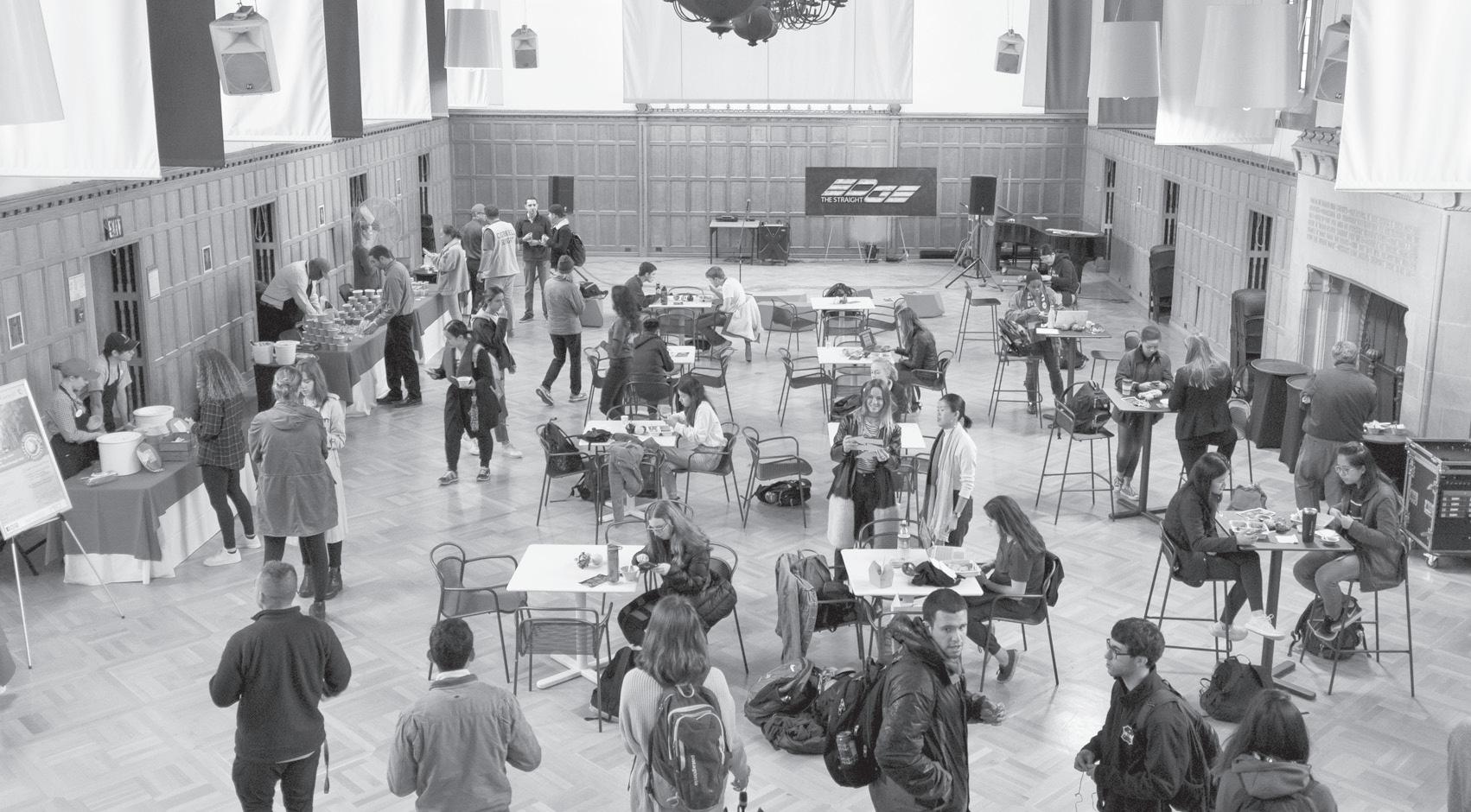
A “completely neglected” and “absolutely horrible” place just a year ago, the renovated terrace of Willard Straight Hall held its grand re-opening on Wednesday, hoping to revitalize the space as a place for interaction between Cornell students.
The Straight Edge began the rooftop project a year ago to create a “student-run design intervention organization that delivers interdisciplinary redesign proposals for underutilized
spaces on campus,” according to creative director Daniel Correa ’19.
“The whole area was completely neglected a year ago and looked absolutely horrible,” Correa told The Sun. Despite the weather, which shifted the event indoors, the opening was well attended.
“Our goal was to redefine Willard Straight Hall as a true student engagement facility,” added Bailey Herbstreit ’19, vice president and user experience lead of The Straight Edge.
College collaboration | The new Department of Computational Biology will
Chillin’ on the roof | After a year of renovation spearheaded by The Straight Edge, the Willard Straight Terrace holds its reopening on Wednesday as a community space in the Memorial Room due to weather conditions outside.
HARRY DANG / SUN
Campus to Congress | Congressional candidate Tracy Mitrano
J.D. ’95 said she decided to run for office because of her unique background in cybersecurity, which no one in Congress has.
BORIS TSANG / SUN ASSISTANT PHOTOGRAPHY EDITOR
Students Ready to Go ‘Into the Streets’
By NICOLE ZHU
Sun Contributor
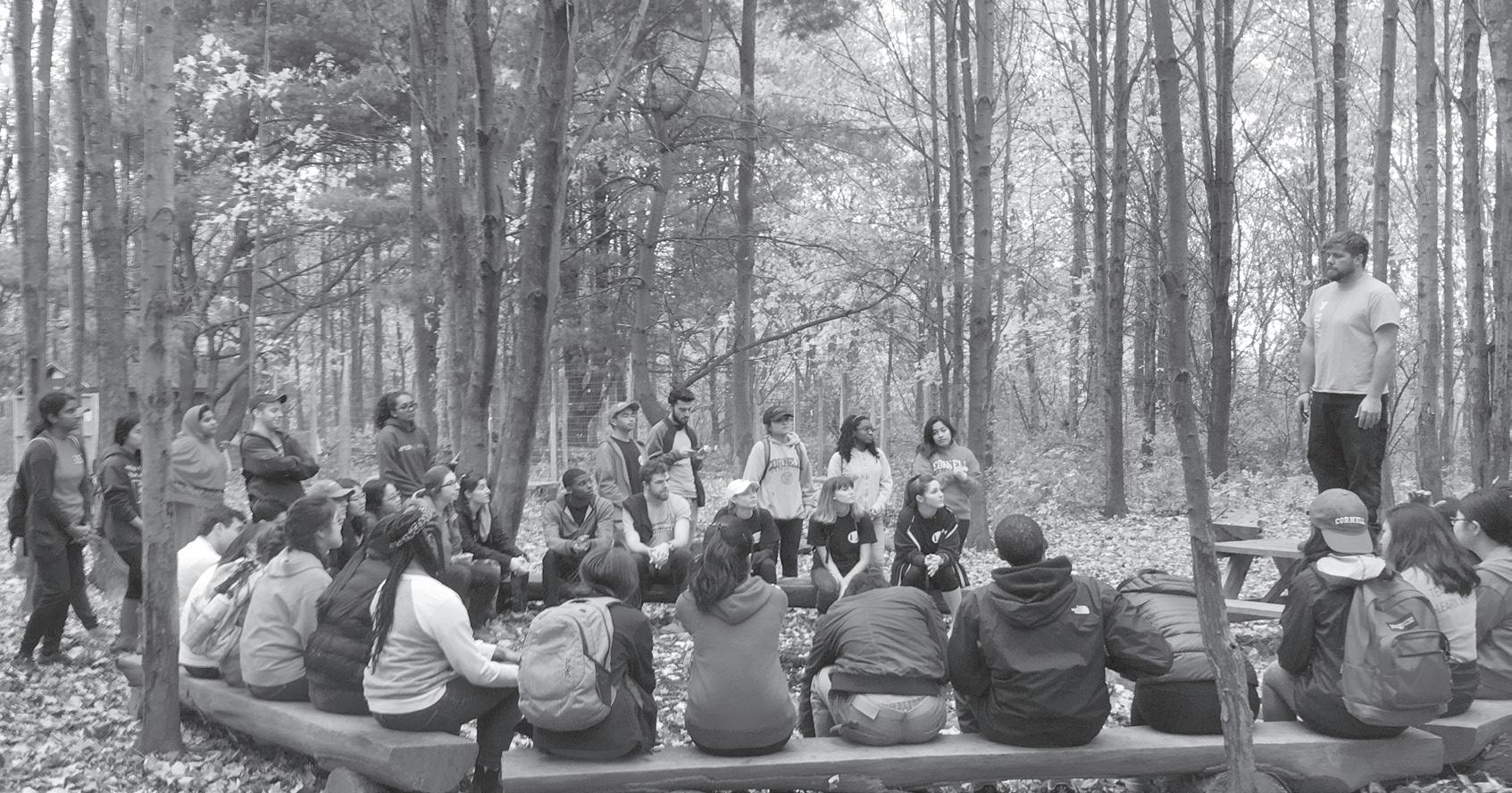
On Oct. 27, over 500 Cornell students and faculty will step out into Ithaca and throughout Tompkins County to participate in the 27th annual Into the Streets, Cornell’s largest community service event.
Volunteers will work with around 40 different non-profit organizations on a variety of community service projects, which in the past, have ranged from raising awareness about lead poisoning in older Ithaca houses, advocating for a living wage and doing laundry for the youth shelter downtown.
According to Esther Tsyngauz ’19, Into the Streets co-president, the event allows Cornellians to handle “all of the housekeeping things” that many organizations don’t have enough resources to get to during the year.
Organizing and making sure the hundreds of volunteers are “held accountable” has become the most challenging task for co-president Margaret
Jia ’19.
“Most agencies don’t work on a Saturday. So they’re bringing in someone to work on a Saturday, or to come supervise volunteers. It’s our responsibility to make sure that those volunteers that we said are coming will be there,” Jia told The Sun.
Although the event lasts only one day, Tsyngauz and Jia hope that Into the Streets has long-lasting effects that will enable students to see themselves as not just Cornellian but also as Ithacans.
“I hope people get out of the Cornell bubble and just spend more time in the community,” Tsyngauz said. “Something we stress is to not volunteer just to volunteer, but to be actually educated about the issues and [understand] why you’re doing what you’re doing.”
Into the Streets, a program of the Cornell Public Service Center, was founded in 1991 to “encourage participants to use the day of service as a catalyst for forming meaningful relationships with the
See VOLUNTEER page 5
Music Prof Composes Duet of Chimes and Whale Songs
By ROCHELLE LI and DILLON KLEVAN Sun Staff Writer and Sun Contributor
If you were one of the students drawn to Ho Plaza by the mysterious sounds generated from atop of McGraw Tower on Sunday, rest assured that our beloved chime bells are not malfunctioning. Instead, it was the rehearsal for a chimes and whale song duet.
The piece, titled “Cetus: Life After Life,” will be performed on Friday evening starting at 6 p.m.. It will start with whale songs — forms of whale communication that follow specific sound patterns — recorded in 1977, followed by the duet of chimes and whale songs and conclude with whale songs from 1981.
These recordings of whales came from a single Hawaiian humpback whale population. As its song evolves over time, the chimes music will also reflect these changes.
The composer, Prof. Annie Lewandowski, music, said she was thrilled to hear the echo of whale songs and chimes “over the Cornell landscape.”
“[The music] had existed in my imagination,” Lewandowski told The Sun. “I just wanted to bottle up that feeling so I could take it out every once in a while when I needed a good laugh of delight.”
For Lewandowski, the chimes and whale songs have similar effects on their environment. She said that she was struck by the “resonance and depth” of the whale songs, which reminded her of how much the chimes are an essential aspect of the Ithaca community.
“Writing a whale/chimes duet was a natural fit for life in Ithaca,” Lewandowski said. “The chimes are a lovely, everyday aspect to life here — I can
hear them in my office, where I live and on my walk to school. It was exciting to combine these resonant and rich elements in a piece for this campus.”
Last winter, Lewandowski started working with Cornell bioacoustics researcher Katy Payne ’59 on this performance, which is part of the 2018 Cornell Council of Arts Biennial. Lewandowski hopes on joining Payne — who recorded the original whale songs — in Hawaii to find that same humpback whale population again and hear how the whale song transformed. Lewandowski was drawn to the whale song because of the animal’s “incredible ability to compose spontaneously, to listen, and to innovate”.
“Writing a whale/chimes duet was a natural fit for life in Ithaca. The chimes are a lovely, everyday aspect to life here.”
Prof. Annie Lewandowski
“It brings new life and ways of thinking to two areas that are near and dear to my heart and research, songwriting and improvisation,” she said.
According to Lewandowski, the most difficult part of preparing for the performance wasn’t the composition itself or finding the right whale song recordings, but moving four large speakers to the top of the clocktower, which has no elevator. She had students move the carry the speakers up the tower’s 161 steps.
“That was brutal for them. And for that I want to thank them,” Lewandowski said.
Rochelle Li can be reached at rl696@cornell.edu. Dillon Klevan can be reached at djk286@cornell.
Into the woods | A group of volunteers of Into the Streets 2017 listen to instructions on how to clean the trails of the YMCA’S outdoor education center.
COURTESY OF INTO THE STREETS
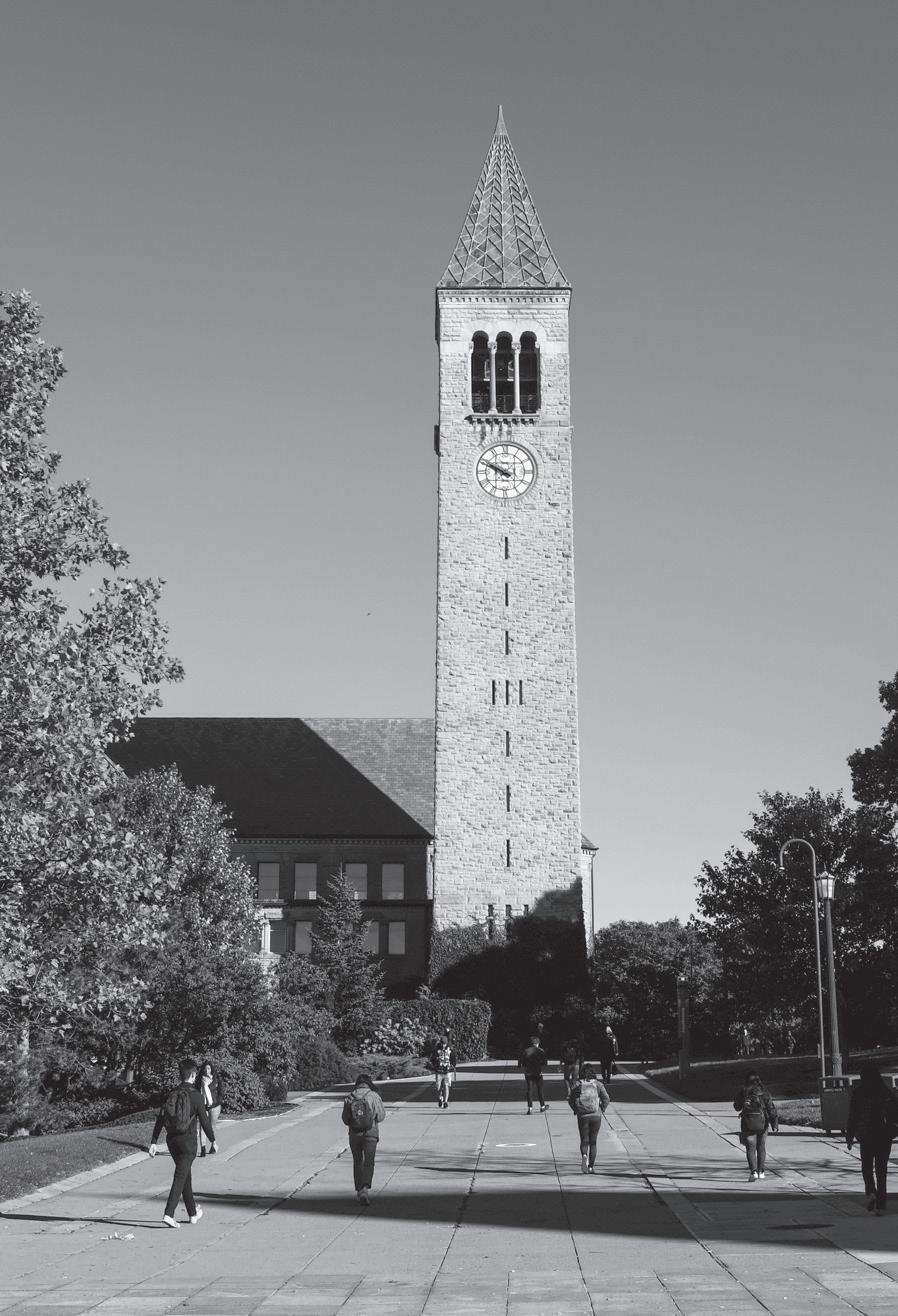
What’s that sound? | A duet of chime bells and songs of whales will be performed from atop McGraw Tower on Friday evening.
MICHAEL WENYE LI / SUN PHOTOGRAPHY EDITOR
CALS to Create 2 New Departments by 2019-20
DEPARTMENTS
Continued from page 3
As for the statistical science department, its new structure will include faculty from the agriculture college, CIS and the arts college. There are also conversations about including faculty from the School of Industrial Labor Relations in the unit. All the departmental faculty will be overseen by one department chair.
Although the plans for the new departments are in place, the specifics behind the structure and the administrative model are still in the planning process, according to Ahner.
“We have a lot of experience with shared units, so there are a
lot of models for how these departments work. We don’t yet have a model for combining so many different colleges,” Ahner said. “As we finalize a model for how these units will work together, the different colleges can invest in them to further their mission.”
The new departments are expected to be in place by spring 2019.
“It is an exciting development for the University; the provost and deans are clearly excited about this moving forward. We are doing our best to make sure that it is sustainable in the long run,” Ahner said.
Ronni Mok can be reached at rmok@cornellsun.com.
WSH Rooftop Revitalized
STRAIGHT EDGE
Continued from page 3
The Straight Edge.
The team previously hosted a “pop-up” event in May as a preview, and Wednesday’s grand opening featured a ribbon tying ceremony, symbolizing the future relationship between the rooftop space and the eatery space.
The redesign of the rooftop focused on maximizing collaboration
“When somebody wants to ... transform the space, they have the complete capacity to do that.”
Bailey Herbstreit ’19
and improving the user experience of the space. The Straight Edge’s research process involved conducting interviews and collecting systemic data.
With the help of infrared red cameras that showed heat signature, the team identified areas of high concentration and collaboration in the space and also assessed the migration patterns of the furnitures each day.
“One of the most important findings we discovered was that people tend to be in groups,” Correa told The Sun. “They like to be in clumps even when they don’t know each other.”
To facilitate this interaction and collaboration between the users of the space, The Straight Edge re-
placed the metal round tables with lightweight squared tables because the new tables can be moved and linked together easily, according to Correa.
The end product of this research is “a space that evolves.”
The new Straight Edge Rooftop included movable banquet seatings for group collaboration, social nooks for more intimate interactions, a rock garden and a row of high top bar tables.
The team enjoyed seeing students’ utilizing this renovated space. “We’ve been seeing a lot of organizations’ hosting events here,” Herbstreit said. “Once I saw a dance group practicing at night.”
“We want to emphasize that this space is the students,” she added. “When somebody want to come out here and transform the space, they have the complete capacity to do that.”
However, students won’t be able to use the space for much longer — even though the furniture can take strong winds and withstand the cold, it will be put away in the winter. However, The Straight Edge told The Sun that one of its future projects is to keep the rooftop open year round.
“We want to make this a four-season community space,” Correa said. “Much like an urban rooftop in New York City, Paris or London.
Vivian Fan can be reached at vfan@cornellsun.com. Jolie Wei can be reached at jw2493@cornell.edu.
Students to Go ‘Into Te Streets’
VOLUNTEER
Continued from page 4
local community and developing a lifelong commitment to community engagement as active citizens,” according to its OrgSync page. The program implemented new changes in fall 2015, decreasing the number of volunteers from 1,200 to 500 in order for students to have a more extensive impact on the local agencies, Joyce Muchan ’94, assistant director of the Cornell Public Service Center
Phantom of the Opera to Be Shown at Sage
By OLIVIA WEINBERG Sun Contributor
The 1925 film version of the classic musical Phantom of the Opera will take over the big screen at Sage Chapel this Thursday night with live music performed by The Invincible Czars.
The black and white silent film stars Lon Chaney as Erik, The Phantom and was restored from 35mm film by Film Preservation Associates. It was produced by Universal in 1923 and also stars Norman Kerry, Mary Philbin, Gibson
Gowland.
The musical performance, hosted in time for Halloween, is part of the Cinema at Sage Program, which began in 2012 through a collaboration between Cornell Cinema director Mary Fessenden and organist Prof. Annette Richards, music.
Richards first approached Cornell Cinema wondering if they would be interested in teaming up to present the film Faust for Halloween. The score would be composed by the Filmharmonia Duo and feature Sage Chapel’s organ. The screening on October 31, 2012, was a huge success, attracting an audience of over 400 people, who gave the musicians a standing ovation when it was done, according to Fessenden.
This will also be The Czars’ third time on campus after accompanying Cornell Cinema’s screenings of Nosferatu and Dr. Jekyll and Mr. Hyde in 2016 and 2017, respectively.
The Austin, Texas-based musical group composes original scores to silent films with influences ranging from hard rock to classical, according to its website. It is currently on a national Halloween tour which features a score to Phantom with venues located in the northeast and midwest.
The event is expected to attract a large number of graduate students, as well as undergraduate students, faculty and members of the greater Ithaca community. Last year, a large number of the audience had seen The Invincible Czars the year previously and enjoyed it so much they decided to come back, according to Cornell Cinema manager Douglas McLaren.
With a predicted turnout of 250 to 300 people according to McLaren, this year looks to be just as successful.
“Folks who have seen this before definitely want to see [the show] again,” McLaren said.
Olivia Weinberg can be reached at ojw4@cornell.edu.
told The Sun at last year’s event.
“There’s a certain point when you start to saturate the community just to say that we’re doing service as opposed to the quality of service. It’s really the quality of service that matters for the agencies and the students,” Muchan said. “That’s we want for the students — to come out of this and be lifelong active citizens, in whatever community they may be.”
Nicole Zhu can be reached at nlz8@cornell.edu.
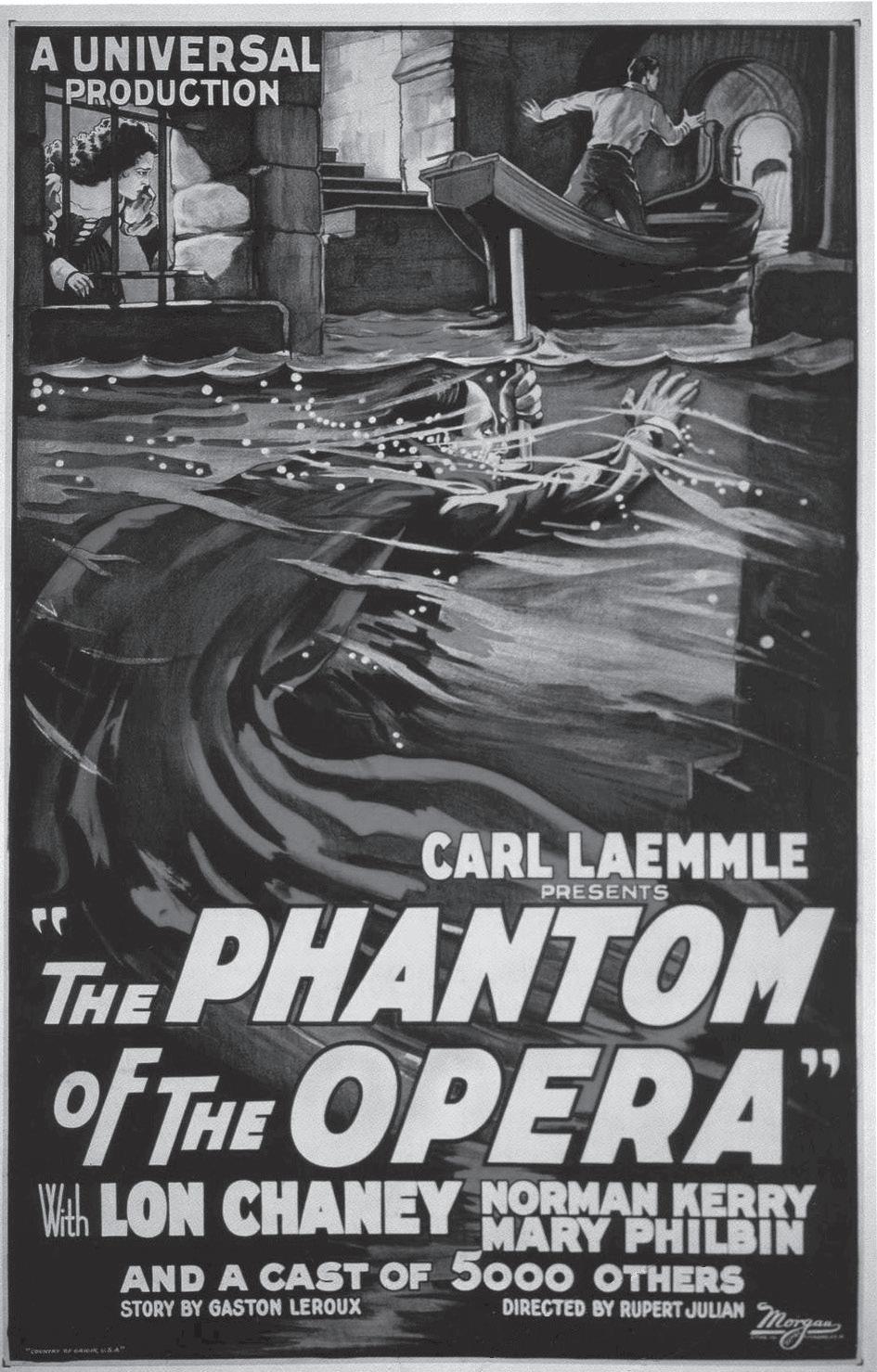
Phantom fun | The musical performance, hosted in time for Halloween, is part of the Cinema at Sage Program.
COURTESY OF WIKIPEDIA COMMONS
Mitrano J.D. ’95 Calls for Campaign Finance Reform
MITRANO
Continued from page 3
Mitrano said.
Campaign finance reform is an issue that she is really passionate about, and she said she would like to “wave a magic wand” in Congress to make it happen.
“I believe campaign finance reform, in some ways, I don’t mean to be simplistic, is the root of all of our evils,” Mitrano said. “It’s hard to talk about for a broader scope because you want to be sure that people understand what it connects to in their world.”
She has personally received endorsements from groups such as End Citizens United and Patriotic Millionaires, organizations that address campaign finance and equal political representation.
Mitrano said her first step for reform would be transparency and she said she isn’t opposed to restrictions on the financing of elections. According to her, an ideal situation, which is currently present in other countries, is a system where elections are financed by governments and candidates each receive a set amount of money.
Mitrano labels herself as a centrist and believes she has the ability to connect with moderates and voters who are not aligned with parties. According to Mitrano, it is those voters who are not affiliated with a party that decide elections.
Mitrano was able to talk with a group of Republican constituents in the Hammondsport, NY region after she won the democratic primary election. They were disturbed with the rhetoric of President Donald Trump and the way he speaks about disabled people. According to Mitrano, they were concerned that Reed doesn’t stand up to Trump.
“Sometimes it’s a matter of leadership and then people will talk about policies,” Mitrano said.
On the topic of higher education, Mitrano said that free education may come with “unintended consequences” and she believes in the diversity of the current education system. Instead, she would like to work towards reducing interests rates on federal loans.
“I think the best way to approach that issue is to bring the interest rates down in the federally secured loans,” Mitrano said. “We can also work with the colleges, state-colleges, state-universities to make education more bearable, private universities too.”
In regards to healthcare, Mitrano believes in a single-payer health care system. Under this system, healthcare would be financed by a single public entity through taxes and all residents would be covered for essential medical services.
“I think a single-payer system that is brought in incrementally but is designed to have coverage for everyone, is the best way to go,” Mitrano said. “I believe that our problem right now is that there is no real competition in the market.”
“That is true for the drug companies and the prices they set, and it is true for the health maintenance organizations,” Mitrano continued.
When asked if she would be apart of an effort to investigate the claims of Dr. Christine Blasey Ford and the conduct of Supreme Court Justice Brett Kavanaugh if elected to Congress, Mitrano responded by saying that she would like to address the process of his nomination.
“We either need to do something so that when these situations come up we don’t revert to an FBI doing an investigation that is inconclusive on the merits of what the complaints were and we need to have a proper process of ways to get these candidates when potentially actionable issues arise.”
The talk was hosted by the Cornell Democrats and moderated by the organization’s president Isabelle De Brabanter ’19. She believed it was important to bring candidates to campus so students could be familiar with who was running ahead of the election.
“I think Cornell students need to see who they are voting for, who is their district. Cornell students need to know that they are in a really competitive race, that their voice counts,” De Brabanter told The Sun.
Amina Kilpatrick can be reached at akilpatrick@cornellsun.com.
Big Red Bullet Bus Crashes, Killing One C.U. Alumna
INVESTIGATION
Continued from page 1
trees, crumpling its front end. Blanco, 33, a senior communications manager at household goods company Snowe, was pronounced dead on the scene.
Many of the 13 people on the bus, including the driver, sustained minor injuries. One woman was airlifted from the scene in critical condition but has since been upgraded to stable condition, police said.
Big Red Bullet has not responded to repeated questions from The Sun this week. The company apologized in a statement Tuesday and said it was cooperating with investigators.
“We are a small Ithaca-based company and realize that words cannot begin to express our sorrow to the family and friends of Ms. Blanco and the families and friends of those who may have been injured in this tragic accident,” the company’s statement read.
Online Transportation Department records indicate that Big Red Bullet LLC has not received any penalties or violations. The records show that the company reported employing three drivers and that it underwent a 16-minute driver inspection at a roadside facility in New York on Sept. 26, 2017, which found no violations.
Several Cornell alumni told The Sun this week that they had been on Big Red Bullet bus trips to and from New York City that made them worried about the company’s safety standards.
Two of the alumni filed complaints with the company, one of which resulted in the firing of a driver, according to an email from Big Red Bullet reviewed by The Sun.
One couple said a driver had repeatedly used his phone with one hand while keeping his other hand on the wheel, and that another driver told passengers at the beginning of a trip that he had already been driving for more than 12 hours.
Julianna Debler, a current M.B.A. and J.D. student, a close friend of Blanco’s, said Blanco was “the happiest and friendliest person you’d ever meet.”
“With the way she talked and laughed, she was always ‘glowing.’” Debler said in a Facebook message. “She was also loving and selfless, always giving back to meaningful causes … Becca truly was (and now is) an angel.”
A co-founder of Snowe said in an email that Rebecca “brought deep thoughtfulness and dedication to all that she did.”
“She shared her contagious enthusiasm, creativity and warmth with all of us,” Andres Modak said. Blanco’s family could not be reached by phone.
Big Red Bullet has no affiliation with Cornell. Ali Nasser M.Eng ’10 M.B.A. ’15 founded the company in the fall of 2015, and it pledged to compete with other Ithaca-to-New-York services like the Cornell-owned Campus-to-Campus bus.
Sarah Skinner can be reached at sskinner@cornellsun.com. Nicholas Bogel-Burroughs can be reached at nbogel-burroughs@cornellsun.com.
Open Letter Calls Out Cornell’s Lack of Transparency
WANSINK
Continued from page 1
or the climate cannot be trusted,” Brown said.
Students who worked with Wansink called his research “dodgy,”
The Sun previously reported, and said his scandals tarnished the University’s reputation. Ellen Ransley ’19 left the lab after a year because she didn’t want to continue her association with it.
Both Wansink’s and the University’s statements following the investigation are “incompatible,” according to the letter.
“Either Dr. Wansink’s description of your [the University’s] findings is inaccurate, and severely minimizes the nature of the problems uncovered, or the investigation at
Cornell has reached a conclusion that is unjustified by the nature of the evidence uncovered,” the letter states. Wansink did not respond The Sun’s request for comment.
The letter also noted that Wansink’s spoiled research was not featured on the website of the Office of Research Integrity, which is under the Department of Health & Human Services. The website posts summaries of research misconduct incidents.
The call for transparency follows administrative flip-flop.
The University first investigated Wansink’s work in 2017. Wansink was found to have had instances of inappropriate statistical analysis but hadn’t engaged in scientific misconduct, according to an April 2017 statement from Carberry.
Riders Report Unsafe Driving
RIDERS
Continued from page 1
After a Dec. 3, 2017 ride from New York City to Ithaca, Andre filed a complaint with Big Red Bullet saying that its bus driver had frequently veered back and forth and nearly crashed into a truck that swerved out of the way.
Andre told The Sun that the driver used one hand to steer the bus and “frequently” operated his phone in his lap with the other. He said the driver was listening to music so loudly in his headphones that the couple could hear it the entire ride.
“It was a bright screen; you could see the light reflected on his face,” Andre said. “That was what really made me mad.”
The Hooks said they were sitting at the front of the bus and that they put on their seatbelts after the bus made sharp turns and drove at “high speeds.”
The bus’s side mirror had been out of position before the ride began, the Hooks said, until the driver clipped it against another bus while leaving New York City.
“It pushed it back into correct position, and he made a joke saying, ‘You know, that fixed it,’” Jessica recalled in an interview. “That was the beginning of a very dangerous trip.”
Big Red Bullet general manager Charlie Brundza gave the Hooks a free ride in response to their complaint, which they used to take another trip on May 22. They said that trip raised even more concerns.
When the driver arrived — 90 minutes late — he told passengers he had been driving for more than 12 hours and had not eaten, they said.
“In hindsight, you can’t help but wonder if they were really taking care of their employees,” Andre said.
Both federal and state regulations prohibit bus drivers from driving for more than 10 hours in one day or being “on duty” for more than 15 hours.
A 33-year-old woman from Vacaville, Calif., Rebecca Blanco M.B.A. ’17, died Sunday when a bus heading to New York City veered off the side of Interstate 380 in Pennsylvania’s Lackawanna County just after 9 p.m., crashing into a wooded area.
The driver told police he “fell asleep at the wheel,” Pennsylvania state Trooper Robert M. Urban said Wednesday.
charges had been filed. A U.S. Department of Transportation agency, the Federal Motor Carrier Safety Administration, said it had opened an investigation to determine if Big Red Bullet was in compliance with federal regulations.
Big Red Bullet’s Yelp page includes a mix of positive reviews and complaints, with several reviewers raising concerns about driver behavior and safety.
Juan Felipe Beltran, grad, filed a complaint with Big Red Bullet less than a month before Sunday’s fatal crash, saying a bus driver had swerved across the road, made unscheduled stops and got lost during a September trip from Ithaca to New York City.
In response to Beltran’s Sept. 17 complaint, Brundza, the general manager, told Beltran the company had “taken the proper steps from [sic] preventing these issues from ever happening again.”
In another email to Beltran on Sept. 18, Brundza said the bus driver had been terminated, according to a copy of the email reviewed by The Sun.
Big Red Bullet “did not take this incident [lightly] and will not tolerate this type of behavior,” Brundza wrote to Beltran, adding that the incident “was not normal nor tolerated.”
Brundza told Beltran the company requires all drivers to undergo training and take a road test before they are hired. He also said prospective drivers cannot have any accidents, customer complaints or failed drug or alcohol tests on their records.
The company employs three drivers, according to online Transportation Department records. The records also indicate that Big Red Bullet LLC has not received any penalties or violations, and that one of the company’s drivers passed a 16-minute roadside inspection in New York in September 2017.
Jenin Younes ’08 said that a Big Red Bullet trip to New York City on April 27, 2016, was the only time she had worried about her safety on a bus. She said the bus was jolting back and forth and “braking really fast.”
“I was like praying I wouldn’t die,” Younes said. “That was how unsafe the driving felt.”
A second investigation, opened last October, concluded with Kotlikoff’s statement in September. Now, Wansink isn’t allowed to teach or conduct research, although he is still listed as director on the Food and Brand website. He will assist the University in a review of his research, according to Kotlikoff.
Wansink, whose work promoted smaller soup bowls and encouraged 100-calorie snack packs, has been cited over 26,991 times, according to Google Scholar. His most recent published work was a Sept. 1 correction to his paper on cooks’ influence on their consumers’ palates.
The letter will stop accepting signatures on Oct. 29.
Maryam Zafar can be reached at mzafar@cornellsun.com.
Blanco, a senior communications manager at household goods company Snowe, was pronounced dead on the scene. One woman was airlifted to a hospital with critical injuries, but is now in stable condition, police said. Many of the 12 passengers received minor injuries, as did the driver.
Big Red Bullet said in a statement Tuesday that “words cannot begin to express our sorrow to the family and friends” of Blanco and the injured passengers. Brundza has not responded to multiple questions from The Sun this week, including questions about the passengers’ complaints and the company’s response.
Pennsylvania State Police continue to investigate the crash. Urban said Wednesday that no
Younes said she chose Big Red Bullet over other Ithacato-New-York-City bus services she had used in the past — like Greyhound and Cornell’s Campus-to-Campus — to save money, a decision she said was not worth it.
“After that I was like, never again,” Younes said. “It’s not worth the fifty bucks I’d save or whatever.”
Maura Moosnick ’16 said that during a 2016 trip with Big Red Bullet, the driver was talking on his phone and driving- in a “jerky” manner, resulting in other drivers honking at the bus.
“I never used them again,” she said of Big Red Bullet.
Nicholas Bogel-Burroughs ’19 contributed reporting to this article.
Sarah Skinner can be reached at sskinner@cornellsun.com.
The Corne¬ Daily Sun
JACOB S. KARASIK RUBASHKIN ’19
Editor in Chief
JOHN McKIM MILLER ’20
Business Manager
KATIE SIMS ’20
Associate Editor
VARUN IYENGAR ’21
Web Editor
MEGAN ROCHE ’19
Projects Editor
EMMA WILLIAMS ’19
Design Editor
JEREMIAH KIM ’19
Blogs Editor
AMOL RAJESH ’20
Science Editor
BREANNE FLEER ’20
News Editor
YUICHIRO KAKUTANI ’19
News Editor
NICHOLAS BOGEL-BURROUGHS ’19
City Editor
LEV AKABAS ’19
Arts & Entertainment Editor
AGIRISHA ARORA ’20 Managing Editor
HEIDI MYUNG ’19
Advertising Manager
ALISHA GUPTA ’20
Assistant Managing Editor
DYLAN McDEVITT ’19
Sports Editor
MICHAEL LI ’20 Photography Editor
GRIFFIN SMITH-NICHOLS ’19 Blogs Editor
JACQUELINE QUACH ’19 Dining Editor
SHRUTI JUNEJA ’20 News Editor
ANU SUBRAMANIAM ’20 News Editor
JUSTIN J. PARK ’19 Multimedia Editor PARIS GHAZI ’21 Assistant News Editor
Ad Layout Emma Williams ’19
Design Deskers Emma Williams ’19
Krystal Yang ’21
Simon Chen ’21
News Deskers Shruti Juneja ’20 Meredith Liu ’20
Sports Desker Dylan McDevitt ’19
Arts Desker Peter Buonanno ’20
Photography Desker Michael Li ’20
Production Deskers Krystal Yang ’21 Katie Reis ’21 Working on Today’s Sun 136th
Dining Desker Jacqueline Quach ’19
Why We Need To Ban Project Teams
s project team acceptances roll out, I’d like to offer a critique of the institution that I was a part of for three years. I enjoyed my time on my team, both as a rank-and-file member and later in a leadership role. I met dozens of very bright, motivated and pleasant engineers, some of whom I count among my closest friends. I picked up a lot of useful skills and gained a high-level understanding of different engineering fields.
But I believe that Cornell would be better off without them. For those who don’t know, project teams are teams of up to 40 or 50 (mostly) engineering students that are organized around specific engineering projects such as building robots or rockets. Skim through the webpage dedicated to them and you’ll pick out descriptors like “innovative,” “talented” and “excellence” (“self-congratulatory” is nowhere to be found). And, in fact, this is the image project teams project, not just to the naive freshmen they prey on but also to the naive highschoolers applying to Cornell and the naive alumni donating to Cornell. Project teams are the darling of the College of Engineering because they lend it an additional sheen of selectivity and prestige.
What the College would rather not talk about, though, is the ridiculous, farcical and biased interview process that causes hundreds of freshman engineering students unnecessary stress every fall. The premise of the interviews itself is a joke. What qualifies one student to interview another? Is it the extra two semesters of classes that does it? It is only with a huge helping of arrogance that it is possible to convince oneself of one’s qualification to judge a peer. And how ridiculous it is to even judge a freshman with no GPA. There
ATe Ideology of Empty Signs
s President Trump announced the nomination of Brett Kavanaugh as Associate Justice to the U.S. Supreme Court this past July 9, protesters gathered at the Supreme Court with placards communicating their opposition to the nominee. But because the announcement had not yet been made, these placards included all but the name of the actual nominee, which was left blank. Markers in hand, the protesters waited. Then, slightly after 9:00 p.m., as Trump uttered the name “Brett Kavanaugh,” they promptly filled it in and began their demonstration. It raises an interesting question: what would they have done if the president had nominated Merrick Garland?
be to let them be aired? The answer, of course, is that they are appealing — and they are thus feared.
If conservative ideas are so unappealing, wouldn’t the logical progressive reaction be to let them be aired?
In so many ways, this scene tells us all we need to know about the state of America’s coarsened political divide. What red supports, blue opposes. What red comprises, blue seeks to delegitimize and destruct. What red elects, blue seeks to remove. In these nameless signs last July lies this message: No longer do opponents of this administration need to await and actually ponder a reaction to a presidential action. Whoever Trump supports, his opponents oppose. It is saddening and reprehensible that thought itself, much less any spirit of prospective consensus-building, has evaporated from our political culture.
To their credit, the American people are acutely aware of the devolution of our political culture. The Pew Research Center this past August found that almost 8 in 10 Americans acknowledge that Republicans and Democrats are not just divided on “plans and policies,” but cannot agree even on “basic facts.” In addition, a majority of both those who support and those who oppose President Trump, according to this Pew poll, agree that the other side does not share their “values and goals.” All of this is surely good news for our country’s adversaries: we do not need them to undermine our nation’s national unity; we are proving fully capable of doing that ourselves.
are very few criteria to (meaningfully) evaluate freshmen on, other than what little they might remember from AP Computer Science or which end to hold a screwdriver by. The end result is an extremely noisy process which I believe does no better at filling a team than random selection.
But besides that, the ethical issues of untrained, unqualified student interviewers deciding the fate of fellow students are vast. For one, what mechanisms are in place to prevent bias? I’ve heard of student interviewers wanting to advance candidates just because of their attractiveness. It’s not hard to imagine the mostly-male project team population discriminating in similar terms based on sex. And when certain testosterone-fueled project teams recruit partially based on “culture” it is not hard to recognize a coded bias against applicants of a certain background in these project teams that more closely resemble frat houses. This is based on my own experience. And like frat houses, many project teams do not hesitate to haze their recruits. This can take more than one form. On one hand, some project teams “encourage” their recruits to shave their heads in order to “build camaraderie.” Sound familiar? And on the other hand, there are project teams that reserve menial labor for their new members. To those who fall for the romantic notion of project teams as pure intellectual spaces: think again. As we rush to stamp out the backwards hazing cultures of frats and a capella groups alike, we seem to have forgotten about a large class of student groups.
Varun Belur is a senior in the College of Engineering. Guest Room runs periodically this semester. Comments may be sent to opinion@ cornellsun.com.
As is the case in Washington, D.C., so it is here at Cornell. For years, any speaker here who challenged the established progressive ethos has been met not with thoughtful questions or pensive dialogue but with brutal opposition with goal of shutting down the very presentation of these ideas, even if (as is the case with Trump-aligned speakers) such views are embraced by some 63 million fellow Americans. In the last two years alone, demonstrators have shouted over Senator Rick Santorum (R-Penn.), destroyed tickets to prevent fellow students from hearing former Vice President Dick Cheney and screamed through the doors of the Cornell Political Union following violent threats that forced an event to close to the public.
The more powerful government becomes, the higher the political stakes.
What ultimately motivates this coarsened political divide? The answer is straightforward: The more powerful government becomes, the higher the political stakes. The higher the stakes become, the more political parties and movements see in American democracy a need to win at all costs. Big government rewards political victors, which means that victory at all costs becomes justifiable in pursuit of power. As sure as the seasons change, pundits and politicians subtly shift their stances on the expansion of executive power, the authority of the bureaucracy and the role of the judiciary, with near-exclusive focus on the individuals occupying those institutions as opposed to genuine concern over the size or operational functionality of government itself.
[Cornell’s] obligation to promoting open discourse and critical thinking means it owes that speaker civility.
More recently, on October 10, The Sun published a letter to the editor which argued outrageously that conservative students at Cornell actually deserve all the backlash they experience here. The progressive political movement, which contends that it supports “tolerance” and “inclusion,” in reality has proven seemingly incapable of hearing ideas that challenge its ethos. In so doing, there has not been much tolerance; there has not been much inclusion.
The result of all this is self-evident: The campus, like the country itself, increasingly finds few underlying values and principles upon which we all can unify. Opposition has replaced critical thinking. It raises an interesting question: If conservative ideas are so unappealing, wouldn’t the logical progressive reaction
The consequences of this “politics over policy” approach are concerning: Even when our institutions operate precisely as intended in the Constitution, as the Electoral College did in the 2016 election of Trump or as the Senate did in ultimately confirming Kavanaugh, there still is mass outcry. The aspiration for power for power’s sake demands it. It is worth reminding ourselves: Within the constraints of our Constitution and the rule of law, there always must be room for dissenting voices. Yet, democratic political governance means sometimes winning and sometimes losing. President Trump is our 45th president because the American people so chose him. Associate Justice Kavanaugh sits on the Supreme Court today because he was deemed the most suitable nominee by our duly-elected president and then confirmed by a duly-elected U.S. Senate. And the next time a conservative or Trump-aligned speaker arrives at Cornell, the institution’s obligation to promoting open discourse and critical thinking means it owes that speaker civility — and maybe even pensive reflection.
Michael Johns, Jr. is a junior in the College of Arts and Sciences. Athwart History runs every other Wednesday this semester. He can be reached at mjohns@cornellsun.com.
Varun Belur | Guest Room
Female in the Nude
One of my favorite small luxuries in life is getting home and getting naked. I live for the silky touch of my bed sheets on my bare skin and love feeling totally free walking around à la nude. I didn’t grow up in a nudist household, but after living alone for a couple of years, I’ve definitely grown to love it. Yet, there’s a crucial distinction between being naked in the privacy of your own home and having the balls to stroll around naked in public. Unsurprisingly, the latter was on my bucket list.
Recently, I traveled to Germany and discovered that certain German cities embrace the idea of a “Free Body Culture,” which basically endorses an acceptance of nudity where society views naked bodies not as a source of shame, but as natural. Not necessarily a groundbreaking concept, but not true to my experience and exposure to nudity.
Is nudity empowering?
My first thought was Snapchat nudes. I always joke around with my friends that I
wouldn’t be terribly angry if my nudes were to leak since I consider them artful masterpieces (I mean, the angles, lighting, and cramp-inducing poses deserve more credit than what they get from horny frat guys). Nevertheless, I would feel incredibly ashamed, and I know that such an incident could ruin my reputation for jobs, dating and even friendships.
The next thought that popped into my head was Kim Kardashian. Some attribute her rise to fame to her infamous sex tape, and her social media is full of shaming comments on her bare body. Other female celebrities undergo similar experiences when their private accounts are hacked and their nudes are leaked for the whole world to see, or even when they post risqué or revealing pictures. From these examples, I find it hard to believe that American society views female nudes as empowering.
Many renowned art pieces and modern marketing focus on women’s naked bodies. From celestial depictions of naked Venus in Greek antiquity to Manet’s Olympia, the female nude has captivated generations and has rendered (mostly male) artists rich and famous. I dare you to flip open the latest issue of Vogue or count the number of billboards displaying naked women — even if the product has nothing to do with a naked body. So why is seeing Kendall Jenner naked selling $800 boots more socially acceptable than seeing her nudes accidentally leak on the Internet?
Goddess Horny | Sex in the Stacks
I’m about one straight white man away from giving up on the male species all together. Now don’t get me wrong, I loveeeeee men, but I’m not sure how much more of this bullshit I can take.
In general, the average dude just simply cannot find my clit. The biggest sex trend these days is the two pump chump — the fuck, chuck and fall asleep. I’m fed up with texts like, “I’m sorry I’ve been distant, I got this lamp and the directions were in Chinese so it took 7 hours to put together.” If one more man tries to explain Bitcoin to me, I’m gonna lose my shit. Chris Brown may have a dirty history of domestic violence, but “you have to separate the man from his art.”
Men are generally attracted to my high GPA and overall success, but if they think about my threatening lady power too much, they shake and shiver like a chihuahua. And now with entitled old men in suits especially pissing on my rights as a woman, I’ve never been closer to throwing in the towel and switching my Tinder preference to women.
Here’s the worst part: I’m partially guilty for all these problems. Each time I have sex with a man, I am giving him my Female Seal of Approval. You know what I mean. Men are like dogs; we must reinforce positive behavior with
The most powerful difference here is her consent.
As it turns out, this simple concept of nudity as a natural state is a lot more complex than it seemed, and walking around a quaint little park in Germany, I was stunned even further. Multitudes of people — young, old, skinny, curvy, hairy, bare, etc. — basked in the sun’s heat under the public eye. I was shocked to see the diversity in nudity and the comfort of both the naked and the clothed people at the park.
Knowing me very well, my friends weren’t surprised when I unbuckled my leather belt and slipped off my jean skirt. Slowly, I took my shirt off and taking a deep breath, I unclasped my lacy bra and slid off the matching panties. With grass tickling my bare butt, I laughed and posed for my first ever publicly nude photoshoot. While I don’t think it was the sexually tantalizing kink that I thought it would be to me, public exhibitionism was officially off my bucket list, and I enjoyed every second of my nude escapade. Truth is, I still don’t know if nudity is empowering or not, but to me, stripping and posing naked in that German park felt like the ultimate homage to the beautiful body that I’ve worked hard to know and love.
Guarding the Female Seal of Approval
treats: sex. I am caught in a nasty habit of reinforcing all behavior with treats. You didn’t bother to text me all day and then expect sex? Hahahaha, okay here’s my vagina. You drink from disposable plastic water bottles that you throw directly into the ocean and kill whales? That goes against everything I believe in as a person. Hahahaha, okay, blowjob time.
No more.
general human well-being, there’d be an army of hyper-woke citizens.
I’m starting to try it out in my own bedroom. A bomb was dropped on me just recently, “I’m not gonna vote this year because my district always goes one
spin. He staggered, losing his balance. His stomach churned, and bile rose to his mouth.
Checkmate.
That’s called big clit energy, bucko. Veuve Cliq-Hoe | Fire & Ice and Cherries in the Snow
Throughout history, sex strikes have been ridiculously effective in inciting political change. In 411 BCE, back when togas were business casual, there was an ancient Greek comedy called Lysistrata in which women fought to end the Peloponnesian War by revok ing sex from their lovers and husbands. Sex was the only thing men truly and deeply desired.
In 2003, a badass named Leymah Gbowee led a sex strike that ended Liberia’s civil war. Not only did the sex-starved warlords eagerly agree to end the war, but Leymah was awarded a Nobel Peace Prize for boldly withhold ing her Female Seal of Approval.
Is this what our society has come to? That we must deny sex in order to have our basic human needs met? Although it’s pathetic, it’s also revolutionary. If we refused sex until our lovers were fighting for the rights of vaginas, uteruses and
HELEN HU / SUN GRAPHICS EDITOR
Veuve Cliq-Hoe is a student at Cornell University. Fire & Ice and Cherries in the Snow appears monthly this semester.
Goddess Horny is a student at Cornell University. Sex in the Stacks appears monthly this semester.
Your source for good food
A RETURN TO THE PINES
“Idon’t know if I’d go back,” said my friend.
“The burger was just ok .”
My heart sank. This was the famous Pinesburger, after all. The burger I heard older, wiser Cornellians raving about as I walked around campus. Ask a local, and chances are they’d say the Pinesburger is the best in town. The burger that would confer upon you ultimate glory if you dared to successfully eat four in the Ultimate Pinesburger Challenge. The burger that was the first thing I ate when I arrived at Cornell, and thus, had sentimental value. Plus, I thought it tasted pretty great.
After some serious deliberation, I finally convinced my same doubtful friend to return to the Glenwood Pines with me to determine if I had been over-hyping this burger, which the menu describes as “world famous.” With my inordinate
love for the Pinesburger, and my friend’s more dismal perspective, I hoped we would be able to come to a more balanced conclusion.
We arrived at the Glenwood Pines after a 15-minute drive from campus. Although it’s a bit far, I would argue that the effort it takes to reach the Glenwood Pines only adds to the special destination’s atmosphere. It was a hopping Saturday night, and we were lucky to score the last table by the kitchen, from which we could hear the cooks yelling, “Need one more!” and “Order up!” over the hissing of the fryer. The last time I had eaten here was during the day, when it was possible to see sailboats and paddle boarders enjoying Cayuga Lake’s clear, glistening waters under the hot sun. At night, the only difference is that those tranquil waters aren’t as visible through the large windows, but the knowledge that we were right next to the lake was consoling
Sun Suggestion OF THE WEEK
Are you hungry and open to trying something new? Take a look at our Sun Suggestion of the Week, a recommendation brought to you by a different member of the dining section each week.
nonetheless.
Filled with smiling families and Cornellians no matter what time of day, the Glenwood Pines is surely the perfect cozy hangout for lunch or dinner, no matter the season. Everyone seemed to be engrossed in conversation as they indulged in their Pinesburgers or the restaurant’s other offerings, such as coconut shrimp, hot corn chowder and fresh-off-the-fryer onion rings. There was not a phone in sight, and the soft hum of the arcade games added to the lively ambiance. Three or four servers bustled about –– they seemed to be having a good time, too.
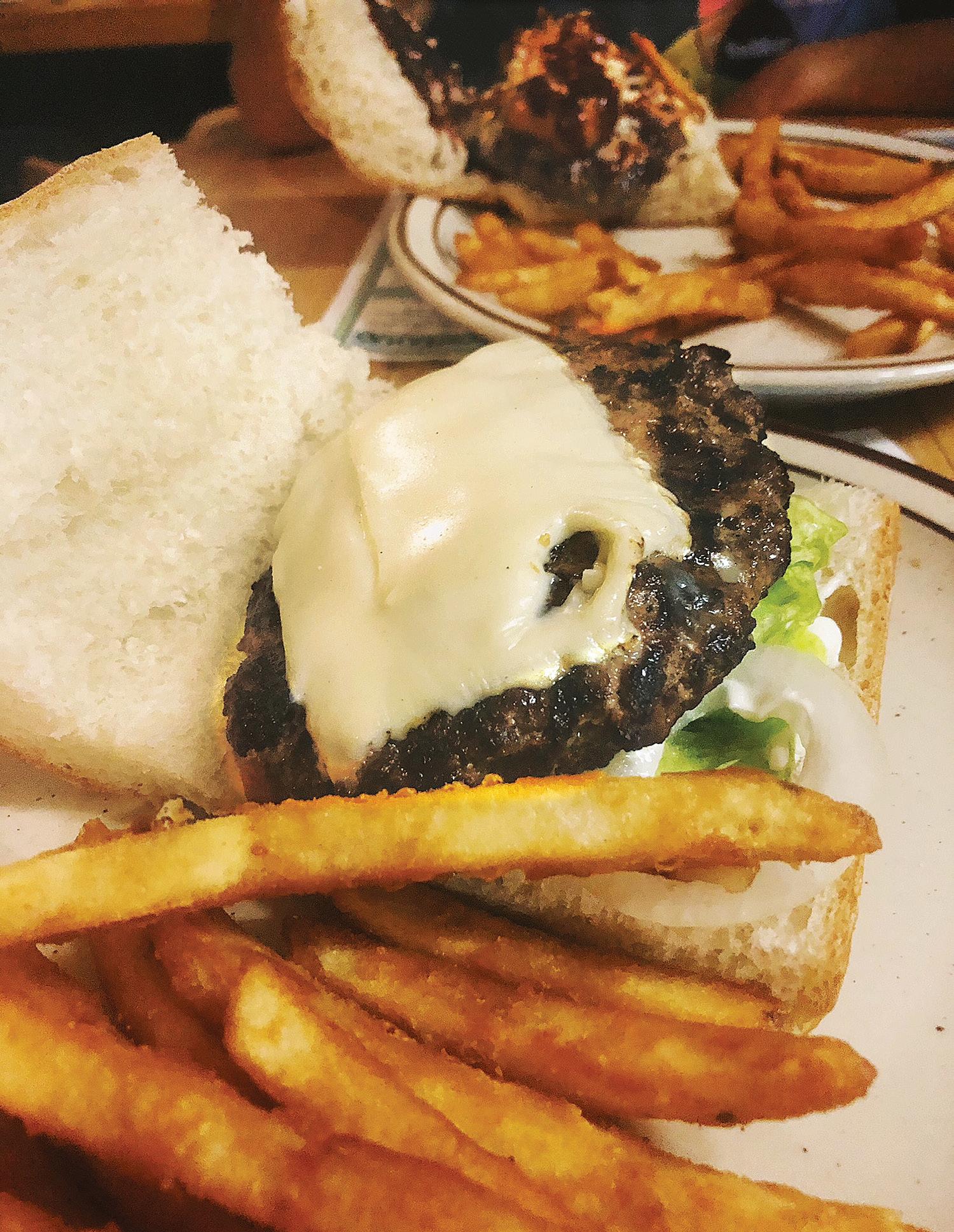
Our waiter promptly took our order, and our Pinesburgers arrived soon after, still sizzling and next to a heap of homemade French fries. The verdict? The meat, though charred, was tender and further enhanced by the ketchup, lettuce, onion and cheese. (I chose to skip the tomato, but it normally comes with the Pinesburger). There were two options for the sauce; I chose mayo, while my friend chose Thousand Island dressing. The baked French bun, which hails from Ithaca Bakery, soaked up some of the juiciness of the meat. I eagerly began to devour the deliciously messy burger. My first bite was a perfectly barely-held-together combination of hot goodness. There is an implied elegance in the simplicity of the Pinesburger –– which contains all of the classic components, such as lettuce and tomato –– yet the choice between dressings adds a special flair. It’s a pricier burger at $12, but it’s definitely satisfyingly filling.
Although the French bread is a signature element of the Pinesburger, it was admittedly a bit too dense and thick: too much bun, not as much meat. A golden, buttery brioche bun might have better synchronized with the meat, rather than slightly overpowering it. Taking a step back, I can agree that maybe it’s not the best burger
ever (I hail from Chicago, home to Au Cheval, the restaurant that serves what the Food Network has declared to be “The Best Burger” in the United States), but that’s not the point. The point is that if the bun were to change, then the burger would be more like the Au Cheval-style double cheeseburger, and less the institutional Pinesburger.
Maybe the best plan of action is to not mess with what’s already working, and the Pinesburger has been working since the 1970s. My friend and I can ultimately agree that we wouldn’t want our Pinesburger any other way, in any other setting, than how it is on serene Cayuga Lake and in the memories of generations of Cornellians.
Then came dessert. We chose the Kentucky Derby pie, a large and decadent warm chocolate and peanut butter medley served with a side of whipped cream and vanilla ice cream. Chocolate
sauce had been artfully drizzled across the pie and ice cream as a sweet final touch. The crust was aptly light and flaky, and it was clear that the pie had just emerged from the oven. The heat from the pie combined with the cold whipped cream and vanilla ice cream transported me; I was no longer at the Glenwood Pines, but sitting on my couch at home, the fire crackling in the background. “I guess I might come back,” said my friend between mouthfuls of chocolatey goodness.
We certainly ended on a sweet note.
Serves: classic American burgers and sandwiches
Vibe: rustic and cozy
Price: $
Overall:
By LUCY SPAHR Sun Contributor
LUCY SPAHR / SUN CONTRIBUTOR
LUCY SPAHR / SUN CONTRIBUTOR
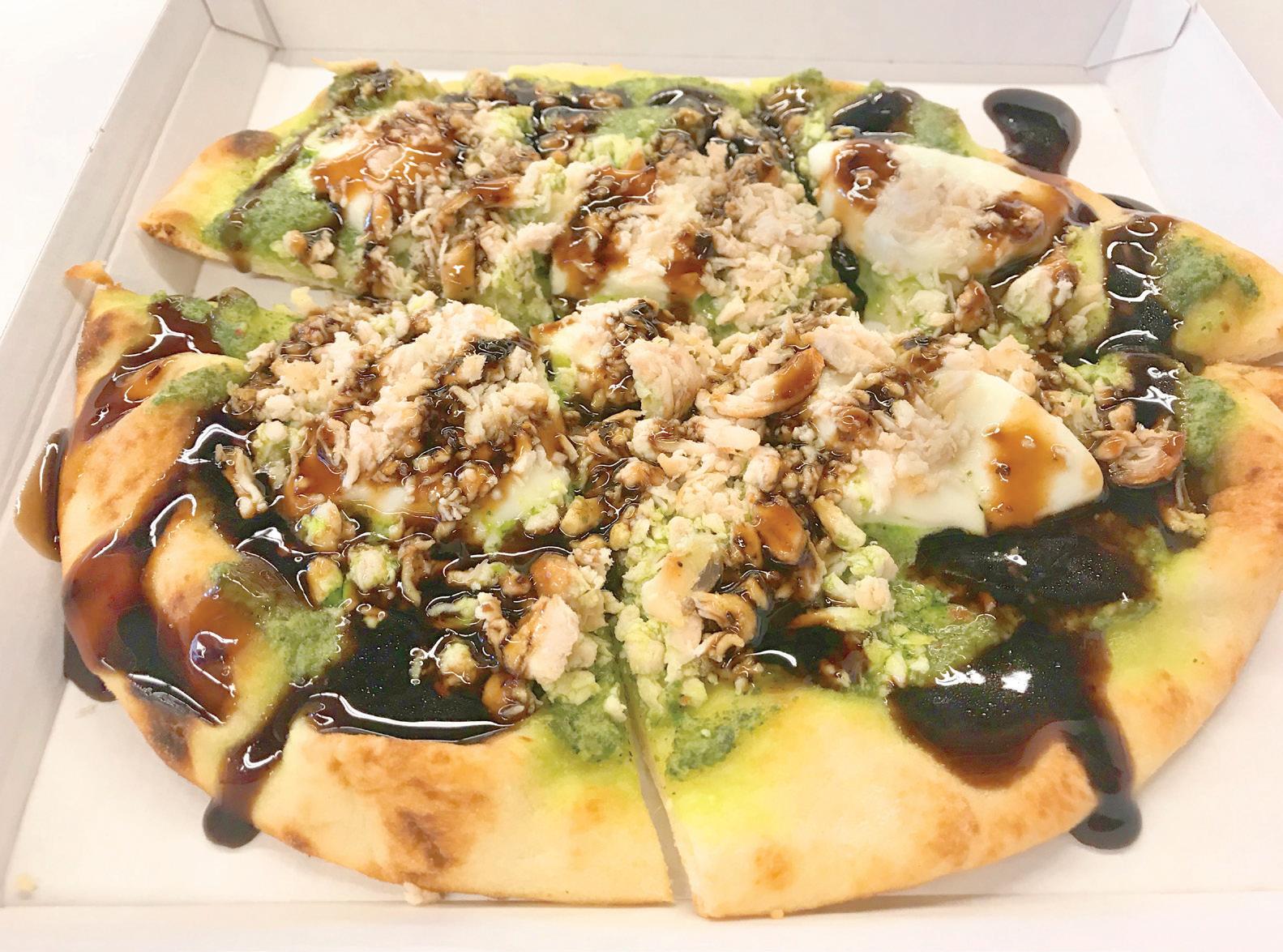
WHAT: The Mediterranean flatbread (basil pesto and fresh mozzarella) without salad; add chicken and balsamic glaze.
WHERE: Mac’s Cafe
Augusta Gordon ’21
AUGUSTA GORDON / SUN CONTRIBUTOR
ARTS & ENTERTAINMENT
A High Tech Minstrel Show
Last Thursday, Kanye West visited Donald Trump at the White House, where the two were expected to discuss broad political issues, particularly the reformation of American’s prison-industrial complex. This conversation was to be held within the context of a potential presidential pardon for Larry Hoover, a gang leader who West believes was unjustly sentenced to life in prison. Things, however, did not develop entirely on the course of these expectations, as the meeting appears to have consisted largely of West orating on a number of other topics, such as Democratic-Party policies, Hillary Clinton’s presidential campaign slogan and his contract with Adidas.
A plethora of discourse soon erupted around Kanye West’s actions as the mainstream media covered the meeting. Saturday Night Live – whose relationship with the rapper was recently strained following his appearance on the show as musical guest – parodied the meeting, adding to its mythical canon of coldopen sketches. Simply put, the meeting and its subsequent coverage became so ubiquitous that it would have been difficult to avoid seeing or hearing about it.
Kanye West’s comment about a “lack of male energy,” in both his childhood home and his current extended family, stood out to me, as I thought it might convey something about the formation of black, masculine identity at this point in the hip-hop era. What does it mean, and what does the subsequent discourse reveal, when such a high-profile black man states that wearing Donald Trump’s red MAGA hat makes him “feel like Superman?” Of course, I was advised that,
given Kanye West’s varying stability of mental health, it might be unwise or at least unproductive to analyze his words at the meeting as truly self-representative. The weight of this word of caution did not really strike me until I listened to Don Lemon’s, of CNN, take on the matter.
Lemon stated that he saw a “minstrel show” in Thursday’s meeting as Kanye West sat in a room “embarrassing himself” in front of a predominantly white crowd. The commentator additionally pointed out the exploitative nature of the meeting as Trump and other politicians use events like this, often with black celebrities, for purposes of publicity. Lemon’s use of the “minstrel show” term is poignant and compelling; for readers who are not aware of its meaning, minstrel shows were performed throughout America during the 19th century and consisted of sketches, songs, and other acts that performed negative black stereotypes. In many shows, white actors would wear blackface in order to portray the black Americans whom they intended to mock with racism. While Kanye West did not intentionally “perform” anything, we still witnessed the placement of a vulnerable black man in the national spotlight, before a white audience, and we just laughed.
We laughed! The whole affair feels dystopian, as if it was plucked from an episode of Black Mirror. A number of television shows and hosts, like SNL, Jimmy Kimmel, Jimmy Fallon and Trevor Noah all made fun of Kanye West and the meeting, contributing to the gleeful
obsession with West’s questionable exposure. The whole incident portrays the phenomenon of hypervisibility that so many scholars have observed and considered in the hip hop era. During the 1990s, when hip hop culture grew into its familiar, mega-popularity, black rappers became hypervisible in the sense that a gigantic force of global capital formed around them. White America consumed rap music at immense rates and exhibited an utter fascination with black, urban culture — from a safe, suburban distance. This was when gangster rap dominated hip-hop’s soundscape, and much of the obsession with this music revolved around the violent, hypermasculine motifs present in the genre.
When any marginalized group is rendered hypervisible in such a way, they are forced into a virtual box in which society may relentlessly gaze. In the realm of a postmodernist tradition, the monolithic images produced in this box can directly inform and, in this case, restrict the
ways in which non-celebrity members of the marginalized group form their own identities. This past week, mainstream America refocused its gaze on Kanye West, and made him hypervisible despite his own mental health problems. White America jeered, even under the guise of an anti-Trump liberalism, yet another image of an endangered black man was produced.
Of course, in 1991, when Clarence Thomas deemed mainstream treatment of his confirmation hearing a “hightech lynching,” there was a great deal of controversy surrounding the allegations made against him. His words were rhetorically moving, and I would assert that what we witnessed last week was nothing more than a high-tech minstrel show for the 21st century.
Nick Swan is a senior in the College of Arts and Sciences. He can be reached at nswan@ cornellsun.com. Swan’s Song runs alternate Tursdays this semester.
Bad Time at El Royale Perplexes Wonderfully
cults nor bestiality — and certainly not murder. Bad Times, indeed.
Bad Times at the El Royale opens with Nick Offerman burying something under the floorboards of a hotel and it ends with Jim O’Heir introducing a singer at a club. If the marketing for this movie were just those two cameos, I would have been hooked. As a Parks and Recreation addict, nothing makes me more excited than seeing my favorite actors outside of Pawnee, Indiana. This film, however, strayed far from the cozy confines of a network television comedy. It starts off tame enough. Jon Hamm, Jeff Bridges and Cynthia Erivo’s characters are introduced early on and the movie begins to develop as a mystery. The only mystery by the end of the film, though, is what the actual hell it was about. Nothing is off limits at the El Royale: not robbery,
Being completely honest, I am not sure why Bad Times at the El Royale was made. It is one of the rare films that left me utterly baffled exiting the theater. The plot is far too difficult to explain in the short span of a review. Not in a bad way; I thoroughly enjoyed Drew Goddard’s wild, and at times, nonsensical, thriller. Scenes were shown from multiple characters’ points of view, a style that got tedious at moments, but ultimately lent more clarity to the film. Bad Times at the El Royale is something akin to a love child born from the unholy union of Pulp Fiction and The Hateful Eight. If I were to complain about one thing, it would be that the “good versus evil” dichotomy got slightly heavy-handed as the movie wore on. Goddard tried to squeeze as much sym-
bolism as he possibly could into the near two-and-a-half hour runtime. He could have toned it down a little. Hotel guests don outfits of contrasting colors. A physical red line divides “gloomy” Nevada and “sunny” California. News is delivered via a flickering black and white television seated on the check-in counter. Two characters fight as metaphorical representations of right and wrong. Honestly, Paradise Lost handled this topic far less tediously.
The El Royale presents a facade of splendor, yet it has fallen on hard times after losing its gambling license. Similarly, characters reserve their private personalities to their rooms, and most true personas are not publicly revealed until the final act. The hotel now appears to be run solely by the perpetually unsettled Miles (Lewis Pullman). Under direction from management in Pennsylvania, Miles se-
cretly records guests through two-way mirrors set in their rooms. He is far from the most deceptive character, and you do not learn his backstory until the movie is nearly over.
Jeff Bridges is not a priest and Jon Hamm is not a vacuum salesman (although he has the charisma to be an effective one).
Bad Times almost feels like three movies (or more) squished into a single feature. Storylines begin and end abruptly as if Goddard began writing a character’s arc and then had a stroke before he could finish. The first murder occurs about only thirty minutes into the film and is never really given more than a cursory “oh yeah, that dead guy” ever again.
Goddard’s film continuously ascends, but never reaches a true crescendo. Massacres that would be climactic in most other movies are immediately brushed to the side by
yet another flashback or even more killing. The scene that could feasibly be considered the apex is far too short, and for that reason, I would hesitate to say that the movie was deliberately climbing to that point.
Visually appealing, the film managed to entertain me most of the way through. Colors are vibrant and the set design is admirable. The action is primarily focused on the main characters with few shots wasted on frivolous details or extra actors.
Bad Times at the El Royale ultimately provides a marathon of entertainment at the low-low cost of leaving the theater completely and thoroughly perplexed. It might not become a cult classic, but it’s certainly worth a watch.
Jeremy Markus is a freshman in the College of Agriculture and Life Sciences. He can be reached at jem476@cornell.edu,
Swan’s Song
Nick Swan
BY JEREMY MARKUS Sun Contributor
COURTESY OF NBC
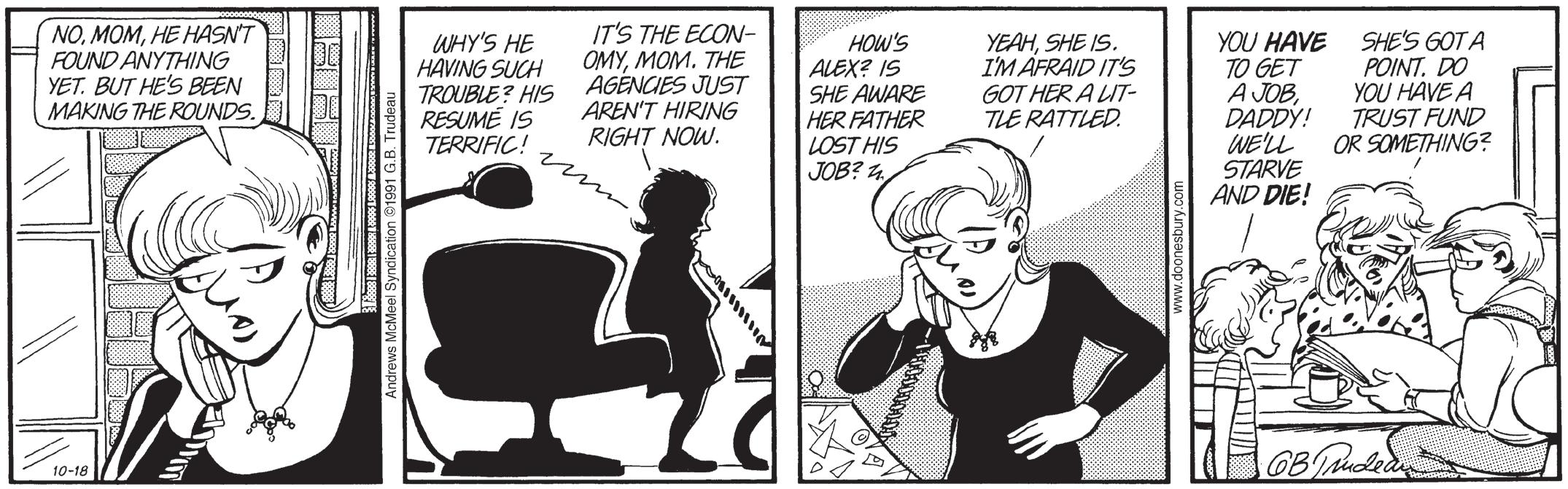
Classic Doonesbury (1991) by Garry Trudeau
Mr. Gnu by Travis Dandro
Malla ’21
26 A PA R TMENT FOR R ENT
1, 2, 3, 4, 8 BEDROOMS FURNISHED VERY REASONABLY PRICED
607-272-3389 avramisrentals@aol.com
26 A PA R TMENT FOR R ENT
COLLEGE
1 Bedroom available In a 2 BR apartment For Male, Undergrad student. Available NOW & Spring 2019
4 Bedroom Apartment Available NOW & Spring 2019 Novarr-Mackesey Property Management office@ithacastudentapartments.com 607-277-1234
CORNELL CAMPUS OFF CAMPUS
• A.D. White House
• Admissions Offce
• Africana Library Studies and Research Center
• Alice Cook Dining
• Anabel Taylor Hall
• Appel Commons
• Baker Hall
• Bard Hall
• Barnes Hall
• Bartels Hall
2 & 3 BEDROOMS 109 SAGE PLACE
Available NOW, Spring 2019 & 2019/2020 Shuttle Bus Access to Campus Access to Free Fitness Center Novarr- Mackesey Property Management office@ithacastudentapartments.com 607-277-1234
>>AFFORDABLE, QUALITY LIVING<< Special Deals for you! Furnished 1-6 Bedrooms Collegetown Apartments PARKING, LAUNDRY, UTILITIES! (607) 273-7368 www.IthacaApartmentRental.com *****************************
RENT NOW, GET THE BEST www.MatoulasHouses.com Apartments & Houses In Collegetown LINDEN AVE & E. SENECA ST 1 & 3 BEDROOM APARTMENTS ALL FURNISHED EMAIL: MatoulasHouses@Gmail.com PHONE: (607) 339-9644 FIRST-COME, FIRST-SERVED *****************************
Collegetown Terrace Apartments INSPIRED LIVING TAILORED TO YOUR SUCCESS 24-Hour Fitness Center Shuttle Bus Service to Campus Study Rooms w/ Expansive Views
Apartments Available NOW, Spring 2019 & 2019/2020 Novarr- Mackesey Property Management collegetownterraceithaca.com office@ithacastudentapartments.com 607-277-1234
Collegetown - College Ave, Linden Ave, Dryden Rd, Bryant Ave, Cook St. 607-330-2442 info@urbanithaca.com www.urbanithaca.com
We have availability for the 2019-2020 school year beginning June 1st at Hudson heights apartments. The studio apartments come with: heat, water, and electricity included. There are garbages houses and coin-operated laundry facilities on site. Prices start at $750/month for a 12 month lease. If you have any questions or would like to schedule a tour contact us by phone 607-208-7660 or email: renting@ithacaLS.com
• Computer Services & Financial Aid, East Hill Plz.
• Cornell Institute for Social & Economic Research
• Cornell Store
• Corson Hall
• Court Hall
• Dairy Bar
• Day Hall Main Lobby
• Dickson Hall
• Donlon Hall
• Duffeld Hall
• East Hill Offce Complex
• Environmental Health & Safety Building
• Flora Rose
• Gannett
• Goldie’s (Physical Sci. Bldg)
• Goldwin Smith
• Hasbrouck Center
• Horticulture Offce
• Humphreys Service Bldg.
• Ives Hall (ILR)
• Ivy Room (WSH)
• Johnson Museum
• Keeton House Dining
• Kosher Dining Hall
• Mac’s Café
• Martha’s (MVR)
• Mann Library
• Myron Taylor Hall
+ Hughes Dining
• Noyes Main Lobby
• Okenshields (Willard Straight Hall)
• Olin Hall
• Olin Library B Level
• Plantations Gift Shop
• Rhodes Hall
• Risley Dining
• Robert Purcell Community Center (RPCC)
• Sage Hall Atrium
•Sibley Hall, Green Dragon Café
• Snee Hall
• Statler Lobby
• Statler Terrace Restaurant
• Tatkon Center
• Teagle Hall
• Transportation Dept., Maple Avenue
• Trillium
• Uris Hall
• Vet Center (Shurman Hall)
•Weill Hall, M1 Rm + Synapsis
• Willard Straight Hall Lobby + Dining
• Autumn Leaves Used Books (Ithaca Commons)
• Bear Necessities
• Center Ithaca
• Coal House Café
• Collegetown Bagels: C-Town + Triphammer
• Commons Grocery (Ithaca Commons)
• CFCU (Triphammer Rd.
+ East Hill Plaza)
• Corner of College & Dryden
• Corner of State & Aurora
•Express Mart, Comm. Crnrs.
• Hillside Inn
• Hilton Garden Inn
• Holiday Inn
• Ithaca Coffee Co.
•Ithaca College, Phillips Hall
• Jason’s Grocery & Deli
• Kendal
• Kraftees
• Lifelong
• Oasis (Greenstar)
• P&C Fresh (East Hill Plaza)
• Salvation Army
• Shortstop Deli
• Tompkins County Public Library
• Tops (Triphammer Rd.)
• Universal Deli
• Warren Real Estate (Downtown + Community Corners)
WITH TEN QUESTIONS BRIAR BRUMLEY
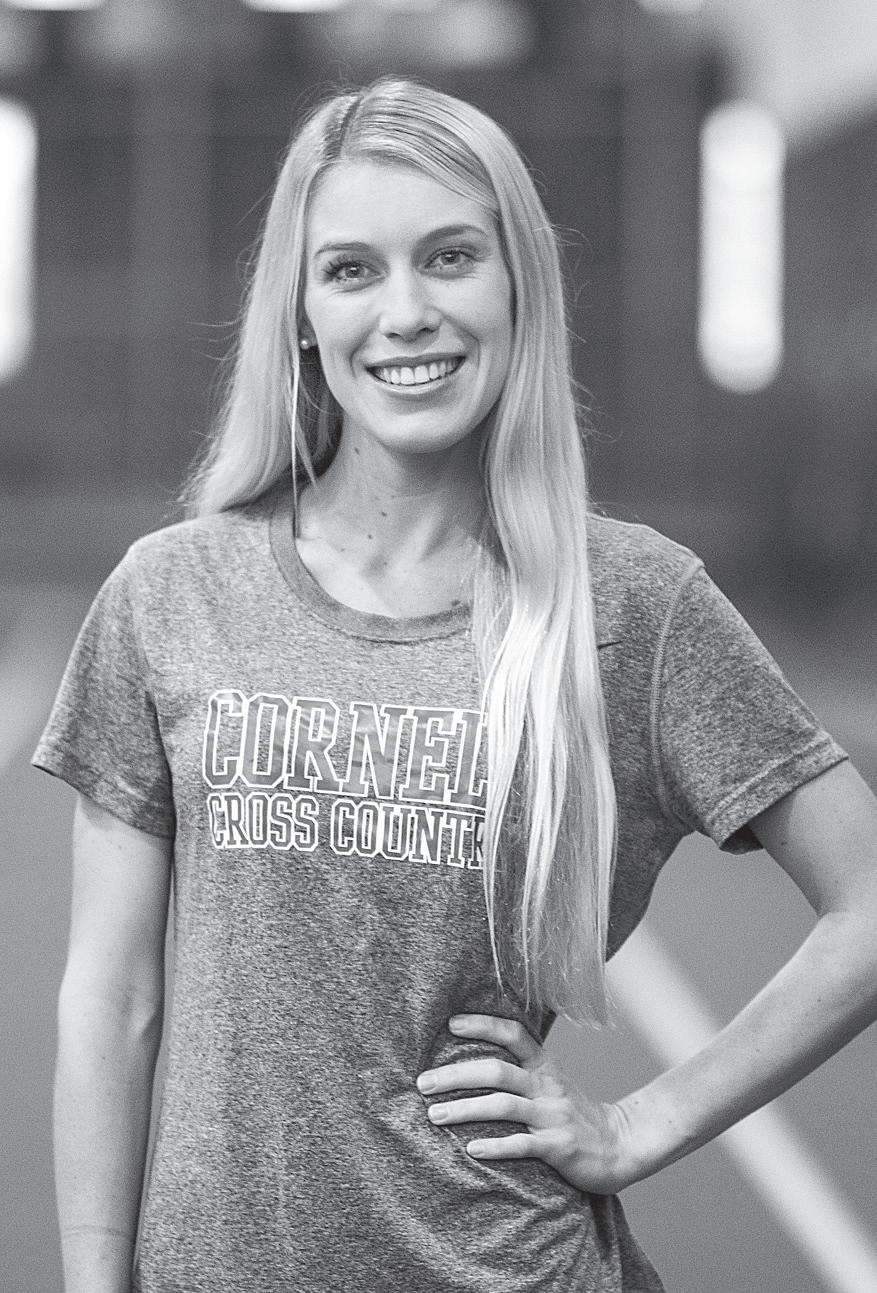
Sun staff writer Mary Barger sat down with women’s cross country senior captain Briar Brumley to discuss everything from dessert to thorny bushes. The transcript has been lightly edited for content and clarity.
1. What does your pre-race pump up playlist consist of?
My pump-up playlist consists entirely of country music. I’m a big fan of Thomas Rhett. I’m extremely aware that this is very different from what most people would consider a pump up playlist, but oh well.
2. What’s your favorite food?
People always tell me I eat like a five year old, because my diet largely consists of simple carbs and dessert. I’m extremely picky and hate vegetables, despite being a vegetarian. My excuse is that I’m a super-taster. No actually, I have more tastebuds than normal, so everything tastes really extreme to me.
W OMEN ’ S C ROSS C OUNTRY
which supposedly keeps you from getting seasonal depression. Not sure how well it works.
5. Who is your favorite athlete and why?
I really like Emma Coburn, who runs for New Balance. She’s the first American woman to medal in the steeplechase in the Olympics, and steeple is my favorite event. She uses her status as an Olympian to help others by traveling the world to promote drug free sports and hosting a charity run in her hometown.
6. Do you have any race-day superstitions?
“Of course we’re hoping to have a strong championship season and place well at Heps and Regionals.”
Senior Briar Brumely
3. Which Cornell teammate has had the greatest impact on you, and why?
I’d have to say Jackie Katzman ‘18. We roomed together in the hotels at all of our meets, ran everyday and did all of our workouts together. Because of all this, she really understood me and was able to help me through my ups and downs. Our mile personal bests are .01 seconds apart and my personal record was the result of racing with her at ECACs last winter. It was the day after the snow day and we barely made it to Boston in time but then both had one of our best races ever.
4. You’re from Southern California — what about home do you miss most when you’re here in Ithaca?
I miss the sun in the winter when it goes away. Before coming here I’d never gone so long without sun. But it’s okay because I have my happy lamp
I feel like the only thing I do is wearing the same brand of socks. I don’t know if that’s even a superstition. It’s actually kind of weird because most runners, especially in steeplechase, refuse to wear socks, but I can’t run without them. I also always wear this one ribbon that my mom bought for me for my first race freshman year at Cornell. And I wanted that specific ribbon because it’s the same one I wore in high school, but in Cornell colors.
7. What is your best cross country memory at Cornell?
When we have to race in really cold temperatures during cross country, instead of wearing pants, we cover our legs in olive oil to provide insulation. It really does help, but it’s just such a ridiculous thing to do that we all end up cracking up on the starting line.
8. What is one thing most people don’t know about you?
Well, obviously my name is Briar, but people may not know that the word “briar” means “thorny bush.” And in seventh grade we had to write an essay about how our name relates to our personality, so I had to write about how I’m a thorny bush.
9. Weirdest thing that’s happened to you during a race?
I’m from Southern California and during a high school race at a regional park with a zoo in it a peacock cut me off while I was racing. I was pretty annoyed.
10. What do you want to see the team achieve this season?
With so many seniors leaving after this year, we want the younger girls on the team to realize how much they’re capable of so that they’re confident going into next year and set their goals high. And of course we’re hoping to have a strong championship season and place well at Heps and Regionals.
MICHAEL WENYE LI / SUN PHOTOGRAPHY EDITOR
Ten questions | Briar Brumley, above, sat down with Sun staff writer Mary Barger for an interview.
Taylor Knibb: Two-Sport Athlete, World Champion
By ARCHER BIGGS Sun Contributor
Junior Taylor Knibb is not only the top runner for Cornell women’s cross country, placing first in the last two races at Penn State and Lehigh, but she is also a member of the swim team, and the U23 World Triathlon Champion.
Women’s cross country head coach Artie Smith ’96 said that a profile on Knibb is “long overdue.” He warned that learning Knibb’s accomplishments is difficult, because the only quality more outstanding than her athleticism is her humility. Sure enough, meeting Knibb, one would never know that she is a World Champion.
Knibb’s humility is disarming. On winning the U23 World Triathlon Grand Final in Gold Coast, Australia in September, she noted, that some of the top U23 women compete in the elite grand final for women at any age group. Because the U.S. team enjoys such a wealth of talent, Knibb was able to compete in the U23 field.
“She has a focused but fun energy, and she is a total team player. She is always encouraging the team to stick together.”
Senior Gracie Todd
Knibb, who is currently pursuing a psychology major, casually mentioned that her day usually includes waking up before dawn for a morning swim practice, attending classes and then running around 10 miles afterwards in cross-country practice, before getting to dinner and homework.
“Artie would say [my academics] are going well!” Knibb said, never one to brag. “I find it easier to study when I am more busy.”
Senior captain Gracie Todd, a Sun staff writer, commented that despite Knibb’s incredible schedule, with triathlon training and Cornell Swimming practices, Knibb brings an enthusiastic attitude.
“She has a focused but fun energy, and she is a total team player,” Todd said. “She is always encouraging the team to stick together, which has a huge impact on our team culture, especially come race day.”
Knibb’s leadership is crucial to the team energy.
Booters Set To Face Of With Brown Tis Weekend
By AMAN GUPTA Sun Contributor
Cornell women’s soccer will attempt to end its four-game losing streak as they travel to take on conference rival Brown on Saturday.
Having fallen to Columbia 2-1 in overtime in its Ivy opener, Cornell (1-10-1, 0-4 Ivy League) has failed to score a goal in four straight games, including three in the conference. The Bears (5-7-1, 1-3) could present significant challenges to a Cornell team defense whose offense hardly scores on its own as it is.
“Although Brown are entering this game following a loss against Harvard, their offensive nature and high propensity to score goals will remain a big threat,” said head coach Dwight Hornibrook.
Assistant coach Genna Hartung ’13 called the team “a family,” adding that she came back to Ithaca for her masters so that she could continue to be part of the women’s cross-country team.
“[Knibb] will always help lift a teammate up if they’re having a rough workout day,” Todd said. “She is super supportive, and our team is better for it.”
“Depending on the race, swimming or running is my weakness.”
Senior Taylor Knibb
On her source of inspiration, Knibb named her mother, who just last weekend finished third in her age group at the Ironman World Championships, a grueling race in Kona, Hawaii. Knibb’s grandfather, Joseph Simon ’55, played football
WOMEN’S SOCCER
at Cornell.
Knibb could not say whether she is also the top Cornell swimmer, as the season starts this winter and she has not had the chance to race yet. She thanked Women’s Swimming Coach Pat Gallagher, because her swimming and cross country practice schedules sometimes conflict. “Pat is very generous to let me train.”
Knibb said that her best event in the triathlon is biking since running and swimming are such established sports, she races against less competitive bikers. Ironically enough, the two sports at which she is a top Ivy League racer can often be her shortcoming.
“Depending on the race, swimming or running is my weakness.”
Archer Biggs can be reached at wcb224@cornell.edu.
“We need to focus on our approach while attacking in order to ensure that we are a constant threat.”
Head Coach Dwight Hornibrook
the Brown offense has scored five goals in its past two contests alone. And the Bears have historically dominated this fixture, with a 25-74 advantage against the Red.
While Cornell has been without a goal,
“We need to focus on our approach while attacking, in order to ensure that we are a constant threat throughout the game,” Hornibrook said. “Although being defensively sound is
important, we must press forward and find a way to put the ball in the back of the net, and try our best to end this losing streak.”
The Red defended well against Yale in its last outing, only conceding one goal at the end of the first half.
“As the Bears have the ability to break fast on the counter attack, we need to ensure that our defense is robust and keeps the quick attackers at bay,” Hornibrook said.
The training sessions prior to this weeks matchup focused on improving the Red’s attacking prowess, in order to foster a strong offensive mentality among the team.
“Although we want to bounce back
from the string of poor results, it is important to not get distracted by the past and approach the game with a positive mentality,” Hornibrook said.
Following the game against Brown, the Red will return home to host defending Ivy League champion, Princeton. The Ivy league conference will then end with an away game at Dartmouth on Saturday, November 3rd. The game against the Bears will commence at 1 p.m, and it will be broadcast on ESPN+.
Aman Gupta can be reached at ag744@cornell.edu..
On top of the world | Senior Taylor Knibb, above at the ITU World Triathlon Grand final, has made a name for herself in two collegiate sports on top of winning the U23 world championship triathlon.
MICHAEL WENYE
PHOTOGRAPHY EDITOR
Red Marches to Providence Seeking 2nd Ivy Win
By RAPHY GENDLER Sun Assistant Sports Editor
Midway through the season, Cornell football is 1-1 in the games that count and geared up for five straight weeks of Ivy League contests that will determine the conference champion.
“Every Ivy League game is a must-win” at this stage to stay in the Ivy title chase, according to head coach David Archer ’05. The first of these five straight league contests projects to be the easiest for the Red, as Cornell (2-3, 1-1 Ivy) travels to Providence to take on last-place Brown (1-4, 0-2 Ivy) this weekend.
Cornell was selected to finish seventh in the league in preseason polls, ahead of only the thumped Brown, 34-7, at home last sea son, but has not won in Providence since 2002.
And although the matchup with lowly Brown comes after a 31-0 loss to nationally ranked Colgate and precedes a matchup with high-flying Princeton, also in the national top-20, the Red is confident that a pivotal league contest won’t be a trap game
“There’s so much parity in the Ivy League you have to bring it every week,” said senior running back J.D. PicKell. “No game is ever a guarantee; whether it’s Brown or another team in the league you have to bring your A-game, and if you don’t you’ll be surprised and more than likely lose.”
PicKell has worked mostly in the No. 2 running back role behind junior Harold Coles. But with an undisclosed injury to junior quarterback Mike Catanese, PicKell took snaps in a wildcat quarterback formation at Colgate and has also lined up at wide receiver. Cornell expects to be without Catanese again this weekend.
Shut out in Hamilton, the running game and the rest of the Cornell offense will try to get back on track against a Brown defense that surrenders 35.6 points per game and allows 267.2 rushing yards per game — both worst in the conference — and is coming off a 48-10 loss to Princeton in which star Tiger quarterback
the Ivy League, but is third-best in passing offense and middle of the pack in pass defense — thanks to their weekly second-half deficits. Quarterback Michael McGovern has the second-most aerial yards in the conference.
After shellacking the Bears at Homecoming last year, Cornell upset Princeton on the road before losing three consecutive contests to Dartmouth, Columbia and Penn to round out the season. After taking on the Bears, Cornell faces now-league favorite Princeton on the road Oct. 27 and hosts undefeated Dartmouth Nov. 10, making a win against Brown crucial.
John Lovett didn’t
Although Brown is at the bottom of the standings and was the league’s cellar-dweller last year, Cornell knows a victory on the road against the Bears has eluded the program in recent
“It’s going to be an absolute battle, there’s no question,” Archer said.
“We haven’t won there since I was a sophomore in college … we need to play with a chip on our shoulder and we need to play with an
Statistically, Brown has the worst offense and defense in
Vanderlaan Tapped as Icers’ Captain; McCrea, Nuttle Alternates
By DYLAN McDEVITT Sun Sports Editor
Senior forward Mitch Vanderlaan will wear a ‘C’ on his jersey for the second consecutive season, with classmates defensemen Alec McCrea and Matt Nuttle each donning an ‘A’ as alternate captains for Cornell men’s hockey in the 2018-19 season, the team announced Thursday.
“Obviously, it’s `an honor, again, to be wearing the ‘C’,” Vanderlaan said at media availability Thursday evening. “We’re going to have a bunch of other great leaders around which will help a lot.”
arriving on East Hill in 2015-16, earning 67 points in his three seasons — good for second-most by a Cornell player in that time span.
“[Vanderlaan] is a great kid, and all we need him to do is just be himself,” said head coach Mike Schafer ’86. “He’s really, really driven on and off the ice, he leaves nothing to chance as far as detail, he’s a great teammate, and we just need him to continue to do that and guys will follow him.”
Vanderlaan is the first Cornell player to serve as captain in consecutive seasons since John McCarron ’15 did so in his junior and senior seasons. Schafer cited Vanderlaan’s effort and leadership during the week leading up to games.
“He’s really, really driven on and off the ice, he leaves nothing to chance as far as detail, he’s a great teammate. ”
Head Coach Mike Schafer ’86
Vanderlaan, who missed a chunk of the 2017-18 season due to injury, earns his second captainship after serving jointly last season with Alex Rauter ’18. Vanderlaan has been among the most powerful forces in the Red’s offense since
“From day one Mitch has … improved himself dramatically because he puts forth so much effort in what he does Monday through Thursday and then shows up Friday and Saturday. … And it doesn’t matter if we’re playing the No. 1 team in the country or the 59th-ranked team in the country — he plays the exact same way.”
The alternates McCrea and Nuttle are both blueliners that have played large
“We go into every game like it’s our biggest game, like the championship game and we’re going to keep that going Brown week, Princeton week, Dartmouth, whoever,” said senior linebacker Maxwell McCormick.
Analyzing his team halfway through its 2018 campaign — though only two games into the Ivy season — Archer said his team is right in the conference title chase, pointing to last year’s race that featured a possibility for a seven-way tie for first place heading into the season’s last couple weeks.
“I think we had two really hard [road] nonconference games against ranked opponents [Delaware and Colgate],” Archer said. “I think there’s a lot to take away from those even though we didn’t win … I think we were a couple plays away from beating Yale, we were a couple plays away from not beating Harvard, and it shows you that the league’s a dogfight.”
With one loss in the Ivy League already, it’s unlikely the Red can earn a conference title without beating Brown — the Ancient Eight hasn’t had a two-loss champion since 1982.
Cornell and Brown kick off at 1 p.m. Saturday in Providence.
roles in the Red’s defensive unit — the stingiest in the country last season with 1.57 goals allowed per game. Nuttle led the team in plus/minus at plus-23 and played in all 33 of Cornell’s games. For his part, McCrea played in all but one of the Red’s contests and was recognized as the ECAC’s best defensive defenseman at the end of the 2017-18 season.
“It’s … an honor to be [an alternate captain],” McCrea said. “I think the beautiful thing about our team is we have leadership throughout the classes with everyone, and as a D-corps we have a lot
of returners now.”
The newly anointed leaders of a Cornell team that looks to capture a second-straight regular season title got their first crack last weekend as the Red dispatched Laurentian in an exhibition bout Saturday, with another exhibition to come against Guelph this Sunday at 4 p.m. The regular season officially begins Oct. 26 with a two-game home set against Michigan State.
Second term | Senior forward Mitch Vanderlaan, above, is the first Cornell player since John McCarron ’15 to serve as captain in two consecutive seasons.