The Corne¬ Daily Sun

By LIN AI Sun Contributor
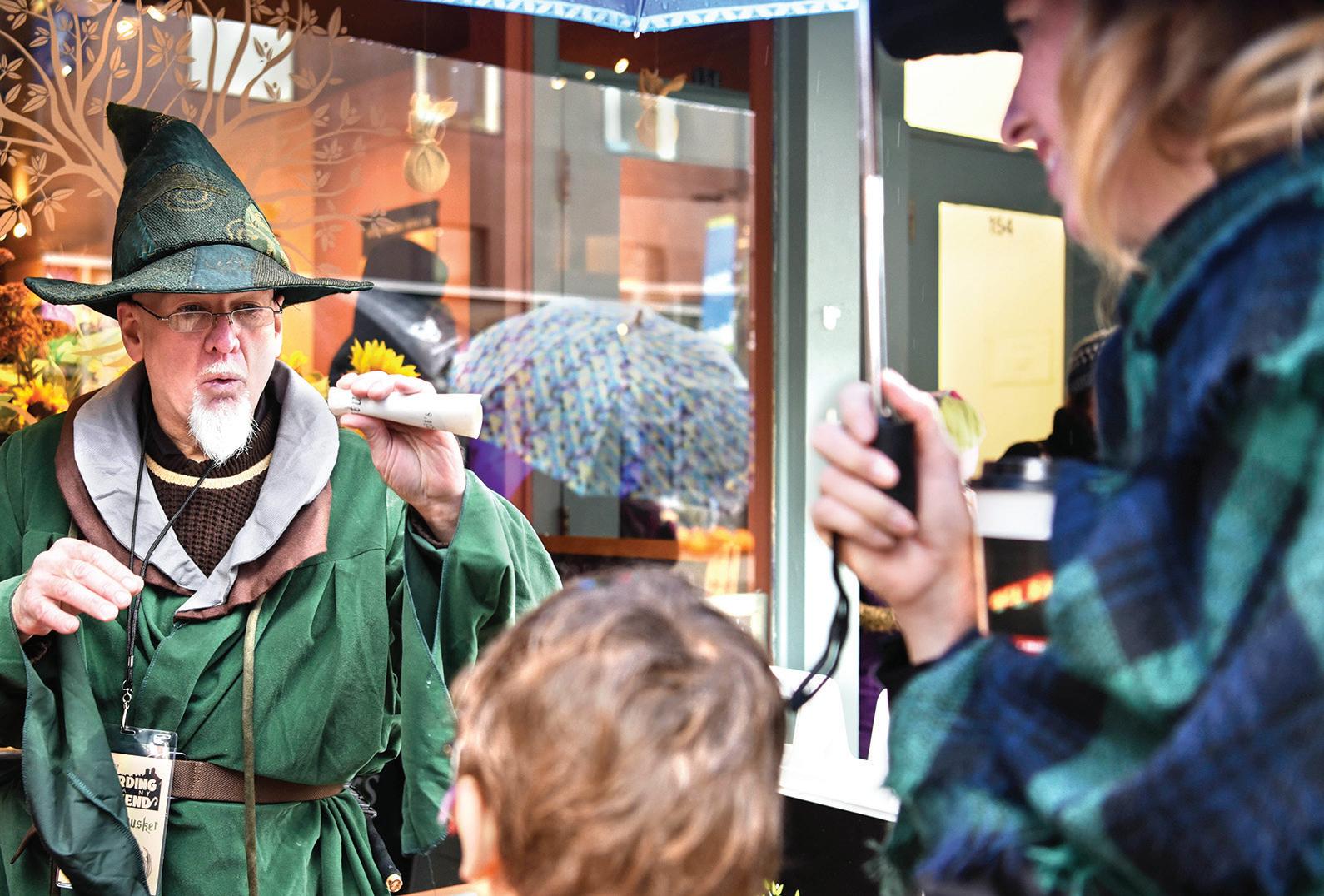
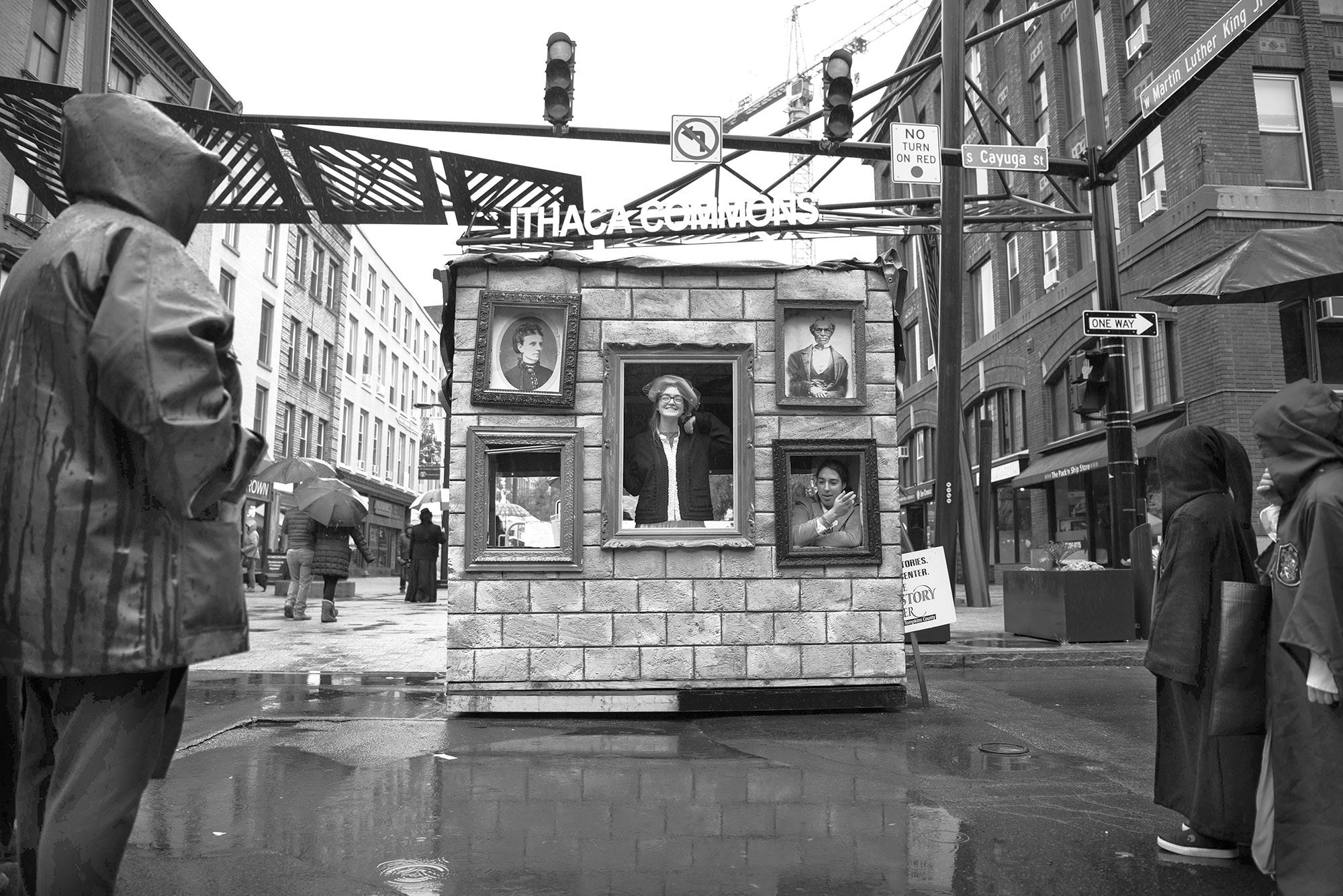
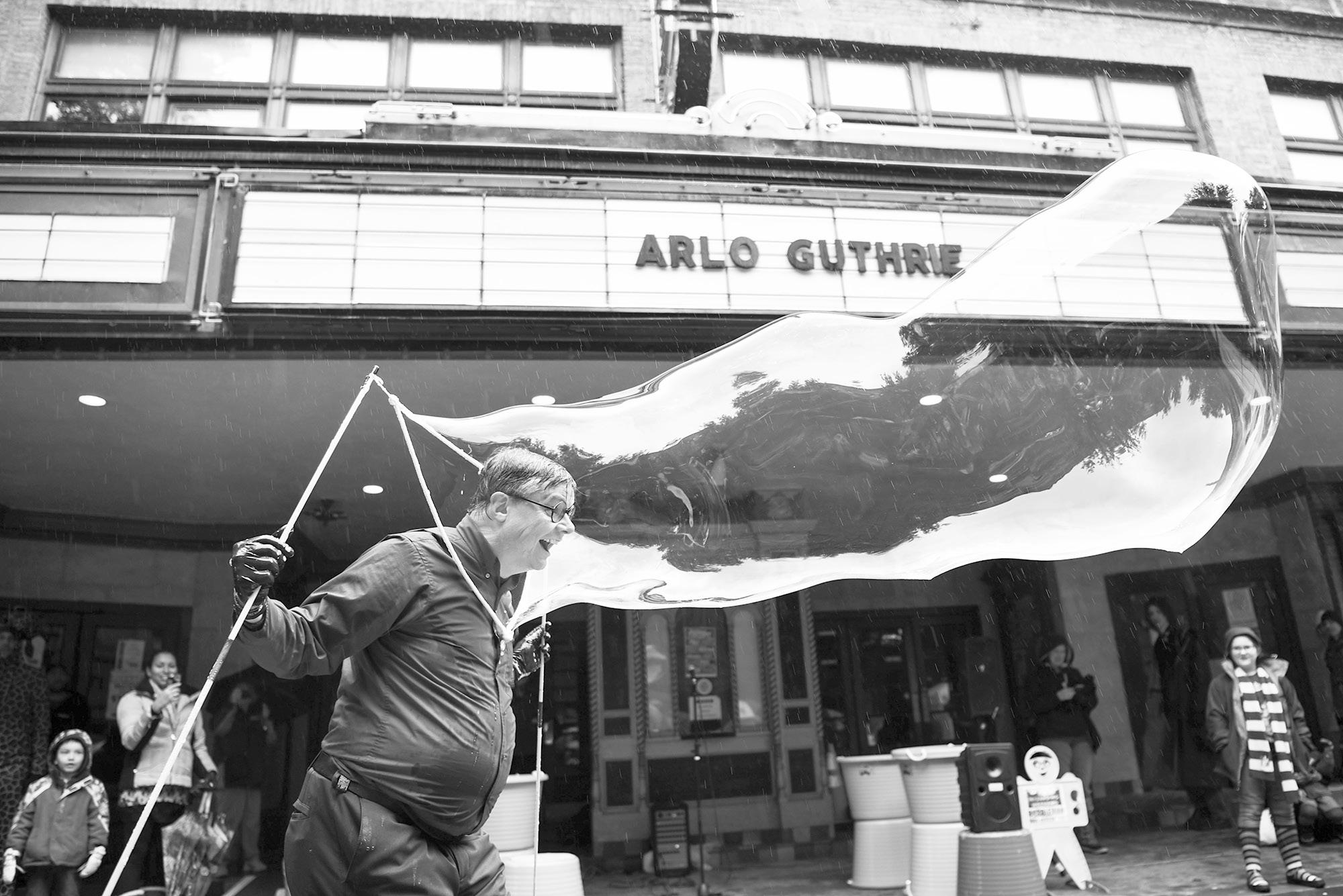
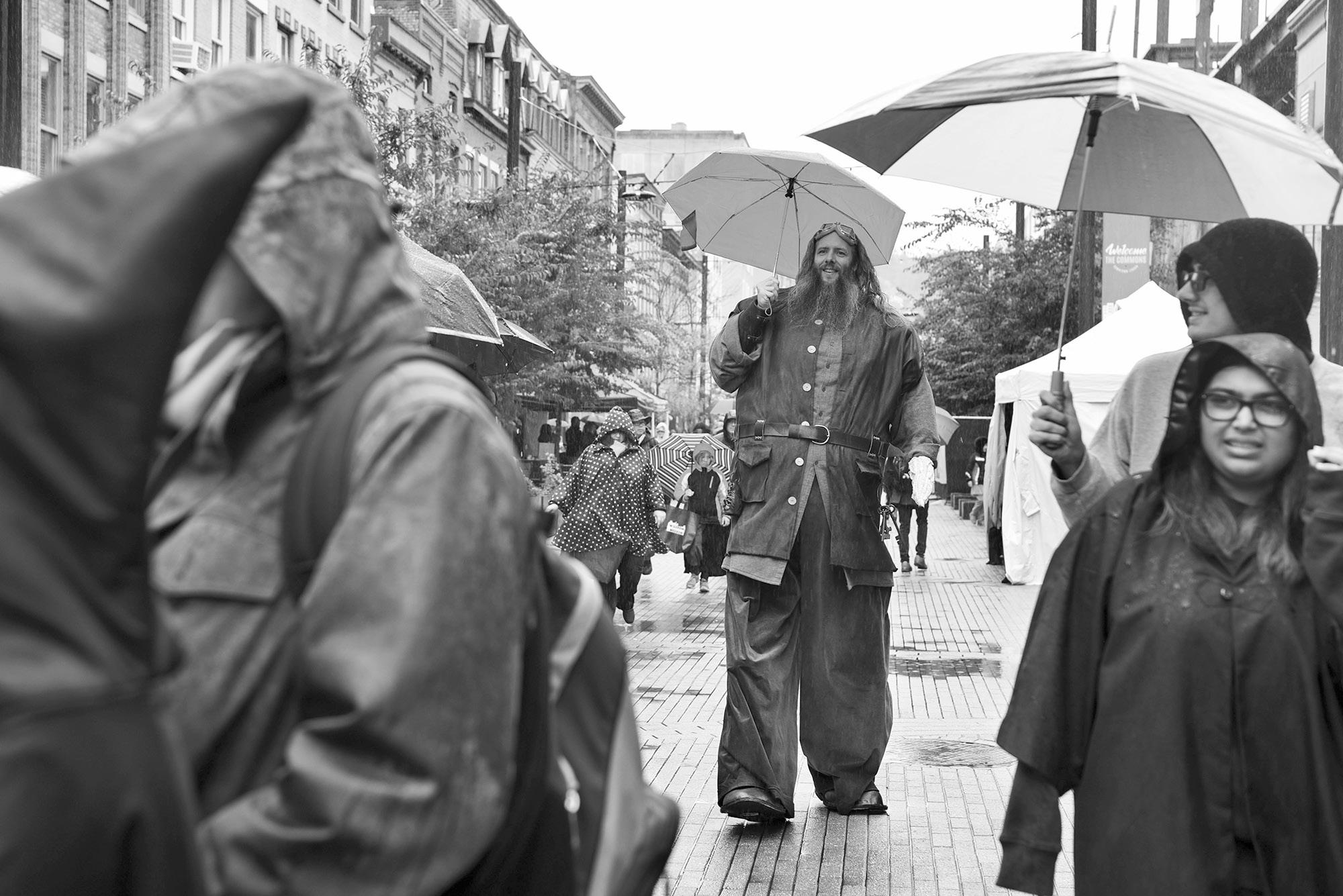
Wizarding Weekend, in its fifth year, is once again going to bring fans of magic, science and fantasy together on the Ithaca Commons on Oct. 26 and 27 with various interactive games and crafts. This year’s highlights include a scroll ceremony and guardian quest, a Fan Arts Show and, as before, a wide range of costumes to add lively colors to Ithaca’s fall season.
“Two local teenagers came up with the idea in 2015. They just thought it would be cool to have something fun related to a specific set of books in what is now Press Bay Alley,” Darlynne Overbaugh, the director of the festival, told The Sun.
Leading up to the first iteration of the event, she had planned a five-hour event for five hundred families during one week. “But it
WIZARDING page 4
By ALIYAH KILPATRICK Sun Staff Writer
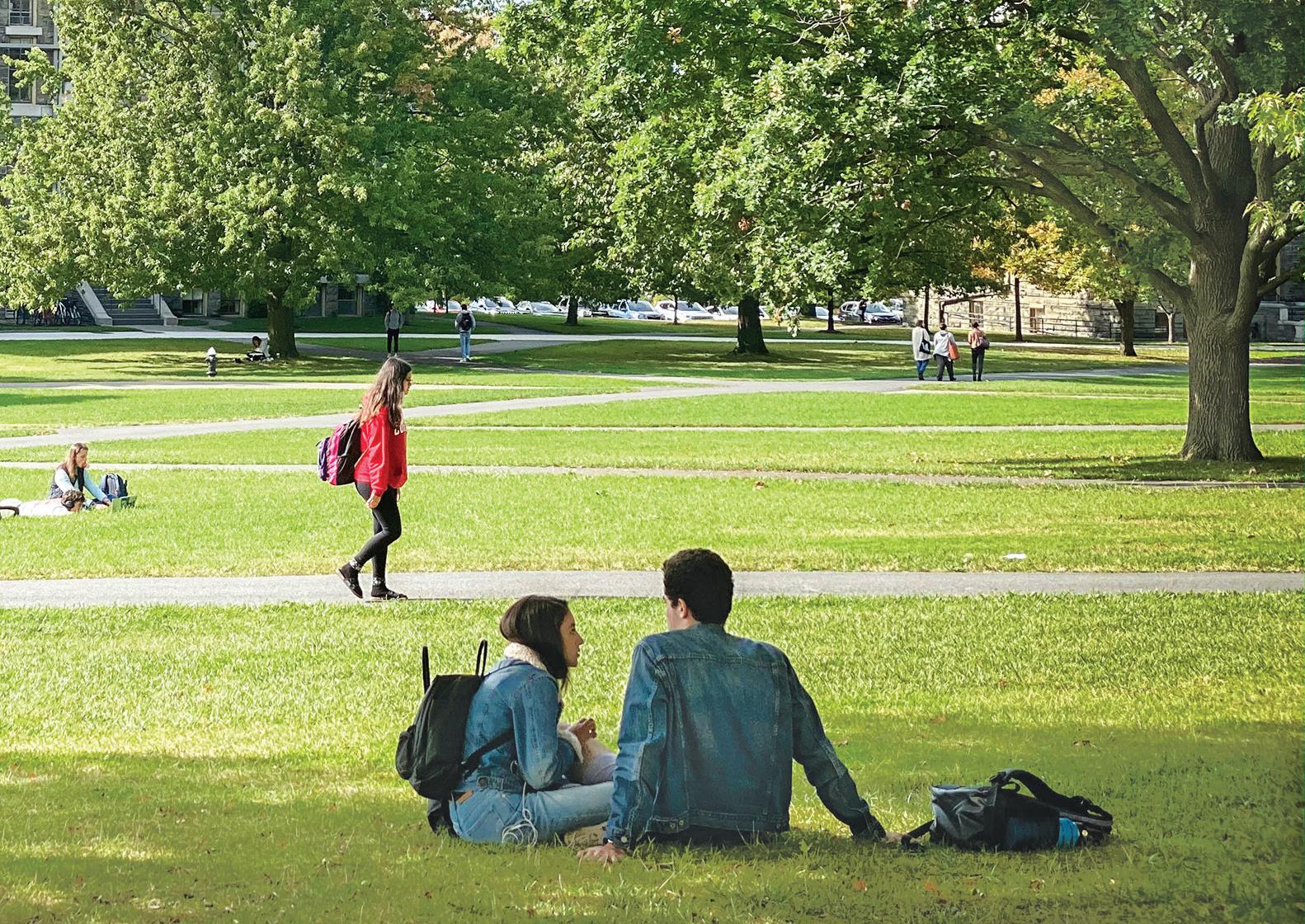
After weeks of exams, papers and responsibilities, Fall Break offers a welcome respite for students to destress and relax. Many Cornell students decide to go home or get away from campus, though some students simply live too far away or choose not to step off campus for a quick vacation.
Alumni profs refect on their time at C.U., from fnding their academic passion to meeting future spouse
By RENEE HOH Sun Contributor
During their time as Cornell students, many students call Ithaca home for a number of years before leaving. Some, however, find their way back to campus at the front of the lecture halls where they once attended classes — as professors.
Prof. Cliff Kraft ’75, natural resources, reminisced about sleeping overnight in Barton Hall to get hockey season passes, campaigning for Democratic presidential candidate George McGovern in 1972, and the good music — stalwarts Aretha Franklin and Pete Seeger stopped by the campus in the 70s.
“We weren’t racing to get jobs,” Kraft said. “I think when you are 21 or 22, you’re always nervous about what life has to offer but I don’t think we had a lot of expectations. It was kind of like ‘Wow! This is a cool place to be.’”
in graduate school.
“In some ways,I’m responsible for creating the kinds of educational opportunities I think I would have liked to have had and I think are important for students,” Kraft said.
Prof. Chris Xu M.Sc. ’93 Ph.D. ’96, applied and engineering physics, met his wife by chance while crossing the Beebe Lake Bridge. They got married at Cornell, and he even stayed on for one year postdoc since she was graduating.
“We weren’t racing to get jobs. I think when you are 21 or 22 you’re always nervous about what life has to offer but I don’t think we had a lot of expectations.”
Prof. Cliff Kraft ’75
Comparing his former job at Bell Labs and his position as a professor now, Xu found graduate school at Cornell to be the most stress-free period in his life. He enjoyed playing sports and sliding down Libe Slope on a dining tray after finals.
Some use this break as a way to explore nearby cities in the U.S. International Student Reina Kobayashi ’23, who is from Japan,
BREAK page 5

Kraft could not have predicted that his career would one day lead him back to Cornell. After graduation he worked with the California Coastal Commission, the U.S. Fish and Wildlife Service, before starting work at University of Wisconsin-Green Bay. When he returned as faculty in 2001, Kraft described how every building brought back memories from his formative years as an undergraduate, from genetics lab he took in the Plant Sciences Building to the stray dogs roaming through lecture halls.
Perhaps the biggest change since his time as a student is that environmental sustainability was not talked about, much less a field of study, in the 70s.
Kraft majored in biology before narrowing down his interests
“[Grad school is] really the most fun time of my life in many ways because you do the things you like to do and you have a lot of freedom to explore and not too many things to worry about,” Xu said.
Seeing his students stress and worry over exams and their futures, Xu reassures them to enjoy their time in college, stating that ten years ago he would not have imagined doing the research he has accomplished today.
“Failure is much more valuable than success, there’s no question about it,” Xu said. “Now I have the mentality that if things are not working, now that’s where the fun starts. Otherwise, if it works as you expect, it’s over. It’s boring.”
Xu has since spent 23 years of his life in Ithaca, and confidently calls it his “hometown.” Like Xu, Prof. Beth Frances Milles ’88. performing and media arts, now calls Ithaca home, but came back to her alma mater after living and working in Connecticut, Rhode Island and southern California.
See ALUMNI page 4
Group Show: Pure Wobble Exhibit
8 a.m. - 4:30 p.m., Oliver Tjaden Gallery and Experimental Gallery
Cornell’s Green Team Summit
8:30 a.m. - Noon., Lecture Hall 2, Schurman Hall
Local Immigration Law Lecture Noon, 111 Ives Hall
Innovation, Science and Technology At Columbia Sportswear
12:20 - 1:10 p.m., T01 Human Ecology Building
International Student Group Counseling
3 - 4 p.m., 276 Caldwell hall
Earth and Atmospheric Sciences Seminar
3:30 - 4:30 p.m., 2146 Snee Hall
Asian American Studies Lecture
4 - 6 p.m., 4th Floor Conference Room, Rockefeller Hall
Mind the Gap: Navigating Gendered Wage Inequities
4:30 - 6:30 p.m., 105 Ives Hall
Teaching Cultural Difference: Comparative Literature Seminar
4:30 - 6:30 p.m., 258 Goldwin Smith Hall
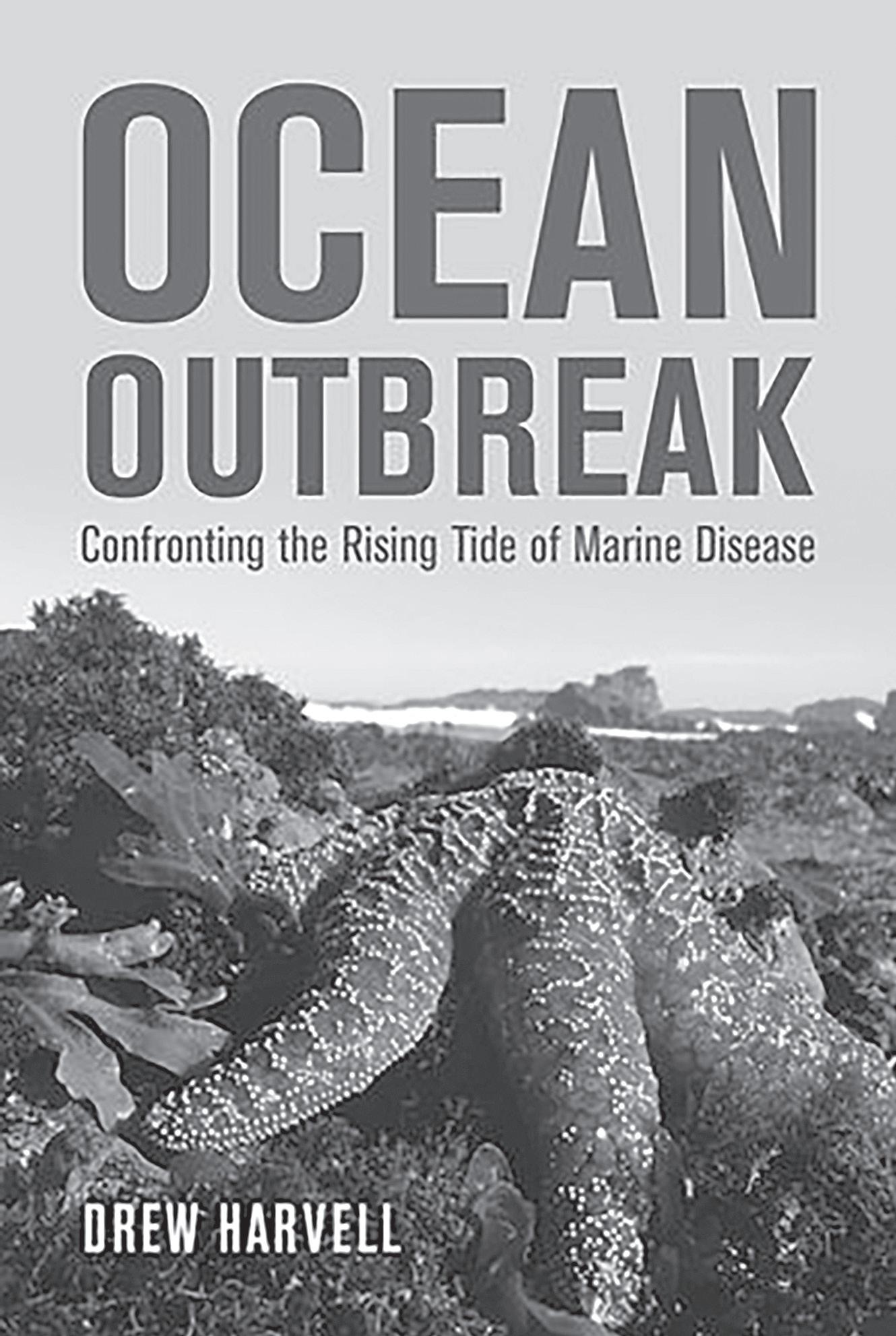
aquatic ecosystems from devastating diseases. based on her book, Ocean Outbreak: Confronting the Rising Tide of Marine Disease

Monpazier: A Planned Town of the 13th Century 8 a.m. - 5 p.m., West Sibley Exhibition Hallway, Sibley Hall
Development Economics Workshop 11:40 a.m. - 1:10 p.m., 206 Stimson Hall
Currencies of Imagination: Channeling Money and Chasing Mobility in Vietnam Noon - 1:30 p.m., Kahin Center
Communication Colloquium Series: Environmental Engagement in a Diverse World 1:30 - 2:45 p.m., 655 Rhodes Hall
Institute for African Development Seminar Series 2:30 - 4:30 p.m., G08 Uris Hall
Drew Harvell on Ocean Outbreak: Confronting the Rising Tide of Marine Disease 4 - 5 p.m., 160 Mann Library
Cornell in Washington Internship Panel 4:30 - 6 p.m., B73 Warren Hall
Public Masterclass, “Making a Sundance Documentary” 5 - 6 p.m.,124 Schwartz Center for Performing Arts
Latinx Thrive Series Fall 2019 6 p.m., 258 Latino Living Center Main Lounge
By
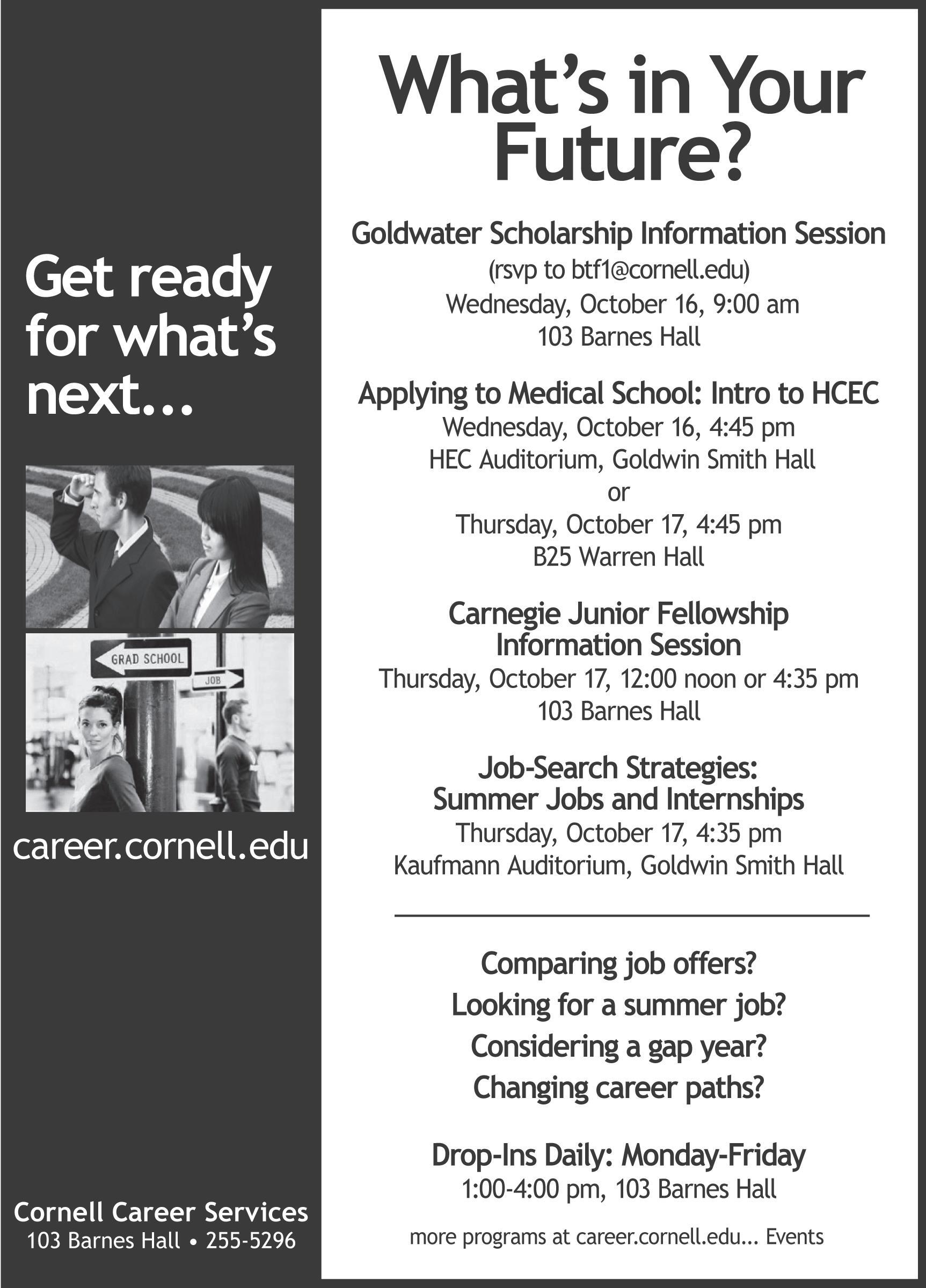
Two customers are suing Wegmans for violating quality rules for their vanilla ice cream products. The plaintiffs argued that Wegmans misled customers into buying vanilla ice cream that supposedly contained little to no pure vanilla at all.
With Cornell’s own dairy bar known for its ice cream nationwide — and Wegmans’ status as a late-night student haunt — The Sun asked local industry experts to weigh in on the vanilla controversy.
Quincy Steele, a Pennsylvania resident, and Jimmy Arriola, of New York, filed a class action lawsuit against the major supermarket chain for “causing them to pay more than they would have” by mislabelling their products. They claim that the “natural flavor” indicated on the ingredient list on Wegmans ice cream does not contain as much pure vanilla as the front label suggests.
Cornell Dairy Plant Manager Tim Barnard said that the size and scope of Wegmans makes it tough for any mislabelling to get past the Food and Drug Administration.
“I don’t think this is exactly a bombshell lawsuit.”
Prof. Bradley Wendel, law
“Wegmans is too big to be falsifying [amounts]. Any ice cream we make here, any nutritional label, everything that has to go on that ice cream or be available to the customer, has to be approved by New York State Ag and Markets,” Barnard told The Sun.
He added that even a minor misprint on the containers would require the producers
to eliminate all mislabelled products, even if the content was fresh.
Barnard recalled a time when Cornell Dairy had to dispose of an entire batch of vanilla yogurt because “the manufacturer made a mistake … on the bottom it said ‘stir in fruit.’ So all those containers I had to throw away … because it was mislabelled.”
Prof. Bradley Wendel, law, stated this case is as “an incredibly common type of … class-action lawsuit [that] keeps companies honest and creates incentives not to engage in deception.”
Wendel referred to a similar lawsuit that went to the U.S. Supreme Court, Pom Wonderful LLC vs. Coca-Cola (2014), in which Coca-Cola was sued for falsely advertising “Pomegranate Blueberry Flavored Blend of 5 Juices” when the juice was “overwhelmingly of apple and grape juices.”
The Supreme Court concluded that manufacturers can be sued over the content of their product labels under the Lanham Act, even if those labels comply with FDA regulations. The Lanham Act creates a cause of action for unfair competition based on false or misleading advertising, descriptions, or representations of any good.
“I don’t think this is exactly a bombshell lawsuit,” Wendel said. “But if in fact Wegmans should be clearer in its labeling, this may cause it to change. From the social point of view, that sounds like a good thing.”
Another expert, Cornell Dairy Foods Extension specialist Kimberly Bukowski, also weighed in on the vanilla controversy.
“Vanilla flavor comes from the vanilla bean and there are all different strengths of vanilla,” Bukowski said in an email. “The quality of the vanilla also determines the price.”
Cornell gets its vanilla from NielsenMassey Vanillas, which has been making vanillas since 1907, and according to its
website has “has built an enviable reputation for the quality and consistency of its pure vanillas.”
Unlike Wegmans’ vanilla ice cream products — which list “natural flavors” among the ingredients — Cornell Dairy lists “pure vanilla” or “vanilla extract” in their Traditional Vanilla and French Vanilla ice cream, respectively.
The plaintiffs sued Wegman largely because Wegmans did not list “pure vanilla” or “vanilla extract” in its list of ingredients like its competitive brands, and failed to label their products as vanilla “flavored” ice cream.”
“These trigger words are confusing purposely,” said Ryan Stasolla ’21, an interdisciplinary studies major studying food systems and social enterprise. “They are up to your own interpretation, it takes the blame off of the product, and instead asks for you
to question your own beliefs.”
Wegmans, a family-owned company started in Rochester, has long relied on partnerships with food science experts in the College of Agriculture and Life Sciences in Ithaca and Geneva, according to the Cornell Chronicle.
Cornell’s Food Venture Center, based in Geneva has previously worked with Wegmans to ensure their vegetable-based foods “met the high-quality threshold they demand in their products without compromising safety.”
In the past, Wegmans funded $360,000 to CALS for a pilot training and development program for Cornell’s cheese makers, to increase the quality of New York made cheese.
Justine Kim can be reached at justinekim@cornellsun.com.
By ALEXIS FINTLAND Sun Contributor
On Friday, October 18, students across Cornell’s campus will come together in Willard Straight Hall Memorial Room to celebrate the 27th Annual Latino Unity Dinner.
After the event’s debut in 1987, the Latina/o Studies Program began hosting the unity dinner annually as a tribute to National Hispanic Heritage Month. Since then, the dinner has expanded to include more festivities and has become an essential student-driven event for the Latina/o Studies Program and the greater Latina/o community.
This year’s event, encompassing the student-selected theme “We’re Building the World We Need”, will feature performances and poetry by students as well as a presentation by keynote speaker, Dr. Calie Santana ’98.
Santana currently serves as the Chief Medical Officer at WestMed Practice Partners in
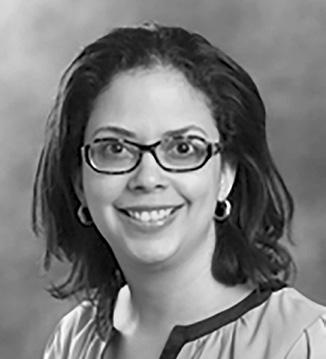
White Plains, N.Y. After graduating from Cornell, Santana received her medical degree from Harvard Medical School in 2002 and then went on to complete her residency at New York-Presbyterian/Weill Cornell Medical Center. She then received a Masters of Health Science in the Robert Wood Johnson Clinical Scholars Program at Yale University.
“It brings our diverse communities together to celebrate Latinidad.”
Prof. Debra Castillo
Prof. Debra Castillo, director of Latino/a Studies, is responsible for overseeing the event along with co-chair Claudia Ponce de Leon.
“The unity dinner has been a major and highly successful event in our calendar for almost 30 years now,” Castillo said. “As its name suggests, it brings our diverse communities together to celebrate Latinidad in its many forms of expression.”
The dinner will also commemorate the 25th anniversary of the Latino Living Center. According to Castillo, the dinner will be an opportunity to
recognize alumni who have supported an endowment for the LLC in order to strengthen the program for future students.
The endowment began in 2015 at an annual barbeque for the Latino fraternity Lambda Upsilon Lambda and was able to successfully raise $100,000, The Sun previously reported.
When asked what participants will take away from the event, Castillo expressed her hope that attendees will find inspiration from Santana’s words and become more educated on the diverse expressions which make up Latinx culture. Additionally, she hopes participants will have the opportunity to make some new friends.
Other events hosted by the Latina/o Studies program include the weekly Fridays with Faculty series, as well as the Latinx Thrive! series. Future events and more information can be found at their website.
The community event begins at 5:45 p.m. and is open to the public for $5 a ticket. The evening will kick off with a mocktail reception followed by a dinner beginning at 6:30 p.m. in the Willard Straight Hall Memorial Room.
Alexis Fintland can be reached at amf293@cornell.edu.
By AYANA SMITH Sun Contributor
On Oct. 21, the Lund Critical Debate Series will host its annual debate, with this year’s focus on “U.S.- Mexico Relations Under Trump.” Speakers will debate how trade, migration and security are affected by President Donald Trump’s changes to U.S. foreign policy regarding Mexico.
The debate will feature Ambassador Emeritus for Mexico Sandra FuentesBerain and former U.S. ambassador to Mexico Roberta S. Jacobson and takes place next Monday from 4:30 - 6 p.m. in Klarman Hall KG70.
Jacobson served as the U.S. ambassador to Mexico from 2016 to 2018. She resigned from her post in 2018 during a time of tense relations between the two countries under Trump — what she called a “crucial moment.”.Prior to her work as an ambassador, Jacobson had also serviced the State Department’s Western Hemisphere Bureau and the American embassies in Argentina and Peru.
Fuertes-Berain received the title of Ambassador Emeritus in 2012, becom ing the first woman to receive the title and one of only five who has been granted the lifetime honor by Mexico’s Foreign Service. She served as the Consul General of Mexico in New York from 2013 to 2016 and has previously served as Mexico’s ambassador to various countries includ ing Belgium, Luxembourg, the Netherlands, France and Monaco.
Past speakers for the Lund Critical Debate Series have included experts on the Korean peninsula, who debated the region’s denuclearization, and leaders in renewable energy solutions who considered the potential of nuclear power as a clean energy solution.
The debate this year will be moderated by Prof. Gustavo Flores-Macías, government, who specializes in research on the politics of economic reform and taxation and state capacity.
The Lund Critical Debate Series is hosted by Mario Einuadi Center for International Studies and is aimed at providing the audience with expert opinions on relevant issues. The series was created by and is named after Judith Lund Biggs ’57.
The debate series was launched in 2008, with the aim to “strengthen academic discourse at Cornell and enhance the student experience” an early flyer states.


individuals and collaborators and how each of us has a potential to make change through doing good work or being aware,” Milles said.
Cornell, because I was really passionate about the education I had received at Cornell, particularly in the College of Human Ecology,” Green said.
“I think Ithaca is a phenomenal place to raise a family,” Milles said. “My kids are incredible beings because they grew up in Ithaca and it provided wonderful environment to explore who they wanted to be, and working in academia is an opportunity to keep growing and learning, and that was what was attractive to me.”
Milles majored in history, but directed plays and took classes in a variety of topics during her time as an undergraduate, noting that she went through several iterations of who she wanted to be. Now, she often works with students with no background in performing arts and and gives them experience and exposure to her field.
“Especially of late, I’m very impressed with the initiatives at Cornell to strengthen who we are as citizens,
“I had always hoped that I would come back to Cornell, because I was really passionate about the education I had received.”
Prof. Denise Green ’07
Prof. Denise Green ’07, fiber science and apparel design, found the College of Human Ecology to be accommodating of her niche areas of study which is why coming back was a natural choice.
“I had always hoped that I would come back to
Outside of classes, Green found herself immersed in extracurriculars and engaging the community through running a 4-H afterschool program and teaching young people how to sew clothing. Green also values her experience living in a co-op during the transition from young adulthood to living on one’s own. Since coming back to Cornell as faculty, Green is excited to reconnect with the community in Ithaca.
“I’ve been [back in Ithaca] here for five years, and it’s been an intense five years on the tenure track,” Green said. “I’d love to return to community service in a way that I really made time for when I was a student.”

went viral,” Overbaugh said, and “eight thousand people turned up.”
Now, the annual event takes an entire year to plan and attempts have been made to make the event more representative of the local culture.
was modelled after the local New Roots Charter High School.
Guardians from the “school” will present participants with scrolls during a special ceremony on the Commons, as well as leading them through tasks activities to complete a quest.
“Two local teenagers came up with the idea in 2015. They just thought it would be cool to have something fun related to a specific set of books.”
Darlynne Overbaugh
The Gorgekeep School of Magic, a festival creation based on the local area, draws most of its inspiration from plants and animals in New York State such as sugar maple and trillium and
And through the help of an augmented reality app, the local New Roots Charter School will be transformed into the Gorgekeep School of Magic. In 2018, Overbaugh told The Sun that Warner Brothers had sent her a “cease and desist” letter prohibiting any reference to Harry Potter. This led to the festival being rebranded to celebrate all magic and fantasy.
On the event’s website, there is a disclaimer that says that Warner Bros. Entertainment, Pottermore and J.K.
Rowling are not associated with or responsible for the event.
Overbaugh said it was often very difficult during the planning process, because they wanted to cater to all
“Costumes allow people to embrace the theme of the event and to live in the moment.”
Darlynne Overbaugh
fans of magic and fantasy while not alienating those who have a specific interest.
She mentioned that many ideas for the event were generated by family discussions with her eight-yearold daughter and her husband. She
has also engaged with students from Ithaca College’s public relations course to brainstorm on potential ideas.
Overbaugh’s advice for this year’s attendees was to “come in a costume.”
According to Overbaugh, each year there are many people who come just for the purpose of seeing everybody else’s costumes. “Costumes allow people to embrace the theme of the event and to live in the moment,” she explained.
While the event is free, there is also a magical passport at $25 available for those who want an enhanced experience that includes participation in a magical creature hunt with prizes and other activities.
Lin Ai can be reached at la382@cornell.edu.
BREAK Continued from page 1
was able to leave Ithaca to visit her friend in New York City.
Although she says her parents miss her, she hopes that they are proud of her. She has found her home in Ithaca, and so far enjoys the small city experience.
“It’s a beautiful city. After visiting New York City it’s small,” Kobayashi said.
Though Ithaca may be “small,” residential advisers on North Campus worked to keep students who stayed on campus occupied through break. For many, it may have been the first time spending a school break away from family.
Taren Daniels ’23, who is from South Carolina, admitted that the break was necessary and she was able to get a lot of stuff done, even though she was not able to make it back home.
“It’s like a 15-hour drive,” Daniel said. “I couldn’t bring all my stuff here on a plane.”
Over break, Daniels got to go apple picking with her dorm, Ujamaa Residential College, for the first time and experience more of Ithaca. The residential college went to Indian Creek Farm where there was apple picking and fun activities.
“We got hot cider and donuts,” Daniels said. “It was off campus too — berries, pumpkins. It was very cute.”
The residential advisors offered many games and activities for their residents that stayed at Cornell during the break across North Campus.
At Akwe:kon there was a dinner to celebrate Indigenous People’s Day, where they made fryebread and traditional Native American tacos. At Jameson Hall, RAs screened Boy Erased and gave out free Chipotle. At High Rise 5 they also had a movie night.
In the Ujamaa Residential College, they held movie nights with food where the residents could relax.
“Every night it was movie night here, there was game night, food, de-stressing, if you wanted to talk all you had to do was go to the main lounge,” Daniels said.
Balch Hall also offered many activities as well, including
game nights and off-campus trips. The efforts of the resident advisors to make fall break fun gave some students a sense of having a home away from home.
“The RAs in Balch really tried to make this a fun time for the people that were staying,” said Nikki Hart ’23. “I actually went to the Farmer’s market with one of the RAs and a group of other people from Balch because they organized that trip.”
Hart, who is from Houston, enjoyed being away from
home — and out of class — for a little while.
“I really enjoyed it. It was nice to have a quiet campus and to not have that much to do,” Hart said. “I think I would have enjoyed going home but traveling is stressful and a lot of work. It was kinda nice to just stay where I am and not have a lot of work.”
Aliyah Kilpatrick can be reached at aliyahkilpatrick@cornellsun.com.

For students leaving for Fall Break, music is most likely the go-to temporal escape from the hassle of the trek out of Ithaca. Whether it is amplified through the speaker on your car or your earphones, chances are the music is streamed but not owned. And chances are you conveniently “borrowed” your favorite tracks, which are merely ephemeral on your playlist, from playlists curated by recommendation algorithms. While streaming
While streaming platforms merely exist in the virtual space, their impact is intertwined with the human geography of the physical world.
platforms merely exist in the virtual space, their impact is intertwined with the human geography of the physical world. Your very own algorithms travel with you as you physically move across the country. Yet when you are finally home for the break, your playlists and your recommendations stay pretty much the same. When was the last time you discovered a local artist that started out from your neighborhood? Perhaps only when there is a free concert with free alcohol. Your playlists are most likely dominated by big-name artists, a disappointment to your angsty teen-self merely a few years ago. In the algorithm age, the mapping of music follows such trajectory of globalization and homogenization. Spotify and Apple Music have fundamentally changed our experience of discovering new music. The dominance of playlist culture has turned listeners to the lean-back passivity of discovering music through algorithm-curated playlists. While streaming platforms position their personalized recommendations as a tech-savvy model to refine our listening experience, such a notion is merely illusional. These personalized algorithms are never coded to surprise or to diversify in the first place, but rather, it perpetuates the stagnant cycle of discovering the same thing you have been enjoying. The echo chamber accentuates a specific algorithm-friendly type of sound and expels the alternative further into oblivion. By no means am I attempting to say
among artists, musicians, engineers, managers, agents, critics and DJs, they were geographically concentrated. Iconic genres were mostly born in such concentration with the focal points of record stores and venus as physical traces of such connections. Bands like Interpol and The Strokes resemble the early 2000s alternative rock resurgence all emerged from the local music scene in New York City. Psychedelic rock bands in the 1960s emerged from the counterculture community in San Francisco and defined the touted and revered San Francisco Sound. In the pre-algorithm era, music discovery was largely influenced by such human geography and fostered an organic discovery process for listeners. Yet on Spotify and Apple Music, such information of human traces is made obscure and devalued in the process of machine learning.
So, how does the mapping look like when we attempt to conceive local music scenes as intertwined social networks in the algorithm age? Globalization. The world is turning into a more connected place for the circulation of music. At the same time, the inner circle of a vibrant music scene is getting smaller with fewer people as the connecting dots to support and diversify the music scene. It is gradually becoming a reality in which there is no “local” scene to begin with. Algorithm-based recommendations do their best to replicate the geographical concentration of urban music scenes. Bigname artists reach an even wider audience and tour around the globe. Meanwhile, emerging artists struggle to break through as they are virtually excluded from the playlists with their “abysmal” numbers. When numbers dictate your shelf space in the digital sphere, emerging artists are silenced and marginalized by the algorithms in the sense that they are geographically isolated in the virtual world.
EMMA PLOWE SUN CONTRIBUTOR
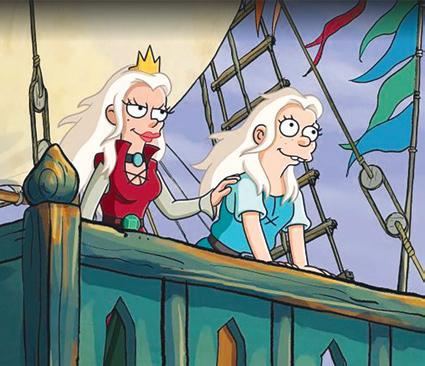
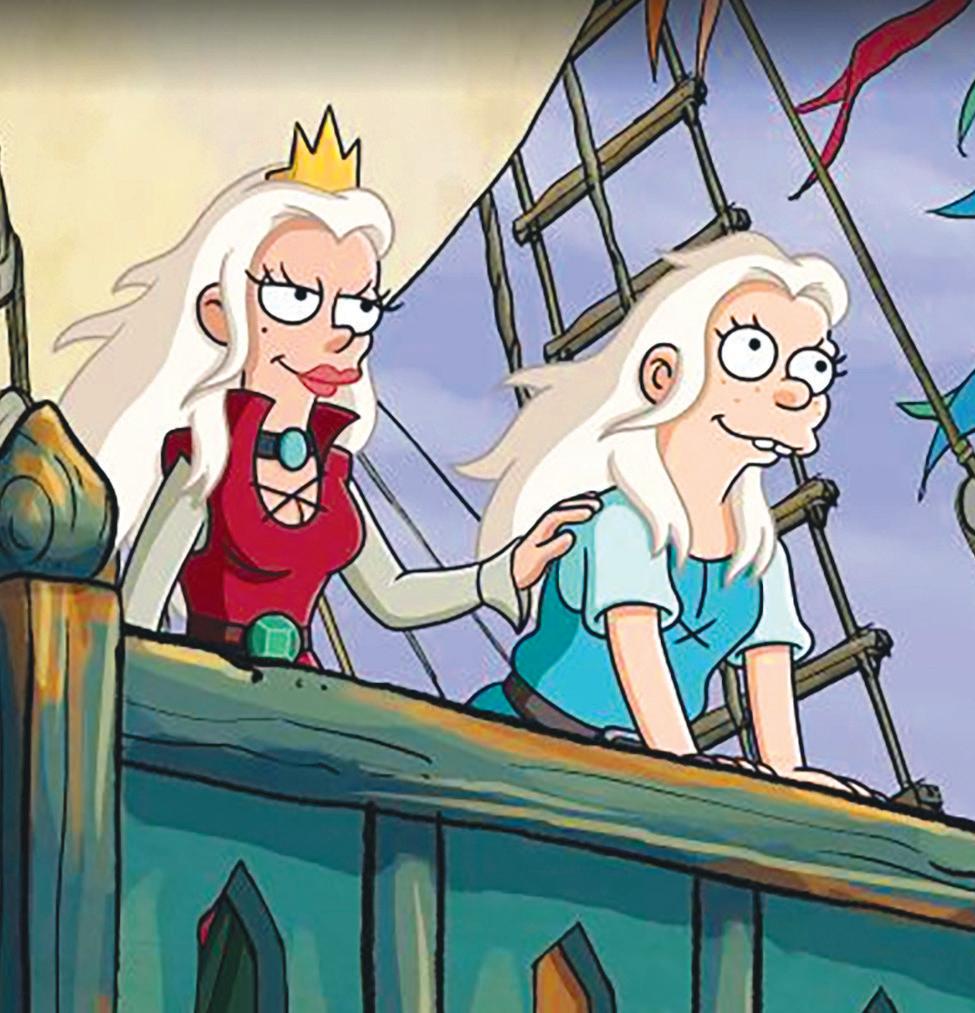
How do you get an audience to watch a season of a show in one sitting? Create relatable characters and an engaging plot! Unfortunately, the first season of Disenchantment fails to do this. I was not emotionally invested and could not watch the whole first season in one sitting. A predictable cartoon princess who doesn’t want to be a princess, a demon with little motivation other than the wreaking of suffering and a half-elf creature with a shrill voice are all overly one-dimensional and float through overly simple plots. However, I decided to give the second season another chance with the success of the show’s predecessor Futurama in mind, and I urge that you do the same. Season two of Disenchantment avoids the previous season’s tedium with believable character development, multiple mysterious plotlines, colorful new settings and punchier humor.
It is evident that the human nuances of music discovery got lost in the quantification of and coding of databases.
that our digital culture is blatantly horrendous. The open platforms did get rid of the reliance on inner-circle human connections and has fostered a friendly environment for emerging artists. Yet, it is evident that the human nuances of music discovery got lost in the quantification and coding of databases. These human touches in music are fundamentally geographical. We used to discover music through magazines, radio, blogs and, a lot of the time, just through word-of-mouth. These are all mediums that are human-curated and put emphasis on geographical networks, yet now algorithm loom over everything and expel humans from the focal points of music discovery. Back in the day, if you map out the networks
While things may look bleak for musicians aiming for that breakthrough moment, our music landscape is far from hopeless. Magical things did happen during the phase between the post-Internet and the pre-algorithm era. Chillwave was born amid the advent of online communities. Bedroom artists like Toro Y Moi, Washed Out and Neon Indian found themselves lumped together under the term “chillwave,” a phrase coined by bloggers drawing parallels in their sound. Despite the fact that their bedrooms are thousands of miles apart, the formation of such genre was robustly fostered by the virtual network without the reliance on a physical cluster.
Perhaps a modern take on the radical mapping of music in the algorithm age would be the re-evaluation of missed opportunities for algorithms to foster virtual music scenes that surpass geographical limits. A radical revitalization of music scenes would, inevitably, be global and digital. To revive your local music scene, it is essential to put your local music on the map of the streaming platforms for exposure. If our algorithms can code such human nuances into the machine learning process, perhaps our music landscape in the algorithm age could connect people better than anything else.
Stephen Yang is a sophomore in the College of Agriculture and Life Sciences. He can be reached at syang@cornellsun.com. Rewiring Technoculture runs alternate Mondays this semester.
The second season begins with the Princess Tiabeanie, Bean for short, traveling with her recently resurrected mother, Queen Dagmar, to their ancestral homeland of Maru which resembles an alternate universe ancient Egyptian city. The setting alone caught my interest; the city seems it is past its prime with a glowering pyramid slowly descending into ruins, the citizens are misshapen and goblin-like, and its rulers (Dagmar’s siblings) socially awkward sorcerers. Bean soon realizes that her family is hiding something from her, and learns not to trust them before they attempt to screw a crown into her skull as part of a magical initiation. This first episode sets the precedent for a season of suspense and expansion of the show’s world.
As the season continues, Bean’s step-mother, who Bean once thought to be lame, divorces Bean’s dad and becomes a pirate captain. This leaves the king without a wife, and an entire episode is devoted to an actually heart-wrenching tragedy about the king falling in love with a shape-shifting bear-nymph whom he keeps in his castle out of love. He eventually lets her go back to the forest, losing his love; this Homerian story reminded me of Futurama’s better episodes, when the writers get the audience to truly care for the characters by giving them distinctly human flaws.
Despite the new emotional depths of Disenchantment, its humor is even cheekier than that of the previous season. We learn that Bean enjoys the company of mermaids (LGBT representation!) from olives falling from her friend’s ears the next morning, primitive ogres speak in a sophisticated way, underground secret society orgies are revealed and an executioner turns out to be a sweetheart. As the characters walk through their town, certain missable punny storefront signs read “Soot Locker” or “Ditchweed Dispensary,” which will elicit a chuckle.
This season also addresses the hilarious misogyny of the land. Bean is never let into court meetings and the misogyny strikes the right chords within the modern audience by exaggerating familiar attitudes of some real-life men.
Disenchantment is no Futurama,but if you can stomach a monotonous first season, you can lose yourself in a bingeable and amusing second season.
Emma Plowe is a freshman in the College of Arts and Sciences. She can be reached at edp52@cornell.edu.
By MILENA BIMPONG
Staff Writer
It’s officially that point in the semester: either you’re currently sick, have just recovered from being sick or are about to get sick. Flu season has begun, and with every cough, sneeze and sniffle, we are reminded of the common struggle of slugging through classes, weighed down by illness.
While there are many preventative measures for the common flu, getting a flu shot is a popular and accessible option. Prof. Gary Whittaker, microbiology and immunology, explained the science behind the flu vaccine and why students should consider getting one.
According to Whittaker, the symptoms of the flu range from coughing to fullblown fevers. He said that these symptoms are caused by infection, usually in the lungs, and the immune system’s subsequent response.
“[The virus] is aerosolized and comes in through the airways. The virus itself is localized, but the effects are more systemic because of the immune response,” Whittaker said.
Although flu vaccines are generally effective, Whittaker said that it can be difficult to ensure that a seasonal flu vaccine will mimic the right strain.
“[Influenza] is tricky to manage because it changes a lot, it can be considered a shapeshifter in some ways. The envelope protein surface of the virus is very adaptable and it will change shape inside the immune system,” Whittaker said.
According to Whittaker, accurately matching the vaccine to the correct flu strain is crucial for a vaccine’s efficacy.
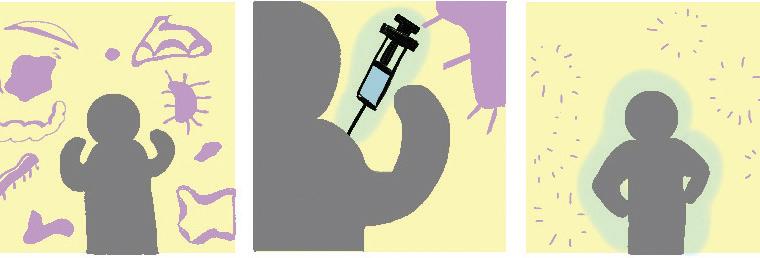
Vaccines allow the body’s immune system to recognize something that resembles a virus and then develop antibodies against molecular signals found on the viral surfaces.
“The virus will be grown and prepared for the vaccine, and the goal is to predict what the upcoming virus is … there is a bit of educated guesswork involved,” Whittaker said.
Whittaker explained that the most reliable method of making vaccines is growing influenza in chicken eggs, and this process has been around for a long time. However, he said that the way that vaccines are made can be improved upon.
“There’s a big push to improve [vaccine production] because it’s not the most efficient way to make a vaccine, but it’s the most established way,” Whittaker said.
Whittaker said that vaccines are essential, especially during flu season because
it reduces symptoms and prevents the virus from being more contagious than it already is.
“The flu vaccine is not a guaranteed way to prevent the flu, but it is certainly the best option that we have right now,” Whittaker said.
Whittaker said that the National Institutes of Health (NIH) and the federal government are currently investing in new approaches to flu vaccinations.
Whittaker concluded that although there has been significant backlash recently regarding vaccines, vaccines are extremely important for public health and medicine.
“It’s easy to forget what contributions vaccines have made over the past few decades or so, and it has made an enormous impact on public health,” Whittaker said.
Additionally, most people think of coughing and sneezing as the main ways in
which the flu spreads. However, Whittaker explained that touching surfaces is also an easy way for transmission to occur.
According to Whittaker, it is important to cover coughs and sneezes not only because the flu is airborne, but also because germs can easily get onto surfaces that multiple people touch on a daily basis, such as doorknobs or tables in Zeus.
“A lot of [the flu spread] is through air, so coughing, sneezing, and breathing in air (especially in close proximity) - but also through surfaces,” Whittaker said.
Even though the flu is quite common during this time of the year, small changes (covering your mouth when coughing) and large changes (vaccine advancement) can make a huge impact.

By SRISHTI TYAGI Sun Staff Writer
Halfway across the world, off the colorful coasts of Australia, surgeonfish like Dory “just keep swimming” into the nets of Cornell microbiology experts. Known for their brightly colored exteriors, surgeonfish contain unique
gastrointestinal bacteria known as Epulopiscium spp. that play a key role in the digestive processes of surgeonfish and can provide insight into human microbiology.
Alejandro Schmieder ’21, biological sciences, has been researching Epulopiscium morphotypes in relation to sur-
geonfish migration patterns and has been working under the guidance of Prof. Esther Angert, microbiology. “The bacteria are really fascinating to us because they’re the second largest known bacteria in the world,” Schmieder said. Epulopiscium can reach sizes of 0.6 mm or greater
- visible to the naked eye.
According to Schmieder, Epulopiscium spp. are not just one species - they have an astounding level of morphological diversity, and have thousands of copies of chromosomes, making them extremely polyploid. This means that Epulopiscium cells have to be classified based on
size, shape and method of reproduction in order to distinguish them under the microscope.
Schmieder’s research focuses on the different Epulopiscium morphotypes and how they relate to surgeonfish migration patterns. Aligning morphotypes and reproductive strategies with migrating populations of surgeonfish can reveal how these factors impact the symbiotic relationship of Epulopiscium with its host.
According to Schmieder, Angert herself and other collaborators travel to Australia or Hawaii to capture surgeonfish and extract bacteria from the gut.
“I think our lab is unique in that we focus so heavily on these bacteria,” Schmieder said.
When the samples arrive in Ithaca, Schmieder examines the gut bacteria under a microscope and assesses the abundance of Epulopiscium cells and their morphotypes. He then isolates DNA after lysing the cells, conducts PCR
amplification and sequences the genes of interest. According to Schmieder, the complicated ethics of studying the human microbiome often direct microbiologists towards studying simpler model organisms, such as Epulopiscium
“Our system can explain some of the complexities in host-microbe systems,” Schmieder said.
“The idea that a community we can’t even see has such an impact on our lives really struck me.”
Schmieder hopes to use his research with Epulopiscium to write an honors thesis and continue studying microbiology in graduate school.
“Especially now with all the research and advances in gut microbiology, we’re learning how what we eat influences who we are, but also [how] our microbiome ... influences everything about us,” Schmieder said.
ANU SUBRAMANIAM ’20
JOYBEER DATTA GUPTA ’21
Business Manager
PARIS GHAZI ’21
Associate Editor
MEREDITH LIU ’20
Assistant Managing Editor
YANG ’21
FUNG ’20
Working on Today’s Sun
Ad Layout Jamie Lai ’20
Production Deskers Sabrina Xie ’21
Ben Mayer ’21
News Deskers Amina Kilpatrick ’21
Girisha Arora ’20
Design Desker Lei Lei Wu ’21
Niko Nguyen ’22
Photography Desker Boris Tsang ’21
Sports Desker Raphy Gendler ’21
Arts Desker Peter Buonanno ’21
Anne C. Jones | Guest Room
These days, with many unknowns in the world around us, I’m asked both inside and outside of the exam room, “How can I take care of myself? How do I focus my energy in the right place to prevent illness and
A yearly flu vaccine is the first and most important step to prevent the flu and its complications.
stay healthy and well? How can I make a difference in the world around me?”
This fall, there are three things that immediately come to mind: Get your flu shot, register to vote and be kind to yourself.
Number 1: Get Your Flu Shot
A yearly flu vaccine is the first and most important step to prevent the flu and its complications, like missed work or school, time out of your busy schedule for clinic visits or more serious consequences like hospitalizations. The fall — preferably before the end of October — is the best time to get a flu shot. It protects you from getting the flu and lessens the severity of symptoms if you get the virus. What’s more, our community as a whole is protected for flu season when more people get vaccinated in the fall. Herd immunity makes it possible for those who are more vulnerable — anyone with chronic illnesses or who are unable to get the vaccine — to get through the flu season with a diminished chance of getting sick. Each year, we at Cornell Health set a goal to vaccinate as many people as we can by the end of the calendar year. This year, we have set our goal to administer 15,000 vaccines by the end of 2019, and as of this week, we have administered over 4,000 vaccines to the Cornell community. Help us meet our goal to protect our whole community this season. The flu shot is free and is offered at several more on-campus clinics this semester. You can also ask for a flu shot at any medical visit at Cornell Health. Protect yourself and those around you by doing your part. Get your flu shot as soon as you can.
Engaging in the political process has long been shown to correlate positively with feelings of personal control and empowerment, self-efficacy and connectedness to one’s community; many people talk about feeling a boost of positivity after voting. In the state of New York, voter registration applications must be received by a Board of Elections location by Wednesday, Oct. 16. Look for the voter registration tables around campus — there is one right by Willard Straight Hall on Ho Plaza — with information, forms and people who can help you register and decide how you will participate this year.
Number 3: Be Kind to Yourself
With how busy our lives can become, it is important to focus on what you need to do to be fully present to your work, to engage with those around you and to care for yourself. Getting enough sleep, adequate nutrition and managing your workload to minimize stress are key factors in giving yourself what you need to be successful. If you have a setback or a stumble, remember that failure is a part of the learning process. If you make a mistake, talk to yourself with the kindness that you would counsel a good friend. Tell yourself that
We all make it okay to ask for help when we uplift vulnerability as a sign of strength. Know that it is a strength to ask for help.
The most alarming thing I’ve heard since coming to America is, “Since when were you so anti-China?” This came from my brother, who can tell me the angles six different international news agencies take on various issues, while I — reliant on my free student subscription of The New York Times — could reference only one. I decided that my brother’s balance on issues is something I need to learn from, as shown when he responded on what he thought a friend’s stance on Hong Kong was with: “Pro-stability.”
Number 2: Register to Vote
If you are eligible to vote in this year’s election on Nov. 5, I strongly encourage you to do it. Voting is a distinct and specific action that you can take to make your voice heard in the local and national political landscape. Many students become eligible to vote while in college, and voting in your first election can be an exciting and energizing experience.
just because you got something wrong does not make you a bad person. We all make it okay to ask for help when we uplift vulnerability as a sign of strength. Know that it is a strength to ask for help, and that the first step in asking for help is recognizing that you need it. Let yourself be vulnerable in front of others. Be kind to yourself when you make the brave choice to be vulnerable with others, and be kind to others when they have the courage to be vulnerable with you. The choices we make about how to care for ourselves, how we protect ourselves and how we engage with those around us are among the most important determinants of our health and wellbeing. Take a few — maybe three — moments to do something for your health this season. It will pay off in ways that could make a difference in your world and the world around you.
Anne C. Jones ’04, D.O., MPH is director of medical services at Cornell Health. She can be reached at acj22@cornell.edu.
The tendency of American college activism to personify governments and populations into single entities with moral character is something I’ve since tried to distance myself from. In particular, the way this habit voids “the enemy’s” perspective. When I juxtapose this tendency with our campus climate’s simultaneous desire to give her diverse student body equal cultural voice, I am puzzled by the contradiction and cognizant of the way it politicizes aspects of culture that I grew up believing are better unpoliticized. Yet, reflecting on recent Rosh Hashanah and Mid-Autumn Festival festivities, I realize I too am homogenizing cultural expression when I carry this belief.
America’s relative “freedom of speech” doesn’t guarantee balance if all voices still start from the same premises, and if a failure to recognize this convinces the minority to have their perspectives rewritten. Growing up in a small country, where diplomacy is central to defense, I had been taught to track world events as actions and reactions more than as justifications for intervention or boycotts.
ed by our Jewish housemate foremost as an accessible platform for Jewish cultural expression on campus that didn’t have to entail Israel or religious beliefs. But even within organizations whose stated affiliations seem more guaranteed lie a diversity of opinions: I have been told that participants in Hillel’s
I wonder what can be done for campus discourse to feel more like a stacked cord of every student’s proto-framework shaped by their background.
programming hold a range of opinions on Israel, some more publicly expressed, even if the organization itself has obligations to specific positions. Organizations might bear political inflections, but occasions of cultural expression invite disentanglement. The Cornell Chinese Student’s Association’s Mid-Autumn festival last Friday included the Cornell Taiwanese American Society. While the various organizations’ identities could have me recognize this as an act of cultural unity across political differences, I could also opt to not politicize a non-political organization on its behalf at all and view all festival celebrants simply as people.
America’s “freedom of speech” doesn’t guarantee balance if all voices still start from the same premises, and if a failure to recognize this convinces the minority to have their perspectives rewritten.
Coming here, the new light in which Xinjiang was cast initially felt like a revelation, and the necessity of Israel and Palestine’s diaspora and respective allies playing out these moralized divisions abroad an awakening.
Yet, if I made Rosh Hashanah and MidAutumn Festival, celebrated by cultures affiliated with Israel and China (not exclusively), a call to lay down arms to reaffirm the culture and humanity of domestic populations and diasporas beyond moralization, I would be dismissing the existence of perspectives like my own. Believing that the health of any system — from gene pools to workplaces — is diversity, I wonder what can be done for campus discourse today to feel more like a stacked cord of every student’s proto-framework shaped by their background and less like a dominant wave whose premises newcomers have to tune their frequencies to.
Perhaps promoting a variety of perspectives starts from catching myself in the act of homogenization: De-conflating identities with organizations, and organizations with the people in them. Watermargin’s Rosh Hashanah “potluck,” where our brisket and kugel were greeted with challah and bagels, was intend-
Sure, there are instances where it is not an external voice, but a prominent internal voice, that politicizes cultural expression. But actions are reactions, and these strike me as a litmus test for the level of politicization in dominant discourse more broadly. They make me listen more carefully when peers note how America’s growing criticisms of China’s moral character coincide with the threat of her growing economy, for example. Politically-motivated images that redefine a culture on its behalf naturally invite a similarly political voice from said culture. It’s less easy to criticize a community’s decision to create politically-motivated holidays, or politicize an existing holiday if aggressors choose occasions as sacred as Easter for bombings, or Yom Kippur for a mass shooting.
The voice that uses mooncakes as an instrument of protest in Hong Kong should be recognized equally alongside the voice that sees Mid-Autumn festival, an occasion of family unity, as a non-political opportunity to culturally unite a diaspora. Just as my brother references a variety of news agencies in understanding an issue, I hope to have as
The voice that uses mooncakes as an instrument of protest in Hong Kong should be recognized equal alongside the voice that sees Mid-Autumn festival, as a non-political opportunity to culturally unite a diaspora. 137th
ready an access to variegated self-definitions of culture, political or otherwise.
Kristi Lim is a junior in the College of Arts and Sciences. She can be reached at klim@cornellsun.com. Riskit Kristi runs every other Wednesday this semester.
So, which side do you choose?, my high school biology teacher asked during a class on race.“Like, white or Asian? Most biracial people choose one,” he elaborated upon seeing my confusion.
This was also the man who around the same time told the class that I’m an example of a “hybrid” — in the context of cross-species hybrids — implying that my parents are different species, demonstrating a horribly awkward misunderstanding of mixed race people.
As much as I hope everyone disagrees with him on the latter point, his attitude reflects a common one on mixed race people: that we should or will eventually choose one of our races to identify with — a side. We don’t fit into society’s separation of races, and there is intense pressure on us to conform to this worldview by pretending that massive parts of us don’t exist. And should we fail to do so, we’re afraid we’re choosing a life of permanent ostracization.
Even at an intentionally diverse place like Cornell, the pressure to choose a side exists and even changes in different contexts. Although there is a mixed race club on campus, it’s fairly inactive and I didn’t even hear about it in my sophomore year. As a freshman, I tried to join an Asian American club, which I quickly
Even at an intentionally diverse place like Cornell, the pressure to choose a side exists and even changes in different contexts.
left because I felt like I wasn’t authentically “Asian” enough for the club — a white imposter. Yet, in the majority white, small town I grew up in, I was always made acutely aware that I was the “Asian” kid. In fact, it seems as though this is a pretty common experience,
at least among the mixed Asian and white friends I have — where you’re the token “Asian” among white friends and the token “white kid” among your Asian friends. Choosing either side feels inauthentic — especially as a part-white individual, choosing white means disgracing my Chinese heritage. Choosing my Asian side makes me fear that I’m not acknowledging the inherent privilege of my proximity to whiteness.
We’re at a point in history in which the mixed race population is steadily increasing. In 2015, 17 percent of new marriages in the U.S. were interracial. Barack Obama and Kamala Harris (D-Calif.) have made major strides in representing us in politics. In popular culture, we have Keanu Reeves, Chrissy Teigen and Dwayne Johnson, among many others. Yet, America has been slow to catch up to its own multiracial population. It has only been 52 years since the Supreme Court case Loving v. Virginia legalized interracial marriage nationwide. The option to identify with two or more races on the U.S. Census first appeared in 2010.
and belonging that reside at the heart of the issue. It asks what side she should choose instead of wondering when it should instead be questioning why we she’d be pressured to make such a choice. And while her white father is well meaning, having him solve the issue, especially in such a flippant way, feels inauthentic. Although his connection with his wife and children might make him more sensitive than most about the issue, a central aspect of the mixed identity is being unable to fully identify with either of
Choosing my Asian side makes me fear that I’m not acknowledging the inherent privilege of my proximity to whiteness.
On a recent YouTube binge, a clip from the premiere of the new sitcom “Mixed-ish,” a spinoff of the ABC show Black-ish , came up in my suggestions. The show follows a family of mixed black and white kids in their first exposure to the mainstream American culture, and in the clip the main character Bow struggles with the concept of “choosing sides” in order to fit in at her new school. She feels like all her problems will be solved once she chooses a race to present as and hang out with. Something about it didn’t sit well with me at all — the conclusion is that her dad tells her to just to not be a conformist. What frustrates me is the way that the first show I’ve ever seen that’s meant to represent people like me seems to be aware of the issues facing mixed race people — but then fails to deliver on providing any meaningful insight or truly understanding the nuance of the crisis of identity
Lyour parent’s racial experiences. Cornell has made strides in allowing mixed people to not have to choose a side, as several of the universities that I applied to still asked me to choose a single race, or perhaps choose the dreaded “other.” The sheer existence of the MiXed at Cornell club is more that I could’ve dreamed of asking for in high school. I would love to see it be more than a tiny club with little to no exposure on campus, and for there to be a greater acknowledgement of it as a place for all mixed people — giving us a chance to acknowledge all of our ancestries by choosing none of them.
So to answer my biology teacher’s question from five years ago, I’m both and neither. I’m mixed. Sorry that’s not the answer you wanted, Dr. Form.
Michaela Bettez is a junior in the College of Engineering. She can be reached at mlb434@cornell.edu. Bet on It runs every other Wednesday this semester.
ast Friday, I finally sucked it up and watched Joker with another friend. Joker, styled in bold, strained yellow as the film’s title card, is exactly the kind of film it has been marketed as so far. Replete with jagged violence, moody lighting and an inimitable Joaquin Phoenix performance,
pushed and shoved and spit upon until he erupts into a storm of violence.
The movie, audiences theorize, is a dangerous strain designed to infect the minds of those disturbed and set them off in the wrong direction. I found the interpretation of him much more damaging in a different way.
the movie thrives on concocting shock and rage to drag out a visceral reaction from its audience. “Holy Shit,” someone muttered next to me, in what I turned out to only be the movie’s fourth or fifth most disturbing moment. It was just that kind of film.
The movie, audiences theorize, is a uniquely dangerous strain designed to infect the minds of those disturbed and set them off in the wrong direction. And while I don’t deny there will be certain deranged people who will treat the Joker as some enthralling figure, I instead found the interpretation of him much more damaging in a different way.
There’s been an ugly reaction to Joker before and after its premiere. Arthur Fleck, who eventually morphs into the Joker, is unwell and unwanted. His job as clown only sets him up to be the punchline, while his advances on his neighbor are born out of desperate delusion. He’s seen as an obvious allusion to the violent incel community by reviewers, who describe him as a loser,
Arthur Fleck is obviously mentally ill. He hallucinates about his neighbor, suffers from a nervous laughing condition and begins to lose grip on his sanity as the world descends on him in a cruel series of events. The city around him is a ghoulish blend of Lovecraftian horror — super rats roam around the city like cop patrols — and a serious infection of assholes. His counselor barely acknowledges him; a group of kids abuse him early on in the movie; a trio of bankers, looking like the drunk men you’d see at 2 a.m. in Collegetown, wallop him right before he snaps. The events nudge him over the edge; he goes on a killing spree. And he doesn’t stop. By the end, Gotham tilts into the chaos inspired by him. And it’s that connection — from mentally ill to ill-conceived terrorist — that’s feels a little too derivative to be interesting.
Over the past few years, as college has continuously numbed me, I’ve turned to horror to just feel something. I picked up the Lovecraft anthology, containing stories that focus on cosmic horror, regarded as so influential that it’s made his name is an adverb; “Lovecraftian” refers to any horror that is unknowable. I watched flicks such as Psycho, The Shining and Halloween, all films considered iconic in the genre. I started Until Dawn, a massively successful interactive horror video game that has you play as characters, often to their gruesome, well deserved ends.
But in each film, the instigating factor is a mentally unstable individual. Norman Bates (Psycho) suffers from a dissociative per-
sonality order, and is the original American Horror Story; Jack Torrance (The Shining) has cabin fever and ends with his face memed into oblivion after rampaging against his family; and Josh (Until Dawn), beset with schizophrenia and psychosis, dresses up as a psycho to torment his friends until he can’t string together coherent sentences. And in Joker, the main character is a mere mix of these classic characters, even if the premise of the film — Bruce Wayne? Super Rats? Dwarf jokes? — isn’t.
It can’t be helpful to our society to have that much pop cul ture dedicated to the demonification of the mentally ill. The pub lic will tell you that those with mental health issues are more likely to be criminals or violent, have poor hygiene and share the same common symptoms. In fact, none of that is true. Those with poor mental health have lower crime rates than the general population; dressing poorly is not a mental illness; psychosis and schizophrenia are the most commonly shown on the screen. But it’s depression that far outnumbers the others.
high art, but the stigma it created keeps those who need to seek help self conscious enough to pass on it.
It’s the quieter moments of the assault on our mental health that deserve acknowledgement. If acting requires the actor to shift from their mind to another — to want to be someone else so badly — then the fight for our mental health is to be someone we desperately don’t want to be. To slip out of bed is to audition. To smile is to win the part.
So in a movie where murder is the punch-
The performance of mental illness has become high art, but the stigma it created keeps those who need to seek help self conscious.
line, it’s a scene of absolutely nothing that stuck with me far longer. In a soft pan over Joker’s journal, populated with ill advised jokes and unsettling drawings, a highlighted phrase offers a portal into his mind. It’s a moment you’d never think about twice unless you’d been there already.
Hollywood, of course, isn’t terribly interested in handing out millions of dollars for a documentary on quiet suffering. It has run the gamut because the extremities of mental ailing are far more entertaining for America to watch than tales of ordinary lives. The performance of mental illness has become
“The worst part about having a mental illness,” it simply states, “is people expect you to behave as if you don’t.”
William Wang is a senior in the College of Agriculture and Life Sciences. He can be reached at wwang@cornellsun.com. Willpower runs every other Wednesday this semester.
Fill in the empty cells, one number in each, so that each column, row, and region contains the numbers 1-9 exactly once. Each number in the solution therefore occurs only once in each of the three “directions,” hence the “single numbers” implied by the puzzle’s name. (Rules from wikipedia.org/wiki/ Sudoku)


Houses, Apts, Parking
1 to 9 Bedroom
Collegetown - College Ave, Linden Ave, Dryden Rd, Bryant Ave, Cook St. 607-330-2442 info@urbanithaca.com www.urbanithaca.com
We have availability for the 2020-2021 school year beginning June 1st at Hudson heights apartments. The studios include electric, heat, water, garbage and parking. There is coin-operated laundry facilities on site. Prices start at $750 / month for a 12 month lease. If you have any questions or would like to schedule a tour contact us by phone 607-280-7660 or email: renting@ithacaLS.com
COLLEGETOWN TERRACE APARTMENTS
Leasing for 2020/2021 Spring 2020 Semester leases available Heat, hot water and Wi Fi State of Art Fitness Center Shuttle Bus Service to campus Washer & Dryer in Apartments collegetownterraceithaca.com office@ithacastudentapartments.com (607) 277-1234
Now Renting 2-10 Bedroom Houses/ Apartments for 20-21. All Locations. Call today or visit our website: Certified Properties of TC Inc certifiedpropertiesinc.com 607-273-1669
2020-2021
Studio 1, 3, 8 & 11 BR Apts. Great Locations in Collegetown. 607-227-2535
120 Oak Avenue
Just steps to Cornell Campus 10 bedroom house & 1 and 2 bedroom apartment 607-277-1234 office@ithacastudentapartments.com Ithacastudentapartments.com
Collegetown Crossing College Ave's Newest Location 307 College Ave. Now Leasing for 2020-2021 Completely New Modern Studios & 2 Bedroom Apartments. Fully furnished, heat & hot water included. Reception area at 307 College Ave. www.urbanithaca.com 607-330-2442 info@urbanithaca.com
Boldly Refined Living 312 College Avenue
Sophisticated studio, 1, 2, 3-bedroom apartments. Superior fitness facility, theater, and coworking space. Free high-speed internet. Exclusive resident parking. Package delivery/return. Overnight concierge. 607-273-9777 or 312collegeave.com
3 Bedroom 1 Block from Starbucks in Collegetown Heat & hot water included. Lease starts June 2020. Parking & laundry available. www.porealty88.com 607-277-1888
20-21
College Ave. 5 BR House Furnished. Laundry. Parking. Call 607-273-8576
20-21
Upper Eddy St. 7 BR house Furnished. Laundry. Call 607-273-8576
BLAIR STREET FURNISHED HOUSE
Available 2020-2021 7 Bedroom, 3 full baths 2 kitchens & Laundry Text or call Tracy at TLC Property Mgmt Corp 607-379-2776
By KEN CHOI Sun Staff Writer
Cornell men’s soccer dominated for 90 minutes against Harvard at Berman Field on Saturday, exploding offensively in a 6-0 smackdown of the Crimson.
With the win, the Red is on a two-game winning streak and bounced back from an Oct. 5 loss to Penn.
The Red started a game with rotation in its formation; freshman center back Will Citron started in place of sophomore defender Tate Keir, and junior striker Charles Touche was given the nod over the team’s star player junior midfielder Harry Fuller.
The Red started off strong and aggressively. The attacking trio of sophomore forward/midfielder Emeka Eneli, Touche and junior forward/midfielder Vardhin Manoj constantly applied pressure Harvard’s
defense line. The high-speed attackers’ placements in the front made Harvard defenders uncomfortable, resulting in constant clear balls and missed passes.
Vardhin Manoj opened the goal fest in the seventh minute after a fabulous one-man run and a precise shot curving away from the Harvard goalie. Touche scored his first goal of the year after following up on a saved header by senior midfielder John Scearce. Senior goalkeeper Ryan Shellow was also put to work as he made a marvelous save after an acrobatic Harvard shot in the 15th minute. Harvard also lost an open net in the 38th minute which could have put them back in the game.
After gaining possession, Cornell carried out its typical yet effective strategy of utilizing its wingbacks and hitting long balls to the side, relying on its speedy wingers to create chanc-
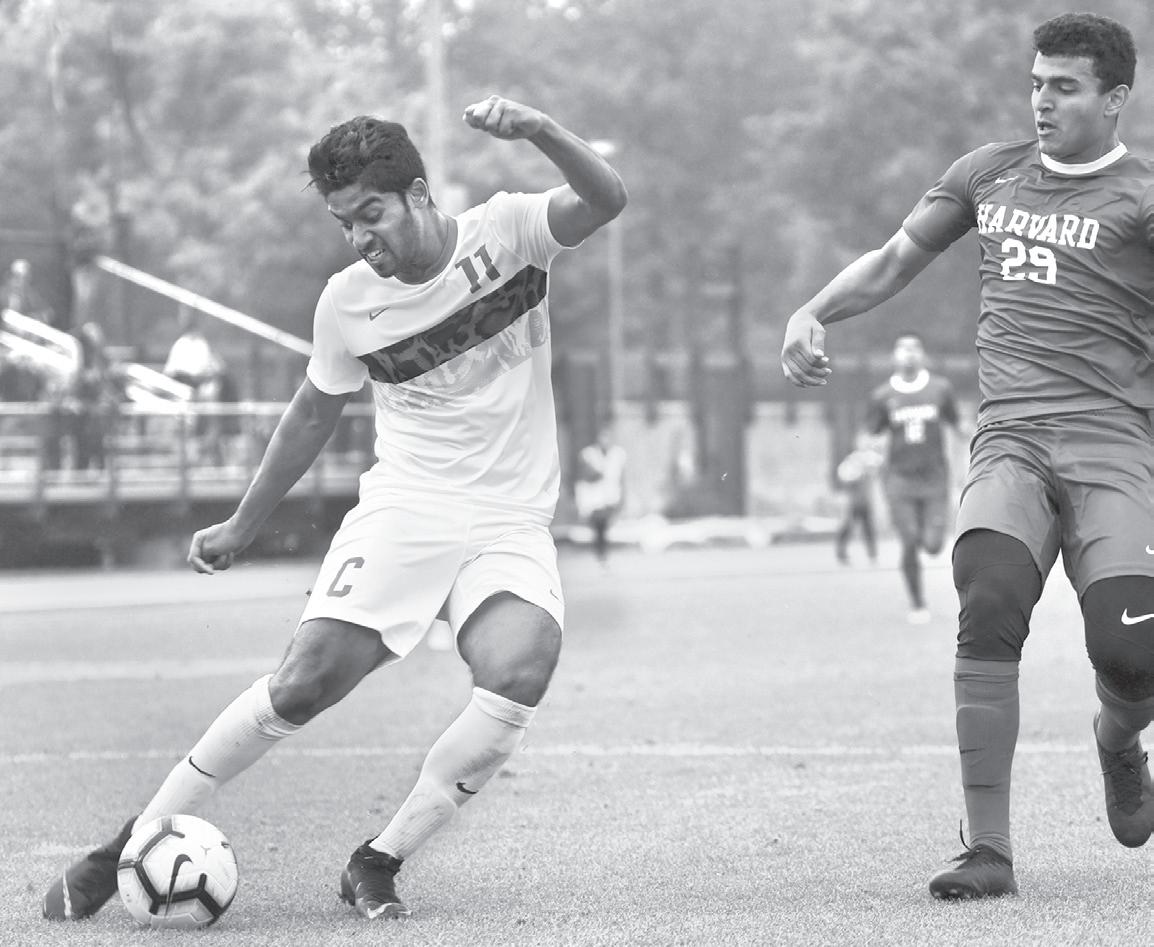
es in the middle. Harvard’s freshman goalie had conceded eight goals in the past four games and made a lot of mistakes throughout the game. He wasn’t able to clear the ball properly — partially because of the wet ground conditions due to rain — and enabled the Red to start its attack with good field positions. The one-sidedness continued on into the second half. The Red looked determined to prove itself in front of its home crowd, taking shot after shot. The third goal came in the 58th minute when Eneli finished a one-on-one chance after getting a quality pass by senior forward/ midfielder George Pedlow in transition offense. It was Eneli’s eighth goal of the season.
In the 63rd minute, John Scearce scored off a deflection after a hustle run by Eneli. Eneli continued to impress as he scored off an inside pass by Touche in the 71st minute, increasing the team’s total to five. Freshman midfielder Griffin Garrard scored a beauty in the 76th minute after taking on a Harvard defender one-onone.
A lot of reserved bench players were given valuable playing time as Cornell maintained its clean sheet. Cornell ended up with a total of 28 shots and 16 shots on goal with eight corners, dominating Harvard, which had nine shots, six shots on goal and zero corners.
Cornell takes the road to face Yale at 5 p.m. Friday. Unbeaten in its last six games, the Bulldogs currently sit atop the Ivy League.
Ken Choi can be reached at kchoi@cornellsun.com.
By CHRISTINA BULKELEY Sun Assistant Sports Editor
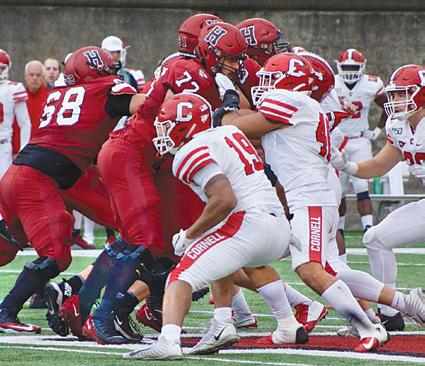
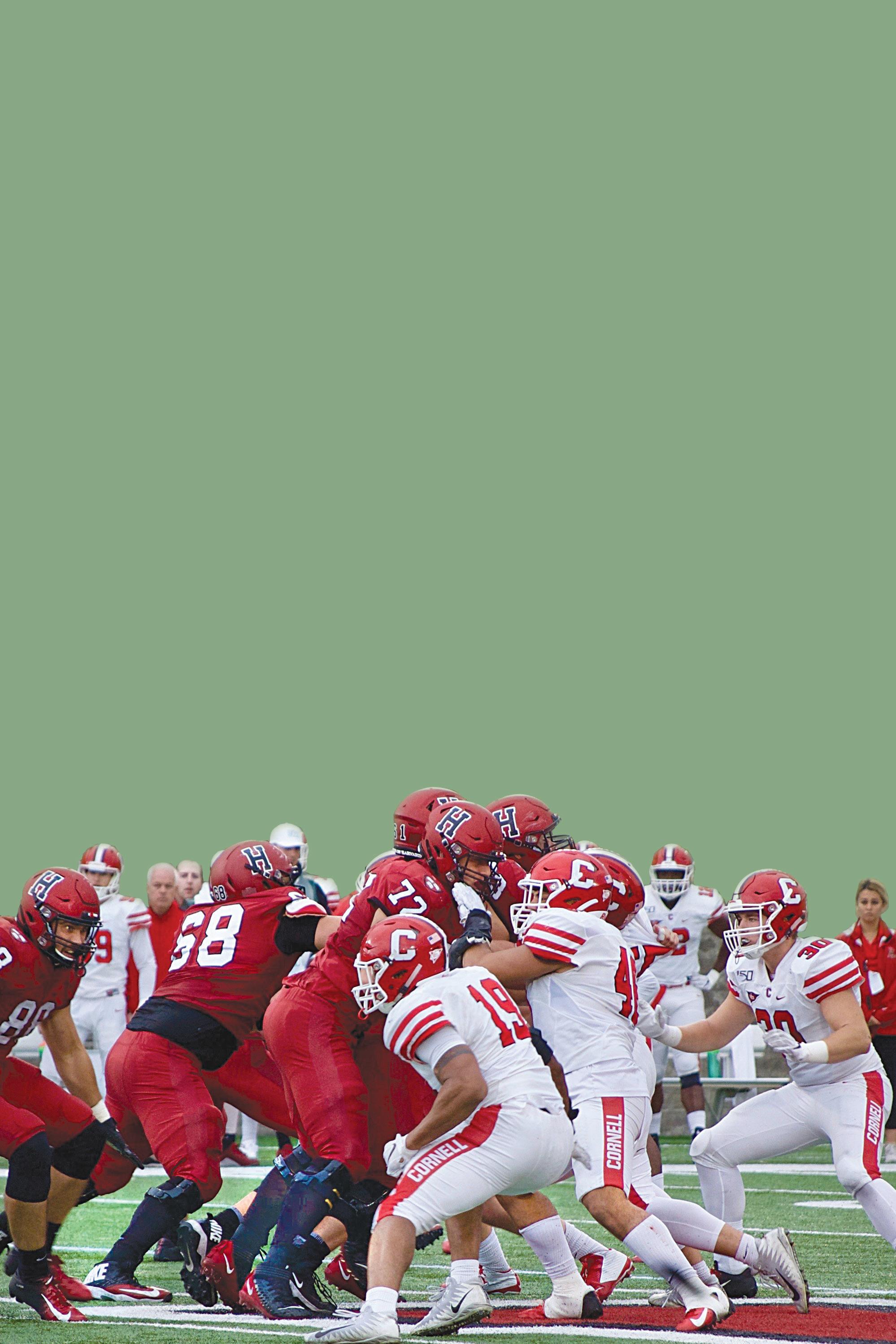
CAMBRIDGE, Mass. — Cornell football entered Harvard Stadium on Saturday looking to extend a two-year winning streak against the Crimson and get its record back to .500. But the Red couldn’t rally against its favored opponent and fell to Harvard, 35-22.
flaws. The Red’s 22 points today was a season-high, marking some degree of progress.
“I thought we started a little bit more together [today],” Archer said. “Some things got better, but some things — there are still the same problems.”
A myriad of penalties against the offense also hindered its progress, making it difficult for the team to stay in the game.
The third quarter was the only one in which neither team recorded a point. Junior linebacker Lance Blass had to be helped off the field partway through the quarter. He was limping and seemed to be favoring his right leg.
Cornell’s offensive efforts were foiled throughout the day as Harvard effectively defended senior running back Harold Coles, the Red’s strongest force on offense. Coles

Going into the game, the question was whether Cornell’s (1-3, 0-2 Ivy) formidable defense could slow down the strong Crimson (3-1, 2-0 Ivy) offense — in the second quarter, it became clear that the Harvard offense would win the battle as quarterback Jake Smith led the home team to three second-quarter touchdowns.
An already-struggling Cornell offense suffered a blow going into the game as head coach David Archer ’05 revealed that senior quarterback Mike Catanese would be unavailable for Saturday’s game and would miss the rest of the season.
Catanese fell victim to a plethora of injuries early in the year, some named and others not. At Marist, he exited the contest with what Archer said at the time were cramps; last weekend, Catanese said he had also suffered a concussion.
The nature of his current ailment is undisclosed other than that it will keep him from seeing playing time for the remainder of the year.
With Catanese down for the count, junior quarterback Richie Kenney stepped in to lead the Red. Kenney threw two touchdowns but struggled throughout the game, completing 15-of-32 passes for 251 yards. He was sacked a total of six times.
“I’ve just got to be more crisp with my reads and get the ball out of my hand,” Kenney said.
Kenney is known to have a less explosive running game than Catanese, whose speed and footwork earned him the starting position earlier in the season.
The game got off to a promising start for Cornell — the Red took advantage of prime field position via a muffed punt and took a 7-0 lead less than five minutes into the contest when Kenney found junior Eric Gallman in the end zone for Gallman’s first touchdown of 2019.
Cornell’s offense struggled against Georgetown last weekend, a game after which Archer said he needed to take a hard look and assess the unit’s
Harvard knotted the game with under two minutes to play in the first quarter. The Crimson capped off a 60-plus yard drive with a touchdown of its own as junior quarterback Jake Smith got the scoring started for his team.

The next scoring play was a historic one, as senior kicker Nickolas Null came up with a 49-yard field goal. That was good for a personal record and sixth-longest all-time in Cornell history.
“I know I have probably one of the strongest legs in the country, especially when I’m healthy. I can hit the ball as far as anybody, probably at this level and at the next level,” Null said. “I just told myself, don’t worry about the injury … just go out and be the player that you know you are and execute and perform.”
Recovering from a quad injury, Null had not been cleared to kick field goals up until today. He did not play at all against Marist and only punted against Yale and Georgetown.
His field goal marked a high point of an otherwise frustrating game for Cornell. After Null put the Red up, 10-7, Harvard went on to take the lead and run away from Cornell. The tally was 28-10 in Harvard’s favor going into halftime, and the Red never regained the lead.
“You can’t have three good quarters and one bad in a game of football against a good team,” said senior captain safety Jelani Taylor, who had 12 tackles and an interception in the loss. “We have to really take it to the next level when it comes to preparation.”
The last time Harvard lost a game in which it was leading going into halftime was in 2017 — against Cornell. That tilt marked the end of the Crimson’s 11-game win streak against the Red.
“I don’t think they would beat us again. I think we just gave it to them today.”
Nickolas Null
had dealt with hamstring issues going into the game. He carried the ball 15 times for 34 total yards, his lowest mark of the season.
Despite limiting the Crimson to seven points and 94 yards in the second half, Cornell’s highly-touted defense didn’t look very solid either, giving up a season-high 35 points.
“I wasn’t happy with how we tackled,” Archer said.
The fourth quarter saw three touchdowns; two for the Red and one for Harvard. It was the only quarter in which the Red outscored its opponent. Sophomore wide receiver Phazione McClurge’s fourth-quarter touchdown was part of a big day for the converted defensive back, who caught five passes for 137 yards.
“He’s just trying to get better and learn the offense, you know, because he’s a converted defensive kid and he had opportunities today and capitalized on it,” Archer said. “So that’s certainly a bright spot that we can keep going with in the future.”
Going forward, the Red is down several key players and will need to rely on a “next man up” mentality to salvage its season. But by the end of the game, the team seemed resigned.
“I don’t think they would beat us again. I think we just gave it to them today,” Null said. “Harvard football didn’t beat Cornell. Cornell football beat themselves.”
The Red hosts Colgate next Saturday in its final nonconference game of the season.
Christina Bulkeley can be reached at cbulkeley@cornellsun.com.