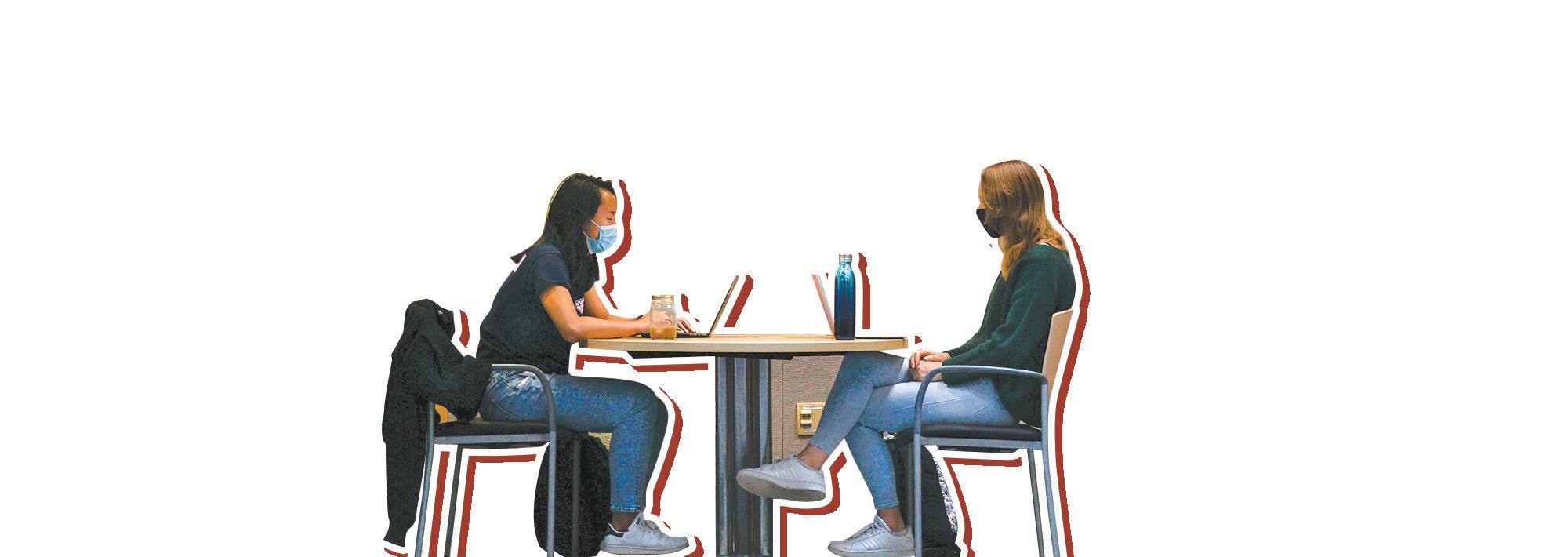
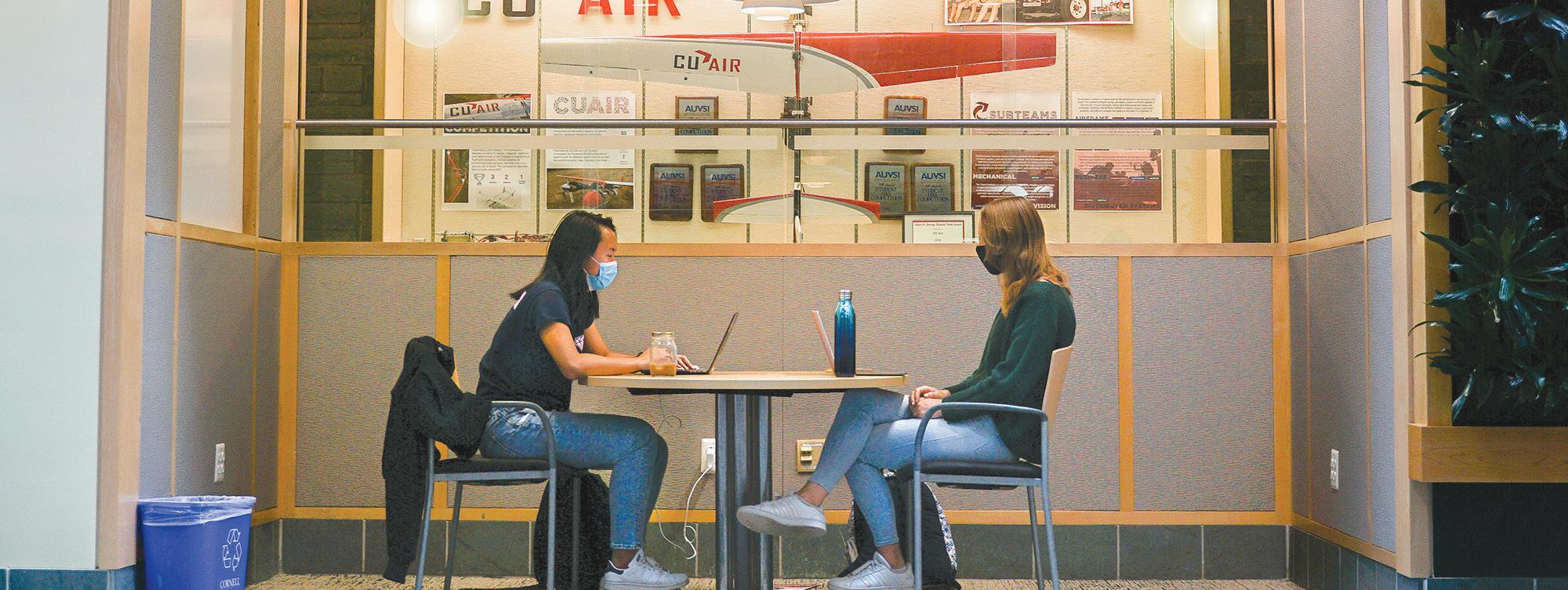
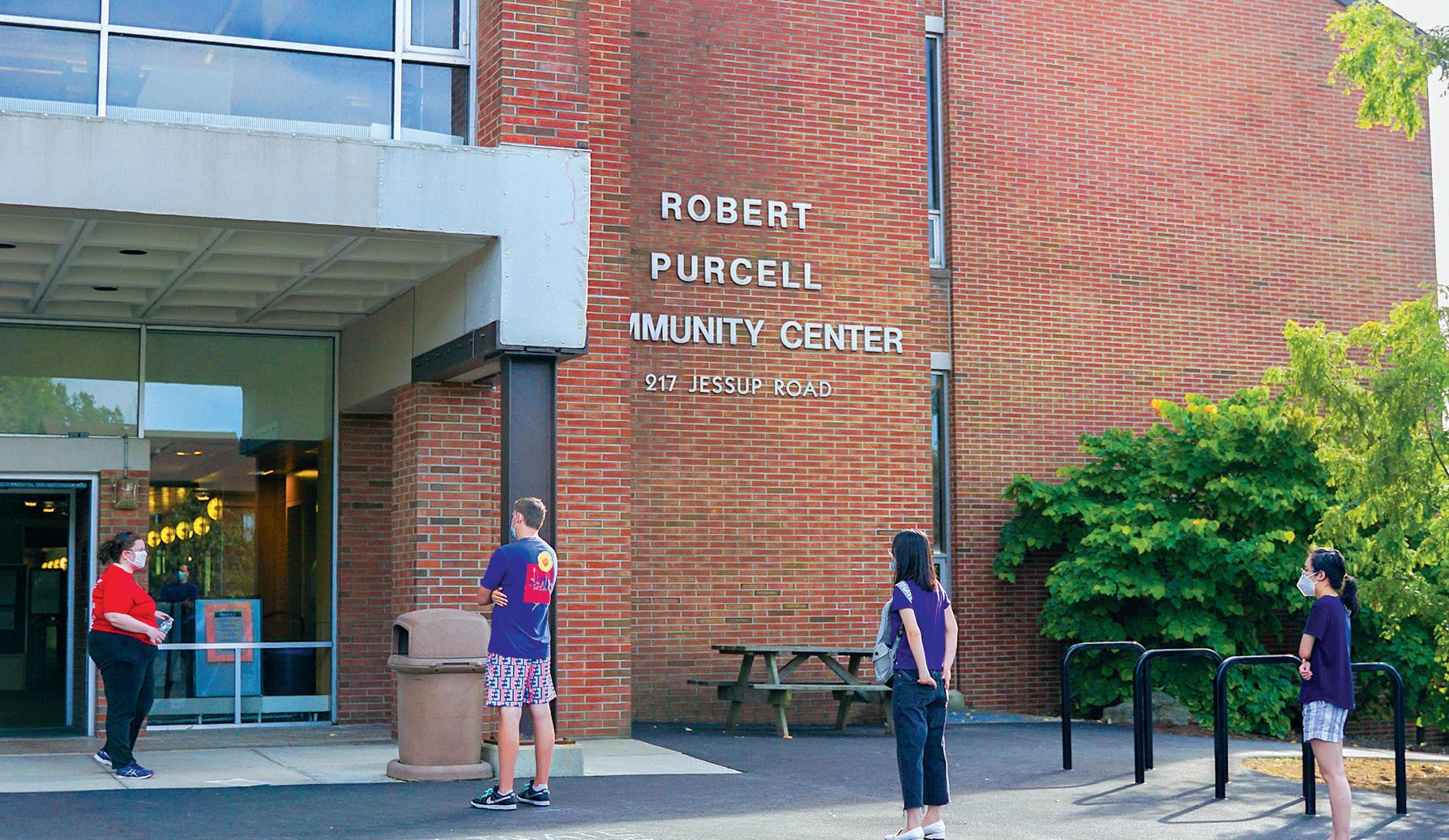
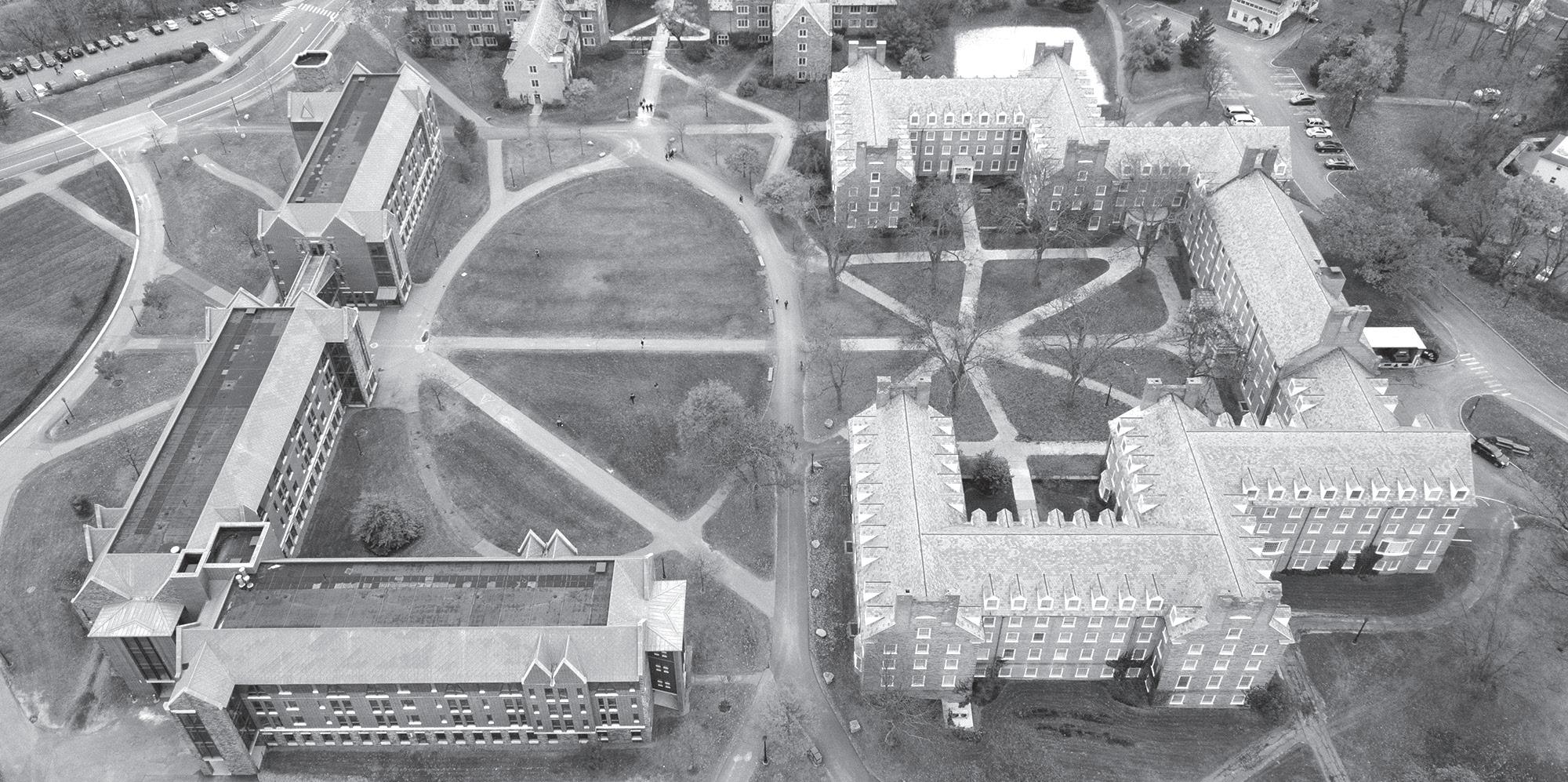
About a month into an in-person fall semester that some thought would never happen, Cornell has seen just a few coronavirus cases and — so far — has kept students safe during a pandemic that has killed more than 200,000 Americans.
As the weather gets colder — forcing more gatherings inside (experts say the virus spreads more easily indoors) — there’s no guarantee that another outbreak isn’t on its way. But as Cornell approaches the halfway point of the semester, the University’s bold
reopening plan has proven to be one of the most successful in the country.
President Martha E. Pollack and Provost Michael Kotlikoff wrote an op-ed in The Washington Post Sept. 30 detailing why Cornell has succeeded, and a Good Morning America segment showed masked students, spaced out lecture halls and a campus that has managed to contain the virus’ spread thanks to a rigorous pooled testing program.
“When we first announced that we were going to be on campus and all the other schools weren’t, I was saying to my parents and my friends, ‘Either they’re doing something very right or very wrong,’ because it’s very uncharted territory,” said Ellie Fassman ’24.
Cornell saw only seven positive cases last week, and just over 100 confirmed positives since classes started Sept. 2. Cornell is far outperforming the model it used to plan for the semester,
which projected 1,254 cases, largely because students are wearing masks and social distancing, debunking the narrative, to some extent, that college students can’t comply with safety regulations.
Prof. Peter Frazier, operations research and information engineering, who led the creation of the modeling that guided the plan, said the June 15 model assumed that Cornell would test everybody once every five days, but undergraduates — “the group in which it seems that there is the most amount of transmission” — are now getting tested
By MEGHNA MAHARISHI Sun Assistant Managing Editor
The Tompkins County Health Department reported the first COVID-19 death of a resident in the county on Monday afternoon.
The individual was first admitted to Cayuga Medical Center Oct. 6 and passed away Oct. 12 from complications with the virus, according to the TCHD press release. The
health department reported that the individual was elderly.
“Our deepest sympathy goes out to the family affected by this loss,” wrote Frank Kruppa, Tompkins County Public Health Director, in a press release. “This passing is a difficult reminder that COVID-19 is still having serious impacts on our community.”
After experiencing an initial influx of COVID-19 cases in
September, Tompkins County has managed to keep its virus count relatively low. But as of Monday evening, the health department reported that there were 11 new cases and three hospitalizations — a slight uptick compared to previous days. During the height of the pandemic, Tompkins County experienced two non-resident deaths in April, when the two patients were admitted to Cayuga Medical from New York City.
In light of the first resident death, Kruppa implored residents in Tompkins County to stay vigilant.
“I urge everyone to pay careful attention to what we can all do to stop the spread,” Kruppa wrote. “While our ability to manage the disease in Tompkins County has increased, we’re tragically reminded that COVID-19 disproportionately impacts older adults, those who are immune-compromised and those with underlying health conditions.”
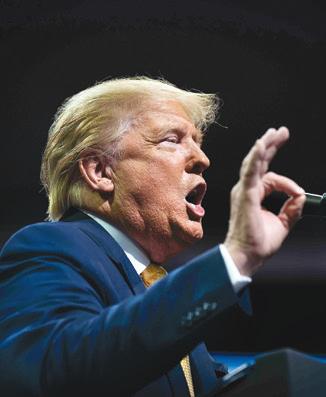
The Cornell Republicans have endorsed President Donald Trump for re-election Monday, marking a reversal of their 2016 stance when they refused to support Trump’s campaign.
In a phone call Monday night, the club’s president, Weston Barker ’21, said that he could not provide one specific reason or statement for any of the club’s endorsements this year.
Unlike past years, the general body voted on endorsements, not just the club’s six leaders.
“The way that this vote was held was not a decision of the executive board,” Barker said. “So there isn’t necessarily a clear rationale that can be established, because it is large scale voting in large scale conversations.”
In 2016, the group endorsed Libertarian candidate Gary Johnson for president, but not without
MICHELLE YANG / SUN STAFF PHOTOGRAPHER
Sun Senior Editor and Sun Contributor
MICHELLE YANG / SUN STAFF
By ALEC GIUFURTA Sun Senior Editor
Daybook
Tuesday, October 13, 2020
Today
Meditation Sessions In Spanish
9:30 - 10 a.m., Virtual Event
Into the Desert: Questions of Coloniality And Toxicity
10 - 11 a.m., Virtual Event
Behavioral Economics Workshop: Keith Chen
11:30 a.m. - 1 p.m., Virtual Event
Tatkon Center Zoom Room
Noon - 10 p.m., Virtual Event
First Gen and Low Income Student Support Office Hours
2 p.m. - 3 p.m., Virtual Event
The Future of Air Travel: Managing COVID-19 While Bringing Travelers Back 3 p.m., Virtual Event
American Sign Language Conversation Hour (Intermediate)
4:30 - 5:30 p.m., Virtual Event
Careers in Streaming 6 - 7 p.m., Virtual Event
Cornell Republicans Endorse Pres. Trump
Break from 2016 election stance
TRUMP Continued from page 1
repercussions: The New York Federation of College Republicans excommunicated the chapter, before reinstating them 16 days later. The Cornell Republicans appealed the decision to the College Republican National Committee and threatened litigation before it was reinstated.
A statement from club leadership in 2016 on the endorsement denounced Trump’s language and demeanor, stating that he “should not be the face of American conservatism.”
In similar fashion to the Cornell chapter’s flip, the Harvard Republican Club elected to back Trump this year after the group had previously labeled him a “threat to the survival of the Republic” in 2016, The Harvard Crimson reported.
In 2017, after Trump’s election, the Cornell Republicans faced backlash not from the left, but from Ann Coulter ’84, who
called the group “useless weanies” on Twitter in response to the president of the club saying it was “very difficult” to be a Republican on campus in an opinion piece in The New York Times.
In an email to The Sun, the Cornell Republicans also rolled out endorsements for Vice President Mike Pence, Rep. Tom Reed (R-N.Y.) and State Sen. Thomas O’Mara (R-N.Y.) for re-election. In the race for New York’s 22nd congressional district, they endorsed former Rep. Claudia Tenney, who is attempting to reclaim her seat after losing in 2018. Continuing down the Republican column of Ithaca’s ballot, the group also endorsed Matthew McIntyre for New York’s 125th Assembly District and Brian D. Burns for New York State Supreme Court Justice.
Johnathan Stimpson ’21 contributed reporting.
Alec Giufurta can be reached at agiufurta@cornellsun.com.
Cornell Keeps Virus Cases Low
REOPEN Continued from page 1
twice a week. Frazier said testing undergraduates more frequently has been more effective than a blanket testing requirement.
In addition to more frequent testing, a lower-than-expected transmission rate could also explain the low positive case count.
“I attribute that to partly luck, but also partly that people are doing a good job of wearing masks and not having large social gatherings,” Frazier said. “Everybody’s pitching together and doing a good job.”
Frazier added that when working on the various models over the summer, his team tried to make conservative projections “because [with] something as dangerous as this, it’s better to be conservative than to be too aggressive.”
A few other factors contributing to the low prevalence of positive cases are high rates of testing compliance, the effectiveness of adaptive testing (a testing method that can more quickly test a whole social circle than traditional contacting tracing), rapid turnaround of test results and that the in-person semester will be shorter than the full 16 weeks that the model assumed.
Other universities and colleges that want to mimic Cornell’s COVID-19 approach in the future may not be able to: Additional factors working in Cornell’s favor include the school’s remote location and the ability to run its own testing operation.
“Understandably, our approach may not be feasible for every university,” Pollack and Kotlikoff wrote in their Washington Post op-ed. “Cornell is fortunate to have the expertise and resources to create and support its own testing lab.”
While other universities had disastrous reopenings that led to massive outbreaks and cancellations of in-person plans, Cornell is one of a handful of schools that has made a return to campus work. After a chaotic start in which Ithaca College reversed course on an in-person plan, Cornell walked back a plan to provide quarantine housing and a 39-case cluster forced the University into a “yellow” alert level, administrators are declaring the fall 2020 plan a success — for now.
“When people said that college students couldn’t possibly behave maturely enough to respect public health needs in this pandemic, they didn’t know Cornellians!” Pollack wrote on Instagram on Sept. 30.
Still at alert level “green” after the brief stint at “yellow” made some question the decision to bring students back, Cornell took steps recently to open gyms, allow student organization meetings and permit student athletes to gather in small groups.
“We have stepped up to the difficult challenge, modifying our daily lives and remaining focused on the impacts of our collective actions,” Vice President for Student and Campus Life Ryan Lombardi wrote in an email to students on Sept. 29. “We still have a long road ahead before we can declare success, but as I’ve said before: I believe in you, and I believe in us.”
Students back in Ithaca and employees with jobs who other-
wise would be without work are among the winners of the reopening. So are local businesses that rely on students for a huge portion of their revenue — Cornell is responsible for around 20 percent of Tompkins County’s economic activity, and that figure is way higher for shops and restaurants in Ithaca.
But the semester still poses new challenges: Most classes are online, campus is less lively and students are struggling with mental health. And many people paid a steep price for this semester to happen: Locals left out of the loop, professors who had to make tough decisions about whether or not to teach in person and some staff — like resident advisers, who complained of unsafe conditions and briefly went on strike in August — have faced the negative consequences of the bold move to bring students back.
Cornell had compared to other colleges, and I said ‘this is working’ and the anxiety went away,” said Tebor Shaw, who added that she was extra worried since she was ill in the spring and part of an at-risk population. “Was I as happy as when there was one case in Tompkins County? No, we were living in a nice, really safe bubble here that we fought hard for through being quarantined. ... I started to be proud of Cornell, that whatever they were doing, they were keeping the numbers down.”
In a video with other local leaders welcoming students back in August, Mayor Svante Myrick ’09 said students are a crucial part of the city, which had successfully
“I attribute [low cases] to partly luck, but also partly that people are wearing masks and not having large social gatherings.”
Prof. Peter Frazier
kept its virus case count very low over the summer.
For example, one Statler Hotel employee quit, saying that they felt unsafe at the hotel, which the University is using to house students who test positive for the virus.
Just a few days into the semester, when it seemed like Cornell was going to easily blow past the 100 case mark, which would have triggered a state-enforced twoweek shutdown, some Ithaca residents said they didn’t feel like Cornell had their safety in mind.
Marilyn Tebor Shaw ’76, a lawyer who has lived in Collegetown for 10 years, said that this summer she was dreading students’ return for the first time. She graduated from Cornell, worked for a year in the judicial administrator’s office and sent two kids to the University, but worried that bringing students back from hotspot states would lead to virus outbreaks.
“I started to be proud of Cornell ... they were keeping the numbers down.”
Marilyn Tebor Shaw ’76
“There was a feeling that because the kids are back we now have to confine ourselves to our homes,” Tebor Shaw said. “I felt that way, I still feel that way. We don’t go to the grocery store. People go to the grocery stores out of town so we don’t have to shop where Cornell students are shopping.”
Many students on social media urged their friends to consider the local population, posting that failing to follow safety protocols could put thousands of community members at risk. Some also criticized the Cornell plan as unnecessarily endangering Ithacans.
In July, when students started moving into Collegetown apartments, Tebor Shaw thought there was no way the reopening plan would work. She said she saw students walking in big groups without masks. But soon after SUNY Oneonta, less than 100 miles from Ithaca, shut down and a cluster of cases among student athletes forced Cornell into alert level “yellow,” Tebor Shaw said “everything changed.”
“I was really impressed when I looked at the number of cases that
“All of you play such an important role in helping us to continue the success that we’ve had so far,” Myrick said. “So as long as we wear our mask, we keep our distance, we take care of ourselves, we’ll be taking care of our neighbors too.”
For some students like Fassman, living in Ithaca and having an almost-normal start to her freshman year is a pleasant surprise.
“I’m kind of debating whether I should say surprised or not because there have been so many restrictions and policies that are totally justified that have helped us be able to stay on campus, so I guess I’m grateful for that too,” Fassman said.
Logan Schuh ’22 didn’t think students would comply with social distancing to the extent that they have, and expected that the school would inevitably have to close down as the virus spread.
“I figured it just wouldn’t happen and then the community wouldn’t take it seriously and we’d have a bunch of cases,” Schuh said.
But with case counts low and a testing program that is making the “new normal” work, Cornell students have about the closest possible thing to a normal semester given the national circumstances. More than half of classes are online, big parties are mostly a relic of the past and nobody will be packing Lynah Rink anytime soon. But the Collegetown Bagels patio is lively, students dealt with another Student Assembly elections controversy and Klarman Hall is open (more quietly, and without Temple of Zeus soup) for studying.
The mayhem at schools like the University of North Carolina at Chapel Hill in August and September made the plan to keep thousands of students in Ithaca seem like a long shot. But a month in, it’s working.
“People have been doing so good so far and I worry that people will get tired or will put their guard down,” Frazier said. “It’s important to remember that we are in a pandemic and COVID-19 is super dangerous so just keep up what you’ve been doing.”
Raphy Gendler can be reached at rgendler@cornellsun.com.
Julia Nagel can be reached at jbn53@cornell.edu.
RAs Get Improved Conditions Following Strike
By TAMARA KAMIS AND SYDNEY BROWNE Sun Staff Writers
When resident advisers unpacked their bags in August, many thought Cornell wouldn’t last a semester. Decrying what they saw as low pay and a lack of personal protective equipment, more than 50 resident advisers skipped virtual meetings and training sessions during move-in.
But now, many RAs say they feel more comfortable than they did a month ago. Since the strike, the University has met many of their initial demands, but RAs continue to advocate for representation in decision making processes and for more compensation.
According to Ramon Reyes ’21, an RA in Mary Donlon Hall, RAs met with University administration immediately after the strike. In the following month, Cornell provided RAs more PPE and filled in some of the staffing shortages that forced them to work more shifts when the semester started.
Isabelle Aboaf ’21 said she feels more comfortable as a senior RA in Balch Hall because of these changes. Within a few days after the August strike, Aboaf said she received a bottle of hand sanitizer, face shields, three reusable masks and a box of masks to share with other RAs.
Balch also hired more RAs, helping reduce the resident-per-RA load that burdened Aboaf and her colleagues at the beginning of the year. Many RAs had quit or stayed home, leaving vacant positions.
Each semester of this academic year, Cornell is now reimbursing RAs $50 for laundry, $75 to make up for a lost gym membership and 100 meal swipes.
While behavioral compact monitors
walk around campus to remind students of the rules, Aboaf said RAs are primarily responsible for COVID-19 code of conduct compliance inside the residence halls because behavioral compact monitors don’t have access to dorms.
But Reyes said he believes RAs wield limited power over enforcing the behavioral compact.
“We can get the Cornell IDs of residents who break the compact and report [the rule violation] up,” Reyes wrote in an email to The Sun. “However, if residents decide to duck us, our options become limited.”
Resident advisers continue to take on-call shifts, answer resident questions and organize events over Zoom for their residents. Despite virtual events, Aboaf said she misses getting to know residents in-person.
“Unlike in my previous experience, it’s a lot harder to get to know residents because I just don’t really ever see my own residents themselves, or interact with them oneon-one, or even really see them much on Zoom,” Aboaf said.
As temperatures drop and residents stay inside, Aboaf said she worries about her safety for the remainder of the semester. She said she sees residents using lounges more often than they did in late summer, and that this trend might increase when Ithaca winter rolls around.
Administrators are continuing conversations with the RAs and other members of the Housing and Residential Life team, according to Pat Wynn, assistant vice president for student and campus life.
“Cornell continues to have productive conversations with the residential team, agreeing to a continued commitment to re-examine and restructure the residen-
tial advisor student leadership program,” Wynn wrote in an email to The Sun.
The University is also reviewing recommendations made by the Residential Life Task Force. Established early in 2020, the task force is made up of “residential life professionals and members of the student leadership program,” according to Wynn.
While the RAs discuss future changes to the job with administrators, they have the support of other Cornell employees, including Prof. Shimon Edelman, psychology.
“The RAs’ situation is one piece of the puzzle, but the big picture is clear: A university is just like any other workplace, and the rights of its workers (starting with their very livelihood) can only be safeguarded by the workers themselves, who should organize and bargain collectively,” Edelman wrote in an email to The Sun.
Reyes wrote that he hopes Cornell will pay RAs more fairly and make the job more accessible to students. According to Reyes, because the stipend hasn’t changed
in recent years, the actual value of pay has decreased because of inflation and increased living costs. Currently, the RA stipend starts at $500 per semester, then rises to $700 after working three semesters and jumps to $900 after five.
“It incentivizes RAs who have backgrounds of means to apply, and discourages those who might rely on financial aid or the income from a steady job,” Reyes wrote.
Reyes added that he believes the newly formed RA council will make changing their compensation and job responsibilities possible.
“As far as we’re concerned, our demands have been met and we’re looking for longer-term change later down the line through this direct line of communication being established in the formation of the RA Council,” Reyes wrote.
Tamara Kamis can be reached at tkamis@cornellsun.com. Sydney Browne can be reached at sbrowne@cornellsun.com.
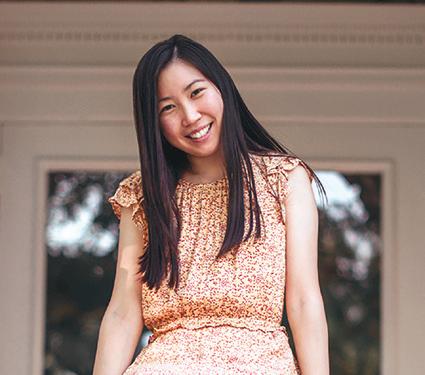
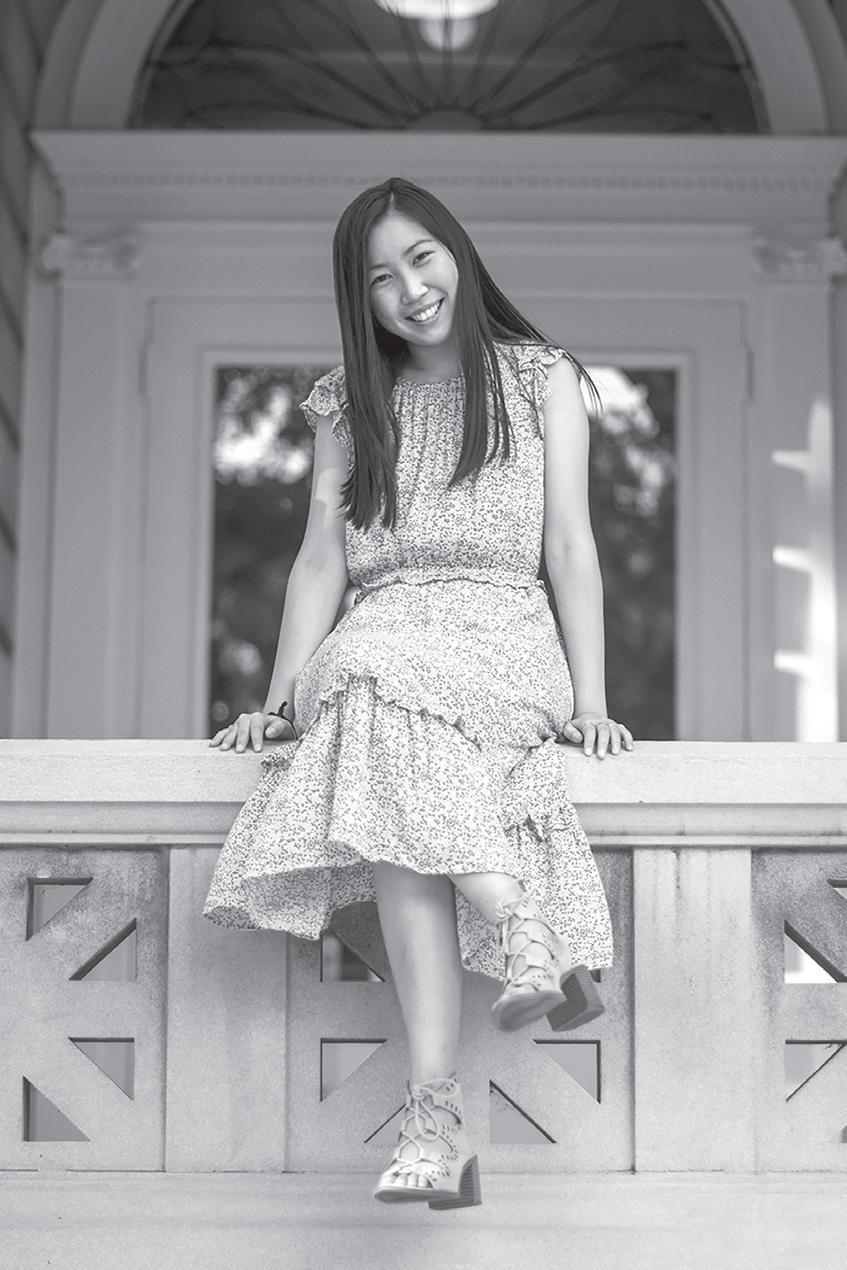
Huang ’21 Hopes to Restore Campus Trust in S.A.
By JYOTHSNA BOLLEDDULA Sun Contributor
When Cat Huang ’21 transferred to Cornell in fall 2018, her main goal was finding her way around campus, not around student governance. Just two years later, Huang is starting her term as president of the Student Assembly.
After first joining the S.A. as a transfer representative, Huang has now reached its highest position, winning a twice-delayed election her senior year. Her Cornell journey has led her to advocate for fellow transfer students, launch a McGraw Tower Instagram account
and land a fourth position in student government.
As S.A. president, Huang’s priorities include abolishing the student contribution fee, pushing the Cornell University Police Department to become more transparent and increasing communication between the S.A. and student advocacy groups. Huang is also calling to restore trust between the assembly and the Cornell community by creating an atmosphere of inclusion and respect. After a close election this past week with the lowest voter turnout in recent history, Huang is taking over the S.A. at a time when the assembly is facing both internal and external calls for reform, after the assembly used funds from its student activity fee to donate $10,000 to a Cornell Students for Black Lives fundraiser
“This means making sure the S.A. is no longer acting from a place of isolation, but [instead] all our representatives and all of our leaders have those relationships with the people and communities they’re supposed to be representing, which is something we’ve
struggled to do in the past,” the newly elected president said.
But the reforming the assembly wasn’t always on Huang’s mind.
As a sophomore transfer student from the University of Virginia, Huang said she was first inspired to run for the transfer representative position her sophomore fall after she recognized the common concerns transfer students had — particularly finding housing and a community on campus.
“When I first came in, not all transfer students were guaranteed housing,” Huang said. “It was kind of weird, because we were first-year students like freshmen, but we were expected to go out and find our own leases in Collegetown, having never been to Ithaca.”
Though Huang had no prior experience in student governance, her role in the S.A. quickly took off. Her sophomore spring, she was elected vice president of diversity and inclusion, and her junior year she was elected executive vice president.
Huang took these new roles head-on, but she said the transition came with a steep learning curve and a fair share of hurdles.
“It was a pretty big adjustment for me,” she said. “I loved Cornell and I loved being a transfer student, but this was a whole new step, where I was having to get to know a bunch of other parts of Cornell that I hadn’t been exposed to yet.”
After two years in the S.A., Huang said kindness and empathy are the two cornerstones of her leadership style. She credits her family — specifically her mom — and her closest friends as her biggest role models in instilling these values and shaping her into a
strong leader.
“I would not be here today without the strong women and women-identifying folks who have supported me and believed in me and really challenged me to stay on with leadership,” Huang said. “It really blows my mind and I’m so thankful for that.”
Though Huang had always been confident in her position as a female leader, she said she only later began grappling with her identity as Asian American.
Growing up in a predominantly white neighborhood, she said she never truly embraced this aspect of her life until she came to Cornell.
“I met a lot of different types of people [at Cornell] and I was really able to resonate more with my Asian American identity and I think that really informs how I operate now, especially being the daughter of immigrants it’s really about ‘if you put in the work it pays off,’” Huang said.
In addition to Student Assembly, Huang serves as an undergraduate resident fellow at Alice Cook House. Her own resident fellow encouraged her to apply, and she said she takes pride in creating a community for new transfer students adjusting to Cornell. She also spent much of last year involved with the Scheinman Institute on Conflict Resolution as a mediator, working with cases involving Code of Conduct violations and currently serves on the executive board for the Cornell Asian Pacific Student Union.
But students know Huang outside of her spot at the Willard Straight Hall Memorial Room table. She’s also known for creating the popular McGraw Tower
Instagram account, @bingaleedingalee. After seeing a similar account for the historic clock tower on Twitter, Huang created the Instagram account her sophomore year as a lighthearted source of humor for her and her friends. To her surprise, the account’s 60 followers has jumped to nearly 2,800 followers in the last couple of years.
“I have some super fans of Bingalee that will DM me every time saying ‘We love you!’ or send me pickup lines about clocks and towers,” Huang said. “I’ve had people tell me it makes their day when I post something funny and that’s definitely what I’m here for.”
As the account gained a following, Huang tapped into this platform this summer to push for social change. Beyond clock tower memes, Huang also posts resources for Black Lives Matter, voting registration and other social justice issues. When she graduates, Huang said she hopes to hand off the @bingaleedingalee torch to any transfer student interested in advocacy.
Though she doesn’t know exactly what the next few years hold, Huang said she’s excited to take on her new S.A. role and renew trust in the assembly that works to represent Cornell’s 15,000 undergraduates.
“I think [it] comes down to building trust within all our representatives, members and leadership,” Huang said, “and making sure students feel that if they have a concern they can raise it to the student assembly and that the student assembly is there for them.”
Jyothsna Bolleddula can be reached at jb2366@cornell.edu.
New environment | RAs demanded more equipment due to safety concerns over COVID-19.
MICHAEL WENYE LI / SUN FILE PHOTO
DANIEL RA / SUN STAFF PHOTOGRAPHER
2020 Nobel Prize in Physics Highlights Black Holes, Mentors and Collaboration
BY TAMARA KAMIS
When massive stars undergo gravitational collapse, they sometimes become black holes, with such extreme gravity they prevent even light from escaping. Three researchers investigating black holes — Sir Roger Penrose, Reinhard Genzel and Andrea Ghez — received the 2020 Nobel Prize in Physics on Oct. 6.
Half of the award went to Penrose, emeritus professor at the University of Oxford, whose mathematical proofs show that Albert Einstein’s theory of general relativity predicts the existence of black holes. The other half was awarded jointly to Ghez, the Lauren B. Leichtman and Arthur E. Levine Professor of Astrophysics at University of California, Los Angeles, and Genzel, co-director of the Max Planck Institute for Extraterrestrial Physics and emeritus professor at University of California, Berkeley.
In the 1990s, Ghez and Genzel’s separate research teams observed and analyzed star movements near the center of the Milky Way and found significant evidence that a black hole was responsible for the stars’ movement patterns.
One of the many obstacles facing scientists who are trying to see into deep space is the same phenomenon that makes stars seem to twinkle — turbulence in Earth’s atmosphere and in space that can smear stellar images.
To bypass this turbulence, Ghez and Ghenzel used adaptive optics, an observational technique that utilizes carefully calibrated mirrors to correct for image distortions. The mirrors bend the light to make it all come from the same place, which results in sharp images of specific stars.
“We look out of the atmosphere and the atmosphere blurs the images,” said Stefan
Gillessen, one of Genzel’s colleagues at the Max Planck Institute in Germany. “The idea behind these adaptive optics systems is that one actually introduces a mirror in the beam telescope, which exactly compensates the blurring the atmosphere does.”
Through adaptive optics, Ghez and Genzel could track the orbits of stars more easily than they could have with past methods. One of the main methods previous-
to be unrealistic. Many years after Penrose’s singularity theorem, Ghez and Genzel’s research teams found overwhelming evidence of the existence of a supermassive black hole at the center of the Milky Way.
From observatories in Hawaii and Chile, respectively, Ghez and Genzel found stars moving very quickly near a bright object they named Sagittarius A*. By focusing on one star, S2, which orbits near the galactic
ly used is speckle interferometry, which involves taking many pictures of individual flecks of light at high speeds and consolidating these images into a clear image, according to Prof. Gordon Stacey, astronomy.
Before Penrose’s 1965 proof, black hole formation had only been considered under the unrealistic condition that the collapsing star was a perfect sphere. Penrose showed that black holes actually could form from non-spherical stars by introducing “trapped surfaces” where light can only move toward a central singularity — the infinitely dense point at the center of a black hole.
While his proof did not show that black holes are inevitable, the only conditions in which black holes never form are considered
center, the two researchers found significant evidence that at the center of the Milky Way there is a super-massive black hole weighing more than 4 million suns.
Penrose, Ghez and Genzel have been not only groundbreaking researchers, but also teachers, mentors and role models for many in their field, including Cornell students and faculty. Penrose was a visiting professor at Cornell University in the early 1960s. Christopher O’Connor grad worked for Ghez’s lab the summer after his sophomore year at UCLA, and Stacey worked for Genzel as a postdoctoral student.
Stacey described Genzel as a brilliant and energetic researcher, with a good sense of humor. Stacey said he was grateful to have
had a chance to work for Genzel early in his career, and has since co-authored papers with him, focusing on the Galactic Center and star formation both in the Milky Way galaxy, and in nearby galaxies.
“He’s generous to younger people he mentors,” Stacey said. ““He will give them their recognition as it’s due.”
Ghez is the fourth woman to win the Nobel prize in Physics, and the first female astrophysicist to win. Thankful Cromartie grad said she was both inspired by Ghez’s example and expressed mixed feelings about what it means for women winning the Nobel Prize in physics to still be so rare.
“Andrea Ghez is only the fourth woman to win the Nobel prize in Physics, and the first female astrophysicist to win it,” Cromartie said. “It’s inspiring and encouraging to see her work be properly recognized and rewarded but it’s also a testament to how overlooked and undervalued the work of female astrophysicists has been in the past.”
While the lack of gender equity in physics remains an issue, many, including Cromartie and O’Connor, are happy that Ghez’s accomplishments have been recognized. According to O’Connor, Ghez is an inclusive professor and researcher, encouraging her students and team members while managing the complex logistics of large scale research projects.
“When it was announced that Ghez had won the Nobel, everyone I know in astronomy was thrilled, but no one was surprised,” O’Connor said. “It’s very gratifying to see someone who is so brilliant and accomplished receive the recognition she deserves.”
Tamara Kamis can be reached at tkamis@cornellsun.com.
David Dayan can be reached at dbd63@cornell.edu.
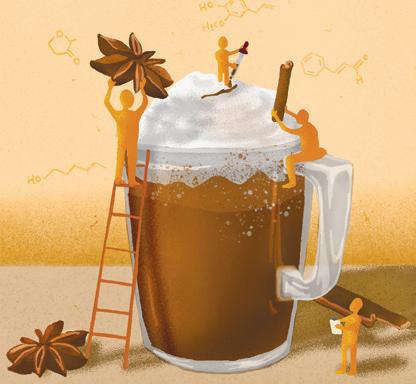
The Science Behind Fall’s Favorite Drink
BY
From lattes to cereal flavors, pumpkin spice is ubiquitous every fall — but what is it about pumpkin spice that makes it so popular?
Prof. Gavin Sacks, food science, whose research focuses on flavor chemistry, said nostalgia is the main psychological reason for why certain fall drinks — such as pumpkin spice lattes and apple cider — become very common during this time of year.
“We have plenty of foods and beverages that serve a function in rituals that are specific to a particular time and help us form memories and connections with each other,” Sacks said. “It’s part of what makes the season a season. Does having cotton candy at a fair during the summer taste better? I don’t know. But it’s part of the ritual.”
Memories play an important part in how we perceive food, according to Sacks. Certain foods are associated with traditions and holidays, especially in November and December.
“The association between pumpkin spice and fall is also
partially due to the unique way in which it is produced historically — which lends itself to becoming more common as the weather gets cooler”, Sacks said.
Sacks then explained how wet cooking methods — such as boiling, braising, and stewing — are more common during the fall and winter, since people tend to enjoy hot foods and drinks when the weather is colder.
“Brown spices — cloves, cinnamon and nutmeg — those are spices in Western cooking that are generally not used when we’re consuming raw fruits and vegetables,” Sacks said. “They’re usually used when we’re preparing things with a wet cooking method or roasting fruits and vegetables, and that kind of cooking is more common as the weather gets cooler.”
The flavor compounds, degradation products of lipids and hemicelluloses are key components of the dried seeds, stamens and bark plants that make up brown spices. Lipids and hemicelluloses are both important for maintaining the structure of the plant cell membrane and cell wall, respectively. The flavor compounds in these spices are crucial
to producing pumpkin spice’s unique flavor.
The sweetening of these processed brown spices completes the pumpkin spice flavor process, creating a more appealing and cozy flavor.
Although processing a sweetened blend of brown spices makes the pumpkin spice flavor, it’s not always the preferred method. Pre-formulated extracts can be more convenient to use for pumpkin spice flavored foods.
“For something that’s pumpkin spice flavored, pumpkin spice donuts, for example, you wouldn’t necessarily use ground spices,” Sacks said. “It would probably be more convenient and easier to use the essential oils or extracts of some of these plants. You can buy these kinds of extracts that are pre-formulated for use in particular applications from flavor companies.”
Whether you’re drinking a pumpkin spice latte or eating a pumpkin spice donut, what makes this fall treat enjoyable has little to do with the ingredients itself.
Milena Bimpong can be reached at mbimpong@cornellsun.com.
and DAVID DAYAN Sun Staff Writer and Sun Contributor
Center of the universe | The work of this year’s laureates was foundational in understanding that there is a super-massive black hole at the center of the Milky Way, called “Sagittarius A*.”
COURTESY OF NASA
MILENA BIMPONG Sun Staff Writer
SABRINA XIE / SUN STAFF DESIGNER
Secret sauce | According to Prof. Gavin Sacks, food science, what makes pumpkin spice lattes a fall staple has nothing to do with its ingredients, but rather the nostalgia associated with it.
ARTS & ENTERTAINMENT
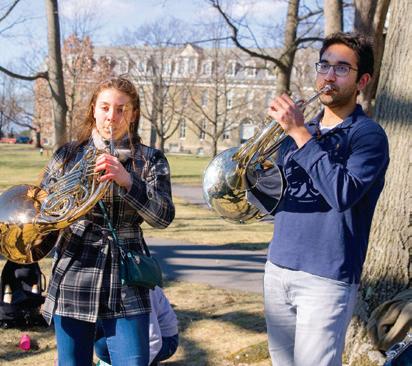
Cornell Wind Symphony to Perform On the Arts Quad on October 17
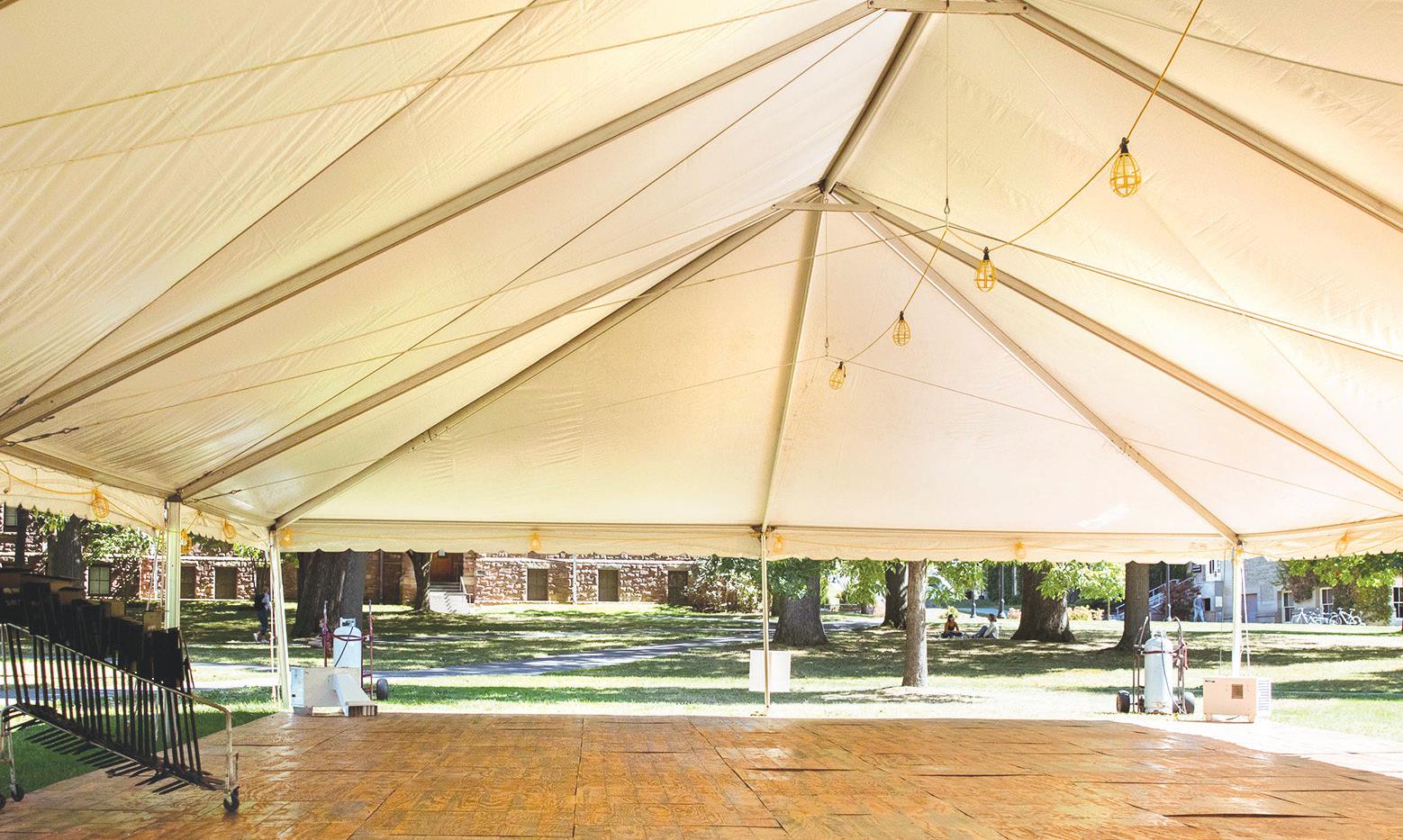
You may have heard them playing while walking in the Arts Quad, or maybe you’ve just seen the massive tent. Either way, it’s hard not to notice that the Cornell Wind Symphony is up and running this unusual fall semester.
Live music was one of the first industries to be impacted when COVID-19 restrictions began in March. Musicians at every level still find themselves stuck without opportunities to perform for the foreseeable future. But for Prof. James Spinazzola, music, making music was too important to let go.
“It was a situation where, without live music-making, the campus culture would be drastically and adversely affected,” says Spinazzola, who waited throughout the summer, along with many other members of the Cornell community, for word of the campus’s reopening. Once it became clear that students would be studying in person, preparations for a socially distanced, COVID-safe ensemble could begin. Starting with, of course, the tent.
The tent, currently erected in front of Lincoln Hall, features wooden flooring and six space heaters. This is because many instruments are sensitive to changes in temperature that can cause them to go out of tune. Although the space is big — nearly 3200 square feet — the
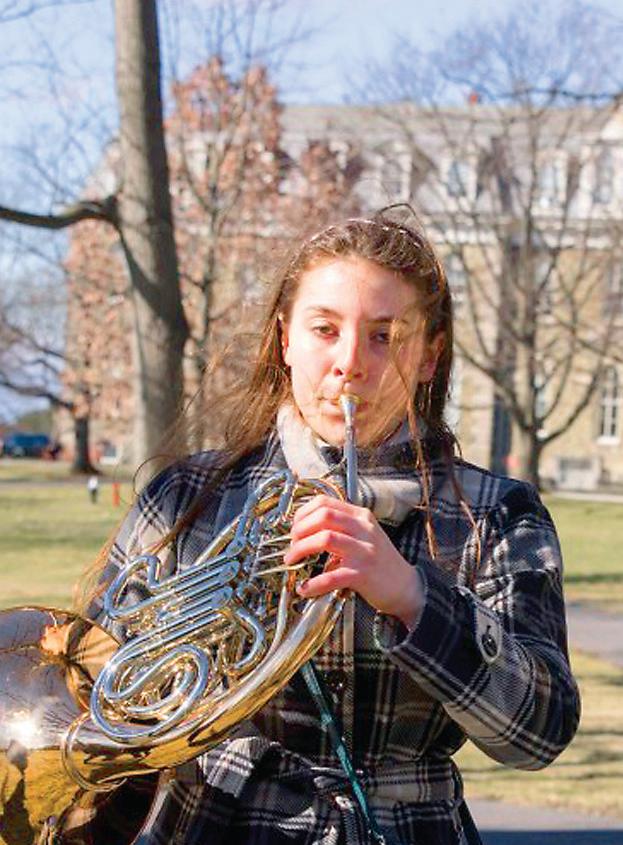
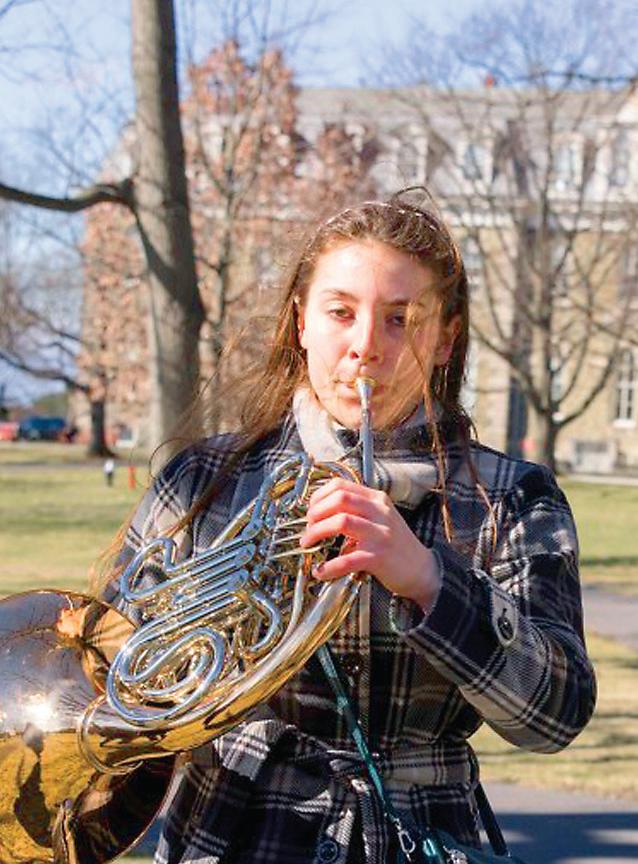
largest group rehearsing within consists of only 20 people, to ensure that every player can keep the recommended sixfoot distance. In addition to distancing, the wind players are provided with special masks that allow for a mouthpiece to be inserted while keeping the rest of the mouth relatively covered. And as
horn, which needs to be played with a hand inside the bell. In that case, the covers come attached to a glove.
“I think they’re handling it beautifully,” said Spinazzola when asked about his students. “I’m so impressed. And I think that’s keeping in line with the rest of the Cornell population. And now that
even feature an acoustic grand piano that must be carefully wheeled outside. “It’s all about adaptation.”
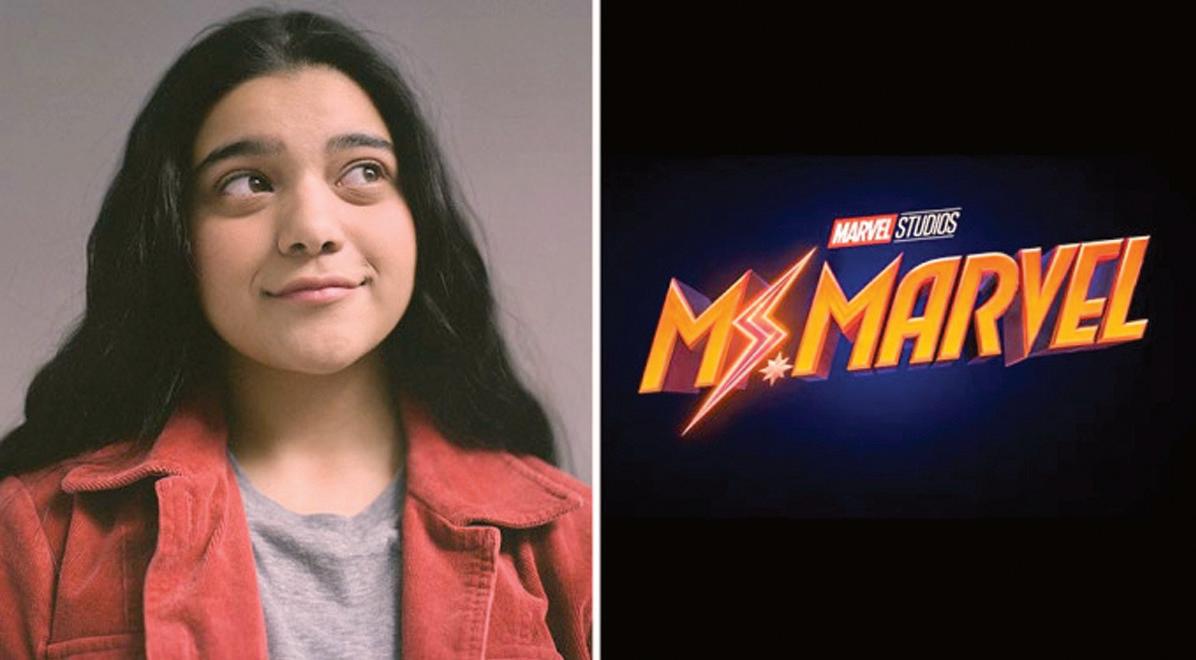
Since Disney+ announced the production of a series based on Ms. Marvel , a fairly recent addition to the Marvel universe, fans have been eagerly awaiting the casting of the titular role. The wait’s up. On Sept. 30, Disney announced the casting of Iman Vellani as Kamala Khan in the upcoming series.
Since Khan’s introduction to the Marvel universe in 2013, her stories have resonated with many who chose to pick up the Ms. Marvel issues. A young Pakistani-American girl navigating her way through the world while learning to handle new superpowers intrigued many readers, especially young audiences who found it easy to relate to Khan’s quirky personality and typical teenage issues.
Though generally relatable, this character’s ethnicity and religion are distinct aspects of her story. Vellani’s casting is especially important because she shares her character’s background, allowing for authentic representation.
wind instruments by definition expel air, covers are placed over the bells of many instruments — including the French
they’ve gotten into the groove of things, the level of the music is really impressive as well.”
While a wind symphony can normally have more than fifty players, distancing requirements mean Spinazzola has pivoted to chamber groups for this season. One piece, “Rhapsody in Blue,” will
Although Spinazzola admits the space heaters work surprisingly well — “they’re actually doing a remarkably good job” — the class will go fully online after the wind symphony’s Oct. 17 concert in order to preserve the health of students and instruments. The plan then is to present a series of lectures and speakers from Haiti, where the wind symphony has travelled twice in the last four years. The last class of the semester will be presented by A. D. White Professor-at-Large Wynton Marsalis.
When asked about the coming semester, Spinazzola remains optimistic. “I’ve just stopped trying to predict things because every prediction has been wrong,” said Spinazzola. Depending on the state of COVID-19 in the United States and Cornell’s own plans, the spring semester could see a flipped version of the fall, with players starting in person and transitioning online as the weather warms up. “We’ll just roll with it as we have been, [and] keep trying to make music.”
You can listen to the Cornell Wind Symphony perform pieces by Strauss, Joplin, Weill and Gershwin on Saturday, Oct. 17 at 3 p.m. in the Arts Quad.
Miriam Canter is a freshman in the College of Engineering. She can be reached at mec353@cornell.edu.
Ms. Marvel Casting Brings Representation to Disney+
Khan’s story. Learning to embrace her Pakistani-American heritage is something that many young girls of similar backgrounds have also experienced. Finding a balance between her family’s culture and the culture she discovers while living in
in the struggle to fit in, helping them understand that they too can attain a similar balance of cultures in their lives.
Khan’s relationship to faith is also a significant part of her story. As a young Muslim girl, her religion is essential to her
representation to the comic universe. American media still has limited offerings of Muslim representation, but Khan and her story are helping by adding more Muslim voices to the screen.
Vellani is also quite similar
New Jersey is a difficult process for this character, but she is able to figure out that she doesn’t have to sacrifice one culture for the other. Young people look to her to realize they aren’t alone
identity, and she continues to learn about the role that faith plays in her life throughout her story. Originally created by two Muslim women, this character added unprecedented Muslim
in age to Khan. Casting a teenage actress to play a teenage role is actually quite rare, as many such roles tend to be filled by adult actors in their 20s. Though casting adults to play
teenage roles may seem harmless, doing so prevents younger audiences from seeing people truly like them on screen. m seeing the representation they were expecting.
When stories are told about young characters like teenage Khan, other children and teens connect with them the most when they feel that they can see themselves within the characters. Seeing someone on-screen who is young and learning from typical teenage mistakes allows younger audiences to more easily recognize how the lessons Khan learns apply to their own lives.
Though the Ms. Marvel series will not be added to the Disney+ streaming platform in the near future, Vellani has already taken significant steps towards increasing representation in her industry. By bringing Khan to life, Vellani is giving a voice to many who share her and her character’s background, which are voices that the media needs to hear.
Aditi Hukerikar is a sophomore in the College of Arts and Sciences. She can be reached at adh247@cornell.edu.
HANNAH ROSENBERG
The Corne¬ Daily Sun
Independent Since 1880
138th Editorial Board
MARYAM ZAFAR ’21
Editor in Chief
JOYBEER DATTA GUPTA ’21
Business Manager
PETER BUONANNO ’21
Associate Editor
MEGHNA MAHARISHI ’22
Assistant Managing Editor
CHRISTINA BULKELEY ’21
Sports Editor
BORIS TSANG ’21
Photography Editor
CAROLINE JOHNSON ’22
News Editor
ALEX HALE ’21
News Editor
ARI DUBOW ’21
Editor
EMMA ROSENBAUM ’22 Science Editor
BENJAMIN VELANI ’22
Dining Editor
JOHN MONKOVIC ’22
Multimedia Editor
MIKE FANG ’21
App Editor
OLIVIA WEINBERG ’22
Assistant News Editor
MADELINE ROSENBERG ’23
Assistant News Editor
LUKE PICHINI ’22
Assistant Sports Editor
HANNAH ROSENBERG ’23
Assistant Photography Editor
BRIAN LU ’23
Assistant Arts & Entertainment Editor
ANNABEL LI ’21
Assistant Money & Business Editor
LEI ANNE RABEJE ’22 Layout Editor
JOHN COLIE ’23 Blogs Editor
JOHNATHAN STIMPSON ’21
Managing Editor
KRYSTAL YANG ’21
Advertising Manager
JASON HUANG ’21
Web Editor
NIKO NGUYEN ’22 Design Editor
PALLAVI KENKARE ’21
SEAN O’CONNELL ’21
KATHRYN STAMM ’22 News Editor
ANIL OZA ’22 Science Editor
EMMA PLOWE ’23
Arts &
LEE ’21
CHENG ’21
PEÑEÑORY ’22
MEGHANA SRIVASTAVA ’23
DAWSON ’21
’22
’21
’22
’21
AWorking on Today’s Sun
Ad Layout Ella Benjamin ’24
Production Deskers Sabrina Xie ’21
Ben Mayer ’21
News Deskers Alex Hale ’21
Madeline Rosenberg ’23
Opinion Desker Peter Buonanno ’21
Design Desker Niko Nguyen ’22
Photo Desker Hannah Rosenberg ’23
Arts Desker Emma Plowe ’23
Sports Desker Luke Pichini ’22
Science Desker Anil Oza ’22
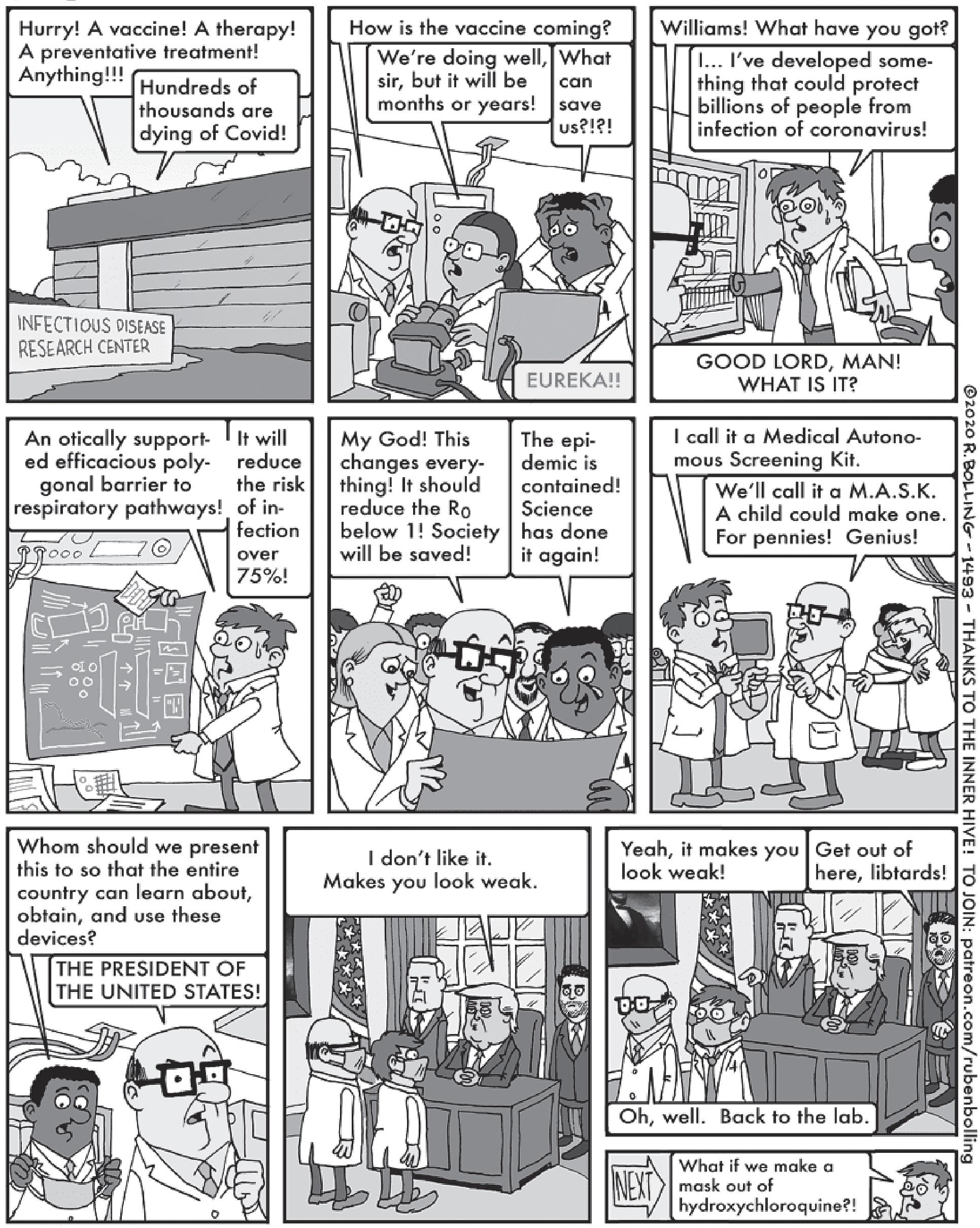
Tom the Dancing Bug by Reuben Bolling
recent Sun article detailed the lack of grassroots enthusiasm for Joe Biden on campus, a deficit reflected in the essentially “one-man operation” of Cornell for Biden. Similar concerns about an enthusiasm gap for Biden among young voters have been omnipresent in the news for the duration of his campaign, even leading FiveThirtyEight to debunk the claim. Yet it’s no secret that Biden was the first choice of few college aged voters in the Democratic primary and has seen tepid enthusiasm on Cornell’s campus. This trend makes me — as a progressive, young and highly enthusiastic Biden voter — something of a rarity. As such, I’d like to explain exactly why I believe Biden is the ideal candidate for progressive change at the national level despite the fact that Cornell Progressives has refused to endorse him. I’d like to explain why I can’t wait to vote for Biden.
Cornell Progressives establishes its case against endorsing Biden on ideological values, as George Defendini ’22 explained, “While many of us want Biden to succeed and none of us want the continued rise of Fascism under Trump, we decided in writing our Constitution to reserve endorsements for candidates who align with our values of Progressivism and Leftism.” Such a conviction to only endorse candidates whose ideology fully aligns with their values is, undeniably, a fair position to take as a progressive organization. Yet the historical record of progressive transformation in America shows that ideology is not the most effective predictor for the enactment of bold progressive policies at the federal level.
Consider the two historical eras in which the United States observed the most Progressive change in its history: FDR’s presidency and the Progressive Era of the early 1900s. Roosevelt — who basically invented the modern American welfare system and expanded federal power further than ever before — was not a leftist. In fact, he was reviled by leftists such as Huey Long and Norman Thomas. Indeed, “Until he became president, many people regarded him as a feckless aristocrat” and in his first presidential campaign, he even ran on a platform which called for a balanced budget. Roosevelt was no vanguard of the left. Yet, paradoxically, he was the most effective progressive president in American history. We can look back even further than Roosevelt. The Progressive Era was an era, not a presidency for a reason. The movement that led to the greatest breakthroughs in labor protections and anti-corruption in government in American history was not the ideological crusade of a single leader — it was a broad movement which attained such successful ideological sway that it pushed three presidents (Theodore Roosevelt, Taft and Wilson) with three sharply differing appetites for progressivism to the left. It was a movement fueled
by the need for radical change due to horrific abuses of major corporations and political machines in the latter years of the Gilded Age. It is important to note that none of the aforementioned presidents should ever be held up as heroes. Wilson was a vicious racist whose name was rightfully scrubbed from Princeton’s School of Public and International Affairs. Roosevelt’s Japanese internment policy will forever be one of the most evil injustices in American history. Each of these men had colossal, reprehensible moral failures. Any history of their “progressive politics” which neglects these facts is a distortion.
Yet when we examine their successes — the creation of social security in FDR’s administration, the “Trust Busting” of Teddy Roosevelt — the historical record suggests that it is not raw ideological conviction which yields progressive reform, it’s the intersection of times of crisis which demand radical change and political leaders willing to adapt and listen to experts, as Roosevelt did with his “Brain Trust.” The problem with ideological purity tests is that they implicitly operate under an assumption of the “Great Man Theory” of history — that historical change is generated by the ideology and will of singular figures. Yet the FDR and Progressive Era case studies tell us that dramatic progressive change is not the work of determined ideologues. Such change is the result of sustained, broad progressive movements occurring in the context of political crises which push deeply flawed, even bad leaders towards a better way.
The cataclysm of 2020 has once again sparked the desire throughout broad swaths of the American public for the level of dramatic change which progressives have long believed were necessary. And Biden has been willing to listen. He took the unprecedented step of tacking left before the general through the BidenSanders task forces. Moreover, half of Biden’s campaign rhetoric has been advocating listening to experts, as Roosevelt did with his “Brain Trust” — the exact reason 80 Nobel Laureates penned a letter supporting Biden.
This willingness to listen to the left is why he is running on arguably the most progressive platform in the history of the Democratic Party. And Biden’s reputation as a moderate ideological weather vane for the center of the Democratic Party actually behooves the left. As Andrew Yang explains, “The magic of Joe Biden is that everything he does becomes the new reasonable.” In this moment in history, Joe Biden is the candidate who can forge a winning, durable electoral coalition and channel that victory into the Progressive change we desperately need come January 20.
To continue reading this column, please visit cornellsun.com.
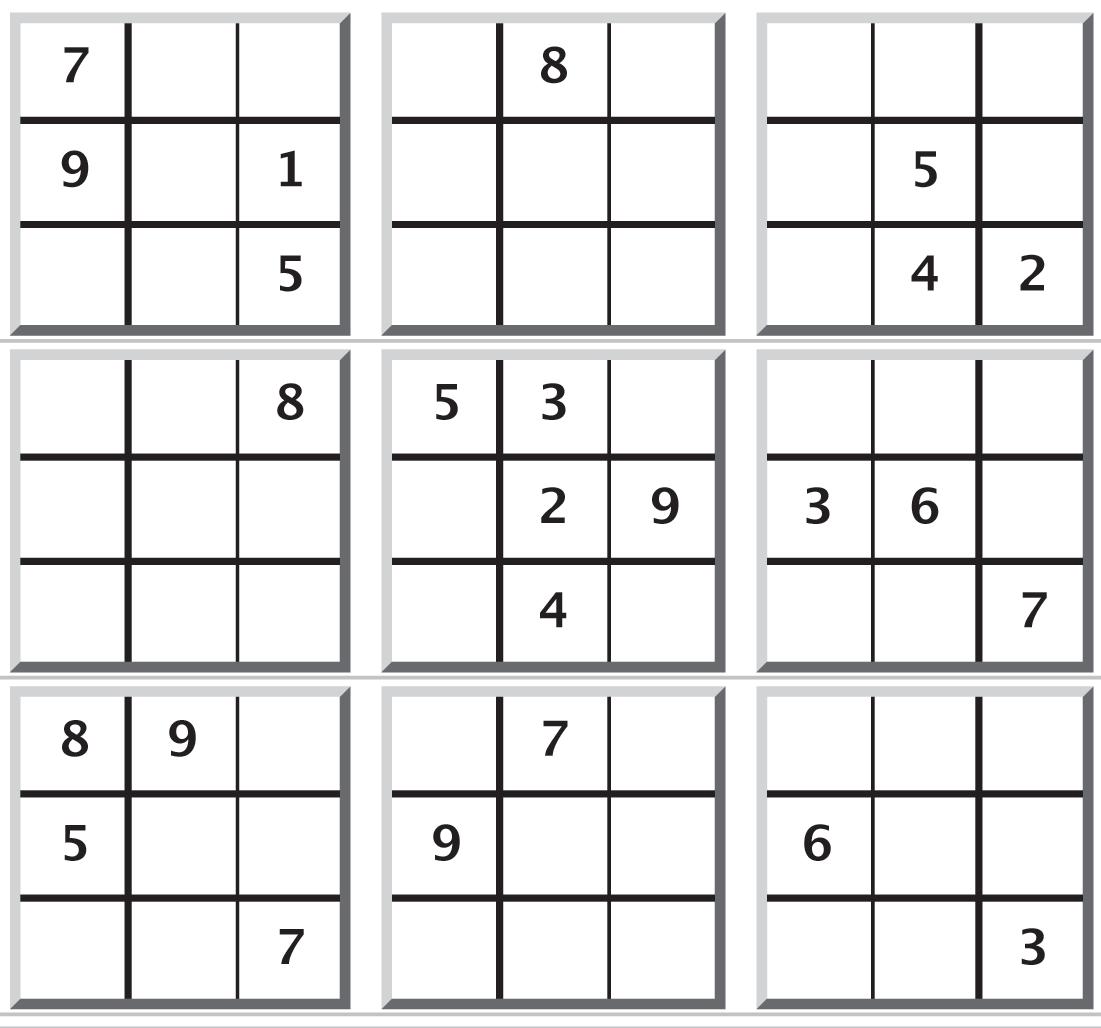
(Rules from wikipedia.org/wiki/ Sudoku)
ALUMNI VS. STUDENT ATHLETES
HOMECOMING
Homecoming Sports Adapt to COVID-19 Trough a Game Show Style Approach
Instead of taking to the feld, Red jumps on Zoom for ‘Battle of the Brains’
By EMILY DAWSON Assistant Sports Editor
Sports have always been the cornerstone of homecoming and despite the pandemic, sports still took centerstage this past homecoming weekend.
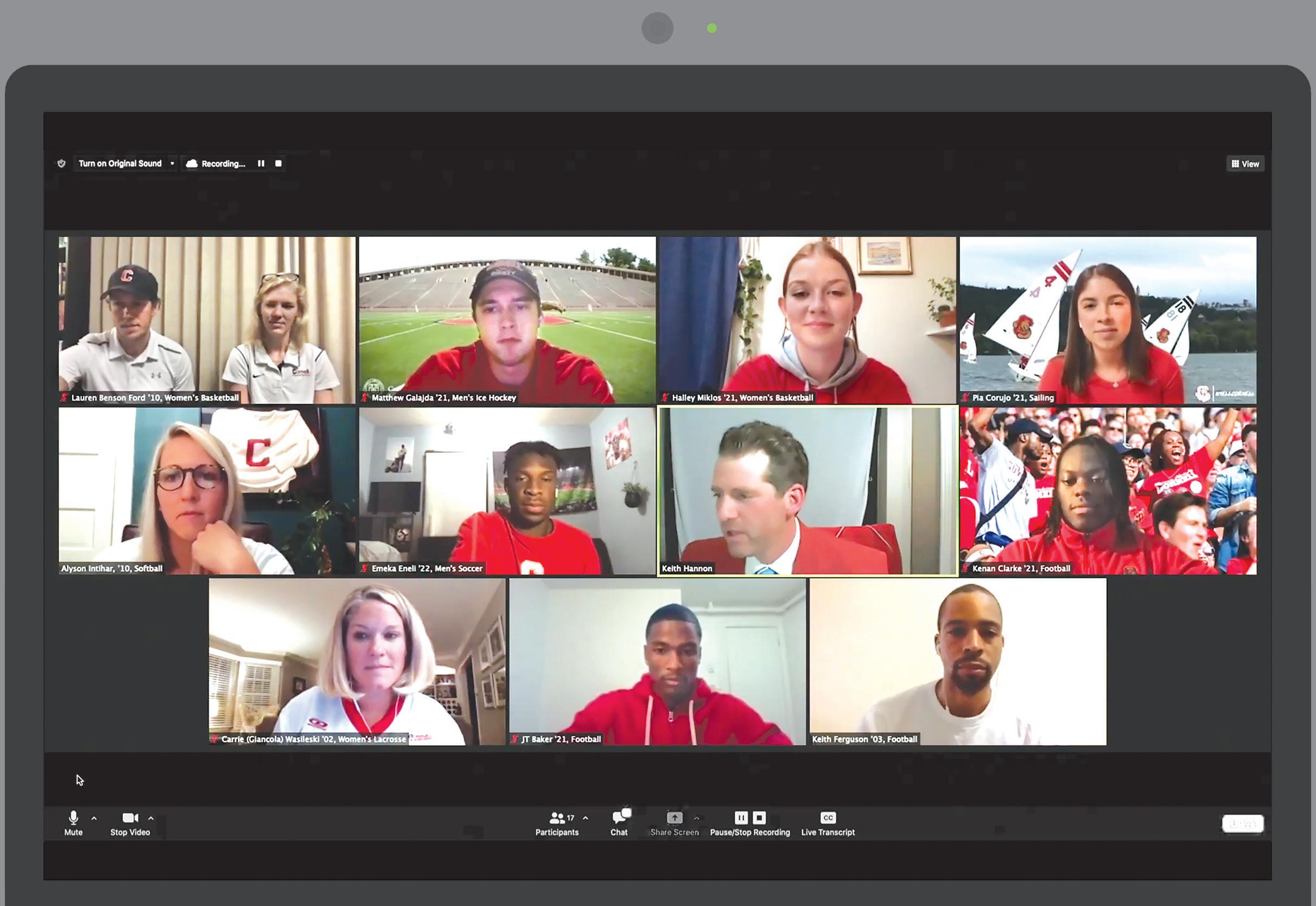
Friday night kicked off homecoming with a Big Red Q&A quiz game called “Battle of the Brains”.
Keith Hannon, associate director of athletic alumni affairs and development, was the “game show” host.
The contestants, in classic game show style, were divided into two groups by the homecoming planners. One team consisted of Cornell Athletics alumni, including women’s basketball’s Lauren Benson Ford ’10, baseball and football’s Nathan Ford ’09, women’s lacrosse’s Carrie Giancola Wabeleski ’02, softball’s Alyson Intihar ’10 and football’s Keith Ferguson ’03. The alumni chose Big Old Bears for their team name. Representing the current student-athlete team, dubbed the Bartel’s Brainiacs, were men’s hockey’s Matthew Galadja ’21, women’s basketball’s Halley Miklos ’21, football’s JT Baker ’21, football’s Kenan Clarke ’21, women’s sailing’s Pia Coruja ’21 and men’s
soccer’s Emeka Enel.
The teams competed through six rounds where they had to come up with the top answers to questions like “Name your favorite pre-game tradition” and “Name your least favorite conditioning exercise.”
Alumna Lauren Benson Ford ’10 helped the Big Old Bears get off to an early lead with high scoring answers during the first two rounds. Lauren and her husband Nathan Ford ’09, joined the virtual game show all the way from Japan.
During her time at Cornell, Lauren was a standout women’s basketball point guard, setting all-time leader records in career assists, games played, minutes played and games started.
“It really took me back to my college days where I had to envision being on campus and getting ready for games...”
Lauren Benson Ford ’10
“Battle of the Brains was so much fun,” Lauren said. “It really took me back to my college days where I had to envision being on campus and getting ready for games to answer some of the questions.”
However, as the night went on, the younger Cornellians came back strong and had a sizable lead going into the speed round. During that final round, the Brainiacs chose Coruja to represent their team.
Coruja was quick with the answer to “What sport was most recently added to varsity at Cornell?” since
she is a member of the sailing team, Cornell’s newest varsity sport.
“I thought it was a great event,” Coruja said. “I live with the senior girls from my team and I could hear them cheering for me as they watched the live stream
“I live with the senior girls from my team and I could hear them cheering for me as they watched the live stream downstairs.”
Pia Coruja ’21
downstairs.”
At the end of the evening Mr. Hannon commented that the planning team is discussing options for continuing this event and challenging other universities in a “Battle of the Brains”. Coruja said that she enjoyed the event, and would be interested in participating in something similar again.
Sports were highlighted during homecoming by not only this Friday’s “Battle of the Brains” event, but also an event called, “Throwing Out the Playbook: Navigating Major Sports Through a Pandemic” as well as a virtual 5K.
Game show time | The host Keith Hannon navigates Zoom, transitioning the teams from round one to round two.