The Corne¬ Daily Sun


By TAMARA KAMIS and MARY SOTIRYADIS Sun News Editor and Sun Contributor
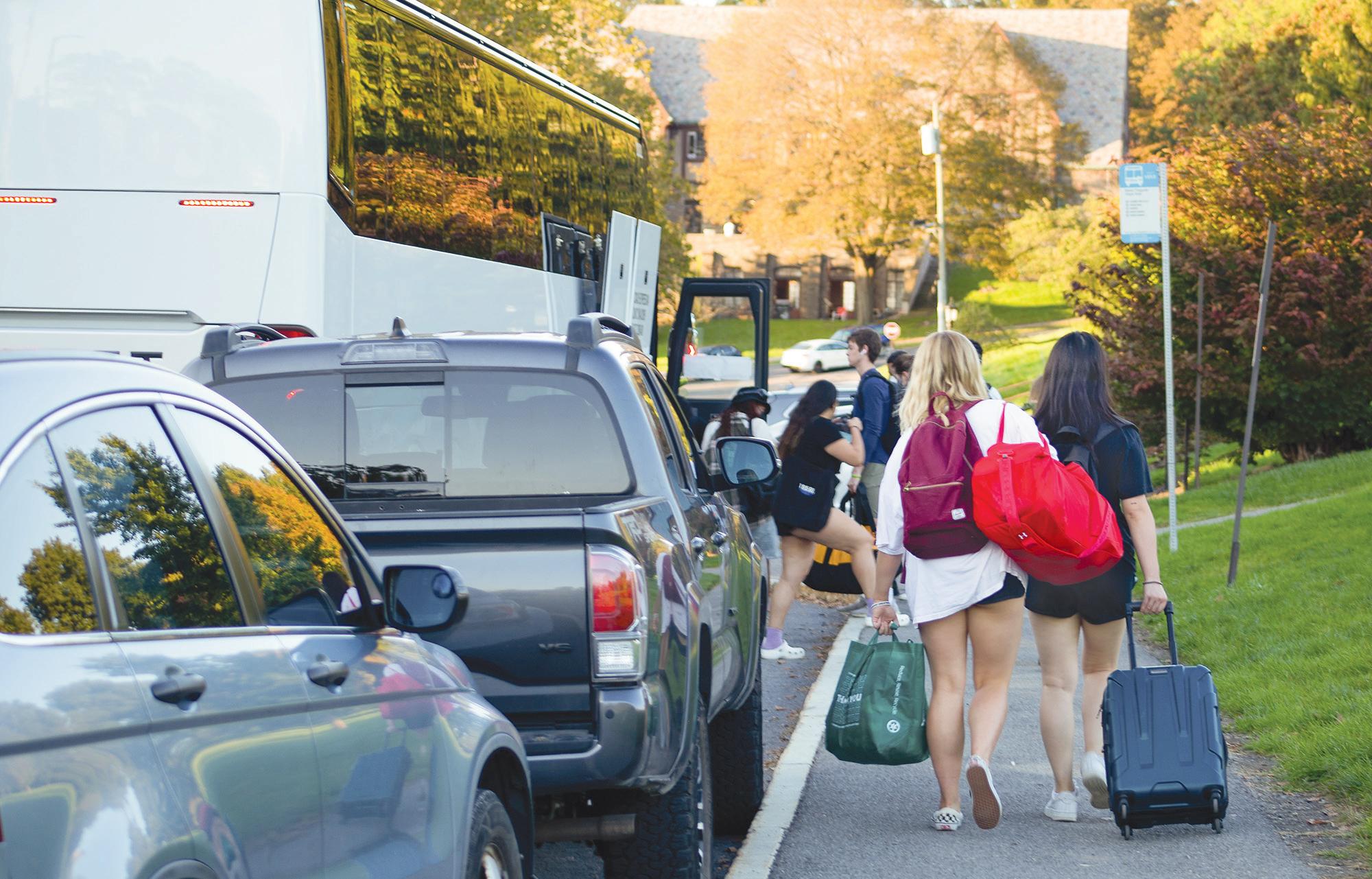
Studying for exams, running ultramarathons, watching movies and visiting friends are just a few of the ways that Cornell students spent the first fall break in two years.
Last year, the University altered the calendar to have “wellness days” dispersed in the middle of several weeks throughout the semester to mitigate the risk of COVID19 transmission associated with traveling. This semester, however, the student body—99 percent of which is fully vaccinated—was given the option to leave campus.
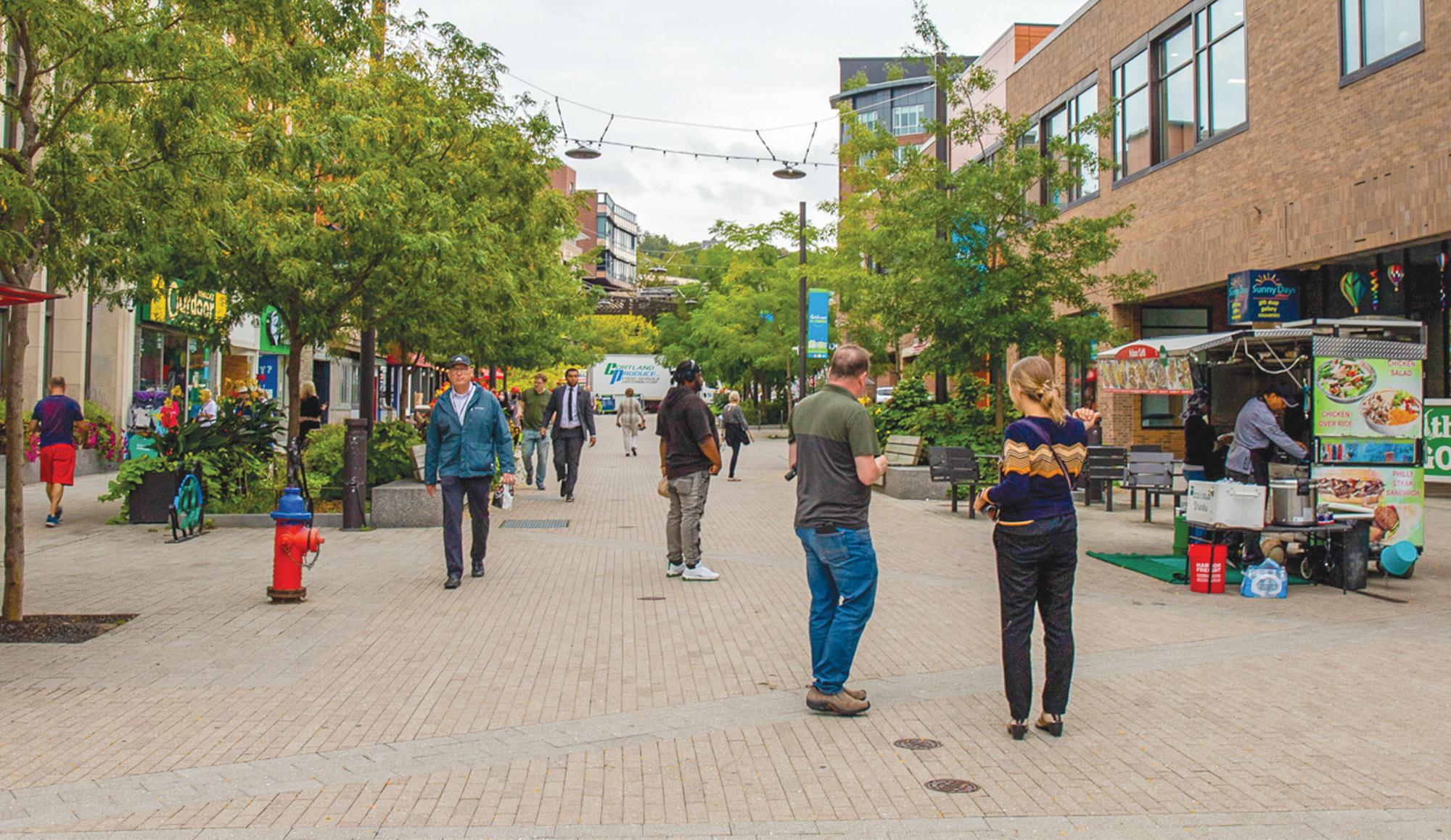
Some stayed behind, catching up on work and enjoying a less crowded campus, while others traveled home or explored somewhere new.
taking breaks to play video games and relax on a quiet campus.
“I really like photography,”
Gong said. “Without the crowds you’d see on a normal weekend, I could take some pictures I’ve never taken before.”
For Michael Sanchez ’23, a veteran and a member of the Cornell University Veterans Association, the break was a time to see old friends and make new ones at the 2021 Ivy League Veterans Council meeting, which took place on campus.
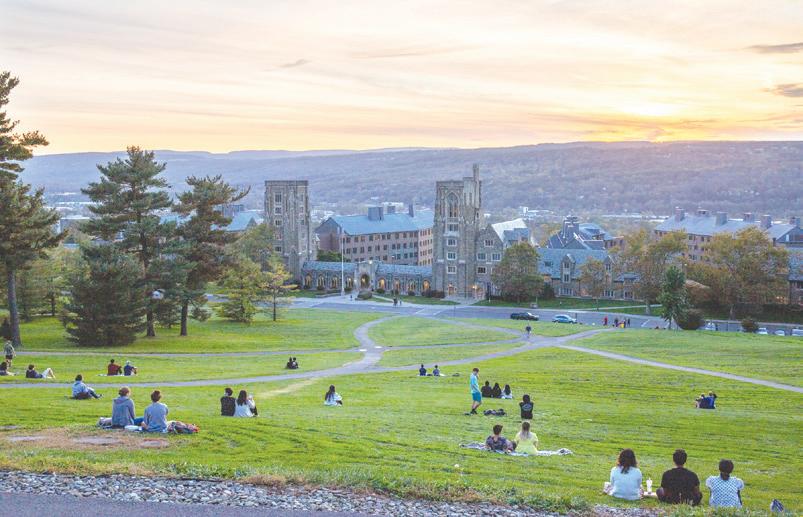
Ivan Gong ’25 originally planned to visit friends in Syracuse, but ultimately decided that the logistics of travel would be too challenging and stayed on campus. He has spent some of the break catching up on classes, while
beautiful this time of year.”
“We’re all at different institutions, but for the most part we’re all facing the same battles. We want more veterans in our institutions, and there are roadblocks,” Sanchez said. “For us to come together and kind of tackle these collectively, it’s just outstanding.”
Many students, including Gracey Brouillard ’24, decided to stay at Cornell over fall break to focus on schoolwork. In between studying for exams and writing papers, Brouillard enjoyed taking breaks outdoors, including going birding with friends.
“I had a lot of studying to do, so I felt like the best way to stay in that academic mindset would be just stay on campus,” Brouillard said. “It was really nice, very peaceful. The weather’s been great. Campus is always
By
As Tompkins County continues to cope with homelessness, labor shortages and food insecurity that was worsened by the pandemic, the county legislature will be launching a new Community Recovery Fund Program to provide funding to businesses that struggled over the past year.
The CRFP, written by county Legislators Leslie Schill MRP ’02 (D-Ithaca), Prof. Rich John, law, (D-Ithaca) and Mike Sigler (R-Lansing), will use up to $7 million of the county’s $20 million from the American Rescue Plan to provide grants
to help households and local businesses recover from the effects of the COVID-19 pandemic.
John explained that the idea for a grant program arose from the committee’s desire to avoid difficult reporting requirements associated with using federal money. By allowing individual organizations to apply for funding, the money will be widely distributed across sectors without the need for complex systems to report funding requirements—and several organizations have already expressed interest in applying. The grant program will be geared
Claire Blaudeau ’23 decided to take a more adventurous approach to enjoying the outdoors, and ran the Green Monster Ultramarathon Race in northern Pennsylvania. Blaudeau hiked and ran over 32 miles on steep hills, fueling herself with energy gels, fruit and snacks along the way. Blaudeau said that spending the spring semester hiking the Appalachian Trail prepared her mentally and physically for the ultramarathon.
“I’m a big proponent of doing hard things,” Blaudeau said. “When you’re in a difficult situation, you remember that time. It’s like, I ran an ultra marathon, I can sit down and do this problem set. It gives you a lot of mental strength.”
Many students, including Aimee Bostwick ’24, Kurtay Ozuner ’24 and Rachel Kodysh ’24, spent fall break at home with their families, relaxing and getting ready for
By SARA JAVKHLAN Sun Staff Writer
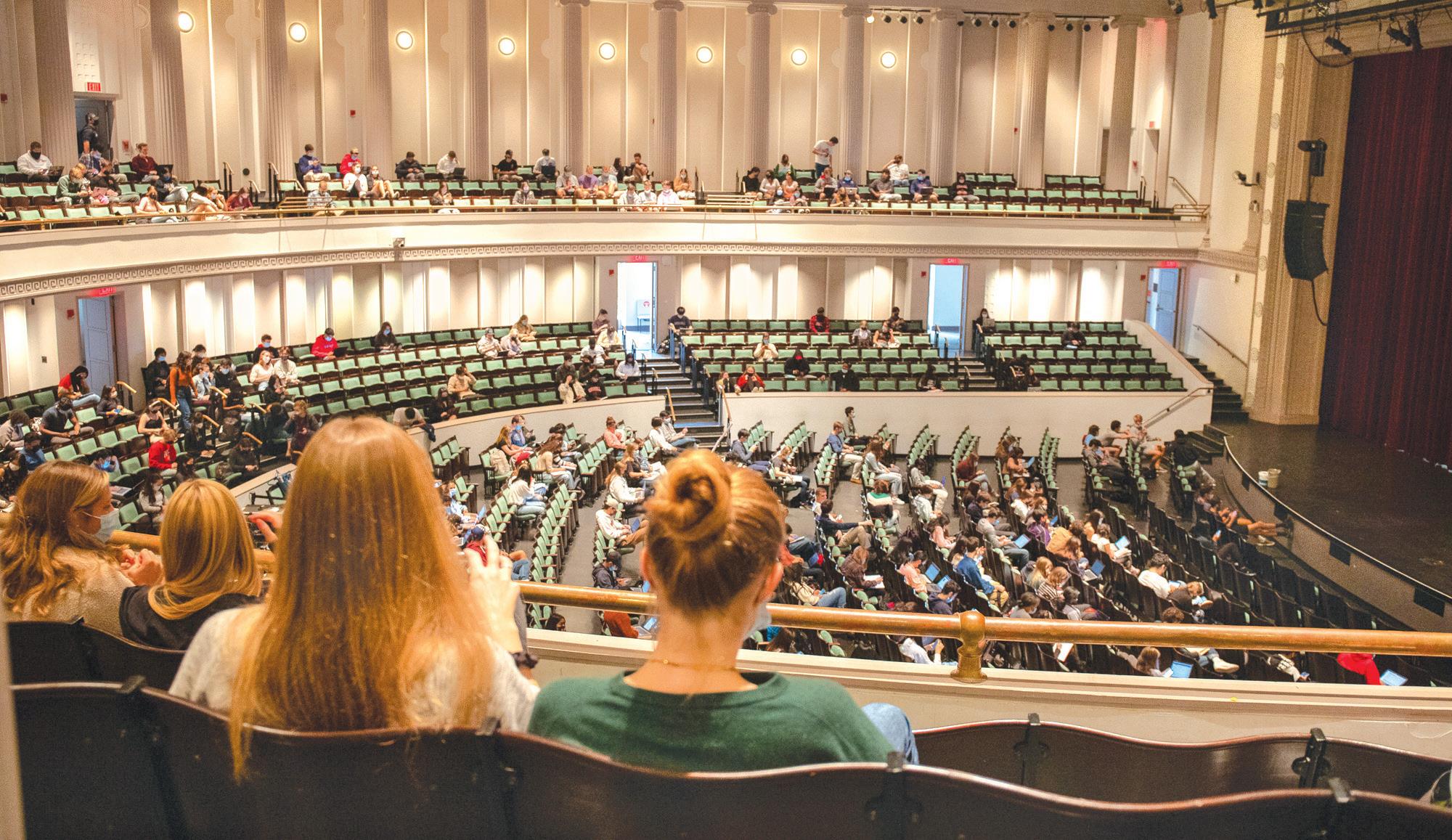
Students packed into Cornell’s largest auditorium to learn about the basics of psychology and oceanography this semester have found themselves at the center of their own study — to track the spread of SARS-CoV-2 in classrooms.
Those enrolled in either Ecology and Evolutionary Biology
1540: Introductory Oceanography, or Psychology 1101: Introduction to Psychology — two of Cornell’s largest courses, each seating close to 1000 students inside Bailey Hall — have been participating in a data collection effort to track down any instances of COVID transmission in the large lecture hall since the week of Sept. 24. The University has said
that there is low risk of transmission in the classroom because of high student and faculty vaccination rate, regular surveillance testing, and mandatory masking. However, the purpose of the current data collection effort is to better understand where transmission is occurring on campus by tracking the exact seats students sit in during lecture.
Masters of Engineering Expo
10 a.m., Duffield Auditorium
Joint Econometrics Workshop and Industrial Organization Workshop: Brad Larsen 11:15 a.m., ILR Conference Center, 423
Cornell Wellness Fall Seasonal Cooking Demo Noon, Virtual Event
Introduction to Citation Management with Zotero Noon, Virtual Event
Refugeography: Vietnamese American Spoken Word Poet And Children’s Book Author Bao Phi Shares Poems and Stories About the Writing Life
12:25 p.m. Goldwin Smith Hall, English Lounge, 258 GSH
Cornell Center for Social Sciences Workshop: Introduction To SPSS Software
1 p.m., Virtual Event
American Sign Language Conversation Hour 4:45 p.m., Virtual Event
Information Session: Laidlaw Scholars Program 4:45 p.m., Virtual Event
Congressional Study Group: Why the Debt Ceiling Matters
7 p.m., Virtual Event
How Gender Shapes Security Sector Restraint 11:25 a.m., Virtual Event
Arabic Conversation Hour 2:30 p.m, Stimson Hall G25
Introduction to Zotero 3 p.m., Olin Library, 106G Classroom
French Conversation Hour 3:30 p.m, Stimson Hall G25
Leadership in Sustainable & Ethical Decision Making Workshop with Cheryl Einhorn
3:30 p.m., Virtual Event
The Future of Money: How the Digital Revolution Is Transforming Currencies and Finance
4-5 p.m., Virtual Event
Chinese Conversation Hour
4:30 p.m., Stimson Hall G25
A Talk With NYC DIY LatinX filmmaker, Carlos Cardona
4:45 p.m., Schwartz Center for the Performing Arts, Films Forum
James Edward Oliver: Cornell Mathematician and Suffragist 7 p.m., Virtual Event

Cut out this cool FR EE MOUST ACHE and stick it to your face. You will be the envy of all your friends. Read The Corne¬ Daily Sun every day for more prizes! W W W . C O R N E L L S U N . C O M
BREAK
Continued from page 1
the rest of the semester.
“I’ve been feeling a lot of stress at school, and I thought it’d be nice to get away and just relax at home and have some home cooked meals with my family,” Bostwick said.
While Ozuner thought that fall break was long enough, Kodysh says she wouldn’t have minded a longer break from classes.
“I definitely would have preferred maybe an extra day or two, just so that it feels like the five hour journey [home] is worth it,” Kodysh said. “I’m sure for a lot of people, especially those flying out, it felt short as well.”
For students who remember fall break before the pandemic, the four day break was a welcome return to having extended weekends. The switch back from virtual to in-person classes made staying at home more relaxing for Natalie Kalitsi ‘22.
“Last time during wellness days….I was having a break from school, but school was my bedroom,” Kalitsi said. “With these fall break days, it feels that I actually have a break. There’s more of a distinction between home life and school.”
Regardless of their destinations, all students who were traveling were required to complete a travel form at least 48 hours before their departure in order to turn off
their surveillance testing requirement. The University travel guidelines state that mandatory surveillance testing will be assigned to students who left campus during the week of Oct. 11.
According to Kristin Hopkins, project manager for the Daily Check Leadership Team, while there are no restrictions on personal travel, international travel is discouraged for unvaccinated people.
Regular surveillance testing will resume for all students during the week of Oct. 18, but regardless of vaccination status, travelers are strongly encouraged to be tested upon arrival to campus. Unvaccinated students are encouraged to isolate until receiving a negative test, and fully vaccinated students may resume activities as usual unless they are symptomatic.
While some students expect campus COVID-19 cases to rise after fall break because students returning from travel may be infected, they think that the University will be able to manage a possible case spike.
“It is definitely a little bit worrying, but it’s fine,” Brouillard said. “I have faith in the safety measures we’ve established.”
Tamara Kamis can be reached at tkamis@cornellsun.com. Mary Sotiryadis can be reached at mes397@cornell.edu.
University studies cases in oceanography, intro psychology
TRACKING
Continued from page 1
At the beginning of every lecture, students are able to scan a QR code on the projected screen where they can enter their netID and seat number into a polling application on their phones, but they are not required to do so.
According to Prof. Peter Frazier, operations research and information engineering, tracking students by seat for every single classroom is impracticable, but tracking students inside the over-1,000 seat Bailey Hall will allow for consistent data collection.
Prof. Bruce Monger, earth and atmospheric sciences, who teaches Introductory Oceanography, noted the unique opportunity his class provides in observing potential in-lecture transmission.
“We can do this study to see whether or not COVID is being transmitted in a classroom by looking at kind of the worst-case scenario,” said Monger. “If you’re in Bailey, you’re really shoulder to shoulder.”
Prof. David Pizarro, psychology, who teaches Introductory Psychology, was initially wary of in-lecture transmission with a class enrollment of over 900, but actively tracking potential cases put him at ease.
“I was a little worried. Because look, we say mask up, but a lot of them aren’t wearing masks, and I can’t see whether they are or not,’” said Pizarro. “I was worried that we weren’t tracking in-class transmission.”
According to Pizarro, the University told him that there was no classroom transmission even though there wasn’t any study to track the seating assignments of students that could prove otherwise.
Rani Sheth ‘24, who is enrolled in Oceanography, said she now feels safer being inside Bailey although she was concerned at the beginning of the semester.
“I know for some people it is a concern being in
such a large class that is so tightly packed and not everyone has a voice to express that because it is kind of obligatory to come in,” Sheth said.
According to Frazier, even though past analysis indicates that in-lecture transmission is very unlikely, Frazier said that they would expect some of the larger classes to have multiple cases since these classes draw more students from more socially active groups.
“Knowing whether students are sitting near each other helps us check whether classes with multiple cases were likely created through outside-of-lecture transmission, in which case positive students would often be sitting apart,” Frazier wrote in an email to the Sun.
Frazier also said that if there are two positive students seated next to each other, contract tracing can help determine whether or not transmission actually occurred during class while wearing masks.
“It is also possible that two positive students who do not interact outside of class were seated next to each other in class, thereby suggesting that transmission may have occurred in class when in fact the two cases are unrelated, and the students were coincidentally seated next to each other,” Frazier wrote.
According to Frazier, while data collection is still underway, the data collected so far has indicated a very low risk of transmission. Monger thinks that the University conducting this study shows a creative approach to evaluating COVID safety in the classroom.
“I would call it diligence,” said Monger. “They are going above and beyond and taking advantage that we have this large [sample size]...with numbered seats so we can do this cool reporting.”
Sara Javkhlan can be reached at sjavkhlan@cornellsun.com.
Tompkins County Government to Distribute $7 Million in COVID-19 Recovery Grants
GRANT
Continued from page 1
interest in applying.
The grant program will be geared towards non-profit organizations including those in childcare, healthcare and emergency services rather than towards for-profit businesses, according to John. Other potential recipients include food pantries, homeless shelters and training programs for emergency workers.
While it’s still developing the application process, the county itself plans to apply for a grant from the program in order
to replenish county resources and funds that were used for pandemic response initiatives, according to John.
“We’re still really talking about who’s going to staff the program,” John said. “Then we can start figuring out how to build an application, what the criteria will be, how they’re scored [and] the size of awards we want to make.”
The amount awarded to each organization will be evaluated by a designated committee on a case-by-case basis. Sigler expects applicants to request grants ranging from $100,000 to $2 million.
“Part of the reason we did it this way it was, we wanted to get the money out to the community faster,” Sigler said. “[We] want to get to a place where you know exactly where the money is going.”
The committee aims to roll out the program by Thanksgiving and begin writing checks by March, Sigler said.
“It’s a great opportunity for us to try to do something transformational …that you would never get through the regular budget process,” said John.
Surita Basu can be reached at sbasu@cornellsun.com.
EVENT PREVIEW
By TAMARA KAMIS and MIHIKA BADJATE News Editor and Assistant News Editor
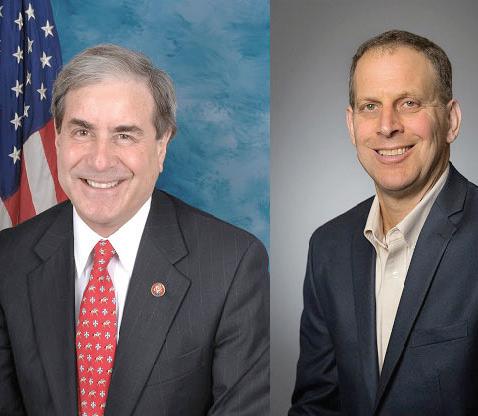
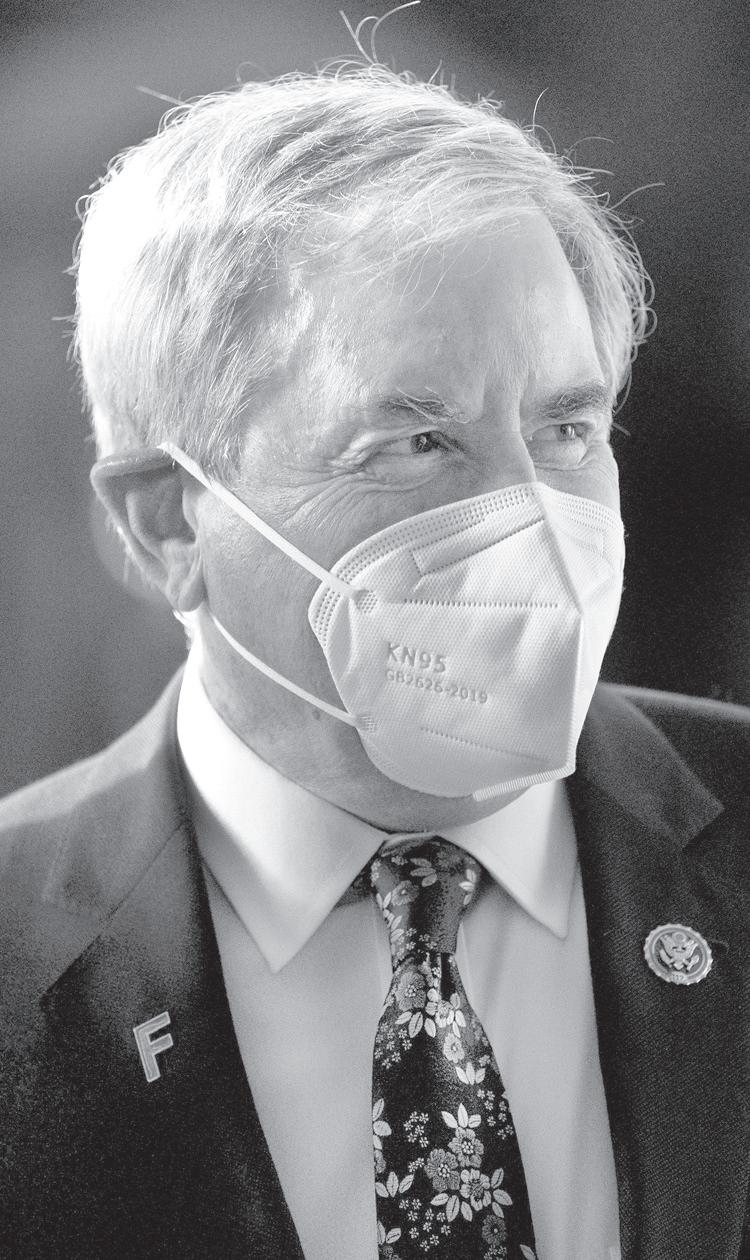
On Oct. 13, Cornell will host Rep. John Yarmuth (D-Ky.), Chair of the House Budget Committee, and Prof. Michael Dorf, law, for a virtual event discussing the implications of Congress’s short term debt ceiling extension, which temporarily avoided a government shutdown.
The webinar, hosted by Cornell’s Institute of Politics and Global Affairs, will be moderated by former New York representative Steve Israel, director of the IOPGA. Dorf, who specializes in constitutional law, is the co-author of On Reading the Constitution and The Oxford Introductions to U.S. Law: Constitutional Law
The House of Representatives voted Tuesday on a bill to raise the U.S. borrowing limit, extending it into December. If the bill were passed, it would increase the debt ceiling by $480 billion. According to NBC, the debt ceiling is the amount of debt the government can have. Raising or suspending the debt ceiling allows the Treasury to keep paying off purchases the government has already made, averting a government shutdown — which would have impacted many government agencies including the Food and Drug administration, the Environmental Protection Agency and the National Park Service.
This event is not the first time Israel has brought a member of Congress to speak with Cornellians — last May, he participated in a panel on Education and Politics in the 2021 elections, hosting speakers including Randi Weingarten ’80, president of the American Federation of Teachers and Rosa DeLauro, a former Connecticut Congresswoman.
Students can join the session through the provided Zoom dial in information on the Cornell event website.
Tamara Kamis can be reached at tkamis@cornellsun.com. Mihika Badjate can be reached at mbadjate@cornellsun.com.

HUERIKAR
After multiple delays due to the pandemic, the latest James Bond film No Time to Die has finally hit theaters. Daniel Craig returns to his role as the titular character for the fifth film in his run in the franchise as the iconic agent embarks on yet another thrilling mission.
No Time to Die picks up with James Bond and Madeleine Swan’s (Léa Seydoux) whereabouts after the previous film Spectre . After a seeming betrayal from Madeleine at his former lover Vesper Lynd’s
grave, Bond abandons his career as a spy to go into retirement. He gets back into the action after meeting new character Nomi (Lashana Lynch), the MI6 agent who took up the 007 mantle in his absence, which leads to him reuniting with Swan and others from his MI6 past as he uncovers a plot to unleash a dangerous bioweapon. In true Bond fashion, this film featured enthralling action sequences that complemented a riveting plot. This film definitely keeps viewers engaged through its twists. Still, it’s worth noting that this film relies heavily on Spectre , so viewers who are not familiar with the previous film may be
See DANIEL CRAIG page 5

Standing as one of hip hop’s most outlandish personalities, Kanye West has channeled his intensity into the vulnerable Donda, which immediately ranks as among the year’s best.
Kanye had a tumultuous year, to say the least. From his high-profile split with Kim Kardashian to the report that he was living in an Atlanta stadium, it’s safe to say 2021 hasn’t been abundantly kind to him. When also considering that his 2019 full-length Jesus Is King was widely perceived as a dud, it would’ve been no surprise if Donda turned out a similar mess. Instead, Kanye has used this album to declare to the world that he’s still in good form.
As it stands, Donda is a high-level bounce-back album. It recruits the Christian themes initiated on its predecessor and infuses them with legitimately good music. As evidenced by its title, the project takes another step forward with its focus on Kanye’s late mother, a profoundly sincere aspect of the album that makes its religious focus that much more understandable and compelling.
The highs on Donda stack up to those of peak Kanye, although some rocky bits prevent it from reaching the upper echelon of his catalog. “Jail” is an obvious standout right at the beginning of the tracklist. The swelling guitars and explosive wails of the hook blend perfectly with a mellow Jay-Z verse with memorable lines (“Donda, I’m with your baby when I touch back road”). “Off the Grid” is the album’s resident banger; the features do so well, with an energetic Carti verse and Fivio Foreign dropping bar after bar: “If you gotta voice then you gotta project it...If you got a name then you gotta protect it”, and the hook is one of the album’s catchiest.
There are other solid songs in Donda’s first half — “Praise God” has an assertive hook and a generally dope Baby Keem verse, while “Believe What I Say” has a thumping beat and vibrant chorus — but the rest of that side of the album isn’t particularly inspired. “Junya” is the most unique of the bunch, with its energy and carefree atmosphere. Outside of that, “God Breathed” and “Jonah” are the definition of filler, and songs like “Remote Control” and “Moon” are pleasant listening, but they don’t do much to extend beyond that. “Hurricane” is interesting, but outside of vocals from The Weeknd, there’s not much there.
Luckily, the second half restocks the quality, beginning with the momentous “Heaven and Hell.” Its build-up is beautiful. It hits you right from the start with an infectious little sample, then keeps the mood low while the beat swells over time in the background. The drop into the powerful climax of the sample behind Kanye’s rapping is masterfully done. Outside of the atrocious “Tell the Vision,” the second half is good

content all around, bringing depth to the album. “Keep My Spirit Alive” and “Pure Souls” are defined by their lyricism — the former brings along proven storytellers Westside Gunn and Conway to deliver somber verses, while the latter has one of Kanye’s better rapping performances on the album. “Lord I Need You,” dwells on Kanye’s recently broken relationship. The rapper reaches out to his wife, blending religion and romance for a pensive track.
But the crown jewel of Donda’s second half is “Jesus Lord,” a nineminute-long odyssey with Jay Electronica along for the ride. Kanye drops one of his best verses in a while over a flowing beat; his lyrics get back to the spirit of the album, discussing his mother and serious topics like youth violence. His part is already fantastic before Jay Electronica jumps in, linking together biblical references and evocative imagery: “Back from the Great Beyond like the son of man or the son of Donda.”
The climax of the album comes at the end, with “Come to Life.” The song is an outpouring of feeling, with Kanye singing about his mother and his wife, two important women in his life. The track is the most heartfelt on the album and fits perfectly as a closer. The quiet “No Child Left Behind” is an appropriate come-down after the emotional pinnacle of its predecessor. Kanye is a complicated person, and this is a complicated album. But Donda’s musical highs, as well as its weighty subject regarding its artist’s mother, assure its place as one of 2021’s top albums. And if you don’t like some of its songs, who knows — maybe one of Kanye’s random updates will fix it for you.
Nehar Hegde is a sophomore in the College of Arts and Sciences. They can be reached at nh336@cornell.edu.
confused about the conflict presented in this film.
I appreciated how this film took time to explore Bond’s character, exposing his vulnerability through his relationship with Madeleine and Mathilde in a way that’s rare from leading men in action films. Bond seemed more humanized in this film, revealing a level of depth to the character while still remaining consistent with his past characterization.
I had the privilege to hear from the director Cary Joji and actor Lashana Lynch in a roundtable discussing the film.
“Every Bond film sort of reflects the era it’s in in some way or another,” Joji Fukunaga explained in a roundtable discussing the film, “It was important to us that the idea that the world has changed, especially since Spectre, at least be mentioned or talked about.” It’s important the films themselves continue to reflect that world but also Bond is not going to change with every film, he has to kind of be consistent with the character that’s been established from Casino Royale, for example, being the first in Daniel’s run, and it needs to feel like that character has a full arc, but that they’re not changing so much that it’s just a reaction.
I especially enjoyed how the women in this film were integral to the action as well as unique characters in their own right. Though
ISABELLA DILIZIA SUN STAFF WRITER
The Korean thriller Squid Game made its resounding Netflix debut on Sept. 17, rapidly snowballing in popularity and igniting near unanimous enthusiasm amongst viewers. Its foundational concept — a contest in which participants vie for an extortionate cash sum in a series of children’s games — is intriguing and innocuous, belying the harrowing atrocity that ensues.
After an ominous black and white cold open of the eponymous Korean childhood “Squid Game,” we are introduced to the woeful protagonist Gi-hun, an insolvent man living with his mother in the weary urban streets of Korea. Gi-hun subsists on his mother’s income, is estranged by his wife and is a pitiful father to his young daughter with whom he is permitted limited contact. His existence is quite frankly pathetic, a reality of which he is reluctantly aware as he squanders his money on gambling.
In a jarring twist of the opening plot, he is pursued by his rapacious money-lenders and coerced into signing a contract, the contents of which he is unaware due to being threatened at knife-point. In the subway, downtrodden and despondent, he is approached by a conniving businessman who entices him into a childhood game gamble for 100,000 won. Gi-hun, clinging to any shred of hope, is unable to resist this temptation. After successive losses and humiliation, he finally attains the coveted 100,000 won. His elation is fleeting, as the businessman then offers him the chance to compete in a gamble of even higher stakes. He is fully aware of Gi-hun’s insuperable debt, and explains that in signing the money-lenders’ contract Gi-hun unknowingly has consigned himself to this competition. Although it may sound absurd, the cutthroat competition of 6 children’s games to determine the victor of 456 similarly debt-encumbered participants immediately sucks viewers into a binge-watching frenzy.
The games are held in an elaborately pristine facility, coordinated by masquer-
Madeleine was the love interest, her purpose extended far beyond existing as an accessory for Bond; instead, she took charge of her narrative and was allowed to be caring while still showing her strength.
role, actress Lashana Lynch said, “you don’t have to really believe in everything that your characters believe in, but for someone like Nomi, I really wanted to stand by her, her morals and what her val-

Nomi also stood out in this film through her charm and dedication, not to mention the skill that made her worthy of the 007 mantle. Discussing her character’s
ues and where she moves from by her core. For this I knew that she would help facilitate ushering in this new era — I think the franchise has done really well in reshaping
aded employees who conduct the spectacle with the utmost discipline and ruthlessness. The warehouse design is the pinnacle of eerie, saturated in vibrant pastel colors with architecture mimicking playhouses, evoking the nostalgic aesthetic of childhood all whilst “The Blue Danube” interminably drones overhead. The contestants are eager to obtain the tantalizing cash prize, unaware that the “children’s games” have a horrifically macabre twist. The games are dystopian and reminiscent of The Hunger Games; the first game is a grotesque rendition of “red light, green light” in which the competitors who budge during the “red light” are promptly gunned down. Evidently, this is not what the participants consented to in the deceiving contracts they signed. The carnage conveys the reality that these games are a duping of the desperate lower class. They are viewed as expendable due to their financial burdens, and their remaining option is to defray their debt by clawing their way to victory. Immediately, the illusion of choice is presented. The contestants are permitted to cease the games if the majority consents — this is not an option for the desperate recruits.
This duplicitous contract-signing indicates the lower class’ predicament as it is routinely condemned by the devious machinations of unsympathetic potentates. The contestants are granted a fleeting sense of volition, but it becomes readily apparent that they possess no agency — not in the confines of this brutally orchestrated game, nor in their regular lives. The farce of a gameshow is referred to as a “democratic process” by the Front Man, who praises the game as providing a second chance for the destitute, an “equalizer” for those who have been trampled by inequality. Undeterred by the senseless violence, one player laments, “Out there, I don’t stand a chance. I do in here.”
The moral crux of the series, which consists of nine episodes of consistent, nail-biting quality, revolves around this catch-22 of the poor and the ease with which they are exploited, divested of their humanity for entertainment. In each appallingly violent and tension-in-
how women are viewed and represented within the franchise.”
Bond is certainly challenged in this film, both in terms of the clashes he encounters as well as the emotional barriers he overcomes in learning to trust the others around him. Audiences see Bond learn to allow love into his life with Madeliene and Mathilde, while also accepting that he can rely on the others around him.
In regards to her character’s connection to Bond, Lynch detailed, “I think the relationship that Bond and Nomi have is really special because you get to see how a younger agent gets to learn from an older agent, not to put his age into it, but also how this Black woman is able to navigate her way through MI6, up a 00 program to the position that she’s in, and still have someone like Bond who knows practically everything respond to her in a way that helps her want to give more in her work and also want to give more in her movie.” Without giving too much away, the conclusion of the film was a touching farewell to Daniel Craig’s Bond, as he is stepping away from his iconic role after this film. No Time to Die honors the long running franchise while also existing as a unique exploration -into the beloved character that Bond is. Viewers won’t be disappointed by this fitting ending to a beloved story.
Aditi Hukerikar is a junior in the College of Arts and Sciences. She can be reached at adh247@cornell.edu.
fused round, participants are easily discarded, devoid of dignity and pitted against each other in a battle royale which elicits the most atavistic of selfish urges. Throughout, the overseers assure that they are benevolently providing a “second chance” for the hundreds before them, assuring them that they will be triumphant if they just “follow the rules.”
overt representation of society’s illusion of egalitarianism and prioritization of privilege. Although the series is not bereft of flaws — most notably its cliches and obvious parallels to other battle-royal series — it has proven to be not just palatable binge material but a salient sociopolitical commentary.
The characters are incredibly impel-
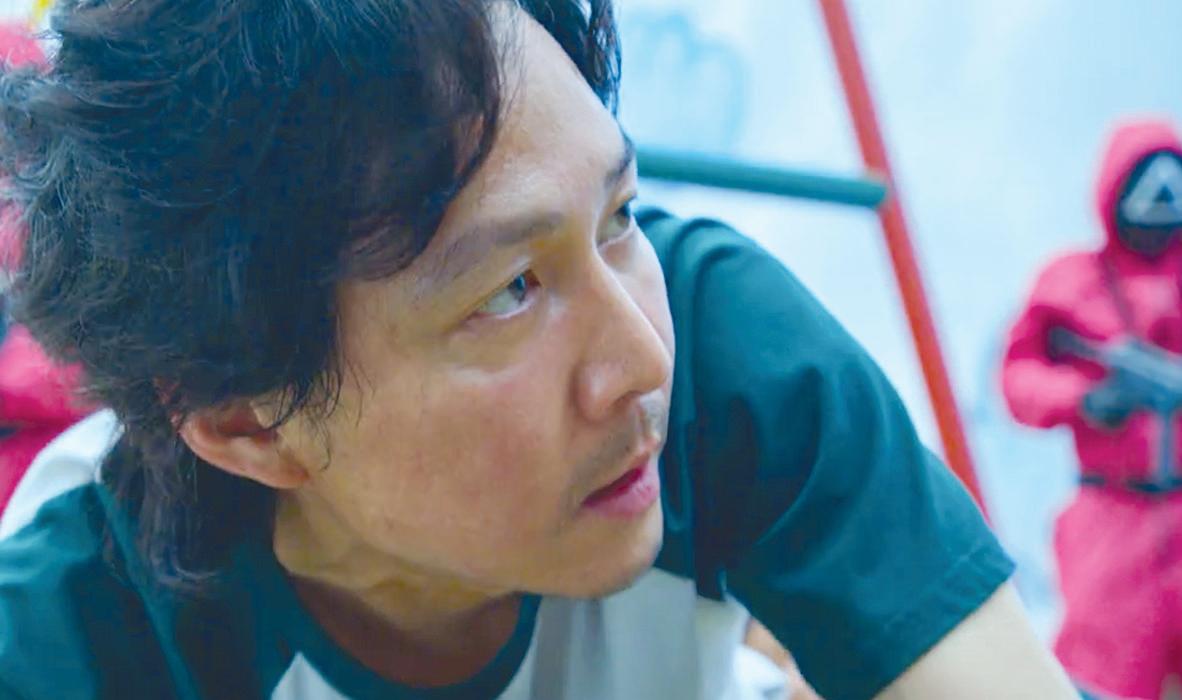
Although viewers may believe it unrealistic that human beings would subject themselves to such perilous stakes, the participants’ frantic pursuit of victory becomes credible. Squid Game is a sobering reminder that for the indigent, the denigrating agony of their crippling debt is a more ignoble demise than being felled by a lethal gamble.
The series is an exquisite masterclass in tension as all of the equally enrapturing plotlines revolve around the mystique of this morbid scheme. Never before have I been so on-edge as the rounds progressed, wondering which characters would just barely evade a gruesome and heart-wrenching demise. As tension and tribalism escalate, the show viscerally displays a spiraling descent into mayhem while crafting intricate and evocative dynamics amongst players. Despite the praise of the game’s “equalizing” potential, the higher-ups foment bloodlust and rancor in their manipulations of the outcome — an
ling and multifaceted; viewers will quickly develop affection for the hapless yet surprisingly selfless Gi-Hun. The gritty authenticity of the supporting characters is what grants the show its verisimilitude, from the wily North Korean defector Sang Kae-Byeok to the endearing expat Ali. Squid Game perverts the nostalgic revelry of childhood games to convey a somber loss of innocence, elitism, and human savagery when confronting mortality. The emotional weight of the denouement is almost too somber to bear as lives are snuffed out, leaving infinitesimal craters in the world they left behind. Squid Game is an indelible experience, yet there is no respite from its unremitting bleakness as it alludes to the lives expended each day, blips in the radar of the privileged who have the luxury of indifference.
Isabella DiLizia is a freshman in the College of Arts and Sciences. She can be reached at ird22@cornell.edu.
Independent Since 1880
139th Editorial Board
KATHRYN STAMM ’22 Editor in Chief
ANUSHYA ALANDUR ’23
Business Manager
CATHERINE ST. HILAIRE ’22
Associate Editor
PRANAV KENGERI ’24
Advertising Manager
ODEYA ROSENBAND ’22
Opinion Editor
JYOTHSNA BOLLEDULA ’24
News Editor
TAMARA KAMIS ’22
News Editor
CAMERON HAMIDI ’22
App Editor
KRISTEN D’SOUZA ’24
Design Editor
HANNAH ROSENBERG ’23
Photography Editor
OMSALAMA AYOUB ’22
Science Editor
PUJA OAK ’24
Layout Editor
ANNIE WU ’22
Production Editor
MIHIKA BADJATE ’23
Assistant News Editor
SERENA HUANG ’24
Assistant Business Editor
ANGELA BUNAY ’24
Assistant News Editor
JOHN COLIE ’23
Assistant Arts & Culture Editor
AMELIA CLUTE ’22
Assistant Dining Editor
WILLIAM BODENMAN ’23
Assistant Sports Editor
AARON SNYDER ’23
Assistant Sports Editor
MEGHANA SRIVASTAVA ’23
Compet Manager
MADELINE ROSENBERG ’23
Editor NAOMI KOH ’23
Editor ANIL OZA ’22
Editor YUBIN HEO ’24
VEE CIPPERMAN ’23
NOOREJEHAN UMAR ’23
E.D. PLOWE ’23
YOON ’23
VELANI ’22
PICHINI ’22
TYAGI ’22
MENDOZA ’24
ARANDA ’23
Editor SURITA BASU ’23
News Editor KAYLA RIGGS ’24
LEYNSE ’23 Assistant
NAGEL ’24 Assistant
Editor LIAM MONOHAN ’24
’24
ALPERS ’22
Wu ’22
St. Hilaire ’22
’22
Kamis ’22
Mihika Badjate ’23 production deskers Annie Wu ’22 layout deskers Kristen D’Souza ’24 Puja Oak ’24 photo desker Julia Nagel ’24 Arts desker E.D. Plowe ’23 sports desker Liam Monohan ’24
at
On Monday, Oct. 4, you may have heard music playing and people chanting on your walk to class. You may have looked over and wondered just what they were chanting about. You probably saw some signs. You might have wondered about the meaning of orange butterflies. Who knows, you might stay to talk with some of the protestors, you may even join them. A protest in front of Day Hall could be a welcome surprise on a regular school day or it could be a nuisance, disturbing your peaceful walk to class. So, maybe you just continue on your way.
For students with precarious citizenship statuses – a protest in front of Day Hall is not a passive annoyance, but an active assertion. An assertion of their presence, agency and lived experiences while attending our hallowed and supposedly supportive university. While some say that education is the great equalizer, it means nothing if students have to protest in response to the University’s failure to support them, acknowledge their well-being and address their institutional concerns.
This week, I want to talk about the protest that you may have seen in front of Day Hall. The one with chants, musical instruments, loving vibes and orange butterflies. If you didn’t get close enough to read the signs or hear the chants, here’s a bit about the protest.
Cornell DREAM Team, a student advocacy organization for and in support of undocumented and immigrant lives, organized the Monday Oct. 4 Rally for Immigrant Rights. The rally called for free Immigration Student Legal Services and for Cornell to absolve its ties with Immigration and Customs Enforcement (ICE), as the Cornell Law School currently holds contracts with companies that provide data to ICE Further, they ask for Cornell to establish effective safety protocols, approved by undocumented student organizers, in case of ICE’s presence on campus. In essence, students are asking Cornell to re-affirm its commitment to supporting undocumented students, instead of continuing to harbor ties to agencies and organizations that continuously instill fear and hurt undocumented community members.
So they protest. They protest with demands that assert their realities, explaining how “current and past undocumented student organizers have been subject to gaslighting, ignorance and name-calling by the Cornell University Administration”, who have called them “charity cases” to their faces. For years, Cornell DREAM Team has evoked solidarity, community and change on campus, with undocumented students and organizers, whom themselves are often first-generation, low-income students of color, disproportionately taking on the burden of advocating for their own well-being within an institution that claims to support them.
The University has previously extended
institutional support by providing legal services to all Cornell students, “from undergraduates to grad students, in immigration applications including DACA renewals and citizenship applications”. Yet this year, with the entrance of the largest freshman class of undocumented students on campus, legal services been cut. According to DREAM Team, for the first time since offering its services to undocumented students at Cornell in 2016, the clinic claims that it cannot support the increase of undocumented students on campus, due to capacity reasons. After the Rally for Immigrant Rights, the Immigration Clinic has begun accepting clients for DACA applications once again – but only for students who have worked with the clinic before. Consequently, all new undocumented students are left to find outside legal resources.
This lack of support doesn’t happen within a vacuum, and it stands in the face of attacks on immigrants around the country and on campus, from the Biden administration’s mistreatment of Haitian migrants at the border to past acts of discrimination here on campus towards undocumented students and the Latinx community. The institution has staggered at responses at best or been completely silent at worst – failing to acknowledge the reality of students whose lives are upended by changing national immigration policy. Time and time again, undocumented students show out in protest to ask Cornell to listen and pay attention to their reality. A reality tied to the inequity and marginalization they experience on campus.
Instead of accommodating the undocumented students admitted to the University, Cornell is showing an unwillingness to act – and their inaction is leaving precarious students in further jeopardy. Coming back from a pandemic and year of racial reckoning that has showcased gross inequality, student needs have been continuously ignored.
Long story short, Cornell is failing its undocumented students. The commitment to “Any person. Any study” is irrelevant if we don’t address the alternate reality that undocumented students face on campus. The University has failed to publicly acknowledge or even address student protests on Monday Oct. 4, and has detailed no future plans to build support for undocumented/DACA students. As has historically been the case, students are leading this initiative, asserting their existence at Cornell to an administration that has failed to listen.
Cornell, don’t ignore your students. Institute more student and administrative support and continuously priotize funding for better resources for undocumented students on campus. Reaffirm your commitment and support to your students and begin the work of uplifting your undocumented students through substantive change — beginning by publicly addressing their demands.

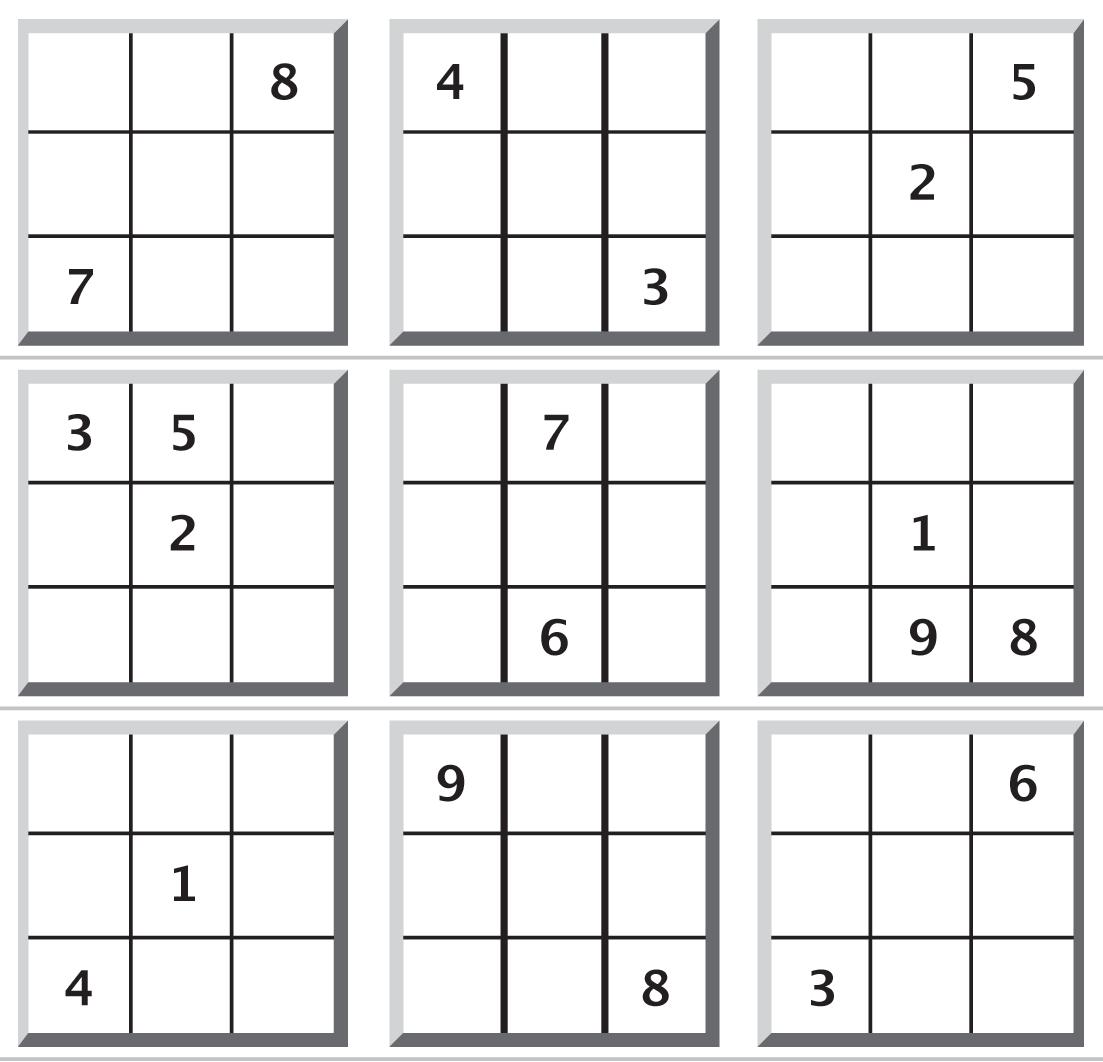
Fill in the empty cells, one number in each, so that each column, row, and region contains the numbers 1-9 exactly once. Each number in the solution therefore occurs only once in each of the three “directions,” hence the “single numbers” implied by the puzzle’s name. (Rules from wikipedia.org/wiki/ Sudoku)



By LUKE PICHINI Sun Sports Editor
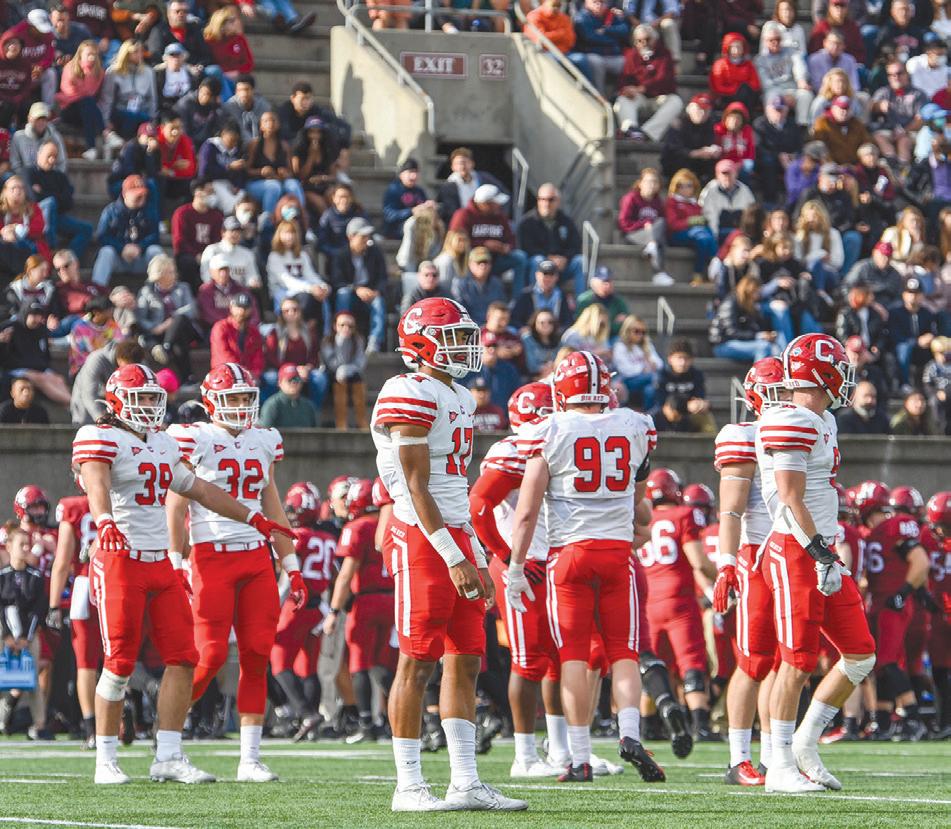
Cornell and No. 22 Harvard entered their matchup having experienced very different fortunes in their first three games of the season.
While the undefeated Crimson was coming off a 38-13 victory over a ranked Holy Cross team, the winless Red was coming off a tough loss to a struggling Bucknell team. Despite being outmatched by a hot Crimson team, Cornell put up a strong effort. On the back of its defense, the Red went into halftime with a 7-3 lead, but the team could not keep pace with Harvard, ultimately falling 24-10.
With Cornell (0-4, 0-2 Ivy League) coming into the game with a -7 turnover differential and Harvard (4-0, 2-0) boasting a +7 differential, the turnover battle would be key to deciding the victor. On that front, the Red got off to a great start.
After starting the game with fifth-year quarterback Richie Kenney and going three-and-out, senior cornerback Demetrius Harris picked off Harvard’s Jake Smith on the Crimson’s first offensive play of the game.
Despite the turnover, the Red failed to gain any traction on its next three drives, as drops by wide receivers stymied the offense. Cornell’s defense continued its strong start, shutting down the Harvard offense and its running back Aaron Shampklin, the leading FCS rusher in yards per game (125.7).
Harvard received the ball before the conclusion of the first quarter. At the top of the second frame, Harvard head coach Tim Murphy opted for a quarterback switch, placing sophomore Charlie Dean in at signal-caller instead of Smith.
The move paid immediate dividends as Dean, together with sophomore running back Aidan Borguet, engineered a drive into the red zone. The duo picked up numerous chunk gains to carve up the Cornell defense. But junior linebacker Jake Stebbins stepped up during a goal-line stand, containing three rush attempts by Harvard. The Crimson, stuffed near the goal line, settled for a 20-yard field goal by junior kicker Jonathan Lipel to take a 3-0 lead with 9:27 left in the second quarter.
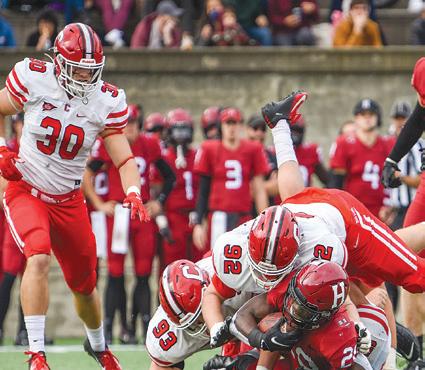
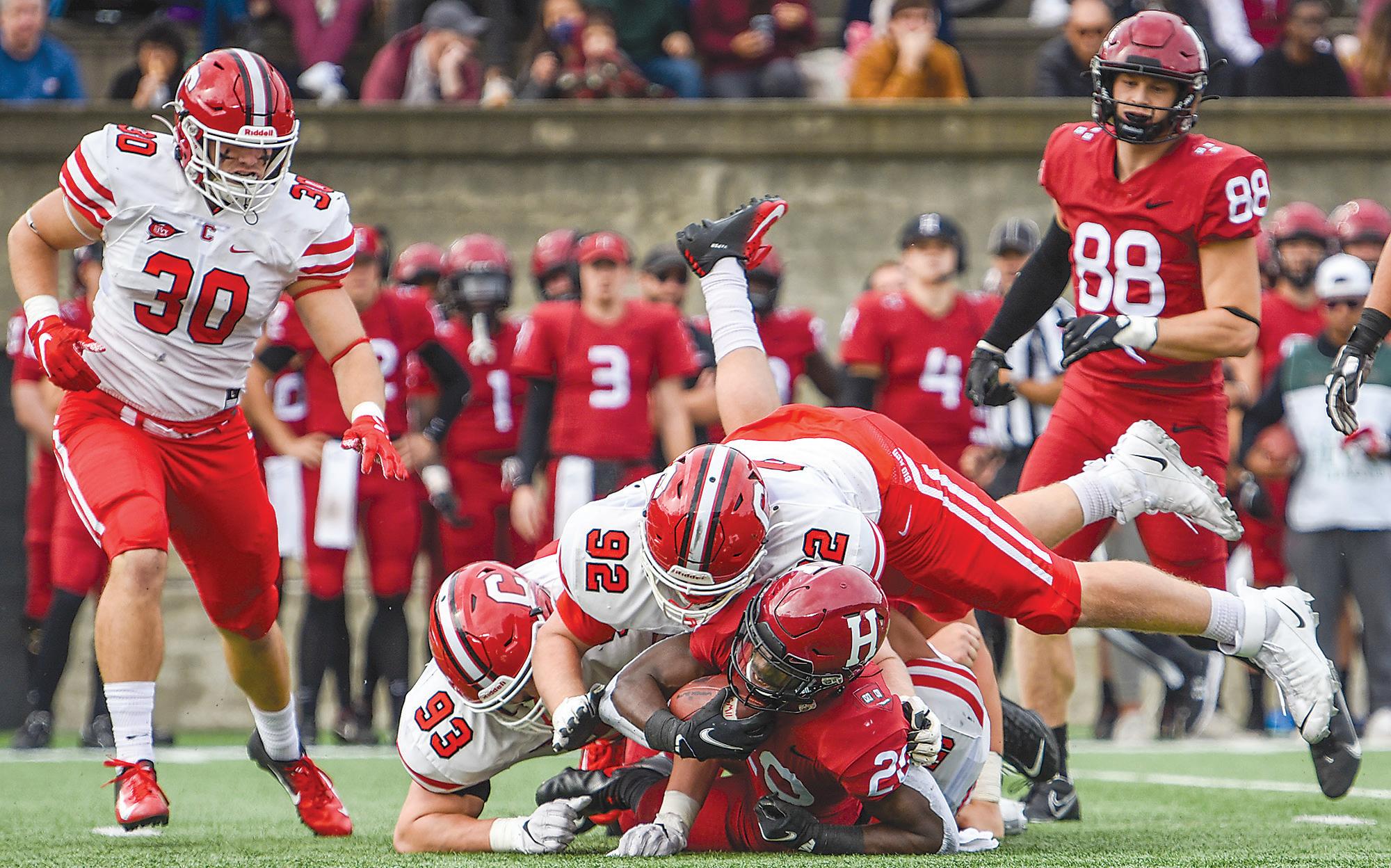
“There are endless positive things I can say about those guys,” said head coach David Archer ’05, referring to his defense. Stebbins paced the defense with seven tackles, including 2.5 for a loss. Harvard, coming in with an average output of 239 rushing yards per game, was held to half that total as Cornell contained the Crimson to just 119 yards on the ground.
Cornell’s offense, still stuck in the mud, went three-andout again. Harvard made the Red pay, blocking Kiefer’s punt and taking possession at the Red’s 20-yard line. With its back against the wall once more, Cornell’s defense stepped up.
After forcing two stops, senior defensive lineman Jack Muench strip-sacked Dean, and junior safety Jalyx Hunt recovered the ball. This time around, the Red capitalized on
offense. Kenney found senior wide receivers Thomas Glover and Raymond III for chunk gains to move down the field. Cornell then found its longest play of the afternoon on a 24-yard catch-and-run by fifth-year wide receiver Alex Kuzy.
The Red then cashed in on the next play, as fifth-year running back S.K. Howard found plenty of running room on a 24-yard touchdown splash, putting the team up 7-3. On the next two drives, the Crimson and the Red both whiffed on their opportunities. On another Kiefer punt, Cornell received a prime scoring opportunity after Harvard wide receiver Gavin Sharkey muffed the ball, gifting the Red excellent field position in Crimson territory.
Cornell failed to convert, though, as Kenney nearly threw an interception, but due to an egregious drop by Harvard’s Jack McGowan, the Red evaded a turnover. Archer decided to go for a field goal, and junior placekicker Scott Lees’ 53-yard attempt fell just wide of the goal post.
The Red’s defense was phenomenal in the first half, holding a Harvard team that came in averaging 43.7 points per game to just a field goal and 94 total yards on offense in the opening 30 minutes. Cornell, which only forced one turnover in its first three games, forced three Crimson turnovers in the first half and also sacked Dean twice. Thanks to this strong defensive effort — along with the fact that Cornell did not commit any turnovers on its own — the Red entered halftime with a 7-3 lead.
“[Coming into the game,] we needed to limit turnovers,” Archer said. “And not giving the ball away on offense was a huge improvement.”
Harvard regrouped during the half, and the Crimson came out firing to start the drive. The opening catalyst for the Crimson was a 24-yard reception by tight end Haven Montefalco near midfield. Soon after, Shampklin rumbled down the sideline for a 31-yard pickup on the ground.
Despite the Red rallying for another goal-line stand, penalties derailed Cornell as junior defensive lineman Onome Kessington and junior cornerback Paul Lewis III were flagged for a face-mask penalty and a pass interference, respectively. On third-and-goal, Shampklin punched it in from the one-yard line, giving Harvard a 10-7 edge.
Cornell immediately responded, though. Kenney continued to connect with his receivers, completing three passes for 40 yards while Howard and senior running back Devon Brewer picked up chunks on the ground. The drive stalled at the Harvard 15-yard line, and Lees converted on a 33-yard field goal attempt, tying the game at 10.
It did not take long for the Crimson to retake the lead. On the first play of the ensuing drive, Dean found wide receiver B.J. Watson on a short reception, and the senior
did the rest, taking it to the house on a 75-yard touchdown, lifting Harvard to a 17-10 lead over the Red.
Cornell failed to respond on its next drive, going three-and-out, but senior punter Koby Kiefer’s 56-yard boot helped flip the field. The Red’s defense regrouped to force a Harvard punt that only went for 33 yards, and Cornell took over in great field position at the Harvard 49-yard line.
The Red looked like it was churning again, as Kenney completed two passes to Kuzy and senior wide receiver Curtis Raymond III. In the red zone, Cornell was faced with a 4th-and-1, and Kenney kept the ball for a QB sneak, which fell a half-yard shy of the line to gain, a tough blow for a Red team that was down by just one possession.
In its previous three outings, Cornell struggled in the fourth quarter, and the same was true on Saturday in Cambridge. While the defense still held Harvard to 17 points, the Red whiffed on its first two drives in the fourth quarter, only moving the sticks once during the first seven minutes of the quarter.
The Red’s defense forced yet another Harvard punt, and the offense was once again stuck in poor field position at its own nine-yard line. But for the first time all quarter, Cornell showed signs of life, ultimately reaching its own 46-yard line off a 15-yard catch by Kuzy, who wound up finishing with eight catches for 92 yards on the day.
From there, the Red sputtered. An incomplete pass and a six-yard loss on a Brewer catch put the Red in poor position to convert, and Cornell failed to move the sticks on third and fourth down. Shampklin then iced the game for Harvard, finding an open crease to score a 35-yard touchdown.
“We just have to figure out the right combinations of personnel to get out there,” Archer said of his offense. Through four games, Cornell is only averaging 14.5 points per game, which ranks dead-last in the Ivy League. And aside from its two last-minute touchdowns against Yale, the Red has struggled tremendously in the fourth quarter, having failed to score in the final frame against VMI, Bucknell and now Harvard.
With the Crimson up 24-10 and less than two minutes remaining on the clock, the score held up as final. The Red was unable to mount a miraculous comeback.
After three games away from Schoellkopf, the Red will return home next week in search of its first win. The team will attempt to come away with its first win of the season in a Friday-night tilt against regional rival Colgate.