The Corne¬ Daily Sun



The Ithaca Common Council will cast their votes on the proposed $4 million annual payment in lieu of taxes payment from Cornell University to the City of Ithaca, with provisions for yearly adjustments to account for inflation, on Oct. 11.
Cornell's annual payment to the city presently stands at $1.6 million, a figure stipulated by a memorandum of understanding set to expire in 2024. In September, the University and the City of Ithaca stalled negotiations over disagreements for a renewed contract.
Following the announcement about the pause in negotiations, The Ithaca Democratic Socialists of America held a rally and march to demand an increased annual con-
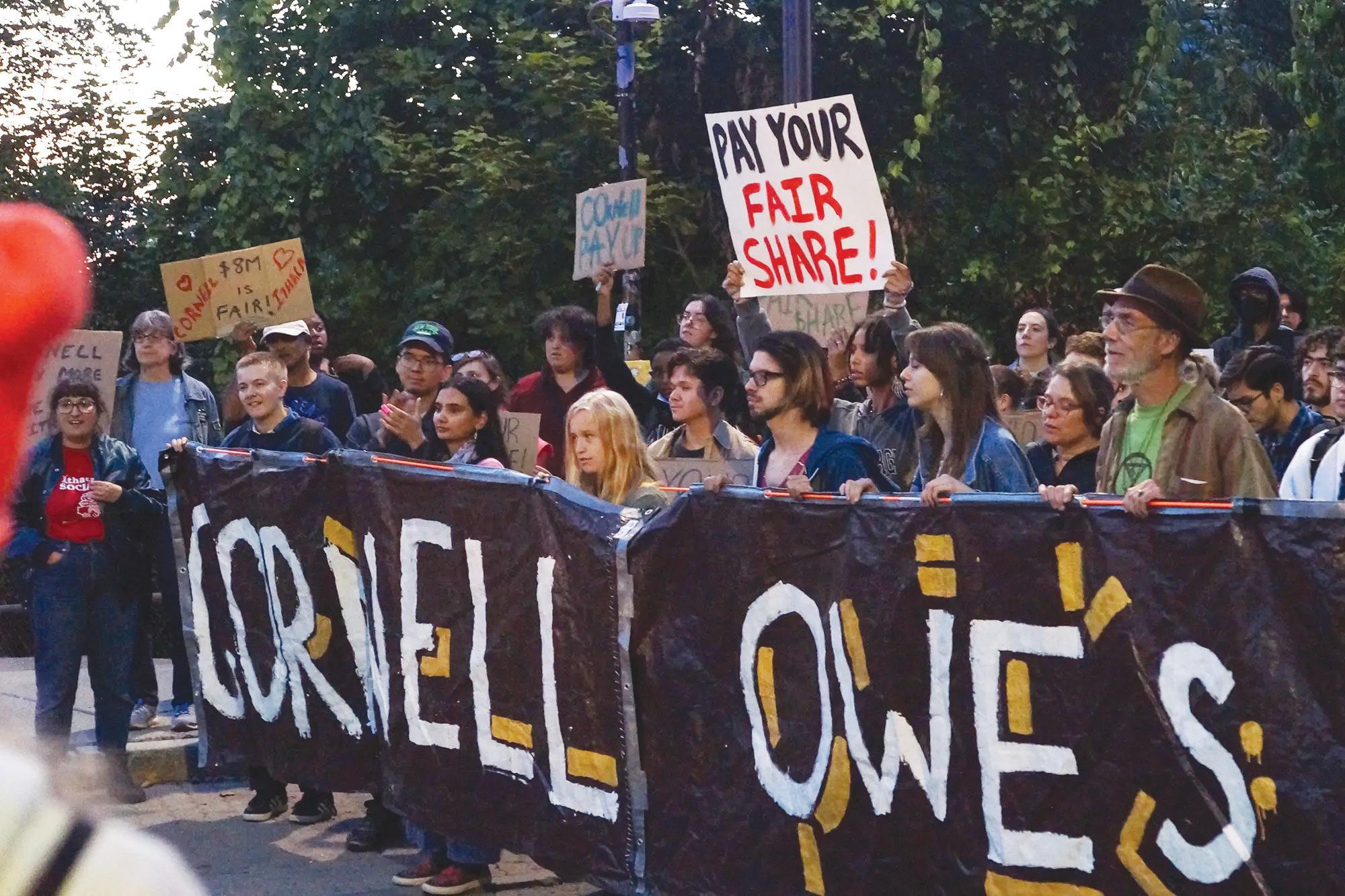
tribution of $8 million from The University. Cornell faculty and City of Ithaca Common Council members were in attendance at the rally.
In a Sep. 28 press release, the Ithaca Public Workers Coalition noted support for increased contributions from the University. Founded in 2022, the IPWC strives to address certain community issues, such as low staffing in city departments, deteriorating city infrastructure, homelessness and Ithaca’s diminished police presence.
Recently, the IPWC has been actively engaged in discussions with Cornell University aimed at finding a resolution to the ongoing issue of increasing the funds allocated by the University to the city, according to the press release.
See MOU page 3
By SOFIA RUBINSON Sun Managing Editor
When Osei Boateng ’18, MHA ’20, a native to a small village in southern Ghana, witnessed the tragic loss of loved ones due to preventable diseases during his childhood, he made a vow to improve the health care system in the country. Now, he is on a mission to deliver essential health care to rural Ghanaians through a pioneering mobile health clinic.
“My grandmother and aunt died because of inefficiencies in the health care system,” Boateng said. “At that very young age, I knew that I wanted to do something to really improve the health care situation in Ghana.”
As the full-time executive
director for his nonprofit, OKB Hope Foundation, Boateng has turned his childhood promise to a reality. Starting his mission as an undergraduate at Cornell, he has aided thousands of Ghanaians by providing preventative screenings, vital mental health support and essential medication to rural communities where access to health care remains a significant challenge.
Health Care in Rural Ghana Rural communities in Ghana often have no access to modern health care facilities, according to the U.S. International Trade Association. Boateng said rural Ghanaians typically must travel hours away to the hospital, and cost concerns and the availability of medical staff deter many from

seeking care.
“I lived in a community where access to health care was a challenge. Most of my community members had to travel several miles to the urban areas to get access to health care,” Boateng said. “Even if they get to the hospital, they are not guaranteed that they will get to see a doctor because there is no booking system — you just walk in and hope that you are one of the lucky ones who is able to see a doctor.”
Preventable chronic diseases — like diabetes and high blood pressure — constitute major health problems in rural communities. Chronic non-communicable diseases were Ghana's leading cause of death in both 2017 and 2018, according to a 2021 research study examining mortality rates in the country between 2014 and 2018. Malaria also remains endemic and perennial throughout Ghana.
Starting the Foundation Boateng began his studies at Cornell in 2016, intending to complete the pre-med track and become a medical doctor to serve communities in rural Ghana. But a human anatomy and physiology class in Bailey Hall changed his outlook on the health care situation in Ghana and how he could best address its challenges.
By SOFIA RUBINSON Sun Managing Editor
Six percent of students experienced nonconsensual sexual contact involving force or incapacitation in the 2022-2023 academic year, Cornell’s Sexual Assault and Related Misconduct survey revealed on Thursday, Oct 5. This is a twofold increase from three percent in the 2020-2021 school year, but is the same percentage as both the 2016-2017 and 2018-2019 academic years.
“[We] remain deeply concerned about the continued prevalence of sexual misconduct and related violence on Cornell’s campus,” Vice President of Student and Campus Life Ryan Lombardi said in an interview with The Sun. “We’re glad that we haven’t seen tremendous spikes, but we’re disappointed that we haven’t seen it decline at the same time, so [we’re] grateful to people for continuing to inform us of that, and [it’s] really a charge for all of us to stay committed to eradicating this behavior on our campus.”
The SARM survey was administered via email to a random sample of 6,000 students in Spring 2023 in accordance with New York State Education Law Article 129-B, which requires Cornell to conduct a survey of campus sexual violence no less than every two years. The survey estimates the prevalence of different forms of nonconsensual sexual contact,
harassment, stalking and domestic and dating violence among students at Cornell and examines the context within which these forms of violence occur.
A total of 2,163 students responded to the survey, for an overall response rate of 36 percent. Nonconsensual sexual contact involving force or incapacitation is defined as penetration or sexual touching during which an individual was experiencing or threatened by physical force, incapacitated due to drugs or alcohol, coerced by, for example, threats of non-physical harm or promises of rewards, or did not provide affirmative consent.
In the 2022-2023 academic year, 13 percent of undergraduate women reported that they experienced nonconsensual sexual contact involving force or incapacitation. In the 2020-2021 school year, six percent of undergraduate women reported the experience. Administrators said this increase may be attributed to Cornell’s return to “mostly normal” after two years of significant interruption during the COVID19 pandemic. This may have led to “an increase in risk-taking behaviors by Cornell students, including increased alcohol and drug use, which contribute to incidences of sexual violence,” according to the report.
The State Orchestrated Regional Cooperation and Regional Inequalities in China
12:20 p.m. - 1:10 p.m., 135 Emerson Hall
On the Unfolding Events in Nagorno-Karabakh
12:30 p.m. - 2 p.m., G08 Uris Hall
Brooks Study Abroad Information Session
3 p.m. - 4 p.m., 2250 Martha Van Rensselaer Hall
Research Opportunities at the Cornell Federal Statistical Research Data Center
3:30 p.m. - 4:45 p.m., 291 Clark Hall
Czech Conversation Hour
3:45 p.m. - 4:35 p.m., G25 Stimson Hall
American Sign Language Conversation Hour
4:15 p.m. - 5:15 p.m., G25 Stimson Hall
Cantonese Conversation Hour
4:30 p.m. - 5:30 p.m., G25 Stimson Hall
Converting Your High School Resume to a College Resume 4:30 p.m. - 6 p.m., Virtual Event
Merchants of Virtue: Hindus, Muslims and Untouchables in 18th-Century South Asia
4:45 p.m., G08 Uris Hall
The Supreme Court Limits Federal Pre-emption in Labor Cases: What Are the Implications?
5 p.m., Virtual Event
Quechua Conversation Hour
5 p.m. - 6 p.m., Virtual Event
The Cabinet of Dr. Caligari
7 p.m. - 9:15 p.m., Sage Chapel

Caregiver Support and Education Network Meetings Noon - 1 p.m., Virtual Event
Publishing With the European Molecular Biology Organization Journal Noon - 1 p.m., S1-212 Schurman Hall, College of Veterinary Medicine at Cornell Univeristy
The Global State of Women in 2023 Noon - 1:15 p.m., 423 King-Shaw Hall
Psychosocial Influences on Health in Older Adulthood: A Coordinated Data Approach Noon - 1:15 p.m., 1219 Martha Van Rensselaer Hall
Reproducing Revolution: Women’s Labor and the War in Kachinland 12:20 p.m., 374 Rockefeller Hall
One Health: Understanding Threats to Wildlife and Human Health in North America
1 p.m. - 2 p.m., Virtual Event
Spooktacular Popcorn and Pups
1 p.m. - 2:30 p.m., Atrium, College of Veterinary Medicine at Cornell University
Innovation Lab for Crop Improvement’s Global Poster Showcase
3 p.m. - 5 p.m., 102 Mann Library
Cornell Department of Astronomy and Space Sciences Fall 2023 Colloquium Series 3:30 p.m. - 4:30 p.m., Virtual Event
Biological Tuning of the Membrane Phrase Transition Facilitates Plasma Membrane Organization and Function
4 p.m., 119 Baker Lab
Work Talks: Work Authorization for International Students 5:30 p.m., Virtual Event
Cornell students who came with me.”
“Prof. Kimberly [O’Brien, human nutrition,] was talking about cardiovascular diseases and hypertension and diabetes and went deeper, saying that these diseases have silent symptoms,” Boateng recalled. “If you don’t know about it, you might die. That rang a bell in my head because I grew up where a lot of people will one day be walking fine, and then the next day, people will say that they slept and didn’t wake up again. They usually associate that with natural death because they’ll say, ‘God gave and God has taken.’”
As a fellow in the Cornell Tradition program — an initiative that coordinates the efforts of a select group of undergraduates committed to paid work and service — Boateng received a mini-grant to raise awareness about high blood pressure and diabetes in Ghana and conduct screenings for the diseases in rural communities. The grant allowed him to partner with several physicians and travel across Ghana to educate and screen residents in 2017.
Boateng recalled conducting screenings in a rural community when a woman — who did not realize she had any ailments — had a high blood pressure level of over 200/120 mgHg, well over the normal level of 120/80 mmHg. When Boateng’s team rushed the woman to the hospital, the physician said that had the woman not been brought to the hospital at that time, she would have been at risk of losing her life.
“That story became the turning point for me. There are a lot more people who probably are in the same situation as that woman, who have illnesses when we think they are fine,” Boateng said. “That’s when I started the OKB Hope Foundation, with the goal to create awareness about hypertension and diabetes and give people access to early screenings of these diseases.”
Since his initial health care trip to Ghana, Boateng continued to go back to the country as an undergraduate during the winter and summer breaks to inform about and test for common diseases. In 2018, he was asked to present his project to other Cornell Tradition fellows and was surprised to learn that other students wanted to assist his efforts. Since 2018, he has been taking Cornell students to Ghana to aid his foundation.
“My first trip was with three Cornell students in the winter of 2018. We were able to screen a lot of communities, and then [the students] got the opportunity to shadow physicians to really understand the health care system,” Boateng said. “The same thing happened in 2019… 2020 was my largest group — I had about 10
Layla Profeta ’23 was one student who assisted Boateng in his efforts. Traveling to Ghana in the summer of 2022, Profeta worked in the foundation’s mobile health clinic and in the hospice care unit of a hospital. Originally planning on going to medical school, she said the trip to Ghana changed her outlook on the importance of hospital administrators. With encouragement from Boateng, she decided to pursue a master’s degree in health administration, for which she is currently enrolled at Cornell.
“I was so inspired by the [foundation’s] work in Ghana and the hospital system there,” Profeta said. “Osei is one of the most notable people I’ve ever met. He is very devoted to providing health care wherever he goes. You could just see in his genuineness as a person that he does everything for everyone else, and he puts people forward.”
For Cyntholia Okui ’25, her work with the OKB Hope Foundation in Ghana confirmed her interest in becoming a physician who periodically assists underserved communities in West Africa. As a first-generation American with family members from West Africa, she has heard stories about family members passing from preventable diseases, making the ability to perform early screenings for common diseases especially meaningful.
Boateng is further engaging Cornell students through the Student Multidisciplinary Applied Research Teams through Cornell’s Emerging Markets Program, which has two opportunities for students to assist the OKB Hope Foundation in Ghana this winter on projects studying community-based health insurance programs and engaging faith healers to promote rural health care.
“What Osei is doing is really special because he’s not just thought about how to fix a problem with an out-of-the-box idea, a very innovative idea, but also created these opportunities for others to learn from him and learn with him,” said Prof. Fridah Mubichi-Kut, applied economics and management, who is the executive director of the SMART program. “This is what I love most about him — he’s not just growing a foundation, he’s thinking about creating internship and learning opportunities for students.”
In 2021, the global pandemic halted the ability for Cornell students to travel to Ghana and assist Boateng. Instead, he traveled alone and took time to listen to the concerns of the rural community members he was screening and educating.
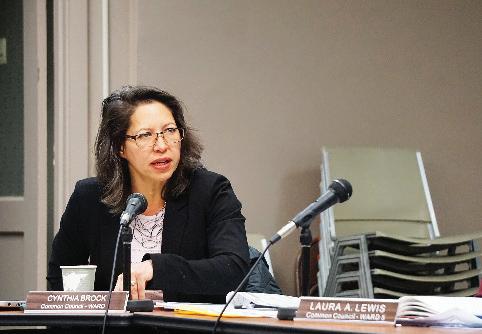
For Alderperson Cynthia Brock (D-1st Ward), change is a marathon, not a sprint. In an interview with The Sun, Brock explained that she practices a methodical, process-oriented approach to politics, urging measured responses to Ithaca’s most pressing political quandaries.
“I think very deliberately about how systems work together, how you need to take deliberate steps in order to achieve an implementable goal,” Brock said. “I recognize that it all comes down to process. It comes down to legislation. It comes down to really taking the time to put the structures in place to make sure that your larger vision is able to come into effect.”
With Brock serving 12 years on Common Council, voters have looked to her for stability — a quality that stands in opposition to the new voice in local politics represented by Kayla Matos, whom Brock will battle in the November general election for the Ward 1 four-year term Common Council seat.
Brock lost the June 27 Democratic primary to Matos — deputy director of the Southside Community Center and a born and raised Ithacan — but announced in August her decision to continue in the November general election as an independent candidate, running on the Ithacans for Progress line.
While Matos calls for “louder voices and stronger hands to push [political] changes forward,”
according to a post on the Instagram account for her campaign, Brock said that she takes a more moderate, incremental approach — stressing collaboration with community members and city partners, especially on hot-button issues like policing and tenant rights.
“I think what is important is to have a dialogue with landlords, have a dialogue with community members, to not come at approaches from an aggressive, adversarial approach. And I have worked very hard to build relationships across all perspectives, across all fields, even with people that are in fields that I want to regulate more,” Brock said. “Whether or not it’s the landlord-tenant relationship, whether or not it’s police officers, [I make sure] that I can sit down at the table with a broad group of people, look at a situation and try to find a collaborative way to move forward.”
To Brock, the Common Council should focus on the concrete aspects of city life that affect every resident on a daily basis.
“If you look at the responsibilities that the city has, it really is about the infrastructure,” Brock said. “It’s about roads and sidewalks and stormwater and water and sewer[s], zoning and fire and police and building inspections, and parks, recreation [and] natural areas. It is about the things that you physically touch, and physically impact you.”
increased contributions from the University.
In the press release, Thomas Condzella ’08, president of the Ithaca Police Benevolent Association, asserted that Cornell bears a responsibility not only to its student body but also to the broader Ithaca community. Condzella believes that reaching a mutually beneficial agreement with the city is imperative.
“Our community and the working class shouldn’t have to suffer because of a disagreement between the City of Ithaca and the Cornell University administration,” Condzella said in the IPWC’s statement. “There has to be a resolution that both parties can agree to, that is more considerate of our community. Cornell needs to take into account who is really being affected here; it’s their own faculty, students and staff. It’s the working class in Ithaca and the greater community we serve.”
On Oct. 4, members of faculty also published a letter to The Sun in support for
The letter — signed by over 100 faculty members — cited how faculty members are also residents of the City of Ithaca and surrounding Tompkins County communities.
“These communities should not be separated based on their well-being and standards of living,” the letter said. “As long as Cornell continues to exempt itself from its social responsibilities, to believe that unlike other major employers and property owners it can set for itself the terms upon which this responsibility is met, Cornell makes our communities separate and decidedly unequal.”
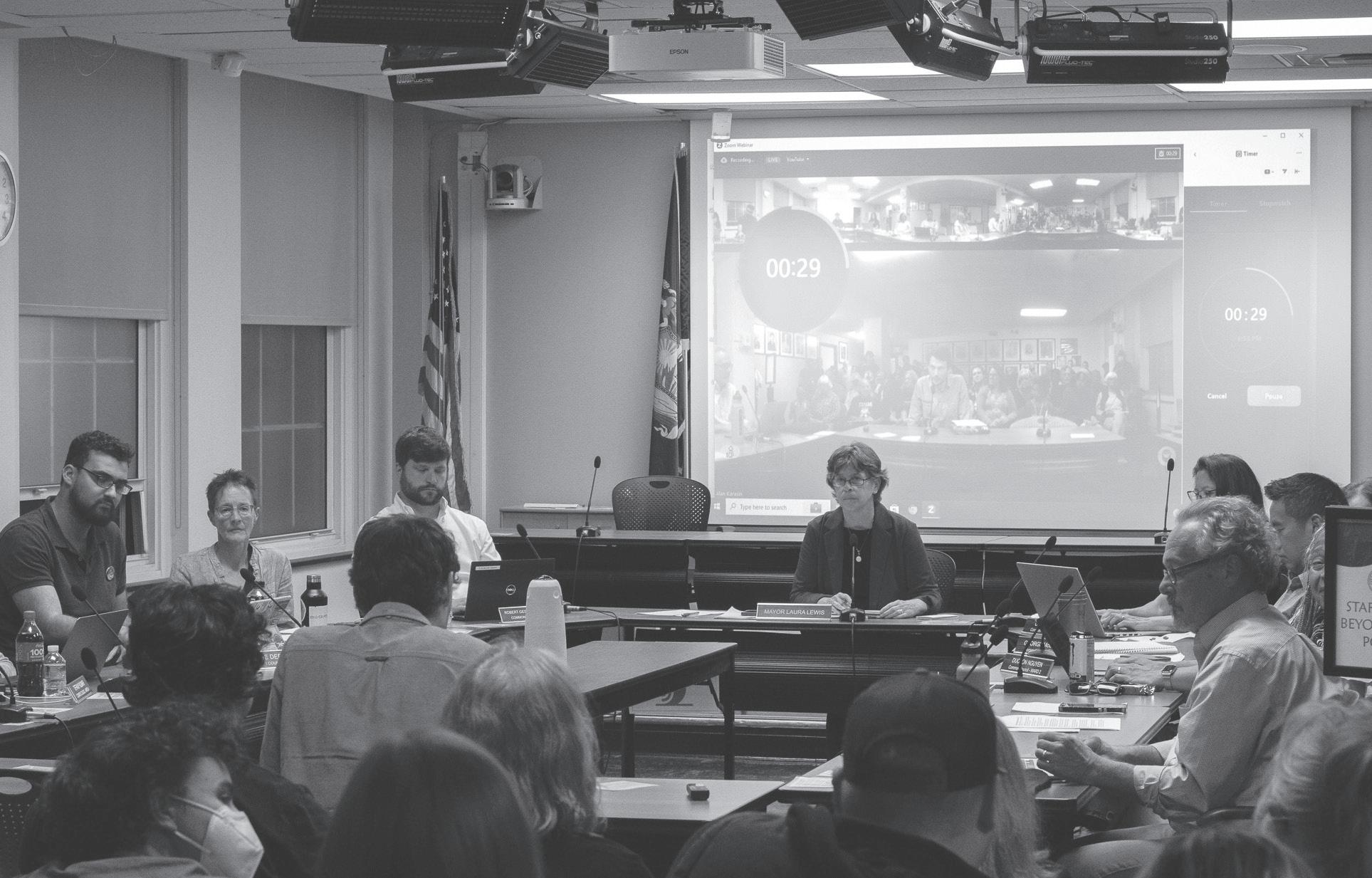
The Common Council will vote on the MOU on Tuesday at their 6 p.m. budget meeting in Council Chambers. There will be no public comments section, according to the Common Council meeting agenda.
Sophia Torres can be reached at storreslugo@ cornellsun.com.
Asli Cihangir can be reached a reached at acihangir@cornellsun.com.
Before the pandemic, 12 percent of undergraduate women reported nonconsensual sexual contact of the same nature in the 2016-2017 school year, and 13 percent reported the experience in the 2018-2019 academic year, comparable to this year’s survey.
Additionally, the 2022-2023 school year saw the highest percentage in nonconsensual sexual contact involving force or incapacitation for undergraduate men at five percent. In 2020-2021, only one percent of undergraduate men reported experiencing this contact, and four percent reported this experience in both 2016-2017 and 2018-2019 — both pre-pandemic years.
The report breaks down the responses of undergraduate women by class year. When compared to 2021, prevalence rates reported in 2023 increased across the board for women at all stages of their Cornell undergraduate career. However, excluding 2021 due to pandemic-related factors, the 2023 results are comparable to previous years.
When examining the percentage of students who experienced nonconsensual sexual contact involving force or incapacitation since entering Cornell, as opposed to in the current academic year, 2023 is comparable to other school years. Eleven percent of 2023 respondents indicated that they experi-
enced this contact since entering Cornell, the same percentage of respondents as the 2021 and 2017 surveys. In 2019, 13 percent of respondents said they had experienced this nonconsensual sexual contact since entering Cornell.
In the 2023 survey, women who experienced nonconsensual sexual contact almost exclusively identified their perpetrators as men, whereas 70 percent of undergraduate men identified their perpetrators as women. Eighty-three percent of students said their offender was a Cornell student, with the majority of students reporting that they knew their offender, at least casually. Nine percent, however, said the perpetrator was someone they did not know or recognize.
A residence hall was reported as the most common location where the nonconsensual sexual contact experience occurred among undergraduate women and men at 24 percent of all incidents. Twenty-five percent of incidents reported by undergraduate women occurred at a fraternity chapter house and 13 percent of undergraduate women reported the incident occurring at an off-campus house or apartment unofficially affiliated with a student club or organization.
To continue reading this article, please visit cornellsun.com.
Sofa Rubinson can be reached at srubinson@cornellsun.com.
“For the majority of people that we serve, they are the breadwinners, they are self-employed, and so for them, to tell them to go to the hospital is like telling them that they should lose their daily wage, which would affect whoever is dependent on them,”
Boateng said. “Once they go to the hospital, it’s not even guaranteed that they can even see a doctor to solve their problem.”
Boateng understood the need for a more comprehensive solution. In February 2022, the OKB Hope Foundation launched its Hope Health Van, a mobile health clinic equipped with point-of-care lab diagnostics testing for various conditions, including hepatitis B, hepatitis C, sexually transmitted infections and typhoid fever. The van hosts a physician, a lab technician and an operations director who doubles as the driver.
Each person who visits the Hope Health
Van has their vitals checked and undergoes a consultation with the physician. The health care team then conducts any relevant lab work, and if the physician can provide a diagnosis, they provide medication, which is kept on-site in the van.
“It’s pretty much like a one-stop-shop — but we are really laser focused on primary care and preventative care,” Boateng said.
Since the van’s launch, the OKB Hope Foundation has served more than 5,000 underserved and rural Ghanaians across 52 remote communities, according to Boateng. He said the foundation has asked the Ministry of Health in Ghana for a list of communities that do not have any health facilities, and those are the communities they target.
To continue reading this article, please visit cornellsun.com.
Sofa Rubinson can be reached at srubinson@cornellsun.com.
Brock urged caution on issues of housing, saying unintended consequences can result from legislation too hastily implemented, like the Emergency Tenant Protection Act, which can provide rent stabilization for tenants in specific types of rental units. Other candidates in the Common Council race have advocated ETPA implementation.
“I think that anything that we do in that case needs to be very carefully and mindfully done so that we don’t actually create, perhaps, greater challenges than what we intend to address,” Brock said, noting the possibility
of landlords’ renovating their buildings so they no longer fall under the ETPA’s purview, potentially causing the loss of previously affordable housing units.
Cornell’s payment in lieu of taxes to the city is also heavy on the minds of Ithaca residents as Cornell and Ithaca continue negotiations. Common Council will vote on the proposed agreement on Oct. 11. Brock said that Cornell and the City of Ithaca have common interests, and the payment can be representative of that outlook.
“We do share the same goals in the sense that Cornell is going to be successful if our community is stable, vibrant and supportive,” Brock said.

“There are many things that we do together, between the city and Cornell, that they could take financial responsibility for which would help reduce the city tax burden and would definitely be in their interest.” Brock has been endorsed by the local chapters of the Community Action Program of the United Auto Workers and the International Brotherhood of Electrical Workers, among others. The Common Council election will take place on Tuesday, Nov. 7, with early voting occurring from Oct. 28 to Nov. 5.
Finley Williams can be reached at fwilliams@cornellsun.com.

TOVER FEIST
ARTS CONTRIBUTOR
Yves Tumor played the 2023 Cornell Homecoming Concert this Sunday at Barton Hall for an extremely excited crowd of several hundred students and alumni.
Tumor, born Sean Lee Bowie in Miami, is an American musician with a cult following who has been releasing music under the Yves Tumor name since 2015. According to Dazed, Tumor began experimenting with music as a way of escaping the “dull, conservative surroundings” of Knoxville, Tennessee, where they grew up.
The desire to break boundaries and escape traditional norms is evident in their music. Tumor’s discography covers a wide variety of genres, to the point that the only link between some of their songs is the fact that they sound nothing like anything you’ve heard before.
However, Tumor is best described as a modern rock artist with experimental roots, blending the classic genre with electronic and psychedelic influences.
Tumor’s individuality is also displayed in the wide range of artists, engineers and producers they work with. Their collaborators include
varied figures such as James Ferraro, a pioneer of the vaporwave genre, Alice Glass, former frontwoman of Crystal Castles, Grammy award winner Noah Goldstein, Drain Gang icon Ecco2k and indie artists such as Joji and Willow.
Despite the esoteric and idiosyncratic quality to their music, they’ve enjoyed widespread acclaim and popularity. Their album Safe in The Hands of Love won Best Dance/Electronic Record in 2019 at the Libera awards, which celebrate the independent music community. Three of their albums received the coveted “Best New Music” designation from Pitchfork, including Safe in The Hands of Love, which was rated a 9.1 and was ranked as Pitchfork’s 10th best album of 2018.
As many Cornell students have discovered the hard way, there is a big difference between making good music and being an entertaining performer. We live in an era of music where sophisticated autotune makes having a good voice unnecessary, and when they’re not blatantly lip-synching, artists often take their jobs as performers to involve showing up an hour late, dancing around to their music and occasionally singing along for a line or two.
As a side note, the internet has been a double-edged sword for music. On the one hand, it
makes it extremely easy for artists to get discovered and make a career for themselves, meaning that music is a more viable career option than it used to be. This also makes it easy for people to explore the type of music they’re interested in. I don’t know of anybody in Gen-Z whose music taste hasn’t been heavily influenced by the internet and what they see on it. On the other hand, the internet has perhaps made it too easy for people to get discovered, cheapening what it means to be an artist. This isn’t necessarily bad, and I don’t mean to be pretentious, I listen to plenty of shitty music. If you ask me though, live performances in the era of TikTok fame are truly the only way of determining whether an artist has real, tangible talent.
As a fan of Yves Tumor for a number of years, I was greatly looking forward to seeing the results of this test in person at their Homecoming performance, which they described during the show as the first leg of their international tour. Tumor did not disappoint. Sporting a pinstripe suit and accompanied by a live band, Tumor delivered an energetic and passionate performance of a 15-song setlist. The show was a work of art, with an extremely sophisticated light production that beautifully matched the music and per-
fectly set the mood for each song.
Tumor opened with “God is a Circle,” the leading track from their critically acclaimed new album Praise a Lord Who Chews But Which Does Not Consume; (Or Simply, Hot Between Worlds). The song, featuring fast-paced, grimy production from Noah Goldstein, discusses issues with a toxic lover (a theme likely relatable for many Cornell students).
Tumor played two more songs from the new album before playing the fan-favorite “Jackie”, a song that showcases Tumor’s impressive talent in making music that is both unique and catchy. After “Jackie,” Tumor played “Gospel for a New Century,” a classic with a beautiful startand-stop opening that first got me into their music.
To me, one of the coolest things about music is its ability to evoke memories and transport people back to specific moments in time and periods of their lives. At the beginning of freshman year, I made fun of my friend because he’d always play the same song whenever we’d hang out. I thought it was annoying, and I would always beg him to turn it off, much to his amusement.
Today, though, I really appreciate that he did that. I may forget the specific
details of the beginning of my time at Cornell, but hearing NOSTYLIST by Destroy Lonely will always bring me back.
Similarly, hearing “Gospel For A New Century” live for the first time brought me back to senior year of high school, a time of a lot of uncertainty and change for many of us. Hearing the song in Barton two years later was a wild moment.
After Gospel, Tumor played a variety of songs from the new album as well as from their legendary 2021 The Asymptomatic World EP. The most memorable moment (besides an ill-fated and confusing mosh attempt) was during the very last song. As the band started to play what is perhaps Tumor’s most well known song, Kerosene, Tumor asked the audience to sing the song instead. The 2023 Cornell Homecoming Concert ended with Tumor relaxing on stage, face covered reading the Daily Sun as students took turns on the mic.
Tover Feist is a sophomore in the School of Industrial and Labor Relations. He can be reached at tf242@cornell.edu.
SOPHIE GROSS
ARTS CONTRIBUTOR
As Halloween creeps closer, so does the itch to watch a blood chilling horror show/ movie. And so, this mini column is dedicated to recommending horror media to add a little bit of fright to your October!
The Haunting of Hill House is the first part of a horror anthology directed by Mike Flannigan and based off of the book by Shirley Jackson. It follows five siblings through two different timelines, one in the present when they are adults, one in the past as kids, living in Hill House.
The show’s “adult” timeline
centers around a tragic event that befalls the Crain family and forces them to reconvene after years of physical and emotional disconnect. Meanwhile, the “childhood” timeline follows the Crain family through their summer spent at Hill House. The ultimate climax of the series is teased throughout the season, where the viewer finally finds out what happened on what is referred to as “the final night” the family spent at Hill House in the final episode. The first five episodes each center around one of the Crain children, descending in birth order, while the last five shift perspective with more frequency.
Though the show contains elements of classic paranor-
mal horror, it is original in its expansion of the genre beyond the typical haunted house trope. The show implements a mastery of standard scare tactics such as suspense, foreshadowing, an eerie soundtrack, the grotesque and jump scares, but it is also able to scare the viewer in a more profound manner. The miniseries uses ghosts and horror as a physical manifestation of the psychological trauma that haunts the mind. It investigates belief, who we choose to believe and why, as well as what implications it has. The “truth” also becomes something multifaceted and fractured as the Crain family reckons with what each of them experienced that summer all those years ago.
At the heart of the show is its exploration of the psychological ramifications of grief on the human psyche. Both of its main plotlines are centered around loss as the characters all try to cope in their own ways.
Each of the five siblings are representative of one of Elizabeth Kubler Ross’s five stages of grief, with the oldest falling victim to denial and the youngest in a state of acceptance.
As Steven, the oldest of the Crain children, says in the first episode, “a ghost can be a lot of things; a memory, a daydream, a secret, grief, anger. Guilt. But in my experience, they are most times just what we want to see… most times a ghost is a wish.”
The success of The Haunting of Hill House lies in its ability to blend supernatural phenomena with ultra-human thoughts, feelings and emotion to leave viewers thoroughly haunted.
Sophie Gross is a freshman in the College of Arts and Sciences. She can be reached at sbg224@cornell.edu
ANGELA BUNAY ’24 Editor in Chief
KATIE CHEN ’25
YU ’25
‘24
HUGO AMADOR ’24
EMILY VO ‘25
JONATHAN MONG ’25
JULIA SENZON ’26
JULIA NAGEL ’24
GRAYSON RUHL ’24
TENZIN KUNSANG ’25
JOANNE HU ’24
MARISA CEFOLA ’26
FATTAL ’25
DEMERS ’25
’24
The Cornell Daily Sun is devoted to publishing a broad and diverse set of content from the Cornell and greater Ithaca community.
We want to hear what you have to say about today's paper or any of our pieces.
Guidelines on how to submit can be found at Cornellsun.com. And here is our email: opinion@cornellsun.com
SOFIA RUBINSON ’24
XIAO ’25
AIMÉE EICHER ’24
Editor UYEN HOANG ’25
Web Editor
LIANG ‘24
Serin Koh is a third year student in the College of Arts and Sciences. Her fortnightly column And Tat’s the Skoop explores student, academic and social culture, as well as national issues, at Cornell. She can be reached at skoh@cornellsun.com.
I’24
’25
’25
’24
n the heart of the quiet greens of the Arts Quad, a stoic Andrew Dickson White, Cornell’s first president, sits and overlooks the campus before the commanding columns of Goldwin Smith Hall. On the other side, the University’s founder, Ezra Cornell, is perched upon a stone podium shaded by leafy trees and eyes the strolling students throughout the day. These two statues uphold and defend the University mission they had long ago declared: to establish “an institution where any person can find instruction in any study.”
As I pass by the builders of this University on my way to classes, I am always reminded of Cornell’s motto of inclusivity and diversity. Simultaneously, however, I am also reminded of the University’s hypocritical stance on the riddance of affirmative action, and its continued practice of legacy admissions. This past June, the Supreme Court reached the historic decision to abolish affirmative action, a race-conscious practice adopted by universities to foster diversity and equality, especially for underrepresented communities. Affirmative action was activated in 1965 by President Lyndon B. Johnson initially for the workplace, before spreading to academic institutions. This 58-year-old practice met its demise because it threatened the “‘colorblind Constitution’,” according to Chief Justice Clarence Thomas in the Court’s opinion. Many universities, including Cornell, have spoken out in protest. On June 29th, President Pollack released a statement expressing the University’s disappointment in the Supreme Court, and its commitment to its core values: discovery, free speech and expression, a community where “any person can find instruction”, exploration, public engagement and environmental sustainability.
Other universities had a stronger response. Wesleyan University and the University of Minnesota both announced in July that they would no longer be practicing admission preference for alumni’s children in response to the Court’s ruling. This decision was supported because it was deemed unfair to continue a preference for legacy applicants, which tends to benefit wealthy students over underrepresented communities. They joined other major universities, such as MIT, Johns Hopkins University, and Amherst College, which had all previously decided to end legacy admissions.
According to a New York Times study, the admissions rate for legacy applicants is a hefty 37 percent within the Ivy League and other elite universities; for non-legacy students, it is a disheartening 9.5 percent. More than half of legacy applicants also tend to be within the 95th to 100th percentile of parental income, confirming that most legacy students come from wealthy families.
That is not to say, however, that applicants with alumni parents are less qualified nor bright than accepted non-legacy students. However, the statistics provided by NYT suggest a large preference of students with legacy simply because of legacy admissions; when the same legacy applicants applied to other similar universities, they had an 11% admissions rate, which is just slightly over the 9.5% for non-legacy participants. These
numbers reveal that the legacy and non-legacy groups were similar on paper in terms of GPA, test scores and other determining factors; they instead prove that the whopping 37 percent admissions rate at their parents’ universities is indeed just because of legacy. In addition, a common trend seen across colleges is that a vast majority of legacy students are white. For example, Princeton revealed that 73 percent of Class of 2023 legacy students identified as white, while it was 70 percent at Harvard in 2019. Diversity among students with legacies at Cornell is also not very prevalent; in fact, Black students were outnumbered by legacy students at Cornell within the freshmen class in 2022.
So, why is a practice that favors wealthy and predominantly white applicants, when schools are striving for diversity and equality, still in practice? With affirmative action now gone, there is no assurance that universities will strive for diversity and equality among students; without this measure, the dominating wealthy and white majority of legacy students will largely remain unchanged even in the future.
Supreme Justice Clarence Thomas wrote in his opinion that affirmative action is a form of racialism, and that its elimination would allow us to “see each other for what we truly are: individuals with unique thoughts, perspectives, and goals”. If this is the case, why should a practice that services a group of people based on their parents still be followed? How can Cornell truly live up to its 1868 principle of “any person, any study” when it still uses legacy preference — which is actually rooted in a history of discrimination against Jewish students in order to preserve a Protestant academic setting in elite universities?
So far, Cornell has not addressed legacy admissions at all. In fact, the call to end legacy admissions is nothing new. In 2022, the Student Assembly unanimously passed Resolution 35: Calling on Cornell to Eliminate Legacy Preference in Admissions; this request was rejected by President Martha Pollack.
This action does not line up with President Pollack’s declaration at the Student Assembly that took place on Sept. 28: “Cornell remains verbally committed to diversity, equity, and inclusion. In fact, diversity, equality and inclusion and free speech are two of our core values.” The very history and role of legacy admissions counters this statement. This community is enforced by legacy admissions, but it will not crumble without it. The school’s history, people and opportunities play a larger role in strengthening such a community. As a future alumna, I would want my own children, should they want to attend Cornell as well, to earn their own place as a student without my influence in an equal playing field.
With the end of affirmative action, it is time for the University to reconsider eliminating legacy admissions. This move, should it be made, will be a historic and drastic change, as Cornell would be the first Ivy League school to do so. Perhaps the passing of the 100-year old practice will usher in a new era of admissions where — for the first time in American history — applicants will stand on equal ground, armed with only their ambitions, achievements and effort.


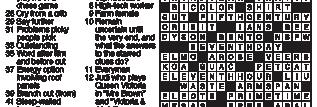



Fill in the empty cells, one number in each, so that each column, row, and region contains the numbers 1-9 exactly once. Each number in the solution therefore occurs only once in each of the three “directions,” hence the “single numbers” implied by the puzzle’s name. (Rules from wikipedia.org/wiki/ Sudoku)


By GRAYSON RUHL Sun Sports Editor
ITHACA, N.Y. — Entering its most challenging matchup of the season, football had an opportunity to take an early lead in the Ivy standings this Friday, Oct. 6, when it traveled to Cambridge, Massachusetts to take on Harvard. Nevertheless, the Crimson dominated the game from start to finish, as Harvard quarterback Charles DePrima accounted for 361 total yards, and the Red was defeated decisively, 41-23.
The Red (2-2, 1-1 Ivy) started with the ball and began moving it immediately, as junior quarterback Jameson Wang found sophomore wide receiver Parker Woodring on an 11-yard pass on the first play from scrimmage. Cornell was unable to sustain the drive after the opening pass, punting


three plays later.
The Crimson (4-0, 2-0 Ivy) showed the strength of its offense early. Starting on its own 40 following a short punt from senior kicker/punter Jackson Kennedy, Harvard quickly worked its way into Cornell ter-
ritory.
A 10-yard sack from junior linebacker Hunter Sloan gave the Red a chance to get off the field, but on 3rd and 16, DePrima found receiver Tim Dowd over the middle for a 28-yard strike.
DePrima capped off the drive with two rushes, the first setting up a goal-to-go opportunity, and the last for a two-yard rushing score. Just over five minutes into the game, the Crimson took a 7-0 lead.
Looking to respond, the Red was able to build a more sustained drive, moving the ball into Harvard territory. An incompletion and a couple of short rushes stalled the drive, but on 4th and 7 from the Harvard 40, head coach David Archer ’05 called a fake punt play. Kennedy appeared to have open space to run for the first down, but a brief hesitation was enough for the Harvard defense to catch him, and the Red turned the ball over on downs.
After Cornell’s defense forced a threeand-out, a shanked Harvard punt gave the Red prime field position at the Harvard 45. Nevertheless, Cornell once again turned the ball over on downs, as Wang got stuffed by the Harvard defensive line on a 4th and 1 from the 36.
As the second quarter started, Harvard looked to build its lead. On the opening play of the quarter, DePrima showed off his speed, bolting down the middle of the field untouched for a 42-yard touchdown — his second rushing score of the game. The Red was able to block the extra point, but the Crimson still remained in the lead, 13-0.
After stalling on its first three drives, the Red’s offense woke up in the second quarter. Mixing the rush and the pass, Cornell converted three third downs en route to a 15-play, 75-yard drive which took up 7:39 of game time. Wang capped off the drive with a one-yard sneak, leaping over his offensive line and crossing the plane with the ball before it could be knocked out.
The Crimson continued to apply pressure, as DePrima showed off his passing ability. The Harvard quarterback connected on a 20-yard pass to break into Cornell territory, and then found receiver Scott Woods II wide open on the left sideline for a 36-yard touchdown. The Crimson opted to go for two and converted it, widening its lead to 21-7.
With just over four minutes left in the quarter, the Red had a chance to cut into Harvard’s lead before halftime. The Red moved the ball into Crimson territory with ease, but with time running out, had to settle for a field goal as the game clock expired. Despite dominating time of possession in the first half — holding the ball for more than 20 minutes — Cornell trailed, 21-10.
After playing a clean first half with no penalties on either side, the Crimson committed three — two false starts and a hold — to stall its opening drive. The Red responded with a three-and-out, quickly giving the ball back.
Starting on its own 17, Harvard flexed its muscles on offense, going 83 yards in just four plays and 41 seconds of game
time. DePrima started the drive with a 45-yard pass down the left sideline.
After another six-yard pass, DePrima rushed 15 yards for another first down before finding a wide open Tyler Neville for a 17-yard score. The Crimson made it look easy, and held a three possession lead over the Red.
Needing a score to stay in the game, the Red got the ball back on its own 25. Wang gave the drive an immediate kick start with a 29-yard pass to senior wide receiver Nicholas Laboy.
The Red went back to its roots, using both the rush and the pass as it worked the ball methodically through Harvard territory. The 11-play, 75-yard drive featured two key Wang rushes — one to convert a fourth down and another for a touchdown. Cornell trailed by 11 midway through the third.
The Red forced a three-and-out, but with a chance to make it a one possession game, went three-and-out to give the Crimson the ball back. On the first play of the ensuing drive, DePrima showed off his speed once again, dashing up the middle for a 58-yard touchdown. The play looked eerily similar to his 42-yard score earlier in the game, and it gave Harvard a 17 point lead.
To continue reading this story, please visit www.cornellsun.com.
Grayson Ruhl can be reached at gruhl@cornellsun.com.