The Corne¬ Daily Sun



Te number nearly doubles NYU’s, second on the list
By MARYAM ZAFAR Sun Staff Writer
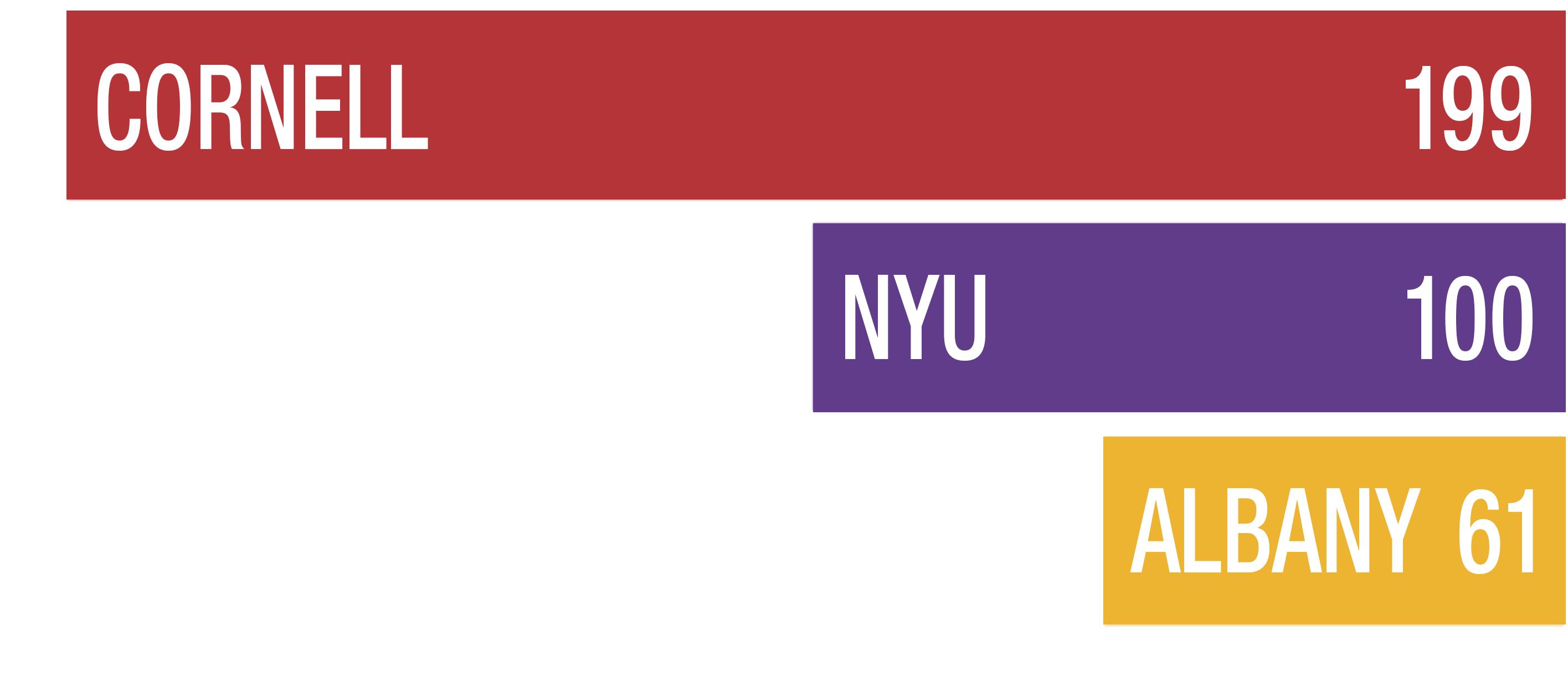
Cornell University had the highest number of reported sexual assault incidents out of every university and college in New York in the period from January to May 2018, according to interim data collected by the New York State Department of Education.
With 199 incidents, Cornell has almost twice the number of incidents reported by students at New York University, which is second on the list with 100 incidents, fol lowed by the University at Albany, with 61.
With enrollment size taken into consid Cleary previously served as the Title
By SARAH SKINNER Sun Assistant News Editor
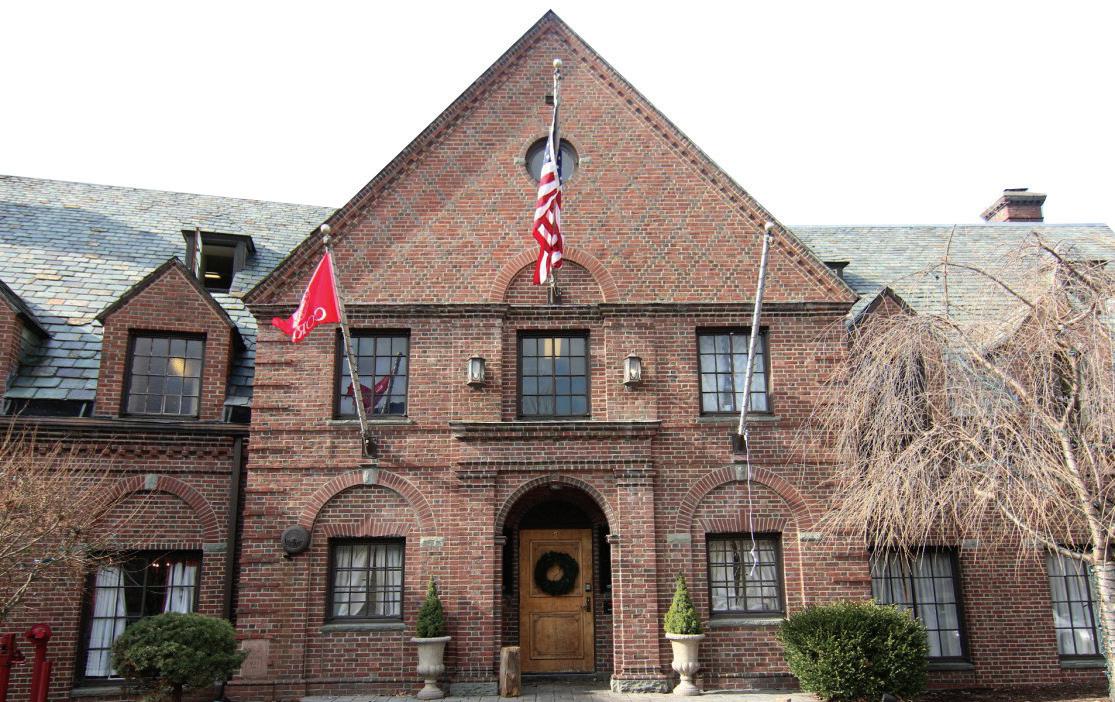
In August, the brandnew Equity and Engagement Living-Learning Community quietly opened its doors in the former house of Cornell’s chapter of the Psi Upsilon fraternity — infamous for sexual and racial assault incidents — at 2 Forest Park Lane in West Campus.
full capacity of 35 residents, promises to foster a residential community that “embraces the strengths of diversity, multiculturalism, and intersectionality,” preparing residents to be “strong leaders in a pluralistic world,” according to a statement provided to The Sun by Devon Carrington, assistant director of residential programs.
Cornell placed the Chi chapter of Psi Upsilon on
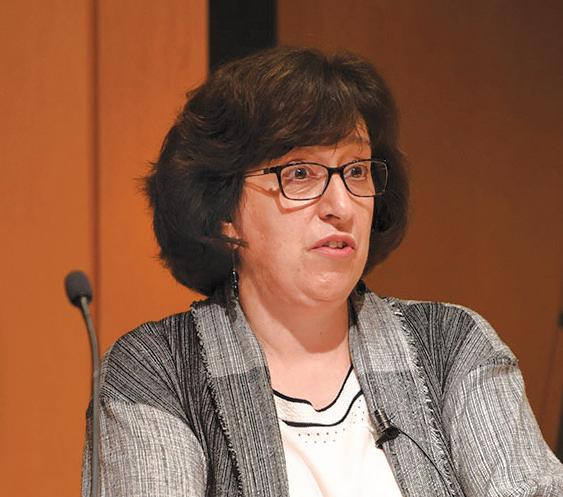
& Incest National Network Title IX director this year, said that it is unlikely that Cornell’s campus culture is significantly different from that of other universities’ or the national statistics.
Following the “Enough is Enough” law passed in 2015, the University is required to report to New York State all incidents of sexual assault, dating violence, domestic violence and stalking that are reported to the Title IX office.
Of the incidents that were reported, though, very few individuals chose to pur-
See PSI U page 4
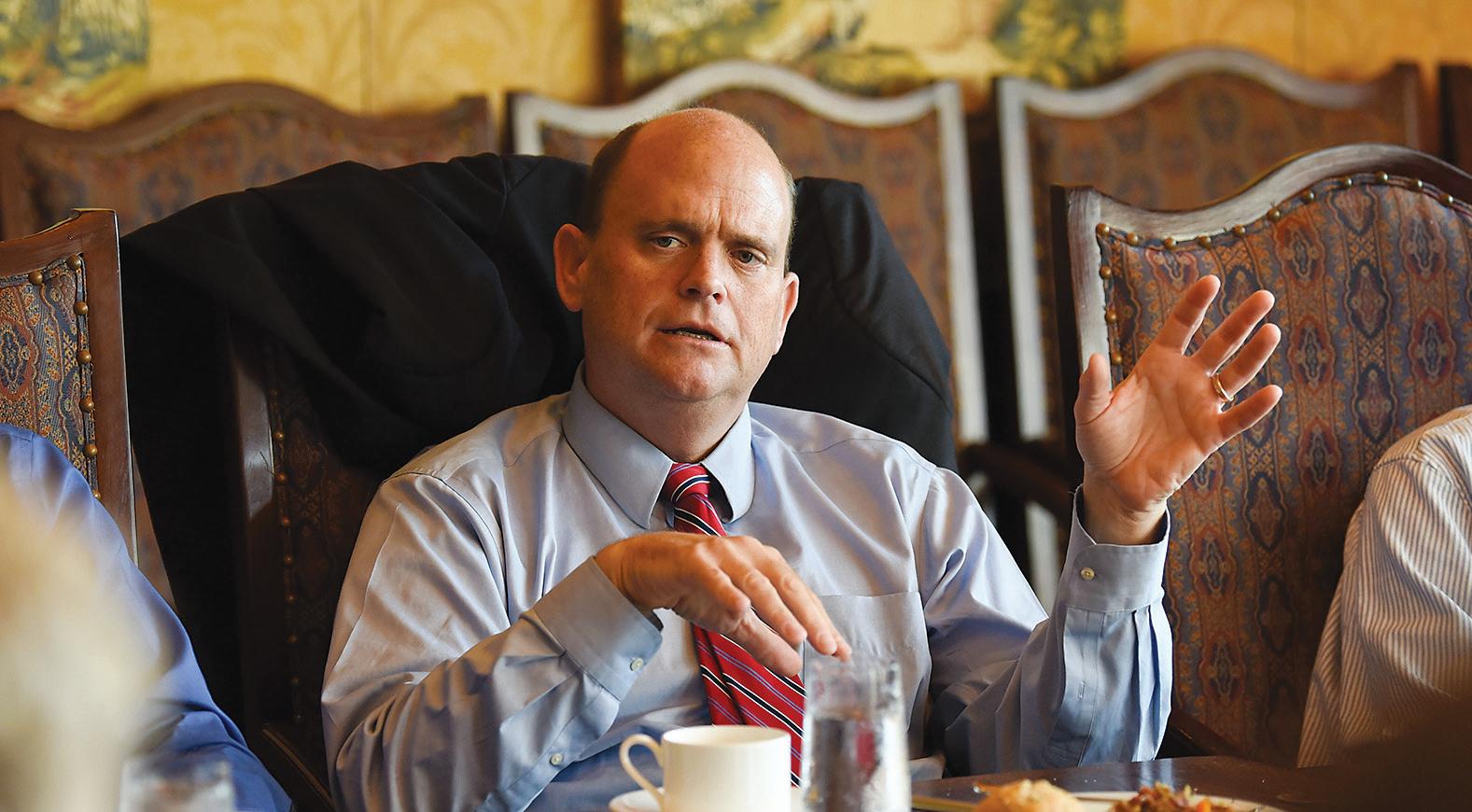
Heartfelt conversation | During lunch with 12 members of the Cornell Republicans, Reed offered to be the moderator between conservative students and the Cornell administration if they ever feel hesitant to speak up.
By MATTHEW McGOWEN Sun Senior Editor
In a rare visit to Cornell’s campus, Rep. Tom Reed (R-N.Y.) met with 12 members of the Cornell Republicans for an informal round-table discussion and lunch at Taverna Banfi. Conversation centered primarily around the experience of conservative students on college campuses, with Reed offering to be the moderator between the students and Cornell administration.
Reed’s visit to Cornell was part of his campaign to visit the schools of college students across the district with election day now less than a month away, according to Michael Johns ’20, a columnist for The Sun and president of the Cornell Republicans. Reed has represented New York’s 23rd district since 2013, but his Republican politics are often at odds with mostly left-leaning Ithaca, a dynamic characterized by Reed’s Extreme Ithaca Liberal ad
See REED page 4
Apples to Cider: An Old Industry Takes New Root 8 a.m. - 5 p.m., Mann Library Lobby
Natalia Marra and Yukimi Ohashi: In Case of Emergency 8 a.m. - 4:30 p.m., Experimental Gallery, Tjaden Hall
Applications of Bioninformatics and Genomics To Crop Improvement 9 - 10 a.m., Boyce Thompson Institute
Travelling Abroad: Preparations and Advice 3 - 4:30 p.m., G08 Uris Hall
Sumatran Rhinos East Kalimantan: Threats, Conservation Efforts and Hope for the Future 4 - 5 p.m., LH 5, College of Veterinary Medicine
Enterprise Engineering Colloquium - The Crisis in U.S. Healthcare: Threats, Challenges and Opportunities 5:15 p.m., Abby and Howard Milstein Auditorium
Warhol’s Queerness and the End of Distinction 4:30 - 6 p.m., 122 Rockefeller Hall
Eyal Weizman: Forensic Architecture - Counter Investigations 5:15 p.m., Abby and Howard Milstein Auditorium
Carol Anelli Professor of Entomology, Ohio State University
Wednesday, October 10, 2018
A Bird’s Eye View of Nature in the City and the Surprising Ways We Affect Ecological Communities 7:30 - 8:30 p.m., Alice Statler Auditorium
Good Practices for Transitioning to Genomic Selection 9 - 10 a.m., Boyce Thompson Institute
Entrepreneur in Residence Rohan Gopaldas ’02 11 a.m. - 4 p.m., G80N, Statler Hall
Political Cycle in Public Works Procurement in the Philippines Noon, Kahin Center
Energy Engineering Seminar: Enablers and Barriers to xEV Adoption 12:20 - 1:10 p.m., 203 Phillips Hall
What’s Data Got to Do With It? 12:20 - 1:10 p.m., 100 Savage Hall
PPPMB Seminar - Jennifer Nemhauser 4 p.m., Boyce Thompson Institute
Global Directions on Reducing Risks of Natural Disasters In the Built Environment 4:30 - 5:30 p.m., 101 Phillips Hall
Visualizing and Exploring Data With Tableau 4:30 - 5:30 p.m., Uris Library Classroom
Rose House - Seminar Series - Personal Branding 8 p.m., Flora Rose House
“Garlands for Steven Stucky” by Gloria Cheng 8 p.m., Barnes Hall Auditorium
With Usual Daring on Untried Paths: Anna Botsford Comstock Educational Trailblazer, Author and Scientific Illustrator
Thursday, October 11, 2018 4:00pm G10 Bioitechnology Building

By MATTHEW McGOWEN Sun Senior Editor
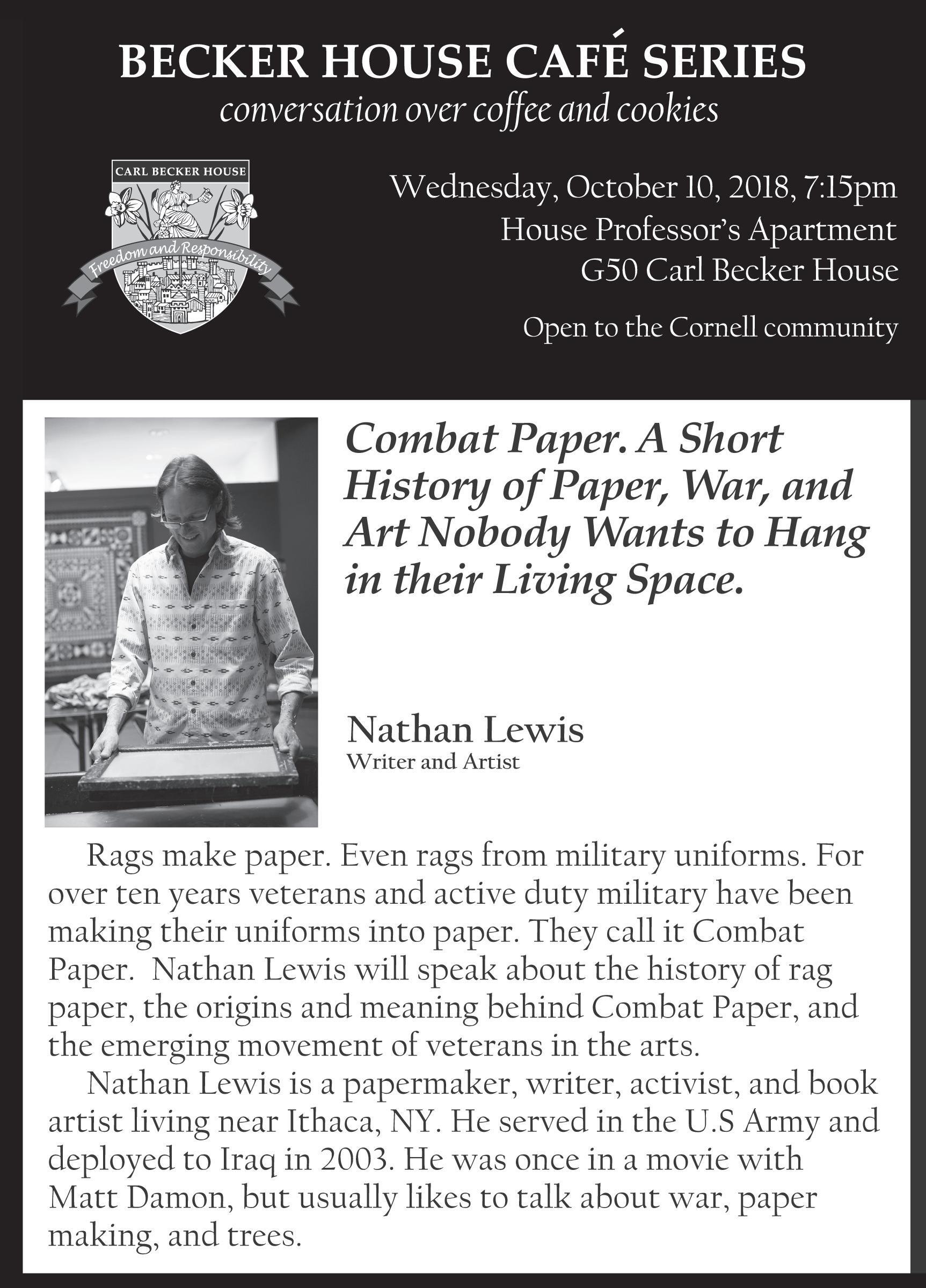
Tracy Mitrano J.D. ’95, the Democratic candidate for the New York 23rd Congressional District — which includes Tompkins County — announced Oct. 2 that her campaign raised $950,000 in the last quarter. If the number is confirmed by the Federal Elections Commission, it would be the most ever raised by a candidate for the House seat in New York’s 23rd district in the penultimate quarter of an election year.
The nearly $1 million reported by Mitrano would bring her total for the campaign to $1.1 million dollars, while her opponent, incumbent Rep. Tom Reed (R-N.Y.) has raised $2.6 million total for the election cycle up to June 30. Reed has not revealed the precise dollar amount that he raised this quarter, but he did tell The Sun in an interview on Tuesday that he raised over 3 million dollars in total during this cycle.
If confirmed, Mitrano’s third quarter gains would be higher than her Democratic prede cessors Martha Robertson and John Plumb, who ran against Reed in 2014 and 2016. Even with the boost, however, Mitrano would still fall below the total amounts Robertson and Plumb raised at comparable points in their campaigns.
In a statement, Mitrano called the amount an “impressive milestone” and said that it signals a “groundswell of enthusiasm on behalf of our cam paign,” according to Upstate Politics.
Mitrano, who won the Democratic nomination in July and emerged with less than $8,000 cash on hand, began her campaign with a signif icant financial disadvantage com
paring to Reed, who started with $133,000 cash on hand and a broad donor base built up over years of incumbency, according to OpenSecrets.org, a research group dedicated to tracking money in U.S. politics.
Ninety-three percent of Mitrano’s campaign funds come from individual contributions, according to OpenSecrets, a fact Mitrano repeatedly touted as her grassroots strategy.
“The fact that we were able to raise nearly $1 million last quarter while rejecting corporate PAC money is a testament to this district’s readiness for change — and to the widespread energy that will translate to victory on Election Day,” Mitrano said in a press call following the announcement, according to Upstate Politics.
According to deputy campaign manager Ryan Quinn, although the total amount raised by Mitrano is still well under Reed’s, it will give them a platform to get their campaign’s message out.
“We knew that we wouldn’t be able to keep up with Tom Reed and the money he’s received from corporate PACs and special interests, but we knew we needed to raise enough money to get on the airwaves and to run a really great campaign,” Quinn told The Sun.
As of June 30, Mitrano had taken a total of $100 PAC money from the Alleghany County Democratic Committee, which she has used as a point of contrast with Reed, who has received $1.45 million from PACs in this election cycle, according to FEC
“I have to conclude, based on the Congressman’s voting record, especially on matters of health care, health insurance, banking, and the environment, that these groups
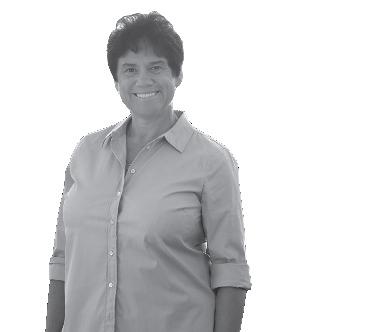
Cornellian challenger | Tracy Mitrano J.D. ’95 is challenging Republican incumbent Representative Tom Reed.
are getting their money’s worth,” Mitrano said in a statement on Sept. 26 affirming her rejection of PAC money.
Mitrano has also yet to receive any support from Democratic party committees, including the Democratic Congressional Campaign Committee, the main funding arm of the national party. However, Quinn said the most recent funding might catch more attention from national donors.
“The amount of money that we’ve raised is definitely going to attract the attention of a lot of national groups, and we’re really excited that we’re getting that,” Quinn said, but emphasized that the campaign wouldn’t let that distract from their focus on people or increase reliance on outside donors.
Plumb and Robertson each received about $13,000 from the DCCC during their campaigns, according to FEC filings. Meanwhile, the Republican party committees contributed less than one percent of Reed’s total campaign funds. Reed was elected and has maintained his current position since 2010. The New York 23rd District he currently represents is rated solid red by the Cook Political Report and went to Trump by 14.8 percent in the 2016 Presidential Election, according to Ballotpedia.
In an interview with The Sun, Reed expressed confidence in his campaign’s financial status, but showed little concern over Mitrano’s report, noting that many other democratic candidates across the country have raised over $3 million in the last quarter.
“The good thing is we’ve raised over $3 million, well over, so we’ll have the resources to get our position out, and that’s all I can ask for,” Reed told The Sun. “Tracy, her reporting that number gives her an opportunity to get her voice out, and all I’m looking for is to ensure that the voters are informed as to the different positions we have.”
Matthew McGowen can be reached at mmcgowen@cornellsun.com.
By STACEY BLANSKY Sun Staff Writer
The fourth annual Mental Health Awareness Week is starting Friday to engage students in discussions about mental health stigmas and encourage them to think more critically about their own emotional well-being and that of the surrounding community.
The event, which aims to increase awareness of mental health problems, will also feature mental health organizations that usually do not have a “large voice in the campus community,” according to Matthew Jirsa ’19, co-chair of the week.
There are currently 30 participating organizations, Jirsa said, including Cornell Minds Matter, Reflect Cornell and Alpha Phi Omega.
“Cupcake a Cornellian” on Friday will kick off the week to raise money for The Sophie
Fund, a grassroots advocacy organization established in 2016 to support mental health initiatives in the Ithaca and Tompkins County area. As the event name suggests, participating students can purchase cupcakes to smash into their friends’ faces to fund the group.
Scott MacLeod, co-founder of The Sophie Fund, explained that one complicating layer of mental health is the stigma surrounding it, which can often prevent students from finding the right support system.
MacLeod argued that this stigma is not only “preventing students from seeking help,” but also “multiplying layers of pressure” experienced by those already in a mental health situation.
Jirsa also mentioned that mental health stigmas alienates those suffering from mental health issues by generating a campus atmosphere that
See MENTAL HEALTH page 5

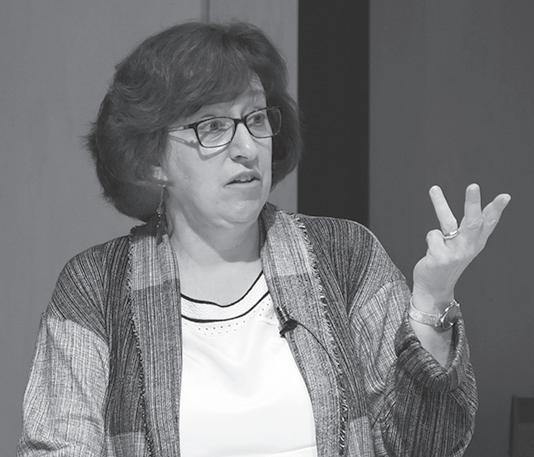
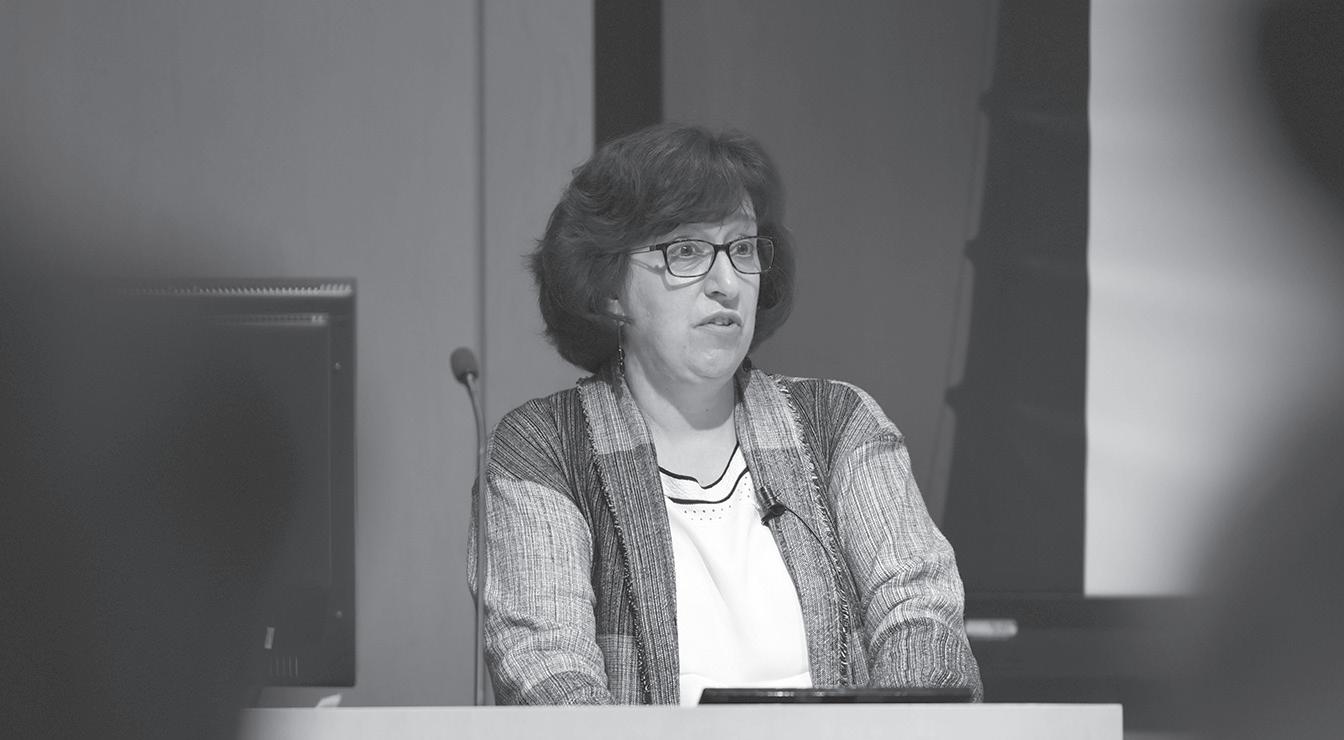
University divided cannot stand | President Martha Pollack said she will promote greater inter-campus and inter-departmental unity this year.
By JULIA CURLEY Sun Staff Writer
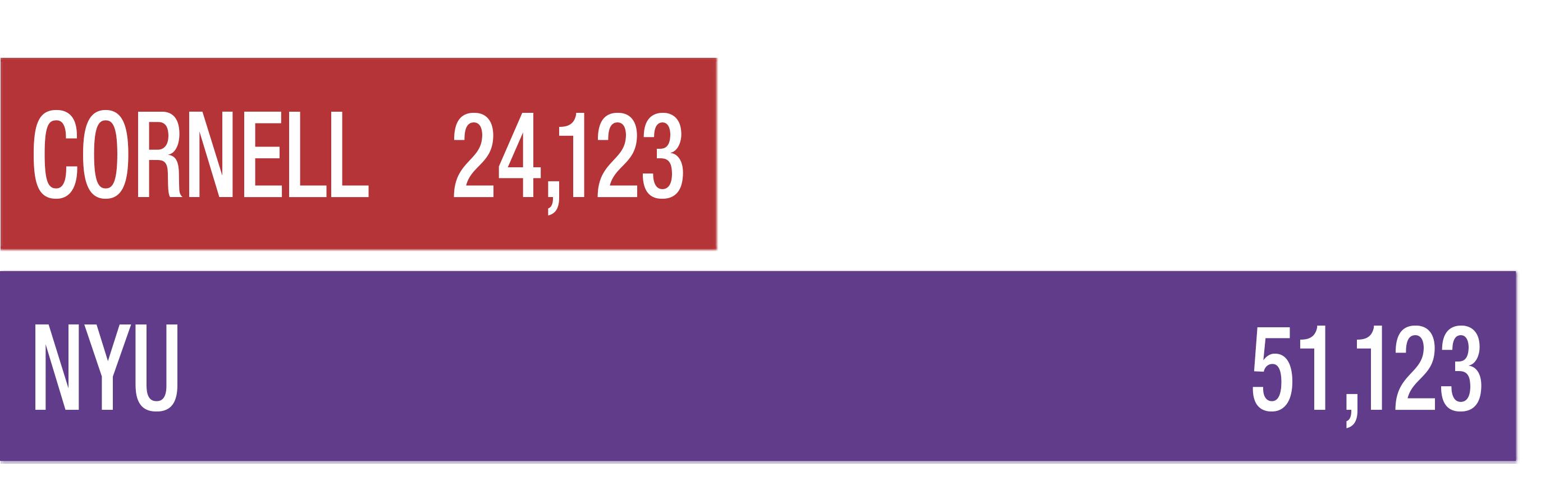
From the newest Class of 2022 in Ithaca to the new Cornell facilities in New York City, President Martha E. Pollack looked back at the progress made in the last academic year and highlighted her goals for the coming year in her annual address to Cornell’s faculty and staff Tuesday. Cornell attracted 51,000 applicants for the Class of 2022, according to Pollack. The students that arrived just two months ago represent 47 states — with the exceptions of the Dakotas and Wyoming — and 43 countries. First generation
students make up 14 percent of the new students and 27 percent of the class identifies as an underrepresented group, Pollack said.
Beyond the increasing and enduring attraction of distinguished students, Pollack iden-
“We are one Cornell ... Our small town, big city campuses have complementary strengths that we can leverage.”
President Martha Pollack
tified promoting “educational verve” as an area requiring continued attention and advancement.
Pollack previously said in her 2017 inaugural address that “educational verve” is a “vitality
interim suspension in February 2016 following sexual assault allegations against then-president Wolfgang Ballinger ’17, who pled guilty to forcible touching last spring, and revoked recognition for three years in May 2016 after the fraternity violated the suspension’s terms, The Sun previously reported.
After a racially-charged altercation between a white student linked to the suspended Psi Upsilon fraternity and a black student in Collegetown last fall, the Board of Governors for the Chi chapter of Psi Upsilon elected to remove all Psi Upsilon presence from campus. The University also announced their intent to devote the chapter’s house to “the use of student organizations at Cornell that are dedicated to promoting a diverse and inclusive student community,” in a joint statement from Cornell Vice Presidents Ryan Lombardi and Fred van Sickle in September 2017.
The renovation, which was completed in May, included full-scale remodeling of both the first and second floors as well as an entrance compliant with the Americans with Disabilities Act, surface finishing and masonry repairs, The Sun previously reported.
According to the University’s operating budget, $3.5 million was slated for the remodel of the house, of which $1.96 million is to be spent during fiscal year 2019. The red-brick house itself, which the Cornell facilities website describes as “palatial,” was worth $1.49 million in 2018 according to a City of Ithaca property report.
No moves to shape the house for student organization use were immediately made after the September announcement, as the property was undergoing renovations overseen by the Psi Upsilon Board of Governors. The board did not return The Sun’s requests for comment.
The University eventually chose to re-designate the property as housing instead, in line with its future housing initiatives, according to Carrington, who said that he was approached about the plan by Joseph Burke, executive director of residential programs, around the same time.
“He asked ‘could you think of it having this kind of social justice/identity/belonging feel to it?’” Carrington told The Sun.
Carrington said that he had been shaping the idea for the living-learning community for several years, including the possibility of locating it in Schuyler House in Collegetown. However, the process was accelerated as there were only a few months between the go-ahead and student move-in day in August.
“In a perfect world, we would have had a semester to really develop going into it,” said Robert King, the new director of Residential and New Student Programs, but added that this sort of challenge was “par for the course” for the department.
“Students will learn and continue to develop whether we’re part of the process or not, so creating a space where they can have open, honest discussion is just an opportunity,” King continued.
The living-learning community recruited its first cohort of residents via an email sent on July 30 to selected undergraduate students. Carrington told The Sun that he
worked with the housing office to offer spaces to students who may not have gotten their first choice of housing or may be interesting in the new opportunity.
The original email, obtained by The Sun, described the Equity & Engagement LLC as a “unique” opportunity to “enhance the academic and social experience of all students through outreach, support, cultural exploration, identity development, and social justice education.” Topics for discussion included race, gender identity, sexual orientation, socio-economic status, ability status and religion.
Prospective residents were required to submit a brief interest statement, which Carrington said would be expanded into a full application for future years, in keeping with the work-in-progress aspect of the living-learning community.
“Right now we’re in the developing stages of getting everything together,” Alex Anyanwu ’21, a current resident, told The Sun. “I see it being a very large part of Cornell’s program housing like on Ujaamaa’s level, on [the Holland International Living Community]’s level, like the Jewish Living Center.”
Currently, the house has two resident advisors, who were chosen from the pool of R.A.s who applied last year and were given special training and mentorship over the summer to prepare them for their new role, Carrington said. The live-in advisors are charged with the direction of the programming for the house and were given direction in how to foster discourse across divides in background.
Anyanwu said that even though the house was still in its “beginning stages,” he loves living there. “It’s like a hotel,” he said of the house itself, describing the environment fostered by the living-learning community as “amazing.”
Carrington stated similar sentiments about the house being a work in progress, both in terms of programming and the house itself.
Despite the allotted budget, Carrington described the renovations as a “facelift,” with a few minor repairs left to be completed. According to Carrington, the house had not yet even been outfitted with electronic locks — which allow students to access buildings using their Cornell ID cards — like most residential buildings on campus.
The lack of this technology makes it harder for opening the house’s events to the more general public, Carrington said, as visitors can’t be granted temporary access when dealing with physical locks and keys.
In the future, Carrington hopes to help the R.A.s expand events to multiple times a semester and work closely with the Intergroup Dialogue Project on campus.
The University has been relatively quiet about the new house as it gets up to speed, forgoing press announcements but including a brief mention of the living-learning community in President Martha E. Pollack’s Sept. 7 update on diversity and inclusion efforts. A description of the facility was added to Cornell’s website earlier in the semester.
On Oct. 9, a briefing regarding the Equity and Engagement LLC was included in a housing update emailed to students, announcing that applications for residency in the house next year were open to interested students.
REED
Continued from page 1
campaign and a combative 2017 town hall.
Reed is a rare presence on campus, his last visit was a town hall in May 2016, but Johns noted his commitment to seeking out an audience with his constituents, even during tense partisan fights, such as the Republican effort to repeal Obamacare, which Reed supported.
“The congressman is one of the most impressive in the country in his commitment to having town halls all across the district. He’s had town halls in Ithaca even when it was difficult, in fact especially when it was difficult in the middle of the healthcare conflict after the 2016 election and continuing since,” Johns told The Sun.
Reed spent most of the lunch listening to students describe the campus political atmosphere, including fears that conservative viewpoints were looked down upon by others. Osai
Egharevba ’21, said that he avoids wearing his Trump hats or shirts on campus for fear of students’ reactions.
“A lot of people have Trump merchandise, but they know better than to wear any of that [on campus] because if you do that, then you’re opening yourself to all this sort of social backlash against you,” Egharevba said. “With a lot of people here there’s a right opinion and a wrong opinion, and that can be very dangerous.”
Several students echoed Egharevba’s concern that voicing conservative opinions on campus could result in backlash. Reed noted similar expressions of fear from students at Hobart University and offered support for both.
“If you feel any hesitancy to speak up, then we can be a moderator or mediator between the administration, so feel free to reach out to us,” Reed told the assembled students.
While the conversation was full of criticisms, students admitted that the majority of the time, students and the
TITLE IX Continued from page 1
sue institutional action: only 12 percent of incidents were processed by the University’s judicial conduct office. The number is 19 percent at NYU and 34 percent at the University of Albany.
“Institutional processing” occurs when a student chooses to pursue a hearing through the University’s hearing panel, a group of volunteer individuals who are trained by the Title IX office and individuals from the Law School on appropriate hearing procedures. At the conclusion of a hearing, an accused student is found “Responsible” or “Not Responsible” for a reported incident.
Those who are found responsible can face a range of repercussions. In the 2016-2017 academic year, most individuals found responsible were put on probation, suspended, or dismissed from the University.
For an incident to be processed at Cornell, the accuser must choose to pursue institutional action. Without consent of the individual, the incident will only be filed, and the University will not take action unless the accused is a danger to the public.
Most of the incidents reported to Cornell, according to the report, occur off-campus. According to Cleary, off-campus locations include the Collegetown area and privately-owned fraternity houses, as well as anywhere outside of the physical Ithaca and Weill campuses. With 124 off-campus incidents, Cornell has the most by far, followed by NYU with 52.
“I don’t see these reports as anything other than positive — not positive that the violence occurred,” Cleary said, “but positive that in the aftermath of an experience of violence, our students are coming to us.”
After an incident of sexual assault or misconduct is reported, a student can receive support from the Title IX office in the form of counseling, scheduling and facilitating academic stability, according to Cleary. An individual does not need to take institutional action to receive this support.
However, only 38 percent of students were aware of the services offered by the Title IX office, according to the 2017 Sexual Assault and Related Misconduct Survey, in which more than half of Cornell students reported experiencing at least one form of harassment.
In the same survey, almost one in five students who experienced “harassing behaviors” reported both that it had to be “tolerated” and that the harassment was severe enough to interfere with their participation in Cornell programs.
Cleary said that the Title IX office is “being mindful” of the question of whether Cornell is receiving more reports or has a higher prevalence of sexual misconduct-related incidents.
University are willing to engage and cognizant of free speech issues.
“It’s not necessarily that my speech or my opinions have been changed or silenced because at the end of the day the University has been for the most part supportive, and a lot of people on campus are willing to listen. They might not change their minds, but they’re at least willing to have a conversation,” said Anna Girod ’20.
As the lunch came to a close, Reed offered some of his political insights and prescriptions for closing the political rift.
“Show up and keep an open mind, and just keep doing it. Because if you give up, that’s what I’m most afraid of,” Reed said. “I see a level of disengagement in America that’s growing, and the cynicism is growing very deep, and that’s when we lose our country, is when people stop engaging. When people stop engaging, that’s the death of democracy.” PSI U Continued from page 1
Matthew McGowen an be reached at mmcgowen@cornellsun.com.
“We are looking at [the data] and asking the same questions you’re asking ... but I think the conclusion that we are drawing is that it’s not that there is more violence within the Cornell community, rather, it’s that our students are sharing their experiences more.”
Currently, Cleary says the Title IX office is in a stage of “listening and learning,” and has been holding satellite talks and conversation times at different places around campus, like residence halls.
This year, the office also hired a new staff member specifically for the purpose of developing programs focusing on “prevention education,” which looks to shift the campus culture as a whole. Currently, student leaders and athletes are required to receive sexual violence prevention training annually under NYS law. More sexual violence education programs may be implemented, according to Cleary, after the viewpoints of different “subpopulations” at Cornell can be heard.
“Student empowerment, safety and awareness, not the statistics, are the real goals,” Cleary said.
Rochelle Li ’21 contributed reporting to this article.
Maryam Zafar can be reached at mzafar@cornellsun.com.
POLLACK
Continued from page 3
that leads our students to a lifetime of discovery, a passion for ideas and a commitment to seeking truth.” This vitality, according to Pollack, is embodied by the Active Learning Initiative, which includes the innovative classroom technologies and flipped classroom structure. The latter emphasizes more on the “active learning” of students through discussions, group work and peer instruction instead of learning from the lectures alone.
“We’ve been studying the impact of these programs,” Pollack said. “We don’t just do them, we look to see whether they work, and the early evidence is that students enjoy the experience and, importantly, they also have better learning outcomes.”
The ALI, once just an initiative within the College of Arts and Sciences, will soon become a campus-wide classroom approach, thanks to financial support from Alex Hanson ’87 and Laura Hanson ’87.
The expansion of the project from college-focused to campus-wide represents Pollack’s third overarching priority: campus unity.
“We are one Cornell,” Pollack said. “Our small town and big city campuses have complementary strengths that we can leverage to create opportunities for Cornellians and to develop innovative approaches and innovative solutions to many of the world’s major problems.”
To achieve this interdepartmental and inter-campus integration, Pollack hopes to set up spaces for Ithaca’s ILR school in the Roosevelt Island-based Cornell Tech campus and a new Midtown space opening in January. Furthermore, the same Lexington Avenue space will also house research units related to Engaged Cornell and the College of Human Ecology.
Pollack recognized “colocation as a way of breaking down barriers among all parts of the University,” and said she plans to continue building a cohesive community across the Ithaca campus, Weill Cornell Medicine and Cornell Tech. She also added that growing cohesion across New York state, however, requires a sense of unity in Ithaca first.
Pollack’s fourth and final priority called for continued commitment to civic responsibility.
Through a defense of knowledge and truth and the protection of freedom of speech, Pollack hopes to foster “a diverse, inclusive, egalitarian and just community,” according to her address statement.
This year’s inaugural freshman orientation intergroup dialogue project, aimed to help students better communicate across differences and represented one mode of renewed investment in social tolerance.
An online course that similarly “trains faculty to teach more effectively in multicultural classrooms and to address difficult topics in the classroom” will open the students’ community-building exercise to staff when it becomes available on Monday, Oct. 15.
Pollack ended her address with a question-and-answer period in which she repeated information on the University’s planned North Campus expansion and assured staff that a goal of increasing enrollment by 900 students each year would meet with proportional staff increases as well.
Before closing, Pollack restated her gratitude to her tireless community of workers, including maintenance personnel, academic advisors, financial analysts and staffing coordinators.
“The University could not run without all of you, so thank you so much,” said Pollack. “I say this all the time, but I mean it… I am sincerely grateful to each and every one of you.”
Julia Curley can be reached at jcurley@cornellsun.com.
Organizers hope to engage students in discussions of mental health stigmas
MENTAL HEALTH
Continued from page 3
weighs emotional health less than other health problems.
“The basis of stigma is that people have a negative belief towards other people,” Jirsa said. “If you don’t have a mental illness or disorder, you tend to place those that do in an ‘other category’ that is undesirable.”
Jirsa said that students must move beyond the stigma and encourage their peers to seek help in order to create a stronger, more positive campus community.
“At the end of the day, we are the community that we aspire to be,” Jirsa said. “That’s what I think this week is about: getting people to think introspectively about their own mental health and how they can better serve themselves.”
Pressure from school work also adds to the existing mental health issues, according to MacLeod. He said that by enrolling the “best and brightest” students of the country, most highly accredited universities create an inherently pressurized environment.
“When you are not able to do your best, it does affect your self-esteem,” MacLeod told The Sun. “It something that is hard to admit to yourself, let alone to show that to other peers.”
Mental Health Awareness Week will conclude with a call-to-action event, which is meant to start a discussion amongst students, one that will extend beyond a single week and will encourage Cornellians to become part of a larger conversation to foster long-term change.
The student-led mental health task force aims to submit a recommendation to the administration on how to address mental health issues on-campus at the call-to-action event. The recommendation will be open to suggestions and discussion, according to Joanna Hua ’20, co-chair of the task force said.
“In past years, we had fun and focused on de-stressing but, as we know, that is not going to get to the bottom of the issues that we face,” Jirsa said. “This week is not only for people with mental illnesses — it is more for people without mental illness.”
Stacey Blansky can be reached at sblansky@cornellsun.com.
• A.D. White House
• Admissions Offce
• Africana Library Center
• Alice Cook Dining
• Anabel Taylor Hall
• Appel Commons
• Baker Hall
• Bard Hall
• Barnes Hall
• Bartels Hall
• Bethe House
• Big Red Barn
• Carl Becker House
• Carpenter Hall Library
• Center for Intercultural Dialogue
• Clark Hall
• Computer Services & Financial Aid, East Hill Plaza.
• Cornell Institute for Social & Economic Research
• Cornell Store
• Corson Hall
• Court Hall
• Dairy Bar
• Day Hall Main Lobby
• Dickson Hall
• Donlon Hall
• Duffeld Hall
• East Hill Offce Complex
• Environmental Health & Safety Building
• Flora Rose
• Gannett
• Goldie’s (Physical Sci. Bldg)
• Goldwin Smith
• Hasbrouck Center
• Horticulture Offce
• Humphreys Service Building.
• Ives Hall (ILR)
• Ivy Room (WSH)
• Johnson Museum
• Keeton House Dining
• Kosher Dining Hall
• Mac’s Café
• Martha’s (MVR)
• Mann Library
• Myron Taylor Hall
+ Hughes Dining
• Noyes Main Lobby
• Okenshields (Willard Straight Hall)
• Olin Hall
• Olin Library B Level
• Plantations Gift Shop
• Rhodes Hall
• Risley Dining
• Robert Purcell Community Center (RPCC)
• Sage Hall Atrium
•Sibley Hall, Green Dragon
• Snee Hall
• Statler Lobby
• Statler Terrace Restaurant
• Tatkon Center
• Teagle Hall
• Transportation Dept., Maple Ave.
• Trillium
• Uris Hall
• Vet Center (Shurman Hall)
•Weill Hall, M1 Rm + Synapsis
• Willard Straight Hall Lobby + Dining
By TUCKER
In 2009, the world saw the first influenza pandemic in more than forty years in the form of the H1N1 strain. Although response to this variant was fast and a vaccine quickly developed, the fight against influenza hasn’t ended. Bailey Willett ’20 continues to be a part of this fight as a Cornell undergraduate researcher working to combat the new strains of influenza that appear every year.
Willett works alongside graduate student David Buchholz in the AguilarCarreno Lab of Microbiology and Immunology doing research concerning antigenic drift, one of influenza’s greatest hidden weapons.
According to the Centers for Disease Control, antigenic drift is an abrupt change in the glycoprotein receptor makeup of the virus. Since the body’s antibodies recognize viruses by these glycoprotein receptors, antigenic drift can be highly dangerous in the hands of a rapidly developing virus like influenza, which can produce multiple new strains per year.

“There haven’t been as effective flu vaccines, just because how much antigenic shift there can be in influenza between the main glycoproteins, neuraminidase and hemagglutinin,” Willett said, referring to the main proteins associated with influenza.
This is also the reason why someone can contract the flu multiple times, or contract it after getting a flu shot, because the body can contract a strain of the virus which it
hasn’t yet developed antibodies against. Willett’s research involves the formation of virus-like particles, which have the glycoprotein receptors of a strain of the virus on the outside, but have none of the virus’ infectious properties, carried via genetic material contained inside it. Since it looks like a virus from the outside, the cells to which they are introduced will develop antibodies against them, without the risk of actually having an infection.
Willett is specifically looking at how to produce virus-like particles that use the neuraminidase glycoprotein instead of the hemagglutinin glycoprotein. According to Willett, she does this by producing the viral DNA in a bacterial culture and transfecting a specific type of cell found in human embryonic kidneys called 293 T cells with this DNA. After that it starts producing the virus-like particles with a specific glycoprotein makeup. They can then use these particles in live trials with mice to see how much of the virus is needed to induce a response from the mice’s immune system.
amount that we can inject as part of the vaccine.”
Willett is also hoping that the mice trials can help with investigating the possibility of immunity using these virus-like particles, since these particles are fitted with multiple receptors which could possibly lead the immune system to develop antibodies to multiple strains at once with a single vaccine.
“We want the highest amount of response we can get for immunity with the least amount that we can inject as part of the vaccine.”
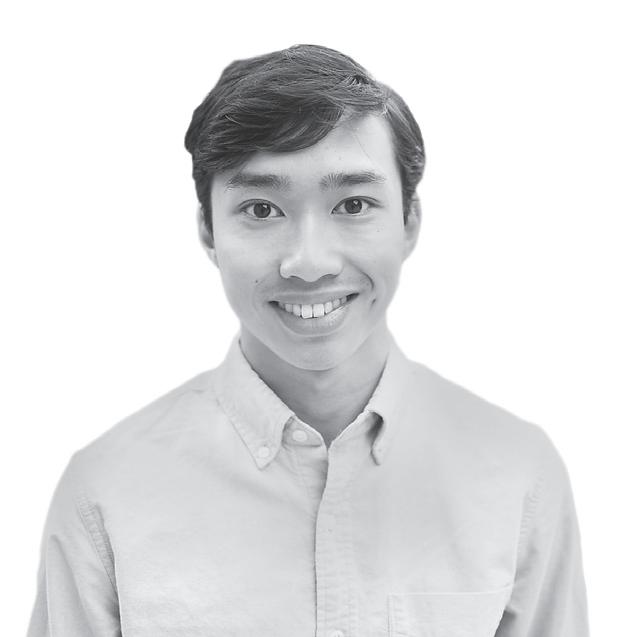
Bailey Willett ’20
Willett’s research into influenza can also help with research into more rare diseases which are harder to model. One example is the Nipah virus, a highly virulent disease whose properties still remain murky. Although not much is known about it, the fact that it, like influenza, is respiratory disease and has the same structure, means that influenza research could very well contribute to our body of knowledge on these rarer diseases like Nipah and how to combat them.
“Being able to see how little [of the vaccine] we would need is really important for vaccines because we don’t want to overexpose a human,” says Willett. “We want the highest amount of response we can get for immunity with the least
Through her work, Willett hopes to provide insight into how the influenza vaccines of the future might protect against influenza pandemics, and ultimately protect generations of children and adults from the ever-changing influenza virus.
Tucker Hwang can be reached at mch825@cornell.edu.
By
New forms of science communication are constantly emerging. While books, journals, and newspapers still contribute to furthering science literacy, members of younger generations are now turning to online sources to educate themselves on the latest scientific developments. One of the more popular online sources are podcasts: a hands-free way of absorbing concise information in the car, at the gym or walking to class. For college students, this form of media is especially appealing due to the lack of reading required — a refreshing break from the often cumbersome amount of pages assigned to students on a weekly basis.
Brenner ’20. “We all bring different things to the table.”
While the podcast is centered around issues relating to climate change and thus is mainly science-based, it is not meant to be exclusively for STEM students. According to Julia Kapuvari ’19, an environmental and sustainability science major involved with the podcast, the episodes are meant to be “more digestible for a non-STEM audience.”
The goal is also to hopefully expand beyond just the Cornell community.
“Ideally, we want to reach a broader audience,” said Brenner. “We’re planning to make it accessible to everyone who has an interest in climate change.”
“Climate change is so interdisciplinary, it’s a humanist issue.”
This semester, the Cornell Institute for Climate Smart Solutions has joined the podcast trend with the release of its new student-run podcast, Down to Earth: Cornell Conversations About... The podcast is meant to serve as an open discussion about climate change led by students who are both interested in and knowledgeable about various relevant topics such as sustainable development, climate justice issues and biodiversity threats .
Julia Kapuvari ’19
The idea is to “bring the conversation back to climate,” said Danielle Eiseman, the podcast’s faculty supervisor, in its premiere episode. Eiseman also serves as program director of CICSS.
The podcast first began development last November after Eiseman pitched the idea to Engaged Cornell. After receiving funding and holding tryouts for members of the student community at the end of last semester, five undergraduate students of various years, majors, backgrounds and interests were selected to participate.
“All of us have our own specializations,” said Jake
This goes along with a recent trend in the climate change mitigation movement: increasing climate “literacy.” This idea involves increasing the comprehension and knowledge of climate science to eventually bring about more awareness and concern for the future consequences of anthropogenic climate change. One way to approach this is to stress how, in one way or another, it interacts with every aspect of society.
“Climate change is so interdisciplinary,” said Kapuvari. “It’s a humanist issue.”
Currently, six episodes are available on Spotify. The first, titled “Community Energy,” was recorded this summer by Eiseman and Brenner with special guest Terry Carroll, a Cornell Cooperative Extension Tompkins County Energy Educator. The episode delves into the challenges of switching to sources of sustainable energy and engaging in sustainable farming practices in small communities where climate literacy is not widespread. The second episode, “Ecological Footprints,” which was released on Sept. 19 is slightly more interactive and encourages listeners to accompany the student hosts as they calculate their individual
contributions to global carbon emissions.
“We definitely want to encourage listeners to interact with us,” said Brenner.
To listen to the podcast, search Down to Earth on Spotify. It is also available to listen to for free on the CICSS website. New episodes will be released every Wednesday.
Eleanor Bent can be reached at ebent@cornellsun.com.

BY ZACH LEE Sun Staff Writer
Sony’s Venom can best be described as an exemplification of “if it ain’t broke, don’t fix it.” The superhero genre is simultaneously at the peak of its powers with a whopping 10 films set to be released in 2019, yet for many, the genre has become hackneyed and contrite, offering predictable and contrived storylines that do not take risks. Everything about Venom , from its comic-accurate presentation of its titular character, the Lovecraft-ian horror influences, to its mocking tagline (“The world has enough superheroes”) demonstrated to viewers that it wanted to be more Logan than Guardians of the Galaxy : a thought-provoking genre film that set out to do more than merely entertain. And while the world may have enough superheroes, Venom only augments that argument by its existence rather than subverting it with what it could offer. To its credit, this debut film of Spider-Man’s cannibalistic and violent arch nemesis (note: the wall-crawler himself is nowhere to be found in this flick) lives up to its name: it is not the “cure” that it so clearly poised itself as to the banality of current superhero films but instead the very poison that made readers want to settle for the present state of the genre. Sadly, despite the richness of the character’s backstory in the comics, the film tries so hard to convince its viewers and itself that it is not a superhero movie that it ends up not really being much of a movie at all.
decision-making. Much of the film moves at this pace, often setting up a character or plotline and focusing on it for a small amount of time before moving on with the story. I had barely gotten to know Eddie’s character before he had bonded with the Venom symbiote and was fighting against the other symbiote, Riot, toward the film’s end.
Indeed, for a character who is defined by Spider-Man, director Ruben Fleischer admittedly had an uphill battle

Despite the horrid pacing, Tom Hardy’s performance, as well as those of the rest of the cast, save the film from being Fantastic Four levels of awful. Brock’s interactions with the symbiote are the highlights, with the symbiote’s dark humor pairing nicely with Brock’s nervous but committed character. Riz Ahmed lacks the scope of emotion Hardy employs, although he plays the “evil businessman trope” to the best of his ability. Michelle Williams is thankfully given more to do than simply be the main character’s girlfriend and remains headstrong and independent, with her and Brock being portrayed as equals. Additionally, Ludwig Göransson, fresh off of scoring Black Panther , returns with a superb soundtrack for the film, swapping out brighter tones for darker and more menacing ones.
This is most egregiously exemplified in its world-building. From the get-go, audiences see that Eddie Brock (Tom Hardy) is an honest reporter, looking out for those at the mercy of large business corporations. This is only really shown through a few interactions and by the time he gets fired for trying to expose Life Foundation CEO Carlton Drake (Riz Ahmed) for cruelly recruiting homeless individuals for science experiments, you do not know whether to feel sorry for him or to criticize him for poor
when creating an origin story without the wall-crawler in it. What he and the other script writers came up with, however, still feels uninspired. They at first cleverly mirror Peter Parker’s story by making Edie a reporter, but too quickly, Eddie’s story falls prey to tropes. By removing Spider-Man (who was a key to Venom’s origin) and failing to add anything better to replace it, nothing makes Eddie Brock compelling as a character. Even the film’s action sequences devolve into a smorgasbord of CGI craziness and while it is exciting to see the raw power of the symbiote clash against SWAT soldiers, the climactic fight where Venom fights with another symbiote is so choppily edited and chaotically filmed that it looks like someone throwing black and silver paint at a wall.
Right before Venom is about to fight with Riot, one of the most powerful symbiotes, Eddie debates with his symbiote about whether or not a head-on attack is a wise idea. Brock’s symbiote admits that the duo is “way out of their league” when it comes to fighting Riot, but the two eventually decide to sacrifice themselves, uttering a triumphant “screw it...let’s save the world.” While this made for a cool scene, it did not make sense in the narrative. It feels as though the same strategy was applied to this very film, where rather than carefully considering how to organically introduce Venom’s character, it was rushed. It was previously reported that Venom potentially could have had an R-rating and many believed that it would have done justice to the character and made the film better, but it would have only made the film’s poor pacing, lack of development and abundance of cliches only more apparent. Thus, while Venom is an entertaining action flick, it never meets the potential of the sources it is based off of and shows that without the presence of its “host” Spider-Man, it is merely a gelatinous array of interconnected plot lines that barely form a plot.
BY JESSICA LUSSIER Sun Contributor
Heidi Heilig’s new book, For a Muse of Fire pulls the reader into a vibrant, lush world inspired by Asian cultures and French colonialism. The story follows Jetta Chantray, a young Chakran shadow player of the Ros Nai troupe, as she and her family strive to win passage to Aquitan, the home of the Aquitan emperor and a spring rumored to cure madness. But Jetta’s malheur, her madness, is only one of the secrets she keeps. Jetta has the ability to slip souls into new skins, and in a world still haunted by the brutality of the mad nécromancien Le Trépas, the old ways have been abolished, punishable by death or worse.
Heilig weaves a complex tale, balancing the powers of colonization, rebellion and a family caught in between. The novel revolves around the Chantrays
and the LeGardes and their intersections drive the events of the novel. Family relations and their functions have literal power: Blood is how Jetta binds spirits to their new cloth bodies, and in the same way, blood connects, forms and informs the characters through family relations, but the novel also reminds us that it doesn’t have to. Blood and the power it has is ultimately the result of a choice.
In structure, the novel mixes prose, song, letters, telegrams and play writing, a technique that calls attention to its own construction. The opening lines hearken back to Shakespeare’s Henry V , but the similarities largely end there. What does remain is a consciousness of performance. As a shadow player, Jetta performs for an audience behind a silk screen, masquerading her abilities as nothing more than the magic of theater. But just as she performs for an audience, so do many of the characters in the novel. Rebellion, colonization — these are acts,
performances, of their own. Each side perpetuates an image of itself and of the other, branding evil and good when in reality, the truth is far more complex.
As the structure shifts, however, the characters provide a narrative focus. Primarily narrated from the point of view of Jetta, the reader sees the world through her eyes, and this world is a beautiful one. In Jetta’s eyes, the dead do not disappear forever. They linger, luminescent, waiting to be reborn into new skins. As a character, Jetta is determined to help her family. Her power enables them to become the most famous shadow players in Chakrana, but she struggles with concealing both it, along with her malheur. Jetta is bipolar, prone to manic and depressive episodes, a reality that the novel does not shy away from. She constantly wonders how much she can trust her own judgement, unsure of where the impulse is coming from, but this is just another
part of her character, not overblown or exaggerated.
As a whole, the novel is immersive in scope, presenting a highly detailed world. The characters are well-rounded and engaging: each has secrets and surprising connections. The twists are predictable but satisfying as more and more links are revealed between characters and they begin to come together on the page. The true strength in the novel, however, is simply the power of family. Where many Y.A. novels show distant, abusive or deceased parents, For a Muse of Fire takes a different path. Family is everything; they support each other, care for each other and accept each other. Jetta takes most risks for her family, and she — and the story — are stronger for it.
Jessica Lussier is a sophomore in the College of Arts and Sciences. She can be reached at jll335@cornell.edu.
Independent Since 1880
136th Editorial Board
JACOB S. KARASIK RUBASHKIN ’19
Editor in Chief
JOHN McKIM MILLER ’20
Business Manager
KATIE SIMS ’20
Associate Editor
VARUN IYENGAR ’21
Web Editor
Editorials
GIRISHA ARORA ’20
Managing Editor
HEIDI MYUNG ’19
Advertising Manager
ALISHA GUPTA ’20
Assistant Managing Editor
Christian Baran | Honestly

Dbut a lot of people think it’s gross…I’ve only ever seen any of my friends smoke cig[arette]s while drunk.” The only real bummer to ingesting nicotine is the fact that it may cause cancer.
Ad Layout Emma Williams ’19
Design Deskers Megan Roche ’19
Lei Lei Wu ’21
News Deskers Yuichiro Kakutani ’19
Sports Desker
Arts Desker Viri Garcia ’20
Meredith Liu ’21
Raphy Gendler ’21
Science Desker Amol Rajesh ’20
Photography Desker Michael Li ’20
Production Deskers Sarah Skinner ’21 Katie Reis ’20 Working on Today’s Sun
THIS NOVEMBER, VOTERS ACROSS THE NATION WILL HEAD TO THE POLLS to choose their representatives in Congress, in governors’ mansions and in state houses. Tragically, dear reader, you probably won’t be one of them; after all, fewer than 20 percent of eligible Americans 18-29 cast a ballot in 2014. That makes our cohort the least likely of any age group to vote — that is, according to the statistics.
Here’s what we say to that: fuck the statistics.
Voting is the most important way in which you can engage in the political process. Unless you’re a billionaire super PAC sugar daddy, the ballot is the most powerful tool in your civic arsenal, especially during election time. If you don’t like ’em, the ballot is how you vote ’em out. If you do like ’em, it’s how you keep ’em in. And if nothing else, the past month has made clear that elections and their victors have enormous import on the path of the nation.
But! You cannot vote if you are not registered to vote. And this Friday is the last day you can register in the State of New York. Cornell students, you’re not planning on voting by absentee back at home, or if you’re not registered at all, you need to register in New York, and you need to do it by Friday, Oct. 12.
There are a few ways you can register. If you have a New York driver’s license, you can do so online, at https://dmv.ny.gov/more-info/electronic-voter-registration-application. If not, you have two other options. You can fill out the standard voter registration form (available here in English and Spanish http://www.elections.ny.gov/votingregister.html) and mail it to the Tompkins County Board of Elections. Or, if you’re feeling mobile, you can go directly to the county board, located at the Court House Annex, 128 E. Buffalo Street, and fill out the form in person.
Whichever method you choose, you must do it not later than this Friday, Oct. 12 After you register, read up on the various candidates — in The Sun and elsewhere — so you can make an informed decision on Nov. 8.
Voting is important, folks. Don’t just be another statistic.
CORNELL IS A COLD, ISOLATED AND UNFORGIVING PLACE. Located a five hour drive away from anywhere that’s anywhere, this university constantly finds ways to remind its students that they really are in the middle of nowhere. It is a shame, then, that when the outside world comes to Cornell, it does so in such an inaccessible manner.
We speak, of course, of the upcoming “Fireside Chat with Justice Sonia Sotomayor,” which will be held on Thursday, October 18, in Bailey Hall. Unfortunately, this “mustsee” event will likely be a “can’t-see” event for most Cornellians, as it will not be recorded or live-streamed. Though this is per the request of the Supreme Court itself, we humbly petition the almighty eight in Washington, D.C. to reconsider their opinion on this matter.
Justice Sotomayor is one of the most fascinating jurists of our time. In her prolific career, she has worked as a prosecutor, trial court judge, even as a lawyer for luxury fashion house Fendi. Now she sits on the Supreme Court, and has emerged as a clear-eyed, forward thinking voice for that body’s progressive wing. Her searing, defiant dissenting opinions place her squarely in the tradition of Justices Robert H. Jackson and Ruth Bader Ginsburg ’54 (whose Cornell talk was recorded back in 2014), and we are thrilled that Cornellians will have the opportunity to hear her speak in person.
We are not thrilled at the lack of accessibility for this event. It is understandable that in-person admission is limited, though the event organizers should have specified beforehand that only 400 tickets would be available for undergraduates at Willard Straight Hall last Thursday. It is unfair to the students who missed class or made other special efforts to be there, only to be turned away after waiting on line for an extended period of time. Furthermore, a 10 a.m. Thursday release disadvantages students with unavoidable academic or work commitments. A late afternoon or weekend release might have democratized the process.
But the real travesty is that Justice Sotomayor’s event will not be livestreamed, or even recorded. It is a cruel trick to bring such a captivating speaker — one who is guaranteed to attract a huge audience — and then limit her reach to the people who can physically fit in the room. Access to guests like Justice Sotomayor is one of the cornerstones of an Ivy League education, and it is important that such opportunities are as widely available as possible. The event should be live streamed, or at the very least recorded for later viewing, so that the hundreds or thousands who were unable to get tickets can still remain engaged.
To Chief Justice Roberts and the assorted supremes: at your alma maters (Harvard, Harvard, Harvard, Harvard, Harvard, Yale, Yale, Yale) these events may be commonplace, but here in Ithaca we go months and years on end without this much excitement. Please don’t limit the party to Bailey Hall when so many more wish to be involved.
And to our readers: The Sun will be in the room to do the job others won’t, and rest assured, you’ll be able to read all about Justice Sotomayor in the pages of your friendly neighborhood nation’s oldest continuously independent college daily.
rugs. We love to love them. Feeling tired? Sip some coffee. You’re stressed? Smoke a little bud. Feeling extra edgy? Drop some acid. Need something to brighten the monotony of driving or doing homework? Whip out the Juul. Want to look like a douchy 8th-grader? Rip your Juul in public. Or, better yet, talk about Juuling in front of strangers. Whatever your ailment, there exists a cure in the wet and wild world of drugs.
I think I can safely say that almost all of us here at Cornell have ingested some kind of drug at some point. And most of us hold opinions about which drug is the best. Of course, the merits of nearly all drugs are situation-dependent. It can be said that there is a time, place, and feeling for every drug. After all, nobody goes to a party to get lit smoking cigs. That’s the domain of alcohol. Similarly, if you wanted to hunker down and get some work done, you probably wouldn’t bring along your shot glass. A Monster or a cup of coffee would be better suited to that occasion.
Still, everyone has their favorite drug, and some drugs are definitely better than others. Better is an ambiguous term, and that can’t be helped. As of yet, there’s no official index for rating the pleasure induced by ingesting drugs. And since I’m not writing a dissertation on the subject, I’m not going to try to make one. I will, however, use the slightly sketchy ratings compiled by the Global Drug Survey.
Alcohol (GDS Pleasure/Prevalence Rating: 5/92.69%)
Well. This is undoubtedly the Big Papa of the drug family. He’s rowdy, he’s everywhere at once, and you can be damn sure that he’s not going anywhere anytime soon. Alcohol is the optimal drug for many because it’s legal for most, easy to ingest and intake control is as simple as looking down at a label. Furthermore, the response to alcohol is relatively uniform. While different people may have varying reactions to ingesting cannabis, partaking in alcohol almost always results in the trademark buzz and loss of inhibitions, barring, of course, excessive consumption. Getting drunk can help to let loose and forget about your problems. One freshman, who asked not to be named because he is underage, says he prefers alcohol to all other drugs because when he “let[s] the liquor do the thinking it eases the pain.”
The major downsides to alcohol include the possibility of death from over-consumption, hangovers, and the ease of losing control of one’s actions while under the influence.
Nicotine (GDS Pleasure/Prevalence Rating Nonexistent)
Nicotine was once the cool Grandpa of the drug family. With the surge in popularity of e-cigarettes and other vaporizers (cough, cough, Juuls), it has become the annoying little brother. In private, he’s fine. Get him in public, and suddenly your face is locked into a repulsed cringe. That being said, Juuls and other vaporizers are great for ripping while bored or while under the influence of other drugs. They’re discreet, they’re convenient and they provide a good, albeit transient, head rush. Most students here, if they do ingest nicotine at all, generally do so via vapes. According to a sophomore I spoke to, “dip is probably the second most common [form of nicotine ingestion behind vaping]…
Cannabis (GDS Pleasure/Prevalence Rating: 48/63.14%)
Cannabis. This is the cool cousin of the drug family. For many, the preferred form of ingestion is smoking, although sundry other methods exist, including eating ‘edibles’ and drinking cannabis-infused beverages. This is a drug better suited for a chill social setting, as opposed to boisterous gatherings. Most find the effects of cannabis to be more fun than alcohol, which essentially just impairs your senses and dampens your cognition. A Cornell student is partial to cannabis because of those effects, citing one experience in which he “smoked [himself] into the fourth dimension [and]… [saw] everything from outside [his] body.” Another anonymous student, slightly more coherent in his explanation of his affinity for the drug, said cannabis “is more fun, less damaging and easier to use than all other drugs I’ve tried thus far…[all] while being non-physically addictive and removing risk of overdose.” As the legality of cannabis becomes increasingly common, cannabis will become more widely accepted and casually used. Major downside: it’s still illegal in most places.
Ancillary Drugs
Although the Big 3 — alcohol, nicotine, and cannabis — may be the most popular drugs, there are many others worth mentioning. Caffeine, in my opinion too mundane to have been given a whole paragraph, nevertheless is used on a daily basis by countless Cornell students to sustain their focus. Anna Lifsec ’21 appreciates the psychological value of ingesting caffeine in the form of coffee. “I know lots of people who really benefit from…getting a large coffee and…sitting down and grinding,” says Lifsec. “Something about making that purchase…makes students say to themselves, ‘Now I’m going to be really productive.’”
A freshman I spoke to prefers LSD to others drugs, explaining “it’s not inherently dangerous unless you take it in large amounts…and it provides new perspectives about…your purpose.” The feeling of “being handed control of your own perception” is what a junior told me is his reason for favoring acid. An L.A. native here at Cornell says DMT, a powerful psychedelic, is seconded by jenkem, an unusual hallucinogen fermented from human waste, as his favorite drug. “[Jenkem] is cheap, easy to use…[and] can be made easily with cat spray (cat piss, essentially) substituted in for human excrement.”
For those of you who don’t use drugs, or use them sparingly, this article may have felt a bit unrelatable or intimidating, but you don’t need drugs to be cool or to have fun. People don’t say it — they may even try to say the opposite — but most have immense respect for those who abstain from drugs. They couldn’t do it, so they try to pressure you into caving. Well, I say kudos to you, and keep on keeping on!
Christian Baran is a freshman in the College of Arts and Sciences. Honestly runs every other Friday this semester. He can be reached at cbaran@cornellsun.com.
Waterfalls, luscious foliage and beautifully crafted gorges created by Mother Nature herself are all located within our college campus. We’re just a couple steps away from nature thriving in its prime time, flaunting its true colors. I’m not writing
that keeps us grounded. Under the LED lights and the shadows of our internal and external pressures, we churn our gears exhaustingly because if we stop, we’ll slip and fall.
We “live in the middle of nowhere,” but sometimes that’s what we need. Merely living becomes a task — another item on a never-ending to-do list — and
our order of priorities can become wrongfully disarranged.
to advertise the Fall Creek gorges or to convince parents and prospective students. Instead, I’m writing as an overthinking and overstressed individual telling you just how great flowing water and tiny dandelions can be.
Over the weekend, I went on a Fall Creek Gorge Trail Hike, motivated to familiarize myself with the overlooked and neglected beauties I never took the time to deeply appreciate. I mean what other university has a waterfall flowing right through campus? Fifteen minutes before the hike, I took a nervous glance at my planner, which resulted in a surge of indecisiveness for the fifth time. I have things to do, assignments to conquer — I don’t have time for this. But, I decided to pay the price later and take advantage of the perfect opportunity to empty my mind.
One of the first things Todd Bittner, the Cornell Botanic Gardens Director of Natural Areas, told us that actually dramatically changed my perspective entirely was that ten minutes was enough to completely change your brain chemistry.
As we sit in those wooden chairs in the library for hours on end, staring at our radiating computer screens and the indecipherable chicken scratch in our notebooks, we deteriorate. We breathe the same air, we force strain on our neurons and we pull on the anchor
So, 10 minutes is all it takes. The imminent headache, clouded eyes and entrapped stress can all dissipate within minutes of merely standing in the outdoors. In pursuit of this desired state of body and mind, we proceeded with our little adventure down the gorge trails, and I was filled with immense awe and a refreshing sense of emptiness. Surrounded by green and orange, feeling the slight drizzle resting on my cheeks and inhaling the crisp, pure air, I felt suspended in a timeless space. I didn’t think about anything else — I purely relied on my senses to guide my train of thought.
Literally a five-minute walk from West Campus and a minute walk from North, this heavenly realm lies just within our reach. Ithaca has far from nothing — rather, it nurtures a preserved gem that we’re so lucky to have so near and dear. Within this forest, our university’s history is engraved into every rock, tree, pebble, waterfall and stone bench. Through thick and thin, the gorges are living fragments of the past, continuing to represent Cornell as its most notable landmark. Other than the gorges, we also have the perfect picnic spots on the Ag Quad or the glorious Libe Slope. We live atop a beautiful hill within the depths of Mother Nature’s very own gift to us.
that’s what we need. Merely living becomes a task — another item on a never-ending to-do list — and our order of priorities can become wrongfully disarranged. We have the perfect opportunity to bask in the sun, jump in the leaves and appreciate the tangible beauty of the world from which we live and breathe. We can easily distance ourselves from the constant rush of everyday life, which slowly eats away at our emotional stability. By breaking free and releasing such dispiriting thoughts, we’ll be doing ourselves a huge favor.
If my spiel isn’t convincing enough, the effects of nature on mental health are further validated by numerous studies that have repeatedly shown a real, inverse correlation between exposure to nature and prevalence of mental disorders, such as depression and schizophrenia. According to a Stanford study that was conducted in 2015, participants who spent 90 minutes in a natural area had a significantly lower risk of depression than participants who spent 90 minutes in an urban setting. Nature’s more than a “waste of time” or “just a bunch of trees.”
So, 10 minutes is all it takes. The imminent headache, clouded eyes and entrapped stress can all dissipate within minutes of merely standing in the outdoors.
I realize that now I must really sound like a tour guide desperately trying to sell the school in its best light. And yes, I’d love to whip out the notorious “gorge-ous” pun with every opportunity there is, but the main point I want to focus on is self-care and promoting strong mentality.
We “live in the middle of nowhere,” but sometimes
COur personal counselor Mother Nature is available 24/7 without needing an appointment. It truly is a soul-cleansing experience, whether it be sticking your face out the window or watching the sun set on another day from outside the library entrance. The long to-do list won’t finish itself, but with a new, invigorating sense of willpower and calm jubilance, you’ll just become limitless.
Alexia Kim is a sophomore in the College of Human Ecology. Who, What, When, Why? runs every other Friday this semester. She can be reached at alexiakim@cornellsun.com.
ornell can do better in preparing students to solve the world’s environmental problems. Because the coursework offered is still too focused on theoretical approaches, rather than on practical knowledge, we simply do not have the skills nor attitudes to move forward. I thank the enrichment efforts that have taught us that our generation’s most crucial problem is perhaps not geopolitical turmoil, like World War III or a nuclear holocaust, but rather the environmental changes that are happening literally everyday. They clearly have accomplished much: many surveys, like a World Economic Forum 2017 study, shows that young people worry the most about the environment. We get it.
In 2018, however, Cornell is still largely preaching to the choir. For example, Hardin’s Tragedy of the Commons is now a mere cliché in sustainability courses. Without discussing Hardin for the tenth billion time, we can simply look at history to know that complete reliance on states, markets, or people to solve any problem will lead to nowhere.
Absolutist control causes more harm than good because governments themselves can very much be corrupt — see Mao’s Great Leap Forward, Stalinism, Fascism, etc. Leaving everything to the markets also doesn’t work because market actors often ignore the externalities they cause to the environment — see the
Gilded Age, Roaring Twenties, deregulation of the 1980s. Community-based actions are also largely ineffectual because of plain personal disagreements and the lack of mechanisms to deal with them — think of any social situation from a
an engineering, economic, political and ecological challenge, and the coursework should reflect this reality. If anything affects ExxonMobil’s bottom line, it’s whether their oil rigs work and commodity prices rise. So why are we not learning
Rather, it seems to me, the environmental problem of our lifetime is largely an engineering, economic, political, and ecological challenge, and the coursework should reflect this reality.
student club meeting to organizing a dinner party. States, markets and people need to cooperate and fill in each others’ weaknesses to effectively protect our environment. Governmental bans are very effective for point source pollutions, for example, but markets are more effective in dealing with pollution that is fundamental to societal functions or non-point sources like carbon dioxide and methane. The pattern is clear: whenever there are opposing radical theories, the solution probably lies somewhere in between.
Rather, it seems to me, the environmental problem of our lifetime is largely
how these industries and their finances work? Why are we not learning about supply chains and how we can make them more sustainable or how cutting it will affect society? Why are we not understanding why there is so much backlash and apathy from the populace on environmental issues and how we can nudge lifestyle changes? Why are we spinning our wheels with value judgements and theories that we can argue about literally ad infinitum.
What everyone can agree with, however, is that our current course is simply not sustainable for our society and
we need to nip it in whatever way we can. According to the latest report from the Intergovernmental Panel on Climate Change, the world has a mere 12 years to slash global emissions by 45 percent in order to limit global warming to 1.5 degrees Celsius. Cornellians should act and take part in this fight. Spending our time combing through philosophical constructions, however, is another form of inaction that won’t add much. Can you imagine a conference on solutions to reducing Botswana’s reliance on coal and someone suddenly brings up, “But Dryzek, in his The Politics of the Earth, says on this page…”? Climate change’s a chess competition and we’re still playing checkers. To be clear, Cornell students can learn theories. We are capable of understanding logical relationships and memorizing vague terms an environmentalist came up with in the ’70s. We can’t afford, however, to continue living in a world of abstraction and pat ourselves on the back, anymore. We need to pick up tangible skills and learn how things work in governments and markets and then change them. We care about the environment, so why isn’t Cornell teaching us more on how to do something about it?
Matthew Lam is a senior in the College of Arts and Sciences. The Despatch Box runs every other Wednesday this semester. He can be reached at mlam@cornellsun.com.
Fill in the empty cells, one number in each, so that each column, row, and region contains the numbers 1-9 exactly once. Each number in the solution therefore occurs only once in each of the three “directions,” hence the “single numbers” implied by the puzzle’s name. (Rules from wikipedia.org/wiki/ Sudoku)

by Jeffrey Sondike



3
LUXURY AT REASONABLE PRICES 5 & 6 BEDROOM ON LINDEN AVE 8 BEDROOM ON CATHERINE ST. AVRAMISREALESTATE.COM 607-272-3389
COLLEGE AVE. 1 Bedroom available In a 2 BR
For Male, Undergrad student. Available NOW & Spring 2019
4 Bedroom Apartment Available NOW & Spring 2019 Novarr-Mackesey Property Management office@ithacastudentapartments.com 607-277-1234
Collegetown STUDIO 2019/2020 QUIET STREET only 1/2 Block from College Ave. Roomy - Fully FurnishedHardwood Floors 607-351-3898 Email: marthabell004@yahoo.com
We have availability for the 2019-2020 school year beginning June 1st at Hudson heights apartments. The studio apartments come with: heat, water, and electricity included. There are garbages houses and coin-operated laundry facilities on site. Prices start at $750/month for a 12 month lease. If you have any questions or would like to schedule a tour contact us by phone 607-208-7660 or email: renting@ithacaLS.com
>>AFFORDABLE, QUALITY LIVING<<
Special Deals for you! Furnished 1-6 Bedrooms Collegetown Apartments PARKING, LAUNDRY, UTILITIES! (607) 273-7368 www.IthacaApartmentRental.com
***************************** RENT NOW, GET THE BEST www.MatoulasHouses.com Apartments & Houses In Collegetown LINDEN AVE & E. SENECA ST 1 & 3 BEDROOM APARTMENTS ALL FURNISHED EMAIL: MatoulasHouses@Gmail.com PHONE: (607) 339-9644 FIRST-COME, FIRST-SERVED *****************************
Collegetown Terrace Apartments INSPIRED LIVING TAILORED TO YOUR SUCCESS 24-Hour Fitness Center Shuttle Bus Service to Campus Study Rooms w/ Expansive Views Apartments Available NOW, Spring 2019 & 2019/2020 Novarr- Mackesey Property Management collegetownterraceithaca.com office@ithacastudentapartments.com 607-277-1234
FOOTBALL
Continued from page 12
the first half or not, I’m obviously going to say no. You hate to see anybody get hurt. … We’re kind of all in this together,” Seggebruch said. “But it definitely helps. We gameplanned for him, he’s an incredible athlete. Him not being on the field definitely helps our defense.”

Don’t let the wind blow your paper away
“I’m sure it took some offensive firepower from them,” Archer added. “You don’t wish it on anybody. Even if you’re playing an opponent, you want them to be at their best because it forces you to be at your best.”
Harvard scored on the first drive of the game and a puntfest ensued for the following eight drives before Cornell senior quarterback Dalton Banks was picked off while firing deep in Harvard territory.
Five plays after Cornell’s first turnover of the season, on the ninth punt of the game, luck finally turned.
Junior receiver Dylan Otolski broke through the Crimson line and blocked a punt off the foot of Jon Sot. Junior linebacker Justin Bedard scooped up the ball for the 15-yard score to finally put the Red on the board with 4:53 left in the first half.
“That was the spark we needed,” Archer said.
Three of the next four scores belonged to the Crimson, all of which came with starting quarterback Jake Smith being relegated to the bench in favor of Tom Stewart, who, before Harvard’s loss to Rhode Island last week, hadn’t thrown an in-game pass since 2016.
Sandwiched in the Harvard onslaught was a 32-yard rushing touchdown from junior quarterback Mike Catanese on the Red’s second drive of the third quarter. The junior kept the ball for himself on a read option for his third touchdown of the season to temporarily tie the score at 14.
After a Harvard field goal, Stewart found Henry Taylor for a 29-yard strike and Harvard ultimately capped off its run with its lead ballooned to 10 and 10:13 left to play.
That’s when flashes of Banks from his all-Ivy honorable mention sophomore season forced their way into Archer’s head.
Catanese started the ensuing
drive with a six-yard rush and added a short gain with his feet a few plays later, but it was finally Banks’ time to shine. The senior found Peters for a 10-yard pickup to encroach on midfield, then found sophomore receiver Eric Gallman and Peters again for another pair of double digit pickups.
It was a forced deviation from Cornell’s run-first gameplan this season. Harvard loaded the box all day long and held the Red to just 155 yards on the ground. But junior running back Harold Coles was able to cap of the drive doing what he — and the Cornell offense — does best with a 34-yard touchdown run to bring Cornell within three.
After a Harvard three-and-out and a weak punt from Sot had the Cornell offense on its own 37, Banks and the offense had a chance to build on the prior drive. Only this time, the Red flipped the script from the previous series. Catanese and Coles combined for 30 yards on the ground to open the drive, then Banks stepped right back under center. On 1st and 10 from the Harvard 33, Banks faked a screen pass to senior running back J.D. PicKell, drawing the defenders just enough to allow Peters to break past his man.
In front of 8,040 roaring at Schoellkopf, Banks’ pass soared 33 yards right into the hands of Peters to cap off the wideout’s career day.
“He’s having fun,” Archer said of what he noticed in Banks’ clutch final drives, bring back memories of Cornell’s shocking comeback win over Colgate in 2016. “He’s enjoying his teammates, not feeling the weight of the world on his shoulders or something. He’s just playing ball.”
Two offensive drives with 4:30 to play were not enough for the Crimson, despite humming along on the final drive. On fourth down, a pass from Stewart under immense Cornell pressure fell right through the hands of an open Taylor, making the loss of Shelton-Mosley all the more palpable.
“All week we were saying, ‘What are you going to do when adversity strikes?’” Peters said. “24-14 with 10 minutes left in the fourth quarter, we answered. That’s all you can ask for.”

By
Call it earned confidence in Cambridge or call it the little brother casting in Ithaca, but for long, Harvard has reigned supreme over Cornell — on the gridiron, in the national rankings and, most palpable of all, in the self-deprecating jokes.
But in the first aspect, that may be changing.
Before last season, Harvard was victorious in 11 con secutive contests over Cornell football, with the last win coming in head coach David Archer’s ’05 senior season. But after Saturday’s come-from-behind 28-24 win over the Crimson, the Red is now the one who owns the winning streak in a bitter rivalry that extends far past the football field.
“What I like about the rivalry is that they have been the class of the league. You always have to play your best against the best, and that’s what those guys have been,” Archer said. “And I say that with a ton of respect. [They] are classy people. … To be able to beat them is good. There are teams in this league I don’t respect, and Harvard is one I have the utmost respect for.”
The Yale Undergraduate Sports Analytics Group gave Cornell a 38 percent win proba
Comeback | Junior running back Harold Coles, above, had a 34-yard touchdown run in Saturday’s win over Harvard.
bility on Saturday. Last year, Harvard was an 18.1-point favorite. But after scoring 14 unanswered points in the fourth quarter Sunday, it is Cornell which has secured mathematical upsets two meetings in a row, and the team feels its status as an underdog

“It’s not an upset to us, and we don’t really care what the outside world thinks who’s supposed to win,” said senior captain and linebacker Reis Seggebruch, who led Cornell in the win with 11 tackles — 2.5 for a loss — and two sacks. “We go into every game with the mentality that we are going to win.
“The underdog didn’t win today. The boss won.”
“I told the guys the underdog didn’t win today,” Archer reiterated. “In my book, two in a row is a streak.”
A punt returned for a touchdown began it and a 33-yard catch by a player with only six total receiving yards on the year entering
Saturday ended it. No matter the method, Cornell had, by final whistle, come from behind yet again to defeat its rival.
“Two years in a row. We knew we could do it, and we needed it,” said junior wide receiver Owen Peters, whose 33-yard touchdown sealed the victory.
Run-first has been Cornell’s offensive gameplan the whole season, but a loaded box by the Harvard front seven forced a change in scheme. Instead, the air attack dealt the final blow.
“Our receivers coach [Jordan Hogan] was telling us all week that we are going to run the ball, so be patient. You’re going to get paid,” said Peters, who had five catches for 112 yards. “All our receivers just trusted the offense, stuck to it and made the plays when we needed to.”
Likewise, stopping the run was once again the forecasted key to victory for Cornell. Instead, the pass defense prevented the Crimson from ever putting the game out of reach.
Aaron Shampklin ran the ball down Cornell’s throat for 191 yards on the day and a touchdown, but the Red’s secondary kept the Harvard receivers under 140 yards and forced the Crimson to change quarterbacks as halftime loomed. The change in personnel didn’t change Harvard’s on-field product in the air, unaided by losing do-it-all All-American Justice Shelton-Mosley in the first quarter with a leg injury.
“If I had to pick [whether to have] him go down in
After he made the Florida Panthers’ roster for the 2018-19 season, former Cornell men’s hockey defenseman Jacob MacDonald ’15 made an impact quickly, scoring his first career NHL goal on his first career shot in Florida’s 2-1 shootout loss to the Tampa Bay Lightning on Saturday.
On his very first shift as an NHL defenseman, MacDonald skated across the right circle from the point on a Panthers rush, gobbling up an errant pass from teammate Vincent Trocheck and burying it through the five-hole of Lightning goaltender Andrei Vasilevskiy.
“You know, as a kid, I grew up and that’s obviously your dream to play,” MacDonald told the media after the game. “And to go out there and have a shift like that, it was really exciting.”
MacDonald made the Panthers roster following a strong showing during the team’s preseason and came up big for his newest teammates, scoring the team’s only goal and ensuring Florida a point in its first game of the season.
Saturday night for MacDonald only came after he spent the past four years bouncing around the minor leagues. His latest professional stint came in 2017-18 with the Albany Devils — the top affiliate of the NHL’s New Jersey Devils — where he had an impressive 55 points in 75 games (20 points, 35 assists) as a blueliner to earn him looks from NHL teams.
At Cornell, MacDonald played in all of Cornell’s 31 games his senior season, tallying nine points on two goals and seven assists — good for second among the Red’s blueliners in the 2014-15 season. Thereafter, he signed a standard

contract with the now-defunct Elmira Jackals of the ECHL, then an affiliate of the Anaheim Ducks, before three more seasons in the minors to earn his spot on Saturday.
Cornell head coach Mike Schafer ’86 told The Athletic earlier this month that MacDonald, who entered Cornell as a true freshman out of high school, made significant improvements over the course
of his career in carnelian and white.
“He was really young when he came in,” Schafer said. “He was right out of high school, which doesn’t happen very often. Before he could grow offensively, he improved a lot defensively the first couple years in playing college, then his game just grew from there, as his confidence did.”
The Portland, Oregon native
MacDonald is the 31st Cornellian to play in the NHL and joins his classmate Joakim Ryan ’15 along with Riley Nash ’11 as the only Cornell hockey products currently on NHL active rosters, though several others could hear their names called up as the season progresses.
Dylan McDevitt can be reached at dmcdevitt@cornellsun.com.