
By MARYAM ZAFAR Sun City Editor
On Sept. 30, Kinen Kao ’22 posted sticky notes on the footbridge between Collegetown and the Engineering Quad, taping them over with packaging tape. The sticky notes — with one letter emblazoned per note — spelled out, “Stand With Hong Kong, Fight For Freedom.”
The next day, just the sticky notes that read “Stand With Hong Kong” were missing. Another poster, which Kao had printed and affixed on a lamppost on Thurston Avenue, was also partially torn — the words referring to Hong Kong had been ripped off.
shot a teenage protester with a live round — the first live shot since the protests began — as the People’s Republic of China celebrated 70 years since its founding.
Kao hails from Hong Kong himself, and said that pasting the signs, which read “Will You Stand With Hong Kong In The Fight For Freedom,” and “End The Tyranny, Fight For Autonomy,” were his way of contributing to a protest he wanted to be part of.
“I feel helpless here,” Kao said.
Many pro-Hong Kong posters across campus — hand-taped to bus stops, lamposts and buildings — were completely gone, Kao said.
Many pro-Hong Kong posters across campus — hand-taped to bus stops, lampposts and buildings — were completely gone, Kao said.
On Oct. 1, Kao returned to the bridge to repost his message for the second time. On the other side of the globe, police in Hong Kong
Removed | Posters supportive of Hong Kong protesters have been removed or desecrated, students allege.
Pasting the messages was a way to inform people of the conflicts over 8,000 miles away in Hong Kong — the contribution he felt he could make, the atmospheric sciences major said. Since June, people have taken to the streets in Hong Kong — beginning as peaceful rallies criticizing a proposed bill that would allow extraditions to mainland China, but more recently turning intermittently violent as police have cracked down on the demonstrations, The New York Times reported.
But where did the posters go?
Snapchat screenshots from Oct. 1, later posted to Reddit, showed a college-aged gaggle, clustered

By ALEC GIUFURTA Sun Staff Writer
A New York appellate court halted Governor Andrew Cuomo’s (D-N.Y.) ban on flavored e-cigarettes on Thursday, temporarily enjoining its enforcement. The ban, originally scheduled to take effect on Oct. 4, is now paused until the
New York State Supreme Court hands down a decision.
The New York State ban would outlaw all flavors besides tobacco and menthol. A proposed federal ban would ban menthol nationally. Despite this decision,
See JUUL page 4

By JOHNATHAN STIMPSON Sun News Editor
A former two-term governor of Wisconsin and 2016 presidential candidate for the Republican Party, Scott Walker will speak at Cornell University on November
“Governor Walker’s tenure in Madison reflected a serious commitment to conservative principles.”
Isaac Schorr ’20
4 at the invitation of the Cornell University College Republicans. Walker, who narrowly lost a reelection bid to Tony Evers (D-Wis.) in the
2018 midterm elections, has emerged in the past decade as one of the most polarizing figures in American politics — serving as a champion for small-government conservatives, while drawing the intense ire of labor activists for passing a series of bills that stymied public sector unions. “Governor Walker's tenure in Madison reflected a serious commitment to conservative principles and to the people of Wisconsin,” Cornell Republicans President Isaac Schorr ’20 told The Sun. “At a time when bluster per-

Work Talks
Work Authorization for International Students
10 - 11 a.m., 276 Caldwell Hall
Fire Safety Event
11:30 a.m. - 1:30 p.m., Memorial Room, Willard Straight Hall
Business Success in Private Practice
12 - 1 p.m., College of Veterinary Medicine, Lecture Hall 4
Office of Internal Transfer and Concurrent Degrees Walk-In Hours
3 - 5 p.m., Tatkon Center
On the Translation of Time and Race
4:30 - 6 p.m., Guerlac Room, A.D. White House
Global Health Summer Programs Information Session
5 - 6 p.m., 200 Savage Hall
Community Mushroom Medicine
6 - 8 p.m., 108 W. Green St
Equine Seminar - Donkeys Are Different 7 p.m., College of Veterinary Medicine, Level 1, Classroom 6 Tomorrow
I.P. & Pizza 12 - 1 p.m., 401 Physical Sciences Building
Information Session for New Health Care Policy Major 12 - 1 p.m., 3301 MVR Hall, Sloan Suite
I.P.-CALS Seminar - Shared Benefits of Academic, NGO and Local Community Partnerships: Observations from a Climate Resilience Scoping Study In Tanzania & Zimbabwe 12:20 - 1:10 p.m., 135 Emerson Hall
On Determining Unique Hues 12:20 - 1:10 p.m., T01 Human Ecology Building
Midday Music for Organ 12:30 - 1:15 p.m., Anabel Taylor Hall Chapel
Seminar With Andrea Monge, Ph.D. Candidate 1:15 - 2:30 p.m., 102 Mann Library
Mayor Svante Myrick ’09: Drop-In Coffee at the Engaged Cornell Hub 1:30 - 3 p.m., Kennedy Hall, 3rd floor
International Student Group Counseling 3 - 4 p.m., 276 Caldwell Hall
Women, Trans and Femmes Makers Night 4:30 - 6 p.m., 112 Mann Library
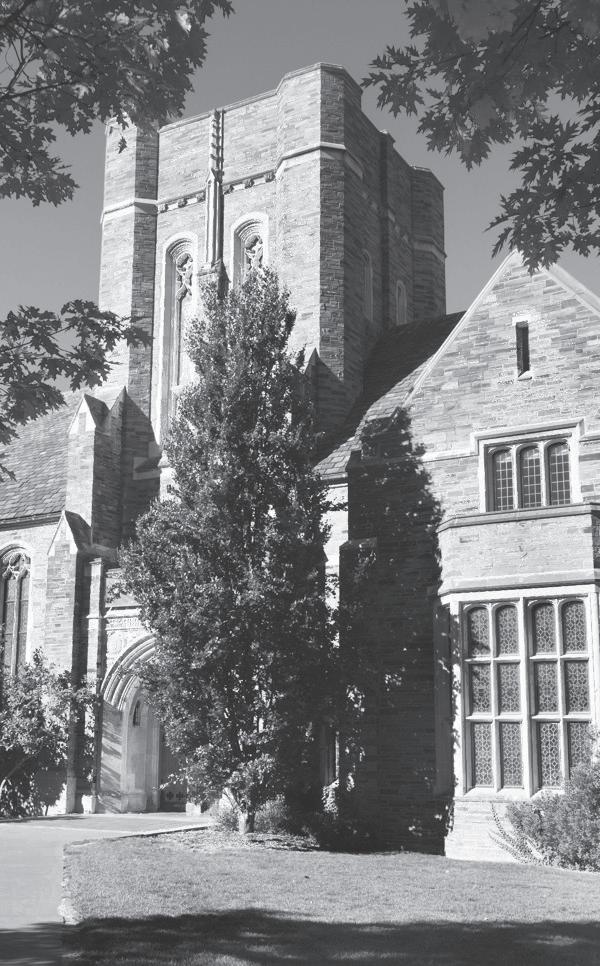
The bells of Anabel Taylor | On Wednesday, there will be a free concert in Anabel Taylor Hall’s chapel. Prof. David Yearsly, music, will be performing J.S. Bach’s St. Anne fugue and other ‘elaborations on the same theme,’ according to the event page.

By MEGHNA MAHARISHI Sun Staff Writer
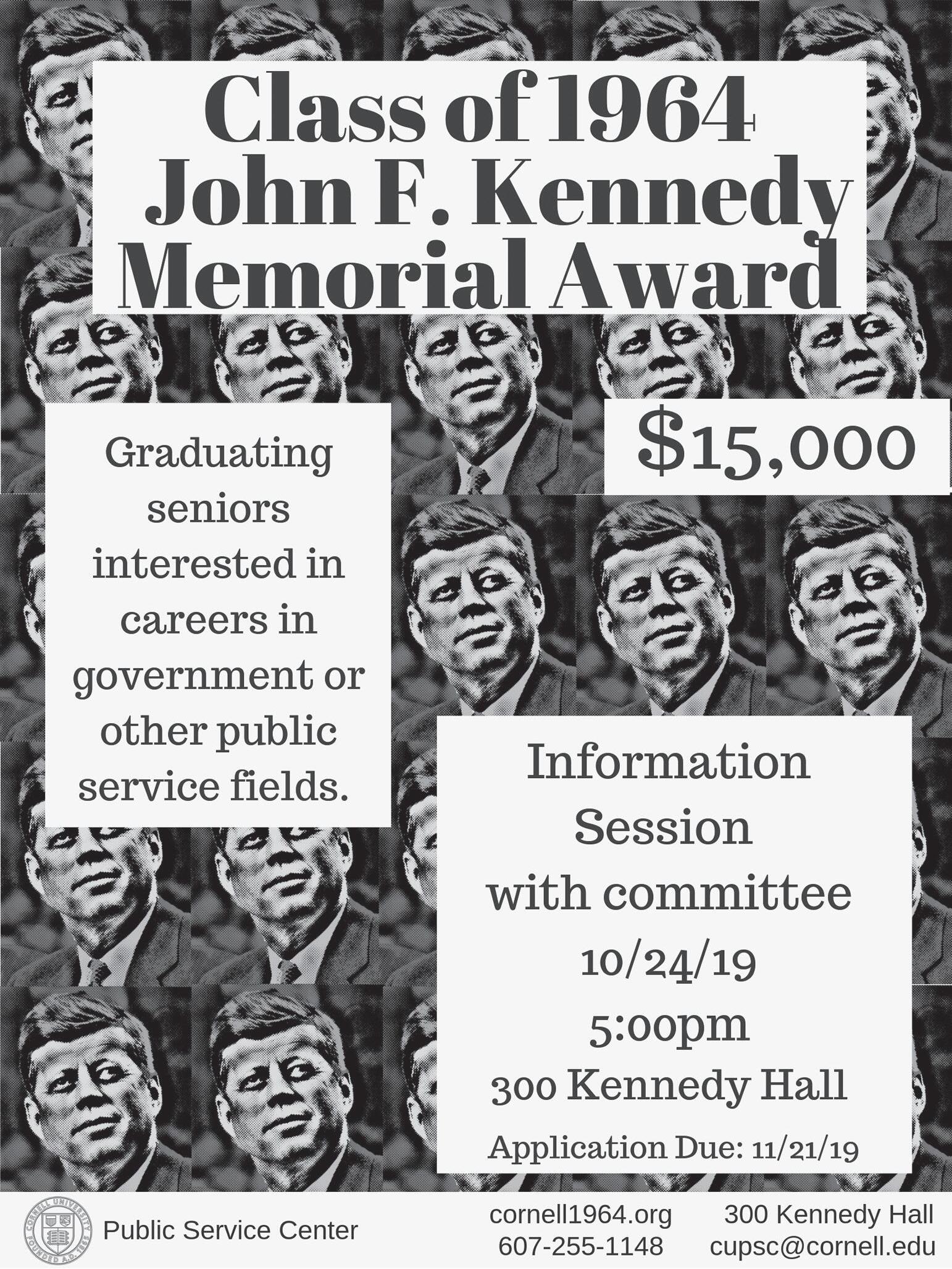
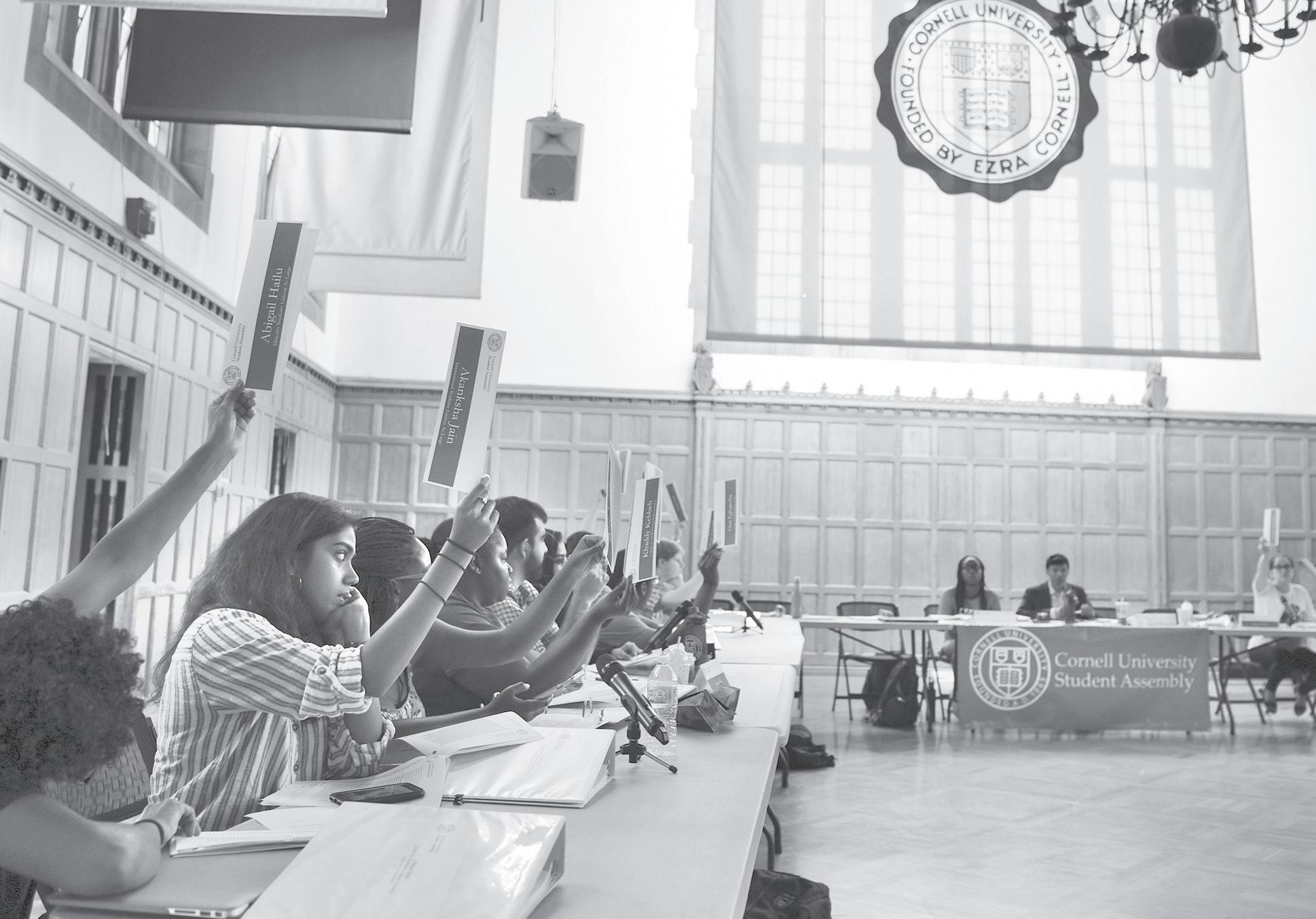
The Student Assembly appointed Liel Sterling ’21, founder of Cornell’s ACLU chapter and a candidate for Student-Elected Trustee last semester, to spearhead the new Office
co-sponsored by Sterling and S.A. Executive Vice President Cat Huang ’21.
“I’m really excited about it,” Sterling told The Sun. “This is an idea that I’ve had for a while and I’m really excited to see it finally implemented. I think it’s a big necessity here and I hope it makes a difference for students here.”
“This is an idea I’ve had for a while and I’m really excited to see it finally implemented.”
Liel Sterling ’21
of the Student Advocate on Thursday.
On Sept. 26, the S.A. unanimously passed a resolution to create a student-run office to counsel their peers when navigating Cornell’s administration issues ranging from grade disputes to Title IX violations. The resolution was
As student advocate, some of Sterling’s responsibilities will include working with the S.A. on the office’s priorities, monitoring its data collection and fostering a relationship with University offices.
Once the S.A. confirms other staff positions for the new office — positions like director of student and campus life and director of academic affairs, among others — Sterling plans to create training programs for caseworkers.
“In the next month or so, I’m hoping to work with staff to create training programs for caseworkers and get caseworkers to work with students as soon as they are well trained enough to do so,” Sterling said. “[I want to] try to help students navigate these issues as soon as possible.”
At the previous S.A. meeting, Sterling said she would create extensive training programs with the S.A., the University and law students for caseworkers — they will handle all student inquiries and guide students to the appropriate administrative office to further address their complaints.
While plans for hiring caseworkers have yet to be finalized, Sterling said that she wanted to create an application process, but is also hoping to get thoughts from S.A. members on hiring caseworkers for this
new office.
Other than officially confirming Sterling as the first student advocate, the S.A. passed four byline funding measures for Club Insurance, the Gender Justice Advocacy Coalition, Alternative Spring Breaks and the Community Partnership Funding Board.
The S.A. also approved a special projects request of $3,940 for the organization Building Ourselves through

By ARI DUBOW Sun Contributor
On Monday, World Day of Bullying Prevention and the “Bullying Prevention Day” proclaimed by the Tompkins County Legislature, students, parents and activists gathered in the Greater Ithaca Area Activities Center to call for awareness of the consequences and solutions to bullying.
The rally featured student speeches and performances by GIAC student groups, including dances and raps written by the students. Attendees wore blue
shirts which read “Wash Away Bullying.”
According to The Sophie Fund’s website, a non-profit mental health advocacy group based in Tompkins County, in the 2016-2017 school year, almost one in five American high school students experience bullying at school — that is 22.3 percent of high school girls and 15.6 percent of high school boys. This number is one in three for LGBTQ+ students. Cyberbullying also occurred at a slight-
ly lower percentage of 14.9 percent.
“Look at the students around you,” said Kerry Phillips, deputy director of GIAC. “One out of five of them will
“Look at the students around you...one out of five of them will be bullied this year.”
Kerry Phillips
be bullied this year.”
The County legislature’s proclamation, which was read at the rally, says that everyone “can play a part in cre-
ating a bully-free environment in our schools, athletic fields, public spaces and online.”
The proclamation and rally were the result of the efforts of the Tompkins County Bullying Prevention Task Force, a group of individuals from schools, mental health organizations and the broader Tompkins County community who first convened last January with the goal of starting an anti-bullying initiative. Since January, the group has grown from nine to 88 individuals.
See BULLY page 4
Sisterhood and Service — a peer mentorship program for “womxn of color” on campus — and its annual mental health conference.
Additionally, the S.A. paused a resolution that sought to carve out a semester-long ex-officio S.A. spot for the Multicultural Greek and Fraternal Council in order to better represent the interests of marginalized students. Some S.A. members questioned the
criteria for giving certain groups on campus S.A. representation and how the MGFC would be able to appoint an ex-officio S.A. member each semester, when the organization continues to struggle with low membership. The resolution will be presented again next week.
‘Edit-A-Thon’ Helps Celebrate Women in STEM Participants created entries for noteable alumnae
By SOPHIE ARZUMANOV Sun Staff Writer
In a bid to raise the profile of women in STEM, members of the Cornell and Ithaca community participated over the weekend in the Women in the Sciences’ Wikipedia Edit-a-Thon — an annual event where volunteers gather to create or expand upon entries in the online encyclopedia.
The Sunday event — which coincided with Ada Lovelace Day, which celebrates the contributions of one of history’s first computer programmers — was organized by librarians Selena Bryant of Mann Library, and Wendy Wilcox of Olin Library. Citing that “less than 18 percent of English-language biographies are about women,” the event aimed to simultaneously tackle the website’s gender disparity while providing Wikipedia editing skills to beginners.
Bryant estimated that 2,000 words were added to about 36 entries on Sunday, and three to four new entries were drafted for
notable female Cornell faculty and alumni.
Wilcox was inspired after watching her high school-aged daughter participate in STEM activities in the Ithaca area, and noticed a disparity in female representation, while Bryant, meanwhile, had the Wikipedia editing
“Less than 18 percent of English-language biographies are about women. ”
knowledge to pass on to others.
“Wendy and I both attended the Arts & Feminism Wikipedia edit-a-thon,” Byrant recalled, noting the pair was inspired by the event and decided to hold one for women in STEM fields.
Participants were provided with instructions on how to edit Wikipedia entries, as well as a
vades our country's political scene, we are enthusiastic about bringing a speaker with a real interest in solutions and the real courage to stand by his decisions despite the political difficulties that they presented.”
Walker’s political career began at the age of 25 when he won a seat to Wisconsin’s House of Representatives. In 2016, Walker launched a short-lived bid for President — where he was initially viewed as potential front-runner — but his campaign, however, flatlined after Donald Trump’s entry and dropped out five months before the primary’s first contest.
During his eight-year tenure as
the Wisconsin governor, Walker gained national attention for measures curbing the collective bargaining rights of state employees and instituting “Right to Work” laws, legislation which bars mandatory union membership.
Walker has defended his record as “pro-education” and pro-economic growth — the National Review, a right-leaning publication, at one point called him a “model governor” — while detractors have argued that his actions have caused wages to drop and worsen labor protections.
That anger culminated in a 2012 recall election, whereupon Walker became one of only a handful of sitting governors in history to face a recall election — and the only one ever to survive
HONG KONG
Continued from page 1
together on a footbridge in front of sticky notes, pulling at one of the notes. Other students and Redditors also claimed to have seen students removing the pro-Hong Kong posters elsewhere.
Kao speculated that some students critical of the protests might have removed the posters. He said that he’d taped them vigorously enough to withstand rain, at least for a few days, and noted that other posters and stickers remained in place — while he said his continued to go missing.
According to Kao’s count as of Monday night, around 80 of his near-100 posters had been removed since he began. Vulgar messages were inked in marker next to his sticky notes, and Kao said he put up his homemade message on the footbridge eight times within nine days.
Kao said that the ritual of replastering the messages reminded him of a saying from home.
“You tear one,” Kao said, “we’ll put 100 up.”
Maryam Zafar can be reached at mzafar@cornellsun.com.

it when he prevailed over the Democratic challenger by a wider-than-expected margin of seven points. His talk next month will largely focus on those high profile battles with organized labor, along with the Governor’s views on fis-

E-cigs | A New York appellate court stopped Governor Andrew Cuomo’s (D-N.Y.) ban on flavored e-cigarette products on Thursday. Despite the ban, flavored products are becoming increasingly rare in Collegetown.
cal responsibility, according to Schorr.
“In many ways, Governor Walker was the ideal conservative officeholder ... bold and courageous, but not self-indulgent or brash,” Schorr said. “He was a model for the party and the country.”
Walker will present on Nov. 4 at 5:30 p.m. in Warren Hall B24. The event is free and tickets are not required.
Johnathan Stimpson can be reached at jstimpson@cornellsun.com.
JUUL
Continued from page 1
flavored pods are still soon to disappear from Collegetown stores. A staff member at the Collegetown 7/11 told The Sun over the phone that they now only carry the tobacco pods –– the only flavor so far untouched by the state and national bans.
At Jason’s Grocery and Deli, the store’s last shipment of mint pods was scheduled to arrive Tuesday. “We’re getting another shipment of 5 percent mint pod 4-packs tomorrow … 200 of them,” Vincent Dipietra ’20, a staff member at Jason’s, told The Sun on Monday. As previously reported by The Sun, e-cigarette sales in Collegetown have been on the decline this semester, due in part to a slew of health concerns after a surge in vaping-related pulmonary illnesses –– over 1,000 cases as of Oct. 1, according to the Center for Disease Control and Prevention.
“We’re trying to sell the mint pods as soon as we can,” Dipietra added, sharing how the store was
BULLY
Continued from page 3
grown from nine to 88 individuals.
The Task Force’s mission is to facilitate comprehensive cooperation across the community in developing and promoting appropriate bul-
ty, whether that’s at school, around the dinner table at home,” MacLeod said. “A lot of people are aware that bullying happens, but maybe aren’t as aware as they need to be of the consequences of bullying, which can be quite serious.”
Ithaca Police Chief Dennis
“Some of the issues we see later on in people’s lives like criminal activity could be rooted in a person's experiences being bullied.”
Chief Dennis Nayor
lying prevention and response strategies in Tompkins County.”
A contributor to the founding of the Task Force was Scott MacLeod, a co-founder of the Sophie Fund. “Our main goal is just to stimulate discussions across the coun-
Nayor, who attended the rally at GIAC, reiterated this point, saying that bullying can cause long-lasting struggles in people’s lives.
“Some of the issues we see later on in people’s lives like criminal activity could be
rooted in a person’s experiences being bullied,” Nayor said.
“We at the police department are committed to trying to find solutions, and we’re open to being a resource to that.”
Nayor also stressed that cyberbullying means that bullying no longer “ends when the school day does.” In his speech at the rally, Nayor encouraged victims of bullying to contact police if they need help.
“We’re trying to tackle it positively by talking about mutual respect, showing kindness for one another,” said Phillips. “There are people that we need to help.That is part of out message. One of the first steps is using your voice to speak up.”
Ari Dubow can be reached at acd232@cornell.edu.
WIKI
Continued from page 3
list of Cornell female scientists and professors who had incomplete entries, or did not have entries at all. Most of the participants did not have prior experience with Wikipedia editing. Ben Grodner grad attended the event to learn how to organize similar events with the Biomedical Engineering Society. He noted that although school-aged children are often discouraged from using Wikipedia, “the reality of our world is that everyone uses Wikipedia for information.” Grodner was not the only one thinking about expanding the work to their own organiza-
airing on the side of caution, as the New York State ban could come back into effect as soon as October 18, when the State Supreme Court is scheduled to hear arguments, Reuters reported.
Vapor Technology Association, the Washington-based interest group challenging the New York Ban, alleged “executive overreach” by the State of New York, in a statement by executive director Tony Abboud.
Milo Gringlas ’22, a former legislative advocate for Students Against Nicotine, a non-profit organization founded by Jack Waxman ’22, criticized the argument of Vapor Technology Association in their suit to block New York’s ban.
“Vape store coalitions and big tobacco propagate this notion of constitutional overstep, charging their business as beyond government purview, but the safety of its citizenry is their very duty,” Gringlas said.
Alec Giufurta can be reached at agiufurta@cornellsun.com.
tion. Madeline Dubelier ’20, co-president of the Cornell Society of Women Engineers also participated in the event and expressed similar ideas.
“I think this would be something really interesting to do within our organization specifically,” Dubelier told The Sun.
Participation of the event also extended beyond current students at Cornell. Frankie Zhu Ph.D. ’19 mentioned how easy editing pages was, and even as an inexperienced editor, she was able to start a new Wikipedia entry in her short time at the event.
“There’s a faculty member here that I absolutely adore and
has accomplished a lot, and I’m trying to make a Wikipedia page for her,” Zhu told The Sun. Zhu said that addressing the disparity between male and female Wikipedia entries is an important step in making STEM fields more accessible to women.
“We’re very sensitive to information ingestion and not having these women represented in the way that we digest information skews our perspective into thinking that only men can be scientists or engineers,” she said. “It’s hard to find a role model”.
Sophie Arzumanov can be reached at sarzumanov@ cornellsun.com.

By SARAH SKINNER Sun Managing Editor
Cornell University and Weill Cornell accepted nearly $4.5 million in gifts over the past five years from foundations associated with the Sacklers, a family of billionaires whose pharmaceutical dealings helped catalyze the devastating American opioid crisis.
An exclusive Associated Press report on Thursday morning revealed that Cornell was one of at least nine schools that received large sums — over $1 million — from organizations run by the family since 2013.
Now, Cornell has changed its tune.
“Cornell University no longer accepts gifts from the Sackler family and its philanthropies,” John Carberry, Cornell’s senior director of media relations and news, said in a statement to The Sun on Thursday morning.
Carberry and the University declined to comment on the details of how and when the decision was made.
gifted another $1.63 million USD to Weill’s coffers — second only among disclosed donated-to schools to the University of Glasgow.
The AP’s report noted that not all donations are public, as universities are not required to disclose donations, and that some gifts were not included in tax records but “previously publicized major gifts from the Sacklers.”
In 2012, a gift from The Sackler Foundation established two additional endowed Weill professorships and an additional fund, but did not disclose the donation’s figure.
In 2016, as the Sackler Institute hit its 20-year mark and court proceedings shed a light on the Sacklers’ role in Purdue’s dealings, The Sackler Foundation’s giving to Weill Cornell dropped to around $200,000, with a number in the same range the following year.
“Cornell University no longer accepts gifts from the Sackler family and its philanthropies.”
John Carberry
Cornell accepted gifts from the foundation through 2018 — when the University, not Weill, took in around $285,000 USD, tax filings show.
Both Purdue Pharma, which manufactured the opioid OxyContin, and its Sackler family leadership pled guilty in 2007 to “misbranding” and shelled out over $600 million in personal and company fees. Today, they face another lawsuit from thousands of municipalities on behalf of now-addicted residents, and last month’s proposed settlement — which would require relinquishing the company and forfeiting $3 billion — has punctuated the family’s fall from grace.
Tax documents show that, since 2013, Cornell and Weill have accepted charitable gifts ranging from hundreds of thousands to millions of dollars per year from organizations run by the family.
Cornell’s Sackler Institute for Developmental Psychobiology, located at Weill, was established in 1996 with a gift from The Sackler Foundation.
In 2014, Weill Cornell took in around $1.62 million USD in donations from La Fondation Sackler, the Canada-based arm of the The Sackler Foundation. That same year, lawsuits accused the company of trying to vastly ramp up product sales, which in turn contributed to a rise in nationwide addiction.
The next year, the foundation
Poet Event commemerates ‘master craftsmen’ of poetry Prof. Robert Morgan, a prolifc writer who has made Ithaca home
By CALLLIE McQUILKIN Sun Contributor
Poetry enthusiasts from across the country gathered to celebrate the writing of Prof. Robert Morgan, english, at “MorganFest” last Thursday.
Kicking off with a panel discussion on the poet’s verse and culminating in a reading of his work, MorganFest aimed to “bring more attention to [Morgan’s] national success,” organizer Prof. Helena Maria Viramontes, English, said.
What does that success entail? An Academy Award of Literature, 48 years of teaching at Cornell, 14 books of poetry and 12 prose works, to name a few. In 2000, Morgan’s novel Gap Creek was chosen as an Oprah’s Book Club selection.
tions of day-to-day country living.
For Morgan, panelist Robert West observed, it’s the “wind around the waterfall” and “not the car chase” that thrills. In detailing the “mosquito note air” of summer nights and the “iced vanilla ichor” of a milkshake, “he just might persuade you there’s something extraordinary about the extra ordinary,” West said.
Despite strong poetic ties to his Southern roots, northern life has also inspired Morgan. The poet, who has called Ithaca home for almost five decades, draws literary inspiration from Ithaca’s surroundings.
“A lot of my poetry is about nature and agriculture. So Cornell has been the perfect place to write.”
“Bob is a master craftsman,” said Lynn Powell MFA ’80, a former student of Morgan’s who now teaches creative writing at Oberlin College. “Each line of his poetry is beautifully chiseled. Each has musical muscle.”
“A lot of my poetry is about nature and agriculture,” he said. “So Cornell has been the perfect place to write. How could a poet pick a more favorable landscape?”
Prof. Robert Morgan
Morgan, who originally hails from the Blue Ridge Mountains of North Carolina, is known largely for writings that reflect on the area’s unique geography. His status as an “Appalachian regional writer,” a term the poet has embraced, was emphasized at every event on Thursday.
“Morgan really brings the folklore and traditions of Appalachia to life,” said panelist Jesse Graves MFA ’00, who grew up nearby in Eastern Tennessee. Like Powell, Graves is a former student of Morgan’s.
Other speakers also praised the writer’s descrip-
The filings list “qualified donees,” which include bodies that can issue a receipt to the donor.
Within the first month of 2018, groups had begun to call upon large institutions to refuse philanthropy from the family. The editorial board of the Harvard Crimson published an editorial on January 26, 2018, imploring Harvard — whose on-campus Arthur M. Sackler Museum was funded by Arthur M. Sackler himself — to cut ties.
Cornell’s Herbert F. Johnson Museum of Art accepted around $109,000 in art from the Arthur M. Sackler Foundation in 2014. Other institutions, including the Solomon R. Guggenheim Museum in New York and Britain’s National Portrait Gallery, have elected to drop the Sackler name in recent years.
Sackler’s involvement on Harvard’s campus led to protests throughout 2018, with the president ruling in May of this year that it would be “inappropriate” to remove the name, The Harvard Crimson reported.
Carberry, Cornell’s spokesperson, stated Thursday that “The Sackler Institute will continue to do its important work.”
“I think that all large institutions are wrestling now with the ethics of donations,” Prof. Louis Hyman, industrial and labor relations, said regarding the report. “Perhaps ask someone in the philosophy department?”
At MorganFest’s climax, an afternoon reading where both the professor and his former pupils presented work, Morgan performed one piece from each decade spent in Ithaca. Voice resonating through an attentive auditorium, the writer read everything from a biography of Edgar Allen Poe — his current project — to a sonnet and pantoum, a French style of poetry known for its looping musicality.
Ever the teacher, Morgan told The Sun he considers such readings particularly valuable for young people. “Poetry is so different from much in our culture,” he said. “It depends on subtlety and allusion in our quickly-moving world.”
Callie McQuilkin can be reached at cam523@cornell.edu

The fine arts are an exercise in exclusion. Elegantly carved violins, expensive oil paints, expensive lessons to learn intricate techniques and more, all guard the gate to artistic prestige like that one sad house member who has to stand at the door and beg party attendees to Venmo $5.
It’s no surprise that there are valiant attempts to keep the arts in the hands of those with lots of resources to access them. The enjoyment of the arts has long been the prerogative of those rich enough to spend their time on them and educated enough to understand the distinctions established by societies that ended up with too much time on their hands and had to figure out something to do.
There are, of course, lots of equitably-minded programs which try to diminish the privilege barriers to the fine arts. And lots of people have stuck their second fingers proudly in the air toward the aesthetic establishment as they created beautiful works without the privilege, training or funding which so many of their peers benefit from. But, while that is noble and all, there exists a class of virtuoso thinkers who have simply not traversed this barrier.
Instead, they have denied the fine arts barrier the very power it claims to have by reinventing art itself; by bringing forth new ways of packaging and delivering the human experience; by disclosing the very essence of why we are alive; by reminding us that the significance, the value, the purpose, of humanity is our shared project of creation.
One of the finest examples of this innovation and democratization of art is
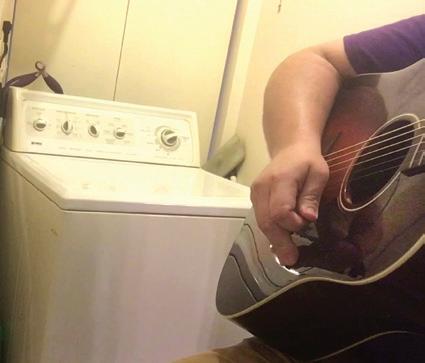
“The Devil Went Down to Georgia White Trash Washing Machine Cover,” a song by renowned artiste Aaron Attaboy McAvoy, featuring McAvoy simultaneously playing both the humble acoustic guitar and the washing machine.
McAvoy is a radio D.J. from Bossier City, La. and has gained notoriety on YouTube and late night talk shows with musical segments for his inventive use of washing machine percussion. No doubt a man of unabashed sense, he has posted a few dozen musical covers and weird selfie videos over the last two years, racking up almost 70,000 YouTube subscribers.
Beginning with the steady thump of the top-loading drum washing machine — no doubt a beast with poor water use efficiency but superior reliability — the washer sets the tempo with more consistent rhythm than a first-rate metronome, giving a boom-thump we all wish our drummer could pull off.
Committing fully to the craft like this — believing in your work despite all of the people who have surely said to McAvoy that “a washing machine isn’t an instrument” — is a task of endurance and bravery which I think we can all respect. Conventions, be gone. They are unnecessary hindrances which too often implicitly suppress artistry before it even begins with the scourge of bias.
Despite playing what is no doubt one of the most-played songs in the hobbyist guitar player’s repertoire, McAvoy adds a flair to it which could only make you think “Attaboy,” like his singular self is transfused through his work. He, his washing machine

and the good old six-string come together with simplicity and style, demonstrating the elusive personality trait of pure genius.
While the washing machine is well known iconography for the diminution of women to clothes-washing, chores-doing housewives, McAvoy provides the powerful stereotype-smashing message that men, too, are capable of doing great work in the homemaking arts. His courage in using the machine as an art tool despite its ensnarement with gender politics is a clear sign that McAvoy is willing to look past the superficial expectations of artists to create truly subversive and avant-garde works.
Most poignantly, McAvoy’s work alludes to valuable themes and lessons, of which art appreciators should take note. The average Joe relies upon the artists, deep within the work of considering and interpreting the
world, to deliver lessons onto the commoners. Deep examination is reserved with the few who can see without the constraints of tunnel vision and humane literalism, and further those examiners must find ways to spread their examinations so that they may be heard. Though our eyes are often shut and our ear canals full of wax, every now and then an artist of the people makes it through our barriers. And now, McAvoy has done it, and we hear his message for anyone: You have none without some chaos and some fun.
Katie Sims is a senior in the College of Agriculture and Life Sciences. She can be reached ksims@cornellsun.com. Resident Bad Media Critic runs alternate Tuesdays this semester.
Produced by Selena Gomez, Living Undocumented details the lives of eight families at crucial stages in their immigration process. By interviewing the families, immigration lawyers and former ICE attorneys, the series provides exemplary insight on the impact that the Trump administration’s zero-tolerance policies have had.
Right from its first episode, Living Undocumented flawlessly depicts the life-threatening situations that force undocumented immigrants to seek refuge in the U.S. Take the Dunoyer family; when living in Colombia, Mr. Dunoyer worked at City Hall in the Department of Rural Development. As a financial director, Mr. Dunoyer was contacted by some “farmers” requesting one billion pesos for guerrilla groups infamous for drug trafficking. Mr. Dunoyer denied the request, triggering an influx of death threats. Once, when his wife returned home from Manizales, several gue-
rilla members were there waiting to deliver a January deadline for the Dunoyers to come up with the money otherwise they would kidnap their first son. With no help from the local police and no strategy for acquiring one billion pesos, they fled to the U.S. in 2002 seeking asylum. To this day, they still receive death threats from the guerrillas in Colombia.
Tragic stories like this combined with expert policy and legal explanations make this documentary highly informative and debunks any myths promoted by mainstream media.
Not only does the documentary focus on the plight of individuals targeted by ICE, but it also shows the damage done to the families involved. It’s almost impossible to watch when Pamela Juarez is separated from her mother and nine year old sister, Estela, as they are deported back to Mexico.
Furthermore, the series clarifies that strict immigration enforcement did not begin with Trump and traces problematic policies back to the Clinton era. For exam-
ple, the show depicts how Eddie Fernandez arrived from Mexico in 2002 at age 14 to briefly visit his ailing mother but has stayed here ever since. Now married to U.S. citizen Tyler Thom, Eddie should have been able to apply for permanent residency. He was denied this request because he entered the U.S. on a flight, meaning he went through Immigration and Customs either by Visa, by claiming someone’s identity or by falsely claiming to be a U.S. Citizen. He is unable to remember which one. Since there is a possibility that he may have falsely claimed U.S. citizenship, Eddie cannot become a permanent resident. Under the Clinton administration, the Permanent Bar was passed stating that if someone falsely claims U.S. citizenship, they are forever barred from lawfully becoming a permanent resident. This prompted Eddie and Tyler to move to Canada instead.
Though the immigrant stories are the heart of the docuseries, what I found especially notable was the disgusting behavior of the
ICE officers. In one incident, the officers promised Luis — who had lived in the U.S. for 17 years undocumented and undetected by ICE — permission to say goodbye to his wife in the parking lot before she was deported back to Honduras. When the day came, the officers forced Luis inside the U.S. Citizenship and Immigration Services building, where they could officially detain him indefinitely. Startled by the deceit, Luis’ lawyers attempted to follow him into the facility, only to be assaulted and pushed to the ground by an ICE officer, resulting in a fractured right foot and lacerations in the left ankle and knee.
Though clearly an extreme situation, this scene is meant to underscore how Trump’s xenophobic rhetoric has emboldened and empowered ICE agents to act more aggressively, whether it’s through physical harm or by making collateral arrests of immigrants without a criminal background.
Irrespective of your political opinion concerning illegal immigration, Living Undocumented is
a must-watch. It puts faces to undocumented immigrants susceptible to the negative discourse constantly presented in the media and combats our tendency to reduce them to a statistic.
It’s obvious that the intent was to soften the hearts of those pushing for unforgiving immigration legislation by humanizing undocumented immigrants. However, as powerful as this docuseries is, my concern is that it will attract viewers who already agree with the leftist perspective presented.
As Awa, daughter of refugee Amadou, said, “You can watch a documentary, and you can say, ‘Well, this is too bad.’ But at the end of the day, it’s just something that you’re watching on TV, and you can turn that off, and you can go about your life.” My hope is that this advocacy series sparks conversation and emphasizes the need to fix our broken system.
Nkemdirim Obodo is a sophomore in the College of Arts and Sciences. She can be reached at npo2@cornell.edu.
By ANIL OZA Sun Staff Writer
Founder of MEDLIFE Dr. Nicholas Ellis delivered a lecture Sept. 30 his career in global health and the intersection of global health and the social determinants of health.
Hosted by Cornell MEDLIFE and Phi Delta Epsilon, Ellis used personal anecdotes to
MEDLIFE is an organization dedicated to providing equitable healthcare globally. The organization aims to address the gaps in healthcare infrastructure by partnering with local doctors, setting up mobile clinics and empowering students through fundraising and service learning trips.
“Our mission is to build a worldwide movement of empowering the poor in their

inspire an audience of students with an interest in healthcare: “I want you to think about how to address larger systems through listening to people.”
fight to equal access to healthcare, education and a safe home. The vision being a world free of the constraints of poverty,” Ellis said.
As an undergrad, Ellis studied international
development at McGill University and attended medical missions to Ecuador, where he witnessed “how poorly these medical missions were done by these organizations,” he said.
According to Ellis, on these short term missions, American doctors typically required the use of a translator, which introduced a linguistic barrier to care. Additionally, foreign doctors lacked an awareness of the local medical infrastructure. “The end result was that you would go down with good intentions and not be able to take care of sick people,” Ellis said.
Based on his prior experiences, Ellis structured MEDLIFE with the goal of transitioning away from the traditional methods of global health organizations. For example, rather than relying on foreign doctors, MEDLIFE focused its efforts on local doctors. These local doctors are better versed in the local language, cultural norms and existing medical infrastructure.
While MEDLIFE focuses on three distinct sectors: medicine, education and development, they also put a large focus on philanthropy. “The entire endeavor is about taking away people’s pain and making the world a better place. There is nothing greater than that. It’s a true honor to be able to do that.” Ellis said.
When asked about his motivation in beginning a career in global health, Ellis addressed the value he saw in being a doctor: “You have to remember what an honor it is to take care of sick people and be dedicated to something ultimately that serves humanity and makes humanity a stronger thing.”
Ellis also emphasized the distinction
between voluntourism and genuine aid. Recently, the concept of voluntourism has fallen victim to scrutiny, as many question who benefits from this act: the participants or those being given aid.
To remedy this disconnect in values, Ellis stressed the importance of communicating with local doctors they are working with to ensure their concerns are addressed.
“Our mission is to build a worldwide movement of empowering the poor in their fight to equal access to healthcare, education and a safe home.”
Dr. Nicholas Ellis
“You have to ask people that are actually there if they care about that issue,” Ellis said. Often, he has found that the perceived issues of communities and the actual concerns of those people are not the same.
In his final remarks to the audience, Ellis stressed the importance of following a career path that students have some personal affinity toward, as “all of us have certain drivers in our lives and as you go through certain things resonate with you.”
“There are certain standards: regardless of whether you live in a slum of Peru or Maine or Texas, you are a human being, and you deserve certain benefits,” Ellis said.
Anil Oza can be reached at aoza@cornellsun.com
By EMMA ROSENBAUM Sun Staff Writer
After a long and relaxing summer, the first month back at college tends to take some adjusting and there is nothing like the rude awakening of the first round of prelims to get students back into the Cornell spirit. For many, this means gruelling nights in the library — yet staying up until 2 a.m. and trying to memorize every term that might appear on a prelim may be doing students more harm than good.
Although it may seem obvious, sleep is actually a very important step to the studying process. While some students think the more time spent studying and less time spent sleeping will help them perform well on the exam, this is not the case.
According to Prof. Christiane Linster, neurobiology and behavior, the quality of sleep is one of many factors that affect people’s ability to store information.
“Sleep is the time during which information transfers from short term memory to long term memory,” Linster said. “If you don’t sleep, that transfer doesn’t happen, and then you
don’t consolidate or put into long-term storage what you have learned,”.
According to Linster, students should consider whether the extra hour spent studying during the nights leading up to the exam is worth it.
Another familiar situation students often find themselves in is when they have two or three prelims in the same week. When faced with this exam marathon, it is common for students to cram the equivalent of a month’s worth of material into one night of intense studying.
However, Linster’s research, which focuses on the neural bases of learning and memory processes in rats and mice, pointed out that cramming is not the most effective way for a brain to store information. Instead, reviewing some material a week or two in advance will not leave you at risk of forgetting what you have studied by the time the prelim comes around.
Besides sleep, another major factor that can affect the brain’s ability to memorize material is stress. Students react differently to stress — some find it helpful to focus on the task at hand

In the stacks | With prelim season upon us, it is important to implement the best methods of studying.
without getting distracted, while others find themselves getting extremely overwhelmed and unable to work as efficiently.
There could be a scientific explanation as to why certain students perform better under stress than others. “Stress is not a linear relationship with memory capacity,” Linster said. “A little
bit of acute stress once in awhile actually enhances memory performance. A lot of long term stress will be bad for memory performance.”
Since the first round of prelims has just begun, it’s not too late to put some of this advice to practice. There is no magic formula to the best way of studying,
but some scientifically proven methods that will help students perform better is as simple as getting enough sleep, not cramming the night before and staying healthy.
Emma Rosenbaum can be reached at erosenbaum@cornellsun.com.
JOYBEER DATTA GUPTA ’21
Business Manager
PARIS GHAZI ’21
Associate Editor
MEREDITH LIU ’20
Assistant Managing Editor
RAPHY GENDLER ’21
Sports Editor
BORIS TSANG ’21
Photography Editor
AMBER KRISCH ’21
Blogs Editor
SOPHIE REYNOLDS ’20
Science Editor
AMANDA H. CRONIN ’21
News Editor
JOHNATHAN STIMPSON ’21
News Editor
PETER BUONANNO ’21
Arts & Entertainment Editor
ANYI CHENG ’21
Assistant News Editor
HUNTER SEITZ ’20 Assistant News Editor
CHRISTINA BULKELEY ’21
Assistant Sports Editor
JING JIANG ’21
Assistant Photography Editor
DANIEL MORAN ’21
Assistant Arts & Entertainment Editor
LEI LEI WU ’21
Layout Editor
EMMA WANG ’20
Multimedia Editor
LEANN McDOWALL ’21
Newsletter Editor
BREANNE FLEER ’20
Senior Editor
SHRUTI JUNEJA ’20
Senior Editor
ANU SUBRAMANIAM ’20
SARAH SKINNER ’21
KRYSTAL YANG ’21
FUNG ’20
XIE ’21
HARRELSON ’21
PERATI ’21
ZHANG ’21
KILPATRICK ’21
ZAFAR ’21
Paying a bill on Cornell’s Cashnet is clunky. The first payment page has no record of your outstanding balance, so you must memorize the amount before submitting. The only accepted form of payment is by bank transfer — a silly way to pay a $40 student activity fee. The form for entering your bank information does not allow you to paste your account or routing numbers, inviting mistakes.
and those results are secret.
This is absurd. If you belong to a class of people all wronged in the same way by the same entity, it only takes one person proving they were harmed to prove that all were harmed. By dodging the public justice system, arbitration allows corporations to get away with more wrongdoing. By pre-
The only accepted form of payment is by bank transfer — a silly way to pay a $40 student activity fee.
’22
’22
After that slog, you might be forgiven for not reading the fine print. When you click through you agree “to arbitrate all disputes and claims between you and Higher One, Inc. before the American Arbitration Association under the Federal Arbitration Act, and not to sue in court in front of a judge or jury. You further agree that you may only be able to bring a claim against [Higher One, Inc.] in your individual capacity and not as a plaintiff or class member in any purported class or representative proceeding.”
ARORA ’20
ALISHA GUPTA ’20
KATIE SIMS ’20
Working on Today’s Sun
Ad Layout Dana Chan ’21
Production Deskers Sabrina Xie ’21 Mei Ou ’22
News Deskers Hunter Seitz ’20 Johnathan Stimpson ’21
Design Desker Simon Chen ’21
Lei Anne Rabeje ’22
Photography Desker Boris Tsang ’21
Sports Desker Raphy Gendler ’21
Arts Desker Daniel Moran ’21
By agreeing to arbitrate all disputes “in your individual capacity,” you sign away your right to justice via the public legal system. Instead, any crime committed against you by the bursar’s contractor Higher One Inc. must be settled by a private legal system well-insulated from ordinary consumer protections. You are more likely to lose your case, and you cannot pool resources, with or even benefit from, the precedent of other victims.
Cashnet and Higher One, Inc. hold a great deal of your sensitive financial information. Say, due to criminal negligence, they leaked information in a Cornell-wide breach akin to the breach of credit information leaked by Equifax in 2017. Under
venting class action, individual arbitration allows corporations to get off nearly scot-free for profitable wrongdoing to many people. After all, only a small fraction of Cornellians would have the time and money to acquire legal representation and prosecute a case, and yet a smaller fraction would win their cases. No precedent means no justice for anyone who can’t afford a lawyer.
This is a strong motivation for a company like Higher One, Inc. to cut costs by acting recklessly. With individual arbitration agreements, they won’t have to address most of those harmed. Equifax realized this after discovering their own criminal negligence. As news of their breach broke and panicking people scrambled to determine whether they were affected, Equifax set up a fake information portal attempting to trick users into signing away their rights to class action. This is the legal strategy of the sleazy.
By agreeing to arbitrate all disputes “in your individual capacity,” you sign away your right to justice via the public legal system.
the ordinary legal system, a group of victims can band together to hire legal representation and sue in a class action. Class actions adjudicate cases that affect many people by letting a group of representatives of the class organize legal representation in a case whose result applies to everyone in the class. If those representatives win by proving they were harmed, the ruling applies to every member of the class, and everyone at Cornell would get recompense.
This is what happened after the Equifax breach: If you’re one of the 147 million adults whose credit profiles were illegally leaked, you are entitled to $125 for the illegal disclosure of your financial information and you don’t have to hire your own lawyer to claim it. Binding individual arbitration upends this. Arbitration has worse outcomes for victims, period. Worse yet, under individual arbitration you cannot pool resources to share legal representation with other victims. Each and every Cornellian in pursuit of justice would need to acquire their own independent representation, which has also been shown to produce worse outcomes. Each case is then litigated in isolation from every other: All evidence your peers submit you must independently come by, the results of each case leave no precedent for any other,
I’m not the only one who thinks this. Cornell’s own ILR faculty write that arbitration agreements in general and individual arbitration in particular have been a disaster for consumer rights. “By delegating dispute resolution to arbitration, the Court now permits corporations to write the rules that will govern their relationships with their workers and customers and design the procedures used to interpret and apply those rules when disputes arise,” they argue. “These trends are undermining decades of progress in consumer and labor rights.”
Before I paid my last bursar bill, I sent uco-bursar@cornell.edu an email about my concern with agreeing to individual arbitration when paying with CASHNet. “[If] I am harmed by their actions or access to my banking information, this agreement strips me of recourse under the legal system. [...] Do you think this is right?” I received a response from a bursar administrator directing me to pay in person with cash, check or money order.
Forcing people who don’t want to sign
Forcing people who don’t want to sign their legal rights away to pay with cash, check or money order is moronic. But for now, that’s how I’ll be paying.
their legal rights away to pay with cash, check or money order is moronic. But for now, that’s how I’ll be paying.
Jaron Kent-Dobias is a sixth-year Ph.D. candidate in physics. He is also chair of the Graduate and Professional Student Assembly’s Student Advocacy Committee. Comments may be sent to opinion@ cornellsun.com.
White women are the embodiment of the ‘Damsel in Distress’ archetype, affording them one rather uncanny superpower: the power to garner sympathy. White women use their tears to advance themselves at the expense of people of color, a concept recently coined “white woman tears.”
‘White woman tears’ does not refer to all tears shed by white women; everyone has legitimate reasons to cry. It refers specifically to “crying and other expressions of distress by White women as a means of weaponizing the privilege inherent in Whiteness and exerting the full power of White womanhood as a class historically designated as delicate, racially superior beings in need of protection,” according to Alexandria Bennett in “White Woman Tears: These Tears Taste Like Oppression.”
As early as playground days, I can remember white girls using their tears as a weapon against me and other people of color. Casual conversations would quickly escalate into waterworks, painting me as the aggressor.
A friend had a white roommate who refused to clean up after herself. After she left a banana to rot in the fridge for six months, my friend finally worked up the nerve to gently tell her to take responsibility for repeatedly leaving a mess. The roommate erupted into tears, saying she didn’t like her tone.
While “white woman tears” are typically shed over petty, day-to-day interactions, they can also have severe repercussions for black and brown people.
The strength of “white woman tears” proved itself in the chilling case of Dallas Police officer, Amber Guyger. Botham Jean, a black accountant, sat on his couch, watching TV and eating ice cream when Guyger, entered his home, fired her service weapon and killed him. Guyger repeated 19 times to 911 operators that she believed he was an intruder in her home, as she lived just one floor below him.
Earlier this week, CBS News tweeted a minute and a half long video of Guyger at her trial, breaking down in tears. “I wish he was the one that took the gun and killed me. I never wanted to take an innocent person’s life … this is not about hate; it’s about being scared that night.”
After watching the video, I was sure she would get a slap on the wrist, just as the uniform-disguised murderers of Michael Brown, Philando Castille, Sandra Bland, Freddie Gray and countless others had been given before her.
“She’s getting off … Seen this movie before,” one Twitter user responded.
From her initial plea of not guilty to her crocodile tears, Guyger’s defense is primarily based on establishing herself as the victim. She and her legal team used a variety of defense
While “white woman tears” are typically shed under petty, day-to-day interactions, they can also have severe repercussions for black and brown people.
tactics like smearing Jean’s character, even bringing minorities on the stand to somehow prove Guyger isn’t racist (though the release of recent text messages shows otherwise).
Her tears and her entire defense shift the focus away from the magnitude of her crime. Suddenly, because of her tears, we should ignore the obvious lapses in judgment she made that night? We should feel sorry that Botham Jean, a man in his own home, frightened her? Suddenly, we should sympathize with a murderer and not the victim.
Even immediately after shooting Jean, Guyger seemed more concerned with the potential repercussions of her actions, and not about the state of Botham Jean. “I’m going to lose my job,” she told the dispatcher, something that should have been far lower on her list of priorities.
Instead of caring for a dying man, she took the time to send texts saying, “I’m fucked” to her partner.
Guyger was given a sentence of 10 years and will be eligible for parole after five years. In addition to lenient
Hsentencing, Guyger received forgiveness from Jean’s family, and even a hug and a Bible from the judge. She will likely be a free woman by the age of 36, while Botham Jean didn’t live to see his 27th birthday.
I can understand that what Guyger did was “a true mistake,” as suggested by her attorney, and maybe even a very small part of me feels sorry for her. But I cannot accept her blatant lack of accountability. Sure she feels guilty about her actions, but there is a big difference between guilt and remorse.
If the roles were reversed like she willed in her testimony, Botham Jean certainly would not have been afforded the same privileges, as we’ve seen in our country’s extensive history of racist judicial practices. He would have received a sentence far longer than 10 years. He would not have received a hug from the judge. And he certainly would not be given a platform to cry about the guilt of taking an innocent person’s life.
The case of Amber Guyger has left me and many other people of color feeling destabilized. It demonstrates the continued devaluation of black lives in our society.
“I feel like the anger people have towards Amber Guyger comes from feeling like she received the level of empathy everyone should receive in a court,” said The Daily Show host, Trevor Noah. “Everyone should be treated with compassion. They should still be punished if they’ve committed a crime, but we should still look at them as human beings. And yet, this narrative doesn’t seem to be afforded to black people in America.”
The very same criminal justice system that readily punishes black people to the fullest of its law fell for the oldest trick in the book: white woman tears. Amber Guyger was shown empathy that people of color seldom see in the courtroom. She is given a path of freedom and redemption denied to those born black.
Amelia Zohore is a junior in the College of Agriculture and Life Sciences. She can be reached at az288@cornellsun.com. And What About It? runs every other Tuesday this semester.
umans have created systems to simplify global problem-solving and expedite learning for almost a century. Artificial intelligence is cited by some industry leaders as the next big breakthrough in human technological evolution. Detractors claim that AI poses
study found the AI system discriminated against women and people of color.
There’s one problem with AI that everyone is beginning to see: mass discrimination. AI reflects systemic biases when it is exposed to biased sample groups and developed by biased researchers.
a unique range of challenges. Tesla CEO Elon Musk expressed the potential dangers of AI and how future overreliance on AI could lead to the downfall of human creativity. Musk referred to humanity as the “biological boot loader” for computer programming. Sure, the idea that AI could outpace humans’ minds and that AI would eventually destroy our world is an issue, but there’s one problem with AI that everyone is beginning to see: mass discrimination.
AI reflects systemic, social biases when it is exposed to biased sample groups and developed by biased researchers. In the 1980s, a medical school in the U.K. received an overwhelming amount of applicants. In response, it created its own computer algorithm, selecting students based on a variety of characteristics that would make them the most qualified attendees. After running the program and admitting students, researchers of the
In 2015, Google’s Photos application, which has the ability to categorize pictures, categorized several African Americans as gorillas. Users claimed Nikon’s cameras mistook Asian Americans to be blinking in their photos. A 2015 Carnegie Mellon study determined that Google showed fewer ads for higher-paying jobs to women than men. Many companies who encounter these issues claim they are unintentional. Their leaders expect their AI systems to remain proprietary. Many of the people that AI discriminate against are not even aware of it because of the opacity of decision-making.
Organizations can document their approach on how to mitigate the amount of bias fed to a system from the beginning of its lifecycle to increase the transparency of the development process. Linking humans and machines to learn alongside each other may reveal ways we are “partial, parochial and cognitively biased, leading us to adopt more impartial or egalitarian views.” Systemic bias can be minimized, if not eliminated, by allowing the machine to learn from a diverse sample and by making the necessary corrections in our own thinking.
University of Amsterdam Prof. Frederik Zuiderveen Borgesius, law, argued that utilizing artificial intelligence in fields like policing and criminal justice, where bias is already heavily present, poses unique challenges. A system that categorizes individuals along racial lines, for example,
while ignoring socioeconomic realities such as poverty, upbringing and home environments, could make the same mistakes which lead to police officers taking innocent lives.
IBM believes that a crucial principle of mankind is to avoid bias, ultimately preventing any form of discrimination. IBM has developed transparent systems that will allow all current and future AI networks to be graded for bias. In addition, IBM aims to teach machines to apply certain human virtues, such as empathy, when making judgments. This idea of a humane system of artificial intelligence could work to address the concerns raised by Professor Borgesius and others.
are often unafraid to ignore or offend larger groups for the presumed benefit smaller, more privileged groups. I believe that a massive societal overhaul could be required in order to produce a new form of intelligence that does not perpetuate existing societal power structures such as
Past decisions to seek technical progress at any cost have led to the destruction of our ecosystems and the exploitation of marginalized groups through aggressive, unregulated capitalism.
sexism, racism, homophobia and economic discrimination.
AI, in the limited capacity that we use it every day, has already shown inefficiency at filtering out the results of human bias. As a society, we have to make a decision on the moral price of innovations in technology. Past decisions to seek technical progress at any cost have led to the destruction of our ecosystems through pollution and the exploitation of marginalized groups through aggressive, unregulated capitalism.
Future AI development requires a clear analysis of our society. Our society is not ready to create a form of pseudo-life if we cannot be wise stewards towards it. The idea is especially problematic if we will be expected to lean on artificial intelligence to make decisions that have a potent impact on society. Our own leaders sometimes fail to meet our expectations and
In the short-term, increased diversity in STEM will help to slowly mitigate problems present in AI. Exposing face-finder technology to more people of color during the development process will prevent particularly offensive errors. Limiting the amount that AI systems make decisions for law enforcement will help to avoid assumptions about recidivism and criminality that lead to deaths. However, these issues ultimately serve to slap a band-aid on larger human issues that are only becoming visible to the most privileged members of society as they attempt to create almost-human minds of their own.
Canaan Delgado is a junior in the College of Agriculture and Life Sciences. He can be reached at demassa-delgado@cornellsun.com. No Church in the Wild appears every other Tuesday this semester.

Fill in the empty cells, one number in each, so that each column, row, and region contains the numbers 1-9 exactly once. Each number in the solution therefore occurs only once in each of the three “directions,” hence the “single numbers” implied by the puzzle’s name. (Rules from wikipedia.org/wiki/ Sudoku)


10

Houses, Apts, Parking
1 to 9 Bedroom
Collegetown - College Ave, Linden Ave, Dryden Rd, Bryant Ave, Cook St. 607-330-2442 info@urbanithaca.com www.urbanithaca.com
We have availability for the 2020-2021 school year beginning June 1st at Hudson heights apartments. The studios include electric, heat, water, garbage and parking. There is coin-operated laundry facilities on site. Prices start at $750 / month for a 12 month lease. If you have any questions or would like to schedule a tour contact us by phone 607-280-7660 or email: renting@ithacaLS.com
COLLEGETOWN TERRACE APARTMENTS
Leasing for 2020/2021
Spring 2020 Semester leases available Heat, hot water and Wi Fi State of Art Fitness Center Shuttle Bus Service to campus Washer & Dryer in Apartments collegetownterraceithaca.com office@ithacastudentapartments.com (607) 277-1234
Now Renting 2-10 Bedroom Houses/ Apartments for 20-21. All Locations. Call today or visit our website: Certified Properties of TC Inc certifiedpropertiesinc.com 607-273-1669
2020-2021
Studio 1, 3, 8 & 11 BR Apts. Great Locations in Collegetown. 607-227-2535
120 Oak Avenue
Just steps to Cornell Campus 10 bedroom house & 1 and 2 bedroom apartment 607-277-1234 office@ithacastudentapartments.com Ithacastudentapartments.com





Collegetown Crossing College Ave's Newest
Location
307 College Ave. Now Leasing for 2020-2021 Completely New Modern Studios & 2 Bedroom Apartments. Fully furnished, heat & hot water included. Reception area at 307 College Ave. www.urbanithaca.com 607-330-2442 info@urbanithaca.com
Boldly Refined Living 312 College Avenue
Sophisticated studio, 1, 2, 3-bedroom apartments. Superior fitness facility, theater, and coworking space. Free high-speed internet. Exclusive resident parking. Package delivery/return. Overnight concierge. 607-273-9777 or 312collegeave.com
3 Bedroom 1 Block from Starbucks in Collegetown Heat & hot water included. Lease starts June 2020. Parking & laundry available. www.porealty88.com 607-277-1888
20-21
College Ave. 5 BR House Furnished. Laundry. Parking. Call 607-273-8576
20-21
Upper Eddy St. 7 BR house Furnished. Laundry. Call 607-273-8576
BLAIR STREET FURNISHED HOUSE
Available 2020-2021 7 Bedroom, 3 full baths 2 kitchens & Laundry Text or call Tracy at TLC Property Mgmt Corp 607-379-2776

Display Advertising Deadlines: h Thursday, October 10 at 3 p.m. for the Wednesday, October 16 and Thursday, October 17 issues.
Classifed Advertising Deadline: h Thursday, October 10 at 3 p.m. for the Wednesday, October 16 issue.






By ZORA HAHN Sun Staff Writer
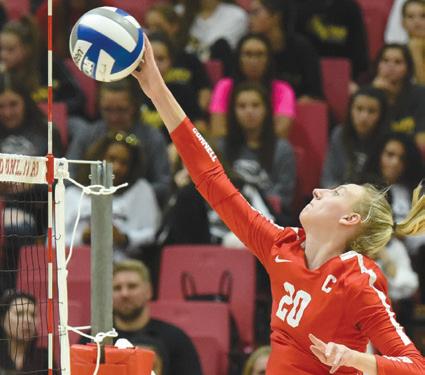
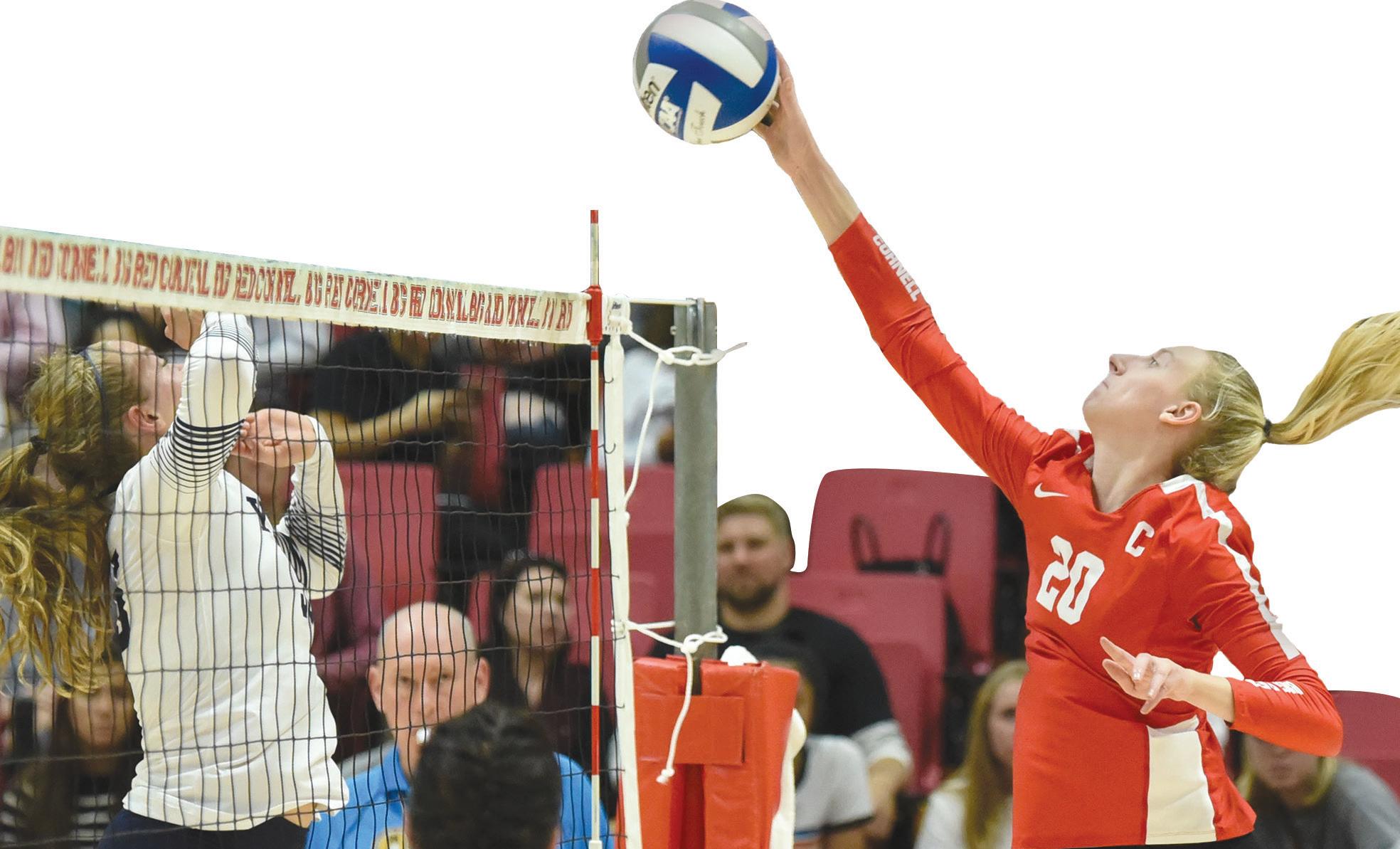
Riding a six-game winning streak, Cornell volleyball hit the road to square off against the University of Pennsylvania and Princeton University.
Although the Red navigated its non-conference slate and first Ivy contest quite well, Princeton presented itself as a potential
That didn’t stop Cornell. The Red continued its hot streak, knocking off Princeton, 3-1, and defeating Penn, 3-2.
Both games were tight, with Cornell (10-2, 3-0 Ivy League) barely defeating Penn (7-5, 0-3) in the fifth set and scraping by Princeton (6-6, 2-1) with 26-24 and 28-26 wins. With these contests decided by a narrow margin, the Red did not crack under pressure as it notched
we are,” said Stackhouse. “Also we’re … very consistent, and in the past, we would fold when faced with a lot of pressure. That’s really changed this year.”
Cornell’s two wins this weekend extended its winning streak to eight games — the team’s longest streak since it won nine straight games in 2006. Given Princeton’s success in the conference, Cornell’s victory was certainly an upset by
against Princeton, accounting for almost half the team’s points in both games.
Stackhouse said Cornell’s scouting of the other teams has made them particularly strong because this helps the team develop blocking assignments.
With more Ivy League opponents on the docket, Stackhouse detailed the team’s preparation for the next weekend’s slate of
“[We can] definitely work more on blocking,” Stackhouse said. “We always switch up the assignments depending on who the big hitters are on the other team … Princeton and Penn had some good hitters, and I don’t think we blocked too
The Red will look to maintain its eightgame winning streak as it hosts Dartmouth and Harvard this weekend at Newman
central defenders lost sight of Stitz trailing behind waiting for a cutback completely undefended.
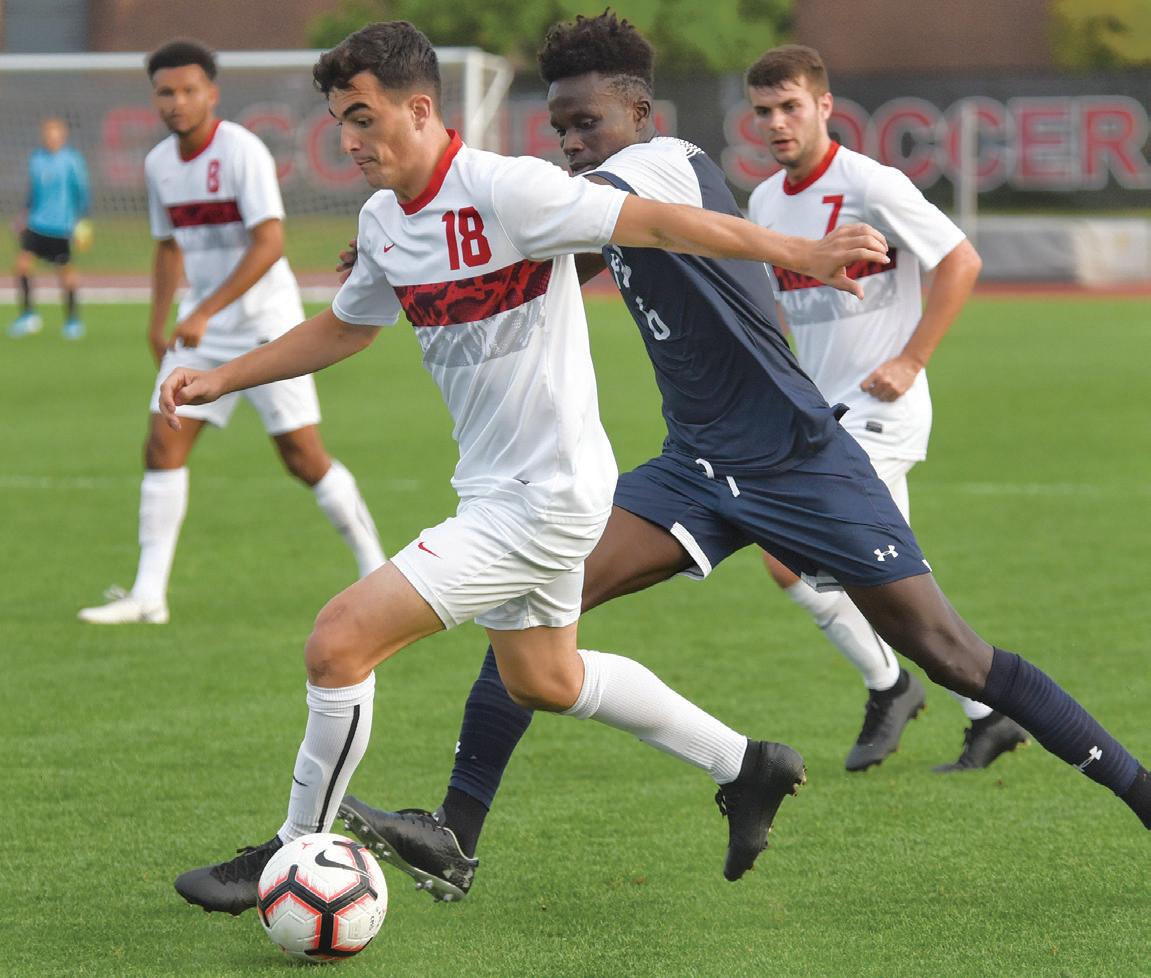
Cornell men’s soccer failed to come back in an exhilarating game against Penn, falling 3-2 and ending its three-game winning streak.
The game was essentially a clash of the forwards, with a lot of shots going back and forth. The Red’s attacking side showed promise in tallying two goals, but the defense lagged behind, repeatedly losing track of opposing attackers during set pieces.
The usual defense of center backs senior Ryan Bayne and sophomore Tate Keir and wings sophomore Jonah Kagen and freshman Connor Drought stood sturdy for most of the team’s past games. However, the defensive line disappointed from the start, giving Penn its first header shot three minutes into the game. After two minutes, Penn midfielder Ben Stitz finished a low cross from forward Jake Kohlbrenner. The
The Red was quick to come back, as junior midfielder Vardhin Manoj scored the equalizer during a scuffle inside the penalty box after a corner kick. He shot the ball, which had been deflected by Tate Keir, to put the Red back in the game.
Yet the Red’s defense didn’t seem as sharp as in past games, conceding a lot of crosses from both sides of the field. Senior goalkeeper Ryan Shellow was put to work a few times, and eventually Penn achieved a penalty kick in the 20th minute. Tate Keir committed a handball inside the box, and junior midfielder Harry Fuller received a yellow card while protesting. Penn’s Brandon Bartel scored the penalty putting Penn up by a goal once again, at 2-1.
The Red struggled to regain possession throughout the rest of the first half, and this remained the same in the first part of the
second half. Penn midfielder Joey Bangdia opened up the Quakers’ attack with a sharp shot in the 51th minute. Joey Bangdia scored for Penn in the 64th minute with a shot to the lower corner, putting his team up by two goals.
Cornell junior midfielder Tyler Bagley got one back in the 80th minute after putting the ball in the net following a missed clearance and a mistake by Penn’s goalkeeper to properly secure the ball off on awkward bounce. Cornell dominated the next 10 minutes, trying to get an equalizer to force the game into overtime.
The Red had one last chance with a few seconds left on the clock. A quality cross was delivered to the middle and freshman defender Will Citron had a wide open header, but it went straight into the hands of the goalkeeper, ending the game.
The attacking side showed great concentration, looking out for second balls; both of the goals were a result of deflections and
second balls. However, the defense allowed open headers to Penn’s forwards and committed a hand ball.
The Red will face Colgate at 7 p.m. Tuesday at Berman Field.