As Ithaca’s ever-changing downtown evolves again, The Bookery will close its doors this fall. The Bookery was a spot where serious scholars and eccentric bibliophiles could enjoy rare and uncommon books side-byside, but the 45-year-old landmark will be lost soon.
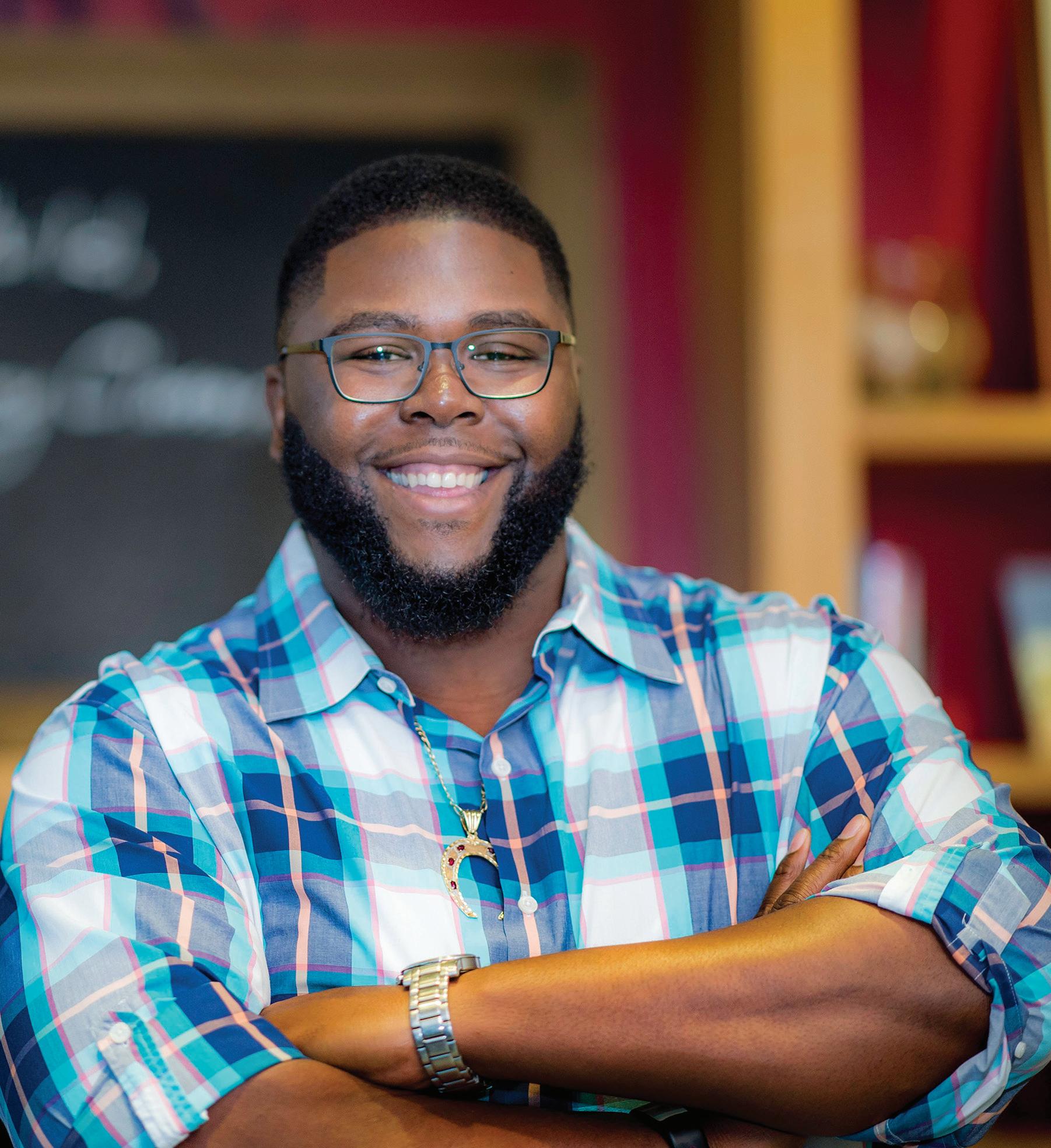
In 1975, Ithaca resident Jack
“I started out actually in science and chemistry and then I interrupted that ... and fell in love with a lot of writers.”
Jack Goldman
Goldman — who spent a year as a graduate student at Cornell in 1967 — opened The Bookery, now located in the Dewitt Mall.
“I started out actually in science and chemistry and then I interrupted that and went to Europe and that’s where I started to read more literature and fell in love with a lot of writers,” Goldman said. “Even in highschool, I worked for one of the great booksellers probably in the
Cornellians Honor Morrison M.A.’55
Nobel Laureate’s former students and peers recall her legacy
By JUSTINE KIM Sun Contributor
On Tuesday, the Africana Studies and Research Center hosted a public commemoration to reflect on one of Cornell’s most treasured alumnae, Toni Morrison M.A. ’55, who passed away in August.
The event was an intimate gathering of Morrison’s friends, colleagues and admirers and fea tured Cornell students, Ithaca residents and faculty from the Africana Studies department.
Many of the participants knew Morrison personally throughout her prolific career.
Prof. Riché Richardson, American Studies Program and English, the chair of the pro gramming committee of the Africana Department, cur rently teaches English 4509: Toni Morrison’s Novels and penned a col umn in The Sun in trib ute to Morrison back in August.
Prof. Noliwe Rooks, Feminist, Gender, and Sexuality Studies, was a former colleague of Morrison at Princeton University, and Prof. Carole Boyce Davies, English,
was a former
world and that influenced me because in those days, some booksellers were real scholars.”
His adoration for academic literature led him to open The Bookery — and eventually The Bookery II. A newspaper called The Bookpress followed, and stayed in print for 12 years. The newspaper included literary pieces, artwork and poetry by college faculty, graduate students and freelancers.
“The result was a very vibrant part of the community between the new bookstore and the old one, and the literary press,” said Barbara Mink M.A. ’85, a local artist as well as Goldman’s wife.
“It was an outlet for a lot of writers here in Ithaca and the region.”
The Bookery was unique, Goldman said, because — like many independent bookstores — its owners had their own personal approach and inspirations when choosing inventory for their store. He handpicked each book, taking into account personal taste and what literature the community responded to.
From science to serious art books, The Bookery stocked tomes from academic fields and literary fiction, trying to fill a growing need of the community.
Next Miss World Could Be C.U. Junior
December 14 will mark the first day of finals for most Cornellians. While most students will stagger, caffeine-laden and unkempt, into their exams, one student will be in London, competing in the 69th Miss World pageant.
Ji-Yeon Lim ’21 will represent South Korea in Miss World 2019, one of 130 participants in the oldest running international beauty pageant.
To earn her place as South Korea’s representative, Lim competed in the Miss World Korea pageant in Seoul on Sept. 5, winning the title and securing her spot in the Miss World Competition.
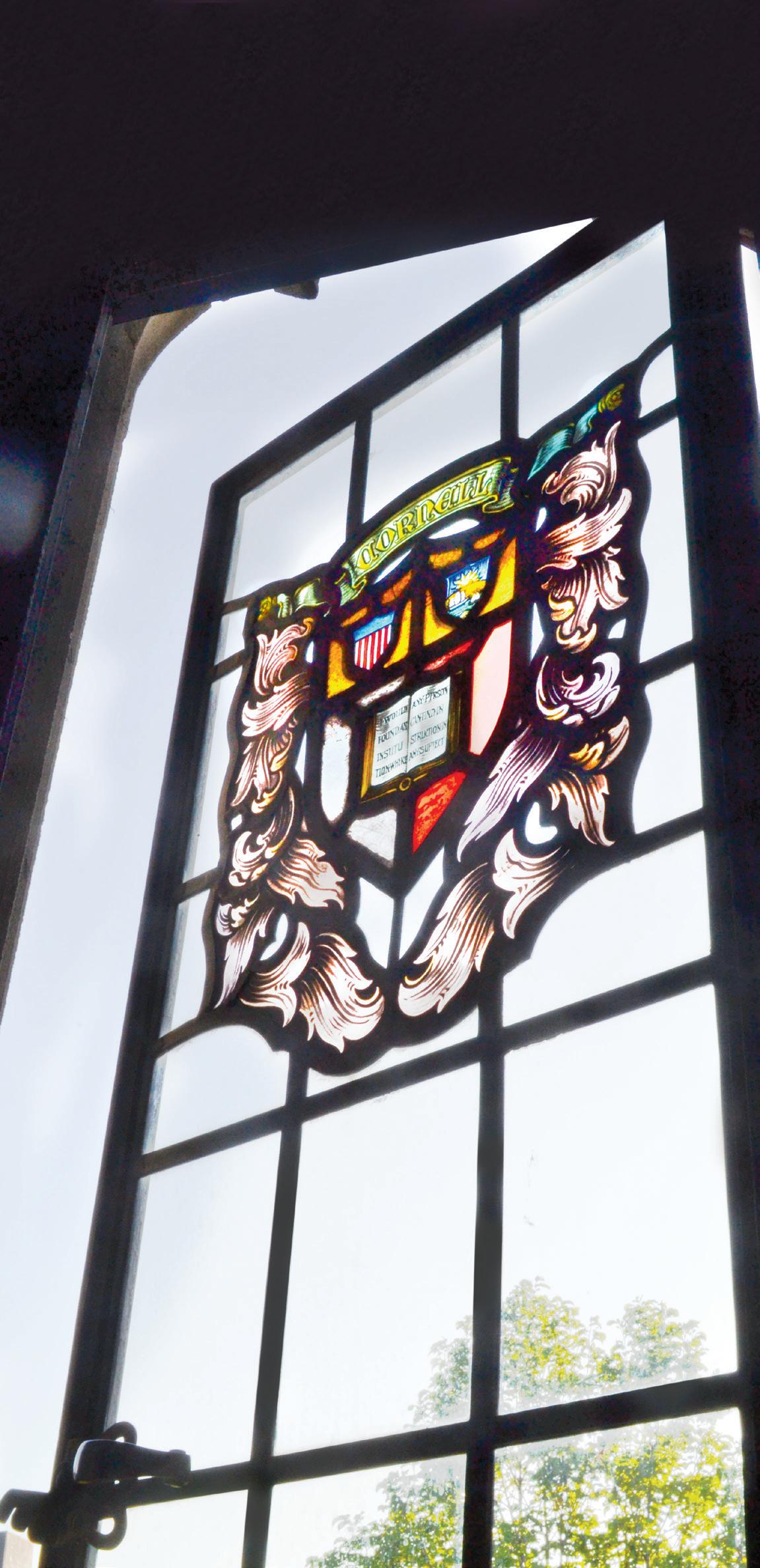
At Cornell, Lim is pursuing a double major in Communications and Information Science in the College of Agriculture and Life Sciences — and her professors have been supportive of her pageant pursuits, she said. Lim has also been involved in Student Union Board, LOKO Arts Team, several research labs and a project team. Lim said that Cornell’s motto of “I would found an institution where any person can find instruction in any study,” as well as Cornell’s diverse student body, encouraged her to pursue new experiences — including Miss World Korea.
“This is my first involvement and exposure to pageantry,” Lim said. “I was originally traveling to Korea to
MICHELLE YANG / SUN STAFF PHOTOGRAPHER
Cornell crown? | Ji-Yeon Lim ’21 (seen above) will compete for the crown in November.
Howard University during Morrison’s time teaching English at the university. Another participant, Prof. Tao Leigh Goffe, FGSS,
By KATHERINE HEANEY Sun Staff Writer
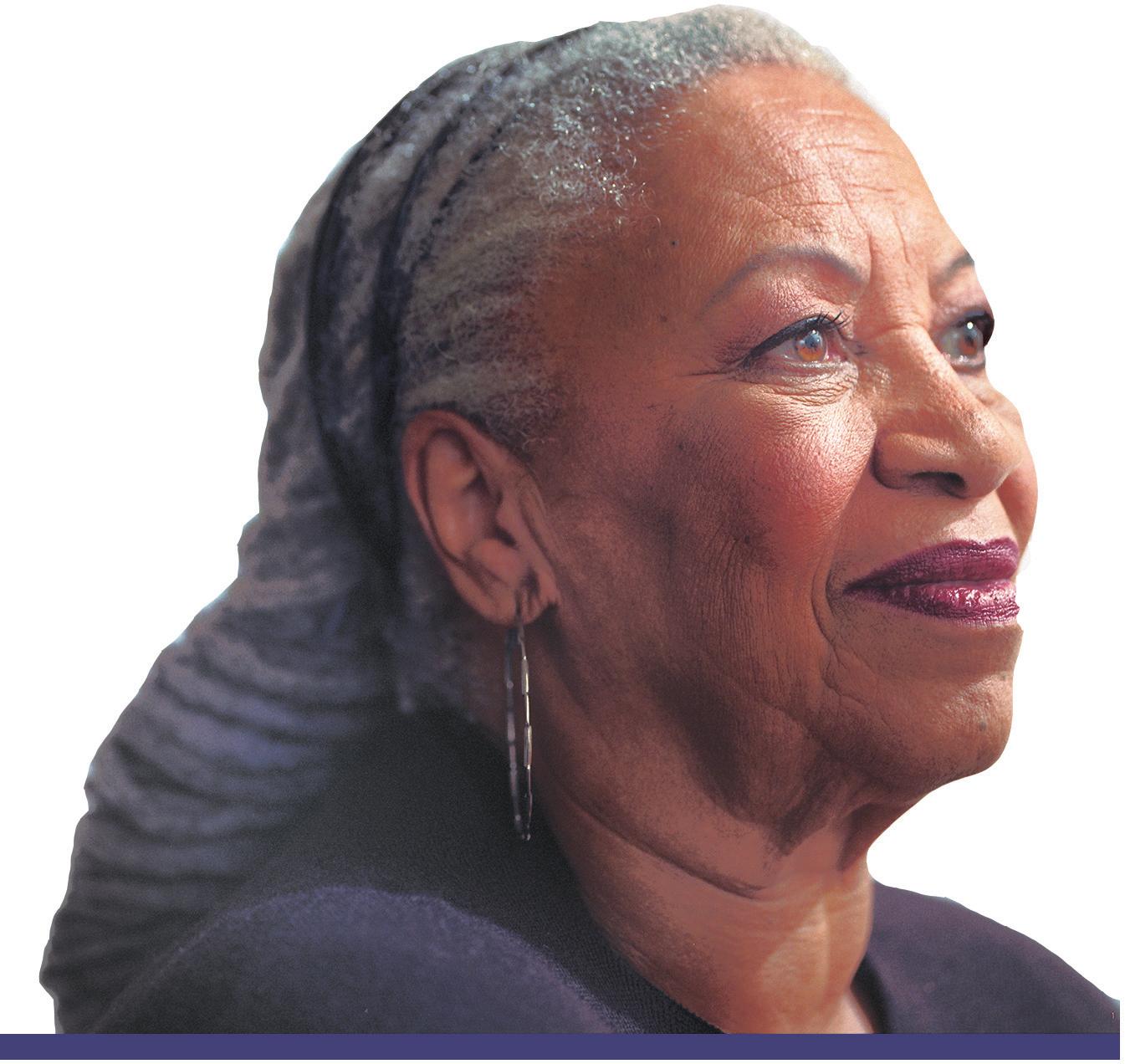
Memorializing Morrison | Accomplished alumna Toni Morrison M.A. ’55 wrote many award-winning books, including the Nobel Prize for Literature. Professors and colleagues gathered to remember her.
DAMON
Daybook
Inspire • Innovate • Impact: Computing and Information Science @ 20 9 a.m. - 5 p.m., Statler Ballroom
From Boston to Bangkok: How American Cold-War Urbanism Shaped Thailand’s Current Urban Plans Noon - 1:30 p.m., Kahin Center
Seminar on the Impact of Autonomous Systems and Artificial Intelligence 12:15 - 1:30 p.m., G08 Uris Hall
Midday Music
12:30 - 1:15 p.m., 101 Lincoln Hall
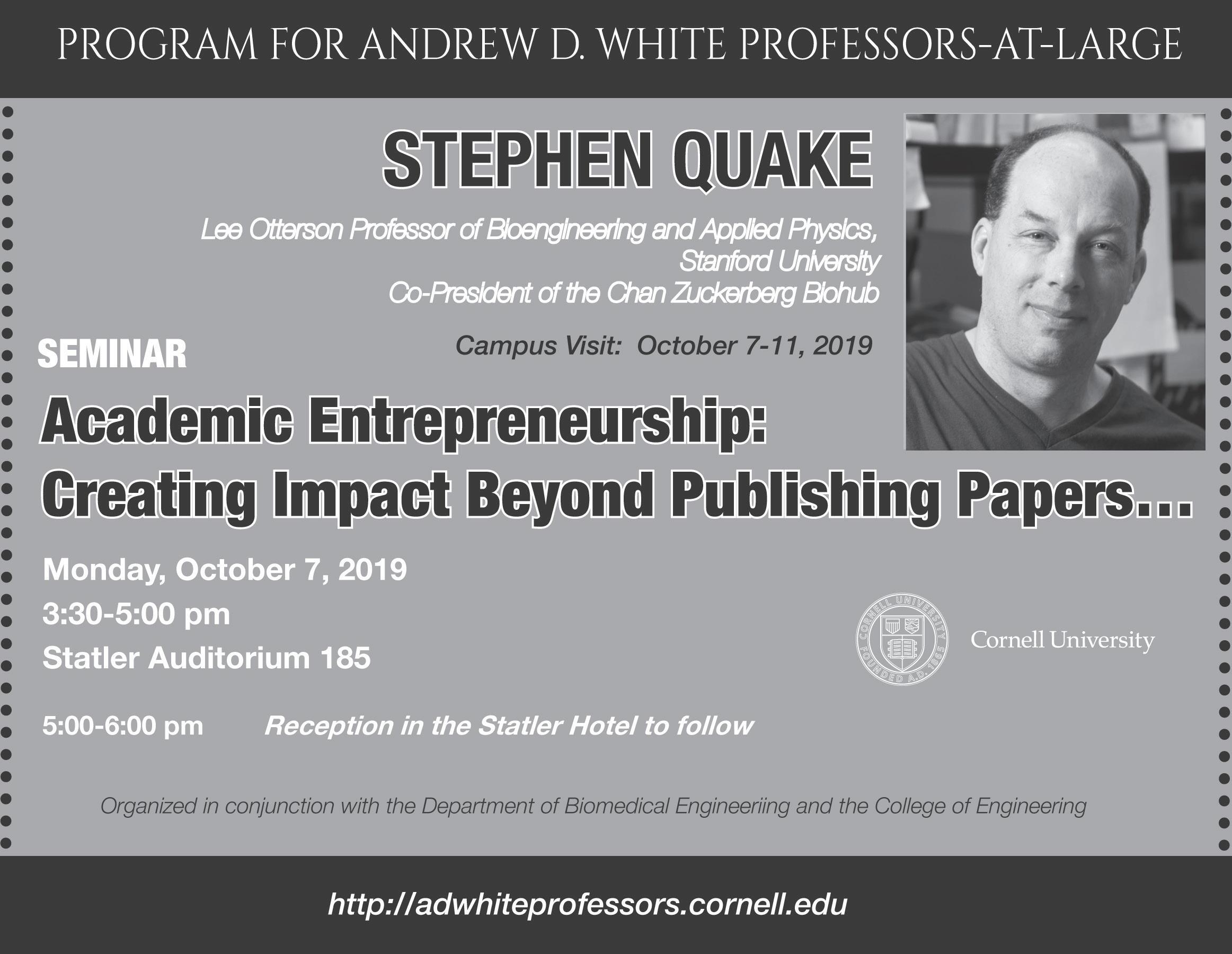
Anthony Jack — The Privileged Poor 3:30 p.m., G10 Biotechnology Building
Society for the Humanities Lecture 4:30 p.m., Guerlac Room, A.D. White House
Plant Drop! Free Houseplants
4:30 p.m., Appel Commons
OF FREE CAMPUS EVENTS
This Weekend Today
Civil Discourse: Is Illiberalism Corroding Our Democracy? With Ezra Klein and Andrew Sullivan 6:30 p.m., Landis Auditorium, Myron Taylor Hall
Feel Good Friday Friday, Noon - 1 p.m., International Lounge, Willard Straight Hall
Department of Psychology Colloquium Friday, 12:20 p.m., 202 Uris Hall
Homecoming Fireworks awnd Laser Light Show Friday, 7 - 9:30 p.m., Schoellkopf Field
Energy: 10-minute Play Festival
Friday, 7:30 p.m., Black Box Theatre, Schwartz Center for the Performing Arts
Cornell Football vs. Georgetown University — Homecoming Game Saturday, 3 p.m., Schoellkopf Field
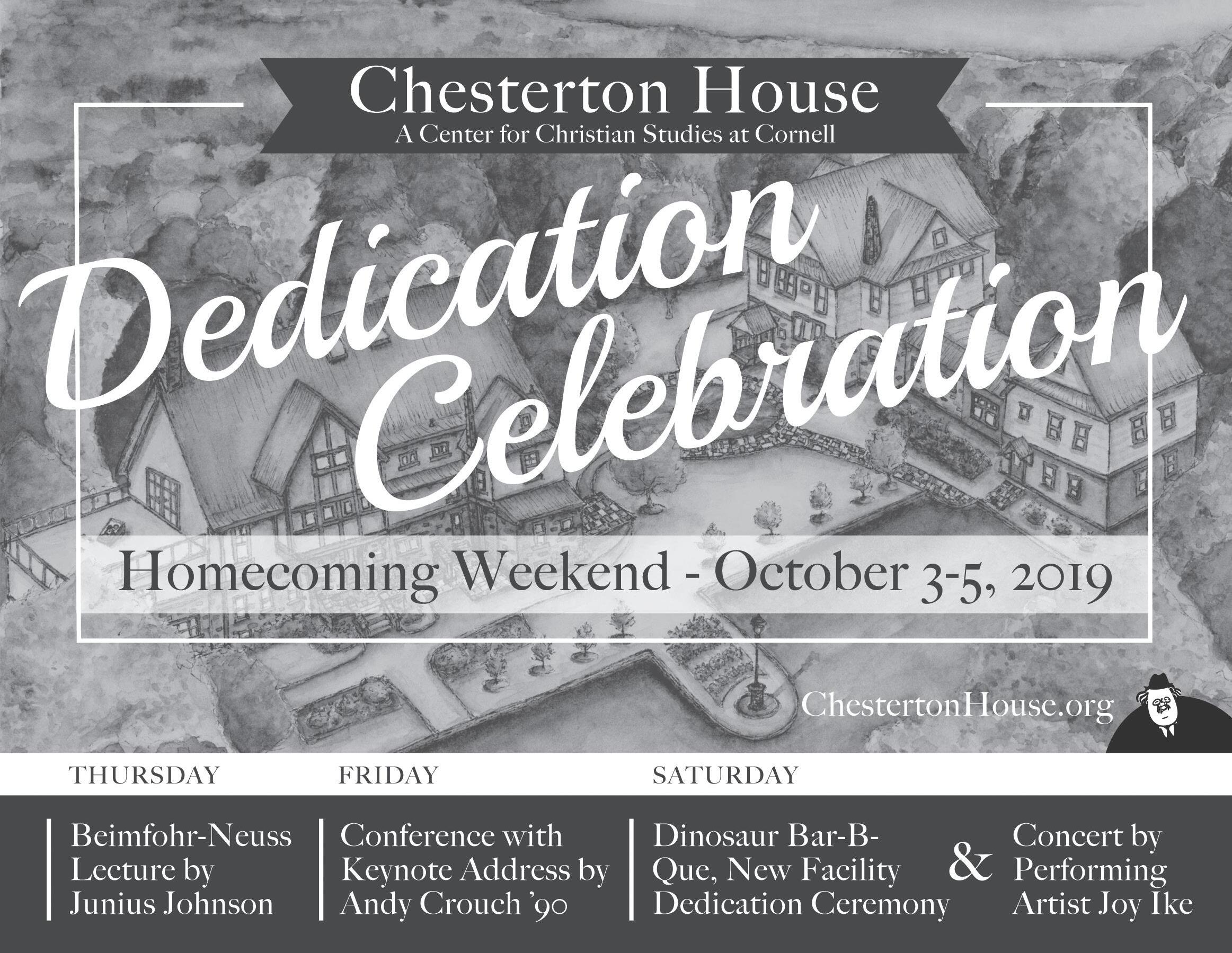
Chesterton Dedication Ceremony and BBQ
Saturday, 11 a.m. - 12 p.m., Chesterton House Living-Learning Community
Homecoming Big Red Fan Festival Saturday, 12 p.m., Schoellkopf Field
2019 DeeDee Arrison Concert for the Animals
Saturday, 4 - 5 p.m., Lecture Hall 4/5 College of Veterinary Medicine
Ada Lovelace Day: Women in the Sciences Wikipedia Edit-a-thon Sunday, Noon - 5 p.m., 160 Mann Library
The Privileged Poor | On Thursday, Anthony Jack, assistant professor of education, Harvard Graduate School of Education, will discuss the impact of class and culture on undergraduate students navigating college life.
COURTESY OF CORNELL
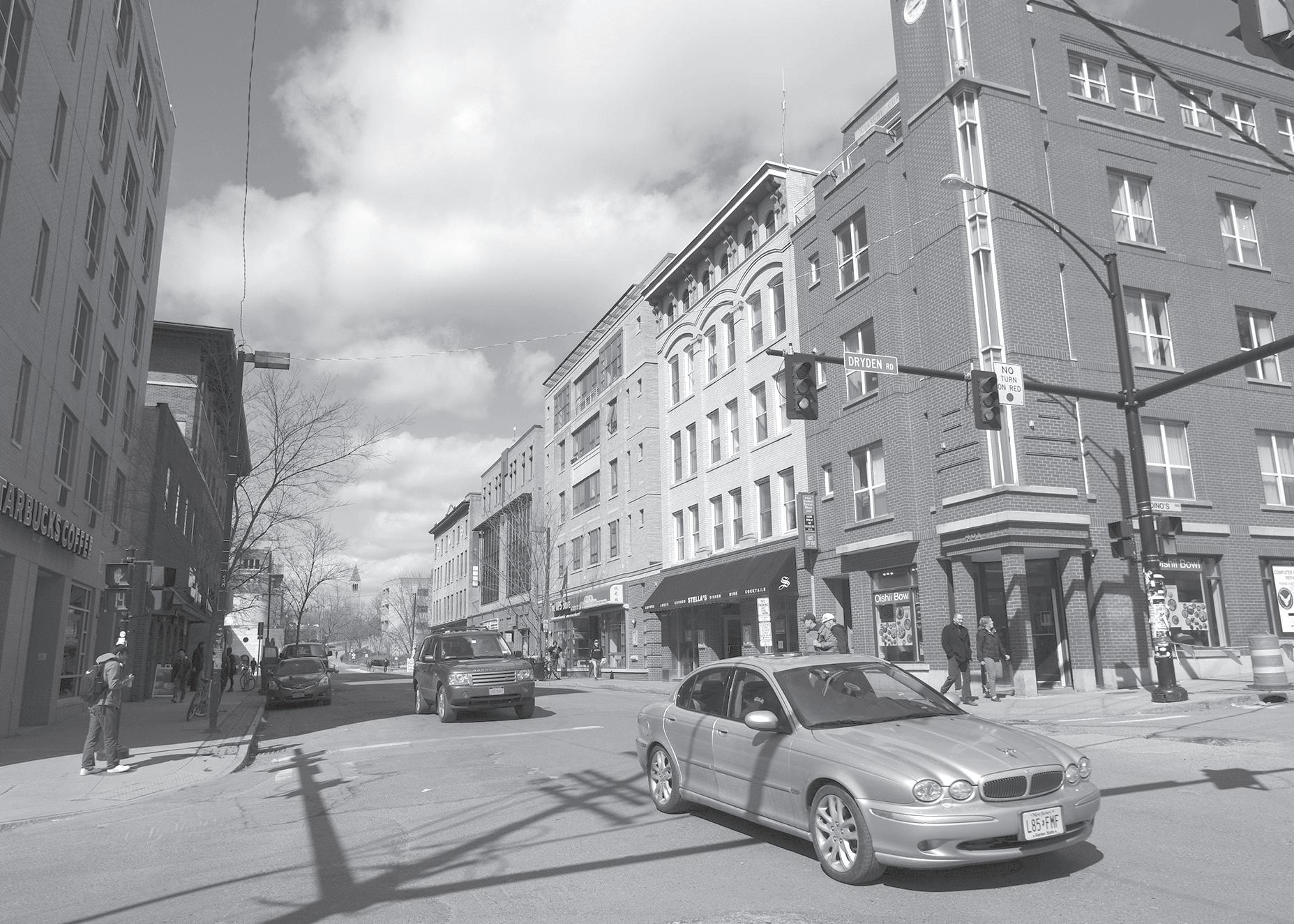
Ithaca Ranked #1 ‘Very Small’ Car-Free City
Local ofcials attribute the ranking to accessiblity of public transit, bike-sharing and car-sharing services
By ALIYAH KILPATRICK Sun Contributor
Ithaca was recently ranked the top car-free city in the “very small metro” category by CityLab.com, a digital publication specializing in city life.
The news that Ithaca topped the car-free charts was exciting to TCAT’s general manager Scot Vanderpool, who said the metro can attribute its ranking to accessible alternative transportation means: Ithaca Car-Share, the introduction of LimeBikes, the large number of Cornell students walking to and from classes and the TCAT.
“Cornell is very helpful,” Vanderpool told The Sun. “Our ratio of rides is the best.”
The introduction of LimeBikes has influenced more people to go car-less, according to Vanderpool and Fernando de Aragón, director of the Ithaca-Tompkins County Transportation Council. The successful launch and the large number of people that have been using
the LimeBikes has granted people who don’t have cars transportation to many places, such as work and school.
“Bike-share has provided access to bikes, and convenience is a big part of it. It has addressed the barrier to bicycling, which is not owning a bike,” de Aragón said.
The increasing cost of cars has influenced people to go car-free in cities. Cars and gas can be pricey, and a high concentration of car-using people in cities creates congestion and traffic. Also, with the cost of living going up in cities, it has pushed more people out of the cities into more rural and suburban areas — where there are also difficulties.
“Once you get into the suburbs and the rural areas, it is a lot harder to live car-free out there,” de Aragón said. “We need to continue to work and provide more opportunities for people to consider a different way to move around.”
TCAT is working to bring transit into the county’s more rural areas, and many different organizations across
Tompkins County are collaborating on a project to create a single platform that has all the different resources in one area.
The project is called Mobility as a Service, and would connect car-share, bike-sharing, transit, healthcare and more organizations in one platform. The team wants to use MAAS to connect people to the transit and transportation system using cell-phones and other devices, bringing in people of rural areas and other pockets.
“Transit works better in urban areas than rural areas,” said Fernando, but pointed out that “universities bring a lot of people together and promote efficiency.”
Moreover, using cars less frequently has a direct connection to the environment. The use of public transportation, biking and carpooling has decreased the amount of gas emissions, according to Vanderpool.
“Transportation is the highest producer of greenhouse gases,” said de Aragón. “The bulk of the emissions from transportation comes from SUVs and pick-up trucks.”
The ranking was determined by analyzing how easy it is to go without a car, CityLab’s website states, by developing a Metro Car-Free index and by classifying the metros into four size groups.
The metro classification’s size groups included large metros (with more than 1 million people), medium-sized metros (between 500,000 and 1 million people), small metros (250,000 to 500,000 people) and very small metros (population less than 250,000).
“Once you get into suburbs and the rural areas it is a lot harder to live car-free out there.”
Fernando de Aragón
The index factored in four key variables: the share of households that don’t have access to their own vehicle, the share of commuters who take transit to work, the share of commuters who bike to work and the share of commuters who walk to work, according to City Lab.
In April, TCAT will introduce three new battery-powered electric buses, Vanderpool said, part of the company’s effort to decrease emissions. Vanderpool’s ultimate green solution? Get rid of the need for individually-owned cars.
“Everybody seems to be very excited about doing the right thing in this community,” Vanderpool said. “As far as being engaged and moving towards some sustainability efforts that are gonna really matter and make a difference.”
Aliyah Kilpatrick can be reached at aak74@cornell.edu.
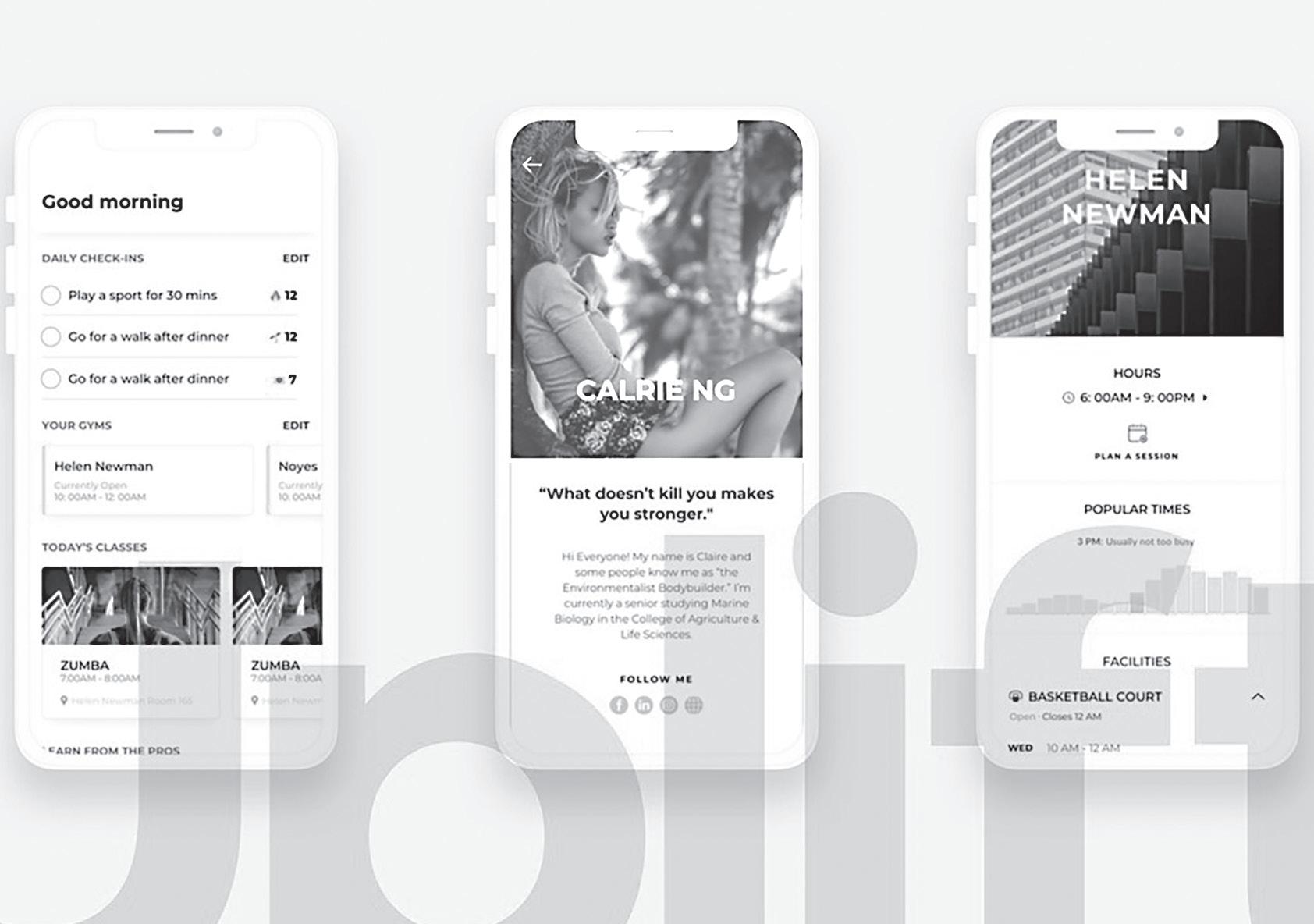
After First Year, Uplift Fitness App Currently Serves 900 Users
By AYANA SMITH Sun Contributor
Last fall, the Cornell AppDev project team launched a new app to make information available on the Cornell Fitness Center, which serves upward of 12,000 Cornellians, more accessible and user-friendly. Uplift currently serves 900 users, according to Yi Hsin Wei ’21, the app’s team leader.
“It is definitely something that was needed,” Michael Ferguson ’21 said. “It was eye-opening as to how many classes were offered. And just being able to see the times they’re available and times they are closed.”
“I think Uplift has gone through multiple iterations. We’re shifting back to maximizing utility.”
Yi Hsin Wei ’21
For Ferguson, having access to this information encouraged him to visit the fitness facilities more often.
Bert Adams-Kucik, the current director of CFC, said that “it’s a nice tool for the members to use. It has the basic information for each Fitness Center. They have created a nice display of the Group Fitness
Classes. I like the favorites aspect of the app as well.”
Despite the positive review from Adams-Kucik, Wei expressed that the app has faced difficulties as CFC isn’t willing
to work with AppDev — from marketing and advertising to providing data to the app team.
The team has struggled to address some of their issues due to lack of collaboration,
Wei said.
“The only thing I’m not positive about is when it says it’s not busy,” Ferguson said, later suggesting that the app developers should add a live update feature or social media platform where the busyness of the gym facilities can be updated.
In order to do this, they would need more accurate data from CFC. AdamsKucik, though, said she’d be happy to collaborate further with the app team.
“I did meet with some of the students working on the development of the app last year,” Adams-Kucik said, later stating that she was unsure why CFC and Uplift don’t have a partnership. However, Adams-Kucik expressed interest in further discussion with the app team.
Despite barriers that CFC poses to the development team, Wei remains optimistic about Uplift’s trajectory.
“I think that Uplift has gone through multiple iterations,” Wei said, “We’re shifting back to maximizing utility.”
Within the coming weeks, Wei says that the team will be adding features that allow users to access facility hours, holiday hours and availability of gym equipment. Long term goals include expanding the app for Android users.
Ayana Smith can be reached at aas337@cornell.edu.
Car-less living | CityLab.com recognized Ithaca’s accessibility to car-free living by ranking it number one amongst very small cities.
ADRIAN BOTEANU / SUN FILE PHOTO
Ithaca Commemorates Acclaimed Author Toni Morrison M.A.’55
MORRISON
Continued from page 1
student of Morrison. All also work in the Africana Studies department.
While the event was originally planned for Sept. 30, the Africana committee pushed it back to invite as many people as possible to reflect on Morrison’s death once the frenzy of the first week of classes had subsided. Richardson said that much time and consideration was needed to recognize “someone with such distinction and achievement.”
The event coincided with other tributes dedicated to
Morrison across the country. On the day of the event, Amazon released the Kindle edition of the latest collection of Morrison’s work, Goodness and the Literary Imagination: Harvard’s 95th Ingersoll Lecture with Essays on Morrison s Moral and Religious Vision
During the event, notable speakers reflected on their personal relationship with Morrison as well as their personal tributes to the eminent writer. Eric Acree, director of the Africana Library, shared an online guide on Morrison where he compiled and organized Morrison’s novels, non-fiction works and children’s
books.
The website also provides links to noteworthy interviews, critiques of her works and a link to her recent documentary, Toni Morrison: The Pieces I Am , which was released in June.
The program featured an art quilt that Richardson had created in honor of Morrison’s 80th birthday, which was exhibited in Balch Hall in 2011. Speakers took turns reading their favorite passages from Morrison’s novels including Sula , and discussed the importance of Morrison’s literary recognition on the African American community.
Morrison was the first African
American woman to win the Nobel Prize for Literature. She is renowned as a prolific fiction writer, literary critic and theorist. Her most famous works include Pulitzer Prize winning Beloved , The Bluest Eye and Song of Solomon In 2012, Morrison received the Presidential Medal of Freedom from then-President Barack Obama. In her novels, Morrison centralized the experiences of
Africans and African Americans through the eyes of her black protagonists, shedding new light on slavery, the origins of
“I think it’s amazing to have a space here on campus to celebrate one of our most famous alums.”
Michael Miller grad
America, black identity, womanhood, motherhood and colorism. Prof. N’Dri Thérèse AssiéLumumba, Africana Studies, noted that Morrison was a pioneer in American literature for featuring “black people as the center stage.”
As part of the Africana faculty, Richardson hoped that people who attended the commemoration hoped to “encourage them to really immerse themselves in reading her works.”
Prof. Judith Byfield, history, and author of The Bluest Hands: A Social and Economic History of Women Indigo Dyers in Western Nigeria recalled how Morrison’s The Bluest Eye inspired her dissertation and even the way she taught her students.
Byfield emphasized the importance of Morrison’s work saying that primary sources on slavery assigned to Cornell students often miss the “traumatic nature of enslavement” that the Nobel laureate was able to convey.
Those who attended the event reflected positive responses. Lesley Allee Ph.D. ’01, grew up reading Morrison’s work with her mother. She recalled that Morrison’s novel was the first time she’d read “anyone centering the black experience,” and said that the event was “very moving and educational.”
“I think it’s amazing to have a space here on campus to celebrate one of our most famous alums,” said Michael Miller grad. “This is a community that can appreciate Toni Morrison, and I thought it was done beautifully.”
Kelysey Jennings Roggensack grad, Prof. Derrick R. Spires, English, and Prof. Lyrae Van Clief-Stefanon, English, also spoke at the event.
“For those of us who worked on [this event] and for those of us who’ve known her, it’s been a labor of love,” Richarson said. “It’s been such an honor to connect with such a beautiful, unforgettable person.”
Justine Kim can be reached at sjk267@cornell.edu.
Student Victim of Attempted Robbery
Te crime reportedly occured Wednesday morning
By ALIYAH KILPATRICK Sun Contributor
An attempted robbery occurred on West Campus on Wednesday at approximately 4:30 a.m. in a small wooded area between South Ave. and Campus Rd. according to the Cornell University Police Department who received the report at 4:30 p.m., prompting a CornellAlert.
The victim reported that they were walking home when the robber tried to steal their laptop,
according to the alert, though the victim was able to keep their laptop and run to their West Campus residence.
It is unknown where the robber fled, the alert said, and the victim did not provide a description of the robber. Anyone with information should call Cornell University Police at 607-2551111, use a blue light phone or dial 911.
Aliyah Kilpatrick can be reached at aak74@cornell.edu.
Cornellian Vying for Miss World
make a social impact.
visit, but many people, including those in the beauty field, encouraged me to do the Miss World Korea pageant.”
Lim said that the Miss World Korea pageant was a “long process
“As Miss World Korea and as a Cornell student, I aim to focus on helping and influencing positive social changes.”
Ji-Yeon Lim ’21
with busy scheduling,” but that she is honored to represent her country and to be a role model for women.
“They truly focused on finding the inner beauty of each individual,” said Lim “In addition, they were searching for someone who was a leader and a role model in empowering women.”
Lim also wants to use her position to help her community and
“It was an honor to be crowned,” said Lim “At the same time, I felt the weight and responsibility of the crown as a national representative and role model. As Miss World Korea and as a Cornell student, I aim to focus on helping and influencing positive social changes.”
Between now and the Miss World competition in London, Lim will have to frequently travel back and forth between South Korea and Cornell.
“I am working diligently to balance both aspects of my life and am giving my best efforts as a student and Miss World Korea,” said Lim. “Studying at Cornell and returning back to my daily routine has been refreshing and serene.”
The finale of the Miss World Competition on December 14 will be broadcast to over 150 countries, including the United States, where Cornell community members can watch their fellow Cornellian compete for the crown.
Katherine Heaney can be reached at kheaney@cornellsun.com.
Oldest Bookstore Closes After 45 Years
“Running a used bookstore, I never felt like a businessman,” Goldman said. Through the bookstore, he encountered people who wrote, drew and created cartoons — a community of passionate people in Ithaca.
In its prime, the literary nook was a cultural Mecca in Ithaca for those who loved reading, especially finding unique or hard to find books in little-known fields.
“One thing Jack always believed was that it had an important role to play in the community,” Mink said. “We used to have readings and discussions and all kinds of things,
especially when we had the two stores and it was a community center.”
Prof. Gregory Londe, English, said that he “hope[s] that folks will come and buy up every last book that is on their shelves. Enjoy it while it’s still here, I say — their poetry section is full of good stuff, and the various nonfiction stacks often have a lot of books by local faculty.”
The Bookery was loved and appreciated by all who visited — it was even named on Buzzfeed’s list of Great American Independent Bookstores in 2014.
Out-of-towners who went to college in Ithaca would often return to browse, Mink said,
relieved that The Bookery was still around.
While Goldman is sad to see the bookstore go, he plans to continue his love for literature through reading and writing while enjoying his retirement. Mink expressed her hope that Goldman will write a memoir on his “remarkable life.”
The Bookery’s inventory will be on sale from now until Nov. 18, and the owners are inviting people in to converse with Goldman and “find some books you’ve been meaning to read or give to loved ones.”
Cait Wyman can be reached at cew245@cornell.edu.
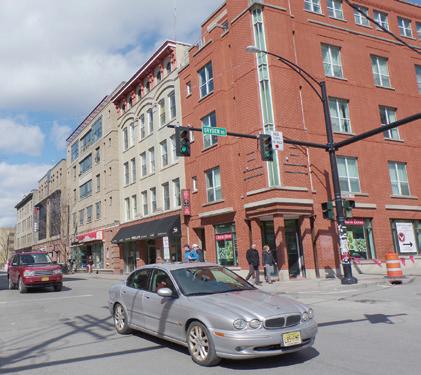
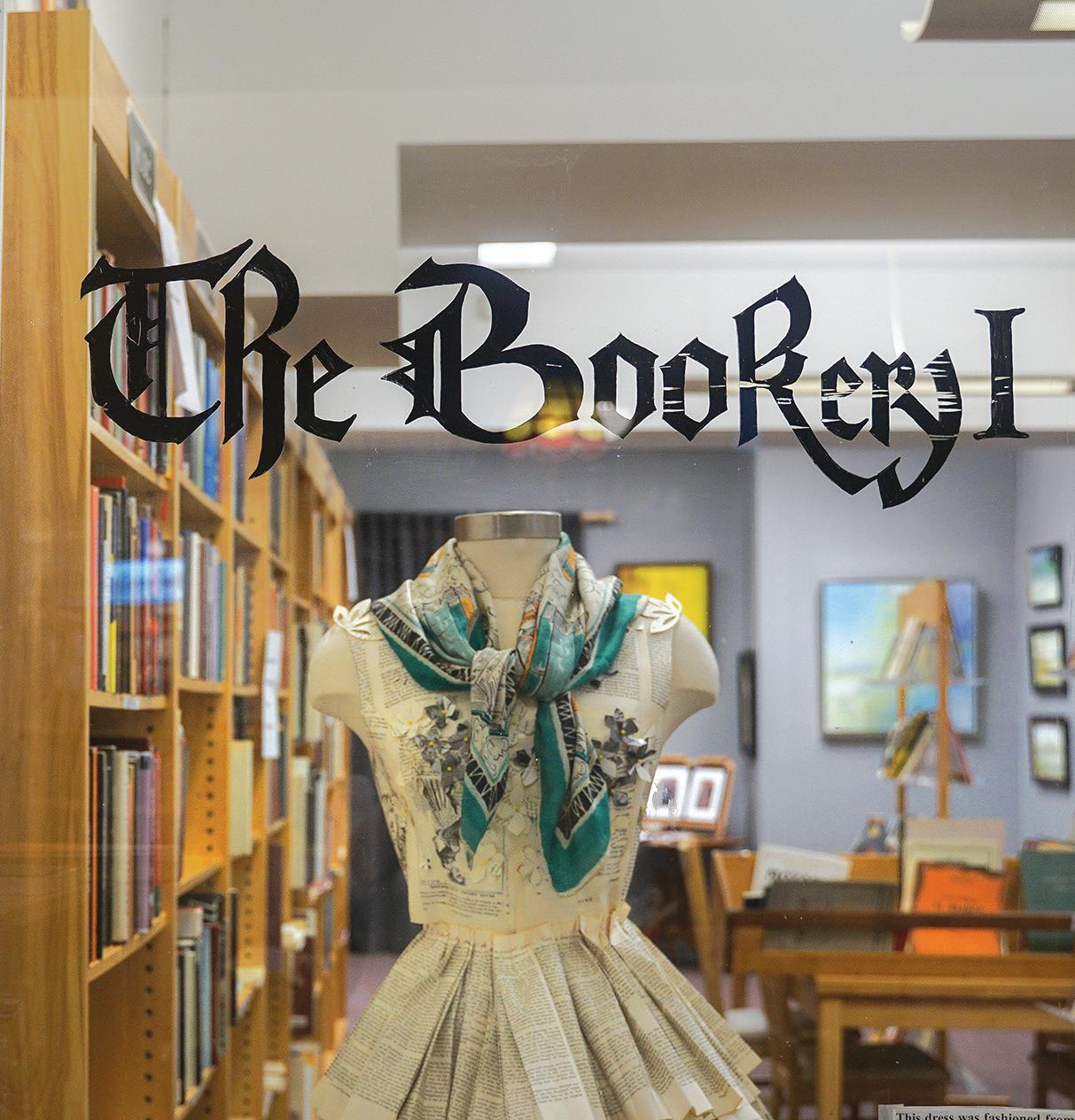
Local landmark | The Bookery, located in DeWitt Mall, is even selling the shelves off is walls in preparation for its November close.
MICHELLE YANG / SUN STAFF PHOTOGRAPHER
The Corne¬ Daily Sun
Independent Since 1880
137th Editorial Board
ANU SUBRAMANIAM ’20
Editor in Chief
JOYBEER DATTA GUPTA ’21
Business Manager
PARIS GHAZI ’21
Associate Editor
MEREDITH LIU ’20
Assistant Managing Editor
RAPHY GENDLER ’21
Sports Editor
BORIS TSANG ’21
Photography Editor
AMBER KRISCH ’21
Blogs Editor
SOPHIE REYNOLDS ’20
Science Editor
AMANDA H. CRONIN ’21
News Editor
JOHNATHAN STIMPSON ’21
News Editor
PETER BUONANNO ’21
Arts & Entertainment Editor
ANYI CHENG ’21
Assistant News Editor
HUNTER SEITZ ’20
Assistant News Editor
CHRISTINA BULKELEY ’21
Assistant Sports Editor
JING JIANG ’21
Assistant Photography Editor
DANIEL MORAN ’21
Assistant Arts & Entertainment Editor
LEI LEI WU ’21
Layout Editor
EMMA WANG ’20
Multimedia Editor
LEANN McDOWALL ’21
Newsletter Editor
BREANNE FLEER ’20
Senior Editor
SHRUTI JUNEJA ’20 Senior Editor
SARAH SKINNER ’21
Managing Editor
KRYSTAL YANG ’21
Advertising Manager
NATALIE FUNG ’20
Web Editor
SABRINA XIE ’21 Design Editor
NOAH HARRELSON ’21 Blogs Editor
SHRIYA PERATI ’21 Science Editor
KATIE ZHANG ’21
Editor
AMINA KILPATRICK ’21 News Editor
MARYAM ZAFAR ’21
ETHAN WU ’21
SHIVANI SANGHANI ’20
ZHU ’21
PARKER ’22
JEREMY MARKUS ’22 Assistant Arts & Entertainment Editor ALICIA WANG ’21
Canadian Prime Minister Justin Trudeau’s re-election campaign was thrust into chaos last week when decades-old photos emerged of the self-proclaimed “woke” PMILF wearing culturally imitative costumes and brown and black face paint. Canadians of all colors withdrew their support and expressed shock, betrayal, scorn and disgust. I, on the other hand, felt there were bigger fish to fry.
I don’t think what Trudeau did actually deserves the level of attention it’s been getting. The vast majority of people, whether or not they protested, didn’t seem to understand what was wrong with his actions, the history that underlies them and, most importantly, how likely they are to have committed a similar offense sometime that past week.
Now, hear me out — I’m not excusing Trudeau’s actions. There are glaring issues with white people wearing blackface or brownface; many of them overlooked. But I don’t think the punishment fits the crime. In fact, our understanding of the crime may not even be complete. Blackface isn’t just about donning face paint and pretending to be someone of another race. The literal act of putting darker pigment onto a nondark person’s skin — that act in and of itself is meaningless.
Last Halloween, as co-chair of diversity and inclusion for my (87 percent white) sorority, I had to help craft an email about costume guidelines for Halloween. However, I soon realized that while wearing someone’s culture as a costume is gauche, insensitive and unfunny, many of the routine transgressions that distress the various cultural and ethnic groups in question were happening around the clock.
The issue with something like blackface is the spirit that underlies it: The caricaturization of black people and the overall exploitation of blacks — their cultural artifacts, their features, their speech, etc., in media and popular culture — otherwise known as minstrelsy, is something I see non-black people doing every day. Blackface was, at one point, the most blatant form of minstrelsy. So while I’m glad no one wore blackface last Halloween, the exploitation of targeted cultures is more than just appropriation of physical features or garments. The stuff is pervasive in our society, and if we want to get anywhere, we gotta pay critical attention more of the time — not just attack grown-up frat boys for doing grownup frat boy shit.
ple we are exploiting. Feelings of transient offense aside, members of the communities in question aren’t directly affected by a costume — that’s not new. These days, they suffer economically greater than anything. Exhibit A is intellectual property, where people in power and privilege profit off borrowed cultural capital — from the appropriation of rights to music production, from fashion trends to the NCAA. Black male college basketball players, for example, represent the face of Big 10 basketball, bringing in revenue and promoting brand recognition for universities — yet they are not sufficiently compensated for their labor, and the overwhelming influence of tertiary education reaches black Americans last. Sportswear companies like Nike track trends among young African Americans as culture-setting indicators for the wider population with the confidence they’ll be readily consumed — and yet all the money and support black Americans continue to offer the brand never sees its way back to the black community. Exploitation in the form of stolen profits and borrowed clout hurts racial minorities who are already financially disenfranchised against the backdrop of the racial wealth gap.
This is what’s frustrating: People tend to draw a line at cartoonish racism, pat themselves on the back and then say, “ok, I’m good, we can stop here.” But the caricaturization of black people and their cultures has become so normalized to the white
Halloweekend is not the only weekend that I go out and am deeply troubled.
American mind that we lack the clarity to critique it. And even that is a small piece of the challenge of maintaining public dignity as a black person in a world that disparages and demonizes blackness.
On the surface level, blackface invokes memories of a deeply painful history, but it also highlights a well-built hegemonic structure of white supremacist power that persists today. Initially, I hesitated to use terms like “white people this” and “white people that.” Who in their right mind would listen to such a direct critique? But the truth is that this is a problem only white people can change. While no white person I know would identify as a white supremacist, we exist within a reality of white supremacy. Through slavery, “exploration,” colonization and the brutal enforcement of their own perceived racial superiority, white people created the limits and structures of the world, and specifically the culture we inhabit today.
This means that even if you didn’t architect a culture that does not value or respect black people (i.e., the “Well I never owned slaves!” fallacy), that well-built structure isn’t going to unbuild itself. We (and by we, I mean Wypipo Everywhere) are going to have to do a lot more than just not wear blackface or say the n-word with an “r.” White people being able to don blackface is only a minor symptom of white supremacy, which, by the way, is a reality of our culture, and not a fringe personality trait. The problem remains that white people are still the only people in our society with the latitude to freely define how themselves and others are portrayed.
Beyond this, most of us, even at Cornell, operate in spaces so segregated by race and class that even if we wanted to, we could not see the most damaging effects of these issues on the peo-
I think if I weren’t black, I would also have a hard time challenging racism that isn’t cartoonish or graphic. I don’t think I go a day at Cornell without hearing someone disparage or stereotype black American people — all the while, laying claim to their music at parties and in their cars, producing and consuming media that caricatures blackness (Vine, anyone?) and co-opting the vernacular of these groups. It’s comically easy to make superficial advances toward cultural competence, yet it’s so normal for white people to imitate and mock African American vernacular English, an example of a routine action that adds to the negative characterization of black people.
Abstaining from that “Rasta Jamaican Island Princess w/ Dreadlocks Wig” Halloween costume is not in itself virtuous or restorative, and the fact that white people think it is points to a bigger problem. Yes, the customs of Caribbean American people are other-ized to the extent that Party City makes farce of them, but we can’t stop with that realization. In the same way, I appreciate dreadlock wigs not being used, but I’d love it a lot more if black women didn’t earn 61 cents on every white man’s dollar because we’re perceived as ghetto for hairstyles white suburban teens adopt when convenient. Repairing and restoring dignity to historically marginalized people is going to require a deeper digging into the consciousness, and is often far from easy. Oftentimes, the easiest or most apparent things are sensationalized — but as a person of an identity that is very much subject to this, I can tell you: Halloweekend is not the only weekend that I go out and am deeply troubled by what I see and hear. It’s about so much more than not wearing a whack Halloween costume — that is not restorative justice, that’s just being decent.
Edem Dzodzomenyo is a senior in the College Agriculture and Life Sciences. She can be reached at edemjayne@cornellsun.com. Ed’s Declassified appears every other Tuesday this semester.
Michael Johns, Jr. | Athwart History
Seventy Years of Evil
Mere hours ago, a teenager in the Tsuen Wan District in Hong Kong was shot with live ammunition. The bullet missed his heart by three centimeters but nonetheless pierced his lung — an injury that can sometimes end with the patient drowning in his own blood. Thankfully, this one did not. According to reports, he is in stable condition, but at the time of this writing, he joins 50 others injured while demonstrating against the government in Hong Kong on the 70th anniversary of the ascent to power of China’s Communist Party. A poetic moment: He, like the city, could have drowned in blood by now — and yet lives to fight another day.
In the fall of 1987, in the wake of Ronald Reagan’s famous and inspiring “evil empire” speech, my father wrote an incisive chronology of the Soviet Union’s crimes titled “Seventy Years of Evil.” He defended Reagan’s then-controversial use of the phrase by carefully producing 14 heart-wrenching pages of statements and events, a veritable “catalogue of evil,” which argued that the Soviet Union had indeed escalated mere tyranny into “history’s most sophisticated apparatus of rule by terror.”
Yesterday, 32 years later, our young Hong Konger and this world marked the 70th birthday of yet another evil empire: the People’s Republic of China. The Soviet Union may have produced and expanded the 20th-century totalitarian state, but Beijing has fully modernized it, having about 20 percent of the world’s total population under its heel and inflicting horrific and unspeakable violence on its own people in the process. The Soviet Union was an unnatural empire stretching an entire continent, ultimately born to unravel. The People’s Republic of China, in similar fashion, is an imperial state held together by brute force that openly admits its project of “Sinicization” — that is, cultural erasure — against ethnic and religious minorities alike. In a nation of 1.4 billion incredibly diverse people spread out over 3.6 million square miles, Chinese President Xi Jinping has embarked on one of the most ambitious totalitarian undertakings of modern times.
Examples are abundant. In the western province of Xinjiang, for instance, Xi has imprisoned more than one million Uyghur Muslims in re-education or “psychological correction” camps since at least August 2016, in which prisoners are held without trial. In these camps, Uyghur Muslims are forced to drink alcohol and eat pork — serious
violations of their religious traditions — and are indoctrinated with Communist Party propaganda, through torture if necessary. One of Cornell’s most astute writers on this issue, Prof. Magnus Fiskesjö, anthropology, correctly argued this April that the regime’s true focus is clearly on destroying the Uyghurs as a people and should therefore be defined as a genocide.
But the Uyghurs aren’t the only ones filling the camps. Beijing represses its dissidents in countless ways, including sending some to be interned in the same facilities. Many have heard the stories of high-profile Chinese prisoners, like 2010 Nobel Peace Prize laureate Liu Xiaobo, one of China’s most vocal opponents of one-party rule. They may have heard of Wang Dan, a Tiananmen Square student protest leader — and witness to the thousands slain or wounded there — who visited the Cornell Political Union last November. But countless other, still-unnamed Chinese prisoners of conscience continue to suffer. From Mao Zedong to Xi, the Communist Party has always been primarily interested in its own survival and brutal toward any who have even a modicum of reservation to its actions.
citizens at home and abroad reasonably ask that their oppression by China’s autocratic government be condemned by civilized nations of the world.
The geopolitical climate of the Cold War’s final days and China today are not precise parallels. But there are common denominators. The Reagan-era officials who then labeled the Soviet Union “evil” were a minority. Their factual descriptions of it were met with gasps in the largely progressive foreign policy intelligentsia. Some even predicted they were words capable of starting a nuclear war.
But factual words turned to real thoughts in the minds of millions, and those thoughts turned to acts, first small and symbolic but eventually becoming larger and more daring.
Let our truth-telling begin with our generation so that the next 70 years in China are brighter than yesterday.
Today in Hong Kong, the situation is no different. Many of those on the front line against Chinese state brutality today are of college age, including yesterday’s teenage shooting victim. Like their counterparts in Hong Kong, U.S. college students will need to face down China — with an acknowledgment that this country is possibly the greatest threat to freedom the world over.
Challenging totalitarianism, even just rhetorically, is stage one in unraveling it. After Reagan’s 1983 “evil empire” speech, in which he correctly identified the Soviet Union as “the focus of evil in the modern world,” liberal supporters of détente were apoplectic. They said, like pro-Chinese engagement advocates do today, that the conflict must be kept in perspective and that a total embargo is ill-advised. This is true; but what the Reagan administration proved in the wake of this declaration is that it is possible to keep your arms open to a nation while denouncing its malevolence. It is wrong for Americans to merely shuffle their feet as Hong Kongers, Uyghurs, Tibetans and freedom-loving Chinese
Niko Nguyen | Unfltered
YAnd the growing case against the Soviet Union’s brutality was paired with bolder policies from the Reagan administration to check its aggression. Then, a mere eight years after articulating its evilness, the Soviet empire was gone.
Though the case against China is building, its future is still unknown. But one thing is known: The power of truth, articulated boldly and with moral clarity, is more powerful than even the brute force of the world’s most powerful regimes. Anything positive that will and can occur in China starts with describing and condemning its brutality accurately and fearlessly. “Globally minded” activists at Cornell and beyond should take note.
Let our truth-telling begin, and let it begin with our generation so that the next 70 years in China are brighter than the repressive ones its rulers “celebrated” yesterday.
Michael Johns, Jr. is a senior in the College of Arts and Sciences. He can be reached at mjohns@cornellsun.com. Athwart History runs every other Wednesday this semester.
Of Meat & Men: Masculinity vs. Sustainability
ou know you want it.
The feeling is carnal. A primal lust. It’s irresistible — you can hardly hold back from that instinctual need to clasp your fingers around it, wrap your lips around its thick flesh, sink your teeth into that sumptuous parcel of indulgent sin. You want it. Meat.
No, you freak! It’s not that type of “meat.”
I’m talking about meat meat. You know, steak, ribs, bacon, pork chops, ham. The works. Meat is good. In fact, we’re biologically wired to enjoy meat, seeing that our primordial ancestors relied on it to yield calorie-rich, nutrient-filled, protein-loaded meals.
But today, our biological dependence on animal flesh has branched off into a distinct, niche offshoot: a bizarre culture of male fascination with meat. This obsession has manifested itself in a number of ways, taking form as the signature male congregation around the barbecue or as a “bro” hunting retreat in the woods. “Manning the grill” is, quite literally, the prerequisite for attaining masculinity.
While “meat” evokes notions of woodsy machismo, “veganism” conjures images of hipster girls with canvas tote bags and metal straws.
Perhaps it stems from the outdated role of the male as the “hunter,” or maybe from the gold standard for the ideal male as a chiseled figure fueled entirely by protein. In short, the relationship between the two boils down into one indisputable point: someway, somehow, we’ve learned to equate meat with masculinity.
So, it should come as no surprise that a scant 21 percent of America’s vegans are male, a mere slice of an already limited population. I can’t even count the number of male vegans I’ve encountered on one hand — and I’m from California. The vegan male is an oxymoron, balancing the contradictory forces of traditional masculinity and the
femininity associated with meatless diets.
While “meat” evokes notions of woodsy machismo, “veganism” conjures images of hipster girls with canvas tote bags and metal straws. The same goes for “sustainability.” Sustainable living, strongly associated with herbivorous eating choices, is another heavily gendered practice. In response to growing concerns about the Earth’s increasingly dire state, people around the globe have committed to redressing our climate crisis. National governments and big businesses have failed to enact effective improvement; yet, individuals have taken the issue upon themselves by reducing their carbon footprints. Simple, everyday changes — recycling, carpooling, opting for reusable bags — produce an immense improvement in one person’s environmental impact. Some have even engaged in more drastic life changes, like purchasing fuel-efficient electric cars, adopting plant-based diets and living zero-waste lifestyles.
Yet, the proportion of those engaging in these sustainable activities is heavily skewed. According to Scientific American, “women litter less, recycle more and leave a smaller carbon footprint.” Multiple studies echo this phenomenon, showing consistent male absence in green living. Compared to females, men resist eco-friendly practices. And it’s not because men are immune to the planet’s declining health (as they are from many systemic injustices). The Earth’s well-being has universal impact irrespective of gender. It’s because of toxic masculinity.
One of my friends commented on the male involvement in environmental causes on Cornell’s campus: “I genuinely sometimes wonder, is the best example of men collectively caring about the environment on campus frat brothers recycling their empty cans of Keystone and White Claw? Do they even do that?”
The lack of male participation in the environmental movement is glaring: By allowing perceptions of masculinity to take precedence over our environment, we force women to shoulder the lion’s share of sustainability efforts. Women are the ones expected to buy reusable straws and water bottles (when they still only make 79 cents to every
The lack of male participation in the environmental movement is glaring: By allowing perceptions of masculinity to take precedence over our environment, we force women to shoulder the lion’s share of sustainability efforts.
man’s dollar), and are the ones expected to embrace plantbased diets for the sake of the environment (when they are already held to strict, societal body standards).
As a cohort, males share a collective fragility, rejecting altruistic behavior in fear of appearing too feminine. Because sustainability carries undertones of actually caring about something, males have developed a resistance to buying into lifestyles that are less harmful to the environment. Discussing the perils of fast fashion isn’t ingrained in the daily vernacular of red-blooded, testicle-bearing individuals. Vocalizing dissent against the meat industry’s polluting existence doesn’t fall in line with perceived ideals of masculinity. “Aye bro, let me just toss a spear of asparagus on the grill” doesn’t have that robust, macho aura that men attempt to exude.
It’s ludicrous, it’s toxic — and it’s avoidable. Maintaining one’s masculinity won’t even be a concern if we’re all dead. It’s our duty, as the residents of this planet, to play a role in saving it. However we identify ourselves, we should all be doing what we can to remedy the issues that we’ve exacerbated.
And sometimes, that means exchanging our beloved infatuation with meat for a grilled spear of asparagus every once in a while.
Niko Nguyen is a sophomore in the College of Agriculture and Life Sciences. He can be reached at nhn5@cornell.edu. Unfltered runs every other Wednesday this semester.
Dining Guide
Your source for good food
Apple Harvest Festival:
A Snapshot of Life Upstate
By RAE SPECHT
Sun Staff Writer
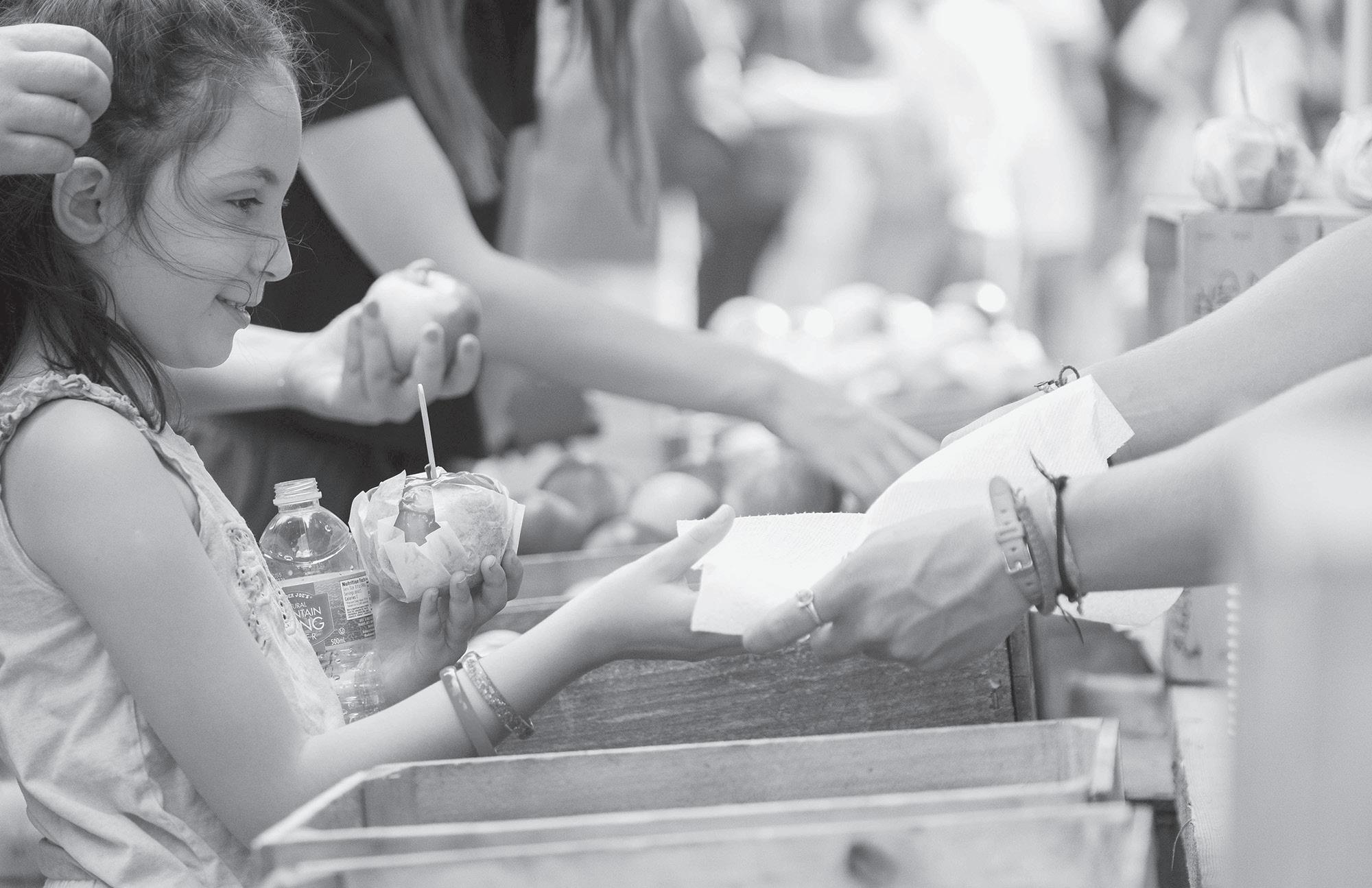
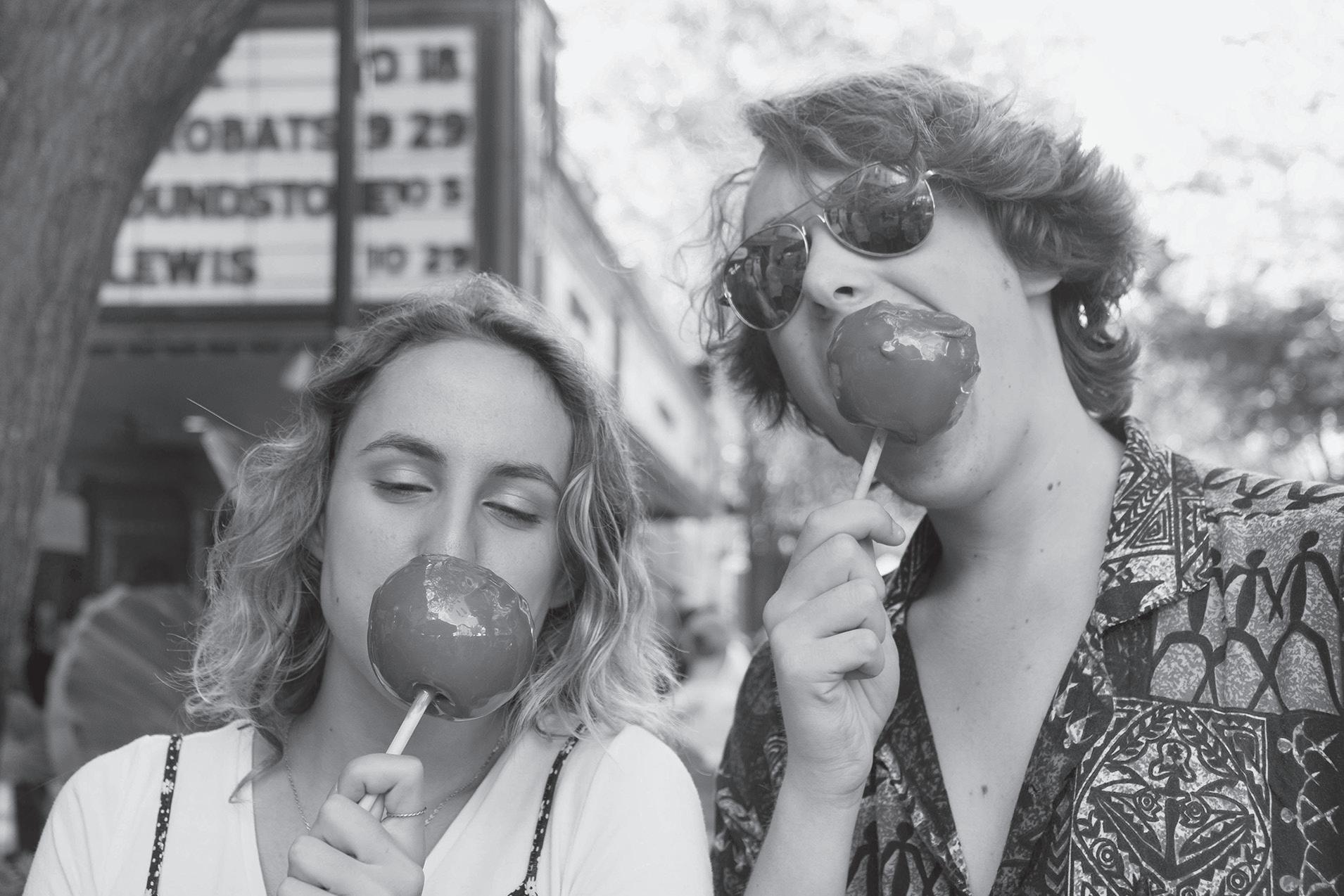
In true Ithaca fashion, Apple Harvest Festival is something caught between a nostalgic, agrarian county fair and an eclectic, trendy Brooklyn food festival. It’s a celebration of all things apple — apple pies, apple cider and candied apples — but more than that, it’s a celebration of the Finger Lakes area and the people who shape it. With millions of acres of farmland (52,000 of which are devoted exclusively to apple orchards), Upstate New York is a Mecca for farmers, chefs, bakers and wine makers who come together one weekend in late September to share their passion for food with the masses.
belly. To her right, another woman, redfaced, dispenses perfect rings of batter into 375 degree oil. It’s almost October, but it’s 82 degrees Fahrenheit and under the tent, it’s much hotter. It’s grueling work, but the family that runs the Little Farm Bakery is glad to do it.
From Romulus, N.Y., just 45 minutes north of Ithaca, they live in a community with about 300 other Amish families. “This is our main event of the year,” said a bearded man in a broadbrimmed straw hat. “We started setup just after 6 a.m., when it was hardly daylight. It’s a long day, but we have about 13 people working in total, so we switch on and off.” Nieces, nephews, cousins, sisters and brothers mix, shape, fry and envelope the
“I’m from Cincinnati, Ohio, so we don’t really have many orchards or apples. This is something that’s really unique to New York state, so I’m just excited to eat as many apple-themed foods as possible,” explained Olivia Smith ’22. “I waited in line for 30 minutes for an apple cider doughnut. It was so worth it.”
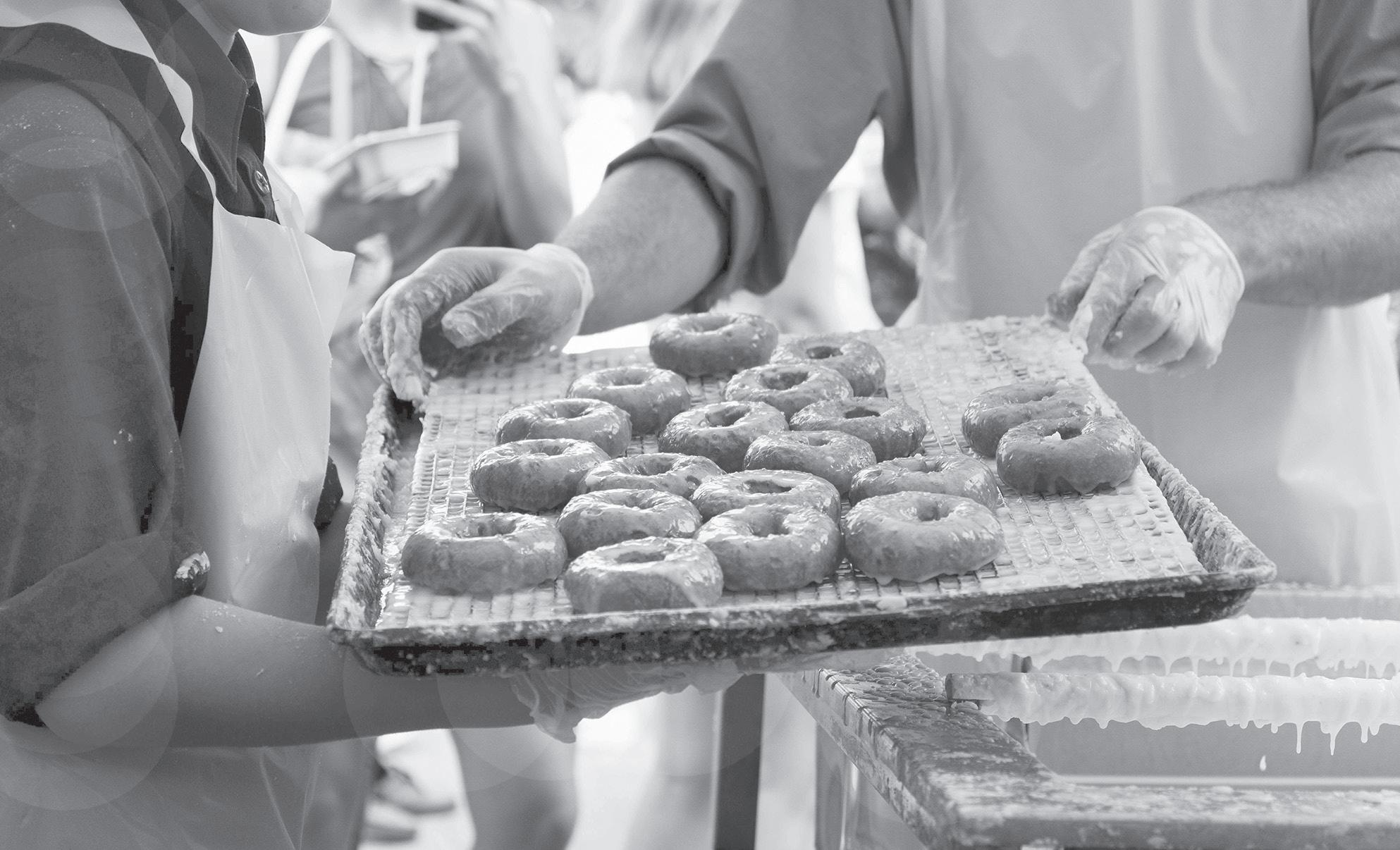
Naturally, a mainstay of Apple Fest is the apple cider doughnut. They’re available on every corner, but one stand rises to the top. Under a no-frills white tent, an Amish family cranks out hundreds of plump little doughnuts with incredible efficiency.
doughnuts in a veil of satiny glaze.
Upstate New York is a Mecca for farmers, chefs, bakers and wine makers who come together one weekend in late September to share their passion for food with the masses.
“We make the glaze at home but everything else, all the frying, we do right here,” said the manager, flipping a doughnut to reveal its golden under-
The mesmerizing process is equally imperative to the experience as is consuming the doughnut itself, especially for a generation of Instagram foodies whose phones eat before they do. “It’s the old-fashioned way,” said the owner. “It seems like that’s what the people like ... hot, fresh doughnuts.” She shrugged and chuckled. She’s right — the people certainly do like them, so much so that the line dragged down the block.
Just a few stands down the street, another Amish group from Interlaken, N.Y., set up shop for the 21st year in a row. A decadent spread of old-timey pies, apple crumb cakes, whoopie pies and angel food cakes blanketed the counter. The sheer quantity of products was astounding, an operation comparable to the high volume
bakery at Costco. “We’ve been doing prep work for weeks and doing actual baking, day and night, for the last several days,” said a young woman filling an empty spot on the table with a pumpkin pie from a seemingly never-ending supply. As most Amish do not sell on Sundays for religious reasons, it’s essential to go Friday or Saturday to get the full experience of their baked delicacies and desserts.
The people who grow the apple trees, pick the fruit, press the cider and lattice the pies are the people who make upstate New York such a unique and dynamic place to live and learn.
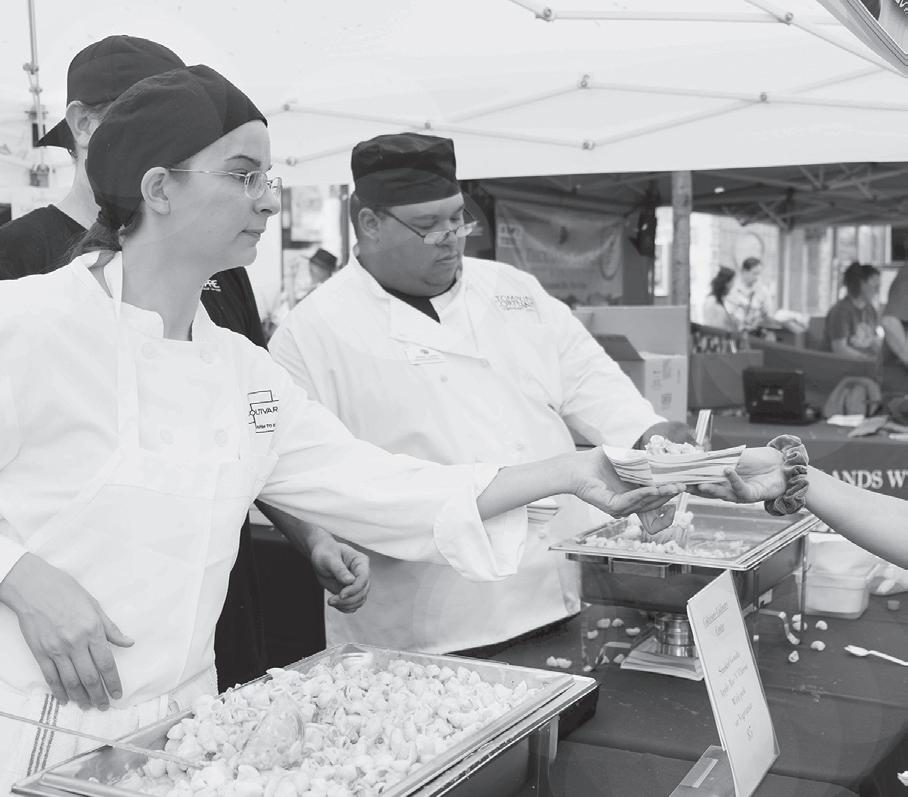
“My goal today is to eat the weirdest apple product I can find,” said one festival goer. He’s not alone in his quest; the pure peculiarity of the various apple-themed offerings is one of the festival’s many joys. Multiple vendors served up their own spin on dishes like apple grilled cheese, applesauce burgers and apple mac and cheese. Among those keeping up with the trend include the chefs at Coltivare, a farm to table restaurant and culinary center in Ithaca Commons, who dished out heaping paper boats of creamy, smoked Gouda mac and cheese with apple butter.
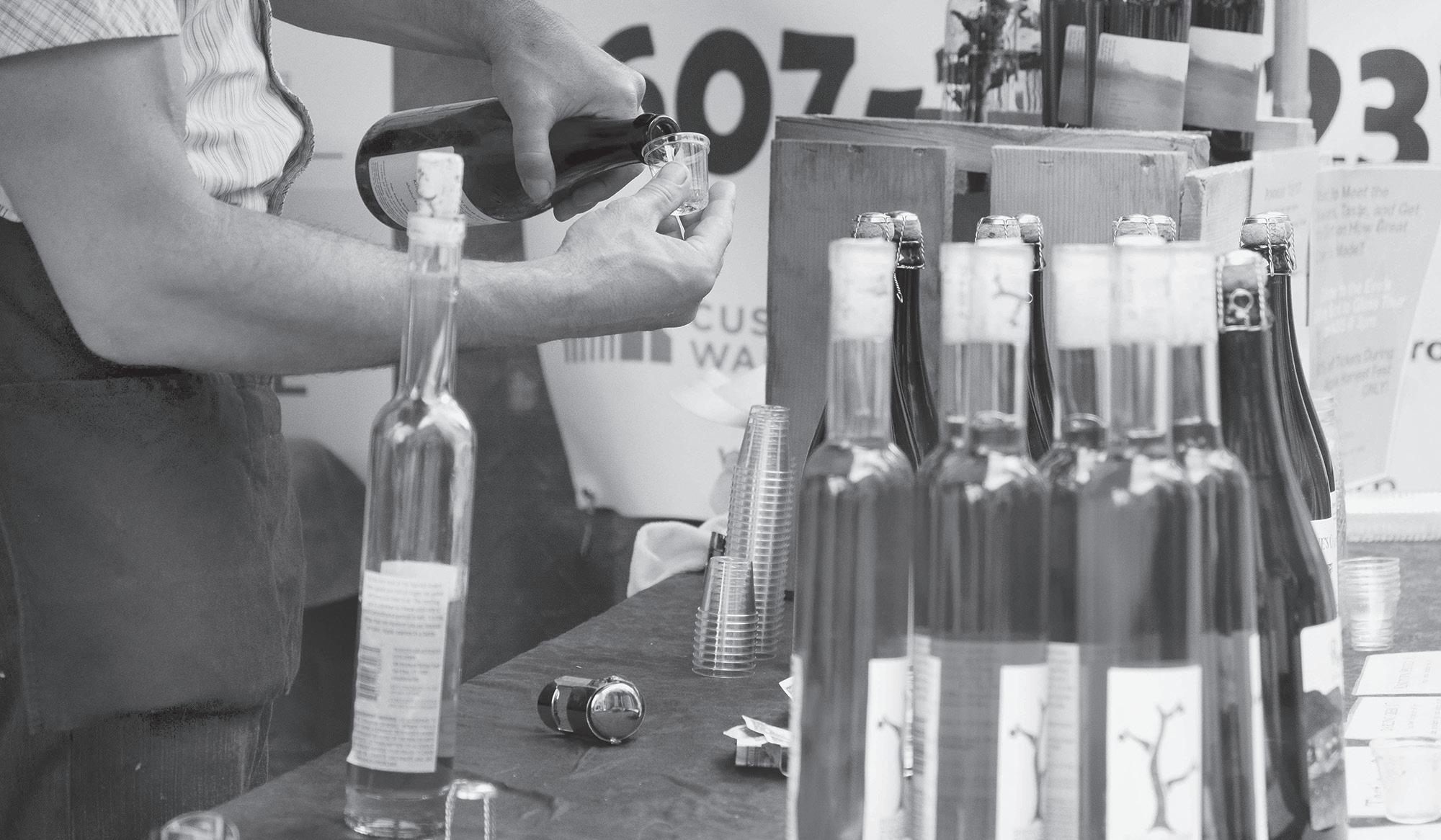
Between bites, some festival attendees sampled hard ciders and chatted with farmers about the laborious production processes, from tree grafting to bottling.
In Van Etten, N.Y., just over 20 miles south of Ithaca, is an orchard perched on a hill beside Cayuga Creek, where a renovated 1950’s dairy barn now functions as a working cidery. Eve’s Cidery is the brainchild of a dynamic trio: a former criminal defense lawyer, a gutsy entrepreneur and a sixth generation orchardist, who all share a common appreciation for the “hard yet meaningful work of sustainable farming.” Their hard ciders have been lauded by Vogue,
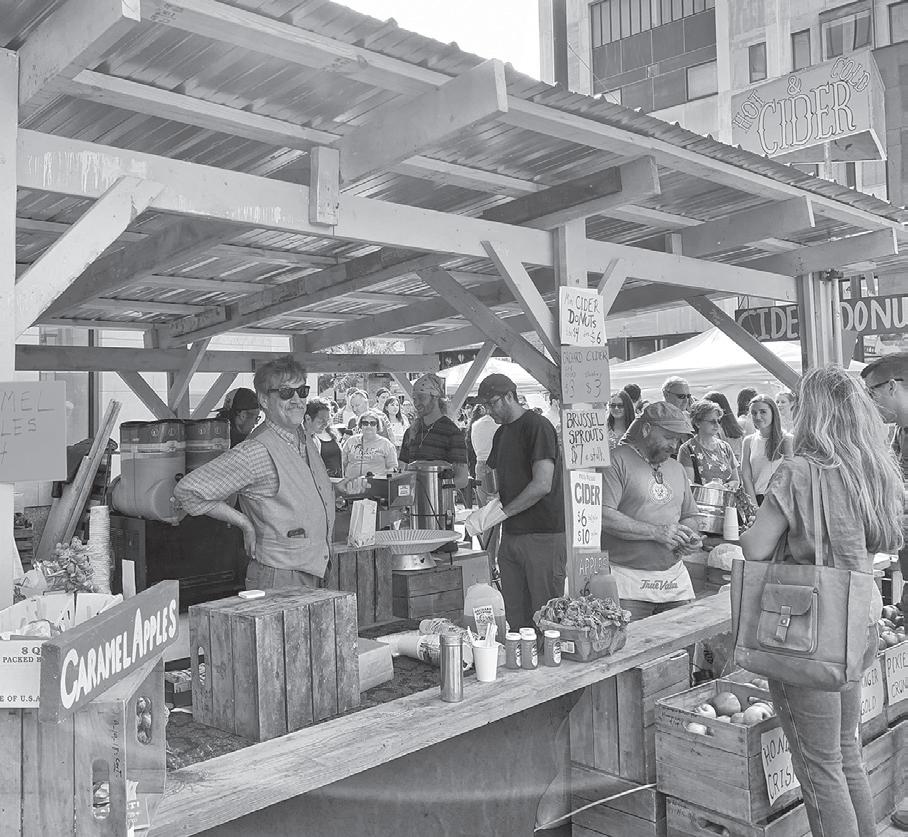
The New York Times and Wine Spectator, but the team stays true to their roots as a rural, working farm, opening their doors to the public for free tours and tastings and hosting educational events about “soil to glass” production. Down the street, a long line snakes in front of Indian Creek Farm’s apple cider booth, an impressive wooden structure, painted a cheery lime green with a large tin roof. It’s a rural farmstand taken straight out of the pastoral countryside, plopped into the center of Downtown Ithaca. The secret to their popular Orchard Ambrosia cider, explained one field assistant, is the use of multiple varieties of apples and pears, which are ground up and cold-pressed right on farm premises. The juice is exceptionally fresh and unpasteurized, which allows it to maintain an intense apple flavor. One single cup of cider requires about six whole apples, leaving no room for corner-cutting with skeptical additives.
Apple Harvest Festival is a snapshot of life upstate, its deep-rooted traditions and its quirks and eccentricities. The people who grow the apple trees, pick the fruit, press the cider and lattice the pies are the people who make upstate New York such a unique and dynamic place to live and learn. Their passion for fresh, homegrown foods and their local Finger Lakes Area pride are evident with every juicy, crispy bite.
Rae Specht is a sophomore in the College of Arts and Sciences. She can be reached at rks229@cornell.edu.
PHOTOS BY MICHAEL SUGUITAN / SUN SENIOR PHOTOGRAPHER
RAE SPECHT / SUN STAFF WRITER
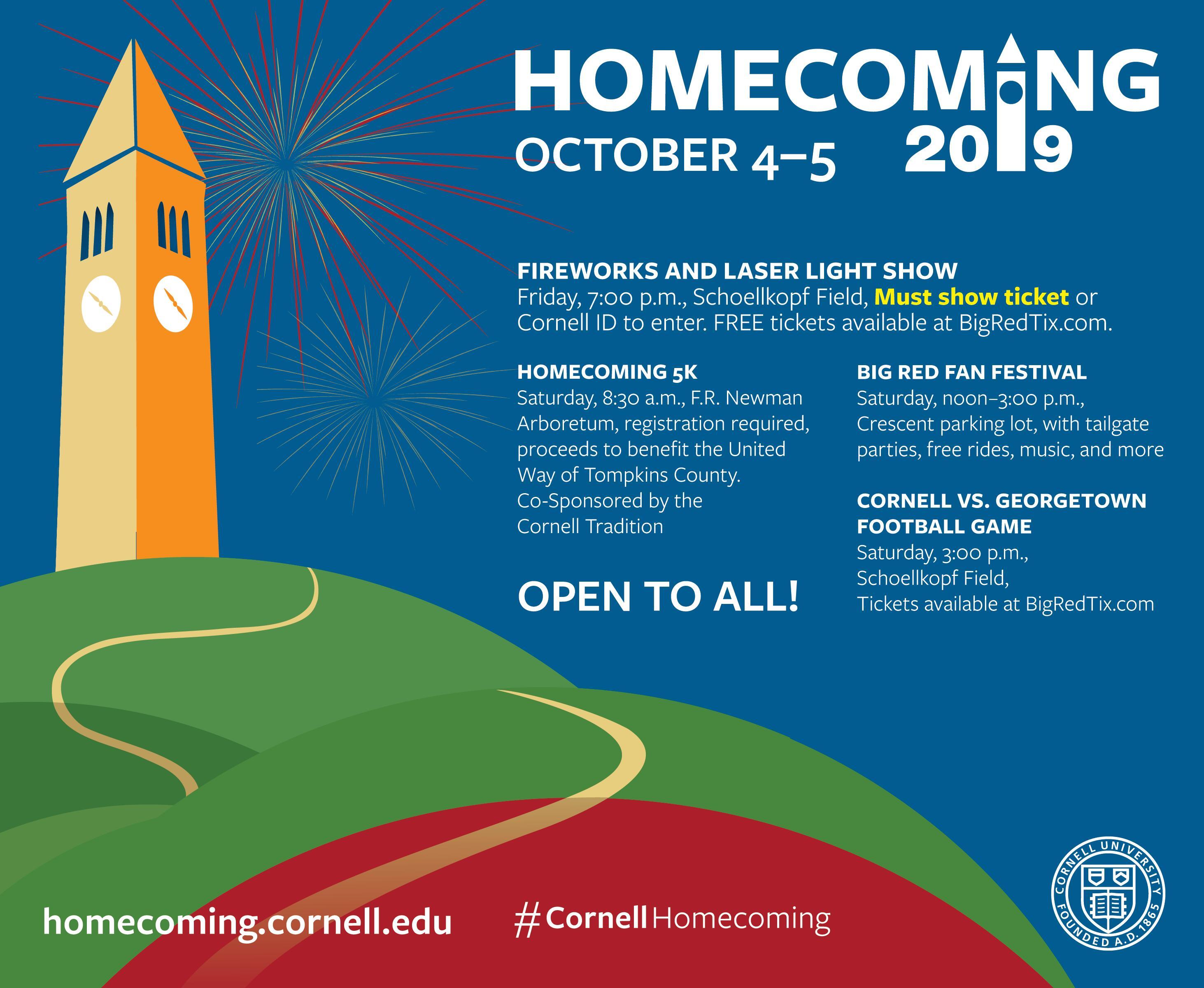
CORNELL UNIVERSITY Homecoming 2019
Featured Homecoming Events
Fireworks and Laser Light Show
Date: Friday, October 4
Time: 7–9:15 p.m. Doors open at 7 p.m.
Location: Schoellkopf Field
This celebration includes live performances, special guests and exciting finale. This event is FREE and open to the public; must show ticket or C.U. ID to enter.
Big Red Fan Festival
Date: Saturday, October 5
Time: 12–3 p.m.
Location: Crescent Parking Lot Free events for all ages, including demonstrations from colleges and units, tailgate parties, rides, music and more. Food and beverages will be available for purchase.
Homecoming Welcome Tent
Date: Saturday, October 5
Time: 12–3 p.m.
Location: Crescent Parking Lot
Warm welcome, local treats, special prizes, helpful information, and more. Pick up commemorative Homecoming button, while supplies last.
Cornell vs. Georgetown Football Game
Date: Saturday, October 5
Time: 3-6 p.m.
Location: Schoellkopf Field
Cornell University
Dining Department Goes to the Apple Harvest Festival
Our writers recount their favorite dishes and delights from this past weekend
By DINING DEPARTMENT
Sun Staff
As a newbie to Ithaca’s food scene, as well as a farmers’ market enthusiast, Apple Fest offered nothing short of a warm, promising welcome to the culture and community Ithaca boasts. The crowds who wandered the Commons, waited in the lines and enjoyed the fruity and savory flavors of the day showed me just how much Ithacans love their products and people. While the lively atmosphere would have sufficed to please, the crisp apples with their sticky sweet caramel, the fresh unprocessed cider and the mouthwatering caprese mac and cheese (a cheese-lover’s dream) I devoured left me feeling quite full and satisfied, to say the least. Further, I must note that the background music blaring through the Commons consisted of some of my favorite artists — for example Noah Kahan — whose music blended wonderfully with and bolstered the already cheerful ambience. It takes more than just good eats to unite an entire community, and that’s what Apple Fest effortlessly accomplishes.
— Julia Lescht ’23
For $10 a serving, Silo’s “Gluten-‘ous’ to the Minimus” gourmet macaroni and cheese is no cheap treat. My friends, however, felt it was well worth the money, and couldn’t get enough of the melty, extrasharp cheddar cheese and béchamel sauce which was paired with pickled onions and topped with a fried chicken leg. The crunch and acidity of the onions paired well with the creamy mac and cheese, and my friends devoured their portions just minutes after getting the perfect picture for the camera. I nabbed a couple bites off of them but didn’t purchase my own; my heart — and stomach — yearned only for my favorite fall delicacy: the apple cider donut. There’s something about biting into a warm cinnamon and apple donut that encaptures the beginning of autumn so perfectly — the beginning of sweater season, golden-hued landscapes and cozy nights in with a steaming cup of tea.
— Katie Zhang ’21
Nestled among the standard line up of colorful carnival food trucks, offering a variety of fair favorites, and the umpteen amounts of hard cider and donut stands, I found a scrumptious surprise. The Tibetan Momo Bar, set up at the T-intersection of the main Commons plaza, was selling fried rice dishes, noodle platters and of course, momos. The Bar also has a restaurant located in Center Ithaca, where the third generation family provides Ithacans with traditional Tibetan cuisine. Momos, for those who are unfamiliar, are the Tibetan equivalent of a steamed dumpling filled with either a seasoned meat mix — typically chicken or beef — or a combination of chopped greens, carrots and potatoes. While traveling to Nepal this summer, I had the wonderful opportunity to incorporate these salty, savory pockets of goodness into my daily diet. The only difference I really noted between momos from Nepal and those from the Tibetan Momo Bar was
the thickness of the wrapping. In Nepal, it was a very thin, almost see-through wrapping that was very tender, while the Momos Bar’s is a much thicker, gummier exterior, more reminiscent of a potsticker or heavy dumpling. Overall though, it was a very enjoyable experience on a beautiful and sunny day.
— Benjamin Velani ’22
Perhaps the most slept-on aspect of Apple Fest is the random food stalls. Tucked among the various places to cop apple cider, caramel apples, cinnamon apple donuts and a surprising amount of mac and cheese, you can find the truly hidden gems of the Ithaca food scene. Just as my boy Ben found his scrumptious surprise in the form of the Tibetan Momo Bar (that place absolutely slaps by the way), I found my own delicious deliverance in the form of a Trinidadian food stall selling chicken and roti. Food from Trinidad and Tobago is
There’s something about biting into a warm cinnamon and apple donut that encapsulates the beginning of autumn so perfectly — the beginning of sweater season, golden-hued landscapes and cozy nights in with a steaming cup of tea.
a unique combination of Indian, Chinese, Arab and African cuisines (which you can thank imperialism for). As an IndianAmerican, I can really relate to some of the dishes in West Indian cuisine, so I absolutely love Trinidadian food. Walking down the aisles of Applefest with a huge $14 plate of chicken curry and roti was a bit of a surreal experience, but I would definitely pick that over waiting in line for an hour for some mediocre mac and cheese. So next year while you’re at Apple Fest, keep your eye out. You’ll be pleasantly surprised by what you might find.
— Murali Saravanan ’20
As mac and cheese flooded social media streams this weekend, let’s revert back to what Apple Fest is truly about — crispy, local-grown, organic apples. Yes, although the mac and cheese is to die for, Ithacans can not miss out on the true gourmet of fresh caramel apples. As vendors
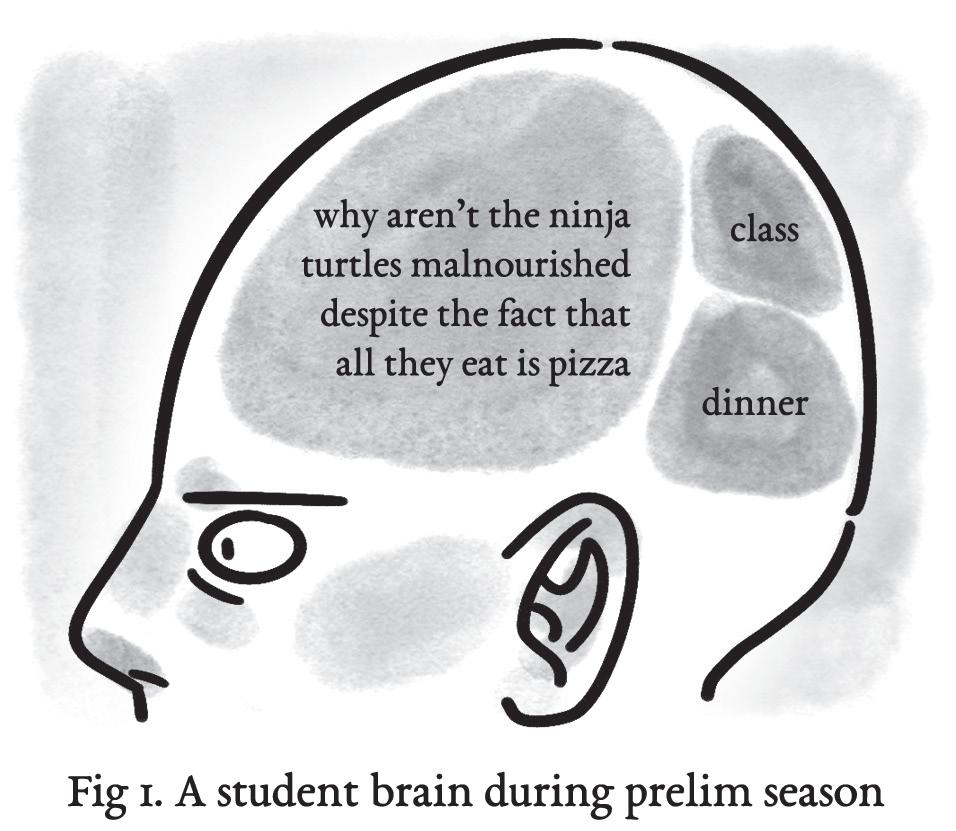
used their ladles to scoop and pour hot caramel sauce on freshly sliced apples, my mouth watered automatically. Sprinkled with nuts and topped with whipped cream, you no longer have to struggle biting into the hard crust of a candy apple with this fresh translation. For a fellow sweet tooth, this delicacy was the perfect remedy to the prelim season blues.
— Sofia Siciliani ’22
The highlight of my Apple Fest experience had nothing to do with apples. As I walked down the crowded street, the booth that caught my eye was filled with peanut butter. The Saratoga Peanut Butter Company table was piled high with different varieties of gourmet nut butter, from a seasonal sellout of pumpkin peanut butter to a nationally ranked chocolate peanut butter. The owner was handing out samples, so of course I tasted at least five of the flavors. Each flavor was distinct, smooth and rich. After having so many freebies, I felt obligated to buy a jar. I was stuck between the “Jack” and “Jill” flavors, both peanut-almond mixes with different dried fruits. Finally, I bought the Maple Peanut Butter (surprise!) because it seemed like a classic fall flavor. And it would go perfectly with an apple!
— Melanie Metz
’22
As a writer for the dining section, I normally dedicate my words to edible items. However, the most striking and memorable part of Ithaca’s annual Apple Fest is the sense of community that surrounds the town center for the three-day weekend. Students and professors, old and young, along with the residents of the Ithaca community, all come out to celebrate the end of summer and the arrival of the fall season with an abundant apple harvest. Shoutout to Taste of Thai for providing quick and affordable hot food options ($8) for participants of the festival through an outdoor serving station. My personal favourite dish?
A rich yellow curry spiced up with bold flavours of cumin and spicy ginger. Smoothed out with coconut milk, the sauce is an excellent vessel for the chunky potatoes, halved baby eggplant and cubes of tofu that are incorporated into the dish. Everything from the food cart is served over a bed of warm jasmine rice that blends directly with the curry, furthering the dishes palatability. I enjoyed this Southeast Asian dish on a nearby bench with a cup of cold apple cider ($4) whilst I watched the crowds come and go through the Commons. It’s quite the experience.
— Dominic Law
’22
One of my favorite things about this year's Applefest was its ambiance. The live music, comfort food and street-market setup all contributed to a homey feel that brought the Ithaca community together for a special weekend.
— Jordan Roth ’23
Te dining department of Te Sun consists of undergraduate students from all majors and colleges. Te department can be reached at food@cornellsun.com.
PHOTOS BY MICHAEL SUGUITAN / SUN SENIOR PHOTOGRAPHER
ARTS & ENTERTAINMENT
How to Sneak Into Fashion Week
The end of September marked the end of fashion month. On Oct. 1, some of the world’s highest Haute Couture houses will be closing their Spring 2020 women’s collections in Paris. For the past three weeks, the media has overflowed with streetstyle, runway and secret after-party pictures, leaving us fashion enthusiasts drooling on our screens.
Be aware that the alluring image of “Fashion Week” is not as out of reach is it may seem.
Let me not get your hopes up — of course you won’t be sitting with Rihanna in the front row of the next Chanel or Louis Vuitton show — but if you wish to attend a show during Fashion Week, there are ways to do just that.
Three years ago, when my best friend and I were juniors in high school, we went on a quest to get ourselves into a show. We realized we had lived in Paris our entire lives and yet had never encountered, even from afar, anything close to a Fashion Week event. We put on fancy clothes, scouted out where the grand shows were being held and clumsily showed up to their doorsteps an hour before they started. We quickly gave up that method after being laughed at and kicked out of line a couple of times by very well-dressed models who acted as bouncers once they heard that we weren’t on the list. Not to worry, we went through these embarrassing rejections so others could skip them.
to attend everything. But that’s good. The press is naturally attracted to the most famous houses so if two shows are back-to-back and far away from each other, you can almost always bet that some people won’t show up to the smaller show. As I said, houses need a good image and that also includes having a full house for a show. So most of the time, they will have a “standby” line in case they have extra room and need people to fill in the blanks. This will get you in eventually. But it is a large commitment (a lot of skipped classes, traveling and waiting outside), and nothing is guaranteed.
We rethought our technique and understood that to be part of the “insiders,” we had to think like the “insiders.” Houses need two things: a good image and exposure. Unless you are a writer for Vogue, Elle, a famous photographer or a model, big houses don’t need you. They will not let you in because you are simply of no use to them. However, there are around 80 shows per Fashion Week and not all of them are as selective.
Whatever week you attend, the shows are scattered throughout the city. You can look up the official schedule online, and stalk instagram posts or Reddit and Twitter threads to find the addresses. You will quickly realize that it isn’t possible
As a result, we revised our method for a more sustainable way of getting in, and over the course of a year and a couple more Fashion Weeks later, we finessed our technique. We attended both women’s and men’s Fashion Week shows. While the women’s shows are iconic, the men’s are underrated and much easier to get into. Smaller brands need exposure. Write out a generic email explaining that you’re a student, a writer and that you love their brand and want to cover their show. We recommend this be an honest statement. Email and call every press agent you can weeks in advance — you will be lucky to get one positive answer for 20 emails sent, but it is worth it when you get there and are on the list. If this fails, try to get on the standby list. Dress well but not too eccentric, bring a big camera, show up right before the show begins and politely ask someone — who doesn’t look too stressed out — if there’s any chance you can stand and watch. Most importantly, don’t give up. Many people in the industry are snobby, inconsiderate and mean but never forget they’re at the lowest level in the “fashion hierarchy.” The important people — those who make decisions — are usually lovely.
Kayla Bouazouni is a sophomore in the College of Arts and Sciences. She can be reached at kyb3@cornell.edu. Guest Room runs periodically this semester.
T e Shoe Is Wonderfully Absurd
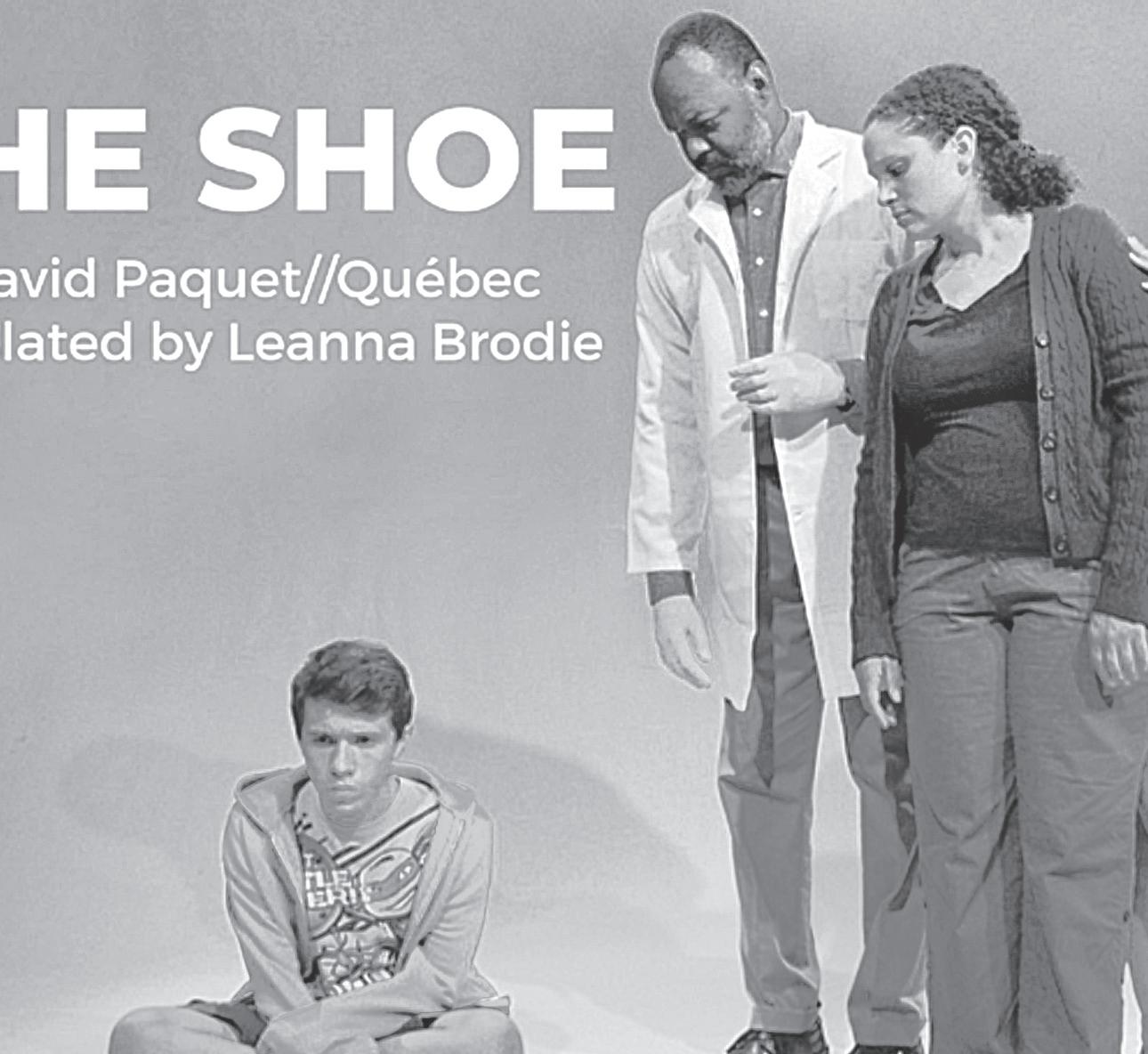
The Shoe is about everything but a shoe. This play, written by Québécois playwright David Paquet and translated for the first time into English by Leanna Brodie, opened at The Cherry Artspace last Thursday.
The light dims. A mother (Amoreena Wade) grabs the mic and introduces us to her teenage son, Benoit (Josh Witzling), who is having a meltdown before going to the dentist. Witzling’s wildly physical performance immediately sets the tone of the night as quirky and comedic.
At the dentist’s office, Benoit and his mom are greeted by the sweet receptionist Helen (Emma Elizabeth Bowers). She has a pet named Hercules, who she keeps in a shoebox. The dentist Simeon (Godfrey Simmons) walks out awkwardly, his entire face wrapped in white gauze, making him somewhat sinister-looking. He takes Benoit to his office, while the two women have a friendly enough conversation in the waiting area ... until Simeon re-enters with a hammer in his hand, and a screaming Benoit following behind.
Then the most fascinating thing happened — with a shift in lighting and music, the scene “rewinds” to before the dentist and Benoit leave, only this time we follow them into the office. The Tarantino-esque technique allows the audience to see both sides of the story and then piece together the narrative, something that’s quite unusual in theaters, yet surprisingly effective in creating suspense and resolving confusion without overt expositions. For example, the mystery of the hammer is answered when we see the dentist pulling it out from Benoit’s mouth during an “operation.” We then follow them back out to the waiting area and pick up right where we left off. The scene ends with Benoit, in a fit of panic, hammering the shoebox and killing Hercules.
If the first visit is only tinged with absurdity, the second visit is a whole other level. In the waiting area, the two women share shots of alcohol and their backstories. Benoit’s mom talks about the time when she was just “Melanie” and a life that doesn’t revolve around her son, before suddenly bursting into a furious rant about Helen’s carefree lifestyle. There is a moment of silence, and Helen reveals that her ex-husband left because she had too many miscarriages. Their struggles are identifiable, yet I find it hard to sympathize at this supposedly poignant moment; Wade’s delivery fails to warrant the abrupt shift in tone and the confession almost feels forced. Benoit and the dentist, on the other hand, have a nice, nitrogen-oxide-induced laugh together. Benoit, still catching his breath, casually mentions that it’s his first time laughing. Simeon, in response, tells a heartbreaking story about how everybody cared for his niece when she broke her leg and had to wear a cast around. “I’d like people to pay attention to my injuries too,” he says longingly as he takes off his gauze and gently wraps it around Benoit’s face.
The Shoe has four more performances this upcoming weekend. To continue reading this article, please visit www.cornellsun.com.
Ruby Que is a senior in the College of Arts and Sciences. She can be reached at rque@cornellsun.com.
RUBY QUE SUN STAFF WRITER
CURTESY OF THE CHERRY ARTSPACE
VALERIO MEZZANOTTI / THE NEW YORK TIMES
Kayla Bouazouni
Guest Room
Fill in the empty cells, one number in each, so that each column, row, and region contains the numbers 1-9 exactly once. Each number in the solution therefore occurs only once in each of the three “directions,” hence the “single numbers” implied by the puzzle’s name. (Rules from wikipedia.org/wiki/ Sudoku)
10 F OR R ENT
11 F OR S ALE
12 A UTOMOBILES
Niko! by Priya Malla ’21
Pizza Rolls by Alicia Wang ’21
Mr. Gnu by Travis Dandro
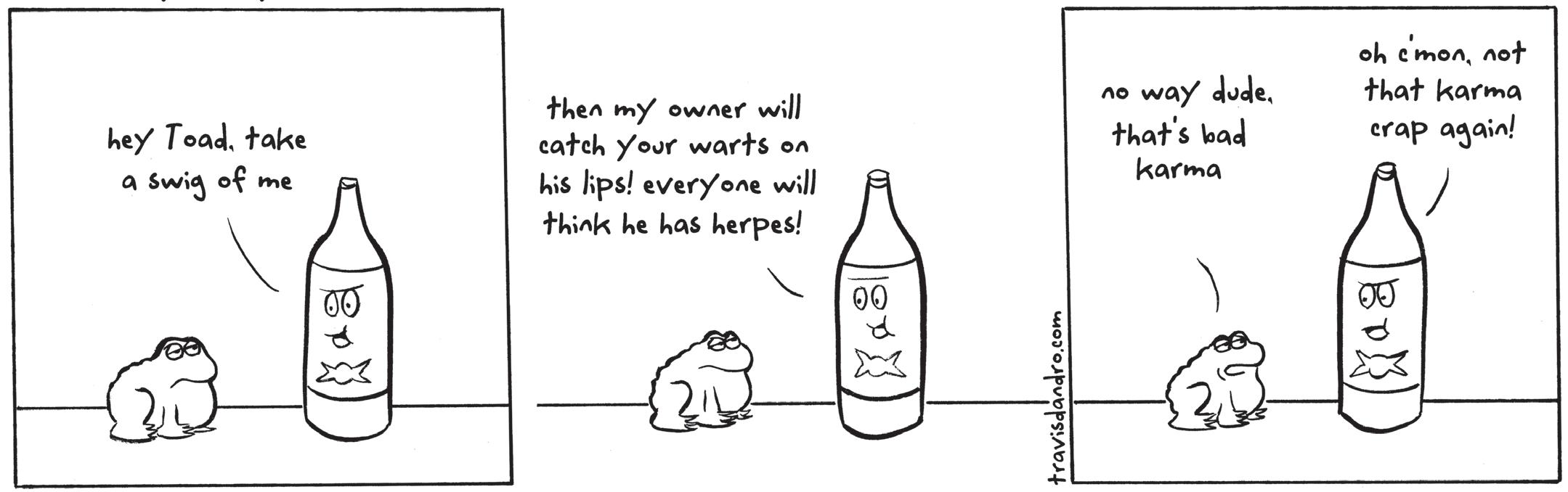
Beer and Toad by Travis Dandro
26 A PA R TMENT FOR R ENT
Houses,
27 H OUSE FOR R ENT
We
Collegetown
Volleyball Looks Ahead to Ivy Games
Cornell readies for 2 Ivy opponents, 7 weeks of conference play to close out season
VOLLEYBALL
Continued from page 15
Moving forward to this Friday’s match against Penn and Saturday’s match against Princeton, the Red will aim to slightly adjust its game plan to continue putting matches in the win column.
“Against Columbia we focused on stopping one player, but Penn is a really well-rounded team,” Chamness said.
“We’ve been working a lot on just getting every ball that we can off the ground, just keeping everything alive no matter how it looks, if it’s pretty or not, just get the ball over and let them make the mistakes,” Hanan said.
“We’ve been working a lot on just defensive scrappiness and so hopefully that will carry over and help us this weekend.”
“When things aren’t going our way, we just want to remember to stay scrappy.”
Zoe Chamness
“We executed our game plan really well against Columbia, and I think that we need to do the same thing this weekend,” Hanan said. “This week will be a lot of working on whatever we need to do to beat Penn and Princeton and hopefully we can put that plan into action and we’ll have the same kind of success.”
During recent practices, the players are unified in the goal staying aggressive, especially on the defensive end.
Chamness echoed her teammate’s remarks, saying, “when things aren’t going our way, we just want to remember to stay scrappy.”
Last Friday, Princeton squared off against Penn, beating the Quakers 3-0. This weekend, the Red seeks to pick up a win against both teams. Cornell will face the Quakers at 7 p.m. Friday in Philadelphia before heading to Princeton for a 5 p.m. matchup Saturday.
Alyson Wong can be reached at aw797@cornell.edu.
Red Takes Down Colgate on Road
Four diferent C.U. players score in 4-1 bounceback win over Raiders
F. HOCKEY
Continued from page 16
minute of the third period, junior Julianne Mangano scored her second goal of the season.
The Raiders carried on aggressively with five shots at Cornell during the fourth quarter, but the Red’s defense held strong, denying Colgate at every turn. Cornell missed the opportunity to further extend its lead, but the defense’s improvement from its last conteswt was evident as it shut out the Raiders in the second half. As time whittled down, the Red
exited Hamilton with its fourth victory of the year.
Cornell outshot Colgate, 14-8. Coming into this contest, the Red was being outshot by their opponents, 15-9. Swinging that offense momentum back in its favor was crucial in the road win for Cornell.
Hoping to replicate this type of play against tougher foes, Cowrnell returns home to face Columbia at noon on Saturday.
Patricia Loi can be reached at pcl63@cornell.edu.
VOLLEYBALL
C.U. Set for Ivy Play
By ALYSON WONG Sun Contributor
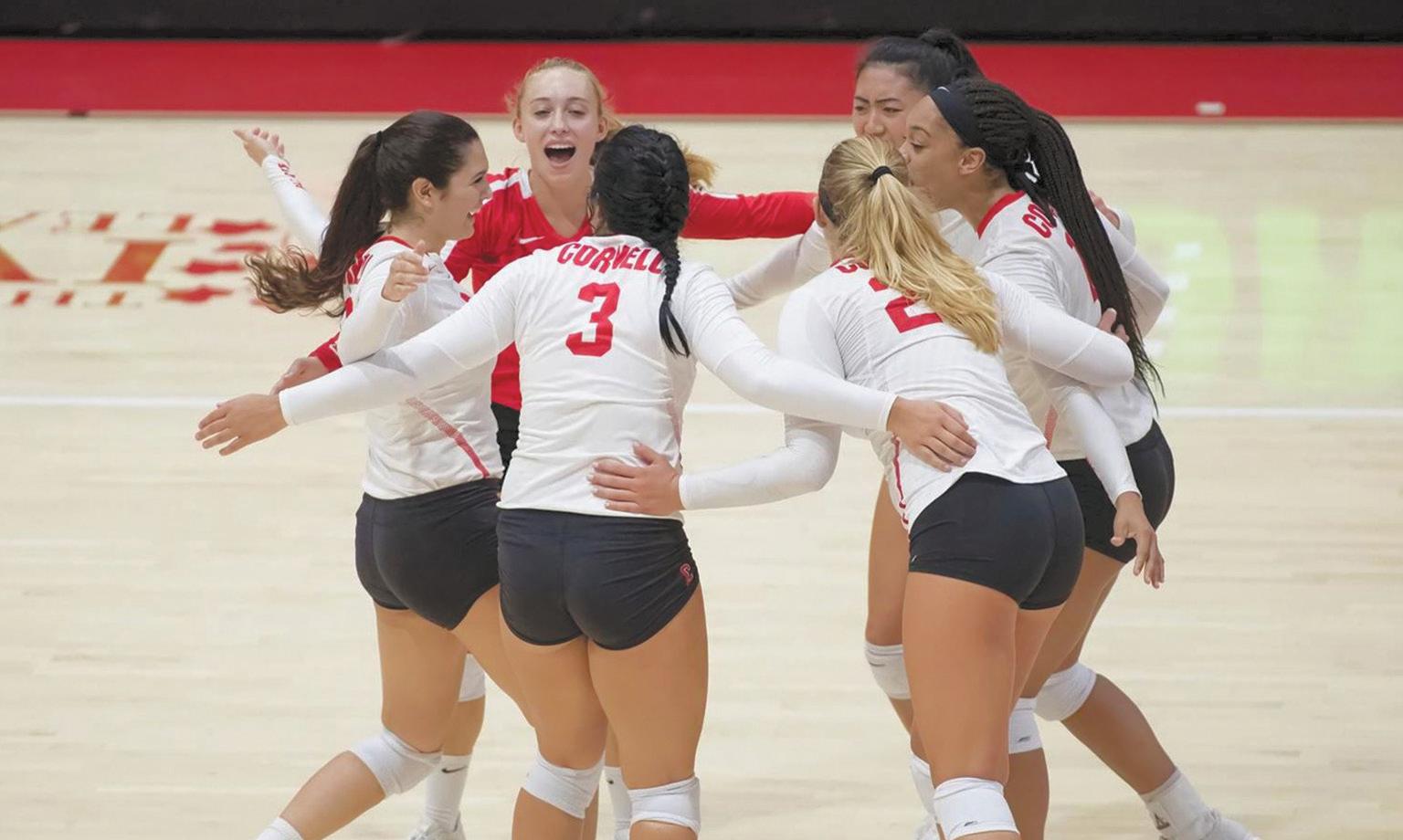
A red-hot Cornell volleyball team will hit the road to take on two Ivy League opponents this weekend, hoping to continue riding its winning streak after a 3-0 sweep of Columbia to open Ivy League play.
Penn (7-3, 0-1 Ivy) and Princeton (5-5, 1-0) are next up for Cornell. After the win over Columbia, Cornell has six consecutive wins dating back to Sept. 14. The most grueling portion of the team’s schedule — seven straight weekends of Ivy matches — is just getting started. But the Red is confident it has what it takes to earn the top spot in the Ancient Eight.
“I think the team has really bought into everything we’ve been doing,” said sophomore outside hitter Avery Hanan, who led to team with 13 kills in last Saturday’s match. “Every day at
practice we’ll just show up ready to go, ready to work on whatever we need to do in order to have the best success we can that weekend.”
Further reflecting upon their successful start to the season and the team’s overall mindset, junior setter Zoe Chamness, who led the team with 23 assists last Saturday, said the team is determined to show it can be the best in the conference.
“We came into the season believing that we could win this league.”
Zoe Chamness
“We came into the season believing that we could win this league,” Chamness said. So far, the team is on the right track, 1-0 in league play and sporting the best overall record among Ivy League teams, at 8-2.
PATRICK SHANAHAN / CORNELL ATHLETICS
Hot streak | Cornell has won six straight matches, and most recently took down Columbia in a 3-0 sweep.
FOOTBALL
C.U. Comes Home for Game Against Georgetown
Reeling from disappointing loss at Yale, Red set for 1st home game of 2019 season
By RAPHY GENDLER Sun Sports Editor
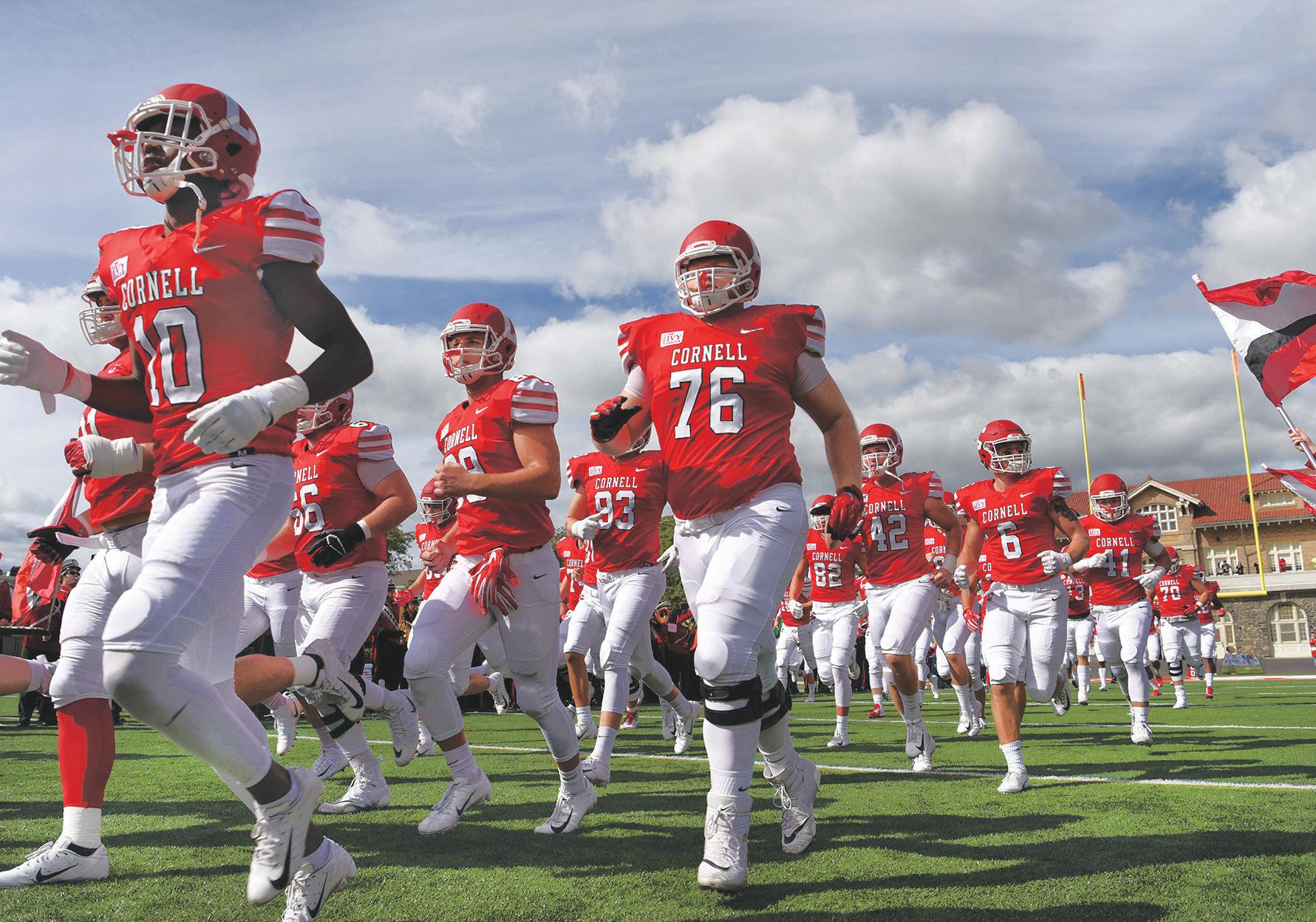
After two weeks away from Ithaca, Cornell football is finally coming home to Schoellkopf Field. The Red will face Georgetown in its Homecoming game on Saturday, hoping to move its current 1-1 record in the right direction before taking a second shot at picking up an Ivy League win.
Historically, Georgetown has been a punching bag for the Ivy League, serving as a nice early-sea-
FIELD HOCKEY
son cupcake for Ancient Eight squads to warm up for conference play. But the Hoyas are fresh off a 24-10 road win over Columbia, proving that this Homecoming contest will be no gimme.
When Cornell met Georgetown in 2005 and 2007, the Hoyas provided the Red easy wins — 57-7 and 45-7, respectively. But this year’s Georgetown team figures to make the 500th game played under Schoellkopf’s crescent a tighter affair.
“They’re scoring a bunch, their defense is really fast and physical,”
said head coach David Archer ’05, later adding: “I think they’re going to be a really great top quality opponent.”
After a season-opening loss to Davidson, Georgetown has won three straight games in dominant fashion, outscoring opponents 136-13. The Hoyas annihilated Marist, Cornell’s week one opponent, 43-3 on Sept. 7. In last week’s win over Columbia, the Georgetown defense recorded three interceptions.
The story for Cornell through two weeks has been an impressive
Red Bounces Back With Road Win Over Colgate
C.U. recovers from loss to Penn, beats Raiders 4-1 to improve record to 4-2
By PATRICIA LOI Sun Contributor
Coming off a game in which Cornell field hockey head coach Andrew Smith said his team “got it horribly wrong,” the Red needed a good bounceback. Cornell got it with a road win at Colgate on Tuesday.
On Saturday, after securing a 2-1 lead against Penn, Cornell ceded the final four goals to fall in its Ivy League opener, 5-2. A matchup against Colgate provided the perfect opportunity to regroup. The Red Raiders entered the contest five games under .500 and were surrendering over three
goals per game. As expected, Cornell started off with a strong offensive effort and kept that energy throughout the entire game, earning a landslide 4-1 victory.
The Raiders (2-8, 0-2 Patriot League) certainly played down to their billing early on, allowing freshman Caroline Ramsey to score the opening goal for the Red (4-2, 0-1 Ivy League) less than three minutes into the game. But that satisfaction was short-lived, as the Raiders responded with a goal of their own from Meghan Minturn. Trying to capitalize on their momentum, the Raiders launched their next shot at the net,
but it couldn’t get past senior goalkeeper Maddie Henry.
Cornell got the opportunity to achieve its next goal through the penalty corner twice, but it failed to find the back of the net. But the Red achieved redemption shortly after as freshman Bridget Mahony — assisted by senior Kristen Ferguson — whipped the ball past Anna Unger and earned herself a goal, making it 2-1 in Cornell’s favor.
The remaining 17 minutes in the half strung out with consistent backand-forth on the midfield between both sides. Cornell fired off three shots with-
defense and a lackluster offense: The Red suffocated Marist’s running game in a season-opening win before holding Yale’s playmakers in check in a loss at the Yale Bowl.
“I think what has been different [for the defense] has just been devised through this offseason and this past spring, really come together as a unit and really trust each other to make plays,” said senior linebacker Mo Bradford.
Meanwhile, a Cornell offense led by senior running back Harold Coles has struggled. Senior quarterback Mike Catanese led the way in week one but missed the Yale game with an injury. In Catanese’s place, junior Richie Kenney threw four interceptions, including a momentum-shifting pick-six that erased Cornell’s lead.
Archer said six major problems offensively — two stalled red zone drives and four giveaways — kept the Red from knocking off the preseason Ivy favorite Bulldogs.
“I feel like we were the better team, we gave it to them,” Archer said of the game at Yale.
Being in front of the Homecoming crowd — what will be the Red’s largest crowd of the year — gives Cornell an opportunity to show it can reverse its recent trend of losing seasons. Before the season, Archer said he had totally revamped the team’s approach. This is the first chance to showcase it all — “hybrid warfare,” a defensive stack and more — at home.
“Our first home game is Homecoming, so [it’s exciting to]
get a chance to show everybody what we are about this year,” said sophomore running back Delonte Harrell, who had two touchdowns in the loss to Yale.
Cornell’s defense will look to replicate its strong performances from weeks one and two. The Red held Marist to just two rushing yards in a dominant week one performance, bailing out a rusty offense. At Yale, the defense only surrendered 13 of Yale’s 27 points — and the touchdown it allowed came on a short field.
“Defensively, I thought, I thought we were schematically really good,” Archer said of the game at Yale. “And I thought our communication was really good. And I thought we were tough as nails … especially on those short yardage [situations].”
Cornell’s offense will face a tough non-conference test — the Hoyas have been strong defensively through four weeks, ranking first nationally in pass efficiency defense (96.63) and turnover margin (+2.25) and second in scoring defense (10.0 points per game).
Saturday’s matchup is Cornell’s second of three nonconference games on its schedule, and ushers in a tough stretch of games — after Georgetown, the Red faces Harvard, reigning Patriot League champion Colgate and Brown before four more Ivy League games to end the season.
Kickoff is set for 3 p.m. Saturday at Schoellkopf Field.
Raphy Gendler can be reached at rgendler@cornellsun.com.
in three minutes but Unger stood tall in goal. The Raiders were only given a chance to score once within the onslaught brought by the Red. Cornell entered halftime only sporting a one-goal lead, but it effectively tired out the opposing side.
It didn’t take long for Cornell to extend its lead. Seven minutes into the second half, juniors Grace Royer and Juliana Tardif linked up to notch a score for the Red. That goal gave Royer her fifth tally of the season — a mark that leads the team. This began Cornell’s onslaught of consistent shots. During the last
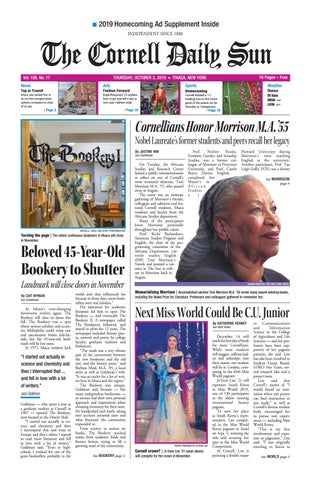
Under the crescent | Saturday’s Homecoming game against Georgetown will be the 500th game played at Schoellkopf Field in Cornell football’s 132-year history.
Rebound | Junior Juliana Tardif scored her second goal of the season in Cornell’s 4-1 win at Colgate on Tuesday, a victory that moved the Red’s record to 4-2.