The Corne¬ Daily Sun

By ANNE SNABES Sun Assistant News Editor
The Arts and Sciences Curriculum Committee’s recommendation to shorten the language requirement,
ing sign language to satisfy the language requirement. A new version of the proposal was released in June that, if passed, would keep the language requirement as it is: one non-introductory course or 11 credits of instruction in one language. The only change would be
who he said see the current requirements as “really important.”
However, Pepinsky explained that the committee’s new recommendations did make some “compromises” in an effort not to “disproportionately burden” stu


By STACEY BLANSKY Sun Staff Writer
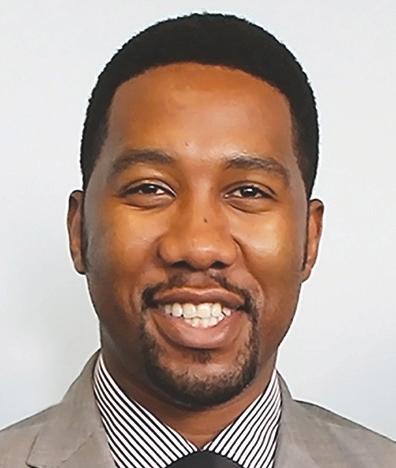
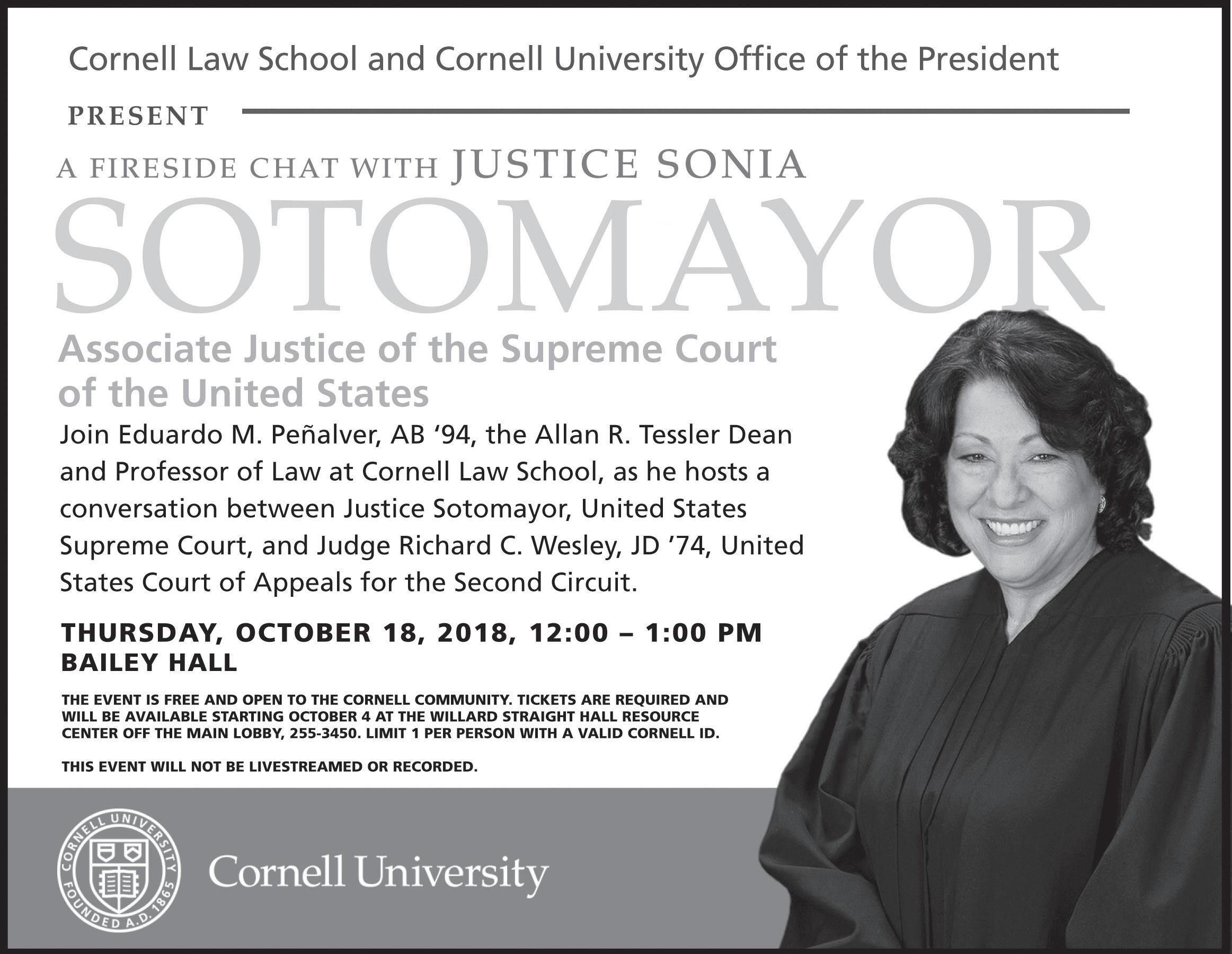
Drawing lessons directly from the South African anti-apartheid revolutionary, Ndaba Mandela will speak at 5 p.m. on Oct. 12 in Kennedy Hall’s Call Auditorium to commemorate the 100th anniversary of his grandfather Nelson Mandela’s birth.
Zachary J. Shulman ’87, J.D. ’90, director of Entrepreneurship at Cornell, said that attendees of
to understand what a developing nation is and how it develops through grassroots entrepreneurial efforts.”
Ndaba recently published Going to the Mountain: Life Lessons from My Grandfather, chronicling Nelson Mandela’s life through the eyes of his grandson, and exploring his experience of learning from one of the world’s most celebrated historical leaders.
Ndaba recently published Going to the Mountain: Life Lessons from My Grandfather, chronicling Nelson Mandela’s life.
the event can expect to learn about Ndaba’s efforts to promote economic development in Africa through entrepreneurship.
Shulman said that Ndaba will also speak about his desire to partner with programs and institutions outside of Africa, such as Cornell University.
“He’s clearly going to bring a lot of energy and excitement,” Shulman said. “He will bring this perspective about Africa that many of our students are not familiar with, and it is important for people
“The book really is about life lessons that Ndaba learned from his grandfather, and it is interesting to get those lessons through the lens of a 30-year-old as opposed to an 80-year-old,” Shulman said. “That is more relevant, perhaps, for our students because Ndaba is more of a contemporary to them.”
He said that Ndaba’s entrepreneurial perspective, stemming from his work in a developing nation, will help students get thinking deeply about the economic disparities that exist within the United States.
“The message of Nelson Mandela, which I think Ndaba fully believes in, is more about
‘Giant’
By MATTHEW McGOWEN Sun Senior Editor
Lois Spier Gray, the Jean McKelveyAlice Grant Professor of Labor Management Relations, Emeritus, a lifelong advocate for workers’ rights and a driving force in the School of Industrial and Labor Relations for decades, died Sept. 20 at the age of 94.
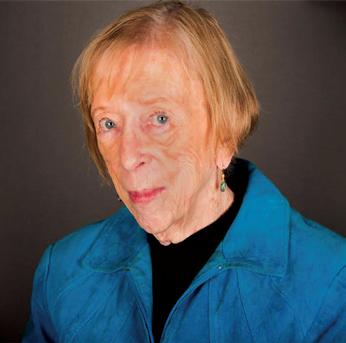
Gray’s contributions to workers rights spanned from the
end of World War II to the final days of her life in NYU Langone Hospital, a period in which the power of workers, women and minorities underwent constant change. Gray’s friends, family and colleagues recalled her decades of tireless service to improving the lives of working people.
“Lois Gray was a giant, an amazing force and leader who
never stopped leading during her 72 years with the ILR School. Her passion for building ILR’s teaching, research and service and her commitment to workplace fairness never waned. Lois was an inspiring mentor and adviser to so many of us,” said Kevin F. Hallock, the Kenneth F. Kahn ’69 Dean of the ILR School and the Joseph R. Rich ’80 Professor of Economics and Human Resource Studies, in a University press release.

Reference Management Software: How It Can Keep You Organized and Make Writing Easier 8 - 9 a.m., C2537 Veterinary Medicine
Neurodiversity Inclusion at Vanderbilt: A Campus and Community-Wide Initiatve 8:30 - 9:30 a.m., 281 Ives Hall
Comparative Immumology to Dissect Type 2 Immune Responses During Helminth Infection and Allergy Noon - 1 p.m., Thaw Hall Baker Institute
Canine CARs:
A Four Wheel Drive for All Terrains Noon - 1 p.m., Thaw Hall Baker Institute
Heavy Inertial Particles in Turbulent Flows Noon, 106 Upson Hall
Numerical Methods for the Many-Electron Problem 12:20 - 1:45 p.m., 700 Clark Hall
From Biopolitics to Ethopolitics: Foucault and Us 4:30 p.m., KG42 Klarman Hall
Using Excel Sith Research Data: Macros 4:30 - 6 p.m., Classroom Uris Library
Archaeology of Monastic Cooking and Baking in Egypt 6 p.m., G22 Goldwin Smith Hall
Tuesday, October 2, 2018

Between the Visual and the Aural: Implications For Seriously Engaging the Musical in the Construction of Racialized Bodies in Humanitarian Aid Ads Noon, Hoyt Fuller Room Africana Studies and Research Center
Center for Sustainable Enterprise: What’s It All About? 12:20 - 1:10 p.m., 135 Emerson Hall
PhasiRNAs Are Critical For Maize Anther Development 12:20 p.m., 404 Plant Science Building

Epsilon’/epsilon Beyond the SM 2 p.m., 401 Physical Sciences Building
The Volatile Input to Volcanoes and Eruption 3:30 - 4:30 p.m., 2146 Snee Hall
Enterprise Engineering Colloquium: John Gamble ’84 4 p.m., 700 Clark Hall
Postman in the Autumnal Forest 4:30 - 7:00 p.m., G08 Uris Hall
Silvopasture Workshop With Steve Gabriel 6 - 8 p.m., Cornell Cooperative Extension



Display Advertising Deadlines:
• Thursday, October 4 at 3 p.m. for the Wednesday, October 10 and the Thursday, October 11 issues.
Classifed Advertising Deadline:
• Thursday, October 4 at 3 p.m. for the Wednesday, October 10 issue.


By BREANNE FLEER Sun News Editor
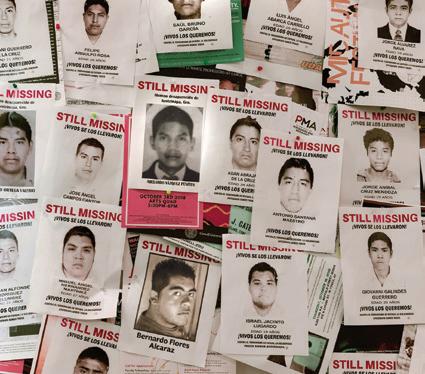
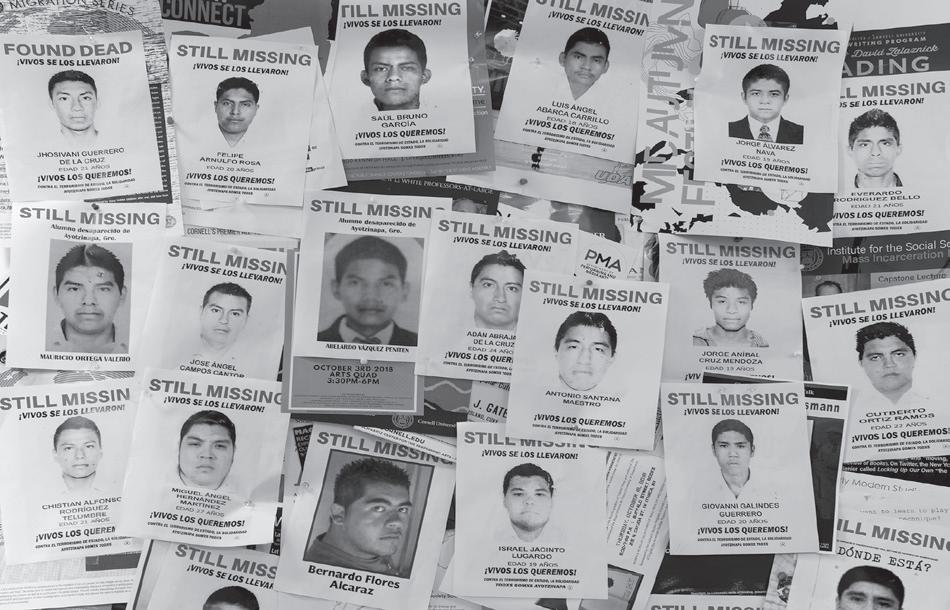
On Wednesday, students walking through Goldwin Smith Hall were met with two bulletin boards covered with “missing person” fliers — one for each of the 43 students who went missing in Mexico four years ago.
The missing students, who attended a teaching college in Iguala, Mexico, had been part of a group of students who had hijacked buses to attend a demonstration in Mexico City, according to The New York Times. The night they hijacked the buses, police officers “opened fire” on students and took the 43 young men away, according to The Times.
“We
the faces and names of the missing students with the phrases “Vivos se los llevaron” and “Vivos los queremos,” meaning, “They took them alive. We want them back alive.”
Cornell’s chapter of Movimiento Estudiantil Chicanx de Aztlan, an organization that formed as a result of the Chicano movement in the 1960s and that seeks justice for marginalized groups, posted the fliers.
Barbara Cruz ’19, president of MEChA de Cornell, told The Sun in an email that the display aimed to get Cornell students to “pay attention to the issue” of the missing students. The display “worked really well,” she said.
were really happy to see lots of people go up to the commemorative display.”
Since the incident on Sept. 26, 2014, one of the missing students was found dead, according to The Times. It was reported that the “official account” is that the students were handed to a “drug gang” and subsequently killed after local police kidnapped them, but The Times notes that this account is “disputed by international experts.”
Barbara Cruz ’19
The fliers posted in Goldwin Smith Hall showed
“We were really happy to see lots of people go up to the commemorative display and actually look at the photos, look at the young men, start googling on their phones to find out more information,” she said.
However, Cruz said that an “entertainment student group on campus” had “rip[ped] off” two posters and “place[d] their own poster over our display” on the first day. The group whose poster was posted on the display was The Whistling Shrimp, an improvisational comedy troupe.

By EMMA CORDOVER Sun Contributor
Cornell Minds Matter recently initiated a new Facebook and Instagram campaign entitled “Any Person, Any Story,” displaying stories told by members of the Cornell community about their struggles with mental health.
Cornell Minds Matter is a student organization that seeks to provide mental health support and aims to foster a “healthy, balanced lifestyle” for the entire Cornell community. They work towards reducing the stigma surrounding mental illness by hosting events like yoga, mental health education and awareness programming.
Weekly posts on the campaign’s Facebook page consist of a short story — about ten sentences long — and a photo to accompany the story. So far, two posts have been created.
In an interview with The Sun, team member Arielle Gordis ’21 explained that the project began during a group meeting discussion, when some members began commenting on how “negative and isolating social media can feel.”
Students concerns’ included the experience of “getting to college and feeling like you have no one, then going on social media and seeing how some people have everyone,” Gordis said.
Gordis explained that the team wanted to make at least “one account where someone can look at a photo and read a caption and think ‘OK, I’m not alone.’” She thought that people in the Cornell community “telling a small part of their story” and describing steps they’ve taken to combat their problems would accomplish this goal.
To Gordis, including a photo with the post makes the story more real and more
relatable, but the photo does not necessarily have to show an individual’s face. She said that “if someone wanted to keep their words anonymous, they could.”
Storytellers can post pictures of anything they think accompanies their story, even their shoes, Gordis said, noting that “a story is worth hearing without your face attached.”
When asked what greater impact this campaign could have on the stigma surrounding mental health, Gordis responded that these stories, told by real people, make mental health something “relatable.” In fact, Gordis said that when she first showed one of her friends the campaign, her friend read a story and said, “Oh, that reminds me of something I went through.”
The project hopes to invite more and more members of the Cornell community to feel empowered to tell their stories. Once storytellers begin reaching out to Cornell Minds Matter, eager to participate and share their struggles, Gordis explained, “that’s when we’ll know it’s working.”
Another goal of the campaign is to possibly initiate the creation of a new foundation on campus to provide more readily and easily available support for those struggling with mental illness. Gordis suggested a program where “resident advisors could check in on their residents” to make sure none of them are suffering in isolation and at risk of harming themselves.
Although these are long-term goals, Gordis told us that the campaign hopes to continue uploading stories continuously and indefinitely, looking to spark real, visible change across campus.
“There’s something about actually talking about it out loud,” Gordis said.
Emma Cordover can be reached at esc78@cornell.edu.
Cruz said MEChA de Cornell is “currently in discussions with the entertainment group for a formal apology,” noting that MEChA de Cornell was “really disappointed” in what the group in question had done.
See FLIERS page 4
GRAY
Continued from page 1
Gray was born on Oct. 17, 1923, in St. Louis, the daughter of a Presbyterian minister who was known to speak out against racial injustice in a time and place that such speech could be dangerous, according to the University press release.
Gray’s deeply-held support for social justice and the plight of the downtrodden grew out of her upbringing in Edmond, Oklahoma, her niece, Bonnie Beavers, said according to the release. As a child, Gray watched her mother feed migrating victims of the dust bowl and saw the Ku Klux Klan burn a cross on the lawn of the parsonage where she lived.
“This just became something that was ingrained in her, the equality of people. That all people should be treated with human dignity and with rights. And she translated that also from the question of racial dignity and rights, which she was always a strong proponent [of], worker rights,” said Esta Bigler ’70, director of Labor and Employment Law Programs for the ILR school in an interview with The Sun.
Before beginning her career in labor issues, Gray was recruited into secret military intelligence work at the Pentagon, according to the University press release. In 1945, the same year the ILR school was founded, Gray started a job as a field examiner for the National Labor Relations Board in Buffalo, and a year later began her 72-year career in the ILR school with a post in their Buffalo extension office.
During Gray’s tenure at the ILR school, she led efforts to establish numerous workers’ education programs, including Labor and Urban Affairs, Programs for Employment and Workplace Systems, the Institute for Women and Work, Summer Schools for Women Union Activists, the Latino Leadership Center, Hispanic Labor Leadership and Labor Studies for College Credit.
“She was a big believer in education, and that whatever knowledge we had on the Cornell Campus needed to be provided to those who were not on the Cornell campus — whether [they were] in Buffalo, Albany, Rochester [or] NYC. She almost believed in a university with no walls,” Bigler told The Sun.
In 1956, Gray became the Director of Cornell ILR in New York City and earned her Ph.D. in economics from Columbia University. In the city, Gray launched pioneering programs to award workers college credit for taking liberal arts classes.
“When I think of Lois, I think of her never letting anything stop her. It was, ‘these are important things that have to be developed, that workers needed this kind of
education. That workers needed to be able to sit at the table as equals with management,’” Bigler said.
Gray later became the Associate Dean and Director of ILR Extension Statewide. In 1970, she worked with Professors Jean McKelvey and Alice Grant, ILR to launch the state’s first training program for women arbitrators, and was later appointed chair of the New York State Apprenticeship and Training Council by three new York State governors, according to the University press release.
Gray’s long list of accolades, including Lifetime Achievement from the Labor and Employment Relations Association and the United Association for Labor Education, reflected the appreciation of her peers, many of whom spoke to the longevity of her contributions.
Maria Figueroa, Director of Labor and Policy Research at The Worker Institute, noted the influence of Gray’s research on the arts, media and entertainment industry, and her continued efforts late in life. Gray became emeritus professor and chair holder in 1998, but her work was far from done.
“She never stopped working for the school and supporting the programs of the outreach and extension division. She was admirable for the clarity of her thoughts and the sharpness of her mind. She’s never stopped thinking and strategizing about responses to the challenges facing workers and the broader society today,” Figueroa said.
In 2010, the Lois Gray Professorship of Industrial Relations and Social Science was created in her honor. Prof. Pamela Tolbert, the current holder of the position, recalls swapping stories with Gray about growing up in Oklahoma, and reflected on Gray’s going against the grain in her own time.
“I have to admit that I was always a little in awe of her. Unions weren’t particularly receptive to women in the post-WWII years, so the fact that she was able to have the impact that she did on the labor movement is a very impressive accomplishment — a testament to her gumption as well as her charm,” Tolbert told The Sun.
In 2015, Gray donated $1 million to establish the Harry Katz Fund for Innovation in ILR’s Worker Institute to further the work she dedicated her life to, and funded the Edward Gray Memorial Credit Internship Awards in honor of her late husband.
She continued her work at ILR’s Manhattan office until her death, according to the University’s press release.
Gray is survived by her sister’s children and grandchildren and her husband’s extended family.
Matthew McGowen can be reached at mmcgowen@cornellsun.com.
Prof. Stephanie Divo, Asian studies, coordinator of the Mandarin Chinese language program, said she was “certainly happy” that the committee listened to what professors and instructors had to say and modified the proposal.
“We felt that the original proposal rather shortchanged the language requirement in a way that would have been very detrimental, I think, to language programs in general, certainly to Asian languages, and would have kept a lot of students who would otherwise come and take our courses and actually benefit from them and enjoy them, from coming to our classes at all,” she said.
Students can currently use Chinese and certain other Asian languages to fulfill the language requirement in one year, as each introductory course is six credits, but if the language requirement had been shortened to only two semesters of three-credit courses then students who would normally would have taken these languages might have taken something else instead, according to Divo.
ment. When The Sun asked Pepinsky if the committee considered the students’ response when making its decision, he said the committee has “absolutely taken it into account.”
“But the challenge of course is we get to make one proposal only, and it has to satisfy a number of different constituencies, so we did the best we could to balance the different constituencies,” he added. “Unfortunately, students don’t get a vote, but the faculty do, so in that sense, we had to make sure that what the faculty was getting was what they wanted.”
Destiny Malloy ’21 told The Sun that she wishes the committee’s initial proposal had been kept.
“I think that it’s fun for people who are interested in learning a language, but for people who aren’t interested in learning a new language but still want a liberal arts education, [the language requirement] can get in the way of that,” she said.
“I think it would free up a lot of people’s schedules to be able to take more things.”
JeNaye Beavers ’20
“The way that they proposed reducing the requirement would have basically attracted a lot more students toward languages where they could fulfill the requirement more easily, or at least that would be the impression,” she said. “They would tend to steer clear of the more difficult languages and go with something a little easier.”
Prof. Mitchell Greenberg, chair of the romance studies department, said that his department “welcomes” the committee’s decision.
“It appears evident to all of us that a university that purports to be one of the major centers of learning in the world and that wishes to form ‘global citizens’ can and should reenforce the idea that a ‘global citizen’ is not monolingual,” Greenberg wrote in an email to The Sun.
A survey about the arts college curriculum taken in the spring found that 61 percent of students surveyed preferred the recommendation in the previous report, which suggested shortening the language require-
Malloy said that she enjoys studying Spanish and that though Spanish classes are often “very intense,” they are not a “burden” for her because she likes them. However, she added that “it would be quite burdensome” if she were a person who did not like learning a language.
JeNaye Beavers ’20, currently taking Chinese, said she would prefer the requirement to be a year instead of a year and a half.
“I think it would free up a lot of people’s schedules to be able to take more things,” she said, sitting at a table in the Temple of Zeus. “We don’t have that much time to be here anyway. I think it’ll give a lot of students more flexibility.”
Annie Bryson ’22 told The Sun that while the requirement is “challenging,” it is a part of the experience of being in the arts college.
“I think it’s a challenging requirement, especially depending on whether or not you’ve taken the language before,” she said. “So even though it’s a lot, I think that’s part of what Arts and Sciences is about.”
Anne Snabes can be reached at asnabes@cornellsun.com.
FLIERS
Continued from page 3
“We at MEChA think this is indicative of a larger trend of thinking one’s organization or event is more important than what is going on in the larger world,” Cruz said. “It was extremely disrespectful, and we wish that that group and any other group that wishes to disrupt commemorations like this reflect on their actions and think about the families that are hurting.”
Josh Katz ’19 and Alex Newman ’20, the heads of The Whistling Shrimp, told The Sun in an email on Monday night that they informed MEChA de Cornell that they are “absolutely appalled with what happened.”
“The Whistling Shrimp is a group that strives to bring more happiness into this world, yet tampering with this commemoration was antithetical to that,” they said. “While one member did this, we take full responsibility for the actions of our members and would like to take this time to formally apologize for the harm that was done.”
Katz and Newman also said they will meet this week “to educate our members about the tragedy of Iguala mass kidnapping” and that the member who “repositioned the fliers” will meet with MEChA de Cornell “to coordinate a
formal apology to the organization and the victim’s families.”
“This was done from a place of ignorance, and though there was no malicious intent, it does not excuse the disrespect of the action,” Katz and Newman said.
Cruz told The Sun that MEChA has arranged other actions over the past few years to mark the students’ disappearance. These included a “die-in” in Olin Library, in which students laid on the ground to symbolize a possible fate of the young men, an “open space” for reflection and an event involving the “yelling” of the students’ names and the distribution of fliers on Ho Plaza last year.
This year, she said, MEChA “wanted to do something that would last longer than 30 minutes, that people could not easily ignore as they walked past.”
Mexican President-elect Andrés Manuel López Obrador will take office on Dec. 1, according to The Times, and Cruz said she hopes he “will make finding the students a top priority.”
“We aren’t particularly hopeful, considering the xenophobic steps that President Obrador is taking against Central American migrants,” Cruz said. “But the families still deserve justice.”
BreAnne Fleer can be reached at bfeer@cornellsun.com.
Continued from page 1
everyone pitching together for social good,” Shulman said. “Everyone pitching together for the common good really can raise a country, and a lot of people around world share that message.”
Prof. Muna Ndulo, law, director for Cornell’s Institute for African Development, said that when Nelson Mandela came out of
prison, he raised Ndaba like his own child and “more-or-less set him on the right path” by teaching him important values such as empathy and integrity.
Through his foundation Africa Rising, Ndaba is trying to promote the values which his grandfather stood for.
“He has used his standing and what he learned from [Nelson Mandela] to promote entrepreneurship among young people to give them hope — especially in the context of South Africa,” Ndulo told The Sun.
Ndulo said that Nelson Mandela’s dignity, which was seen most prominently when he came out of 27 years in prison, will be channeled to the students through his grandson’s speech.
“He doesn’t want his grandfather’s message to be lost ... He is connecting it to entrepreneurship.”
Prof. Muna Ndulo
“Cornell students can play a leadership role in the world,” Ndulo said. “They can go out there and do good in terms of really meeting the challenges that we face.”
Ndulo concluded by stating that Ndaba’s connection to entrepreneurship is critical, because he is demonstrating how we can leverage the economy in ways that contribute to the common good.
“He doesn’t want his grandfather’s message to be lost,” Ndulo said. “He is connecting it to entrepreneurship which is critical, because entrepreneurship is the way to create wealth and a way to tackle poverty.”
The event is free and open to the public.
JACOB S. KARASIK RUBASHKIN ’19 Editor in Chief
JOHN McKIM MILLER ’20
Business Manager
KATIE SIMS ’20
Associate Editor
VARUN IYENGAR ’21
Web Editor
MEGAN ROCHE ’19
Projects Editor
EMMA WILLIAMS ’19
Design Editor
JEREMIAH KIM ’19
Blogs Editor
AMOL RAJESH ’20
Science Editor
BREANNE FLEER ’20
News Editor
YUICHIRO KAKUTANI ’19
News Editor
NICHOLAS BOGEL-BURROUGHS ’19
City Editor
LEV AKABAS ’19
Arts & Entertainment Editor
SARAH SKINNER ’21
Assistant News Editor
ANNE SNABES ’19
Assistant News Editor
JOHNATHAN STIMPSON ’21
Assistant Sports Editor
EDEM DZODZOMENYO ’20
Assistant Photography Editor
PETER BUONANNO ’21
Assistant Arts & Entertainment Editor
GIRISHA ARORA ’20 Managing Editor
HEIDI MYUNG ’19 Advertising Manager
ALISHA GUPTA ’20
Assistant Managing Editor
DYLAN McDEVITT ’19
MICHAEL LI ’20
GRIFFIN SMITH-NICHOLS ’19 Blogs Editor
JACQUELINE QUACH ’19 Dining Editor
SHRUTI JUNEJA ’20
ANU SUBRAMANIAM ’20
JUSTIN J. PARK ’19
Editor PARIS GHAZI ’21 Assistant News Editor
MEREDITH LIU ’20
Assistant News Editor
JONATHAN HARRIS ’21
Assistant Sports Editor
RAPHY GENDLER ’21
Assistant Sports Editor
BORIS TSANG ’21
Assistant Photography Editor
VIRI GARCIA ’20 Assistant Arts & Entertainment Editor
“Open up your eyes, Sarafina!” You know those phrases that just stay in your mind forever? This one from the 1992 film Sarafina! has lingered in my mind ever since I watched the film during my seventh grade social studies unit on apartheid. A supporting character tells the main character Sarafina to “open up [her] eyes” — look beyond immediate troubles and witness the change that is taking place around her. Sarafina initially remained silent, until this turning point made her realize that she too needed to join fellow students and use her voice to stand up against racial discrimination. This phrase has become especially meaningful and relevant to me nowadays. Amidst this busy season of prelims, essays, p-sets, club activities and recruitment, I had forgotten about what had made me feel impassioned to pursue the study of industrial and labor relations. I disregarded both my personal efforts as well as the people who have helped me get to this point. I neglected my parents’ wishes that by attending this Ivy League university in the United States of America, I would develop a worldview that is much more expansive than their own. Why do I wake up every morning? What motivates me? I overlooked the importance of opening up my eyes to see beyond my little bubble.
understand the importance of issues of race, until I witnessed how almost none of the grocery store cashiers, taxi or Uber drivers, and subway operators I encountered were white.
I also developed a greater appreciation of all that the city has to offer — its history, culture, and perseverance. The coexistence of the 1902-constructed Flatiron Building and the 2013 One Madison left me at awe, just thinking about all of the people, past and present, that have walked along the very streets that I stood on. I was finally able to see the Jimmy Carter quote engraved in RPCC come to life: “We have become
I urge you to explore all that is taking place in your immediate surroundings, as well as happenings outside of your reach.
not a melting pot but a beautiful mosaic. Different people, different beliefs, different yearnings, different hopes, different dreams.”
Editorial
Ad Layout Emma Williams ’19
Design Deskers Megan Roche ’19 Lei Lei Wu ’20 Lauren Roseman ’21
News Deskers BreAnne Fleer ’20 Sarah Skinner ’21
Night Desker Maryam Zafar ’21
Sports Desker Johnathan Harris ’21
Arts Desker Lev Akabas ’19
Science Desker Chenab Khakh ’20
Photography Desker Boris Tsang ’21
Production Deskers Sarah Skinner ’21 Krystal Yang ’21 Working on Today’s Sun
IN 2011, WHEN THE UNIVERSITY PAUSED its much-needed reconstruction of the historic McGraw Hall indefinitely, The Sun wrote in an editorial warning that “projects without definitive timetables often linger and can be forgotten.” Seven years later, it is clear to see that is exactly what happened. Cornell forgot about McGraw Hall.
What message does the administration send to Cornell’s humanities students, to its anthropologists and its historians, when instead of rebuilding McGraw’s collapsing walls, it simply installs “temporary” metal support frames on its exterior and calls it a day? Students attending class and office hours in McGraw enter literally under a dark cloud — the shadow of the protective scaffolding placed above the building’s main entrance to protective from falling chunks of roof. They ride an elevator with holes in it, and sit with their professors underneath ceilings with growing cracks, and quietly ponder just how much longer this jury-rigged setup can hold out.
In the time since Cornell “paused” its McGraw Hall repairs, it has (in no particular order): renovated Stocking Hall and the Dairy Bar, built CIS a new home in state-ofthe-art Gates Hall, gave the Big Red Marching Band a new perch at Fischell Center, embarked on an ambitious overhaul of Rand Hall for a fine arts library, ensconced a few lucky A&S faculty and administrators in Klarman Hall, and built an entire future-world New York City campus for Cornell Tech.
And yet, McGraw Hall still crumbles into the ground!
We are left with two questions. Firstly, does Cornell care about its history? McGraw Hall is the third-oldest building on campus. Ezra and Andrew walked its halls, heard the bells it once housed, and if statues could cry, theirs would be bawling at McGraw’s sad state. Cornell owes it to its own past to fix McGraw.
Secondly, does Cornell care about its history department? Not history as it relates to computer science, or history as it informs economics and finance. Not history in the way that it has become so fashionable to graft a whisper of the humanities onto the STEM behemoth. History as its own field of study, history as 21st century department that deserves a 21st century building.
The administration claims that it is making progress on renovating McGraw. In March, The Sun reported that “the various stakeholders” were reviewing a plan put together by consultants on how to proceed with the long-stalled project. However, this review is open-ended, and much like the 2011 “pause” comes without a timeline. In reality, there is not yet even a plan in place to fundraise for the necessary repairs, let alone a plan to complete them. Unless and until the University outlines the concrete steps it will take to repair McGraw, we can only assume the administration is focused on flashier, trendier projects.
Cornell has forgotten McGraw, but history will remember.
I have also been surprised at how many of my peers here at Cornell turn a blind eye to what is taking place outside of Cornell or the U.S. While they note every detail in the Kavanaugh hearings (which I believe is a crucial matter), they pay little to no attention to other major world events such as North Korea peace talks or China’s drastic extension of its economic presence through the Belt and Road Initiative.
While this may be a generalization based on the small sample size of students I have met on this campus, I was surprised to learn that members of an institution that supposedly retains some of the brightest minds of our time and boasts a high degree of diversity don’t seem to care much about the outside
Why do I wake up every morning? What motivates me? I overlooked the importance of opening up my eyes to see beyond my little bubble.
world. I have realized that in our own ways, we forget about how nearsighted we can be in living our day to day life. I urge you to explore all that is taking place in your immediate surroundings, as well as happenings outside of your reach. During my stay in New York City this past summer, I became more aware of the racial and class disparities that I had learned about in class and through campus discourse. I honestly did not fully
My first visit to Africa in August has made me further realize that there is so much of the world I don’t know about. While donkeys are the main modes of transportation for many villagers living on the outskirts of Sudan’s capital Khartoum, the rich spend their time in luxurious restaurants and cafes in the 5-star Corinthia Hotel. I also did not know that our 3.2-million-year-old ancestor “Lucy” was located in Ethiopia until I learned about her in the National Museum of Ethiopia. My visits to these places made me realize that there is so much that I have yet to discover, and yet I continue to focus my attention on the narrow boundaries of this campus.

I need to remind myself of all that I through schooling and experience over the past 21 years of my life. During the academic year, I live like a mayfly and focus on living for today, often against my own will. As we begin a new month, as temperatures begin to drop, as the workload piles up, I hope you will join me in striving to open up my eyes and look past immediate struggles to explore all that is out there in this vast world.
DongYeon (Margaret) Lee is a junior in the School of Industrial and Labor Relations. Here, There and Everywhere appears alternate Tuesdays this semester. She can be reached at margaretlee@cornellsun.com.
There’s a saying that goes something like, “it’s all about who you are when nobody’s watching.”
It’s the principle behind the Panopticon, but it isn’t too far removed from daily life. It’s open to interpretation, but I take it as an appeal to some internal sense of morality. Do good, be good, even in solitude, even despite an entire force of chaotic energy at your disposal. It isn’t a huge ask — maintaining civility in the absence of an audience — but, admittedly, it isn’t my natural instinct when I enter a sweet, relieving, empty room.
That is what I was hoping it would be — a sweet, relieving, empty room — when I strolled into my weekly office hours on Sunday, a confidential number of minutes tardy, footlong sub in hand, ripe for consumption. Instead, I was greeted by two inquisitive faces, seeming to wonder if I was indeed the teaching assistant whose guidance and instruction they had naïvely opted to trust.
a
Yes, it was me. I was the T.A. reigning over the hour-and-a-half timeslot, and I was an unprepared and disheveled one. On any other week, the atmosphere at office hours resembles that of a ghost town, so you can imagine my surprise at gaining not one, but two clients. What I assumed would be some quality alone time — prime for completing coursework, taking an early lunch, checking some lower-tier responsibilities off the list — morphed into something totally different. Could it be? Was I actually called on to be the T.A. that I had volunteered (and been paid) to be?
Wiping the palpable shock off of my features and
gingerly (clamorously) setting down my belongings, I sputtered out a very fragmented version of the question, “which one of you two was here first?” The girl closest to the entrance spoke up in response, and I dragged over a chair to sit beside her. Immediately, she jetted into an overview of her project, which I must say was incredibly impressive. Yet, with little familiarity with the prompt, I paused her speech and offered to pull up the rubric so that we could assess her project more closely. Deterred only slightly by the music that blared out as I opened my laptop, I mentally charted out some reactions to her work. Any contentions regarding the deeper clarity the rubric might have offered quickly dissipated, as my laptop died within moments.

That’s alright, I told myself, I can have a productive conversation without a crutch; I can offer this bright student some meaningful insight on my own. Luckily, this held true, and I engaged in an energetic review of the project. The student’s passion was plain to see, and this renewed my own interest. Granted, not all who enter office hours are at such late stages of their assignments, but this was a welcome change of pace.
Things were slowly looking up. Eventually, I collected myself and came to terms with my company. I parceled some uplifting closing remarks for the first student and moved on to work with the second
When I open my laptop, to start writing about Supreme Court nominee Brett Kavanaugh, it feels equal parts tired and tiring. Tired, because I’ve done this before — written this before — and so have so many others: survivors, supporters, some worn down combination of the two; we have done this before. This opinion piece is tired. And yet, somehow, despite having practiced and done all the necessary (more than the necessary) pre-writing, it feels beyond exhausting to do it, maybe because I can be sure I will have to do it again.
I am so sick of writing about being believed.
I am so sick of writing about being broken. I am so sick of writing about who runs this country and who gets run over.
Dr. Christine Blasey Ford reminds me so much of my mother. They are almost the same age. They are both professors. They have both pushed back against the endless process of being silenced that is, despite how much we try, still a part of becoming a woman. She reminds me of my mother, and it hurts so badly to see her that way. It’s like watching my own beating heart on a table, while hearing the people passing by tell it that it knows nothing of being alive.
I am so sad that we are often our only authentic advocates.
I am so sick of this empty sense of begging — believe me! Believe us! I beseech you.

I heard discussion this past week about how, in a way, Dr. Ford is, through an intersectional lens, privileged by her whiteness and her education, so that when poised in this wretched situation — this sink or swim situation — she had the highest likelihood (the most hope of) staying afloat.
If even she can’t, as a survivor, share
student. Several students dropped in successively, and I shared what I’ll claim were tidbits of wisdom with each of them.
Rarely did I stop to think of my cold sub getting colder there in the corner. Office hours was fun! I even lingered a little bit after the end of my timeslot just in case a mini-me popped in, a confidential number of minutes tardy.
The student’s passion was plain to see, and this renewed my own interest.
By now, I’ve been on both sides of office hours. I’ve been the student (albeit never the polished one), and I’ve been the T.A. As a student, you come in search of expertise, answer keys, validation, or ideally, an average of all three. As a T.A, you grapple with the delicate line between offering support and promising a high score, as well as the heavy authority that students place on you, whether or not you’re deserving. This is, of course, after realizing the significance of the responsibility.
So, it turned out not to be an empty room last Sunday, and maybe — just maybe — I’ll discover the same curious phenomenon next Sunday, too. I didn’t cross lunch off my checklist or send out pending emails, but I found fulfillment in, arguably, a much better way. So, even if nobody’s watching, next week, I’ll be ready.
Priya Kankanhalli is a senior in the College of Arts and Sciences. Matters of Fact runs every other Tuesday this semester. She can be reached at pkankanhalli@cornellsun.com.
her testimony, what does that mean for everyone else?
What does it mean for women of color, or nonbinary people, or people living in poverty?
If Dr. Ford isn’t believed, I despair at what is happening, has happened, and will continue to happen to survivors in our racist, ableist and often bigoted society.
I am so angry that survivors are shouldered with the burden of getting someone to simply believe them.
I thank these survivors for restoring in me, and in so many others, faith in the value of our voices, of our truths, of humanity and vulnerability, of fortitude.
An easy solution would maybe be for me to take a break — to stop speaking about his thing that makes me tired. But I can’t, and I won’t, and I have so much evidence this week to support why.
Survivors crowded into an elevator with Senator Jeff Flake (R-AZ), after he revealed his plan to vote “yes.” They gave their testimonies. They beseached him. And in a rare breath of humanity, he relented. He called for an FBI investigation of the allegations of sexual assault.
I am so sad that we are often our only authentic advocates — carrying this testimony becomes the task of a lifetime. Yet, I thank these survivors for restoring in me, and in so many others, faith in the value of our voices, of our truths, of humanity and vulnerability, of fortitude.
And, so, I’ll write this column again; I’ll write it until my hands have nothing left to them.
And we’ll keep going until they believe us.
Sarah Lieberman is a senior in the College of Arts and Sciences. Blueberries for Sal runs every other Tuesday this semester. She can be reached at slieberman@cornellsun.com.
BY VARUN BIDDANDA Sun Staff Writer
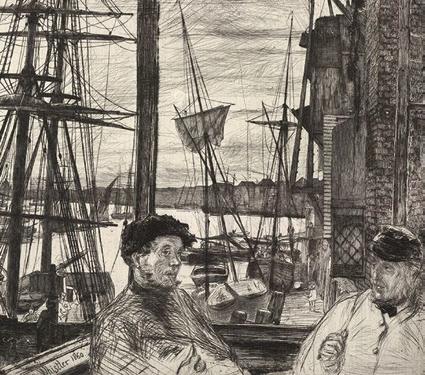
It seems almost inevitable that an artist will internalize a part of themself in their work, perhaps due to consummate passion, perhaps as a result of an unshakeable obligation. These auto-inscriptive tendencies are undeniable, even if hidden. In many ways, the works of an artist serve as a sort of biography, with both surface and subconscious caprices being hidden and displayed in the works and their relations to each other. This is precisely the case in The Touch of the Butterfly: Whistler and His Influence. Located in the Herbert F. Johnson Museum, this exhibition traces the life of James Abbott McNeil Whistler, a riveting biography that is deeply echoed by the evolutions and qualities not only of his own works, but also by the juxtaposed works of other artists who exerted their unique influence on Whistler’s development.
While the exhibition spans Whistler’s mastery of a number of media, he was particularly celebrated for his etchings. In this process a caustic chemical substance (usually acid) is used to produce incised, or etched, lines on a metal plate. While etching can encompass a variety of techniques, the central motive is the ability to make reproductions of the original print.
In his early twenties, Whistler’s move to Paris proved to be an incredibly formative period. Heavily involved in the bohemian art scenes, it was in the French capital that Whistler was exposed to Japanese art. The exhibition shows adjacent paintings of Katsushika Hokusai, whose breathtaking minimalism can be found in pulses and echoes in
Whistler’s later works.
But it was not just minimalism that had its effect on Whistler. Later in his career, he adopted a signature that would become an unmistakable affirmation of his touch. Many of of the pieces in the exhibition show this trademark — a petite, but ornate butterfly stylized to its various incarnations. Although this creature was known at times to possess a stinger in Whistler’s written correspondences, the emblem is not as prominent in his artistic works.
Searching for the signature in his works is one of the most fulfilling aspects of the exhibition, as it marks the artist’s approval of the work as well as serving as a marker of temporality; the butterfly did not occur until the later stages of his career, but at the same time echoes his early inspiration from the Japanese painting tradition — an inspiration which would inform the rest of his life. In a similar vein, the butterfly’s form constantly oscillates between works; in most cases it is a distinct and purposeful imprint upon the work.
Yet for me, one of the most sublime appearances of the butterfly is in “Vase with Hawthorn.” The work, executed using gray wash that has been heightened with white, displays a softness that is distinct from the sharp lines of Whistler’s etchings. The receded bluish tinge, furthermore, evokes the oceanic infinities of nostalgia, and for painting of such small size it is as if a distant vignette is being watched from a pinhole. In notable contrast to the crisp signatures of Whistler’s other works, here the butterfly arrests the gaze not by the sharpness of its expression but rather by the haunting manner in which it fades to the blue, descending upon the spectral. Though certainly not one of
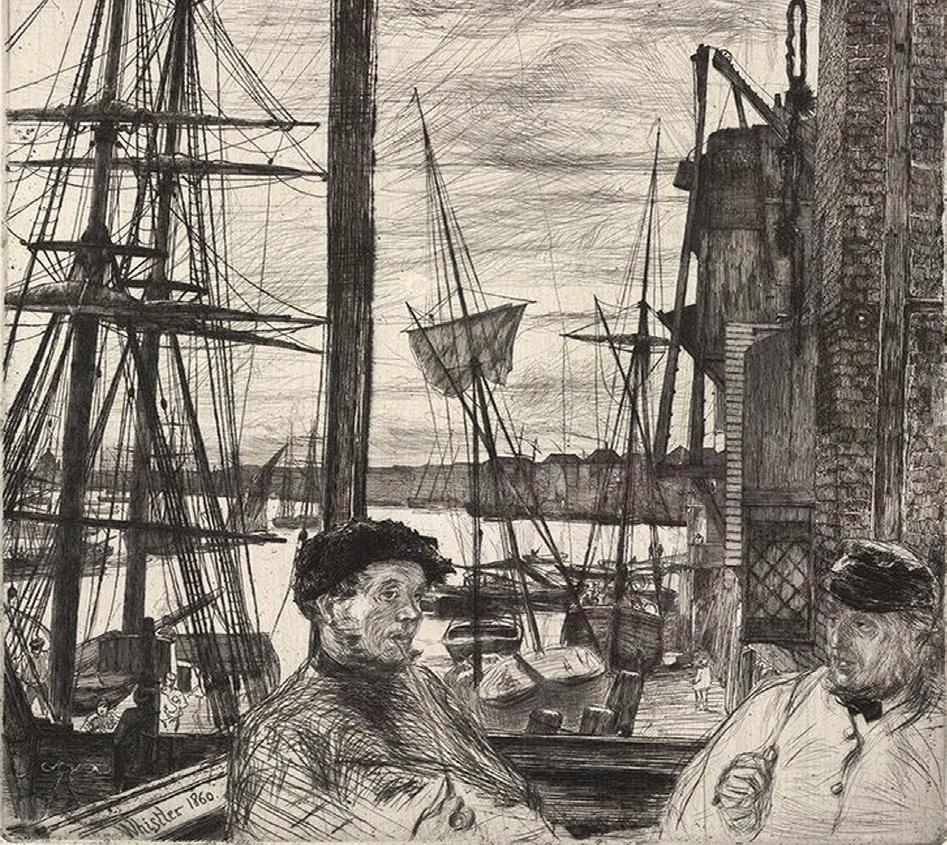
the artist’s most iconic works, “Vase with Hawthorn” is a an interiority of paroxysmal beauty. Above all it reflects an intimacy of Whistler’s touch, a symbiotic love for his work which ultimately rejects the corruption of age.
The Touch of the Butterfly: Whistler and His Influence is located in the Gold Gallery, Floor 2L, of the Herbert F. Johnson Museum until December 16.
Varun Biddanda is a senior in the College of Arts and Sciences. He can be reached at vdb22@cornell.edu.
By SHRIYA PERATI Sun Staff Writer
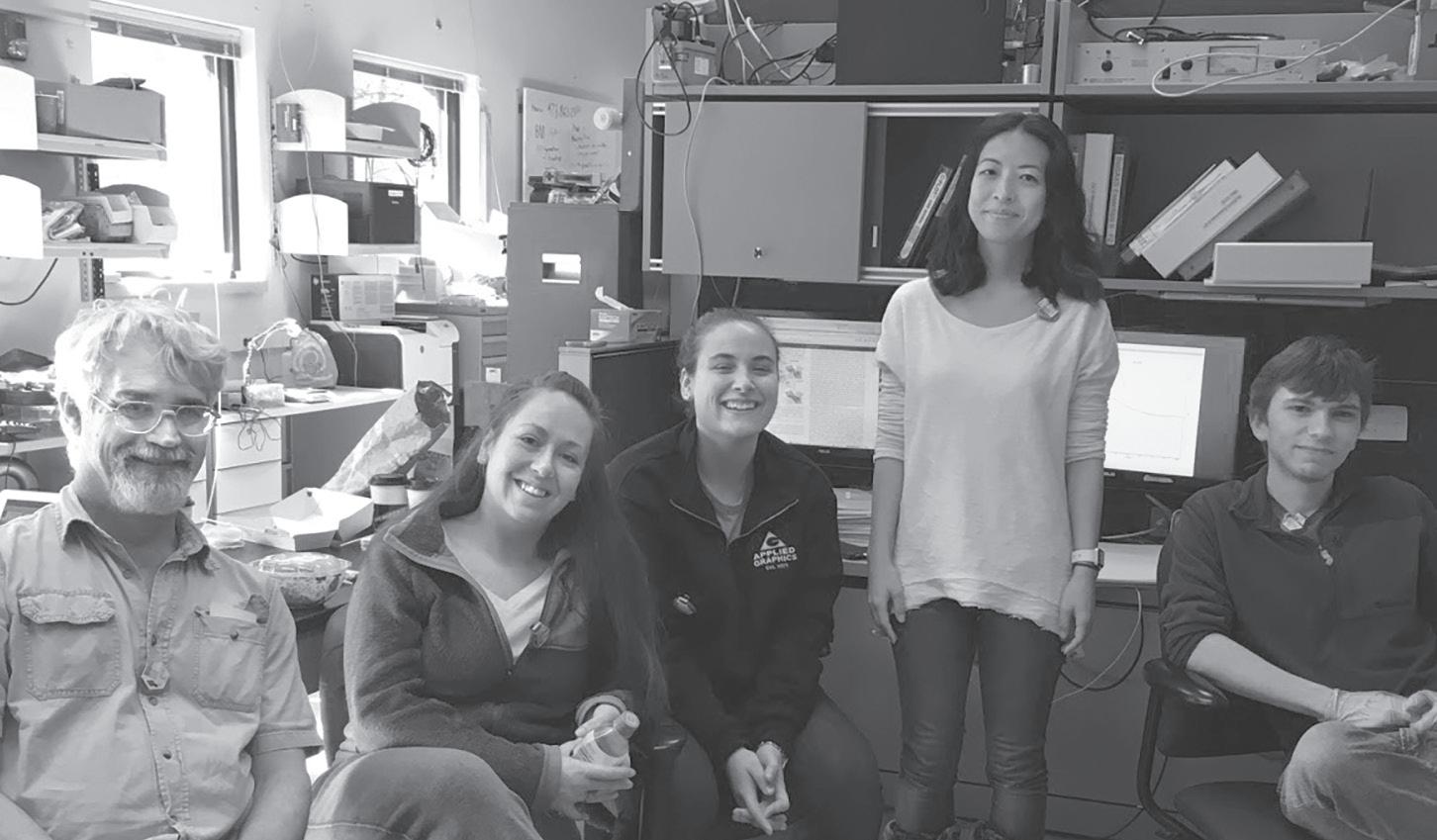
Proteins are strikingly complex macromolecules, which control every aspect of molecular function in all living organisms, making them an interesting research target. The Ando Lab studies the structure of proteins, specifically enzymes, in order to understand their function, using structural techniques like x-ray diffraction and small-angle x-ray scattering. These techniques allow for the visualization of atomic and molecular structure of proteins.
Small-angle x-ray scattering is a technique used to study the structure of proteins in solution. SAXS maintains an advantage over other techniques because it allows for the understanding of the movement of proteins; however a caveat to SAXS is its lower resolution, creating the need for combinatorial approaches to studying proteins such as combining SAXS with chromatography.
In their newest publication, “An endogenous dAMP ligand
Ando Lab studied the crystal structure of a protein and discovered that the protein was interacting in a way that they hadn’t seen before. X-ray crystallography revealed the protein was forming a dimer: a molecular complex that consists of two identical molecules linked together.
“The problem with crystals is that it is a packing structure of protein stack one on top of the other and that’s not really physiological,” said Will Thomas, a fourth year graduate student in the Ando Lab. To address this issue, the Ando lab was able to use SAXS as a complementary technique to confirm that the same structure was forming in solution.
Thomas talked about the unique chemical properties of proteins.
“When we think of proteins, we often think of enzymes which are considered to be catalysts. However, they are not just catalysts: proteins are also really good at performing the chemistry that they are not supposed to do,” said Thomas.
“The future of CHESS is going to be amazing. CHESS is now poised to be a world-leading synchrotron facility for the foreseeable future.”
Prof. Joel Brock
in Bacillus subtilis class Ib RNR promotes assembly of a noncanonical dimer for regulation by dATP”, published in Proceedings of the National Academy of Sciences of the United States of America, collaborators of the
Thomas discussed how even the most basic forms of life, like bacteria, have to be in control of when they are doing certain reactions and what products they are forming. In humans, these regulatory mechanisms are important in preventing cancer.
“Many of the proteins we study are drug targets, so if you can understand how proteins are naturally regulated, then you can
also understand how to develop drugs to artificially regulate them,” said Thomas.
An integral component to the Ando Lab’s research is the Cornell High Energy Synchrotron Source. CHESS is the only synchrotron source in the U.S. that has been funded historically by the National Science Foundation and is on Cornell’s Ithaca campus.
“CHESS has a certain culture where they really try to educate and nurture users in addition to doing a lot of innovation and synchrotron science: many of the students who use CHESS end up becoming very good at x-ray work,” said Prof. Nozomi Ando, chemistry and chemical biology, who is the principal investigator of the Ando Lab.
In this sense, CHESS can be viewed as not only a research
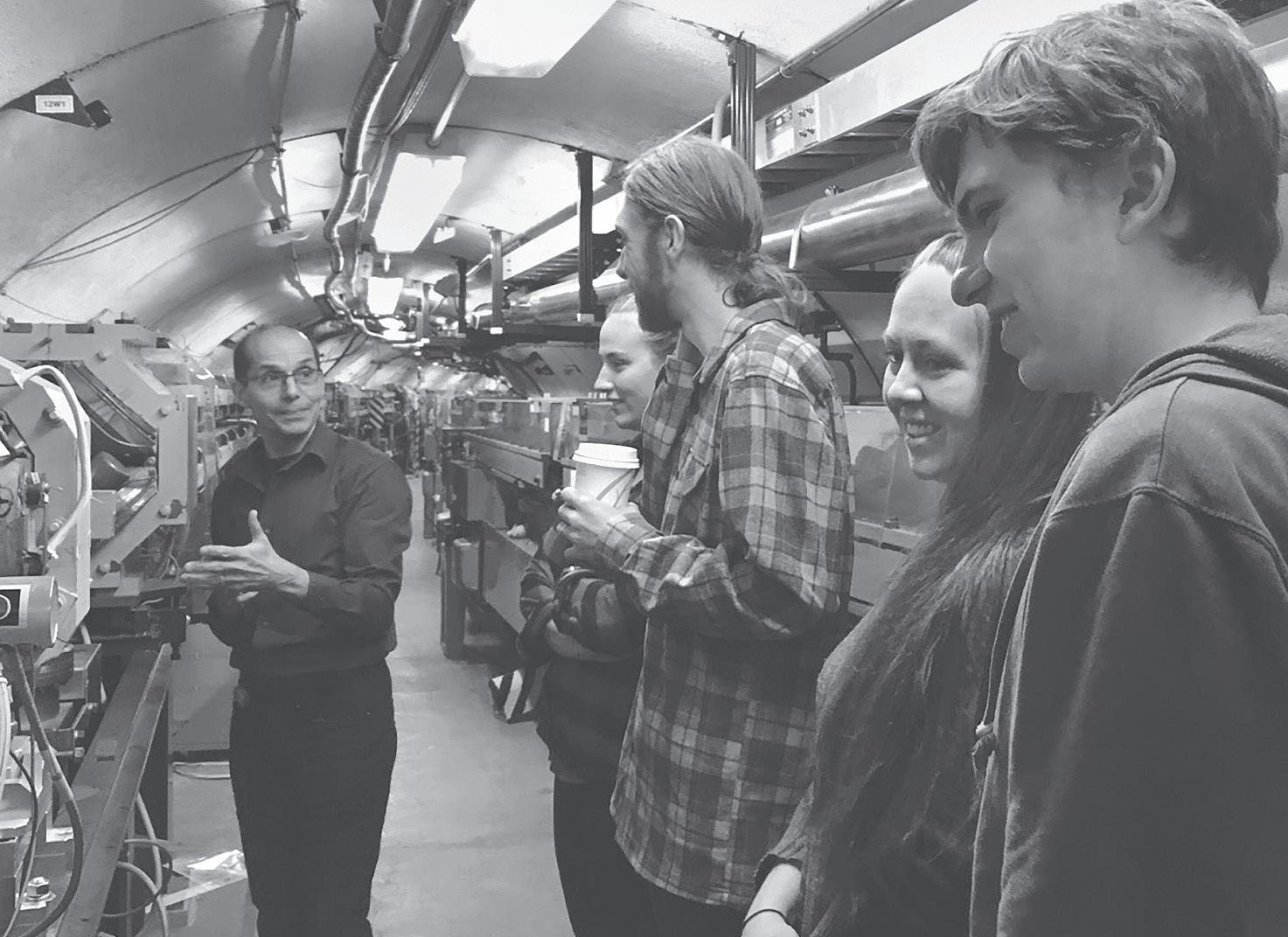
tool but also an education tool.
“That mentality of education lends itself to being more open to exploring ideas and gives more freedom to the experimenter,” said Gabrielle Illava ’17, who is a fourth year graduate student in the Ando lab. Illava came to Cornell as a junior transfer and began working with Prof. Sol Grunner, physics, who was the former director of CHESS. Illava described the environment at CHESS as an undergraduate as “inherently collaborative” and credits the support she received at CHESS with helping shape her as a scientist.
“It’s really rare for a synchrotron to welcome undergraduates throughout the year to do experiments, so we would be losing that if CHESS were to go away” said Ando. CHESS’s funding situation has changed over time: now the accelerator is operated solely for the benefit of x-ray users. Accelerator operations are expensive and usually require a lot of energy, especially for cooling helium.
“CHESS was originally operating as a high-energy physics facility and then the x-ray work was sort of parasitic on that operation,” said Steve Meisburger Ph.D. ’14 who is a postdoctoral fellow in the Ando Lab. “The NSF would not like to be the sole steward of CHESS and is looking to share the financial burden with other partners. The challenge for now is locating other partners who can support the facility and keep it going,” said Meisburger.
According to current CHESS director Prof. Joel Brock, applied and engineering physics, CHESS is currently in the last six months of its five year operating award from the National Science Foundation.
Every five years CHESS must submit a proposal to operate for the next five years. The NSF
has an internal review process that takes almost two years to complete. If the NSF decides to go forward, the NSF then negotiates a new cooperative agreement with Cornell. Thus, CHESS must regularly demonstrate that it is the best use of the taxpayers money.
“We do a tremendous job of running a world-class synchrotron facility with just a fraction of the operating budgets of other leading facilities,” said Brock. CHESS’s other government supporters include the National Institutes of Health, the Office of Naval Research, the Air Force Research Laboratory, and New York State for the current capital upgrade project called CHESS-U. CHESS-U is an upgrade that will rebuild the Cornell Electron Storage Ring to improve its performance as an x-ray source, according to Brock.
“When CHESS-U concludes in early 2019, CHESS will be one of five third generation, high-energy synchrotron sources in the world, and one of only two in the U.S., making CHESS a premiere destination for researchers from around the world,” said Brock. CHESS-U construction is finishing on Nov. 1, and tours of the upgraded facility will be available starting Nov. 13.
“The future of CHESS is going to be amazing,” said Brock. “For the past several years CHESS has been able to compete exceptionally well on the international stage despite being an aging source. Every decade or so, facilities need to upgrade to remain international leaders. CHESS-U is doing that for CHESS. CHESS is now poised to be a world-leading synchrotron facility for the foreseeable future.”

Fill in the empty cells, one number in each, so that each column, row, and region contains the numbers 1-9 exactly once. Each number in the solution therefore occurs only once in each of the three “directions,” hence the “single numbers” implied by the puzzle’s name. (Rules from wikipedia.org/wiki/ Sudoku)
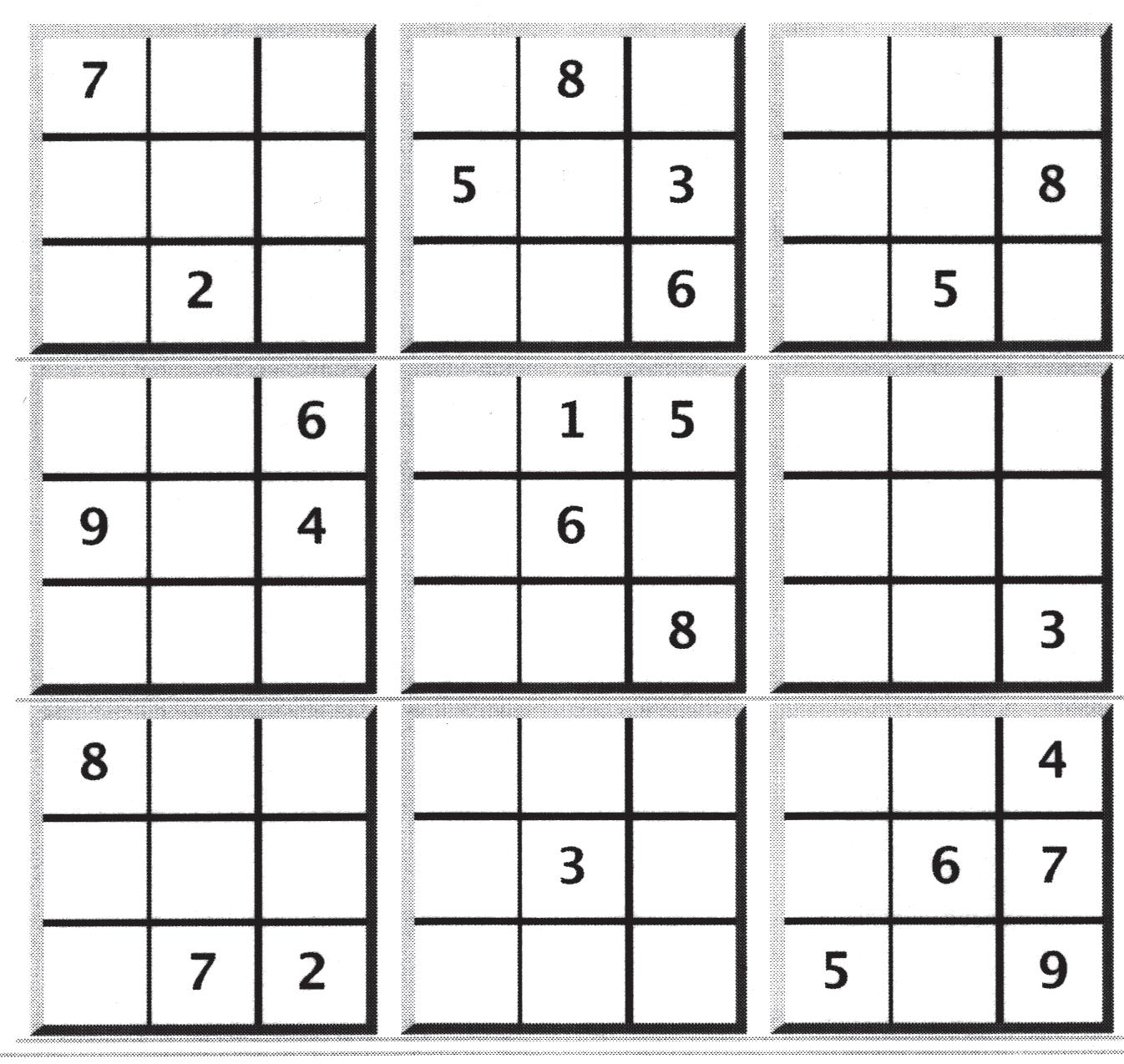
by Jeffrey Sondike ’19



Undergrad student. Available NOW
4 Bedroom Apartment Available NOW Novarr-Mackesey Property Management office@ithacastudentapartments.com 607-277-1234
Collegetown STUDIO 2019/2020 QUIET STREET only 2/1 Block from College Ave. Roomy - Fully FurnishedHardwood Floors 607-351-3898 Email: marthabell004@yahoo.com
We have availability for the 2019-2020 school year beginning June 1st at Hudson heights apartments. The studio apartments come with: heat, water, and electricity included. There are garbages houses and coin-operated laundry facilities on site. Prices start at $750/month for a 12 month lease. If you have any questions or would like to schedule a tour contact us by phone 607-208-7660 or email: renting@ithacaLS.com
>>AFFORDABLE, QUALITY LIVING<< Special Deals for you! Furnished 1-6 Bedrooms Collegetown Apartments PARKING, LAUNDRY, UTILITIES! (607) 273-7368 www.IthacaApartmentRental.com
*****************************
RENT NOW, GET THE BEST www.MatoulasHouses.com Apartments & Houses In Collegetown LINDEN AVE & E. SENECA ST 1 & 3 BEDROOM APARTMENTS ALL FURNISHED EMAIL: MatoulasHouses@Gmail.com PHONE: (607) 339-9644 FIRST-COME, FIRST-SERVED *****************************
LUXURY AT REASONABLE PRICES 5 & 6 BEDROOM ON LINDEN AVE 8 BEDROOM ON CATHERINE ST. AVRAMISREALESTATE.COM 607-272-3389
Runners hope to make improvements heading into competitive meet at Penn State Oct. 12
By ARCHER BRIGGS
Sun Contributor
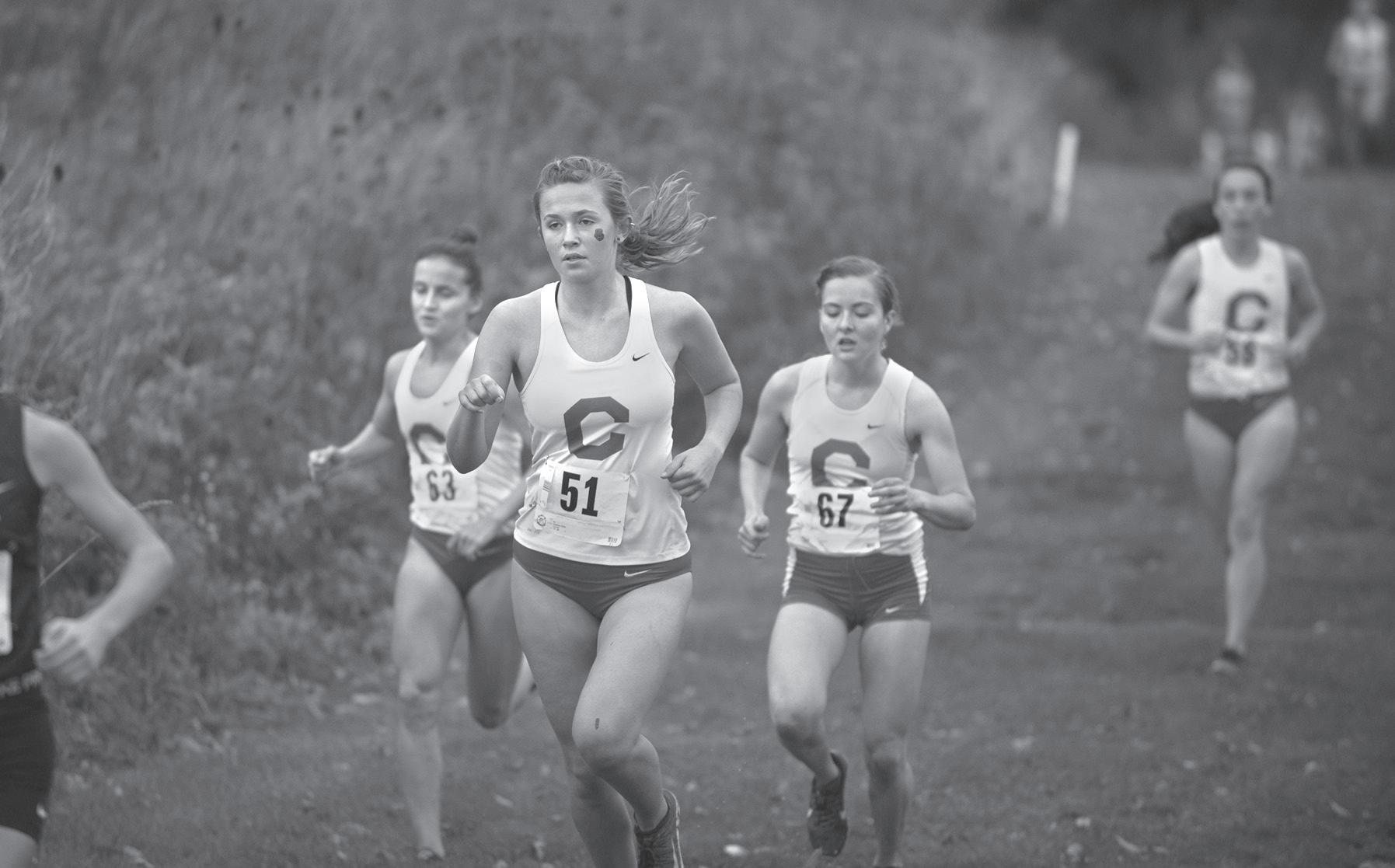
In their first big meet of the season on Saturday at Lehigh, the women’s cross country team finished fourth out of 31 teams, placing in between the other two
Ivies at the meet, Yale and Penn.
In the “Gold” race for the top 10 runners, Cornell led the field for the first mile and most of the second mile, but other runners passed them in the second half of the 3.73 mile race. Junior Taylor Knibb, Cornell’s first finisher, just returned from winning
the U23 World Triathlon Championship in Australia. This was her first race since getting back to Ithaca.
“We were running so well, we could have made a big breakthrough,” head coach Artie Smith ’96 said. “The women saw their teammates executing that way, and they have been executing in practice. If you asked any of the women if they went out too hard they would say ‘no.’ When people around you are making a move and going ahead, it is hard to know whether to make a move with them, our to pace yourself for the rest of the race. It is not just a fitness thing, it is a strategic thing, you have to know who to go with.”
To prepare for the team’s next match at Penn State, Smith will emphasize cohesion among his runners. While it seems counter-intuitive to teach two runners who finished apart to run together during the race, this can help runners pace themselves for the majority of the race, while allowing for a burst of speed at the finish, so that faster runners and take off, and slower runners can keep a consistent pace. Smith believes this will help the team maintain the strong
placement that they started with throughout the whole race.
In the open race, for runners outside the team’s top ten, the Cornell team finished first with 32 points: an extraordinary score. All five scoring runners finished in the top eleven overall.
“The open race shows our depth,” senior captain Gracie Todd said.
Todd faced every athlete’s nightmare last year. She missed the entire season due to stress fractures. But that did not prevent her from being a huge positive force on the team and returning as captain this year.
Smith echoed Todd’s sentiment.
“It is great to see big breakthroughs from a lot of people, and to know there is more there.”
While the Lehigh race was a bit of a missed opportunity, the team is determined to succeed in their next race. As Smith describes it, these races are test runs for the Ivy championship on Oct. 27, and then the NCAA Regionals on Nov. 9.
Archer Briggs can be reached at wcb224@cornell.edu.
By ROBERT LI Sun Contributor
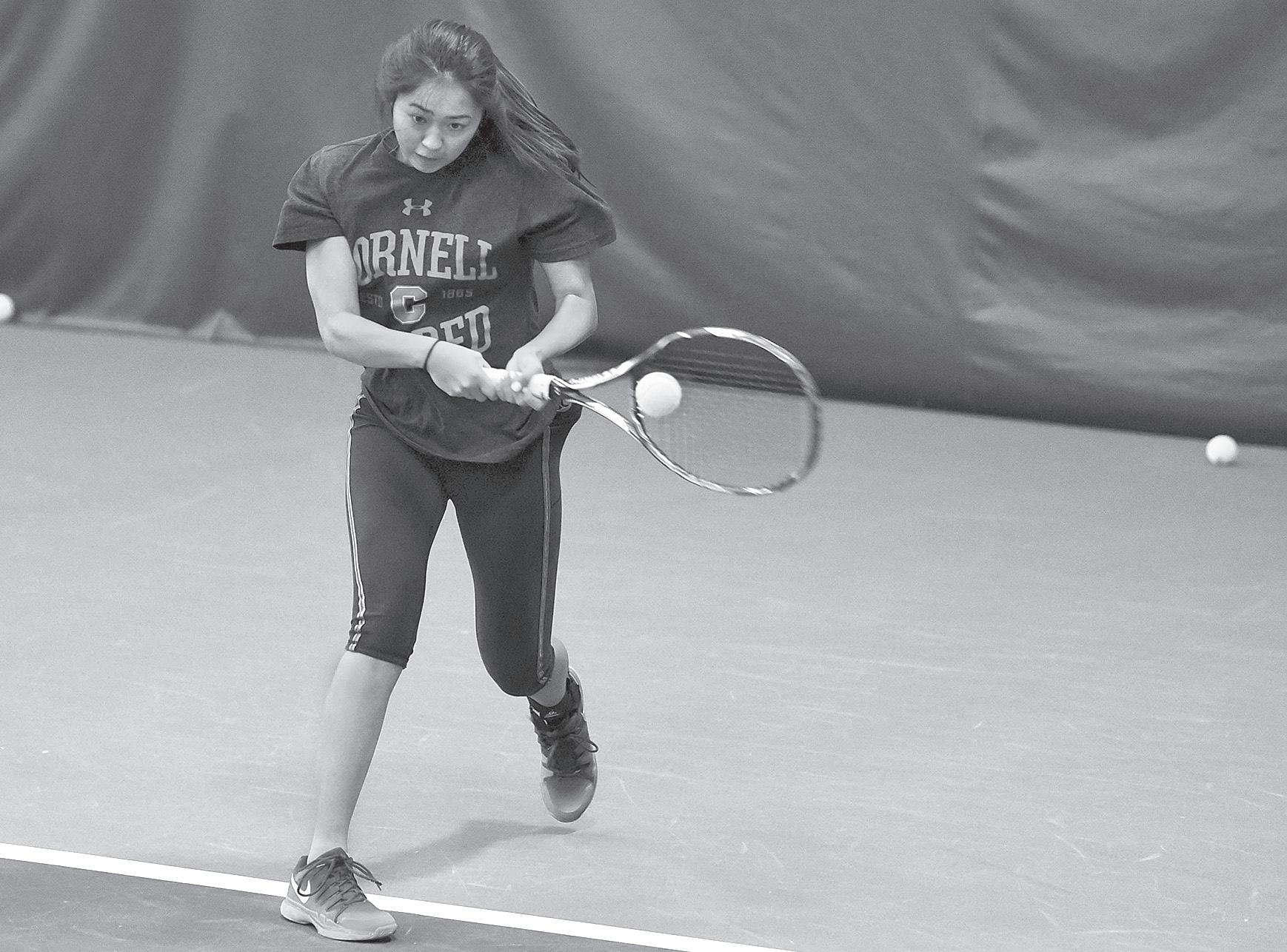
This past weekend, the Cornell women’s tennis team traveled east to New Haven, Connecticut, to compete in Yale’s Bulldog Invitational. Over the course of three days, Cornell matched up against Ivy League counterparts Harvard, Brown, and non-conference rival Boston College.
Cornell began the tournament against Harvard, a matchup that resulted in a doubles win for freshmen Sara Campbell and Katherine Nguyen. The Red improved on Friday’s showing with an equally impressive performance on Saturday against Brown. The Red notched two singles victories, one by Nguyen at No. 1 singles and one by freshman Maria Adiaconitei at No. 3 singles. The Red posted its best results on Sunday, winning four matches against a strong Boston College team with three singles victories and one doubles win.
“It was a great tournament for the women to compete in,” head coach Mike Stevens said. “There was a lot of great competition and a chance to see how they have been improving since we got started on Sept. 7 and the results show how hard the team is working.”
Stevens stressed the importance of individual improvement for each player and accentuated the team mantra to get “one percent better each day.”
With a roster composed mostly of freshmen, the team has done well to acclimate to the rigors of collegiate level tennis. Sophomore Ana Elhom, now beginning her second year with the team, detailed her role as a mentor setting an example for the new players. Being the only player on the team with a year of experience already under her belt, Elhom has become much more aware of her responsibilities as a returning player.
“We train for it, lifting on Tuesdays and Thursdays and con-
ditioning on Mondays and Fridays in addition to all our practice times,” Elhom said of the team’s intense schedule.
“We want to have to reach the ultimate goal for them which [...] was winning the Ivy Title.”
Head Coach Mike Stevens
Despite being nearly the same age as her teammates, Elhom’s experience in balancing the commitment of sports with academics has proven incredibly valuable to the
team success. Elhom explained that the team’s tenacity and eagerness to win makes all of the work worth it.
“It goes back to the first meeting of the fall when we went over the expectations for being on the team and the culture that we want to have to reach the ultimate goal for them which [...] was winning the Ivy Title,” Stevens said.
The team competes next at the ITA Regional Championship on Oct. 11. Selections for the tournament come out this week, and the team eagerly awaits the competition.
Robert Li can be reached at rll94@cornell.edu.

By AMAN GUPTA Sun Contributor
This Saturday, Penn exposed one of the women’s soccer team’s lingering weaknesses: goal scoring. Despite the staunch defense of the Red, thwarting all 10 shot attempts by Penn in the first half, the Quakers capitalized in the second half scoring two goals securing the win over the Red.
The Red managed a disappointing three shots on target compared to the 10 put on target by the Quakers. Head Coach Dwight Hornibrook expressed his displeasure with the Red’s inability to put the ball in the back of the net.
“I think we didn’t get off to a good start as we failed to create clear shooting opportunities in the first part of the half,” Hornibrook said. “The young players on the team worked well together to pose an offensive threat in the second half. However, the whole team needs to do better to put pressure on the opponent and create goal scoring opportunities.”
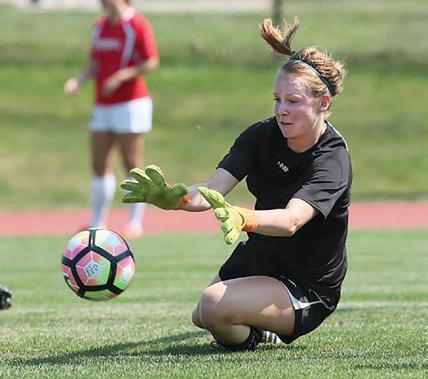
Regardless of the Red’s offensive shortcomings, senior goalkeeper Meghan Kennedy continued her consistent play making eight saves and keeping the Red in the game until the second half.
“This Penn team has a well-balanced squad of strong and athletic players.”
Head Coach Dwight Hornibrook
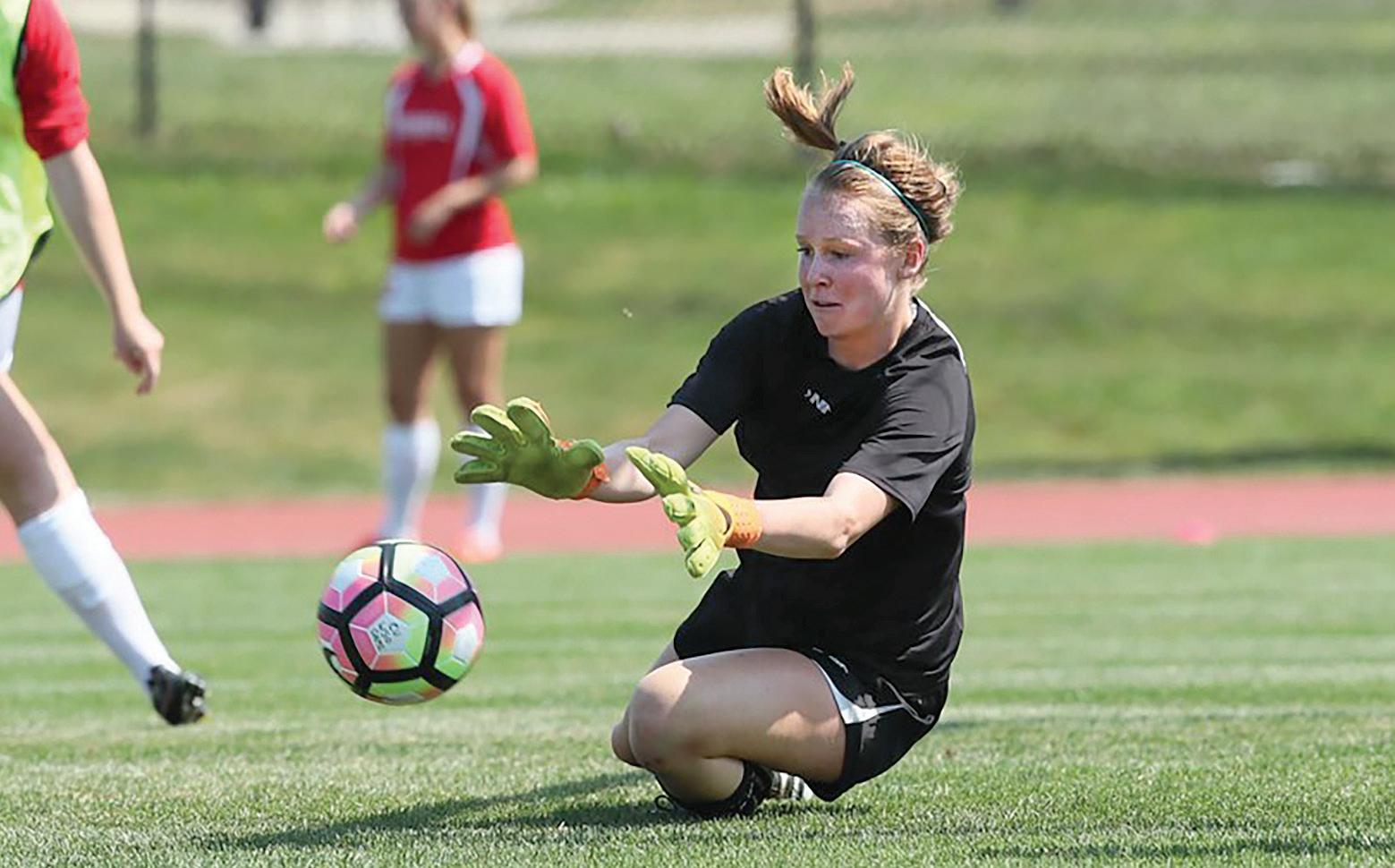
“[Kennedy] had an impressive performance, along with the defensive unit, which kept Penn at bay for the entire first half,” Hornibrook said.
The Quakers’ second goal resulted from unusual circumstances as a Red defensive clearance resulted in the ball hitting the corner flag, rebounding off and giving Penn possession. Following the out of
bounds, Penn’s Jadyn Wilensky sent a well-timed cross into the box which Allie Trzaska deftly handled and sent into the back of the net.
“This Penn team has a well-balanced squad of strong and athletic players, hence they proved to be challenging opponents,” Hornibrook said. “In order to have a better result in the future, we need to play the ball till the final whistle by applying constant pressure on our opponents and creating tangible goal scoring chances. We hope to
learn from our mistakes and improve as a unit for the following games.”
The Red’s matchup will take place this Friday, Oct. 6, at 1p.m. at Harvard. The game will also be streamed via ESPN+.
Aman Gupta can be reached at ag744@cornell.edu.
By FAITH FISHER Sun Contributor
Despite an exceptional defensive showing, the women’s field hockey team fell 0-2 to Columbia University this Sunday in New York City.
Columbia (4-3) responded well to the Red’s (2-7) strong
start. In the fifth minute, the Lions’ goalkeeper saved a shot on goal by Cornell’s sophomore Grace Royer. Columbia quickly took offensive control, and during the 17th minute, the Lion’s Danielle Buttinger scrambled to the right of the goal and scored, putting Columbia up on the scoreboard.
The Lions’ offensive domination continued through the rest of the game. In the first five minutes of the second half, the Lions took a 2-0 lead and never looked back. In total, Columbia held the advantage in shots on goal (13-3) and penalty corners (12-1).
“The thing that’s really
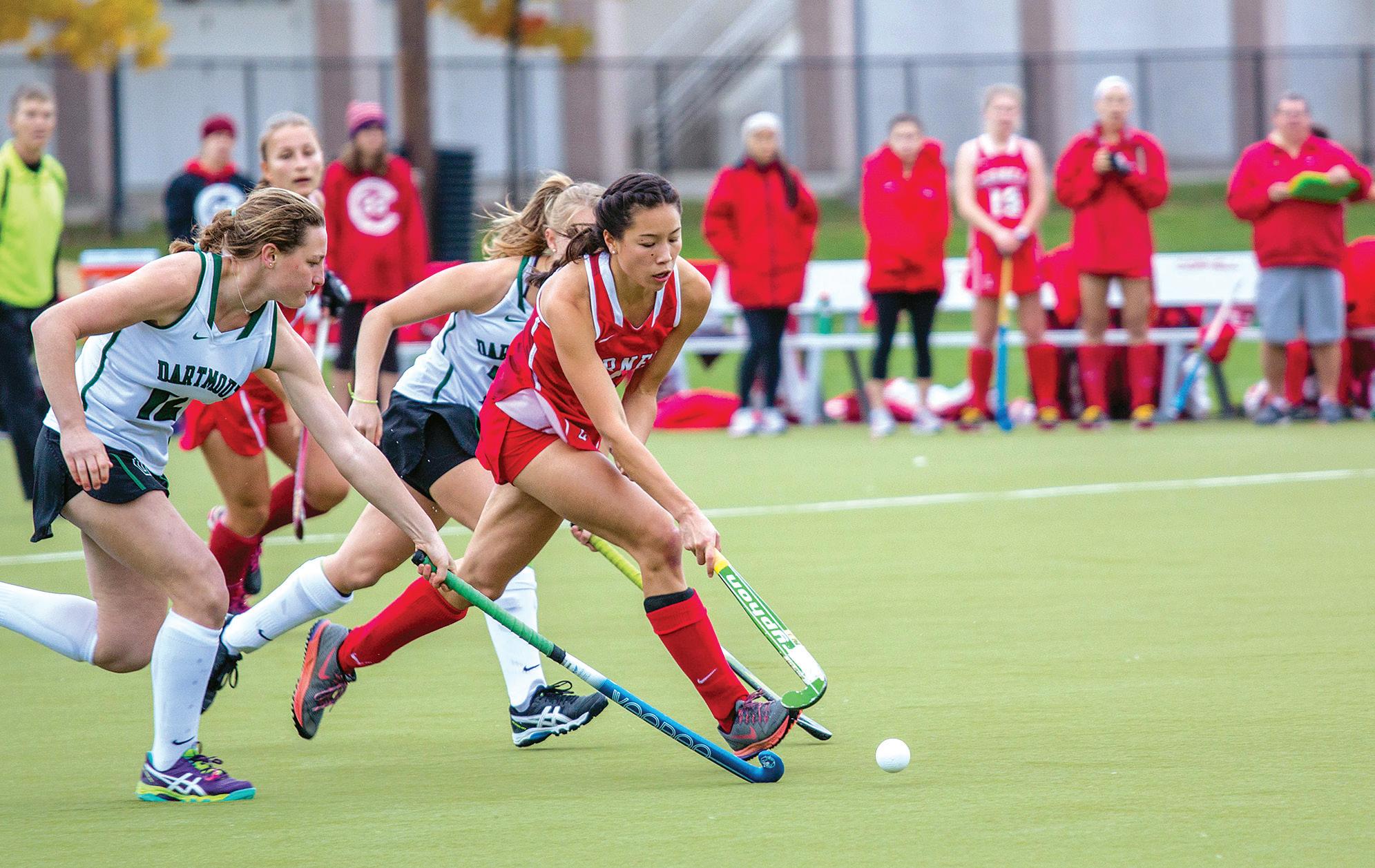
important is that we keep an optimistic view of what can happen in every game and that we work together and play together,” head coach Stephen Simpson said. “That’s what we have to do and if we do those things, we give ourselves a chance in every game we play.”
CORNELL VS. COLUMBIA

The Lions, however, struggled to convert most of their opportunities as the Red displayed strong defensive tactics. Cornell goalkeeper junior Maddie Henry, who was named to the All-Ivy second team last year, notched a career high in saves turning away a total of 13 shots.
“Columbia has a really good attack penalty corner unit,” Simpson said. “I would have liked to not have so many corners against us, but we defended really well against what Columbia does.”
One of the Red’s main struggles this year has been goal scoring. On four separate occasions this season the Lions have eclipsed three or more goals per game, while the Red sit at a measly season total of seven goals.

“We were playing against the friction of their defense,” Simpson said. “In the first half we got into the circle a couple of times and then in the second half, when we really needed to get outcomes, we were getting to the edge of the circle struggling a little bit from there. We got some shots, but some of our shots weren’t shots that were likely to score.”
The Red will face off against Yale this Friday at noon in a
“If we do those things, we give ourselves a chance in every game we play.”
Head Coach Stephen Simpson
home game, looking to notch their first conference win. The game will also be streamed via ESPN+.
Faith Fisher can be reached at faf28@cornell.edu.