The Corne¬ Daily Sun





By ALEC GIUFURTA and KATHERINE ESTERL Sun Senior Editor and Sun Contributor
While some Cornellians watched last night’s presidential debate through Zoom watch parties, difficulties hearing candidates likely wasn’t due to internet connection –– the debate descended into a verbal mosh pit of lies and undue overtures mere minutes after starting.
At one highly-circulated point, Biden told Trump to “Just shut up, man.” At another, Trump falsely lamented that Democrats’ proposed Green New Deal would “take out the cows.”
Tuesday night’s debate also saw
the president lie about the United States’ ability to conduct the election, his climate change and economic records and his support from law enforcement.
The debate descended into a verbal mosh pit of lies and undue overtures minutes after starting.
On campus, in Collegetown and across the nation, some Cornellians in politically-involved groups tuned into the debate, many through Zoom watch parties.
Polis, a non-partisan pre-government society on campus, and Black Students United co-hosted a Zoom watch party. The Cornell Republicans encouraged members to meet in small groups to view the debate, President Weston Barker ’21 wrote in an email. The Cornell Democrats also hosted a Zoom after the debate to share their thoughts.
Barker, president of the Cornell Republicans, who have not released election endorsements, acknowledged Trump’s unconventional debating style but said the debate “did not defy expectations” for either candidate. In 2016, the
See DEBATE page 4

By OLIVIA CIPPERMAN Sun Staff Writer
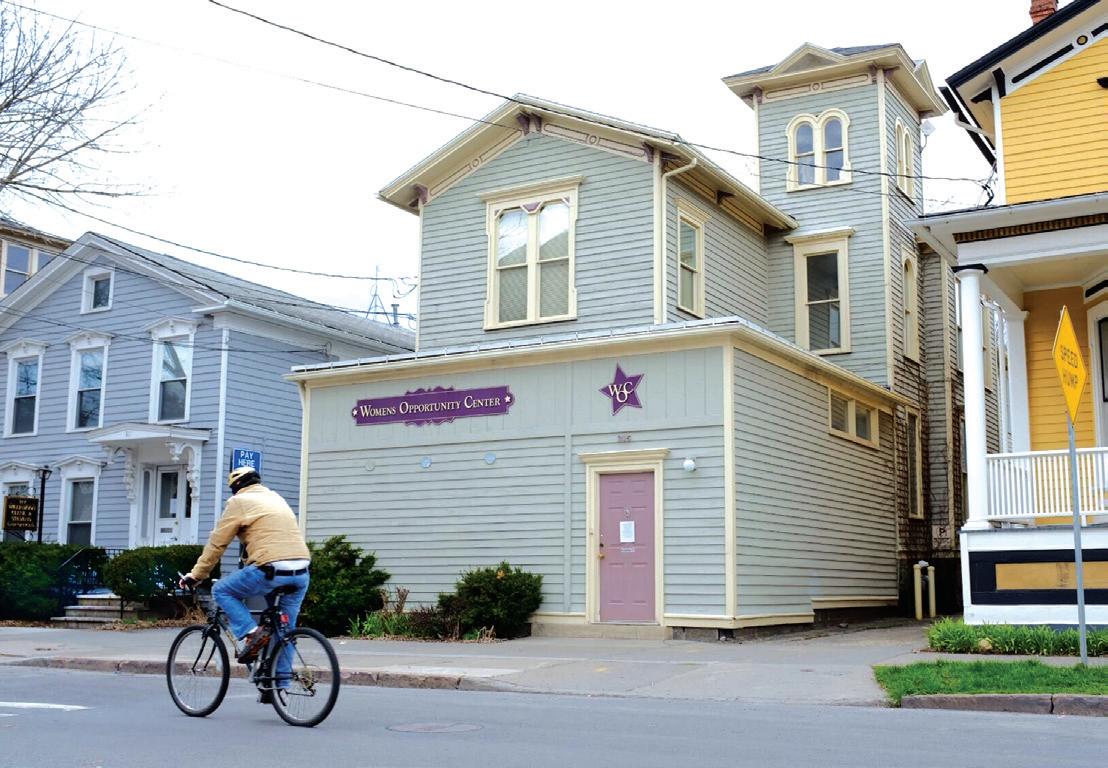
The Women’s Opportunity Center has not received full funding from New York State since March, forcing the organization to lay off seven employees at a time when the pandemic has strained demand for career training services. Now, only three staff members are running the center, which serves a vast community of mostly women clients seeking personal financial stability. Homeless, recently incarcerated and newly independent women often rely on the center’s free career training programs. One staff member serves each of the center’s Ithaca and Syracuse locations, in addition
to its associated Mary Durham boutique. The center has lost five permanent and two parttime employees, including facilitators and media managers.
While the center hopes to rehire its full staff eventually, Executive Director Ryan Harriott said that will be impossible until it secures at least its previous level of government funding.
New York’s Department of Labor primarily supports the center through its Displaced Homemaker Program, which pays non-profit organizations to provide workforce development services to women across the state.
DHP contracts normally
See LAYOFFS page 4
By
Just a day before Student Assembly elections are set to end, last-minute confusion over election procedure has prompted concerns that voters may have unknowingly cast an invalid ballot.
In what they said was a surprise revelation, S.A. presidential candidates executive vice president Cat Huang ’21, undesignat-
ed representative at-large Uche Chukwukere ’21 and Dillon Anadkat ’21 said they learned on Wednesday from the Office of the Assemblies — which provides support for Cornell’s elected bodies — that rules for tabulating votes had unexpectedly changed: If a voter leaves just one candidate in a race unranked, their ballot for that specific race will be discarded. For races with more than two contestants, the S.A. ballot has
traditionally used ranked-choice voting, a tabulation method in which a voter ranks candidates in order of preference. If a candidate wins a majority of first-preference votes, they are automatically declared the winner; if none do so, the candidate with the next fewest number of first-preference votes is successively eliminated until a winner emerges. However, under the policy, if a voter fails to rank all candidates running in that race, their vote
will not count — a departure from how most ranked-choice systems are typically implemented.
“Personally, I didn’t know that you were required or forced to rank all of the candidates [until now]. In the past, I’ve had a lot of friends who voted in past elections that didn’t rank [all candidates],” Huang said Wednesday night. “You could vote, you could rank, but you didn’t have to.” Despite the voting period
nearing its end, the three candidates said it was not until Wednesday that S.A. members were notified this policy had been put into place for this semester’s election.
“Today at noon … [we] got a message from the Director of Elections that basically said that they have received news from the Office of the Assemblies … that explained the way voting is
Thursday, October 1, 2020
Labor Relations: Contract Language and Interpretation 10 a.m. - 1 p.m., Virtual Event
A Conversation With Jeffrey 11 a.m. - Noon, Virtual Event
Learning Community on Inclusive Teaching For Graduate Students and Postdocs 11 a.m. - Noon, Virtual Event
Worldbuilding After Empire: The Rise and Fall Of Self-Determination 11:30 a.m. - 12:45 p.m., Virtual Event
Firm-Level Risk Exposures and Stock Returns in the Wake of COVID-19 11:30 a.m. - 1 p.m., Virtual Event
Retiring on Purpose or for a Purpose? Noon - 1:00 p.m., Virtual Event
The Comstocks of Cornell: The Definitive Autobiography 4:30 -5:30 p.m., Virtual Event
Sexual Citizens With Authors Jennifer Hirsch and Shamus Khan 4:30 - 6 p.m., Virtual Event
Civil Discourse: Free Speech and ‘Cancel Culture’ 6 -7:15 p.m., Virtual Event
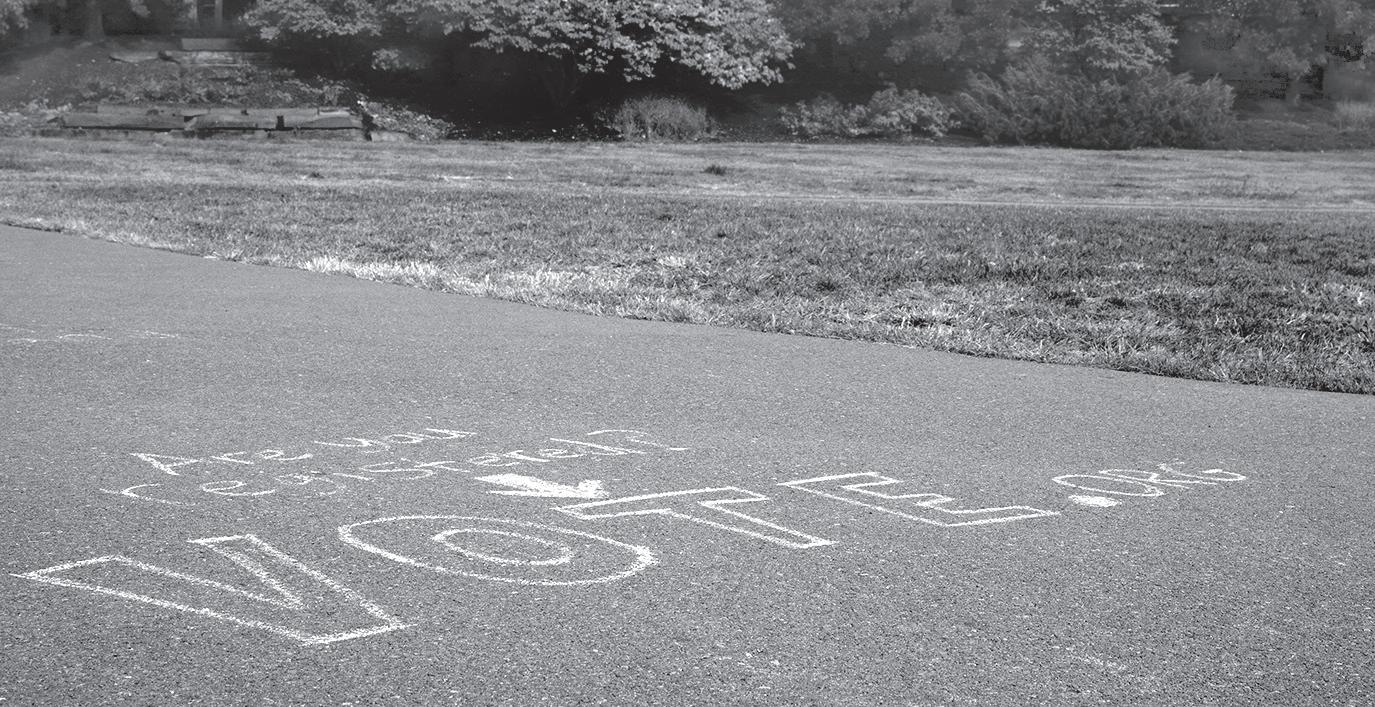
Get out the vote | A chalk drawing reminds students to check their voter registration
Election day is just over a month away on Nov. 3.
Planning for an Inclusive Economy: How Small-Scale Manufacturing Businesses Create Places that are Stronger, More Resilient and Loved 10:10 a.m., Virtual Event
Global Challenges to Democracy: Perspectives from Europe, Asia, Africa and Latin America 11 a.m. - Noon, Virtual Event
Changing Women and the Collective Voice in Navajo And Korean Literature: Oral Tradition and the Poetry Of Luci Tapahonso and Kim Hyesun 11:30 a.m. - 12:30 p.m., Virtual Event

sunmailbox@cornellsun.com
The Nineteenth Amendment and The Democratization of the Family 12:15 - 1:30 p.m., Virtual Event
Q&A With Filmmaker and Podcaster Stewart Thorndike 1:30 p.m., Virtual Event
Lions, Apes and a More than Human Anthropology Against White Supremacy 3 - 4:30 p.m., Virtual Event
Emergent Patterns in Locust Hopper Bands Using Agent-Based and Continuous Models 3:30 p.m., Virtual Event



By CAROLINE JOHNSON Sun News Editor
Building on their mission to enrich and educate growing minds, Cornell’s Scholars in Our Society and Africa chapter spearheaded a new summer fellowship to connect college students with high school students across the world.
The college mentors worked with students
“[The program] was just one of the best things that I’ve experienced in a long time.”
Doreen Wanjiru
from underprivileged communities to work through the college application process and ultimately build self-confidence, said Lassan Bagayoko ’22, the fellowship’s coordinator.
Because the pandemic halted in-person meetings, the program was able to expand its reach to include high school students hailing from across the globe, from California to Kenya. They met twice a week from late June to early August and offered personalized mentoring sessions.
Muhamadou Jobarteh, a high school student from New York City who learned about the program through a friend, was paired with a Cornell mentor studying government and public education. He learned about law and college preparatory skills and built relationships with program participants.
Jobarteh added that he also learned school organizational skills, developing a LinkedIn page and the importance of community engagement. But mostly, he said he learned to believe in himself.
“The mentor taught me that you can only manifest certain things if you believe in yourself,” Jobarteh said. “He told me to believe in myself and my capabilities, even though sometimes I will feel like I’m not doing the best.”
guides to applying to universities abroad,” Wanjiru said. She explained that information about applications, like standardized testing, mostly comes from friends rather than schools.
“[The program] was just one of the best things that I’ve experienced in a long time,” Wanjiru said.
For mentors Deborah Yeboah ’22 and Selam Woldai ’23, the fellowship was a learning experience that encouraged them to create strong connections with their mentees.
“I really wanted to help students when it came to just searching for college and the college process,” Yeboah said. “I really wish someone did that for me.”
As a Black woman, Yeboah said she practiced a more intersectional approach to college advice and preparation with her Latinx mentee from California, empathizing with her experience as an underrepresented minority.
Yeboah said the program also taught her the importance of flexibility, but she most enjoyed watching her mentee grow throughout the program as she learned how to develop her resume and expand her approach to the college process.
Woldai originally joined the organization because she wanted to give back to the community. Bagayoko received the Janet McKinley ’74 Family Grant, which funds students interested in pursuing entrepreneurial summer projects, to support the fellowship.
“There’s really not that many of us to begin with so meeting another person, that looks like me,” Woldai said about working with a mentee who shared her ethnicity. “I know for her she really really loved that, and I’m like, I love that too.”
After completing the program, Woldai said she feels she is better able to shape her plans for the future and wants to highlight the recognitiown she believes SOSA deserves.
“The mentor taught me that you can only manifest certain things if you believe in yourself. He told me to believe in myself and my capabilities.”
Muhamadou Jobarteh
Doreen Wanjiru, a high school student from Kenya with an interest in computer science and global health, learned about the program from a recently accepted Cornell student.
For Wanjiru, the program provided an in-depth interactive space to explore what it means to apply to universities abroad.
“For me, my high school, they don’t give
“I kept telling her just do whatever you think will make you the most happy,” Woldai said regarding the advice she gave her mentee. “Don’t just do it because you feel pressure to, don’t do anything ‘cause of whatever anyone else says. Just pursue literally your dreams as cliche as it sounds.”
By CHLOE WAYNE Sun Contributor
Columbia professors Jennifer Hirsch, sociomedical sciences, and Shamus Khan, sociology, are changing the narrative around sexual assault with their groundbreaking new study.
Through an in-depth analysis of students’ stories of sexual assault, mindsets regarding sex and social contexts, Hirsch and Khan are expanding the discussion beyond the effects of sexual assault to include the social factors that cause it in the first place.
The pair will speak Oct. 1 at 4:30 p.m., as a part of their nationwide book tour on Sexual Citizens: A Landmark Study of Sex, Power and Assault On Campus, in a virtual event hosted by Cornell’s Center for the Study of Inequality.
Inequality studies center director Prof. Kim Weeden, sociology, will moderate the event with Nina Cummings M.S. ’92, the director of Cornell’s sexual assault prevention program. Khan and Hirsh will share the most salient takeaways from the book, includ-
ing the stories of sexual assault that form a major part of their research.
“We will tell stories, we’ll share our ideas and we’ll point to the future,” Hirsh said.
“We hope that the students will feel seen in this and be given tools to think about their own intimate lives,” Khan added.
Their book focuses on the dynamic of sex and power
“We hope the students will feel seen and be given tools to think about their own intimate lives.”
Shamus Khan
from a sociological perspective, shifting the narrative away from coping after assault to unpack the social foundations that foster such behavior.
Khan and Hirsch also unmask the diversity of reasons why young people have sex and how they view their autonomy in giving consent.
Their ethnographic research was part of Columbia’s Sexual
See BOOK TALK page 4
ELECTION
Continued from page 1
that you’re supposed to rank all three candidates for a position,” Huang said. “And if you don’t do that, your vote for that position will not be counted.”
Caroline Johnson can be reached at cjohnson@cornellsun.com.
Tabulation and vote-counting of S.A. elections are managed by Cornell’s Office of the Assemblies, which is led by Director Gina Giambattista; she could not be reached for comment by time of publication. According to Huang, the two co-directors of the S.A.’s election committee — Moriah Adeghe ’21 and Savanna Lim ’21 — reached out to Giambattista on Wednesday to ask for clarification about the rankedchoice voting system. The instructions listed on the
S.A. ballot sent by email to all Cornell undergraduates are ambiguous as to whether one is required to rank all candidates. While the instructions ask voters to “rank all options in your order of preference,” it goes on to clarify that if one chooses not to include a given candidate, that means “you would rather have your vote not count than have it count for that candidate.” Nowhere does it explicitly say that failure to include all candidates will result in an invalid ballot.
A previous email sent from Cornell to students on Tuesday simply asked voters to rank “your candidates for all races.” Unlike the latest message, it did not specify that the consequence for not doing so would be a cancellation of one’s vote.
The apparent change in election rules prompted backlash from the S.A.’s three presidential candidates, all of whom expressed sharp criticism of the policy.
Stimpson can be reached at jstimpson@ cornellsun.com.
However, on Wednesday night, Cornell students were sent an email from the S.A. Elections Committee reminding students to vote in S.A. elections. In it, the message explicitly stated, in bold, that voters must “rank all candidates in the ‘Ranked Choice’ races in order for your vote to count.” According to Huang and Chukwukere, this is the first time such language had been used in communications to undergraduate voters.
DEBATE
Continued from page 1
group declined to endorse Trump, and was kicked out of the New York Federation of College Republicans for doing so.
“To some, that breach of decorum is welcome in an era of teleprompter politicians,” Barker wrote. “To others, that breach is discouraging insofar as it can hurt the ability of both candidates to get their points across.”
Jonathan Davydov ’21, president of Polis, said the debate showcased a lack of decorum in U.S. politics. “It’s indicative of a larger decay in our polity,” he said.
During the debate, when
“We felt that his behavior was childish and unpresidential.”
Geneva Saupe ’21
moderator Chris Wallace asked Trump to condemn white supremacist violence, Trump appeared to struggle with an answer. He told the Proud Boys, a white supremacy hate group, to “stand back and stand by,” instead of condemning the group. In response, Barker wrote that the Cornell Republicans, “in the strongest terms, condemn white supremacy and any and all acts of domestic terrorism.”
“There should have been a much stronger and much less equivocal condemnation,” Barker added.
After the first debate, the Commission on Presidential Debates said on Wednesday that they would implement “tools to maintain order” in the coming debates. One option the commission is weighing is muting candidate’s microphones, the Associated Press reported.
“We felt that his behavior was childish and unpresiden-
tial,” wrote Geneva Saupe ’21, political director of the Cornell Democrats. “It reflected a lack of empathy and seriousness.”
Saupe wrote that Biden demonstrated “the strength of the Democratic party” when addressing the pandemic, economic recovery, climate change and healthcare.
During the debate, Trump repeatedly told Biden he “lost the left” after Biden took a more moderate policy line than many of his progressive primary challengers. While Biden called for police reform in the debate, he also called for funding to be increased to local departments to include “on-call psychiatrists,” contrary to the calls for police defunding that groups like Black Lives Matter have demanded.
Saupe said that while Biden is “an imperfect candidate,” the Cornell Democrats will continue to “remain committed to holding him accountable on issues such as policing.”
“Joe Biden may not have been our first choice,” Saupe continued. “However, he is now our best choice.”
Saupe also criticized the job of debate moderator Wallace, a veteran journalist with Fox News. In future debates, Saupe said she wants moderators to move the focus to policy, specifically, climate change policy.
The next debate will be between vice presidential candidates Sen. Kamala Harris (D-Calif.) and Vice President Mike Pence in Salt Lake City. The University of Utah will host the debate on Oct. 7 at 9 p.m. eastern time. Susan Page, the Washington bureau chief of USA Today, will moderate.
Trump and Biden will face off next on Oct. 15 at 9 p.m. eastern time in Miami. Steve Scully, political editor at C-SPAN, will moderate.
Alec Giufurta can be reached at agiufurta@cornellsun.com.
Katherine Esterl can be reached at kae78@cornell.edu.

LAYOFFS
Continued from page 1
run from Aug. 1 to July 31, but this year’s renewal process has not yet begun, with no indication of a revised timeline.
This month, the center finally received the check that the government was supposed to send in May, according to Harriott. However, the organization hasn’t heard anything about the other missed payments, which are supposed to be sent monthly.
After the center issued a press release, Tompkins County said that the county will catch up with nonprofit funding soon. But the county committed to no official timeline to the center, which will now be forced to operate on severely limited resources for the foreseeable future.
Gov. Andrew Cuomo (D-N.Y.) announced in the
individual donors. But these sources aren’t as reliable.
“In August, we didn’t get anyone to pay us anything,” Barnett said, “which was a bit painful.”
This is not the first time the program has been the subject of major budget cuts, according to Susan Barnett, the center’s board chair. In 2013, Albany cut the program completely, forcing many reliant nonprofits to close before funding was ultimately restored. Now, only a handful of DHPfunded organizations remain in New York State, Barnett said.
Demand for the center’s services has significantly increased in recent months amid widespread unemployment and continued economic distress.
spring that all nonprofits contracted by the state would see a 21 percent budget cut. However, Harriott said, the center never received formal confirmation about the cut.
The DHP supports 50 percent of the center’s funding, with the rest supplemented by United Way, the Triad Foundation and
The most recent budget cuts come at a particularly troublesome time: According to Harriott, demand for the center’s services has significantly increased in recent months amid widespread unemployment and continued economic distress.
“As more people need to figure out a way to make a living, it’s been more impossible for people to do so,” Barnett said.
The center provides training for life, career and computer skills, services that are now largely offered online. It has also allowed some individual in-person consultations.
For the women who rely
on the opportunity center, the online model introduces challenges, including lack of computer and internet access. However, moving services virtually has made them more accessible in other ways, as women without access to transportation or childcare can now take part in the center’s career training, Harriott said.
The center made its temporary cuts to conserve resources while staying open for as long as possible with its skeleton staff of three.
The center also runs the Mary Durham Boutique, a second hand clothing store whose profits help fund the center. All projects continue in modified form, despite the significantly reduced staff, with interns and volunteers assisting. However, Harriott plans to focus on re-hiring before incorporating the volunteers into a permanent model.
Barnett emphasized that the center made its temporary cuts to conserve resources while staying open for as long as possible with its skeleton staff.
“We never want to turn anyone away,” Barnett said. After nearly 40 years of service, the center doesn’t plan to close any time soon.
“We’re here to stay,” Harriott said.
Olivia Cipperman can be reached at ocipperman@cornellsun.com.
BOOK TALK
Continued from page 3
Health Initiative to Foster Transformation, a larger project that Hirsch co-directed with Columbia Prof. Claude Ann Mellins, an expert in medical psychology in sociomedical sciences and clinical psychology. Khan co-directed SHIFT’s ethnographic research with Hirsch.
The study itself was a massive undertaking. Using the expertise and assistance of an expansive research team, Hirsch and Khan conducted more than 150 interviews with a diverse sample of undergraduates, as well as 17 focus groups and more than 600 hours of observing students in their natural settings, from dorms to fraternity parties.
The broader SHIFT project also collected 500 daily dairy entries that extended for a 60-day period and surveyed more than 1,600 undergraduate students from Barnard and Columbia on their relationships and experiences with sex and

event to discuss their recent book.
sexual assault.
“We wanted to change the conversation,” Hirsch said. “So much of the way people think about sexual assault on campus focuses on the campus as a ‘hunting ground’ or ‘bad people’ intentionally hurting others. We take, in Sexual Citizens, a public health approach that looks at sexual assault as actually produced by the campus context.”
The professor pair expanded the discussion
beyond gender power dynamics to include other sources of inequality.
“There is a lot of classic work on sexual assault that says its about gender and power,” Khan said. “We build on that work. We say that there are lots of kinds of power inequalities in communities that aren’t just gender. There’s race, there’s class, there’s sexuality.”
In writing their book, Hirsch and Khan said
they hope college communities recognize that sexual assault isn’t a problem solely confined to drunk fraternity parties, awkward college interactions and miscommunications within college relationships.
“Sexual assault isn’t just a campus problem,” Hirsch said. “It’s an everyone problem.”
Chloe Wayne can be reached at crw227@cornell.edu.
By MEGHNA MAHARISHI Sun Assistant Managing Editor
At the start of the semester, the University indefinitely revoked recognition of Phi Kappa Psi — the fraternity where first-year Antonio Tsialas ’23 was last seen before he was found dead at the base of Fall Creek gorge.
Tsialas attended a “dirty rush” event at Phi Kappa Psi on Oct. 24, 2019. The first-year went missing shortly after, and emergency personnel then found his body at the base of Fall Creek gorge on Oct. 26.
Since Tsialas’ death, Cornell initiated an
The Cornell University Police found that Phi Kappa Psi had engaged in numerous anti-hazing policy violations.
investigation led by its police department, but CUPD stayed relatively silent on the matter; the last substantial update Cornell gave on its Tsialas investigation was Nov. 19, 2019. In the update, President Martha E. Pollack wrote that CUPD received more than 170 leads on the case. The University
did not respond to a request for comment by the time of publication.
The report on Cornell’s hazing website offers a glimpse into the University’s findings — which remained largely unknown for nearly a year. Much of Cornell’s findings on the “dirty rush” event match the details described in the lawsuit Tsialas’ parents filed against Cornell in January.
According to Cornell’s hazing website, the Cornell University Police found in February 2020 that Phi Kappa Psi had engaged in numerous violations of expectations for membership, event management guidelines, Cornell’s fraternity and sorority recognition policy and its anti-hazing policy during the fall 2019 semester.
The Office of Sorority and Fraternity Life’s misconduct board found that Phi Kappa Psi was already barred from hosting any social events at its chapter house due to facilities damage and fire safety issues, according to Cornell’s hazing website. Phi Kappa Psi faced a Greek Judicial Board on Sept. 26 for hosting an unregistered social event before the Oct. 24 “dirty rush” event, despite the University already prohibiting the fraternity from doing so over these maintenance issues.
For Phi Kappa Psi’s “dirty rush” event, first-years seen as potential new members
were ordered to meet fraternity members outside the Robert Purcell Community Center, so they could be driven to the chapter house, according to Cornell’s hazing website. The event included seven themed
The report on Cornell’s hazing website offers a glimpse into the University’s findings — which remained largely unknown for nearly a year.
rooms and first-years were encouraged to participate in binge drinking, drinking games and even had their heads dunked in water while heavily intoxicated, the website read.
Phi Kappa Psi provided first-years with shots of hard alcohol in the different themed rooms — Cornell’s report found that one room included tequila, another included a combination of milk and rum, while the others were centered around vodka shots. Additionally, the fraternity encouraged firstyears to vomit so they could continue drinking at the party.
OSFL’s misconduct board found that first-years left the dirty rush event severely intoxicated and impaired, as some attendees blacked out, were left disoriented and vomited at the chapter house. The fraternity
also expressed little concern for the heavily intoxicated first-years, the website read. Now, Phi Kappa Psi cannot be considered for University recognition at any time. Individual members involved in the incident also faced campus code of conduct violation hearings under the Office of the Judicial Administrator.
Phi Kappa Psi’s loss of University recognition comes as Cornell is embroiled in a lawsuit with Tsialas’ family over its response to the circumstances surrounding the first-year’s death. On Sept. 4, Tompkins County Judge Gerald Keene denied Cornell’s motion to dismiss the lawsuit, finding that Tsialas’ family presented a valid case of a “cause of action for negligence and premises liability against the defendant.”
Cornell argued in its motion to dismiss the lawsuit that it was not legally obligated to prevent nor could it be held liable for the “prohibited conduct of private parties,” the motion read.
Since the lawsuit against Cornell is going forward, David Bianchi, one of the lawyers representing Tsialas’ family, previously told The Sun that he expects to get depositions from Pollack and several other administrators soon.
Meghna Maharishi can be reached at mmaharishi@cornellsun.com.

By ROMAN LaHAYE Sun Contributor
Klarman Hall’s namesake is spending big on politics. This election cycle, Seth Klarman ’79 donated over $5 million, mostly to Democratic candidates.
According to Federal Election Commission filings, the billionaire alumnus has spent $5,671,100 in backing individual candidates and political action committees across the nation in the time since the 2018 midterm election.
Klarman is the portfolio manager and CEO of the Baupost Group, a hedge fund that manages about $28 billion. In 2017, The New York Times described Klarman as the “most successful and influential investor you have probably never heard of.”
Klarman has donated significant sums of money to national PACs supporting Democrats. Since 2018, he’s made million-dollar contributions to the House Majority PAC, Priorities USA Action, the Senate Majority PAC and to American Unity. Klarman also donated $1.5 million to Pacronym, a media company involved in the vote-counting app blamed for February’s Iowa Caucus result delays, The Sun previously reported.
Klarman’s hedge fund has also attracted controversy on campus in the past. In March 2018, the Student Assembly urged the University to divest its endowment holdings from the hedge fund because the group owned $1 billion in Puerto Rican debt. President Pollack ultimately rejected the S.A.’s resolution.
Across the nation, Klarman has maxed out on dozens of individual Democratic candidate campaigns, many of whom are challenging politicians he once supported.
But it wasn’t always this way: Klarman was once one of the biggest donors to Republican candidates. But since 2016, he has been a vocal critic of President Donald Trump and has shifted his support away from the GOP, now giving
This election cycle, Seth Klarman ’79 donated over $5 million, mostly to Democratic candidates.
money to only a handful of individual Republicans.
In 2014, Klarman donated $1,000 to Sen. Dan Sullivan’s (R-Ak.) run for U.S. Senate. But this year, he donated $5,600 to Al Gross, an independent running against Sullivan with the backing of the Democratic Party. The FEC bars donors from surpassing $2,800 in donations for a given candidate in each election campaign. Klarman has given twice this value by donating to both the candidate’s primary and general campaigns. In the 2018 midterm election cycle, Klarman spent over $3 million to support Democrats, The Sun previously reported. Over the 8-year Obama administration Klarman donated over $7 million.
Roman LaHaye can be reached at ral334@cornellsun.com.

By AMELIA CLUTE
Sun Staff Writer
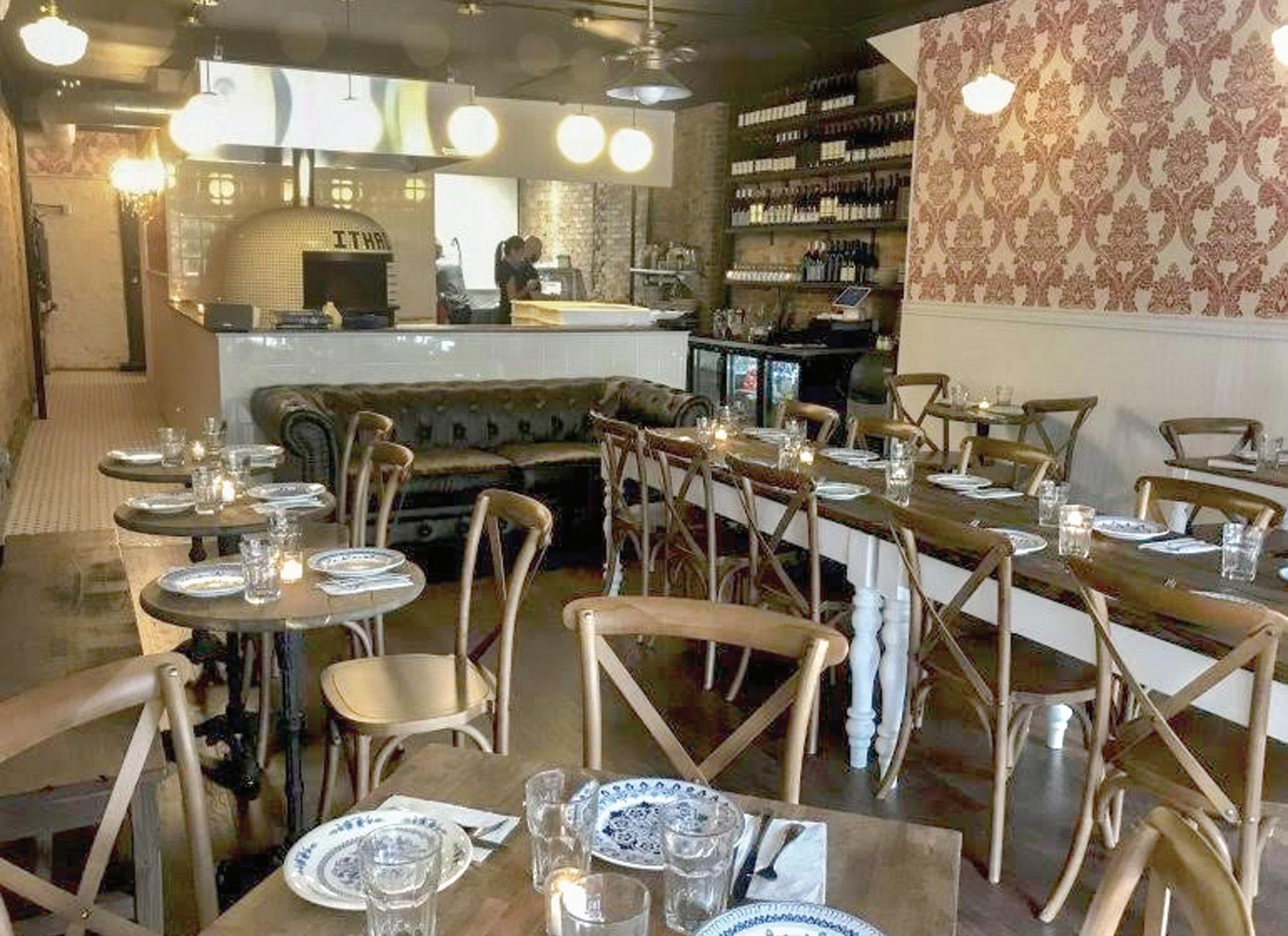
Carriage House Cafe, John Thomas Steakhouse and Ten Forward Cafe. These are just a few of Ithaca’s restaurants forced into early closings by the COVID-19 pandemic. Suddenly, Ithaca business owners had to reevaluate as they faced massive losses in revenue; as it is estimated that Cornell students spend around
$4 million every week in Ithaca, the loss of this steady income took its toll.
Yet as Cornell students begin to interact with the greater Ithaca community once again, how are local restaurateurs reacting to our return? Is it a welcome change to have the students back in town once again, or has our arrival made some Ithaca business owners’ jobs even harder?
To answer this ques -


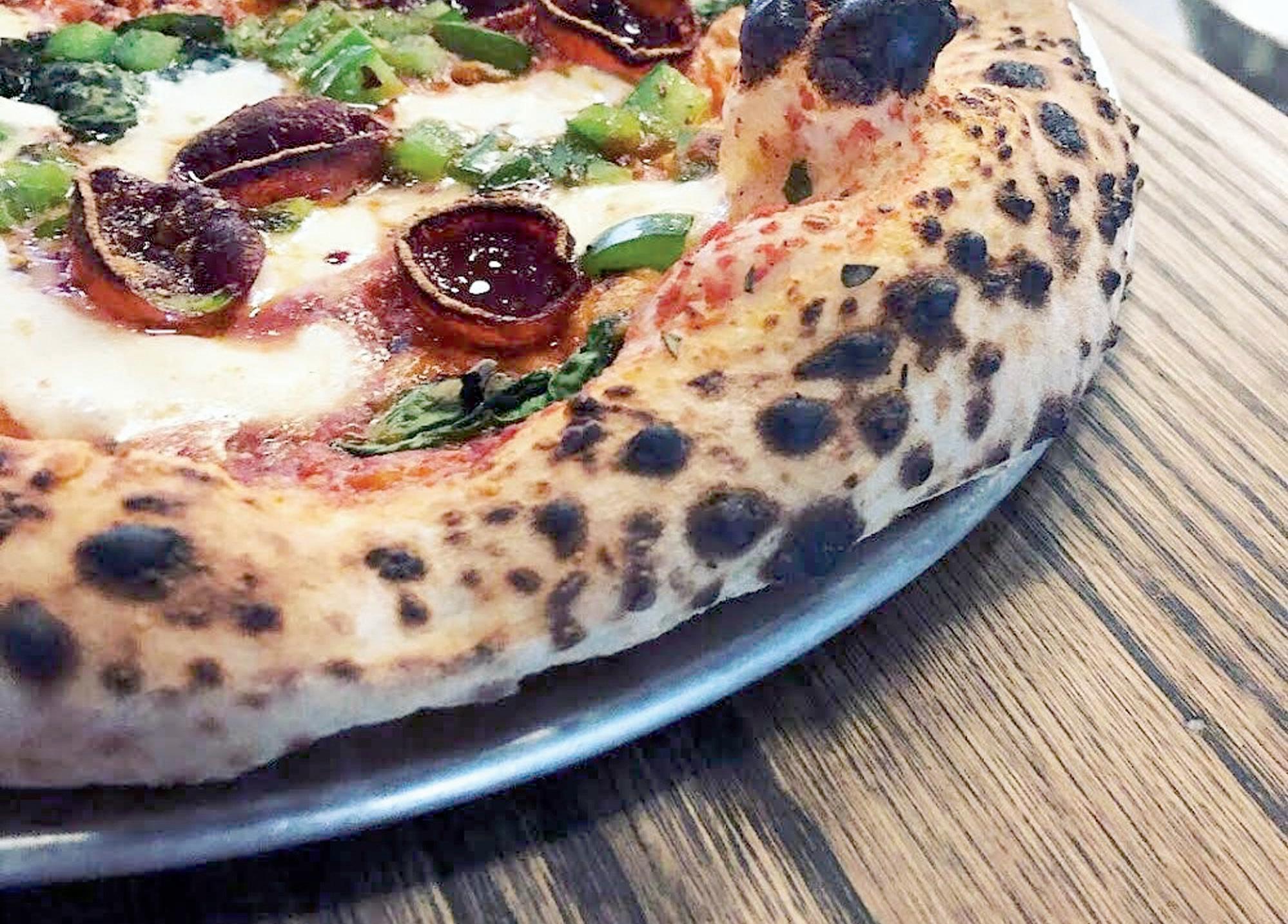
tion, I reached out to George Papachryssanthou, owner of Thompson and Bleecker Neapolitan Pizzeria, Chatty Cathy Cafe and Ithaca Wine and Spirits. As an Ithaca native, Papachryssanthou deeply understands the impact that Cornell students can have on the surrounding area.
Both Ithaca’s geographical isolation and its reliance upon Cornell students for income make it an uncommon case; during an ordinary year, these two factors work in the town’s favor. As the largest city for miles, Cornell students will always rely upon Ithaca’s shops and businesses for goods and services, ensuring a dependable flow of cash for most of the year. Yet once COVID-19 arrived, those exact features that helped keep Ithaca afloat became its biggest weaknesses. Its location, which previously kept students in, now kept outsiders out and prevented new populations from com-
ing in to boost the economy. It is estimated that only around 12,750 people commute into
Ithaca every day. Papachryssanthou remembers the uncertainty from the early summer, noting that Ithaca would “face...really grave consequences,” if a plan was not established to bring the students back. “Our community depends on students being here. I’m thankful that President Pollack acted independent of other Ivies [by bringing students back to campus].” With the combined benefit of Cornell’s testing capacity and Ithaca’s demographics and location, we were “uniquely positioned to succeed.”

Papachryssanthou urges students to remember that we are a part of something much bigger than just ourselves — we contribute to the wellbeing of an entire city. “[Ithaca’s] business community is non-existent without you here...wear masks and avoid large gatherings.” As many of us have been made aware over the course of the pandemic, our actions affect everyone around us. Our decisions dictate how these restaurants are able to operate.
So, please! Keep ordering out and be safe, while simultaneously remaining active Ithaca residents who support our local businesses.
138th Editorial Board
MARYAM ZAFAR ’21
Editor in Chief
JOYBEER DATTA GUPTA ’21
Business Manager
PETER BUONANNO ’21
Associate Editor
MEGHNA MAHARISHI ’22
Assistant Managing Editor
CHRISTINA BULKELEY ’21
Sports Editor
BORIS TSANG ’21 Photography Editor
CAROLINE JOHNSON ’22
News Editor
ALEX HALE ’21
News Editor
ARI DUBOW ’21
EMMA ROSENBAUM ’22
BENJAMIN VELANI ’22 Dining Editor
JOHN MONKOVIC ’22 Multimedia Editor
MIKE FANG ’21
OLIVIA WEINBERG ’22
Assistant News Editor
MADELINE ROSENBERG ’23
Assistant News Editor
LUKE PICHINI ’22
Assistant Sports Editor
HANNAH ROSENBERG ’23
Assistant Photography Editor
BRIAN LU ’23
Assistant
ANNABEL LI ’21 Assistant
LEI ANNE RABEJE ’22
JOHN COLIE ’23
JOHNATHAN STIMPSON ’21 Managing Editor
KRYSTAL YANG ’21 Advertising
JASON HUANG ’21
NIKO NGUYEN ’22
PALLAVI KENKARE ’21
Editor
SEAN O’CONNELL ’21
’22
’22
’23
’21
’22
MEGHANA SRIVASTAVA ’23
’21
’22
MORAN ’21
’22
WANG ’21
’22
’21
Working on Today’s Sun
Ad Layout Dana Chan ’21
Production Deskers Sabrina Xie ’21
Mei Ou ’22
News Deskers Kathryn Stamm ’22 Madeline Rosenberg ’23
Opinion Desker Peter Buonanno ’21
Design Desker Niko Nguyen ’22
Dining Desker Benjamin Velani ’22
Photo Desker Benjamin Parker ’22
Arts Desker Daniel Moran ’21
Sports Desker Luke Pichini ’22
the

an
In its very first entering class, Cornell admitted international students from around the world, namely Russia, England, Bulgaria and Hungary.
This was quite revolutionary. Not only did the students discover Cornell, but they then figured out how to get to Ithaca in 1868. More importantly, however, a budding university made good on its promise to build an institution where any student could receive instruction regardless of their national origin.
More than a century later, as we face an unprecedented pandemic and increasing global political turmoil, Cornell’s resolve is being put to the test. At this crossroads, our community must renew its commitment to the inclusion of international students.
The advent of commercial flights has undoubtedly made traveling more accessible, yet, life as an international student remains difficult. Getting to Ithaca still often involves more than 24 hours of continuous transit.
Once on campus, many feel homesick and have a tougher time getting adjusted.
constantly in peril. The constantly shifting immigration policy landscape seems to tell you that — as an international student — you just don’t belong here.
But at Cornell, this is far from the truth. International students have been an integral part of the student body since our founding. Here, we do not let an immigration distinction determine the educational experience or support a student receives; these contentious political debates are topics for a different Hill. Whether you are on a visa, documented or undocumented, you most unequivocally belong at Cornell.
It’s difficult to focus on enjoying Cornell for what it is when you feel that your ability to exist on campus is constantly in peril.
Throughout their Cornell careers, visa issues frequently preclude international students from professional opportunities available to other students.
Being an international student in the time of coronavirus presents a host of additional challenges. For me, doing my semester remotely from my home in South Korea, a typical school day begins at 11 PM, with a large cup of coffee on my desk. Classes last until past 5 a.m., but I usually end up calling it a day at 3 a.m.
The next morning begins with a 7 a.m. teaching assistants’ meeting or a 9 a.m. club meeting, followed by a binge-watching session of lecture recordings from the night before.But right now, the time zone difference is not our only hurdle. For the second time this year, immigration authorities have proposed new student visas restrictions, sending shockwaves throughout international student communities. The most recent one, published at the end of last week, proposes restricting student visas to four years; students exceeding four years must apply for a waiver. Students in Cornell’s world-class architectural program and our Ph.D. candidates, for example, would face the uncertainty of not knowing whether they could stay in the US in their final year to complete their academic programs. International students know very well the feeling of receiving a 2 a.m. email from “international@cornell.edu” debriefing a sudden “immigration rule change.” It’s difficult to focus on simply enjoying Cornell for what it is when you feel that your ability to exist on campus is
In fact, since our founding on April 27, 1865, Cornell has been a different kind of a university – one that has refused to let the status quo or the political environment determine who has access to education. Women attended classes from Cornell’s opening day and were officially admitted two years later; every other Ivy League university would refuse to accept them until a century later. Our doors were open to African American students since day one, at a time when laws in the South prevented them from receiving higher education.
And this is the Cornell difference, a difference that allowed this university, young and struggling at its founding, to quickly rise to become one of the world’s premier institutions.
Here, an international background and a global perspective is a strength, not an impediment. And today’s challenges are not a reason to back down from our founder’s ideals, which have endured for more than a century. Instead, they are a reminder that we must double down on our unique advantage.
During these difficult times, we must make an active effort to include international students at Cornell — both on campus and abroad. Instructors and course staff should make a conscious effort to help international students learn in their local time zones and offer additional support to overcome the challenges of remote learning. Campus leaders should ensure equal opportunities for students on the other side of the world by providing flexibility when scheduling meetings.
But most importantly, let’s remember Cornell’s foundational commitment to international students. Right now, Cornell’s international community is looking to us to help foster a culture of inclusion on campus and around the world.
In this challenging environment, we are presented with an opportunity to make good on our founding ideals of diversity. And as the Cornellians who came before us did in 1868, we should seize it once again.
HELENHU/SUNFILEGRAPHIC
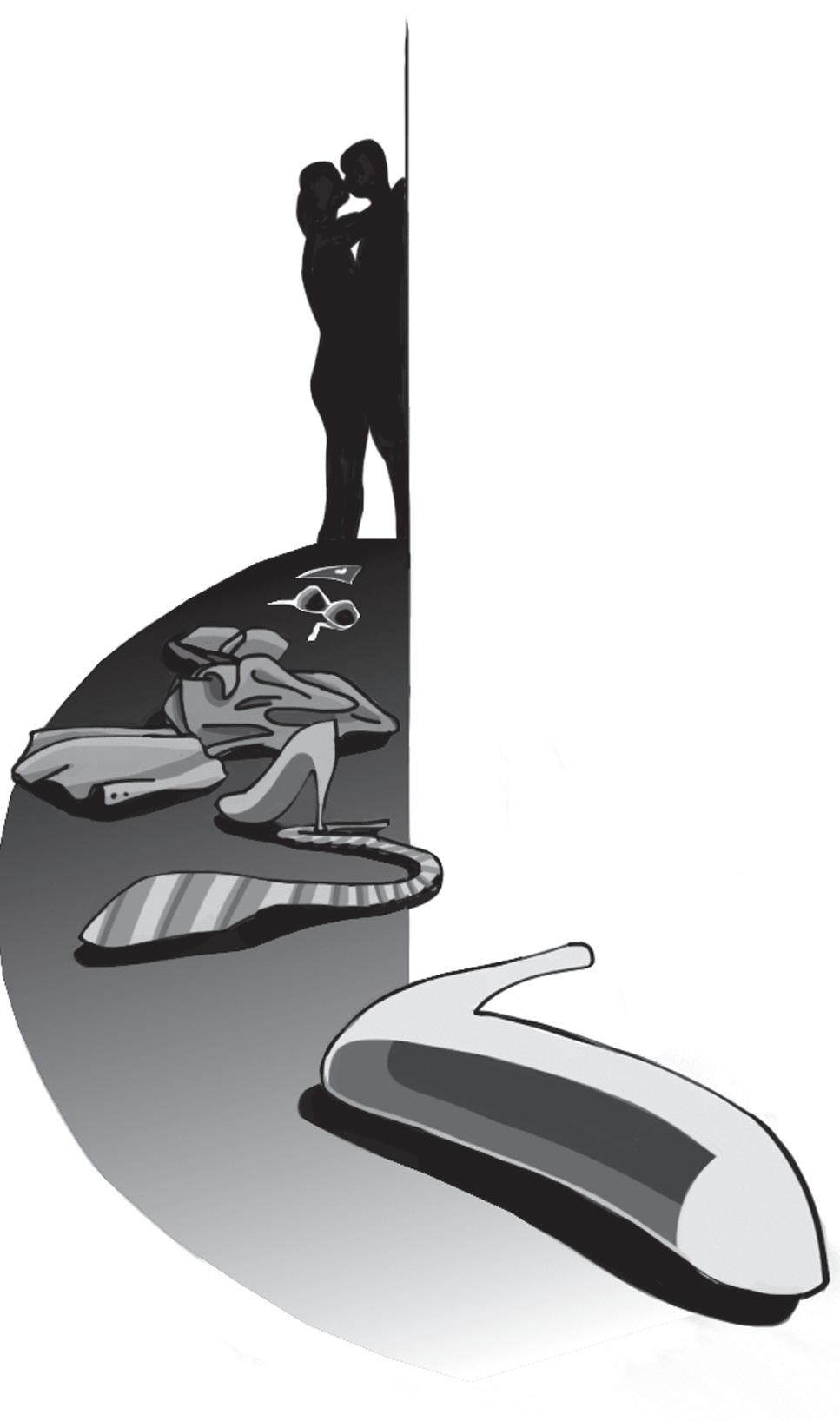
Can you please explain to me what’s going on in the news? Is President Trump going to limit my access to birth control? Do I need to stock up before the election?
— Politically Pressed
Right now may feel like a scene right out of The So much is out of our control! Let me start by clearing things up for you, which I hope will ease your
First of all, Trump himself cannot “limit your access to birth control.” Right now, insurance companies are required to pay for contraceptives under the Affordable Care Act (also known as Obamacare or ACA). The Affordable Care Act also allows you to stay on your parent’s insurance plan until age 26 and get free mammograms, among many other things. Right now the Affordable Care Act is under pressure, which means your access to birth control may be under pressure. But not from Trump. The future of the Affordable Care Act lies in the hands of the Supreme Court. In fact, the Supreme Court is scheduled to hear arguments on the ACA exactly one (!) week after the election. However, the results will likely not be announced until the spring of 2021 — the end of the Supreme Court’s session. Let me say that again: The status of your insurance-covered contraceptives will not change until this spring at the earliest. And no guarantee. T-God! So no, you do not need to “stock-up” on birth control. In fact, I’m not even sure that’s legal.
Now, as you know, with the tragic passing of Cornell’s very own Justice Ruth Bader Ginsberg ’54, Trump will likely replace her seat in the court with con-
Love. It’s a tiny word we utter to describe a bottomless range of situations. It can be thrown around in casual conversation but still has the power to make me squirm and sweat like a whore in church. We use it to describe how we feel about Youtube conspiracy videos, orangutans and corn mazes while also describing the muses we want to spend the rest of our mortal lives with. Christians would always tell me about how the creator of the universe loves me. When I hang up with my mom, I remind her that I love her. I make love to my Outdoor Odyssey guide. I vapidly comment, “Luv you!” on sorority girls’ selfies as a social pleasantry. I scream it from the top of my lungs from car windows. I whisper it to my waffle right before I consume it. Love is intense yet trivial, bountiful yet scarce.
The conflicting attributes of love arise from the existence of only one word for it in English. It’s a delusion of eloquence. I should not use the same word in adoration for my sweet grandma as I do while straddling someone’s face until we both quiver with cum. Our language is strangling one of the most potent human experiences until it gasps for breath. It cannot be contained within one silly four-lettered sound.
Ancient Greek had eight words for love: eros (passionate love), philia (friendship love), agape (universal love), storge (family love), mania (obsessive love), ludus (playful love),
servative Amy Coney Barrett. It’s still up in the air whether or not Barrett could hear arguments on the ACA this November. But things are looking promising for Amy Coney Barrett, and not so promising for the Affordable Care Act. Let’s just say hypothetically the Affordable Care Act is struck down. What will happen? If the ACA contraceptive coverage is changed or eliminated, the requirement for the coverage of contraceptives will fall onto the states. Unfortunately, only 28 states require insurance plans to cover contraceptives. Another issue: only 59 percent of workers are covered by state-regulated plans. The other 61 percent are insured by private plans, and the law will no longer require
The best way to protect your access to birth control is to vote. Those we elect this fall will be defining the ACA or building new legislation to replace it.
private plans to cover contractive costs. It is likely that without the ACA, millions of women will lose birth-control coverage.
To answer your question, your access to birth control will depend on what happens in the Supreme Court. Then, it depends on what state you live in and what your plan looks like.
The grim reality is that next spring, contraceptive coverage is likely to look much different. But it won’t go away completely. Look for insurance plans that include contraceptive coverage. Ask your employer. Don’t fret: There are other options for birth control. Planned Parenthood here in Ithaca can provide birth control options for next to nothing.
The best way to protect your access to birth control is to vote. The representatives we elect this fall will either be involved in defining the ACA or building new legislation to replace it. Let’s make sure our leaders know what we want.
Cheers, Cornelia
pragma (committed love) and philautia (self love). Having an entire lexicon makes the mystery of love a bit more tangible. I can tell my mom that I feel storge for her when I hang up. I can profess my mania to the bespectacled TA I stalk on LinkedIn. I can tell my friends I need a night of philautia in which I envelop myself in the aroma of lavender candles and a hundred fleece blankets.
When an excess of Greek expressions becomes a singular umbrella term, we never know if our feelings are the rain or the umbrella. I want a word for the need to write someone a letter. I want a word for knowing all of someone’s best stories. I want a word for the infallible urge to eat someone’s ass. Instead of generating words to express love’s diverse forms, we can only communicate how we feel on a scale: hating to disliking to neutrality to liking to loving. We explore this scale with every new person we meet, seeing if they could ever adventure up to the final boss of love, both platonic and romantic. Whenever I stand next to strangers on the TCAT, I feel comfort in my neutrality towards them. If they are wearing a Garfield sweater, perhaps they will venture up the scale into the territory of liking. If they compliment my pterodactyl earrings, take me out to the kava bar, can tie cherry stems with their tongue, love the way I smile at nothing and always spill when they eat, maybe it will turn to love. However, there
are no set criteria. There is no adequate definition. Every stupid Disney movie told me love is when you “just feel it,” but I feel it both all the time and none of the time. I don’t want to give it away to everyone I meet on the bus in a funky sweater. It is supposed to be the ultimate declaration of human emotion after all. Understanding love cannot come from a google search or a Merriam-Webster definition. For this rea son, love has paradoxically become the most meaningful and meaningless word in my vocabulary. If someone tells me they love me, I’m left spinning on a carousel wonder ing what the hell does that even mean.
My best friend and I say, “I elska you,” to each other. “Elska” is the word we made up to describe our non-sexual relationship that is deeper than friendship. It is the kind of intimacy you have when you dream the same dreams at night and say you’ll get married even though you’re both attracted to a different gender. Relationships are more nuanced than the duality of platonic and romantic. I love so many people in so many ways that the word itself cannot contain it. English could be a language in which every human con nection had its own
word. There could be entire dictionaries to fit the definitions. Perhaps love is a universal umbrella, but that doesn’t mean we can’t name the planets that float within.


Fill in the empty cells, one number in each, so that each column, row, and region contains the numbers 1-9 exactly once. Each number in the solution therefore occurs only once in each of the three “directions,” hence the “single numbers” implied by the puzzle’s name. (Rules from wikipedia.org/wiki/ Sudoku)




Ifirst picked up a copy Severance by Ling Ma MFA ’15 last year, during my first summer spent living in Manhattan. I was a clueless Californian, who lacked a basic understanding of city geography, didn’t know what SoHo stood for and had never heard of Duane Reade, but as I started to get a feel of the city, the city landmarks referenced in Severance started to crystalize in my mind, and Ling Ma’s imagination captivated me.
group dynamics.
When the pandemic struck New York City earlier this year, I couldn’t help but think about Severance and the many parallels between fiction and reality. Shen Fever originates in a production facility in Shenzhen, China and eventually makes its way to New York City, where any sense of normalcy is turned on its head. New safety protocols are issued, people are encouraged to wear N95 respirator masks, countries implement travel bans and The New York Times begins to tally the number of fevered individuals.
but this also creates a reliance on Chinese technological advancements that directs the virus back to America.
The novel is narrated through the perspective of protagonist Candace Chen, a Chinese American immigrant in her 20s who works at a Manhattan publishing house and oversees the manufacturing of Bibles in China. Severance takes place during a pandemic of Shen Fever, a fictional fungal infection that is described as depriving its hosts of free will. The story straddles the past and the present: A past in which the reader is shown a montage of Candace’s life in reverse chronological order, and a present in which a group of survivors leaving New York rescues Candace, forcing her to adjust to new
The similarities are striking at first, but beyond the surface-level global health crisis narrative, Severance is also an immigrant family story, a corporate satire and a mirror to our own reliance on capitalistic accumulation. Reflecting on Severance now, there is so much more that we can learn from the alternate history it provides. In the novel, Shenzhen mass produces commodities — like Candace’s specialty bibles — for American consumers. In China, the bibles are produced at a higher efficiency,
It is here that Ling Ma perhaps makes one of her most relevant points: Both in our current climate and in the novel, the pandemic is about a global capitalist system that implicates us all. When bigots label the coronavirus as a “Chinese virus” on national television, they are not only encouraging the use of Asian-Americans as a vessel for frustration and hate but also highlighting their own inability accept a basic fact: America has always relied on migrant bodies for labor, even as our country has continued to refuse to accept them as our own. There is immense irony in the adverse effects experienced by the American economy from this “foreign virus,” a tone that is echoed in Severance as well. Similar questions are salient even now especially the question of what happens when the economy and production of consumer goods is valued over human lives.
The capitalism anxiety in the novel increases when Candace choses to stay in New York, fulfilling her work contract that promises a large bonus so long as she stays at work. She remains one of the last survivors in New York City and eventually moves into her office where she stays until the last day of her contract. Ling Ma sug-
RYAN RICHARDSON SENIOR STAFF WRITER
Netflix continues their push for producing Oscar-contender
Netflix Original Films with Antonio Campos’ newest film
The Devil All the Time. Set in Post WWII rural America, we follow the Russell family who must face the evil and perils of religion taken too far. It’s a dark, slow and atmospheric movie that expresses its themes through gruesome imagery and amazing acting.
This is not a movie for the faint of heart, which is surprising when you look at its cast.
The protagonist Arvin Russell, a young man who aims to keep his family safe when they are threatened is played by Tom Holland.
The film also features Robert Pattinson, (Twilight, Tenet, The Batman) as a crooked preacher, and Bill Skarsgård, most famous for portraying It the Clown, as a World War II vet. These compelling choices for a film of such dark themes pay off masterfully on screen.
The Devil All the Time marks the beginning of Tom Holland’s foray into dramatic acting after his role as Spiderman. In the film, his facial expressions shine as he expertly shows the toll of his character’s tough childhood without speaking. Through his accent and his reserved emotions, this is Tom Holland presenting his acting in a way he never really could as Spiderman. This isn’t the classic extroverted, melodramatic
Oscars performance that actors love to use to cinch their first win. Holland defies the norm and shines by holding his emotions in check in a way not many actors could. This, in my opinion, is truly deserving of an Oscar nomination.
The dastardly preacher Preston Teagardin is played by the eccentric Robert Pattinson. Pattinson shocked the world with his quarantined insanity in The Lighthouse last year, and excels once again. Teagardin is an outsider in the story, and Pattinson decides to portray him with a unique, high-pitched southern accent. One aspect of Pattinson’s performances that never fails to astonish are his bursts of emotion. In The Devil All the Time, Teagardin is out of options in a scene, and surrenders completely to his fear, shocking not only the other characters, but the audience as well. Pattinson has limited screen time in this film, but he really does leave a mark as a dramatic actor.
Bill Skarsgård, without his It clown makeup, plays a tortured war vet, diversifying his portfolio. Skarsgård leads the first leg of the film as his character Williard Russell who just got discharged after witnessing a terrible war crime. One great aspect in his performance is how his character is shown to be sure of his choices; Skarsgård represents the character’s faith full-heartedly. He doesn’t take the movie by storm in the same way that Tom Holland and Robert Pattinson do, but he shows why you should
gests that Candace’s commitment to work extends beyond an immigrant work ethic — It is also a symptom of an overwhelming reliance on capitalistic accumulation.
Even after Candace flees New York City and the apocalyptic world terminates waged labor, Candace and the rest of the survivors’ focus is on the material. In a move of comical irony, the leader of the survivors promises refuge in a “Facility” which ends up being a mall in a Chicago suburb. Each of the survivors picks abandoned stores to use as personal units until fear and group dynamics take over and Candace, fearing for her and her unborn child’s life, escapes from captivity of the survivors and drives to Chicago.
The ending of the novel serves as a reminder that when the world comes to an end, maybe it’s a world that was set up for only a few to begin with. Maybe the only way forward is to sever ourselves from past conceptions of normalcy in search of something new, something better. Maybe we all need to “get out and start walking.”
Shriya Perati is a senior in the College of Arts and Sciences. She can be reached at sperati@cornellsun. com. Thought Experiments runs alternate Tuesdays this semester.
the Faint

see him as a Skarsgård, and not It.
This film, adapted by the novel of the same name, is ambitious with its screenplay. There are five distinct storylines, and the film tries its best to connect them through plot threads and the narrator, voiced by the author of the novel. The problem, however, is that the plot threads look more like plot contrivances, and the film relies heavily on its narrator to lecture the audience on character choices. If the screenplay held more faith in its great cast, the film would’ve been much more engaging. For example, after a climatic scene featuring its two stars Holland and Pattinson, the
film tries to connect all the other various characters in a way that is disappointingly predictable.
Although the film takes place in three primary towns, it fails to establish them as their own distinct settings. All three towns look like the same rural town and feature an utter lack of interesting set design to make them distinct. In many scenes, we transition from town to town quickly but it’s never clear which town we’re in. Another disappointing aspect of The Devil All the Time is that the director wishes to showcase its violence in the most gruesome way possible. The violence, however, doesn’t add anything to the film, and a more talented director would have recognized the scenes
where it’s best to leave more to the imagination.
Overall The Devil All the Time is an interesting movie that has a lot to say about post-WWII faith in rural communities, but fails to let its themes and characters speak for itself. The three stars do their best to bring this movie into critical success, but the director and screenplay are too heavy and bring the film down in many scenes. This is a solid 3.5 out 5 stars, but I still recommend this film for anyone that would like to see the acting chops of its three leads — just be prepared for some gratuitous violence.
Ryan Richardson is a senior in the College of Engineering. He can be reached at rrichardson@cornellsun.com.
By LUKE PICHINI Sun Assistant Sports Editor
Cornell student-athletes and coaching staff are now permitted to engage in up to one hour of weight training and conditioning per day, a move that aligns with Phase I of the Ivy League’s Fall 2020 Phased Athletics Activity Plan.
In an email to the Cornell community, Vice President for Student and Campus Life Ryan Lombardi announced the update for athletic teams while also loosening restrictions for club and intramural sports as well as fitness centers and student organizations.
Registered student organizations are now allowed to host small gatherings of 10 or fewer people. Events must be registered in CampusGroups, and attendance must be taken as students “check-in” and “check-out” via CampusGroups.
Organized activities such as practices, scrimmages and competition are still prohibited. For recreational activity, students can use Jessup Field, the sand volleyball courts, Alumni Fields and the Kane Sports Complex for one-on-one or two-on-two noncontact activity.
While the other updates went into effect Sept. 29, Noyes and Teagle Hall Fitness Centers will open to students on a limited basis beginning Oct. 5. The Lindseth Climbing Center will open as well.
“We still have a long road ahead before we can declare success, but ... I believe in us.”
Ryan Lombardi
Club sports can schedule times on Jessup Field for oneon-one or two-on-two noncontact recreational activity.
The announcement comes in the midst of the University’s successful mitigation of COVID19 on campus. According to Cornell’s COVID-19 Dashboard, only six new positive cases have been detected in the last week, and active cases in Tompkins County have dropped to 16 total cases, as of the most recent update.
“Over the last several weeks, we have demonstrated that, with vigilance and determination, it is possible for a university to have an on-campus student experience in the face of COVID-

19,” Lombardi wrote. “We have stepped up to the difficult challenge, modifying our daily lives and remaining focused on the impacts of our collective actions. We still have a long road ahead before we can declare success, but as I’ve said before: I believe in you, and I believe in us.”
Prior to this update, Cornell’s athletic teams were still in Phase 0, in which no in-person physical activities were allowed to take place. Athletes were permitted
to meet with coaches in a virtual manner once classes began.
Effective Sept. 29, Cornell athletics has effectively moved into Phase I of the Ivy League’s plan. Student-athletes may engage in a maximum of one hour of weight training and conditioning per day. During this conditioning, participants and coaches must adhere to social distancing of six or more feet while also wearing a face covering. In addition, groups cannot exceed
more than 10 students.
With these changes, Lombardi cautioned that access to outdoor athletic facilities may be limited. While varsity competition is still prohibited for the rest of the fall semester, a move to Phase II may be possible, which would increase the conditioning cap to two hours per day while also allowing in-person meetings.
Luke Pichini can be reached at lpichini@cornellsun.com.