The Corne¬ Daily Sun

By KATHRYN STAMM Sun Staff Writer
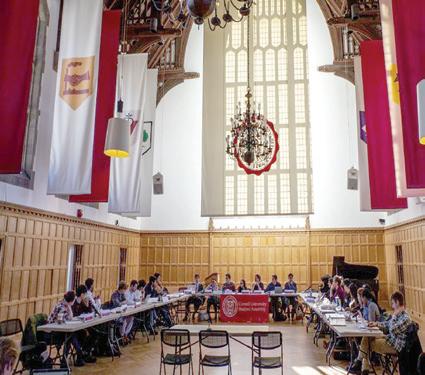
A $6 million anonymous alumni donation will fund an undergraduate program targeting humanities research, Dean Ray Jayawardhana told The Sun on Monday morning.
The program — a “curated pathway through the humanities,” Jayawardhana said — will aim to highlight the humanities for students across the University. Dubbed the Humanities Scholars Program, the new initiative will open to only 30 sophomores who apply during their spring semester.
The program will provide a new space dedicated to humanities and help alleviate the conflict common for students who struggle managing their interests in the humanities and the sciences.
been tweaking details and testing out small pieces.
The program is the cornerstone of undergraduate engagement with Cornell’s Society for the Humanities.
“[The Society for the Humanities] is highly recognized as a humanities research center internationally,” Jayawardhana said. “But its activities haven’t really engaged undergraduates very much — until now.”
To help the students navigate humanities research, the program will support selected students’ research with a seminar course on methodologies, workshops on topics and mentorship from faculty and postdoctoral associates.
“It is a truly exciting academic experience for the students.”
Ray Jawardhana
“It is a truly exciting academic experience for the students, and it’s a chance for us to really highlight and showcase the excellence in the humanities we do have at this university,” Jayawardhana said.
When Jayawardhana started at Cornell, he met with faculty members who had initially brainstormed the idea, The Sun previously reported. With the Dean’s encouragement, Prof. Paul Fleming, comparative literature and history, Prof. Durba Ghosh, history, and Prof. Verity Platt, classics and history of art, developed the program over the last ten months.
When announced to the College’s chairs and directors at a retreat in January, the program received “enthusiastic support across the board,” Jayawardhana said. Since then, they’ve
The program will culminate in a senior-level capstone project of independent research, to be showcased at a humanities scholars conference in the spring.
This May, the Society held a small inaugural conference for humanities students who completed a senior thesis to share their research with each other.
Outside the 30 students, the program will also expand offerings to all undergraduate students to give more perspectives of the humanities. Last fall, there was a trial anthropology course called “Humanity.”
“A much larger number than the 30 students who will ultimately be in the program will benefit from the gateway courses,” Jayawardhana said. “We’re imagining 200 students per course, that first and second years can take.”
The donation — which was finalized in the last
Take initiative in clearing Collegetown’s debris
By MADELINE ROSENBERG Sun Staff Writer
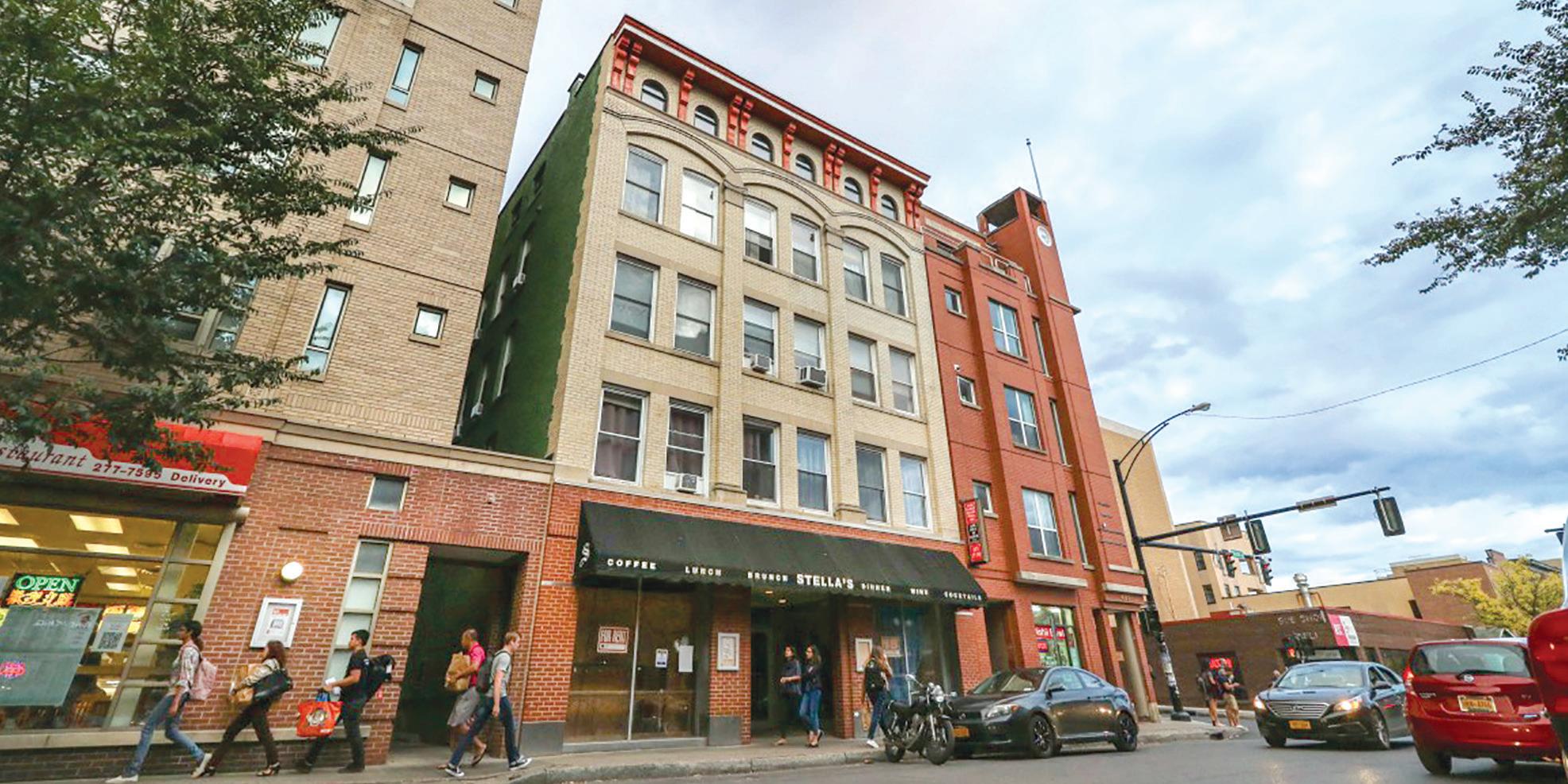
Dented cans, plastic cups and empty bottles litter Collegetown lawns and streets each weekend, yet many of these remnants disappear before Monday classes resume.
But the aftermath of Cornell’s late-night parties does not magical-
ly vanish. Beyond regularly scheduled trash collection, a number of students and campus service groups have taken up the quiet task of removing the debris scattered around Collegetown.
Jacob Llodra ’21 began collecting recyclables with one of his housemates during this year’s Orientation Week. He removes
bottles and cans from streets and sidewalks each week and redeems them, earning five cents for each one he processes at Wegmans.
“We were hanging around the house before classes started ramping up and we were looking for something to do,” he said. “Rather
By MAIA LEE Sun Contributor
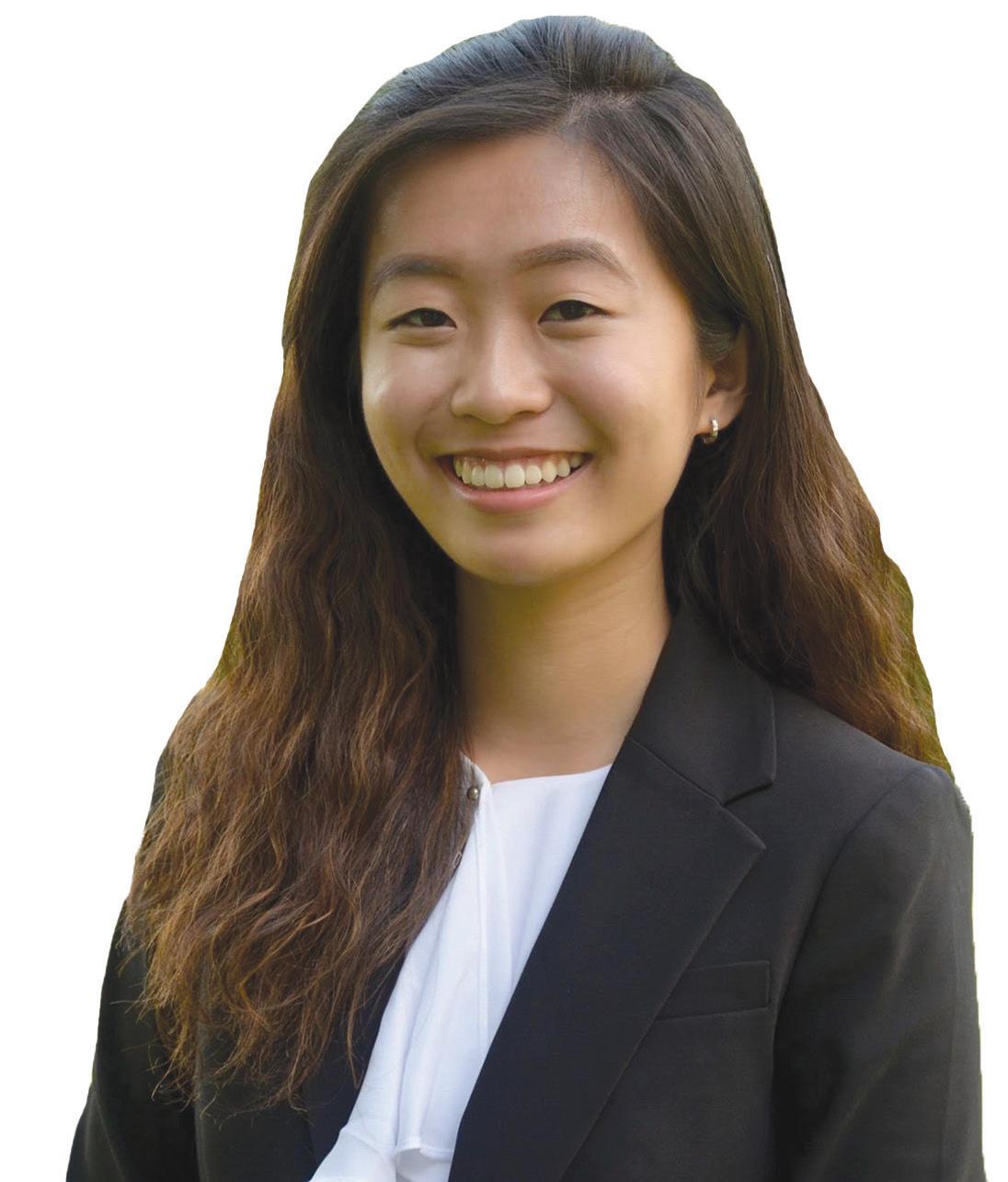
With over 1,500 members, the Society of Women in Business is the largest undergraduate business organization on campus. Founded in 2000, SWIB is a student business organization founded at Cornell that accepts all female undergraduate to their general
view process.
“A lot of the other pre-professional organizations on campus are very niche and targeted in their areas of business. But SWIB is unique in that it is very general and provides exposure to a broad range of business industries,” said Shivali Halabe ’22, who, along with Vivian Li ’21, is

presidents of internal development.
Li and Halabe lead one of SWIB’s main projects, the Emerging Leaders Program, a semester-long curriculum. After an application and interview process, over 50 ELP members are placed into small groups consisting of one associate, a more experienced

and a few other analysts. Each group chooses a specific business industry, such as investment banking or entrepreneurship, and the teammates collaborate throughout the semester to research their individual topics. The end of the semes-

Work Talks: Work Authorization for International Students
10 - 11 a.m., 276 Caldwell Hall
Border Communities, Racial Inequalities and Human Rights
11:40 a.m. - 1:10 p.m., G08 Uris Hall
Toni Morrison, M.A. ’55: A Life in Letters 4:30 - 5:30 p.m., Africana Studies and Research Center
Michael Murphy: Justice is Beauty 5:15 p.m., Milstein Auditorium
Leadership for Everyday Life
5 - 6:30 p.m., Lecture Hall 5 College of Veterinary Medicine
CISER Programming Workshop SPSS: Introduction to SPSS
6 - 8:30 p.m., 103 Mann Library
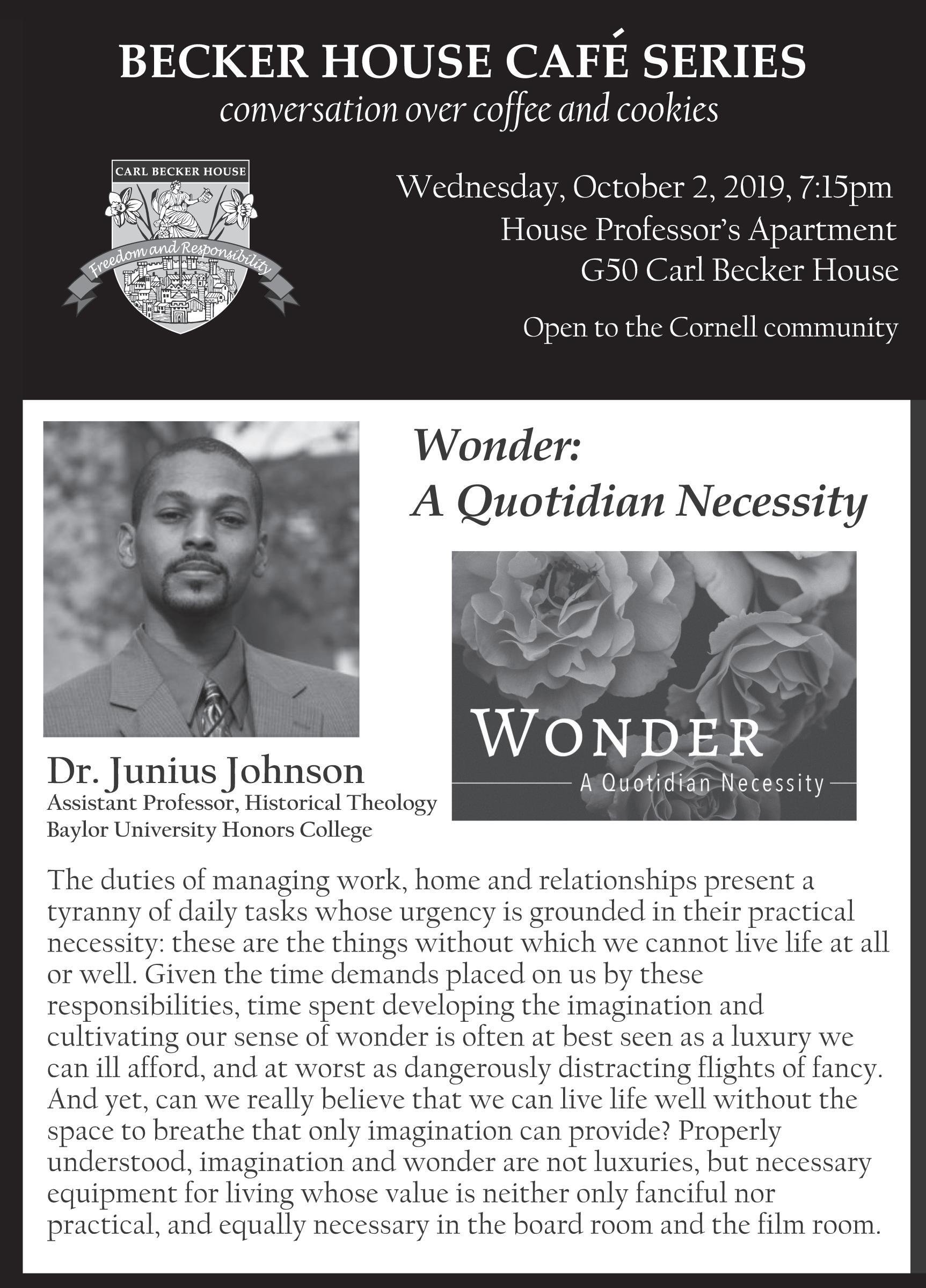
Meditation 9 p.m., TV Room Carl Becker House
Tomorrow
Fashion Anthropology Lecture 12:20 - 1:10 p.m., T01 Human Ecology Building
Distracted Driving Speaker
2 - 3 p.m., 226 Weill Hall
Biophysics Colloquium With Jawdat Al-Bassam
4 - 5 p.m., 700 Clark Hall
Chats in the Stacks: Steven Strogatz on Infinite Powers: How Calculus Reveals the Secrets of the Universe
4 p.m., 160 Mann Library
Keep Rolling with Library Research
4 - 5 p.m., 103 Mann Library
Work Party at Dilmun Hill Student Farm
4 - 7 p.m., Dilmun Hill Student Farm
Turkish Conversation Hour 4:30 - 5:30 p.m., G25 Stimson Hall
Zumba Fitness
5 - 6 p.m., 519 Willard Straight Hall
“Has Trump Changed Everything?”
7 - 9 p.m., Rhodes-Rawlings Auditorium
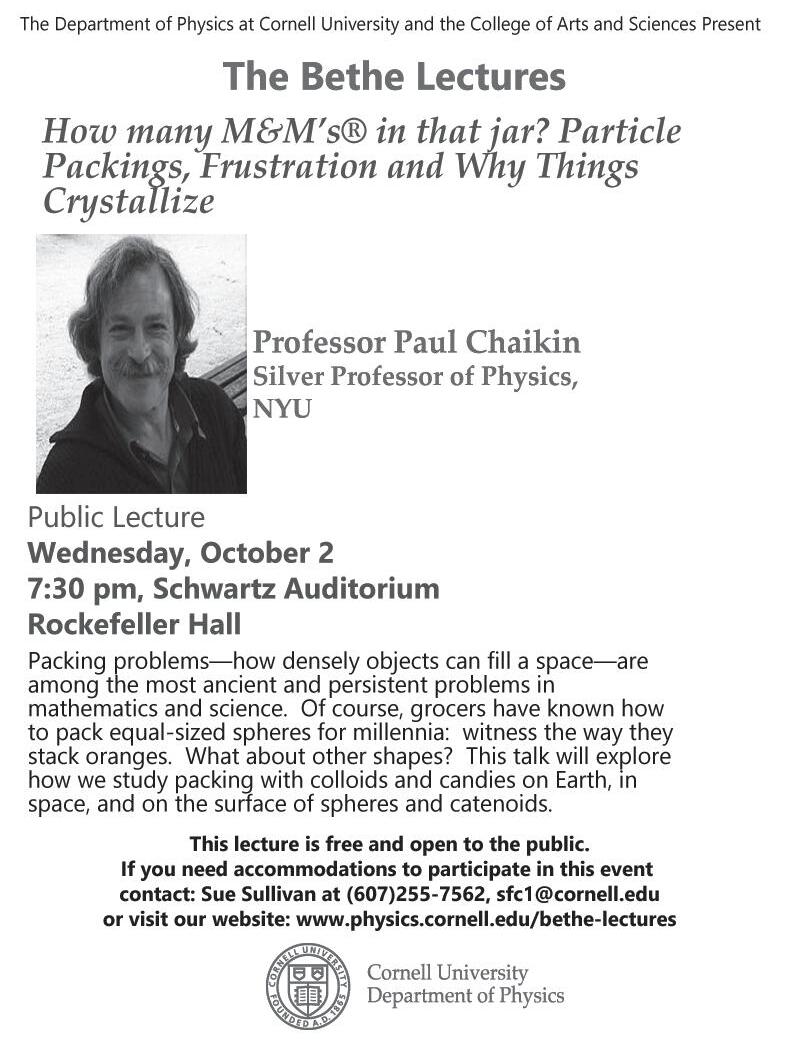
Bethe Lecture Series: Prof. Paul Chaikin 7:30 - 8:45 p.m., Schwartz Auditorium

By ARI DUBOW Sun Contributor
Armed with signs, chants and plenty of free coffee, employees of Gimme! Coffee and community members gathered last Friday outside the Cayuga Street store of the famous coffee shop chain in an “informational picket” to protest what they contend to be the wrongful demotion of an employee.
The September 29 demonstration was spurred by the May 2019 demotion of barista Rebecca Lespier, who workers believe was demoted as a result of anti-union discrimination without just cause, according to the union’s Facebook page.
A “just cause” standard, negotiated with the chain’s ownership in the Gimme! Baristas’ Union 2018 union contract, requires that disciplinary action against employees is enacted with clear reason and that the employees are given fair warning, according to Samantha Mason, a Gimme! barista of five years who helped organize the original union contract.
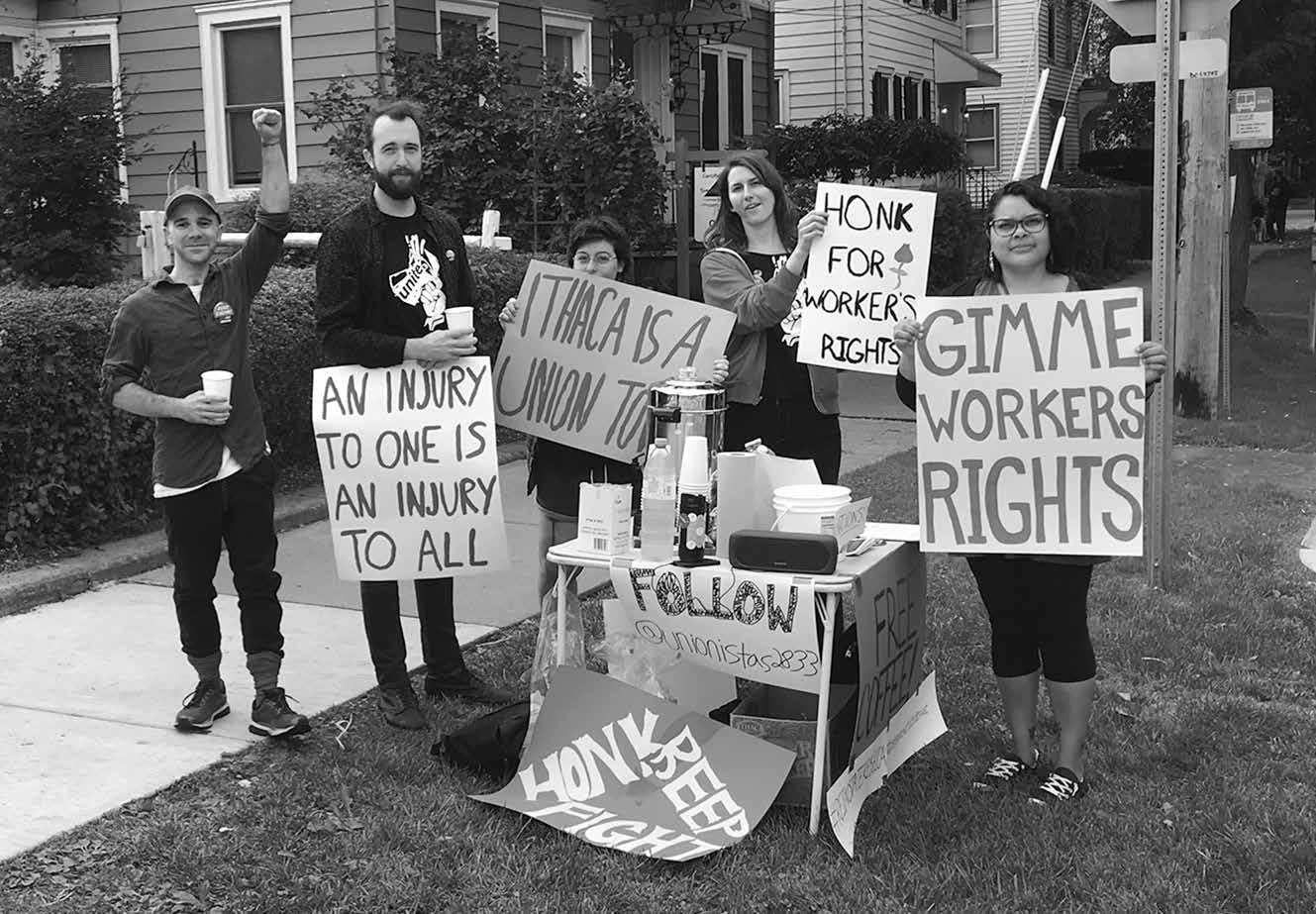
Gimme! justice | Members of the Gimme! Baristas’ Union held an “informational picket” last Friday to raise support for a coworker they contend was demoted by management in violation of their contract’s “just cause” clause.
“Gimme! radicalized me,” Mason said. “I think this is a common experience.”
The union covers baristas working at the chain’s three Ithaca locations, as well as their location in Trumansburg, New York, according to the Tompkins County
“This is not the first time Gimme! has unfairly disciplined, fired, or retaliated workers.”
Samantha Mason
Workers’ center website.
According to Mason, the union is demanding three remedies for Lespier’s demotion: reinstatement to her former position of lead barista, $500 which they say Lespier is owed in backpay, and a new
policy that prohibits the company from using employees’ social media for disciplinary ends.
The group chanted, “Reinstate Rebecca!” and “Just cause, not just because!” Passing cars honked in support.
“Things need to be written down if a disciplinary action is going to take place, they need a first warning, and a second warning,” said Genevieve Rand, who does not work at the store but is an active organizer in the Ithaca area. “That’s how it’s supposed to go, and how it has gone for many. But for Rebecca, that was not the case.”
While community members stood on the corner of Cayuga and Cascadilla, directly outside the coffee shop, employees were stationed across the street, in order to avoid breaking any rules the company might have against picketing on company property, according to Rand.
“We here are the Gimme! picket. That over there is the Gimme! picnic,” Rand said.
The regional manager, who sat at a table outside the coffee shop, declined to comment on the protest to The Sun.
“It’s a different thing to come into work and know that if something happens, we can do something like this to protect one another,” said Ben Roach, a barista at the store. “The fact that we’re out here doing this is a privilege not everyone has.”
“Before the contract, we couldn’t challenge unfair disciplines and firings,” Mason said. “We’re trying to build worker power, and give them the confidence to go take action themselves. You can’t always rely on the legal system.”
But for the baristas, the union contract, while helpful, does not always mean feeling secure at work. “There’s no punishment for breaking the contract,” said Mason.
A breach in the contract leads to a griev-
ance and arbitrations procedure, in which the facts of the case are given to a judge to make the final decision. According to Mason, the ownership has delayed arbitration for Lespier’s demotion three times. The current date for the case is now scheduled for October 29, 2019.
“This is not the first time Gimme! has unfairly disciplined, fired, or retaliated against prounion workers,” Mason said. She added that “Leftist Espresso,” the name of the company’s espresso brand, is not reflective of the ownership’s values.
Rand said the company’s branding as a small local coffee business is misleading: “Customers don’t know that they’re a huge ass corporation. And they act like one. The only time they care is when we make noise like this.”
Rand said that customers can play an active role in union issues, and many have. Several customers have written personal recommendations for Lespier’s reinstatement, according to Rand.
“Customers don’t have to stop enjoying the service that Gimme! work-
“Customers don’t know that they’re a huge ass corporation. And they act like one. The only time they care is when we make noise.”
Genevieve Rand
ers offer,” Rand said. “Relationships with customers is a lot of what people enjoy about working at Gimme!. People need to show that they care about employees, asking about their lives and treating them as people. This honestly does more than something like a boycott.”
Ari Dubow can be reached at acd232@cornellsun.com.
Free laundry, ‘Big Red Dividend’ among campaign proposals discussed by event’s 15 speakers
By MEGHNA MAHARISHI Sun Staff Writer
Fifteen candidates spoke on issues ranging from mental health to laundry in the Memorial Room of Willard Straight at a candidates’ forum Thursday evening, hoping to successfully make their case to fellow students as Student Assembly elections near.
Currently, the S.A. has five vacant spots — four for freshman representative and one for College of Arts and Sciences representative. There are currently 13 candidates running for freshman representative and two for College of Arts and Sciences representative.
“I’d
sentative and Aram Cass ’23 is the AAP representative.
The forum kicked off with candidates vying for one of the four freshmen representative seats.
The 13 candidates were split into groups of three to discuss their visions for the Class of 2023.
A few candidates vowed to make Cornell more affordable for
University of Pennsylvania offer free laundry services in certain residential halls. Cornell currently charges $1.75 for washers and $1.30 for dryers per cycle.
Echoing a similar theme of affordability, Salima Ali ’23 proposed creating a laundry stipend, and shared an experience of listening to girls in the locker room complain about how they could not afford swimsuits for the swim test.
like to alleviate any financial burdens because I know lots of kids are struggling with their academics.”
Salima Ali ’23
students — starting with alleviating laundry costs.
Previously open spots — transfer, LGBTQ liasion at-large and Art, Architecture, and Planning representative — were recently filled as each of the candidates for those positions ran unopposed.
Noah Watson ’22 will serve as transfer representative, Tomás Reuning ’21 is the LGBTQ repre-
“The most major of needs is laundry,” said Ansel Asch ’23. “We have to do it no matter what, and with what we’re paying already, it’s not right to make it [an expense] again. Three Ivy League universities already have free laundry. There’s no reason for us not to join.”
Columbia, Princeton and the
“I’d like to alleviate any financial burdens because I know lots of kids are struggling with their academics … so I’d like to start with a laundry stipend,” Ali said. “I want to take my daily interactions of students struggling and use Student Assembly resources to help them out.”
Other candidates touched on the importance of making Cornell’s mental health services more accessible to students on campus — beyond the reforms announced earlier this month by the University, which promised to increase staffing levels and expand
free drop-in counseling sessions.
Selam Woldai ’23 argued that there needed to be additional mental health groups for marginalized students, while Morgan Baker ’23 called for mental health programs specifically for freshmen living on North Campus.
“The existing mental health services on campus are great, but we should expand on them,” Baker said. “For freshmen, I think that proximity is important, so maybe we can have more services in the Tatkon Center, so you won’t have to walk as far because some people won’t take that hike.”
In a particularly novel plank, Samuel Kim ’23 proposed to institute a “Big Red Dividend,” if elected. The dividend is based on the concept of universal basic income — except in this case, Cornell students would be given $1000 per semester to spend on meal swipes, BRBs, laundry, among other things.
“I’m an international student … one thing I do know is that Cornell does not have enough financial aid for international students and this is very problematic,” Yuan said. “Cornell is such a wonderful place that offers such wonderful studies and a lot of students can’t get here because they can’t afford the high tuition.”
Voting for the SA elections opens on Oct. 2 at 12 p.m. and closes on Oct. 4 at 2 p.m..
Candidates for freshman representative: Salima Ali ’23, Ansel Asch ’23, Morgan Baker ’23, Cristian Carranza ’23, Pranjal Jain ’23, Samuel Kim ’23, Angelo LaRocca ’23, Liam Ordonez ’23, Rory Sheppard ’23, Sarah Sun ’23, Selam Woldai ’23, Selene Xu ’23, Anson Yip ‘23
Candidates for College of Arts and Sciences representative: Jack Waxman ’22, Youhan Yuan ’21
Youhan Yuan ’21, candidate for College of Arts and Sciences representative, discussed improving the Cornell experience for international students by increasing financial aid resources.
Meghna Maharishi can be reached at mmaharishi@cornellsun.com
than sit on the couch, we were like, why don’t we wander the streets of Collegetown and make a quick buck or two?”
Llodra said the bottles he and his housemate have collected since late August amount to nearly $50, which they use to help pay for the house’s utilities, pointing out that he never intended to “get rich off of it.”
While he views small-scale trash removal as neither vital to the functioning of his house nor the maintenance of Collegetown, the weekend clean-ups have become a source of lighthearted fun. What’s more, Llodra said he sees no harm in picking up the litter that is otherwise not a priority for most students.
“People are throwing money away,” Llodra said. “Every can or bottle is taxed 5 cents, and those people are paying that 5 cents and just not getting it back because they’re not redeeming them.”
Beyond environmentally-minded residents hunting trash in search of spare cash, co-ed community service fraternity Alpha Phi Omega sponsors a weekly hour-long Collegetown Cleanup event. Each Sunday, a group ranging from two to 12 APO members descends on Collegetown with garbage bags and gloves, removing litter on and around sidewalks.
“[The litter] is quite ignorable if you’re not paying attention,” according to Winny Sun ’20, APO’s vice president of communications and a staff writer for The Sun. “But if you’re engaging in an event like this, there is actually garbage to be collected.”
Cleanup participants not only collect bottles and cans, but also general trash that does not make it to the garbage, according to Edison Lei ’20, co-chair of the cleanup project. Because recyclables and trash often end up in the same garbage bags during the service event, participants dispose of all of their collected litter in dumpsters. Although APO tried to implement a recycling function for this project, Lei said the recycling program has been hard to enforce.
Amanda Newman ’21, a resident on Eddy Street, said she has observed fraternity members — particularly newer recruits — pick up garbage from lawns after they have ended.
Still, Lei said students could be more conscious of their waste and the accumulation of trash in Collegetown.
“If people voluntarily [picked up trash], that would be a miracle,” he said. “A lot of people say they help local organizations, but they don’t think about the trash here. This is already really local — you’re living next to trash.”

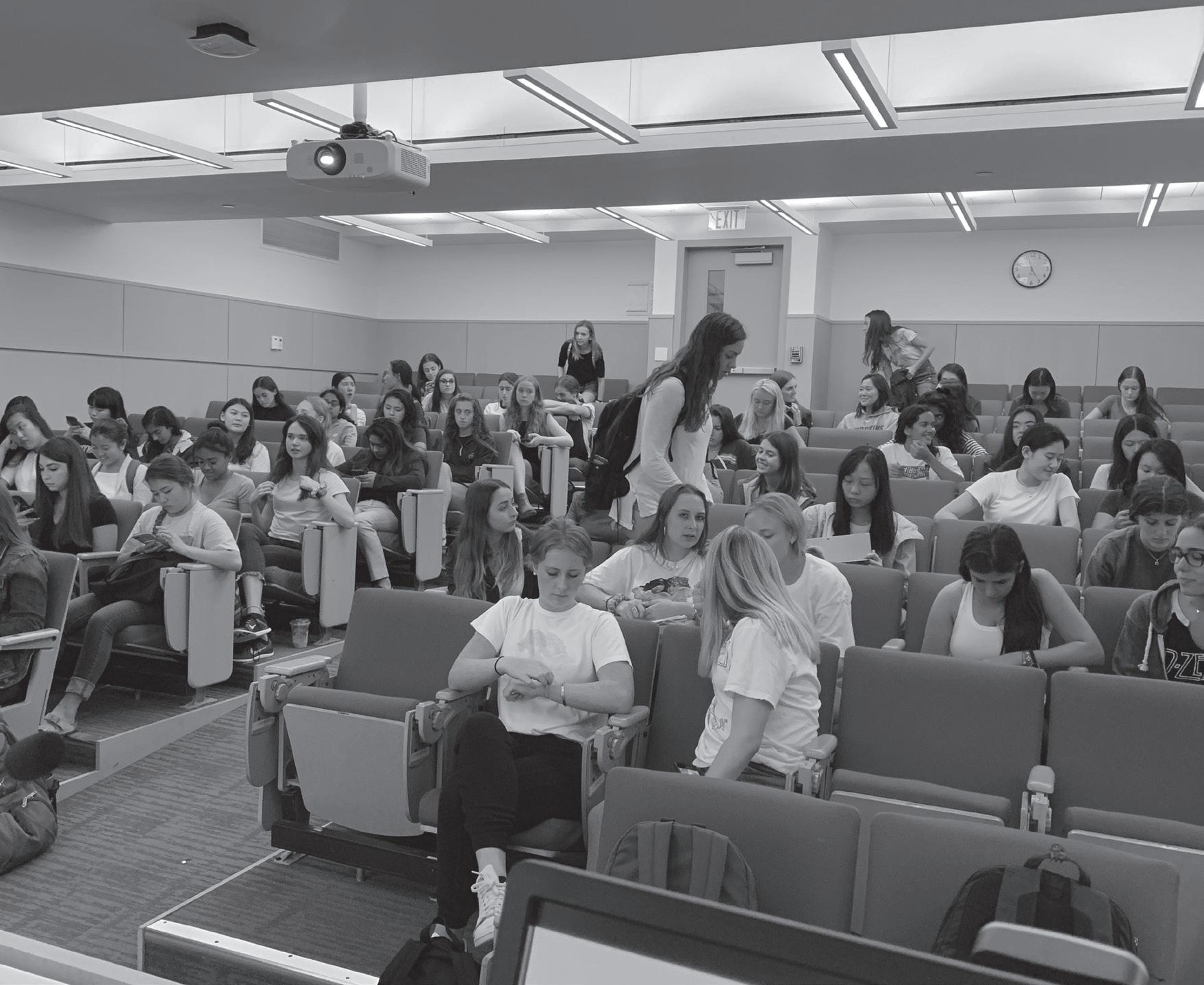
ter culminates in a final presentation by each group and feedback from the executive board.
A key event in SWIB’s Emerging Leaders Program is the semesterly trip to New York City, where members have a chance to visit companies such as Goldman Sachs and Ernst-Young to learn more about their workplace culture and network with current employees. Alumni from ELP have interned and worked at firms including Goldman Sachs, JPMorgan, Bloomberg, Mastercard, NASA and EY.
“The Emerging Leaders Program is really putting what you learn in classes and what you learned through these workshops in practice
feature SWIB upperclassmen and discussions of their personal internship experiences working for large, prominent companies, while the Change-
“The Emerging Leaders Program is really putting what you learn in classes and what you learned through these workshops in practice.”
Vivian Li ’21
because a lot of times just learning it is not as helpful,” said Li. Besides ELP, SWIB hosts internship panels and a program called Change-Maker Chats. The internship panels
Maker Chats invite women from the Ithaca community who have founded or are top executives of a business to share their experiences as a woman in the business industry.
In addition, SWIB also offers several workshops to its members covering relevant business skills such as Powerpoint, Excel, networking, and resume building. With these main goals of inclusivity, diversity, and female empowerment, SWIB endeavors “to surround every single girl with a very supportive community with other women ... and use that to build their own confidence and skill sets and take that to the workplace,” Halabe said.
two weeks, according to Jayawardhana — will help fund the appointment of a faculty director of the program, support recruitment of two postdoctoral mentors and expand the programming for the students, including the spring conference.
It will also provide research grants for all 30 students, including support for unpaid or low-paying internships related to their fields of study.
“This program will bring humanistic inquiry to all fields at Cornell and create a signature Cornell
“This program will bring humanistic inquiry to all fields at Cornell and create a signature ... experience. ”
experience,” said Fleming, the Taylor Family Director of the Society for the Humanities, in a University press release. “When it comes to the big questions facing the world, it’s important that the humanities have a seat at the table.” The program will be open to students from every one of Cornell’s undergraduate colleges, provided that they are pursuing either a double major or minor in the humanities within the College of Arts and Sciences.
Program applications will open to the current class of 2022 in the spring.
By HUNTER SEITZ Sun Assistant News Editor
“The essence of the criminal justice reform model in the popular press has focused on the lowest of the low hanging fruit — the nonviolent drug offender in prison for possession of controlled substances,” Prof. Joseph Margulies, government, law, said in a lecture Thursday afternoon.
But, according to Margulies, this narrative often embraced by the media is wrong.
Margulies is a self-described “student of the American criminal justice system,” according to his bio on the Cornell Law School website. He has defended numerous people “caught up in the excesses of the so-called war on terror,” such as Abu Zubaydah — a Saudian Arabian national held at CIA black sites and interrogated in 2002 and 2003, the public discovery of which led to the infamous Bush Administration “torture memos.”
He disputed the popularly-held notion that the United States incarcerates large numbers of low-level non-violent offenders for minor possession charges and sentences
the age of 50 years old has grown by 4,400 percent.
The three major arguments currently standing in the way of meaningful prison reform, Margulies said, is the public’s perception that the current system works to reduce violent crime, that it is the only system that works and that the people incarcerated for these crimes cannot be saved.
But Margulies presented evidence that suggests higher levels of incarceration have done little to reduce the violent crime rate. According to him, only about four to ten percent of the decline of violent crime rates are attributable to incarceration.
Additionally, the amount of people actually involved in criminal activity is a small fraction of the total population of the country, and very localized, Margulies said.
“Crime is hyper-concentrated, among a very small number of people in a very tiny number of locations … usually around street corners. There are high densities of crimes on these corners, but the street next to it may be utterly crime-free for years. The people who are engaged in this are involved in a very small number of overlapping social networks,” he said.
“The search for low-level non-violent drug offenders is like the hunt for a snark ... They may exist but they are vanishingly rare.”
Prof. Joseph Margulies
them to disproportionate sentences — calling that perception the “holy grail” of incarceration.
“We don’t send those people to prison … the search for the low-level non-violent drug offender is like the hunt for a snark ...They may exist but they are vanishingly rare,” he said.
According to some studies, Margulies argued, only one percent of the US prison population is incarcerated for low-level drug offenses. Most people incarcerated for drug crimes were convicted of trafficking and distribution. Instead, the vast majority of incarcerated persons, according to Margulies, are in prison for “violent offenses.”
In this way, the central issue facing the criminal justice system is not the imprisonment otherwise harmless drug offenders — but the mentality that all violent offenders are dangers to others and need to be kept separate from the rest of society, Margulies said.
“The logic has been we need to send violent offenders away for as long as we can, as thoroughly as we can. We need to separate them from society because of the risk they pose to communities, to all of us,” he said. “This is the principle upon which the modern criminal justice system is built — that the world can be safely separated into ‘us’ and ‘them’.”
As a result, the U.S. has the largest prison system in the world: 40 percent of people in the world incarcerated for life are in the United States, and since the early 90s, the number of prisoners above
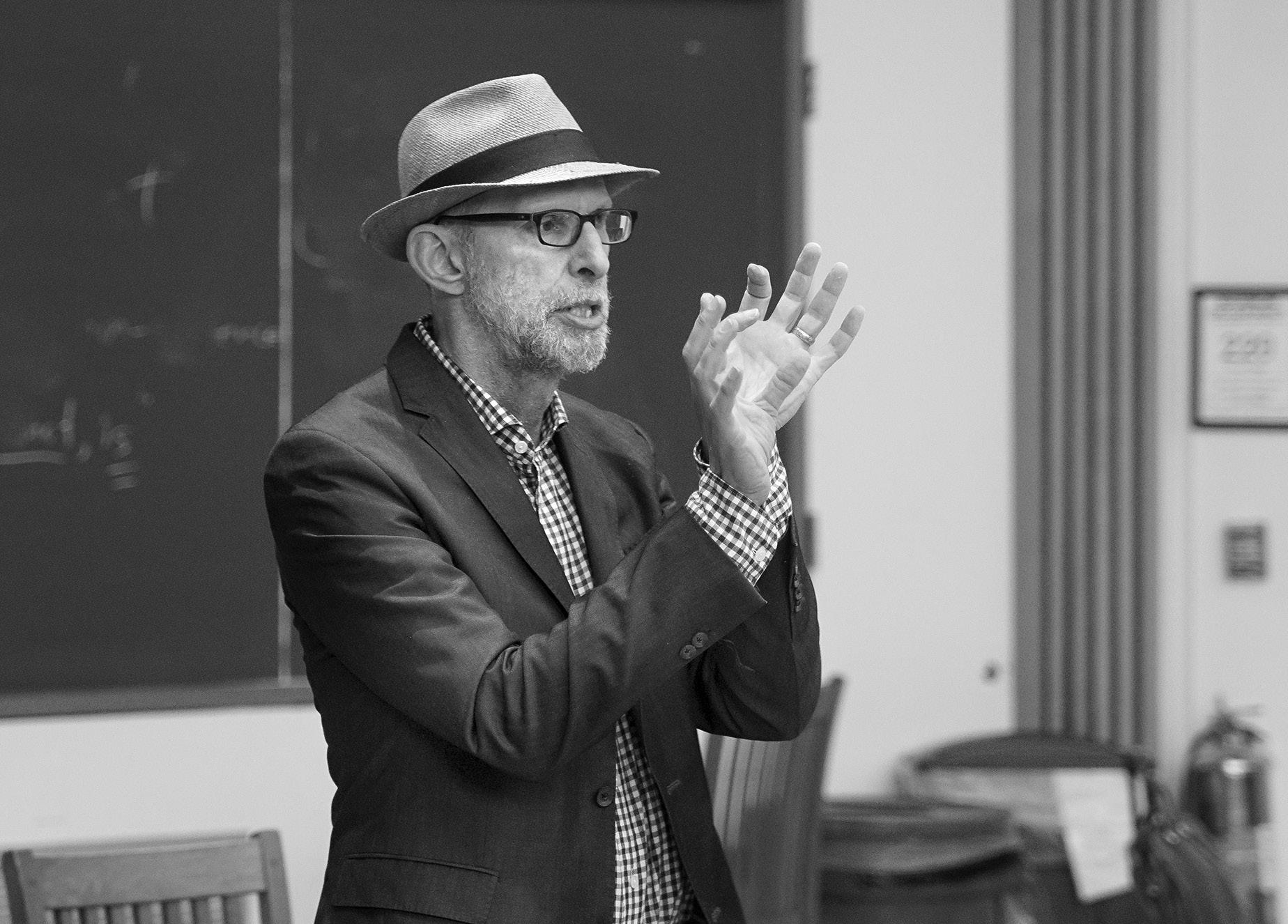
from rival gangs or other pressures.
“If we attend very carefully to the social networks that they rely on for their sense of identity, and focus our redemptive efforts on interrupting those networks, we have discovered we can be remarkably successful at preventing violent crime,” he said.
Breaking the cycle of violence and reprisal, he argued, is the key to stopping violent crime, which he said, “like a disease...transmits and spreads through contact.”
One way to reach these groups of people, Margulies suggested, is to provide “hospital-based violence intervention programs” as they might often be hospitalized for incidents such as gunshot wounds and could be assisted in that context without fear of reprisal
Despite the potential for success, Margulies said these hospital-based programs are not popular because it is “very costly to blanket a person in the hospital with services … he’s likely to be black or brown and likely to have been involved in this cycle [of violence.]”
Pushing back against the idea that people convicted of violent crimes will continue to commit crimes in the future if not incarcerated, Margulies countered that
most people who commit these crimes are surprisingly young, and “violence is a young person’s activity.”
Margulies argued that most of the people that go on to commit multiple crimes once released are non-violent offenders — while violent offenders have only single-digit percentage chances of recidivism.
“They are not going to prison to be punished further — prison is the punishment.”
To sentence individuals to spend long portions of their life in isolation from society and under dangerous, unhealthy conditions contradicts the very notion of the criminal justice system, according to Margulies.
Prof. Joseph Margulies
Beyond the empirical data, Margulies said that society has a moral obligation to end lengthy incarcerations, arguing that the current system is unjust — inflicting punishment beyond the scope of the crime committed.
“They are not going to prison to be punished further — prison is the punishment,” Margulies said.
“We are sending them there for longer that is justified, keeping them there longer than is necessary, and while they are there, subjecting them to a form of physical and sexual violence that is entirely separate from their culpability for the crime they committed...that is what we call the infliction of evil,” he said.
Hunter Seitz can be reached at hseitz@cornellsun.com.

The Corne¬ Daily Sun Independent Since 1880
137th Editorial Board
ANU SUBRAMANIAM ’20 Editor in Chief
JOYBEER DATTA GUPTA ’21
Business Manager
PARIS GHAZI ’21
Associate Editor
NATALIE FUNG ’20
Web Editor
SABRINA XIE ’21
Design Editor
NOAH HARRELSON ’21
Blogs Editor
SHRIYA PERATI ’21
Science Editor
AMANDA H. CRONIN ’21
News Editor
JOHNATHAN STIMPSON ’21
News Editor
PETER BUONANNO ’21
Arts & Entertainment Editor Jacob
Working on Today’s Sun
Ad Layout Dana Chan ’21
Production Deskers Sabrina Xie ’21
Ben Mayer ’21
SARAH SKINNER ’21
Managing Editor
KRYSTAL YANG ’21
Advertising Manager
MEREDITH LIU ’20
Assistant Managing Editor
RAPHY GENDLER ’21
Sports Editor
BORIS TSANG ’21
Photography Editor
AMBER KRISCH ’21
Blogs Editor
KATIE ZHANG ’21
Dining Editor
SOPHIE REYNOLDS ’20
Science Editor
AMINA KILPATRICK ’21
News Editor
HNews Deskers Johnathan Stimpson ’21
Anyi Cheng ’21
Design Desker Niko Nguyen ’22
Lei Anne Rabeje ’22
Photography Desker Jing Jiang ’21
Sports Desker Christina Bulkeley ’21
Arts Desker Peter Buonanno ’21
As I was frantically attempting (note the word attempt) to balance prelims, quizzes, interviews and job searches over the weekend, I took a moment to open up the fortune cookie that’s been lying around on my desk, hoping it might provide some insight to the essay I had been struggling to finish. The slip of paper read the following: “Before you wonder ‘Am I doing things right,’ ask ‘Am I doing the right things?’” Well, no offense to fortune cookie producer Wonton Food Inc., but I think that’s what I’ve been doing most of my life, only with little success at actually finding what the “right things” are.
I’ve always been an advocate for exploration — traveling to new places, absorbing new foods and keeping various career options open. For the longest time, I’ve been told by teachers, elders, career counselors and upperclassmen that the journey to find yourself is essential to discovering the right career path. While such guidance has helped me become a more flexible and open person, it hasn’t helped to answer the question of what I’m most enthusiastic about and where I find myself to be the right fit.
I’ve spent the past three years trying to figure out what I want to do, thinking that in due time I would be able to find what my true passions are. Yet as a graduating senior frantically sifting through career options, I find myself being at the same place I was back in orientation week, reading through pamphlets on the many career paths ILRies head into. While I have certain preferences for career fields such as HR and legal, based on the numerous times I was told to simply explore and find my passion, it seemed as if I would miraculously find a perfectly matching role.
I now realize that I had spent too much time following the advice of others to venture about various career paths instead of proceeding through the phases of trial and error in job searching. As I tried to fathom what my true “passions” are by signing up for dozens of organizations at ClubFest in freshman year, I stuck with none and lost sight of the merits of persistence. By spreading myself too thin and involving myself a little here and there for the sake of exploration, I neglected the need to limit search parameters.
I was also supplied with the myth that
everything will work out as long as I exert enough effort to find a role that I’m passionate about. I didn’t realize back in freshman year that even if you find the right goal, and work hard enough towards that goal, some people simply have more luck or resources than others. It most certainly isn’t a level playing field out in the world of job searching, as the opportune financial or personal resources that certain individuals possess enable them to land a role that the equally capable person next to them couldn’t. The intricate world of job searching goes beyond mere goal-setting and matching qualifications.
Back when I was applying to college four years ago, I falsely perceived jobs to naturally come along once I got into the right college with a promising degree. Being surrounded by peers who would do anything to get good SAT scores and get into a top school, it seemed like my life would be pretty much set once I attended a renowned university. However, I’ve come to realize that in college, there’s only so much assistance that career offices can provide, and that I need to proactively seek and persevere with opportunities early on in my college career.
Career explorations have been helpful indeed. But at some point, you need to narrow down your options, make a choice and stick to it. The actual selection is just as important as the process of searching for the right career option. Of course, you should not shut out all potential options available, but instead of prolonging the exploration phase for too long, you should try it out even if you haven’t found the perfect match. Job searching isn’t so much about finding the optimal fit, but more about delving into an opportunity and discovering what you like and don’t like along the way. There are very few people who have found their true selves and fleshed out their career goals at age 21. It is simply unrealistic for college-aged students to search for and discover their “passions”, and telling them to just keep exploring simply doesn’t do justice to what the job search process actually entails.
DongYeon (Margaret) Lee is a senior in the School of Industrial and Labor Relations. She can be reached at margaretlee@cornellsun.com. Here, There, Everywhere appears alternate Tuesdays this semester.
undreds of Cornellians and millions of young people worldwide walked out of school or work on Friday, Sept. 20 to protest government inaction toward climate change and demand divestment from fossil fuels. The case for divestment has never been stronger: The UN Intergovernmental Panel on Climate Change concluded last year that a radical transition away from fossil fuels in just over a decade is necessary in order to avoid irreversible disaster. Yet inaction is precisely the strategy of Cornell’s Board of Trustees and President Martha Pollack, defying the wishes of the Student Assembly, the Graduate and Professional Student Assembly and the Faculty Senate. The Board of Trustees states that it will divest only in the case of “morally reprehensible” activity in which “the company in question contributes to harm so grave that it would be inconsistent with the goals and principles of the University,” as if an existential threat to human civilization in the near future is not morally reprehensible. But even if you leave the climate aside, the “morally reprehensible” standard is still met. Look no further than the history of massive human rights violations the oil and gas industry have committed in the Niger Delta region of Nigeria for the past several decades.
Consider the case of the Royal Dutch Shell and Chevron corporations, both of which have significant corporate partnerships with Cornell. In 1990, Shell asked a Nigerian paramilitary unit for assistance in response to a nonviolent demonstration at one of its facilities in the Ogoniland region of the Niger Delta. Soldiers responded by killing at least 80 people, raping women and burning down a village. From this point on, Shell and other oil and gas corporations clearly knew what would happen when they asked the Nigerian military to quell protests. Despite this, they continued to not just request assistance, but to collaborate with Nigeria’s military dictatorship in its campaign in the Niger Delta. The Nigerian military would kill hundreds of Ogoni people over the next decade.
and consequently, he was silenced forever at the age of 54. 14 years later and days before a trial was to begin in New York over Shell’s complicity in Saro-Wiwa’s execution, the company settled with the Ogoni community to the tune of $15.5 million.
While Shell and Chevron have not plotted the murder of Nigerian environmental activists in more recent years, they continue to pollute the Niger Delta with impunity, destroying the livelihoods of millions of people who depend on fishing, agriculture and water from the Niger River. Shortly before SaroWiwa’s execution, Bopp van Dessell, Shell’s leader of environmental studies in Nigeria, resigned from the position because, in his words, “It was clear to me that Shell was devastating the area.” And Shell continues to this day to devastate the area and engage in a systematic campaign of deception in order to avoid responsibility.
But even if you leave the climate aside, the “morally reprehensible” standard is still met. Look no further than the history of massive human rights violations the oil and gas industry have committed in Nigeria.
By its own records, Shell has dumped nine Olympic swimming pools worth of oil in the Niger Delta since 2011, although the real numbers are likely much higher than what Shell admits. Response times to the spills are slow, in violation of Nigerian law and clean-ups rarely even scratch the surface of the damage done. Shell and Eni are also involved in a major corruption scandal in Nigeria and are accused of exceeding legal limits for ethylene dioxide emissions in the country. Far from bringing wealth and prosperity, Shell, Chevron and Eni have poisoned the drinking water, soil and food supplies of millions of people, and have likely contributed to appalling infant mortality rates near spill sites as well.
It is difficult to imagine President Pollack arguing that collaborating with a dictator to murder activists or actively destroying the environment of a region of 31 million people is consistent with Cornell University’s values. I find it equally unlikely that she or any board member could claim that such activity is not “morally reprehensible” with a straight face.
The Shell, Chevron and Eni corporations’ crimes finally fell under the global spotlight in November 1995 when internationally acclaimed playwright and environmental activist Ken Saro-Wiwa and eight others from the Movement for the Survival of the Ogoni People were executed by the Nigerian military. The crackdown and subsequent executions were carried out shortly after a request by Shell executives to dictator Sani Abacha that the Ogoni and Saro-Wiwa be dealt with by the military. Saro-Wiwa won the 1995 Goldman Environmental Prize for his leadership in the nonviolent campaign against devastating pollution in the Niger Delta, and his activism had turned the indigenous leader into an icon of the international environmental justice movement. But the threat of nonviolent resistance was too great for Shell and Abacha,
The Board of Trustees’ true argument against divestment is therefore revealed: A powerful industry such as fossil fuels should never be divested from. If said industry wants to spend millions on misleading the public for decades about its role in the impending destruction of entire ecosystems and organized human society itself, so be it. That these same companies are involved in widespread human rights violations in an impoverished country might be concerning — but not concerning enough to accept the student body and faculty’s utopian pipe dream that our university should follow some elementary guidelines for moral and social responsibility.
Jacob Brown is a Ph.D. candidate at Cornell University. He can be reached at jtb257@cornell. edu. Mapping Utopia runs every other Tuesday this semester.
An AEM major recently instructed me that, when informed by someone that they spent their summer interning at a nonprofit, the preferred response is: “That must’ve been so rewarding for you.” (And to please refrain from scoffing until well out of earshot).
And I may never live down the fact that I was rejected by an unpaid internship the summer after my freshman year. My friends love to joke that I wasn’t even good enough to be a volunteer.
Thus, it might seem improper for me to speak on the subject of internships, having never possessed one myself that was worthy of being considered good by Cornell standards. In fact, this past summer I labored at a public relations agency specializing in the cannabis industry, of all things (undoubtedly contributing to the deterioration of American values, and all that for minimum wage). I’m afraid that I’ve already doomed myself to a life of failure, and so I will only report what little I have heard from my more successful peers.
Cornellians are a talented, motivated group of individuals, but we can also be repulsively toxic to each other. And I don’t know who convinced us that there is only one path to success and that it is paved with pay stubs, but it simply isn’t true.
Someone I know that made $15.83 an hour this summer (“hardly success,” many Cornellians mutter under their breath) feels unworthy. They don’t like to talk about the work they did because the monetary value attached to it is shameful to mention.
But $18.50 an hour was still not enough for another student. Initial joy at an internship offer was followed by a perceived need to keep quiet and the idea that perhaps their parents’ pride was misplaced. After all, $18.50 was nothing to celebrate at Cornell.
And at $21.00 an hour, the situation wasn’t much improved. As this person notes: “I constantly hear people that made more than me complaining about how little they made.”
Ifumble with my keys and phone as I bundle through my building’s never-quite-closed front door to begin my daily trudge up what my roommate spitefully calls “the Himalayas.” Unsure if I’ve already missed my Mom’s drive to work — or if she’s running a little late like I am — I tap through my phone and hit her name. Cutting across an intersection with no cars yet still full of potholes, I hear the dial tone cut out and a familiar voice greets me with a stressed, but warm, “Good morning.”
I didn’t use to call my Mom while heading to class in the morning. It took me until a couple of weeks ago to realize that my daily climb this semester coincided with her daily commute. Unfortunately, it took me much longer than a couple of weeks in college to want to call home at all.
For a long time at the start of freshman year, my family and family friends played a one-sided game of phone tag with me, with them always trying to get me on the phone while I avoided their calls like a distant deadline. In the past year or so, though, I’ve not only started to make those calls myself instead of avoiding them, but I’ve realized that they’re a harbinger of my overall relationship with Cornell.
I didn’t like Cornell when I first started college, and my phone calls home reflected that. I texted that I was too busy to talk, quickly ducked out of rooms when I did answer those calls so that others wouldn’t hear my artificial answers to questions about how I was doing and perused the winding paths that crisscross North Campus for more serious conversations with family and friends from home. During an early phone call with one of my
A fellow student even warned me against bringing up internships with someone who made well over $50 an hour because they had yet to receive their return offer, and therefore it was still “a sore subject.” How, then, was I supposed to be able to carry out the obligatory “So how was your summer?” conversation? By asking them what they did for fun? Or if they grew as a person? Underachieving though I may be, I still know enough not to mention such foolish questions as those. But there is still something I don’t understand, and please excuse my feeble stoner mind when I ask: What even is a good internship at Cornell? Is it a fulltime internship at a major company and a subsequent return offer? Is it sending Snapchats of a steak dinner from one of your company outings? Is it the ability to put the words “Goldman Sachs” on your resume?
Cornellians are a highly talented, motivated group of individuals, but we can also be repulsively toxic to each other. And I don’t know who convinced us that there is only one path to success and that it is paved with pay stubs, but it simply isn’t true.
My little group of failures to whom I spoke all have a confession that would be shameful to publicize: they actually liked their internships. Against all odds and expectations, they had fun. They learned a lot — new sets of skills, new things about themselves, new future career paths. They met exciting people and worked on projects that they were passionate about. But the entity we know as Cornell is quick to whisper doubts into our ears — What is passion without a return offer? What is the value of new knowledge if it doesn’t lead to $50 an hour? I have earnestly endeavored to ignore these questions, and at times over the summer when I was busy enjoying
Giancarlo
aunts, she told me about another freshman who had gone viral for a video she made about how difficult she found making friends, and all I could do was internally mumble, “It’s not just her.” Phone calls were a way to buy time to find happiness without anybody getting more concerned, an act where I told them I was adjusting well and enjoying Cornell, and I hoped they couldn’t tell my words were more performative than truthful.
Thankfully, by my second semester, things looked up even as the weather made me walk everywhere looking down. And yet, even after I started feeling more comfortable telling the truth to those who called, I still wanted my privacy. As a respite from late night self-sequestration in the library, I would circle the plants at the top of the slope while talking on the phone. During finals week, I would walk around and around for hours on the now-destroyed Olin roof, a reward for the many more hours spent in the library below grinding through final papers. In both of these cases and many more, I didn’t want people to hear my tone. Even though I was starting to like it, I couldn’t wait to go home, where everyday wasn’t a desperate attempt to lay down roots strong enough to make these the best of these four years but flexible enough for their eventual excavation to not be too painful. The longing in my voice would have been shameless if the reason I walked and talked outside wasn’t out of shame in the first place.
Throughout my time here, I’ve also talked on the phone while walking to and from class. A campus that can take more than a half-an-hour to trek from end-toend offers sufficient time for even the longest of conversations, especially when hills
myself, they were no longer menacing. But I’m afraid that upon my return to Ithaca they’ve become a constant ringing in my ears. I’m a senior who interned at a place nobody even recognizes (patronizing smile). What’s more, I didn’t get a return offer (guarded surprise and a quick excuse to leave the conversation, or worse: “at least you had fun”). I have learned once more to despise anything that cannot be described as stressful or hard work. Cornell culture has created a warped conception of success that isn’t attainable for most of us. And I’d argue that even those of us with those coveted big-name internships question the extent of their own success, because what we are given at Cornell is an inexplicable compulsion to achieve as much as we can and yet remain dissatisfied with ourselves. We don’t allow ourselves the gift of self-acceptance — there is always another mountain to climb, and of course we must be the first and the fastest to climb it.
But it’s okay to be a loser. When you graduate from Cornell, perhaps the most significant interaction you will have with the majority of your current acquaintances will be an occasional like on Instagram. Or you might even half-heartedly suggest that you catch up sometime. And the things that will matter most then — I’m shouting over the sound of Cornell ringing in my ear — are what you’ve learned and what you’ve enjoyed.
Maybe you’ll find (this is, of course, a pothead’s pure conjecture) that there are other trails to success than the one that Cornell seemingly paved for you. You might find something out there that you actually enjoy, irrespective of its salary — you might even learn to call it success against everything you’ve been forced to learn here.
And maybe you’ll realize that Goldman Sachs is overrated after all. That you can intern at a weed agency and somehow, against all odds, have had a successful summer.
Colton Poore is a senior in the College of Arts and Sciences. He can be reached at clp222@cornell.edu. Help Me, I’m Poore runs every other Monday this semester.
are involved. Occasionally, the efficiency of using walks as time to talk diminishes the value of the conversation to the person on the other end as if that dash to dinner is the only time I can only be bothered to chat.
But now in my junior year, the phone calls I have are so much more than a time-filler, escapism or elusion. They’re a way of maintaining connections to the people and places that shaped who I was when I got to Cornell and set the stage for who I’ve become since. They remind me that there’s so much more than the hills and valleys, trees and not-so-towering buildings I can see from the vista at the top of the slope. They forcefully state that it’s okay to have an ambiguous, even downright-negative relationship with this place.
The phone calls I have remind me that there’s so much more than the hills and valleys, trees and not-so-towering buildings I can see from the vista at the top of the slope.
of Uris, I wonder why they decided to re-christen it the “out” door recently and nullify the years of habit-forming trips I’ve made into the library through it. Cantering down the steps, I push that thought aside and scroll through my phone, looking for someone to call as I start my walk. The tone rings a few times after I press my aunt’s name, and I soon hear her familiar question of where I’m walking to and say — with a tone that can never capture the journey of how this word came to be the answer — “home.”
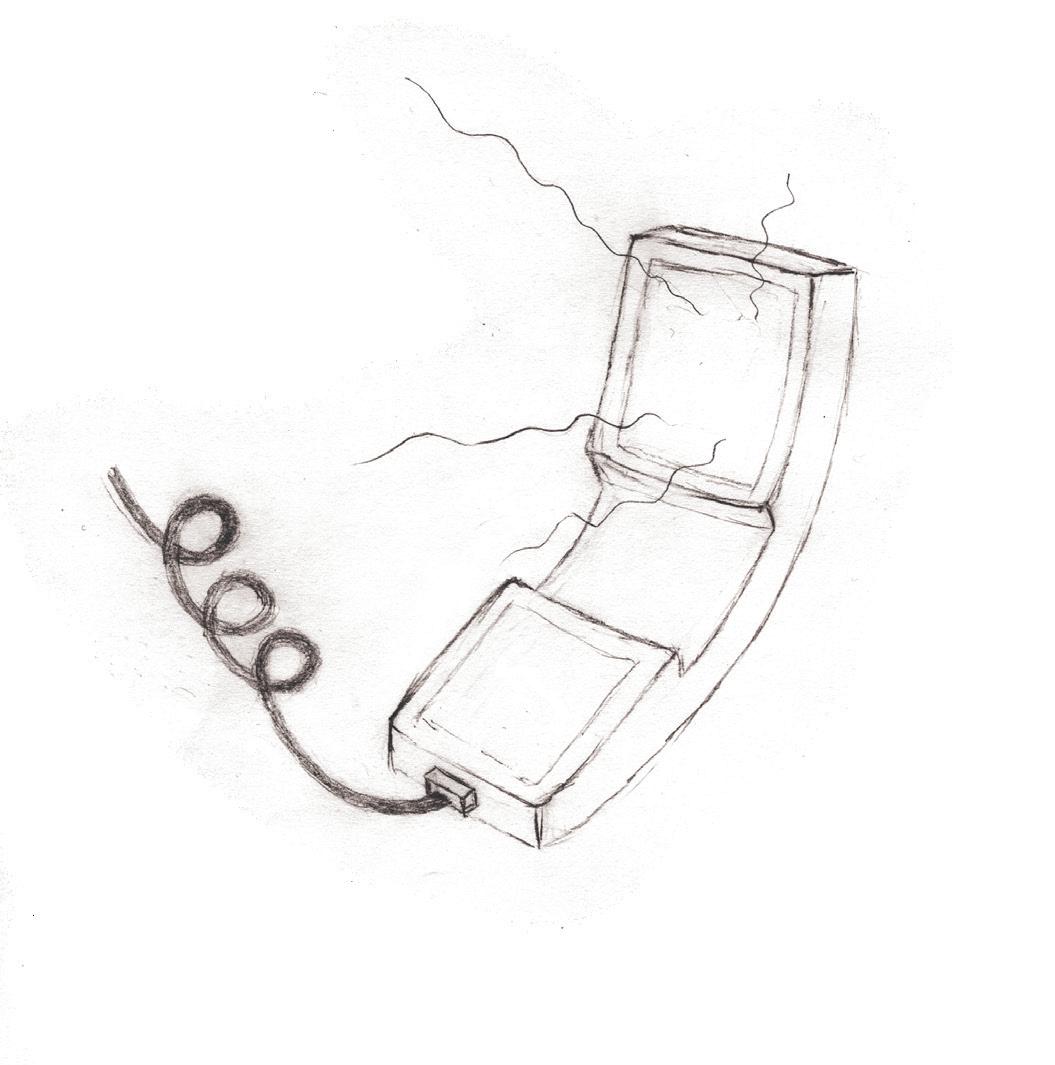
In doing so, they’ve even given me the freedom to think of Ithaca as some thing of a home. A flawed one, for sure, spread out over large distances, with high physical and metaphorical hills to climb and limited time to do so while making sure I don’t snap like a rubber band. But, nonetheless, a home with friendly faces I love and would do anything for and times I will never forget (or maybe remember).
Now as I push through the right door
ro@cornellsun.com. Far Above runs every other Tuesday this semester.
By CHENAB KHAKH Sun Senior Staff Writer
While the biological explanations of recent vape related deaths and illnesses are still weakly understood, the social impact of Juul and e-cigarettes is clear.
On Sept. 27, the Center for Disease Control and Prevent reported that vaping THC, a compound commonly found in marijuana, is related to 805 cases of lung illnesses and at least 12 deaths reported as a result of vaping e-cigarettes.
A study covering over 500 patients reported 77 percent using THC products in addition to nicotine, whereas only 16 percent of patients only vaped nicotine, and 36 percent vaped only THC products.
The CDC’s findings suggest that THC products play a role in the outbreak. While a pattern in the vaping cases has been found, there is still no clear cause and no single product behind what is making people sick. Regardless, the CDC strongly suggests stopping e-cigarette use, especially those containing THC.
On Sept 28, it was reported that vaping products create an unhealthy byproduct in addition to the nicotine and/or THC present in e-cigarettes, which may be linked to the illnesses and deaths. This byproduct was found to be a mixture of heavy metals that are strongly linked to cancer, lung disease and gastrointestinal disorders.
According to this study, whether it is vaping nicotine, nicotine and THC, or THC alone, vaping in it of itself clearly poses negative health risks.
A compounding issue is the unfavorable
marketing techniques used by many of the vape product companies. A joint review by the Departments of Pediatrics at the Icahn School of Medicine and the Children’s Hospital of Philadelphia demonstrated that e-cigarette products are marketed with an emphasis on how adolescents can use them surreptitiously despite the age restrictions and regulations.
This is particularly alarming to doctors, health care professionals, and public health policymakers because teens who use e-cigarettes are just more likely to go on to use combusted tobacco or real cigarettes, a veritable health concern.
In addition, studies conducted in high schools across the nation are finding that bans on e-cigarettes only work to a certain extent. Doctors and public health officials are worried that students are not understanding the harmful side effects of nicotine, let alone understanding the risk of Juuls and E-cigarettes on their growing bodies and minds.
In fact, a recent study published in BMJ’s Tobacco Control suggests that while many young people know about Juuls, they are not aware of its potential harms as an e-cigarette nor are some aware that Juul pods even contain nicotine.
“Throughout my young life, I had educational pieces about the dangers of cigarettes from school and from my parents,” Cole Johnston ’20 said. “A lack of universal literacy and common knowledge has made me feel less wary of e-cigarettes and their negative effects.”
While e-cigarettes have followed the business suit of big tobacco, studies show
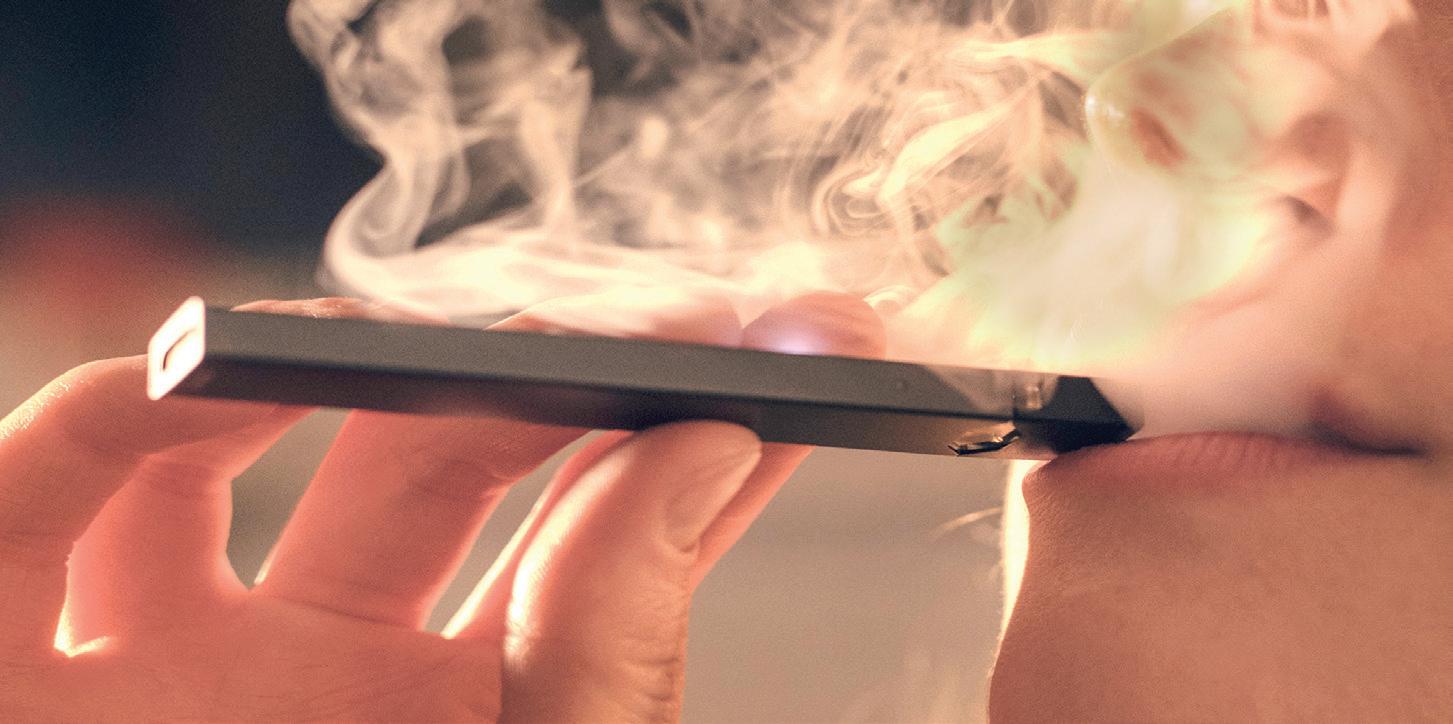
that stronger regulations such as bans and prohibitions for e-cigarettes for today’s youth vaping crisis may not be ideal.
Dr. Michael Pesko, a health economist and assistant professor of healthcare policy at Weill Cornell Medicine, found that “age restrictions for purchasing were not associated with changes in adolescent smokeless tobacco use, cigar use, or marijuana use.”
Pesko suggests that tobacco products should be regulated proportionate to their risks and e-cigarette evidence suggests they’re less risky products, so it would be a “mistake” to impose the same regulations for tobacco on e-cigarettes..
“I find this a very interesting public health issue because you have a large population of young people addicted to nicotine from using Juuls and little alternative for rehabilitation. In some states, where using nicotine products is illegal under 21, find-
ing nicotine cessation products like nicotine patches is very difficult,” said Debbie Nyakaru ’20.
While this is an epidemic facing the nation, Cornellians and New York State seem to be ahead of the curve. Juul sales are down this semester, significantly, The Sun recently reported.
Furthermore, alcohol and drug awareness posters from Cornell Health have been bolstered to include Juuls.
The hard truth is that the implications of the chemicals inside this attractive piece of technology are unknown, but as research continues, studies are likely to show that these products are quite harmful in the long-run.
Chenab Khakh can be reached at ckhakh@cornellsun.com
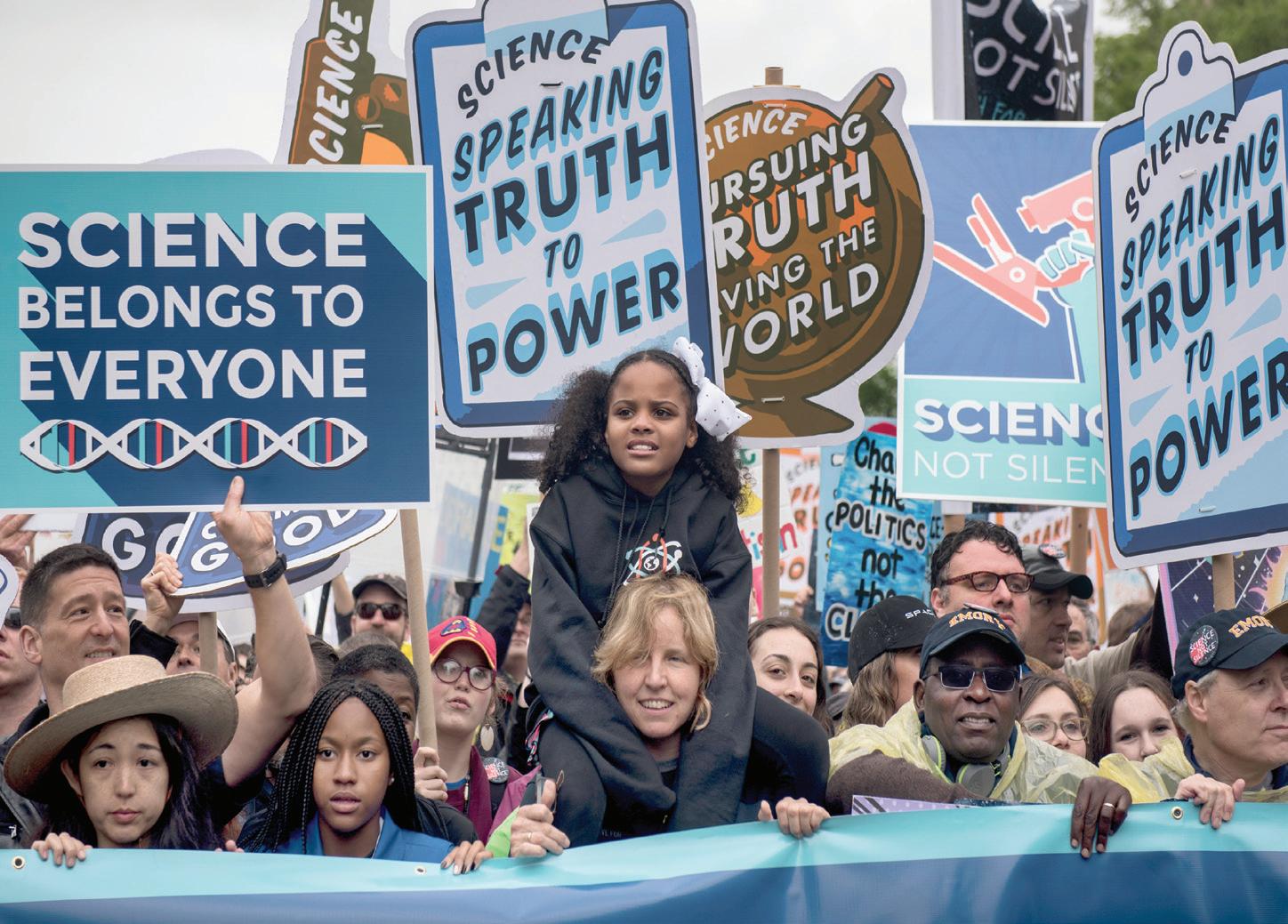
By GAYATRI SITARAMAN Sun Senior Staff Writer
Miyoko Chu is the senior director of communications at the Lab of Ornithology. But aside from her main job, Chu is also one of four professors teaching BIOG 1250: Try Your Hand at Science
Journalism, a one-credit, seven-week course offered through the Cornell Lab of Ornithology.
The course, which is targeted at first-year students, seeks to teach “a really different style of writing than is often used in the classroom,” Chu said. “We’ll help people walk through
each step … what’s the difference between a topic and a story angle? How do you go out and report? How do you get quotes? How do you do the research?”
Chu said that all the instructors of the course — Gustave Axelson, Jay Branegan ’72 and Hugh Powell, along with herself
— are professional science journalists, but they each arrived at this profession through differing academic paths.
“Hugh and I started out as scientists and then we learned science journalism and now have a career in that field,” Chu said. “Jay started out as a physics major at Cornell but spent so much time for The Cornell Daily Sun that he became a professional journalist. Gus came into journalism school and then ended up having a career that went into conservation and science.”
Although they all come from different backgrounds, they share an important, common experience that helped them succeed, as journalists, in the end.
“As budding journalists, we had mentors ourselves who showed us the craft... this is one way we can give back what we learned to a new group of students,” Chu said.
This is the first year this course has been offered,
although the Cornell Lab of Ornithology has always had internships and workshops for students interested in science journalism. According to Chu, a “generous endowment” from Branegan — who shared a Pulitzer Prize for investigative reporting at The Chicago Tribune — and his wife enabled the lab to provide hands-on opportunities for students in science journalism.
“There’s an awful lot of important stuff that needs to be communicated to the public and we need professionals who are good at it, certainly [dealing with] climate change and other environmental issues are all dependent on the public’s appreciation for science,” Branegan said.
Branegan said he doesn’t expect everyone in his class to become a science journalist, but the end goal of the course is to make them better writers who can clearly communicate their ideas through writing.
“I always believe scien-
tists really have an obligation to communicate their work clearly to the public … and if they want to do something in some third field, if they go into that field as better writers and better researchers I think that would be a success too,” Branegan said.
Although the course is run through the Lab of Ornithology and focuses on birds, it allows students to learn disciplines transferable across many fields, according to Chu, as the topic of birds alone involves many other issues, including policy, education, law, and social sciences.
The course, which is slated to begin in late October, is still accepting students by application. “We really hope to have fun, this course should be fun, science is fun, communication is fun, writing is fun, and so we expect to have a really good time,” Chu said.
Gayatri Sitaraman can be reached at gsitaraman@cornellsun.com.
It’s been a crazy stressful couple of weeks, and as a result the only big game I’ve really had time to play has been Fire Emblem: Three Houses,and even then I’m only a few hours in. I don’t have any controversial opinions on it yet! So this week I’m going to focus on something different.
In between the horrible coughs wracking my lungs and the awkward introductions at last-minute family gatherings, I spent what little
I didn’t expect to spend so much time on the gaming storefront ... I’d clicked on an ad for a charming hand-animated game called ‘Later Alligator.’
free time I had this week looking around itch. io. I didn’t expect to spend so much time on the gaming storefront, but I’d clicked on an ad for a charming hand-animated game called “Later Alligator,” and while I knew I’d have no time to buy and play through the game, I figured I had time to spare to add at least a few other games to my to-do list. It’s the responsible thing to do, as a bona fide Gaming Columnist, right? It’s not “avoiding responsibility” if it counts as research.
Anyways, I made an itch.io account and clicked around some of the site’s recommended games, expecting to see the same slew of survival games and MMORPGs you’d find on the Steam store. What I didn’t realize is that while Steam is like the Kindle Store, itch.io is more like Wattpad. Anyone can upload any little game they dream up, even if they only take one minute to beat — and there’s a surprising number of free tools available to do so. With Bitsy, people make little walking simulators and adventure games. With Twine, you can make text-based adventures and plan out dialogue trees with multiple branches. Flicksy has produced a number of colorful point-and-click games. Anyone can make a little game in just a day, and the site encourages its users to do so through “game jams,” little contests and groups hosted on itch.io where members commit to making a themed game in a short period of time.
explored the cars of a train, talking to passengers about their homes while watching the landscape go by — and that was it! The game was over. In another, I watched as my player-character futilely radioed for help, stuck in a rain-battered house for weeks on end, slowly losing hope — and that was it. A third game was simply a poem, told by two 8x8 pixel avatars walking down monochromatic train tracks.
These aren’t the types of games we learned how to make in school, where the rule was very much “mechanics first, narrative later.” I remember hearing once a student proudly remark that he didn’t consider something a real game, it had too much narrative, not enough gameplay. Well, if that’s true, what have I been playing? These little stories that people have been uploading on itch.io … can I still call them games? Or do I have to use the painful term “interactive art?” Can something be art and a video game at the same time? Where’s the line?
I’m not the first person to be thrust into an existential crisis over the place of narrative in gaming. I see these comments a lot, even a few among the comments of Steam games. If a game’s main mechanic is simply walking through an environment, it’s called a “walking simulator,” a term often spoken with contempt. “Visual novels” are somehow apart from the rest of the gaming world, dismissed and lumped in with dating simulators the same way an avid bookworm might dismiss a trashy romance novel. No matter how engrossing the story, if the gameplay is lacking, it’s derided — after all, why not just make the story a book? If you make the choice to write a play instead of a book, you should have a reason to do so, something you can only express through theatre — and shouldn’t games be the same way?
JEREMIAH LACON SUN STAFF WRITER
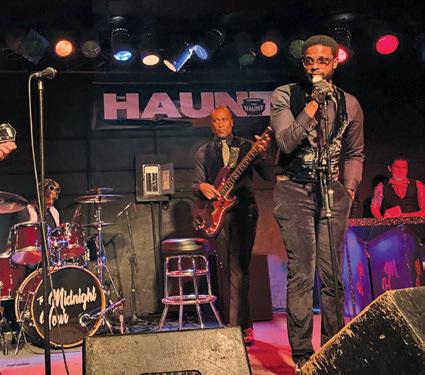
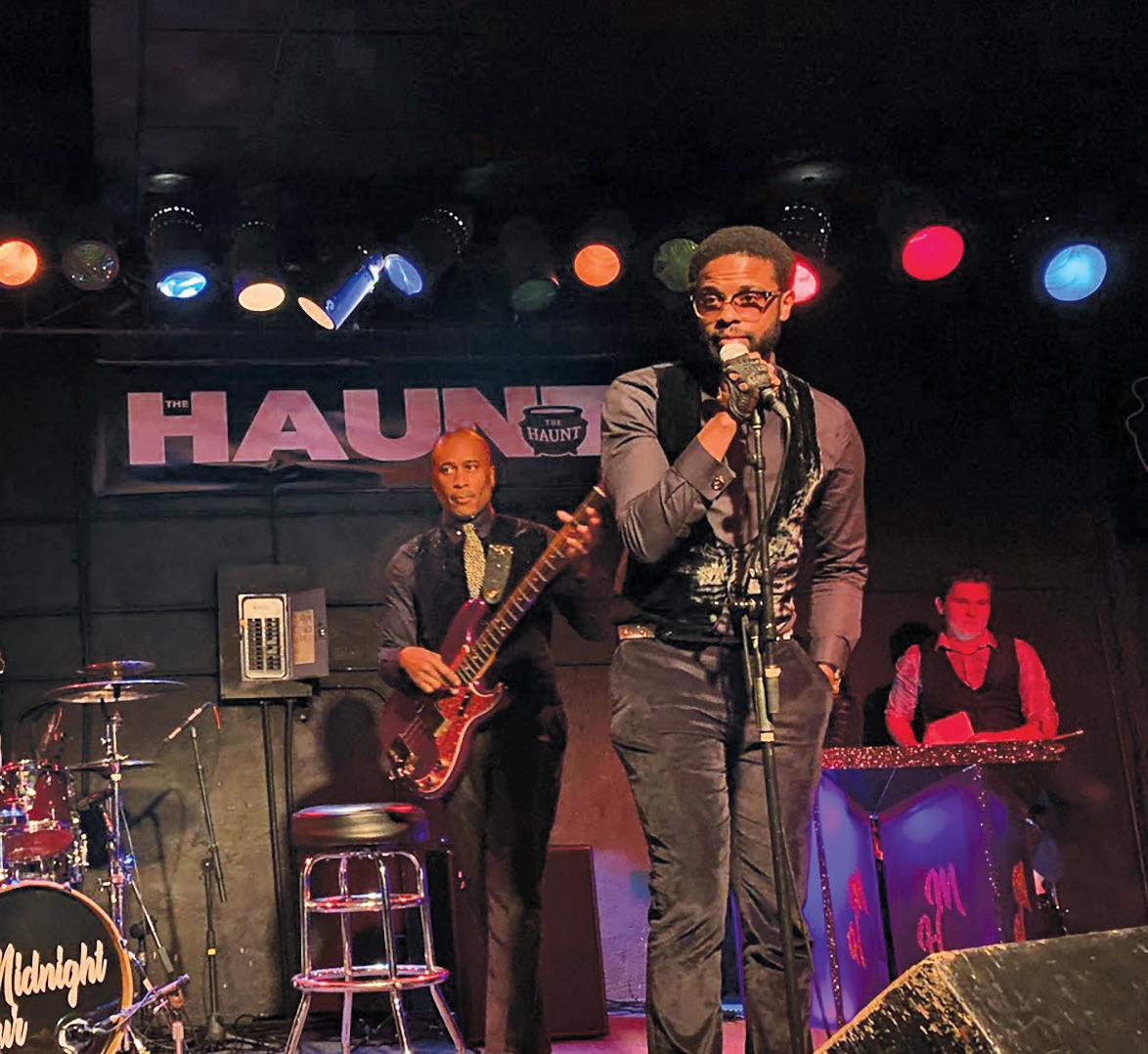
The Midnight Hour, led by Ali Shaheed Muhammed of A Tribe Called Quest and Adrian Younge, both pulled up to the stage of The Haunt on Saturday night in dapper fashion. Together, they boldly responded to the assertion, which is displayed on their merchandise that, “Jazz is dead.” Their response was illustrative, rhapsodic and convincing as their concert highlighted the beauty and power of jazz music and how widespread its influence truly is — showing how chords which originated from jazz compositions have been heavily sampled throughout R&B/soul and rap music.
Muhammed’s music career explosively launched in 1990 as a member of the group A Tribe Called Quest, which included the rappers Q-Tip and Phife Dog. A Tribe Called Quest is known for their upbeat pace, thumping bass and layered production — listen to their album The Low End Theory which came out in the fall of 1991, and you’ll quickly understand what I’m talking about. And after witnessing Muhammed strum some bass lines, his significance to A Tribe Called Quest’s production became evident. In 2013, over 20 years after the formation of his first group, Muhammed essentially restarted his music career by recording and touring career with Adrian Younge.
Any fledgling game dev will tell you that
So what’s the point, then, if all the game mechanics are the same, often taking the form of text based adventures? The answer is narrative.
making a full-fledged game, even a short one, is a long and arduous process. Developing and coding new and innovative gameplay mechanics is no easy feat. As a result, itch.io is filled with little games with very few mechanics and limited gameplay, often using the same free and browser-based tools. So what’s the point, then, if all of the game mechanics are the same, often taking the form of text-based adventures, pointand-click, and walking simulators? The answer is narrative.
I’ve never seen so many little narrative games as I saw on the itch.io store. In one game, I
Yes, but I’d also argue that most of these games, seemingly lacking in gameplay, do have a reason to exist in the form that they do. In every micro-game I played, I felt like I was driving the action, exploring the little worlds painstakingly crafted for me. It added a level of immersion, to be able to explore an art piece rather than simply view or read it. And many of these games, especially the text-based ones made in Twine or Ink, provide the most important part of a video game: choice. If players can choose how to interact with the virtual world, even by choosing not to proceed with a narrative and to linger in one area, I say it’s a game.
I was so glad to learn that a community like itch.io’s exists, where people feverishly create narrative games with the fervor of a teenager writing fanfiction for the first time. As the commercial game industry gets larger and more focus is pivoted to profiting off of premium-currency mobile games and aggravating loot boxes, it’s nice to see a population of devs focusing on art and narrative, especially as a creative writer and designer who’s more comfortable in CSS than C#. And this narrative boom isn’t exclusive to amateurish micro-games — I’ve seen so many beautiful and narrative-heavy indie games come out in the last year alone, and I’m excited to add them to my list— if ever I have the time to play them.
Olivia Bono is a Senior in the College of Arts and Sciences. She can be reached at ojb26@cornell.edu. On the Level runs alternating Tuesdays this semester.
In 2000, Adrian Younge, a self-taught musician and songwriter, produced his first album which aimed to be a soundtrack to the film Venice Dawn. Ever since, Younge’s experience and skill navigating through the music industry has improved significantly.
The Midnight Hour’s show at The Haunt kicked off with Jack Waterson (bass/guitar/vocal), Loren Oden (keyboard/vocal), Angela Muñoz (keyboard/bass/vocals/lyricist) and Malachai Morehead, their stellar new drummer whose talent will surely create an exceptional name for himself in the music scene. They delivered funky and psychedelic tunes which carried narrative lyrics and forced the audience to draw closer to the stage.
Oden, having sung as a background singer for music giants such as Stevie Wonder, Chaka Khan and Erykah Badu, presented his full vocal capacity to express his soul, his vulnerability and his purpose in life. After witnessing Oden capture the audience’s gaze and breath, the reason why he was chosen to sing alongside such influential musicians was made more than clear.
Right after the electric performance from the band led by Jack Waterson, Waterson made a very appropriate remark on what to expect from The Midnight Hour: “We are going to come together like Voltron.” The Midnight Hour, although led by Ali Shaheed Muhammad and Adriane Younge, in reality is a mosaic of instruments and vocals that once assembled formed an impressive and dynamic force. With Oden and Muñoz that played during Waterson’s set now playing alongside Muhammed and Younge, the possibility for experimentation was endless. During The Midnight Hours set, blocks for expressive solos of the saxophone, the drums, the bass, the keyboard and the trumpet were spontaneously included. Even more impressive was viewing their ability to switch instruments on the spot and then proceed to flawlessly perform the next chord progression.
Jeremiah Lacon is a junior in the College of Arts and Sciences. He can be reached at Jcl345@cornell.edu.
JEREMY MARKUS SUN ASSISTANT ARTS EDITOR
An oft-discussed topic (usually over dinner in a dining hall after all other possible topics have been exhausted) is that of the best episode of television to grace our various screens. A 2018 ranking by multimedia website The Ringer anoints Lost season 4, episode 5, “The Constant” as the greatest show this century. A recent — and extremely scientific — survey of The Daily Sun’s editors (or, at least those at the office one evening who responded to my unprompted and completely random question) gave the crown to “Two Cathedrals,” the 22nd episode from the second season of The West Wing. The Ringer ranked “Two Cathedrals” 12th. Clearly, there is room for further debate.
However, for those of us sane, rational humans with fully developed brains, the apex of serialized television is Parks and Recreation season 3, episode 2, more commonly referred to as “Flu Season” (but hopefully soon as “The Greatest Episode in Television History,” if my opinion carries any weight). For some inexplicable and indefensible reason, “Flu Season” did not even make The Ringer’s list. They gave a nod to the Parks and Rec series finale (the ranking did not include multiple episodes from the same series), which they placed at the 41st spot. A travesty, I’m sure you all agree. To claim that “Flu Season” is not the best half-hour among the many in Parks and Rec’s repertoire and to assert that the show’s best episode is worse than 40 other series’ in total is heresy of the highest order.
“Flu Season” opens with local opalescent tree shark (and nurse) Ann Perkins (Rashida Jones) describing a flu epidemic overtaking the show’s fictional town of Pawnee, Indiana. The hospital, evidently, is overrun with sick patients and Ann is forced to take care of her arch-enemy/ tangentially-related-acquaintance April
Ludgate (Aubrey Plaza). April is mad at Ann for various reasons, but I worry this column will be too long if I try to explain them all. Really, that subplot is less important because Ann refuses to wear any form of flu prevention. This immediately discredits any thread of credibility she carries as a practicing medical professional. I’m only joking; Ann is perfect and she can do whatever she wants. (Side note: You are not a poetic and noble land mermaid, so make sure you take all possible measures to prevent the flu!)
Leslie Knope (Amy Poehler) needs to deliver a big presentation to the Chamber of Commerce in order to gain vendors for the upcoming Harvest Festival (the success of which will determine the fate of the parks department). Unfortunately, her allergies are acting up and she is a little tired and her eyes are glassy and she is vomiting profusely and, oh shit, she actually has the flu. This is the crux of the A plot, which follows her attempts to leave the hospital in order to deliver the speech. It tangentially incorporates fascist hardass/ state auditor Ben Wyatt (Adam Scott) as he tries to alleviate Knope of her responsibilities (read: as he tries to stop Leslie from doing something she really wants to do, which is impossible, you baboons) while hinting at a budding love interest. Leslie gives the speech.
Woven within the A plot is a B plot that follows parks department director Ron Swanson (Nick Offerman) and resident goofball Andy Dwyer (the lead of Jurassic World, Chris Pratt). The pair becomes fast friends by bonding over meat, football and not doing stuff (which also happen to be my three favorite things after watching Parks and Recreation). Writer Norm Hiscock and director Wendey Stanzler also expertly throw in scenes of Ann taking care of dealing with April and Chris Traeger (Rob Lowe), which could constitute a C plot, but it’s really more of comedic interludes than a serious storyline. Lowe does
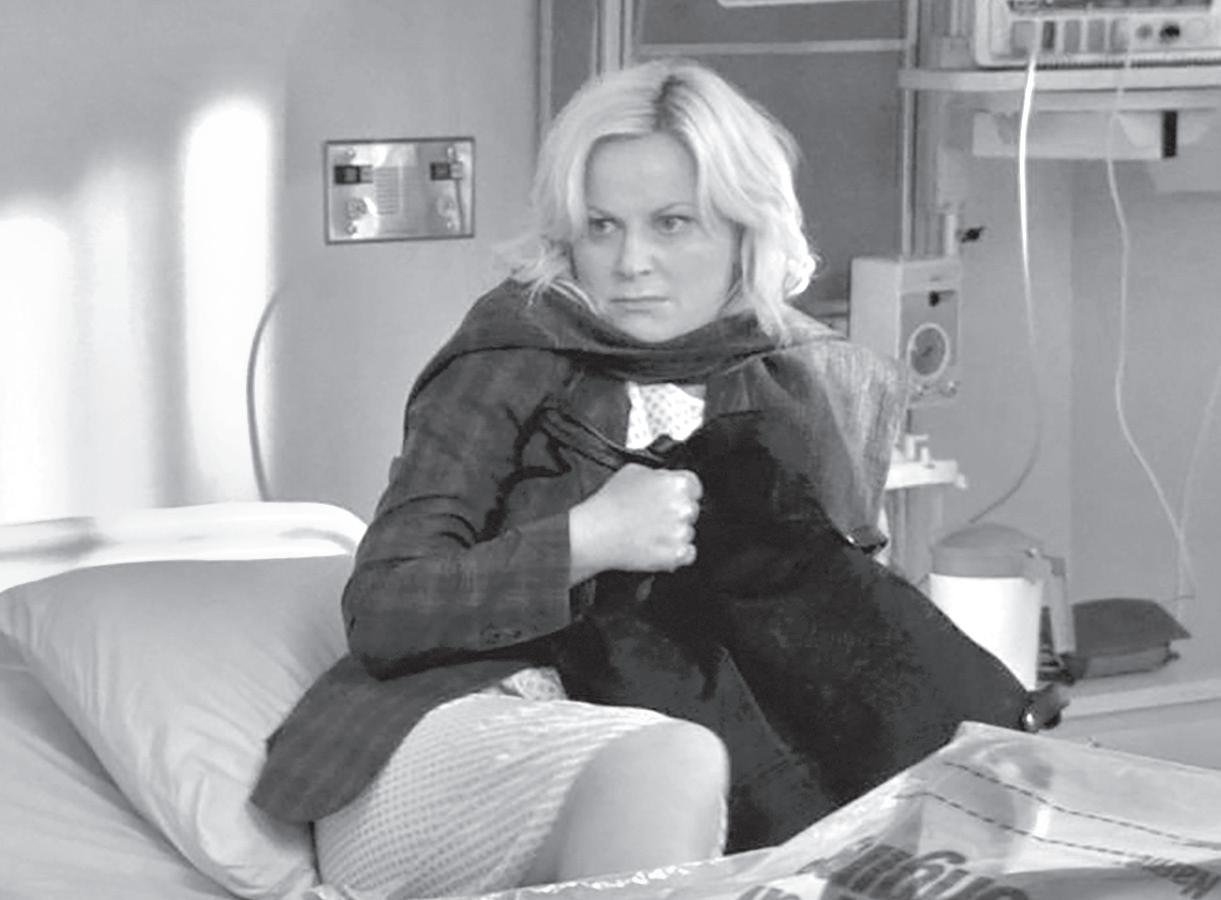
an excellent job playing a debilitatingly sick person and also improvised the second funniest line of the episode, “Stop. Poopin’.”
The number one most funniest line was also improvised and will probably go down in the annals of television history. As Ben leads a sweating Leslie through the parks office en route to the hospital, Andy is sitting at a computer and utters the immortal sentence: “Leslie, I typed your symptoms into the thing up here and it says you could have ‘network connectivity problems.’” It’s clever. It’s witty. Andy’s naive confidence is perfectly in character and hilarious. Pratt was probably cast in Jurassic World, Jurassic World: Fallen Kingdom and the heretofore unnamed Jurassic World 3 from that one line alone. He likely didn’t even have to propose to his current wife, Katherine Schwarzenegger, but instead just showed her that clip and she popped the question. It’s entirely possible that Chris Pratt actually invented “network connectivity problems.”
“Flu Season” is essential in the devel-
opment of nearly every core character in Parks and Rec. Leslie further demonstrates that she is no longer the goofy bimbo that she was portrayed as in the first season. Ben shows that he is loyal to the parks department and maybe kinda sorta likes Leslie (hee hee!). Ann (somehow) becomes more attracted to a physical and mentally impaired Chris who is vomiting in drawers and can’t get up off the floor. Ron and Andy are both dudes. Tom Haverford (Aziz Ansari), not worth mentioning until now, still sucks — but at least he is no Mark Brendanawicz, who is finally, mercifully gone from the show. And April, master of both emotion and the English language, delivers my favorite phrase in the entire series:
“Stay back, slut!”
Jeremy Markus is a sophomore in the College of Agriculture and Life Sciences. He currently serves as an assistant arts and entertainment editor on The Sun’s editorial board. He can be reached at arts@ cornellsun.com.
JOHN COLIE SUN CONTRIBUTOR
The release of the Beatles’ album Abbey Road in September of 1969 was not met with the kindest of words. Reviewing the album in The New York Times, Nik Cohn praised the medley on the second side of the record before proceeding to refer to everything else as an “unmitigated disaster.” Meanwhile, Rolling Stone reviewer Ed Ward condemned it as “a rather tenuous line between boredom, Beatledom and bubblegum.” Abbey Road did have its defenders, though; in another review published in Rolling Stone, John Mendelsohn simply wrote that album had been “breathtakingly recorded.” This positive interpretation summarizes the resulting commercial consensus behind what is considered to be one of the Beatles’ greatest albums, and for good reason. The last album John Lennon, Paul McCartney, George Harrison and Ringo Starr recorded together, it essentially stands as their final musical will
and testament to the world before they parted for good. And what a fine musical testament it is.
Now, Abbey Road is being rereleased in honor of its 50th anniversary as a deluxe edition featuring the original album as well as multiple cuts from the same recording sessions that have never been previously released. Giles Martin, the son of the Beatles’ producer George Martin, helmed the remixing for this occasion, the third in a series of reissues of Beatles albums that includes Sgt. Pepper’s Lonely Hearts Club Band and The White Album. While many bands have taken to reissuing remastered versions of certain albums in anticipation of a milestone anniversary, the Beatles have successfully set their efforts apart by approaching the process in a different way: Each album is newly remixed from the original master tapes rather than simply remastering the original mixes from before. The result once again reminds us why both the album and the band still loom so large in our collective imagination and the history of music.
The remix of the original album preserves the feel and atmosphere of the songs as they were in 1969, but simultaneously transforms them in minute ways which highlight various aspects that may not have been discerned before. Certain elements within each song have been altered in some manner; in some cases, a harmony that was buried in the mix is brought up or a drum fill is now louder. The individual components of each song are now more obvious — drum parts which were relatively quieter at first can now be heard much more clearly, and guitar parts which may have sounded slightly more compressed now stand at the forefront of the mix, ringing with vitality and brightness. The most enjoyable surprise to find, however, is the increased prominence of the harmonies underscoring the main vocal on each song. As John, Paul and George harmonize together on the song “Because,” their three vocal parts stand apart and allow the listener to distinguish between the separate voices but also blend together so well that it seems that they are singing live, allowing you
to identify each part momentarily with your own ears. They seem so close in that moment that you want nothing more than to open your eyes and find yourself looking at John, Paul, George and Ringo, back in Abbey Road Studios having finished another take. It is a difficult feeling to summarize in words but one that hints at why the Beatles’ music has touched the lives of its listeners so profoundly: It sounds as fresh and new as it did 50 years ago. The best part of this 50th anniversary edition, however, is undoubtedly the inclusion of the session outtakes. Due to their somewhat rougher quality, there exist instances of the band talking to each other or trying different interpretations of a song as they attempt to make it through a take, uncovering some fascinating banter in the process. There are many humorous moments: John and Paul jokingly refer to each other as George and Ringo before launching into “The Ballad of John and Yoko” (George and Ringo were absent from the sessions at that
time). But within these takes also lies the most poignant moment. While singing an alternate version of “Golden Slumbers,” Paul’s voice is so full of emotion it sounds as if he is holding back tears. And how could he not, when the four boys from Liverpool who had been together and supported each other for the entirety of their adult lives were about to leave each other forever?
It is impossible to truly say why the Beatles have remained so iconic since their short active lifespan, but the answer can best be found in revisiting what made them famous in the first place: their music. The songs can move past the people who made them; they speak to those who listen, no matter how different each listener’s circumstances may be. They can reach something inside us and resonate — and it never hurts to be reminded of that. Abbey Road represents a cultural touchstone.
John Colie is a freshman in the College of Arts and Sciences. He can be reached at jec439@cornell.edu.




Fill in the empty cells, one number in each, so that each column, row, and region contains the numbers 1-9 exactly once. Each number in the solution therefore occurs only once in each of the three “directions,” hence the “single numbers” implied by the puzzle’s name. (Rules from wikipedia.org/wiki/ Sudoku)



Houses,
We
Collegetown

By TAMARA KAMIS Sun Staff Writer
For future applicants to Cornell’s College of Arts and Sciences, the path to college will be paved with fewer scantron bubbles and College Board fees. Cornell announced Monday that starting this admission cycle, SAT subject tests are no longer required for first-year applicants to the College of Arts and Sciences.
other supplies to students in need — and member of the First Generation Students Union, said the subject tests were a barrier to low income and first-generation students in particular due to both the cost and content of these exams.
And even if students had fee waivers, their schools may not have prepared them for the specialized material on SAT subject test exams.
“The faculty broadly supported the elimination of the SAT Subject Test requirement, agreeing that it presented an access and cost barrier.”
Irene Lessmeister M.A. '09 Ph.D. '12
In a statement to The Sun, Irene Lessmeister M.A. ’09 Ph.D. ’12, director of admissions at the arts college, cited the financial burden posed by taking the subject tests as a major reason for eliminating this requirement.
“The faculty broadly supported the elimination of the SAT Subject Test requirement, agreeing that it presented an access and cost barrier to many applicants, including those who face the largest number of personal and practical hurdles on their way to college,” Lessmeister wrote.
Not requiring SAT subjects tests brings Arts and Sciences in line with the majority of the Cornell standardized testing requirements of the other undergraduate colleges at Cornell — the College of Engineering lists subject tests as “optional,” while all the other colleges do not require them.
“There are many schools, low-income schools, that don’t offer many advanced classes. Let’s say you want to take the math SAT. If you didn’t have an advanced math education, if your school didn’t offer Calculus or AP and IB courses, you are already at a disadvantage, because that [material] is on the exam,” Hernandez said.
For some Cornell student athletes, SAT subject tests were already not required before application. Isa Meyers ’22, a cross country runner, took her subject SAT tests in the spring of her senior year of high school, after being accepted to Cornell.
“I am an athlete here, so I was allowed to [apply] early decision without having taken the subject tests. It didn’t really matter at all, I had already received my letter of admission.” said Meyers, “I think it [my acceptance] was just conditional on taking them [the subject tests] and not failing them.”
“I hope this change brings about a change in admissions policy to focus more on the applicant themselves.”
Rayhan Ahmed
Some Arts and Sciences students, regardless of past admission requirements, did not take the exam.

who have already taken these exams?
Natalia Hernandez ’21, president of the Cornell Lending Library — a student-run resource center providing textbooks and
“I personally didn’t take subject tests and it didn’t seem to effect my application,” said Taliyah Trueheart ’21, who is currently a double major in performing and media arts and psychology.
So what happens to incoming applicants
“We encourage students who have previously taken the exams, or who plan to do so shortly, to submit those scores if they feel they will enhance their application,” Lessmeister wrote in the statement. “If students opt not to submit SAT Subject Test scores, their application will not be disadvantaged in our review process.”
Even some applicants who have already taken the exam welcome the change.
“I hope this change brings about a change in admissions policy to focus more on the applicant themselves and not just their scores,” said Rayhan Ahmed, a senior in high school from Lexington, Massachusetts.
Tamara Kamis can be reached at tkamis@cornellsun.com.
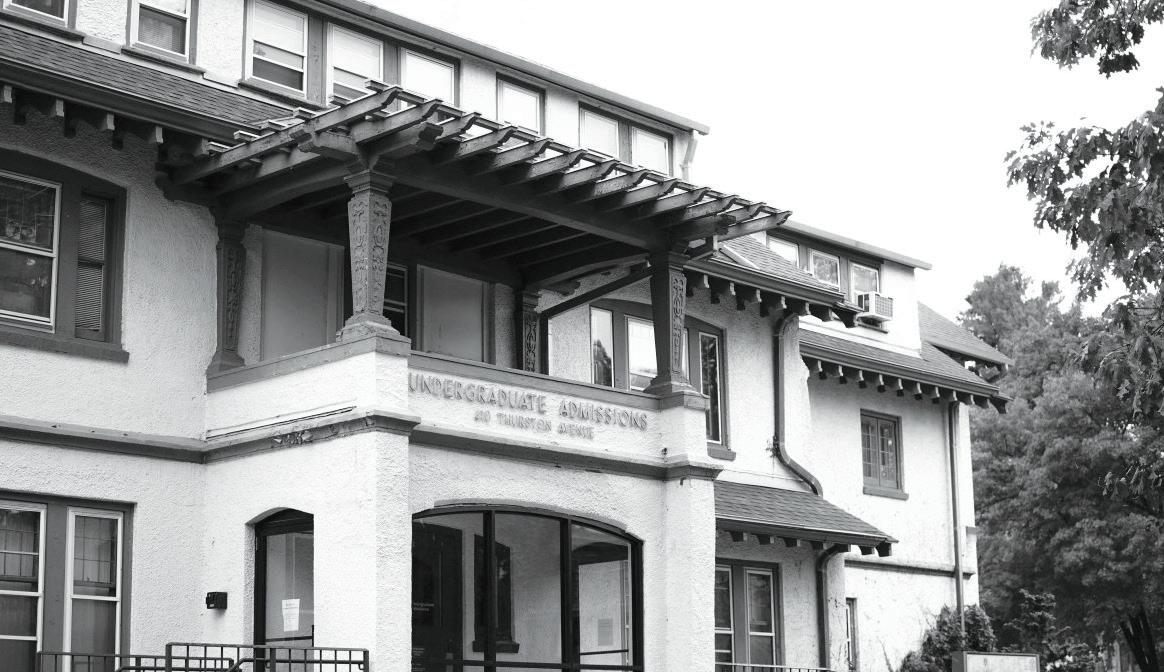

By LUKE PICHINI Sun Staff Writer
During head coach David Archer’s ’05 six-year tenure, Cornell football has only notched one win against Yale. Entering his seventh season at the helm, Archer’s recent squads have played the Bulldogs in tight matches before falling out of the contest late.
Unfortunately for the Red, it suffered a similar fate on Saturday. Despite playing well throughout the first three quarters, Cornell fell apart in the fourth, effectively sealing its own fate. Here are eight observations from the Yale Bowl:
Pick City:
With junior Richie Kenney filling in for injured senior quarterback Mike Catanese, the Cornell offense experienced a number of setbacks — four of which were caused by Kenney himself. That’s right — Kenney threw four second-half interceptions, including three in the fourth quarter. Asking Kenney to solely take the reins against a top-ranked Yale team was certainly no easy task, but Kenney’s picks derailed the offense and eliminated any chance that Cornell had of winning this contest. Kenney’s first interception was a painful overthrow. Yalie Rodney Thomas II snatched the ball and galloped into the endzone to erase Cornell’s only lead. With the Red trailing in the fourth quarter following scores by the Bulldogs, Kenney oftentimes forced the issue, and Yale capitalized with three more picks to curb any offensive momentum that Cornell possessed.
Balling Out:
On an otherwise dismal offensive day, Cornell saw the emergence of a new playmaker: Delonte Harrell. The sophomore running back was tabbed by Archer in the leadup to the season as a change-of-pace option behind senior running back Harold Coles. In the third quarter, the sophomore found himself wide open on a route, and he took the pass from Kenney to the house for an 89-yard score, which gave Cornell its first and only lead. Harrell then notched another touchdown reception late in the fourth quarter, bringing his total receiving yardage to 134 on the day.
Harrell wasn’t the only bright spot as Coles continued to shine as Cornell’s offensive centerpiece. Coming into this game sporting strong performances against Yale, Coles did not disappoint. The Erie, Pennsylvania, native netted 141 yards on 18 carries. Thanks to Coles, the Cornell offense found rhythm as it moved the sticks through big chunks gains. Through two games, the senior is well on his way to breaking 1,000 all-purpose yards as he has picked up 291 total yards along with a trip into the endzone.
Mistakes:
Besides the bounty of interceptions that shifted the momentum in Yale’s favor, Cornell shot itself in the foot several other times. To kick off the second half, the Red marched into the red zone as Coles led the way with big runs. Cornell then suffered numerous self-inflicted wounds including a negative play, a false start and a sack. A once-makeable field goal now turned into a 48-yard try, which Garrett Patla missed wide left. Near the end of the game, the Red scored a touchdown to cut Yale’s 10-point lead into a mere field-goal deficit — or so it thought. Patla’s PAT was blocked, and the ensuing onside kick was recovered by the Bulldogs’ JP Shohfi, who returned the ball for the game-sealing touchdown.
Defense:
A week after stifling Marist to the tune of seven points and two rushing yards, the Red defense had another strong showing — this time against a far more legitimate offense. While it seems that Kurt Rawlings and the Yale offense still working out some kinks, it was impressive for Cornell to limit the Bulldogs to 327 yards of offense. And though the final score shows a Yale side putting up 27 points, the defense only gave up half of those points. The Bulldogs scored twice off a pick-six and a kick-return touchdown.
Clutch Defensive Stops:
Elaborating further on the defense, Cornell came up with several huge stops to keep itself competitive. In a first quarter in which Yale outgained the Red in total yardage, 126-28, Cornell only conceded three points. That largely
By ZORA HAHN Sun Staff Writer
Cornell volleyball won its sixth straight as it downed Columbia in its first Ivy game of the season, sweeping the Lions, 3-0.
The Red was on fire, winning consecutive sets 25-21, 25-16 and 25-19 at Newman Arena last Saturday.
Cornell had 18 kills in the first set and 17 in the two following sets, which were due to huge contributions by sophomore outside Avery Hanan and freshman outside hitter Joanna Chang, who added 13 and 12 hits, respectively.
“Even if the pass wasn’t there, my focus was to give us the best chance of putting them out of system or giving us the best chance to score that point even if it’s not pretty,” Hanan said.
All of Cornell’s hitters did just that, leading them to a swift and dominant win against the Lions.
The Red’s record is now at 8-2 overall, with a current six-game winning streak.
“The first Ivy League match is always a little nerve-wracking because you’re just figuring your team out and Columbia had an incredible preseason as well,” head coach Trudy Vande Berg said. “You add in the prelims this week and next week … we came out a little sloppy in that first set, and again this team decided they didn’t want it that way. They really took control of the match … it was easy to coach.”
The Red knew going into the matches that Columbia’s star player senior Chichi Ikwuazom would be the Lion’s biggest asset. She ended the game with an impressive 15 kills.
But Cornell’s strategy was to specifically limit the number of points Columbia’s other players were making, and this is how they succeeded. After Ikwuazom, Columbia’s next leading scorers only had three hits apiece.
“We had a gameplan going in and I think we executed it really well,” said Hanan.
stemmed from a goal-line stand on Yale’s first possession. Following a long drive, the Bulldogs made their way inside the five-yard line, but Cornell came up with an enormous stop on fourth-and-one to deny Yale the score. This goal-line stand took place a week after the defense also notched two goal-line stands in Poughkeepsie. During the fourth quarter, Kenney threw his second interception — also to Thomas — pinning the Red defense inside the 10-yard line. With Yale already up by seven, Cornell could not afford to give up a touchdown. That’s when Kenan Clarke took the initiative and picked off Rawlings in the endzone to keep Cornell in the game.
Injuries:
The Red continues to be inhibited by injuries early in its season. While it seemed like Catanese would suit up after only suffering “cramps,” according to Archer, in the game against Marist, the quarterback was ruled inactive. Meanwhile, Nickolas Null returned to action after missing the previous contest. Due to his quad injury, though, Null was unable to handle place-kicking duties and could only handle punts. After exiting the Marist game with an ankle injury, Jack Burns returned to action as part of a Cornell offensive line that only gave up a single sack to Yale during the afternoon.
Similar Script:
What makes this loss sting even more is how close Cornell has come to defeating Yale in recent memory. A year earlier, the Red hosted the Bulldogs on Homecoming and played them close throughout. In the final quarter, Cornell trailed by a mere two points before Yale pulled away for a six-point victory. Saturday’s contest was a day filled with missed opportunities and unfinished drives. Had Cornell cut down on its errors and been fully healthy, one could wonder how an early win of this magnitude would shift the course of the season.
Luke Pichini can be reached at lpichini@cornellsun.com.
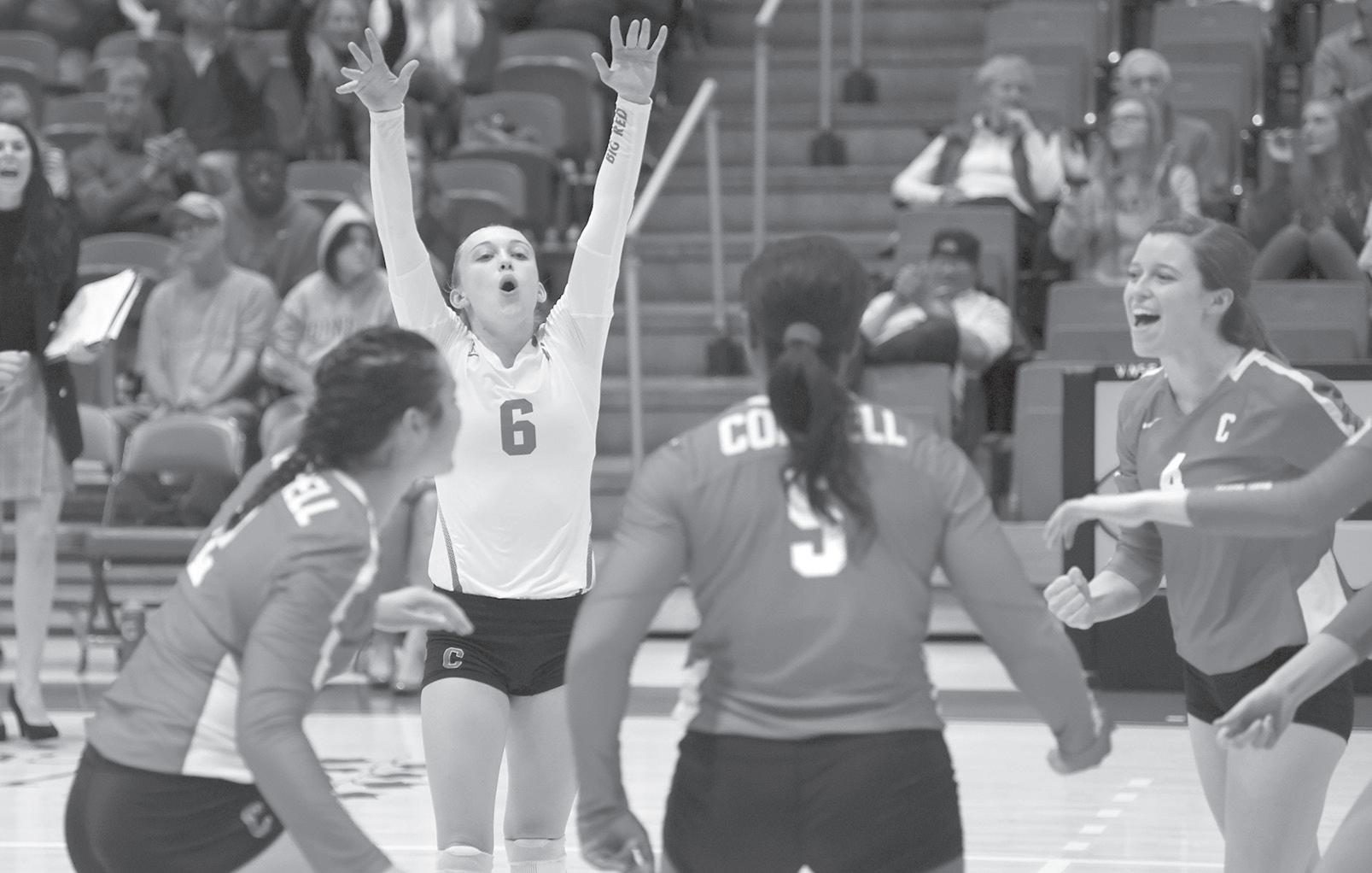
Winning ways | The Red's record sits at the .800 mark after its first weekend of Ivy League play. The team is riding a six-game winning streak.
The team is traveling to Penn and Princeton this weekend to fight to continue its winning streak.
“Princeton being the preseason favorite, they have a lot more weapons that we have to worry about,” Vande Berg said. “We talked a lot about our defensive scrappiness, getting balls off the floor.”
But Cornell volleyball is hot right now and it aimed to send a message to the rest of
the Ivy League with that first Ivy takedown.
The Red will play Penn on Friday at 7 p.m. and Princeton Saturday at 5 p.m.
Zora Hahn can be reached at zhahn@cornellsun.com.
By KEN CHOI Sun Contributor
Heading into the 2019 season, Akron men’s soccer was ranked No. 3 in the nation — but on Saturday, Cornell downed the Zips in a double-overtime thriller.
The Red took its winning streak to three with the 3-2 victory in Ohio. The Red’s aggressive pressing defensive strategy proved sufficient as they managed to finish Akron off in a high-quality game.
The Zips, which hadn’t played at home since September 2 until last weekend, are now 0-7 on the season, despite the high praise the team received coming into the year.
Cornell started strong, pressing high up in Akron’s part of the field, trying to prevent sturdy build-ups by the Zips defense. The Red came out with its powerful backline: with senior center back Ryan Bayne and sophomore center back Tate Keir as the last line of defense and with sophomore defender Jonah Kagen and freshman wingback Connor Drought on the sides providing a lot of pace.
The piece of the team that proved most critical throughout the game, however, was its offense. The attacking positions such as sophomore forward Emeka Eneli, senior forward George Pedlow, and junior forward/mid - fielder Vardhin Manoj consistently applied pressure when Akron’s
the Red up, 1-0.
However, Akron’s junior forward David Egbo scored an easy header five minutes into the second half. Akron dominated the first 15 minutes of the latter part of the match, putting senior goalkeeper Ryan Shellow to work.
Cornell retook the lead in the 25th minute when junior midfielder Harry Fuller’s free-kick was deflected by Akron’s defender Paul Hernandez and ended up back in his net.
The Red looked like it was coming up with a big win against a historically strong team, but things looked uncertain once more when Akron sophomore Marco Milanese scored on a rebound from a corner kick with six minutes left in the second half, again tying the game.
The Red almost stole the win in regulation time when Morales stole the ball from a defender, resulting
The Red almost stole the win in regulation time when Morales stole the ball from a defender, resulting in a one-on-one chance. There were six seconds left.
Head coach: ‘We got it horribly wrong’
By FAITH FISHER Sun Staff Writer
Despite auspicious early-season performances from the Red, the field hockey team faltered against the University of Pennsylvania, who wore the crown of victory this Saturday. With three second-half tallies from their opposition, the Red field hockey team surrendered its first Ivy League game of the season to the Quakers in a 5-2 contest.
The Quakers (1-5, 1-0) were the first to turn on the offensive engine, notching a quick goal in the eighth minute of the game. The Red (3-1, 0-1), however, wouldn’t let their Ivy League foe clinch an advantage so easily.
in a one-on-one chance. But Akron’s goalie did an excellent job narrowing the angle that Morales could reach and Morales’s desperate last attempt ended up
After the first 10 minutes, the Red and Akron went into double overtime. In the second minute, Fuller’s cross was headed in by Ryan Bayne, and the players
The game was almost evenly matched, with the Red taking 13 shots and Akron taking 12. However, upper hand in offensive had eight shots on Akron’s goalkeeper saves. As a result, snatched the most thrilling win so far
The Red will be back in action on Saturday in its Ivy
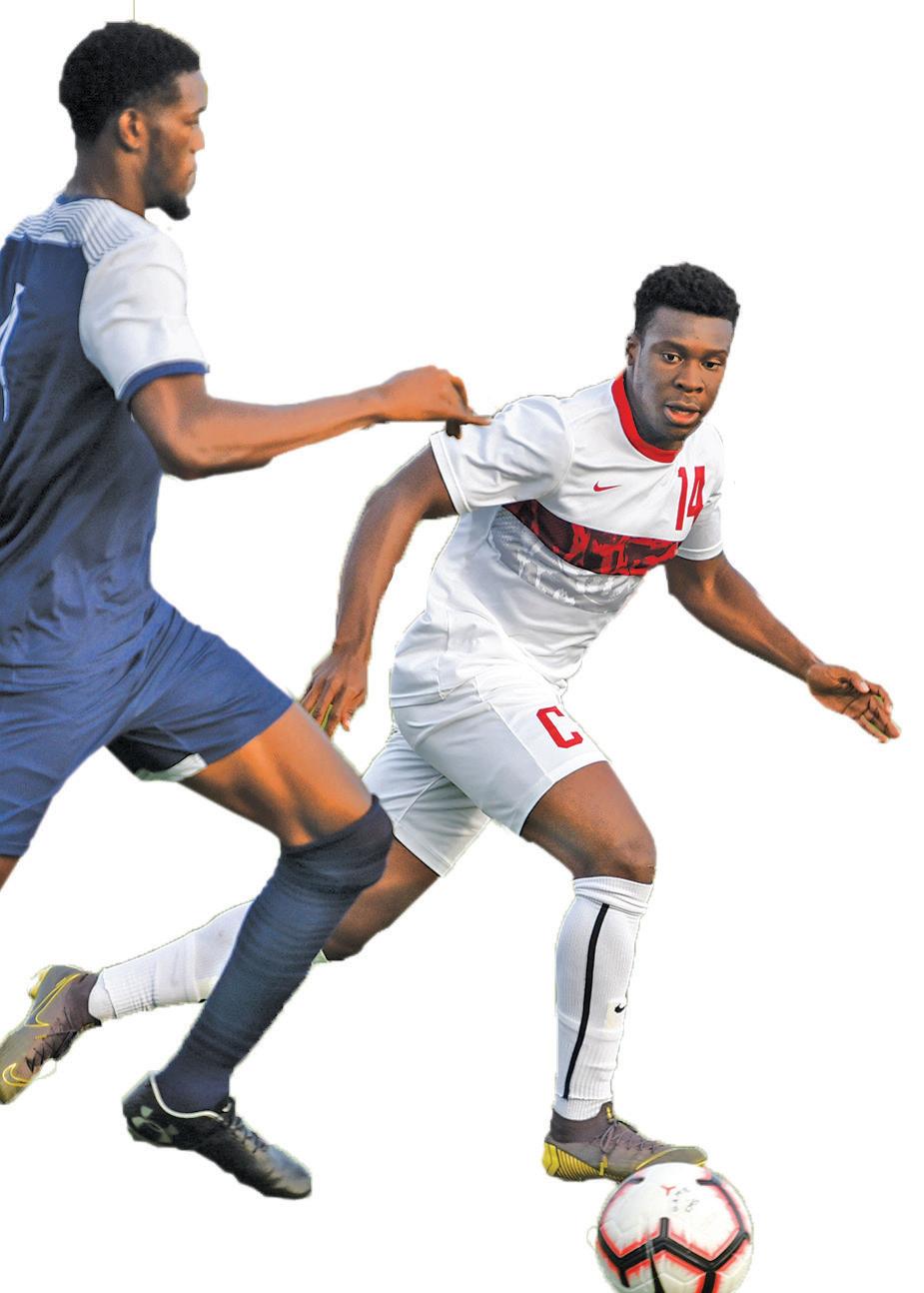
In a well-coordinated play, junior midfielder Taylor Gladd passed the ball from the bottom of the circle to meet freshman midfielder Bridget Mahoney’s stick. Sophomore Claire Jones was in the vicinity to receive the next pass, gracefully deflecting it to senior Grace Royer who executed the Red’s first goal and tied up the scoreboard.
Just 13 seconds into the sec ond quarter, Royer, assist ed again by Jones, found the back of the net again, widening the scoring gap to a one goal advantage for the Red.
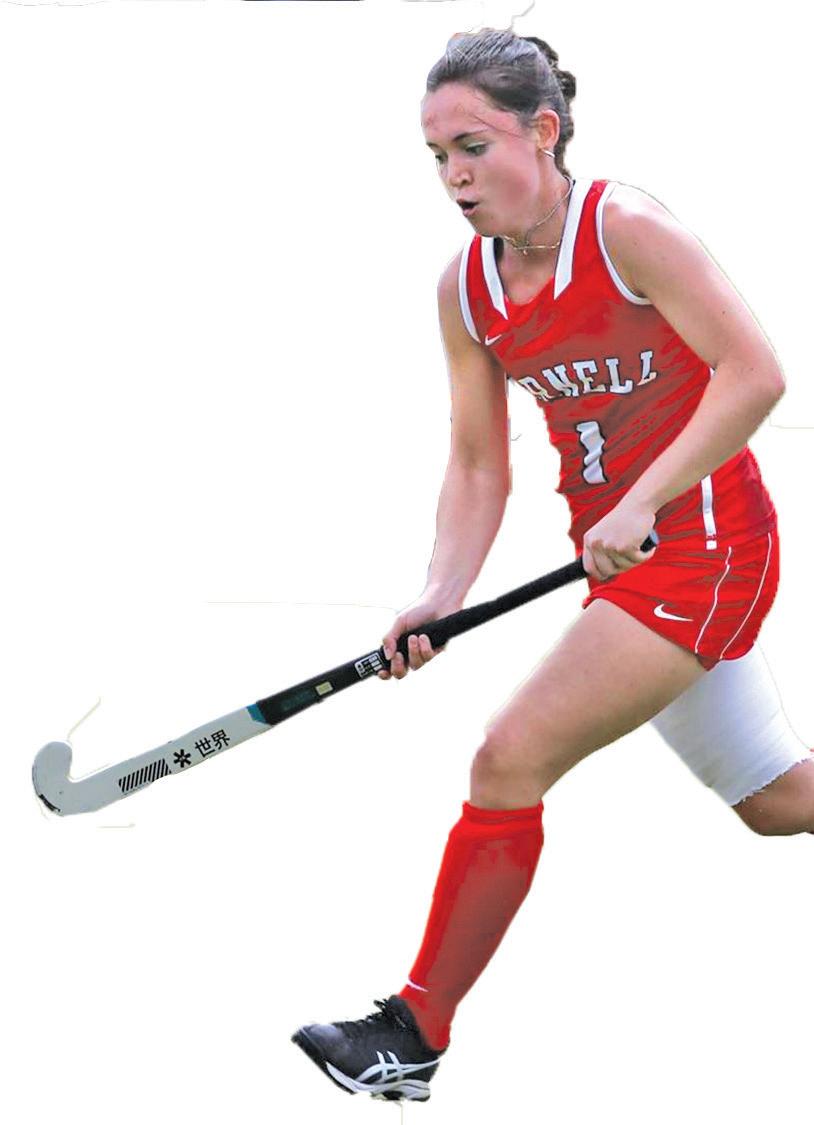
The Red let their guard down too quickly, though. The Quakers sneaked a goal into the Red’s net before the halftime whistle, leaving the game tied at 2-2.
A second-half defensive collapse from the Red set the precedent for the rest of the match, and sealed the game’s fate: “horribly wrong.”
“We got it horribly wrong all the way throughout the game,” head coach Andrew Smith said. “We weren’t switched on, we weren’t ready to play, we were caught napping at every opportunity and we had some serious breakdowns in terms of our defensive structure because of individual effort.”
The Quakers took advantage of the Red’s breakdown, firing off 7 shots, which materialized into 2 third quarter goals. Offensively, the Red could only muster up 3 more shots for the day, all of which remained futile.
A 4-2 lead proved insufficient for the Quakers, and Penn’s Elita van Staden added insult to injury with a fourth quarter goal. The dejected Red left the field with a dispiriting 5-2 loss to open up their Ivy League play.
“We lost the game,” Smith said. “We felt like we beat ourselves. We didn’t work hard, we didn’t play smart, we didn’t play to our game plan. We all have a shared responsibility for that.”
Despite the score, the Quakers held a firm offensive edge with thirteen shots on goal versus the Red’s measly 6. The Quakers also maintained a 14-6 edge in penalty corners.
The Red’s strength lies in their effort, their grit and their ability to outwork other teams — this unique strength eluded them against the Quakers, much to the disappointment of coach Smith.
“If we outwork the opposition, we have a good chance of winning any game,” Smith said. “If we allow the opposition to outwork us, we are going to lose every game. That is what we did today. We got outworked. And that to me is very unsatisfactory.”
The loss is an ugly blemish on their otherwise winning season. Yet, such a blemish will serve as a motivator, a learning opportunity and a chance to improve.
“Practice will be very interesting,” Smith said. “We have a long list of things that we need to fix. It has nothing to do with the opposition, but all to do with ourselves.”
The Red’s next face off will be against the Colgate Raiders this Tuesday at 6:30 p.m. The showdown will take place in Hamilton, N.Y., where they hope to have a more favorable result.