The Corne¬ Daily Sun

By MEGHANA SRIVASTAVA Sun Staff Writer
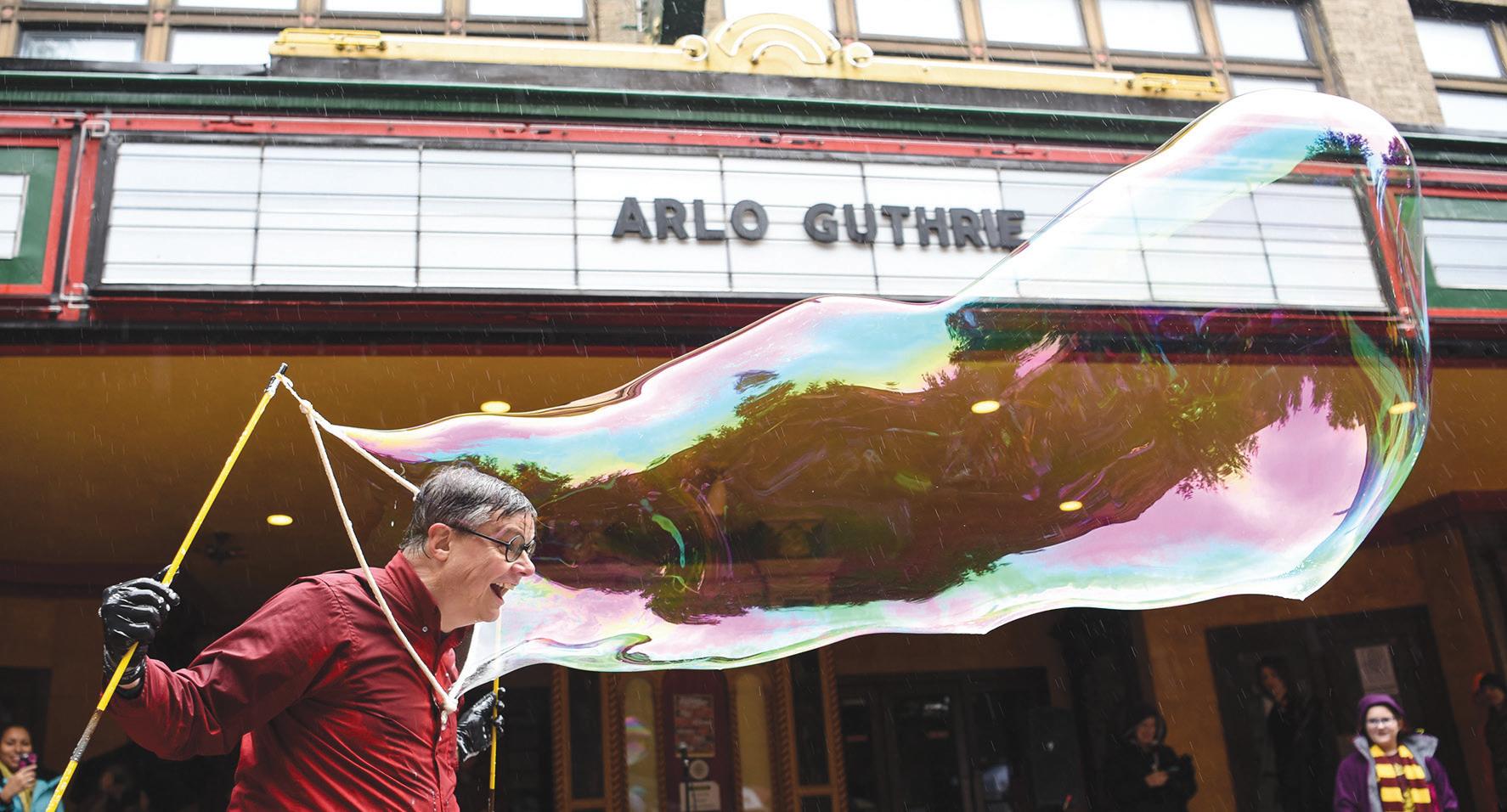
Only a few years after cementing its place as a local mainstay, fans of magic and myth will no longer be able to gather in the Ithaca Commons to celebrate Wizarding Weekend. According to a statement published on the Ithaca Wizarding Weekend website by event producer Darlynne Overbaugh, Wizarding Weekend “will not be held in 2020 or beyond.”
The event, traditionally held annually in late October since 2015, regularly featured several magic-themed events, including a Potions Crawl, a FanArt Show and Mystic Arts Ball.
In its first year, the event was planned for an audience of 500 families, according
to a previous Sun article. “But it went viral. Eight thousand people turned up,” Overbaugh previously told The Sun.
In 2018, the event began facing legal issues with Warner Bros. over copyright issues involving the alleged use of Harry Potter related names. The Sun previously reported that Warner Bros. sent Overbaugh a cease and desist letter. According to The Ithaca Journal, the festival was prohibited from using any names, places or objects related to the series.
As a result of these issues, the official name of the festival changed from “Wizarding Weekend” to “The GorgeKeep School of Magic” last year in a bid to placate the entertainment giant, according to
By CAROLINE JOHNSON Sun Staff Writer
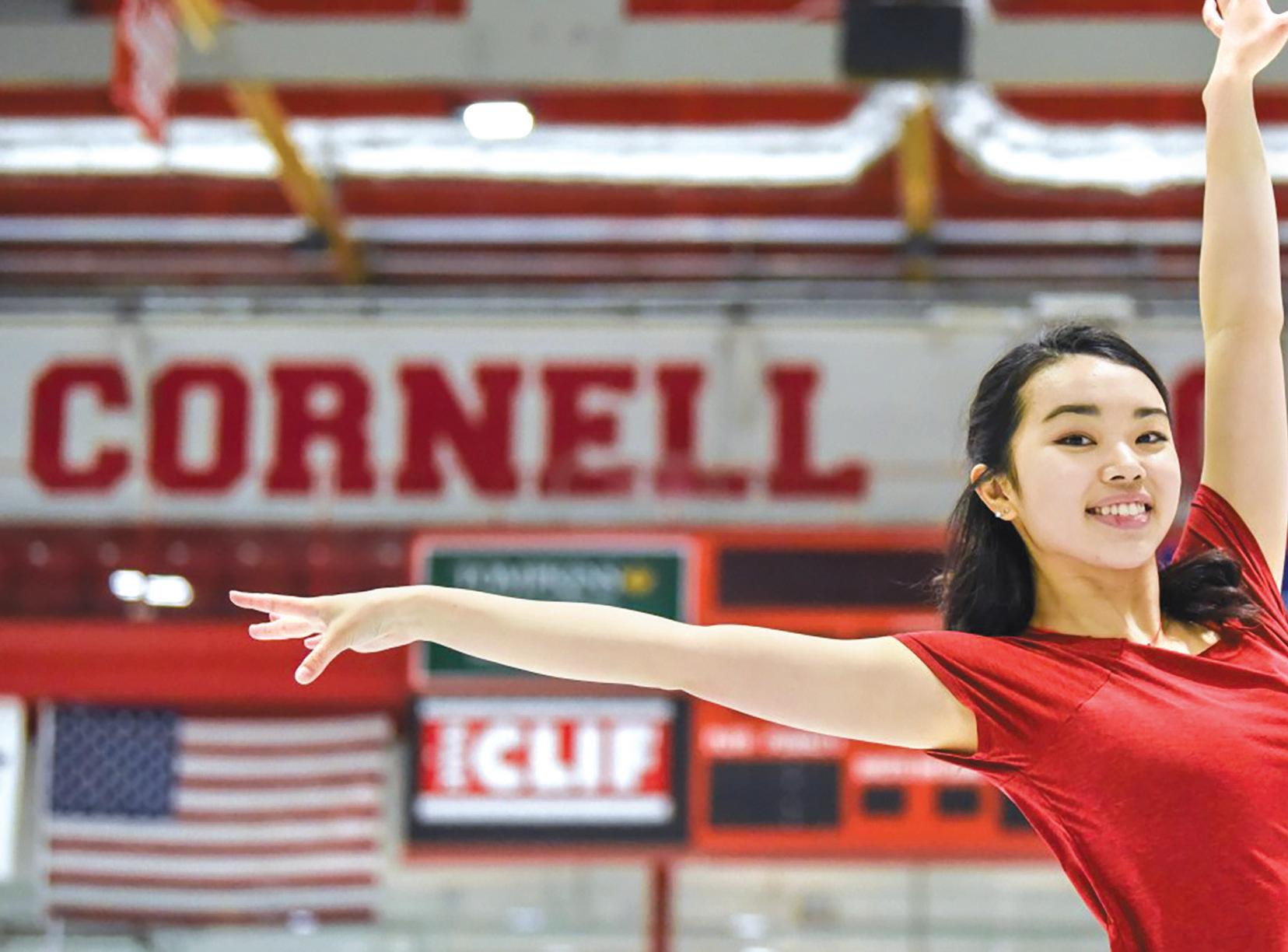
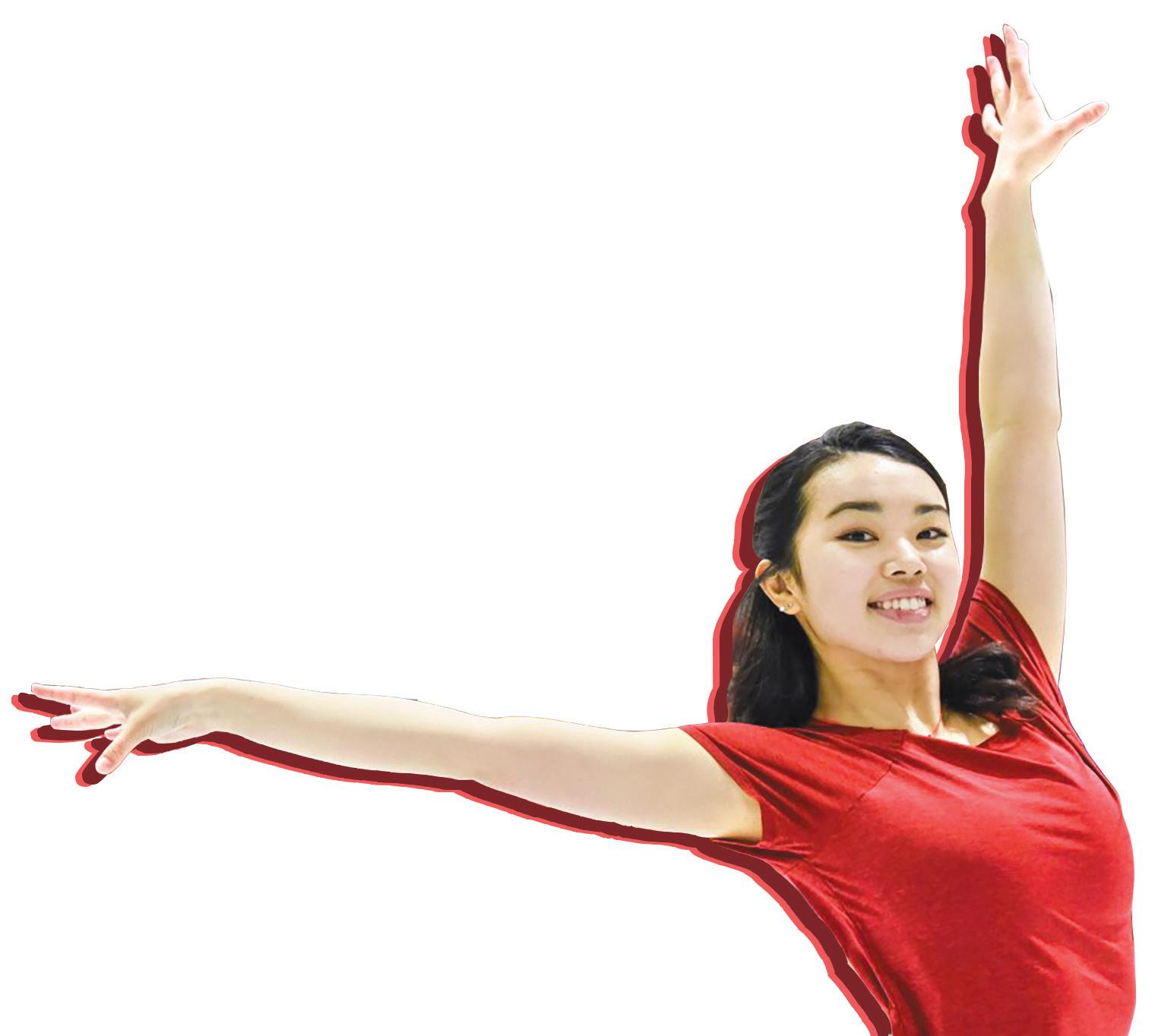
Gliding across the ice in a purple dress adorned with sparkling crystals and jewels, 2017 U.S. Figure Skating champion Karen Chen ’23 entered the ice rink in Greensboro, North Carolina, placing fourth overall at the 2020 U.S Figure Skating Championship on Friday.
After enduring a foot injury last season, Chen placed first with 70.41 points in the short program. Skating to the words of Lauren Daigle’s song “You Say,” the graceful skater did a triple spin into the air, showing her skating prowess to the audience.
Chen placed fourth over all with 193.65 points, com ing in after Alysa Liu, Mariah Bell and Bradie Tennell. Out of the three other victors, Tenell is the only other college student.
In an interview with NBC Sports, Chen cited her academics as reason why she did not rank higher at the championship.
“Although I feel like I could’ve done bet ter, I know that school was definitely a factor in my training,” Chen
A pre-med biology and society major in the College of Arts and Sciences, Chen has managed to do coursework amid rigorously training on the ice for national competi tions.
“In my head it’s doable,” Chen said in a 2019 interview with The Sun. “I’m gonna make this work. I’m not willing to give up skating and it’s still a priority for me. I dedicated so much of my life to it.”
Now, as a full time student and competitive national athlete, it has proven to be a challenge with traveling, attending class and training.
As a 2018 Pyeongchang olympian, 2017 U.S. Figure Skating
By MEGHNA MAHARISHI Sun Staff Writer
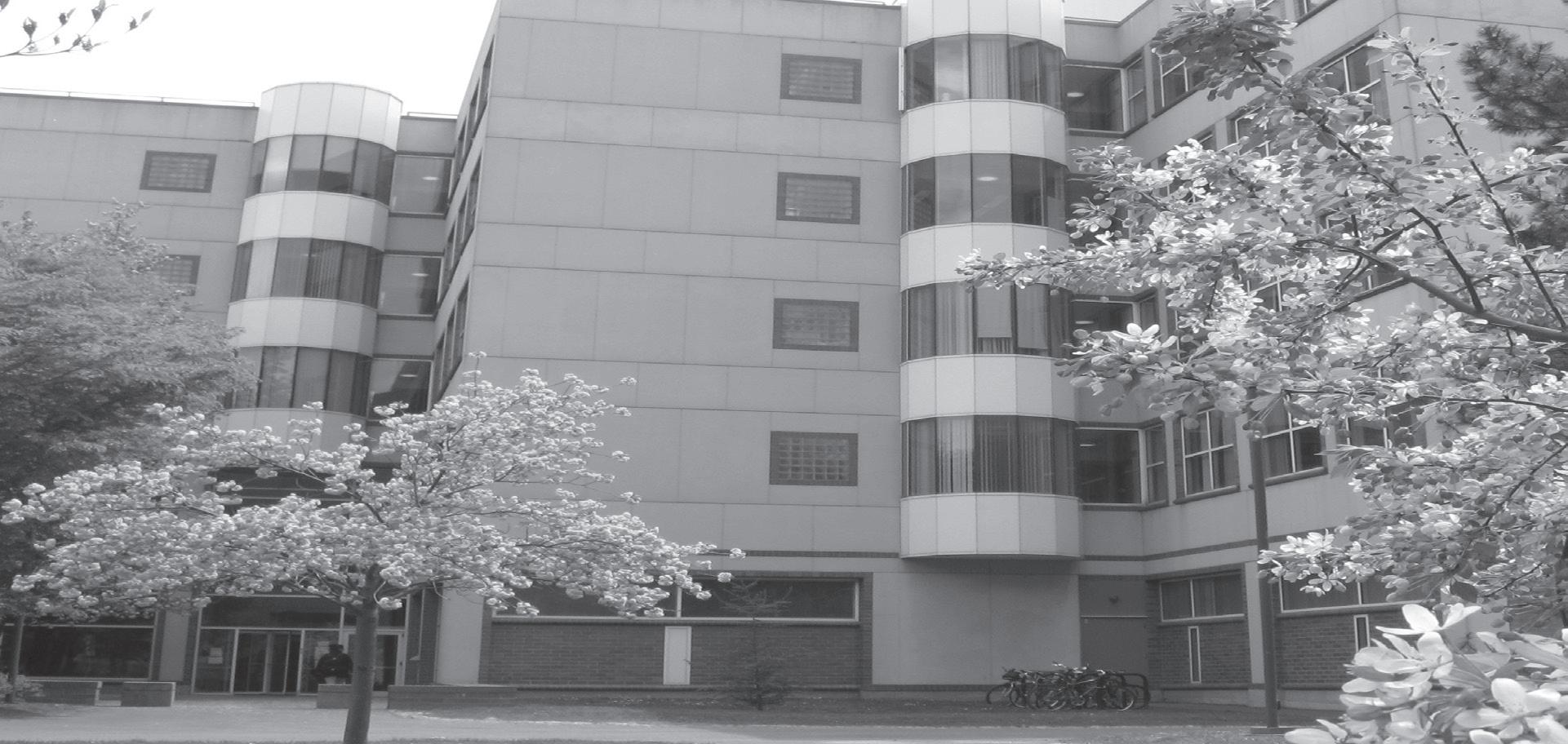
The Tompkins County Health Department will collaborate with Cornell Health to monitor a novel strain of coronavirus — which originated in Wuhan, China and has so far afflicted over 2,000 people — the department announced in a Monday health advisory.
In the health advisory, the Tompkins County Health Department said it would also work with Ithaca College Health Center and the Cayuga Medical Health Center to track the disease.
“There is low risk of infection to community residents at this time,” the announcement said. There are currently no confirmed cases of coronavirus in New York state.
Additionally, the health advisory urged any Tompkins County residents who have previously traveled to
China, or have a fever and shortness of breath, to stay home and avoid contact with others, cover up when sneezing or coughing, and to frequently wash hands.
The Tompkins County Health department’s announcement comes after Cornell Health emailed students about the coronavirus on Thursday. In the email, the health center wrote that the University would closely monitor the coronavirus with local and state resources, while carefully following the Centers for Disease Control and World Health Organization guidelines on tackling the disease. At the time, the University did not specify any of the local and
Tuesday, January 28, 2020
Working with the Cornell Brand: Visual Storytelling 11 a.m. - Noon, 102 Mann Library
Wolbachia for the Birds: Novel Vector Control Methods to Suppress Mosquitoes and Reduce Mosquito-Borne Avian Disease in Hawai’i
3 - 4 p.m., Lecture Hall 1, College of Veterinary Medicine
Office of Internal Transfer and Concurrent DegreesWalk-In Hours
3 - 5 p.m., Tatkon Center
Applied Physics Grad Society Coffee Hour
3:30- 4:30 p.m., 243 Clark Hall
Graduate School Dean Search Town Hall
3:30 - 4:30 p.m., G10 Biotechnology Building
From Little to Big Data: The Impact of Analytics in Operations Management 4:15 p.m., 253 Rhodes Hall
First-Year Student Career Services Fair 4:30 - 6:00 p.m., Tatkon Center
Celebrate the Lunar New Year 4:30 - 7:30 p.m., Okenshields, Willard Straight Hall
Introduction to Zotero Noon - 1 p.m., 106G Olin Library
17th Annual North Campus Food Show 4 - 6:30 p.m., 1st Floor, Robert Purcell Community Center
Feminist, Gender and Sexuality Studies Graduate Student Welcome Back Social 4 - 6 p.m., 190 Rockefeller Hall
Business Manager Joybeer Datta Gupta ’21
www.cornellsun.com
sunmailbox@cornellsun.com
Milstein Program Special Event: Innovation by Design
With Dr. Virginia Rath 4:45 - 7:15 p.m., Tatkon Center
The Law and Politics of Impeachment 4:45 - 6:30 p.m., 120 Physical Sciences Building
Róisín Heneghan: Work 5:15 p.m., Abby and Howard Milstein Auditorium
Campaigning eforts to back Democratic candidates ramp up as primaries approach
By Dena Behar Sun Staff Writer
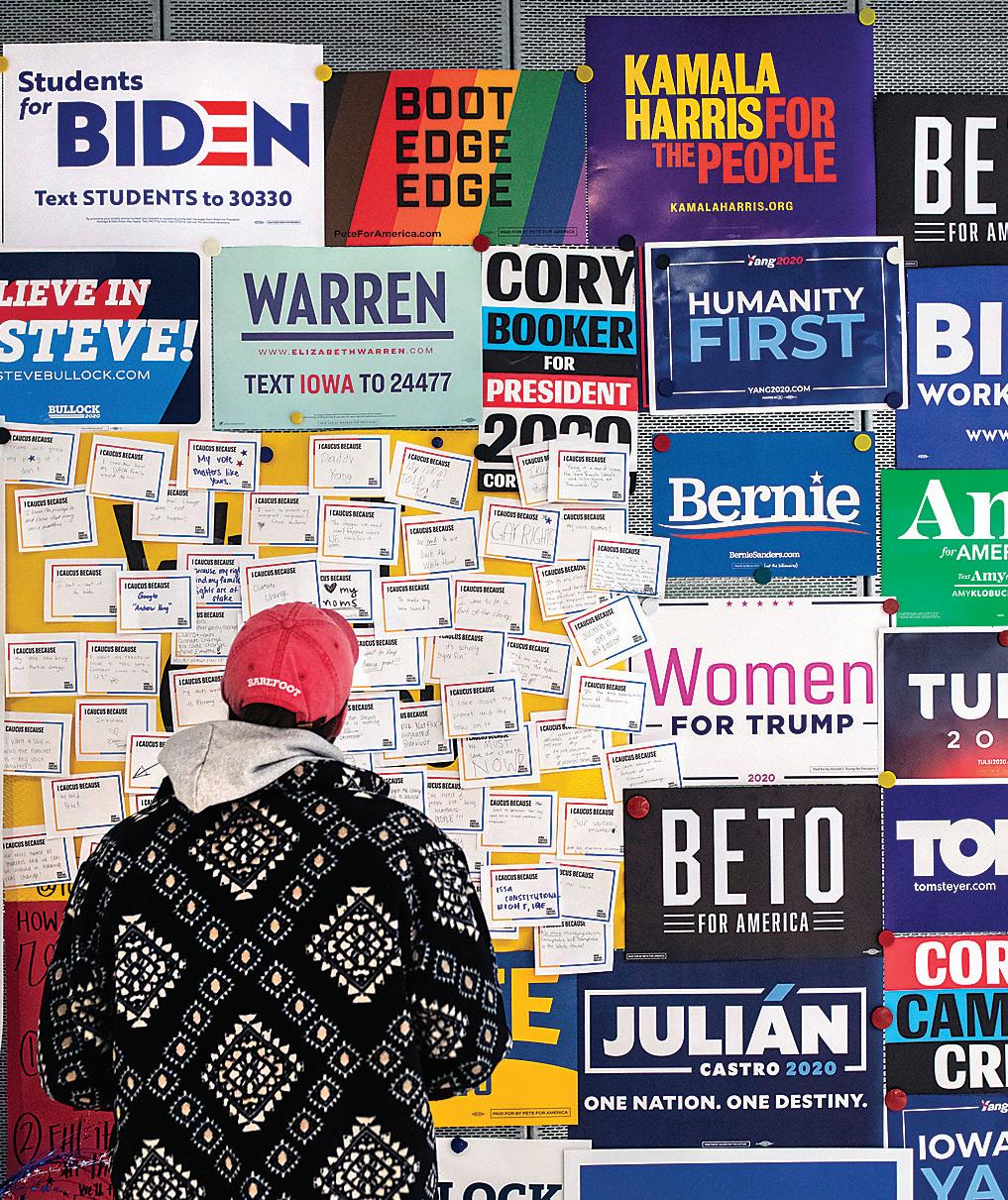
With just a week before Iowa’s first-in-the-nation caucus is set to start collecting votes, campus groups have kicked efforts to nominate their Democratic presidential candidate of choice into high gear.
As stakes for the 2020 nominating contest rise, Cornell Students for Warren, Cornell Students for Bernie, Cornell for Biden and Cornell Yang Gang have continued to canvas for their candidates on Cornell’s campus, as well as in Ithaca. Cornell Students for Warren, which has about a dozen core members and 30 to 40 periphery members, has been active since August. While the group is not officially part of Sen. Elizabeth Warren’s (D-Mass.) campaign, it is recognized as a chapter of the national Students for Warren movement.
The group’s activities have consisted of weekly phone banks and door knocking in downtown Ithaca to collect enough signatures to get Warren’s delegates on the primary ballot.
Co-leader Amanda Cronin ’21, who is also a Sun news editor, was selected to be a delegate for New York’s 23rd congressional district to represent Warren on the ballot. This means that anyone voting in the 23rd district will also be voting for Cronin and the 5 other delegates to send them to the Democratic National Convention in July to nominate Warren, if she wins the primaries.
See ELECTION page 3


By Annabel Li and Tamara Kamis Sun Staff Contributor and Sun Staff Writer
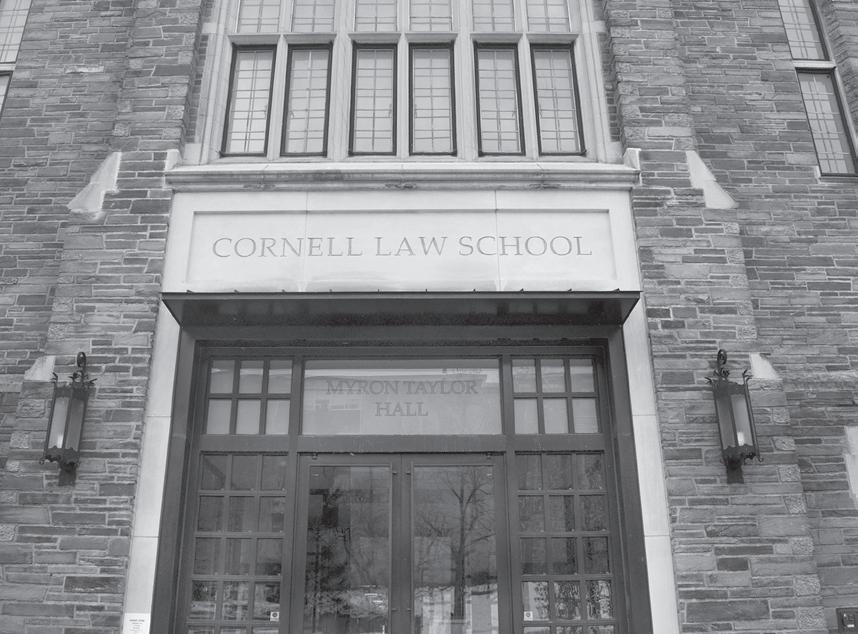
Within the bright atrium of Myron Taylor Hall, students can typically be found gathered around small circular tables, buried in readings and annotating briefs.
But for the over 100 students who participate in Cornell Law School's Asylum and Convention Against Torture Appellate Clinic — the only law school clinic to focus only on immigration cases — homework can take on very real-world implications.
“The idea is to give them an opportunity to lawyer in slow motion,” Prof. Ian Kysel, law, who teaches the clinic, told The Sun. Under the supervision of faculty, students represent clients in appeals cases in front of the Board of Immigration Appeals, a federal body that reviews the decisions of U.S. immigration courts.
One recent case handled by the clinic involves their client, Mr. M, an ethnic Nuer and a refugee born to Sudanese parents. As a lawful permanent resident — a non-citizen legally authorized to live in the U.S. — Mr. M has lived in Iowa since he was four years old.
But, at 18, Mr. M was convicted of first-degree theft and second-degree robbery, crimes that can often be grounds for deportation. After his release from prison, Immigration and Customs Enforcement detained Mr. M, where he was forced to argue for his continued stay in the U.S. before an immigration judge.
That judge found his convictions to be aggravated felonies “without ... hearing evidence from either
Department of Homeland Security or the client,” the appeals brief alleged, and decided to deport Mr. M to South Sudan.
Now, Mr. M’s future as a U.S. resident will be dependent on the efforts of Alexandra Kovaliouk law ’20 and J.P. McElroy law ’21, who are both members of the Appellate Clinic.
Mr. M requested a Convention Against Torture deferral, which prohibits the removal of individuals to a country where they could face persecution. While the immigration judge ruled that Mr. M qualified for this deferral, the DHS appealed the decision.
“The idea is to give them an opportunity to lawyer in slow motion.”
Prof. Ian Kysel
In response to the appeal, Kovaliouk and McElroy argued that Mr. M’s convictions were not aggravated felonies, and “relevant legal qualifications for CAT were met.”
Research on the conflict of South Sudan and the legal preconditions for the deferral led the pair of law students to the conclusion that Mr. M would face a large risk of persecution because of his gender, age and ethnic background. Other characteristics they argued would make Mr. M vulnerable included his relation to other murdered opponents of the government and his Iowa upbringing.
While the outcome of the case is still uncertain, Prof. Kysel told The Sun that the students’ role in the case is complete, as they are only involved in the appeals process.
In a second case, worked by Eirene Kim law and Connor Boehme law, their client, a Cuban native, sought asylum in the U.S.
Their client worked a government job in Cuba, but was soon terminated after he refused to participate in pro-government demonstrations. Then, the client became involved with an anti-government group where he distributed materials and attended demonstrations and meetings.
The client fled Cuba after he and his wife experienced extended surveillance from the government, in which Cuban government security forces would follow

By Meghana Srivastava Sun Staff Writer
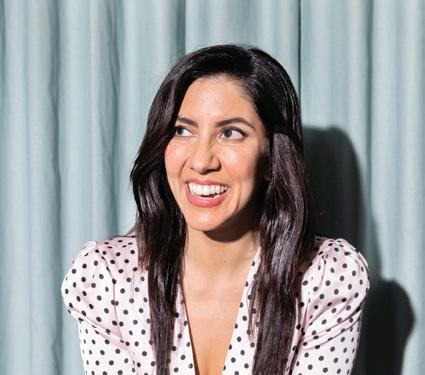
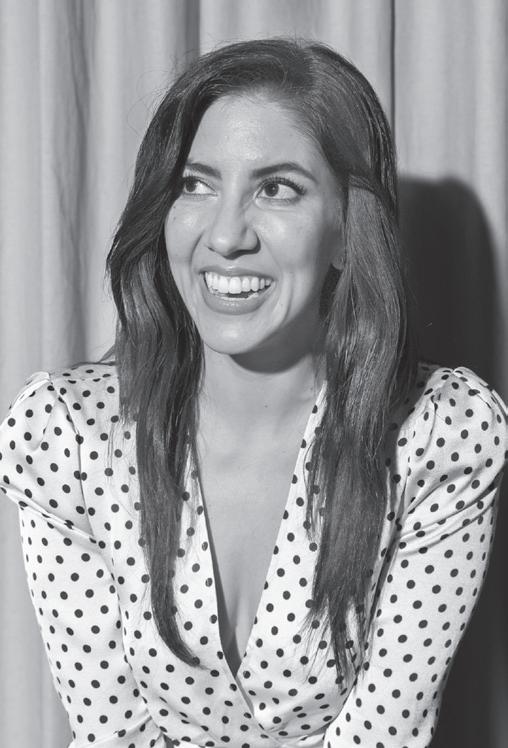
Taking a break from interrogating suspects as a detective on NBC’s hit show Brooklyn NineNine, actress Stephanie Beatriz will visit Cornell to discuss her career and the show.
In an event organized by the Cornell University Programming Board, Beatriz will participate in a question-and-answer session moderated by Prof. Samantha Sheppard, performing and media arts, at Bailey Hall on Friday, Feb. 14 at 7 p.m.
Beginning her career with minor roles on TV series like The Closer and Southland, Beatriz went on to have a recurring role as Sonia, Gloria Pritchett’s sister, on Modern Family in 2009. In addition to TV, Beatriz has worked in numerous films, such as Short Term 12 in 2013 and Ice Age: Collision Course in 2016.
The actress is best known for her role as Detective Rosa Diaz, an intimidating but hard-working member of the squad, on Brooklyn Nine-Nine. She began the role in 2013, and the show’s seventh season is set to air in February.
Brooklyn Nine-Nine has won several awards, including two Creative Arts Emmy Awards in 2014 and 2015, a Golden Globe Award for Best Television Series – Musical or Comedy in 2014, and a GLAAD Media Award in 2018 for LGBT representation, which Beatriz — who is openly bisexual and an LGBT advocate — accepted on behalf
of the show.
Beatriz is set to have a role in the upcoming film, In the Heights — based on the Broadway musical written by Lin-Manuel Miranda and Quiara Alegría Hudes. The film will be released on June 26.
The event is also co-sponsored by Cornell’s LGBT Student Union, Haven and the Multicultural Concert Funding Advisory Board.
Cornell students can purchase tickets starting Wednesday, Jan. 29 at 10 a.m. at cornelltickets. com. Tickets will be available to the general public starting Thursday, Jan. 30 at 10 a.m.
ELECTION
Continued from page 3
Zeke Uriel ’20, the group’s other co-leader, told The Sun that Warren is a popular candidate on campus, particularly with the Cornell Democrats.
“I’ve been to [the group’s] debate watch parties in the fall, and they’ll do straw polls after, and I think Warren’s come out on top in every one,”
Uriel said.
Uriel said he has also seen support for Warren in Ithaca as well.
“When we were going around knocking on doors, people were super happy talking to us even if they weren’t going to vote for Warren, and of course many of them were, which was nice to see,” Uriel said.
“Like the Obama campaign in 2008, I feel like Bernie’s election will be carried by young people.”
George Defendini ’22
While former
Vice President Joe Biden currently leads in most national polls, the moderate candidate’s supporters have not seen the same level of excitement for their candidate.
“A lot of oxygen in the room is taken by the more progressive candidates,” said Cornell for Biden president David Bromberg ’23. The Cornell for Biden group, which has around four to five core members, has hosted phone banking and tabling events in the past.
While Bromberg believes there are plenty of Biden supporters on campus, he thinks it will be harder to connect with them.
“We’re not the loud activists,” Bromberg said. “We like experience, we like change, but we like to work toward the middle, and that’s just not where a lot of the Cornell campus falls. It’s a relatively
liberal campus.”
On the other hand, Cornell Students for Bernie leaders Leanna Zilles ’21 and George Defendini ’22 believe liberal colleges and universities like Cornell are the ideal places to rally for Sen. Bernie Sanders (I-Vt.), who they believe has an “overwhelming amount” of support on college campuses.
“Like the Obama campaign in 2008, I feel like Bernie’s election will be carried by young people,” Defendini told the Sun. “Warren has a lot of similar appeal but I feel like Bernie is far and away the young people’s candidate.”
Unlike the other groups, the Students for Bernie organizations are affiliated with the broader national campaign. The Cornell chapter, which has around 40 members, spent this past weekend door knocking in New Hampshire, targeting undecided voters in advance of the Feb. 11 primary.
Last semester, the group held various events such as canvassing in Ithaca, ice cream socials at the Dairy Bar and a teach-in on the Green New Deal, a sweeping plan Sanders has adopted to address climate change.
Cornell Yang Gang leader Josh Zheng also believes his candidate is popular on Cornell’s campus — particularly because of his so-called “freedom dividend,” which aims to eradicate poverty through a monthly $1,000 income, as well as his status as “an outsider and a unifier.”
The group, which is made up of three core members and around 30 more casual members, have been tabling on campus to collect ballot signatures and trying to provide students with more information about Yang’s platform.
While all eyes will be on the early primary elections in Iowa and New Hampshire, each group plans to continue their local efforts up until the New York primary on April 28.
Dena Behar can be reached dbehar@cornellsun.com.

ASYLUM
Continued from page 3
the couple whenever they would leave the house.
An immigration judge — who found the Cuban native’s testimony credible — initially granted asylum. However, the DHS filed an appeal, reopening the case for consideration.
Kim and Boehme filed a motion to dismiss, arguing that the DHS appeal was not filed within the 30-day deadline, violating the Administrative Procedure Act. The DHS claimed this was due to a mailing mishap.
On Jan. 6, the Board sided with Kim and Boehme, dismissing the DHS’s appeal as untimely. Kysel described Kim’s and Boehme’s approach to the case as “novel,” lauding the students ability to get the Board to agree.
The duo described the experience as an “incredible challenge which helped us understand, in a much deeper way, not only the asylum system, but what it means to advocate for a client.”
Annabel Li and Tamara Kamis can be reached at lal274@cornell.edu and tkamis@cornellsun.com.
WIZARDING
Continued from page 1
The Ithaca Voice. Overbaugh cited “corporate greed, financial and organizational obstacles, and a steady decline of support from key local community members, organizations, and agencies” as reasons for her decision to discontinue the event in an online statement.
However, her statement also explains that “2020 will serve as an opportunity to evaluate and create a socially, ecologically and financially sustainable way forward for The GorgeKeep School of Magic and the new GorgeKeep Festival that will be hosted in 2021 in Ithaca, NY.”
Meghana Srivastava can be reached at msrivastava@cornellsun.com.

Gregory McLaskey Ph.D. ’05 claims $500k National Science Foundation prize for seismological innovation
By ARI DUBOW Sun Staff Writer
When talking about squeezing rocks together, Prof. Gregory McLaskey Ph.D ’05, civil engineering, gets a glimmer in his eyes.
Using the world’s largest rock squeezing machine, McLaskey researches the hidden mechanics of earthquakes — research for which he received the $500,000 National Science Foundation early career award.
The award supports “early-career faculty who have the potential to serve as academic role models in research and education and to lead advances in the mission of their department or organization,” according to the NSF website. The academic work worthy of this award should work toward “integrating education and research.”
He is one of seven Cornell professors that received the award this year.
With both graduate and undergraduate students, McLaskey conducts his research in a room on Cornell’s campus that looks part auto-mechanic shop, part archaeological dig. The machine, which he finished building in 2016, is a platform of two smooth rectangular granite slabs, nearly ten feet wide and 16 feet long, sitting edge to edge to simulate a tectonic fault. Around the edges of the slabs are hydraulic cylinders, capable of applying millions of pounds of force.
fault line changes drastically from simulation to simulation, McLaskey said.
One of the merits of this machine is that it can replicate “slow” earthquakes — ones that register on seismic sensors, but are not felt by anyone on the surface. Slow earthquakes, according to McLaskey, may trigger larger, “fast” earthquakes. The 8.9 magnitude earthquake that hit Japan in 2011, for instance, was preceded by many slow ones, according to McLaskey.
By simulating earthquake forces, McLaskey and his team can make precise calculations about the ways two naturally crashing plates behave thousands of feet beneath beneath the Earth’s surface.
“They may sound the same each time they slip,” McLaskey said, imitating the “booms” made by the simulated earthquake. “But each earthquake is unique.”
At extreme pressure, huge rocks — including those in McLaskey’s machine — become dynamic in their movements, allowing for variation in the location of seismic waves between different quakes. “We’re asking: How is rock deformation linked to shaking?” McLaskey said.
“They may sound the same each time they slip ... But each earthquake is unique.”
Prof. Gregory McLaskey Ph.D. ’05
Only large rocks behave with this kind of flexibility, which is why a machine of this size is so valuable to research, according to McLaskey. The location of one slip might suggest where the next slip will occur, and this kind of data aims to better predict where and when earthquakes might hit, as well as anticipate their magnitude.
including in Arkansas, Oklahoma and Ohio.
Into the slabs of granite and plastic, McLaskey drilled small tunnels which lead to the fault line. While the rocks are under pressure, he pumps water into the holes to observe its ability to trigger earthquakes. This research hopes to give
“All awards call themselves awards but are really just funding. This award is about funding, but also about who you are.”
Prof. Gregory McLaskey Ph.D. ’05
McLaskey and his team a better understanding of how the oil and gas industry can cause unintended earthquakes.
“Another one of my main questions now is, do you really need such a big rock, or can you use different materials at a smaller scale,” McLaskey said.
He is using plastic blocks in similar experiments, hoping to figure out what smaller sized blocks of plastic have the same seismic reactions as the massive granite blocks in the rock squeezing machine.
“If you want to understand tides, you can change the viscosity of the liquid and simulate a day’s worth of waves in a few hours,” McLaskey said. “We don’t know how that scaling works in earthquakes.”
Once in motion, one row of hydraulic cylinders applies pressure—up to seven million pounds—to push the slabs together along the fault line. Then, another row of cylinders apply more pressure—up to three and a half million pounds—in the perpendicular direction, to make the plates slip along the fault line.
“The layman might say ‘if the pressure is all the same, the rocks just slip at the same time,’” McLaskey said. But as it turns out, the location of the slip along the artificial
state resources it planned to work with to track the illness.
Anne Jones ’04, director of medical services, told The Sun in a statement that the collaboration between Cornell Health and the Tompkins County Health Department was typical during a major outbreak.
“A campus of our size and complexity regularly experiences public health challenges requiring well-organized planning and response,” Jones said. “Cornell Health regularly partners with the Tompkins County Health Department in managing communicable illnesses and infectious diseases.”
This particular strain of coronavirus may have emerged from one of the Chinese wildlife markets in Wuhan — the Chinese government banned the trade of wildlife products due to the outbreak. Symptoms of the illness include a high fever, cough, shortness of breath and a sore
In light of the outreach aspect of the NSF award, McLaskey is looking at two main issues that apply far outside the lab. The first is the way plates behave when injected with liquid.
This research is relevant to the effects of the oil and gas industry — according to McLaskey, oil and gas companies accrue thousands of gallons of wastewater, and to dispose of it cheaply, inject it into the ground. This process, McLaskey said, has caused many earthquakes in the last decade,
McLaskey’s goal is to be able to apply calculations from crashing plates of a smaller size to the mechanics of larger plates. This would mitigate the barriers to data collection posed by the expense and size of the machine like the one in this lab.
“All awards call themselves awards but are really just funding,” McLaskey said. “This award is about funding, but also about who you are.”
Ari Dubow can be reached at adubow@cornellsun.com.
throat, while pneumonia can develop in more severe cases.
As of Monday evening, the disease has sickened 2,744 people in China, of which 1,423 cases are in Hubei, Wuhan’s province.
In the U.S., there are so far five confirmed cases of the coronavirus in California, Arizona, Washington and Illinois. All patients diagnosed with the virus had previously traveled to Wuhan. The CDC screened 110 more people in the U.S. for the infection, and urged U.S. citizens to avoid all nonessential travel to China.
Anxieties surrounding the Wuhan coronavirus have also permeated campus. Chinese international students told The Sun about their worries for the disease back home and at Cornell. Shortly after classes resumed, many students could be seen wearing facemasks as a preventative measure.
Meghna Maharishi can be reached at mmaharishi@cornellsun. com. VIRUS Continued from page 1

I’d be a fool not to begin my run of columns in the new decade with the last big gaming event of the 2010s: the release of a show on Netflix. I’m talking about The Witcher (2019), a Netflix Original show whose cult following sprang up practically overnight. The franchise already had a sizable fanbase: Andrzej Sapkowski’s original book series about the whitehaired monster hunter Geralt, starting with The Last Wish and originally published in Polish, has been around since 1993, and was first adapted into a video game by C.D. Projekt Red in 2007. But there’s something about the 2019 streaming series that’s captured the imagination of the greater public and turned the song “Toss a Coin to Your Witcher” into a worldwide phenomenon beyond fans of Polish fantasy novels.
The show dropped on Dec. 20, 2019, and by Jan. 1, over 100,000 people on Steam were playing The Witcher 3: Wild Hunt, the most recent installment in the series. Netflix reported that The Witcher was their second most popular show of the year, second only to Stranger Things, and the original book series’ publisher is sending 500,000 additional copies to print in response to the demand created by the show. Witcher-mania has even conquered the iTunes store, with the show’s original soundtrack rising to number four on the charts the day after it came out. Out of each adaptation, why has this one gained such a following, and why now?
does eventually circle back to the striga plot in episode three, “Betrayer Moon,” but even then it’s different, making the story a mystery Geralt has to solve instead of a series of lengthy expositional dialogue like in the book or a context-less cutscene in the game.
Everything in Netflix’s Witcher is more cinematic, offering pieces of the world and story and encouraging the viewer to draw their own conclusions from them. The Last Wish novel reads like a collection of short stories, so this style of storytelling makes sense, but the show has the added advantage of its stunning costume design. The books have an abundance of fantasy character names with little description to differentiate them. Within the first 20 pages of the book, I grew confused. Who is Velerad? Who’s Ostrit? Do I need to open the wiki just to understand what I’m reading? In the show, it’s equally hard to remember names (except for the truly memorable, like Yennefer of Vengerberg and Mousesack) but it doesn’t really matter because the costume design and makeup allows the viewer to identify characters by sight, not by moniker. The 2007 Witcher game similarly relies on visuals, but doesn’t have the same flexible storytelling, instead relying on cutscenes peppered with point-and-click game mechanics that feel like a lower stakes League of Legends
the Level
My instinct is to say it’s filling the void that Game of Thrones left behind with its dissatisfying conclusion last year, providing a rich but modern fantasy world. Removed from the shadow of Thrones, though, The Witcher offers more than that: diverse casting, a conspicuous lack of on-screen sexual assault and plenty of humor sprinkled in amongst the grime and action. I was curious to see if the show’s success was due to a divergence from the source material or from being a faithful adaptation, so I started reading The Last Wish and playing 2007’s The Witcher this weekend.
Each of these three incarnations introduce Geralt of Rivia, the titular Witcher, in a different way. In the books, we first meet Geralt during a one-page, no-context sex scene, before skipping ahead to him entering a tavern, looking for work and starting a fight in the process. The first game adaptation starts with the same adventure, but skips all the sex and exposition to jump right into the Witcher’s fight with the striga, a sort of teenage-zombie-werewolf, in a grueling seven-minute cutscene. The show takes an entirely different approach. Episode one, “The End’s Beginning,” shows Henry Cavill’s Geralt battling a kikimora (a big spider thing) before jumping into Geralt’s work in Blaviken, a story which appears later in the book. The show
When I saw what the game was like, I was worried I wouldn’t like it — I hate click-based fighting mechanics, which is why I never really got into League I also love a good narrative, but it felt like the story and mechanics were at odds with each other — I had to stop playing to watch the story, or vice versa. The 2015 installment, Wild Hunt, is a far more popular game, so I was worried I’d picked the wrong game to use for my research. But by the end of the weekend, I was reluctant to stop playing. I wanted to see Geralt explore more of Kaer Morhen, a location we haven’t yet seen in the Netflix show, regardless of how much I had to click to get there.
Like many others, I’m beginning previous incarnations of the story as I wait for Netflix to drop the next season in 2021. We live in an age of adaptations, and every game and comic from the last 20 years seem to be getting a new reboot, leaving fans to worry that the originals will be left behind. But The Witcher (2019), despite, or maybe because of, its narrative mutations inspires its viewers to overcome page counts and mechanics just to spend a few more hours in its world.
Olivia Bono is a senior in the College of Arts and Sciences. She can be reached at obono@cornellsun.com. On the Level runs alternating Tuesdays this semester.

DANIEL
MORAN
AND
BRIAN LU ASSISTANT ARTS EDITOR AND SUN STAFF WRITER
It’s overwhelmingly cliche to criticize the Grammys at this point, but way too much that happened on Sunday night to let slide. Before the awards even began, the Recording Academy reacted to the death of Kobe Bryant by stating that they wouldn’t let fans gather outside Staples Center (where the Grammys were held, and the home arena for Bryant’s Los Angeles Lakers). After coming out of the gate in such poor taste, performing artists such as Lil Nas X and John Legend honored Bryant alongside fellow Los Angelan Nipsey Hussle, who was killed in a shooting in March 2019.
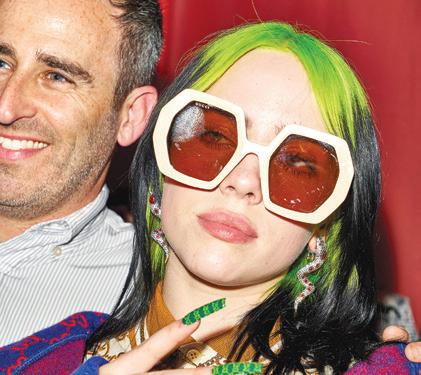
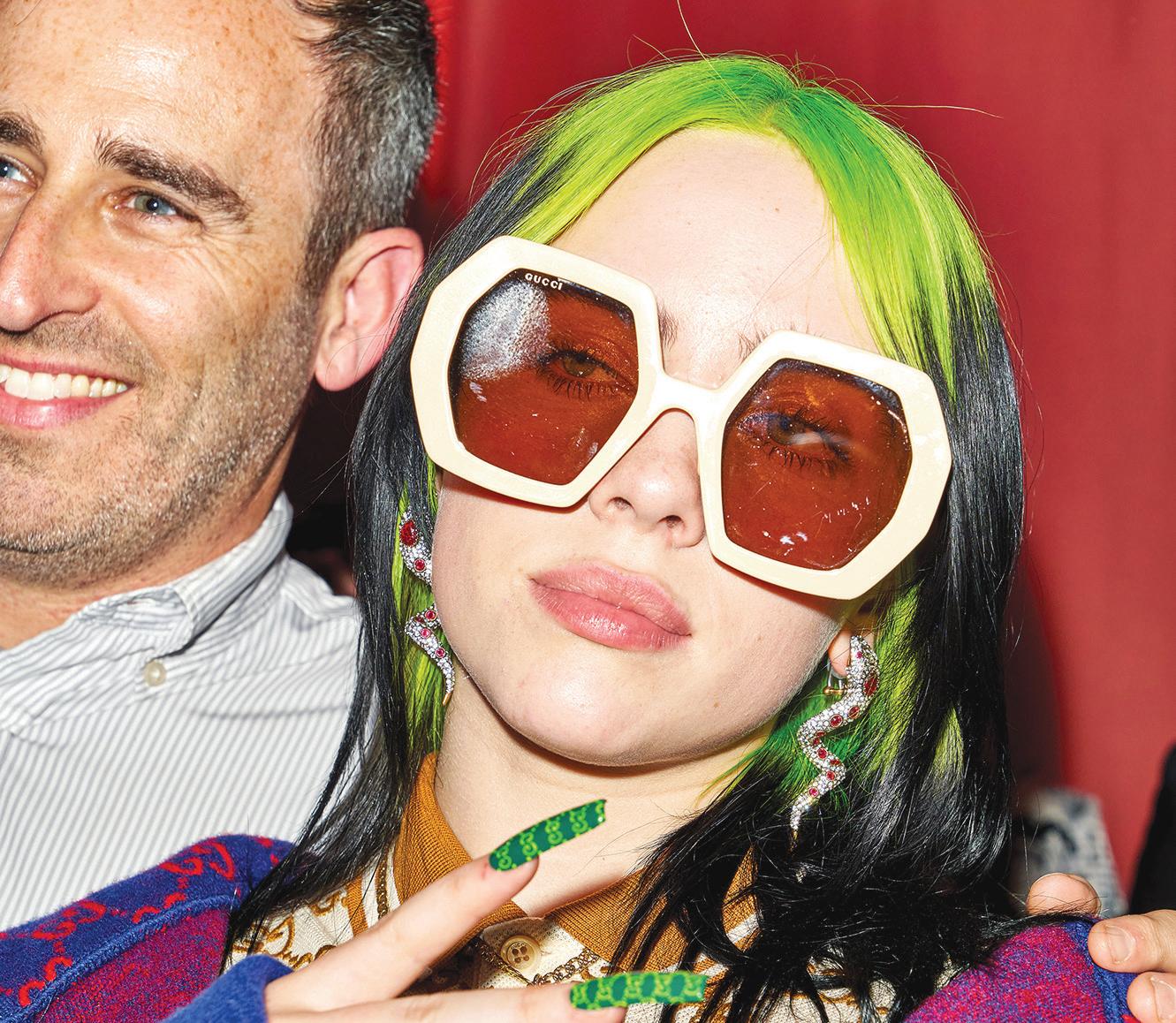
Apart from these tributes, the ceremony itself remains just as chaotic as the previous years, with some winners arousing more surprise than others. Billie Eilish, 18, swept the major awards throughout the night, taking Record of the Year and Song of the Year with ‘Bad Guy’ alone. Her album, When We All Fall Asleep, Where Do We Go? managed to beat out giants like Lana Del Rey’s Norman Fucking Rockwell! in the struggle for Album of the Year, as well as other household names like Ed Sheeran and Taylor Swift in Best Pop Vocal Album.
Eilish, though not undeserving, is a marketable, industry-backed brand of “weird;” a little bizarre and jarring at first, sure, but a gimmick that is rapidly getting old.
Tyler, the Creator took home his first grammy last night, winning Rap Album of the Year. One of the most important parts of the evening was in a speech shortly after he accepted the award, about how the Grammys consistently place Black artists who make genre-bending music in the Rap or Urban category. Igor isn’t really a rap album, and it would have more than held its own in the Album of the Year category. The Grammys consistently seem as though they’ll only let certain (i.e., Drake) mega-star rappers move outside of their home genre. I mean, we spent the better part of 2019 harassing Billboard for not listing “Old Town Road” as a country song, only for it to not receive a single nomination in any country category.
As for the red carpet outfits, Lil Nas X brought the heat in an all pink Versace cowboy outfit, while Shawn Mendes continued his brand with a suit that was about as exciting as Cheerios. Tyler, the Creator served up Grand Budapest Hotel vibes in his red carpet outfit before returning to his signature Golf Wang apparel come awards time.
Now that the ceremony has come and gone, the Grammys and the excitement surrounding it will once again be forgotten behind the foreground of the upcoming events of 2020. In this never-ending cycle, I look forward to writing this column again next year when Roddy Ricch’s “The Box” fails to win any awards.
Daniel Moran is a junior in the College of Human Ecology. He currently serves as the assistant arts and entertainment editor on Te Sun’s board. He can be reached at dmoran@cornellsun.com. Brian Lu is a freshman in the College of Arts and Sciences. He can be reached at blu@cornellsun.com.

By EMMA ROSENBAUM Sun Staff Writer
Cornell Tech-founded startup, Biotia, recently raised $2.4 million to expand its team and focus on new infectious disease diagnosis technologies.
The latest cash infusion will help the company — which aims to leverage artificial intelligence to more effectively fight infectious diseases — develop and introduce its products to a broader market, according to company founder and CEO Dr. Niamh O’Hara.
After “probably present[ing] to 100 investors,” O’Hara said, Biotia was able to secure a seed round — an initial investment round for startups — from Falcon III Ventures, a Boston-based biotechnology venture capital firm that specializes in backing early-stage companies.
Biotia was first founded through the Jacobs TechnionCornell Institute’s Runway Startup Postdoc Program, a
University-affiliated accelerator that provides funding and training to support selected post-doctorates to launch their own start-up company.
Before the seed round, Biotia had built an early-stage, minimum viable product to diagnose diseases that was already in the market and working with a few hospitals. But the multi-million dollar raise will now allow the startup to validate — and, ultimately, expand — its technology.
“For this kind of technology you need a lot of validation because you are selling to clinicians,” O’Hara said.
Biotia uses a variety of new technologies such as next-generation DNA sequencing and artificial intelligence software to diagnose infectious diseases, profile the microbiome, identify pathogens, drug resistance markers and virulence markers.
While many of those advanced technologies have previously been used in mainly laboratory-based research,
Biotia aims to introduce them directly to hospitals, where their benefits can be more immediately felt by patients.
“Right now hospitals basically use technology from the 1800s to diagnose infectious disease[s],” O’Hara said.
One such outdated practice, O’Hara said, is the use of culturing to identify microbial species, a process that involves growing a sample on a plate. Because “there are a lot of microbes that can’t grow,” she explained, the approach proves limited in a clinical setting, sometimes taking days to weeks to get results back.
But, according to O’Hara, Biotia’s technology resolves many of these flaws — cutting down the time it takes to complete a full microbial profile to only about 24 hours.
“This technique can provide higher level clinical interpretation of what’s going on for a patient,” O’Hara continued.
Beyond engineering a more efficient microbe cultivation process, Biotia has also turned its sights towards developing a database of pathogens found in various medical settings. To do so, the company has tested and swabbed different surfaces in patient rooms, allowing the startup to build a “microbial map” of hospitals in order to help staff develop improved sanitary practices.
The goal of the endeavor, according to O’Hara, is to fight back against hospital-acquired infections — a growing phenomenon, tied to increasing antibiotic-resistance, that causes upwards of 100,000 deaths each year in the U.S. alone.
Biotia’s long term strategies include launching a clinical diagnostic product that it can sell directly to doctors. The product, slated to be launched within the next few months, can be used by doctors to inform patients on treatments based on urine and stool samples.
Emma Rosembaum can be reached at erosembaum@cornellsun.com
By TUCKER HWANG Sun Staff Writer
We’ve been told all of our lives to avoid stress – but in physics, stress might just be the key to unlocking the secret of superconductivity.
Superconductivity, the phenomenon in which the electrical resistance of a material suddenly drops to zero when cooled below a certain temperature, has been a scientific curiosity ever since its discovery in the early 20th century.
A group of Cornell researchers led by Prof. Katja Nowack, physics, published a paper on Oct. 11 in Science that investigates how physically deforming a material can cause it to show traits of partial superconductivity.
The interest first arose in the work of collaborator Philip Moll, a researcher at the Institute of Material Science and Engineering at École Polytechnique Fédéral de Lausanne in Switzerland, during his investigation of the superconductive properties of the metal cerium iridium indium-5.
In an attempt to establish superconductivity, Moll discovered that the critical temperature depending on the placement of the wire contacts. This finding collides directly with the conventional belief of superconductivity, which says that the entire material must be either completely, uniformly superconductive — or not.
Nowack learned of these strange results from Prof. Brad Ramshaw, physics, and decided to investigate them using a device called a superconducting quantum interference device, which can measure local
resistivities of small areas.
“What we found in the end was that in these little microstructures, superconductivity doesn’t uniformly form in the device, but forms in a very spatially modulated, nonuniform fashion. So there’s these little puddles of superconductivity in some parts of the device, and other parts stay non-superconductive down to much lower temperatures,” Nowack said.
They also discovered that these superconductive puddles correlated to the varying amounts of physical stress produced from the creation of the samples. Moll’s team had created the samples by gluing CeIrIn5 crystals to a sapphire substrate and etching patterns into them using a focus ion beam, similar to a mini-sandblower.
According to Nowack, CeIrIn5 shrinks by about 0.3 percent as it cools due to its metallic properties, whereas sapphire does not shrink at all. The resulting strain seemed to be causing the irregular superconductivity noticed by Moll.
“Actually in the literature, it was known that the superconducting transition temperature of the material must depend on strain,” Nowack said.
However, only some simple strains, like a single stretch along one axis, had been tested. Using this theory, the Cornell group developed a model for relating strain to superconductivity, and upon comparing their model’s predictions to the more complex deformations of the CeIrIn5 samples, found that the findings correlated exactly.
These findings open up a whole host of possible applications. The correlation
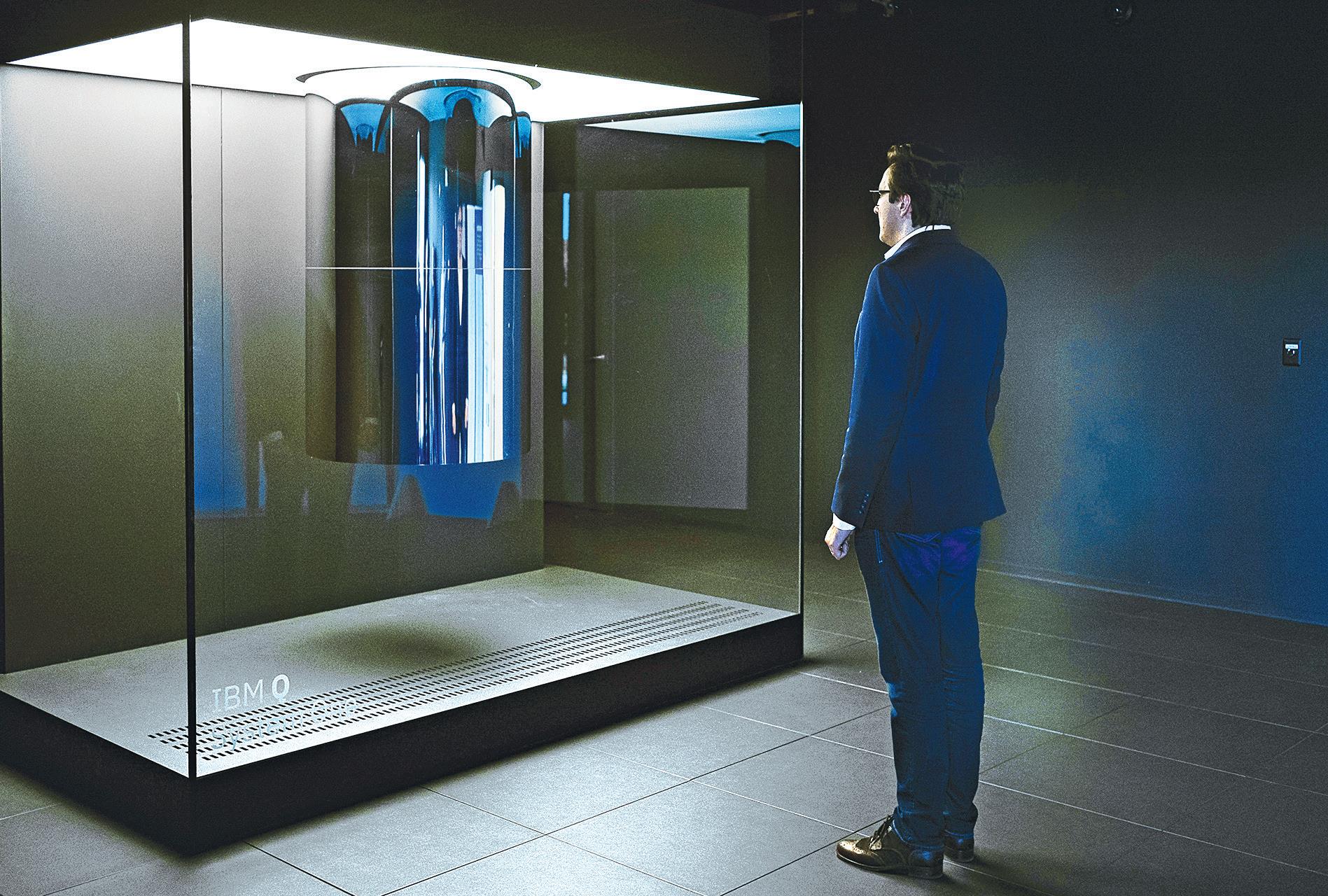
Cold and calculating | Superconductors can be used in quantum computers where they must be kept cold to maintain their superconductivity, like in this climate-controlled IBM Q supercomputer.
between strain and superconductivity may become a new way of investigating the superconductive properties of other metals, which in turn could help refine physicists’ understanding of this relationship even further.
The group hopes to investigate how these new discoveries could affect existing devices, like the Josephson junction, a device which utilizes two superconduc-
tors and has applications in quantum computing. “We’re [also] thinking we can apply this to interesting magnetic systems that have interesting magnetic order, and change the properties of the magnetic order using strain,” Nowack said.
Tucker Hwang can be reached at thwang@cornellsun.com.
Independent Since 1880
137th Editorial Board
ANU SUBRAMANIAM ’20
Editor in Chief
JOYBEER DATTA GUPTA ’21
Business Manager
PARIS GHAZI ’21
Associate Editor
MEREDITH LIU ’20
Assistant Managing Editor
RAPHY GENDLER ’21
Sports Editor
BORIS TSANG ’21
Photography Editor
AMBER KRISCH ’21
Blogs Editor
SOPHIE REYNOLDS ’20
Science Editor
AMANDA H. CRONIN ’21
News Editor
JOHNATHAN STIMPSON ’21
News Editor
PETER BUONANNO ’21
Arts & Entertainment Editor
ANYI CHENG ’21
Assistant News Editor
HUNTER SEITZ ’20
Assistant News Editor
CHRISTINA BULKELEY ’21
Assistant Sports Editor
BEN PARKER ’22
Assistant Photography Editor
JEREMY MARKUS ’22
Assistant Arts & Entertainment Editor
ALICIA WANG ’21 Graphics and Sketch Editor
DANA CHAN ’21 Production Editor
RYAN RICHARDSON ’21
Snapchat Editor
GIRISHA ARORA ’20 Senior Editor
SARAH SKINNER ’21
KRYSTAL YANG ’21 Advertising Manager
NATALIE FUNG ’20
SABRINA XIE ’21
Editor
NOAH HARRELSON ’21
SHRIYA PERATI ’21
Editor
KATIE ZHANG ’21 Dining Editor
AMINA KILPATRICK ’21
MARYAM ZAFAR ’21
ETHAN WU ’21
SHIVANI SANGHANI ’20
NICOLE ZHU ’21
PICHINI ’22 Assistant Sports Editor
JING JIANG ’21
Assistant Photography Editor DANIEL MORAN ’21
&
Editor LEI LEI WU ’21
Editor
WANG ’20
LEANN McDOWALL ’21
Editor BREANNE FLEER ’20 Senior Editor
Working on Today’s Sun
Ad Layout Dana Chan ’21
Production Deskers Krystal Yang ’21
Ben Mayer ’21
Design Deskers Niko Nguyen ’22
Photography Desker Boris Tsang ’21
Sports Editor Christina Berkeley ’21
Editors in Training
Editor in Chief Amina Kilpatrick ’21
Managing Editor Johnathan Stimpson ’21 Meghna Maharishi ’22
News Desker Catalina Peñéñory ’22
Opinion Editor Pallavi Kenkare ’21
Arts Deskers Daniel Moran ’21 Brian Lu ’23
Science Deskers Srishti Tyagi ’22 Deana Gonzales ’21
Desk Assistant Meghana Srivastava ’23 Daybook Sean O’ Connell ’21

As I was packing up on Friday, preparing myself for an unusually tiresome journey back to Ithaca totaling about three days on the road with three layovers, my phone buzzed: the U.S. Center for Disease Control announced that it would begin screening passengers arriving from Wuhan, China at Los Angeles, New York City and San Francisco airports. Given my first layover in L.A. — lasting an unbelievably long twelve hours and giving me an excuse to visit Santa Monica for a bit— I was quite worried. For one, though I did not visit Wuhan this winter break, I was reminded of the panic after the West Africa Ebola epidemic back in 2013, when an overreaction caused a public health crisis in the United States, putting many African passengers under duress. Given the tense political climate between the U.S. and China, who knows there won’t be a repeat? A second, perhaps more foreboding concern underlies my thoughts: Is the outbreak really this bad?
Until this point, most of the Chinese domestic authoritative news about the Wuhan outbreak pointed to a relatively insignificant outbreak. The first case was reported to the World Health Organization by China on December
issued an executive order, directing urgent efforts toward combating the outbreak. Dr. Zhong Nanshan, a chief expert of the National Health Commission and the doctor who discovered the SARS virus back in 2003, confirmed on the same day that human-to-human transmission was a method of infection.
Now, at the time of writing, the latest figure has risen to 549 cases with 17 deaths. There is also a confirmed case in the United States, in Washington state. I am beyond exasperated, not only with the health ministry, but with myself. Why did I have such resolute trust in the official narrative? From the start, I thought things would be different this time: that the government would have learned and evolved beyond the mentality of the 2000s when the SARS epidemic ravaged China and the globe. After initial suppression of information for months, cases reported outside China forced the government to be more open about the epidemic.
I am beyond exasperated, not only with the health ministry, but with myself. From the start, I thought this time things would be different.
30: “pneumonia of unknown cause.” Online panic ensued: the Severe Acute Respiratory Syndrome epidemic was a mere 17 years ago, and to this day, the official name for SARS in China is “atypical pneumonia.” Back then, while I prepared for the Law School Admission Test, I followed the news as closely as a nervous test-taker possibly can. “Good news” quickly assuaged my concern.
Up until Jan. 10, there were 41 cases confirmed, with one death, and that number stayed roughly the same until I was packing my luggage a week later. All the domestic news pointed to perhaps a new but minor virus outbreak. On Jan. 8, the headline by CCTV was eight Wuhan patients of “pneumonia of unknown cause” had recovered. In Xinhua, the official press agency, experts had said that the outbreak was “in control,” and most official press releases stressed that there had been no confirmed humanto-human transmission. Suppressing my concern, I did not even bother to finish tracking the story beyond push notifications.
Then, the deluge.
When I arrived at the Beijing airport, a story on two confirmed cases, one in Thailand and one in Japan, was circulating. That same day, Imperial College London researchers published a model suspecting up to 1,700 cases of the new virus.
Official numbers had jumped up to 198 cases with three deaths when I was departing L.A. on Sunday.
By the time I was leaving Port Authority Bus Terminal on Monday, official numbers had jumped, once again, to 224 cases, and the central government
17 years have passed, and China now is evidently a much stronger nation. Your columnist is known to not be a friend of the regime, but even I believed my government had become a more professional institution, that they had evolved beyond their Soviet instincts and would have known better than to apply the old tactics of “controlling the people before the situation.” The fact that back when America’s CDC first announced screening procedure in the United States on Friday, my default reaction was to believe it was an overreaction influenced by current tensions between the two countries. Even I, a dissident, had trusted my government.
It is important to note that, beyond my belief in the competency of the Chinese government, one important factor contributed to my blind trust. On the very first days of the outbreak back in early January, eight people were arrested in Wuhan by the police “for spreading fake news relating to the pneumonia of unknown cause.” Like meerkats sensing the presence of coming predators, I perhaps subconsciously self-censored.
Who am I to care about it? I was far away, up north in Tianjin, stressing over the LSAT test, and I was soon be out of the country. I became more optimistic about the Wuhan outbreak than I should have. Almost everybody did. From the very first days, when people reported that Wuhanese rarely wore face masks in the first two weeks, to the fact that there was a “thousand family dinner-party” celebrating Little Chinese New Year in Wuhan, self-censored individuals always find excuses to be overly optimistic until it is perhaps too late.
In fact, maybe we weren’t meerkats escaping predators. We were ostriches burying our heads in the sand.
Let this be another lesson, another tragedy — sadly and certainly not the last — of the cost of lies. May God bless the great nation that is China, sending reprieve to Wuhan and all those regions affected by this ongoing crisis.
Weifeng Yang is a senior in the College of Arts and Sciences. He can be reached at wfeng@cornellsun.com. Poplar Sovereignty runs every other Tuesday this semester.
Iam too expensive to be alive, says the organization tasked with protecting my life. According to the American Heart Association, the “logistics, manpower, financial and resource considerations” of saving my life are not worth it. While admittedly biased, I must respectfully disagree with this adjudication of my value as a human. The point where my disagreement with the AHA loses any semblance of respect is its treatment of others who did not receive the same luck as me.
My life was saved by blind luck. As I galavanted about the halls of Ransom Everglades Middle School on a Spring day during the 7th grade, my mother stopped home for a quick lunch and saw an advertisement on television. The commercial advertised a free electrocardiogram screening at Nicklaus Children’s Hospital. An EKG maps out the electrical activity of the heart through the placement of electrodes on one’s skin, and is a painless, quick and (at many hospitals) free test. I had never suffered from any cardiac symptoms, but my overprotective mother decided to take me in for the test anyway.
A week later, I was informed that I had WolffParkinson-White Syndrome: a condition which causes one’s heart to beat abnormally quickly. The condition is often relatively benign and does not pose an enormous statistical risk; however, it is known to cause sudden cardiac events for young people who participate in high intensity sports (as I did). Those frequent news stories of a student dying suddenly on the practice field with no prior warning are often from WPW or similar conditions. A few weeks later, a cardiac ablation surgery fully cured my condition.
I got lucky. My life was saved by a random EKG screening which I had absolutely no reason to take. That is why I have a responsibility to write this column — because so many young people never receive that stroke of blind luck.
Luck didn’t save Dwyane Mitchell, a 19-year-old high school senior from my hometown of Miami. He died of undetected WPW two weeks before his graduation in 2015.
Luck didn’t save Breanna Vergara, an 11-year-old, also from Miami, who died of undetected WPW in 2014 after collapsing in her ballet class.
Every three days, a U.S. student athlete dies of sudden cardiac arrest. It is the leading killer of U.S. student athletes. Every month, I know I will find a news article from somewhere around the country of a young person dying unexpectedly of an undetected heart condition. I read all those stories. Almost every single child could have been saved by an EKG screening. A painless, five minute and often free test could have prevented their death, and yet, few people even know what an EKG is. They are not informed of the life-saving impact of these tests by their healthcare providers or their schools. EKG screenings should be mandatory for all students in U.S. public schools in the same way immunizations or yearly
Every three days a student athlete dies of sudden cardiac arrest.
Almost every single child could have been saved by an EKG screening.
physicals are. Young people should not die of easily treatable or even curable heart conditions.
The American Heart Association disagrees. As reported by the Miami Herald, they argue that “the logistics, manpower, financial and resource considerations make such a substantial program inapplicable to the U.S. healthcare system.” Without their support, all legislative efforts to enact such change at the federal level remain crippled, leaving EKG testing a proposal which few legislators have ever heard of, let alone considered. The AHA concluded that it would be too expensive to
Osave the lives of 19-year-old Dwyane and 11-year-old Breanna. The AHA concluded that my life was not worth saving. They were supposed to be my advocate in cardiac care, but instead, I had to rely on dumb luck to save my life.
For years, I have fought to raise awareness on this issue, giving speeches, working with the hospital and creating online content to inform the public. I have failed miserably. I was reminded of that as I read the obituary of Paul Benton Fisher-York ‘22, who passed away last month of a “previously undiagnosed heart condition.” I never had the honor of knowing Paul, but my heart is broken over this loss and my sincerest condolences go out to his family. While I do not know if EKG testing could have saved Paul’s life, I do know that EKG screenings are the best way to detect unknown heart conditions and could save the lives of so many young people like him.
I am tired of fighting a battle against my supposed healthcare ally. I am tired of seeing the lives of innocent young people with bright futures end prematurely due to coldly hyperationalized financial and logistical considerations. I am tired of the AHA’s morally bankrupt abdication of its responsibility to advocate on behalf of those afflicted with heart conditions. I am tired of having a surgically repaired heart which breaks like clockwork each month when I open a newspaper and see one of those stories.
As the AHA has failed in living up to its mission to “be a relentless force for a world of longer, healthier lives,” as its website proudly proclaims, I urge each and every member of the Cornell community to assume their responsibility. Get an EKG. Tell your loved ones to get one. Ask your healthcare provider and school why they are not mandatory. Reach out to your local legislature. Do not allow more innocent young people to die prematurely due to the inaction of the AHA.
Andrew Lorenzen is a sophomore in the College of Arts and Sciences. He can be reached at alorenzen@cornell.edu. When We’re Sixty Four runs every other Tuesday this semester.
n the first day of classes, my Africana Studies 2650 professor commented on the title of his course: African American Literature. He made a quick joke about how peculiar it would be if literature classes simply entitled “Literature”, were instead titled “Euro-American Literature.” The joke
My friend was white, so the stakes to know a history — that is just as equally hers as it is mine — is for some reason lessened.
was that whiteness is so pervasively the norm that this class on American literature needed to distinguish itself as black or else it would be assumed to be white. It was one of those jokes that is both
funny and slightly depressing. Every POC in the class, including myself, chuckled.
This reminded me of a conversation I had my sophomore year of high school. I was sitting on the bus headed to track practice with my friend, teammate and fellow peer in my AP U.S. History class. We both had our phones in our hands and were playing Trivia Crack. Stumped by one of the questions prompted by the game, my friend turned the screen towards me, nudged me and said, “Here, you should know this one.” The trivia question on the screen read: ‘What US Supreme Court case ruled racial segregation in schools unconstitutional?’
She was right. I immediately knew the correct answer without even looking at the four possible answer choices. I also knew that my friend assumed I would know the answer to the question because I am black.
Black History is not merely the most intense rendition of American history, it is truly the most accurate and extensive rendition.
Since I am black, and clearly knew the answer, overtly there is not much of a problem — although she probably should have known this answer as well. Nevermind the fact that we were both in the same “advanced” U.S. History class; my friend should have known because that 1954 Supreme Court decision affected her educational experience just as much as it did mine. Which is what I replied as I
clicked “Brown v. Board of Education” on her phone screen. She shrugged, I sighed.
I am not faulting my friend for not knowing a trivia answer in a game. After all, the definition of trivia is “information of little importance or value.” And while I would certainly argue that the details and considerations of Brown v. Board is of extremely significant importance and value, that is not really the point. The point, rather, is how much more surprising — and perhaps interesting — this story would be if my friend was a person of color. If my friend was black, the response to her lack of knowledge about a revolutionary progression in our nation’s struggle for equality would not be a shrug or explanation of the definitional insignificance of trivia, but instead an inquiry into why this 16-year-old girl did not know her ‘own’ history. But my friend was white, so the stakes to know a history — that is just as equally hers as it is mine— is for some reason lessened.
“Whatever white people do not know about [black people] reveals, precisely and inexorably, what they do not know about themselves.”
Now that the beautiful month of
People cannot grow and learn from a history they do not know. And they cannot know a history that they have not yet accepted as their own
This illuminates the larger problem of intolerance, ignorance and continual denial in this country. People cannot grow and learn from a history they do not know. And they cannot know a history that they have not yet accepted as their own.
As James Baldwin once said,
black history is on the horizon, I feel it is important to remember how deeply entwined African American history is in American history. The events, details and champions that define black history define the strengths and weaknesses of the history of this nation. Black history is not merely the most intense rendition of American history, it is truly the most accurate and extensive rendition. Black history in America is not niche. Although it’s called Black History Month, the accomplishments that were made and the injustices that were overcome should not be celebrated or acknowledged solely by black people, but by everyone.
Sidney Malia Waite is a sophomore in the College of Industrial and Labor Relations. She can be reached at swaite@cornellsun.com. Waite, What? runs every other Tuesday this semester.

Fill in the empty cells, one number in each, so that each column, row, and region contains the numbers 1-9 exactly once. Each number in the solution therefore occurs only once in each of the three “directions,” hence the “single numbers” implied by the puzzle’s name. (Rules from wikipedia.org/wiki/ Sudoku)



On Campus by Elizabeth Klosky ’21
We have availability for the
school year beginning June 1st at Hudson heights apartments.
26 A PA R TMENT FOR R ENT
2020-2021
Studio 1, 3, 8 & 11 BR Apts. Great Locations in Collegetown. 607-227-2535
Collegetown Crossing
College Ave's Newest Location 307 College Ave. Now Leasing for 2020-2021
Completely New Modern Studios, 2 & 4 Bedroom Apartments. Fully furnished, heat & hot water included. Reception area at 307 College Ave. www.urbanithaca.com 607-330-2442 info@urbanithaca.com
120 Oak Avenue
Just steps to Cornell Campus
10 bedroom house & 1 and 2 bedroom apartment
607-277-1234
office@ithacastudentapartments.com Ithacastudentapartments.com
>>MAKE ITHACA HOME<< Collegetown Apartments Furnished 1-3 Bedrooms PARKING, LAUNDRY, UTILITIES! (607) 273-7368 www.WestShortApts.com
Boldly Refined Living 312 College Avenue
Sophisticated studio, 1, 2, 3-bedroom apartments. Superior fitness facility, theater, and coworking space. Free high-speed internet. Exclusive resident parking. Package delivery/return. Overnight concierge. 607-273-9777 or 312collegeave.com
26 A PA R TMENT FOR R ENT
Catherine & Eddy St. 1 & 2 bedroom
Furnished, heat included Laundry in building Parking available for fee 607-277-1234 office@ithacastudentapartments.com
1-3 Bedroom Apartments Quiet Fall Creek Location 5 Minutes to Busline 607-351-1267 joe@joegrealty.com *****************************
Houses, Apts, Parking 1 to 9 Bedroom Collegetown - College Ave, Linden Ave, Dryden Rd, Bryant Ave, Cook St. 607-330-2442 info@urbanithaca.com www.urbanithaca.com
Now Renting 2-10 Bedroom Houses/ Apartments for 20-21. All Locations. Call today or visit our website: Certified Properties of TC Inc certifiedpropertiesinc.com 607-273-1669
Flexible Housing Solutions! Short Stay Accommodations “Brand New” Studio Apartments 238 Liden.com Leasing@inteprop.com
109 Sage Place 2 & 3 Bedroom Apartments Access to Shuttle to Campus Access to Free Fitness Center Novarr-Mackesey Property Management office@ithacastudentapartments.com 607-277-1234
504 1/2 Thurston AveSTUDIO 607-277-1234
office@ithacastudentapartments.com Ithacastudentapartments.com
20-21 College Ave. 5 BR House Furnished. Laundry. Parking. Call 607-273-8576

Continued from page 12
the 50-yard freestyle. Kiselis and Elliot also both finished third in another event — for Kiselis, the 50-yard freestyle and the 200yard breaststroke for Elliot.
The women’s diving team also ended with a victory — sophomore diver Demetra Williams and freshman diver Elise Jendritz were both able to come in first in one of their events and in the top three for others.
The three senior captains — Kiselis, Elliot and diver Jessica Leipman — led the team into each of the events, setting strong examples to encourage the best possible performance throughout the meet.
Although the men’s team was not able to win the meet as a team, it had four individuals that came in first for at least one event and had 19 top-three
finishes.
Senior swimmer Cyrus Morrison won the 100-yard freestyle, while freshman Jeremy Marcin came in third.
The senior tri-captains for the men’s team — Matthew Daniel, Ryan Brown and Jack Mahoney — also finished off their races with their best efforts. Daniel placed second in the 1,000-yard freestyle and third in the 500yard freestyle, while Brown came in second in the 100-yard breaststroke. Mahoney finished the 50-yard freestyle in second place.
The Red will finish its season with the Ivy League Championships: For the women, the tournament will take place Feb. 19 through 22 in Providence, R.I., while the men’s team will compete from Feb. 26 through 29 in Cambridge, Mass.
Monica Kim can be reached at mkim@cornellsun.com.
BASKETBALL
Continued from page 12
Recently, Earl has been tinkering with his starting lineup and rotations as the team heads into the last 12 games of the season — all of which are Ivy matchups. Earl utilized nine players over the weekend, including having freshman guard Greg Dolan in the game down the stretch.
Dolan, who played 13 minutes in the second half, ended the game with five points and two
assists, all of which came in the final 20 minutes.
The Columbia series split marked the third consecutive season that the two New York foes each won its own home game. Cornell will look to get above .500 in Ivy League play when the Red travels to Brown on Friday and Yale on Saturday. Last season, the Red lost to both schools on the New England road trip.
Bennett Gross can be reached at bgross@cornellsun.com.
By BENNETT GROSS Sun Staff Writer
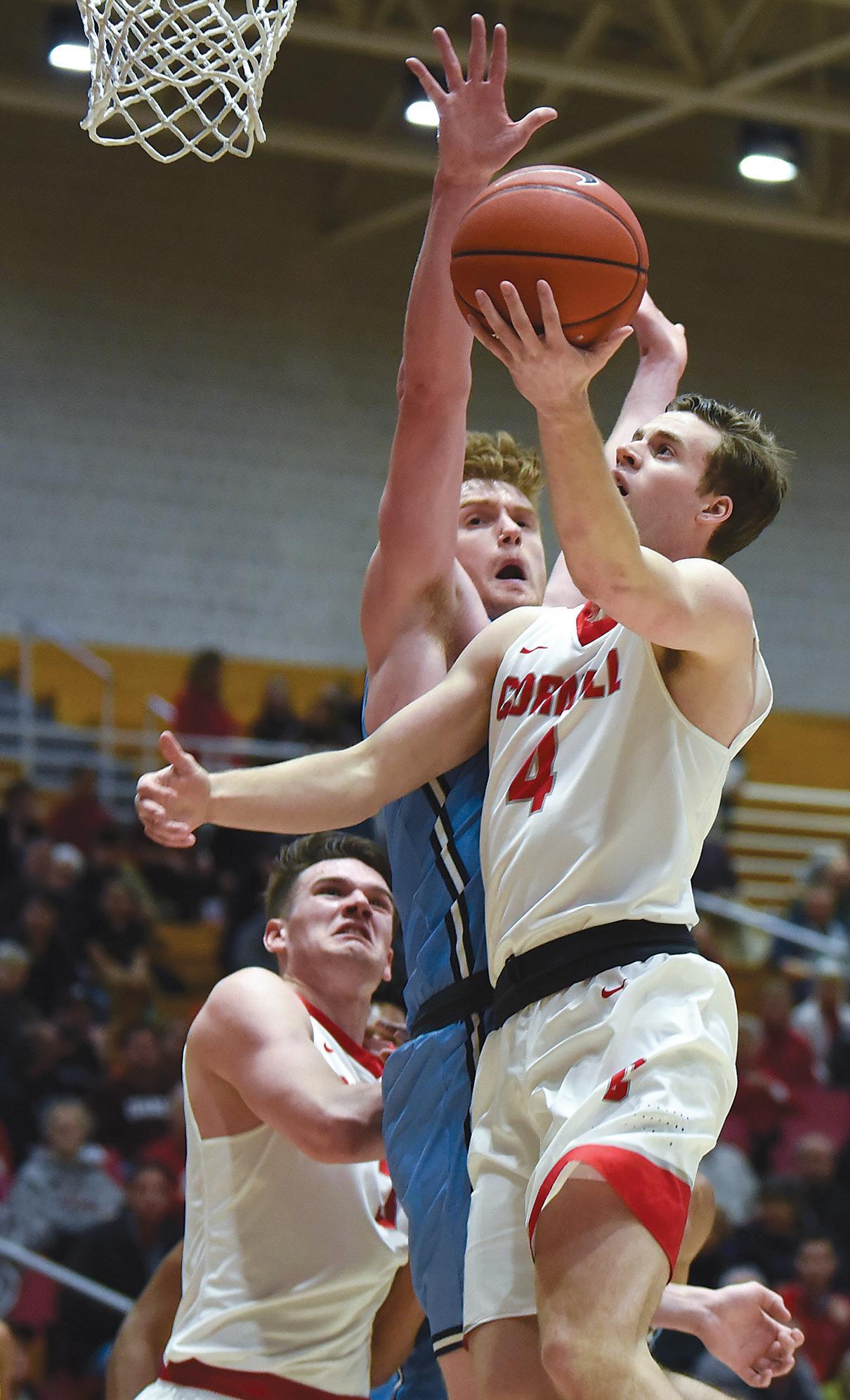
In its Ivy League home opener, the Red defeated in-state rival Columbia 62-50, marking Cornell’s first victory over a Division I opponent in nearly three months.
The win came just seven days after losing to the same Columbia team 75-61 in New York City. But in the second edition of the series, the Red was able to outscore the visitors 40-26 in the second half to even its league record at 1-1.
“I thought that we did a good job of coming back from last week,” said Head Coach Brian Earl. “I was proud of our team’s effort ... It was a good win — we’ve had a tough time this year winning games, so it was nice to get one under our belts.”
The Red shot 56 percent from the field and 50 percent from threepoint range in the second half en route to the victory. In addition to efficient shooting after halftime, the home team only turned the ball over once in the final 20 minutes.
“We played a little faster in the second half, and we stepped up, took the shots that we got,” Earl said. “Obviously, when the ball goes in, it is helpful, and it has been a while since that has happened. But we’ve been getting open shots the entire season, so it was nice to see them finally go in.”
Cornell was fueled by 18 points and 10 rebounds from junior forward Jimmy Boeheim, as well as 13 points and 8 rebounds from junior guard Terrance McBride. Senior forward Josh Warren also added 11 points, six assists and four rebounds.
“Tonight, we were all really focused on hitting the boards hard,” Boeheim said. “We all wanted to rebound together, and I think that this aspect of the game has become more
natural for all of us as this season has progressed.”
Columbia was led in scoring by senior guard Mike Smith, who came into the evening as the Ivy League’s leading scorer with 21 points per game. But on Saturday, he was limited to just 15 points, making five out of his 23 shots.
Cornell junior guard Bryan Knapp scored 10 points, but primarily focused on defending Smith and limiting his touches.
“We knew that if we could shut down Smith we would have a very good chance of winning this game,” Knapp said. “The game plan for the last five minutes was for me to do everything in my ability to not let him get the ball. So that’s what I did.”
“We played a little faster in the second half, and we stepped up ... It was nice to finally see [our shots] go in.”
Brian Earl
After shooting 40 percent from the field in the first half, the visitors were not able to sustain the same success in the latter part of the tilt — making just nine of 35 shot attempts in the second half, including going 3-of-14 from the three down the stretch.
In last Saturday’s match in Harlem, Columbia shot 61 percent from the field in the first half and 51 percent overall in the game, but their hot shooting did not make the 225-mile trip with them to upstate New York. While the Lions relied on freshman forward Jack Forrest’s 23 points to carry them offensively seven days ago, Forrest scored just seven points in Ithaca.
Forrest was limited in his playing time after committing two fouls early in the game. He spent 18 minutes on the bench in the first half of the tilt.
By KEN CHOI Sun Staff Writer
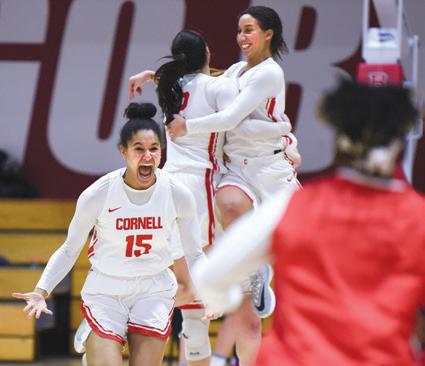
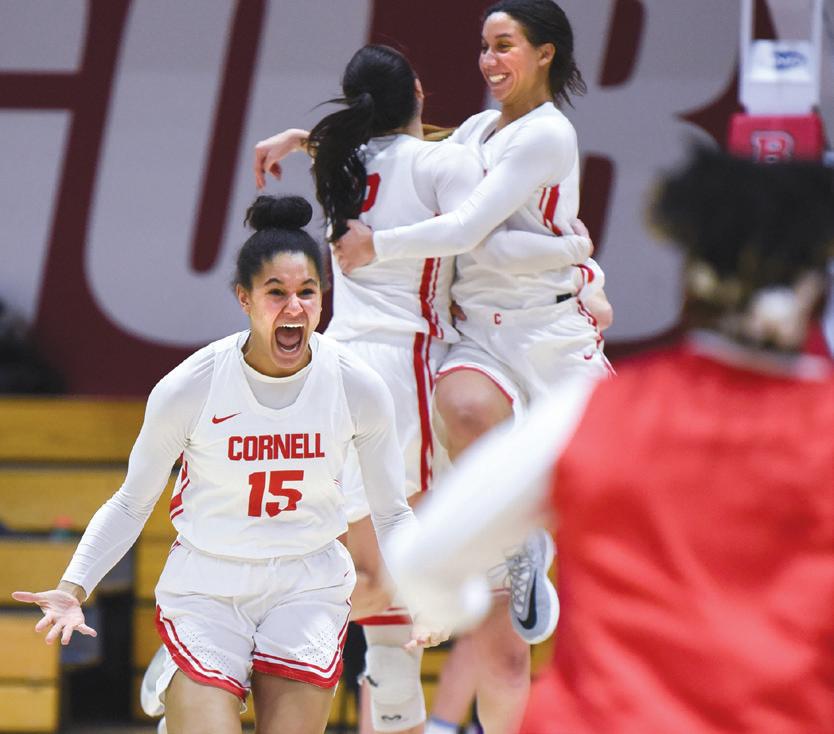
Cornell women’s basketball survived a thrilling overtime showdown against Columbia, winning its first Ivy game to level its record to 1-1. Two players from the Red had an unforgettable game in the Ivy League home opener — freshman guard Shannon Mulroy and co-captain senior guard/forward Samantha Widmann.
By the end of the second quarter, Widmann passed the century mark in points, becoming the 15th Cornell player ever to accomplish such a feat. She scored nine points while staying on the court for a team-high of 43 minutes, leading the Red to its first league victory.
Mulroy played a total of 40 minutes in the game, netting seven three-pointers and recording 27 points, the highest mark of any player on either
team. For her efforts, Mulroy earned both Ivy League Player of the Week and Rookie of the Week honors.
After trailing for most of the game, the Red was down by seven with three minutes left. Junior forward Halley Miklos sparked a comeback by scoring four consecutive points, bringing Cornell back into the game.
Then, with about a minute left in the game, Mulroy drilled a corner three-pointer, giving the Red a 69-68 lead. However, Columbia’s Abbey Hsu followed with her own three-pointer, putting the Lions back on top.
It was none other than Mulroy that pulled the Red out of the ditch. Mulroy got fouled during a pull-up jumper with five seconds left on the clock. She calmly converted both free throws, sending the game to overtime.
With momentum on its side, the Red did not look back. Mulroy and junior guard Kate Sramac nailed four free throws, creating a cushion at the start of overtime. Sramac effectively won the game when she netted a deep three with 50 seconds left on the clock. She would go on to finish the game with 14 points, nine rebounds and five assists.
Co-captain senior forward Laura BagwellKatalinich was also an undeniable force, recording 19 points, nine rebounds and three assists.
In a game with 13 lead changes and eight ties throughout, the Red proved that it had players that could make plays when it mattered the most.
The Red will look to get its second Ivy victory of the season when it faces Brown next on Friday, Jan. 31 at 6 p.m. for another home game. The last time Cornell met with the Bears, the Red cruised through with a 66-48 win. MEN’S BASKETBALL
Ken Choi can be reached at kchoi@cornellsun.com.
By MONICA KIM Sun Staff Writer
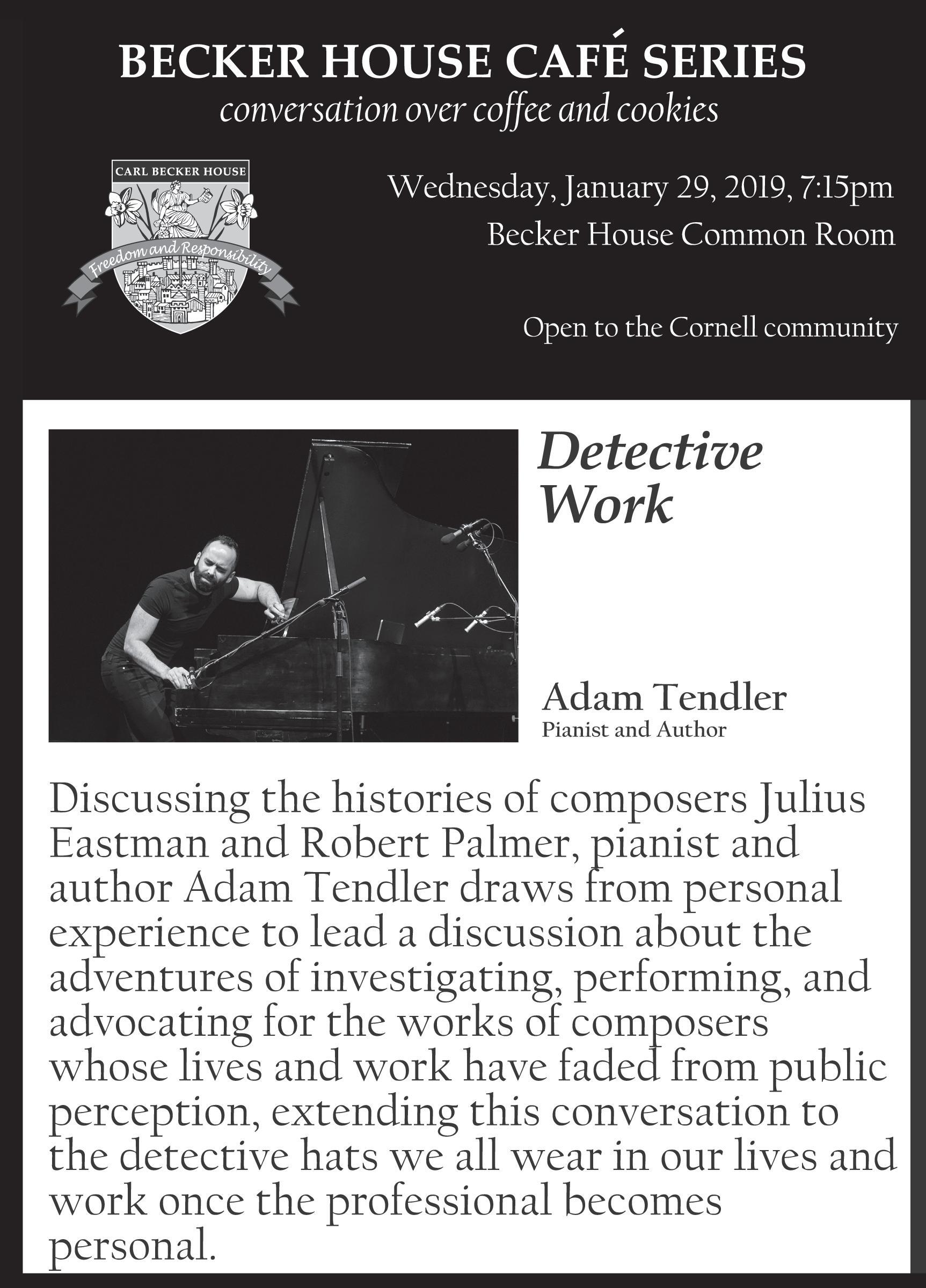
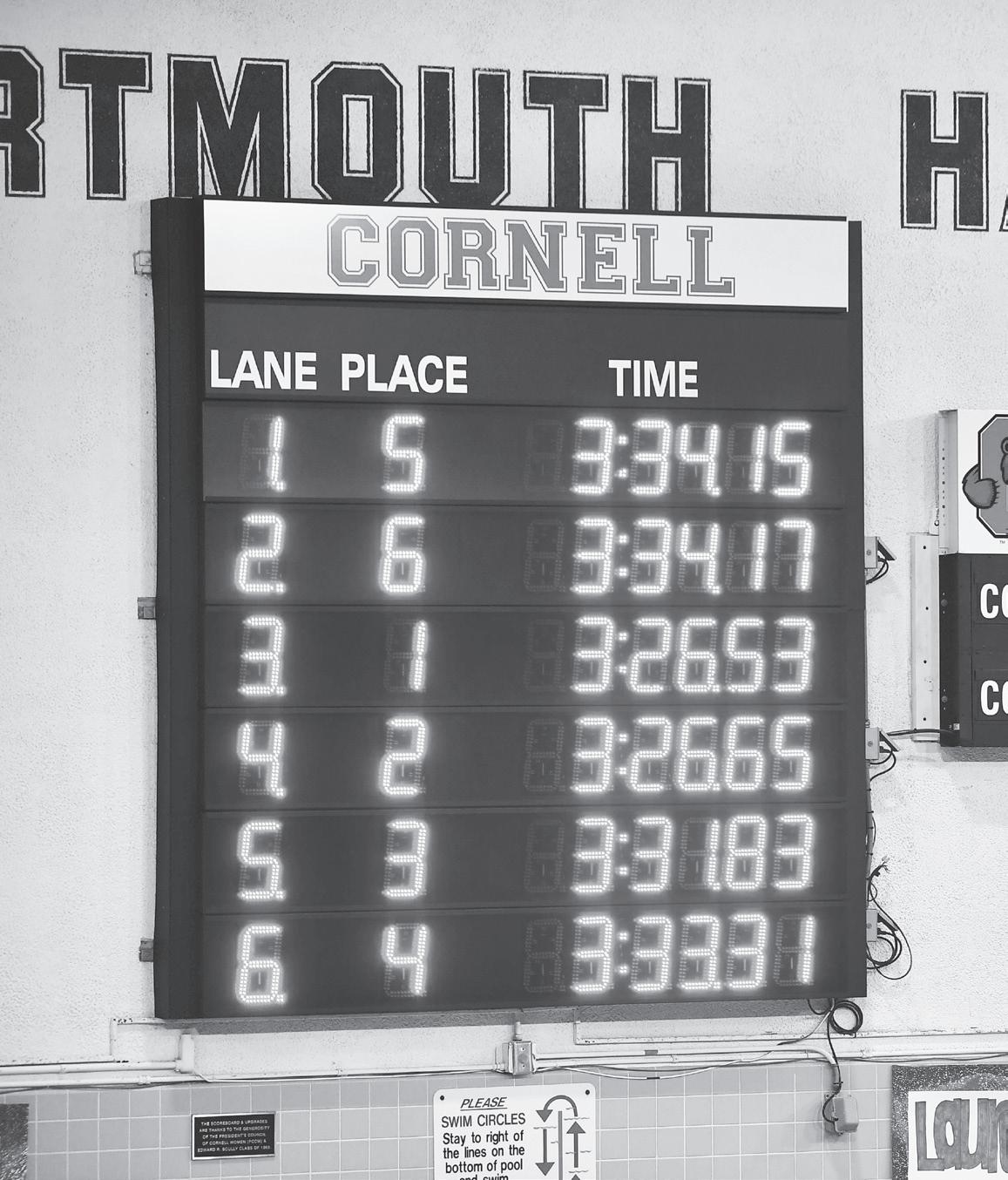
Swim and dive hosted Brown for a senior day in which the Cornell women’s team took down the Bears for the first time in five years — marking the Red’s first Ivy win of the season. The men’s team, however, was not as successful, falling in its sixth straight Ivy meet. The women’s team finished
173-127, making the victory its first Ivy League win of this season. The final tally for the men was 171.5-126.5.
Two of the women’s senior swim captains won an event at the meet — Laurel Kiselis won the 200-yard freestyle and Cape Murch Elliot took home the 100-yard breaststroke title, while fellow senior Vanessa Ruiz finished first in
See SWIM page 11