The Corne¬ Daily Sun

By MEGHNA MAHARISHI
Sun Staff Writer
When Chendan Luo ’22 returned to campus from her hometown, Wuhan, China, after winter break, she immediately got a screening for coronavirus at Cornell Health.
“There was someone on my flight who was coughing,” Luo told The Sun. “After the first day of class, I just wanted to make sure everything was fine.”
Luo is one of many students at Cornell who expressed anxiety about the Wuhan coronavirus, which may have originated in one of the city’s wildlife markets, similar to the kind that Luo visited during winter break. China has since banned wildlife trade due to the outbreak.
WebMD list of remarkably similar symptoms to the feared virus — is enough to set off panic that the coronavirus may have reached Ithaca.
In a group chat for Chinese international students’ parents, one parent posted that a student traveling from Wuhan seemed to have symptoms which mirrored the coronavirus. This student’s roommate, the parent wrote, also supposedly came down with similar symptoms.
“Whenever someone coughs now, everyone sort of stiffens.”
At Cornell Health, doctors asked Luo about her symptoms and whereabouts during winter break. She was at Cornell Health for about an hour, but doctors let her return to her West Campus dorm when they concluded she showed no symptoms of coronavirus.
Qi Lim ’21
Symptoms for the infamous disease include a high fever, cough, shortness of breath and a sore throat, and in more severe cases, pneumonia is also possible, according to Cornell Health. Not much is known about this particular strain of coronavirus, but it appears that it can be transmitted by person-to-person contact.
On campus, even a common cold — which has a
That fear spread quickly across campus.
“Whenever someone coughs now, everyone sort of stiffens,” said Qi Lim ’20, who posted a translated version of the message onto a Cornell Reddit page, publicizing rumors previously only known among Chinese international students.
The post set off a flurry of comments and debate, with many users urging the student to visit a doctor.
“Everyone should be wearing a mask [right now],” one user commented.
The Sun reached out to the student who was the subject of the post, and she confirmed that she only had a cold, but visited Cornell Health to rule out the possibility of infection. At Cornell and in New York state, there are currently no confirmed cases of the Wuhan coronavirus.
Lim told The Sun he posted the message on Jan.
By
Live cast member
Bayer entertained a packed Bailey Hall audience on Saturday night — not as Jacob the
Bar Mitzvah Boy or Miley Cyrus — but as herself, mostly.
Sprinkling in jokes and a Madonna impression, the actress spoke candidly with Prof. Samantha Sheppard, performing and media arts, about her life, comedy career and Jewish background — from feeling starstruck during her beginnings at SNL to using comedy to brave pediatric cancer.
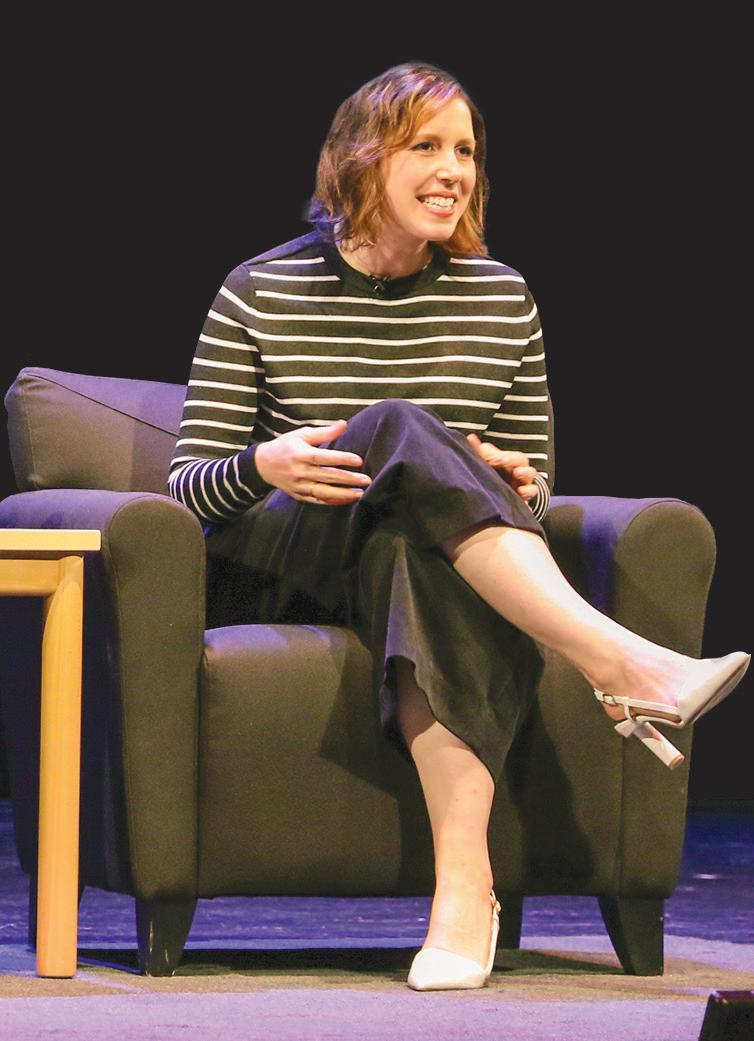
The Cornell Hillel Major Speaker Series and Cornell University Program Board co-sponsored the event, which began with a dive into Bayer’s childhood and college years at the University of Pennsylvania, where she performed in a sketch comedy group called Bloomers that led her to discover she wanted to pursue comedy.
“I’m from Cleveland, I didn’t know anybody,” Bayer said, overcoming a lack of connections to go on to intern at Sesame Street, Nickelodeon and Late Night with Conan O’Brien. “College was so impactful in my career, because it was about making connections with people at my school.”
Bayer told the audience that she moved to Chicago after college, where she worked during the day at a production company and later at an ad agency. At night, she took comedy classes as well as performed improv and stand-up at The Second City, iO Theater and the Annoyance Theater.
“I really think that so much of my comedic voice came from those jobs that I did during the day,” SNL’s longest-serving female cast member said. “It’s helpful to work in the real world for at least a few years, because then your comedy is more relat-
See SNL page 5


By KATHERINE HEANEY Sun Staff Writer
In 2018, five Cornellians were elected to the U.S. Congress.
Another may join their ranks in 2020 if Adam Schleifer’s ’03 bid for Congress is successful.
Schleifer is running in New York’s 17th district, seeking to take the seat currently held by Nita Lowey (D-N.Y.), who has served the district since 1989. Lowey plans to retire next year, and given that it is an overwhelmingly blue district, the seat is likely to go to another Democratic candidate.
that Chelsea Clinton — a fellow Chappaqua native and famous daughter of former President Bill and Hillary Clinton — might run for the seat, though Chelsea ultimately quashed those rumors.
The Cornell grad told The Sun that he is not concerned about the crowded primary stage — he sees the competition as a good thing, hoping that the “process permits the best ideas and the best candidate to rise to the top of the field.”
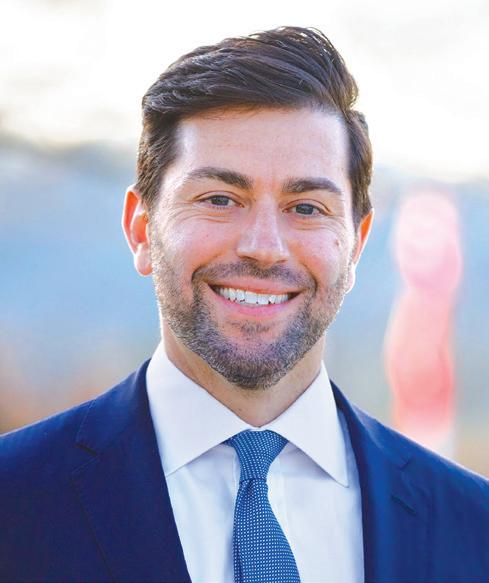
The 17th district includes Rockland County and parts of Westchester County — including Schleifer’s hometown of Chappaqua, New York.
Schleifer will compete against at least six other confirmed candidates in the Democratic primary. There was speculation
Schleifer has a slate of issues he is “excited to tackle in Congress,” including reinvigorating a weakened Environmental Protection Agency, fighting for a carbon tax, passing stricter gun legislation, undoing the Trump administration’s 2017 Tax Cuts and Jobs Act and supporting the federal legalization of marijuana
The New York native also hopes to “unclog democracy” by
Monday, January 27, 2020

Today
Chemical and Biomolecular Engineering Seminar
Series: Heather J. Kulik, MIT 9 - 10 a.m., 255 Olin Hall
Neurobiology and Behavior Seminar: Kayvon Daie
10 - 11 a.m., 226 Weill Hall
The Lower Hanging Fruit: A New Approach to Field Robotics for Digital Agriculture With Kirstin Peterson 11:30 a.m. - 1 p.m., 122 Bill and Melinda Gates Hall
Junior Recruitment Workshop: Wooyong Lee 11:40 a.m. - 1:10 p.m.,115 Ives Hall
Conceptions of Liberation in the Hindu Tantric Worship of the Goddess Tripurasundari, by Anna Golovkova 12:15 p.m., G08 Uris Hall
Federico E. Rey, Ph.D.: Exploring the Causes and Consequences of Gut Microbiome Variation 4 - 5 p.m., 100 Savage Hall
Auditions for Spring PMA Productions 7 - 10 p.m., Flex Theatre, Schwartz Center for Performing Arts
Tomorrow
Working With the Cornell Brand: Visual Storytelling 11 a.m. - Noon, 102 Mann Library
The Current Status of Herbicide Resistance Worldwide, In the U.S. and in New York State by Lynn Sosnoskie 11 a.m. - Noon, A134 Barton Lab
Consequences of Water Insecurity on Maternal and Child Nutrition and Health With Roseanne Schuster 3:30 - 4:30 p.m., Lecture Hall 2, College of Veterinary Medicine Center
OF
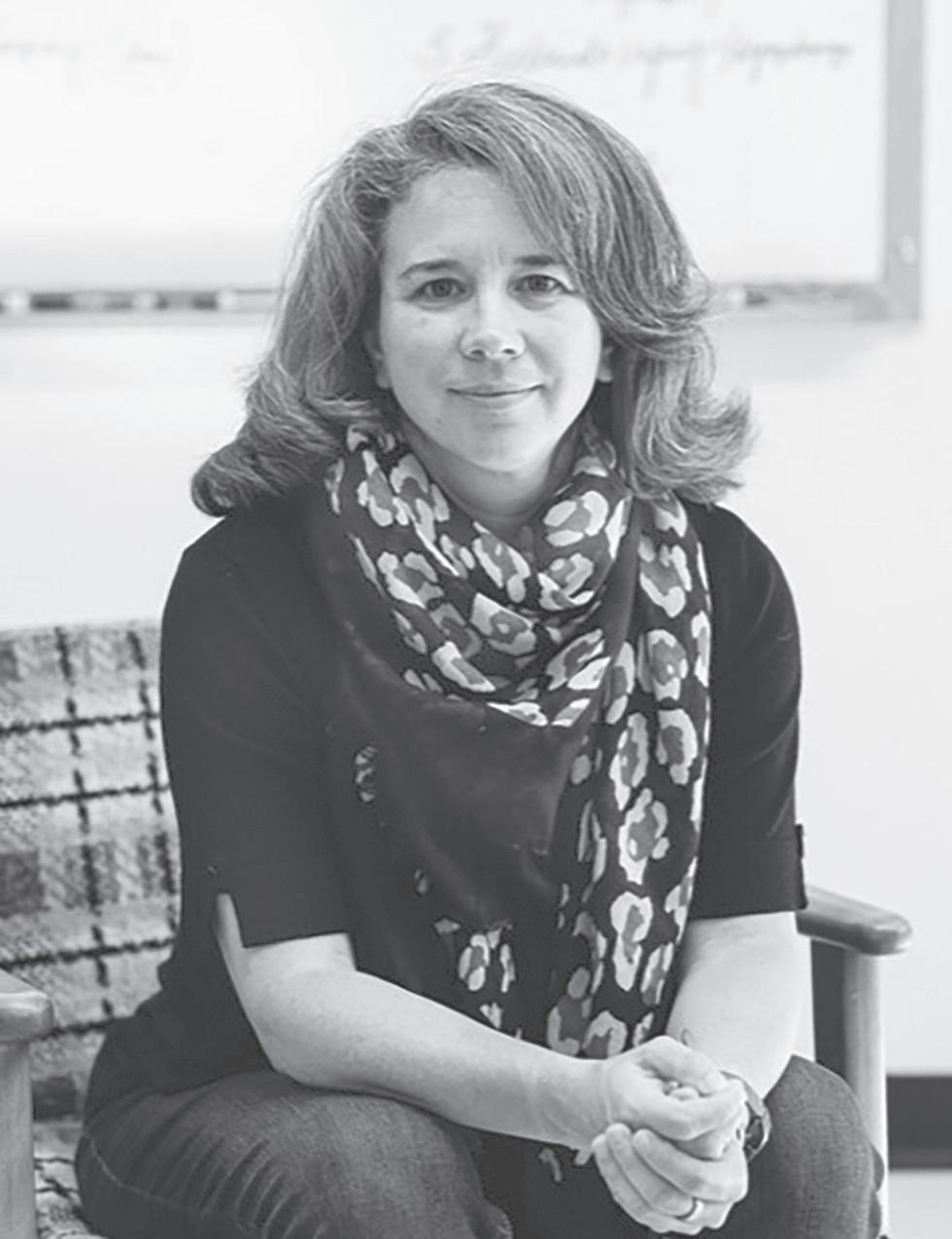
Agriculture | Prof. Lynn Sosnoskie, plant science, will discuss the effects of herbicide resistance on agriculture in the U.S. and New York State.
Applied Physics Grad Society Coffee Hour 3:30 - 4:30 p.m., 243 Clark Hall
Celebrate the Lunar New Year 4:30 - 7:30 p.m., Okenshields, Willard Straight Hall
Last Call: All-Male a Cappella Auditions 8 - 11 p.m., 107 Lincoln Hall
By EMILY YANG Sun Staff Writer
From tackling the economics of Uber to diving deep into Latin American politics, the College Scholar students plan to push the boundaries of Cornell’s academic offerings.
The newest 18 members of the college scholars program began their independent courses of study this semester. Students in the niche College of Arts and Sciences program design their own major, entering the program as sophomores and completing a thesis by their senior year.
Once students commit to the college scholar major, they are no longer bound by the College of Arts and Sciences’ distribution requirements.
Instead, their interdisciplinary majors require them to take a variety of courses related to their theses, guided by a faculty advisory team. Students also take a seminar course on research methods led by Prof. Michael Goldstein, psychology, the director of the program.
“It’s a little hard to tell people what I’m studying,” Ben Feldman ’22 told the Sun. “‘How leaders shape cultures’ is the best question to explain what I want to study.”
Feldman described his project as a combination between government and anthropology, born out of a goal to “change our culture for the better.”
“The whole point of the college scholar program is to put the world back together again by doing research and thinking that spans those traditional disciplinary boundaries.”
Prof. Michael Goldstein
“Coming into Cornell, I was dead set on being a politician and being elected president,” Feldman said. “Since applying and getting into the college scholar program, I have a much clearer idea of what I want to study and a much less coherent idea of what I want to do after that.”
The freedom to take interesting classes from a “holistic perspective” helped Feldman approach his questions.
This flexibility is a hallmark of the program, and something that draws in many of the majors.
Luz Dybner ’22, who originally entered Cornell as a government major, found that she also loved her Spanish classes. Since the University only offers a Latin American studies minor, Dybner thought the College Scholar program would be a “really good option” to pursue her interests.
She is focusing her studies on the “symbiotic relationship” between politics and culture in Latin America, inspired by a trip to visit her grandparents in Argentina. There, she saw a “living, powerful, palpable political culture that pervaded through all elements of Latin American life,” which will inform her studies.
Vanessa Olguin ’22 similarly hopes to combine two of her passions in her project by finding the intersection between international relations and environmental sustainability sciences.
“The climate crisis transcends borders,” Olguin said. “It’s something that hits every nation, and so what I’m trying to look at is how the climate crisis will play into international relations, specifically looking at how the climate crisis will affect the citizens of certain nations.”
Her self-designed curriculum includes courses such
as BSOC 2201: Society and Natural Resources and NTRES 3311: Environmental Governance. PostCornell, Olguin plans to continue her studies into graduate school and eventually work in diplomacy for the U.S. government.
Aaron Buchwald’s ’22 college scholars project was also informed by a Cornell class — CS 2850: Networks. Afterwards, he became interested in examining “the network economies and the platform economics behind Uber and Lyft and how they are competing with each other.”
In order to develop his skills, Buchwald is beginning his research with a smaller project, studying which types of Facebook posts generate the most discussion. He plans to continue taking courses in government, computer science, history and economics.
“I’m very nerdy,” Buchwald said. “I like software and I like natural language processing and network analysis, so playing around with them and then potentially having real world effect on how people use social media would be really, really great.”
“I’m very nerdy. I like software and I like natural analysis, so playing around with them and then potentially having real world effect on how people use social media would be really, really cool.”
Aaron Buchwald ’22
The program’s 18 sophomores represent less than two percent of the over 1,000 students in the College of Arts and Sciences’ class of 2022. However, Goldstein said that he hopes to expand the program to support double the number of students.
“[The modern education system] understands the world by chopping it up into little pieces,” Goldstein said. “The whole point of the college scholar program is to put the world back together again by doing research and thinking that spans those traditional disciplinary boundaries.”
Emily Yang can be reached at eyang@cornellsun.com.
By MEGHANA SRIVASTAVA Sun Staff Writer
A one-stop shop for everything from popular blockbuster hits to silent films with live music accompaniments, Cornell Cinema has laid out a spring schedule filled with one-of-a-kind events — collaborating with professors, a capella groups and professional orchestras.
This semester will feature several popular Hollywood movies — such as Knives Out , Jojo Rabbit and Joker — but also some less conventional picks. The Cinema will feature Oscar-nominated short films from Jan. 31 to Feb. 4, and the Cat Video Fest — a felinefilled weekend that will feature videos submissions from the internet — on Feb. 22 and Feb. 23.
Cinema, along with any others who are interested. Those captivated by true crime can see a series titled Thinking about History with the Manson Murder s in conjunction with HIST 1850, a course of the same title taught by Prof. Claudia Verhoeven, history.
The Cornell Cinema Student Advisory Board also helps decide which blockbuster hits to showcase. In a survey sent to the Cinema’s listserv of about 5,000 people, the group gauged the popularity of recent films, leading to the inclusion of hits such as Jojo Rabbit and Parasite , Fessenden explained.
“As far as the lineup this spring, I would say we’re offering ... the same wide range of films and special events we usually do.”
Mary Fessenden
“Films come about in a number of different ways,” said Mary Fessenden, director of Cornell Cinema. Sometimes, faculty members will contact her with films that they would like to have shown because of a connection to a course they are teaching.
For example, students in Prof. Andrew Campana’s, Asian studies, class, ASIAN 2260: Japanese Pop Culture, can see the Japanese Anime: 3 Classics series at the
In addition to documentaries and movies, the Cinema also will collaborate with Cornell’s gospel a capella group Baraka Kwa Wimbo while presenting the recently restored documentary Say Amen Somebody
“A restoration was done of this film, it hasn’t been available for a while, but it’s considered one of the best music documentaries ever made,” Fessenden said.
The Cornell Cinema also hosts silent films with live music accompaniments, which Fessendon said is “utterly unique.”
Steamboat Bill, Jr. and The Wheels of Chance are two such silent films that will be presented this semester with live music
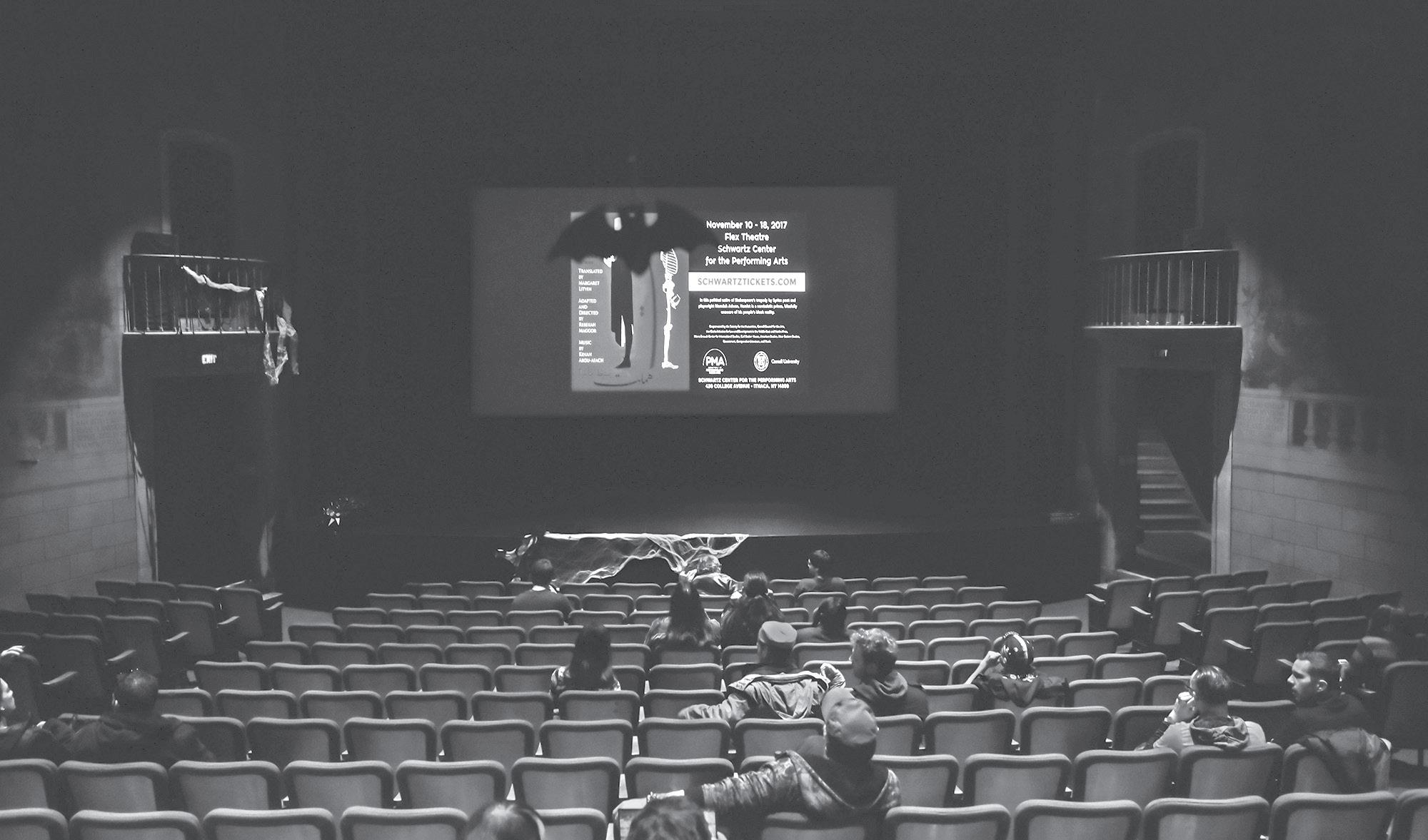
| To
on Feb. 15. Both films will be accompanied by Philip Carli, a film score composer and other musicians.
“I would sort of say that there’s a little bit of trepidation because silent films are not the normal films, and it’s a little hard to get back into,” said Head House Manager Michael McGinnis ’20. “Afterwards, I’m always very happy I [went], those are a lot of fun.”
Throughout the semester, the Cinema will show foreign films like the French film Varda by Agnès and the German film
The Golem
Viewers can also watch high quality 3D films at the Cinema, which are “actually much better than what you would find in a typical mall 3D screening, and we don’t charge anything extra,” Fessenden said. Regarding the wide range of films being shown this semester, Fessenden said, “as far as the lineup this spring, I would say we’re offering, in a sense, the same wide range of films and special events that we typically do.”
Meghana Srivastava can be reached at msrivastava@cornellsun.com.
By ALEX HALE Sun Staff Writer
Imagine a city where transportation is only by scooter or slides coming off all the buildings. These innovative solutions were some of the many ways that kids channeled their creativity in Duffield Atrium on Saturday while at the 14th annual For Inspiration and Recognition of Science and Technology Lego exposition.
In teams of two to six, kids ages six to 10 were given two baseplates and assigned to create a Lego metropolis with the goal of developing a city that reflects principles of accessibility and sustainability.
In order to complete this Lego city-building task, students met with professionals in these areas to learn more about design topics. From there, they went with their own ideas on how to make their “Boomtown” match the criteria.
“We had an architect come and talk to us about how to build energy efficient homes,” said Jamie Kemmerer, who led four teams at the event, while his son Jerome participated.
Other professionals included a city planner, who introduced engineering concepts for the students to consider in building their city under the theme’s guidelines.
“I don’t care how old you are, you can invent, you can come up with ideas. It doesn’t matter how off-the-wall it is.”
Daniel Woodie M.S. ’08
From this research and imagination, the kids created their sustainable and accessible cities, with solutions ranging from ramps and solar panels to cities that solely used slides and scooters for transportation. Despite each team receiving the same coaching and guidance, Jamie enjoyed seeing each group come up with a wide range of solutions.
Organized by national science advocacy group FIRST, the exposition, called “Boomtown Build,” focused on issues of accessibility and sustainability in engineering. It was also sponsored by the Cornell NanoScale and Technology Facility, and other organizations volunteered at the event, such as Cornell’s Society for Women Engineers.
Described as “the world’s leading youth-serving nonprofit advancing STEM education,” FIRST was founded in 1989 by Segway inventor Dean Kaman. According to Daniel Woodie M.S. ’08, College of Engineering safety manager, Kaman wanted to inspire children to become engineers.
Kaman would often see children who wanted to be professional athletes, but knew that the possibility was unlikely. As the director of the exposition, Woodie wished to invoke Kaman’s vision, believing that through making STEM more enjoyable, children could be more successful.

Learning through Legos | Students were encouraged to use their imaginations to explore the worlds of engineering and sustainability at the 14th annual FIRST Lego exposition.
Saturday also featured a FIRST Lego League Jr. competition. The league is for children ages six to 10, and as interested students age, they move up to more technically advanced competitions. Since the children participating in the event were very young, the event was dubbed an exposition, rather than a competition. Instead, Woodie explained, each city wins its own unique award and the team members go through a high-five line of the reviewers. There were 22 teams in total, 19 of which were from Tompkins County.
“A key of the FIRST programs is that I don’t care how old you are, you can invent, you can come up with ideas,” Woodie said. “I’m going to give you a topic … I want you to go figure out a solution. It doesn’t matter how off-the-wall it is, you’re going to build it, show it and tell the world, ‘This is my idea.’”
Woodie hoped that the experience would make them consider a future career in STEM, and build their own future.
Alex Hale can be reached at ahale@cornellsun.com.
Despite popularity of investment banking, Bhojraj ’95 MBA ’01
By ANNABEL LI Sun Contributor
Pursuing a career in finance, but don’t know where to start? According to Lakshmi Bhojraj ’95 MBA ’01, the Parker Center — a Cornell hub that educates students on fund management — is a great starting point for students to learn more about the investment industry and hone their professional skills.
What is the best way for undergraduates here to get involved and take advantage of the resources at the Parker Center?
Bhojraj: I encourage students to walk into the Parker Center and ask how they can get involved. Don’t be shy! I think for finance careers in general, students typically think about investment banking, especially at the undergraduate level. Part of that is because the investment management industry is not as visible on campus, they don’t tend to recruit in as great numbers as investment banking or consulting. However, this is an area that can be very rewarding, intellectually stimulating and lucrative. If you are interested in that blend of quantitative and qualitative skills, this is a profession you should consider.
One of the first things we did was to start a stock pitch challenge back in 2011. The Undergraduate Stock Pitch Challenge allows Cornell students to benchmark their performance against their peers and lets them go through this exercise of what it means to be an investment professional, to analyze stocks within an industry.
We also started the undergraduate Women in Investing conference based on the MBA version which I founded in 2010. Investment management is a field where women are vastly underrepresented. It’s something that firms have wanted to change to allow for better representation, and because several studies have also affirmed that a diversity of perspectives leads to better business outcomes. That was the rationale for us to start a Women in Investing Conference. It helps inform undergraduate women about the field,
network with industry professionals and get a sense of their different career options
Our faculty director Prof. Scott Stewart, finance and accounting, also teaches a course on equity analysis that undergraduates can take in the spring of their junior year, so that in their senior year they can get involved with our student-managed Cayuga Fund, which is a real fund with Cornell University endowment assets under management.
Where do students end up after graduating with experience from the Parker Center?
Bhojraj: 40 percent of MBA alums go into buyside roles, 35 percent go into sell-side roles, and the rest are in investment banking, private wealth management or corporate finance.
Which hires more: asset managers or research houses?
Bhojraj: A sell-side research department at an investment bank will hire about six to 10 interns, very small compared to banking. Asset managers hire anywhere as few as two to 10 per department. The big difference there is that there are hundreds of buy-side shops, so the opportunities are there in totality, but recruitment is very fragmented.
Seeing students go through the process of recruitment today, do you see a large difference relative to your own experience?
Bhojraj: There are similarities and differences. In terms of differences, there is so much more information and resources now than when I was a student, in addition to on-campus opportunities. I think the fundamental process of self-reflection is the same as it has always been: Where do I see myself? What do I enjoy doing? That’s a critical part of the job search process. Don’t just do something because it is the most popular or coveted field, or most lucrative. Think: What skill sets do I want to be using that would be the most stimulating and rewarding to me?
From the standpoint of an academic in business who has also had years of experience at banks and financial institutions, do you believe there are cultural components of finance that are still antiquated?
Bhojraj: Things have definitely come a long way. Especially since firm environments are becoming more diverse and inclusive. A lot of firms have mentorship programs and diversity initiatives that they have put into place, and they’ve created metrics around diversity. At the same time, there can be little groups or firms where the culture may not be so conducive to these improvements that we’ve broadly seen. It’s important for students to get a sense of the culture: How many women are in high positions at the firm? Do they have a good work-life balance?
There are some who believe that finance will be an algorithm in the future. To what extent do you see this actually happening? How do you envision the field changing in the next few years and how do students prepare for this?
Bhojraj: I definitely feel that coding skills, artificial intelligence, all of these things will come into play in a big way in the finance industry. I don’t know if eventually, all finance will be an algorithm. I think there will always be a need for human judgment, as flawed as it may be. There is also a need for relationship management skills.
What would you say is the biggest misconception students here have about Wall Street?
Bhojraj: I don’t know that I would call it a misconception. I think students are typically well informed about their initial professional years, but I don’t know if a lot of them spend a lot of time reflecting on how a role can change to be completely different six or seven years into that path that they’ve embarked
CORONAVIRUS
Continued from page 1
23 because he wanted to raise awareness on the severity of the disease.
“I think that it’s important for people to see on campus that this could be on campus,” Lim said. “It’s not a fear tactic or to raise panic, but they should watch their hygiene and it helps people to be more aware and vigilant.”
When classes resumed on Jan. 21, Cornell Health sent a message to all students from Wuhan. The message encouraged students to visit Cornell Health if they had previously traveled from the city or were closely in contact with someone infected, and then began to show any coronavirus symptoms.
Two days later, the health center emailed the Cornell community, writing that the University was closely monitoring the disease. Cornell Health told The Sun in a statement on Thursday that it has been following the Centers for Disease Control and World Health Organization guidelines on the coronavirus, and it would
stay “vigilant” if any students did contract the illness.
The coronavirus has now infected 1,975 people in China and killed 80 as of Sunday evening, The New York Times reported. It is suspected that there are up to 3,000 — 1,000 could solely be from Wuhan — more cases in China, Chinese officials said on Sunday.
As of Sunday evening, there are five confirmed cases of the mysterious illness in the U.S. — and all afflicted had previously traveled to Wuhan. These cases are in Washington, Arizona, California and Illinois.
where there will be a lot of people like a huge class lecture, I will wear it,” Chen said.
for the Spring Festival, a Chinese holiday that rings in the new year, according to the traditional Chinese lunar calendar.
“If I know I’m going to a place where there will be a lot of people like a huge class lecture, I will wear [a mask].”
While the CDC recommends facemasks, it is not an entirely effective preventative measure. According to Prof. Gary Whittaker, virology, who researches coronaviruses, if the virus’ mode of transmission is through inhaling infectious air particles, then a typical facemask is not as helpful.
Angela Chen ’20
Since the semester began, scores of students have been wearing facemasks on campus. One such student is Angela Chen ’20 — a Hangzhou, China native — who bought two masks shortly after returning to campus on Thursday.
“If I know that I’m going to a place
“The kind mask that would stop that is the N95 mask, which is hard to get and very uncomfortable to wear,” Whittaker said. “It’s certainly a useful precaution, but it is not a guarantee.”
For others, the coronavirus is a more pressing concern back home in China than in Ithaca. Beijing resident Chengji Liu ’22, who has relatives in Wuhan, told The Sun he worries about his parents, who are still in Wuhan. Liu’s parents visited Wuhan
-able and you have more stuff to draw from.”
Eventually, Bayer shed her former day jobs and hopped into a full-time comedy career. Second City hired her for a fourmonth stint on a cruise ship, where she performed one sketch show and two improv shows a week.
“We barely worked,” she joked to a laughing audience. “It was such a scam.”
About a year and a half after her return from sea, Bayer landed a spot on the cast of SNL — an adjustment that she said required her to try to “act normal” around cast members she long considered TV stars.
Recalling the thrill of getting “the call,” Bayer spoke of the impressions and characters she played during her audition, including versions of future SNL recurring characters: a perky
poetry teacher that she based on her seventh grade English teacher and a child actor named Austin, who never debuted on the show but somewhat resembled the awkward Jacob the Bar Mitzvah Boy.
“It’s the most fun to see [Jacob] be presentational,” she said of the character in the famous “Weekend Update” sketch. “The whole thing behind the bar mitzvah boy is that 13-year-old boys are not old enough to be so formal.”
Bayer told the audience that her Jewish upbringing has most impacted her culturally.
“It’s a way of relating to people who are Jewish and not,” she said. “The cultural part of it has really influenced my life and my comedy so much. I’m very grateful for that.”
Outside of sketch comedy, Bayer has also stepped into the film industry, starring in movies like Trainwreck and Netflix’s Ibiza . She also
authored a children’s book in 2019 titled “How Do You Care for a Very Sick Bear?” which was inspired by her experience battling leukemia as a teenager.
The event closed with a question-and-answer session, during which one student asked Bayer what she feels is the “biggest misconception” that college students have about the future.
She said that students shouldn’t feel that they have to know what they want to do with their lives right away.
“Give yourself the freedom to just let yourself figure it out,” Bayer said. “The thing you enjoy doing is probably the thing you should do.”
Madeline Rosenberg can be reached at mrosenberg@cornellsun.com.
INVESTMENT
Continued from page 4
on. In certain fields, the higher up you go, the more of a sales-relationship role it becomes. For example, in investment banking, you’re going to need to bring those deals in as a managing director, and at that point, it is less about the technical skills that are in play in those initial years in the role.
Another thing for students to think about is finding the right group for them. For students interviewing for sell-side roles, you really have to meet with that team to make sure it is the right “home” for you. The unspoken elements are also very important because if the human dynamic doesn’t work, then you won’t be happy.
Due to the increase in regulations, banks’ equity research operations have been on the decline. How do you think this will shape the future employment field of sell-side equity research?
Bhojraj: There’s definitely pressure there, but I think the sell-side will survive this because, in the end, the sell-side is valued not really for analysts’ specific investment opinion on stocks, but more so for their industry and company insights.
There’s always going to be a need for that: someone in the role of disseminating information to the marketplace.
What do you think will be some interesting trends that will shape the asset management and research industries over the next 10 years?
Bhojraj: In the money management role, we have this big structural shift that’s taking place, which is the rise of passive funds. 2019 was a milestone year, when the amount of [passive] assets under management became on par with actively managed funds. That has been in the making for many years because people were unhappy with the performance of active funds, relative to the low-cost option of investing in passive funds that capture the [whole] market. You may see some changes in the way that fees are charged. You’ll see smaller shops unable to survive in this environment, and you’ll see bigger firms lowering fees because they have the economies of scale to lower them, so there will be consolidation. I think these past trends we’ve observed will continue to play out.
Annabel Li can be reached at lal274@cornell.edu.
Now, Wuhan is under lockdown. The Chinese government halted all public transportation in the city and almost all private cars are banned from the roads. Longdistance bus trips to other cities like Beijing and Shanghai have also been suspended.
“I gave my parents a call everyday, I went over to ask if they are OK and I’ve asked if my other relatives are OK,” Liu said. “I, personally, feel regret, because I could have forced them to stay in Beijing.”
As the virus continues to spread worldwide, Luo said she was concerned that the outbreak could inhibit other international students from traveling back to the U.S. for the spring semester.
“I have friends that need to travel back for the new semester, and right now the city is shut down,” Luo said. “I think all of China is worried about this. We don’t know how long this is going to last.”
CONGRESS
Continued from page 1
supporting a federal tax credit to incentivize voting, eliminating the Electoral College and mandating a federal election holiday along with automatic voter registration. He looks to bring a “spirit of creative, pragmatic rationality to Washington.”
He graduated from Horace Greeley High School in 1999, before double-majoring in philosophy and government at Cornell. After graduating, he attended Columbia Law School, became a law clerk and later a federal prosecutor.
“My Cornell education had a major role in my thinking and my career,” Schleifer said. “There’s not a day that goes by that I don’t draw upon insight from my time at Cornell.”
When he was a freshman, Schleifer planned to attend medical school post-graduation.
But after taking Prof. Jeremy Rabkin’s ’74, government, constitutional law class, he reconsidered that choice and dropped his pre-med classes.
“It was so absorbing that I knew pretty much instantly I would major in government,” he said.
“The basic questions of justice we all framed up and pursued in Prof. [Douglas] Miller’s classes at the intersection of philosophy and government still ring in my head,” Schleifer continued.
Schleifer recently returned to New York after several years of working as an assistant U.S. attorney in California. He has also previously worked as special associate counsel in the New York State Financial Services Department.
While in California, Schleifer helped prosecute the “Operation Varsity Blues” college admissions scandal, where parents — including Felicity Huffman and Lori Loughlin — were accused of using money to gain their children acceptances into top colleges.
Schleifer said that being a
federal prosecutor was “the greatest and most-rewarding job [he’d] ever had” and that it was an “honor and thrill of [his] professional life.”
But when Lowey announced she wouldn’t be seeking reelection, Schleifer saw an opportunity to further his primary professional goal of “ensuring that every person gets a fair opportunity to pursue their unique version of the American Dream.”
Schleifer has learned to work with “folks across the political spectrum,” citing his experiences clerking for two judges — one a “pragmatic liberal” and the other a “doctrinal conservative.” He thinks this — and his ability to solve complex problems — makes him a successful candidate.
“Standing up to bullies and fraudsters and achieving concrete outcomes that made communities safer and fairer gave me insights and motivation that I carry every day on the campaign trail,” Schleifer said.
While at Cornell, Schleifer played on the club baseball team and sang in the a capella group The Chordials. Schleifer emphasized the importance of getting involved on campus and described his investment in his life-long Cornell friendships as “time well-spent.”
Schleifer comes from a Cornell family, with both his parents and grandfather having attended. His father, Leanord Schleifer ’73, is the founder and chief executive of Regeneron Pharmaceuticals, a multi-billion dollar biotechnology company headquartered in Westchester.
The primary for New York’s 17th congressional district will occur on June 23. The general election will occur on Nov. 3.
Early Friday morning, I awoke to a series of social media notifications. Many of them were WeChat messages from my family and friends, sending me New Year’s well wishes and electronic red pockets, while others were from people on Weibo (a Chinese equivalent of Twitter) discussing the annual Spring Festival Gala. But all of those messages shared a common theme — they all had to do with Wuhan’s coronavirus outbreak somehow, as they had for the past week.
“My family’s getting ready to watch the Gala,” one of the Weibo posts read, “but it feels so wrong. We shouldn’t be able to sit at home laughing at comedy sketches while our people are dying.”
I didn’t catch the Gala, but the sentiment echoed with me nonetheless. In the past week, I’ve been monitoring my Weibo feed and messaging my friends and family constantly, sharing information about disease prevention, resharing cries for help from Wuhan and looking for reliable ways to donate and contribute. Weibo is usually a place for me to nerd out about movies, theatre and literature, but in times like this I feel the responsibility to help. Posting about anything else, entertainment most of all, seemed morally wrong.
That was until I came across the news that actor and director Xu Zheng’s new comedy film Lost In Russia was going to be released on Tik Tok on New Year’s Day for free. In fact, all seven Chinese New Year blockbusters, initially scheduled to be released during the holiday season, have been delayed in concordance with the effort to control the epidemic. While it seemed altruistic at first, Xu’s decision is actually a genius one financially. The profit from selling the rights to Tik Tok is more than enough to cover what the
film would’ve lost in ticket sales. It’s also better for public health, and so a priceless PR move in a time of public anxiety. What it got me thinking about the most, however, is that maybe I’ve had it all wrong. Maybe healthy entertainment is actually what we desperately need.
I’m not ashamed to admit that being on social media this frequently has taken a heavy emotional toll on me, but in retrospect, the only respite I’ve had has come from social media as well. Many well-known Weibo-ers, be it artists, influencers or movie bloggers, found creative ways to not only spread information, but to also relieve the intense, and sometimes even traumatic, emotions online.
There were funny — but genuinely useful — memes about how to educate older family members to wear masks in public. There were province-specific jokes and Tik Tok videos showing how some parts of the country have taken disease prevention to hilarious extremes. There were hand-drawn comics criticizing the practice of consuming wildlife. There were limericks about the major failures of the Wuhan government, and even one satirical rewrite of a scientific report on the spread of the virus, in attempt to help people understand how epidemiology models work. A few clips from Chernobyl circled around, too, calling on people to reflect on government accountability and transparency. The funniest one I’ve encoun-
tered so far came from a fellow Marvel fan, who made a meme of the Winter Soldier with his mask on, questioning Captain America on why he wasn’t wearing one.
This collective effort to care for each other while trying to help Wuhan is astounding. It made me see the strength and tenacity of my people, but also made me realize that I shouldn’t banish entertainment as a luxury that has no place in times of crisis or overlook

Back in December, Virgil Abloh, the Artistic Director of Louis Vuitton and Creative Director of Off-White, declared that streetwear will die in 2020. Because this statement came from one of streetwear’s stalwarts, the fashion industry has accepted this prediction without questioning Abloh’s reasoning. But considering Abloh’s history in streetwear and his ascension to high fashion, it’s obvious Abloh is seeking legitimization and believes that separating himself from streetwear is the best way to do it.
Abloh is a monumental figure in the democratization of fashion — he went from silkscreen printing t-shirts without a formal background in fashion to serving as the artistic director of Louis Vuitton in only 10 years. He didn’t study fashion in college (he holds a Master’s degree in Architecture from the Illinois Institute of Technology instead), and his first brand, Pyrex 23, merely refashioned Ralph Lauren flannels with “Pyrex 23” screen print on the back, sold at a 700%
so did the U.S. government in addressing hurricanes. Yes, the virus potentially posing a risk to this campus is a valid concern, but it will not be addressed by uninformed panic, insensitive jokes and
its positive impact. So imagine my shock and disappointment
when my roommate showed me the unsympathetic, ignorant and downright xenophobic memes on the Cornell subreddit and Facebook while we were at New Year’s Eve dinner, while every Chinese student in the restaurant was distressed about the safety of their family, friends and countrymen. Yes, my government failed. But so did the Australian government with a wildfire that has destroyed more than 2500 homes, and
victim blaming instead of making the right people answer the right questions. Hey, go ahead and make or laugh at the next coronavirus meme. Just know that many Chinese Cornellians have been losing sleep and wishing that we had a way to protect our loved ones thousands of miles away. All the time and effort in crafting that ‘quality shitpost’ could have been used not to hurt, but to educate, to unite and to heal.
Andrea Yang is a senior in the College of Arts & Sciences. She can be reached at ayang@cornellsun.com. Five Minutes ‘Til Places runs alternate Mondays this semester.
markup. Off-White is often criticized for a lack of originality. Even after Off-White’s rapid rise to the top of the fashion industry, these criticisms have all followed Abloh to Louis Vuitton.
Streetwear is beyond burned out, and probably has been since Off-White’s The Ten collection
the highest fashion houses places it in a paradox that compromises its existence. Streetwear was created as the fashion of people who weren’t shopping at Dior or Louis Vuitton. Now Dior is collaborating with Shawn Stussy and making Jordan 1’s? It all feels fake. Maybe there’s an argument

with Nike expanded well beyond the original 10 shoes at the end of 2017. Abloh legitimized streetwear more than anyone, but by doing so, he accelerated its decline. Streetwear is inherently countercultural, so taking it to
that streetwear is opening doors in fashion for people that wouldn’t be included otherwise — Abloh’s first Louis Vuitton show included Kid Cudi, Playboi Carti, Blondey McCoy and Lucien Clarke as models — but it’s likely that high
fashion will ditch streetwear as soon as it’s no longer profitable. We’re only 20 years removed from Louis Vuitton sending Supreme a cease and desist letter for parodying their logo, just to collaborate with them in 2017. It now looks as though streetwear will be a brief footnote in the history of these high fashion houses, and justifiably so, because Supreme doesn’t fit in on Fifth Avenue.
All of this leads us back to Abloh’s declaration that streetwear is dead. What if Abloh said this because he wants to leave streetwear behind and have his Louis Vuitton career be viewed separately from the rest of his career? It initially seemed like he wanted to maintain his streetwear roots while he got settled at Louis Vuitton, but he now appears to be seeking a new path forward. Maybe he spent his brief hiatus reflecting on his position and streetwear at large and decided to get out before it all comes crashing down. Abloh has always received far more criticism than deserved, and this time he’s not taking action in a tongue-andcheek way, like releasing products directly quoting his critics as a twisted form of irony, but instead
choosing silence. Something’s going to replace streetwear in the mainstream, and I’m sure Abloh will have a branded movement ready for when that day comes, likely something snappy written in his signature Off-White helvetica font and quotation marks. This is a classic business move: create a problem, sell the solution. And judging by his stature, he’s going to lead us to the next movement.
But streetwear itself isn’t going to die out and disappear altogether. This supersaturation, this burnout, is what happens when a subculture is adopted outside of its target market. Once it goes mainstream, it loses sight of its roots, excluding the very people who created it. There’s always going to be a place for streetwear, but its future existence may be far more curated than it is now, free of exorbitant resale prices and lukewarm high fashion collaborations.
Dan Moran is a junior in the College of Human Ecology. He currently serves as the assistant arts editor on The Sun’s editorial board. He can be reached at dmoran@cornellsun.com.
For some, the fsh-tossing ban is seen as a challenge; here is how some fans fnd a way around the rules
By LUKE PICHINI Sun Assistant Sports Editor
Whenever Harvard visits Lynah Rink to face Cornell men’s hockey, in a bout of upstate hospitality, fans warmly welcome the Crimson by throwing scores of fish onto the ice.
The tradition has been in place since the early 1970’s and has become a staple for fans. Matthew Frucht ’21, Daniel Morton ’21 and Jake Polacek ’21 were among the fans who participated in the age-old tradition on Saturday.
This past weekend’s contest was not the first rodeo for the three juniors.
“They have all of the rules and sent an email about the zero-fish policy. But after freshman year, we realized ... you can sneak [fish] in.”
Matthew Frucht ’21
Last year, the group waited until the last minute to pick up their fish. After driving around Ithaca and Lansing, Frucht and Polacek picked up several mackerels at a market and planned an exchange at the rink with Morton, who was busy at the time.
“We actually exchanged [the fish] in the bathroom at Lynah,” Polacek said. “As we were walking out, a cop walked in.”
The two escaped the sticky situation with their fish undetected.
“We were both in the same bathroom stall, so it was a little bit sketchy,” Morton said.
This year, the group planned their scheme for several weeks. On Thursday, they picked up 10 fish, including six big ones.
Before the game, the three made it through the first round of security and went to their seats in Section B.
“Wearing hockey jerseys and a jacket, you can fit a fish in the sleeve of your arm,” Frucht said. “And that’s what I did.”
Even with the University’s rule of a zero-fish policy,
the three, like scores of the Lynah faithful, were not deterred from carrying out their plan.
“They have all of the rules and sent an email about the zero-fish policy,” Frucht said. “But after freshman year, we realized that there is some leeway if you can sneak it in.”
The school mascot was even in on the action last year.
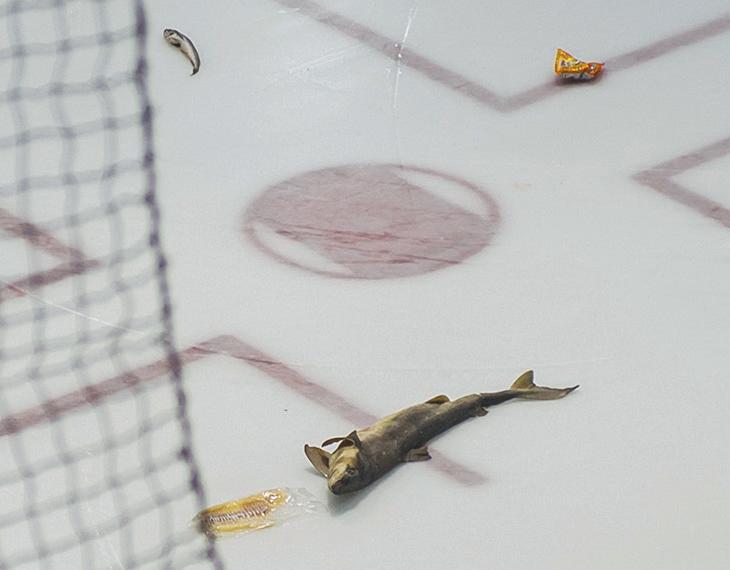
Fishy, fishy, cross my ice rink | It is against Lynah Rink rules to throw fish on the ice at the Harvard hockey game. But some rules were made to be broken.
“Last year at the game, Touchdown the Bear was in a hockey jersey and was holding this giant plush fish above his head,” Morton said. “They encourage it, even though they technically can’t.”
But the plan floundered when Morton’s fish were confiscated in the stands by security.
“There was a guy walking around, and I thought he was a student,” Morton said. “I had my jacket cracked open because it was getting hot. I had a bag tucked inside my sleeve and he must have spotted it.”
Despite Morton’s best efforts, he had to release his fish.
“So then, he was like questioning me,” Morton continued. “I tried to hold him off, but he called his superior, and I had to hand it over.”
Armed with plenty of other fish, though, the trio still had the necessary ammunition to carry out the tradition. With the Harvard skaters ready to enter the ice, Polacek made the first move, tossing the first sea creature of the evening.
“As soon as the goalie touched his foot on the ice, it was flying,” Polacek recounted.
After the initial wave of fish was thrown out onto the ice, fans continued to heave fish as the Harvard skaters clung to the wall in an effort to avoid any pelting.
Although the three were active participants in the tradition, they did note some of the unsavory side effects that come with this tradition. Some fans hurled Swedish fish onto the ice, but the candy wound up staining the ice.
“We got to get rid of the Swedish fish,” Polacek remarked. “It ruins the ice.”
But frozen fish can stink for its own reasons, too. Because frozen fish thaw out and become wet, fish juice ended up raining down over the rink.
“It starts to smell like a fish market five minutes before puck drop,” Polacek said.
In regards to the actual game, the three enjoyed the experience as well.
While the contest was scoreless for the first 56 minutes, the three noted the energy from the Lynah Faithful. Freshman Jack Drury’s goal for Harvard silenced the crowd, but sophomore forward Michael
“Last year at the game, Touchdown the Bear was in a hockey jersey and was holding this giant plush fish above his head. They encourage it.”
Daniel Morton ’21
Regush’s response on the power play revived the fans.
“I think that’s the loudest I’ve ever heard it,” Morton said, referring to the noise following the Red’s tying goal.
While there may be formal rules that prohibit the fish-throwing tradition, it continues to live on, uniting the Cornell fanbase, just as it did for these three juniors.
Luke Pichini can be reached at lpichini@cornellsun.com.
the two games, earning her seventh and eighth shutouts for the season.
goaltender Liz Auby. She tried finding a teammate, but senior forward Grace Graham stole her pass.
Auby was able to save Graham’s quick shot, but the rebound went right to Lewis as she came flying out of the penalty box. The experienced senior made no mistake and found the back of the net for the game’s first goal immediately after her penalty expired.
Coming out of the locker room after the first intermission, the Red was eager to extend its lead. About halfway through the second frame, junior defenseman Devon Facchinato shot the puck towards the net, where her teammates senior defenseman Jaime Bourbonnais, Lewis and Graham surrounded the Raider goaltender. After much scrambling, the puck found its way to Graham, who rifled it in. Bourbonnais took credit for the assist in the final goal of the evening for Cornell.
Junior goaltender Lindsay Browning once again had a sensational game in net, recording 16 saves in the shutout win. However, it would not be the junior’s only shutout of the weekend, as she recorded another one the following day with Cornell’s 5-0 win over Colgate. Browning combined for 30 saves over
Three minutes into the first period of Saturday night’s game, senior defenseman Micah Zandee-Hart was called for an interference penalty. Like in game one, Cornell’s penalty kill swarmed Colgate, producing an effective counterattack. O’Neill stole the puck from a Raider forward in Cornell’s zone and charged down the ice.
Zandee-Hart left the puck for Bourbonnais, who put the team ahead with a short-handed goal from right outside the goal crease. O’Neill would go on to take over the game, as she scored the next three goals for the Red.
and shot top shelf for the unassisted goal. For her final act, the star senior would sink her third goal of the night just 30 seconds into the third period. Junior defenseman Kendra Nealey’s shot went wide of the net and deflected off the boards to find Mills. She threw a pass out in front to find O’Neill streaking towards the net, who scored right off the pass.
With that goal, O’Neill moved onto Cornell’s top 10 all-time leading scorers list. At 70 career goals, O’Neill is one of the most prolific goal scorers the program has ever seen.
“[Browning’s] ability to stop the puck while maintaining a smile, calmess and enthusiasm is like no other.”
Micah Zandee-Hart
Shortly after the first score, O’Neill won a faceoff in Colgate’s zone. Junior forward Maddie Mills first controlled the puck, and then passed it back to O’Neill, who was waiting near the faceoff circle. The senior one-timed the shot for her first goal of the night.
In the second period, O’Neill stole the puck again from a Raider defender. Coasting into her opponent’s zone on her forehand, she deeked to her backhand
“Achieving this milestone means a lot to me, and of course it’s a huge signifer of how skilled my teammates are, as well,” O’Neill said. “It means a lot to me to be able to contribute to my team’s successes as much as possible.”
As the other star of the game, O’Neill’s hat trick was her second of the season.
“Getting a hat trick against Colgate was also very special because they have been a huge competitor of ours the last four seasons and to be able to win backto-back against that team is very important,” O’Neill continued.
O’Neill was not the only Cornellian to make history Saturday night, as Browning, with her 14 saves on the night, moved into fifth place on Cornell’s all-time shutout list with nine.
“Lindsay has been tremendous,” O’Neill said. “She is extremely modest and will definitely tell you that all of her shutouts are because of our team defense but her ability to stop the puck while maintaining a smile, calmness and enthusiasm is like no other.”
Sitting on a four-goal lead with just over a minute left in the game, junior defenseman Willow Slobodzian sent the puck around the boards from her own zone, where it was picked up by junior forward Joie Phelps. Phelps pushed it ahead to junior forward Finley Frechette, who scored from the blue line for the final goal for the Red.
With excellent goaltending, a solid penalty kill and a surging offense, Cornell appears to have all the tools for success, with the Red playing its best hockey down the final stretch of the season.
The team will look to continue its dominance in the ECAC next weekend as it hosts Clarkson on Friday and St. Lawrence on Saturday.
Justin Suzzan can be reached at jsuzzan@cornellsun.com.
Independent Since 1880
137th Editorial Board
ANU SUBRAMANIAM ’20
Editor in Chief
JOYBEER DATTA GUPTA ’21
Business Manager
PARIS GHAZI ’21
Associate Editor
MEREDITH LIU ’20
Assistant Managing Editor
RAPHY GENDLER ’21
Sports Editor
BORIS TSANG ’21
Photography Editor
SARAH SKINNER ’21
Managing Editor
KRYSTAL YANG ’21
Advertising Manager
NATALIE FUNG ’20
Web Editor
SABRINA XIE ’21
Design Editor
NOAH HARRELSON ’21
Blogs Editor
Working on Today’s Sun
Ad Layout Jenny Huang ’22
Production Deskers Sabrina Xie ’21
Dana Chan ’21
News Deskers Kathryn Stamm ’22
Alex Hale ’21
Design Deskers Lei Anne Rabeje ’22
Photography Desker Boris Tsang ’21
Hannah Rosenberg ’23
Arts Desker Greta Gooding ’22
Richard Beezley ’22
Editors in Training
Editor in Chief Maryam Zafar ’21
Managing Editor Johnathan Stimpson ’21
Assistant Managing Editor Meghna Maharishi ’22
Associate Editor Peter Buonanno ’21
Sports Editor Christina Bulkeley ’21
Editorial
FEW PEOPLE WOULD ARGUE THAT THE SOCIAL SCENE on this campus is doing fine. Even fewer would say that the Greek Life that existed on this campus 12 months ago was a healthy system.
It is clear that reform is necessary. It is urgent. And it needs to come from the adults paid to unearth them — not patched together on the backs of college students without the institutional knowledge, experience or mental bandwidth to reform them. But are the University’s reforms good?
Well, the 14-page PDF slid onto the OSFL website on Tuesday was extensive. The enumerated regulations mandate catered alcohol service or a “BYOB” policy, hired security for events with more than 100 attendees and a contracted monitoring service. Folks’ partying is limited — Thursday to Sunday — the “punch bowl ‘’ concept is nixed and “Closing Time” has got to play by 1 a.m.
The reforms that have unfurled out of the different governing bodies of the University are necessary. The fraternity system somehow continues to hold one of the most powerful social influences on campus, and it is no secret that behind curtains of philanthropy, networking, brotherhood and power — historically, 76 percent of U.S. senators were fraternity brothers — is an organization richest in social currency.
The plurality of serious incidents of nonconsensual sexual contact occurred at fraternity sites, according to the 2019 University survey. The first documented instance of fatal fraternity hazing occurred here, far above Cayuga’s waters, when Mortimer N. Leggett died on Oct. 17, 1873 trying to join the Kappa Alpha society.
Not all of this is the fault of Leggett and his classmates. Had they attended Dartmouth University and Leggett fell in the woods while blindfolded, it is more likely that he and the two men guiding him would have fallen into a bush than a gorge.
And 150 years later, the problems continue here, and the faults and falls of carelessness and malice can be seen still. It is true that there inherently is more risk here — built into our landscape, into our high stress levels, into our lack of social outlets — a fact acknowledged even by President Martha E. Pollack on Thursday.
And Cornell is clearly taking the elephant-esque problem of social misconduct seriously: While the IFC president once called the recruitment process “laissez-faire,” the University barred four fraternities from recruiting this semester.
The reforms are a huge step forward. But it’s too early to tell in what direction they’ll go. And the concerns raised about financial inequity, social stifling and the feeling of babysitting are valid.
It is true that different Greek organizations do have different economic access and different resources. A skim through 2017 I-990 tax forms show large differences in the finances of fraternities. While one fraternity netted nearly $26,000 in assets at the end of the 2017 fiscal year, another closed with over $1.4 million. For chapters lacking funds, hiring security can be daunting and may even lead to increased social dues for members. The financial issues that surround the new event management reforms perpetuate the idea that Greek Life is for those who can pay for it.
Of the 14 fraternities still on campus who have been found responsible for hazing in the last decade, 10 of them have social dues above $600 per semester. By placing a flat tax on all fraternities, organizations with more cash will continue to have more influence.
It is true that if you’re bored on a Saturday, you have few social options, especially once you’ve checked off the routine karaoke and hockey nights. Will these reforms create safer parties — or more isolation?
It is true that college-aged students are adults, and many fraternity houses and Collegetown annexes are privately owned or rented; it is true that adults should have a degree of privacy in their home, and should be able to live without fear or anxiety that a CUPD-led roving force will roll up the driveway.
And if the reforms had a goal somewhere — a listed measurement system, a tally of students needing their stomachs pumped, a rewritten mission for Greek Life — then The Sun, and frazzled college kids, would be able to rest easier.
But the lack of information on the underlying trajectory of the University has cramped the ability of anyone to enthusiastically celebrate.
Emma Smith | Emmpathy
As Cornell students we have a distinct sense of being groomed for our Perfect Lives. Raised to get perfect scores on standardized tests. Told even our extracurriculars, activities typically meant to allow us to unwind and explore interests that are not scaled or critiqued like assignments, will come under scrutiny for their ability to improve or say something about us to others. Society has been grooming us since birth to be part of the perfect future workforce and gave us the technology to be constantly working, be it building a personal brand or receiving an email at midnight about class the next day.
This push for hyper-optimization makes even leisure time an opportunity for greater productivity. We craft “morning routines” to perfect our skin and “night routines” that ensure perfect sleep — though your slumber might be marred by the knowledge that you could have worked on some personal project instead of going on a YouTube deep dive. Time not spent working towards some goal (academics, future careers, improving health, etc.) is frowned upon as “procrastination,” despite being the inevitable symptom of an overstimulated world. Overextension is the norm.
deeply entrenched in my sense of self. When I did something less than perfectly, I didn’t just feel mild disappointment; I felt shame and acute failure. I didn’t wash my dishes: I was a slob. I submitted a “subpar” paper: I had failed even if it was perfectly acceptable and just not my best. These feelings were so uncomfortable that I found the perfect (pun intended) tactic to avoid these feelings: eradicate all imperfectness from your life,you’ll never fail and you’ll never feel disappointment or self-loathing. When crafting this genius plan, I
The irony of seeking perfection is that it emphasizes imperfection. It positions setbacks as failures instead of learning opportunities.
forgot to factor something in: life isn’t perfect. The result was a vicious cycle of failing to be perfect, berating myself, and then resolving to be even more perfect the next time. Aside from being the definition of insanity, I was setting myself up for a never-ending loop of destructive self-criticism, anxiety, and depressive symptoms that only made the self-criticism worse. It was the worst ride I’ve ever been on and I didn’t even want off for the longest time.
Even as I was slowly driven towards burnout, I was afraid of giving up my perfectionism. I thought it’s what made me excel, and that my performance would suffer.
The irony of seeking perfection is that it emphasizes imperfection. It positions setbacks as failures instead of learning opportunities, and says that more work is always needed. Low-reward tasks such as folding laundry or cleaning your room seem somehow far harder than they should. That’s because perfectionism isn’t a behavior, it’s a way of thinking about and speaking to yourself. Perfectionism isn’t about working hard or setting high goals. It’s that critical inner voice telling you that anything less than or not in progress towards those goals isn’t good enough.
Cornell students are not strangers to perfectionism, and unfortunately they are also familiar with the unsettling list of clinical issues such as depression, anxiety, OCD, eating disorders, chronic fatigue syndrome, insomnia, early mortality and suicide, associated with perfectionism.
Of course, for chronic perfectionists such as myself, this change is easier said than done. I find the best way to begin to challenge perfectionistic tendencies is twofold: Do something imperfectly (fold half your clothes, wash half your dishes, spend half your day working.)
Think about yourself kindly, do what makes you feel good (go for a walk, watch Netflix, play a game) without expectations and tell yourself that you are doing a good thing for yourself because you deserve it.
When talking to friends about perfectionism, one of them said something that stuck with me: “It’s impossible to prioritize your mental well-being while trying to achieve perfection.” I couldn’t agree more. At its core, perfectionism is fear. Fear of not being good enough. Fear
Having fear drive your life choices wears down your confidence and self-image and can even leave you incapable of performing simple tasks.
Even as I was slowly driven towards burnout, I was afraid of giving up my perfectionism. I thought it’s what made me excel, and that my performance in all areas of life would suffer. Yet a 2016 meta-analysis of 43 studies on perfectionism and burnout found little to no benefit from having very high personal standards. Also, the more “maladaptive” the perfectionism, the more likely the possibility of burnout.
These results were hard to hear because my perfectionism had become
you’ll never do enough. Perfectionism gives you an illusion of control — but just an illusion. Having fear drive your life choices wears down your confidence and self-image and can even leave you incapable of performing simple tasks. That’s no way to go about life. It’s exhausting, and you will lose track of the truly important things. So raise your standards. Stop trying to be perfect.
Emma Smith is a sophomore in the College of Agriculture and Life Sciences. She can be reached at esmith@cornellsun.com. Emmpathy runs every other Wednesday this semester.
Alecia Wilk | Girl, Interrupted
Oh, Fraternities. From their stupendously shitty taste in music to their toxic environment of elitist exclusivity to their growing count of associated rape cases and deaths, what’s not to love? Sorry if that was harsh, the hook has gotta be abrasive to weed out who really wants to read the entire thinkpiece, it’ll be worth it when you get to the body paragraphs. You understand, right?
It’s a surprise to absolutely no one that Greek life, at universities all across the United States, is ridden with a plethora of serious problems. So why, in spite of this universal truth, are these organizations allowed continued existence; An existence that inherently grants them power and authority? The answer is unfortunately cyclic: because of their power and authority.
It’s a surprise to absolutely no one that Greek life, at universities all across the United States, is ridden with a plethora of serious problems.
The statistics of success pulled from the former-fraternity-member demographic are, admittedly, very impressive. A few years back, Cornell boasted of these correlations in the Greek life information section on the university website. On a page headlined “The Power of 2%,” our website rattled off the facts:
“Approximately 80% of the top executives of Fortune
500 companies are fraternity men. 76% of current United States Senators and Congressmen are fraternity men. 100 of 158 cabinet members since 1900 have been fraternity men. 40 of 47 Supreme Court Justices since 1910 have been fraternity men. All but two United States Presidents since 1825 have been fraternity men.”
At first glance, this seems like a tribute to the accomplished, outstanding men that fraternities produce. But the eerily high concentration of those with a Greek past who are streamlined to positions of prestige has little to do with their ability to encourage principles of “leadership,” “responsibility” or “scholastic achievement.” Rather, it is intertwined with the capacity of these organizations to attain their goals of reproducing enclaves of wealth and privilege, consequently imposing racial and class-based segregation.
Though Greek organizations are afforded opacity in their admissions information, (and overall surveillance of conduct within and throughout their brotherhoods) Princeton University collected information on its Greek system and put numbers to the trends that have been observable for centuries. In elite universities where student populations are already relatively homogeneously white, rich and with a background and future of opportunistic networks, fraternities amplified these disparities. Princeton found 73 percent of fraternity members were white, compared to 47 percent of its student body. 30 percent of fraternity members were legacies and over 60 percent came from private high schools. 95 percent were from the richest quartile, and more than 25 percent of Greek lifers belong to the top 1 percent. Greek life is created for and by, as Maria Konnikova put it in her article for The Atlantic, “the ‘innest’ of the in-groups.”
Fraternities are not bound by promises of inclusion, equality or diversity to maintain themselves. They
Wknow this and they are protected by this, which yields a system of blatant elitism, sexism, racism and danger –– not only physically to individuals but to the goal of egalitarianism on college campuses. Frats pose a threat to college students, but to the administration, they look
It’s in the best interest of most of us to work to diminish their existence, or at least their influence.
like zeros on the endowment. The largest portion of lifetime donors to universities are alumni of Greek life; they donate four times more than non-Greeks, giving them a potentially heavy hand in university politics.
So, here they stand. Despite a history of and tendency to throw parties with racist themes. Despite a culture of sexism and female endangerment. Despite hazing rituals that too often, and as we know too well, end in injury or death. The Lord of the Flies-esque pledging process and hierarchy of these elite clubs won’t be cured by diversity quotas. It’s in the best interest of most of us to work to diminish their existence, or at least their influence. After all, while they do have money and power, they’re only 2 percent.
Alecia Wilk is a sophomore in the College of Arts and Sciences. She can be reached at awilkes@cornellsun.com. Girl, Interrupted runs every other Friday this semester.
hen I first learned about climate change, I learned it as fact. (To contextualize: I grew up in California.) I remember folding my legs in criss-cross-applesauce as I watched my fifth-grade science teacher uncap a neon green Mr. Sketch marker (you know, the ones that scream “lime-scented” from ten feet away) and outline a diagram of the greenhouse effect. Mrs. Weber, who we secretly referred to as The Weberbug, explained it in elemen tary-school terms. The greenhouse effect
I wrongly assumed that the adults would fix the climate crisis, that they would salvage our Earth.
ly — assumed that the adults would fix the climate crisis, that they would be able to devise the technology and drum up the support needed to salvage our beloved Earth.
Fast forward a few years: Now, I’m an adult. And the climate crisis? It’s as bad as it’s ever been.
Last semester at Cornell, I enrolled in two environmental science courses to fulfill my distribution requirements (and to be quite honest, I thought they would be easy A’s on my
is like a comforter, she said. When you throw a comforter on, the blanket traps your body heat, warming up anything bound within. Simple as that.
The Weberbug taught me that global warming was a reality — fact, truth, certainty. Though my understanding of the greenhouse effect has since expanded beyond that comforter analogy, I continued walking through life accepting that our planet faced inevitable warming. But along with this knowledge, I also carried an ignorant naivete that the environment’s ailments would easily be resolved. After all, if the very planet that dictates our existence is in danger, wouldn’t the world’s inhabitants want to save it?
But, clearly, fifth-grade Niko was lightyears ahead of the dismissive politicians and business leaders that dominate our world. He innocently — and wrong-
transcript). But what I took away from those two classes was much more than I had initially expected. I didn’t just learn a slew of environmental fun facts that I could whip out as trivia for my friends, and I definitely didn’t gain an enlightened perspective on how close humanity is to redressing the climate crisis. I walked out of that semester with an unbearable sense of hopelessness.
By 2050, even if we engage in worldwide mobilization to terminate the planet’s warming, 70-90 percent of coral reefs will die. By the end of the century, warming oceans may wipe out 17 percent of all marine life and more than half the world’s marine species may face extinction. Sea levels will rise by 8 feet, ocean acidity will increase by 170 percent and Earth’s global history will be stained with
its first human-induced mass extinction. Don’t flippantly gloss over these facts and shrug off the guilt and fear surrounding these realities. Let it sink in. Let yourself feel the gravity of what it means for our global biodiversity to peter out, for our oceans to face inevitable peril — for our planet to deteriorate before our eyes.
And at one point or another, it starts to feel hopeless when all of this tragedy settles into our psyche. I struggled with finding the motivation to even care about sustainability and environmentalism, doubting that my individual contribution could even make a dent on this global issue. After all, if I avoid consuming red meat, how does that stop the plates and plates of wasted, half-eaten hamburgers funneling through Cornell Dining’s dish returns every single day? If I commit myself to a zero-waste lifestyle, how does my microscopic contribution soften the blow of the exorbitant waste that humanity produces? Not to mention, sustainability is a rich man’s game: Only those who have privilege, wealth and access are able to afford reusable straws, plant-based diets and the time to care about matters beyond affording rent.
It is unfair that we, as a collective humanity, are forced to shoulder the guilt of this climate crisis — a guilt perpetuated by those at the top who have failed to tangibly act against global warming.
fight for sustainability and the preservation of our planet. I watched as California underwent drastic hardship over the past few years, with our yearslong drought and our seasonal wildfires. Our people, our neighbors and our loved ones are the ones affected by these consequences — which makes this oceanswide climate crisis a personal issue. Whether it be weaning off of red meat, writing letters to Congress or partaking in climate change protests, any attempt to reduce one’s individual carbon footprint makes an immense difference. At the very least, it starts a dialogue. It was student action that gave rise to Cornell’s historic move to achieve carbon neutrality by 2035 and it’s individual action from today’s youth that is spearheading the environmentalism movement. Though our efforts might seem futile, everything we do contributes to bolstering this movement, spurring more discussion and raising awareness.
Everything we do contributes to bolstering this movement. When an issue is this personal, every action we engage in matters. Every action is worth it.
When an issue is this personal, every action we engage in matters. Every action is worth it.
Despite the lack of control and the sense of despair that shrouds environmentalism, inaction from global leaders is exactly why we should continue to
Niko Nguyen is a sophomore in the College of Agriculture and Life Sciences. He can be reached at nnguyen@cornellsun.com. Unfltered runs every other Monday this semester.
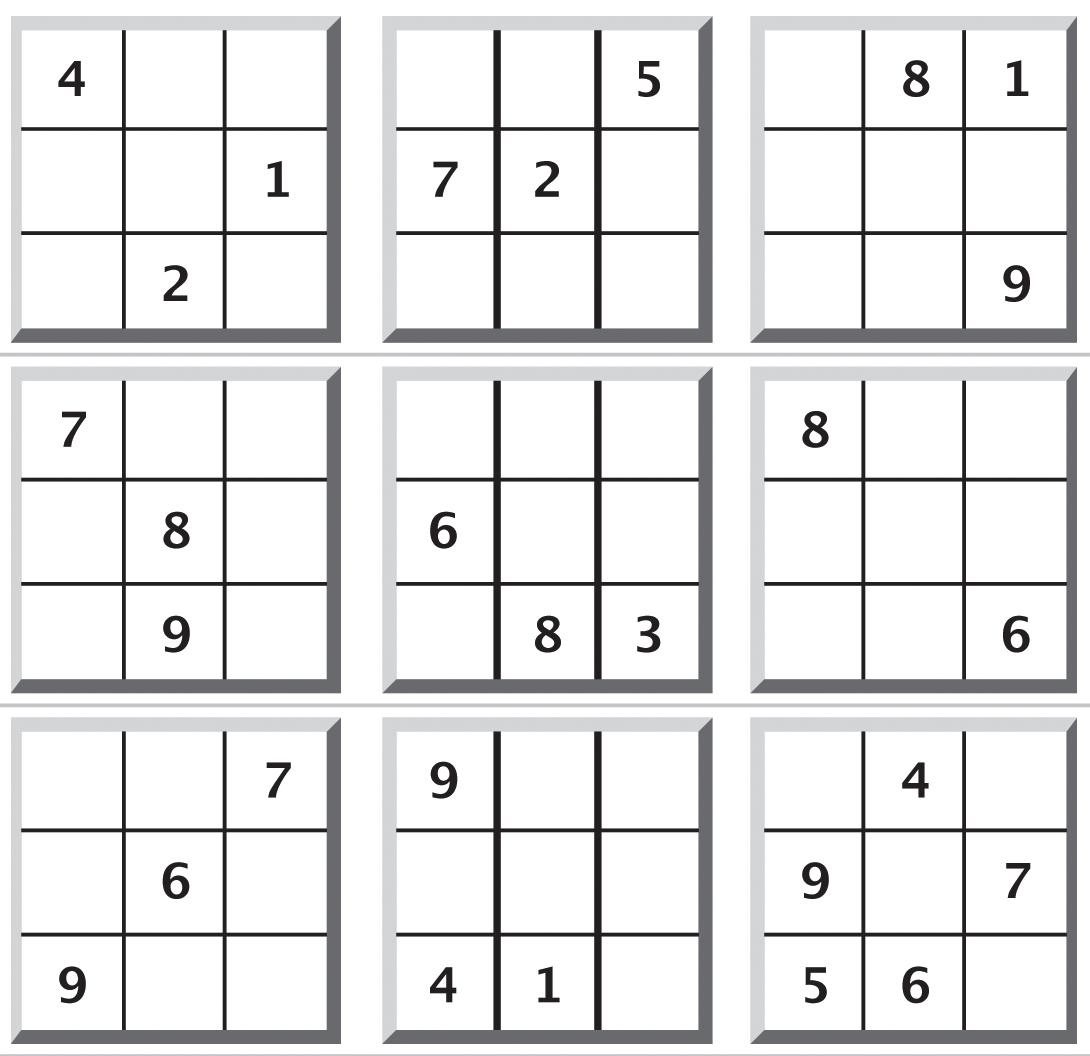
Fill in the empty cells, one number in each, so that each column, row, and region contains the numbers 1-9 exactly once. Each number in the solution therefore occurs only once in each of the three “directions,” hence the “single numbers” implied by the puzzle’s name. (Rules from wikipedia.org/wiki/ Sudoku)

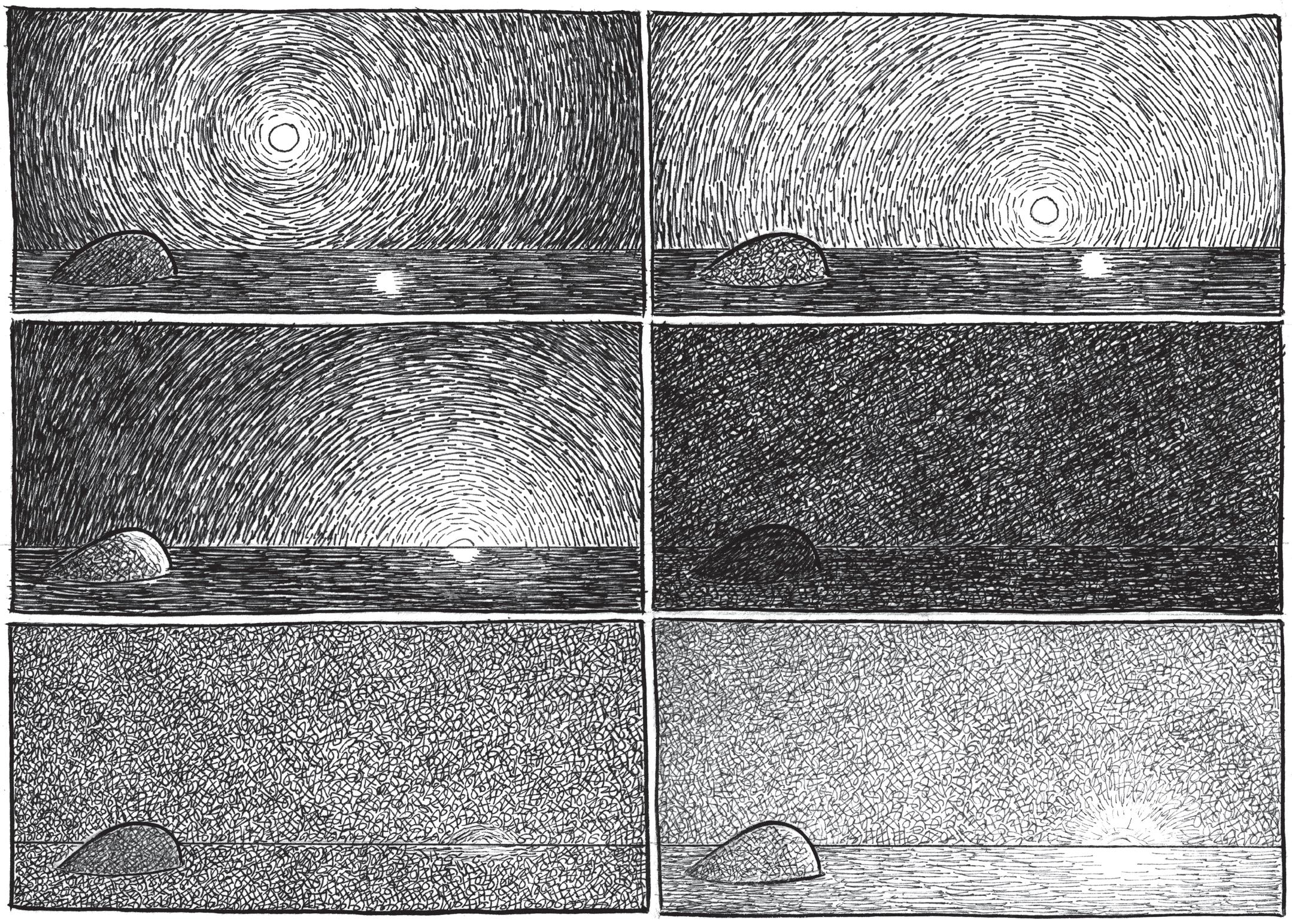
“Finally, after all these years, I’ve discovered the secret to immortality!” — Michelle Robbins ‘21
To submit your caption for this week’s contest, visit sunspots.cornellsun.com.



26 A PA R TMENT FOR R ENT
2020-2021
Studio 1, 3, 8 & 11 BR Apts. Great Locations in Collegetown. 607-227-2535
Collegetown Crossing
College Ave's Newest Location 307 College Ave. Now Leasing for 2020-2021
Completely New Modern Studios, 2 & 4 Bedroom Apartments. Fully furnished, heat & hot water included. Reception area at 307 College Ave. www.urbanithaca.com 607-330-2442 info@urbanithaca.com
120 Oak Avenue
Just steps to Cornell Campus 10 bedroom house & 1 and 2 bedroom apartment 607-277-1234 office@ithacastudentapartments.com Ithacastudentapartments.com
*Brand New*
Studio, 1 & 2 Bedrooms College Townhouse 121-125 College Ave. Leasing@inteprop.com
Boldly Refined Living 312 College Avenue
Sophisticated studio, 1, 2, 3-bedroom apartments. Superior fitness facility, theater, and coworking space. Free high-speed internet. Exclusive resident parking. Package delivery/return. Overnight concierge. 607-273-9777 or 312collegeave.com
Catherine & Eddy St. 1 & 2 bedroom Furnished, heat included Laundry in building Parking available for fee 607-277-1234 office@ithacastudentapartments.com
26 A PA R TMENT FOR R ENT
***************************** 1-3 Bedroom Apartments Quiet Fall Creek Location 5 Minutes to Busline 607-351-1267 joe@joegrealty.com
*****************************
Houses, Apts, Parking 1 to 9 Bedroom Collegetown - College Ave, Linden Ave, Dryden Rd, Bryant Ave, Cook St. 607-330-2442 info@urbanithaca.com www.urbanithaca.com
Now Renting 2-10 Bedroom Houses/ Apartments for 20-21. All Locations. Call today or visit our website: Certified Properties of TC Inc certifiedpropertiesinc.com 607-273-1669
Flexible Housing Solutions! Short Stay Accommodations “Brand New” Studio Apartments 238 Liden.com Leasing@inteprop.com
109 Sage Place 2 & 3 Bedroom Apartments
Access to Shuttle to Campus Access to Free Fitness Center Novarr-Mackesey Property Management office@ithacastudentapartments.com 607-277-1234
504 1/2 Thurston AveSTUDIO 607-277-1234 office@ithacastudentapartments.com Ithacastudentapartments.com
20-21
College Ave. 5 BR House Furnished. Laundry. Parking. Call 607-273-8576

RIVALRY
Continued from page 12
pulled, Regush beat Harvard goaltender Cameron Gornet to tie the game.
“We did a great job winning the draw, which kind of set things up from there,” Regush said. “[Senior defenseman] Yanni [Kaldis] had the puck, and I found myself loose. And he made a great pass to me, and I kind of tipped it in.”
The Red pressured Gornet as it tried to net the game-winner, but could not score, sending the game into a five-minute overtime period.
Each side had opportunities, but none of them manifested into a score. Perhaps the Red’s best chance came when senior captain Jeff Malott took the puck on a one-man charge and nearly scored on Gornet. Cornell kept the puck in Harvard’s zone late in the period, but Gornet stood tall, preserving the 1-1 deadlock.
Before all of the action, the Lynah faithful practiced the age-old tradition of throwing fish on the ice. Despite the prohibition regarding fish-throwing, Cornell fans did it anyway, hurling scores of fish as Harvard skaters entered the rink.
“The crowd’s energy the last two nights has been phenomenal,” Schafer said. “There just was not a whole lot to cheer for in the game as far as goals were concerned.”
Though the puck drop was delayed by about a minute, a delay-of-game penalty was not enforced against the Red. Cornell and Harvard quickly took to the ice, and play was very physical right from the get-go — both teams took every opportunity to slam skaters into the boards or lay down massive hits.
Cornell’s offensive efforts were aided by two power-play opportunities, but Cornell failed to convert both chances.
The initial frame concluded in a scoreless draw with each team only generating five shots on goal. Harvard had a chance to strike first in the following period when freshman forward Jack Malone was whistled for interference, but the Crimson could not capitalize on the power play.
Cornell had yet another opportunity midway through the second when Harvard’s Henry Bowlby was called for a slashing infraction, but the team could only muster a single shot on goal as the Crimson defense
contained the Red.
Gornet, who started at goal for Harvard, provided a wall that the Red could not break. It was a stark contrast to the Dec. 6 match-up at Harvard’s home rink. There, Mitchell Gibson was the netminder for Harvard, and Cornell beat him for three goals.
For the rest of the period, Harvard peppered Galajda with shots, but the junior did not let the puck past him. In the end, the second frame ended with the same outcome as the first — both teams tied at zero. But Harvard applied far more pressure in the middle period, and it held a 17-9 edge in shots on goal.
“I don’t think they outplayed us,” Schafer said. “We just didn’t generate anything through large bands of the night … We turned a lot of pucks over during the course of the night. I just didn’t think there were a lot of scoring chances.”
In the final period, Cornell put more pressure on Gornet, tallying a few shots. But the Red found itself on the kill eight minutes into the period, as freshman forward Zach Tupker was sent to the penalty box for holding.
During the kill, the Red survived several close calls, including a Casey Dornbach shot on the doorstep that Galajda was able to save. Cornell’s success on the penalty kill kept Harvard scoreless.
“We’re just clearing pucks,” Galajda said. “Before, we were just trying to clear pucks, and they would get knocked down on those chances.”
Fans watched a similar scene unfold minutes later with a swarm of Harvard players charging the goal. Even though he was vulnerable on his right side, Galajda was able to stretch his body to cover the puck in the midst of the pileup.
“You can’t really let the emotions get the best of you,” Galajda said. “I think you just have to stay even-keel in the net and be a calming influence back there.”
Even though the Red trailed very late in the game, it still found a way to escape with a point against its rival.
“Obviously, we got one point, and we wanted two,” Regush said. “We’re going to make our adjustments to get more chances and shots.”
Cornell will go back on the road as it faces Quinnipiac and Princeton next weekend.
Luke Pichini can be reached at lpichini@cornellsun.com.
HOCKEY
team’s dominant defense.
By JUSTIN SUZZAN
Sun Staff Writer
Back-to-back shutouts and a hat trick from senior forward Kristin O’Neill on Saturday brought women’s hockey to an 11-game unbeaten streak over the weekend.

After overwhelming two of its biggest Ivy rivals, Harvard and Dartmouth, last week by a combined score of 12-1, No. 4 Cornell women’s hockey downed Colgate (13-11-4, 7-6-1 ECAC), which came into the weekend with a four-game winning streak of its own. The Red’s (181-2, 12-0-2 ECAC) unbeaten streak dates back to November.
Shutting out its competitors in four of its last five matchups, Cornell’s Saturday win marks a continuation of the
“Focusing on team defense is a crucial part of our success this year,” O’Neill said. “Everyone takes pride in the details of our defensive game, which is a big reason why we have been so successful.”

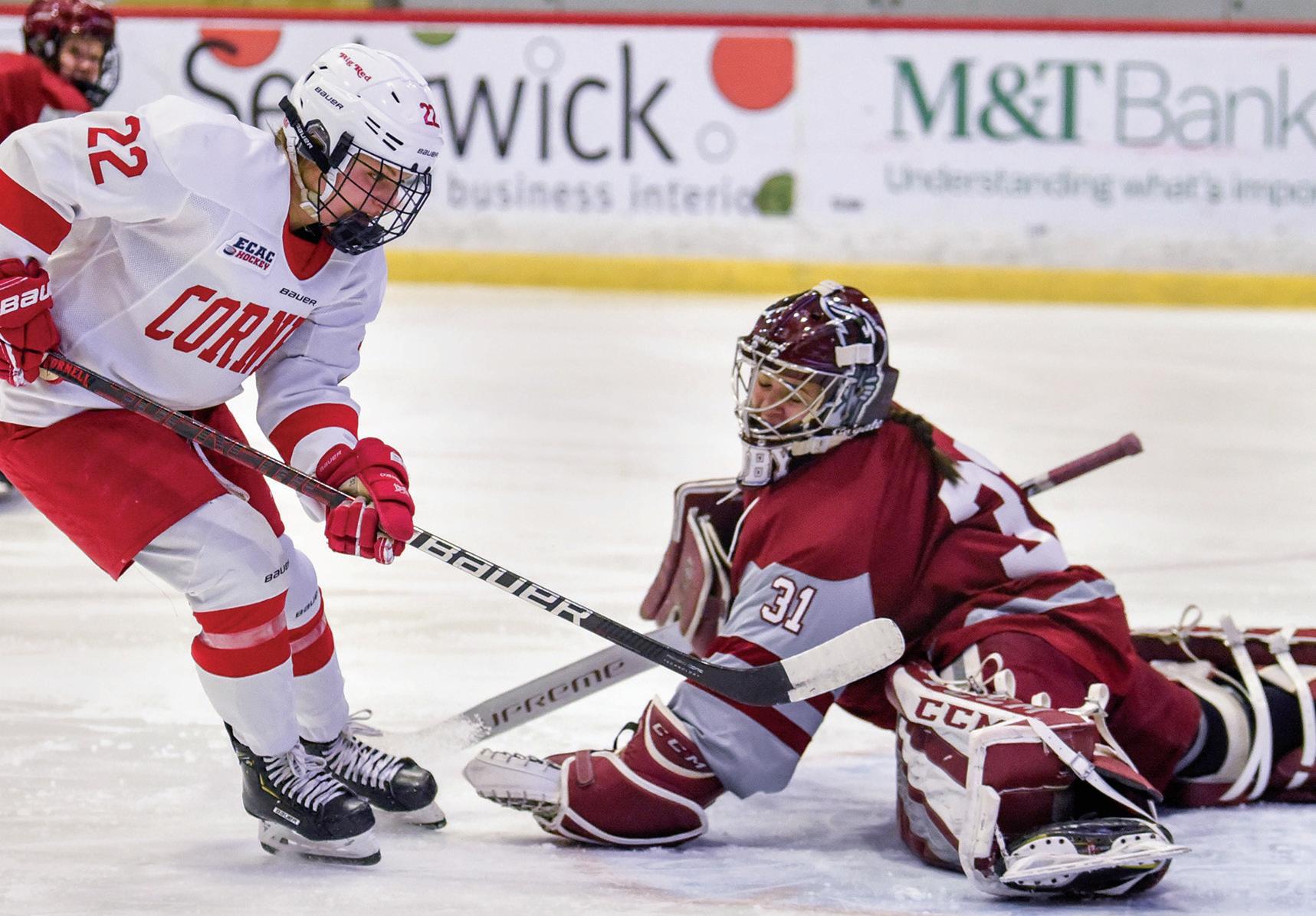
The first game of the weekend series took place on home ice for Cornell, and the team did not disappoint. After jumping on the Raiders early in the first period, the Red never looked back, going on to score another goal in the second period to cruise to a 2-0 victory.
By LUKE PICHINI Sun Assistant Sports Editor
After avenging its only loss of the season by beating Dartmouth on Friday, No. 1
Cornell men’s hockey returned to Lynah Rink on Saturday to face its biggest rival, Harvard.
Cornell came into the game riding a seven-game unbeaten streak and had only one loss to its name. Meanwhile, the Crimson, which started the year with a perfect 6-0 record, entered the contest with a measly 3-6-3 mark in its last 12 games.
While it seemed like both teams were trending in opposite directions, the Red and the Crimson battled in a close contest. Harvard first drew blood late in the game, but sophomore forward Michael Regush forced a 1-1 draw with a strike on the power play.
The first goal wasn’t scored
until there was only 4:05 left on the clock. After relentlessly pressuring junior goaltender Matt Galajda, the Crimson finally broke through as freshman Jack Drury’s shot from the slot found the back of the net.
“I made a mistake,” said head coach Mike Schafer ’86.
“I had four freshmen out there against the top line in the league. They both jumped out at the same time, and they took advantage of it.”
Cornell put forth its best attack in an effort to score the equalizer. With just under two minutes left in the game, the Red was gifted a power-play opportunity as Drury was sent to the penalty box for slashing.
After whiffing on its first three power plays, the Red converted just six seconds into the man advantage. With a 6-on4 advantage after Galajda was
See RIVALRY page 11

Harvard Saturday night.
One for the books | Kristin O’Neill moved into the top 10 all-time leading scorers for the Red and goaltender Maddie Browning is now fifth place on the all-time shutout list.
Just six minutes into the first period, senior Paige Lewis was called for a hooking penalty. As the final seconds ticked down on the powerplay, Cornell threw the puck at Colgate
On Sunday morning, Lakers legend Kobe Bryant died in a helicopter crash. He was 41. For Cornellians, Kobe’s death is the most tragic sports death of our young lives — in my mind, it’s perhaps the most rattling for Americans since that of Pirates outfielder Roberto Clemente in 1972.
Kobe is survived by three daughters and his wife, Vanessa. His 13-yearold daughter Gianna was on board the helicopter with him when it went down, along with one of her own basketball teammates and the teammate’s parent. There were no survivors in the crash and a reported nine casualties.

The future NBA Hall of Famer played all 20 seasons of his career with the Lakers and was named an All Star in 18 of those years. After being the first high school guard to join the NBA in 1996, he played off the bench for the first two years of his tenure with a team whose roster also included Shaquille O’Neal. In his third year in the league, Kobe broke out and never looked back.
Kobe Bryant’s impact on the game of basketball is immeasurable. In truth, I feel there is little I can add to Kobe’s canon. I have no new takes on his legacy, nor can I offer any analysis that has not been said already. But at times such as these, I think it is enough to simply remember.
Growing up in Boston, “Beat L.A.” chants were ubiquitous throughout my developmental years. The only NBA championship my hometown Celtics have won in my lifetime was in 2008 against the Lakers; the last time they appeared in the finals was in 2010, when they lost in Game 7 to the Lakers. Kobe was crowned the MVP of that series.
The basketball giant retired in 2016, having played 1,346 games throughout his iconic career. Just hours before Bryant’s death, LeBron James surpassed Kobe to take sole possession of third place on the alltime points list.
Anti-Lakers sentiment is not unique to Bostonians — they’re essentially the Yankees of the basketball world. But Kobe was a player more similar to a Derek Jeter-type than an A-Rod; as one of the greatest to ever play the game, he commanded respect.
Even so, Bryant’s career was not entirely without controversy. In 2003, he was arrested on sexual assault charges in Colorado. The case was settled out of court but led to personal struggles for Bryant. In his documentary, Muse, Bryant revealed that he created his alter-ego, The Black Mamba, to separate his personal life from his playing career at the time.
Kobe’s impact extends beyond his self-named shoe line with Nike and even beyond his elite level of play. His philanthropic work largely focused on serving inner-city youth and community building. The Kobe & Vanessa Bryant Family Foundation “is dedicated to improving the lives of youth and families in need, both domestically and globally,” according to the foundation’s website. He had also opened the Mamba Sports Academy in Los Angeles last year, where he was reportedly heading at the time of the fatal accident.
His death is mourned the world over and touches the lives of people far removed from sports. In Bryant’s own words: “Mamba out.”
can be reached at cbulkeley@cornellsun.com.
sometimes