The Corne¬ Daily Sun



By SARAH SKINNER Sun Managing Editor
The Office of Sorority and Fraternity Life rolled out sweeping new regulations for Greek Life events on Wednesday evening, restricting events to four days per week, requiring catering services for all alcohol served and limiting co-sponsors on approved events.
The new rules forbid chapters themselves from serving alcohol at mixers
and events; all alcoholic drinks must be sold “per-drink” by a liquor-licensed caterer on-site, from a list provided by Cornell. If a caterer is not hired, of-age students are required to stick to a “be
your own bartender” — a version of “bring your own beverage” or BYOB — policy for all events, including small ones. The new regulations also reduce these “small” events by a third, cutting them from 150 or fewer attendees to 99 or fewer. Every event must also contract an independent monitoring service, such as Cayuga’s Watchers.
Any event with 100 or more attendees — a “large” event, previously between 150-250 attendees — must hire Cornell-approved, third-party security. See
At the start of the academic year, at
By TAMARA KAMIS Sun Staff Writer
A contentious Faculty Senate meeting on Wednesday showed the depth of faculty disapproval for the proposed rebranding of the College of Human Ecology as the College of Public Policy.
On Jan. 16, the final recommendations of the Social Sciences Implementation Committee were made public. For non-policy departments, such as Design and Environmental Analysis, Fiber
Science and Apparel Design, and Nutritional Sciences, their future in the college is unclear, concerning many students and faculty.
Faculty members were largely critical of the committee’s proposal to rebrand the College of Human Ecology, and many applauded criticisms of the proposal.
Prof. Yasser Gowayed, chair of the Fiber Science and Apparel Design department, raised questions about the effect that limiting the scope of the committee process
had on its outcomes.
“By limiting their scope, they forced themselves to an inevitable answer,” Gowayed said.
The committee’s report acknowledged potential challenges.
In its report, the committee noted that supporting non-policy faculty unhappy with the College of Public Policy was “beyond our committee’s charge.” The committee also wrote that they “implore the administration to take seriously
See HUMEC page 4
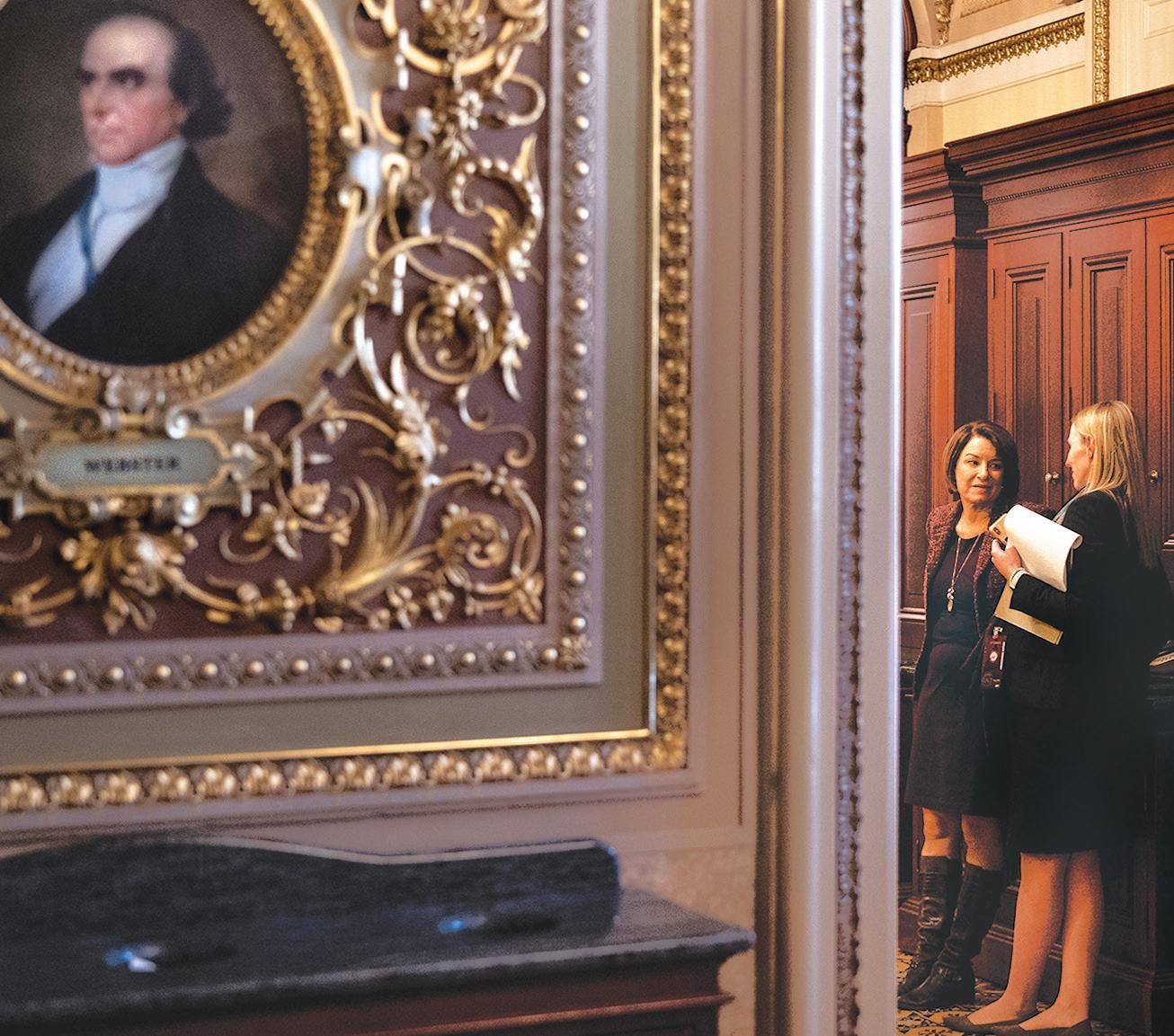
least 13 of the IFC fraternities had more than 70 members.
Any event with 100 or more attendees — a “large” event, previously between 150-250 attendees — must hire Cornellapproved, third-party security.
The Student and Campus Life website details only two approved security firms, Westcott Events and Amric Associates. The Interfraternity Council website also lists Cayuga Security and Investigation, Inc.

page 4
By ARI DUBOW Sun Staff Writer
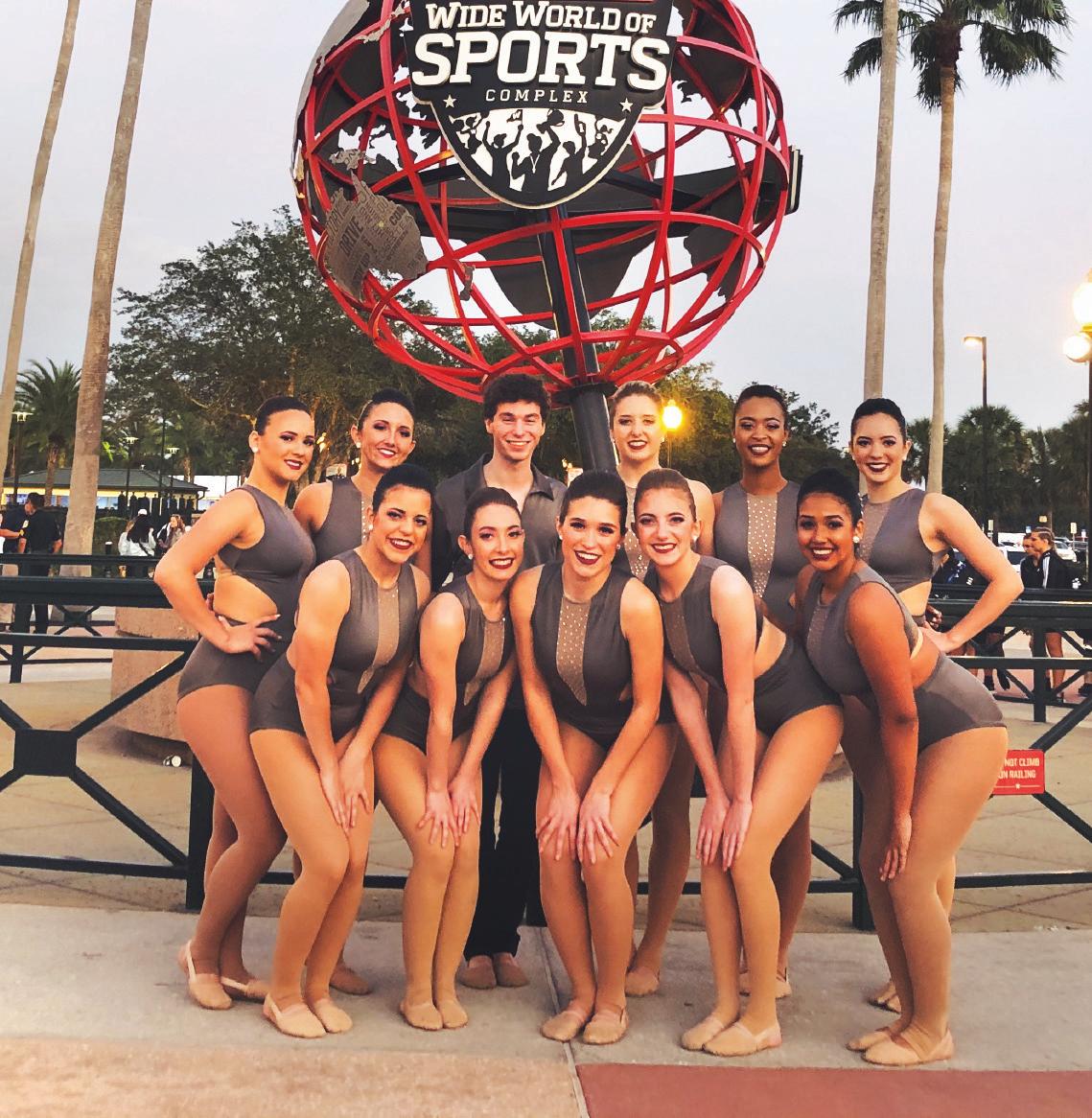
Days before returning to Ithaca for an icy first week of class, the Cornell Dance Team could be found taking a national stage in Orlando by storm.
Cornell danced among over 200 other college dance teams in the Universal Dance Association College Dance Team National Championship, one of the “most prestigious
college dance team competitions in the country,” according to its website. The team competed in the Division 1 jazz competition, where it faced 30 other colleges in that contest.
This was Cornell’s first year competing in a national dance competition. While the matchups only went on for three days, the team traveled to Florida several days early — first to Tampa, and then to Orlando — to practice.
“We rented a space and practiced seven or eight hours a day,” said Amanda Hernandez ’21, a member of the championship-participating squad. While the team did not qualify to compete in the final round, according to Hernandez, it left the competition feeling accomplished and motivated to compete more in future years.


Thursday, January 23, 2020
Today
Technology-Driven Energy Friends in a Warming World 12:20 p.m., 155 Olin Hall
Network Activity in the Development of Inhibitory Circuits 12:30 - 1:30 p.m., A106 Corson/Mudd Hall
Towards Robotic Matter Via the Design, Fabrication and Control Of Soft Robots
4 - 5 p.m., B11 Kimball Hall
Linguistics Colloquium, Developing Incrementality in Children’s Sentence Processing: Insights From Long-Distance Dependencies 4:30 - 6 p.m., 106 Morrill Hall
Room Selection and Housing Info Sessions
7 - 8 p.m. and 8 - 9 p.m., RPCC Multipurpose Room
The Role of Knowledge Acquisition Frameworks and Deliberate Innovation in Addressing Intractability and Rapid Cycle Innovation 12:15 p.m., 253 Rhodes Hall
Fishing for DNA in New York City: Discovering What Lives in New York City Harbor and Nearby Ocean With Environmental DNA 12:15 - 1:15 p.m., Lecture Hall 3, College of Veterinary Medicine
Phylogenetics of the Grasses and Other Monocots: What Do We Know, and When Did We Know it? 12:20 p.m., 404 Plant Science Building
Planning in the Highly Engaged Community: Perspectives From the Field 12:20 p.m., Milstein Auditorium
Institute for German Cultural Studies Colloquium, The Loser’s Edge: Writing From the Vantage Point of the Vanquished 2:30 p.m., 181 Goldwin Smith Hall Tomorrow
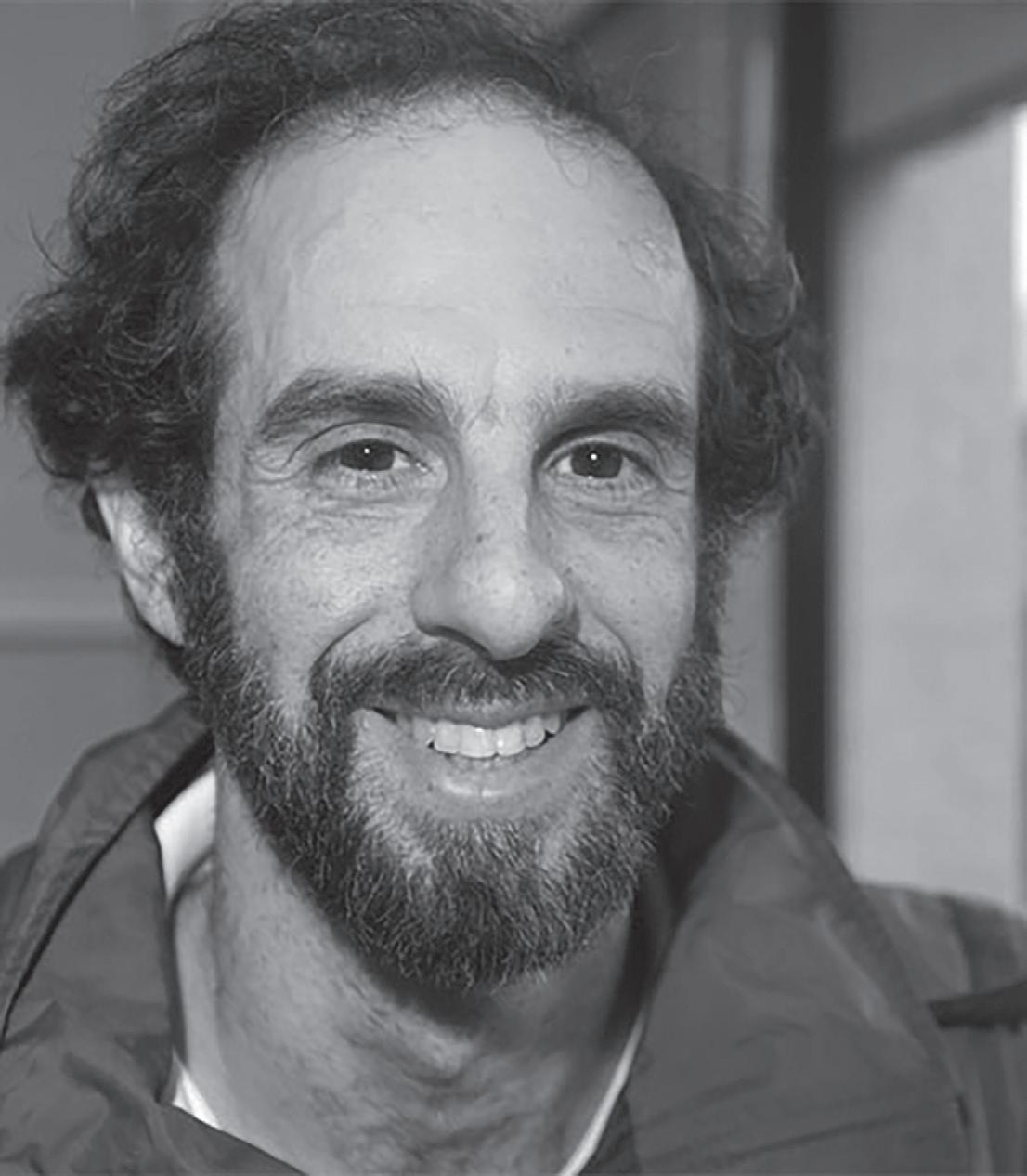
By CAROLINE JOHNSON Sun Staff Writer
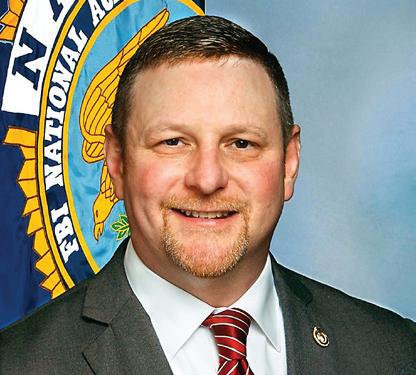
Last month in Quantico, Virginia, Jeffery S. Montesano, chief deputy officer of Cornell University Police Department, became a graduate of the FBI National Academy — only the third person from the University to do so.
After undergoing a lengthy, complex nomination process which required an extensive background check, recommendations, criminal history checks and tests of physical endurance, Montesano finally became a student of the academy.
During his final physical assessment on what the academy calls the “Yellow Brick Road” — adorned with obstacles resembling parts of the Wizard of Oz — Montesano ran the 6.1 mile hilly trail built by the Marines to secure his place in the top one percent of law enforcement agents across the world.
“It’s a very lengthy process for selection,” Montesano said. “I’m very honored and very humbled by it.”
Montesano, who previously spent the past nine years attempting to join the academy, is now one of the 52,540 members to do so since 1935.
With members from a variety of countries and backgrounds, the FBI National Academy trains professionals from different law enforcement backgrounds in leadership and specialized areas through coursework, physical assessments and networking.
Montesano a network of law enforcement colleagues for the future.
“The most important part there was the networking and that’s just knowing that I have 250 new law enforcement friends that I can reach out at any given time … to bounce off ideas, learn new ideas and try to work with them on what works and what
“I feel that it’s very important to the Cornell community to know their officers are well trained.”
Jeffery Montesano
“It gave me an opportunity to go and network with foreign students … and to talk to other colleges about their universities’ police departments best practices and philosophies and skills that are working in their communities,” Montesano said. His class, which consisted of about 15 international students from different universities and government agencies, offered
doesn’t work,” Montesano said.
As a part of the process, the FBI National Academy asked Montesano for his long term goals — which he told The Sun consisted of staying at Cornell to “give back to the community … and to bring back the best law enforcement practices that are being used across the world.”
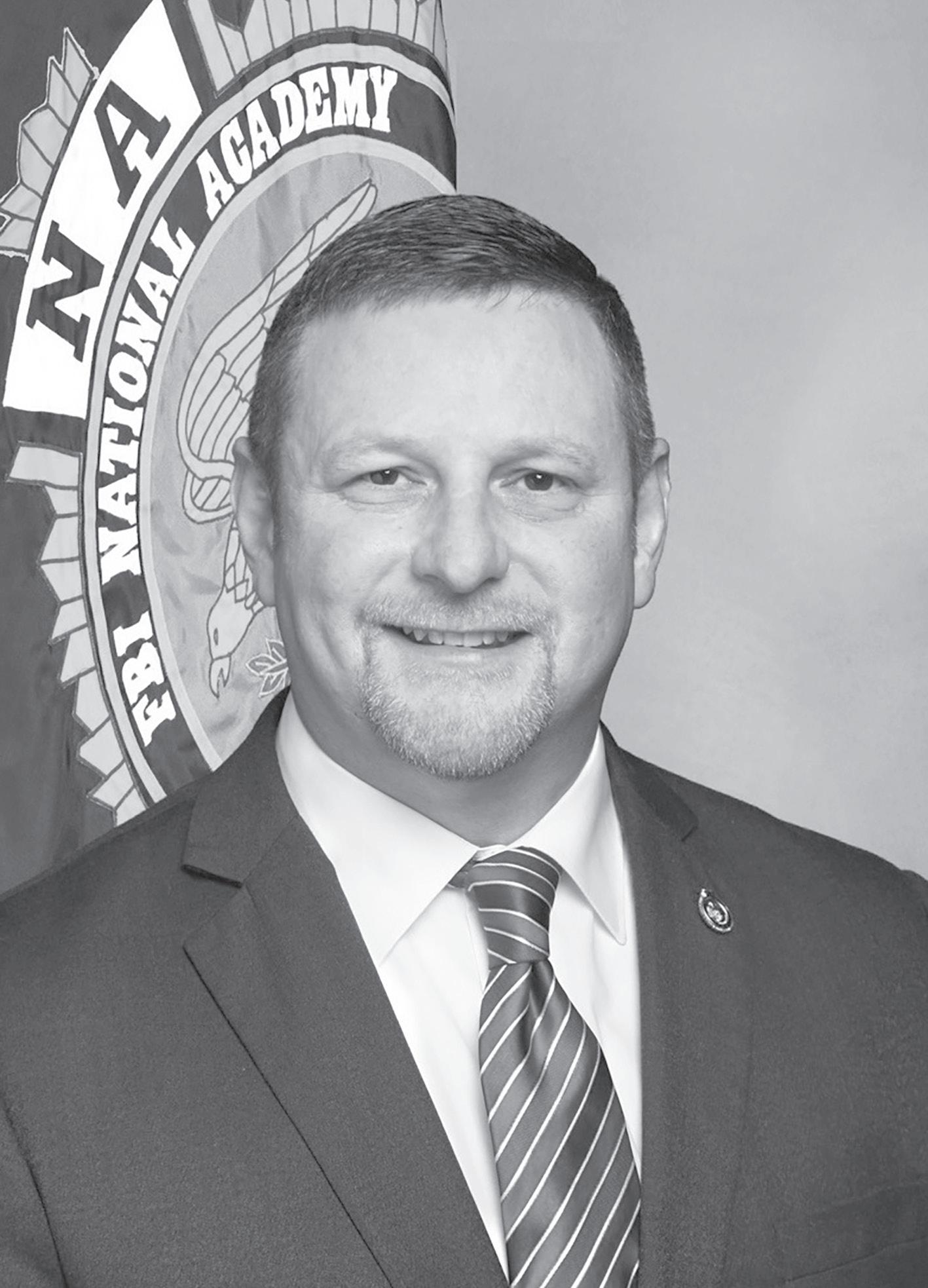
By SOPHIE ARZUMANOV Sun Staff Writer
After creating an accessible archive for scholarly articles nearly 30 years ago, Prof. Paul Ginsparg Ph.D. ’81, physics and information science, received an award from the American Institute of Physics in December for this work.
The archive, known as arXiv, is a “free distribution service and an open archive for scholarly articles,” particularly in science, engineering, and math-related fields. Ginsparg founded the service, previously called Los Alamos E-Print Archive, in 1991.
Ginsparg initially designed arXiv to mitigate issues with scholarly article accessibility to “level the playing field,” he said, citing the existence of “too much unintentional unfairness in the paper preprint distribution.”
Authors used to send photocopies of their work to a small number
of people, keeping researchers at non-elite institutions “out of the privileged loop entirely,” according to Ginsparg.
But even though communication methods have become more sophisticated since then, Ginsparg highlighted the continued relevance of arXiv.
“As the first to make open access material available on-line, it was the prototype for everything that followed,” Ginsparg said. “It remains the biggest of its type.”
standing contributions through exceptional statesmanship in physics.”
“If they had such a vote in high school, I would probably have been voted least likely to become a statesman,” Ginsparg said. “It’s fun to receive an award nominally for statesmanship.”
“If they had such a vote in high school, I would probably have been voted least likely to become a statesman.”
Paul Ginsparg Ph.D. ’81
ArXiv has accrued over one million subscribers for the past six years, according to the AIP press release.
AIP awarded Ginsparg the Compton Medal, which the organization gives every four years to physicists “who have made out-
By MEGHANA SRIVASTAVA Sun Staff Writer
In a move that Planned Parenthood says is an aim to increase access to high quality reproductive health care, five affiliates in New York state — including one that operates Ithaca’s local branch — have merged to become Planned Parenthood of Greater New York.
officially launched Jan. 6. The combined network expects to see 200,000 patient visits at 30 locations covering 65 percent of the state.
Originally operated by Planned Parenthood of Southern Finger Lakes, the Planned Parenthood clinic at Ithaca Health Center will now be operated by PPGNY.
The merger is “a way to look at the healthcare landscape in N.Y. and figure out the best way to optimize our leverage,”
“PPGNY is leading the way to ensure access to abortion care regardless of what happens at the federal level.”
Jacquelyn Marrero
These affiliates are Nassau County, Mohawk-Hudson, Mid Hudson Valley, New York City and Southern Finger Lakes. While the merger was announced in a May 15 press release, PPGNY
Jacquelyn Marrero, director of public relations for PPGNY, told The Sun.
According to Marrero, Planned Parenthood is “really reimagining how people access healthcare.”
“Through our shared experiences we’re able to look at
strengths from regions,” Marrero continued, saying that one of the main goals of the merger is use the strengths of the various locations to improve all five affiliates.
One such particular strength that Marrero cited is the Southern Finger Lakes’s transgender care unit, which she called “incredible.” According to Marrero, one of the motives behind the merger was to bring effective units — like Southern Finger Lakes’ transgender care unit — from each region to the greater New York area.
With this merger, affiliates will also have access to uniform electronic records, allowing physicians to be able to access the patients’ records from any of the five affiliates’ locations.
“Patients who go to Cornell and live in NYC and need to go to healthcare in one of the boroughs can have [a] more seamless experience,” Marrero said.
In addition to sharing resourc-
es and expertise across affiliates, Planned Parenthood also seeks to provide healthcare in more inno vative ways.
One such way is the Planned Parenthood Direct app, which “allows patients to seek care from the comfort of their own home.”
The app allows patients to order birth control, UTI treatment and search for health centers, accord ing to its website.
Since the merger, the newly enlarged PPGNY has been active ly advocating for women’s health care rights. In a Jan. 22 press release the organization con demned the wave of anti-abor tion legislation across the country.
The statement also affirmed that PPGNY is “leading the way to ensure access to abortion care regardless of what happens at the federal level.”
In recent research, Ginsparg has studied applications of quantum computing in high energy physics. He has also been working on applications of machine learning, both in quantum physics and information science applications.

Meghana Srivastava can be reached at msrivastava@cornellsun.com.
HUMEC Continued from page 1
the disruption that CPP would cause and to make sure that all faculty are able to continue their research, teaching, and outreach.”
Only 238 of the 1,136 undergraduates and 29 of the 104 faculty for College of Human Ecology are in the Policy Analysis and Management Department, according to a slide presented at the meeting.
Prof. Mardelle Shepley, design and environmental analysis, worried about the disruption of interdisciplinary work that the renaming of the college may have. Prof. David Lee, applied economics and management, supported the creation of a policy school, rather than rebranding as the College of Human Ecology, in part because he thinks a school could better facilitate collaboration across the university.
“If we really want to reinvent public policy, shouldn’t the focus be on the University as a whole instead of focusing on one department or college?” Lee asked.
Multiple faculty had questions about the impact that the proposed changes would have on financial support for the College of Human Ecology from New York state, as well as the impact it might have on alumni donations.
Prof. Emeritus Anne Lemley, former chair of the Textiles and Apparel department, said that the name
change could result in “wiping out a major alumni base” for continued giving to the college. Lemley added that despite her long history of giving to the College of Human Ecology, she would not give to a College of Public Policy.
In the final report, the committee voted nearly unanimously to pass “super departments” in economics, sociology and psychology — which would be comprised of faculty across schools like the College of Arts and
“The name ‘Human Ecology’ better represents the diversity of the school than College of Public Policy does,” said Abhirami Ramakrishnan ’20, an arts and sciences student who conducts research in the College of Human Ecology.
Not all students think that the impact on the future careers of Human Ecology graduates will suffer because of the name change.
"I'm listening carefully, and I have heard those concerns ... I am in listening mode."
Provost Michael Kotlikoff
Sciences, the College of Human Ecology and the School of Industrial and Labor Relations. But some faculty in the report were less sure about the idea, questioning how faculty in superdepartments would be hired, governed and compensated.
Some students have previously told The Sun that they disagree with the proposed changes, and these sentiments seem to persist, although they are not universal.
Rachel Bradley ’21, who is getting a nutrition minor from Human Ecology, had some concerns, writing in an email to The Sun, “I don’t [know] how nutrition science is going to fit in there.”
FBI Continued from page 3
Montesano has 21 years of experience in law enforcement with Cornell, holding titles such as a K-9 officer and sergeant, and he intends to use the practices he learned from the Academy to better address campus-wide issues as he continues his time as a Cornell officer.
“I’m very much in tune to community policing. I completely enjoy it, I com-
pletely entrust it… I went there to build my skills to help the men and women of the department trust my leadership,” Montesano said. “I want to partner with surrounding police agencies so our officers are best trained… I feel that it’s very important to the Cornell community to know their officers are well trained.”
Caroline Johnson can be reached at cjohnson@cornellsun.com.
“When they changed the name of my major from environmental and sustainability sciences to environment and sustainability, a lot of people were upset because their major no longer had ‘science’ in it,” wrote Lindsey Forg ’22. “But just like no graduate program will deny me because my major doesn’t include the name science, I highly doubt anyone’s career prospects will be affected by changing or not changing the name of human ecology.”
Provost Michael Kotlikoff, who was present at the Faculty Senate meeting, declined to comment on specific concerns about the impact on non-policy departments.
“I’m listening carefully, and I have heard those concerns,” Kotlikoff told The Sun. “I am in listening mode.”
Tamara Kamis can be reached at tkamis@cornellsun.com.
PHYSICS Continued from page 3
Since 2001, Ginsparg has been a professor of physics and information science at Cornell University. He received a B.A. in physics from Harvard University in 1977, and a doctorate in theoretical particle physics from Cornell University in 1981.
Ginsparg said that finding enjoyable work
in a particular field is key for success.
“My advice would be to look for a field that’s fun for you — because it’s going to be hard work and long hours, but if it’s fun you’ll never mind or even notice, so that provides the best chance of success,” Ginsparg said.
Sophie Arzumanov can be reached at sarzumanov@cornellsun.com.

Continued from page 1
Last year, President Martha E. Pollack outlawed all hard liquor — above 30 percent alcohol by volume — from Greek chapter houses. Now, regulations halve that number, banning any alcoholic beverage above 15 percent ABV from all premises at any time.
Both large and small events must now be registered well in advance: 15 days prior for “large” events and 10 days prior for “small” events. No event can now be held on a Monday, Tuesday or Wednesday night.
All events are now limited to four sponsors in total.
To host, a chapter must also be in “good standing” — if there are any pending judicial matters against an organization at the time it registers, the request may be denied. This decision
is at the discretion of Jenny Loeffelmann, who has been Assistant Vice President for Student and Campus Life since summer 2019, the policy states. The Office of Sorority and Fraternity Life informed chapter presidents, risk managers and social chairs of the new policies by email on Wednesday, according to two chapter presidents. The guidelines were posted on the Student and Campus Life website on Wednesday night. The policy, laid down by the University and not subject to approval by the Interfraternity Council, the Panhellenic Association or the Multicultural Greek & Fraternal Council, went into immediate effect on Tuesday.
Sarah Skinner can be reached at sskinner@cornellsun.com.
DANCE
Continued from page 1
And even though the team failed to place, its time spent in Florida marked a significant leap forward for a group that up until recently was only a casual club. Two years ago, Hernandez
group that was able to accomplish this,” Hernandez said.
Despite the team’s status “between club and team” making recruitment more difficult, Hernandez said that the team is heading into the spring semester feeling more established as a part of Cornell.
“None of this would have been possible without the support of every member of the team.”
Amanda Hernandez ’21
helped transform what was formerly the “Big Red Dance Squad” into the Cornell Dance Team, and competed for the first time last year in competitions around the Northeast.
While Hernandez had several experiences dancing competitively on the national level in high school, she said that for the rest of the team, the experience of national competition was “inspiring.”
The Cornell Dance Team was the only team at the competition without a coach. Adding to the team’s outlier status was that they — along with Harvard — were one of only two Ivy League schools to compete.
“We’re the only
The team receives the majority of its funding from private donations, the most generous of which came from a relative of a team member, according to Hernandez. The dance team will hold tryouts this spring, seeking to become a more established part of campus culture. Outside of competitions, a slightly expanded version of the dance team — comprised of 13 people — regularly performs at Cornell football games.
“We changed the dance culture at Cornell,” Hernandez said. “And none of this would have been possible without the support of every member of the team in addition to our families.”
Ari Dubow can be reached at adubow@cornellsun.com.
As I flew back home to Taiwan for winter break, an eerie sense of disconnection emerged and lingered for the whole month. It wasn’t because I was jetlagged and lost all my streaks on Snapchat after my 15-hour flight. And no, it wasn’t just due to the state of unknown before the presidential election in Taiwan, but that’s a topic for another time. It was the sense of alienation due to the lack of access and exposure to information and the inability to participate in discourse framed by the Anglophone world while in Taiwan.
Perhaps it was the unique position of Taiwan that sits between the global North and the global South, and between the developed and the developing, that made me aware of the digital divide on a global scale. Technological determinism — the notion that technology is the primary driver of social and cultural change — has long blinded us to the potential plight of digital technology. When it comes to technological advancement, capitalism and colonialism (which I argue are inseparable social constructs based on commodification) inevitably come into play. Despite emerging as a powerhouse in the laptop industry through imitation and reverse-engineering, Taiwan, like most postcolonial countries, still struggles to challenge the global hierarchy of designing and manufacturing: Silicon Valley designs, the rest of the world manufactures.
just like its predecessors, inequalities are still inevitable consequences of its development. In the postcolonial context in which such hierarchy exists, the digital divide persists regardless of the state of development. As one divide closes, another will always open up with the advancement in hardware, software, speed of connection. In this regard, in contrast to the countercultural — also known as hippie — celebration of smallscale technologies as tools for the transcendence of human consciousness, digital technology doesn’t seem to realize the ideal of a non-hierarchical society. I’m not saying it never will, but it hasn’t.

Yang Rewiring Technoculture
If digital technology acts as an engine of inequality, digital media is the catalyst to accelerate its operations. While digital media has brought accessibility, mobility and ubiquity into our everyday practice of technology, this is contingent upon stable access to the Internet and the ability to comprehend information framed by the Anglophone world. Digital media’s unique characteristics pose an ethical conundrum, as it acts as both an infrastructure of common good for public engagement and as platforms designed for the profit optimization. Increasingly, these benefits can only be leveraged by the haves but not the have-nots. For the have-nots that either live in the global South or are marginalized in the global North, their attention is subjected to the data-driven and profit-driven approach of curation.

decide what information we absorb to maximize their profit. These tech giants maintain the unregulated power to manipulate the content we’re exposed to. For the have-nots, their thoughts and behaviors are thus subjected to commodification by the omnipresent mediums.
Such hierarchy emphasizes the knowledge and technology gap. Despite the notion of ethereality commonly associated with the cloud, digital technology is fundamentally rooted in materiality. As such,
The curatorial culture in the new media landscape is a perfect example of this phenomenon. By learning our behavioral patterns in the digital sphere, tech companies, namely Google and Facebook, largely
I argue that this is a new form of colonialism that treats data as the new territory to be explored. The knowledge we acquire fundamentally shapes the scope and the trajectory of our discourse on culture, and I believe a keen sense of awareness is crucial to the capacity to critique and inform our culture. For many, amid the saturation of digital media through which the majority of information exchanges are mediated for profit, they’re manipulated to be uninformed and uncritical.
China is an exception to these power relations, as the profit of the tech compa nies that operate the platforms is directly
tied to the interest of the state. As such, the Chinese government has weaponized digital media to initiate cyberattacks on Taiwan. Fortunately, despite the inundation of misinformation, Taiwan still made the informed decision to re-elect Tsai Ing-wen LL.M. ’80 in January, strengthening the nation’s democracy against all odds. But still, the monopoly of platforms remains unregulated. How we’re going to redefine the notion of privacy and consent in order to establish a new ethical order. What exactly are we going to do? I don’t know. At least, I don’t know yet. Perhaps I’m coming to the States, jetlagged and Snapchat streak-less, to find the answer.
Stephen Yang is a sophomore in the College of Agriculture and Life Sciences. He can be reached at syang@cornellsun.com. Rewiring Technoculture runs alternate Mondays this semester.
Phone in hand, I jumped from the couch screaming, “This is the best thing that ever happened to me!”
My friend looked up confused and curious — just like a scene from a teen melodrama, only that I didn’t get a text from someone I was crushing on or an acceptance from my dream school; the Cornell Cinema spring calendar was what got me so excited. This upcoming semester has a truly wonderful program.
Those who know me know how much Agnès Varda influenced me as a filmmaker and a person. I’ve practically been begging Mary Fessenden (Director of Cornell Cinema, who got to know me because I was literally always there) to do a Varda series since my sophomore year. Finally, my prayers are answered. Cornell Cinema presents a selection of documentaries throughout Varda’s career, every single one of which showcases
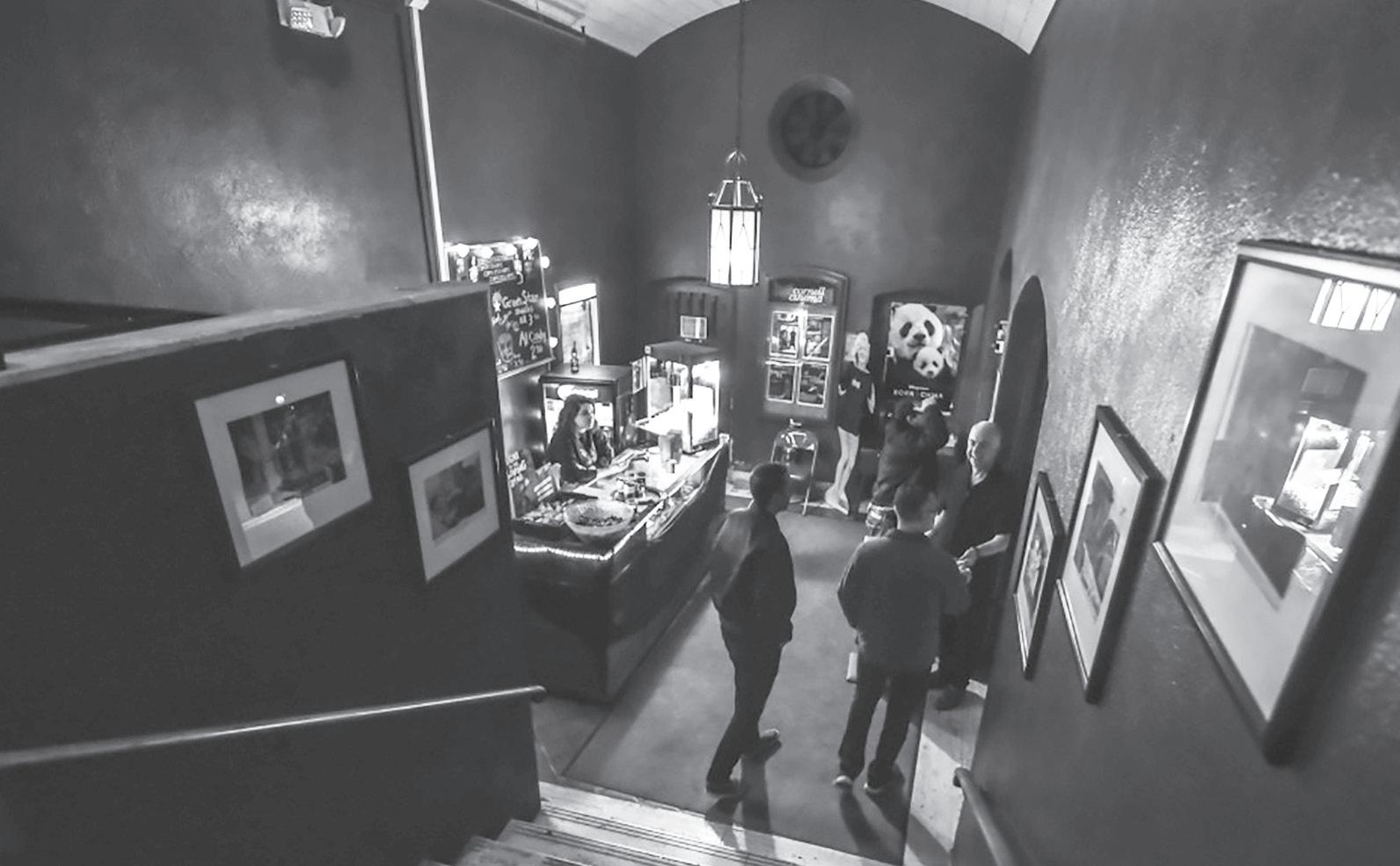
her endlessly inventive formal expression and the humanistic force that unites all her work. I was able to go to Lincoln Center’s Varda retrospective this past winter and felt extremely lucky to live in a world where there’s still more Varda for me to watch.
American Cinema, taught by Prof. Sabine Haenni, Performing and Media Arts, was nothing short of life-changing for me; I have since dropped out of pre-med, changed my major, watched a lot more films and became a filmmaker. The class is being offered again this semester in conjunction with the American Cinema Survey series at the Cinema, which includes five classics from five acclaimed directors. From Billy Wilder’s transgressive Some Like It Hot, Buster Keaton’s Steamboat Bill, Jr., to Alfred Hitchcock’s Dial M for Murder and the unmissable gangster film Bonnie and Clyde, these films defined, challenged and reinvented Hollywood.
The Cinema also continues its tradition of bringing contemporary world cinema to the Ithaca com-
munity this spring. Other than the two most celebrated foreign films of 2019, Bong Joon-Ho’s Parasite and Pedro Almodóvar’s Pain and Glory, the series includes some lesser-known but equally wonderful selections, such as Beanpole, And Then We Danced and Chinese Portrait. Nadav Lapid’s Synonyms was among my top films last year; I was deeply moved, if not haunted, by the incredibly visceral performance by newcomer Tom Mercier as well as the relatable narrative of struggling to establish and reinvent oneself in an idealized landscape. I also got to see Portrait of a Lady on Fire at Cannes last year and have been meaning to rewatch it. I was completely blown away by the emotional intensity and the intimate cinematography after the initial viewing.
And if you haven’t seen many of the contenders of this Oscar Season, definitely catch them before the ceremony on February 9 at the Cinema. Ithaca premieres of the nominated shorts (including Animated, Live Action and Documentary) start
January 31. Widely discussed features such as Little Women, Marriage Story, The Lighthouse and A Beautiful Day in the Neighborhood are also playing throughout February. I went to my first movie at Cornell Cinema during orientation week and have barely left since then. I’ve met some wonderful friends and mentors here — Mary and Doug McLaren who manage the theatre, Varun who used to watch three to four films with me each week before he moved to Boston for Harvard Film Archive and Adam who has become a close collaborator in my filmmaking endeavors. A favorite Varda quote goes like this: “Cinema is my home. I feel like I’ve lived here forever.” Cornell Cinema has created a place close to home in this corner of the world for cinephiles like myself, and I’m so deeply grateful for that. This is an invitation — see you at the screenings.
Ruby Que is a senior in the College of Arts & Sciences. She can be reached at rque@cornellsun.com.


By DOMINIC LAW Sun Staff Writer
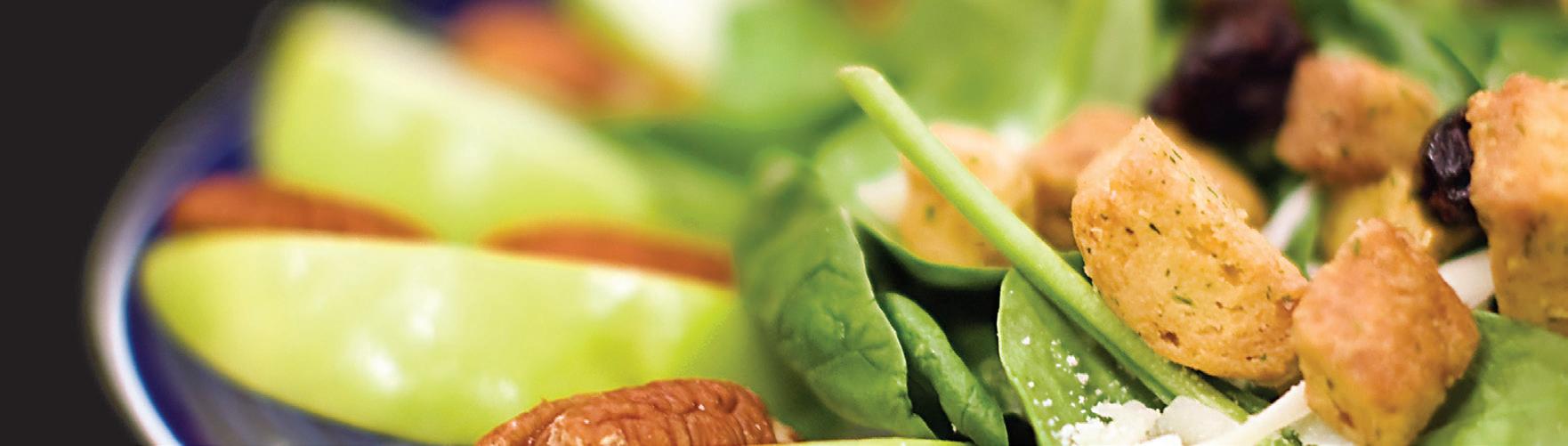
Franny’s food truck is a campus eatery located behind Sibley Hall. Being a non-traditional campus eatery, many may argue against Franny’s quality of food and service when compared to other dining options on campus. In any case, Franny’s is certainly the least known dining option on campus. First and foremost, a trip to Franny’s is a long walk from main campus. Furthermore, Franny’s lacks covered seating, an off-putting concern during the cold winter season. With such stiff competition among campus dining eateries, it is difficult to understand why one would choose to eat at Franny’s. However, you simply have to talk to any student in the College of Architecture, Art, and Planning to understand the degree of importance that Franny’s has in their lives. Many students and faculty manage to visit Franny’s on a daily basis, whether it is to eat lunch or grab a quick snack. True Franny’s enthusiasts treat a simple lunch at the food truck as part of their routine, ordering and picking up their meal of choice before walking down the steps from Franny’s that lead to the Green Dragon Café to enjoy their meal during the colder months. In the summer, it is common to see students lounging across the large white granite blocks parallel to Sibley whilst enjoying their meals prepared by the food truck. As an advocate of Franny’s, I believe there are many reasons why you should go out of your way to visit. Firstly, the short waiting time for food at Franny’s is great. Contrary to common belief, Franny’s lack of indoor seating actually benefits the establishment, as students do not crowd around the area with their meals. This allows for efficient preparation of the food and extremely quick service. Secondly, Franny’s creatively planned menu is unique and cannot be found at other eateries. The food truck fuses a wide range of flavors and spices from Eastern and Western traditions to create unorthodox dishes. Examples of Franny’s
innovative menu include a series of Asian-inspired dishes such as the Phoritto. The Phoritto, a play on the words “pho” and “burrito,” is made of thin strips of flattened out rice noodles, coriander, spices and thinly sliced meats layered within a warmed flour tortilla shell. There are also more traditional dishes
will tell you about their personal requests at Franny’s, such as having an additional poached egg in their rice bowls or cross-ordering other sides to their bowls. Franny’s customizable menu allows for students of different dietary needs to enjoy their meals with ease.

such as the Korean vegetarian bowl, which consists of warm rice layered with pickled radishes and carrots, strips of seaweed, edamame, cucumbers and tofu doused in a spicy Gochujang dressing made
Ask any regular Franny’s patron and you will discover that students leave with varied portions of the dishes from the menu, each catered to their personal tastes.
from chilis and fermented beans. Franny’s is also known to be one of the most flexible eateries on campus. Students personalize their rice bowls by mixing sides and condiments from other dishes. Ask any regular Franny’s patron and you will discover that students leave with varied portions of the dishes from the menu, each catered to their personal tastes. Students who are veterans of the food truck
My go-to meal at Franny’s has to be their chicken tikka rice bowl. Thick chunks of protein marinated in curry powder, crushed cumin and other spices layer the rice bowl, topped off with a savory curry sauce — flavors that compliment each other perfectly. There are definitely flaws in the dish such as the overcooked rice, a common mistake that is almost unavoidable when you try to cook large batches of rice simultaneously. However, the rice’s wet consistency complements the smoky chicken slices which are generously placed on top. I have also tried their vegetarian option, where the dish is made with tofu cubes cooked in an aromatic yellow curry paste. You really cannot go wrong with either choice of protein.
Four pieces of garlic cheese naan bread accompany the rice bowl which I gladly use to mop up the remaining sauces on the bottom of the bowl. If that was not enough flavor, two small containers of sauces are served with the rice bowl. One is made from a mixture of herbs and mint and has a refreshing and light finish, with a light green color that looks like a liquid form of minty pesto with a slight tang. The second sauce resembles a traditional Indian chutney, with a slightly thicker sauce that has a floral component and a sweet fruity finish. Both sauces complement the protein and naan very well. Instead of the normal potatoes and chickpea mix that comes with the chicken tikka bowl, I opt for a side of radish and carrot slaw which is usually only served with the Korean rice bowl. The slaw is made with thin strips of earthy vegetables brined in a vinegary mix. The slaw acts as a perfect textural change to the soft and tender bites of naan and protein of choice, with the acidity of the slaw balancing out the sweet and tangy flavor of the dish.
I dine at Franny’s at least twice a week with my classmates after our lecture in Sibley Hall. Although we follow drastically different schedules, we always get lunch together at Franny’s on Tuesday and Thursday after class. Shamelessly, I have been ordering the same Tikka rice bowl at Franny’s for the past few months, sporadically changing my protein of choice. Franny’s is a representation of what college dining halls should be — creative yet not overdone food choices at a reasonable price point with
customizable options. Although it is hard to break rhythm with Franny’s, I am glad this is the case.
Serves: Vegetarian/Asian/New American
Vibe: Casual, outdoors, grab and go
Price: $
Rating:


Dominic Law is a sophomore in the College of Architecture, Art, and Planning. He can be reached at dpl78@cornell.edu.


Independent Since 1880
137th Editorial Board
ANU
SUBRAMANIAM ’20 Editor in Chief
JOYBEER DATTA GUPTA ’21
Business Manager
PARIS GHAZI ’21
Associate Editor
MEREDITH LIU ’20
Assistant Managing Editor
RAPHY GENDLER ’21
Sports Editor
BORIS TSANG ’21
Photography Editor
AMBER KRISCH ’21
Blogs Editor
SOPHIE REYNOLDS ’20
Science Editor
AMANDA H. CRONIN ’21
News Editor
JOHNATHAN STIMPSON ’21
News Editor
PETER BUONANNO ’21
Arts & Entertainment Editor
ANYI CHENG ’21
Assistant News Editor
HUNTER SEITZ ’20 Assistant News Editor
CHRISTINA BULKELEY ’21
Assistant Sports Editor
BEN PARKER ’22
Assistant Photography Editor
JEREMY MARKUS ’22
Assistant Arts & Entertainment Editor
ALICIA WANG ’21 Graphics and Sketch Editor
DANA CHAN ’21
Production Editor
RYAN RICHARDSON ’21
Snapchat Editor
GIRISHA ARORA ’20 Senior Editor
SARAH SKINNER ’21
KRYSTAL YANG ’21
NATALIE FUNG ’20
SABRINA XIE ’21
NOAH HARRELSON ’21
SHRIYA PERATI ’21
ZHANG ’21
AMINA KILPATRICK ’21
MARYAM ZAFAR ’21
ETHAN WU ’21
SHIVANI SANGHANI ’20
NICOLE ZHU ’21
PICHINI ’22
Editor JING JIANG ’21
Editor DANIEL MORAN ’21
& Entertainment Editor LEI LEI WU ’21
Editor EMMA WANG ’20
LEANN McDOWALL ’21
BREANNE FLEER ’20
Working on Today’s Sun
Ad Layout Renee Hoh ’22
Deskers Mei Ou ’22 News Deskers Ari Dubow ’21 Lucas Reyes ’21 Design Deskers Simon Chen ’21 Anh Vu ’22 Photography Desker Ben Parker ’22 Arts Deskers Jeremy Markus ’22 Emma Plowe ’23
Dining Desker Katie Zhang ’21
Editors in Training
Editor in Chief Maryam Zafar ’21
Managing Editor Johnathan Stimpson ’21
Assistant Managing Editor Meghna Maharishi ’22
Opinion Editor Pallavi Kenkare ’21
Assistant Sports Editor Luke Pichini ’22

Last semester, a friend and I enrolled in the same Freshman Writing Seminar, basing our decision on a brief course description in the Class Roster. We thought little of the fact that we enrolled in different sections; after all, not much else could differ besides the professor and time slot, right? Wrong. Yet, at the time, basking in our pre-freshman innocence, we were convinced otherwise — to the point where we promised each other we would be “study-buddies” when the semester rolled around. How cute.
So, much to our surprise later that week, while my section discussed topics ranging from love to religion, his focused on the African diaspora. The only apparent commonality between our classes was the absence of any of the readings listed in the course description. And though we ended up not dropping and rather enjoying the class, the surprise we faced could easily have triggered stress over finding a new course at the eleventh hour. Had this been the case, we would’ve joined the many Cornellians faced with this challenging feat characteristic of the add period. Had we been provided a syllabus during pre-enrollment, there would never have been an issue.
from the status quo where no curriculum is provided for many classes.
But it’s also time we recognize that our course search crisis transcends the syllabus. When I sift through the Reddit threads of my prospective classes and the Rate my Professor profiles of their instructors, I am not searching for a class calendar or grading break-down, but rather authentic reviews from students who took the class. So, in order for Cornell to truly take the class search back into its own hands, administration must go one step further — a step that my
The search can quickly devolve into judgments solely based on the professor’s Rate my Professor score or Reddit rants.
Ultimately, despite the Class Roster’s numerous browse filters and almighty
Those of us who know better recognize that the heavy-lifting of the class search is done outside the Class Roster.

scheduler, our school expects us to decide whether a class is worthy of a spot in our precious eight semesters based on a three-sentence summary. Those of us who know better recognize that, at Cornell, the heavy-lifting of the class search is done outside the Class Roster.
For courses that fall within our major, the choice may be simple and natural; in these predetermined sequences, we know what to expect. But when exploring options on topics we know little about, the search can quickly devolve into judgments solely based on the professor’s Rate my Professor score, Reddit rants or the number of credits it offers. Our class search during the add-drop period is reduced to hearsay when no syllabus is offered to provide insight directly from the instructor. The solution? Providing us with syllabi before the enrollment period would relieve stress, ensure less unpleasant surprises and, in turn, lower the drop rate.
local University of Rochester has already taken. In addition to posting previous years’ syllabi for each course on their class roster, the previous semester’s students’ course evaluations are made available to prospective students. To account for anonymity concerns, Cornell could add a new, more concise evaluation tailored specifically towards the Class Roster that would ultimately be more helpful to students. This way, the black-and-white course synopsis written by the instructor is complemented by former student perspectives that often provide equally valid insight.
And as always, timing is of the essence. As students, we cannot afford to wait until the semester starts months after pre-enrollment to learn the nuances of a course. By then, many classes we would have otherwise enrolled in may be filled, and once again Cornellians flock to Course Grab to fight over the scraps.
Unfortunately, Cornell’s history is not on our side, as the University is no stranger to leaving students in the dark. Since 2011, Cornell no longer provides us with median scores, despite the fact
We have the right to know what to expect and what will be expected of us, and this start with increased awareness when we select our courses.
And though the Student Assembly passed a 2017 resolution whereby instructors can upload syllabi directly to the Class Roster, the implementation of this initiative is undermined by the reality that many courses still remain without a posted syllabus. Administration can no longer take a passive approach in enforcing this resolution and should instead incentivize or mandate the posting of a course’s syllabus before the start of the add period. At the very least, posting previous semesters’ syllabi would already be an improvement
that they appear on our transcripts. Simply put, University administration cannot deprive students of all relevant course information — from curriculum to student input to grading — and then wonder why many students choose to drop. We have the right to know what to expect and what will be expected of us, and this starts with increased awareness when we select our courses.
Roei Dery is a freshman in the College of Arts and Sciences. He can be reached at rdery@cornellsun.com. The Dery Bar runs every other Thursday this semester.
HELENHU/SUNFILEGRAPHIC

y first time having good sex was in the desert. My then-boyfriend, Desert Not-So Solitaire, and I waited until it was dark, then snuck partway down a trail at Capitol Reef and stretched out a blanket over the burnt orange sand. The stars were so bright above us. The sky seemed
We’d had sex a few times before, but the act was still new and fumbling for me, often accompanied by discomfort or pain. That night, I was almost surprised when it started to feel good. The pain was gone, replaced by a feeling like my heart was stretched tight and beating throughout my entire body. My thighs shook; I couldn’t help letting my nails skitter down his back. I wanted to hold the whole world inside me. It was the first time I didn’t close my eyes. Instead, I looked out at the vastness of the land, shadows of mesas and distant arches
As I fell in love with Desert Not-So Solitaire, I also fell in love with the land surrounding us: the light that transformed the color of the rocks each hour of the day, the sage brush and few other plants with enough fortitude to survive, the hot days and cold nights, the quiet and the emptiness. I felt the desert like an extension of my own body, my own longings and hunger reflected back to me in the clicking of rattlesnakes in crevices of rock, the quick beating of a hare darting through brush. Everything was alive — some long-slumbering part of
I think of those moments now and wonder how much of it was him and how much of it was the thrill of being outside, the feeling of being almost feral with wanting and answering that desire any and everywhere — from the mountaintops to the river shallows. How much of it, too, was me: eighteen and afraid of nothing but slowing down, the thrill of letting my fingers leave his skin to trace down my own sides instead, brush back my own hair. We traveled and camped like the whole world was our backyard, and I sometimes wondered idly if I would even know how to love or fuck indoors after all this. We watched the seasons change from the base of a canyon; red and yellow leaves rained over us in the morning, offering up the wisdom of the seasons, that all
Withthe ultimate sexcapade comes the ultimate playlist — that’s what 13 year old me thought as I sat in geometry class crafting the perfect progression of Spotify songs to accompany my first time. Lana del Rey’s “Young and Beautiful”? Perfect. The entire soundtrack from 50 Shades of Grey (though I had never seen it before)? Epic. Playing these songs in the background was going to transform my future hookups into movie scenes. We’d be undressing each other in a choreographed ballet, reaching multiple Hollywood orgasms and knocking things off tables to “Unchained Melody.”
I forgot about this playlist for years. It was called “Music to Study to” to spare myself embarrassment from my adolescent
things come and then eventually pass by. Once, we fucked on a ridge while watching a thunderstorm rage over the valley below. The streaks of lightning cut down through violet clouds; I felt the ache of goodbye even as I held him in my arms.
The longer I spent with Desert Not-So Solitaire, the less stable the idea of “home” became. Each time we separated after a camping trip, I’d kiss him long and hard, leaning through the window of my car, then speed away so I would be the one looking back through the rearview mirror and he the one watching me leave.
It’s hard to disentangle the things I felt at the time. I’d wake up in the night, wild and alert, longing for sex, but also for something less tangible, my eyes scanning the starry horizon for whatever it was I seemed to be perpetually seeking. I was in love, certainly, but my eyes were always turned to the looming distance, imagining my departure before it could take place. I wanted to be in every place at once; to prick my finger on a thousand cactus needles and never lose a moment to sleep.
I wanted, too, every kind of love. One night in a hostel somewhere in Colorado, a boy who wasn’t Desert Not-So Solitaire leaned in to kiss me. I put a finger between our lips
I know I can belong to no one but the churning skies and stars, which pull me to each new canyon or bed or riverside.
at the last possible second, waited too long to pull away. I still remember the heat running through me, enough, I thought, to melt the frost and snow hanging from the roof. I knew I could be any person I chose, or even dissolve into the landscape and lose my personhood entirely. It was always a decision, through hiking or sex, or choosing to be with only one person, that my body remained intact and my skin didn’t melt away to reshape as sand or stars.
Those days are long past now. I dream different names on my lips, yearn new yearnings. Still, even as I kiss or touch, I feel other things calling me away. I know I can belong to no one but the churning skies and stars, which pull me to each new canyon or bed or riverside. I am, finally and at last, only my own, driving too fast down desert roads so the goodbyes blur in a haze of sun and reflections over sand. Maybe I wipe a tear from my eye even as I keep on.
albums on shuffle. If I was messing around with a hipster, he’d ride over on his bike, slide a Moody Blues vinyl on his record player and later we’d have a post-coitus brunch. If there was no music to conduct a fuck session, the sound of wet flip flops running at the pool or the fart of gooey slime would punctuate our experience.
“Music to Study to” was discovered again as a freshman at Cornell when I went down on some astronomy problem sets and “S&M” by Rihanna came on. Suddenly I remembered the original purpose of the playlist.
It was called “Music to Study to,” when really it should’ve been titled, “Music to Nervously Figure out Which One is the Right Hole.”
peers on Spotify, when really it should’ve been titled, “Music to Nervously Figure out Which One is the Right Hole.” With such a playlist forgotten, my first sexual encounters were played out to Prince and Frank Ocean
Since I was with someone I trusted at the time, I decided it would be spicy to try out my virgin sex playlist and see what the vibe was. The only catch was that I left my partner ignorant of the situation. He thought it was just any other collection of sexual songs. It started off fine with some “Hot in Herre” by Nelly and a bit of Justin Timberlake during foreplay. It got a little weird when Darude Sandstorm came on as he ate me out: His tongue just got faster and more funky with each beep boop of the synthesizer until he nearly passed out from exhaustion. I guess not everyone can handle the Sandstorm.
Perhaps he thought it was just a meme. He only asked, “What the fuck is this play-
list?” when “Hey There Delilah” started blasting. The poor guy couldn’t take it anymore.
There’s an art to a great sex playlist without making it as corny as high fructose syrup. The horizontal mambo is still a mambo, especially if you don’t feel like dancing it to the smack of slobber and heavy breathing. The mood of the song is the most important piece. Pay attention to each song’s change of tempo. You don’t want to be doing mis sionary for 20 minutes at 50 bpm. You want something dynamic. It’s not about the speed of the chase, but the rate of acceleration. Moreover, songs depend on the person you’re boinking. If you know their music taste and they’re not some one night stand with a Chi Phi brother, you can sculpt a unique playlist for boinking them. Hell, you could have a unique playlist for everyone you’re currently hook ing up with. For example: a lineup of ’80s ballads for when you fon dle Robert’s testicles, R&B to clap the ass of Lola and maybe even angelic harp music if you are making sweet Christian love to Jesus.
As we hopeful ly have all figured out, sex is not like it is in the movies, so why should the
soundtracks be the same? Keep it on the lighthearted side and have fun while boinking. Most importantly, think about what makes you feel like a sex machine.

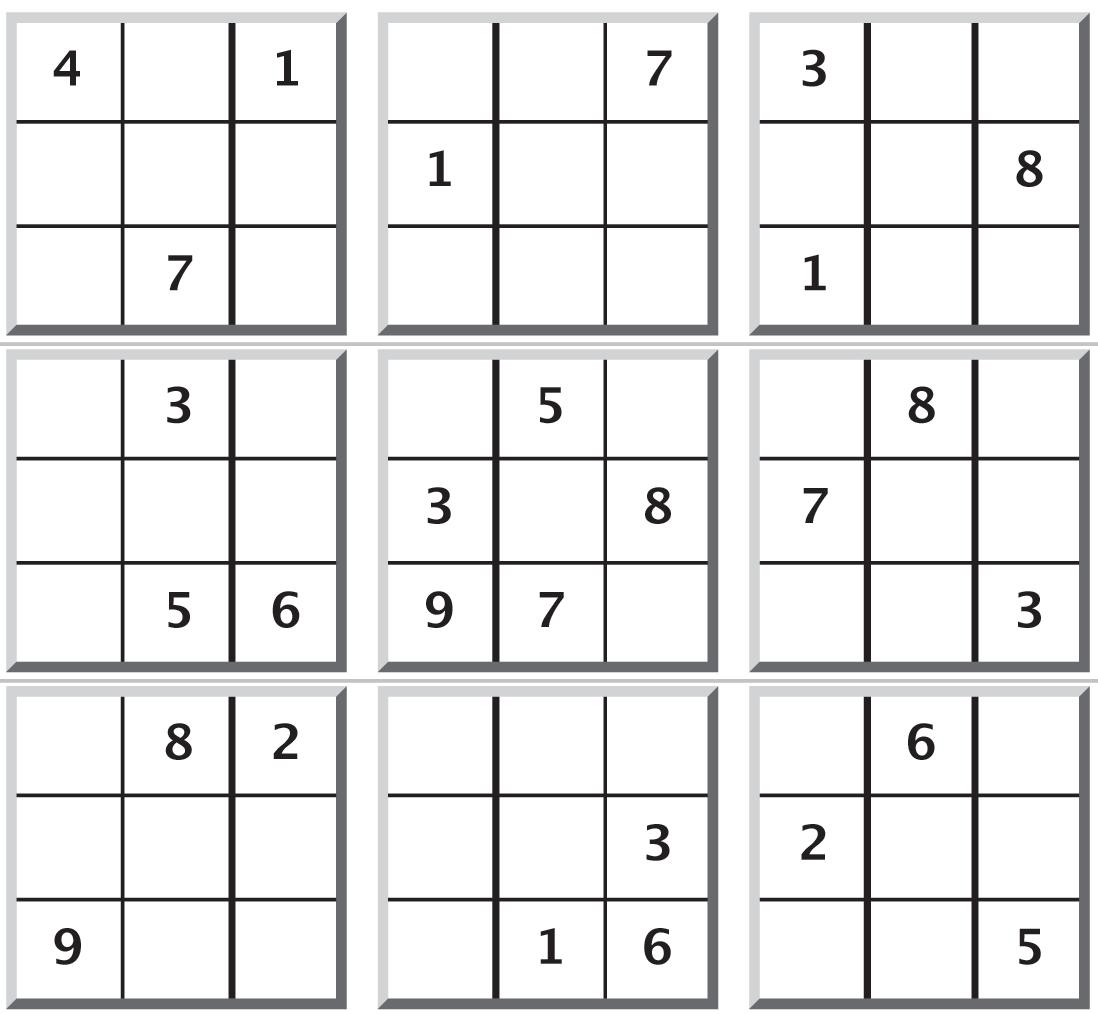
Fill in the empty cells, one number in each, so that each column, row, and region contains the numbers 1-9 exactly once. Each number in the solution therefore occurs only once in each of the three “directions,” hence the “sigle numbers” implied by the puzzle’s name. (Rules from wikipedia.org/wiki/ Sudoku)





26 A PA R TMENT FOR R ENT
2020-2021
Studio 1, 3, 8 & 11 BR Apts. Great Locations in Collegetown. 607-227-2535
Collegetown Crossing
College Ave's Newest Location 307 College Ave. Now Leasing for 2020-2021
Completely New Modern Studios, 2 & 4 Bedroom Apartments. Fully furnished, heat & hot water included. Reception area at 307 College Ave. www.urbanithaca.com 607-330-2442 info@urbanithaca.com
120 Oak Avenue
Just steps to Cornell Campus 10 bedroom house & 1 and 2 bedroom apartment 607-277-1234
office@ithacastudentapartments.com Ithacastudentapartments.com
*Brand New*
Studio, 1 & 2 Bedrooms College Townhouse 121-125 College Ave. Leasing@inteprop.com
Boldly Refined Living 312 College Avenue
Sophisticated studio, 1, 2, 3-bedroom apartments. Superior fitness facility, theater, and coworking space. Free high-speed internet. Exclusive resident parking. Package delivery/return. Overnight concierge. 607-273-9777 or 312collegeave.com
Catherine & Eddy St.
1 & 2 bedroom
Furnished, heat included Laundry in building Parking available for fee 607-277-1234 office@ithacastudentapartments.com
26 A PA R TMENT FOR R ENT ***************************** 1-3 Bedroom Apartments Quiet Fall Creek Location 5 Minutes to Busline 607-351-1267 joe@joegrealty.com *****************************
Houses, Apts, Parking 1 to 9 Bedroom Collegetown - College Ave, Linden Ave, Dryden Rd, Bryant Ave, Cook St. 607-330-2442 info@urbanithaca.com www.urbanithaca.com
Now Renting 2-10 Bedroom Houses/ Apartments for 20-21. All Locations. Call today or visit our website: Certified Properties of TC Inc certifiedpropertiesinc.com 607-273-1669
Flexible Housing Solutions! Short Stay Accommodations “Brand New” Studio Apartments 238 Liden.com Leasing@inteprop.com
109 Sage Place 2 & 3 Bedroom Apartments Access to Shuttle to Campus Access to Free Fitness Center Novarr-Mackesey Property Management office@ithacastudentapartments.com 607-277-1234
504 1/2 Thurston AveSTUDIO 607-277-1234 office@ithacastudentapartments.com Ithacastudentapartments.com
20-21
College Ave. 5 BR House Furnished. Laundry. Parking. Call 607-273-8576

MEN’S HOCKEY
Continued from page 12
the ECAC,” Schafer said. “Everybody says it’s a marathon, not a sprint. Now it’s a sprint to the end of the season with 12 games.”
Harvard, which was one of the two remaining unbeaten teams in the country late in November, has somewhat lost its mojo. After rattling off six straight wins to start the year, the Crimson has gone 3-6-2 since.
Despite its lackluster start to 2020, the Crimson remains ranked at No. 16 in the national polls and will square off against the Red in a perennially sold-out matchup on Saturday.
“I expect the crowd to be pretty good — just like every other year,” Kaldis said. “That’s obviously one of the craziest atmospheres in college hockey. I expect it to be just as good, maybe even better this year since it’s already sold out.”
Cornell’s freshmen players, too, are amped up for their first Harvard game at Lynah Rink and the traditions that come along with it.
“[The younger guys] are asking us questions on what it’s like and if fans actually throw fish on the ice,” said junior defenseman Alex Green. “Everyone’s really excited, and it should be a fun weekend.”
Meanwhile, Kaldis began to reflect on playing his last game against Harvard on East Hill.
“It’s pretty emotional — four
years passed by really quickly,” Kaldis said. “[Patrick] McCarron [’17], my D[efense] partner, was telling me how fast it passes by. It’s tough to really understand what that means until you’re here. It’s pretty emotional that I’ve already played them three times at home, and you know, my college career is winding down.”
While the Harvard game draws the most attention, Dartmouth arguably presents itself as the better and more intimidating opponent. The Green is the only team to defeat the Red so far this season.
“[Against] Dartmouth, we just had to score,” Schafer said.
“We had a ton of chances in the game that we didn’t get in the back of the net. Just play harder — I didn’t think we played as hard as we needed to.”
numerous teams come out and play especially hard against the Red throughout the season. Given the high stakes of the upcoming matchups, Cornell expects nothing less this weekend.
“I always say it’s going to make you better by the end of the year,” Schafer said. “You’re not going to get a soft night. I think one of the reasons these guys came to Cornell in the first place is because we’re a team that wins — hockey is important to the campus and student body.”
Cornell has not been concerned with its national ranking. Instead, the Red has its eyes set on conference standings.
“[The younger guys] are asking us questions on what it’s like and if fans actually throw fish on the ice.” Alex Green
With Cornell looking for revenge against its Ivy foe, the team will have an added incentive to take down Dartmouth.
“The trip back [from Hanover] wasn’t fun,” Kaldis said. “It’s a huge game — we can’t just think about Harvard because Dartmouth was the team that beat us, and they’re a really good team.”
With the team holding a high spot in the polls — and now the No. 1 ranking — Cornell has had a target on its back and has seen
“It gets amped up with the ranking, but now the rankings don’t mean much because it’s all league play now,” Schafer continued. “There’s a lot of teams lurking around those top four spots — we just got to get it done.”
The Red will aim to get it done as it hosts Dartmouth on Friday and Harvard on Saturday at Lynah. Puck drop is set for 7 p.m. on both nights.
Luke Pichini can be reached at lpichini@cornellsun.com.
WOMEN’S HOCKEY
Continued from page 12
The team then made a quick trip to Troy, New York to take on RPI (0-22-1, 0-12 ECAC) on Jan. 11. The Red’s offense was clicking, amassing a total of 44 shots. Only two found the back of the net from the sticks of Zandee-Hart and senior Jaime Bourbonnais. The Red’s defense shut out its winless foe for the victory.
The road trip was followed by another homestand for Cornell, this time against a pair of Ivy League teams. On Jan. 17, the Red took on Dartmouth (5-10-3, 2-7-3 ECAC) in the first game, which proved to be too much for the Green. Mills and sophomore Gillis Frechette had two goals,
while junior Willow Slobodzian had one. It was a quiet night in front of the net for Browning, who only faced eight shots. By the end of the game, the Red had powered past Dartmouth, 5-1. Cornell hosted No. 9 Harvard (10-7-1, 9-3-1 ECAC) on Jan. 18 in a game that many circled on the calendar. At the time, the Crimson sat second behind Cornell in the ECAC standings. In what many expected to be a close contest, Cornell dominated during the entire game, notching a 7-0 triumph. Graham, Frechette and freshman Izzy Daniel each had two scores while Bourbonnais put in one. It was a statement win for the Red, which is currently riding an unbeaten streak that dates back to November.
Frechette was named the ECAC Hockey Player of the Week for her contributions against Dartmouth and Harvard. Out of the 12 goals scored, she contributed to five of them by notching four goals and one assist. This is the second time this season the sophomore has earned the honor and she joins Browning as one of the only Cornellians to earn the recognition twice this season.
With just ten regular season games left, the Red hopes to close out the season strong while keeping its eyes on the post-season and a national championship run. The team will host Colgate next in a weekend series on Jan. 24 and 25.
Justin Suzzan can be reached at jsuzzan@cornellsun.com.

By LUKE PICHINI Sun Assistant Sports Editor
After grinding out three points against its final non-conference foe in Northern Michigan and retaining the top spot in the national polls, Cornell men’s hockey has its sights set on two familiar foes.
This weekend, Dartmouth and Harvard will visit Lynah Rink for two critical conference matchups.
Leading up to this set of contests, Cornell endured a tough stretch in its schedule. It started at the Fortress Invitational, where the Red faced ranked foes such as Ohio State and Providence.
Cornell then continued its road trip with a pair of ECAC games before finally returning home for the Northern Michigan series.
“It’s been a grind going to Las Vegas, then going on the road, coming back and facing a Northern Michigan team that kind of lived up to its billing,” said head coach Mike Schafer ’86. “I thought they were one of the better teams we faced all year in the non-conference.”
Against Northern Michigan, the Red was perfect on the penalty kill, an encouraging sign given the team’s struggles in that department. But at the same time, Cornell only found the back of the
net once on nine power-play chances.
“After the Union game, we talked about how we can’t pay attention to statistics,” Schafer said. “We’ve gone back-to-back games without giving up a power-play goal — our guys were much better on [the penalty kill]. Our power play created a lot of scoring chances, but we just didn’t capitalize.”
While Cornell has excelled this season, its performance on the penalty kill has been lacking. Compared with some of its other top competitors, the team’s 76.4 penalty kill percentage lags behind.
Senior defenseman Yanni Kaldis reflected on the team’s penalty kill and what it did differently over the weekend.
“It wasn’t the dedication — we always want to sacrifice our bodies and block shots,” Kaldis said. “I think it was just doing the little things right. It seemed like every mistake we made on the penalty kill was in the back of our net. I think it’s just rhythm — we killed a few and got our confidence going.”
With the Northern Michigan series wrapped up, the Red will not face any more non-conference opponents for the remainder of the season and will instead set its sights on league play with two of its biggest ECAC rivals coming to town.
“There are 12 games left with half
See MEN’S HOCKEY page 11

By JUSTIN SUZZAN Sun Staff Writer
While most of the University enjoyed the long winter break, Cornell women’s hockey was hard at work. The team faced and defeated many of its rivals over break, solidifying the squad as one of the top teams in the nation.
On Jan. 4 and 5, No. 4 Cornell (16-1-2, 10-0-2 ECAC) hosted Mercyhurst University (11-62, 5-1 CHA) in two consecutive games. In the first matchup, the first period ended in a 1-1 deadlock. The Red outmatched its opponent for the remainder of the contest and won the game, 6-2.
Senior forward Kristin O’Neill led the way for the team, netting two scores. Goals were also scored by junior Maddie Mills, senior Grace Graham, senior Paige Lewis and freshman Sydney Breza. Senior captain Micah ZandeeHart additionally stuffed the stat sheet with four assists.
A day later, the Red hit the ice
again. This time around, Cornell had to fight throughout the entire game while Mercyhurst put up a strong fight. Senior Amy Curlew scored the lone goal for the team and the game was similarly tied 1-1 after regulation.
Just under two minutes into the extra frame, O’Neill stole the puck from a Laker defender in the neutral zone and sent it forward to Mills. She faked a high shot, and then slid the puck under the goaltender’s leg to secure a 2-1 victory.
In the following weekend, the team headed out for the first road trip of 2020, when on Jan. 10, Cornell first took on ECAC rival Union College (2-15-5, 2-5-3 ECAC). Despite its significantly lower ranking, the Dutchmen battled the entire game, and were able to constantly keep the pressure on junior goalie Lindsey Browning. She did not break, though, recording 33 saves. O’Neill provided the lone goal as Cornell tied Union, 1-1.
See WOMEN’S HOCKEY page 11