The Corne¬ Daily Sun


By MEGHNA MAHARISHI Sun Staff Writer
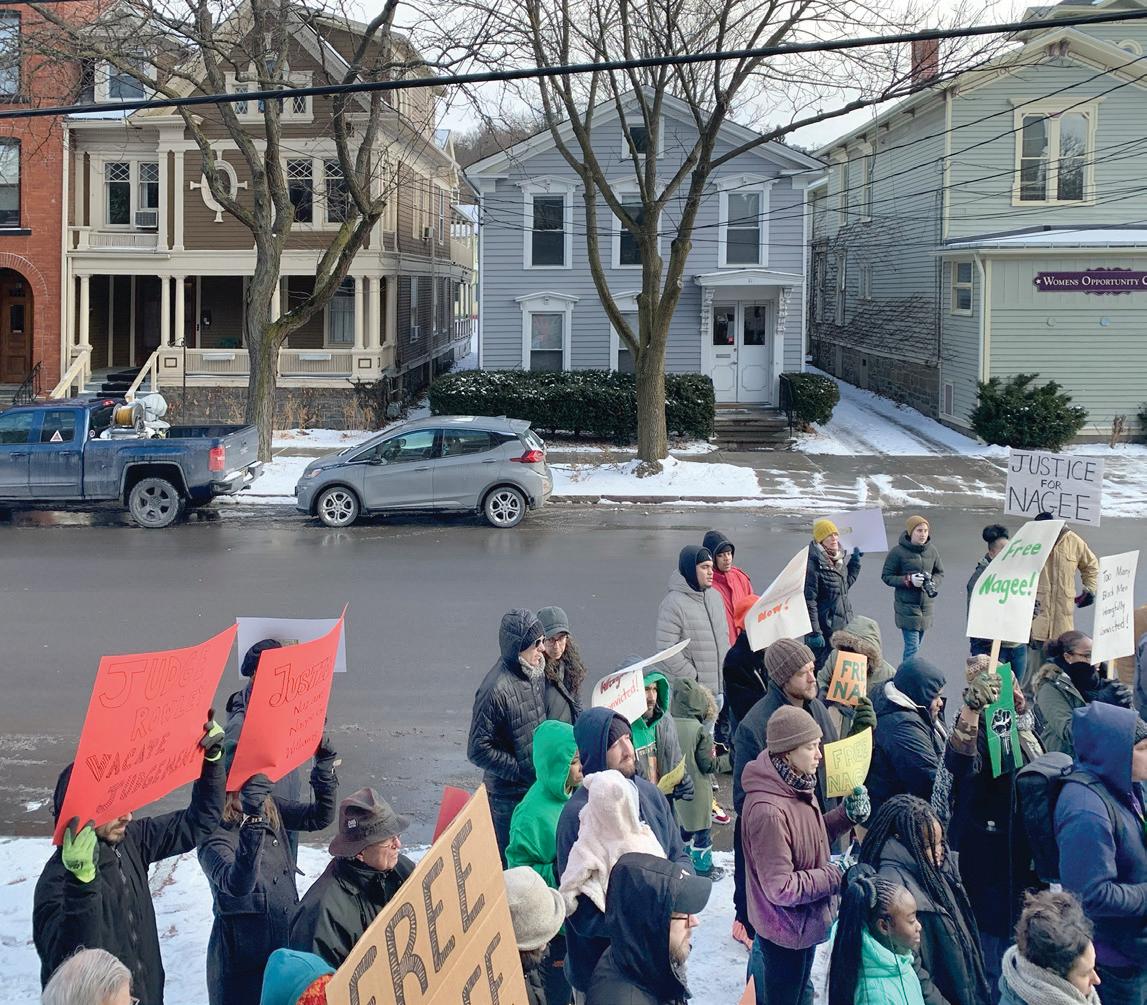
Dozens of demonstrators gathered outside the Tompkins County Court on Monday to call for the release of Ithaca resident Nagee Green, who was sentenced to 20 years in prison in 2017 for fatally stabbing Ithaca College student Anthony Nazaire on Cornell’s campus.
The rally was a culmination of efforts by Green’s family, who have been researching and advocating for Green while he was on trial and after he was sentenced. Currently, Green’s family is seeking an appeal for the sentence.
crimes he did not commit,” Tamara Lane, Green’s mother, told the crowd. “We are here to request justice from the Ithaca court and to make you all aware of the injustice we have all faced.”
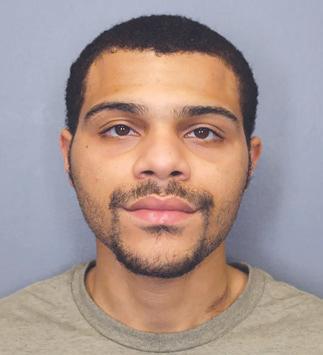
Green’s family, along with other Tompkins County residents, recently formed the Free Nagee Green Committee to call for County Court Judge John C. Rowley ’82 to acquit Green.
On Aug. 28, 2016, at approximately 1:57 a.m., Cornell University Police Department officers found Nazaire and his friend, Raheim Williams, stabbed in front of Olin Hall, The Sun previously reported. Nazaire had attended a party at
“As you all know now, my son is locked up for
By ARI DUBOW Sun Staff Writer
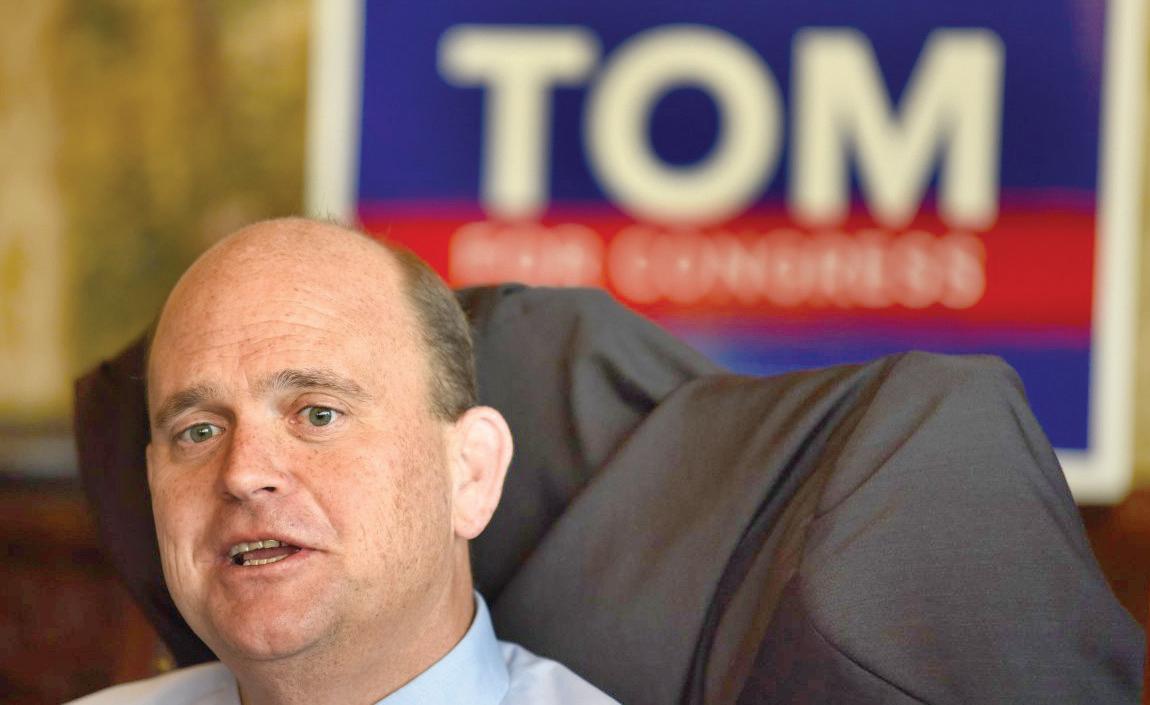
Rep. Tom Reed (R-N.Y.), of the 23rd district — which encompasses Tompkins County — was named an Honorary Chair of President Trump’s re-election campaign in New York on Jan. 15.
at
“I am honored to serve the president as a chairman for his New York campaign,” Reed said in a statement provided to the Ithaca Voice. “The president’s agenda of creating jobs
and making America more safe and secure resonates with New Yorkers.”
Romna McDaniel, Republican National Committee chairwoman, and Brad Parscale, Trump’s campaign manager, said in a joint statement published on Rep. Elise Stefanik’s (R-N.Y.) re-election website:
"Our New York Victory leadership team will work to elect Republicans across the state," referring to President Trump’s campaign.
“[Trump’s] successes can be felt nationwide and electing Republicans across New York will help to ensure he can achieve more victories for the American people for many years to come," the joint statement continued.
Reed was one of the first U.S. congressmen to endorse President Trump during the
By TAMARA KAMIS Sun Staff Writer
The world’s population is on the move, and not necessarily by choice.
There are more than 35.9 million refugees worldwide, according to the United Nations High Commissioner for Refugees. Cornell’s Einaudi Center for International Studies has responded to this global trend by launching a migration studies minor.
tion] to the forefront of how the Einaudi Center helps to lead global research and engagement on campus has been one of our primary goals over the past few
“If students are planning a career in policy-making, consultancy ... they will need to know about migration.”
Prof. María Cristina García
“Bringing this issue [of migra-
years,” said Dr. Jason Hecht Ph.D. ’14, the center’s associate director for academic programming.
Prof. Debra Castillo, comparative literature, called the migration studies minor — which aims to create a structure in which undergraduates can study migration — “very timely.” However, few universities offer such a program, despite the current global context.
“We are proud to be on the cutting edge in this area, and look forward to growing the minor in


Spider scene | The Mann Library Gallery will host an exhibit on arachnids and how they can be used to further medicine and agriculture. The exhibit is open from 8 a.m. to 5 p.m. and will run until Jan. 31.
Stretchable and Fully Degradable Semiconductors for Transient Electronics
State of the Institute
Noon - 1 p.m., Baker Institute Lecture Hall
Statistical Methods for the Quantitative Genetic Analysis of High-Dimensional Phenotyping Data
12:20 p.m., Emerson Hall 135
4 p.m., Baker Lab 119
Genesis of the Gardens by the Bay: A Garden City Story
4:30 p.m., Brian C. Nevin Welcome Center, Ten Eyck Room

Arachnaphilia: A Passion for Spiders
8 a.m. - 5 p.m., Mann Library Gallery
No Vacancy: Preparing Cleveland’s New Landscape
8 a.m. - 5 p.m., West Sibley Hall, Exhibition Hallway
Behavior Based Safety Program Work in Progress Presentations
9 - 10 a.m., College of Veterinary Medicine, Lecture Hall Three
Latitude: Persuasive Cartography
9 a.m. - 5 p.m., Kroch Library Hirshland Exhibition Gallery
Ash Trees: A Story of Relationships, Loss and Hope
10 a.m. - 2 p.m., Brian C. Nevin Welcome Center Lobby
Chemical Biology to Interrogate Protein-Protein Interactions in Natural Products Biosynthesis
4 p.m., Baker Lab 119
Russian Placement Test Information Meeting 4:30 p.m., Klarman Hall KG42
Veterinary Senior Seminars
4:30 - 5:45 p.m., College of Veteriniary Medicine, Lecture Hall Two Tomorrow


Atkinson Center and Nature Conservatory Team Up on Three Climate-Related Projects
By STACEY BLANSKY Sun Staff Writer
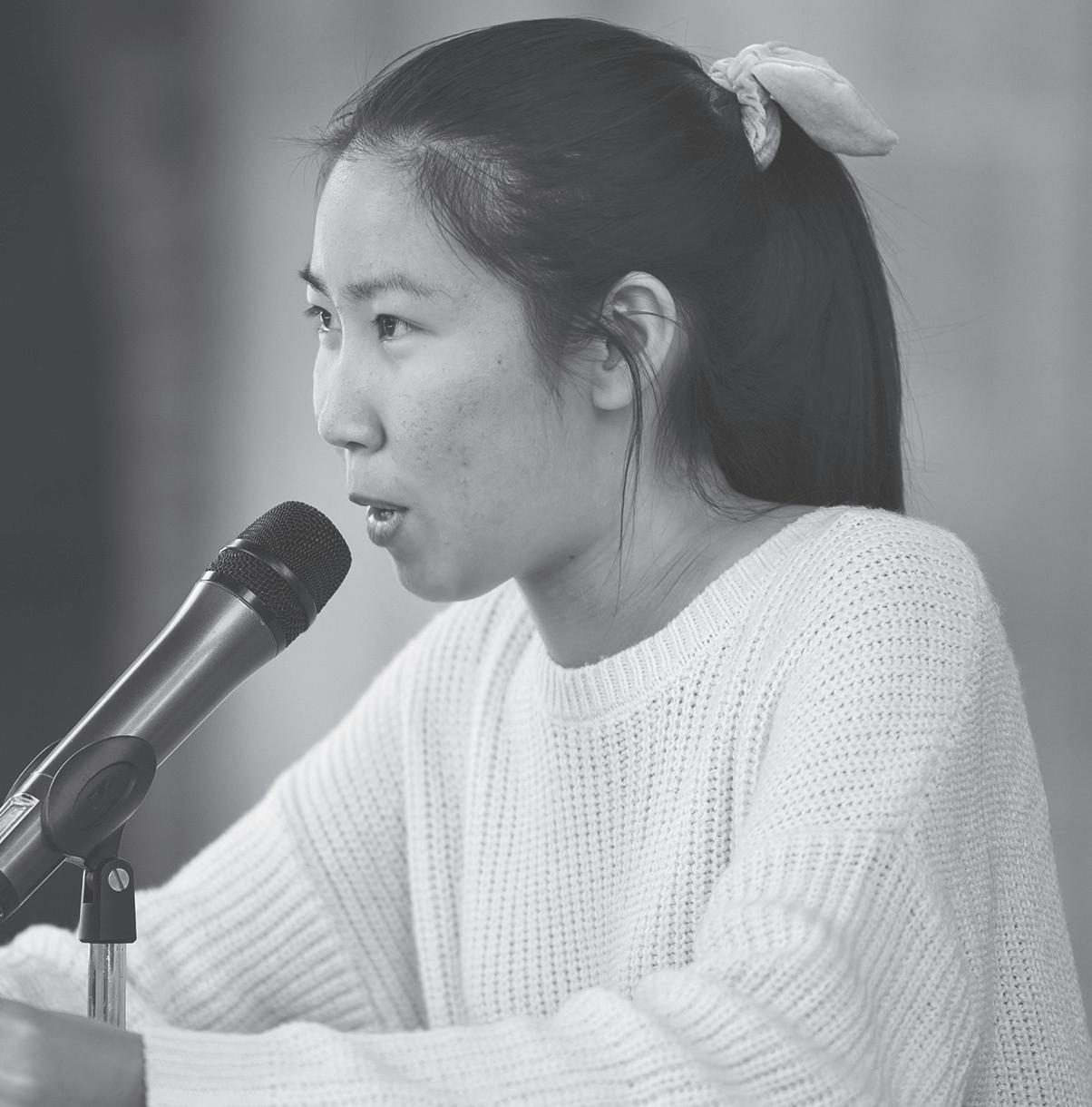
When first coming to Cornell, Cat Huang ’21, executive vice president of the Student Assembly, had not initially considered higher education policy to be a particularly gripping field.
But shaped by her experience serving on the S.A. — regularly working with administrators and discussing campus policy — Huang is now working to create The Cornell Higher Ed. Review, Cornell’s first student-run publication focused on higher education.
Collaborating closely with S.A. President Joe Anderson ’20, Huang said she hopes to register the journal as a new student organization in February and publish it digitally throughout the semester. She plans to release the first print edition by April or May.
All Cornell students may contribute to the journal, and there is no application to join.
“We want it to be pretty accessible to all students,” Huang said. “It is an opportunity for them to get published by a journal that is peer reviewed — as in student reviewed.”
Huang hopes the journal will encourage Cornell students to “think more critically about the institutions we inhabit” and become more informed about the day-to-day logistics of university operations.
“Whenever anyone inhabits some kind of institution, it is always important to know what that institution is founded in, if you are part of it,” Huang said. “Understanding the whole structure is really valuable to any kind of student anywhere.”
Through classes she has taken at Cornell, Huang has read literature about higher education policy and structure — prompting the realization that many do not realize the complexity of higher
education because they tend to see institutions as businesses rather than bureaucratic structures.
“[The journal] is a great opportunity to learn if you are interested,” Huang said. “I didn’t even consider higher education as a field to be interested in until very recently.”
By STACEY BLANSKY Sun Staff Writer
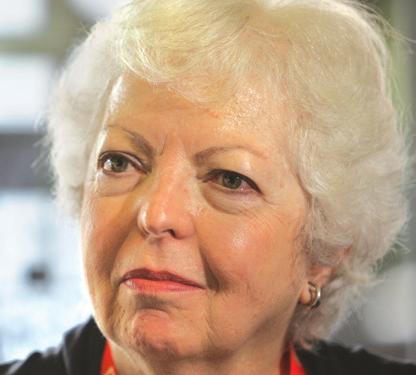
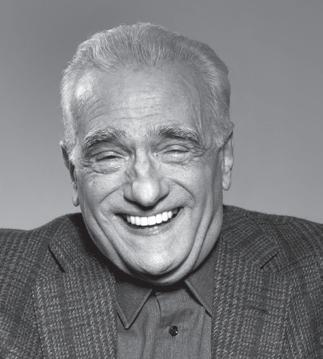
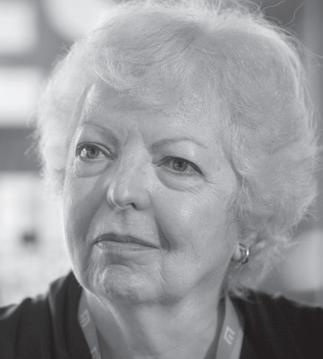
A state department job rejection and a well-timed classified ad jumpstarted the 50-year-long movie career of film editor Thelma Schoonmaker ’61. Now, she has received her eighth Oscar nomination for her work on the Netflix film The Irishman.
Schoonmaker is best known for being one of director Martin Scorsese’s most steadfast contributors, beginning with one of his first films Who’s That Knocking at My Door in 1967. The pair met while taking a sixweek film course at New York University after her graduation from Cornell.
second most-nominated film editor in Oscars history with eight nominations, winning three Oscars for her work on Raging Bull , The Aviator and The Departed , all Scorsese films.
Schoonmaker’s work on The Irishman , which is directed by Scorsese, will compete against the film editors of Ford v. Ferrari , Jojo Rabbit , Joker and Parasite
Featuring three staples of the gangster movie genre, Robert De Niro, Joe Pesci and Al Pacino, The Irishman tells the story of Frank Sheeran, a World War II veteran who recounts his time as a hitman for a crime syndicate with ties to Jimmy Hoffa’s Teamster Union.
career in movies.
Returning to Cornell in 2005, Schoonmaker reflected on her career in filmmaking and collaborations with Scorsese. There, she told a story about her first meeting with the director, when she found him struggling with a film recut.
“I, because of this terrible job that I
had, knew how to cut negative,” she said.
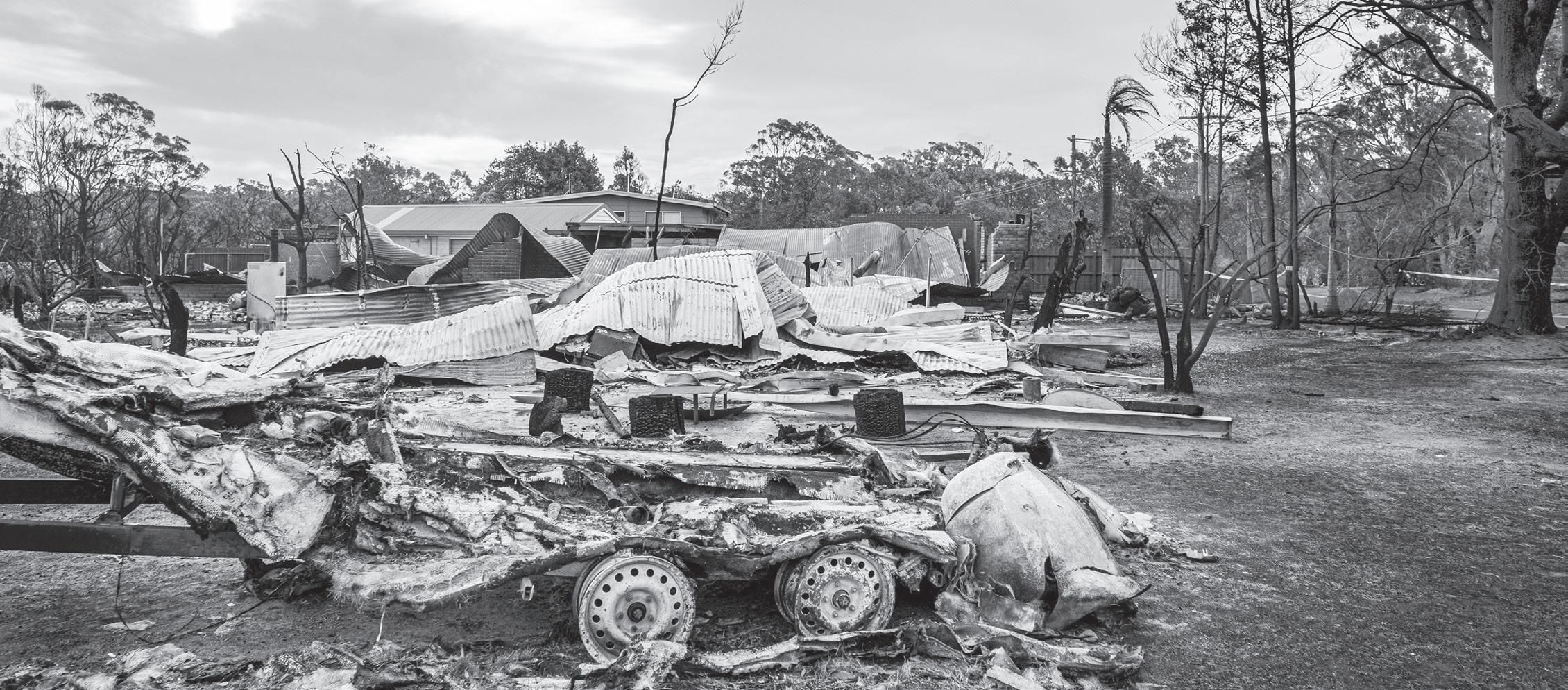
Three new studies featuring the Cornell Atkinson Center for Sustainability will address problems of sustainability throughout the world. Each project is accompanied by the Nature Conservatory. One project is about finding solutions to better sustain China’s food, water and energy sources. A second project looks into how to improve federal and state flood buyout programs and their efforts to sustain the land and communities surrounding these purchases. The third project aims to improve the environmental sustainability of fishing communities, specifically for fishing communities in Alaska who are reliant on their fisheries. Each project is for two years and received $200,000 in funding.
City Settles Lawsuit with Former Ithaca College Student with $251,000 Payment
In order to settle a lawsuit of police brutality, the City of Ithaca will pay former Ithaca College student Kyle Goldstein $251,000. Goldstein filed a complaint in April 2019 claiming that two Ithaca Police officers detained him illegally and then covered it up by falsifying reports. They also handcuffed Goldstein and pepper-sprayed him, and in doing this, the complaint said the officer who participated used excessive force. The settlement is for $251,000, where $250,000 is in compensation and the rest is to pay for repairing Goldstein’s eye, which was damaged in the altercation. In the terms of the settlement, there is no admission of guilt.
She told The Sun in 1995 that she and Scorsese are “almost like one mind in the editing room,” and has edited every Scorsese film since Raging Bull Behind only Michael Kahn, she is the
Born in Algiers, Algeria in 1940, Schoonmaker studied Russian and government at Cornell, before pursuing a career in international relations. After a change of course, Schoonmaker found herself in a
“If I had missed that major connection, I might have become a housewife at the time.”
On Friday, the Supreme Court decided that it will rule on new regulation from the Trump administration regarding the degree that employers must provide contraception to workers in their insurance plans. Currently, law created by the Obama administration asks employers and insurance companies to provide any contraception approved by the Food and Drug Administration at no cost. The Trump administration argues that this requirement can infringe on companies’ religious freedoms and would now exempt employers “with sincerely held moral convictions opposed to coverage of some or all contraceptive or sterilization methods.” A panel from the United States Court of Appeals from the Third Circuit in Philadelphia blocked the new regulation in May 2019.
— Compiled by Alex Hale ’21
By SARAH SKINNER
Sun Managing Editor
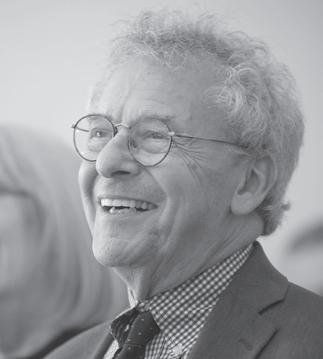
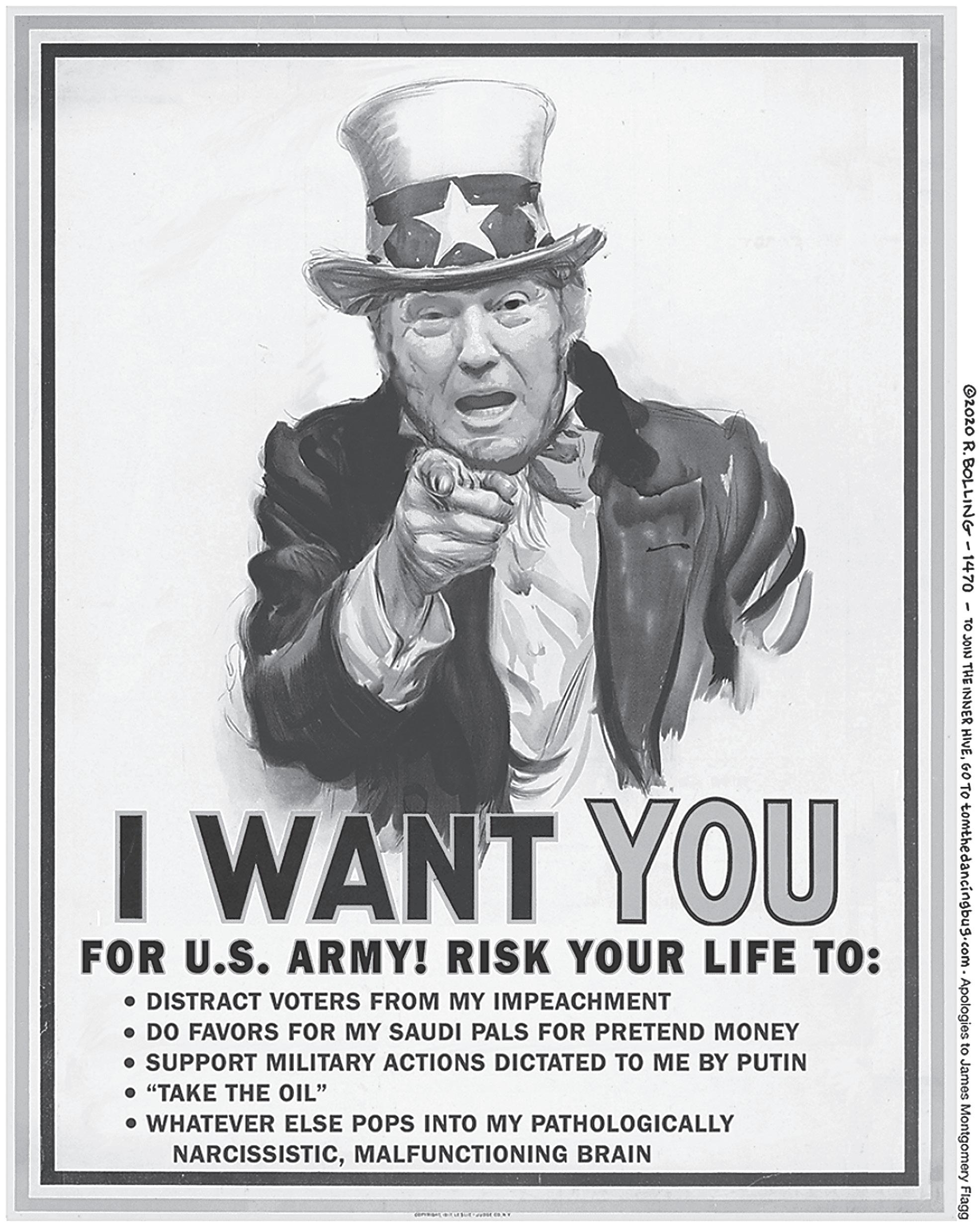
On Saturday, celebrated professor, political scion and University devotee Prof. Isaac Kramnick, the Richard J. Schwartz Professor of Government Emeritus, died in New York City. He was 81.
Kramnick came to Cornell, the University that he would make his home, in 1972 to lecture in its government department. A giant of British and American political thought and history, Kramnick taught for 43 years, publishing dozens of books and papers while working to craft Cornell into the institution he believed it could be.
“Isaac managed to gain the respect, trust, and affection of just about every person he encountered,” said Prof. Glenn Altschuler Ph.D. ’89, government, Kramnick’s best friend of over 45 years, citing his friend’s integrity, insight, wit and wisdom.
fretted over and revised with scrawls in the margins. “He probably had the worst handwriting in the Western World,” Altschuler said. “And still he managed to deliver impeccable lectures from those notes.”
Kramnick retired from teaching in 2015.
Off the podium, Kramnick’s own research — from which he published or edited over 20 books throughout his career — centered on British and American political theory and liberalism, with forays into religion and biographical deep dives.
Prof. Mary Katzenstein, government, wrote in an email to The Sun, that it was his “example as teacher” that she most cherished, recalling Kramnick’s “storied” courses — including Liberalism and its Critics and From Madison to Malcolm X — that challenged generations of Cornellians to rethink American liberalism.
“On Broadway, someone is a triple threat if they can act, sing and dance,” said David Folkenflik ’91, a former student and longtime friend. “Isaac was probably a quadruple threat.”
Not only could Kramnick teach the dreaded introductory courses, he enjoyed teaching them — and undergraduates flocked to him in return, packing his lecture halls and office hours. He drew many mentees from their ranks, as well as those of his graduate students and even younger faculty members.
Prof. Suzanne Mettler Ph.D. ’94, government, was a teaching assistant for “Liberalism and its Critics” during her own undergraduate years, and told The Sun that she would never forget watching Kramnick captivate a full hall of students. Years later, she invited him as a guest lecturer for her own courses.
Once again, she said, she got to see him in action: “Just him standing at a lectern and – as always – delivering a magnificent lecture that kept students on the edge of their seats,” she wrote.
For Kramnick, this was typical. A tour for Cornell’s sesquicentennial in 2015 quickly turned into a former-student praise train of his masterclass lectures, Altschuler said. Prof. Jonathan Tarrow told the Cornell Chronicle that his own students frequently cited Kramnick’s annual guest lecture as the best part of the semester.
“Isaac was gentle, and in certain respects a self-effacing man, but you put him in front of an audience — he was a performer,” Altschuler said of his friend’s lectures.
Each lecture was written out in full in pen on paper,
Folkenflik — now at NPR, and a former editor-in-chief of The Sun — spent the summer of 1989 as Kramnick’s research assistant, helping plan a book that Kramnick would later co-write with British MP Barry Sherman.
Years later, reporting for the National Public Radio in London, Folkenflik ran into and interviewed Sherman in the halls of Parliament. The national representative just wanted to talk about Kramnick, Folkenflik recalled, and “how funny and smart that guy was — he was marveling over a guy from a project completed over a decade earlier.”
Kramnick maintained close ties with The Sun and its reporters throughout his time on campus; he prized independent thought and cheered student journalists, and they gravitated toward him in return. The Sun once named him the University’s “best professor” — an accolade he cherished, and would frequently cite with humor and great pleasure, Altschuler recalled.
Kramnick read the paper every morning, and told The Sun in September that his first lecture each semester contained a disclaimer: Everything he would say was off the record, allowing him to talk freely to his students on the goods and bads of the University, individual administrators and his ideas for the better.
For decades Kramnick served in many ways at the University’s “moral conscience,” Altschuler said. He prized Cornell for its vision and turned a sharp eye when he saw it fall short.
“Here was a guy who was simply anti-authoritarian, and anti-authority-figure, who nonetheless by virtue of his intellect and rigor and his ability to build bridges at times was taken seriously — he was inside the dean’s office, was inside the provost’s office,” Folkenflik said.
Kramnick served as the associate dean of the College of Arts and Sciences from 1986-89 and chaired the government department from 1996-2001. He was also the University’s first vice provost for undergraduate education, in office from 2001-05.
A champion of undergraduates in and out of office, Kramnick’s seed ideas would blossom into integral parts of the University. He pushed for a live-in faculty system — realized in the revitalized West Campus system — was the inspiration for the Big Red Shuttle, advocated for Cornell’s divestment from companies doing business in apartheid South Africa and even thought up the planting of the 2015

commemorative grove on Libe Slope.
“When a student was treated unjustly, he leaped to the student’s defense,” wrote Prof. Emeritus Elizabeth Sanders, government. ”I’ve never known anyone quite like him.”
Even after his 2015 retirement, he kept an eye on his beloved Cornell, submitting op-eds to The Sun among guest pieces for national outlets including The New York Times, The Wall Street Journal and The Washington Post. Kramnick sat on Dean of Students Vijay Pendakur’s committee to commemorate the 50th anniversary of the Willard Straight Hall takeover, where he penned the text of the plaque installed in the hall during Homecoming Weekend this year. A study dedicated in 2018 in the Arts Quad’s Olin Library, the Isaac Kramnick Faculty Research Study, permanently bears his name.
“His loss would have been mourned wherever he was or whatever he happened to be doing. Those of us who counted him as a friend are better people because of the years we spent in his company,” Prof. R. Laurence Moore, government, a longtime friend who co-authored two books with Kramnick, wrote to The Sun.
“He was the best of his generation, and of any generation,” said Altschuler, Kramnick’s closest friend. The two met at a 1973 poker game with Kramnick’s wife, Miriam Brody Ph.D. ’87, while Altschuler was a graduate student — the same poker game they continued off and on for the next four and a half decades, amidst weekly Tuesday lunches, endless talks and family holidays together.
Kramnick would build his own family in Ithaca. Raised in deep poverty to religious Orthodox Jewish foster parents in Millis, Massachusetts, Kramnick earned his bachelor’s degree on full scholarship at Harvard, where he also completed his Ph.D. with a stint at Cambridge along the way.
“When a student was treated unjustly, he leaped to the student's defense.”
Prof. Elizabeth Sanders
He lectured at Harvard, Brandeis and Yale before the family’s move to Ithaca, where he taught at Cornell and his wife Brody taught at Ithaca College. She told The Sun that her husband of 57 years was “beloved by many students, loved by many colleagues, and he was the heart and soul of our family.”
He is also survived by his children Rebecca Cohen J.D. ’92, Jonathan Kramnick ’89 and Leah Kramnick, and his grandchildren, Madeline Cohen ’18, Anna Cohen, Sam Cohen ’18 and Milo.
His family requested that mourners donate to Cornell University and to specify that the gift be used to help first-generation students in his memory.
2016 election.
“I look at Donald Trump as an opportunity, as an agent of change, as a disruptor,” he said in a 2016 interview on C-SPAN. “He’s somebody who’s going to do something in Washington.”
“I
Reed has been a vocal opponent of the impeachment of President Trump.
Referring to Trump’s phone call with Ukrainian President Volodymyr Zelensky, Reed said in an MSNBC interview last November that the president “was raising the issue of corruption in sitting Vice President Biden,” calling it a “legitimate exercise of executive discretion.”
Reed faces re-election this November, when the incumbent may face Democrat Tracy Mitrano for a second time after defeating her in 2018, The Sun previ-
ously reported. While Mitrano defeated Reed within Tompkins County with nearly 75% of the vote, she lost the election to Reed’s 53.78% of the vote in the overall district, according to The Sun. Reed has represented New York’s 23rd district since 2013, and represented New York’s 29th district from 2010 to 2013. Reed serves on the United States House Committee on Ways and Means. Also selected to co-chair the New York campaign are Rep. Elise Stefanik (R-N.Y.), of Upstate New York, Reps. Peter King (R-N.Y.) and Lee Zeldin (R-N.Y.), who both represent sections of Long Island, as well as Dutchess County Sheriff Butch Anderson and New York City Councilman Joe Borelli (R-N.Y.), according to the Ithaca Voice.
GREEN
Continued from page 1
Willard Straight Hall hosted by Cornell fraternity Omega Psi Phi during orientation week, shortly before the incident took place. Multiple altercations transpired as students left the hall once the party ended.
Nazaire was then sent to Cayuga Medical Center to be treated for critical injuries, and was later pronounced dead.
Nazaire’s death left the Cornell and Ithaca College communities reeling. Ithaca College and Cornell hosted vigils for Nazaire shortly after his death, and some students told The Sun at the time that the stabbing had made them feel unsafe on campus as the University ramped up its on-campus security.
The Ithaca Police Department launched a homicide investigation after Nazaire’s death, and charged Green for the Ithaca College student’s murder in November 2016. Green was the only publicly named suspect.
During the course of the investigation, some felt questions were left unanswered. Law enforcement did not release
partnership with the first cohorts of students who elect to take it as a course of study,” Hecht said.
To complete the minor, a student must register during or before their sixth semester, attend five migration-related campus events, take the introductory course — ILR 2810: Migration: Histories, Controversies, and Perspectives — and four elective courses. Over 50 classes are offered for minor credit, from three of Cornell’s colleges and from over 15 departments.
Unlike many humanities and social science minors, the migration studies minor does not require students to focus on any particular region, ethnic group, country or religion — a feature that is intentional.
a timeline of the investigation and took weeks to publicly identify a suspect.
Green first went to trial in June 2017, eight months later, resulting in a hung jury on the murder charges. Nazaire’s family had advocated for Green to receive life imprisonment for the murder.
Green was ultimately found guilty of second-degree murder in a September 2017 retrial. At the time of this verdict, Van Houten told The Sun that “justice was done.” During the retrial, Van Houten used video evidence of Green saying, “I kill out here,” as he pulled out a knife on the scene, The Ithacan previously reported. The seven witnesses called to testify did not explicitly say they saw Green stab Nazaire.
A forensic scientist also said at the trial that the available DNA evidence on the knife handles did not directly connect to one particular person, The Ithacan said. None of the video footage shown in court showed Green directly attacking Nazaire.
Maureen Lane, Green’s aunt, told The Sun on Jan. 18 that the family did its own investigation into the trial proceedings. Green had authorized his mother to obtain his
Instead, the minor aims to “draw students outside of their major fields and to extend their knowledge beyond a single country,” according to the program website.
The minor is structured to encourage engagement beyond the classroom, including community-based research and collaboration with local partner organizations. Some of the classes that count for minor credit, for example, teach research methods and collaborate with the Cornell Farmworker Program.
Other courses, such as FGSS 3400: Refugees and the Politics of Vulnerability: Intersections of Feminist Theory and Practice — taught by Prof. Jane Juffer, English and feminist, gender and sexuality studies — allow students to see the ramifications of immigration policy firsthand.
Juffer said she brings students to the federal detention center near Buffalo so they
police file, which Maureen claimed showed a variety of issues and holes in the events preceding the conviction.
“It took us months to actually go through all of the documents and we sat through the court process and we saw a lot of things weren’t being brought to the jury’s attention,” Maureen said. “All of the information that we had seen in the files, none of that was brought to attention.”
Green’s defense attorneys claimed that the investigators involved in the interrogation coerced Green to confess he stabbed Nazaire and Williams, The Sun previously reported in 2017.
At the rally, multiple family members shared anecdotes of Green while protestors sporadically chanted, “no justice, no peace. Free Nagee Green.”
The appeal is still pending. Nazaire’s family did not respond to multiple requests for comment about Green’s appeal attempts from The Sun.
Meghna Maharishi can be reached at mmaharishi@cornellsun.com.
can both talk about migration and “see what it’s like.” She added that she believes the migration minor is also relevant for STEMoriented students, especially those interested in a career in healthcare.
“If students are planning a career in policy-making, consultancy, or international business, they will need to know about migration,” Prof. María Cristina García, American studies, said.
The migration studies minor is not the only University initiative focused on the increasing global flow of people; Cornell launched its inaugural Global Grand Challenge, an event series sponsored by the Vice Provost of International Affairs, with the theme of migration in fall 2019.
Prof. Stephen Yale-Loehr, law, a member of the planning committee for the challenge, described it as “a three-year effort by Cornell
to get people from across campus, not just in Ithaca but also Cornell Tech, who are interested in migration of plants, animals and humans to collaborate with each other.”
The Grand Challenge sponsored the Cornell Johnson Museum’s fall 2019 exhibit, “Where the Light Gets In,” which brought together an international team of artists to explore themes of migration, exile, displacement and immigration.
As part of this challenge, Cornell will provide grants for interdisciplinary research on migration, work with visiting scholars and outside organizations such as Ithaca Welcomes Refugees and expand education and engagement opportunities for students.
Tamara Kamis can be reached at tkamis@cornellsun.com.
Critics love to hate. In fact, a lot of people love to hate, which explains the growing popularity of so-called “commentary channels” on YouTube. These channels make videos about weird subcultures, cringe internet content and bad TV shows and movies, often using words like “awful,” “terrible,” “terrifying” and “nightmare” in their titles to describe these media. In the past few years, creators like Danny Gonzalez, Drew Gooden, Kurtis Conner and Tiffany Ferguson have taken off, amassing hundreds of thousands — even millions — of viewers and subscribers by exposing the faults of other creators.
Of course, videos depicting people expressing their opinions on media are nothing new. The Fine Brothers’ React franchise, which consists of several online series showing different demographic groups reacting to internet trends, has attracted millions of views since launching their first series, Kids React, in 2010. Another genre, the video essay, has also blossomed in the past decade. Unlike reaction videos, video essays make use of film and filmmaking techniques to advance arguments about media, sort of like academic criticism for the Web 2.0 era. Popular video essayists — such as Every Frame a Painting, Lindsay Ellis and The
Nerdwriter — offer in-depth discussion of culture, much like what I do (or think I do) in this column. However, the genre is not without its criticism. It’s come under fire for spreading misinformation, failing to cite sources and compromising the complexity of their subjects by having to pander to large audiences — all, I think, valid points.
This is why commentary videos seem to straddle an attractive middle ground between the two. In contrast to video essays, they lack the academic voice that might come across as pretentious, instead opting for a more casual tone and inserting memes that appeal to younger audiences. Rather than making use of highly polished production, they simply sit in front of the camera and talk, hearkening back to the old days of YouTube before celebrity and corporate interests took over. In an era where online content creators are increasingly inaccessible (once creators get famous by being relatable, they often become rich and unrecognizable) or untrustworthy (i.e., the Olivia Jade college admissions scandal), the most relatable and trustworthy thing to do might just be to make fun of it all.
In her essay “Can Literary Theory be Participatory?” scholar Priya Joshi characterizes Web 2.0 as having a “participatory culture,” which “creates opportunities for peer-

With a title lifted directly from a 1958 Alfred Hitchcock compilation album, Eminem’s Music to Be Murdered By sets itself up as an aggressive and dramatic project, equivalent to the work of an acclaimed film director. It’s certainly his best album since 2013’s The Marshall Mathers L.P. 2, showcasing lyrical dexterity, complex topics and excellent beat selection. While there are a plethora of phenomenal songs that appeal to fans of all of Eminem’s phases, there are also a number of uninspiring tracks that hold this album back from being a classic.
The opener, “Premonition (Intro),” is a song where Eminem complains about critics complaining about him complaining. Essentially, the song is a rehash of the first number on 2018’s Kamikaze, “The Ringer,” but with half the runtime and better production. Marshall also generally stays away from the topic for the rest of the project, which makes Music a more enjoyable listen than his previous albums. Split into distinct halves, Music to Be Murdered By delivers



to-peer learning” and “challenges attitudes toward intellectual property.” Commentary channels realize the potential of this participatory culture because they don’t posit their opinions as authority, inviting greater engagement from their viewers and creating a community of mutual exploration. As legitimate criticism, these videos might not always offer the most original or insightful analysis. As content, however, they present a refreshing alternative to the superficiality of social media culture.
Although these videos can sometimes appear overly negative or “hating for hating’s sake,” many of them also bring deeper and more important issues to the forefront. In her series Internet Analysis, Tiffany Ferguson criticizes Facetune and Snapchat filters for perpetuating unhealthy and unrealistic beauty standards, argues for the importance of intersectionality in the environ-
mental activism movement and tears down multi-level marketing companies. Likewise, Kurtis Conner, after denouncing a TikTok couple that pretended to be in an abusive relationship for a “prank,” encouraged his audience to donate to the organization loveisrespect, matching donations up to $10,000.
As we lament the state of our political democracy, such content still gives us reason to put our faith in the internet as being able to fulfill the best of democracy’s potential. “The reader is the author,” Joshi states. The Internet still offers hope that it is not only our culture that can be remixed, reconfigured and reinvented to be better: It is our world at large.
Ramya Yandava is a junior in the College of Arts and Sciences. She can be reached at ryandava@cornellsun.com. Ramya’s Rambles runs alternate Thursdays this semester.
RACHAEL STERNLICHT / SUN GRAPHIC DESIGNER



two unique listening experiences. The first half of the album is more disjointed and contains a couple of unimpressive tracks, including a lackluster verse from Young M.A. on “Unaccomodating” and yet another mediocre, melodic collaboration with Skylar Grey (“Leaving Heaven”). A short skit about an abusive stepfather leads directly into the second half, which is a far more captivating and enjoyable listen. Relapse-style “Little Engine” appeases the rapper’s horrorcore fans and “Marsh” delivers three verses chock full of wordplay and wit, similar to past tracks like “Wicked Ways” (from MMLP2) and “Untitled” (Recovery). There are enough fun songs in the first half to make it worth your while, but Eminem certainly could have trimmed some of the fat from this project. The greatest talking point from the album is the emotionally-charged “Darkness,” a lyrically-dense retelling of the 2017 Las Vegas shooting, told from the shooter’s perspective. Its accompanying video flashes between shots of Eminem spitting bars in a dark
room and a hooded figure in a hotel room, wearing the same attire as Em and hiding his face. It isn’t until the third verse that the second person is revealed to be the shooter, twisting the meaning of the song from an introspective view of the rapper’s mental health to a political commentary on gun rights. Likewise, the lyrics shift to a more violent description, peppering in details of the massacre and the shooter, such as “rapid-fire spittin’ for all the concert-goers” and “no suicide note, just a note for target distance.” Marshall has attempted similarly shocking political commentaries in the past, including “Untouchable” off of 2017’s Revival, but “Darkness” is executed at a much higher level. With storytelling reminiscent of his 2000 standout “Stan,” the track prompts further discussion of the divisive topic it addresses.
“Stepdad” is a mild rock track with shades of a rebellious teenager trying to be cool in 2005, which is to say that 47-year-old Eminem sounds woefully out of place in 2020. The chorus is a tad
derivative, and the song eventually devolves into a demented fantasy of a young Marshall beating his stepdad to death with an aluminum bat. Similarly, the few “love” songs (“In Too Deep” and “Farewell”) feel like material that Slim Shady would have spit a couple of decades ago, but are slightly uncomfortable coming from a rapper who’s almost as old as my dad. I’m not sure how much of the songs are based on true events, but “Those Kinda Nights” is a more tongue-incheek club song that fits the nearly-misogynistic-rapper trope Eminem seems to shoehorn into every album. Ed Sheeran’s hook on the track is pretty solid as well; I’m looking forward to frequent collaborations between the two artists for the foreseeable future.
Features are far more prevalent on this project than on Eminem’s past albums. Royce Da 5’9” spits magnificently poetic bars on three songs, including
the Slaughterhouse-sans-JoeBudden posse cut “I Will” that closes out the album, and he unites with Black Thought and Q-Tip on the gritty, boombap “Yah Yah.” Anderson .Paak joins Marshall on “Lock It Up,” a smooth track that has excellent verses from both artists. The late Juice WRLD delivers the hook on the infectious “Godzilla,” which might be the highlight from Music to Be Murdered By. Over a bouncy synth beat, Juice and Eminem compare themselves to Godzilla and the Loch Ness monster.
Eminem finishes the song with a full 30 seconds of supersonic rapping, one-upping his performance from 2013’s “Rap God,” in an effort to prove that he is still capable of incredible rapping feats.
Jeremy Markus is a sophomore in the College of Agriculture and Life Sciences. He currently serves as the assistant arts editor on Te Sun’s board. He can be reached at jmarkus@cornellsun.com.
By TAMARA KAMIS Sun Senior Staff Writer
Agricultural economists are in the business of making forecasts, but even they can’t predict the effect of a changing political climate on their research.
A massive organizational shakeup in the United States Department of Agriculture at the direction of the Trump administration has delayed University research projects that rely on funding and cooperation from the federal agency, according to Cornell professors.
In June 2019, the National Institute of Food and Agriculture and the USDA Economic Research Service began relocating hundreds of employees from Washington, D.C. to Kansas City, Missouri in what government officials said was an effort to bring the agency closer to farmers — resulting in an exodus of government researchers unwilling to make the over 1,000-mile move.
Both the NIFA and ERS conduct research on issues in food systems, rural America and the environment, to help guide effective agriculture policy.
The ERS cited proximity to stakeholders, cost savings and difficulty attracting talent to Washington D.C.; according to U.S. Secretary of Agriculture Sonny Perdue, the move was projected to “facilitate their long-term efficiency, effectiveness, and service to our customers.”
“With this new lease in Kansas City, the federal government will realize significant savings which can be attributed to lower lease costs in the Kansas City region and to improved efficiencies
resulting in a smaller physical footprint realized through the co-location of the two agencies,” a USDA press release said.
But despite the government’s rationale, the mass departure of ERS researchers has sent shock waves through the field of agricultural economics, disrupting research collaborations and funding.
According to Laura Dodson, a union leader at the American Federation of Government Employees, over 145 ERS employees retired, were fired or moved to other USDA agencies, academia or the private sector, rather than move to the agency’s new location in Kansas City.
“The biggest cost of moving is the loss of expertise,” said Prof. Jennifer Ifft, applied economics and management. “A lot of people weren’t able to move because they have family in the D.C. area, so the agency was drastically reduced in size.”
According to Ifft, agency staff focused on policy briefs and forecasts have remained in D.C., while scientific researchers were asked to move to Missouri. Rather than relocate, many researchers have transitioned to academic positions, other government agencies or left the field of agricultural economics entirely.
But employees who decided to stay in D.C. have also faced research-related barriers. One of Ifft’s research projects on crop insurance could be delayed by up to a year because her collaborators moved to different government agencies.
The effort of Prof. Ariel Ortiz-Bobea, applied economics and management, to

Not in D.C. anymore | Trump administration claims the move to Kansas City, Mo brings USDA officials closer to their farm-based constituents.
improve real-time forecasting was also disrupted, because his USDA collaborator, Dr. Andrew Crane-Droesch, left the ERS instead of moving to Kansas City.
While many have long argued that moving government agencies out of the nation’s capital could benefit less wealthy regions and save taxpayers money, OrtizBobea expressed suspicion about the government’s true motivations for the relocation — pointing out that most ERS research does not require geographic proximity to farmers.
According to Crane-Droesch, while the work of the ERS is non-partisan, the
findings of the organization can oppose the interest of certain politicians, making them the target of political scrutiny.
“There is some general concern and uncertainty for the agricultural economics profession. I work with a lot of graduate students, and we are training them for jobs at the USDA, other federal agencies, land-grant universities and research institutes,” Ifft added. “Is there going to be federal public funding for researching these important issues in the future?”
Tamara Kamis can be reached at tkamis@cornellsun.com

By ANIL OZA Sun Senior Staff Writer
Although scientists constantly push the boundaries of human knowledge, the fruits of research are often limited to the narrow confines of a laboratory.
This semester, Cornell will establish a new minor that aims to break down the divide between science and the general public. The new minor, called “science communication and public engagement,” hopes to educate STEM students in communica-
tion methods for their specific audiences.
“[Science communication] is a discipline and practice of translating scientific information to create a dialogue with non-technical audiences,” Prof. Mark Sarvary, neurobiology and behavior, said about the final — but often neglected — stage of the scientific process.
According to Sarvary, who is the minor’s academic advisor, the goal of this discipline is to spark scientific curiosity in order to create a scientifically literate
populous and push science-based policy.
“What you do in the lab is only part of science. Until it gets communicated with a broader community … it’s not actually reliable knowledge,” said Prof. Bruce Lewenstein, science and technology studies and communication. “The thing that makes it reliable is the fact that you’ve communicated it and others have had a chance to push back on it and test it.”
By learning how to communicate with the general public, STEM students develop a better understanding of the entire scientific process, while opening themselves up to new career opportunities, according to Lewenstein.
Development of the program began in light of a trend in the past decade among graduate students toward an education that placed value on public communication.
“Undergraduates are the new graduate students. They contribute to scientific discoveries, like graduate students used to,” Sarvary said. “So we, instructors, answered the call and many of us developed courses to help students communicate their scientific discoveries.”
As it stands, this program is unique on the undergraduate
level. While more and more universities incorporate science communication education at the graduate level, it has not yet become common for undergraduates.
“We’re on the cutting edge of making this a formal program,” Lewenstein said.
While the program is one of the first of its kind, Cornell is a fitting home. For one, the University’s land grant mission of “advancing the lives and livelihoods of the state’s citizens through teaching, research and public service” requires effective communication between scientists and the public.
“Talking to growers and farmers, establishing trust with them so they listen to scientific evidence is the bread and butter of science communication,” Sarvary said.
Cornell has also been home to some of the most prolific science communicators in recent history. Carl Sagan, former astronomy professor, paved the way for modern science communicators and inspired generations of scientists through his popular science books and television show, Cosmos
During his time at Cornell, Sagan taught and inspired another prominent science communicator, Bill Nye “the Science Guy” ’77. Nye has also inspired many through television and has been
a passionate public advocate for science literacy. Additionally, Lewenstein himself founded the Public Communication of Science and Technology Network, which promotes innovations in science communication.
While the program is curated for students in the College of Agriculture and Life Sciences and the College of Arts and Sciences, it is supported by faculty from across the University, giving students access to diverse opportunities in science communication.
“This is a mechanism for undergraduates to take advantage of that breadth across the university, where you can connect to people all over the university as part of your academic program,” Lewenstein said.
While the minor taps into classes from various departments, it also incorporates practical experience as part of the curricula, encouraging students to work with community partners for credit.
Students interested in the minor can view the required courses, as well as apply for the minor at the program website. Interested students are invited to a lunch on Jan. 31.
Anil Oza can be reached at aoza@cornellsun.com.
137th Editorial Board
ANU SUBRAMANIAM ’20
JOYBEER DATTA GUPTA ’21
Business Manager
PARIS GHAZI ’21
Associate Editor
MEREDITH LIU ’20
Assistant Managing Editor
RAPHY GENDLER ’21
Sports Editor
BORIS TSANG ’21
Photography Editor
AMBER KRISCH ’21
Blogs Editor
SOPHIE REYNOLDS ’20
Science Editor
AMANDA H. CRONIN ’21
JOHNATHAN STIMPSON ’21
PETER BUONANNO ’21 Arts
ANYI CHENG ’21
HUNTER SEITZ ’20
CHRISTINA BULKELEY ’21 Assistant Sports
JEREMY
SARAH SKINNER ’21
Managing Editor
KRYSTAL YANG ’21
Advertising Manager
NATALIE FUNG ’20
SABRINA XIE ’21
NOAH HARRELSON ’21
SHRIYA PERATI ’21
KATIE ZHANG ’21 Dining Editor
AMINA KILPATRICK ’21
MARYAM ZAFAR ’21
ETHAN WU ’21
SHIVANI SANGHANI ’20
ZHU ’21
PICHINI ’22
JIANG ’21
’21
To the Editor:
I was saddened to learn that Prof. Isaac Kramnick, the Richard J. Schwartz Professor of Government Emeritus, had passed away late last month. Kramnick had an impact on me and countless other Cornellians, helping us feel that we belonged at Cornell, connecting our present to the democratic promises of the past and modeling how to stand up for what is right and just. These few anecdotes will not depict the depth of his impact, however, they remain clearest in my memory.
many of us were/are tired of reading. That despite their deep imperfections and the flaws in our canonizing reading practices, we might yet recuperate and redeem some necessary ideals that could liberate disempowered people all these years later.
Kramnick had an impact on me and countless other Cornellians, helping us feel that we belonged at Cornell, connecting our present to the democratic promises of the past and modeling how to stand up for what is right and just.
Ad Layout Dana Chan ’21
Sahara Ellis ’22
Production Deskers Krystal Yang ’21
News Deskers Sean O’Connel ’21
Design Deskers Lei Lei Wu ’21
Madeline Rosenberg ’23
Krystal Yang ’21
Photography Desker Boris Tsang ’21
Arts Deskers Daniel Moran ’21 Brian Lu ’23 Working on Today’s Sun
Hannah Rosenberg ’23
Zafar ’21
On one of my first days of class as a graduate student in the Fall of 2013, I remember Kramnick making me feel like I belonged at Cornell. Kramnick shut down an elitist comment that a fellow student made about the private school where he had earned his undergraduate degree. And Kramnick assured me that my studies had taken place at “one of the gems of public, higher education in the world.” It was one of the last times I remember a Cornell professor explicitly make me — the first person in my family to set foot in any Ivy League institution — feel like I was enough for the hallowed halls of the University.
In my time as a grad uate student at Cornell and in my career since then, I’ve reflected and acted on the lessons of Enlightenment political thought that Kramnick drew out of us during my first semester. I’ve been inspired in my political activism
Indeed, it is truthful Kramnick was a virtuous man who embodied the principles that ought to be the bedrock of democracy — those that our leaders too often abandon or even weaponize.
and in my professional work to think about Jean-Jacques Rousseau’s promise of a political community achieving civil freedom through self-imposed restrictions on unfettered natural freedom. In a broader sense, Kramnick taught me that there might yet be something to learn from the “old, dead white men” whom
Indeed, it is truthful to write that Kramnick was a virtuous man who embodied the principles that ought to be the bedrock of democracy — those that our leaders too often abandon or even weaponize. Kramnick was not afraid to point out such abandonment of principles, as he did publicly in the spring of 2015 when the Cornell University Police Department undertook an unnecessary investigation of a student organizer on campus. I was thankful that while administrators at the highest level of the institution were petty in their abuse of power, Kramnick modeled for other faculty how to critique one’s own institution with dignity and commitment to deep principles. I only wish that many other tenured faculty could similarly appreciate the power they wield and act on it for the health of an institution as influential as Cornell. Perhaps the greatest lesson that Kramnick has offered me and many others is that political philosophy is so much more than ideas to be debated in the seminar room. Rather, the ideas we debate ought to impact our personal value systems, transform our actions and affect the communities we create and inhabit. May generations of Cornellians continue to contest, define and ultimately practice freedom, democracy, justice and virtue.
Thank you, Isaac Kramnick, for helping us feel the weight of our shared responsibility.
Alex Brown M.A. ’17
wo days before fall break, when prelim season had first dawned, I broke my ankle in Uris Library — a feat that sounds nearly impossible. As my friend Claire so eloquently put it, athletes break their bones on the field and nerds break their bones in the library. In my opinion, the market for extreme sports should now include hardcore studying.
Since my injury, I’ve had to go to endless doctor appointments, withdraw from beloved classes, attend daily physical therapy sessions and go home for surgery, only to miss a month of school. The postoperative pain continues to be excruciating, yet it is the least of my problems. I wake up several times throughout the night nauseated by stress and anxiety, bogged down by an infinite number of questions. How will I shower? How will I hold my plate at Risley? Will that boy lose interest in me because I’m now on crutches? How much can I handle on my own before I ask for help? While I can’t begin to understand what it’s like to be permanently handicapped, I can relate to the frustration
By no means is Cornell user friendly. Risley has no railing, Rockefeller requires a step just to approach the basement elevator and the entrance of the Physical Sciences Building is hopeless.
of lacking self-control.
A physical ailment is not confined to the body. My experience has been heartbreaking, overwhelmingly emotional and has undoubtedly impacted my mental health. We constantly see people on campus who need physical assistance in one way or another, and, for many of us, this sight registers in our brain just as much as another person
with a North Face backpack or Canada Goose jacket. We walk through this campus indifferent to our surroundings. Cornell students can be incredibly compassionate and incredibly oblivious. Please, hold the door and wipe the snow off of your shoes when you enter a building. Because I promise you at some point or another, there will be someone strolling through that same hallway with a pair of crutches, scared for their life that they will slip on the tracks of water you left behind. By no means is Cornell user friendly. I find it hard to name a building that doesn’t require at least a few steps to get into, something that I never paid attention to before. Risley has no railing, Rockefeller requires a step just to approach the basement elevator and the entrance of the Physical Sciences Building is hopeless. Cornell is intentionally built to give the impression that we are constantly ascending and transcending — and one way in which it thinks to do that is by a means that exclude the differently abled.
To the student in my English class who pulled my chair out for me in the beginning of the lecture, and then asked me if I needed any help at the end, you have taught me so much about how I want to go into the world when I am better healed. Little gestures go a long way. As Cornell students, the best thing we can do is be mindful and receptive. When the moment comes, take your Airpods out and take your time. I am certain that I have overlooked someone who may have benefitted from my help, but was too caught up in my own world to notice.
To others like me, whose mobility is temporarily compromised, I assure you that Cornell is more accessible than you think. The Student Disability Services has been a terrific resource, with solutions to most of my problems, such as CULift (a campus ride service). I promise there are ways to access every building — take it from someone who had classes in the hauntingly steep monster that is Baker Laboratory. Also, if this is an option for you, I would recommend getting a second health opinion. If I had trusted the X-Rays Cornell Health took, I would have never gotten
John Sullivan Baker | Regards
Wsurgery and would have likely been permanently handicapped.
To my teachers: I know that when you ask the class to shift the arrangement of the room to accommodate me that you have the absolute best of intentions. But, personally, I would rather crutch the extra few feet just to save myself the extra embarrassment. When it comes to my health and assignments, I am constantly amazed by how considerate professors are, and that’s truly a testament to how extraordinary Cornell’s faculty is. I am reminded of how lucky I am.
In hopes of cheering me up, people are constantly telling me that I will “learn so much from this experience.” I always
When my life became limited to a strict schedule of going to class and coming home immediately after, I lost the texture of my Cornell experience.
cringe at that comment because, of course, I would have rather not gone through this and not have learned. Yet, it is inevitable that I limp away with a few tokens. When my life became limited to a strict schedule of going to class and coming home immediately after, I lost the texture of my Cornell experience. Sure, we come here for the academics. But we stay for the extracurriculars, the dining hall chats, the frat parties and the hospitality of the TCAT driver at 2 a.m. when we’re leaving Uris.
Odeya Rosenband is a sophomore in the College of Arts and Sciences. She can be reached at odeyarosenband@cornellsun.com. Passionfruit runs every other Tuesday this semester.
hile sitting in Zeus, you absentmindedly scroll through Facebook, past a flash of red. You register that you skimmed something you didn’t like. You scroll back up. Uh oh, it’s another The Cornell Daily Sun opinion piece with a dramatic title and 43 comments. You’ve just encountered a hot take, a column with a controversial argument that might not be all that “woke.”
A piece that’s part of this storied genre might rail against funding for Planned Parenthood, it might defend the legacy admissions system or it might discuss the isolating experience of being a Christian on campus. These columns, which fall across the political spectrum, tend to bring Ithaca’s notorious Facebook trolls out of the woodwork, evoke mainstream campus derision, and spawn many memes. But I’ve learned to embrace them, and you should too.
Each week, I can be confident that I’ll open The Sun and find at least one column, guest room piece or letter to the editor that irks, offends or makes me complain to my friends about how wrong I think the author is. But these spicy
inhabit. We have a natural tendency to isolate ourselves and associate with those who share our perspectives, identities and life experiences; we feel safer and more comfortable that way. And the security we find in these communities helps us cope with the Cornell grind. But we should come to The Sun to be challenged; the paper is a tool we can use to break out of our silos and gain a better sense of the values that guide other members of our campus community.
enough to just read controversial columns without pushing ourselves to consider the fellow Cornellian behind the words on the page — and the myriad others the author represents.
Columns that shed light on unpopular opinions can help us build empathy with communities where such opinions prevail, communities that also have a stake in the future of our campus.
Understanding diverse viewpoints has intrinsic value — we should strive to be in tune with broad segments of the community we inhabit — and practical value. Columns that shed light on unpopular opinions can help us build empathy with campus communities where such opinions prevail, communities that also have a legitimate stake in the future of our university and might have unavoidable influence beyond the confines of campus.
Each week, I can be confident that I’ll open The Sun and find at least one column, guest room piece or letter to the editor that irks, offends or makes me complain to my friends.
opinions are valuable precisely because they make many readers uncomfortable.
In challenging us, hot takes help us better understand the community we
Empathy and an ability to contend with views antithetical to our own benefit us when we’re forced to leave the social shelters we tend to create. And we’ll soon be thrown into a wider world, one where safe harbor is harder to find and a boomer will probably sign our paychecks. It’s not
Give people the benefit of the doubt, assume they have a genuine spirit of good-will and see if you can get at why they’ve chosen to write what they’ve published. This isn’t easy, and sometimes you might just find it impossible to empathize with or appreciate the perspective of some authors — I fail to do so all the time. But it’s worth a shot.
Of course, building empathy doesn’t mean blindly accepting some one’s perspective as truth. When we can con tend openly with views and values that stand in contrast to our own, we become better advocates for the causes we believe in. As free speech advocates consistently point out, it’s impossible to refute an argument you don’t understand, and anyone expressing an opinion in The Sun exposes it to criticism.
line has to be drawn somewhere; some content does not contribute productively to campus discourse. And I’ve helped argue that my editors erred by publishing one such article, a recent piece about mental healthcare. But The Sun’s editors don’t get it wrong very often, and the Cornellians whose voices give life to The Sun’s opinion page almost always deserve a fair airing of their views — even if some of them deserve also to have their perspectives challenged.
So the next time The Sun publishes a column that irks you (maybe even this one does), consider countering with a 300-word letter to the editor or a 900word guest column, which you can email to opinion@cornellsun.com. Believe me, my editors love to publish discourse, so if you submit a well-written and thoughtful response to something published in The Sun, there’s a good chance they’ll choose to run it. Embrace your reactions

And we’ll soon be thrown into a wider world, one where safe harbor is harder to find and a boomer will probably sign our paychecks.
to the hot takes you disagree with, but also try to step back and appreciate the insight and the opportunity they offer.
Though the opinion page must be a clearinghouse for diverse perspectives, a
John Sullivan Baker is a senior in the School of Industrial and Labor Relations. He can be reached at jsullivanbaker@cornellsun.com. Regards to Davy runs every other Tuesday this semester.
Fill in the empty cells, one number in each, so that each column, row, and region contains the numbers 1-9 exactly once. Each number in the solution therefore occurs only once in each of the three “directions,” hence the “single numbers” implied by the puzzle’s name. (Rules from wikipedia.org/wiki/ Sudoku)

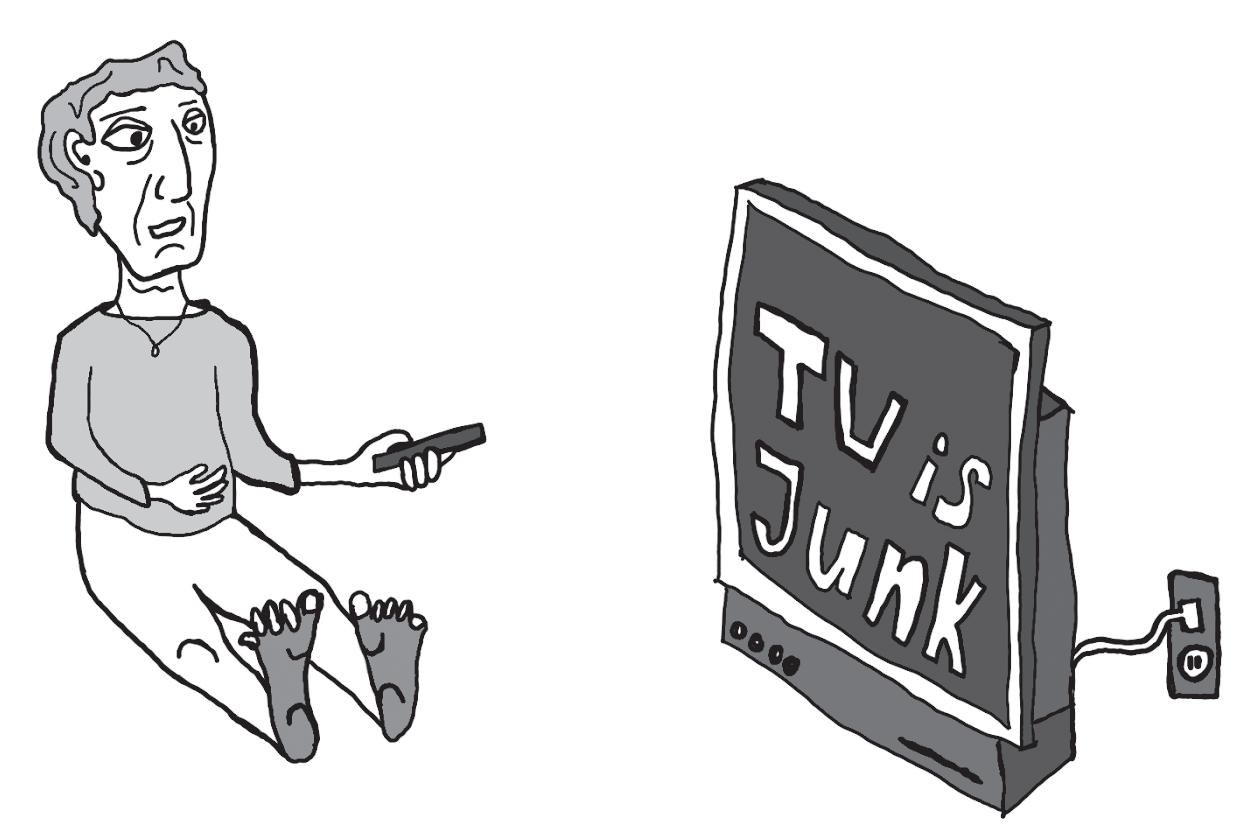

On Campus by Elizabeth Klosky ’21


26 A PA R TMENT FOR R ENT
2020-2021
Studio 1, 3, 8 & 11 BR Apts. Great Locations in Collegetown. 607-227-2535
Collegetown Crossing
College Ave's Newest Location
307 College Ave. Now Leasing for 2020-2021
Completely New Modern Studios, 2 & 4 Bedroom Apartments.
Fully furnished, heat & hot water included. Reception area at 307 College Ave. www.urbanithaca.com 607-330-2442 info@urbanithaca.com
120 Oak Avenue
Just steps to Cornell Campus 10 bedroom house & 1 and 2 bedroom apartment 607-277-1234 office@ithacastudentapartments.com Ithacastudentapartments.com
*Brand New*
Studio, 1 & 2 Bedrooms College Townhouse 121-125 College Ave. Leasing@inteprop.com
*SEMESTER LEASES*
Brand New Apartments 238 Linden Ave. 121-125 College Ave. Studio, 1 & 2 Bedrooms Contact Leasing@inteprop.com
Boldly Refined Living 312 College Avenue
Sophisticated studio, 1, 2, 3-bedroom apartments. Superior fitness facility, theater, and coworking space. Free high-speed internet. Exclusive resident parking. Package delivery/return. Overnight concierge. 607-273-9777 or 312collegeave.com
Catherine & Eddy St. 1 & 2 bedroom
Furnished, heat included Laundry in building Parking available for fee 607-277-1234 office@ithacastudentapartments.com
26 A PA R TMENT FOR R ENT
***************************** 1-3 Bedroom Apartments Quiet Fall Creek Location 5 Minutes to Busline 607-351-1267 joe@joegrealty.com
*****************************
Houses, Apts, Parking 1 to 9 Bedroom Collegetown - College Ave, Linden Ave, Dryden Rd, Bryant Ave, Cook St. 607-330-2442 info@urbanithaca.com www.urbanithaca.com
Now Renting 2-10 Bedroom Houses/ Apartments for 20-21. All Locations. Call today or visit our website: Certified Properties of TC Inc certifiedpropertiesinc.com 607-273-1669
Flexible Housing Solutions! Short Stay Accommodations “Brand New” Studio Apartments 238 Liden.com Leasing@inteprop.com
109 Sage Place 2 & 3 Bedroom Apartments Access to Shuttle to Campus Access to Free Fitness Center Novarr-Mackesey Property Management office@ithacastudentapartments.com 607-277-1234
504 1/2 Thurston AveSTUDIO 607-277-1234 office@ithacastudentapartments.com Ithacastudentapartments.com
20-21
College Ave. 5 BR House Furnished. Laundry. Parking. Call 607-273-8576

MAILBAG
Continued from page 12
2. Senior defenseman Yanni Kaldis has gone a bit cold offensively. A fixture of Cornell’s top power-play unit, the captain Kaldis takes a lot of pride in the man advantage and his ability to man the point when Cornell is up a skater makes the whole machine work. He has looked just fine, but an uptick in offensive production from Kaldis might give the entire top power-play unit the jump-start it needs.
I know Cornell recruits heavily from Canada but I was wondering if they would consider looking more into Europe. I think teams like Quinnipiac had quite a bit of success recruiting players from Europe.
—
@Blackwi90595619 on Twitter
R.G.: Good question. They’ve had success with a couple European players recently — Moscow native and sophomore forward Max Andreev (who had a U.S. connection before moving here at age 16) being the latest, and Justin Krueger ’10 at the end of the previous decade being the two best examples. I only can sort of answer the question, but I think Cornell’s reasons for limited interest in international recruiting include:
1. Ivy League rules, specifically that the team can’t give athletic scholarships, make things much more complicated. I don’t know much about recruiting rules,
but the team also has limited resources to fly across the world to meet with teenage recruits. I’m guessing the Ivy League holds Cornell back from getting super involved in international recruiting. Quinnipiac, for example, whose current roster includes players from the Netherlands, Sweden and Latvia, recruits much differently. I don’t know enough to go into detail, but Quinnipiac builds its program differently than Cornell does and they generally allocate a larger budget to the team.
2. Cornell has never been the type of program that looks for really young recruits. Instead, they’ve had success finding kids from juniors, especially in Canada. It’s what Schafer and his team know best, and it’s a process that has helped make Cornell one of the top destinations for Canadian and American players.
Augsburg, Germany, native Nico Sturm, now with the Minnesota Wild, is an example of a successful international recruit. The former Clarkson captain left the Golden Knights after his junior season last year, and was one of the best players in the ECAC. As one of the country’s best defensive forwards for former Schafer protege Casey Jones’ ’90 Golden Knights, Sturm is probably the type of player Schafer would target if he jumped in more to the international recruiting scene. Juho Jokiharju, who definitely had one of the coolest names in college hockey, is another example of Clarkson’s success finding players from Europe.
Raphy Gendler can be reached at rgendler@cornellsun.com.

BASKETBALL
By BENNETT GROSS
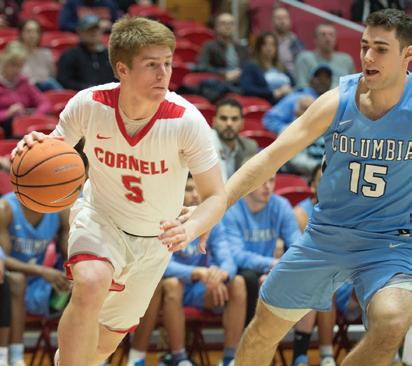
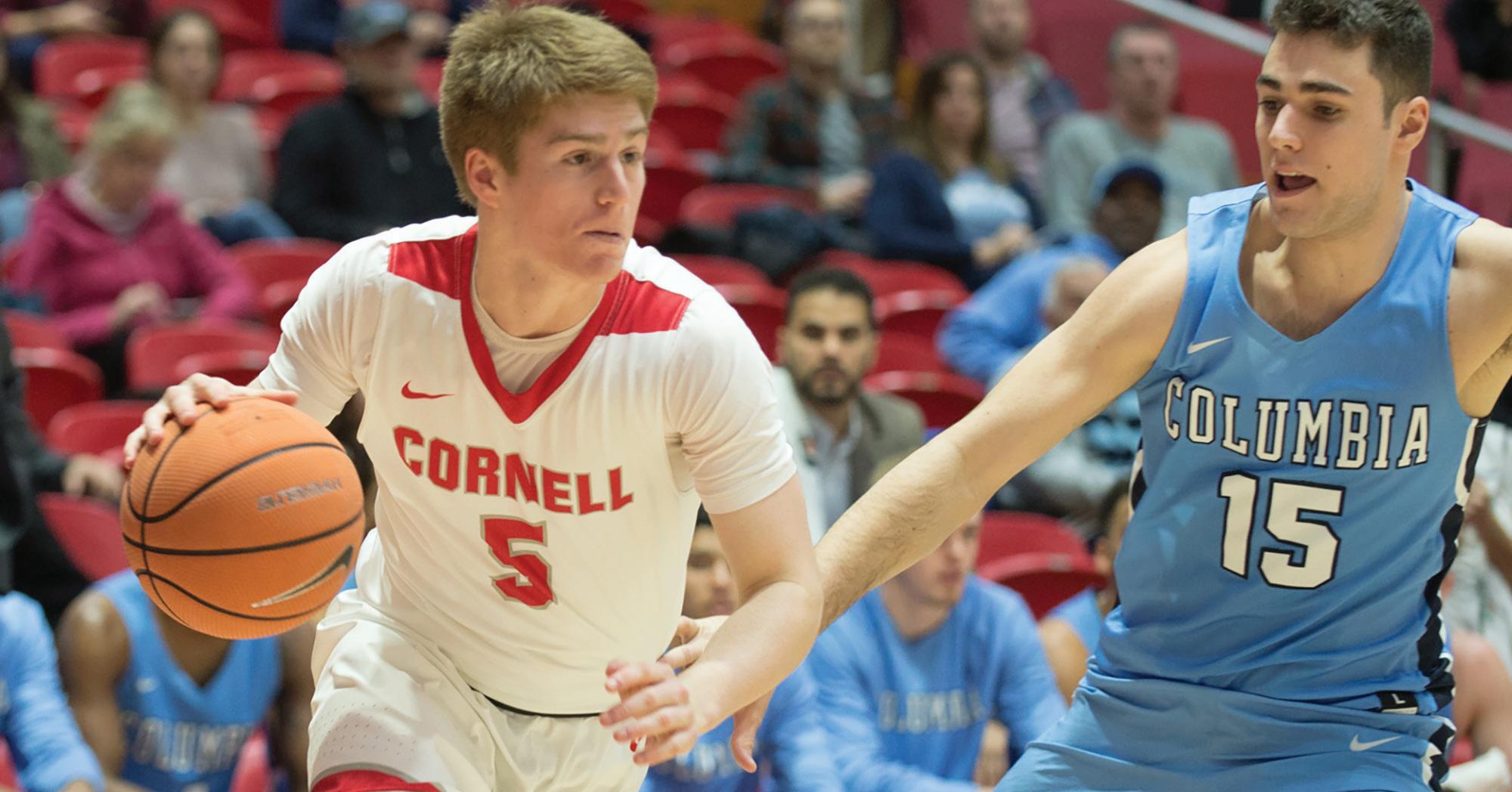
Cornell men’s basketball’s record fell to 3-11 following a road loss to Columbia on Saturday, allowing the Lions to hold the lead by double digits for nearly the entire night. The Red’s lone Division I victory came in its first game of the season against Binghamton.
The Lions (6-11) defeated Cornell, 75-61, led by freshman guard Jack Forrest, who scored 23 points. The Red succeeded in just over one-third of scoring attempts from the field.
Columbia got off to a hot start against the Red. The home team shot 61 percent from the field in the first half,
while visiting Cornell was only able to shoot 25 percent from the field. As a result, the Lions took a 48-29 lead into halftime.
Even though the Red was able to outscore the Lions 32-27 in the second half, this effort was not enough to close the ultimately insurmountable deficit. The Lions were up by 22 points when only nine minutes were left on the clock.
Columbia ended the night shooting 51 percent from the field and 44 percent from the three-point range. Cornell, on the other hand, missed 20 three-point attempts, including going 2-13 from behind the arc in the second half.
Despite the loss for Cornell, the Ivy opener did mark the return of its leading scorer, junior forward Jimmy Boeheim,
who was out due to injury during the team’s previous two contests.
Boeheim certainly left his mark after his two-game departure; he scored 14 points and added four rebounds against Columbia, helping to carry the Red offensively alongside junior guard Terrance McBride, who scored 17 points and seven rebounds.
However, the effort from the junior duo was no match for Columbia and certainly not enough to give Cornell its first Ivy League victory of the decade. The Lions’ Forrest’s 23 points were particularly noteworthy, given that the match was just his third career start.
Columbia’s leading scorer, senior guard Mike Smith, also contributed 15 points, seven rebounds, five assists and three steals to bolster the Lions’ score. Junior guard Tai Bibbs chipped in with another 12 points toward Columbia’s victory.
Against the Lions, junior forward Riley Voss was given the chance to be in the Red’s starting lineup, but he went 0-6 from the field and ended the game with zero points. At various points throughout the season, Head Coach Brian Earl has tinkered with this fifth spot on the starting lineup.
Boeheim, McBride, senior forward Josh Warren and junior guard Bryan Knapp have been stalwarts in the starting five, but the final spot has been filled by various players, none of whom appear to be holding onto the position. Jordan Jones, Dean Noll and Thurston McCarty are all players who stepped into the fifth starting sport earlier in the year.
Earl has also elected to give freshmen Marcus Filien and Greg Dolan more playing time as the season has progressed. Each player scored two points against Columbia. As Cornell prepares for the heart of its Ivy League schedule, eyes will be on how Earl utilizes his bench and fifth starting spot.
Columbia will look to sweep the season series between the two New York rivals when the Lions make the return trip to Ithaca this Saturday at 4 p.m. Columbia has not swept Cornell since the 2015-16 season, with the two teams splitting each series since.
By RAPHY GENDLER Sun Sports Editor
Cornell men’s hockey is at No. 1 for its second consecutive week. Over winter break, readers submitted questions about the rest of the season. Here are answers to some of those queries:
I remember [junior goaltender Matt] Galajda’s brilliance in his freshman campaign and am thrilled to see him returning to that form this year. Do you have any insight as to why he’s had such a bounce-back season? I know he was plagued by injuries a little last year, but it definitely seemed like that wasn’t the only reason for his play slipping.
— Josh Gershenfeld ’21
R.G.: It seems that Galajda is back to All-American form, a welcome sight for a Cornell team that looks like a national championship contender. That Galajda was an all-league goaltender last season and we consider it a down year tells us all we need to know about how good he was as a rookie and how good he’s been to start the 201920 season.
Last year’s sophomore slump was exacerbated by injuries: Galajda got hurt in the team’s ugly loss to Harvard at Madison Square Garden and was hurt again in the ECAC championship game just a few weeks after it looked like he was back at 100 percent. He never quite climbed all the way back from the dismal start to the season, when he was pulled from two straight games
against Michigan State.
Head coach Mike Schafer ’86 said last season that Galajda is at his best when facing some competition. After an impressive freshman campaign, Galajda came crashing back down to earth a bit to start his second season before improving as the year went on. I think his health — and ability to spend the summer taking it slow and recovering from the injury in March — is reason No. 1 that he’s again among the nation’s best goaltenders. But a second reason might be a change in mindset and a year of growth — Galajda knows that he can’t take a great season like his rookie year for granted. He also knows he has a competent and proven backup in classmate Austin McGrath pushing him in practice. The ability to put a tough season behind him and knowing that he can’t get complacent have helped Galajda bounce back this year.
“His freshman year, [Galajda] won all kinds of awards, and he came back last year and just thought it was going to happen again,” Schafer recently told College Hockey News. “He was [feeling] a little bit entitled, that it was going to be that easy again. He addressed it — he got off to a slow start, and he rectified that.”
WHY can’t these men score on power plays? There must be a weakness somewhere? Or….something technical?
— Marty Moses
R.G.: Going into the break, the power play was an ugly zero for its last 18 and hadn’t found the back of the net in five
games. Here are two potential reasons for the recent struggles, both just possibilities that I haven’t looked at in-depth enough to say with authority that they’re the reasons for the five-game dry spell:
1. Teams are figuring out that junior forward Morgan Barron is dangerous from the right circle.
On a number of occasions last season, Barron used his NHL-caliber shot on the power play, winding up from the right circle, receiving an easy pass and beating goaltenders who had no chance. It’s possible that teams
are starting to turn more of their attention toward Barron, who emerged as one of the ECAC’s best weapons in his sophomore season. Putting your best player wide open in his favorite spot, moving the puck around and having the defenseman at the point pass it to Barron is a strategy that’s hard to argue with. But it’s possible that teams see the play on video and are trying to force Cornell into plan B. Teams might have figured out that they should keep an eye on No. 27.