The Corne¬ Daily Sun

By SARAH SKINNER Sun Managing Editor
Four chapters on the Interfraternity Council are banned from recruiting new members this spring, a restriction handed down after investigations of misconduct in 2019.
“It’s definitely disappointing, and we definitely disagree with Cornell’s decision.”
Michael Grossman ’22
The four fraternities are Alpha Delta Phi, Sigma Chi, Tau Kappa Epsilon and Phi Kappa Psi. Each decision is due to “past or pending judicial cases,” according to Kara Miller McCarty, the Robert G. Engel Director of Sorority & Fraternity Life. McCarty did not comment on the nature of the cases, and said that their details would not be publicly announced until the yearly scorecard report is released this summer.
“It’s definitely disappointing, and we definitely disagree with Cornell’s decision,” Michael Grossman ’22, president of Tau Kappa Epsilon, told The Sun. “But the University controls the process.”
Cornell publishes a report each summer detailing violations of Greek Life policies and resulting adjudication, indicating the fraternities’ misconduct that took place during the fall semester. None of the four fraternities have


By SARAH SKINNER Sun Managing Editor
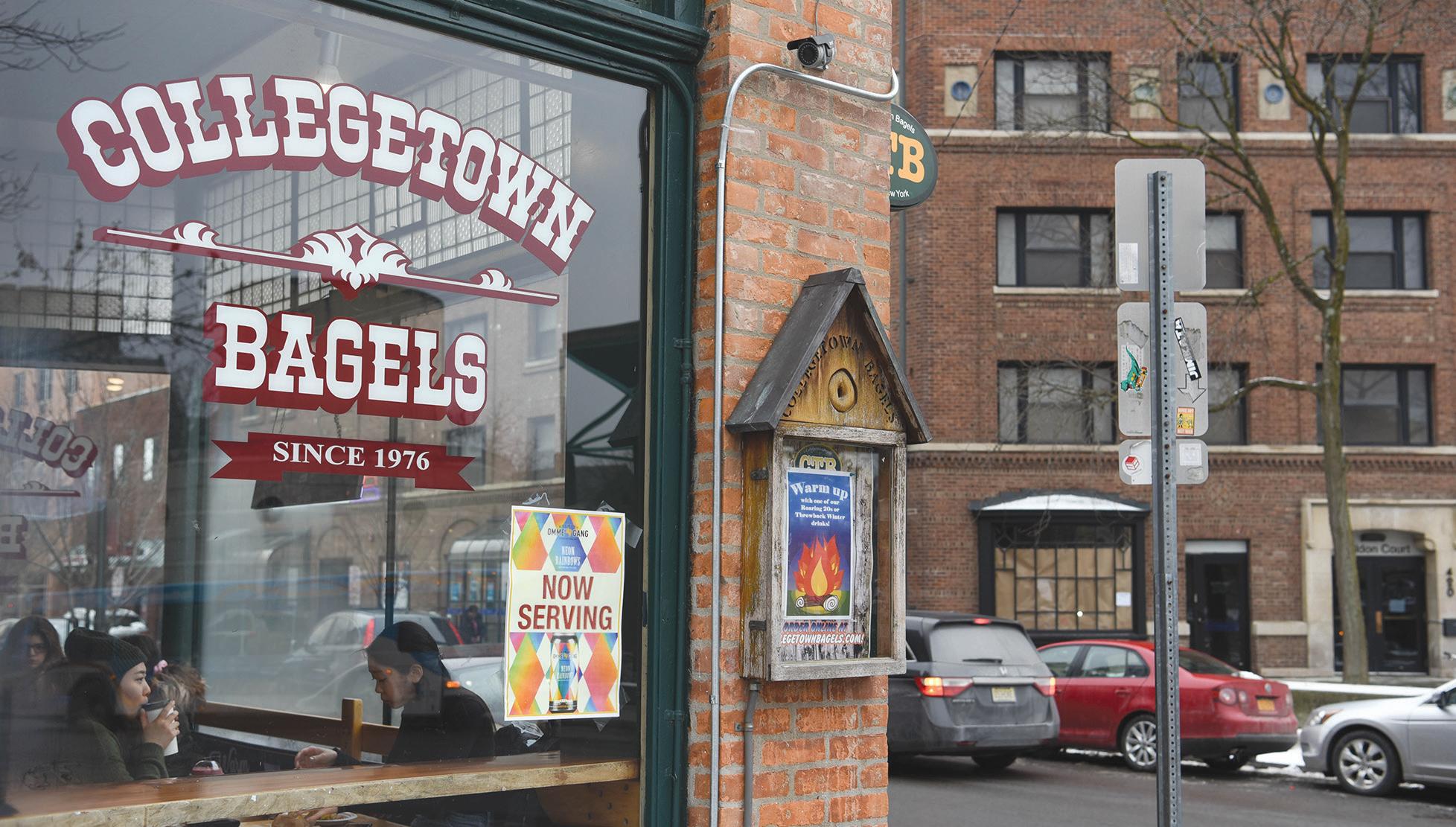
Though Collegetown Bagels will depart from its just-off-campus corner — where students have bought late-night eats for decades — once the building is demolished in June, its owners have already begun work on the chain’s next location: directly across the street.
The new store will occupy most of the first floor of Cornell-owned Sheldon Court, safely out of the path of the wrecking ball. Owners Gregar Brous and and Lindsey Brous ’12 hope to keep the building’s original spirit while expanding the square footage in the new

space.
“We’ve been planning this for almost six months,” said Gregar, who opened Collegetown Bagels’ first location next door to its current space in 1972.
He and his daughter, Lindsey, said they had heard for years that building owner Student Agencies was eyeing the prime-location property for redevelopment.
The student-owned company announced plans to tear down the aging structure and rebuild a luxury apartment building in its place last fall.
The Sheldon Court space was the first choice for a relocation, the owners said — potential talks began
By CAROLINE JOHNSON Sun Staff Writer
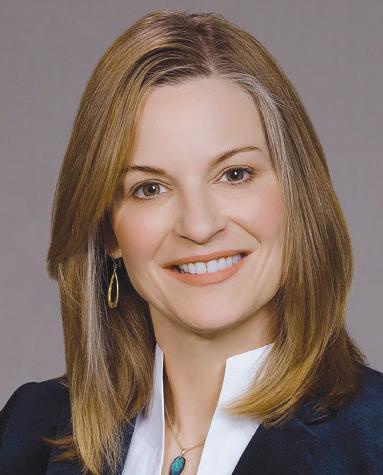
After leading Cornell’s Title IX office for only 18 months, Chantelle Cleary was replaced on Jan. 2 by Laura Rugless as the associate vice president of the Office of Institutional Equity and Title IX coordinator.
Cleary, who joined Cornell’s office in June 2018 to replace Sarah Affel, told The Sun that she decided to leave Ithaca after only one-and-a-half years to be closer to her family in Albany.
and Rugless will work together to transition the office, which has expanded significantly in recent years due to an increased workload.
“The [Title IX] office not only handles reports of sexual or related misconduct but now also handles reports of any other form of prohibited discrimination under policy 6.4,” Cleary said — a change which took effect this past summer. Under Cornell University Policy, Policy 6.4 is geared toward addressing instances of bias, discrimination, harassment and sexual and related mis-
Throughout January, Cleary
1. Snow Has Fallen! Hit the slope for sledding
2. Pick out notebooks — but not textbooks (yet)
3. Get tickets for the Harvard Hockey Game (on Saturday)
4. And after #3, go fishing!
5. Meet up for 2 a.m. CTB
6. Get your last good night of sleep
7. Bake a batch of cookies
8. Plan Tuesday’s outfit (hint: it’ll be cold)
9. Clean out your backpack
10. Find your missing glove (or love — Valentine’s Day on Feb. 14)
11. Start classes early and skim your readings
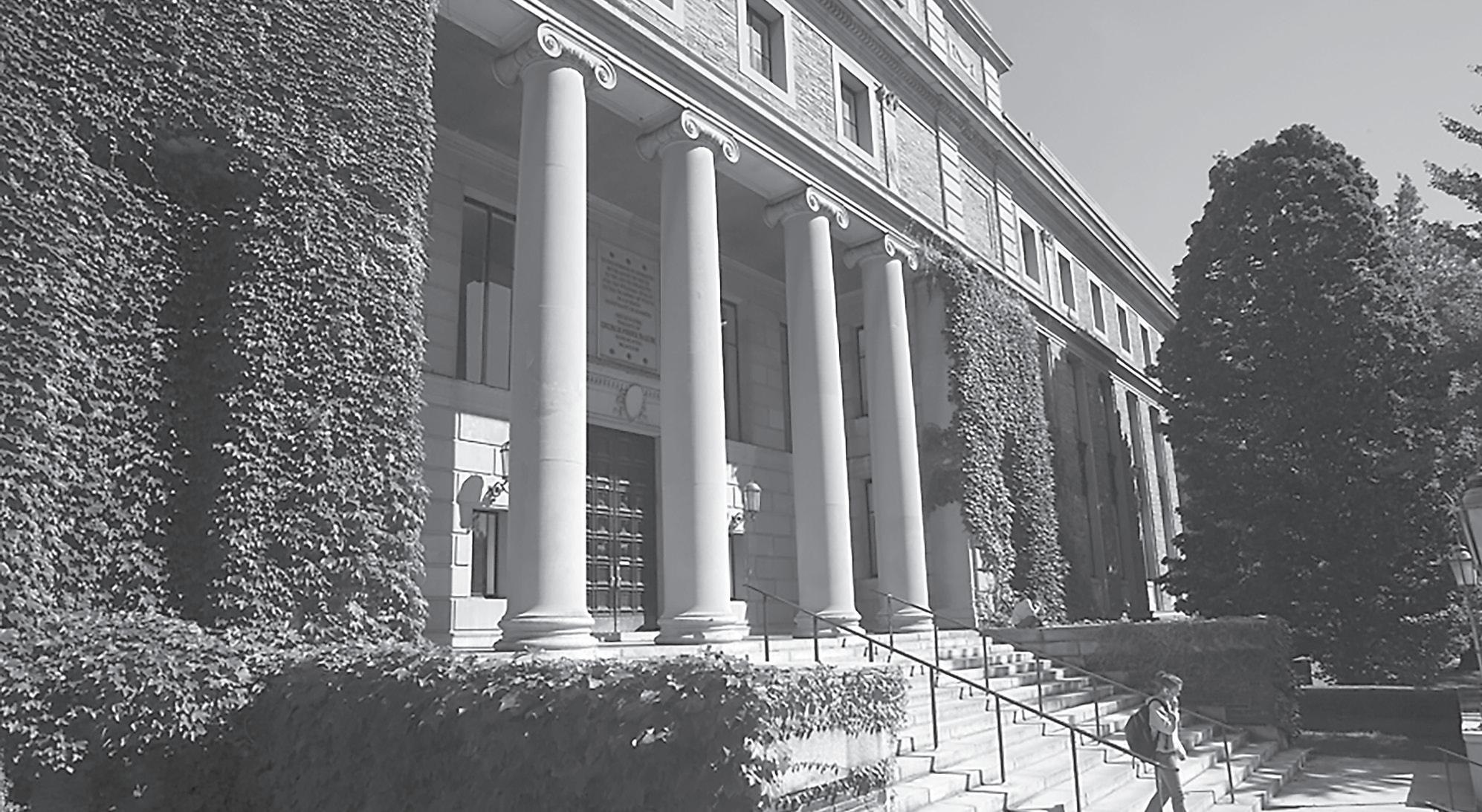
Transient electronics | Helen Tran, a chemical engineering postdoctoral research fellow from Stanford University, will present her research about degradable semicondutors for electronics on Tuesday in Baker Lab, pictured above.
Chemistry Seminar: “Hijacking the Lysosome For Targeted Protein Degradation” 4 p.m., 119 Baker Lab
12. Read The Cornell Daily Sun! Canvas@Cornell: Drop-In Session 10 - 11 a.m., 126 Computing and Communications Center

Baker Institute Seminar Series Noon - 1 p.m., Thaw Lecture Hall, Baker Institute for Animal Health
Department of Natural Resources Spring Seminar 3:30 - 4:30 p.m., G24 Fernow Hall
Chemistry Seminar: “Stretchable and Fully Degradable Semiconductors For Transient Electronics” 4 p.m., 119 Baker Lab

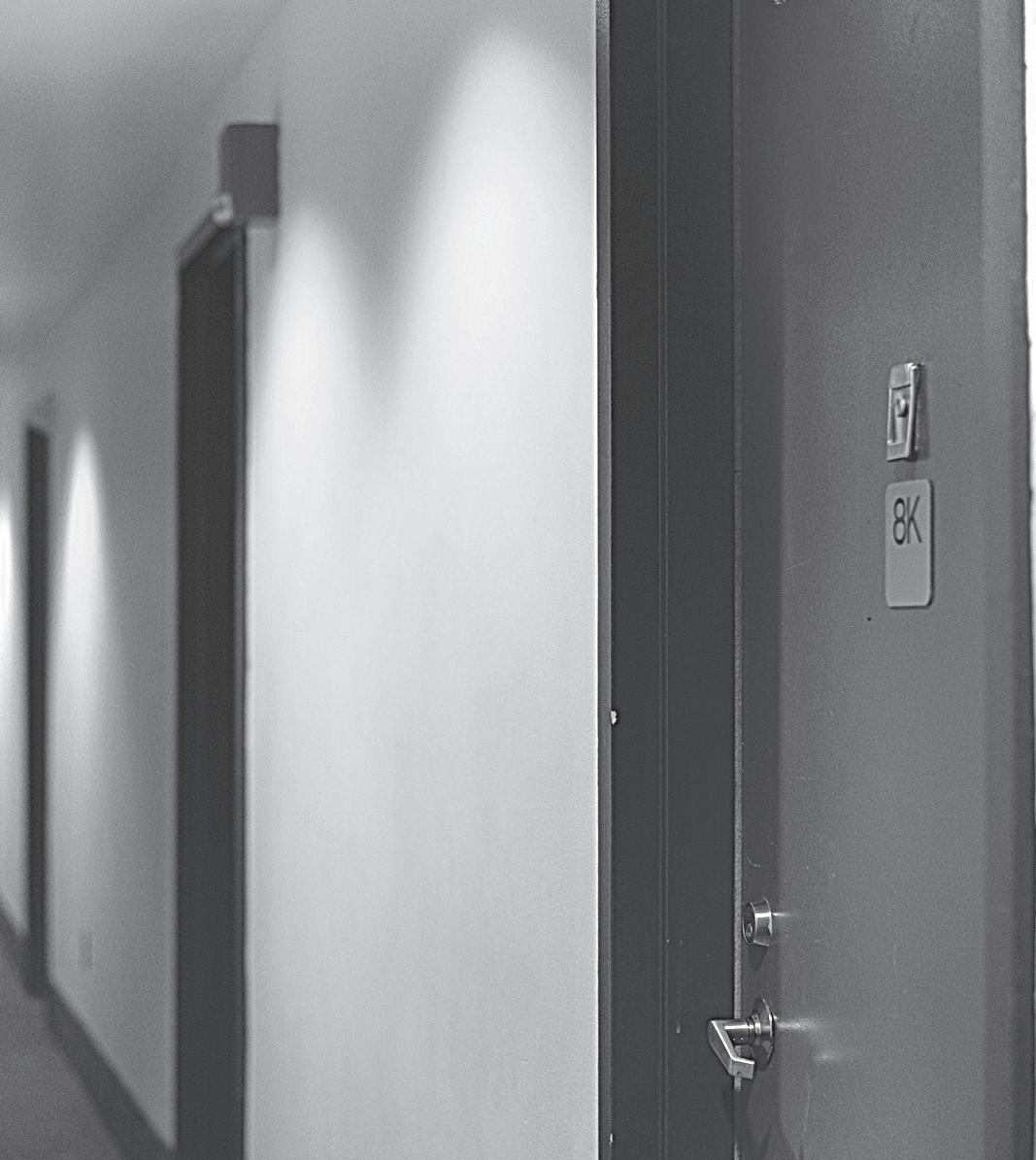
By SEAN O’CONNELL Sun Staff Writer
Aaron Reynolds ’19, a former Cornell University student, pled guilty in December to purchasing a firearm illegally for classmate Maximilien R. Reynolds ’19 — an ex-Cornell student currently serving a two-year sentence for stockpiling unregistered weapons.
Aaron’s plea agreement comes two years after Maximilien’s arrest, when Ithaca police and FBI agents stormed Maximilien’s Dryden Road apartment in 2017, uncovering a trove of weapons, including an AR-15 rifle, a homemade bomb, a bulletproof vest and 300 rounds of ammunition, The Sun previously reported.
It was an Ithaca Wal-Mart employee who tipped off the police to Maximilien’s purchases of ammunition, knives and other concerning items, court documents revealed.
The motive for the stockpile remains unclear, with Maximilien’s defense lawyer, Raymond Schlather J.D. ’76, claiming that the purchase was not intended for violent purposes, but rather emerged as a consequence of paranoia and mental illness.
“I think the material that was provided to the court consistently made clear that there was no plan, there was no manifesto, there was no target, there were no threats,”
By MEGHNA MAHARISHI Sun Staff Writer
The Ithaca Police Department will terminate an officer directly responsible for handling sex crimes in the department’s investigative division, the Mayor’s office announced in a press release on Jan. 9. An audit found a slew of failures to sufficiently investigate a range of cases in the division over the last 10 years — there were nearly 80 unresolved sex crimes.
While the press release noted that the division inadequately investigated a variety of cases, sex offenses were among the most concerning.
“[T]he impacts of these investigatory failures were by definition deeply traumatic for victims
“... these investigatory failures were by definition deeply traumatic for victims ...”
Mayor’s Office Statement
who came to the IPD seeking help and justice, and found none,” the press release read.
Senior investigator Christine Barksdale has been in charge of handling sex crime inquiries — she has served as a member of the juvenile investigative unit since 2006. The press release did not explicitly name the officer involved in these investigations. Barksdale did not respond to a request for comment by publication time.
On June 14, Barksdale had filed a complaint — first obtained by the Ithaca Voice — to the New York State Division of Human Rights, claiming that Deputy Chief John Joly discriminated against her because of her race and gender when he was in charge of the division. Joly did
not respond to a request for comment by publication time.
Joly first came to the helm of the investigative unit in March 2019 — which was when the audit was conducted. Once the audit found a spate of unresolved cases, he enacted a new policy in which investigators would have to sift through unclosed cases and try to resolve them. Investigators were required to update Joly every two weeks.
Barksdale was not the only investigator with a backlog of cases, but she failed to comply with Joly’s new policy.
In the complaint, Barksdale alleged that she was in a hostile work environment because of how Joly treated her once he took over the investigative division. As evidence, Barksdale cited an instance in which Joly visited her store on May 26, 2019 to ask her to return to work, the tone of his emails and emails in which he included now-Police Chief Dennis R. Nayor.
Joly also sent an email to the investigative unit that specifically asked investigators to follow-up on the cases Barksdale failed to close — Barksdale felt as if Joly targeted her. In defense of the high number of unresolved cases, Barksdale said sex crimes were different and more difficult to resolve. The DHR found that other investigators who also investigated sex crimes had a smaller pileup of cases.
Responding to Barksdale’s allegations, the DHR wrote in the complaint that none of Joly’s actions could be considered to be discriminatory.
“Being yelled at, receiving unfair criticism, receiving unfavorable schedules or work assignments do not rise to the level of adverse employment actions,” the complaint reads. “Criticism of an employee in the course of evaluating and correcting her
said Schlather in a 2019 interview with The Sun. Aaron — who is not related to Maximilien — bought the weapon, a Savage Arms MSR-15 Patrol rifle on Nov. 27, 2017, from a licensed Tompkins County gun vendor. On the purchase forms, he “falsely certified he was the actual purchaser of the [rifle],” according to court records.
Maximilien, who had been unable to purchase a weapon due to a 2016 arrest and involuntary commitment, gave Aaron $1,000 for the gun and a $200 reward.
Federal prosecutors charged Aaron with “false statements during the acquisition of a firearm,” according to court documents. Such a violation can incur a maximum penalty of 10 years in federal prison, as well as a fine hitting $250,000.
As part of his plea agreement, Aaron admitted to one count of making a false statement in the firearm purchase forms, and waived his right to appeal. However, Aaron can still appeal any sentence longer than 21 months.
On the other side of the bargain, prosecutors “will not seek other federal criminal charges against the defendant,” according to a court filing. Aaron is scheduled for sentencing in April, according to Syracuse.com.
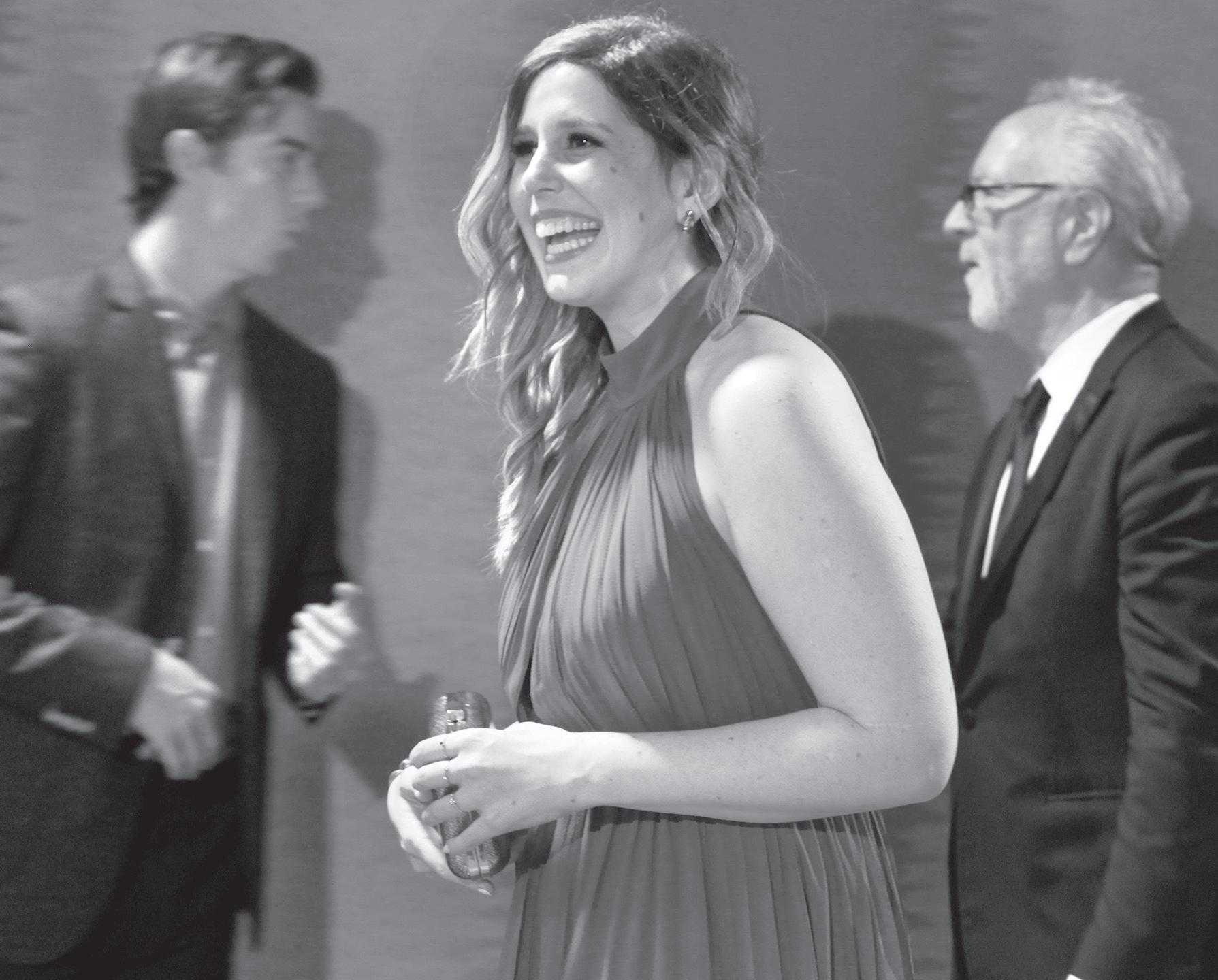
By ALIYAH KILPATRICK Sun Staff Writer
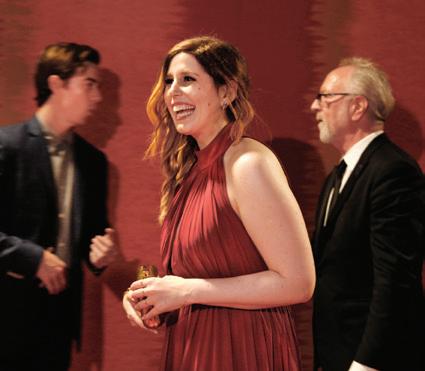
Exactly one year after former Saturday Night Live cast member Vanessa Bayer performed at Cornell College in Mount Vernon, Iowa, she will bring her jokes to Ithaca’s Cornell.
Actress and comedian Vanessa Bayer — best known for her stint on NBC’s award-winning Saturday Night Live — is slated to speak at Bailey Hall on Jan. 25.
Holding the record as SNL ’s longest-serving female cast member with 149 episodes, Bayer departed SNL in May 2017 after seven years on the show. A Primetime Emmy Award nominee, Bayer is known for her impressions of Miley Cyrus and Jennifer Aniston’s character Rachel Green from the show Friends
While on SNL , Bayer also starred in notable sketches such as Weekend Update’s “Jacob
the Bar Mitzvah Boy Explains Passover With His Dad” as a teenager delivering a rehearsed speech on a given topic and “Totinos” as a pizza-roll-obsessed mom.
In addition to comedy, Bayer has also forayed into the film industry, starring in movies including T rainwreck , Office Christmas Party and Netlflix’s Ibiza
Growing up in Cleveland, Bayer was diagnosed with acute lymphoblastic leukemia at age 15, which she defeated after receiving two and a half years of treatment.
She soon went on to graduate from the University of Pennsylvania in 2004, where she majored in communications and French. While attending college, Bayer interned on hit television shows such as Sesame Street and Late Night with Conan O’Brien . The actress also participated in the cast of Bloomers , an all-female musical
and sketch comedy troupe. Bayer was invited to campus by the Cornell University Program Board and Cornell Hillel as a part of their Hillel Major speakers series. The event is being moderated by Prof. Samantha Shephard, performing and media arts.
CUPB has invited an array of distinguished speakers to campus in past years — among them, SNL cast members Colin Jost and Pete Davidson. Last semester, the group brought U.S. women’s soccer star Carli Lloyd and Oscar-winning director Spike Lee to Ithaca. Tickets for the talk are free and can be picked up in Willard Straight Hall’s Resource Center from Tuesday to Friday. The talk will begin at 7:30 p.m., with doors opening at 6:30 p.m.

By ARI DUBOW Sun Staff Writer
Cornell will commit $100,000 to the Tompkins County Public Library, further bolstering its decades long commitment to the local library, the University announced in Jan. 8 press release.
The University will give the money to the library in $20,000 a year installments over a five year period. While Cornell has donated $20,000 for the last several years, the University’s five-year undertak-
ing marks the first time it has enlisted in a long-term commitment to the library, according to Joel Malina, Vice President for University Relations.
Malina said that when the TCPL Foundation — an organization that works to garner community support on behalf of the library — brought the proposal to him, he did not hesitate to approve it.
The Foundation regularly seeks financial support from Cornell through formal requests submitted to Cornell’s
University Relations office. In their proposals, the TCPL Foundation lays out the ways that the library will leverage its donation.
With this particular request, the TCPL Foundation said that the library would use the money for their “access and outreach initiatives,” according to Suzanne Smith Jablonski, the executive director of the Tompkins County Public Library Foundation.
Such recent initiatives have included easing the process of applying for a library card without providing a physical address, and, last year, entirely eliminating late fees, Jablonski said.
trying to look at who is currently at the library. If you were to walk in the door here, would you see yourself reflected back?”
With the continuation of funding, library administrators have plans to execute a variety of new community programs in the near future — including a program to bring books to homebound individuals in the area and work with inmates in the Tompkins County prison system.
“Knowing that we have funds for a multi-year period to enable these ... creative approaches is really powerful.”
The public library, originally called the Cornell Free Library, was founded by Ezra Cornell in 1864, alongside the founding of the University, according to Jablonksi. In 1967, the library officially became the county’s public library, according to the Tompkins County Public Library website. Though it receives public funding, Cornell has continued to provide financial support since the library’s public chartering.
Cornell was also one of the lead contributors toward the library’s move to their current location on Green Street nearly 20 years ago, and with the University’s support, the library has been able to do renovations for spaces that are better geared toward hosting events.
“A lot of the work we’re doing now to remove barriers has to do with building relationships,” Jablonski said. “We’re
been found guilty of hazing, as those reports are typically made immediately available. All are still active and recognized by Cornell.
All four of the fraternities have been barred because of investigations prior to Pollack’s announcement of Greek Life reforms on Dec. 18, according to Jenny Loeffelman, assistant vice president for Student and Campus Life.
The decisions are unaffiliated with President Martha E. Pollack’s rush changes, which she announced at the end of 2019. Reforms included a ban on rush events after 8 p.m., an alcohol ban on all rush events and promises of “strong enforcement.”
fraternity had attended a judicial hearing the day before the October party for separate misconduct.
Grossman said that he believed that last semester’s tragedy may have influenced the administration’s attitudes and actions.
“After the incident with Phi Psi in October … Cornell may be taking measures they would not have taken in the past,
ative” light on the house and might dissuade members from joining in the future.
Grossman told The Sun that his chapter was informed of the decision in early January as part of the ongoing judicial process. While the majority of recruitment occurs in the week-long rush period before the spring semester begins, chapters in good standing can recruit eligible members individually throughout the year.
“After the incident with Phi Psi in October ... Cornell may be taking measures they would not have taken ...”
Michael Grossman ’22
The reforms, an effort Pollack has emphasized during her tenure, came two months after the death of Antonio Tsialas ’23, who was last seen leaving Phi Kappa Psi after what Pollack called a “dirty rush” event in October.
Leadership from Phi Kappa Psi, one of the four fraternities barred from recruitment, did not return requests for comment. Phi Kappa Psi is currently on interim suspension pending a full review, and Pollack wrote in December that the
clamping down in an effort to save face, per se, to tell the alumni and the parents ‘look what we’re doing’ regardless of how effective that was or how fair that process was,” Grossman said.
This year’s recruitment bans were publicly posted on the Office of Sorority and Fraternity Life’s website in a denotation below the list of currently recognized fraternities.
“The four houses were mostly on there for different reasons, but grouping them together makes them seem like they did the same thing wrong,” Grossman told The Sun. He said this casts a “neg-
Griffin Bader ’20, who was elected Alpha Delta Phi’s new president in December, told The Sun in a statement that while his fraternity “unequivocally accepts” the University’s decision and “regrets” the behavior of its members that led to the restriction, he and his chapter had “uncertainties and doubts” about its judicial process.
“I hope that we can all work to establish a more just and transparent adjudication of Greek Life issues that will result in more rational sanctions,” Bader wrote. He declined to comment on the nature of the conduct that led to the bar.
Leadership for Sigma Chi did not respond to a request for comment.
Suzanne Jablonski
“Knowing that we have funds for a multi-year period to enable these kinds of creative approaches is really powerful,” Jablonski said.
According to Malina, Cornellians will benefit too, saying that he sees the public library as a rich opportunity for students to engage with the community beyond the University’s campus.
“Libraries are great places for mentorship, providing assistance for children struggling with reading who are not interested in books,” Malina said. “The library is a place to expand your mind, and to think about your place in the world.”
Ari Dubow can be reached at adubow@cornellsun.com.
IPD
Continued from page 3
work is not, in itself; a materially adverse employment-action.”
Barksdale was eventually reassigned to patrol, which she viewed as a demotion. The DHR investigation found that the reassignment was not a demotion because the pay and title went unchanged. The complaint noted that even if the reassignment was a demotion, the IPD had legitimate and nondiscriminatory reasons for its actions.
After its investigation, the DHR dismissed Barksdale’s complaint. The senior investigator was notified of her termination earlier in January and the Ithaca Police Benevolent Association told The Ithaca Times that it plans to challenge the decision.
It is unclear what other types of cases the IPD’s investigative division failed to thoroughly investigate. Nayor did not respond to a request for comment by publication time.
The IPD is also asking individuals who previously filed a complaint — particularly ones involving a sex offense — to come forward if they felt their complaint went unanswered.
The IPD provided the findings of this audit to the Tompkins County District Attorney and New York Attorney General, saying it would cooperate in any future investigations either office may choose to pursue. District Attorney Matthew Van
Houten declined a request for comment and the New York Office of the Attorney General did not respond to a request for comment by publication time.
Mayor Svante Myrick ’09 said in the press release that he was disappointed with the outcomes from this investigation.
“I am shocked and saddened by these revelations, which can easily erode public confidence in the IPD,” Myrick said. “I do, however, draw encouragement from the confidence that I have in the IPD’s current leadership … and new policies established by new leadership in the Investigations Division, under which the IPD is proactively ensuring that a failure of this sort will never happen again.”
In light of this internal probe into the investigative division’s practices, the IPD enacted multiple reforms within the department. Some of these reforms include holding daily briefings, providing updates on cases every two weeks, tracking the timeline of all cases and hosting monthly supervision meetings with each investigator.
Additionally, investigators will no longer specialize in a certain unit, such as juvenile or sex crimes. All investigators will receive training to handle a range of cases to ensure that work is evenly distributed across the investigative division.
Potential talks regarding the dorm began with Cornell over fve years ago
with Cornell over five years ago, and a spokesperson for the University noted that it was “happy” to provide the store’s new home. The lease was finally signed on Christmas Eve, the owners said.
“There was a part of Cornell that really felt like they wanted us in there and it was a really good match,” Gregar said, seated at the counter of CTB.
Sheldon Court, a 119-year-old building home to 164 upper-level students on its five floors, houses a retail space on the first level separate from the current residential space. Work to gut the 4,900-square-foot space, previously home to Kaplan Test Prep, kicked off on Jan. 3.
The standardized exam preparatory service transformed the space into a conventional office, covering up much of the old brickwork. CTB’s design and construction team are working to reclaim some of the original features, Gregar said, such as the six stone fireplaces that were used to heat the building in the early 20th century — paying heed to the building’s history.
Sheldon Court was constructed as a private boys’ dormitory in 1901 by Ithaca businessman Charles Lacey Sheldon, Jr., and previously housed the Triangle Bookshop on the first floor. The building was renovated in 1982, which included the removal of many of the stone fireplaces that weren’t hidden in the walls of the downstairs space.
Gregor said that after the move, the bagel shop plans to name a sandwich “The Sheldon” after the original owner.
Other plans — though the design process is ongoing — will also transform the outdoor patio into a gathering space, with tables and chairs to wrap around the building.
These renovations follow the continuity of CTB’s current, popular outdoor space, which owners and even local government officials
expressed concern over losing when the building lost out on landmark status last year.
This redesign comes within a year of the downtown branch’s move into the City Centre building, which came with a swanky decor upgrade from its North Aurora Street digs.
“We kind of felt like that was practice for this,” Gregar said. “We knew these two things were kind of happening following each other.” He and his family are managing this redesign themselves as well, and said they plan to incorporate some elements of their history and some “new twists” as well.
CTB will continue to serve beer and wine, and also plans to include a private room in the back of the building, which will be available for third parties to rent out.
Though the business will be housed in a private student dorm, the sections of the building that allow access to the residences are separate and will be protected by key-card readers, Gregar said.
An opening day has not yet been scheduled, Gregar said, as he is continuing to appeal to current landlord Student Agencies, Inc. to delay the demolition day to after the first week in June, allowing alumni to return for a grand farewell.
“We love this space,” Brous said. “That would be a fun way to go out.”
With this in mind, he hopes for a closing and opening as close together as possible. However, the Brous family has not yet decided the future of Rulloff’s Restaurant, also owned by Gregar and located in the demolition-doomed building. The block contains the Bear Necessities shop as well.
In addition to the Collegetown and downtown locations, the Brous family owns a CTB branch in East Hill Plaza, also in a Cornellowned building.
around prevention and prevention can take a number [of] forms,” she said.
conduct.
Rugless formerly served as the executive director of equity and access services and Title IX coordinator at Virginia Commonwealth University. She has also held a number of positions associated with state government, civil rights, equity and private law.
Just two weeks into her new position, Rugless spoke favorably of Cornell, saying it is the “high caliber people who are here, that struck me instantly.”
Cleary told The Sun that her short-lived experience as Title IX coordinator taught her to be more mindful and present.
“I intend to take those skills I’ve learned here at Cornell from watching so many folks do it so well into my next journey,” Cleary said.
In the past 18 months, Cleary expanded the office’s staff from three to eight people, she told The Sun. During her tenure, she and her team focused on collaborations with individuals and groups across campus, aiming to change the campus culture.
As the new Title IX coordinator, Rugless intends to continue honoring the office’s current mission of prevention and education.
“We do want to expand our focus to a more strategic efforts
One such program already in place for fall 2020 is an online Title IX training course. While Rugless said the course would not serve as a substitute for in-person training, it will be a useful tool to evaluate areas where the office can progress.
In fall 2019, Cornell released a survey on sexual assault and related misconduct which showed an increase in undergraduates who experienced nonconsensual sexual contact, though Rugless told The Sun that the report is not necessarily reflective of an increase in reports.
“We have to be very careful about drawing conclusions from data and make sure we have as comprehensive a picture as possible of what is going on here,” Rugless said.
Rugless noted Cleary’s efforts to cultivate an experienced team during her short tenure and hopes to carry on Cleary’s work as new Title IX coordinator.
“The team that Chantelle has built and nurtured here has a great deal of experience and it’s just extraordinary, so credit to her,” Rugless said. “I could not be more honored to be able to serve as the next leader.”
Caroline Johnson can be reached at cjohnson@cornellsun.com.
Say what you will about Rian Johnson’s divisive Star Wars: The Last Jedi, but it carried an assurance of its message and a ballsiness about its execution that is completely absent in JJ Abrams’ Star Wars: The Rise of Skywalker.The Last Jedi, for every Canto Bight moment and Green Milk guzzle, was, at the very least, not respectful of Star Wars mythology and lore to the point of being afraid to build upon it or subvert it. In contrast, every scene and moment in The Rise of Skywalker is a shoddy medley that plucks scenes, images, sequences (often frame for frame or word for word) from the past eight films and blends them in such a disjointed array that one wonders what of the script is truly original. Though billed as a conclusion to the Skywalker saga, “conclusion” implies a logical end that organically builds upon the films or ideas that came before. The Rise of Skywalker fails to do even this and spends much of its time trying to appease and win back its greatest dissenters rather than remain committed to the course it has already charted. It is more than just an absence of imagination but a complete and utter failure of artistic integrity.
It is fitting for a Star Wars film to wrestle with identity given that every installment of the saga has featured a “Chosen One” type character feeling conflicted between embracing the light or dark side of the force. The Rise of Skywalker’s mission state-

Chicago rapper G Herbo released a new and unexpected tape, titled Sessions, just in time for the end of the decade The mixtape is his latest full-length release since his joint album with producer Southside dropped in 2019 and his first solo project since his debut studio album Humble Beast came out all the way back in 2017. Sessions contains a featureless compilation of recently released singles with a handful of new songs as well, focusing on more conscious subject matter than much of his previous work.
The rapper has been staying relevant through his Southside collaborations, numerous singles and features over the past two years; however, fans have been eager for the Chicago rapper’s next solo album, particularly after Herb teased his upcoming work — supposedly titled PTSD — on PTSD awareness day in June. However, the only nine-track Sessions is certainly not the project Herb was teasing, as
ment is three-fold in that it tries to retcon The Last Jedi, be a recapitulation of Return of the Jedi and cram every ounce of its twoand-a-half hour runtime with callbacks to the films that preceded it. If the film was committed to do only one of those things, it would be problematic enough, but by attempting all three, none of the elements are properly balanced to form any sort of cohesive plot. I am fully convinced that halfway through filming the beginning part of the movie, JJ Abrams realized he was shooting verbatim from the Star Wars Jedi Fallen Order video game script, shrugged his shoulders and then continued to roll the cameras. The first third of the film focuses on the trio of heroes — Rey, Finn and Poe — looking for various artifacts which will lead them to certain people who will tell them something important (the true plot is about as vague and dull as that sentence). When there is an inkling of awareness that perhaps these “quests” are overstaying their welcome, the film switches gears to weaponizing nostalgia to such an extent that there is little time to process anything. The Emperor’s back! Lando’s back! There are Red Sith troopers, Star Destroyers and an ice planet not named Hoth. If the film focused on developing these elements more naturally instead of acting like a parent frantically checking off the ingredients for a dish they were already late preparing, then perhaps there would be more tonal balance. Despite the convoluted story, the main cast thankfully leaves nothing to be desired, which is perhaps the highest compliment you can give to this film. The chemistry



between Daisy Ridley’s Rey and Adam Driver’s Kylo Ren is the most compelling dynamic to come out of the sequel trilogy, and their points of contention and attraction with each other reach their full climax here. While Ren wants to convert Rey to the dark side, Rey is striving to eliminate him at all costs which is at the very least, an interesting inverse of their personalities from films prior. The rest of the cast remains likeable, even if their transformation and character arcs are unwarranted given the previous two films. Poe Dameron (Oscar Isaac) channels his inner Harrison Ford and becomes the cocky gunslinger imbued with heart he was always meant to be, while Finn (John Boyega) channels a gravitas that is welcome in a movie that is bereft of much drama or tension. Additionally, there are some great stills and shots that will make for excellent desktop
backgrounds later. Perhaps it is unfair of me to judge The Rise of Skywalker based on the other films, but that is exactly the lens that it wants to be seen through. It does not want to be seen with new eyes or open minds as its enjoyment is wholly contingent on how many callbacks to the other movies you can name. Rather than push the franchise forward while honoring what has come before, The Rise of Skywalker does a complete 180 and Holdo maneuvers all the way back. Compared to the other installments, this subdued, spineless and sloppy picture seems like it does not belong in the same league of films that preceded it but rather in a galaxy far, far away.
Zachary Lee is a senior in the College of Arts and Sciences. He can be reached at zlee@cornellsun.com.
RACHAEL STERNLICHT/ SUN GRAPHIC DESIGNER



the rapper clarified in a Tweet Friday, “DONT EXPECT ANYTHING FROM PTSD,” so seemingly his much-anticipated project will still be dropping in the (hopefully near) future.
The first five tracks of the project have been steadily released by Herb over the past few months, with an additional four new tracks debuting on the tape. The songs share a focus on similar themes, as G Herbo hones in on some of the biggest issues facing inner-city Chicago and other impoverished black communities. The opening track “Summer is Cancelled” critiques the rampant violence in Chicago, particularly the disturbing trend of innocent bystanders being killed in the crossfire, urging his listeners to unite and “think about it before you kill about it.” Two other standouts from the project, “No Sleep” and “My Bro a Legend,” tackle equally heavy material, focusing on the trauma of losing loved ones to violence, subse-
quent drug addiction and mental illness.
The message is very simple, and you might point out the last thing people troubled by these issues need is more morally righteous scolding; everyone knows that violence hurts people and drug use can cause problems. This is true, but although Herb’s recent work certainly falls short of the complexity and depth of socioeconomic critique of conscious masterpieces like Kendrick Lamar’s To Pimp a Butterfly , Lil Herb enjoys a significant following among the youth of Chicago whom he is trying to reach. This legitimacy makes him a better-suited role model for these vulnerable communities than most other artists right now. Avoiding the hollow lecturing you endure when listening to albums like J Cole’s recent KOD (a major criticism I have with many new attempts at profound “conscious” rap) and emphasizing his own personal struggles with these problems will cer-
tainly help G Herbo reach his target audience and hopefully implement some of the social changes he wishes to see. Additionally, Herb’s storytelling ability sheds light on the more personal struggles he and his friends face, an important perspective relatable for many at the very least.
Even with the grim focus of the project, Herb still fits in a few of his more traditionally-themed songs, such as “Hunnit Bands” and “Sessions,” reveling in his money-making prowess and success as a rapper while keeping his name respected in the industry. He maintains his trademark raspy, emphatic voice and constantly-changing lyrical delivery throughout Sessions , so returning Herb fans won’t be disappointed. However, keep in mind Sessions is a fairly short tape, so don’t expect as lengthy
and thorough a project as . Perhaps think as a teaser to PTSD and 2020 G Herbo.
G Herbo’s new project provides a tantalizing look at what’s to come. Given the title, it’s probably safe to assume PTSD will concern similar themes to those present in Sessions , although hopefully in the form of a longer and more complete album. Herb remains the voice of Chicago’s youth and is certainly showing the artistic and subject growth necessary to fulfill this responsibility. Although the days of Lil Herb and his drill anthems like “Kill Sh*t” will be forever undefeated, Sessions exhibits a continued growing maturity and awareness of his powerful platform by delivering a message of unity many need to hear as we excitedly await PTSD
John Wootton is a freshman in the College of Arts and Sciences. He can be reached at jwootton@cornellsun.com.
JOYBEER DATTA GUPTA ’21
Business Manager
PARIS GHAZI ’21
Associate Editor
MEREDITH LIU ’20
Assistant Managing Editor
RAPHY GENDLER ’21
Sports Editor
BORIS TSANG ’21
Photography Editor
AMBER KRISCH ’21
Blogs Editor
SOPHIE REYNOLDS ’20
Science Editor
AMANDA H. CRONIN ’21
News Editor
JOHNATHAN STIMPSON ’21 News Editor
PETER BUONANNO ’21
Arts & Entertainment Editor
ANYI CHENG ’21
Assistant News Editor
HUNTER SEITZ ’20 Assistant News Editor
CHRISTINA BULKELEY ’21 Assistant
BEN PARKER ’22
JEREMY MARKUS ’22
ALICIA WANG ’21
DANA CHAN ’21
RYAN RICHARDSON ’21
Editor
GIRISHA ARORA ’20 Senior Editor
ANU SUBRAMANIAM ’20 Editor in Chief
SARAH SKINNER ’21
Managing Editor
KRYSTAL YANG ’21
Advertising Manager
NATALIE FUNG ’20
Web Editor
SABRINA XIE ’21
Design Editor
NOAH HARRELSON ’21
Blogs Editor
SHRIYA PERATI ’21
Science Editor
KATIE ZHANG ’21
Dining Editor
AMINA KILPATRICK ’21 News Editor
MARYAM ZAFAR ’21 City Editor
ETHAN WU ’21 Opinion Editor
SHIVANI SANGHANI ’20
Assistant News Editor
NICOLE ZHU ’21
Assistant News Editor
LUKE PICHINI ’22
Assistant Sports Editor
JING JIANG ’21
Assistant Photography Editor
DANIEL MORAN ’21
Assistant Arts & Entertainment Editor
LEI LEI WU ’21 Layout Editor
EMMA WANG ’20
LEANN McDOWALL ’21 Newsletter Editor
BREANNE FLEER ’20 Senior Editor
Working on Today’s Sun
Ad Layout Mei Ou ’22
Production Deskers Jenny Huang ’22
News Deskers Shivani Sanghani ’20 Maryam Zafar ’21
Design Deskers Lei Lei Wu ’21
Lei Anne Rabeje ’22
Photography Desker Boris Tsang ’21
Arts Desker Jeremy Markus ’22
Editors in Training
Editor in Chief Amina Kilpatrick ’21
Managing Editor Johnathan Stimpson ’21
Assistant Managing Editor Meghna Maharishi ’22
Associate Editor Peter Buonanno ’21
Sports Editor Christina Bulkeley ’21
WEATHER FORECAST FOR THE WEEK
THE CORNELL DAILY SUN WEATHERPERSON SAYS IT WILL BE COLD WITH 100 PERCENT CHANCE OF SUN FROM YOUR LOCAL NEWSPAPER.
Letter From the Editor
Twenty years old and retired — that’s the dream. For the 137th Editorial Board of The Cornell Daily Sun, this will become our reality as we step back from checking Slack and our emails every 30 seconds to give a new set of editors the chance to make The Sun shine.
During the process The Sun so fondly knows as compet, these editors-to-be will step up to the plate and take on the late nights, take out the Oxford commas and work toward being elected into an editorship on the 138th Editorial Board.
Though it will be a very stark change of pace for those of us on the 137th Editorial Board, we will take a step back, to allow these editors the chance to learn and grow. Come March, they lead The Sun into a new year with their names glowing brightly on the masthead that has held its former editors’ names since 1880. Until then, we can find the names of the diligent workers listed under the “Working on Today’s Sun” section under the masthead.
We can only hope to guide them as seamlessly as possible through the process of becoming a Sun editor. But along with this transition will come some slip-ups and some goofs. It is all a part of the process and a necessary evil in keeping our next slate of editors sharp, adaptable, innovative and hard-working. Any feedback from our community during this period of trials and errors is important in an effort to keep improving our institution.
And with a quick goodbye, the editors of the 137th wish the new compets the best of luck as they embark on a six-week journey that can very well change their life.
A.S.
To the Editor:
I write today as a current student, alumna and employee of the College of Human Ecology to strongly disagree with the proposal set forth by the Provost’s Social Sciences Implementation Committee that seeks to transform the College of Human Ecology into a College of Public Policy. I believe that this proposed change will have a negative effect on the academic experiences of current and future students and will damage the University’s relationship with the College’s many passionate alumni and supporters.
My experience as a human ecology student shaped my academic and career interests in ways that I could not have imagined when I first set foot on campus as a transfer student at the beginning of my sophomore year. Coming from a traditional political science program, I hadn’t had the opportunity to explore much beyond my policy classes and was planning on going into a career in government like most of my peers at my previous school. Human Ecology showed me how policy touches everything in the world around us, and how everything else influences policy. I was particularly drawn to the social and health aspects of policy, which I had the chance to learn about through classes in the policy, analysis and management, nutritional sciences and human development departments. Without these departments and without the professors who understood how the disciplines housed in the College work together, I might have written off these courses as simply electives meant to fill credits instead of valuable learning experiences that added to my policy education, not distracted from it. I fear that a College of Public Policy would not share these same values and would not have the ability to promote interdisciplinary learning to the same extent.
and there are many people who are now anxious about their future coursework, job prospects and teaching positions as a result of this report. I have personally heard from alums and students who will not financially support the human ecology college anymore if it shifts to a College of Public Policy. Faculty are concerned as well, along with four other students who had previously been quoted in The Sun regarding this issue. I recently received an anonymous email from a person who described themselves as a HumEc faculty member who asked us to speak out and try
My experience as a human ecology student shaped my academic and career interests in ways that I could not have imagined when I first set foot on campus as a transfer student.
to preserve the College. President Pollack and Provost Kotlikoff must take community concerns more seriously in the next step of this process.
I am a second-generation Human Ecology alumna (my mother graduated with a degree in Nutritional Sciences in 1985). As an undergrad, I was a Human Ecology Ambassador and a member of the Dean’s Undergraduate Advisory Council.
I fear that a College of Public Policy would not share these same values and would not have the ability to promote interdisciplinary learning to the same extent.
I am also greatly concerned about the impact that this change will have on the departments within the College that are not strictly policy focused. How is a student or faculty member supposed to explain to someone unfamiliar with their work that
I am concerned about the impact that this change will have on the departments that are not strictly policy focused. How is a student to explain that they are a fashion designer in a College of Public Policy?
they are a fashion designer in a College of Public Policy? These questions have not received answers from the committee,
I am a student employee for the Human Ecology Alumni Affairs & Development office. As of this week, I am a first semester Master of Public Administration student in the Cornell Institute for Public Affairs, which is housed in the College. I’m basically the physical embodiment of the commonly used college promotional hashtag, #iamhumec. I, like many others, have a deep connection to this college and want to see its legacy carried on. At the same time, I understand that universities must adapt and that public policy is an increasingly important study in this day and age. I urge the President and the Provost to reject the creation of a College of Public Policy at the expense of the existing College of Human Ecology and to explore other solutions that will strengthen interdisciplinary policy education for years to come.
Hayley Timmons ’20
As the add/drop period continues and students consider the classes they’ll dedicate their time and energy toward, an element to class selection weighs more heavily on some more than others: the hidden costs that are barriers to taking the classes. Classism is inextricable from the American collegiate system, for which there is little Cornell’s College of Engineering can do to dispel. But for the changes it is capable of, Cornell can do better to ensure that all students are capable of taking all classes within the College regardless of their background. Any student who earns a spot in the engineering school should be capable of taking any of its classes.
The Ivy League university we attend surrounds us with such unusual wealth that it’s easy for the professors and administrators to forget that the perceived minor expenses of their classes aren’t just making an insignificant dent in the pocket of a Canada Goose or Supreme jacket. Their decisions could force a student to choose between their next meal or heating their apartment for the coming month and succeeding in their classes, a special kind of cruelty for the students who have worked so hard to get to where they are.
It’s easy to forget that the perceived minor expenses of classes aren’t just making an insignificant dent in the pocket of a Canada Goose jacket.
Many considerate professors of courses like CS 2110: Object Oriented Programming and Data Structures have done away with textbooks and opt to offer course
material solely through their own lectures or distribute them for free through their own website. But still a significant number of Cornell’s engineering classes force
Students can’t pass their old class materials onto their friends the next semester, forcing every new class to buy the materials over again.
students to dish out money beyond the exorbitant tuition and rent costs needed simply to remain at Cornell.
Yet on the other end of the spectrum, the required physics classes that all engineers must complete come from a place of thinly veiled greed. In the Cornell Store, the cost of the course notes, lab manual, and lecture questions for the PHYSICS 2214: Oscillations, Waves, and Quantum Physics class required for my major, electrical and computer engineering, sums to $121.50. These materials are reworked by the professor every semester to ensure that students can’t pass their useless old class materials onto their friends the next semester, forcing every new class to buy the materials over and over again. When I took the class, they didn’t even allow us the dignity of stapling our course notes together or even hole-punching it, giving us a giant stack of printer paper costing $67.
buy egregiously overpriced pieces of printer paper often have hidden costs. Some of the most popular electrical and computer engineering classes, such as ECE 3140 and ECE 4760, which both culminate in creative final projects, expect students to shell out their own money to realize their graded designs, paving a smoother path to success for the rich and limiting the creativity of its food-insecure students.
More insidious and hidden is the classism in education quality that’s assumed of all of its students. Many students in the engineering school were fortunate to receive world-class high school education in international schools and private schools. Those who attended public schools, once they overcome the disadvantage of fewer resources, worse guidance counselors and less individualized attention to get into Cornell, continue to be penalized for their lack of wealth long after they get their acceptance letter. I was lucky enough to attend a solid public school in rural Massachusetts, the state with the best public school system in the country, and still spent my first two years here frequently struggling to catch up academically.
Even classes with the dignity to not force students to buy egregiously overpriced pieces of printer paper often have hidden costs.

Even classes with the dignity to not force students to
Gaby Kubi | Guest Room
Like any true fan of young adult literature, I wanted to go to Hogwarts but had to settle for Cornell. I set out to make this idyllic campus my mystical academic home, and after four years here, I have to say things have gone according to plan … for the most part. I’ve watched Quidditch practice on my way to the A.D. White Library while listening to Hedwig’s Theme blasting from McGraw Tower, but I never thought I’d find myself engaging in a Dumbledore’s Army-like feat: opposing the illogical proposal to turn the College of Human Ecology into a College of Public Policy. To those unfamiliar with Prof. Urie Bronfenbrenner, human development and psychology, the professor who brought acclaim to my College through his work in creating the Head Start program, the human ecology college might seem vague, but it’s not. The College of Human Ecology encompasses our various environments, contexts and communities’ impacts on us, and in turn how we can impact and improve them. It is derived from Bronfenbrenner’s ecological systems theory, which encapsulates the idea that any level of interaction (with
development. With this in mind, The College of Human Ecology’s hodgepodge of majors makes a bit more sense: They all capture different environmental spheres of influence that affect our development and whose development we affect. This theory is, by definition, interdisciplinary, and equally highlights the relevance of each of HumEc’s majors. I associate public policy with government and law; it’s less inherently interdisciplinary. Human ecology isn’t easy to explain, but once you get it, it’s easy to understand and see in application. Instead of changing the name of the school, the University should do a better job broadcasting this meaning to current and prospective students, helping them understand how they fit into our human ecology.
I came to Cornell because I was accepted, because I received enough financial aid and because it wasn’t the one in Iowa.
other people, societal messages, goods, institutions and even the time period in which we are born) impacts individual
Changing the whole college would isolate applicants as well as alumni. Those without an interest in policy would be thrown to the wayside and left unrepresented in the wake of this change. What student interested in studying design and environmental analysis or fiber science and apparel design (the only fashion major in the Ivy League, making it all the more worthy of representation) would look for these majors within a College of Public Policy? It was explicitly and repeatedly stated during the Social Sciences Review Committee’s listening sessions that the goal is to raise the prominence of policy scholars at Cornell to equate that of other elite institutions — not students’ requests. A simple name change will not reap those effects. Even if it does, it would be to the detriment of scholars of other disciplines. HumEc’s
pride in its unique identity is a major selling point to past, present and future Cornellians. Students apply and transfer here for a one-of-a-kind education, and doing away with the essence of this education would make Cornell just like every other university.
Not even every policy, analysis and management student is interested in policy, with counter-inclinations towards business, statistics, economics and law. I’ve spoken to some in favor of streamlining resources, but not at the expense of their peers’ academic identities. PAM professors’ interests haven’t shifted away from these fields and towards public policy, resulting in a much smaller proportion of PAM students in HumEc. This trend isn’t changing. PAM is a highly transferred-out-of major; it was said during the last SSR listening session that PAM comprises less than 14-17 percent of HumEc’s student body. We shouldn’t put the cart before the horse and change the name of the College to fit faculty interests. We should hire new faculty whose interests align with those of the students.
and HumEc, has received so little air time that some students feel it’s a conciliation option. This model, however, would please HumEc policy scholars by centralizing resources and easing faculty collaboration and non-policy HumEc scholars by allowing our departments to maintain their integrity. The college model was framed as a natural evolution for HumEc, but it’s inorganic and superficial: its primary aim is to up Cornell’s policy clout. The SSR committee, the
We shouldn’t change the name of the College to fit faculty interests. We should hire new faculty whose interests align with those of the students.
We can distinguish Cornell’s policy scholars without destroying a historic college’s academic identity and ostracizing scholars of other equally relevant disciplines. Food for thought: There’s a relationship between public policy and ILR, but perhaps ILR is not being targeted given their more prominent opposition to last year’s proposed merger with HumEc. I’m attempting to emulate that commendable resistance. The alternative to a college, a public policy school that sits in between Arts & Sciences
most informed party and the only one directly fielding students’ concerns, have no real decision-making power. They are now aware of students’ distaste for the college model, but lack executive power, they can’t say how our input will affect the actualization of any proposal, if it will at all. I encourage you to write to Provost Michael Kotlikoff and President Martha Pollack with your opinion. Progress for the sake of progress (without precedent and buy-in from student stakeholders) must be discouraged. I urge you to recognize the lack of merit in changing HumEc into the College of Public Policy, and the potential for immense detriment such a move would bring.
Gaby Kubi is a senior in the College of Human Ecology. Comments may be sent to opinion@cornellsun.com.
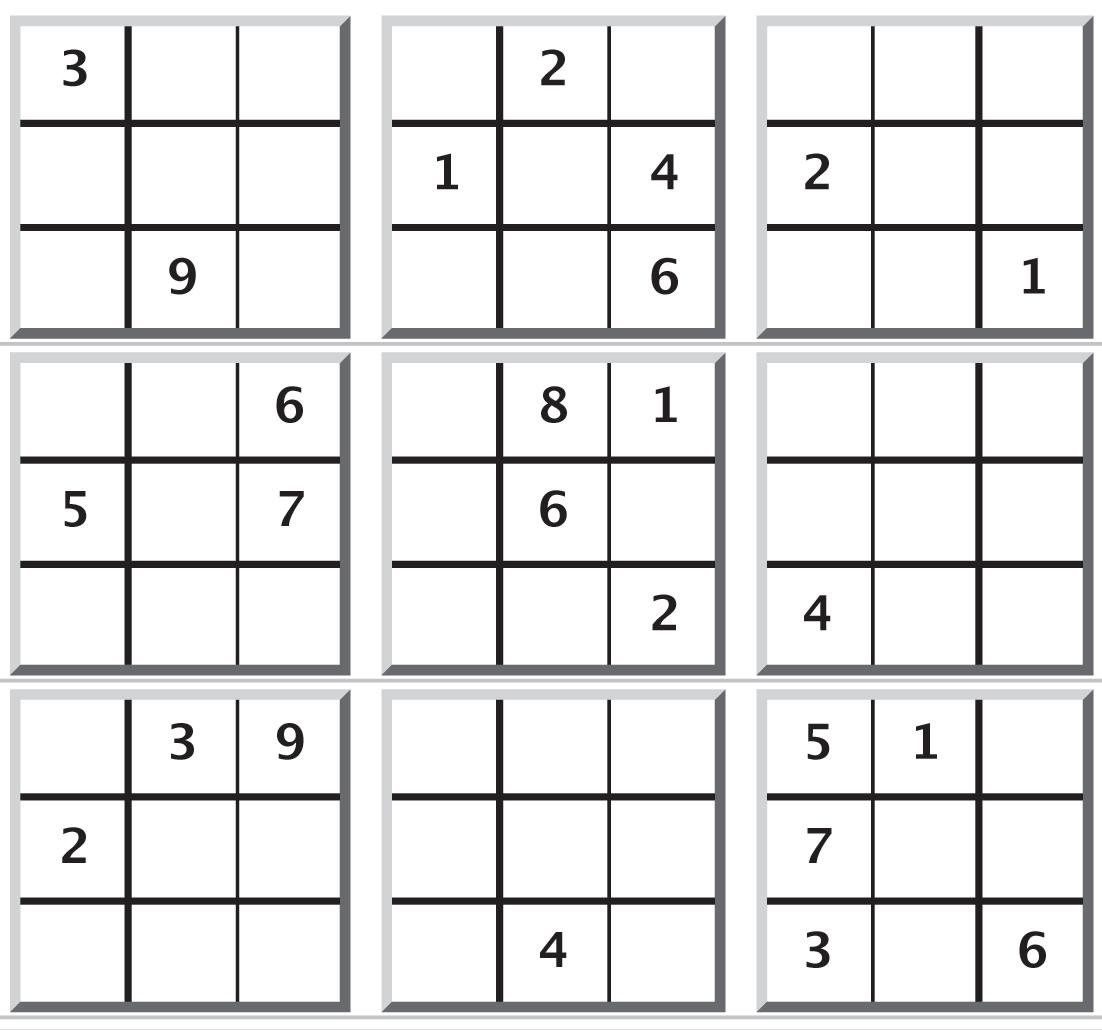
Fill in the empty cells, one number in each, so that each column, row, and region contains the numbers 1-9 exactly once. Each number in the solution therefore occurs only once in each of the three “directions,” hence the “single numbers” implied by the puzzle’s name. (Rules from wikipedia.org/wiki/ Sudoku)
“If


2020-2021
Studio 1, 3, 8 & 11 BR Apts. Great Locations in Collegetown. 607-227-2535
Collegetown Crossing
College Ave's Newest Location 307 College Ave. Now Leasing for 2020-2021
Completely New Modern Studios, 2 & 4 Bedroom Apartments. Fully furnished, heat & hot water included. Reception area at 307 College Ave. www.urbanithaca.com 607-330-2442 info@urbanithaca.com
120 Oak Avenue
Just steps to Cornell Campus
10 bedroom house & 1 and 2 bedroom apartment 607-277-1234
office@ithacastudentapartments.com Ithacastudentapartments.com
1, 2 & 5 Person Apts. Overlooking Cascadilla Gorge Architecturally designed. Decks, patio, fireplaces, Jacuzzis. Furnished, parking, internet. Utilities included. 607-592-7564
*SEMESTER LEASES*
Brand New Apartments 238 Linden Ave. 121-125 College Ave. Studio, 1 & 2 Bedrooms Contact Leasing@inteprop.com
Now Renting 2-10 Bedroom Houses/ Apartments for 20-21. All Locations. Call today or visit our website: Certified Properties of TC Inc certifiedpropertiesinc.com 607-273-1669
Catherine & Eddy St.
1 & 2 bedroom
Furnished, heat included Laundry in building Parking available for fee 607-277-1234
office@ithacastudentapartments.com
109 Sage Place
2 & 3 Bedroom Apartments
Access to Shuttle to Campus
Access to Free Fitness Center Novarr-Mackesey Property Management office@ithacastudentapartments.com 607-277-1234
504 1/2 Thurston AveSTUDIO 607-277-1234 office@ithacastudentapartments.com Ithacastudentapartments.com
Boldly Refined Living 312 College Avenue
Sophisticated studio, 1, 2, 3-bedroom apartments. Superior fitness facility, theater, and coworking space. Free high-speed internet. Exclusive resident parking. Package delivery/return. Overnight concierge. 607-273-9777 or 312collegeave.com
HOCKEY
By RAPHY GENDLER Sun Sports Editor
Cornell men’s hockey tied with North Dakota atop last Monday’s edition of the USCHO.com and USA Today/USA Hockey national polls.
It’s the Red’s first time atop the national rankings in almost two years: Cornell was No. 1 in the Jan. 29 2018 polls before crashing back down to earth with a home loss to Rensselaer days later.
The Red, which earned 21 out of 50 firstplace votes in the USCHO.com poll, tied
with North Dakota (17 first-place votes) for the top spot in the poll, released on Jan. 13, after spending two weeks at No. 2 behind the Fighting Hawks. Minnesota State, which came in at No. 3, picked up the remaining 12 first-place votes.
In the USA Hockey poll, released later on Monday, Cornell holds sole possession of the No. 1 spot, just ahead of North Dakota.
After a three-point weekend in the Capital Region paired with North Dakota’s weekend split against Nebraska-Omaha, Cornell also clung to the top spot in the PairWise Rankings, the metric used to determine
NCAA Tournament placement.
The most current Pairwise Rankings now put Cornell at third after a home tie and win against Northern Michigan.
Cornell is joined by three other ECAC teams in the USCHO top 20. Minnesota State, Denver and Boston College round out the top five.
Cornell plays seven of its final 13 games at home after playing 11 of its first 15 games away from Lynah Rink.
Raphy Gendler can be reached at rgendler@cornellsun.com.
8-9 BEDROOM HOUSE FOR 2020-2021
133 Blair St Corner of Cook and Blair just off of College Ave. Huge rooms, great porch, free laundry, furniture, 4 bathrooms, 3 kitchens. Great storage closets, parking for 3-4 cars. Contact Nick at 607-256-3778 or nick@lambrourealestate.com


By CHRISTINA BULKELEY Sun Assistant Sports Editor
In the second part of a two-game series against Northern Michigan, Cornell men’s hockey was not ready to settle for another tie — or suffer a loss.
Cornell jumped out to an early lead and fought hard to come out on top, 3-1.
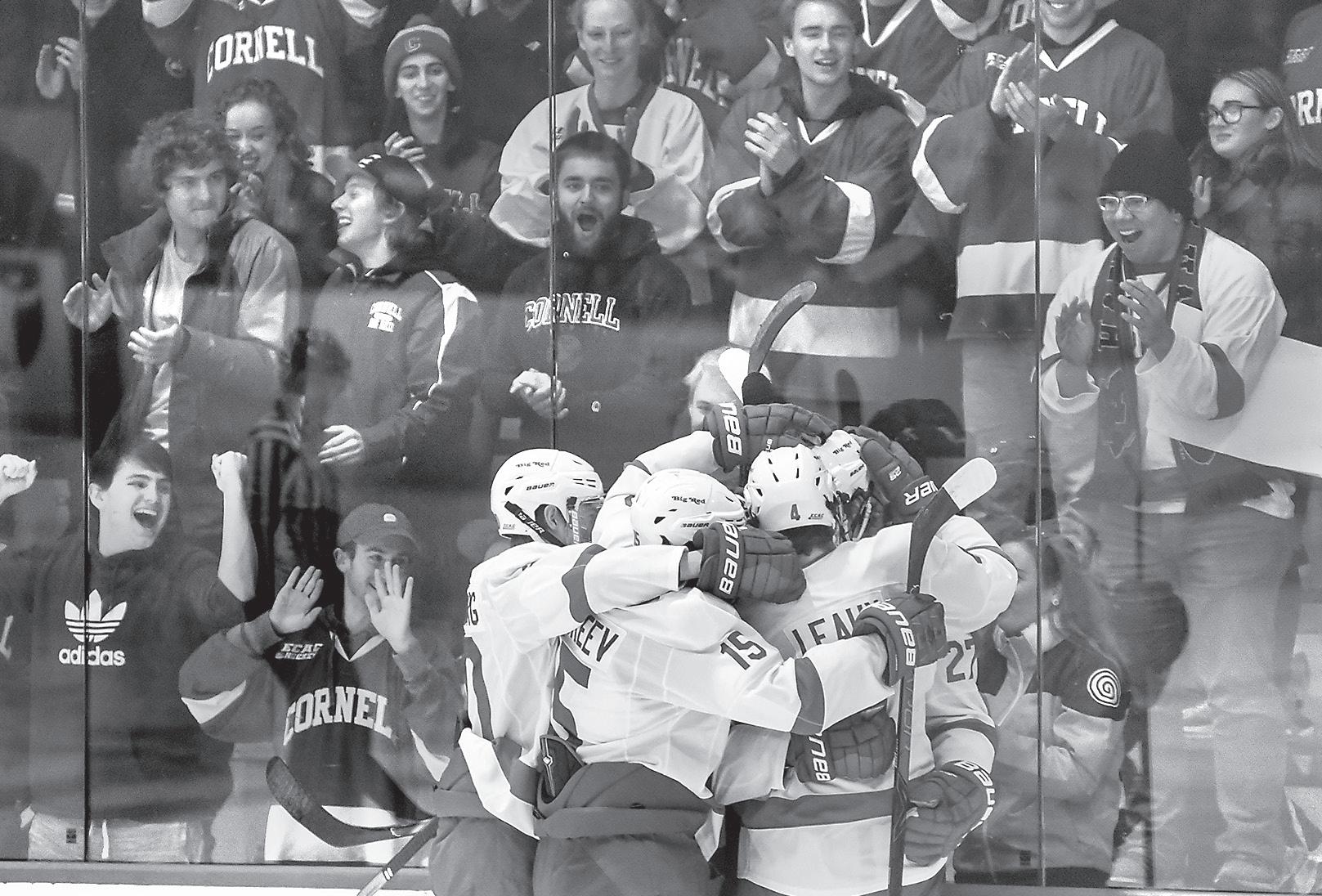
The Red tallied its first goal of the night 1:04 into the first period when junior defenseman Alex Green put in his seventh goal of the season to put Cornell on the board.
Throughout the first frame, the Red looked put-together, but a pair of power plays for Northern Michigan put the Wildcats’ shot total well above that of Cornell — Northern Michigan finished the period with 17 shots while Cornell had eight. But five of those Northern Michigan shots came on the power play, which lasted fewer than four minutes, making the 17-8 disparity paint a picture of a Cornell team struggling more throughout the first period than it actually was.
Even so, Cornell had trouble picking up any real momentum after that Green goal. In one power play opportunity, Cornell recorded one shot. Junior goaltender Matt Galajda kept the Red in the game while his teammates struggled to elevate their level of play.
Cornell came out of the gates strong
kind of our forecheck,” Donaldson said. “Just getting above [Northern Michigan] was huge.”
It was a two-point night for Donaldson and junior forward and captain Morgan Barron, both of whom assisted Green on the first goal of the night. Barron also had an assist on Donaldson’s goal.
The second period flipped the script on the first, with Cornell having five shots in two power play opportunities and the shot total being 17-6 in the Red’s favor.
“In the second, we just came in, got adjusted — made some adjustments in the sense of just being a lot more aware and being ready,” head coach Mike Schafer ’86 said. “And we came out and played a heck of a second period.”
Cornell ended the day with four power plays, converting on none of them. Northern Michigan was in the same situation, also going 0-for-4. Despite 16 total penalty minutes, strong penalty kills for both teams prevented the power play from shaping the game.
“Our best penalty killer was Matt Galajda,” Schafer said. “When it was there and we needed it, he made big saves.”
The third and final goal of the night came from freshman forward Ben Tupker in his Lynah debut. First-year classmates defenseman Travis Mitchell and forward Matt Stienburg got the assists in the entirely class of 2023-manufactured goal that made the score 3-1.
“It’s a good feeling getting that [first goal] out of the way,” Ben Tupker said. “I’m just pretty relieved to be done with that.”
“We talked about that a lot in the morning, about getting people in front of goaltenders, and today it paid dividends.”
Mike Schafer ’86
once again in the second period, with junior forward Cam Donaldson scoring even more quickly than Green had in the first frame. 48 seconds after the period opened, Donaldson sank a goal for the Red, putting the team up, 2-1 — a lead that it would not relinquish again.
“One thing that we changed a lot was
Following Friday’s 2-2 tie, adjustments had to be made to ensure a more prolific offense would come out Saturday.
“[The goals are] all created by guys being around the net — Matt Stienburg with net presence and Ben Tupker coming to the net, and we talked about that a lot in the morning about getting people in front of goaltenders, and today it paid dividends,” Schafer said. “Cam [Donaldson] went to the net and scored the second one and then Ben Tupker also scored on a rebound by the net.”
Going into the game, Cornell was already facing adversity. Forwards junior Kyle Betts and sophomore Max
By LUKE PICHINI Sun Assistant Sports Editor
Following three straight seasons of winless play in the Ivy League, women’s soccer head coach Dwight Hornibrook has resigned.
During his three-year tenure with the team, Hornibrook compiled an overall record of 7-32-5, including a 0-19-2 mark in the Ivy League.
Prior to his resignation, Hornibrook served as Cornell’s assistant coach from 2012 to 2016. His chief accomplishment
was his help in leading the team to nine wins in 2015, the most for the program since 2002. But Hornibrook never achieved that same success as a head coach.
Cornell is coming off a 2019 season in which it finished 4-101 with zero Ivy wins. The season started off strong, with the team notching four straight victories and going 4-2-1 in its first seven non-conference games.
Once Cornell started facing its fellow Ivy League foes, however, its season fell apart. During the conference slate, the Red
was outscored by its opponents,

19-3, and was shut out on five separate occasions.
Andreev were both injured Friday and scratched from Saturday’s lineup. After getting hurt at the beginning of the third period Friday, Betts never returned to action. Andreev was injured in the first period but later returned to the bench.
“I think the travel has taken its toll more physically than I thought it had,” Schafer said.
Coming into this weekend, Cornell had played 11 of its 15 games on the road.
The three missing forwards were replaced by goal-scorer Ben Tupker, his twin freshman Zach Tupker and sophomore Liam Motley. Schafer did not outline a timetable for Betts’ or Andreev’s returns other than to say they are likely to be out for most of the coming week.


In the latter half of the third period, it looked like Cornell might’ve lost another key member of its offense when Donaldson was hit and suffered an apparent upperbody injury. He went down and did not get up for over a minute before making his way into the locker room.
The play was reviewed and no penalty was handed to Northern Michigan for the hit.
“I have no comments on the officials,” Schafer said. “I talked with them last night and they didn’t give me anything.”
Not long after, Donaldson returned to Cornell’s bench.
“I got the wind knocked out of me, I got hit square in the chest,” Donaldson said. “But I feel fine now.”
The last 12 matchups of the regular season are in-conference, starting with another pair of home games next weekend.
“We just need to come out and play with the kind of passion, alertness and awareness that we had tonight in the second and third,” Schafer said. “ And, you know, for us, we’ll just keep plugging away.”
The Red will take the ice against Dartmouth Friday at 7 p.m. and Saturday against Harvard at the same time.
Under Hornibrook, the team didn’t fare much better in 2017 or 2018. In Hornibrook’s first year at the helm, Cornell went 2-9-3 and managed two ties against Penn and Yale. But in 2018, the team took a big step back, earning a victory in the season opener before going winless in the final 14 games.
While Hornibrook’s tenure started out with promise, he could never quite capture the success that the Red experienced during the 2015 season. Neither Hornibrook nor assistant coaches Kelsey Ferguson
and Rob Ferguson responded to the Sun’s request for comment at the time of publication.
According to Hornibrook’s LinkedIn, he has since assumed the role of Director of Soccer with the Halifax United Soccer Club in Canada. Meanwhile, Cornell, which has posted a listing for the position online, is searching for a new head coach to engineer a turnaround for the program.