The Corne¬ Daily Sun


By ANNE SNABES
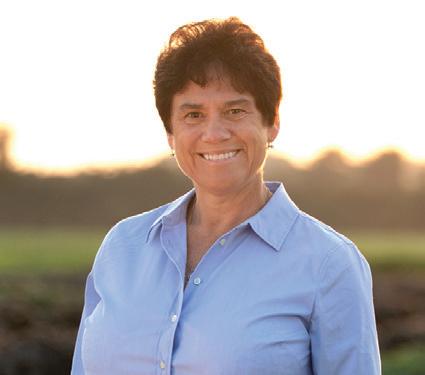
Arts and Sciences dean and astrophysicist Ray Jayawardhana’s interest in astronomy started when, as a boy of about four years, his father told him about people walking on the moon.
He said that at that age, the idea that “there’s something in the sky and you could walk on it” was “kind of mind-blowing.”
His interest “traces back to that early sort of sense of adventure and sense of kind of being just incredibly wowed by the idea that people could travel to and walk on something in the sky,” he said.
He added that, over time, that “excitement about a sense of adventure” developed into a “curiosity and interest and fascination” with the universe.
The Sun sat down with Jayawardhana, who became the Harold Tanner Dean of the College of Arts and Sciences on Sept. 1, to learn more about his background and his views.
Jayawardhana takes the helm of the arts college during a rigorous discussion on its curriculum. The Arts and Sciences’ Curriculum Review Committee came out with recommendations in the spring, and one idea was to
shorten the college’s language requirement to one non-introductory course or two classes of at least three credits each in the same language.
Jayawardhana said this recommendation was discussed and debated in the spring, and the newest version of the proposal, which took into consideration “a lot of this feedback,” does not include the change to the language requirement. The new version, however, still allows students to use sign language to fulfill the requirement.
Another element of the curriculum committee’s recommendations is to institute a pre-major advising

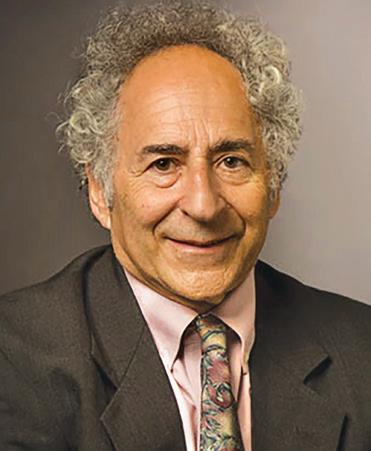
Ask a college student about a time that changed their life, and they will cite their study abroad experience. Prof. Daniel Schwarz, English — who this year celebrated 50 years at Cornell — is no different.
In his junior year of his undergraduate studies at Union College in the early 1960s, Schwarz studied abroad in Edinburgh for one year, a time he called a “turning point” in his life.
“I think being in a different environment gives you the chance
only as a student and an intellectual but also as a human being.”
Studying in postwar Europe, Schwarz found himself experiencing a unique historical moment firsthand.
“The shadow of World War II and the Holocaust was very much in Europe. I had a great historical sense at that point. I began to think of the world in a much larger sense and I thought about what I wanted to do in that world.”
“The shadow of World War II and the Holocaust was very much in Europe. I had a great historical sense at that point.”
Prof. Daniel Schwarz
to look at yourself more objectively and see what you really like to do,” he said. “I got a sense of myself not
His “passion for teaching grew gradually,” and he knew by the end of his senior year that he wanted to pursue a Ph.D. Since 1972, Schwarz has been teaching English 3500: The High Modernist Tradition, a course about mod-
ern literature in the first half of 20th century. The class has grown and changed over the years, starting as a large class of over 150 students to a smaller course with enrollment currently capped at 30 students. Schwarz said he finds the smaller format more intimate, as he is able to sit with students around a table and engage with them one on one.
“I have a mantra when I teach,” Schwarz said. “It’s called ‘always the text,’ which means close reading, and ‘always historicize,’ which means put those books in context.”
In the class, Schwarz and his students examine “the way the literature changes and evolves in response to historical circumstances” and “the process by which a text shapes the reader.”

By VIVIAN FAN and MAGDA SMITH Sun Staff Writer & Sun Contributor
Every Saturday, 30 kids from the Ithaca community gather at Southside Community Center to combine dancing and reading with the help of older mentors in the community.
Entering its second year, Ballet & Books, a program founded by students from Cornell and Ithaca College, serves local children by fusing dance and reading into fun lessons and providing one-on-one mentorships with older students in the community.
This literacy and dance mentorship program brings in different mentors from all over Ithaca, including Cornell, Ithaca College, and Ithaca high school students, and pair them with local children for reading activities.
develop self-confidence. The first students were enrolled in Fall 2017.
“I have grown up with a strong passion for dance, but I’m also extremely interested in medicine and public health,” Bailes said. “I wanted to combine these two interests.”
Before coming to Cornell, Bailes took a gap year in Ecuador where she taught English and ballet to local children. After this experience opened her interest in edu-

Talia Bailes ’20, founder of Ballet & Books, began planning the program in Spring 2017 with the help of Kevin Swann, a student at Ithaca College, Michelle Jarcho ’20 and Liz Larsen ’20. The program’s purpose is to combat literacy issues and foster a welcoming community where children can
cation and literacy issues, she worked with a physician the following summer, researching emergent literacy.
“Emergent literacy refers to the skills children gain before
See BALLET

Work Authorization for International Students 10 a.m., 404 Plant Sciences
Joint Development and Industrial Organization Workshop: Dave Donaldson
11:40 a.m. - 1:10 p.m., 111 Ives Hall
Polarization and Pandering in Common Interest Elections
11:40 a.m. - 1:10 p.m., 494 Uris Hall
Binding Up the Nation’s Wounds: Analysis of the Korean Reunification
11:40 a.m. - 1:10 p.m., 498 Uris Hall
The Rise of the Cult of Precision: The Politics of Air Power
12:15 - 1:30 p.m., G08 Uris Hall
Costs, Constraints and Benefits of Soil Health in New York: A Survey of Farmers
12:20 - 1:10 p.m., 135 Emerson Hall
Biological and Thermochemical
Conversion of Waste Biomass: Experimental and Life Cycle Modeling Results
12:20 - 1:10 p.m., 203 Phillips Hall
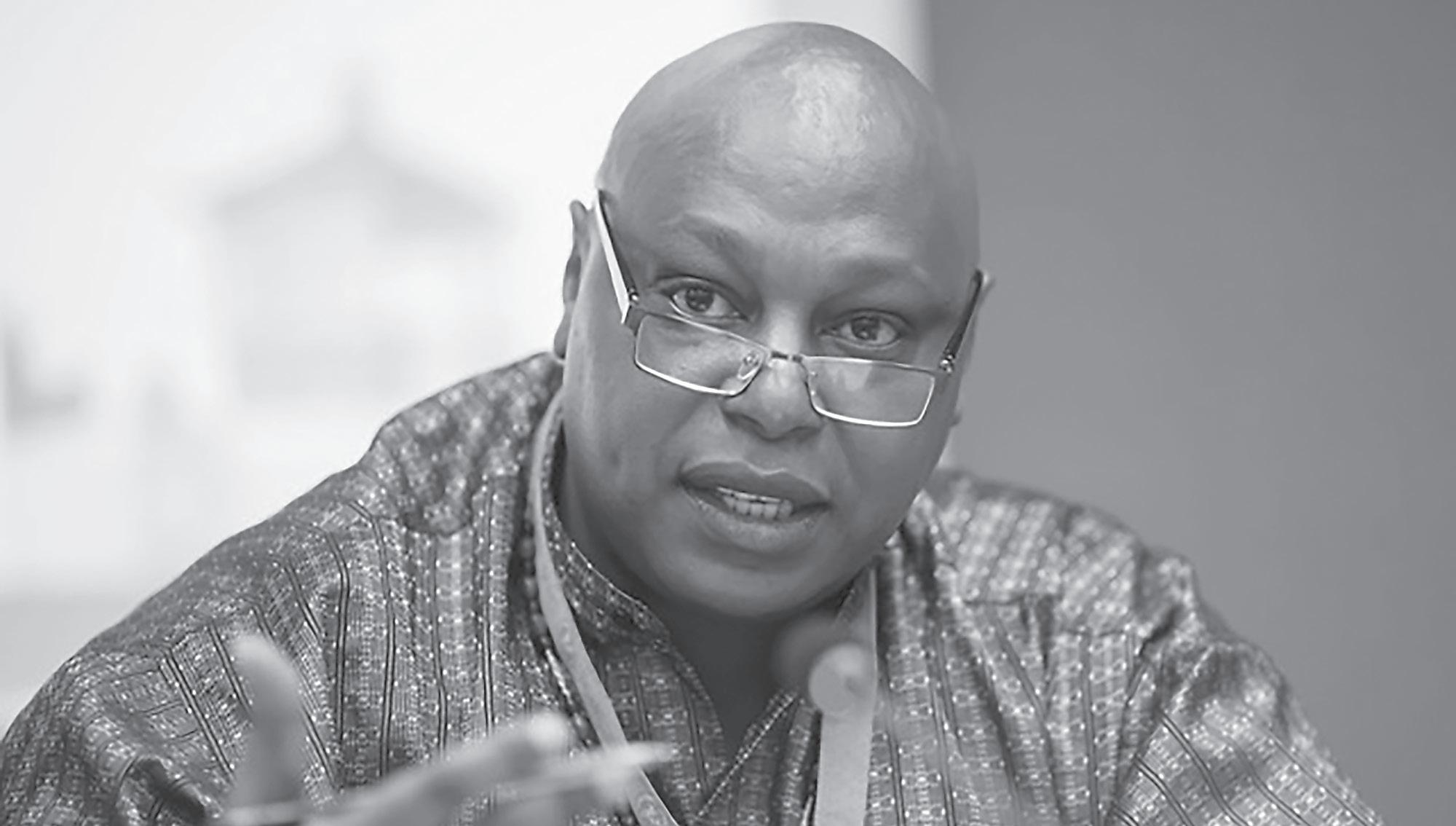
Institute for African Development Seminar Series 2:30 - 4:30 p.m., G08 Uris Hall
Thursday, September 27, 2018
Chemical and Biomolecular Engineering
10:45 a.m. - 1:15 p.m., 128 Olin Hall
Are Energy Executives Rewarded for Luck? Noon - 1:30 p.m., B51 Warren Hall
The Works in Progress Seminar 12:20 - 1:10 p.m., 488 Uris Hall
Prediction Models for Operational and Clinical Decision Support in Hospitals 12:15 p.m., Frank H. T. Rhodes Hall
Wendy Brown
Professor of Political Science, University of California, Berkeley
Theorizing Freedom at the Conjuncture of Neoliberalism, White Nationalism and Authoritarianism
Thursday, September 27, 2018 4:30-6:00pm
Hollis E. Cornell Auditorium 132 Goldwin Smith Hall
The Public is Invited
Government Choices Among Debt Instruments and Borrowing Stages 12:15 - 1:45 p.m., 106 White Hall
Seminars in Infection and Immunity 12:15 - 1:15 p.m., Lecture Hall 3 Veterinary Medicine
Kinship, Social Preferences and Voting in Rural China: A Lab-in-the-Field Experiment 4 p.m., 175 Warren Hall
Toward a Thinking Microscope Seminar 2:30 - 3:30 p.m., 226 Weill Hall 4:30 - 5:30 p.m., B14 White Hall



corporations.”
Ithacans will have an opportunity to meet with the Ithaca Urban Renewal Agency at 8:30 a.m. today to consider sites for the proposed Green Street parking garage. Each contributor will get to speak for up to three minutes, and the agency will evaluate the rankings of the four proposals at the meeting. The criteria for the rankings include benefits to the community, project feasibility, the previous experience of the developers and the financial details of the proposal. The agency’s preferred plan would allow the Ithaca Neighborhood Housing Services to construct 209 apartments and provide affordable housing at a price suited for 80 percent of the region’s median income recipients. The meeting’s agenda states that it may extend to an executive session for the agency’s board to discuss real estate values.
Uber recently announced that it would spend $10 million to aid cities improve their transportation policies and help them deal with congestion created by the popularity of its ride-share services as well as increased emissions. In August, New York officially blocked approval of new vehicle licenses for ride-hail services after the number of cars for these purposes increase to over 100,000 — up from 63,000 in 2015. The money will be provided throughout the next three years and will contribute to the company’s efforts to promote carpooling as more of a eco-friendly transportation alternative. grant from New York State, and is looking to secure grants to cover the remainder of $8 million.
Virginia lawmakers shut down a new policy by the states’ Department of Corrections that called for prison visitors to remove tampons and menstrual cups prior to visiting inmates. The procedure, which would have taken effect on Oct. 6, was an effort to prevent visitors from smuggling in drugs in the vagina. Prison employees would have then offered pads to visitors or allowed them to use their own, and then directed the visitor to a body scanner, and if any contraband was detected, they could either get strip-searched or leave the prison. The policy was challenged by lawyers and activists who viewed the policy as a privacy violation and discouragement for visiting inmates.
— Compiled by Paris Ghazi ’21
By ANU SUBRAMANIAM and PARIS GHAZI Sun News Editor and Sun Assistant News Editor
Tracy Mitrano J.D. ’95, Democratic nominee for the 23rd congressional district in New York State, will host an open forum at the Ithaca town hall on Friday, Sept. 28.
Mitano worked as the Director of Information Technology Policy at Cornell University from 2001 to 2014. According to her website, she is responsible for some of the “first-generation” higher education information security policies.
“Every
She said that her platform is informed by her years spent in higher education. She further went on to talk about how 45 percent of undergraduates at Cornell leave with some debt despite “Cornell’s commitment to need-blind admissions and generous financial aid packages.”
According to Mitrano’s op-ed, 2016 graduates of the Vet School graduated with a median debt load of $152,000, and many students who go on to law or medical school have average debt loads of around $200,000.
“I believe that every student loan should be interest-free and that profit-obsessed banks should no longer influence how Congress sets interest rates,” Mitrano said.
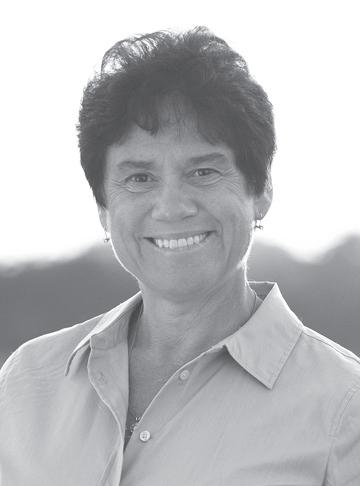
According to her campaign website, Mitrano was the first member of her family to go to college. She earned a B.A. from the University of Rochester, a M.A. and Ph.D. in American History from Binghamton University, and her J.D. from Cornell Law School in 1995.
student loan should be interest-free and ... banks should no longer influence how Congress sets interest rates.”
She has also served as an Internet2 expert for the University of Massachusetts, the University of Delaware, Tufts University, SafeGov, the New York Public Library, and other organizations.
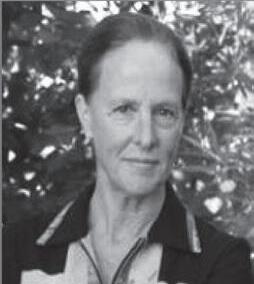
Tracy Mitrano J.D.’95
The Rochester native’s campaign centers around issues like health care, net neutrality, infrastructure and civil rights.
Mitrano’s focus on health care resulted from her family almost going bankrupt paying the medical bills for her mother who became ill and her older brother, who is developmentally disabled and blind, her website said.
In an op-ed she wrote for The Sun, Mitrano said that “money from Cornell’s endowment that might have funded financial aid is now diverted to support tax cuts for the wealthiest Americans and
Mitrano is running against incumbent Tom Reed (R-N.Y.). Reed has been a member of the House of Representatives since November 2010, according to his campaign website.
He currently is a member of the Ways and Means Committee, which is responsible for addressing issues of tax policy, trade, health care, and Social Security. He is also on the Trade, Health and Human Resources subcommittees. He serves as co-chair of the Congressional Diabetes Caucus, the House Manufacturing Caucus, and the Problem Solvers Caucus, his website said.
Reed’s term and campaign are focused on job creation, reducing regulations on small businesses, developing an “all of the above” energy policy and reforming the tax code.
The election will take place on Nov. 6.
Anu Subramaniam can be reached at asubramaniam@cornellsun.com. Paris Ghazi can be reached pghazi@cornellsun.com.
By MATTHEW McGOWEN and ROCHELLE LI Sun Senior Editor and Sun Contributor
To kickoff the annual Cornell United Way campaign, co-chairs Pat Wynn and Rick Burgess spoke at their launch event along with United Way of Tompkins County president, James Brown. Cornell United Way is a university philanthropy initiative.
Donations made to Cornell United Way are part of the larger United Way of Tompkins County organization, which promotes education, financial stability and health for members of the community through philanthropy and partnerships with local organizations.
munications manager for Cornell’s Campus Life Marketing and Communications office, the kickoff celebration had food and drinks provided by Cornell Catering and raffle prizes such as an Apple Watch, Beats Headphones and a Microsoft Surface, as well as a comedy performance by Brandon Fortenberry, director of Cornell Catering.
“We want this to be a truly festive occasion for all students, faculty and staff members.”
Pat Wynn
The donations through Cornell United Way typically make up around 40 percent of community donations to UWTC, though the 2018-19 campaign goal will not be announced until October, according to Wynn.
According to Mark Anbinder, web com-
“We want this to be a truly festive occasion for all students, faculty and staff members who care about making a difference in the campus and local communities,” Wynn said, according to the Cornell Chronicle, which is run by the University. All donations go directly to UWTC’s funded partners, including over 30 local agencies and community associations that donors can target gifts directly towards. UWTC’s administrative costs are covered by separate gifts.
This year’s campaign will end in December, continuing a change instituted last year that emphasized a shorter and earlier giving season, which Burgess said “allows UWTC to build momentum and
intensify our outreach,” according to The Chronicle.
Brown noted the importance of United Way’s adapting to what he sees as a community in flux, with baby boomers retiring and leaving, local companies changing ownership and younger generations taking initiative as leaders.
“The community is changing in a material way. It is not a cliché,” Brown told The Sun in an email. “We have to adjust fast enough to keep key resources in place and support people who require assistance during the transition and beyond for some. It is a serious challenge.”
Brown believes that support from the Cornell community is necessary for UWTC’s success. Currently, five Cornell staff are on the UWTC Board of Directors and others serve on committees or hold volunteer positions.
“On the service side, presenting problems are more complicated and entrenched,” Brown told The Sun. “The good news is that working together, we can be successful.”
Matthew McGowen can be reached at mmcgowen@cornellsun.com. Rochelle Li can be reached at rl696@cornell.edu.
view is that the curriculum is “very much the purview of the faculty as a whole, as opposed to a dean.” He added that he is not sure he can “necessarily weigh in at this late stage.”
“I think it’s up to the faculty to really, through consultations and through these discussions and debates, to really come up with what they think is the most appropriate way to set up the curriculum,” he said.
Jayawardhana grew up in Sri Lanka. From middle school onward, he was interested in various subjects, including French and archaeology. But he said his interest in astronomy “persisted at some level … in the background” over the years.
postdoctoral fellowship program and forging a partnership between York and Fermilab, an American particle physics lab.
“York gets to play a critical role in the next big neutrino experiment called Dune, which is a multi-million dollar particle physics experiment that Fermilab is … leading in partnership with many institutions around the world,” he said.
Throughout his academic life, Jayawardhana said he has “sought out opportunities to engage with colleagues from different disciplines.”
“I think of the humanities and social sciences and the sciences as sort of different avenues for exploring what it means to be human.”
Dean Ray Jayawardhana
Jayawardhana attended Yale as an undergraduate and then completed his Ph.D. at Harvard. As a graduate student, he said he observed and characterized “discs of dust and gas around young stars, and how they evolve over time.”
According to Jayawardhana, new planetary systems form at these locations. He also was able to utilize telescopes in Chile and Hawaii.
Jayawardhana’s last position was Dean of the Faculty of Science at York University in Toronto. Some of his accomplishments at York were starting a “premier”
“I think that one of the things we could do better is for scholars from the full range of disciplines to engage maybe more fully with the public and with high school students,” he said. “So that’s what I tried to do as the dean of science at York.”
Jayawardhana also spoke about the liberal arts more broadly.
“I think of the humanities and social sciences and the sciences as sort of different avenues for exploring what it means to be human, the human condition, the world we live in, the Universe we inhabit,” he said. “The need to explore through humanistic disciplines will endure.”
Anne Snabes can be reached at asnabes@cornellsun.com.

a new program for three to fiveyear-olds.
“There is a long waitlist right now.”
experience in literacy research and working in a primary care clinic that primarily serves hhlow-resource children, Bailes brought her passions back to Ithaca by forming Ballet & Books with the help of Southside Community Center.
A lifelong dancer who “found a great community in dance”, Bailes added a movement aspect to the literacy program to help children improve their self-confidence.
According to Bailes, the program currently includes a mixture of kids from the Ithaca community, but it “primarily aims to serve low-resource families.”
In its first year, Ballet & Books served six to nine-yearolds in the community. After receiving a grant for expansion this year, Ballet & Books added
“For the older kids, the mentors engage in one-on-one literacy activities with them so that the kids have someone to look up to,” Bailes said. “For the younger kids, we try to combine dance and reading in a more fused fashion.”
“For example, the kids dance to words in a book, or do movements to a poem, or listen to instructions in a song,” Bailes elaborated.
At the end of the spring semester, the program concluded with a dance performance at Bailey Hall with Pandora Dance Troupe, the dance group Bailes is in.
After just one year, Ballet & Books has become a popular program, with all 30 spots for the program filled.
“I hope we can expand to accept more kids,” Bailes said.
Bailes hoped that Ballet & Books will keep going for many years after she graduate, “continuing its objective of making a difference and creating a community that fosters literacy and self-confidence.”
By bring in mentors from different schools in Ithaca, Bailes also hoped to create a tighter Ithaca community.
“This is a cool opportunity because I get to work with Ithaca College students, Cornell students, local children, and even Ithaca high school students,” Bailes told The Sun.
Recruitment for the organization “is more community-based and grass-root,” according to Bailes. They advertise through listservs and the Southside Community Center. Mentors are recruited through colleges and high schools.
Funding has also been a Ithaca-community effort. The original grant funding was from Cornell Traditions. The program received the Robinson Appel Humanitarian Award this year that gave them “a generous $1,500 for programming,” according to Bailes. They have also received a grant from the Friends of Tompkins County Public Library for $300 to buy each student a book to keep. Discounts from Body Gear, a local Ithaca dance store, and donations from Green Star help provide equipment and snacks. The program relies on donations and grants to help operate.
Laura McGrath ’20, a mentor for Ballet & Books, also enjoyed the community created by this program and likes “breaking out of the Cornell bubble.”
“By doing something small, you’re making a huge impact.,” McGrath said. “These kids come from so many different backgrounds, it’s great that they have a friend they can look up to and they know that there’s friend that’s gonna be there every week.”
SCHWARZ
Continued from page 1
Schwarz also teaches a course on James Joyce’s Ulysses. “Once in a while,” Schwarz said, a student comes to take that course whose father or mother took the course.”
Outside of the classroom, Schwarz is a prolific author, having written 18 books to date.
Reflecting on his time at Cornell, Schwarz noted changes he witnessed occurring on campus. Increased diversity in the student body in terms of race and gender, he said, was a major change.
“When students from the 70s and 80s come back they can’t believe the ethnic diversity,” he said.
He also discussed the unique impact technology had on the liberal arts.
“The internet saves you a lot of time in both writing and researching papers,” he said. He cited the advent of word processors as being responsible for greatly reducing the time and effort required to produce a single paper.
Schwarz noted a decrease in students majoring in liberal arts that occurred over time. Stating his belief in the importance of a practical component of university education, he nevertheless argued on behalf of the liberal arts.
“You learn how to read powerfully, you learn how to think critically, you learn how to write lucidly and precisely, you learn how to speak articulately. That’s why you should take small liberal arts courses,” Schwarz said. “Small liberal arts courses also teach you to participate in democracy. The give and take of ideas takes place in small liberal arts classes. What liberal arts does is teaches you also to think about people, about how people function, and about historical cause and effect.”
Schwarz advised students to embrace the “privilege and pleasure of reading and learning.”
Schwarz said that although today’s students have many preoccupations outside of the classroom, he still thinks “learning is beautiful.”
“I love reading, I love spending time alone,” Schwarz said. “I love thinking and I think we don’t want to diminish that part of college too much. We may overemphasize the importance of nonacademic activities.”
Schwarz said his proudest accomplishment was witnessing the transformation of his students into contributors to society and participants in the world.
“It’s a chain of learning,” he said.
“What I give, you give to somebody.”
By ANU SUBRAMANIAM Sun News Editor
To kick off the Fall 2018 Barbara & David Zalaznick Writing Reading Series, Gregory Pardlo will read his Pulitzerprize winning poetry from his collection Digest today at 4:30 p.m. in Klarman Hall. Pardlo’s work was awarded the Pulitzer Prize for Poetry in 2015.
The Poetry Foundation’s website said that the Pulitzer judges cited Pardlo’s “clear-voiced poems that bring readers the news from 21st Century America, rich with thought, ideas and histories public and private.
essays, Air Traffic: A Memoir of Ambition and Manhood in American, which was released in April. The memoir discusses Pardlo’s family history, especially his father’s role in the 1981 air traffic controller’s strike. The foundation said that the book explored Blackness and masculinity in American culture and received many top-ten list accolades, including the BBC, Vogue, the New Jersey Monthly, and the New York Times.
“[Pardlo’s] clear-voiced poems ... bring readers the news from 21st Century America, rich with thought, ideas and histories public and private.”
The Poetry Foundation
According to the Poetry Foundation, Pardlo teaches in the M.F.A. program at Rutgers University, Camden and also acts as poetry editor for the Virginia Quarterly Review.
Pardlo’s other work includes the book Totem, which won the the APR/Honickman First Book Prize, and a memoir in
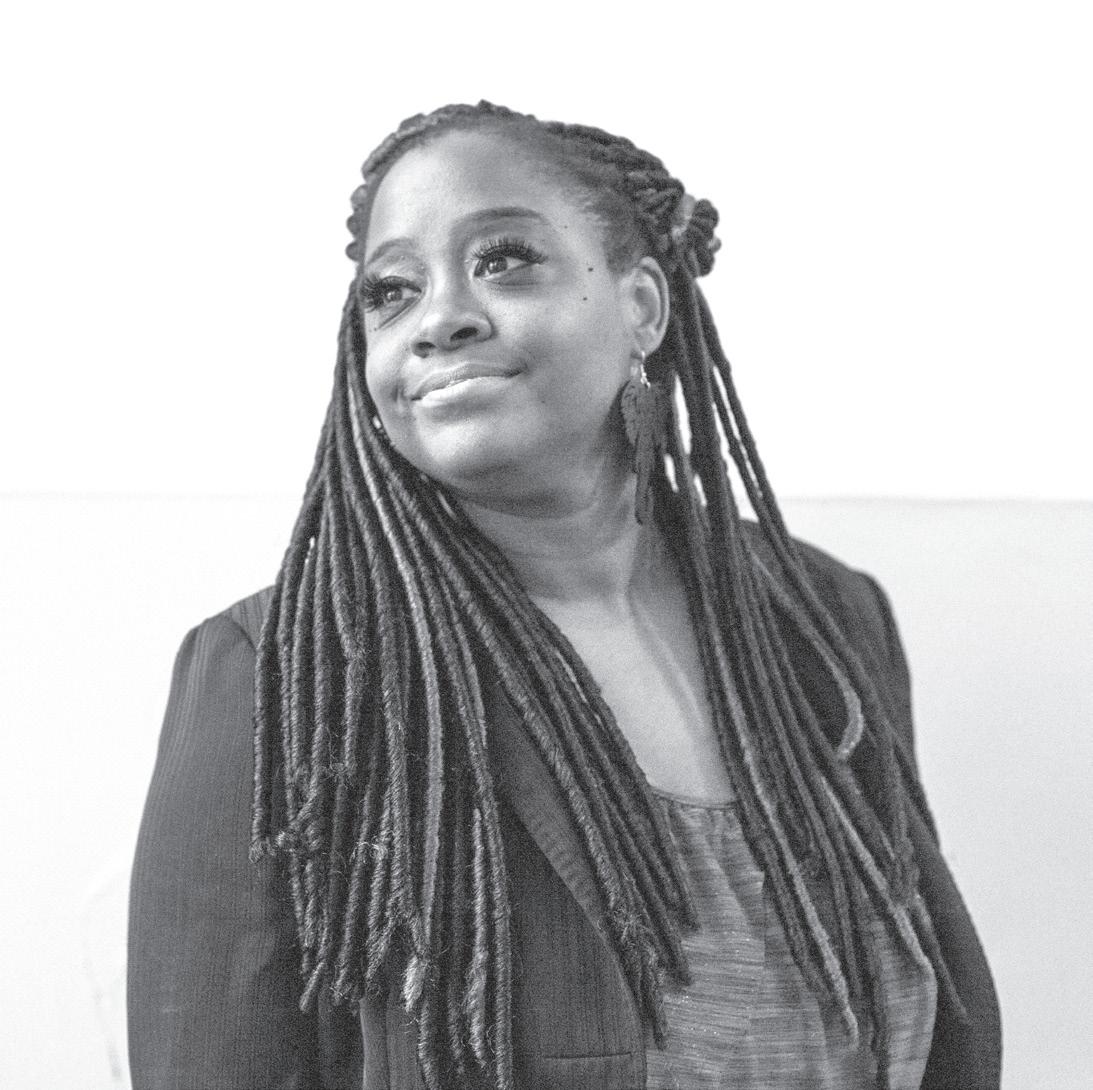
The website also said that Pardlo’s writing is known for having “language simultaneously urban and highbrow… snapshots of a life that is so specific it becomes universal.”
According to the event introduction, Pardlo’s honors also include fellowships from the Guggenheim Foundation, the National Endowment for the Arts, and the New York Foundation for the Arts. He will be signing copies of his books, which will be available for sale after the event.
Anu Subramaniam can be reached asubramaniam@cornellsun.com.


136th Editorial Board
JACOB S. KARASIK RUBASHKIN ’19 Editor in Chief
JOHN McKIM MILLER ’20
Business Manager
KATIE SIMS ’20
Associate Editor
VARUN IYENGAR ’21
Web
MEGAN ROCHE ’19
Projects Editor
EMMA WILLIAMS ’19
Design Editor
CGIRISHA ARORA ’20 Managing
HEIDI MYUNG ’19
ALISHA GUPTA ’20
DYLAN McDEVITT ’19
MICHAEL LI ’20
Working on Today’s Sun
Ad Layout Jamie Lai ’21
Design Deskers Emma Williams ’19
Simon Chen ’21
News Deskers Anu Subranamiam ’20
Paris Ghazi ’21
Arts Desker Peter Buonanno ’21
Dining Desker Jacqueline Quach ’19
Photography Desker Michael Li ’20
Production Deskers Emma Williams ’19
Sarah Skinner ’21
ountless times throughout my undergraduate career as a psychology major, I’ve been forced to memorize lists of psychologists’ names and their corresponding theories. These theories are sometimes fascinating and other times mortifying (yes, I’m looking at you, Freud), but they are almost never memorable. Sure, I can generally tell you what Kohlberg’s theory of morality is, or half-heartedly explain what Piaget’s deal was. I’ve never fully understood what was up with Freud, but I could still monotonously recite his psychosexual stages if you really wanted me to.
My point is, none of the details of these psychological theories ever stood out to me. I never felt like I could really relate to any of the developmental stages that these psychologists came up with, be it physical, mental or emotional. That was until last semester, when I was introduced to Erik Erikson.
Erik Erikson came up with the only developmental stages model that is, in my completely unqualified opinion, accurate. It’s called “The 8 Stages of Psychosocial Development” and it’s beautiful. Basically, Erikson believed that there is a psychological crisis paired with every stage of our development into adults. For example, during infancy (under 2 years), we experience a crisis of “Trust versus Mistrust”: i.e. babies crying at the sight of anyone other than their mother and refusing to venture more than a foot away from her. Years later, in adulthood (ages 40-65), we experience “Generativity versus Stagnation”: struggling to feel useful and productive, and instead feeling like we aren’t making our mark on the world.
Naturally, the stage that interested me the most was the one that I fell into: adolescence (ages 13-21) and the crisis of “Identity versus Role Confusion”. Despite being at the upper-end of the age limit (I’m sure it’s flexible), I feel like this is the psychological crisis that I, and the people around me, experience most extremely at this point in our lives.
College is the first time that many of us are not forced to do things: we aren’t forced to go to class, or join clubs, or participate in a sport, or complete a certain amount of volunteer hours the way we were in high school. Ironically, because we don’t have to do anything, the things we do choose to do say a lot about us.
College is like the Instagram feed
of our identity; we carefully curate the parts of ourselves we want the world to see and we participate in the things we think represent us. Why else do we change our majors? Why do we join niche organizations? Why do we go to protests? Or start podcasts? Or begin writing for the school newspaper? It’s because we’re trying to figure out who we are. But much like maintaining an Instagram theme, developing an identity is a lot of pressure.
Erikson was right to call this a psychological crisis; I’ve witnessed so many people have breakdowns about figuring out their identity. One of my friends deleted all of her social media platforms because she didn’t feel they were an accurate portrayal of her life. Another friend complained to me about how her childhood bestie seemed to have started copying her entire personality once they both got to college. Yet another friend told me she was unsure whether she genuinely enjoys Beyonce’s music or if she just likes it because her friends like it. All three of these dilemmas exist on different levels of seriousness, but they share the same underlying, slightly cliché question: Who am I?
While that question is overwhelming to think about, I think the important part is that we’re thinking about it. I can’t imagine going through my college years and never questioning how much of my identity is based off the identities of my peers or friends or parents, and how much of it is actually... mine. I distinctly remember when I told my dad that I was minoring in English, and he told me he could never see himself voluntarily taking classes that involved writing essays. Or when I told a friend that I was working as a volunteer on a rape crisis line and she responded with “I would never be able to do that.” It made me feel good to be taking part in things that were sincerely and genuinely my own; it made me feel like an individual.
Do I think I’ll graduate a semester from now having totally “found myself”? No, not really. And honestly sometimes I think the more I question who I am and what I care about, the less clear those things become. But somehow I feel like by being lost, I’m doing something right. And at least according to Erik Erikson, I am.
The time has come to begin speaking frankly about China’s ongoing, wide-reaching and systematic human rights brutality, which now ranks among the world’s most troubling. For many years, in part because China was (wrongly) perceived to be navigating a complex liberalization process that assumed (again wrongly) that these conditions would ultimately improve and in part because China has spent vast millions of dollars buying influence and manipulating its global image to its strategic advantage, the nation has largely escaped the human rights scrutiny and consequences that its repressive policies properly warrant.
The list of human rights violations by the Chinese government is long and exhaustive. China’s suppression of Tibetans, its destruction of Christian churches, its jailing of political dissidents and its unrelenting control over Hong Kong have received some level of attention. The same cannot be said of one of China’s most egregious violations: its brutally repressive treatment of the nation’s largely Islamic Uyghur population.
Three Cornell University professors, Magnus Fiskesjö, anthropology, Jeremy Wallace, government, and John Weiss, history, should be commended for their constructive effort last Wednesday to bring some much-needed broader understanding to the depth of the human rights conditions confronting the Uyghurs. At a public roundtable, they called much-needed attention to the fact that roughly a million Uyghurs are now being held in political indoctrination camps built to “change them, transform them, [and] break their identity,” according to Fiskesjö. A world that properly says “never again” as it relates to Nazi Germany’s totalitarian practices of the mid-20th century needs to awaken to China’s repression and imprisonment of the Uyghurs, the tactics of which (mass imprisonment and “reeducation” of an ethnic minority) resemble those of Nazi Germany in hauntingly similar ways.
Although the crisis of the Uyghurs is ongoing halfway around the world, China’s human rights violations also are a campus issue, and they especially call out for condemnation from those in academia who study and interact with this repressive government. At the Cornell roundtable last week, Fiskesjö properly asked: “If our business school dean goes to China, should they just be able to schmooze around with all the companies and officials without ever mentioning that there are a million [Chinese] people in camps?”
It is an important question; it also is a timely one. The Chinese government currently is engaged in a vast effort to influence American academia and policy analysis at all levels in an expansive mission that so far has received little opposition from the Westerners it seeks to manipulate. The Congressional-Executive Commission on China, led by Sen. Marco Rubio (R-Fla.) and Rep. Chris Smith (R-N.J.), has found China’s efforts troubling, noting in an August 2018 report that “the [Chinese Communist Party] has sought to influence academic discourse on China and in certain instances has infringed upon — and potentially criminally violated — rights to freedoms of speech and association that are guaranteed to Americans and those protected by U.S. laws.”
The most commonly-used method for expanding influence has been financial contribution, which China has thrown around liberally both on U.S. campuses and in influential Washington, D.C. research organiza-
tions. One of China’s most ambitious projects, its so-called “Confucius Institutes,” is a Chinese government-funded academic program that has been criticized widely for its role in advancing propaganda aligned with that of China’s official Communist Party. Conveniently for China, details of the agreements between Confucius Institutes and U.S. universities are consciously never made publicly available. It is reasonable to ask: Why not?
Concerns about the Chinese government’s presence and influence in U.S. academia are shared by nearly every research organization that has evaluated them. An April 2017 report published by the National Association of Scholars, for instance, found that the deliberate goal of Confucius Institutes is not to educate Americans — instead, they are developed to “present China in a positive light … they avoid Chinese political history and human rights abuses, present Taiwan and Tibet as undisputed territories of China, and develop a generation of American students with selective knowledge” of the country. Once China-supplied “financial incentives” are in place, universities with these chapters stifle criticism of the Chinese government and create a culture in which U.S. professors “report pressure to self-censor,” the report alleges. The Wilson Center released a report last month echoing nearly identical concerns.
Existing financial relationships between American academics and the Chinese government creates a substantial conflict of interest, especially if hidden behind “extraordinary efforts to avoid scrutiny” that NAS experienced when reporting on this matter. Over a year ago, Foreign Policy magazine reported on a SUNY Albany professor who witnessed the removal of all references to Taiwan from campus following the Confucius Institute establishment. He said his “career and livelihood” were “on the line” if he publicly criticized this decision. This is not a far-flung story of autocracy from Beijing or Shanghai; this happened in Albany, New York.
The Congressional commission and subsequently Foreign Policy also have properly raised alarm over Chinese government funding of high-profile U.S. think tanks, including Brookings, CSIS, the Center for American Progress, the Carnegie Endowment and others. Most of this funding comes from the China-U.S. Exchange Foundation, a registered foreign lobbying organization for China. In the last five years, this group alone spent $2.7 million on efforts to advance the Chinese government’s agenda in the U.S.
Is such influence present at Cornell? The question warrants asking. The University operates several initiatives focused on China, including the China and Asia Pacific Studies program, which opened in 2006 with its own dedicated faculty and Chinese study abroad program, and the Lehman Fund for Scholarly Exchange with China, which also opened in 2006 ostensibly to “[build] research partnerships with Chinese universities,” according to its website. As the campus community advances its “full disclosure” campaign to open its records on student admission policy, it also should ask questions about how Cornell funds these programs at a time when the university is simultaneously emphasizing purported financial woes.
This column continues at cornellsun.com.
Michael Johns is a junior in the College of Arts and Sciences. Athwart History runs every other Wednesday this semester. He can be reached at mjohns@cornellsun.com.
Dear Mr. Kavanaugh, Watching your confirmation process has caused me great distress. As the daughter of one father, it makes me sick to see a good, upstanding family man torn apart by baseless allegations. In hopes that it will help you navigate this crisis, I’ve formulated the following strategy for you and your team.
First: deny, deny, deny.
You’re doing a great job already, but you can’t let the pressure get to you. Never admit anything. In recent weeks, you’ve covered a lot of ground.
“Did you ever sexually assault Dr. Ford?” No. “How about anyone in high school?” Nope. “How about after?”

Prince, the Ross to his Joey, the Janice to his Cady or the Kevin Hart to literally any character who co-stars opposite Kevin Hart. Roll with it.
Oh, and the calendar was a nice touch. Logically, you can’t go anywhere unless you put it in your calendar. Liberals hate logic.
Third: defend your character.
After all, how could you possibly
Nay. In the Fox News inter view, you went above and beyond. With respect to Dr. Ford’s allegation, you weren’t at the party in question – what party? You don’t even know this woman! Never heard of her. What’s her name again?
If it gets really bad, I’d suggest going further. One idea: claim that you were gay but conversion therapy worked — it could be a real hit with your Evangelical base! If all else fails, deny that you ever attended high school or college, change your name and sail away to Argentina on a small boat with only a sassy talking animal for companionship. Maybe then, they’ll believe you.
Second: question the logical inconsistencies in the allegations.
You did this for Deborah Ramirez, stating twice that if such an event had truly occurred, it would have been the “talk of campus.” Astute observation — drunken sexual harassment is not only widely frowned upon on college campuses, but is a novelty and would have been treated as such.
Perhaps it might be a good idea to frame your friendship with Mark Judge as an “opposites-attract” situation – him, the cool guy, and you, the nerdy best friend. After all, you have to somehow explain your friendship with a guy who wrote entire books about his underage drinking exploits and touted non-consensual encounters as “the awesome power, the wonderful beauty, of uncontrollable male passion.” Let’s say you were the Carlton to his Fresh
have been party to harming women if you were a virgin?
Keep letting people know that you have always treated women with “dignity and respect”. You only said this seventeen times in your ten-minute interview — we need to up those numbers. Soon, the name “Kavanaugh” will be as synonymous with “dignity & respect” as our woman-loving Commander-in-Chief’s is.
We will have to defend against this Julie Swetnick allegation more vociferously than we have the others. Spur of the moment assault is one thing, but regularly facilitating gang-rape is another. Luckily, you made clear in that Fox News interview that you never had “anything close” to sexual intercourse until “many years after” college. After all, how could you possibly have been party to harming women if you were a virgin?
Fourth: get everyone you know to publicly defend your character. And I mean everyone.
Fifth: instruct third parties to question the timing of the allegations.
Why now, when the confirmation process has already begun? (Remind them to use the September 4 date of Senator Feinstein’s revelation, rather than the July 30 postmark of Ford’s letter.)
Moreover, why didn’t the second and third accusers come out, as Ford did, when the nomination was announced? Deborah Ramirez lived a quiet, simple life in Colorado until she went to the media with her story. Was she nervous to be at the center of a national firestorm, or, more likely, was she debating the merits of taking a hefty bribe from the Democrats? Suspicious.
Julie Swetnick currently holds multiple federal government security clearances. Was she nervous to risk her career by defying the head of the federal government, or, more likely, is she a part of the Deep State’s conspiracy to take down our God-given president? We may never know the answers to these questions.
Sixth: if that doesn’t work, have your favorite talking heads question the allegations’ severity “if true.”
After all, who among us has not whipped their dick out and dangled our balls in front of a girl’s face for kicks? Who hasn’t spiced up the punch at a party for a bit of premeditated rape? Who among us hasn’t pinned a woman down to a bed, turned up the music and covered her mouth so no one could hear her scream?
These allegations — and the women who make them — are merely obstacles on men’s journeys to greatness.
You’ve already gotten 65 women from high school and 84 women from a previous job, but those are rookie stats. Deborah Ramirez has more than 2,200 Yale women and over 1,000 Yale men supporting her. Dr. Ford already has 600 alumni from her high school, 1,600 men in a fullpage New York Times ad, and 56 people arrested on her behalf, for Christ’s sake.
The barber, the butcher, the baker — it doesn’t matter. If you’ve ever held the door open for a woman, email her. If you’ve ever deigned to hire a highly-qualified individual who happens to be a woman, call her. If it has a vagina, it needs to be on record touting your feminist credentials.
Lam | Te Despatch Box
Let’s be realistic.
Seventh, and finally: keep your head down, repeat your talking points, and focus on the end goal. There’s a reason Senator Mitch McConnell assured us that “we’ll plow through this”. Sexual assault accusations are not stop signs. These allegations — and the women who make them — are merely obstacles on men’s journeys to greatness.
I’ll be praying for you during this trying time. In solidarity, A Rape Survivor Who Did the Honorable Thing And Kept Her Mouth Shut
This past summer lacked one thing: a new social media fad. It seems that app developers have finally realized that an idea doesn’t cut it unless they figure out how to make money from it. Social media is a peculiar good or service in the economy. It adds some value like communications and entertainment, yet people are often unwilling to pay for access, unlike a bottle of water or a subscription to Netflix.
New York Stock Exchange, Snapchat still makes no bottom line profit. In Q2 2018, it reported a net loss of $350 million, its revenue wiped out by high cost of revenue and research and development expenses. How can they and other social media firms get out of the hole?
As much as social media firms are sprouting and growing their users, the industry’s mission to find the Holy Grail of monetization have been fraught with uncertainty.
This phenomenon is probably because of the demographics involved: teenagers or college students often don’t have a lot of cash to spare. Additionally, perhaps because these services are a proxy of another product they paid for, namely their phones, people don’t feel an obligation to pay for online services. So, many startups are trapped in this Catch-22 of preserving user base and making profits. Snapchat is one good example. After being released for seven years, brandishing nearly 200 million users and even selling shares on the
Advertisement revenue seems to be the savior, but not for all platforms. Because usage of an app or website is key to exposure of advertisers, the platform must actually add value to a user’s real life instead of just providing distractions. Twitter, for example, offers up-to-the-minute information, while Yelp and TripAdvisor serve as basically online community bulletin boards of people’s experiences in stores, etc. Information from these platforms is the product and people are willing to scroll through some block ads to get to them. Not surprisingly, advertising is the main revenue source for almost all of these companies — out of Twitter’s Q2 $711 million of revenue, $601 million were from ads. Facebook and its subsidiary
Instagram have an even more dramatic reliance on ads in return for its social networking capabilities. In Q2 2018, $13 billion of its $13.2 billion revenue were from advertising, roughly 98%. A measly $193 million are from a line item called “Payments and other fees,” probably from its new transactions services for Facebook friends. Instagram, a subsidiary, follows suit with major reliance on ads and that’s probably why its founders have just left to “explore our curiosity and creativity again.”
Others have had less success on this ad revenue reliance strategy. Snapchat, for example, tried to create a revenue source through its Discover feature with little progress. Just think, how many times have you swiped right to Discover when you snap? And if you did, probably inadvertently, how long did you pay attention to it? Probably no more than 5 seconds, and marketing executives worry about their content not being effective. A sign of its troubles with advertisers, Snap quietly ended paying upfront fees to its publishing partners
earlier this year, signaling that usage and therefore, revenue, from Discover have been tepid. Additionally, Snap’s main product of sending quick, temporal photos to friends can be easily substituted by another startup, making their business model even more precarious.
It seems that app developers have finally realized that an idea doesn’t cut it unless they figure out how to make money from it.
As much as social media firms are sprouting and growing their users, the industry’s mission to find the Holy Grail of monetization have been fraught with uncertainty. While some firms can rely on advertising revenue, others like Snap are spinning their wheels or have simply closed, namely Vine and Yik Yak. The difference is that the successful ones offer a service that not only lives on the Internet but add intrinsic value of convenience or connections in real life. Only with a sizeable and staying user volume can ad revenues, in lieu of subscription fees, sustain such a company.

By JACQUELINE QUACH Sun Dining Editor
After making it a month into the fall semester, I took this past homecoming weekend as an invitation to treat myself to college football, live music and Japanese food, the last of which I found at Sushi Osaka, the latest addition to East Asian cuisine in the Commons.
The restaurant is housed in an expansive space lined with many tables for four; it’s group-friendly, but it also seems like the kind of place that would still feel comfortable even if every seat were filled. If you sit facing the window, you can look out and see townies and college students strolling through the Commons. This was just the ambiance I was looking for: calm, cool and collected.
Though Sushi Osaka’s name will lead you to believe it only serves Japanese food, you may be surprised to learn that the restaurant also features Korean fare on its extensive menu. However, since I was craving raw fish and

fried vegetables, I stuck to its Japanese offerings and ordered the sashimi and tempura lunch box ($17.95) and the Pink Lady roll ($6.50). On Monday through Saturday, from 11 a.m. to 3 p.m., the restaurant offers
lunch boxes, as well as select sushi rolls at a considerable discount — think 50 percent off!
The lunch box was the first to arrive and had five sections: salad, California roll, rice, sashimi and tempura. I tried the salad first,

and although it came with the same slightly sour dressing that most Japanese restaurants use, I was pleasantly surprised to detect a bit of sweetness and ended up finishing the whole serving. Next, I ate one of the four pieces of California roll, which didn’t taste much like anything. Although I could see the imitation crab meat, avocado and cucumber, I couldn’t sense any of their flavors, but to be honest, California roll isn’t exactly known for being tasty. Most people don’t order a whole roll of it, and since it came with the lunch box, I wasn’t too disappointed.
piece was tender, the taste of the sashimi itself was alright. Given that we live in Ithaca, my expectations weren’t too high, and the price of the entire lunch box is more than reasonable. Unexpectedly, the highlight of this order was the tempura, which consisted of fried broccoli, onion, zucchini, winter squash and imitation crab meat. The vegetables were fried just right — easy to bite into without being mushy at all. I was also surprised to see that the tempura came with two different dipping sauces: the traditional tentsuyu sauce and an orange aioli. While the former has a thin consistency and subdued taste that allows you to appreciate the flavor of the vegetable, the aioli was creamy and tangy with a bit of a spicy kick at the end that may have come from the red and black flakes mixed into it. I’d never had tempura with a sauce like that, but it was absolutely delicious and paired well with the fried veggies.

Finally, I allowed myself to try the main attraction: the six pieces of white, orange and pink sashimi that had been calling my name. Although every single


The Pink Lady roll contained spicy salmon and crispy flakes topped with shrimp and avocado that was served with what the menu referred to as the chef’s special sauce. As it turned out, the special sauce was the exact same aioli that I had enjoyed with my tempura! Combined with the spiciness of the salmon, the tangy sweetness of the special sauce gave the Pink Lady roll an interesting flavor profile that deviates from what you’d expect sushi to taste like. Moreover, the crunchy flakes contrasted well with the smooth textures of the seafood and avocado. Ultimately, though, the flavors of the aioli and spicy salmon overpowered the shrimp and avocado, which were the two components of the roll that I had been looking forward to the most. Although my experience at Sushi Osaka wasn’t as great as I had hoped it would be, its lunchtime prices are irresistibly reasonable, and I’ll be returning to try its other Japanese and Korean offerings.
Serves: diverse range of Japanese and Korean fare
Vibe: serene space to catch up with friends
Price: $$
Overall:



PETER BUONANNO
Assistant Arts and Entertainment Editor
Last weekend marked the second annual Cayuga Sound. Lady D & Shadow Spirits and Sofi Tukker kicked off the first night of action from Stewart Park. While both acts performed some of their more wellknown selections and energized the crowd, their sets were limited by the threat of thunderstorms and relatively small audience. As it got closer to 7 p.m., Dan Smalls ’92 of DSP Shows, the company which organizes Cayuga Sound and most other concert events in Ithaca, came on to the stage to introduce Young the Giant and to let festivalgoers know of the impending
bad weather. “We’re hoping to give you all an hour of music,” Smalls said before turning the mic over to Friday night’s headliners Young the Giant.
It only took about 45 minutes until Smalls rushed onto the stage interrupting the headliners and forcing the audience to evacuate. But although Young the Giant were unable to play a full show, their energy was electric. They played songs like “Cough Syrup” and Sameer Gadhia danced across the stage with a distinct attitude that enhanced the performance. Further, their stage setup was perfect — if only they were able to finish their show and perform at their originally scheduled time for which their performance was designed.
Saturday was a much nicer day leading to much better festival turnout.

The first performance was Cornell hip hop group No-Comply — showcasing their signature old school flow. Other standout acts included Towkio and Talib Kweli.
As the sun set, Matt and Kim took the stage. Their act was everything that they promised it would be in an earlier interview with the sun: “lots of booty shaking.” For many, their performance felt much like that of a headliner. The music perfectly blended hip hop, dance and dubstep and their original music shined. The set came-to-a-close with their widely popular “Daylight” which was a perfect Segway into X Ambassadors.
After roughly 20 minutes of setup, Smalls took the stage once more to thank the audience for helping to make the festival happen. He then introduced the hometown heroes, and the entire atmosphere changed. X Ambassadors performed all of their hits, including songs from early on in their discography like “Love Songs Drug Songs.” They gifted the crowd a first look at a brand-new song which Sam Harris, frontman of X Ambassadors, left unnamed as well as an acoustic version of “Litost.” The Ithaca natives’ set truly showed off the groups versatility and put Harris’ vocal prowess into the spotlight for the world to see.
During their performance of “Unsteady,” there was an altercation in the crowd which even prompted Harris to stop the performance for a minute.
While their entire concert was incredible, their performance of “Low Life.” “Who here is just a low life?” asked Harris. He was meet a sea of handwaving and shouts from a crowd who proudly embraced their imperfections.
Activism is a large part of what makes
X Ambassadors unique and it is certainly a partial catalysts for the groups success. Towards the end of their show, Harris gave a speech in about the festivals future and the state of the music industry: Did you all know that venues are charging a higher and higher tax to host hip hop and R&B shows? How fucked up is that? I make this promise to you right now, next year [at Cayuga Sound] we will have an entire day dedicated to artists from these genres. A whole day of only hip hop and R&B.”
While never specifically mentioning it, this statement calls attention to the discrimination that black artists face when scheduling performances. If it’s one thing that we learned from this year’s edition of Cayuga sound is that X Ambassadors and DSP Shows are enhancing their festival to become one of the best in the region. The past two years shows expansion in the festival lineup, and if next year is anything like what DSP and X Ambassadors hinted it would be, expect even more growth. While the music and festival site itself may be constantly improving, the festival team will have to find a way to solve the problems that will come along with this growth. Already this year issues in transportation and parking became apparent as buses from the designated parking areas ran upwards of 20 minutes late in some instances. Further, as weather issues arose on Friday, it seemed as if many festivalgoers were unaware of the revised festival schedule. It seems that the communication method may also have to be revised.
Peter Buonanno is a sophomore in the College of Arts and Sciences. He can be reached at arts@cornellsun.com.
Being a teenager is hard. But making a movie about being a teenager is even harder.
Sierra Burgess is a Loser is Netflix’s latest attempt at creating creating a coming-of-age romantic comedy, a genre they are desperately trying to break into. Sierra Burgess falls solidly middle ground compared to their other recent efforts. It’s certainly not nearly as bad as Netflix’s summer hit The Kissing Booth — an absolutely awful 110 minutes of my life that I will never get back. But between the movie’s predictability and convoluted plot, it will probably be doomed to remain in the shadow of the more-successful contemporaries.
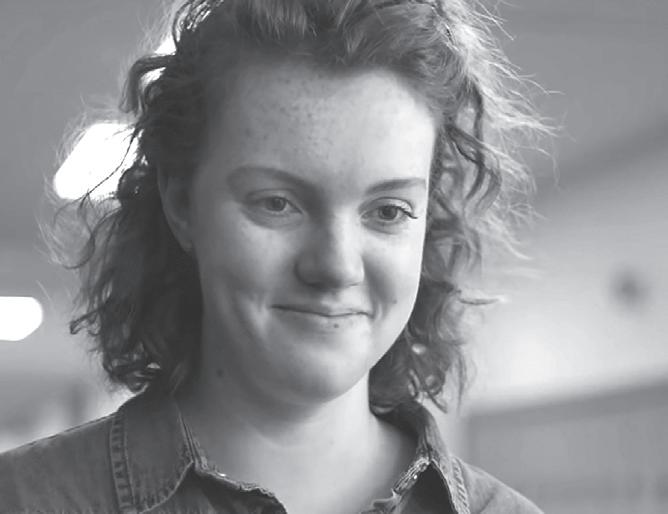
Sierra Burgess (Shannon Purser) is a confident, unpopular school girl whose days are filled with band practice, studying, community service and being bullied by a cheerleader named Veronica (Kristine Froseth). When the cute but shy Jamey (Noah Centineo) asks Veronica
out, she gives him Sierra’s number as a joke, sparking a text-romance between Sierra and Jamey, who believes he is talking to Veronica.
The most glaring issue with the movie is that the romance is stale. The whole premise of the movie depends on the audience buying into Sierra and Jamey falling for each other through their text messages and phone conversations, but the chemistry just isn’t there. The two mainly flirt by sending back and forth pictures of generic animals that all look like they would be found through a simple Google search. At least have them send each other memes or something. Even when they eventually talk on the phone, there aren’t exactly sparks flying. And it’s just uncomfortable to watch transpire, especially knowing that Jamey believes he is actually talking to Veronica.
personality. But Sierra’s train of lies takes away from this positive message.
I guess the moral of the whole thing is that lying is okay as long as you’re doing it for the right reason? The weird glossing over of these issues chip away at the
movie’s foundation and make it harder to enjoy.
Perhaps the worst part of the cat-fishing is that it puts the morality of the movie such a gray area. The movie clearly wants to portray that looks aren’t everything and that love is based on
The other problem that plagues Sierra Burgess is a Loser is that much of it is very out of touch with what high school is actually like. It’s almost as if the screenwriters never actually attended high school themselves but just watched a bunch of other movies and tv shows about high school instead. First of all, as the title not-so-subtly tells
us, Sierra Burgess is not popular. She likes literature. She’s in band. And sure, Shannon Purser doesn’t look exactly like the traditional standard of beauty women are subjected to. But Sierra’s character is charming and witty, and Purser is perfectly fine-looking. The way the movie tries to pass her off as some grotesque, unpopular monster feels over-the-top almost to the point of being offensive.
A bunch of other boring, exaggerated tropes play themselves out the same way they’ve been done a million times before. There’s the sassy best friend with no arc except to help the main character, the good girl who goes to her first party, the posse of homogenous bullying cheerleaders and much more. It’s sad Sierra Burgess felt the need to cling to cliches for so much of the movie; in its quirkier moments, the actors shine. Noah Centineo, who E! News already dubbed “The Internet’s Boyfriend” after his performance in To All the Boys I’ve Loved Before, is swoon-worthy once again, striking a perfect balance
of awkward and sweet. One of the best scenes in the movie is when Jamey agonizes over taking the perfect mirror selfie to send to “Veronica” and then immediately regrets sending it. It’s cute, funny and captures the universal struggle of trying to impress someone you like. Purser’s performance is also a highlight. After enjoying her work playing side characters in both Stranger Things and Riverdale,I was excited to see her take take the lead in a project, and she does not disappoint. Purser makes Sierra as multi-dimensional as possible, delivering pep-talks into the mirror with gusto, but also showing her vulnerabilities as she struggles with having to compare herself to Veronica.
Sierra Burgess is a Loser is problematic and formulaic in its worst moments. And while it features some sweet and well-acted moments, it’s probably not worth sitting through to get to them.
Annika Layatis is a freshman in the College of Arts & Sciences. She can be reached at akl65@cornell.edu.






Fill in the empty cells, one number in each, so that each column, row, and region contains the numbers 1-9 exactly once. Each number in the solution therefore occurs only once in each of the three “directions,” hence the “single numbers” implied by the puzzle’s name. (Rules from wikipedia.org/wiki/ Sudoku)





Male, Undergrad student. Available NOW
4 Bedroom Apartment Available NOW Novarr-Mackesey Property Management office@ithacastudentapartments.com 607-277-1234
WALK TO CAMPUS! Spacious 1 Bdrm. with off-street parking, on-site laundry available for immediate move in. Professionally managed with 24-hr Maintenance. 607-257-5444 www.BrooklaneCornell.com
We have availability for the 2019-2020 school year beginning June 1st at Hudson heights apartments. The studio apartments come with: heat, water, and electricity included. There are garbages houses and coin-operated laundry facilities on site. Prices start at $750/month for a 12 month lease. If you have any questions or would like to schedule a tour contact us by phone 607-208-7660 or email: renting@ithacaLS.com

LUXURY AT REASONABLE PRICES 5 & 6 BEDROOM ON LINDEN AVE 8 BEDROOM ON CATHERINE ST. AVRAMISREALESTATE.COM 607-272-3389
5 Bedroom House 214 Linden Ave. Furnished. Parking available. 607-342-1024 avramispola@yahoo.com




BYNOE
Continued from page 15
both championships, the weekend provided valuable experience for future tournaments.
“It was a bit nerve-racking and exciting,” he said. “It was a big tournament and big day for me. I think I did decent job staying focused.”
The ability to stay focused was a point of emphasis for Bynoe this summer.
“This summer I played the biggest focus and attitude,” the sophomore said. “I’ve been playing tennis for over 10 years so I know how to hit the ball. The biggest thing was to keep my composure and focus throughout the match.”
that knows him well. He was able to make some adjustments after his first two rounds. He played his best tennis in the final and that is always a good sign.”
Although no other players for the Red made it to the championship match of their flight, Tanasoiu was happy the team finally got to compete after a long break over the summer.
“The biggest thing was to keep my composure and focus throughout the match.”
Sophomore Evan Bynoe
Bynoe’s hard work over the summer was clear in his play, especially to head coach Silviu Tanasoiu.
“Evan trained hard this entire summer,” Tanasoiu said. “He invested a lot in his tennis and fitness, and this result is not a surprise to anyone
“The main goal for this week was to compete,” he said. “A lot of our guys did not get to compete throughout this summer. We were looking forward to them getting back in competitive mode. It was good to see them getting three matches this weekend. It was also good to see them competing the way they did, especially in their first round matches.”
The Red will make the trip back to Princeton Oct. 11 for the ITA Northeast Invitational.
Tim Morales can be reached at tmorales@cornellsun.com.
Continued from page 15
Yet I just sat there for the following several minutes, unsure of what to do. I considered going back to sleep, but I was afraid I would still miss out. Several minutes go by before an email popped into my inbox explaining the snag.
As it turns out, the company that hosts the ticketing system had an outage and was unable to make the tickets go live in the set window. Therefore, we were told to do it all again the next morning, albeit with a start time between 7 and 7:15 a.m.
To be fair, it’s not exactly the ticketing office’s fault that the delay occurred. That’s all on the ticketing host. But perhaps Cornell could have told us about the outage earlier and let us sleep. But so be it. At least this time I didn’t have to wait in a two hour window for the site to go live. Now I could just wake up Wednesday, pick
my seats by 7:15, and go back to bed.
So when the site went live at 7 a.m. on the nose, I was excited — for about 10 seconds. I clicked the link to pick my seats and the site immediately started glitching and lagging.
Not only were my chances at getting seats against the glass long gone, I couldn’t even get past the seat selection page without getting booted back to the beginning. It was like pre-enroll morning all over again.
After 19 minutes of failure and frustration, another email from Cornell Athletic Ticketing appeared. Long story short, I had to reply to the email with a screenshot of my reserved seats so they could manually put it in my cart to purchase later that day.
Come Wednesday evening, I finally have my seats and I appreciate Cornell Athletics Ticketing for rectifying the situation. I can’t wait to join the Lynah Faithful and cheer on the
Red this season.
Having said that, the process was way harder than it needed to be. Perhaps we should revert to lining up overnight like the
“I couldn’t even get past the seat selection page without getting booted back to the beginning.”
Jack Kantor
good old days if it’s going to be such a headache.
But here’s the best part.
After all was said and done, and after the inconvenience the ticketing office put me through, they still had the nerve to charge me and everyone else a $5 convenience fee.
I guess we just have different definitions of convenience.
Jack Kantor can be reached at jkantor@cornellsun.com.


By TIM MORALES Sun Staff Writer
It was a big opening tournament in Princeton, New Jersey, for Cornell men’s tennis this weekend at the Ivy Plus Invitational — especially for sophomore Evan Bynoe, who took home the “Pagoda” flight singles championship as well as second place alongside junior Lev Kazakov in the “White” doubles flight. With superb movement and consistent groundstrokes, Bynoe defeated Louisiana State’s Agie Moreno in dominating 6-2, 6-2 fashion to secure the Pagoda singles flight championship on Sunday. In the four matches it took Bynoe to win the flight, he only dropped two sets and finished with an astonishing 55-31 games record in singles competition.
“I would say that my forehand and movement were my best points,” Bynoe said. “I was making up a lot of strokes on the ground and making my opponents play a lot of shots.”
“I would say that my forehand and movement were my best points.”
Sophomore Evan Bynoe
That wasn’t the end for Bynoe as he and junior Lev Kazakov made a push in the “White” flight doubles championship against fellow Ivy Leaguers, Peter Conklin and Casey Ross from Dartmouth. After a slow start following a rain storm that forced play to move indoors, Bynoe and Kazakov fell, 6-4, to their Ivy League rivals.
“I think Lev and I started a bit slow,” Bynoe said. “It rained so we had to change focus and play inside, and we came out a bit slow.”
Although Bynoe wasn’t able to pull through in
See BYNOE page 14

’ve got something to air out. And no, it’s not about the football team. I thought they played pretty well against Yale actually. But moral victories don’t count, some may say.
Jack Kantor
My grievance is about something else. In fact, it’s not even about a specific sport.
I come to you today to complain about Cornell Athletics Ticketing — specifically, men’s hockey season ticket renewal. To put it simply, the ticketing office dropped the ball Tuesday and Wednesday morning this week.
If you’re not familiar with how men’s ice hockey season ticket renewals work, let me explain it briefly. Depending on how many years you’ve held your tickets, you are given a specific day to select your seats for the season. And on that specific day, the seat selection goes live at a random time between 7 and 9 a.m. — bright and early.
As a passionate Cornell hockey fan, I care about where I’m sitting the whole season. Therefore, I planned on being awake and ready to
go to avoid the risk on missing out on my preferred seats. At 6:55 a.m. Tuesday, I eagerly opened up the ticketing website in preparation. 7 a.m. comes around, and to my dismay, I can’t select my seats.
It’s no big deal though. I don’t believe the site went live until 8 a.m. last year. So I sit there patiently, refreshing every five minutes or so, hoping maybe, just maybe, I can get seats against the glass for my senior year. Yet, 30 minutes go by and still nothing. Nevertheless, I am hopeful that 8 a.m. is the sweet spot just like last year. At 7:59, I anxiously wait for the clock to change. But again, it was all for naught. Still no seats.
I honestly can’t tell you how many times I hit refresh that morning of Sept. 25. Rest assured, it was a lot. And sure enough, as the clock struck 9, I was still without a seat. I completely wasted two hours that I probably would’ve spent sleeping during this busy prelim season.



By RAPHY GENDLER
Everything seems to be in place for Cornell football to be much improved this sea son, but an early-season gauntlet schedule-wise may make improve ment hard to showcase in results.
After losing to tough non-con ference foe Delaware in week one and Ivy League favorite Yale in week two, Cornell — which played the Blue Hens and Bulldogs closer than it did in 2017, but still suffered losses — will host Sacred Heart this weekend in the second of three consecutive home games.
Even if the losses are less surprising against what Cornell believes to be higher-quality teams, it stings to not have a crooked number in the win column thus far. But the team hopes the early-season grind will pay off come week eight or nine, when they would like an Ivy title to be in play.
“We’re blessed to have a harder schedule than a lot of Ivy League schools,” said senior defensive back D.J. Woullard, who will move back to cornerback after starting the season at safety. “We do play a lot of harder teams especially out of conference. Teams like Harvard, Yale and Princeton blow out the teams they play but they don’t really get good

competition so [we’re prepared] when we have big games like last year against Princeton.”
After Sacred Heart, Cornell hosts perennial Ivy contender Harvard before a week five trip to nationally-ranked No. 23 Colgate. Cornell will have played five games before it gets a matchup it’s favored to win — week six at Brown. So while Saturday’s tilt with the Pioneers is a non-league contest, the Red is determined to put a tally in the win column during its tough first-half schedule.
The Pioneers come into the game three wins already, having blown out opponents Lafayette, Bucknell and Wagner by a combined 72 points. In the three wins, Sacred Heart has scored 35.3 points per game and allowed just 11.3. Its scoring defense is ranked eighth-best in the
The stout Pioneer defense is likely to prove challenging for a Cornell offense that has struggled to move the ball. The Red scored just 10 points — seven of them in garbage time — against Delaware before a better performance against Yale aided by two long touchdowns from junior running back Harold Coles.
“We got to go with the matchups we think are good, and for us we really think we can run the football on anybody,” said head coach David Archer ’05. “We got to try to establish that and then we got to make sure we can take some shots and get some big plays over the top, but they certainly do have great defensive stats. They create a lot of negative plays defensively [and] they
Senior quarterback Dalton Banks and the Red’s offense will look to find a rhythm while slowing down Chris Agyemang — who has five sacks through three games — and the Sacred Heart defense.
“I think it’s just getting everything smoothed out,” said sophomore wide receiver Eric Gallman, who is back
By JONATHAN
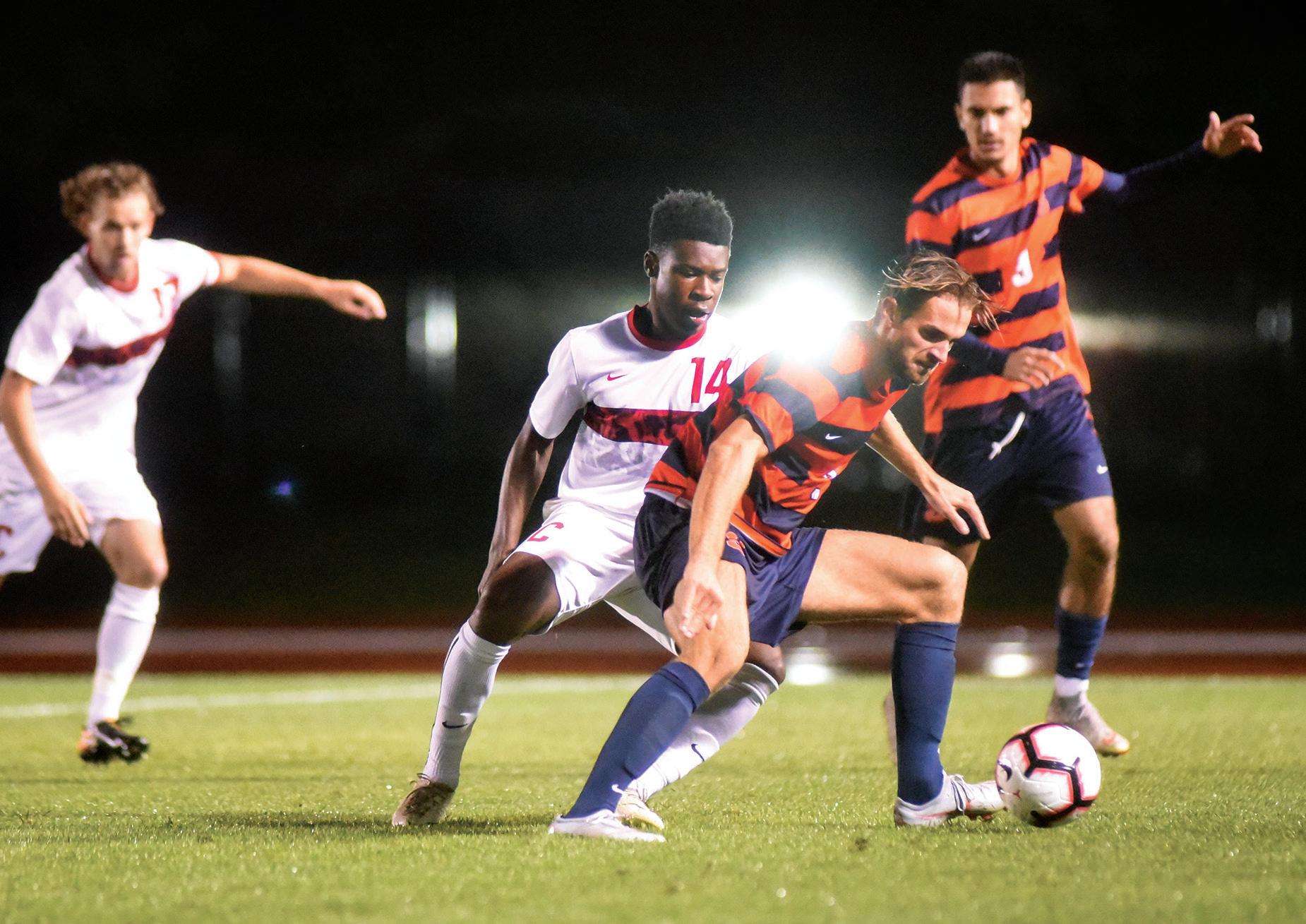
In yet another instance of late game dramatics, Cornell men’s soccer prevailed over Lehigh in a 3-2 victory on Tuesday night. The Red’s tilt against Lehigh was its fifth victory away from home in its six away games.
The Red (6-2-0) went up two goals after freshman Charlie Ferguson’s free kick in the 28th minute and sophomore Vardhin Manoj’s acrobatic finish in the 53rd minute. Lehigh (4-4-1) responded by scoring in the 62’ and 72’. The game was sent to overtime where the Red finally bested the Mountain Hawks thanks to sophomore forward Charles Touche’s 92’ goal which was set up by freshman Emeka Eneli.
Despite giving up a two-goal lead on the road, head coach John Smith was pleased with his team’s performance and spoke to the mental strength of his squad after the overtime victory.
“Any win on the road is special,” Smith said. “It’s not easy to win road games, and so for us to have won five already this year is quite remarkable. I am happy with the fact that we stayed positive after giving up a two goal lead. Many teams would have crumbled at that point against a good Lehigh team.”
While the Red has had an impressive start to the season, Smith and his team know there are improvements to be made ahead of this weekend’s Ivy League play opener against Penn.
“There are always things to work on after games, and today’s game certainly gave us more things to look at,” Smith said. “We will get back to work on Thursday in preparation for Penn.”
The Red have built a reputation this year for being particularly spectacular in late-game situations and in games when they go down one goal. However, heading into Ivy League play, where all the stakes are raised, such an affinity for late game theatrics might not pan out as
this season after missing eight games last season with a foot injury. “It takes all 11 to make something shake on offense. I think as we continue to get the timing down with the quarterback, with the line, with us receivers running our routes, I think everything will take care of itself.”
Defensively, after successfully slowing Yale’s star running back Zane Dudek last week, Cornell will face another tough tailback. Jordan Meachum has averaged 128.7 rushing yards per game for the Pioneers. Quarterback Kevin Duke has seven passing touchdowns and two rushing scores.
“We’re blessed to have a harder schedule than a lot of Ivy League schools.”
Senior D.J. Woullard
“They have a lot of different receivers that have talent, so we really got to stop the pass and that’s one thing we’ve been struggling with in the past few games,” Woullard said of a pass defense that has allowed 268.5 yards per game in the air this year.
Bizarrely, neither team in the Red’s first two contests has committed a turnover. Woullard said the Cornell defense hopes to get in the takeaway column to get off the field and give the offense short-field opportunities.
“One of our goals [is] two-plus turnovers,” he said. “We try to do that every week but we’re really emphasizing it this week because we as a defense need to set up our offense.”
On the flipside, the offense will look to continue its mistake-free play after turnovers plagued the team in its first two games last year.
“If you had told me that we wouldn’t give it away and we’d be 0-2 I wouldn’t believe you,” Archer said. “So we’ve got to keep that up.”
Cornell and Sacred Heart kick off at 1:30 p.m. Saturday at Schoellkopf Field.
Raphy Gendler can be reached at rgendler@cornellsun.com.
expected.
“The key thing is to continue to focus on the things that have worked so far for us this season. Everyone knows their role, and it is important that we continue to do our job,” Smith said.
Eneli continued his dominant season notching an assist against Lehigh bringing him to 10 points on the season. The
freshman is on a hot streak having scored four goals and assisted on two so far this season.
The Red will open up Ivy League play at 1 p.m. this Saturday at Berman Field against Penn.
Jonathan Harris can be reached at jharris@cornellsun.com.