The Corne¬ Daily Sun

Sports Walk-On Teevyah Yuva Raju ’22 relays her experience as a female coxswain


Sports Walk-On Teevyah Yuva Raju ’22 relays her experience as a female coxswain
By ANIL OZA Sun Science Editor
As Gov. Andrew Cuomo (D-N.Y.) reasserted his commitment to shuttering campuses that exceed 100 COVID-19 cases in two weeks, Cornell reported that only 31 of its 82 cases would contribute to the threshold.
“It is going to happen, I am telling you that as I sit here ... 100 cases can happen very easily.”
Gov. Andrew Cuomo
Two weeks ago Cuomo set a threshold for New York colleges and universities to temporarily suspend in-person classes: 100 COVID-19 cases in two weeks. Today, Cuomo doubled down on the decision as Cornell reaches close to a third of this threshold. While the Ithaca campus has seen 82 cases, only 31 will count toward the threshold for shutdown according to state guidelines that would only count students residing on campus or taking at least one in-person class. The governor reaffirmed his commitment to shuttering colleges that see large outbreaks in order to avoid community spread in college towns.
“It is going to happen, I am telling you that as I sit here — it will happen. 100 cases can happen very easily. You saw all the other colleges that have it,” Cuomo said in a briefing Tuesday. “It is going to be unequivocal, and as soon as the college has notice from any source they have to immediately report it.”
Like Cuomo, Cornell’s administrators also struck a pessimistic chord. In an email sent last week, President Martha E. Pollack warned that avoiding more than 100 cases in two weeks would be “extremely difficult.” 108 colleges across the country have already report-
ed more than 100 cases, with seven New York State universities — including Cornell — also seeing outbreaks on their campuses. Out of these seven only State University of New York at Oneonta has been forced to transition online on Sep. 3, after their cases soared to nearly 400. The other six institutions have seen outbreaks, but have not breached Cuomo’s threshold of 100 cases in two weeks.
After a five day pause, Cornell’s COVID19 dashboard was updated to report the “confirmed on-campus positives” that were man-

By TAMARA KAMIS Sun Staff Writer
Stella Linardi ’22 experienced aches, chills and dizziness Sept. 2. By the time her COVID19 test results came back positive on Friday and she was taken to The Statler Hotel by CULift, Linardi’s symptoms also included a fever and rashes. While her symptoms fluctuate, she is still in pain.
“If I stand or sit up, my heart starts racing like crazy and pound ing,” said Linardi on Wednesday. “I can’t even walk around my room [independently], I hold
on to and lean on things.”
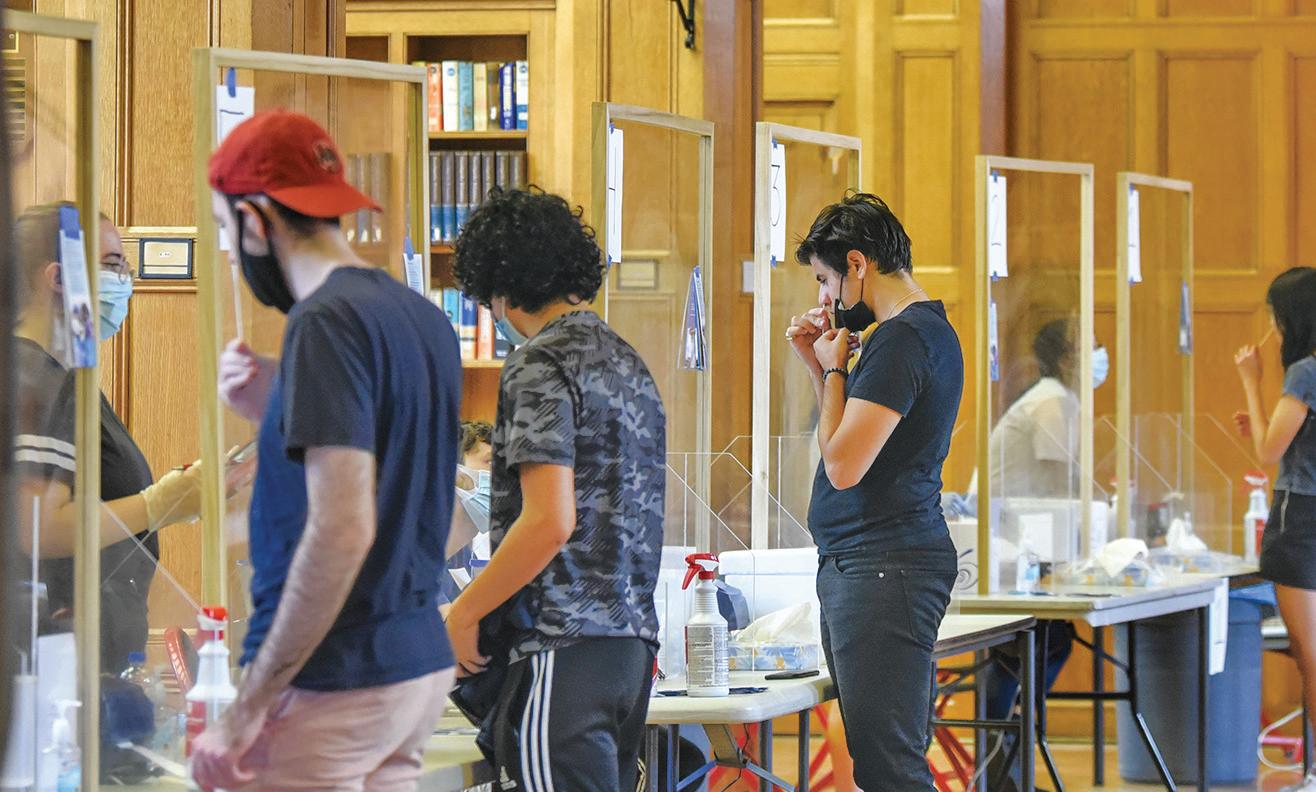
Linardi is one of the students housed in The Statler Hotel — which is now at 94.8 percent occupancy,
according to the Wednesday morning shift report shared with The Sun — for isolation in the case of positive test results or quarantine for those exposed to COVID-

Some students with milder symptoms described their stay at The Statler comfortable, while multiple students with more severe symptoms have been transported to the emergency room and then back to The Statler. According to an email forwarded to The Sun by a student staying in The Statler, COVID-19 pos-
itive students are informed that if they do not follow the Tompkins County Health Department health order, TCHD could seek a court order in the Supreme Court of Tompkins County.
Linardi called the front desk to contact emergency services on Friday night, but EMTs determined she did not need emergency
at 12:30 a.m., had her vital signs monitored and lab tests run until she was released at 5:15 a.m. Tuesday morning. Since her vital signs were normal, Linardi was brought back to The Statler.
“My communities are vulnerable ... I am fighting for my rights and my life at the same time.”
Stella Linardi ’22
hospitalization. By Sunday, breathing was painful.
Linardi called the Statler front desk to call for emergency services again Monday night. She was then admitted to the Cayuga Medical Center emergency room
According to Dr. Douglas MacQueen, medical director of infectious diseases for Cayuga Medical Center, a COVID19 patient is admitted from the emergency room to in-patient care if they have difficulty breathing and if their vital signs that show they need more oxygen to help them breathe, or otherwise they may not be able to breathe on their own.
A Cornell Health clinician has since assessed Linardi’s symptoms multiple times in person, Linardi
said.
Cornell Health has a clinician at The Statler during business hours and a clinician on call after hours, according to Anne Jones, medical director of Cornell Health. TCHD and Cornell Health providers check in with students regularly, and Statler staff deliver meals to students’ doors.
“Cornell Health clinicians provide self-care guidance to symptomatic students who do not need hospitalization, which may include prescription or over-the-counter medication to treat symptoms and relieve discomfort,” Jones wrote in a statement to The Sun.
After calls with Cornell Health clinicians, Linardi has received Tylenol for her
CUOMO
Continued from page 1
first day of classes.
Cornell has reported 82 positive cases of COVID-19 in the past two weeks, but confirmed on-campus positives only account for students that are taking classes in person or living on campus, and faculty that are physically working on campus since the start of the semester.
Given that 50 percent of students live off campus and two thirds of classes are virtual, this change could significantly decrease the pool of students that could be counted toward the closure threshold.
“[The ‘confirmed on-campus positives’] shows the number of positive cases since the first day of on-campus activities (Sept. 2) among students living on campus or taking at least one in-person class, as well as among faculty and staff cleared to work on campus,” wrote Joel Malina, vice president for university relations, in an email to The Sun.
In planning to reopen cam-
pus, the administration initially created a self-imposed threshold to transition to online learning if there are more than 250 cases in two weeks.
The state’s regulation more than halved the bar for transitioning to virtual learning, which administrators saw as a challenge given Cornell’s size and its ambitious surveillance testing program.
“Because the limit of 100 applies to all universities with a population greater than 2,000, it sets a very high bar for large schools like ours,” wrote President Martha E. Pollack in an email to students. “And the challenge is even greater here because of our aggressive surveillance testing program. With frequent, universal testing, the program is designed to catch nearly every case of infection, including the many asymptomatic cases that would not be identified or counted with the more typical for-cause testing, or with a less aggressive surveillance testing program.”
Anil Oza can be reached at aoza@cornellsun.com.


Thursday, September 10, 2020
Comparing National Power In an Age of Transition
11:30 a.m. - 12:45 p.m., Virtual Event
What is the Efficiency Of Microbiology Electrosynthesis 12:40 - 1:30 p.m., Virtual Event
Cornell Community Conversation On Race and Labor in America
1 - 2 p.m., Virtual Event
Environment, Sustainability and Health in Africa: Managing Human-Nature Interactions
3 - 4:55 p.m., Virtual Event
Planet Formation Post-Kepler
4 p.m., Virtual Event
A Touch of Non-Linearity: Mesoscale Swimmers & Active Matter in Fluids
4 p.m., Virtual Event
Polinators in Winter: How to Help Them Survive 6:30 - 7:30 p.m., Virtual Event
The Indomitable Florence Finch: A Conversation With Robert Mrazek
7 p.m., Virtual Event
How Will U.S. and Chinese Cities Respond To the Fiscal Crisis of 2020?
Lessons from the Great Recession 10:10 a.m., Virtual Event
Uncharted Territories in Electronics and Photonics Made Possible With Aluminum Nitride Noon, Virtual Event
Inside Out: Regulation of Macrophage Innate Immunity and Inflamation 12:15 - 1:15 p.m., Virtual Event
Binding Contestation: How Party-Military Relations Influence Democratization 12:30 - 1:45 p.m., Virtual Event
Rhetorical and Receptional Politics of Cheng Xuanying’s (ca. 605-690) Commentary on Zhuangzi 3:30 - 5:30 p.m., Virtual Event
The Arms Race Between the Parasite Cuscuta And Its Tomato Host 4 p.m., Virtual Event
Southeast Asia Program
70th Anniversary Celebration 8 p.m., Virtual Event

By SEAN O’CONNELL Sun News Editor
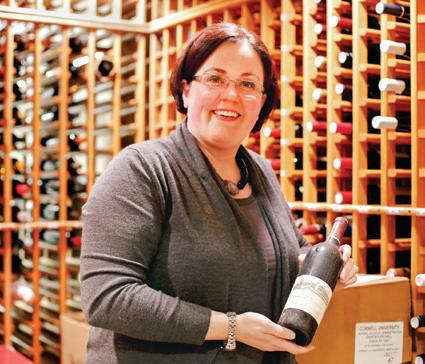
Number six on the list of the 161 things every Cornellian should do before they graduate is to take HADM 4300: Introduction to Wines. But this semester, the course will take on an entirely different flavor through virtual instruction. Between using scratch-and-sniff stick-
ers, non-alcoholic beverages and pre-recorded guest speakers, Prof. Cheryl Stanley ’00, hotel administration, is working to make sure the Wines experience is as close to previous years as possible — though this time, without wine. Normally, a New York State law allows students as young as 18 to consume alcohol for educational purposes at an accredited university. However, without

HEAVYWEIGHT ROWING
Continued from page 8
appreciation for seeing my teammates in action.”
Before Yuva Raju could even hit the ground running in the spring, the COVID-19 pandemic eliminated any possibility of spring competition and resulted in an exodus of students, including Yuva Raju.
“Personally, it was tough,” Yuva Raju said. “I had eight hours of notice before I was flying home. California’s cases were rising incredibly fast, and we thought the borders were going to close. My parents called me really late at night and told me that I was flying home that morning at 8 a.m. … As someone who is immunocompromised, my family did not take COVID lightly.”
“The spring was when I was finally going to be able to show off the skills that I had been learning,” Yuva Raju added. “My first [reaction] was devastation, not for myself, but purely for my teammates … The seniors were the people who took me under the wing — the senior coxswains really taught me so much. To see them not have a season — along with the senior rowers — it’s devastating because it’s something you work your entire athletic career for. They wanted to go out with a bang.”
While the team could not compete this past season, Yuva Raju’s improvement was evident during one practice in the spring. While her boat was in the middle of Cayuga Lake, it began pouring rain, and with the adrenaline flowing,
Yuva Raju successfully navigated the team back to shore with both her and her teammates rowing at their best and putting their complete faith in each other.
“I thought that it was definitely symbolic for me,” Yuva Raju said. “It was just really molding all of the knowledge that I learned.”
In the COVID-19 era, the men’s heavyweight team is unable to partake in athletic competition and is also barred from practicing. Despite the limitations on in-person activities, Yuva Raju and the team remain in touch and are also maintaining their fitness in the hope of a normal spring season. Even in this unexpected off-season, Yuva Raju is still seeking growth as a coxswain.
“We’re always learning,” Yuva Raju said. “Knowledge is something that we’re never going to stop gaining. Practice doesn’t make perfect — I think practice makes progress.”
Not only has Yuva Raju emerged with massive respect for the “student-athlete grind” as well as a heightened sense of discipline, but she has also found a family of 57 teammates whom she loves like brothers.
“They’re my best friends,” Yuva Raju said. “Just the fact that you have these guys who care so much about you and go out of their way for you, it’s something I’m very fond of, and I’m so lucky for that — they’re my role models.”
Luke Pichini can be reached at lpichini@cornellsun.com.
in-person classes, this goes out the window.
Stanley initially hoped for a hybrid wines class, with online lectures and in-person tastings, but soon realized the risk associated with removing one’s mask indoors, even briefly, that comes with wine tastings.
This abrupt adjustment forced her to start looking at more unorthodox methods of bringing tastings and aromas to students. Eventually, Stanley landed on the use of scratch-and-sniff stickers — with smells like apples, peaches and cherries — and “self-provided non-alcoholic tastings,” which can be anything from skim milk to black tea.
“The fact that there’s a cola scratch and sniff sticker and you get cola in pinot noir, it’s perfect,” Stanley said.
These are meant to give students an easily accessible comparison to many of the flavors and smells present in wine in addition to those identified and discussed in lecture.
Ava Niemeier ’21 was disappointed that the class inevitably shifted online, but less so about missing the wine tastings.
“It’s not necessarily what everyone was expecting, but I personally have no problem doing this since I’m not a big wine drinker by any means,” she said. “I think it’s still a good way to get a sense of what the taste and aromas are like.”
Stanley had scoured Amazon and “cleaned out” Staples in order to find enough scratch-and-sniff stickers for the class, which she paid for out of her own pocket.
“What is going on in the world around us is forcing us to react,” Stanley said, “and I’m just trying to make the best class possible despite the circumstances.”
Gabrielle Gonzalez ’21 agreed with Niemeier’s sentiment, saying that one of her goals for the class was to emerge a “wine snob.”
“I still think I’ll be able to do that without the wine tasting aspect,” Gonzalez said.
Both echoed concerns about the online webinar format, saying that it was somewhat isolating. With 175 students in the class, down from the usual 700, a webinar was still necessary for Stanley to conduct her class normally. She plans to supplement her lectures with clips recorded from guest lecturers in the past months.
Gonzalez, however, found a way to adapt, watching the lecture together with friends.
“It’s a little more fun, a little more feeling like it’s in-person,” Gonzalez said. “But I definitely miss going to class.”
Sean O’Connell can be reached at soconnell@cornellsun.com.
STATLER
Continued from page 1
pain, and a prescription for Tamiflu for her influenza infection — she has the flu as well as COVID-19.
For Linardi, getting COVID19 has been especially stressful because she is a first-generation, low-income, DACA student.
“I’ve been telling people since before COVID that my communities are vulnerable and it turned out to be me, [COVID] got me,” said Linardi. “I am fighting for my rights and my life at the same time.”
Linardi is not the only person with COVID-19 in The Statler who moved back and forth between the Cayuga Medical ER and The Statler Hotel.
tested negative for COVID-19, and as long as she stays asymptomatic, she will be allowed to leave after two weeks have passed since her exposure.
Like all other students in The Statler, Draganoff has a minifridge and microwave in her room. Although she doesn’t have access to laundry services, she can use room service to order detergent. Draganoff has been attending classes remotely and likes the food at The Statler. She is especially grateful for her supportive friends.
Other students with milder symptoms are trying to keep busy in isolation.
ed N95 masks, gloves and eye protection, according to Arthur Keith, general manager of the Hotel.
Safety procedures include having employees leave the hallways before students arrive on the floor to check-in to their rooms, as well as making sure that employees had left before students opened their doors to take a package or meal delivery.
“Clinicians provide self-care guidance to symptomatic students who do not need hospitalization.”
Another student, who asked to remain anonymous for medical privacy reasons, was taken via ambulance to Cayuga Medical after a Cornell Health doctor assessed her symptoms. She received multiple X-rays and other tests. So far, the scans have come back normal, although she will get more X-rays soon. However, breathing is painful for her and sitting up is difficult.
Not only are students who test positive for COVID-19 housed in Statler — students who have been exposed to COVID-19 are living there in quarantine as well.
According to Jones, the TCHD is in charge of determining how long students will be in isolation, taking into account factors such as length of time after symptom onset and resolution, as well as exposure.
Julia Draganoff ’24 has been in the hotel since Friday because, according to the TCHD contact tracer who called her, she had been exposed to COVID-19. She
Anne Jones
According to multiple students, Statler staff are welcoming, making their medical isolation easier. However, not all Statler staff feel safe working with COVID19 positive students. A former employee who quit because of safety concerns, spoke to The Sun about what had made him feel unsafe on the job, and remains anonymous because of his concerns about finding another job.
The former employee took no issue with the personal protective equipment Cornell provided him. Instead, he expressed concerns with the number of students he was checking in with and the unknown COVID-19 status of the people bringing deliveries for students.
All Statler employees participated in safety training on general workplace precautions and on the use of their PPE, which includ-
“Most of our employees do not come into close contact with isolated or quarantined students. Some of our staff may have experienced very limited and brief contact during check in, perhaps 4-6 feet for 30-45 seconds,” Keith wrote. According to the former employee, he was frequently in contact with students bringing care packages to their friends in The Statler, as well as delivery drivers who brought Instacart deliveries, Amazon packages and other items. As the number of students in The Statler Hotel increased, so did his worries, causing him to ultimately quit.
“Cornell Health just kept dropping off students towards the end of my shift,” the employee said. “At the same time, we had students standing outside waiting to check in while delivery drivers pulled up.”
According to Keith, one change that was made to enhance safety at the Statler Hotel is a new delivery drop-off area inside the hotel main entrance with an intercom to communicate with any delivery people, helping to limit contact between delivery drivers and Statler staff.
Visit cornellsun.com to read the full story.
Tamara Kamis can be reached at tkamis@cornellsun.com.

By RAE SPECHT Sun Staff Writer
The year is 1686. King James II looks on anxiously from his plushy throne in England as his New York colonial subjects become increasingly unruly. To tighten his grip on the settlers and quell whispers of rebellion, he appoints Thomas Dongan, a Royalist military officer, to govern the New York territory and issue decrees known as Dongan Patents for the creation of trustee-run towns across the royal province. One of these towns was Long Island’s Town of Brookhaven.
A key proclamation in the Dongan Patent states that the town and its residents would have collective jurisdiction over the natural resources of the area, including “the tracts and necks of lands, gardens, pastures, woods, trees and marshes,” as well as swamps, beaches, harbors and importantly, the seafloor. It grants “freeholders
and inhabitants” of the town the eternal right to “enjoy without hindrance” the bounties of the bays, partaking freely in activities like clamming and fishing.
Despite having been written nearly 340 years ago, the Dongan Patent remains extremely relevant to three specific groups of the Long Island population: Shellfish farmers, shellfish diggers and environmental activists. Shellfish farmers, or growers, raise oysters from larvae in hatcheries, while shellfish diggers, as the name suggests, go out and dig for clams with a clam rake and sometimes a small rig. Both growers and diggers sell their shellfish commercially to restaurants and markets for consumption.
I spoke with Gregg Rivara, a Cornell Cooperative Extension’s Aquaculture Specialist and the Director of the Suffolk County Marine Environmental Learning Center. Rivara works closely with commercial and non-commer-
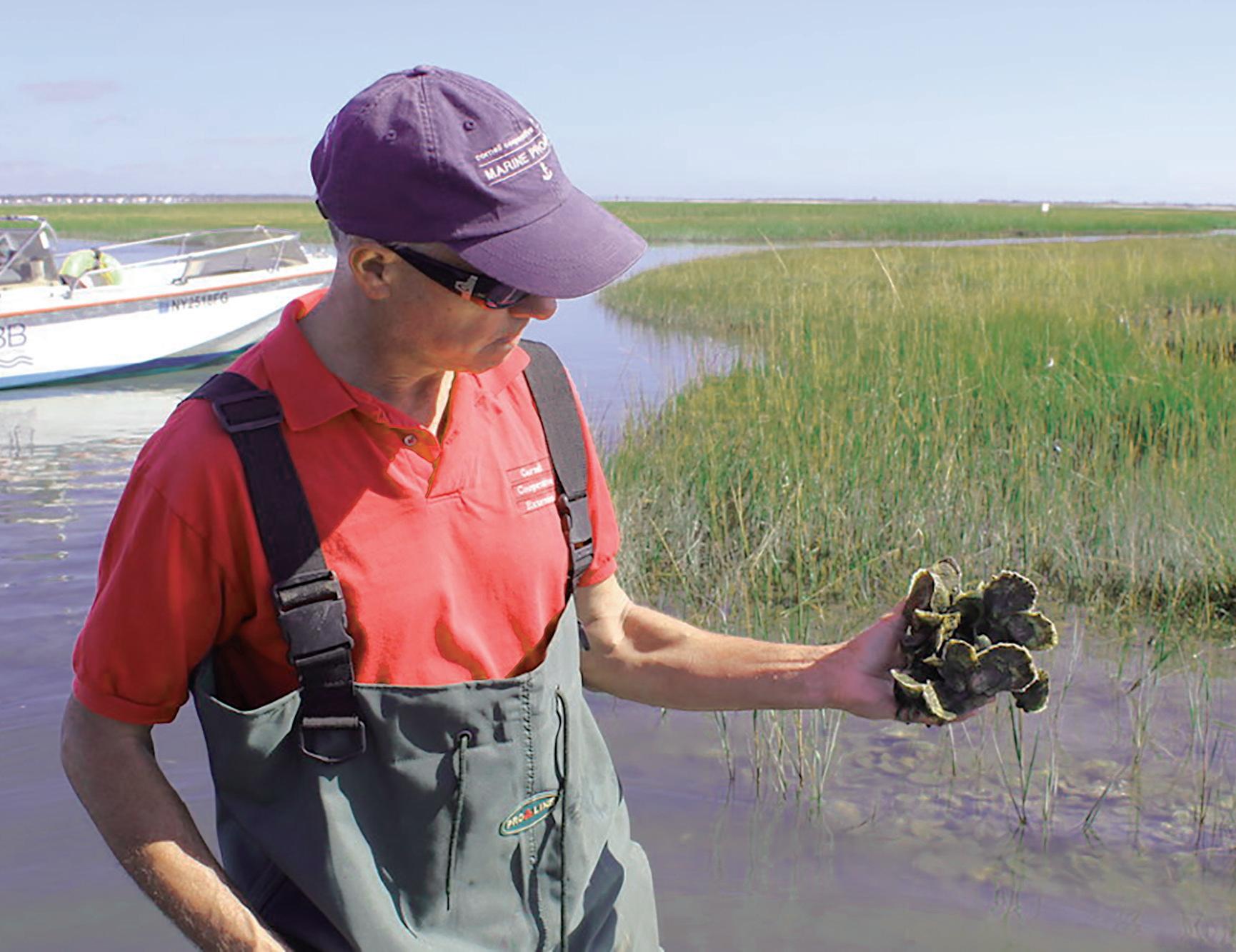
cial shellfish growers and other scientists, conducting research with an ultimate goal of keeping Long Island’s shellfish population sustainable. He also works with shellfish diggers, helping them solve problems and obtain the permits required to clam in certain waters. Gregg and his wife Karen Rivara, a marine biologist and the President of Aeros Cultured Oyster Company, are in a unique position at the center of a conflict between scientists, environmental activists and shellfish farmers. They are knowledgeable about all things aquaculture, from the history of the industry to shellfish capacity for carbon sequestration, and helped me unpack this drama.
Long Island, like many coastal areas, has a vibrant shellfishing economy with rich historical and cultural value dating back thousands of years, long before European colonization. Members of the Shinnecock Indian Nation have been shellfishing and farming for centuries and many post-colonial Long Island towns were established in their present locations based on the area’s abundance of shellfish. Groups like the Brookhaven Baymen’s Association, of which most members are clam diggers, have remained quite powerful in local politics over the decades, even centuries. The Baymen have formed strong, unified coalitions with enough weight to sway town elections by promising substantial voter support to local politicians. Backed by the Dongan Patent, they have enjoyed (some would say exploited) the bounties of Long Island’s Great South Bay shellfish populations for decades.

At present, the Great South Bay is in critical condition. Decades of nitrogen pollution due to coastal overdevelopment after World War II, coupled with severe overharvesting of shellfish beginning in the 1960s and 70s, removing clams that naturally keep the bay healthy, have turned parts of it into a brown, murky dead zone. This is where environmental activist groups enter the scene. Environmental organizations like Friends of Bellport Bay, a
for other animals to survive.
To Thomas, the short term goal of clam diggers, obtaining shellfish to sell for consumption and using unsustainable methods, has major long-term implications that are pushing an already suffering ecosystem to its breaking point. Organizations like Friends of Bellport Bay and The Billion Oyster Project are on a mission to revitalize marine environments by growing and planting oysters directly onto the seafloor and
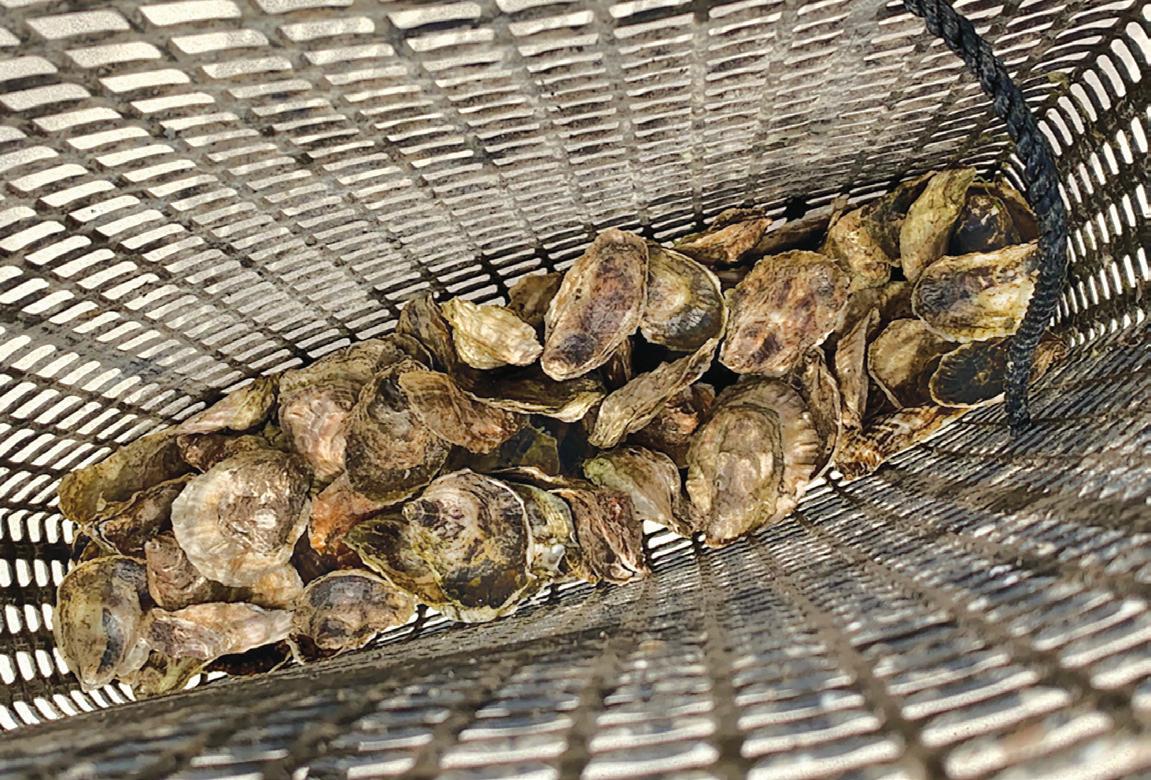
nonprofit based in Brookhaven, N.Y., maintain that groups like the Baymen’s Association are partially responsible for the destruction of bay-bottom ecosystems crucial to the health of the bay and survival of its many species. Thomas Shultz, an environmental activist and the President of Friends of Bellport Bay, explained that when diggers move through an area of the bay, raking up clams to sell commercially, they also rip up eelgrass beds and other shellfish colonies that filter out nitrogen from the bay water, sequester carbon and serve as a habitat
establishing protected shellfish management areas that are legally untouchable by clam diggers. “In a perfect world, I would ban shellfishing for 20 years to let the ecosystem rebuild itself and let the shellfish naturally repopulate,” explains Thomas, “but that’s not realistic for the Baymen who do this for a living, so we need to compromise by establishing protected shellfish management areas so we can move towards restoration.”
Rae
is a junior in the College of Arts and Sciences. She can be reached at rspecht@cornellsun.com.

“Hey, after all these years I’m still here, fingers outstretched
With your imprint in my bed
A pit so big I lay on the edge.”
White noise grows from silence to a buzz in the beginning of Moses Sumney’s “Me in 20 Years” music video. The camera spirals up and around a nighttime building facade: Scattered windows are open and lit, dots of life in a grid of inhabitance. As Sumney’s falsetto lands on the “I” of “I’m still here,” the camera stops spinning and starts moving inwards, where Sumney’s crumpled figure sits on the edge of a bed.
When I first watched this video, I was struck by how surreptitiously familiar the building facade felt. It reminded me of the apartment complex opposite my room, with irregular columns jutting out against the otherwise uniform building structure. I was also surprised by how quickly I sought to link what I saw with what I knew — how readily I wanted to take Sumney’s song and visuals and make it directly relevant for myself.
I often witness this pattern in myself: in consuming culture, I adapt, relate or apply it to how I feel and what I’m experiencing. I’m not sure if this speaks to a narcissistic ontology — of co-opting other people’s art for my own escape and healing — or if it shows a pitfall of empathy and the desire to understand others’ pain by supplanting my own experiences.
months of home life and prepared to return to Ithaca.
Though I had listened to græe when it was first released, I was initially more drawn to the first part. The gravitational force of the second part, namely “Me in 20 Years,” didn’t hit me until I saw Sumney perform it in his Tiny Desk (Home) Concert. Perhaps it was the timing — the accumulated dread of moving and starting a new semester was at a peak — or Sumney’s even rawer live voice that gripped me and simply refused to let go.
I’ve reluctantly realized that relative nomadicity seems to be a part of college life. Just when I settle into one place enough to call it home, it’s time to move to a new dorm, a new apartment, a new city. As I lay awake in a new bed in the corner of a new room, I often find myself thinking of the last place, longing for its established comfort.
“I wonder how I’ll sleep at night
With a cavity by my side
And nothing left to hold but pride, will I Hold out for more time?”
My cavity is rootlessness — wanting to
What I do know is that, regarding these questions, in the past few weeks “Me in 20 Years” has become my soundtrack of longing and loneliness as I packed up my five
belong but feeling swept between landscapes and people and rhythms and routines of life. But the emptiness that comes with seasonal migration — from home to school and back again — haunts me with another transition: a shifting between cultural worlds. Home

is for my Chinese-American self; school for my Chinese-American. It’s been years of this dialectic, yet stepping out of one shell and into another feels less like molting and more like an absurd game of dress-up.
I wonder why my sense of self is so contained, why I attempt to cube it into neat portions like my mother does raw chicken. If I didn’t link certain aspects of myself to Ithaca, packing up those parts of me when I leave for the home I grew up in and vice versa, would my cavity no longer be rootlessness and instead be something else, like love or loneliness?
“Is it laced within my DNA
To be braced in endless January
Have I become the cavity I feared? Ask me in twenty years”
Before Sumney can sing “ask me in 20 years,” he’s subsumed by the silhouette-shaped cavity on his bed and the camera
begins to zoom out, exiting his room, continuing to zoom out until his room is but a dim frame in a building full of dark and light squares. In 20 years, I’ll be twice my current age. Maybe by then I’ll have a different cavity, or have become my cavity, or have been so filled by life that I no longer dwell on cavities. Maybe by then I’ll have decided that a valid interpretation of music and other forms of culture means not interpreting it through the lens of my personal current moment. But for now, I’m content with wading through the mire of trying to understand — rather than fall subject to — my cavities and the opening of vulnerability and possibility they leave in me.
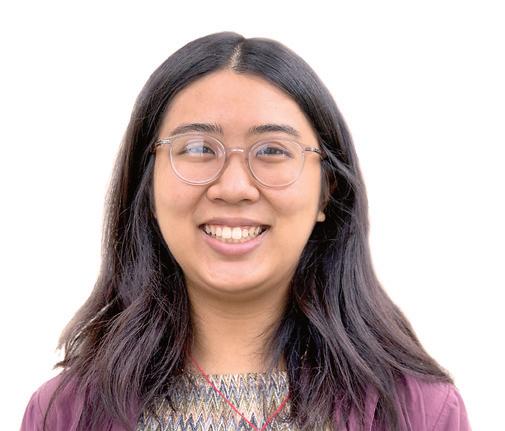
Cecilia Lu is a junior in the College of Architecture, Art and Planning. She can be reached at zcl5@cornell.edu. Breathing Room runs alternate Thursdays this semester.
Last Saturday, the Cornell’s performing and media arts department’s student-led theater tradition, Festival 24, returned virtually this semester. Each year, students create, direct and perform original works, all within 24 hours. This semester, the event was pre-recorded within the 24 hours and premiered on the Cornell PMA Youtube channel Saturday night. The event featured five student-written short plays and the performance of two original songs. This favorite event was always well attended in the preCOVID times, and this year was no exception. Despite being online, the video of the play, which can still be viewed on Youtube, now has over 400 views.
Festival 24 is structured around a theme and an accompanying twist, revealed exactly 24 hours before showtime, which the writers and directors must incorporate into their creations. The theme for this Festival 24 was “night,” with a twist to include something related to “knights” –– a funny combination which spawned many creative and hilarious ideas.
In an interview with The Sun, actors Bianca Santos-Declet ’23 and Ben Lederman ’23 described the challenges that come with performing on Zoom, as well as how the writers, directors and actors worked to utilize the unique virtual setting to their advantage. Lederman was appreciative about the virtual Festival 24 “having the opportunity to be available to a wider audience,” yet says, “the sacrifice for us is that we as actors don’t have the audience there for feedback.” “We can’t feed off their energy” Lederman says, which makes it more challenging when performing the comedic plays.
Despite this, the writers and directors strove to take advantage of what Zoom had to offer. According to Santos-Declet, “tried to incorporate Zoom into the storyline,” such as the play she acted in, titled “GoodKnight,” in which the main characters had a conversation over video chat. “We tried to incorporate movement as much as possible,” says Lederman, describing the ways in which the students worked to make the performance more varied and engaging. Using the features of Zoom such as virtual backgrounds and breakout rooms, they were able to adapt Festival 24

to a virtual setting.
While many aspects of theater are lost when performing in a virtual setting, one aspect gained from the virtual setting is viewer engagement through the live chat section on Youtube. Throughout the play, students vocalized their support, laughter and excitement through their comments, creating a running dialogue reacting to the plays. This added a level of community
and shared participation which is usually absent when everyone must watch separately. Having this method of interaction with the audience of people in Ithaca and beyond, helped make Festival 24 engaging and entertaining despite being virtual.
“These past few months have been difficult especially for students of the arts, but we believe that tonight we can come together, no
matter the distance between us, to create something beautiful,” said producer Arin Sheehan ’22 while introducing the play. This online version of Festival 24 gave students the chance to participate in theater while on-campus or off, keeps the arts alive despite the pandemic.
Emma Leynse is a junior in the College of Human Ecology. She can be reached at eal257@cornell.edu.
JOYBEER DATTA GUPTA ’21
Business Manager
PETER BUONANNO ’21
Associate Editor
MEGHNA MAHARISHI ’22
Assistant Managing Editor
CHRISTINA BULKELEY ’21
Sports Editor
BORIS TSANG ’21
Photography Editor
CAROLINE JOHNSON ’22 News Editor
ALEX HALE ’21
News Editor
ARI DUBOW ’21 City Editor
EMMA ROSENBAUM ’22 Science Editor
BENJAMIN VELANI ’22
Dining Editor
JOHN MONKOVIC ’22
Multimedia Editor
MIKE FANG ’21
App Editor
OLIVIA WEINBERG ’22
Assistant News Editor
MADELINE ROSENBERG ’23
Assistant News Editor
LUKE PICHINI ’22
Assistant Sports Editor
HANNAH ROSENBERG ’23
Assistant Photography Editor
BRIAN LU ’23
Assistant Arts & Entertainment Editor
ANNABEL LI ’21
Assistant Money & Business Editor
LEI ANNE RABEJE ’22
Layout Editor
JOHN COLIE ’23
Blogs Editor
JOHN MONKOVIC ’22
Multimedia Editor
WINNY SUN ’20
Newsletter Editor
AMANDA H. CRONIN ’21
Senior Editor
RAPHY GENDLER ’21
Senior Editor
ALEC GIUFURTA ’21
Senior Editor
MARYAM ZAFAR ’21
JOHNATHAN STIMPSON ’21 Managing Editor
KRYSTAL YANG ’21
Advertising Manager
JASON HUANG ’21
NIKO NGUYEN ’22
PALLAVI KENKARE ’21
SEAN O’CONNELL ’21
KATHRYN STAMM ’22
OZA ’22
EMMA PLOWE ’23
LEE ’21
CHENG ’21
PEÑEÑORY ’22
SRIVASTAVA ’23
EMILY DAWSON ’21
PARKER ’22
MORAN ’21
FANG ’21
LAW ’22
WANG ’21
OU ’22
KRISCH ’21
SKINNER ’21
GHAZI ’21
ZHU ’21
JEREMY MARKUS ’21
Working on Today’s Sun
Ad Layout Mei Ou ’22
Production Desker Ben Mayer ’21
News Deskers Meghana Srivastava ’23 Kathryn Stamm ’22
Design Deskers Lei Anne Rabeje ’22
Dining Desker Benjamin Velani ’22
Arts Desker Dan Moran ’21
Sports Desker Luke Pichini ’22
Letter to the Editor
To the Editor:
Cornell gets a failing grade on the COVID-19 dashboard, and many other aspects of their much vaunted plan on how they were going to succeed in providing a safe, in person semester.
As a local resident who was among many who were distressed and unhappy about the risks to the community that would be assumed with the return of students, I tried to take some small solace in Cornell’s repeated — and repeated — assurances and promises that their plan would work, in large part because of the aggressive testing program that would quickly identify infected students and get them into isolation, presumably before they could spread the virus much farther. And yet, there is still a delay in surveillance testing results. So what does that mean for the quick containment of any infected students? No clue.
This delay also makes it impossible to decipher the department of health’s numbers in a way that is of much use to the local community in evaluating the current circumstances and risk. I see that there are more active cases than I recall seeing at any other time since the pandemic started, and I could assume most of those cases are students. But how can I know for sure? And knowing is important to residents like myself, because we might conduct our daily lives one way if we know those cases are confined to students vs. knowing that many are in the general population.
Cornell had months to develop this dashboard and work out any kinks, including how to coordinate with DOH reporting. So, if this was a student project that was submitted for a grade, what grade do you think it should get?

The ethics of COVID-19 are brutal. In March, we witnessed an elderly Italian priest give up his ventilator, knowing that he would almost certainly die without mechanical medical support. Later, we discussed how doctors and nurses would make painful decisions about distributing medical supplies, making use of their bioethics class that they may have taken lightly while in medical school. Now, as students on campus, we’re constantly battling with HIPPA violations, privacy issues and navigating the minefield of COVID-related ethical questions without proper training and information. Though the number of cases of the virus on the Ithaca campus has been increasing over the past week, the absolute number is still such that few Cornell students may know or be in contact with an individual who has tested positive for the virus. That’s certainly good for the moment, but it seems increasingly likely that a large portion of students on campus will either be infected with the virus or know someone who will be infected this semester. What do we do in these cases? Who can we disclose this information to? What’s our responsibility to our peers and the Ithaca community at large when we find out we’ve been exposed?
These are tough questions to answer but good questions to ask. I found myself asking these questions just a few days ago, when I found out that I’d been in close contact (defined as being closer than 6 feet for more than 10 minutes) with someone who’d tested positive, in contact (but not close contact) with someone else who’d tested positive, and in close contact with someone who had COVID-like symptoms but later tested negative for the virus. Each of these situations was completely unexpected, and I would’ve never thought that I’d have any of these issues: I’d consider myself relatively conservative with respect to social gatherings, I follow all the rules and always wear a face covering.
Mac’s and how it “makes sense” to have both an Olin Library and an Olin Hall. Not a justification, but one could see how it could happen; in this case, the pragmatic information about the next steps for testing and isolation outweighed the necessity of providing emotional support and information about notifying the right parties.
Answering ethical questions of how students should react in an atmosphere filled with panic was a task the administration overlooked.
My experience isn’t over yet, and it’s incredibly likely that these situations will occur over and over again for me and other students throughout the semester if Cornell remains open. There are tons of good (and bad) reasons to not disclose medical information in various COVID-related situations. Perhaps someone is simply not emotionally ready to deal with all the questions, as a positive test result (or even isolating) invariably comes with questions that are emotionally heavy and privacy-invading. Perhaps parents can’t enter the conversation because of financial reasons. At the same time, we each have a responsibility to the community and student body to do our best to stop the spread of the virus.
Paula Amols ’75
Yet, it happened. Because, I suppose, in this weird semester, anything could happen to anybody, even if you stayed at home. In each of those situations, I wasn’t exactly sure what to do. Of course, I filled out the daily check accurately and honestly, and was directed to Cornell Health as needed. The nurses I spoke to were kind and helped a lot, but very little direction was given as to how to and who to notify. This, to me, makes sense to some degree, just like how it “makes sense” to have a massive system breakdown of the daily check on day one, how it “makes sense” to put the salad under the flatbread at
So far, the administration and Cornell Health staff have primarily relied on common sense with a smattering of contact tracing programs alluded to in emails from President Pollack. Common sense, however, can’t be the only measure we rely on to keep us safe as a community. There has to be more information and resources available for students who find themselves in precarious ethical situations. Students should not be left alone and wondering — there’s already enough to deal with this semester. The Cornell COVID-19 site could have a section that outlines exactly who is supposed to say what to whom in each situation. There should be a centralized location that demystifies what to do if your friend or housemate gets COVID-19, explaining how to be supportive and safe and what resources for mental health are available. We already have this information for ourselves if we are a patient, but this virus doesn’t just affect the patient. An ethics hotline could be created for students to get a better grasp on any questions they may have.
Answering the ethical questions of how students should act and react in an atmosphere filled with no small amount of panic was a task that the administration overlooked — another student grievance in the long list that has (in just the first week of class) run the gamut from financial aid to quarantine food. There may be no student uprising, but Cornell shouldn’t be surprised if there’s more confusion without more transparency. 138th

Fill in the empty cells, one number in each, so that each column, row, and region contains the numbers 1-9 exactly once. Each number in the solution therefore occurs only once in each of the three “directions,” hence the “single numbers” implied by the puzzle’s name. (Rules from wikipedia.org/wiki/ Sudoku)



By LUKE PICHINI Sun Assistant Sports Editor
Standing at 5-foot-2 as a female coxswain, Teevyah Yuva Raju isn’t quite the person that many would picture as a student-athlete on the Cornell men’s heavyweight rowing team.
A self-described overachiever, the junior’s foray into Division I athletics is her latest pursuit in a long and distinguished background.
Born in a rural Malaysian village, Yuva Raju immigrated to the Sacramento area early in her youth. Even from a young age, Yuva Raju found herself involved in a bevy of activities, including a tremendous stint in speech and debate.
“I have been heavily involved in activities, but my biggest activity was speech and debate,” Yuva Raju said. “I was on the national team since I was in high school, and in middle school, I was very competitive … I’ve always been very into evaluating strategy, understanding what I can do when I’m presented with different options, taking risks and also working with a team — I think that’s the biggest thing.”
Speech and debate only represented the tip of the iceberg for Yuva Raju. In addition, she was also an accomplished basketball player and received several medals at the statewide level for Brazilian Jiu-Jitsu. But Yuva Raju’s biggest pursuit has garnered acclaim on the national stage and has the potential to revolutionize the field of agriculture.
During her freshman year of high school, Yuva Raju witnessed the devastating 2014 California drought that wreaked havoc on the state’s farms. Through AgCure, she came up with a twopronged solution for farmers that helped them both analyze soil as well as apply an organic compound to prevent and eradicate diseases in crops.
“I was like, ‘Why aren’t we looking at this problem from the ground up?’” Yuva Raju recalled. “The product started with soil analysis in my garage … and eventually, I began doing research at the University of California, Davis, and the idea took off from there.”
cation, and my grandfather dropped out of school when he was in third grade. My dad and my mom came to the United States to give me a better life, and the ultimate goal was this success of college.”
When college application season rolled around, Yuva Raju received the guaranteed transfer option to Cornell’s College of Agriculture and Life Sciences. After attending the University of California, Davis for her freshman year, Yuva Raju prepared to depart for Cornell.
“Cornell was a school that I dreamt of for years,” Yuva Raju said. “When I got in officially, it was the craziest day of my life because I got in that morning at 6 a.m., and I was getting ready to speak to legislators at the Capitol about the University of California budget system.”
At a Cornell send-off event, Yuva Raju’s plans to join the men’s heavyweight rowing team were set into motion. While she was attending the event, she met then-rising freshman Robert James Robinson II, who encouraged her to get involved with crew.
“We were talking, and he noticed my height and was like, ‘Have you ever thought about being a coxswain?’” Yuva Raju recounted. “I always wanted to do it through middle school and through high school. But because I was traveling for sports and for debate, I had never had the opportunity to be in an area long enough.”
As soon as Yuva Raju arrived at Cornell, the opportunity materialized as she reached out to coaches and ended up walking on to the men’s heavyweight team. Even as a newcomer to both the University and the sport, Yuva Raju was welcomed with open arms.
“Not only was I taking on a new school, ... I was now taking on an entire sport and rowing at the collegiate level.”
“Not only was I taking on a new school, … I was now taking on an entire sport and rowing at the collegiate level — they’re a D-1 team, and they’re all boys,” Yuva Raju said. “To be a 5’2” coxswain and walk into a room full of 6’4”, 6’5”, 200-lb guys is no easy feat. One of the best things about them was that they were so welcoming and so kind. I say every day that I do it for the boys — quite literally.”
Teevyah Yuva Raju
For her innovation, Yuva Raju has earned national recognition in the form of presentations to the United States Department of Agriculture and Google as well as being named National Girl Innovator in 2016. With AgCure’s rapid acceleration, Yuva Raju, a first-generation student, was told that she could drop out of school to continue growing her project, but she never considered that as an option.
“Pursuing an education was not a question,” Yuva Raju explained. “My grandmother has no formal edu-
One of the biggest adjustments Yuva Raju made was sharpening her time management. Having to wake up at 5 a.m. and possess the stamina for five to six hours of practice during the week is a very daunting feat, but it was one that Yuva Raju was prepared for.
“Waking up at 5 a.m. just means that I go to sleep at 10:30 p.m.,” Yuva Raju said. “It all just boils down to routine and discipline. You need to make sure you’re taking care of yourself, going to class, eating the correct food, finishing your homework and going to sleep. And you need the discipline to follow that routine.”
Academically, Yuva Raju also experienced a transition. Initially aspiring to double major in International Agriculture and Rural Development in CALS and
Industrial and Labor Relations, Yuva Raju was told that she couldn’t simultaneously complete both majors.
Having always had an interest in public policy, Yuva Raju’s goal has been to help workers in the agricultural sector by equipping them with the knowledge of their rights. After pursuing a major in IARD during her sophomore year, Yuva Raju, now a junior, has switched into ILR and taken up a minor in Food and Agricultural Business.
While juggling academics and extracurriculars, Yuva Raju was also learning to become a coxswain. Many peo-
“As a woman of color, it is so important that we represent diversity and inclusion on the team.”
Teevyah Yuva Raju
ple have misconceptions about what coxswains actually do in the boat. But as Yuva Raju explains, the job entails far more than shouting orders at her teammates.
“It requires a lot of trust,” Yuva Raju said. “Think of it as pushing a shopping cart. I’m at the front of the boat — they’re all facing me, so they’re facing backward as they row. There are two rudders, so if I push a rudder forward, the boat turns.”
But unlike a shopping cart, the boat’s movements are delayed and contingent on the number of strokes by the rowers. Plus, the boat is gliding on a frictionless surface, putting the onus on the coxswain to steer and direct the boat. It is also the coxswain’s duty to attain synchronization with the other rowers in the boat, a task that requires a significant amount of team chemistry.
Despite the steep learning curve, it was important for Yuva Raju to stay the course with crew. According to Yuva Raju, the dropout rate among walk-on coxswains is quite high and as a Malaysian woman, she is already underrepresented in a sport that is traditionally dominated by wealthier, white populations on the East Coast.
“If you count the number of people of color that are rowing, there are so, so few,” Yuva Raju said. “As a woman of color, it is so important that we represent diversity and inclusion on the team.”
In the fall, Yuva Raju was still learning the ropes, so she took on a supportive role as competition took place.
“I got to support my teammates in other ways like helping them prepare, talking to them one-on-one before and after races and getting to support them as they were out racing,” Yuva Raju said. “I did other administrative stuff during races. I think I needed those steps … because I truly learned to admire the sport as I now have this
See HEAVYWEIGHT ROWING page 3